




email editor@gulfgourmet.org
Dear Fellow Members, Chefs, Ladies, and Gentlemen,
Welcome to the July 2026 issue of Gulf Gourmet. This is a special one. You are holding in your hands the official rules and regulations for the EISC Class Competitions 2026, to be held at ICCA School Dubai. This year we have done something new. The Emirates Culinary Guild, in partnership with ICCA Dubai and Foodverse, has launched a series of practical and display-based culinary competitions, fully endorsed by the World Association of Chefs Societies, Worldchefs. Open to professional chefs, pastry chefs, cooks, bakers, butchers, and culinary students, the class competition features both individual and team events to celebrate culinary talent and excellence. The competitions will take place from June through September 2026. Full competition dates, schedules, and registration details are available on Foodverse.
If you are not already signed up, now is the time. Do not miss this one. To compete or sponsor, reach us at emiratesculinaryguild@gmail.com, call us on +971 56 801 4089, or write to us at PO Box 454922, Dubai, UAE.
Since we are on the subject of competition, I want to say something directly to every chef who will be standing on that floor this year. The ones who do best are rarely the ones with the most elaborate dishes. They are the ones who prepared honestly, knew their menu inside out, respected the clock, and stayed calm when something did not go to plan. A judge is looking for intention. Know why every element is on that plate and be ready to defend every decision with the food itself. Whatever happens on the day, walk out having learned something. That is what competitions are for.
Inside this issue you will find our cover story on Chef Yury Evfimenko of Emirates Flight Catering and between representing the UAE and the guild at WorldChefs and changing what first class dining means in the sky, he will very politely tell you he is just getting started. Chef Manoj Negi takes us inside the world of pastry with equal honesty and craft. And our contributors this month have written with remarkable depth on everything from last meals, leadership, inclusivity to salt, food technology, nutrition, trends. It is one of the most diverse and thought-provoking issues we have published.
Past issues, upcoming events, chef spotlights and more are all waiting for you at issuu.com/gulfgourmetmagazine and visit emiratesculinaryguild.net to stay updated on guild competition and news. Check out our social media to see what chefs around
the world are creating and perhaps connect with someone who inspires you. Got a story idea? A chef we should know about? Something the industry needs to hear? Write to us at emiratesculinaryguild@gmail.com
To every chef reading this, whether you are competing this year, this Guild belongs to you. We exist to create opportunities, to open doors, to put you in rooms with people who will push you further than you thought possible. So show up, compete and share what you know. That is how we grow.
And please, read the rules. Read them carefully, read them twice. Every class, criterion has been put together with thought. It is your first competitive advantage. The chefs who read thoroughly are the chefs who prepare better, perform better and ultimately do better on the day. So start there. Good luck!
Culinary regards,
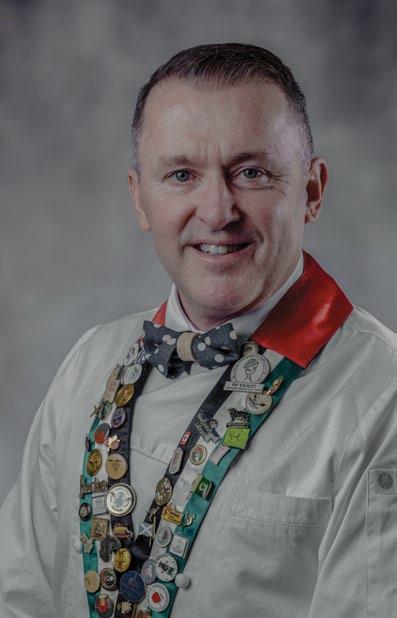
Alan Orreal President, Emirates Culinary Guild

A message from President Alan Orreal on competition excellence, upcoming EISC Class Competitions 2026, and the Guild’s commitment to chef development
the
Chef Tarryn-Leigh Green shares the impossible balancing act still expected of working
Chef Helen Morris on why a perfect buttered sandwich proves Britain’s best comfort food is
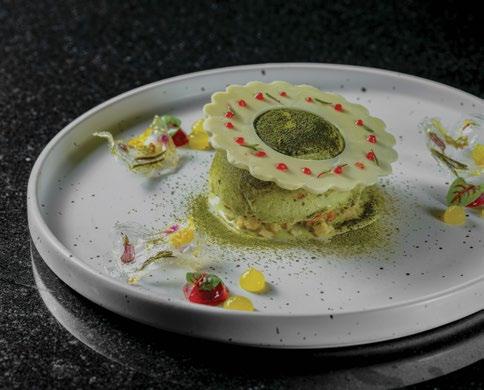
Luke Bonner on why his final meal would taste like home
A fresh perspective on power skills and hospitality from Samer Abou Daher
Chef Tarek Mouriess on what three young chefs taught him about the meaning of legacy
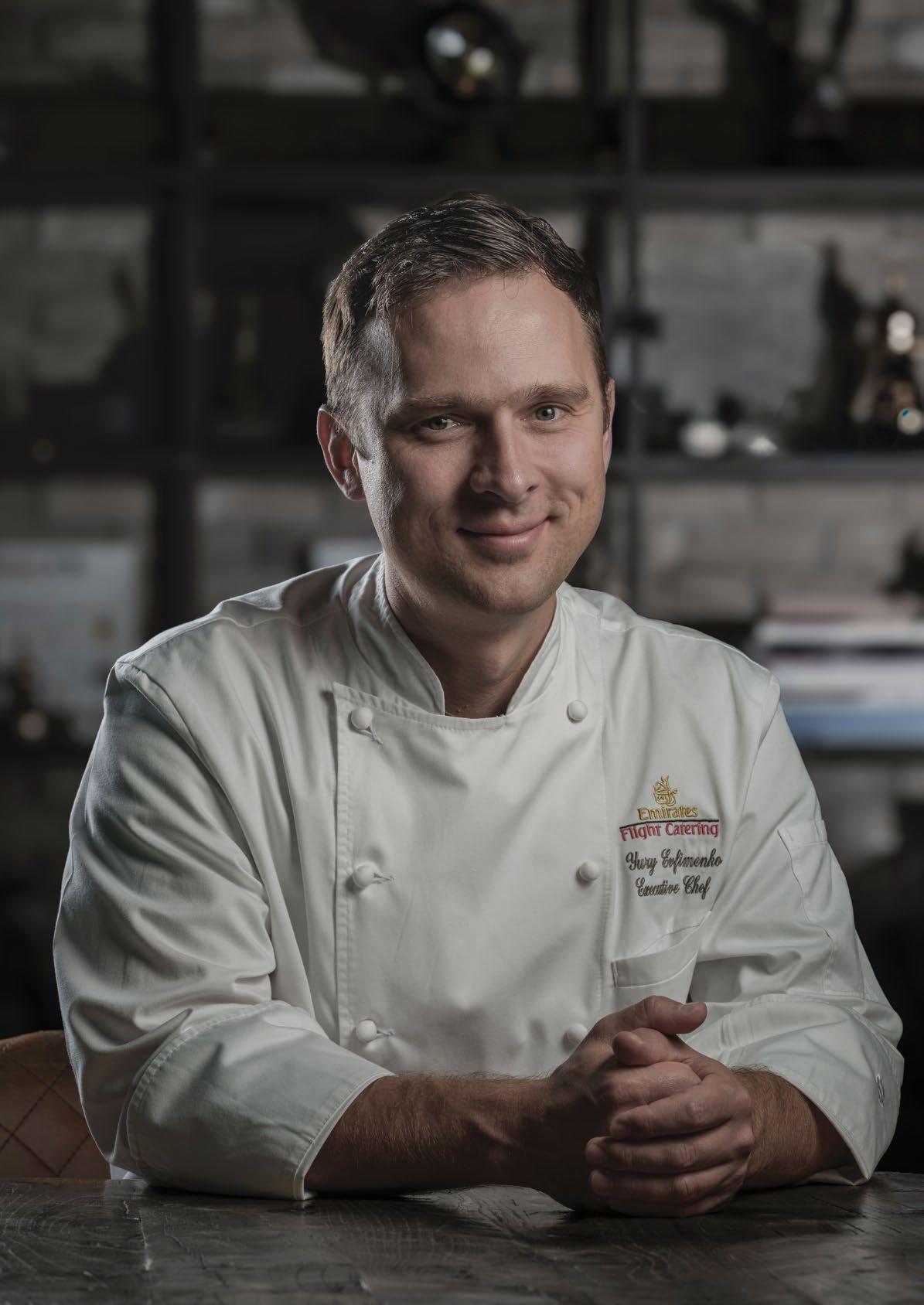
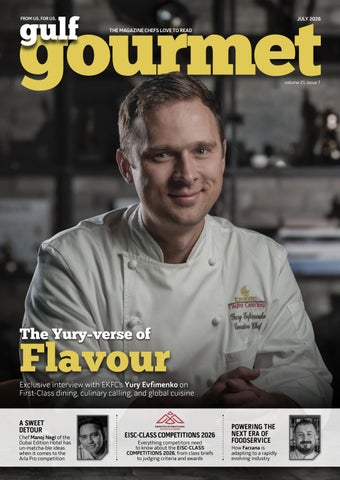
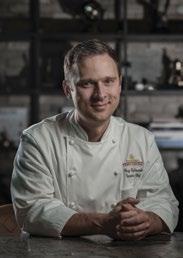
Exclusive interview with EKFC’s Chef Yury Evfimenko on first-class dining, culinary calling, and global
Sweden’s Livoo Foods shares insights on OATup, a sustainable plant-based protein made from upcycled oat okara
Chef
what
Navigating the fine line between strict nutritional mandates and gourmet flavour, Slices Nutritionist
Arooj Abid and Executive Chef Dwarika Bhatt create nutrient-dense, student-approved menus across the GEMS Education network

EMIRATES
Question I Froze On Elvis Taylor on why some things happen for a reason
Chef Manoj Negi of the Dubai Edition Hotel has unmatchable ideas when it comes to the Arla Pro competition
Guild Meeting
Photos from the last Guild meeting
Salon Rules
An overview of the EISC Class Competitions 2026
Membership
A listing of all the leading food, beverage, and equipment suppliers in the region
Simon Martin, Executive Chef and Innovation Consultant, shares the latest trends shaping our region for 2026



P R OF E S S ION A L











































Chef Tarryn-Leigh Green shares about the impossible balancing act still expected of working mothers today
In April this year, entrepreneur Emma Grede found herself at the center of an internet storm after revealing that she dedicates three focused hours to her children on both Saturday and Sunday.
Like many people, I was initially taken aback. Surely that could not be enough?
But then I stopped and thought about it. If we are truly honest with ourselves, how much intentional, uninterrupted time do most working mothers actually spend with their children?
Not time spent in the same house whilst simultaneously replying to emails, preparing dinner, folding laundry, ordering groceries, and mentally planning the week ahead. I mean genuine, undivided attention.
The answer is probably far less than we would all like to admit. And perhaps that is exactly the problem. We have built a world where women are expected to excel professionally whilst simultaneously being ever-present mothers, wives, daughters, household managers, and caregivers. Somewhere along the way, we have normalized an impossible standard.
This month, I was reminded just how deeply ingrained these expectations still are.
I attended an industry meeting while balancing life with a new nanny at home, a child who was unwell, and all the unpredictability that naturally comes with family life. Like many women, I was doing what women have always donequietly juggling. At one point, I stepped out of the room to deal with an urgent situation unfolding at home before returning to the meeting.
What followed were comments, made in jest, about my recent absence, whether I
would have to run out again, and perhaps another Women's Culinary Chapter event happening at some point this year.
I do not believe these comments were intended to be malicious. In fact, that is precisely what made them so revealing. They highlighted something our industry still fundamentally fails to understand. For many women, absence is not a reflection of commitment. It is a reflection of capacity.
Over recent months, I have chosen my family and my business over additional industry commitments. Not because I do not care about those commitments, but because something, somewhere, always has to give. That is the burden of disproportionate choice. Every decision requires a sacrifice, and more often than not, women are the ones expected to absorb the consequences of those sacrifices.
And that is the conversation we rarely have.
Women are expected to work as though somebody else were raising their children, whilst simultaneously parenting as though somebody else were doing their job. The reality, however, is that most of us are carrying both.
We have become exceptionally good at talking about diversity and inclusion. We celebrate representation, create committees, and launch initiatives designed to support women in the workplace. But have we actually changed anything?
Because if success is still measured by physical presence, uninterrupted availability, and saying yes to every opportunity, then have we truly created inclusive environments at all?
Hospitality, perhaps more than most

industries, still operates on outdated definitions of commitment. Long hours are glorified, networking happens after hours and opportunities often come with an unspoken caveat: show up or risk being forgotten.
Meanwhile, governments are beginning to introduce policies designed to support working mothers, including childcare provisions within corporate environments. It is a fantastic step forward, but I cannot help but wonder whether hospitality has been forgotten in the conversation. What does childcare look like in an industry built around early mornings, late nights and constantly changing schedules?
These are not complaints. They are questions.
Because if we are serious about diversity and inclusion, we have to stop asking women to adapt themselves to systems that were never designed for them in the first place.
Perhaps that is the uncomfortable truth we need to confront. Men are given choices. Women are given trade-offs.
Women do not need to prove they can do it all. We have already proven that.
The real question is why we still expect them to. ■
Chef Helen Morris on why a perfectly buttered sandwich in a century-old London deli proved that Britain's greatest culinary comfort is sometimes its simplest
In the midst of moving countries, living out of suitcases in the UK and Ras Al Khaimah, with worldly possessions in storage somewhere in the UAE, and the lingering thought that the situation at the time might mean I never come back, there are probably more important things to think about than sandwiches.
Yet here I am.
Because somewhere between packing tape, shipping containers, and trying to work out which bag contains my socks, I realized I had forgotten to tell you about one of the highlights of my recent trip back to London in my last article.
Not a Michelin-starred restaurant. Not a chef's table. Not some groundbreaking culinary concept involving edible smoke and ingredients I cannot pronounce. No. A sandwich. A plain old sandwich.
You see, when you have spent years living overseas, it is often the simplest thing you miss the most. While staying with friends in London, we were discussing where I should go for lunch. They suggested restaurants, cafés, and various food spots around the city. I listened politely before admitting what I really wanted.
"A proper British sandwich."
It sounds ridiculous until you have lived abroad for a while. Suddenly, the humble sandwich becomes something much bigger. It becomes nostalgia wrapped in bread. It becomes childhood memories, train journeys, away days, packed lunches, and rainy afternoons. It becomes a culinary hug without the awkward physical contact.
My friends immediately recommended Paul Rothe & Son on Marylebone Lane. Their daughter had recently discovered
A sandwich is never just a sandwich; it is a memory
it and apparently could not stop talking about it. They warned me about the queues, telling me they had arrived at 11:30 one morning and found twenty people already waiting outside. Surely not, I thought. Friends can overexaggerate.
As luck would have it, I was already planning a trip to Marylebone High Street, one of my favorite parts of London. So, after a wander through Hampstead Heath, which remains one of London's great treasures, I headed down towards Marylebone. After a little wandering and only briefly questioning my sense of direction, I eventually found the shop.
Now, I had been warned about the queues, but the weather was doing its usual London thing. Grey skies, drizzle, and enough dampness in the air to make you question whether it was really spring at all. I thought surely nobody would be standing outside waiting for sandwiches in this weather. Then I remembered we are British.
Standing in the rain with an umbrella whilst queuing for something is practically part of our national identity. If queuing were an Olympic sport, we would have a trophy cabinet the size of Buckingham Palace. Fortunately, I arrived around 11:30 and was only fourth in line. Better still, there was a seat available inside. Result. The moment I walked through the door, I knew I had

found exactly what I had been craving. First came the sound of ‘propa’ London. Then came the sight of the fillings. Rows and rows of fillings.
As someone who has spent most of her career in professional kitchens, I appreciate good mise-en-place. There is something reassuring about seeing ingredients laid out properly, ready for service. Behind the counter sat every filling imaginable: proteins, salads, pickles, relishes, and vegetables. The sort of display that immediately gets your culinary imagination working overtime. But seriously, who puts smoked mackerel pâté between bread? No real judgment.
Well, maybe a little.
Above the fillings sat various breads, all waiting to become the vessel for somebody's lunchtime happiness. White bloomer, wholemeal, granary, rolls, ciabatta, and baps. The possibilities seemed endless. The concept itself was beautifully simple. Choose your bread. Choose your fillings. Build your perfect sandwich. No gimmicks. No unnecessary reinvention. No chef is trying to deconstruct lunch and serve it on a slate tile. Just good ingredients assembled exactly the way you want them. Which brings me to my order. Coronation chicken with tomato, cucumber, and onion. All generously packed into fresh white bloomer bread with just the right amount of thickness. And butter. He actually asked if I wanted butter on the bread! I felt insulted – yes, spread as thick as your arm, please. Life is simply too short for dry sandwiches.
As I sat down waiting for my order, the queue began to grow. My friends were right. Before long, it stretched outside the shop and down the pavement. What fascinated me was not just the number of
people but how familiar they seemed with the place. Many were clearly regulars. They greeted the staff by name. Orders were placed quickly and confidently. Nobody appeared surprised by the queue. This was not their first rodeo, and it certainly would not be their last.
We Brits are a quiet, orderly bunch most of the time. Put us in a sandwich queue, and we become remarkably patient. There could be a three-hour wait, and somebody would still apologize for standing in the wrong place.
Watching the operation reminded me of observing a well-run kitchen brigade. Everyone knew their role. Every movement had purpose. There was pace without panic and efficiency without losing personality. The shop itself is cramped. One side is dedicated to the sandwich counter, while shelves around the walls are stocked with deli products, including jams, chutneys, pasta, and various culinary treasures. In truth, however, most people seemed completely focused on the sandwiches. But it gave soul to the place, along with the double-fronted window charm.
As I looked around, I found myself wondering why this little shop was outperforming so many competitors nearby. Marylebone is hardly short of cafés, delis, and sandwich bars. Yet very few appeared to generate the same enthusiasm. The answer, I suspect, lies in something many competitors overlook. Choice. Meaningful choice. Every customer can create exactly the sandwich they want. My sandwich is not your sandwich. Someone else might choose the same fillings but a different bread. Another person might add pickles. Someone else doubles the meat. Every sandwich becomes personal.
In hospitality, we spend enormous amounts of time discussing concepts, innovation, and guest experiences. Yet sometimes the strongest concept is remarkably simple. The motto I was taught was -do one thing exceptionally well.
Now, Paul Rothe & Son was established in 1900 and has been a family-run delicatessen and fixture of Marylebone Lane for more than a century. Originally specializing in continental foods and provisions, it has remained true to its roots despite the changing food landscape
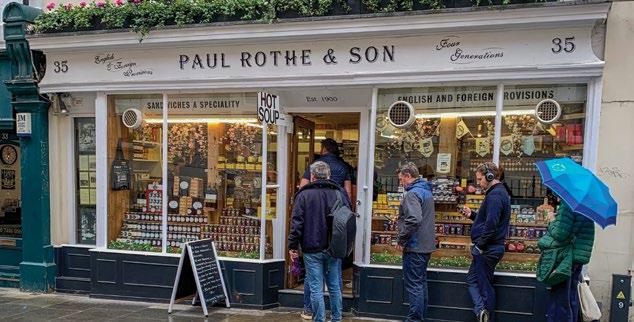
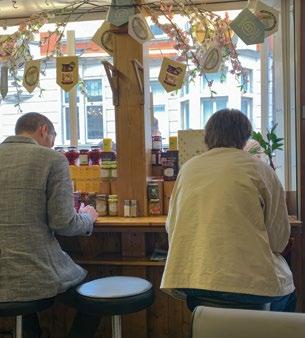
around it. Today, the shop is celebrated for its legendary sandwiches, traditional service, and enduring charm. In a world of chain cafés and passing food trends, Paul Rothe & Son are not trying to reinvent lunch. It is not chasing trends. It is not trying to become the next social media sensation. It simply makes excellent sandwiches. And people queue for them. Here’s to another century of pure magic.
As I enjoyed my sandwich, I started thinking about Britain's relationship with sandwiches in general. Our love affair with them runs remarkably deep. Research suggests the average Brit consumes more than 500 sandwiches per year, while an estimated 11.5 billion sandwiches are eaten annually across the country. Those numbers are extraordinary. The humble sandwich is woven into the fabric of British life. It is breakfast, lunch, dinner, picnic food, train food, road trip food, and late-night food.
So where does history begin?
The modern sandwich traces its origins back to Britain. Legend has it that John Montagu, the 4th Earl of Sandwich, requested meat between slices of bread
in 1762 so he could continue playing cards with one hand and eat with the other without leaving the table. And if that is not a perfect British food story, I do not know what is. More than 250 years later, we are still enthusiastically putting things between slices of bread and calling it innovation.
And we Brits have many names for them depending on region, from Sandwich to Sarnie to Buttie/Butty, and do not get me started on Bap, Barm, Cob or Roll... Depending on where you grew up, using the wrong one can start an argument faster than discussing football, politics, or how tea should be made.
My own sandwich memories go back to childhood. It was family outings, school trips, and every sandwich was the same—a soggy tomato sandwich from tin foil would be brought out at lunchtime, which was always 12noon. No meat or cheese to see here!
Perhaps that is why I still crave them when I am overseas. A sandwich is never just a sandwich; it is a memory of childhood. Whatever the reason, standing in that tiny sandwich shop in Marylebone, surrounded by people ordering their favorites, I felt something familiar.
As for me, after years overseas and countless memorable meals around the world, it turns out that one of the highlights of my trip home was not fine dining at all. It was a coronation chicken sandwich, eaten in a tiny shop in Marylebone. Sometimes the simplest things really are the best.
Until next time, keep your fillings generous, your bread fresh, and never trust anyone who skimps on the butter! ■

In today’s foodservice industry, reliability has become just as important as quality
For hotels, restaurants, catering companies and institutional kitchens operating against the clock, supply disruptions, sourcing delays and operational inefficiencies translate directly into compromised guest experience. In this demanding landscape, Farzana has emerged as a dependable partner for some of the UAE’s leading hospitality and foodservice operators.
The numbers tell part of the story: Farzana has tripled its business volume over the last two years, expanding across fresh produce, poultry, frozen products and other foodservice categories to
become one of the UAE’s fastest-growing foodservice businesses. Today, the company serves hotels, restaurants, catering companies, supermarkets, airlines and institutional clients across the country, with partnerships spanning globally recognised hospitality groups including Marriott, Hilton, Minor, Kerzner and Accor.
But beyond growth, Farzana’s success is rooted in something simpler: the ability to deliver consistently under pressure.
Farzana’s positioning is straightforward — a fresh produce and foodservice partner built around consistent supply, flexible service and fast operational support for hospitality, catering and institutional clients across the UAE. That positioning is reflected in the company’s day-to-day operations.
In an industry where kitchens run against the clock and customer expectations continue to rise, responsiveness has become the critical differentiator. Farzana has built its operating model specifically around these realities, pairing a deep sourcing network with an agile logistics operation capable of supporting urgent, customised and high-volume requirements anywhere in the country.
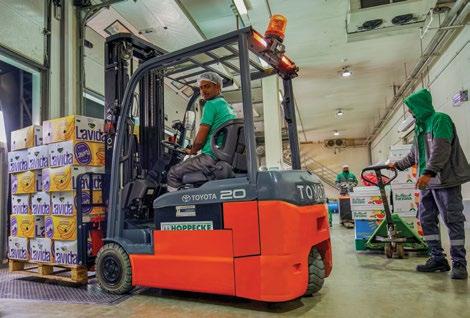
The backbone of this capability is the company’s supply chain infrastructure. With more than 250 chiller vehicles
operating across every region of the UAE — from Ruwais to Fujairah — and a network of four cold-chain storage warehouses, Farzana maintains speed, consistency and product integrity at scale.
Among these facilities is a dedicated foodservice warehouse with a total storage capacity of 1,600 tonnes, designed specifically to support the hospitality, catering and institutional sectors. This specialised facility enables Farzana to maintain product availability, optimise inventory management and respond quickly to fluctuating customer demand while preserving the highest standards of cold-chain integrity.
Sourcing extends well beyond the region, with products drawn from key global markets including the Netherlands, the United States, South Africa and Kenya. This diversified strategy has kept product availability stable through global logistics disruptions and market volatility that have challenged the wider industry.
The breadth of the portfolio is itself an operational advantage. Customers can source fresh produce, poultry, frozen products and other operational requirements through a single, reliable supplier — consolidating procurement, reducing vendor complexity and improving efficiency in the kitchen.
Today, Farzana manages a portfolio of over 2,000 SKUs and serves more than 700 delivery points across the UAE. With a 99.9% order fill rate and 100% on-time delivery performance, the company continues to set benchmarks for reliability, service excellence and supply chain efficiency.
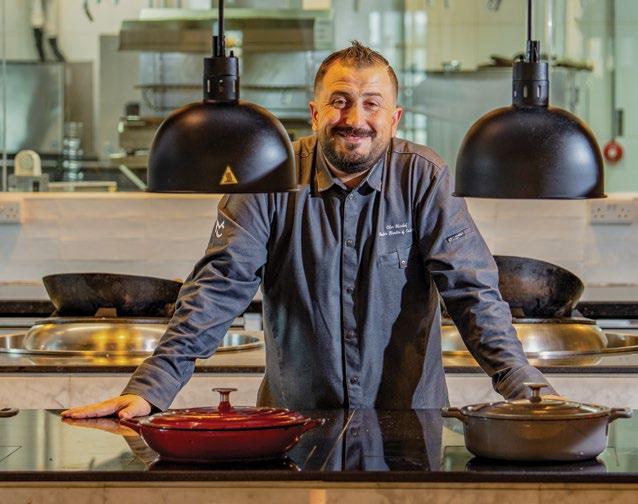
The most effective supply chains anticipate disruption
For chefs and culinary teams, consistency and responsiveness are critical, especially in fast-paced hospitality environments where a missed delivery can directly affect the guest experience.
Clive Micallef, Cluster Director of Culinary at Jewel of the Creek Hotels, describes Farzana as “a genuine partner rooted in trust and reliability.”
Having worked with many suppliers throughout his career, Micallef says Farzana stands out for its commitment to quality, service and operational support.
“Operationally, the first thing that

comes to mind is efficiency and responsiveness,” he says. “Their ability to anticipate our needs and deliver consistently, even when timelines are tight, is unmatched.”
According to Micallef, Farzana’s flexibility during supply disruptions and its ability to source specialty and culturally specific products have been central to maintaining menu consistency across his operations.
“If another chef asked me about Farzana, I would tell them they are not just a supplier, but a dependable partner who genuinely cares about supporting your kitchen’s success,” he adds.
Adapting to a Rapidly Evolving Industry
The UAE's foodservice sector has transformed significantly over the past decade. The rapid growth of quickservice restaurants, cloud kitchens and delivery-led operations has reshaped procurement and logistics requirements, while customers

increasingly expect a combination of value, premium quality, sustainability and dependable supply continuity.
To keep pace with these shifts, Farzana has continually strengthened its sourcing network, expanded its product portfolio and invested in digital capabilities across the supply chain. Automation, AI-enabled order processing and invoicing, and advanced demand forecasting now play a central role in improving efficiency, enhancing visibility and helping customers navigate an increasingly complex operating environment.
The company's focus on resilience was demonstrated in early 2026, when severe rainfall warnings were issued across Dubai. Acting on forecast data, Farzana's operations team contacted labour camp customers in advance, assessed stock requirements and prepositioned supplies before transport routes were affected. When the storm arrived and parts of the city's distribution network slowed, more than 6,000 residents across these sites continued to receive uninterrupted food supplies. The experience reinforced a principle that increasingly defines modern foodservice logistics: the most effective supply chains are those that anticipate disruption rather than simply react to it.
As the industry continues to evolve, Farzana remains focused on combining scale, technology and operational
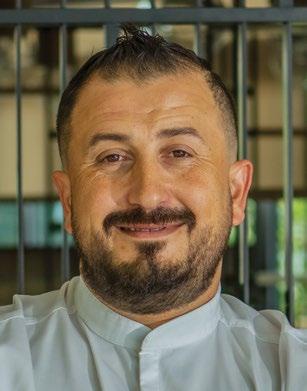
Efficiency and responsiveness are unmatched
agility to help customers maintain consistency, control costs and meet changing consumer expectations.
As sustainability rises up the hospitality agenda, Farzana continues to strengthen its commitment to responsible sourcing, environmental stewardship and operational best practice.
A key milestone has been the achievement of UAE Organic Certification for organic processed food products, providing customers with certified organic options that meet nationally recognised standards for quality, traceability and responsible production. The certification
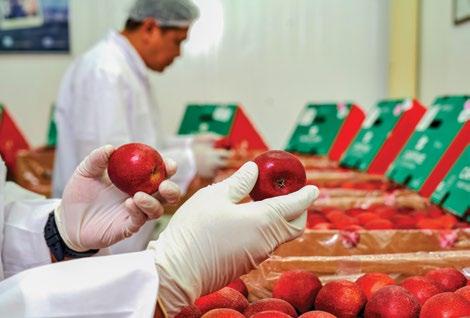
reflects the company's broader focus on transparency and accountability throughout the supply chain.
The commitment extends beyond sourcing. Recent waste-reduction initiatives saw more than 57 tonnes of cardboard and over one tonne of plastic crates recycled, with 100% of segregated materials diverted from landfill through certified recycling channels, a practical contribution to circular economy principles, and one that helps hospitality operators meet their own environmental and corporate responsibility targets.
Behind Farzana’s operational strength is a collaborative, fast-moving internal culture. The company builds teams for high-pressure foodservice environments, with tight coordination across procurement, logistics and customer service, and a bias toward fast decision-making on the ground.
Talent is developed through hands-on operational experience, accountability and exposure to multiple product categories, an approach that has built resilience and adaptability across the organisation as it scales.
With strong momentum across the UAE market, Farzana is now focused on its next phase of expansion: deepening its presence in hospitality, catering and

A genuine partner rooted in trust and reliability
institutional segments, broadening product categories, and continuing to invest in fleet capacity, cold-chain infrastructure and nationwide coverage.
In parallel, the company is accelerating investment in digital systems, demand forecasting and process optimisation to sharpen service accuracy and responsiveness.
“We have never seen ourselves as just a distributor,” says Hesam Rahi, Group CEO of Farzana. “Our job is to take supply risk off our customers’ plates entirely so that a chef never has to think twice about whether the product will be there. Whether we are investing in our fleet, our cold-chain infrastructure or our digital systems, the goal is the same: to make supply feel seamless for the people who rely on us.”
Supported by a scalable operating model and a growing portfolio of high-value clients, Farzana is positioning itself not simply as a supplier, but as a strategic foodservice partner for the future.
In an industry where consistency, speed and flexibility have become essential, Farzana is proving that operational excellence, backed by genuine partnership, remains one of the most valuable ingredients for longterm success. ■
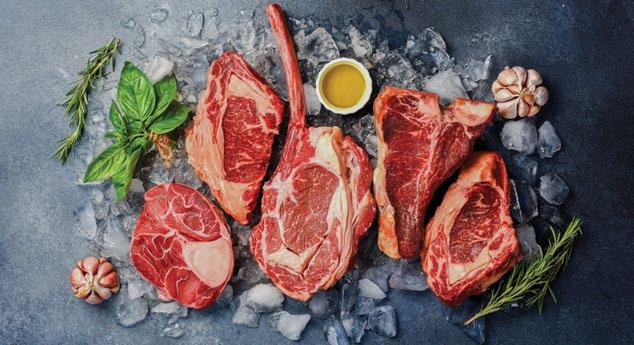
Chef Tarek Mouriess on beef flank, life wisdom, and what three young chefs taught him about the meaning of legacy
There is a moment in every competition when you stop watching the clock and start watching the people. I have been in enough kitchens, judging rooms, and post-competition debriefs to know exactly when that moment arrives. It arrives when you realize that what is being built on the plate in front of you is more than food. For some, it is an entire belief in themselves.
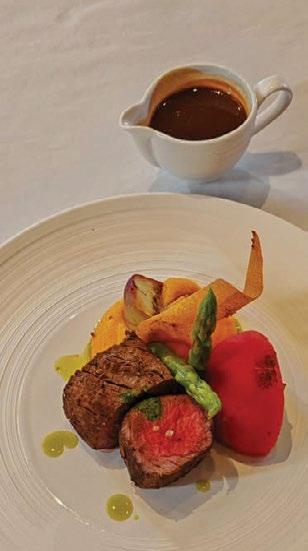
This year, three young chefs were selected for the finale of the Hozpitality Excellence Award: Young Chef 2026 event. Chef Amrit Maharjan made the seared beef, sweet potato mash with stuffed ratatouille tomato and peach, meanwhile Chef Ishmeet Kaur prepared modern indian royal garden (beef tenderloin, makhani sauce, indian tikki, mini samosa, masala vegetables, pickled onion & mint chutney), and finally Chef Prem Kumar made the grilled beef shashlik with kabsa rice, dakhous, Arabic spinach.
Let me tell you how it started. With Prem, it started in a lift. An elevator door was about to close, I called out to him, and told him about the competition. He had no idea it existed. And yet, months later, there he was, a finalist, plating a grilled beef shashlik with kabsa rice. With Ishmeet, it started with courage. She is a pastry chef. She does not even eat beef. And yet she walked into a competition built around beef, created a dish she called Modern Indian Royal Garden, and made it all the way to the finals. You cannot teach that. You can only create the conditions for it to happen.
Failure is not a stop sign. It is a lesson
And Amrit, who put together a seared beef with sweet potato mash, showed that learning without ego is the rarest ingredient in any kitchen.
I made mistakes as a mentor during this competition. I will be honest about that, because I think honesty is the only currency worth spending in this
business. I knew early in the process that cooking beef on the line would be difficult. Beef on the line is notoriously hard to perfect. And yet there I was, pushing through with choices that I already sensed were wrong. I chose brisket when I should have chosen short ribs. Shorter cooking time, better results with the quality of beef we were working with. The competitor who eventually took the lead chose beef flank, an economic cut, yes, but a wiser one for that kitchen, that day, that pressure. He took it to a second level of presentation, and it was enough. By one point, maybe two, I felt it shift before the judges even announced it.
When you watch someone win because they made a smarter cut selection, you do not feel angry at them. If you are honest, you feel a tap on your own shoulder and a voice that says..you knew.
But here is what I want to talk about, because this is the part that kept me thinking even after the competition. We do not go to competition to practice. We go to competition to win.
I have been watching sports coaches for years, American football, basketball, and tennis, and I keep coming back to the same observation. The great ones do two things. They study what other teams do, and they build relentlessly on what their own people do best. If your chef has exceptional instincts for flavour, work on flavour. If their strength is in sauces, build the competition around sauces. Do not spend your energy criticizing what they cannot yet do. Spend it perfecting what they already can.
Every senior chef leaves something behind in every young chef
I had to learn that too. I would tell them to practice, practice, practice! But telling someone to practice without telling them why is like telling someone to brush their teeth without ever explaining what bacteria does. The reason is the lesson. The reason is what sticks.
There is another thing I want to say because I think we do not say it enough in our industry.
We do not go to competitions to participate. That is a consolation written by someone who has never stood in a kitchen at midnight running through a plate for the fortieth time. Participation is the floor, not the ceiling. What we are building toward is something higher than that.
Failure is not a stop sign. It is a space to look clearly at what just happened and to come back with something better. That is what I tried to pass to these three young chefs. To train as though the competition is already happening.
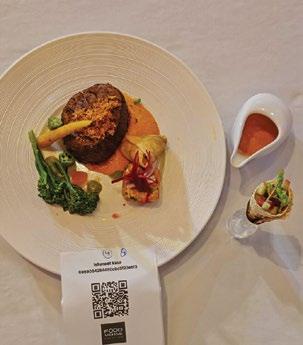
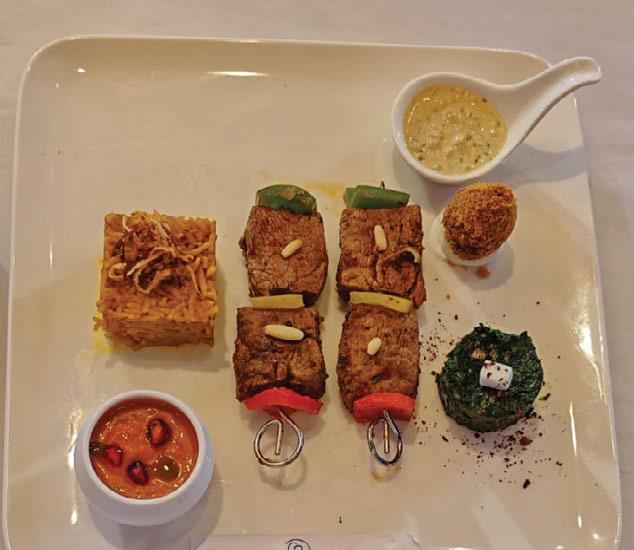
Prem wrote something in his email that I keep returning to. He said that when he started, his own kitchen colleagues showed limited interest in helping him practice. And yet he finished as a finalist. Because here is the truth about kitchens. We are extraordinary at managing our mise en place, our ordering, and our covers. And we are sometimes very poor at managing the human being standing two feet away from us.
We spend hours monitoring our Instagram. We spend hours on our WhatsApp groups. And then we wonder why the young chef in the corner of our kitchen feels invisible.
It does not take much. One hour. One lunch. A conversation to know about what this person is capable of if someone would just sit down and tell them. That is mentorship. The guidance where you call out before the elevator closes and say: There is a competition, and I think you should enter it!
On the night the results came in, I wrote something to the group. I told them it felt like watching my own sons being born in the delivery room. I meant it. I still mean it.
The young chefs replied and said all of this was possible because of the guidance of the entire team and senior
chefs. I am grateful for it. We pass legacy in this profession whether we intend to or not. Every senior chef is leaving something behind in every young chef they work beside. So teach them wisely. Even a mentor keeps on learning. This competition taught me a lot about winning, failing and improving.
They came to win. They will be back. So will I. ■
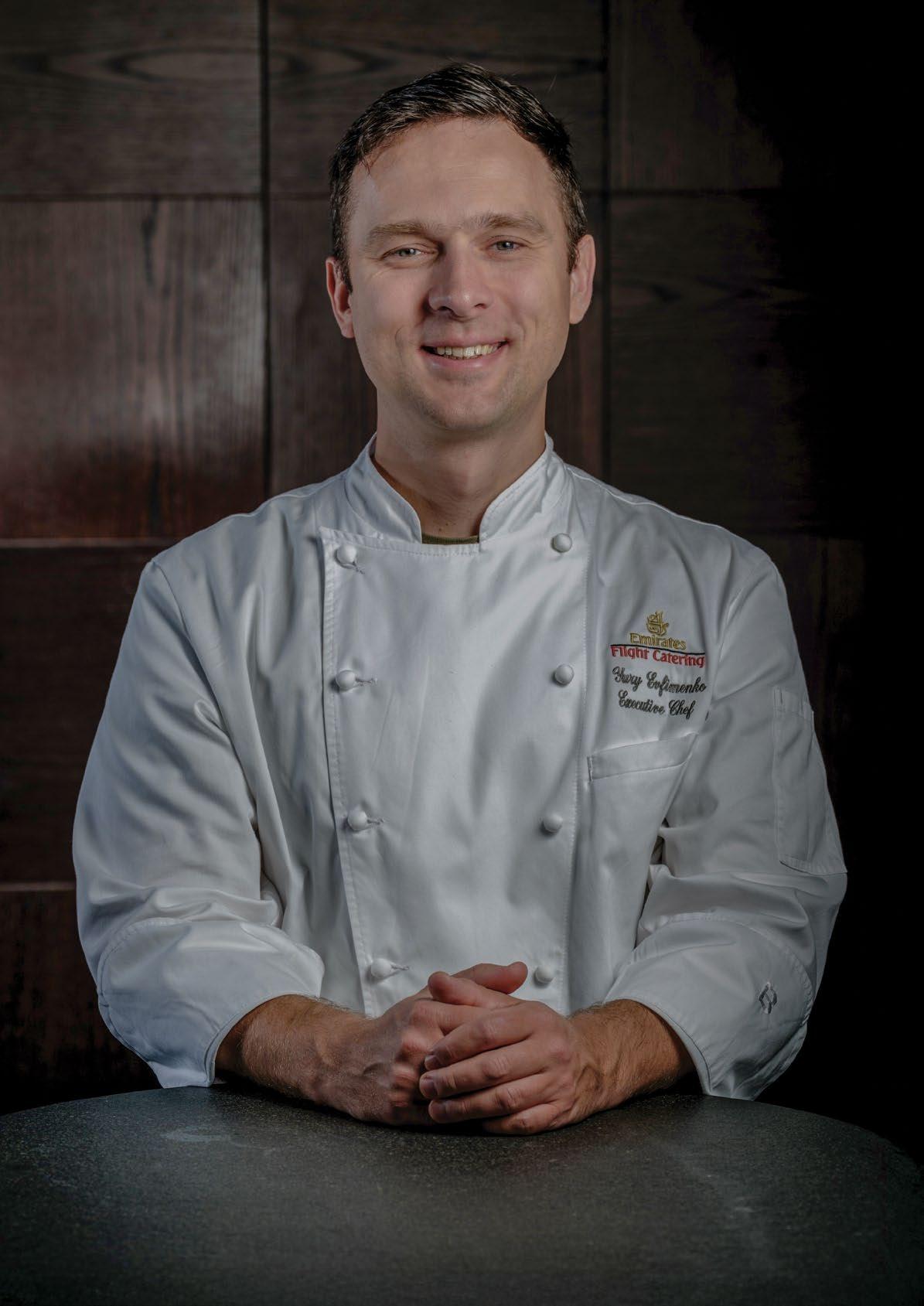
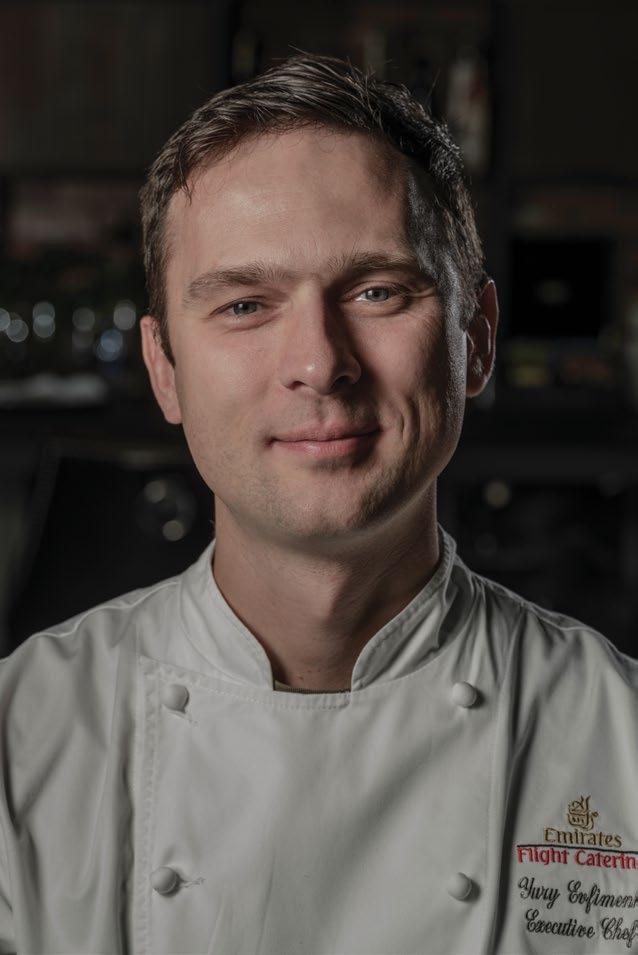
In Chef Yury Evfimenko's world, ingredients have a passport, and every dish tells a story. From the frozen forests of Russia's Ural region to the skies at 35,000 feet, the Executive Chef of First Class at Emirates Flight Catering has created a flavour universe so vast and so entirely his own that there is really only one thing to call it. Amaresh Bhaskaran meets the man inside the Yury-verse
In Russia, they say the one who endures the winter deserves the spring. After meeting Chef Yury Evfimenko, you would say he has earned an entire season. The Executive Chef of First Class at Emirates Flight Catering is not a man who waits for conditions to improve before he begins. When asked to describe himself, he leaves titles or accolades and searches for his truth. "I consider myself an honest and principled individual, with deep respect for myself, the people around me, and the food I create. My early exposure to art shaped the way I see the world and helped me develop my approach to gastronomy, one that is creative, authentic, and driven by meticulous attention to detail,” says Chef Yury, a man who has spent two decades turning that vision into something you can taste above the clouds.
He grew up in a large city in Russia's Ural region, ringed by forests and long winters. The days went by in the midst of observing the natural world. There were no phones pulling children indoors. "It was always time outdoors, hiking or just hanging out in the garden, cooking on an open fire, sharing food with friends and family. That time I learnt a lot about the ingredients, observing how they change in the process. Learnt the best way to handle them," he says, adding he never outgrew that way of seeing the world.
Chef Yury began his career in 2008, but the story, interestingly, began much earlier. There were no chefs in his family, no grandmother's recipe passed down for inspiration. But there was a television set and a cooking competition program that detonated into the living room of his childhood home with all the force of a revelation. Multiple narratives ran through his mind every time he watched those programmes. International chefs commanding their brigades, flavour combinations he had never encountered, plating executed with extraordinary finesse.
art aren't really separate. They are the same impulse just expressed through different materials," he recalls.
Food and art are not separate disciplines. They are the same creative impulse expressed through different materials.
"I was curious to know more, so I used to sketch the dishes I saw on TV and then attempt to make them. I think that's when I realised that food and
By the time he reached the age of university applications, Chef Yury had long since made his peace with the path ahead. A short culinary college felt like a starter course when he was hungry for the full menu. He enrolled in a five-year food technology programme, packed his bags and moved to another city, leaving behind family, a girlfriend, friends and the only life he had ever known. "I was 18 at that time, and I prioritised my passion. Something inside of me wanted to go far in this industry. Simultaneously, I pursued a degree in finance, and by the second year,
some restaurant jobs had become part of the routine. I would be arriving at lectures exhausted, falling asleep in the chair sometimes, and honestly, not minding any of it," he says unapologetically.
Chef Yury was ready to cook it up from scratch, and the fourth year of university is where the earnings accelerated. A Hyatt property was opening in Yekaterinburg, bringing with it a cohort of international chefs that piqued his interest. "I said to myself, this is where I wanted to work. Because I knew that they were able to give me that international experience and knowledge that I could not get in my city at that point in time."He started with them as a commis, climbing with ferocity. Two years later, he became the first chef from that property to be transferred to Grand Hyatt Dubai. "The standards were completely different. The culture and the vibe were absolutely new to me," he recalls.
Dubai in those years was on the cusp of its culinary awakening. To be inside that transformation was to catch a wave most chefs never even see coming. While others worried about the industry's choppy waters, Yury saw opportunity. He knew exactly what he had landed in.
"Dubai has extremely a lot to offer. It is always changing, evolving. I wanted to be part of this history." Two years at Grand Hyatt, then he joined the Jumeirah Group as a Junior Sous Chef. A year of working on menus and new concepts, and then he moved to the Marriott Group as Sous Chef, hungry, as he puts it, to return to restaurant standards. "I was handling the French Brasserie. To go further than the concept of the outlet. It actually led to me and my management to change the concept afterwards. Being a French Brasserie was not enough anymore. We changed it to international opening doors for unleashed creativity. We even won the Best Business Lunch in Dubai. For me, it was not just enough to feed people. I wanted them to have an experience
Success in the kitchen begins with passion, but it is sustained by curiosity, discipline, and the hunger to keep learning
beyond the restaurant format. Later, I got a few more outlets to handle."
He was there when COVID arrived. Post-COVID, the road back was neither straight nor simple. But as restrictions lifted and the world tentatively reopened, the business came back to life. "We managed the crisis extremely well and were among the first to reopen while introducing new initiatives and upgraded restaurant menus. As people grew tired of COVID-19 restrictions, guests returned in large numbers, making it a very successful year for our hotel. We regularly hosted guest chefs. I also had the chance to travel to Kazakhstan, where I worked in a smaller but busy hotel with authentic offerings and wonderful people. It was an amazing cultural experience!"
No matter where his career took him, Dubai was always at the back of his mind. Eventually, he decided to return when an opportunity arose at Emirates Flight Catering. The rest, as they say, is history. More than two and a half years later, he is still with the company, having risen to the rank of Executive Chef of First-Class.
Currently, Chef Yury oversees a complex operation, creating first-class dining for passengers and offering something without precedent on board an aircraft. Restaurant-quality food with handmade pasta, A5 Japanese
Wagyu, fresh truffles, dishes that require the same precision in planning as they do in execution, except that by the time they reach a passenger, the chef is no longer in the room. "The biggest challenge is the time gap. For the hot dishes, you are not able to serve them to the guests yourself, so you have to always assume that someone else, with less experience, has to continue what you planned,"he says.
He elaborates, and the distance from a conventional kitchen becomes clear. "The design of a dish here is not a recipe. It is not just writing a recipe but a series of thoughtful processes. How components behave overnight in the chiller. The ease with which packaging is opened during the rush of service. The time it takes to plate something correctly at altitude, when the crew are moving fast, and the margin for error is narrow. Every variable has to be absorbed into the original creation, so that what arrives on the tray is the dish we intended. My past experience has helped me to deliver a product that is not only unique and delicious from the culinary side, but also efficient and straightforward for execution by the crew."
He learned to read people and take the conversation as data. No amount of bookish knowledge can teach us about people the way direct interaction can. "Sometimes chefs can be too excited about food," he reflects. "But it is always important to look at the guests, look at the people we serve this food to, and understand what they really enjoy, what they really look for. Personally, I even prepare for my flights and travels with research on food, palate and understanding the logic behind national dishes from the environments where the products grow," he explains, noting that understanding people is just as important as understanding food.
When Russia launched Sputnik in 1957, the world looked up and realised the sky was no longer out of reach. When Chef
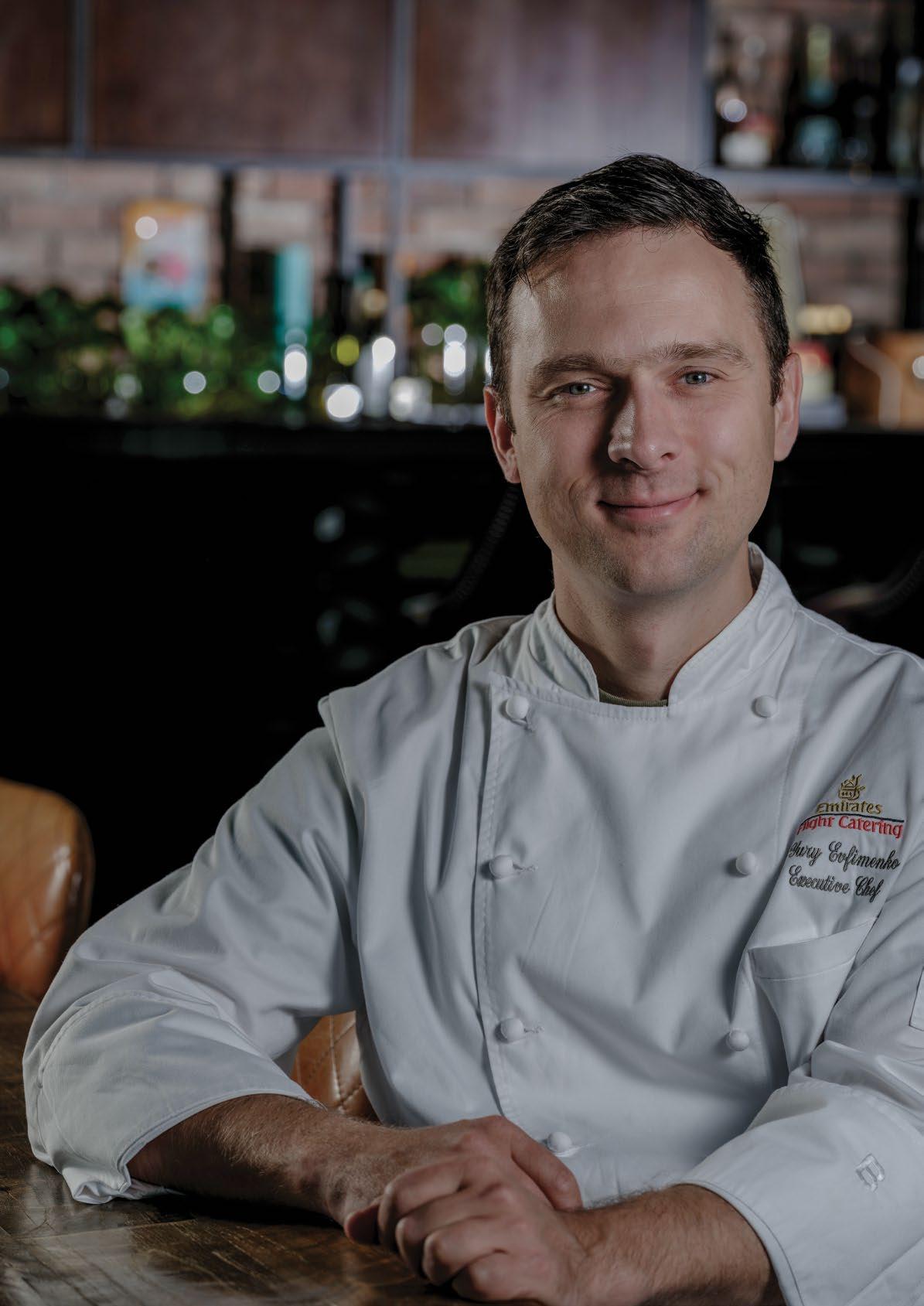
It is not enough to simply feed people; every meal should create an experience that guests remember long after
Yury of Emirates Flight Catering took fine dining to 35,000 feet, first-class passengers looked down at their trays and realised the same thing. Some people are simply built to go where nobody has gone before.
Excellence in a kitchen will tell you only half the story. The other half of a chef's mettle is earned under pressure, in competition, among peers who leave nothing on the table. Earlier this year, Chef Yury represented Emirates Flight Catering and the UAE at the Middle East and Africa Region Global Chef Challenge Finals at Worldchefs. It was not an uncomplicated journey. Visa complications meant the young chef he had been practising alongside for weeks was unable to travel, and his plans began to err. When pessimism could easily have taken hold, it was kept firmly at bay by the generosity of those around him. A young chef, Lalita, a stranger, stepped in days before the event after her own employer generously permitted her to assist. "What bravery to come in and assist with almost no notice! It was so important to receive such unconditional support during both preparation and execution. Starting with my First Class kitchen team, organising the trials and developing the dishes together, and finishing with my Senior mentors, Chef James Griffith and Chef Alan Orreal, who not only guided me but also helped me push my prep trolley at 5 am on competition day! I am really thankful. The competition, the workshops with suppliers, the new ingredients and techniques, there was so much to absorb. Being among the best chefs from around the world is a great source of inspiration. It gives you valuable exposure to the top of the industry. You become inspired and excited about being a chef."
In an industry where mentorship can sometimes feel like a voice in the wilderness, Yury remains convinced that developing people is not optional. "I am extremely thankful for the opportunity to represent the UAE at such a
The chefs who continue to grow are the ones who never stop asking questions and never stop learning
competitive and challenging event. Believing in people and encouraging them, that is how we grow talents, that is how we develop them and how we develop the industry. I am grateful to the EKFC and Emirates Culinary Guild."
That experience of being trusted, supported, and sent forward changed something fundamental in him. When he sits across from candidates today, he is looking for the same promise someone once saw in him. When he interviews candidates, the first thing he looks for is passion. "Second is the hunger to learn. Some of them end up in the field by luck, by the decision of their parents, by certain other circumstances, but not their own will. Others really want to grow as a chef by learning and pushing the limits. I am always happy to see it in young cooks. Finally, they should be articulate. They should have a thinking brain."
He has a specific test for this. He asks what the candidate has learned in recent weeks. Not recently in a general sense. In recent weeks. Specifically. "I consider myself always on a learning curve," he says. "I am looking for ideas on social media, in books, and by visiting restaurants. I want to be updated. I do not want to stay at the same level where I am." The candidate who cannot answer that question with something concrete and up to date has already told him what he needs to know.
Unlike many professionals who view artificial intelligence with suspicion, Yury thinks of the subject with
characteristic equanimity. The culinary business requires competitiveness. Competitiveness requires the best available resources. "It is very silly to try to reject and stay away from technologies and from AI. What artificial intelligence cannot do, and will not be able to do, is take responsibility. It cannot be held accountable for the food on the plate. It does not possess the experience to know when something is not right, or the passion to care that it should be. Passion and taking responsibility are what differentiate us from all possible technologies," he notes.
Beyond the food world, Chef Yury is happily married. His wife comes from the hotel industry, on the guest relations side, which means she understands the pace of hospitality life without being caught up in the same professional orbit. His son is seven, his daughter is four, and he will tell you without demur that parenthood has taught him a great deal about life. "It is a huge responsibility. You have to be the best version of yourself, not only at work, but at home. It fulfils you as a person as well. It develops and matures you, even your decisions as a professional." His son is a food enthusiast with the same voracious curiosity that once convinced a young boy in the Ural region to sketch dishes from a television screen. "He is always eager to taste some new food, to discover. He knows his palette, the good, the bad already," Chef Yury says, smiling warmly as he recognises himself in his son.
There is no shortage of chefs willing to rely on reputation alone. Chef Yury has little interest in becoming one of them. He is still learning. If there is one lesson Chef Yury has gleaned from a career of crests and troughs, it is that learning never stops. "I see myself in Emirates Flight Catering easily for five years, doing more, learning more. It is a huge, very diverse platform to learn, to develop, to grow. And I am never bored with the range of tasks I have,"he says. For a chef whose art is never static, the journey feels far from complete. In the Yuryverse, the universe is still expanding. ■
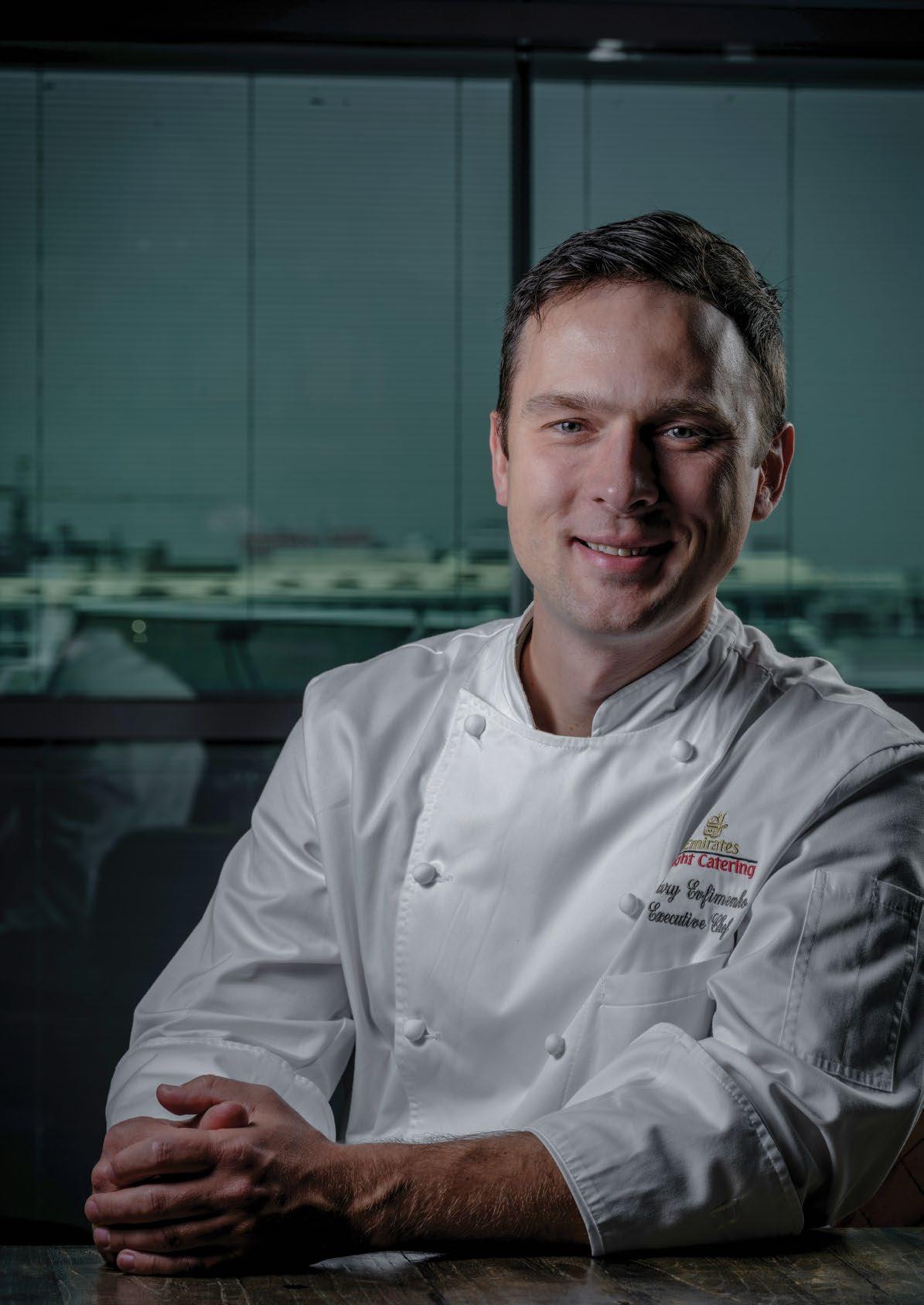
Passion and responsibility are the qualities that will always distinguish great chefs from any technology

As the plant-milk industry generates tons of leftover okara, Sweden's Livoo Foods details how their proprietary technology converts perishable byproducts into high-protein OATup® powder
By Shreya Asopa
Every litre of oat milk leaves something behind. After the grain is soaked, milled and pressed, what remains is a wet, protein-dense pulp that most facilities never intended to keep. It can begin to deteriorate rapidly after extraction, often within hours if not stabilised immediately. For years, the plant-milk industry has routed it toward low-value outlets such as animal feed, biogas, composting or disposal, depending on local infrastructure because no preservation method could outpace the clock. That window is the whole problem. The pulp contains high nutritional density but its high moisture content and large surface area create conditions hostile to any standard preservation attempt.
Swedish foodtech startup Livoo Foods is attempting to change that calculus using a proprietary low-temperature dehydration process. The company stabilises a highly perishable byproduct
Innovation begins when waste is viewed as an opportunity rather than loss
directly at the source, preventing spoilage and preserving nutritional value. From this process, it produces OATup®, an upcycled oat protein-and-fibre ingredient. Livoo Foods reports that OATup® is typically positioned at around 30–40% protein depending on grade, with dietary fibre and native oat oil fractions.
The oat milk byproduct stream has attracted more than one company's attention.US-based Renewal Mill has helped lead the way by converting nutrient-rich oat pulp into an upcycled flour for baking applications, but they are no longer alone. A growing cohort
of food-tech companies are working to transform this fibrous residue into functional powders. By turning this residue into a high-value resource, Livoo is entering a market that others have already begun to map.
For Stefan Ekstrand, the company's CEO, the contradiction at the heart of oat milk production was the starting point, not an afterthought. “The turning point came when I saw the oat drink process up close. We were celebrating the growth of plant-based dairy, but next to that success was a less visible problem of large volumes of wet oat pulp left behind after extraction. It was nutritious, full of protein and fibre, but treated as a low-value side stream because it spoiled so quickly. That contradiction stayed with me,” he says. The company name, Livoo, derives from the concepts of life, oats and balance, and the philosophy running through it rejects the conventional practice of extracting a single crop fraction and discarding the remainder.
The science behind the stabilisation is, as Juan Carrillo, Livoo's Head of Ingredients, describes it, a race against microbiology. Wet oat okara combines high moisture, dense nutrients and large surface area in a way that accelerates spoilage faster than most byproduct streams. The low-temperature approach is designed to remove water quickly enough to stop microbial growth while avoiding the heat that would compromise what makes the ingredient worth preserving in the first place. “In practical terms, we preserve the ingredient by stabilising it at the right moment, before spoilage starts. This is critical when thinking about supply chains in warmer regions, where moisture control and stability are central to food safety, logistics and industrial scalability,” says Carrillo. By the time OATup® reaches a pastry kitchen, the clock has already been stopped. What lands on the bench behaves nothing like the raw pulp it came from.
For a chef, understanding how an ingredient affects texture and shelf life in baked goods is the baseline. On this front, Carrillo explains that beyond nutritional role, OATup® has functional role in water binding, body and mouthfeel. “In bakery, this means it can help retain moisture inside the crumb structure, a quality that is particularly valuable in warm and dry climates, where softness is quickly lost” he says, noting


Consumers may be curious about sustainability, but they will come back because the product is delicious, reliable, culturally relevant and worth the price
— Stefan Ekstrand
its benefits across breads, cakes, cookies, pastries and filled bakery products. A practical caveat that any chef working with fibre-rich or protein-rich powders would recognise is that the ingredient needs time to hydrate before baking.

OATup® can help retain moisture inside the crumb structure, a quality that is particularly valuable in warm and dry climates, where softness is quickly lost
— Juan Carrillo
“The key is hydration. OATup® should be pre-mixed with dry ingredients and given time to absorb water before baking. Without that step, doughs and batters may tighten unexpectedly,” adds Carrillo.
While Oatup® is not a one-to-one egg replacer, it contributes in binding, water control and body to doughs, batters, creams and fillings. Carrillo explains that its natural oat oil fraction helps create a rounder mouthfeel, while the fibre-protein matrix gives density and creaminess. Flavour is where some ingredient powders lose chefs before they even reach the trial stage. Oats carry a recognisable cereal note, warm and slightly sweet, and the concern is always whether it will dominate. Carrillo says otherwise.
Mild and warm, it sits naturally alongside vanilla, caramel, chocolate, dates,
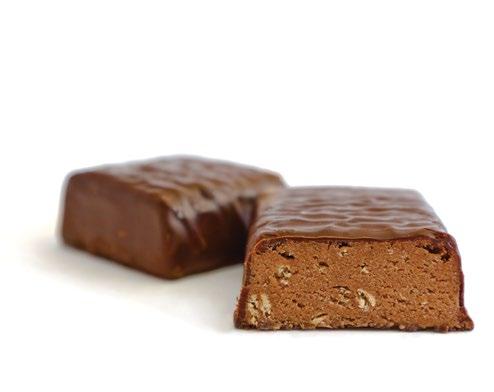
cardamom, cinnamon and saffron in pastry, and stays in the background with roasted vegetables, mushrooms, legumes, fermented notes and tahini in savoury applications. “It is designed to be versatile rather than invisible at all costs. In many applications, the oat character can become part of the product identity rather than something to hide. This is one of the reasons we see strong potential for OATup® in applications such as high-protein overnight oats for sports and active consumers, protein bars, meat analogues, breakfast cereals, snacks, powder mixes, smoothies and collagenstyle mixes,” he says.

The future belongs to ingredients that combine purpose, quality and flavour
Besides pastry and savoury applications, he explains, OATup® is also relevant for food concepts designed around today's demand for higherprotein, higher-fibre and gut-friendly nutrition, including applications aimed at consumers using or interested in GLP-1-related food routines.
Nutritionally, OATup® follows the familiar pattern of cereal proteins. It contributes branched-chain amino acids, including leucine, isoleucine and valine, while lysine remains the limiting essential amino acid. For applications aiming at a more complete plant-protein profile, Livoo recommends blending OATup® with lysine-rich pulse proteins such as pea or fava. That pairing strengthens the amino acid balance while preserving a clean-label, plantbased formulation story.
The ingredient holds Halal certification, which Carrillo notes is relevant for manufacturers serving Middle Eastern, North African and wider markets. That clean-label flexibility, no synthetic isolates, certified Halal, positions OATup® in a specific formulation space of broadly useful which matters more to a product developer than any single nutritional headline.
For Ekstrand, who operates in the space of food, sustainable gastronomy means that what is on the plate should respect the whole system behind it. “It is not only about local or plant-based food. It is about using raw materials intelligently, wasting less, creating pleasure and still delivering nutrition. When I sit in a restaurant, I admire dishes where sustainability is not a compromise, but part of the creativity, where chefs use ingredients in a smarter way and still create something delicious, generous and memorable,” he adds.
Having navigated the difficult path of
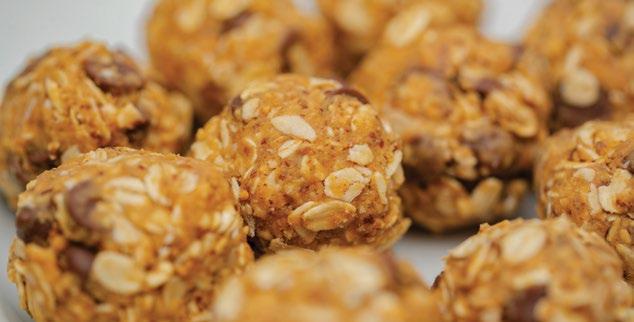
taking a highly perishable waste product and turning it into a foodtech startup, Ekstrand has one piece of advice for young culinary innovators trying to launch a sustainable food business today. “Fall in love with the problem, not your first solution,” he says. “Food innovation is slow, technical, regulated and expensive. A clear problem worth solving is the foundation, but the willingness to adapt the technology, product and business model until it works in the real world is what separates those who succeed.”
Value-based thinking, he believes, must run through the entire process, not surface only when it is time to sell. “You need to understand your value from the customer’s perspective, and also from the perspective of your customer’s customer. That second layer is very important. If you can help your customer create a stronger product, a better consumer message, a more premium position or a more efficient formulation, then your own value becomes much clearer,” he adds.
His final counsel is pricing. “Do not price only from cost. Price from the value you create such as nutritional value, technical value, sustainability value, consumer value, supply-chain value and brand value. If you cannot explain that value clearly, the market will push you toward commodity pricing,” he warns.
Sustainability alone, he concludes, is not enough. The product must taste good, perform well, fit existing production systems and make commercial sense. “Consumers may be curious about sustainability, but they will come back because the product is delicious, reliable, culturally relevant and worth the price.”
Oats are among the most completely utilized grains in food production. What Livoo is proposing is that it be used even more completely, down to the wet residue that currently leaves through the back door. Chefs who work with whole-ingredient thinking will find the premise familiar. The product still has to earn its place on the bench. ■
Chef Andreas Kurfurst explains what may be behind our complicated relationship with bread
Humans have prepared and eaten wheat and bread in one form or another for at least 10,000 years. The entire civilization was built on bread. The ancient Egyptians cultivated the first wheat on farms and exported it to many places, and also developed bread fermentation with the inclusion of yeast.
The Roman Empire was built on bread to feed soldiers during their excursions and wars. There is no history (that we know of) of people having problems with bread over the past 10,000 years. When I did my apprenticeship in the mid-70s in Germany, I do not remember any guest mentioning any allergens or intolerances. (Well, none of them were vegetarians either. We had more than 80 dishes across several menus and only ONE vegetarian option: an omelet (hahaha…).
So why is it that nowadays one cannot have a function or menu without offering several menu options, particularly those involving gluten? Now we have to deal with the following: celiac disease, nonceliac gluten sensitivity, wheat allergies, and intolerances, etc.
So what has changed in the past 40-odd years?
The cause of this, I believe, lies in the bread itself.
Not in the basic ingredients for bread, which are four simple components: flour, water, salt, and yeast. Sourdough bread (my favorite) actually has only three ingredients, where no added yeast is used and naturally occurring wild yeast is utilized. That process takes several days, up to a week.
Good bread needs time. Some things simply cannot be rushed
But my issue is with the preparation and the “added stuff”.
My grandfather was a baker, and he made the most fantastic breads and rolls in his time. (I guess that is why I took up the same trade.) Bread improvers did not exist in East Germany at that time. It used to take up a whole night, or up to 24 hours, to prepare the dough for bread.
And here is where the issue starts: time. Time is money, as they say. Yes, in order to do more in less time, I, too, prefer to be efficient and save time whenever possible.
During slow fermentation and subsequent proofing, many processes take place simultaneously. Enzymes break down molecules, and yeast bacteria change the molecular structure of gluten itself, making it more digestible, for example, among other effects.
I have visited bread factories where bread is made within hours.
Factories churn out bread from ingredients to packaged loaves within four hours, producing 10,000 loaves per hour.
Then there are the “extras” Dough conditioners

Flour treatment agents
Emulsifiers
Processing aids (enzymes)
Added vitamins and improvers
For example, my bread contains only four to five natural ingredients, while some supermarket breads list 15 or more. And yet, that ‘bread’ can stay shelf-stable for more than six weeks. Even if you open it after six weeks, it looks and feels the same as the day you bought it.
These added ingredients may not be harmful on their own, but when consumed over a long period, daily, I truly believe they do have an effect.
Make bread affordable, yes! BUT DO IT RIGHT!
When bread becomes too cheap, it loses value not only in monetary terms but also in respect, appreciation, and the pleasure of eating really good bread.
Cheaper is not necessarily better. It is just cheaper!
There are no shortcuts to being cheap. We will have to pay the price eventually, whether health-wise, climate-wise, or environmentally.
Go back to basics, people! ■
Salt is the flashpoint. Nutritionists want less of it. Chefs need it to make food taste good. But when your diners are children, neither side can afford to lose. Slices' Nutritionist Arooj Abid and Executive Chef Dwarika Bhatt have found the solution in collaboration
“Salt as per taste.” Culinary maestros do not just recite this phrase; they treat it as an article of faith. It is the golden rule. An instruction to layer salinity gradually until flavors are balanced, bright, and vibrant, rather than aggressively briny. Salt is the great orchestrator of flavor. Every chef’s dream is to operate without interference, independently balancing their plates to mask blandness and achieve that elusive, harmonious deliciousness.
This has been the bedrock of professional cooking since time immemorial. Yet, the landscape is shifting. Food is no longer just a hobby for the home cook or fuel for the masses; it is a profound experience and, increasingly, a form of preventative medicine. We are not talking about clinical nutrition therapy; we are talking about the daily role food plays in longterm wellness.
Enter the evolving catering industry, specifically the rise of School Food Caterers. Here, foodservice professionals are engaged in an intervention that is as difficult to execute as it is vital: nourishing our most vulnerable, discerning, and precious demographic— the future generation. When you feed children, your responsibility is manifold. You are tasked with sneaking healthier profiles into familiar favorites without triggering the dreaded "kid refusal."
School catering is not, and should never be, a mirror image of adult dining. This is the arena where two opposing, yet essential, professionals clash: the Nutritionist, who demands

uncompromising health standards, and the Chef, who fights to ensure the child actually eats the meal rather than tossing it.
Salt is the epicenter of this war. Both sides agree we cannot live without it, but the definition of as per taste triggers a diplomatic crisis. The nutritionist pushes for reduced sodium and the inclusion of natural, non-sodium enhancers. The chef, meanwhile, feels the walls closing in. When you restrict salt, you are not just losing a seasoning; you are losing a fundamental tool for building structure in pasta, properly brining meats and seafood, and developing the deep, resonant profiles of soups, stocks, and sauces.
Public health authorities are currently beating the drum for lower intake, propagating everything from low-sodium salts to potassium chloride substitutes. But can we realistically apply these across the board? Absolutely not.
Relying on chemical substitutes is a lazy band-aid for a nuanced culinary problem.
The immediate solution is not more regulation or more chemistry; it is collaboration. Nutritionists and chefs must get on the same page, accepting that if the integrity of the dish and the child’s palate cannot be maintained under strict sodium caps, we need to show some restraint. Where the balance of health and flavor is impossible to achieve, perhaps the most professional move is to put that specific dish on pause. We owe it to the next generation to be smarter, bolder, and more creative. Let us trade the saltshaker for technique and stop treating flavor as a casualty of health.
Navigating the fine line between strict nutritional mandates and gourmet flavor, Slices’ Nutritionist Arooj Abid and Executive Chef Dwarika Bhatt create nutrient-dense, student-approved menus across the GEMS Education network ■
If your final meal could be anything, chances are it would taste a lot like home, writes Luke Bonner
Picture this. You have woken up late, an argument with your partner left unresolved, and then the guilt of a work deadline you would not meet. But as you limped home in traffic, finally past the kids arguing over a pencil, thoughts turned to dinner; something quick ‘n’ easy. One of your go-tos. Boring to some, but to you, it is comforting. But why do we go for comfort food?
It turns out that what we are really wanting is memory-food. Those dinners from our youth, the meals on rotation, the ones we regularly counted on and were uniquely ours. The watery spaghetti bolognese with unforgiving onion chunks; the chicken wings heavily soaked in honey and soy; steamy white rice; and the rattle from each throw into the communal bone bowl, and of course, the ritual of the Sunday roast, with potatoes smothered in mayonnaise to the horror of Mother. And in the hope of speeding it all up, our ‘helping’ to set the dinner table and then fighting over who actually got to do it. But if that is what comfort is, then what might a last meal look like?
The meals we remember are often the ones that shaped us
In 1995, a troubled Timothy McVeigh took the lives of 168 people with some explosives in Oklahoma City. His last meal: two pints of mint chocolate chip ice cream. A few years earlier, I saw one Victor Feguer request a single olive. The olive was eaten, and the pit found in his top pocket. He apparently wanted an olive tree to grow from his grave, perhaps as his way to show us something better might grow in his place: a reformed version of himself.
Then Lawrence Russell Brewer changed everything: two fried chicken steaks, a triple bacon cheeseburger, a cheese omelette, three fajitas, a meat feast pizza, fried okra, a pound of barbecue with half a
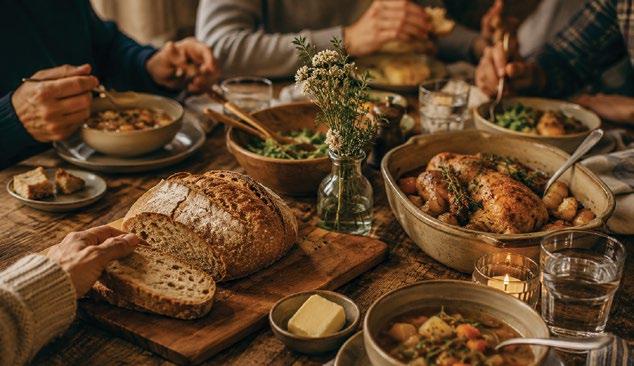

loaf of bread, peanut butter fudge, a pint of ice cream, and three root beers. Do not even try to count the calories here. And as his final act of defiance, he refused any of it. Thanks to Lawrence, the last meal rite was abolished, leaving the next batch of inmates well and truly disappointed once word got out.
You might wonder why these men did not order anything ambitious or impressive. The thought of a final dinner might conjure up images of lobster, caviar, and things only dreamed about. But the answer may actually be closer to home. What they really wanted was to feel comfort - just one more time, each inmate ready to come home. Their ultimate meal of meaning. The same experience is felt when we break bread with those close to us. The way the person cooking criticizes their cuisine and then we tell them just how wrong they are.
Assuming you are well-behaved, I would not worry about last meals. But if it is your last meal or just another Tuesday, there is always something you can do about it, and that may be all you need to feel the comfort of coming home.
Luke Bonner searches for meaning everywhere, however long it takes. When he finds it, he gets to work. And without meaning, it is just decoration. ■
A fresh perspective on power skills and hospitality from Samer Abou Daher
Dear Chefs,
When Amaresh invited me to contribute to Gulf Gourmet and gave me the freedom to write about anything I wanted, I found myself reflecting on what value I could genuinely bring to the chef community.
The truth is, I am not a journalist. I am not a chef. I am neither a restaurant manager nor a hotel manager. Yet for the past 23 years, I have had the privilege of sitting at the intersection of all of them.
Throughout my career in the foodservice industry, I have spent thousands of hours speaking with chefs, restaurant owners, hotel leaders, purchasing managers, sales professionals, and people leaders across the GCC. I have listened to their challenges, celebrated their successes, observed their leadership styles, and learned from their mistakes. Very few people have had the opportunity to view our industry through so many different lenses.
I have also experienced the industry from the other side of the table. Several years ago, I owned and operated a small delivery restaurant in Dubai called Uptown Pizza and Burger. Like many entrepreneurs, I entered the business with passion, ambition, and confidence. Unfortunately, I failed. Financially, emotionally, and professionally, it was one of the most difficult experiences of my career.
But failure is often the most expensive teacher. That experience taught me lessons about restaurant operations, customer expectations, team management, supplier relationships, food costs, and decision-making that no textbook could ever teach. Looking back today, I would not erase that chapter

from my life because many of the lessons I learned from failure continue to shape how I think and work.
And that is exactly why I am excited to launch this new section: Food for Thought
The GCC chef community already has abundant content on food, ingredients, equipment, trends, and recipes. And rightly so. These topics are the heart of our industry. But this section focuses on chefs, exploring the human side of hospitality beyond the kitchen, the tools, and the menus.
Every month, I will share practical lessons gathered from more than two decades in foodservice, drawn from industry leaders, personal successes and failures, and observing extraordinary people doing ordinary things exceptionally well.
We will explore topics such as leadership, negotiation, team culture, talent
development, communication, customer relationships, and career growth. Most importantly, I want every article to be practical. My goal is not to fill pages with theories or management jargon. My goal is for every reader to finish an article with at least one idea they can implement immediately in their kitchen, restaurant, hotel, or career.
Many people refer to these topics as soft skills
I respectfully disagree. After 23 years in this industry, I have come to believe that leadership, communication, emotional intelligence, negotiation, influence, teamwork, and self-awareness are not soft skills at all. They are Power Skills.
They are the skills that determine whether talented people succeed or remain stuck. They are the skills that turn chefs into leaders, supervisors into managers, and managers into industry icons. More than anything, this section is my way of giving back. The hospitality industry has given me a career, friendships, mentors, opportunities, and a lifetime of learning. Through Food for Thought, I hope to return some of that value to the community that has given me so much.
My hope is simple. That chefs come to Gulf Gourmet for the stories… …and stay for the education. Thank you, Amaresh, for trusting me with this opportunity.
I look forward to sharing this journey with our readers.
Samer Abou Daher is a foodservice professional, leadership trainer, and people & culture leader. He is the author of Gulf Gourmet's Food for Thought column. ■
Some things happen for a reason. You just do not get to read the reason until much later, writes Elvis Taylor
Eight years ago, a man asked me one question. I froze. But to explain the freeze, I have to take you back to a dinner in India.
I had come up through the management trainee program and was now a Senior Restaurant Manager, running the floor. On track, in my head, for F&B Director and GM one day, maybe, not far off. That night, I gave one table the full treatment, the menu walk-through, and took the order myself as manager. Nothing unusual. Just the job, the orientation.
The guest turned out to be an HR director. On his way out, he said, almost in passing, “If you ever want to work in the Middle East, call me.” I smiled, said thank you, and filed his business card in my wallet. Then I forgot about it for two years.
Because two years later, I was on holiday in Abu Dhabi, and I fell for the place. I wanted in. So I did the sensible thing, applied to a hotel, cold. Silence. Not even a no. Then I remembered him. I messaged him, half-bracing to reintroduce a stranger to my own face. “Of course I remember,” he said. He gave me a number, told me he would put in a word for Dubai this time.
I told him I would fly out in two days. A pause. “That’s… a bit tight.” Somehow, he made it happen. I interviewed in Dubai, passed, flew home to India, and told myself, "Okay, let us see.” I do not usually believe in destiny. I believe in spreadsheets and data. But there is no spreadsheet that explains how one kind sentence, from a man I would have almost forgotten, reached back across an ocean and changed the rest of my
Consistency is not sameness; great service adapts to every guest
life. Some things really do happen for a reason. You just do not get to read the reason until much later.
Then the call came. And the operations manager asked me one question: “If you opened a restaurant, what is the one thing you would do to make it succeed?” I had a dozen answers behind my teeth. I gave him none of them.
I said something about quality and consistency. Safe. Correct. Forgettable. Got the job. And spent eight years quietly annoyed at myself. So here it is. Eight years later.
Here is the part most operators would not say out loud: your food is not your differentiator. I run restaurants for a living, and I will put it in writing: the food gets someone through the door exactly once. After that, almost anyone in this city can match your dish. What they cannot copy is whether your guest felt handled, read, anticipated, served like a person instead of a cover number.
And here is where most of us fail. We build one experience and pray it fits everyone who walks in. The solo diner. The anniversary couple. The dad refereeing three kids. The corporate table that needs to look important. The firsttimer who does not know your menu

yet and is terrified of ordering wrong. We give them all the same greeting, the same pace, the same script. Then we call it “consistency” and wonder why half of them never come back. You have watched it happen. Maybe last week.
Consistency is not sameness. The best service in the world reads who sat down before it decides how to serve them. Not more service, the right service, for that guest, that night. That is the one thing I had built. That is the answer I had behind my teeth.
And I only ever got the chance to learn it because, years earlier, a man I served dinner to once told me to call him and, against all odds, I did. So let me ask you the question I froze on.
If you opened your restaurant tomorrow, what’s the one thing you’d do to make it succeed?
Tell me the real answer. Not the safe one. ■
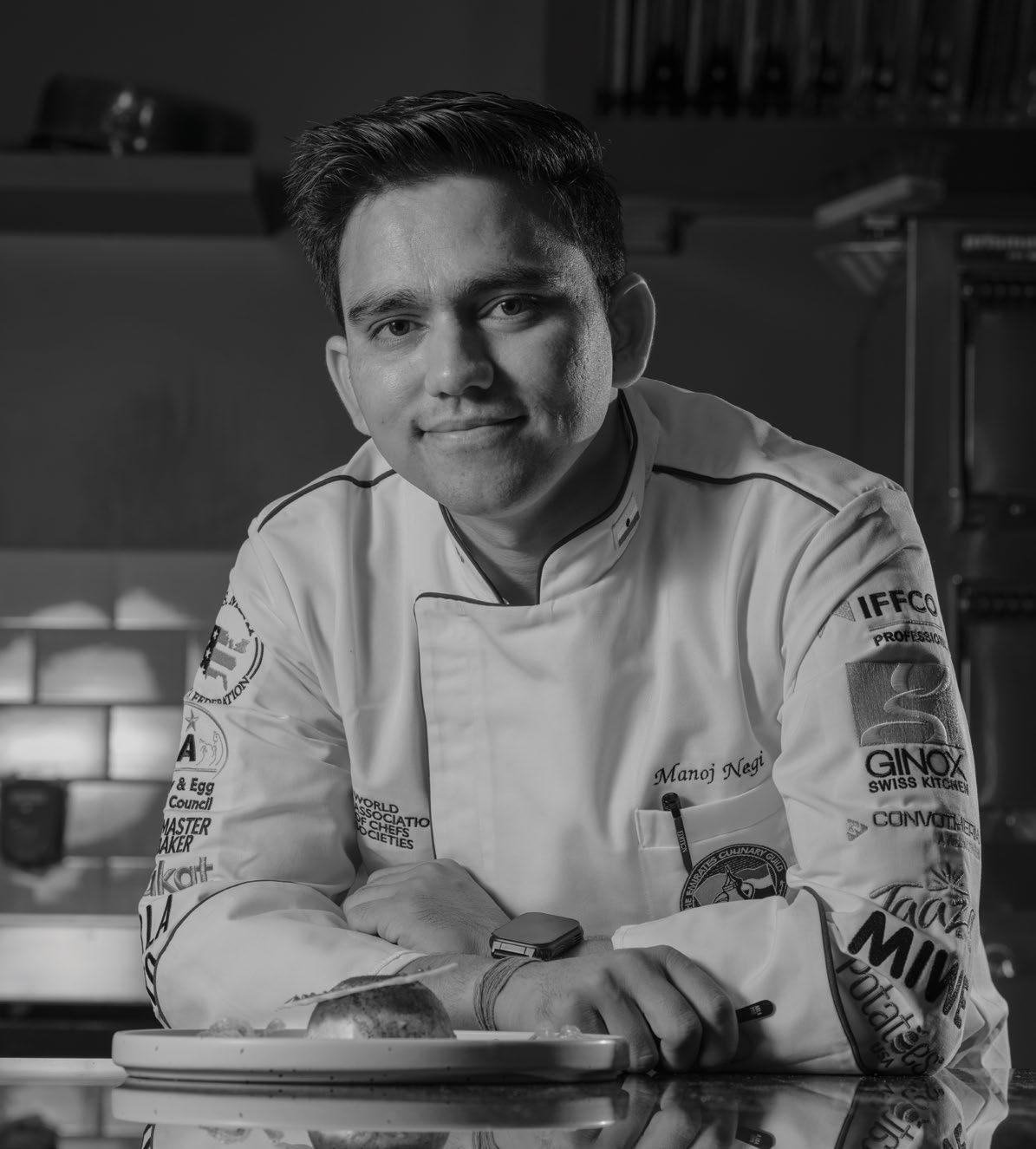
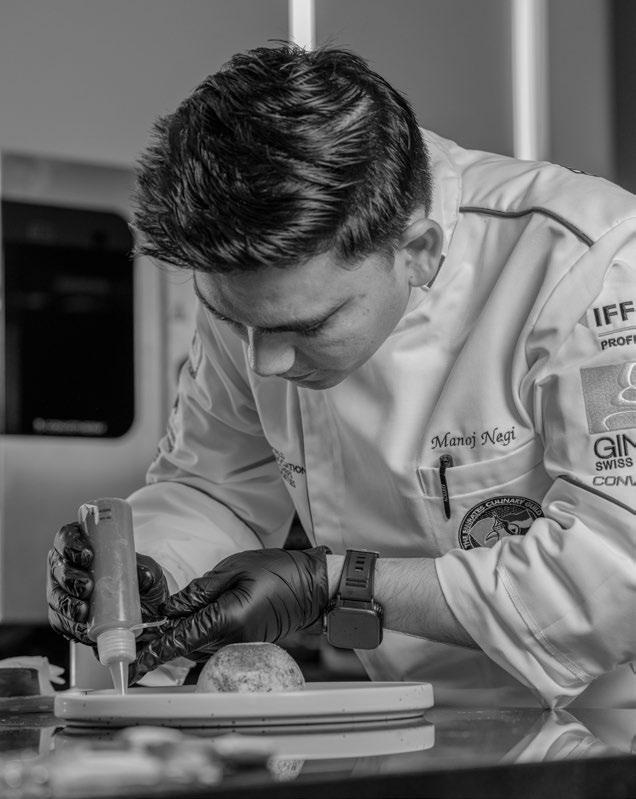
Most chefs stay in their lane, fire or sugar. Chef Manoj Negi of the Dubai Edition Hotel is plating up a plot twist. The 28-year-old Demi Chef de Partie has un-matcha-ble ideas when it comes to the Arla Pro competition
What separates a good chef from a great one? Chef Manoj Negi has a one-word answer. Heart. The 28-yearold Demi Chef de Partie at the Dubai Edition Hotel works across room dining operations and banquet production. His days revolve around guest requests, event schedules, food safety standards and the organised chaos that comes with luxury hospitality.
His story begins in Rudraprayag, a village in Uttarakhand surrounded by some of the most breathtaking mountains. Growing up there, he saw only two professions as viable career choices. "Army or chefs. For a long time, people in his region have been in either of these two professions. Lots of people from Uttarakhand become chefs. " The army's call was strong, but the inclination towards kitchens proved stronger.
His first step into the industry came through the Institute of Hotel Management in Rishikesh, where he completed a two-year diploma in Culinary Arts. Rishikesh, better known for its yoga retreats, spiritual seekers, and the banks of the Ganges, was, for Chef Manoj, the place where his diploma became a rite of passage, setting him on the path to a career in hospitality. After completing the course, he underwent training in Mumbai, spending months learning about the foundation of food. The years that followed took him to some of India's hospitality hubs with stints at Hyatt Ahmedabad, Courtyard by Marriott Kolkata, and Renaissance Marriott in Ahmedabad.
Each hotel added a new dimension to his repertoire. One property taught him about banquets, the other about larger operations and diverse menus. Then came Dubai, and with it, a life-changing shift in both latitude and altitude.
“I joined Rotana Tower Hotel. It was my first time in a different country. The standards were amazing. The municipality was very strict about
scale events of that nature can test even experienced professionals. There was a lot of learning there," he says.
Heart is what separates a good chef from a great one
hygiene. I learnt about the techniques, operations, food costs, everything. The standards were very high,” he recalls. If his years in India built the blade, Dubai was the whetstone that sharpened it.
A move to the Taj Exotica Resort came next, where he spent more than a year working on all-day dining, room dining, and the resort's outlets, which helped him map a wide range of guest expectations. “ I was also part of the team that catered to Chef Sanjeev Kapoor's daughter's wedding. Large-
Chef Manoj’s tryst with the Dubai Edition Hotel began in 2024. As a Demi Chef de Partie, he works as part of a team of 18 to 25 chefs across à la carte service, banquet operations, coffee breaks, canapés, and special events, where every service brings a new challenge to the table and no two days look the same. Alongside this, he holds the certification of Person In Charge, a Dubai Municipality designation that places food safety and hygiene firmly at the forefront of his work, a responsibility he always keeps in mind.
Outside his assigned station, another pull remains. The pastry section draws him like a magnet. Though not part of his core role, he steps in whenever possible, experimenting with desserts and presentation as a creative outlet within a structured environment.
In a kitchen world divided between the hot side and the pastry corner, he moves between both with the ease of a whisk through softened butter.“Sometimes I also work on pastry desserts and similar items in my hotel. I am very interested in the pastry side. I like to create something beautiful and focus on presentation,” he adds. It was this love for the sweeter side that led him to enter the Arla Pro competition.
“ I have prepared a matcha tiramisu, which is a reimagination of the Italian classic without sacrificing its soul. It has an Almond biscotti base. In place of eggs, I used a combination of Arla Pro whipped cream, soft cheese and white chocolate. You can feel the taste, the texture, the flavor, everything," he elaborates.

As for the plating, coming from a chef whose hands are more accustomed to the hot kitchen, it is surprisingly considered. "It is a modern plating. I did
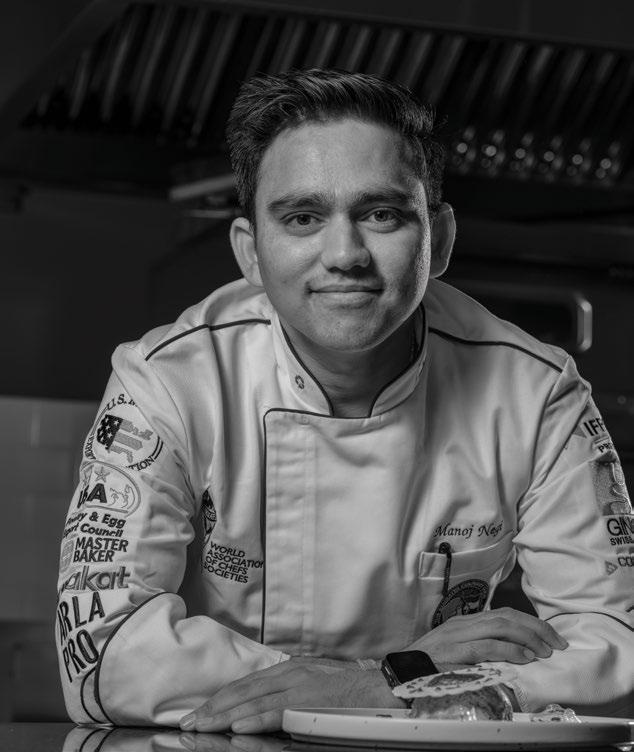
Every kitchen teaches something new when you stay open to learning
some research, got ideas and then made a nice garnish," he says, finding himself on the sweet side of the pass.
The passion for cooking runs in the family. Chef Manoj’s younger brother followed in his footsteps, now working as a chef in an Indian restaurant in Dubai. Back in the mountains, their parents live as they always have, surrounded by clean air, natural water and organic food grown from the earth. "They are happy there. We are also happy," he says.
The family's connection to Uttarakhand holds strong, which explains why Chef Manoj spends time supporting fellow professionals from the region. He is actively involved with the Uttarakhand Chefs Association, helping connect chefs with opportunities, industry networking and professional development initiatives.
“The Emirates Culinary Guild is also good for networking, learning about brands, competitions, and opportunities. I like to help someone who wants a job. If you are a good human, you can become a good chef,” he adds.
And when the conversation turns to the future, he goes back home. “I want to open a restaurant close to the mountains. I want to serve organic food, my culture's food. In a fine dining style, but with the real flavours of Uttarakhand,” he smiles.
But before he takes those flavors back to the peaks, he is busy conquering the desert. Who says you cannot handle the heat of the line and the sweet-talking of pastry? Chef Manoj's dish for the Arla Pro competition says otherwise. ■
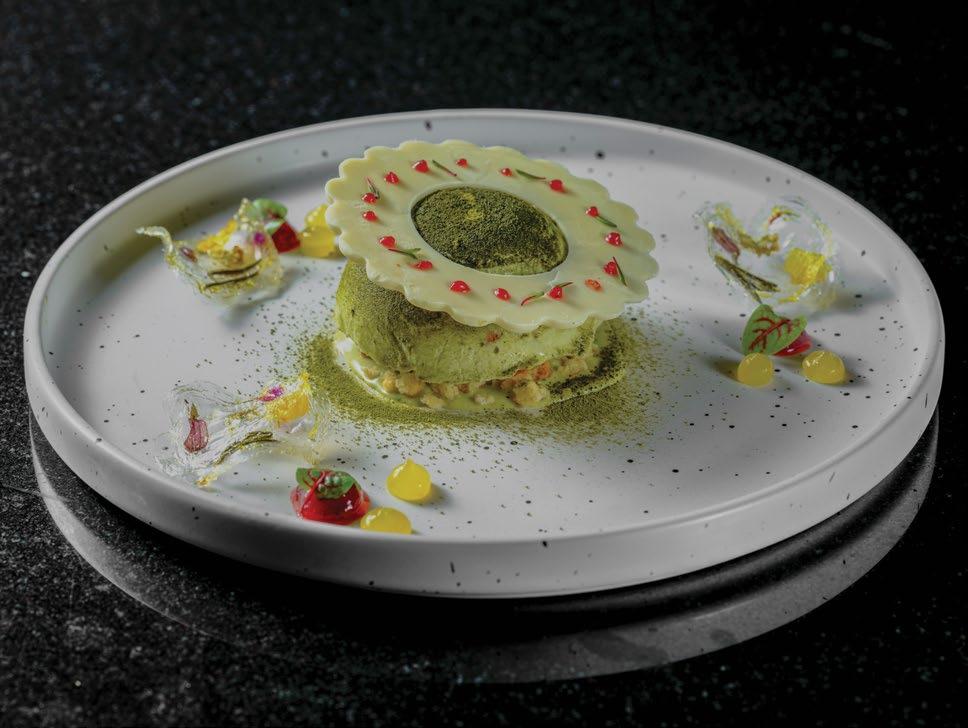
Raspberry Whip Ganache
Whipped Cream 100 g Soft Cream Cheese
g
Almond Biscotti
g Method
Whip the cream and softened cream cheese together until smooth.
Add the white chocolate and mix well.
Add or sprinkle in the matcha powder (or matcha liquid) and combine thoroughly.
Take a suitable mold and pour in a layer of the mixture.
Arrange the biscotti in a layer.
Repeat the layering process until the mold is filled.
Place in the freezer for approximately 2 hours.
Strawberry Gel
Fresh Strawberry
Cut the strawberries into small pieces.
Slow-cook the strawberries with the sugar.
Remove from the heat and add the agar-agar.
Blend until smooth.
Cool it before using.
Orange Gel Fresh Orange Juice
Strain, if required, for a smoother gel consistency. Almond Biscotti
Combine the fresh orange juice, sugar, orange zest, cinnamon stick, and rosemary in a saucepan.
Cook for approximately 10 minutes.
Reduce the mixture slightly to concentrate the flavor.
Add the gelatin and stir until completely dissolved.
Remove from the heat and transfer the mixture to a small container.
Allow the mixture to cool and set.
Once set, remove the cinnamon stick.
Blend until smooth.
Mix the all-purpose flour, baking powder, and castor sugar together.
Add the softened unsalted butter and eggs, then mix well until combined.
Add the almond powder and whole almonds.
Mix until a uniform dough forms.
Let the dough rest for 10 minutes.
Shape as desired and bake.
Baking Parameters
Parameter.
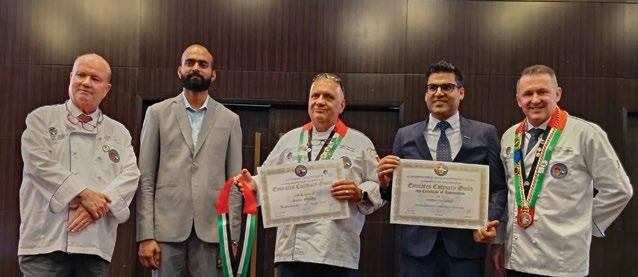
The ECG expresses its gratitude to Stephane Buccholzer, Hotel Manager, and the entire team at Le Méridien Dubai Hotel & Conference Centre for their outstanding hospitality during the June Guild meeting.
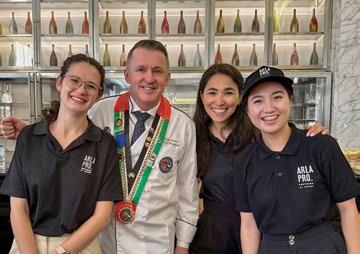
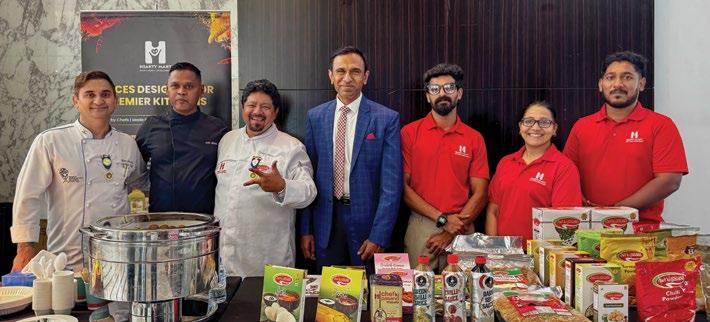


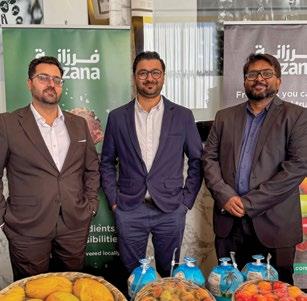

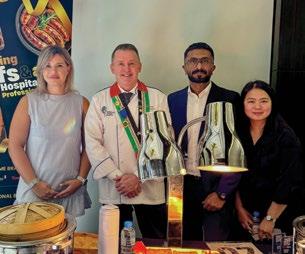

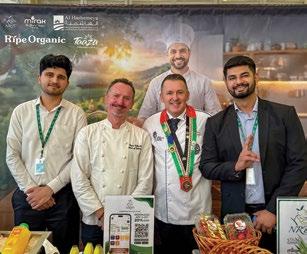
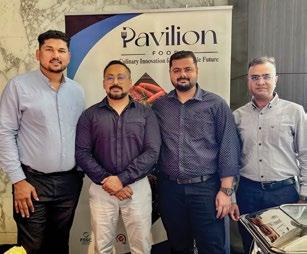
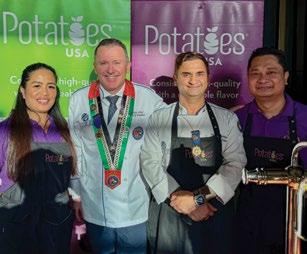
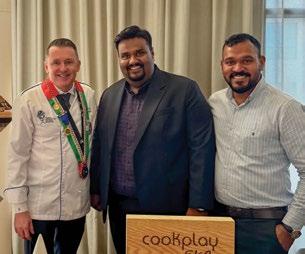

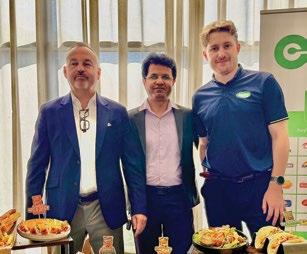
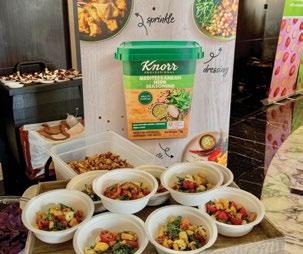



Venue: ICCA School Dubai United Arab Emirates
The Emirates Culinary Guild (ECG) (www.emiratesculinaryguild. net) is the association of professional chefs of the UAE. It is a non-profit-making organization, organized by volunteers dedicated solely to the advancement of culinary art in the UAE.
The aims of the ECG, broadly, are
To encourage and inspire young chefs through training and competition.
To enhance internationally the culinary prestige of the UAE.
To encourage UAE nationals to consider a career within the hospitality industry.
The salon classes (ESC) is a series of practical and display-based culinary competitions and fully Endorsed by the World Association of chefs Societies, Worldchefs; entry to which is open to professional chefs, pastry chefs, cooks and bakers and culinary students. Some of the competitions are designed for entry by a single competitor; others are designed as team events. Each competition is called a class.
The venue is the world famous culinary School home grown in Dubai ICCA, and the school will be the venue for all competitions, with access to their state of the art kitchens, including all equipment and assistance with ingredients. Foodverse and ICCA live will feature as he tech and marketing platforms with the entire event being live streamed globally through the ICCA network.
Sponsors will be invited to participate through sponsorship packages and on
site demos and interactive stands if they wish.
The program is spread over 4 months with individuals competing in practical cookery and some display classes. The event is designed to show case the chefs and industry during a challenging time for the Middle east hospitality industry.
Social media plays a large part in the Guilds self-promotion and the Gulf Gourmet magazine drive awareness around the globe. www. emiratesculinaryguild.net/, www. facebook.com/Emirates-Culinary-Guild763644223697376/timeline/, www. facebook.com/gulfgourmet?fref=ts, follow these links for more information on the Emirates Culinary Guild.
Membership of the ECG is open to all of those professionally and solely involved in the preparation of food. Anyone interested in the Emirates Salon Culinaire to compete or sponsor, please contact us below.
The Emirates Culinary Guild PO Box 454922 – Dubai – UAE Tel: + 971 56 8014089. emiratesculinaryguild@gmail.com
Class No. - Class Description
Pastry and Bakery
01 Cake Decoration – Practical
02 Wedding Cake Three-Tier
03 Four Plates of Dessert
04 Pastry Showpiece
Showpiece Artistic Displays
05 Chocolate Carving Showpiece
06 Open Show Piece
Gourmet Static Display
07 Five-Course Gourmet Dinner Menu
08 Sustainable Three-Course Vegetarian Lunch Menu
09 Four Plated Chicken Dishes
Practical Artistic Carving
10 Practical Fruit & Vegetable Carving
Practical Cookery
11 Arabic Mezzeh - Practical Cookery
12 Fish & Seafood - Practical Cookery
13 Beef - Practical Cookery
14 Emirati Cuisine – Practical Cookery
15 Savory Potato Creations Practical Cookery
16 Chicken - Practical Cookery
17 Lamb Primal Cuts Practical Butchery
18 Sounbula Mills Artisan Bakery Arena Practical Cookery
19 Chocolate Hand Made pralines, Bonbons and Petit Fours Practical cookery
20 The Artisanal Sandwich Practical Cookery
21 Afternoon Tea for Airport 1st class Lounge
PASTRY AND BAKERY
Practical Pastry
Class 1 : Cake Decoration –Practical
1. Two hours duration.
2026




2. Decorate a pre-baked single cake base of the competitor’s choice.
3. The Theme of decoration for the cake decoration will be to the competitors choice
4. The cake base must be a maximum size of 25cm X 25cm or 25cm Diameter.
5. The cake can be brought already filled without coating – ready to decorate.
6. The cake must be delivered and set up hygienically with cold box or dry ice storage. Not up to hygiene food product will not be judge.
7. All decorating ingredients must be edible and mixed on the spot. (Chocolate/Sugar/Marzipan/ Fondant) minimum height is 30cm, it should be able to enhance and harmonize with the overall presentation
8. Natural colors and flavoring only to be used nonchemical.
9. Gold, Silver, bronze, copper, pearlescent, metallic, lustre, glitter, mica and titanium dioxide powders or liquids are not allowed unless used as none edible, removable decoration such as cake top or centrepiece
10. No pre-modelled garnish permitted.
11. Chocolate and royal icing can be pre-prepared to the basic level,
12. Competitors must provide all ingredients, cake base, utensils, and small equipment required.
13. A standard buffet table is provided for each competitor to work upon.
14. Water, electricity and refrigeration might not be available.
15. The cake will be tasted and cut by the Judges, as part of the judging criteria
16. Ingredients supplied by the sponsor and shall be mandatory to be used, as follows, participants can choose from Sao Palme Dark 60%, Sao Palme Milk 43%, Sao Palme White and Deco Roma Fondant TBC
17. Information shall be sent to competitors in advance of the competition for supply of ingredients if being supplied. 50 Points will be deducted for noncompliance
18. All recipes must be provided for the judges on the day of the competition including all finishing items such as glazes and decoration ingredients to be mentioned.
All decorations must be edible and made entirely by hand.
1. Pillars or stands may be inedible but, unless decorated by hand, must be plain and unadorned.
2. Fine, food-quality wiring is allowed for the construction of flowers but must be properly wrapped and covered with flower tape or paste.
3. Royal icing, pastillage, pulled sugar, etc., may be used in the construction, but the finished display must not be dependent on these items.
4. All layers of the cake can be inedible blanks, there is no tasting of the cakes, this is to support Zero food waste
5. All cakes must be removed and taken back to the competitors work place for display and are not to be thrown away.
6. Inedible blanks must be used for the three layers.
7. Maximum area w60 cm x d75 cm.
8. Maximum height should not exceed 1 meter (including socleor platforms)
9. Pristine Ingredients supplied by the sponsor may be used if these are supplied, competitors must use if instructed by organizers.
10. Information shall be sent to competitors in advance of the competition for supply of ingredients.
All decorations must be edible and made entirely by hand.
1. Prepare four different types of desserts each for one person.
2. Displayed cold, each portion for one person, suitable for a la carte service. a) 1 x Hot and Cold dessert composition b) 1 x Vegetarian without eggs and animal fat
c) 1 x Arabic Dessert Free Style creation
d) 1 x Dessert served in glass
3. Practical and up-to-date presentation is required.
4. Typewritten description and recipes are required.
5. Tasting will be part of the judging process if deemed necessary to determine quality and authenticity.
6. Maximum area w90 cm x d75 cm
7. Showpieces are allowed but will not be judged.
8. Each dessert must have 2 of the below Arla Pro products in the recipe
9. All the plates must use Arla Pro products compulsory in the preparation.
10. All Arla Pro products are mandatory to be used an no other cream, cream cheese or Arla butter are to be used if others used then 50% reduction in points will be applied.
11. All Arla Products shall be supplied by the sponsor to the competitor in advance
12. Products to be used, Arla Pro whipping cream, Arla Pro Cream cheese block and Arla Pro butter
All decorations must be edible and made entirely by hand.
1. To display a showpiece of either (a) Chocolate (b) marzipan/sugar/pastillage (c) dough/bread dough (d) Asian dough figurine
No frames, moulds or wires are allowed. Points will be deducted for non-compliance.
2. Edible media may be used, singly or in mixed media. Sponsors products may be available to be used. Information shall be sent to competitors prior to the competition
3. Written description required.
4. Maximum area w90 x d75cm.
5. Maximum height 90cm (including base or socle).
Class 5: Chocolate Carving Showpiece
1. Free-style presentation. To be carved from a single block
2. Natural coloring and minimal glazing is allowed.
3. No frames, molds or wires are allowed.
4. Points will be deducted for noncompliance.
5. Maximum area: w60 cm x d75 cm.
6. Maximum height 30-35cm (including base or socle).
7. Written description mentioning the theme is required
8. Chocolate may be supplied and will be informed to the competitors, however VELICHE brand chocolate from Master Baker to be used.
1. Freestyle presentation.
2. Only showpieces made of edible food material will be accepted for adjudication.
3. Frames and wires support are allowed but must not be exposed.
4. Maximum area w90 cm x d75 cm.
5. Maximum height 75 cm. (including base or socle).
6. Special note: To enhance the overall level of competition and to aid competitors to demonstrate superior modeling skills, it is permitted to use, frames and supports .i.e. Styrofoam support must not be pre-molded and simply sprayed, a round cylinder to form the base of a body is permitted, under no circumstances will pre-carved detailed Styrofoam of any other media be permitted. If the judging committee deems that the finishing has been aided by excessive molding work it may not be judged.
Class 7: Five-Course Gourmet Dinner Menu
1. Present a plated five-course gourmet meal for one person
2. One of the courses for the meal must contain US Beef as the main ingredient. Proof of purchase needs to be brought to the Competition for all the Beef Products if proof of purchase is not brought then 50% of the judging marks shall be reduced
3. The meal to consist of:
> A cold appetiser,
> A soup,
> A hot appetiser,
> A main course with its garnish
> A dessert.
4. Hot food presented cold on appropriate plates.
5. Food coated with aspic or clear gelatin for preservation.
6. Total food weight of the 5 plates should be 400/500 gms.
7. Typewritten description and typed recipes required
8. Maximum area w90 cm x d75 cm.
1. Present a plated three-course vegetarian meal for one person.
2. Suitable for lunch service in a highend restaurant
3. The meal consists of:
> An appetizer or soup
> A main course
> A dessert
4. To be prepared in advance and displayed cold on appropriate plates.
5. No meat, chicken, seafood, or fish to be used, (meat-based gelatin glaze to enhance presentation is accepted).
6. Ovo-Lacto products are allowed. Chefs are to apply sustainable product selection for ingredients and ensure food wastage is reduced through this meal.
7. Total food weight of the four plates should be 350/400 gms.
8. Typewritten descriptions and recipes required.
9. Maximum area w75cm x d75cm.
1. Prepare 2 different appetizer and 2 different main course dishes each for 1 person using Farzana chicken as the main protein items in all dishes
2. All 4 dishes must use Farzana Chicken in their creation
3. Each of the dish’s plate must contain ingredients as stipulated by the sponsor
4. Proof of purchase needs to be brought of sponsors ingredients to the Competition for all the Farzana chicken if proof of purchase is not
brought then 50% of the judging marks shall be reduced
5. Practical and up to date presentation is required
6. Hot food presented cold on appropriate plates.
7. Food coated with aspic or clear gelatin for preservation.
8. Recipes and ingredient list (typed) of each dish required.
9. Maximum area 60cm x 80 cm
Class 10 : Practical Fruit & Vegetable Carving
1. Freestyle.
2. 120 minutes duration.
3. Hand carved work from competitor’s own fruit\vegetables.
4. Competitors to use own hand-tools and equipment.
5. No power tools permitted.
6. Pre-cleaned, peeled material is allowed, but pre-sliced/carved will result in disqualification.
7. Each competitor will be supplied with a standard buffet table on which to work.
Notes on the Practical Cookery Classes - These notes pertain to all practical cookery classes. They must be read in combination with the brief of the class entered.
1. The preparation, production and cooking skills of each competitor must be demonstrated during her/ his time in the kitchen.
2. Waste and over-production will be closely monitored. Please refer to the ECG Sustainability Guidelines on the website
3. Competitors are to avoid the use of single use plastics, acceptable items are reusable, recyclable, compostable, bio- degradable, items for ingredient containers etc., reusable tasting spoons to be used.
4. There is a point penalty deduction for wastage or over-production.
5. Timing is closely monitored.
6. There is a 1-point penalty deduction for every 1 minute that the meal is overdue.
7. All food items must be brought to the BROUGHT
Salon in hygienic, chilled containers: Thermo boxes or equivalent.
8. Failure to bring food items in a hygienic manner will result in disqualification.
9. All dishes are to be served in a style equal to today’s modern presentation trends.
10. Portion sizes must correspond to a three-course restaurant meal.
11. Dishes must be presented on individual plates with appropriate garnish not exceeding 250g total food weight excluding sauces.
12. Unless otherwise stated, competitors must supply their own plates/bowls/platters with which to present the food.
13. Competitors must bring with them all necessary mise-enplace prepared according to WORLDCHEFS guidelines in the hot kitchen discipline (www. worldchefs.org). Culinary RulesWORLDCHEFS
14. Including Worldchefs Hygiene rules, https://worldchefs.org/wp-content/ uploads/Hygiene_rules.pdf
15. Including Worldchefs Best Practices https://worldchefs.org/ wp-content/uploads/Worldchefsbest-practices.pdf
16. Including Worldchefs chefs Judges code of conduct https:// worldchefs.org/wp-content/ uploads/JuryCodeOfConduct-1.pdf
17. Competitors are to provide their own pots, pans, tools and utensils.
18. All brought appliances and utensils will be checked for suitability. The use of any additional equipment must receive prior approval before the competition from the organizers.
19. The following types of prepreparation can be made for the practical classes:
EXPLANATION (what foods are permitted to be brought into the kitchen)
a) Salads – cleaned, washed, not mixed, or cut.
b) Vegetables – cleaned, peeled, washed, not cut, must be raw.
c) Fish may be scaled and filleted, and the bones cut up.
d) Meat may be de-boned, and the bones cut up
TASTE & TEXTURE
The dish should preserve its authentic taste, texture with appropriate seasoning, and meet modern nutritional standards in quality, flavour, and colour.
CORRECT PROFESSIONAL PREPARATION
Modern culinary arts, emphasizing practical and acceptable food preparation methods, applying proper cooking techniques for all ingredients, maintaining hygiene, minimizing food waste, and ensuring efficient teamwork and time management during preparation and service.
HYGIENE AND FOOD WASTE
Maintaining clean and hygienic work techniques, adhering to established workflows, ensuring benches are clean and uncluttered, storing food items properly, controlling temperature for hot and cold foods, managing excess and food waste effectively, and limiting plastic waste.
PRESENTATION
Ingredients and side dishes should be harmonious. The plating must be clean, straightforward, without artificial garnishes or elaborate arrangements, to create an appetizing appearance. 10
SERVICE
Meals must be practical and transportable, presented on time, and in the correct number of plates. 5 Mark
MATERIAL BROUGHT / MISE EN PLACE
Clear arrangement of materials, ensure the correct number of items are brought in, apply proper working techniques and make efficient use of working time.
INNOVATION
Introduce new or improved techniques, enhance dish presentation to exceed expectations, and enable chefs or teams to create a memorable impression.
Total Score: 100 points (No half points will be given)
e) Stocks – basic stock, not reduced, not seasoned, no additional items (garlic, etc.). Hot and cold samples must be available for the judges.
f) Pastry sponge, biscuit, meringue, basic dough’s – can be brought in but not cut.
g) Basic pastry recipes can be brought in weighed out but no further processing.
h) Fruit pulps – fruit purees may be brought in but not as a finished sauce.
i) Decor elements – 100% must be made in the kitchen.
5 Mark
5 Mark
20. No pre-cooking, poaching, marinating etc. is allowed.
21. No ready-made products are allowed.
22. No pork products are allowed.
23. No alcohol is allowed. However Lyres Non Alcoholic Spirits are allowed
24. If a farce is to be used for stuffing, filling, etc., the farce must be prepared in the kitchen in front of the judges to show the competitor’s skill
25. Within 10 minutes after the end of the competition, competitors must have the kitchen thoroughly cleaned and tidied and ready for the next competitor to use.
26. Two copies of the recipestypewritten - are always required.
27. Submit one copy of the recipe/s to the clerk when registering.
28. Submit one copy of the recipe to the duty marshal at the cooking station.
29. No transglutaminase ( meat glue ) is permitted to be used
30. No gold, silver leaf or powders are permitted.
31. The use of 2 moulds and one stencil only per event should be included see separate guidline sheet
Class 11: Mezzeh – Practical Cookery
1. Time allowed: 45 Minutes
2. Prepare and present two portions: Two types of hot mezzeh and 1 type of cold mezzeh.
3. Dishes must represent a variety of cooking methods and the use of ingredients as used in the Levant restaurants of the UAE.
4. Mezzeh can be traditional or modern and be representative of any Levant country
5. All Mezzeh should be prepared during the competition with very minimum of pre-prepared ingredients as per Worldchefs Guidelines please read the overview in this document for practical cookery .
6. Rahma olive oil must be the only olive oil used in the creation of these dishes and will be available in the competition venue
7. Present the mezzeh in two equal portions.
8. One portion will be presented and one portion will be presented to the judges.
9. Typewritten recipes are required.
Class 12: Fish & SeafoodPractical Cookery
1. Time allowed 60 minutes
2. Prepare and present three identical main courses using fish and or shellfish as the main protein item of the dish.
3. All ingredients excluding the fish must be provided by the
competitors. The fish & seafood is being supplied by the sponsor and this fish is only to be used. Each competitor shall receive in the competition kitchen Fish /seafood TBC between 400-500 grams. It shall be issued by the organizers on the day of the event. Please see attached picture and specification
4. Weight of fish per portion on the plate to be 150grams
5. Present the main courses on individual plates with appropriate garnish and accoutrements.
6. Rahma olive oil will be supplied and must be used in the kitchen
7. Typewritten recipes are required.
1. Prepare and present three identical main courses using US Beef as the main protein item. Proof of purchase needs to be brought to the Competition for all the US Meat Products if proof of purchase is not brought then 50% of the judging marks shall be reduced
2. Time allowed 60 minutes
3. Any cut of beef with the exception of tenderloin, rib eye and sirloin, can be used.
4. Weight of beef per portion on the plate to be 150grams
5. Present the main courses on individual plates with appropriate garnish and accoutrements.
6. Rahma Olive oil shall be supplied and must be used in the kitchen
7. Typewritten recipes are required.
1. This class is designed to ensure that the tradition of Emirati Cuisine is preserved and promoted through professional chefs and that Emirati cuisine comes to the forefront of restaurants menus across the Emirates in modern and traditional restaurants.
2. Prepare and present two plated portions each of 2 different Emirati dishes of the competitors choice. Any Emirati dish can be presented there is no restriction, can be fish, meat, chicken,
breakfast, lunch or dinner. 1 of the dishes to be a main course.
3. Emirati cuisine with traditional flavors, the main course to be modern high end restaurant style in presentation and preparation maintaining the traditional flavors of the Emirate’s, The protein of the main course to be 150 grams, 2 Plates
4. The second dish to be served in a traditional style. 2 plates
5. Young Chef of the Year competitors must cook Balalit as one of the dishes in traditional style.
6. Competitors must bring their own plates/bowls for presentation and all necessary mise-en-place for the meals
7. All Competitors must use (Sponsors ingredients if provided) in one of the dishes, this is mandatory, and failure will result in 50 point reduction.
8. The judges will check appliances and utensils for suitability
9. Typewritten description and recipes are required
10. Time allowed 60 minutes to present all two recipes
Entrants for The Young Chef of the Year trophy must enter the following classes and no others.
In addition to classes 12 & 16 here below competitors must also enter for class 14 Emirati Cuisine Practical Cookery one dish must be Balalit
1. Time allowed 60 minutes
2. Prepare and present three identical main courses using Potatoes from USA, Fresh, Frozen or Dehydrated, to the competitor’s choice, 3 plates to be presented two for judges one for presentation. The dish must have a minimum of 3 potato recipes using potatoes from the USA, Fresh, Frozen or Dehydrated.
3. Potatoes from USA MUST be used in all preparations and be the main ingredient used in the dish, Potatoes from the USA, Fresh, Frozen and Dehydrated these are
the only Potatoes to be used and are mandatory failure to utilize these products then 50% of the judging marks shall be reduced. Present the main courses on individual plates with appropriate garnish and accoutrements.
4. Typewritten recipes are required
5. Weight per portion on the plate to be 150 grams
1. Time allowed 60 minutes
2. Prepare and present three identical main courses using Chicken from sponsor TBC.
3. The bones of the chicken are to be kept for inspection by judges
4. Present the main courses on individual plates with appropriate garnish and accoutrements.
5. Typewritten recipes are required
6. Weight of chicken per portion on the plate to be 150 grams
7. All of the above rules are applicable for the competitors entering Best Arab National Cuisinier trophy. The main course for those competitors ONLY must be a Traditional flavored Chicken Arabic main course, from any Levant country. Can be served modern style for high end restaurant lunch or dinner service
8. All other competitors are not to follow Point 7
1. Prepare various ready-to-cook joints and pieces, some as required by the organisers, the others to competitor’s choice.
2. Make a presentation of the finished cuts and off-cuts for exhibiting to the judges.
3. Competitors must use the fridges provided to store their finished cuts prior to judging
4. Cuts/joints can be suitable for foodservice or suitable for a retail butchery display.
5. Organisers will supply the lamb primal for this class.
6. Each competitor will have two
stainless steel tables (supplied by the organisers) on which to work.
7. No power tools permitted.
8. Competitors to supply their own:
9. Tools and knives
10. Twine or netting
11. RED cutting boards (this is a municipality requirement and will be strictly enforced)
12. Garnishing
13. Display trays
14. Sundries
15. Time allowed: one hour
16. All tools and sundries will be inspected to ensure that they are hygienically suitable for food use.
17. Cuts required by the organisers are:
18. 1 x shoulder, boned and rolled, tied or netted ready for roasting.
19. 3 pieces shoulder chops.
20. 1 x 8 rib Frenched rack.
21. Mid-loin chops from a short loin
22. 1 x Eye of Loin.
23. 1 x Tunnel-boned leg tied or netted for roasting.
24. 1 x Seam-boned leg trimmed into its 4 primal cuts plus its bone-in shank.
25. Sustainability is a key part of our jobs as chefs and judges will be looking at this as part of the judging criteria to
26. see wastage on bones, competitors knowledge of usage of off cuts and other usable parts, they will be expected to explain to the judges what can be done with any waste seen by judges.
27. Nutritional facts, competitors are expected to be able to tell the judges what is the difference between beef and lamb from a nutritional stand point
Class 18: Sounbula Mills Artisan Bakery Arena, Practical Cookery
1. A team event for 2 bakers per team. By invitation
2. Please read separate full detailed class briefing document
Class 19: Chocolate Hand Made Petits Four & Pralines Practical cookery Practical
1. Team of 2 Chefs
2. Time 3 hours
3. Produce one chocolate showpiece
maximum height 50cm, can be pre made pieces ,molded in the place of work however all must be assembled during the competition Showpiece should enhance the presentation and will be judged.
4. Prepare 2 types of the following 9 pieces of each, 2 types BonBon, 2 types Petit Fours, 2 types of pralines, without pre shell or mould. Must be handmade and 2 types of Pralines. each piece to weight between 6-14grams
5. Five Pieces of each type for the judges for tasting and remaining 4 pieces of each type to be displayed with the show piece on appropriate platter/presentation
6. Freestyle presentation and theme
7. Written description mentioning the theme is required.
8. Typewritten products description and recipes are required.
9. Different Flavours ,textures and chocolate types will be looked for in the items presented
10. A professional kitchen shall be available to competitors to bring all equipment, ingredients and special tools.
11. Equipment list in kitchen shall be shared to each team.
12. Sponsored ingredients may be supplied and must be used
13. Competitors are advised to review Worldchefs rules and guidelines
20: The Artisanal Sandwich Practical Cookery
1. Total of 30 minutes cooking time
2. Any cuisine any style of sandwich that would be served in a high end casual dining, coffee shop
3. 2 identical plates, (1 for judges for tasting ; 1 for feedback)
4. Hot or Cold Sandwich with a side order of accompaniment to competitors choice
5. Competitor’s style and choice of sandwich and presentation styles
6. products may be provided and must be used and all ingredients as per the list sent to competitors shall be made available on the day in the competition kitchen. We want to see these used as an ingredient
not used in raw format as we want to challenge the craft skills at this competition. The competitors need to expand the ingredients to be as creative as possible in their dishes. The competitors once registered shall receive specification sheets of ingredients to be guided. Any other ingredients other than those that are mandatory from the sponsor then competitors to supply their own.
7. Non use of the mandatory ingredients will result in a 50% reduction in scores.
8. Limited kitchen equipment will be provided, in the form of 1 rectangular work benches with 1 induction unit and 1 additional power 13amp socket. Water will be provided.
9. Competitors can bring extra equipment with written approval of the organizers, microwave ovens are not allowed. Only 13 amp equipment will be permitted
1. The Emirates Salon Culinaire will be held June -September 2026.
2. The venue is at the ICCA School Dubai
3. The entrance fee is AED50 for all single entries, unless otherwise stated in the Rules and Regulations or the Class Briefs.
4. Entry applications are ONLY via the foodverse APP available in the app and google play store and here https://www.foodverse. io/ competitors must sign up to the APP to gain access to the foodverse and the competition entrys. No paper based entries or emails will be entertained.
5. The fee for entry to the trophy classes is as follows:
i. Best Cuisinier – Salon Classes - Dubai 2026 AED: 250/- per person
ii. Best Pastry Chef – Salon classes- Dubai 2026 AED: 250/per person
iii. Best Artist – Salon Classes-
Dubai 2026 AED:250/- per person
iv. Best Arab National – Salon classes- Dubai 2026 AED:250/per person
v. Young Chef of the Year – salon classes Dubai 2026 AED: 250/per person
6. Closing date for entries is 1st of every month based on the classes per month However, many are often fully subscribed and closed well before the closing date.
Entrants to a trophy class must enter and finish in all and only those classes that pertain to the trophy for which they are entering. No other classes may be entered into by a trophy entrant. Trophies are awarded on the highest aggregate judging points from all classes pertaining to the trophy being awarded. The required classes are:
i. Class #7. Five-Course Dinner Menu
ii. Class #13. Beef Practical Cookery
i. Class #16. Chicken Practical Cookery
In order to qualify for inclusion in the points tally for Best Cuisinier Trophy a competitor must win three medals, at least one of which must be a gold medal.
i. Class # 01. Practical Cake Decoration
ii. Class # 19. Chocolate Hand Made pralines, Bonbons and Petit Fours Practical cookery
iii. Class #3. Four plates dessert In order to qualify for inclusion in the points tally for Best Pastry Chef Trophy a competitor must win at least three medals one of which must be a gold medal.
BEST ARTIST:
i. Class #5. Chocolate Showpiece
ii. Class #6. Open Showpiece
iii. Class #10. Practical Fruit & Vegetable Carving
In order to qualify for inclusion in the
points tally for Best Artist Trophy a competitor must win at least three medals one of which must be a gold medal.
BEST ARAB NATIONAL CUISINIER
i. Class #16. Chicken – Practical Cookery Arabic Style
ii. Class #11. Arabic MezzehPractical Cookery
iii. Class 14: Emirati CuisinePractical Cookery
iv. In order to qualify for inclusion in the points tally for Best Arab National Trophy a competitor must win at least three medals & one Gold medal and be an Arab National.
BEST BAKERY TEAM
1. Class 18 Sounbula Mills Artisan Bakery Arena Class “The SOUNBULA MILLS UAE Bakery team of 2026”
See Classes for Entry Document. Classes 12,14 and 16 are the three mandatory classes for entry.
A team of WorldChefs (The World Association of Chef’s Societies) approved international Judges will adjudicate at all classes of the competition: using Worldchefs-approved methods, criteria and documents www.worldchefs.org
After each judging session, the judges will hold a debriefing session at which each competitor attending may learn something of the thinking behind the judges’ decision. Competitors will not be competing against each other: rather, they will be striving to reach the best possible standard. The judges will then apportion marks that accord with their perception of the standard reached. The competitor will then receive an award commensurate with his/her points tally for the class. In theory, therefore, everyone in a particular class could be awarded a gold medal. Conversely, it could be possible that no awards at all are made. BROUGHT TO YOU
The scaling for awards in all classes is as follows
Points
100 Gold Medal with Distinction with Certificate.
99 – 90 Gold Medal with Certificate.
89 – 80 Silver Medal with Certificate.
79 – 70 Bronze Medal with Certificate
60 – 69 Certificate of Merit Thereafter Certificate of Participation
Corporate and Establishment Trophies
Best Effort by an Individual Culinary Hospitality School – The Emirates International Salon Culinaire
This trophy is awarded to the educational Centre whose competitors gain the highest total combined points from the medals won from all of their entries.
Point Value of each Medal Won:
Gold Medal with Distinction 6 Points Gold Medal 5 Points Silver Medal 3 Points Bronze Medal 1 Point
Winners where a sponsored trip is awarded are restricted to wining the trip once per life time. In a case where the overall winner has participated in a sponsored trip previously the trip shall be awarded to the 2nd place winner.
If no Gold Medals are awarded to competitors in the trophy classes then there shall be no trophy given at the competition.
Mandatory and Sponsored Ingredients ALL TBC SOUNBULA Class Bakery Arena
1 Flour for all preparations
Rules and Regulations for Culinary Competitions
The venue is ICCA Dubai
1. Please read the following regulations carefully. The instructions contained herein are mandatory. Noncompliance with any of the points mentioned could lead to loss of marks or complete disqualification.
2. The Briefs of the Classes for Entry
document also forms part of these Rules and Regulations and must be read in conjunction with this document. More details can also be found at www.worldchefs.org for Worldchefs rules and judging.
3. Other regulations relevant to a particular competition would appear on the last page/s of this document. PARTICIPATION:
1. Participation at competition is open to any professional employed in the preparation of food.
2. Unless the organisers specifically mention a class as being a team event, all classes are for entry by a single competitor.
3. Competitors are restricted to one entry per class
4. Competitors must attend and participate on the date and at the time allotted to them no date changes will be allowed.
Entry applications are via the foodverse APP available in the app and google play store and here https://www.foodverse. io/ competitors must sign up to the APP to gain access to the foodverse and the competition entrys. No paper based entries or emails will be entertained.
5. Complete the entry-form on the foodverse app according to the instructions on the foodverseapp. www.foodverse.io
6. Submit the completed form to the organisers via the app
7. Entry is paid but pending final decision.
8. Entries are accepted strictly on a first-come, first paid-accepted basis
9. Competitors must be 18 years old and above
10. Ensure that your name on your entryform exactly as you would wish it to appear on any certificate, letter of participation or posting of results.
11. A professional food-safety company will oversee all aspects of hygiene
practice at the competition.
12. It is quite possible that the Municipality Food Control Section will conduct its own hygiene inspections as and when it sees fit.
13. The organisers have no control over these two entities. Should either raise an objection to the standard of hygiene of any particular person or team, that person or team will not be allowed to compete
14. The Emirates Culinary Guild (ECG) is the body responsible for the creation, organisation and administration of the competition.
15. The competition is governed by and construed according to the rules of the organisers.
16. The organisers have sole authority to adjudicate on any matters pertaining to the competition.
17. Entrants’ acceptances of participation in the competition are construed as confirmation of their undertaking to submit unconditionally to the jurisdiction of the organisers in regard to all aspects of the Emirates International Salon Culinaire.
18. The address of the ECG for all correspondence and inquiries referencing culinary competitions is: The Emirates Culinary Guild, PO Box 454922 Dubai, United Arab Emirates. Tel: + (97156) 801 4089. Email: emiratesculinaryguild@gmail.com
19. Each competitor is allowed one helper to assist with carrying equipment. No other help is allowed to a competitor within the preparation area.
20. A helper must be junior in rank to the person he/she is helping.
21. A competitor must wear full; freshly laundered chef’s uniform with appropriate headgear and footwear when attending at the exhibition.
22. A competitor’s helper must wear full; freshly laundered chef’s uniform with appropriate headgear and footwear when attending at the exhibition.
23. Competitors that are incorrectly dressed at a competition will not have their exhibits judged.
24. Helpers that are incorrectly dressed will not be admitted to the exhibition.
25. Logos, marks and identifying colors provided by the organisers must be worn by competitor throughout the competition in the position indicated to them by the organisers at the time of registration.
26. Logos, marks and identifying colors provided by the organisers must be worn by helpers throughout the competition in the position indicated to them by the organisers at the time of registration.
27. A competitor entered in a practical
competition must register at least thirty minutes before the commencement of the competition otherwise the competition slot will be given to a waitlisted competitor.
28. Any competitor not in place and ready to start at least five minutes before the time a competition commences, will be disqualified.
29. Competitors and helpers are forbidden from approaching or speaking with or at a judge without the express permission of the organisers.
30. Each exhibit must be the bona fide work of the entering competitor.
It must be solely the work of the competitor and must be certified as such by his Head of Department or General Manager.
31. Each exhibit must be a completely original work, it must not have been displayed previously (in whole or in part) in any competition or exhibition whether private or public.
32. All exhibits must be of edible substance except for framing, socles and stands where they are allowed.
33. It is forbidden to use any living entity whatsoever as part of an exhibit (e.g. tropical fish).
34. It is forbidden to depict religious, nude, semi-nude or political themes in an exhibit.
35. All exhibits must be suitable for presentation as a decorative item in a restaurant or banqueting setting.
36. An exhibit must not carry any logo, label or mark of identification; however, competitors must be able to identify their exhibit if required.
37. Competitors are responsible for their exhibits and should ensure that they are available in their proper place for judging on the day and time specified.
38. No preparation or finishing of exhibits is allowed in any area except the designated preparation area at the rear of the competition area.
39. Finished exhibits must be placed in the position indicated by the organisers.
40. No interference with an exhibit is allowed once the organisers have deemed it as submitted for judging.
41. Competitors must leave the judging area as soon as their exhibits are in place or when instructed to leave by the marshals, whichever is the sooner.
42. Exhibits may, at the discretion of the organisers, be moved to a separate enclosure, there to remain for part or for the duration of the exhibition.
43. Failure by a competitor to register or exhibit at the specified time could result in disqualification. The competitor entered must place his or her exhibit themselves this task cannot be done in absentia
44. Exhibits which are removed by
competitors without permission of the organisers will not qualify for any kind of award.
45. A Marshal-at-arms will be recognizable by a badge displaying the logo of the Emirates Culinary Guild and the legend ‘Marshal’.
46. Marshals are charged with ensuring that the rules and regulations of the competition are observed by all concerned.
47. Competitors, helpers and visitors are all obliged to cooperate with the marshals - without question, at all times If a competitor is disrespectful to any member of the organizing committee, judges or marshal they will be disqualified and banned for life from future competitions organized by the ECG and reported to their General Manager.
48. Gold, silver and bronze medals and certificates and certificates of merit are awarded solely at the discretion of the judges.
49. The decision of the judges is final and each competitor is required to abide by it without comment.
50. Medals will normally be presented at 17:30 each day. This may change according to circumstance.
51. Any medal or certificate that is not accepted by the competitor or his/her helper at the presentation ceremony for that day will be forfeit, unless prior arrangements are made with the organisers.
57. A competitor or his/her helper must be correctly dressed as stipulated in the rules when collecting medals or certificates. Chefs uniform NO JEANS
58. Incorrectly dressed competitors/ helpers will not be allowed access to the awards area.
59. All exhibitors and competitors assign all rights concerning videos, photographs, menus, recipes, exhibits, sound recordings etc. to the Emirates Culinary Guild..
Stop the waste: UN food agencies call for action to reduce global hunger

https://www.feedtheplanet. worldchefs.org/
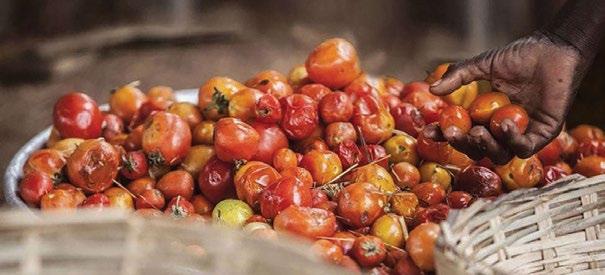
60. The organisers are entitled to cancel or postpone the Salon, or to alter the duration, timing or schedule of any event.
61. The organisers reserve the right to cancel any classes or limit the number of entries or extend, modify or revoke any of the rules and conditions without being held liable for any claims for compensation whatsoever.
62. The organisers will not under any circumstances be held liable or responsible for the loss or damage
of any exhibit, equipment, goods, persons or personal effects.
63 By entering the competition, the competitors give their permission to the organizer the right to use their submitted personal information as required as part of the Guild activities
64. All queries must be submitted by email to: emiratesculinaryguild@ gmail.com the question and answer to each query will be broadcast to all entrants.
A total of Nine Teams will compete from Hotels, Restaurants and Airline Caterers. This is a practical cookery class
Teams will create an elegant Afternoon Tea experience within a 90-minute timeframe. Each team must prepare two complete Afternoon Tea sets - one (01) for judging and one (01) for display -with each set designed to serve two (02) persons.
1. Teams must create a cohesive Afternoon Tea presentation featuring six (06) distinct items as detailed below.
2. The Team is made up of 2 chefs one senior and one young chef (25years and below on competition date), savory or pastry kitchen one service staff to make the tea and set the table.
3. A decorative showpiece (maximum height 30cm) made from chocolate, sugar, marzipan, or fondant must complement the presentation. Showpieces may be brought to the venue pre-made but must be assembled during the competition.
4. All food items must be transported and displayed
Scones Two (02) Pieces (one [01] Variety)
Savoury items Two (02) pieces (Two [02] Varieties
Dessert in Glass Two identical Presentations
French Pastries Two (02) pieces (Two [02] Varieties
with proper temperature control using boxes or dry ice where appropriate. Items not meeting hygiene standard will be disqualified from judging.
5. Presentation will occur sequentially at ten-minute intervals in a designated tasting area. A detailed time table shall follow to those teams that register
6. Each team will have two (02) minutes to present their concept to the judges.
7. Three (03) copies of the complete Afternoon Tea menu and recipes must be submitted to the judges prior to presentation.
8. All Table ware, plate ware and flat ware and décor is the responsibility of the team as part of their story telling for their Afternoon Tea concept.
9. Teams will have access to competition kitchen inside of ICCA
10. Teams to produce the below items within the 90 minutes in the kitchen
11. 1 set shall be served to guests in the dining room and 1 set for judges
12. Worldchefs practical cookery guidelines must be followed.
Weight: 40 — 60g each Sweet or savoury
Served with appropriate accompaniments
Weight: 40— 60g each May include puffs, pies, tarts, or sandwiches
Dough may be prepared in advance
Must be shaped and baked on-site
served warm for judging
Laminated dough may be pre-prepared
Must be shaped and baked during competition
Style and composition at competitor's discretion Complete creative freedom
Weight: 40 —60g each
Must include one choux pastry item Second variety is competitor's choice
Healthy Cookies Four (04) Pieces (One [01] Variety) Weight: 12 – 30g each
Complete onsite
Dough may be prepared in advance Must be shaped and baked on-site
Tea Service 1 Pot Hot tea appropriate to the overall concept Brewed and served onsite
In line with the United Arab Emirates government as a resilient determined country we at the Emirates culinary Guild stand with the United Arab Emirates and the hospitality industry of our great country. We are therefore very proud to announce that we will conduct a four month long culinary competition in association with the ICCA Dubai, Foodverse and The Emirates Culinary Guild.
The competition named EISC-Class Competitions 2026 is a collection of culinary competition classes inspired by Emirates International Salon Culinaire which is the guilds premier world class culinary and gastronomy competition and event. Competition Classes 2026 shall take place at the prestigious International Centre for Culinary Arts, ICCA Dubai, located in Dubai Knowledge Park.
The competition takes place on the last Tuesday of every month from June till September which will give a four day culinary extravaganza for chefs, bakers, pastry chefs, butchers of the UAE and gastronomy enthusiasts the opportunity to show their skills on this platform of excellence.
Since 1991 the Emirates Culinary Guild has yearly put on this great show that is eagerly anticipated not only locally but regionally and further afield through international participation in the team culinary competition.
This Salon Culinaire will feature partners of the industry showcasing their excellence that makes Dubai the Centre of global gastronomy. Feature events shall include education from the various culinary and hospitality institutions from the United Arab Emirates participating together to showcase and inspire a future in the career of hospitality.
The Emirates Culinary Guild (ECG) (www.emiratesculinaryguild. net) is the association of professional chefs of the UAE. It is a non-profit-making organisation, organised by volunteers dedicated solely to the advancement of culinary art in the UAE.The World Association of Chefs Societies (Worldchefs) (www.worldchefs.org) is the 105-nation fellowship of the world's various professional chefs' organizations.
The ECG received its charter into Worldchefs at a ceremony in Stavanger, Norway, on June 28, 1994, during the Worldchefs 26th


Powered by Foodverse the Culinary Guilds tech partner platform and super app will be utilized to bring to participants, competitors, industry partners, collaborators, general audience and influencers real time updates and a 365 turnkey marketing and social media platform pre and post the event keeping this event alive for the future between the yearly editions. turnkey marketing and social media platform pre and post the event keeping this event alive for the future between the yearly editions.
The World Association of Chefs Societies shall also be present during the culinary competition to officiate with members of its leadership team present. They too will meet the industry and with its current President a resident and well-known Dubai F&B leader who will be at the show will make this event of international importance. For further information, please contact emiratesculinaryguild@gmail.com and log in to Foodverse app www.foodverse.io
With Culinary Regards, Alan Orreal President of the Emirates Culinary Guild & Andy Cuthbert Coordinator of the Emirates Culinary Guild, President Worldchefs
World Congress. Worldchefs endorses the ECG as the authorized professional culinary association for the UAE. The ECG, thereby, has an international culinary focus and multi-national support for the staging of its various competitions, seminars and Events.
The aims of the ECG, broadly, are:
To encourage and inspire young chefs through training and competition.
To enhance internationally the culinary prestige of the UAE.
To encourage UAE nationals to consider a career within the hospitality industry.








MEDIA PARTNER POWERED





Date of Application: .................................................
Family Name: First Name/s: Ms/ Mrs/ Mr/ Other:
Nationality: Civil Status: Date of Birth: dd/mm/yyyy
Employee/ Business Owner: Name of Business: Designation:
Work Address: Email Address: Contact Number:
SENIOR:
(Above the rank of chef de partie/ senior chef de partie on executive chef’s recommendation).
MEMBER:
(Below the rank of chef de partie 29 years old and over).
AED350 joining fee/ AED150 renewal fee
Includes certificate; member-pin, member medal and ECG ceremonial collar
AED150 joining fee/AED75 renewal fee
Includes certificate; member-pin, member medal and ECG ceremonial collar
YOUNG MEMBER: (under 28 years) Free
Includes certificate; member-pin
Declaration to be Signed by Applicant:
I wish to join The Emirates Culinary Guild in collaboration with The Women’s Culinary Chapter.
I have read the ECG Constitution and By-laws. I agree to be bound by the requirements of the constitution. If elected, I promise to support the Guild and its’ endeavours to the best of my abilities.
Signature: .....................................................
Proposed By: Signature: ..............................
Seconded By: Signature: ..............................
For Official Use Only
Remarks:
Payment Received?
Certificate Given Pin Given Medal & Collar Given
Approved by President: Signature: ..............................
Approved by Chairman: Signature: ..............................
Note: The membership is only applicable to those who are working in the UAE as professional chef or with a background related as Chef in the hotel and restaurant industry.
The WCC is in collaboration with the Emirates Culinary Guild, which is a member of the World Association of Chef’s Societies

Agthia Group PJSC
Sasha Kannan, Category Development Manager Tel: +971 56 177 87 86, sasha.kannan@agthia.com, www.agthia.com
Al Chef
Ranin Bakhitt, Marketing Manager Tel: +971 4 357 0320, Mob: +971 50 687 0224 ranin.b@alwholesale.ae, www.alcheftohome.com
Al Wholesale
Ranin Bakhitt, Trade Marketing Manager, Mob: +971 50 6870 224, ranin.b@alwholesale.ae, www.alwholesale.ae
Alaska Seafood Marketing Institute (ASMI) Manjusha Jambhekar, Overseas Marketing Representative – MENAWA, Tel: +971 4 357 7979, Mob: +971 55 5333740 manjusha.m@focusmworld.com, www.alaskaseafood.org
Alliance Abroad International
Zama Nkabinde, Talent Acquisition Manager, Mob: +971 52 2339 779, znkabinde@allianceabroad.com, www.allianceabroad.com
Alto Shaam, Inc
Gabriel Estrella Talentti, Director of Sales, Tel: +971 4 321 9712, Mob: + 971 50 8531 707 gabriele@alto-shaam.com, www.alto-shaam.com
Americana Foods
Laurent Stevenart, Plant Based Food Director, Mob: +971 52 1354 732, lstevenart@americana-food.com, www.americanafoods.com
Arab Marketing and Finance, Inc. (AMFI) Simon Bakht, Tel: +961-1-740378 / 741223 / 751262, SBakht@amfime.com
Arla Foods
Rachna Amarnani, Marketing Specialist, raamy@arlafoods.com, B7 Building Digital park Dubai Silicon Oasis, Industrial Area Dubai www.ArlaPro.com, www.arlafoods.com
Bakeart Specialists Bread and Bakery Products Trading LLC
Imad Nehmeh, Director, Mob: +971 52 2278 7026, Tel: 35799355480 info@bakeart.ae, www.bakeart.ae
Bakemart FZ LLC
Syed Masood, Director of Sales Mob : +971 55 609 7526, Tel: +971 4 56708 masood@bakemart.ae, www.bakemart.ae
Barakat Group of Company
Kenneth D’Costa, Managing Director
Neil Ranasinghe, Head Culinary Innovation Tel: +971 4 8802121
Concepta Ingredients General Trading Ltd.
Samuel Sabará, Owner & CEO Tel: +971 4 552 7029, +971 55 662 1539 samuel.sabara@conceptaingredients.com, www.conceptaingredients.com
Cuisine Solutions Middle East LLC FZ
Juan van Huyssteen, Company GM Mob: +971 52 926 5628, jhuyssteen@cuisinesolutions.com, www.cuisinesolutions.com
Dawn Foods B.V
Lila Mebarki , Managing Director AMEAP Mob: +971 4 883 1757, info@Dawnfoods-ameap.com, www.dawnfoods.com
Diamond Meat Processing Co.L.L.C
Kamparath Suresh, Assistant General Manager Business Development, Mob: +971 50 655 4768 wnedal@siniorafood.com, www.almasadubai.com
dmg events
Hassan, Tel: +971 4 4380355, Mob: +971 56 8360993, aysehassan@dmgeventsme.com, www.thehotelshow.com
Eco Choice Group of Companies
Hadiba Ahadzada, Admin, hadiba@alwholesale.ae Ph: 058 254 0160, (04) 357 0320 Al Qusais Industrial Area 1 - Dubai, UAE www.ecochoicegroup.com
Emirates Snack Foods
Marwan Husseini / Vincent Lobo, Head of Sales – Food Service / Creative Head Mob: +971 56 5267 181, +971 55 3692 344 marwan.husseini@esf-uae.com vincent@esf-uae.com, www.esf-uae.com
Essity Hygiene and Health AB Ozge Osmanoglu, Customer Marketing Activation Manager MEIA, Mob: +971 52 7571 486 ozge.osmanoglu@essity.com, www.torkmeia.com
Faisal Al Nusif Trading Co. L.L.C
Thomas Das, Managing Director Tel: 04 3391149, thomasdas@fantco.net, Web: www.fantco.net
Farm Fresh
Feeroz Hasan, Business Development Manager Al Quoz, P.O Box 118351, Dubai, UAE Office No : +971 4 3397279 Ext: 253 Fax: +971 4 3397262, Mob: +971 56 1750883
Farzana
Fariborz Khadem Pour, Head of Food Service, Mob: +971 55 8846 293, Tel: +971 4 3200 101, fariborz@farzana.com, www.farzana.com
Flora Food Group
Lisa Blake, MENA Brand Manager Mob: +971 55 857 9607, +971 55 857 9607 Lisa.blake@florafg.com, www.floraprofessional.com
Foodtech Group FZCO
Attila Petö, CEO, Mob: +971 58 511 3734, attila.peto@foodtech.ae, www.foodtech.ae
FSEP Catering Equipment Trading LLC
Shivani Rawat, Office Manager Tel: +971 4 8851 610 info@fseprof.com, www.fseprof.com
German Icecream Factory
Boris Mueller, Mob: +971 50 108 9030 boris@drmuellers1969.com www.drmuellers1969.com
Greenhouse Foodstuff Trading
Edgard Abounader, UAE Sales Manager –HORECA, Tel: +971 4 8170000, Mob: +971 56 442 4608, Edgard.Abounader@greenhouseuae.com, www.greenhouseuae.com
Ginox Swiss Kitchen
Tiziana Ricottone, Personal Assistant & Communications Manager, Mob: +971 50 5091 689, tiziana.ricottone@ginoxgroup.com, www.ginoxgroup.com
Hamid and Kumar Enterprises LLC
Sunil Ahluwalia, General Manager, Tel: +971 4 3474712, +971 4 3474571 dry@hkfoodgroup.com, www.hkfoodgroup.com
Harvey and Brockless Foodstuff Trading LLC
Julie Caulton, Sales Director, Tel: +971 4 272 5524, +971 50 507 7539 Julie.caulton@harveyandbrockless.co.uk, www.harveyandbrockless.co.uk
Here-O Donuts and Coffee, LLC
Andrew Mason, CEO, Tel: +971 4 547 7591, +971 52 906 3574 andrew@hereodonuts.com
HK Enterprises Era Jain, Marketing Manager, Mob: +971 4248 6000, +971 56 658 9246 era@hkfoodgroup.com, www.hkfoodgroup.com
Hospitality by Dubai World Trade Centre Georg.Hessler, Director Culinary Operations, Tel: 04 3086571, Georg.Hessler@dwtc.com, https://www.dwtchospitality.com/en/
HUG AG
Riyadh Hessian, 6102 Malters / , food-service@hug-luzern.ch, www.hug-luzern.ch, fb/hugfoodservice Distribution UAE and Oman: Aramtec, PO Box 6936, Al Quoz Industrial Area No. 1, Near Khaleej Times Office, Mob +971 507648434, www.aramtec.com
IFFCO PROFESSIONAL
Bihter Sasmaz, Head of Marketing, Mob:+971 50 310 5184, bsasmaz@iffco.com, www.iffco.com
Indoguna Dubai LLC / Indoguna Productions FZCO
Anoop Kumar Varma, Director - Sales & Commercials, Ana Elena Saenz, Regional Business Development Manager, Mob:+971 55 573 7035, +971 58 246 9330 anoop@indoguna-dubai.ae, ana@indoguna.ae, indogunadubai.com, indogunaproductions.com
IRCA MEA TRADING LLC
Shairra Mae Bartirzal-Periales, Trade Marketing Manager, Mob:+971 54 515 4430, shairra.bartirzal@irca.eu, www.ircagroup.com
JM FOODS LLC
Rajan J.S. / Maikel Cooke / Grace Renomeron Management, Tel: +971 4 883 8238, sales@jmfoodgulf.com, www.jmfoodgulf.com
Johnson Diversey Gulf
Marc Robitzkat Mob: 050 459 4031, Off: 04 8819470 marc.robitzkat@jonhnsondiversey.com
KAPP
Kerem Uner, Sales and Marketing Director Tel: +90 53 2599 9638, kerem.uner@kapp.com.tr, www.kapp.com.tr
Kerry Taste & Nutrition MENTA
Simon Martin, Executive Chef Tel: +971 52 450 0845 simon.martin@kerry.com, www.kerry.com
Lakeland Dairies
Zayna Ahamadeen (UK), Anubhav Sethi (UAE)
Tel: Zayna: +44 7386658747 Anubhav: +971 50 785 9324, zayna.ahamadeen@gmail.com, anubhav.sethi@lakelanddairies.com, https://lakelanddairies.com/
Lowe Refrigeration LLC
Mark Wood, General Manager Tel: +971 4 8829440, Mob: +971 52 8693695 mark.wood@lowerental.com, www.lowerental.com
Masterbaker Marketing FZCO
Sagar Surti, CEO, sagars@uae.switzgroup.com Jayakrishnan, Sales Manager, jkrishnan@uae.switzgroup.com
Ravi Bhambhani, Business Development Manager, ravib @uae.switzgroup.com Pratiba Krishnan, Marketing Manager, pratibak@uae.switzgroup.com
Meat & Livestock Australia
Damon Holmes, Business Development Manager, Tel: +971 52169 4743, dholmes@mla.com.au, www.lambandbeef.com
MEIKO Middle East FZE
Jay Dhanrajani, Sales Manager Tel: +971 4 3415 172, jay.kumar@meiko.ae, www.meiko.ae
Meyer Group Ltd
Anjana Vaswani Kavasseri, General Manager Middle East, Tel: +971 50 5950 772, anjana@meyeruk. com, www.meyergroup.co.uk
MIWE Middle East FZE
Wilhelm Tittes, General Manager office@miwe.ae, +971 4 333 1198
MKN Maschinenfabrik
Kurt Neubauer GmbH & Co.KG
Elias Rached, Regional Director Sales Middle East & Africa, Tel: +971 4 358 4000, Mob: +971 50 558 7477 rac@mkn-middle-east.com, www.mkn.com
Nestle Middle East FZE
Elie Lteif / Luma Karadsheh, Culinary Advisor / Commercial Development Manager, Mob: +971 55 4427 010, 55 3437 632 (Elie) elie.lteif@ae.nestle.com, luma.karadsheh@ae, www.nestleprofessionalmena.com
Nina Pita
Mario Nehmeh, Sales manager, Tel: +971 50 9347 930, mario@ninapita.com, www.ninapita.com
The Pavilion Food Processing LLC
Roshan, Business Head, Mob: +971 55 995 5039, +971 55 995 4354 roshan@pavilionfoods.com, https://pavilionfoods.com
Peachtree Foods ME
Manisha Dissanayake, Regional Sales Manager, Mob: +971 50 6416 139 mesales@popcakesa.co.za, www.popcakesa.co.za
Pear Bureau Northwest
Nina Halal, Director Mob: (Lebanon) +961 3664088, (UAE) +971 58284 0008, halal@cyberia.net.lb
Potatoes USA
Victoria Hassani, Managing Director, Mob: +971 50 1013 541 potatoesusa@gmadubai.com, www.usapotatoes.com
RAK Porcelain
Sadik Variyathodi, General Manager, Mob: +971 50 4868 141, +971 4 3335 474 sadik@rakrestofair.ae, www.restofair.ae
Restofair RAK LLC
Sadik Variyathodi, General Manager Mob: +971 50 4868 141, sadik@rakrestofair.ae, www.restofair.ae
Robot Coupe
Chandrakanth Pathi, Area Manager-UAE Tel: +971 54 4894896, pathi@robot-coupe.com, www.robot-coupe.com
Safco International Genera Trading
Pankaj Chanta / Naresh Khushalani, Corporate Head Pastry & Bakery / Marketing Manager, Mob: +971 55 899 0183, +971 870 2000, chef.pankaj@safcointl.com/naresh@safcointl, www.safcointl.com
Silal Food & Technology
Aparna Joseph, Omaima Abdalla , Manager Marketing & Branding, Marketing Officer Tel: +971 2 614 4467, Mob: +971 52 650 3454 ajoseph@silal.ae, oabdalla@silal.ae, www.silal.ae
Skinny Genie
Miraida Kasymbekova, Sales Manager Mob: +971 56 177 0301 salesmanager@skinny-genie.com, www.skinny-genie.com
July 2026 Gulf Gourmet
Sounbula Mills
Karim Al Azhari, Ceo & Owner Sounbula Mills karim@sounbulamills.com
Taaza Group Of Companies
Jeyaram S, Chief Executive Officer
Tel: +971 50 451 4274; +971 4 2828 993 jeyar@taaza.ae, www.taaza.ae
The Deep Seafood Company LLC
Shibu Abdul Jabbar, Chief Operating Officer, Tel: +971 2 673 34 45, Mob: +971 55 233 66 88 shibu@thedeepseafood.com, www.thedeepseafood.com
Tork Essity Hygiene and Health AB
Ozge Osmanoglu, Tel: +971 4 551 5907, Mob: +971 52 757 1486 tork.meia@essity.com, www.Torkmeia.com
Tramontina
Saniya Sarguru, Marketing Coordinator, Mob: +971 54 995 8033, Tramontina.ae
Unilever Food Solutions
Joanne Limoanco, Executive Chef Tel: +971 52 540 8305, joanne.limoanco@unilever.com,
Ilim Ozgule, Arabia Marketing Lead, Mob: +971 58 861 9785 llim.Ozgule@unilever.com
Christian Roumy, Demand Creation Lead, Mob: +971 56 226 6236 christian.roumy@unilever.com, www.unilever.com
UNOX Middle East DMCC
Matthew Roberts, Managing Director Tel: +971 4 5542146, Mob: +971 52 304332, info.uae@unox.com, www.unox.com
Upfield Middle East Limited FZCO
Marwan Abi Daoud, Flora Professional Regional Lead Culinary Chef AMEA Mob: +971 50 796 6264 marwan.abidaoud@florafg.com,
USA Cheese Guild
Angelique Hollister, Senior Vice President, Global Cheese Marketing, Tel: 703 528 3049, ahollister@usdec.org, https://www.usacheeseguild.org/
US Meat Export Federation
Bassam Bousaleh, Tel: +971 50 3589197, +971 50 358 9197 Bassamb@ams-me.com
USA Poultry and Egg Export Council Inc (USAPEEC) Jena Gress, Global Marketing Manager Tel: 14048823920, www.usapeec.org
US Poultry
Andrew El Halal, Marketing Manager Mob: (Lebanon) +961 3200332, (UAE) +971 52 135 1405 andrewh@amfi-me.com
VITO AG
Mark Marquez, Mob: 971 56 2431303 info@vito.ag, www.VITO.ag
Welbilt
Rakesh Tiwari, Mob: +971 56 406 1628, rakesh.tiwari@welbilt.com
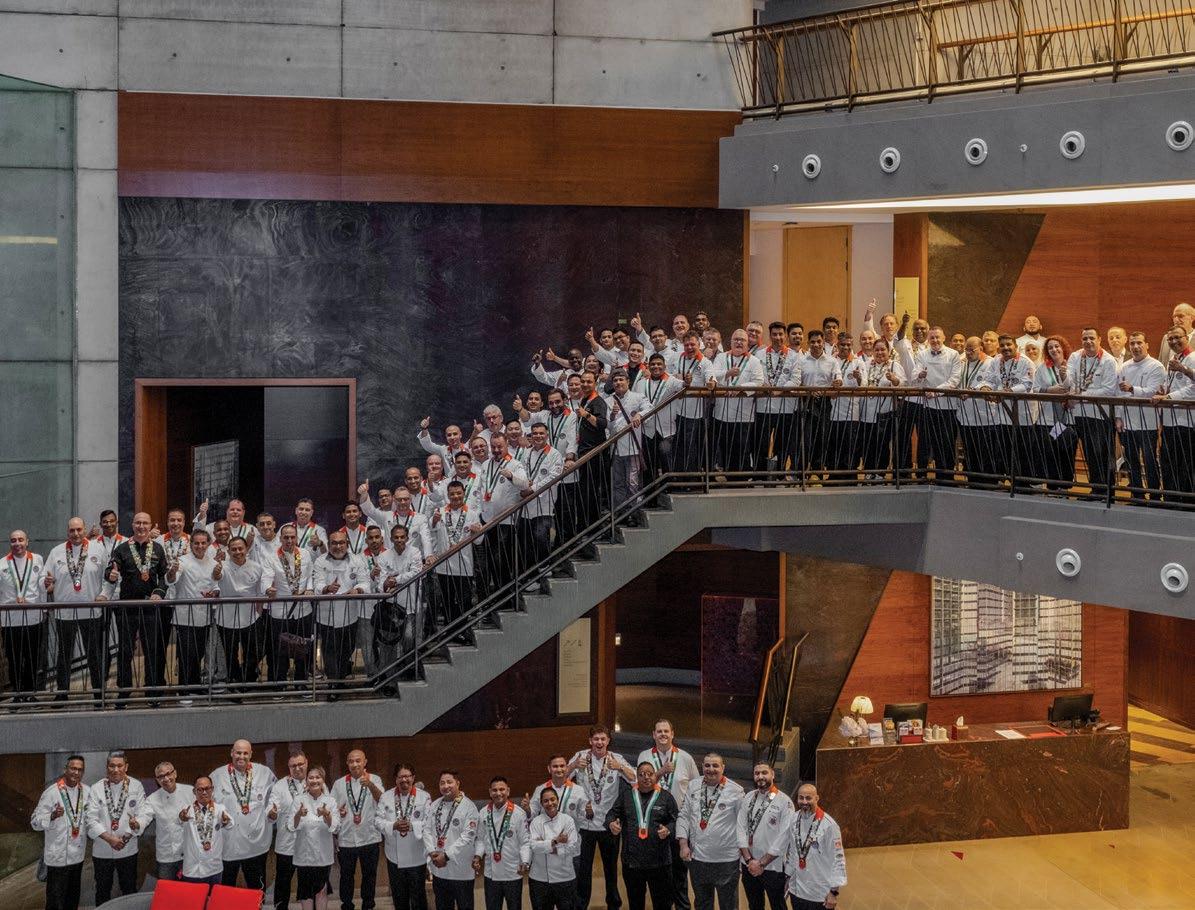
Since its establishment in 1992, the Emirates Culinary Guild (ECG) has played an influential role in the development of the United Arab Emirates’ hospitality and foodservice industry.
Over more than three decades, the Guild has evolved from a professional chefs’ association into a strategic industry partner contributing to talent development, international recognition, culinary education, competition excellence, and workforce advancement.
As the official UAE member of the World Association of Chefs’ Societies (Worldchefs), the Guild has helped shape the standards, professionalism, and global reputation of the culinary
profession throughout the Emirates. Its contribution closely aligns with the UAE’s broader economic diversification strategy and Dubai’s vision to become one of the world’s most innovative and competitive tourism and hospitality destinations.
The growth of the Emirates Culinary Guild mirrors the transformation of the UAE itself. When the Guild was founded, the nation’s hospitality industry was still emerging. Today, the UAE is recognized as one of the world’s leading tourism, events, aviation, and gastronomy
destinations, attracting millions of visitors annually and hosting many of the world’s most prestigious hotel, restaurant, and catering brands.
Throughout this remarkable journey, the Guild has served as a catalyst for excellence. Through professional development programmes, culinary competitions, mentorship initiatives, certification pathways, educational partnerships, and industry advocacy, it has helped create a highly skilled workforce capable of meeting international standards.
One of the Guild’s most significant achievements has been the establishment of a culture of competitive excellence. Through events such as the Emirates International Salon Culinaire and other internationally recognized competitions, thousands of chefs have been given opportunities to benchmark their skills against global standards while advancing their careers within the UAE hospitality sector.
The Guild’s influence extends well beyond the UAE. Since 2012, UAE National Culinary Teams organized and supported by the Emirates Culinary Guild have competed successfully at the Culinary Olympics in Germany and the Culinary World Cup in Luxembourg. These prestigious competitions are widely regarded as the pinnacle of international culinary achievement. UAE teams have earned hundreds of gold medals and thousands of individual awards, demonstrating that culinary professionals working in the Emirates can compete among the very best in the world.
These achievements have significantly enhanced the international profile of both the UAE hospitality sector and the nation’s culinary profession. More importantly, they have created a legacy of mentorship and knowledge transfer, with returning competitors becoming executive chefs, educators, mentors, and industry leaders who continue to elevate standards throughout the region.
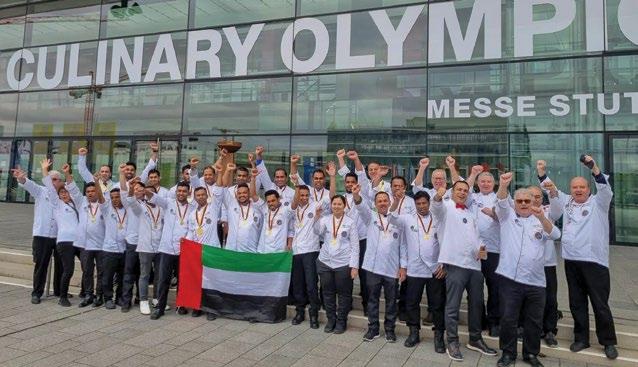
The Emirates Culinary Guild has served as a catalyst for excellence throughout the UAE hospitality sector
The Guild’s commitment to developing future talent is equally noteworthy. Through its partnership with the International Centre for Culinary Arts (ICCA) Dubai, the “Making Lives Happen” Scholarship Programme provides aspiring chefs with access to world-class culinary education and career opportunities. This initiative reflects a shared commitment to social responsibility, workforce development, and creating pathways for talented individuals to enter the hospitality industry regardless of financial circumstances.
A landmark moment in the Guild’s history came with the election of Chef Andy Cuthbert, Immediate Past President and current Guild Coordinator of the Emirates Culinary Guild, as President of Worldchefs. Representing more than 110 national chef associations worldwide, Worldchefs is the leading international body for the culinary profession. This achievement not only reflects Chef Cuthbert’s leadership but also highlights the global respect and recognition earned by the Emirates Culinary Guild and the UAE hospitality sector.
Today, as Dubai advances the objectives of the Dubai Economic Agenda D33 and expands its focus on innovation, technology, sustainability, and talent development, the Emirates Culinary Guild is uniquely positioned to support these ambitions. Emerging DubaiIT initiatives, artificial intelligence applications, smart kitchen technologies, digital learning platforms, food waste management systems, and sustainable foodservice practices are reshaping the hospitality landscape. The Guild provides an essential platform through which hospitality professionals can embrace innovation while preserving the craftsmanship and creativity that define culinary excellence.
Looking ahead, the Emirates Culinary Guild remains committed to supporting the UAE’s vision of becoming a global leader in hospitality, tourism, and innovation. Through education, leadership, international competition, scholarships, mentorship, and industry collaboration, the Guild continues to create opportunities, inspire excellence, and contribute to the sustainable growth of one of the world’s most dynamic hospitality sectors.
More than thirty years after its founding, the Emirates Culinary Guild stands as a model of how a professional association can contribute meaningfully to national development. Its legacy is reflected in the careers it has shaped, the standards it has elevated, the global recognition it has achieved, and the lasting contribution it continues to make to the success of the United Arab Emirates. ■

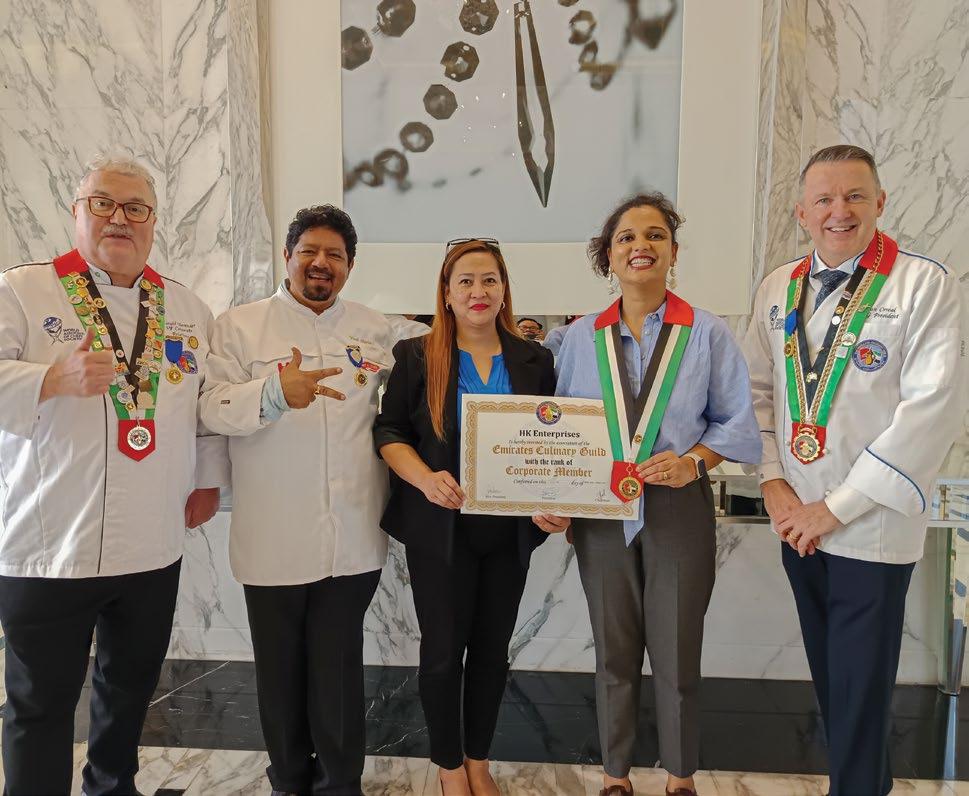
The protein that keeps UAE on the move, is driven by HK. We are humbled to be the pioneers of frozen food since 1984. Bringing the best of global brands to UAE for HORECA. Whether you are a hotel, restaurant, QSR, caterer or a chef, chances are, the poultry & meat that you serve is fulfilled by HK. Consistently evolving, we are committed to deliver quality, convenience and freedom of choice to you on time every time, every day.
HK Enterprises has been a pioneer in the UAE food services industry since 1987. Starting with the import and distribution of frozen poultry and meat products, today the company is one of
the leading suppliers of a vast range of frozen and non-frozen food products in UAE, sourced globally.
The group’s success is based on a team effort to provide our clients with the best service at the best price. Our volume purchases ensure we pass on the savings to our customers. Meanwhile, our logistics team and our own fleet of specialised vehicles ensure smooth and timely deliveries. Our edge is our ability to deliver the exemplary quality of service to our
clients, irrespective of the value of the order they place.
Our clients include various hotels, QSR and stand-alone restaurants, institutional catering companies and government contracts across UAE.
After witnessing growth and success in the UAE market, we expanded our horizons. Sahni Foods, UK was set up in 2020 to cater to an international audience. Looking at the acceptance of our brands and service, we have no doubt that we would replicate our success story.
Our mission is to be “YOUR LOCAL SUPPLIER OF GLOBAL FOOD” ■
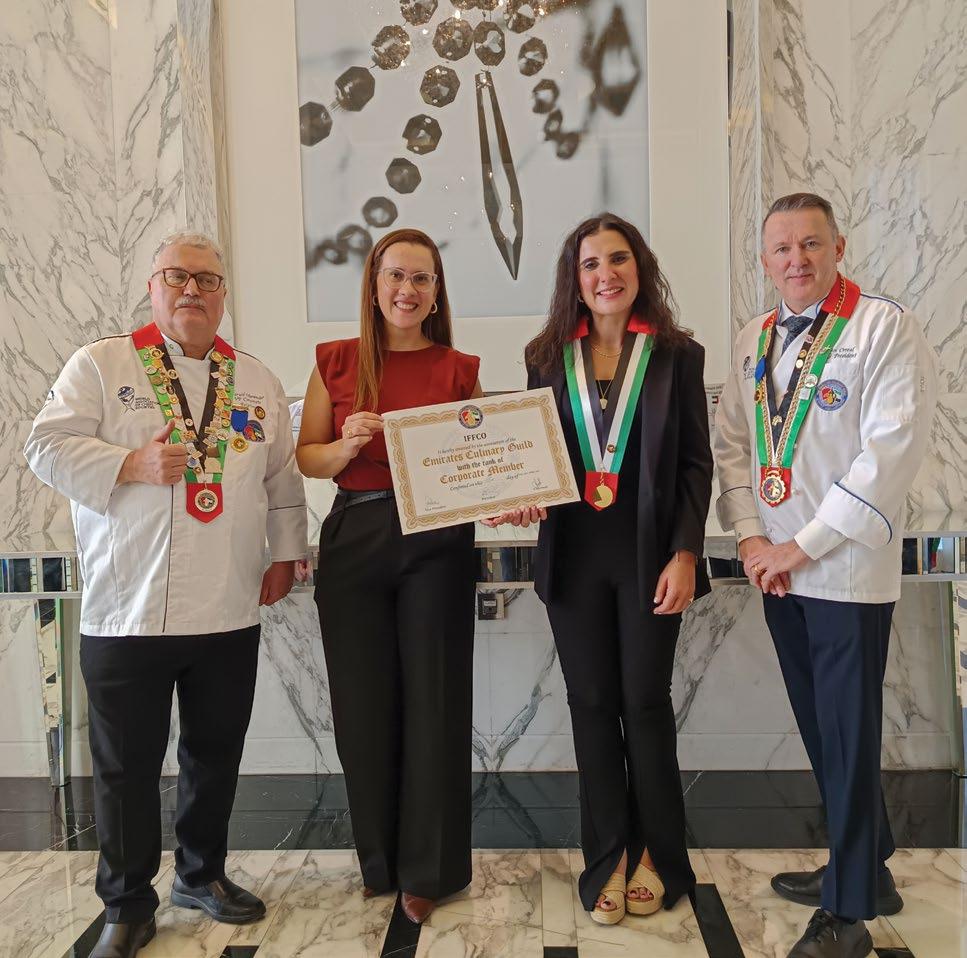
IFFCO Professional was formed to become the broadline solution provider for any operator in the Foodservice Industry, supplying food, beverage and non-food products and services.
Customer and channel centricity is at the heart of our business. We are dedicated to providing the best 360° solutions for foodservice operators with our best-in-class team.
We continuously strive to enhance our offerings by listening to our customers, understanding their evolving needs, and delivering solutions that maximize value and satisfaction. ■
VISION Shaping the future of Foodservice by providing leading edge 360° solutions and services in the food industry.
MISSION Providing high-quality products and tailor-made solutions for each channel with operational excellence via our best-in-class team
Simon Martin , Executive Chef and Innovation Consultant, shares the latest trends shaping our region for 2026
Welcome back to Trends Express. Without further ado, let us jump on board the "Trends Express" and see what is hot and appearing in our region. Remember, "LIKE IT, BUY IT, SNAP IT, SHARE IT."
They are not complicated, but just a few simple ingredients will rock your culinary planet…
Sometimes we take things that are in the background for granted, without realizing that these are the trends, the heroes, the fundamentals of our trade. One trend moving up the regional chart is “BRINE ”. Yes, you heard me, but it is now moving into areas beyond protein meats. Technically, it is osmosis, causing proteins to relax and foods to absorb a liquid primarily based on salt and sugar, thereby retaining juiciness after cooking. Chef Simon Rogan is brining his cabbages before roasting.
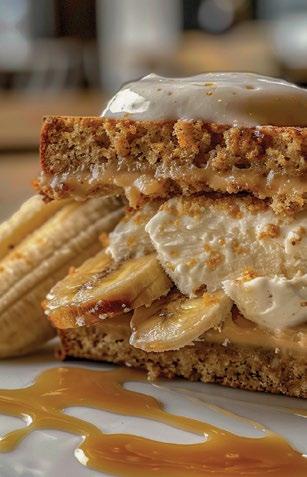

This week on TIKTOK , we saw many posts of people using pickle juice to quick-brine pasta before cooking. Brined fruit for salads and mocktails may seem almost alien, but it works on berries, stone fruit, apples, and watermelon rind. Why not try it? After all, if you brine, your customers will no doubt come back to dine… LOL . As well as bringing juiciness, texture, and tenderness, we must note that commercial brine can also extend shelf life.
NOW LET US COOL OFF THE SUMMER HEAT….
From one basic staple that is trending to another… “THE SWEET SANDWICH”. Oh yes, returning from a few years back and riding the crest of the trends wave, we see this growing across the region. Of course, it is not new. In 2016, I remember eating Kunafah in a syrupdrenched roll on a Beirut street, and it was a thing of beauty, a treasure to behold above all others. Until now: this week, I tried sweetened mascarpone, tart blackcurrant preserve, and crushed ginger biscuits, all between two slices of soft white bread… YUMMY ☺. Of
course, ice-cream sandwiches are the mainstream, hand-portable culinary legends we all love, but have you thought about elevating yours? The days of vanilla ice cream and chocolate sauce are ending in sandwiches. So why not try toasting the white bread, slathering it with a scrummy Lotustype spread, then upping your game by sprinkling it with some Horlicks and chopped pistachios? Then add lashings of your favorite ice cream. Finally, drizzle with pomegranate syrup. This is not just an on-trend sandwich; it is an architectural monument to culinary extravagance, bringing sweet, sour, crunch, stickiness, and varying temperatures together. We all have some desire to please our clients, so let us keep this trend moving. Ideal for poolside and room service. As Chef James Beard once said, “Too few people really understand a good sandwich.”
Gosh, it is all food for thought as we move into the summer. This month’s highlight was sheep’s milk ice cream with marron glacé: sweet, with sour back notes. Coconut matcha was a delight to drink. I can only compare the spicy French fries topped with ice cream and hot honey, served up at Fowli, to scoring the winning goal in the FIFA World Cup. AMAZING, AMAZING, YES, AMAZING…. what more can I say…
Finally, looking at trends, our corporate partners at the Emirates Culinary Guild are also helping define the landscape with their visions. Their foresight in making their latest products available to us at our monthly meetings reflects both innovation and current market trends. Stay ahead of the curve, talk to them, and try their products. Join them and us in driving trends in our region. ■



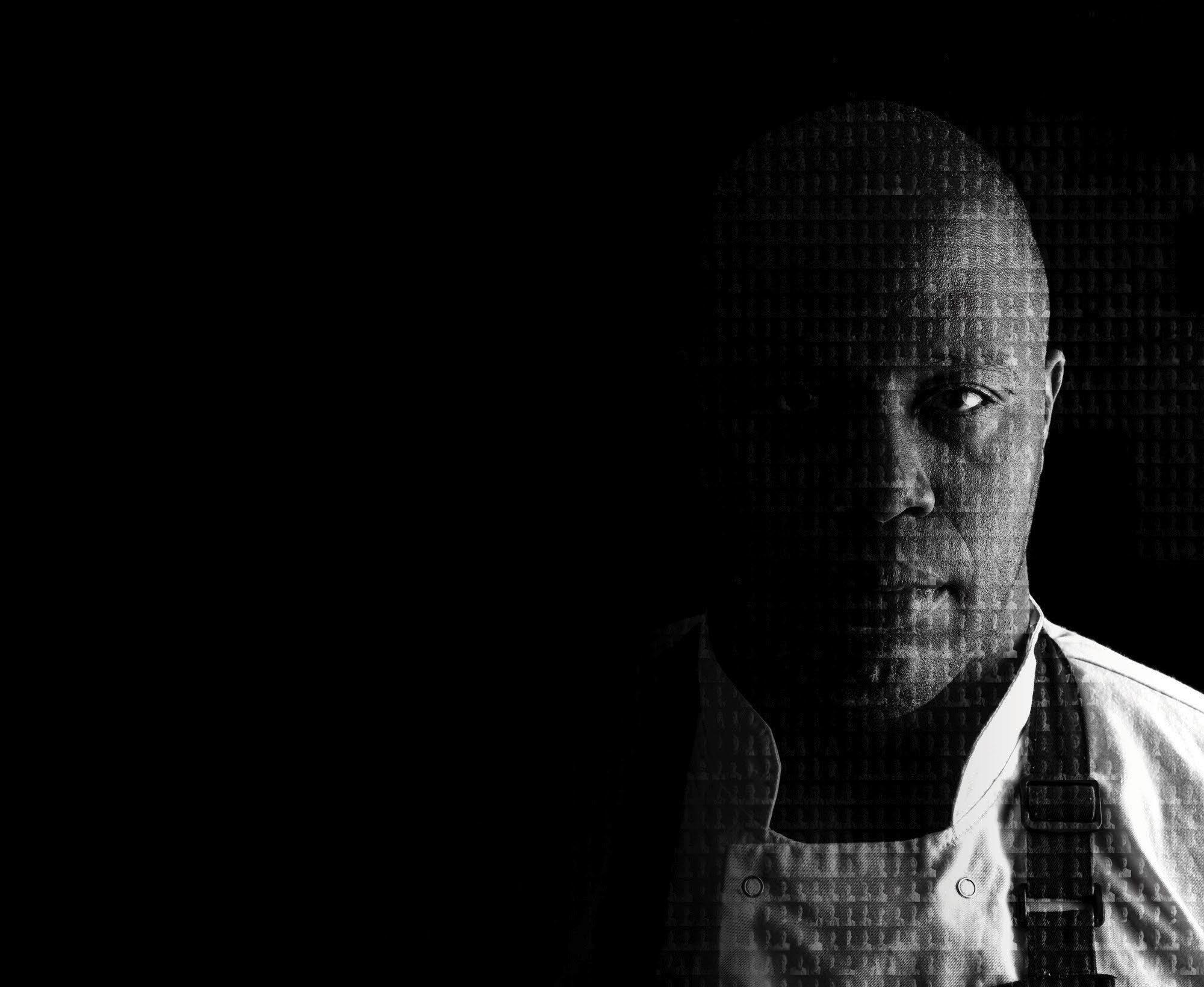

Find