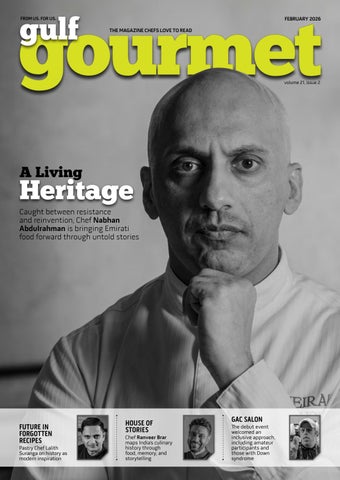
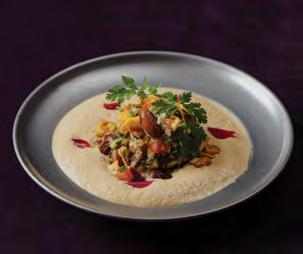
Caught between resistance and reinvention, Chef Nabhan Abdulrahman is bringing Emirati food forward through untold stories
FUTURE IN FORGOTTEN RECIPES
Pastry Chef Lalith Suranga on history as modern inspiration
HOUSE OF STORIES
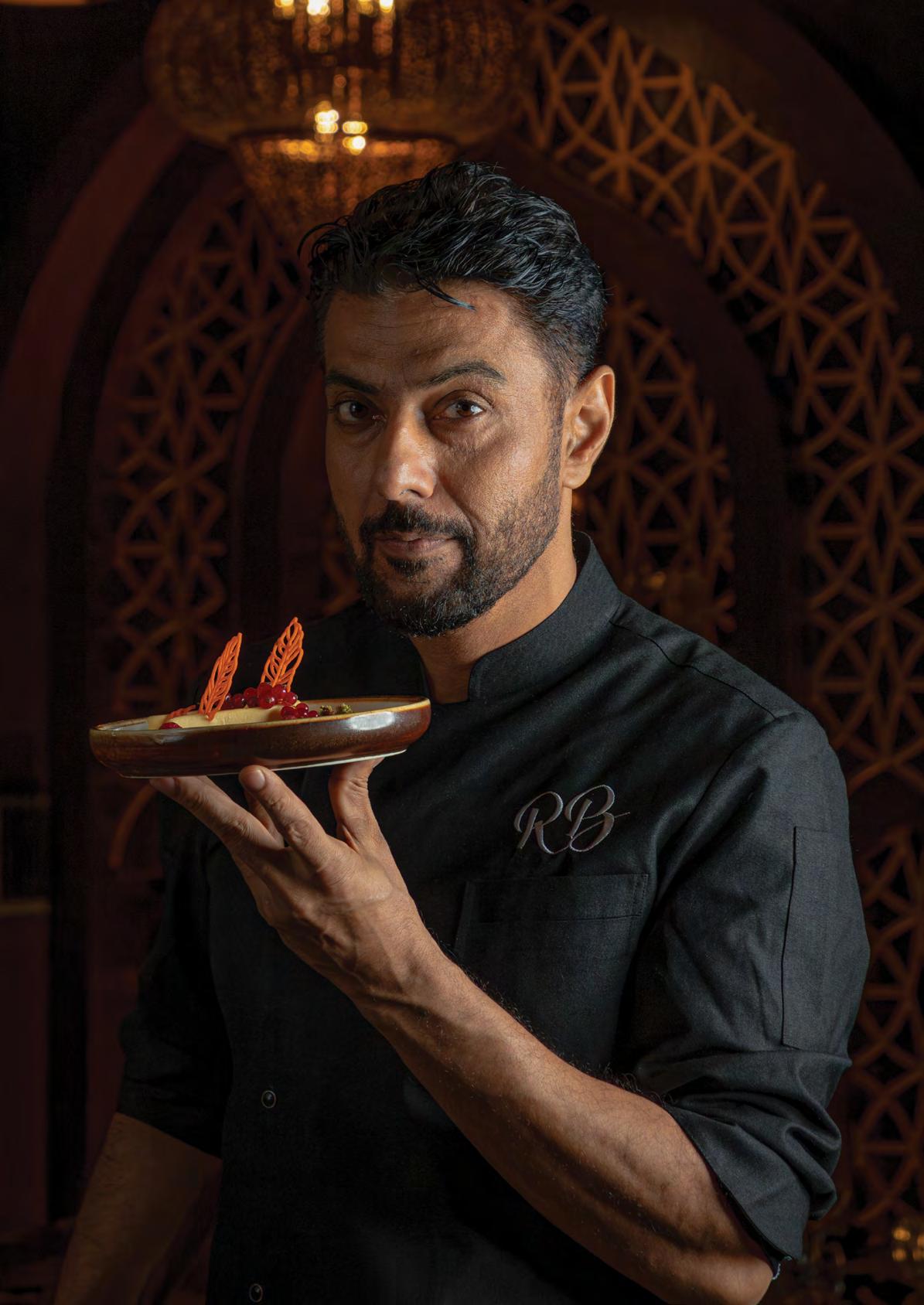
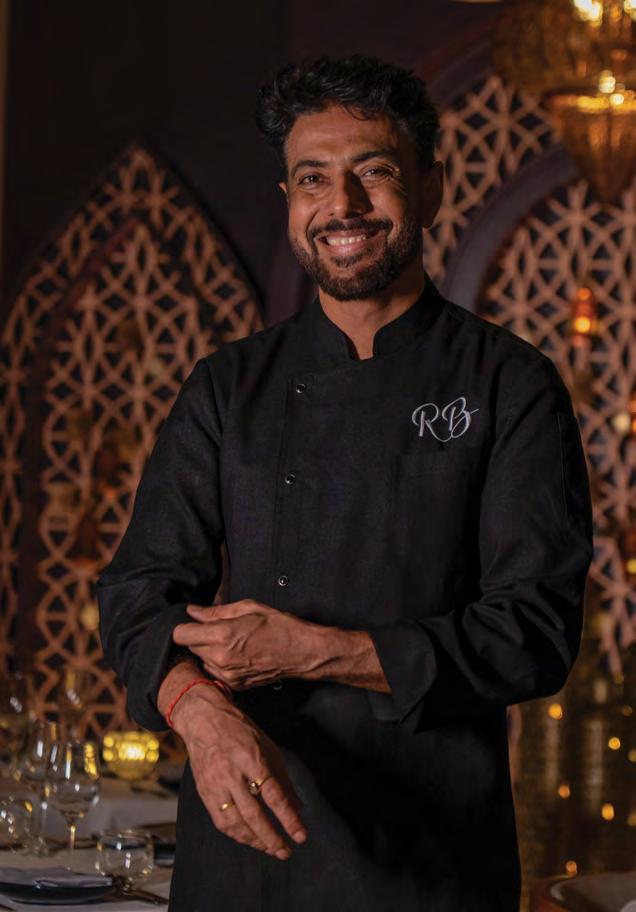
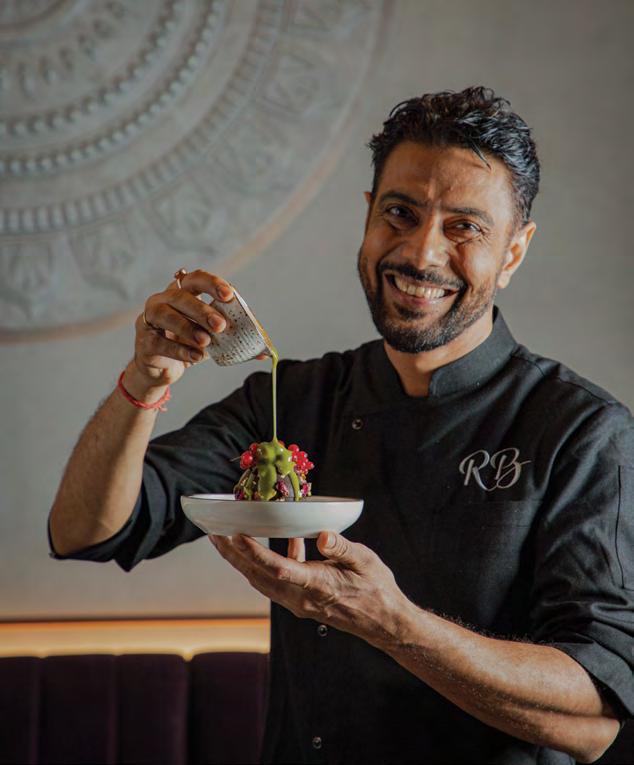
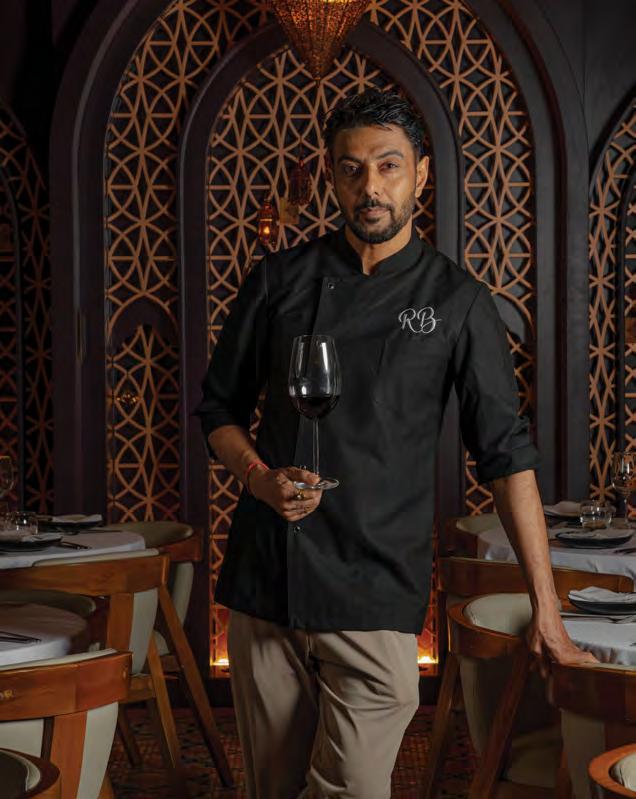
Chef Ranveer Brar maps India’s culinary history through food, memory, and storytelling
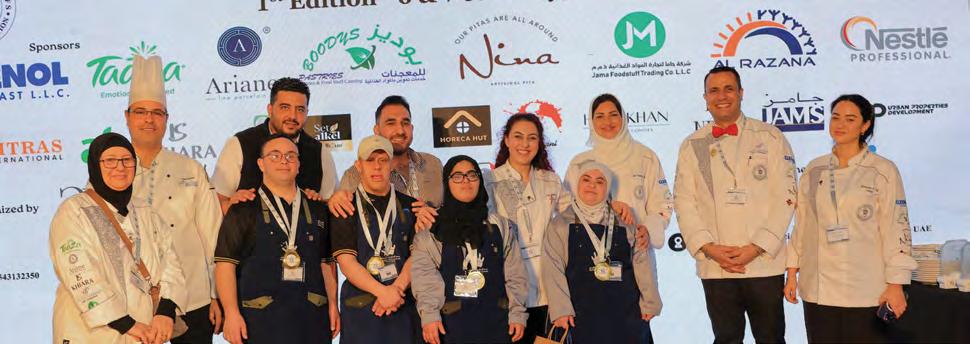
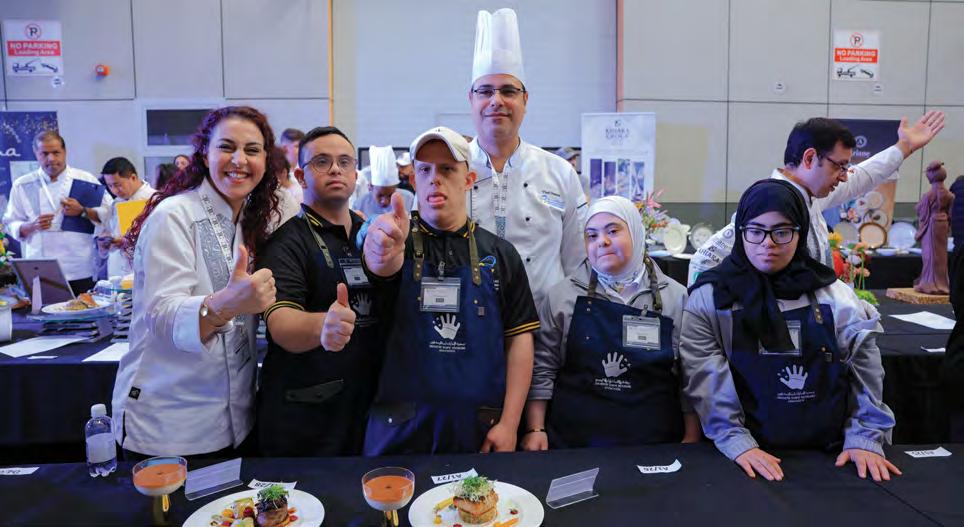
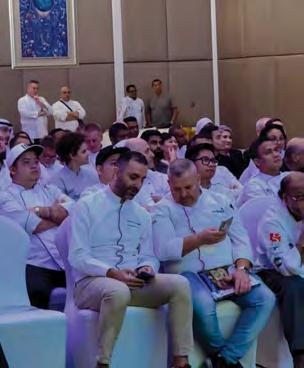
The debut event welcomed an inclusive approach, including amateur participants and those with Down syndrome
GAC SALON
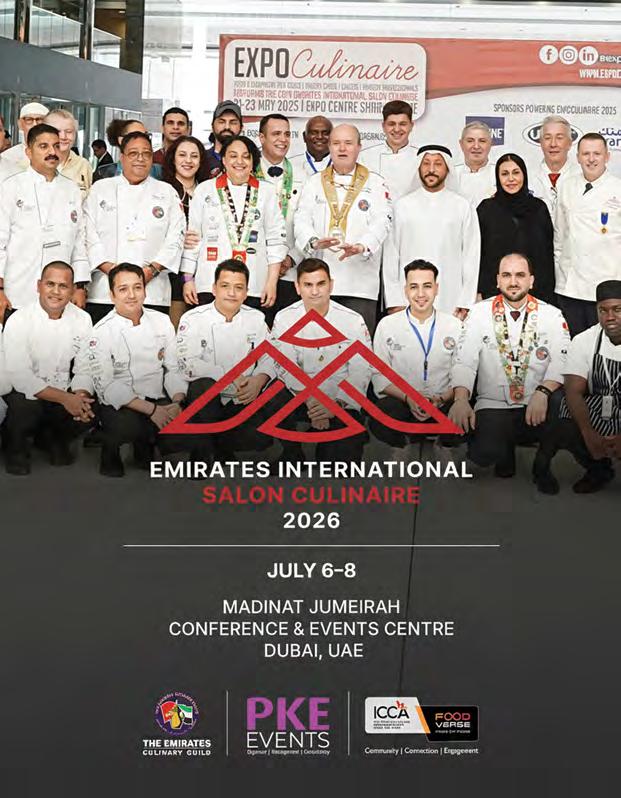
International Salon Culinaire (EISC) 2026 returns to Dubai from 6–8 July at the Madinat Jumeirah Conference & Events Centre. After seven years in Sharjah, the Salon comes back bigger, bolder, and more business-focused than ever, in collaboration with PKE Events. This high-level industry competition promises not only world-class culinary excellence but also a platform for chefs, brands, and aspiring talent to connect,
We are also eagerly anticipating the finale of the Aria Pro Mastery Competition, Edition 2, where pastry chefs will present their most artistic and innovative creations, showcasing precision, imagination, and the art of edible storytelling. From delicate sugar work to inventive plated desserts, this competition continues to raise the bar for pastry artistry and inspires both experienced and new chefs
As always, we love sharing stories that ignite creativity. In this edition, we shine a light on everything from young chefs who are redefining their craft to trends that are raising the bar across the UAE. It is a celebration of passion, perseverance, and the next generation of culinary leaders. Whether you are competing, learning, or just love good food, there is a little something here to inspire everyone. Do take a moment to explore our features, follow the
journeys of chefs pushing boundaries, and immerse yourself in the traditions and heritage. Keep an eye out for more exciting updates as we approach July.
We invite you to explore past issues https://issuu.com/gulfgourmetmagazine and emiratesculinaryguild.net to stay updated on events and news. If you have not already, follow us on social media to see what chefs around the world are creating, and perhaps connect with someone who inspires you. As always, if there is something you would like to see in a future issue, send us an email. Let us know what matters to you, what stories you want told, and what lessons you have learned along the way. If you have any questions about the events, please reach out to us at emiratesculinaryguild@gmail.com
Cheers to the year full of flavor, stories, innovation, and culinary excellence.
Culinary regards, Alan Orreal
President Alan Orreal on heritage, innovation, and a dynamic year ahead for the Emirates Culinary Guild
the
Chef Ranveer Brar on food and storytelling at his Dubai restaurant, Kashkan Kissaghar, and how cuisine becomes a map of heritage
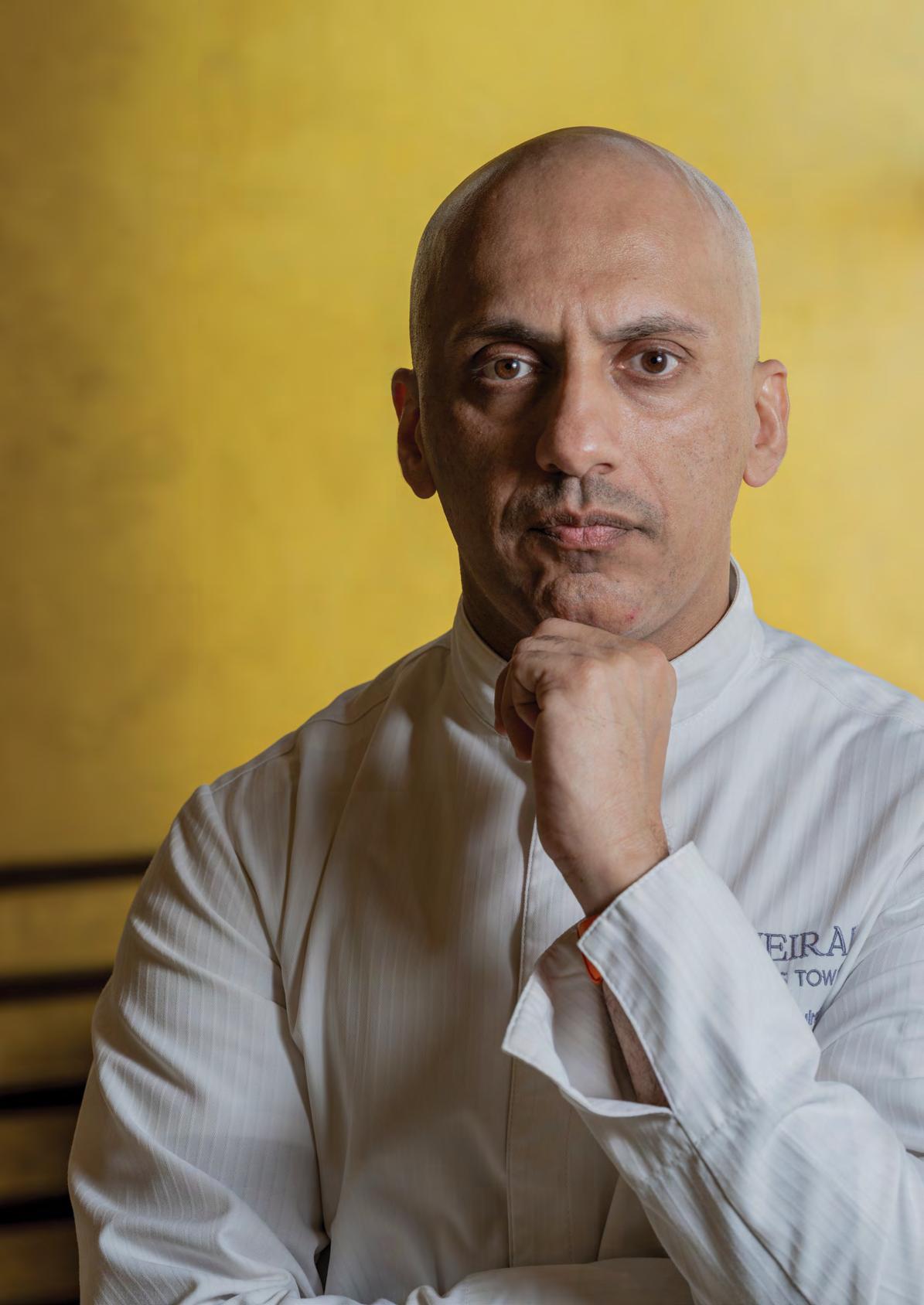
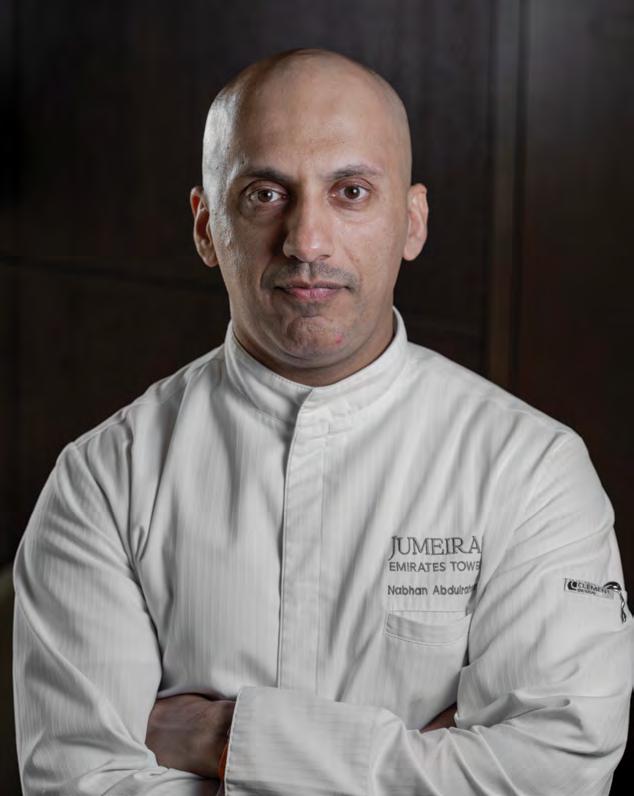
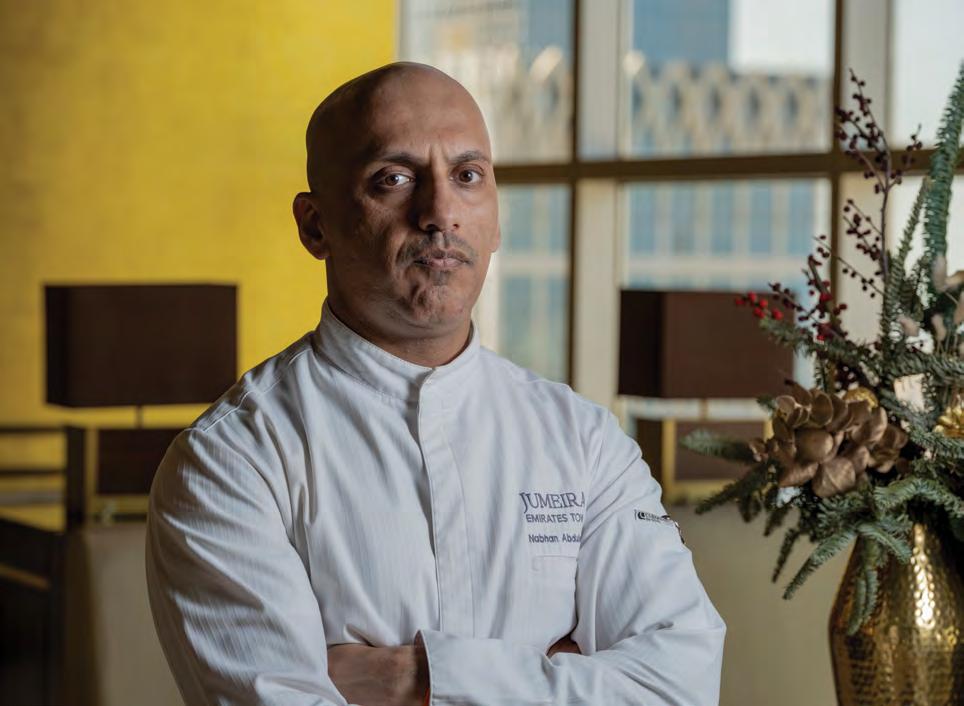
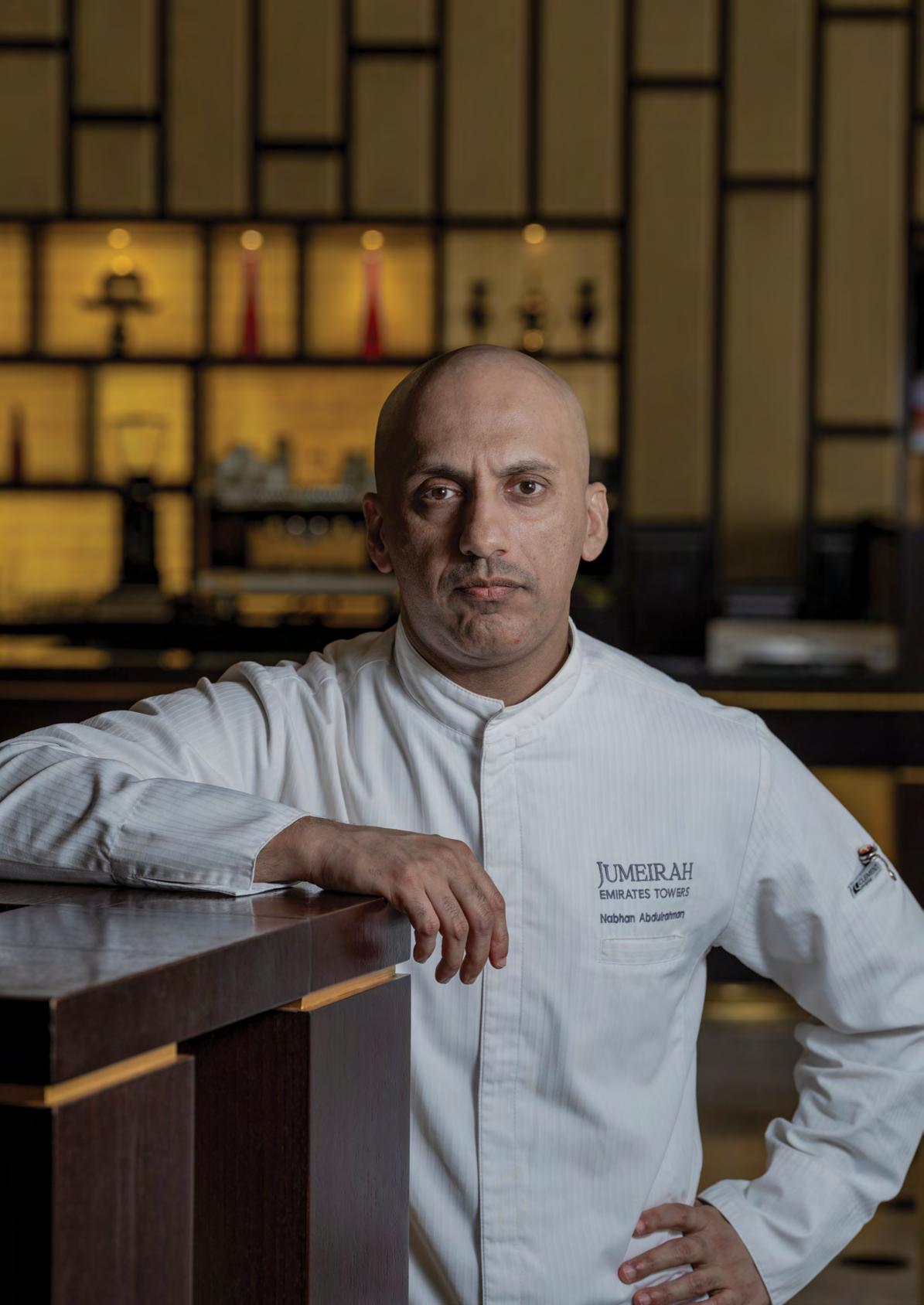
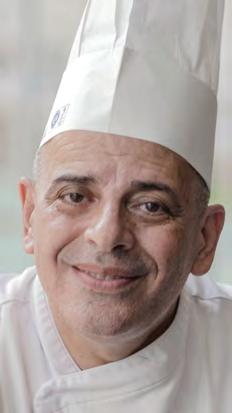
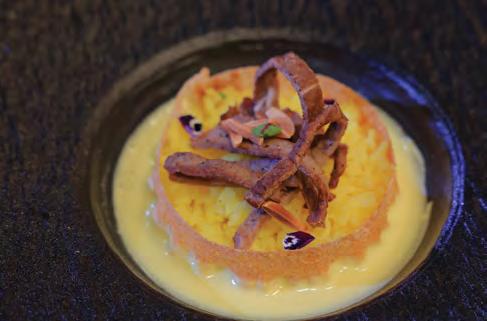
Chef Nabhan Abdulrahman is bringing Emirati food forward with stories many have never heard. Caught between resistance and reinvention, his pursuit has been anything but simple
Chef Tarryn-Leigh Green on why waiting to feel ready keeps us stuck, and growth is earned through action
Anthony Zografos on Akorn Technology winning the UAE FoodTech
and how edible coatings for
Mouriess
what
Chef Helen celebrates winter at Doha's Torba Market, where perfect weather meets exceptional produce
Behind the plate, a chef’s unseen work makes it all possible, writes Chef Carl Shi (pt 1)
Chef Christophe Prud’homme reflects on the true currency of hospitality
What happens when a human meets artificial intelligence? Elvis Taylor recounts his experience
Cold Chain to Plate
Sulemana A. Sadik shares expert insights on beef handling best practices for GCC HoReCa Operations
Pastry Mastery
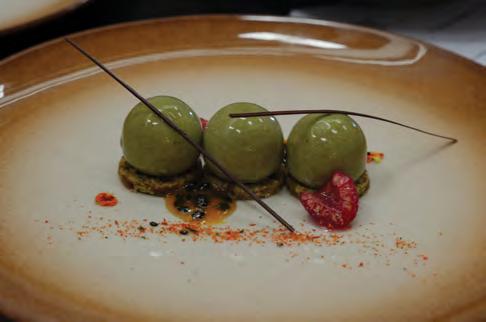
Pastry Chef Lalith Suranga on why culinary history still holds the answers to modern inspiration
GAC Salon
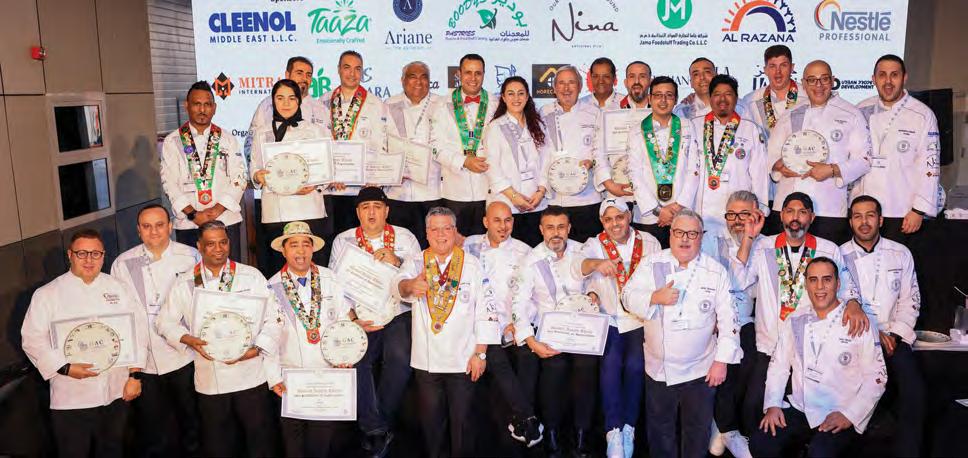
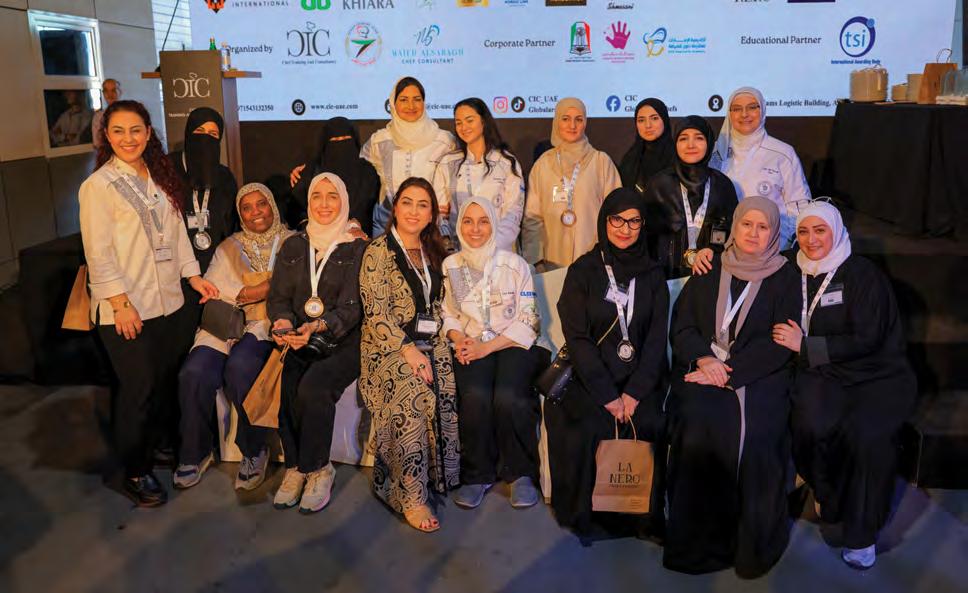
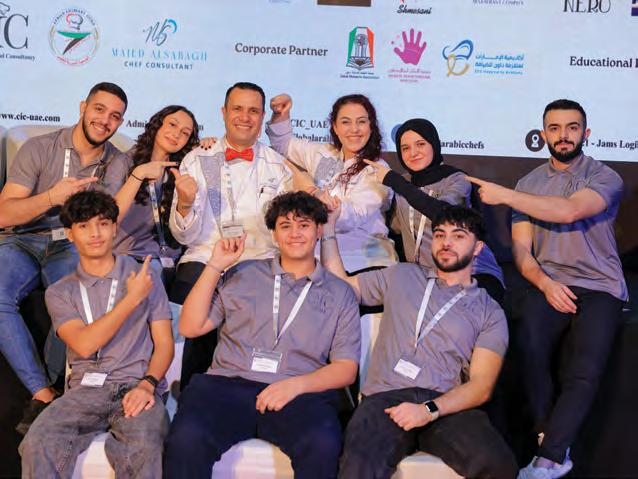
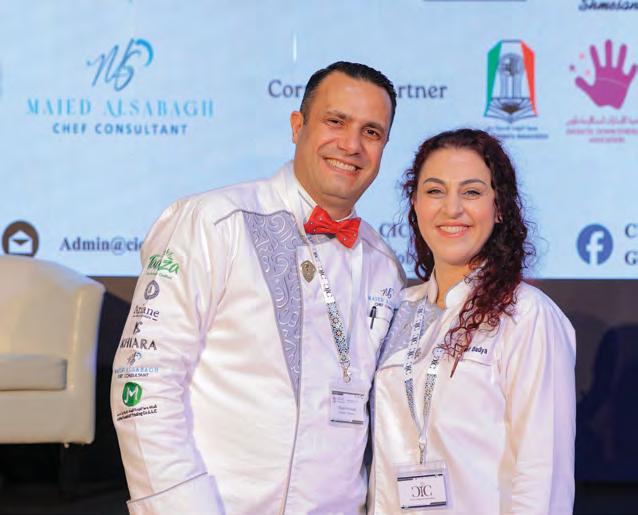
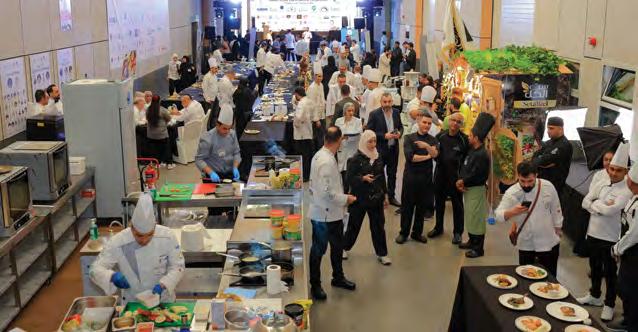
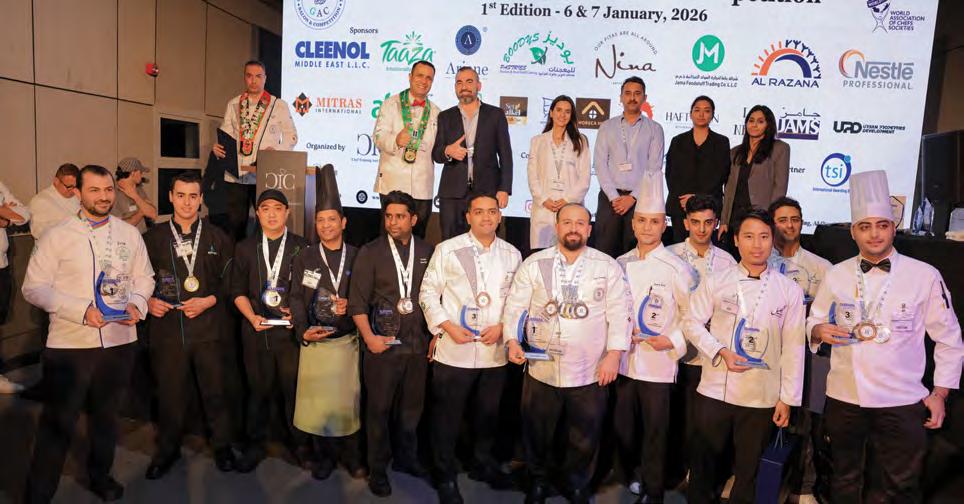
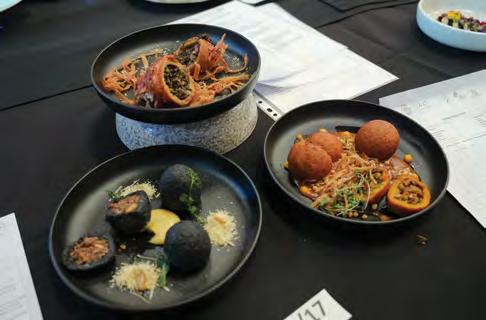
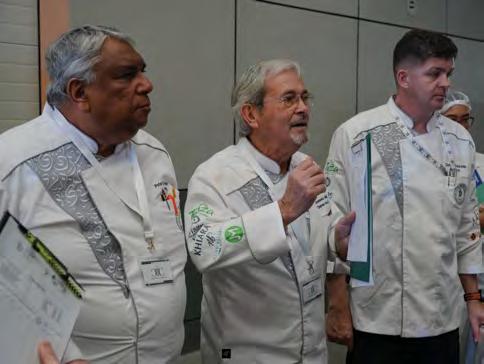
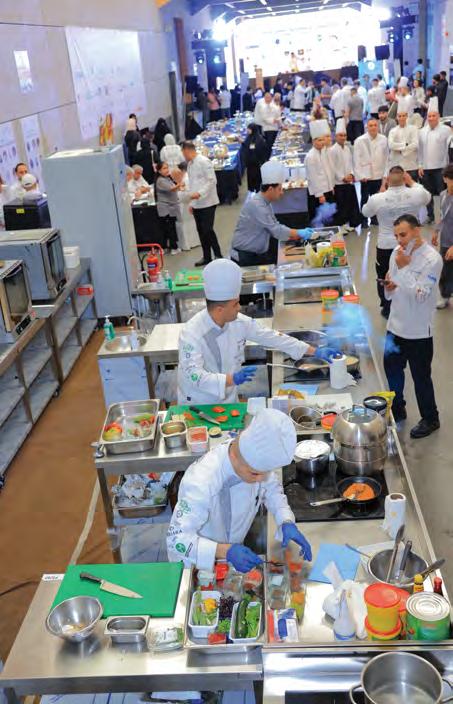
The inaugural GAC Salon & Competition brought together 244 entries from chefs representing 37 establishments, proving that Dubai’s culinary community has plenty of appetite for friendly rivalry
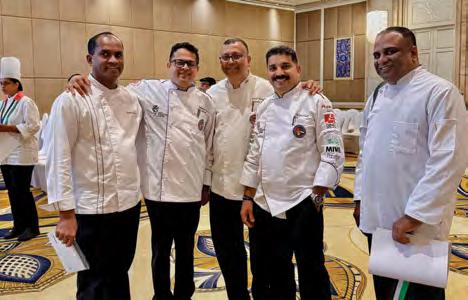
Pictures from the January Guild Meeting hosted by Chef Kushan, Vice President of the Abu Dhabi chapter and Executive Chef of the St. Regis Hotel
Membership Directory
A listing of all the leading food, beverage, and equipment suppliers in the region
Simon Says
Simon Martin, Executive Chef at Kerry Taste & Nutrition (Food Service), explores the food trends reshaping the region's dining landscape
friends of the guild
P R OF E S S ION A L
Raising the Bar
How EISC Is Redefining Culinary Competition Judging with Foodverse
In 2025, at ExpoCulinaire Sharjah, something quietly but decisively shifted behind the scenes of the Emirates International Salon Culinaire.
While competitors stayed locked into precision, timing, and plating, judging moved at an entirely different pace. Scores were being electronically entered. Results getting synced live. Feedback instantly appearing. There were No clipboards drifting between stations. No paper slips to reconcile. and No number crunching.
Everything was delivered across multiple classes. Under real pressure. At scale. That moment did more than streamline judging. It reset expectations for how serious culinary competitions should actually run.
Bigger stage. Higher stakes. Greater Experience. EISC now returns to Dubai, and the competition is stepping up more than ever before...
From July 6–8, at Madinat Jumeirah Conference & Events Centre, the event is expected to welcome more than 1,200 competitors across 35 plus classes, with many new ones and drawing chefs from over 100 hotels, restaurants, and culinary institutions. Celebrated chefs will judge. Timelines will be tight. Precision will matter at every stage. Foodverse Compete the platform where all this happened is returning not as a trial, but as the system itself.
Built for the speed and intensity of professional kitchens, the platform now underpins the full judging process. Scoring is digital. Calculations are
instant. Accuracy is non-negotiable. At a scale as large and complex as EISC, this level of control does more than support the competition, it raises the bar.
Why FV Compete has become the standard
At its core, the platform is built on clarity and trust. Every score follows defined criteria. Every action is time-
stamped. Images, structured notes, and judge comments sit exactly where they should, creating a transparent trail that can be reviewed and verified. Results sync in real time. Tie logic runs automatically. Outcomes are generated and published without delay.
Whether the class is practical cookery, pastry, Emirati cuisine, or showpieces,
everything runs on one consistent framework. Same rules. Same rigor. No interpretation gaps. No guesswork.
What this changes for chefs For competitors, the experience feels fundamentally different.
Submissions move smoothly. Presentations feel more assured. Scores and judge notes become a documented record—something chefs can reflect on, reference, and build from as they move forward. Growth is no longer subjective. It is backed by credible evaluation.
Where brands win
A well-run competition floor creates a different kind of visibility.
Brands are not competing for attention
in cluttered environments. They are present where skill is tested, standards are upheld, and performance plays out in real time. The association is with discipline, credibility, and talent development—and that context makes all the difference.
One system. One delivery. Technology is only part of the picture.
Alongside Foodverse Compete, Foodverse will deliver 360 marketing support for EISC, spanning content, broadcast, social, and partner integrations. Expect competition storytelling that feels human, daily highlights that travel fast, chef spotlights that carry weight, packaged results that are easy to share, and sponsor visibility mapped to moments that genuinely matter.
Sharjah proved the model. Dubai is going to enhance and scale it. With a larger field, stronger data, and a dependable system at its core, EISC moves forward sharper, faster, and more credible than ever.
Bring your best to this technologically advanced competition.
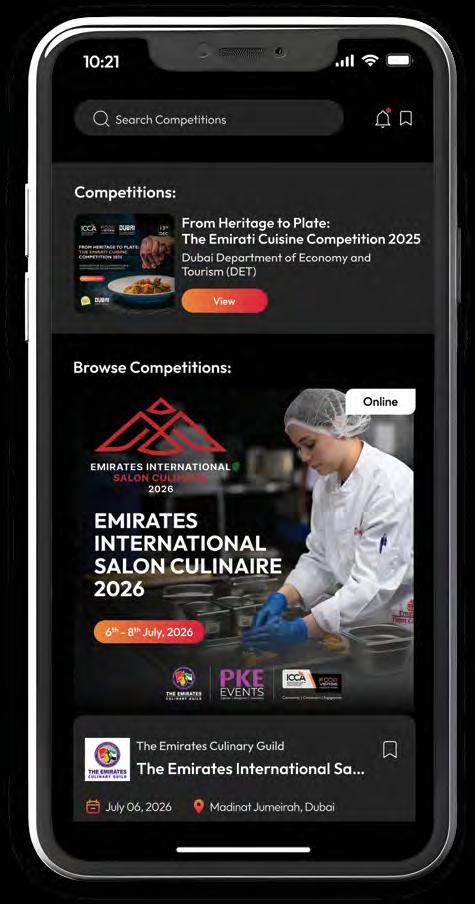
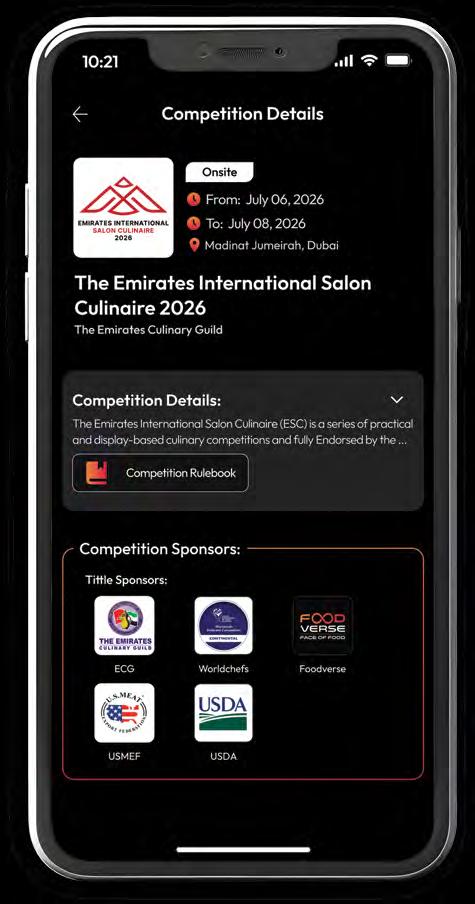
Download the app to register for the Emirates International Salon Culinaire
House of Stories
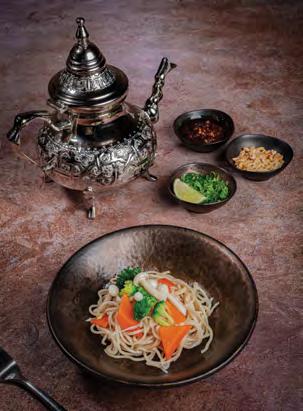
Beyond the semantics of food and fame, Chef Ranveer Brar’s work has always circled the unseen, the hidden, and history, no matter how macroscopic. Built on food and storytelling, Kashkan Kissaghar, his Dubai restaurant, traces India’s culinary landscape from Kashmir to Kanyakumari. Shreya Asopa chats with the celebrity chef about how food becomes a map of heritage
“The universe is made of stories, not of atoms,” wrote Muriel Rukeyser. And what better medium for stories than food? Few places tell stories through food as intuitively as Kashkan Kissaghar. Rather than bottling a country into a single flavour, the food here follows Indian cuisine.
“Kashkan Kissaghar is like a poem being written in real time. It evolves slowly. Like in poetry, you cannot reach the fifth line without writing the first. So each dish is part of the poem, it lets you travel through flavours from Kashmir to Kanyakumari,” says Chef Ranveer Brar.
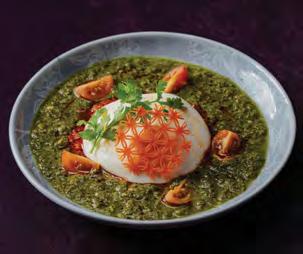
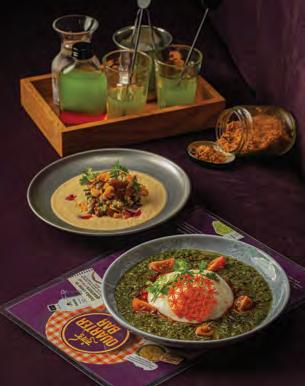
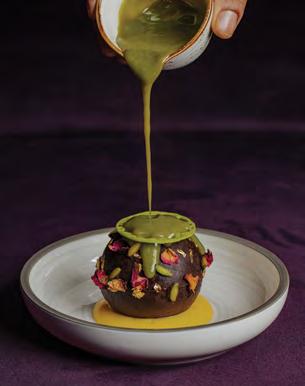
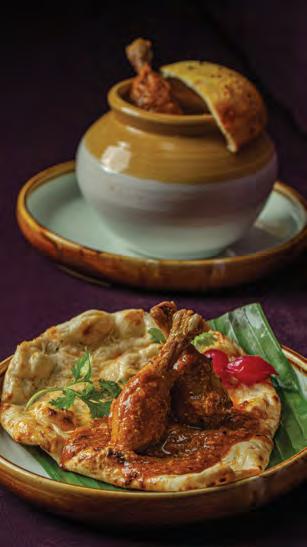
The concept is salient as regional dishes emerge as expressions of memory, identity, and cultural reclamation. This vision comes alive in the offerings at Kashkan Kissaghar (K2 specials). Dishes like Saag Burrata, Naga Black Chicken Curry, and desserts like Dubai-Style Pistachio Kunafa, Chocolate Mava Cake, and Badbi Pudding further accentuate the richness of regional flavours. “If you know me as a person, then you know I like to tell stories with my food. When there is a story, people connect differently. They emote more,” he pauses. “My objective in life is for people to build a beautiful relationship with food."
The restaurant at The H Hotel on Sheikh Zayed Road is Kashkan’s second concept, following the original Kashkan, which was launched in 2023, where storytelling remains at the heart of everything. What has stayed with him over the years of experimenting with flavours and recipes is a lesson that goes past technique or recognition. “The biggest and most impactful ingredient of a recipe is intent.”He tilts his head back, giving the statement time to breathe. “The more you learn cooking, the more you realize it is about forgetting what you know and being fully in the moment. That is what I have learned. Cooking, to me, is as much about the immeasurable as the measured.”
The universe is made of stories, not of atoms — and food is one of the most intuitive ways to tell them
Interpreting, Not Overwriting
An unexpected role he has grown into over the years is that of a teacher. Millions turn to his videos not just for recipes but for the why behind them. His lessons are delivered like a parent showing why the flame should
be lower or why the dough must rest. “I share what I have learned, mostly from my mistakes. I am just passing on what curiosity taught me. Ask enough questions and answers start appearing.”
The curiosity does not stop at the kitchen. It reaches into his restaurants. His long-standing engagement with culinary history shows in the way the menu is built, which honours tradition and lets it speak to the present. “You have to adapt, change with time, but keep the core intact, keep the character of the dish, respect its roots, and add something that makes it relevant in the current context.”
One thing Chef Ranveer is unequivocal about is his resistance to what he calls fusion confusion. The menu, he
believes, should interpret a culinary memory without overwriting it.”If you are eating khandvi khandvi (a soft, steam chickpea-flour roll delicacy) and you are not reminded of a khandvi, then what is the point? There is no reason to change the taste to something unrecognisable. Most K2 specials are inspired by panIndian flavours rather than by regional identities alone. For example, there is an entire section based on quarter plates from Mumbai quarter bars (the chakna plates) and Mumbai-style tapas. So the dishes are strongly rooted in India with some accents and small nuances that make it more interesting.”
Dubai’s dining ecosystem, famously competitive for its food trends, novelty,
The biggest and most impactful ingredient of a recipe is intent
and hyper-accelerated pace, might suggest that running a restaurant here risks languishing once the initial buzz fades.
Chef Ranveer, however, does not entirely subscribe to the idea that novelty-driven brands inevitably wear thin. “Dubai is the world on steroids. The city moves at
a different pace, trends turn fast, and novelty has a short shelf life. In three months, what is considered as new is already old. It is important for the market to accept the brand, not just the face behind it. The market has to accept the brand, the food, and the concept beyond novelty,” he explains, noting that longevity comes down to a brand’s fundamentals.
He has always had this connection to how a dish can hold a childhood, how a flavour can unlock a forgotten Kissa. Little wonder, then, that in a city of trends, he is building something to last. Even as the brands grow, what he wants diners to take from Kisagar is simple. “Inquisitiveness, full stop. A feeling that there is so much more to know about India. I do not have all the answers here in Kissaghar, but I have thoughtstarters. And that is what we need.”
Different Shades of Ranveer Brar Anyone who knows Chef Ranveer knows he has already won both acclaim and awards. Within just a couple of years of starting his culinary career, he was unmistakably earmarked for extraordinary things. Chef, mentor, television personality, actor, author, his public presence spans mediums, cities, and fanbases. Fame seems to keep finding him in new forms.
Up close, although he is still a curious apprentice, one who belies his age. He carries fame with aplomb, not as something he clings to, but as something that exists around him, and never allows it to cloud his vision. “I keep my failures close to my heart. Every time you start flying, you have to remind yourself that you have failed many times.”
Family is another force that keeps him grounded. “I think parents are the biggest reset button in life. If at any time you feel something is wrong, go to your parents. That has always worked for me.” The third, and most personal, way he keeps his balance is by pursuing elusive challenges and wading into uncharted waters.
Respect the roots, keep the character of the dish, and make it relevant
Cooking, teaching, restaurants, even stepping into film, in all of it, he cut the mustard. But none were strategic ladders. They were all chapters of self-discovery.
“In this whole self-exploration phase, you act, you cook, you do restaurants, you do whatever. It is all a process. I like to explore. One must also eat a lot. You cannot really cook it until you have tasted it. You have to go to the real places. Try different cuisines. Go to
the real roots of it. Your palate is your ultimate guide.”
Across his many ventures, each with its own identity and audience, one wonders how he maintains coherence and authenticity. Internalizing, he then places his hand lightly on his chest and says, “We have a compass inside us. If
you feel this is you, this food concept is your belief, or is this decor me? Then it is good. If you feel what you are doing is not you, then you either align it, or you stop,” he explains.
The outside world may see only a semblance of his insouciant persona, never what all preceded it, a contrast
incongruent with the failures, experiments, and learning that form the foundation of his work. It is also that sustained effort that gives rise to his creativity.
“Hard work comes first, consistency comes first. Creativity arrives later. If you do not combine talent with consistency, you will not achieve lasting success. You do not start with creativity; that is putting the cart before the horse. Creativity is the result of self-discovery, of learning, exploring, and of being inspired every day.”
On sustainability, Chef Ranveer says it arises from responsibility and purpose, with small steps creating change.
"Responsibility and sustainability go together." In his restaurants, this means community-driven initiatives. "We have a Wall of Hope with QR codes for local charities. One can scan a code while dining to give hope. Even during Ramadan, 2% of proceeds go to a Dubai
charity. It creates conversations around responsibility and community."
If sustainability is about planting seeds today, his advice to young chefs is to invest time and effort in growth that lasts amid the vortex of fleeting trends and fame. “Keep at it. The culinary journey is a process. It takes time. Do not give up because it does not give you results.”
Storytelling is the clearest way to vicariously live time. They say every kitchen holds a thousand stories. At Chef Ranveer’s house of Kissas, he is listening to India. What is said is said. What is unsaid is felt through food. ■
A Living Heritage
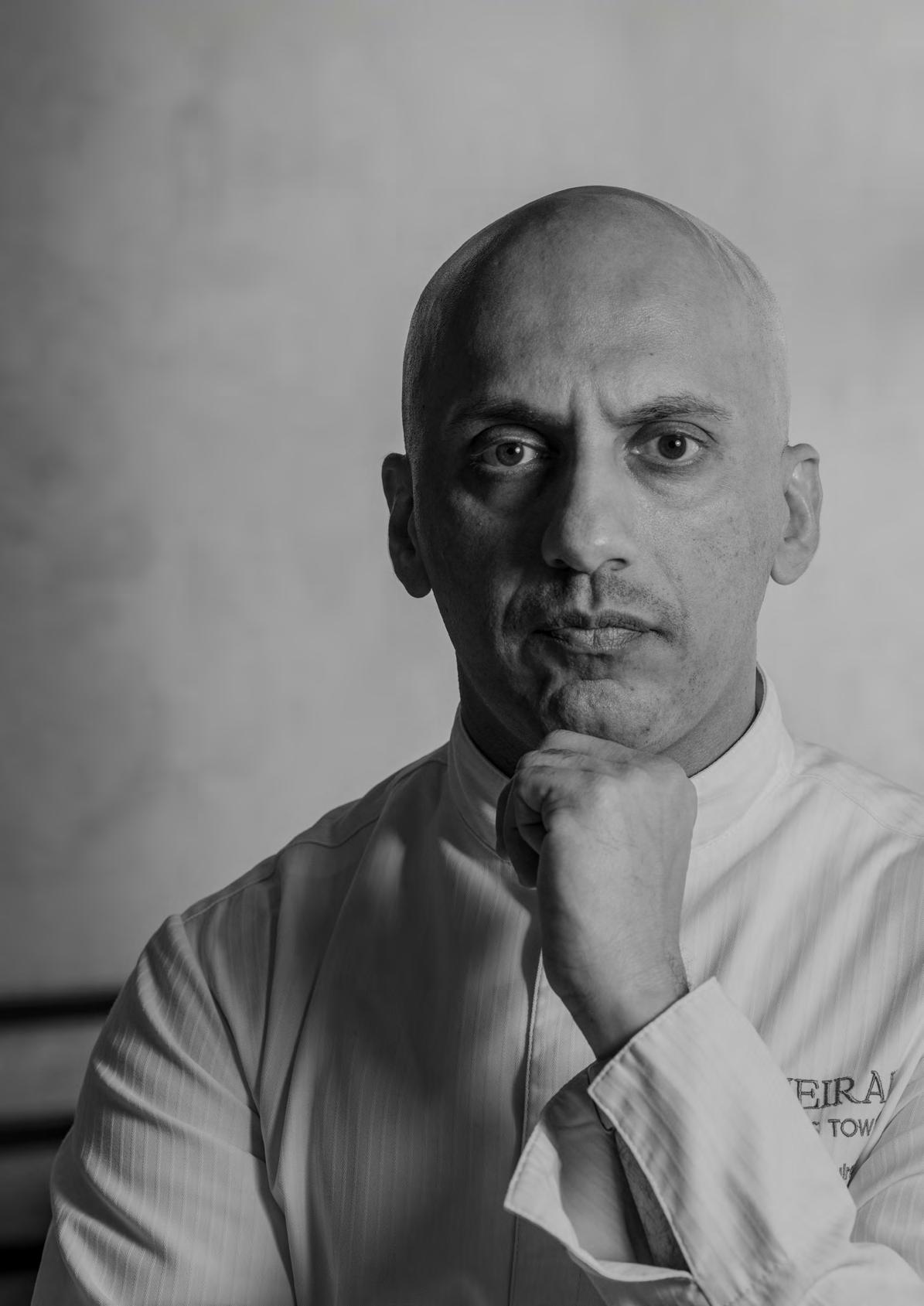
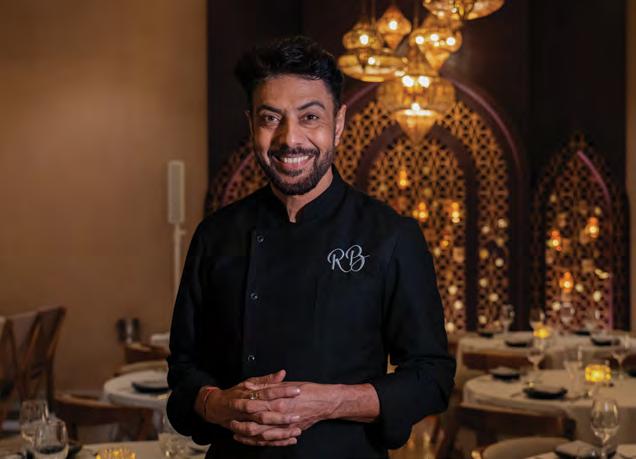
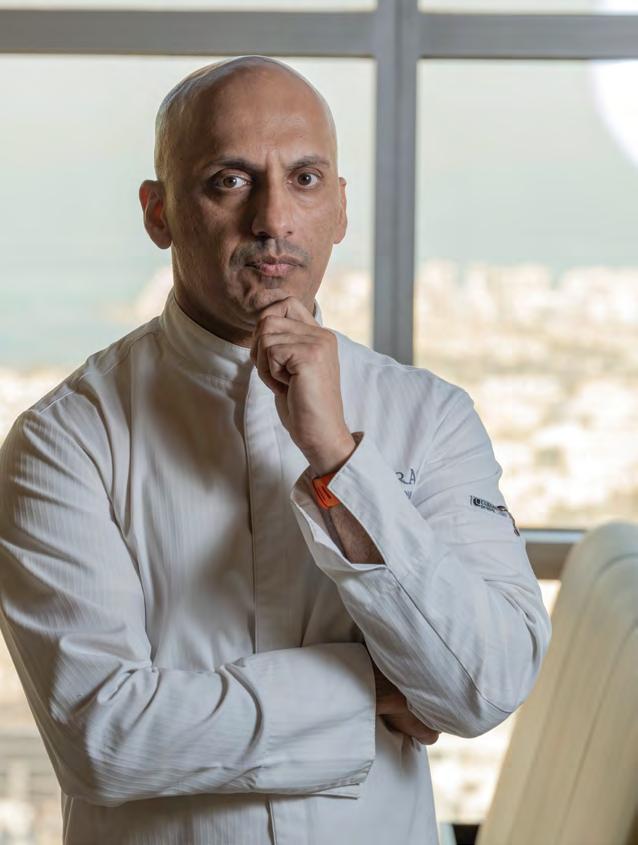
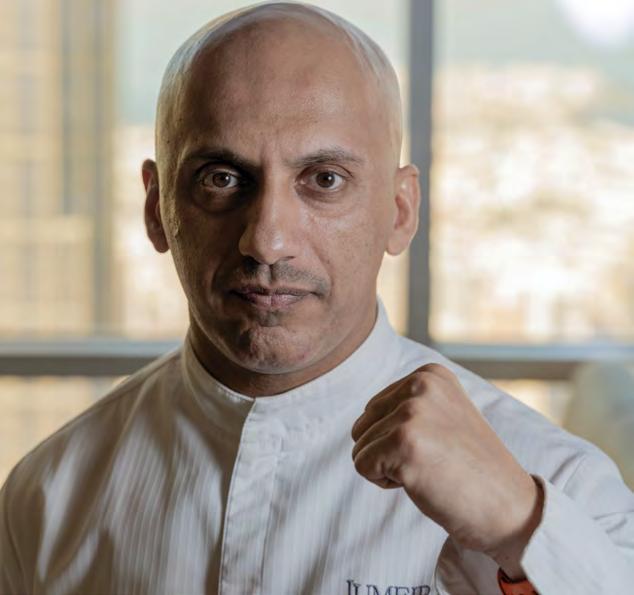
In a city renowned for global gastronomy, many have yet to experience the richness of its local cuisine. Shreya Asopa speaks to Chef Nabhan Abdulrahman, who is determined to close that gap by bringing Emirati food forward with stories many have never heard. Caught between tradition and innovation, resistance and reinvention, his pursuit has been anything but simple
Heritage has a new address. Not a street name or a building, and certainly not a platitude about old stones or gussied-up nostalgia, but in Chef Nabhan Abdulrahman's act of preservation. In his living, breathing kitchen of Jumeirah Emirates Towers, where the past is never far from the present.
Assiduously translating memory into action, the Emirati chef is perpetuating his heritage that deserves to continue. He begins his day before most guests have fully woken up. Between 300 and 600 guests are served each morning, and before the doors open, he tastes every dish himself to calibrate the flavour, balance, and heat.
Breakfast, he believes, is the most important service of the day, setting a positive tone for the day. In a hotel of this scale, breakfast is also the operation’s Achilles’ heel. One misstep, and the ripple travels through the rest of the day.
“Breakfast is where the day starts. If it begins well, everything feels better. It is also the first real conversation of the day for me. When guests arrive, I make a point of visiting every table. It is important because when a chef listens, adapts, and brings you exactly what you need, guests feel heard. That is the heart of hospitality. Many of the guests are also visiting the UAE for the first time, and this is an opportunity for me to explain the stories behind the food they are eating, sharing my culture through food.”
There is a lot at stake when he creates a dish that honours his heritage. The syzygy of old and new is rarely simple. One must avoid heritage hagiography, the temptation to glorify the past without questioning how it lives today. Chef Nabhan goes about it differently, keeping the heart of the dish while giving it a modern twist. To do this, he turns to his roots, his family. “Every week, I visit one of my family members to cook with them and learn recipes
Breakfast is where the day starts. If it begins well, everything feels better
that were never written down. I even create my own spice blends, inspired by the flavours I grew up with. Then, I bring these recipes to my team of chefs who come from around the world with decades of experience.”
With traditional Emirati dishes designed for large platters and shared meals, adapting them vis-à-vis contemporary dining is a challenge. “Our food is about togetherness,” explains Chef
Nabhan. “Big plates, shared at the table. So, I have to experiment with new presentations and ideas for hotel settings. I search for ways to make heritage both innovative and accessible.”
Even so, acceptance can come haltingly. Introducing modern interpretations is riven with apprehension, sometimes from those closest to him. He recalls one early moment when his modern take on machboos was treated as an anomaly.
“Innovation can be difficult. These challenges start at home. When I first put a modern spin on machboos, my mom questioned the process. I explained my approach of cooking the dish in the oven while preserving its original flavour, and presenting it in a modern way with smaller portions and fine-dining–style plating, all while respecting the soul and heritage of the dish,” he says, adding that his mother remained unconvinced at first, but everything changed once she
tasted the dish. “It was flavourful, and she changed her mind! Even insisting we eat it this way from then on,” he laughs.
The skepticism did not stop at home. It followed him into the workplace, among certain chefs who had worked within the same culinary style for decades. Managing a diverse team, spanning generations, nationalities, and professional backgrounds, requires a voracious appetite for understanding and bridge-building. So when pushback on heritage and innovation arises, he avoids nebulous talk and instead details the culture that made Emirati dishes, the Silk Routes, and spices and techniques from different regions.
“ I tell them we need to move forward and try modern approaches so more people can enjoy Emirati cuisine. We can adapt the presentation and portion sizes
Heritage is not something to be displayed; it is something to be lived every day
to suit local preferences while keeping the ingredients and taste authentic. Do not change the soul of the dish.”
His passion for heritage also dictates how he trains his team. Currently leading a team of around ten chefs, he believes leadership cannot be separated from presence.
For him, heritage becomes peripheral when it is reduced to performative storytelling instead of something lived every day. Rather than managing from a distance, he spends his time working alongside his chefs, asking them to taste each dish and guiding younger cooks through technique and standards.
More often than not, he believes, chefs are marooned behind the pass, cut off from the people they cook for. “Do you know why many choose this career?” he asks, pausing, voice cracking. “Mostly, I hear it is passion. But it is not just that. Sometimes it is because chefs prefer working behind the scenes, cooking alone.”
That is precisely what he tries to undo. He pushes his chefs to see past the pass and deliver an audacious knock on the door of tradition. “Many of them can do
Know your own cuisine first. Your heritage is your greatest strength
this on their own now,” he says. “That confidence matters as much as technical skill. They begin to see food not just as recipes, but as cultural expression.”
What reads as a natural rise today in championing Emirati cuisine and business was built well before hotels came into the picture. It started in Chef Nabhan’s childhood kitchen, up early in the morning, baking bread with his mother. All of his siblings cooked too; the kitchen was always busy, everyone pitching in, learning by doing.
Before he became a chef, he was a
Machboos still matters today because it connects modern life with our roots
professional boxer on the national team. “My life revolved around sport, health, and food. At the time, Dubai had no healthy restaurants. To fill that gap, I launched my first restaurant
in 2009, a healthy eatery which was ahead of its time.”
With no formal training and zero experience running a hospitality business, he did everything himself, from cooking, serving, and clearing tables, so much so that he did not even feel like the owner.
There is one incident he still remembers with a laugh. A guest used to come in almost every morning for breakfast and complain to him nonstop. One day, the guest turned to a waiter and said, “Who is this guy? I am always pointing things out to him, and he just takes it all.” That is when the waiter told him he was the owner,” he laughs.
It all came with a price he never factored in, and in the end, he had to close the business. That wake-up call pushed him to tighten his culinary game. In 2015, he joined a culinary school, formalising years of self-taught experience.
Then he travelled, studied kitchens from how food was cooked to how it was served, and soon he was back on his feet, opening multiple restaurants and building a portfolio of overseeing around 15 successful concepts.
It was only later that his focus narrowed. While working in hotels, a contradiction became impossible to ignore. Travellers came to the UAE expecting local food, but Emirati cuisine was largely absent from hotel menus. “There was a big gap,” he says. “I kept asking myself where the cuisine was and why we did not see Emirati chefs and their food in these spaces.” Bringing Emirati cuisine into hotels across the UAE became his goal, one he believes he is close to achieving, particularly after joining Jumeirah Emirates Towers.
Even as his career has expanded across concepts and hotels, he has continued to place the same value on heritage, driving home the point that growth need not come at the cost of identity. Similarly,his advice for young chefs navigating their
Food is not just a recipe, but a cultural expression
careers is a judicious balance of ambition and roots. “Know your own cuisine first. Your heritage and history are your greatest strengths, and you know them better than anyone else. Once you master your own culinary traditions, you can explore others.”
Family is at the heart of everything he does. Chef Nabhan calls them his anchor, his reason for pushing forward. Everything he builds is for them and for his country. Outside the kitchen, sport continues to play a role in his life.Boxing, in particular, keeps him focused and energised. But nothing beats his favourite pastime at home. Every Friday, the family gathers as he takes over the kitchen, giving Emirati dishes a modern twist. Sometimes it surprises, sometimes it divides opinion, but usually it wins approval.
To him, success is measured in seeing people understand Emirati cuisine. “Food connects people. It is part of everyday life, the easiest way to share our history and culture.”
No doubt, in his hands, heritage is not stagnant. It lives, breathes, and is ready for the world.
Asked which dish he could cook forever without getting bored, he says it is machboos. “Every home in the UAE has its own flavour for Machboos. Each house adds its own touch. I have my own way of making it, too, a recipe passed down from my grandmother to my mother, and now to me.”
Lucky for us, he is letting readers try it for themselves. ■
Machboos
Cracking the Illusion of “Someday”
Chef Tarryn-Leigh Green on why waiting to feel ready keeps us stuck, and growth is earned through action
There are very few quotes that capture the reality of growth as honestly as this one. It strips away the illusion of readiness, the fantasy that one day we will wake up fully prepared, confident, and immune to failure. Sue Kohn-Taylor’s words remind us that progress is not the reward for preparation; it is the outcome of action.
The start of a new year often brings a familiar ritual. We set resolutions, create vision boards, choose words of intention, and make quiet promises to ourselves about what this year will be ‘different’. Whether we formalise them or not, most of us enter January carrying a handful of commitments we hope to honour. Yet, statistically and experientially, many of these intentions fall away long before the year finds its rhythm.
I believe this is rarely due to a lack of motivation or discipline. More often, it comes down to something far more uncomfortable: decisions.
To succeed at anything meaningful, decisions must be made. And decisions are hard because they initiate change. Change disrupts the status quo, and the status quo, however imperfect, feels safe because it is familiar. When we decide, we close off certain paths and step decisively onto another, without any real guarantee of how things will unfold. Like flipping a coin mid-air, we commit before knowing whether it will land in our favour.
That uncertainty is frightening. It exposes us to the possibility of failure, judgment, or regret. And so, we delay. We wait to be more ready, more qualified, more confident, more certain. But readiness, as Kohn-Taylor so bluntly points out, is a myth.
Growth does not come from flawless beginnings. It comes from imperfect starts, from missteps, recalibration, and persistence. You begin. You struggle and mistakes. You learn. You improve. This is not a weakness in the process; it is the process.
your thinking. Ask for the promotion. Have the difficult conversation. Choose momentum over perfection.
Decisiveness does not mean recklessness. It means trusting yourself enough to move forward, knowing you will adapt as you go. It means accepting that discomfort is not a signal to stop, but often a sign that you are exactly where growth lives.
Being ready is a myth. You start. You suck. You figure it out. You get better
Sue Kohn-Taylor, life navigation and resilience coach
Perhaps this year, instead of focusing on keeping resolutions, we could reframe our ambition. Let this be a year of making decisions.
Be brave enough to challenge the narrative you have accepted about what is “realistic” for you. Apply for the role that feels slightly above your current level - because who is to say you will not rise quickly to meet the challenge? Start the business idea you have been carrying quietly for years. Enrol in the course that sharpens your skills and stretches
The alternative is far more costly. Regret has a long shelf life. It lingers in the form of “what ifs” and “I should have,” quietly eroding confidence over time. Unlike failure, which teaches, regret rarely offers anything constructive.
So, as this year unfolds, resist the temptation to wait until you feel ready. Start before you are polished. Act before certainty arrives. Be bold, be decisive, and allow yourself to improve in motion.
Because you do not get better by waiting. You get better by beginning. ■
The Edible Coating That Cuts Food Waste
Anthony Zografos on Akorn Technology winning the UAE FoodTech Challenge and how edible coatings for fruits and vegetables can cut food waste
By Shreya Asopa
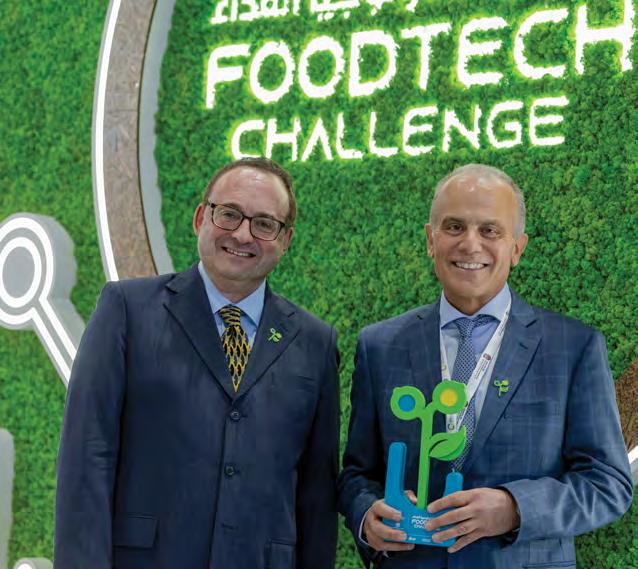
California-based Akorn Technology has recently won the UAE FoodTech Challenge, tackling food waste with its 100% natural, edible coatings for fruits and vegetables. Named among four global winners, the startup was recognized during Abu Dhabi Sustainability Week for its innovation in reducing food waste.
The competition was organised by the International Affairs Office at the UAE Presidential Court and Tamkeen, in partnership with the Gates Foundation, Ne’ma (the UAE’s National Food Loss and Waste Initiative), Silal, a leading UAE agri-food company, and other key partners. In its third edition, ten finalists were selected from a global pool of more than 1,200 entries spanning 113 countries to pitch their solutions to an international judging panel.
Offering its largest prize to date, a $2 million award, the competition was designed to help winners make tangible progress in scaling their start-ups. While placing strong emphasis on the UAE market, it also provides clear pathways to generate impact across markets in the Global South.
Akorn Technology’s edible coating combines a vegetable protein to slow ripening, a natural wax to reduce moisture loss, and vegetable oil to maintain color, providing a natural alternative to chemical treatments and plastic packaging.
Anthony Zografos, founder and CEO
The UAE FoodTech Challenge is not about innovation for innovation’s sake — it is about solutions that can withstand real-world pressure
at Akorn Technology, shares how this innovation could make a measurable impact in reducing food waste across global supply chains.
Akorn recently won the UAE FoodTech Challenge Award. What does this recognition mean for Akorn at this stage of your journey?
For us, this recognition is huge because it signals trust. The UAE FoodTech Challenge is not just about innovation for innovation’s sake; it is about solutions that can withstand real-world pressure: heat, long supply chains, imports, and high expectations for food security. At this stage, it helps us move faster by opening doors and aligning stakeholders who do not naturally move in sync.
How was the idea for Akorn born, and what moment made you realize that edible coatings were needed instead of traditional chemical-based solutions?
The idea really came together during COVID. I was drawing on my earlier experience working at NASA, trying to
figure out how to supply fresh fruits and vegetables to astronauts during long missions. I realized that food loss and waste directly affected the availability of fresh produce worldwide, causing not only economic losses but also harming health and nutrition, particularly for less privileged populations.
I also knew that chemical treatments were not going to be an acceptable solution long term, and I set out to develop all-natural, plant-derived treatments. During the COVID shutdown, many labs around the world were idle, and many researchers were really eager to stay productive. So I formed a global collaboration, developing, for example, solutions for pineapple in Ecuador, mango in Brazil, and avocado in Peru. Everyone was excited to develop natural solutions to the food waste problem, and I believe we were successful in the end.
Let’s talk about development hurdles. What were the biggest challenges during the early stages of developing Akorn’s protein-based coating? The science itself was not the hardest part. The real challenge was alignment- getting producers, importers, retailers, foodservice operators, and consumers all comfortable moving together. Everyone experiences food waste differently, so incentives are not always aligned. That is why a government-supported initiative like the UAE FoodTech Challenge is so powerful: it creates a neutral platform where everyone can rally around a common objective rather than pull in different directions.
Moving on to results, which types of produce have shown the most
dramatic shelf-life improvements with your coating, and why?
We see the greatest impact with produce that is highly perishable and sensitive to moisture loss or decay, including mangoes, avocados, papayas, pears, apples, stone fruit, sweet potatoes, cucumbers, and more. Current solutions involve either chemical treatments or plastic packaging, and we think neither is a good alternative. Natural solutions that preserve the wholesomeness of fresh produce without burdening the world with more plastic are the way to go.
From a technical perspective, how do Akorn’s edible coatings alter produce respiration rates, ethylene sensitivity, and moisture migration?
The coating forms a very thin, edible layer that acts like a regulator rather than a barrier. It slows gas exchange just enough to reduce respiration and ethylene-driven ripening, while also limiting moisture loss. The goal is not to stop natural processes, it is to slow them down so that produce stays in its optimal window longer.
Considering foodservice impacts, how can extended shelf life change ordering frequency, inventory turnover, and waste management in hotels and large foodservice operations?
When produce lasts longer, everything downstream becomes more flexible. Kitchens can order less frequently, inventory becomes easier to manage, and last-minute waste drops significantly. That means fewer emergency deliveries, lower labor stress, and better cost control, all without changing menus or workflows.
UAE distributors approached Akorn due to high spoilage rates in stores and shipping containers. What made losses so pronounced, and how does your technology help?
In the UAE, you are dealing with long import routes, high ambient temperatures, and inevitable cold-chain
over the next two to three years?
Sustainability is not just about good intentions — it has to fit into existing systems
interruptions. Even short exposure to heat can dramatically shorten shelf life. Our coating helps improve tolerance to those stress points by reducing dehydration and slowing metabolic decline, giving distributors and retailers more breathing room.
Speaking on sustainability, how can extended produce life support hotel ESG reporting and sustainability certifications?
Food waste reduction is one of the most tangible ESG wins in hospitality. Longer shelf life means less discarded food, fewer deliveries, and lower embedded emissions. These are things hotels can actually measure and report, which makes sustainability commitments far more concrete.
What does success look like for Akorn
Success looks like adoption at scale, not just pilots, but routine use across supply chains. It also means continuing to tailor our technology for challenging environments, such as hot, arid regions, and proving that waste reduction and commercial performance need not be trade-offs.
What message would you share with other innovators working on sustainable food solutions?
Start with a problem, not a solution. Good ideas do not work in agriculture unless they solve real problems and work within the processes and supply chains that are in place.Sustainability is not just about good intentions; it is about fitting into existing systems and making life easier for the people using your solution. If adoption is hard, impact will be limited.
Finally, if you could eliminate one specific point of food waste in the global supply chain, what would it be and why?
Post-harvest loss, without question. This is where massive amounts of food disappear before consumers ever see it. If you can stabilize food early in the supply chain, every downstream player benefits, from farmers to retailers to consumers. ■
Photo credit: FoodTech Challenge
No! That Is Not Fusion, That Is Just Weird
Chef Tarek Mouriess shares what happens when fusion goes too far
In today’s social frenzy over food, where every dish vies for likes and shares, and a cyclone of trending mashups dominates menus, a critical question emerges. Are we preserving culinary heritage, or are we losing it in a haze of confusion disguised as innovation?
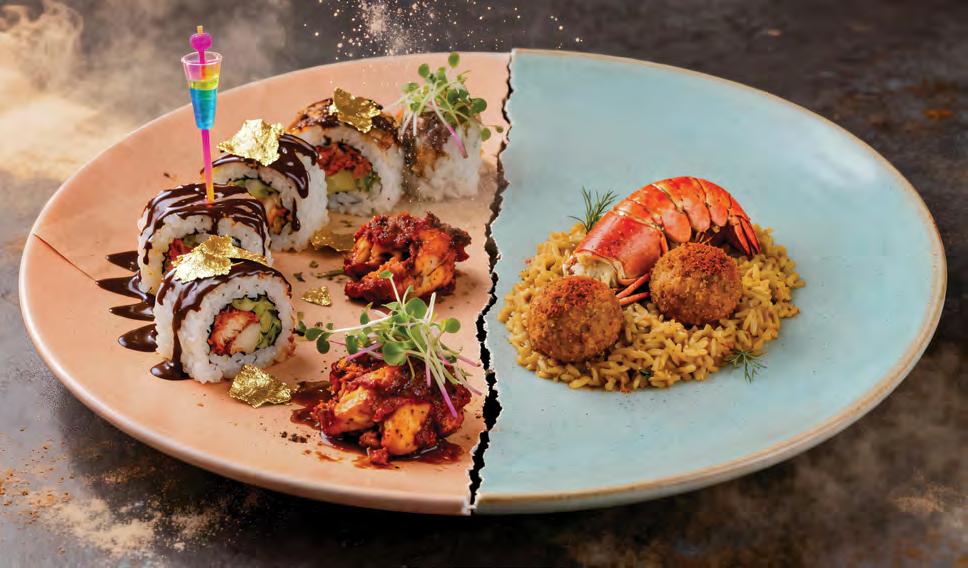
Walk into a restaurant today, and everywhere you look, there are dishes that make you scratch your head. Chicken Shawarma Tacos!Sushi Stuffed with Tandoori Chicken!! (No Kidding) Or Egyptian Mulukhiyah presented like a fountain (sorry, chocolate fondue fountain)!
And people are actually paying for this. This is not creativity. This is confusion wearing a chef’s hat.
Why would I make sushi with basmati rice and chicken tandoori inside? This is infusion confusion masala.
Let me be clear. There is a difference between fusion and reckless chaos. Fusion respects traditions, studies flavors, and creates something meaningful. Chaos throws ingredients together and hopes Instagram filters will save it.Spoiler Alert! They do not
Take the croffle. A croissant mashed with a waffle. While it may taste acceptable, the question remains. Does it surpass a perfectly baked croissant or a crisp, golden waffle? Most professionals will tell you no. It is a gimmick. It is a fad. But I wonder if it will fall under food vocabulary.
The same confusion extends to recent phenomena like Dubai chocolate, kunafaeverything trends.
Fusion is about knowledge, respect, and intent. Confusion is about showing off
Not all cross-cultural culinary experiments deserve condemnation. The key lies in understanding and respecting the fundamentals of each tradition before attempting to marry them. I remember another example from back in the 1980s. There was a famous fastpaced pasta spot called Pasta Factory near Lake Zurich. They had this dish called Al Capone’s spaghetti. And the idea behind it was very clear. Beef strips, capsicum, spaghetti. They used a spicy
tomato sauce with chili flakes, reflecting the fiery, rebellious spirit associated with Al Capone. Nothing was random. Nothing was forced. Every element had a reason to be there. That is a thoughtful adaptation. Simple, flavorful, and people went crazy for it. And you know why? Because it respected the ingredients.
Consider the example of lobster machboos. The rice was prepared using traditional Emirati macboos techniques, while the lobster was flavored with authentic Emirati spices. The result? It was classic. It was good, it was voilà.
The trick is not to destroy tradition. Perfect the classic and present it smartly. Fusion is about knowledge, respect, and intent. Confusion is about showing off for likes. Understand the difference.
Very recently, I came across another successful example of bringing fusion to the plate from Chef George. He reimagined Harees, a traditional Emirati dish, as croquettes. He maintained the authenticity of the Harees while changing only the technique and presentation. The increased meat content ensured the dish remained true to its origins, while the crispy exterior offered a modern twist. He kept both traditions. He did not go and put mushrooms or parsley inside. You kept both the classic and you changed the presentation and the technicality.
Here is the real problem. Young chefs see viral videos and Instagram food trends and think they are inventing cuisine. If you do not know how to cook the Harees or croquettes from scratch, you fail. Know your basics.
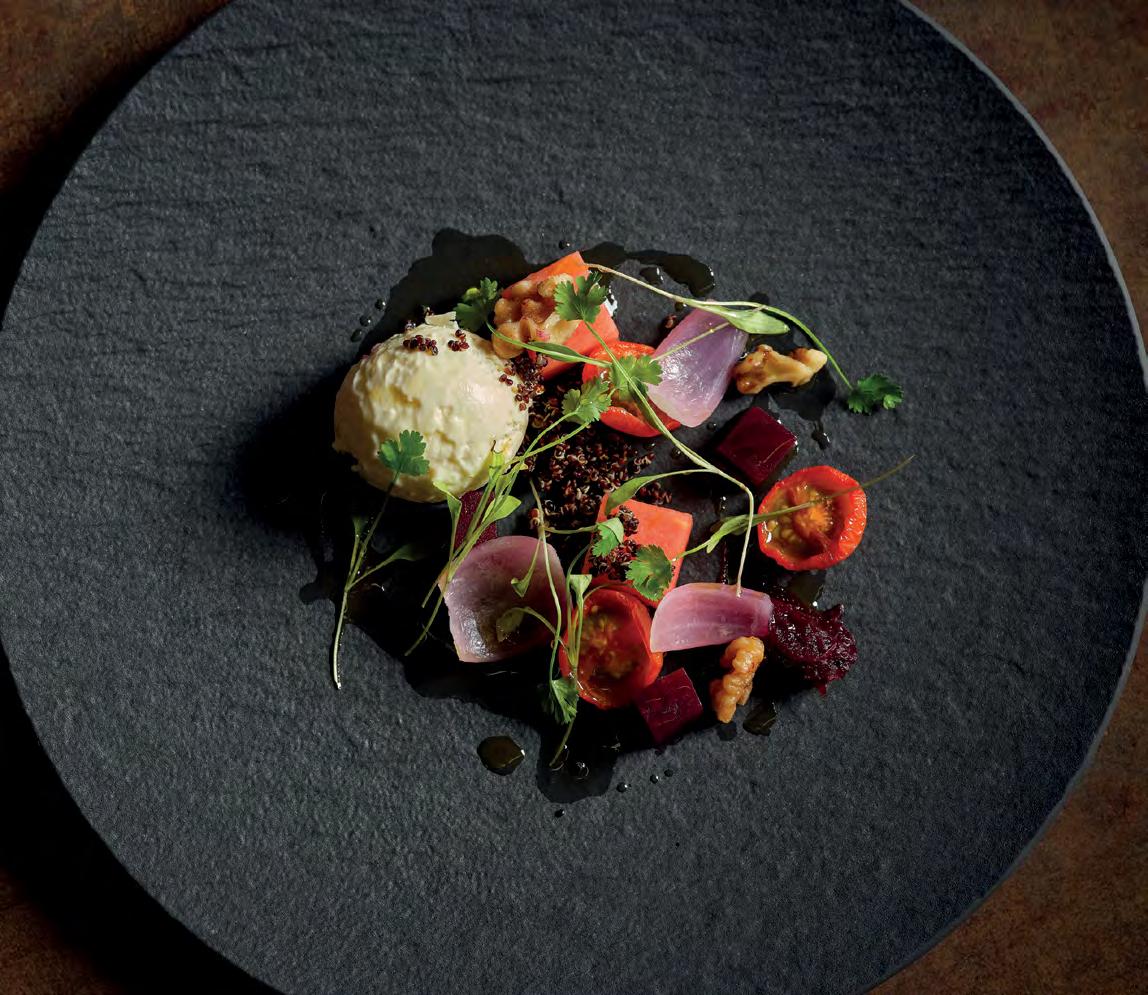
This applies across all cuisines. You cannot just toss beetroot into gravlax and call it avant-garde. You cannot smear Moroccan spices on lobster and gratinate it with cheese and think you are innovative.
Fusion is not new. Throughout history, civilizations from the Pharaohs to the Phoenicians, from the Ottoman Empire to the Mughals, preserved food using simple elements like salt and water. As culinary techniques evolved, these fundamentals remained constant while allowing for thoughtful variations.
Gravlax, for instance, began as a simple preparation of salmon cured with salt, sugar, and dill. Over time, chefs added beetroot for color or saffron for a golden hue, but the core technique remained unchanged. The variations enhanced rather than obscured the original dish.
Even the trendy ‘swicy’ (sweet and spicy) flavor profile has historical precedents across multiple cuisines. The difference is that traditional applications understood the balance and relevance of these combinations. These Instagram trends do not.
The culinary world needs a reset. A return to fundamentals that does not reject innovation but grounds it in
Respect the ingredients, and the dish will respect you back
knowledge and respect. The kids have to cook the classics and revive them in thoughtful ways.
Competitions, culinary schools, and mentorships can focus on traditional techniques. We can have competitions on classic biryani, classic apple pie, authentic tahini, and more. Young chefs should master beef Wellington and crème caramel before attempting to deconstruct or reinvent them.
Ask yourself one question before any fusion dish. Does it make sense? Does it respect the essence of the original? A millefeuille traditionally consists of puff pastry and crème pâtissière. A variation with air-dried beef and melon might sound creative, but does it honor the structure and purpose of a millefeuille? Probably not.
Similarly, marinating lobster with Moroccan spices and gratinating it
with cheese to create Emirati lobster thermidor?? Where is the identity?
We need to go back to infusion, but not confusion. It has to be relevant. It has to be related.
Even food and fashion have a lot in common. The wide-legged pants popular in the 1960s (then called Charleston pants) have returned in stores. Similarly, classic flavor combinations are being rediscovered as trends. A simple mojito, combining mint, lime, and soda, has existed for generations. But now it has become a sensation.
Fundamentals endure. Trends come and go, but classic techniques and authentic flavors remain relevant across generations. Do not destroy tradition in the name of a trend. As diners, we vote with our forks. As chefs, we shape culture with our creations.
At the end of the day, your foundation matters more than your gimmicks. Master the classics. Respect the traditions. Only then can you create something new that is actually worth eating. That is not old-school thinking. That is survival in a kitchen full of nonsense. Be creative. But be sensible and marry flavors together. Make a marriage that works. ■
Winter in Doha Foodies' Lovers Paradise!
Chef
Helen celebrates winter at Doha's Torba Market, where perfect weather meets exceptional produce
Winter in the GCC conjures up happy days. It is that magical time of year when we can finally embrace the outdoors without melting into the pavement like forgotten ice lollies and enjoy everything these countries have to offer. Here in Qatar, it actually gets colder than the UAE (yes, Dubai friends, I said it, from this very windy corniche). We get those sharp, cheek-slapping winds that make you question your life choices, but honestly, they only make the season sweeter.
Winter is something we genuinely look forward to here. Blue skies, sunshine without the scorch, and a calendar bursting at the seams with events. But for me, winter also means one very important thing. Possibly the most important thing. No offence to December festivities, the New Year or socializing in general.
Torba Market
Torba Market is where local farmers gather to sell their produce, and it is, without exaggeration, a vegetable lover’s dream and a carb enthusiast’s natural habitat. Tomatoes in every shape and shade, crisp lettuces, baby marrow, herbs, salad leaves, cucumbers, peppers, melons… the list goes on, and so does my pulse. It does not stop there, a lady
making genuinely good pies from here home at 2am, the bread, oh the bread, and I become alert. Focused. A woman on a mission with reusable bags and absolutely no self-control.
One of the things I truly love about Doha is how pocket-friendly good food can be. Yes, there are expensive grocery shops, but the government actively monitors produce prices, and the quality you get for the price is genuinely impressive. Case in point, baby marrow. The baby marrow here, from Qatar-grown suppliers, has to be the most flavoursome I have ever tasted. That is not praise I give lightly. I have eaten a lot of vegetables in my time. Some might say too many. I say, mind your business. Sometimes I simply roast them with a little garlic,
black pepper, salt, and olive oil. And that’s it. No drama. No garnish. No chef’s twist. I can eat them by the bowlful, standing at the counter, fork in hand, wondering where it all went wrong or right. No embellishment needed. I promise you, you will not find better.
Last weekend was my first visit to Torba Market this season. It has been open since November, but between travel, time constraints, and the winter break, I had not made it over. Tragic, really. So, we set off early in the morning, which is always the right decision, especially when food is involved, and your judgment is still slightly blurred by caffeine deprivation.
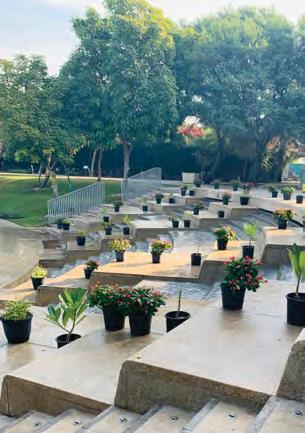
The market sits next to a beautiful park, meaning you can stroll around under clear blue skies for miles, enjoy the crisp air, and then reward yourself with breakfast, brunch, lunch, coffee or, if you are me, some unholy combination of all four.
Our first stop was a local coffee cart. And when I say local, I don’t mean Arabic coffee, I mean a local business serving really good coffee. It was excellent, slightly bitter, rich, and thankfully not fruity. I know fruity coffee has its fans, but I am not one of them. I like my coffee how I like my opinions, strong, unapologetic, and not tasting like berries.
Before our walk, we’d spotted a stand with beautiful croissants, so naturally, that became stop number two. I went for a custard-filled croissant (extremely naughty, zero regrets), while my friend chose an almond croissant. They looked stunning and tasted good, but they were dense. Very dense. Not the light, flaky croissant we were expecting.
A little research later revealed the truth: these were Argentinian croissants, known as medialunas,literally half-moons. They are meant to be heavier and richer than their French cousins, and once you know that, then everything makes sense.
Would it have helped if the stand had said “Argentinian croissant” upfront? Probably. Expectations matter. The first thing my friend said was, “This is a bit heavy.” I misheard and thought she meant me, but thankfully it was the croissant, which is never what you want to hear. That said, I would absolutely go back for more. Just mentally prepared, emotionally available, and possibly skipping lunch beforehand.
The staff were lovely, warm, interactive, and clearly proud of what they were selling. The packaging was beautiful too… but here comes my gripe. I have a big issue with excessive packaging. Even biodegradable boxes are still waste, and I am forever thinking about the wasted cost. If I’m buying one croissant, just one, please don’t enclose it in a box fit for a family of six. A good-quality paper bag is more than enough. My lone croissant and my friend’s equally lonely croissant would have been perfectly happy snuggled together in a bag.
Now Torba has introduced a dedicated food area, which is a brilliant idea. Not all vendors are there, but if you want food to eat on the spot, this is where you go. And this is where decision-making becomes… difficult. Emotionally taxing. Spiritually challenging.
Breakfast tacos caught my eye, soft, juicy, and tempting. There was Manakish
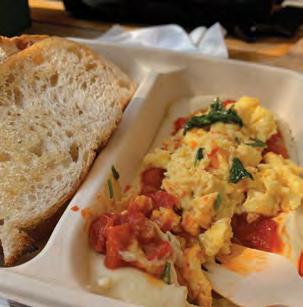
made to order. And then there were breakfast plates, traditional Shakshuka served with hummus and toasted sourdough. Slightly unconventional, but intriguing. And frankly, I was not here to make sensible choices.
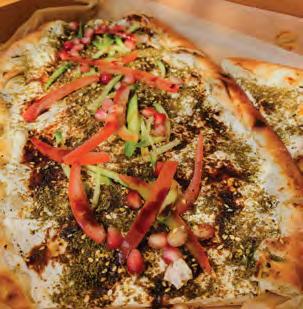
We opted for the Shakshuka and the Manakish, specifically labneh and za’atar, two of my absolute favourite ingredients. Honestly, anything Arabic with za’atar has my heart. Sprinkle it on cardboard, and I’d still give it a chance. I watched as the chef prepared the Manakish, refusing to let it leave the counter until he was completely satisfied. He cut it, garnished it, adjusted it, and placed it into the box with care. Pride in food like that is always a joy to witness. Also, it made me even hungrier, which felt unnecessary at that point.
The Shakshuka was equally well prepared. Yes, there was a bit too much hummus for my liking, but the combination of rich tomato sauce, softly scrambled eggs, creamy hummus, and beautifully toasted sourdough was comforting and deeply satisfying. Warm, fuzzy feelings all around. Possibly foodinduced euphoria.
Now, before you judge, no, this was not all eaten at once. After our walk, it turned into a breakfast-lunch hybrid. We did not finish everything, and I brought the rest home. I am many things, but I am not a garbage bin.
Later that evening, I reheated the Manakish. Sadly, it did not quite
replicate the magic of fresh-fromthe-oven goodness. Some things are simply meant to be eaten immediately, standing up, while still dangerously hot, burning the roof of your mouth because patience is overrated.
The croissant, sorry, medialunas made its appearance later that afternoon, enjoyed with a cup of peppermint tea (and yes, I still do not drink British tea). I sat on the sofa, looking out at the blue winter sky over the Corniche from my window (slightly flexing here), dense croissant in hand, feeling entirely content. And slightly full. But mostly content.
And it made me think
Some people I know do not really like food, at least not with enthusiasm. They pick at it. Push it around the plate. Eat the same thing every day. Forever on a diet, forever depriving themselves. And I just think, why? Food is joy. Food is culture. Food is a connection. Life is far too short not to enjoy it. Especially without a generous dollop of labneh on your Manakish.
Torba Market, I will be seeing you again very soon for groceries, for inspiration, and perhaps for another croissant (now fully informed). And if I am feeling exceptionally lazy, I may even let Torba come to me, courtesy of delivery. Because growth is real, but so is convenience.
Finally, winter in Qatar also means event after event after event. Sometimes it is hard to keep up. Although one event I attended last year and will definitely be attending again is the Qatar International Food Festival. This year, it is even bigger, and from what I have seen so far on social media, it is going to be spectacular.
I will be spending more than a few evenings there over the coming week, so stay tuned. I will report back with all the delicious details. Possibly over-eating in the name of research.
For now, happy eating, enjoy this beautiful winter sun. ■
From Common Sense to Recognition
Behind the plate, a chef’s unseen work makes it all possible, writes Chef Carl Shi (pt 1)
Throughout my recent FW findings, one clear trend emerges: more pre-portioned ingredients, pre-packaged products, and par-baked items are arriving ready to finish in kitchens across all business models. While this approach appears efficient on paper—offering speed, consistency, and tighter cost control—it prompts a pressing question. As more of the culinary craft is moved upstream, what becomes of the chef's essential role and value within the operation?
There is nothing wrong with convenience when it is used with intention. The concern is what it can quietly change. When more production happens off-site, the chef’s work becomes less visible inside the venue. It becomes easier for decision makers to assume the kitchen is simply assembling, not building capability. Over time, that assumption can shrink expectations and investment, even as the chef remains responsible for quality, safety, and guest trust.
At first, I thought it was simply a procurement story. A response to labour shortages and rising costs. But the longer I watched it, the clearer it became that it is also a capability story. When we outsource more prep, more baking, and more portion control, we are not only buying time. We are shifting what skill looks like and who is accountable when standards slip. Once craft is treated as optional, it becomes easy to undervalue the people who carry it.
So, I did what I now do as a researcher. I went digging. I searched previous and
When more production happens off-site, the chef’s work becomes less visible inside the venue
current journals, hospitality databases, and industry publications, looking for clear explanations of the chef’s contribution to business success. And yes, there is plenty out there in business, human resources, and organisational research. Leadership models. Motivation theories. Culture frameworks. Service quality tools. They are useful, and they have their place. But research that
puts the chef at the centre, the chef as the unit of analysis and the driver of operational capability, is very limited. Very few papers speak directly to what chefs actually contribute, day after day, service after service, in a way that captures the full picture.
What I found was fragmented. Chefs appear in the literature, but often from the side. Leadership. Creativity. Teamwork. Stakeholder expectations. Service quality. Important topics, but still partial. The chef’s contribution is often treated as background knowledge, as if everyone already understands it and there is no need to document it directly.
And that is exactly the problem. In the real world, operators understand the basics. If you want a successful restaurant, you need strong chefs. If you want a hotel F&B operation to perform, you need a kitchen led by someone who can run it effectively. That is common sense. Yet common sense is not the same as recognition, especially recognition from the academic world. Without academic language and research that maps chef capability to business outcomes, the chef’s value is easy to overlook, easy to simplify, and easy to cut when budgets tighten.
That is why I have wanted to write this piece as a proud chef. I came up through kitchens where standards were not negotiable, where cleanliness was a habit, discipline was a culture, and consistency was the real signature. Those early years shaped how I see hospitality. A kitchen is not held together by talent alone. It is built through repetition,
A menu can be copied. A concept can be copied. A kitchen culture built on standards cannot
routine, and respect for craft, and the outcomes show themselves in quality, team stability, and guest trust.
I have sat in enough meetings to recognise the pattern. The kitchen is discussed in numbers. Labour. Food cost. Variance. Purchasing. Equipment repairs. Sometimes, a quick mention of guest feedback is usually made when something goes wrong. When things go right, the silence is loud. The plate arrives, service moves on, and the business assumes the kitchen will keep delivering. What is reliable becomes invisible.
This is not a complaint. It is a structural issue. When a contribution is not named, it becomes hard to measure. When it is not measured, it becomes hard to defend. And when it is hard to defend, it becomes easy to cut. This is why language matters. We need clearer words for what chefs actually deliver, not only for owners and managers, but also for the academic world that shapes teaching, training, and professional identity.
Strategic Asset
Here is the central point. A chef should be considered a strategic asset of the organisation. A strategic asset creates an advantage and is difficult to copy. By that definition, chef capability fits perfectly. A menu can be copied. A dining room concept can be copied. A marketing campaign can be copied. But a kitchen culture built on discipline and standards cannot be copied easily. A production system that delivers consistency under pressure cannot be replaced by a quick
This matters even more now, because the industry is changing. Convenience products are rising. Labour markets are tightening. Sustainability pressure is increasing. Guest expectations are still
high. In that environment, the chef's capability becomes the stabiliser. It is the human engine that turns resources into reliable performance.
More on a chef’s value and the promise on the plate, along with how reliability is built through systems, in the next part. ■
hire. A chef who can walk into chaos and bring order is not common.
The Art of Giving
Donner. . दान (Daan)
Chef Christophe Prud’homme reflects on the true currency of hospitality
Giving is timeless. From the very first moments of life, it shapes who we are and what we become. Life itself is the first gift we receive freely, unconditionally, without expectation. In French, donner conveys warmth, intention, and generosity, while in Arabic, evokes the selfless act of offering. In Hindi, दान (Daan) reflects the essence of generosity, a principle deeply rooted in culture and human connection. Across languages and generations, the act of giving remains a constant force that builds lives, careers, and communities.
In hospitality, giving is not optional; it is the heartbeat of our profession. We give time, energy, and emotion. We give our evenings, our weekends, and a part of ourselves to create experiences for others. We give attention to detail on a plate, creativity in a dish, and sincerity in every service. But the most powerful gifts are often invisible.
Giving confidence.
Giving responsibility.
Giving opportunity.
A career in hospitality is shaped by these moments of transmission. One of the most symbolic acts of giving is handing a knife to an apprentice. It is not just a tool; it is a message: I trust you. You are ready to begin. That gesture marks the start of a journey built on discipline, respect, and pride, and it sets in motion a lifelong chain of giving.
Giving also creates memories. A shared service, a photograph capturing a special moment, a promotion earned after years of dedication, these are tangible outcomes of giving. They tell the story of engagement, effort, and
shared growth. A career does not grow in isolation; it grows through mentorship, collaboration, and generosity.
In this world of constant movement and adjustment, giving creates stability. Giving knowledge allows others to progress. Giving guidance shapes behavior and values. Giving visibility through recognition, encouragement, or trust builds confidence and loyalty.
Hospitality is a profession built on cycles of giving. What one generation receives, it passes on to the next. Chefs, managers, sommeliers, and service professionals are all shaped by someone who took the time to teach, to correct, and to listen. They often expected nothing in return, yet their impact endures.
The pride of giving comes quietly, over time. It is seeing an apprentice become a confident chef. It is witnessing a former team member assume leadership. It is recognizing yourself, subtly, in their discipline, values, and respect for the craft. That pride is not ego; it is legacy.
Giving does not always bring immediate results. Sometimes it brings silence. Sometimes distance. Yet its true value lies in continuity. Knowledge given does not disappear; it multiplies. Trust given creates responsibility. Engagement shared builds teams, culture, and identity.
We are all the sum of what was given to us - life, education, guidance, and opportunity. Parents, teachers, mentors, and colleagues have shaped who we are today. Hospitality, perhaps more than any other field, thrives on this human transmission.
To give is to participate in something larger than yourself. It is to invest in people, craft, teams, and future generations. It shapes careers, builds memories, and creates meaning that endures.
Yes, it is always good to give.
Because what we give does not vanish, it becomes what remains, long after the moment has passed, living on in others, in the craft, and in the legacy we leave behind. ■
The AI Elvis
What happens when a human meets artificial intelligence? Elvis Taylor recounts his experience
AI did not make me smarter. It just held up a mirror, and it is brutal. I used to think AI was making me smarter. Emails? Faster. Ideas? Clearer. Problems? Solvable. My productivity unlocked. Life upgraded. Then reality hit: AI was not boosting my brain. It was showing me… me. And that mirror? Brutal.
I started small: emails. No more “oops, resend” moments. Time saved? Glorious. Productivity felt like free dessert… with a cherry on top.
Next, tricky topics: organizing chaos, solving problems I usually avoided. My comprehension? Skyrocketed. My confidence? Exploded. Not because AI thought. Because the friction disappeared. Then things got weird. Doing the same work without AI felt… wrong.
If AI vanished tomorrow, could I perform the same? Honest answer: nope. Not lazy. Just human. AI made it ridiculously easy to break down complex problems and find solutions. Suddenly, I felt like I had a personal agent or assistant living in my computer, always ready, never arguing, never asking for coffee breaks.
It sped up my work so much, I started wondering if AI was doing a secret apprenticeship with me. It did not just help with work. It helped me learn faster, too. For example, I finally understood the map of Burgundy villages and was able to easily recite them or the subzones of Tuscany in an instant, using mnemonic and stories to help me never forget. This guided me and, somehow, made more sense once I had AI translate uncharted subjects into something my brain could follow.
AI is a genius at spotting patterns and
generating ideas. But without human judgment? All show, no go. AI did not make me smarter. It made thinking visible. The real reason AI worked was not the tech; it was me.
Years of reading. Memory training. Learning how to learn, not just what to learn. Pausing before acting. AI did not replace that. It amplified it. Then it got bigger: AI reflects teams.
Good team? Insight accelerates. Weak team? Shallow thinking spreads faster than gossip at a family dinner. Meetings get shorter. Docs look sharper. Decisions come faster. But speed has a sneaky side effect: fewer questions, more assumptions. Clarity pretending to be insight.
Some are now like giants who cannot imagine writing a single email without ChatGPT. They stare at a blank screen and shiver at the thought.
It is like asking a superhero to put on normal clothes. Winners would not be the fastest prompters. Winners will think first.
At home? AI shows up there, too. My six-year-old asks
“How far is the moon from Earth?” “How hot can the sun be?”
I use AI to answer correctly (otherwise, I would not know). Lesson: AI forces faster, smarter, more creative thinking, even on kid logic. Bottom line: AI rewards clarity. Amplifies judgment. Magnifies discipline.
The future would not be written by algorithms It will be written by humans who think first, question assumptions, and act deliberately. Efficiency is old news.
Elevation is the game. AI offloads execution. Judgment? Still ours.
Strategy. Creativity. Ethics. Vision. 100% human. Leaders slow down to ask better questions, not demand faster answers.
At home: AI buys time. Time to learn. Time to reflect. Time to build judgment. Technology is leading us far. Disciplined minds will take us further.
I wonder what Gen Z and Gen Alpha will do without AI. Will they develop the same grit, the same judgment we did… or lean entirely on machines? The future is bright, but the real measure would not be what they get from AI. It will be what they leave behind when they are gone.
A Final Word on AI:
What It Can and Cannot Do AI can
Analyze mountains of data in seconds, faster than any human could hope.
Draft emails, reports, and even strategic notes while you sip your morning coffee.
Spot patterns and solutions that would take a human days, if not weeks, to uncover.
AI cannot
Feel the quiet nudge of intuition that tells you when a choice is right or dangerously wrong.
Recall the subtlety of your grandmother’s cookie recipe, or the charm of a tiny Burgundy village that once made your heart skip.
Experience humour, panic, or the thrill of learning from your own mistakes.
AI makes us feel grand, almost immortal, but it cannot make us human. That, it seems, remains our most extraordinary advantage. ■
From Cold Chain to Plate
Sulemana A. Sadik shares expert insights on beef handling best practices for GCC HoReCa Operations
In the GCC hospitality sector, beef handling is a critical responsibility for food safety and compliance. High ambient temperatures, extended supply chains, and strict municipal regulations require HoReCa operators to follow disciplined, HACCP-based procedures from receiving to service to ensure quality, safety, and traceability.
Labeling and Product Identification
All beef supplied to HoReCa operations must carry compliant labeling in line with local municipality and GSO requirements. Labels should clearly state the product description and cut, net weight, production and expiry dates, batch or lot number, country of origin, storage temperature, Halal certification, and importer or distributor details. Ground beef is typically labeled by lean-to-fat ratio to support correct menu application and cost control. Proper labeling ensures traceability, audit readiness, and consistency in kitchen operations.
Receiving and Inspection (Critical Control Point)
Receiving is a HACCP critical control point and must be performed by trained personnel. Beef should be visually and physically inspected upon delivery. Fresh chilled beef should appear bright red, while vacuum-packed beef may appear darker due to oxygen exclusion, which is acceptable. Packaging must be intact, clean, and free from leaks. Delivery documentation and Halal certification must match the product supplied. Any non-conformance must be recorded and escalated immediately.
Cold Chain Management
Maintaining the cold chain is essential under GCC climate conditions. Beef must be transferred promptly from delivery
Hygiene is not a checklist item; it is a continuous behaviour
vehicles to appropriate cold storage with minimal exposure to ambient temperatures. Chilled and frozen products must never be mixed, and temperature-monitoring records must be maintained. Cold chain failures are a leading cause of spoilage, rejection, and audit non-compliance.
Storage and Inventory Control
Chilled beef must be stored in dedicated meat chillers, on lower shelves to prevent cross-contamination. Trays should be used to capture any purge, and raw beef must be segregated from cooked or ready-to-eat foods. Frozen beef must be stored with adequate airflow and clear labeling. FIFO (First In, First Out) inventory management must be strictly applied. Any re-portioning should be carried out in temperature-controlled areas using sanitized equipment and re-labeled accordingly.
Defrosting and Preparation
Beef should be defrosted under controlled conditions. Microwave defrosting may be used only in emergencies, and the product must be cooked immediately. Thawing at room temperature, under running water, or refreezing thawed beef without cooking is strictly prohibited and non-compliant with municipal regulations.
Hygiene and CrossContamination Control
Strict hygiene standards must be maintained at all times. Staff must wash their hands before and after handling raw beef, use color-coded boards and utensils, and clean and sanitize all food-contact surfaces immediately after use. Raw beef must never be washed, as this increases the risk of crosscontamination. Packaging waste should be disposed of promptly and correctly.
Cooked Beef and Leftover Handling
Cooked beef must be cooled and refrigerated within two hours, stored in sealed and labeled containers, and reheated only once to the required internal temperature. Any product showing signs of spoilage, temperature abuse, or compromised integrity must be discarded.
Effective beef handling in GCC HoReCa operations is essential to food safety, regulatory compliance, and brand protection. By adhering to HACCP principles, maintaining cold chain integrity, and following municipalityapproved practices, operators can ensure consistent quality, minimize risk, and uphold consumer trust in a highly regulated hospitality environment. ■
Finding the Future in Forgotten Recipes
Pastry Chef Lalith Suranga chats with Amaresh Bhaskaran on looking back to move forward and why culinary history still holds the answers to modern inspiration
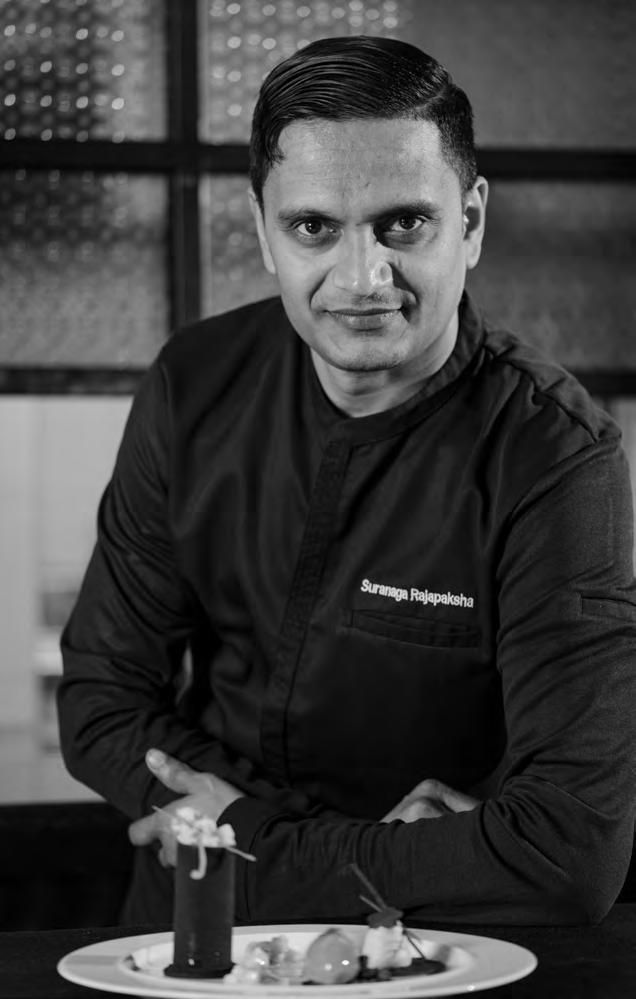
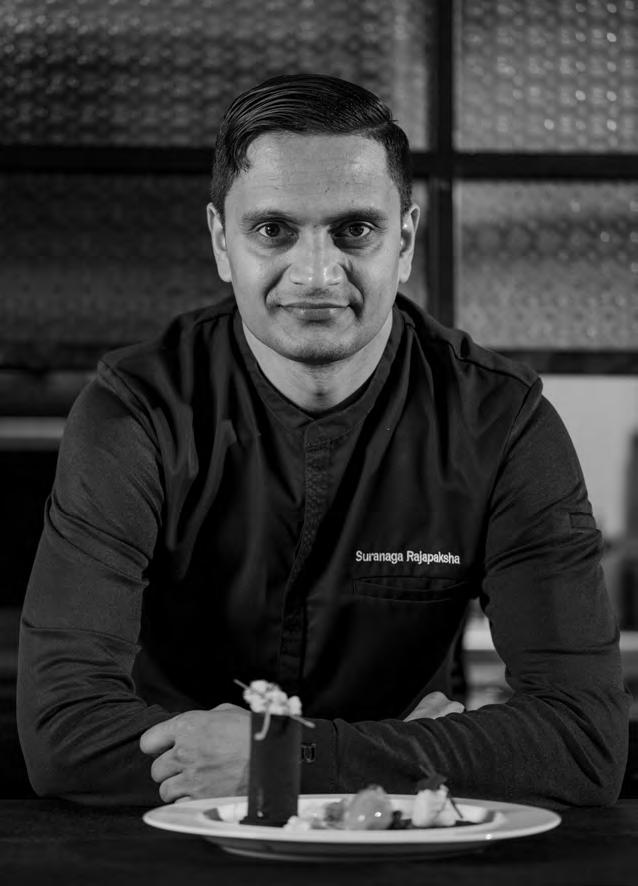
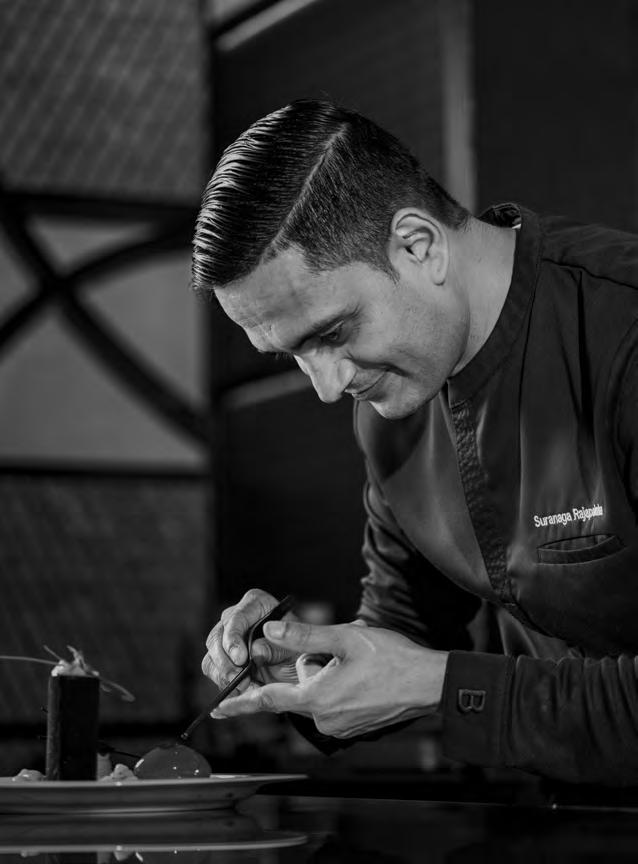
He ran a restaurant even before he knew what a chef was. Long before hotels and apprenticeships, a teen Lalith Suranga was experimenting in a tiny hometown eatery. He learned every lesson by doing. Today, as the head pastry chef at Mövenpick Resort Al Marjan Island, he develops menus, trains teams, and modernizes century-old recipes into contemporary desserts.
“I had no plan to become a chef,” he says. “It was just a series of events in my life. My grandma used to make candy and jellies at home, and that really stayed with me. Besides that, I was around 20 when my uncle found gemstones on his land. He sold them and gave me a share of the money. With that, I started a small restaurant. About five people worked for me, and I handled the cashier, learning about teamwork,” he recalls. Unbeknownst to him then, those lessons took him much further than he imagined.
One and a half decades since he graduated, he continues to prepare pastries that pay tribute to tradition while embracing innovation. Now 41, he is part of the pre-opening team, shaping the operation from the ground up as one of the largest projects of his career. “When I started, the biggest challenge was working with suppliers,” he says. “As a new opening, we had to gather every detail, build trust, and establish longterm partnerships. We spent countless hours with the management team troubleshooting, refining processes, and ensuring everything ran smoothly.”
A year in, and the kinks were ironed out. Orders arrived on time. Prices were right. Everything worked. Menus got a full revamp. “We are already set for 2026. Our property features several outlets. Ula, our Mediterranean restaurant with Boho chic vibes, and Boons, our French Brasserie, so there were several unique menus to work on. We also have a Neo Sky Bar offering breathtaking views of Marjan Island. We handle catering,
other hotels use our facilities for meetings and management discussions, making us a hub for local businesses.”
I look to the classics, revisit recipes, and then give them a modern twist
weddings, and events in our ballroom, which can host up to 300 guests. There is always something happening, especially during March when Marjan Island is bustling with events. Even
Recognition found them soon enough. Last year, the property was celebrated for Best Food Safety & Performance at the Ras Al Khaimah Food Safety Awards, while Ula bagged multiple recognitions local and international awards, such as at the World Luxury Restaurant Awards.
Undeniably, Chef Lalith Suranga runs a tight ship. He is in before eight each morning, checking reports, and taking any notes on guest allergies. Then he
scans buffet standards, inventory, and management, jots down what needs to be produced, and guides his team on their tasks for the day.
Teaching is always on the agenda. “New chefs get hands-on learning. Twice a year, I organize internal competitions, sometimes it is about plating desserts, sometimes a live cake challenge. Even when a new menu is launched, I train the team and guide them through photos and step-by-step instructions,” he explains.
Most people chase trends. I look back to move forward
Inspiration, though, comes from the past. Brownies, for example. Everyone makes them. He goes back 75, even 100 years, then gives the recipe a modern twist. “I
look to the classics, revisit recipes, and then give them a modern twist.”
Finding those old recipes is part kitchen sleuth, part full-on obsession. At times, he scours the internet or leafs through old cookbooks, and when a classic recipe catches his eye, he keeps the heart and gives it a modern twist.
It is a bold move. Most people want trends. He goes the other way, mixing the old with the new. In the end, he says, it is familiar but fresher. “These days, guests are searching for the classics. They want healthier food, less sugar, and fewer heavy creams. That is why we need to look back to move forward.”
Step back with him, and we are in Eheliyagoda, a small Sri Lankan town where it all began. Famous for its gemstones, it was here that a young Lalith spent his childhood, setting up a small eatery and dreaming of something bigger. The real push came when his brother returned from Dubai and nudged him to dream beyond the borders.
“My brother was already a chef, so he injected the idea of hotel school in my head, but I kept wondering how I could actually make it happen. They had all sorts of courses like Chinese cooking, hot kitchen, you name it. I remembered my grandma and called her to ask, ‘Should I go with the hot kitchen or the bakery?’ She just said, ‘Make cakes.’ Those words stuck with me.”
The course ran for a year, with six months of hands-on training, followed by two years of working across five hotels in Sri Lanka. Pay was modest, but Chef Lalith’s head was full of knowledge. It was also around then when he met Chef Jerome Corea, a cake celebrity chef at The FEB in Colombo. Chef Corea took him under his wing, showing him the tricks of the trade, how to stack layers perfectly, how to plan big cakes, how to keep calm when things went sideways.
In 2010, Lalith finally stepped beyond Sri
Lanka, landing at Le Pont Restaurant in Abu Dhabi. The tiny cake shop, all about sweets and chocolates, taught him new tastes and local quirks. Two years later, he joined the Grand Millennium Al Wahda Hotel. “I started in the pastry department. For someone my age, it was huge. The jump from cake shop to hotel kitchen was massive. Before, it was just cakes all day. In the hotel, it was a whole new world full of plated desserts, chocolate work, teamwork, communication, everything.”
Inevitably, competitions became part of the process. Chef Lalith entered his first in La Cuisine Du Sial, Abu Dhabi, and came back with silver for plated desserts. From there, it was show after show, rarely leaving without a medal at the Emirates Culinary Salon.
After Grand Millennium, he set his sights higher and joined the Gloria Hotel in Dubai. “At the time, it was the tallest hotel in the world. I knew I wanted to work there,” he says. He stayed until 2019, watching how decisions were made and working closely under the executive chef. Then came the usual shuffle. New kitchens. New titles. He joined IHG Crowne Plaza as an assistant pastry chef. “It was a great experience there. I was running the kitchen, guiding the younger chefs, keeping things together under pressure. In 2020, I moved again to join Fairmont Ajman. Then COVID hit. Right in the middle of everything. Plans changed overnight. I came back to IHG as the head pastry chef at Crowne Plaza Dubai.”
Most recently, he joined the Mövenpick team, taking on the role of pastry chef at their pre-opening property. From mentoring staff to revamping menus and handling suppliers, every step cranked the grit, raised the heat, and refined the taste.
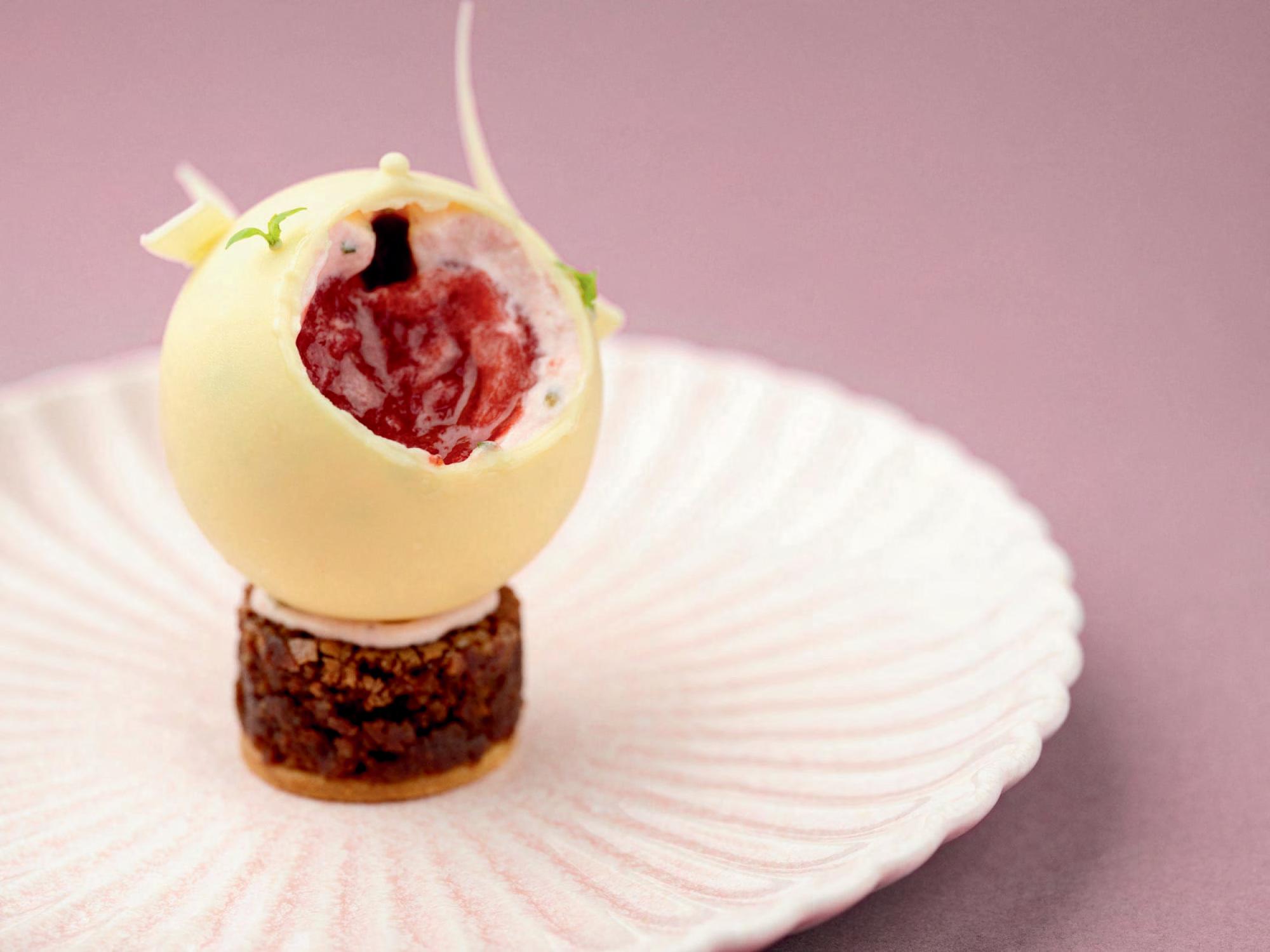
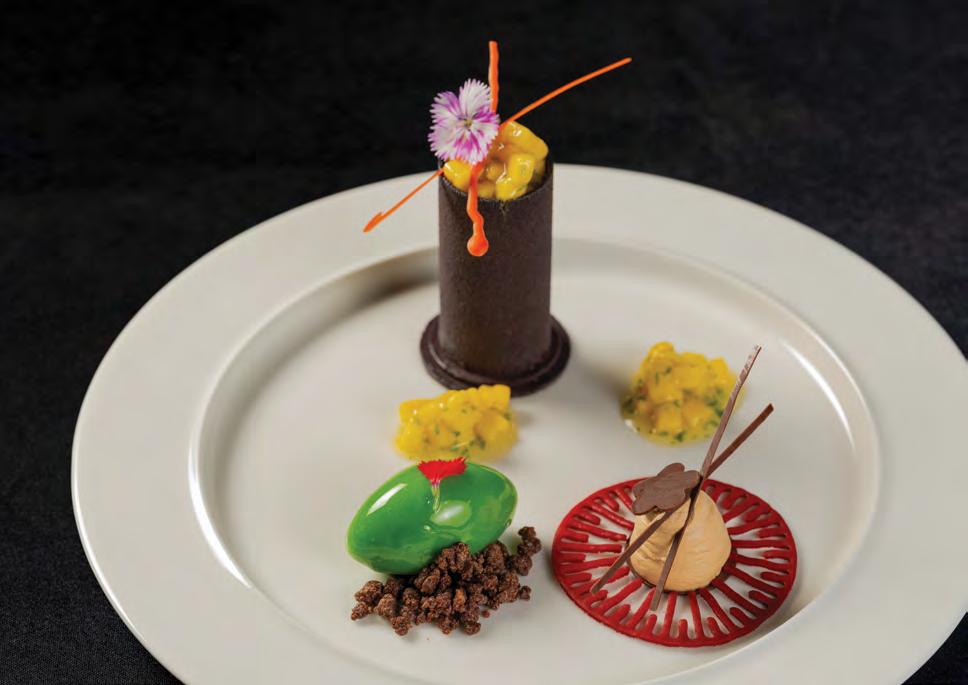
For the Arla Pro Pastry Mastery competition, he has prepared a plantbased plated dessert. Soya milk and coconut cream replace dairy, and
asking for right now. For now, though, that thinking stays at work.
Every new kitchen raised the heat, refined the taste, and strengthened the grit
flavours from his homeland keep the nostalgia.“ The focus is mainly on sustainability. I want to present something fresh, familiar, and with guests asking for plant-based options, I am confident that this will bring a new take to the table.”
It speaks to what the food ecosystem is
At home, Lalith is not allowed in the kitchen; his wife and seven-year-old daughter handle that. “My wife and my daughter do the cooking,” he says with a laugh. “ I am out of the kitchen. But if they are curious about a new recipe and want to learn anything, I teach them.”
His daughter already shows a creative streak of her own. Rather than pastry, she is drawn to art, teaching herself to draw through videos and practice. “Be it art, cooking, or something entirely different, I will support her. What matters is that she follows what she loves.”
He did the same, following his heart. In his cooking, you can see the past, present, and future all on a plate. ■
Chocolate and Soya Milk Cream With Mango, Basil Salsa With Soya Milk, Chocolate Soil, Chocolate Sable, Lemon Mint Sorbet
Chocolate Cake
Vegan Butter 100g
Coconut Oil 20ml
Soya Milk 30ml
Coco Powder 20g
Almond Powder 20g
Icing Sugar 20g
Method
Mix the vegan butter and icing sugar, add the hot soya milk, and continue mixing for 3 minutes. Then add all the dry ingredients.
Bake it at 175°C for 20 minutes.
Rubab Compote
Fresh Rubab 50g
Sugar 10g
Cinnamon Stick 2 Stick
Star Anise 2 pcs
Water 10ml
Method
Slowly boil the water with the rhubarb,
sugar, star anise and cinnamon stick. The mixture needs to be simmered gently until the water reduces.
Mango And Basil Salsa
Fresh Mango 1 pcs
Basil Leaves Fresh 5g
Sugar 50g Method
Peel the mango and cut it into cubes. Chop the basil leaves and mix everything.
Soya Milk Form
Cold Soya Milk 25ml
Agar Agar 2g
Sugar 5g
Method
Mix cold soy milk with agar-agar, then heat the mixture until the agar dissolves. Use a foaming machine to create foam.
Chocolate Sable
Vegan Butter 50g
Icing Sugar 40g
Vanilla Stick 1 stick
Flour 60g
Almond Powder 20g
Coco Powder 20g
Method
Mix all the ingredients together and bake at 170°C for 12 minutes.
Lemon And Mint Sorbet
Sorbet Stabilizer 1g
Method
Combine the sugar, glucose, lemon puree, mint puree and water in a saucepan.
Heat the mixture until the sugar dissolves. Add the sorbet stabilizer and let it rest for one day.
Chocolate Soil
Dark Chocolate 70%
Method
Combine the water and sugar in a saucepan and heat to 120°C.
Add the chocolate and mix well. Finally, add the hazelnut oil and store it in a dry place.
GAC Salon and Competition Raise the Stakes
The inaugural GAC Salon & Competition brought together 244 entries from chefs representing 37 establishments and welcomed over 400 visitors, proving that UAE’s culinary community has plenty of appetite for friendly rivalry.
The first edition of the GAC Salon & Competition, endorsed by Worldchefs, took place on 6–7 January 2026 at Chef Training and Consultancy (CIC) in Dubai, marking a momentous milestone for the region’s culinary scene. The event united professional chefs, emerging talents, and
the wider community in a celebration of culinary excellence and creativity.
Organised by Chef Training and Consultancy under the leadership of MasterChef Majed Alsabagh, whose vision and commitment were key
to delivering an event that met high professional standards. The competition drew entries from chefs representing hotels and restaurants across the Emirates.
A key highlight of the competition was its inclusive approach. Alongside professional chefs, the event welcomed amateur participants, those with Down syndrome, and participants from Dubai Women’s Association, creating a positive, socially impactful atmosphere.
The judging panel consisted of international judges from multiple countries, led by Chef Domenico Maggi, Chairman of the Judges, from Italy, ensuring fairness, professionalism, and adherence to international standards throughout the competition.
Judges awarded 33 gold, 54 silver, and 88 bronze medals across the categories. The Best Chef Award was presented to Chef Abdullah Mahmoud from Kahloon restaurant, in recognition of his outstanding skill and creativity. Meanwhile, Kitopi was awarded the Champions Trophy for being the Best Company with the highest number of medals and scoring, and for its strong participation.
The success of the GAC Salon & Competition was made possible through the support of its valued sponsors, whose contributions played a vital role in delivering a high-quality event.
The GAC Salon & Competition proved to be more than a competitive platform. It was a professional celebration of culinary talent, diversity, and excellence. This successful first edition sets a strong foundation for future growth.
With standout winners, international judges, and strong participation from across the Emirates, the event set a high benchmark and promises even more excitement for the second edition in November 2026. ■
The Guild Meet
The January Guild Meeting was graciously hosted by Chef Kushan, serving as both Vice President of the Abu Dhabi chapter and Executive Chef of the St. Regis Hotel. The gathering provided a platform to officially welcome new members, while industry partners took the opportunity to showcase their latest products.
Arab Marketing and Finance, Inc. (AMFI) Simon Bakht, Tel: +961-1-740378 / 741223 / 751262, SBakht@amfime.com
Arla Foods
Rachna Amarnani, Marketing Specialist, raamy@arlafoods.com, B7 Building Digital park Dubai Silicon Oasis, Industrial Area Dubai www.ArlaPro.com, www.arlafoods.com
Bakeart Specialists Bread and Bakery Products Trading LLC
HK Enterprises Era Jain, Marketing Manager, Mob: +971 56 6589 246, era@hkfoodgroup.com, www.hkfoodgroup.com
Hospitality by Dubai World Trade Centre
Georg.Hessler, Director Culinary Operations, Tel: 04 3086571, Georg.Hessler@dwtc.com, https://www.dwtchospitality.com/en/
HUG AG
Riyadh Hessian, 6102 Malters / , food-service@hug-luzern.ch, www.hug-luzern.ch, fb/hugfoodservice Distribution UAE and Oman: Aramtec, PO Box 6936, Al Quoz Industrial Area No. 1, Near Khaleej Times Office, Mob +971 507648434, www.aramtec.com
Date of Application: .................................................
Family Name: First Name/s: Ms/ Mrs/ Mr/ Other:
Nationality: Civil Status: Date of Birth: dd/mm/yyyy
Employee/ Business Owner: Name of Business: Designation:
Work Address: Email Address: Contact Number:
Type of Membership: (please tick)
SENIOR:
(Above the rank of chef de partie/ senior chef de partie on executive chef’s recommendation).
MEMBER:
(Below the rank of chef de partie 29 years old and over).
AED350 joining fee/ AED150 renewal fee
Includes certificate; member-pin, member medal and ECG ceremonial collar
AED150 joining fee/AED75 renewal fee
Includes certificate; member-pin, member medal and ECG ceremonial collar
YOUNG MEMBER: (under 28 years) Free
Includes certificate; member-pin
Declaration to be Signed by Applicant:
I wish to join The Emirates Culinary Guild in collaboration with The Women’s Culinary Chapter.
I have read the ECG Constitution and By-laws. I agree to be bound by the requirements of the constitution. If elected, I promise to support the Guild and its’ endeavours to the best of my abilities.
Approved by President: Signature: ..............................
Approved by Chairman: Signature: ..............................
Note: The membership is only applicable to those who are working in the UAE as professional chef or with a background related as Chef in the hotel and restaurant industry.
The WCC is in collaboration with the Emirates Culinary Guild, which is a member of the World Association of Chef’s Societies
newmembers
The Deep Seafood Company began its journey in 1986, and has since grown into a legacy in the heart of the UAE. Starting as a humble supplier to the echelons of royalty and government in Abu Dhabi, the company has blossomed into a seafood powerhouse known for excellence. Today, it stands not just as a supplier, but also as a symbol of quality and sustainability in the seafood industry.
Over four decades of unwavering dedication and excellence, The Deep Seafood Company has refined its expertise with precision. Beyond seafood, they always focus on choosing only the finest from the sea. Each product is a testament to the company’s unwavering dedication to quality. Holding prestigious certifications like Chain of Custody ASC & MSC, HACCP, FSSC 22000, ISO 9001, and ISO 14001, and a registration with the USFDA, the company sets the benchmark for industry standards.
Their vision centers on becoming the top choice for seafood worldwide, blending efficiency with unwavering trust. Their mission is to provide the best quality products and set a new standard for seafood consumption worldwide. It’s a mission fueled by a commitment to not just meeting but surpassing customer expectations.
With over 1400 efficient employees, The Deep Seafood Company manages an impressive portfolio of over 2500 SKUs, reflecting their vast range of products. They operate a fleet of over 350 customized freezer and chiller vehicles and boast a staggering 10000MT of
frozen storage capacity. Their international presence, with offices in the UAE, Saudi Arabia, Qatar, Oman, India, UK, and Maldives, speaks their global reach and reputation . They operate several brands, including Oceano (premium packaged seafood delivered directly to customers), Gourmex (meat and poultry), and Royal Future (their Saudi Arabian brand).
The company embraces ecologically viable fishing methods and offers sustainable, fresh products. Their product range is as diverse as the ocean itself, from fresh catches to frozen delights and value-added creations, ensuring a delectable experience for all.
In a world, where the demand for quality and sustainability is ever-increasing, The Deep Seafood Company stands as a beacon of hope and excellence. it's a steward of the seas, dedicated to bringing the best of the ocean to your table.
Mr. Shibu Abdul Jabbar, Chief Operating Officer of The Deep Seafood Company LLC, was formally presented with the Guild Certificate at the Guild meeting held at the St. Regis Hotel Abu Dhabi.
Culinary Trends Express
Cabbage is the new star ingredient, culinary collaborations are boosting profits by 20%, and sweet-spicy fish is everywhere.
Simon Martin, Executive Chef at Kerry Taste & Nutrition (Food Service) explores the food trends reshaping the region's dining landscape
Welcome back to Trends Express. Without further ado, let's jump on board the "Trends Express" and see what's hot and appearing in our region. Remember, "LIKE IT, BUY IT, SNAP IT, SHARE IT."
They're not complicated, but just a few simple ingredients will rock your culinary planet...
Welcome to the shortest month of the year. As I write, the world's biggest food show, “GULF-FOOD 2026,” is about to start, Valentine's Day is looming, and major trends are moving forward. Chinese Lunar New Year will soon be here, as will National Snack Food Month…..February’s Fun Fact!…. DID YOU KNOW...Almonds are technically part of the rose family and closely related to peaches and apricots…☺
Culinary Collaborations, not to be confused with co-branding, is becoming a big trend. We see local chefs like Reif X CENSU, even food brands partnering with icons, Porsche X Krave. Do you remember Ravi X Adidas (iconic Pakistani food with customized trainers)? Pickl X BOCA will be one to look out for. But this trend sees no boundaries. I have seen, of late, Lady GAGA X Oreo. Famous artists on shopping bags, influencers with their own burgers/sandwiches, even Crocs shoes and KFC…it looks mad, but it is driving an average of 20% uplift on business (in General). Hotels, casual dining and fast food, as well as retail brands, are all stepping up to the bar for this trend. Could it work in your business? Can you leverage this trend… maybe Breakfast cereals X Dinner, after all, pimping up a cocktail of classic breakfast cereals, topping with crunchy
honey roasted cashew nuts, almond milk and chocolate drizzle seems a dinner winner for me…whoever said cereals are just for breakfast?
SWEET SPICY FISH is gaining momentum across the region, our supermarkets seem to be leading this food trend to the masses, tins of spiced teriyaki mackerel, prepacked and fresh sweet-chilli marinaded salmon, frozen hot honey fish bites. These are but a few. However, look closer, and this trend is moving across our industry this year, with an early start this year. Just this week, I tried EOMUK BOKKEUM Korean sweet-and-spicy sea bream, with a great, crispy batter, deep umami notes, and a sweet-and-spicy sauce that coats the fried fish like glossy paint, delivering delights to all my senses. Keep an eye out for Filipino Escabeche or Agre Dulce. Look out for Tang Cu Yu, a classic Chinese dish that is available across the region. These profiles run deep across the globe, from Medieval Egredouce in France and England to the 15th century to Lummonia, a 14th-century Arabic version; in the 9th century, a Persian-rooted dish, Andalusian Tafaya, was chronicled. so truly a global trend……..Afterall “EVERYTHING OLD IS NEW AGAIN”
SAVOY, NAPA, GRAND VANTAGE….
NO, these are not hotels in Dubai, but brassica varieties. Yes, with currently over 400 types of cabbage commercially available, the humble vegetable is making its bi-annual return. Whether it is served raw, fermented, braised, roasted, stewed, or even dehydrated. Versatile, available in many colours and textures. It also offers us a good profit margin in a dish with a long, durable shelf life. Nutrient-dense and available all year around this humble ingredient is the new centrepiece of many menus. I will not even try to list the anti -inflammatory or gut-healing properties of cabbage juice in mocktails.
Over the past month, I have ventured to try unusual dishes and combinations, not all of which were good, I might add. The highlights that excited me were Kimchi beetroot cured salmon with rice cracker and candied ginger, confit goose wings with olive oil mashed potato and wild mushroom, and a leek and wild mushroom egg cocotte. Most unusual was salted licorice and clams…. ☺
Finally, looking at trends, our corporate partners at the Emirates Culinary Guild are also helping define the landscape of trends with their visions. Their foresight to make their latest products available to us at our monthly meetings reflects both innovation and current market trends. Stay ahead of the curve, talk to them, and try their products. Join them and us in driving the trends in our region.
Kerry Foodservice provides custom-made solutions (coatings, sauces, beverages, etc.) and branded solutions such as Chef’s Palette and DaVinci Gourmet to global and regional chains, QSRs, and casual diners across the region.