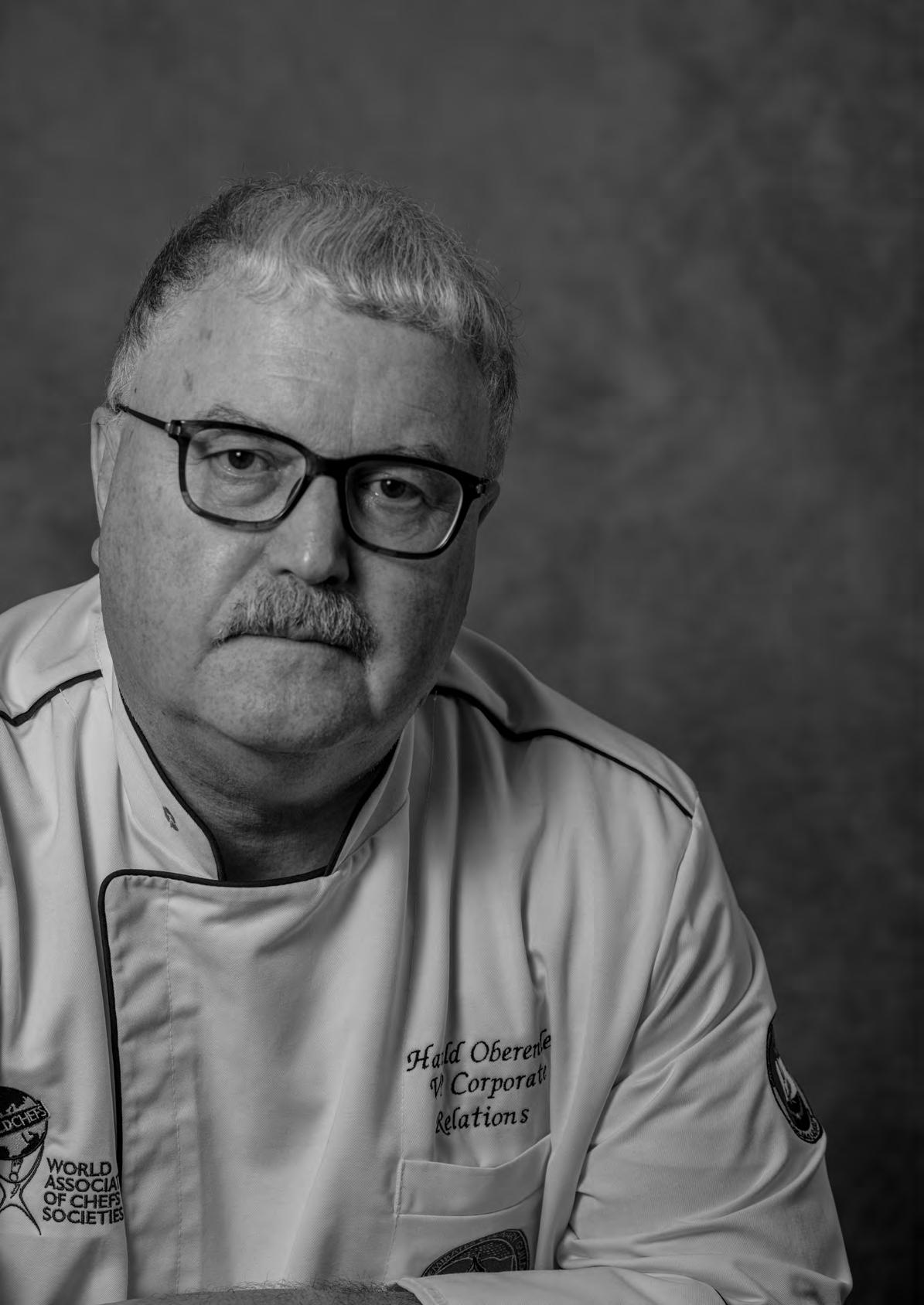

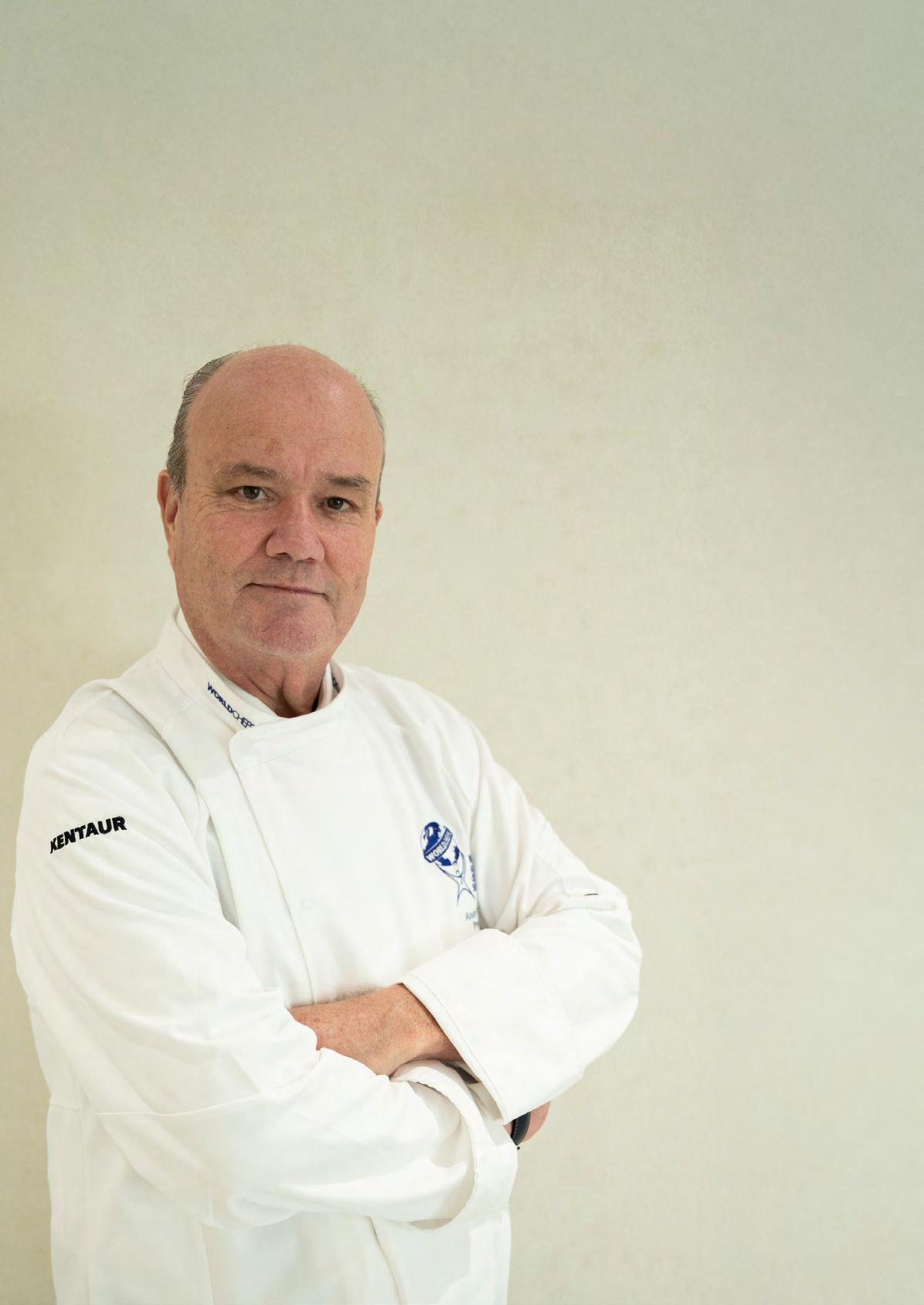
Chef Harald Oberender, Vice President Corporate of the Emirates Culinary Guild, is connecting the culinary world to industries you would never expect


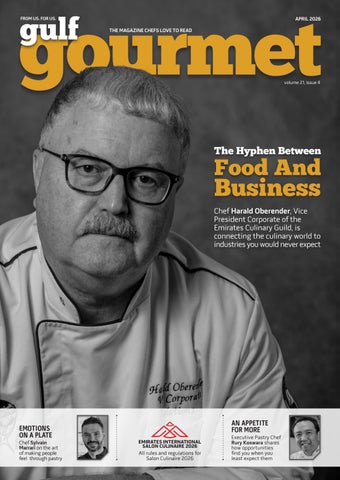
Chef Harald Oberender, Vice President Corporate of the Emirates Culinary Guild, is connecting the culinary world to industries you would never expect
email editor@gulfgourmet.org
Welcome to the April edition of Gulf Gourmet
This year's holy month has been unlike any other—while imbued with the familiar warmth and joy that this season brings, yet underscored by a keen awareness of a world unsettled around us and beyond our borders. Our hospitality industry is closely in tune with these global shifts. And yet, true to our spirit, we did not pause. We never do.
Our industry carries a profound memory. It recalls the challenges of 2020—when restaurants closed their doors overnight, hotels stood silent, and entire teams were sent home with uncertainty clouding the future. Many declared it the end of travel, the end of shared dining, and the demise of the experience economy. But Dubai and the UAE stood firm in their resolve. What was once doubted began to rewrite its own future within months.
If there is one lesson decades in hospitality have taught us, it is that challenges are never barriers but gateways to new opportunities. Our city has always understood this. In moments like these, we don’t halt or hesitate; we stay focused, stay united, and continue to build. To everyone within this remarkable industry—keep moving forward. The work you do, the brands you nurture, and the people you serve every day matter now more than
ever. Please, take care of yourselves, care for one another, and stay safe.
As we forge ahead, our gaze is already set on one of the most anticipated events of the season: The Salon Culinaire. To ensure the continued success of our Salon, we are excited to announce its return to Dubai. The event will now take place from August 31st to September 2nd with our Gala Dinner on the 3rd at the world-class Madinat Jumeirah Conference Centre. This issue features the complete rules and guidelines for the competition, and I urge all participants to review them thoroughly. Mastery of the rules is the foundation of preparation. Historically, the chefs who rise above the rest on that stage are those who embrace their craft, their talent, and the competition’s guidelines with equal dedication. Study the rules, strategize, and compete with unwavering passion.
To the members of the Emirates Culinary Guild, our supporters, and every partner who has championed the Salon Culinaire and this vibrant community throughout the year—this message belongs to you as much as it does to us. Events of this magnitude are only possible because of the shared commitment of those who choose, year after year, to invest in and grow this dynamic industry
Alan Orreal


Update on the current situation and the upcoming Salon Culinaire, taking place from 31 August to 2 September, which will bring competition, innovation, and momentum to the region's food and beverage industry.
Chef Sylvain Marrari on emotions, memory, and the art of making people feel something through pastry
Chef Tarryn-Leigh Green explains why this moment demands courage from
Chef Helen Morris takes us on a culinary voyage to Kazakhstan, savouring the joy of handmade dumplings and the flavours that make Manti and Baursak local favourites
Chef Harald Oberender, Vice President Corporate of the Emirates Culinary Guild, is connecting the culinary
The holy trinity of taste gets a makeover, writes
Chef Tarek Mouriess on inspiration,
Chef Christophe Prud'homme makes the case for something you already have but may have forgotten

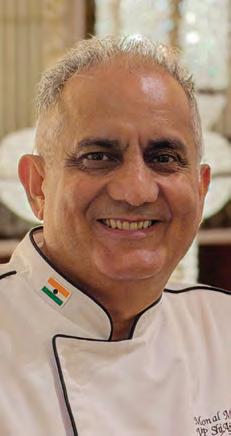
Monal Malhotra explains how technology, global flavours, and social media are reshaping the way food is created and experienced
Chef Carl Shi on why, when the pressure hits, sustainability stops being a story and starts being the essential strategy holding operations together
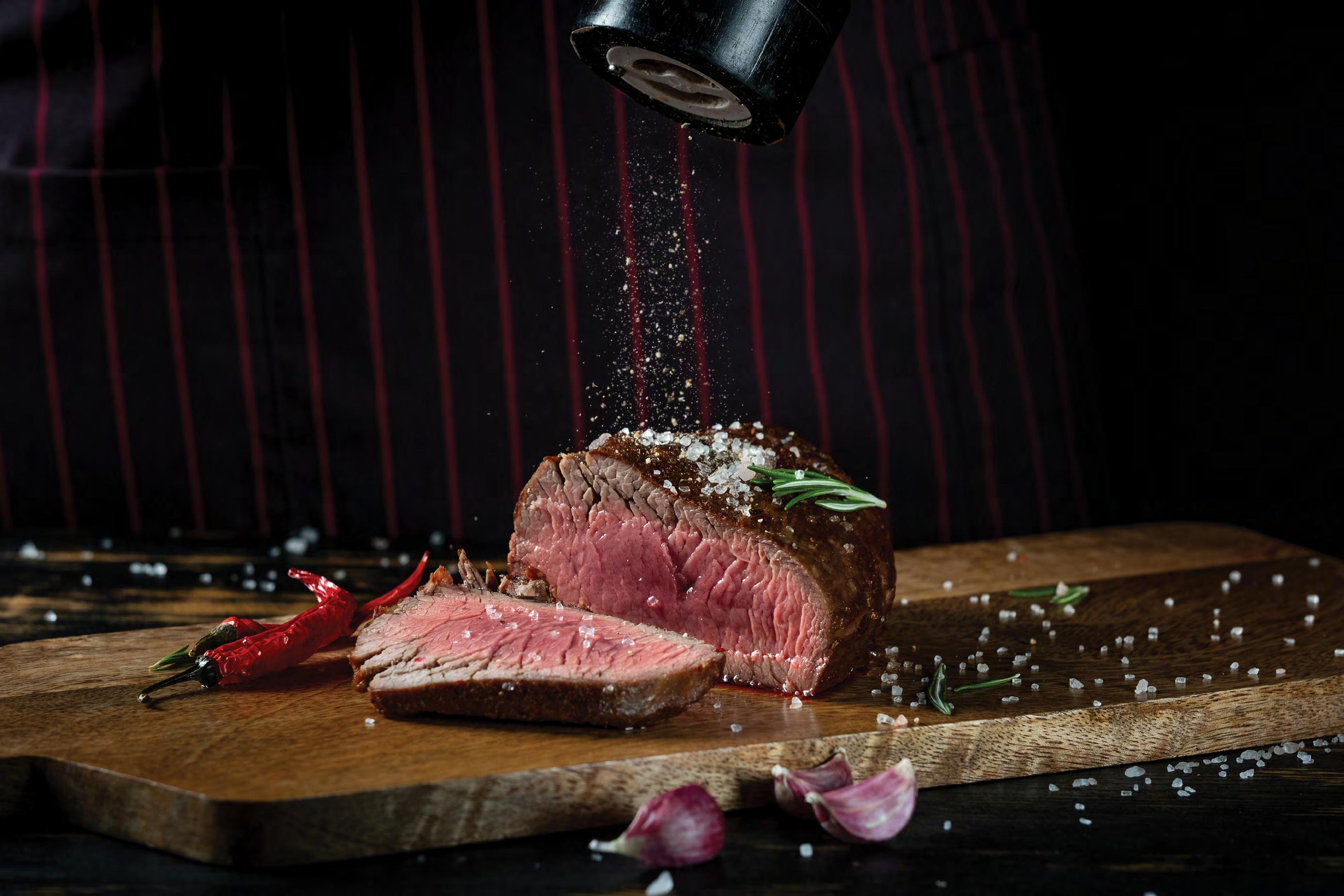
Small mistakes can easily turn an exceptional cut of beef into a disappointing meal, shares Sulemana A. Sadik
Chef Rury never stopped his incessant probing, questioning, absorbing. This very curiosity took him from working in a supermarket bakery to one of the most demanding pastry operations at Emirates Flight Catering
Check out all rules and regulations for Salon Culinaire 2026, which is scheduled to take place from 31 August to 3 September
A listing of all the leading food, beverage, and equipment suppliers in the region
Simon Martin, Executive Chef at Kerry Taste & Nutrition (Food Service) explores the food trends reshaping the region's dining landscape
Amidst the current uncertainty in the Middle East, we want to extend our heartfelt best wishes and our hopes for a swift return to stability. We stand firmly with our corporate partners and believe that, now more than ever, our strength lies in coming together as a community. Please stay safe. We look forward to brighter days and a successful year ahead.
Andy Cuthbert President of Worldchefs








































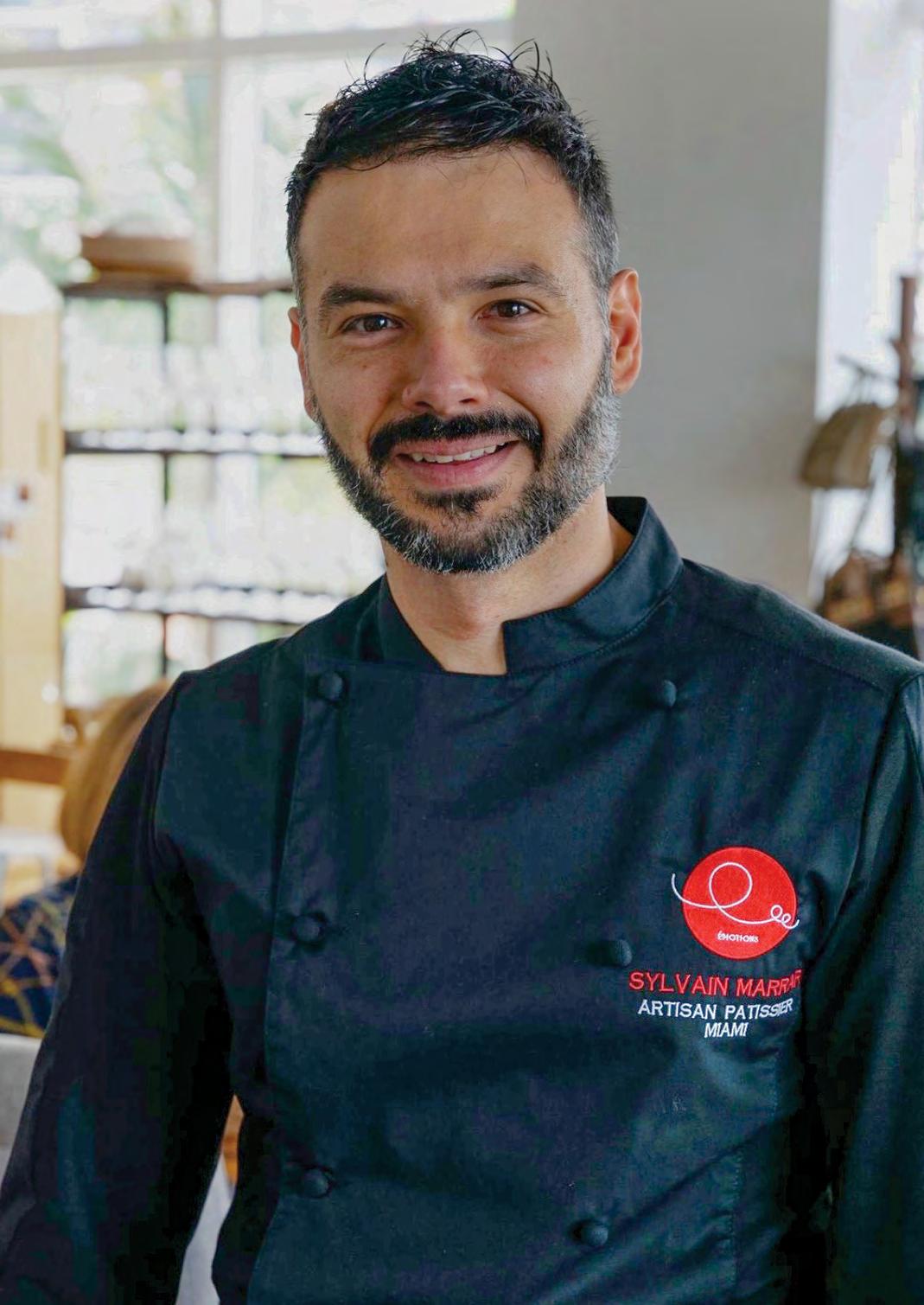
In a Q&A with Gulf Gourmet, Chef Sylvain Marrari opens up about emotions, memory, and the art of making people feel something through pastry
By Shreya Asopa
Some chefs cook to impress. And then some chefs cook to confess. Chef Sylvain Marrari falls squarely into the second camp. A quick scroll through his LinkedIn and bio brings to mind that Roger Ebert line: “Your intellect may be confused, but your emotions will never lie to you.”
Born in southern France, with Italian heritage in his blood, he jumped into kitchens at 16. His path is marked by a globetrotting career through Michelinstarred kitchens, totaling 14 stars.
Chef Sylvain has always believed that a dessert worth eating asks something of you. Calling his life’s work Emotions, he wants his desserts to reach past palates and tug at something you did not know you had left behind.
None of that came from nowhere. His training grounds were as extraordinary as the desserts they inspired. He has spent over a decade in world-class kitchens, including Château de la Chèvre d'Or, Château EZA, Restaurant Pic in France, Alain Ducasse's Le Louis XV in Monaco, Le Spoon des Neiges in Switzerland, The Setai in Miami, and more.
We chat with Chef Sylvain about what really goes into his desserts, and the dream that nearly cost him everything before it finally, stubbornly, found its way back to life. Along the way, we taste passion, nostalgia, tenacity, sadness, and joy, knowing more about the emotions that made him.
Let us ask you a riddle. What is the one thing no kitchen can teach you, and no kitchen can ever take away? If you said passion, then you are speaking Chef Sylvain Marrari's language. For him, it has always been the first ingredient on the list…
Walk us through your culinary path, from classical French training to finding
A dessert worth eating asks something of you
pastry as your creative language. My foundation is classical. I trained in French kitchens where technique was non-negotiable. At sixteen, I learned the meaning of long hours and rigor early. Those years forged my work ethic. Michelin-starred kitchens taught me that excellence must show in every detail. After years in savory kitchens, I wanted more and shifted to pastry. Pastry felt different. It challenged my mind and hands, bringing calm and clarity I had not felt before. With time, I saw pastry as my language. It helped me translate memories and emotion into something tangible. Through culinary training, consulting, and entrepreneurship, I learned creativity, leadership, and sustainability. Now, my work sits between craftsmanship and emotion, so desserts hold meaning beyond flavor.
How can young chefs nurture and sustain passion as they begin their culinary careers?
Master the basics, stay curious, and be patient. Talent may open doors, but consistency and humility keep them open. Remember why you started. Cooking and pastry are about sharing joy and connecting with people, not ego. Let passion guide you. Let respect for your craft define you.
Nostalgia is Chef Sylvain's most powerful ingredient. Before a flavor is chosen, before a technique is applied, there is always a feeling you cannot put a finger on it but instantly recognise…
How do you evoke feeling through pastry? Where does the storytelling begin?
I start with a feeling, not ingredients. A memory, a place, a moment. Pastry quickly evokes nostalgia and comfort. That emotional response is always my starting point.
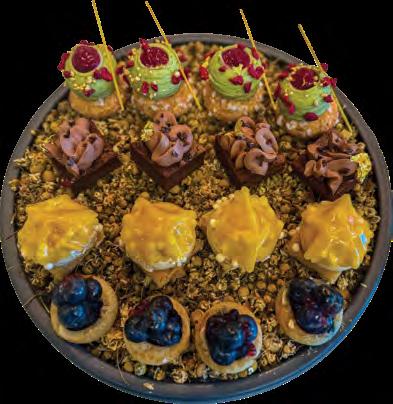
After many years as a chef, I felt the need to put a clear signature on my desserts. Today, I work mostly with gluten-free cakes as a creative choice. It allows me to focus on moisture, texture, and purity of flavor, removing anything unnecessary and letting the ingredients speak. I use contrast deliberately: acidity against sweetness, texture against creaminess, restraint against indulgence. Flavor always comes
Pastry became my language to translate memory into something tangible
first. The decoration is intentionally refined but never excessive. It balances modern expression and classical French technique. If a guest smiles, pauses, or says, “This reminds me of something,” then the dessert has done its job.
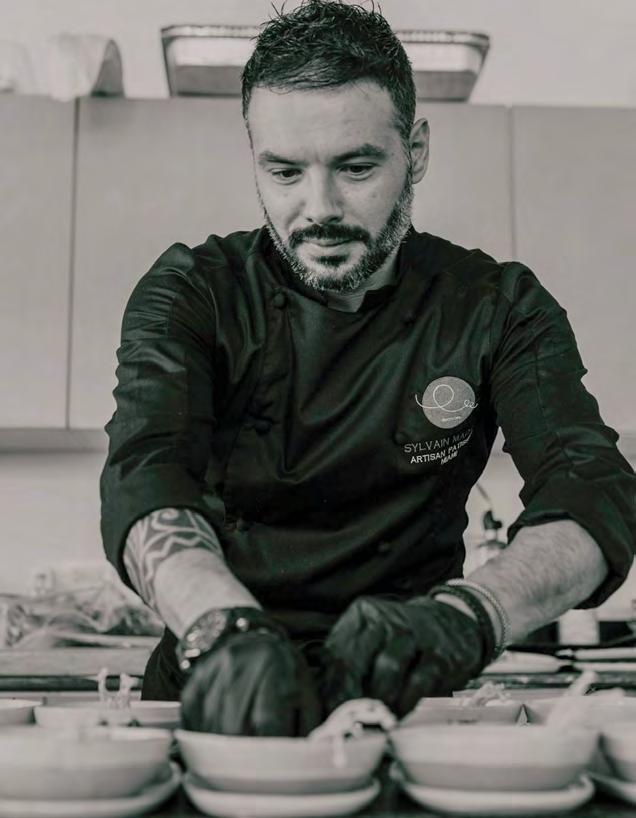
Is there a dessert you have created that comes directly from a personal memory?
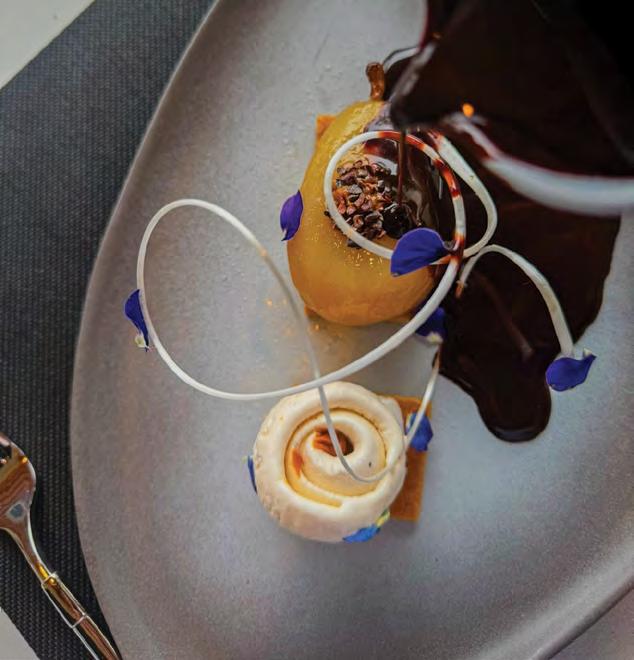
When I create a dessert, I like to tell a story and evoke emotions. Nostalgia brings me to flavors that remind me of home. I created a dessert inspired by my grandfather and my roots in Calabria, Italy, a region famous for its extraordinary bergamot. I wanted to capture the essence of that memory and the flavors I grew up with. The dessert features a dark chocolate base paired with a bergamot crémeux (one of my favorite fruits). It is a way to honor my heritage and the special moments I shared with my grandfather.
Every great career has a crucible moment that tests your mettle. Be it in the heat of a kitchen or the cold arithmetic of business, Chef Sylvain Marrari faced both…
What has the transition from chef to entrepreneur taught you? What does consulting really demand of a person? Becoming an entrepreneur was the most demanding shift in my career. Kitchens train you for perfection. Business requires accepting flaws and quick adaptation. Consulting, in particular, is extremely challenging. You come into a new kitchen with a new team, and you have to change the menu, train staff, simplify operations, and motivate everyone while keeping service uninterrupted and effective. I have learned that creativity must be supported by strong financial discipline, clear systems, and leadership. The reward is freedom, the ability to build something aligned with your vision. But it requires humility, patience, and constant learning. Every risk and every challenge represents an opportunity to grow.
Three years ago, I planned to open my own pastry shop in downtown Miami. The project was delayed, and one of my partners stepped away, forcing me to cancel the lease. I lost my savings and went into credit card debt. It was a difficult moment, but it strengthened my resolve. Today, I am more motivated than ever to create my own restaurant,
Flavor always comes first— everything else must serve it
seeking partners who share my vision and passion. Learning and growing from those tough times led me to Émotions by Sylvain Marrari
How do you lead pastry teams efficiently under high-pressure luxury environments?
Leading pastry teams in luxury hotels or restaurant groups takes more than creativity. It requires structure, communication, and trust. Over the years, I have learned to work smarter, especially in the United States, where kitchen culture and the talent pool differ significantly from those in France. In America, it can be harder to find team members with strong pastry experience or a passion for the craft. Because of that, I center on clarity and simplicity. I develop recipes that are not overly complicated but deliver consistent, high-quality results. I rely heavily on systems: clear recipes, visual standards, and hands-on training, so creativity can exist without chaos. At the same time, I work hard to foster a healthy atmosphere in the pastry kitchen, making people feel
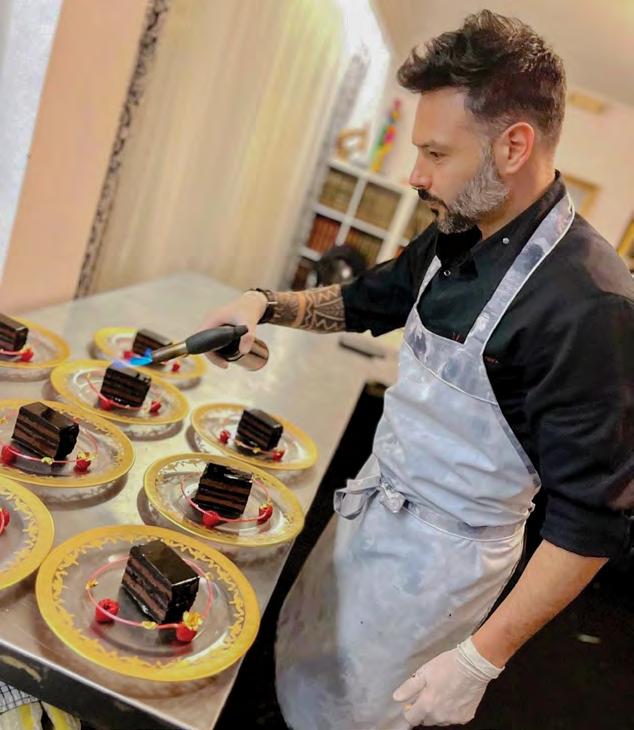
comfortable, motivated, and happy to be there. Pastry kitchens are intense, but fear never produces great work. I support my teams, but I am also exigent about quality, discipline, and execution. When people feel respected and challenged at the same time, consistency and quality naturally follow.
"The word happy would lose its meaning if it were not balanced by sadness." — Carl Jung.
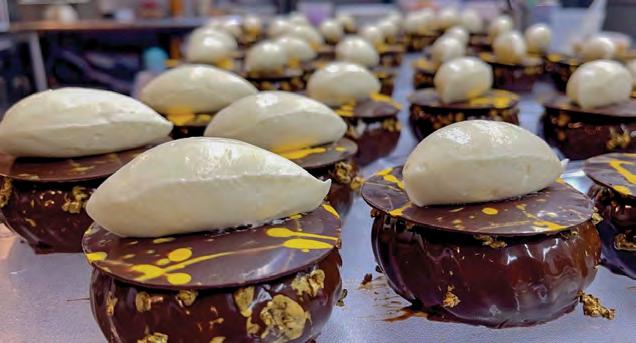
Not every dessert is meant to bring lightness. Without sadness, sweetness loses its truth. A chef willing to sit with that understands something rare about the human experience.
Is there an emotion you find particularly difficult to express through pastry? Sadness is an emotion I find especially challenging to express through pastry because desserts are usually meant to bring joy. To navigate that, I use subtle contrasts and depth. Pairing an intense flavor like dark chocolate with a bright citrus or delicate floral note highlights complexity and tension. Textures matter too. A dense, velvety element paired with something light or crisp conveys the feeling of melancholy. We should create a dessert that evokes reflection and emotion, without feeling heavy or overwhelming.
Joy, it turns out, was always there. In the fruit, in the cultural influences, and in the dream he refused to give up on, Emotions.
What does the future look like, and what is Emotions by Sylvain Marrari?
Emotions by Sylvain Marrari is personal. It is a Palm Beach space to honor my roots, express myself, and create a unique concept through desserts. I see pastry in 2026 moving toward less sugar, cleaner flavors, and towards emotion rather than spectacle. Guests are searching for meaning, not just luxury. Emotions represent that next chapter. It is a place where pastry, culture, and hospitality intersect, creating experiences that are personal and timeless rather than trend-driven.
How do you create recipes representing joy?
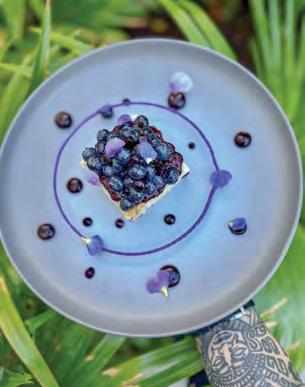
Joy inspires me to add brightness and playfulness like fresh fruits, airy mousses, and a little crisp element that lifts the dessert and makes it fun to eat. And calm guides me toward balance and simplicity, with gentle fruits, velvety creams, and warm, flowing textures that soothe the palate.
My approach is never about overpowering flavors or hiding behind technique. Balance is everything. Sweetness must be controlled, acidity must be clean, and textures must always serve a purpose. Every element on the plate needs a reason to exist. Pastry allows me to translate Mediterranean influences through a French technical lens. Elegance, in my world, is not luxury
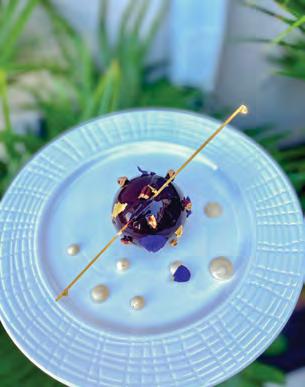
Passion is the one thing no kitchen can teach—and no kitchen can take away
through excess, but perceptibility, harmony, and intention.
Finally, what techniques do you feel are disappearing from modern pastry?
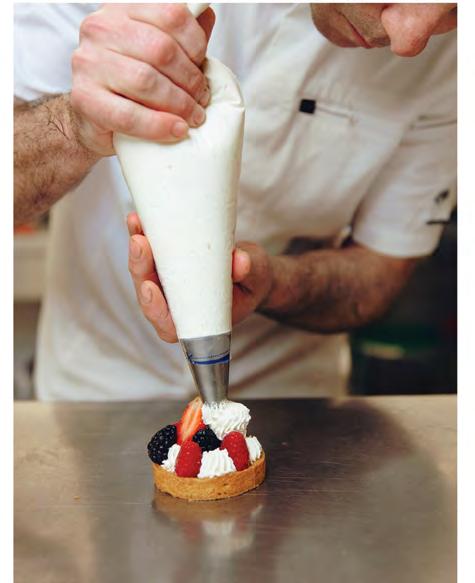
Techniques like detailed piping, handwork, and intricate textures are not as common today because so many people rely on molds and follow trends. While modern tools are extraordinary, we risk losing the artistry itself and the personality that comes from making
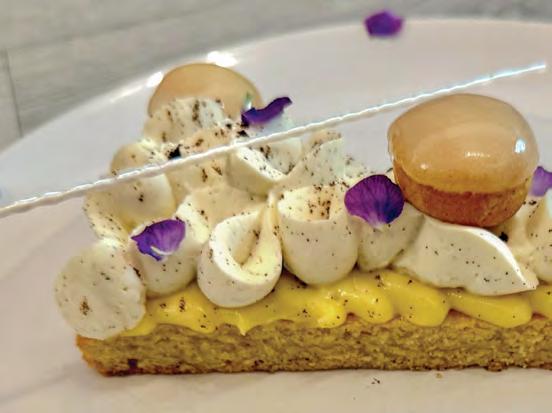
something entirely by hand. What deserves preservation is the ability to create signature desserts, ones that carry a personal story, refined technique, and a level of attention to detail that sets them apart. For me, luxury pastry should be about intention and individuality, not just following the latest trend. I always create signature desserts that are instantly recognizable, emotionally engaging, and rooted in strong flavor identity rather than trends. Quality over quantity guides everything I do. I work only with the best ingredients and let them speak for themselves. I am very intentional about what I leave out. If an element does not elevate the experience, it does not belong on the plate. Complexity does not always mean depth. Luxury desserts should feel effortless, even if the technique behind them is sophisticated. What endures is flavor clarity, texture harmony, and the emotion a dessert creates. ■
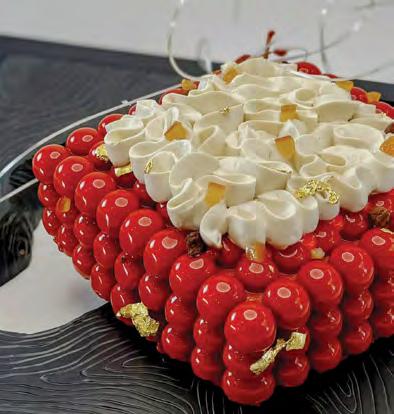










Tarryn-Leigh Green explains why this moment demands courage from our industry
This month, there is no avoiding it. We need to address the elephant in the room. The unprecedented circumstances we find ourselves in here in the UAE have, once again, hit the F&B industry first and hardest. It is a pattern many of us know all too well. We saw it during the financial crisis. We lived it through the pandemic. And now, here we are again, stepping back into the ring before we have even fully caught our breath.
What makes this moment particularly difficult is not just the situation itself, but the cumulative weight of it. If we are honest, our industry never truly recovered after COVID. Headcounts did not return to where they were. Resources remained stretched. Teams were asked and expected to do more with less. Longer hours, leaner operations, tighter margins. And because we are who we are, resilient, passionate, committed, we did it. We always do.
But resilience has a cost.
Today, we are seeing the same cycle repeat. Forced unpaid leave. Salary reductions. Job losses. And behind every one of those headlines is a person. Someone who moved countries, often continents, in pursuit of opportunity. Someone who has invested not just time, but identity into this industry. Someone supporting a family, building a life, contributing to an ecosystem that relies so heavily on human energy and dedication.
It becomes difficult not to ask the harder question: how many times can people be expected to absorb the shock?

There is, of course, an understanding of the broader context. External pressures are real, and businesses are navigating their own survival. But that does not make the human impact any easier to reconcile. Because for many in F&B, this is not just a job, it is a career built on years of sacrifice, late nights, missed moments, and relentless pursuit of excellence.
And yet, here we stand again, uncertain of what the other side looks like. If there even is a “winner” in this round. “My honest view? There probably isn’t. Not in the traditional sense.”
But where there is hardship, there is always opportunity. Not the kind that presents itself neatly, but the kind that demands something from you. Courage. Adaptability. A willingness to step into discomfort.
Historically, it is in these moments
The future belongs to those who dare to move forward
that we see a shift. People begin to question the status quo. Ideas that have sat quietly on the sidelines for years suddenly feel urgent. Necessary, even. The concept you have been talking about. The business you have been sketching out in the margins. The career move you have been too cautious to make.
This is where the narrative changes. Not because the situation improves overnight, but because individuals decide to respond differently to it.
I firmly believe that the next phase of our industry will be shaped by those willing to take that leap. Those who choose to pivot rather than pause. To create rather than wait. To back themselves, even when the environment feels uncertain.
There is a saying we have all heard: Fortune favours the brave. In times like these, it is not just a saying; it is a strategy.
Because the alternative is to stand still and hope for stability to return in a way that, if we are realistic, may never look the same again. So, this is a moment of decision. Be brave or go home.
I sincerely hope you do not choose the latter. ■
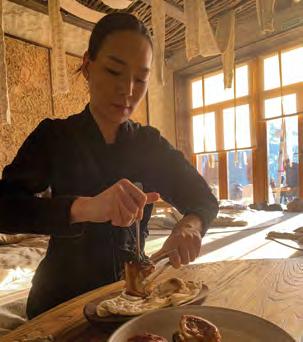

Chef Helen Morris takes us on a culinary voyage to Kazakhstan, savouring the joy of handmade dumplings and the flavours that make Manti and Baursak local favourites
Afive-day escape in Almaty, with brisk but breathtaking excursions to Kolsai Lake, Lake Kaindy, and Charyn Canyon, became much more than a picturesque retreat. It turned into a culinary adventure seasoned with boundless hospitality, nomadic customs, and a formidable supply of bread.
And as an unexpected bonus? It snowed. Properly snowed. Not the decorative sprinkle I sometimes get in pictures from home, but the sort of snow that makes mountains look cinematic. It makes you wonder whether your shoes were designed for anything more adventurous than a supermarket run. Kazakhstan in winter feels dramatic. Snow-capped peaks, pine forests, endless skies. Yet the real warmth is found indoors, around a table groaning with food.
Now, Kazakh cuisine is rooted in nomadic traditions. Historically, meals had to be simple, nourishing, and filling, designed for people who spent their lives moving across vast steppes with livestock. The result today is a cuisine that celebrates meat, dairy, bread, and
The real warmth is always found around a table
potatoes in quantities that suggest famine may return at any moment.
As someone whose relationship with gluten is strained at best, the bread situation was challenging. Kazakhs bake magnificent, fluffy, aromatic, flavourful bread, but sadly, my digestive system does not share the national enthusiasm. Not that this ever stops me. I just suffer the consequences. The potatoes, however, and I got along famously. Of course I did, I am British! Kazakh potatoes are starchy, deeply flavoured, and wonderfully comforting. Frankly, give me a plate of potatoes, and I am content. Add butter, and I might never leave.
Portion sizes are another cultural learning curve. I am always amazed at how generous they are. You order one
thing, which you think will be one, maybe two, and suddenly five arrive. It is the culinary equivalent of someone saying, ‘Just a small snack, ’ and presenting you with a wedding buffet.
One of my favourite dishes is Manti, large, steamed dumplings generously stuffed with minced lamb or beef and onion. They are juicy, comforting, and perfect for cold weather. Who am I kidding? I will eat them in any weather at any time. I love them so much that I even order them here in Doha from a Georgian restaurant when I have a craving.
Another staple is Baursak, small, fluffy fried dough balls often described as Kazakh doughnuts. They are golden, airy, and slightly crisp outside. They are also extremely dangerous. Not in a medical sense, although perhaps eventually, but in the sense that I will just have one more sense. They are usually served with meals rather than dessert, often alongside sour cream. The problem is they behave like Pringles. Once you start, you cannot stop.
Then there is Cheburek, a thin half-moon pastry stuffed with seasoned minced
meat and onions, deep-fried until blistered and crispy. I ordered one, and yes, five arrived. Five! At that point, I realised Kazakhstan does not believe in the concept of a light snack.
One of the most memorable meals of the trip took place at Auyl Restaurant, located in the stunning Shymbulak Ski Resort high in the mountains. The setting alone is spectacular, with snowcovered peaks outside the windows, and a beautifully designed interior inspired by traditional nomadic yurts. The restaurant is built around the idea of neo-nomadic cuisine, reimagining traditional Kazakh cooking using fire-based methods such as the Kazan (cauldron), tandoor, and open grill. The design blends tradition and modernity with wood, felt, fire, and an open kitchen where chefs cook over flames. The experience is immersive, with crackling fire, natural sounds, and the smell of roasting meat drifting through the room. It’s part theatre, part culinary anthropology. And I was extremely excited to be there.
The first thing to arrive was, as expected, baursak, served warm with sour cream. This was my first mistake: they were delicious, golden, fluffy, addictive clouds of fried dough. I ate them eagerly, unaware that many more dishes were yet to arrive. Next came a dish that put me in a state of culinary bliss: Bone marrow with flatbread.
Not a delicate-tasting portion. Oh no. A generous, glistening, glorious serving of bone marrow, rich, buttery, deeply savoury, and carefully assembled tableside. I adore bone marrow, and this was exceptional. At this point, I briefly considered moving to Kazakhstan permanently. Then came a mini lamb shashlik, skewered lamb grilled over fire, served with flatbread, sweet onions, roasted pepper, yoghurt, and herbs. By now, I was already approaching my personal capacity for food, but I had earlier spotted a trout dish, and I have a weakness for fish. So naturally, I
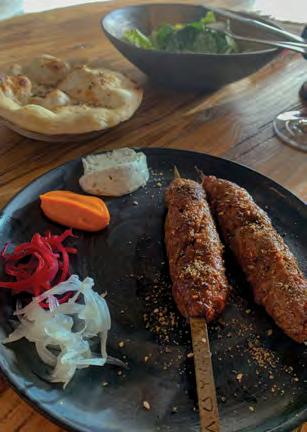
ordered the grilled trout. It arrived with tomatoes, oyster mushrooms, chickpeas, and qaimaq, a thick cultured cream that adds richness and tang. Delicious! But at this point, I was definitely feeling it.
Now, for authenticity, I chose to sit on the floor around a traditional low table. This seemed like a charming, immersive cultural experience. What I had not fully considered was how one exits this position after consuming several courses of extremely rich food, or, come to think of it, how one enters it. My Pilates classes had clearly not prepared me for this challenge. At one point, I attempted to stand up and performed a sequence of movements that could only be described as interpretive dance meets mechanical failure. I am fairly sure I heard quiet laughter behind me. It was not my most elegant moment. There are the usual tables and chairs on the other side of the restaurant, and I understand why. It saves face.
Back to eating, despite being completely full, I decided I could not travel all this way without trying dessert. I chose Alatau, named after the nearby mountains. The dessert was meant to resemble a multicoloured mountain landscape and included cottage cheese, lingonberries, chickpea cream, dates, and qattyq ice cream. Just as I ordered it, the staff kindly informed me that a complimentary tray of sweets would be served with the tea. The tray was beautiful with homemade toffee, white and milk chocolate, funnel cake, and stewed dried apricots. It was also the moment my stomach waved a white flag.
My dessert, while creative, was probably not my favourite. That may have been because I was already at maximum capacity, or perhaps it was simply a little too rich for me. I tend to prefer lighter, citrus-based desserts. Still, the staff kindly packed the remaining sweets in a small takeaway bag, which was both thoughtful and probably necessary.
What truly elevated the meal was not just the food; it was the service. The more traditional section of the restaurant had only four tables, each carefully timed and managed. Two young ladies were responsible for the entire area, and they were outstanding. And definitely no issues with their knees as they constantly knelt at the table with grace.
Their knowledge of the food, the concept, and the cultural significance of each dish was impressive. But more importantly, they spoke about everything with genuine pride: the local artists, the décor, the cooking methods, and the philosophy behind the restaurant. They must explain the same story dozens of times every day, yet they delivered it with enthusiasm as though it were the first time they had ever shared it. That kind of hospitality transforms a meal into an experience.
Kazakhstan surprised me. The landscapes were dramatic. The people were warm. The food was generous in both flavour and spirit. It is a cuisine built around sharing, warmth, and abundance. It reflects its nomadic heritage. Would I go back? Absolutely! Next time, I would love to visit in spring when the mountains around Almaty turn green, and markets are filled with fresh seasonal produce. But honestly, seeing the snow fall over the mountains and sitting by a window with a table full of food was a beautiful experience. Although next time, I might eat slightly less baursak at the beginning.
Forever dieting and forever eating. No one is winning here! ■
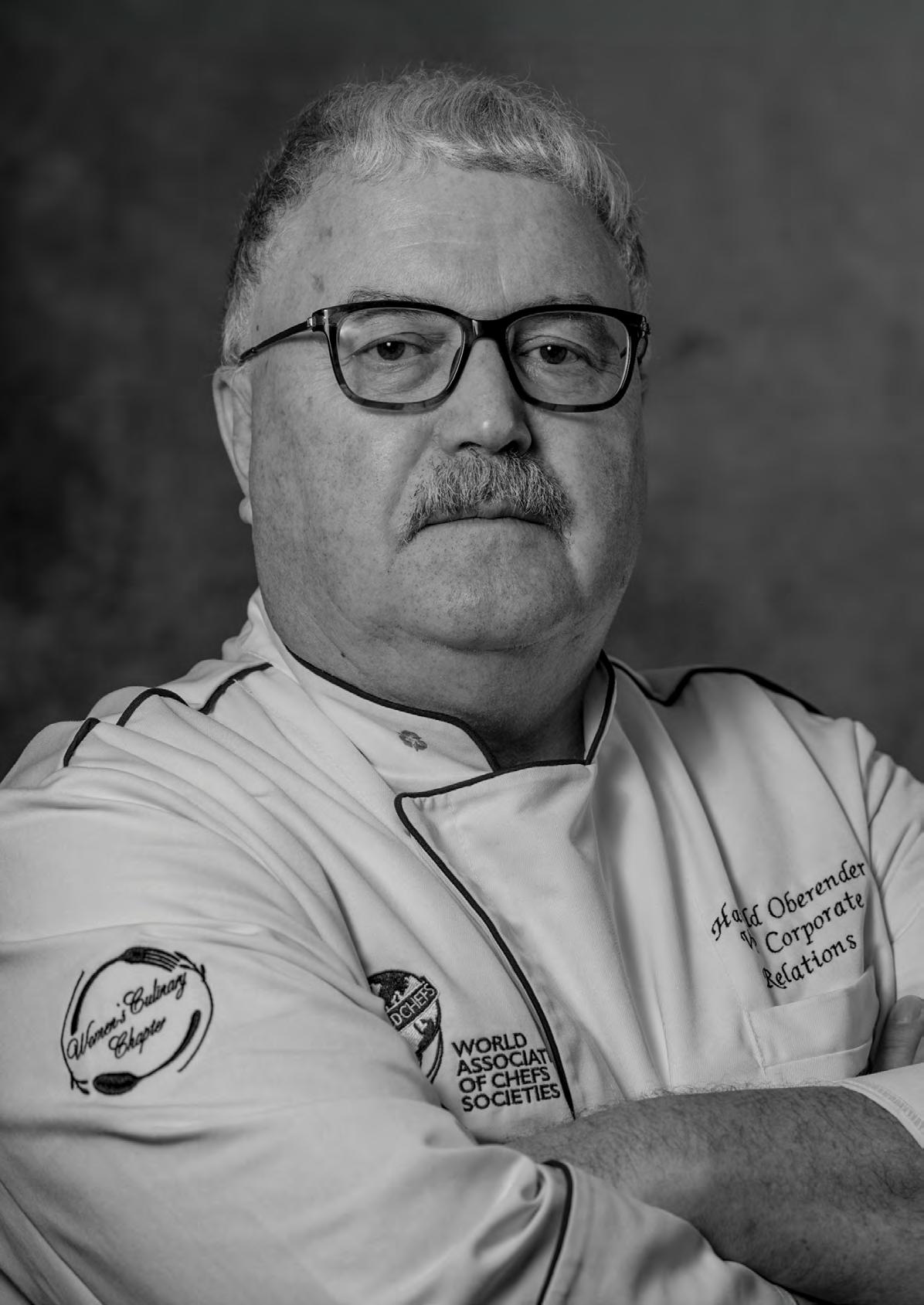

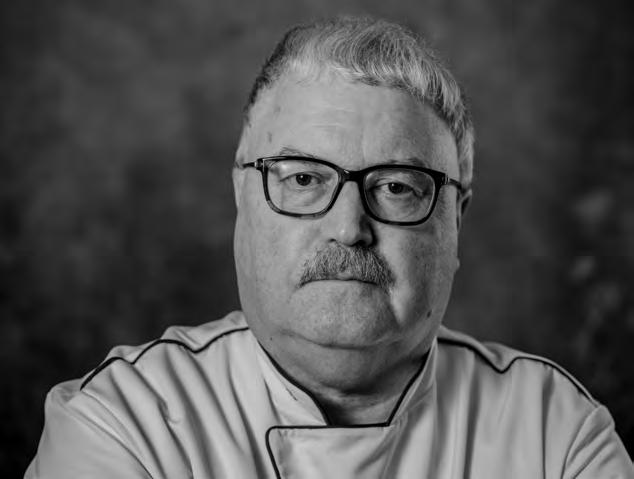
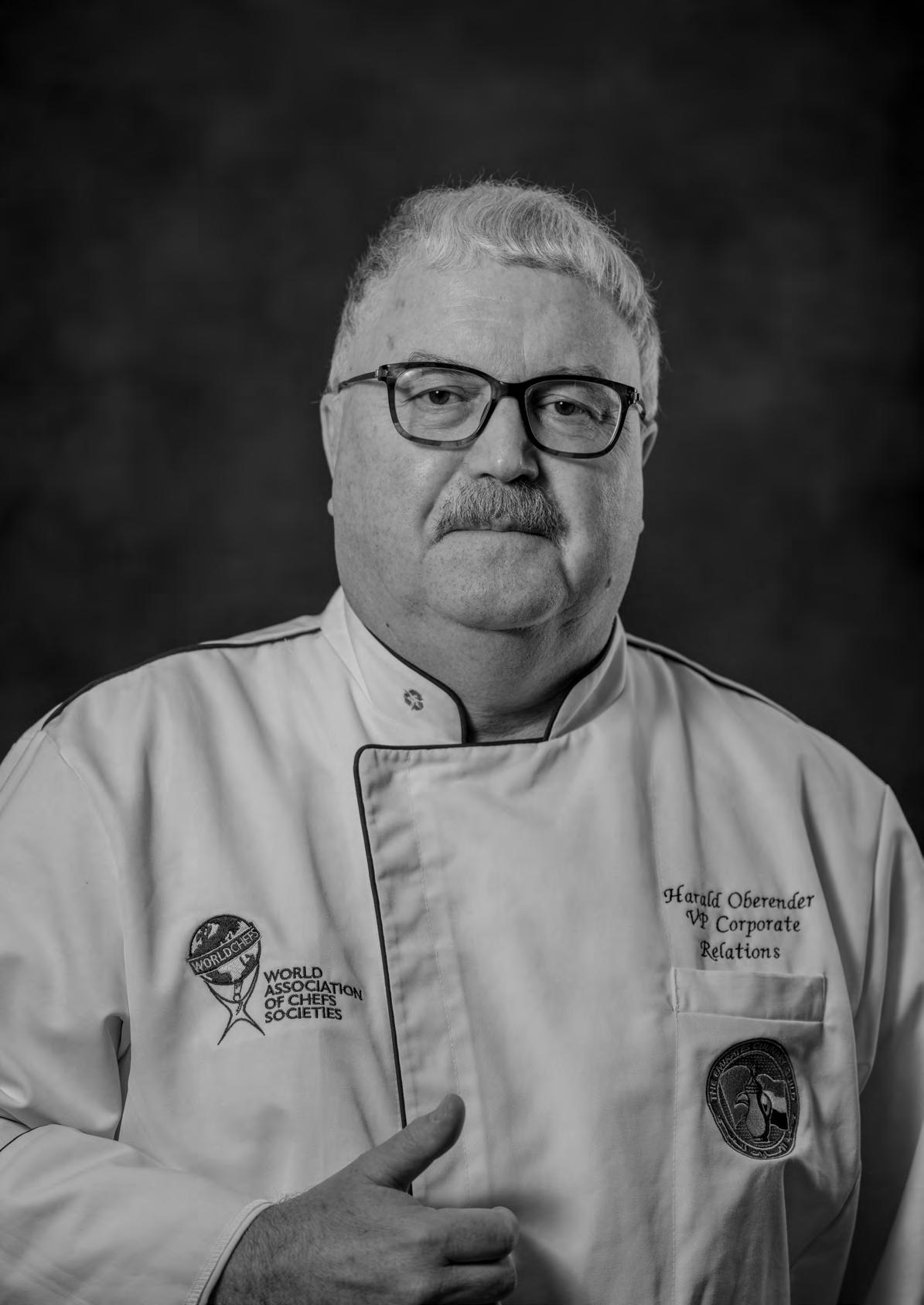
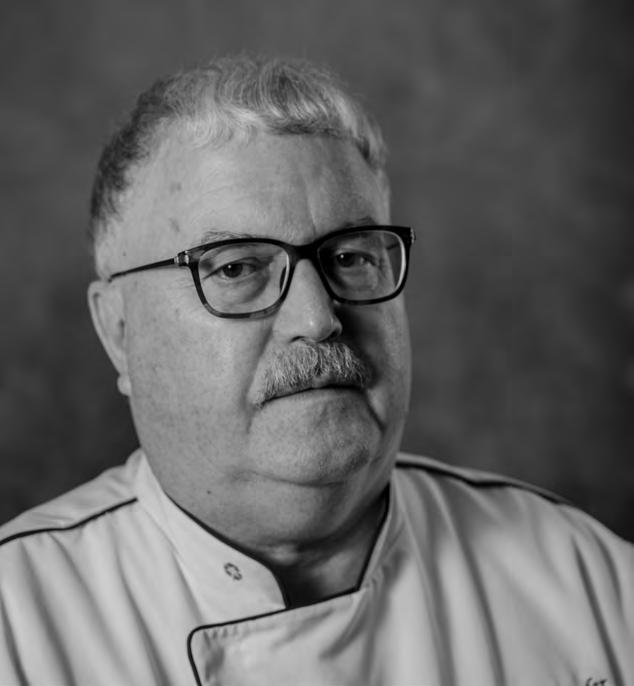
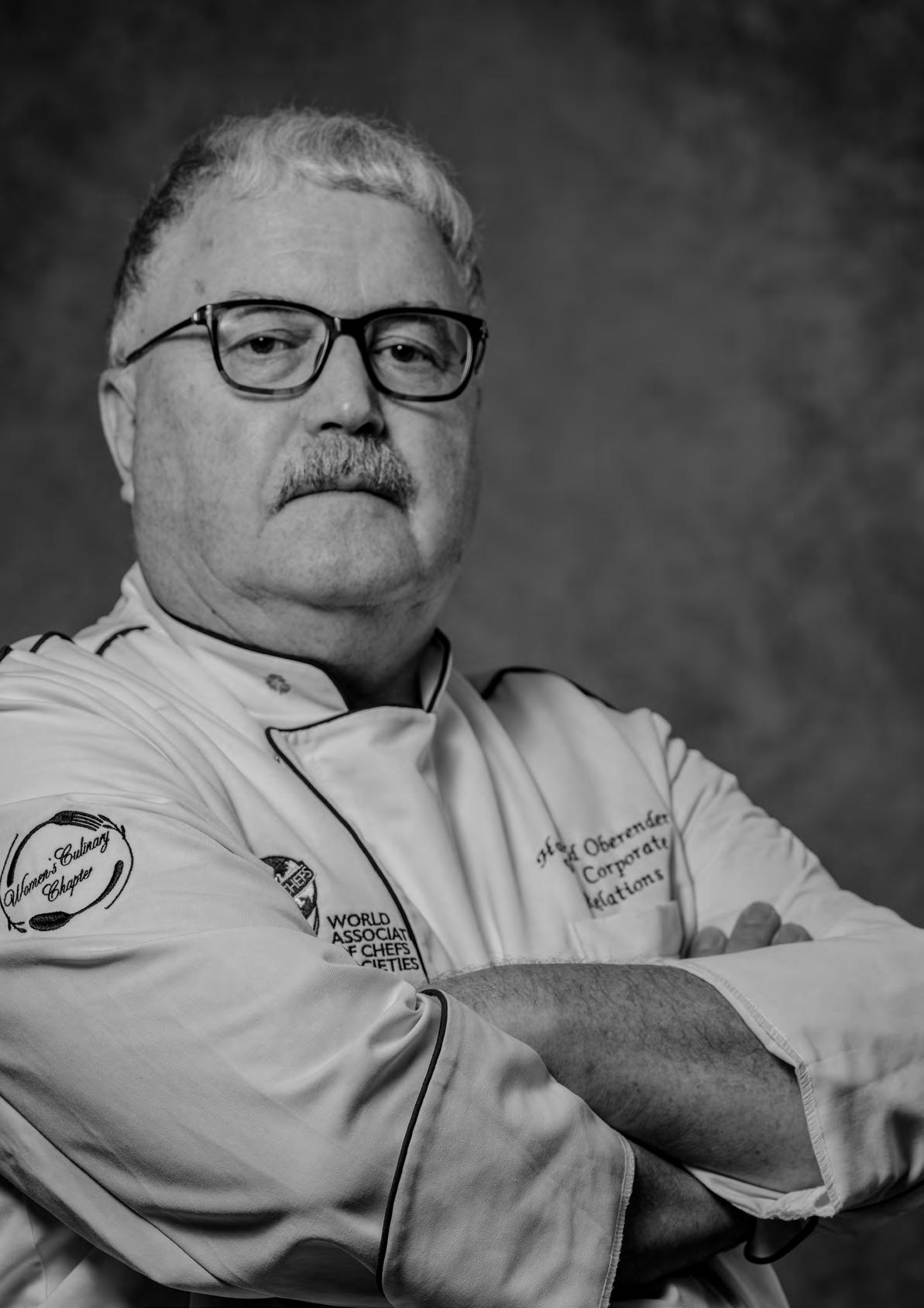
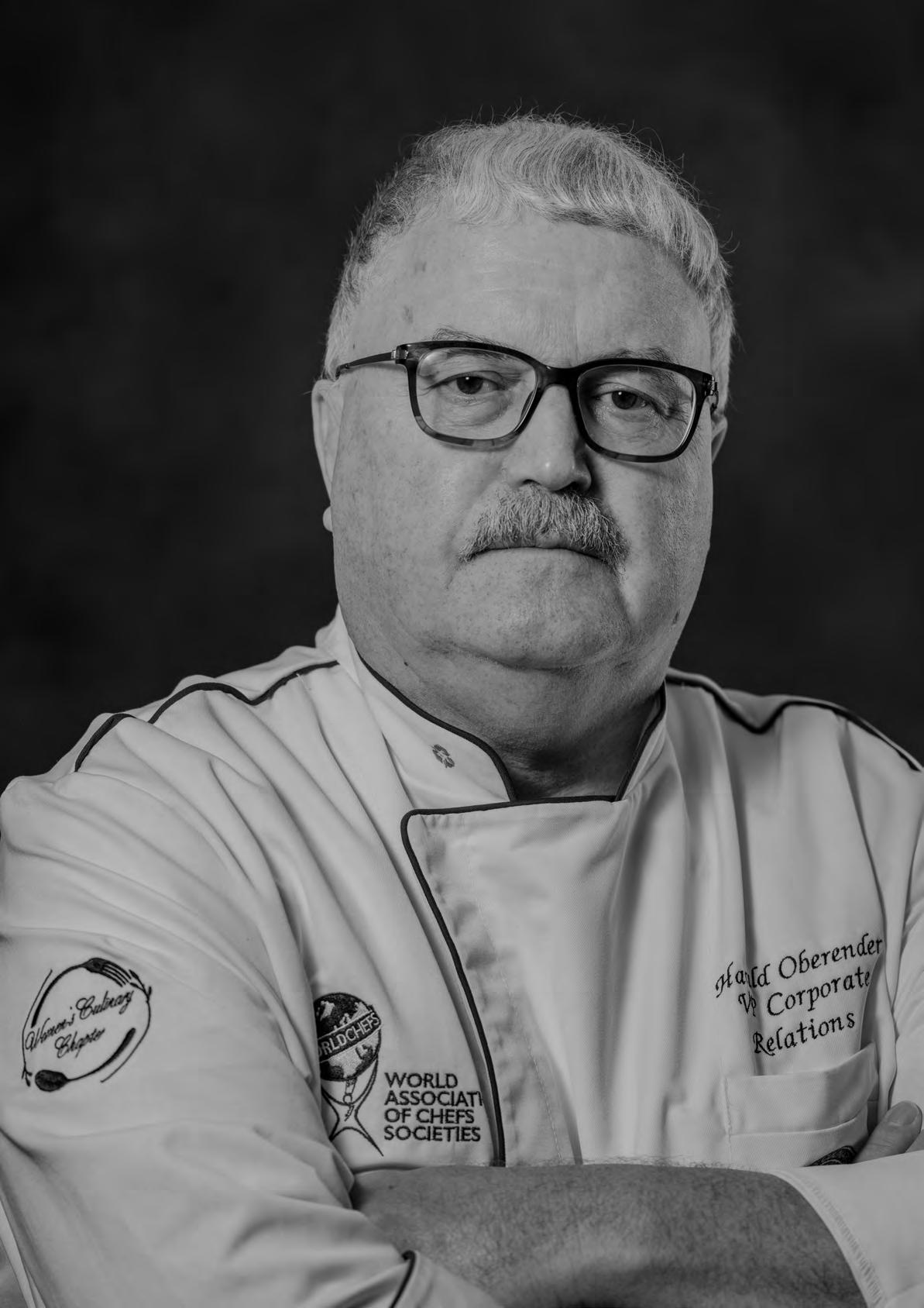
Over a culinary career spanning more than four decades, Chef Harald Oberender has worn many hats. But the one that fits best is his bonhomie with people. In a frank chat with Shreya Asopa, the Vice President Corporate Emirates Culinary Guild talks about his vision for an even more diverse and inclusive Guild, giving corporate members a stage in the culinary world, and a consultancy that proves the best chapters are never the last. Meet the chef who is making the Guild the hyphen between food and business
If a time-lapse captured Chef Harald's career,mapping the arc from a grandmother's bakery in Kassel to the meeting rooms of the Emirates Culinary Guild,it would see the story of a young man who built his mettle across continents, brought his friendliness to every table, and is now giving back to the industry. It would, in algorithmic brevity, generate the portrait of a man who treated every finish line as a starting point.
That twinkle-eyed camaraderie follows him everywhere. He cannot step out without someone stopping to greet him. “My wife always asks me, 'Why do people always say hi to you?' It is because I respect the steward who just joined today, the same way I respect my assistant. Wherever you come from, wherever you are, I give you that same respect. And when someone pauses to say hello, you feel it. You know you are doing something right.”
Born in Kassel, Germany, Chef Harald never had to look far for inspiration. His mother and grandmother ran a small baking and catering business, and a persistent sweet tooth kept him close by. What really stayed with him was
Respect everyone the same — that is where real leadership begins
the understanding that good food and good service go hand in hand. A family restaurant made sure of that early on.
At some point, passion has to meet purpose. He enrolled at the hospitality school in Kassel, then completed his training at the Schweizer Hof Hotel. Three years later, certificate in hand, he set his sights on London. In the early 1980s, he joined the Swiss Centre as a junior chef at the Chesa restaurant. The city’s culinary diversity sparked his curiosity. The Hilton Park Lane followed, and after that, the world, from Johannesburg, Bermuda, Addis Ababa, to finally Dubai.
In 1992, drawn by its cosmopolitan energy and growth potential, he joined the Hilton at the World Trade Centre. What began as overseeing a fine-dining
restaurant gradually evolved into leading one of the Middle East’s largest catering operations, including MICE events, weddings, and restaurants. Under his leadership, the team surpassed its targets for 30 consecutive years. A star in his own right, an awardwinning chef, and a prominent figure in the hospitality industry, a multi-award winner, he has built a body of work that has made a permanent impression on the UAE’s culinary landscape.
The transition to HO Culinary Consultancy, by his own admission, never meant slowing down. “I thought I would finally settle a bit.” He barely finished the sentence before laughing. “After a month, my wife said, 'Can you get out and do something? You are going on my nerves.' He chuckled at the memory. “The wife's push. She was definitely a driving force.”
For most, a new venture means a tabula rasa. For Chef Harald, it meant the opposite. The calls came immediately. “It got really busy in the beginning. I was surprised. They said, ‘We heard you have retired.’ Can you help us?” Decades in the industry had given him the mental fortitude to adapt quickly. His niche was clear from the start. “People know me for doing the biggest events in the UAE for 30 years. They know me for my work in the MICE sector. Know your niche. That is the first thing.”
The consultancy now covers large-scale events, advising catering companies and hotels, consulting government institutions, and reorganizing kitchen operations. Go into business in what you know. And it has served him well enough that drawing a line in the sand between retirement and reinvention turned out to be far simpler than expected.
When the situation demands clarity on scale, Chef Harald asks for tasks to be broken down into manageable parts. He is equally unambiguous about the kind of team culture that sustains large operations. “You need a team that is
Every finish line is just a new starting point
not just saying yes. When you want to manage something bigger than yourself, you cannot do it alone. Large events represent enormous business volume, but losing focus on key areas is easy without structure and consistency. Have people around you who can manage you and even criticise you. The rest is trust.”
Three cardinal virtues come up every time he talks about leadership. The first is empathy. “You have to think, how would you feel if you do not get a meal and someone asks you to go out and work? Teams operate for long hours. How can you work without eating? Make sure the staff is well-fed. It starts with small, simple actions like these.”
Second, approachability, particularly in large-scale operations where communication breakdowns cost more than food. And above all, enjoyment. “It is
Good food and good service always go hand in hand
going to be tough, but enjoy it. When you enjoy it, you do not feel like it is heavy work.”
Running his own firm has added another layer to this philosophy. Not every project needs to be accepted. “Look at what you want to enjoy, what you want to give back. You are doing something that you love. At the same time, you are helping others.” That, he believes, is where many professionals lose their way. “Do not always expect a payback right away. Sometimes you do something
because you genuinely want to. If I cannot do something with my whole heart, I will not do it. Because people will feel that. Enjoy it. Do it with heart. The rest will come.”
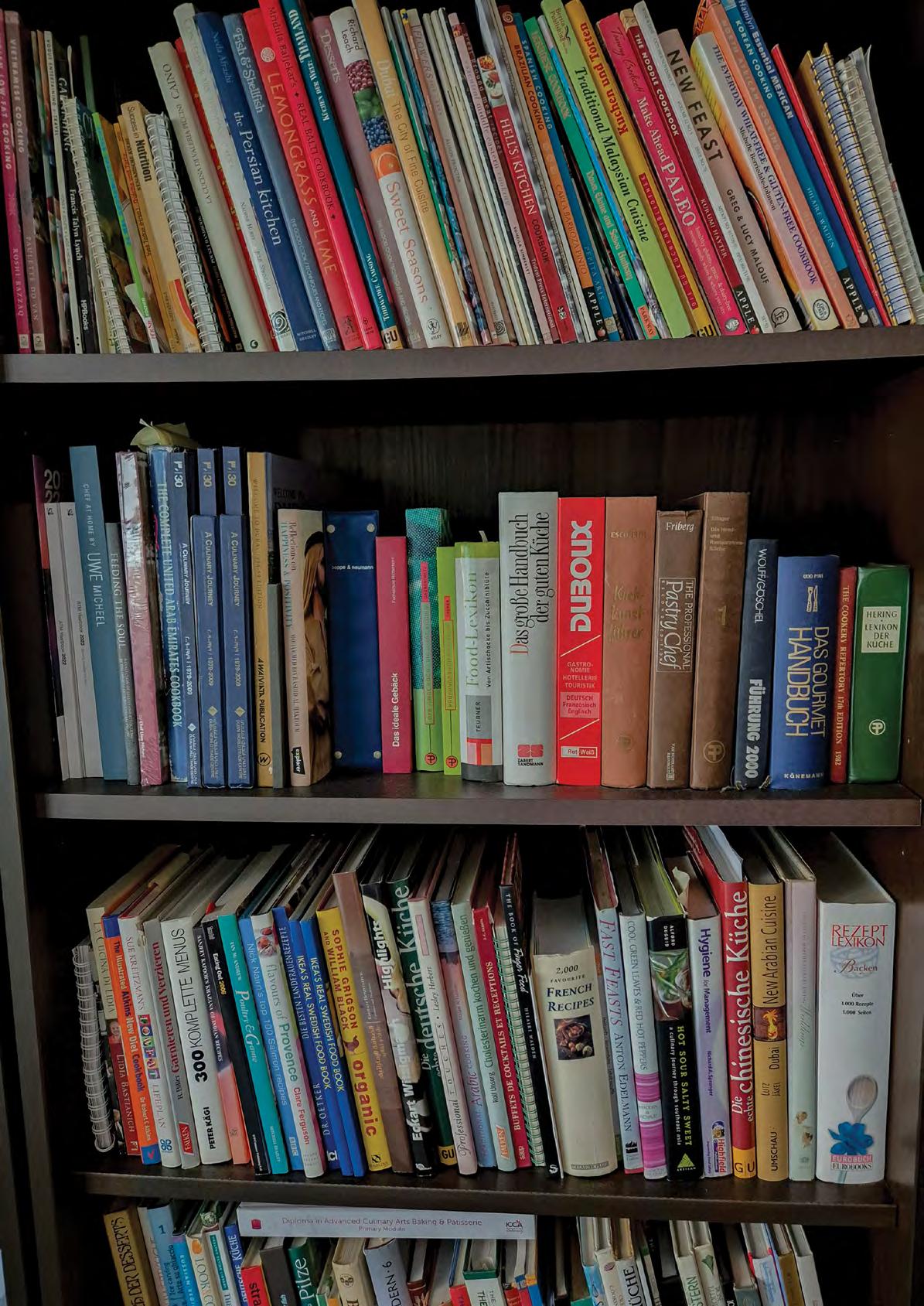
He paused briefly during the conversation to show a bookshelf, his happy place, he called it. Pride of place is a hand-signed copy of The Art of Anton Mosimann from his culinary idol, received at the London book release. The chutzpah it took to build a career worthy of that shelf is not lost on him.
It is a shelf that tells you everything about the man. And the man, it turns out, has plenty more chapters left in him. Within the Emirates Culinary Guild, where he has been a presence since 1992, Chef Harald's role has become almost allegorical, as a connector, a springboard, a liaison between ideas and action. His current focus is on corporate membership and creating sustained engagement. One day, it is a ceramics supplier; the next, a coffee brand. “We recently had an ergonomic footwear brand. Chefs stand for hours, and lower back strain is an occupational reality, so the right shoes matter. We also have a member who works on chef uniforms. The uniforms themselves have evolved, too. We see uniforms for maternity and special themes like Ramadan and Christmas editions. So, we are looking at industries, not at the very obvious, but part of the ecosystem.”
Amid a sea of glitzy industry events and transactional relationships, it's that preparation, combined with genuine intent, that makes Guild strategic and real. Chef Harald is, in every sense, to repurpose a popular saying, the quintessential insider who never stopped thinking like an outsider. He prepares for every conversation, regardless of industry. A few minutes of research signals respect. “Partners can sense when someone has taken the time to understand their work. I am also approaching things by thinking outside the box, by familiarizing myself with them and their businesses. Always be prepared.
Never stand still — keep learning, keep evolving
Do not get complacent. Explain the benefits. Make it relevant. Do not impose.”
On inclusion, he is unequivocal.
“We want to be the most accessible leadership in the guild. To be more inclusive, it would not be just culinary. We want to bring people together. Somebody who is an enthusiast, or not a fully trained chef, can also feel us approachable. We want to bring the culinary profession to you. We want to be known for being open, for showing the world that being a chef is an achievement. It is not a punishment.”
After decades of watching trends evolve, his definition of good food remains unpretentious. “Good food should make guests say they enjoyed it and would return. That basically sums it up.”
He illustrates the point through a judging experience. Dozens of plates, small portions, quick assessments.
“You take a little bit from the plate, but suddenly that tasting plate is empty. It is clean. It is licked. That is good food.”
You cannot build something big alone — trust your team
Complexity is not the measure. Authenticity is. “Do not try to make a Japanese dish into a French one. If you are very well trained in both, okay. But if you do not really know those cuisines, do not do that.”
Innovation has its place, never jettisoning the fundamentals. Sous vide, dehydration, and plant-based cuisine are all relevant. “Never stand still. What is new? Make sense of it. Teach that to your juniors.” Modern garnishes are welcome, edible flowers, crystallised elements, espuma, as long as they do not rock the boat.
“Good food, for me, is food cooked as your mother would cook it.”
His life, in many ways, has been a grammar of that same principle. Original, rooted, and never trying to be something it is not.
Life beyond the kitchen has turned over a new leaf. He now has a four-year-old grandson, something he speaks about with visible pride. “When you get old, you do not feel it until the grandchildren arrive,” he smiles.
Compared to the intensity of his earlier career, he values time together more than ever. “Maybe in those years, it was more work than life. Now it is more balanced. We go for walks in the evening when the temperature permits. Some days we go swimming, or see the places and do the things we could not have done back in the days.”
Staying active, he believes, is not only physical. It is mental and social, too. “Be active on social media as well. So the children are not saying, ‘Are you too old?’ You do not know anything about current trends,” he says with a grin.
He does not beat around the bush when it comes to the sacrifices a chef's life demands. “There is no doubt, a chef's life is hard. Long hours, pressure, and missed occasions are part of the profession. After all those years, when things can slow down a little, I think you should compensate for the time that was lost.”
He looks back with gratitude rather than regret. Remembering all the good years through his work, friendships around the world, and relationships that have stood the test of time. Holiday messages, birthday calls, and continued contact.
The happiest moments come when multitudes of former junior chefs, now senior professionals, come full circle and reconnect with him. “They say, Chef, I still remember what you told me years ago. That gives you comfort. You left something good in their life. Do your little part. We all can do that.” ■
Do it with heart. People can always feel the difference
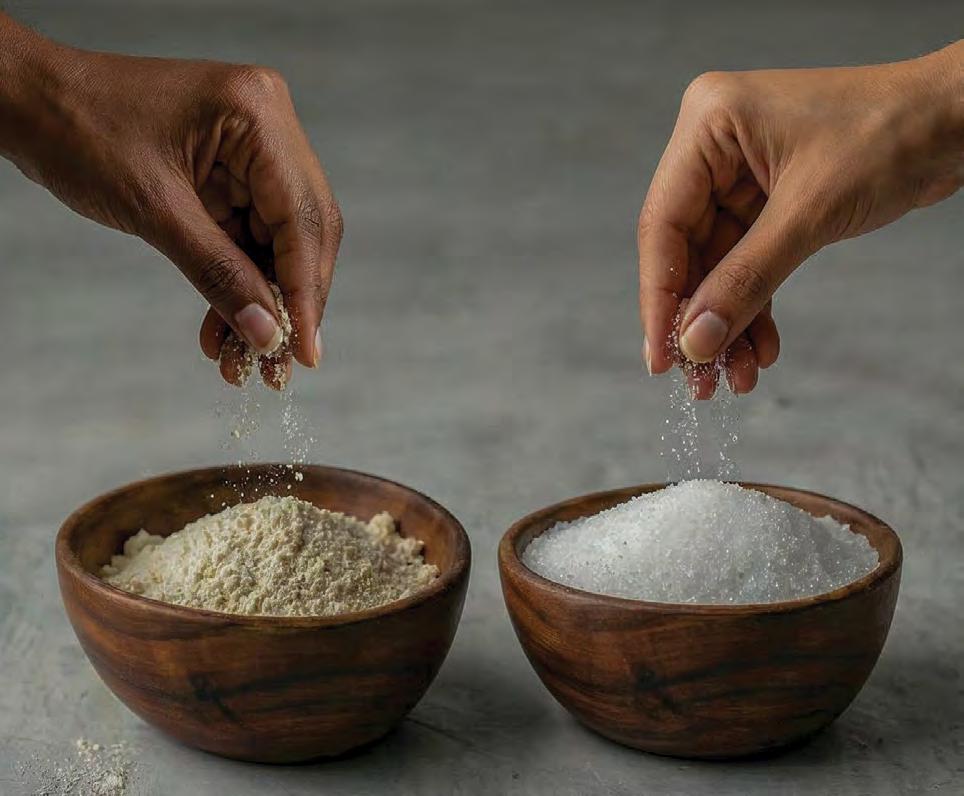
Food manufacturers have spent decades promising that low-sodium and sugar reformulations will taste just as good. A new class of ingredient technologies, including sweet proteins, engineered salt systems, and fermentation-derived umami amplifiers, is testing that promise at a commercial scale
By Shreya Asopa
The case against exorbitant sugar and sodium in the food supply has been mounting for decades.
The World Health Organization estimates that excessive sodium intake contributes to over 1.8 million deaths

per year, while sugar-related metabolic disease, including obesity, type 2 diabetes, and cardiovascular illness, represents one of the fastest-growing burdens on global health systems. Regulators have responded with mandatory front-of-pack labelling, sugar levies, and sodium reduction mandates.
The food industry, for its part, has responded with piecemeal reformulation efforts. But the problem has always been taste. Consumers brook reducedsodium and low-sugar products in theory; in practice, they stop buying them. Potassium chloride, a prevalent salt substitute, gives a metallic taste
that processors have never fully solved. Sweeteners like stevia also leave an aftertaste, so they mostly appeal to health-focused shoppers.
A new generation of food technology companies is rethinking the mechanisms of taste itself, slashing sodium and sugar levels without asking consumers to bite the bullet.
Salt pulls double duty in food. As much as it is a functional workhorse, it is a flavour ingredient. It controls water activity, inhibits microbial growth, stabilises proteins in meat and bakery applications, and extends shelf life. Replacing it with other substitutes can ripple through food safety and structural integrity, which has no easy fix.
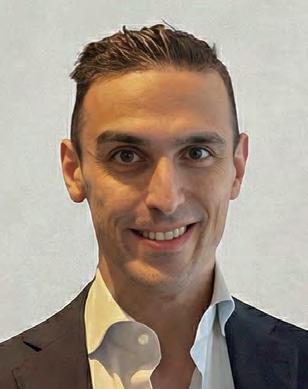
Unlike most sodium-reduction approaches that lean on swapping sodium chloride for potassium chloride and then managing the taste drawback, Dutch biotechnology company Fooditive takes an engineered approach. Fooditive operates through its broader Fooditive Engine platform, spanning precision fermentation-derived proteins, enzymatic bioconversion, and next-generation sweetener systems. Sodium reduction is one front in a larger mission. The company uses a proprietary citric-acid-based modification, a carrier system, and spray drying to deliver a stronger salty perception per gram while remaining practical for real formulations.
“Sugar and salt are not only flavour; they influence structure, stability, and processing. LowSalt is part of that same mission, enabling meaningful reduction without losing what makes food work. Our development philosophy is to work with nature rather than against it, using simple, well-known ingredients and smart process design to help reduce sodium while keeping food enjoyable,” says Moayad Abushokhedim, CEO of Fooditive.
For chefs and culinary professionals, he sees low-sodium innovation as a


Sugar and salt are not just flavour — they shape how food works
precision tool, not a compromise. The direction of the industry, he notes, is shifting from reaching for more salt to smarter salting, getting the same sensory satisfaction with less sodium. "This empowers chefs and brands to build foods that are genuinely enjoyable, better for everyday health, and aligned with a more sustainable food system. When you can achieve impact with less sodium, you create space to innovate with thoughtful seasoning, better ingredient quality, and flavor design that respects both people and the planet," he adds.
Reducing sodium without letting functionality slip comes with its own
uphill battle of sensory performance and product stability. "Food safety and preservation are usually the most demanding, because those outcomes depend on how salt behaves across the whole system, covering water activity, microbial control, and stability, not just the salty taste.” He further explains that when sodium is reduced, one typically risks both sensory issues and performance issues in the product. “That is why we focus on how saltiness is delivered, not only the mineral swap, so reduction remains workable in real food systems,” he says.
Sugar has always been the food industry's most reliable crutch. It sweetens, bulks, masks off-flavours, and delivers the mouthfeel consumers have come to expect. Most sweeteners, whether sugar, stevia, monk fruit, or allulose, are small molecules. They are rapidly absorbed into the bloodstream, spike blood glucose, trigger insulin responses, and, in some cases, knock the gut microbiome out of balance.
Oobli's operates on an entirely different principle. The California-based foodtech company works with sweet proteins. These proteins are large biomolecules of over 5,000 Daltons, composed of amino acids. Derived from Plants, Sweet Proteins come from rare fruits grown in tropical regions. “In other words, they are macronutrients and are too large to do what small molecules do (but also why they digest differently, in ways that matter a ton to improved health outcomes), momentarily binding only with the sweet taste receptor to trigger sweetness,” says Ali Wing, CEO of Oobli.
Sweet proteins are a unique class of mostly plant-based proteins that taste like sugar,” says Ali Wing, CEO of Oobli. “Sweet proteins can sweeten anything with just a tiny amount of protein. Unlike sugar and many sugar alternatives, sweet proteins do not mask or add bulk, so they deliver the same mouthfeel. The good news is that sweet proteins work well with almost any other sweetener. Tuning for just the right amount of replacement is always the most technical part of our work. That and helping product developers learn more about how sweet proteins work so they do not overdose, hoping to mask a flavor when they never will at any level. Sweet proteins sweeten, but they are a very different tool in product developers' toolkits, so they require some education and training," says Ali Wing, CEO of Oobli.
When aiming for unrecognisable reductions in sugar, the company typically uses sweet proteins to replace 60 to 80% of the sugars in a formulation, with the remaining conventional sweeteners retained to handle other functions, such as masking and mouthfeel. Across product categories, Oobli reports an average of 60-70% sugar reduction without negatively affecting taste).
The broader ambition, Wing notes, is to establish sweet proteins as the foundational chassis of next-generation sweetener systems. Rather than a
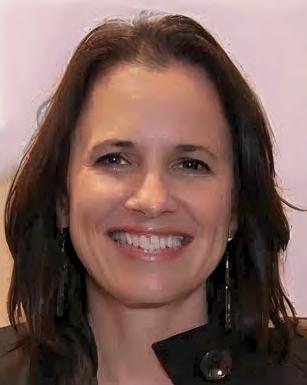
Sweetness is a feeling, not an ingredient — and we can keep the joy while reducing the sugar
— Ali Wing, CEO of Oobli
wholesale replacement of existing sweeteners, the goal is to move beyond the minimum hurdle of no negative change in taste to a higher standard of unrecognisable change in taste.
“ Leaving in small amounts of the existing sugars or sugar alternatives consumers are used to allows us to complement the sweetener role of sweet proteins with the varied, non-sweetening roles of sweetener ingredients that might have been lost if we are removing ALL the existing sweeteners. Finally, massive reductions in sugar (60-70%!) per serving across food and beverages are a leap ahead towards global sugar-reduction health goals. Oobli is pioneering the foundational "operating system" of sweetness; the next generation of food and beverage formulations' sweetener systems should be built on top of proteins, not sugars,” explains Wing.
Commercial momentum is gathering pace. Last year, Oobli announced a partnership with Ingredion, the global
Chefs should see low-sodium innovation as a precision tool, not a compromise
— Moayad Abushokhedim, CEO of Fooditive
ingredient solutions provider and is also working with more than two dozen growth and large CPG companies to proteinsweeten new products that are expected to launch in the market this year.
Consumers, Wing argues, are more than ready for a new kind of sweetness. People are fed up with sugar overload and worn out by the aftertaste that trails most diet alternatives. They are holding out for something cleaner, more natural solutions. "Sweetness is a feeling, not an ingredient. Sweet proteins let us keep the joy and reduce the sugar, and that is a story people are eager to hear and taste," she explains.
In 1908, Japanese chemist Kikunae Ikeda was eating a bowl of kombu seaweed soup and noticed a flavour he could not categorise as sweet, sour, salty, or bitter. He isolated glutamate and coined the term umami, meaning pleasant savoury taste. More than a century later, the food industry is still working out how to systematically harness it.
Done Properly, a foodtech company, is working on the perceptual dimension of saltiness by amplifying the flavour so that less sodium goes further. Its product, RAISE, is a natural umami ingredient derived from brewer's yeast, a byproduct of the brewing industry that would otherwise be discarded. From a sensory science standpoint, Raise extracts specific amino acids that constitute Umami to deliver the "savoryness". When introduced into a food matrix, these compounds interact with residual sodium chloride in the product, amplifying saltiness perception and maintaining flavor impact even with significant sodium reductions (up to 60%).
"We extract specific amino acids from sources like brewer's yeast. The flavor profile comes from a precise balance between glutamate and guanylate. Consumer health is a priority for us, which is why we choose natural sources to obtain the amino acids needed to enhance and equalise flavors. Our yeast is sourced through a circular economy model in partnership with major breweries, allowing us to upcycle agro-industrial byproducts into delicious high-value ingredients," says Claudio Pedreros, CEO of Done Properly.
Reformulation often walks a tightrope. Cut too deep, and the texture or overall flavour balance starts to unravel. Pedreros is candid that maintaining texture is where the real battle is fought. "There is a technical line we cannot cross regarding product stability, shelf life, and binding structures. We focus our work specifically on the flavor profile; we have found there is more than enough room there to achieve a reduction that is significant for the consumer's diet and quality of life without compromising the structural integrity of the food," he says.
The results reported by the company are notable. In concentrated broths, Done Properly claims a 40% reduction in sodium with minimal differences in intensity or roundness. In hamburger

applications, the team reports eliminating MSG and cutting sodium by 20% without losing any of the product's defining flavour attributes. The categories showing the strongest results include processed meats, plant-based proteins, sauces, soups, and readyto-eat products, the segments where sodium loads are highest and ingredient label scrutiny is most intense. The company currently operates primarily in B2B industrial reformulation, though Pedreros notes that some chefs are beginning to use RAISE to enhance broths and bases, pointing to a potential foodservice channel as awareness grows. RAISE's clean-label positioning gives it another commercial leg to stand on, tackling sodium reduction and MSG stigma in one move.
The broader context is one of intensifying pressure. The WHO's Global Action Plan on NonCommunicable Diseases sets a target of a 30% reduction in global salt intake by 2025, a deadline already missed by most countries. Sugar taxes have now been introduced in over 50 nations.
“Today diners expect flavour that is indulgent. They are also mindful of
Salt and sugar are not disappearing — they are evolving
health and sustainability. We have a responsibility to evolve and embrace innovations that deliver the same satisfaction with a lighter carbon footprint. Alternatives to sugar, salt, and MSG are not compromises. They are tools to create cleaner, smarter and more scalable flavour experiences, which are progressive and important to staying relevant in a rapidly changing food landscape,” says Chef Demetrius, Food Consultant at Mumbai-based DangerMom Hospitality.
Sodium and sugar are not going anywhere and any chef worth their salt or sugar would tell you they should not. They are foundational. But the science of using less while losing nothing has never been more sophisticated. The harder question is if the industry has the appetite to use them. ■
The kitchen has always evolved. A chef watches, tastes, travels, and gets inspired by ideas, and brings them back home in their hands. That is how the art breathes. But there is a difference between a chef who is inspired and a chef who is just scrolling. And right now, in kitchens all over the world, that line is being crossed so casually that most people have stopped seeing it altogether.
Inspiration asks you to feel something profoundly enough to make it yours. Innovation asks you to create something the market did not know it needed. Influence is what happens when you do both so well that others start following you. Social media collapsed all three into one. And in doing so, it handed a generation of cooks a shortcut that leads nowhere.
You do not have to look far. One of the most talked-about food moments in recent years is the Dubai chocolate. An Egyptian entrepreneur created a chocolate filled with kunafa and pistachio, a regional creation rooted in heritage. Kunafa, for those who need reminding, is not a trend. It has been part of the Arab world's culinary identity for centuries. She honoured it, and in doing so, created something that took the world by storm.
Within weeks, every hotel, every café has a version of it on their menu. Same combination. Same concept. And every single one of them calls it their own. But what should be done is actually taking the spirit of this creation and then elevating it to translate it for our guests. There is a difference between being influenced and being innovative. One asks What can I take. The other asks what I can build.
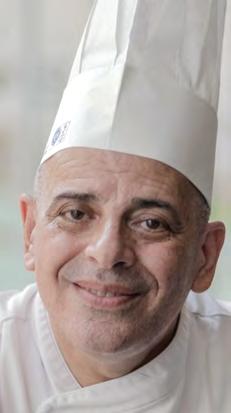
Influence comes when you do something worth following
Let me give you another example. During my teen years, there was an old Egyptian pastry shop, one of the oldest in Cairo, called Tseppas. What they did is a masterclass in inspiration versus innovation. The sablé biscuit around the world at that time was nothing new. Round shortbread, hole in the centre, apricot jam. Everybody made it. Everybody sold it. But this legacy pastry shop asked one question that stood out by making homemade Egyptian strawberry jam. That is it. No molecular gastronomy, no trending ingredient, no social media algorithm. Just one defining choice. And they did not stop there. Their Black Forest cake was
made with fresh cream sourced directly from Egyptian farms. No shortcuts, no substitutes. At a time when nobody was using the phrase "farm-to-table," they were already living it. The farmer, the cow, the cream, the cake. One unbroken line from source to plate. People queued in the thousands. Because they were not buying a biscuit or a slice of cake. They were buying a philosophy.
We can ask ourselves. How many kitchens chasing the Dubai chocolate trend today will be remembered in two hundred years? How many even stopped to ask…What is ours to give?
Tweaking is not a Crime, but know what you are doing
There is a word being thrown around kitchens right now…TWEAK! Take a look at this trend, this video, and let us tweak it. Everybody wants to tweak. Somebody sees a croque monsieur and says they are going to put pineapple inside and call it their version. Suddenly, they think they have created something.
But does it serve a purpose? It must be grounded in an understanding of flavour, technique, and the guest you are serving. Maybe pineapple is not the problem. Maybe it is how you are using it. So instead of dropping raw pineapple into a ham-and-cheese sandwich, you barbecue it. You marinate your chicken. You swap the standard bread for something that holds up to the flavour. You balance the sweetness with a little acidity. You build something that makes sense on the plate and in the mouth. In that case, you are not copying what you saw online. You are refining it to make it yours.
Know the rules before you break them Social media skips all of that. It shows
Not everything needs reinvention — some things need respect
the result without the journey, and then sells the result as the method.
Why is butter chicken one of the most beloved dishes on the planet right now? Nobody is reinventing it or deconstructing it into a foam or pairing it with a trending grain. It has always been butter chicken. And the world cannot get enough of it.
Because some things have already been perfected. And the role of the chef is not always to innovate. It is to understand that your guests today are asking for health, quality, and comfort, and to respond with skill and integrity.
Sometimes, all you need is not to outinnovate anyone. Go backwards, in the QSR full of burgers, go backwards and make it with fresh meat, salt, pepper, and a soft bun. Just the burger, done properly. Five Guys understood it. And they built an empire on it. That is not a lack of ambition. That is the highest form of it.
Let us talk about what is actually flooding our feeds every single day. It starts innocently enough. A client walks in for a wedding consultation. They show you a Pinterest moodboard. Forty-seven saved images, three different colour palettes, a dessert table from a wedding in Tuscany, a macaron tower from a hotel in Paris. And they say: I want exactly this.
The mood board becomes the menu. The menu becomes someone else's mood board. And somewhere in that loop, the chef disappeared entirely. This is what social media has done to creativity in the kitchen. It has replaced the chef's
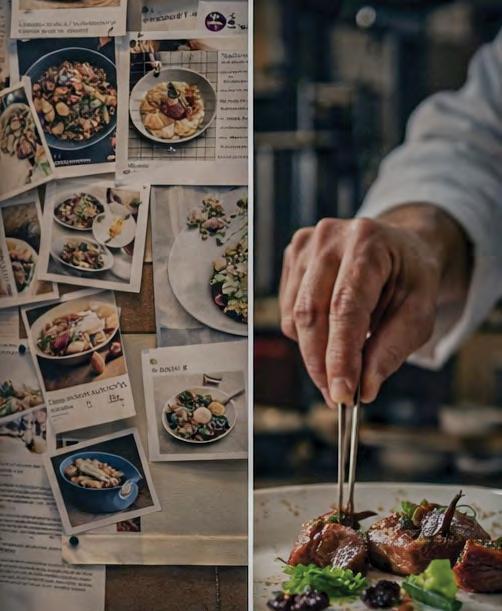
instinct with a saved post. Instead of asking a client what they love, what moves them, we are handed a folder of other people's ideas and asked to execute them on a deadline.
Salt your pasta water. Rest your meat before cutting. Two million views marketed as a life-changing hack!! These tips also take over our feeds. These are, in fact, fundamentals. They are the foundation of classical culinary training, passed down through kitchens and apprenticeships for generations. We were taught them. We practised them. We got shouted at for forgetting them. The problem is not that people are learning. Learning is good. The problem is the framing. To depict that the industry was fumbling in the dark until a content creator with a ring light saved us all. It should not devalue the education, the training, and the discipline that serious cooks dedicate years of their lives to.
Culinary expertise cannot be compressed
into a fifteen-second clip. Before you put something on your menu, before you film your next hack, before you call your version of someone else's idea a trend, please answer these honestly.
Tseppas, the 114-year-old bakery. They simply swapped the apricot for homemade Egyptian strawberry jam,and people queued in the thousands. Innovation, inspiration, or influence?
The Dubai chocolate. One extraordinary creation. Now on the menu of every hotel and café from here to Tokyo, with someone else's name on it. Innovation, inspiration, or influence?
A chef films himself salting pasta water. Two million views. Meanwhile, chefs with thirty years on the line watch in silence. Innovation, inspiration, or influence?
The answer says everything about the kind of chef you are. That answer is also your menu. ■


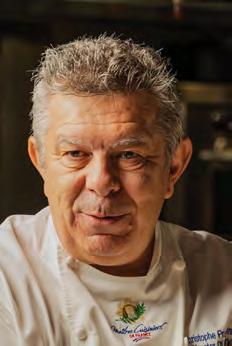
In an age of viral dishes and globalised menus, Chef Christophe Prud'homme makes the case for something you already have but may have forgotten
“Le goût” is already within us. Before technique, before knowledge, before we even understand what cuisine is, it exists quietly, deeply rooted in our earliest memories. It is a cocktail of perceptions, emotions through a scent, a texture, a moment, a feeling. Le goût is not something we learn from zero; it is something we uncover, refine, and carry throughout our lives.
Le goût is alive. It resists definition because it is constantly evolving and shaped by time, culture, origin, and human experience. Long before modern gastronomy, the foundations of taste were structured by those who organized cuisine, from early traditions to figures like Auguste Escoffier, who brought clarity, discipline, and transmission to the culinary world. They did not invent taste, but they gave it language and direction. From that moment, le goût became both an art and a heritage.
Yet taste begins far earlier than any system. Before we understand, we feel. Le goût is the first emotion. It is the smell of a kitchen, the warmth of a family table, the imprint of a dish that defines a moment in time. It is emotion resurfacing without warning. A single aroma can instantly take us back, reconnecting us to people, places, and sensations long gone. This is where taste becomes personal, beyond technique or knowledge.
At its core, le goût is shaped by terroir. Terroir is not only the land, but it is also the climate, the water, the air, the traditions, and the hands that cultivate and transform. It gives identity to products and anchors them in a specific place. It is what makes each ingredient unique, impossible to replicate
elsewhere. Even in a globalized world, terroir remains the foundation and the truth from which all cuisine begins.
And yet, taste evolves. Techniques such as fermentation and maturation, present for centuries, embody this balance between preservation and progression. In many Asian cultures, products like miso or kimchi are not simply methods of conservation. They are living expressions of time. They preserve, but they also transform. They deepen flavor, creating layers, complexity, and that essential dimension of umami which gives relief and length to taste.
I recall discovering this not through theory, but through experience. Tasting a well-aged, fermented product that was rich, complex and almost vibrant. I understood that the product was no longer only what it had been. It had become something else, something more. It carried its origin, but also its evolution. In that moment, it became clear: we do not create taste, we reveal it. We accompany it, we guide it, but nature and time remain the true authors.
This leads to the fundamental question: should we preserve or evolve “le goût”?
As chefs, we stand between these two forces. We are heirs to traditions, but also responsible for their future. Not everything should be transformed. Some tastes must be protected, respected, and transmitted as they are. Others can be reinterpreted, elevated, and adapted to new contexts. The responsibility lies in understanding where authenticity ends and creativity begins.
Today, this balance is more fragile than ever. Globalization and social platforms accelerate trends and risk standardizing taste. Dishes become visual, immediate, and reproducible. But “le goût” cannot be reduced to an image. It requires time, depth, and meaning. The danger is not evolution, it is losing identity, losing connection to origin and purpose.
Le gout also evolves within each of us. A child’s palate differs from that of an adult. Through experience, education, and curiosity, perception matures. What was once unfamiliar can become essential. “Le goût” is a lifelong construction, an inner journey shaped by openness and discovery.
Cuisine is a dialogue between past and present, terroir and innovation, memory and creation. It is something we share, something we transmit. We begin with nothing and, over time, build our identity, our vision, our signature. What we create becomes part of a larger story.
Le goût is that story. It connects us to our origins and guides us forward. We do not impose taste. We reveal it, we reveal ourselves. ■
Technology, global flavours, and social media are reshaping how food is created and experienced, writes
Thirty years ago, a kitchen ran on instinct, muscle memory, and an almost heroic level of patience. If a sauce split, you did not reach for a screen. You reached for a person. The sous chef. The CDP. That one senior cook who had seen everything and somehow always knew the fix. Knowledge lived in people back then. It was passed down over burners, in the moments after service, and through mistakes you made once and never again.
I still remember standing on the line, staring at a pan of scrambled eggs that had gone just a few seconds too far. Overcooked. Grainy. Service was minutes away, and there was no time to be anxious about it. No shortcuts, no fixes. Just dumping the pan, starting again, and hearing a calm voice next to me say, “Happens to everyone. Do not rush the next one.” That lesson stayed. You learn quickly when your mistakes are visible and unforgiving.
Learning was slower then, but it went deep. Today, the biggest shift is not just that the internet exists. It is speed. Ideas, techniques, and references move instantly. What once took weeks of trial and error can now be tested, adjusted, and refined in days. Research from major hospitality associations confirms that digital access has significantly shortened menu development cycles and accelerated supplier sourcing across global markets. Chefs still experiment; we just burn fewer trays in the process.
The menu has changed just as dramatically.
A few decades ago, what most people called “global cuisine” was a fairly short list. Italian. Mexican. Chinese. That was the comfort zone. Everything else lived on the edges.
Knowledge once lived in people — now it moves at the speed of a screen
Now, diners are far more curious. Mediterranean, Middle Eastern, Thai, Indian, Caribbean, South American, these slowly became part of everyday dining. In fact, industry research shows that over 60% of consumers actively seek globally inspired flavors when dining out, a dramatic shift from the limited exposure most diners had in the 1990s.
The classics did not disappear. The world simply had a larger pantry. As flavors traveled, presentation evolved, too. Traditional cuisines did not lose their soul; they found a new way to speak. The
flavors remain deep and rooted, but the way they arrive on the plate has become more intentional. Cleaner lines. More space. More thought.
I distinctly remember the first time we reworked a traditional dish into a plated format. Same core flavors. Same base technique. But suddenly the dish felt lighter, more focused. The conversation changed, not about whether it was authentic, but about whether it felt right. And it did. In global dining hubs today, regional dishes are now expressed through tasting menus and refined plating, translating heritage into contemporary spaces. While formal global growth percentages vary by market, tasting menu and experiential dining formats have steadily increased in premium segments across Europe, the Middle East, and North America over the past decade.
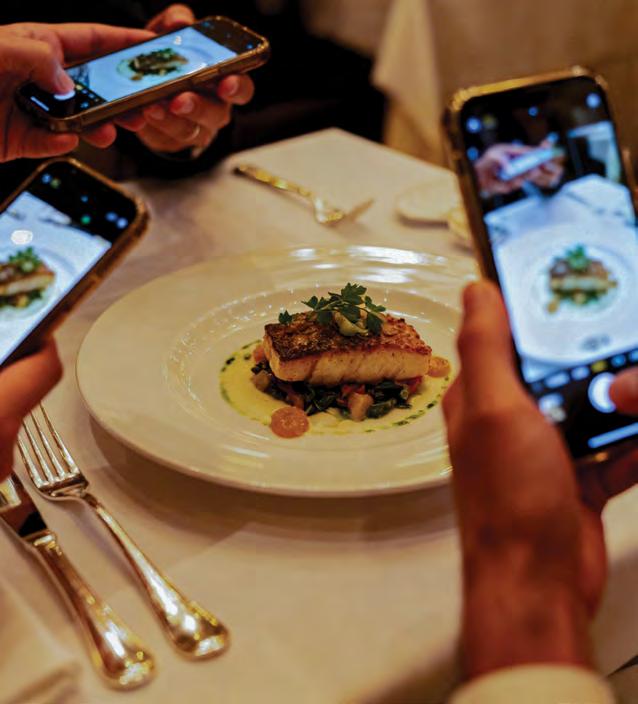
At the same time, the way food looks has taken on new importance. Plating has always mattered, but now it sets expectations before the first bite. Neater, more thoughtful presentation signals care and respect for the ingredient. Social media has amplified that dramatically. Research shows that 68% of millennials have chosen a restaurant based on social media posts, and studies indicate that Gen Z diners are even more influenced by digital food trends. In other words, the first bite often happens online.
I still remember when photographing a dish meant borrowing a camera, adjusting lights mid-service, and waiting days to see if it worked. Today, millions of food images are shared daily across platforms. Long before a guest walks through the door, the food has already spoken.
Great food has always been about people — not just plates
Behind the scenes, kitchens have changed just as much. There was a time when prep appeared endless. Croissant dough was rolled and folded by hand, layer after layer, long before service even began. Potatoes were peeled, cut, and soaked for hours just to get a decent French fry. Bones were roasted until deep and dark, then simmered for hours to coax out a proper demi-glace that could not be rushed. The work was physical, repetitive, and unforgiving.
Today’s kitchens are more considered. Systems are tighter. Processes are clearer. Studies in hospitality operations show that structured workflow systems can significantly reduce food waste and improve labor efficiency. Technologyenabled waste tracking programs have helped some kitchens cut food waste by up to 50%, proving that smarter systems are about sustainability.
Chefs now spend less time exhausted by repetition and more time tasting, adjusting, and refining, bringing their skill to the final plate rather than burning themselves out during prep.
Eating habits have shifted alongside this. Plant-based dishes are no longer an afterthought. Guests expect them. They ask questions. They want to feel good about what they are eating.
Recent foodservice research shows that around one-third of consumers actively seek vegetarian or plant-based options on menus, and nearly 43% of diners say plant-based choices improve their dining
experience. That is not a niche trend. That is mainstream expectation.
And through all of this change, something essential has stayed exactly the same.
Creativity still runs the kitchen. Whether a dish starts as a rough sketch on paper or a conversation during pre-service, great cooking still comes down to palate, judgment, and care. Tools evolve. Techniques change. But instinct remains.
As we look toward the next decade, what lies ahead is a steady shift that has already been underway.
Kitchens will get smarter about waste, treating it less like an unavoidable mess and more like a planning mistake. Fermentation and new techniques will become everyday tools. Automation will increasingly manage repetitive tasks, easing labor strain and freeing chefs to concentrate on creativity and hospitality. Circular and near-zero-waste kitchens are already gaining recognition in leading hospitality markets. Sustainability is becoming operational than optional.
Alongside this, creativity will show up in subtler, more human ways.
Imagine a guest returning to the same restaurant three months in a row. The dish they love is still there, but it changes slightly each time. A different finish. A seasonal garnish. A short story was shared at the table about why it evolved. The kitchen of 2036 will likely be cleaner, calmer, and a little less chaotic.
And the biggest change?
Chefs will finally have more time where it matters most, out on the floor, talking to guests, telling the stories behind the menu, and reminding everyone that great food has always been about people, not just plates. ■
Monal Malhotra is a luxury hospitality and F&B visionary with over 35 years of experience across the UAE and India. As Co-Founder of SHIVRA, he has led pre-openings, rebranding, and the development of award-winning culinary concepts for iconic properties. Today, Monal advises hospitality owners on concept development and operational excellence.
Chef Carl Shi shares why, when the pressure hits, sustainability stops being a story and starts being the only thing that holds the operational strategies together
For many years, sustainability in hospitality was often treated as an extra. It was something discussed in meetings, added to company values, or presented as part of a brand story. But in my experience, the real value of sustainability becomes most visible when pressure begins to build. When costs rise, supply becomes unstable, and operators are forced to look more closely at every dollar spent, the difference between a disciplined kitchen and a careless one becomes impossible to ignore.
The recent fuel price surge is a good example. It has reminded us that kitchen sustainability is no longer a side topic. It is part of cost control, resilience, and professional kitchen management. Recent reporting shows that the country imports about 90 per cent of its fuel and has faced cancelled shipments, local shortages, and tight reserve levels, all of which create concern for industries that depend heavily on transport and daily supply movement (Reuters, 2026). At the same time, diesel prices have been rising faster than petrol, which matters greatly because diesel drives freight, and freight drives the movement of food, packaging, beverages, and essential kitchen supplies (Australian Competition and Consumer Commission [ACCC], 2026).
To many people, this may still sound like an energy issue or a transport issue. In hospitality, I see it differently. To me, it is a kitchen issue. The moment diesel becomes
Sustainability is no longer a side topic — it is operational
strategy
more expensive, delivery runs cost more. Suppliers adjust prices faster. Lead times become less reliable. Costing becomes less stable. What happens outside the kitchen begins to shape what happens inside it. Recent reporting has already highlighted pressure on road transport and warned that rising fuel costs are flowing through to the price of everyday goods, including food (ABC News, 2026). For that reason
alone, sustainability should not be treated as a separate conversation from kitchen management.
This is why I believe kitchen sustainability should now be understood as a core concept of kitchen operations. It is not only about reducing environmental harm, although that remains important. It is also about running a tighter, smarter, and more resilient operation. A sustainable kitchen is one that orders carefully, uses ingredients intelligently, forecasts realistically, manages stock properly, controls portions, and reduces avoidable FW. In stable times, these practices improve efficiency. In unstable times, they become essential.
One of the biggest mistakes in hospitality is to think of sustainability as something separate from financial performance. In reality, the two are closely connected. Every product wasted carries more than its purchase price. It also carries freight cost, storage cost, labour cost, preparation cost, utility cost, and disposal cost. When fuel prices rise and supply chains are under pressure, the replacement cost of wasted food becomes even more serious. Under these conditions, poor stock rotation, overproduction, and careless trimming are no longer minor operational issues. They become expensive management failures.
I have always believed that kitchens reveal the truth of an operation very
quickly. When the market is comfortable, weak habits can stay hidden for a long time. Over-ordering can be excused. Buffets can be overproduced in the name of abundance. Surplus can be tolerated because the business still appears to function. But as soon as external pressure rises, those habits become visible. A kitchen that once looked generous may suddenly look inefficient. A team that once seemed flexible may actually be poorly controlled. Cost pressure has a way of exposing operational truth.
That is why sustainability today must be discussed not as an image issue, but as a system issue. A sustainable kitchen should know its fast movers and slow movers. It should understand where waste occurs and why. It should review the yield properly. It should keep communication strong between purchasing, receiving, storage, production, and service. It should build menus with enough flexibility to respond when prices shift or supply becomes unreliable. These are not just sustainability measures. They are signs of professional kitchen management.
I also think the current moment is an important reminder about forecasting. In uncertain periods, many kitchens react emotionally. They order more to feel safe. They produce more to avoid running short. They hold more stock because instability makes them nervous. I understand that instinct, because chefs are trained to fear shortage. But overreaction can create its own damage. Extra stock can lead to spoilage. Overstocked cool rooms can weaken rotation. Excess production can quietly turn into waste. In other words, when pressure rises, fear can easily produce the very inefficiency that sustainability is meant to prevent.
REFERENCE:
Efficiency in good times becomes survival in difficult times
This is especially relevant in hotels, catering operations, and buffet environments where volume can easily hide loss. Luxury service should never mean careless service. There is nothing professional about producing excess that has no clear use, no recovery plan, and no respect for the full cost behind it. A well-managed operation can still feel abundant to the guest while remaining disciplined behind the scenes. In my view, that is where true kitchen leadership now lies.
The recent fuel surge also strengthens the case for local and regional sourcing where practical. I am not suggesting that every kitchen can replace imported ingredients overnight. That would not be realistic. But when global instability begins to affect fuel availability, freight cost, and delivery reliability, shorter supply lines become more valuable. Seasonal planning becomes more sensible. Menu design becomes more strategic. The closer and simpler the chain, the less exposed the kitchen may be when outside forces begin shaking the market. That does not solve every problem, but it does reduce vulnerability. Recent reporting has shown that the current fuel disruption has already pushed policymakers and regulators to pay close attention to supply stress, pricing, and transport pressure (ABC News, 2026; Reuters, 2026).
There is also a clear leadership lesson here for chefs. The modern chef can no longer focus only on cooking, presentation, and service flow. Those remain essential, but they are no longer enough on their own. A chef today must also understand supply pressure, freight impact, stock control, waste patterns, menu engineering, and the operational cost of instability. Culinary leadership now includes the responsibility to build systems that protect both product and business performance. It means teaching teams that sustainability is not an optional extra delegated to corporate policy. It is part of daily craft. It is part of the discipline. It is part of respect for food and for the operation itself.
What recent events have shown me is something very simple. Sustainability matters most when conditions become difficult. It is easy to talk about it when markets are stable and business is comfortable. It becomes much more meaningful when fuel rises, supplier costs move quickly, and pressure reaches the daily purchasing sheet. That is when a sustainable kitchen proves its worth. It buys more carefully. It wastes less. It adapts more calmly. It protects the margin more intelligently. Most importantly, it operates with greater control.
For that reason, I do not see kitchen sustainability as a trend. I see it as a necessary foundation of modern kitchen management. The recent fuel pressure has simply made that truth easier to see. A sustainable kitchen is not only greener. It is stronger. It is more disciplined. It is more resilient. And in the current hospitality environment, those qualities are no longer optional. They are at the very heart of how a professional kitchen should be run. ■
> ABC News. (2026, March 27). Fuel surcharges across a broad range of industries are on the rise as fuel shortages and price hikes fuel inflation concerns. https://www.abc.net. au/news/2026-03-27/fuel-shortages-price-hike-businesses-consumers-inflation/106497260
> Australian Competition and Consumer Commission. (2026, March 27). Diesel prices rising faster than petrol, up 28 cpl across the largest cities in last week. https://www.accc. gov.au/media-release/diesel-prices-rising-faster-than-petrol-up-28-cpl-across-the-largest-cities-in-last-week
> Reuters. (2026, March 28). Australia to amend export-finance laws to boost fuel security, PM Albanese says. https://www.reuters.com/business/energy/australia-amendexport-finance-laws-boost-fuel-security-pm-albanese-says-2026-03-28/





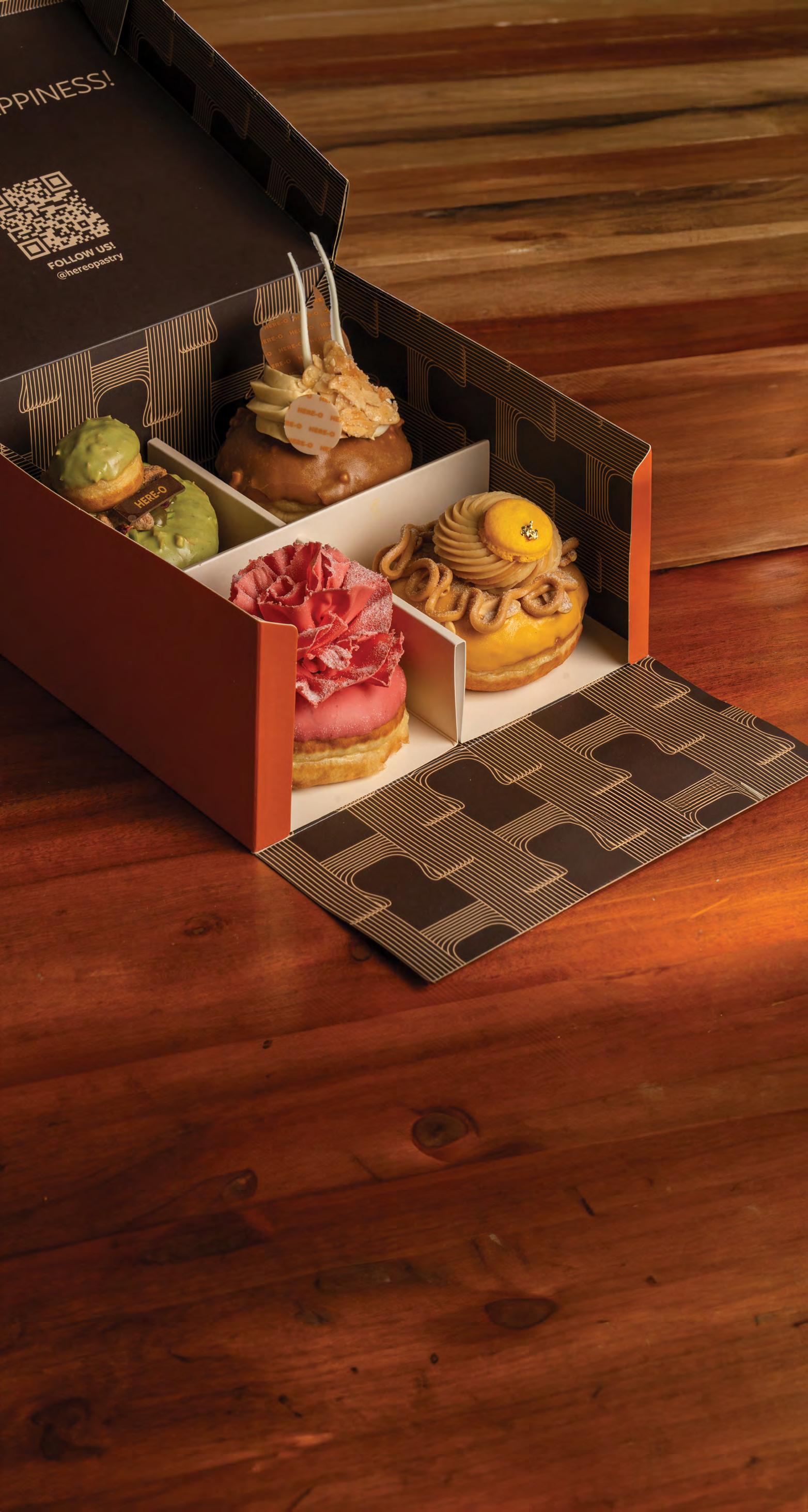
SLOW-FERMENTED SOURDOUGH.
HANDCRAFTED DAILY. PREMIUM INGREDIENTS.
CHEF-CRAFTED INNOVATION. AWARD-WINNING UAE BRAND.

Savor the perfect harmony of texture and flavor.
Guided by slow fermentation and refined technique, our doughnuts are crafted with intention, artistry, and a commitment to perfection.

SCAN TO KNOW MORE ABOUT HEREO
Cooking a premium steak may appear simple, yet several small mistakes can easily turn an exceptional cut of beef into a disappointing meal, writes Sulemana A. Sadik
Whether the steak is Wagyu, Angus, or any well-marbled (with thin streaks of fat within the muscle) quality beef, proper handling and cooking techniques are essential to preserve its tenderness, flavor, and natural juiciness.
Understanding a few fundamental principles can make a significant difference in the final result. For chefs, home cooks, and steak enthusiasts alike, avoiding these common mistakes ensures that the true quality of the beef is fully appreciated.
Cooking Steak Straight from the Refrigerator: One of the most common mistakes is placing a cold steak directly onto a hot pan or grill. When a steak is extremely cold, the muscle fibers are tight, and the internal temperature difference between the exterior and interior is too great.
As a result, the outer surface of the steak cooks very quickly while the center remains undercooked. This often leads to uneven cooking, where the exterior becomes overdone before the inside reaches the desired doneness.
Allowing the steak to rest at room temperature for about 20 to 30 minutes before cooking helps ensure a more even heat distribution. This simple step allows the steak to cook more uniformly and improves the overall texture of the meat.
Excess Moisture on the Surface: Another
frequent mistake is failing to properly dry the steak before cooking. Moisture on the surface prevents the meat from achieving a proper sear.
When water is present, the steak essentially steams rather than sears, preventing the formation of the flavorful crust that defines a well-cooked steak. This crust is created through the Maillard reaction. Patting the steak dry with a paper towel before seasoning helps remove excess moisture and allows the surface to caramelize properly. This step enhances both flavor and texture.
Flipping the Steak Too Often: Constantly turning or moving the steak while it is cooking is another mistake that can affect the final result. Each time the steak is flipped unnecessarily, the heat distribution is disrupted, preventing the formation of a proper crust.
Allowing the steak to cook undisturbed for the appropriate amount of time helps create a consistent sear and locks in flavor. In most cases, flipping the steak once or twice during cooking is sufficient.
Maintaining patience during this stage allows the steak to develop its characteristic golden-brown crust while retaining moisture inside the meat.
Skipping the Resting Stage: Perhaps the most overlooked step in cooking steak is allowing it to rest after it has been removed from the heat.
During cooking, the juices within the

meat move toward the center as the muscle fibers tighten. If the steak is cut immediately after cooking, these juices escape onto the plate rather than remaining within the meat.
Allowing the steak to rest for five to ten minutes allows the muscle fibers to rest. time to relax and redistribute the juices throughout the meat. This ensures a more tender and flavorful eating experience.
Respecting the Quality of the Cut: Premium cuts of beef deserve careful handling and attention to detail. Simple techniques such as bringing the meat to room temperature, ensuring the surface is dry, minimizing unnecessary handling during cooking, and allowing proper resting time can dramatically improve the final result.
Ultimately, cooking a great steak is not about complicated techniques but about understanding the natural characteristics of the meat and allowing those qualities to shine.
When these small yet important details are respected, a premium steak can truly deliver the rich flavor, tenderness, and satisfaction that it is known for. ■
Chef Rury never recoiled from the unfamiliar. Never stopped his incessant probing, questioning, absorbing. This very curiosity took him from working in a supermarket bakery to one of the most demanding pastry operations at Emirates Flight Catering. In conversation with Shreya Asopa, he revisits the turning points of his pastry career
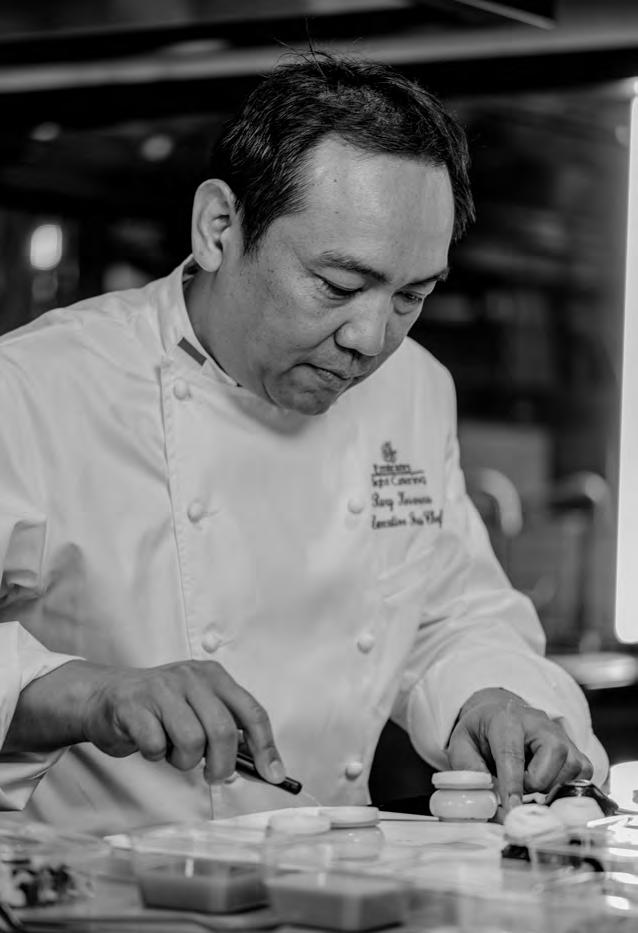
Change a dish two hours before service? Or undo weeks of trials and start fresh? Chef Rury does not bat an eye. At Emirates Flight Catering, he leads the brigade of 100 pastry chefs with his unflappable adaptability. Briefings, menu design, section assignments, and concept development fill his day as he accommodates a clutch of evolving priorities and ideas.“It is possible because of the team’s support. We put the right person in the right place. Everyone moves in the same direction and understands what is expected,” he explains.
And when things do not go to plan? That is where Chef Rury's trademark adaptability comes into play. “ If the dish requires a change just before two or three hours of service, I do not hesitate to make the adjustments. I can change things instantly, even at the eleventh hour.”
So how does a boy from Jakarta who once applied for a housekeeping job end up overseeing one of the most demanding pastry operations in the Middle East? To walk in Chef Rury’s shoes is to tango with serendipity and hustle. But that, it seems, has always been his style.
When things change, adjust — don’t hesitate
Technique, timing, and tenacity are as much at home on a badminton court as in a pastry kitchen. It turns out, Chef Rury never really left sport behind. He just found a different arena. Growing up as the second of five siblings in Jakarta, he was, by his own admission, a sports kid through and through. “I loved football, badminton,really, any sport,” he recalls with a grin. A pastry kitchen was, at that point, the furthest thing from my imagination.”
When he finished high school in 1994, further education wasn't an option his family could afford. There was barely a sliver of sand between him and unemployment, but he pressed on, engrossed in every opportunity to learn. For about a year, he alternated between stints at a fried chicken restaurant and a supermarket. Then, in 1996, flicking through a newspaper after his shift, a vacancy at a five-star hotel caught his eye. "I did not even know what position I was applying for. I was ready to do whatever was available. I just wanted to get my foot in the door," he admits, laughing at the memory.
Behind the easy laugh was a young man living through a nightmarish time. His father had suffered a stroke and was unable to work, and his sister was still looking for a job. “My family kept me going. I knew I had to take the responsibilities, so I worked hard. No matter how tough the going gets, you have got to keep learning.” Funnily enough, the vacancy was not even for cooking but for front-of-the-house tasks. But when you need a job, you do not quibble over flour or feather dusters. He signed up without asking questions. A twist of fate later, they moved him to the bakery, and just like that, his love affair with dough began.
No matter where he hung his hat, he was ready to start at ground zero. “I did not have a diploma or any glittering culinary badges,” he says, unruffled. “I introduced myself as ‘the guy from the supermarket’. Honestly, you have to commit to yourself and learn from different experiences.”
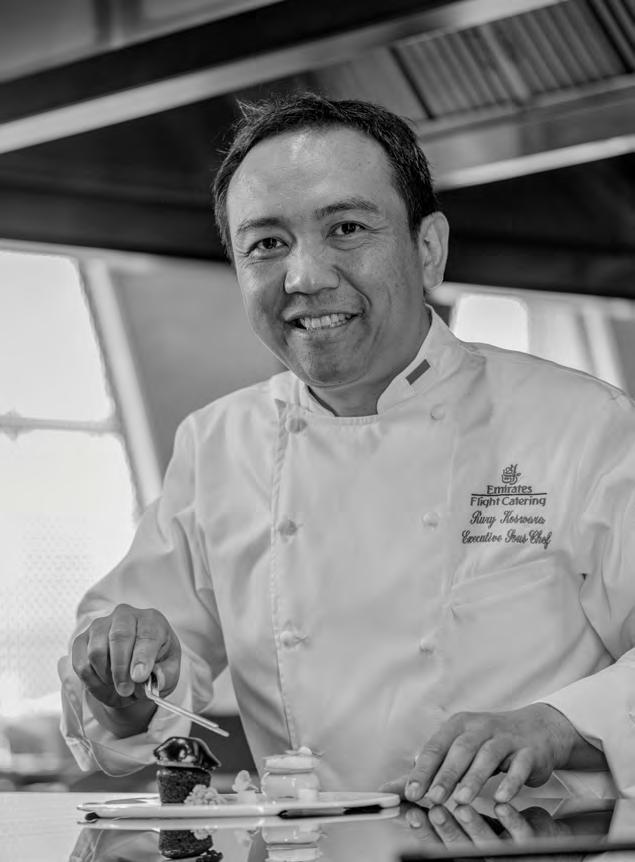
Put the right person in the right place, and everything flows
This versatility proved a lifesaver on many occasions. During the pandemic, when the world was upended, he was leading the pastry team. “The team was running at about half strength,” he recalls. “It was me and two sous chefs overseeing the operation. When someone needed to step in for bakery tasks, that was my cue. I had worked in supermarket bakeries earlier, so the experience came in handy.”
That same can-do attitude helped him amass copious experience across some of the most iconic addresses in the hospitality world, including Rosewood Hotel & Resorts in Riyadh, Jumeirah Emirates Towers Hotel, The Edge Fine Dining and Lounge, Atlantis, The Palm, Jumeirah Creekside Hotel, JW Marriott Marquis, and One&Only Royal Mirage Dubai.
“Opportunities come when you least expect them, and sometimes you may not even realise, but someone is watching your efforts,” he says on his career path. These days, the tables have turned. At EKFC, Chef Rury is now the mentor, keeping an eye on the next generation of chefs who need a push.“ Learn from your mistakes. Even a chef’s scolding is a nudge forward. You take it, you grow, you rise.”
Working in the middle of such a humongous operation means the team has to stay ready for any shift. Recipes are followed closely, with clear measurements, shapes, and visuals for every dish. In large-scale production, the margin for error is wafer-thin. Even a small mistake can disrupt the system, so problems are fixed immediately.
Tight guidelines may run the kitchen, but imagination still has its say. The team mines a large recipe bank and keeps a watchful eye on trends across the hospitality world. “We take inspiration from everywhere. Sometimes it is a trend on social media, sometimes it is what people are enjoying in Dubai. The idea is to keep the menu current without losing its footing,” he explains. A recent creation tells the story well.
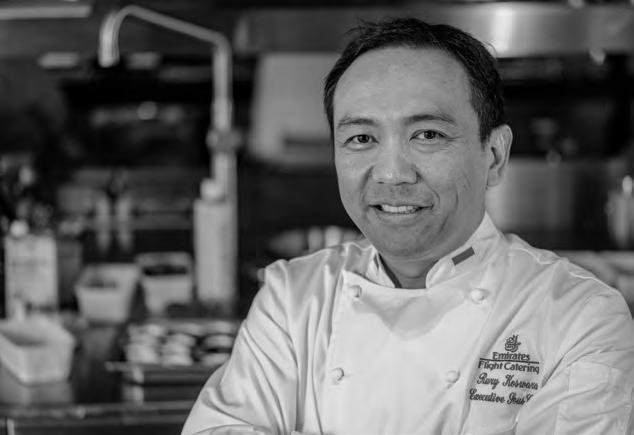
“Inspired by the Dubai chocolate trend, we made a knafeh base layered with pistachio, soft chocolate ganache, and praline, finished with a sprinkle of pistachio on top. It became one of our signature desserts.”
But at 35,000 feet, great ideas need parachutes. The epistemic challenge is to translate creative ideas into scalable, repeatable outcomes. “It is not enough for a dish to look or taste like a dream. It has to fit in with the production systems and be made in volume. Otherwise, even a great idea can fail when you scale up,” he says.
Chef Rury is no stranger to the culinary arena, racking up medals like a champion at the Black Box Culinary Challenge in Dubai (Gold, 2005), Gulf Food, Salon Culinaire, and beyond. For the Arla Pro competition, he presented a Date Toffee Pudding that reads like poetry on a plate, with layers of monte ganache, coffee jelly sheet, warm toffee sauce, and other harmonious flavours.
On the home front, life is nothing short of full and beautiful. His wife, with her own roots in hospitality, understands him. Their three children,a 13-year-old daughter, a 10-year-old daughter, and a lively three-year-old son, are his greatest stress busters after a long day at the pass.
Through each twist and turn of his career, his family has been his rock. And the good news keeps coming. He breaks into a smile, “I recently received a promotion to executive chef.” Without
A strong foundation gives you the freedom to create
a doubt, the achievement tastes even sweeter when shared with your nearest and dearest.
Even after nearly three decades in the industry and with the big 5-0 just around the corner, Chef Rury stays as open to learning as ever. He encourages young chefs not to blindly copy and to stamp their own identity on their work. “I do not follow anyone in particular. I get ideas from everywhere, sometimes from the supermarket, sometimes from something I see on vacation. I take pictures and keep them for inspiration. It is taking influence and making it your own.”
Besides mentoring them in the art of the flame, he has some hard-earned words of wisdom to pass on. “Reaching this position did not come easy. Chefs need to have a strong enough foundation to stand on.Culinary trends are everywhere now, every day, something new comes along, and it can feel overwhelming. But when you have a rock-solid base, you can afford to play around with what is happening outside. Take ownership of your role, and never stop working hard,” he advises budding pastry chefs.
Date Pudding Mix
Sugar White Granules 500g
Egg Liquid 250g
Arla Pro Butter Unsalted (Melted) 40g
Flour White 300g
Cocoa Powder 50g
Baking Soda 10g
Date Paste 40g
Arla Milk Full Cream (Warm) 250g
Method
Whisk together the sugar and eggs, and then add the date paste, mixing well to combine.
In a separate bowl, mix the dry ingredients, then add them to the egg mixture, followed by the melted butter.
Pour in the warm milk and mix everything well together.
Pipe approximately 55 grams of the mixture into a pudding mold or into foil, as you prefer.
Bake in a preheated oven at 170°C for about 25-30 minutes.
Remove from the mold after baking and soak in warm pudding syrup.
Pudding Syrup
Arla Pro Whipping Cream 35% 315ml
Arla Pro Butter Unsalted 155g
Sugar White Granules 225g
Water 315ml
Method
Boil ingredients together, set aside.
Sweet Paste Base
Arla Pro Butter Unsalted 351g
Sugar Icing 175g
Egg Whole 58g
Flour White 526g
Method
Cream together the butter and sugar with an electric mixer. Very lightly do not overmix, or you will add too much air to the pastry.
Gradually add the eggs, mixing well between each addition. Scrape down the sides of the bowl to ensure all ingredients are uniformly mixed.
Turn off the mixer and add the flour and salt. Mix at a low speed until the flour is incorporated.
Turn the dough out onto a work surface
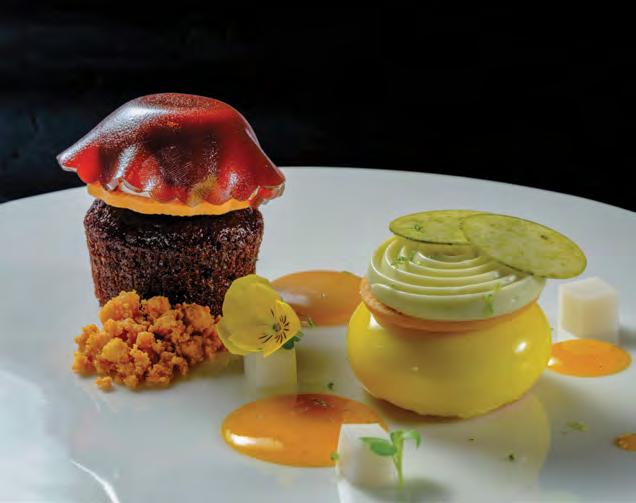
and shape it into a rough disc. Wrap tightly in cling film and refrigerate for at least 30 minutes before rolling out.
Coffee Jelly Sheet
Water 250g
Sugar White Granules 65g
Gelatine Sheet (Soaked In Ice Water) 15g
Coffee Instant Cafe 10g
Method
Boil all the ingredients together and add the gelatine.
Prepare the tray by spraying it with pan coating, then place it in the freezer to chill.
Once your mixture is ready, pour it into the tray and spread it out evenly. Make sure to do this quickly before it starts to set. Keep for at least 3 hours in the fridge before using, or refrigerate overnight.
Monte Ganache
Arla Pro Whipping Cream 35% 600g
White Chocolate Couverture 250g
Arla Pro Cream Cheese 200g
Gelatine Sheets (Soaked In Ice Water) 10g Method
Bring 1/3 of the cream and the vanilla bean to a boil.
Once boiling, remove from the heat, add the gelatine leaves, and mix well to combine.
Strain the mixture to remove any solids.
Add the remaining cream and stir until thoroughly incorporated.
Keep it in the fridge overnight, or for at least 6 hours before using.
Caramel Toffee
Sugar Granules
120g
Arla Pro Whipping Cream 35% 350g
Lemon Juice 2g Water 10g
Arla Pro Butter Unsalted (Melted) 40g
Sugar Light Brown 40g
Put the sugar & brown sugar in a pot, add the water to just wet the sugar, heat until the sugar melts and turns to caramel.
Pour the cream slowly while stirring.
Add the butter, stir until smooth.
Finish by adding lemon juice to balance the sweetness. Keep a minute, then remove from the heat.
Milk Crumble
Arla Pro Butter Unsalted (Melted) 350g Milk Powder 130g Method
Prepare the Dough: Start by making a sweet dough approximately 3-5mm thick.
Cut the Shapes: Using a mold, cut out round shapes from the dough. Preheat your oven to 180°C, then bake the dough until golden brown. Once done, set them aside.
Prepare the Monte Ganache: Pipe the monte ganache using a plain nozzle. Cut the coffee jelly into circles with a round cutter, then place them on top of the ganache cream. Set this aside as well.
Warm the pudding, then place it in the center of a bowl or plate.
Add the sable cream on top of the pudding.
Finish off with some milk soil or crumble and serve it with warm toffee sauce. ■
August 31 - September 2, 2026 | United Arab Emirates
The Emirates Culinary Guild (ECG) (www. emiratesculinaryguild.net) is the association of professional chefs of the UAE. It is a non-profitmaking organization, organized by volunteers dedicated solely to the advancement of culinary art in the UAE.
The aims of the ECG, broadly, are
To encourage and inspire young chefs through training and competition.
To enhance internationally the culinary prestige of the UAE.
To encourage UAE nationals to consider a career within the hospitality industry.
The Emirates International Salon Culinaire (ESC) is a series of practical and display-based culinary competitions and fully Endorsed by the World Association of chefs Societies, Worldchefs; entry to which is open to professional chefs, pastry chefs, cooks and bakers and culinary students. Some of the competitions are designed for entry by a single competitor; others are designed as team events.
Each competition is called a class.
The ESC shall take place in with an exhibition for Chefs, Bakers, Pastry chefs and cooks and which will once again be the home of the Emirates International Salon Culinaire and is a fully endorsed competition from Worldchefs. To exhibit or sponsor please contact.
All this - coupled with three days of real-time, hectic, and thrilling cookery
competitions - fought against the constraints of time, makes the salon a stimulating event that will become a major attraction at the event for Chefs, Bakers, Pastry chefs and cooks. This year the education arena is not to be missed as a special feature of the exhibition. Demonstrations and interactive sessions will be another highlight of the event.
Social media plays a large part in the Guilds self-promotion and the Gulf Gourmet magazine drive awareness around the globe. www. emiratesculinaryguild.net/, www. facebook.com/Emirates-Culinary-Guild763644223697376/timeline/, www. facebook.com/gulfgourmet?fref=ts, follow these links for more information on the Emirates Culinary Guild.
In 2026 the Emirates International Salon Culinaire event shall see the return of the Alan Thong Golden coffee Pot challenge for Young chefs. All this activity will make this the chefs event of the year.
Membership of the ECG is open to all of those professionally and solely involved in the preparation of food. Anyone interested in the Emirates Salon Culinaire to compete or sponsor, please contact us below.
The Emirates Culinary Guild PO Box 454922 – Dubai – UAE Tel: + 971 56 8014089. emiratesculinaryguild@gmail.com
Resume Of Classes for Entry
Class No. - Class Description
Pastry and Bakery
01 Cake Decoration – Practical Powered by Felchlin Switzerland
02 Wedding Cake Three-Tier- Powered by Pristine
03 Four Plates of Dessert – Powered by Arla Pro
04 Pastry Showpiece
05 Bread Loaves and Showpiece Powered by CSM ingredients& Schapfen Muehle Germany
06 Petits Fours, Pralines Powered by Marguerite & Candia Professional France
Showpiece Artistic Displays
07 Chocolate Carving Showpiece Powered by Veliche Chocolate Belgium
08 Fruit & Vegetable Carving Showpiece Powered by Barakat
09 Open Show Piece
Gourmet Static Display
10 Five-Course Gourmet Dinner Menu Powered by USMEF
11 Sustainable Three-Course Vegetarian Lunch Menu powered by Farzana
12 Four Plated Chicken Dishes –Powered by powered by Farzana
13 Savory tartelette Creations Powered by HUG
14 Sweet tartelette Creations Powered by HUG
15 Sweet Creations Powered by Potatoes USA
Practical Artistic Carving
16. Individual Ice Carving
17. Ice Carving Team Event
18. Practical Fruit & Vegetable Carving Powered by Barakat
Practical Cookery
19 Arabic Mezzeh - Practical Cookery Powered by Rahma
20 Fish & Seafood - Practical Cookery Powered by Deep Seafoods
21 Beef - Practical Cookery Powered by USMEF
22 Emirati Cuisine – Practical Cookery powered by Hearty Mart
23 Dressed Chicken & Dressed Fish Practical Butchery Young chefs
24 Savory Potato Creations Practical Cookery Powered by Potatoes USA
25 Chicken - Practical Cookery –Powered by USAPEEC
26 Plant based Practical cookery appetizer and main course Powered by Wonder Protein
27 Burger, Loaded fries and a shake Practical cookery Powered by Chefs Palette
28 Lamb Primal Cuts Practical Butchery
29. Sounbula Mills Artisan Bakery Arena Practical Cookery
30 The National Cuisine challenge powered by TAAZA. Team event
31 Fruit juice based Mock tails Powered by Barakat
32 Chocolate Hand Made pralines, Bonbons and Petit Fours Practical cookery powered by MRS Packaging
33 The Artisanal Sandwich Practical Cookery Powered by Al Marai Invitation Only Events details on request
34. Alen Thong Golden Coffee Cup Young Chef Challenge powered by JM Foods
35. Tri Discipline Challenge for baker, pastry chef and Chef powered by Foodtech
37. Afternoon tea for Airline lounges & hotel lobby lounges
38. Lyres Non Alcoholic cocktails powered by Lyres
PARCTICAL COOKERY
Notes on the Practical Cookery Classes
- These notes pertain to all practical cookery classes. They must be read in combination with the brief of the class entered.
1. The preparation, production and
cooking skills of each competitor must be demonstrated during her/ his time in the kitchen.
2. Waste and over-production will be closely monitored. Please refer to the ECG Sustainability Guidelines on the website
3. Competitors are to avoid the use of single use plastics, acceptable items are reusable, recyclable, compostable, bio- degradable, items for ingredient containers etc., reusable tasting spoons to be used.
4. There is a point penalty deduction for wastage or over-production.
5. Timing is closely monitored.
6. There is a 1-point penalty deduction for every 1 minute that the meal is overdue.
7. All food items must be brought to the Salon in hygienic, chilled containers: Thermo boxes or equivalent.
8. Failure to bring food items in a hygienic manner will result in disqualification.
9. All dishes are to be served in a style equal to today’s modern presentation trends.
10. Portion sizes must correspond to a three-course restaurant meal.
11. Dishes must be presented on individual plates with appropriate garnish not exceeding 250g total food weight excluding sauces.
12. Unless otherwise stated, competitors must supply their own plates/bowls/platters with which to present the food.
13. Competitors must bring with them all necessary mise-enplace prepared according to WORLDCHEFS guidelines in the hot kitchen discipline (www. worldchefs.org). Culinary RulesWORLDCHEFS
14. Including Worldchefs Hygiene rules, https://worldchefs.org/ wp-content/uploads/Hygiene_ rules.pdf
15. Including Worldchefs Best Practices https://worldchefs.org/ wp-content/uploads/Worldchefsbest-practices.pdf
16. Including Worldchefs chefs
Judges code of conduct https:// worldchefs.org/wp-content/ uploads/JuryCodeOfConduct-1.pdf
17. Competitors are to provide their own pots, pans, tools and utensils.
18. All brought appliances and utensils will be checked for suitability. The use of any additional equipment must receive prior approval before the competition from the organizers.
19. The following types of prepreparation can be made for the practical classes:
(what foods are permitted to be brought into the kitchen)
a) Salads – cleaned, washed, not mixed, or cut.
b) Vegetables – cleaned, peeled, washed, not cut, must be raw.
c) Fish may be scaled and filleted, and the bones cut up.
d) Meat may be de-boned, and the bones cut up
e) Stocks – basic stock, not reduced, not seasoned, no additional items (garlic, etc.). Hot and cold samples must be available for the judges.
f) Pastry sponge, biscuit, meringue, basic dough’s – can be brought in but not cut.
g) Basic pastry recipes can be brought in weighed out but no further processing.
h) Fruit pulps – fruit purees may be brought in but not as a finished sauce.
i) Decor elements – 100% must be made in the kitchen.
20. No pre-cooking, poaching, marinating etc. is allowed.
21. No ready-made products are allowed.
22. No pork products are allowed.
23. No alcohol is allowed. However Lyres Non Alcoholic Spirits are allowed
24. If a farce is to be used for stuffing, filling, etc., the farce must be prepared in the kitchen in front of the judges to show the competitor’s skill
25. Within 10 minutes after the end of the competition, competitors
must have the kitchen thoroughly cleaned and tidied and ready for the next competitor to use.
26. Two copies of the recipestypewritten - are always required.
27. Submit one copy of the recipe/s to the clerk when registering.
28. Submit one copy of the recipe to the duty marshal at the cooking station.
29. No transglutaminase ( meat glue ) is permitted to be used
30. No gold, silver leaf or powders are permitted.
31. The use of 2 moulds and one stencil only per event should be included see separate guidline sheet
1. The Emirates Salon Culinaire will be held August 31 - September 2, 2026.
2. The venue is at the Madinat Jumeirah Conference Centre
3. The entrance fee for all single entries is Dhs.120 (AED. One Hundred and Twenty) per person per class, unless otherwise stated in the Rules and Regulations or the Class Briefs.
4. Entry applications are ONLY via the foodverse APP available in the app and google play store and here https://www.foodverse. io/ competitors must sign up to the APP to gain access to the foodverse and the competition entrys. No paper based entries or emails will be entertained.
5. The fee for entry to the trophy classes is as follows:
i. Best Cuisinier – The Emirates Salon Culinaire- Dubai 2026
AED:520/- per person
ii. Best Pastry Chef – The Emirates Salon Culinaire- Dubai 2026 AED:420/- per person
iii. Best Artist – The Emirates Salon Culinaire- Dubai 2026
AED:520/- per person
iv. Best Arab National – The Emirates Salon Culinaire- Dubai 2026 AED:320/- per person
v. Young Chef of the Year – The Emirates Salon Culinaire Dubai 2026 AED: 320/- per person
6. Closing date for entries is June 28th 2026 However, many are often fully subscribed and closed well before the closing date.
Entrants to a trophy class must enter and finish in all and only those classes that pertain to the trophy for which they are entering. No other classes may be entered into by a trophy entrant. Trophies are awarded on the highest aggregate judging points from all classes pertaining to the trophy being awarded. The required classes are:
i. Class #10. Five-Course Dinner Menu
ii. Class # 21. Beef Practical Cookery
i. Class # 25. Chicken Practical Cookery
In order to qualify for inclusion in the points tally for Best Cuisinier Trophy a competitor must win three medals, at least one of which must be a gold medal.
i. Class # 01. Practical Cake Decoration
ii. Class # 03. Four Plates of Desserts
iii. Class # 06. Friandises, Petites Four
In order to qualify for inclusion in the points tally for Best Pastry Chef Trophy a competitor must win at least two medals one of which must be a gold medal.
i. Class # 07. Chocolate Showpiece
ii. Class # 09. Open Showpiece
iii. Class # 16. Individual Ice Carving
iv. Class # 17. Practical Fruit & Vegetable Carving
In order to qualify for inclusion in the points tally for Best Artist Trophy a competitor must win at least three medals one of which must be a gold medal.
i. Class # 25. Chicken – Practical Cookery Arabic Style
ii. Class # 19. Arabic MezzehPractical Cookery
iii. Class 22: Emirati CuisinePractical Cookery
iv. In order to qualify for inclusion in the points tally for Best Arab National Trophy a competitor must win at least one Gold medal and be an Arab National.
1. Class 40 Sounbula Mills
Artisan Bakery Arena Class “The SOUNBULA MILLS UAE Bakery team of 2026”
See Classes for Entry Document. Classes Practical cookery chicken, Practical Butchery fish and chicken, Practical cookery Emirati cuisine
A team of WorldChefs (The World Association of Chef’s Societies) approved international Judges will adjudicate at all classes of the competition: using Worldchefsapproved methods, criteria and documents www.worldchefs.org
After each judging session, the judges will hold a debriefing session at which each competitor attending may learn something of the thinking behind the judges’ decision. Competitors will not be competing against each other: rather, they will be striving to reach the best possible standard. The judges will then apportion marks that accord with their perception of the standard reached. The competitor will then receive an award commensurate with his/her points tally for the class.
In theory, therefore, everyone in a particular class could be awarded a gold medal. Conversely, it could be possible that no awards at all are made.
The scaling for awards in all classes is as follows
100 Points Gold Medal with Distinction with Certificate.
99 – 90 Gold Medal with Certificate.
89 – 80 Silver Medal with Certificate.
79 – 70 Bronze Medal with Certificate
60 – 69 Certificate of Merit Thereafter Certificate of Participation
Corporate and Establishment Trophies
The corporate and establishment trophies available are:
Best Effort by an Individual Establishment – The Emirates Salon Culinaire
This trophy is awarded to the establishment whose competitors gain the highest total combined points from the medals won from all of their entries.
Best Effort by a Corporation –The Emirates Salon Culinaire
This trophy is awarded to the corporation whose competitors gain the highest total combined points from the medals won from all of their entries.
Best Effort by an Individual Culinary Hospitality School – The Emirates International Salon Culinaire
This trophy is awarded to the educational Centre whose competitors gain the highest total combined points from the medals won from all of their entries.
Point Value of each Medal Won: Gold Medal with Distinction 6 Points
Gold Medal 5 Points
Silver Medal 3 Points
Bronze Medal 1 Point
Winners where a sponsored trip is awarded are restricted to wining the trip once per life time. In a case where the overall winner has participated in a sponsored trip previously the trip shall be awarded to the 2nd place winner.
If no Gold Medals are awarded to competitors in the trophy classes then
TASTE & TEXTURE
The dish should preserve its authentic taste, texture with appropriate seasoning, and meet modern nutritional standards in quality, flavour, and colour.
CORRECT PROFESSIONAL PREPARATION
Modern culinary arts, emphasizing practical and acceptable food preparation methods, applying proper cooking techniques for all ingredients, maintaining hygiene, minimizing food waste, and ensuring efficient teamwork and time management during preparation and service.
HYGIENE AND FOOD WASTE
Maintaining clean and hygienic work techniques, adhering to established workflows, ensuring benches are clean and uncluttered, storing food items properly, controlling temperature for hot and cold foods, managing excess and food waste effectively, and limiting plastic waste.
PRESENTATION
10 Marks
Ingredients and side dishes should be harmonious. The plating must be clean, straightforward, without artificial garnishes or elaborate arrangements, to create an appetizing appearance. 10 Marks
SERVICE
Meals must be practical and transportable, presented on time, and in the correct number of plates.
MATERIAL BROUGHT / MISE EN PLACE
Clear arrangement of materials, ensure the correct number of items are brought in, apply proper working techniques and make efficient use of working time.
INNOVATION
Introduce new or improved techniques, enhance dish presentation to exceed expectations, and enable chefs or teams to create a memorable impression.
Total Score: 100 points (No half points will be given)
there shall be no trophy given at the competition.
Culinary Competitions
The venue is Madinat Jumeirah Dubai
1. Please read the following regulations carefully. The instructions contained herein are mandatory. Non-compliance with any of the points mentioned could lead to loss of marks or complete disqualification.
2. The Briefs of the Classes for Entry
5 Marks
5 Marks
5 Marks
document also forms part of these Rules and Regulations and must be read in conjunction with this document. More details can also be found at www.worldchefs.org for Worldchefs rules and judging.
3. Other regulations relevant to a particular competition would appear on the last page/s of this document.
4. Participation at competition is open to anyone professional employed in the preparation of food.
5. Unless the organisers specifically mention a class as being a team event, all classes are for entry by a single competitor.
6. Competitors are restricted to one entry per class
7. Competitors must attend and participate on the date and at the time allotted to them no date changes will be allowed.
Entry applications are via the foodverse APP available in the app and google play store and here https://www. foodverse.io/ competitors must sign up to the APP to gain access to the foodverse and the competition entrys. No paper based entries or emails will be entertained.
8. Complete the entry-form on the foodverse app according to the instructions on the foodverseapp. www.foodverse.io
9. Submit the completed form to the organisers via the app
10. Entry is paid but pending final decision.
11. Entries are accepted strictly on a first-come, first paid-accepted basis
12. Competitors must be 18 years old and above
13. Ensure that your name on your entry-form exactly as you would wish it to appear on any certificate, letter of participation or posting of results.
14. A professional food-safety company will oversee all aspects of hygiene practice at the competition.
15. It is quite possible that the Municipality Food Control Section will conduct its own hygiene inspections as and when it sees fit.
16. The organisers have no control over these two entities. Should either raise an objection to the standard of hygiene of any particular person or team, that person or team will not be allowed to compete
17. The Emirates Culinary Guild (ECG) is the body responsible for the creation, organisation and administration of the competition.
18. The competition is governed by and construed according to the rules of the organisers.
19. The organisers have sole authority to adjudicate on any matters pertaining to the competition.
20. Entrants’ acceptances of participation in the competition are construed as confirmation of their undertaking to submit unconditionally to the jurisdiction of the organisers in regard to all aspects of the Emirates International Salon Culinaire.
21. The address of the ECG for all correspondence and inquiries referencing culinary competitions is: The Emirates Culinary Guild, PO Box 454922 Dubai, United Arab Emirates. Tel: + (97156) 801 4089. Email: emiratesculinaryguild@ gmail.com
22. Each competitor is allowed one helper to assist with carrying equipment. No other help is allowed to a competitor within the preparation area.
23. A helper must be junior in rank to the person he/she is helping.
24. A competitor must wear full; freshly laundered chef’s uniform with appropriate headgear and footwear when attending at the exhibition.
25. A competitor’s helper must wear full; freshly laundered chef’s uniform with appropriate headgear and footwear when attending at the exhibition.
26. Competitors that are incorrectly dressed at a competition will not have their exhibits judged.
27. Helpers that are incorrectly dressed will not be admitted to the exhibition.
28. Logos, marks and identifying colors provided by the organisers must be worn by competitor throughout the competition in
the position indicated to them by the organisers at the time of registration.
29. Logos, marks and identifying colors provided by the organisers must be worn by helpers throughout the competition in the position indicated to them by the organisers at the time of registration.
30. A competitor entered in a practical competition must register at least thirty minutes before the commencement of the competition otherwise the competition slot will be given to a waitlisted competitor.
31. Any competitor not in place and ready to start at least five minutes before the time a competition commences, will be disqualified.
32. Competitors and helpers are forbidden from approaching or speaking with or at a judge without the express permission of the organisers.
33. Each exhibit must be the bona fide work of the entering competitor. It must be solely the work of the competitor and must be certified as such by his Head of Department or General Manager.
34. Each exhibit must be a completely original work, it must not have been displayed previously (in whole or in part) in any competition or exhibition whether private or public.
35. All exhibits must be of edible substance except for framing, socles and stands where they are allowed.
36. It is forbidden to use any living entity whatsoever as part of an exhibit (e.g. tropical fish).
37. It is forbidden to depict religious, nude, semi-nude or political themes in an exhibit.
38. All exhibits must be suitable for presentation as a decorative item in a restaurant or banqueting setting.
39. An exhibit must not carry any logo,
label or mark of identification; however, competitors must be able to identify their exhibit if required.
40. Competitors are responsible for their exhibits and should ensure that they are available in their proper place for judging on the day and time specified.
41. No preparation or finishing of exhibits is allowed in any area except the designated preparation area at the rear of the competition area.
42. Finished exhibits must be placed in the position indicated by the organisers.
43. No interference with an exhibit is allowed once the organisers have deemed it as submitted for judging.
44. Competitors must leave the judging area as soon as their exhibits are in place or when instructed to leave by the marshals, whichever is the sooner.
45. Exhibits may, at the discretion of the organisers, be moved to a separate enclosure, there to remain for part or for the duration of the exhibition.
46. Failure by a competitor to register or exhibit at the specified time could result in disqualification. The competitor entered must place his or her exhibit themselves this task cannot be done in absentia
47. Exhibits which are removed by competitors without permission of the organisers will not qualify for any kind of award.
48. A Marshal-at-arms will be recognizable by a badge displaying the logo of the Emirates Culinary Guild and the legend ‘Marshal’.
49. Marshals are charged with ensuring that the rules and regulations of the competition are observed by all concerned.
50. Competitors, helpers and visitors are all obliged to cooperate with the marshals - without question, at all times.
If a competitor is disrespectful to any
member of the organizing committee, judges or marshal they will be disqualified and banned for life from future competitions organized by the ECG and reported to their General Manager.
51. Gold, silver and bronze medals and certificates and certificates of merit are awarded solely at the discretion of the judges.
52. The decision of the judges is final and each competitor is required to abide by it without comment.
53. Medals will normally be presented at 17:30 each day. This may change according to circumstance.
54. Any medal or certificate that is not accepted by the competitor or his/her helper at the presentation ceremony for that day will be forfeit, unless prior arrangements are made with the organisers.
57. A competitor or his/her helper must be correctly dressed as stipulated in the rules when collecting medals or certificates. Chefs uniform NO JEANS
58. Incorrectly dressed competitors/ helpers will not be allowed access to the awards area.
59. All exhibitors and competitors assign all rights concerning videos, photographs, menus, recipes, exhibits, sound recordings etc. to the Emirates Culinary Guild.
60. The organisers are entitled to cancel or postpone the Salon, or to alter the duration, timing or schedule of any event.
61. The organisers reserve the right to cancel any classes or limit the number of entries or extend, modify or revoke any of the rules and conditions without being held liable for any claims for compensation whatsoever.
62. The organisers will not under any circumstances be held liable or responsible for the loss or damage of any exhibit, equipment, goods, persons or personal effects.
63 By entering the competition, the competitors give their permission to the organizer the right to use their submitted personal information as required as part of the Guild activities.
64. All queries must be submitted by email to: emiratesculinaryguild@ gmail.com the question and answer to each query will be broadcast to all entrants.










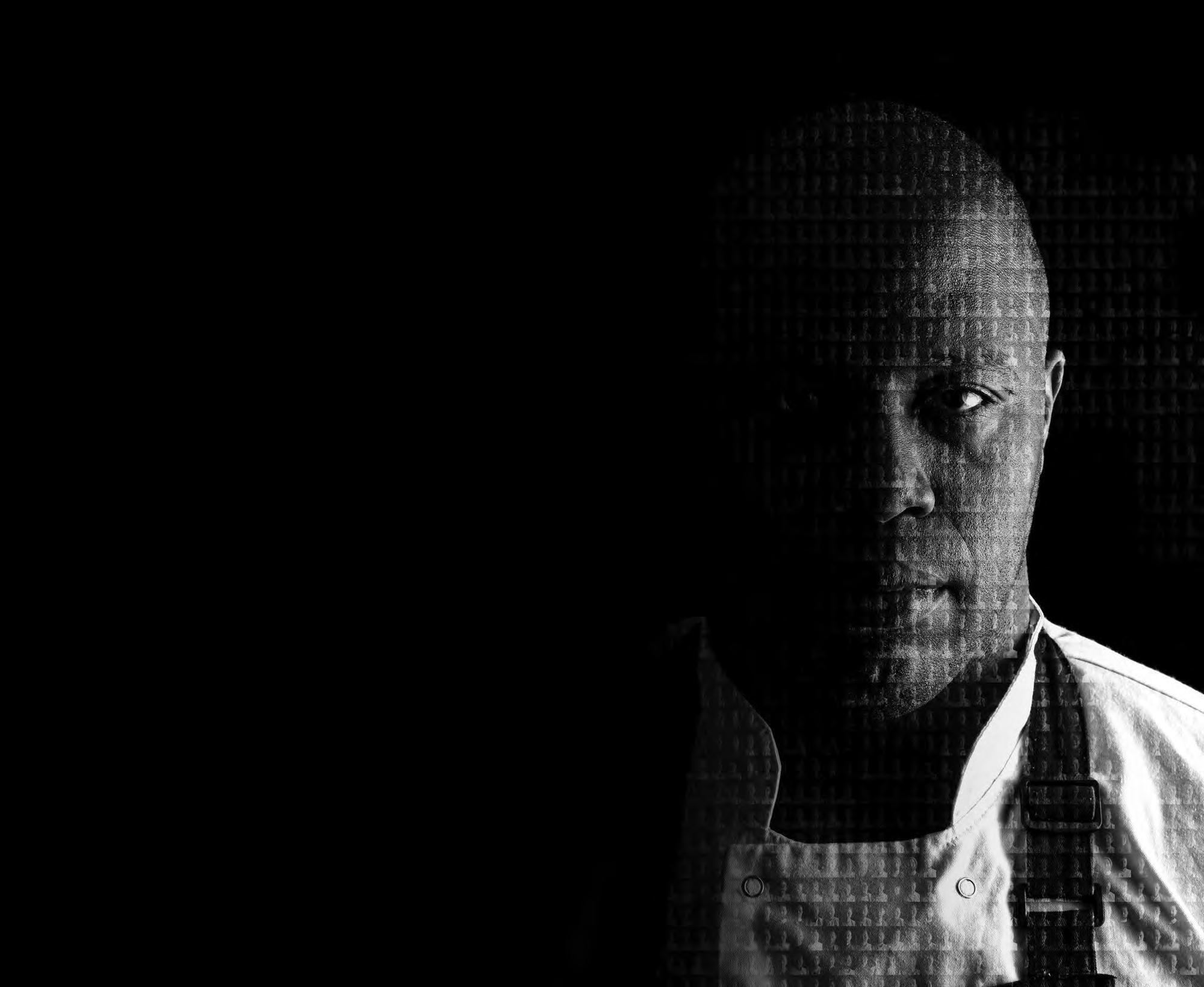





Agthia Group PJSC
Sasha Kannan, Category Development Manager Tel: +971 56 177 87 86, sasha.kannan@agthia.com, www.agthia.com
Al Chef
Ranin Bakhitt, Marketing Manager
Tel: +971 4 357 0320, Mob: +971 50 687 0224 ranin.b@alwholesale.ae, www.alcheftohome.com
Al Wholesale
Ranin Bakhitt, Trade Marketing Manager, Mob: +971 50 6870 224, ranin.b@alwholesale.ae, www.alwholesale.ae
Alaska Seafood Marketing Institute (ASMI) Manjusha Jambhekar, Overseas Marketing Representative – MENAWA, Tel: +971 4 357 7979, Mob: +971 55 5333740 manjusha.m@focusmworld.com, www.alaskaseafood.org
Alliance Abroad International
Zama Nkabinde, Talent Acquisition Manager, Mob: +971 52 2339 779, znkabinde@allianceabroad.com, www.allianceabroad.com
Alto Shaam, Inc
Gabriel Estrella Talentti, Director of Sales, Tel: +971 4 321 9712, Mob: + 971 50 8531 707 gabriele@alto-shaam.com, www.alto-shaam.com
Americana Foods
Laurent Stevenart, Plant Based Food Director, Mob: +971 52 1354 732, lstevenart@americana-food.com, www.americanafoods.com
Arab Marketing and Finance, Inc. (AMFI) Simon Bakht, Tel: +961-1-740378 / 741223 / 751262, SBakht@amfime.com
Arla Foods
Rachna Amarnani, Marketing Specialist, raamy@arlafoods.com, B7 Building Digital park Dubai Silicon Oasis, Industrial Area Dubai www.ArlaPro.com, www.arlafoods.com
Bakeart Specialists Bread and Bakery Products Trading LLC
Imad Nehmeh, Director, Mob: +971 52 2278 7026, Tel: 35799355480 info@bakeart.ae, www.bakeart.ae
Bakemart FZ LLC
Syed Masood, Director of Sales Mob : +971 55 609 7526, Tel: +971 4 56708 masood@bakemart.ae, www.bakemart.ae
Barakat Group of Company
Kenneth D’Costa, Managing Director Neil Ranasinghe, Head Culinary Innovation Tel: +971 4 8802121
Cuisine Solutions Middle East LLC FZ Juan van Huyssteen, Company GM Mob: +971 52 926 5628, jhuyssteen@cuisinesolutions.com, www.cuisinesolutions.com
Dawn Foods B.V
Lila Mebarki , Managing Director AMEAP Mob: +971 4 883 1757, info@Dawnfoods-ameap.com, www.dawnfoods.com
Diamond Meat Processing Co.L.L.C
Kamparath Suresh, Assistant General Manager Business Development, Mob: +971 50 655 4768 wnedal@siniorafood.com, www.almasadubai.com
dmg events
Hassan, Tel: +971 4 4380355, Mob: +971 56 8360993, aysehassan@dmgeventsme.com, www.thehotelshow.com
Eco Choice Group of Companies
Hadiba Ahadzada, Admin, hadiba@alwholesale.ae Ph: 058 254 0160, (04) 357 0320 Al Qusais Industrial Area 1 - Dubai, UAE www.ecochoicegroup.com
Emirates Snack Foods
Marwan Husseini / Vincent Lobo, Head of Sales – Food Service / Creative Head Mob: +971 56 5267 181, +971 55 3692 344 marwan.husseini@esf-uae.com vincent@esf-uae.com, www.esf-uae.com
Essity Hygiene and Health AB Ozge Osmanoglu, Customer Marketing Activation Manager MEIA, Mob: +971 52 7571 486 ozge.osmanoglu@essity.com, www.torkmeia.com
Faisal Al Nusif Trading Co. L.L.C Thomas Das, Managing Director Tel: 04 3391149, thomasdas@fantco.net, Web: www.fantco.net
Farm Fresh
Feeroz Hasan, Business Development Manager Al Quoz, P.O Box 118351, Dubai, UAE Office No : +971 4 3397279 Ext: 253 Fax: +971 4 3397262, Mob: +971 56 1750883
Farzana
Fariborz Khadem Pour, Head of Food Service, Mob: +971 55 8846 293, Tel: +971 4 3200 101, fariborz@farzana.com, www.farzana.com
Flora Professional
Marwan Abidaoud, Jean Lteif, Ronica Sanchez, Nadia Lagdah, Neelam Karim, Regional Lead Culinary Chef - AMET, Culinary Chef UAE & QBOK, Food Service Sales Manager, Head of Marketing, Senior Brand Manager, Mob: +971 50 796 6264, +971 52 829 9891, +971 58 233 1463, +971 50 290 3820, +971 53 369 4190 marwan.abidaoud@florafg.com, jean.lteif@florafg.com, ronica.sanchez@florafg.com, Nadia.Lagdah@florafg.com, neelam.karim@florafg.com
Foodtech Group FZCO
Attila Petö, CEO, Mob: +971 58 511 3734, attila.peto@foodtech.ae, www.foodtech.ae
FSEP Catering Equipment Trading LLC
Shivani Rawat, Office Manager Tel: +971 4 8851 610 info@fseprof.com, www.fseprof.com
German Icecream Factory
Boris Mueller, Mob: +971 50 108 9030 boris@drmuellers1969.com www.drmuellers1969.com
Greenhouse Foodstuff Trading
Edgard Abounader, UAE Sales Manager –HORECA, Tel: +971 4 8170000, Mob: +971 56 442 4608, Edgard.Abounader@greenhouseuae.com, www.greenhouseuae.com
Ginox Swiss Kitchen
Tiziana Ricottone, Personal Assistant & Communications Manager, Mob: +971 50 5091 689, tiziana.ricottone@ginoxgroup.com, www.ginoxgroup.com
Hamid and Kumar Enterprises LLC
Sunil Ahluwalia, General Manager, Tel: +971 4 3474712, +971 4 3474571 dry@hkfoodgroup.com, www.hkfoodgroup.com
Harvey and Brockless Foodstuff Trading LLC
Julie Caulton, Sales Director, Tel: +971 4 272 5524, +971 50 507 7539 Julie.caulton@harveyandbrockless.co.uk, www.harveyandbrockless.co.uk
Here-O Donuts and Coffee, LLC
Andrew Mason, CEO, Tel: +971 4 547 7591, +971 52 906 3574 andrew@hereodonuts.com
HK Enterprises
Era Jain, Marketing Manager, Mob: +971 56 6589 246, era@hkfoodgroup.com, www.hkfoodgroup.com
Hospitality by Dubai World Trade Centre
Georg.Hessler, Director Culinary Operations, Tel: 04 3086571, Georg.Hessler@dwtc.com, https://www.dwtchospitality.com/en/
HUG AG
Riyadh Hessian, 6102 Malters / , food-service@hug-luzern.ch, www.hug-luzern.ch, fb/hugfoodservice Distribution UAE and Oman: Aramtec, PO Box 6936, Al Quoz Industrial Area No. 1, Near Khaleej Times Office, Mob +971 507648434, www.aramtec.com
IFFCO
Mary Rose Lopez, Associate Customer Service Manager, Mob:+971 506719882, 065029025 / 6264 mlopez@iffco.com, www.iffco.com
Indoguna Dubai LLC / Indoguna Productions FZCO
Anoop Kumar Varma, Director - Sales & Commercials, Ana Elena Saenz, Regional Business Development Manager, Mob:+971 55 573 7035, +971 58 246 9330 anoop@indoguna-dubai.ae, ana@indoguna.ae, indogunadubai.com, indogunaproductions.com
IRCA MEA TRADING LLC
Shairra Mae Bartirzal-Periales, Trade Marketing Manager, Mob:+971 54 515 4430, shairra.bartirzal@irca.eu, www.ircagroup.com
JM FOODS LLC
Rajan J.S. / Maikel Cooke / Grace Renomeron Management, Tel: +971 4 883 8238, sales@jmfoodgulf.com, www.jmfoodgulf.com
Johnson Diversey Gulf
Marc Robitzkat Mob: 050 459 4031, Off: 04 8819470 marc.robitzkat@jonhnsondiversey.com
KAPP
Kerem Uner, Sales and Marketing Director Tel: +90 53 2599 9638, kerem.uner@kapp.com.tr, www.kapp.com.tr
Kerry Taste & Nutrition MENTA
Simon Martin, Executive Chef Tel: +971 52 450 0845 simon.martin@kerry.com, www.kerry.com
Lowe Refrigeration LLC
Mark Wood, General Manager Tel: +971 4 8829440, Mob: +971 52 8693695 mark.wood@lowerental.com, www.lowerental.com
Masterbaker Marketing FZCO
Sagar Surti, CEO, sagars@uae.switzgroup.com
Jayakrishnan, Sales Manager, jkrishnan@uae.switzgroup.com Ravi Bhambhani, Business Development Manager, ravib @uae.switzgroup.com Pratiba Krishnan, Marketing Manager, pratibak@uae.switzgroup.com
Meat & Livestock Australia
Damon Holmes, Business Development Manager, Tel: +971 52169 4743, dholmes@mla.com.au, www.lambandbeef.com
MEIKO Middle East FZE
Jay Dhanrajani, Sales Manager Tel: +971 4 3415 172, jay.kumar@meiko.ae, www.meiko.ae
Meyer Group Ltd
Anjana Vaswani Kavasseri, General Manager Middle East, Tel: +971 50 5950 772, anjana@meyeruk. com, www.meyergroup.co.uk
MIWE Middle East FZE
Wilhelm Tittes, General Manager office@miwe.ae, +971 4 333 1198
MKN Maschinenfabrik
Kurt Neubauer GmbH & Co.KG
Elias Rached, Regional Director Sales Middle East & Africa, Tel: +971 4 358 4000, Mob: +971 50 558 7477 rac@mkn-middle-east.com, www.mkn.com
Nestle Middle East FZE
Elie Lteif / Luma Karadsheh, Culinary Advisor / Commercial Development Manager, Mob: +971 55 4427 010, 55 3437 632 (Elie) elie.lteif@ae.nestle.com, luma.karadsheh@ae, www.nestleprofessionalmena.com
Nina Pita
Mario Nehmeh, Sales manager, Tel: +971 50 9347 930, mario@ninapita.com, www.ninapita.com
The Pavilion Food Processing LLC
Roshan, Business Head, Mob: +971 55 995 5039, +971 55 995 4354 roshan@pavilionfoods.com, https://pavilionfoods.com
Peachtree Foods ME
Manisha Dissanayake, Regional Sales Manager, Mob: +971 50 6416 139 mesales@popcakesa.co.za, www.popcakesa.co.za
Pear Bureau Northwest
Nina Halal, Director Mob: (Lebanon) +961 3664088, (UAE) +971 58284 0008, halal@cyberia.net.lb
Potatoes USA
Victoria Hassani, Managing Director, Mob: +971 50 1013 541 potatoesusa@gmadubai.com, www.usapotatoes.com
RAK Porcelain
Sadik Variyathodi, General Manager, Mob: +971 50 4868 141, +971 4 3335 474 sadik@rakrestofair.ae, www.restofair.ae
Restofair RAK LLC
Sadik Variyathodi, General Manager Mob: +971 50 4868 141, sadik@rakrestofair.ae, www.restofair.ae
Robot Coupe
Chandrakanth Pathi, Area Manager-UAE Tel: +971 54 4894896, pathi@robot-coupe.com, www.robot-coupe.com
Safco International Genera Trading Pankaj Chanta / Naresh Khushalani, Corporate Head Pastry & Bakery / Marketing Manager, Mob: +971 55 899 0183, +971 870 2000, chef.pankaj@safcointl.com/naresh@safcointl, www.safcointl.com
Silal Food & Technology
Aparna Joseph, Omaima Abdalla , Manager Marketing & Branding, Marketing Officer Tel: +971 2 614 4467, Mob: +971 52 650 3454 ajoseph@silal.ae, oabdalla@silal.ae, www.silal.ae
Skinny Genie
Miraida Kasymbekova, Sales Manager Mob: +971 56 177 0301 salesmanager@skinny-genie.com, www.skinny-genie.com
Sounbula Mills
Karim Al Azhari, Ceo & Owner Sounbula Mills karim@sounbulamills.com
April 2026 Gulf Gourmet
Taaza Group Companies LLC
Ms. Krishna Vijith, Chief Executive Officer Tel: +971 56 2829 002; +971 4 2828 993 krishna@taaza.ae, www.taaza.ae
The Deep Seafood Company LLC
Shibu Abdul Jabbar, Chief Operating Officer, Tel: +971 2 673 34 45, Mob: +971 55 233 66 88 shibu@thedeepseafood.com, www.thedeepseafood.com
Tork Essity Hygiene and Health AB
Ozge Osmanoglu, Tel: +971 4 551 5907, Mob: +971 52 757 1486 tork.meia@essity.com, www.Torkmeia.com
Tramontina
Saniya Sarguru, Marketing Coordinator, Mob: +971 54 995 8033, Tramontina.ae
UNOX Middle East DMCC
Matthew Roberts, Managing Director Tel: +971 4 5542146, Mob: +971 52 304332, info.uae@unox.com, www.unox.com
Upfield Middle East Limited FZCO
Marwan Abi Daoud, Flora Professional Regional Lead Culinary Chef AMEA Mob: +971 50 796 6264 marwan.abidaoud@florafg.com,
USA Cheese Guild
Angelique Hollister, Senior Vice President, Global Cheese Marketing, Tel: 703 528 3049, ahollister@usdec.org, https://www.usacheeseguild.org/
US Meat Export Federation
Bassam Bousaleh, Tel: +971 50 3589197, +971 50 358 9197 Bassamb@ams-me.com
USA Poultry and Egg Export Council Inc (USAPEEC) Jena Gress, Global Marketing Manager Tel: 14048823920, www.usapeec.org
US Poultry
Andrew El Halal, Marketing Manager Mob: (Lebanon) +961 3200332, (UAE) +971 52 135 1405 andrewh@amfi-me.com
VITO AG
Mark Marquez, Mob: 971 56 2431303 info@vito.ag, www.VITO.ag
Welbilt
Rakesh Tiwari, Mob: +971 56 406 1628, rakesh.tiwari@welbilt.com

Date of Application: .................................................
Family Name: First Name/s: Ms/ Mrs/ Mr/ Other:
Nationality: Civil Status: Date of Birth: dd/mm/yyyy
Employee/ Business Owner: Name of Business: Designation:
Work Address: Email Address: Contact Number:
SENIOR:
(Above the rank of chef de partie/ senior chef de partie on executive chef’s recommendation).
MEMBER:
(Below the rank of chef de partie 29 years old and over).
AED350 joining fee/ AED150 renewal fee
Includes certificate; member-pin, member medal and ECG ceremonial collar
AED150 joining fee/AED75 renewal fee
Includes certificate; member-pin, member medal and ECG ceremonial collar
YOUNG MEMBER: (under 28 years) Free
Includes certificate; member-pin
Declaration to be Signed by Applicant:
I wish to join The Emirates Culinary Guild in collaboration with The Women’s Culinary Chapter.
I have read the ECG Constitution and By-laws. I agree to be bound by the requirements of the constitution. If elected, I promise to support the Guild and its’ endeavours to the best of my abilities.
Signature: .....................................................
Proposed By: Signature: ..............................
Seconded By: Signature: ..............................
For Official Use Only
Remarks:
Payment Received?
Certificate Given Pin Given Medal & Collar Given
Approved by President: Signature: ..............................
Approved by Chairman: Signature: ..............................
Note: The membership is only applicable to those who are working in the UAE as professional chef or with a background related as Chef in the hotel and restaurant industry.
The WCC is in collaboration with the Emirates Culinary Guild, which is a member of the World Association of Chef’s Societies
Bake Art’s journey blends tradition, innovation, and unwavering quality, redefining frozen bakery with artisan excellence, global sourcing, and a vision where taste, consistency, and craftsmanship rise together
In the world of business, people have always claimed that speed, quality and economy don’t mix. Speed and quality come with an increased cost, speed and value compromise quality, and inexpensive quality takes a long time. But Mr Imad Nehmeh, the visionary behind Bake Art, knows better: expediency, affordability and quality can coexist in harmony when the option of compromise is ruled out.
When Mr Imad joined the pita bread family business at the age of 15, he learned a lesson that he has been carrying with him since: “Quality above all else”. Those formative years taught him more than just a deep understanding of baking; he gained profound respect for the craft, and the precision and passion required to achieve exceptional quality.
Then, at the age of 35 came the bold next step: starting his own business in Cyprus, specialising in frozen bakery products: Bake Art. “At that time, it was the beginning of this industry in Europe. Actually, it was a breakthrough,” he recalls. “Bread, frozen bread, could be exported anywhere, without borders.”
What began as a humble business proved to be a defining moment for the
Cypriot food industry. “I was one of the first companies who started it in Cyprus,” says Mr Imad. “It was a revolution at that time. It took almost two years, with a lot of effort and sacrifice, to be able to stand on my own legs.”
Being a former baker himself, Mr Imad did more than simply choose good products: he focused on finding the great ones. His one rule, “quality in

all aspects”, became the starter from which Bake Art’s success came to be. From product development to customer service, quality wasn’t an option; it was the main ingredient.
And the Cypriot HORECA scene was quick to take notice: “They were amazed by this new thing” Mr Imad recalls. “Top quality products, variety, and most importantly, enduring freshness. Bake only when you need and only as much as you need, and enjoy the freshness and taste at all times.”
Bake Art’s concept of combining traditional baking arts with modern preservation technology might seem obvious today, yet at its time it was a groundbreaking one. By freezing baked goods at peak freshness, the company enabled chefs, hoteliers and retailers to deliver consistent, justbaked quality on demand, without waste, and without the headaches of daily production.
But Mr Imad’s standards is what most meaningfully elevates Bake Art’s catalogue. “My principle is to source the best products from the best sources” he
explains. “Our french croissants come from France, our Italian bread comes from Italy, and so on.” This philosophy not only elevated the product range and quality, but also positioned Bake Art as a baked goods curator, one that celebrates authentic craftsmanship and excellent quality across cuisines and cultures.
As a result, today Bake Art imports a diverse, high-quality catalogue of more than 400 distinct products from over fifteen countries. The range spans from natural, rustic sourdough loaves with long fermentation (Mr Imad’s personal favourite) to delicate pastries, a selection of desserts, premium speciality breads, premium baked snacks and everything in between. Each item is carefully selected to ensure it meets Bake Art’s standards: consistent quality, reliable supply, and fresh flavour at every bake.
In the competitive world of food service, speed is often confused for efficiency, and profit is often valued above quality. But Bake Art stands as a rare mix of an artist’s heart and a businessman’s mind, taking on the challanges of modern logistics without sacrificing the art of baking.
“My dream was achieved” says Mr Imad, reflecting on his journey so far. “But I am looking to explore international markets”, he adds, confirming that where there is vision, there is always a new dream ahead. And with Bake Art’s solid foundation of quality, innovation and integrity, and recent expansion into the UAE, that dream seems not only possible but inevitable. Because as long as Bake Art continues to work with the ingredients of passion, patience, and purpose, its growth, much like its bread, is bound to rise. ■
Welcome back to Trends Express. Without further ado, let's jump on board the "Trends Express" and see what's hot and appearing in our region. Remember, "LIKE IT, BUY IT, SNAP IT, SHARE IT."
They're not complicated, but just a few simple ingredients will rock your culinary planet…
Always in times of adversity, our industry must stay strong. Business is as challenging as ever, yet we are all united in our goal to provide food and beverages to our customers. Nostalgia is now delivering on every front, known as “Grandma Core” (Nonna-stalgia), replicating home-cooked foods that warm your soul, traditional baking with a twist, or even rustic ingredients. Think peanut butter cookies or mini banana breads. For both Gen Z and millennials, this is the new black; it is a way to slow down and connect with traditional family
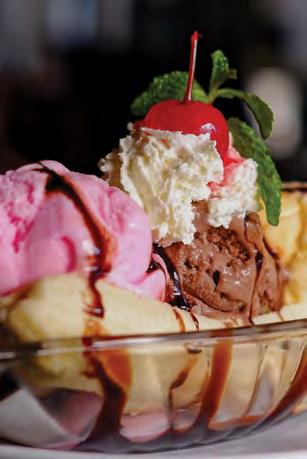
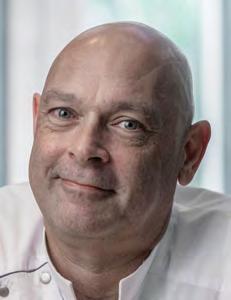
recipes. A sort of warm hug in the form of an egg Paratha, Champorado, chocolate rice porridge (with the all-important Tuyo-dried fish). Our customers are looking for a taste of a simple home. Imperfectly perfect is the phase that springs to mind. What are your thoughts on this trend sweeping across our region? Personally, I love nothing more than a slice of home-made gooey ginger cake.
NUTS, Nuts, Nuts…….PECAN is the new pistachio. Rich in fibre, minerals, and healthy oils, and high in protein, we are seeing these appear not only in sweet pies and muffins, but also on salads and in wraps. It has been used in beverages since the 16th century. These can uplift Baklava, mamoul, and namura. Trying Pecan Muhammara is a real eye-opener. Although technically not a nut but a single-stoned fruit. Looks like this will gain momentum in our region over the coming year.
Independent coffee shops and cafes are seeing the rise of “BANANA COFFEE”. Fun, Great flavour combination delivered in many ways, from banana foam to banana milk. Paired with espresso, or a chai latte, some are serving Banana matcha. Sounds crazy, I know, but it is here to stay, garnished with caramelized
banana slices or crumbled banana cake. Will we see this grow from these amazing beverages to food offerings bringing back the “BANANA FOSTER”, or BANANA SKIN CURRY’, now there is a thing I never thought I would say lol… I have to say frozen bananas dipped in chocolate are a go-to of mine on movie nights at home. I remember in the 80’s cooking Chicken Maryland, an amazing combination of fried chicken, sweetcorn fritters, and fried banana….. Who knows, it might well be on the way back ???
This month has been demanding in many ways, both mitigating risk and ensuring I support food outlets by dining with them or ordering. A smile goes a long way this month. Along with some great hand-rolled sushi and lavender coffee. Trying a few new things for me included Crunchy heather honey and Wasabi chilli paste, both a pure delight. Top was an old favourite, baked spaghetti marrow with crunchy chilli oil…Yummy ;)
Finally, looking at trends, our corporate partners at the Emirates Culinary Guild are also helping define the landscape of trends with their visions. Their foresight to make their latest products available to us at our monthly meetings reflects both innovation and current market trends. Stay ahead of the curve, talk to them, and try their products. Join them and us in driving the trends in our region. ■
Kerry Foodservice provides custommade solutions (coatings, sauces, beverages, etc.) and branded solutions such as Chef’s Palette and DaVinci Gourmet to global and regional chains, QSRs, and casual diners across the region.