Manånaf
2025
Volume VII Issue VI
Phases of i pilan Manånaf
Guampedia is a non-profit affiliate of the University of Guam with operations funded by the Government of Guam’s Tourism Attraction Fund.
Homhom i Pilan New Moon
June 25
Sinåhi
Waxing Moon
July 3
Pulan Gualåffon Full Moon
July 11
Kuatton Kresiente Waning Moon
July 18 Lunar phases sourced from timeanddate.com Instagram: @guampedia Facebook: Guampedia Phone: 671.734.0217 Email: guampedia@gmail.com Mailing Address: 303 University Drive UOG Station, House #3 Mangilao GU 96923
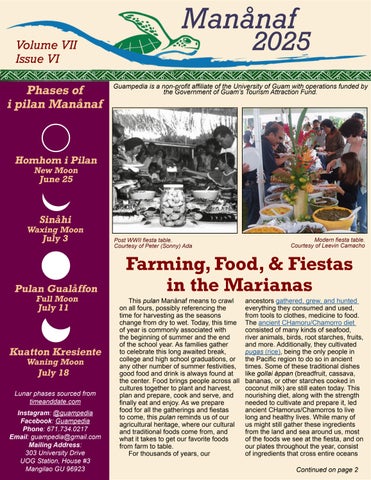
Post WWII fiesta table. Courtesy of Peter (Sonny) Ada
Modern fiesta table. Courtesy of Leevin Camacho
Farming, Food, & Fiestas in the Marianas This pulan Manånaf means to crawl on all fours, possibly referencing the time for harvesting as the seasons change from dry to wet. Today, this time of year is commonly associated with the beginning of summer and the end of the school year. As families gather to celebrate this long awaited break, college and high school graduations, or any other number of summer festivities, good food and drink is always found at the center. Food brings people across all cultures together to plant and harvest, plan and prepare, cook and serve, and finally eat and enjoy. As we prepare food for all the gatherings and fiestas to come, this pulan reminds us of our agricultural heritage, where our cultural and traditional foods come from, and what it takes to get our favorite foods from farm to table. For thousands of years, our
ancestors gathered, grew, and hunted everything they consumed and used, from tools to clothes, medicine to food. The ancient CHamoru/Chamorro diet consisted of many kinds of seafood, river animals, birds, root starches, fruits, and more. Additionally, they cultivated pugas (rice), being the only people in the Pacific region to do so in ancient times. Some of these traditional dishes like gollai åppan (breadfruit, cassava, bananas, or other starches cooked in coconut milk) are still eaten today. This nourishing diet, along with the strength needed to cultivate and prepare it, led ancient CHamorus/Chamorros to live long and healthy lives. While many of us might still gather these ingredients from the land and sea around us, most of the foods we see at the fiesta, and on our plates throughout the year, consist of ingredients that cross entire oceans Continued on page 2