TECHNICAL ANALYSIS OF THE DIGITAL ONBOARDING ENGINE
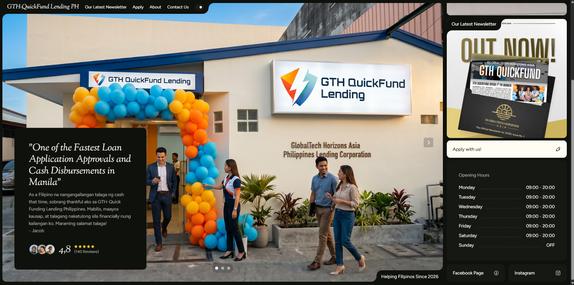
Under the firm's modernized operational direction, the credit evaluation framework has been upgraded to assess actual operating capacity. To maximize accessibility and remove onboarding friction, the portal integrates a streamlined, high-speed digital application form This secure framework bypasses typical bureaucratic bottlenecks by capturing vital financial parameters in a structured digital format, categorizing applicants immediately based on economic profile and customtailored loan terms
The digital intake gateway is structured around five critical criteria:
Inclusive Employment Profiling: Onboarding accommodates a highly diverse workforce by categorizing applicants across distinct economic roles.
Income Tier Assessment: Financial capacity is calibrated using dynamic revenue bands
Calibrated Liquidity Tiers: Businesses and individuals can access tailored capitalization options matching their precise requirements
Flexible Structural Tenures: To safeguard working capital and support seasonal conversion cycles, applicants can structure their obligations across 3 months, 6 months, 12 months, or 24 months
Collateral-Optional Underwriting: Acknowledging the digital realities of modern services and technology enterprises, the application framework evaluates both collateral-backed and collateral-free profiles
Under the firm's modernized operational direction, the credit evaluation framework has been upgraded to assess actual operating capacity To maximize accessibility and remove onboarding friction, the portal integrates a streamlined, high-speed digital application form This secure framework bypasses typical bureaucratic bottlenecks by capturing vital financial parameters in a structured digital format, categorizing applicants immediately based on economic profile and customtailored loan terms
REGIONAL DIRECTOR JACK YANG EXPLORES THE ASEAN LIQUIDITY SQUEEZE
DAYS INVENTORY OUTSTANDING (DIO) INCREASES
DAYS SALES OUTSTANDING (DSO) DELAYS
THE CASH CONVERSION CYCLE STRETCHES
LIQUIDITY SQUEEZE: WORKING CAPITAL TRAPPED
The era of business as usual in ASEAN supply chains has officially closed. The collapse of the Islamabad ceasefire in early 2026 and the subsequent unilateral naval blockade of the Strait of Hormuz have paralyzed global shipping, freezing approximately 20% of global petroleum throughput With over 2,000 merchant vessels and 20,000 seafarers immobilized as of mid-April, the Justin-Time logistics model has collapsed This systemic disruption represents a permanent shift in the regional cost base, driving a severe tightening of global credit markets
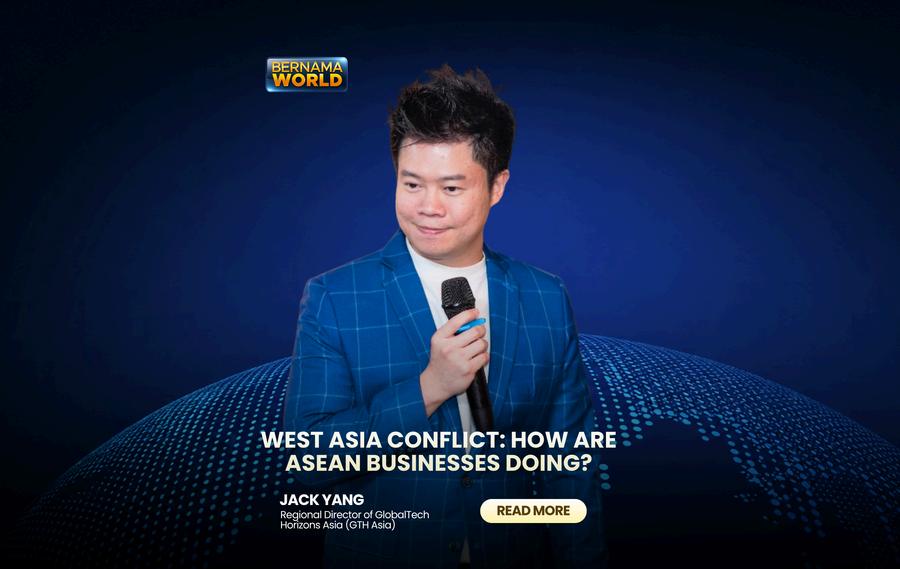
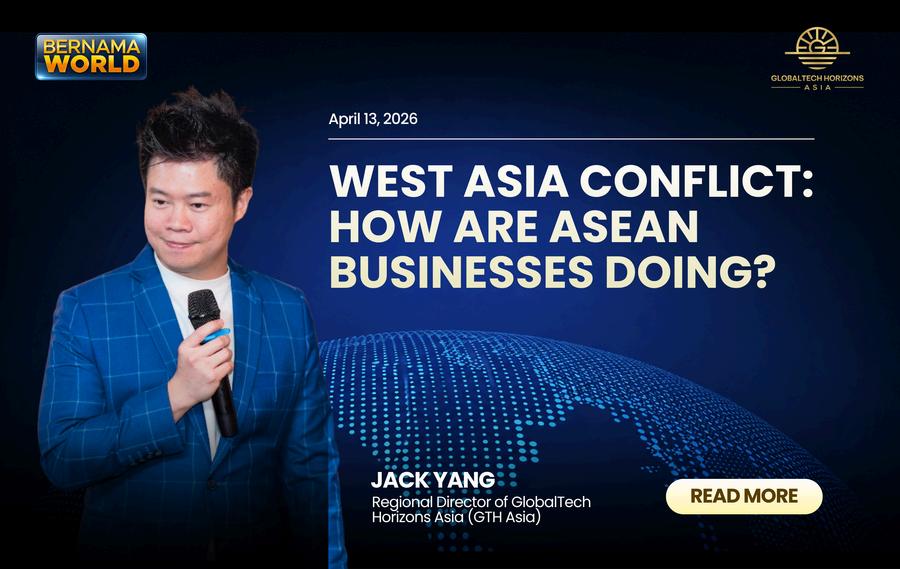
Appearing on a high-stakes briefing for Bernama World, GTH-Asia Regional Director Jack Yang delivered a surgical assessment of this systemic shock Yang’s directive to regional entrepreneurs was definitive: surviving this volatility requires an immediate pivot from tracking paper profits to rigorously managing the Cash Conversion Cycle. As delayed logistics spike Days Inventory Outstanding, and market uncertainty extends Days Sales Outstanding, critical working capital is becoming trapped in slow-moving inventories
Adaptability without financial structure is now a liability dressed up as a strength Businesses must adopt institutional-level discipline, integrating AI-driven forecasting and diversifying capital sources to secure liquidity before the squeeze becomes critical To support this transition, regional governments are stepping in with targeted relief; Malaysia's Budget 2026, for instance, has allocated RM 53 million in AI adoption grants through MDEC and a RM 1 billion Green Tech Fund for structured businesses
This global liquidity crunch highlights the divide between traditional, rigid financing systems and flexible private credit In an environment where logistics timelines are unpredictable and bank credit is tightening, the ability to pre-emptively secure operational cash flow serves as the ultimate competitive separator Only those enterprises that transition from basic survival hustle to disciplined, data-driven financial structures will endure this cycle and compound their growth through the next inevitable disruption



For hundreds of thousands of Philippine SMEs in 2026, traditional bank credit is working against the very businesses that need it most. Banks operate under standardized credit models built to minimize institutional risk, demanding years of audited financials and real property collateral at steep loan-to-value ratios of 60-to80% For the modern, digitally native SME, waiting 30 to 90 days for capital approval means losing critical market opportunities This systemic friction has created a substantial financing gap that hinders broader macroeconomic growth
Private credit has transitioned from an alternative financing option to a vital structural fix Non-bank lenders arrange funding directly with businesses, offering speed and flexibility that traditional universal banks cannot match While banks focus on centralized, rigid templates, private credit underwriters assess actual business viability, transaction trends, and digital operating records
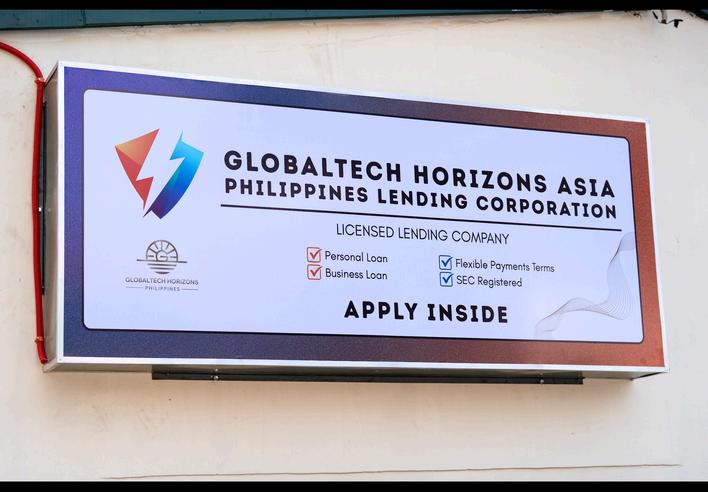
With the Philippine government's expanding e-invoicing rollout, digital transaction records have become a verifiable currency of trust Private credit providers underwrite based directly on this data, including cloud accounting exports and verified cash flows, compressing decision timelines to between 3 and 10 business days GTH Quickfund Lending Corporation is actively changing how capital flows to the MSME sector by replacing rigid physical asset requirements with real-time operational visibility, ensuring that viable enterprises are no longer excluded simply because they do not own land
is a strategic decision that depends on business maturity, asset profile, and urgency. While bank loans offer lower nominal rates for large, asset-rich firms, private credit provides the agility, speed, and customized structures needed by growth-stage enterprises. Securing capital from a position of financial strength: before operational urgency arises: remains the single most effective way for SMEs to protect their margins and scale with confidence

There is a fundamental detail that gets lost in most financial inclusion conversations: the structural gap between having access to a lender and actually trusting one Emerging economies like the Philippines have no shortage of lending products; rather, they suffer from a severe shortage of lenders that communities genuinely believe are on their side. Closing this gap cannot be accomplished via top-down corporate public relations. It occurs strictly on the ground, over time, through a physical continuity and localized presence that cannot be simulated because the operational cost of faking it is prohibitively high
The San Gregorio Street Fiesta in Valenzuela City, celebrated on May 20, 2026, served as a vivid demonstration of how this socio-relational capital is built and leveraged In the Philippine credit market, community trust is not a soft public relations metric; it functions as a highly effective risk-mitigation tool. By transitioning away from purely transactional, extraction-based lending models, financial institutions can establish a resilient borrower network where trust serves as the primary underwriting filter
Valenzuela City is a deliberate operational choice for GTH-Asia's direct lending division Unlike highly financialized districts such as Bonifacio Global City or the Makati Central Business District, Valenzuela is a workingclass industrial city in Metro Manila's northern zone It is characterized by high-density manufacturing hubs, bustling residential zones, and a massive population of entrepreneurs, small traders, and working professionals who earn, spend, and borrow completely outside the formal banking architecture
This demographic represents the exact market segment that traditional commercial banking networks systematically fail to serve: businesses with robust, highly consistent cash flow but without the land titles, formal corporate history, or audited financial records required by rigid banking algorithms General T de Leon, specifically San Gregorio Street, sits at the heart of this economic reality It is a community where peer networks, local trade, and grassroots reputation carry far more weight than formal institutional templates
To understand why GTH Quickfund's participation in the San Gregorio Street Fiesta was structurally significant, one must trace the timeline of local engagement In March 2026 , GTH Quickfund established its physical presence in Valenzuela City. Shortly thereafter, a devastating fire tore through San Gregorio Street, displacing approximately50 families and disrupting the micro-economy of the neighborhood.
Rather than navigating standard corporate bureaucracies or waiting for strategic approval cycles, the local GTH team mobilized within days to deliver rapid emergency relief, food packs, and basic survival items directly to the affected families. The May 20 fiesta occurred on the exact same street, exactly six weeks later. By returning to celebrate the barangay's resilience during its traditional feast, the company completed a vital relational loop
Showing up for a community's recovery, and then returning to celebrate its vitality, establishes a narrative of shared interest This distinction separates a relational neighborhood capital partner from a transactional lender who only appears when a loan application is being processed or a debt is being collected
True community finance is defined by two primary operational pillars: relational knowledge and physical continuity Relational knowledge requires an intimate, localized understanding of how a neighborhood economy functions on a daily basis:
Economic Mapping: Identifying the anchor microenterprises and community leaders who drive localized trade
Cash-Flow Seasonality: Recognizing local income fluctuations, seasonal buying habits, and the specific periods when working capital is constrained Alternative Credit Dynamics: Mapping where informal lenders fill existing market gaps and understanding how financial stress manifests in a family's daily life long before it affects their loan repayment schedules
Physical continuity, on the other hand, demands showing up when nothing is being sold Attending local assemblies, participating in barangay events, knowing local officials by name, and standing with families during crises are not marketing activities. They are the core operating conditions that make grassroots financial services sustainable. Under this model, the lender becomes a visible, accountable stakeholder within the neighborhood
The financial benefits of this grassroots approach are highly tangible. Research from the Consultative Group to Assist the Poor (CGAP) across multiple emerging markets demonstrates that borrowers who perceive their lender as a genuine, accountable community partner exhibit significantly better repayment behavior
In micro-finance, relational trust operates as a powerful credit risk filter. When credit markets tighten, the behavioral patterns of borrowers diverge sharply based on their relationship with the capital provider:
A borrower who feels a sense of mutual respect and local accountability is far less likely to default or disappear when repayment conditions become challenging This behavioral difference provides a much stronger riskmitigating mechanism than any standardized underwriting algorithm Furthermore, community-level trust serves as an organic referral engine In the Philippine MSME market, peer referrals represent the lowest-cost, highestquality borrower acquisition pipeline available A borrower pre-qualified through local community networks arrives with built-in social accountability, drastically reducing customer acquisition costs while preserving capital
As the Philippine credit environment experiences tightening in the second quarter of 2026 , traditional banks are raising collateral thresholds and extending loan approval times While the regulatory landscape tightens around purely digital, distant app-based lenders, private credit models that combine digital transaction ledger visibility with physical, localized continuity are uniquely positioned to capture the market's strongest growth-stage MSMEs
By prioritizing deep neighborhood integration alongside digital accessibility, GTH-Asia is proving that localized empathy and structured financial technology are not opposing forces Instead, they are mutually reinforcing components of a sustainable, highly resilient lending model designed to safeguard capital while fueling realeconomy growth at the grassroots level