






















“As we have been thinking about what is important to us, we thought of Georgia Tech. We want to leave a mark behind at an important place.”
— Christopher “Chris” Pappas
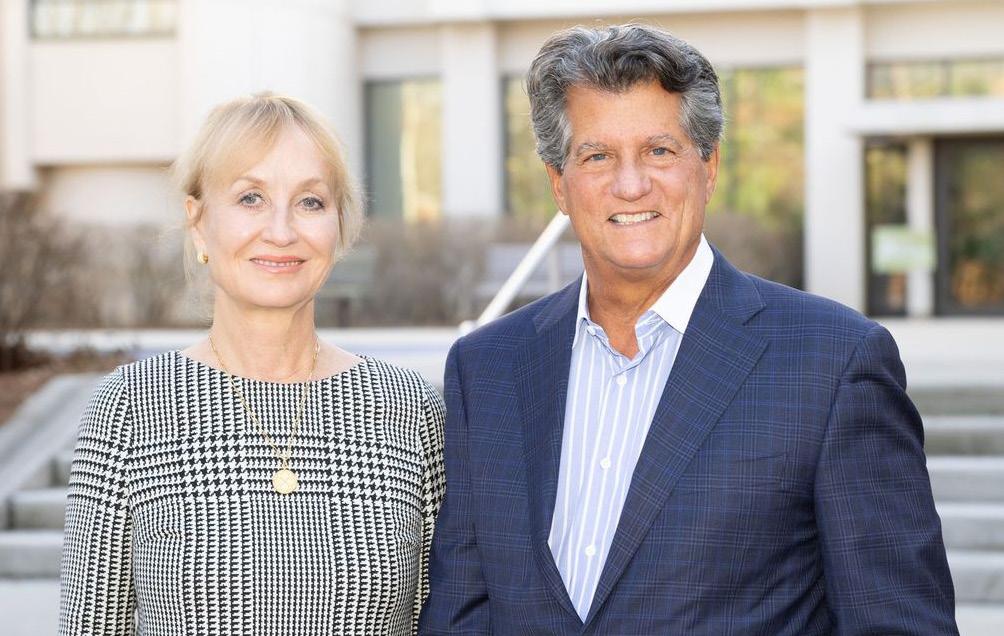
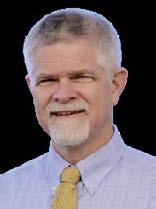
Susan Goodwin Pappas, CE 1978, and Chris Pappas, CE 1978, met when they were civil engineering students at Georgia Tech and have since built a beautiful life together. As they approach their fifth decade of marriage, they appreciate how far they have come since their first study date in the Georgia Tech Library. Their family includes three grown children and two grandchildren.
The Pappases reflect on their time at Tech with gratitude, citing college as the most formative years of their lives. When it came time for Chris and Susan to consider the legacy they wanted to leave, they decided to give back to Georgia Tech through a generous estate gift directed to where it all began — the School of Civil and Environmental Engineering (CEE).
The couple values the transformative power of education. “We want to give people the opportunity that we had, for something that was so influential in our lives,” said Susan.
Chris expressed a similar sentiment: “Tech was hard, but there were people to support you. There was a lot to do, and it was an opportunity for me to grow as a person. I got a lot out of Georgia Tech.”
They have given to multiple areas across Georgia Tech and have decided to bolster their philanthropy with a sizeable seven-figure estate gift bequest provision supporting faculty, graduate fellowships, and other pressing needs within CEE.
Chris and Susan shared that they hope this planned gift will allow CEE to continue to advance and improve upon its good work. They especially hope that supporting professors within the School will ensure that top teacher-scholars remain at Tech. “Great professors bring on great students who can make their mark on the world by leveraging the best that Georgia Tech can give them,” said Chris.
Through their transformative philanthropy, the Pappases are forever enhancing Georgia Tech and the School of Civil and Environmental Engineering.

Lead smarter, faster, and more efficiently in organizations with a Lean Six Sigma certification from the Georgia Tech Scheller College of Business. Build the skills to reduce costs, eliminate inefficiencies, and deliver real results that matter. Advance your skills with Scheller’s online Lean Six Sigma Green Belt and Black Belt programs. Registration is now open for the fall sessions.
Lead smarter, faster, and more efficiently in organizations with a Lean Six Sigma certification from the Georgia Tech Scheller College of Business. Build the skills to reduce costs, eliminate inefficiencies, and deliver real results that matter. Advance your skills with Scheller’s online Lean Six Sigma Green Belt and Black Belt programs. Registration is now open for the fall sessions.
Sessions in October and December
Sessions in October and December
Session in November
Session in November
Optional Certification Project in Panama
Optional Certification Project in Panama
Previous Green Belt Certification Required
Previous Green Belt Certification Required
I REMEMBER THE MOMENT I became a Yellow Jacket like it was yesterday. It wasn’t when I was accepted into the Institute, and it wasn’t when I “got out,” as many like to say.
It happened during a quieter, less celebrated moment—when I decided I wasn’t going to quit. When I committed to overcoming Professor Hill’s calculus class, even as I walked out of my final in Van Leer, knowing the grade wouldn’t be what I had hoped.
I came to Georgia Tech with 15 friends from Norcross High School. It didn’t take long for the academic rigor to hit us hard. For me, reality hit during my very first quarter.
One by one, several of my friends decided to pursue their studies elsewhere. I understood their decisions. Tech was more challenging than we could have ever imagined, but my stubbornness said, “find a way.”

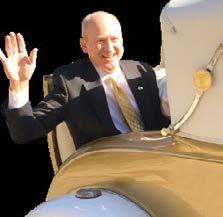
to succeed, and I eventually earned that coveted degree.
Something shifted in me then.
I gained a new level of confidence. I learned how to confront obstacles, collaborate with others, and see problems through to a solution. I was proud of myself then, and I’m even more proud as an alumnus.
Today, Georgia Tech is ranked as a top institution because of alumni, like you, who do the hard work, refuse to quit, and find a way forward.
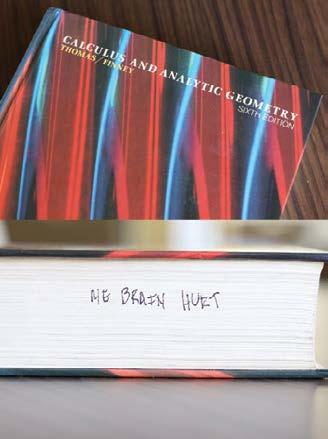
I scribbled “Me Brain Hurt” on the edge of my calculus textbook. So true!
So, I asked for help. I spent hours in the Math Lab, studying and struggling. And one day, I walked out having finally grasped the concepts that had held me back. In that moment, I knew I belonged.
That was the moment I became a Yellow Jacket.
Not because I stayed when others left, but because I persevered. I figured out how
That spirit is relentless, and I see it reflected in Yellow Jackets across generations. In this issue, you’ll hear from alumni reflecting on the moment reality first hit at Georgia Tech—when they realized they were no longer the smartest person in the room—as well as the experiences, traditions, and defining moments that ultimately made them Yellow Jackets. You’ll also find a sneak peek of Homecoming events, including a selfguided tour of Tech history on campus.
Each of us carries a moment that shaped who we became at Georgia Tech. It’s in those memories that our shared Yellow Jacket spirit lives on.
Go Jackets!

DENE SHEHEANE, MGT 91 PRESIDENT GEORGIA TECH ALUMNI ASSOCIATION
| NO. 2
PRESIDENT & PUBLISHER
Dene Sheheane, Mgt 91
VP STRATEGIC COMMUNICATIONS
Lindsay Vaughn EDITOR
Jennifer Herseim
DIRECTOR Steve Hedberg
COPY EDITOR
Barbara McIntosh Webb
COPYWRITER
Sharita Hanley
STUDENT ASSISTANTS
Alisha Tan, Joanna Xiao
EXECUTIVE COMMITTEE
Chair
Rita Breen, Psy 90, MS IE 92
Past Chair/Finance
Tommy Herrington, IM 82
Chair Elect, Vice Chair/Roll Call
Jimmy Mitchell, CE 05
Vice Chair of Engagement
Sam Westbrook, IE 99
Member at Large
Meredith Moot, Mgt 08
Member at Large
Alex Muñoz, Mgt 88
Member at Large
Amy Phuong, IA 05, MBA 14
Member at Large
Kenji Takeuchi, ME 94
BOARD OF TRUSTEES
Tommy Antonino, BA 15, MSA 22; Donnie Beamer, Econ 05; Matt Bishop, CmpE 06; Alexia Borden, IE 01; Jacky Cheng, IE 17; Kim (Kilpatrick) Civins, Mgt 92; Catherine Cooper, IE 90; Cynthia Culbreath, IE 93, MS IE 95; Adam Fuller, Mgt 93; Sid Gore, ME 17, MS ME 20; Derek Goshay, IE 93; Ryan Greene, ME 00, MS Econ 01; Craig Hyde, CmpE 05; TJ Kaplan, PP 13; Brandon Kearse, ME 08, MS CE 10; Kayla Kelly, Econ 16; Olivia Langevine, IAML 13; Sabrina McCorvey, IE 90; Mihir Pathak, ME 08, MS ME 10, PhD ME 13; Susan (Sutherland) Piña, IE 93; Kyle Porter, Mgt 04; Josh Roberts, IE 02; Sonia Sardana, IE 12; Greg Sitkiewicz, IE 00; Kofi Smith, IE 99, MBA 09; Miya Smith, IE 03; Russell Smith, Cls 98; Peter Stewart, CE 97; Casey Swails, Mgt 07; Rani Tilva, BA 18; Paul Trotti, ME 00; Hayley Tsuchiyama, ChBE 18; Ben Utt, IM 81; D’Andre Waller, ME 17; Kourtney Wright, CS 15, MS CS 23; Liz (Harriss) York, Arch 90, M Arch 95
GEORGIA TECH ALUMNI MAGAZINE (ISSN: 1061-9747) is published quarterly by the Georgia Tech Alumni Association, 190 North Ave. N.W., Atlanta, GA 30313. Periodical postage paid in Atlanta and additional mailing offices. © 2026 Georgia Tech Alumni Association
For advertisements, contact
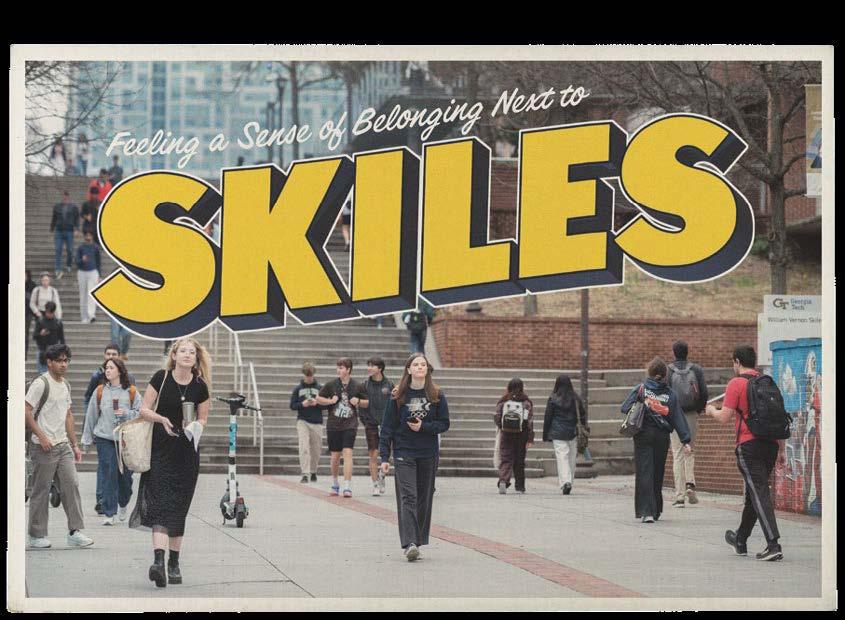


Alumni share their first “Welcome to Tech” student experience, when they realized Georgia Tech wouldn’t be like other schools.
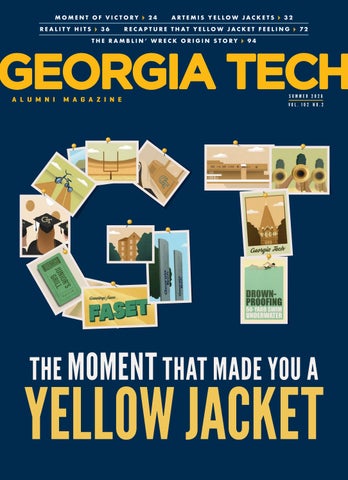
THE MOMENT THAT MADE YOU A YELLOW JACKET
What was the day or moment when you felt like a true Yellow Jacket?
Grad Program Rankings 12
Alumnae Added to Pathway of Progress 14
Student News 16
The Smartest Robots May Be the “Dumbest“ Ones 18
Southwest Georgia Students Put New Manufacturing Skills to the Test 20

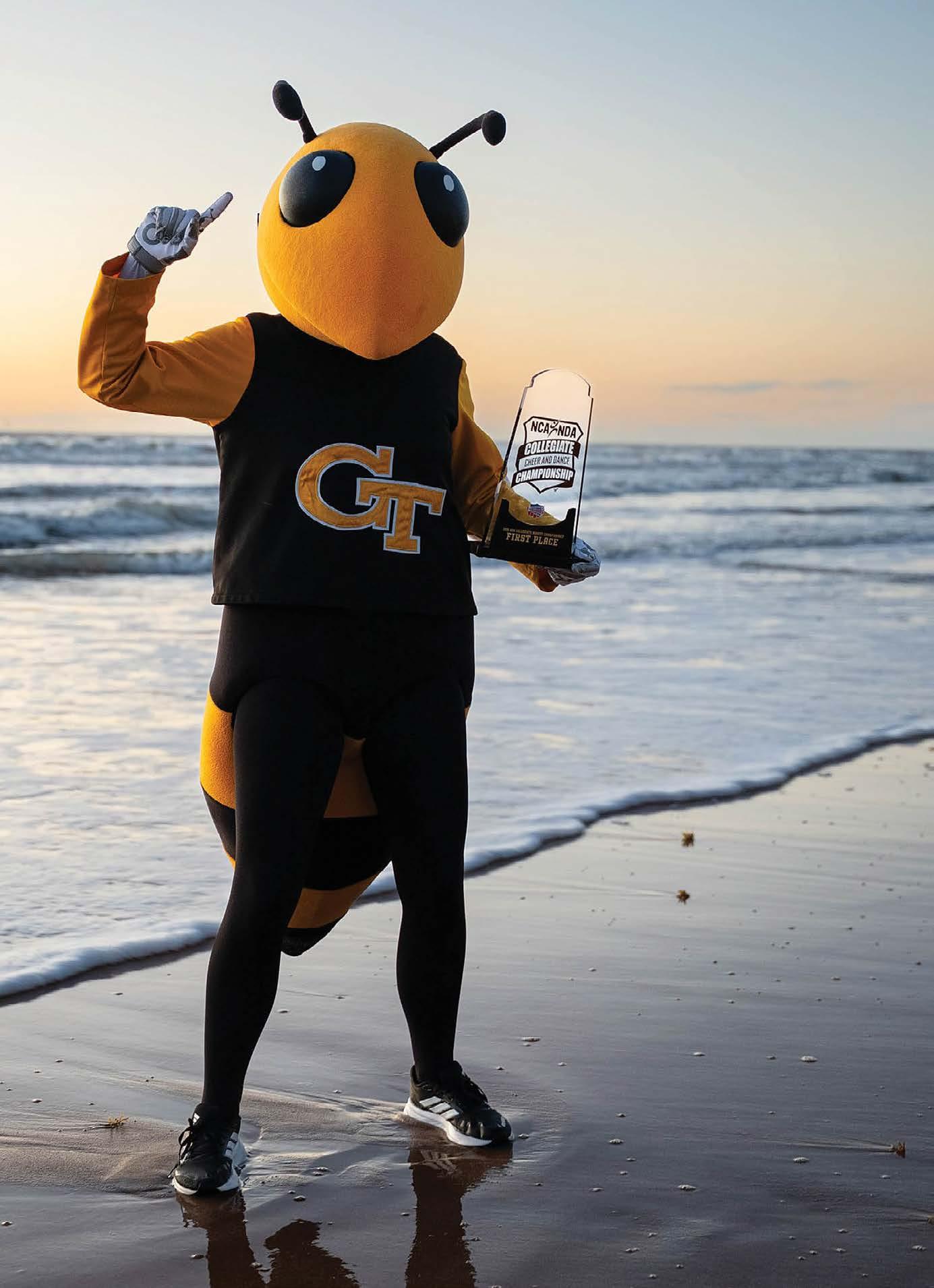
No news here—Buzz is the best mascot in the country. Buzz took first place again this year at the NCA/ NDA College Nationals in the mascot division. Georgia Tech cheerleading earned an impressive second-place finish on the national stage.
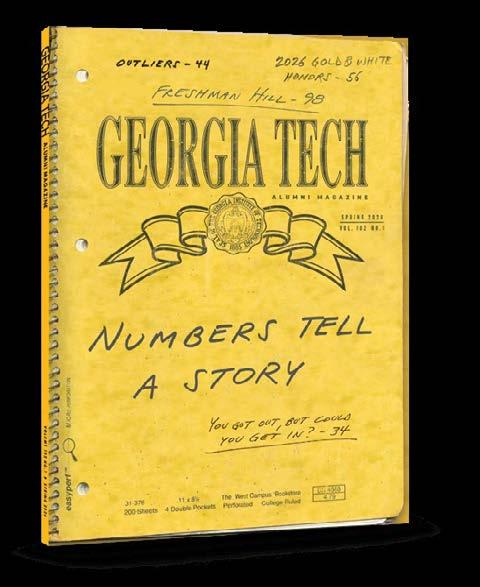
I HAVE READ through the “You Got Out, But Could You Get In” article in the recent edition [Spring 2026, Vol. 102, No. 1]. It only tells half the story! Clearly, GT’s reputation has soared over the recent decades, and you can be more selective/have higher admission standards. Another way of looking at this issue is: Could today’s students who get in, get out?
We all know that there is rampant inflation—both in terms of grades awarded and GMAT scores. Yes, the GMAT has been adjusted over the years, significantly altering the score required for the top 90th percentile.
While the students at GT are obviously brighter than 55 years ago, I really wonder if they would all be graduating if the grading requirements were like they were in the proverbial old days? As we all know, it takes a lot of drive/focus to get out, not just intelligence. —Greg Dess, IE 71
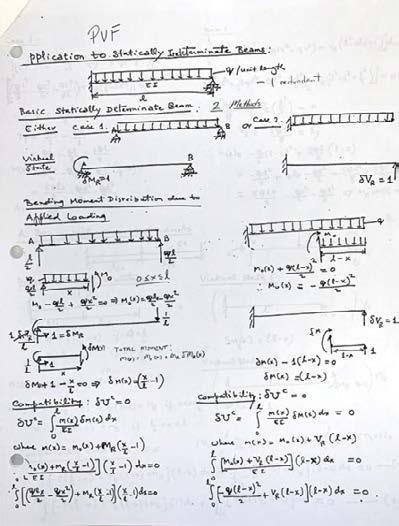
Notes from Spring 1987, AE 4101. —Scott Lesser, AE 89
ONE NUMBER IS MISSING …Today’s tech students could likely get into Tech in the years before 1980, but could they make it through Tech then? Compare graduation rates, then and now. Tech was similar to Navy Seal training. It prepared us for the toughest challenges, but many didn’t make it. —James Kindley, ID 68
ALUMNI ASSOCIATION PRESIDENT Dene Sheheane, Mgt 91, lent his math notebook for the Spring issue cover. He wasn’t the only Yellow Jacket who held on to notes. Submit your own at GTalumni.org/studentartifacts
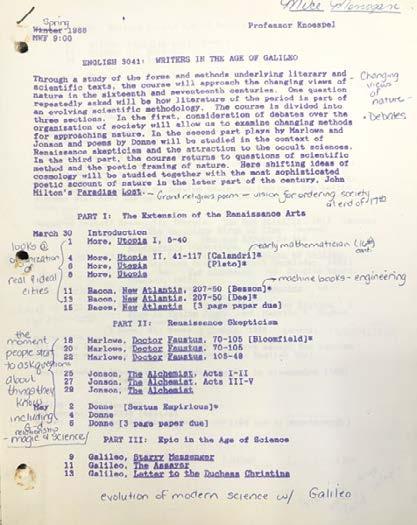
Notes from English 3041, Spring 1988. —Melinda (Ross) Tourangeau, EE 88
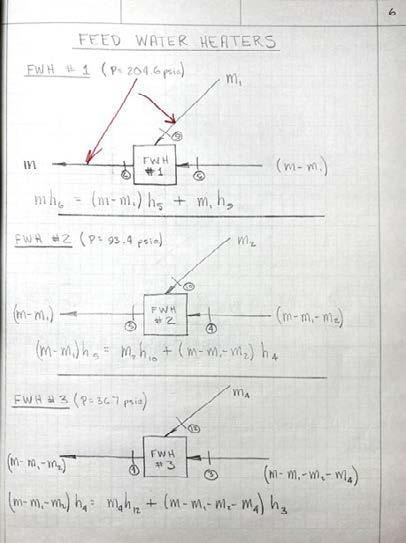
Senior ME 422 class with Prof. Barnett. —Jess Settle, ME 69
THE SPRING “NUMBERS” ISSUE ASKED FOR YOUR MOST MEANINGFUL NUMBER FROM YOUR TIME AT TECH. READ A FEW OF THE RESPONSES BELOW:
36741
Mailbox combo B-T-O
—John Vassar, IM 83
24 was my draft lottery number in 1969 during my sophomore year at Georgia Tech. This placed me at risk of being sent to Vietnam if I hadn’t dedicated myself to my studies and opted out of the typical college social scene. Fortunately, my coursework, participation in the co-op program, and subsequent five-year deferment allowed me to graduate in the spring of 1973 with a BS IM. It was also during that spring that President Nixon ended the draft. As such, I consider 24 to be my luckiest, yet most unlucky, number.
—Kenneth Patrick Moody, IM 73
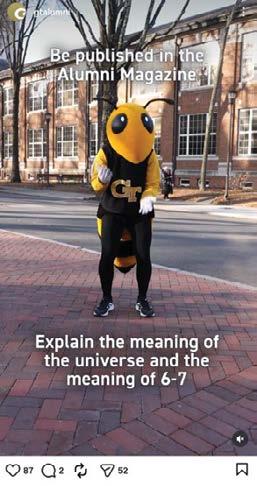
BECAUSE YELLOW JACKETS know all, they helped answer humanity’s biggest unknowable on the Alumni Association’s social media: the meaning of 6-7.
30346 was my mailbox in the Student Center when I was a student in the 1980s. After graduation in 1990, I would periodically return to campus and would always peek into the mailbox when I visited. On a visit in 2023, I was surprised that the mailboxes had been removed from the old location, but then I found the art installation that is a wall of old mailboxes. It would have been amazing if my old 30346 box was included, but 30670 was the closest. Perhaps those numbers can be swapped in the future?
—Walter R. Jacobs III, EE 90

“The answer to Life, the Universe, and Everything is 42.”
—John R. Gray, Mgt 91, CS 99 (From Douglas Adams’ The Hitchhiker’s Guide to the Galaxy)
“‘6 in one hand; half dozen in the other’ I would say.
‘Macht nichts’ is what my mom would say.
‘Who is John Galt?’ Is what Ayn Rand would say. ‘6, 7’ is what they say now…”
—John R. Brewster, CS 97, PM ASE 19
“Ask Shakespeare. He was the original 6 & 7’s guy.”
—Kelly S. Evans, IA 97




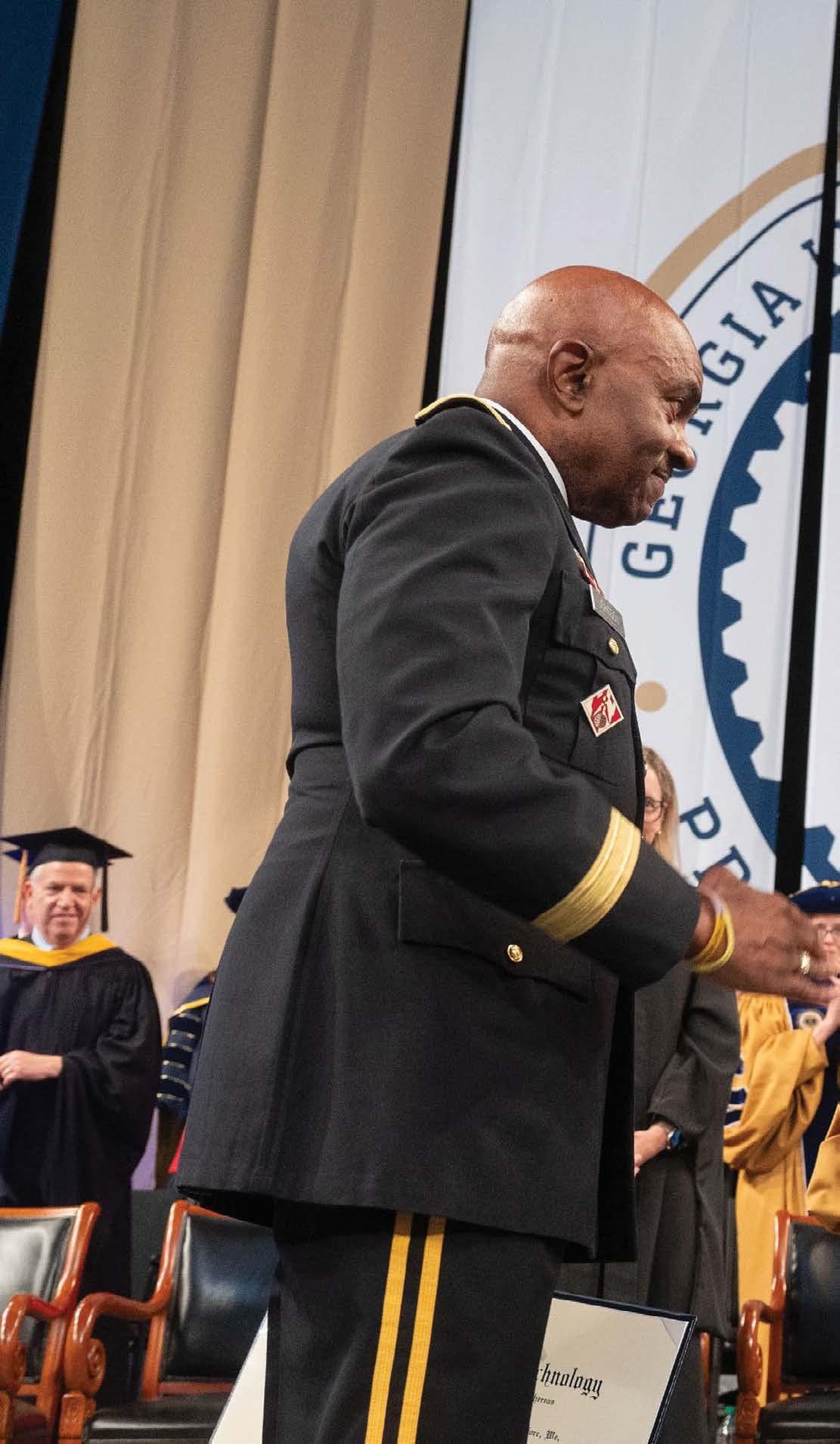
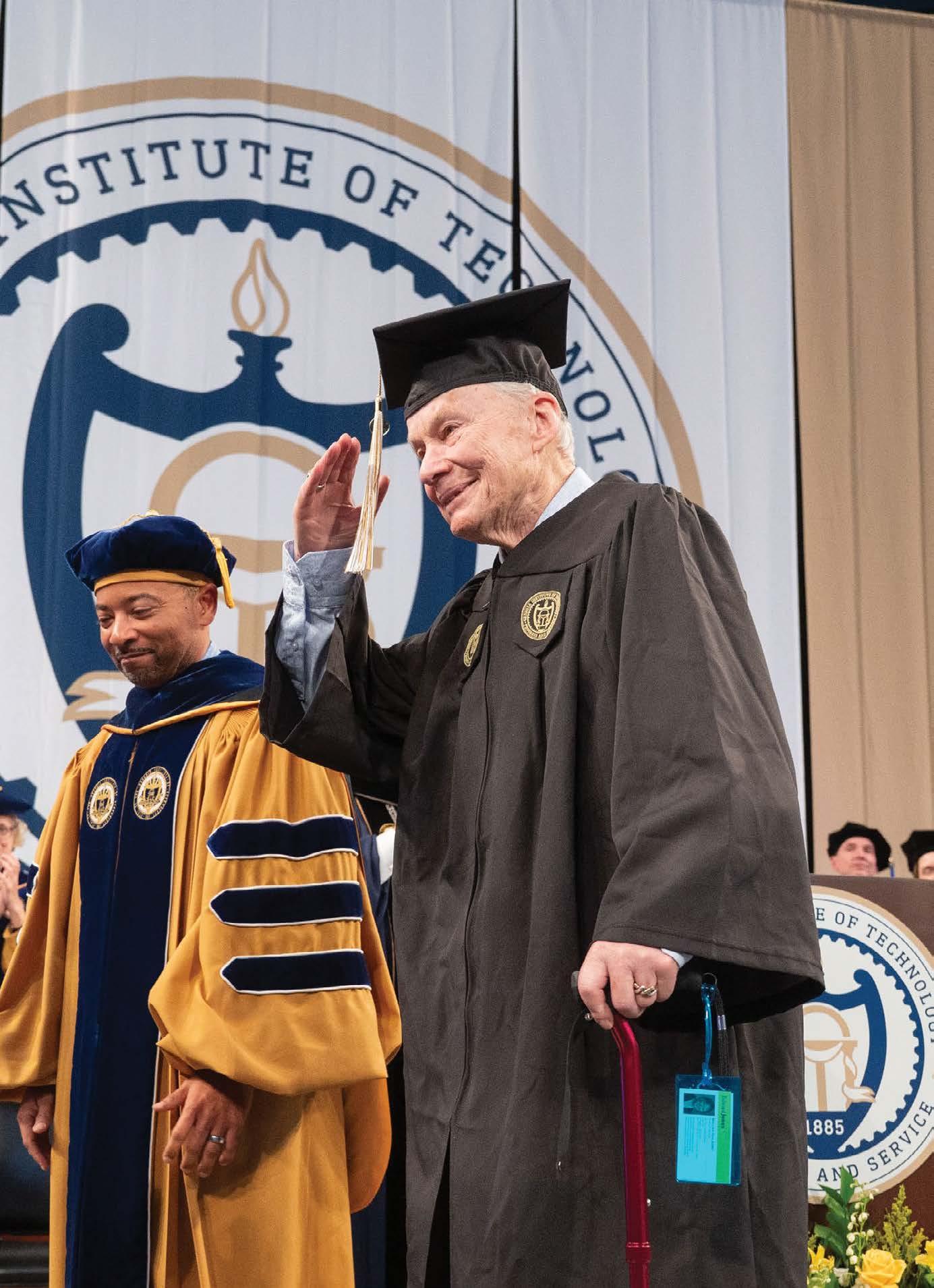
Retired Colonel Ken Grundborg, CE 60, MS CE 66 (right), walked the stage nearly 60 years after earning his degrees. He missed both his bachelor’s and master’s ceremonies while serving in the U.S. Army in Korea and later Vietnam.
College of Engineering BEST ENGINEERING SCHOOL # 4
#1 Biomedical Engineering
#1 Industrial Engineering
#2 Aerospace Engineering
#3 Civil Engineering
#3 Mechanical Engineering
#4 Environmental Engineering
#5 Chemical Engineering
#5 Computer Engineering
#7 Electrical Engineering
#7 Materials Engineering
#9 Nuclear Engineering
BY JENNIFER HERSEIM
THE U.S. NEWS & WORLD REPORT recognized Tech’s graduate programs in its latest rankings, released April 7. The College of Engineering maintained its spot from last year at No. 4 for Best Graduate Engineering Schools, with 11 programs in the top 10, including claiming the top spots for Industrial Engineering and Biomedical Engineering. The Part-Time MBA program within the Scheller College of Business moved up to No. 9 in the rankings this year. The College of Computing ranked at No. 7 overall, with two top-10 rankings: in Artificial Intelligence at No. 5 and in Systems at No. 6. The Ivan Allen College of Liberal Arts moved up two spots from last year to No. 47 Best Overall in Public Affairs.
#29 Ear th Sciences College of Sciences
#20 Chemistry
#22 Physics
#26 Mathematics
Ivan Allen College of Liberal Arts BEST PUBLIC AFFAIRS PROGRAM # 47
#2 Information and Technology Management
#10 Environmental Policy and Management
#23 Public Policy Analysis
*Not all colleges and programs are ranked each year.
BEST BUSINESS SCHOOL # 27
#8 Information Systems
#9 Best Part-time MBA
#12 Production-Operations
#15 Supply Chain Management
#16 Business Analy tics
#21 Executive Programs
#23 Management Scheller College of Business
BEST COMPUTER SCIENCE SCHOOL # 7
#5 Ar tificial Intelligence
#6 Systems–Computer Science
#15 Programming Language
#13 Theory Rank College of Computing
BY KRISTEN BAILEY
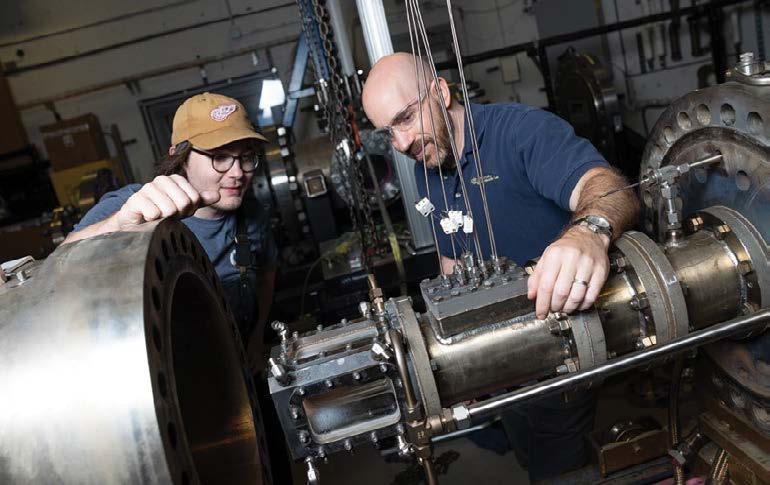
GGEORGIA TECH is set to advance one of its most significant academic and research infrastructure projects in recent years, following Georgia Gov. Brian Kemp’s release of the amended budget for fiscal year 2026. The budget includes $88 million for the design and construction of a new aerospace engineering building.
The investment represents a major step forward for both the Institute and the state of Georgia, reinforcing the state’s position as a national leader in aerospace innovation, workforce development, and economic growth.
The new Aerospace Engineering
Building will serve as the home of Georgia Tech’s Daniel Guggenheim School of Aerospace Engineering , which is ranked No. 1 among public institutions and No. 2 overall by U.S. News & World Report. The building will feature advanced laboratories; dedicated space for flight research and propulsion systems; expanded instructional studios; and new collaborative areas for students, faculty, industry partners, and interdisciplinary research teams.
Georgia’s aerospace sector is one of the largest and fastest-growing in the nation, and it is expected to surpass $1 trillion by 2040. President Ángel Cabrera expressed gratitude for the state’s support and emphasized the impact on the Institute and Georgia’s
long-term economic competitiveness.
“We are profoundly grateful to Gov. Kemp, Lt. Gov. Jones, Speaker Burns, the State House of Representatives, and the State Senate for their continued confidence in Georgia Tech and what we do to keep our state competitive,” says Cabrera, MS Psy 93, PhD Psy 95. “This investment will help us create world-class facilities to drive innovation and develop the workforce that Georgia needs to stay at the forefront of the aerospace industry.”
The Delta Air Lines Foundation has also committed $5 million to the project. Tech enrolls more than 2,300 students in aerospace engineering and leads $54.5 million in annual aerospace-related research activity.
“The new facility will fundamentally reshape how we conduct research and educate our students,” says Mitchell Walker, Southern Company Dean of the College of Engineering. “Next-generation research spaces combined with hands-on learning environments and modern classrooms will enable work our current footprint can’t support. This investment propels our initiatives forward, sustains our leadership across all aerospace disciplines, and expands our industry collaboration.” To make a gift to the AE Building, contact David Zaksheske, at davez@coe.gatech.edu.
OONE YEAR AFTER the opening of Pathway of Progress: Celebrating Georgia Tech Women , the newest honorees have been selected for the permanent campus installation, which was made possible through support from Andrea Laliberte, IE 82, MS IE 84, HON PhD 25, and designed by Merica May Jensen, Mgt 08, M Arch 11. The 2026 honorees at right embody the Institute’s motto of Progress and Service.
BY ANNE STANFORD AND JANET KINARD
Learn more about all the honorees at celebratingwomen. alumni.gatech.edu.



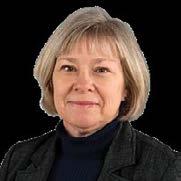

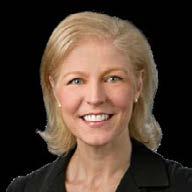
Niesha Alice Butler, IA 16, founder and CEO of S.T.E.A.M. CHAMPS. A former Tech basketball player, she has founded multiple companies focused on teaching coding, robotics, and engineering to underserved communities.
Mary Ann Gordon, EE 81, retired vice president of quality compliance at Altria Group. A leader in industry and her community, she serves on multiple boards, including the College of Engineering Advisory Board and the Georgia Tech Foundation Board of Trustees.
Margie Ann Morse, NE 79, co-founder of the firm Parallax. A pioneer in the field of nuclear engineering, she remains involved with the Institute and served on the Georgia Tech Advisory Board.
Heather Smith Rocker, IE 98, CEO of Women in Technology. She has served with organizations focused on advancing Georgia through STEM-focused education, workplace development, and leadership development, and was a member of the Georgia Tech Alumni Association Board of Trustees.
Marilyn Jones Smith, AE 82, MS AE 85, PhD AE 94, the David S. Lewis Professor in the Daniel Guggenheim School of Aerospace Engineering and director of the Vertical Lift Research Center of Excellence. She is a pioneer in the aerospace industry and has mentored hundreds of students.
Ridhi Tariyal, IE 02, co-founder and CEO of NextGen Jane. A leader in health science, she developed a method for using menstrual fluid for diagnostic testing, advancing the science of women’s health and making testing more accessible.
Liz Harriss York, Arch 90, M Arch 95, managing principal at HDR. She was the first chief sustainability officer for the Centers for Disease Control and Prevention. A dedicated alumna, she serves on the Georgia Tech Alumni Association Board of Trustees.
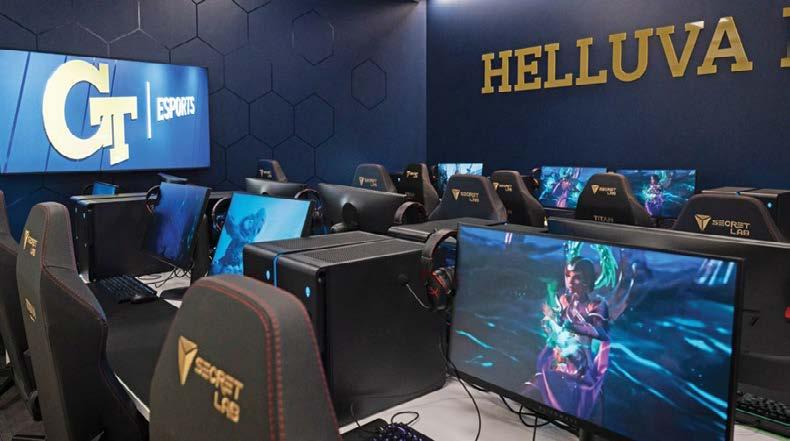
GAMING AT GEORGIA TECH just got an upgrade with the opening of a new Esports Arena at the Campus Recreation Center that will feature high-performance gaming PCs, a broadcast and streaming room, and a competitive practice arena for esports teams. The space, which opened in March, is available to Tech students and CRC members.
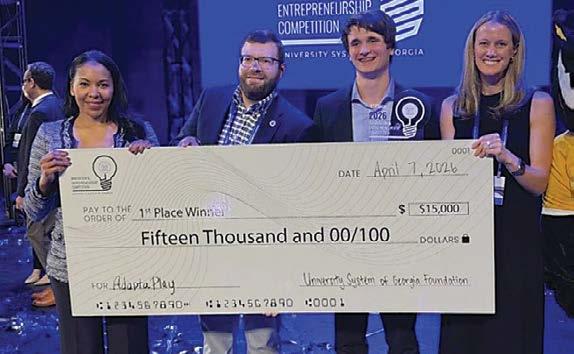
Separately, Tech has its share of avid gamers, including aerospace engineering student Akos Vida, who invented AdaptaPlay, a modular gaming controller add-on that improves accessibility for gamers with disabilities. This April, Vida’s invention won first place at the University System of Georgia’s inaugural Innovation & Entrepreneurship Competition.
Five faculty members have been elected as senior members of the National Academy of Inventors (NAI). As members, they are recognized as distinguished academic inventors with a strong record of patenting technologies, licensing IP, and commercializing their research. Tech’s 2026 NAI senior members are:
Jason David Azoulay, associate professor, School of Materials Science and Engineering and School of Chemistry and Biochemistry.
Jaydev Prataprai Desai, professor and cardiovascular biomedical engineering distinguished chair, Wallace H. Coulter Department of Biomedical Engineering.
David Frost, Elizabeth and Bill Higginbotham Professor and Regents’ Entrepreneur, School of Civil and Environmental Engineering.
Chandra Raman, Dunn Family Professor of Physics, School of Physics.
Aaron Young, associate professor, George W. Woodruff School of Mechanical Engineering.
Doug Britton, PhD ECE 06, was named a 2026
Poultry Science Association Fellow, the highest honor the association bestows on its members. Britton is the associate division chief and principal research engineer at the Georgia Tech Research Institute (GTRI). He has spent more than two decades at GTRI advancing automation, robotics, sensing, and intelligent systems for the poultry and food industries.
BY ALEX HOWARD
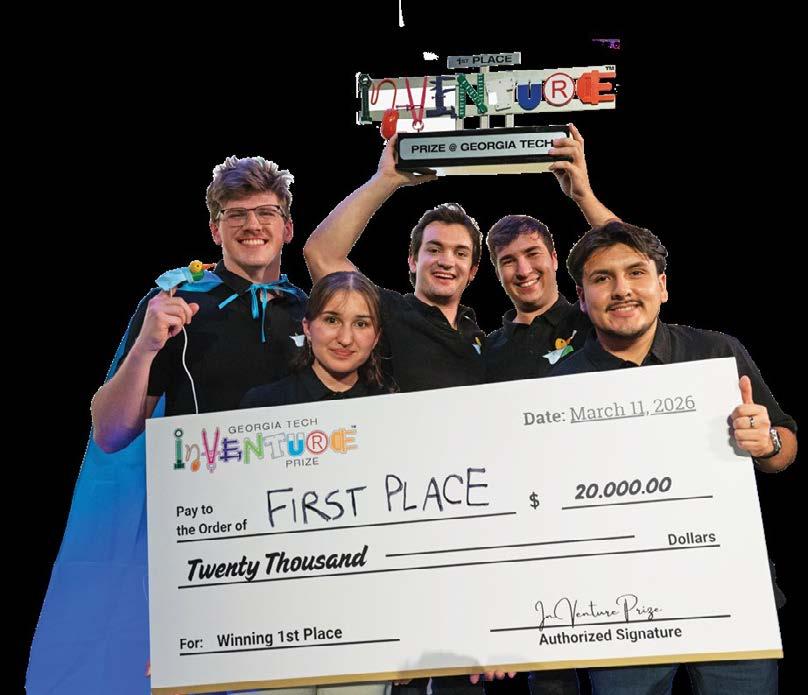
AFTER SOME OF THE MOST intense competition in the program’s history, team Hearo won first place at the 18th annual InVenture Prize competition, which began with a record 72 teams and culminated in six finalists pitching live to a panel of judges and a packed audience.
Hearo’s invention reimagines the otoscope for parents, enabling caregivers to conduct an at-home ear exam and capture physician-usable images to help identify ear infections without a trip to the doctor’s office.
Drawing on their variety of skills and backgrounds, teammates Ander DeOnaindia (computer engineering), Vasileios Kouloumentas (biomedical engineering), Luis Lujan, BME 25, Agustin Munyau, BME 25, Marilyn Pelayo-Montufar (computer science), and Luke Towery, ME 25, saw an opportunity to make a big change in healthcare.
“It’s so huge,” Towery says. “Winning this really shows what can happen when a team finds a problem in the world to solve and sticks together.”
First place comes with a $20,000 prize and a coveted spot in Georgia Tech’s CREATE-X Startup Launch, a 12-week summer program in which participants work with experienced entrepreneurs and Tech alumni to launch their ideas into fully functioning startups.
“Next, we’ll take Hearo through CREATE-X and start getting it into parents’ hands,” said Pelayo-Montufar. “We know how hard it is to be stuck in waiting rooms and doctors’ offices, and so getting Hearo to other parents is extremely important to us.”
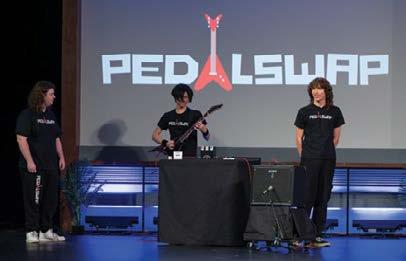
PedalSwap finished second and earned a $10,000 prize for their configurable guitar pedal. Featuring swappable effect cartridges and controls, their invention makes it easier and more affordable for amateur musicians to customize their tone. The team of musicians included Wylam DeSimone (electrical engineering), Zephyr Smith (music technology), and Tony Wu (electrical engineering). “We tried to tackle a fun problem, and something that we all care about,” DeSimone said. “Winning second place means we can get our patent as well as fund our invention.”
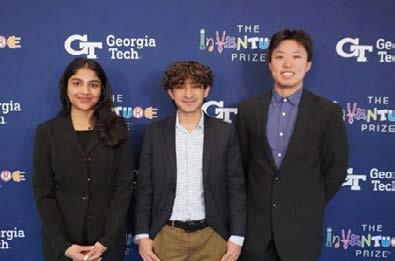
The People’s Choice Award—selected through audience voting—went to team DoorTix, an automated ticket-purchasing platform for fair, predictable pricing. DoorTix teammates Shinhai Chen (industrial engineering), Dhruv Narang (mechanical engineering), and Arayna Saxena (computer science) wanted to restore transparency, fairness, and trust to a ticketing market that currently disadvantages millions of fans. “We’re literally built for the people,” Saxena says. “We want to make it easier for our customers to get cheap tickets, and winning People’s Choice hopefully means we can get them for you, too.”
THE FULBRIGHT PROGRAM has recognized Georgia Tech as one of the colleges and universities with the highest number of students and recent alumni selected for the Fulbright U.S. Student Program. Fulbright Top Producing Institutions, such as Georgia Tech, value global connections and support members of their campus communities across the United States in pursuing international opportunities.
“Thirty-five years ago, a Fulbright award changed my life and put me on the path I’m still on today,” says Ángel Cabrera, president of Georgia Tech. “Fulbright students benefit from unrivaled opportunities for education,
personal development, and intercultural leadership, and they return home as globally aware problem-solvers with new perspectives and a renewed commitment to address humanity’s most pressing challenges. This program is dear to my heart and truly one of the greatest assets of American higher education, and I am immensely proud of Georgia Tech for becoming one of the foremost producers of Fulbright talent.”
Eight Georgia Tech students received the prestigious Fulbright Scholarship for the 2026–’27 academic year. Four students have been named as alternates. Among this year’s recipients are several recent graduates of

the class of 2026, including: Zachary Beddingfield, Bio 26, Diya Chutani, Neur 26, Sonali Kaluri, ALIS 26, Bio 26, Seth Kinoshita, BioChem 26, Anya Martin, who is a doctoral candidate in Human-Centered Computing, and Divya Tadanki, Neur 26.
To expand access and encourage more student participation, Georgia Tech launched a summer Fulbright Application Boot Camp, which has contributed to an increase in applications.

A ROBOTIC
WITH NO ELECTRONICS, NO BATTERIES, AND NO BRAINS. HE CUT THE CORD—AND THE ROBOTS CAME TO LIFE.
BY MICHELLE AZRIEL
A LEGO BRICK is not smart. It doesn’t compute. It doesn’t plug in. It just fits.
A team of Georgia Tech researchers has applied that logic to robotics, building swarms of tiny robotic particles that latch, release, and reorganize without a single electronic component.
Bolei Deng, an assistant professor in Tech’s Daniel Guggenheim School of Aerospace Engineering, and Xinyi Yang, an aerospace engineering PhD student, are behind the research, which appeared on the cover of Advanced Intelligent Systems.
Novelist Kurt Vonnegut imagined self-organizing machines more than 60 years ago in the novel Cat’s Cradle. Until now, creating a real-world version of Vonnegut’s “Ice-nine” substance eluded scientists. Deng’s goal was to turn that science fiction into fact. “Instead of using a central controller, our particles’ behavior is governed by their mechanical design and how they interact with one another,” Deng says.
Traditionally, building smarter robots means adding complexity: more hardware, more processors, more code. Deng and Yang stripped all of that away. Instead of using sensors or a central brain, each particle is designed to let its shape do the “thinking.”
When the particles feel vibration, they respond automatically. Mix different shapes together, and the group starts to move like a flock of birds or a colony of ants.
Each particle in the swarm is identical—and completely useless on its own. “But when you combine enough of them,
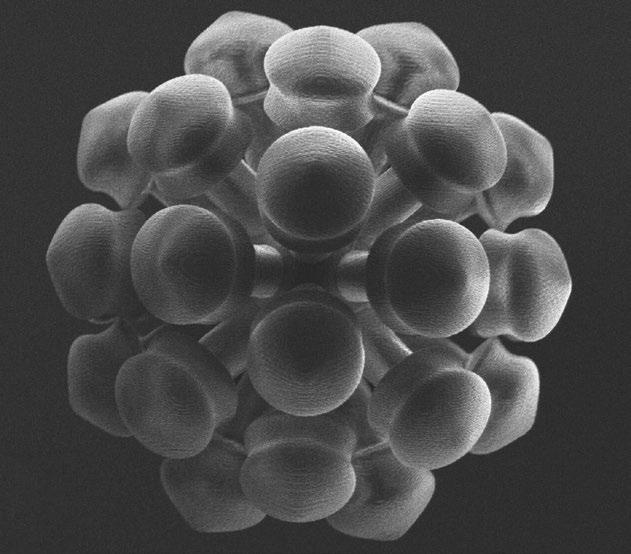
a sort of intelligence begins to emerge,” Deng says.
Each particle has flexible arms spaced evenly around its body. When two particles meet, the arms bend and latch, storing tension like a compressed spring. An external vibration releases that stored tension. The arms snap open, the particles push apart, and the swarm spreads.
How far they spread, and how quickly, depends on how the arms are built. Change the curvature, and they hold on longer. Make them stiffer, and they release faster. Each particle follows the simple rules: bend, latch, release.
The particles can be built at dramatically different scales. At their smallest, they can enter the bloodstream. Doctors could place a compact swarm inside the vascular system and activate it with ultrasound. The vibration releases the stored tension in the arms. The particles spread outward and enter vessels a single robot cannot reach.
Deng envisions swarms delivering cancer drugs directly to hard-to-reach tumors while sparing healthy tissue. The same approach could work beyond the body. In space, even small fixes require astronauts to suit up for risky spacewalks, and radiation degrades electronics.
The particles could be launched as a compact cluster, land on a surface, and then be released with vibration. Because their behavior is built into their structure—and not electronics—the swarm could operate in radiation and temperature extremes that disable conventional robots.
“In space, once you build something, you need an astronaut or a robot to change it,” Deng says. “In our system, you just send the vibration.”
It’s the same LEGO logic Deng started with. No electricity required.

GEORGIA TECH’S ADVANCED MANUFACTURING PATHWAYS PROGRAM BROUGHT THREE SCHOOL DISTRICTS TOGETHER FOR A HANDS - ON COMPETITION.
BY AUDRA DAVIDSON
MMAGIC USUALLY LIVE S in storybooks and movie scenes. But in one Thomasville, Georgia, classroom, a 10th grader found a different kind of magic: the kind that hums from a 3D printer and turns an idea into something real.
“You can build something online and then make it in real life with the click of a button,” beamed Lauren Meehan, holding a pinewood derby–style car that she designed and manufactured herself.
“It’s almost like bringing cartoons to life.”
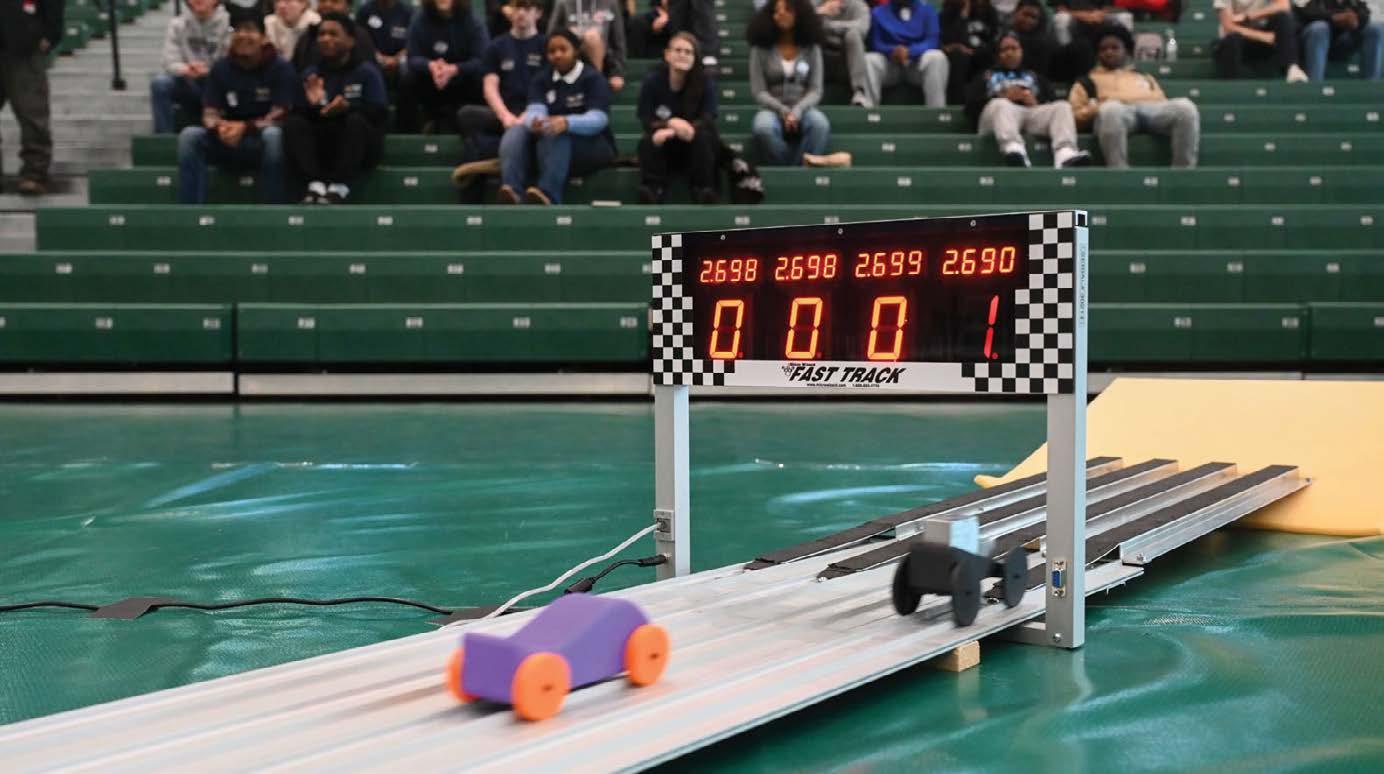
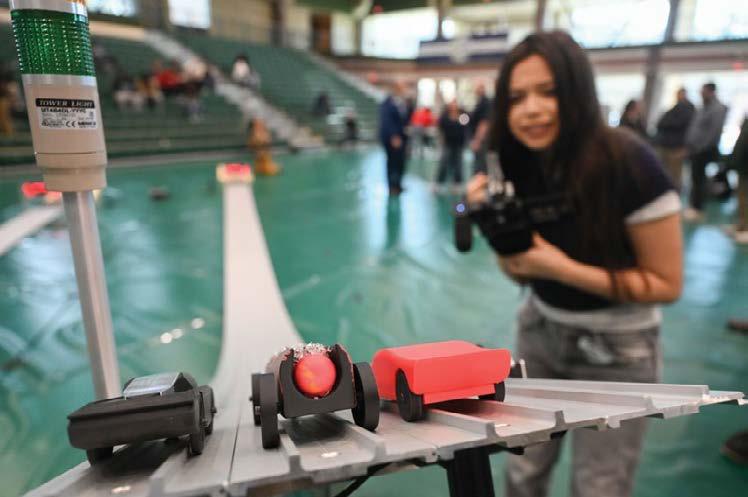
Lauren is one of more than 250 students who built a car of their own design as part of the first cohort of Georgia Tech’s Advanced Manufacturing Pathways (AMP) program. AMP connects local educators with Georgia Tech expertise to introduce high school students to advanced manufacturing.
The course’s signature project challenges students to engineer the fastest possible car from the ground up, learning programming, digital design, data analysis, and machining along the way.
Students from the program’s inaugural high schools— Bainbridge, Thomas County Central, and Thomasville City—gathered in Bainbridge, Georgia, earlier this year to
race their creations head-to-head in AMP’s first tri-district competition.
“A year ago, this was just a crazy idea we had,” says Kyle Saleeby, MS ME 19, PhD ME 21, a research engineer at the Georgia Tech Manufacturing Institute (GTMI) and one of the program’s key developers. “It’s truly amazing to see it all come together at an event like this and impact so many students.”
The race, hosted at Southern Regional Technical College, was a true celebration of the collaborative effort it took to launch the program and guide its first cohort across the finish line. It also gave students a chance to show off their creations to the community that has cheered them on from day one.
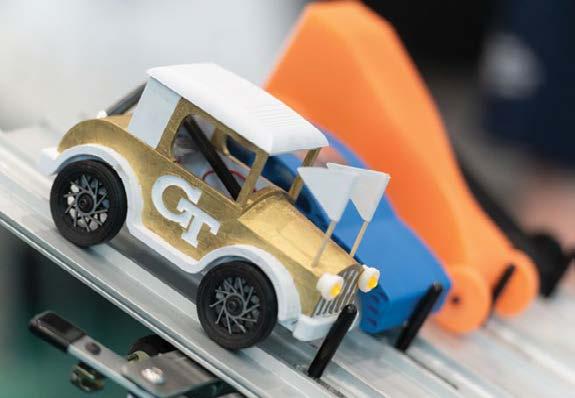
That kind of excitement is crucial for people like Matthew Hilliard, a plant manager at Danimer Scientific in Bainbridge. Hilliard grew up in southwest Georgia and always hoped to build his career close to home. But he also knows small-town life isn’t for everyone. In his time at Danimer, several young engineers have left the area after just a year or two.
By exposing students to engineering pathways early, Hilliard hopes that programs like AMP will create the skilled workforce companies look for, ultimately bringing more industries to the area. “If a program like this is able to highlight the potential engineering pathways and really develop talent in southwest Georgia, you’re more likely to want to come back to continue to develop your career here.”
2 6%
20 1ST BEATS PER MINUTE MILLION +/–
Georgia Tech’s space sustainability course is the first of its kind in the U.S. In 2026, the course focused on lunar surface coordination among nation-states.
Amount by which energy bills in the U.S. would be cut by the widespread adoption of electric vehicles by 2035, according to a new study from Tech’s Jimmy and Rosalynn Carter School of Public Policy.
Rate that a new smartphone app developed by Tech researchers can measure fetal heart rates. The DopFone app uses smartphone speakers to emit a low-pitched ultrasound for at-home fetal heart monitoring.
Number of data points collected by Georgia Tech and MIT researchers watching mosquitoes buzzing around one of their colleagues. The researchers created a mathematical model to predict how and where female mosquitoes will land on humans.
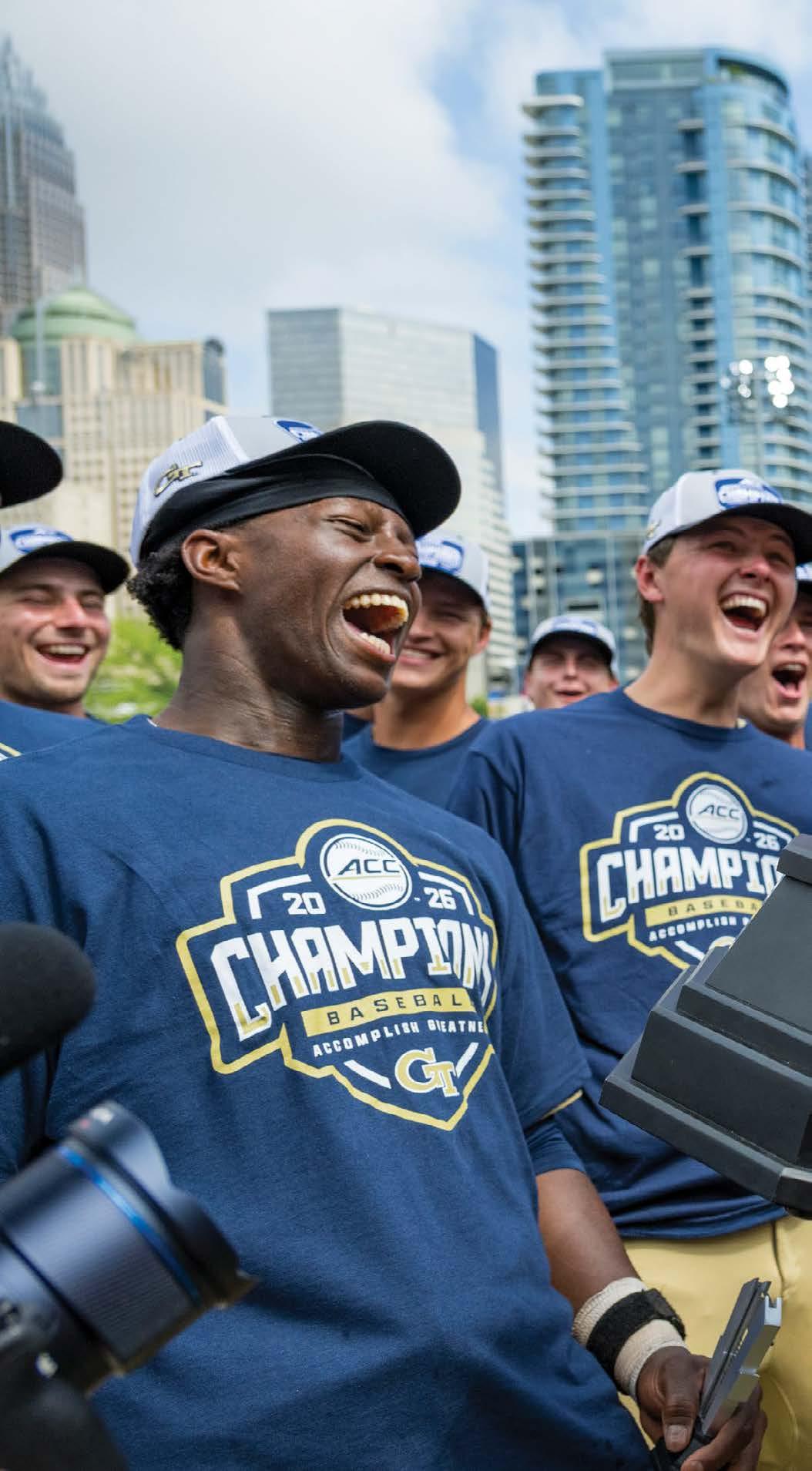
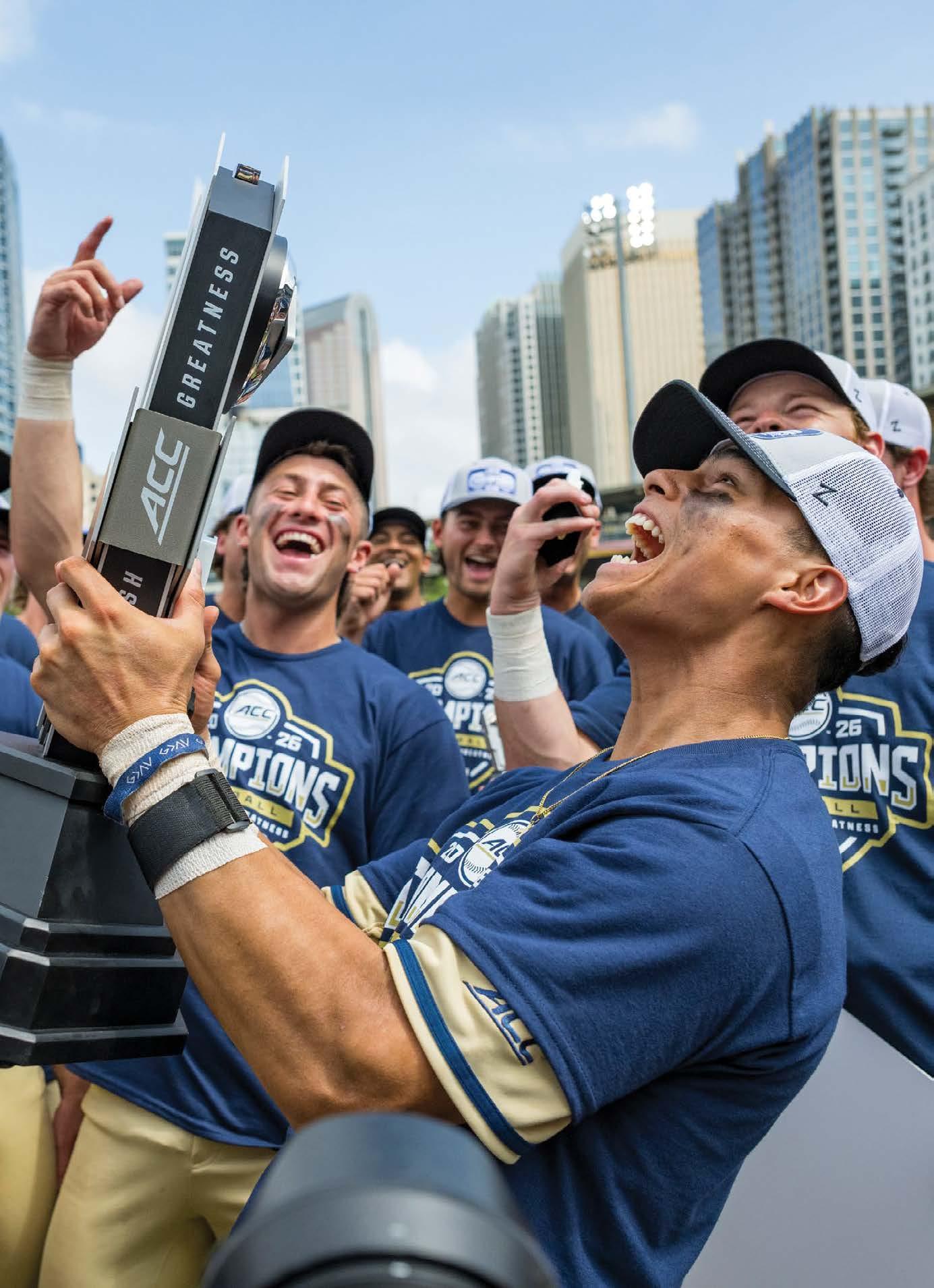
Georgia Tech Baseball swept the 2026 Atlantic Coast Conference Championship this May. The Yellow Jackets also finished the regular season with their best record in 106 years, going 45-9 and tying the ACC record with 25 conference wins.
In 1986, the Yellow Jackets celebrated back-to-back ACC titles. They would continue the streak for two more years.

THE 1985–1988 YELLOW JACKET TEAM LAID THE FOUNDATION FOR ONE OF THE NATION’S TOP BASEBALL PROGRAMS.
BY JERRY GRILLO
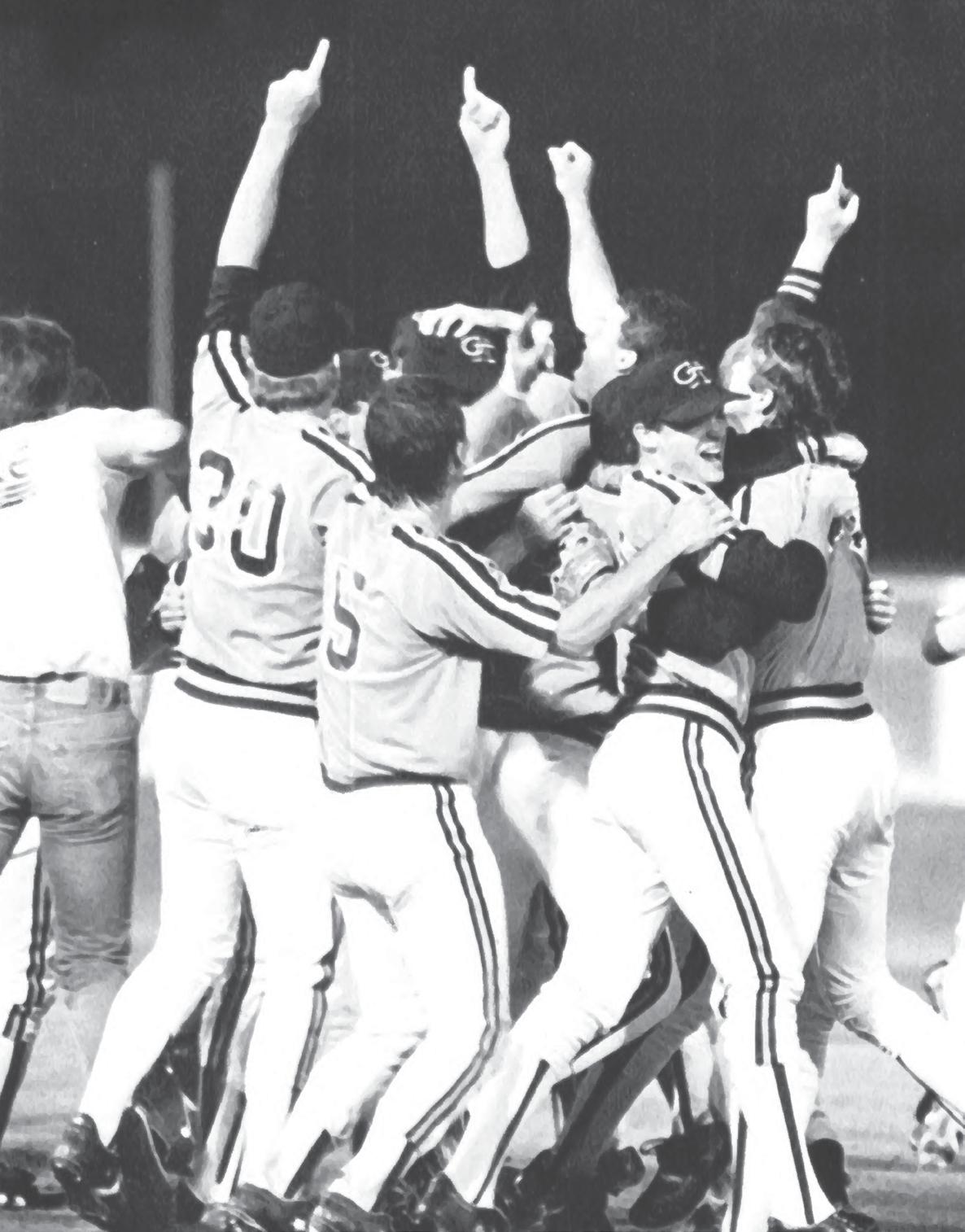
BETWEEN 1985 AND 1988, the Yellow Jackets won four straight ACC baseball titles, a conference record that began May 20, 1985.
Derrick “K.G.” White, IM 89, remembers the moment clearly—he saw the baseball bouncing in the dirt, deflecting off the Clemson catcher, giving him the split second he needed to speed home with the winning run of
the 1985 ACC tournament.
“I could see by the spin of the ball where it was going to land, and how much time I had,” says White, 41 years later. He was the Georgia Tech designated hitter that day in his freshman year, with a baseball sixth sense that would help make him a two-time All-ACC selection (1987–’88).
“So, I just took off and scored,” says White, a high school catcher who became a center fielder in college and, briefly, in the minor leagues. “That’s when I realized, ‘This is the highest of
highs—it’s great to be a Yellow Jacket.’”
By the time the 1985 ACC championship banner went up, a transformation that had begun several years earlier was already complete. What followed wasn’t just a run of success but the foundation for one of the nation’s top baseball programs
FAST TRACK TO SUCCESS
“I knew what a great school Georgia Tech was, and what an opportunity this could be,” says Jim Morris, who Tech hired as head baseball coach in July
1981. “I immediately felt like we could win if we worked hard and signed the right guys.”
That first recruiting class came together quickly. Players arrived in August and were asked to build something from scratch.
“Morris basically got the leftovers,” quips Mark Matulia, MgtSci 85, the coach’s first signee, an infielder from Baltimore who had planned to attend the U.S. Naval Academy. “My coach steered me to Tech because if I’d gone to Navy, I couldn’t play summer league. Plus, I couldn’t pass up the chance to play ball in the ACC.”
Another early recruit was Scott Jordan, Mgt 87. After a great 1984 season, the centerfielder felt motivated after being drafted later than expected by the Boston Red Sox in the 16th round.
“I was upset and felt like I had something to prove in 1985,” says Jordan, who still holds the Tech record for consecutive games reaching base (79 games). He played briefly with the Cleveland Guardians, who drafted him in the fourth round in 1985.
Jordan was the MVP with 11 hits in 22 at-bats as Tech hosted the ACC tournament that year at Russ Chandler Stadium, beating Clemson. His teammate, future big-league ace Kevin Brown, Cls 87, starred on the mound.
The team lost in the NCAA regional finals, just missing a trip to the College World Series—a pattern that repeated during Tech’s ACC title run.
“That still bothers me,” says White, who played on all four teams from 1985 through 1988. “We never made it to Omaha, and we had some teams that really should have.”
With righty Brown (1984–’86) and
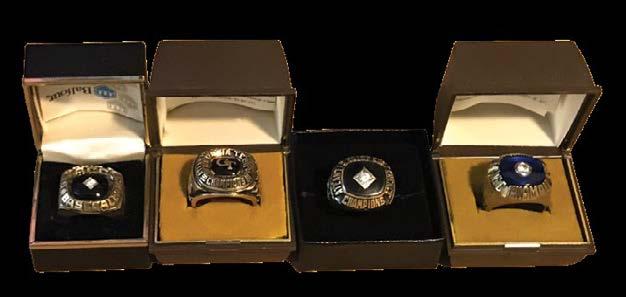
Alan Cape, IE 89, lost his 1988 ACC championship ring the way so many precious things disappear: with hardly a thought.
“It was 1988 and I was working with my dad part-time, and we went to lunch at a barbecue joint,” says Cape, who played on Tech’s ACC championship teams from1985 to 1988. “This one was special, my last ring. I’d taken it off to eat and when I got back to the office, noticed it was missing. Nobody reported it at the restaurant. I figured it was just gone.”
Over 31 years later during the quiet, early days of the pandemic in 2020, a woman sent an email to Cape that she discovered a ring with his name engraved on it in the pocket of a pair of thrift-store jeans.
The ring, barely worn, looked brand new. Cape could finally re-complete his collection.
the late lefty reliever Jim Poole, EE 88 (1985–’88), Tech had two future bigleague pitchers in its rotation. David Ivester, IE 89, caught both aces.
“Kevin didn’t throw anything straight; his fastball had extreme movement, unlike anything I’ve seen,” says Ivester. “And Jim had great rhythm and control. I loved catching him. His slider was devastating on right-handed hitters.”
The team also featured hard-throwing righty Todd Shiver, Mgt 88, who took a line drive to the chin during batting practice in 1987, missed just one start, and was later named MVP of that season’s ACC tournament.
The Jackets had beaten North Carolina State in the 1986 tournament and made their exit in the NCAA regionals, as usual, then turned in a season for the ages in 1987, ranked No. 1 at one point and finishing 51-14.
Pacing the powerful offense in 1987 was White’s high school friend from Coffee County, Riccardo Ingram, Mgt 00, who died of brain cancer in 2015 after a long career as a player and coach in the Minnesota Twins organization. He drove in 99 runs and scored
93, with 19 home runs. The Jackets hit 119 homers that year, along with 662 runs and 144 stolen bases—all school records. Ingram, White, and Ty Griffin, Cls 89, each had hitting streaks of 20 or more games.
“Made my job as a pitcher a whole lot easier,” Shiver says. “That was our best team.”
The 1988 team followed by beating the University of North Carolina in the ACC finals after fighting through the losers’ bracket (Griffin was tourney MVP). That team launched the college careers of future MLB players Darren Bragg and Doug Creek.
The four straight ACC titles remain a record, even though the Jackets never made it to a College World Series during that time. Tech eventually reached Omaha during the Danny Hall years, in 1994, 2002, and 2006.
The expectations that meet every Tech baseball season trace back to the 1980s, when Morris brought his philosophy to the Flats:
“If you get good, smart players with the right attitudes, my belief is, the harder you work, the more it will hurt to lose.”
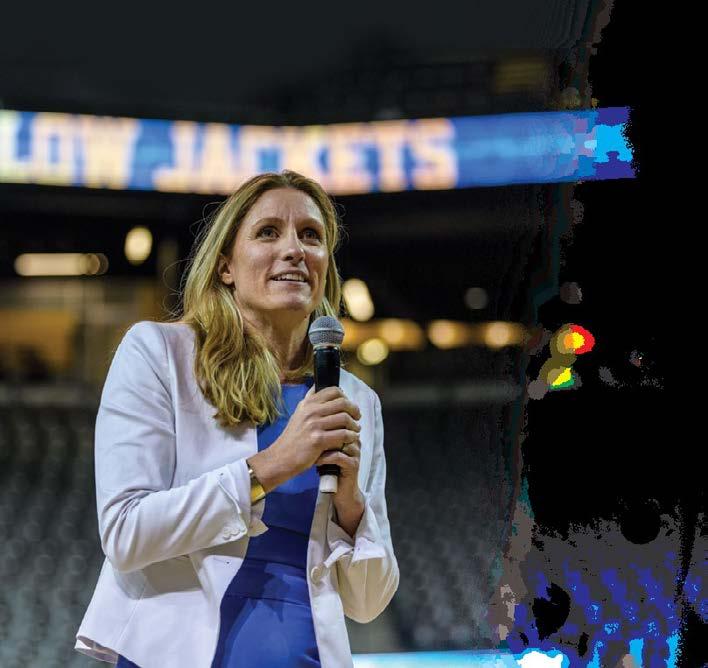
BBEFORE JAIME WESTON, MGT
94, was sele cted as Major League Volleyball’s first-ever commissioner and before she was senior vice president of marketing at the National Football League, she played volleyball at Georgia Tech.
“If you had told my 21-year-old self, who had just graduated and wanted to work in sports, that one day I’d actually be serving the sport that served me my whole life—never would I have imagined this,” Weston says.
In her inaugural role, Weston will lead the largest professional volleyball league in the country. The MLV is in its third season, with eight professional teams, and plans to expand to 11 teams in 2027.
As the sport grows, Weston sees her
BY JENNIFER HERSEIM
new role as a sign of that evolution. “Major League Volleyball is exactly what it sounds like, the major leagues, and the sport deserves a commissioner at that level,” she says.
You might assume that her strategy as a former executive with the NFL, where she led marketing, wouldn’t apply to her new role at MLV. Not so.
“One of the biggest misconceptions in sports is that if you build it, they’ll come,” Weston says. “Even in the NFL, which is over 100 years old, you see it with expansion teams. People assume it’ll be easy and in reality, growing a fan base doesn’t happen overnight.”
MLV is unique among professional sports leagues in that it’s female-led with a young, growing fan base, Weston says.
“We’re the only U.S. professional sports league that’s female-led and female-defined,” Weston says.
In 2024, Weston was selected as the chief commercial officer for USA Volleyball. She expects it will be the breakout sport during the 2028 Los
“ONE OF THE BIGGEST MISCONCEPTIONS IN SPORTS IS THAT IF YOU BUILD IT, THEY’LL COME,” WESTON SAYS.
Angeles Olympics. “Volleyball is just exploding right now,” she says.
Weston’s not the only Yellow Jacket in professional volleyball. The Atlanta Vibe includes Laura “Bird” Kuhn, Mgt 05, who is general manager and assistant coach for the team. The 2025 Vibe roster included Bianca Bertolino, Bio 25, who now plays for Levallois Paris Saint-Cloud in France. Former Tech volleyball player Kele Eveland, Mgt 04, does broadcast work for the Vibe and MLV. Even more former Tech staff members are involved. Cheryl LaFoy, IE 02, is vice president of operations; Bobby Holman, who previously served as assistant athletic director for ticket operations at Tech, is the Vibe’s associate ticketing director; and Theresa Wenzel, who was an associate athletic director at Tech for more than a decade, is the Vibe’s president.
Weston still uses what she learned at Tech every day.
“So much of the foundation of being a management student at the time was learning how to problem-solve and to be resourceful. It really helped me in my career, knowing how I frame up problems, new approaches, and bringing in resources to get things done. That was the foundation that I got from Georgia Tech,” Weston says.




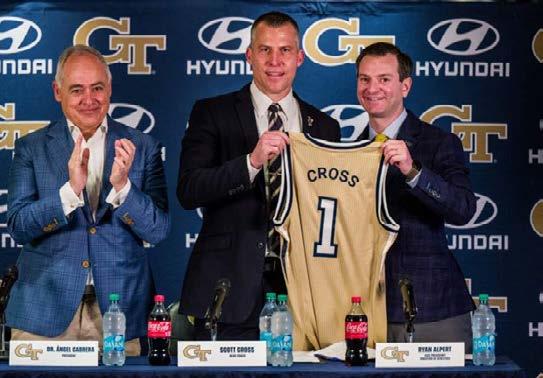
SCOTT CROSS, who has won seven conference championships and 350 games in 19 seasons as a head coach—including five straight 20-win seasons and back-toback Sun Belt Conference regular-season and tournament titles at Troy—became head coach of the Georgia Tech men’s basketball team in March 2026.
Cross spent seven successful seasons as the head coach at Troy (2019–’26) and before that, 12 years as the head coach at the University of Texas at Arlington (UTA) (2006–’18). In all, he’s led his teams to four regular-season conference championships, three conference tournament titles, three NCAA Tournaments, and eight total postseason berths as a head coach, to go along with his 350-260 career record. He was named the 2026 Sun Belt Conference Coach of the Year after leading Troy to the league’s regular-season and tournament crowns. It was the third coach-of-the-year honor of his career (2017 Sun Belt, 2012 Southland).
“His combination of experience, success, and development of student-athletes, both on and off the court, makes him the perfect person to carry on the
proud tradition of Georgia Tech men’s basketball,” says Tech Director of Athletics Ryan Alpert.
Player development has been a staple of Cross’s career. He’s coached three conference players of the year and 25 players who have earned all-conference honors, including 12 first-team selections. The total includes four first-team all-Sun Belt honorees and six total all-conference selections. In his 19 seasons as the head coach at Troy and UTA, 19 of his players have gone on to sign professional contracts.
Cross is also a two-time National Association of Basketball Coaches (NABC) District Coach of the Year (2012, 2017), was a 2012 finalist for the Hugh Durham National Coach of the Year award and was recognized for his actions on and off the court when he was named a finalist for the 2016 Skip Prosser Man of the Year Award. He was named head coach at UTA, his alma mater, in 2006 after serving as an assistant coach for eight seasons. He also spent one season as an assistant at Texas Christian University, where he helped lead a 23-14 record and an NIT semifinals berth. —GEORGIA TECH ATHLETICS
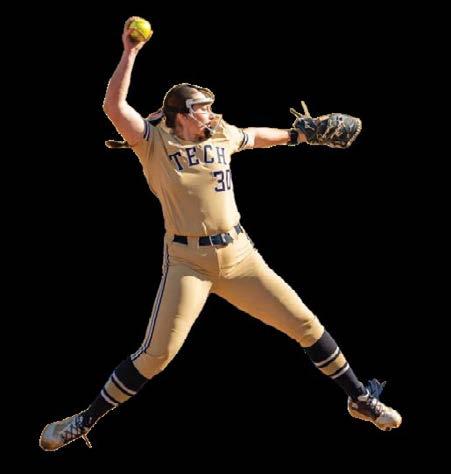
GEORGIA TECH SOFTBALL made history on April 18 with its 9-7 win over No. 10 Virginia Tech. It was not only its first series win in Blacksburg, Virginia, since 2011 but its highest ranked series win in program history. Prior to that, Georgia Tech’s most recent series win was over No. 24 Florida State, back in 2012. The highest previously ranked series win from Tech was over No. 12 North Carolina, back in 2009. On April 14, softball’s Madalyn Johnson was named the ACC Pitcher of the Week and an NFCA Top Performer. The honor marked the first time in at least 15 years that a Yellow Jacket has been named the ACC Pitcher of the Week three times in a single season. Johnson was also recognized Feb. 24 and April 7, with teammate Gracyn Tucker, who was recognized as ACC Player of the Week.
Earn your Master of Science in Analytics from a top-5 nationally ranked program. Gain the expertise, skills, and career-strategy to move forward.

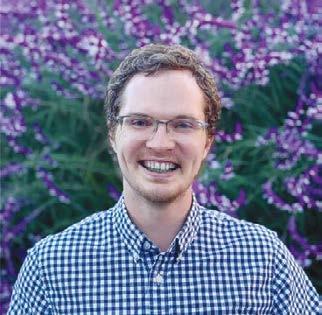
Ethan “Maluhia” Roberts
OMS Analytics graduate Solutions Engineer, Paramark
OMS Analytics ‘24
Maluhia Roberts enrolled in Georgia Tech’s Online Master of Science in Analytics to sharpen his technical edge and create real career momentum. What he gained was more than an elite graduate credential.
Through one of the nation’s premier analytics programs, Roberts developed in-demand machine learning and data analytics expertise while continuing to work full time.
With support from the program’s dedicated Career Services team — including mock interviews, portfolio refinement, networking guidance, and salary negotiation coaching — he transformed his job search into a strategic career move.
Today, he leads machine learning and experimental design initiatives as a founding solutions engineer.
omsanalytics.gatech.edu


Artemis II was the first crewed mission to the lunar orbit in more than 50 years and the farthest that humans have traveled from Earth.
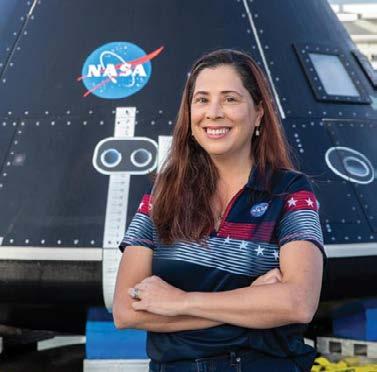
Dozens of Georgia Tech alumni contributed to NASA’s historic mission, from Shawn Quinn, EE 90, who led the team responsible for systems that processed and launched the rocket and spacecraft, to Liliana Villarreal, AE 96, MS AE 97, who oversaw the astronauts’ safe return as Artemis II Landing and Recovery director.

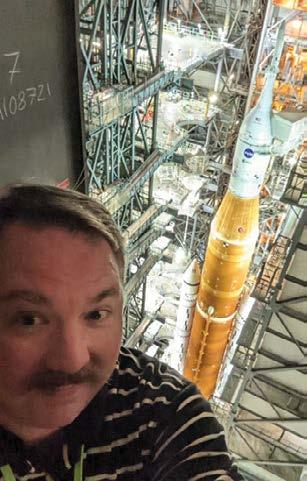
NASA’s Artemis program gets a huge lift from Yellow Jackets.
Read how alumni are helping the agency explore the Moon and lay the foundations for crewed missions to Mars.
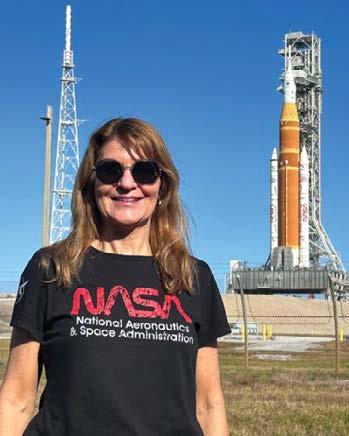
Will Judd, ME 99, liaison engineer/technical lead engineer, worked on the core stage of the SLS rocket. He supported the build of the core stage 1 and 2 as well as the Green Run testing of core stage 1 at Stennis Space Center. Then, he supported the build of the core stage 3 Engine Section and the integration of core stages 1 and 2 into the SLS for Artemis I and II. Additionally, he’s a member of Launch Control, where he registers a “Go/No-Go” vote during launch polling.

Andrew Brown, MS ME 85, PhD ME 98, Structural Dynamics, Propulsion (retired), performed structural dynamic analysis on RS-25 core stage rocket engines.
Van Chatraw, IE 76, senior systems engineer, supported Marshall Space Flight Center System Engineering in the design and development of SLS. He coordinated design efforts of MSFC and Kennedy Space Center.
Jean-Pierre de la Croix, CS 10, EE 10, MS ECE 12, PhD ECE 15, leads NASA’s CADRE project, which will, for the first time, demonstrate multiagent autonomous exploration of the lunar surface.
Ellen Proper Brown, IE 85, Systems Engineering and Integration Division manager for ARES Corporation, manages their NASA contract SE&I group of 40 engineers who support Artemis at Kennedy Space Center.
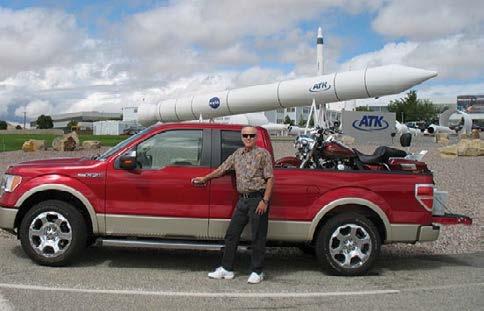
Roger Whitesides, ME 61, MS ME 62, NASA MSFC engineering consultant, Aerothermodynamics, participated with design, analysis, and qualification support for the development of the five-segment Solid Rocket Boosters, serving on the NASA MSFC Motor Project Office SLS Team.
Christine Du Quesne, ME 04, branch chief of Fluids & Contract Management, and her team are responsible for the full lifecycle management of NASA’s liquid propellants, gases, and specialty fluids. Specifically for Artemis, the team supplied the liquid hydrogen, liquid oxygen, gaseous nitrogen, gaseous helium, breathing air, and hypergols, along with contingency support equipment (life-support equipment, compressedgas trailers, rechargers, and standby commodity tankers).
Max Geissbuhler, AE 20, MS AE 21, senior manager, Orbital Analysis, led ground-based tracking efforts from Slingshot Aerospace to monitor the trajectory of Orion for the duration of the mission.
Aaron Hawkins, EE 07, Viasat, RTE business manager, manages a global network of highly precise antennas that collected telemetry data from the Artemis II mission.
Meredith Ivey, ChE 93, SLS Propulsion IPT analyst, was responsible for tracking purchase requisitions and deliveries of parts from around the world in order to build the core stage rockets, which are part of the SLS. She will be transitioning to working as a contractor with NASA, identifying and tracking risk for the Human Landing System.
Roger Lascorz Guiu, AE 14, MS AE 16, EHP Imagery System manager, is responsible for the imagery of the surface of the Moon.
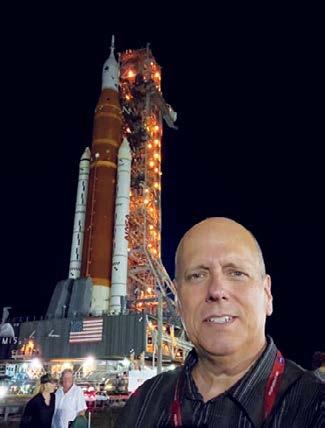
Shaun Heath, EE 90, Information Systems subject matter expert, provides data integration management for Exploration Ground Systems at Kennedy Space Center.
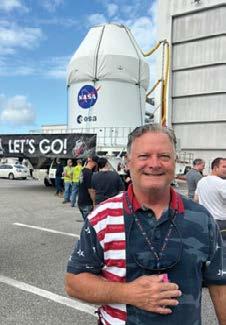

Alexander McLaughlin, MS CS 25, simulation software engineer, worked on simulating telemetry coming off the rocket for the validation of software systems and training of the launch team.
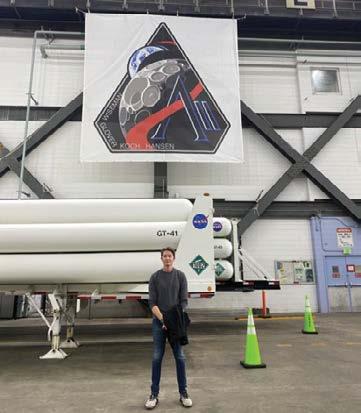
Russell Scott, ME 84, Lockheed Martin engineering senior staff, is the Lockheed Martin Orion Grounds Operations lead.
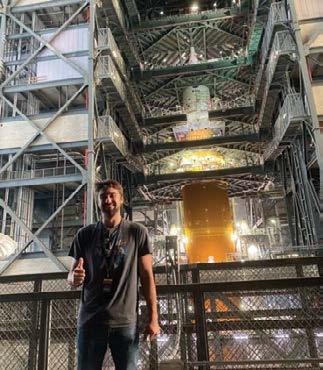
Ricky Lehner, ME 17, formerly in NASA Construction of Facilities, provided engineering expertise for the design and construction of mechanical systems of facilities and ground systems across Kennedy Space Center.
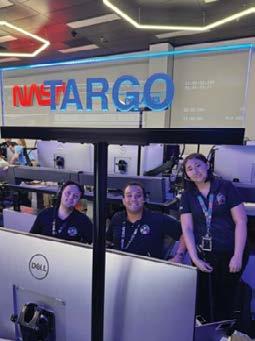
Ulises Núñez Garzón, AE 17, MS AE 20, PhD AE 23, Artemis II Nominal Mission co-lead for the Orion Mission Design Team, was in charge of generating the official, nominally planned trajectories for Artemis II. Núñez Garzón also designed and implemented mission continuation contingency scenarios for various Orion burn failure scenarios and served at the Mission Control Center during the Artemis II flight, at the Trajectory Retargeting and Optimization Officer (TARGO) console.
Kavya Manyapu, AE 06, serves as a spacewalk specialist and lunar surface operation technical assistant at NASA, where she designs spacewalks and tests spacesuits for the Artemis Program.
James K. Orr, AE 71, is the Gateway Avionics Architecture lead. He’s been involved in Orion for Artemis I, Artemis II, and Artemis III and in Gateway for the Configuration 1 and Configuration 2.
Russell Ralston, ME 12, AE 14, serves as senior vice president and general manager of EVA for Axiom Space, leading the program designing spacesuits that will be used for NASA’s return to the Moon.
Luke Roberson, Chem 99, MS Chem 02, PhD Chem 05, and Daniel Yeh, PhD EnvE 00, are creating the next generation of water recycling and resource recovery systems to support missions to the Moon, to Mars, and beyond.
Malik Russell, CmpE 17, served as an extravehicular activity flight controller in Mission Control, trained astronauts for spacewalks, and collaborated with private companies to design spacesuits and lunar rovers.
Kenneth Smith, MS AE 18, worked on the development of the new Gateway Space Station.
Casey Swails, Mgt 07, is NASA’s deputy associate administrator.
Antony Williams, AE 82, associate director, EVA Systems Engineering and Integration, leads Systems Engineering for development of the AxEMU spacesuit, which will be used for lunar EVAs.
Jackie Williams Quinn, CE 89, and Janine E. Captain, PhD Chem 05, led NASA’s PRIME-1 team, which landed a combination space drill and spectrometer on the Moon in March 2025.
Kyle Yawn, AE 13, Intravehicular Activity branch chief, in NASA’s Flight Operations Directorate, led the Intravehicular Activity flight controllers and instructors who prepare the crew for living and working in space.
WWHETHER IT’S BUYING a vintage handbag off eBay or a T-shirt from a thrift store, Gen Z-ers (including Georgia Tech fans) are embracing unique ways to add items to their closets.
Gen Z and Millennials are leading a secondhand clothing boom, according to eBay’s 2025 Recommerce Report, which noted that nearly 80% of the demographic groups see themselves as part of the movement to purchase pre-loved clothing. Sam Beagle, CE 24, MS ID 26, says that everyone he knows has purchased something secondhand.
Why? First of all, Gen Z is a generation that values sustainability. Young adults understand that clothing waste is created by fast fashion and the need for eco-friendly shopping options.
“When you buy clothing cheap online, it’s not the best quality,” Beagle says. “But you can go to a thrift store and find something made 20 years ago that was chain-stitched and is great quality. People are noticing that.”
Buying secondhand is also a budget-
BY KELLEY FREUND
conscious way to express style. Beagle believes that thanks in part to social media trends, there has been a rise in throwback culture, where young adults are seeing what their celebrity idols used to wear and wanting to emulate that. He recalls once finding a corduroy jacket at a thrift store, one that his dad said made him look like Bob Dylan.
“I remember thinking that was so cool,” says Beagle. “Here was a way I could dress like a celebrity without spending a lot of money.”
After attending a pop-up clothing market during his sophomore year at Georgia Tech, Beagle pitched an idea to his Sigma Nu fraternity brothers of
Beagle eventually partnered with the Caribbean Student Association and member Marc Liger. The markets are now held on Tech Green under the name Yellow Jacket Vintage Market, and the event attracts even more students. Vendor participation fees go to the American Foundation for Suicide Prevention, and since the market’s launch, it has raised almost $15,000 for the charity.
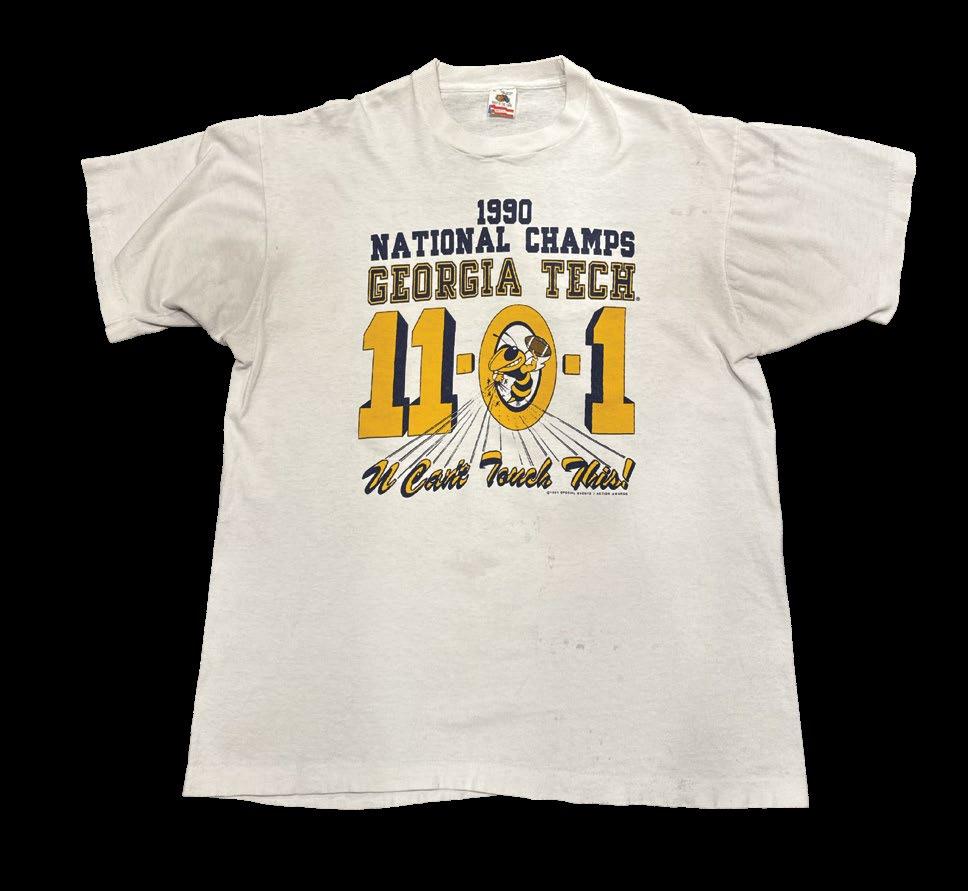
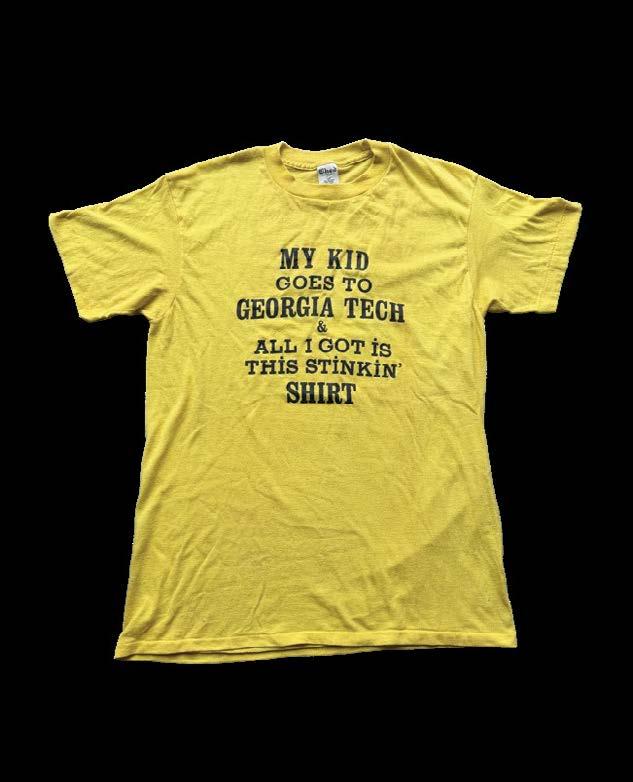
Beagle moved on from the Yellow Jacket Vintage Market in May when he graduated from his master’s program, but in order to celebrate his passion project, he has put together a coffee table book. While the first half of the book showcases the growth of the market, the last 30 pages feature vintage Georgia Tech merchandise. “I work at a streetwear and vintage clothing store in Atlanta, and because of that and the vintage markets, I see a lot of Georgia Tech stuff
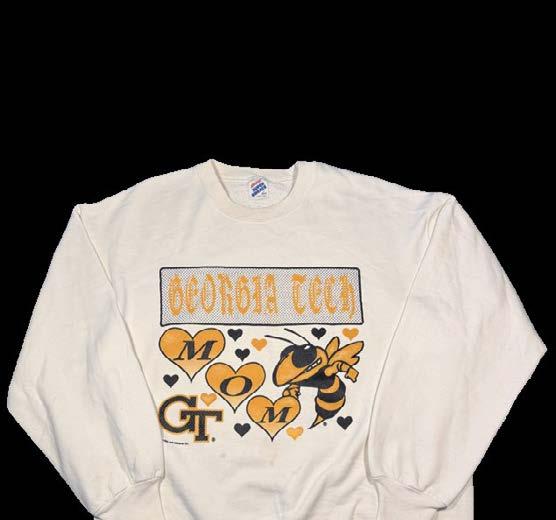

come through,” Beagle says. “The old T-shirts and jackets especially have these really interesting graphics. I wanted to have a way to archive and commemorate these pieces.”
Hunting down these items for the
out to everyone he knew at Tech, sent email blasts to alumni, contacted vendors, and spent hours poring over Georgia Tech archives.
“It’s incredibly interesting to see these styles change and evolve,” Beagle says in his book. “And they are

Owned by Hayes Price, Building Construction student
Beagle is a sports fan, so many of the shirts celebrating athletic achievements could be considered favorites. But this shirt featuring Buzz steamrolling a Georgia bulldog is high on the list because it’s a bootleg. “Obviously that wasn’t made by Georgia Tech, and I think that’s very interesting,” Beagle says. “There was much less licensing back then, so people could make and distribute what they wanted. Some of the cooler pieces in this book are because of that.” (Like another shirt from the early 1980s reading “To Hell With Georgia.”)
Owned by Ethan Asbell, IE 25
The Pi Mile has been a Georgia Tech tradition since its launch in 1973, with the 3.14-mile route (today a 5K) traveling through Tech’s campus. A friend of Beagle’s purchased this shirt at one of the Yellow Jacket Vintage Markets. “I love this one because I feel like it encapsulates Tech,” says Beagle. “It’s very nerdy and very Tech-y.”
the basis for what so many current students are into: vintage clothing.”

Owned by Lucas Buffkin, CE 25
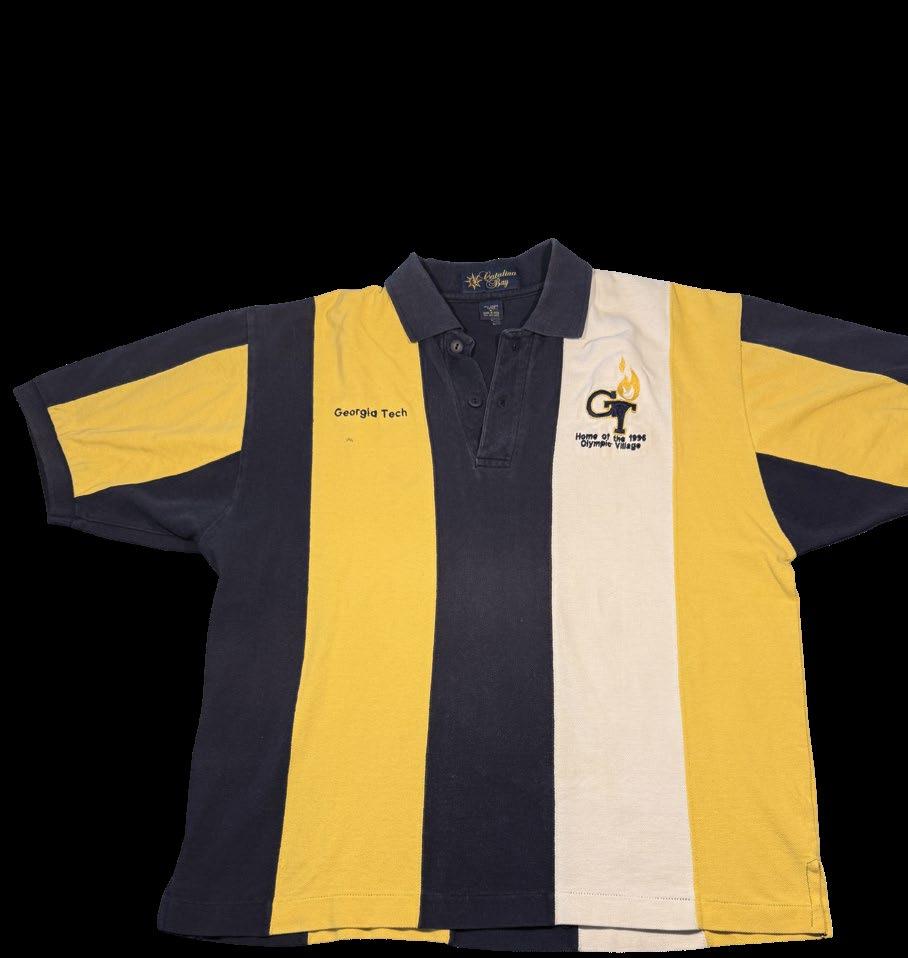
Georgia Tech played host to a number of events during the 1996 Olympic Games in Atlanta (like swimming and boxing) and housed thousands of athletes across campus. Beagle says items co-branded by Georgia Tech and the Olympics are incredibly difficult to find because very little of this type of merchandise was made. In addition to some pins, Beagle found a polo featuring the Tech logo with an added torch and a T-shirt celebrating the opening of the student activity center pool, created six years before the Olympics came to Georgia Tech.

The singular moments that changed everything.
By Daniel P. Smith
WWhile a college career is often viewed as a long, linear progression of semesters and credits on the march to graduation, it is in reality a vast collection of disparate moments—some of which fundamentally shift the trajectory of our lives.
Georgia Tech alumni often point to their “wake-up call,” a singular turning point when they were a student that spurred personal growth or served as an early and vital sign that Tech wasn’t like other schools.
Whether it was the humbling realization after that first grade on an exam that raw talent alone could not carry the day, the vulnerability required to ask for help, or a captivating lecture, these moments capture the dynamic nature of the Tech experience: a place that doesn’t merely teach students, but challenges them to improve the human condition.
Five Georgia Tech alumni—now leaders in global hospitality, IT consulting, executive coaching, academia, and business—each point to their “welcome to Tech” moments.

II moved to the U.S. to attend Georgia Tech when I was 17 years old. Admittedly, I had a narrow view of life as well as my professional options at the time. I majored in engineering not because of any defined career plans but because I did well in math.
Over my first two years at Tech, I largely put my head down and worked. As I progressed through courses and internships, my mind began to open up to different career possibilities. Georgia Tech was sharpening me for something, but exactly what, I didn’t yet know.
In my junior year, I became president of the Society of Hispanic Professional Engineers. That leadership role expanded my career horizons and gave me access to unique opportunities. When Coca-Cola CEO Roberto Goizueta came to campus to deliver a public talk, I was among a select group of faculty and student organization leaders invited to a private reception beforehand.
When Goizueta stepped into the room, you could feel his aura. He moved around the room greeting faculty and students. When he reached me, he saw my name tag and began speaking to me in Spanish.
As the reception was winding down and Goizueta walked toward the exit, I tapped his shoulder and said in Spanish, “Good luck with your speech.” He thanked me and smiled.
“Come with me,” he suggested.
When we arrived in the main auditorium, he gestured for me to sit in the front row among several
During his remarks, he also dedicated to me the beautiful words of Spanish poet Antonio Machado: “Caminante, no hay camino, se hace camino al andar.” (Traveler, there is no path, the path is made by walking.)
Coca-Cola board members. It was his seat.
“Go ahead. Sit,” he said.
Polished and charismatic, Goizueta captivated the audience. He detailed his career and his stewardship

of Coca-Cola. He mentioned his inspirations. During his remarks, he also dedicated to me the beautiful words of Spanish poet Antonio Machado: “ Caminante, no hay camino, se hace camino al andar.” (Traveler, there is no path, the path is made by walking.)
Goizueta inspired me on so many levels, from his upbringing to his professional accomplishments to, above all, the humanity he showed me, one of hundreds of Tech students present that day. Right
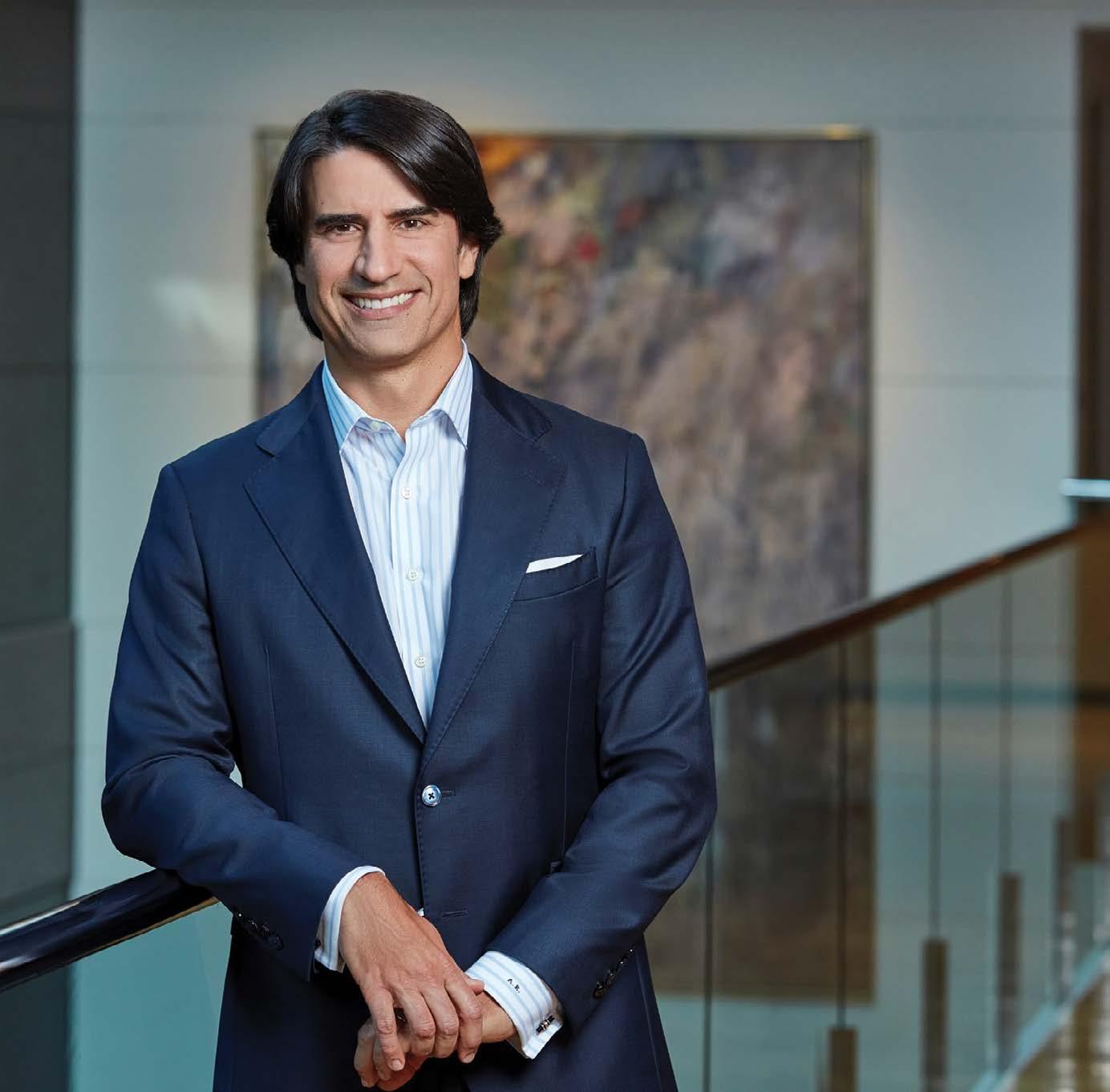
Alejandro Reynal, ME 94, MS ME 96, is the president and CEO of Four Seasons, one of the world’s most prestigious luxury hospitality brands. Reynal oversees a global, 60,000-employee enterprise operating more than 130 hotels and resorts, more than 60 branded residential properties, and experiential offerings such as the Four Seasons Private Jet Experience and Four Seasons Yachts.
then and there, I decided I wanted to become a CEO to positively impact the lives of others.
The power of the Georgia Tech brand made that moment possible, and it changed my life. It was a moment empowered by the premier reputation of Tech—a place that continues to attract executives from top companies to campus to interact with students. Access to Goizueta shaped my perspective and altered the direction of my life in such profound and special ways that I will forever be grateful.
Though I went to an academically rigorous high school, I managed the academic workload. Even though becoming a college football player earned much of my focus back then, honestly, I expected Georgia Tech to be much of the same—and for a while, at least, it was.
I took five advanced placement classes in high school, so my first two quarters at Tech brought a lot
of review. I breezed through and had a 3.8 GPA at the halfway point of my freshman year while acclimating to big-time football and enjoying Tech’s social scene. Then, everything changed in the third quarter. I came into Tech as a pre-med student but quickly realized that wasn’t my calling. I switched over to electrical and computer engineering and began knocking out some of the core engineering courses. I
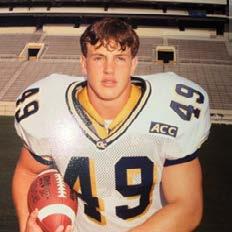
Paul Hogg in 1998 as a linebacker for the Georgia Tech Yellow Jackets.
The third quarter of my freshman year delivered a learning experience I needed and led me to create the necessary processes that positioned me for success at Tech and beyond.
milestones at Tech, from moving my major to industrial and systems engineering to being on the field as we beat Georgia 51-48 in 1999.
hit Differential Equations and tried to coast on prior knowledge. I couldn’t. My GPA in the third quarter was 2.5, which was a real wake-up call for me.
If I had any visions of success in the classroom and on the football field, then I needed to put in the work. There would be no shortcuts. No skating by. I had to put my social life in its proper place and figure out quickly a two-pronged approach prioritizing academics and athletics if I was going to earn the results I wanted for myself. I needed to mature, concentrate, and focus on getting the work done.
The third quarter of my freshman year delivered a learning experience I needed and led me to create the necessary processes that positioned me for success at Tech and beyond. With reflection and a more intense focus on my goals, I enjoyed so many significant
As a father, husband, and CEO today, I’m grateful for so many experiences I had at Tech, but the third quarter of my freshman year looms particularly large. I work hard in my career for myself, of course, but also because I want those I work with to be successful and achieve the results and lives they want as well. I attribute so much of this mindset to the discipline I gained during my freshman year at Tech and the realization I had to demand more of myself.
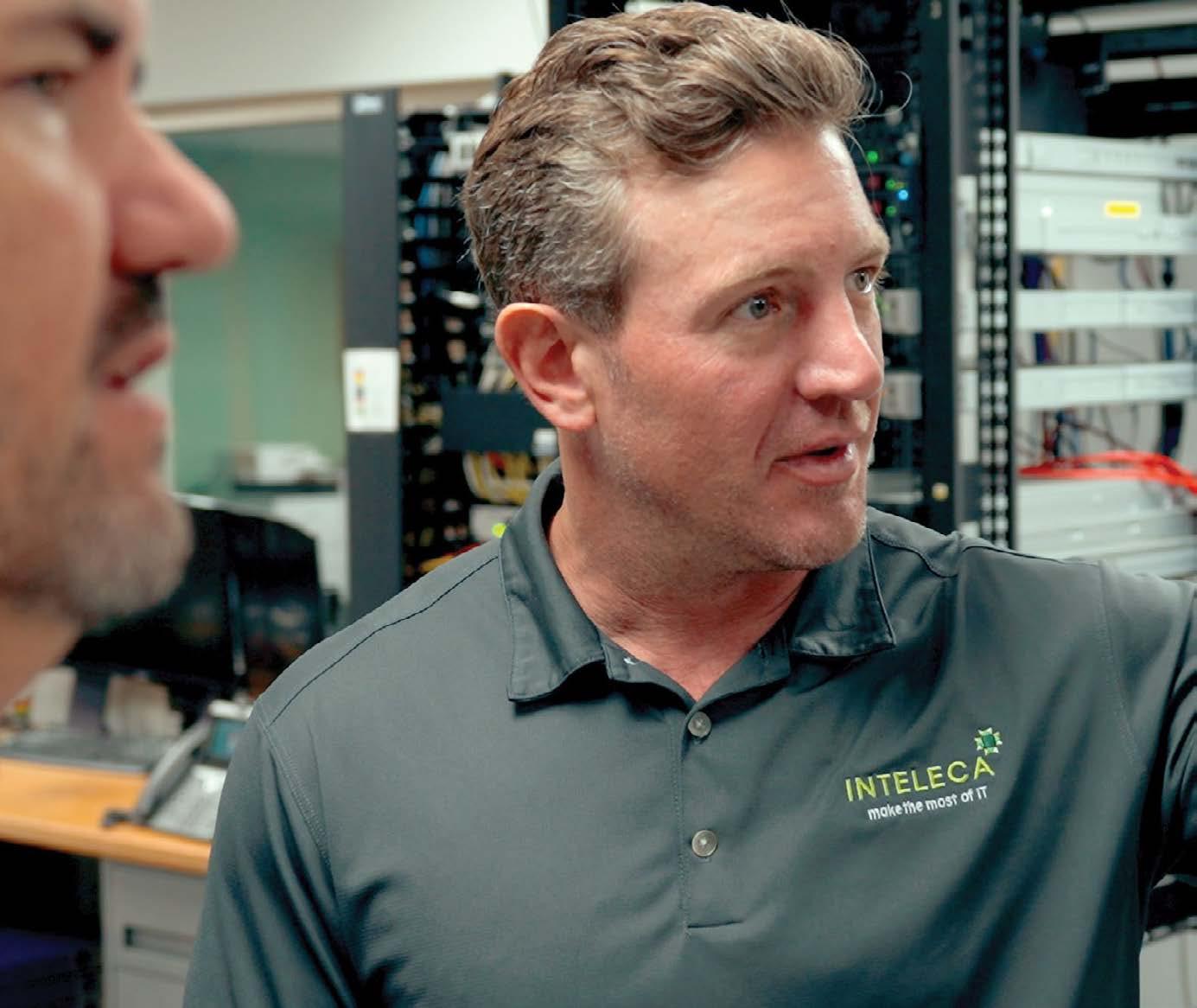
A former Yellow Jacket football linebacker, Paul Hogg, IE 02, MBA 10, is the founder and CEO of Inteleca, a 17-year-old IT services and IT consulting firm headquartered in Smyrna, Georgia. The Atlanta native “caught the Tech fever” from his father, Brian Hogg, IM 61, an active member of the Georgia Tech Alumni Association and a regular at Georgia Tech sporting events.
GGrowing up in Macon, Georgia, failure was foreign to me. I naturally thrived in athletics, the arts, and academics, where raw ability and last-minute effort usually carried me through. So, when I arrived at Georgia Tech as an architecture major with dreams of working alongside my father (Corsini & Father, I liked to joke), I assumed the success would continue.
Georgia Tech had other ideas.
Architecture at Tech was demanding in ways I hadn’t experienced before. The workload was relentless. The expectations unforgiving. The pace didn’t slow for anyone—not for talent, confidence, or good intentions. Slowly, then all at once, it became clear I was in over my head. At the end of the third quarter, I flunked out—and not because I was having too much fun. I was actually trying and still flunked out, which made it especially demoralizing.
The emotional weight of that moment was heavier than the academic consequence. I was embarrassed. Ashamed. Disoriented. If I wasn’t “the guy who succeeds,” then who was I? Leaving Georgia Tech felt like a public acknowledgment that I wasn’t good enough, not only for Tech, but for the version of myself I thought I was supposed to be.
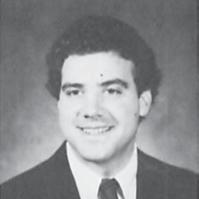
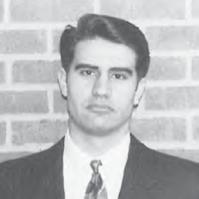
yearbook.
In hindsight, that moment was Georgia Tech’s greatest gift to me. It delivered a
vital life lesson about perseverance when there’s no quick fix, when ability isn’t enough, and when the only option forward is humility, effort, and time. Setbacks, I discovered, are not verdicts but rather opportunities for growth.
While sitting out the fourth quarter of my freshman year, I wrestled with hard questions about my work ethic, my self-image, and whether I was willing to earn something the hard way instead of coasting. I decided to return to Tech, which wasn’t an obvious or comfortable decision. Intellectually and emotionally, I knew the academic rigor hadn’t changed. If anything, I knew more clearly how difficult it would be, but that was precisely why I chose to re-enroll at Tech rather than going to another school with lower academic standards. I wanted the honor of a Tech degree more than I wanted an easier path.
In returning to Tech, I changed my major to industrial management—a field better suited to how I learned and who I was becoming—and changed my entire approach to academics. I stopped relying on talent and started leaning into discipline. I asked for help. I showed up consistently. And this time, it worked.
What Georgia Tech ultimately taught me had nothing to do with architecture or management theory. It taught me that when everything feels stacked against you—when your pride is bruised, the path forward is unclear, and quitting would be understandable—hard work, dedication, and perseverance still matter. More than that, they compound. Slowly. Quietly. But relentlessly.
It delivered a vital life lesson about perseverance when there’s no quick fix, when ability isn’t enough, and when the only option forward is humility, effort, and time.
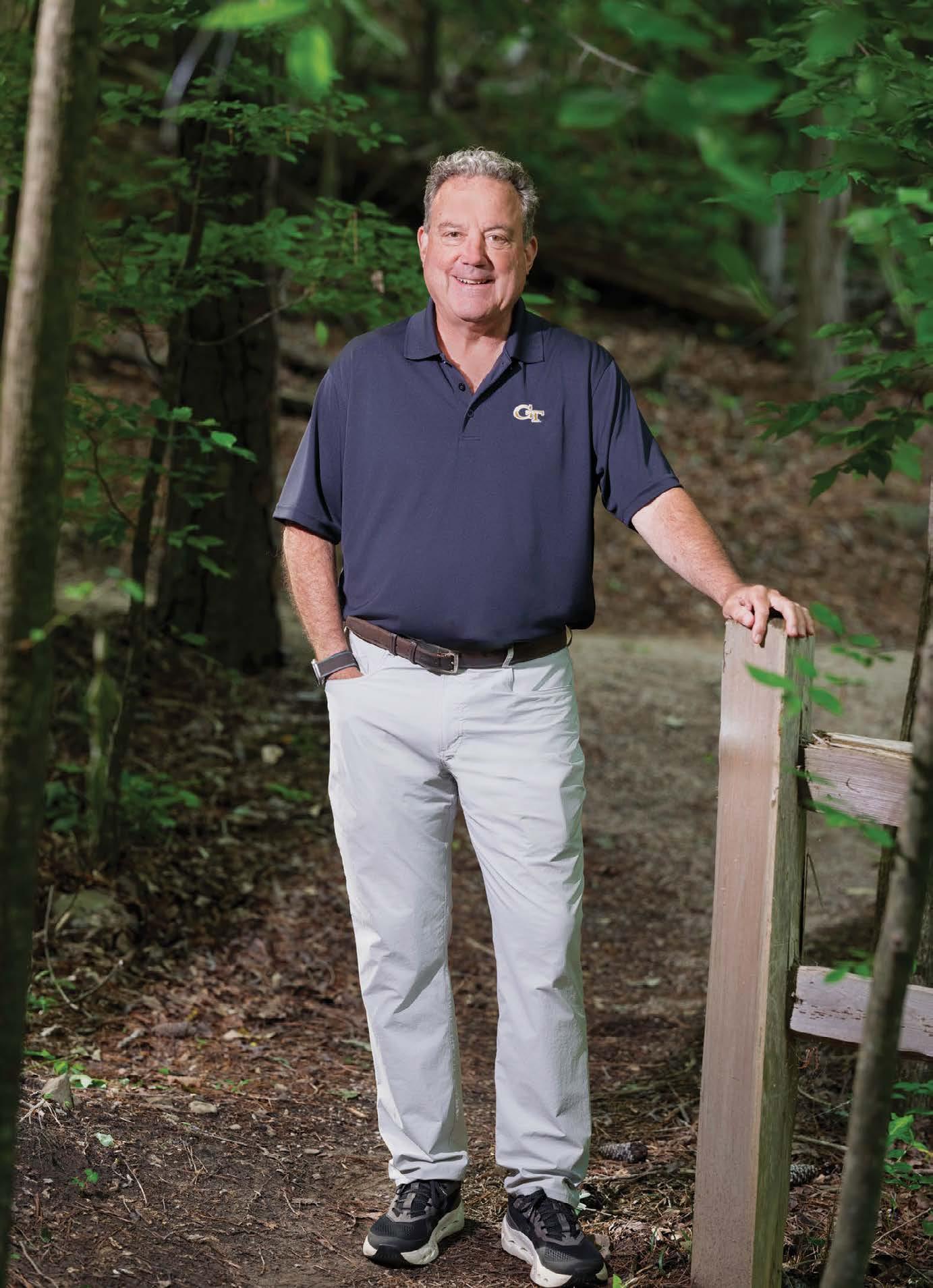
After spending the first decade of his professional career in sales at IBM, Marc Corsini, IM 80, shifted from the corporate world into entrepreneurship. Since 1992, Corsini has been an executive coach. His current roster features nearly 100 CEOs and presidents.
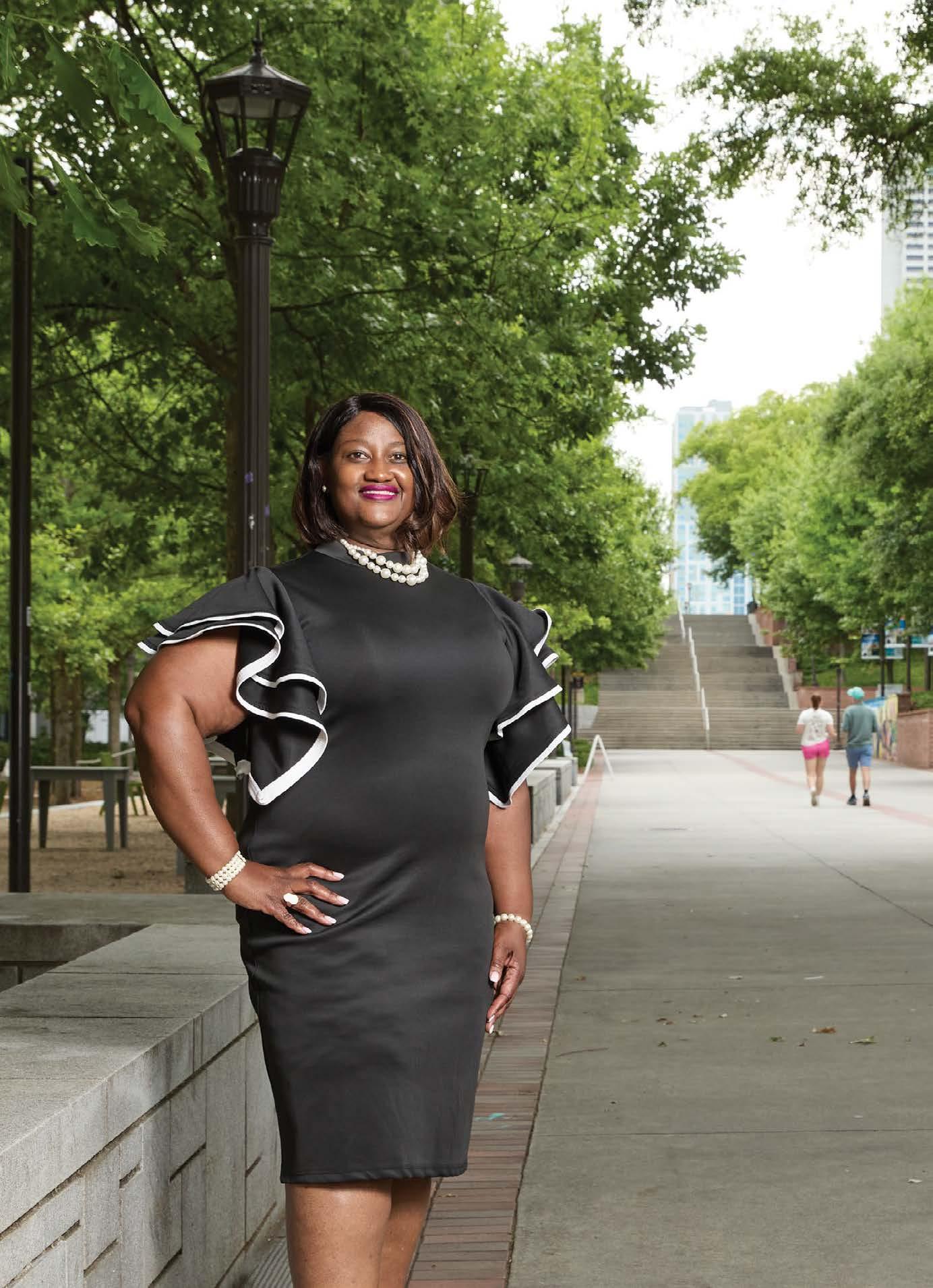
After a 24-year career at Procter & Gamble, where she worked across the enterprise in areas like supply chain, human resources, and customer service, Cynthia Culbreath, IE 93, MS IE 95, transitioned to academia in 2024. She is now the cyber policy program manager at Spelman College, where her projects include the institution’s newly launched Cybersecurity Clinic.
NNear the end of my sophomore year of high school, my counselor told me about a week-long summer engineering camp at Georgia Tech. Now, when I heard “engineer,” I immediately thought of the person on the train wearing a blue cap. No one in my circle could tell me anything about the engineering profession. However, the chance to spend a week at Tech proved too enticing, so I signed up.
That one week changed everything. As we visited different engineers and learned about their roles, engineering’s connections to business fascinated me. I scrapped my existing 10-year plan—Harvard, then law school—and decided to major in industrial engineering at Tech.
I arrived on campus the smart kid. My entire academic career to that point featured a single B (in handwriting, of all things). But it didn’t take long to learn smart kids filled Tech.
Despite early self-doubt, I survived my first quarter at Tech and classes like physics and calculus. In the second quarter, though, I took electromagnetism. The class intimidated me and my anxiety swelled.
finalist
Tech.
Flustered, I consistently used my left hand to do the right-hand
rule. I feared I was going to flunk out and lose my scholarship. When I called home and told my parents I didn’t think I was going to make it, my father presented an alternative: “Come home, go to the junior college, and major in spelling.” It was his way of telling me to stick it out.
To save myself, I went to the Office of Minority Educational Development (OMED)—now the Office of Student Achievement—and was directed to tutoring. In high school, I was the tutor. At Tech, I became the tutee, forced to swallow my pride and accept help.
At OMED, I linked up with two tutors, Andre Marshall, ME 91, MS ME 93, and Tyrone Benson, EE 91, who made me feel at ease. They were welcoming, not condescending. They asked about my struggles, sat beside me, and listened. Genuine and caring, they explained things to me in a way that clicked, and their support made all the difference. I ended up getting a B in electromagnetism on my way to graduating with high honors.
Overcoming that academic challenge—the first in my life—gave me a different sense of confidence and an appreciation for the brilliant community present at Tech. I learned I didn’t need to do everything alone. I could give myself grace, build a squad around me, ask for help, and learn from the wisdom of others. Doing so represented strength, not weakness, and that lesson remains with me today.
I learned I didn’t need to do everything alone. I could give myself grace, build a squad around me, ask for help, and learn from the wisdom of others.
AAttending Georgia Tech became a bucket list item for me as I explored graduate schools in the U.S. after completing college and working in my native India. As I investigated different universities, it seemed the combination of Georgia Tech’s reputation, research strength, high-level faculty, and alumni base would help me take my career to the next level. A dozen years later, I can say Georgia Tech did that and more, though not necessarily how I envisioned.
I came into Georgia Tech focused on understanding gene sequencing and making advancements in that space. Within a week, however, my academic direction completely flipped.
At the start of the fall term, Tech allowed some flexibility in course selection. I was able to attend different classes before finalizing my course schedule, and I took full advantage of the opportunity. I had just walked out of a machine learning course when some friends suggested I follow them
to an advanced natural language processing course taught by Dr. Jacob Eisenstein. “Why not? ” I figured.
I entered the massive lecture hall with few expectations and began listening to Dr. Eisenstein, a natural language processing expert who led Tech’s Computational Linguistics Lab. He noted how robust natural language processing could measure and understand language variation, which enabled AI systems to remain accurate and functional across diverse languages and dialects. Here, I saw something bridging humans and machines, and I was fascinated.
Within an hour, everything changed—my academic focus, my aspirations, and the trajectory of my life. Until this point, I had mainly been doing theoretical math and physics, and large language models weren’t at all on my radar. But Dr. Eisenstein’s class offered a home for applying theory into the real world, and I was blown away. This, I learned, was the magic of Georgia Tech: world-class faculty passionate about what they were doing and bringing students into their dynamic worlds and innovative work.
I got on the wait list for Dr. Eisenstein’s course, continued attending the class, and endlessly lobbied for a spot,
Within an hour, everything changed— my academic focus, my aspirations, and the trajectory of my life.
eventually getting the final seat in the class. Now, to be absolutely clear, the course was not easy. The curriculum was heavy and intense, and it pushed me far outside my comfort zone. As I had been working for three years before enrolling at Tech, I was also out of practice with advanced mathematical rigor. Nevertheless, I savored the challenge. Failure normalizes you. Failure humbles you. But failure also teaches you. I embraced the unknowns, battled through the intimidation, and gained confidence that has remained with me throughout my entire career.
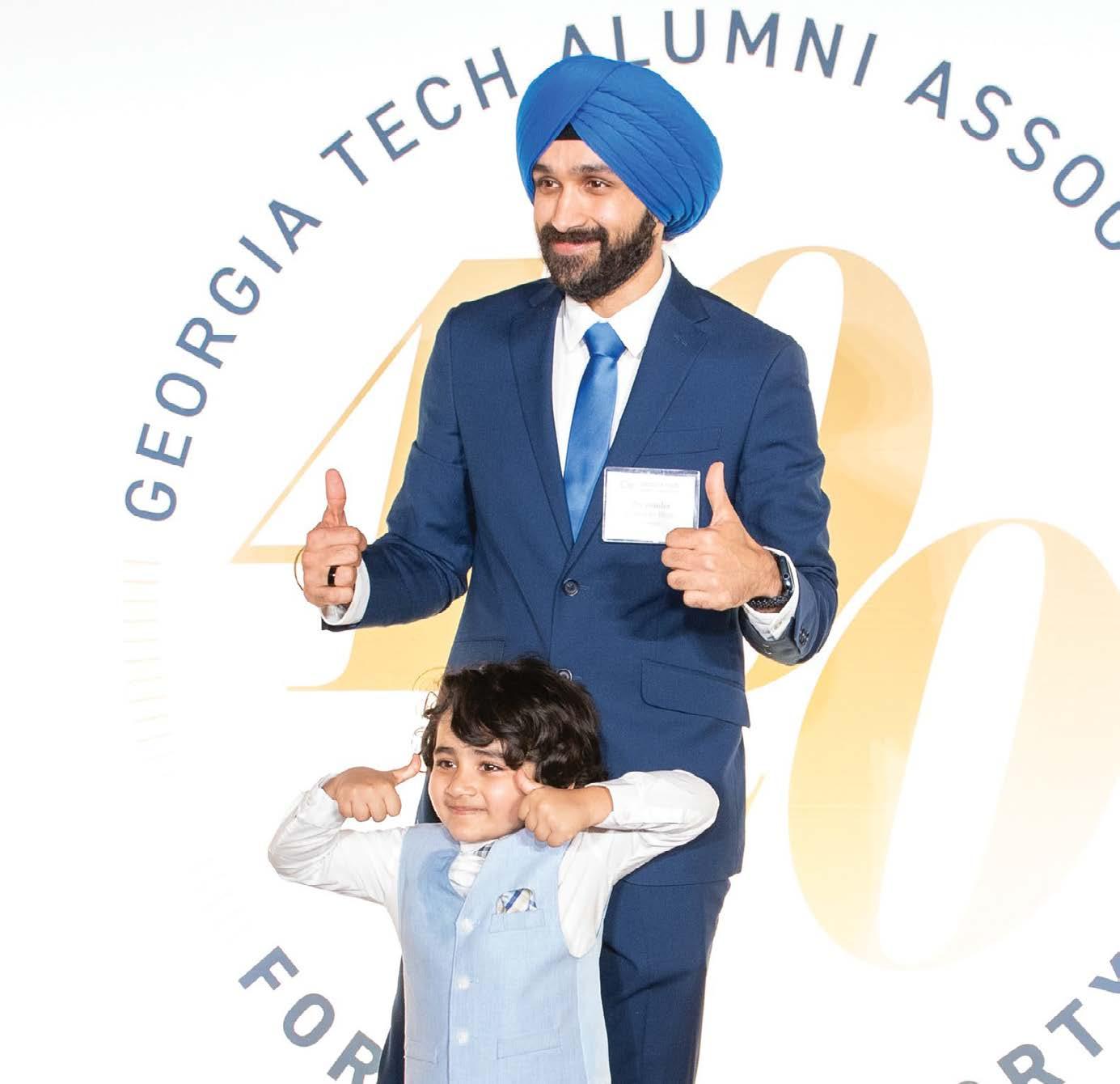
As the chief AI officer at GE HealthCare, Parminder Bhatia, MS CSE 15, leads the global company’s ambitious efforts to integrate artificial intelligence into the development, manufacturing, and operation of medical devices. His work at GE HealthCare over the last three years follows a nearly seven-year run constructing innovative Generative AI and Foundation models for Amazon. Bhatia is part of Georgia Tech’s 2025 Class of 40 Under 40.
BY JENNIFER HERSEIM AND SCOTT STEINBERG, MGT 99
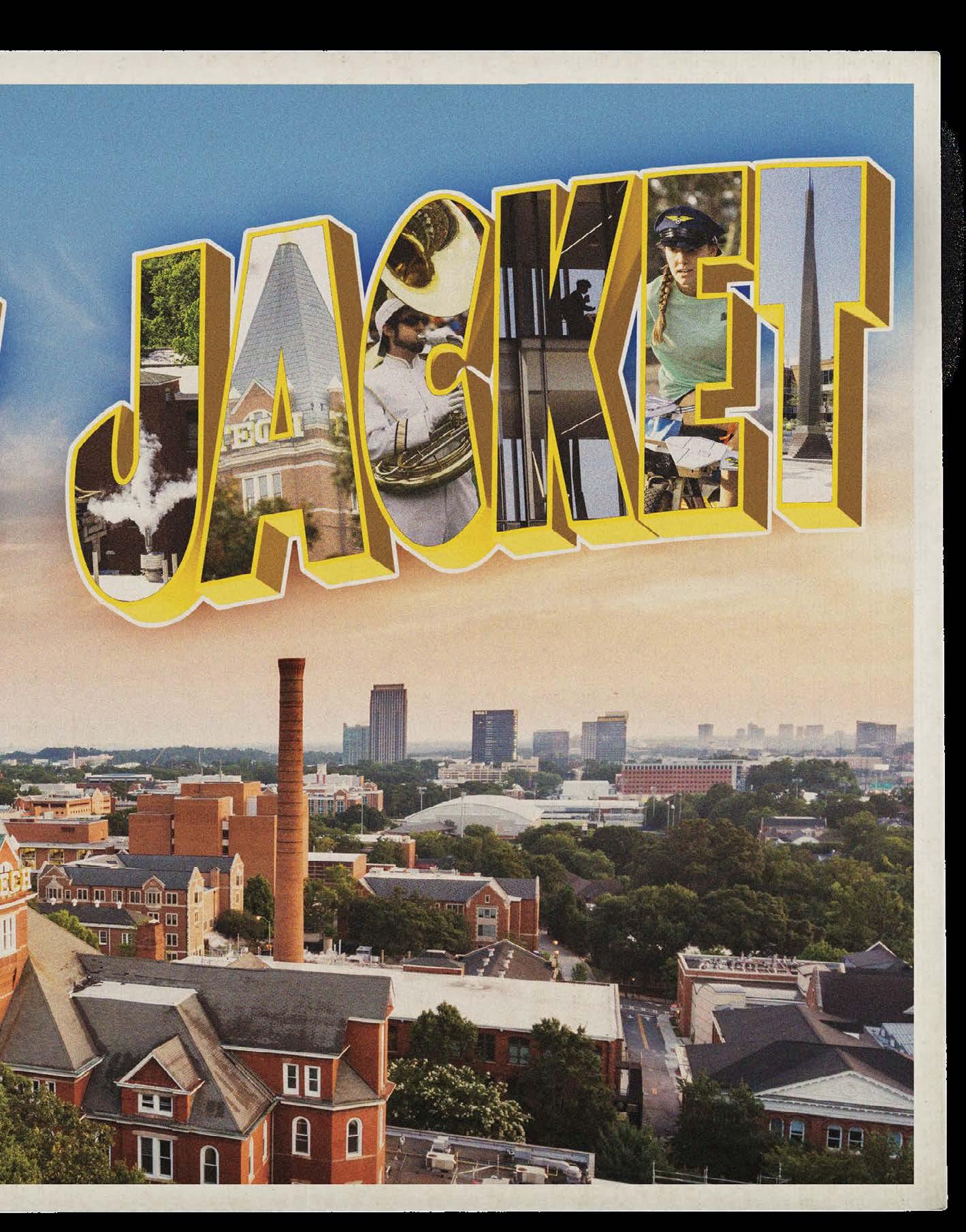
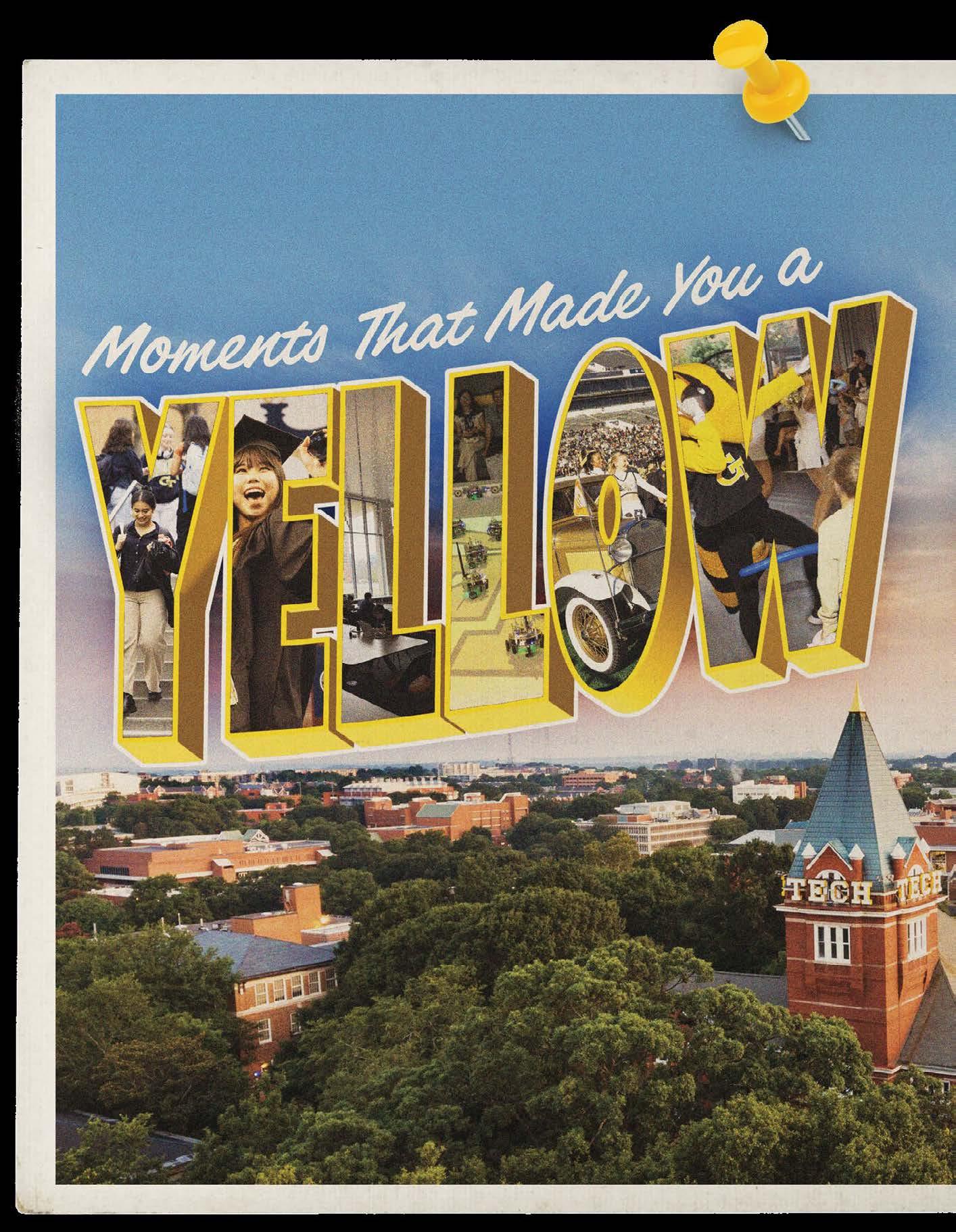
Reflecting on your Georgia Tech experience, you can likely pinpoint a single day or even moment when you felt like a true Yellow Jacket. Perhaps it was the road trip with friends to watch a football game or when you finally taught your adult children the uncensored version of the fight song. In that moment, you felt like you belonged to something bigger than yourself, like a bona fide member of the Yellow Jacket swarm.
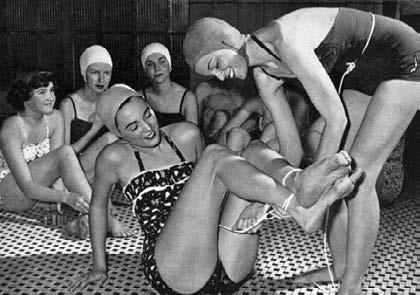
YOU TOOK OFF ON FOOT FROM GLENN DORM TO YOUR FIRST CLASS OF THE DAY IN SKILES AND THE WHISTLE BLEW, LIKE CLOCKWORK, TO SIGNAL THE START OF YOUR DAY.
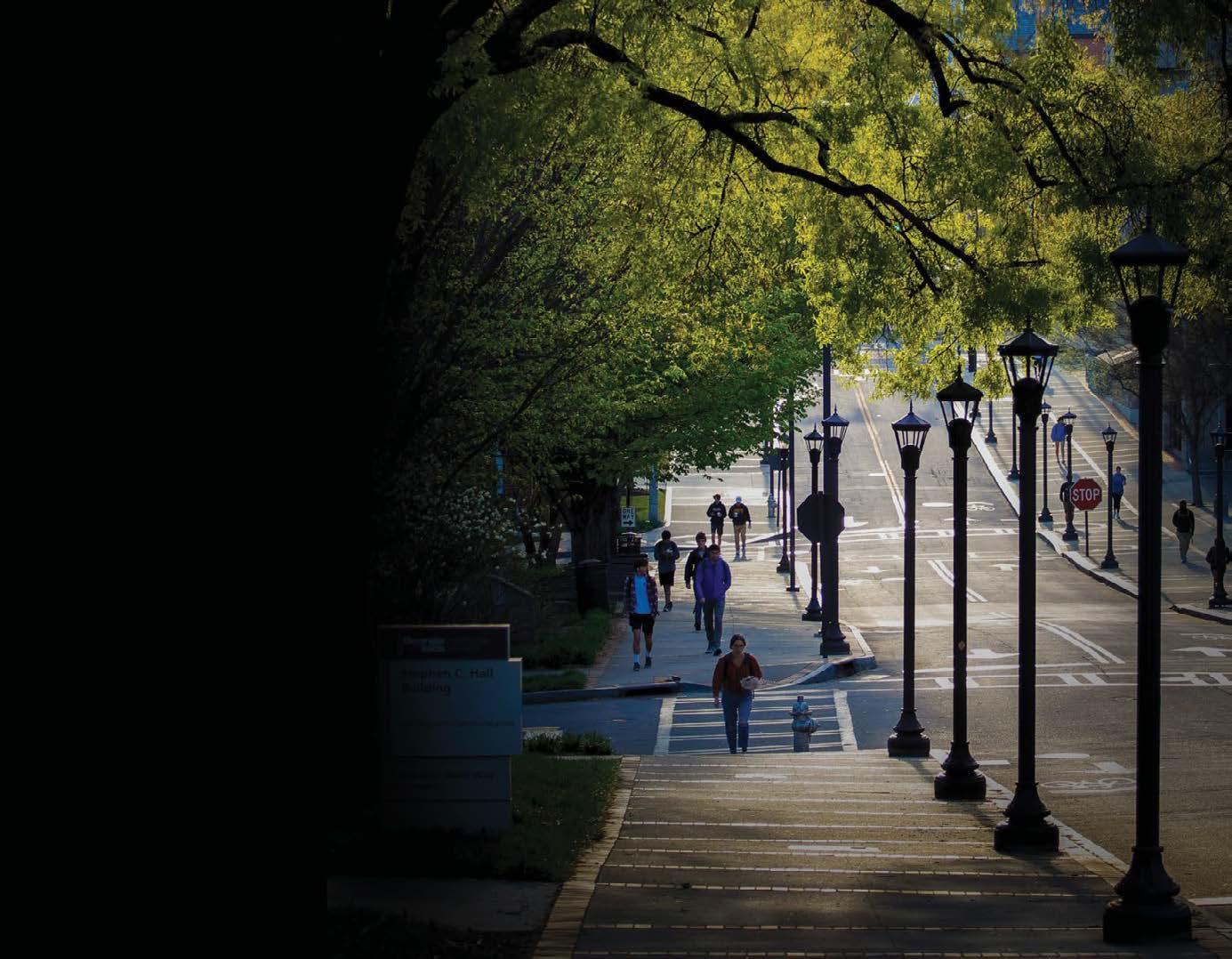

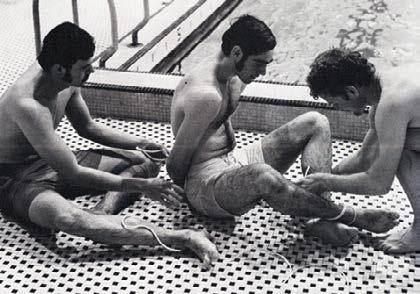
Taking (or Avoiding) Drownproofing.
Back when Tech was sink or swim, literally, Coach Fred Lanoue’s famous drownproofing course taught Yellow Jackets how to stay calm in any situation through rigorous challenges that tested students’ water-survival techniques. For those who arrived as the course was being phased out, the moment Tech stopped requiring drownproofing became its own watershed moment.
Walking Into a Class Where Everyone Knows Your Name. You go from being one of 200 in an introductory physics class to one of only six in a bioengineering course, where your professor knows exactly who you are.
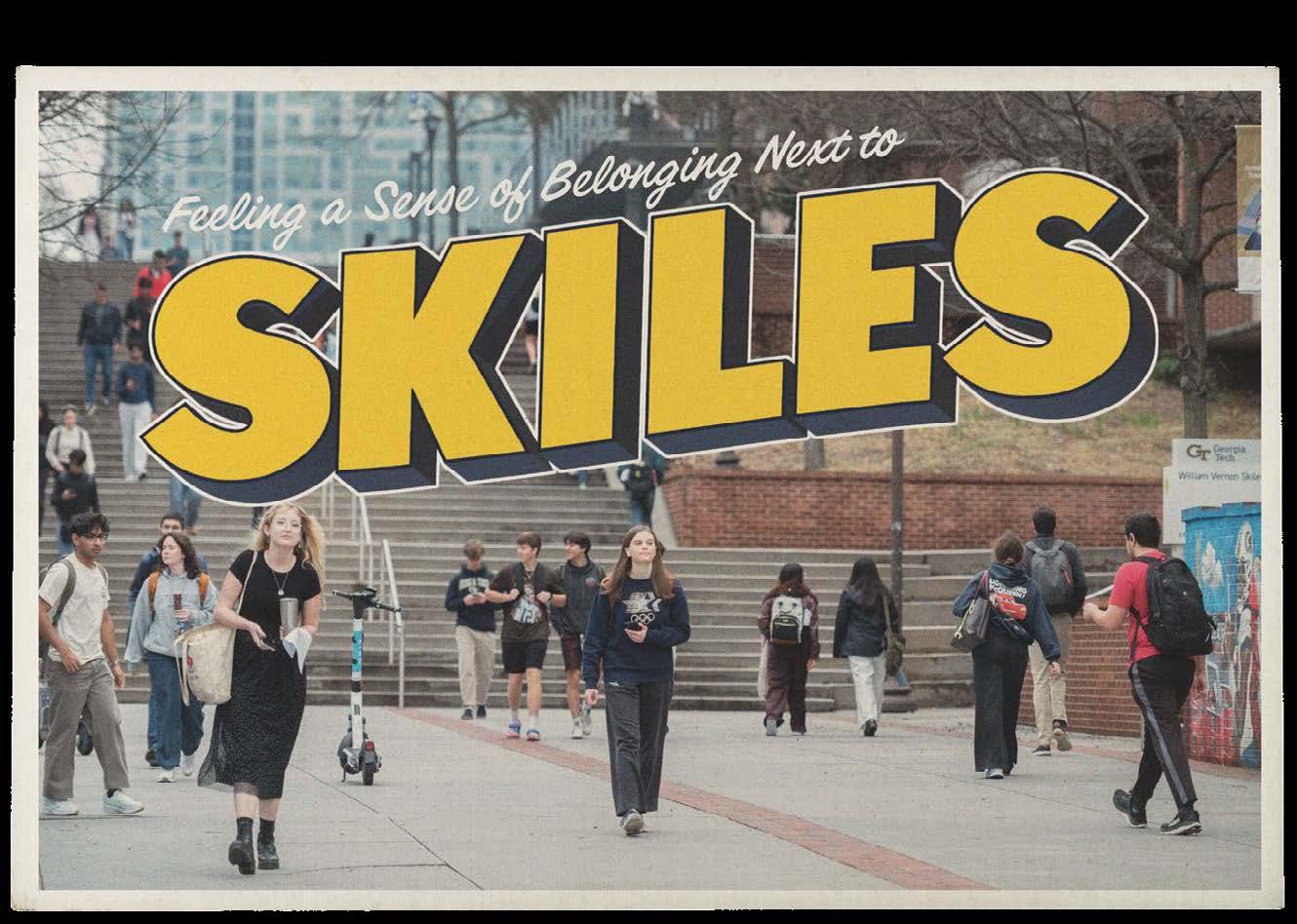
I wanted to be a mechanical engineer since third grade, but there just weren’t that many women doing it at the time, and I wasn’t keen on going to school locally in Texas. I got a mailer from Georgia Tech, but had never been to Atlanta. So my family and I took a trip to Tech campus for fall break in 1973 during my high school senior year. We had no scheduled meetings, no planned tour—just stopped in at the ME office in the J.S. Coon Building, met Norma Frank and Dr. Johnson, who both worked in the ME department, and got a campus map. As we were exploring, looking out of place, a student stopped us somewhere near Skiles and the library, and asked if we needed any help to find our way. He said: ‘Just keep going, you’re in the right place, and I hope you enjoy your time.’ That’s when I knew Tech was the place for me—folks here were smart, helpful, and kind! There weren’t many women on campus, but everyone from students to professors was welcoming. Thank goodness for that because the highest level of math my high school taught was trigonometry. I remember walking into my first day of class in an amphitheater of 200 to 300 freshmen. The professor asked, ‘How many of you took calculus in high school?’ And about half held their hands up. The rest of us looked around, thinking, Oh, dear, we are in a world of hurt! Thankfully, it all worked out in the end. —Lorena “Lori” Charbonneau, ME 78

TWO TRUTHS AND A LIE: Take the quiz of incredible moments from Georgia Tech history to see if you can tell truth from fiction. GTalumni.org/factorfiction.
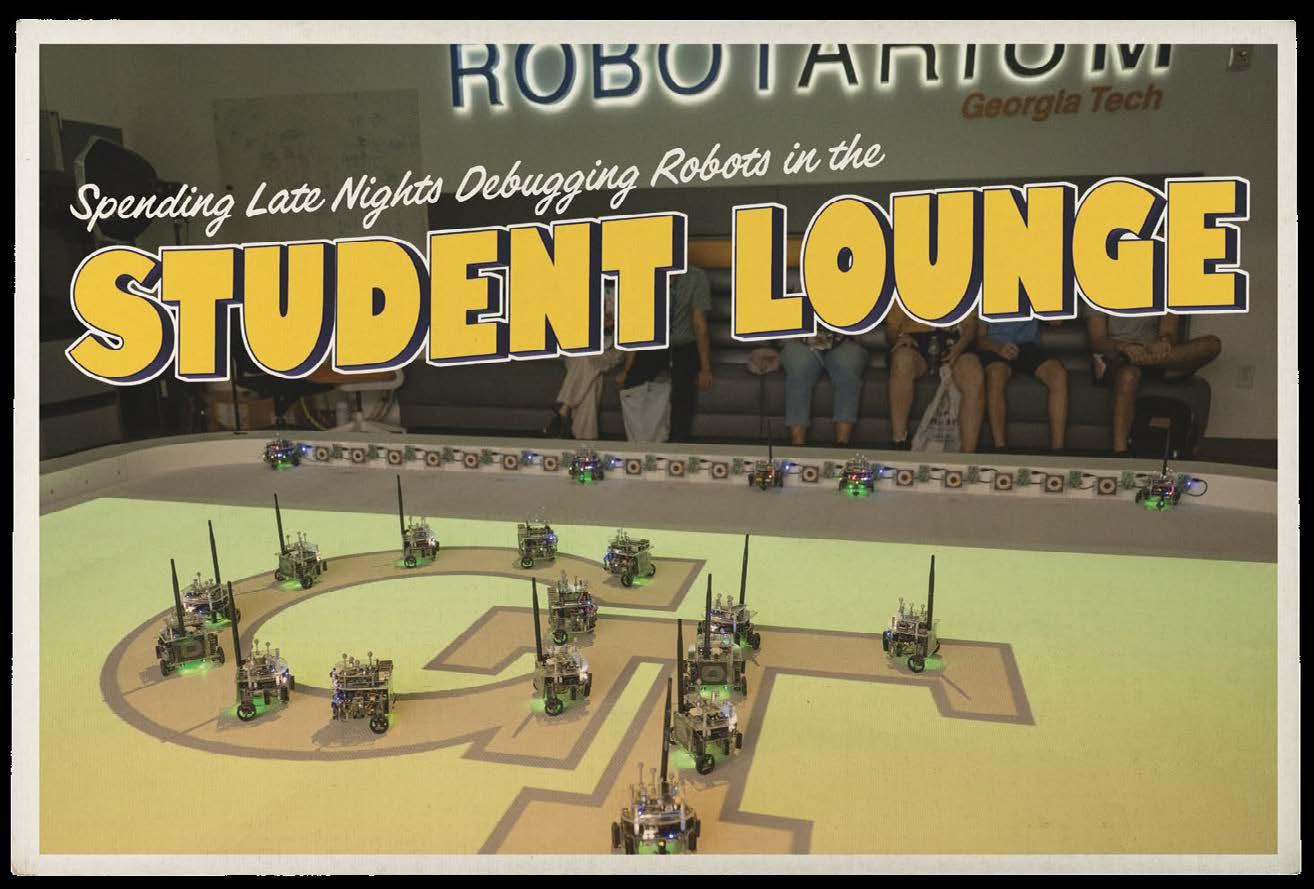
A moment that stands out from my early days at Tech was my very first semester. As someone who grew up building add-ons for World of Warcraft, I was taking CS 1301 and got completely hooked programming Scribbler robots. Watching those little guys zip around and respond to my code made computing feel fun and tangible for the first time. At the same time, I was hyper-involved in activities, playing club men’s lacrosse, rushing and starting my fraternity experience, and was staying super active in the College of Computing student lounge. It was this perfect storm of late-night robot debugging sessions, intense lacrosse practices, fraternity brotherhood, and those casual but meaningful conversations in the CoC lounge that suddenly made campus feel like home. I went from feeling like a new student to truly feeling like a Yellow Jacket. I became part of something bigger, balancing academics, athletics, and community all at once. You know how some people go to business school? I treated Georgia Tech like a learning playground, participating in startup challenges, clubs, and hackathon events, and enjoyed the networking opportunities as much as the education. I was surrounded by a ton of smart people, and being exposed to so many ideas and perspectives really taught me to trust myself and have faith that I could figure out any challenge. I wholly encourage students to seek out every opportunity on campus that they can. You don’t have to commit four to five years to learning one single thing, after all. —Christian Battaglia, CS 17
Figuring Out Life Without a Car Your First Semester. While the rule that first-year students can’t have cars on campus is no longer in place, being a carless student required a sense of structure, scheduling, and a willingness to beg for rides from juniors and seniors.
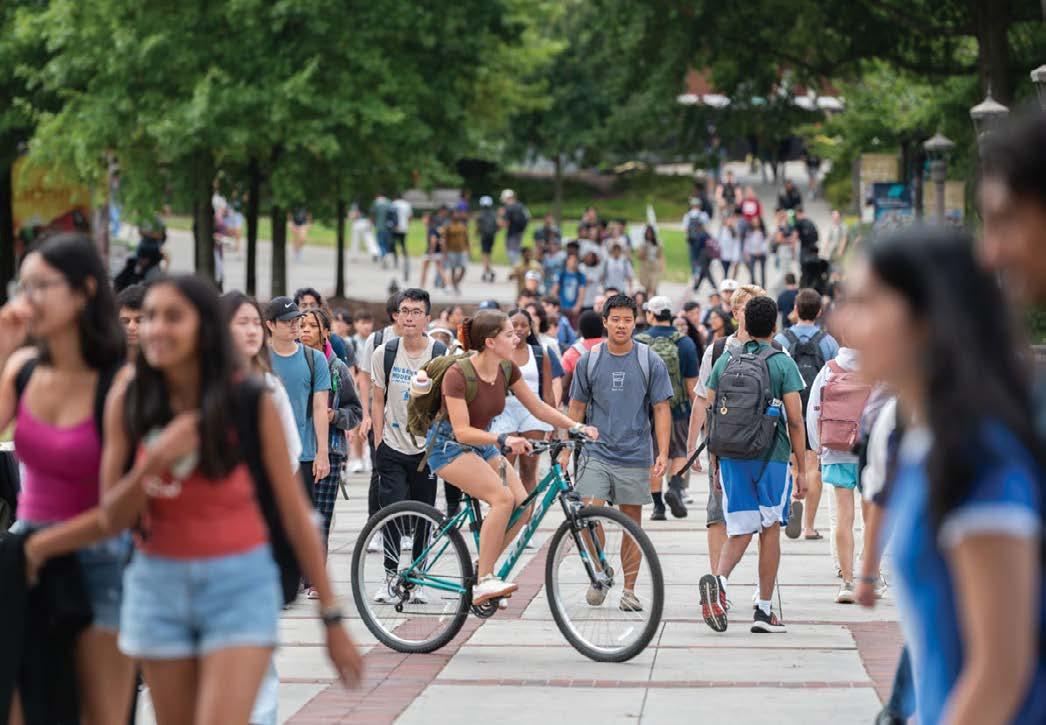
ENGINEERING A MULTI-STOP ROUTE TO MAKE IT BACK TO CLASS
RIDING
IT WAS FORBIDDEN TO EVEN TOUCH THE WRECK DURING YOUR FIRST YEAR OR ELSE GEORGIA TECH WOULD LOSE TO UGA. SO HEARING THAT “AHOOGA!” SOUND FROM THE PASSENGER SEAT—OR EVEN THE RUMBLE SEAT— STICKS WITH YOU LONG AFTER YOUR FIRST RIDE.
When I was studying abroad my second year in Metz, France, with Georgia Tech–Europe, there was a train strike in Amsterdam that disrupted our plans to get back in time for class that Monday. With multiple train routes canceled and limited options, my roommate and I sat down and created this crazy, multi-leg route to get back in time. It involved a combination of multiple trains and buses, and although we were stressed at the time, we carefully mapped out each leg to make it back. Another time, we got stuck in London and had to devise a plan to get back to Paris and then get up super early to make it to class. It was nice to be with fellow Tech students who cared just as much as I did about making it to class on time. Our engineering classes counted toward our degree, so we couldn’t miss one or we’d be behind. My study abroad friends became some of my closest friends at Tech. We all saw each other again at the Georgia Tech–Europe graduation reception a few weeks ago, where we received a special medallion, a new tradition, commemorating our time together.
—Anna Carlton Maddox, IE 26
I was definitely late to convocation because I lived on west campus and that was so far away from everything. And I wouldn’t look at the map because people said that’s how they know if you’re a freshman. Finally, I made it to McCamish. It was something you had to do to check off your list for starting college. I remember being in this crowd of students and we had our RAT caps and then Nick Selby got on the stage for his speech. He could have gone up there and treated it like a formal speaking event, but he didn’t. He was screaming and playing theme music and telling you that you could do anything because YOU were at Georgia Tech. Before then, I think a lot of students go through the college application process and start something new, and that can make uncertainty start to creep in. You think, Maybe I got into Tech by accident. Maybe there was a mistake, and I’m not meant to
MEETING THE PERSON WHO BECOMES YOUR CO-FOUNDER. THEY SHARED YOUR PASSION FOR AN IDEA, THEY HELPED YOU COMPETE FOR THE INVENTURE PRIZE, AND TOGETHER YOU BUILT SOMETHING BIGGER THAN YOU COULD HAVE EVER DONE BY YOURSELF.
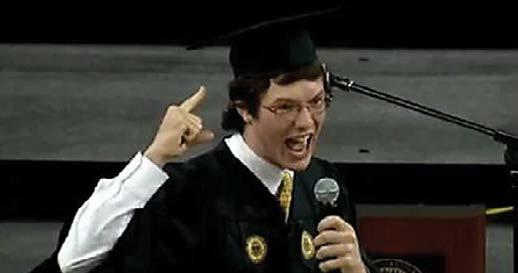
be here. But his speech erased that doubt. It made you feel like you were meant to be at Georgia Tech, like everything had come together so that you could be here, and that great things were going to happen from this point onward. It made you feel like people support you, the alumni support you, the community supports you, and they’re all cheering you on. I still watch his speech from time to time on YouTube.
—Liz Raman-Grubbs, BA 17
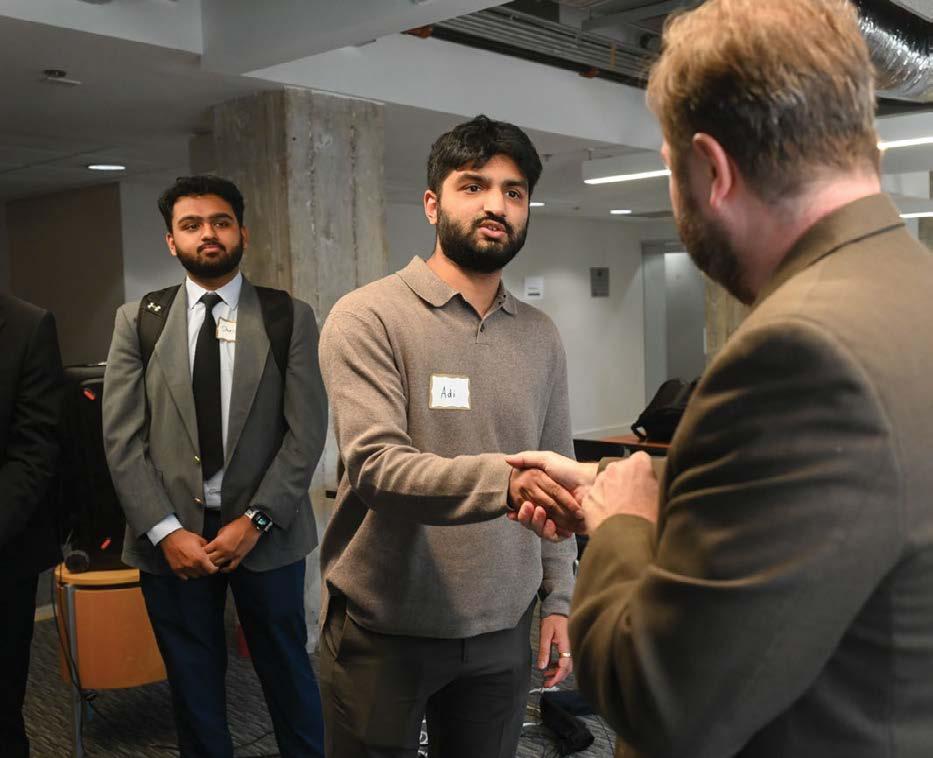

It was 2008, GT Band’s Centennial year and the year the Yellow Jackets beat UGA. I played the tuba, and we had the honor of marching in the Macy’s Thanksgiving Day Parade in New York City. For a lot of us, it was our first time being away from home! We woke up for a 4:30 a.m. call time, then traveled by bus to get there. We got to explore Central Park and ended up going to Ellis Island, where I got to see some of the names of my relatives that came over generations ago. It was our first taste of freedom, and we got a generous per diem, too. I felt like I was rich at the time! What they don’t tell you about playing a tuba, though: The instrument is really susceptible to changes in temperature, and in November in New York, when it was freezing cold, holding one left you cold to the bone. But they put us right next to Miley Cyrus! Immediately after the parade, we grabbed lunch, boarded buses, and drove straight back all through the night to Atlanta. It was a very energetic ride up and a quiet one home! We arrived Friday morning, caught our breath for a day, and then hopped right back on the road to Athens. Cheering our team to a 45-42 victory over UGA in their own stadium (and surviving that whirlwind, once-ina-lifetime weekend with hundreds of my best friends) was wild, though! It’s the moment I truly became a Yellow Jacket! I met my wife in the band and we’re celebrating our 10-year anniversary in August. —Christian Doetsch, CS 13
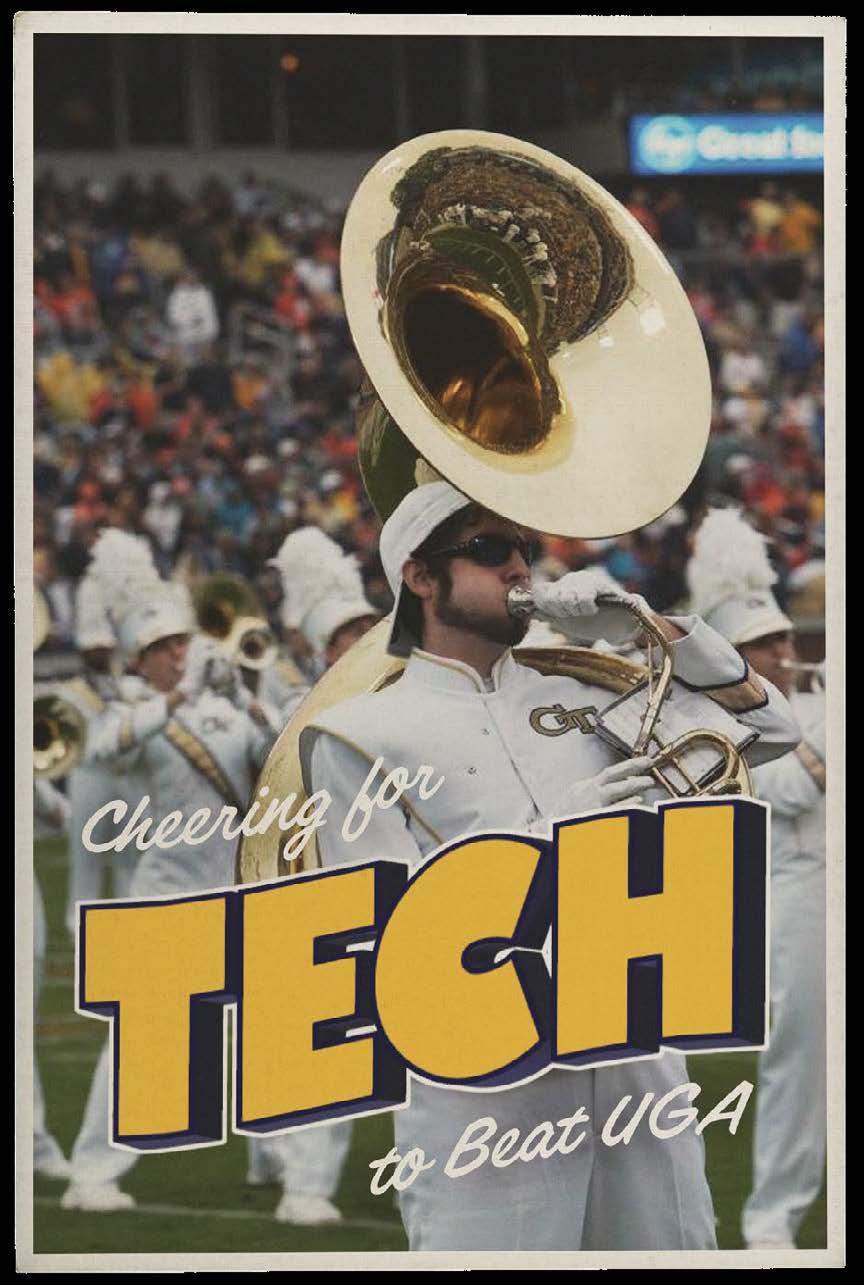
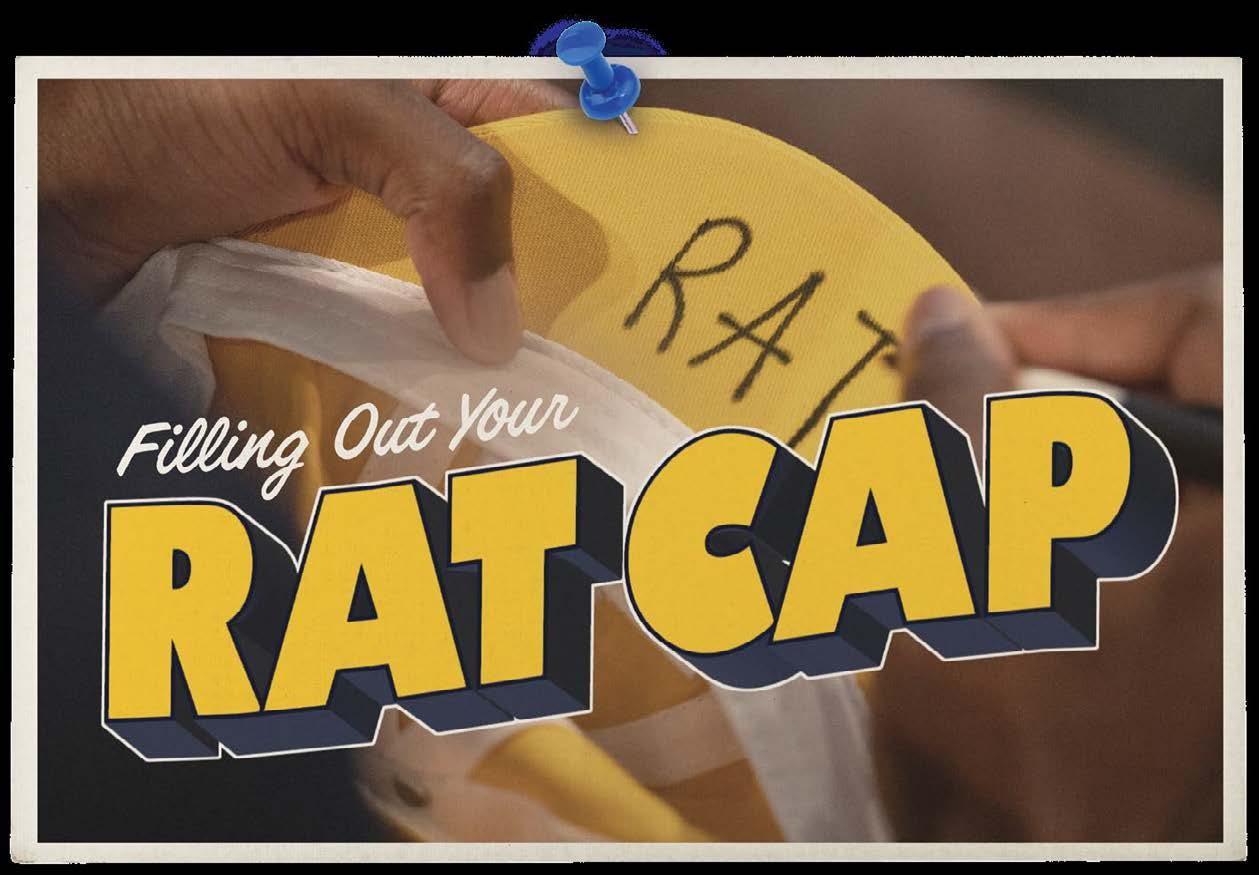
In bold Sharpie, you wrote RAT on the upturned bill, your name above that, and your hometown below. You flipped it over and scribbled across the back, “To HELL with georgia.”
MEETING YOUR CIRCLE IN THE STANDS, AT BRITTAIN DINING, OR ALONG TECHWOOD DRIVE.
There’s nothing quite like that first football game watching the Ramblin’ Wreck roll out to make you feel like you’re part of Georgia Tech. My first time at a game was in September 2004 against Samford, which we won 28-7 led by another PJ (Daniels), who was a tremendous running back. Another moment is when you first meet your group of friends who will be with you during your time at Tech and after graduation. It was Rush Week, and I was walking along the Greek houses on Techwood Drive. I saw students on the lawn of the Baptist Student Union (now called the Baptist Collegiate Ministries) giving away hot dogs and inviting people to a small group Bible study. I instantly connected with them. Finding your group and establishing your identity as a young adult in a community was tremendous. They became part of your Tech journey. They were who you walked to football games with, who you ate at Waffle House at midnight with, who you pulled an all-nighter with. I knew that if I went to Junior’s Grill between 11 a.m. and 1 p.m.
on a Friday, I’d see someone I knew. I was also a peer leader in Towers residence hall and I lived in the dorms my whole four years. I met my wife, who was also a peer leader, at Tech and we shared many meals at Brittain Dining Hall. Years later, we got engaged in front of Tech Tower and now we come back to take our four kids to football games. Finding your circle is one of those seminal experiences that I remember and cherish.
—PJ Lynn, BME 08
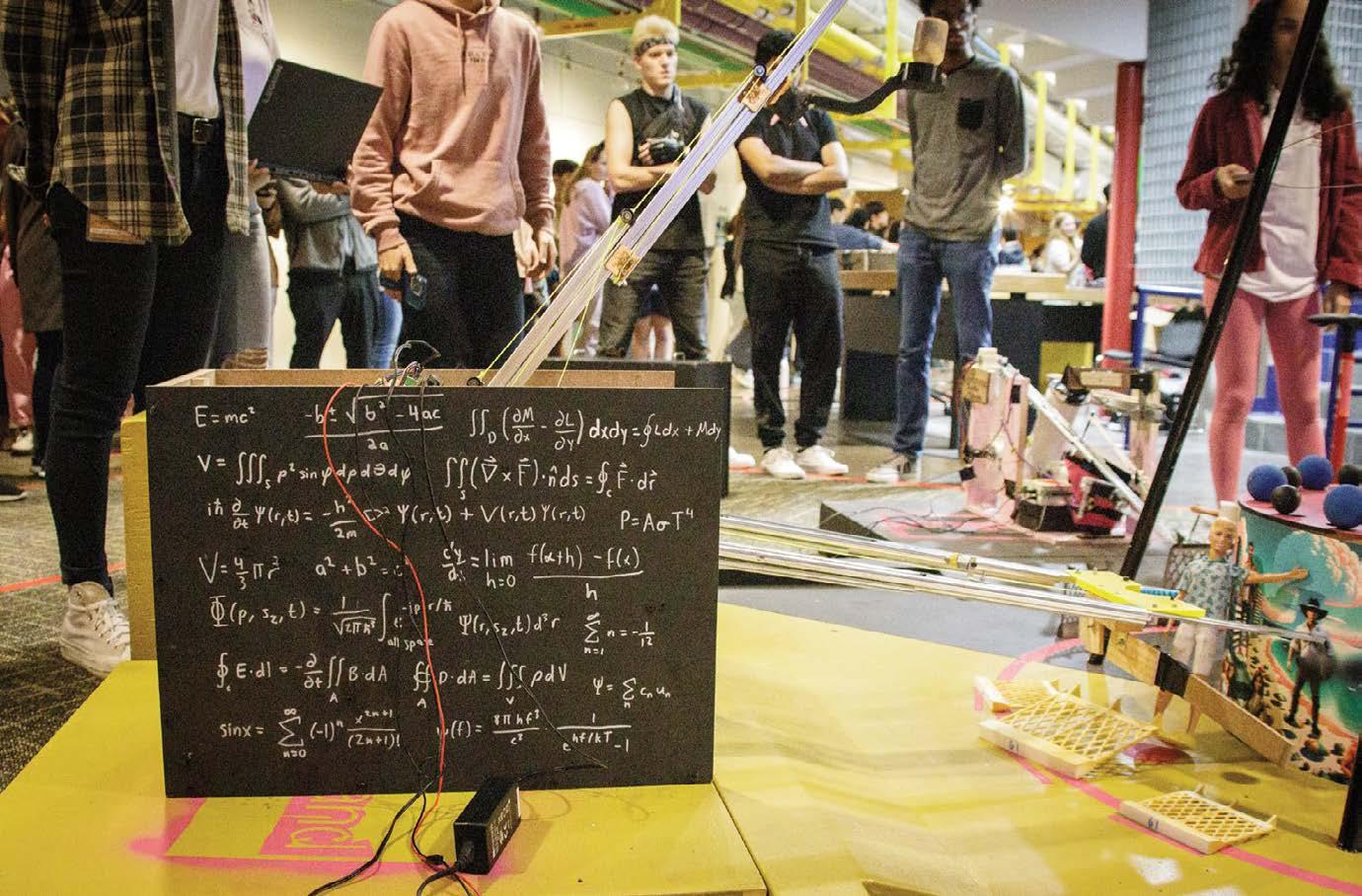
Building a Machine for ME 2110. You stayed up all night worrying over whether your Rube Goldberg–like robot would win the competition or spontaneously combust.
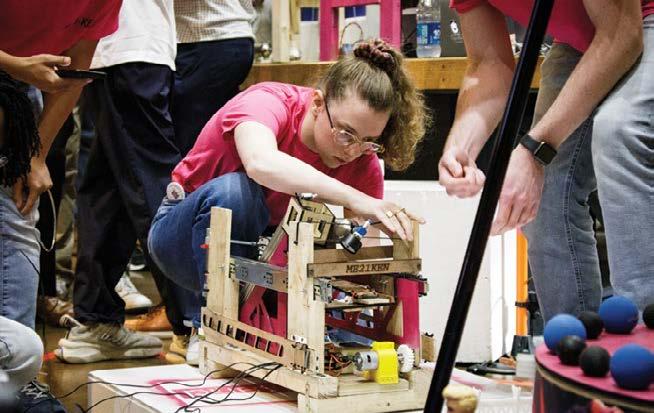
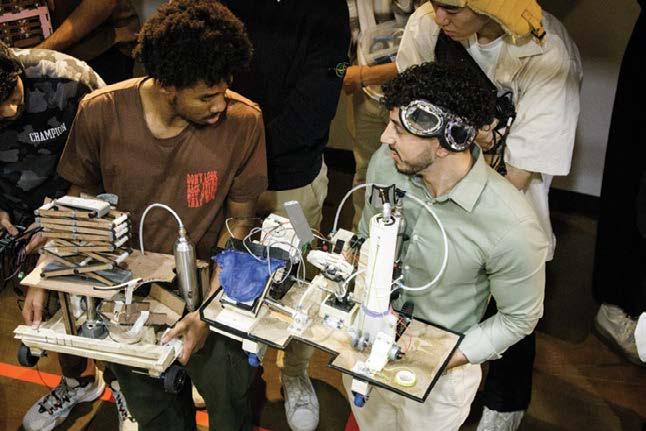
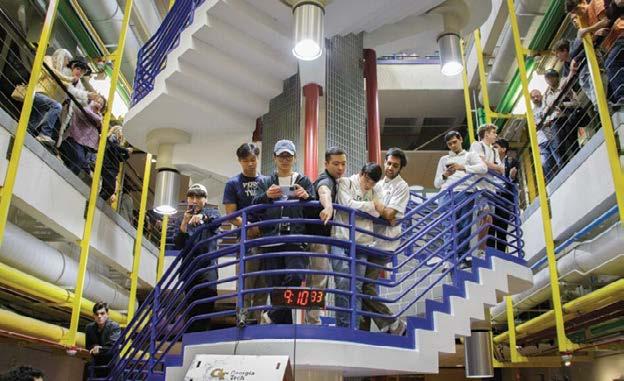


As soon as Scott Sisson kicked the winning field goal against the University of Virginia in 1990, all of us on campus back in Atlanta knew we had to get into Bobby Dodd Stadium,” remembers Vallee Donovan, Mgt 93. “People ran from all over campus, somehow through the gates of Bobby Dodd Stadium, to take down the goal posts—for an away game!” There were no cell phones nor social media. “Talk about a hive-mind!” Although they didn’t know each other at the time, Donovan’s husband, Patrick, Mgt 93, was also in the crowd that day. He and his roommate took a piece of the field goal. “He and I somehow managed to carry it back up the four flights of stairs to our room in Field dormitory—only to discover that the section of the post was too long to actually fit in our room!” Not knowing what else to do, they carried the goal post back to the stadium. “We were exhausted, but it was well worth it!” he says.
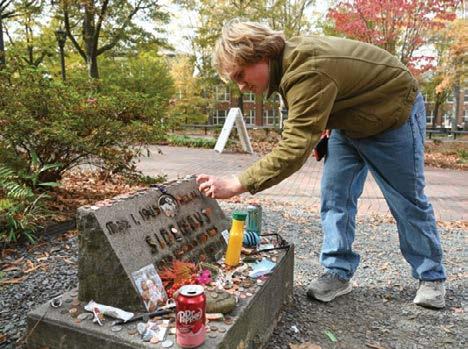
You can leave a coin or energy drink on Sideways’ Grave for good luck, but “hell week” is named so for a reason. It’s also filled with moments of camaraderie fueled by late-night studying, pancakes at Midnight Breakfast, and a collective scream at Midnight Bud.
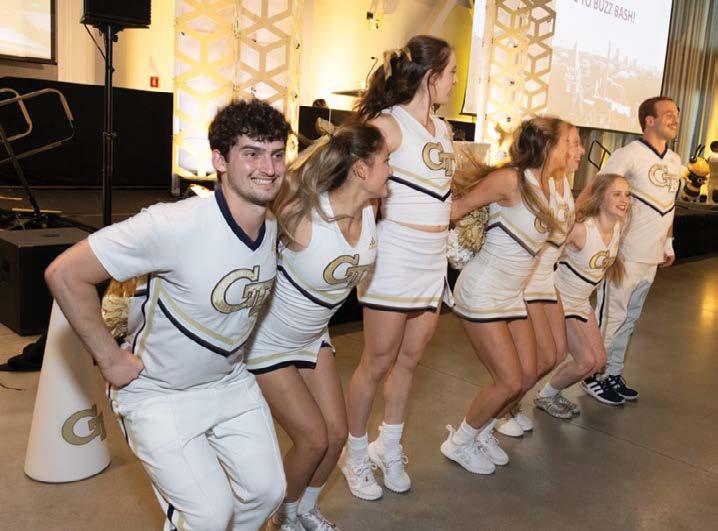

Bobbing Between the Third and Fourth Quarters. Rhythm not required; Tech spirit a must. When the band plays the “Buzzweiser song,” you and your buddies to your left and right know just what to do.
TECH FAN BY CHOICE: What’s the moment that your loved one got on board with being a Yellow Jacket fan—the game, the view, the first job that paid the bills after graduation? Tell us and download a declaration for them at GTalumni.org/ digital-fan-gear.

SNEAKING INTO THE SENIORS’ SECTION OF GRANT FIELD TO CHEER FOR “PEPPER’S GANG.”
My cherished memory was cheering for ‘Pepper’s gang’ in the senior section of Grant Field. As a pledge of Kappa Sigma, I remember the older brothers “enhancing” our freshman IDs with some creative taping. Back then, the cards were color-coded to denote first-quarter freshmen, upperclassmen, and seniors, and you could bring a guest with you. Freshmen sat at the bottom of the stands, and seniors got to sit in the upper level at the 50-yard line. With a little creative tinkering, we were able to attach a different color stripe on the IDs. Such artistry allowed us to enter the senior section of Grant Field and hang out in the upper deck. It was a little dicey walking past the security guys, but it worked! And it was a great bonding experience. Plus, it was fun to take our girlfriends up there. My now-wife used to go with me, and we’ve been together for 48 years, so I guess it must have impressed her. It
was hard not to feel like a true Ramblin’ Wreck from there (though one regret…I never did get a RAT cap). That said, I wouldn’t advise trying the trick today with all the technology and electronic scanners they’ve got in this era, but at the time, it sure felt fun to beat the system. Those were the days! —William Boyd, ChE 82
TEACHING YOUR KIDS THE FULL, UNCENSORED VERSION OF THE FIGHT SONG. THERE COMES A DAY WHEN “HELLUVA” ENTERS THE FAMILY LEXICON.
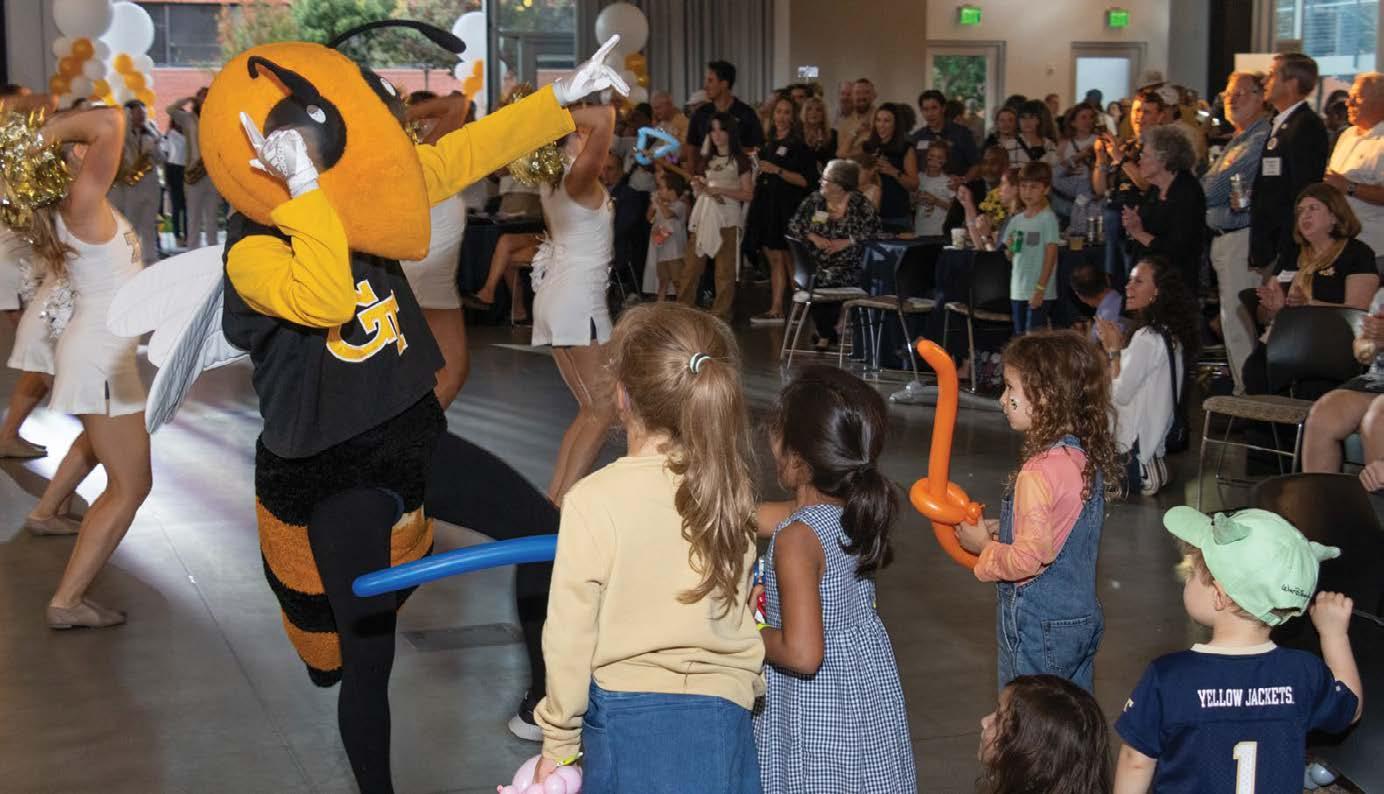
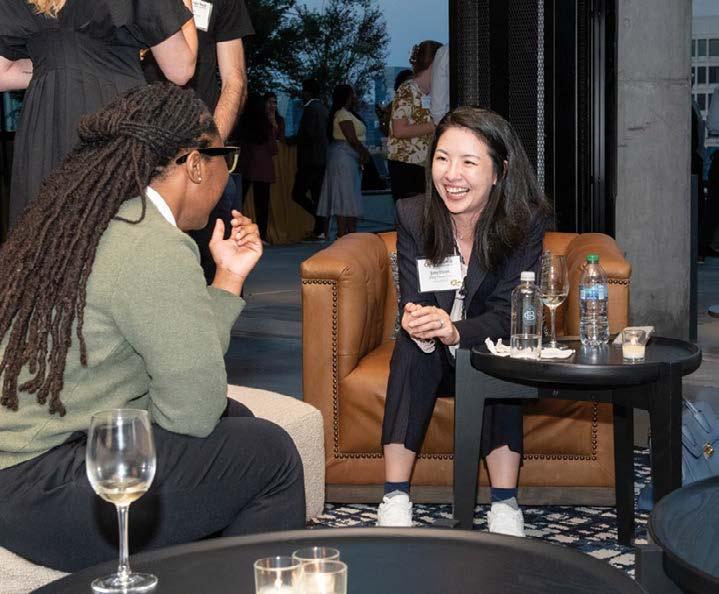
RECONNECTING WITH “YOUR PEOPLE” AT AN ALUMNI EVENT.
I had gone out to L.A. to work for Boeing at the time, and L.A. had a great alumni group that would get together to watch football games. I remember another alum clued me into it. So it was about eight months after I moved there when we had our first football game and I was starved for other Georgia Tech people at that point. I didn’t know any other alumni out there, except for my roommate, a Tech chemical engineer who helped convince me to move to Long Beach. I walked into the event, and it was maybe three minutes in and I started to feel my shoulders relax and it felt natural and amazing. We were talking the same lingo. I didn’t have to translate what I was thinking or the expressions I was using. We were all on the same page. It was a type of fascinating conversation, where we’re talking about a problem or suggesting solutions. For me, it was this quintessential moment of, I am a Yellow Jacket. These are my people.
—Adam Weiss, AE 10, IA 10.
Finding a Campus Pie on Pi Day. Certain days are sacred to Yellow Jackets: Burdell’s birthday, Dean George Griffin Day, the last day to change your major…to name a few. Another such day is March 14, or “Pi Day,” when lucky students can find pies hidden around campus.


HEARING “WHAT’S THE GOOD WORD?” MILES FROM THE FLATS. YOU’RE STUDYING ABROAD IN FRANCE OR LEAVING A MEETING IN SEATTLE...WHEREVER YOU ARE, FELLOW YELLOW JACKETS HAVE A WAY OF IDENTIFYING THEIR OWN.
INTO THE
PAGING GEORGE P. BURDELL
SURVIVING FINALS
TAKING THE THIRD STREET TUNNEL ON A V-RUN
HEARING THE WHISTLE WHILE WALKING UP FRESHMAN HILL
JUGGLING CLASSWORK , CODING , AND A SOCIAL LIFE
MEETING YOUR CIRCLE ON TECHWOOD DRIVE
RECONNECTING AT YOUR FIRST ALUMNI EVENT
BOBBING BETWEEN THE THIRD AND FOURTH QUARTERS PULLING AN ALL-NIGHTER. EATING FRENCH TOAST AT JUNIOR ’ S TEACHING YOUR KIDS, “ HELLUVA ”
BATTLING ROBOTS FOR THE ME 2110 FINAL
FILLING OUT A RAT CAP TAKING (OR AVOIDING) DROWNPROOFING BELIEVING, “WE CAN DO THAT!”
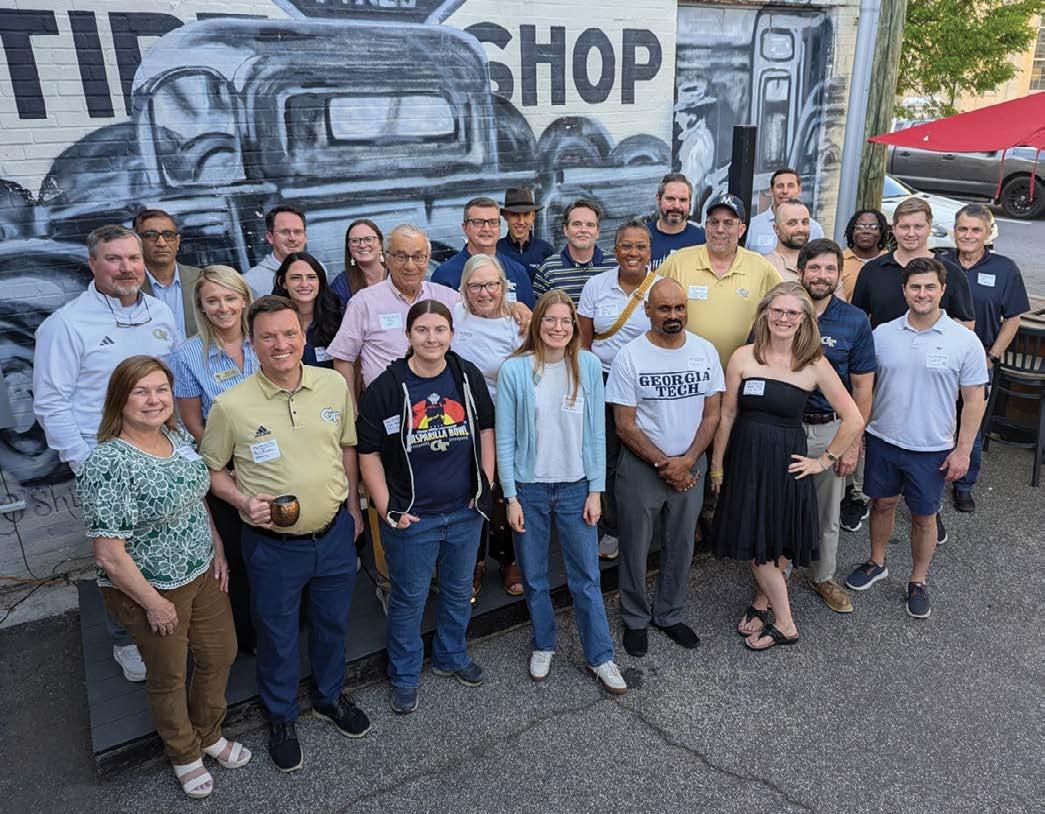
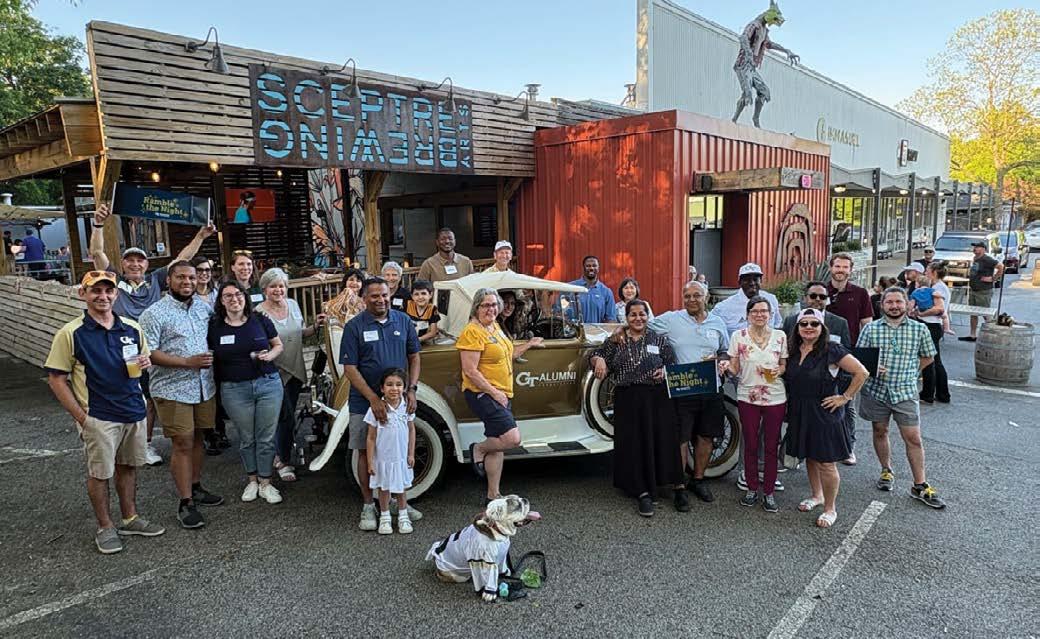
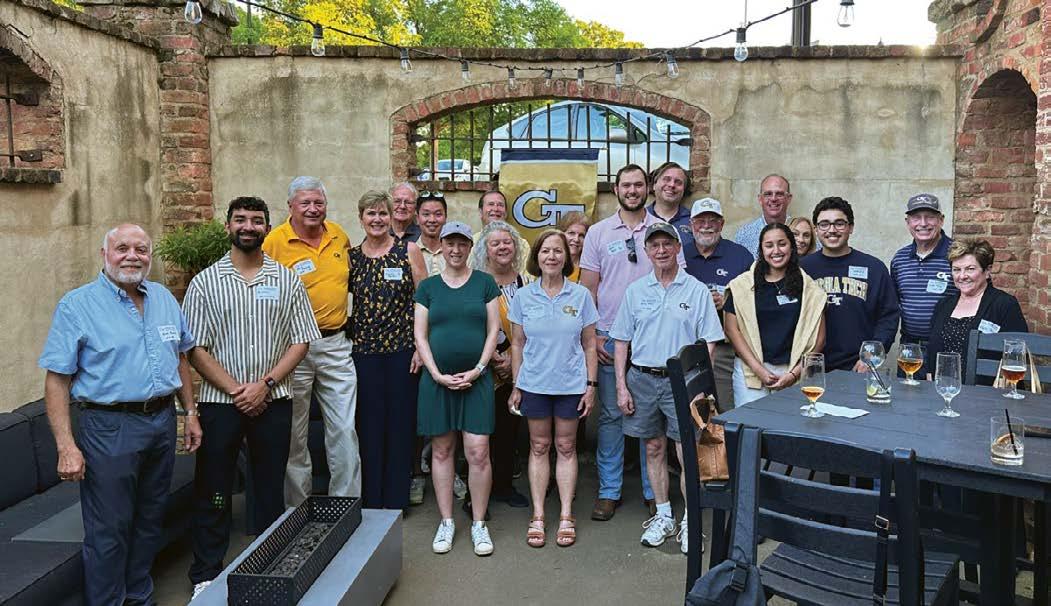
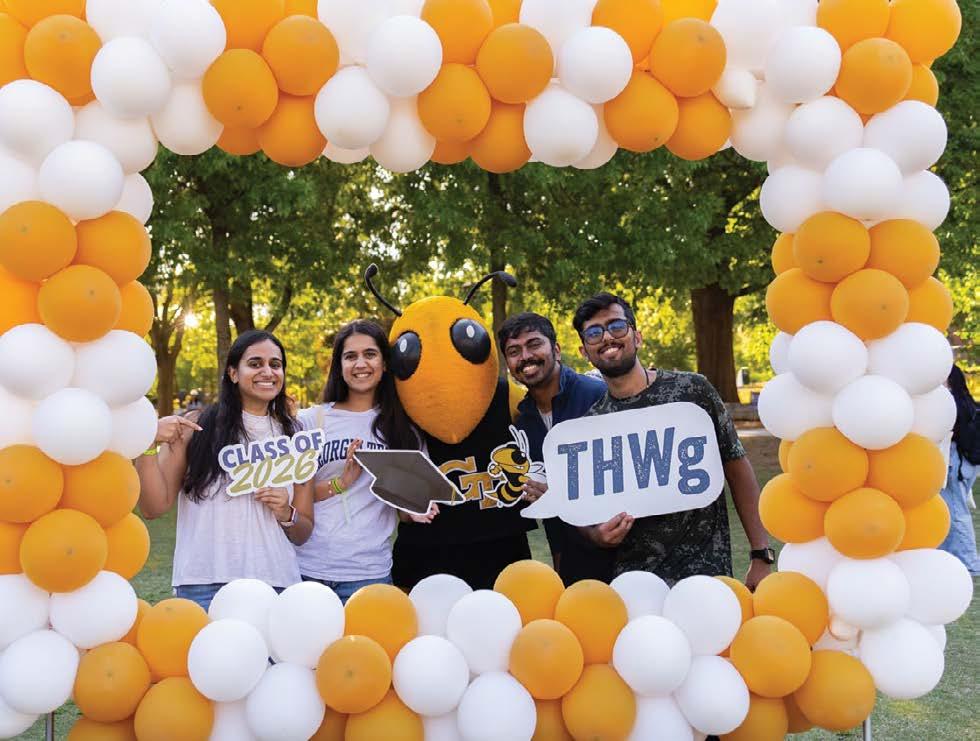
Thousands of Yellow Jackets gathered across 95 cities and on Tech Green for Ramble the Night on April 16, and at the same time, alumni and friends around the world raised $808,442 for Georgia Tech Giving Day.
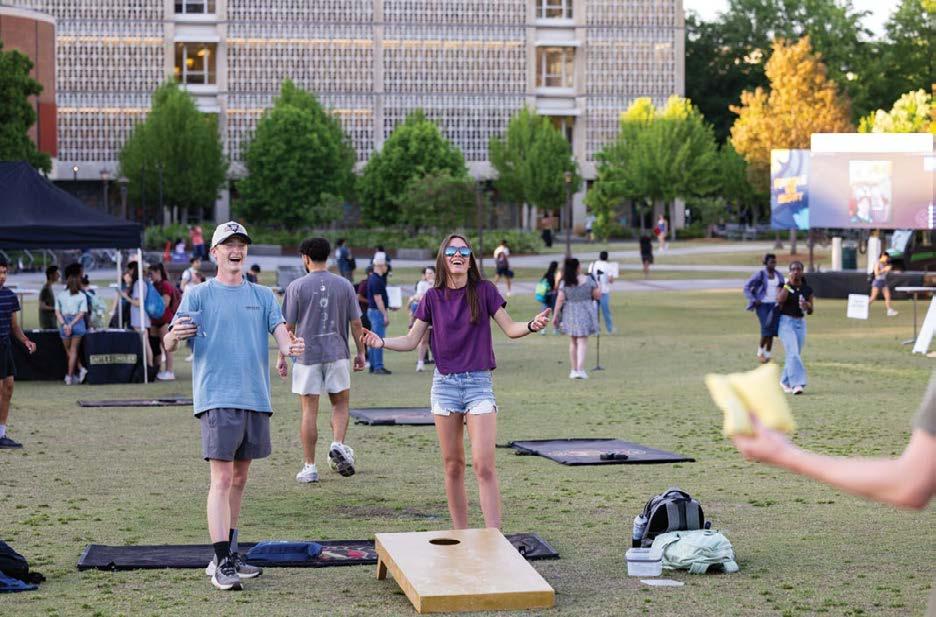
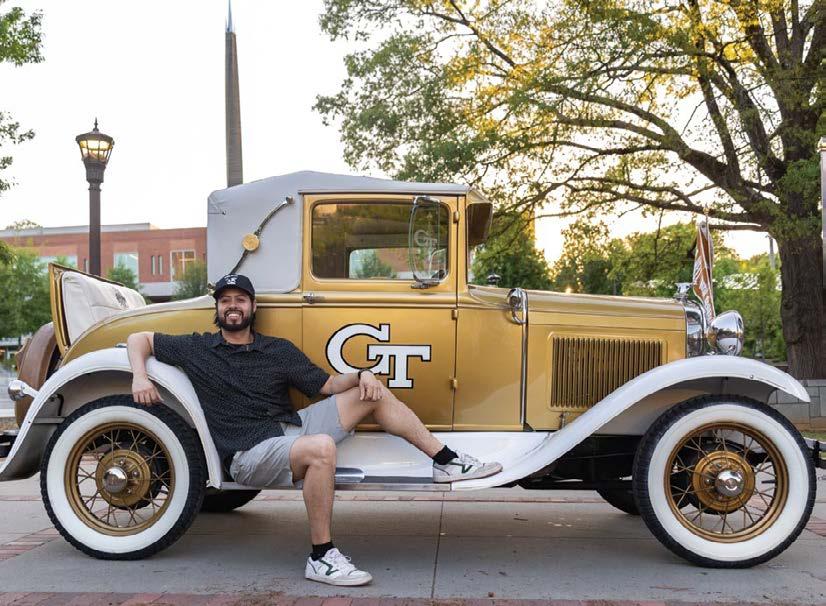
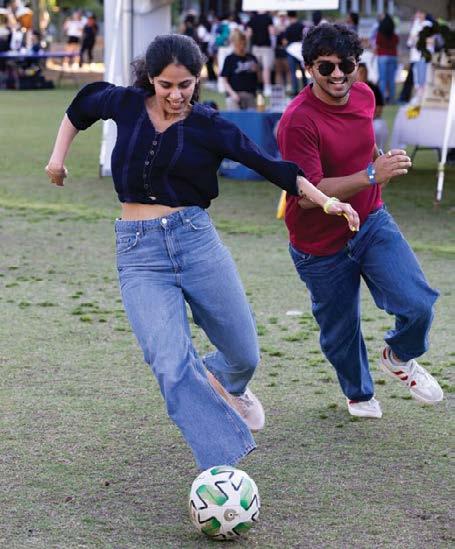
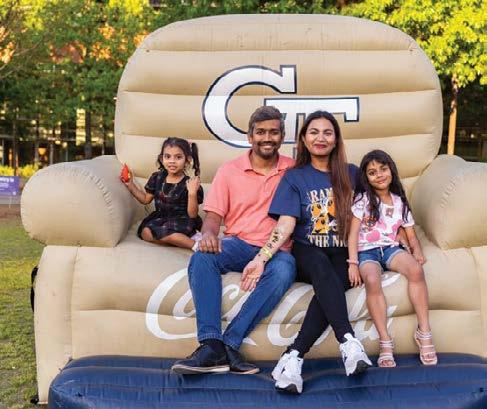
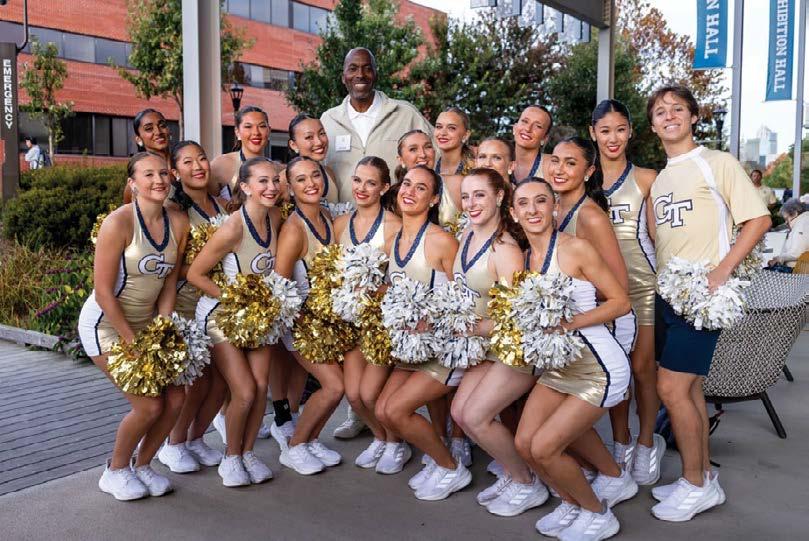
A SNEAK PEEK OF THIS YEAR’S HOMECOMING EVENTS AND MAKE PLANS TO CELEBRATE TECH AND ENJOY TRADITIONS BEFORE THE BIG FOOTBALL GAME.
SSOME MOMENTS stay with you forever: Shouting “To Hell With georgia” from the Flats, racing in the Mini 500, walking through the now-gated Third Street Tunnel to The Varsity. Moments that could only happen at Georgia Tech.
And they aren’t the only ones.
“Georgia had a freak snowstorm in March 1993, just before finals week. Students brought out anything they could find to sled down Freshman Hill. I saw trays from Brittain Dining Hall, doors of the big green monsters (the dorm wardrobes), and trash can lids. It was such a fun release and a week later, everyone was wearing shorts.”—Janet Kinard, TE 97, MS ME 99
“In 1987, as a 17-year-old nuclear engineering firstyear, I was given an opportunity to work part-time at Georgia Tech’s Neely Nuclear Research Center. Witnessing the technology inside the containment room and fuel pool was unforgettable.”—Alberto Peluzzo, ME 91
“I was at a football game, looking over the student section, when I noticed one particular student holding up a sign to taunt the opposing team. The sign read: the opposing team’s name loves two-factor authentication.”—Chris Rettkowski, senior director of Operations, Georgia Tech Alumni Association
“The Budweiser, or ‘Buzzweiser’ song.”—Daniel Furman, BA 16 Celebrate the moments you can’t forget at Homecoming this October 22–24.
Thursday, Oct. 22
Gather with former classmates and share memories about your time at Tech.
› Old Gold Society Reunion Party, Class of 1975 and prior Champions Hall
› 50th Reunion Dinner, Class of 1976
Georgia Tech Hotel and Conference Center, Grand Ballroom
Friday, Oct. 23
Experience campus up close and personal on a variety of tours.
› Tech History Tour (self-guided)
Star t at the Georgia Tech Library’s Archive Reading Room and follow the self-guided route to all six stops.
› Campus Bus Tours
Meet at the Georgia Tech Hotel and Conference Center lobby, 800 Spring Street, for a Student Ambassador-led bus tour.
› Campus Walking Tours
Meet at the Alumni House, 190 North Avenue NW, for a Student Ambassador-led walking tour.
› Buzz Bash: An All Alumni & Family-Friendly Celebration
Georgia Tech Exhibition Hall, 460 4th St NW
› After Party, Hosted by the Black Alumni Organization
Georgia Tech Exhibition Hall, 460 4th St NW
For the most accurate dates and times, check GTalumni.org/Homecoming.


Saturday, Oct. 24
Put on your favorite gear and get ready for game day! Watch Tech’s 97-year-old Ramblin’ Wreck Parade, then feel the rush and excitement of the day at the pre-game block party, before heading to the Flats to cheer on the Jackets!
› Ramblin ’ Wreck Parade Sponsored by the Ramblin’ Reck Club
9:0 0 a.m.
Fowler Street from McCamish Pavilion to Ferst Drive
› Helluva Block Party
3 hours before Kickoff
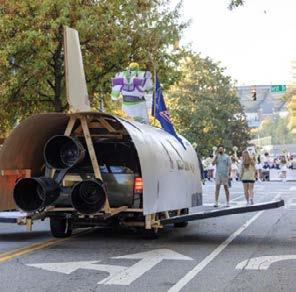
Nor th End of Bobby Dodd Stadium at Hyundai Field
› Yellow Jackets vs. Boston College Kickoff TBA
Bobby Dodd Stadium at Hyundai Field, 177 North Avenue NW



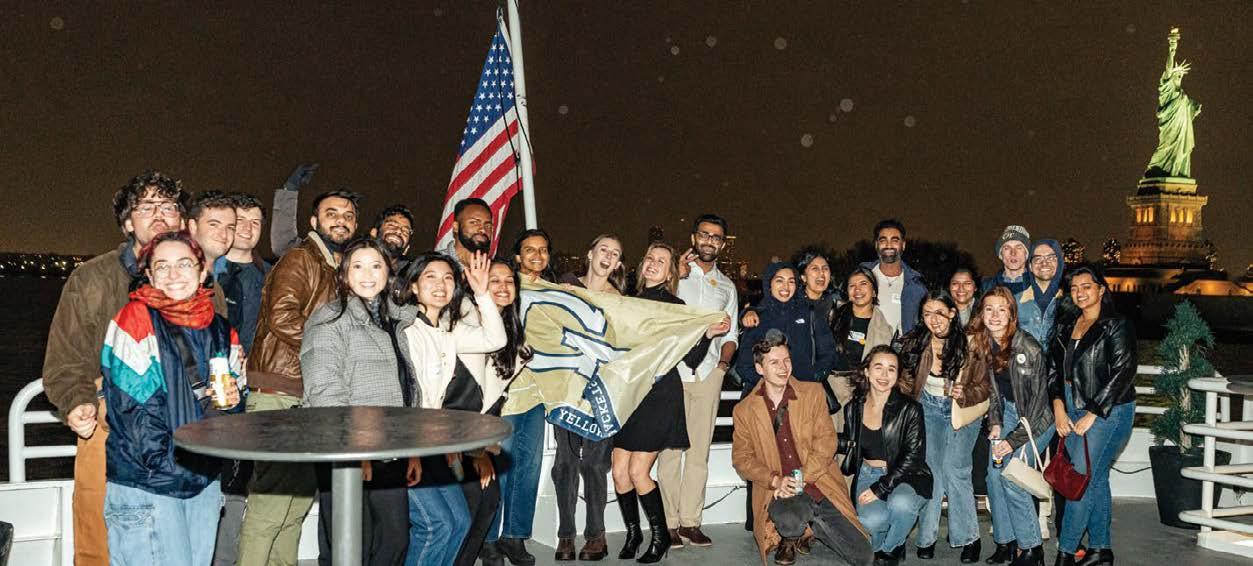
MMORE THAN 8,200 individuals attended Georgia Tech alumni events in fiscal year 2025. When Yellow Jackets connect, knowledge is shared, bonds are strengthened, and opportunities take shape.
One such opportunity emerged through a chance encounter between alumnus Aayush Dubey, MS CS 21, and Tanisha Gupta, a secondyear Computer Science major.
What began as a casual Georgia Tech Home for the Holidays gathering in San Francisco became a meaningful professional relationship.
“Within the last hour, I met a Tech student. We shared similar experiences during our Georgia Tech programs. Eventually, I brought up my role as a founding engineer at a data-forrobotics startup called DataraAI,” says Dubey.
BY SHARITA HANLEY
Gupta expressed interest in the company, and a week later, Dubey hired her as an intern.
Though she was on holiday break, Gupta worked extremely hard. “She took on our product very well and was able to get a small yet significant deliverable up and running,” Dubey says. “She even worked on the holidays, even though she didn’t have to.”
When her holiday break ended, Gupta headed back to campus to continue her studies, but Dubey offered her the chance to work with his team again in the future.
Stories like Dubey and Gupta’s are not isolated. Across the country, Yellow Jackets continue to create meaningful connections through alumni gatherings and regional events.
Earlier this year, Yellow Jackets in Washington, D.C., Seattle, San Francisco, and New York City met up for a casual night out for Social in the City. Some played table tennis, others
enjoyed mini golf, and some cruised along the Hudson River—all while strengthening their ties to one another and to Tech.
“When Georgia Tech people come together, ideas turn into innovation,” Dubey says. “What starts as a conversation of a dynamic group of individuals with shared passions soon turns into a plan of action for a greater cause. Even when we’re far from the Atlanta campus, that common experience resonates within us. We’re not just exchanging ideas; we’re moving things forward together.”
It’s this spirit that makes Georgia Tech’s alumni network one of the strongest in the nation. The Princeton Review ranks it the No. 4 Best Alumni Network among public colleges.
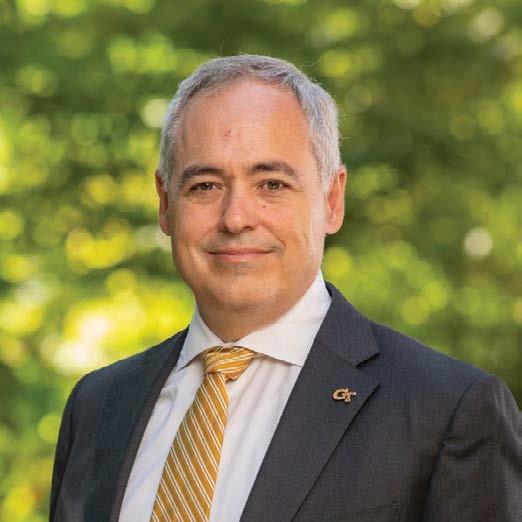
Our campus continues to evolve in extraordinary ways, but one thing remains timeless: our commitment to develop leaders who advance technology and improve the human condition. This mission is at the heart of Georgia Tech’s continued success, and it is why we are routinely recognized as a national and global leader. It’s also one we cannot ful ll without your generous Roll Call support.
You may have seen some of our recent accolades:
•Georgia Tech was named the best value public college by The Princeton Review for the third consecutive year.
• Forbes recognized Georgia Tech among the top 10 “new Ivies” for a second year in a row.
• U.S. News & World Report ranked Georgia Tech among the top 10 public universities in the country for 2025.
• The National Science Foundation has ranked Georgia Tech’s research enterprise No. 1 in the U.S. among institutions without a medical school for four years in a row.
None of this would be possible without your support. That’s why I invite you to join me in contributing to the 79th Roll Call, which is now in full swing. Together, we can ensure that Georgia Tech’s legacy of excellence and opportunity endures for generations to come.
Your Roll Call gi is also a vital part of Transforming Tomorrow: The Campaign for Georgia Tech. By supporting our students, research, campus, and community, you’re building a foundation that ampli es our impact both locally and globally. Let’s come together, as Yellow Jackets always do, to take Georgia Tech to a greater level of excellence and impact than ever before. Your gi makes a di erence. Let’s Transform Tomorrow together.
Sincerely,

Ángel Cabrera President, Georgia Institute of Technology
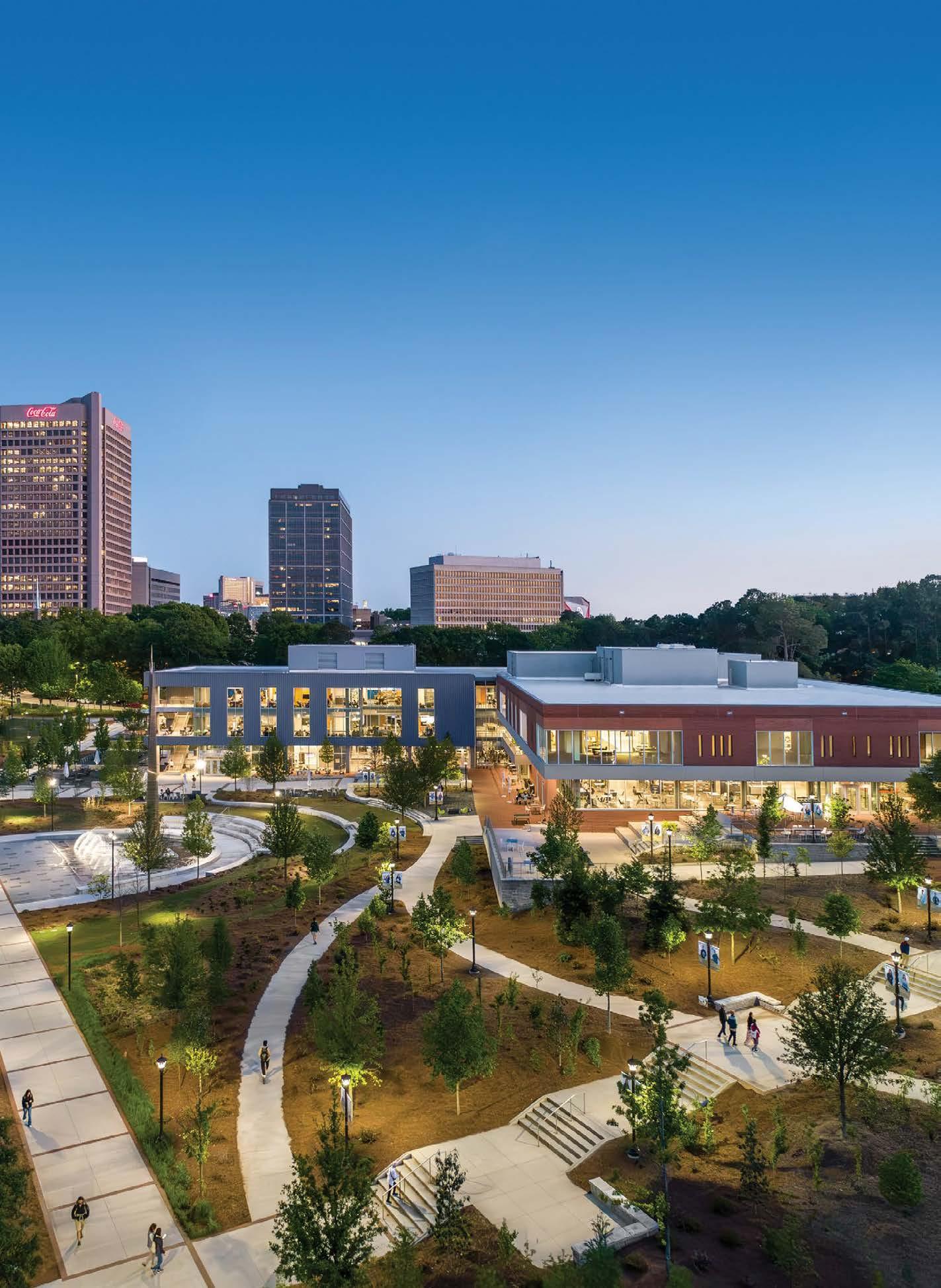

Scan to give now!
ON JULY 1, 12 new trustees will join the Georgia Tech Alumni Association governing board. Alumni from six colleges make up the 45-member governing board, which includes the Executive Committee and 36 trustees. These hardworking Yellow Jackets are committed to furthering

the Alumni Association’s mission to build a community that sustains lifelong relationships, expands access, and champions all Georgia Tech alumni.
Get to know them and learn about the relatable, and sometimes unique, moments that made them Yellow Jackets.
JIMMY MITCHELL, CE 05, will become chair of the Alumni Association. Mitchell is the sustainability manager of Skanska and lives in Atlanta.
“My first football game. But when it comes to rigor, my third year at Tech. I was hosting a charity event for the Brain Tumor Foundation and had three Civil Engineering core class tests in a two- or three-day period. I didn’t make As on the tests, but I did get Cs and Bs and a sense that I was a Yellow Jacket.”
—Jimmy Mitchell


SAM WESTBROOK, IE 99, will become chair elect and vice chair of Roll Call. Westbrook is the executive vice president at Holder Construction and lives in Woodstock, Ga.

RITA BREEN, PSY 90, MS IE 92, will become the past chair, vice chair of Finance on the Executive Committee. Breen is the executive director of Corporate Responsibility at Georgia Power and the vice president of the Georgia Power Foundation and lives in Marietta, Ga.


MEREDITH MOOT, MGT 08, joins as vice chair of the Executive Committee and will become chair of the Alumni Association in fiscal year 2029. Moot is a senior client partner at Korn Ferry and lives in Atlanta.
“Opening that acceptance letter in 1995 changed my life. I felt an immediate sense of pride, both personally and from my family and friends.” —Sam Westbrook

LEE BAKER, IE 90, joins the Executive Committee for a two-year term as an At-Large member. Baker is the CEO of Claris Financial Advisors, Inc., and lives in Stone Mountain, Ga.
Moment:
“All of 1990. I graduated. We won the National Championship in football and went to the Final Four in basketball. It just doesn’t get any better!” —Lee Baker




ALEXIA BORDEN, IE 01, will join the Executive Committee as an At-Large member. Borden is the chief administrative officer at Brasfield and Gorrie and lives in Birmingham, Ala.
ALEX MUÑOZ, MGT 88, will serve the second year of his twoyear term as an At-Large member of the Executive Committee. Muñoz is co-owner and principal of CSRAtlanta, LLC and lives in Atlanta.
KENJI TAKEUCHI, ME 94, will serve the second year of his twoterm term as an At-Large member of the Executive Committee. Takeuchi is president and CEO of Health ‘N Sync and lives in Atlanta.
Moment:
“The very beginning at FASET. We were all assembled around the stairs on the third floor of the Student Center as FASET leaders would yell, ‘What’s the Good Word?’ and we would all respond at the top of our voices, ‘To Hell With georgia.’” —Kenji Takeuchi
MICHELLE SWINDELL BERRYMAN, ID 93, MS ARCH 02, is the executive director of Digital Customer Experience at Labcorp and lives in Marietta, Ga.
CLEVELAND “CLEVE” FANN, ME 05, is the senior vice president of Region External Affairs at Georgia Power Company and lives in Marietta, Ga.
DANIEL FURMAN, BA 16, is a managing director and partner of Boston Consulting Group and lives in Atlanta.
JACK GODFREY II, MGT 90, is the president and majority owner of Greater Georgia Concrete LLC and lives in Johns Creek, Ga.
ANNIE LAI, MBA 21, is the chief of staff at Kimberly-Clark Corporation and lives in Mableton, Ga.
REGINALD “REGGY” LIGER, EE 11, is the CEO of Liger Consulting and lives in North Miami, Fla.
ABUBAKR “ABU” MALIK, CS 98, is the president and CEO of Metric5 and lives in Atlanta.
ALBERTO PELUZZO, ME 91, is COO of PPC Partners Inc., and lives in Alpharetta, Ga.
YVETTE HILL SMITH, IE 90, is the senior vice president of customer success at Equinix and lives in Hilton Head Island, S.C.
STEPHANIE STEWART, CE 97, is the manager at Xana Management, LLC and lives in Duluth, Ga.
MATTHEW “MATT” TEREK, ME 02, is the president of McKenney’s, Inc., and lives in Peachtree City, Ga.
ALEX WAN, IE 88, is the assistant vice president, Community Affairs, at Emory University and lives in Atlanta.
BEING A TECH ALUMNUS/NA COMES WITH PERKS, INCLUDING ACCESS TO THE ALUMNI ASSOCIATION’S MANY PROGRAM OFFERINGS.
BY SHARITA HANLEY
THE FRIENDSHIPS, TRADITIONS, AND MOMENTS that shaped you at Georgia Tech don’t have to fade with time. Beyond giving to Roll Call, stay connected through alumni communities, events, travel, volunteer opportunities, and sporting your Tech pride.
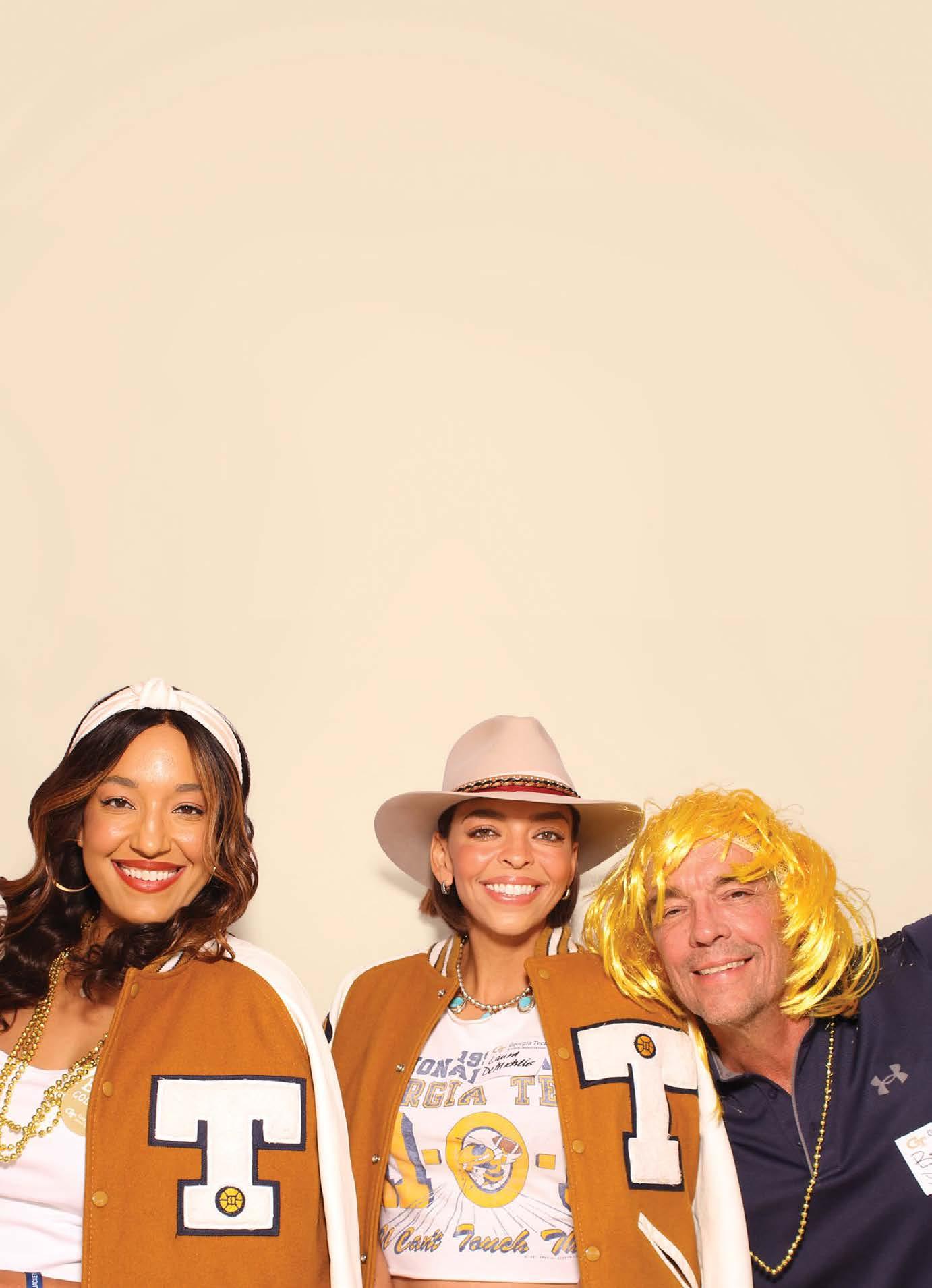
Local events bring shared Yellow Jacket moments and memories—like lessons from Phil Adler’s class, drownproofing stories, and extensive thermodynamics knowledge—to wherever you call home now. Think of them as your dorm away from campus: a place to meet Jackets nearby, build meaningful relationships, and attend local gatherings that celebrate what makes Georgia Tech one-of-a-kind.
Remember the thrill of finding your student org? Affinity Groups are your chance to find your people all over again.
Join groups like the Real Estate Alumni Network, Black Alumni Organization, Band Alumni Association, First Generation Affinity Group, Chinese Alumni Network, Military Affinity Group, and Women Alumnae Network. There’s a community of Yellow Jackets waiting to welcome you.
Cheering on the Jackets has always been about more than the score—it’s about shared pride and celebration. Storming the Flats after a big win. High-fiving friends after a touchdown. Tailgating and singing the Fight Song. Yelling THWg!
Game Watching Events bring the spirit of Bobby Dodd Stadium to cities across the country. Watch every first down, touchdown, and victory with fellow alumni and friends who bring the same energy and enthusiasm you felt as a student.
This one-night-only event held in April includes close to 100 global locations and honors Yellow Jackets’ hard work and global influence. Connect with alumni in your community and ramble the night away—you’ve earned it.
These neighborhood-style gatherings capture the spirit of FASET—although more social than academic—offering a meaningful way for alumni and friends to welcome new students to the Tech community. Join your local Georgia Tech community to celebrate a new class of Ramblin’ Wrecks before they swarm in the fall.
Being class-free during winter break always came with a special kind of comfort and sigh of relief. Home for the Holidays events channel that same feeling by bringing alumni together with current students during the season when connection matters most.
Recapture the challenge of that half-mile race you ran your first Homecoming morning for a cake at the Pi Mile 5K Road Race. Pass iconic campus spots like Freshman Hill, Van Leer, Bobby Dodd, Harris Hall, and Woodruff, or carry the Tech spirit with you on a virtual run.
Recent graduates, take a break from your hard work and get social. Enjoy a fun-filled evening with Yellow Jackets near you. Build relationships and make lifelong memories at local venues known for a good time.
Whether you were the president of your residence hall, a member of ROTC, a co-op participant, member of the Ramblin’ Reck Club, athlete, or part of a student organization, Tech taught you how to step up and lead the way.
Continue to spearhead the future. Share your knowledge with the next generation through Mentor Jackets, Dinner Jackets, or Jacketsto-Jackets Networking Night.
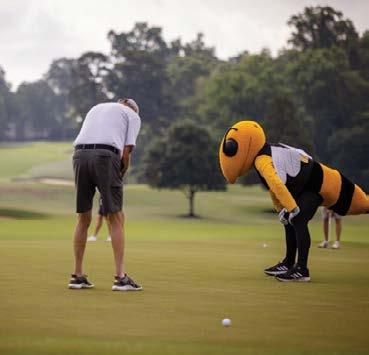
Experience your favorite Tech traditions at Homecoming. Party at Buzz Bash, watch the Mini 500, experience the best of engineering at the Ramblin’ Wreck Parade, explore campus, then head to Bobby Dodd Stadium to cheer on the Jackets in your favorite white and gold.
Some of the best Tech memories happened outside the classroom— on the green, at social events, or during friendly competitions. The Alumni Association Golf Tournament blends tradition, networking, and fun in the world-class setting of East Lake Golf Club.
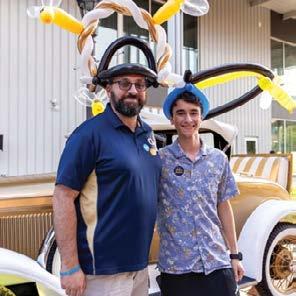
Learning doesn’t stop at Georgia Tech—it just takes new forms. Alumni Travel Tours offer immersive experiences that combine culture, lifelong learning, and Yellow Jacket connection.
Find more programs and events at GTalumni.org.
Campus buzzes with excitement when Fortune 500 CEOs, aerospace pioneers, and industry leaders visit campus. That same energy comes alive during the President’s Summer Tour.
Connect with President Ángel Cabrera, MS Psy 93, PhD Psy 95, celebrate Georgia Tech’s impact, and join fellow Yellow Jackets at these local gatherings in Southeastern cities.
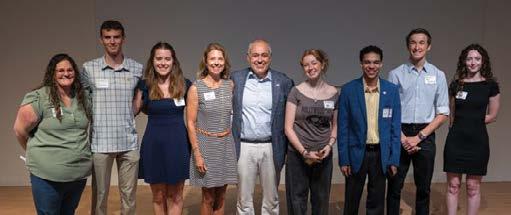
From Junior’s legendary French toast served by Tommy Klemis, Cls 71, to adventuring through ORGT with Miller Templeton, Phys 61, MS ANS 63—these are the people who made Georgia Tech unforgettable. Celebrate and honor role models like these at the Gold & White Honors Gala and raise funds for student and recent graduate programs.
You don’t need to book an appointment at the Office of Undergraduate Education & Student Success anymore, career support meets you where you are. Tap into professional development with free webinars, panels, and tools, and discover real job opportunities at any time through CareerBuzz.
Tech sends more than 2,500 students abroad each year. Experience your own international trip with like-minded grads on a young alumni tour. In 2025 alone, alumni traveled to 53 countries. See the world, make friends, and relax on a curated trip designed for Yellow Jackets in their 20s and 30s.
Digital Fan Gear
You don’t have to go to Burdell’s or the Tech Square Barnes & Noble to show Tech pride. Digital Fan Gear lets you represent Tech across your devices. Download desktop backgrounds, phone wallpapers that feature Buzz and Sideways, printable activities like a Tech Tower cross-stitch, and wall decor with the cumulative miles Tech astronauts have flown in space at GTalumni.org/ digital-fan-gear.

“WHEN DID HARRIS-BROWN TELEVISION GO OFF AIR, AND WHAT HAPPENED TO THEIR RECORDED CONTENT? —MARY LYNN SMITH, EE 88
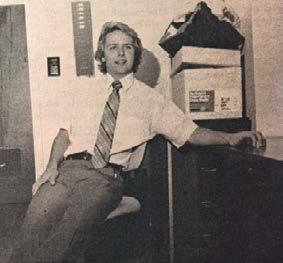
Harris-Brown Television, or “HBTV” as it was known, went off the air in the late 1980s. Started in 1983, the student-run channel showed in-house movies to Brown-Harris Residence Hall residents on a weekly basis. Special features, like Homecoming activities, co-ed movie parties, and en-masse restaurant runs, were also shown. Creator Warren Smith, IM 84, operated and broadcast the network through a single Panasonic VCR wired through coaxial cables. The initial system went dark when Smith left Tech, and in 1985 Harris-Brown Hall President Steve Mulaik, ICS 87, and Mark Jamieson, IE 86, tried to revive and expand HBTV, but by the late 1980s, it was gone again. The fate of the content remains unknown. “Our broadcasts had to be the last,” Mulaik shares.
“We started having beer-drinking sessions where we would interview people who lived in the dorm on Fridays or Saturdays. They were a little sporadic but usually hilarious, ending in beer getting spilled over someone.”
—Steve Mulaik, ICS 87




















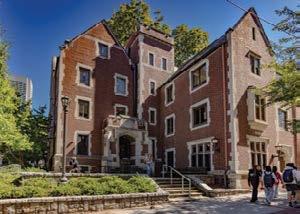
“I worked closely with Warren Smith and served as his senior counselor while he was RA of Brown-Harris. Warren and I connected the buildings by tossing co-ax cable from one roof to the other above the driveway separating the buildings. He was the ‘brains’ of the operation and had all the toys. We had so much fun; I’m surprised we had time to study enough to graduate, but we did.
—Hank Linginfelter, IM 83























































CLASS NOTES & ALUMNI UPDATES
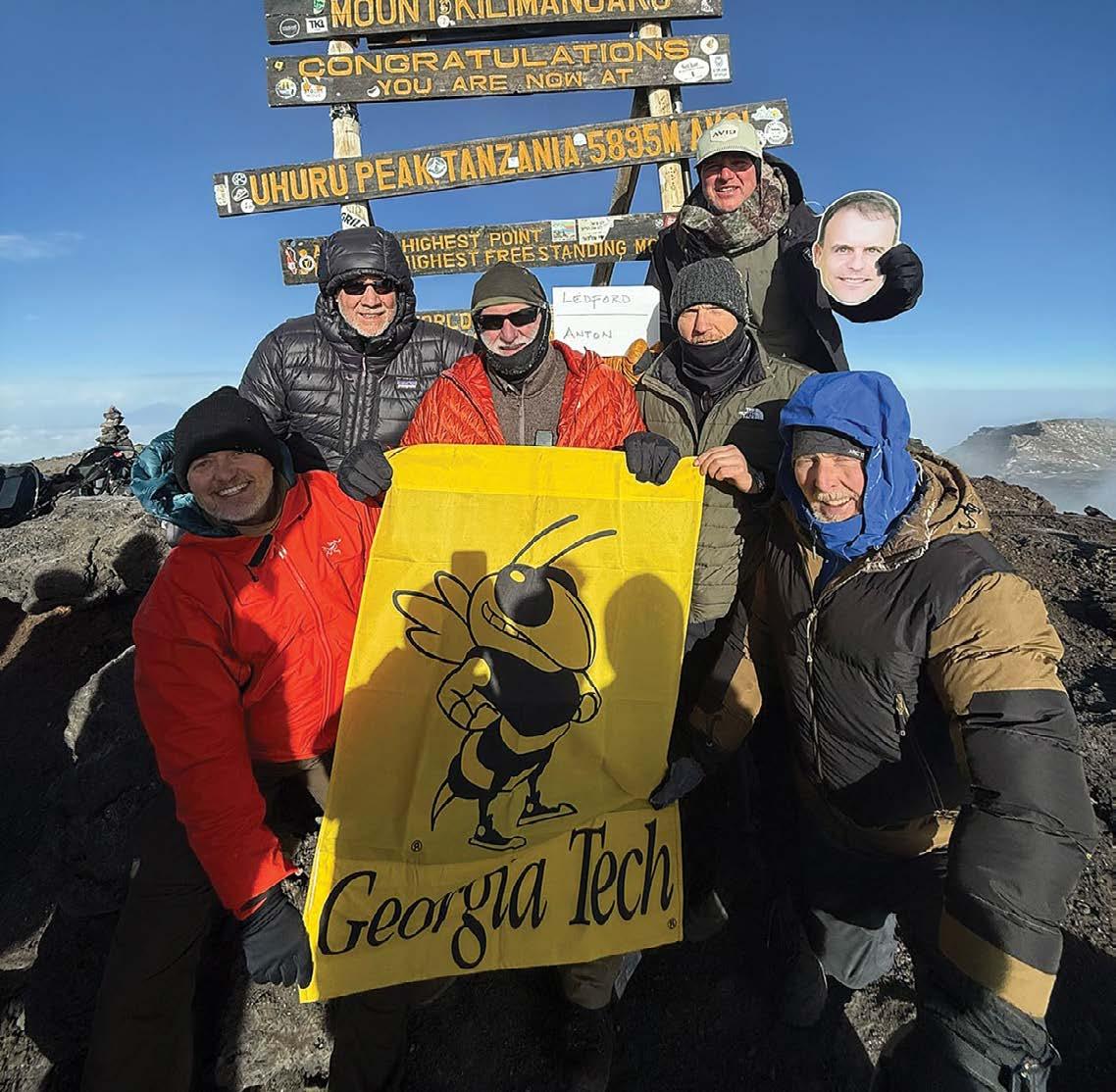
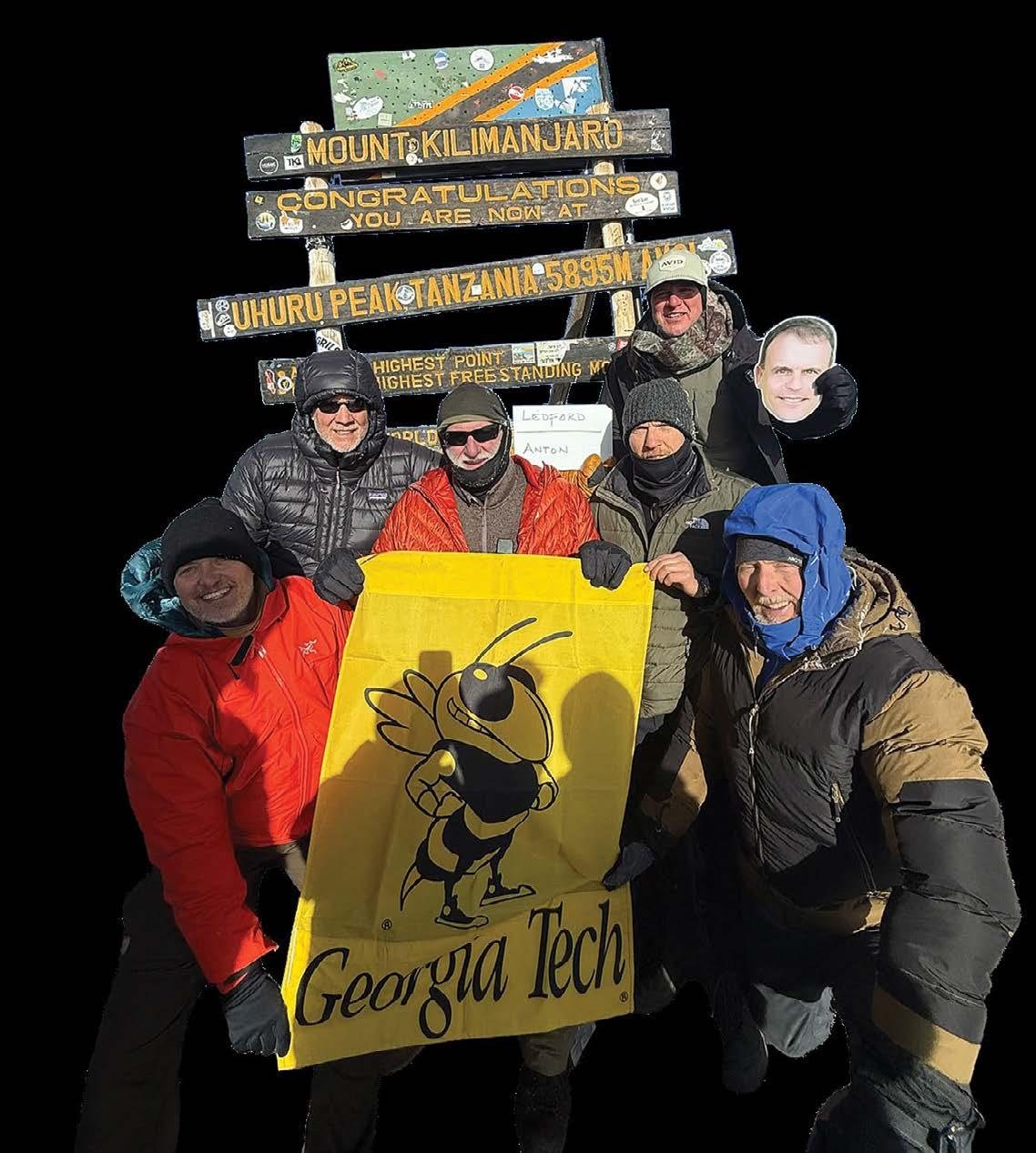
ON FEBRUARY 20, six Phi Delt fraternity brothers from Georgia Tech summited Mount Kilimanjaro. The climb was the brainchild of Jody Ledford, Mgt 93. Ledford employed the skills of Tres Meek, CE 96, to lead the expedition planning when Meek retired from the U.S. Navy. The team, cheered on by Freddy Anton, Mgt 92, gathered in Moshi, Tanzania, and consisted of Kevin Seefried, IE 92, Joe Daniels, Mgt 92, Andy Mermans, ME 92, David
Schneider, ME 91, Ashley Martin, Mgt 94, and Meek. The team embraced the Swahili term “Pole Pole,” meaning slowly, slowly, climbing one step at a time 19,341 feet through rain, sleet, snow, sleepless nights, and challenging nourishment. Upon reaching the peak, the team paid homage to their hero, Stu Evans, BC 95. Evans died in 2022 after a tragic skiing accident but continues to inspire Phi Delt Tech grads with his love and selflessness.
BENNET ALTERMAN, BIO 14, PhD AP 23, started a new role as a research scientist at Colorado State University in the Human Performance Clinical Research Laboratory.
SANDILYA BALEMARTHY, ECE 23, was elevated to the grade of IEEE senior member, a recognition held by only 10% of IEEE’s nearly half a million members worldwide. Balemarthy currently works as a GPU design engineer at Apple and is an active member of the IEEE Central Texas Circuits and Systems Society and Solid-State Circuits Society Chapters.
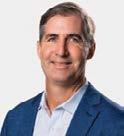
SCOTT BOMAR, IE 95, has been named senior vice president, chief financial officer, and treasurer of YETI, Inc. Bomar previously served as senior vice president of finance at The Home Depot.
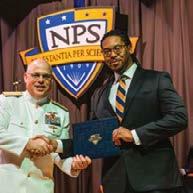
HAROLD ALEXANDER DAVIS, AE 11, graduated from the Naval Postgraduate School in Monterey, Calif., with a Master of Science in Systems Engineering Management. Davis is an employee with the Department of Defense at Naval Air Station Patuxent River in St. Mary’s County, Maryland.
KATIE DEUTSCHLER, MGT 09, has joined Aprio, a business advisory and accounting firm, as a partner in Audit primarily focused on the Manufacturing and Distribution industry.

HE BROKE THE RECORD IN 2025 FOR THE MOST MUSCLE-UPS IN 24 HOURS, AND THIS YEAR SET THREE NEW WORLD RECORDS FOR RING MUSCLE-UPS, A HARDER VARIANT.
DAVID LLOYD GEORGE, PHYS 24, was back in the gym two weeks after breaking the world record last July for the most muscle-ups done in 24 hours (2,002). He immediately started training for an even more challenging feat—the world record for the most muscle-ups done on a gymnastic ring in 8, 12, and 24 hours. He broke all three world records (pending verification from Guinness World Records) on April 12. Lloyd George completed 900 ring muscle-ups in 8 hours, 1,100 in 12 hours, and 1,320 in 24 hours.
“I’ve sort of got a recipe for these world records now,” says Lloyd George, who used the challenge to raise money for the Wounded Veterans Relief Fund, a charity that helps veterans receive dental care.
Ring muscle-ups are a harder variant of a standard muscle-up on a metal bar. The sway of the rings causes different muscles to work harder when the ropes move. The grip is also different. “You wrap your wrists around the rings almost like you’re trying to arm wrestle them,” Lloyd George says.
Put in physics terms—a subject that he knows well as a physics doctoral student at Duke University—there are four more degrees of freedom in the system with a ring muscle-up, he says.
He used almost the same approach as last year, except this time he understood how tough it was going to be.
“I think you have to play with the mental game and really ask yourself, ‘Why am I doing this?’ especially on those difficult training days. For those, I think about the charity I’m trying to raise money for and that this is one more opportunity to challenge myself.”
—JENNIFER HERSEIM
DANA HUTCHERSON, ME 00, will serve as the acting program manager of NASA’s Commercial Crew Program (CCP). Hutcherson was previously serving as a CCP deputy program manager. In her new role, she’ll continue working
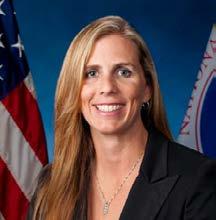
with American aerospace companies to develop transportation systems for low-Earth orbit, including the International Space Station. She’s responsible for the facilitation of spacecraft development, certification, and operations.
WITH SHARED MEMORIES like building “The Walking Wreck”—an early ‘60s entry in the Wreck Parade that stepped forward on feet rather than rolling on wheels—the fraternity brothers at Tau Kappa Epsilon forged bonds that have lasted a lifetime. A group of TKE alumni who graduated between 1963 and 1975 come together once a year to share stories and carry on the fraternity’s tradition of brotherhood.
“We did everything together at Tech. We didn’t have a big student union back then. The fraternity was your social life,” says TKE alumnus Dwight Sedgwick, IE 67, MS IE 70. “We weren’t the wildest party animals, but we had some good athletic teams and good scholarship.”
The TKE fraternity brothers played football, softball, and basketball,
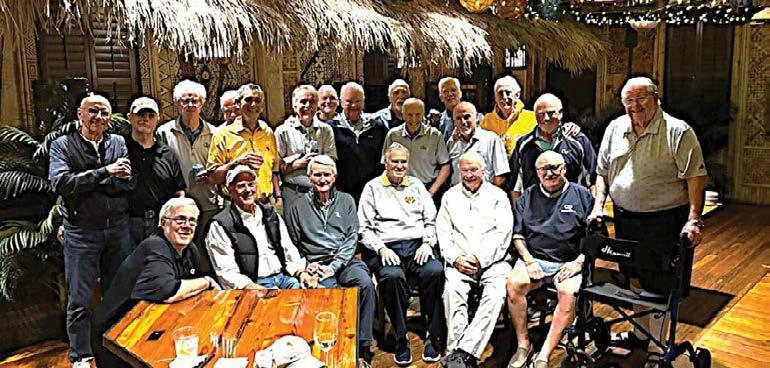
shared meals, woke each other up for early Saturday morning classes or those dreaded three-hour chemistry and drafting labs, and generally spent their free time together.
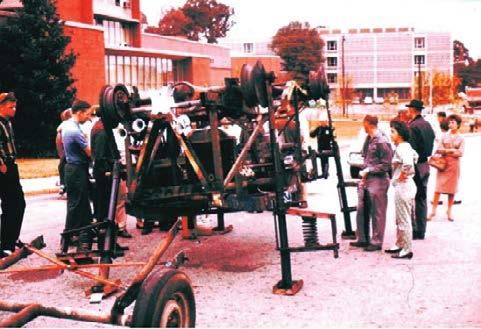
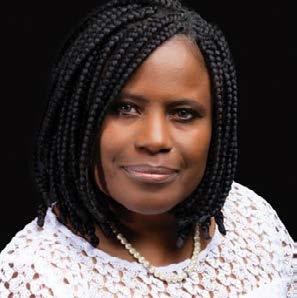
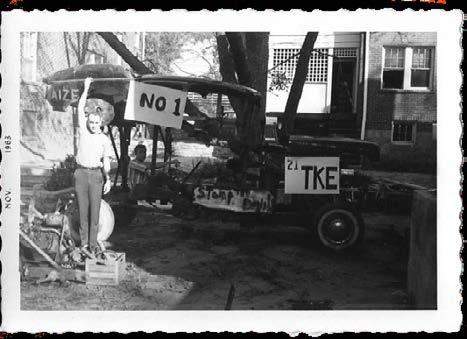
The first TKE reunion happened in 1997 and started as a two-day golfing outing at Callaway Gardens, which today has evolved into a four-day event with golf, tennis, fishing, tours, and loads of storytelling. The reunions have continued every year since then, with the exception of two years during the pandemic. Past reunions,
which usually bring about 20 to 30 attendees, have included tours of the port in Savannah, Ga., the Naval Air Station in Jacksonville, Fla., and historical points in Charleston, S.C.
“Sharing our past stories about life at Tech, and seeing what each person has accomplished since Tech, has been a wonderful and rewarding experience,” Sedgwick says.
—JENNIFER HERSEIM
DEIDRE PARIS, MS EE 94, MS PP 96, P hD CE 02, was selected as a Don Cargill STEM Scholar by the Georgia Youth Science & Technology Centers. Recipients of this prestigious award demonstrate commitment to providing students with innovative and challenging
STEM instruction. Paris has been teaching for more than seven years and currently teaches sixth- through eighth-grade engineering, technology, and invention at JA Dobbins Middle School in Paulding County (Ga.). In 2000, she was a Georgia Tech Presidential Scholar.

ALANTRIA DIXON, EE 02, was promoted to chief revenue officer at Girl Scouts of Greater Atlanta. In her new role, she is responsible for the gross revenue portfolio, which includes product program (Girl Scout Cookie and fall product sales), retail, philanthropy, corporate partnerships, and individual gifts.
SARAH MAHLER, MS CE 21, was named an associate at Walter P. Moore. She is a structural engineer in the firm’s Washington, D.C., office.
KATIE NEAL, STC 03, celebrated 23 years with the Nuclear Medicine Technology Certification Board (NMTCB), including serving as executive director for the past 12 years. She’s enjoyed bringing her Board of Directors back to the Georgia Tech Hotel and Conference Center for their biannual meetings, which has become a tradition for the team.

ROBYN GATENS, CHE 85, retired as director of the International Space Station (ISS) and acting director of Commercial Spaceflight on March 27. Gatens began her career with NASA in 1985 at the Marshall Space Flight Center in Huntsville, Alabama. Over four decades with the agency, she worked on everything from life-support systems for space stations to managing teams of commercial space flight engineers. She managed life support and crew systems for NASA’s Constellation and Orion Programs from 2006 to 2012. She became deputy director for the ISS in 2015. When she was named director of the ISS in March 2021, she became the first woman to hold the position.
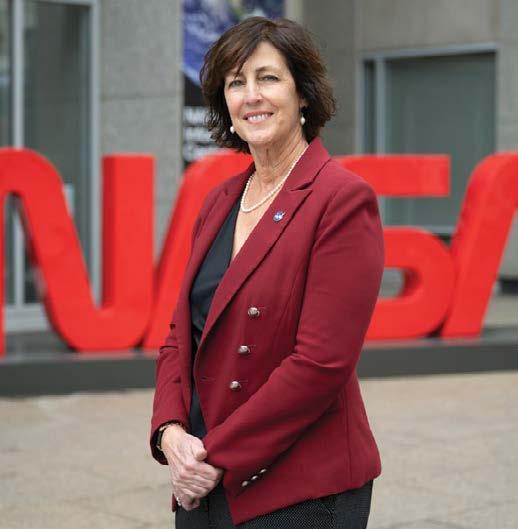
Tech campus installation, Pathway of Progress: Celebrating Georgia Tech Women, which opened last year.
JOEL STENSON, EE 97, became senior vice president, Engineering & Asset Intelligence at UPS. He was also recently inducted into the 2026 class of the Executive Leadership Council.
In 2025, she was inducted into the Georgia Tech College of Engineering Hall of Fame. She is the recipient of NASA’s Outstanding Leadership and Exceptional Achievement Medals.
Gatens was one of the inaugural honorees in the permanent Georgia
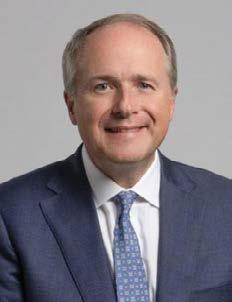
ON APRIL 30, JOHN LAUGHTER, AE 93, executive vice president–chief of operations and president of Delta TechOps, retired from Delta Air Lines after more than three decades with the company. Laughter joined Delta in 1993 as an aircraft liaison engineer, serving in numerous leadership positions over the years, including in Interiors Engineering, Aircraft Acquisitions, and Materials and Planning.
Reflecting on her career at that time, she wrote: “My career path, though entirely with NASA, was definitely not linear. There were many zigs and zags, reorganizations, redesigns, a canceled program, and then saying yes to a task that was not in my job description but led me to NASA HQ and ultimately to become the ISS Director. My philosophy along the way has been to walk through doors when opened and take leaps of faith even when I haven’t felt fully prepared for what’s next.”
Laughter has served as chair of the Georgia Tech Aerospace Engineering School Advisory Board and as a member of the Delta Flight Museum Board, Atlanta Habitat for Humanity Board, Georgia Tech Flying Club Board, and Board of Visitors of the Monastery of the Holy Spirit. In 2013, he was recognized as one of the Distinguished Alumni by the College of Engineering.
THE ATLANTA BUSINESS CHRONICLE has named six Yellow Jackets to its 2026 Class of 40 Under 40. Three of the six have also been named to the Georgia Tech Alumni Association 40 Under 40. The following alumni were recognized:



Danielle Hall, MBA 23, vice president of technology of business enablement at ANDMORE
Darrell “DJ” Lewis Jr., NRE 18, enterprise cloud customer engineer, data and AI, Google, Georgia Tech Alumni Association 40 Under 40 Class of 2024
Wesley Myrick, MS IA 13, executive director, Georgia Interfaith Public Policy Center


Vedant Pradeep, ChBE 19, CmpE 19, CEO, Reframe, Georgia Tech Alumni Association 40 Under 40 Class of 2023
Joshua Silver, CS 09, founder and CEO, Rainforest, Georgia Tech Alumni Association 40 Under 40 Class of 2024
Kai Williamson, PP 06, MS PP 07, principal and creative director, Studio 7 Design Group
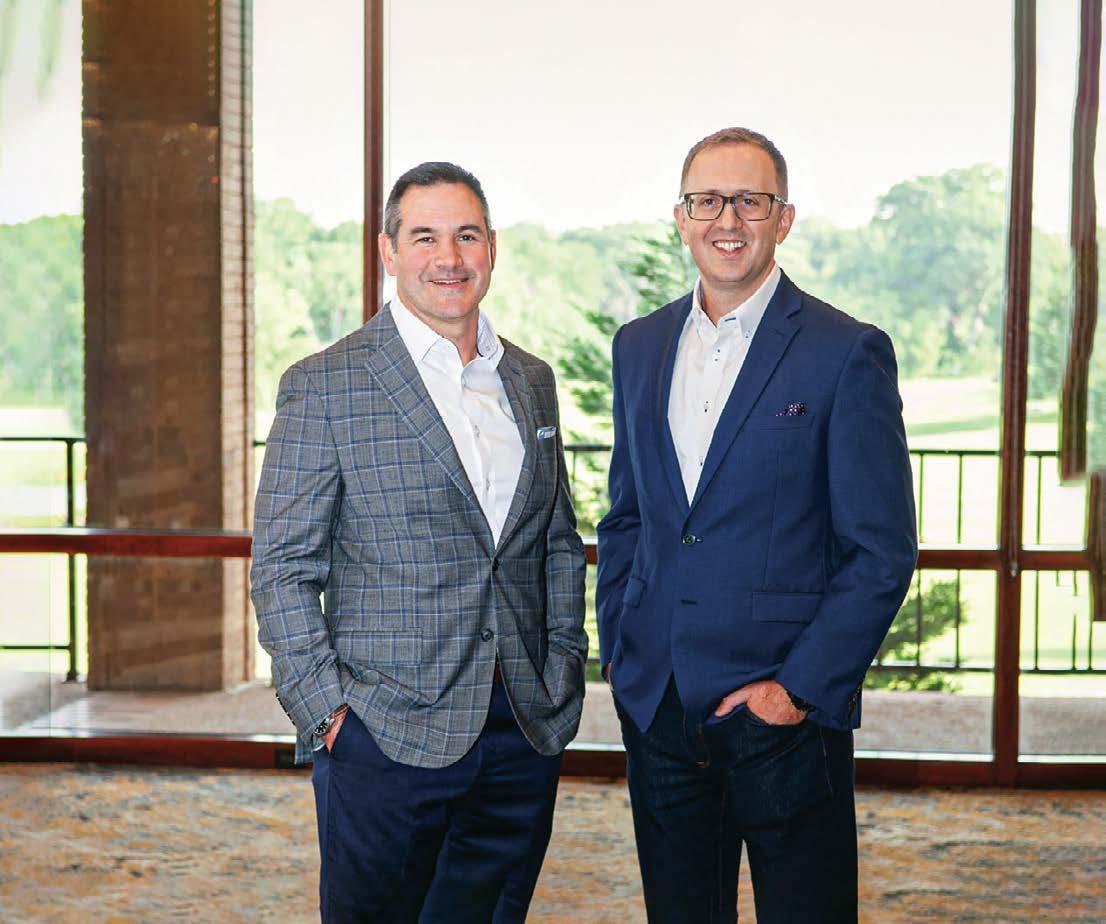

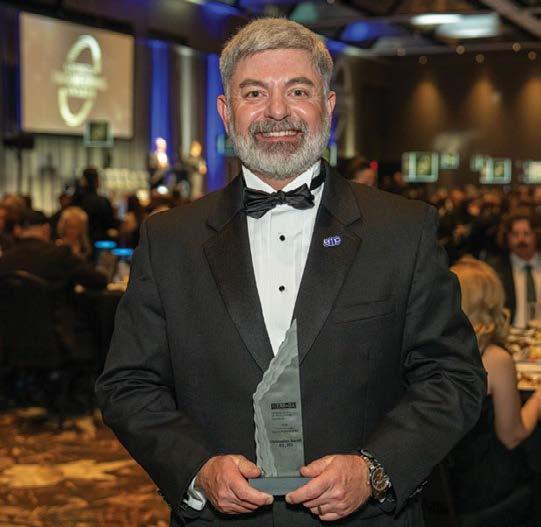
was named Engineer of the Year in Private Practice by the Georgia Society of Professional Engineers. Brazell, PE, PLS, is COO of EMC Engineering Services, Inc. He leads more than 100 employees across 10 offices. He also serves as an adjunct professor at Georgia Southern University and remains active in numerous industry and community organizations. Brazell was recognized on March 6 at GSPE’s Georgia
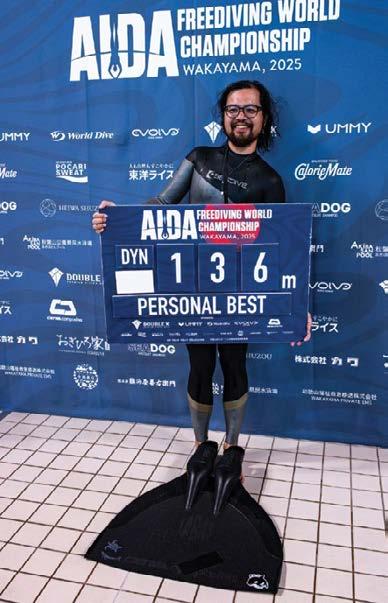
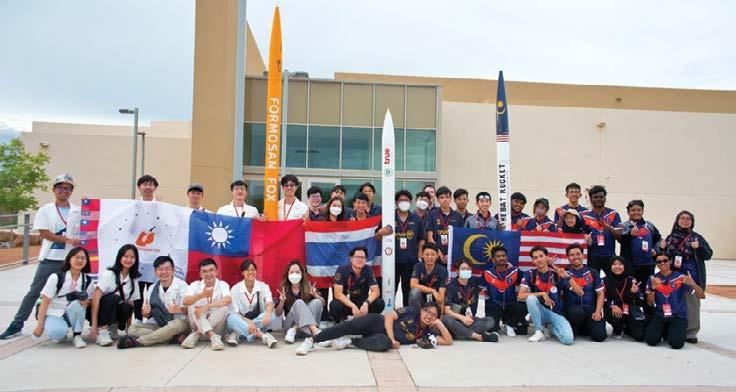
In the next issue, the Alumni Association is celebrating Wrecks in their workplaces. Send us your on-the-job selfies at GTalumni.org/ramblinroll.
1. SARA GIBASE, CE 15, and FRANK GIBASE, ARCH 15, welcomed the birth of their daughter, Leila, on February 2.
2. NICK WHITE, NRE 11, and SALLY WHITE, MGT 11, welcomed their son, Benjamin White, on April 10, 2025. Benjamin joins his big sister Olivia (age 3) as future Yellow Jackets.
1
ZU PUAYEN TAN, AE 11, MS AE 13, PhD AE 17, not only works on aerospace tail-fins, but he also uses them for underwater adventures, most recently to compete in the 34th AIDA Freediving World Championship. While at Tech, Tan conducted research in the Ben T. Zinn Combustion Lab and launched high-power rockets with the Ramblin’ Rocket Club. Today, he’s an assistant professor of Mechanical Engineering at the National Yang Ming Chiao Tung University in Taiwan and a founding contributor to its new Institute of Space Systems Engineering. He led a team in the development and launch of “Asfaloth,” a research-grade sounding rocket. Paying homage to his days in the Ramblin’ Rocket Club, he established the university’s international rocket competition team, Formosan Fox.

2
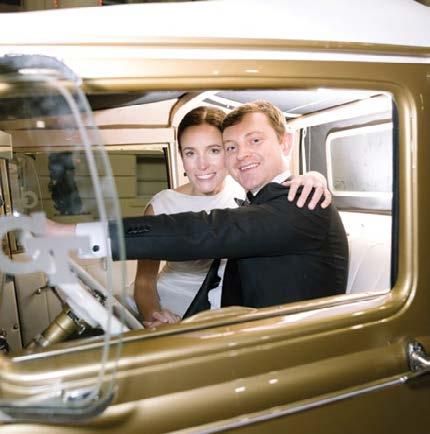
DAVID BARNWELL, BA 21, and ANNA KATHERINE BOSWELL, BA 21, got married December 20, 2025. They met freshman year at Georgia Tech, where their story began. They rode away from their wedding in the Ramblin’ Wreck!
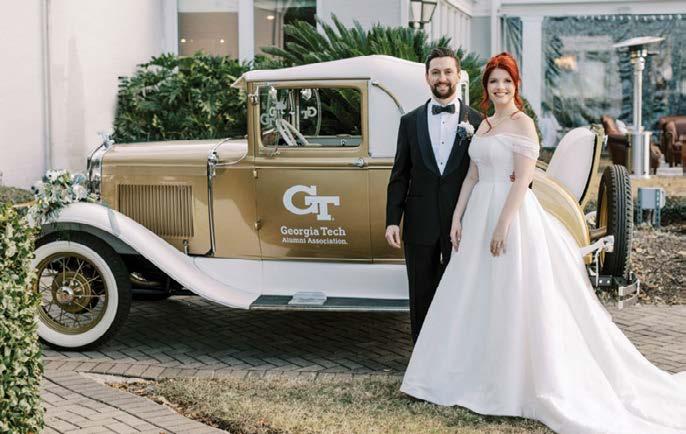
KATE GROCE, LMC 21, and Dalton Bealer were married on January 17 at the Savannah Yacht Club in Savannah, Ga. Celebrating with fellow alumni, they made a special getaway in the Georgia Tech Alumni Wreck. The couple resides in Atlanta, where Kate maintains an active presence at Scheller and Ivan Allen, speaking on panels and attending Technology & Management alumni events.
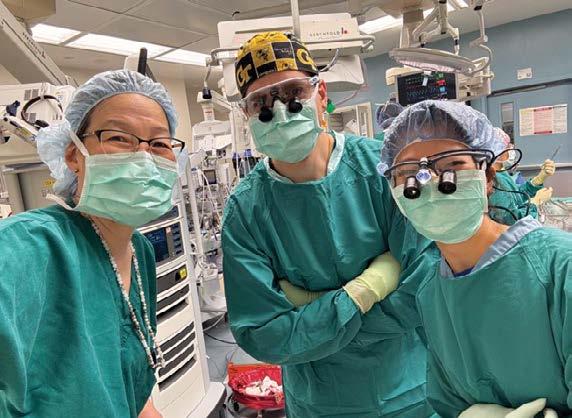
Dr. Betty Tong, ME 93, MS ME 95, Dr. T. “Clark” Howell, IE 14, MS HS 16, and Dr. Caroline Wu, BME 19, recently put their problem-solving skills to work to remove a complex tumor from a patient with cancer. Drs. Howell and Wu are trainees in General and Orthopaedic surgery, and Dr. Tong is a Thoracic surgeon at the Duke University Medical Center.
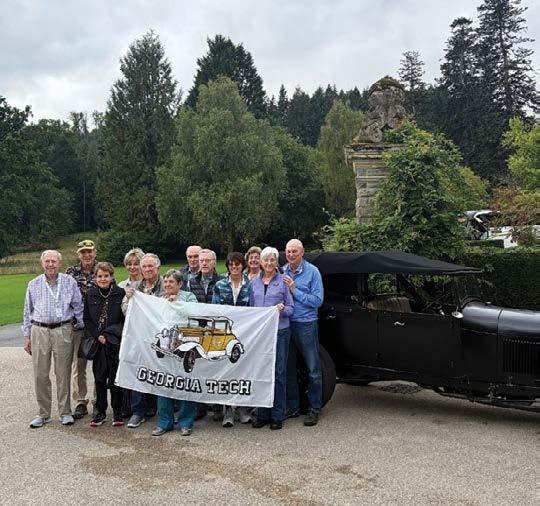
When a Model A is spotted along the River Wye in Wales by a Georgia Tech Alumni Travel trip group, it’s time to get out the Ramblin’ Wreck flag, courtesy of Al Sydnor, ME 61 (far left), who always brings it on his trips with Alumni Travel.

▪ Earn up to 5.00% APY*
▪ Convenient digital and mobile banking
▪ Access to thousands of fee-free ATMs
▪ Exclusive Georgia Tech debit card
WE REMEMBER & HONOR THE FOLLOWING
Richard E. Briesemeister, MS EE 49, of Gainesville, Va., on Nov. 6, 2024.
Edward B. Brown, ME 48, of Birmingham, Ala., on Sept. 24, 2023.
Lindsey H. Crawley, IM 49, of Atlanta, on Jan. 23.
George P. Ethridge Jr., Cls 46, of Salem, Ala., on March 8, 2024.
George W. Fleming Jr., ME 47, of Charlotte, N.C., on Jan. 16.
Robert W. “Bobby” Gaston, IM 48, of Roswell, Ga., on June 6, 2025.
David K. Levin, EE 44, of Weston, Fla., on July 26, 2023.
Robert J. November, ME 45, of West Palm Beach, Fla., on Dec. 2, 2024.
Joseph N. Schwartz, IE 48, of Scottsdale, Ariz., on Nov. 17, 2023.
Frank A. Stovall, ChE 43, of Atlanta, on Jan. 18.
John K. “Jack” Wimpress, AE 46, of Des Moines, Wash., on Dec. 31, 2025.
Donald B. Boland, EE 50, of Titusville, Fla., on Dec. 14, 2025.
Earle E. Bortell Jr., IE 56, of Norfolk, Va., on Jan. 9.
JON OSCHER, IM 54, of Cartersville, Ga., on February 19. A Bronx, N.Y., native, Oscher was born on Dec. 17, 1932. He moved to Georgia as a child and attended Tennessee Military Academy before matriculating at Georgia Tech. He graduated from Tech in 1954 with a degree in industrial management.
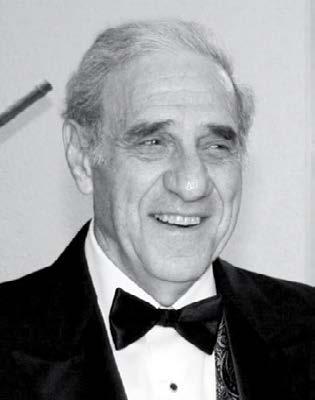
He went on to become a pioneer and highly successful businessman in the cable television industry for 32 years. He founded Prestige Cable TV in Cartersville, Ga., and oversaw its expansion into Maryland, North Carolina, South Carolina, Virginia, and Puerto Rico. Under Oscher’s leadership, Prestige became one of the first cable companies to expand into fiber and internet services.
After selling Prestige, Oscher fully immersed himself in his philanthropic
pursuits, including as a significant benefactor to Georgia Tech. In addition to providing substantial gifts to Tech athletics and being a faithful Georgia Tech Roll Call donor for 69 years, he also served as a member of the GTAA Board of Trustees and the Alexander-Tharpe Fund Board of Directors. He was a dedicated Yellow Jackets fan and a fixture at Georgia Tech football and men’s basketball games for decades.
An avid car collector, Oscher had his own replica of the Ramblin’ Wreck, which he displayed as part of a halftime parade of operating Wrecks during Tech football’s 2022 home game versus Miami.
In addition to his love for Georgia Tech, Oscher also had a passion for history, science, and the arts. Notably, he was the visionary behind
and founder of Georgia Museums, Inc., which operates the Bartow History Museum, Booth Western Art Museum, Savoy Automobile Museum, and Tellus Science Museum. His legacy will continue through his family foundation.
“Jon embodied the spirit of Georgia Tech at its very best: He didn’t just believe in our motto of Progress and Service; he lived it. A quiet giant, he never sought or accepted public recognition for everything he did for his community, his alma mater, and his state—and yet, he was a profound inspiration to all of us lucky enough to call him a friend,” says Georgia Tech President Ángel Cabrera, MS Psy 93, PhD Psy 95.
Oscher was preceded in death by his wife of 46 years, Dot, and he is survived by a daughter and son-in-law, Lorri McClain (Forrest), a son, David Aiken, a grandson, Connor McClain (Elle), and a granddaughter, Reilly McClain Santoro (Joel).
—GEORGIA TECH ATHLETICS
Arthur D. “Art” Brook, ME 56, of Decatur, Ga., on March 17.
Jack M. Buckner, Cls 51, of Alpharetta, Ga., on Aug. 3, 2025.
Lloyd E. Daniels, AE 51, of Santa Maria, Calif., on Nov. 29, 2023.
Emery G. Davis, IE 58, of Atlantis, Fla., on Dec. 20, 2025.
Roland de Marcellus, IM 53, of Indiantown, Fla., on Feb. 12.
Edward S. Ferrell, IE 55, of Destin, Fla., on Feb. 13.
Charles W. Groover, IE 54, of Gainesville, Ga., on Dec. 27, 2025.
Samuel F. “Sam” Hutchins, ME 56, of Brevard, N.C., on Jan. 6.
John G. Jackson Jr., CE 54, MS CE 60, of Flowood, Miss., on Jan. 13.
Herbert N. “Bert” Jenkins, Arch 58, of Fernandina Beach, Fla., on Dec. 27, 2025.
Alfred H. Jones, IM 51, of Las Vegas, Nev., on March 14, 2023.
JOHN WILLIAM “BILL” GOODHEW, III, IM 61, of Atlanta, on February 20. Born in New Orleans, La., Goodhew was the son of John William Goodhew, Jr. and Susan Patterson Goodhew.
He attended Phillips High School in Alabama and continued his education at his beloved Georgia Tech, where he was a loyal member of Kappa Sigma fraternity. After graduation, Goodhew proudly served his country in the United States Marine Corps.
He began a successful career in the software industry at Management Science America. His proudest professional years were spent at Peachtree Software, where he served as president for 13 years. He concluded his career with Intelligent Systems Corporation, an investor in early-stage technology companies. Goodhew was named “Software Executive of the Decade” by the Southeastern Software Association and was inducted
into the Technology Hall of Fame of Georgia.
A devoted alumnus, Goodhew generously gave his time and leadership to the institution he loved. He served as chairman of the Georgia Tech Alumni Association, trustee of the Georgia Tech Foundation, and chairman of the Board of Advisors for the Georgia Tech College of Computing. He was especially honored to receive the Joseph Mayo Pettit Distinguished Service Award from the Georgia Tech Alumni Association.
Bernard A. Kilgore, ME 59, of Macon, Ga., on Jan. 2.
Ernest G. Layton Sr., CE 53, of Thomaston, Ga., on Jan. 12.
Barry D. Lynch, IM 55, of Atlanta, on Dec. 31, 2025.
Joseph S. “Stu” Massee, IE 59, of Warren, N.J., on Oct. 14, 2025.
Addison L. McGarrity, ME 58, of Lilburn, Ga., on Feb. 22.
William L. “Lorenzo” Moss II, ME 58, of Athens, Ga., on Feb. 21.
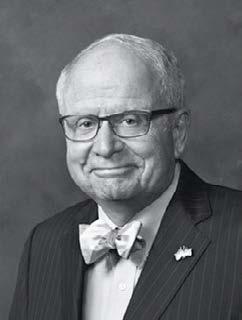
Church, where he served two terms as senior warden, as chair of the Endowment Fund, and as a trustee of St. Martin’s Episcopal School. He served as a trustee at Agnes Scott College and was a board member of several private and public companies. He was a retired member of the Atlanta Rotary Club and a member of Cherokee Town and Country Club.
Among his many passions, he was an avid photographer and a voracious reader, and he believed knowledge was a gift meant to be shared.
Goodhew was a faithful member of St. Martin in the Fields Episcopal
Goodhew is survived by his best friend and wife of 64 years, Joan St. Clair Goodhew; his children, Carol Goodhew Inserra (John) and John William Goodhew IV; and seven grandchildren. He is also survived by his brother Dixon A. Goodhew. He was preceded in death by his parents and his brother Alex Patterson Goodhew.
Doyle C. Pierce, ChE 59, of Tulsa, Okla., on Aug. 14, 2025.
Henry L. Pruitt, ME 51, of Tampa, Fla., on Jan. 20.
William T. Quinn, CE 53, of Gallatin, Tenn., on Feb. 1.
Samuel R. Roberson, EE 53, of Jupiter, Fla., on Oct. 9, 2023.
George F. Ruppenicker, Text 54, of Dallas, Ga., on Feb. 26.
John G. Shamp, IM 59, of Charlotte, N.C., on Feb. 3.
Robert E. Sharpton, EE 56, of Manhattan Beach, Calif., on Aug. 21, 2025.
Robert L. “Rob” Swain, ChE 54, of Newport News, Va., on Jan. 25.
Thomas C. “Tom” Tabor, IM 50, of Marietta, Ga., on May 21, 2024.
Montgomery E. Thorne, IE 55, of Columbus, Ga., on Feb. 18.
A. “Joseph” Tulkoff, IE 53, of Woodstock, Ga., on Jan. 27.
Alton G. Wiggers, CE 59, of Clayton, Ga., on Feb. 26.
Frank E. Williams Jr., CE 56, of Vienna, Va., on Feb. 1.
Guy P. York, CE 58, MS CE 63, of Gulf Shores, Ala., on Dec. 30, 2025.
CHARLES H. GRIFFIN, JR., ME 60, of Clarkston, Ga., on March 9. Griffin was born on December 22, 1936, in Spartanburg, S.C., to Charles Hayes Griffin, Sr. and Ruby Kitchens Griffin. He grew up in Spartanburg and moved to Georgia after high school to attend Georgia Tech. While at Tech, he attended First Baptist Atlanta, where he met Merle and they married in 1958. Griffin graduated in 1960, the year his son, Mike, was born. He earned an MBA from Georgia State University in 1973. Griffin served in the U.S. Army for three years and was stationed at Red Stone Arsenal in Huntsville, Alabama, where his daughter, Lisa, was born.
The family returned to Atlanta and Griffin worked as a mechanical engineer at Newcomb & Boyd, and later at LockwoodGreene Engineers for 34 years. He was known for his photography and had his pictures published in professional magazines and in The Atlanta Journal. He was a devoted servant at Clarkston Baptist Church/Clarkston International Bible Church for 56 years.
Robert D. “Doug” Allen Jr., ME 65, of Easley, S.C., on Dec. 16, 2025.
Norman A. Ankar, EE 60, of Chattanooga, Tenn., on Feb. 10.
William E. “Ed” Bailey Jr., IE 69, of Plano, Texas, on Feb. 9.
Bruce W. “Wayne” Bartlett Sr., IM 64, of Marietta, Ga., on Feb. 25.
Richard J. “Dick” Buchner, IM 65, of Savannah, Ga., on Jan. 9.
Jerry D. Buhler, Chem 67, of Zionsville, Ind., on Jan. 6, 2025.
Fred L. Cone Jr., IM 60, of Marietta, Ga., on Dec. 8, 2024.
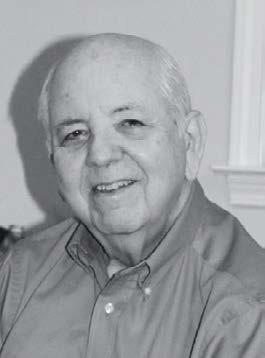
Griffin is survived by his two children and their spouses: Mike and Peni Griffin of San Antonio, Texas,
and Lisa and Norman Chambers of Snellville, Ga., and also by his granddaughter, Morgan Griffin and her husband, Sebastian. He is also survived by his and Merle’s “adopted” children, Rose, Ana, and Mark and Roselyn, and the Luna family. Griffin is survived by Merle’s twin sister, Merlene, and her youngest brother, LaDon. He was preceded in death by his parents; his older sister, Hester, and her husband, Jim; Merle, his wife of 60 years, and two of her siblings and their spouses.
Danny N. Davis, Phys 68, of Hoover, Ala., on Nov. 18, 2025.
Wayne H. Day, IE 63, of Irwinton, Ga., on Jan. 30.
William F. “Lanier” Dodson, ChE 66, of Luling, La., on Jan. 1.
Paul E. Fredrickson, Phys 68, of Roswell, Ga., on Nov. 25, 2025.
Joseph K. Germain, ME 69, of Greenville, S.C., on Dec. 15, 2025.
Robert C. “Bob” Gordon, IE 65, of Bremen, Ga., on Feb. 25.
ALLEN ECKER, EE 57, MS EE 59, of Atlanta on March 14. Ecker was born in Athens, Georgia, and moved at age 15 to Atlanta, where he lived the rest of his life. He attended Grady High School and went on to Georgia Tech. At Tech, he played football for Coach Bobby Dodd, whom he credited for being one of his greatest mentors. He played in and won both the Sugar Bowl and the Cotton Bowl. A scholar athlete, he earned both Academic and Athletic All-American honors his senior year.
At a movie theater in Atlanta, Ecker got the courage to ask Sandra Taylor, the “Greek Week Goddess,” on a date. Sandra became the love of his life, and they were happily married for 62 years.
Drawing on his Georgia Tech degrees and his PhD in Electrical Engineering from Ohio State University and leveraging his experience from serving as a captain in the U.S. Air Force, Ecker cultivated an exciting career. He began by working in various positions for Georgia Tech’s Research Institute, culminating in his position as director of Applied Engineering. In 1976, Ecker was recruited to work for Scientific Atlanta as vice president of R&D and stayed for more than three
decades, holding a number of executive positions and retiring as executive vice president.
Ecker became a leader in the telecommunications industry. He was inducted into the Technology Hall of Fame of Georgia in 1999 and the National Cable & Telecommunications Association Hall of Fame in 2010. He was recognized by the Georgia Legislature for contributions in technology and economic development, received the Joseph Mayo Pettit Distinguished Service Award from the Alumni Association, and was elected to the IEEE Fellows Hall of Fame. He was also presented the Lifetime Achievement Award for Innovation from Atlanta Telecom Professionals in 2005.
Clifton T. “Bud” Harris, IM 60, of Winston-Salem, N.C., on Feb. 11.
Robert J. Hechler, EE 66, of Red Hook, N.Y., on Jan. 12.
Larry W. Hess, Arch 67, of Baldwin, Ga., on Jan. 22.
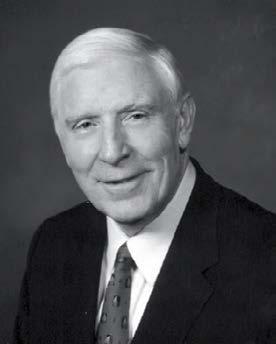
Board of the School of Electrical and Computer Engineering. To ensure the success of future Georgia Tech students, he and his wife, Sandra, provided scholarships for students majoring in Biomedical Engineering, and he was an early supporter of Georgia Tech’s EXCEL program. After his retirement, Ecker served on the Board of Trustees for the Marcus Autism Center. He was an excellent tennis player with an explosive serve. His and Sandra’s combined love of tennis and Georgia Tech, along with their joint belief in the benefit and value of a good education, inspired them to endow two tennis scholarships at Tech, one for the women’s team and one for the men’s team.
Ecker believed that “to whom much is given, much is expected.” From the age of 15, he was a member of Haygood United Methodist Church and served on many committees and boards during his lifetime, including the Georgia Tech Foundation Board of Trustees and the External Advisory
He was preceded in death by his wife, Sandra Taylor Ecker, his son Stephen Mark Ecker (Kathy), and his parents, Martha Holliday Ecker and Joseph Thomas Ecker. He is survived by children Sharon “Holli” Ecker and Mike Ecker (Carolyn), four grandchildren, two great-grandchildren, and his sibling, Martha Ecker Deen.
James D. Higgins, EE 69, MS EE 70, of Newnan, Ga., on Jan. 26.
Ben M. Hines III, Cls 60, of Kennesaw, Ga., on Feb. 16.
Edward G. “Grey” Hodges Jr., IM 60, of Fair Play, S.C., on Jan. 3.
Kenneth M. Hofmann, ME 62, of Norcross, Ga., on Jan. 31.
Wynne Thomaston Huff II, Cls 69, of Acworth, Ga., on April 1, 2025.
Harold G. Hyatt, ME 66, of Asheville, N.C., on Dec. 13, 2025.
James W. “Jake” Jacobs, IM 61, of Alpharetta, Ga., on Jan. 6.
Fred R. Knickerbocker, ChE 66, of Bristol, Va., on Jan. 29.
Nicholas W. Kuzemka, MS IE 67, of Stuart, Fla., on Feb. 27.
Son L. Lai, MS SanE 65, of Monroe Township, N.J., on Feb. 10.
John W. Lawson, IM 64, of Atlanta, on Dec. 19, 2025.
Edwin P. “Ed” LeCroy Jr., EE 67, of The Hills, Texas, on Oct. 10, 2025.
George E. Lenaeus, ME 65, of Carrollton, Ga., on Feb. 23.
Roger W. Lignugaris, IM 68, of Covington, Ga., on Feb. 2.
Thomas E. Lundy, AE 62, of Greensboro, Ga., on Dec. 26, 2025.
Michael L. “Mike” Massey Sr., CE 63, MS SanE 71, PhD SanE 79, of Beaufort, S.C., on Jan. 5.
Oden J. McMillan, ME 65, of Sacramento, Calif., on Jan. 20.
Pete J. Metros, IM 62, of Raleigh, N.C., on Feb. 8.
MILDRED C. “CAMILLE” (PROCTOR) BERRY, CLS 47, of Griffin, Ga., on July 30, 2025. Berry was born August 24, 1920, in Dublin, Georgia, to the late Roberta Jordan Proctor and the late William Jefferson Proctor. She was educated in the Dublin Public Schools and attended the Atlanta Division of University of Georgia (now Georgia State University.)
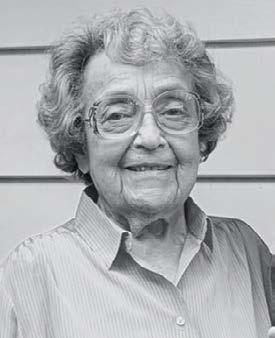
As part of the war effort, Berry wanted to do her part and she found a position at the Brunswick shipyard, ultimately rising to the position of assistant safety engineer and office manager of the Shipyard Safety Program. Soon after starting, the head of safety engineering, who was himself a Georgia Tech graduate, suggested
that Berry enroll at Georgia Tech’s Evening School of Applied Sciences to become a certified safety engineer. She passed the required exams and was promoted to assistant to the head safety engineer. While there were occasional injuries, Berry told the Alumni Magazine in an interview in 2021 that she was proud that there were no major injuries on her ship.
She married Thomas Jacob Berry on January 25, 1945, and joined the Presbyterian Church with him. They were married for 70 years, spending their lives together in Griffin.
After the war, she worked at the Griffin First Methodist Church Weekday Kindergarten for 24 years,
serving as director for 13. After retiring, she volunteered at Head Start. She and her husband volunteered for the American Cancer Society. They were also members of the Griffin Spalding Hospital Auxiliary and were recognized for serving over 8,000 hours. She was a member of the Griffin Music Club, serving in many capacities, and also spent many hours volunteering at her church. She is survived by sons Thomas Jacob Berry, Jr., Robert Proctor Berry, and William Ambrose Berry and her daughters-in-law: Rebecca B. Berry and Dorothy Z. Berry. Also surviving are her grandchildren: Dr. Anna Berry and husband John Chescavage; Harriet Berry Tidwell and husband Jason Tidwell; Alex Berry and wife Ayako Ohkawa; Brett Berry and wife Samantha Berry; and Alice Berry. Also surviving are six great-grandchildren.
John I. Mitchell Jr., Cls 61, of Cleveland, Ga., on Feb. 3.
William F. Mitchell, Arch 64, of Hendersonville, N.C., on Jan. 6.
William O. “Bill” Neuhaus III, Arch 67, of Santa Fe, N.M., on May 23, 2025.
James L. Newman, EE 63, of Tallapoosa, Ga., on Feb. 19.
Larry M. Porter, EE 69, of Hilton Head Island, S.C., on Feb. 20.
Charles P. Preston Jr., CerE 63, of Tappahannock, Va., on Feb. 7.
Harold F. Reheis, CE 68, of Vero Beach, Fla., on Feb. 16.
Jack C. Rowan, AE 62, of Long Beach, Calif., on Feb. 10.
Claude E. Shook Jr., BC 68, of Ellijay, Ga., on March 2.
William T. Slaton, IE 69, of Dallas, Texas, on Jan. 1.
Livingston M. “Miles” Standish, EE 65, of Tempe, Ariz., on Nov. 19, 2025.
Sidney L. Stegall, IM 69, of Rydal, Ga., on Jan. 19.
Robert F. “Bob” Stimler, IM 65, of Baltimore, Md., on Dec. 24, 2025.
Robert J. Sullivan, PhD Chem 68, of Roswell, Ga., on Jan. 10.
James W. Tate Jr., ME 60, of LaGrange, Ga., on Jan. 1.
Kenneth C. Taylor, EE 64, of New Bern, N.C., on Aug. 29, 2025.
Horace A. Thompson III, Cls 63, of New Orleans, La., on Dec. 15, 2025.
Robert J. “Bob” Thompson Jr., ChE 65, of Alamo, Calif., on Jan. 8.
Adalbert E. Toepel Jr., AE 59, MS AE 60, of Eugene, Ore., on Jan. 5.
Joseph W. Turner, IE 65, of Bedford, Texas, on Dec. 2, 2025.
James E. “Jim” Wagoner, IM 62, of Mount Airy, N.C., on Dec. 25, 2025.
James F. “Jim” Watson, Text 63, of Lawrenceville, Ga., on Feb. 6.
James M. Watson, ME 61, MS ME 65, MS ESM 72, of Murrysville, Pa., on Dec. 17, 2025.
Robert E. “Bob” Whitley, ME 63, of Marietta, Ga., on Dec. 17, 2025.
For the In Memoriam section of the Georgia Tech Alumni Magazine, we will include an abbreviated version of each obituary in print. Full obituaries can be found at GTalumni.org/inmemoriam. To report a death, please email updates@gtf.gatech.edu
Richard A. “Dick” Wight, ME 68, of Big Canoe, Ga., on Feb. 9.
Richard A. Wrenn, IM 67, of Roxboro, N.C., on Feb. 10.
Richard D. Barker, EE 70, of Marietta, Ga., on Sept. 4, 2024.
Nelson N. Brooks, CE 74, of Lincolnton, Ga., on Oct. 21, 2024.
James G. “Gary” Brown, MSCI 73, MS ICS 78, of Charleston, S.C., on Feb. 18.
Fred Cook, TextChem 71, PhD Chem 75, of Jackson, Ga., on Jan. 14.
Joseph K. “Jodie” Cook, Chem 78, of Highlands, N.C., on Feb. 2.
Jeffrey R. Coursey, IE 70, of Atlanta, on Jan. 5.
Jonathan T. “Jon” Crane, Arch 77, of Madison, Ga., on Dec. 17.
Shaffer T. “Shay” Day III, AE 70, of Baldwinsville, N.Y., on Feb. 16.
Jean E. Drawdy, Chem 74, ChE 78, MS ChE 81, of Alpharetta, Ga., on Feb. 20.
Heyward A. “Buddy” Hawkins Jr., IM 75, of Marietta, Ga., on Dec. 14, 2025.
Robert A. “Bob” Hearn Jr., Phys 71, MS Phys 73, of Atlanta, on March 3.
Thomas D. Hedrick, EE 70, of Houston, Texas, on Jan. 17.
Michael H. “Mike” Holliman, IM 70, of Lexington, S.C., on Jan. 15.
David C. Knight, EE 74, of Sheboygan, Wis., on Feb. 21.
Roy E. Lawson, EE 77, of Meridianville, Ala., on Feb. 13.
William C. “Bill” Lincicome, Arch 78, M Arch 79, of Hilton Head Island, S.C., on Dec. 14, 2025.
Richard E. Lindenberg, IM 70, of Erie, Pa., on Jan. 12.
Stephen L. “Steve” Lowery, IM 73, of Reynoldsburg, Ohio, on Feb. 23.
Richard Mockridge, CE 76, MS CE 81, of Duluth, Ga., on Dec. 21, 2025.
Charles R. “Ray” Piper Jr., Mgt 71, of Decatur, Ga., on Dec. 23, 2025.
James F. “Fred” Powell, EE 71, of Atlanta, on Dec. 1, 2025.
John W. Pratt, Math 73, of Lilburn, Ga., on Feb. 22.
William J. Schnettler, IM 76, of Appleton, Wis., on Dec. 15, 2025.
Stephen V. “Steve” Skalko, CE 75, of Macon, Ga., on Sept. 23, 2025.
Albert J. Swann III, Cls 76, of St. Simon’s Island, Ga., on Feb. 16.
HENRY AMIS MANN, ARCH 69, of Atlanta, on February 25. Mann was born on February 10, 1942, the second son of Charles and Eloise Amis Mann, in McDonough, Ga., where he developed a strong sense of Christian faith, family, and responsibility that stayed with him throughout his life. He was a graduate of Oxford College at Emory University (1964) and Tech (1969).
Mann began his career as a young apprentice in an Atlanta architecture firm. In 1977, he and four partners began their own practice, Nix, Mann, and Associates, specializing in hospital design. They grew the firm successfully, and in 1995, they were acquired by the Chicago/New York firm, Perkins & Will.
Mann was subsequently named president and CEO of the combined
John B. Thompson, Bio 75, of Newnan, Ga., on Feb. 11.
James A. Warren, IM 71, of Fernandina Beach, Fla., on Feb. 22.
Frank R. Zedar, MS IM 77, of Palm Coast, Fla., on Jan. 21.
Joel T. Carter, Mgt 86, of Valdosta, Ga., on Dec. 26, 2025.
Anthony D. Galietta, CE 83, of Marietta, Ga., on Nov. 19, 2025.
Bradley L. Gimmestad, MS GeoS 85, of Hendersonville, N.C., on Dec. 9, 2025.
firms, which he and his partners grew from the original 300 employees in three offices to an international firm with over 1,200 employees in 14 cities in Asia, North America, and Europe.
He served his community as chairman of the Board of the Atlanta Mission, the Gwinnett Hospital Foundation, and his universities: chairman and board member of the Oxford College Board of Counselors, the Winship Cancer Center, and the Carlos Museum, all three at Emory University. He and his wife, Blair, have endowed fellowships at Oxford College, the Carlos Museum, and the Georgia Tech School of Architecture. Mann was the recipient of the Emory
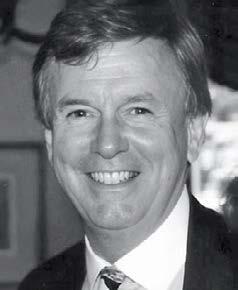
Medal, the university’s highest alumni award, and the Ivan Allen Award for community service. He was a devoted member of First Presbyterian Church and a longtime member of the Piedmont Driving Club.
He is survived by his wife of 50 years, Blair Ison Mann; his daughters, Lindsey Eloise Mann (Taz Elkasrawy) and Elizabeth Blair Mann (PX Head), and sons, John Warren (Nicole) and Bill Warren (Margaret). His four beloved grandsons also survive him. Additionally, he is survived by his brother, Charles Mann (Tonie) of Newnan, and their four children, as well as Blair’s sisters, nieces and nephews, and their children.
Robert P. Kittell, MS IE 86, of Brentwood, Tenn., on Nov. 28, 2025.
Anne M. Logan, AE 83, of Indialantic, Fla., on Jan. 20.
James H. Paul, Chem 82, of Manchester, N.H., on Feb. 26.
Ronald J. “Ron” Payne, ME 85, of Canton, Ga., on Feb. 20.
Karen E. (Erskine) Poplawski, Arch 89, of Spring Hill, Fla., on Jan. 9.
David B. Raino-Ogden, Arch 80, of River Forest, Ill., on Sept. 29, 2025.
Bryan C. Tipton, MS IE 87, of Richmond, Va., on Feb. 6.
Gary L. Toler, EE 82, of Piney Flats, Tenn., on Jan. 8.
Luis S. Casado, CE 91, MS CE 92, of Windsor, Colo., on April 28, 2025.
Thomas A. “Tom” Force, Mgt 91, of Plano, Texas, on Jan. 17.
Roxanne S. (Burns) Hargis, ChE 94, of Kansas City, Mo., on Dec. 1, 2025.
Brent R. Loux, Mgt 97, of Fayetteville, Ga., on Jan. 9.
Lauri R. (Wilson) Mullins, Psy 95, of Stockbridge, Ga., on Feb. 13.
Harold W. Nipper, ME 90, of Vidalia, Ga., on Dec. 30, 2025.
Stephen D. “Steve” Roper, EAS 96, of Palmetto, Ga., on Feb. 9.
JOHN R. M c INTYRE, of Atlanta, on March 23. McIntyre was a professor of Strategy and Innovation and the founding director of the Center for International Business Education and Research (CIBER). He had a joint appointment in the Scheller College of Business and in the Sam Nunn School of International Affairs.
He received his undergraduate education at Jacksonville University in Florida and pursued graduate studies at Strasbourg, McGill, and Northeastern Universities, obtaining his PhD at the University of Georgia, where he was a research associate and fellow of the newly created Dean Rusk Center for International Law. He joined Tech’s then-School of Management in 1981. McIntyre was fond of mentioning his ability to combine his achievements at the two rival state schools, for both of which he had a deep affection. As a professor, he sought to blend multidisciplinary streams of expertise.
This was reflected in his teaching, his research work, and in the creation of new programs such as the Tech Global Executive MBA in 1998.
He supported research of faculty colleagues through the Center he led and in mentoring students, establishing the student-run GT AIESEC chapter in 1987, still extant, acting as faculty advisor and supporter of the Georgia Tech Fulbright Student Association.
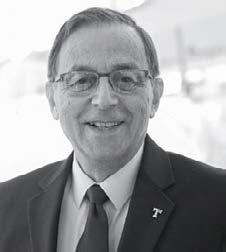
He was co-founder of not-for-profit research associations, such as the Multinational Enterprise and Sustainable Development (MESD), the ChinaGoesGlobal Association, and the USA India Business Summit, among others.
In 2009, he received the Georgia Governor’s Commendation for International Education, for years of business educational services to Georgia. In 2009, the president of
France bestowed on him the National Order of Merit for his work in promoting Franco-American direct investment. In 2015, he received the Steven A. Denning Faculty Award for Global Engagement from Tech and a Global Impact finalist award from the Metro Atlanta Chamber of Commerce. In 2017, he was made an honorary professor of the ICN Graduate Business School, University of Lorraine. In 2024, he was awarded the CCE annual Medal of Honor at the annual General Assembly of the International Trade Advisors of France. In 2024, he received the Lifetime Achievement Award from the U.S. India Business Summit.
Most of all, he was grateful to his devoted parents Timothy F. McIntyre, USN, and Simone Marie McIntyre. He is survived by his faithful lifetime partner, John J. Nix.
Keenan E. Walker, Mgt 94, of Riverdale, Ga., on Dec. 26, 2025.
Timothy J. Edenfield, MS IA 15, of Atlanta, on Feb. 23.
Sara Edgar, of Vero Beach, Fla., on Dec. 15, 2025.
Janice L. “Jan” Gaylord, of
Judy H. King, of Columbus, Ga., on March 23, 2023.
Herbert S. “Herb” Lehman, of Suwanee, Ga., on Jan. 9.
David J. “Dave” McGill, of Chamblee, Ga., on Feb. 16.
Larry V. McIntire, of Stone Mountain, Ga., on Jan. 23.
Marlene McWhorter, of Atlanta, on March 1.
Darlene W. Muse, of Albany, Ga.,
Terrence L. Rich, of Woodstock, Ga., on Jan. 6.
Sergei Sikorsky, of Sun City West, Ariz., on Sept. 18, 2025.
Glenna Smith, of Smyrna, Ga., on Dec. 26, 2025.
Geri Spring, of Hixson, Tenn., on Dec. 30, 2025.
Laren M. Tolbert, of Decatur, Ga., on Feb. 2, 2025.
Peggy Tribble, of Atlanta, on Dec.
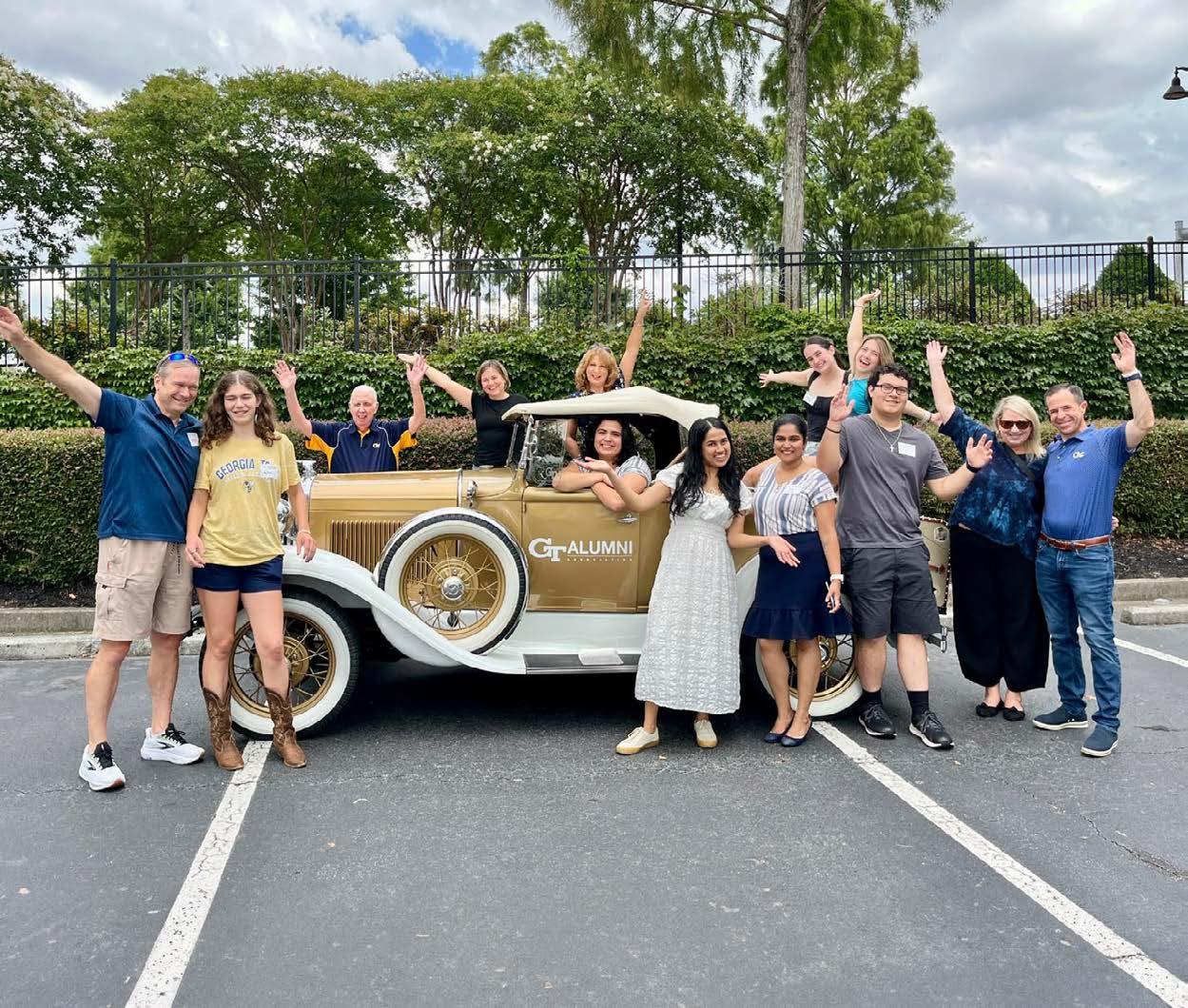
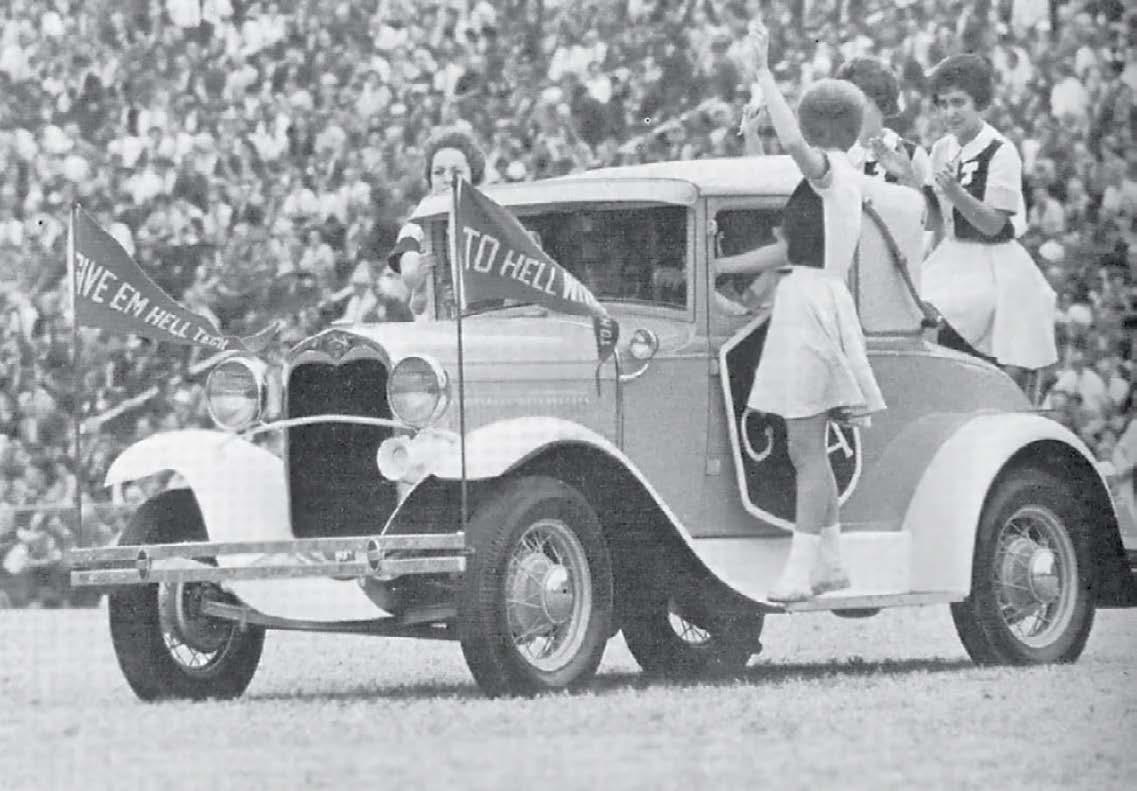
IN 1960, GEORGIA TECH’S STUDENT COUNCIL WAS TASKED WITH CREATING TECH’S FIRST OFFICIAL MASCOT.
BY JACK PURDY, BA 22
AS EARLY AS the spring of 1960, football head Coach
Bobby Dodd spoke to the sports editor of the Technique, John Walker, IE 61, about Tech’s need for a real mascot. While Tech had already gained nicknames such as the Golden Tornado, Engineers, Blacksmiths, and eventually Yellow Jackets, there was no physical representation of the primary nickname, the Ramblin’ Wreck.
That fall, the Student Council was charged by Dean of Students George Griffin, CE 1922, MS IM 57, with proposing a mascot for the Institute. Multiple ideas were discussed, including building a mascot from scratch or building a contraption.
By October, a group including Dekle Rountree Jr., IE 64, Al Sydnor, ME 61, Forrest Travis, ME 61, Walker, and others from the student council pointed to a Georgia Tech book cover with a drawing of an old car on the back as inspiration. The book cover was a common item sold at the Georgia Tech College Inn (also known as “The Robbery”), Tech’s bookstore at the bottom of Tech Tower that operated from 1899 to the 1970s. The group came to
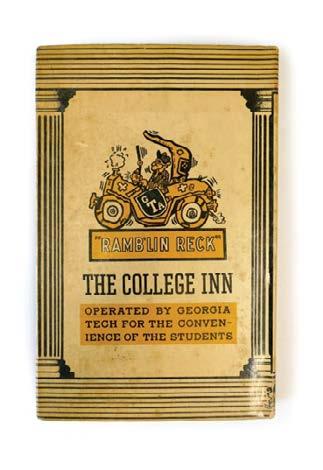
This notebook cover was the inspiration for the student committee tasked with finding an official mascot.
a consensus around the idea of a car serving as Tech’s official mascot.
At the Student Council meeting on Oct. 18, Walker made the motion to create a Ramblin’ Reck Committee to investigate the idea of the Ramblin’ Wreck vehicle mascot. It was seconded by Sydnor and Travis. The motion passed.
The next week at the Oct. 25 Student Council meeting, the committee, which included Sydnor, Rountree, and Travis, confirmed they would search for a car. They had around $600 appropriated by Dean Griffin to find and acquire a mascot.
According to Sydnor, multiple cars were considered, but none fit the bill or were cheap enough for the committee to buy and restore. Eventually, Dean of Students Jim Dull found the 1930 Ford Model A Sport Coupe that would become the
Ramblin’ Wreck on campus.
When the Wreck first led the football team onto Grant Field on Sept. 30, 1961, the work started by Sydnor, Walker, and Rountree had come to fruition.
At the end of the 1961–’62 academic year, the Technique reported that “laying the groundwork for procuring a ‘Ramblin’ Reck’ as a Tech mascot” was a highlight of the Student Council’s accomplishments that year.
To download a virtual background of the Ramblin’ Wreck, visit GTalumni.org/digital-fan-gear.
One student is selected each year as the sole driver of the Ramblin’ Wreck. Read behind-the-scenes stories from past drivers.
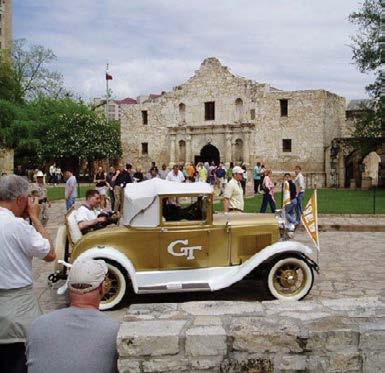
“We were going to Dean Dull’s 80th birthday party. In my rush to get changed and throw on my suit, the keys to the Wreck stayed in my shorts in the garage. I did not realize it until I was unloading it from the trailer. We popped the ignition cap off and I had the Reck Club member who was with me hold together the two ignition wires to run the car. For whatever reason, it wouldn’t run just by tapping the wires together. They had to hold the wires together the whole time. So, it was getting shorted for most of the trip. Dean Dull got a real crack out of me hotwiring the Wreck to drive him around for his 80th birthday.”—Brandon Kearse, ME 08, MS CE 10, 2008 Driver
“When we made the Final Four in San Antonio, we went to the Alamo to get photos. An agent said, ‘Get this thing out of here! You’re not allowed to be here!’ Two more agents came running up, saying, ‘Turn this thing off. You’re under arrest.’ Finally, the supervisor came and said, ‘Get this thing out of here. Never come back.’ I said, ‘Yes, sir.’
—Dustin Bergman, ME 05, 2004 Driver

“Two hours before the ACC Championship and the car needs to be push-started. The tailgaters at the house we’re at come out realizing what’s going on. Everybody puts in their absolute energy to push this thing across a flat road and we get it running.”—Winfield Tufts, IE 10, 2009 Driver
LEARN ABOUT TECH HISTORY AND TRADITIONS THIS HOMECOMING, OCT. 22–24.
BY JACK PURDY, BA 22
SEE THE FAMOUS Marilyn Monroe Look magazine cover, the newly renovated D.M. Smith Building, the Centennial Olympics Summer exhibit, and more pieces of Tech history this fall. Pick up the self-guided tour map at the Georgia Tech Hotel and Conference Center during Homecoming this Oct. 22–24. Learn about a few of the artifacts and locations.

In 1952 at the request of Georgia Tech Athletics sports information director Ned West, Marilyn Monroe posed for photos in Tech gear for the 1952 Tech football media guide. This photo of her was famously featured on the cover of Look magazine with Monroe in a Tech cheerleader sweater. When the photos were sent back to West, Monroe included a signed photo of herself that is still kept today by his family.
Opened in 1923, the D.M. Smith Building underwent extensive renovations in 2025. During renovations, student signatures from 100 years ago were found, original skylights were uncovered, and the original terrazzo floors were preserved. The building originally was called the Physics Building, and later named for David Michael Smith, a Tech professor who taught for 41 years, before retiring in 1954.
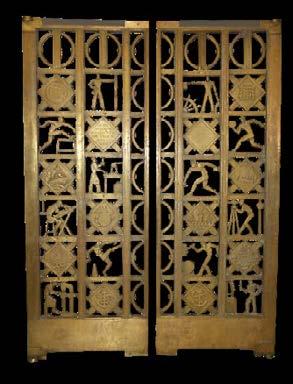
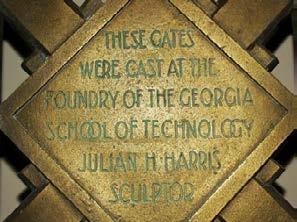
From the 1930s to 1980, the Naval Armory on Georgia Tech’s campus featured gates designed by Julian Hoke Harris, Arch 1928, at the entrance of the building. The gates, cast in the foundry at Tech’s Shop Building, include 12 panels depicting athletics and military scenes, along with 10 panels of Navy imagery and the seals of the State of Georgia and Tech. The gates were relocated to the Stephen C. Hall Building.
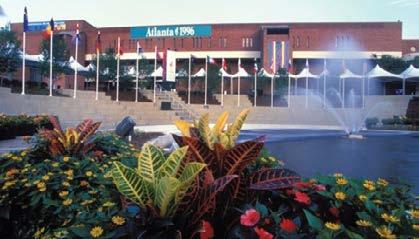
Open to the public through November, the Georgia Tech Library “Centennial Summer: Georgia Tech’s Olympic Legacy” exhibit showcases Tech’s involvement with the 1996 Summer Olympic Games. During the Olympics, Tech campus served as the Olympic Village and Tech hosted multiple Olympic and Paralympic events. The display includes five torches designed in part by Tech professor Sam Shelton, along with the history of changes to campus made for the Games and other memorabilia.

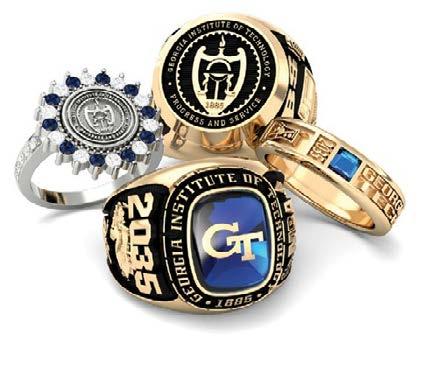



BE
The Georgia Institute of Technology official ring captures the spirit of pride of Tech. Available exclusively to students and alumni, the Official ring is part of the college’s unique culture and history, embodying the shared experience of your class and generations of past and future alumni.



Scan for first release Scan to join the Collector’s List


The Georgia Tech Legacy Fine Art Series
Nine Iconic Paintings Depicting Campus Scenes and Traditions
Created by a Georgia Tech Alumnus Limited Edition| Museum -Quality Giclee Canvas
Officially Licensed| Only 500 per size| Signed and Numbered
A Portion of Every Sale Supports Georgia Tech


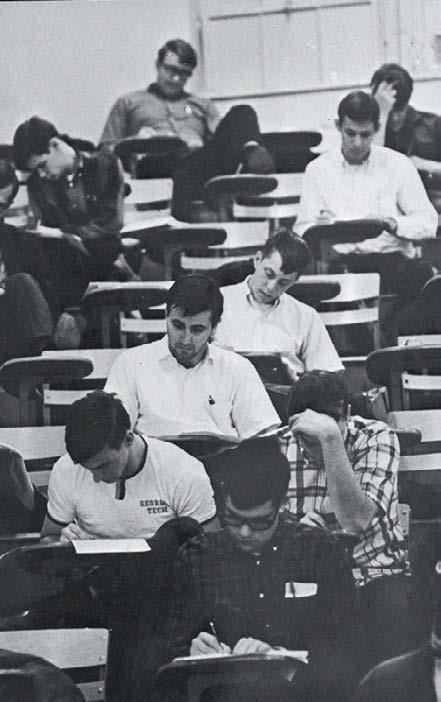
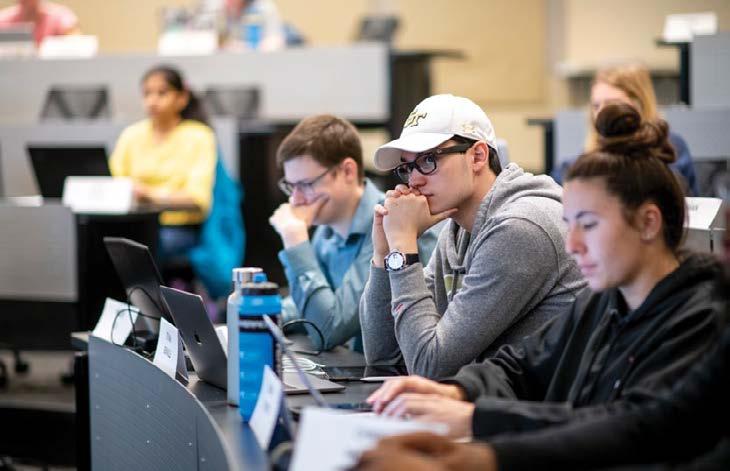
FOR MANY ALUMNI it wasn’t during a ceremony that they became a true Yellow Jacket. It was earned mid-exam, mid-lab, or mid-project.
Perhaps you flipped through the test looking for the easiest problem to solve first and got to the last page without finding it. Or you took a fluids exam with a question that included parts A through Z. Or solved a three-stage compressor problem in the days before calculators using trial and error, which took 12 hours with a slide rule.
In many of these moments, Yellow Jackets are born.
Jim Nazzaro, EE 76, remembers an open-book take-home final with only four questions. “The professor said, ‘It’s open-book, but it won’t help you.’ And he was right,” Nazzaro says.
Nazzaro was a clever student and a bit of a prankster (he took a few trips to the Dean of Students’ office), but he remembers really hitting the books for one final for a course on pulse, digital, and switching that was taught by a visiting professor. “I studied the material, except for the last three weeks of the 12-week course, and the entire final was on the last three weeks!”
BY JENNIFER HERSEIM
It wasn’t a test that showed Miriam Patton, ChE 76, the lengths that she would go to earn her Tech degree; it was a torrential downpour, the likes of which the El Paso, Texas, native had never witnessed before.
Patton was supposed to leave for her 8 a.m. physics lab when the deluge started. It was too late to take the bus and she didn’t own a car, so she took off running from Fitten Hall to the physics building.
“By the time I arrived, I looked like a drowned rat, but I was a sophomore then—not that kind of RAT (Recruit at Tech),” she clarifies. Only two other students showed up with her. Eventually a TA arrived to inform them that the lab would be postponed. This was before the days of cell phones or the internet and Patton assumed everyone would be there. “My parents instilled in me a good work ethic, but Georgia Tech really instilled in me a good work ethic,” she says.
After Patton’s first year, she and her classmates grew used to how much Tech demanded of them. “We used to laugh about the fact that we’d see pictures of Princeton’s campus and how beautiful and lush and green it was,” she remembers. “And we’d go, ‘Even if Georgia Tech looked like that, we wouldn’t have time to enjoy it because we have to work really hard!’”
Build a better Georgia Tech for future generations and continue the Institute’s legacy of excellence by being a part of Roll Call’s Leadership Circle. The generosity and dedicated giving of Leadership Circle donors builds future leaders by laying the groundwork for current student success.



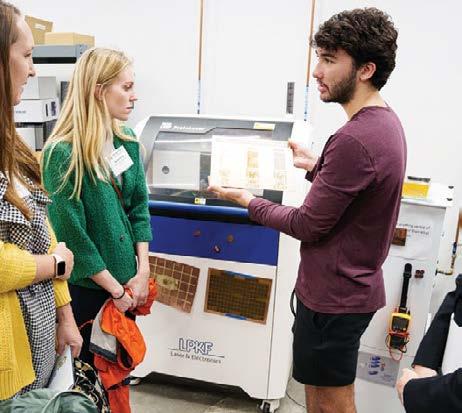












Special opportunities for recent graduates! To learn more, visit gtalumni.org/leadershipgiving
















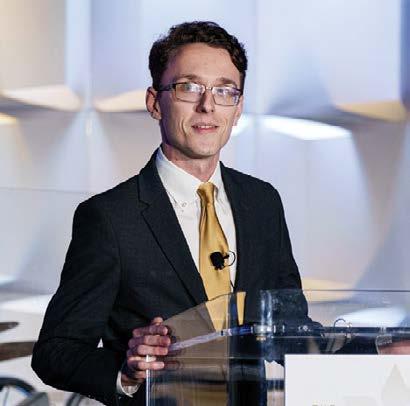







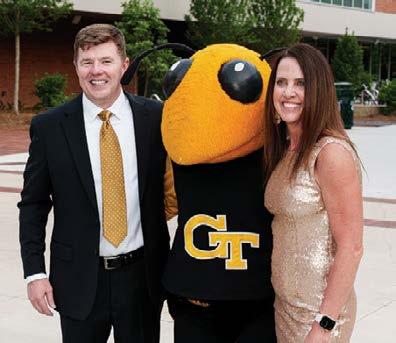






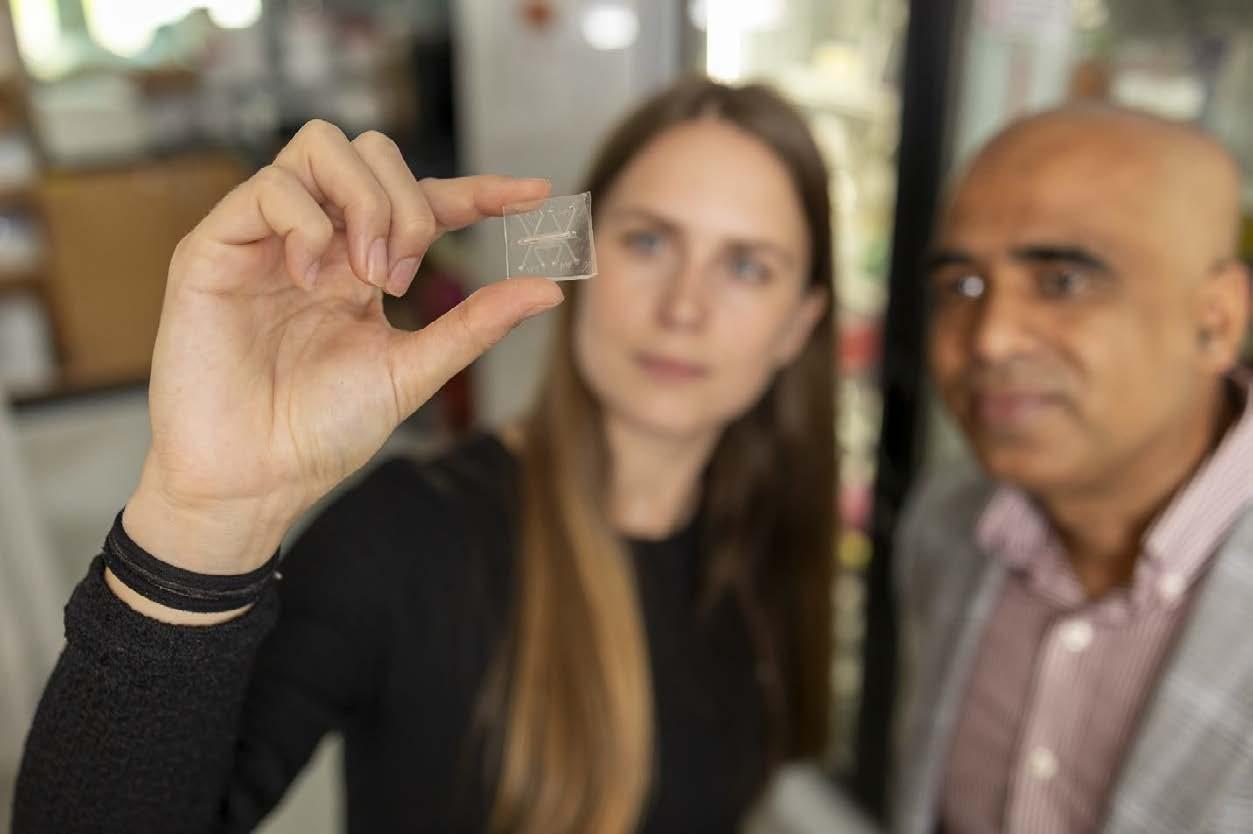

Transforming Tomorrow: The Campaign for Georgia Tech is a generational effort to make a lasting impact across campus — providing essential resources for Georgia Tech students, faculty, and programs. Read more inside about how alumni and friends are investing today to transform tomorrow. To learn how you can invest today, scan this QR code