Preparing Guilford County’s Youngest Learners: 2026 BIRTH TO THIRD GRADE
Preparing Guilford County’s Youngest Learners: 2026 BIRTH TO THIRD GRADE
Preparing children for lifelong learning starts well before kindergarten. Early systems and supports shape how ready children are when school begins. This brief examines the birth through third grade continuum in Guilford County, focusing on early learning conditions that most influence long-term outcomes. The early years matter most and deliver the greatest return when we act early. Brain development in the first five years lays the foundation for language, attention, and social skills, yet fewer than one-third of Guilford County children under age five and not in kindergarten are enrolled in licensed childcare.
By examining school readiness, thirdgrade reading, attendance, enrichment, and well-being, this report shows how early experiences drive later success. Strengthening the birth to third grade pipeline requires coordinated action from families, schools, employers, government, and community partners. The data that follow highlight where progress is happening and where stronger alignment can prevent higher costs later.
As you read, we encourage you to reflect on what the data suggest and consider where your role, influence, or organization has an opportunity to help strengthen these outcomes for Guilford County’s children.

For background context and deeper data dive, check out the 2025 Pre-K to 12 Public Education Report.
Understanding the size, age distribution, and diversity of Guilford County’s youngest residents helps the community plan early learning, childcare, and school-based services that meet current and future needs. These demographics shape how systems must be designed, where resources are needed, and how well children are prepared as they move into school.
Source: NC Department of Health and Human Services *Partial data as of September 30, 2025
2024 GUILFORD COUNTY POPULATION OF CHILDREN AGES 9 AND UNDER
30,712
Under age 5
33,560 Ages 5 to 9
Source: Kids Count Data Center, U.S. Census Bureau
2024 GUILFORD COUNTY POPULATION ESTIMATES BY RACE FOR AGES 0–5
42.4% WHITE
40.9% BLACK OR AFRICAN AMERICAN 20.1% HISPANIC OR LATINO
6.1% ASIAN
0.7% AMERICAN INDIAN
10.0% OTHER
Source: NC Office of State Budget and Management, Guilford County Partnership for Children
Births in Guilford County have declined since 2019, influencing future enrollment patterns.
More than 30,000 children under age five continue to sustain demand for early learning and childcare.
Young children in Guilford County reflect significant racial and ethnic diversity, reinforcing the need for accessible and culturally responsive services.
Effective planning must account for both population size and demographic composition to ensure support reaches children where they live.
Access to affordable, high-quality early learning is a foundational support for school readiness, family stability, and long-term academic success. In Guilford County, access is shaped by the interaction of workforce participation, childcare supply, affordability, and quality. Nearly 69% of children under age six live in households where all parents work, driving strong demand for childcare. Yet fewer than one-third of children ages 0 to 5 (9,425 total) are enrolled in licensed childcare. This mismatch reflects ongoing constraints in availability, affordability, and supply.
Licensed childcare options exist across quality ratings, but access is uneven. Demand continues to exceed capacity for four- and five-star programs and NC Pre-K spots, limiting options for families seeking care that supports early development and school readiness.
The table on the right shows licensed childcare centers and family childcare homes by quality rating. While Guilford County has a sizable number of licensed providers, the distribution of highquality spots remains limited relative to need, contributing to childcare deserts in some areas.
Source: Guilford County Partnership for Children
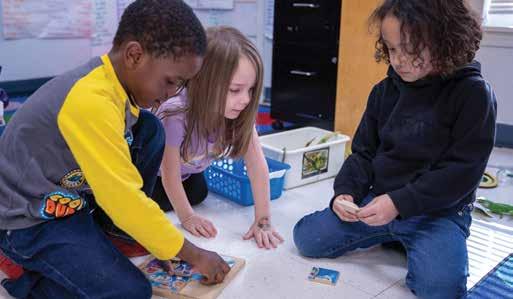
NC Pre-K remains a critical access point for highquality early learning. For the 2025–26 school year, Guilford County has 2,166 NC Pre-K slots available, while 426 eligible children remain on the waiting list, signaling unmet demand for publicly supported, highquality early education.
Even when care is available, cost remains a significant barrier. In Guilford County, full-time care for a twoyear-old in a four-star center averages $12,324 per year, nearly 18% of median household income. Family child care homes offer lower average costs but still require a substantial share of income for many families.
Sixteen percent of Guilford County families with children under age 5 live in poverty. Nearly 44% of all children under 18 live in households that fall below the Asset Limited, Income Constrained, Employed (ALICE) threshold or in poverty. These families earn too much to qualify as poor under federal guidelines, but not enough to cover the true cost of living.
In 2024, 2,682 children ages 0 to 5 received subsidized childcare. Even with assistance, families are required to contribute at least 10% of their annual income toward childcare.
High workforce participation among parents continues to drive demand for childcare, but licensed slots and NC Pre-K availability do not meet current needs.
Childcare remains a major household expense, hitting low-income and economically fragile families the hardest.
Publicly funded childcare supports thousands of children, yet affordability gaps persist for many working families.
Limited availability of affordable, highquality early learning undermines family stability and restricts parents’ ability to fully participate in the workforce.
School readiness reflects how well children transition from early learning into formal schooling and continue to build early academic skills. Literacy, language, socialemotional development, and foundational learning skills play a central role in that transition.
Teaching Strategies GOLD data, one assessment used in early childhood education, show strong growth across
the skills children need to start kindergarten over the course of the Pre-K year for children enrolled in NC Pre-K. Gains in literacy, math, cognitive, and social-emotional development are especially strong, demonstrating the impact of high-quality early learning environments on preparing children for school. These improvements reflect intentional instruction and program quality, not developmental timing alone.
Beginning of Year End of Year
Source: Guilford County Partnership for Children
At-home literacy experiences further support school readiness. At the end of 2025, 16,730 children in Guilford County were enrolled in Dolly Parton’s Imagination Library, which provides one free book per month to children from birth through age five. Through this program, almost
half of Guilford County’s children ages 0–5 have consistent access to books in their homes.
Parent survey data show that increased access to books is associated with more frequent shared reading at home, a key driver of early language development and school readiness.
Source: Guilford County Partnership for Children
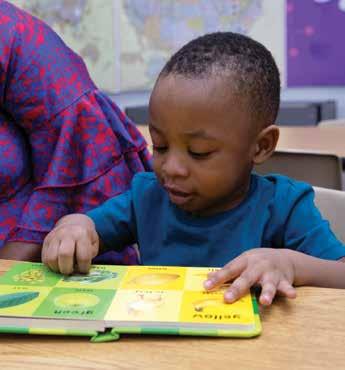
Children enrolled in Pre-K show strong growth across all readiness areas, with especially large gains in social-emotional, math, and cognitive development.
Access to books in school and at home supports daily reading habits and strengthens early literacy.
Maintaining current funding will help sustain early learning programs and preserve the school readiness gains achieved to date.
The years between kindergarten and third grade are a critical period for sustaining early learning gains and preparing students for long-term academic success. During this window, Guilford County Schools works to build on early foundations, strengthen literacy and math, support attendance, and provide learning opportunities beyond the classroom. The indicators below illustrate where progress is strong, where momentum slows, and where continued support matters most.
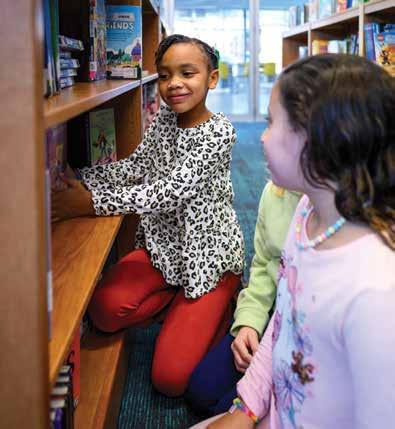
Early literacy skills built in kindergarten set the pace for reading success in elementary school.
Guilford County Schools' Dynamic Indicators of Basic Early Literacy Skills (DIBELS) data show kindergarten as a period of rapid growth, with many more students reaching gradelevel reading benchmarks by year’s end. These gains reflect the impact of structured instruction, early intervention, and focused literacy support.
Progress continues in first through third grade, but at a slower rate. By third grade, fewer students move into benchmark levels, underscoring the need to sustain strong instruction and targeted support as students shift from learning to read to reading to learn. While students across racial and ethnic groups make progress, achievement gaps remain by third grade. These gaps point to differences in early learning access, attendance, and ongoing enrichment over time.
Guilford County’s DIBELS results generally track with North Carolina and national patterns, but the data show clear room for improvement in accelerating literacy growth and closing gaps across racial groups.
Source: Guilford County Schools
Source: Guilford County Schools
End-of-grade reading scores show how well students use literacy skills to access grade-level content. After a pandemic dip, reading proficiency is
climbing again. Gains are steady and moving toward pre-pandemic levels, though third grade remains a pressure point compared to math. Overall proficiency edged up from 52.6% in 2023–24 to 53.5% in 2024–25.
53.5%
Overall elementary for all subjects
62%
Third grade math
Being in school consistently matters for learning, relationships, and access to key supports. Attendance has improved since the pandemic, with fewer students missing large amounts of school.
Still, too many students are chronically absent*, and the burden is not shared equally. Black and Hispanic students continue to miss more school than White students, reflecting structural barriers tied to health, transportation, childcare, housing, and system trust, not a lack of family commitment.
*A student is considered chronically absent if they are enrolled for at least 10 days and miss 10% or more of school days in a year.
44.7%
Third grade reading
Source: Guilford County Schools
Source: Guilford County Schools
*Partial data as of January 9, 2026
Out-of-school programs strengthen learning, expand enrichment, and support working families. Through After-School Care Enrichment Services (ACES), thousands of elementary students each year receive a reliable mix of academic support, hands-on enrichment, and daily nutrition.
Students have dedicated time for homework and independent learning, paired with rotating activities that include arts, music, movement, dramatic play, building, reading, math, science, cultural learning, and indoor and outdoor play. Group-led experiences build literacy, social-emotional skills, character, life skills, and STEM skills. Enrollment remains strong, reflecting steady demand.

53,904
is the number of Greensboro Public Library cardholders under the age of 18.
Programs that support early literacy work. Strong kindergarten gains show instruction is effective, but progress slows by third grade, making K–3 a make-or-break window.
Recovery is real, but incomplete. Reading proficiency continues to improve after the pandemic, though outcomes remain below pre-pandemic benchmarks.
Gaps remain. Racial disparities persist across literacy and attendance measures, even as overall performance improves.
Attendance still matters. Chronic absenteeism has declined since its pandemic peak, but elevated rates continue to undermine learning and student well-being.
Enrichment fills critical gaps. Afterschool and enrichment programs support academic growth and working families, with sustained demand signaling their value.
Focus and follow-through are required. Targeted investments in early literacy, attendance, and out-of-school learning are essential to accelerate progress and close gaps.
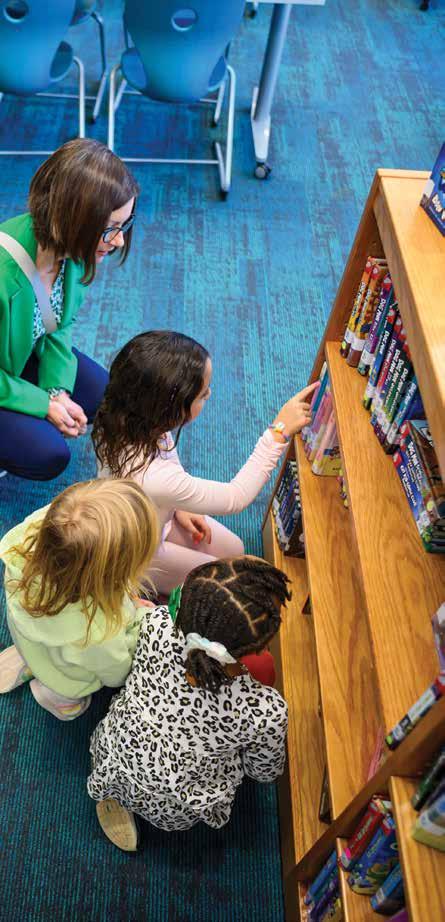
Movement is not a break from learning. It is how learning sticks. Play and physical activity fuel brain development, focus, and social-emotional growth. They shape how children show up in the classroom and how they connect with peers. State guidelines call for daily movement for young children, but in Guilford County, access to consistent, high-quality opportunities depends largely on where a child goes to school and where they live.
Recess time: Guilford County Schools elementary students receive at least 30 minutes of daily physical activity such as recess, physical education, or other activity time. NC Pre-K students receive a minimum of 60 minutes of outdoor play daily.
Outdoor learning environments: Access to outdoor classrooms, inclusive play equipment, and nature-based spaces varies widely. Some schools offer rich, engaging environments. Others have limited or aging infrastructure.
Park access: 58% of children and youth ages 0–19 in the City of Greensboro live within a 10-minute walk of a public park (Trust for Public Land). This is slightly above the national average of 57% but still leaves many families without easy access to safe play spaces.
Child health: About 30% of Guilford County children ages 2–4 are classified as overweight or obese (NC Department of Health and Human Services). Rates mirror statewide trends and underscore the importance of daily movement early in life.
School-community partnerships: In Fall 2025, Beyond Sports partnered with Guilford County Schools to strengthen physical activity through six-week recess clinics, equipment upgrades, and improved play spaces. Impact: 89 third grade classrooms and 1,800 third grade students participated in weekly Beyond Sports activities. Another partnership, the 2nd Grade Learn to Swim program, is hosted at the City of Greensboro’s Aquatic Center and provides swimming and water safety instruction to second graders. The program served 3,100 students in the 2023–24 school year.
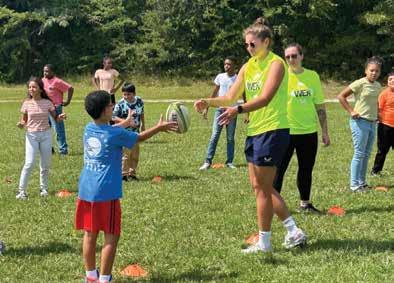
Play and physical activity are essential supports for learning, attention, and healthy development.
Access to high-quality and inclusive outdoor learning spaces varies across schools, though recent investments are improving conditions.
Childhood overweight and obesity rates remain persistent challenges for young children.
Targeted school and community partnerships can expand physical activity opportunities and strengthen learning environments.
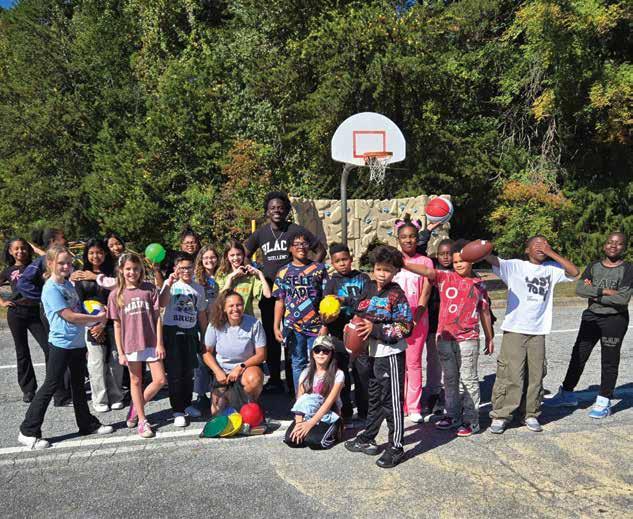
Together, these indicators show real progress and ongoing challenges across the birth through third grade years in Guilford County. Early investments in literacy, enrichment, and wellness are paying off, especially in school readiness and early reading.
Gaps remain. Affordable childcare is limited, play and learning spaces are uneven, and achievement and attendance disparities persist, with outcomes varying significantly by race and ethnicity. Slower literacy growth by third grade and elevated absenteeism point to the need for sustained support beyond the early years.
The message is shared responsibility. Families, schools, employers, policymakers, and community partners all shape early learning outcomes. By aligning efforts, reducing barriers, and supporting whole-child development, Guilford County can better prepare children for school and long-term success.
THANK YOU TO OUR REPORT CONTRIBUTORS
Beyond Sports
Guilford County Partnership for Children
Guilford County Schools
Cecelia Thompson
Executive Director
Sarah McGuire
Director of Civic Engagement
Beyond Sports
Guilford County Partnership for Children
Guilford County Schools
Vanderveen Photographers

Karl Anderson
The Frank Family Foundation
Durant Bell
Bell Family Foundation
Joe Blosser
The Earl and Kathryn Congdon Family Foundation
Brent Christensen
Greensboro Chamber of Commerce
Barry Frank
The Frank Family Foundation
Kevin Gray
Tannenbaum Sternberger Foundation
Erica Hall Shields
Phillips Foundation
Ed Kitchen
Joseph M. Bryan Foundation
Mindy Oakley
The Edward M. Armfield, Sr. Foundation
Megan Oglesby
The Earl and Kathryn Congdon Family Foundation
Walker Sanders
Community Foundation of Greater Greensboro
Susan Shore Schwartz
The Cemala Foundation
Susan Shumaker
Cone Health Foundation