
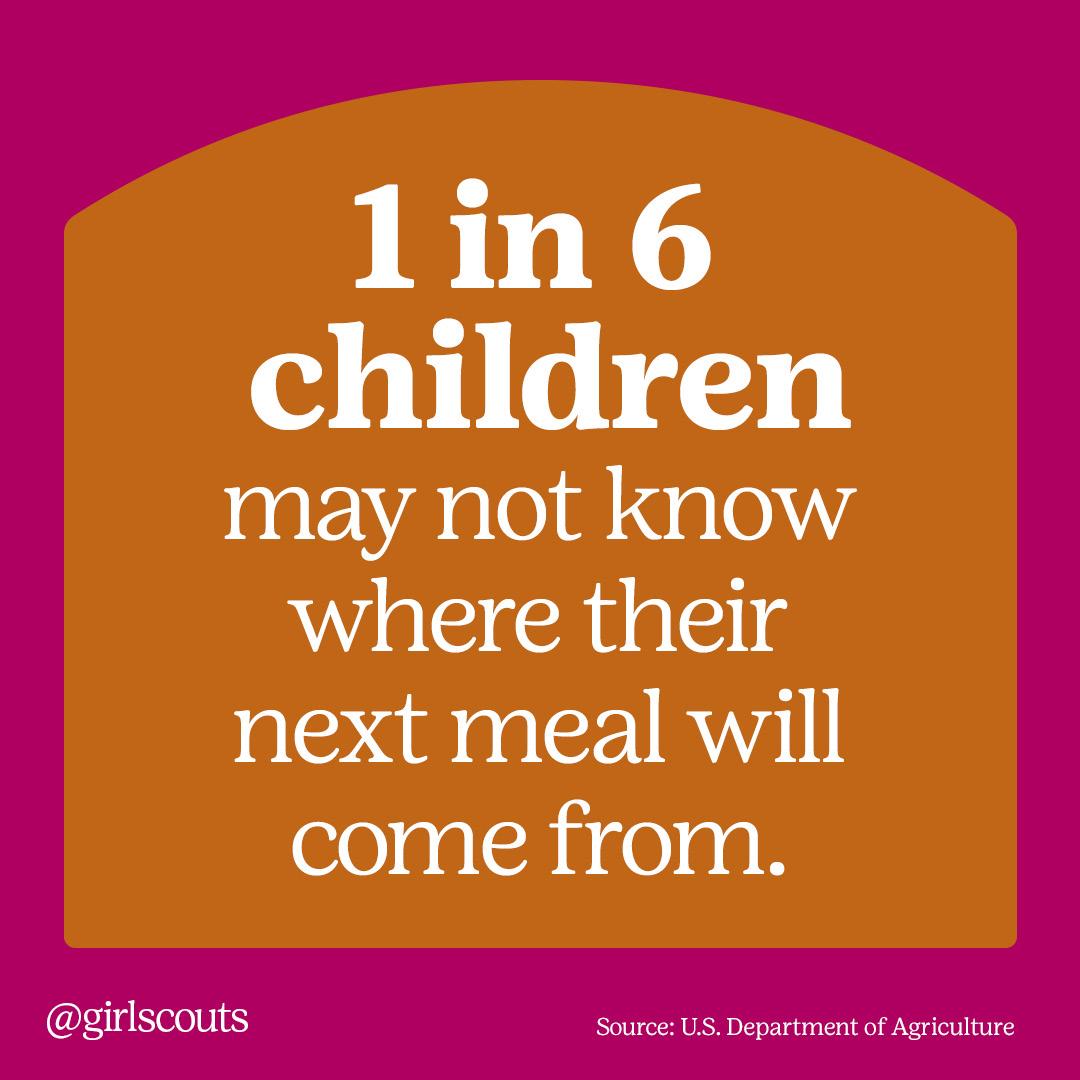
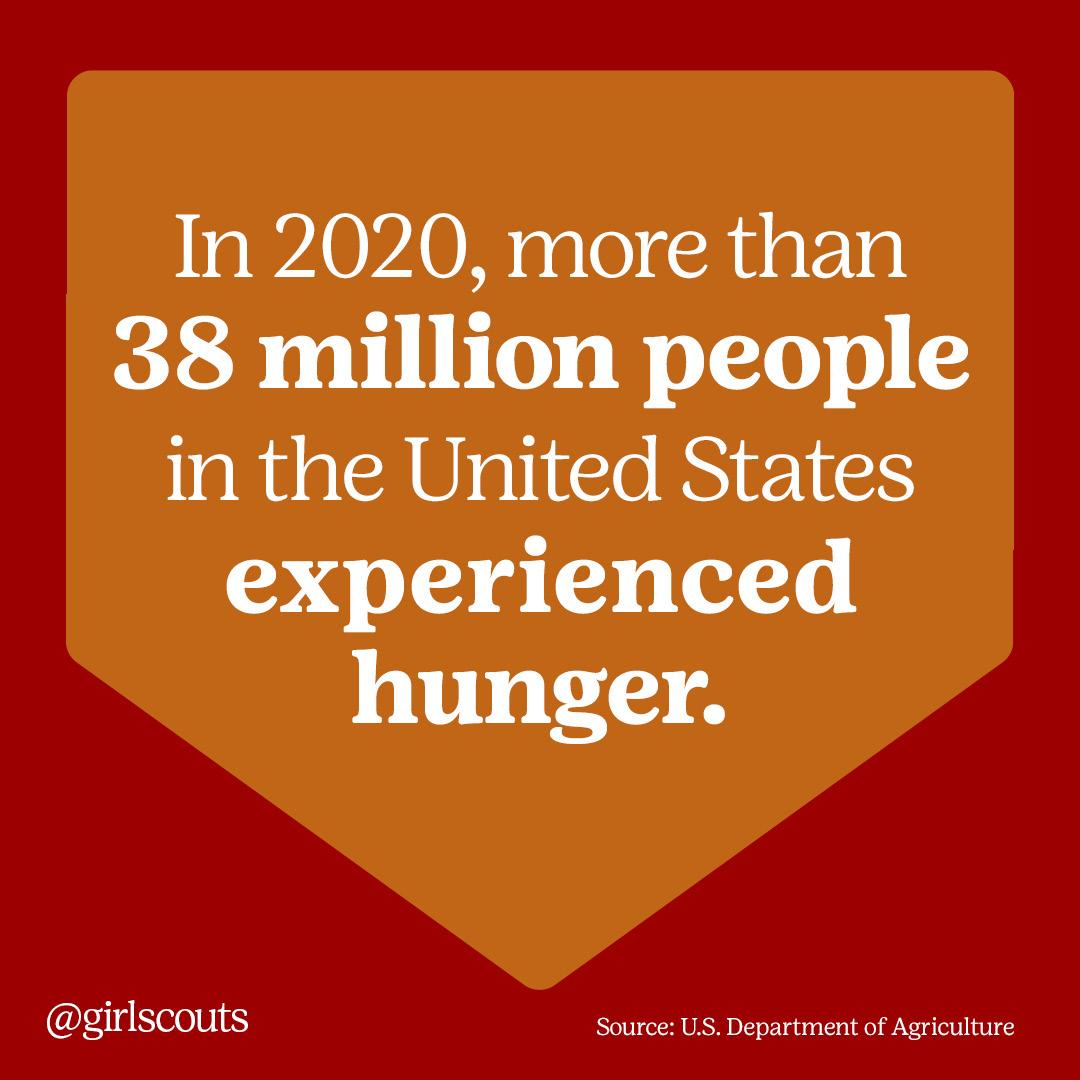
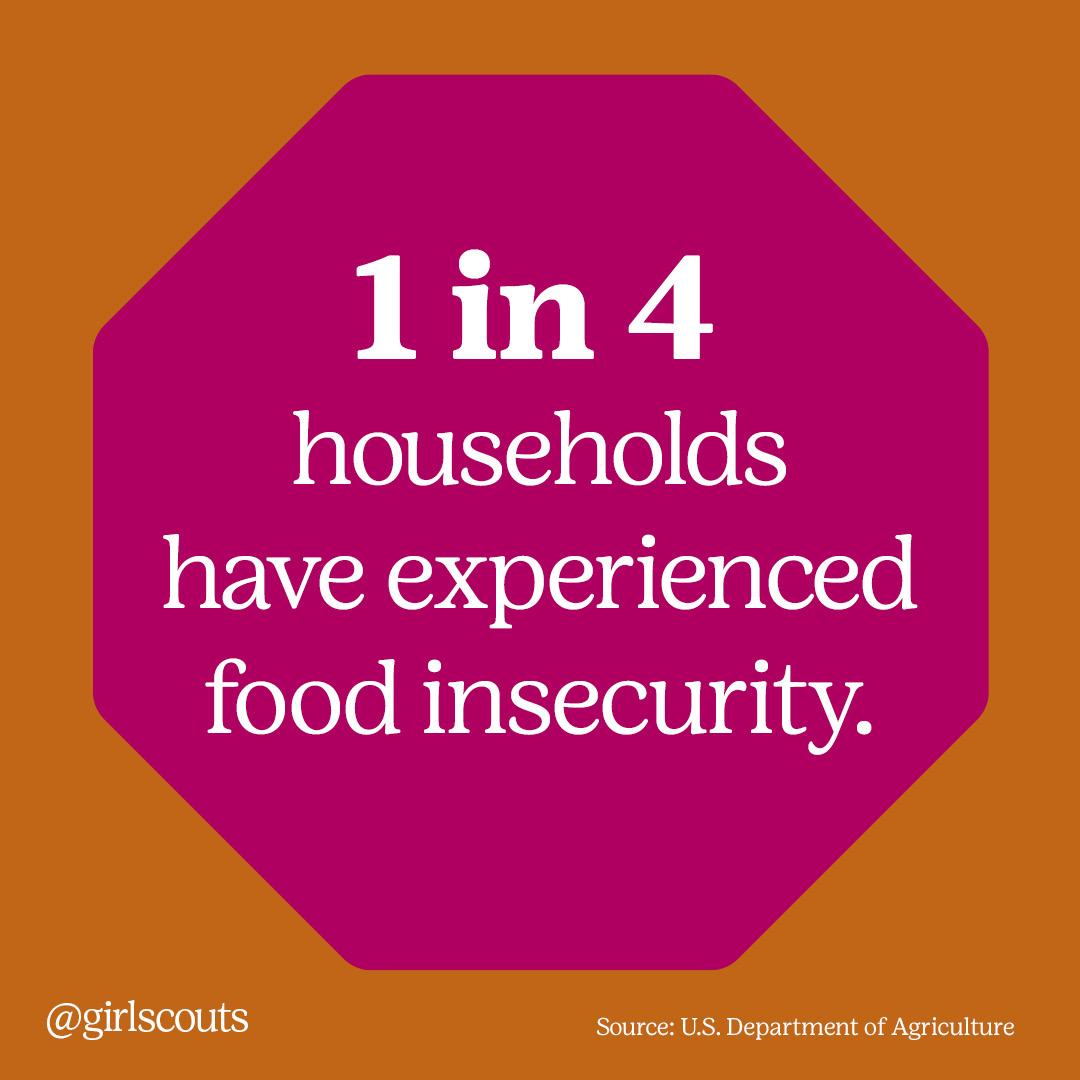

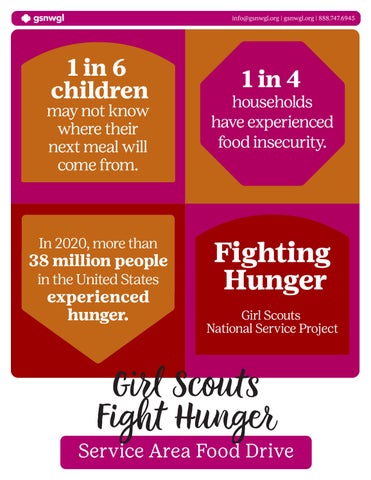
More than 50 million adults, kids, and families in the U.S. are experiencing food insecurity, a number that may include members of our own communities, friends and family, members of our troops, or ourselves, making this a sensitive and important take action issue for Girl Scouts.
As they think about how to give back, Girl Scouts can make a big difference in their communities—and for children around the world—by supporting hunger relief efforts.
Service Areas can participate by hosting a Girl Scouts Fight Hunger food drive for local Girl Scouts to contribute to. Consider hosting the drive in November to amplify the collective impact of Girl Scouts across Wisconsin and Michigan. Whether your food drive collects 3, 30, or 3,000 cans, it contributes to a shared effort, where every act of service, no matter the size, adds up to meaningful impact across our communities.
Girl Scouts always step up to do what they can to improve their communities and the world.
Community Service in Girl Scouts transforms good intentions into real-world impact. It gives girls the chance to take action on issues they care about, build empathy and leadership skills, and see the tangible difference they can make in their communities. Through hands-on service, girls gain a lifelong commitment to making the world a better place.
▶▶
This Service Area Guide comes with more than just a few
Planning a large service project is not always easy, and some people simply don’t have the time to put it together on their own. That’s why we’ve put together this handy guide that lays it all out for you. This food drive is designed for all Girl Scout levels to participate. The Super Troop Year Planner has great learning points and discussion questions for Girl Scouts to discover and connect to food insecurity in their troops while participating in the food drive.
For event planning help, check out our Service Area Event Planning resources.
https://gsnwgl.link/EventPlanning
When you finish your event, we’d love to hear how it went!
https://gsnwgl.link/FightHunger
planning notes. To make your food drive as successful as possible, your Girl Scout staff are here to support you. We are happy to provide printed event guide, fliers, and handouts; planning support; and Service Area funding through spring allocations.
Service Areas will receive an allocation based on hosting quality local events for Girl Scouts that tie in with the GSNWGL Super Troop Year plan topics and that host at least one event that is open to Girl Scouts beyond their Service Area.
If you don’t find everything you need in this guide—we can help! Contact us with questions, comments, or suggestions via an email to info@gsnwgl.org
Girl Scout-led: Ask a few Girl Scout troops to help plan the food drive or support day-of!
1. Decide which food bank or food pantry you will support.
• Start local: Check schools, houses of worship, or community centers.
• Use these tools to find options in your area:
• Feeding America’s network of local food banks
• Upper Peninsula of Michigan: www.feedwm.org/findfood
• Eastern and Central Wisconsin: https://feedingamericawi.org/find-a-pantry
• Western Wisconsin: https://2harvest.service-now.com/care_center?id=food_map
• Northwestern Wisconsin: https://secondharvestnorthland.org/find-food
2. Contact your food pantry before you begin.
When you contact the food bank or food pantry, start by telling them you would like to organize a food drive. Be sure to ask:
• Is the pantry accepting donations?
• What foods does the food pantry need most?
• Do they have food donation guidelines for you to follow?
• Does the food pantry have a preference on how food donations are delivered to them?
• Does the organization ask that you pre-sort donations?
3. Decide how you will collect and donate the food.
Some options to consider include:
• Drop-off point (secure, weather-safe location)
• Drive-thru food drive (set a specific date and time)
• Collect at an existing Service Area event- consider an event admission discount for a donation!
No matter what method you choose, plan for how you will collect the items and transport them to the food bank.
4. Invite your local troops to participate!
Use the provided flier template to invite troops and families to your food drive. Customize it with your event details, then share it through your usual Service Area channels, such as email, social media, Rallyhood, and Service Area meetings.
Be sure your flier includes:
• Collection location, date, and time
• Suggested donation items
• Items that should not be donated
5. Help Girl Scouts learn as they contribute.
Encourage Girl Scout families and volunteers to talk with Girl Scouts about food insecurity. Use the Troop & Family Discussion Guide to support conversations and be mindful that some Girl Scouts could be experiencing food insecurity themselves.
If we want to secure a brighter, more equitable future for all children, combatting food insecurity is an important first step. Check out Feeding America’s article on children and hunger and resources on food insecurity to learn more. As you get ready to engage your girls in a potentially sensitive discussion, we also recommend checking out Six Ways You Can Foster Respectful Conversations Within Your Troop.
▶▶ Helpful Definitions
• Food security: When people have physical and economic access to as much nutritious food as they need to live a healthy, active life.
• Food insecurity: When a person or family is without reliable access to a sufficient amount of affordable, nutritious food. Food insecurity is one way we can measure and assess the risk of hunger.
• Hunger: A personal, physical sensation of discomfort caused by wanting or needing food.
▶▶ Discussion Questions
• Think about one reason why access to food is important. Will you share your answer with the troop?
• Can you think of any examples of programs that provide food to people? (for example: food drives, meals on wheels, school meal programs)
• How is food insecurity different from hunger?
• Why is it important to us as a troop to help families and individuals who might be experiencing food insecurity?
• We can’t always know how others are feeling or what challenges others may be experiencing—including who in our communities might be suffering from food insecurity. How can we express compassion and support to others, regardless of if we know their personal circumstances?
• Why is it important to care for our own community? How do we wish to support others around the world who might be food insecure as well?
• How can we, as a troop, help others? What actions feel most meaningful for us to do? What is achievable for us as a troop?
• If your troop wants to think bigger, brainstorm some solutions to systemic food insecurity. What are some actions that we can take in the future—as a troop, or as a greater community—to help more people have access to food? Are there changes our government can support to help our communities become more food secure?
In general, most food banks accept donations of canned and dry foods. These foods are nonperishable (items that can be kept in your pantry and do not need to be refrigerated) and will not go bad, or may have a sell-by date that is far in the future. Some food banks may also collect personal care items like diapers, feminine care products, toothbrushes, soap, etc. In general, donate items like:
• Canned soup
• Canned fruits
• Canned vegetables
• Canned stew
• Canned protein
• Beans—canned or dry
• Peanut butter
• 100% juice
• Macaroni & cheese
• Pasta sauce
• Pasta
• Rice





Refrigerated or frozen food
Some food banks and pantries may have limited freezer or refrigerator space, making it hard to keep things fresh. Because of safety and storage concerns, food that is not shelf-stable cannot be accepted at food drives.









Homemade food, including leftovers and baked goods
To ensure that all food distributed by food banks and pantries is safe for the people who will eat it, organizations aren’t able to accept food made in personal kitchens where they can’t verify the ingredients or preparation process.
























Food that is expired or close to expiring
It’s important that all food donations are fresh and safe for those who receive them. Food that is close to or past its expiration date may be unsafe for consumption and will not be accepted.





Food with packaging concerns or fragile packaging
This includes glass containers or packaging that can break easily, or damaged packaging, including anything partially open and dented or bloated cans. If you wouldn’t consider buying the item for your own family, don’t donate it.
Supporting Local Food Bank/Food Pantry
▶▶ How We’re Collecting Food
Instructions for donation, address/collection point, times, drive-thru food drive details.
▶▶ Foods You Can Donate
• Fill this in once you have a list of suggested items from the food bank/pantry.
• Canned soups
• Canned beans
▶▶ Please Do Not Donate
• Food that needs to be refrigerated
• Food that is expired or close to expiring
• Rice (brown)
• Other items
•
•
• Homemade food, including leftovers and baked goods
• Food with packaging concerns
•
• Any other requests from your local food bank/pantry
•
• Questions? Contact Name at Email for more information. Want to learn more about Girl Scouts? Visit us at gsnwgl.org.
Service Area
Published by Girl Scout Volunteer 1 min ago
Service Area is hosting a Girl Scouts Fight Hunger Food Drive. Come out to support our community!
Where: Local library
When: Friday, July 11 | 2–4 PM
See the attached flyer for more information on accepted food donations.