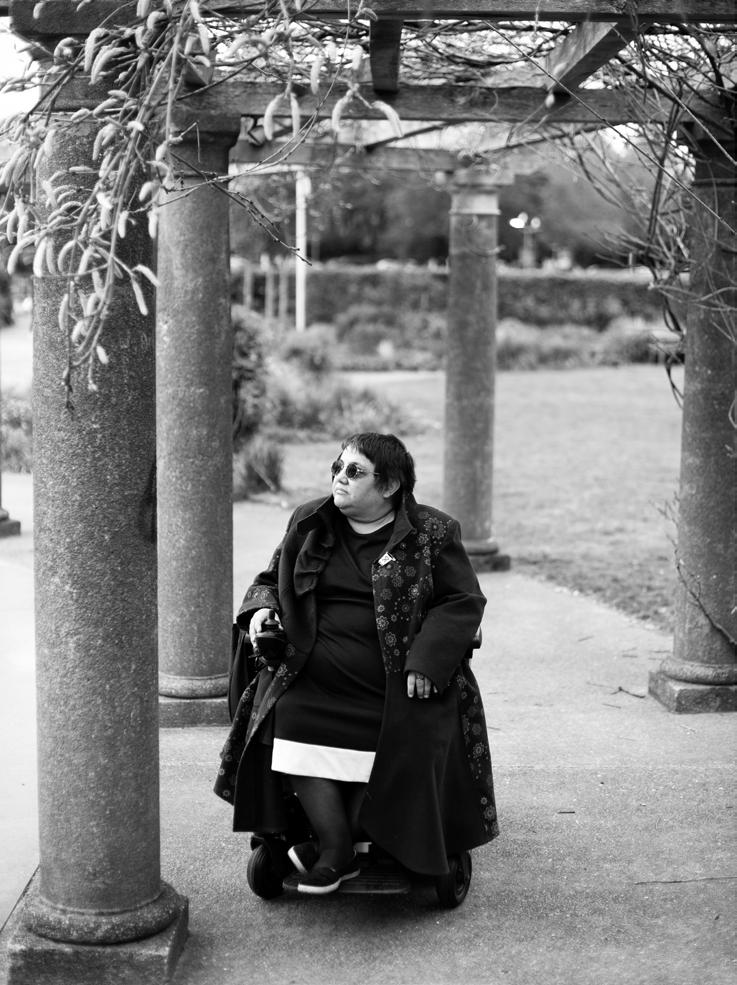
“PRIDE
with prejudice is nothing to be proud of. What you can be truly proud of is, when you step up in your own privileged skin and say to the haters, ‘No. Not in my name’.”
Suchitra Chatterjee
“PRIDE
with prejudice is nothing to be proud of. What you can be truly proud of is, when you step up in your own privileged skin and say to the haters, ‘No. Not in my name’.”
Suchitra Chatterjee
D www.scenemag.co.uk
T @SceneLGBTQ
F GScene.Brighton
I SceneMagazineUK
Publisher: Scene Magazine Media CIC
Editorial: info@scenemag.co.uk
Advertising: info@scenemag.co.uk
Editorial team
Features Editor: Jaq Bayles
News Editor/Design: Graham Robson
Arts Editor: Alex Klineberg
Art Director: Tom Selmon
News team: Graham Robson, Eric Page, Rachel Badham, Catherine
Muxworthy, Paul Smith, Leighton
DeBurca E news@scenemag.co.uk
West Midlands News Editor: Catherine Muxworthy
E midlandsnews@scenemag.co.uk
London News Editor: Steven Banks
E londonnews@scenemag.co.uk
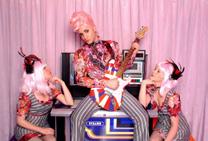
Cover: Model: Jason Kwan d www.jasonkwanmusic.com
Photographer: Tom Selmon E contact@tomselmon.com d www.tomselmon.com
Styling: Agu Nguyen i www.instagram.com/phatbitch123/ Contributors
Sam Adams, Simon Adams, Rachel Badham, Jack Groves, Catherine Muxworthy, Nick Boston, Brian Butler, David Fray, Billie Gold, Craig HanlonSmith, Michael Hootman, Laurie Lavender, Enzo Marra, Eric Page, Glenn Stevens, Netty Wendt, Roger Wheeler, Chris Gull, Jon Taylor, Alex Klineberg, Michael Steinhage, Jon Taylor, Jason Reid, Rory Finn, Alf Le Flohic, Richard Jeneway
Photographers
Jack Lynn, Chris Jepson, Simon Pepper, Nick Ford, Tom Selmon, Daisy Golden, Shiri Rozenberg

© Scene 2021
All work appearing in Scene CIC is copyright. It is to be assumed that the copyright for material rests with the magazine unless otherwise stated on the page concerned.
No part of this publication may be reproduced, stored in an electronic or other retrieval system, transmitted in any form or by any means, electronic, mechanical, photocopying, recording or otherwise without the prior knowledge and consent of the publishers.
The appearance of any person or any organisation in Scene is not to be construed as an implication of the sexual orientation or political persuasion of such persons or organisations.


15 DON’T JUDGE ME...
Craig Hanlon-Smith on how we all hold prejudice
16 LONG LIVE PORN!
Jason Reid on why the porn industry deserves our respect
18 LOCKDOWN LOVE?
Jack Groves on dating during a pandemic
19 PRIDE & PREJUDICE
Tackling prejudice in LGBTQ+ communities
19 NO BLACKS, NO ASIANS, WHITE ONLY
Sonny Singh on encountering prejudice online
20 2 SOULS
A poem from Ameet Vaghela
22 PRIDE WITH PREJUDICE
Suchitra Chatterjee on saying 'No' to hate
24 YOU NEED TO HEAR THIS
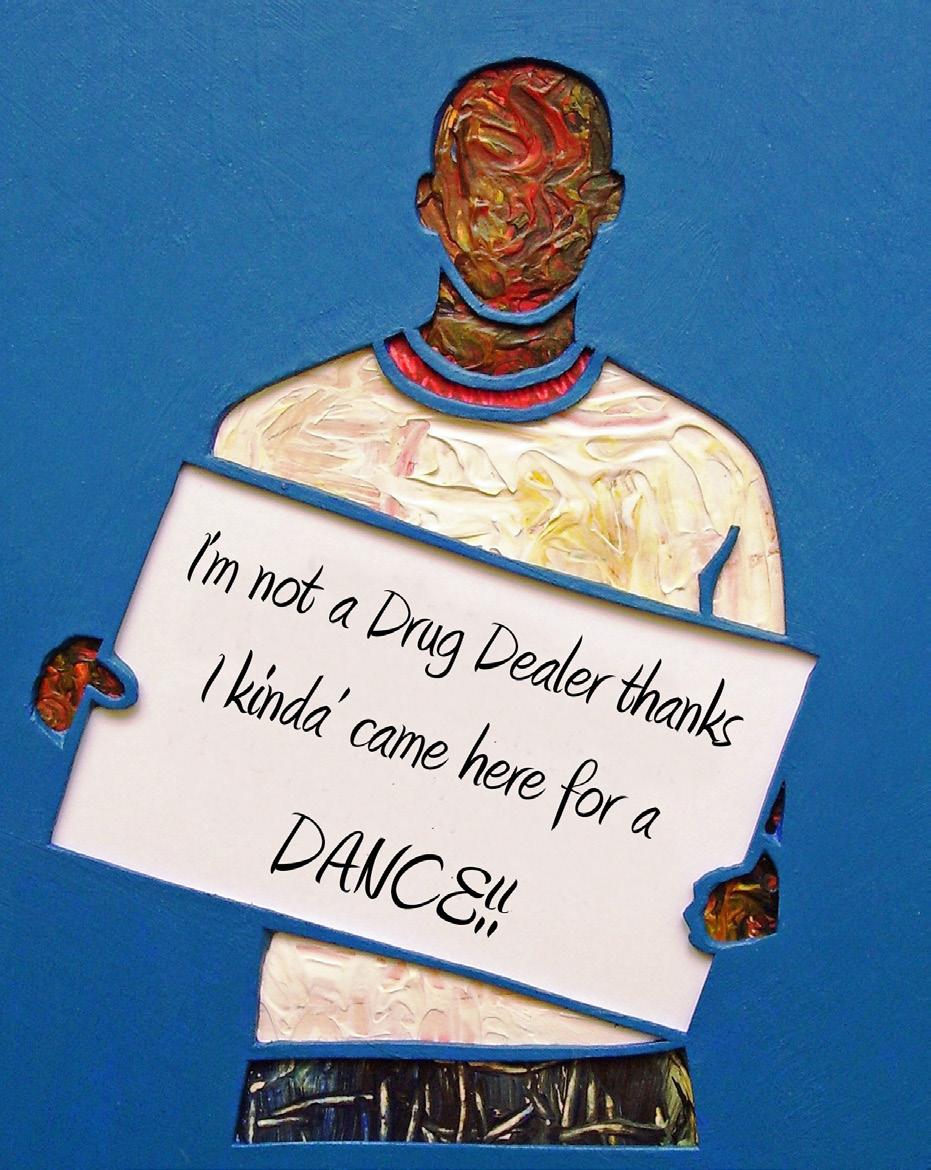
An illustration by Josef Cabey
25 WHY ALL THESE YOUNG MEN?
Roger Wheeler discusses some experiences of discrimination from both outside and inside the LGBTQ+ community
26 “WE NEED TO REMEMBER OUR ROOTS”
Tom Rudd on fighting for acceptance
27 TRANS KIDS DESERVE BETTER
Rachel Badham on how international hostility is harming young trans people
28 FROM SURVIVOR TO ACTIVIST
Rachel Badham in conversation with Jewish LGBTQ+ activist and conversion therapy campaigner Joseph Hyman
29 POSITIVE PERSPECTIVE
Richard Jeneway, who is blind, reports on his experiences with prejudice
30 SEEKING A BROADER CHURCH
Jaq Bayles talks to church members who are looking to improve the path
32 ME BEING ME
Music sensation and this month’s cover star Jason Kwan on being unapologetically himself
34 LUNCH POSITIVE
Lunch Positive founder Gary Pargeter talks to Jaq Bayles about the continuing battle to remove the stigma around HIV
35 IS PRIDE RACIST?
Rhammel Afflick talks to Rachel Badham about how Pride has excluded communities of colour
36 SPOTLIGHT ON ‘WENDY’
Alf Le Flohic on the life of Brighton cinematographer David Watkin
38 PROUD PORTRAITS
Craig Hanlon-Smith catches up with Denis Robinson, whose LGBTQ+ Pride project #ProudPortraits is making some serious noise
40 HOPE SPRINGS
Alex Klineberg gets comfortable with the cabaret performer
42 OUT ON AN ISLAND
A new exhibition exploring the Isle of Wight's LGBTQ+ history and heritage
44 BOOGALOO STU
Alex Klineberg enters the lurid world of the bequiffed performer
50 THE BRIGHTONIANS
We catch up with Daren Kay, whose first novel is a love letter to his


Organisers of Brighton & Hove Pride 2021 have announced with regret the cancellation of Brighton & Hove Pride LGBTQ+ Community Parade, Pride Village Party and Pride Festival on Saturday, August 7 and Sunday, August 8.
) The need for community has never been stronger and Brighton & Hove Pride is one of Europe’s biggest Pride Festivals attracting thousands of people from across the UK to attend multiple events across the city, including the LGBTQ+ Community Parade
According to organisers, delivering Pride requires an all year-round planning cycle working closely with partner agencies and, while the vaccine rollout continues to be successful, the many uncertainties that need to be resolved to safely deliver mass gatherings and the complexities of organising multiple Pride events across the city are impossible to achieve in the time. In a statement, Pride said: “Based on the best information available to us at this time we are heartbroken to have to cancel for a second year. We cannot risk the health and safety of Pride visitors, residents and the hundreds of staff and volunteers that help deliver Pride.”

Paul Kemp, director of Brighton & Hove Pride, said: “We are devastated at having to make this decision for a second year and recognise the huge impact on local businesses, charities and community groups who rely on the fundraising potential of the Pride weekend.
“Pride attracts tens of thousands of people to our city for the LGBTQ+ community parade which is the heart of the Pride celebrations, where social distancing clearly can’t be facilitated safely. Our planning has also identified significant supply chain challenges including infrastructure, security and staffing making it impossible to deliver a safe event with any certainty.
“Community fundraising has always been our main objective for Pride, but without the safety net of viable Covid cancellation insurance, we cannot jeopardise our ability to deliver a sustainable fundraising Pride in future years.

& Hove. The Pride Social Impact Fund benefits local good causes, giving grants to a range of local groups.
Chris Gull, chair of the Brighton Rainbow Fund, said: “We were sorry to hear that Brighton & Hove Pride has had to make the difficult decision to cancel plans to deliver a full-on physical event again this year. We totally understand and support that decision.
“For several years before the current organisers took over, Brighton & Hove Pride had failed to raise any funds for our local LGBTQ+ projects. Under the current organisers’ tenure almost £1 million has been raised for local good causes, the vast majority of which the Brighton Rainbow Fund has distributed as grants to those projects.

“I’d like to thank all of our contractors, suppliers and partner agencies who have tried their utmost to help us move forward with planning, and to everyone who has purchased a ticket for their understanding and support, we can’t wait to bring Pride back in 2022 better than ever.”

Nick Hibberd, Brighton & Hove City Council’s executive director for Economy, Environment & Culture, said: “We’re very sorry that the in-person Pride events need to be cancelled again this year. They are very important community events in our city’s cultural calendar promoting LGBTQ+ equality and inclusion and will be much missed.
“We’ve been in regular discussion with Pride through the city’s multi-agency safety advisory group and, even with restrictions starting to ease, it’s clear managing large events safely remains a huge challenge.
“Keeping everyone safe and Covid rates low remains our priority and, with that in mind, we fully support the decision.
“We will continue working with Pride to support the smaller events arranged this year and help manage a safe city over the traditional Pride weekend at the beginning of August.
“We look forward to working together next year to make sure our city’s full Pride celebrations can return better than ever.”
In the last seven years, Brighton & Hove Pride has raised over £936,000 for the Brighton Rainbow Fund, Pride Cultural Development Fund and Pride Social Impact Fund. The Brighton Rainbow Fund has a remit to receive donations and to use them to distribute funds raised in the community as grants to local LGBTQ+ organisations and projects in Brighton
“Without the security of a government-backed Covid insurance scheme (as offered in other countries), many festivals across the UK are reaching the same conclusions that Brighton & Hove Pride has, in short that there are still too many unknowns to be able to predict the situation in late summer. Decisions and spending commitments have to be made now. Nobody can be certain, for instance, that a variant that is resistant to the current vaccines won’t emerge and that a further lockdown won’t result.
“The sensible and responsible decision has been made. The long-term fundraising for our local LGBTQ+ projects is best served by ensuring that the successful fundraising model that has been created is sustainable over many years to come. The risk of, to be blunt, the organisation collapsing due to Covid delivering another twist is not worth taking.
“We look forward to hearing about what events Brighton & Hove Pride will be organising, and know that fundraising for our local LGBTQ+ communities, along with the safety of attendees remains the core aim.”
Brighton & Hove Pride is planning smaller in-person satellite community and pop-up cultural events throughout the summer and autumn as part of its cultural programme that can run within Covid-safe guidelines as well as an exciting programme of online events.
D If you’re an existing ticket holder, visit: www.brighton-pride.org/2021-information-forticket-holders/
D For more info on the Brighton Rainbow Fund, visit: www.rainbow-fund.org
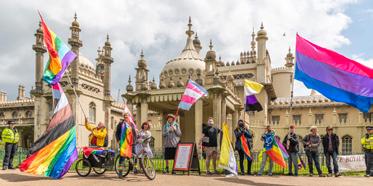
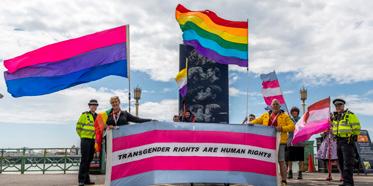
) Brighton & Hove’s LGBTQ+ communities came together last month to mark International Day Against Homophobia, Biphobia and Transphobia (IDAHOBIT) with a Loud & Proud walk from Palace Pier to the The Level
and welcoming LGBTQ+ peer space.
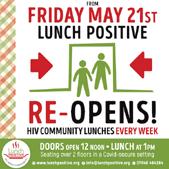
) HIV charity Lunch Positive has reopened its HIV lunch club at Dorset Gardens Methodist Church, Brighton, which provides a weekly safe and supportive community space for people with HIV. The lunch club is put together by a fantastic team of volunteers and is provided in a Covid-secure setting. The opening of the lunch club will be followed by the reopening of the monthly evening supper group in June, which will run regularly on the second Wednesday of every month.
Gary Pargeter, service manager at Lunch Positive, said: We’re so excited to be reopening the lunch club and supper group which have a massive impact on people’s health & wellbeing. Over the last year our volunteers have been amazing in their outreach roles, with much of this outreach work still continuing in new ways alongside the lunch club and our community gatherings.

“The team is now really looking forward to being together with our members, chatting and supporting where needed. We know that many of our members are very much looking forward to being together again after what has been a challenging year, and that many new people would like to come along.
“As always, our brilliant volunteers are on hand to help everyone, including making people feel welcome and included, and get to know each other. Please take a look at our website to find out more, or get in touch and we’ll be delighted to help.”
For more info: D www.lunchpositive.org e info@lunchpositive.org w 07846 464384 Read our feature on Lunch Positive on page 32.




) Surrey and Sussex Cancer Alliance (SSCA), one of 21 such groups in England, is looking for people in the LGBTQ+ community to become Cancer Champions and help it to “create accessible and effective cancer services”.

Boba Rangelov, SSCA’s patient and public engagement manager, explained: “We work in partnership with healthcare organisations, charities, voluntary and community sector (VCS) organisations and patient support groups across Surrey and Sussex.
“We aim to engage people in our work in a meaningful way where everyone feels valued and appreciated. We strongly believe that only by working together with the patients and their carers we can achieve our ultimate goal, which is an excellent experience for all cancer patients in Surrey and Sussex.
“We aim to engage people who live in Surrey and Sussex to help us to create
accessible and effective cancer services. One of the ways to engage cancer patients, carers, previous patients, excarers, and members of the public who have an interest in improving cancer services in Surrey and Sussex, is to join SSCA Patients and Public Cancer Champions (PPCC).
“We would like to invite our LGBTQ+ community to join us in our mission to design an excellent cancer service for people in Surrey and Sussex. Please get in touch and join our 20 Champions. Unfortunately, we don’t have any LGBTQ+ community champions, so we would love to hear from you! Join us!”
Rangelov added that the SSCA would also like to hear about the LGBTQ+ community’s personal experiences of being affected by cancer and their carer(s). “Only if we listen to the patients’ and carers’ stories can we find out about good practices, but also identify those practices that need to be improved. So, if you would like to share your story or if you know somebody who would like to talk about their personal experience using Surrey and Sussex cancer services, please get in touch.”
If you are interested in becoming a PPCC or would like to share your patient or carer’s story, email rsch.sscappeteam@nhs.net or call 07790989985

) New research by UK-based LGBTQ+ advocacy group, Just Like Us, found LGBTQ+ youth are twice as likely to harm themselves compared to their straight, cisgender peers. The report, released on International Day Against Homophobia, Transphobia And Biphobia, found out of the 2,934 respondents (1,140 of whom identified as LGBTQ+), 68% of LGBTQ+ young people had experienced suicidal thoughts, compared to 29% of nonqueer youth.
Black LGBTQ+ youth were disproportionately affected by suicidal thoughts, with 89% reporting experiencing such ideations. Only 13%
of LGBTQ+ respondents said they had felt good about themselves on a daily basis, compared to 30% of non-LGBTQ+ people. An additional 12% of LGBTQ+ youth said they had felt useful on a daily basis, compared to 30% of non-LGBTQ+ respondents.

Dominic Arnall, chief executive of Just Like Us, said: “Our independent research has devastatingly found that LGBTQ+ young people are three times more likely to self-harm and twice as likely to have suicidal thoughts and the reality is even tougher for black LGBTQ+ young people – without a doubt, they need a positive message of acceptance from their schools.”
D For more info: www.justlikeus.org/ single-post/lgbt-pupils-twice-aslikely-to-contemplate-suicide


) The Brighton Bear Weekend (BBW) gang has announced that Mr Brighton Bear, one of the highlights of each year’s event, is now accepting entries for 2021.
Last year’s competition was enthusiastically rolled out online, to the great delight of many, but the guys are thrilled to tell us this year will be a LIVE event final, taking place on Friday, July 23 in Kemptown. There will be two ways to vote – online and then in person at the live event, meaning entrants’ chances of winning will be doubled!
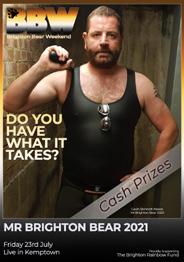
Mr Brighton Bear 2021 will win a £100 cash prize and a fabulous Mr Brighton Bear sash & crown, with the runner-up pocketing a handy £25. As with last year’s competition, entrants will be asked to provide photos of themselves relating to three fun categories – Beachwear, Night Out On The Town and Wear What You Dare. A short interview will also be filmed (the guys guarantee it’s all very painless!), which will be shared online to help their furry (and non-furry) fans and friends around the world decide who should snatch this year’s crown.
Entry is free, so everyone interested should simply complete the short form by visiting: www.brightonbearweekend.com/mrbrightonbear/

Graham Munday, chair of BBW, said “This is the third year we have held Mr Brighton Bear and, without a doubt, it has become a real highlight of the weekend. It’s great fun and it attracts a real mix of guys, so I would encourage anyone thinking about entering to give it a go. There’s no need to be shy; you’ll be made to feel very welcome”.
BBW 2021 will return this year from Thursday, July 22 – Sunday, July 25, kicking off with the fabulous and ever so slightly competitive BBW Quiz. Other activities will include the legendary Garden Party and of course the incredibly popular Mr Brighton Bear competition.
Graham Munday added: “We’re thrilled to be back, staging another live BBW. This year the emphasis will be on getting people out, having some fun in the sun, supporting each other, our venues, and the talent.
“Many people have lost friends, families and jobs, so whatever we do will be respectful of that. Likewise, some of our favourite bars have sadly disappeared during the pandemic, and those that have made it through need our support more than ever. We look forward to welcoming everyone to what we hope will be a wonderful, safe, celebratory BBW!”
BBW is a proud supporter of the Brighton Rainbow Fund, which provides needs-led, grant-based funding to Brighton & Hove-based LGBTQ+ volunteerrun groups, providing frontline services in/for: community safety, HIV/AIDS and health & community development.
) For further details and updates regarding the weekend, visit www.brightonbearweekend.com or email graham@brightonbearweekend.com

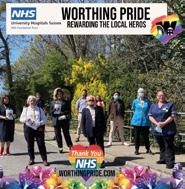
) Worthing Pride has recognised the hard work and dedication of local NHS staff by donating 200 free tickets to this year’s annual LGBTQ+ event, which is planned to take place at Beach House Grounds in Worthing on Saturday,
July 10 with a day packed full of entertainment and fun for the whole community.
The event directors of Worthing Pride said: “We wanted to give something back to the hardworking team of people at the local NHS, and give them something to look forward to and enjoy. We all couldn’t have got through recent times without the love shown by those amazing people, so it’s just a small gesture from us, and a light at the end of the rainbow.”
D For more info and tickets for this year’s Worthing Pride, visit: www. worthingpride.com
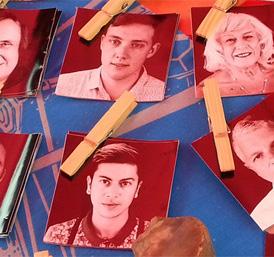
) In 2022, QueenSpark Books will be celebrating its 50th Anniversary. Since forming in 1972 as a grassroots campaign against a planned casino, it has published over 110 books documenting the ‘People’s History’ of the city. From life in the World Wars, to clubbing and performance art; from working life to days on the beach; from memories of childhood poverty to accounts of newly-arrived migrants – the first-hand stories in the QueenSpark archives are a unique record of what makes Brighton what it is today.
To mark the anniversary, QueenSpark will be publishing a landmark book comprising 50 stories, and the publisher is looking for tales, anecdotes and reminiscences from Brighton residents, on the themes Work, Places or What Makes Brighton ‘Brighton?’
• Stories can be short and anecdotal, but should be no more than four sides of A4, or up to three minutes of speech.
• They do not have to be ‘well-written’ or perfectly told – if selected, they will be edited for publication.
• By submitting your story, you give permission for QueenSpark to publish it in print and online.
Send your text or audio to 50Stories@ queensparkbooks.org.uk by July 31, 2021.
D For more info, visit: www. queensparkbooks.org.uk/what-isyour-brighton-story/


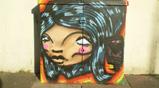

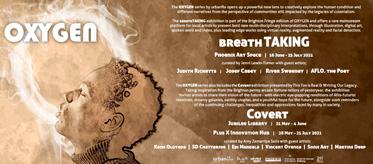
) A new visual arts programme will present 10 diverse artists across two exhibitions and three venues as part of this year’s Brighton Fringe till July 25
Sussex-based socially engaged arts agency urbanflo Creative has launched the six-month OXYGEN series, which will continue until October and aims to open up a powerful new lens to explore the human condition and new narratives from the perspective of communities still impacted by the legacies of colonialism.
The breathTAKING exhibition at Phoenix Main Gallery is curated by urbanflo founder/director Jenni Lewin-Turner and offers a rare mainstream platform for local artists to present bold new multi-disciplinary interpretations, through illustration, digital art, spoken word and video, plus leading edge works using virtual reality, augmented reality and facial detection. Guest creatives include Judith Ricketts, Josef Cabey, River Sweeney and AFLO. the Poet
The Covert exhibition at Jubilee Library and Plus X Innovation Hub takes its inspiration from the gypsy fortune-teller of Brighton Pier penny arcades’ yesteryears, featuring art work from Black, Asian and ethnically diverse artists sharing their vision of the future. The exhibition is curated by Amy Zamarripa Solis and will feature artists Kemi Oloyede, SD Chatterjee, Edi Mandala, Vincent Oyenga, Sonji Art and Martins Deep
These future-facing art works offer electric eye-popping renditions of Afro-futurist identities, dreamy galaxies, earthly utopias, and a youthful hope for the future, but also reminders of the continuing racial struggles and battles experienced in the UK and globally, both inwards and outwards, all manifestations of systemic racism. The art works were originally selected for Writing Our Legacy’s first edition of Covert literary magazine for black, Asian and ethnically diverse writers and artists of colour, published in December 2020 in association with New Writing South
The breathTAKING exhibition is funded in part by Phoenix Art Space and the Centre for Arts and Wellbeing at University of Brighton. The Covert exhibition is in partnership with This Too Is Real, Writing Our Legacy and Plus X Innovation Hub.
) OXYGEN series @ Brighton Fringe: breathTAKING exhibition at Phoenix Art Space, 10-14 Waterloo Pl, Brighton BN2 9NB from June 16 to July 25 Covert exhibition, at Jubilee Library, Jubilee St, Brighton BN1 1GE from May 21 to June 4 and Plus X Innovation Hub, Lewes Rd, Brighton BN2 4GL from May 28 to July 25
D For more info, visit: www.urbanflo.com/oxygen



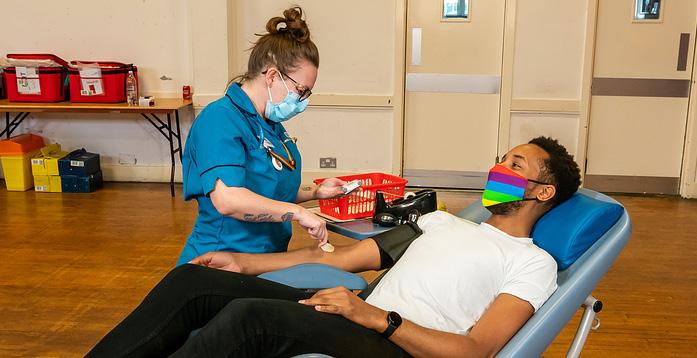
) More people from LGBTQ+ communities will be eligible to donate blood from June 14 - World Blood Donor Day - after the launch of new donor safety assessment, meaning all donors, regardless of gender, will be asked the same sexual behaviour questions.
The changes will mean that eligibility to donate will be based on a more individualised assessment rather than on a risk assigned to a group or population, and deferrals will be based on behaviours evidenced to be at a higher risk of sexual infection.
The form that people complete before they donate will for the first time ask the same questions of all donors about sexual behaviours, focused mainly on the last three months. Donors will no longer be asked if they are a man who has had sex with another man. Instead, any individual who attends to give blood – regardless of gender – will be asked if they have had sex and, if so, about recent sexual behaviours. The process of giving blood will not change.
Under the changes people can donate if they have had the same sexual partner for the last three months, or if they have a new sexual partner with whom they have not had anal sex, and there is no known recent exposure to an STI or recent use of PrEP or PEP. This will mean more men who have sex with men will be eligible to donate.
Anyone who has had anal sex with a new partner or
with multiple partners in the last three months will not be able to give blood right now but may be eligible in the future. Donors who have been recently treated for gonorrhoea will be deferred. Anyone who’s ever received treatment for syphilis will not be able to give blood.

Ella Poppitt, chief nurse for Blood Donation at NHS Blood & Transplant, said: “Patient safety is at the heart of everything we do. This change is about switching around how we assess the risk of exposure to a sexual infection, so it is more tailored to the individual.
“We screen all donations for evidence of significant infections before they are sent to hospitals. Donation testing goes hand in hand with donor selection to maintain the safety of the blood supply. All donors will now be asked about recent sexual behaviours which might have increased their risk of acquiring an infection. This means some donors might not be eligible on the day but may be eligible to donate in the future.
“Our priority is to make sure that donors are able to answer the pre-donation questions in a setting that makes them feel comfortable and safe. Staff are receiving training to make sure these more personal conversations are conducted with care and sensitivity and accurate information is captured.
“We are notifying donors of the changes so they can
consider the new questions before their appointment and are able to re-schedule if they do not meet the changed criteria to give blood right now. We want donation to be a positive experience and we are looking forward to welcoming donors as we move forward with these changes.”
The changes follow an evidence-based review by the FAIR (For the Assessment of Individualised Risk) steering group led by NHS Blood & Transplant, and including National AIDS Trust, Terrence Higgins Trust (THT) and Stonewall, which concluded that switching to an individualised, gender neutral approach is fairer while maintaining the safety of the blood supply.
FAIR concluded that the new donor selection system will maintain the UK’s status as one of the safest blood supplies in the world. The findings were accepted in full by the government last December.
Dr Michael Brady, medical director at THT, said:

“It’s great to see these changes to blood donation eligibility being brought in. We’ve always been clear that the safety of the blood supply is the priority here. This change to a more individualised risk assessment is in line with the latest scientific evidence while also allowing as many people as possible to safely donate blood.”
Data around the impact of the donor selection changes will be kept under review and assessed 12 months after implementation to determine if changes are needed. Feedback from donors, LGBTQ+ individuals, patients and representatives will be a key consideration in this review.
To become a blood donor, call 0300 123 23 23, download the GiveBloodNHS app or visit: www.blood.co.uk
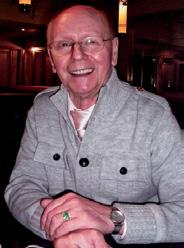
) When you first met Peter Otto (who passed away on May 2 at the University Hospital Sussex ) you could not fail to be impressed by his turnout, he always was immaculate in suit, tie and cufflinks. In all the years I knew him he was seldom dressed otherwise.
Peter was born in Berlin in the ’30s and brought up in a very strict household with discipline and organisational skills that never left him.
He ran a restaurant and cabaret venue for several years in Berlin before leaving in the ’80s for England and settling in Brighton.
Initially working at the Royal Crescent Hotel followed by a position at The Grand, Peter saved enough to start his own sandwich bar, moving on to having his own guest house in Egremont Place
In his retirement Peter’s organisational skill were recognised enough tor him to be welcomed as a volunteer by Age Concern where he revelled in being called ‘The dragon from Berlin’ because of his own discipline.
In the early ’90s Age Concern was becoming aware of the urgent need to support the rising numbers of older gay men and women in Brighton. Naturally the setting up of such an extension fell on the willing shoulders of Peter, with the Older Lesbians & Gay Men’s Forum being created, later changing to Gay Elderly Men’s Society (GEMS). GEMS Peter was in his element, planning visits to many of East Sussex’s famous houses and gardens plus outings to London sites etc. Adding walks, swimming and many other monthly activities, GEMS under Peter’s guidance encouraged healthy living and avoided loneliness for many gay men for over 20 years. Membership grew to almost 100, which was recognised in 2011 by Peter accepting on GEMS’ behalf The Queen’s Award for Service to the Community
Peter and Stephen Grainger (GEMS secretary) were invited that year to the Queen’s Garden Party. Later on, during the visit of the Duke of Edinburgh to Brighton, Peter was introduced, with the Duke asking Peter what GEMS stood for, following his reply the well informed Duke commented, “Well there obviously is no shortage of members in Brighton”.
After GEMS, Peter became chairman of the Paley Trust and founder of the annual Worlds AIDS Day concerts and The Regency Singers
Peter’s love for catering and entertaining followed him when he finally settled into Courtney King House where he was well known for his afternoon high teas and discussion groups.
Peter gave a lot of new hope to many older gay men in Brighton & Hove for which we all must be so grateful. RIP Peter.
) Peter Otto passed away having lived through the very worst of times and having done all he could to create the best of times for others. People talk about a life full of experiences but we can hardly picture being a gay man in Nazi Berlin, coming to Brighton with little English to work in a five star hotel and becoming a central figure in an organisation that protected and cared for vulnerable older gay men.
Peter was elegant, wickedly funny, generous of spirit and full of love for those who were in his circle of friends. He was an honourable man, which sometimes made him vulnerable, but whether it was politicians, business people or those who GEMS helped through hard times, people will remember him with respect and affection. He leaves behind his children in Germany, hopefully they’ll know when people here think of Peter they’ll smile and laugh as they recall moments they saw him on his very best form.
We are lucky to have known him. Jim Baker, formerly president of GEMS


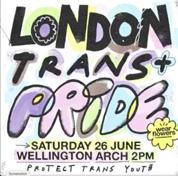
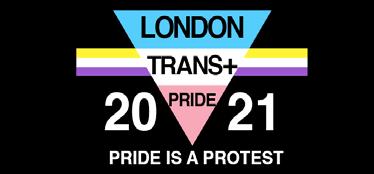
) After a very successful first two years London Trans+ Pride is set to return to the capital, fighting for the right to protest for the trans+ community on Saturday, June 26 from 2pm when
a march will take place, starting at Wellington Arch, Apsley Way, Hyde Park Corner, W1J 7JZ.
Organisers say: “Following the success of two consecutive years of London Trans+ Pride, we will mark our third year fighting for the rights of trans people.
“Our Pride will never be sponsored. Our Pride will always fight for our rights. London Trans+ Pride will always be a protest.”
D For tickets and to make a donation, visit: www.gofundme.com/f/londontrans-pride-2021
) On Saturday, May 29, Brighton-based comedian and TV host Zoe Lyons kicked off a 100km run from London to Brighton to raise vital funds for the Sussex Beacon, which provides specialist care and support for people living with HIV.
At the time of writing, Zoe has raised an amazing £1,584 and there’s still time to donate! Zoe said: “I’m having a classic mid-life crisis and have decided to take on a huge challenge by running from London to Brighton. Yes it is an insane idea but let’s put it to good use and help me raise some money for the Sussex Beacon.
“I was supposed to take part in this event last May but like so many things it got postponed to this year. A big thank you to those who already donated last year... You will still get the run out of me! I know times are tough for people so I’m asking for as many small donations as possible. Even £1... lots of little bits make a big difference.
“The Sussex Beacon relies on charitable donations to develop and improve the services provided to people living with HIV. They provide treatments similar to other community hospitals, including intravenous medication and intermittent infusions. Increasing the services available to clients reduces the need to use acute hospital beds and allows care to be given in a more relaxed and therapeutic environment.
“Donating through JustGiving is simple, fast and totally secure. Your details are safe with JustGiving - they’ll never sell them on or send unwanted emails. Once you donate, they’ll send your money directly to the charity. So it’s the most efficient way to donate - saving time and cutting costs for the charity.
“Thank you so much... I will probably lose a toe!”
D To donate, visit: http://bit.ly/ZoeLyonsL2BUltraChallenge21
D For more info on the Sussex Beacon, visit: www.sussexbeacon.org.uk/
Brighton raises £200
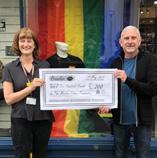
) Prowler Brighton, the gay lifestyle store, handed over a cheque for £200 to the Martin Fisher Foundation last month, which was raised from the sale of T-shirts and rainbow items.
The Martin Fisher Foundation was founded in 2015 to take forward the work of Professor Martin Fisher. It continues to promote Martin’s ethos of treating people living with HIV with dignity, compassion and respect, and is developing new strategies for effective HIV prevention, treatment and care.
D For more info on the Martin Fisher Foundation, visit: www.themartinfisherfoundation.org



) Sussex based LGBTQ+ youth charity Allsorts Youth Project is currently looking to recruit an enthusiastic LGBTQ+ youth support worker to induct young people into the project, facilitate groups and offer one-to-one support.
The successful applicant will join a growing, professional and passionate team who support LGBTQ+ and
exploring children, young people and their families and challenge exclusion, prejudice and discrimination in all areas of their lives.
Allsorts is an equal opportunities employer and welcomes applications from all sections of the community. The charity particularly encourages applications from people from intersectional and minority groups, including those who are BAME, trans and/or non-binary and/or those with disabilities, and/or who are neurodiverse.
Closing date is Friday, June 4 at 6pm
D For full details, visit: www.allsortsyouth.org.uk/about/jobs
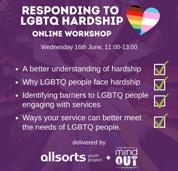
) MindOut, the LGBTQ+ mental health charity, and Allsorts, the LGBTQ+ youth charity, are to team up to deliver a free online workshopResponding to LGBTQ+ Hardshipon Wednesday, June 15 from 11am
This offer is aimed at professionals working within health and social care and is open to two members of staff per organisation. MindOut and Allsorts encourage staff members who attend to
disseminate what they learn within this session across their organisation.
This training will look at: What hardship means and how to identify it, to have a better understanding of hardship, why LGBTQ+ people face hardship, identifying barriers to LGBTQ+ people engaging with services and ways your service can better meet the needs of LGBTQ+ people.
This training will be held by the Urgent Need Advocates at MindOut and Allsorts and therefore is not aimed at services working with specific age groups, but there will be time to ask specific questions.
Bookings for this workshop are available until 5pm on Tuesday, June 15
D To book, visit: https://tinyurl.com/ c3vz75r2
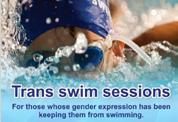
) Trans Swim Sessions take place every Wednesday from 8.30pm at St Luke’s Pool in Brighton and are for those whose gender expression has been keeping them from swimming.
Sessions offer a safe space for those
in the trans community to swim and use the changing facilities without fear of discrimination. They also provide a place where people can socialise and get active.
Trans Swim Sessions at St Luke’s Pool, St Luke’s Terrace, BN2 9ZE every Wednesday, 8:30 - 9:30pm Sessions cost £5.25 or £3.10 for leisure card holders.
Booking is recommended to avoid disappointment. To book, call St.Luke’s Pool on 01273 602385
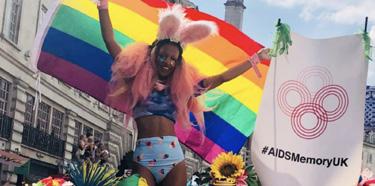
) The capital is set to see its very first official AIDS Memorial which will be unveiled later this year to coincide with the 40th anniversary of official reports of the first five cases of what later became known as AIDS. The Memorial will be located slap bang in the middle of town on Tottenham Court Road, close to the former Middlesex Hospital which was opened by Princess Diana in 1987 and housed the UK’s first AIDS unit.
Plans are very much underway and accelerating and the project is being fronted by campaigners Ash Kotak and Jason Reid in conjunction with campaign group AIDS Memory UK
Cabaret fundraising and awareness events are planned throughout the city to raise funds for the Memorial, taking place at venues such as the Royal Vauxhall Tavern, The Glory, West 5, Zodiac Bar, The Old Ship, Phoenix Artists Club and Two Brewers with the first fundraiser taking place at Halfway To Heaven on Thursday, July 8 from 8pm with cabaret legend Bette Rinse hosting a star-studded line up of campaigners and artists. All being well the Memorial will be unveiled on World AIDS Day on December 1
D To donate, visit: www.gofundme.com/f/build-a-uk-AIDS-memorial
) New figures from the Office for National Statistics have found more people in the UK are identifying as lesbian, gay or bisexual (LGB) than ever before. Through analysing the results of the Annual Population Survey from 2018 to 2019, the report found that the proportion of the population (aged 16 years and over) who identify as straight decreased from 94.6% in 2018 to 93.7% in 2019.
The total number of those who said they identify as LGB increased from 2.2% to 2.7%, with one-third of this group aged between 16 and 24. The proportion of people over 65 who identify as LGB also increased from 0.7% to 1.0%. In terms of gender, the proportion of men identifying as gay or bisexual rose by 0.4%, while the proportion of women identifying as bisexual or lesbian increased by 0.5%.
Penelope McClure, of the Population Statistics Division, described the increases in those identifying as LGB to be “significant”, adding: “An estimated 1.4 million people aged 16+ in the UK identified as LGB in 2019 – a statistically significant increase from 1.2 million in 2018 – continuing the trend we have seen over recent years.”
D To see the full report, visit: www.ons.gov.uk/ peoplepopulationandcommunity/culturalidentity/sexuality/bulletins/ sexualidentityuk/2019

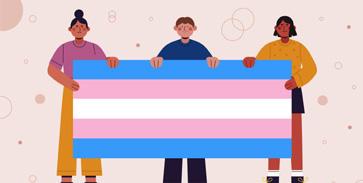
) Over 40 UK theatres, including Brighton's Marlborough Productions, have signed a pledge which promises to only cast trans, non-binary and gender non-conforming (GNC) actors for trans roles in an effort to increase casting opportunities for these actors.
The Trans Casting Statement reads: “We will actively seek casting opportunities for trans, non-binary and GNC people in any role regardless of gender, acknowledging that they are currently underrepresented on our stages and screens.”
It continues: “We recognise that black trans, non-binary and GNC people face the toughest barriers due to antiblack racism. We are also aware that
colourism is a huge issue. We commit to challenging these issues through our casting.” The pledge has been signed by a handful of major theatres, including the Oxford Playhouse, the Royal Exchange and Marlborough Productions in Brighton.
Discussing the pledge with The Guardian, trans actor and performer Mika Onyx Johnson said: “Visibility on screen and stage is all linked to how people are treated in real life. I think the statement will lead to more people being able to get in the room and ultimately get more work.”
D For more info, visit: www.transcastingstatement.com
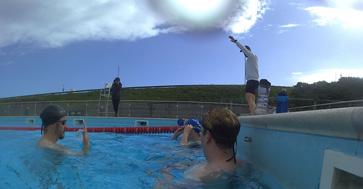
) For only the second time in a year, Out to Swim South returned to the pool last month. After mainly swimming in the sea as a team, over 15 swimmers started swimming in Saltdean Lido, which was a temporary solution as the Prince Regent Swimming Complex was closed due to flooding.
Out to Swim South was established in 2006 as part of the main London aquatic group. It is a group of sociable LGBTQ+ people and allies who swim for fun, fitness or competitions. It provides a friendly environment for those who prefer the social aspect of the club in the Brighton & Hove and Sussex area.
The group is open to all with a positive attitude and welcomes all new members. There is a strong social aspect to the club with weekly pub sessions on Saturdays and regular socials.
) For more info, email otss. membership@outtoswim.org or visit: www.outtoswim.org/brighton/

By Craig Hanlon-Smith

) We all hold prejudice and act upon it regularly. Even those of us who believe we do not and even those of you who believe you do not. You do. Unconscious bias is the sneak and it is a mountain climb to accept and acknowledge. If you’re 20, 30, 40 we have layers of decades-old experiences which soak into our soul without us even noticing. Messages from media, social and international, half-truths peppered as facts by close friends we are forever swirling in a vat of nonsense, half of which we inhale and then regurgitate as if these are our own carefully crafted individual thoughts.
And the LGBTQIA-D.I.S.C.O-Y.M.C.AO.P.P.YeahYouKnowMe-massive (apologies I forgot the U) are no exception. And yet to read the socials and Facebook groups at some juncture in the past couple of years - perhaps lockdown has been an enabler - we’ve morphed into the thought police. The world is allowed to think whatever it likes about our community as long as we are the authors of it and ‘they’ play it back to us word for self-penned word. And if they deviate from our script? Well won’t we just let them have it. On Twitter.
I think I remember when it started. There was a news item on the television about the age of consent debate in the House of Commons. Oh yes we’re going back more than 20 years. There was an older woman outside Parliament reading from the Bible, quite calmly but sure – the usual passages about man not ‘lying with’ man. She
was interviewed by the reporter and although the evidence for her argument lay in the pages of a 4,000-year-old document written by fairies, she was quite nice about it. She had a belief and was gently trying to make her point.
Enter two uninvited gay men, around my age at the time. Jabbing their fingers into her face and shouting as loud as their lungs would let “GET SOME LOVE IN YOUR LIFE” ad-nauseum. While I am certain the irony of what they were saying compared to the way in which they were saying it was lost on them, this has stayed with me ever since. The Lords vetoed the Bill, it didn’t pass and the Daily Mail ran a front page which read ‘Thank The Lords’. Progress and a life filled with love would have to wait its turn.
“Closing down our opponents without hearing all that they have to say is not winning the argument. You didn’t listen in the first place”
Fast forward to 2021 and the finger jabbing screaming is now the staple behaviour of our collection of broadening communities, only now we wear ear-plugs. Not real ones of course, virtual ones. Anyone dares to speak an alternative perspective than ours? Swipe and block and problem solved. We do not even need to discuss it.
Now make no mistake. I’m a fishnetwearing, high heel-sporting, determined to make a difference faggot with more front than Blackpool. I will eavesdrop on your conversation, descend from the ceiling straddling a glitterball in previous described attire and stare at your right-wing-leaning
ass. But listen I will. It is not possible to fully form an argument without appreciating the parameters in which we operate. Closing down our opponents without hearing all that they have to say is not winning the argument. You didn’t listen in the first place.
Contemporary debate among the LGBTQ+ communities is akin to poor parenting in the 1970s. If mum wanted kids to stop watching the television, she simply pulled the plug out. It stops the noise in the present but the scenario plays out in exactly the same way the next day, and the next, and the next. Shouting GET SOME LOVE IN YOUR LIFE and then pulling the plug out lacks both progression and intelligence.
And these are the same community members elated at the new rainbow Lego collection as a sign of social development and progressive inclusion. Yes they were designed by a gay, but Ernst Röhm was a homo, he was also Hitler’s right hand man until 1934. Lego will make a fortune out of that range because we, the LGBTQ+ idiots so desperate for a sign that we are now somehow normal, will suck up those crumbs like a Dyson. A vacuum cleaner invented by a man who has moved his business off-shore to avoid paying UK tax just like Facebook and Twitter where we lay out our daily manifesto. There’s a cruel and somewhat stupid irony in dying one’s hair blue, removing all signs of traditional, imperial or indeed colonial gender identity from a social media profile, claiming you have, aged 15, invented the term queer and then dressing in Love Wins merchandise as a political statement purchased from Primark or H&M. This is as progressive as buying an anarchy symbol T-shirt from the HMV website. For HMV see HIS MASTER’S VOICE.
I am pleased that the Pride event this year is cancelled. In the quiet space it leaves among us, I hope that it will give time for all of us, whatever our L G B T Q or plus proclamation happens to be, to reflect. To consider who we are, why we are and smile at the Lego, but not allow rainbow coloured plastic to fill the void of meaninglessness and fall to our knees in gratitude because, in truth, we feel hurt. We were born this way, and sometimes it can be hard work just to get up in the morning and get on with it.
The real love wins moment is the love of self. Despite it all respecting, admiring and loving who you are each day. And allowing the same difference of thought and spirit to exist in others, even if we don’t like what they are saying. That doesn’t mean put up and shut up. It means listen, listen again and then speak your mind. And whatever you do, don’t get distracted by the Lego.
By Jason Reid

) Many years ago when I was young, dumb and full of cum, a friend of a friend who was a porn director of the time asked me to be in a movie. I didn’t take up the offer because I was far too scared of family and friends ever catching sight of it - but I do sometimes think back to that and regret not taking it, so to speak. The movie could have been an interesting memento for my later years, like that episode of Schitts Creek when Moira frantically searches the internet for nude pictures of herself taken in her youth only to discover they are lost, and she’s completely devastated: “I regret that they’re lost. They were the one perfect memorial to who I once was. And I should’ve appreciated those firm round mammae and callipygian ass while I had them.”
Without a doubt what has changed most about porn in the years that preceded my offer is how freely available it’s become; back then you’d have to leave the house to buy a DVD from a shop in a dark alley, or wait a week or so for it to be delivered by mail order; now all you have to do is click on a website on a phone/
computer from the comfort of your home without budging an inch, and within seconds a whole spectrum of hardcore porn is right there in front of you. Everything from amateur to gangbangs, and facials to fisting. But apart from the accessibility point, I don’t think porn has changed that much. The template is still the same.
Obviously modern porn is now presented in crystal clear high definition, and there’s much more of it. I remember the Cadinot films of the ‘90s; pure filth, as filthy as any of today’s offerings - even if they did look they’d been filmed on a potato.
Because porn is now at our fingertips 24/7, it has led many to muse that this must be affecting our personal relationships by creating unrealistic expectations, desensitising sex, and putting pressure on sexual partners to raise the bar in the bedroom. Personally I think this is exaggerated nonsense. Sex between lovers is an intensely personal and in-the-moment experience. Porn is entertainment, fantasy - and work for some. I spoke to acclaimed porn actor John Thomas to get his take:
“It’s very observable that across media representations of sensuality, sex and sexuality
are more heavily policed and considered less appropriate than representations of violence. Like films, TV and novels, porn is an art form, that sets out to entertain and titillate, not to educate. It is an indictment of the inadequacy of sex education that people turn to porn for an education. I think porn makers need to be aware of this, but ultimately it isn’t our responsibility to teach, but we can use our platforms to do that also alongside the porn that we make.
“I think you could argue that all fictions give us unrealistic expectations about life: but we are (hopefully) taught to be critical viewers and readers of films and books - although how many of your friends dream of a fairytale romance like in the movies, and are disappointed when the reality isn’t the same?
“So yes, I think people can get desensitised and have unrealistic expectations, but the issue is with the lack of education, not with the art (however good or bad you consider that art to be).”
John beautifully articulates a point that I’ve raised previously with respect to sex education in this country. Millions of young people have been failed by the system over several decades, and that needs to change ASAP. We owe it to future generations. It’s time for the British to unclench their arsecheeks, remove the rod, and instead provide young people with positive sex education in order for them to be fully prepared for their first sexual encounters. Because the first time is certainly not going to be as seamless as that Andy Starr clip on YouPorn
“Like films, TV and novels, porn is an art form, that sets out to entertain and titillate, not to educate. It is an indictment of the inadequacy of sex education that people turn to porn for an education”
Porn is art, and, ultimately, work. I have a great deal of respect for sex workers. And so should you. We have to stop talking to them like their jobs are the butt of a joke. Change that snarky ‘oH iT mUst bE sO EaSY’ attitude. Because it’s not. And those throwaway comments are naff, rude and come from a place of deep ignorance and lurking misogyny that resides in so many men (god that’s a whole article in itself).
If I knew I’d turn out like John Thomas, I’d have snapped that director’s arm off back in 1999 because he’s a positive porn role-model who entertains and educates, so important in any public role, and having people like him in the industry gives me hope for the future.
There is definitely an argument to be had that porn desensitises sex in the same way that violent media desensitises violence, but once the regulators have given the green light the onus ought to lie squarely with the consumer.
So, in conclusion, long live porn!

) Drinks in the beer garden, meeting up with friends and family and more unlocking is on its way! We’re loving spring and are excited for summer to burst into action! Haircut is done and am working the gym to shift some excess lockdown weight. Getting really excited about the fact we might be bouncing on the dancefloor soon or having someone’s birthday dinner actually in a restaurant. I’m not sure if all our favourite foreign holiday destinations will be getting as much love as they deserve but we’re moving in the right direction.
The more freedom we get back, the more we look forward to some adult fun and finally some flesh-on-flesh contact. Very much missed the smell and the touch of another person. A bit of adult fun is high on the list.
As one of the biggest online Gay Adult Stores, we at www.esmale.com have put some ideas together to get ready for some adult fun this summer. So here goes.
First impressions do matter and to ensure that very first impression when the trousers drop is spot on, or to style out those sexy selfies, we have some great new gay underwear for you. From big brands like Addicted, C-in2 to Pump and Barcode plus many more. You will often find new brands and we are looking forward to introducing Bill & Brandon and Breedwell brands to you soon.
One of the main things we are looking forward to is having flesh-on-flesh action so why mentions toys I hear you think. Well, toys are not just for solo play, they can really offer additional layers of fun, so why not! We currently have some great new gay sex toys in store from Fleshjack, Brutus, Oxballs and many more top brands. All designed to add extra pleasure to your playtime.
Our wish for you, is to have a busy summer, so best ensure you have enough essentials to handle your play time. For the best place to buy poppers UK we always suggest Poppers Super Shop. In this online store you can get the very best brands like Berlin XXX, Power Rush, Fist, Jungle Juice, Liquid Gold Poppers. New to the store are a great selection of European imports. For all your other essentials like lube, performance enhancers, delay spray, fisting gear and much more just head over to www.esmale.com
All this is just a small selection of what we have to offer as there is so much more but we will tell you all about that another time. For now we hope you are as excited as us and ready for the good times ahead.
Always be safe and stick to the guidance. With love,
Team www.esmale.com.
but it was
) Pandemic dating is a whole new game. From dating apps to dating mishaps, the pandemic placed restrictions not just on basic needs but also on dating.
Lockdowns had me in my bedroom and on my phone. My thumb is still numb from endlessly swiping and typing, continual echo-chambers of no replies and diminishing standards. Being newly single during the first lockdown, I was fresh calamari back on the scene (bedroom) and lonely, like everyone. Dating apps being the LAST thing on my mind. App user attitudes have evolved with the pandemic, notably the semiillicit ‘sex ban’ and rules that shut everyone inside increased people’s engagement. But are dating apps still the sexy future or have they become platonic chat servers?
“Lockdowns had me in my bedroom and on my phone. My thumb is still numb from endlessly swiping and typing, continual echo-chambers of no replies and diminishing standards”
Everyone began to value commodities that we had once taken for granted. The pandemic led us down the road of puritanical narratives. Sex isn’t something to be ashamed of and guidelines/roadmaps/government advice was platonic at most. During the first lockdown, dating and sex outside your household was taboo and, in some cases, illegal. For many of us, minus Neil Ferguson’s ‘error of judgement’ breaking rules with his lover, the rules were tough restrictions over our fundamental needs. This was the first we saw of the moderately understated sex prohibition. The absurd logic had no impact and served to confuse people further. Later, we saw intermediate moments of freedom where dating was allowed. The summer of love or, as someone cruder than me coined it,
‘the season of shagging’.
Cohabiting nuclear families and established couples were largely not affected by the guidance given on sex. Nonetheless, people’s living situations changed. As someone who does not fit in those categories, I felt delegitimised. Facing uncertainty meant everyone was chasing to understand the new rules. Younger demographics felt that dating wasn’t convenient or sustainable. The market for dating apps is so wide that platforms vary from conjugality to hookups. Although, what good is accessibility and discretion when their users are not comfortable using the apps? At the time, digitally dating didn’t seem very utilitarian. But human connection cannot be denied as desirable (even if it’s electronically). Digital dating was supposed to be the new thing, but I wasn’t feeling it.
“I thought dating apps were supposed to be symbiotic, so why did I feel unheard, unrepresented and ghosted?”
I have had a precarious relationship with dating apps. Natively meeting someone felt organic. Nothing is forced or uncertain. Online holds a sense of uncertainty, but also mystery. It’s augmented reality. Just like social media, you only want to showcase your best self. In essence, you’re uploading a CV with shaggable credits and housewife references. It can be difficult to understand someone’s vibe through text messages.
People’s undertones are lost through electronic semantics and suggestiveness through emojis and ellipses. The pressures of online dating can be daunting, and this was only emphasised during the pandemic. I felt that dating apps were commodifying people’s love and people’s hearts. I felt like a statistic in a constant loop of matching/swiping/complimenting, followed by profiles fizzling out.
Some people find comfort in novel writing bios
and endless conversation, but that was not the comfort I was looking for. Contrarily, the sleazier apps bombard you with unwarranted nudes with eXXXcesive enthusiastic chat. Constantly thinking to myself, ‘You need to back up a little bit!’. I thought dating apps were supposed to be symbiotic, so why did I feel unheard, unrepresented and ghosted?
People want companionship. Online dating revealed a shift in user approach: I saw fewer nudes, heard less cringy one-liners, with a warming influx of people who had a real investment in their romantic disposition. People were making efforts to establish intimate relationships, making hard decisions, while following the rules.
My dating journey faced these restrictions, which caused tension. Apps were ghost chat rooms and romance was dead, especially when trying to establish new relations while locked inside. Unless you’re locked inside with who you are dating.
Deputy chief medical officer Dr Jenny Harries said: “Couples should test the strength of their relationship and decide whether they should be permanently resident in another household.”
To circumvent the tight restrictions imposed on leaving your house during the coronavirus lockdown, couples were asked to consider cohabiting. This rhetoric and policy framework did not work in my situationship. Not here for #LockdownLove. So, no.
I spoke to Liam Joseph-Beckles, 22, a broadcasting executive for a dating app. He said, “Now that restrictions have finally lifted, people are more likely to want to start the whole dating process again.”
This statement is interesting. Apps had an influx in user acquisition, but user attitudes had also changed. Did the adjustment in engagement denote purely for online chatty constancies? If the user’s intentions aren’t to meet up, then why the haphazard discourse? He continues, “there may be a decrease in downloads as we’re now able to see each other in person”. Personally, I don’t understand why users continually entertain false ‘online connections’’ if alfresco dating has agency for new relationships. There is fluctuation of temperament and rationale, although I expect apps to advance in the coming months.
Restrictions are now easing and the world is opening up. Online prospects continue to change. The overlap of sexy apps and endearing love notes is confusing, although I expect apps to advance in the coming months. However, for now, my thumb is still numb from endlessly swiping and typing, in a continual echochamber.

) For this issue of Scene magazine, which is themed around calling out prejudice within the LGBTQ+ community, we teamed up with Covert and Hidden Sussex to get the perspective of some of their writers and artists about racism.
Elsewhere some of our regular contributors look at transphobia and prejudice against those with disabilities, religious beliefs, or HIV. It’s hard to admit that, as a group of people so used to being in the firing line when it comes to discrimination, we are still guilty within our own ranks of marginalising others, but clearly there is evidence that this does go on. We should all be more mindful of the damage this can cause to both individuals and communities.
About our Covert and Hidden Sussex contributors
) Sonny Singh is British born of Indian Punjabi descent. He grew up in Brighton and has lived and worked in various places in the UK and abroad. He is trained as a finance professional and enjoys writing in his spare time on fiction and non-fiction pieces with an ethnic and LGBTQ+ emphasis.
) Born in London, Josef Cabey relocated to Brighton in 2003. He was educated at Newham College (Dip, Art & Design), Central St Martins (BA Hons, Graphic Design), and University of Brighton (MA, Information Studies) where he is also a part-time Arts & Humanities librarian. Josef has also practiced as a freelance illustrator and graphic designer. www.josefcabeyart.com
) Ameet Vaghela is a gay, British Asian man and was born in Harrow, London. He was brought up in Lusaka, Zambia and completed his studies in the UK. He is an NHS Respiratory Pharmacist in Brighton. 2 Souls, his second ever poem, reflects how he came to this country from Zambia, how his husband came to this country from India and facing very different worlds and then to them meeting and coming together as a couple.
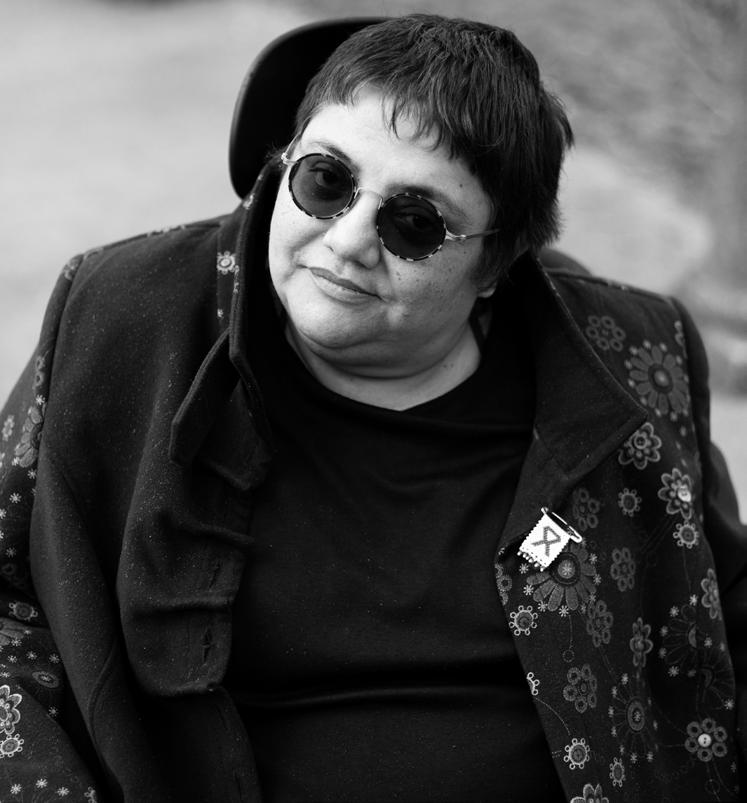
) Suchitra Chatterjee (SD Chatterjee) loves to work with all forms of digital imagery and has a penchant for creating digital collages based on her surroundings or trigger words that intrigue or frighten her.
In her book, Twice Dead - Contagion, she created a parallel world where disabled people were the heroes, and their actions in an apocalyptic space gave them total autonomy over their lives.
With thanks to Amy Zamarripa Solis, programme manager at Writing Our Legacy, for facilitating this collaboration.
BY SONNY SINGH

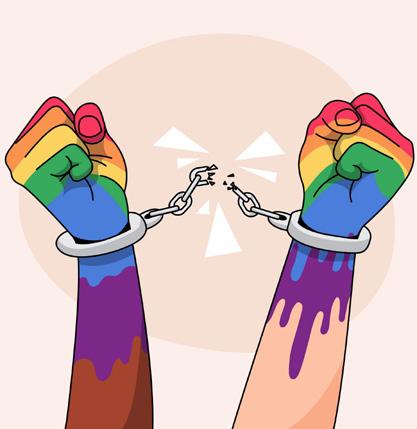
) We all have various forms of identity, some self-imposed, some genetically provided, some from our achievements, some from our failures. Sukhbir is 40, British, a brother, a son, of Indian descent, and gay. Ibrahim is 35, British, a brother, a son, of Nigerian descent and gay. James is 55, British, a brother, a son, of English descent and gay. Brown, Black and White.
By now you have already created a mental image of the physical attributes of Sukhbir, Ibrahim and James and formed preconceptions of the three gay men. There is not anything wrong with that, it is human nature to make an initial assessment of someone.
"Hi Sukhbir, how are you? That is how you pronounce your name? Where are you from? No, I meant where are you from originally? Are you hairy? It must be hard being gay and Asian? Are you married? Are you in the closet?"
"Hi Ibrahim, how are you? How do you properly pronounce your name? Where are you from? No, I meant where you from originally? It must be hard being gay and Black? Have you got a big ...?"
"Hi James, how are you? Looking for fun? What you into?”
If you're a person of colour and gay, you're probably well used to being Sukhbir or Ibrahim and having those very questions asked to you on many occasions.
Like many of you, I have used the online dating Apps and have become accustomed to the terminology and etiquette of chatting online. Most of the apps have a field for 'ethnicity' which I assume allows guys to make a view if they fancy that person, along with height, age, build, body hair, sexual role etc.
I often wonder who reads all that information. Most of us look at someone’s pictures and make an instant judgement if you fancy them or not, and if you want to click on “chat”. Unless your profile picture is of a scenic landscape or an animal, you can clearly see if someone is a person of colour. Why therefore is it necessary to have “ethnicity” as a field. Don’t get me wrong. I do not have an issue with disclosing my ethnicity and am proud of my heritage. When it comes to online dating and guys hooking up, how important is “ethnicity” in our decision making process?
What I do have a problem with is the language used by some of our community in online descriptions and chats. I have travelled the world and am pleased to see it is universal. We can be rude and blatant across all ages and race. It is a minority however still common.
“No offence, but no Asians, no Blacks. I’m not racist just not my type”. I have seen this on many a profile and many a response to my simple “Hi, how are you?” It is entirely your opinion if you think this is an acceptable form of communication. Personally, as a Person of Colour I do find it offensive and unnecessary. Why not keep it to yourself if a different coloured person is not your type? What is wrong with “sorry, not my type, but good luck”, or if that is too much effort, block or do not respond at all. All would be a far better response than racial slurs which are best left to the history books.
Our online language is not exclusive to rejections based on race. Weight, hair colour, body hair, age are more examples of making someone feel less worthy in our community.
So, next time you are Grinding, Growling, Scruffing, Tindering or Matching away, maybe a polite "you're not my type, but thanks anyway" would be less offensive than "no thanks, I don't do Black or Asian!
From a landlocked country on the dark continent. Northern Rhodesia. One Nation.
Where the crash of the mighty Victoria Falls thunders And the golden sun rises and sets in rhythm.
The air is hot, hot, hot
And the dust suffocates the city
Gasping for the rains to stamp it all out.
Where the colour of your skin does not matter But it does.
He knew he did not belong. In a place where his type is not allowed.
To be
To be free.
And so, he left.
Left it all behind
Destined for the kingdom that is united.
To the land
Of bangers and mash bubble and squeak fish and chips toad in the hole
Battenberg cake cucumber sandwiches spotted dick cups of tea with a biscuit pints of lager and packets of crisps.
To the country where they say thank you very much oh! so sorry the traffic’s chocka today mind it’s a bit nippy out there you best wear a cardie bob’s your uncle and it’s all tickety boo!
Sent to boarding school Castaway and rejected
Stiff upper lips, icy winters and bland, bland food. Where did he come from? Does he speak English? What is he wearing?
To be brown. To be white. To fit. Not quite. And yet must.
Why is this so difficult?
To be gay. To be queer. You don’t belong here.
Just keep my head down. Study hard. Just get through it. Gay friends are my real family! Pink angels in public school hell. Is it a wardrobe no it’s a closet!
No Narnia, warm furs, hot chocolate or Turkish delight.
Exit. Come out and play.
And now.
Much older. Less wise. Under the Arches at Heaven Opens my eyes
To the glitter ball sun in the sky of the clubbing dancefloor
Where the boys sashay in sparkly, skimpy tops and sequined skinny jeans
Sipping gin and tonics through stripey straws from tall flutes
And boogieing to the thumping beat. Paying respects to that Queen of Pop. Expressing oneself.
Putting love to the test.
Real love.
And boy can he dance! Disco. Synth. Electro. Techno. Dance and house.
You and me. Different villages. Same people. Something magical in the air.
You spun me round to that Kylie tune Are sweet dreams really made of this? Echoes of Pet Shop Boys. What have I done to deserve this?
To deserve love.
From the ancient land of yoga and wisdom Of rotis and chai, sweet spices and saris
The Empire, the Raj and the Jewel in the Crown, Belonging to the soil but not quite the people.
Yet, he’s too different. Not quite right. He. Just. Did. Not. Fit.
He needed.
To be.
To be free.
And so, he left.
Too young to seek his tribe over there He ended up over here.
To seek the common weal
In the land of milk and honey.
You don’t belong here! Get out! This is our land of hope and glory
Paki poof. Queer batty boy.
Tank-top bumboy. Crop top pansy. Go back to where you came from!
We’re here because you were there.
From where? Hated here. From there! Hated there.
Where do I belong? Who am I? What am I?
Displaced. Misplaced. It’s a sin. Is it?
And there’s so much shame.
Maggie T.
That Wicked Witch of Grantham Section 28. Cannot promote.
You. Me. Us. Are not allowed.
Respect. Give us some. Traditional. This is not our tradition. Moral. Values.
Hate is not a family value.
Parliament. Ministers debate age of consent Solicitor General barks
“Recruiting into perversion, are we?
Your lot have no right!”
Equal rights. Who is right? Or is this wrong?
To be brave
To be powerful
To be proud To be himself.
And then, later Changes happen. And happen they must. Fresh starts.
Civil partnerships and gay marriages. Pink triangles and rainbow flags.
Small town boy
Squinting in the bright lights of the big, big city.
Eyes shining and teeth baring
A grin. A smile. I have arrived.
Is this my place? Are they my tribe?
The night so dark And the club is so lit.
He stands there. Glowing. Looks at me
A twinkle. A shimmy. A giggle. Who is he?
Could he be?
The one?
This night is special. And full of magic.
You look nice? Shall we dance?
Let’s do that again. Fancy a…
Coffee?
And so, they met
First date. Second date Date after date after date. Move in with me?
Yes!
Yes, is my answer!
Hallelujah and God Save Our Queens! Music does make the people come together Bring on Diana Ross and her chain reaction.
The ups and downs Tears and fears
You get me. I get you. Going out Coming in Growing up Together.
Should I propose? Is 10 years too soon? It feels right and yet it was never wrong. We must be out of our minds! You’re mad! What will everyone say? Let them say It’s about time. Bloody hell it took you long enough What shall we wear? Pink? Blue?
Valentine’s Day
Scattered fresh rose petals. Heady excitement Hangs in the air.
Alice in Wonderland theme. A little too much? Or not enough?
For this Queen of hearts
‘Eat me’ chocolate truffles and ‘Drink me’ champagne And those Tiffany rings Diamonds are truly a gay’s best friend! My heart is pounding. Butterflies everywhere.
I love you. Will you marry me?
Pause.
The silence. The wait.
Time stood still. The clocks stopped.
You are already My North, My South My East and My West. Yes. Yes, I will marry you!
Sing your queer hearts out Trumpets and fanfare Silk bows on white doves Peacocks and swans Unicorns and mermaids!
Love does last forever, Mr. Auden. Maybe we just lose sight of it. For the moment
Let’s shout it out - loud and proud
Let’s celebrate with a song and a dance and a drink!
Let’s put the kettle on! For a cup of tea.
With a biscuit. Or perhaps
Some rainbow cake?
First published on Queerlings.com
By Suchitra Chatterjee
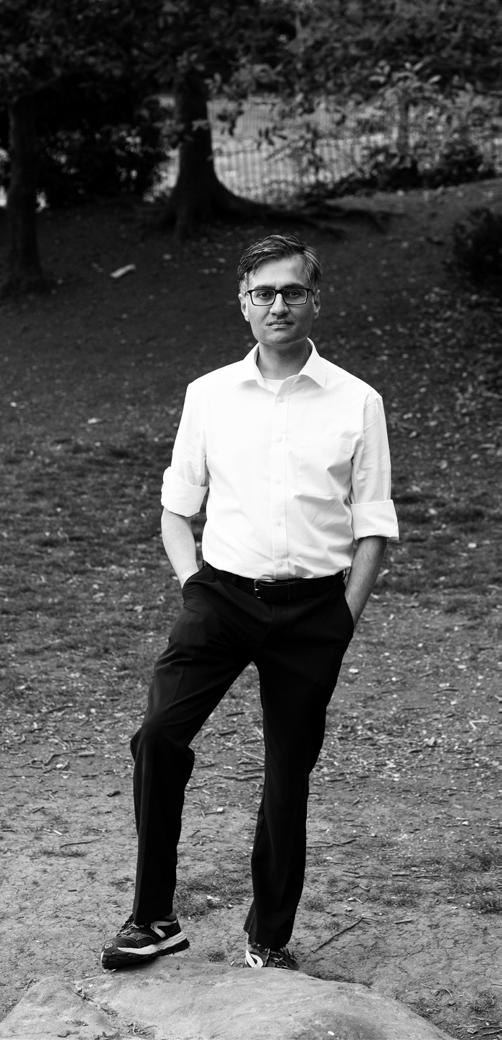
) George Johnson, a young and queer African American author, once made a painfully candid statement in an online article in 2019: “While black queer people are still fighting for survival, white queer people were fighting for marriage equality. This is not to say that marriage equality isn’t important, but it is certainly not the only fight. Although we all share the same oppressors, white queer folks must come to terms with the fact that they play a role in the harm experienced by black and brown queer folks – a problem they could stop if they acknowledge the privilege they have...”
This is what I call PRIDE with prejudice.
And it is rife. A study by Stonewall has found that over half of black, Asian and other ethnic minority people have experienced racism from within the LGBTQ+ community. So much for our mutual solidarity and shared safe spaces.
My personal experience as a bi woman of colour has been odd to say the least. I am mixed race, white mother, father born in what was undivided India during the days of the Raj. I took after my mother, pale skinned, light brown hair and, as a small child, hazel coloured eyes. My two siblings took after our father. They suffered more racism than I did, instead my father often got asked why he had a white child
by the hand, (me). This was in the mid-1960s. Fast forward to the 21st century and the laws with regard to hate have evolved, and are now entrenched in our legislation. The old days of BAME citizens being over policed and under protected is theoretically a thing of the past.
It’s now a crime to be racist or homophobic, we have come a long way from the days of 1950 when a trans teacher was strangled to death for her sexuality and her murderer only got five years in prison.
But what of hate within hate itself? Those queer white folk hating queer black folk simply
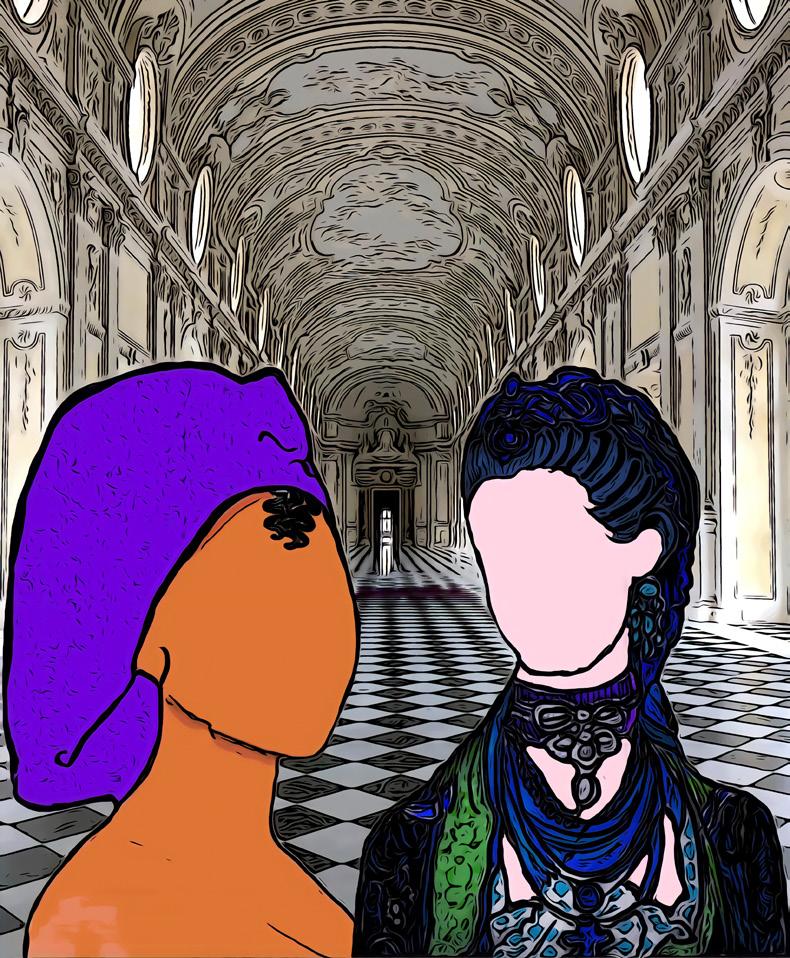
because of the colour of their skin. And many don’t seem to comprehend the hypocrisy of their stance. They once were victims, and not that long ago either. How will the law of the land perceive their crimes of hate?
Which side do you take because sadly there is a side in which you are expected to take, one way or another.
And if you choose one, does that make you a traitor to the other?
In my not so ivory tower of unintentionally ‘passing’ I find this dilemma as painful as the actual act of hate itself.
Why should we have to choose in which camp our loyalties lie?
Commit any act of hate, be held accountable on all levels, no matter your sexuality or race. PRIDE with prejudice is nothing to be proud of. What you can be truly proud of is, when you step up in your own privileged skin and say to the haters, “No. Not in my name.”
Roger Wheeler discusses some experiences of discrimination from both outside and inside the LGBTQ+ community
) Discrimination is like a virus, once you have had it, you have got it for life. A phobia is an irrational fear of something that’s unlikely to cause harm, in some opinions it is based on fear of something different. Most phobias exist all over the world – in the US racism is rampant, homophobia is everywhere, even in the major cities. The FBI’s national hate crime statistics found that LGBTQ+ people were “far more likely than any other minority group in the United States to be victimised by violent hate crime”.
A few years ago, I was happily working advising people on their employment prospects and potential for claiming state benefit. There were about six ‘advisers’ and we just took our next client from the queue. We had a new supervisor who liked to be very hands on. He asked me why it was that all my clients were young men, regardless of the fact that I could hardly pick and choose who I spoke to. Actually, they weren’t all young men – I wish – but that didn’t trouble him. I never had any problem at all with my sexuality being known, I hardly posed a threat to anyone apart from the fact that the government has some very strict rules about discrimination of any form.
This gentleman decided to go all the way and put in an official complaint about my
behaviour. The net result was that he was given early retirement – anything to avoid a scandal. It is incredible that today we still face discrimination in virtually every walk of life.
My husband, who tragically died not long ago, was enjoying a very successful career in one of the country’s biggest and most famous charities when he also encountered discrimination. He was passed over for promotion three times and, when questioning these decisions, he was told that he didn’t ‘fit’. Having been there eight years he thought that this was strange. After some very intense and upsetting investigation lasting many months, he decided the only option was to resign. Despite having some outstanding reports for his work and his general ability, his face just didn’t fit.
Homophobia can occur anywhere – in religious communities, large institutions, on the sporting field and frequently resulting in hate crimes. A very successful 43-yearold friend, born in a small Sussex town, has two strikes against him. He is of mixed race and gay. From the age of 11 he experienced abusive comments in public from, surprisingly, 60-year-olds that he passed on the street in this quiet, respectable, mainly white, town. He was bullied at school for not being
like everyone else. He eventually left home and made a successful career in the airline industry, surviving more racism even in gay bars in central London. He moved to Scotland for training, where he found the problem even worse. Being the only non-white man in a gay bar, he felt threatened and uncomfortable. This didn’t happen within the past five years. So here we have an attractive, successful gay man, who happens to be of Anglo-Caribbean parentage, looking for love. Shouldn’t be difficult, but his experience of gay bars proved not to be the place for him to find a new chum, so he turned to the internet, as thousands have.
The story here was worse. He has found racial discrimination in every site that he has joined, plus now being over 40 ageism rears its ugly head. While the gay dating sites don’t stop anyone of colour joining – it would be illegal in any case – any interest shown in him is minimal.
This guy is charming and handsome, but the experience of the past 30 years of racism and homophobia have left a mark – he is nervous about entering any gay bar or club and is somewhat camera shy. Gay saunas are no-go areas too – what does he do? The town he was born in is only a few miles from what is supposed to be the most tolerant and sexually understanding place outside London – yes Brighton.
I have lived in Brighton for over 70 years and am well aware that the ‘image’ the city loves to present to the world can be very far from the truth. We naturally pay lip service to antidiscrimination, LGBTQ+ rights, human rights etc and everyone will bend over backwards to deny that they feel anything but love towards anyone with a colour ‘problem’, a disability, or possibly being slightly older.
“My husband, who tragically died not long ago, was enjoying a very successful career in one of the country’s biggest and most famous charities when he also encountered discrimination. He was passed over for promotion three times and, when questioning these decisions, he was told that he didn’t ‘fit’”
The government has passed many laws protecting, they say, minorities from any form of abuse or discrimination, to almost no effect whatsoever. Is it generational? Racism has existed for thousands of years; white supremacy existed in the 16th century as much as it does today in America. Henry Vlll passed a law making homosexual activity a capital offence and it virtually stayed that way until 1967.
Sadly, there is no easy answer; slowly each new generation is being educated in an attempt to rationalise this fear and hatred, but it will take a long time.

those same people were scratching and clawing for a seat at the table not too long ago. It can only be a good thing that people have a wider array of labels to try on, to identify with. Humans are complex creatures, the more widely available language to describe our experiences, the better we can express ourselves and find what we need, whether that be sex, romance, or something else entirely. You should be free to pursue whatever it is that you want out of life, to live in whatever way suits you, as long as it isn’t harmful. To this end, why not introduce as many labels as we need?
By Tom Rudd
) I’m a working class, (mostly invisibly) disabled, ethically non-monogamous, agendernon-binary panromantic-recipro-asexual (basically: I’m queer). I served as LGBTQ+ officer at university, representing LGBTQ+ students and educating people on queer identities and issues. I ran a special edition of my mental health poetry event Sad Poets Doorstep Club (SPDC) during LGBTQ+ History Month, showcasing up-and-coming and established queer voices in the UK spoken word scene, on top of regularly platforming queer talent in every SPDC event. I even started an LGBTQ+ group during a brief stint in the Civil Service. In short, I’ve been active, in some capacity, in campaigning for and helping LGBTQ+ people since I was 16.
It’s currently a difficult time for LGBTQ+ people:
• Half of LGBTQ+ people had experienced depression and three in five had experienced anxiety.
• Around 40% of young LGB people had seriously considered ending their life, but that figure rises to more than half in trans and nonbinary young people.
• Around one in eight LGBTQ+ people have experienced unequal treatment from healthcare staff because they are LGBTQ+. One in seven have avoided treatment for fear of discrimination.
Trans has become what gay used to be in the mainstream. Regular, public discrimination ranging from blokes on the street screaming slurs to pop cultural icons abusing the platform given to them by their audiences.
Apparently it’s absolutely fine to debate the existence of trans people and whether we deserve rights and dignity, as if our existence is somehow immaterial to the conversation, while completely missing the point and putting more people in danger through
ignorance and vindictiveness. This leads to trans people being forced to defend ourselves at every conceivable opportunity, somehow the pressure and responsibility of describing why we should be allowed to live falls on our shoulders. We are all forced to be advocates for our own existence, paragons of nice, clean, palatable trans people – we need to be sanitised and proper every single second for fear of being denounced as violent, mentally ill or child-seducing.
Our only two national holidays are asking society to acknowledge we exist and remembering our dead. I’ve written two poems about Trans Day of Remembrance, a day we spend remembering the trans people murdered in the last year, to show just how harrowing this process is.
We are, as far as I’m currently aware, the only community who have this ritual of reading through the death statistics year on year, to remind ourselves what we’re fighting for, and to mourn those we’ve lost.
Transphobia isn’t a thing that exists solely outside of our community. A lot of people expect the LGBTQ+ community to support each other, because we all face similar discrimination, but unfortunately that just isn’t the case. Bigots exist everywhere – there’s a movement in some lesbian circles to exclude trans women, ‘no trans’ profiles on Grindr, and a lot of misplaced hatred from people who should really know better. Exclusionists believe that only the truly oppressed groups should be part of the community, and that trans people pollute it – amusingly (depressingly) the exact same argument straight people used about gay men a few decades ago.
Another rampant problem that stems from inside the community is bisexual, pansexual and asexual erasure. People complain about the ‘alphabet brigade’ sticking more letters onto the acronym, completely ignoring the fact that
It seems obvious that queer people should support each other against hatred, regardless of gender or orientation. This community has faced harassment and discrimination for so long, turning on each other only helps the bigots in their quest to force us back into the closet. We need to stand by EVERY letter, or we are no better than the people who would tear us down. Instead of older queers shunning the ‘newer’ orientations, they should be protecting them, teaching them how to survive in a prejudiced world, and supporting the people that need it. People so quickly forget that it was trans people and homeless queer youth that started the Stonewall riots, not cis gay men. We need to remember our roots, remember why we fought so long and hard for acceptance in the first place, and the people that got that acceptance need to help those that don’t have it yet.
About Tom Rudd
Tom (Anxious Anarchist Poetry) is based in York. Their work focuses on the ideas of mental health, identity, grief and the importance of cuddles. Rudd’s mercenary style of poetry has led to them winning the Stanza Slam and being a runner up at the Your Place Slam
i am a thing of rough edges is published by Whisky & Beards
D To purchase, visit: www.whiskyandbeards. co.uk/product/pre-order-i-am-a-thing-ofrough-edges-by-tom-rudd/
f @anxiousanarchistpoetry
ti @stuffpunxdo
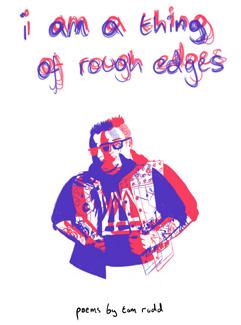

How international hostility is harming young trans people.
By Rachel Badham
) The past 12 months have seen a surge in active hostility towards the trans community and, in particular, trans youth. From the UK High Court decision to limit access to puberty blockers for under 16s, to the 17 states in the US which introduced bills aiming to ban trans athletes from competing in school sports, aggression towards trans youth has made its way from media rhetoric to actual political action, which will affect the lives of young trans people across the globe.
2015 saw the UK Parliament hold an inquiry into trans equality, leading the government to consider the reformation of the Gender Recognition Act (GRA) and NHS gender identity services. Following contemporary prime minister Theresa May’s announcement that the GRA would be reformed and a self-declaration system would be implemented, mainstream media outlets began to weigh in, with sources such as The Times and The Sun publishing pieces describing fears over the ‘erasure’ of women’s rights in place of trans rights.

Meanwhile, in the US, Donald Trump implemented a handful of anti-trans policies, such as the trans military ban, and a moral panic over trans people was created with no evidence to back up claims that trans people posed any threat to cisgender people, women in particular. The two international superpowers have been consistently debating trans rights for the past five years, with discourses turning increasingly hostile as public figures such as JK
Rowling spread misinformation about the trans community. Cara England, the head of public engagement at Gendered Intelligence (GI), a trans advocacy group, described the situation as “dire”, and said: “Government inaction around healthcare, autonomy and legal recognition has been fomented by years of wider trans panic.”
After years of panic, trans youth are now feeling the impact, with regular political attacks on young trans athletes and those seeking puberty blockers and other forms of gender-affirming healthcare. Conservative politicians frame these attacks as modes to either protect cisgender youth, or protect trans youth from making decisions which they are ‘too immature’ to make, despite the volume of academic research disproving this reasoning. As trans youth are consistently being scapegoated by the media and by politicians, it is clear that this discourse has, and will continue to have, an adverse effect on the mental wellbeing of young trans people, who are already disproportionately affected by depression, anxiety, and other mental illnesses.
A September 2020 study found trans youth were at higher risk of developing mental health issues compared to other groups in the LGBTQ+ community, with Dr Julia C Sorbara, the lead author of the study, saying threequarters of young trans people who attended her clinic reported suffering from mental health difficulties. She noted that trans youth are susceptible to poor mental health, particularly during puberty, which can heighten feelings of dysphoria. Now, this already vulnerable group is constantly exposed to anti-trans rhetoric in the media, with another 2020 study finding negative media representation increases the risk
of physiological distress by 28% in young trans people.
Jake Kelly, the joint head of youth work at GI, says the organisation has seen an increasing number of young trans people struggling with their mental wellbeing as a “combined result of the pandemic and the increased hostility”. Jake says young people are constantly “seeing evidence that there are people in the world who not only disapprove of their existence, but will actively fight hard to impact on their rights”, which can lead them to believe that “there is something fundamentally wrong with them.” GI hopes to educate and debunk myths surrounding the young trans community to “humanise them” and demonstrate that “they’re just young people who have basic needs”. Cara says it’s an important time for allies to show trans youth love and support, saying those who are in touch with GI are “incredibly bright, wonderful people” who deserve to have their voices heard.

Jake Chapman from Navigate Brighton, the trans masculine TNBI support group page in Brighton & Hove, says many trans people find it draining to be “continually reminded that we’re still seen as, at best, a debate or fetish and at worst, a threat”, adding that the depression and suicide rates in trans and gender diverse communities are so high due to being treated “like they don’t matter”. Navigate aims to provide a safe space for trans, non-binary, intersex and gender diverse people who are trans masculine, to address the lack of tailored support for this community.
“Government inaction around healthcare, autonomy and legal recognition has been fomented by years of wider trans panic”
For trans youth who are struggling, Cara suggests they “actively avoid taking part in any online ‘debate’ about their existence” and instead form positive bonds with fellow members of the community. Likewise, Jake from Navigate emphasises the importance of “having folk around you that understand at least some of what you’re experiencing”. He says it’s important to “give yourself a break” and “put the weight down sometimes” to help maintain mental wellbeing.
What is clear is that during these turbulent times where right-wing hostility towards young trans people seems to be increasing exponentially, it is paramount for trans youth to have access to safe spaces and supportive allies. Standing in solidarity with one another is more important than ever to protect young trans people from harm, and ensure they are one day treated with the respect they deserve.
D For more info on Gendered Intelligence: www.genderedintelligence.co.uk
D For more info on Navigate Brighton: www.navigatebrighton.co.uk
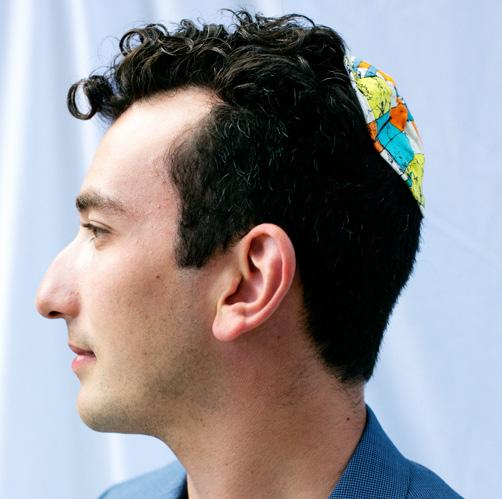
) It has now been over 1,000 days since the UK government first vowed to ban LGBTQ+ conversion therapy – a highly controversial practice which is known to cause trauma and depression in those who are subjected to it. No one knows this better than prominent Jewish LGBTQ+ activist and co-founder of the Jewish Art Immersive DAVAR, Joseph Hyman, who underwent conversion therapy as a teen, and has now dedicated his career to ensuring that, one day, no LGBTQ+ person will experience what he, and many other Jewish queer people, have faced.
Growing up in an orthodox community, Joe originally had plans to be an architect before travelling to America and participating in a programme with an LGBTQ+ inclusive Jewish community, inspiring him to venture into activism: “I went there and felt like I found my people so I came back with a sense of purpose – I wanted to continue to create inclusive Jewish communities in London.”
Before travelling to America, Joe underwent conversion therapy. He didn’t initially recognise the situation as abusive, saying his talking therapy was “packaged up” like a form of counselling. However, after discussing his experience with a friend, who later asked him to speak about conversion therapy at a Jewish educational conference, Joe said: “After meeting other speakers and survivors, I
began to realise the impact it had on me, and that’s when I began talking about it more.”
While Joe knows that conversion therapy is happening within the Jewish community, he said “LGBTQ+ people have been silent,” until relatively recently, adding: “When you live in a culture where homosexuality is wrong and someone offers to solve it, you think, how could that be abusive? It’s only afterwards you realise the effect it had on you.”
“[Banning] it could save lives –people have killed themselves after undergoing conversion therapy”
While Joe instigated his conversion therapy, he later understood that it wasn’t a choice: “For me, conversion therapy wasn’t a choice. When you grow up in a society that doesn’t provide you with a future, there isn’t an option other than to change yourself to fit the community.” After being exposed to a culture which didn’t discuss or tolerate the LGBTQ+ community, Joe said he “felt huge amounts of shame around my sexuality”, adding: “I felt I’m not enough, I’m going to be rejected by my community.”
He said that for many members of religious communities, conversion therapy can feel like an easier option than coming out, and that while the current debate surrounding
the possibility of a national ban on the practice has seen certain groups such as the Evangelical Alliance put forward the argument that one should be able to choose to undergo the practice, “we should be thinking about the structures we create which force people into situations like that. If people are told they’re not okay as they are, they’ll continue seeking conversion therapy.”
Joe only came out to his family after discovering conversion therapy, which provided “a sense of misplaced hope that I could ‘fix myself’”. Now, years down the line, he is hoping that the government fulfils its long-delayed promise to prohibit conversion therapy in the UK. But why has it taken so long? Joe suggested: “Practical things such as Brexit and the pandemic have pushed the issue back, but it’s also getting ignored due to concerns over including trans people, and over limitations of freedom of religion and freedom of speech.”
“For me, conversion therapy wasn’t a choice. When you grow up in a society that doesn’t provide you with a future, there isn’t an option other than to change yourself to fit the community”
As someone who has experienced antiSemitism throughout his life, Joe said he “understands the fear of external intervention”, but stressed: “This isn’t something that would ban spiritual guidance. It would provide a system for someone like me who might’ve experienced conversion within a religious community – it would stop them from being harmed. At the moment, no one is held accountable.”
Moving forward, he wants the government to be strong in its promises to ban the practice, saying: “It could save lives – people have killed themselves after undergoing conversion therapy.” For those who wish to actively encourage the ban, Joe suggested: “Firstly, support the ban – there’s a campaign right now to handwrite letters to MPs and make politicians aware of the issue. Then, educate yourself and listen to people’s stories from a range of intersectional backgrounds and religious identities.”
Despite the difficulties Joe faced as a young queer person in the Jewish community, he said: “As I’ve grown up and found Jewish queer spaces that work for me. It wasn’t always easy to be a religious person within the context of the LGBTQ+ community.” And it’s because of this that he aims to continue “creating spaces that are inclusive to LGBTQ+ Jews and the broader LGBTQ+ community in whatever way I can”. Although it’s a turbulent time for the UK’s LGBTQ+ community as conversion therapy continues to be legal, Joe is paving the way for Queer Jewish people to accept themselves for who they are, and embrace both their religion and their identity.
D For more info, and to get involved, visit: www.banconversiontherapy.com
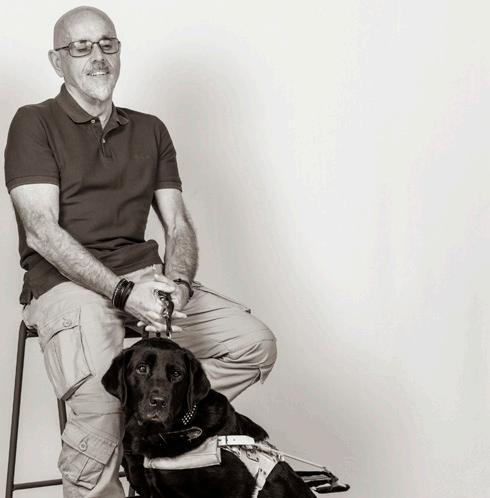
difficult it can be to get inside or up and down buildings, both public and private, in the everyday. Many places do not have sufficient space for navigation and many more have not considered how important automatic doors are to many more disabled than myself.
To conclude, my own life has helped me to gain a better awareness of other minorities that are discriminated against for just being themselves. Surely the way to make life better for all is to fully embrace the vibrant differences in people we find from every walk of life.
Over to my friend, Andi, for a look at prejudice from a psychologist’s point of view.
Richard Jeneway, who is blind, reports on an encouraging lack of prejudice today, although looks back on his experiences of being gay in the ‘70s and ‘80s and the current limited access to many local buildings and services
) Since losing my sight 14 years ago I can only think of a few specific events of discrimination as a gay man or even as a disabled one.
I was totally aware of and comfortable with my attraction to the same sex from childhood into my teenage years. At an all-boys school, sexual activity in the showers and after any sport seemed to me natural and normal.
In the outside world in the ‘70s and ‘80s, there was very little social acceptance. When I started work at 19 as a trainee surveyor it became clear right away that only heterosexuality was acceptable and the office banter reinforced this. An employee of any private sector office could easily be dismissed or forced out if their identity was revealed.
Naturally, I tried hard to fit in and hide who I was. Over time I borrowed friends’ female partners on more than one occasion to appear ‘straight’, dispelling the rumours about me for just a short time. My family certainly would have preferred this.
On nights out, where I could be more open, if someone shouted ‘queer’ at me or any other gay man it was time to run or expect to have a good kicking, from whatever band of skinheads or worse was picking a fight that time.
Their hate was justified by a media hell-bent on demonising the gay community and the disease they said we were responsible for. Thankfully, modern media is much more understanding and covers the abuse and isolation of the community
much better in TV series like It’s A Sin. Even against this backdrop, the NHS always provided me and those with HIV I knew with the support and high level of professionalism we come to praise to this day. To them we were just another patient requiring the same care and dignity as anyone else who would walk through those pristine white doors.
Over the years the attitude changed as well and now living in diverse Brighton, any kind of bias is rarely experienced or reported. I also lost my sight due to AIDS and even my partner in 1999, which introduced a new perspective of prejudice.
There have been times when I’ve been turned away from shops and stores with my guide dog, despite the law by staff who should know better, and sometimes made to feel isolated by those who ignore me in conversation or look past me in favour of avoiding, what might be in their eyes, an awkward or even unwanted interaction.
Although my experience is probably typical, it doesn’t carry the same weight as the past nor does it affect you in the same ways. For example, it can be easy to take for granted, as sighted people, the accessibility of your laptop, mobile phones and other gadgets which are primarily designed for your use. Any kind of support for that of the sightless is always overlooked, which results in the requirement to purchase expensive software and request frequent assistance, paid for or not.
It can also be easy to take for granted how
Prejudice is a negative preconception or attitude often learned in early childhood, directed towards an individual or group, which is positioned on a spectrum of ‘form’ from conscious and/or overt, to unconscious and/or subtle.
Psychologically speaking, prejudice consists of three core elements which are central to all human attitudes: cognition (thoughts), affect (feelings), and behaviour. In the case of prejudicial attitudes, this would be likely to involve stereotypical cognitions which are largely unconscious, negative affect, and discriminatory actions.
Individuals may openly admit their intolerance of others, some consider jocular derogatory references as little more than ‘everyday banter’, while some people may consciously or unconsciously exclude or ignore others.
Psychologists have attempted to understand prejudice and discrimination from three broad perspectives: specific individual personality factors, environmental/contextual factors, and factors surrounding ‘in-group’ (e.g. ‘us’) and ‘out-group’ (e.g. ‘them’) membership. All three approaches, if considered in isolation, are limited in their explanatory power; perhaps greater benefit would be gained by considering a hybrid of all three to be more holistic.
Minimising prejudice and discrimination is complex, however it is the duty of all members of society to collectively challenge the status quo. From a psychological perspective, research proposes that to rise to this challenge in a meaningful way, there is a need to deliver empathic skills training from early childhood, increasing the level and type of contact between members of different social groups, raising awareness of anti-prejudice social norms, and ensuring policies and laws treat all groups equitably.
Andi Myles-Wright CPsychol AFBPsS British Psychological Society Chartered Psychologist and Associate Fellow in Psychology
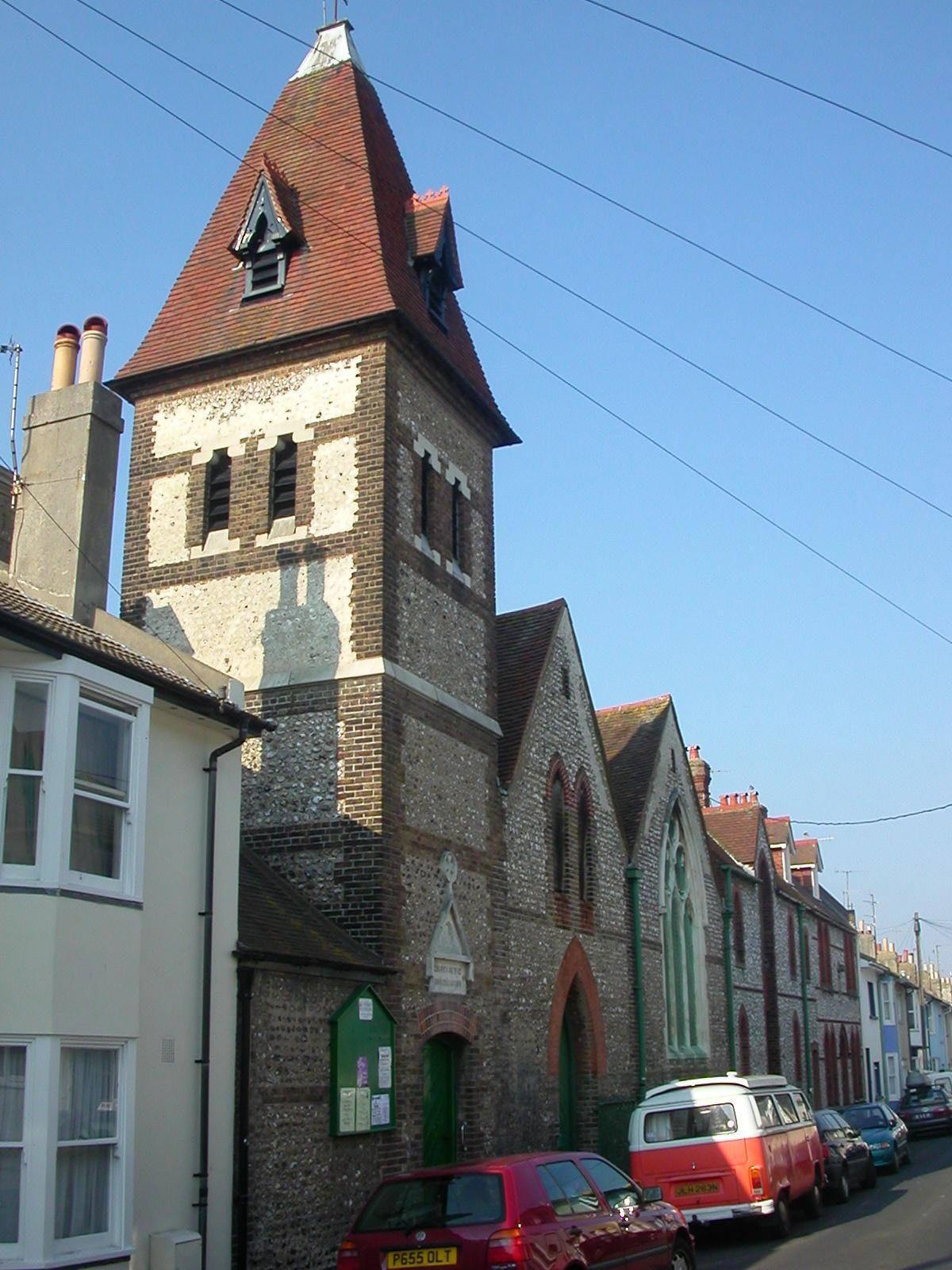
community and the church.
“My personal experience of it is that quite a number of LGBTQ+ people can be discriminatory towards people who have a faith,” says Luke, “but I think that comes from a generalised view that people with faith will be homophobic.
“The prejudice I have received from inside the community is misplaced because of all the historic differences between the Church of England and the LGBTQ+ community. It’s a very fiery topic and I think people can comment on the whole of the wood without seeing the trees. There are homophobic churches in Brighton definitely, but also churches like ourselves which are trying to create safe spaces and are being tarred with the same brush.”
It can be a double-edged sword too. “I have received prejudice from LGBTQ+ Christians who don’t believe I should have a civil partnership with Anthony because I am not Christian, but on the flip side I have lost friends who don’t think I should have a relationship with a Christian. Ninety-five per cent of people are wonderful but it has made me realise that the battle for LGBTQ+ equality is not over.
“I remember being at the first [same-sex] wedding at the Pavilion and thought the future was wonderful. Fast-forward six or seven years and I feel that’s been taken away from me. We are having a civil partnership because that’s the only thing we are allowed.”
Religion has a tendency to divide people, and that can stretch beyond its own boundaries. Jaq Bayles talks to church members who are looking to improve the path
) Religion and the LGBTQ+ community have long been, at the very least, uneasy bedfellows, if not outright hostile enemies. While as recently as December 2020, some 400 global religious leaders called for countries to overturn bans on same-sex relations and pressed for an end to LGBTQ+ conversion therapy, same-sex marriage is still outlawed by the Church of England – a major bugbear for its many LGBTQ+ ministers.
Among them is Anthony Murley, priest in charge of the Annunciation Church and soon to be vicar of Hanover, who is engaged to non-Christian Luke Brotherton – but they must settle for a civil partnership rather than a marriage, or Anthony faces losing his job.
In an effort to address this inequality, Anthony is running for the General Synod with a manifesto aimed at including same-sex marriage.
Since Anthony and Luke met – at a party just 17 days before the first lockdown – they have been upping the ante on LGBTQ+ inclusivity at the church, adopting the Allsorts Safer Spaces
Award, which “strives to adapt to the needs of your specific organisation, recognising the unique challenges and experiences faced by the LGBTU+ community in diverse settings”.
But they are under no illusions as to the rift between many members of the LGBTQ+
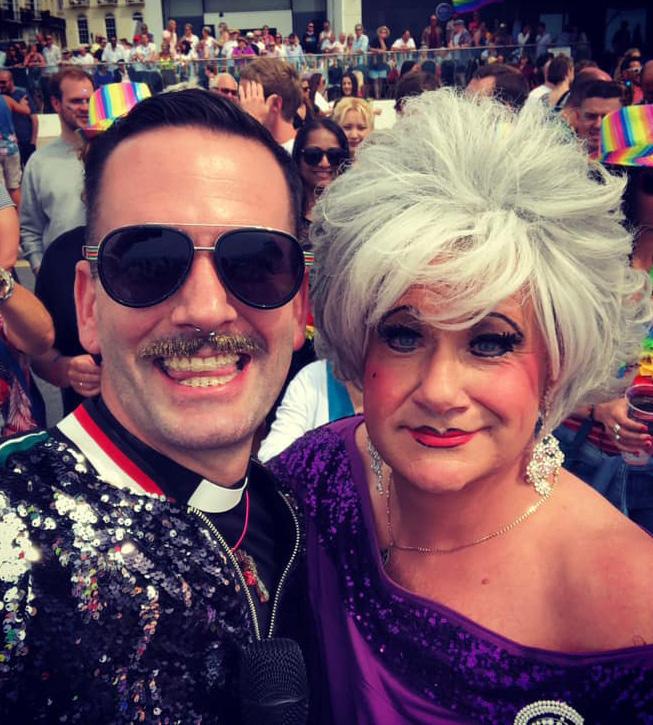
Luke, who was an events planner before the pandemic pretty much put paid to ‘events’, has been instrumental in helping to guide the Annunciation Church through its adaptation to the virtual world in the past 15 months. There was already fairly high LGBTQ+ engagement in the congregation, but through church services plus the likes of coffee mornings and online bingo, with live streaming through Luke’s iPhone, the church was reaching a wider audience.
And it wanted to do more than the Church of England’s own Living in Love and Faith project which, says Luke, “was meant to help people all work together throughout the church spectrum”. However, that fell flat in some ways. “There are some very conservative-leaning people who don’t agree with it and said they would not be
part of the church. From their point of view it could put people off coming in. It’s not what we wanted it to be.”
That was one of the prompts for getting in touch with the Allsorts Safer Spaces Award. “We have a long list of criteria to meet in order to be a safe space for everyone regardless of sexualities, genders and of or non-faith. We are making the toilets gender-neutral; anyone who has a role in the church signs up to an agreement where we don’t discriminate; if we have people visiting from other churches we say if you can’t abide by our safe space policy we can’t work together.
“We are going to be running courses which make people aware of pronouns. We have had conversations with older members of the congregation who say ‘I just don’t know what I am meant to say’ and it’s coming from a place of not understanding. We want to get younger people to work with older members of the congregation to help them understand.”
Whether the church will amend its stance on same-sex marriage in the foreseeable future remains to be seen, but clearly the fight is still very much on.
The Annunciation Church also hosts the community run Toast Club, providing free breakfasts seven days a week to all who need it.
D For more info, visit: www.annunciationbrighton.org.uk
Michael Hydes, pastor at The Village Metropolitan Community Church – which champions ‘inclusion with no priorities’ –remains baffled by the Church of England’s stance on LGBTQ+ unions and says he’s not surprised that so many in the community are wary of people of faith.
If people treat those who have faith with a certain caution, he thinks that’s probably understandable, given the history of many denominations. He adds: “It’s easier to come out as LGBTQ+ in Brighton than it is as a
Christian or Muslim or Jew, or you come out as something trendy, like Wiccan.
“I have been connecting with the Radical Faeries over the years and people still think, why would a vicar be interested in it? Many distrust people of faith.”
Michael points out that there are thousands of religious denominations and most are the product of the culture in which they grew up, reflecting those cultures in their practices. For example, “even until the 1950s there were many places you could not go to church if you were disabled”.
And the divide between community and church is further reinforced by continuing controversial practices.
“It’s easier to come out as LGBTQ+ in Brighton than it is as a Christian or Muslim or Jew, or you come out as something trendy, like Wiccan”
“It is still not illegal to have a conversion. Some of the pro-conversion people are probably quite powerful,” says Michael, adding that elements like that all add to an understanding of why LGBTQ+ people would have a sense of mistrust when it comes to people of faith.
Then there is the fact that many religions would sooner a family put their child on the streets than accept their sexuality.
Michael says he has “probably walked with about 30 people that are transitioning” and has seen that as a privilege, but “it’s amazing how many of them were cast out by the church or their families. Youngsters get thrown out of their homes and for the most part that’s because their religion has said it’s the way it’s meant to be. We have a safe space policy.”
While plenty of churches have adopted an open door policy, there’s a long way to go, says Michael. “What they haven’t done is change the theology, which is very patriarchal and quite discriminatory.
“Most churches are still on the journey. You go to a Church of England in Brighton and you can find the minister is gay and there are LGBTQ+ people in the congregation but the denomination still takes a stand against marriage.
“People say, we are Anglican but can’t get married. You would think the first thing to change would be the theology of the church, but in fact it’s the last thing to change.”
D For more info, visit: www.thevillagemcc.org

recalled his recent attendance at the 2021 BRIT Awards, saying: “I walked out in this gorge jumpsuit, big fluffy pink coat and heels, but before I left I had to prepare myself. I was like ‘I am ready to ignore the abuse I’m about to get because I know it’s coming’. I walked out of my house and there was a seven-year-old who instantly started making fun of my heels – it’s quite sad to see homophobia in someone so young.
“It was still worth it because I’m not going to tone down who I am for the sake of their comfort”, and it is this fighting spirit which is at the core of Jason’s music. Despite facing years’ worth of prejudice, he has “found a home” in the East London cabaret scene:
“I’m part of a Pan-Asian cabaret performance collective called The Bitten Peach and all we do is platform Asian performers – it’s been amazing to find my community and I’m proud that I’ve not had to compromise any parts of my identity to make my career easier.”
Music sensation and this month’s cover star Jason Kwan on being unapologetically himself. By Rachel Badham
) “The prejudice I faced made me consider what I wanted to do with my music – it made me realise that I don’t want to make easily digestible music. People have challenged me on why I have to be so overtly queer and Asian, but it’s not that I’ve chosen to label myself these things. They just are my identity, and I’ve chosen to celebrate them and not dilute myself for public consumption.”
Model, performer and rising glam rock star Jason Kwan has embraced his identity in a society which told him not to, and is sharing his talent with the world by creating fiercely queer music which places Asian LGBTQ+ narratives in the spotlight. After “finding strength in the darkness” and channelling his experiences into his artistry, he has become a leading light for many marginalised LGBTQ+ people, demonstrating that everyone deserves a chance to feel at home in their identity. After moving to the UK at 14 to escape homophobia in Hong Kong, Jason is no
stranger to the prejudice LGBTQ+ people of colour face on a daily basis, but has found the Covid-19 pandemic has amplified the already entrenched racism in the region: “In 2020, the way I was approached as an East Asian person in London has been very hostile. There’s a lot of passive-aggressive and explicit racism, and it’s because of the way Covid is perpetuated to be the fault of the Chinese, which is ridiculous.
“Like UK Black Pride, Trans Pride and Non-binary Pride - there’s so many Prides we can be attending without corporates interfering”
“It’s particularly worrying for older generations of Asian people and more vulnerable people like sex workers, queer people, homeless people – it’s been difficult to feel safe.” And for Kwan, alongside thousands of other LGBTQ+ people of colour, his experiences of racism are continuously intertwined with overt homophobia. He
“I was booked to perform at Pride in London – they offered me a 20-minute slot and that’s a big opportunity, but I turned it down because I do not support racist organisations and structures, and I stand in solidarity with the black colleagues who have experienced racism”
Now, Jason’s visibility has given other queer people of colour hope during difficult times: “I’ve had followers message me, and they all tell me where they’re from – like ‘I live in this country where it’s super homophobic’, and they say the music has helped them. I write my music for myself as a therapeutic way of dealing with my own emotions but if it can inspire someone or give someone else their solace then I’m definitely going to keep putting out songs. To be able to connect with people without knowing them is one of the most powerful things about music.”
His heart-wrenching yet uplifting track, Give Me Up To Love, was the first song he wrote for his upcoming EP, and truly encapsulates the essence of Jason’s message: “It’s about giving up all the things in my life that were holding me back and loving my music and loving love itself. Lady Gaga is someone who is so able to blend dark emotions with liberation and empowerment, the same as Queen and Grace Jones – they’re artists who
are not afraid of the darkness. The only way I can work through my emotions is to find strength in the darkness and own my past and my experiences.”
Kwan now hopes to continue striving for equality and liberation through his work, and calls for structures that uphold racism within the LGBTQ+ community itself to be dismantled: “I was booked to perform at Pride in London – they offered me a 20-minute slot and that’s a big opportunity, but I turned it down because I do not support racist organisations and structures, and I stand in solidarity with the black colleagues who have experienced racism – it’s important for us as performers and attendees of Pride to hold organisations accountable.”
“People have challenged me on why I have to be so overtly queer and Asian, but it’s not that I’ve chosen to label myself these things. They just are my identity, and I’ve chosen to celebrate them and not dilute myself for public consumption”
He also hopes to see more support for grassroots Pride organisations “like UK Black Pride, Trans Pride and Non-binary Pride –there’s so many Prides we can be attending without corporates interfering.” Alongside his ongoing youth work with the Albert Kennedy Trust (AKT) to support and empower young LGBTQ+ people who are experiencing homelessness, Jason is currently “exploring different sounds” alongside writing his classic stadium rock ballads, with new projects on the way shortly.
Despite the discrimination Jason has faced and continues to grapple with to this day, his art has been his therapy and has allowed him to flourish into the inspiring and unapologetic person he is today: “My music stems from my hardships, and a lot of this has to do with my identity and how I navigate the world as a queer Asian person living in London. But I’m just proud to be performing full stop. I’m proud to be existing.”
more info
D www.jasonkwanmusic.com i www.instagram.com/jasonkwanmusic t www.twitter.com/JasonKwanMusic
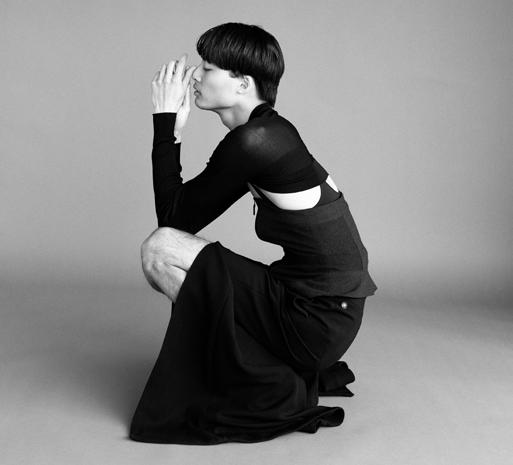
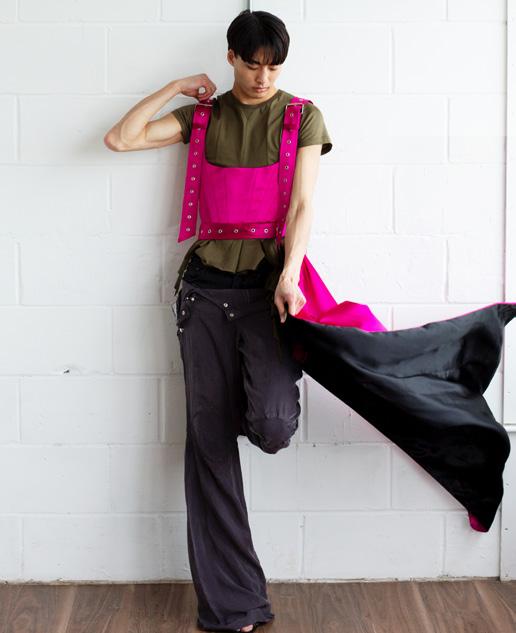
) Despite the horror myths around HIV having been long debunked, there remains a fear for many that revealing a positive diagnosis will prompt negative reactions, even among close friends and even within the LGBTQ+ community.
As Lunch Positive, the peer-led voluntary HIV support organisation, prepared to reopen fully following the harsh lockdown months, founder Gary Pargeter was looking forward to seeing people once again sitting down to shared meals at Dorset Gardens Methodist Church and reiterated the importance of having a safe space for those diagnosed with HIV.
Brighton & Hove is at the forefront of the drive to meet the national target of ending new cases of HIV by 2030, but while that target looks eminently attainable, wiping out the stigma and prejudice around HIV is another matter.
“We want to eradicate stigma in the same way we don’t want any more HIV diagnoses,” says Gary, “but the reality is that stigma is a result of society and human nature, and there will always be a need for all communities to have safe spaces.”
The fear – whether real or imagined – of facing prejudice after getting an HIV+ diagnosis is problematic for many. “It definitely still
happens,” says Gary. “People are sometimes really fearful that others are going to react in negative and unhelpful ways, and very often those fears are based around a sense of social or relationship rejection and a lack of acceptance within the community, and that people who previously have felt comfortable with them might not do so any more.”
Against a backdrop of increasing fluidity and diversity around “identities and our ability to define who we are”, there are still many people who are unable to relate to anything that is outside their own sphere of experiences, and this is one of the traits Gary believes is perceived as holding back acceptance.
“[There is a fear] you might suddenly find yourself with people who you felt might be understanding and insightful and supportive, and who you reach out to for all those things, but they are not accustomed to thinking beyond what they already know and there’s an immediate sense of rejection, powerlessness and often hopelessness. “
Which is why a peer-led environment is such a successful tool in helping people come to terms with a diagnosis.
“It’s not just a diagnosis, not just a disease, it’s many, many things,” says Gary, who regularly hears from service users that just by virtue of being with other positive people in a safe but structured environment they feel their spirits lifted. “People come along and see first hand that people can be HIV+ and have many other identities and characteristics, can also be happy and able to socialise and talk with new people and also can appear to be well and coping and living life happily.
“It’s all about acclimatising yourself and meeting and interacting with other people, which doesn’t easily necessarily happen in pubs or environments where there’s another purpose for being there.”
In common with some other targets of prejudice, HIV is not necessarily visible, so prejudice could be avoided by not ‘coming out’ – but of course that in itself comes with issues.
“I don’t think we can generalise, but for some people being HIV+ is a kind of integral sense of their self and identity and it’s important to express that to others, and for others it’s less so.”
Gary gives an example of a volunteer working with Lunch Positive over the summer, who was “relatively comfortable” about a fairly recent HIV diagnosis. “They just came along, didn’t really talk about it, but then had the opportunity in their private life to talk about volunteering for us and had to make that
decision about whether they told somebody they were volunteering for an HIV organisation.
“That then provoked the thought ‘why am I even considering whether it’s important to mention this or not?’
“It took some thought as to what the reaction would be, but the outcome was entirely positive and led to them talking to their friends for the first time about their own HIV diagnosis. They now say they are feeling much more fulfilled and liberated as a result. There are all those knock-on incremental benefits.”
As the government’s ‘roadmap’ out of lockdown unfolds, the importance of grassroots organisations like Lunch Positive is likely to become even more evident, with many people traumatised by the events of the past 15 months and reluctant to re-enter without support a society from which they’ve been cut off.
“People come along and see first hand that people can be HIV+ and have many other identities and characteristics, can also be happy and able to socialise and talk with new people and also can appear to be well and coping and living life happily”
“The biggest focus is just re-engaging with people who have become more isolated than they were before,” says Gary. “I know it’s going to be a really long haul venturing out and certainly to become part of friendship groups again.”
Playing a vital role here is likely to be the befriending scheme for people living with HIV in Brighton & Hove that was set up by Lunch Positive with charity Together Co in April. The scheme had been in the pipeline since 2019 but was interrupted by the onset of the pandemic.
Later, the need for such a service became driven by the pandemic and going forward it will be needed more than ever, especially in more rural areas as, while cities can be isolating, social opportunities tend to diminish the further away from them you go.
“So many people have shown interest who live in surrounding areas and are very fearful of talking about their HIV status and making friends, even within their own peer groups,” says Gary.
And if there’s been any kind of positive to the pandemic, it’s been the strengthening of ties between voluntary organisations and the people they support.
“It’s given us opportunities. We’ve engaged with more people over the last year through the Lawson Unit HIV clinic, for example, and because of that have stronger links with the community. That represents opportunities to grow our work and reach people in more ways than before. It’s a silver lining I suppose.”
) For more info, visit: www.lunchpositive.org
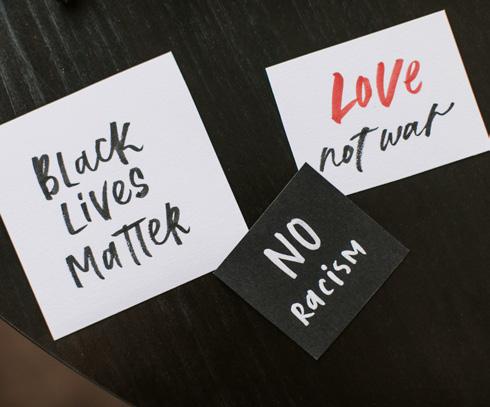
leadership team which offers that nuanced conversation. A lot of people don’t understand these issues so Pride must do more to be at the forefront of that vital and overdue pivot.”
Rhammel Afflick talks to Rachel Badham about how Pride has excluded communities of colour
) While 2021 is seeing the return of LGBTQ+ Pride festivals following the coronavirus pandemic, alarming revelations about the Pride in London organisational team being a hotbed of racism and bullying has left many posing the question: how often are black and PoC communities experiencing exclusion from Pride, and the wider LGBTQ+ community?
The controversy began in March when Rhammel Afflick, who was the most senior black member of the Pride in London organisational team, explained that he quit his role as director of communications last month due to racism. He said Pride in London leaders are reluctant to “accept that the liberation of LGBTQ+ people must be coupled with the fight against sexism, ableism, racism and other forms of unacceptable discrimination,” and subsequently, the entire board of advisors, as well as the Pride chairs, resigned.
While the situation brought the underlying racism in Pride to public attention, this issue has been affecting communities of colour for much longer than the past few months. Rhammel first joined the Pride in London volunteer team several years ago due to the lack of representation: “Openly bi, black young men in London weren’t at the centre of the public perception of LGBTQ+ rights in the UK. I didn’t join because I had a rosy view of what Pride was, but I felt Pride was failing black and brown people.”
Despite the 2020-2021 Pride board being the most diverse the organisation had ever seen, Rhammel found black voices were still being silenced, saying his “understanding of the experiences of other volunteers of colour” ultimately led him to resign. He said that he came to the realisation that Pride needed “a different leadership with a different vision” in order to progress.
Moving forward, he pointed out that much more needs to be done than improve diversity within the board, and said safeguards need to be actively implicated and structures upholding racism need to be dismantled: “We also need to think about our understanding of what it means to be anti-racist. We talk about momentary allyship but we need co-disrupters – people who will actively challenge racist attitudes and put in place safeguards for black and brown people.”
“An essential part of Pride is listening to and supporting all members of the LGBTQ+ community and, as the BLM movement showed us, it is still very common for marginalised sections of our community to feel they are not being heard” –Brighton &
Rhammel has been writing about his experiences of racism within the LGBTQ+ community since 2016, and said that while things may appear to have improved on the surface, racism and exclusion continue to be prevalent: “It’s 2021 now and I could honestly copy and paste what I wrote five years ago and it would still be considered radical thought, which is troubling.” However, he has found within the past couple of years, “the ask from black and brown communities has become a lot more unapologetic – we’ve stopped asking for the bare minimum.”
As racism and other forms of prejudice continue to thrive within Pride and the broader LGBTQ+ community, Rhammel believes it is Pride’s duty to actively challenge these attitudes, and “to support other liberation movements”. He said: “We can’t forget that LGBTQ+ rights are underpinned by white supremacy and patriarchy. We need a
He hopes that the controversy surrounding Pride in London becomes a “springboard to have some of these more nuanced discussions” about intersectionality, and that all organisations working within LGBTQ+ rights spaces will consider their approaches towards creating anti-racist environments which foster liberation for all.
Brighton & Hove Pride is working towards this goal, saying: “We are 100% committed to supporting all members of the LGBTQ+ community both at our official Pride events as well as in their day to day lives. An essential part of Pride is listening to and supporting all members of the LGBTQ+ community and, as the BLM movement showed us, it is still very common for marginalised sections of our community to feel they are not being heard.”
In 2018, the Pride Cultural Development Fund was introduced, which has now seen “over 180 creatives have been involved and a very high proportion identify as QTIPoC or present culturally diverse narratives.” Two years later, Brighton & Hove Pride donated resources to support the BLM movement, and “intends to continue with a range of meaningful engagement activities in the future by supporting QTIPoC artists to nimbly flex between physical and digital environments.”
“We also need to think about our understanding of what it means to be anti-racist. We talk about momentary allyship but we need co-disrupters – people who will actively challenge racist attitudes and put in place safeguards for black and brown people”
What has been demonstrated in 2021 is that Pride needs to do all it can to support and empower marginalised LGBTQ+ people. Rhammel said: “While celebration is important, Pride needs to remain a protest and that has to be at the centre of it.” Although there is an increased public awareness of issues of racism, transphobia, ableism and misogyny, it is not enough for Pride leaders and the wider LGBTQ+ community to just be aware; it is paramount that more Pride organisations fulfil their duty to ensure that Pride is a space where all voices are heard, and that all fights for liberation are married together to strive towards equality for all.”
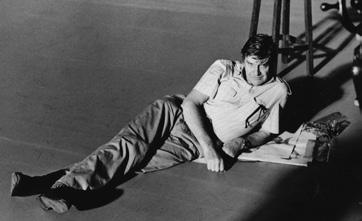
Alf Le Flohic saw David ‘Wendy’ Watkin listed in a who’s who of Brighton, and noticed there was a bus named after him. His gaydar tingled and he wanted to know more…
) You probably won’t recognise the name, but cinematographer David Watkin worked on some of the biggest films of the ‘70s and ‘80s – Catch 22, Chariots of Fire, Yentl, Out of Africa and more. And then there’s ‘Wendy’… but we’ll come to that later.
It took David a while to discover his cinematic talent. Born in Margate in 1925, his early passion for music was discouraged by his father and he enlisted in the army aged 19. He was not a natural recruit and was reprimanded at one kit inspection: “You’d lose your bollocks Private Watkin, if they weren’t in a bag.”
He left the army aged 23, too old to pursue a career in music, so he picked up a camera and joined the Railway Film Unit. It was here that he first encountered an out gay man – well, as ‘out’ as you could be when it was completely illegal. David remembers his own innocence: “‘Had I tried the cottage up on the concourse?’ I had not and spent a confused half hour looking for what I imagined would be a cosy tea-room with a simulated thatched roof.”
In the ‘50s, David and his boyfriend Iain Somers moved into a flat in London. David spent the next 10 years honing his filmmaking skills and rose to become director of photography.
After going freelance he worked on TV commercials. His talent was beginning to attract attention and in 1964 he created the intro sequence to the James Bond film Goldfinger Before the decade was over he’d worked on The Beatles‘ film Help!, and The Charge of the Light Brigade, for which he received two BAFTA nominations.
In 1970 David and Iain moved into Sussex Mews in Brighton. As close friend artistdesigner Rachael Adams describes: “They just bought number 6 at first, then they bought number 7 and then number 8, and then it all got knocked through. Iain was an antiques dealer. So most of the beautiful furniture came
from there.”
That same year, another of his films came out: Catch 22, an American black comedy of a war film. Rachael recalls David describing how the idea to light it came “from walking along Kemptown seafront. Those parts of the autumn and winter in Brighton where you can look out to sea and you can’t see a horizon, it makes you feel so isolated and weirdly claustrophobic. It struck him that that would be the perfect way to light Catch 22, these people stuck in this insane situation.”
He made two very different films with director Ken Russell the following year: The Devils starring Vanessa Redgrave and Oliver Reed, with set design by Derek Jarman; and The Boy Friend starring Twiggy in a pastiche of ‘20s/’30s musicals. Both camp classics in their own weird ways.
After 21 years together, Iain Somers died in 1974. Another of David’s close friends, Chris Mullen, remembers: “David told me that he was much more promiscuous than Iain and he said, ‘I want complete sexual freedom in our relationship’. Iain got more and more depressed by this, and he killed himself.” Rachael adds: “Iain was David’s big love. It was a lifelong
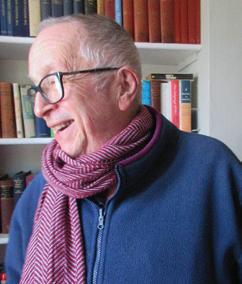
grief for David.”
Graham Ingram ran a car business from the Mews in the ‘70s, later becoming the landlord of the Somerset Arms (58 St George’s Road) and says “David was a diamond.
“A lot of stars used to go and frequent his house, especially if there was a film in the offing. I know one of the guys that done Robin Hood [Robin and Marion, 1976]. This Robin Hood character [Sean Connery] was climbing a tree and David Watkin being David Watkin went and looked up his kilt. That made me really chuckle.”
But seriously, “his skill as a cinematographer was actually… it was unique,” says Chris.
“He made films that look like nobody else’s. The sight of the American airport (Catch 22), being bombed by its own planes is absolutely sensational, because it’s not conventional film lighting, it’s the actual light of the bombs.”
David was not interested in receiving awards but had ten years of them, starting in 1981 with Chariots of Fire. The crisp filming of the athletes running in slow-motion across a beach was a novel effect created by him.
In 1983 David finished the Barbra Streisand film Yentl. “Barbra Streisand was often on the phone because she loved David for several reasons, all of them to do with the fact that he could make her look wonderful and reduce the size of her nose,” says Chris.
David completed Out of Africa in 1985, for which he won five awards, including an Oscar and a BAFTA. Many guests in Brighton would
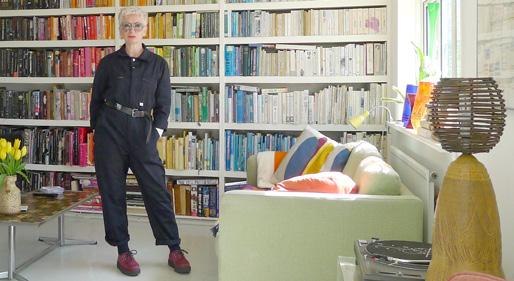
remark on that Oscar, and the fact that it was holding open the door of his downstairs toilet.
“He didn’t value fame in any way, he valued kindness,” remembers Rachael.
The painterly quality of the light in this film was created using his own invention: The Wendy Light. In simple terms (that I can understand), it is a large bank of lights raised high on a cherry-picker. He called it Wendy after the camp name that was given to him by a group of electricians in his early days. The light is still used by film crews today.
Chris remembers one occasion in Brighton: “I was with him by the cheese shop and a man outside the shop said ‘Wendy!’ and he turned around and said ‘Yes.’ This man said ‘No, I was looking for my wife’. And Watkin said, ‘I’m sorry, I thought you were an electrician!’”
Chris taught Narrative Illustration at Brighton Polytechnic/University from 1989, and David gave regular talks to his students. One such student was the aforementioned Rachael, who went on to design Watkin’s autobiographies: Why Is There Only One Word for Thesaurus? and Was Clara Schumann a Fag Hag?.
She recalls: “I felt very quickly that we were fulfilling some kind of role above and beyond potentially designing a book. Something about his childhood meant that he was always looking for family.”
Chris continues: “It was the family he always wanted because his family professionally was the film crew that he worked with.
“At the end of every gig he would jump in a taxi at Brighton Station and get this feeling of burning off all the frustrations of his professional life. He could put his music on at 4am, and, because all the rooms around him were let out on a peppercorn rent to his friends, nobody would object.”
Duncan Lustig-Prean became friends with David Watkin in 1997 after David wrote to congratulate him on his campaign to stop the UK government from dismissing military personnel on the grounds of their sexuality.
“He invited me to dinner in Sussex Mews. His place was really old-fashioned. He had a harpsichord piano, which he played superbly. Which of course is what he really wanted to be, a musician.”
David much preferred to entertain at home rather than visit pubs and clubs and liked to
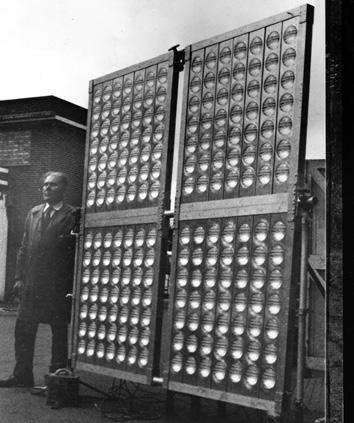
video outtakes. He had footage of the Queen Mother attending an event, her steward wearing full Highland costume. As the steward excused himself with a profound bow the image transitioned from the Queen Mother’s face to his arse.
Duncan continues: “David was no angel. He would have call boys come down from London.” David was open about this himself: “My life would be vastly impoverished had I never encountered a rent boy.” He met them through the Olympus Lads agency in London and went on to help a number to get out of that lifestyle.
As Rachael recalls: “He had huge empathy for these boys, he would develop these crushes but he was so kind and he wanted to help them and improve their lives.”
In 2004 David was awarded two lifetime achievement awards, and when asked for an
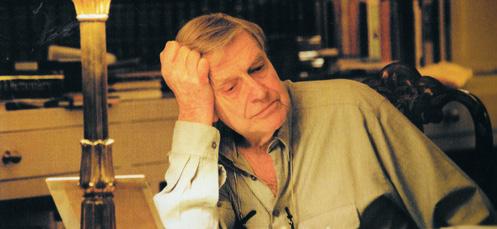
inspirational quote by one of them he replied: “One tries not to fuck up.”
Two years later he entered into a civil partnership with ex-Olympus Lad turned embalmer, Nicky Hands, at Hove Town Hall
Duncan Lustig-Prean said of David, “I got the impression that being in a relationship was not his natural state of being. So, when his last relationship came along it was a surprise. But I think that for his final months, it made David happy.”
David passed away in February 2008, just 12 months after being diagnosed with prostate cancer. As for his belongings and archive, Chris remembers Nicky saying: “Oh, I’m gonna throw them all away. I don’t want the house to be a museum”. Sadly that is pretty much what happened.
Nevertheless, David’s cheeky sense of humour remained with him until the end. The glossary of lighting terms at the back of Clara Schumann includes these definitions: ‘Cottage: meeting place with toilet facilities’ and ‘Honey wagon: mobile toilet for film crews’.
I’m going to leave the last word on David to his friend Barry: “He was a proud gay man of his generation. His career could have taken him anywhere in the world, but he chose to live in his beloved Brighton.”
All David Watkin quotes come from his autobiography Was Clara Schumann a Fag Hag?.
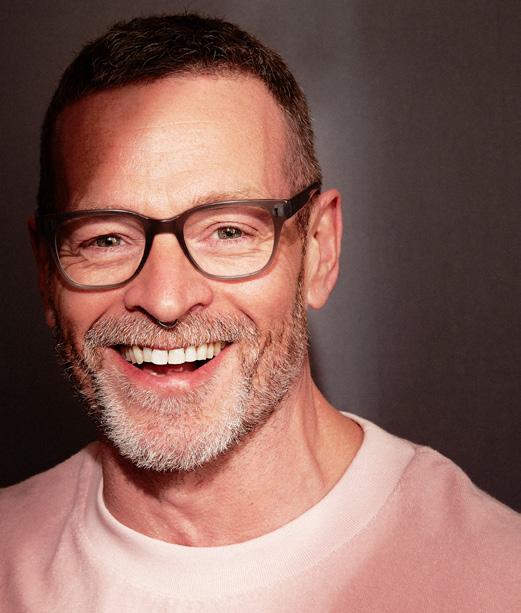
) Belfast-born Denis Robinson moved to London in 1988 and has spent 38 years in hairdressing. Recently turned photographer, his LGBTQ+ Pride project #ProudPortraits is making some serious noise. With a high-profile Soho exhibition and publishing deal in the offing, this is not a quiet start to a second career. Craig Hanlon-Smith caught up with him to talk Pride, inspiration and an exhilarating future.
What inspired the project #ProudPortraits?
Shame, shame inspired #ProudPortraits, specifically a conversation about shame with a friend over Zoom during the most recent lockdown. We were talking about It’s A Sin on C4. Adam asked me what I took from the series and I was talking about my many suppressed memories of the era covered in the show and the subject matter and how triggering it was for me in many ways, and how all the names and faces of those we lost came flooding back. When I asked Adam what he took from the show he said shame, how people adopted the shame that was given to them by society and families and made it their own. It made me think about some of the shame I was carrying about regarding my mental health struggles and becoming HIV+ at the age of 36.
Shame is the opposite of pride. When I realised how much shame already had me in lockdown
way before the pandemic, and for many years, I needed to do something to celebrate the word PROUD.
Why now?
I just felt the time was right, I feel that the universe has been placing everything in my path to make it possible. But possibly even more so, the last 18 months living through Covid-19 has really focused a lens on social injustice, the murder of George Floyd, the power of the Black Lives Matter movement last year, they made me look at some of the LGBTQ+ communities’ internal injustices. Sexual racism, body shaming, the schism that has occurred over the years due to the homogenised version of LGBTQ+ that is shown in both men who have sex with men and our own media didn’t sit comfortably with me and I realised that I could maybe hold a mirror up to that and hopefully make people think. Also, it reminded me that when I moved to London in 1988 there were so few venues for us to attend that everyone went to whatever was on offer and dare I say it the LGBTQ+ scene was the better for it.
You have encouraged participation in the photoshoots from all the varied memberships of the broadening LGBTQ+ communities. Why was this important to you?
The LGBTQ+ rainbow is made up with many
strands of light, as both a photographer and hairdresser I understand light and shade and tones. You cannot have light without dark and a community is always made up of people coming together. If everyone is the same, it is not a community it is a cult and I wanted to show, and more importantly celebrate, every element that makes up the whole.
Your move into photography is relatively a recent endeavour. What prompted your interest?
I have always had a keen interest in photography and for many years in my hairdressing career I was on set doing hair for fashion and beauty stories and also TV commercials and pop promos. Around two and a half years ago, as I was about to turn 50, I recognised that I needed a new creative challenge. Hairdressing is something that I love and I still enjoy but it holds no challenge for me any longer, everything I could possibly want to achieve in that field I have achieved. From doing hair at London and NYC fashion weeks to working with some of the biggest celebrity names in the world and running and building businesses.
“I feel so humbled that the project has resonated with so many people and that they trust me to make them shine like the stars they are”
Any creative is only truly happy when there is a wall to climb over. Photography was a wall I had often looked at but never attempted to climb so I bought a camera and started taking pictures of walls. But people are my passion.
You have spent a long time in your life in hairdressing and barbering both on the shop floor and at a creative director level of wellknown companies. What have you learned from these careers that translated into the photography work?
I approach photography the same way I approach cutting hair, which is to make the person in front if you feel and look great. I have had many moments of imposter syndrome since starting shooting in studios but it dawned on me a while back that I have been creating portraits in a frame for 38 years – the frame was a mirror and the portrait walked out of the shop but it is essentially the same thing. Ultimately it all comes down to communication merged with a skill set.
What are your hopes for the #ProudPortrait experience?
I have a personal mantra; it is something so important to me I even have it tattooed over my heart. It is: Inspiration, Motivation, Education & Innovation. Any day I manage to tick off one of these is a great day. At the moment I am ticking all four regularly. I hope
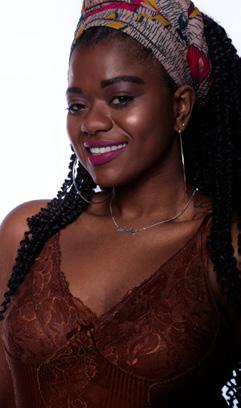
that translates to the subjects and I hope the viewers get some part of this when they view the material.
Are there any particular stories from meeting all these participants that have remained with you and why do you think that is? Even at this early stage there have been so many stories and snippets which have moved me, from a trans woman asking me if I would take her photo topless as the date of her session is the first anniversary of her starting hormone treatment to rape survivors talking about their experiences. I really cannot narrow it down more, but I can say that this whole project from inception to the current stage of carrying it out has given me the privilege to connect with more people in a month than I have in the last 15 years. I feel so humbled that the project has resonated with so many people and that they trust me to make them shine like the stars they are. Conversely I am saddened at times that the project seems to be needed by so many.
Tell us when and where we can see the project in 2021.
Well just this week, a two-week exhibition/ window takeover has been confirmed at the heritage fashion brand Fiorucci’s flagship on Brewer Street in Soho for the second half of June and over the anniversary of the Stonewall Riots. I’ve also just in the last two days started a conversation with a publisher about turning the series into some kind of collectible magazine or coffee table book which will hopefully help to raise funds for a couple of different charities. I will also continue to share the imagery on Instagram @denis_shoots.
There is one more thing in the pipeline that I cannot talk about right now as it is in early stages but if it comes off it will give the project national coverage.
) #ProudPortraits can be seen in full all June via @denis_shoots and mid to late June at Fiorucci, Brewer Street, Soho.
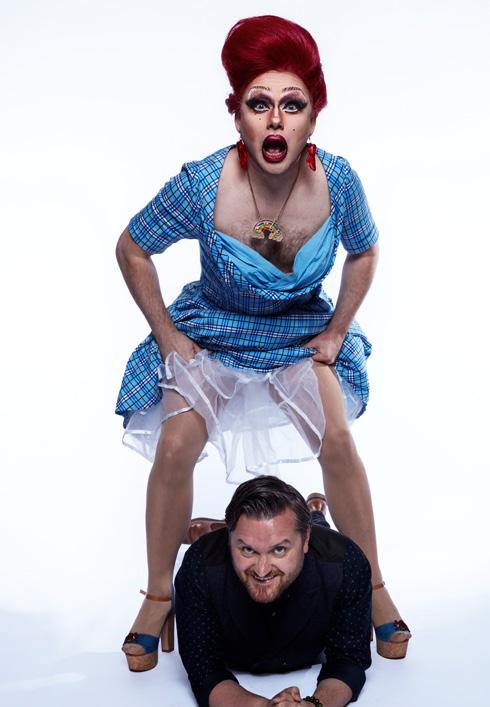
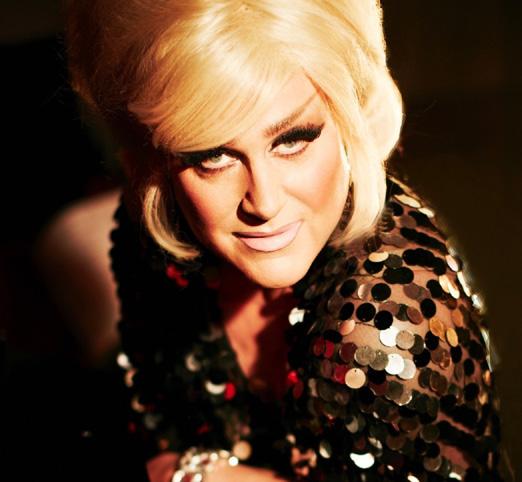
Miss Hope Springs is a homage to the great ladies of American showbiz, especially those who emerged during Hollywood’s Golden Age. We caught up with her creator and custodian, Ty Jeffries, to discuss her latest comeback
) What distinguishes Miss Hope Springs from Greta Garbo and Monroe is that she never quite made it. Showbiz is her life, even if it hasn’t always been kind to her.
Ty Jeffries plays piano and writes the songs. It’s character-based comedy more than drag. Ty was mentored in his twenties by Vangelis In the ’90s he was a keyboard player in Billy Mackenzie’s Associates, and in 2019, as
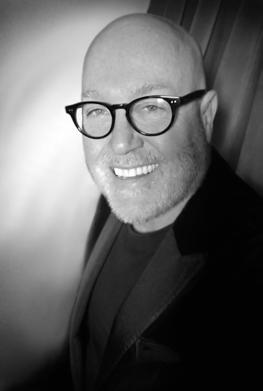
Hope, he was Marc Almond’s support artist at the Hammersmith Eventim Apollo
Ty’s accent has a distinctive transatlantic twang and this carries through to his alter ego: “I grew up for a number of years in the States from the age of six. I also lived in the US later in life for a few years, so I feel transatlantic. I love America – or the America of my youth anyway.
“My inspiration for Miss Hope Springs is kinda obvious. It’s the showbiz lady of a certain era. The never made it as opposed to a hasbeen. Difficult for me to say this now she’s playing the Wigmore Hall. She has sort of made it now. She’s having overnight success after 45 years.” The transatlantic accent works especially well for Hope. Many of the American actors of her era affected a transatlantic accent.
“I did a tour in the States in 2016 and I played her more British. She’d come to America in the ’60s following Julie Andrews. Hope is interchangeable. In Rome she’d probably be Italian.” Julian Clary described her as “tragi-comic genius.
“My upcoming show is inspired by her travels, including Berlin and Dungeness, where she lives with her husband Irving and his hairdresser pal Carlos in a camper van. She says in the show: ‘When my husband told me he was getting a little camper I thought –that isn’t possible.’ Irving and Carlos do her hair for her.
“This show will include new and old songs. Some favourites will be in there. I’ve Been Around is the title song and it’s new. There’s also a song based on Shanghai Express called Shanghai Lily. That’s from her period when she was scrubbing the floor of a brothel in Shanghai.”
How has Ty coped with lockdown? “For me there was a weird synchronicity. At the end of 2019 I realised I’d been working solidly for nearly 10 years. My mother passed away after a long illness that year. I just didn’t have the energy or enthusiasm to perform. It just didn’t feel like the right time to be on stage. I took on a few shows. By some extraordinary fluke, with all the lockdowns, I managed to do two shows just before we locked down. And three shows at Christmas – that tiny window when things opened in December; I did my three shows and then everything shut down again.
“My inspiration for Miss Hope Springs is kinda obvious. It’s the showbiz lady of a certain era. The never made it as opposed to a hasbeen”
“I was very fortunate. As I’m self-employed I book myself. I’m not part of a big production that had to shut down. They need months to prepare. I’m a one-man band so I was able to go back on stage and do shows at short notice. Luckily they sell out, which is a lovely affirmation of my work. I’m going back to Crazy Coqs in Piccadilly Circus with three sold-out shows in early June.”
Crazy Coqs is part of Brasserie Zédel. It’s a fabulous Belle Epoch-style cabaret room and an ideal setting for an artist like Hope.
When did he invent the character? “I think I started creating her when I was about seven. I was obsessed with old Hollywood growing up. I fell in love with Garbo, Dietrich and Crawford. Even at that age I used my sister’s Mary Quant make-up crayons. I’d paint my face on and get in touch with the more female aspect of my personality. Talking about gender and sexuality has become a lot easier in the last five years or so. When I grew up you had to squeeze yourself into one box or another. There weren’t many options. I came out at 16 – just ten years after homosexuality was legalised in this country.
“Miss Hope Springs is autobiographical as well. I’ve been writing songs since I was a child. I had my first publishing deal with Elton John’s Rocket Music in the mid-80s. I am a serious songwriter. The big chart hits never seemed to come along. I don’t think that’s because of the quality of the songs, at least I hope not! People seem to assume if you do drag you do it because you can’t do anything else.”
Even after Drag Race? “I think Drag Race is a different kettle of fish – if I can use that expression! I came to drag as a writer and musician. I don’t aspire to be on RuPaul. I think it’s hysterical now that everyone looks like a drag queen. I saw the casting for a West End show – all female cast. They looked like dolls! They make me think of cosplay. It’s all part of this wonderful drag soup... I’m a crouton.”
Is Miss Hope Springs here to stay? “I think she’s going to be around till I drop. I’ll probably be buried in full regalia.”
“I started creating her when I was about seven. I was obsessed with old Hollywood growing up. I fell in love with Garbo, Dietrich and Crawford. Even at that age I used my sister’s Mary Quant makeup crayons. I’d paint my face on and get in touch with the more female aspect of my personality”
The character emerged 10 years ago at Brighton Fringe and won Best Cabaret for that show. She also won Broadway World Award – Best Cabaret at Edinburgh Fringe in 2019. “So this is a homecoming gig. I’ve been on my travels quite literally and come back to roost in East Sussex. Close to my beloved Brighton.”
Can Ty explain Brighton’s strange appeal? “I lived in San Francisco for a while in the ’90s. I’ve always felt like Brighton is San Fran’s more petite cousin. It’s the spirit here. It’s wonderful. If drag is soup, Brighton is a melting pot and all the better for it. I love it here.”
Miss Hope Springs has recorded an hour-long solo show for Pride in June at the worldfamous Wigmore Hall. For more info, visit www.misshopesprings.com
Tickets
) Latest Music Bar, Brighton on May 28 and June 14 & 27 (two shows per night). To book: www.brightonfringe.org/ whats-on/miss-hope-springs-ive-beenaround-136644/
) Brighton Spiegeltent on July 3 at 9pm. To book: www.brightonfringe.org/ whats-on/miss-hope-springs-ive-beenaround-136644/
) Wigmore Hall: streaming free on Wigmore Hall website throughout June. For more info: www.wigmore-hall.org.uk
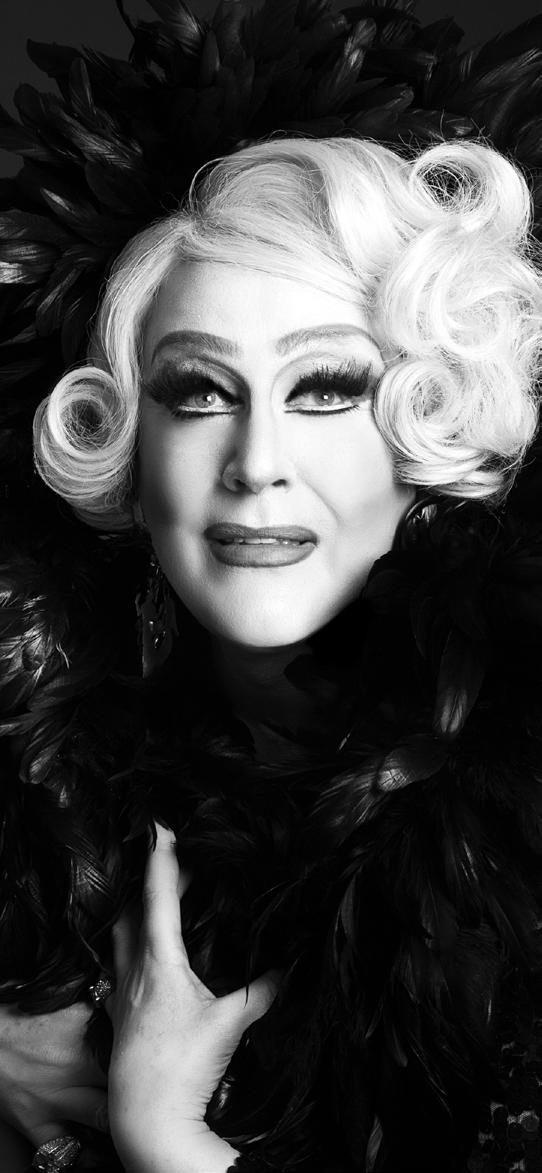
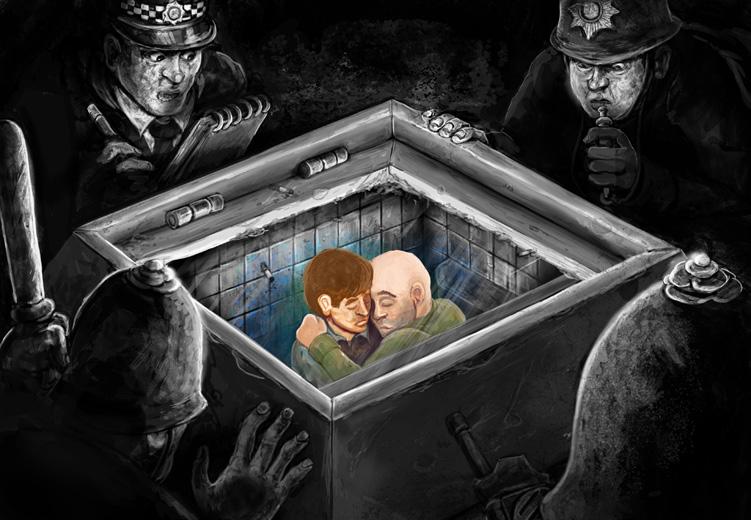
We catch up with StoneCrabs Theatre Company, which launches the first LGBTQ+ history and heritage exhibition for the Isle of Wight, at Clayden Gallery on Saturday, June 19
) To many, the Isle of Wight evokes memories of seaside family holidays or festival weekends spent revelling in muddy fields. So when the island was featured in Channel 4’s It’s A Sin you may have wondered, is this a true reflection of the Isle of Wight?
The Out On An Island project has the answer, with the launch of the island’s first ever LGBTQ+ history and heritage exhibition. We hope to bring to life a side of the island that
– up until now – has been hidden from the nation’s memory. We want to show you just what it means to be ‘out on an island’.
Discover the personal stories and memories of LGBTQ+ islanders through oral history recordings, paired with powerful portraits from island photographer Jon Habens. Take a look at the stunning and expressive artwork from artists Karl Stedman and Sydney Cardew, created in response to the histories
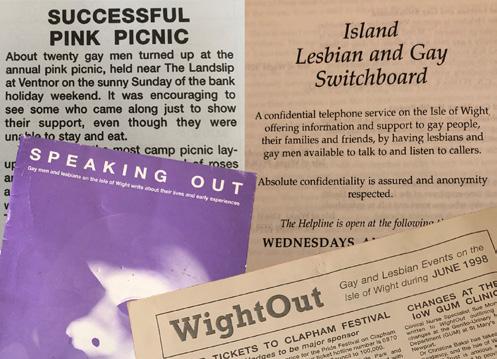
we’ve uncovered. Learn more about forward thinkers such as Phaedra Kelly, who coined the term ‘gender transient’, as well as how media coverage of the LGBTQ+ community has changed throughout the years. Find out how ‘Captain Condom’ came to Cowes, why Virginia Woolf wrote a play about Freshwater and how a gang of queer women helped save Newtown Old Town Hall.
Our documentary film, Our Stories Matter, highlights inspiring LGBTQ+ people and places, all with an Isle of Wight connection. Meet feisty lesbian Joe Carstairs – the ‘fastest woman on the water’ – who raced in the Solent in the 1920s. Learn about renowned architects and partners Paget and Seely, who made their home at Mottistone Manor.
The Island has a rich and poignant LGBTQ+ history. Like lifting a stone on the beach, we were unsure of just what we would find in our research, but the courage and achievements of our creative community and the resilience of ordinary people is unmasked for all to see.
Human rights activist Peter Tatchell said: “LGBTQ+ history and Pride events have tended to be focused on Britain’s major cities, to the neglect of more out-of-the-way places like the Isle of Wight. But LGBTQ+ people are everywhere, in all parts of the UK. This
project aims to shine a light on the Island’s LGBTQ+ community and its long history: to inform, educate and inspire. Bravo!”
Oral histories
Just before we were hit by the pandemic, the project was able to collect 17 oral histories which you will be able to listen to at the exhibition and on our website. Here are a couple of excerpts from these histories:
“I know so many people, quite a few people, not so many but quite a few people who came out because of Pride essentially, especially older people, people who are in the ‘60s, ‘70s, ‘80s even, saying like, ‘sod it’! Which is amazing. It allowed people to come out and it showed people that actually there is all this, there are all these people here, there are so many. You know statistically there must be thousands of queer people on the island, but you never see them.” – Sydney Cardew
“You know where Man in the Moon is?
Upstairs used to be a nightclub but you know where there is lane way beside, that was the entrance, and they used to do a gay night but you were too scared to go because people would know you were gay. It was weird, very surreal, so you didn’t go because you’d get stuff, like there’d be people outside waiting and that. [...] In the Vectis Club we used to have discos upstairs, that was going further now, and the Crab Shack which was in Shanklin. [...] We knew we were all together and we were all the same and we were the odd ones, and we had a great time. Yeah. It was, it was just word of mouth and going out and getting drunk, that was it really.” –Joanne Brady
More info
StoneCrabs is an arts charity that uses professional theatre as a tool to raise educational achievement, advance personal and social development, and provide enriching and accessible cultural experiences to UK-wide audiences.
) Out On An Island – An Untold Heritage exhibition at Clayden Gallery, Quay Arts, Newport, PO30 5BD from June 19 till July 17, 10am - 4pm
) Our Stories Matter documentary film screenings: Sat, June 19 at 3pm, Thur, June 24 at 7pm, Sat, July 3 at 3pm, Wed, July 7 7pm and Sat, July 17 at 3pm
D For tickets, visit: www.outonanisland.co.uk
The venue is operating at a limited capacity so booking is essential.
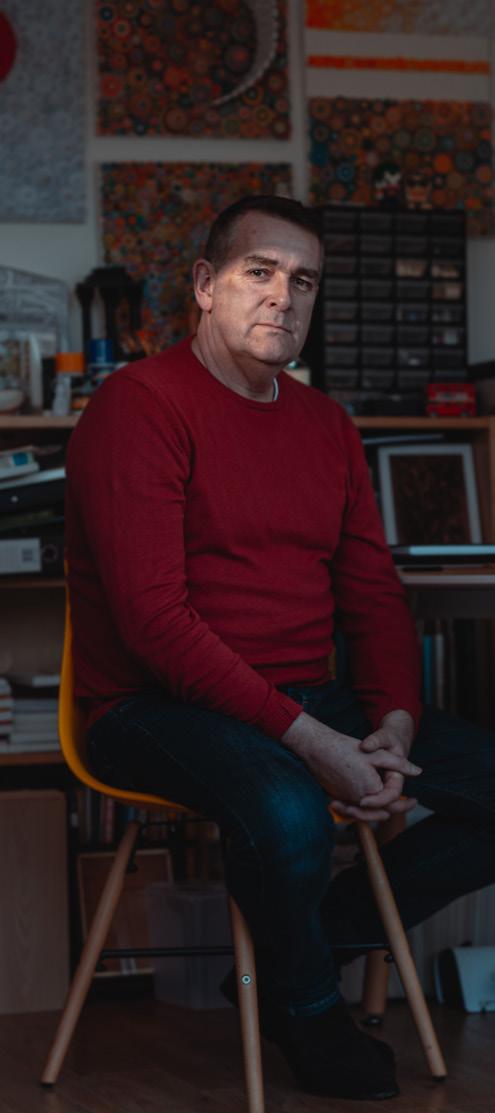
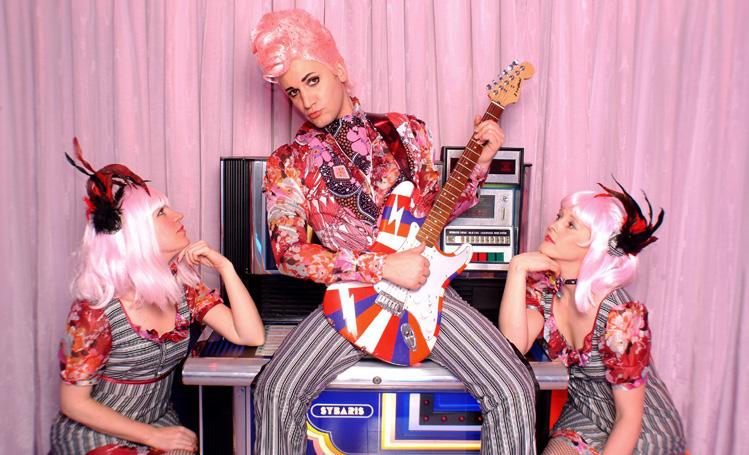
Alex Klineberg stumbles into the lurid world of the bequiffed performer whose distinctive style balances geniality and end-of-the-pier bawdiness with a sprinkle of offbeat charm
) How did you cope with lockdown?
It’s actually been totally fine for me. It’s been awful for so many people; but I’ve actually found it to be quite therapeutic; it forced me to slow down and reassess what I’m doing with my life. I’m normally the kind of person who can’t say no to things, and in terms of career risks, l would never jump until I’m pushed. So my lockdown experience actually felt like a giant reset button had been pressed, and it gave me the opportunity to diversify. While I’ve continued to perform and host regular events online over the past year, I’ve also had time to make artworks – which was always something I was planning to do but never quite got round to. And now that particular creative endeavour has taken over as my new obsession.
How did you become involved with Queer Heritage South?
I was asked to contribute to the Queer Heritage South archive by David Sheppeard and Roni Guetta, who created the project. I’ve known them both for many years; David was one of the directors of the Marlborough Theatre (where I hosted my weekly quiz for a long time) and alongside that, I’ve also worked with him on quite a few other theatre projects. I gave them a couple of dusty folders of press cuttings from the nineties and noughties, so they were able to have a nose through the various incarnations of my career, from my beginnings as a knitwear designer and aspiring show-off, through my various career strands as a DJ, cabaret performer, radio presenter, pop star and theatre-maker. I’ve had a finger in many pies.
What can we expect from your new podcast?
David and Roni interviewed me for an upcoming
podcast episode of My Queer Museum. The idea is that guests nominate three things they would like to put in a virtual queer museum. I chose three wildly different things. Firstly, Marilyn on Top of the Pops in 1983 singing Calling Your Name in a blue sequinned drape jacket. I couldn’t believe my young gay eyes! Secondly, my quiff. It’s a defining feature of Boogaloo Stu’s fashion look, and without it I’m really quite shy and reserved. It has often been described as the Wig of Confidence (yes, hello, it’s a wig). For my third and final museum item, I discuss Gigantic Spunking Cocks at great length, and how and why they often featured in many of my performances.
Where can we tune in?
I started releasing music in the early noughties; between 2001 and 2013 I collaborated with visual artist ladypat to create animated pop videos for quite a few of my singles.
“There was a long period of time when I barely wore any clothes onstage. I was always practically naked; but I did always try to keep my crown jewels covered”
His visuals and my music seemed to have an ongoing synergy – lo-fi and low budget, but very high camp. All the vids are on YouTube and will also now feature in the archive.
You’re quite a fixture on Brighton’s nightlife scene. Can you share a favourite – probably hazy – nightclub memory?
I’m not sure that I’m a current fixture, I’ve rarely seen the inside of a nightclub in the past decade! I do dip my toe into that world occasionally, reviving Dynamite Boogaloo for
Pride or the Fringe. But yes, in years gone by I would be out until the small hours almost every night of the week. There are plenty of stories. Too numerous to mention. There are a few good stories covered on the My Queer Museum podcast. But one of the photographs in the archive recently reminded me that there was a long period of time when I barely wore any clothes onstage. I was always practically naked; but I did always try to keep my crown jewels covered. I had an assortment of sequinned knickers, thongs, codpieces, clip-on man-merkins. One night, I was performing with Miss High Leg Kick and The Incredible Tall Lady at Duckie at the Vauxhall Tavern. I was singing an alternative version of J-Lo’s Jenny from the Block reworked as Jenny’s in a Sock, and all I wore was a sports sock over my genitals. Quiff, platforms and sports sock – that was the look. However, as I lunged and thrusted enthusiastically during opening bars of the song, the sock flew off and I was fully exposed. Serves me right. What a fucking show-off!
Can you explain Brighton’s strange appeal? Queer people are drawn to Brighton. To me, it oozes a sense of queer history, you can just feel it. It’s all around you. And I think Brighton is a unique microcosm where you can find tons of thriving micro-scenes. Music, theatre, drag, tech, fashion, film, art and much more besides can all intermingle. As a place, it’s small enough for everyone to find their tribe, but it’s also big enough to cater to them all.
D To see the Boogaloo Stu Collection, visit: www.queerheritagesouth.co.uk/s/queerheritage-south/item-set/163
D www.boogaloostu.co.uk
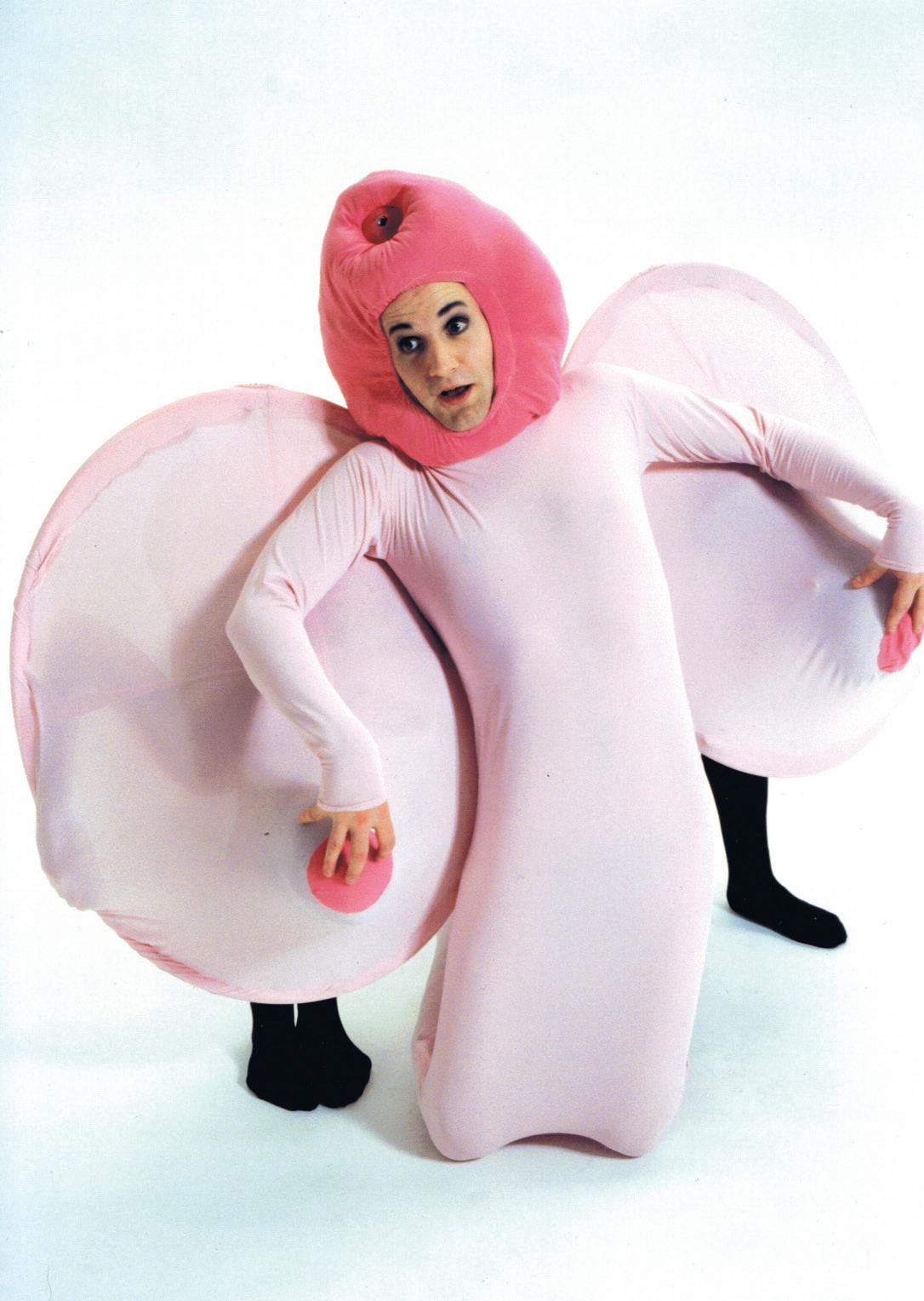
“Queer people are drawn to Brighton. To me, it oozes a sense of queer history, you can just feel it. It’s all around you”

BY NICK BOSTON
) Live music is finally back, and to celebrate, Brighton Early Music Festival (BREMF) is presenting a Midsummer Season of live outdoor events from June 5–July 11.
) Flaugissimo Ensemble present The Forest of Mythical Breezes, with a ‘mini opera’ of mythical stories unfolding to music by Charpentier, Lully, Couperin and Rameau (Sat, June 5, 6pm & 8pm).

) Aradhana Arts featured in one of last year’s BREMF@home online concerts, and they return live with Bhrama-Vishnu-Shiva, a vibrant fusion of Tagore’s poetry, Indian Classical music and Kathak dance (Sun, June 6, 1pm & 3pm). ) BREMF Consort of Voices, directed by Deborah Roberts, also return after a long break with Josquin and Fairfax 500, an evening of contemplative and uplifting renaissance polyphony, celebrating the music of two composers who died in 1521 (Sat, June 12, 6pm & 8pm). ) The wonderful Fieri Consort are joined by Lux Musicae London to present The Destined Knot, with music inspired by Guarini’s tragicomedy play Il Pastor Fido (The Faithful Shepherd) (Sun, June 13, 7pm). Before that, Lux Musicae London perform music by Byrd, Coperario, Lanier and Henry & William Lawes, in The New Troy, exploring London’s mythical origins (Sun, June 13, 3pm). ) Pocket Sinfonia bring us Mendelssohn’s music for A Midsummer Night’s Dream in a performance specially devised by Thomas Guthrie (Sun, June 20, 6pm & 8pm, St Mary’s House and Gardens, Bramber). )
The Monteverdi String Band, led by Oliver Webber, with soprano
Hannah Ely, explore the dramatic possibilities of the madrigal, vocally and instrumentally in The Madrigal Reimagined (Sat, July 3, 6pm & 8pm). ) And finally, you can enjoy highlights from Francesca Caccini’s opera La Liberazione di Ruggiero, performed by a cast and band of young performers, fresh from a week of filming this first opera by a woman in a fundraiser to close the summer season and help support the project (Sun, July 11, 7pm).
All events unless otherwise stated are at the Royal Spa, Queen’s Park, Brighton. More info and tickets at www.bremf.org.uk – audience numbers are limited so book early.
) Doric String Quartet Haydn String Quartets, Op 33 (Chandos CHAN20129(2)). The Doric String Quartet are on their fourth volume of the String Quartets of Joseph Haydn (1732-1809), a cycle they began way back in 2014. Here, they play the six Op. 33 Quartets, nicknamed the ‘Russian quartets’, after their dedication to the Grand Duke Paul of Russia. As ever, the Doric’s performances are impeccable, and they are alive to the energy and fun in Haydn’s writing throughout. The Scherzo of No. 1 has real bite, accentuating the contrast with the seemingly light and delicate Andante that follows, and the finale is taken at a breathtaking lick without any loss of accuracy or detail. No. 2’s Scherzo has a real bounce, the first violinist Alex Redington enjoys the somewhat vulgar slides in the rustic Trio, and the Finale’s ‘joke’ (giving this quartet its nickname) ending is
delightfully judged. They give No. 3’s strange Scherzo a dark, veiled tone which works incredibly well, and its Adagio is especially sweet by contrast, all swept away by the rustic dancing Rondo. They exploit the lyrical in No. 4’s Largo, and there’s another blisteringly quick Finale here. Redington makes No. 5’s aria-like Largo sing, and they all make great play of Haydn’s two/ three confusions in the Scherzo, before the lightly dancing Allegretto finale, topped off with its crazily fast Presto coda. No. 6’s Andante gets a particularly tender reading here, and its finale is gently understated. The Dorics are clearly alive to the variety here, and not afraid to push tempi in the interest of keeping proceedings alive and vibrant, and they add another strong volume here to their survey.
) Mariani Klavierquartett Brahms & Gernsheim Piano Quartets (Audax ADX13780). The latest release from Audax moves forward a little from their general focus on the Baroque, with the Mariani Klavierquartett beginning a cycle pairing the Piano Quartets of Brahms (1833-1897) with those of a lesser-known composer, Friedrich Gernsheim (1839-1916). Even though Gernshiem’s composing career began before Brahms’, he is often dismissed as being heavily influenced by his friend, and his work and reputation suffered from a subsequent ban in Nazi Germany owing to his Jewish heritage. The Mariani quartet’s recording project began in January 2020, but was of course immediately curtailed by the pandemic, so it is great that they have been able to return and complete this first volume, with a spirited and lively performance of Brahms’ Piano Quartet No. 1, Op, 25. Their opening movement draws the listener in immediately from the piano’s opening melody onwards. In the second movement, the cello propels things with constant quavers, whilst the violin and viola converse with the piano. The Mariani cellist Peter-Philipp Staemmler keeps things moving without
allowing his perpetual motion to get in the way of the other players’ conversations. The third movement is in secure hands here in this warmly sensitive performance, with some particularly warmly rippling playing from pianist Gerhard Vielhaber, and a vibrantly contrasting central section played with great spirit by all. The finale, Rondo alla Zingarese, with its typical Brahmsian take on Hungarian rhythms and melodies, is taken at a great pace, with incredibly impressive virtuosity on display from all here, but once again, pianist Vielhaber deserves particular mention for his effortless dexterity throughout. Gernsheim’s Piano Quartet in C minor, Op. 20 opens with a gloriously rich and flowing movement, and the Mariani players produce appropriately warm tones throughout. The second slow movement is a beautiful example of Gernsheim’s heartfelt lyricism, and the Marianis play with deep assurance and sensitivity. The closing Rondo is lively and again packed with melodic ideas, as well as a dancing rhythmic pace. Here it has playful delicacy and energy, allowing for the contrast between the lighter, smaller scale moments and the highspirited peaks to shine, building to a glorious finish. This is a highly impressive first volume, with assured Brahms coupled with illuminating Gernsheim, and I look forward to hearing more.
For more reviews, comment and events, visit:
D nicks-classical-notes.blogspot. co.uk
T @nickb86uk
E nbclassical@hotmail.co.uk
BY ENZO MARRA
BY SIMON ADAMS
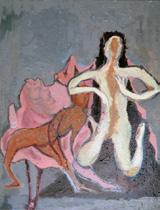
) I’m very happy to introduce you to Karin Mori, whose works can be seen in greater depth at www.karin-mori.co.uk/. Her creative practice focuses upon paintings and mixed media drawings. Born in Hawaii, Mori spent much of her childhood and the adulthood that followed it, exploring the forests and mountains of O’ahu and the Big Island of Hawaii. Learning facts and fictions about the flora, fauna and geography of the islands from the older generations and hiking companions. Working in the volcano area of the Big Island as a teenager, this mass of experience having a strong influence on the themes and imagery that would populate her future artworks.
Having been a founding member and part of the senior management team at Eye Level Studios & Gallery and at Phoenix Brighton. She has been instrumental in setting up this still active artist-led organisation, establishing, developing and managing a year-round programme of curated contemporary exhibitions, with all the associated activities and events that complement the sights that are seen.
In terms of imagery, she draws upon motifs of personal significance to her, most notably from the natural history, culture, artifacts and memories she associates with the Hawaiian Islands, her birthplace, and her family history informed by both its Japanese and European roots. Memory and imagination allowing her to weave the seen stories based around ancestors, alter egos, and archetypes.
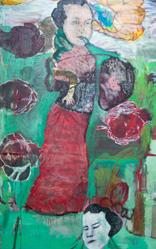
Her cast of characters populate a visually exuberant and equally threatening landscape, the subtlety with which they are drawn and painted into being, allowing them to appear much more real than the factual fragments and fictions they are reenacting. All rules of reality discarded and refuted as the elements interact in their own particularly suggestive manner. A surreal spirit allowing the elements of each scene to be imbued with qualities, beyond the subtle means of execution that slowly opens itself up to the viewer. A certain darkness, an awkwardness, an informality, an otherness, visible in each seen stroke which is knowingly placed onto surface. The postures of the figures and their parts emotionally informed, allowed to warp and twist to achieve the presence they need to. Each series allowing her to create a new space for her imagination to roam and put its mark on.
She still manages to keep her presence seen in Honolulu, having shown her installation the Leaping Place exhibited in Pu’u-Ohia in 2016, her painting installation Luakaha exhibited at Nu’uanu in 2008, her works included in the Contemporary Museum at First Hawaiian Center Tenth Anniversary Exhibition in 2006 and her works included in two-person show, Draw: Recent Work by Hal Lum and Mori at the Contemporary Museum at FirstHawaiian Center in 2005. Drawings for film series A Princess in Hove was shown at Hove Museum in 2015, allowing her works to be seen by more local eyes.
) QOW TRIO (Ubuntu Music). Both drummer Spike Wells and bassist Eddie Myer are Brighton residents, Wells a major presence on the British jazz scene since the 1960s, while tenor saxophonist Riley Stone-Lonergan is an import from London. As a trio they pack quite a punch, turning over a selection of American Songbook classics, a few jazz standards and the odd original. Wells is a nicely noisy drummer, clattering away when given the opportunity. Myer a quieter voice providing some stunning solos, while Stone-Lonergan, a new voice to me, is just superb, his tenor ever questing and ever interesting. Spike Wells remarked that this recording “was the most enjoyable time I’ve ever had in a recording studio,” and he and his colleagues’ pleasure shows on every track. Were it not for the recent lockdown, this trio would have been packing out the clubs.
) SAM BRAYSHER TRIO Dance Little Lady, Dance Little Man (Unit Records). Some time back I raved about saxophonist Sam Braysher’s debut album Golden Earrings, a duet with pianist Michael Kanan of American Songbook classics and jazz standards. “Cool, with a modernist twist,” I said, naming it my record of the year in 2017. Braysher’s back again with a new trio album featuring the world-class rhythm section of Empirical’s bassist Tom Farmer and Catalan drummer Jorge Rossy, renowned for his lengthy stint with pianist Brad Mehldau. Again, an interesting choice of material, some well-known songs, some rarely heard, and all played with subtle distinction and great class. Braysher is a joy to listen to, because he thinks hard before he plays and gets the best out of every song. Enjoy, and be surprised.
) HAROLD MABERN Mabern Plays Mabern (Smoke Sessions). American pianist Harold Maben was a major presence on numerous fine jazz albums from the 1960s onwards, supporting the likes of trumpeter Lee Morgan and saxophonist Hank Mobley, among many other famous names. He was 81 when he recorded this fine live set in New York, though you wouldn’t know it from his ebullient playing, and still had lots of life left in him. This is what you might call a straight-ahead blowing session, a hard-bop workout driven along by two saxophones and a trombone, alongside which Maben works his magic. His playing is propulsive, always driving forwards, but he is equally good comping behind frontline solos. Five of the eight tracks are by Mabern, plus a couple of standards, including a nicely varied Lover Man. True, this set could have been recorded any time in the last 50 years, but so what. Just enjoy.
) RADIO ON (Eureka Blu-ray). First a confession: despite having tried numerous times I don’t think I’ve ever made it to the end of a post-’70s Terrence Malick movie. And Chris Petit’s ’79 film seems to share many of that director’s vices – or, depending on
your viewpoint, virtues: it’s slim on plot or action and seems to comprise largely of long atmospheric takes of interiors or landscapes. Yet Radio On is easily the most captivating film I’ve seen this year, a harshly beautiful look at a late ‘70s England given an almost hypnotic intensity by Martin Schäfer’s striking black and white photography. The story, such as is, centres on a man travelling down to Bristol to investigate the death of his brother. On the way he meets an assortment of characters including an army deserter, a ‘50s rock & roll fan (played by Sting) and – my favourite – a drug-dealing child. It’s austere, beautiful and its meaning is – to me – totally obscure, though in a Sight and Sound interview Petit says the movie is, at its simplest, “about what we wore and how we looked and what we listened to”. There’s also a great soundtrack including Bowie’s Heroes, Kraftwerk’s Radioactivity and Wreckless Eric’s Whole Wide World
) CARLY AND THE REAPERMAN (Resolution Games). Do you remember playing Manic Miner as a kid? Of course you don’t, you’re (probably) not nearly old enough! It was one of the earliest platform games where you had to jump over obstacles until you reached the end of the level. This game is the 21stcentury version, and it’s pretty amazing. The player is a bony-fingered Death who has to simultaneously guide our heroine through a number of incredibly rendered dioramas. The player does this by strategically placing blocks over a series of vertiginous chasms or by using them to climb up dizzying heights. There are further complications in that some levels require you to act fast unless you’re swallowed by an enormous fish or are simply zapped by grids made out of lasers. And there are a few puzzles on the way. Some levels actually had my hands sweating through a mixture of concentration and the fear of falling. Carly is fantastically addictive and great fun – it’s one of those games where you play because you’ve got half an hour to kill and before you know it, it’s midnight. Available on the Oculus Quest. ) JUNGLE FEVER (BFI Blu-ray). Spike Lee’s 1991 film is pretty much a one-issue movie: the psychological and sociological problems associated with mixed-race dating. Architect Flipper (Wesley Snipes) is happily
married with a really adorable kid (Veronica Timbers) but has sex with a temp on the office photocopier. It’s true his wife (Lonette McKee) isn’t happy about the betrayal, but most of the discussion, hurt and anger focuses on the fact that the other woman, Angie (Annabella Sciorra), is white. On learning that his daughter had sex with a black man, Angie’s father physically assaults her before throwing her out of the family home. In fact, the Italian New Yorkers depicted in the movie exhibit a kind of racism that is truly horrifying: they seem to act like hoodlums from the ‘50s rather than the ‘90s. The movie also never shies away from melodrama, which occasionally spills over into ludicrousness: there’s a scene where someone is killed with a gun which comes pretty much from nowhere and its blatant attempt at being heart rending simply makes it vaguely comic. Though this pales into insignificance when compared with the movie’s last 60 seconds, which may be the most absurd of any movie made by a major studio. Samuel L Jackson is great as the (narratively convenient) contrasting younger brother who is a crack addict; but apart from an improvised scene where Angie and her girlfriends discuss race, love and sex the main characters never really seem to come to life.
Book Reviews by Eric Page
) Sabrina Symington Coming Out, Again: Transition Stories (£16.99, Jessica Kingsley Publishers). This is a striking graphic novel filled with engaging characters which leap off the page and remind us of the importance of private silliness in our queer lives. This empowering book explores the multitude of ways a person’s identity and relationships can be expressed and can change over time. Covering not just the serious hard work and emotional labour it can take to be authentically ourselves but also the joy, daft, wonderous uniqueness of being other, different, queer! Symington asks us to consider that we don’t just come out once. We have to come out continually throughout our lives. And as we grow and change and reach a newfound understanding of who we are, we come out once again in a whole new way. This charming book, deceptively profound and told with humour and wit, is a joy to read. I’d recommend it for any younger people stepping out of the cis normative world, or anyone with a queer/questioning life, it reminds us that we are all extraordinary beautifully human and unconditional love starts at home. Recommended.
) Laura Kate Dale Gender Euphoria (£9.99, published by Unbound). This is a glorious collection of personal stories from a score of writers - most trans, non-binary agender, gender-queer or intersexoffering authentic insight into celebrating milestones, daily achievements and rejoicing when the small things happen. Each page and story offers joy, sharing experiences of deeply personal
can provide. Told with warmth and insight, Games takes us on a journey with his penis but gives us insight into what got him there, the struggles and internal narratives which initially stopped him seeking phalloplasty, hand holding us through each stage of the surgical process, and recovery. The ways in which his new cock gave deeper insights into sensation, sensuality, developing relationships, his sexuality and reframing and relearning his body. While factually examining the positive ways that surgery can impact on a trans person’s life and mental health, Games allows
non-cis experience of wondrous, numinous lives, rooting the everyday normalcy of narratives often portrayed as strange or ‘other’. Dale’s deft editing brings these stories of celebration into a sharp focus, giving us a page turning book of affirmation and testimony. She says: “I’ve experienced countless moments of elation, pride, confidence, freedom and ecstasy as a direct result of my coming out as a trans woman… and I know I am not alone.” This book distils a wide range of personal transcendent experiences in an appealing and easy to read anthology which leaves you smiling widely at the infinite, glorious variety of life, and thinking ‘Yes!’.
) Finlay Games Top to Bottom (£8.99, published by Penguin). This is an engrossing testimony to transformation and learning to love your body and the changes and opportunities that change
his wit and humour to give us a deeply human experience of how satisfying hard-won change can be and the bountiful psychological affirmations achieved. The latter chapters around dating and sex are great fun, sharing intimate insight into the worries most of us have as we step back out into the dating world again. The book concludes with reflections about
dysphoria and feeling whole, and how that leads to a whole new adventure. As he says himself: “This book is about my penis. This is my story of going through lower surgery, specifically, and the adventures I have with my changing genitals along the way.” ) Ian Eagleton and James Mayhew Nen and the Lonely Fisherman (£7.99, published by Owlet Press). This is an utterly charming reworking of the Little Mermaid story, without the weird Hans Christian Andersen ending… Here, the conclusion of Eagleton’s story is one of love triumphant and special friendships being strengthened in adversity, sharing experience and connections over the things that matter to you. The narrative follows Nen, a merman, as he seeks something other than what his father’s ocean kingdom can offer. One day, spying Earnest on a boat, they talk, connect, and feel something change in each of them. They recognise they are both different, but the same. The book offers hope in a world seemingly set against celebrating difference. Mayhew’s evocative illustrations support the narrative and offer many delightful and interesting details for the young reader’s eyes, using an oceanic colour scheme to cover the whole book in swirling waves, the storm sequences are wonderfully dark and atmospheric, with plenty of sea life to spot. This is a lovely book for the younger reader with a strong diversity theme and a subtle, intelligent, ecological one woven into the story. The perfect book for a bright child to learn about hope and bravery.
Daren Kay’s first novel, The Brightonians, is a love letter to his adopted city. Here he tells Alex Klineberg what inspired the work and what living in this queer town means to him
) The Brightonians chronicles the lives of a group of socialites as they go about their lives “in this far-from quintessential seaside town”.
Although it is his first book, he’s been writing for a very long time. “I was a copywriter for 30 years so I’ve spent my life writing. People often ask when you’re a copywriter in advertising, ‘do you have a book in you?’. I thought if I did I’d have written it by now. Eventually, I realised I did have a book in me, I just didn’t have the time to do it. When I left copywriting, I missed it. Not writing about margarine. Just writing. Words have been my life,” Daren explained.
“I moved back to Brighton in 2013, having lived in London for 25 years. I got the opportunity to get out of London and go freelance. I’d already lived in Brighton in the early ‘90s. I love Brighton – it’s so unique. It’s a place people are proud to call home. I call it the Brighton Card! Most people who live here are not from here, like in London. Brighton has always been an incredible draw.”
“I helped curate the Queer The Pier exhibition. That experience really influenced the book, There’s a lot of evidence that even in the ‘50s, Brighton was a big draw for queer people.”
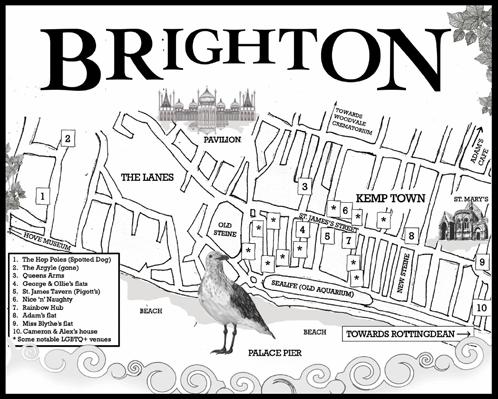
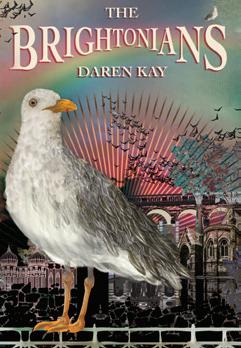
“I wanted to write about Brighton. My go-to author is EF Benson - Armistead Maupin, too. I wanted to write what I like to read. Benson wrote in the ‘20s and his characters are very camp. I wanted to celebrate confident, queer lives in Brighton.
“When I worked on Queer The Pier, I realised so much queer history had been erased. There are flashbacks in the novel to the ‘60s. It’s a way of bringing the past back to life for the contemporary reader.
“I was inspired by the Maupin documentary too. He said back when he was a columnist he wrote 800 words a day. As a copywriter you write far less. I stuck to 800 words a day. Very soon, I had 120k words.
“I’m on the advisory board of Inkandescent – I started the book when I worked with them. They were great. They helped me distill it down. We managed to get it down to 60k words. I also got real Brightonians to read it. I wanted them to see if it represented the spirit of Brighton.”
“...I realised so much queer history had been erased. There are flashbacks in the novel to the 1960s. It’s a way of bringing the past back to life for the contemporary reader”
There’s a phrase we use in advertising: ‘Killing your luvvies’. You learn early on to kill your luvvies – you don’t have a choice. I realised I may have introduced a few luvvies to my writing. Some of my favourite books are classic Victorian fiction. They wrote much bigger books back then – people had less entertainment so longer books worked. I realised that people aren’t as interested in some of the historical stuff as I am.”
What makes Brighton so unique?
The geography of Brighton makes a big difference – it’s so small. This makes it a very exciting space. London is so big and people let you down a lot as it’s so far to travel. Whereas in Brighton you have very social, creative people and it’s much easier to socialise. You get
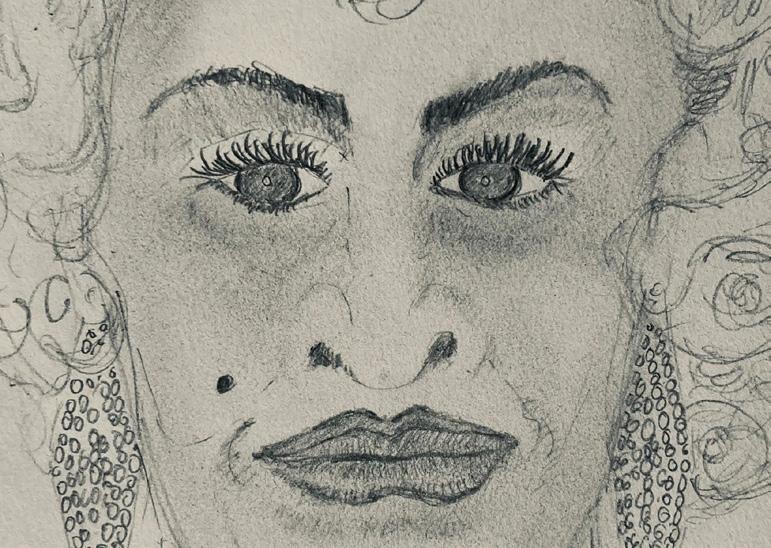
much more mixing, and mixing always produces more creativity and exciting situations.
Has Brighton changed since the early ‘90s? It’s changed physically, but spiritually not that much. I think the currency here is the number of people you know, the connections you make. In London the main thing you’re judged on is what you do for a living. You might talk to someone for a long time in Legends and not ask them what they do. It’s much more oriented around people.
“I love Brighton – it’s so unique. It’s a place people are proud to call home. I call it the Brighton Card!”
Was lockdown a help or hindrance?
I think I’m lucky in that I wrote the lion’s share of the book before lockdown. I didn’t have distractions. I was waking up without a hangover and getting stuck in. The hard work had been done before, though.
“It’s ironic that the book is about parties. The story takes place at parties over a three month period. I was writing about the one thing we can’t do anymore! The next novel will be called Brightonians Under Siege. It begins in January and you get little hints that something is coming.”
) The Brightonians is available online or from City Books Brighton, Waterstones and Foyles
D For more info on Daren Kay, visit: www.darenkay.com
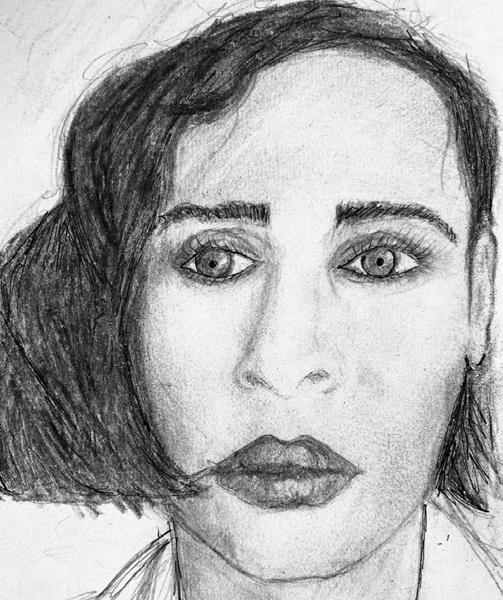
Bond of Solidarity, 2020
Tel Aviv, Israel
Photography/words: Shiri Rozenberg i www.instagram.com/shiriroz/ D www.shirirozenberg.com
“This project was a reaction I had to make regarding lots of protests we had in Jerusalem this past year. Those protests and demonstrations were against our prime minister and his wrong policy, and they are still taking place in different ways across the country.
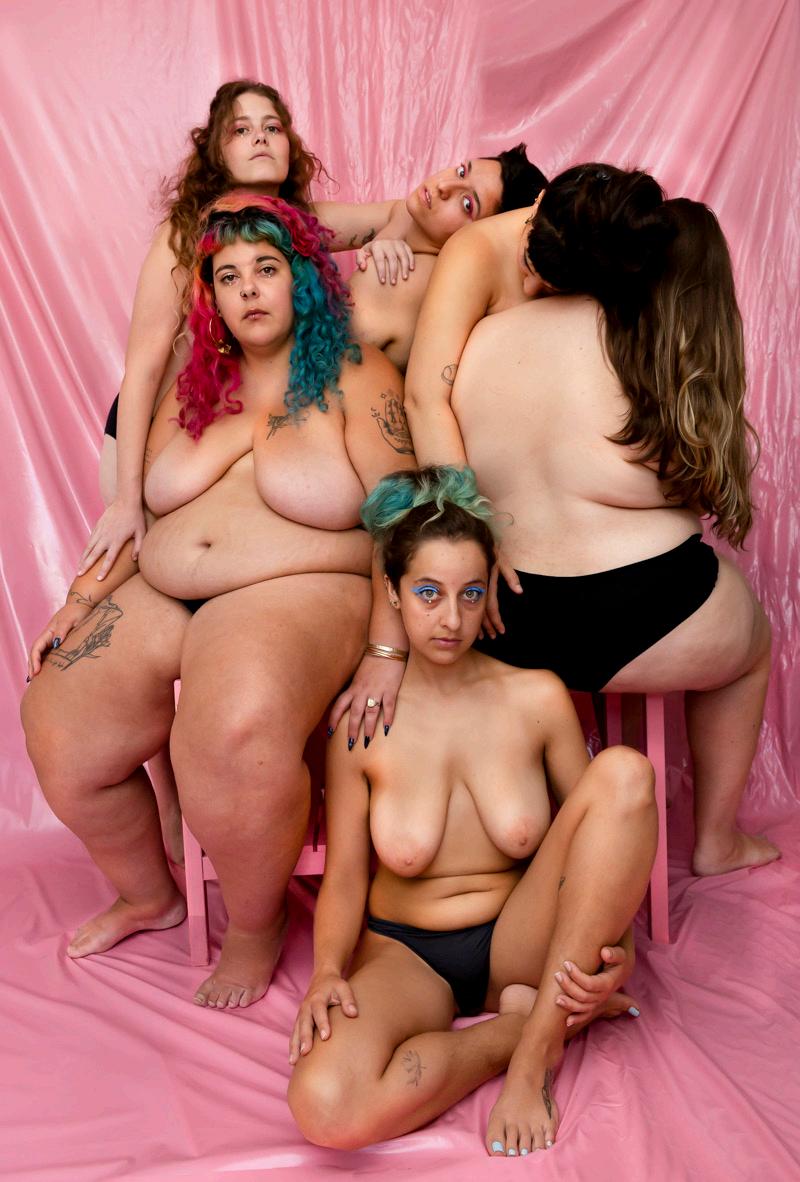
“During the main protest, there was also another important organisation of activists women who protest half-naked. The idea was to waken even deeper silent subjects. The ability to turn the source of humiliation and desire into a place of power.”

) As an ex-English lit student, it goes without saying that I love getting stuck into a good book, and lockdown has given me time to reacquaint myself with daily reading. As a queer person, I often find myself gravitating towards books with LGBTQ+ themes, as not only do I find joy in seeing myself represented, but I also love learning about the rich history of our community and aspects of queer culture which I may not have previously been aware of. For anyone looking for LGBTQ+ book recommendations, this is my run-down of my favourite queer reads, from classics to hidden gems.
) A classic known to many LGBTQ+ people is Audre Lorde’s Zami: A New Spelling of My Name (Penguin Classics). I was introduced to black lesbian activist Lorde at uni, and fell in love with her self-proclaimed ‘biomythography’ to the point where I read it multiple times. Zami explores the experiences of LGBTQ+ people
of colour in America, and Lorde’s navigation of her identity and the injustices she faces as a result. She pays tribute to the women, particularly her mother, and the cultures which have been pivotal in her formation of self, with Lorde writing: “Every woman I have ever loved has left her print upon me”. Zami is truly a beautiful book which places 20th century queer history against a backdrop of the emotion felt by those living through it. Every time I read it, it is equally as poignant as the first time I opened the book.
) I was introduced to feminist writer and activist Marge Piercy by my mum and have loved the books I’ve read by her so far, but I’m surprised that her novel Summer People (Penguin) isn’t more widely acknowledged by the queer community. The story follows the lives of throuple Dinah, Susan, and Willie against the scenery of rural America, as the three navigate careers, family and desire. This 1989 book is one of the first I’ve read which has such a positive representation of polyamory and bisexuality; queerness is central
to the novel while simultaneously being rarely discussed as it simply is, and needs no explanation or analysis. This book also provides a unique spin on the typical polyphonic novel about relationships, and is rich in beautiful imagery.
) Teen novel They Both Die At The End by Adam Silvera (Simon & Schuster) may be aimed at younger audiences, but it has a universal appeal as it explores the ever-present fear of death, intertwined with the queer concern of not being accepted. Mateo and Rufus meet when they both find they only have one day left to live, as their world is dictated by a system which informs people when they will die. During their last day, they embark on a touching, whirlwind romance and answer the pressing question: how would we live if we knew it was our last day on earth? This book blends existential themes of identity and purpose into a story which will make you laugh, cry and consider if you are the person you want to be. This is a great option if you’re just getting back into reading and want something which is engaging but easy to follow and digest.
) I tend to only read fiction, but I found myself very pleasantly surprised by how much I enjoyed Queer: A Graphic History by MegJohn Barker and Julia Scheele (Icon Books), which provides one of the most extensive yet easy-to-understand run-downs of queer history and theory. This heavily illustrated book explains the thought of queer scholars from Adrienne Rich to Judith Butler as they explore compulsory heterosexuality and binary essentialism. It deconstructs the notion that attitudes should be located in individual people, and argues they should be placed within a wider structure of inequality. For those wanting to gain a greater understanding of queer theory, but find heavy academic journals daunting, this book is perfect, as it’s vibrant and clear, while being highly informative at the same time. It will, without a doubt, introduce you to ways of thinking which you have never considered before, and encourage you to challenge binary thinking which makes up societal norms.
) Honourable mentions go to The Price of Salt by Patricia Highsmith (W. W. Norton & Company), which really needs no explanation. I also thoroughly enjoyed The Well of Loneliness by Radclyffe Hall (Penguin Classics); banned for ‘obscenity’ in 1928, it is now a highly regarded lesbian novel which follows the life of Stephen as she finds love with another woman during WWI. It’s lengthy but poignant with excellent characterisation. I’m currently reading Detransition, Baby (Serpent's Tail) by Women’s Prize nominee Torrey Peters after being given as a birthday gift, and I’m thoroughly enjoying it so far. The only difficult part is deciding what I want to read next!
BY ERIC PAGE
) Many years ago, in a place an eyelash’s width away from reality, there lived a Wise Wonderous Witch, quite powerful in an offhand magical way, full of arcane knowledge, powerful spells and mysterious but formidable genuflections that massaged the very nature of reality to their whim. This witch knew it all, almost; and was aware of what was missing in their esoteric sagacity and – being wise – wasn’t terribly bothered by these small fractions of fact which would have completed their understanding of the Worlds.
This witch, who we shall call Mildred – for no other reason that I can, me being the writer here and having all the power in our transactional relationship. So you do what you do – read and I’ll do what I do, Write. We make a great team. I like the name Mildred and I’m pretty sure our astute magician in the story wouldn’t mind the moniker either. Anyway, Mildred, musing over their magical motions, one morning got mightily miffed with the endless alliteration that enchanted enlightened enigmatic oracles endured and decided to set off, in some alarmingly high heels, in the direction of Reality 69. Mildred had mapped many doorways, shimmering slits in space, potential passageways into different times and places and had used them to their advantage in many situations, although once or twice getting into a terrible mess by arriving somewhere that they’d not left yet and getting quite a shock. Bumping into yourself was not to be recommended: always feeling slightly awkward and never knowing what to say. They all had clear numbers and a few had symbols to remind Mildred of what to expect. One or two had thick chains and padlocks and one – number 68 – right at the back of Mildred’s boudoir was sealed shut with every type of binding there was, buttressed with barriers, both physical and magical, but still seemed to strain and buckle, thud and shake from the force of someone, or something, trying to get through from the other side. Reality 69 just happened to be the one after Reality 68 and had a fine sheen of dust over it from the relentless tremors. As Mildred clacked down the hall, moving like a flamingo on stilts their eyes flicked across it and sighed. It was time. It had always been time. Each time it had been time Mildred had avoided the call, slept late, happened to be somewhere else, dodged, ducked, darted, shirked and side-stepped but time had waited for Mildred with the kind of patience only time was capable of. Eroding each moment away until the inevitable happened. Mildred had run out of excuses but luckily not out of rather fabulous heels.
Standing in front of Door 69, Mildred took the small lead plate out of its socket, it was both key and map to this realm, and held it tight. Wrapped in iridescent folds of radiant phoenix feathers all rippling in the red rays of the sunlight, a jaunty fascinator made from wishworm silk threaded with the frozen breath of shadow monkeys, the mighty gemstones and jewels shimmering with enigmatic power, lashes so thick and lush that they whooshed with every blink and a sillage of musky petrichor wafting behind. Mildred felt fucking fierce, but that was nothing new. And it was that that Mildred ached for. The new. In the distance the lights twinkled, the huge letters rising up, atop the vast building looming in the murk, seemingly made of frozen light. The strange letters mystified Mildred, what could IKEA mean, what kind of temple was this? Mildred stepped through, checked the back of the lead plate, turning it over in their hand, running a thick stubby finger over the etched words and repeating them quietly under their breath, ‘be exquisite and never explain’.
BY ROGER WHEELER
) I write this from an elderly man’s point of view – a 70+ year old gay man. It was only in the last few years that I became aware that a trans community even existed. There has been quite a lot of publicity on the subject of gender dysphoria which to most people of my generation was a complete mystery. I am sorry not to have known but I, wrongly, assumed that this was a modern phenomenon. In the age of social media and the 18 or so platforms that keyboard warriors do battle on I, incorrectly, thought that this was a new fashion and it would pass.
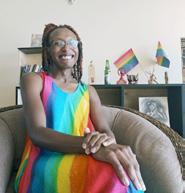
I could not have been more wrong. I have been reading Arya Karijo, a Kenyan journalist who is a trans woman working at the intersection of human rights, LGBTQ+ rights, feminism and gender equality. She writes for the East African Mail and The Guardian and is not afraid to go public with her views and the simple facts of transgender history. In her home country she is regarded as being ‘unAfrican’ although the condition has existed for thousands of years, particularly in the Indian sub continent and across Asia and Africa.
Transphobia is gaining ground in the UK. The Equalities Minister Kemi Badenoch recently met a controversial ‘transphobic’ group that campaigns against gender being discussed in schools, this has met with severe criticism across the political spectrum. In my very ill-informed opinion, all phobias are based on fear of the unknown and ignorance.
I am very conscious of homophobia right here in gay Brighton in 2021, anyone who appears to be slightly different and does not conform to the ‘norm’ is regarded with distaste and could be shunned and victimised by mainstream society.
This whole subject is hugely important to a lot of people and it is not being given sufficient prominence in the press and on the dreaded social media. There seems to be a lot of ignorance about the subject, me included. The only stories we hear about are rather lurid tabloid articles about trans athletes and so-called celebs - like Eddie Izzard - shouting their views along with Eddie Redmayne and of course JK Rowling to name a few.
Proposed changes to the Gender Recognition Act, which would allow trans people to change their birth certificate and have their identity legally recognised without a medical diagnosis, have sparked angry debate between some women’s groups and trans rights activists. Simply shouting at each other helps no one and damages any cause that there might be.
This is where I tend to part company with these strongly held opinions. Maybe I am naive in thinking that you are born the way you are, I was born gay, I didn’t choose it, who would? Some people are obviously born in the wrong body. It is fantastic that today this can be corrected. I don’t understand why many are getting so upset; it is invariably none of their business. I cannot see why some MPs regard this as a toxic subject.
A little more understanding and even compassion is needed.
By Craig Hanlon-Smith @craigscontinuum
) In the emerging exposure and criticism of journalistic practices at the BBC some 25 years ago, we are reaching the peak of an ‘all pile on’ approach. Anyone and everyone is having a pop from government, through the Royal household and somewhat galling, to the Daily Mail
There can be no doubt that forging financial statements in order to secure access to a person is questionable behaviour if not illegal, but lest we forget as the tabloids seem to have done, not as horrible as hacking the voicemail of a murdered schoolgirl giving her parents false hope that she was alive. However, all of our Princess Diana related emotions are playing out in the shock-awe response to this latest furore.
In August and September 1997, the masses in this country shared a collective and open grief in a way perhaps not seen since the 1940s. Ordinary folk wailed, keened and thumped their chests in behaviours we associate with those who are, well, not particularly British. A deep emotional something kicked in and it has not yet left the building. There are moments in our collective consciousness which are as raw and sore as any deeply personal experience within our close and immediate relationships. Diana and the loss of her is such a landmark.
Of course, she was not actually a member of our family, but she was the mother of two boys who have increasingly as adults talked openly about the impact of the death of their mother on their wellbeing. This has never been more apparent than in Prince William’s statement in time for the evening news following a report into the BBC’s handling of the Diana interview and its rogue reporter.
William, by birth, is our future head of state in waiting and this week his usual mask of quiet and graceful demeanour cracked wide open. As did that of Charles Spencer, Diana’s surviving brother. While Spencer drew a direct line between the BBC interview with Princess Diana in 1995 and her death, William claimed the interview is responsible for making the relationship between his parents much worse. He cites the interview as creating a false
narrative that has endured since and his anger at BBC senior managers was palpable.
I doubt it is possible for those who actually knew Diana as William and her brother did to objectively address this matter, as is the case with all of us when responding to a situation driven by the emotion of it. Regrettably both their responses are leaning into their own misogynistic remembering of a false narrative that both feeds the demon of their unresolved anger and paints Diana as an idiot. A woman who cannot now defend herself. A woman those close to her are describing as vulnerable and paranoid at the time of the interview. A woman they claim was duped and did not live to learn of this deception. Stupid woman. Hang on… “There comes a time in our lives when we must adult-up. Our journeys are often stretched and scorched with some challenging experiences which cut deep, especially for those of us walking beneath the LGBTQ+ umbrella”
There are evidence-based facts that appear to have been lost over the past couple of weeks in the emotional puke now engulfing all those involved. Prince Charles continued to have a relationship with his true love Camilla throughout his courtship with Diana, he even met up with her on their honeymoon in 1981. Their honeymoon. It’s not a great start. Three years prior to the BBC interview Diana collaborated on a tell-all book with Andrew Morton, Her True Story, which blew wide open an unpleasant history many were already suspecting. In 1994, a whole year before anyone approached Diana, her husband from whom she was separated gave his own television interview to journalist Jonathan Dimbleby. The interview lasted a whopping two and a half hours, during which he revealed his adultery and broken marriage. An interview it has been revealed he described in recently discovered letters as “living dangerously”. When this aired on national TV, Diana famously attended the opening of an exhibition at the
Serpentine Gallery in London looking every ounce of confident incredible, she had learned to roll out on demand during her turbulent role as the Princess of Wales. The Charles interview was in response to ‘Camillagate’, where transcripts of intimate conversations between Charles and Camilla were printed in the press. Detailed, and sexually intimate. Diana must have choked on those transcripts; they were humiliating.
However, all of this context is lost in an angry and visibly hurt response by Prince William, a man about to turn 40. He is clearly bruised and perhaps forever damaged by his experience as a 15-year-old boy walking behind his mother’s coffin as billions watched on, not to mention the public disintegration of his parents’ relationship. He is, however, no longer that 15-year-old boy, and for one with such a significant role ahead of him he has the resources to do the necessary work. Work on himself.
“There are moments in our collective consciousness which are as raw and sore as any deeply personal experience within our close and immediate relationships. Diana and the loss of her is such a landmark”
There comes a time in our lives when we must adult-up. Our journeys are often stretched and scorched with some challenging experiences which cut deep, especially for those of us walking beneath the LGBTQ+ umbrella. Holding on to the anger of when we were young will allow it to flare up at times of crisis, change, or when we least expect it. To walk tall, to raise children, to have relationships with others in our futures, we have to have addressed the inner child and whatever pain they are clinging on to.
What we have seen this week from those who were closest to Princess Diana is an outpouring of unchartered grief and anger that has not been given space to subside. It cannot be a coincidence that William publicly lost his cool over this a matter of weeks after his brother and sister-in-law took to the airwaves, and the loss of his great grandfather. The pain from the past comes to visit in the pain of the present.
Sort it out. Don’t be like William.
BY MICHAEL HYDES
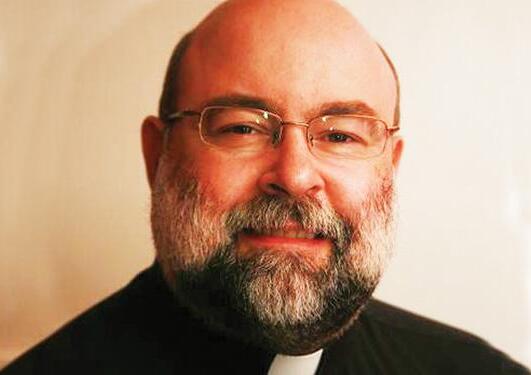
) Last month the government gave charitable status to LGB Alliance, an organisation whose prime mission seems to be about denying rights to our trans siblings. Its reasoning is that giving trans people rights takes rights away from the LGBTQ+ community.
It’s absolute nonsense. And dangerous nonsense at that. It is like the heterosexuals who claimed that same-sex marriage would destroy traditional marriage. Or that ordaining women as priests would be the downfall of the church. Of course, if you’re worried about losing your patriarchal dominance then watch out. Equal rights have always been a threat to those who have benefited from a power balance skewed in their favour. LGBTQ+ rights, women’s rights, in fact any time there is power imbalance creating prejudice and someone seeks equality, the fight is for justice. Prejudice is the inevitable consequence of institutionalised injustice. If you support such an imbalance, shame on you.
The roots of misogyny, homophobia, transphobia, and many other institutionalised inequalities are invariably found in the deeds of the past. In times when women and children were seen as chattel, where conquest, slavery, and subjugation were encouraged by the state and the religious organisations that underpinned it. The Bible is full of it, which is not surprising when you consider that much of it was written over 2,000 years ago, at a time when slavery was the norm and whoever was capable of the greatest violence was usually in charge. The Bible is a valuable lesson in what happens when religion or state has too much power. Jesus was a healer who called out injustice by siding with the least in society, by treating them as equals, and both the state and religion conspired to have him killed.
Invariably the bigot or prejudiced person justifies their position by playing the victim. Just listen to the rhetoric of those who believe that equality is an infringement of their religious rights, or that the Black Lives Matter movement is an overreaction.
As a white male I have lived with white privilege my whole life. It doesn’t mean that things have always been easy. It doesn’t mean that I haven’t suffered prejudice for being gay. It doesn’t mean that I haven’t been viewed with suspicion for being an ‘out’ gay Christian minister. But it does mean that I have never had to worry about being discriminated against because of the colour of my skin. I’ve never been followed around a shop, been denied a job or a place at the table, been asked where I’m really from, or had to fear authority because of the colour of my skin. My black friends have. They live with that discrimination every day, in ways I couldn’t begin to imagine. And yet Downing Street said recently that there is no evidence of institutional racism in the UK. I have learned to be suspicious of such claims. In fact I have learned to be suspicious of most online information, especially that which rings true. After all, information that is obviously a lie should be easy to spot – the difficulty comes when the information reinforces something I already believe. Why would I want to check it out when it serves me so well? And there lies the root of prejudice; assuming that we are right and that therefore anyone who agrees with us in some way must also be right. Prejudice is invariably self-righteous, dogmatic, and dangerous. It’s up to all of us to both avoid it, and to call it out.
BY MICHAEL STEINHAGE
) Prejudice? That’s my topic! I’m a liberal, I lead an LGBTQ+ allies team at work, I’m foreign, and I have a mixed-race child with two lesbians, couldn’t be more of a diversity poster boy if you ask me! So that’s what I was going to write about, but that’s as far as I got. Just couldn’t think of what else to say until the other day when I got to my bus stop home, from the gym after work.
“I don’t have to paint the picture any further because you have it in your head now don’t you? You’ve seen him, often, or at least someone like him. A happy man, tables of happy people, and me. So what did I do? Stared at my phone”
Now this particular bus stop stands opposite a pub. Ah, and how glad we all are that we’re allowed back! Such happy people enjoying their after work pint, seeing friends after all this isolation, at last. But at this meeting place, there was another man. Sitting on that bus stop bench hardly made for sitting. Happy as Larry, singing to himself, giggling, mumbling incomprehensible nonsense. Guitar leaning precariously against same bench. And, you guessed it, a bottle of very strong spirits in a bag.
I don’t have to paint the picture any further because you have it in your head now don’t you? You’ve seen him, often, or at least someone like him. A happy man, tables of happy people, and me. So what did I do? Stared at my phone. Ear pods. Glanced at the display, cursing that it would be another 12 minutes for my bus. Please don’t talk to me, I’ll be stuck with you and we’re barely speaking the same language, given our vastly different intoxication levels. If I ignore you really hard, you’ll ignore me. Hopefully. Then I noticed something else. As the man was ‘doing his thing’ shall we say, everyone else tried to ignore him just as much. Occasionally glancing his way, nervous. Likewise hoping that he wouldn’t approach them.
“Anything could’ve happened, but amicably, he got up. Stumbled towards the very busy road, and crossed it. A second’s thought, what if he gets hit? But he made it and moved on, as told”
He rolled a fag, a rather notable achievement, and fumbled for his lighter. Reckon he checked the same pocket five times before he gave up, still singing all the way. Then scanning. Spotting a woman with a cigarette and he made his move. The whole table tensed. Sure mate, she said, you know what, you keep it. But too late, he wasn’t going. Started singing for her, but of course they sent him away. Politely, but please go, we’re trying to have a nice drink among friends. And then the barman came out and, again politely, the same. Can I ask you a favour, mate? My customers are getting upset. Can I ask you to move on? Tense moment. Anything could’ve happened, but amicably, he got up. Stumbled towards the very busy road, and crossed it. A second’s thought, what if he gets hit? But he made it and moved on, as told.
And suddenly I felt very ashamed. What could he have wanted after all? A little kindness? A few minutes of interaction, human contact, however drunk or silly it would’ve been, with a stranger whose bus was sure to come. I wouldn’t have gotten stuck, of course not, but I am stuck, just a little. With my own prejudice.
BY BILLIE GOLD
) It's always amusing when someone full of hatred doesn’t accomplish what they set out to.
On a very uneventful but pleasant and solitary Saturday, I sat in my Brighton flat writing an article about deforestation. There’s hustle and bustle going on outside because, well, it’s Brighton and I live in the Lanes, but one particular drone escaped the rest, carried above the noise like a particularly aggressive bluebottle. I ignored it for a while, until it started to interfere with my train of thought. It’s a man shouting about something, but he’s not stopping, ‘a domestic’ I think. I plonk my laptop down on my coffee table and go to the hallway window to do my duty as the nosey neighbour, I lift it up, and I find the source of the babble.
“I can only imagine that Mr God botherer set out to upset the ‘gay agenda’ and make all of us homos cry and repent like the dirty sinners we are, however what he actually accomplished was screaming the word ANUS at some very nice middle-aged heterosexuals who had come to visit Brighton for the weekend”
“GOD HATES FAGS!” is the first cohesive sentence I hear. Naturally I think I’ve misheard, given where the man stood, in the middle of Brighton. But no, beneath my window and over to the right is a solitary, angry-looking American, waving a bible in his right hand and ‘preaching’ about the abhorrent sins of mankind. According to this chap, it was us that set coronavirus free, a direct quote from said angry chap was this: “It wasn’t the Chinese who got us all sick, fags brought this plague upon us, penises aren’t supposed to go into anuses! Women shouldn’t lay with women!” The last part of that made me chuckle, purely because lesbians are clearly a bit of a mystery to this man.
Now, what was particularly strange about this event that went on for an hour or so, is that it was 2pm in the afternoon. If you are a local and have been in Brighton’s shopping areas around this time, you’ll notice that it’s frequented by lots of tourists. I can only imagine that Mr God botherer set out to upset the ‘gay agenda’ and make all of us homos cry and repent like the dirty sinners we are, however what he actually accomplished was screaming the word ANUS at some very nice middle-aged heterosexuals who had come to visit Brighton for the weekend.
A crowd gathered below my window, and far beyond being offended or outraged, both myself and a few shop owners were more vexed by this pointless outcry interrupting our work day, and the people around him were doing absolutely everything in their power to make sure this man was completely and utterly ignored, having extremely loud conversations in front of him about nothing in particular, throwing him off his Bible-bashing stroke once or twice. Eventually, the futile mission came to an end, the American man who clearly belonged in a Louis Theroux documentary surrendered. And with an upset “You’ll all be sorry when he has risen!”, off he went.
The whole exchange was possibly one of the most amusing and indifferent things I have ever seen. It turns out that nonsense is best fought with nonsense, and not in Brighton at 2pm in the afternoon.
BY JON TAYLOR
) We all have those little prejudices don't we? Whether we're aware of them or not, they’re still there. Perhaps you see a group of teenagers being loud and mildly aggressive in a public place which makes you think they’re on their way to break some windows somewhere. You hear someone playing dance music loudly from their car and immediately form an opinion about them. You see a group of older people on mobility scooters and assume they're on their way to the bingo...
“I’m a gay man. I’ve been described as a geek, as a daddy, as an otter... does it bother me? It does a bit, I guess it depends who’s doing the labelling”
There’s even prejudice in our own community, which is weird. We have enough to deal with from the outside world without turning on ourselves. Some don’t like fem guys or don’t like bears and as a result don’t spend any time with anyone from these groups. “No fat, fem or Asian” can be seen on the hook up apps. It’s like we’ve decided how you should or shouldn’t be gay. It’s all a bit odd.
I wonder if this is partly because we have labelled ourselves to death and feel we have to conform to and live within those labels. There’s so many for different groups within the gay world. Twink, bear, otter, wolf, fem, butch, chub, chaser, muscle queen, pig, daddy, jock, geek, clean cut, boy next door, leather, twunk... I could go on. I don’t quite know why we’ve done this to ourselves and it can produce odd behaviour. “I only go for otters, could never have a bear”, you hear as you move around the scene, stating a preference for certain types because, for some reason, there’s a prejudice about other types. That prejudice is there for no reason. It’s not based on the character or personality of an individual, it’s based on what group we’ve decided they fit into and their supposed characteristics. You do wonder what on earth would happen if the person saying these things suddenly becomes attracted to a bear of some sort. Would they implode? Would they readjust their thinking?
“The desire to categorise and then sub-categorise is understandable. We want to belong to a group, to have a place, an identity, to stand out by fitting in. But it”s not really necessary. We are who we are as individuals, not as labels and cliches”
I'm a gay man. I’ve been described as a geek, as a daddy, as an otter... does it bother me? It does a bit, I guess it depends who’s doing the labelling. If a friend of mine who knows me and who knows I like Doctor Who and Eurovision calls me a geek, then that description is based on their experience of knowing me, rather than a stranger just looking at the fact I wear glasses and then prejudicially plonking me in the ‘geek’ subset and then treating me according to that interpretation.
The desire to categorise and then sub-categorise is understandable. We want to belong to a group, to have a place, an identity, to stand out by fitting in. But it’s not really necessary. We are who we are as individuals, not as labels and cliches. As En Vogue once sang –‘Prejudice, wrote a song about it, like to hear it? Here it goes – Free your mind and the rest will follow’.
Gscene has been published every month for over 27 years, and is a rich chronicle of the history of our LGBTQ+ communities, in and around Brighton & Hove. Chris Gull raids the archives…
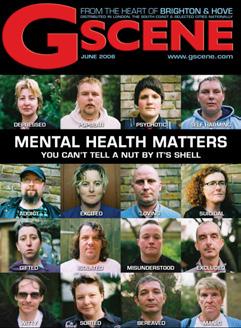
) Fifteen years ago, there was much to report. The city said goodbye to what has now grown into a national charity, supported by Lady Gaga and other high-profile celebrities, and three news stories were on the level of attacks on (in these cases) gay men.
The first call out for participants in a survey of the LGBTQ+ population of Brighton & Hove, which went on to become an important and oft-cited piece of research, took place, and reports that crystal meth use by gay men was still low but growing. This in the days before the chemsex phenomenon was recognised as a phenomenon.
) A leading charity working with LGBT homeless young people, the Albert Kennedy Trust (AKT), has been forced to withdraw from providing services in Brighton and Hove. This follows a decision by Brighton & Hove City Council not to recommend that the charity be permitted to submit a full funding application.
AKT Chief executive, Richard McKendrick, said: “Following encouragement from council officers and a positive recommendation by the
council’s Voluntary Sector and External Funding Unit I was stunned to read Brighton & Hove’s decision particularly as the decision cites ‘the appraisers did not feel these services added sufficient value to the city council’s priorities, commitments and directorate development plans’.
“Brighton & Hove City Council has always purported to be at the forefront of service development for those in need from the LGBT communities and this decision is a huge setback.”
AKT has been funded by Comic Relief for the last three years to provide a supported housing and mentoring alternative for LGBT homeless young people in Brighton & Hove but this grant ended on March 31, 2006.
AKT is the UK’s only charity providing foster care and supported lodgings services to LGBT young people who are homeless or living in a hostile environment.
Council leader Simon Burgess said: “I was very concerned at reports that ‘we had cut funding’ to an organisation that serves members of the LGBT community. In fact the council has never funded AKT and their application was for 2007-10. Their cross-party view was that taking forward the applications for Allsorts, the Young People’s Centre, LGBT Switchboard, Spectrum, Stopover and others was the best way to meet those vital council’s goals.“
PRINCES STREET ASSAULT
) Police investigating a serious assault that took place in Princes St, Brighton at 3.05am
on Wednesday, May 17 are looking at the possibility that it was a homophobic attack. Princes Street is next to the Marlborough pub and leads from near the foot of Edward Street to the Old Steine. Two men attacked two men as they made their way home after a night out. One man suffered serious head injuries and the other man suffered minor facial injuries. Both had their mobile telephones stolen.
DS Kate Witt from Brighton & Hove CID said: “This was a particularly violent attack leaving one man in a coma for several hours. We are currently viewing CCTV footage from that night in a bid to identify the two offenders. I urge them to come forward and contact the police.”
WITNESS APPEAL: ST JAMES’S STREET, SATURDAY, MAY 13, 2006
) Witnesses are sought for an incident that took place on St James’s St just after 10pm on Saturday, May 13. The incident occurred near to the Bulldog public house where one male was punched to side of the head and another received homophobic verbal abuse.
) Police are distributing warning posters to LGBT venues following a sharp increase in the number
of reports of assaults and robberies in the Dukes Mound and Marine Parade area. The assaults have mainly occurred late at night and police are appealing for witnesses and also warning men in the area of the increase in attacks. Police are advising men that if they are considering going to Dukes Mound late at night that they will be putting themselves at risk as the offenders in the most recent incidents have not yet been caught. Sgt Mark Andrews said: “Police will be carrying out high visibility patrols in the area to provide reassurance to the community and for the purpose of identifying potential offenders”.
) New data from the annual National Gay Men’s Sex Survey 2005 shows that only a small minority of gay men in the UK had used the drug crystal meth in the last year. The annual survey asked over 16,000 gay and bisexual men questions about their recreational drug use.
The initial findings show that fewer than 3% of gay men had used crystal meth in the previous year and just 0.3% of men used crystal once or more a week.
Will Nutland, Head of Health Promotion at Terrence Higgins Trust, said: “Recent media portrayals have given the impression that crystal meth use is widespread and is driving the HIV epidemic in the UK. This data provides us with the first reliable snapshot of what is really happening. Whilst crystal meth use is a minority activity, it is also important to recognise that its use could increase and that crystal meth use will be problematic for some men”
) The Count Me In Too! (CMIT!) questionnaire, organised by University of Brighton, was put online last month, and is ready for you to fill in. CMIT! will explore the needs, views and experiences of Brighton & Hove’s estimated 35,000 strong LGBT population, so make sure you have your say. “If Brighton & Hove is to live up to its reputation as an inclusive and cosmopolitan city, it’s important to question assumptions and take account of the actual needs, views and experiences of its LGBT citizens,” said Arthur Law, Spectrum’s coordinator. “Back in 2000, three out of five local LGBT people had experienced abuse and violence and much work needed to be done to make services safer and friendlier for all LGBT people. It’s now time to see what still needs to be achieved.”
) The big news ten years ago was the loss of Spectrum (see also previous story from 2006), which described itself as the LGBT Community Forum, but is not to be confused with the LGBT Community Safety Forum, which also closed down recently (2021).
LGBT COMMUNITY FORUM TO CLOSE DOWN
) Following months of uncertainty over the future of Spectrum, the LGBT Community Forum, trustees have decided to commence steps to close the organisation down. In an open letter to the LGBT community, the trustees wrote: “It’s with great regret we need to inform you of our intention to begin the process of closing down Spectrum. Significant changes in the way services are commissioned
and consulted within the public sector required major changes in the way Spectrum went about its work within the community. Spectrum’s trustees had problems reconciling our
passion for transparent, effective community engagement and long history of using tried and tested methods to understand needs within the community with some of the new criteria being imposed by government.
“After consulting with our main funding body, Brighton & Hove City Council, in the current circumstances, the trustees feel that the only viable option left is the closure of Spectrum.“
) And finally we look back just the five years to revisit the debacle around the licencing travails of the Bulldog, and Daniel Harris’ nomination for a prestigious award.
BRIGHTON’S LONGEST ESTABLISHED GAY BAR, THE BULLDOG IN ST JAMES STREET, HAS BEEN PUT UP FOR SALE
) The owner, Dean Homes, has decided to sell after a prolonged battle with the licensing team at Sussex Police. The parties ended up in court following an appeal by Sussex Police for a review of the Bulldog licence which was heard by city councillors in September 2015. Sussex Police and the Bulldog both appealed to city magistrates the decision of the council’s licensing panel, which was made up of elected councillors and chaired by Cllr Mo Marsh, the Labour councillor for Moulsecoomb & Bevendean. The council’s original licensing decision of September 2015 included reducing the Bulldog’s hours at weekends till 2am with one hour drinking-up time (affecting their busiest time for trading) and reducing opening hours on Sunday to Thursday from 11am to midnight with a closing time of 1am. Under the new agreement the Bulldog gained an extra drinking hour on Friday and Saturday nights to 3am with a closing time of 4am and in return
agreed to install an ID scanner which will be implemented when door staff are on duty. Dean Holmes, owner of the Bulldog, said: “I deeply regret that I have had to put my business up for sale after running a highly successful gay business for nearly 20 years. The outcome of the recent police review has severely damaged my reputation and respect in the gay community. Due to months of bad press and the damage I have done to my own reputation in a desperate attempt to save my threatened licence, I imposed extremely strict methods on my regular customers upsetting so many who used to enjoy the Bulldog’s facilities on a daily and weekly basis. I am confident that under new ownership the Bulldog can regain respect from its lost customers and thrive again as one of the longest running gay bars in the UK.”
LOCAL CAMPAIGNER NOMINATED FOR NATIONAL DIVERSITY AWARD
) Local activist Daniel Harris has been nominated for a Positive Role Model - LGBT Award in this year’s National Diversity Awards In the last year, while overcoming many personal
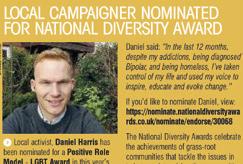
obstacles, Daniel has spoken out against wrongdoings locally in the city. He successfully petitioned Brighton & Hove City Council to improve the standard of the emergency accommodation they offer the most vulnerable while at the same time facing his own demons and attempting to move on with his own life. He has worked to raise awareness around mental health while promoting the rights of the wider LGBT communities. Daniel said: “In the last 12 months, despite my addictions, being diagnosed bipolar, and being homeless, I’ve taken control of my life and used my voice to inspire, educate and evoke change.”
Photography by Tom Selmon
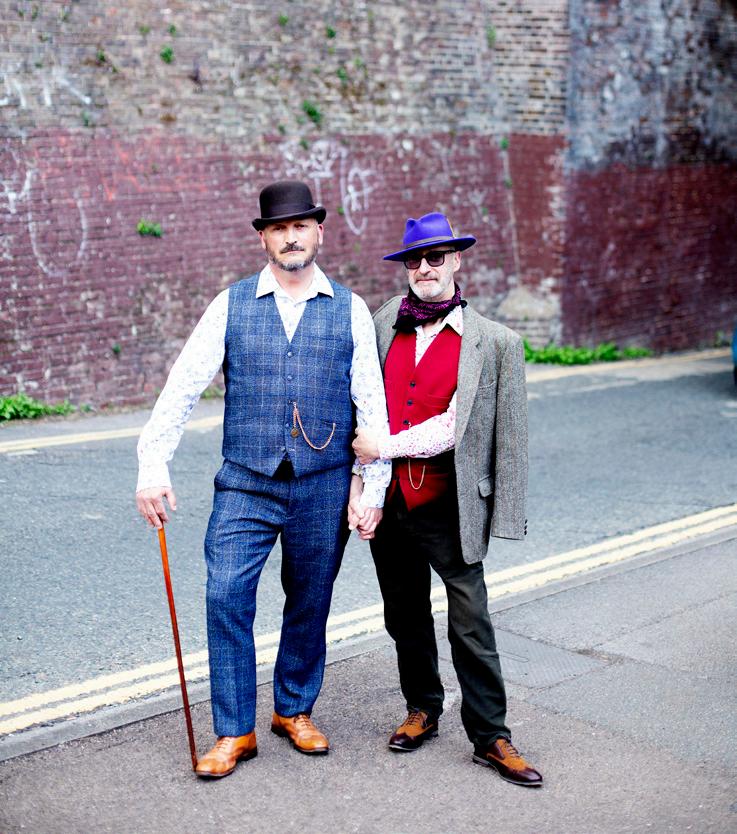
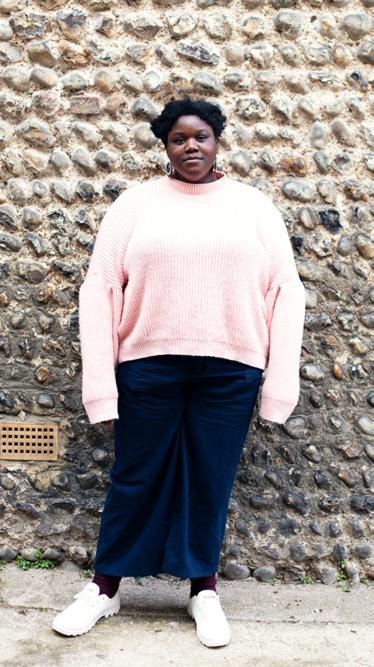
Simi. i www.instagram.com/simibick
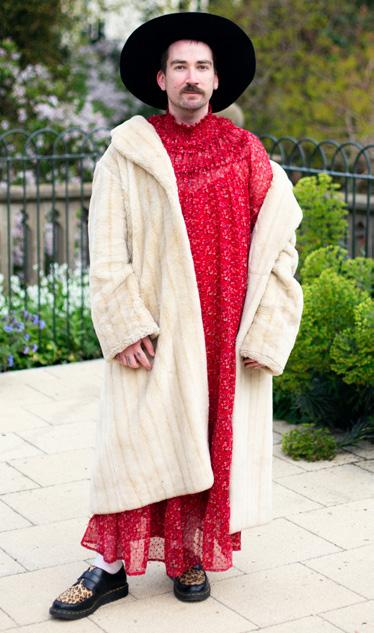
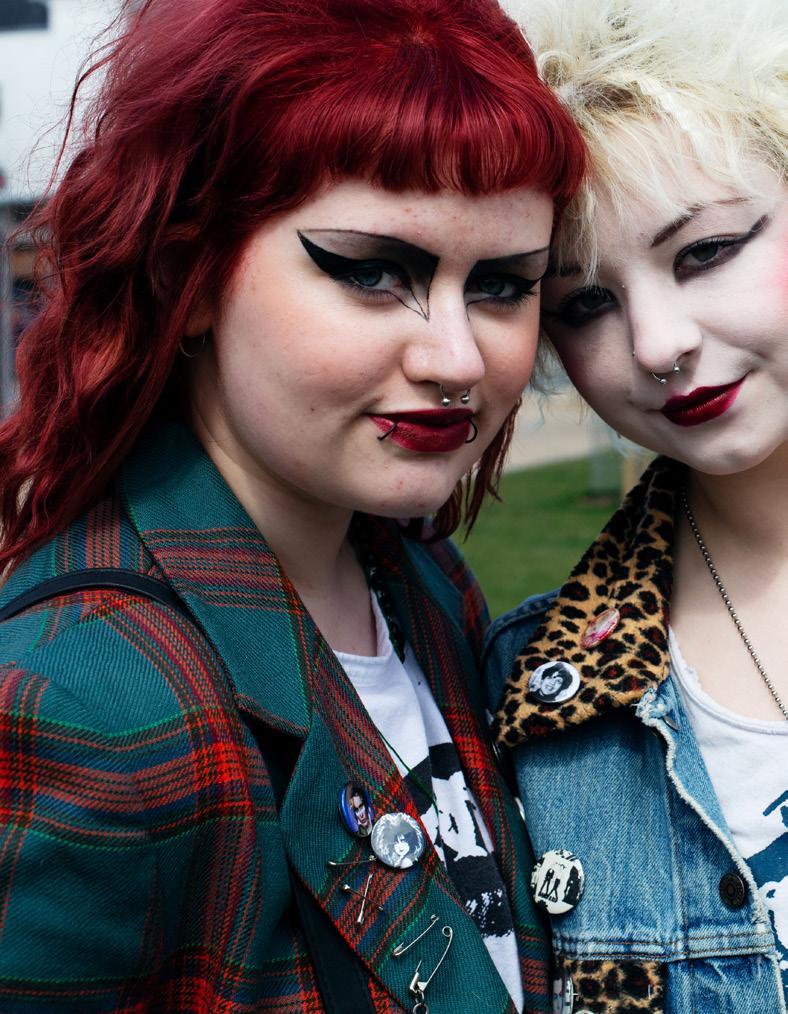
Molly (L). i www.instagram.com/ikissyourpigtails/ Ella (C). i www.instagram.com/punksnewromance/ Maggy (R). i www.instagram.com/stretchercasebaby/
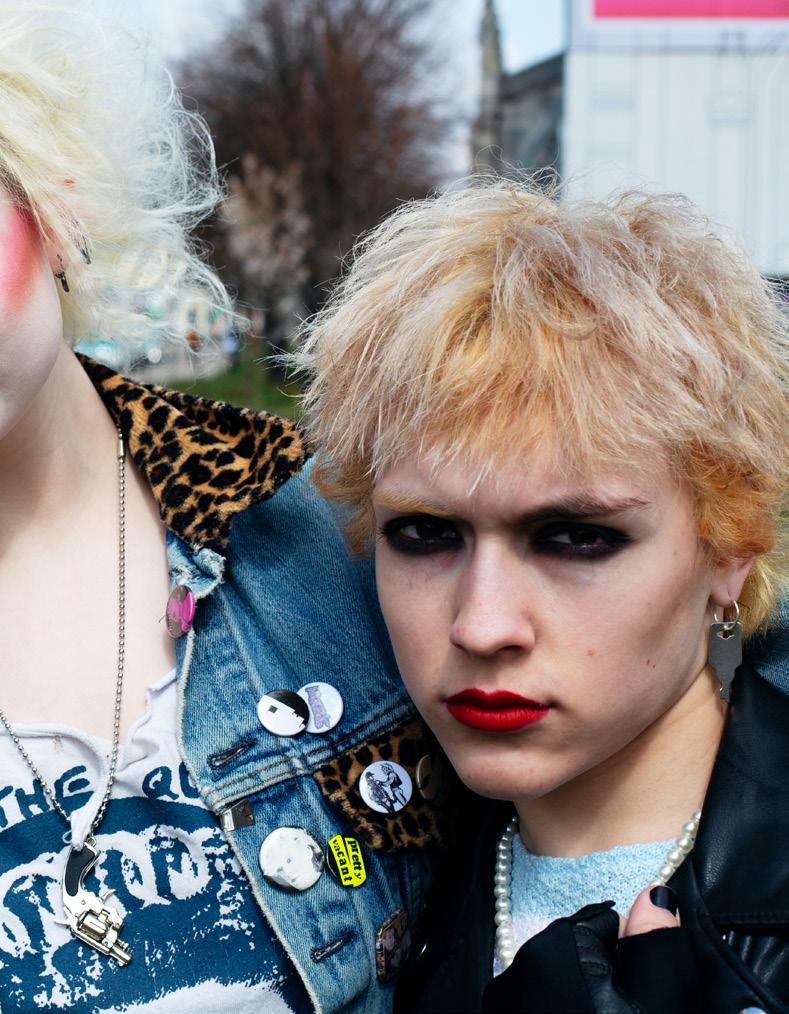
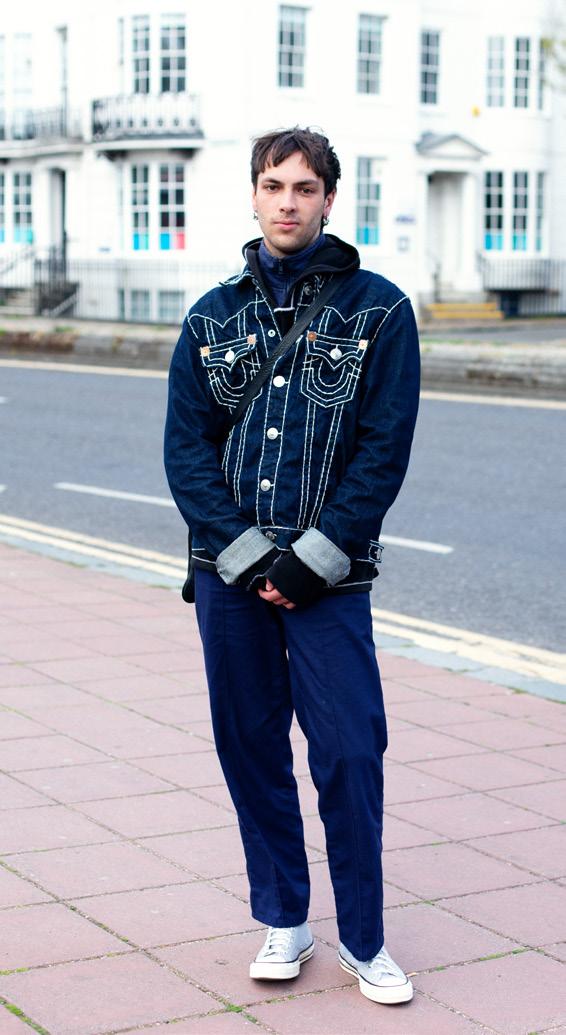
Jack. i www.instagram.com/jackwjameson/
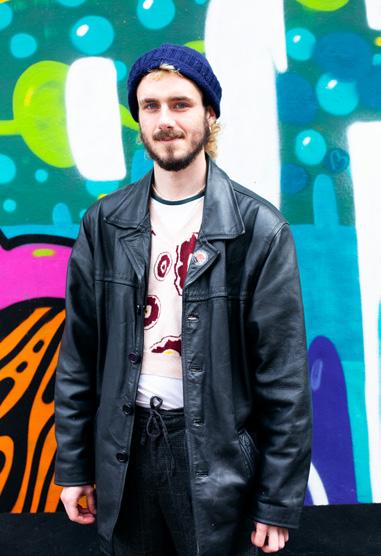
Liam i www.instagram.com/brickwalllll
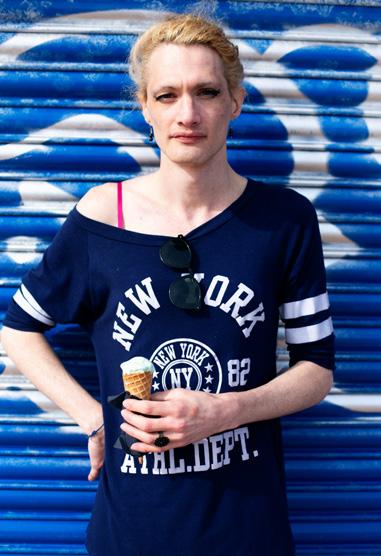
Alex i https://www.instagram.com/alexjay
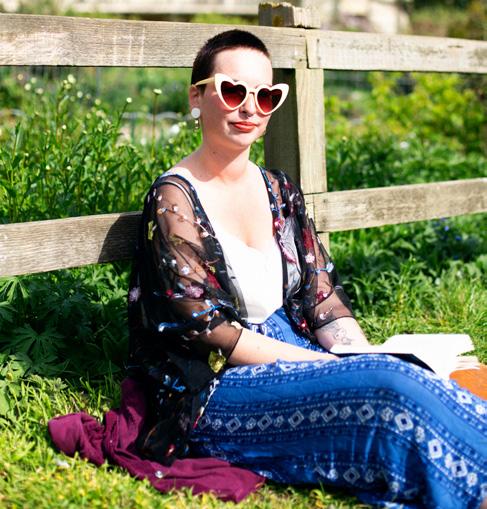
Camille. i www.instagram.com/camille.alory/
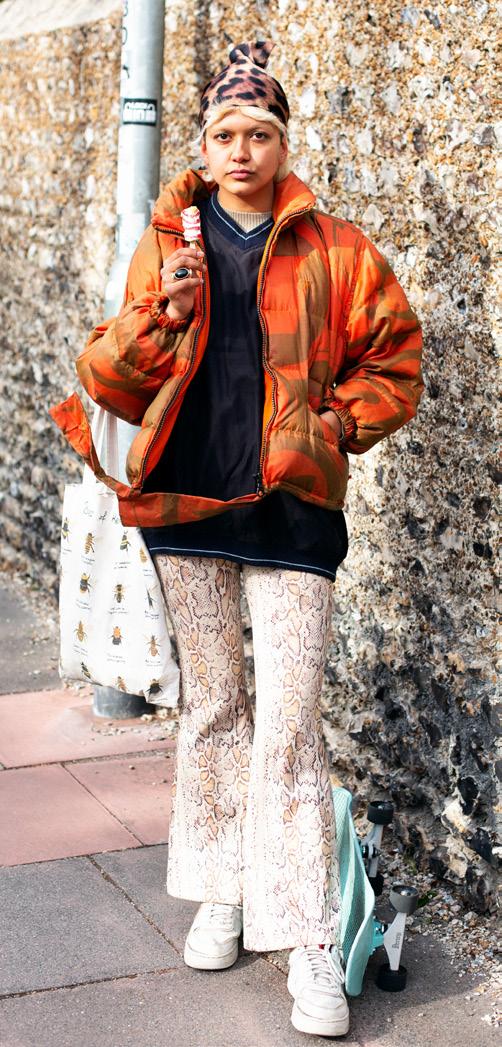
BY GLENN STEVENS
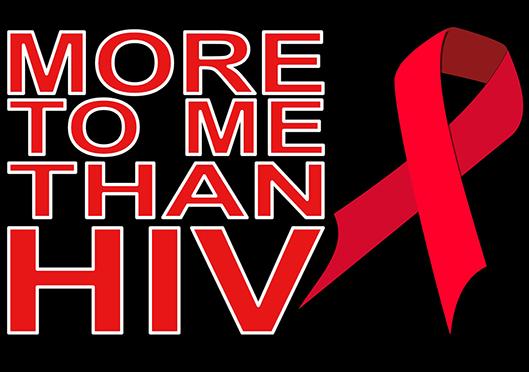
) The image of hundreds of gay men back in the ‘70s and early ‘80s was that of The Clone: cropped hair, moustache, checked shirt, 501s, package protruding either left or right of their button-downed 501s, colours code hankie in the left or right back pocket, and black boots. This was the ‘de rigueur’ of the day.
Then AIDS came along and the syndrome was very much attached to The Clone, which gave rise to the Muscle Mary, showing everyone that they were very fit and very healthy.
Back then AIDS = Death with perhaps the most striking image coming from Life Magazine’s image of gay activist David Kirby, which fashion label Benetton used as part of its controversial ad campaigns and was later heavily criticised for.
Other images of famous men dying from HIV - Rock Hudson, Freddie Mercury - were splashed across the front pages of the tabloid press, along with the government’s tombstone campaigns, which did the job of terrifying everyone.
Of course, we acknowledge that there are many different struggles to work with when living with an HIV diagnosis, but how we are viewedwith images of death and dying - should not be one of them.
Thankfully there is a real surge of individuals and groups like the More to Me Than HIV project who are standing up and helping to break down the misinformation of what it means to live with HIV in 2021.
One of the most high-profile campaigns of this year has to be the Gareth Thomas and Terrence Higgins Trust partnership, Tackle HIV, which is to address public misunderstanding.
To start with, the Tackle HIV campaign surveyed 4,000 adults with the results being ‘61% of people surveyed said if they found out a potential partner was HIV+ they would or might end the relationship. The main reason for this was being worried about contracting HIV (81%)’.
From this alone it is easy to see just how many people are still misinformed about what it means to have sex with someone who is HIV+. Which is why we are so pleased to see a real movement within the HIV+ community to update people’s knowledge.
A brilliant global HIV+ project is Through Positive Eyes, which features portraits of people from more than ten cities in eight countries on five continents and gives them a voice through gallery exhibitions (physical and online) which also includes some powerful video testimonies.
Positive Stories is another excellent visual project, created by photographer Mareike Günsche. These simple but powerful photography and video projects are really helping to change the narrative of what it means to be a person living with an HIV+ diagnosis today.
Together we can update and inform on what it means to live positively with an HIV+ diagnosis.
For those living with HIV, please consider joining the More to Me Than HIV project. For more details about our project and links to the ones mentioned, please get in touch via http://moretomethanhiv.life


While every effort has been made to ensure the accuracy of statements in this magazine we cannot accept responsibility for the views of contributors, errors, or ommisions, or for matters arising from clerical or printers errors, or an advertiser not completing a contract
l Allsorts Youth Project
Drop-in for LGBT or unsure young people under 26 Tues 5.30–8.30pm 01273 721211 or email info@ allsortsyouth.org.uk. www.allsortsyouth.org.uk
l Brighton & Hove Police
Report all homophobic, biphobic or transphobic incidents to: 24/7 assistance call Police on 101 (emergencies 999) Report online at: www.sussex.police.uk
LGBT team (not 24/7) email: LGBT@sussex.pnn.police.uk
• LGBT Officer PC James Breeds: Tel: 101 ext 558168 James.breeds@sussex.pnn.police.uk
l Brighton & Hove LGBT Safety Forum
Independent LGBT forum working within the communities to address and improve safety and access issues in Brighton & Hove. For more info: 01273 675445 or admin@lgbt-help.com or www.lgbt-help.com
l Brighton & Hove LGBT Switchboard
• LGBT Older People’s Project
• LGBT Health Improvement and Engagement Project
• LGBTQ Disabilities Project
• Rainbow Café: support for LGBT+ people with Dementia
• Volunteering opportunities 01273 234 009
Helpline hours: Wed & Thur, 7–9.30pm; trans-only webchat on Sun 3–5pm: call 01273 204 050 email info@switchboard.org.uk webchat www.switchboard.org.uk/helpline www.switchboard.org.uk/brighton
l Brighton OneBodyOneFaith Formerly The Gay Christian Movement. Contact: Nigel Nash nigelnash@me.com. www.onebodyonefaith.org.uk
l Brighton Women’s Centre
Info, counselling, drop-in space, support groups 01273 698036 or visit www.womenscentre.org.uk
l Lesbian & Gay AA
12-step self-help programme for alcohol addictions: Sun, 7.30pm, Chapel Royal, North St, Btn (side entrance). 01273 203 343 (general AA line)
l LGBTQ+ Cocaine Anonymous
Meeting every Tues 6.30-8pm, 6 Tilbury Pl, Brighton, BN2 0GY, CA isn’t allied with any outside organisation, and neither endorses or opposes any causes. Helpline 0800 6120225, www.cocaineanonymous.org.uk www.sussexcocaineanonymous.co.uk
l LGBTQ+ NA Group
Brighton-based LGBTQ+ (welcomes others) Narcotics Anonymous group every Tue 6.30–8pm, Millwood Centre, Nelson Row, Kingswood St. 0300 999 1212
l LGBT+ Meditation Group
Meditation & discussion, every 2nd & 4th Thur, 5.30–7pm, Anahata Clinic, 119 Edward St, Brighton. 07789 861 367 or www.bodhitreebrighton.org.uk
l Lunch Positive
Lunch club for people with HIV. Meet/make friends, find peer support in safe space. Every Fri, noon–2.30pm, Community Room, Dorset Gdns Methodist Church, Dorset Gdns, Brighton. Lunch £1.50. 07846 464 384 or www.lunchpositive.org
l MCC Brighton
Inclusive, affirming space where all are invited to come as they are to explore their spirituality without judgement. 01273 515572 or info@mccbrighton.org.uk www.mccbrighton.org.uk
l Mindout
Independent, impartial services run by and for LGBTQ people with experience of mental health issues. 24 hr confidential answerphone: 01273 234839 or email info@ mindout.org.uk and out of hours online chat www.mindout.org.uk
l Navigate
Social/peer support group for FTM, transmasculine & gender queer people, every 1st Wed 7-9pm & 3rd Sat of month 1-3pm at Space for Change, Windlesham Venue, BN1 3AH. https://navigatebrighton.wordpress.com/
l Peer Action
Regular low cost yoga, therapies, swimming, meditation & social groups for people with HIV. contact@peeraction. net or www.peeraction.net
l Rainbow Families
Support group for lesbian and/or gay parents 07951 082013 or info@rainbowfamilies.org.uk. www.rainbowfamilies.org.uk
l Rainbow Hub
Information, contact, help and guidance to services for LGBT+ communities in Brighton, Hove and Sussex at Rainbow Hub drop in LGBT+ one-stop shop: 93 St James Street, BN2 1TP, 01273 675445 or visit www.therainbowhubbrighton.com
l Some People
Social/support group for LGB or questioning aged 14-19, Tue 5.30-7.30pm, Hastings. Call/text Cathrine Connelly 0797 3255076 or email somepeople@eastsussex.gov.uk
l TAGS – The Arun Gay Society
Social Group welcome all in East & West Sussex Areas. Call/Text 07539 513171. More info: www.tagsonline.org. uk
l Victim Support
Practical, emotional support for victims of crime 08453 899 528
l The Village MCC
Christian church serving the LGBTQ community. Sundays 6pm, Somerset Day Centre, Kemptown. More info: 07476 667353, www.thevillagemcc.org
l AVERT
Sussex HIV & AIDS info service 01403 210202 or confidential@avert.org
l Brighton & Hove CAB HIV Project
Money, benefits, employment, housing, info, advocacy. Appointments: Tue-Thur 9am-4pm, Wed 9am-12.30pm Brighton & Hove Citizens Advice Bureau, Brighton Town Hall. 01273 733390 ext 520 or www.brightonhovecab.org.uk
l Clinic M
Free confidential testing & treatment for STIs including HIV, plus Hep A & B vaccinations. Claude Nicol Centre, Sussex County Hospital, on Weds from 5-8pm. 01273 664 721 or www.brightonsexualhealth.com
l Lawson Unit
Medical advice, treatment for HIV+, specialist clinics, diet & welfare advice, drug trials. 01273 664 722
l Martin Fisher Foundation
HIV self-testing kits via digital vending machines available from: The Brighton Sauna, Prowler, Marlborough Pub and The Rainbow Hub. www.martinfisherfoundation.org
l Substance Misuse Service
Brighton & Hove: Change Grow Live: 01273 731900, email brighton.info@cgl.org.uk, visit: www. changegrowlive.org/brighton-hove-recovery-service/
info
l Sussex Beacon
24 hour nursing & medical care, day care 01273 694222 or www.sussexbeacon.org.uk
l Terrence Higgins Trust services
For more info about these free services go to the THT office, 61 Ship St, Brighton, Mon–Fri, 10am–5pm 01273 764200 or info.brighton@tht.org.uk
• Venue Outreach: info on HIV, sexual health, personal safety, safer drug/alcohol use, free condoms/lubricant for men who have sex with men
• The Bushes Outreach Service @ Dukes Mound: advice, support, info on HIV & sexual health, and free condoms & lube
• Netreach (online/mobile app outreach in Brighton & Hove): info/advice on HIV/sexual health/local services. THT Brighton Outreach workers online on Grindr, Scruff, & Squirt
• Condom Male: discreet, confidential service posts free condoms/lube/sexual health info to men who have sex with men without access to East Sussex commercial gay scene
• Positive Voices: volunteers who go to organisations to talk about personal experiences of living with HIV
• Fastest (HIV testing): walk-in, (no appointment) rapid HIV testing service open to MSM (Men who have sex with Men). Anyone from the African communities, male and female sex workers and anyone who identifies as Trans or non-binary. We now offer rapid 15 minutes results for HIV/Syphilis: Mon 10am-8pm, Tues-Fri 10am-5pm, Thurs 10am-8pm (STI testing available)
• Sauna Fastest at The Brighton Sauna (HIV testing): walk-in, (no appointment) rapid HIV testing service for men who have sex with men, results in 20 minutes: Wed: 6–8pm (STI testing available)
• Face2Face: confidential info & advice on sexual health & HIV for men who have sex with men, up to 6 one hour appointments
• Specialist Training: wide range of courses for groups/ individuals, specific courses to suit needs
• Counselling: from qualified counsellors for up to 12 sessions for people living with/affected by HIV
• What Next? Thurs eve, 6 week peer support group work programme for newly diagnosed HIV+ gay men
• HIV Support Services: info, support & practical advice for people living with/affected by HIV
• HIV Welfare Rights Advice: Find out about benefits or benefit changes. Advice line: Tue–Thur 1:302:30pm. 1-2-1 appts for advice & workshops on key benefits
l Terrence Higgins Eastbourne
• Web support & info on HIV, sexual health & local services via netreach and www.myhiv.org.uk
• Free condom postal service contact Grace Coughlan on 07584086590 or grace.coughlan@tht.org.uk
l Sexual Health Worthing
Free confidential tests & treatment for STIs inc HIVA; Hep vaccinations. Worthing-based 0845 111345645
l National LGBT Domestic Abuse
Helpline at www.galop.org.uk and 0800 999 5428
l Switchboard 0300 330 0630
l Positiveline (Eddie Surman Trust) Mon-Fri 11am-10pm, Sat & Sun 4-10pm 0800 1696806
l Mainliners 02075 825226
l National AIDS Helpline 08005 67123
l National Drugs Helpline 08007 76600
l THT AIDS Treatment phoneline 08459 470047
l THT direct 0845 1221200
1 Affinity Bar
129 St James’s St, www.affinitygaybar.co.uk
2 Amsterdam Bar & Kitchen 11-12 Marine Parade, 01273 688 826 www.amsterdambrighton.com
3 Bar Broadway 10 Steine Street, 01273 609777 www.barbroadway.co.uk
4 Bedford Tavern 30 Western Street, 01273 739495
5 All New Bulldog 31 St James St, 01273 696996
6 Camelford Arms 30-31 Camelford St, 01273 622386 www.camelford-arms.co.uk
7 Charles Street Tap 8-9 Marine Parade, 01273 624091 www.charles-street.com
8 Fallen Angel 24 Grafton St, 07949590001
9 Giu & Su Café & Wine Bar
2 Church St, BN1 1UJ
10 Grosvenor Bar
16 Western Street, 01273 438587
11 Legends Bar 31-34 Marine Parade, 01273 624462 www.legendsbrighton.com
12 Marine Tavern 13 Broad St, 01273 681284 www.marinetavern.co.uk
13 Nautilus Lounge 129 St James’s St, 01273 624100
www.nautiluslounge.com
14 Paris House 21 Western Road, 01273 724195 www.parishouse.com
15 Queen’s Arms 7 George St, 01273 696873 www.theqabrighton.com
16 Railway Club 4 Belmont, Dyke Rd, 01273 328682
17 Regency Tavern 32-34 Russell Sq, 01273 325 652
18 Three Jolly Butchers 59 North Rd, 01273 608571 www.three-jolly-butchers.co.uk
19 Velvet Jacks 50 Norfolk Square, 07720 661290 http://tinyurl.com/VelvetJacks
20 Lé Village 2-3 High Street, 01273 681634
21 Zone 33 St James’s St, 01273 682249 www.zonebrighton.co.uk
) Clubs
11 Basement Club (below Legends) 31-34 Marine Parade, 01273 624462 www.legendsbrighton.com
7 Envy (above Charles St Tap) 8-9 Marine Parade, 01273 624091 www.charles-street.com
) Food
2 Amsterdam Bar & Kitchen 11-12 Marine Parade, 01273 688 826 www.amsterdambrighton.com
6 Camelford Arms 30-31 Camelford St, 01273 622386 www.camelford-arms.co.uk
7 Charles Street Tap 8-9 Marine Parade, 01273 624091 www.charles-street.com
23 Cup of Joe 28 St George’s Rd, 01273 698873 www.cupofjoebrighton.co.uk
9 Giu & Su Café & Wine Bar
2 Church St, BN1 1UJ
11 Legends Bar 31-34 Marine Parade, 01273 624462 www.legendsbrighton.com
12 Marine Tavern 13 Broad St, 01273 681284 www.marinetavern.co.uk
24 New Steine Bistro 12a New Steine, 01273 681546 www.newsteinehotel.com
Lé Village 2-3 High Street, 01273 681634
Gullivers Hotel 12a New Steine, 01273 695415 www.gullivershotel.com
26 Hilton Brighton Metropole 1 Kings Rd, 01273 775 432 www.hilton.com
11 Legends Hotel 31-34 Marine Parade, 01273 624462 www.legendsbrighton.com
24 New Steine Bistro 12a New Steine, 01273 681546 www.newsteinehotel.com
27 Queens Hotel 1/3 Kings Rd, 01273 321222 www.queenshotelbrighton.com
) Health & Beauty
28 Barber Blacksheep 18 St Georges Rd, 01273 623408 wwww.barberblacksheep.com
29 Dental Health Spa 14–15 Queens Rd, 01273 710831 www.dentalhealthspa.co.uk
30 Velvet Tattoo 50 Norfolk Square, 07720 661290 http://tinyurl.com/VelvetJacks
) Sexual Health
31 Clinic M Claude Nicol Abbey Rd, 01273 664721 www.brightonsexualhealth.com/node/11
32 THT Brighton 61 Ship St, 01273 764200
) Saunas
33 Brighton Sauna 75 Grand Parade, 01273 689966 www.thebrightonsauna.com
) Shops
34 Prowler 112 St James’ St, 01273 683680
35 Sussex Beacon Charity Shop
130 St James’s St, 01273 682992
36 Sussex Beacon Home Store 72-73 London Rd, 01273 680264 www.sussexbeacon.org.uk
) Legal Services
37 Engleharts
49 Vallance Hall, Hove St, 01273 204411
) Community
38 Brighton Women’s Centre
72 High St, 01273 698036 www.womenscentre.org.uk
39 Lunch Positive Dorset Gadens Methodist Church, Dorset Gardens, 07846 464384 www.lunchpositive.org
40 Rainbow Hub
93 St James’s St, 01273 675445 www.therainbowhubbrighton.com

) Kings Heath, Birmingham has been recognised – alongside Canal Street in Manchester and The Castro in San Francisco – as one of the world’s most LGBTQ+ friendly neighbourhoods.
The Gayborhood Foundation, which released the list for the first time in 2021, was set up earlier this year to recognise, celebrate and champion LGBTQ+ friendly areas across the globe.
The criteria to make it into the exclusive list of 33 areas includes;
• Having a higher than average LGBTQ+ population who are able to live visibly in the area;
• “A local dedication to LGBTQ+ rights and issues amongst residents”;
• Visible support for the community such as murals, street art, Pride flags;
• Considerably lower risks of homophobic, transphobic, queerphobic crimes;
• Regular LGBTQ+ performances in
local spaces such as theatre, music, drag, and cabaret;
• Local Pride events.
The Gayborhood Foundation does also note, however, that fulfilling all criteria does not necessarily guarantee inclusion on the list.
A spokesperson said: “Kings Heath in Birmingham stood loud and proud alongside our other Gayborhoods for its incredibly vibrant LGBTQ+ community, and we’re delighted to officially recognise it within our 2021 contingent.”
They added: “This is notable recognition for such a fantastic area and in such an exquisite city as Birmingham.”
In particular, the judges praised Kings Heath for its gay nights at the Hare and Hounds, a locally renowned venue. They also highlighted the suburb York Road for being “a thriving, bustling area full of diversity, not just from the LGBTQ+ community”.
) The nomination process for the National Diversity Awards is now open and Birmingham has an extensive list of nominees for the Positive Role Model (LGBTQ+) category.
At the time of writing, the LGBTQ+ positive role models located in Birmingham are journalist and activist Adam Yosef, freelance journalist

) Grey Icon Androgyny, based in Solihull, is a small LGBTQ+ business that was launched in September 2020 by Ash O’Toole. “Grey Icon’s mission is to bring fresh new designs to the androgynous, transgender & genderneutral community,” Ash explained to Scene magazine.
Ash had worked as a bar manager on Birmingham’s LGBTQ+ scene for many years but was sadly made redundant –alongside her colleagues – in October 2020, just a month after starting Grey Icon.
Like much of the LGBTQ+ community and their allies, Ash and their partner watched Russell T. Davis’ heartwrenching series It’s A Sin that told the story of a group of friends during the HIV/AIDS epidemic of the 80s and 90s. After watching the first episode with their partner, Ash says they were soon “inundated with requests from friends to create a ‘La!’ T-shirt”.
“Over the next couple of days, I sat down and put a design together, working out how many I could afford to produce, along with being able to give a 25% donation of each tee to charity.”
Those limited-edition new designs that became part of Grey Icon’s collection included a pink T-shirt with the word ‘La!’ printed in yellow writing and a white t-shirt with pink writing.
Ash then spent some time researching various HIV/AIDS charities, as well as having a brief conversation with Russell himself, before they finally settled on the charity that Grey Icon would be donating to with the profits from their new ‘La!’ line.
“It was a no-brainer for me that I would donate to the George House Trust based in Manchester,” Ash explained.
Lydia Greatrix, David Nash, creator of proudly blog Aaron Spencer, wildlife filmmaker and broadcaster Adam O’Hare, Avery Cunningham who focusses on LGBTQ+ people in STEM, Martin Smith (AKA drag act Miss Marty), trans activist and blogger Eva Echo, and Marvel at the Magic’s Nathan & Craig
To read more about the nominees, visit www.nationaldiversityawards.co.uk where you can also nominate others or vote for those who've already been nominated. Voting closes June 4; a shortlist will be revealed in September and winners will be announced at an awards ceremony in 2022.
“The T-shirts went on pre-sale as soon as the artwork was approved,” Ash tells us, “and they arrived with us just in time for the airing of the final episode of It’s A Sin, which meant anyone who pre-ordered received them that weekend, which worked out really well.”
Grey Icon Androgyny’s original target with the ‘La!’ tees was to raise £450 for George House Trust. So far, it has raised £350 for the charity (£300 of which has already been handed over).
“It would, of course, have been lovely if the business was better established to have been able to donate a larger amount as others have been able to,” Ash explained, referring to companies and designers such as Philip Normal who have been able to raise over £250,000 so far for Terrence Higgins Trust
Ash added: “Hopefully with people’s support the business will continue to grow and, in the future, we can make this happen with something similar!”
For anyone who missed out on the original pre-order of Grey Icon Androgyny’s It’s A Sin-inspired tees who wants to support this small West Midlands-based business and the George House Trust, there are still some T-shirts available to purchase via www.greyicon.co.uk/.



) SHOUT Festival is a programme of queer arts and culture events for Birmingham and the West Midlands that aims to “amplify the voices of LGBTQ+ people and communities from across our city and region, and start new conversations and tell new stories about LGBTQ+ life”.
In 2020, the festival – like many others – was forced to move online to accommodate the coronavirus pandemic. This year it will be returning in November 2021 – hopefully in person – and organisers have already begun their plans by looking for LGBTQ+ artists, creatives, and anyone with an imaginative idea to be part of their commissioned programming. In particular, they would love the hear from “artists and creative makers from communities that have often been underrepresented in SHOUT festival, including LGBTQ+ people who are black, Asian and global majority; Romany or Irish traveller; deaf, disabled or neurodivergent; people with lived experience of migration; working-class or older people”.
SHOUT is looking for new creative work, ideas, and projects – to showcase as part of the festival – that explore “queer life in all of its beautiful variety”. These works may include personal stories, political projects, explorations of aspects of LGBTQ+ history or culture that deserve to be in the spotlight, or even look forward into the future.
They would also “love to hear from artists who are working with grassroots communities to tell queer stories drawn from the lived experience of LGBTQ+ people; and we’d love to hear from communities with a story to tell.”
SHOUT is particularly keen to hear about new work from LGBTQ+ voices based in the West Midlands, however it is open to ideas shared from anywhere in the world.
To be part of SHOUT’s upcoming festival, your work does not need to be completely polished, perfect, and fully formed, it is just as interested in ideas as it is finished works.
ShOUT is keen to “work with artists and community partners to develop ideas collaboratively”. It explains that it is interested in art of all forms and simply “want to start conversations and get to know new people”.
While it is currently looking for artists and creatives to be part of the 2021 festival, SHOUT is also looking ahead to future events so it is urging people to get in touch even if their idea might take a year or two to develop further. It’ll even pay you for your time if it asks you to continue developing the idea.
“Artists taking part in the festival, or commissioned to develop projects, are paid fairly for their time, expertise and ideas,” says the website.
The festival is due to take place in November this year, by which time SHOUT is hopeful that face-to-face events will be allowed to go ahead instead of done digitally as they were in 2020. However, during the pandemic, it learnt that a lot of people actually valued the online experience, so will still be aiming to develop online aspects and if a lockdown does end up being our reality once again, it has the contingency plan of bringing SHOUT Festival to the digital world.
If you’re an artist or creative who would like to submit work to SHOUT for consideration, then email shoutfestival@blgbt.org. Organisers add: “There’s no template or form to fill in, but please make sure to tell us a bit about yourself and what you’ve done before; and about your idea and what you think might be needed to make it a reality.”
D For more info and other opportunities, visit: www.shoutfestival.co.uk
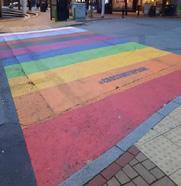
) A rainbow Pride crossing in Leamington Spa – much like the one already located in Birmingham’s Southside – has been agreed with Warwickshire County Council. The crossing will be installed between Jephson Gardens and Pump Room Gardens, where Warwickshire Pride Festival usually takes place.
Daniel Browne, chair of trustees at Warwickshire Pride, said: “It will be painted in time for this year’s virtual Pride and it will be a permanent crossing.
“A local councillor is funding the initial painting of the crossing. As she is up for re-election in May we are not naming her at the moment in case it influences the vote.”
Meanwhile, “Warwickshire County Council will cover the cost of maintaining the crossing” and council contractors will be tasked with the painting.

Daniel told us: “It will be the six-stripe rainbow flag and send a positive message that LGBTQ+ people are welcome in Leamington Spa, that the council supports LGBTQ+ people, and of course it’s nice for Pride too.
“We hope it will be embraced and that many LGBTQ+ people will enjoy seeing it.”
D For more info on Warwickshire Pride, visit: www.warwickshirepride.co.uk
) On Sunday, May 23, Weoley Hill
CC in south west Birmingham hosted a very special cricket match – the debut outing of LGBTQ+ cricket club, the Birmingham Unicorns
Birmingham Unicorns was established in 2020 as a proudly LGBTQ+ inclusive cricket club, providing a place for people passionate about cricket to come and play and socialise. It welcomes everyone, including allies, who want to enjoy cricket in a friendly, supportive community environment.
Birmingham Unicorns play home games in Selly Oak, Birmingham and during 2021 will be playing friendly fixtures on Sundays with the occasional mid-week
T20 fixture.
The club caters to all playing levels, whether you have played cricket before or are totally new to the sport.
Speaking to Sports Media LGBT, club founder and chair Lachlan Smith said:

“We're starting out small this year with eight fixtures and I’m grateful to the support of Weoley Hill Cricket Club who have offered us the use of their second ground to play our matches.
“We are excited to be on the cusp of something new which can help change the face of cricket. We know it’s a great sport but like many sports, LGBTQ+ people don’t always feel at home in cricket. As a club, we really want to change that.
“We encourage anyone who is interested to know more, or who wants to play, to get in touch.”
) To contact the club, follow @bhamunicorns on Twitter, Instagram and Facebook, visit www.bhamunicorns.co.uk, or email birminghamunicorns@gmail.com