Australasian Palaeontologists (AAP)
http://aap.gsa.org.au
Executive & Office Bearers 2016-2017
Chairman: Dr Pierre Kruse, Hon. Associate, South Australian Museum, Adelaide
Vice Chair: (vacant)
Secretary and Webmaster: Dr Diego Garcia-Bellido, University of Adelaide
Treasurer: James Holmes, University of Adelaide
Editor, Alcheringa: Dr. Benjamin Kear, Swedish Museum of Natural History
Hon. Editor, Alcheringa: Dr Stephen McLoughlin, Swedish Museum of Natural History
Editor, AAP Memoirs: Dr Ian Percival, Geological Survey of NSW
Editor, Nomen nudum: Rodney Berrell, Curtin University
Nomen nudum is the annual newsletter of Australasian Palaeontologists (AAP). It is published to acquaint members with the activities of palaeontological colleagues and with any other items of current interest. Enquiries and contributions should be directed to the editor (see above).
Membership of AAP (including personal subscription to the peer-reviewed international journal Alcheringa), is available to all palaeontologists (professional, amateur, active and retired), particularly – but not restricted to – those with interests in fossils of Australia, New Zealand, and Papua New Guinea. Details of membership requirements, categories and fees are available from the Geological Society of Australia website, which also has information regarding titles and prices of the AAP Memoirs series (49 volumes published since 1983). Library subscriptions to Alcheringa should be addressed to Taylor & Francis (http://www.tandfonline.com/toc/talc20/current)
Opinions expressed in this newsletter are those of individual contributors and do not necessarily reflect the views of Australasian Palaeontologists nor the Geological Society of Australia, Inc. Mention of a product or service should not be construed as constituting endorsement by either body.
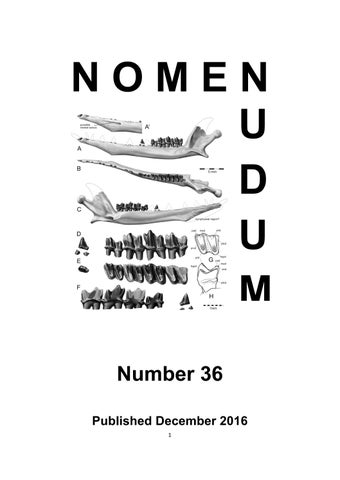
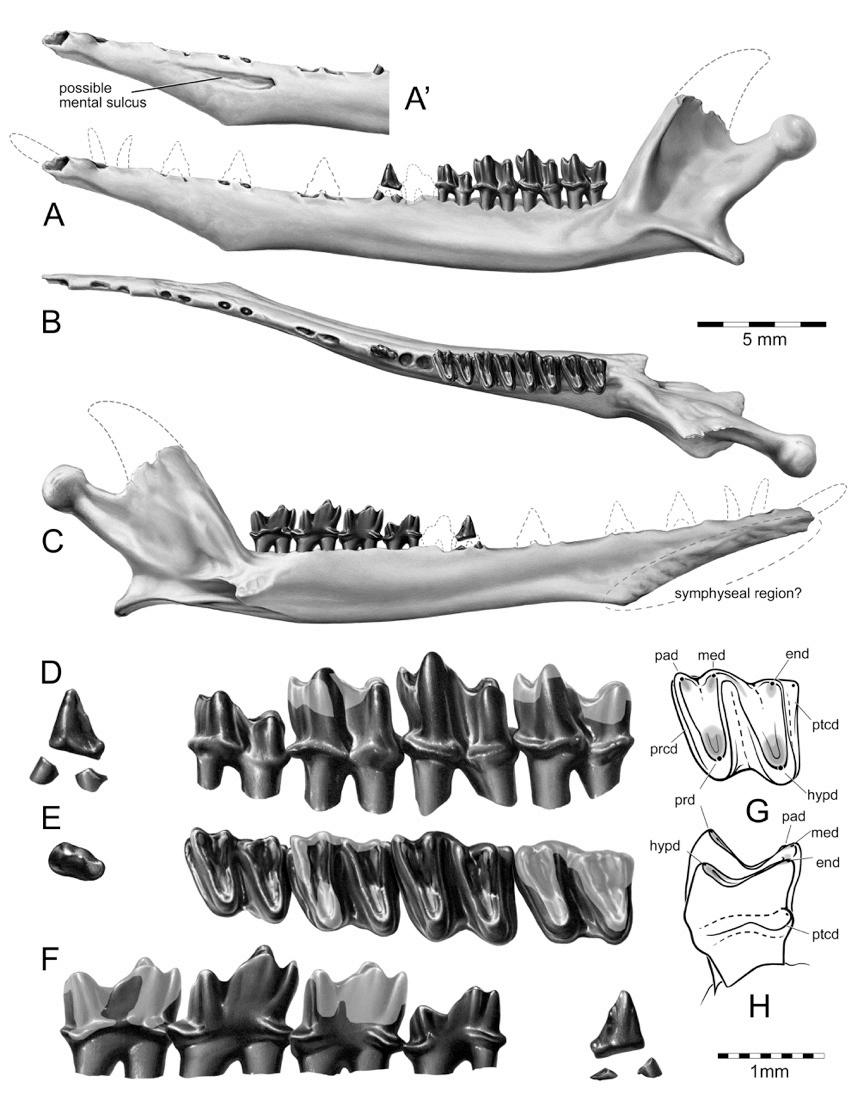
Front cover: Illustration of the mandible and dentition of the Early Cretaceous monotreme Teinolophos trusleri. Image provided by Peter Trusler and published in Rich et al. (2016)
© Australasian Palaeontologists, December 2016.
ISSN 1447-4662
TABLE OF CONTENTS
Chairperson’s Message Page 4
AAP Secretary Report – PDU 2………………………………….. Page 4
AAP News
Recently published AAP Memoir …………………………. Page 5
Change of editors AAP Memoir Series…………………… Page 7
Conference Announcements
7th International Meeting on Mesozoic Fishes ……………. Page 7
CAVEPS 2017 Page 8
Obituary Noel Jack de Jersey (1923–2016) Page 9
Thomas Benjamin Huw Jenkins (1930-2016) …………… Page 16
Reports of Research Activities (by region)
Australian Capital Territory ……………………………………… Page 18
New South Wales … Page 21
Northern Territory………………………………………………… Page 30
Queensland …… Page 31
South Australia ………………………………………………........ Page 37
Tasmania … Page 44
Victoria …………………………………………………………… Page 44
Western Australia … Page 63
New Zealand ……………………………………………………… Page 70
Hong Kong ……………………………………… Page 79
Sweden……………………………………………………………. Page 80
Switzerland…………………………………………… Page 84
United Kingdom …………………………………………………. Page 84
United States ………… Page 86
Contact details for contributors to this issue (alphabetical) …… Page 88
FROM THE CHAIR
Palaeo Down Under 2 is now behind us. By all accounts it was a successful gathering of Australasian and international colleagues, and I trust that delegates came away inspired and energised by it. Through the good offices of Geological Society of Australia CEO and TAG Managing Editor Sue Fletcher, a timely summary wrap-up of the conference appeared in the September issue of The Australian Geologist 180, 34-38.
Our next major meeting will be at the 24th Australian Earth Sciences Convention (AESC), scheduled to be held in Hobart.
Pierre Kruse
Chairman, Australasian Palaeontologists
South Australian Museum, Adelaide
AAP SECRETARY REPORT - PALAEO DOWN UNDER 2 – PDU2
Organising Committee:
Dr Peter (‘Pierre’) Kruse - South Australian Museum, Adelaide; Chair, AAP
Dr Diego García-Bellido - University of Adelaide; Secretary, AAP
Mr James Holmes - University of Adelaide; Treasurer, AAP
Adjunct Professor James Jago - University of South Australia, Adelaide
Palaeo Down Under 2 (PDU2) was held from 11–15 July 2016 at The University of Adelaide. There was a keynote lecture per day, presented by Prof. Mary Droser (University of California–Riverside, USA), Prof. Zhu Maoyan (Nanjing Institute of Geology and Palaeontology, China), Assoc. Prof. James Crampton (GNS Science, New Zealand), Dr Scott Hocknull (Queensland Museum, Brisbane) and Prof. Mike Archer (UNSW, Sydney). There were a total of 126 oral presentations and 39 posters. The final number of fulltime registrations reached 179, including 45 students and 29 retirees. There were also 14 single-day registrations and 10 accompanying members. There were delegates from 13 countries: Australia, Canada, China, Czechia, Denmark, Great Britain, Italy, New Zealand, Pakistan, Russia, Spain, Sweden and the USA. The biggest contingents came from Australia with 107, followed by China with 40, USA with 13 and Great Britain with 9. The conference attracted 58 additional attendees to the keynote
lectures.
The Conference Dinner was held on the evening of 14 July, and was attended by 108 participants. During this event, the inaugural Robert Etheridge Jr Medal for Lifetime Contributions to Australasian Palaeontology was awarded to Prof. Bruce Runnegar (UCLA, California), and the Mary Wade Price for Best Paper in an AAP journal by an Early Career Researcher was awarded to Dr. Chris Mays (Monash University. Melbourne), with a Highly Commended Certificate to Julien Denayer (Ghent University, Belgium) and a Commended Certificate to Patrick Smith (Macquarie University, Sydney).
From 2–9 July there was a Pre-Conference Excursion to visit the Ediacaran and Cambrian sites of Kangaroo Island, Fleurieu Peninsula and Flinders Ranges, with the 35 available places fully booked very early. The Intra-Conference Excursion to Hallett Cove Geological Trail and Conservation Park took place on the afternoon of 13 July, attended by 150 PDU2 participants. The Post-Conference Excursion to the Cenozoic of the Eyre Basin was also opened to members of the Waterhouse Club, Field Geologists’ Club of SA, Royal Society of South Australia, Nature Foundation and participants of GSA’s AESC in Adelaide, and had 17 participants.
Diego C. García-Bellido
NEW PUBLICATIONS
Australasian Palaeontological Memoirs released in 2016
Laurie, J.R., Percival, I.G., Jago, J.B., Paterson, J.R. & Brock, G.A., 2016. Cambro-Ordovician Studies VI. Australasian Palaeontological Memoir 49, 514 p.
Contents
Trilobites and sedimentary facies of the upper Coquena Formation (late Tremadocian; Notopeltis orthometopa Zone), Cordillera Oriental, northwestern Argentina
M. Franco Tortello, María D.H. Benítez & Susana B. Esteban
An enigmatic univalve macromollusc from the Lower Cambrian (Series 2, Stage 3)
Heatherdale Shale, South Australia
Sara M. Jacquet, James B. Jago & Glenn A. Brock
Ordovician (Darriwilian–Sandbian) linguliform brachiopods from the southern Cuyania Terrane of west-central Argentina
Lars E. Holmer, Leonid E. Popov, Oliver Lehnert & Mansoureh Ghobadi Pour
Cambrian Series 3 (Drumian) trilobites from limestone olistoliths, Reilly Ridge, Northern Victoria Land, Antarctica
Christopher J. Bentley, James B. Jago & Roger A. Cooper
Whitehouse’s Redlichia specimens from the Georgina Basin, western Queensland
John R. Laurie
International correlation of the Cambrian Series 2-3, Stages 4-5 boundary interval
Frederick A. Sundberg, Gerd Geyer, Peter D. Kruse, Linda B. McCollum, Tatyana V. Pegel’, Anna Żylińska & Andrey Yu. Zhuravlev
Linguliformean brachiopods from the early Templetonian (Cambrian Series 3, Stage 5) Giles Creek Dolostone, Amadeus Basin, Northern Territory
Patrick M. Smith, Glenn A. Brock & John R. Paterson
The mid-Cambrian (Drumian; Marjuman) trilobites Athabaskiella Kobayashi 1942 and Bathyuriscidella Rasetti 1948 (Dolichometopidae) from Quebec and Newfoundland, eastern Canada
Shelly J. Wernette & Stephen R. Westrop
The present status of Tasmanian Cambrian biostratigraphy
James B. Jago, John R. Laurie, Keith D. Corbett & Christopher J. Bentley
Geological context, biostratigraphy and systematic revision of late early Cambrian olenelloid trilobites from the Parker and Monkton formations, northwestern Vermont, U.S.A.
Mark Webster & Ed Landing
Ovatoryctocara granulata assemblage (Cambrian Series 2–Series 3 boundary) of Løndal, North Greenland
John S. Peel, Michael Streng, Gerd Geyer, Artem Kouchinsky & Christian B. Skovsted
A new Ordovician paterinate brachiopod from the Barrandian area of the Czech Republic
Michal Mergl & Petr Kraft
Ordovician trilobites from the uppermost Zhuozishan Formation (early Darriwilian) at Zhuozishan, Wuhai, Inner Mongolia
Zhou Zhiyi, Zhou Zhiqiang & Yin Gongzheng
Taxonomy of the ‘Micmacca’ group, new Cambrian Chengkouiidae (Trilobita) from Morocco, and their bearing on intercontinental correlation
Gerd Geyer
Revision of Irvingella tropica Öpik 1963 from Australia and related species from North America: implications for correlation of the base of the Jiangshanian Stage (Cambrian, Furongian)
Stephen R. Westrop & Jonathan M. Adrain Drumian and Guzhangian (middle Cambrian) lingulate brachiopods from Hunan Province, China
Ian G. Percival, Michael J. Engelbretsen & Shanchi Peng Ordovician (Darriwilian–Katian) lingulate brachiopods from central New South Wales, Australia
Ian G. Percival, Michael J. Engelbretsen, Glenn A. Brock & John R. Farrell
Emergence of the Saucrorthis Fauna in the Middle Ordovician of northern Iran
Leonid E. Popov, Mohammad Reza Kebriaee-Zadeh & Mansoureh Ghobadi Pour
Copies of this volume can be obtained from:
The Geological Society of Australia
Suite 8, Front Office, Level 2
141 Peats Ferry Road Hornsby, NSW, 2077
Australia
Or enquiries can be made via e-mail at: info@gsa.org.au
Change of editors for Australasian Palaeontological Memoirs
After a long and distinguished service as Editor of the AAP Memoirs series, spanning 20 years and seeing more than 30 volumes through to publication, Dr John Laurie has handed over the reins to a new team comprising Dr Ian Percival (Geological Survey of NSW) as Chief Editor, Dr Sarah Martin (Geological Survey of WA) as Production Editor, and Dr Diego Garcia-Bellido (SA Museum/University of Adelaide) as Assistant Editor. Though this changeover was effective from the 2016 AGM of Australasian Palaeontologists, held in July at PDU2 in Adelaide, John has kindly agreed to finalise the editing of APM 50, which he has been overseeing for a little while. This will be published in early 2017. Further volumes in train, to be handled by the incoming team with the assistance of guest editors in some cases, include the Proceedings of the recent International Bryozoology Conference, papers from the Palaeo DownUnder 2 conference, and several single-themed memoirs.
Please send all correspondence relating to future Australasian Palaeontological Memoirs to: Dr Ian Percival (ian.percival@industry.nsw.gov.au)
CONFERENCE ANNOUCEMENTS
1st – 7th August 2017
The Palaeontological Research and Education Centre in cooperation with the Faculty of Science of Mahasarakham University (Thailand), the University Claude Bernard Lyon 1 (France), and the Natural History Museum of Geneva (Switzerland) are pleased to announce and host the 7th INTERNATIONAL MEETING ON MESOZOIC FISHES. The meeting is dedicated to reflect the progress in Mesozoic fish research that has been accomplished in the past 25 years since the first meeting in 1993, to discuss old and new methodologies, and to present novel information about the evolution, diversification, and the palaeobiogeography of fishes during the Mesozoic. For more information https://immf7.msu.ac.th
We are pleased to annouce that the 16th CAVEPS will be held from 2 - 6 October 2017, Queenstown, New Zealand
This will be the first time since 2001 that CAVEPS has been held in New Zealand, and so is a wonderful opportunity for locals who might be interested in attending for the first time. We also warmly welcome new and returning attendees travelling from Australia and further afield. Getting here is easy - with daily direct flights to Queenstown now operating out of Melbourne, Sydney and Brisbane.
The conference venue is the incredible Skyline, situated high above the international resort of Queenstown and beautiful Lake Wakatipu, and accessed by a scenic Gondola ride - the steepest cable car lift in the Southern Hemisphere! The welcome function (included in registration cost) will be held at the scenic Stoneridge Estate at Lake Hayes, and the conference dinner at the Rydges Lakeland Resort on the Queenstown lakefront.
CAVEPS encompasses a broad range of topics relating to the evolution, history and systematics of vertebrates within the Australasian region, including:
• Palaeontology and palaeoecology
• Zooarchaeology
• Extinctions
• Morphology and adaptation
• Ancient DNA and phylogenetics
• Evolutionary developmental biology
• Taphonomy
• New advances in analytical techniques
CAVEPS conferences are relatively relaxed and social events, and are a great place to share, listen and discuss aspects of Australasian vertebrate evolution, history and systematics with like-minded people. Presentations often cover a broad range of vertebrate groups (including terrestrial, marine and freshwater vertebrates) across a large temporal span (hundreds of millions of years until present), and a wide range of topics and techniques related to the study of these taxa.
CAVEPS covers a broad range of topics and research areas, and is open for anybody with an interest in the history of vertebrates in the Australasian region. Most presentations will be of particular interest to students and researchers in fields such as evolution, palaeontology, zooarchaeology and molecular phylogenetics, but non-researchers are also more than welcome to attend.
We have a great line-up of plenary and keynote speakers for the 2017 conference, including:
Prof. Ewan Fordyce, University of Otago
Senior Prof. Jingmai O’Connor, IVPP
Prof. Jon Waters, University of Otago
Dr Kieren Mitchell, University of Adelaide
Prof. Sue Hand, University of New South Wales
Alan Tennyson, Te Papa Tongarewa
Fieldtrip options are currently being planned, and will be announced early 2017.
Further details, accomodation options, registration and abstract submission are now available on the conference website: www.caveps2017.com
OBITUARY
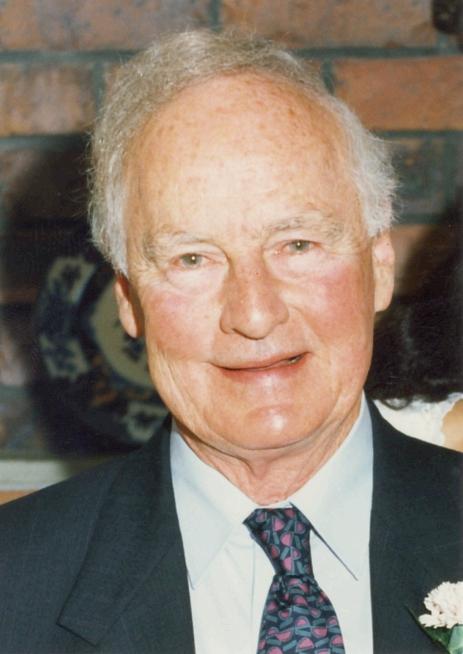
One of Australia’s three pioneering palynologists, Noel Jack de Jersey, passed away in his 93rd year on the 26th of March 2016 at his home at Cedar Grove, about 40 km south of Brisbane in Queensland. The other two pioneers are Isabel C. Cookson (1893–1973) and Basil E. Balme (1923–). Noel de Jersey was a quiet, life-long, high achiever, delving initially into seismology, coal petrology and palaeobotany, and subsequently into taxonomic and
NOEL JACK de JERSEY (1923–2016)
biostratigraphical palynology, his career of choice. He was a Foundation Member of the Geological Society of Australia and, in his spare time, a keen golfer and traveller.
Noel was born on the 25th of February 1923, and lived for five years at coastal Tweed Heads in northernmost New South Wales. His father was Headmaster of the Coolangatta State Primary School in southeastern Queensland, just across the Queensland – New South Wales State border, where Noel began his early primary schooling. This he completed in 1935 at Goombungee State School, northwest of Toowoomba and west–northwest of Brisbane, following his father’s transfer there as headmaster.
He attended the Church of England Grammar School in Brisbane from 1936 to 1939 and, in his final year at sixteen years of age, Noel was academically the highest ranking student in the school. This led, in 1940, to Noel winning one of the 20 available open scholarships to the University of Queensland (UQ). Professor Henry Casselli Richards, the inaugural Professor of Geology and Dean of the Faculty of Science at UQ, persuaded him into studying geology, which was not Noel’s original intention. Professor Richards, in recognising Noel’s academic talents, took him under his wing and encouraged him to take on an additional subject beyond the required four that he was already enrolled in. That extra subject was geology and, until then, Noel had considered chemistry to be his career of choice. However, he found geology to be a relatively unexplored area of science. It totally captivated his interest, and Noel recalled to me once, in conversation, that Professor Richards’ lectures were ‘adventures in geology’. Such was the beginning of Noel’s fascination with the subject and his life-long commitment to unraveling many of its intriguing mysteries.
Noel completed his BSc in 1942, and was awarded First Class Honours two years later, undertaking honours on a part-time basis at UQ, while spending half of his time monitoring the seismograph station at the Department of Geology. Accordingly, he was able to collect and collate geophysical data, which resulted in his award of an MSc in seismology in 1945. Subsequently he studied the fossil flora of the Ipswich Coal Measures, the results being published in 1947, with O.A. Jones as a co-author. This paper stands to the present day as a major contribution to the Triassic palaeofloral history of Australasia. However, Noel’s interest in palaeobotany was not purely academic, but lay in applying the information gained to precise dating of the sedimentary rock successions. In those early days no one knew, with any real certainty, the geological ages of most rock formations.
In addition to his macrofloral studies, Noel, in 1946–1947, explored the new science of palynology, as he was intrigued by the fact that a spoonful of some types of coal could yield thousands of palynomorphs. He realised that these abundant specimens had the potential to facilitate precise dating of the rock formations in Queensland. Initially, he applied a primitive method of numerical analysis of spore-pollen assemblages to assess coals from the Bowen Basin (Permian–Triassic) and the Ipswich Coal Measures (Upper Triassic); both these early studies were published.
With the award of a highly competitive Commonwealth Scientific and Industrial Research Organisation (CSIRO) scholarship, Noel undertook a PhD degree at Imperial College London from 1946 to 1948. His doctoral thesis, The Chemical and Physical Properties and Classification of some Queensland Coals, was subsequently published. Shortly after returning to Australia, he worked on coal petrology, initially at the CSIRO Coal Research Section in
Sydney, New South Wales. Two years later, in 1950, Noel commenced his long and distinguished career at the Geological Survey of Queensland (GSQ) in Brisbane. Initially he undertook both coal petrology and palynology, using the latter to undertake coal seam correlation in the Burrum and Styx Coal Measures (Lower Cretaceous) and subsequently in the Rosewood Coalfield (specifically the Middle Jurassic Walloon Coal Measures in the Clarence-Moreton Basin). To obtain employment in those days, he had to focus on coal and coal exploration.
However, subsequent oil discoveries at Rough Range in Western Australia (1953), and in the Surat Basin at Moonie, Queensland (1961), changed everything and this was the principal factor that promoted and accelerated the fledgling science of palynology in Australia. Hence, Noel started dating the stratigraphical sections penetrated by oil exploration wells in the uppermost Triassic to Lower Cretaceous of the Surat Basin, consulting widely to the burgeoning petroleum exploration industry in its formative years.
In the early 1960s, Noel was promoted to Supervising Geologist in charge of the Coal Research Section of GSQ. However, the increasingly important palynological component of this section was split from coal petrology. In recognition of his innovative expertise, and of the potential importance of this emerging science to the geology and economy of Queensland, Noel was appointed to head and develop GSQ’s newly created Palynology Section. In 1967, he was designated as Principal Geologist of the Palynology Section.
As geologists had been largely unsuccessful in correlating the Surat Basin succession with that in the adjacent and interconnected uppermost Triassic–Middle Jurassic ClarenceMoreton Basin, Noel worked on both depocentres. His ambition was to relate surface exposures to those in the subsurface. To attain this objective he was primarily instrumental, in 1963, in gaining approval for the Drilling Branch of the Department of Mines to undertake strategic stratigraphical drilling in addition to coal drilling. This facilitated the provision of fully cored subsurface sections for detailed palynological and lithostratigraphical investigations. In subsequent years, the Drilling Branch then proceeded to sink representative holes in many rock formations over vast areas of Queensland, to define the geology of the State, with the cored material being stored in the Department’s core library (the Exploration Data Centre at Zillmere) as a vital reference for geologists. The first stratigraphical borehole was spudded in the Marburg Formation in the Clarence-Moreton Basin, and Noel’s palynological results clearly demonstrated that the formation was Jurassic, not Late Triassic as had been previously thought. This was his first biostratigraphical study, published in 1963, whereby he correlated his spore-pollen assemblages with Jurassic assemblages described from Western Australia by Basil Balme.
During his time at GSQ, Noel de Jersey was an incredibly high-achiever. He progressively worked his way through many of the Triassic and Jurassic formations of Queensland, publishing his palynological and biostratigraphical work as he proceeded in a stepwise manner, increasingly building up a secure foundation for future work and defining previously elusive stratigraphical relationships among the sedimentary basins of Queensland, with his results having Australia-wide application. Noel published many new genera and species of palynomorphs, which are now firmly entrenched in the literature. He developed several biostratigraphical schemes for local and international correlation. One such zonation, published in 1976 for local correlation, provoked an exceptionally high degree of controversy
in some quarters. It indicated the extensive development of a hitherto unrecognised hiatus in the lowermost section of the western Clarence-Moreton Basin and in other basins, between uppermost Triassic and Lower Jurassic rocks. This hiatus was subsequently confirmed to exist, and is now recognised as a global sequence boundary. Noel has had a number of fossil taxa named in his honour. These include the Triassic Gondwanan plant macrofossil genus Dejerseya, the spore genus Jerseyiaspora, and several spore species such as Apiculatasporites dejerseyi and Verrucosisporites dejerseyi. He was awarded his DSc in 1974 by UQ, based on his large body of published works (see selected bibliography).
In 1980, Noel attended the International Palynological Congress (IPC) in Cambridge, England to lobby for this conference to be held in Brisbane in 1988, at the time of Queensland’s Bicentennial celebrations and during World Expo 88. He achieved this objective at the subsequent conference in Calgary, in 1984. In conjunction with Geoffrey Playford of UQ, he formed the Palaeobotanical and Palynological Association of Australasia to host the event; they both served as co-chairmen of the 1988 IPC. The Brisbane meeting was a highly successful conference, which introduced many overseas palynologists and related scientists to Queensland and Australia. At the conference dinner, Noel was presented with Letters of Appreciation of his work as a palynologist from a number of outstanding national and international scientists.
Following ‘retirement’ from GSQ in March 1983, at the age of 60, Noel went on to do some of his most outstanding science. Although he dated the Triassic and Jurassic continental formations of southeastern Queensland with a good degree of accuracy, he aspired, with even more insight, to relate them to the better-dated marine formations of nearby New Caledonia and New Zealand. Therefore it was Noel’s intention, for the Triassic and Jurassic, to study and correlate palynomorph assemblages from New Caledonian and New Zealand marine rocks, which have been dated to stage level by their macrofaunas, with palynomorph assemblages from non-marine strata of southeastern Queensland. Such correlations had the potential of being highly fruitful, as these areas, during the Triassic and Jurassic, actually formed part of Greater Eastern Australia, before rifting away at a later time.
On the same theme, Noel published a paper in 1989 co-authored with Jack Grant-Mackie of the University of Auckland in New Zealand on the palynofloras from the Permian, Triassic and Jurassic of New Caledonia. A year later, in co-authorship with Ian Raine of the New Zealand Institute of Geological and Nuclear Sciences, he published a highly significant contribution on the Triassic of New Zealand and its biostratigraphical relationships with southeastern Queensland. A further major treatise, on the Lower and Middle Jurassic of New Zealand, remains unpublished. In January 2013 (when he was around one month away from becoming a nonagenarian and without any deterioration of his truly gifted mental capacity), Noel published a co-authored paper on the location of the Triassic–Jurassic System boundary and the Hettangian–Sinemurian Stage boundary in eastern Australia based on correlation with New Zealand palynofloras. Overall, his contributions in retirement have facilitated more precise dating and correlation of the Triassic and Early–Middle Jurassic continental successions of eastern Australia.
Noel de Jersey’s palynostratigraphical studies assisted in defining the relationships of rocks within and between sedimentary basins, and correlating them chronostratigraphically. His careful, detailed and insightful contributions to the earth sciences provide an enduring legacy.
A representative list of the scientific publications by Noel Jack de Jersey and his coauthors, arranged in chronological order
DE JERSEY, N.J., 1946a. A microscopic study of the Ipswich coals. Department of Geology, University of Queensland, Papers III(1), 1-24.
DE JERSEY, N.J., 1946b. Seismological evidence bearing on crustal thickness in the south-west Pacific. Department of Geology, University of Queensland, Papers III(2), 1-18.
DE JERSEY, N.J., 1946c. Microspore types in some Permian coals. Department of Geology, University of Queensland, Papers III(5), 1-12.
DE JERSEY, N.J., 1949a. The chemical and physical properties and classification of some Queensland coals. Department of Geology, University of Queensland, Papers III(7), 1-62.
DE JERSEY, N.J., 1949b. Principal microspore types of the Ipswich coals. Department of Geology, University of Queensland, Papers III(9), 1-8.
DE JERSEY, N.J., 1955a. Spore distribution and correlation - Rosewood Coalfield. Part 1Roughrigg and Malabar Mine areas. Queensland Government Mining Journal 56(639), 5559.
DE JERSEY, N.J., 1955b. Spore distribution and correlation - Rosewood Coalfield. Part 2Lanefield Mine area. Queensland Government Mining Journal 56(646), 617-621.
DE JERSEY, N.J., 1957a. Spore distribution and correlation - Rosewood Coalfield. Glencoe, Oakleigh and Normanton No. 1 mine areas. Queensland Government Mining Journal 58(665), 190-197.
DE JERSEY, N.J., 1957b. Coal sample from near Gayndah. Queensland Government Mining Journal 58(668), 455.
DE JERSEY, N.J., 1959a. Jurassic spores and pollen grains from the Rosewood Coalfield. Queensland Government Mining Journal 60(691), 346-366 (=1960b. Geological Survey of Queensland, Publication 294, 14p.).
DE JERSEY, N.J., 1959b. Fossil plants from the Fanning River district. Queensland Government Mining Journal 60(695-696), 613.
DE JERSEY, N.J., 1960a. Spore distribution and correlation - Rosewood Coalfield Smithfield No. 3 mine area. Queensland Government Mining Journal 61(704), 272-276.
DE JERSEY, N.J., 1960b. Jurassic spores and pollen grains from the Rosewood Coalfield. Geological Survey of Queensland, Publication 294, 14p. [=1959. Queensland Government Mining Journal 60(691), 346-366].
DE JERSEY, N.J., 1960c. Spore distribution and correlation in the Rosewood Coalfield. Geological Survey of Queensland, Publication 295, 27p.
DE JERSEY, N.J., 1960d. Fossil plants from the Goodna district. Queensland Government Mining Journal 61(710), 829.
DE JERSEY, N.J., 1962. Triassic spores and pollen grains from the Ipswich Coalfield. Geological Survey of Queensland, Publication 307, 18p.
DE JERSEY, N.J., 1963. Jurassic spores and pollen grains from the Marburg Sandstone. Geological Survey of Queensland, Publication 313, 15p.
DE JERSEY, N.J., 1964. Triassic spores and pollen grains from the Bundamba Group. Geological Survey of Queensland, Publication 321, 21p.
DE JERSEY, N.J., 1965. Plant microfossils in some crude oil samples. Geological Survey of Queensland, Publication 329, 9p.
DE JERSEY, N.J., 1968a. Devonian spores from the Adavale Basin. Geological Survey of Queensland, Publication 334, Palaeontological Paper 3, 28p.
DE JERSEY, N.J., 1968b. Triassic spores and pollen grains from the Clematis Sandstone. Geological Survey of Queensland, Publication 338, Palaeontological Paper 14, 44p.
DE JERSEY, N.J., 1968c. Palaeobotany and palynology in Australia: A historical review. Review of Palaeobotany and Palynology, 6(2), 111-136.
DE JERSEY, N.J., 1970a. Early Triassic miospores from the Rewan Formation. Geological Survey of Queensland, Publication 345, Palaeontological Paper 19, 29p.
DE JERSEY, N.J., 1970b. Triassic miospores from the Blackstone Formation, Aberdare Conglomerate and Raceview Formation. Geological Survey of Queensland, Publication 348, Palaeontological Paper 22, 41p.
DE JERSEY, N.J., 1970c. Palynology of samples from the Tarong Beds. Queensland Government Mining Journal 71(825), 308-310.
DE JERSEY, N.J., 1971a. Early Jurassic miospores from the Helidon Sandstone. Geological Survey of Queensland, Publication 351, Palaeontological Paper 25, 49p.
DE JERSEY, N.J., 1971b. Triassic miospores from the Tivoli Formation and Kholo Sub-group. Geological Survey of Queensland, Publication 353, Palaeontological Paper 28, 40p.
DE JERSEY, N.J., 1971c Triassic miospores from Stradbroke Island. Queensland Government Mining Journal 72(841), 436-437.
DE JERSEY, N.J., 1971d. Palynological evidence for a facies change in the Moreton Basin. Queensland Government Mining Journal 72(842), 464-472.
DE JERSEY, N.J., 1972a. Palynology of a sample from the Jurassic of the Mundubbera area. Queensland Government Mining Journal 73(849), 273.
DE JERSEY, N.J., 1972b. Triassic miospores from the Esk Beds. Geological Survey of Queensland, Publication 357, Palaeontological Paper 32, 40p.
DE JERSEY, N.J., 1972c. Triassic miospores from the Abercorn Trough. Queensland Government Mining Journal 73(851), 383-385.
DE JERSEY, N.J., 1972d. Palynology of samples from the Triassic of the Pine Mountain area. Queensland Government Mining Journal 73(852), 412.
DE JERSEY, N.J., 1972e. Palynology of samples from the Triassic of the Salisbury (Brisbane) area. Queensland Government Mining Journal 73(853), 457-459.
DE JERSEY, N.J., 1973a. Palynology of core samples from the Helidon, Toowoomba and Kulpi areas. Queensland Government Mining Journal 75(858), 128-144.
DE JERSEY, N.J., 1973b. Triassic miospores from the Bryden Formation. Queensland Government Mining Journal 74(865), 377-378.
DE JERSEY, N.J., 1973c. Rimulate pollen grains from the lower Mesozoic of Queensland. 127140 in Glover, J.E., & Playford, G. (eds), Mesozoic and Cainozoic Palynology: Essays in Honour of Isabel Cookson. Geological Society of Australia, Special Publication 4.
DE JERSEY, N.J., 1974. Palynology and age of the Callide Coal Measures. Queensland Government Mining Journal 75(873), 249-252.
DE JERSEY, N.J., 1975. Miospore zones in the Lower Mesozoic of southeastern Queensland. 159-172 in Campbell, K.S.W. (ed.), Gondwana Geology. Papers presented at the Third Gondwana Symposium, Canberra, Australia, 1973. Australian National University Press, Canberra.
DE JERSEY, N.J., 1976. Palynology and time relationships in the lower Bundamba Group (Moreton Basin). Queensland Government Mining Journal 77(900), 460-465.
DE JERSEY, N.J., 1979a. Triassic miospores from the Gayndah Beds. Queensland Government Mining Journal 80(929), 124-125.
DE JERSEY, N.J., 1979b. Palynology of the Permian-Triassic transition in the western Bowen Basin. Geological Survey of Queensland, Publication 374, Palaeontological Paper 46, 39p.
DE JERSEY, N.J., 1980. Triassic miospores from GSQ Ipswich 23, Greenbank area. Queensland Government Mining Journal 81(945), 373-376.
DE JERSEY, N.J. & DEARNE, D.W., 1964. Palynological report on samples from Cabawin No. 1 well. 53-78 (Appendix 1-6) in U-K-A. Cabawin No. 1, Queensland. Bureau of Mineral Resources, Australia, Petroleum Search Subsidy Acts, Publication 43.
DE JERSEY, N.J. & GRANT-MACKIE, J.A., 1989. Palynofloras from the Permian, Triassic and Jurassic of New Caledonia. New Zealand Journal of Geology and Geophysics 32, 463476.
DE JERSEY, N.J. & HAMILTON, M., 1965a. Triassic microfloras of the Moorooka and Tingalpa Formations. Queensland Government Mining Journal 66(765), 315-323.
DE JERSEY, N.J. & HAMILTON, M., 1965b. Triassic microfloras from the Mount Crosby Formation. Queensland Government Mining Journal 66(765), 325-326.
DE JERSEY, N.J. & HAMILTON, M., 1967. Triassic spores and pollen grains from the Moolayember Formation. Geological Survey of Queensland, Publication 336, Palaeontological Paper 10, 61p.
DE JERSEY, N.J. & HAMILTON, M., 1969. Triassic microfloras from the Wandoan Formation. Geological Survey of Queensland 31, 30p.
DE JERSEY, N.J. & McKELLAR, J.L., 1972. Palynology of a shale sample from Sandgate. Queensland Government Mining Journal 73(849), 272.
DE JERSEY, N.J. & McKELLAR, J.L., 1979. Composition of palynofloras and taxonomic notes on selected species from GSQ Hughenden 1-2R, 5 and 6 (northern Galilee Basin). Geological Survey of Queensland, Record 1979/28, 24p. (unpublished).
DE JERSEY, N.J. & McKELLAR, J.L., 1981. Triassic palynology of the Warang Sandstone (northern Galilee Basin) and its phytogeographic implications. 31-37 in Cresswell, M.M. & Vella, P. (eds), Gondwana Five - Selected papers and abstracts of papers presented at the Fifth International Gondwana Symposium. Proceedings of the Fifth International Gondwana Symposium, Wellington, New Zealand, 1980. A.A. Balkema, Rotterdam.
DE JERSEY, N.J. & McKELLAR, J.L., 2013. Palynology of the Triassic–Jurassic transition in southeastern Queensland, Australia, and correlation with New Zealand. Palynology 37, 77–114.
DE JERSEY, N.J. & PATEN, R.J., 1963. Palynology of cores from D.D.H. No. 1, Toorbul Point (south-east Queensland). Queensland Government Mining Journal 64(740), 382-384.
DE JERSEY, N.J. & PATEN, R.J., 1964a. Jurassic spores and pollen grains from the Surat Basin. Geological Survey of Queensland, Publication 322, 18p.
DE JERSEY, N.J. & PATEN, R.J., 1964b. Palynology of samples from Union-Kern-A.O.G. Moonie Nos 1 and 3 wells. 29-55 (Appendix 2) in U-K-A. Moonie No. 1, Queensland. Bureau of Mineral Resources, Australia, Petroleum Search Subsidy Acts, Publication 45
DE JERSEY, N.J. & RAINE, J.I., 1990. Triassic and earliest Jurassic miospores from the Murihiku Supergroup, New Zealand. New Zealand Geological Survey, Paleontological Bulletin 62, 164p.
DE JERSEY, N.J. & RAINE, J.I., 2002. Early to Middle Jurassic miospore zonation. Geological Society of Australia, Abstracts 68, 41-42.
DE JERSEY, N.J. & RAINE, J.I. (in preparation). Early to Middle Jurassic miospores from the Murihiku Supergroup, New Zealand (provisional title). Institute of Geological and Nuclear Sciences Monograph
JONES, O.A. & DE JERSEY, N.J., 1947a. The flora of the Ipswich Coal Measuresmorphology and floral succession. Department of Geology, University of Queensland, Papers (New Series) III(3), 1-88.
JONES, O.A. & DE JERSEY, N.J., 1947b. Fertile Equisetales and other plants from the Brighton Beds. Department of Geology, University of Queensland, Papers (New Series) III(4), 1-16.
[contributed by John L. McKellar, Geological Survey of Queensland
Email: John.McKellar@dnrm.qld.gov.au ]
OBITUARY
Thomas Benjamin Huw Jenkins 1/12/1930 – 26/4/2016
Huw Jenkins was well-respected for his meticulous and pioneering research into Late Devonian and particularly Early Carboniferous conodont biostratigraphy of Eastern Australia. He was also an authority on cephalopods of this time. His seminal papers on these topics were published in the period of the late 1960s to early 1990s when he was a senior lecturer in micropalaeontology and coal and petroleum geology (his other fields of expertise) at the University of Sydney.
Huw was born in Tywyn Bȃch (now known as Burry Port) near Llanelli in Carmarthenshire, South Wales, as the fourth of five children. One of his brothers, Graham, who pre-deceased Huw, was also a micropalaeontologist who worked for the Geological Survey in New Zealand. Being raised in a very small community in Wales, Huw spoke only Welsh till entering school at age 5, where he learned English. He subsequently attended Llanelli Boys Grammar School before studying science at Swansea University, graduating from there with a B.Sc and then a Ph D in palaeontology. He was extremely proud of his Welsh heritage, retaining a delightful Welsh accent, and despite the fact that he lived in Australia for 62 years he never became an Australian citizen.
Huw had moved to Australia in 1954 to take up a position as a petroleum geologist in the early days of exploration – this was the year following the Rough Range oil discovery, marking the start of the Western Australian oil and gas rush. Huw was based in Sydney but travelled all over Australia for his work. He was very thrifty and so was able to save enough from this time to enable the purchase of what was to become the family home (with a tennis court) in Eton Road, Lindfield on Sydney’s Upper North Shore.
In 1959 he changed career paths to join the Department of Geology & Geophysics at the University of Sydney, initially as a lecturer in micropalaeontology and also giving courses on the geology of fuels. He was promoted to senior lecturer in 1966, continuing in that position until his retirement in 1990. During this time he was responsible (as were most of the staff, on rotation) for organising courses for Geology 1 (the largest group of students in the Department, at times numbering in the hundreds), and was also a member of the 25th International Geological Congress Campus Committee that successfully organised this major event at the University in 1976. At this time he served as the assistant editor for the 2nd volume of Alcheringa
Among Huw’s first scientific papers was one (1960) describing assemblages of Carboniferous non-marine lamellibranchs (bivalves) associated with the coal deposits of Pembrokeshire in Wales, near where he grew up. A second paper on the sequence and correlation of these coal measures followed in 1962. His research into Upper Devonian ammonoids from NSW resulted in two papers (1966, 1968, both published in Palaeontology). In 1971 there appeared three brief articles co-authored by Huw and his brother Graham, documenting conodonts from New Zealand. The following year Huw was a co-author in a review of the correlation of Upper Devonian rocks of Australia, published in the Journal of the Geological Society of Australia
Sorting out the Carboniferous conodont biostratigraphy of Eastern Australia utilising limestones in the New England Fold Belt, extending from the Hunter Valley of New South Wales northwards into southeast Queensland, was Huw’s major contribution to geoscientific knowledge. The conodonts were mostly very scarce but his persistence paid off. Supported by two Nuffield Foundation grants, of $4000 in 1968-1969 and $3200 in 1970, Huw (and subsequently with two of his last students David Crane and Arthur Mory) revealed a series of zones based on Siphonodella, Gnathodus and their associates through the Tournasian and Visean stages of the Lower Carboniferous. Significant papers were published on this topic by Jenkins in 1974, Mory & Crane (1982) and Jenkins, Crane & Mory (1993). Huw also described Late Devonian conodonts from Keepit Dam in a multi-author AAP Memoir paper published in 1990.
Harking back to his Welsh roots, and using his now-considerable knowledge of Tournasian conodont biostratigraphy, Huw co-authored a paper with Mike Bassett in 1977 on conodonts of this age from Pembrokeshire.
Outside his academic pursuits Huw enjoyed gardening and meticulously tending the lawn and tennis court. He grew fruit and vegetables for the family table, and was heavily involved in recycling and energy efficiency well before these became fashionable. He made his own beer, mead, marmalade, jams, passionfruit cordial and yoghurt, and also was a proudly self-reliant and highly proficient handyman. Huw was especially fond of tennis and was quite an accomplished player. He was of course a strong supporter of the Welsh rugby team. His intellectual stimulation (apart from scientific research) was directed towards solving cryptic crosswords.
Unfortunately in recent years Huw was badly afflicted with vascular dementia and it was very sad for his devoted family to experience the decline of what had been a very precise and insightful mind. He was a real gentleman of the utmost integrity. Beryl, his wife of nearly 51 years, 4 daughters (Lisa, Mia, Olivia and Lucinda), and 4 grandchildren, together with his many friends and colleagues, mourn his passing.
[compiled by Ian Percival, based on information provided by Huw’s family and relative Bob Barrett, with additional information on Huw’s academic career and publications derived from Rocks – Fossils – Profs (1973) and More – Rocks – Fossils – Profs (1994), both edited by David Branagan who was a colleague of Huw’s in the Department of Geology & Geophysics]
RESEARCH REPORTS
AUSTRALIAN CAPITAL TERRITORY
Research School of Earth Sciences, ANU, Canberra
Lynne Bean commenced a PhD at RSES in January 2016. Her topic is ‘A reassessment of fossil fish of the Talbragar Fish Bed near Gulgong, NSW, and their relationships with other Mesozoic fish from Eastern Australia and other Gondwanan localities’. She attended PDU2 and gave a presentation on the changes to nomenclature of several species and the discovery of some new specimens which will illuminate the relationships of some of the original taxa. She plans to review the family Archaeomenidae and establish its phylogenetic position with respect to the Pholidophorids. This will include members of Archaeomenidae from Koonwarra and Antarctica. All other fish will be re-examined with a view to clarifying their classification and any ecological evidence they can provide. Both Cavenderichthys talbragarensis and Waldmanichthys koonwarri have recently been included in a new freshwater clade of Gondwanan fish with Luisiella feruglioi from Argentina.
Desmond Strusz (Australian National University, Canberra, and Australian Museum, Sydney) has all but finished the long-running study, with Ian Percival, of the Silurian brachiopods from the Delegate River Mudstone at Quidong, southern NSW. Only a few loose ends - such as specimen curation - remain to be completed. He will start work in 2017 on a small fauna from near Bredbo, south of Canberra. In 2016, he also took part in the final meeting of IGCP591 (the mid-Palaeozoic Revolution) in Ghent, Belgium.
Research School of Physics & Engineering, ANU, Canberra
Gavin Young continues his research at ANU on Palaeozoic vertebrates, now (since the disasterous fossil collection move by RSES in 2014) conducted in RSPE within the Department of Applied Mathematics. They developed and built the XCT scanners that have been used to scan fossils at ANU for over a decade. Current research is covered by ARC Discovery Grants 140104161 (‘origins of electroreception and nocturnality in early jawed vertebrates’) and 160102460 (‘Resolving evolutionary problems at the Fish-Tetrapod transition’), both based at Flinders University with Prof. John Long. This update covers activities and publications since the last contribution in 2013. Much time and effort in 2014 was consumed in preparation of the former ANU Geology Department fossil collection for relocation, but two papers were finished for the Richard Barwick memorial volume. Fieldwork in the Devonian of the NSW south coast has continued, with Bob Dunstone (now also in Dept. Applied Mathematics, RSPE) and colleague Peter Ollerenshaw doing more excavation at a site south of Boyds Tower in Ben Boyd National Park, the type locality for the giant lobe-finned fish Edenopteron keithcrooki Young et al. 2013 (for images of a life-size model of this, the largest articulated lobe-finned fish skull known from the Devonian Period, see Nomen Nudum 32 and 33). New collections in 2015-16 have yielded a superb new Edenopteron skull, plus several examples of the
placoderm fish Remigolepis with tails intact. Remigolepis occurs in the Late Devonian all over the world, and is associated with Devonian tetrapods in East Greenland, but intact tails are otherwise only known from the fossil fish site at Canowindra, NSW. In the Eden material the bone and scale tissue is preserved, whereas they are mainly sandstone impressions at Canowindra. Several other undescribed lobe-finned fish also occur at the Eden site. Other south coast fieldwork concerned Devonian plant remains from several sites. Laboratory preparation on important specimens resulting from a 2013 collecting trip with Dr Brigitte Meyer-Berthaud and Dr Anne-Laure Decombeix (research institute 'Botanique et Bioinformatique de l'Architecture des Plantes', Montpellier, France) was published early this year.
Much time was taken up in 2015 with involvement in the 13th International Symposium on Early and Lower Vertebrates that was held in Melbourne (3-7 August 2015). Gavin Young led the post-conference fieldtrip up the east coast from Melbourne to the coastal Devonian of southern NSW, then via Canberra and Wee Jasper. The excursion finished at Canowindra with a celebration of Alex Ritchie’s 80th birthday.
Emeritus Prof. Ken Campbell continues his research on early dipnoans (lungfish) at John Flynn House, St Andrews Retirement Village (Woden ACT). Recent investigations concern the high dipnoan diversity, and their widespread distribution and dispersal during the Early Devonian. His contact details are ken.campbell@iinet.net.au [email] and (02) 62826949 [phone].
Ms Yuzhi Hu completed her BSc Honours in 2015, and is now a PhD candidate in RSES, continuing her research using CT scanning and 3D printing to investigate braincase preservation in the Early Devonian fossil vertebrates from Burrinjuck. Dr Vincent Dupret finished his postdoc at RSPE in May 2016, and has returned to Europe. Dr Jing Lu (Institute of Vertebrate Paleontology & Paleoanthropology, Beijing) arrived at Dept. Applied Maths in June 2016 to start a one-year postdoc in RSPE. Ben King (PhD student, Flinders University) visited Canberra in November 2015, when a one-day excursion to Wee Jasper yielded another example of very rare (non-dipnoan) osteichthyan skulls. Dr Brian Choo (DECRA, Flinders University) and Dr Carole Burrow (Queensland Museum) came to Canberra in September 2016 to visit some local Silurian fossil fish sites. The publication of the Biology Letters comment on the evolutionary origins of teeth coincided with Carole’s visit, and generated some media interest. Alex Watt (RSES) is experimenting with acid extraction of Burrinjuck Devonian fish bones for an undergraduate student project.
2014
Young, G.C. & Long, J.A. 2014. New arthrodires (placoderm fishes) from the Aztec Siltstone (late Middle Devonian) of southern Victoria Land, Antarctica. Australian Journal of Zoology 62, 44-62. Long, J.A., Mark-Kurik, E. & Young, G.C. 2014. New information on buchanosteid arthrodires (placoderm fishes) from the Early Devonian of southeastern Australia. Australian Journal of Zoology 62, 26-43.
2015
Hu Y., Young, G.C., Senden, T. & Limaye, A. 2015. [abstract]. Application of CT scanning and 3D printing techniques to investigate the internal and dermal skeleton of an articulated arthrodire from Burrinjuck, NSW, Australia. Abstract volume, 13th International symposium on Early and Lower Vertebrates: Royal Society of Victoria,
Melbourne Australia, August 3rd-7th, 2015 (Eds. K. Trinajstic, Z. Johanson, M. Richter, C. Boisvert), page 17.
Long, J A , Mark-Kurik, E , Johanson, Z , Lee, M S Y , Young, G C., Zhu M , Ahlberg, P E , Newman, M., Jones, R., den Blaauwen, J., Choo, B. & Trinajstic, K. 2015. Copulation in antiarch placoderms and the origin of gnathostome internal fertilization. Nature doi:10.1038/nature13825
Long, J.A., Burrow, C.J., Ginter, M., Maisey, J.G., Trinajstic, K.M., Coates, M.I., Young, G.C. & Senden, T.J. 2015. First Shark from the Late Devonian (Frasnian) Gogo Formation, Western Australia Sheds New Light on the Development of Tessellated Calcified Cartilage. PLoS ONE 10(5): e0126066. doi:10.1371/journal. pone.0126066
Young, G.C. 2015a. Elgin marbles of Australian palaeontology. The Australian Geologist 175, 29-32.
Young, G.C. 2015b. Elgin marbles of Australian palaeontology – part 2. The Australian Geologist 176, 19-23.
Young, G.C. 2015c. Post-Conference Field Trip [8-15th August 2015]: 13th International symposium on Early and Lower Vertebrates: Royal Society of Victoria, Melbourne Australia. Excursion Guidebook, (79 pp., 32 figs).
Young, G.C. & Hu Y. 2015 [abstract]. Jaw structure and function in Early Devonian arthrodires from Burrinjuck NSW. Abstract volume, 13th International symposium on Early and Lower Vertebrates: Royal Society of Victoria, Melbourne Australia, August 3rd-7th, 2015 (Eds. K. Trinajstic, Z. Johanson, M. Richter, C. Boisvert), page 33.
2016
Burrow, C., Hu, Y. &Young, G. 2016. Placoderms and the evolutionary origin of teeth: a comment on Rucklin & Donoghue (2015). Biology Letters 12, 20160159 (http://dx.doi.org/10.1098/rsbl.2016.0159).
Meyer-Berthaud, B., Decombeix, A.-L., Dunstone, R., Gerrienne, P., Momont, N. & Young, G. 2016. Tetraxylopteris Beck emend. Hammond and Berry (2005), the first aneurophytalean genus recorded in Australia. Review of Palaeobotany and Palynology 224, 54-65.
Zhu, M, Ahlberg, P.E., Pan Z, Zhu, Y, Qiao, T., Zhao W.J., Jia L.T. &Lu J. 2016. A Silurian maxillate placoderm illuminates jaw evolution. Science 354, 334-336.
Geoscience Australia
John Laurie (Geoscience Australia, Canberra) still divides his time between working on the Cambrian biostratigraphy of the Georgina Basin and the Chemical Abrasion-Isotope Dilution Thermal Ionisation Mass Spectrometry (CA-IDTIMS) project calibrating the Permian and Triassic palynostratigraphy. The Georgina project has largely stalled because of the preparation of two large papers, one in AJES (see below), and one in preparation for an international journal, as well as a presentation at PDU2, and a short summary paper in Permophiles (see below). Despite this, some work on the Georgina has been completed recently: a paper on the Redlichia specimens originally published by Whitehouse in the 1930s. One other paper, with Jim Jago, Chris Bentley and Keith Corbett on the status of Cambrian biostratigraphy of Tasmania has also been published. In addition, John was one of the editors on the PDU2 Abstracts volume.
As part of the quid pro quo for the benefits of his emeritus arrangement, and because of his experience in editing, timescales and palaeontology, John also continues to have input into several other projects undertaken by GA (Acreage Release, Timescales, Education etc.). Several other projects are still under way, seemingly perennially, including one on Late Cambrian trilobite faunas from southernmost Tasmania (with Jim Jago and Kim Bischoff) and another on the middle Cambrian biostratigraphy in Hunt 1 well in the Georgina Basin. John has retired from editing the Memoirs after 20 years and 31 volumes, but will assist the new editors as required. Since the last report, one large volume; No. 49 (Cambro-Ordovician Studies VI), has been published.
Laurie, J.R., Percival, I.G., Jago, J.B, Paterson, J.R. & Brock, G.A. (eds), 2016. CambroOrdovician Studies VI. Memoirs of the Association of Australasian Palaeontologists 49, 514 p.
Laurie, J. 2016. Whitehouse’s Redlichia specimens from the Georgina Basin, western Queensland. Memoirs of the Association of Australasian Palaeontologists 49, 75-81
Jago, J.B., Laurie, J.R., Corbett, K.D. & Bentley, C.J. 2016. The present status of Tasmanian Cambrian biostratigraphy. Memoirs of the Association of Australasian Palaeontologists 49, 181-192
Bodorkos, S., Crowley, J., Holmes, E., Laurie, J.R., Mantle, D., McKellar, J., Mory, A., Nicoll, R., Phillips, L., Smith, T., Stephenson, M., Wood, G. 2016. New dates for Permian palynostratigraphic biozones in the Sydney, Gunnedah, Bowen, Galilee and Canning basins, Australia. Permophiles 63, 19-21
Laurie, J.R., Bodorkos, S., Nicoll, R.S., Crowley, J.L., Mantle, D.J., Mory, A.J., Wood, G.R., Backhouse, J., Holmes, E.K., Smith, T.E. & Champion, D.C. 2016. Calibrating the middle and late Permian palynostratigraphy of Australia to the geological time-scale via U-Pb zircon CA-IDTIMS dating. Australian Journal or Earth Sciences 63, 701-730.
Laurie, J.R., Bodorkos, S., Nicoll, R.S., Mantle, D. & Wood, G. 2016. Timescale ‘paradigm shift’: CA-IDTIMS and Permian palynostratigraphy. Geological Society of Australia Abstracts 117, 40.
Laurie, J.R., Kruse, P.D., García-Bellido, D.C. & Holmes, J.D., 2016. Abstracts, Palaeo Down Under 2, Adelaide 11-15 July 2016. Geological Society of Australia Abstracts 117, 91 p.
NEW SOUTH WALES
Macquarie University, Sydney Department of Biological Sciences
Matthew Kosnik works with molluscan material preserved in Holocene sediments to address questions of conservation palaeobiology and taphonomy. I am in the process of publishing work from One Tree Reef (GBR, QLD), Port Jackson and Pittwater (NSW).
Dominguez, J.G., M.A. Kosnik, A.P. Allen, Q. Hua, D.E. Jacob, D.S. Kaufman, K.E. Whitacre. 2016. Time-averaging and stratigraphic resolution in death assemblages and Holocene deposits: Sydney Habour's molluscan record. Palaios 31: in press.
Whitacre, K.E., D.S. Kaufman, M.A. Kosnik, P.J. Hearty. 2017. Converting A/I values (ion exchange) to D/L values (reverse phase) for amino acid geochronology. Quaternary Geochronology 37:1-6.
Martinelli, J.C., M.A. Kosnik, J.S. Madin. 2016. Dead shell assemblages faithfully record living molluscan assemblages at One Tree Reef. Palaeogeography, Palaeoclimatology, Palaeoecology 457:158-169.
Kosnik, M.A. and M. Kowalewski. 2016. Understanding modern extinctions in marine ecosystems: the role of palaeoecological data. Biology Letters 12(4):20150951.
Macquarie University, Sydney Department of
Ancient History
Andrew Simpson (Honorary Fellow) is currently undertaking a number of collaborative and individual conodont and museum related writing projects and is always looking for more. Andrew also assisted in the organisation of a large donation of middle Palaeozoic fossil locality collection from the Broken River region to the Queensland Museum. The collection was developed over many field seasons by the Macquarie University Centre for Ecostratigraphy and Palaeobiology (MUCEP). It was removed from the university some years ago when it was identified as being material for disposal during a building renovation on campus.
Andrew continues to maintain a research interest in the area of higher education and the material collections they generate.
Trotter, J.A., Williams, I.S., Barnes, C.R., Männik, P. & Simpson, A. 2016. New conodont δ18O records of Silurian climate change: Implications for environmental and biological events. Palaeogeography, Palaeoclimatology, Palaeoecology 443: 34-48.
Mathieson, D., Mawson, R., Simpson, A., & Talent, J.A. 2016. Late Silurian (Ludlow) and Early Devonian (Pragian) conodonts from the Cobar Supergroup, western New South Wales, Australia. Bulletin of Geosciences 91(3):583-652. Simpson, A. 2016. Reorienting the Australian Museum. reCollections 11 (1), http://recollections.nma.gov.au/issues/volume_11_number_1/commentary/reorienting_t he_australian_museum
The University of Sydney School of Geosciences
Barry Webby has been working this year (2016) on some aspects of the following collaborative projects: (1) Ordovician sphinctozoans and other hypercalcified sponges from Kazakhstan; (2) longer-term studies of assemblages of trace fossils from the Late Cambrian of North West Queensland; and (3) in continuing studies of the Silurian-Devonian stromatoporoids from the Broken River region of Queensland.
University of New South Wales
Elizabeth M. Dowding (PANGEA) is working on Global Devonian Biogeography with special consideration of the relationships of New Zealand, Tasmania, South America, and South China.
Dowding, E.M. & Ebach, M. C. 2016. The Early Devonian Palaeobiogeography of Eastern Australasia. Palaeogeography, Palaeoclimatology, Palaeoecology 444, 39-47.
University of New England, Armidale Palaeoscience Research Centre
The Palaeoscience Research Centre at the University of New England represents one of the biggest research groups of its kind in Australia, and covers many facets of palaeontology and palaeoanthropology. Key areas of research include: early animal evolution and modes of exceptional preservation during the Cambrian ‘explosion’; dinosaur palaeobiology; biomechanics of ancient animals (especially vertebrates); microfossils and palaeobiogeographic reconstructions; extinction events; and hominid anatomy and evolution. Further details about the Centre’s members, research programs, facilities, news and events can be found on the website: www.palaeoscience.com. Highlights for 2016 include: an ARC DECRA grant to Dr Phil Bell to continue his work on the Cretaceous dinosaurs of Lightning Ridge (NSW); the presentation of the 2016 Anton Hales Medal to Prof. John Paterson at the Australian Academy of Science in Canberra; and several high profile publications in prestigious journals such as Nature Communications and Proceedings of the Royal Society B
John Paterson continues to work on a variety of Cambrian faunas from around Australia and other parts of the world. Current research on the early Cambrian Emu Bay Shale KonservatLagerstätte (Kangaroo Island) includes the documentation of new fossils, as well as preparation of a manuscript on the sedimentology and depositional setting (involving Bob Gaines, Pomona College, USA). In January 2017, a drilling program partly funded by National Geographic will commence on Kangaroo Island to extract a ~200 m core that will intercept the Emu Bay Shale and underlying Marsden Sandstone; samples will be used for various geochemical, sedimentological and microstratigraphic analyses. Other ongoing projects include: the documentation of Cambrian shelly faunas (including biostratigraphy) from the Arrowie and Stansbury Basins (South Australia) and the Amadeus Basin (Northern Territory); exceptionally preserved Cambrian fossils from British Columbia, Canada; the palaeoecology of the Ediacaran organism Parvancorina; and the early evolution of Cambrian trilobites.
Betts, M.J., Brock, G.A. & Paterson, J.R., 2016. Butterflies of the Cambrian benthos? Shield position in bradoriid arthropods. Lethaia 49(4), 478-491.
Betts, M.J., Paterson, J.R., Jago, J.B., Jacquet, S.M., Skovsted, C.B., Topper, T.P. & Brock, G.A., 2016. A new lower Cambrian shelly fossil biostratigraphy for South Australia. Gondwana Research 36, 176-208.
Betts, M.J., Paterson, J.R., Jago, J.B., Jacquet, S.M., Skovsted, C.B., Topper, T.P. & Brock, G.A., 2017-in press. A new lower Cambrian shelly fossil biostratigraphy for South Australia: Reply to Kruse et al. Gondwana Research.
Edgecombe, G.D., Paterson, J.R., García-Bellido, D.C., 2016. A new aglaspidid-like euarthropod from the early Cambrian Emu Bay Shale of South Australia. Geological Magazine, DOI: 10.1017/S0016756815001053.
Gehling, J.G., Jago, J.B., Brock, G.A., Kruse, P.D., Betts, M.J., Jacquet, S.M., Paterson, J.R., Droser, M.L., García-Bellido, D.C., Langsford, N. & Zang, W., 2016. CryogenianEdiacaran-Cambrian of the Adelaide Fold Belt. Palaeo Down Under 2, Geological Field Excursion Guide, Report Book 2016/00011. Department of State Development, Adelaide, South Australia. 78 p. ISBN 978-1-921399-40-4.
Laurie, J.R., Percival, I.G., Jago, J.B., Paterson, J.R. & Brock, G.A. (eds) 2016. CambroOrdovician Studies VI. Australasian Palaeontological Memoirs 49, 1-514.
Lerosey-Aubril, R., Paterson, J.R., Gibb, S. & Chatterton, B.D.E., 2017-in press.
Exceptionally-preserved late Cambrian fossils from the McKay Group (British Columbia, Canada) and the evolution of tagmosis in aglaspidid arthropods. Gondwana Research, DOI: 10.1016/j.gr.2016.10.013.
Paterson, J.R., García-Bellido, D.C., Jago, J.B., Gehling, J.G., Lee, M.S.Y. & Edgecombe, G.D., 2016. The Emu Bay Shale Konservat-Lagerstätte: a view of Cambrian life from East Gondwana. Journal of the Geological Society 173(1), 1-11
Smith, P.M., Brock, G.A. & Paterson, J.R., 2016. Linguliformean brachiopods from the early Templetonian (Cambrian Series 3, Stage 5) Giles Creek Dolostone, Amadeus Basin, Northern Territory. Australasian Palaeontological Memoirs 49, 125-143.
Stephen Wroe continues to work on a range of projects, from the biomechanics of the Neanderthal face to the mechanical behaviour of the penis in traumatically inseminating bed bugs. His lab (FEARlab) currently includes 6 PhD students and 4 postdoctoral fellows researching shape and function related questions in vertebrate and invertebrate palaeontology, physical anthropology and ecology.
Wroe, S., and Parr, W. (Accepted). Understanding killing behavior in Smilodon fatalis: the role of computational biomechanics. In: The Biology of Smilodon, John Hopkins University Press.
DeSantis, L., Field, J., Wroe, S., and Dodson, J. (In Press) Dietary responses of Sahul (Pleistocene Australia–New Guinea) 2 megafauna to climate and environmental change. Paleobiology
Ledogar, J., Dechow, P.C., Wang, Q., Gharpure, P., Gordon, A.D., Baab, K.L., Smith, A. L., Weber, G.W., Grosse, I.R., Ross, C. F., Richmond, B.G., Wright, B.W., Byron, C., Wroe, S., Strait., D.S., (2016). Human feeding biomechanics: performance, variation, and functional constraints. PeerJ DOI 10.7717/peerj.2242
Ramírez-Chaves, H., Weisbecker, V., Wroe, S, Phillips, M. 2016. Resolving the evolution of the mammalian middle ear using Bayesian inference. Frontiers in Zoology 13 (1), 39. Wilson, L.A.B., Hand, S.J., Lopez-Aguirre, C., Archer, M., Black, K.H., Beck, R.M.D., Armstrong, K.N., Wroe, S. (2016). Cranial shape variation and phylogenetic relationships of extinct and extant Old World leaf-nosed bats. Alcheringa. DOI: 10.1080/03115518.2016.1196434
Attard, M.R.G., Wilson, L.A.B., Worthy, T.H., Scofield, P., Johnston, P., Parr, W.C.H., and Wroe, S. (2016). Moa diet fits the bill: virtual reconstruction incorporating
mummified remains and prediction of biomechanical performance in avian giants. Proceedings of the Royal Society Series B. DOI: 10.1098/rspb.2015.2043
Ramírez-Chaves, H., Wroe, S., Selwood, L., Hinds, L., Leigh, C., Koyabu, D., Kardjilov, N., and Weisbecker, V. (2016). Mammalian development does not recapitulate suspected key transformations in the evolution of the mammalian middle ear. Proceedings of Royal Society B DOI: 10.1098/rspb.2015.2606
Parr, W., Wilson, L.A.B., Wroe, S., Colman, N.J., Crowther, M.S., and Letnic, M. (2016). Cranial Shape and the Modularity of Hybridization in Dingoes and Dogs; Hybridization Does Not Spell the End for Native Morphology. Evolutionary Biology, 171-187.
Phil Bell continues his work on Cretaceous dinosaur faunas from outback NSW and western Canada. Phil was also part of a National Geographic-funded expedition to the Gobi Desert, which targeted the problem of repatriating poached fossils that are now being returned to Mongolia. The results of this work are now being compiled for a special issue of Pal. Pal. Pal. Phil was awarded an ARC DECRA (starting 2017) that will allow him to further investigate the beautiful Early Cretaceous dinosaurs from the Griman Creek Formation at Lightning Ridge (NSW).
Bell, P.R., Cau, A., Fanti, F. & Smith, E. 2016. A large-clawed theropod (Dinosauria: Tetanurae) from the Lower Cretaceous of Australia and the Gondwanan origin of megaraptorid theropods. Gondwana Research 36:473–487
Vavrek, M.J., Murray, A.M. & Bell, P.R. 2016. Xiphactinus audax Leidy 1870 from the Puskwaskau Formation (Santonian to Campanian) of north-western Alberta, Canada and the distribution of Xiphactinus in North America. Vertebrate Anatomy Morphology Palaeontology 1:89–100
Bell, P.R. & Currie, P.J. 2016. A high-latitude dromaeosaurid, Boreonykus certekorum, gen. et sp. nov. (Theropoda) from the upper Campanian Wapiti Formation, west-central Alberta. Journal of Vertebrate Paleontology 36: e1034359
Rudy Lerosey-Aubril continues his research on the diversification of animals during the early Palaeozoic, using exceptionally-preserved faunas from various localities around the world. During the last few years, his main objective was to fill the late Cambrian–Middle Ordovician gap in the fossil record of ‘soft-bodied’ animals. This led him to contribute significantly to the discovery and description of new materials from the late Cambrian Weeks Formation (USA), McKay Group (Canada) and Sandu Formation (China), and the Early Ordovician Fezouata Shale (Morocco). Following the recent finding of a promising early Cambrian Lagerstätte in Canada, he is currently developing a complementary project, which will study a facet of the Cambrian explosion rarely explored using exceptionally-preserved biotas: how the intensity and nature (i.e. taxa concerned) of this radiation differed from an environment to another.
Lefebvre, B. & Lerosey-Aubril, R. In press Laurentian origin of solutan echinoderms: new evidence from the Guzhangian (Cambrian Series 3) Weeks Formation of Utah, USA. Geological Magazine.
Lefebvre, B., Lerosey-Aubril, R., Servais, T. & Van Roy, P. 2016. The Fezouata Biota: An exceptional window on the Cambro-Ordovician faunal transition. Palaeogeography, Palaeoclimatology, Palaeoecology, 460: 1–6. DOI: 10.1016/j.palaeo.2016.06.041
Lefebvre, B., El Hariri, K., Lerosey-Aubril, R., Servais, T. & Van Roy, P. 2016. The Fezouata Shale (Lower Ordovician, Anti-Atlas, Morocco): a historical review. Palaeogeography, Palaeoclimatology, Palaeoecology, 460: 7–23. DOI: 10.1016/j.palaeo.2015.10.048
Lerosey-Aubril, R., Paterson, J.R., Gibb, S. & Chatterton, B.D.E. 2017. Exceptionallypreserved late Cambrian fossils from the McKay Group (British Columbia, Canada) and the evolution of tagmosis in aglaspidid arthropods. Gondwana Research, 42: 264–279. DOI: 10.1016/j.gr.2016.10.013
Martin, E.L.O., Lerosey-Aubril, R. & Vannier, J. 2016. Palaeoscolecid worms from the Lower Ordovician Fezouata Lagerstätte, Morocco: palaeoecological and palaeogeographical implications. Palaeogeography, Palaeoclimatology, Palaeoecology, 460: 130–141. DOI: 10.1016/j.palaeo.2016.04.009
Martin, E.L.O., Pittet, B., Gutiérrez-Marco, J.-C., Vannier, J., El Hariri, K., Lerosey-Aubril, R., Masrour, M., Nowak, H., Servais, T., Vandenbroucke, T.R.A., Van Roy, P., Vaucher, R. & Lefebvre, B. 2016. The Lower Ordovician Fezouata KonservatLagerstätte from Morocco: age, environment and evolutionary perspectives. Gondwana Research, 34: 274–283. DOI: 10.1016/j.gr.2015.03.009
Ortega-Hernández, J., Van Roy, P. & Lerosey-Aubril, R. 2016. A new aglaspidid euarthropod with a six-segmented trunk from the Lower Ordovician Fezouata KonservatLagerstätte, Morocco. Geological Magazine, 153: 524–536. DOI: 10.1017/S0016756815000710.
Zacaï, A., Vannier, J. & Lerosey-Aubril, R. 2016. Reconstructing the diet of a 505-millionyear-old arthropod: Sidneyia inexpectans from the Burgess Shale fauna. Arthropod Structure & Development, 45: 200-220. DOI: 10.1016/j.asd.2015.09.003
Alana Sharp is a postdoctoral research fellow and lecturer in anatomy. Her main research since finishing her PhD on the function of sinuses in marsupial megafauna has been on marsupial herbivore cranial biomechanics and morphometrics, and cranial biomechanics of tapirs as a model organism for hominin evolution in collaboration with Larisa DeSantis (Vanderbilt University). Alana has also been working on a reconstruction of the Precambrian organism Rangea from microCT scans.
Sharp, A.C. & Trusler, P.W. 2015. Morphology of the Jaw-Closing Musculature in the Common Wombat (Vombatus ursinus) Using Digital Dissection and Magnetic Resonance Imaging. Plos One 10, e0117730. DOI:10.1371/journal.pone.0117730
Sharp, A.C. 2015. Comparative finite element analysis of the cranial performance of four herbivorous marsupials. Journal of Morphology 276, 1230-1243. DOI:10.1002/jmor.20414
Sharp, A.C. & Rich, T.H. 2016. Cranial biomechanics, bite force and function of the endocranial sinuses in Diprotodon optatum, the largest known marsupial. Journal of Anatomy 228, 984-995. DOI:10.1111/joa.12456
Sharp, A.C. 2016. A quantitative comparative analysis of the size of the frontoparietal sinuses and brain in vombatiform marsupials. Memoirs of Museum Victoria 74, 331-342.
Trusler, P.W. & Sharp, A.C. 2016. Description of new cranial material of Propalorchestes (Marsupialia: Palorchestidae) from the Middle Miocene Camfield Beds, Northern Territory, Australia. Memoirs of Museum Victoria 74, 291-324
Ian Metcalfe continues his work on conodonts in SE Asia (Malaysia, Thailand, Myanmar, Indonesia), China and Australia, including taxonomy, biostratigraphy, biogeography, colour and textural alteration. Work on Palaeozoic and Mesozoic biostratigraphy and biogeography in China and SE Asia in relation to the tectonic evolution of Asia and Tethyan ocean basins is ongoing.
Nie, X., Feng, Q., Metcalfe, I., Baxter, A.T. & Liu, G. 2016. Discovery of a Late Devonian magmatic arc in the southern Lancangjiang zone, western Yunnan: Geochemical and zircon U–Pb geochronological constraints on the evolution of Tethyan ocean basins in SW China. Journal of Asian Earth Sciences 118, 32–50.
Metcalfe, I. 2016. A new Lower Triassic (Induan) Jerus Limestone locality in northwest Pahang, Peninsular Malaysia: Conodont fauna, depositional and tectonic settings. Island Arc 25, 126–136.
Justin Ledogar continues his work on feeding biomechanics and craniofacial evolution in fossil hominins and modern humans. Justin’s recent work has identified some important constraints on bite force production in humans and some hominins purported to share a close evolutionary relationship with humans, suggesting that such constraints may have characterized origins of our genus. These studies have raised a number of new research questions and suggest new projects which are currently underway within the FEAR Lab.
Prado, F.B., Freire, A.R., Rossi, A.C., Ledogar, J.A., Smith, A.L., Dechow, P.C., Strait, D.S., Voigt, T., Ross, C.F. 2016. Review of in vivo bone strain studies and finite element models of the zygomatic complex in humans and non-human primates: Implications for clinical research and practice. Anatomical record 299:1753–1778.
Pryor, L.C., Strait, D.S., Ross, C.F., Wang, Q., Smith, A.L., Ledogar, J.A., Opperman, L., Dechow, P.C. 2016. Internal bone architecture in the zygoma of human and Pan. Anatomical Record 299:1704–1717.
Ledogar, J.A., Dechow, P.C., Wang, Q., Gharpure, P.H., Gordon, A.D., Baab, K.L., Smith, A.L., Weber, G.W., Grosse, I.R., Ross, C.F., Richmond, B.G., Wright, B.W., Byron, C., Wroe, S., & Strait, D.S.. 2016. Human feeding biomechanics: performance, variation, and functional constraints. PeerJ 4:e2242.
Ledogar, J.A., Smith, A.L., Benazzi, S., Weber, G.W., Spencer, M.A., Carlson, K.B., McNulty, K.P., Dechow, P.C., Grosse, I.R., Ross, C.F., Richmond, B.G., Wright, B.W., Wang, Q., Byron, C., Slice, D.E., Carlson, K.J., de Ruiter, D.J., Berger, L.R., Tamvada, K., Pryor, L.C., Berthaume, M.A,. Strait, D.S.. 2016. Mechanical evidence that Australopithecus sediba was limited in its ability to eat hard foods. Nature Communications 7:10596.
Tom Brougham commenced PhD studies in 2016 under the supervision of Dr. Phil Bell. He continues his research in theropods, started at University of Southampton, UK, by
documenting previously undescribed theropod dinosaur material from the Lower Cretaceous Griman Creek Formation of Lightning Ridge, NSW. He will also consider other aspects of the terrestrial vertebrate fauna from this locality, in particular pterosaurs, for which he has completed a manuscript describing two ornithocheiroid teeth. In addition, Tom contributed work from his honours research completed at Macquarie University in 2009 into a recent publication documenting the utility of the Early Cambrian mollusc Watsonella crosbyi as a marker for Cambrian Stage 2.
Jacquet, S.M., Brougham, T., Skovsted, C.B., Jago, J.B., Laurie, J.R., Betts, M.J., Topper, T.P. and Brock, G.A. 2016. Watsonella crosbyi from the lower Cambrian (Terreneuvian, Stage 2) Normanville Group in South Australia. Geological Magazine doi: 10.1017/s0016756816000704
Cau, A., Brougham, T. and Naish, D. 2015. The phylogenetic affinities of the bizarre Late Cretaceous Romanian theropod Balaur bondoc (Dinosauria, Maniraptora): dromaeosaurid or flightless bird? PeerJ e1032
Lachlan Hart began a Master of Science in 2016 under the supervision of Phil Bell and Steven Salisbury (UQ). Lachlan’s research focusses on a series of crocodyliform fossils found at Lightning Ridge, NSW. He is aiming to resolve the phylogenetic and evolutionary affinities of these fossils and determine their significance at a Gondwanan level.
Ada Klinkhamer continues to work on her PhD under the supervision of Associate Professor Stephen Wroe (UNE) and Dr Stephen Poropat. In collaboration with the Australian Age of Dinosaurs Museum in Winton Queensland she is conducting a muscle reconstruction and mechanical analysis of the limbs of the Australian titanosaur Diamantinasaurus matildae with comparison to other sauropods like Giraffatitan brancai. She is using 3D musculoskeletal modelling techniques and Finite Element Analysis to investigate locomotor capabilities and weight bearing in this group.
White, M.A., Cook, A.G., Klinkhamer, A.J., Elliott, D.A. 2016. The pes of Australovenator wintonensis (Theropoda: Megaraptoridae): analysis of the pedal range of motion and biological restoration. PeerJ 4:e2312; DOI 10.7717/peerj.2312.
Geological Survey of New South Wales
Ian Percival (Londonderry office) is currently easing into semi-retirement with the intention of ending his employment with the Survey at the end of 2017, though he seems to have been busier than ever this past year. Attending PDU2 in Adelaide in July, including participating in the pre-conference excursion to examine Ediacaran and Cambrian successions in the Flinders Ranges and on Kangaroo Island, was a definite highlight. Ian remains heavily involved in brachiopod research spanning the Cambrian to Silurian, as well as continuing collaboration with Yong Yi Zhen on Ordovician (and more recently, Silurian) conodonts. He has agreed to take on the chief editorial role for Australasian Palaeontological Memoirs, replacing John
Laurie, but has relinquished editing Nomen Nudum. However, Ian continues in the role of Secretary for the Subcommission on Ordovician Stratigraphy and so editing of Ordovician News remains his responsibility for the foreseeable future.
Yong Yi Zhen (Londonderry office) has been actively working on various projects in research of the Ordovician conodonts and their biostratigraphic applications and collection management (digitization of the GSNSW fossil collection).
Combined Publications for 2016:
Park, T.Y., Kihm, J.H., Woo, J.S., Zhen, Y.Y., Engelbretsen, M., Hong, J.S., Choh, S.J. & Lee, D.J., 2016. Cambrian stem-group cnidarians and a new species of stem-group cnidarian from the Cambrian Series 3 of the Taebaeksan Basin, Korea. Acta Geologica Sinica (English Edition) 90 (3), 827-837.
Percival, I.G., Engelbretsen, M.J. & Peng, S.C. 2016. Drumian and Guzhangian (middle Cambrian) lingulate brachiopods from Hunan Province, China. Australasian Palaeontological Memoirs 49, 433-446.
Percival, I.G., Engelbretsen, M.J., Brock, G.A. & Farrell, J.R. 2016. Ordovician (Darriwilian –Katian) lingulate brachiopods from central New South Wales, Australia. Australasian Palaeontological Memoirs 49, 447-484.
Percival, I.G. & Kruse, P.D. 2016. Middle to late Cambrian (Stage 4 – Jiangshanian) linguliform brachiopods from Australasia and their biogeographic affinities. Abstracts, Palaeo Down Under 2, Adelaide, July 11-15, 2016. Geological Society of Australia, Abstracts No. 117, 78.
Percival, I.G. & Strusz, D.L. 2016. Silurian (Wenlock-Ludlow) brachiopods from Quidong, New South Wales, Australia. Abstracts, Palaeo Down Under 2, Adelaide, July 11-15, 2016. Geological Society of Australia, Abstracts No. 117, 51-52.
Quinton, P.C., Percival, I.G., MacLeod, K.G. & Zhen, Y.Y. 2016. Factors influencing conodont apatite δ18O variability in the Ordovician: a case study from New South Wales, Australia. Stratigraphy 12(3-4), 265-274.
Wang, G.X., Zhan, R.B., Bing, H. & Percival, I.G. (published online 3 June 2016). Coral faunal turnover through the Ordovician-Silurian transition in South China and its global implications for carbonate stratigraphy and macroevolution. Geological Magazine DOI:10.1017/S0016756816000406
Wang, G.X., Zhan, R.B. & Percival, I.G. 2016. New data on Hirnantian (latest Ordovician) postglacial carbonate rocks and fossils in northern Guizhou, Southwest China. Canadian Journal of Earth Sciences 53, 660-665.
Wang Z.H., Zhen, Y.Y., Zhang, Y.D. & Wu, R.C., 2016. Review of Ordovician conodont biostratigraphy in the different facies of North China. Journal of Stratigraphy 40, 1-16 (in Chinese with English abstract).
Wang, Z.H., Zhen, Y.Y., Bergström, S., Zhang, Y.D. & Wu, R.C., 2016. Ordovician conodont biozonation and biostratigraphy of North China. In Laurie, J.R., Kruse, P.D., García-Bellido, D.C. & Holmes, J.D. (eds), The Geological Society of Australia Abstracts 117, p. 82, Palaeo Down Under 2 Adelaide, 11-15 July 2016.
Zhen, Y.Y. & Percival, I.G. 2016. Conodont biozonation of the Australian Upper Ordovician – advancing towards a fine-scaled regional biostratigraphic correlation. Abstracts, Palaeo Down Under 2, Adelaide, July 11-15, 2016. Geological Society of Australia, Abstracts No. 117, 65-66.
Zhen, Y.Y. & Percival, I.G. (in press). Late Ordovician conodont biozonation of Australia –current status and regional biostratigraphic correlations Alcheringa
Zhen, Y.Y., Percival, I.G. & Wang, G.X. 2016. Youngest Ordovician conodont fauna known from Australia and associated tabulate corals from the Angullong Formation of central New South Wales. Abstracts, Palaeo Down Under 2, Adelaide, July 11-15, 2016. Geological Society of Australia, Abstracts No. 117, 84.
Zhen, Y.Y., Wang, G.X. & Percival, I.G. (published online 3 August 2016). Conodonts and tabulate corals from the Upper Ordovician Angullong Formation of central New South Wales, Australia. Alcheringa. DOI:10.1080/03115518.2016.1185869
Zhen, Y.Y., Zhang, Y.D., Wang, Z.H. & Percival, I.G. 2016. Huaiyuan Epeirogeny – shaping Ordovician stratigraphy and sedimentation on the North China Platform.
Palaeogeography, Palaeoclimatology, Palaeoecology 448, 363-370.
Lawrence Sherwin (Orange office) is affiliated with the Geological Survey of New South Wales as an Honorary Research Associate. His stratigraphic contribution to a paper on mineralisation events in western New South Wales was published in the Quarterly Notes series. His contributions to the Braidwood and Captains Flat mapping projects are progressing through the Geol Survey editing section. During the year he completed a report on Devonian correlations in the Cobar–Cargelligo district. Work on Late Ordovician graptolites from the Forbes district, Early Silurian from Parkes and (with Tony Wright) Silurian graptolites from Bungonia and the Central West is continuing.
Downes P.M., Blevin P.L., Armstrong R., Simpson C.J., Sherwin L., Tilley D.B. & Burton G.B. 2016. Outcomes of the Nymagee mineral system study an improved understanding of the timing of events and prospectivity of the central Lachlan Orogen. Geological Survey of New South Wales, Quarterly Notes 147, 1-38.
NORTHERN TERRITORY
Northern Territory Geological Survey
Tim Munson (Northern Territory Geological Survey) and John Jell (School of Earth Sciences, University of Queensland) have published long-awaited systematic descriptions of the Late Silurian rugose coral faunas from the type section of the Jack Formation, northeast Queensland.
Munson T.J. & Jell J.S. 2016. Wenlock and Ludlow (Silurian) rugose corals from the type section of the Jack Formation, Broken River Province, northeast Queensland. Memoirs of the Queensland Museum, Nature, 59, 273-320, 21 figs
QUEENSLAND
Australian Age of Dinosaurs Museum
Winton Queensland
Stephen F. Poropat (Research Associate, Australian Age of Dinosaurs Museum; and Adjunct Research Fellow, Monash University, Melbourne) has been working on Australian Cretaceous sauropod dinosaur systematics, osteology, phylogenetic relationships, and palaeobiogeography, as well as on the Australian theropod dinosaur Australovenator wintonensis, the oldest meiolaniid turtles from Australia, and the neuroanatomy of meiolaniid turtles. Projects on which he is currently working include a reappraisal of Austrosaurus mckillopi from the Allaru Mudstone (Albian), and descriptions of Savannasaurus elliottorum and a new Diamantinasaurus matildae specimen from the Winton Formation (Cenomanian).
Paulina Carabajal, A., Sterli, J., Georgi, J., Poropat, S.F. & Kear, B.P. in press. Comparative neuroanatomy of extinct horned turtles (Meiolaniidae) and extant terrestrial turtles (Testudinoidea), with comments on the paleobiological implications of selected endocranial features. Zoological Journal of the Linnean Society.
Poropat, S.F., Mannion, P.D., Upchurch, P., Hocknull, S.A., Kear, B.P. & Elliott, D.A. 2015. Reassessment of the non-titanosaurian somphospondylan Wintonotitan wattsi (Dinosauria: Sauropoda: Titanosauriformes) from the mid-Cretaceous Winton Formation, Queensland, Australia. Papers in Palaeontology 1, 59–106.
Poropat, S.F., Upchurch, P., Mannion, P.D., Hocknull, S.A., Kear, B.P., Sloan, T., Sinapius, G.H.K. & Elliott, D.A. 2015. Revision of the sauropod dinosaur Diamantinasaurus matildae Hocknull et al. 2009 from the middle Cretaceous of Australia: implications for Gondwanan titanosauriform dispersal. Gondwana Research 27, 995–1033.
Poropat, S.F., Mannion, P.D., Upchurch, P., Hocknull, S.A., Kear, B.P., Kundrát, M., Tischler, T.R., Sloan, T., Sinapius, G.H.K., Elliott, J.A. & Elliott, D.A. 2016. New Australian sauropods shed light on Cretaceous dinosaur palaeobiogeography. Scientific Reports 6, 34467. (Erects the new taxon Savannasaurus elliottorum and describes a new specimen of Diamantinasaurus matildae which preserves a partial skull).
Poropat, S.F., Kool, L., Vickers-Rich, P. & Rich, T.H. 2016. Oldest meiolaniid turtle remains from Australia: evidence from the Eocene Kerosene Creek Member of the Rundle Formation, Queensland. Alcheringa 41, ###–###.
White, M.A., Bell, P.R., Cook, A.G., Poropat, S.F. & Elliott, D.A. 2015. The dentary of Australovenator wintonensis (Theropoda, Megaraptoridae); implications for megaraptorid dentition. PeerJ 3, e1512.
Kronosaurus Korner
Richmond Queensland
Dr Patrick M. Smith (Kronosaurus Korner, Honorary Associate Macquarie University) finished his PhD at the start of 2016 and has recently taken up the role as curator and interpretation manager of Kronosaurus Korner, a regional fossil museum in the small outback town of Richmond, northwest Queensland. He continues to publish on taxonomy and
biostratigraphy of important fossil groups from the Cambrian Series 2–3 (Ordian–Mindyallan) units of the Pertaoorrta Group, Amadeus Basin. This has included his most recent descriptions of trilobites from the Goyder Formation and linguliform brachiopods from the Giles Creek Dolostone. However, lately Patrick’s research interests have turned to the taxonomy of ammonites and micro-vertebrates from the Rolling Downs Group, Eromanga Basin. He is currently working on micromorphic ammonites with Don Mackenzie, as well as new Early Cretaceous (Albian) teleost genera with Rodney Berrell and Timothy Holland. Alongside this work, Patrick has also started preliminary descriptions of rare Early Cretaceous (Albian) enantiornithine bird material collected by museum volunteers from the Toolebuc Formation. In promoting palaeontological research and museum exhibitions this year, Patrick has appeared on the ABC, BBC Worldwide, American ABC and 2UE Radio. He has also been featured in numerous articles for ABC North West Queensland, The North West Star and the Townsville Bulletin newspapers.
Smith, P.M., Brock, G.A., Paterson, J.R. & Topper, T.P. 2014. New bradoriid arthropods from the Giles Creek Dolostone (Cambrian Series 3, Stage 5; Templetonian), Amadeus Basin, central Australia. Memoirs of the Association of Australasian Palaeontologists 45, 233-248.
Smith, P.M., Brock, G.A. & Paterson, J.R. 2014. Biostratigraphy of the Cambrian Pertaoorrta Group, Amadeus Basin, Northern Territory, Australia. International Subcommission on Ediacaran Stratigraphy (ISES) jointly with International Subcommission on Cambrian Stratigraphy (ISCS) meeting, 15 September 2014 – 24 September 2014, Ouarzazate, Morocco. p. 32.
Smith, P.M., Brock, G.A. & Paterson, J.R. 2014. The Ordian-Templetonian carbon isotope event (OETE) and biostratigraphy in the Giles Creek Dolostone, Amadeus Basin, Central Australia [poster presentation]. 4th International Palaeontological Congress (IPC), 28 September – 3 October 2014, Mendoza, Argentina. DOI: 10.13140/2.1.4438.9126
Smith, P.M., Brock, G.A. & Paterson, J.R. 2015. Fauna and biostratigraphy of the Cambrian (Series 2, Stage 4; Ordian) Tempe Formation (Pertaoorrta Group), Amadeus Basin, Northern Territory. Alcheringa 39, 40–70.
Smith, P.M., Paterson, J.R. & Brock, G.A. 2015. Trilobites from the Giles Creek Dolostone (Cambrian Series 3, Stage 5; Templetonian) Amadeus Basin, central Australia. Papers in Palaeontology 1, 167–200.
Smith, P.M. & Holland, T. 2016. Cretaceous time capsules: remarkable preservation of fish and crustaceans inside the bivalve Inoceramus sutherlandi McCoy, 1865 from the Allaru Mudstone (late Albian), Eromanga Basin, Queensland. Palaeo Down Under 2 (PDU2), 11 July 2016 – 15 July 2016, Adelaide, South Australia. DOI: 10.13140/RG.2.1.2264.9842
Smith, P.M., Paterson, J.R. & Brock, G.A. in review. Trilobites and agnostid arthropods from the Goyder Formation (Cambrian Series 3, Guzhangian; Mindyallan), Amadeus Basin, central Australia. Zootaxa
University of Queensland School of Biological Sciences
Chelsea Korpanty is a PhD candidate currently researching the ecological dynamics of Middle and Late Pleistocene coral reefs in response to global and local climate and
environmental changes. Data for this project are compiled from deep geologic bore holes, drilled in reef environments across the tropics. Chelsea is also working on taxonomic and ecological studies of Miocene - Pleistocene coral material recovered during IODP Expedition 356.
Mihaljević, M., Korpanty, C., Renema, W., Welsh, K. & Pandolfi, J.M. Identifying patterns and drivers of coral diversity in the Central Indo-Pacific marine biodiversity hotspot. Paleobiology. (in final review)
Renema, W., Pandolfi, J., Kiessling, W., Korpanty, C., Santodomingo, N., Wallace, C., Webster, J. & Johnson, K., Are coral reefs victims of their own past success? International Coral Reef Symposium 2016. Abstract ID: 29241.
Korpanty, C. & Kelley, P., 2014. Molluscan live-dead agreement in anthropogenically stressed seagrass habitats: siliciclastic versus carbonate environments. Palaeogeography, Palaeoclimatology, Palaeoecology 410, 113 – 125.
Ariel Marcy and coauthors have published in BMC Evolutionary Biology showing a new case of convergent evolution in pocket gophers (Thomomys) and evidence for multiple evolutionary pathways generating a tooth-digging skull shapes within a single genus of mammals. The 2-minute video abstract created to accompany the article can be viewed here: https://www.youtube.com/watch?v=7LvQ-CttKas&ab_channel=BioMedCentral
Marcy, A.E., Hadly E.A., Sherratt E., Garland K. & Weisbecker V. 2016. Getting a head in hard soils: Convergent skull evolution and divergent allometric patterns explain shape variation in a highly diverse genus of pocket gophers (Thomomys). BMC Evolutionary Biology, 16, p.207.
Caitlin Syme has recently submitted her PhD thesis on the depositional environment and taphonomy of Cretaceous (Aptian) crocodilian and fish fossils from the Winton Formation at Isisford. She is currently submitting the final two papers from her thesis and co-authoring a taphonomic investigation of sauropod remains from Queensland. Caitlin wants to continue her work in the field of vertebrate taphonomy via post-doctoral research using museum collections.
Syme, C. E., Welsh, K. J., Roberts, E. M. & Salisbury, S. 2016. Depositional environment of the Lower Cretaceous (upper Albian) Winton Formation at Isisford, central-western Queensland, inferred from sandstone concretions. Journal of Sedimentary Research 86, 1067-1082. DOI: 10.2110/jsr.2016.67.
Syme, C. & Salisbury, S. 2014. Patterns of aquatic decay and disarticulation in juvenile IndoPacific crocodiles (Crocodylus porosus), and implications for the taphonomic interpretation of fossil crocodyliform material. Palaeogeography, Palaeoclimatology, Palaeoecology 412, 108-123. DOI: 10.1016/j.palaeo.2014.07.031.
University of Queensland
School of Earth and Environmental Sciences
Kaylene Butler (Integrated Palaeoenvironmental Research Group) is continuing her research as a PhD student under the supervision of Dr Kenny Travouillon and Dr Gilbert Price. She is
currently studying extinct kangaroos from the Oligo-Miocene at the Riversleigh World Heritage Area in northwestern Queensland. She aims to determine potential drivers of the extinction of Balbaridae, a family of fanged kangaroos. The fanged kangaroos began to decline in diversity during the Miocene and by 13.5 million years ago the family became extinct while the ancestors of modern kangaroos (Macropodidae) continued to diversify. Kaylene’s research involves the description of new species of Oligo-Miocene kangaroo from Riversleigh and analysing trends in the ecology of these extinct kangaroos.
Butler, K., Travouillon, K.J., Price, G.J., Archer, M. & Hand, S.J. 2016. Cookeroo, a new genus of fossil kangaroo (Marsupialia, Macropodidae) from Oligo-Miocene of Riversleigh, northwestern Queensland, Australia. Journal of Vertebrate Paleontology 36(3), e1083029.
Travouillon, K.J., Butler, K., Archer, M. & Hand, S.J. 2016. Description of new material of Gumardee pascuali Flannery, Archer & Plane, 1983 and two new species from Riversleigh World Heritage Area, Queensland, Australia. Memoirs of the Museum Victoria 74, 189–207.
Prof. Gregory E. Webb (Integrated Palaeoenvironmental Research Group) continues work as the head of IPRG, although the school in 2017 will become the School of Earth and Environmental Sciences. He is working on a variety of projects, including: Holocene and Pleistocene reef formation in the southern Great Barrier Reef with Jody Webster (USyd), Luke Nothdurft (QUT), Juan Carlos Braga (Granada), and Trevor Graham from Geocoastal Group; geochemistry and palaeothermometry of corals with PhD students James Sadler, who completed in 2016, Narottam Saha and Marcos Salas-Saavedra; modern deep sea corals from the Tasmantid Seamount Chain with new postdoc Asuka Sentoku; Miocene reefal carbonates from the Tasmantid Seamount Chain with Dorothy Hill Postdoctoral Fellow Morana Mihaljević; lacustrine stromatolites with Gordon Southam, Robert Burne and student Anderson Chagas; trace element geochemistry of vertebrate bones as environmental indicators with Gilbert Price and students Kyle Ferguson and Vikram Vakil; continuing studies on Mississippian reefs and coral faunas from eastern Australia with Julien Denayer (Belgium) and Markus Aretz (France); Archean microbialites and their geochemistry from the Pilbara with Simon George and student Carl Peters (Macquarie); a range of synchrotronbased studies of trace element geochemistry in carbonates and Mn oxides with Gordon Southam, Luke Nothdurft, postdoc Emma Gagan and student Jenine McCutcheon; continuing work on the Great Devonian Barrier Reef with Alex Cook and Markes Johnson and Gudveig Baarli (USA); and biogeographic work on the sponge Chaetetes with Robert Stanton (USA) and Lance Lambert (USA).
2016 Publications
Yao, L., Aretz, M., Chen, J., Webb, G.E. & Wang, X.-D. In press Global microbial carbonate proliferation after the end-Devonian mass extinction: Mainly controlled by demise of skeletal bioconstructors. Nature Scientific Reports. (accepted 25/11/2016)
Dechnick, B., Webster, J.M., Webb, G.E., Nothdurft, L. & Zhao, J.X. Accepted. Successive phases of Holocene reef flat development: Evidence from the mid- to outer Great Barrier Reef. Palaeogeography, Palaeoclimatology, Palaeoecology. (accepted 13/11/2016)
Dechnick, B., Webster, J.M., Webb, G.E., Nothdurft, L., Dutton, A., Braga, J.C., Zhao, J.X., Duce & Sadler, J. Accepted. The evolution of the Great Barrier Reef during the Last Interglacial Period. Global and Planetary Change. (accepted 29/11/2016).
McCutcheon, J., Nothdurft, L., Webb, G.E., Paterson, D. & Southam, G. 2016. Beachrock formation via microbial dissolution and re-precipitation of carbonate minerals. Marine Geology 382, 122-135.
Sadler, J., Webb, G.E., Leonard, N.D., Nothdurft, L.D. & Clark T.R. 2016. Reef core insights into mid-Holocene water temperatures of the southern Great Barrier Reef. Paleoceanography 31, 1395-1408.
Chagas, A.A.P., Webb, G.E., Burne, R.V. & Southam, G. 2016. Modern lacustrine microbialites: towards a synthesis of aqueous and carbonate geochemistry and mineralogy. Earth-Science Reviews 162, 338-363.
Stanton, R.J., Jr., Lambert, L.L., Webb, G.E. & Lustig, L.D. 2016. Chaetetes morphology, environment, and taxonomy. Facies 62, 1-21.
Peters, C.A., Piazolo, S., Webb, G.E., Dutkiewicz, A. & George, S.C. 2016. In search of early life: Carbonate veins in Archean metamorphic rocks as potential hosts of biomarkers. Earth and Planetary Science Letters 453, 44-55.
Saha, N., Webb, G.E. & Zhao, J.-X. 2016. Coral skeletal geochemistry as a monitor of inshore water quality. Science of the Total Environment 566-567, 652-684.
Sadler, J. Nguyen, A.D., Leonard, N.D., Webb, G.E. & Nothdurft, L.D. 2016. Acropora inter-branch skeleton Sr/Ca ratios evaluation of a potential new high resolution paleothermometer. Paleoceanography 31, 505-517.
Webb, G.E., Nothdurft, L.D. Zhao, J.X., Opdyke, B. & Price, G.J. 2016. Significance of shallow core transects for reef models and sea level curves, Heron Reef, Great Barrier Reef. Sedimentology 63, 1396-1424.
Dechnick, B., Webster, J.M., Nothdurft, L., Webb, G.E., Zhao, J.X., Duce, S., Braga, J.C., Harris, D.L., Vila-Concejo, A. & Puotinen M. 2016. Influence of hydrodynamic energy on Holocene reef flat accretion, Great Barrier Reef. Quaternary Research 85, 44-53.
Baarli, G., Webb, G.E., Johnson, M.E., Cook, A.G. & Walsh, D.R. 2016. Shoal-water dynamics and coastal biozones in a sheltered-island setting: Upper Devonian Pillara Limestone (Western Australia). Lethaia 49, 507-523.
Geoffrey Playford is currently engaged in a number of Palaeozoic palynostratigraphic projects, some in collaboration with his long-term colleague Reed Wicander, who is Emeritus Professor at Central Michigan University and was recently appointed Adjunct Professor in the University of Queensland’s School of Earth and Environmental Sciences.
Pattemore, G.A., Rigby, J.F. & Playford, G. 2015. The Mesozoic megafossil genus Linguifolium Arber 1917. Acta Palaeobotanica, v. 55:2, pp. 123-147. Kraków.
Playford, G. 2016. Mississippian palynoflora from the northern Perth Basin, Western Australia: systematics and stratigraphical and palaeogeographical significance. Journal of Systematic Palaeontology, v. 14:9, pp. 731-770. London.
Playford, G., Hashemi, H. & Wicander, R. in press. The palynostratigraphy of the Lower Carboniferous (middle Tournaisian–upper Viséan) Shishtu Formation from the Howze-Dorah section, southeast Tabas, central Iranian Basin: Discussion. Palynology. London.
Wicander, R. & Playford, G. in press. Organic-walled microphytoplankton assemblage of the Middle Devonian (Givetian) Arkona, Hungry Hollow and Widder formations, Ontario,
Canada: biostratigraphic and palaeogeographic significance. Boletín Geológico y Minero. Madrid.
Gilbert Price is a Lecturer in Palaeontology in the School of Earth Sciences. He is a vertebrate palaeoecologist and geochronologist, particularly interested in the evolution and emergence of Australia’s unique ecosystems and fauna, and their response to prehistoric climatic changes. His major research focus has been on the development of palaeoecological models for Australia’s Pleistocene megafauna. Critically, this also involves the production of reliably-dated records for the extinct species. Gilbert is the coordinator of UQ’s PalaeoResearch Group, a past secretary of the Australasian Association of Palaeontologists (palaeoresearch.group.uq.edu.au), and currently sits on the editorial board of Alcheringa.
Publications: (pre-2016 see www.diprotodon.com)
Kuhn, B.F., Herries, A.I.R., Price, G.J., Baker, S.E., Hopley, P., Menter, C. & Caruana, M.V. 2016. Renewed investigations at Taung; 90 years after Australopithecus africanus. Palaeontologica Africana. 51:10-26.
Webb, G.E., Nothdurft, L.D., Zhao, J.-x., Opdyke, B. & Price. G.J. 2016. Significance of shallow core transects for reef models and sea level curves, Heron Reef, Great Barrier Reef. Sedimentology 63: 1396-1424.
Louys, J., Price, G.J. & O’Connor, S. 2016. Direct dating of Pleistocene stegodon from Timor Island, East Nusa Tenggara. PeerJ 4:e1788.
O’Brien, H., Faith, J.T., Jenkins, K., Peppe, D.J., Plummer, T.W., Zacobs, Z.L., Li, B., Joannes-Boyau, R., Price, G.J., Feng, Y-X. & Tryon, C.A. 2006. Unexpected convergent evolution of nasal domes between Pleistocene bovids and Cretaceous hadrosaur dinosaurs. Current Biology 26: 503-508.
Butler, K., Travouillon, K.J., Price, G.J., Archer, M. & Hand, S.J. 2016. Cookeroo, a new genus of fossil kangaroos (Marsupialia, Macropodidae) from the Oligo-Miocene of Riversleigh, northwestern Queensland, Australia. Journal of Vertebrate Paleontology: e1083029.
Queensland Museum
Carole J. Burrow remains an Honorary Research Fellow with the QM, working on midPalaeozoic jawed fishes. Her collaborative work continues with: UK and Dutch colleagues on updating descriptions of the LORS acanthodians of Scotland; Sue Turner (QM) on fish from the Welsh Borderland, Maine USA, Pakistan (John Talent & Ruth Mawson coll.), Nevada (Mike Murphy coll.), maritime Canada, as well as gyracanthids worldwide; and other Australian colleagues on various Australia-centric projects.
Carole has a request, related to her work on the Siluro-Devonian microvertebrates from Nevada - can anyone send her a contact number or email for Ross Parkes, who worked on some of Mike Murphy's collection for his Honours thesis at MUCEP, and who until recently was working at CSIRO, Canberra.
Burrow, C.J., Davidson, R.G., Blaauwen, J.L.d. & Newman, M.J. 2015. Revision of Climatius reticulatus Agassiz, 1844 (Acanthodii, Climatiidae), from the Lower
Devonian of Scotland, based on new histological and morphological data. Journal of Vertebrate Paleontology 35, 1-15. doi:10.1080/02724634.2014.913421
Burrow, C.J. & Murphy, M.A. 2016. Early Devonian (Pragian) vertebrates from the northern Roberts Mountains, Nevada. Journal of Paleontology 90, 734-740. doi:10.1017/jpa.2016.58
Burrow, C., Hu, Y. & Young, G. 2016. Placoderms and the evolutionary origin of teeth: a comment on Rucklin & Donoghue (2015). Biology Letters 12, 20160159. doi:10.1098/rsbl.2016.0159
Burrow, C., den Blaauwen, J., Newman, M. & Davidson, R. 2016. The diplacanthid fishes (Acanthodii, Diplacanthiformes, Diplacanthidae) from the Middle Devonian of Scotland. Palaeontologia Electronica 19.1.10A, 1-83. http://palaeoelectronica.org/content/pdfs/601.pdf
Hairapetian, V. & Burrow, C.J. 2016. A new ischnacanthiform (Acanthodii) from the latest Devonian of Iran and the palaeogeography of Late Devonian ischnacanthiforms. Journal of Asian Earth Sciences 124, 227-232. doi:10.1016/j.jseaes.2016.05.007
Long, J.A., Burrow, C.J., Ginter, M., Maisey, J.G., Trinajstic, K.M., Coates, M.I., Young, G.C. & Senden, T.J. 2015. First shark from the Late Devonian (Frasnian) Gogo Formation, Western Australia sheds new light on the development of tessellated calcified cartilage. PLoS ONE 10, 1-24. doi:10.1371/journal.pone.0126066
SOUTH AUSTRALIA
South Australian Museum, Adelaide
Pierre Kruse (Honorary Associate, South Australian Museum) had to put aside his research for half the past year to focus on organisation of Palaeo Down Under 2. A summary wrap-up of the conference appeared in the September issue of The Australian Geologist 180, 34-38. As well, Pierre contributed to and helped edit the pre-conference field guide and abstracts volume.
A joint poster with Ian Percival (Geological Survey of NSW, Sydney) on brachiopod-based biozonation of the Australian middle Cambrian, based on samples from the Georgina Basin, was presented at PDU2. This is a follow-up to their 2014 taxonomic paper, and heralds preparation of a definitive biozonation in the near future.
Results of collaborations with Nigel Hughes (University of California, Riverside) on revision of Indian subcontinent hyolith type collections, and with colleagues of the Cambrian Stage 5 Working Group (Sundberg et al., 2016) have now been published.
Pierre can now resume work on his epic Ajax Mine biostratigraphic study, jointly with Françoise Debrenne (ex Muséum National d’Histoire Naturelle (MNHN), Paris). The taxonomy (over 80 species) is complete, and introductory and concluding text are well advanced. Some of the 80+ photo figures have been prepared; many more to go!
Research on cryptic archaeocyaths at Las Ermitas, Spain with Elena Moreno-Eiris and Antonio Perejón (Universidad Complutense, Madrid) is still in the pipeline.
Kruse, P.D. & Hughes, N.C. 2016. Himalayan Cambrian hyoliths. Papers in Palaeontology 2, 323-341.
Sundberg, F.A., Geyer, G., Kruse, P.D., McCollum, L.B., Pegel’, T.V., Żylińska, A. & Zhuravlev, A.Yu. 2016. International correlation of the lower-middle Cambrian Series 2-3, Stage 4-5 boundary interval. Australasian Palaeontological Memoirs 49, 83-124. Laurie, J.R., Kruse, P.D., García-Bellido, D.C. & Holmes, J.D. (eds) 2016. Palaeo Down Under 2, Adelaide, 11-15 July 2016. Geological Society of Australia Abstracts 117, 88 p.
Gehling, J.G., Jago, J.B., Brock, G.A., Kruse, P.D., Betts, M.J., Jacquet, S.M., Paterson, J.R., Droser, M.L., García-Bellido, D.C., Langsford, N. & Zang W., 2016. Palaeo Down Under 2. Geological field excursion guide: Cryogenian-Ediacaran-Cambrian of the Adelaide Fold Belt. Department of State Development, South Australia, Report Book 2016/00011, 1-78 (edited by P.D. Kruse & J.B. Jago).
University of Adelaide
Prof. Robert S. Hill and group
In 2016 we spent much of our time consolidating our research projects, with Myall Tarran moving towards completion of his PhD thesis on Myrtaceae microfossils, Yelarney Beer commencing her PhD on Nothofagus pollen morphology and phylogeny, Kathryn Hill working on stomatal morphology in a diverse range of fossil and living groups and Bob Hill organising manuscripts that flow from two conferences held late in 2015. One of these conferences will lead to a special issue of the Australian Journal of Botany on evidence for fire in the Australian Fossil Record. The palaeobotany group in Adelaide is growing quickly and new research projects on plant microfossils from the Naracoorte Caves and other Quaternary material provide a new impetus for research. Publications include the following, with others in press that may still appear in 2016:
Tarran, M., Wilson, P.G. & Hill, R.S. 2016. Oldest record of Metrosideros (Myrtaceae): Fossil flowers, fruits, and leaves from Australia. American Journal of Botany 103, 754768.
Hill, R.S. 2016. A love of Australian rainforest woods. A review of “Australian Rainforest Woods”. Australasian Systematic Botany Newsletter 167, 58-59. Carpenter, R.J., Jordan, G.J. & Hill, R.S. 2016. Fossil leaves of Banksia, Banksieae and pretenders: resolving the fossil genus Banksieaephyllum. Australian Systematic Botany 29, 126-141.
Diego García-Bellido (ARC Future Fellow, University of Adelaide and Honorary Research Associate, South Australian Museum - Science Centre) continues his main interest in the taxonomical diversity and functional morphology of the early metazoans generated during the Cambrian ‘explosion’, and the phylogenetic relationships between the animal groups that appeared with this unique evolutionary event. His present project aims at comparing the Ediacara biota with the Emu Bay Shale and other Cambrian Lagerstätten from a palaeoecological perspective. In the last twelve months he has carried out two excavations at Emu Bay Shale and three field trips to the Flinders Ranges. Diego is also involved in the study of Ordovician assemblages in Western Gondwana (Spain & Morocco). He has devoted considerable time this year to organise the first AAP Convention since 2000, which grew into
the international meeting Palaeo Down Under 2 in July. The Ediacaran-Cambrian Research Group in Adelaide is gaining momentum, and Diego is presently supervising Ms Felicity Coutts (UoA, PhD on Ediacaran fossils), Mr James Holmes (UoA, just finished his MSc on Emu Bay Shale palaeobiogeography and trilobite moulting ensembles and will start a PhD on EBS Trilobite ontogeny and growth patterns) and Ms Lily Reid (UniSA, PhD on Ediacaran facies and assemblages). Besides the papers below, several manuscripts are in preparation on Australian and Spanish material of Cambrian and Ordovician age.
Coutts, F.J., Gehling, J.G. & García-Bellido, D.C. 2016. How diverse were early animal communities? An example from Ediacara Conservation Park, Flinders Ranges, South Australia. Alcheringa, 40: 407–421.
Coutts, F.C., Gehling, J.G. & García-Bellido, D.C. 2016. Analysis of a highly resolvable and diverse Ediacaran community from the northern Ediacara Conservation Park, Flinders Ranges, South Australia. In: Laurie, J.R.; Kruse, P.D.; García-Bellido, D.C. & Holmes, J.D. (Eds.). Palaeo Down Under 2, Adelaide, July 2016, p. 24. GSA Abstracts 117.
Daley, A.C., Tilby, E., Paterson, J.R., García-Bellido, D.C., Edgecombe, G.D. & Jago, J.B. 2016. Myoscolex from the Emu Bay Shale: morphology and affinity. In: Laurie, Kruse, García-Bellido & Holmes (Eds.). Palaeo Down Under 2, Adelaide, July 2016, p. 25. GSA Abstracts 117.
Drage, H.B., Holmes, J.D., García-Bellido, D.C. & Daley, A.C. 2016. Trilobite moulting behaviour from the Emu Bay Shale, South Australia. In: Laurie, Kruse, García-Bellido & Holmes (Eds.). Palaeo Down Under 2, Adelaide, July 2016, p. 70. GSA Abstracts 117.
Edgecombe, G.D., Paterson, J.R. & García-Bellido, D.C. 2017. A new aglaspidid-like arthropod from the early Cambrian Emu Bay Shale of South Australia. Geological Magazine, 154 (1): 87–95.
Gaines, R.R., Paterson, J.R., Jago, J.B., Gehling, J.G. & García-Bellido, D.C. 2016. Palaeoenvironmental and depositional setting of the Emu Bay Shale, a unique early Cambrian Lagerstätte. In: Laurie, Kruse, García-Bellido & Holmes (Eds.). Palaeo Down Under 2, Adelaide, July 2016, p. 28. GSA Abstracts 117.
Gutiérrez-Marco, J.C., García-Bellido, D.C., Rábano, I. & Sá, A.A. 2016. Digestive and appendicular soft-parts, with behavioural implications, in a large Ordovician trilobite from the Fezouata Lagerstätte, Morocco. Scientific Reports 6, 39728.
Gutiérrez-Marco, J.C., García-Bellido, D.C., Rábano, I. & Sá, A.A. 2016. Exceptional preservation of the southern Gondwanan trilobite Selenopeltis from the Tafilalt Biota (Upper Ordovician of Morocco). In: Gurdebeke, P., De Weirdt, J., Vandenbroucke, T.R.A. & Cramer, B.D. (Eds.). IGCP 591 The Early to Middle Paleozoic Revolution. Closing Meeting Abstracts, Ghent University, p. 105.
Gutiérrez-Marco, J.C., Rábano, I., Lorenzo, S., Sarmiento, G.N., García-Bellido, D.C., Piçarra, J.M. & Jiménez-Sánchez, A. 2016. Cronoestratigrafía del Ordovícico ibérico. Geotemas, 16 (1), 145-148.
Gutiérrez Marco, J.C., Sá, A.A. & García-Bellido, D.C. 2016. Dos casos de intrusismo científico en la paleontología peruana. Geotemas, 16 (2), 359–362.
Gutiérrez-Marco, J.C., Sá, A.A. & García-Bellido, D.C. 2016. Geoethic issues in North African and South American paleontology. In: 35th International Geological Congress, Abstracts, American Geosciences Institute.
Gutiérrez-Marco, J.C., Sá, A.A., García-Bellido, D.C. & Rábano, I. 2016. The BohemoIberian regional chronostratigraphic scale for the Ordovician System and palaeontological correlations within South Gondwana. Lethaia. doi: 10.111/let.12197
Gutiérrez-Marco, J.C., Sá, A.A., Rábano, I., Sarmiento, G.N., García-Bellido, D.C., Bernárdez, E., Lorenzo, S., Villas, L., Jiménez-Sánchez, A., Colmenar, J. & Zamora, S. 2015. Iberian Ordovician and its international correlation. Stratigraphy, 12 (3–4): 257–263.
Holmes, J.D., García-Bellido, D.C. & Lee, M.S.Y. 2016. Assemblage relationships between Cambrian Lagerstätten and their palaeobiogeographic implications. In: Laurie, Kruse, García-Bellido & Holmes (Eds.). Palaeo Down Under 2, Adelaide, July 2016, p. 33. GSA Abstracts 117.
Jago, J.B., García-Bellido, D.C. & Gehling, J.G. 2016. An early Cambrian chelicerate from the Emu Bay Shale, South Australia. Palaeontology, 59 (4): 549–562.
Kruse, PD., García-Bellido, D.C., Holmes, J. & Jago. J.B. 2016. Palaeo Down Under 2, The Australian Geologist, 178: 36–37.
Laurie, J.R., Kruse, P.D., García-Bellido, D.C. & Holmes, J.D. (Eds.) 2016. Palaeo Down Under 2, Adelaide, July 2016. GSA Abstracts 117, Geological Society of Australia, Adelaide, 94 pp.
Paterson, J.R., Edgecombe, G.D., García-Bellido, D.C., Gehling, J.G., Jago, J.B. & Lee, M.S.Y. 2016. The early Cambrian Emu Bay Shale Konservat-Lagerstätte of South Australia: diversity, palaeoecology and preservation. In: Laurie, Kruse, García-Bellido & Holmes (Eds.). Palaeo Down Under 2, Adelaide, July 2016, p. 50. GSA Abstracts 117.
Paterson, J.R., García-Bellido, D.C., Jago, J.B., Gehling, J.G., Lee, M.S.Y. & Edgecombe, G.D. 2016. The Emu Bay Shale Konservat-Lagerstätte: A view of Cambrian life in the Southern Hemisphere. Journal of the Geological Society, 173 (1): 1–11.
Paterson, J.R., García-Bellido. D.C. & Kruse, P. 2016. Day 1 – Saturday 2 July. Kangaroo Island: Emu Bay Shale Konservat-Lagerstätte and White Point Conglomerate archaeocyaths, pp. 27–29. In: Kruse, P.D. & Jago, J. B (Eds), Palaeo Down Under 2. Geological Field Excursion Guide. Cryogenian-Ediacaran-Cambrian of the Adelaide Fold Belt, Report Book 2016/00011. Depatment of State Development, Adelaide, South Australia.
Reid, L., García-Bellido, D.C., Payne, J., Runnegar, B. & Gehling, J.G. 2016. An Ediacaran pioneer community: possible evidence of primary succession in a juvenile-dominated assemblage from the Flinders Ranges, South Australia. In: Laurie, Kruse, GarcíaBellido & Holmes (Eds.). Palaeo Down Under 2, Adelaide, July 2016, p. 79. GSA Abstracts 117.
Sá, A.A., Gutiérrez-Marco, J.C. & García-Bellido, D.C. 2016. Ploughing, tunnelling and biting in the Middle Ordovician of northern Portugal. In: Baucon, A.; Neto de Carvalho, C. & Rodrigues, J. (Eds.), Ichnia 2016: abstract book. UNESCO Geopark Naturtejo/ International Ichnological Association, Castelo Branco, 128–129.
Villas, E., Colmenar, J., Gutiérrez-Marco, J.C., García-Bellido, D.C., Lorenzo, S., Pereira, S. & Álvaro, J.J. 2016. The Hirnantia fauna and the stratigraphic assessment of the uppermost Ordovician in the central Anti-Atlas (Morocco). In: 35th International Geological Congress, Abstracts, American Geosciences Institute.
Villas, E., Colmenar, J., Gutiérrez-Marco, J.C., Pereira, S., Álvaro, J.J., García-Bellido, D.C. & Lorenzo, S. 2016. Biostratigraphic assessment of the uppermost Ordovician in the central Anti-Atlas (Morocco). Abstracts of the 60th Annual Meeting of the Palaeontological Association, Lyon.
University of Adelaide School of Physical Sciences
Brian McGowran gave papers at each of the two national conferences held in Adelaide this year, led a rocks-and-wine tour for the Earth Sciences event, and turned 80. Apropos of the latter factoid, I spend several hours each year speaking with ("giving lessons to") primary school classes, thinking laterally on, say, the geological and evolutionary importance of pooing, farting, peeing and puking. They are impressed, and I get the double thumbs-up in the yard at lunchtime, and positive reports filter in from various Mums. But they want to know "how long have you been a scientist, Brian?" and I say, "how long ago was 1957", which causes an urgent huddle in mental arithmetic producing an answer that they can't believe a reaction with which, come to think of it, I tend to empathise. Meanwhile, distractions and displacement activities notwithstanding, there is real progress at last on a long-form, chatty essay under the working title "Southern Limestones under western eyes".
McGowran, B. 2016. Scientific accomplishments of Reginald Claude Sprigg. AESC 2016 –Australian Earth Sciences Convention, Abstracts, 294.
McGowran, B. 2016. Mysterious Priabonian: geohistory and biohistory in the PalaeogeneNeogene biospheric transition. Palaeo Down Under 2, Adelaide, 2016. Geological Society of Australia, Abstracts No. 117, 46-47
McGowran, B., Lemon, N.M., Preiss, W.V, Olliver J.G. 2016. Geological Field Excursion Guide Cenozoic Willunga Embayment: from Australo-Antarctic Gulf to Sprigg Orogeny, Report Book 2016/00008, 47pp. Department of State Development, South Australia; and Geological Society of Australia, South Australian Division.
Liz Reed (School of Physical Sciences, University of Adelaide) is continuing work on several Quaternary cave deposits at Naracoorte. This research centres on refining chronologies and palaeoenvironmental context of key megafauna fossil sites. It is a collaborative project between Liz and many colleagues including University of Adelaide researchers Lee Arnold, Nigel Spooner, Bob Hill, Kathryn Hill, Alan Cooper, Jeremy Austin, Mark Hutchinson, Martina Demuro, John Tibby, Cesca McInerney, Jonathan Tyler and Juraj Farkas. Her other work focuses on taphonomic and palaeoecological analyses of vertebrate assemblages from cave deposits at Naracoorte, Nullarbor and in Tasmania.
Curry, M., Reed, E., Bourne, S. 2016. Thylacoleo carnifex and the Naracoorte Caves. Australian Age of Dinosaurs: The annual publication of the Age of Dinosaurs Museum of Natural History 13, 40-51.
Gray, J.E., Reed, E.H, Hutchinson, M.N, Jones, M.E. & McDowell, M.C. 2016. Agamid lizard fossil from South Australian caves and their implications for environmental change during the Quaternary. Palaeo Down Under 2, Adelaide, July 2016. Geological Society of Australia Abstracts No. 117. p. 71.
Grealy, A., Macken, A., Allentoft, M. Rawlence, N., Reed, E. & Bunce, M. 2016. An assessment of ancient DNA preservation in Holocene-Pleistocene fossil bone excavated from the world heritage Naracoorte Caves, South Australia. Journal of Quaternary
Science 31, 33-45.
Reed, E. Site formation processes and their influence on chronological records fro cave deposits: examples from Naracoorte Caves. 4th Asia Pacific Conference on Luminescence and Electron Spin Resonance dating (APLED) November 2015, Adelaide, Australia. Abstracts, p. 19.
Reed, E. 2016. The mystery photographer and the unknown engraving: new information on the first photographs of the Naracoorte Caves. Journal of the Australasian Cave and Karst Management Association 103, 5-10.
Reed, E.H. & Reardon, T. 2016. Fossil bats from Quaternary cave deposits at Naracoorte, South Australia. In Laurie, J.R, Kruse, P.D, Garcia-Bellido, D.C. and Holmes, J.D. (eds.) Palaeo Down Under 2, Adelaide, July 2016. Geological Society of Australia Abstracts No. 117. p. 53.
Jessie-Briar Treloar (School of Physical Sciences, University of Adelaide) is working on her PhD (supervised by Liz Reed, Mark Hutchinson and Marc Jones) and will be looking at the small mammals across the Pleistocene megafauna extinction boundary from the Naracoorte Caves fossil deposits over Marine Isotope Stage 4 to 3 (~70 ka BP to ~30 ka BP). She will be investigating the response of the small mammal palaeocommunities to climate over this time period. She will also be looking at the maxilla and dentary morphology of several species of Pseudomys from the same time period, and how taphonomy affects the interpretation of palaeoecological investigations also from the same time period.
Treloar, J., Hutchinson, M.N. & Medlin, G.C. 2016. In Laurie, J.R, Kruse, P.D, GarciaBellido, D.C. and Holmes, J.D. (eds.) Palaeo Down Under 2, Adelaide, July 2016. Geological Society of Australia Abstracts No. 117. p. 59.
University of South Australia
Jim Jago is continuing to work on the Cambrian trilobites of Tasmania, South Australia and Antarctica. Current projects include a late Cambrian fauna from the south coast of Tasmania with John Laurie and the trilobites from the Kalladeina 1 drillhole, Warburton Basin (with Sun Xiaowen and Chris Bentley). In the last six years a lot of time has gone into the Big Gully biota, a Burgess Shale type fauna from Kangaroo Island. Workers on this project include Mike Lee, Jim Gehling, John Paterson, Greg Edgecombe, Diego Garcia-Bellido, Glenn Brock and Jim Jago. Other projects include the stratigraphy and sedimentology of the Kanmantoo Group (with J. Gum, A. Burtt and P. Haines) and the history of geology (with B. Cooper).
Bentley, C. J., Jago, J. B. & Cooper, R. A., 2016. Cambrian Series 3 (Drumian) trilobites from limestone olistoliths, Reilly Ridge, Northern Victoria Land, Antarctica. Australasian Palaeontological Memoirs 49, 51-74.
Betts, M.J., Paterson, J.R., Jago, J.B., Jacquet, S.M., Skovsted, C.B., Topper, T. P. & Brock, G.A., 2016. A new lower Cambrian shelly fossil biostratigraphy for South Australia. Gondwana Research 36, 176-208.
Jacquet, S.M., Brougham, T., Skovsted, C.B., Jago, J.B., Laurie, J.R., Betts, M.J., Topper, T.P. & Brock, G.A., 2016. Watsonella crosbyi from the lower Cambrian (Terreneuvian,
Stage 2) Normanville Group in South Australia. Geological Magazine doi:10.1017/S0016756816000704
Jacquet, S. M., Jago, J. B. & Brock, G. A., 2016. An enigmatic univalve macromollusc from the lower Cambrian (Series 2, Stage 3) Heatherdale, South Australia. Australasian Palaeontological Memoirs 49, 21-30.
Jago, J.B., Laurie, J.R., Corbett, K. D. & Bentley, C.J., 2016. The present status of Tasmanian Cambrian biostratigraphy. Australasian Palaeontological Memoirs 49, 181192.
Jago, J.B. & Pharaoh, M.D., 2016. Pre-Antarctic Mawson in South Australia and Western New South Wales. Transactions of the Royal Society of South Australia 140. 107-128. Kruse, P.D. & Jago, J.B. (eds), 2016. Palaeo Down Under 2. Geological field excursion guide: Cryogenian-Ediacaran-Cambrian of the Adelaide Fold Belt, Report Book 2016/00011. Department of State Development, South Australia, Adelaide, 78p. Paterson, J.R., Garcia-Bellido, D. C., Jago, J. B., Gehling, J. G., Lee, M. S. Y., & Edgecombe, G. D., 2016. The Emu Bay Shale Konservat-Lagerstätte: A view of Cambrian life from East Gondwana. Journal of the Geological Society of London 173, 1-11.
Flinders University
School of Biological Sciences, Palaeontology Laboratory
Matt McDowell was awarded an Endeavour Fellowship to spend six months of 2016 in the USA based in the Field Museum of Natural History, Chicago, where he studied Holocene mammal assemblages collected from caves on the Nullarbor by Ernie Lundelius and Bill Turnbull. In recognition of his contribution to curation of their collections the Field Museum appointed him Research Associate status. He continues to supervise Diana Fusco, a PhD candidate studying the palaeoecology of Wellington Cave, NSW and is a co-advisor for Ariel Marcy, a PhD candidate at the University of Queensland studying mammalian evolution and diversity in Australia with a focus on native rodents.
Fusco, D. S., McDowell, M. C. and Prideaux, G. J. (in press). Fossils reveal late Holocene diversity and post-European decline of the terrestrial mammals of the Murray Darling Depression. Wildlife Research accepted 6 December 2016.
McDowell, M. C. (in press). Biodiversity Conservation and Environmental Change. Using palaeoecology to manage dynamic landscapes in the Anthropocene. Austral Ecology accepted 16 June, 2016.
Haouchar,D., Pacioni, C., Haile, J., McDowell, M. C., Baynes, A., Phillips, M. J. Austin, J. A., Pope, L. C. Bunce, M. (2016). Ancient DNA reveals complexity in the evolutionary history and taxonomy of the endangered Australian brush-tailed betting a (Bettongia: Marsupialia: Macropodidae: Potoroinae). Biodiversity and Conservation. 25, 2907–2927.
Fusco, D. S., McDowell, M. C. and Prideaux, G. J. (2016). Late Holocene mammal fauna from southern Australia reveals rapid species declines post-European settlement: implications for conservation biology. The Holocene 26, 699–708.
Adams, S. J., McDowell, M. C. & Prideaux, G. J. (2016). Understanding accumulation bias in the ecological interpretation of archaeological and paleontological sites on Kangaroo Island, South Australia. Journal of Archaeological Science: Reports 7, 715–729.
No Contributions
TASMANIA
VICTORIA
Deakin University (Burwood Campus, Melbourne)
Prof. Guang Shi continues work on Late Palaeozoic brachiopod faunas, biostratigraphy, biogeography and extinction patterns. As part of an ARC-funded research project, he is also interested in finding out (i) how body size of marine species and communities evolved in response to mass extinctions and global warming, and (ii) how marine ecosystems behaved and evolved across the Permian-Triassic boundary extinction and, in particular, whether or not there were any critical early warning signals detectable from the fossil and biogeochemical records.
Xu, Y.L., Chen, Z.Q., Feng, X.Q., We, S.Q., Shi, G.R. & Tu, C.Y. 2016. Proliferation of MISS-related microbial mats following the end-Permian mass extinction in the northern Paleo-Tethys: Evidence from southern Qilianshan region, western China. Palaeogeography, Palaeoclimatology, Palaeoecology (in press, online version available).
Luo, M., Hu, S., Benton, M., Shi, G.R., Zhao, L., Huang, J., Song, H.,Wen, W., Zhang, Q., Fang, Y., Huang, Y. & Chen, Z.Q. 2016. Taphonomy and geobiology of early Middle Triassic coprolites from the Luoping biota, southwest China: implications for reconstruction of fossil food webs Palaeogeography, Palaeoclimatology, Palaeoecology (in press, online version available).
Shi, G.R., Chen, Z.Q., Lee, S. & Zhan, L.P. 2016. Early Carboniferous spiriferoid brachiopods from the Qaidam Basin, northwest China: taxonomy, biostratigraphy and biogeography. Palaeoworld 25, 581–599.
Luo, M., Chen, Z.Q., Shi, G.R., Fang, Y., Song, H. Jia, Z., Huang, Y. & Yang, H. 2016. Late Early Triassic stromatolite from Anhui, South China: geobiologic features and palaeoenvironmental implication. Palaeogeography, Palaeoclimatology, Palaeoecology 452, 40–54.
Lee, S., Shi, G.R., Park, H. & Tazawa, J. 2016. Antitropicality and convergent evolution: a case study of Permian Neospiriferine brachiopods. Palaeontology 59,109–138.
He, W.H., Shi, G.R., Yang, T.L., Zhang, K.X., Yue, M.L., Xiao, Y.F., Wu, H.T., Chen, B. & Wu, S.B. 2016. Patterns of brachiopod faunal and body-size changes across the Permian Triassic boundary: evidence from the Daoduishan section in Meishan area, South China. Palaeogeography, Palaeoclimatology, Palaeoecology 448, 72–84.
Zhang, Y., Shi, G.R, He, W.H., Wu, H.T., Lei, Y., Zhang, K.X., Du, C.C., Yang, T.L., Yue, M.L. & Xiao, Y.F. 2016. Significant pre-mass extinction animal body-size changes: evidence from the Permian-Triassic boundary brachiopod faunas of South China Palaeogeography, Palaeoclimatology, Palaeoecology 448, 85–95
Wei, X.X., Zhang, X.H., Shi, G.R., Zhao, S.M. & Luan, T.F. 2016. First report of a mixed Middle-Late Permian fossil wood assemblage from the Hami area, northwest China, and implications for Permian phytogeographical, palaeogeographical and palaeoclimatic evolution in central Asia. Palaeogeography, Palaeoclimatology, Palaeoecology 448, 125–140.
Li, G.S., Wang, Y.B., Shi, G.R., Liao, W. & Yu, L.X. 2016. Fluctuations of redox conditions across the Permian-Triassic boundary new evidence from the GSSP section in Meishan of South China. Palaeogeography, Palaeoclimatology, Palaeoecology 448, 48–58
Shi G.R., Zhang, Y.C., Shen, S.Z. & He, W.H. 2016. Nearshore–offshore–basin species diversity and body size variation patterns in Late Permian (Changhsingian) brachiopods. Palaeogeography, Palaeoclimatology, Palaeoecology 448, 96–107
Shen, S.Z., Jin, J. & Shi, G.R. 2016 (eds). Ecosystem evolution in deep time: evidence from the rich Palaeozoic fossil records of China. Palaeogeography, Palaeoclimatology, Palaeoecology 448, 1–382 (Edited Special Issue).
Shen, S.Z., Jin, J. & Shi, G.R. 2016. Ecosystem evolution in deep time: evidence from the rich Palaeozoic fossil records of China [Editorial]. Palaeogeography, Palaeoclimatology, Palaeoecology 448, 1–3.
Ke, Y., Shen, S.Z., Shi, G.R., Fan, J.X., Zhang, H., Qiao, L. & Zeng, Y. 2016. Global brachiopod palaeobiogeographical evolution from Changhsingian (Late Permian) to Rhaetian (Late Triassic) Palaeogeography, Palaeoclimatology, Palaeoecology 448, 4–25
Lee, S. & Shi, G.R. 2016. A preliminary phylogenetic study of Late Paleozoic spiriferoid brachiopods using cladistics and Bayesian approaches. Palaeoworld 25, 43–59.
Dr Mark Warne is working on the following projects: (1) late Cenozoic ostracod faunas and palaeo-oceanography of the Bass Strait seaway, (2) Quaternary ostracod faunas and sea-level history of the southeast Australian coastal plain, (3) higher level thaerocytherid ostracod taxonomy, (4) species and generic level taxonomy of southeast Australian Mesozoic and Cenozoic Ostracoda, and (5) with Tamara Camilleri (postgraduate student), Siluro-Devonian Ostracoda of southeast Australia.
Warne, M.T. & Whatley, R. 2016. Neohornibrookella sorrentae (Chapman and Crespin, 1928) and allied ostracod taxa from the Neogene of southeastern Australia: Systematic and palaeoceanographical relationships, palaeoecology and palaeobiogeography. Marine Micropaleontology 125, 110-133.
Camilleri, T.A, Warne, M.T. & Holloway, D.J., 2016. Mid-Palaeozoic Ostracoda of central Victoria, southeast Australia. Palaeo Down Under 2. Geological Society of Australia Abstracts 117, 20.
Dr Nicholas Porch is wrapping up his ARC DECRA fellowship into human impacts on insect biota on oceanic islands. He is beginning the process of describing some of the large extinct beetle faunas and has undertaken fieldwork in the Mascarenes and French Polynesia to provide modern context to the fossil biotas.
Porch, N. & Smith,T. in press. New Pycnomerus Erichson (Coleoptera: Zopheridae:
Pycnomerini) from Rimatara, French Polynesia. Zootaxa. Prebble, M., Whitau, R., Meyer, J.-Y., Sibley-Punnett, L., Fallon, S. & Porch, N. 2016. Abrupt late Pleistocene ecological and climate change on Tahiti (French Polynesia). Journal of Biogeography DOI: 10.1111/jbi.12807
Sniderman, J.K.M., Woodhead, J.D., Hellstrom, J., Jordan, G.J., Drysdale, R.N., Tyler, J.J. & Porch, N. 2016. Pliocene reversal of late Neogene aridification. Proceedings of the National Academy of Sciences, USA 113, 1999–2004.
Prof. Yue Wang is a visiting scholar from Nanjing Institute of Geology and Palaeontology, Chinese Academy of Sciences. She is currently working with Prof. Guang Shi at Deakin University on (1) the taxonomy of Carboniferous and Permian fusulinids and their stratigraphic correlations, (2) quantitative analysis on the Carboniferous and Permian biodiversity, and the pattern of end-Permian mass extinction.
Zheng, Q.-F., Cao, C.-Q., Wang, Y., Zhang, H. & Ding, Y. 2016. Microbialite concretions in a dolostone crust at the Permian–Triassic boundary of the Xishan section in Jiangsu Province, South China. Palaeoworld 25, 188–198. Chen, J., Shen, S.-Z., Li, X.-H., Xu, Y.-G., Joachimski, M.M., Bowring, S.A., Erwin, D.H., Yuan, D.-X., Chen, B., Zhang, H., Wang, Y., Cao, C.Q., Zheng, Q.F. & Mu, L. 2016. High-resolution SIMS oxygen isotope analysis on conodont apatite from South China and implications for the end-Permian mass extinction. Palaeogeography, Palaeoclimatology, Palaeoecology 448, 26–38.
Dr Elizabeth (Liz) Weldon is currently working on the taxonomy, biogeography and palaeoecology of Permian brachiopods, bivalves and conulariids. Liz continues to teach ‘Life on an evolving planet’ to a large cohort of first year students, and ‘Biogeography’ at second year level. Liz is about to begin working on a book with colleagues from China University of Geosciences on the Permian-Triassic boundary.
Wu, H.T., He, W.H., Zhang, Y., Yang, T.L., Xiao,Y.F., Chen, B. & Weldon, E.A. 2016. Palaeobiogeographic distribution patterns and processes of Neochonetes and Fusichonetes (Brachiopoda) in the late Palaeozoic and earliest Mesozoic. Palaeoworld 25, 508–518.
Dr Sanja Van Huet is the coordinator of a multidisciplinary and multi-institutional research project re-excavating the Lancefield megafauna deposit in Lancefield in Victoria. Sanja is working in collaboration with Jillian Garvey and her team from Latrobe University, Georgia Roberts and Jessica Reeves from Federation University, Michael Asten from Monash University, Lee Arnold from University of Adelaide, Tamara Camilleri from Deakin University, Richard Gillespie from ANU/ University of Wollongong and Museum Victoria, among others. Sanja is also continuing her taphonomical research related to the discovery of an almost complete Diprotodon skeleton at the Bay of Islands, Nepean Peninsula, Victoria. Sanja presented at PDU2 in Adelaide and will present at AQUA in New Zealand in December 2016.
Van Huet, S., Rodriguez, C., Pickering, D., Nink, L., Ballard, R. & Ballard, A. 2016. A relative chronology and preliminary palaeoenvironmental interpretation of recent marsupial fossil finds from the Nepean Peninsula, Victoria. Palaeo Down Under 2, Geological Society of Australia Abstracts 117, 59.
Ziegler, T. & Van Huet, S. 2016. A novel quantitative methodology for assessing taphonomic abrasion on fossil bone. Palaeo Down Under 2, Geological Society of Australia Abstracts 117, 67.
Brewster, T.L., Weldon, E.A. & Van Huet, S. 2016. Adaptive significance in the hind limbs of extant and extinct emus (Dromaius species). Palaeo Down Under 2, Geological Society of Australia Abstracts 117, 69.
Rodriguez, C. & Van Huet, S. 2016. A stratigraphic and geochronological analysis of the Simosthenurus occidentalis site, Gunnamatta Beach, Nepean Peninsula, Victoria. Palaeo Down Under 2, Geological Society of Australia Abstracts 117, 80.
Thomsen, A.M., Van Huet, S. & Weldon, E.A. 2016. Determining the incidence of oral necrobacillosis (‘lumpy jaw’) in an extinct Pleistocene macropod (kangaroo) Macropus giganteus titan Owen 1838. Palaeo Down Under 2, Geological Society of Australia Abstracts 117, 81.
Dr Mao Luo’s research focuses on studying the biological and environmental aspects of marine ecosystems after the biggest mass extinction of the Phanerozoic at the end Permian. Dr Luo studied the Lower Triassic trace fossil records from South China and found a diachronous pattern of recovery of trace makers. These results highlight the heterogeneous development of oxic facies on the marked variation in recovery rate. His recent study also involves the trace fossil assemblages from the Permian Sydney Basin of eastern Australia and their responses to the episodic glacial-interglacial transitions during that interval. Funded by an ARC discovery project lead by Prof. Guang Shi, this new project will delineate the response of ancient marine organisms to extreme climate changes in the geological past, with the intent of providing potential recommendations for the management of modern marine ecosystems. He has recently described an interesting ichnospecies from the Permian Sydney Basin, which has never been found in previous studies. A paper based on this new material has recently been accepted by Alcheringa
Song, H.J., Tong, J.N., Wignall, P.B., Luo, M., Tian, L., Song, H.Y., Huang, Y.F. & Chu, D.L. 2016. Early Triassic disaster and opportunistic foraminifers in South China. Geological Magazine 153, 298‒315.
Luo, M., Chen, Z.Q., Shi, G.R., Fang, Y.H., Song, H.J., Jia, Z.H., Huang, Y.G. & Yang, H. 2016. Upper Lower Triassic stromatolite from Anhui, South China: Geobiologic features and paleoenvironmental implications. Palaeogeography, Palaeoclimatology, Palaeoecology 452, 40‒54.
Luo, M., Hu, S.X., Benton, M.J., Shi, G.R., Zhao, L.S., Huang, J.Y., Song, H.J., Wen, W., Zhang, Q.Y., Fang, Y.H., Huang, Y.G. & Chen, Z.Q. 2016. Taphonomy and paleobiology of early Middle Triassic coprolites from the Luoping biota, southwest China: implications for reconstruction of fossil food webs. Palaeogeography, Palaeoclimatology, Palaeoecology http://dx.doi.org/10.1016/j.palaeo.2016.06.001.
Luo, M. & Shi, G.R. 2016. First record of a complex marine trace fossil (Protovirgularia) from the Middle Permian of southeastern Gondwana (southern Sydney Basin, Australia): ichnology, palaeoecology and taphonomy. Alcheringa, accepted.
Luo. M., George, A.D. & Chen, Z.Q. 2016. Sedimentology and ichnology of two Lower Triassic Sections in South China: implications for the biotic recovery following the endPermian mass extinction. Global and Planetary Change 144, 198‒212.
Luo. M. 2016. Microtubular structures as the youngest ambient inclusion trails from the early Middle Triassic phosphatised bromalites of southwestern China: new insights into an old intriguing phenomenon. Palaeo Down Under 2, Geological Society of Australia Abstracts 117, 44.
Dr Sangmin (Sam) Lee is a postdoctoral research fellow working with Prof. Guang Shi on several projects related to fossil and living brachiopods. In particular, since 2012 Sam has performed geological field trips to Spitsbergen, Arctic Norway for reconstructing the palaeogeography and palaeoclimate in the northern margin of Pangea during the late Palaeozoic (Late Carboniferous to end Permian). In addition, Sam is working on the taxonomy of Permian brachiopods from the southern Sydney Basin. He is also developing a 3-D geometric morphometric methodology applied to brachiopod external shells, using X-ray microtomographic and laser-scanning techniques.
Shi, G.R., Chen, Z.Q., Lee, S. & Zhan, L.P. 2016. Early Carboniferous spiriferoid brachiopods from the Qaidam Basin, northwest China: taxonomy, biostratigraphy and biogeography. Palaeoworld 25, 581–599
Lee, S., Shi, G.R., Park, H. & Tazawa, J. 2016. Antitropicality and convergent evolution: a case study of Permian Neospiriferine brachiopods. Palaeontology 59,109–138.
Lee, S. & Shi, G.R. 2016. A preliminary phylogenetic study of Late Paleozoic spiriferoid brachiopods using cladistics and Bayesian approaches. Palaeoworld 25, 43–59.
Lee, S., Shi, G.R. & Tazawa, J. 2016. True or not: end-Guadalupian mass extinction in the Boreal Realm. Palaeo Down Under 2, Geological Society of Australia Abstracts 117, 41.
Lee, S., Jung, J.-H. & Shi, G.R. 2016. Three-dimensional morphometric investigation on the variation of sulcal development in some neospiriferine brachiopods. Palaeo Down Under 2, Geological Society of Australia Abstracts 117, 75.
Tamara Camilleri is completing her PhD under the supervision of Dr Mark Warne and Prof. Guang Shi at Deakin University and Dr David J. Holloway at Melbourne Museum. Tamara is currently working on the reclassification of mid-Palaeozoic Ostracoda of Victoria, particularly the Fairy Bed Formation and the Norton Gully Sandstone in Eastern Victoria. Tamara has recently reclassified the ostracod taxa found within the Humevale Siltstone and Woori Yallock Formation in the Lilydale and Chirnside Park area. Her research also involves palaeoenvironmental geology and the development of understanding depositional environments.
Camilleri, T. T. A., Warne, M.T. & Holloway, D.J. 2016. Mid-Palaeozoic Ostracoda of central Victoria, southeast Australia. Palaeo Down Under 2, Geological Society of Australia Abstracts 117, 20.
Camilleri, T.T.A. & Warne, M.T. 2015. Preservation and assemblage characteristics of some ornate Lower Devonian Ostracoda from the Humevale Siltstone and Woori Yallock Formation, southeastern Australia. Alcheringa 39, 71–91.
Bo Yang is working on his PhD project mainly about brachiopod faunas of the Wandrawandian Formation, southern Sydney Basin, Australia. His recent study involves the different shell accumulation patterns from the Wandrwandian Formation, especially brachiopod shells preserved with ice-rafted dropstones, and their palaeoecological and depositional environment associations. Moreover, his study also focuses on the taxonomy of brachiopods from the Wandrawandian Formation.
Huiting Wu is a visiting PhD student at Deakin University supervised by Prof. Guang Shi (although she is enrolled in China University of Geosciences). For her PhD project, she is studying Permian brachiopods and the marine palaeoecosystem changes from the siliceous rock facies in South China. In addition, a database work of living brachiopods will be done in future.
Wu, H.T., He, W.H., Zhang, Y., Yang, T.L., Xiao, Y.F., Chen, B. & Weldon, E.A. 2016. Palaeobiogeographic distribution patterns and processes of Neochonetes and Fusichonetes (Brachiopoda) in the late Palaeozoic and earliest Mesozoic. Palaeoworld 25, 508–518.
Zhang, Y., Shi, G.R., He, W.H., Wu, H.T., Lei, Y., Zhang, K.X., Du, C.C., Yang, T.L., Yue, M.L. & Xiao, Y.F. 2016. Significant pre-mass extinction animal body-size changes: Evidences from the Permian–Triassic boundary brachiopod faunas of South China. Palaeogeography, Palaeoclimatology, Palaeoecology 448, 85–95.
Zhang, Y., He, W.H., Shi, G.R., Zhang, K.X. & Wu, H.T. 2015. A new Changhsingian (Late Permian) brachiopod fauna from the Zhongzhai section (South China) Part 3: Productida. Alcheringa 39, 295–314.
He, W.H., Shi, G.R., Twitchett, R.J., Zhang, Y., Zhang, K.X., Song, H.J., Wu, S.B., Wu, H.T., Yang, T.L. & Xiao, Y.F. 2015. Late Permian marine ecosystem collapse began in deeper waters: evidence from brachiopod diversity and body size changes. Geobiology 13, 123–138.
Tori Brewster recently submitted her Honours thesis titled ‘Adaptive significance in the hind limbs of extant and extinct emus (Dromaius species)’. Tori’s supervisors were Sanja Van Huet and Elizabeth Weldon from Deakin University. Tori’s work examined the relative proportions of the hind limbs of emus from King and Kangaroo Island and the Australian mainland. Her findings indicate that both Island forms have developed toward graviportal locomotion and that there is also a distinct difference in the proportions of the hind limbs between the King and Kangaroo Island emus – most likely a result of differences in vegetation density and/or period of time of isolation. Tori used the collections of Museums in Victoria, New South Wales, South Australia and Tasmania in her work. Tori presented a poster at PDU2 in Adelaide, presented both a poster and a talk at the Victorian Universities Earth and Environmental Sciences Conference hosted by Monash University in November, and will also submit a poster at AQUA in New Zealand in December 2016.
Brewster, T.L., Weldon, E.A. & Van Huet, S. 2016. Adaptive significance in the hind limbs of extant and extinct emus (Dromaius species). Palaeo Down Under 2, Geological Society of Australia Abstracts 117, 69.
Chava Rodrigues recently submitted her Honours thesis titled ‘Two recent fossil sites of the Nepean Peninsula. Victoria: A study of provenance and palaeoevironmental conditions during the Pleistocene’. Chava’s supervisors were Sanja Van Huet and Elizabeth Weldon from Deakin University and Chris Mays from Monash University. Chava completed a palaeoenvironmental assessment and geological interpretation of the sediments at the Bay of Islands and Gunnamatta megafauna sites. Her work involved field mapping, thin section work, and relative correlation between her sites and a known dated site at nearby Diamond Bay. Chava concluded that there was significant evidence to correlate the sediments at Bay of Islands with those of the Bridgewater Formation and also that the Gunnamatta fossil was an advantageous find deposited in an intertidal or estuarine environment. Chava presented at PDU2 in Adelaide in 2016.
Van Huet, S., Rodriguez, C., Pickering, D., Nink, L., Ballard, R. & Ballard, A. 2016. A relative chronology and preliminary palaeoenvironmental interpretation of recent marsupial fossil finds from the Nepean Peninsula, Victoria. Palaeo Down Under 2, Geological Society of Australia Abstracts 117, 59. Rodriguez, C. & Van Huet, S., 2016. A stratigraphic and geochronological analysis of the Simosthenurus occidentalis site, Gunnamatta Beach, Nepean Peninsula, Victoria. Palaeo Down Under 2, Geological Society of Australia Abstracts 117, 80.
Cameron McKenzie submitted his Honours project earlier this year, titled ‘The search for the Source: The Lancefield Late Pleistocene Megafauna Deposit’. His supervisor was Sanja Van Huet. Cameron's work on the swamp sediments and fossil material has added to an increasing volume of data regarding the accumulation. Cameron's findings concluded that, for the sites he sampled, that the sediments were fluvially mediated and that the high % of quartz grains indicated that the sediments were sourced from somewhere other than the surrounding basalt environment. Cameron also presented a talk at the Victorian Universities Earth and Environmental Sciences Conference hosted by Monash University, in November and will also submit a poster at AQUA in New Zealand in December 2016.
Tim Ziegler will submit his Honours in April 2017. Tim is working on assessing the validity and reliability of a well-documented method for determining taphonomic abrasion on fossil material. Tim is using material from the collection of Pleistocene kangaroos from the Lancefield megafauna site in Victoria. The collection is housed at Museum Victoria. Tim’s supervisors are Sanja Van Huet and Elizabeth Weldon. Tim presented at PDU2 in Adelaide in 2016.
Ziegler, T. & Van Huet, S. 2016. A novel quantitative methodology for assessing taphonomic abrasion on fossil bone. Palaeo Down Under 2, Geological Society of Australia Abstracts 117, 67.
Anja Thomsen will submit her Honours in April 2017. Anja’s work is on an assessment of the palaeopathology related to the necrobacillosis ‘lumpy jaw’ in Pleistocene kangaroos from the Lancefield megafauna site in Victoria. The collection is housed at Museum Victoria. Anja’s supervisors are Sanja Van Huet and Elizabeth Weldon, in collaboration with Ian Beveridge and Graham Coulson from the Department of Veterinary Science at Melbourne University. Anja presented a poster at PDU2 in Adelaide in 2016.
Thomsen, A.M., Van Huet, S. & Weldon, E.A. 2016. Determining the incidence of oral necrobacillosis (‘lumpy jaw’) in an extinct Pleistocene macropod (kangaroo) Macropus giganteus titan Owen 1838. Palaeo Down Under 2, Geological Society of Australia Abstracts 117, 81.
Maggie Coombs will commence her Honours in 2017. Her project will be a continuation of her 3rd year Research Project on emu hind limbs. Maggie will examine emu hind limbs sourced from an emu abattoir where the gender and age of each animal is known. She will examine methods to assess the age of the emus from their limbs and variation between the genders. This will be used to assess age and gender biases in emu material from Pleistocene fossil accumulations. Maggie’s supervisors will include Sanja Van Huet.
Rebecca Ballard will undertake a 3rd year research project in 2017, under the supervision of Sanja Van Huet, to map a section of the Nepean Peninsula in Victoria using a drone. The project will map a continuous extent of the palaeosol and aeolianite sequences in the area and correlate this with the Bridgewater Formation, which is recognised from South Australia and western Victoria. Rebecca and her partner Andrew are developing and trialling a new method of imaging the stratigraphy, termed ‘Stretched correlative continuum’ which will help ‘see around corners’. Her research site encompasses two known megafauna localities at the Bay of Islands and Gunnamatta ocean beach. Rebecca presented at PDU2 in Adelaide and will present at AQUA in New Zealand in December 2016.
Van Huet, S., Rodriguez, C., Pickering, D., Nink, L., Ballard, R. & Ballard, A. 2016. A relative chronology and preliminary palaeoenvironmental interpretation of recent marsupial fossil finds from the Nepean Peninsula, Victoria. Palaeo Down Under 2, Geological Society of Australia Abstracts 117, 59.
Cassia Paragnani completed a 3rd year Research project at Monash University under the cosupervision of Sanja Van Huet from Deakin University and Chris Mays of Monash University. Cassia’s projects title was ‘Population adaptation to Bass Strait condition: A comparative analysis of Macropus rufogriseus conspecifics’.
Roger Pierson maintains an interest in Gondwanan Permian palynology, and relict Permian landforms in Victoria, Australia.
Museum Victoria
David Holloway is currently working on updating a long-dormant manuscript on Silurian trilobites (Illaenina, Odontopleurida and Lichida) from the St Clair Limestone of northern Arkansas, and also on two genera (one new) of scutelluid trilobites from the Lower Devonian of Victoria.
Camilleri, T.T.A, Warne, M.T. & Holloway, D.J. 2016. Mid-Palaeozoic Ostracoda of central Victoria, southeast Australia. In Laurie, J.R., Kruse, P.D., Garcia-Bellido, D.C. & Holmes, J.D. (eds), Palaeo Down Under 2, Adelaide, July 2016. Geological Society of Australia Abstracts 117, p. 20.
Caprichoso, C., Holloway, D.J., Sá, A.A. and Legoinha, P. 2016. Homalonotus aff. knightii König, 1825 from the Devonian of Portugal a Lazarus taxon or a new species of trilobite? In Silva, V., Paiva, A. & Antunes, M. (eds) Livro de Actas, VI Congresso Jovens Investigadores em Geociências, LEG 2016, 19 – 20 Novembro 2016, Pólo de Estremoz da Universidade de Évora. Universidade de Évora, Estremoz, pp. 76-79.
Holloway, D.J. & Lane, J.R. 2016. Trilobites of the suborder Illaenina from the Silurian of north Queensland, Australia. Journal of Paleontology 90, 433-471.
Thomas H. Rich In February 2016, over three weeks, 56 people participated in an annual excavation on the shore platform about 3 km east of Cape Otway, Victoria. Many came for one of the three weeks to dig for Albian (Early Cretaceous) tetrapods from the Eumerella Formation. Because the palaeontology collections of Museums Victoria were moved during the first half of 2016, little of the material collected that year has yet been processed.
Teinolophos trusleri is the smallest, oldest and most primitive monotreme now known. Since the species was first named and described in 1999, it has been repeatedly analysed as more material has been found. Principally because of two developments since the last analysis in 2008, yet another description and analysis of T. trusleri has recently been published (Rich et al. 2016). First was the discovery by Mary Walters in 2009 of a specimen preserving the anterior region of the lower jaw of T. truserli that was previously completely unknown. Coupled with that was the discovery in China of exquisitely preserved Early Cretaceous mammalian specimens that strongly suggested modification to the previous reconstruction of the lower jaw of T. trusleri. T. trusleri was previously thought to have had a number of post dentary bones in the lower jaw as in reptiles. But with these new specimens, it appears that it is intermediate between the typical reptilian condition and the situation common to all living mammals of a single bone in the lower jaw, the dentary and three ossicles linking the tympanic membrane of the ear to the fenestra ovalis in the skull. While T. trusleri had only a dentary in the lower jaw, the postdentary bones cum ear ossicles retained a connection to a persisting Meckel’s cartilage although not directly to the dentary.
Rich, T.H., Hopson, J.A., Gill, P.G., Trusler, P., Rogers-Davidson, S., Morton, S., Cifelli, R.L., Pickering, D., Kool, L., Siu, K., Burgmann, F.A., Senden, T., Evans, A.R., Wagstaff, B.E., Seegets-Villiers, D., Corfe, I.J., Flannery, T.F., Walker, K., Musser, A.M., Archer, M., Pian, R. & Vickers-Rich, P. The Mandible and Dentition of the Early Cretaceous Monotreme Teinolophos trusleri. Alcheringa 40, xx–xx. ISSN 0311-5518.
Fons Vandenberg Having retiremed from the Geological Survey of Victoria, I am now a Research Associate at Museum Victoria. I have spent the last six years going through the museum’s entire collection of Ordovician graptolites, selecting the best specimens for registration, preparation and photography. This task was completed early this year, a few weeks before the entire collection was moved from the basement of the Royal Exhibition Building into the adjacent Museum building itself. Having aggregated sufficient information (including more than 26,000 digital images) it is now time to write and publish. The first fruits are a paper on the rediscovered holotype of Pseudisograptus manubriatus (T.S. Hall) (with Jörg Maletz, Alcheringa 40:422-8, 2016) and a paper on fragmentation as a new propagation strategy in graptolites, accepted for publication in Alcheringa. Two papers on the graptolite succession across the Lancefieldian-Bendigonian boundary (Floian, Early Ordovician) are in progress, plus a paper on the mid-Lancefieldian (Tremadoc) graptolite fauna of Lancefield-Romsey, Victoria.
La Trobe University, Bendigo
John Neil (Hon. Research Associate) Having had an extended period of ill health this year, my research has been on hold. Current research (now resumed) involves preparation of a paper titled Review and clarification of the Species Problem. No solutions to be offered, but with the review, a suggestion that the long-running controversy and debate needs to be clarified, so that workers with different research backgrounds and interests might be better placed to confer with one another, rather than push more narrowly constrained “solutions”. The generalised approach of writers such as de Queiroz, Mayden, Richards, Wiley and others will be emphasised by my approach to the issue of clarification. A projected follow-up paper from my background as a palaeontologist, will look at the specific palaeontological problems faced by systematists, and efforts to produce an integrated approach.
Monash University
Palaeontology and Basin Studies Group (School of Earth, Atmosphere and Environment)
The team’s 2016 research led by Jeff Stilwell and Chris Mays progresses greatly on systematic and applied palaeontology of major new discoveries of animals, plants, fungi, and microorganisms in amber from a diversity of sites and ages in Australia and Chatham Islands; macro- and microfossils from the Chatham Islands; and newly discovered fossils from the Perth Abyssal Plain. Significant outcomes for Monash palaeontology in 2016, despite the upheaval over many months, have been the move to the new laboratory facilities for the group and also an off-site ‘dirty’ lab for fossil processing in the basement of the Monash Menzies building. The Menzies location is not ideal, but we were given no other choice for fossil preparation by the School. Due to space shortages in EAE, it seems that we will further lose a long-term lab and storage area, which is close to our teaching labs. A further major advance for Monash palaeontology has been the purchase of an Advanced BK Imaging System, purchased from Dun, Inc. (USA). The imaging system is up and running, so please let us know if you need any high resolution images taken! We are happy to help. Our
research is still particularly focused on polar Cretaceous and Paleogene biotas and associated palaeoenvironments during the last major greenhouse phase of the Phanerozoic. And, we are expanding now into the Triassic. The group has been productive again this year with many peer-reviewed papers submitted, in review and published in 2016, along with several secured grants; many are listed below. Our current industry and institution portfolio includes UTP (Malaysia secured grant in Nov. 2016 for three years in collaboration with Monash Engineering), Karoon Gas, ESSO Australia, University of Texas-Austin (USA), Canterbury Museum (NZ), National Geographic Society Committee for Research and Exploration (USA), Australian Research Council (DP project on amber, June 2014 to June 2017), ANSTO, Australian Synchrotron (International Access Program), Argonne National Laboratory (Chicago, USA), among others. The last five years have seen a dramatic increase in research funding for the group of >$2 million and number of keen graduate students in the field, with completed projects across a spectrum of specialties and sites. Despite the slowdown in petroleum, we are still conducting some research with several companies, and we aim to diversify into the field of carbon capture in Australian basins to continue with our applied industry work. And, importantly, we intend to expand the amber research as well.
Associate Professor Jeff Stilwell has had a busy 2016, preparing for his first ever Outside Studies Programme (OSP, i.e. sabbatical) in Europe (UK, Italy, Spain, and Germany) during Semester 2 with colleagues from many countries, focusing on the new amber discoveries (He has also enjoyed taking his first Long Service Leave in 20 years!).
Close-up of Triassic amber from the Dolomites these amber droplets are from a palaeosol.
Dr. Guido Roghi (Univ. Padova) and Jeff Stilwell (Monash) collecting Late Triassic (Carnian) amber from the Dolomites in Northern Italy.
The spectacular vistas of the Dolomites!
This research relates to his ARC-DP140102515 grant (2014-16(17)) with Dan Bickel of the Australian Museum and David Cantrill of the Royal Botanic Gardens Victoria. Many of the organisms trapped in the Australian amber have no prior fossil record, so there is a vast amount of research to be done to work out affinities and reconstruct the terrestrial ecosystems with colleagues in Australia and around the globe, as much as these new data allow. As a colleague highlighted in Spain, ‘Jeff, you have a lifetime of work to be done on the Australian amber deposits!’. The preservation of many of the fossils in the amber is exquisite. Synchrotron imaging has commenced on the amber in 2016 at Argonne National Laboratory in Chicago (USA), and the results this far have been phenomenal. Three quality papers are in preparation on the amber, and there will undoubtedly be more over time. Further research continues on the fossil avian remains of the Takatika Grit on the Chatham Islands in collaboration with colleagues from the University of Texas-Austin and also the Canterbury Museum. A paper on the Late Cretaceous (Cenomanian-Turonian) south polar greenhouse insects from the Tupuangi Formation was published in Alcheringa as well as another paper in the Journal of Paleontology of Zealandia’s oldest recorded volutid gastropods. A major book on the palaeontology of the Chatham Islands is nearing completion with co-author Chris Mays. Jeff has been selected by Monash in Nov. 2016 as one of fewer than 100 academics across the entire university ‘…leading research with significant impact that aligns with the University’s core strategic priorities’.
Dr Chris Mays is assistant lecturer and postdoctoral fellow, and his research focuses on the floral palaeoecology of polar and sub-polar palaeolatitudes of Eastern Gondwana (the Chatham Islands and Clarence Valley, New Zealand; Winton, Queensland) during a period of global greenhouse conditions - specifically: the Mid-Cretaceous Thermal Maximum. The aims of this research are twofold: 1) to assess the ecological repercussions of a pivotal phase of floral evolution: the emergence of flowering plants as the dominant floral group on Earth; and 2) provide a palaeontological analogue of floral adaptation patterns and biogeographic distribution in response to extreme global warming. He published a taxonomic monograph this year on the spore-pollen taxonomy of the mid-Cretaceous Chatham Islands, New Zealand (AAP Memoir #47, 2015), for which he received the inaugural Mary Wade Award in July 2016. Since mid-2016, he has been coordinating the Monash Undergraduate
Palaeontology Volunteer Program, the largest undergraduate fossil preparation program in Australasia.
Dr Andy Langendam (Monash University, Melbourne) has commenced in mid-2016 as the technical officer currently working on the ARC project "The first Mesozoic fossiliferous amber from Southern Gondwana", after the unfortunate departure of Pedro Viegas in May. Andy is managing the labour intensive amber preparation for study and advanced imaging, developing and refining new techniques for high definition and 3D imaging of amber inclusions, implementing new standards for the preparation and conservation of amber, advising, and guiding students and researchers, as well as learning the ropes of the BK Advanced Imaging System to image the smallest of bioinclusions Andy assists with our student volunteer program to sort through a huge volume of bulk sediment to search for amber, especially in the deposits from Tasmania and Victoria. In Jeff Stilwell’s and Chris Mays’ eyes, Andy has made huge advances in amber palaeontology with many new significant discoveries, which relate to the extraction of relatively large pieces of amber. Indeed, he has eagle eyes! Way to go Andy!
High profile PhD projects have already had successful outcomes, including the collaborative project by Toban Wild with sponsorship from the University of Tasmania and the University of Sydney on both Cretaceous macro- and microfossils discovered in deep water in the Perth Abyssal Plain, particularly Batavia Knoll; significantly, these are the first palaeontologic data being gathered from Batavia Knoll, with surprising results. Two papers have been published in 2016 in Journal of Paleontology on the systematic palaeontology of the fossils and another on the tectonic and palaeontologic significance of the deep-water deposits in Earth and Planetary Science Letters. Another high H1 student, Mitchell O’Mara, is making excellent progress on his PhD on Paleozoic rocks of Tasmania, which is sponsored by Karoon Gas. Shannon Herley is doing very well with her project on the sedimentology of Cretaceous deposits of southeastern Australia. Andrew (‘Drew’) Giles has commenced his PhD on fossiliferous deposits of the Wairarapa, New Zealand. Andrew Coward completed his Honours project on the geochemistry of the Paleogene amber deposits of Australia with flying colours, securing an H1 for his stellar efforts. Hannah Carle also secured an H1 result for her ground-breaking research on the palaeobotany of the Cretaceous Tupuangi Formation of Pitt Island, Chatham Islands, New Zealand.
Travis Park (Monash University & Museum Victoria) is currently in the final year of his PhD which is investigating the hearing abilities of archaic toothed baleen whales and hopes to submit his thesis in early 2017. He is also continuing his research on Australian fossil penguins. He communicates the latest palaeontological findings to the general public via social media (Twitter: @Blogozoic) and his blog, also called Blogozoic, on the SciLogs blogging network (http://www.scilogs.com/blogozoic/).
Fitzgerald, E.M.G., Park, T., & Worthy, T. 2012. First giant bony-toothed bird (Pelagornithidae) from Australia. Journal of Vertebrate Palaeontology 32, 971–974. Park, T., & Fitzgerald, E.M.G. 2012. A late Miocene–early Pliocene Mihirung bird (Aves: Dromornithidae) from Victoria, southeast Australia. Alcheringa 36, 419–422. Park, T., & Fitzgerald, E.M.G. 2012. A review of Australian fossil penguins (Aves: Sphenisciformes). Memoirs of Museum Victoria 69, 309–325.
Park, T. 2012. Tracing the evolution of modern penguins (Aves: Spheniscidae) using fossils from Australia. Unpublished Honours thesis. 51 pp.
Park, T. 2014 Redescription of the Miocene penguin Pseudaptenodytes macraei Simpson (Aves: Sphenisciformes) and redefinition of the taxonomic status of ?Pseudaptenodytes minor Simpson. Alcheringa 38, 450–454.
Park, T. Fitzgerald, E.M.G. & Evans, A.R. 2016. Ultrasonic hearing in the earliest toothed whales. Biology Letters 12, 20160060.
Park, T., Fitzgerald, E.M.G., Gallagher, S., Tomkins, E. & Allan, T. 2016. New Miocene fossils and the history of penguins in Australia. PLoS ONE 4, e0153915.
Marx, F.G., Hocking, D.P., Park, T., Ziegler T., Evans, A.R. & Fitzgerald, E.M.G. 2016. Suction feeding archaic mysticete suggests new model for the evolution of filtering baleen whales. Memoirs of Museum Victoria 75, 71–82.
Patricia Vickers Rich (Monash University) founding director of Monash Science Centrenow called PrimeSCI! We are involved in communicating science, with an emphasis on primary science and environmental/geosci. Research is still focused on Ediacrian biota from Namibia (supported by the National Geographic Society as well as the Australian International Geosciences Program for my project IGCP587) and Early Cretaceous terrestrial vertebrates from the Early Cretaceous Eumerella Formation.
Vickers-Rich, P., Narbonne, G., et al., 2016. The Nama Group of Southern Namibia. The End Game of the First Large, Complex Organisms on Earth, the Ediacarans [IGCP493/587]. 35th International Geological Congress, 2016, Pre-conference Field Guide, 21-25 August 2016, Namibia. Monash University, 76 pp.
Rich, T.H., Hopson, J.A., Gill, P.G., Trusler, P., Rogers-Davidson, S., Morton, S., Cifelli, R.L., Pickering, D., Kool, L., Siu, K., Burgmann, F.A., Senden, T., Evans, A.R., Wagstaff, B.E., Seegets-Villiers, D., Corfe, I.J., Flannery, T.F., Walker, K., Musser, A.M., Archer, M., Pian, R., and Vickers-Rich, P. The Mandible and Dentition of the Early Cretaceous Monotreme Teinolophos trusleri. Alcheringa 40, xx–xx. ISSN 03115518.
Staff Roles and Expertise for 2016-17:
Assoc. Prof. Jeffrey Stilwell (Chief Investigator and Leader) - Mesozoic-Cenozoic biostratigraphy, macro- and micropalaeontology, and palaeoenvironments
Dr Chris Mays – Palaeobotany, palynology, biostratigraphy
Prof. Mike Hall - Basin Analysis and seismic interpretation
Dr Fleur Noailles – Invertebrate palaeontology of Paleozoic echinoderms
Assoc. Prof. Alan Tait (Honorary Fellow) - Sedimentology and stratigraphy
Prof. Emer. Pat Vickers-Rich – Palaeontology, Precambrian biotas and palaeoenvironments
Dr Daniel Thompson (Conrad Petroleum, ex Kengaku Energy) – Petroleum geoscience –external consultant and advisor
Dr David Briguglio (3-D GEO Pty Ltd) Petroleum geoscience external consultant and advisor
Dr Chris Consoli (Global CCS Institute) Carbon capture/storage in basin systems
Dr Kath Grey (Honorary Research Fellow; Geological Survey, WA (retired 2013))Microbialites, stromatolites, inter-tidal biostratigraphy and palaeoenvironments
Prof. David Cantrill (Research collaborator and advisor, Royal Botanic Gardens, Melbourne) – palaeobotany
Dr Dan Bickel (Research collaborator and advisor, Australian Museum, Sydney) –palaeoentomology
Dr Sarah Martin (Research collaborator and advisor, Geological Survey of Western Australia, Perth) – palaeoentomology
Current PhD, MSc and Honours Students and Projects at Monash since 2015
Mr Peter Trusler (PhD, completed 2016) – ‘New insights into Palorchestes’
Mr James Driscoll (PhD, completed 2016) – ‘Upper Cambrian-Lower Ordovician sediments, northern Tasmania: An Analogue for the Development of Clastic Reservoirs’
Mr David Briguglio (PhD, completed 2015) – ‘Structural and Stratigraphic Evolution of the Onshore Otway Basin, Western Victoria’
Ms Annie Quinney (PhD, completed 2015) – ‘Diversity of inclusions in Late Cretaceous amber from the Otway Basin, Australia’. This discovery is significant not only because amber is extremely rare in Australia, but this is also the oldest amber found in Australia. Furthermore, it has the potential to preserve high latitude flora and fauna from a time period in which little is known due to a poor fossil record.
Ms Alana Sharp (PhD, completed 2015) – ‘Cranial form and function of the largest ever marsupial, Diprotodon optaum: a comparative finite element analysis’.
Mr David Elliott (PhD, completed 2015) – ‘Systematics and palaeoenvironments of the Ediacaran fauna’
Ms Shannon Herley (PhD) – ‘The effects of a transitional tectonic environment on sedimentation processes in the Late Cretaceous, southeastern Australia’
Mr Toban Wild (PhD, in progress) – ‘Keystones in East Gondwana breakup: palaeontology and provenance of sedimentary strata from Batavia and Gulden Draak knolls, Perth Abyssal Plain, eastern Indian Ocean’
Ms Prudence Perry (PhD, in progress) –‘Chronology and floral ecology of Early Cretaceous syn-rift sediments from the Gippsland Basin, Victoria’
Mr Mitchell O’Mara (PhD, in progress) – ‘Stratigraphy and sedimentology of Paleozoic rocks, Tasmania’
Mr Leslie Kriesfeld (PhD, in progress) – ‘Life in the Ediacaran - Research on the morphology, ontogeny, and life habit of Nemiana and analogous metazoans’
Mr Andrew (‘Drew’) Giles (Honours H1 result, June 2015) ‘Microfossil biostratigraphy and palaeoenvironmental assessment of Upper Cretaceous strata, Humps Island, Antarctica: Evidence for a polar greenhouse’
Ms Adele Pentland (Honours H2A result, Dec. 2015) –‘Fossiliferous Eocene amber from Anglesea, Victoria: its biota and palaeontological significance’
Mr Peter Mazzone (Honours H1 result, Dec. 2015 and ESSO prize winner) –‘The Evolution of the Early Cretaceous Eumeralla Formation, Southeast Otway Ranges, Victoria, Australia’
Ms Hannah Carle (Honours H1, completed mid-2016) – ‘Mid-Cretaceous macrofloras from the Tupuangi Formation, Chatham Islands, New Zealand’
Ms Nicole Morton (Honours H2A, completed mid-2016) – ‘Ediacaran palynology of Munyarai 1: lithostratigraphic implications for the Munyarai Trough, Officer Basin, South Australia’
Mr Andrew Coward (Honours H1, completed mid-2016) – ‘Taphonomy and chemotaxonomy of fossil-rich Eocene amber of South East Australia’.
Selected Publications 2015-2016:
Stilwell, J.D., Vitacca, J., and Mays, C. 2016. South Polar greenhouse insects (Arthropoda: Insecta: Coleoptera) from the mid-Cretaceous Tupuangi Formation, eastern Zealandia. Alcheringa 40, 502-508.
Whittaker, J., Williams, S., Halpin J.A., Wild, T., Stilwell, J., Jourdan, F. and Daczko. 2016. Eastern Indian Ocean microcontinent formation driven by plate motion changes. Earth and Planetary Science Letters 454, 203-212.
Wild, Toban J., and Stilwell, J. D. 2016. First Cretaceous (Albian) invertebrate fossil assemblage from Batavia Knoll, Perth Abyssal Plain, eastern Indian Ocean: taxonomy and paleoecological significance. Journal of Paleontology 90(5), 959-980
Stilwell, J. D. 2016. Zealandia’s oldest volutes (Mollusca: Gastropoda) from the early Paleogene of South Island and Chatham Islands post Gondwana break-up and evolutionary divergence. Journal of Paleontology 90(1), 31-42. doi: 10.1017/jpa.2016.19.
Martin, S.K., Skidmore, L.I., & Stilwell, J. D. 2016. A first record of Cretaceous aphids (Hemiptera, Sternorrhyncha, Aphidomorpha) in Australia, from the Lower Cretaceous Koonwarra Fossil Bed, Victoria. Zootaxa 4137 (1), 095-107. http://doi.org/10.11646/zootaxa.4137.1.7
Stilwell, J. D. 2015. Of Terrible Lizards and Marine Monsters: the Discovery of Dinosaurs, Mosasaurs and Plesiosaurs on the Chatham Islands and their scientific significance. Part I. Marine Reptiles, pp. 208-212. In Armitage, D. (compiler), True Tales of the Chatham Islands.
Stilwell, J. D. 2015. 'Of Terrible Lizards and Marine Monsters: the Discovery of Dinosaurs, Mosasaurs and Plesiosaurs on the Chatham Islands and their scientific significance'. Part II. Theropod dinosaurs and Aves, pp. 212-215. In Armitage, D. (compiler), True Tales of the Chatham Islands.
Mays, C. (2015). Blindspots in the hand lens, pp. 150–153. In Armitage, D. (compiler), True Tales of the Chatham Islands
Mays, C., Steinthorsdottir, M. & Stilwell, J. D 2015. Climatic implications of Ginkgoites waarrensis Douglas emend. from the south polar Tupuangi flora, Late Cretaceous (Cenomanian), Chatham Islands. Palaeogeography, Palaeoclimatology, Palaeoecology 438, 308-326.
Chen, K., Stilwell, J. D. & Mays, C. 2015. Palaeoenvironmental reconstruction of Livingston Island, Antarctic Peninsula in the Early Cretaceous: Interpretations from Walker Bay Erratics. Alcheringa 39 (4), 465-476, DOI: 10.1080/03115518.2015.1029734.
Quinney, A., Mays, C., Stilwell, J., Zelenitsky, D., and Therrien, F., 2015. The range of bioinclusions and pseudoinclusions preserved in a new Turonian (~90 Ma) amber deposit from southern Australia. PLOS One, 10(5): e0121307. doi:10.1371/journal. pone.0121307 [19 pages]
Thompson, D. L., Stilwell, J. D. and Hall, W. M. 2015. Lacustrine carbonate reservoirs from Early Cretaceous rift lakes of Western Gondwana: Pre-Salt coquinas of Brazil and West Africa. Gondwana Research, 28, 26-51.
Mays, C., Tosolini, A-M, P., Cantrill, D. J., Stilwell, J., D. 2015. Late Cretaceous (Cenomanian-Turonian) macroflora from the Chatham Islands, New Zealand: Bryophytes, Lycophytes and Pteridophytes. Gondwana Research, 27, 1042-1060.
Mays, C., 2015. A Late Cretaceous (Cenomanian–Turonian) south polar palynoflora from the Chatham Islands, New Zealand. Memoirs of the Association of Australasian Palaeontologists, 47, 1-92
Mays, C., 2015. Frozen in Stone: The Polar Forests of Zealandia. Australian Age of Dinosaurs Journal, 12: 52–65.
Hinder, G., Vickers-Rich, P., van Schalkwyk, P. & Schneider, G., in press 2015. A Worldclass Canyon and Late Proterozoic “Ghosts”, Superlatives of the Nama Group Heritage Volume for International Geological Congress, Cape Town, South Africa 2016.
Elliott D. A., Trusler P., Narbonne G.M., Vickers-Rich P., Fournie N., Hoffmann K. H., and Schneider G., in press 2015. Ernietta from the late Ediacaran Nama Group, Namibia. Journal of Paleontology, in press.
Ivantsov, A.Yu., Narbonne, G.M., Trusler, P.W., Greentree, C., and Vickers-Rich, P., in press 2015. Elucidating Ernietta: Exceptional specimens from the Ediacaran of Namibia. Lethaia, Rich, T. H.,Hopson, J. A., Gill, P. G., Trusler, P. et al, including Vickers-Rich, P., 2015 in press. The Mandible and Dentition of the Early Cretaceous Monotreme Teinolophos trusleri, Paleontolgica Polonica.
Research Posters/Abstracts
Mays, C., Cantrill, D.J., Bevitt, J.J. & Stilwell, J.D., 2016. Neutron tomographic virtual extraction: Late Cretaceous seed cones of the Tupuangi Flora, Chatham Islands, N.Z. IPC XIV/IOPC X, Salvador, Brazil, Oct. 23–28.
Mays, C., Steinthorsdottir, M., & Stilwell, J.D., 2016. Gondwanan ginkgoes: Heralds of Cretaceous biogeographic and climatic change. Palaeo Down Under 2, Adelaide, Australia, Jul. 10–15.
Woodward, H. N., Rich, T. H. & Vickers-Rich, P., 2015. Ontogenetic histoanalysis of polar dinosaurs from Victoria, Australia. Society of Vertebrate Paleontology, Annual Meeting.
Exhibition Guides
Vickers-Rich, P., Trusler, P. & Alcober, O., 2014-2015. Dinosaurs Dawn to Extinction ArtScience Museum, Singapore, 141 pp. An exhibition that covers more than 3.8 billion years, highlighting Monash University, Museum Victoria and participants in UNESCO International Geosciences Project IGCP587.
Vickers-Rich, P. & Ramos-Horta, J., 2015. “O Mundo Perdido” Istoria Naruk Timor Nian. Espozisaun. UNESCO Headquarters. Dili, 40pp. [a guide to the exhibition now shared between the UNESCO Headquarters and the Presidential Palace and emplaced by the Monash Science Centre – now PrimeSCI!] In Tetun, Portuguese and English.
RMIT University, Earth & Oceanic Systems Research Group
John Buckeridge continues his work on the palaeontology, palaeoecology, biology and distribution of marine invertebrates. The article on the evolution, dispersal and acme of the austral megabalanids was published late last year (Buckeridge, 2015). Following on from this, John and Alan Beu (GNS) visited Castlepoint, East Coast New Zealand in January 2016 and are currently undertaking an assessment of the sedimentary environment of the barnaclerich Castlepoint Formation.
For more than a decade, John has been running undergraduate field classes at Lakes Entrance, southeastern Victoria. During these excursions, annual recording of beach conditions at Red Bluff has permitted useful insights into local marine erosion, in particular the nature of bio-erosion. Under a tight range of parameters including slope, orientation and height above sea level, unusual basin-shaped depressions may be formed (see figure).
Erosion of the carbonate-rich Jemmy’s Point Formation (Kalimnan) through the combined action of the barnacle Chthamalus antennatus and cyanobacteria (one of which is a species of Rivularia ).
Bill Newman (Scripps Institution of Oceanography, CA) and John have a paper in press describing this apparently unique type of bio-erosion. John and Bill also continue their collaboration with barnacle evolution and systematics and are currently describing some remarkable fossils from the Cretaceous Bohemian Basin with Czech palaeontologists Tom Kočí and Martina Veselská This new taxon will be the earliest known balanomorph barnacle.
The ongoing battle between geoconservation and “development” continues in Victoria, where proposals to list the type section of the Beaumaris Sandstone as a National Heritage Site (at Beaumaris, SE Melbourne) remain unresolved. The plans of a local motorboat club to develop land adjacent to the type section are putting conservation of this important site at risk.
After completion of his master thesis on the ichnofauna of the Beaumaris Sandstone, Paul Ter plans to undertake a doctorate on the palaeoecology of the Richmond Group, Central Queensland.
Fearghus McSweeney and John now have a new book: The fossils of the Urban Sanctuary: Rickett’s Point, Victoria 3193 in press. It is hoped that this will be of considerable use to both amateur naturalists and students and additionally, will enhance the likelihood that this location, dominated by the wonderfully fossiliferous Beaumaris Sandstone, will soon be classified as a National Heritage Site (see above).
Buckeridge, J.S., 2015. Revision of Southern Hemisphere taxa referred to Fosterella Buckeridge, 1983 (Crustacea: Cirripedia), and their extinction in response to Pleistocene cooling. Integrative Zoology 10: 555-571. doi:10.1111/1749-4877.12161
Kočí, T., Veselská, M.K., Buckeridge, J.S. and J.W.M. Jagt, 2016. A new barnacle, Myolepas reussi (Cirripedia, Scalpelliformes), from a near-shore, shallow-water facies in the Bohemian Cretaceous Basin, Czech Republic. Neues Jahrbuch für Geologie und Paläontologie-Monatsefte. 280(3): 299–313. doi: 10.1127/njgpa/2016/0581
Kočí, T., Veselská, M.K., Newman, W.A., Buckeridge, J.S. and J. Sklenář, 2016. A new chionelasmatine barnacle (Cirripedia: Balanomorpha) from the Bohemian Cretaceous Basin (Czech Republic) the first bona fide neobalanoform from the Mesozoic –preliminary report. Proceedings of the 17th Czech-Slovak-Polish Palaeontological Conference, 20-21 October 2016. (Abstract).
Newman, W.A., Buckeridge, J.S. and F. Pitombo, 2016. The anatomy of a proposed name change involving Chthamalus southwardorum (Cirripedia, Balanomorpha, Chthamalidae), a critique. Journal of Marine Science: Research and Development 6(5): doi: 10.4172/2155-9910.1000207
Ter, P. C., 2016. Ichnology and Paleoecology of the Beaumaris Sandstone: A reconstruction of palaeoenvironments using trace fossils and interpretive tools. Master of Science thesis, RMIT University.
In press: McSweeney, F. and J.S. Buckeridge. The fossils of the Urban Sanctuary: Rickett’s Point, Victoria 3193. Greypath Publications, Melbourne.
In press: Buckeridge, J.S. and W.A. Newman. The “tears of the virgin” at Lakes Entrance, Victoria were made by the intertidal barnacle Chthamalus antennatus Darwin (Cirripedia: Thoracica). Integrative Zoology
The University of Melbourne www.earthsci.unimelb.edu.au
The School of Earth Sciences at the University of Melbourne has several staff working on a variety of palaeontological research themes. Our research interests range from the origin of animal life in the Cryogenian 650 million years ago (Wallace) to Mesozoic to Cenozoic foraminifera, environments and palynomorphs from northwest and southeast Australia (Gallagher, Wallace, Holdgate, Tosolini, Wagstaff, McLaren, Cupper). Other research includes dating mega-marsupial and early human fossils (Cupper). Several students have successfully completed palaeontology projects in 2016. A full list of our staff, students and publications follows: Staff: Assoc Prof. Malcolm Wallace – Reader: Neoproterozoic Cryogenian Life and reefs Assoc. Prof. Stephen Gallagher – Reader: Mesozoic to Cenozoic micropalaeontology and palaeoceanography using foraminifera; Dr. Sandra McLaren –Lecturer/Research Fellow: dating the onset of aridity in Australia Dr. Anne-Marie Tosolini – Lecturer: Cretaceous to Paleogene palaeobotany of Antarctica and southeast Australia; a.tosolini@unimelb.edu.au Dr Matt Cupper – Research Fellow: dating megafauna sites and human fossils; Dr Guy Holdgate - Research Fellow: the palaeoenvironmental evolution of Cenozoic brown coal; Dr. Barbara Wagstaff – Research Fellow: Mesozoic to Cenozoic palynology; Dr Ashleigh Hood – Research Fellow: Cryogenian geochemistry; Dr Julia Dickinson – Research Fellow: Gippsland stratigraphy
Post graduate students (current):
PhD: Vera Korasidis – Palynology of Latrobe Valley coal.
PhD: Maxwell Lechte – Precambrian Ironstones
PhD: Jackson McCaffrey – reefs of the Northwest Shelf.
PhD: Tony Sandler – Echinoid taxonomy in the Miocene Mannum Limestone.
Dortch, J., Cupper, M., Grün, R., Harpley, B., Lee, K., Field, J., 2016. The timing and cause of megafauna mass deaths at Lancefield Swamp, south-eastern Australia. Quaternary
Science Reviews 145, 161-182.
Goktas, P., Austin, J.A., Fulthorpe, C.S., Gallagher, S.J., 2016. Morphologies and depositional/erosional controls on evolution of Pliocene-Pleistocene carbonate platforms: Northern Carnarvon Basin, Northwest Shelf of Australia. Continental Shelf Research 124, 63-82.
Holdgate, G., Wallace, M., O'Connor, M., Korasidis, V., Lieven, U., 2016. The origin of lithotype cycles in Oligo-Miocene brown coals from Australia and Germany. International Journal of Coal Geology 166, 47-61.
Hubble, T., Webster, J., Yu, P., Fletcher, M., Voelker, D., Airey, D., Clarke, S., PugaBernabeu, A., Mitchell, D., Howard, F., Gallagher, S., Martin, T., 2016. Submarine landslides and incised canyons of the southeast Queensland continental margin, Submarine Mass Movements and Their Consequences, 7th International Symposium, pp. 125-134.
Korasidis, V.A., Wagstaff, B.E., Gallagher, S.J., Duddy, I.R., Tosolini, A.M.P., Cantrill, D.J., Norvick, M.S., 2016. Early angiosperm diversification in the Albian of southeast Australia: implications for flowering plant radiation across eastern Gondwana. Review of Palaeobotany and Palynology 232, 61-80.
Korasidis, V.A., Wallace, M.W., Wagstaff, B.E., Holdgate, G.R., Tosolini, A.M.P., Jansen, B., 2016. Cyclic floral succession and fire in a Cenozoic wetland/peatland system. Palaeogeography, Palaeoclimatology, Palaeoecology 461, 237-252.
Lechte, M., Wallace, M., 2016. Sub-ice shelf ironstone deposition during the neoproterozoic sturtian glaciation. Geology 44, 891-894.
Park, T., Fitzgerald, E.M.G., Gallagher, S.J., Tomkins, E., Allan, T., 2016. New miocene fossils and the history of penguins in Australia. PLoS ONE 11.
Quilty, P.G., Darragh, T.A., Gallagher, S.J., Harding, L.A., 2016. Pliocene Mollusca (Bivalvia, Gastropoda) from the Sørsdal Formation, Marine Plain, Vestfold Hills, East Antarctica: taxonomy and implications for Antarctic Pliocene palaeoenvironments. Alcheringa 40, 556-582.
Rich, T.H., Hopson, J.A., Gill, P.G., Gill, P.G., Rogers-Davidson, S., Morton, S., Cifelli, R.L., Pickering, D., Kool, L., Siu, K., Burgmann, F.A., Senden, T., Evans, A.R., Wagstaff, B.E., Seegets-Villiers, D., Corfe, I.J., Flannery, T.F., Walker, K., Musser, A.M., Archer, M., Pian, R., Vickers-Rich, P., 2016. The mandible and dentition of the Early Cretaceous monotreme Teinolophos trusleri. Alcheringa 40, 475-501.
Sadler, T., Kroh, A., Gallagher, S.J., 2016. A review of the taxonomy and systematics of the echinoid genus Monostychia Laube, 1869. Alcheringa 40, 341-353.
Sadler, T., Martin, S.K. and Gallagher, S.J., 2016 in press. Three new species of the echinoid genus Monostychia Laube, 1869 from Western Australia, Alcheringa, v. doi: Seegets-Villiers, D.E., Wagstaff, B.E., 2016. Morphological variation of stratigraphically important species in the genus Pilosisporites Delcourt & Sprumont, 1955 in the Gippsland Basin, southeastern Australia. Memoirs of Museum Victoria 74, 81-91.
Sluiter, I.R.K., Blackburn, D.T. and Holdgate, G.R. 2016 in press. Fire and Late Oligocene to Mid-Miocene peat mega-swamps of south-eastern Australia: a floristic and palaeoclimatic interpretation, Australian Journal of Botany doi.org/10.1071/BT16165
WESTERN AUSTRALIA
Curtin University, Perth
Milo Barham is working on conodont and micro-vertebrate remains from the mid-late Palaeozoic interval, with a particular focus on the biostratigraphical applications of the conodont genus Lochriea (Viséan-Serpukhovian boundary). Oxygen stable isotopes are being utilised to reconstruct the palaeoecologies of extinct chordates as well as track palaeoclimate dynamics in the Palaeozoic (late Devonian extinctions and Carboniferous glacial onset) and Cenozoic to better understand the controls on palaeoenvironments and evolution at critical phases in Earth’s history (e.g. Hominin response in the Lesser Caucasus to fluctuating Pleistocene climate). Crucial to the use of biogenic minerals as stable isotope (and therefore climatic, environmental, ecological etc.) reservoirs is unravelling what the final signal being detected actually represents. Investigations into the effects of taphonomy and diagenesis on oxygen isotope ratios in the biogenic apatite of important taxa (Palaeozoic conodonts and fish as well as Cenozoic mammals) are on-going.
Roelofs, B., Barham, M., Cliff, J., Joachimski, M., Martin, L., Trinajstic, K. 2017. Assessing the fidelity of marine vertebrate microfossil δ18O signatures and their potential for palaeo-ecological and -climatic reconstructions. Palaeogeography, Palaeoclimatology, Palaeoecology 465, 79-92.
Roelofs, B., Barham, M., Mory, A. and Trinajstic, K. 2016. Late Devonian and Early Carboniferous chondrichthyans from the Fairfield Group, Canning Basin, Western Australia. Palaeontologia electronica PE 19.1.4A
Murray, J., Lynch, E.P., Domínguez-Alonso, P. and Barham, M. 2016. Stratigraphy and sedimentology of Azokh Caves, South Caucasus in Fernandez-Jalvo, Y., King, T., Andrews, P. and Yepiskoposyan, L., eds., “Azokh Caves and the Transcaucasian Corridor” Vertebrate Paleobiology and Paleoanthropology Springer Book Series. ISBN 978-3-319-24924-7
Barham, M., Murray, J., Sevastopulo, G.D. and Williams, D.M. 2015. Conodonts of the genus Lochriea in Ireland and the recognition of the Viséan-Serpukhovian (Carboniferous) boundary. Lethaia 48, 151-171.
Barham, M. 2015 Fossils explained 64: Comprehending conodonts. Geology Today 31 (2), 74-80.
Roelofs, B., Playton, T., Barham, M. and Trinajstic, K. 2015. Upper Devonian microvertebrates from the Canning Basin, Western Australia. Acta Geologica Polonica 65 (1), 69-100
Sevastopulo, G.D. and Barham, M. 2014. Correlation of the base of the Serpukhovian Stage (Carboniferous; Mississippian) in northwest Europe. Geological Magazine 151, 244253.
Barham, M., Joachimski, M.M., Murray, J. and Williams, D.M., 2012. Diagenetic alteration of the structure and δ18O signature of Palaeozoic fish and conodont apatite: potential use for corrected isotope signatures in palaeoenvironmental interpretation. Chemical Geology 288-289, 11-19.
Barham, M., Murray, J., Joachimski, M.M. and Williams, D.M., 2012. The onset of the Permo-Carboniferous glaciation: reconciling global stratigraphic evidence with biogenic apatite δ18O records in the late Viséan. Journal of the Geological Society of London 169, 119-122.
Rodney Berrell is continuing to work on late Mesozoic fishes from the Eromanga Basin of Queensland as part of a PhD project based at Curtin University.
Berrell, R. W., Cavin, L., and Trinajstic, K. 2016. Microvertebrate fish remains from the Early Cretaceous Toolebuc Formation (Albian) of Richmond, central-northern Queensland, Australia. P. 68-69 in Laurie, J. R., Kruse, P.D., Garcia-Bellido, D. C. & Holmes, J.D. (ed.), Palaeo Down Under 2, Adelaide, July, 2016. Geological Society of Australia Abstracts 117
The University of Western Australia Biostratigraphy Group
In 2015, Daniel Peyrot was appointed to a new Woodside and Chevron Professorship in Palynology at The University of Western Australia. In this position, he re-established the teaching of Palaeontology in the undergrad program of The UWA and started two new postgrad units dedicated to Biostratigraphy and Palynology, respectively.
In 2016, he received a number of awards and funding to carry on palynological research at The UWA. In August 2016, The Australia-New Zealand IODP Consortium (ANZIC) granted him $13,000 to characterize the Berriasian and Valanginian palynological successions of the IODP sites 762 and 763 (Investigator Sub-basin, Northern Carnarvon Basin) and relate them to geomorphologies inferred by 3D seismic. Concurrently and with the support of the UWA Geoscience Foundation, Daniel received funds from Quadrant Energy for the purchase of new optical devices destined to the renewed UWA Biostratigraphy Laboratory.
David Haig, who five years ago put aside his teaching and mentoring activities to focus on research continues stratigraphic studies on the Carboniferous to earliest Cretaceous basins of the East Gondwana interior rift (that opened to form the Indian Ocean) and the successor passive and deformed Australian margin deposits. Others associated with the biostratigraphy group at UWA include John Backhouse (palynology), Eckart Hakansson (bryozoan studies) and Alexandre Bandini (radiolarian studies and IODP participation). Clinton Foster remains associated with the group as an Adjunct Professor.
During 2016, Jesse Vitacca set aside his job at the consulting company MGPalaeo to start a new exiting and challenging PhD project. His project aims to refine the biostratigraphy of the Middle-Upper Jurassic Jurassic strata of the Laminaria High and Vulcan Sub-basin (Bonaparte Basin).
The most significant scientific contributions of the group during 2014-2016 are:
Haig, D., Mory, A.J., McCartain, E., Backhouse, J., Håkansson, E., Ernst, A., Nicoll, R.S., Shi, G.R., Bevan, J.C., Davydov, V.I., Hunter, A., Keep, M., Martin, S.K., Peyrot, D., Kossavaya, O., dos Santos, Z., 2016. Late Artinskian-Early Kungurian (Early Permian) warming and maximum marine flooding in the East Gondwana interior rift, Timor and Western Australia, and comparisons across East Gondwana. Palaeogeography, Palaeoclimatology, Palaeoecology, accepted.
Barron, E., Peyrot, D., Rodríguez-Lopéz, J.P., Meléndez, N., López del Valle, R., Najarro, M., Rosales, I., Comas’Rengifo, M.J., 2015. Palynology of Aptian and upper Albian (Lower Cretaceous) amber-bearing outcrops of the southern margin of the BasqueCantabrian basin (northern Spain). Cretaceous Research 52, 292–312.
Haig, D.W, Martin, S.K., Mory, A.J., McLoughlin, S., Backhouse, J., Berrell, R.W., Kear, B.P., Russell Hall R, Foster, C.F., Guang R. Shi, G.R. and Bevan, J.C. 2015. Early Triassic (early Olenekian) life in the interior of East Gondwana: mixed marine–terrestrial biota from the Kockatea Shale. Palaeogeography, Palaeoclimatology, Palaeoecology 471: 511–533.
Taboada, A.C., Mory, A.J., Shi, G-R., Haig, D.W., Pinilla, M.K., 2015. An Early Permian brachiopod-gastropod fauna from the Calytrix Formation, Barbwire Terrace, Canning Basin, Western Australia. Alcheringa 39, 207–223.
Davydov, V.I., Haig, D.W., McCartain, E., 2014. Latest Carboniferous (Late Gzhelian) fusulinids from Timor Leste and their paleobiogeographic affinities. Journal of Paleontology 88, 588–605.
Haig, D.W., McCartain, E., Mory, A.J., Gilsel B., Davydov, V.I., Dixon, M., Ernst, A.J., Groflin, S., Håkansson, E., Keep, M., Dos Santos, Z., Shi, G.R., Soares, J., 2014. Postglacial Early Permian (late Sakmarian-early Artinskian) shallow-marine carbonate deposition along a 2000 km transect from Timor to west Australia. Palaeogeography. Palaeoclimatology, Palaeoecology 409, 180–204.
Ortega, F., Bardet, N., Barroso-Barcenilla, F., Callapez, P. M., Cambra-Moo, O., DavieroGómez, V., Díez Díaz, V., Elvira, A., Escaso, F., García-Oliva, M., Gómez, B., Houssaye, A., Knoll, F., Marcos-Fernández, F., Martín, M., Mocho, P., Peyrot, D., Narváez, I., Pérez-García, A., Segura, M., Serrano, H. , Torices, A., Vidal, D., Sanz, J. L., 2014. The biota of the Upper Cretaceous site of Lo Hueco (Cuenca, Spain). Journal of Iberian Geology 41, 83–91.
Vachard, D., Haig, D.W., Mory, A.J., 2014. Lower Carboniferous (middle Visean) foraminifers and algae from an interior sea, Southern Carnarvon Basin, Australia. Geobios 47, 57–74.
Western Australian Museum, Perth
Kenny J. Travouillon (Curator of Mammalogy) is continuing to work at the Western Australian Museum The Perth Museum closed last June, and the mammal gallery had to be relocated to the Collection and Research Centre in Welshpool. Now, the New Museum project is starting, and plans for new galleries are in progress. In terms of research, he is collaborating on the development of a total evidence analysis for peramelemorphians (bilbies and bandicoots) with Matt Phillips, working on a review of the Pliocene fossil records of Peramelemorphia, and describing a new species of Pig-footed bandicoot from central Australia.
Archer, M., Christmas, O., Hand, S.J, Black, K.H., Creaser, P., Godthelp, H., Graham, I., Cohen, D., Arena, D.A., Anderson, C., Soares, G., Machin, N., Beck, R.M.D., Wilson, L.A.B., Myers, T.J., Gillespie, A.K., Khoo, B. & Travouillon, K.J. 2016. Earliest known record of a hypercarnivorous dasyurid (Marsupialia), from newly discovered carbonates beyond the Riversleigh World Heritage Area, north Queensland. Memoirs of Museum Victoria 74,137-150.
Butler, K., Travouillon, K.J., Price, G.J., Archer, M. & Hand, S.J. 2016. Cookeroo, a new genus of fossil kangaroos (Marsupialia, Macropodidae) from the Oligo-Miocene of Riversleigh, northwestern Queensland, Australia. Journal of Vertebrate Paleontology 36, e1083029 doi: 10.1080/02724634.2016.1083029.
Chamberlain, P.M., Travouillon, K.J., Archer, M. & Hand, S.J. 2016. Kutjamarcoot brevirostrum gen. et sp. nov., a new short-snouted, early Miocene bandicoot (Marsupialia: Peramelemorphia) from the Kutjamarpu Local Fauna (Wipajiri Formation) in South Australia. Alcheringa: An Australasian Journal of Palaeontology 40, 197-206 doi: 10.1080/03115518.2016.1103525
Faith, J.T., Dortch, J., Jones, C., Shulmeister, J. and Travouillon, K.J. accepted 19/06/2016. Large mammal species richness and late Quaternary precipitation change in southwestern Australia. Journal of Quaternary Science DOI: 10.1002/jqs.2888.
Janis, C.M., Damuth, J., Travouillon, K.J., Figueirido, B., Hand, S. J., and Archer, M., 2016. Palaeoecology of Oligo-Miocene macropodoids determined from craniodental and calcaneal data. Memoirs of Museum Victoria 74, 209-232.
Travouillon, K.J. 2016. Investigating dental variation in Perameles nasuta Geoffroy, 1804, with morphological evidence to raise P. nasuta pallescens Thomas, 1923 to species rank. Zootaxa 4114, 351-392.
Travouillon, K.J. 2016. Oldest fossil remains of the enigmatic Pig-footed Bandicoot show rapid herbivorous evolution. Royal Society Open Science 3, 160089.
Travouillon, K.J., Butler, K., Archer, M., and Hand, S. J. 2016. New material of Gumardee pascuali Flannery et al., 1983 (Marsupialia: Macropodiformes) and two new species from the Riversleigh World Heritage Area, Queensland, Australia. Memoirs of Museum Victoria 74,189-207.
Warburton, N.M. and Travouillon, K.J. 2016. The biology and taxonomy of the Peramelemorphia: a review of current knowledge and future research directions. Australian Journal of Zoology 64, 151-181
Geological Survey of Western Australia, Department of Mines and Petroleum
The GSWA Paleontology Collection remains open to all researchers, both within Australia and internationally. Recent work has included an ongoing project to digitize the collection’s catalogue, and attempts to recover past (and often very overdue!) loans made by GSWA to various Australian institutions. Any information or queries regarding the location of potential Survey samples (generally numbered with a F- prefix) is most welcome contact Sarah Martin.
GSWA’s historic informal paleontology reports will soon be available online, including a set of period summaries (akin to GSWA Bulletin 136 ‘Palaeontology of the Permian of Western Australia’, but covering the individual periods from the Precambrian to Quaternary) collated in the late 1980s and early 1990s. A new series of GSWA Paleontology Reports has also been established in 2016, providing an avenue for the rapid communication of basic data or oneoff discoveries. Presently, these reports are only obtainable via text and keyword searches, although there are future plains for spatial searching via the GeoVIEW.WA platform (http://www.dmp.wa.gov.au/GeoView-WA-Interactive-1467.aspx).
All GSWA publications (>100 years’ worth) are available for free from www.dmp.wa.gov.au/gswapublications just type in appropriate search criteria. Use the DOWNLOAD button to obtain a pdf file (to download, print, or both).
Heidi-Jane Allen (Basins & Energy Group) is working on Proterozoic stromatolites, including Neoproterozoic stromatolites of the Centralian Superbasin. Heidi is also working on the trace fossil assemblage of the Tumblagooda Sandstone in collaboration with Roger Hocking, Peter Haines, and the Western Australian Department of Parks and Wildlife. Recent field work includes the Carnarvon, Murraba, Moora, and Amadeus Basins.
Spaggiari, CV, Haines, PW, Tyler, IM, Allen, H-J, de Souza Kovacs, N and Maidment, D 2016, Webb, WA Sheet SF 52-10 (2nd edition): Geological Survey of Western Australia, 1:250 000 Geological Series.
Haines, PW and Allen, HJ. 2016. The Murraba Basin: another piece of the Centralian Superbasin jigsaw puzzle falls into place, in GSWA 2016 extended abstracts: promoting the prospectivity of Western Australia: Geological Survey of Western Australia, Record 2016/2, p. 31–35.
Haines, PW, Kirkland, CL, Wingate, MTD, Allen, H, Belousova, EA and Gréau, Y. 2016. Tracking sediment dispersal during orogenesis: a zircon age and Hf isotope study from the western Amadeus Basin, Australia: Gondwana Research, v. 37, p. 324–347, doi:10.1016/j.gr.2015.08.011.
Barham, M, Kirkland CL, Reynolds, S, O'Leary, MJ, Evans, N, Allen, H, Haines, P, Hocking, R, McDonald, B, Belousova, E 2016. The answers are blowin' in the wind: ultra-distal ashfall zircons, indicators of Cretaceous super-eruptions in eastern Gondwana: Geology, vol. 44, no. 8, p. 643–646.
Barham, M, Reynolds, S, O'Leary, MJ, Kirkland, CL, Allen, HJ, Haines, PW and Hocking, RM. 2015. Stratigraphical and geochemical analysis of pre-Cenozoic sediments beneath the Nullarbor Plain and implications for basin and margin evolution, in Eucla basement stratigraphic drilling results release workshop: extended abstracts compiled by CV Spaggiari and RH Smithies: Geological Survey of Western Australia, Record 2015/10, p. 7–8.
Allen, H-J, Grey, K and Haines, PW. 2016. Stromatolite biostratigraphy of the western Amadeus Basin supports Neoproterozoic-Cambrian stratigraphic revisions, in Geological Society of Australia Abstracts 117 edited by JR Laurie, PD Kruse, DC Garcia-Bellido, and JD Holmes: The Geological Society of Australia; Palaeo Down Under 2, Adelaide, July 2016, p. 16–17.
Kath Grey (Consultant paleontologist) is semiretired but continuing selected studies on acritarchs and stromatolites. Work continues on the western Amadeus Basin, on broader Neoproterozoic correlations, and on older Proterozoic basins and Archean assemblages. Figures for a handbook on the study and description of stromatolites and other microbialites with Stan Awramik are being finalized. Input to the GSWA fossil databases continues.
Allen, H-J, Grey, K and Haines, PW. 2016. Stromatolite biostratigraphy of the western Amadeus Basin supports Neoproterozoic-Cambrian stratigraphic revisions, in Geological Society of Australia Abstracts 117 edited by JR Laurie, PD Kruse, DC Garcia-Bellido, and JD Holmes: The Geological Society of Australia; Palaeo Down Under 2, Adelaide, July 2016, p. 16–17.
Sarah Martin (Basins & Energy Group) took over management of GSWA’s paleontology collection in 2012 and is the primary contact for matters relating to this collection. Much of her year has been spent preparing the Legacy GSWA Paleontology Reports for online release. She is also part of a Survey team reassessing the stratigraphy of the southern Perth Basin, and is presently focused on reviewing the biostratigraphy of this region. The first part of this work, collating all historic biostratigraphic data for the Harvey area of the southern Perth Basin, will be published in early 2017. Sarah is also providing paleontological support to other GSWA projects, including ongoing studies on the Ordovician of the Canning Basin.
Sarah also continues to work on Mesozoic insects, including: finalizing publication of her PhD research on Early Jurassic insects from Western Australia; continuing work on the Early Cretaceous Koonwarra insect assemblage of Victoria (in association with Monash University); and continuing research on insects from the Lower Triassic Kockatea Formation (in association with UWA). She has also started working to describe some Permian trilobites from a new Western Australian locality, with the aim of reviewing all known Permian trilobites from the state.
Sarah is co-editor of the Australasian Paleontological Memoirs, and one of many Associate Editors for Alcheringa: An Australasian Journal of Palaeontology.
Martin, SK, Skidmore, LI and Stilwell, JD. 2016. A first record of Cretaceous aphids (Hemiptera, Sternorrhyncha, Aphidomorpha) in Australia, from the Lower Cretaceous Koonwarra Fossil Bed, Victoria: Zootaxa, vol. 4137, p. 95–107, doi:10.11646/zootaxa.4137.1.7.
Martin, SK 2016. F52428: Early Cretaceous ammonite (Oppeliidae: Aconeceratinae), Muderong Shale, Barrow Island F45M core: Geological Survey of Western Australia, Paleontology Report 2016/1, 3p.
NEW ZEALAND
GNS Science, Lower Hutt
Highlights and news from the Paleontology team at GNS Science
Staff, visitors, and retirements:
The paleontology department is led by Lucia Roncaglia, and currently employs 15 paleontologists and three technicians, with five (very active) emeritus research staff.
Along with commercial biostratigraphy projects, there are a number of significant research programmes and projects that Department staff contribute to. The largest of these is the Global Change through Time (GCT) programme, led by Richard Levy, focussed on understanding Cretaceous-recent global climate and New Zealand’s place in this. The Past Antarctic Climates Programme, focussed on improved understanding of Antarctic ice sheet behaviour under warmer-than present climates, is also led by Richard Levy. A number of staff also contribute to work understanding Cretaceous and Cenozoic source rocks the Petroleum Basin Research programme. A number of successful outreach activities have also been held over the past year, including events around the dinosaur footprints discovered in Northwest Nelson, multi-day earth-science workshops and day-camps held with school children in Northland, Maori groups in the Wairarapa and Hawkes’ Bay, and young adults with learning disabilities in the Wellington Region.
Of the 16 research staff, many specialise as palynologists (Ian Raine, Erica Crouch, Dallas Mildenhall, Chris Clowes, Xun Li, Joe Prebble). Other areas of expertise include foraminifera (Hugh Morgans, Martin Crundwell), radiolaria (Chris Hollis, Giuseppe Cortese), plant macrofossils (Liz Kennedy), marine shells (Alan Beu, James Crampton), palynology, chironomids and biomarkers (Marcus Vandergoes), and Antarctic paleoclimate (Richard Levy). Claire Shepherd is employed on a project basis researching Paleogene and Neogene nannofossils.
We marked the retirement of long serving principal technician and collections manager John Simes earlier in the year. John had worked at GNS Science (and its predecessor the Geological Survey) since 1969. John remains with the department in an emeritus capacity, focusing on extraction and illustration of shark teeth and micro teeth from the Waimakariri Gorge lingulid bed in joint work with Gerard Case (USA) and Chris Clowes (GNS), and assisting Werner Schwarzhans who is describing a large number of otoliths mostly collected by Phil Maxwell from New Zealand Paleogene and Neogene.
Alan Beu is retiring at the end of this calendar year, and intends to continue his research as an emeritus scientist.
Marianna Terezow has taken over from John Simes as the new National Paleontological Collection manager. As well as collection curation and database management, she is involved in a number of high-profile outreach projects.
Claire Shepherd and Kristina Pascher have completed their doctoral studies on Eocene microfossils from the southwest Pacific and have submitted their PhD theses. While enrolled at Victoria University Wellington, both students have been based in the Paleontology Department since 2013 with their studies funded by a Marsden Fund project led by Chris Hollis.
Earlier in the year, we hosted Fabienne Marret from the University of Liverpool on a 6-month sabbatical, where she worked on a project with department staff on marine isotope stage 5 dinoflagellate cysts.
Lake Ohau drilling success:
The Lake Ohau Climate History (LOCH) project was undertaken during February – early March 2016. After 3 weeks of operations, it came to an end at approximately 6:00 AM on 3 March, when the night shift drill crew at Ohau Lake hit rock bottom. The drilling has been a great success with recovery of the full late glacial to Holocene sequence at two sites, with annual resolution preserved. A total of four cores - 2 x 40 m of sediments and 2 x 80 m of sediments - were retrieved from 60 and 100 m water depth respectively. The cores were xrayed at the site and they will be split in the laboratory in Dunedin in the next few months. Laminated sediments, gravel layers, and diamicton - the full expected sequence was retrieved. Initial results were discussed at a project meeting at GNS in August.
The team is led by Richard Levy, Marcus Vandergoes (both GNS Paleontology Department) and Gavin Dunbar (Victoria University Wellington).
IODP Expeditions in the region
The department is gearing up to contribute to the multitude of IODP expeditions scheduled for this region in the next few seasons. This is really fantastic for the marine geology scientific community in New Zealand. Hugh Morgans is on the science team for the Tasman Sea Exp. 371, and others have applications submitted. A media outreach plan for the SW Pacific IODP Expeditions and port calls is being planned.
Past Antarctic Climate Programme
This 3-year programme, focussed on improved understanding of Antarctic ice sheet behaviour under warmer-than present climates, is coming to an end in the new year. This programme has involved generation of novel ice sheet and climate model simulations calibrated with data from the Ross Embayment and the Transantarctic Mountains, which examine dynamic contributions of East Antarctic Ice Sheet and West Antarctic Ice Sheet during the Last Interglacial (120 thousand years ago), Pliocene Warm Period (5-3 million years ago), and Miocene Climate Optimum (17-14 million years ago) when global temperatures were 2-5°C warmer than present. Publication beginning to emerge include Crampton et al. 2016 (PNAS) on Southern Ocean phytoplankton turnover during the Miocene, and Levy et al. (2016, also in PNAS) on Antarctic Ice Sheet sensitivity to atmospheric CO2 variations in the early to mid-Miocene, and new Oligocene-Miocene dinoflagellates from the Ross Sea (Clowes et al. 2016).
Paleogene Climate: “Surviving in the Eocene ocean: the unbearable warmness of being”
A Marsden-funded research project led by Chris Hollis, “Surviving in the Eocene ocean: the unbearable warmness of being”, was completed this year. The project aimed to determine if the Eocene ocean warmed to an extent that caused mass extinctions and major migrations of marine plankton. The project supported two PhD students in the department, Claire Shepherd and Kristina Pascher. Claire worked on calcareous nannoplankton while Kristina worked on the siliceous-shelled radiolarians. The studies reached similar conclusions, showing that significant poleward migration of warm-water species did occur during times of pronounced global warming, but that there was no major disruption to the marine ecosystem nor significant extinctions. Importantly, the studies showed that thermal gradients between the Equator and Antarctica were preserved during these global warming evidence. This result calls in question the evidence from geochemical proxies for sea temperature, which indicates a complete collapse in thermal gradient. Kristina was co-supervised by Hollis, Giuseppe Cortese and Rob McKay (VUW). Claire was co-supervised by Hollis, James Crampton and Denise Kulhanek (Texas A&M University). Titles of the thesis as follows:
Claire Shepherd, “Early to middle Eocene calcareous nannofossils of the SW Pacific: paleobiogeography and paleoclimate”, PhD thesis.
Kristina Pascher, “Paleobiogeography of Eocene radiolarians in the Southwest Pacific, PhD thesis.
Graptolite survivorship patterns
James Crampton and Roger Cooper have been collaborating with Pete Sadler and Michael Foot in analysing the survivorship patterns of graptolites, the best known representatives of the Paleozoic plankton. A paper published in PNAS (Crampton et al. 2016) reports that throughout most of Ordovician and Silurian time species at most risk of extinction were those most recently evolved, whereas during times of elevated extinction rate all species were equally at risk. However, during the extreme of the Late Ordovician Mass Extinction it was the oldest species that were selectively removed. The suggested explanation is: when environmental change is mild incumbency wins whereas when environmental change is severe, newly adapted species win.
Selected publications from the GNS Paleontology Department over the last year
Aitken, A.R.A., Roberts, J.L., van Ommen, T.D., Young, D.A., Golledge, N.R., Greenbaum, D.D., Blankenship, D.D., Siegert, M.J. 2016. Repeated large-scale retreat and advance of Totten Glacier indicated by inland bed erosion. Nature 533(7603), 385-389; doi: 10.1038/nature17447
Barreda, V.D.; Palazzesi, L.; Tellería, M.C.; Olivero, E.; Raine, J.I.; Forest, F. 2016: Reply to Panero: Robust phylogenetic placement of fossil pollen grains: The case of Asteraceae. Proceedings of the National Academy of Sciences 113: 412; doi:10.1073/pnas.1521642113
Bentley, C.J., Jago, J.B. & Cooper, R.A., 2016. Cambrian Series 3 (Drumian) trilobites from limestone olistoliths, Reilly Ridge, Northern Victoria Land, Antarctica. Australasian Palaeontological Memoirs 49, 51-74. ISSN 2205-8877.
Bostock, H., Hayward, B.W., Neil, H., Sabaa, A.T., Scott, G.H. 2015. Changes in the position of the Subtropical Front south of New Zealand since the last glacial period. Paleoceanography 30(7), 824-844; doi: 10.1002/2014PA002652
Browne, G.H., Lawrence, M.J.F., Mortimer, N., Clowes, C.D., Morgans, H.E.G., Hollis, C.J., Beu, A.G., Black, J.A., Sutherland, R., Bache, F. 2016. Stratigraphy of Reinga and Aotea basins, NW New Zealand: constraints from dredge samples on regional correlations and reservoir character. New Zealand Journal of Geology and Geophysics 59(3), 396-415; doi: 10.1080/00288306.2016.1160940
Shepherd, C. L., & Kulhanek, D. K. 2016. Eocene nannofossil biostratigraphy of the midWaipara River Section, Canterbury Basin, New Zealand. Journal of Nannoplankton Research, 36, 33-59
Clowes, C.D., Hannah, M.J., Wilson, G.J., Wrenn, J.H. 2016. Marine palynostratigraphy and new species from the Cape Roberts drill-holes, Victoria land basin, Antarctica. Marine micropaleontology 126, 65-84; doi: 10.1016/j.marmicro.2016.06.003
Collins, K.S., Crampton, J.S., Neil, H.L., Smith, E.G.C., Gazley, M.F., Hannah, M. 2016. Anchors and snorkels: heterochrony, development and form in functionally constrained fossil crassatellid bivalves. Paleobiology 42(2), 305-316; doi: 10.1017/pab.2015.48
Conran, J.G., Bannister, J.M., Lee, D.E., Carpenter, R.J., Kennedy, E.M., Reichgelt, T., Fordyce, R.E. 2015. An update of monocot macrofossil data from New Zealand and Australia. Botanical journal of the Linnean Society 178(3), 394-420; doi: 10.1111/boj.12284
Conran, J.G., Bannister, J.M., Mildenhall, D.C., Lee, D.E. 2016. Hedycarya macrofossils and associated Planarpollenites pollen from the early Miocene of New Zealand. American Journal of Botany 103(5), 938-956; doi: 10.3732/ajb.1600047
Conran, J.G., Mildenhall, D.C., Raine, J.I., Kennedy, E.M., Lee, D.E. 2015. The monocot fossil pollen record of New Zealand and its implications for palaeoclimates and environments. Botanical journal of the Linnean Society 178(3), 421-440; doi: 10.1111/boj.12283
Crampton, J.S., Cody, R.D., Levy, R.H., Harwood, D., McKay, R., Naish, T.R. 2016. Southern Ocean phytoplankton turnover in response to stepwise Antarctic cooling over the past 15 million years. Proceedings of the National Academy of Sciences of the United States of America 113(25), 6868-6873; doi: 10.1073/pnas.1600318113
Crampton, J.S., Cooper, R.A., Sadler, P.M., Foote, M. 2016. Greenhouse-icehouse transition in the Late Ordovician marks a step change in extinction regime in the marine plankton. Proceedings of the National Academy of Sciences of the United States of America 113(6), 1498-1503; doi: 10.1073/pnas.1519092113
Crampton, James S., Cooper, Roger A., Saddler, Peter M., Foote, Michael. 2016. Extinction in the Ordovician-Silurian graptoloid clade: rate, selectivity, and drivers. Geological Society of America Abstracts.
Crundwell, M.P. 2016. A new method for interpolating ages between calibrated control points based on foraminiferal concentrations. Journal of sedimentary research 86(5), 438-447; doi: 10.2110/jsr.2016.34
Dallanave, E., Bachtadse, V., Crouch, E.M., Tauxe, L., Shepherd, C.L., Morgans, H.E.G., Hollis, C.J., Hines, B.R., Sugisaki, S. 2016. Constraining Early to Middle Eocene climate evolution of the Southwest Pacific and Southern Ocean. Earth and Planetary Science Letters 433, 380-392; doi: 10.1016/j.epsl.2015.11.010
Dunbar, G., Vandergoes, M.J., Levy, R.H. 2016. Lake Ohau scientific drilling: a 17,000 yearlong annually resolved paleoclimate record from Southern New Zealand. Quaternary Australasia 33(1), 12-13
Duncan, B., Carter, L., Dunbar, G., Bostock, H., Neil, H., Scott, G.H., Hayward, B.W., Sabaa, A. 2016. Interglacial/glacial changes in coccolith-rich deposition in the SW Pacific Ocean: an analogue for a warmer world? Global and Planetary Change 144, 252-262; doi: 10.1016/j.gloplacha.2016.08.001
Fogwill, C.J., Phipps, S.J., Turney, C.S.M., Golledge, N.R. 2015. Sensitivity of the Southern Ocean to enhanced regional Antarctic ice sheet meltwater input. Earth's Future 3(10), 317-329; doi: 10.1002/2015EF000306
Gasson, E., DeConto, R.M., Pollard, D., Levy, R.H. 2016. Dynamic Antarctic ice sheet during the early to mid-Miocene. Proceedings of the National Academy of Sciences of the United States of America 113(13), 3459-3464; doi: 10.1073/pnas.1516130113
Golledge, N.R., Kowalewski, D.E., Naish, T.R., Levy, R.H., Fogwill, C.J., Gasson, E.G.W. 2015. The multi-millennial Antarctic commitment to future sea-level rise. Nature 526(7573), 421-425; doi: 10.1038/nature15706
Haddam, N.A., Michel, E., Siani, G., Cortese, G., Bostock, H.C., Duprat, J.M., Isguder, G. 2016. Improving past sea surface temperature reconstructions from the Southern Hemisphere oceans using planktonic foraminiferal census data. Paleoceanography 31(6), 822-837; doi: 10.1002/2016PA002946
Hollis, C.J., Hines, B.R., Littler, K., Villasante-Marcos, V., Kulhanek, D.K., Strong, C.P., Zachos, J.C., Eggins, S.M. 2015. The Paleocene-Eocene Thermal Maximum at DSDP Site 277, Campbell Plateau, southern Pacific Ocean. Climate of the past 11(7), 10091025; doi: 10.5194/cp-11-1009-2015
Homes, A.M., Cieraad, E., Lee, D.E., Lindqvist, J.K., Raine, J.I., Kennedy, E.M., Conran, J.G. 2015. A diverse fern flora including macrofossils with in situ spores from the Late Eocene of southern New Zealand. Review of Palaeobotany and Palynology 220, 16-28; doi: 10.1016/j.revpalbo.2015.04.007
Hoogakker, B.A.A., Smith, R.S., Singarayer, J.S., Marchant, R., Prentice, I.C., Allen, J.R.M., Anderson, R.S., Bhagwat, S.A., Behling, H., Borisova, O., Bush, M., Correa-Metrio, A., De Vernal, A., Finch, J.M., Frechette, B., Lozano-Garcia, S., Gosling, W.D., Granoszewski, W., Grimm, E.C., Grueger, E., Hanselman, J., Harrison, S.P., Hill, T.R., Huntley, B., Jimenez-Moreno, G., Kershaw, P., Ledru, M.-P., Magri, D., McKenzie, M., Mueller, U., Nakagawa, T., Novenko, E., Penny, D., Sadori, L., Scott, L., Stevenson, J., Valdes, P.J., Vandergoes, M.J., Velichko, A., Whitlock, C., Tzedakis, C. 2016. Terrestrial biosphere changes over the last 120 kyr. Climate of the past 12(1), 5173; doi: 10.5194/cp-12-51-2016
Howarth, J.D., Fitzsimons, S.J., Norris, R.J., Langridge, R.M., Vandergoes, M.J. 2016. A 2000 yr rupture history for the Alpine fault derived from Lake Ellery, South Island, New Zealand. Geological Society of America Bulletin 128(3/4), 627-643; doi: 10.1130/B31300.1
Inglis, G., Farnsworth, A., Lunt, D., Foster, G., Hollis, C.J., Pagani, M., Jardine, P.E., Pearson, P.N., Markwick, P., Galsworthy, A.M.J., Raynman, L., Taylor, K.W.R., Pancost, R. 2015. Descent towards the Icehouse: Eocene sea surface cooling inferred from GDGT distributions. Paleoceanography 30(7), 1000-1020; doi: 10.1002/2014PA002723
Jara, I.A., Newnham, R.M., Vandergoes, M.J., Foster, C.R., Lowe, D.J., Wilmshurst, J.M., Moreno, P.I., Renwick, J.A., Homes, A.M. 2015. Pollen-climate reconstruction from northern South Island, New Zealand (41°S), reveals varying high- and low-latitude
teleconnections over the last 16000 years. Journal of Quaternary Science 30(8), 817829; doi: 10.1002/jqs.2818
Jones, R.S., Mackintosh, A.N., Norton, K.P., Golledge, N.R., Fogwill, C.J., Kubik, P.W., Christl, M., Greenwood, S.L. 2015. Rapid Holocene thinning of an East Antarctic outlet glacier driven by marine ice sheet instability. Nature communications 6, article no. 8910
Kaplan, M.R., Schaefer, J.M., Strelin, J.A., Denton, G.H., Anderson, R.F., Vandergoes, M.J., Finkel, R.C., Schwartz, R., Travis, S.G., Garcia, J.L., Martini, M.A., Nielsen, S.H.H. 2016. Patagonian and southern South Atlantic view of Holocene climate. Quaternary Science Reviews 141, 112-125; doi: 10.1016/j.quascirev.2016.03.014
Levy, R.H., Harwood, D.M., Florindo, F., Sangiorgi, F., Eagle, R.A., von Eynatten, H., Gasson, E., Kuhn, G., Tripati, A.K., DeConto, R., Fielding, C., Field, B., Golledge, N.R., McKay, R.M., Naish, T., Olney, M., Pollard, D., Schouten, S., Talarico, F., Warny, S., Willmott, V., SMS Science Team. 2016: Antarctic Ice Sheet sensitivity to atmospheric CO2 variations during the early to mid-Miocene. Proceedings of the National Academy of Sciences 113: 3453-3458; doi: 10.1073/pnas.1516030113
Maier, K.L., Crundwell, M.P., Coble, M.A., King, P.R., Graham, S.A. 2016. Refined depositional history and dating of the Tongaporutuan reference section, north Taranaki, New Zealand: new volcanic ash U–Pb zircon ages, biostratigraphy and sedimentation rates. New Zealand Journal of Geology and Geophysics 59(2), 313-329; doi: 10.1080/00288306.2015.1132744
Maxwell, J.J., Howarth, J.D., Vandergoes, M.J., Jacobsen, G.E., Barber, I.G. 2016 The timing and importance of arboriculture and agroforestry in a temperate East Polynesia Society, the Moriori, Rekohu (Chatham Island). Quaternary Science Reviews 149, 306325; doi: 10.1016/j.quascirev.2016.08.006
McKay, R., Golledge, N.R., Maas, S., Naish, T.R., Levy, R.H., Dunbar, G., Kuhn, G. 2016. Antarctic marine ice-sheet retreat in the Ross Sea during the early Holocene. Geology 44(1), 7-10; doi: 10.1130/G37315.1
McKay, R.M., Barrett, P.J., Levy, R.H., Naish, T.R., Golledge, N.R., Pyne, A. 2016. Antarctic Cenozoic climate history from sedimentary records: ANDRILL and beyond. Philosophical transactions of the Royal Society of London. Series A, Mathematical, physical and engineering sciences 374(2059), article no. 20140301; doi: 10.1098/rsta.2014.0301
Pascher, K.M., Hollis, C.J., Bohaty, S.M., Cortese, G., MacKay, R.M. 2015. Expansion and diversification of high-latitude radiolarian assemblages in the late Eocene linked to a cooling event in the Southwest Pacific. Climate of the past discussions 11, 2977-3018; doi: 10.5194/cpd-11-2977-2015
Pascher, K.M., Hollis, C.J., Bohaty, S.M., Cortese, G., McKay, R.M., Seebeck, H., Suzuki, N., Chiba, K. 2015. Expansion and diversification of high-latitude radiolarian assemblages in the late Eocene linked to a cooling event in the southwest Pacific. Climate of the past 11(12), 1599-1620; doi: 10.5194/cp-11-1599-2015
Pedro, J.B., Bostock, H.C., Bitz, C.M., He, F., Vandergoes, M.J., Steig, E.J., Chase, B., Krause, C.E., Rasmussen, S.O., Markle, B.R., Cortese, G. 2016. The spatial extent and dynamics of the Antarctic Cold Reversal. Nature geoscience 9, 51-55; doi: 10.1038/ngeo2580
Prebble, J.G., Crouch, E.M., Cortese, G., Carter, L., Neil, H., Bostok, H. 2016. Southwest Pacific sea surface conditions during Marine Isotope Stage 11: results from dinoflagellate cysts. Palaeogeography, Palaeoclimatology, Palaeoecology 446, 19-31; doi: 10.1016/j.palaeo.2016.01.007
Raine, J.I., Beu, A.G., Boyes, A.F., Campbell, H.J., Cooper, R.A., Crampton, J.S., Crundwell, M.P., Hollis, C.J., Morgans, H.E.G., Mortimer. N. 2015. New Zealand Geological Timescale NZGT 2015/1. New Zealand Journal of Geology and Geophysics 58(4), 398-403; do: i10.1080/00288306.2015.1086391
Reichgelt, T., Kennedy, E.M., Jones, W.A., Jones, D.T., Lee, D.E. 2016. Contrasting palaeoenvironments of the mid/late Miocene Dunedin Volcano, southern New Zealand: climate or topography? Palaeogeography, Palaeoclimatology, Palaeoecology 441(4), 696-703; doi: 10.1016/j.palaeo.2015.10.029
Roop, H.A., Levy, R.H., Dunbar, G.B., Vandergoes, M.J., Howarth, J.D., Fitzsimons, S., Moon, H.S., Zammit, C., Ditchburn, R.G., Baisden, W.T., Yoon H.I. 2016. A hydroclimate-proxy model based on sedimentary facies in an annually laminated sequence from Lake Ohau, South Island, New Zealand. Journal of paleolimnology 55(1), 1-16; doi: 10.1007/s10933-015-9853-3
Ryan, M.T., Newnham, R.M., Dunbar, G.B., Vandergoes, M.J., Rees, A.B.H., Neil, H., Callard, S.L., Alloway, B.V., Bostock, H., Hua, Q., Anderson, B.M. 2016 Exploring the source-to-sink residence time of terrestrial pollen deposited offshore Westland, New Zealand. Review of Palaeobotany and Palynology 230, 37-46; doi: 10.1016/j.revpalbo.2016.03.005
Slotnick, B.S., Dickens, G.R., Hollis, C.J., Crampton, J.S., Strong, C.P., Phillips, A. 2015. The onset of the Early Eocene Climatic Optimum at Branch Stream, Clarence valley, New Zealand. New Zealand Journal of Geology and Geophysics 58(3), doi: 10.1080/00288306.2015.1063514
Trodahl, M.I., Rees, A.B.H., Newnham, R.M., Vandergoes, M.J. 2016. Late Holocene geomorphic history of Lake Wairarapa, North Island, New Zealand. New Zealand Journal of Geology and Geophysics 59(2), 330-340; doi: 10.1080/00288306.2015.1133663
Yang, J., Spicer, R.A., Spicer, T.E.V., Arens, N.C., Jacques, F.M.B., Su, T., Kennedy, E.M., Herman, A.B., Steart, D.C., Srivastava, G., Mehrotra, R.C., Valdes, P.J., Mehrotra, N.C., Zhou, Z-K., Lai, J-S. 2015. Leaf form-climate relationships on the global stage: an ensemble of characters. Global Ecology and Biogeography 24(10), 1113-1125; doi: 10.1111/geb.12334
Villamor, P., Almond, P., Tuttle, M., Giona-Bucci, M., Langridge, R.M., Clark, K.J., Ries, W.F., Baston, S., Eger, A., Vandergoes, M.J., Quigley, M.C., Barker, P.R., Martin, F., Howarth, J.D. 2016. Liquefaction features produced by the 2010-2011 Canterbury earthquake sequence in southwest Christchurch, New Zealand and preliminary assessment of paleoliquefaction features. Bulletin of the Seismological Society of America 106(4), 1747-1771; doi: 10.1785/0120150223
Zink, K.-G., Vandergoes, M.J., Bauersachs, T., Newnham, R.M., Rees, A.B.H., Schwark, L. 2016. A refined paleotemperature calibration for New Zealand limnic environments using differentiation of branched glycerol dialkyl glycerol tetraether (brGDGT) sources. Journal of Quaternary Science 31(7), 823-835; doi: 10.1002/jqs.2908.
Individual reports
Ian Raine (GNS Science, Lower Hutt) is working on biostratigraphy of NZ Cretaceous palynofloras. Other activities since the last report have been in palynological consulting work for petroleum exploration in the Taranaki Basin, apiculture research, contributions to paleobiogeographical papers, and NZ Cenozoic vegetation and paleoclimate.
Dallas Mildenhall (GNS Science, Lower Hutt) now works part-time under contract to GNS Science. He is currently involved in the final 18 months of a three-year Marsden funded research project, “Captured in Amber” in association with Otago University, looking at the palynology of araucarian amber deposits of Late Cretaceous and younger ages throughout New Zealand. He can be found occasionally in his office at other times doing administrative work on emails, databases, paper reviews and writing up occasional articles. He continues to be involved in applying forensic palynology techniques to homicide and other cases in New Zealand and assisting those using this technique in other countries. He still lectures in forensic palynology at the New University of Lisbon, EGAS MONIZ, Almada Campus. His current focus is on writing up or contributing to papers on forensic palynology and systematic palynology, biostratigraphy and palaeoenvironmental analyses of Neogene sediments associated with maar craters.
Mildenhall, D.C., Skinner, D.N.B. 2015. Expert witnesses. Pp. 16-17 in: Graham, I.J. (ed.). A continent on the move. New Zealand Geoscience revealed. 2nd ed. Geological Society of New Zealand miscellaneous publication 141: 408 p. Cochran, U.A., Grenfell, H.R., Mildenhall, D.C. 2015. Ecology in 4D. Pp. 254-255 in: Graham, I.J. (ed.). A continent on the move. New Zealand Geoscience revealed. Geological Society of New Zealand miscellaneous publication 141: 408 p. Conran, J.C., Bannister, J.M., Mildenhall, D.C., Lee, D.E. 2015. Hedycarya macrofossils and associated Planarpollenites pollen from the early Miocene of New Zealand. American journal of botany 103: 938-956.
Mildenhall, D.C., 2016: The role of forensic palynology in sourcing the origin of falsified antimalarial pharmaceuticals. Palynology. http://dx.doi.org/10.1080/01916122.2016.1156587.
Prebble, J.G., Reichgelt, G., Mildenhall, D.C., Greenwood, D.R., Raine, J.I., Kennedy, E.M., Seebeck, H.C. in press. Terrestrial climate evolution in the Southwest Pacific over the past 30 million years. Earth and planetary science letters.
University of Auckland
Jack (John) Grant-Mackie (Honorary Research Fellow, School of Environment), has done little research this past year as I wind down to full retirement. A few small projects remain in my plate, dealing with shark and ray teeth, but they probably equate to dabbling! One major work and a few minor ones have appeared in the last year, and one is in press.
Grant-Mackie, J.A. 2016. An article on New Zealand Miocene ostracods in the Indonesian literature. Geoscience Society of New Zealand Newsletter 18, 20-21.
Grant-Mackie, J.A. 2016. A suggestion re the projected sealevel rise. Geoscience Society of New Zealand Newsletter 18, 21.
Ernst, A., Schäfer, P. & Grant-Mackie, J.A. 2016. New Caledonia Triassic Bryozoa. Journal of Paleontology 89, 730-747.
Grant-Mackie, J.A. (in press). A new Late Triassic (Warepan: Middle to Late Norian) orthoconic nautiloid from New Zealand and New Caledonia. [Chapter in book to be published by Nova Sci.ence Publishers, New York].
Geomarine Research, Auckland
Bruce Hayward is part retired and now works from home. In 2016 he has focussed on finishing his book on the geology, fossils and landforms of northern New Zealand, which hopefully will be published in 2017. During the year colleague Margaret Morley passed away. Despite her lack of academic training, she made countless contributions to research on the marine environment and paleontology in northern New Zealand, particularly in her specialty areas of Mollusca and Ostracoda.
Browne, G., Campbell, H.J., Hayward, B.W. & MacFarlane, D.A.B. 2016. Jack GrantMackie 2015 Honorary life member. Geoscience Society of New Zealand Newsletter 18, 23-25.
Duncan, B., Carter, L., Dunbar, G., Bostock, H.C., Neil, H., Scott, G.H., Hayward, B.W. & Sabaa, A.T. 2016. Interglacial/glacial changes in coccolith-rich deposition in the SW Pacific Ocean: an analogue for a warmer world? Global and Planetary Change doi: 10.1016/j.gloplacha.2016.08.001
Hayward, B.W. 2016. Moa footprints in Pleistocene dune sand sequence, west Auckland. Geoscience Society of New Zealand Newsletter 18, 4-10.
Hayward, B.W. 2016. Is rising sea level really a threat to geological studies? Geoscience Society of New Zealand Newsletter 19, 29-30.
Hayward, B.W. & Triggs, C.M. 2016. Using multi-foraminiferal-proxies to resolve the paleogeographic history of a lower Miocene, subduction-related sedimentary basin (Waitemata Basin, New Zealand). Journal of Foraminiferal Research 46, 285-313.
Morley, M.S. & Hayward, B.W. 2015. Intertidal records of ‘sea slugs’ (nudibranchs and allied opisthobranch gastropods) from northern North Island, New Zealand. Records of Auckland Museum 50, 51-93.
Morley, M.S., & Hayward, B.W. in press. Biogeography and biodiversity of intertidal micromollusca of northern New Zealand. Records of the Auckland Museum.
Morley, M.S. & Hayward, B.W. in press. Ostracoda of the Cavalli Islands, Northland, New Zealand. Records of the Auckland Museum
Independent researchers
Donald MacFarlan is working on New Zealand and New Caledonian Early Jurassic terebratulide and spiriferinide brachiopods. The long-term intention is a full taxonomic survey of New Zealand and New Caledonian Jurassic brachiopods
MacFarlan, D.A.B. 2016. Middle and Late Jurassic terebratulides from New Zealand Palaeoworld 25, 467-495.
Seabourne Rust continues to investigate the fossil faunas of the Hokianga region (Northland, New Zealand), with a focus on Bryozoa. Collaborative work on Plio-Pleistocene bryozoans from the Wanganui Basin, New Zealand continues with the team from University of Oslo (Norway) in 2017.
Liow L.H., Di Martino E., Voje K.L., Rust S. & Taylor, P.D. 2016 Interspecific interactions through 2 million years: are competitive outcomes predictable? Proceedings of the Royal Society B 283: 20160981.
HONG KONG
The University of Hong Kong
Briony Mamo (The University of Hong Kong) continues her postdoctoral fellowship focusing on the impacts of changing climates on past ecosystem structure and stability. The project seeks to understand which changes in Earth’s biota are governed by changes in environmental conditions (e.g., temperature, productivity, carbonate saturation, etc.) versus biotic interactions (e.g., predation, competition, etc.), and (if both factors operate) their relative importance - a topic that remains hotly debated.
Early during the year she spent time at College Station, Texas as part of her IODP collaboration where she is investigating past marine settings based on recovered microfossil assemblages, their associated biotopes and how sediment transport within submarine canyons obscures biostratigraphic signatures.
Ongoing research projects include microfossil assemblages within volatile submarine settings, with colleagues at the Japan Agency for Marine-Earth Science and Technology (JAMSTEC) in Yokosuka, Japan, and the surprisingly rich biota across Hong Kong’s steep water quality gradient with colleagues at The Swire Institute of Marine Science (SWIMS), HKU.
Briony is the head convener of three sessions at the upcoming American Geophysical Union Fall Meeting, 2016 in San Francisco (PP41E; PP42A; PP43A – Paleoclimate variability in the Indo-Pacific Region).
Mamo, B.L., in press, Benthic Foraminifera from the Capricorn Group, Great Barrier Reef, Australia, Zootaxa, 123pp.
Strotz, L.C.; Mamo, B.L.; Dominey-Howes, D., 2016, Effects of cyclone-generated disturbance on a tropical reef foraminifera assemblage, Scientific Reports, 6, 24846. Fontanier, C.; Biscara, L.; Mamo, B., 2015, Deep-sea benthic foraminifera in an area around the Cassidaigne Canyon (NW Mediterranean) affected by bauxite discharges, Marine Biodiversity, 45 (3), 371 382.
Toyofuku, T., Duros, P., Fontanier, C., Mamo, B., Bichon, S., Buscail, R., Chabaud, G., Deflandre, B., Goubet, S., Grémare, A., Menniti, C., Fujii, M., Kawamura, K., Koho, K., Noda, A., Namegaya, Y., Oguri, K., Radakovitch, O., Murayama, M., Jan de Nooijer, et al. 2014, Unexpected biotic resilience on the Japanese seafloor caused by the 2011 Tōhoku-Oki tsunami, Scientific Reports, 4, 7517.
Mamo, B.L., Brock, G.A. & Gretton, E.J., 2013, Deep sea benthic Foraminifera as proxy for palaeoclimatic fluctuations in the New Caledonia Basin over the last 140,000 years, Marine Micropaleontology, 104, 1 13.
Switzer, A.D., Mamo, B.L., Dominey-Howes, D., Strotz, L., Jones, B.G., Haslett, S.K. & Everett, D.M., 2011, On the possible origins of an unusual (mid-late Holocene) coastal deposit, Old Punt Bay, SE Australia, Geographical Research 49 (4), 408 430
Strotz, L.C., Mamo, B.L., Topper, T.P, & Bagnato, C., 2010, The highest southern latitude record of a living Tridacna gigas, Malacologia 53(1), 155 159.
Mamo, B., Strotz, L. & Dominey-Howes, D., 2009, Tsunami sediments and foraminiferal assemblages. Earth Science Reviews 96, 263 278.
Dominey-Howes, D., Papathoma-Köhle, M., Bird, D., Mamo, B, Anning, D., 2007, The Australian Tsunami Warning System and lessons from the 2 April 2007 Solomon Islands tsunami alert in Australia. Natural Hazards and Earth System Sciences, 7, 571 572.
SWEDEN
Department of Palaeobiology, Swedish Museum of Natural History
Vivi Vajda is working on high-resolution palynology, sedimentology, and geochemistry of major extinction and biotic radiation events in Earth’s history. She is especially investigating sections in New Zealand, eastern Australia, NW China, western North America and Colombia. Vivi is Head of the Department of Palaeobiology at the Swedish Museum of Natural History in Stockholm.
Mehlqvist, K., Wigforss-Lange, J. & Vajda, V. 2015. Ludfordian palynological assemblages from Sweden (Klinta) reveal stable terrestrial environments during times of extreme marine conditions. Earth and Environmental Science Transactions of the Royal Society of Edinburgh 106, 1–15.
Vajda, V., Ocampo, A., Ferrow, E. & Bender Koch, C., 2015. Nano particles as the primary cause for long-term sunlight suppression at high southern latitudes following the Chicxulub impact –evidence from ejecta deposits in Belize and Mexico Gondwana Research 27, 1079–1088.
Bercovici, Cui, Y., Forel, M-B, Yu, J. & Vajda, V. 2015. Terrestrial paleoenvironment characterization across he Permian–Triassic boundary in South China. Journal of Asian Earth Sciences 98, 225–246.
Qu, Y., Engdahl, A., Zhu, S., Vajda, V., McLoughlin, N. 2015. Ultrastructural Heterogeneity of Carbonaceous Material in Ancient Cherts: Investigating Biosignature Origin and Preservation. Astrobiology 15(10), 825–842.
Steinthorsdottir, M. & Vajda, V. 2015. Early Jurassic (late Pliensbachian) CO2 concentrations based on stomatal analysis of fossil conifer leaves from eastern Australia. Gondwana Research 27, 932–939. http://dx.doi.org/10.1016/j.gr.2013.08.021
Sha, J., Olsen, P.E., Yanhong Pan, Y., Xu, D., Wang Y., Zhang, X. & Vajda, V. 2015. Triassic-Jurassic climate in continental high-latitude Asia was dominated by obliquitypaced variations (Junggar Basin, Urumqi, China), PNAS 112, 3624–3629.
Vajda, V. 2015. Mass-utdöenden. I Geobiosfären, Kapitel 8:15. Andreasson P.G. (ed). pp. 156–167.
Mehlqvist, K., Steemans, P., Vajda, V. 2015. First evidence of Devonian strata in Sweden A palynological investigation of Övedskloster drillcores 1 and 2, Skåne, Sweden. Review of Palaeobotany and Palynology 221, 144–159
Einarsson, E., Praszkier, A., & Vajda, V. 2016. First evidence of the Cretaceous decapod crustacean Protocallianassa from Sweden. In: Kear, B. P., Lindgren, J., Hurum, J. H., Milaán, J. & Vajda, V. (eds) Mesozoic Biotas of Scandinavia and its Arctic Territories. Geological Society, London, Special Publications 434, 241–250. doi.org/10.1144/SP434.6
Halamski, A.T. Kvaček, J. & Vajda, V. 2016. Late Cretaceous (Campanian) leaf and palynoflora from southern Sweden. In: Kear, B.P. et al., eds, Mesozoic Biotas of Scandinavia and its Arctic Territories. Geological Society of London Special Publications 434, 207–230.
Kear, B. P., Lindgren, J., Hurum, J. H., Milán, J. & Vajda, V. 2016. An introduction to the Mesozoic biotas of Scandinavia and its Arctic territories. In: Kear, B. P., Lindgren, J., Hurum, J. H., Milán, J. & Vajda, V. (eds) Mesozoic Biotas of Scandinavia and its Arctic Territories. Geological Society, London, Special Publications 434, 1–14. doi.org/10.1144/SP434.6
Peterffy, O., Calner, M. & Vajda, V. 2016. Early Jurassic microbial mats - a potential response to reduced biotic activity in the aftermath of the Triassic mass extinction event. Palaeogeography, Palaeoclimatology, Palaeoecology 464, 76–85
Steinthorsdottir, M., Vajda, V., Pole, M. 2016. Global trends of pCO2 across the CretaceousPaleogene boundary supported by the first Southern Hemisphere stomatal proxy-based pCO2 reconstruction. Palaeogeography, Palaeoclimatology, Palaeoecology 464, 143–152. Vajda, V., Linderson, H. & McLoughlin, S., 2016. Disrupted vegetation as a response to Jurassic volcanism in southern Sweden. In: Kear, B. P., Lindgren, J., Hurum, J. H., Milàn, J. & Vajda, V. (eds) Mesozoic Biotas of Scandinavia and its Arctic Territories. Geological Society, London, Special Publications 434, 127–147.
Vajda, V., Pesquero Fernández, D., Villanueva-Amadoz, U., Lehsten, V., Alcalá, L., 2016. Dietary and environmental implications of Early Cretaceous predatory dinosaur coprolites from Teruel, Spain. Palaeogeography, Palaeoclimatology, Palaeoecology 464, 134–142.
Cui, Y., Antoine Bercovici, A., Yu, J., Kump, L., Freeman, K., Su, S. & Vajda, V., (in press). Carbon Cycle Perturbation Expressed in Terrestrial Permian-Triassic Boundary Sections in South China. Global and Planetary Change. doi:10.1016/j.gloplacha.2015.10.018
Stephen McLoughlin continues work on projects dealing with Permian and Mesozoic seedplants from eastern Australia, east Antarctica, and China that are funded by the Swedish Research Council. He is involved in a collaborative NSF-funded project with Australian and US researchers to investigate the sedimentological, palaeobotanical and palaeoclimatic signature of the Permian Triassic boundary in eastern Australia. Stephen is currently an honorary editor of Alcheringa.
Haig, D. Martin, S.K., Mory, A.J., McLoughlin, S., Backhouse, J., Berrell, R.W., Kear, B.P., Hall, R., Foster, C.B., Shi, G.R., Bevan, J.C. 2015. Early Triassic (early Olenekian) life in the interior of East Gondwana: mixed marine-terrestrial biota from the Kockatea Shale, Western Australia. Palaeogeography, Palaeoclimatology, Palaeoecology 471, 511–533.
McLoughlin, S., Martin, S.K. & Beattie, R. 2015. The record of Australian Jurassic plantarthropod interactions. Gondwana Research 27, 940–959.
Tosolini, A.-M.P., McLoughlin, S., Wagstaff, B.E., Cantrill, D.J. & Gallagher, S.J. 2015. Cheirolepidiacean foliage and pollen from Cretaceous high-latitudes of southeastern Australia. Gondwana Research 27, 960–977.
Slater, B.J., McLoughlin, S. & Hilton, J. 2015. A high-latitude Gondwanan lagerstätte: The Permian permineralised peat biota of the Prince Charles Mountains, Antarctica. Gondwana Research 27, 1446–1473.
McLoughlin, S. & Kear, B.P. 2015. Editorial: Gondwanan Mesozoic biotas and bioevents. Gondwana Research 27, 905–910.
Grimm, G.W., Kapli, P., Bomfleur, B., McLoughlin, S. & Renner, S.S. 2015. Using more than the oldest fossils: Dating Osmundaceae with three Bayesian clock approaches Systematic Biology 64, 396–405.
McLoughlin, S., Drinnan, A.N., Slater, B.J. & Hilton, J. 2015. Paurodendron stellatum: a new Permian permineralized herbaceous lycopsid from the Prince Charles Mountains, Antarctica. Review of Palaeobotany and Palynology 220, 1–15.
McLoughlin, S. 2015. The Landsborough Sandstone: the Sunshine Coast’s Jurassic park. Australian Age of Dinosaurs Magazine 12, 78–82.
Bomfleur, B., Grimm, G.W. & McLoughlin, S. 2015. Osmunda pulchella sp. nov. from the Jurassic of Sweden reconciling molecular and fossil evidence in the phylogeny of modern royal ferns (Osmundaceae). BMC Evolutionary Biology 15:126, (25 pp.). DOI 10.1186/s12862-015-0400-7
Bomfleur, B., Mors, T., Ferraguti, M., Reguero, M.A. & McLoughlin, S. 2015. Fossilized spermatozoa preserved in a 50-myr-old annelid cocoon from Antarctica. Biology Letters 11, 20150431. http://dx.doi.org/10.1098/rsbl.2015.0431
McLoughlin, S. 2015. Homonymy of genera. Australasian Systematic Botany Society Newsletter 162–163, 8–11.
Anderson, H., Batten, D.J., Cantrill, D.J., Cleal, C., Feist-Burkhardt, S., Fensome, R.A., Head, M.J., Herendeen, P.S., Jaramillo, C., Kvaček, J., McLoughlin, S., Skog, J.E., Takahashi, M. & Wicander, R. 2015. (087–090) Proposal to treat the use of a hyphen in the name of a fossil-genus as an orthographical error. Taxon 64, 863.
Tewari, R. Ram-Awatar, Pandita, S.K., McLoughlin, S., Agnihotri, D., Pillai, S.S.K., Singh, V., Kumar, K., & Bhat, G.D. 2015. The Permian-Triassic palynological transition in the Guryul Ravine section, Kashmir, India: implications for Tethyan – Gondwanan correlations. Earth Science Reviews 14, 53–66.
McLoughlin, S. & Strullu-Derrien, C. 2016. Biota and palaeoenvironment of a high middlelatitude Late Triassic peat-forming ecosystem from Hopen, Svalbard Archipelago. In Kear, B. P., Lindgren, J., Hurum, J. H., Milàn, J. & Vajda, V., eds, Mesozoic Biotas of Scandinavia and its Arctic Territories. Geological Society of London Special Publications 434, 87–112.
Gouramanis, C. & McLoughlin, S. 2016. Siluro-Devonian trace fossils from the Mereenie Sandstone, Kings Canyon, Watarrka National Park, Amadeus Basin, Northern Territory, Australia. Alcheringa 40, 118–128.
McLoughlin, S. & Bomfleur, B. 2016. Biotic interactions in an exceptionally well preserved osmundaceous fern rhizome from the Early Jurassic of Sweden. Palaeogeography, Palaeoclimatology, Palaeoecology 464, 86–96.
McLoughlin, S., Bomfleur, B., Mörs, T. & Reguero, M. 2016. Fossil clitellate annelid cocoons and their microbiological inclusions from the Eocene of Seymour Island, Antarctica. Palaeontologia Electronica 19.1.11A. http://palaeoelectronica.org/content/2016/1448-eocene-annelid-cocoons
Vajda, V., Linderson, H. & McLoughlin, S., 2016. Disrupted vegetation as a response to Jurassic volcanism in southern Sweden. In: Kear, B. P., Lindgren, J., Hurum, J. H., Milàn, J. & Vajda, V. (eds) Mesozoic Biotas of Scandinavia and its Arctic Territories. Geological Society, London, Special Publications 434, 127–147.
McLoughlin, S., Bomfleur, B., Mörs, T. 2016. The weird world of fossil worm cocoons. Deposits Magazine 46, 15–17.
McLoughlin, S. 2016. A new genus of glossopterid fructifications from the Artinskian–Changhsingian of eastern Australia. Ameghiniana 53, 586–598.
McLoughlin, S., 2016. Exceptional fossils and biotas of Gondwana: the fortieth anniversary issue of Alcheringa Alcheringa 40, 399–406.
Christian Pott continues work on the Bennettitales of Australia among many other projects dealing with Mesozoic floras of Europe, the Arctic region and China. He is involved in a study of bennettitalean reproductive structures from the Australian Mesozoic. He is currently the technical editor for Grana.
Pott, C. & Axsmith, B.J. 2015. Williamsonia carolinensis sp. nov. and associated Eoginkgoites foliage from the Upper Triassic Pekin Formation: Implications for early evolution in Williamsoniaceae (Bennettitales). International Journal of Plant Sciences 175, 174–185.
Pott, C. & Launis, A. 2015. Taeniopteris novomundensis sp. nov. - "cycadophyte" foliage from the Carnian of Switzerland and Svalbard reconsidered: How to use Taeniopteris? Neues Jahrbuch für Geologie und Paläontologie, Abhandlungen 275, 19–31.
Pott, C., Wang, X. & Zheng, X. 2015. Wielandiella villosa comb. nov. from the Middle Jurassic of Daohugou, China: More Evidence for Divaricate Plant Architecture in Williamsoniceae. Botanica Pacifica. A journal of plant science and conservation 4(2), 137–148
Zaton, M., Niedzwiedzki, G., Marynowski, L., Benzerara, K., Pott, C., Cosmidis, J., Krzykawski, T., Filipiak, P. 2015. Coprolites of Late Triassic carnivorous vertebrates from Poland: An integrative approach. Palaeogeography, Palaeoclimatology, Palaeoecology 430, 21–46.
Pott, C. 2016. Westersheimia pramelreuthensis from the Carnian (Upper Triassic) of Lunz, Austria: More evidence for a unitegmic seed coat in early Bennettitales. International Journal of Plant Sciences 177, 771–791.
Pott, C., Schmeissner, S., Dütsch, G., Van Konijnenburg-van Cittert, J.H.A. 2016. Bennettitales in the Rhaetian flora of Wüstenwelsberg, Bavaria, Germany. Review of Palaeobotany and Palynology 232, 98–118
Pott, C., Van der Burgh, J., Van Konijnenburg-van Cittert, J.H.A. 2016. New ginkgophytes from the Upper Triassic–Lower Cretaceous of Spitsbergen and Edgeøya (Svalbard, Arctic Norway): The history of Ginkgoales on Svalbard. International Journal of Plant Sciences 177, 175–197.
Van Konijnenburg-van Cittert, J.H.A., Kustatscher, E., Pott, C., Scheißner, S., Dütsch, G., Krings, M. 2016. New data on Selaginellites coburgensis from the Rhaetian of Wüstenwelsberg (Upper Franconia, Germany). Neues Jahrbuch für Geologie und Paläontologie, Abhandlungen 280, 177–181.
Pott, C. (In press). Die fossile Flora von Lunz am See (Niederösterreichische Alpen, Karnium). In: Hauschke, N., Bachmann, G. H. & Franz, M. (eds), TRIAS. Aufbruch in das Erdmittelalter. Stuttgart: Schweizerbart.
SWITZERLAND
Natural History of Geneva
Lionel Cavin is working on some basal teeostean fishes from the Early Cretaceous of Koonwarra (Victoria) and from the Toolebuc Formation (Queensland) in collaboration with Lynne Bean (Australian National University, Acton) and Rodney Berrell (Curtin University, Perth). He also collaborates with Anne Kemp (Griffith University, Brisbane) on the study of the evolutionary history of lungfishes.
UNITED KINGDOM
Durham University, Durham
Timothy P. Topper recently commenced a postdoctoral fellowship at Durham University in the UK. Tim continues his attempt to unravel various aspects of the Cambrian explosion and his focus has now turned from the Burgess Shale to the Sirius Passet Lagerstätte in north-east Greenland. The project aims to decipher the ecological interactions and trophic structure of this early animal community.
It has been a busy year in terms of meetings and conferences and results of his research has been presented in China (workshop on the Cambrian explosion), Australia (Palaeo Down Under) and South Africa (35th IGC). The carbonates of the Flinders Ranges were once again hit during 2016, with samples predominantly collected for PhD student, Thomas Claybourn (Uppsala University).
Topper, T.P. & Skovsted, C.B. in press. Keeping a lid on it: muscle scars and the mystery of the mobergellans. Zoological Journal of the Linnean Society.
Jacquet, S.M., Brougham, T., Skovsted, C.B., Jago, J.B., Laurie, J.R., Betts, M.J., Topper, T.P. & Brock, G.A., in press. Watsonella crosbyi from the lower Cambrian (Terreneuvian, Stage 2) Normanville Group in South Australia. Geological Magazine Betts, Marissa J., Paterson, J.R. Jago, J.B., Jacquet, S.M., Skovsted, C.B., Topper, T.P. & Brock, G.A., in press. A new lower Cambrian shelly fossil biostratigraphy for South Australia, Reply. Gondwana Research.
Betts, Marissa J., Paterson, J.R. Jago, J.B., Jacquet, S.M., Skovsted, C.B., Topper, T.P. & Brock, G.A., 2016. A new lower Cambrian shelly fossil biostratigraphy for South Australia. Gondwana Research 36, 176-208.
Skovsted, C.B., Pan, B., Topper, T.P., Betts, M.J., Li, G. & Brock, G.A., 2016. The operculum and mode of life of the lower Cambrian hyolith Cupitheca from South Australia and North China. Palaeogeography, Palaeoclimatology, Palaeoecology 443, 123-130.
The Natural History Museum, London
Greg Edgecombe and his group worked on various arthropods and annelids, mostly from the Early Palaeozoic, together with projects on myriapod taxonomy, phylogenomics and molecular dating. The “Colour and Vision” exhibition, a major commitment in 2015-2016, ran at the NHM from July through November 2016, attracting positive reviews. Jahnavi Joshi will join the lab on a Newton Fellowship in 2017, analyzing speciation in Indian centipedes. Peiyun Cong joined in April 2016, working on a project on Chengjiang radiodontans, funded by the Leverhulme Trust). Warut Siriwut graduated with his PhD in 2016, completing his thesis on SE Asian centipedes.
Edgecombe, G.D., Paterson, J.R. & García-Bellido, D.C. 2017. A new aglaspidid-like euarthropod from the early Cambrian Emu Bay Shale of South Australia. Geological Magazine 154, 87-95.
Cong, P., Daley, A.C., Edgecombe, G.D., Hou, X. & Chen, A. 2016. Morphology of the radiodontan Lyrarapax from the early Cambrian Chengjiang biota. Journal of Paleontology 90, 663-671.
Fernández, R., Edgecombe, G.D. & Giribet, G. 2016. Exploring phylogenetic relationships within Myriapoda and the effects of matrix composition and occupancy on phylogenomic reconstruction. Systematic Biology 65, 871-899.
Garwood, R.J., Edgecombe, G.D., Charbonnier, S., Chabard, D., Sotty, D. & Giribet, G. 2016. Carboniferous Onychophora from Montceau-les-Mines, France, and timing of onychophoran terrestrialization. Invertebrate Biology 135, 179-190.
Giribet, G., Hormiga, G. & Edgecombe, G.D. 2016. The meaning of categorical ranks in evolutionary biology. Organisms, Diversity & Evolution 16, 427-430.
Lozano-Fernández, J., Carton, R., Tanner, A.R., Puttick, M.N., Blaxter, M., Vinther, J., Olesen, J., Giribet, G., Edgecombe, G.D. & Pisani, D. 2016. A molecular palaeobiological exploration of arthropod terrestrialisation. Philosophical Transactions of the Royal Society, Series B (Biological Sciences), 20150133.
Mitchell, R.L., Cuadros, J., Duckett, J.G., Pressel, S., Mavris, C., Sykes, D., Najorka, J., Edgecombe, G.D. & Kenrick, P. 2016. Mineral weathering and soil development in the earliest land-plant ecosystems. Geology 44, 1007-1010.
Parry, L.A., Edgecombe, G.D., Eibye-Jacobsen, D. & Vinther, J. 2016. The impact of fossil data on annelid phylogeny inferred from discrete morphological characters. Proceedings of the Royal Society, Series B (Biological Sciences), 20161378.
Siriwut, W., Edgecombe, G.D., Sucharit, C., Tongkerd, P. & Panha, S. 2016. A taxonomic review of the centipede genus Scolopendra Linnaeus, 1758 (Scolopendromorpha, Scolopendridae) in mainland Southeast Asia, with description of a new species from Laos. ZooKeys 590, 1-124.
Strausfeld, N.J., Ma, X. & Edgecombe, G.D. 2016. Fossils and the evolution of the arthropod brain. Current Biology 26, R989-R1000.
Vinther, J., Porras, L., Young, F., Budd, G.E. & Edgecombe, G.D. 2016. The mouth apparatus of the Cambrian gilled lobopodian Pambdelurion whittingtoni. Palaeontology 59, 841-849.
Wilson, P., Parry, L.A., Vinther, J. & Edgecombe, G.D. 2016. Unveiling biases in soft-tissue phosphatization: extensive preservation of muscle in the Cretaceous (Cenomanian) polychaete Rollinschaeta myoplena (Annelida: Amphinomidae) Palaeontology 59, 463-479.
Wolfe, J.M., Daley, A.C., Legg, D.A. &Edgecombe, G.D. 2016. Fossil calibrations for the arthropod Tree of Life. Earth-Science Reviews 160, 43-110.
UNITED STATES
NASA Jet Propulsion Laboratory, Pasadena
David Flannery (NASA Jet Propulsion Laboratory, Pasadena) is working on early Archean microbial biosignatures in Western Australia, and the Cretaceous/Paleocene biostratigraphy of Victoria, Western United States and Antarctic Peninsula.
Flannery, D. T. Allwood, A. C. & Van Kranendonk, M. J. 2016. Lacustrine facies dependence of highly 13C-depleted organic matter during the Global Age of Methanotrophy. Precambrian Research 285, 216-241.
Tuite, M. L., Flannery, D. T. & Williford, K.H. 2016. Organic geochemistry of a highlatitude Lower Cretaceous lacustrine sediment sample from the Koonwarra Fossil Beds, South Gippsland, Victoria, Australia. Memoirs Museum Victoria 74, 73-79
Ward, P.D., Flannery, D.T., Flannery, E.N & Flannery, T.F. 2016. The Paleocene cephalopod fauna from Pebble Point, Victoria (Australia) – fulcrum between two Eras. Memoirs Museum Victoria. 74, 391-402.
Flannery, D.T, Allwood, A. C., Elam, W.T, Hodyss, R., Thompson, D.T. & Wade, L. 2015. MicroXRF Analysis of Astrobiologically-Significant Geological Samples. Advances in X-ray Analysis 59
Thompson D.R., Flannery D.T., Lanka R., Allwood A.C., Bue B.D., Clark B.C., Elam W.T., Estlin T.A., Hodyss R.P., Hurowitz J.A. & Liu Y. 2016. Automating X-ray Fluorescence Analysis for Rapid Astrobiology Surveys. Astrobiology 15.11, 961-976.
Allwood, A.C., Clarke, B., Elam, W.T., Flannery, D.T., Foote, M., Hurowitz, J., Knowles, E. & Wade, L. 2015. Texture-specific elemental analysis of rocks and soils with PIXL: The Planetary Instrument for X-ray Lithochemistry on Mars 2020. Proceedings of the IEEE Aerospace Conference 2015, 1-13.
Martindale, R.C., Strauss, J.V., Sperling, E.A., Johnson, J.E., Van Kranendonk, M.J., Flannery, D., French, K., Lepot, K., Mazumder, R., Rice, M.S., Schrag, D.P., Summons, R., Walter, M., Abelson, J. and Knoll, A.H., 2015. Sedimentology, chemostratigraphy, and stromatolites of lower Paleoproterozoic carbonates, Turee Creek Group, Western Australia. Precambrian Research 266, 194-211.
Mazumder, R., De, S., Ohta, T., Flannery, D., Mallik, L., Chaudhury, T., Chatterjee, P., Ranaivoson, M.A. and Arima, M., 2015. Chapter 10 Palaeo-Mesoproterozoic sedimentation and tectonics of the Singhbhum Craton, eastern India, and implications for global and craton-specific geological events. Geological Society, London, Memoirs, 43(1), 139-149.
Schopf, J.W., Kudryavtsev, A.B., Walter, M.R., Van Kranendonk, M.J., Williford, K.H., Kozdon, R., Valley, J.W., Gallardo, V.A., Espinoza, C. and Flannery, D.T., 2015. Sulfur-cycling fossil bacteria from the 1.8-Ga Duck Creek Formation provide promising evidence of evolution's null hypothesis. Proceedings of the National Academy of Sciences, 112(7): 2087-2092.
University of Oregon, Eugene
Gregory Retallack has finally published the first instalment from his last decade of field work on Archean life on land with an account of microfossils in paleosols of the 3 Ga Farrel Quartzite of the Pilbara Desert, Western Australia. This work found 5 distinct morphotypes of microfossil whose carbon isotopic composition enables physiological interpretations. Most were sulfur oxidizing bacteria, and this explains the abundance of barite in Archean paleosols formed under reducing atmospheres. Other morphotypes include actinobacteria, methanogens and sulfur reducing bacteria. The saga of Ediacaran life on land also continues with published studies of fossils and paleosols from Newfoundland, South Australia and Namibia.
Greg’s recent study of the effects of soil on the taste of Oregon Pinot Noir wines with Scott Burns, has some relevance for paleosols because Oregon has middle Miocene Oxisols, comparable with middle Miocene Ultisols widespread in Australia. During the northern summer Greg did additional fieldwork to revise his studies of the Permian-Triassic of South Africa, Ediacaran of Namibia, Cryogenian of Idaho, and Archean of South Africa. The list of 2016 publications below does not include published abstracts from the Oregon Academy of Sciences, International Terroir Congress, International Geological Congress, Northwest Scientific Association, Geological Society of America and Society of Vertebrate Paleontology.
Beraldi-Campesi, H. & Retallack, G.J. 2016. Precambrian terrestrial ecosystems. In Weber, B., Belnap, J. & Büdel, B., eds., Biocrusts past and present. Springer, Berlin, 27-54.
Retallack, G.J. 2016a. Ediacaran sedimentology and paleoecology of Newfoundland reconsidered. Sedimentary Geology 333, 15-31.
Retallack, G.J. 2016b. Comment on: “Dickinsonia liftoff: evidence of current derived morphologies” by S. D. Evans, M. L. Droser, and J.G. Gehling, Palaeogeography Palaeoclimatology Palaeoecology (in press published online http://dx.doi.org/10.1016/j.palaeo.2015.07.005).
Retallack, G.J. 2016c. Field and laboratory tests for recognition of Ediacaran paleosols. Gondwana Research 36, 94-110.
Retallack, G.J. 2016d. Ediacaran fossils in petrographic thin sections. Alcheringa 40, 583600.
Retallack, G.J. 2016e. Astropedology: palaeosols and the origin of life. Geology Today 32, 172-178.
Retallack, G.J. & Burns, S.F. 2016 Effect of soils on the taste of wines. GSA Today 26(5), 18.
Retallack, G.J., Gavin, D.G., Davis, E.B., Sheldon, N.D., Erlandson, J.M., Reed, M.H., Bestland, E.A., Roering, J.J., Carson, R.J., & Mitchell, R.B., 2016, Oregon 2100: projected climatic and ecological changes. University of Oregon Museum of Natural and Cultural History Bulletin 26, 1-21.
Retallack, G.J., Krinsley, D.H., Fischer, R., Razink, J.J., & Langworthy, K. 2016 Archean life on land. Gondwana Research 40, 1-20.
Tu, C., Chen, Z.-Q., Retallack,G.J., Huang, Y., & Fang, Y. 2016. Proliferation of MISSrelated microbial mats following the end-Permian mass extinction in terrestrial ecosystems: evidence from the Lower Triassic of the Yiyang area, Henan Province, North China. Sedimentary Geology 333, 50-69.
CONTACT DETAILS (ALPHABETICAL) FOR CONTRIBUTORS TO THIS ISSUE OF NOMEN NUDUM
Heidi-Jane Allen (nee Caldon)
Geological Survey of Western Australia, Department of Mines and Petroleum, 100 Plain St, East Perth WA 6004
AUSTRALIA
Telephone: 0404 840 546
E-mail: heidi.allen@dmp.wa.gov.au
Rebecca Ballard
School of Life and Environmental Sciences, Deakin University, Burwood Campus, 221 Burwood Highway, Burwood, VIC 3125
Email address: rdballar@deakin.edu.au
Dr. Milo Barham
The Institute of Geoscience Research and Palaeontology, Ancient Climates and Ecosystems
Applied Geology, Curtin University, GPO Box U1987, Perth, WA 6845, Australia.
Tel. +61 8 92663005
Fax. +61 8 92663153
Email address: milo.barham@curtin.edu.au
Lynne Bean
Research School of Earth Sciences Mills Road
Australian National University Acton ACT 2601 0401 968 253
Email: Lynne.bean@anu.edu.au
Phil Bell
Palaeoscience Research Centre Earth Studies building (C02) School of Environmental and Rural Science University of New England, Armidale, NSW 2351
Australia
Phone: (02) 6773 2329
Email address: pbell23@une.edu.au
Rodney Berrell
Applied Geology, Curtin University, Perth, WA 6845, Australia
Email address: rodneyberrell@yahoo.com
John Buckeridge
Earth & Oceanic Systems Group
School of Civil, Environmental & Chemical Engineering
RMIT University
P.O. Box 2476 Melbourne 3001, VIC. Australia
Email address: john.buckeridge@rmit.edu.au
Tom Brougham
Palaeoscience Research Centre, Earth Studies building (C02)
School of Environmental and Rural Science
University of New England, Armidale, NSW 2351 Australia
Email address: tbrougha@myune.edu.au
Tori Brewster
School of Life and Environmental Sciences, Deakin University, Burwood Campus, 221 Burwood Highway, Burwood, VIC 3125
Email address: tbrewste@deakin.edu.au
Carole J. Burrow
Geosciences, Queensland Museum, 122 Gerler Road, Hendra, 4011, Qld
Phone number: 07 33916626
Fax number: 07 38461918
E-mail address: carole.burrow@gmail.com
Kaylene Butler
School of Earth Sciences, The University of Queensland, St Lucia 4072, Queensland, Australia
Phone: +614 0044 5175
E-mail: kaylene.butler@uqconnect.edu.au
Tamara Camilleri
School of Life and Environmental Sciences, Deakin University, Burwood Campus, 221 Burwood Highway, Burwood, VIC 3125
Email address: tamara.camilleri@deakin.edu.au
Maggie Coombs
Email address: maggie.coo@hotmail.com
Roger Cooper
GNS Science, PO Box 30368 Lower Hutt,
New Zealand
R.Cooper@gns.cri.nz
Elizabeth M. Dowding
79 George Street, Thirroul, NSW, 2515. Telephone: (02)42675842
E-mail: dowding.e.m@gmail.com
Greg Edgecombe
Department of Earth Sciences, The Natural History Museum, Cromwell Road, London SW7 5BD, UK
Telephone number: + 44 20 7942 6464
Email address: g.edgecombe@nhm.ac.uk
Dr. David Flannery
Planetary Sciences Section
NASA Jet Propulsion Laboratory M/S 183-301
4800 Oak Grove Drive Pasadena, CA, 91109, USA
Office: +1-818-354-0416
Mobile: +1-626-590-4559
Email; flannery@jpl.nasa.gov
Diego C. García-Bellido
ARC Future Fellow
School of Biological Sciences University of Adelaide Adelaide, SA 5005 and
Honorary Research Associate
South Australian Museum – Science Centre
Morgan Thomas Lane (off Kintore Ave.) Adelaide, SA 5000
John (Jack) A. Grant-Mackie
31 Moira St, Ponsonby, Auckland 1021, NEW ZEALAND
Ph. 64-09-378-4779
j.grant-mackie@auckland.ac.nz
Kath Grey
4 Wallis Lane, Lesmurdie WA 6076
Telephone: (08) 9291 3524
E-mail: kath.grey@gmail.com
Lachlan J. Hart
Palaeoscience Research Centre
Earth Studies building (C02)
School of Environmental and Rural Science
University of New England, Armidale, NSW 2351
Australia
Email address: lhart5@myune.edu.au
Bruce W. Hayward
Geomarine Research 19 Debron Ave Remuera, Auckland New Zealand
Ph: 64 9 523 1667 www.geomarine.org.nz
Email address: b.hayward@geomarine.org.nz
David Holloway
Museums Victoria GPO Box 666 MELBOURNE VIC 3001
Telephone: (03) 9270 5041
E-mail: dhollow@museum.vic.gov.au
Adjunct Professor Jim Jago
School of Natural and Built Environments
University of South Australia, Mawson Lakes, South Australia 5095
Phone: (08) 83023113 jim.jago@unisa.edu.au
Dr Elizabeth Kennedy Department of Paleontology GNS Science / Te Pu Ao 1 Fairway Drive, Avalon, PO Box 30 368, Lower Hutt 5040 New Zealand D +64 4 570 4838, T +64 4 570
Ada Klinkhamer
FEAR (Function, Evolution and Anatomy Research) lab, Palaeoscience Research Centre
Earth Studies building (C02)
School of Environmental and Rural Science
University of New England, Armidale, NSW 2351
Australia
Email address: aklinkha@myune.edu.au
Chelsea Korpanty
Level 8, Gehrmann Building
School of Biological Sciences University of Queensland
Brisbane, QLD 4072 Australia +61 7 33659753
Email: c.korpanty@uq.edu.au
http://marinepalaeoecology.org/chelsea-korpanty/
Matthew Kosnik
Matthew Kosnik
Department of Biological Sciences 14 Eastern Road Macquarie University, NSW 2109 p: 02 9850 7248
email address: matthew.kosnik@mq.edu.au
Dr Peter (‘Pierre’) Kruse PO Box 825, Normanville SA 5204 (08) 8598 3136
Email: archaeo.kruse@gmail.com
Andy Langendam
School of Geosciences
Monash University
John R. Laurie
Geoscience Australia PO Box 378 Canberra ACT 2601 Tel: (02) 6249 9412
Email: john.r.laurie@gmail.com
Justin Ledogar
FEAR (Function, Evolution and Anatomy Research) Lab, Palaeoscience Research Centre Earth Studies building (C02)
School of Environmental and Rural Science University of New England, Armidale, NSW 2351 Australia (02) 6773 5651
Email address: jledogar@une.edu.au
Sangmin Lee
School of Life and Environmental Sciences, Deakin University, Burwood Campus, 221 Burwood Highway, Burwood, VIC 3125
Telephone number: +61 452 449 078
Email address: sanglee@deakin.edu.au
Rudy Lerosey-Aubril
Palaeoscience Research Centre
Earth Studies building (C02)
School of Environmental and Rural Science
University of New England, Armidale, NSW 2351 AUSTRALIA
Phone: (02) 6773 3296
Email: rlerosey@une.edu.au
Mao Luo
School of Life and Environmental Sciences, Deakin University, Burwood Campus, 221 Burwood Highway, Burwood, VIC 3125
Telephone number: +61 421 468 384
Email address: m.luo@deakin.edu.au
Chris Mays
Lecturer & Postdoctoral Research Associate
Palaeontology & Basin Studies Group
School of Earth, Atmosphere and Environment
Monash University
Email address: chris.mays@monash.edu
Donald MacFarlan
MacFarlan Geological Services Ltd
13 Fairfax Terrace
New Plymouth NZ
Ph: (64) 6 753 8801
Mob (64) 27 451 7118
Email donald.macfarlan@xtra.co.nz
Ariel Marcy
School of Biological Sciences
Goddard Building 8 St. Lucia 4072
Australia
Telephone number (including area code): +61 0473 087 727
E-mail: a.marcy@uq.edu.au
Briony Mamo
Postdoctoral Fellow
School of Biological Sciences and Department of Earth Sciences
The University of Hong Kong Pokfulam Road
Hong Kong, SAR
CHINA
Tel: +852 2299 0305
Email: blmamo@hku.hk
Sarah Martin
Geological Survey of Western Australia, Department of Mines and Petroleum, 100 Plain St, East Perth WA 6004
Telephone: (08) 9222 3324 / (08) 9470 0302
E-mail: Sarah.Martin@dmp.wa.gov.au
Dr Matthew McDowell
School of Biological Sciences
Flinders University
GPO Box 2100
Adelaide SA 5001
AUSTRALIA
tel.: 08 8201 3498
fax: 08 8201 3015
Email address: matthew.mcdowell@flinders.edu.au
Brian McGowran
42 Sun Valley Drive, Glenalta SA 5052
Australia 08 8278 2222
brian.mcgowran@adelaide.edu.au
John McKellar
Geological Survey of Queensland
Department of Natural Resources and Mines
PO Box 15216, CITY EAST QLD 4002
Level 12, 61 Mary Street, BRISBANE QLD 4000
AUSTRALIA
Telephone: 07 3035 5235
E-mail: john.mckellar@dnrm.qld.gov.au
Cameron McKenzie
School of Life and Environmental Sciences, Deakin University, Burwood Campus, 221 Burwood Highway, Burwood, VIC 3125
Email address: cmcken@deakin.edu.au
Stephen McLoughlin
Department of Paleobiology, Swedish Museum of Natural History, Box 50007, S-104 05 Stockholm
SWEDEN
Ph: +46 (0)8 5195 4142
Fax: +46 (0)8 5195 4221
Email: steve.mcloughlin@nrm.se
Ian Metcalfe
Palaeoscience Research Centre
Earth Sciences, Earth Studies Building C02
School of Environmental and Rural Science
University of New England Armidale NSW 2351
Australia
Tel: 02-67726297
Email address: imetcal2@une.edu.au
Dr Dallas Mildenhall
GNS Science
1 Fairway Drive, Avalon 5010 P.O. Box 30 368, Lower Hutt 5040
New Zealand
tel. 64 4 570 4696 (direct); fax. 64 4 570 4600; Mobile 64 4 027 244 2578
Email: d.mildenhall@gns.cri.nz; Web http://www.gns.cri.nz
Dr Tim Munson
Senior Geologist
NT Geological Survey
Department of Primary Industry and Resources PO Box 4550 Darwin NT 0801
Ph. 08-89995130
Email: Tim.Munson@nt.gov.au
John Neil PO Box 5026
Sandhurst East, Victoria 3550, AUSTRALIA
03 54435175
Email:j.neil@latrobe.edu.au
Cassia Paragnani
Email address: cppar4@student.monash.edu
Travis Park
School of Biological Sciences, Faculty of Science, Building 19, Clayton Campus, Monash University, Victoria 3800, Australia and Geosciences, Museum Victoria, GPO Box 666, Melbourne, Victoria 3001, Australia 0403215521
travis.park@monash.edu tpark@museum.vic.gov.au
John Paterson
Palaeoscience Research Centre
Earth Studies building (C02)
School of Environmental and Rural Science
University of New England, Armidale, NSW 2351
Australia
Phone: (02) 6773 2101
Email: jpater20@une.edu.au
Ian Percival
Geological Survey of NSW, WB Clarke Geoscience Centre, 947-953 Londonderry Rd, Londonderry NSW 2753, Australia. Telephone: 02 47770315
E-mail: ian.percival@industry.nsw.gov.au
Roger Pierson
School of Life and Environmental Sciences, Deakin University, Burwood Campus, 221 Burwood Highway, Burwood, VIC 3125
Email address: r_dpierson@yahoo.com
Geoffrey Playford
School of Earth and Environmental Sciences
The University of Queensland Brisbane, Q4072
Australia
Telephone: 07 3365 2366
Fax: 07 3365 1277
Email address: g.playford@uq.edu.au
Nicholas Porch
School of Life and Environmental Sciences, Deakin University, Burwood Campus, 221 Burwood Highway, Burwood, VIC 3125
Telephone number: +61 3 9251 7620
Email address: nporch@deakin.edu.au
Christian Pott
Department of Paleobiology, Swedish Museum of Natural History, Box 50007, S-104 05 Stockholm
SWEDEN
Phone: +46 (0)8 519 551 50
Fax: +46 (0)8 5195 4221
Email address: christian.pott@nrm.se
Dr Gilbert Price
School of Earth and Environmental Sciences, The University of Queensland, St Lucia 4072, Queensland, Australia
Ph: 07 3365 7980
Email address: g.price1@uq.edu.au
Stephen Poropat
31 Debbie St, The Gap, Queensland 4061
Phone: +61 422 299 771
Email address: stephenfporopat@gmail.com
J. Ian Raine
GNS Science
P.O. Box 30368 Lower Hutt
New Zealand 5040
Phone: +64 4 570 4844
E-mail: i.raine@gns.cri.nz
Dr Liz Reed
Research Fellow Vertebrate Palaeontology
Earth Sciences, School of Physical Sciences. Environment Institute, Sprigg Geobiology Centre The University of Adelaide Adelaide, South Australia, 5005. Phone: 0437068704
Email: liz.reed@adelaide.edu.au
Gregory J. Retallack
Department of Geological Sciences
University of Oregon Eugene Oregon 97403 USA gregr@uoregon.edu
Thomas H. Rich
Curator of Vertebrate Palaeontology
Museum Victoria P.O. Box 666
Melbourne, Victoria 3001
Australia
Telephone within Australia: (03) 9270 5054
International Telephone: +613 9270 5054
FAX within Australia: (03) 9270 5043
International FAX: +613 9270 5043
Email: trich@museum.vic.gov.au
Dr Patricia Vickers Rich
School of Earth, Atmosphere and Environment, Monash University, Clayton, Victoria 3800
Telephone: +61 412 230 624
Email: pat.rich@monash.edu
Chava Rodrigues
School of Life and Environmental Sciences, Deakin University, Burwood Campus, 221 Burwood Highway, Burwood, VIC 3125
Email address: crodr@deakin.edu.au
Dr. Seabourne Rust
6702 State Highway 12, RD3, Kaikohe 0473 New Zealand 06494058432
Email address: seabourne.rust@gmail.com
Alana C. Sharp
School of Science and Technology University of New England, Armidale 2351, NSW
Email address: alana.c.sharp@gmail.com
Lawrence Sherwin
Geological Survey of New South Wales NSW Department of Industry Locked bag 21 Orange New South Wales 2800 02 6360 5349
Email: lawrence.sherwin@industry.nsw.gov.au
Guang R. Shi
School of Life and Environmental Sciences, Deakin University, Burwood Campus, 221 Burwood Highway, Burwood, VIC 3125
Australia
Telephone number: +61 3 9251 7619
Email address: grshi@deakin.edu.au
Andrew Simpson
Museum of Ancient Cultures Department of Ancient History Macquarie University NSW 2109. Ph. 612 98509261
Mob 0419 417 240
Email address: andrew.simpson@mq.edu.au
Dr Patrick M. Smith
Kronosaurus Korner
91-93 Goldring Street / PO Box 93, Richmond, QLD 4822
Phone: +61-7-47413665
Email: curator@kronosauruskorner.com.au
Associate Professor Jeffrey D. Stilwell
Leader, Applied Palaeontology and Basin Studies Group
School of Earth, Atmosphere and Environment
9 Rainforest Walk (ex Bldg 28)
Monash University
Clayton VIC 3800
Australia
Email: Jeffrey.Stilwell@monash.edu
Ph. +61 3 9905 1642
Dr Desmond Strusz
97 Burnie Street
Lyons, ACT Australia 2606
+61 2 62814569
Email address: desmond-strusz@homemail.com.au
Caitlin Syme
School of Biological Sciences
The University of Queensland St Lucia, QLD 4072
+61 7 3365 1398
Email address: caitlin.syme@uqconnect.edu.au
Anja Thomsen
School of Life and Environmental Sciences, Deakin University, Burwood Campus, 221 Burwood Highway, Burwood, VIC 3125
Email address: athomsen@deakin.edu.au
Timothy P. Topper
Department of Earth Sciences, Durham University, Durham, UK, DH1 3LE
+44 (0) 191 334 2356
Email address: Timothy.Topper@durham.ac.uk
Kenny J. Travouillon
Western Australian Museum Locked Bag 49, Welshpool DC, WA 6986, AUSTRALIA
Telephone: +61 8 9212 3788
Fax: +61 8 9212 3882
E-mail: Kenny.Travouillon@museum.wa.gov.au
Jessie-Briar Treloar
Earth Sciences, School of Physical Sciences. Environment Institute, Sprigg Geobiology Centre
The University of Adelaide Adelaide, South Australia 5005
Vivi Vajda
Department of Paleobiology, Swedish Museum of Natural History, Box 50007, S-104 05 Stockholm
SWEDEN
Ph: +46 (0)8-519 542 66
Fax: +46 (0)8 5195 4221
Email: vivi.vajda@nrm.se and
Department of Earth and Ecosystem Sciences
Division of Geology, Lund University Sölvegatan 12, S-223 62 Lund, SWEDEN
Telephone: +46 46-2224635
Fax: +46 46-2224419
E-mail: Vivi.Vajda@geol.lu.se
Fons VandenBerg
Geology @ Museum Victoria GPO Box 666, Melbourne 3001, Victoria, Australia
Email: lanceolatus@hotmail.com avandenberg@museum.vic.gov.au 0459 450 116
Sanja Van Huet
School of Life and Environmental Sciences, Deakin University, Burwood Campus, 221 Burwood Highway, Burwood, VIC 3125
Australia
Telephone number: +61 3 9246 8529
E-mail address: s.vanhuet@deakin.edu.au
Yue Wang
School of Life and Environmental Sciences, Deakin University, Burwood Campus, 221 Burwood Highway, Burwood, VIC 3125
E-mail address: yuewang@nigpas.ac.cn
Mark Warne
School of Life and Environmental Sciences, Deakin University, Burwood Campus, 221 Burwood Highway, Burwood, VIC 3125
Australia
Telephone number: +61 3 9251 7622
Email address: mark.warne@deakin.edu.au
Gregory E. Webb
School of Earth and Environmental Sciences
The University of Queensland St. Lucia, QLD 4072
07 3365 2181
Email address: g.webb@uq.edu.au
Barry D. Webby
77 Woolwich Road
Hunters Hill, NSW 2110
Tel. -61-2-9816-4020
Email: bwebby25@gmail.com
Elizabeth Weldon
School of Life and Environmental Sciences, Deakin University, Burwood Campus, 221 Burwood Highway, Burwood, VIC 3125
Telephone number: +61 3 9251 7191
E-mail address: weldon@deakin.edu.au
Assoc. Prof. Stephen Wroe
Director of The Function, Evolution & Anatomy Research (FEAR) Lab Zoology Division, School of Environmental and Rural Science, Earth Studies building (C02) School of Environmental and Rural Science
University of New England, Armidale, NSW 2351
Australia and
Conjoint A/Prof School of Engineering, University of Newcastle, NSW, Australia, 2308
Phone: 61 2 67733261 or 61 [0]432349049
Email address: swroe@une.edu.au
Huiting Wu
School of Life and Environmental Sciences, Deakin University, Burwood Campus, 221 Burwood Highway, Burwood, VIC 3125
Email address: h.wu@deakin.edu.au
Bo Yang
School of Life and Environmental Sciences, Deakin University, Burwood Campus, 221 Burwood Highway, Burwood, VIC 3125
Email address: yabo@deakin.edu.au
Yong Yi Zhen
Geological Survey of NSW, WB Clarke Geoscience Centre, 947-953 Londonderry Rd, Londonderry NSW 2753, Australia. Telephone: 02 47770318
Email Address: yong-yi.zhen@industry.nsw.gov.au
Tim Ziegler
School of Life and Environmental Sciences, Deakin University, Burwood Campus, 221 Burwood Highway, Burwood, VIC 3125
Email address: tziegle@deakin.edu.au