Association of Australasian Palaeontologists (AAP) http//aap.gsa.org.au
Office Bearers 2012-2014
President: Prof. Greg Webb, School of Earth Sciences, University of Queensland (g.webb@uq.edu.au)
Vice President: (vacant)
Honorary Secretary: Dr Gilbert Price, Earth Sciences, University of Queensland (g.price1@uq.edu.au)
Treasurer and Webmaster: Dr Rolf Schmidt, Museum Victoria, Melbourne (rschmidt@museum.vic.gov.au)
Editor, Alcheringa (published by Taylor & Francis): Dr Stephen McLoughlin, Swedish Museum of Natural History, Stockholm (steve.mcloughlin@nrm.se)
Editor, AAP Memoirs: Dr John Laurie, Geoscience Australia, Canberra (John.Laurie@ga.gov.au)
Editor, Nomen nudum: Dr Ian Percival, Geological Survey of NSW, Sydney (ian.percival@industry.nsw.gov.au)
Nomen nudum is the annual newsletter of the Association of Australasian Palaeontologists (AAP), a specialist group within Geological Society of Australia, Inc. Nomen nudum is supplied as a service to members of AAP, and is available on the AAP website. Nomen nudum is published to acquaint members with the activities of palaeontological colleagues and with any other items of current interest. Enquiries and contributions should be directed to the editor (contact details above).
Membership of AAP (including personal subscription to the Association’s peer-reviewed international palaeontological journal Alcheringa), is available to all palaeontologists (professional, amateur, active and retired), particularly – but certainly not restricted to –those with interests in fossils of Australia, New Zealand, and Papua New Guinea. Details of membership requirements, categories and fees are available from the Geological Society of Australia website, which also has information regarding titles and prices of the AAP Memoirs series (44 volumes published since 1983). Library subscriptions to Alcheringa should be addressed to Taylor & Francis (www.tandf.co.uk/alcheringa).
Opinions expressed in this newsletter are those of individual contributors and do not necessarily reflect the views of the Association of Australasian Palaeontologists nor the Geological Society of Australia, Inc. Mention of a product or service should not be construed as constituting endorsement by either organisation.
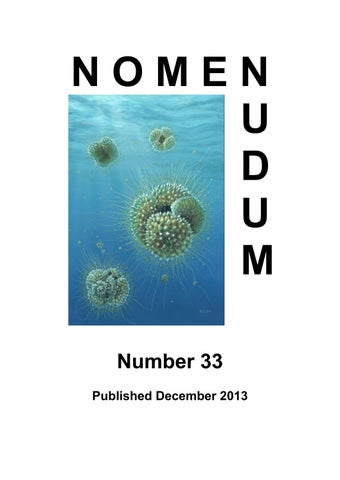
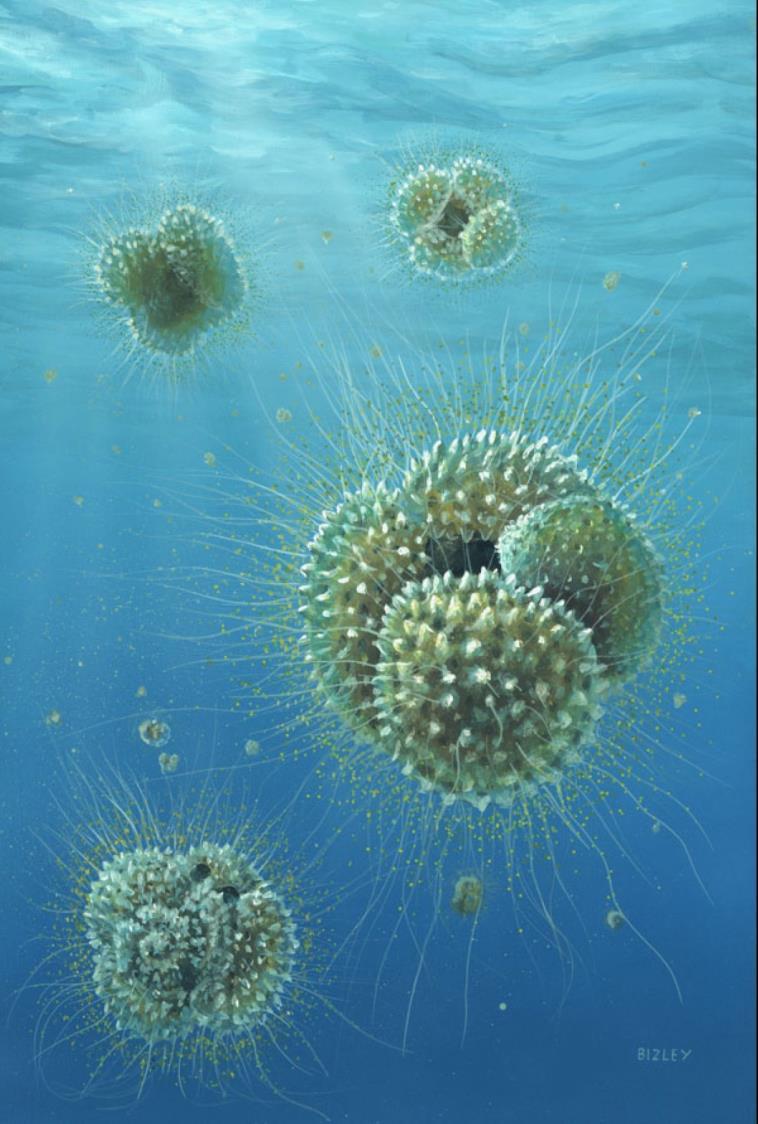
Front cover: illustration by Richard Bizley (website: www.bizleyart.com) to specifications by Paul Pearson, of the foraminifera Acarinina mcgowrani Wade & Pearson 2006. The last of its line when departing at the spectacular turnover marking the onset of the Priabonian, this planktonic foraminifer nevertheless can be portrayed very confidently, on its carbon and oxygen signatures, as possessing a cloud of photosymbionts in the sunlit upper waters of the Eocene ocean (courtesy of Brian McGowran).
Reports of Research Activities (by region and institution/company)
Australian Capital Territory ……………………………………… Page 18
New South Wales ………………………………………………… Page 22
Northern Territory ………………………………………………... Page 35
Queensland Page 35
South Australia ………………………………………………......... Page 50
Tasmania Page 62
Victoria …………………………………………………………… Page 64
Western Australia ………………………………………………… Page 74
New Zealand Page 78
Japan ……………………………………………………………… Page 96
Sweden Page 96
United Kingdom Page 101
United States ……………………………………………………… Page 102
Contact details for contributors to this issue (alphabetical) …………… Page 105
PRESIDENT’S MESSAGE
Dear Members and colleagues,
Please remember that the Australian Earth Science Convention will be held in Newcastle 7-10 July 2014. There, we will hold an annual general meeting and elect a new set of officers for AAP for the next two years! Please plan on attending if you can. There will be several sessions applicable for AAP members in the ‘Living Earth’ Theme and the abstract deadline is not until 14 March, 2014. Prominent palaeontologist Prof. Mike Archer (UNSW) will be a plenary speaker.
2013 has been a busy year for AAP. You will have noted in last year’s Nomen nudum that the AAP was going to investigate its rules in light of recent rule changes in GSA that were made in order to bring it into line with legal requirements for such organisations. As a consequence, the way AAP considers its rules has changed in order to bring it into line with broader GSA policy. During the annual general meeting in 2012 at the IGC in Brisbane, it was pointed out that AAP has operated with an independent set of rules and a ‘constitution’ for these last many decades, but that as a specialist group within GSA, it technically falls under existing rules of the larger Society, the most recent set being: the Final GSA Rules approved 13 August, 2013. You can find those rules at: http://gsa.org.au/management/rules.html. This is not a new requirement, as AAP rule 4 has always been “The Association is subject to the Rules and Standing Instructions of the Society”, but the Society rules have changed, and it is a legal requirement that AAP fall under those rules.
For the most part, the previously published AAP rules (see below) followed GSA rules in any case, but there are some minor differences, and, as previously noted, a specialist group within a larger organisation cannot have a separate ‘Constitution’ as it is not incorporated itself. Regardless, as a specialist group, AAP must conform to the rules that govern the broader Society and does not require a separate set of rules. Where procedures are required that are specific to AAP, especially in regards to our three publications, we will seek approval from the GSA executive committee for additional rules and/or procedures to cover the needs.
Old AAP Rules prior to IGC in 2012:
ASSOCIATION OF AUSTRALASIAN PALAEONTOLOGISTS
Constitution and Rules
(Accepted by ballot of members, September 1980; clause 10 modified by postal ballot, July 1984; clauses 5, 18 were modified, and clause 13 deleted, in a postal ballot, February 1994)
1. The association shall be called the 'Association of Australasian Palaeontologists'.
2. The Association is a specialist group of the Geological Society of Australia lncorporated, hereinafter called ‘the Society'.
3. The Association aims to promote the interests of palaeontology in the widest sense, to arrange conferences and symposia, to disseminate information concerning palaeontology and stratigraphy, to provide news about activities of membership and to produce a journal.
4. The Association is subject to the Rules and Standing lnstructions of the Society.
5. Membership categories of the Association are Life Member, Ordinary Member, Associate Member, Student Member and other categories which apply to membership of the Society.
Membership of the Association is open to all members of the Society, and associate membership is available to others on the nomination of two current members of the Association.
6. Membership is gained on payment of the approved annual subscription.
7. Persons or organisations who have paid $50.00 or more as a donation towards initiation of the Association shall be designated as Foundation Donors and shall appear in the membership lists as such.
8. Persons or organisations making a donation of $50.00 or more shall be designated as Benefactors of the Association and their names published by the Association.
9. There shall be elected from among the members of the Association a Committee to organise the affairs of the Association.
10. The Committee shall comprise a President, Vice-President, lmmediate Past-President, Secretary, Treasurer, and the three Editors of AAP publications (Alcheringa, AAP Memoirs, nomen nudum). All offices of the Association shall be honorary.
11. The Committee shall be elected by a postal ballot of all members. Tenure shall normally extend from the first day of April succeeding the election for a period of two years.
12. The ballot shall be conducted by the outgoing President and Secretary not later than 31st March of each alternate year. Nominations on notice of not less than one month shall be called for by the Secretary and may be made in writing by any two members with the consent of the nominee. Nominations must be received at least one month before the elections.
13. (deleted: postal ballot of February 1994)
14. At the time of election of the Committee, one regional representative shall be elected from each State, Territory or country of the Australasian region which has eight or more resident members.
15. Representatives shall be nominated and elected in the way prescribed for the Committee, but nomination and election shall only be by the members resident in that particular State, Territory or country of the Australasian region.
16. The Representatives shall be responsible for maintaining liaison between the membership and the Committee and shall be agents for the Journal.
17. The Committee shall have the power to co-opt members as it deems necessary.
18. At the recommendation of the Committee membership fees may be increased by a maximum of 1O% per annum. Greater increases can only be affected with the approval of a simple majority of members responding within sixty days to a postal ballot.
19. Any member in arrears in payment of dues shall cease to be a member of the Association.
20. The finances and assets of the Association shall remain the property of the Association. The accounts of the Association shall be audited before each General Meeting of the Association by an Auditor who is not a member of the Association.
21. General Meetings shall be held at least every two years, normally close to the end of the period of tenure of office bearers. Notification of such a meeting is to be posted to members at least two months prior to the due date. At such meetings the Committee shall report on the affairs of the Association and any member may raise a matter of business by written notification to the Secretary not less than one month before the meeting.
22. Committee meetings shall be held at times determined by the Committee.
23. Conferences and Symposia may be organised by members in the name of the Association subject to the approval of the Committee.
24. The Association shall publish a Newsletter and a Journal. The journal shall be published at least annually.
25. Members shall receive copies of all current regular issues of the Journal, Newsletters and Circulars. Non-members may purchase copies of the Journal and newsletter at prices to be determined by the Committee.
26. The Association may accept for publication in the journal:
a. Papers on all paleontological topics,
b. Symposia,
c. Discussion and
d. Other material deemed appropriate by the Editor.
27. The Association shall be entirely responsible for the preparation, refereeing and editing of the Journal.
28. Upon its publication a paper and the copyright thereof becomes the property of the Association unless held by the Crown. Requests to reproduce copyrighted material shall be directed to the Secretary of the Association for consideration by the Committee.
29. The Rules of the Association my, subject to approval by the Council of the Society, be added to, altered or repealed only in a postal ballot of all members. Two months' notice of the proposed changes will be given prior to the close of the ballot. Rules shall be changed by a simple majority of those voting. lf possible, discussion of major revisions to the Rules should take place at a General Meeting prior to the ballot being held.
30. Winding up procedures shall follow those of the Society.
31. Should any circumstances arise not provided for in these Rules the Committee is empowered to act as may see best in the interests of the Association.
32. Every edition of the Rules shall carry the date of publication and the Authority of the Association in the following terms:
Published on 23'd October, 1980 (date)
..............as approved by the Association on 1st October 1980 (date).
The preceding Constitution and Rules of the Association supersedes the Constitution and Rules as amended up to ......................... 1979.
Owing to the new rules approved by GSA in 2013, the majority of the previous AAP rules are no longer required in order to govern the Association.
Rules 1 through 4 are basically historical in nature.
Rule 5 becomes outdated as we cannot have membership categories different to the Society, but then again, the Society already lists twelve categories of membership, and they basically cover the various needs of our membership.
Rule 6 is covered under Society rules.
Rules 7 and 8 will require special permission from the Society if we wish to maintain them.
Rules 9 and 10 are covered under Society rules. Rule 10 currently contravenes their rules, as specialist groups are meant to have executive committees with a ‘chairperson, secretary, treasurer, and three members’. I think that AAP still must have the Editors and Associate Editor for Alcheringa as we discussed and approved at the last AGM. However, these special rules will now require approval from the GSA Executive.
Rules 11 and 12 are covered under Society rules.
Rules 13-16 were previously removed by AAP.
Rule 17 contravenes the new Society rules, but AAP already requires some special consideration regarding internal governance as it is a larger and more active group than the average specialist group.
Rule 18 – AAP can request permission to change our fees through GSA, as has always been the case, but the Society does not set a stated limit on the amount of any such increase.
Rule 19 – membership issues are dealt with by the Society, so this rule is obsolete. Rule 20 – contravenes the Society rules, as all finances technically belong to GSA.
Rule 21 – Society rules do not include specific rules governing AGMs for specialist groups, but they do require that AGMs are held and that committee members are elected at them. So maybe we can have a ‘procedure’ on AGMs and how best to ensure that knowledge is passed along with changing executives
Rule 22 – This is not specifically dealt with by the Society.
Rule 23 – The Society rules do not specifically regulate conferences organisation by specialist groups, but there would clearly need to be approval from appropriate levels of the Society for the name of the Association and Society to be involved. Hence, AAP would normally be required to seek approval from the GSA Executive Committee.
Rules 24-29 – As AAP is the only specialist group with a major publishing arm, we clearly must have specialised AAP procedures for running our publications. The Society rules deal only with a Society Editor (for AJES), so we will require approval for special rules for publication management In particular, the last AGM voted that our publications should be specifically noted by name in the ‘rules’ (Alcheringa, the Memoir series and Nomen nudum)
Rule 30 – This rule is basically superseded by current Society rules.
Rule 31 – This rule restates Society rules.
Rule 32 – It is not clear that the AAP Committee has any power to deal with unusual arising circumstances not otherwise covered by Society rules, and would normally be expected to act through the Society Executive. However, as GSA is seeking to revamp procedures in the coming year, that issue may be addressed through those changes.
Rule 33 – This rule is rendered unnecessary.
So in summary,
Most of the previous rules of the Association are no longer necessary or relevant under the new rules of GSA. The vast majority of them require no changes to the way AAP has always done business, but some formal special rules will be required, especially in regards to our publications and formalising a role for AAP editors on the AAP Executive Committee. In any case, as the Society revamps its procedures in the coming year, please pay attention to the process and take part if you can.
Regardless of rule changes, Palaeontology is booming in Australasia as evidenced by our publications. I would like to thank the members of the AAP Executive and particularly our editorial staff (Alcheringa – Stephen McLoughlin and Benjamin Kear; AAP Memoirs – John Laurie; and Nomen nudum – Ian Percival) for a fine year of publications. Have a nice holiday season.
Best wishes.
Prof. Gregory E. Webb President, Association of Australasian Palaeontologists School of Earth Sciences
The University of Queensland Brisbane, Australia
New AAP Memoir published
Holloway, D.J. & Laurie, J.R., 2013. Siluro-Devonian Studies 2. Memoirs of the Australasian Association of Palaeontologists 44, 207p.
Contents
Latest Early to early Middle Devonian acastid trilobites from the eastern part of the Dinant Synclinorium, Belgium (Rhenohercynian Zone) Allart P. van Viersen
Upper Homerian and Gorstian (Silurian) Retiolitidae (Graptolithina) from Lithuania and Latvia Anna Kozłowska & Sigitas Radzevičius
Conodont evidence for a latest Emsian to early Eifelian (Devonian) age for the phacopid trilobite Plagiolaria kitabi from Uzbekistan Gilbert Klapper, Catherine Crônier & Stana Vodrážková
Evolution, migration and biogeography of the plicathyridine brachiopods with a revision of Devonian faunas from the Kuznetsk Basin Tatyana L. Modzalevskaya, Fernando Alvarez & Maria A. Rzhonsnitskaya
The trilobite Cirriticeps gen. nov. (Proetida, Tropidocoryphidae) from the Silurian of New South Wales David J. Holloway
Sapelnikoviella santuccii, a new gypidulinid brachiopod genus and species from the upper Silurian of Glacier Bay National Park & Preserve, Southeast Alaska Robert B. Blodgett, Arthur J. Boucot, Valeryi V. Baranov & David M. Rohr
Morphological plasticity in the forgotten brachiopod Dicoelosia acutiloba (Ringueberg) from the lower Silurian Rochester Formation of New York Jisuo Jin & Pengfei Chen
Notes on the Early Devonian brachiopod Leptaena ouralensis de Verneuil, 1845
Anthony J. Wright
Coral-stromatoporoid faunas from the shores of a late Silurian island, Inner Mongolia, North China Rong Jiayu, Markes E Johnson, Deng Zhanqiu, Dong Deyuan, Xue Yaosong, B. Gudveig Baarli & Wang Guangxu
New palynological information from the subsurface Copo, Caburé and Rincón formations (upper Lochkovian-Emsian), Salta Province, Argentina Sol Noetinger & Mercedes di Pasquo
A mid Telychian (Llandovery) graptolite fauna from Mojiang, Yunnan Province, southwestern China Yuandong Zhang, Junxuan Fan, Yi Wang, Yanyan Song & Junfeng Cheng
First occurrence and biogeographical significance of the operculate tetracoral Goniophyllum from the Wenlock (Silurian) of Baillie-Hamilton Island, Canadian Arctic Anthony J. Wright
Late Devonian (Frasnian) trilobites and brachiopods from the Soh area, Central Iran Mansoureh Ghobadi Pour, Leonid Popov, Mehri Hosseini, Artabaz Adhamian & Mehdi Yazdi
The Silurian of central Kentucky, U.S.A.: Stratigraphy, palaeoenvironments and palaeoecology Frank R. Ettensohn, R. Thomas Lierman, Charles E. Mason, William M. Andrews, R. Todd Hendricks, Daniel J. Phelps & Lawrence A. Gordon
Morphology and taxonomy of the late Silurian rhynchonellide brachiopod Notoconchidium Anthony J. Wright & Michael J. Garratt
This volume is obtainable from:
Publications
Geological Society of Australia Incorporated
Suite 61
104 Bathurst St
Sydney NSW 2000
Telephone: (02) 9290 2194
Facsimile: (02) 9290 2198
E-mail: info@gsa.org.au
Homepage: http://www.gsa.org.au
Price: Australia: $A94.00
Overseas: $A126.00
URGENT: Ajax Mine (South Australia) Heritage Nomination
Ajax Mine in the Flinders Ranges of South Australia is a classic Cambrian archaeocyath locality, being the type locality for the great majority of described Australian archaeocyaths. The site is near an active mining operation currently run by Perilya Freehold Mining, which operates the Beltana pit. Unfortunately a large area of the fossiliferous interval had been bulldozed at some time in the past to facilitate exploration drilling.
Several years ago, Drs Pierre Kruse and Jim Gehling prepared a heritage conservation nomination seeking permanent protection for the fossiliferous locality and submitted this to the Heritage Committee of the Geological Society of Australia. After two years of deliberation, the nomination was adopted and added to GSA’s list of heritage sites. This approval, however, confers no official or legal protection to Ajax Mine.
The GSA committee then passed the nomination to the heritage committee of the SA Department of Environment, Water and Natural Resources (DEWNR), for consideration toward placement on the South Australian Heritage Register (see http://www.environment.sa.gov.au/our-places/Heritage/SA_Heritage_Register for an overview). Placement on the Heritage Register is the only means of conferring meaningful legal protection on the locality.
We are now asking interested palaeontologists to send a submission in support of the nomination of Ajax Mine for the Heritage Register, so that this classic locality can be protected from further degradation. The Ajax Mine is listed on the DEWNR website at http://www.environment.sa.gov.au/ourplaces/Heritage/SA_Heritage_Register/entries-confirmations under Provisional entries in the SA Heritage Register
Please rally to the cause of protecting this world-class Cambrian fossil locality. Instructions for lodgement of submissions are provided at the bottom of the submission form, accessible via the web address above. Note deadline for submissions: 23rd January 2014
OPINION (by Carole Burrow, Queensland Museum)
Conodonts and vertebrates - sisters, or distant cousins?
I was interested to read the recent article by Murdock et al. (2013), which showed that euconodont crown tissue and vertebrate enamel are not homologous tissues, and must have evolved independently. What a revelation! Well, maybe not so much. The structure of conodont element and vertebrate tooth tissues had already been shown to differ (Kemp & Nicoll 1995, Trotter et al. 2007, Turner et al. 2010), and the conodont crown tissue and vertebrate enamel are not "absolutely indistinguishable", to quote Donoghue from Kaplan (2013). In spite of the new information given by Murdock et al. (2013), these very authors continue their mantra that "Conodonts are an extinct group of jawless vertebrates". How much longer will it take for even the most strident combatants who push the idea that conodonts are vertebrates, encouraged in particular by a 'seminal' analysis over a decade ago (Donoghue et al. 2000), to make an aboutface and join the naysayers (rational people like me) who think that available evidence indicates that conodonts are NOT vertebrates (Turner et al. 2010, Blieck et al. 2010). Unfortunately, most interested observers other than specialist palaeoichthyologists have undoubtedly been persuaded by the onslaught of publications, of a general and specialist nature over the last few decades, which have stated unequivocally that conodonts are vertebrates. This view is pushed by that old advertising approach – say something loud enough and often enough, and you will be believed, even if you have no new facts or evidence to support your position (or in this case, even when you have new evidence that contradicts your view). Another furphy committed by Kaplan (2013) in his comment on the Murdock et al. (2013) article, was to claim that "For years, palaeontologists have thought that the first bones to emerge were teeth, and that the protective armour coverings of early fish, made of similar material, followed"again, not so! There has been a hiccup in recent years, with a group (OK, basically the same group pushing conodonts as vertebrates) promoting the inside-out hypothesis, but the "long-standing assumption" has actually been the outside-in hypothesis, that teeth developed from dermal odontodes.
One of the few eminent palaeoichthyologists who supported Phil Donoghue and his collaborators in their campaign to force conodonts into the vertebrate club is Prof. Phil Janvier. While accepting the value of the work and results of the latest article by Murdock et al. (2013), Phil Janvier (2013) is still reluctant to release the conodonts from the vertebrate fold, even while conceding that "conodonts show no clear evidence of gill bars or gill pouches" – which seems a pretty major absence to me.
Turner et a. (2010) analysed all known features of conodonts and compared them with chordate groups, then based on the same characters (at least, those codable for fossils) and outgroups (tunicates and cephalochordates) used by Donoghue et al. (2010), ran a cladistic analysis which concluded that euconodonts are best treated as nonvertebrates (and by phynetic arguments, possibly non-chordates). Given that all nonconodont taxa in both analyses are chordates, we are no closer to solving the problem of where conodonts belong. A wider analysis incorporating non-chordate groups might shed light on their position in the tree of life, but in the meantime a lot of palaeoichthyologists would be happy to see labels like 'eel-like', 'teeth', 'vertebrates', and worst of all, 'stem gnathostomes', expunged from descriptions of conodonts!
References
Blieck A., Turner S., Burrow C.J., Schultze H.-P., Rexroad C.B., Bultynck P. & Nowlan G.S. 2010. Fossils, histology, and phylogeny: why conodonts are not vertebrates. Episodes 33, 234-241.
Janvier P. 2013. Led by the nose. Nature 493, 169-170.
Kaplan M. 2013. News: Fossil scans reveal origins of teeth. Nature 502, doi:10.1038/nature.2013.13964.
Kemp A. & Nicoll R. S. 1995. On conodont and vertebrate hard tissues. In Radlanski R.J. & Renz H. (eds.) 10th International Symposium on Dental Morphology, Berlin, pp. 7–12.
Murdock D.J.E., Dong X.-P., Repetski J.E., Marone F., Stampanoni M. & Donoghue P.C.J. 2013. The origin of conodonts and of vertebrate mineralized skeletons. Nature 502, doi:10.1038/nature12645.
Trotter J.A., Gerald J.D.F., Kokkonen H. & Barnes C.R. 2007. New insights into the ultrastructure, permeability, and integrity of conodont apatite determined by transmission electron microscopy. Lethaia 40, 97-110.
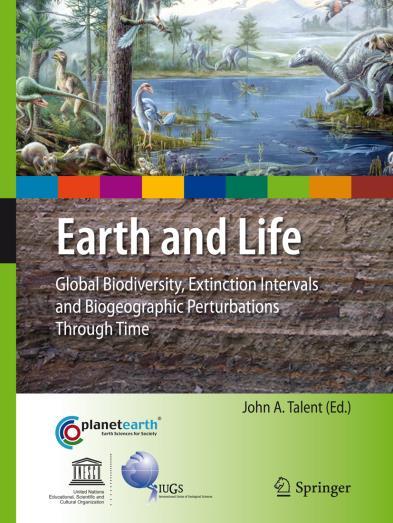
Earth and Life – Global Diversity, Extinction Intervals and Biogeographic Perturbations through Time (International Year of Planet Earth series)
J.A. Talent (editor) 2012
Published by Springer, Dordrecht
ISBN 978-90-481-3427-4
Hardbound xxxii+1107 pp, 620 figs € 99.95
Also available as a printed e-book for € 24.99 from springer.com/mybook
Let’s not beat around the bush – this volume is outstanding, and I have no hesitation in thoroughly recommending it. As befits a global compilation of current knowledge on some of the most actively-researched topics in palaeontology, it fills more than 1100 pages and is copiously illustrated (429 of the figures are in colour). Tomes of this size and gravitas don’t get published every year – this one had to wait for the International Year of Planet Earth to be initiated, and then took around three years to produce. It is a great credit to John Talent, Emeritus Professor at Macquarie University and former Director of MUCEP there, whose persistence and focus drove the work to completion. As editor of Earth and Life, John hand-picked the contributors, ensuring that (almost)
all manuscripts sought for the volume were submitted in the required timeframe, reviewed, and edited to the highest standard. As would be expected, the grammar is impeccable throughout, with many of the authors for whom English is not their first language acknowledging John’s assistance in ensuring a smooth and readable text. But as John comments “An author’s voice and the readability of his/her contribution can easily be lost by over-editing ... care has been taken to maintain the personal voice and viewpoints of the authors”. This was important in ensuring the individuality of the 36 manuscripts contributed by 74 authors in all.
The International Year of Planet Earth, a joint initiative of UNESCO and IUGS, was actually a triennium extending from 2007 to 2009, centred on 2008 as the actual IYPE. To commemorate this event, 10 global themes were developed that addressed a broad range of issues of international significance, and the latest research on these topics (often in the form of state-of-the-art reviews) were assembled into a series of volumes published by Springer. Earth and Life primarily considers the broad pattern of increasing biodiversity over geological history (particularly during the Phanerozoic), and investigates recurrent events involving biotic crises which punctuate this history. A recurring theme in the volume is that the Big 5 first-order extinction events, popularised in the scientific media, are in fact composed of around 85-90 subevents, recognisable based on increasing precision of the biostratigraphic and isotopic timescales and with a greater focus on global databases incorporating first and last appearances and range data for genera and species.
With contributing authors drawn from the wide circle of John’s colleagues and co-researchers, the Australasian connection is particularly evident, including chapters by Carole Burrow and Sue Turner on Devonian fish taphonomy and microfossils in southeast Australia, an analysis of the mid-Silurian Ireviken Event at Boree Creek in central west New South Wales (based on the late Peter Molloy’s PhD study, with Andrew Simpson), and aspects of the late Silurian Lau Event both globally and in the Broken River Basin of north Queensland (contributors John Talent, Ruth Mawson, Anita Andrew and Andrew Simpson in a chapter with Lennart Jeppsson as lead author). Higher in the column, Monica Campi reviews the biogeography and climates of the Permian, Michelle Guzel contributes a study on Jurassic and Early Cretaceous ostracods from Western Australia, and a chapter by Tom Rich and Pat Vickers-Rich reappraises Mesozoic mammal biogeography. Two other papers deal largely with New Zealand biotas, both from post K/T boundary strata; the first by Jeff Stilwell and Eckart Hakansson analyses short-term survivorship of ammonoids, a bizarre gastropod, possible non-avian dinosaurs, and cheilostome bryozoa. The following chapter by Vivi Vajda (Sweden) documents fungi from post K/T boundary strata of the Greymouth district in the South Island. A chapter by Brian McGowran elaborates on Cenozoic foraminiferan evolution in response to environmental shifts over this era, and there is a comprehensive survey of the rise of Australian marsupials over the last 55 million years by Karen Black, Mike Archer, Sue Hand and Henk Godthelp. The tome is divided into five parts which span the Phanerozoic, including Part I: articles of a general nature; Part II: examples of evolution in various phyla and classes; Part III: global extinction events and biocrises; Part IV: palaeobiogeography; and Part V: Cenozoic Era. The spread of topics dealt with, ranging from Cambrian to Recent and including a wide variety of most phyla encountered during this timeframe, should ensure that all readers will find something of interest. However, it would be impossible to adequately review here, even briefly, all 36 chapters in the volume, so I will confine my comments to those I found to be of particular relevance to my own interests and specialisations. The first paper, by Martin Aberhan and Wolfgang Kiessling, reassesses
Phanerozoic marine biodiversity with the aid of the Paleobiology Database, resulting in a markedly different diversification pattern compared with the more ‘traditional’ curve established by J.J. Sepkoski, especially for the Cretaceous Period and Cenozoic Era. Bruce Lieberman and Adrian Melott examine the evidence for large scale periodic astronomical cyclicity influencing biotic events and crises, and find some scientific basis for a 62 Myr periodicity (though more work is needed in this field). Then follows an interesting and wide-ranging chapter written by John Dodson (of ANSTO in Sydney) which looks at the long history of climate change through time. An extensive review, 66 pages long, of the development of intertidal biotas through the Phanerozoic is provided by Markes Johnson and Gudvieg Baarli, supported by a comprehensive bibliography separately covering rocky shore, sandy and muddy substrates. Carlton Brett (who has a couple of papers in this volume) and colleagues compare encrusting and endolithic communities on shell substrates from Late Cambrian to the Recent, contrasting fossil examples with experimental studies on molluscan shells deployed at depths from 15200+ m in a transect off the Bahamas. Stephan Schaal reviews the remarkable Eocene lagerstätten of the Messel Pit, a former oil shale mine in the state of Hesse, Germany, now a World Heritage site with research overseen by the Senckenberg Museum.
Part II commences with a most interesting paper documenting the palaeontological riches of two famous sites in South China – the Weng’an locality of Edicaran age in Guizhou with the oldest metazoa fossils (including embryos), and the Maotianshan Biota from Chengjian in Yunnan with its Early Cambrian fauna similar to (but considerably older than) the Burgess Shale fauna of Canada. This paper, by JunYuan Chen, is essentially an atlas of all invertebrate groups represented in the Maotianshan Biota, accompanied by illustrations in stunning clarity, and for me is a highlight (among many) of the volume – I hope to see this locality during a field conference in Yunnan in 2014. The subsequent chapter by Arnie Miller deals with the Ordovician Radiation (a subject dear to my heart) and I am already planning to cite it in the near future. It has been nearly 45 years since the gastropod and univalve mollusc volume of the Treatise on Invertebrate Paleontology was published, so Jiri Fryda’s paper on the phylogeny of Palaeozoic gastropods as inferred from their ontogeny is indeed welcome, especially since it reviews the current classification of all groups within the class and is supported by excellent illustrations and an extensive bibliography. Another comprehensive chapter in Part II, by Eberhard Schindler, assembles current knowledge about the Tentaculoids, “a class without a firmly agreed name, without agreement on the life habits of some of its orders, and with some imprecise information on stratigraphic ranges” as the author states.
Gerta Keller’s paper, on the Cretaceous-Tertiary Mass Extinction, Chicxulub Impact, and Deccan Volcanism, makes a compelling case for the asteroid impact event taking place 300,000 years prior to the K/T boundary, with the extensive Deccan volcanism providing the final nail in the coffin for most of the remnant clades that were struggling to cope with earlier catastrophes. This paper certainly needs to be brought to the attention of the popular press, much of whom seem to be fixated on the asteroid as being solely responsible for the demise of the dinosaurs. Keller demonstrates with the support of a comprehensive database of more than 150 sections across the boundary that the story is not that simple.
It may be churlish, given my admiration for this volume, to point out a few very minor typographic errors that slipped past the gaze of John and his band of volunteer assistants (most ex-MUCEP students). Perhaps they were left in so that like mediaeval artisans, the finished work would purposely not be perfect. In any case I really had to search hard to find these: p115 (Acknowledgements) Ceith instead of Keith; p119
(References) Merlg instead of Mergl; p342 (Fig. 131) tentacls instead of tentacles; and p670 (final line) O. excavate in place of O. excavata – that one can be blamed on the automatic spellcheck in Word, which in fact just tried the same trick on me. In a tome of this size and scope, so few trivial errors are indicative of excellence in editing.
Finally, the price. In this world it sometimes seems that, to quote a Scottish lighthouse keeper as the last beacon he had manned was automated “everything is costed, nothing is valued”. This volume is amazingly good value considering the research that has gone into the chapters, and the editorial diligence that has resulted in such a high-quality monumental work. Encourage your institutional library to invest in the hardbound edition (around A$185 or NZ$200 at today’s exchange rate) and purchase the printed e-book version – obtainable from the Springer website – a bargain at less than A$50, for yourself.
Ian Percival Geological Survey of NSW
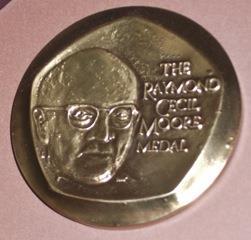
Award of Raymond C. Moore Medal to Prof. K.S.W. Campbell
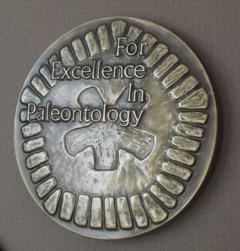
An outstanding honour was conferred earlier this year on Ken Campbell, who was chosen to be the 2013 recipient of the Raymond C. Moore Medal, awarded by SEPM (Society for Sedimentary Geology) for Excellence in Paleontology. Ken was nominated by his peers and selected from a very competitive field of nominees. His collective body of work was judged by the selection committee to be exceptional and the SEPM Awards Committee concurred with the nomination that "the extraordinary breadth and global significance of his research achievements, his diverse international collaborations, and the exceptional scientific progeny his teachings have spawned all qualify him for this appropriate honor". Ken joins a distinguished list of past Moore Medalists, and is the first Australian resident to hold the award.
The medal was awarded to Ken (in absentia, due to poor health) at SEPM’s 2013 annual awards reception, held in Pittsburgh, Pennsylvania (USA) on May 21, 2013.
The Raymond Cecil Moore Medal for Excellence in Paleontology
OBITUARY
Noel William Schleiger (1926-2013)
Noel William Schleiger was born in Bendigo. His mother, Ede, and father, Eric, a butcher, were both energetic people. As with his parents, determination, perseverance and generosity were in Noel’s DNA. Throughout life, he retained a sentimental attachment to Bendigo, its remarkably repetitive geological structure and amazing Ordovician graptolite fossils: some multi-branched, others resembling tuning forks. After undertaking a BSc in geology and mathematics at Melbourne University, he was appointed to the no-longer existing primary school in Erin St in Melbourne’s inner suburb, Richmond, where he had the good fortune to meet Enid Esme Taylor, who became his highly supportive wife. They produced two children: Barbara and John. Noel was appointed to a teaching position at the Seymour High School, where he remained for several years. It became the base for what developed into an intense attack on the stratigraphy, sedimentation, structure and biostratigraphy (all phyla from graptolites to brachiopods, trilobites and land plants) of the Silurian and Early Devonian rocks of central Victoria. He transferred subsequently to Eltham High School where he taught mathematics and science for several years, built a house at 1 Astley St, Montmorency (where he lived for 52 years) and set about filling the underside of the house with collections he kept making all over central Victoria. A specific room became his study; it became so crammed with books, reprints, manuscripts and drafts of maps (he was a fanatic compiler of maps) that it had become almost nonfunctional well before his death.
Noel’s last teaching position (until retiring in 1992) was at the State College of Victoria at Coburg (now a division of the Royal Melbourne Institute of Technology University) where he was head of the Department of Mathematics and, for a time, the College’s Vice-Principal. There he was the moving force in developing a brilliantly new mathematics curriculum for primary schools in the state of Victoria. Throughout his career, Noel was driven by a passion to teach―mathematics, geology (in all its branches, but especially sedimentation and palaeontology), biology and environmental science at all levels from primary school to university level.
Several years after Enid’s death, Noel, who had become a devoted member of the Field Naturalists’ Club of Victoria, teamed up with another spirited member of the FNCV, Dorothy Mahler. Both were workaholics; their capacity to edit all manner of publications and jointly organize FNCV field ventures was prodigious. Enid and Noel travelled widely; the same pattern was repeated by Dorothy and Noel: through China, Europe and the USA.
Noel’s first major production was in sociology: on the social relationship of transported and non-transported pupils at Seymour High School; it was a 356-page monster published by Melbourne Teachers College where he had been a Diploma of Education student a few years earlier. He published important papers on bedding features of the Silurian-Devonian sediments of the Seymour district, quantitative studies of the Late Silurian-Early Devonian conglomerates of the Tallarook and Seymour East synclines of central Victoria (1964, J. geol. Soc. Aust. 11: 1-31; Ibid. 217-233), and studies of the orientation patterns of Ordovician graptolites in central Victoria (1968, J. sed. Res. 88: 462-472; 1986, Geol. Soc. London spec. Pub. 20: 7996; Ibid. 249-259). He compiled and edited a much-acclaimed popular volume (1995, Roadside Geology Melbourne to Ballarat, 98 p. Vic. Division of the Geol. Soc. Aust. and Field Nat. Club of Victoria, Blackburn). Noel’s voluminous collections of
monograptids greatly advanced the late Hermann Jaeger’s pivotal work on the graptolites of central Victoria (1966, Proc. roy. Soc. Vic. 79: 393-413; J. geol. Soc. Aust. 14: 281-286; and unpublished identifications).
He published 19 papers in The Victorian Naturalist on all aspects of natural history, among them a paper on the geomorphology of the Murray River Basin (2002, Vic. Nat. 119: 95-101), and one with Dorothy Mahler on the accumulations of Recent molluscan shells on the Bellarine Peninsula (2000, Vic. Nat. 117: 14-30). He was a member of the Council of the Field Naturalists Club of Victoria for 22 years, ran its Environment Committee for 10 years, was founding editor of its newsletter, and was the driving force in a field program on mapping of fungi.
Noel produced four reports, each of them between 50 and 100 pages, on the teaching of mathematics: on symmetry and its applications, rod-mathematics, individualized programs, and Mathsbank (1973, 1975, 1976, 1983). These were published by the Australian and Victorian Mathematics Associations, and the State College of Education Coburg. He was a polymath, eager to be a ‘sounding board’ for ideas, enthusiastically offering to help colleagues, many of them earth scientists, with mathematical methods of testing and presenting their data; he was a giver in every sense of the word. Most of his geological data including map compilations, filling much of his study in Tehan Street, Montmorency, remain unpublished. …
Many of Noel’s key qualities became apparent to me on first meeting him back in the mid-1950s: his enthusiasm about everything, his sincerity, his lack of ambition. He was uncomplicated, a man of great energies and formidable will, who was at ease with everyone he met, and had a keen sense of humour his conversation tending to be shot through with puns… For Noel, life was too short for miserable ambitions, intellectual point-scoring, or worrying about the ‘impact factors’ of his publications. He never had time to formulate research proposals and submit them. He felt that to have done so would have taken too much time that he preferred to devote to his research and discussions with colleagues. All his research was funded out of his own pocket. He was a gem!
Soon after I had completed an MSc, mainly on brachiopods from the Early Devonian of eastern Victoria, Noel appeared on my doorstep with boxes of rocks with a few poorly preserved brachiopods and bivalves he had found in the vicinity of Seymour and Puckapunyal from places where no one else had reported anything, except a supposed lycopod reported in the Progress Reports of the Geological Survey of Victoria as Lepidodendron from Seymour, but without a precise locality; it was thought to imply a Carboniferous age. Noel’s treasures included a couple of specimens of a large lycopod that he found in the extensive railway cuttings excavated at Seymour for the Melbourne-Sydney railway, inaugurated in 1872. Though the lycopods bore some resemblance to Lepidodendron and were very likely the creature that had been identified 85 years earlier as that genus, they were in fact specimens of Baragwanathia, thought for many years to be the oldest land plant in the World. It was first described from several localities in east-central Victoria from Matlock, Yea and Alexandra―where, typically, it occurred in association with graptolites of the genus Monograptus, often in considerable abundance The hunt for lycopods and graptolites in the Seymour area then became serious!
Most of Noel’s weekends became devoted to exhaustive examination, sampling and taking measurements of bedding phenomena and searching with unparalleled intensity for fossils in the Silurian and Devonian rocks exposed in every rail or road cutting and every excavation in an area that seemed to become larger with
every carload of fossils he brought to me. Eventually he had worked his way over about 3,000 square kilometres of countryside with Seymour at its centre: from Locksley in the north to Wallan in the south, almost to Yea in the east and Tooborac in the west, with ‘tentacles’ of investigation extending to Bendigo, Daraweit Guim, Bullengarook, Clonbinane, Costerfield, Flowerdale and various instructive road cuts within the Melbourne metropolitan area, seemingly wherever shelly fossils or graptolites could be found, bedding phenomena measured, orientations of fossils recorded, and dips taken. If outcrops were not quite good enough, Noel dug trenches. At Clonbinane, his son John helped dig trenches and what seemed like post holes for trilobites, crinoids, starfish and brachiopods in the Early Devonian rocks. Noel made voluminous collections of graptolites from Bendigo and Bullengarook and did directional studies on them. In later years, he introduced many groups of students and enthusiastic amateurs to the sedimentary phenomena displayed by Silurian rocks in the road cuttings along Victoria Street, Doncaster, near the Ruffey Lake Park. Henry Moors reminded me that “Noel used to go to the field in a pair of farmer's bib-and-braces overalls because he liked the large number of pockets. He was very inventive and made many tools himself, including clinometers and goniometers. One day when we met to review what we had done on our collaboration, he stunned me with a series of cross-plots of various parameters which clearly showed different fields. I asked him in wonder why he had chosen these parameters. He replied that he had no scientific basis; it was just trial and error. He was a very inventive and hard working person.”
A celebration of Noel’s life took place in the Inglewood Estate Chapel, Kangaroo Ground, on 2 May 2013. His coffin bore the largest pile of the exclusively Gondwana Proteacea (proteoids and grevilleoids) I have ever seen. Fittingly, it was an extraordinary day, the sort of autumn day and setting he would have chosen if he had any say in the matter: blue skies, a diversity of birds and trees, a non-denominational chapel of natural stone, a few items of rusting farm machinery, a large dam with weeping willows. The only thing missing was a few road cuttings that he would like to have demolished in search of more data. Noel was buried, with his field hat on his coffin, in the Kangaroo Ground Cemetery, northeast of Melbourne
John A. Talent, Earth and Planetary Sciences, Macquarie University
REPORTS OF RESEARCH ACTIVITIES
AUSTRALIAN CAPITAL TERRITORY
Geoscience Australia, Canberra
John Laurie divides his time between working on the Cambrian biostratigraphy of the Georgina Basin and the Chemical Abrasion-Isotope Dilution Thermal Ionisation Mass Spectrometry (CA-IDTIMS) project. The former is mostly based upon the study of agnostid arthropods in sampled cores from petroleum wells and stratigraphic drillholes. Now that this is actually part of my paid employment and does not have to be done in my spare time, several publications are likely to result within the next year or so, rather than every 3 or 4 years as before. The CA-IDTIMS project arose out of work undertaken by Ian Metcalfe (UNE) and Bob Nicoll (ANU & GA) originally on the Permian-Triassic boundary in China. Numerous samples have been taken from among the myriad tuffs in the Sydney, Gunnedah and Bowen basins and these precise dates not only allow us to calibrate the stratigraphy, but also to calibrate the palynostratigraphy against the geological time scale (GTS 2012), a calibration which previously has been based on very slender evidence. Initial results indicate that the palynostratigraphy has been calibrated up to 4 million years ‘too old’. Being the only palaeontologist still employed as such at GA, as well as being an experienced editor, John also continues to have input into several other projects undertaken by the organisation (Acreage Release, Timescales, Education etc.). Several other projects are under way including one on Late Cambrian trilobite faunas from southernmost Tasmania (with Jim Jago and Kim Bischoff). John also continues editing the AAP Memoirs. In the last 12 months, one volume (Siluro-Devonian Studies 2) has been published and two more (CambroOrdovician Studies V; Tarim Basin Ordovician trilobites) are nearing completion.
Alvaro J.J., Ahlberg P., Babcock L.E., Bordonaro O.L., Choi D.K., Cooper R.A., Ergaliev G.K.H., Gapp I.W., Ghobadi Pour M., Hughes N.C., Jago J.B., Korovnikov I., Laurie J.R., Lieberman B.S., Paterson J.R, Pegel T.V., Popov L.E., Rushton A.W.A., Sukhov S.S., Tortello M.F., Zhou Z.Y. & Zylinska A., 2013. Global Cambrian trilobite palaeobiogeography assessed using parsimony analysis of endemicity. 265-288 in Harper D.A.T. & Servais T. (eds), Early Palaeozoic Biogeography and Palaeogeography. Geological Society, London, Memoirs 38
Laurie J.R., Bodorkos S., Smith T. & Nicoll R.S. 2013. Radioisotopic calibration of Australian stratigraphy and biostratigraphy. AusGeoNews 111, 6-11.
Smith T., Laurie J.R., Nicoll R.S., Kelman A. & Ogg J., 2013. Time after Time: adapting to the Geological Time Scale 2012 (GTS 2012). AusGeoNews 111, 14-18.
Research School of Earth Sciences, ANU, Canberra
Patrick De Deckker is continuing his investigations on Late Quaternary palaeoenvironments using microfossils. In order to achieve this, he also has to collect living organisms or their chemical composition in order to define proxies for past
environmental conditions. His ARC-DP grant on reconstructing past sea-surface temperatures in the Australian region over the last millennium will terminate this year, and papers are being prepared for publication as this report is being written. Patrick’s PhD student Nicolas Darrenougue’s thesis on rhodoliths as proxies of shallow water in the oceans has been accepted and paper being submitted too. Nicolas returned to the Basque country where he belongs.
Publications
Darrenougue N., De Deckker P., Payri C., Eggins S. & Fallon S. 2013. Growth and chronology of the rhodolith-forming, coralline red algal species Sporolithon durum from the tropics. Marine Ecology Progress Series 474, 105-119.
De Deckker P. & Martens K. 2013. Extraordinary morphological changes in valve morphology during the ontogeny of several species of the Australian ostracod genus Bennelongia (Crustacea, Ostracoda). European Journal of Taxonomy 36, 1-37.
Dean L.F. & De Deckker P. 2013. Recent benthic foraminifera from Twofold Bay, Eden NSW: community structure, biotopes and distribution controls. Australian Journal of Earth Sciences 64, 475-496.
Lopes dos Santos R., De Deckker P., Sinninghe J.S. & Schouten S. 2013. A late Quaternary sedimentary record of steryl alkyl ethers from offshore southeastern Australia Organic Geochemistry 54, 140-145.
Lopes dos Santos R.A., De Deckker P., Hopmans E.C., Magee J.W., Mets A., Sinninghe Damsté J.S. & Schouten S. 2013. Abrupt vegetation change after the Late Quaternary megafaunal extinction in southeastern Australia. Nature Geoscience DOI: 10.1038/NGEO1856
Lopes dos Santos R.A., Spooner M.I., Barrows T.T., De Deckker P., Sinninghe Damsté J.S. & Schouten S. 2013. Comparison of organic (UK37, TEXH86, LDI) and faunal proxies (foraminiferal assemblages) for reconstruction of late Quaternary sea surface temperature variability from offshore southeastern Australia. Paleoceanography 28, 377-387.
Munday C.I., O'Loingsigh T., Tapper N.J., De Deckker P. & Allison G.E., 2013. Utilisation of Rep-PCR to track microbes in aerosols collected adjacent to their source, a saline lake in Victoria, Australia. Science of the Total Environment 450451, 317-325.
Reeves J.M., Bostock H.C., Ayliffe L.K., Barrows T.T., De Deckker P., Devriendt L.S., Dunbar G.B. et al. 2013. Palaeoenvironmental change in tropical Australasia over the last 30,000 years: a synthesis by the OZ-INTIMATE group. Quaternary Science Reviews 74, 97-114.
Smith M., De Deckker P., Rogers J., Brocks J., Hope J., Schmidt S., Lopes dos Santos R. & Schouten, S. 2013. Comparison of UK37, TEXH 86 and LDI temperature proxies for reconstruction of south-east Australian ocean temperatures. Organic Geochemistry 64, 94-104.
Wilkins D., Gouramanis C., De Deckker P., Fifield L.K. & Olley J. 2013. Holocene lake-level fluctuations in Lakes Keilambete and Gnotuk, southwestern Victoria, Australia. The Holocene 23, 804-815.
Gouramanis C., De Deckker P., Switzer A.D. & Wilkins D. 2013. Cross-continent comparison of high-resolution Holocene climate records from southern AustraliaDeciphering the impacts of far-field teleconnections. Earth-Science Reviews 121, 55-72.
Desmond Strusz (School Visitor, Earth & Marine Sciences, RSES ANU, and Research Associate, Australian Museum, Sydney) continues his cooperation with Ian Percival on
the Silurian brachiopod fauna of the Quidong area near Delegate, NSW, using material collected by previous ANU students and in the Geoscience Australia collections. In June he was in Scandinavia, attending the joint meeting in Lund of IGCP591 (The Early to Middle Palaeozoic Revolution) and the International Subcommissions on Cambrian, Ordovician and Silurian Stratigraphy, with supporting funding from the Australian IGCP committee. The subsequent field trip in Sweden and the Oslo region provided an interesting contrast to the Ordovician and Silurian ‘geosynclinal’ sequences of eastern Australia.
Publication
Strusz, D.L., 2013. Silurian brachiopods from the Cappanana Formation east of Cooma, southern New South Wales. Proceedings of the Linnean Society of New South Wales 135, 1-17.
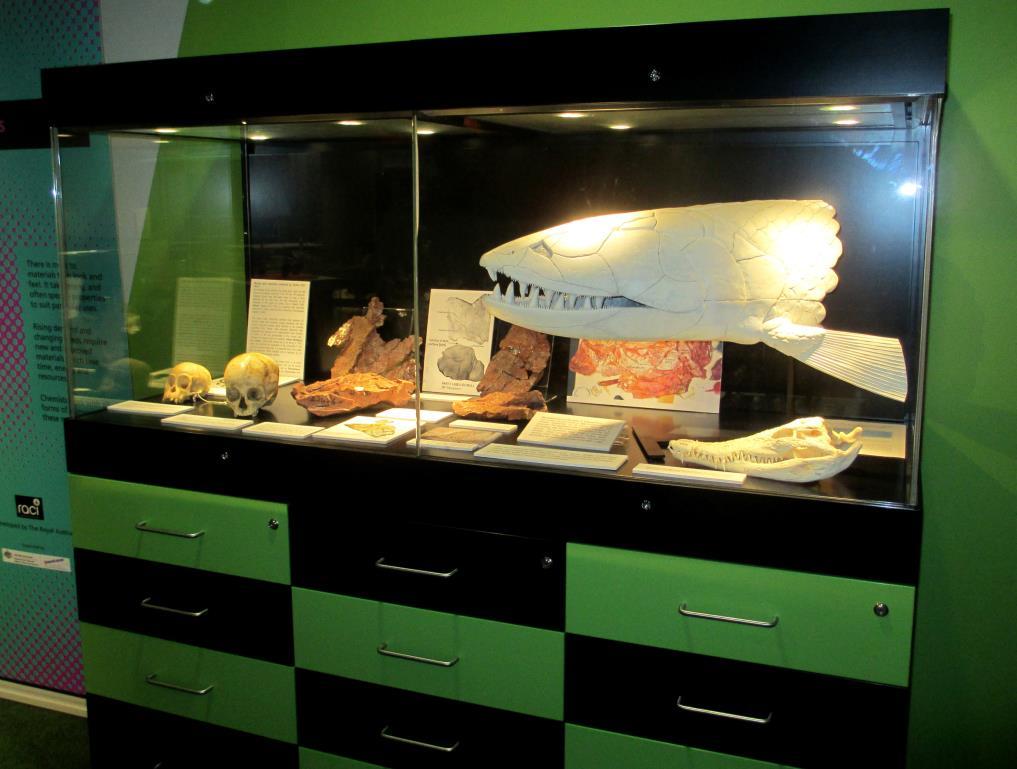
Gavin Young (College of Science, ANU, Canberra) continues research on Palaeozoic vertebrates under an ARC Discovery Grant ‘Origin of jaws – the greatest unsolved mystery of early vertebrate evolution’; co Chief Investigator Prof. Tim Senden, Head, Dept. Applied Maths, ANU). Partner investigators include Kate Trinajstic in Perth, Carole Burrow in Brisbane, and John Long, recently returned from Los Angeles to Flinders University, Adelaide. In March, the culmination of some five years field collection and lab preparation was realized with the publication in PLOS One of the giant lobe-finned fish Edenopteron keithcrooki, the semi-articulated head skeleton of which was discovered in 2008 in the Upper Devonian rocks on the NSW coast south of Eden. The occurrence was featured by Paul Willis on an ABC Catalyst program in September 2011. The species name acknowledges former ANU sedimentologist and stratigrapher Dr Keith Crook, who instigated the ANU student mapping projects on the south coast during the late 1960s and 1970s that led to many important Devonian fish discoveries. A life-sized model of the head, built by Keith Crook’s son Baz Waterhouse using templates of the original bones, has been on display in Questacon in Canberra from August-October 2013 (see figure below).
In April a paper in Science with lead author Kate Trinajstic documented preserved muscle tissues in various fossil fish from the famous Gogo locality in the Kimberley of WA. A student project by Yuzhi Hu on the lobe-finned fish Gogonasus has involved reconstructing the shoulder girdle from the CT dataset of the most complete Gogonasus specimen, found by Tim Senden in 2005 and prepared by John Long in Melbourne (published in Nature 2006, 444, 199-202). Work also continues on Devonian fossil fish from the Burrinjuck-Wee Jasper area, especially acid-prepared placoderms from the limestones (3D printer reconstruction of a complete Buchansteus skull and braincase by Yuzhi Hu), and most recently plant material from localities in the overlying Hatchery Creek Group at Wee Jasper. These were discovered by former ANU student James Hunt. In the first week of September Dr Brigitte MeyerBerthaud and Dr Anne-Laure Decombeix, from the research institute 'Botanique et Bioinformatique de l'Architecture des Plantes' in Montpellier, France, visited Canberra, and were taken on a field trip to the south coast with Bob Dunstone (School Visitor, Research School of Earth Sciences, ANU), when numerous new plant specimens were collected in the Devonian deposits. After this was a weekend visit to Wee Jasper as guests of Ian and Helen Cathles in the old Cooradigbee homestead. Again, some significant new plant specimens were found in the Hatchery Creek Group (for an online brief account see http://www.canberratimes.com.au/travel/blogs/yowie-man/nature-in-the-lens-20 131018-2vrt8.html).
With the sad death of our colleague Dr Richard Barwick in November 2012 a Festschrift volume for him has been organised by Dr Paul Cooper (Research School of Biology, ANU), to be published in the Australian Journal of Zoology.
Emeritus Prof. Ken Campbell has prepared and submitted a manuscript on Devonian lungfish, and Gavin Young and John Long have submitted two contributions, one on Devonian fish from the Aztec Siltstone of Victoria Land Antarctica, and another on Early Devonian buchanosteid arthrodires from Buchan, Victoria and Burrinjuck, NSW. On the day of Dick Barwick’s funeral (20th November 2012) Gavin Young gave a GSA sponsored public lecture on Griffith Taylor, when the contributions of both men to Antarctic science was acknowledged (both have valleys named after them in the Transantarctic Mountains of southern Victoria Land).
Gavin Young and Tim Senden gave presentations on CT scanning of fossils at Questacon for Science week in August, and Gavin Young gave another lecture on Griffith Taylor and his contribution to the geology and physiography of the Federal Capital Territory at the National Library in October (Canberra centenary event).
The long term protection of the palaeontological collections at ANU remains an issue of concern. The transfer of most of the former Geology Department staff to a new RSES building has resulted in a very diminished occupation of the DA Brown building, where the collections are still housed. A proposal to move the collections to a new site on campus within the next two years has taken no account of the fragility of acid prepared specimens, which are impossible to move without proper packing. Hopefully this issue will be addressed in time.
Publications
Young B., Dunstone R.L., Senden T.J. & Young G.C. 2013. A gigantic sarcopterygian (lobe-finned fish) from the Upper Devonian of south-eastern Australia (Eden, New South Wales). PLOS ONE [Public Library of Science] 8 (3), March 2013 e53871, pp. 1-30.
Trinajstic K., Sanchez S., Dupret V., Tafforeau P., Long J., Young G., Senden, T. Boisvert C., Power N. & Ahlberg P.E. 2013. Fossil musculature of the most primitive jawed vertebrates. Science, 341, 160-164; DOI: 10.1126/science.1237275
NEW SOUTH WALES
University of New England, Armidale
Alan Baxter is a Lecturer at UNE. His main research interest is the application of biostratigraphy and sedimentology in constraining important events related to ancient and modern convergent margins. Alan’s current research is focused on the biostratigraphy of the Cocos Plate using nannofossil samples he collected as a member of the IODP Expedition 344: Costa Rica Seismogenesis (A2) scientific team. He is also collaborating with Australian colleagues on a project in the southern Indian Ocean and with international colleagues using radiolarians to constrain Cenozoic tectonic events in SE Asia. Other areas of research include the sedimentology and biostratigraphy of the New England and Himalayan orogenic systems Alan has recently set up a microfossil biostratigraphy lab at UNE, which has the capabilities to process samples and image microfossils (complemented by a new JEOL SEM recently installed at UNE). Alan is interested to hear from any other microfossil researchers in Australia about potential projects, or from students who are interested in HDR opportunities in tectonics, biostratigraphy and sedimentology
Publications
Aitchison J.C., Xia X.-P., Baxter A.T. & Ali J.R. 2011 Evidence from U-Pb detrital zircon ages for possible large-scale lateral transfer of terranes along the Yarlung Tsangpo suture zone, Tibet. Gondwana Research 20, 691-709.
Baxter A.T., Aitchison J.C., Zyabrev S. & Ali J.R 2011. Discovery of Upper Jurassic radiolarians from the Naga Ophiolite, Nagaland, northeast India. Gondwana Research 20, 638-644.
Baxter A.T., Aitchison J.C., Ali J.R. & Zyabrev S.V. 2010. Mid-Cretaceous radiolarians from the Spontang ophiolite near Ladakh, India; Implications for NeoTethyan Ocean evolution. Journal of the Geological Society, London 167, 511517.
Baxter A.T., Aitchison J.C. & Zyabrev S. 2009. Radiolarian age constraints on Mesotethyan ocean evolution, and their implications for development of the Bangong-Nujiang suture, Tibet. Journal of the Geological Society, London 166, 689-694.
Expedition 344 Scientists 2013. Costa Rica Seismogenesis Project, Program A Stage 2 (CRISP-A2): Sampling and quantifying lithologic inputs and fluid inputs and outputs of the seismogenic zone. IODP Preliminary Report, 344 doi:10.2204/iodp.pr.344.2013.
Phil Bell joined the team at the University of New England in September 2013 from his position as head palaeontologist at the Philip J. Currie Dinosaur Museum in Alberta, Canada, where he led research and exhibit design. He continues his work on the Late Cretaceous Wapiti Formation where he focused on the various dinosaur groups, skin preservation and trackways/footprints for the past three years. In addition
to the publications below, he contributed several papers to The Hadrosaurs edited by D.A. Eberth and D.C. Evans, and a special volume in the Canadian Journal of Earth Sciences on the hadrosaur, Edmontosaurus, both of which will appear in print next year. Phil also advised on the BBC film Walking with Dinosaurs 3D, due to air in December.
Publications
Arbour V.M., Burns M.E., Bell P.R. & Currie P.J. 2013. Epidermal and dermal integumentary structures of ankylosaurian dinosaurs. Journal of Morphology, DOI: 10.1002/jmor.20194
Bell P.R. & Brink K. 2013. Kazaklambia convincens comb. nov., a primitive juvenile lambeosaurine from the Santonian of Kazakhstan. Cretaceous Research 45, 265–274.
Bell P.R. & Coria R. 2013. Palaeopathological survey of a population of Mapusaurus (Theropoda: Carcharodontosauridae) from the Late Cretaceous Huincul Formation, Argentina. PLoS ONE 8, e63409
Bell P.R., Fanti F., Acorn J. & Sissons R. 2013. Fossil mayfly larvae (Ephemoptera, cf. Heptageniidae) from the Late Cretaceous Wapiti Formation, Alberta, Canada. Journal of Palaeontology 87,146–149.
Bell P.R., Fanti F. & Sissons R. 2013. A possible pterosaur manus track from the Late Cretaceous of Alberta. Lethaia 46, 274–279.
Fanti F., Bell P.R. & Sissons R. 2013. A diverse, high-latitude ichnofauna from the Late Cretaceous Wapiti Formation, Alberta, Canada. Cretaceous Research 41, 256–269.
Xing L, Bell P.R., Rothschild B.M., Ran H., Zhang J., Dong Z., Zhang W. & Currie
P.J. 2013. Tooth loss and alveolar remodelling in Sinosaurus triassicus (Dinosauria: Theropoda) from the Lower Jurassic Strata of the Lufeng Basin, China. Chinese Science Bulletin 58, 1931–1935
Xing L., Persons W.S., Bell P.R., Xu X., Zhang J., Miyashita T., Wang F. & Currie
P.J. 2013. Piscivory in the feathered dinosaur Microraptor. Evolution 67, 2441–2445.
Luca Fiorenza is currently working on the reconstruction of Plio-Pleistocene hominin diets from dental wear studies, combining 3D digital modeling and functional morphology analysis. However, because our understanding of early hominin diets is usually based on a limited number of fossil specimens, we are also building up a large comparative dataset of non-human primates, including all great apes and some other species with specialised diets.
Publications
Fiorenza L. & Kullmer O. 2013. Dental wear and culture in the Middle Paleolithic humans from the Levant. American Journal of Physical Anthropology 152, 107117.
Harvati K., Darlas A., Bailey S.E., Rein T.R., El Zaatari S., Fiorenza L., Kullmer O. & Psathi E. 2013. New Neanderthal remains from Mani peninsula, S. Greece: The Kalamakia Middle Palaeolithic cave site. Journal of Human Evolution 64, 486499.
Ian Metcalfe continues work on conodonts in SE Asia (Malaysia, Thailand, Burma, Indonesia), China and Australia (taxonomy, biostratigraphy, biogeography, colour and textural alteration and oxygen isotopes). He is also leading a major project dating volcanic ashes (using high-precision U-Pb zircon CA-IDTIMS) in Australia, partly
aimed at international calibration of endemic biozonal schemes of the Permian-Early Triassic in Australia. Work on Palaeozoic and Mesozoic biostratigraphy and biogeography in SE Asia in relation to the tectonic evolution of Asia and Tethyan ocean basins (including studies of radiolarians) continues. Studies of the PermianTriassic boundary in Malaysia are nearing completion.
Publications
Metcalfe I. 2012. Changhsingian (Late Permian) conodonts from Son La, northwest Vietnam and their stratigraphic and tectonic implications. Journal of Asian Earth Sciences 50, 141-149.
Sone M., Metcalfe I. & Pol Chaodumrong . 2012. The Chanthaburi Terrane of eastern Thailand and its stratigraphic affinities to the Sukhothai Arc. Journal of Asian Earth Sciences 61, 16–32.
Metcalfe I. 2012. Arcs, ophiolites, basins and continental fragments: the assembly of the SE Asian continental crust. Proceedings of the 34th International Geological Congress 2012. Brisbane, Australian Geosciences Council, p. 1643.
Metcalfe I., Nicoll R.S., Crowley J., Mundil R., Denyszyn S., Mantle D., Huyskens M. & Foster C.B. 2012. High precision U-Pb isotopic ages of Permian-Triassic events in eastern Australia: a chronological framework for energy resources. Proceedings of the 34th International Geological Congress 2012. Brisbane, Australian Geosciences Council, p. 3090.
Kelly T.E., Mantle D., Foster C.B., Nicoll R.S., Metcalfe I., Crowley J. & Mundil R. 2012. Late Permian-Early Triassic palynology of the Bowen and Sydney basins: more CA-IDTIMS isotopic ages. Proceedings of the 34th International Geological Congress 2012. Brisbane, Australian Geosciences Council, p. 3092.
Nicoll R.S., Metcalfe I., Crowley J., Ives M. & Laurie J.R. 2012. Using high precision CA-IDTIMS zircon age determinations to interpret correlation and depositional rates in Permian coal sediments of the Sydney, Gunnedah and Bowen basins. Proceedings of the 34th International Geological Congress 2012. Brisbane, Australian Geosciences Council, p. 3091.
Blevin P., Chisholm E., Cross A., Crowley J., Nicoll R.S. & Metcalfe I. 2012. Linking Permian magmatic activity in the southern New England Orogen with ash-fall tuff horizons in the Bowen, Gunnedah and Sydney Basins. Proceedings of the 34th International Geological Congress 2012. Brisbane, Australian Geosciences Council, p. 3094.
Huyskens M.H., Crowley J., Nicoll R.S. & Metcalfe I. 2012. Placement of the Guadalupian-Lopingian (Capitanian-Wuchiapingian) boundary in the Permian of eastern Australia. Proceedings of the 34th International Geological Congress 2012. Brisbane, Australian Geosciences Council, p. 3384.
Mory A.J., Crowley J., Nicoll R.S., Metcalfe I., Mantle D., Mundil R. & Backhouse J. 2012. Wordian (Middle Permian) U-Pb CA-IDTIMS isotopic ages from the Lightjack Formation, Canning Basin,Western Australia. Proceedings of the 34th International Geological Congress 2012. Brisbane, Australian Geosciences Council, p. 3386.
Bodorkos S., Crowley J., Metcalfe I., Nicoll R.S. & Sircombe K. 2012. Best of both worlds: combining SHRIMP and CA-TIMS methods in refining geochronological determinations for timescale calibration. Proceedings of the 34th International Geological Congress 2012. Brisbane, Australian Geosciences Council, p. 3387.
Denyszyn S.W., Mundil R., Jost A.B., Metcalfe I. & He B. 2012. U-Pb geochronology of the Emeishan large igneous province and the end of the Late Paleozoic Ice Age: connection between magmatism, climate, ocean chemistry, and
mass extinction. Proceedings of the 34th International Geological Congress 2012. Brisbane, Australian Geosciences Council, p. 4000.
Bodorkos S., Crowley J., Metcalfe I., Nicoll R.S. & Sircombe K. 2012. Best of both worlds: combining SHRIMP and CA-TIMS methods in refining geochronological determinations for timescale calibration. In: Kositcin N. and Bodorkos S. (editors). 6th International SHRIMP Workshop – Program and Abstracts. Record 2012/52. Geoscience Australia, Canberra, 21-24.
Metcalfe I., Nicoll R.S., Willink R., Ladjavadi M. & Grice K. 2013. Early Triassic (Induan–Olenekian) conodont biostratigraphy, global anoxia, carbon isotope excursions and environmental perturbations: New data from Western Australian Gondwana, Gondwana Research 23, 1136–1150.
Metcalfe I. 2013. Asia: South-East. In: Elias S. (Ed) Reference Module in Earth Systems and Environmental Sciences (online reference database. Elsevier, Oxford. http://dx.doi.org/10.1016/B978-0-12-409548-9.02721-4
Metcalfe I. 2013. Gondwana dispersion and Asian accretion: Tectonic and palaeogeographic evolution of eastern Tethys. Journal of Asian Earth Sciences 66, 1-33.
Metcalfe I. 2013. Tectonic Evolution of the Malay Peninsula. Journal of Asian Earth Sciences 76, 195–213.
Huyskens M.H., Amelin Y., Nicoll R.S. & Metcalfe I. 2013. Indirect dating of the Guadalupian-Lopingian Boundary. Goldschmidt2013 Conference Abstracts, 1349. The Mineralogical Society of Great Britain and Ireland. DOI:10.1180/minmag.2013.077.5.8
Metcalfe I. & Kyi Pyar Aung. 2013. Late Tournaisian conodonts from the Taungnyo Group near Loi Kaw, Myanmar (Burma): Implications for Shan Plateau stratigraphy and evolution of the Gondwana-derived Sibumasu Terrane. Gondwana Research. Available online 21 September 2013, http://dx.doi.org/10.1016/j.gr.2013.09.004.
John R. Paterson continues to work primarily on the Cambrian faunas of South Australia. Research on the early Cambrian Emu Bay Shale Konservat-Lagerstätte on Kangaroo Island progressed with two more successful field seasons in 2013 (May and Sep.), the publication of papers on Anomalocaris, a lobopodian and the palaeoscolecid worms (see publications below), plus several other manuscripts on new arthropods and various problematica are in preparation. Other ongoing projects with colleagues and research students include: early Cambrian ‘small shelly fossils’ from South Australia; middle Cambrian trilobite faunas from the Amadeus Basin (N.T.); biogeography of middle Cambrian (Series 3) trilobites from East Gondwana; systematics of Permo-Carboniferous trilobites; and a large-scale phylogenetic analysis of Cambrian trilobites.
Publications
Betts M.J., Topper T.P., Valentine J.L., Skovsted C.B., Paterson J.R. & Brock G.A. 2013. A new early Cambrian bradoriid (Arthropoda) assemblage from the northern Flinders Ranges, South Australia. Gondwana Research 25, 420-437.
Daley A.C., Paterson J.R., Edgecombe G.D., García-Bellido D.C. & Jago J.B. 2013. New anatomical information on Anomalocaris from the Cambrian Emu Bay Shale of South Australia and a reassessment of its inferred predatory habits. Palaeontology 56, 971-990.
García-Bellido D.C., Edgecombe G.D., Paterson J.R. & Ma X. 2013. A “Collins’ monster”-type lobopodian from the Emu Bay Shale Konservat-Lagerstätte (Cambrian), South Australia. Alcheringa (in press).
García-Bellido D.C., Paterson J.R. & Edgecombe G.D. 2013. Cambrian palaeoscolecids (Cycloneuralia) from Gondwana and reappraisal of species assigned to Palaeoscolex Gondwana Research 24, 780-795
Jacquet S.M., Brock G.A. & Paterson J.R. in press. New data on Oikozetetes (Mollusca: Halkieriidae) from the lower Cambrian of South Australia. Journal of Paleontology
Smith P.M., Brock G.A., Paterson J.R. & Topper T.P. 2013. New bradoriid arthropods from the Giles Creek Dolostone (Cambrian Series 3, Stage 5; Templetonian), Amadeus Basin, central Australia. Memoirs of the Association of Australasian Palaeontologists 45, 233-248.
Stephen Wroe is working on a range of projects incorporating 3D computer modeling and shape analysis as well as more traditional approaches. Over the last 12 months these have included biomechanical analyses of sabre-tooths, marsupial carnivores, bears, various reptile taxa, humans, and their fossil relatives. Other published investigations have included the development of improved protocols for analyzing 3D data and digitally reconstructing fossils, questioning approaches in the study of megafaunal extinction, and the application of new techniques to digitally crash-test surgical methods. Continuing work includes studies into the cranial mechanics of giant and dwarf deer, rodents, giant terrestrial birds, theropod dinosaurs, the evolution of speech in Homo, tooth fracture mechanics and the prediction of diet in fossil species. Publications from the last three years are listed below due to my absence in recent Nomen Nudum newsletters.
Publications
Wroe S., Field J., Archer M., Grayson D.K., Price G.J., Louys J., Faith J.T., Webb G.E., Davidson I. & MooneyS. 2013. Climate change frames debate over the extinction of megafauna in Sahul (Pleistocene Australia-New Guinea) Proceedings of the National Academy of Sciences USA 110, 8777-8781.
Wroe S., Field J., Archer M., Grayson D. K., Price G.J., Louys J., Faith J.T., Webb G.E., Davidson I. & MooneyS. 2013. No empirical evidence for human overkill of megafauna in Sahul Proceedings of the National Academy of Sciences USA, published ahead of print July 25, 2013, doi:10.1073/pnas.1310440110
Parr W., Chamoli U., Walsh W., Jones A. & Wroe S. 2013. Finite element micromodelling of a human ankle bone reveals the importance of the trabecular network to mechanical performance: and new methods for the generation and comparison of 3D models. Journal of Biomechanics 46, 200-205.
Ferrara T., Boughton P., Slavich E. & Wroe S. (Accepted 27/08/13) A novel method for single sample multi-axial nanoindentation of hydrated heterogeneous tissues based on testing great white shark jaws PLoS ONE.
Wroe S., Chamoli U., Parr W., Clausen P., Ridgely R. & Witmer L. 2013.
Comparative Biomechanical Modeling of Metatherian and Placental SaberTooths: A Different Kind of Bite for an Extreme Pouched Predator. PLoS ONE 8, e66888
Walmsley C.W., Smits P.D., Quayle M.R., McCurry M.R., Richards H.S., Oldfield C.C., Wroe S., Clausen P.D. & McHenry, C.R. 2013. Why the Long Face? The Mechanics of Mandibular Symphysis Proportions in Crocodiles: PLoS ONE 8, e53873.
Field J., Wroe S., Trueman C., Garvey J. & Wyatt-Spratt S. 2013. Looking for the Archaeological Signature in Australian Megafaunal Extinctions. Quaternary International 285, 76-88.
Aquilina P., Wroe S., Clausen P., Chamoli U. & Parr W. 2013. Finite element analysis of 3 patterns of internal fixation of mandibular condyle fractures. The British Journal of Oral & Maxillofacial Surgery 51, 326-331.
Lawn B., Bush M., Barani A., Constantino P. & Wroe S. 2013. Inferring Biological Evolution from Fracture Patterns in Teeth. Journal of Theoretical Biology 338, 59-65
Aquilina P., Wroe, S., Clausen P., Chamoli U., Parr W. (Accepted 16/10/13). A biomechanical comparison of three 1.5mm plate and screw configurations and a single 2.0mm plate for internal fixation of a mandibular condylar fracture.
Craniomaxillofacial Trauma and Reconstruction.
Parr W., Wroe S., Chamoli U., Richards H.S., McCurry M., Clause P.D. & McHenry C.R. 2012. Toward integration of geometric morphometrics and computational biomechanics: New methods for 3D virtual reconstruction and quantitative analysis of Finite Element Models. Journal of Theoretical Biology 301, 1-14.
Evans S., Parr W., Clausen P., Jones A., & Wroe S. 2012. Finite Element Analysis of a micromechanical model of bone and a new 3D approach to validation. Journal of Biomechanics 45, 2702-2705.
Field J. & Wroe S. 2012. Aridity, Faunal Adaptations and Australian Late Pleistocene Extinctions. World Archaeology 44, 46-74.
Oldfield C.C., McHenry C.R., Clausen P.D., Chamoli U., Parr W.C.H., Stynder D.D. & Wroe S. 2012 Finite Element Analysis of ursid cranial mechanics and the prediction of feeding behaviour in the extinct giant Agriotherium africanum. Journal of Zoology 286, 163-170.
Curnoe D., Xueping J., Herries A.I.R, Kanning B., Tacon P.S.C., Zhende B., Fink D., Yunsheng Z., Hellstrom J., Yun L., Cassis G., Bing S., Wroe S., Shi H., Parr W.H.C., Shengmin H. & Rogers N. 2012. Human remains from the PleistoceneHolocene transition of southwest China suggest a complex evolutionary history for East Asians. PLoS ONE 7, e31918. doi:10.1371/journal.pone.0031918.
Chamoli U. & Wroe S. 2011. Allometry in the distribution of material properties and geometry of the felid skull: why larger species may need to change and how they may achieve it. Journal of Theoretical Biology 283, 217-226
Goswami A., Milne N. & Wroe S. 2011. Biting through constraints: Cranial morphology, disparity and convergence across living and fossil carnivorous mammals. Proceedings of the Royal Society of London, Series B 278, 1831-1839.
D’Amore C.D., Moreno K., McHenry C.R. & Wroe S. 2011. The effects of biting and pulling on the forces generated during feeding in the Komodo dragon (Varanus komodoensis). PLoS ONE 6, e26226.
Attard M., Chamoli U., Ferrara T., Rogers T. & Wroe S. 2011. Skull mechanics and implications for feeding behaviour in a large marsupial carnivore guild: the thylacine, Tasmanian devil and spotted-tailed quoll. Journal of Zoology 285, 292300.
Ferrara T.L., Clausen P., Huber D.R., McHenry C.R., Peddemours V. & Wroe S 2011. Mechanics of biting in great white and sandtiger sharks. Journal of Biomechanics 44, 430-435.
Tsafnat N. & Wroe S. 2011. An Experimentally Validated Micromechanical Model of a Rat Vertebra Under Compressive Loading. Journal of Anatomy 218, 40-46.
Wroe S., Ferrara T., McHenry C., Curnoe D. & Chamoli U. 2010. The craniomandibular mechanics of being human. Proceedings of the Royal Society of London, Series B 277, 3579-3586.
Degrange F.J., Tambussi C.P., Moreno K., Witmer L.M. & Wroe S. 2010. Mechanical Analysis of Feeding Behavior in the Extinct Terror Bird Andalgalornis steulleti (Gruiformes: Phorusrhacidae). PLoS ONE 5, e11856
Cosgrove R., Field J., Garvey J., Brenner-Coltrain J., Goede J., Charles B., Wroe S., Pike-Tay A., Grün R., Aubert M., Lees W. & O’Connell J. 2010. Overdone overkill - the archaeological perspective on Tasmanian megafaunal extinctions. Journal of Archaeological Science 37, 2486-2503.
Fry B.G., Wroe S., Teeuwisse W., Matthias J., Osch P., Moreno K., et al. 2009. A central role for venom in predation by Varanus komodoensis (Komodo Dragon) and the extinct giant Varanus (Megalania) priscus. Proceedings of the National Academy of Sciences USA 106, 8969-8974.
Macquarie University, Sydney
Matthew Kosnik (Department of Biological Sciences) is working with molluscan material preserved in modern marine sediments to address questions in conservation palaeobiology and taphonomy
Publications
Allen A.P., Kosnik M.A. & Kaufman D.S. 2013. Characterizing the dynamics of amino acid racemization using time-dependent reaction kinetics: A Bayesian approach to fitting age-calibration models. Quaternary Geochronology 18, 63-77. doi:10.1016/j.quageo.2012.04.024
Kosnik M.A., Kaufman D.S. & Hua Q. 2013. Radiocarbon-calibrated multiple amino acid geochronology of Holocene molluscs from Bramble and Rib Reefs (Great Barrier Reef, Australia). Quaternary Geochronology 16, 73-86. doi:10.1016/j.quageo.2012.04.024.
Dornelas M., Magurran A.E., Buckland S.T., Chao A., Chazdon R.L., Colwell R.K., Curtis T., Gaston K.J., Gotelli N.J., Kosnik M.A., McGill B., McCune J.L., Morlon H., Mumby P.J., Øvreås L., Studeny A. & Vellend M. 2013. Quantifying temporal change in biodiversity: challenges and opportunities. Proceedings of the Royal Society B 280 (1751) doi:10.1098/rspb.2012.1931
Silvia Pineda-Munoz (Department of Biological Sciences) is a PhD candidate. Her research is mainly focused on the ecology and paleoecological of Old World and Australian mammals. She is currently studying teeth morphology using 3-dimensional quantitative analysis. The main goal of her research is to find a taxon-free ecomorphological methodology for inferring in past terrestrial ecosystems. Silvia did her Master in Palaeontology in the Institut Català de Paleontologia (Barcelona). She started working with teeth morphology of Miocene mammals of South-Western Europe, and has participated in many fieldwork campaigns in rocks of the Cenozoic and Mesozoic eras. This past year she has presented talks at the CAVEPS conference at Flinders University in October, and at the 73rd Annual Meeting of the Society of Vertebrate Paleontology, Los Angeles, California
Publications
Pineda-Munoz S., Casanovas-Vilar I., Alba D.M., Carmona R. & Rifà E. 2011. Biostratigraphy of locality S5C of Autovia Orbital B-40, stretch Olesa de
Montserrat - Viladecavalls (Vallès-Penedès Basin, NE Iberian Peninsula). In: A. Pérez-García, F. Gascó, J.M. Gasulla, F. Escaso (eds.) Viajando a Mundos Pretéritos, pp. 289-296. Ajuntament de Morella, Morella, Castelló.
Pineda-Muñoz S., Casanovas-Vilar I., DeMiguel D., Karme A., Evans A.R. & Fortelius M. 2011. Evolution of hypsodonty on a cricetid (Rodentia) lineage: preliminary results using patch analysis. [abstract] Journal of Vertebrate Paleontology supplement to vol. 31: 175.
Pineda-Munoz S., Casanovas-Vilar I., DeMiguel D., Karme A., Evans A.R. & Fortelius M. 2010. Evolution of hypsodonty in a cricetid (Rodentia) lineage: preliminary results using Patch Analysis. Cidaris 30, 247-251.
Patrick Smith (Department of Biological Sciences) is a first year PhD student supervised by Glenn Brock. He is continuing to investigate the richly fossiliferous and hydrocarbon-bearing sedimentary rocks of the Cambrian Pertaoorrta Group in the Amadeus Basin, Northern Territory. Palaeontological investigations of the Amadeus Basin began well over a century ago. Yet despite the known occurrence of fossils from the majority of stratigraphic units within the Pertaoorrta Group there is a dearth of published palaeontological data from this sedimentary succession, and the Cambrian biostratigraphy within the basin remains poorly understood. Patrick’s PhD studies largely focus on taxonomic documentation and biostratigraphy of important fossil groups (including trilobites, bradoriid arthropods, etc.) from the middle to late Cambrian (Ordian-Payntonian) units of the Pertaoorrta Group. At present he is working on the trilobites and phosphatic fossils from both the Tempe Formation and Giles Creek Dolostone. The outcomes of his study will be to develop a well constrained, high resolution, quantitative biostratigraphy of the Pertaoorrta Group in the Amadeus Basin. This will allow for precise correlation of sedimentary packages in surface outcrop and subsurface drillcore and will provide new data to assist with geospatial modelling, including interpretations associated with future geological mapping, sequence stratigraphy and geophysical surveys of the basin.
Publication
Smith P.M., Brock G.A., Paterson J.R. & Topper T.P. 2013. New bradoriid arthropods from the Giles Creek Dolostone (Cambrian Series 3, Stage 5; Templetonian), Amadeus Basin, central Australia. Memoirs of the Association of Australasian Palaeontologists 45, 233-248
Barry Webby (Earth & Planetary Sciences) continues acting as “Coordinating Author” of the Treatise volume (Part E, volume 4, Revised) on the “Hypercalcified Porifera”. All 39 chapters of this work have now been published in the Treatise Online, with the last chapter becoming available early in 2013. Now the second part of this long-drawn out Treatise process is well under way, to produce the hard copy, “blue book” version, which now as compiled is more than 1200 pages in length so it will appear as a two volume work, hopefully early in 2014. Presently work continues to produce this 2-volume source book, with introductory pages, a single consolidated bibliography and an index.
A joint paper with Heldur Nestor on the Ordovician and Silurian biogeography of the stromatoporoids was published as Chapter 7 in Memoir 38 of the Geological Society of London in December 2013.
Other joint studies are on Silurian-Devonian stromatoporoid faunas of the Broken River region of North Queensland, and a collection of sphinctozoans and
other hypercalcified sponges from Kazakhstan. Also I am continuing to transfer parts of my working collections to the Londonderry repository of the GSNSW.
University of Wollongong
Tony Wright (School of Earth & Environmental Sciences) is working on an array of palaeontological topics as an honorary in the School of Earth & Environmental Sciences. The once proud Department of Geology has morphed and amalgamated successively via the School of Geosciences, then to the School of Earth & Environmental Sciences and currently is located with Biology and Chemistry, along with Health Sciences and the Graduate Medicine School, in the new Faculty of Science, Medicine and Health.
I am pursuing projects on operculate corals from New South Wales, Queensland, Germany, Morocco, Poland and France. The Polish material includes important new material from the Holy Cross Mountains collected by Blazej Berkowski (Adam Mickiewicz University in Poznan, Poland) and Tomasz Wrzołek (University of Silesia, Sosnowiec, Poland). These studies of Calceola sensu stricto hinge on a definitive study of the quite poorly known type species Calceola sandalina itself, which will be based on Harald Prescher’s collections from the Eifel.
Material I found at the palaeontological museum of the Université Claude Bernard Lyon 1 in Villeurbanne, France, has not all been lost to science, as it originally appeared when I was not permitted to borrow any material. I have now published a revision of the brachiopod Megastrophia uralensis (de Verneuil, 1845), based on the the type material (with some photographs supplied by the former curator at Lyon, Dr Abel Prieur). I retain a strong interest in operculate corals, and plan to visit Vietnam in November 2013 to recollect where possible Tonkin calceoloid material of the species acuminata and sinensis described by Mansuy (1908, 1913, 1914, and 1916); some of his type material is in Lyon.
A final derivative from my visit to Lyon concerns the operculate coral Rhizophyllum gervillei (Bayle, 1878), known only from the Early Devonian of Néhou, France (the type material of which I also recognised hidden away in the Lyon museum). I am working with Yves Plusquellec (Brest) on Calceola from Brittany, and he has (as part of our study of operculate Devonian corals from France) been allowed to borrow the Bayle type material, so he sectioned one specimen from the type series, and photographed others. Interestingly, I found two specimens of this rare species from Néhou, France, in the Natural History Museum (London); they were donated by Thomas Davidson, who thought (as did Bayle and others) that Calceola (to which gervillei was originally assigned) was a brachiopod!
As previously reported, work (previously carried out with the late Barrie Rickards) on graptolite faunas and biostratigraphy of areas south of Orange, NSW has ground to a (hopefully temporary) halt, although (1) efforts are being made to complete the taxonomy of the Spring-Quarry Creek area with the expert assistance of Dr Lawrence Sherwin and (2) with part of the Four Mile Creek faunas being studied by Dr Mike Melchin.
A manuscript on an Early Devonian silicified fauna from near Mudgee is in a late stage of preparation, and it is hoped that this will be finalised soon (Wright, Chatterton & Colquhoun, in prep., Early Devonian fossils from the Carwell Creek Formation, Mudgee district, New South Wales, Australia). Publications
Wright A.J. 2013a. Notes on the Early Devonian brachiopod Leptaena ouralensis de Verneuil, 1845. Memoirs of the Association of Australasian Palaeontologists 44, 87-93.
Wright A.J. 2013b. First occurrence and biogeographic significance of the operculate tetracoral Goniophyllum from the Wenlock (Silurian) of Baillie-Hamilton Island, Canadian Arctic. Memoirs of the Association of Australasian Palaeontologists 44, 143-148.
Wright A.J. & Garratt M.J. 2013. Morphology and taxonomy of the late Silurian rhynchonellide brachiopod Notoconchidium Memoirs of the Association of Australasian Palaeontologists 44, 191-207.
University of NSW (School of BEES)
Helene Martin reports that her review of the palynology of the river valleys of the Western Slopes of New South Wales has revealed similar patterns in of the valley fills. There is a considerable thickness of late Miocene-Pliocene sediments in which the sands and gravels are almost entirely quartz. The overlying Pleistocene sediments have sands and gravels with a mixture of rock types found in in the catchment and very little quartz in them. Older sediments are not found in the valleys but are present in the flood plains.
The probable reasons for these similar patterns were investigated. Tectonism during this period was relatively minor and did little more than maintain the elevation of the highlands. During the Neogene, the rivers discharged into the Murray Basin that was open to the sea and subjected to changes in global sea level. There was a major fall in sea level in the mid-late Miocene that drained the Murray Basin and was followed by a period of erosion/non deposition and entrenchment of the river valleys. In the Pleistocene, the climate was much drier and the depositional environment would have changed from one of high energy during the late Miocene-Pliocene to one of low energy in the Pleistocene.
Tegan Vanderlaan is working on the systematics of the Carboniferous and Permian trilobites from Australia.
Publications
Percival I.G., Meakin N.S., Sherwin L., Vanderlaan T.A. & Flitcroft P.A. 2012. Permian fossils and palaeoenvironments of the northern Sydney Basin, New South Wales. Quarterly Notes of the Geological Survey of New South Wales 138, 1-23.
Ebach M.C., Williams D.M. & Vanderlaan T.A. 2013. Implementation as Theory, Hierarchy as Transformation, Homology as Synapomorphy. Zootaxa 3641, 587.
Dr Rick Arena works on the geology and palaeontology, biostratigraphy of Australian Cenozoic vertebrate fossil deposits, with a focus on those at the Riversleigh World Heritage Area in northwest Queensland.
Publications
Arena D.A., Archer M., Godthelp H., Hand S. J. & Hocknull S. 2011. Hammertoothed 'marsupial skinks' from the Australian Cenozoic. Proceedings of the Royal Society B 278, 3529-3533
Arena D.A. 2008. Exceptional preservation of plants and invertebrates by phosphatization, Riversleigh, Australia. PALAIOS 23, 495–502.
Archer M., Arena D.A., Bassarova M., Beck R., Black K., Boles W.E., Brewer P., Cooke B.N., Crosby K., Gillespie A., Godthelp H., Hand S.J., Holt T., Kear B., Louys J, Morrell A., Muirhead J., Roberts K.K., Scanlon J.D., Travouillon K.T. & Wroe, S. 2006. Current status of species-level representation in faunas from selected fossil localities in the Riversleigh World Heritage Area, northwestern Queensland. Alcheringa Special Issue 1, 1-17
Archer M., Arena D.A., Bassarova M., Black K., Brammall J., Cooke B., Creaser P., Crosby K., Gillespie A., Godthelp G., Gott M., Hand S.J., Kear B., Krikmann A., Mackness B., Muirhead J., Musser A., Myers T., Pledge N., Wang Y. & Wroe S. 1999. The evolutionary history and diversity of Australian mammals. Australian Mammalogy 21, 1-45
Arena D.A. 1997. The palaeontology and geology of Dunsinane Site, Riversleigh. Memoirs of the Queensland Museum 41, 171-179.
Black K.H., Archer M., Hand S.J. & Arena D.A. 2013. The diversity and biostratigraphy of Riversleigh’s diprotodontoids (Diprotodontidae, Palorchestidae): advances in understanding the biochronology of Australia’s mammal-bearing fossil deposits. Programme and Abstracts, 14th Conference on Australasian Vertebrate Evolution, Palaeontology & Systematics and Quaternary Extinctions Symposium, 27
Graham I.T., Archer M., Hand S., Godthelp H., Price E., Arena R., Creaser P., Black K. & Zhao L. 2011. Riversleigh: documenting 25 million years of geological evolution. 13th Conference on Australasian Vertebrate Evolution Palaeontology and Systematics April 27th-30th. Geological Survey of Western Australia, Record 2011/9, p. 38.
Woodhead J., Archer M., Hand S., Godthelp H., Graham I., Creaser P., Black K., Arena R. & Price L. 2011. Preliminary radiometric ages for Cenozoic deposits in the Riversleigh World Heritage fossil area, NW Queensland. 13th Conference on Australasian Vertebrate Evolution Palaeontology and Systematics April 27th-30th. Geological Survey of Western Australia, Record 2011/9, p. 87.
Arena D.A. 2009. Riversleigh biostratigraphy: effects of karst processes. Programme and Abstracts, 12th Conference on Australasian Vertebrate Evolution, Palaeontology & Systematics and Quaternary Extinctions Symposium, 11
Arena D.A. 2009. 'Marsupial skinks' from Riversleigh. Programme and Abstracts, 12th Conference on Australasian Vertebrate Evolution, Palaeontology & Systematics and Quaternary Extinctions Symposium, 11
Arena D.A. 2006. New marsupial taxa with unique dental specialisations from Riversleigh. Riversleigh Symposium 2006 Program and Abstracts, 7
Arena D.A. 2006. Processes in karst terrains and interpretation of Riversleigh palaeoenvironments. Riversleigh Symposium 2006 Program and Abstracts, 8
Arena D.A. 2005. The geological history and development of the Riversleigh terrain during the middle Tertiary. Programme and Abstracts, 10th Conference on Australasian Vertebrate Evolution, Palaeontology & Systematics and Quaternary Extinctions Symposium, 11.
Arena D.A. 1998. Exceptional preservation from Dunsinane Site. Abstracts of the 2nd Riversleigh Symposium, December 3-4, UNSW, p. 1.
Arena D.A., Wroe S. & Archer M. 1998. Additional material referred to the dasyurid Ganbulanyi djadjinguli: phylogenetic and palaeobiological implications. Abstracts of the 2nd Riversleigh Symposium, December 3-4, UNSW, p. 1.
Arena D.A. & Black K. 1997. An early-mid Miocene cave deposit at Riversleigh. Conference on Australasian Vertebrate Evolution, Palaeontology and Systematics, Sydney, July 1997, Abstracts, 10-11.
University of Western Sydney
Terry Sloan (School of Business) maintains an interest in the Shape Analysis of conodonts but is not presently completing any specific projects.
Geological Survey of New South Wales
Ian Percival (Senior Principal Research Scientist (Palaeontologist), WB Clarke Geoscience Centre, Londonderry) was involved in a very diverse range of projects during 2013, spanning the Cambrian to the Silurian. A manuscript describing a Late Cambrian brachiopod fauna from the Maruia district of New Zealand’s South Island (with Yong Yi Zhen who documented associated Early Ordovician conodonts, together with John Simes and Roger Cooper from GNS) was submitted early in the year to the AAP Memoir Cambro-Ordovican Studies V). Another paper for this volume, prepared with Pierre Kruse and describing a prolific middle Cambrian lingulide, acrotretide and paterinate brachiopod fauna from the southern Georgina Basin (with 23 full page figures), took a little while longer but is now in press. An opportunity to present a talk to a Linnean Society of NSW Symposium on the Natural History of the Jenolan Caves region, west of Sydney, led to a collaboration with David Branagan and John Pickett in writing a revision of the geology of this tourist icon, the first such attempt since 1915. This paper will appear early in 2014 in the Proceedings of the Linnean Society of NSW In June and July 2013, Ian hosted Page Quinton, a Ph.D student at the University of Missouri, during her short-term Australian Academy of Sciences – National Science Foundation fellowship. Her research involves study of Ordovician seawater temperatures, especially with respect to the Late Ordovician glaciation episodes, using conodonts for isotopic analysis. Ian’s current studies involve description of Ordovician graptolites from NSW (with Petr Kraft of Charles University, Zhang Yuandong of the Nanjing Institute of Geology & Palaeontology, and Lawrie Sherwin), and a major documentation of Silurian brachiopods of the Quidong area in southern NSW (with Des Strusz, ANU). After a hiatus of a couple of years, he is planning to attend 3 overseas conferences in 2014 (self-funding these) so the next few months will be very busy preparing abstracts and presentations.
Ian also edits two annual newsletters: Ordovician News in his capacity as Secretary of the Subcommission on Ordovician Stratigraphy, and Nomen Nudum, which you are currently reading (and hopefully finding useful).
Publications
Lamsdell J.C., Percival I.G. & Poschmann M. 2013. The problematic ‘chelicerate’ Melbournopterus crossotus Caster & Kjellesvig-Waering: a case of mistaken identity. Alcheringa 37, 344-348.
Popov L.E., Holmer L.E., Bassett M.G., Ghobadi Pour M. & Percival I.G. 2013. Biogeography of Ordovician linguliform and craniiform brachiopods. In Harper D.A.T. & Servais T. (eds) Early Palaeozoic Biogeography and Palaeogeography. Geological Society of London, Memoir 38, 117-126.
Harper D.A.T., Rasmussen C.M.Ø., Liljeroth M., Blodgett R., Candela Y., Jin J., Percival I.G., Rong J.Y., Villas E. & Zhan R.B. 2013. Biodiversity, biogeography and phylogeography of Ordovician rhynchonelliform brachiopods. In Harper D.A.T. & Servais T. (eds) Early Palaeozoic Biogeography and Palaeogeography. Geological Society of London, Memoir 38, 127-144.
Ebbestad J.O.R., Fryda J., Wagner P., Horný R., Isakar M., Stewart S., Percival I.G., Bertero V., Rohr D.M., Peel J.S., Blodgett R.B. & Högström A.E.S. 2013. Biogeography of Ordovician and Silurian gastropods, monoplacophorans, and mimospirids. In Harper D.A.T. & Servais T. (eds) Early Palaeozoic Biogeography and Palaeogeography. Geological Society of London, Memoir 38, 199-220.
Yong Yi Zhen (WB Clarke Geoscience Centre, Londonderry) has recently joined the NSW Geological Survey on secondment from the Australian Museum (his employer for the past 18 years) to work with Ian Percival on various projects in collection management, in support of the statewide regional geological mapping projects, and in research on NSW Palaeozoic fossils and their biostratigraphic applications. One of their priorities during the next couple of years will be to incorporate information about the Survey type and reference collections into the Geological Survey’s Data Warehouse. When this project is completed, all the fossil collections of the Geological Survey will be accessible to the public online in a searchable database.
Publications
Zhen Y.Y., Zhang Y.D., Wang Z.H., Bergström S.M., Percival I.G. & Cheng J.F. 2012. Middle/Upper Ordovician boundary level conodont biostratigraphy and biofacies in the Dawangou section of the Tarim Basin, China. Proceedings of the 34th International Geological Congress 2012. 5-10 August, 2012, Brisbane, Australia, p. 2575.
Zhen Y.Y. & Percival I.G. 2012. Ordovician conodont studies – towards a fine-scaled regional biostratigraphic correlation in Australia. Proceedings of the 34th International Geological Congress 2012. 5-10 August, 2012, Brisbane, Australia, p. 2145.
Zhang Y.D., Zhen Y.Y., Munnecke A. & Chen X. 2012. Towards a fine correlation of the Ordovician in China – a review of latest biostratigraphic and chemostratigraphic studies. Proceedings of the 34th International Geological Congress 2012. 5-10 August, 2012, Brisbane, Australia, p. 2147.
Percival I.G., Quinn C. & Zhen Y.Y. 2012. Depositional history and distribution of Ordovician rocks on the Australian Plate. Proceedings of the 34th International Geological Congress 2012. 5-10 August, 2012, Brisbane, Australia, p. 2144.
Percival I.G., Zhen Y.Y., Simes J.E. & Cooper R.A. 2013. Furongian (late Cambrian) brachiopods and associated conodonts from the Takaka Terrane in the Springs Junction–Maruia area, South Island, New Zealand. Memoirs of the Australasian Association of Palaeontologists 45, 55-70.
Wang Z.H., Bergström S.M., Zhen Y.Y., Chen X. & Zhang Y.D. 2013. On the integration of Ordovician conodont and graptolite biostratigraphy: New examples from Gansu and Inner Mongolia in China. Alcheringa 37 (3).
Simone Meakin (Project Leader, Editorial Services, Maitland office) is editing various geological publications (explanatory notes and maps, Quarterly Notes, brochures) and promoting the same at conferences. For National Science week she helped collect and provide Permian fossils to Newcastle Museum for show bags. She has assisted on a field trip for 2nd year uni students, and (along with several dozen
fossils) attended a careers day at a primary school in response to requests from students to ‘meet a palaeontologist’. Having an interest in geotourism, she is in a group liaising with NPWS to supply geological web content. Also she helped edit Cartoscope’s first edition geotourism map of NSW.
Lawrence Sherwin (retired Senior Geologist, Orange office) commenced reviewing the graptolite collections in the Geol Survey, beginning with plotting the localities to a Google Earth topo base. Many older field localities required considerable work to distinguish old and new grid ref systems. He also began a review of Siluro-Devonian biostratigraphy of the Cobar-Nymagee area to improve correlations and a palaeontological check on radiometric dates in the area. He gave a talk at the 3rd IGCP 591 meeting held in Lund, Sweden, in June 2013.
Publication
Sherwin L. 2013. What happened in northeast Gondwana during the IGCP 591 interval? Proceedings of the 3rd IGCP 591 Annual Meeting – Lund, Sweden, 9–19 June 2013, 294–296, Lund University.
NORTHERN TERRITORY
James Valentine (Charles Darwin University, Darwin) left Macquarie University in-mid July 2013 to take up a teaching-focused position in the Tertiary Enabling Program at Charles Darwin University. There he has continued his investigation of the relationships between morphospace and ecospace utilisation in the Burgess Shale and Chengjiang faunas. Two large databases documenting the morphology, skeleton types and ecospace use of all taxa in these two faunas is nearing completion and will shortly be ready for analysis.
James is also continuing his work on Silurian oceanic turnover events. A manuscript documenting body size changes in acrotretid brachiopods during the Early Silurian Ireviken Event is currently nearing completion.
James has also started a new archaeological project with Macquarie University Ancient History PhD student, Aaron de Souza, looking at the application of cladistics to Nubian ceramics.
Publication
Betts M.J., Topper T.P., Valentine J.L., Skovsted C.B., Paterson J.R. & Brock G.A. 2013. A new early Cambrian bradoriid (Arthropoda) assemblage from the northern Flinders Ranges, South Australia. Gondwana Research 25, 420-437.
QUEENSLAND
The University of Queensland, St Lucia
Gregory E. Webb (School of Earth Sciences IPRG) is the Dorothy Hill Chair in Palaeontology and Stratigraphy at UQ, and the President of AAP until mid-2014. He heads up the Integrated Palaeoenvironmental Research Group (IPRG) in the School and currently has three postdoctoral fellows: Dr. Gilbert Price (DECRA), Dr. Kenny Travouillon (Robert Day Postdoctoral Fellow), and Dr. Julien Denayer (the new
Dorothy Hill Postdoctoral Fellow). He has recently set up a new palaeontological laboratory and a pontoon based coring rig for marine diamond coring. He continues work on Devonian, Carboniferous and Holocene corals and reefs, modern and Precambrian microbialites and Quaternary palaeoclimate-relevant geochemistry related to vertebrate and invertebrate palaeontology and diagenesis. He currently has ARC Discovery funding to study the Holocene growth and palaeoclimatic history of Heron and One Tree reefs in the GBR (along with Jian-xin Zhao, UQ, Jody Webster, USYD and Luke Nothdurft, QUT and UQ graduate student James Sadler studying palaeoclimate archives in ‘non-traditional coral genera’) and an Agouron grant to study the geochemistry of new Archean cores from Western Australia. Work in progress includes a study of Australian Carboniferous syringoporoid corals with M. Aretz, Australian Carboniferous lithostrotionoid corals with Julien Denayer, dating and palaeoclimate archives in shallow reef cores with L. Nothdurft and Jian-xin Zhao, reservoir correction for eastern Australian Holocene corals with Quan Hua (AINSE), diagenesis of corals and microbialites from Tahitian coral reefs with L. Nothdurft and J. Webster, REE geochemistry of Archean stromatolites (part of large international group funded by Agouron Institute), REE geochemistry of Holocene foraminifers and Pleistocene vertebrates, carbonate diagenesis and trace element distribution using synchrotron radiation, and Mesozoic plants with UQ PhD student Gary Pattemore, shared with Geoff Playford.
Publications
Johnson M.E., Webb G.E., Baarli G. & Walsh D.R. 2013. Upper Devonian shoal-water delta integrated with cyclic back--reef facies off the Mowanbini Archipelago (Canning Basin), Western Australia. Facies 59, 991-1009. DOI: 10.1007/s10347-012-0348-7.
Price G.J., Feng Y.x., Zhao J.-x. & Webb G.E. 2013. Direct U/Th dating of vertebrate fossils with minimum sampling destruction and application to museum specimens. Quaternary Geochronology 18, 1-8. doi:10.1016/j.quageo.2013.07.003.
Wroe S., Field J.H., Archer M., Grayson D.K., Price G.J., Louys J., Faith J.T., Webb G.E., Davidson I. & Mooney S.D. 2013. Climate change frames debate over the extinction of megafauna in Sahul (Pleistocene, Australia–New Guinea). Proceedings of the National Academy of Science. (doi/10.1073/pnas.1302698110).
Wroe S., Field J.H., Archer M., Grayson D.K., Price G.J., Louys J., Faith J.T., Webb G.E., Davidson I. & Mooney S.D. 2013. Reply to Brook et al: No empirical evidence for human overkill of megafauna in Sahul. Proceedings of the National Academy of Science, 09/2013 110(36):E3369.
Leonard N.D., Welsh K.J., Zhao J.x., Nothdurft L.D., Webb G.E., Major J., Feng Y.x. &Price G.J. In press. Mid-Holocene sea level and coral reef demise; U/Th dating of sub-fossil corals in Moreton Bay, Australia. The Holocene 23, 18391850
Gordon Southam (School of Earth Sciences IPRG) joined the University of Queensland in 2012 as the Vale-UQ Chair of Geomicrobiology, studying bacteriamineral interactions. His research group looks at the preservation of microorganisms in the rock record as well as contemporary systems examining the role of bacteria in promoting mineral carbonation and the growth of bacteria in endolithic habitats –from the surface to deep subsurface. Research on mineral weathering includes laboratory- and field-based studies of the biogeochemical cycling of iron and sulphur, and the influence of these organisms on the generation of acid mine drainage, in supergene weathering and in biogeochemical cycling of gold and platinum, including
the genesis of authigenic secondary minerals, e.g., placer gold. He is currently constructing a new Geomicrobiology Laboratory and has had several successful grants for Beamtime at the Australian Synchrotron Facility in 2013. He has Dr. Emma Gagan as a postdoc and PhD students Maija Rausdepp and Jenine McCutcheon on geomicrobiology porjects.
Publications
Fairbrother L., Etschmann B., Brugger J. Shapter J., Southam G. & Reith F. 2013. Biomineralization of gold in biofilms of Cupriavidus metallidurans. Environmental Science & Technology 47, 2628-2635.
Johnston C.W., Wyatt M.A., Li X., Ibrahim A., Shuster J., Southam G. & Magarvey N. 2013. Gold biomineralization by a secondary metabolite from a goldassociated microbe. Nature Chemical Biology 9, 241-243.
Shuster J., Marsden S., MacLean L.C.W., Ball J., Bolin T. & Southam G. 2013. The immobilization of gold from Au(III) chloride by a halophilic sulphate-reducing bacterial consortium. Ore Deposits in an Evolving Earth. Geological Society, London, Special Publications, 393
Omelon, C.R., Brady A., Slater G., Laval B., Lim D. & Southam G. 2013. Microstructure variability in freshwater microbialites, Pavilion Lake, Canada. Palaeogeogr., Palaeoclimatol., Palaeoecol. 392, 62-70.
Osinski G.R., Tornabene L.L., Banerjee N.R., Cockell C.S., Flemming R., Izawa M., McCutcheon J., Parnell J., Pickersgill A., Pontefract A., Sapers H.M. & Southam G. 2013. Impact-generated hydrothermal systems on Earth and Mars. Icarus 224, 347-363.
Peter Jell (School of Earth Sciences) continues research on the Cambrian faunas of Heathcote, Victoria and of western New South Wales, on Cenozoic crinoids, and on Palaeozoic asterozoans and other early Palaeozoic echinoderms including Cymbionites and Peridionites. A paper (from his IGC talk in 2012) on a new Tremadocian asterozoan and a new Llandovery edrioasteroid is in review with Alcheringa. A longer term work on the fauna of the Currant Bush Limestone from the Georgina Basin remains in progress.
Publications
Jell P.A. (ed.) 2013. Geology of Queensland. Geological Survey of Queensland, Brisbane, 970p. (volume editor and sole or joint author of many sections throughout)
Zamora S., Lefebvre B., Alvaro J.J., Clausen S., Elicki O., Fatka O., Jell P.A., Kouchinsky A., Lin J.P., Nardin E., Parsley R., Rozhnov S., Sprinkle J., Sumrall C.D., Vizcaino D. & Smith A.B. 2013. Chapter 13. Cambrian echinoderm diversity and palaeobiogeography. In Harper D.A.T. & Servais T. (eds). Early Palaeozoic Biogeography and Palaeogeography. Geological Society, London, Memoirs 38, 151–164.
Jell P.A. 2014. Placocystella in the Early Devonian (Lochkovian) of central Victoria. Alcheringa. (published on line October 2013)
Jian-Xin Zhao (School of Earth Sciences IPRG) is a geochronologist and palaeoclimatologist/geochemist who heads up the Radiogenic Isotope Facility in SES. He is working on a broad range of projects including Holocene coral reef and speleothem based palaeoclimatology and dating of archaeological and palaeontological records in Australasia and China.
Publications
Belli R., Frisia S., Borsato A., Drysdale R.N., Hellstrom J.C., Zhao J.X. & Spötle C. 2013. Regional climate variability and ecosystem responses to the last deglaciation in the Northern Hemisphere from stable isotope data and calcite fabrics in two northern Adriatic stalagmites. Quaternary Science Reviews 72, 146-158.
Ibrahim Y., Tshen L.T., Westaway K.E., Cranbrook E., Humphrey L., Muhammad R.F., Zhao J.X. & Peng L.C. In press First discovery of Pleistocene orangutan (Pongo sp.) fossils in Peninsular Malaysia: biogeographic and paleoenvironmental implications. Journal of Human Evolution (accepted 15/9/13).
Leonard N.D., Welsh K.J., Zhao J.-x., Nothdurft L.D., Webb G.E., Major J., Fen, Y.x. & Price G.J. 2013. Mid-Holocene sea level and coral reef demise; U/Th dating of sub-fossil corals in Moreton Bay, Australia. The Holocene 23, 1839 – 1850.
Price G.J., Feng Y.-x., Zhao J.-x. & Webb G.E. 2013. Direct U/Th dating of vertebrate fossils with minimum sampling destruction and application to museum specimens. Quaternary Geochronology 18, 1-8.
Reymond C., Roff G., Chivas A.R., Zhao J.-x. & Pandolfi J.M. 2013. Millenniumscale records of benthic foraminiferal communities from the central Great Barrier Reef reveal spatial differences and temporal consistency. Palaeogeography Palaeoclimatology Palaeoecology 374, 52-61.
Roff G., Clark T.R., Reymond C.E., Zhao J.X., Feng Y.X., McCook L.J., Done T.J. & Pandolfi J.M. 2013. Palaeoecological evidence of a historical collapse of corals at Pelorus Island, inshore Great Barrier Reef, following European settlement. Proceedings of the Royal Society B-Biological Sciences 280(1750).
Scheffers A.M., Scheffers S.R., Kelletat D.H., Squire P., Collins L., Feng Y.X., Zhao J.X., Joannes-Boyau R., May S.M., Schellmann G. & Freeman H. 2013. Reply to Comment on: Coarse clast ridge sequences as suitable archives for past storm events? Case study on the Houtman Abrolhos, Western Australia. Journal of Quaternary Science 28(2), 213-215.
Shen G., Wu X., Wang Q., Tu H., Feng Y.-x. & Zhao J.-x. 2013. Mass spectrometric U-series dating of Huanglong Cave in Hubei Province, central China: Evidence for early presence of modern humans in eastern Asia. Journal of Human Evolution 65(2), 162-167.
Song Y., Yu K., Ayoko G.A., Frost R.L., Shi Q., Feng Y. & Zhao J. 2013. Vibrational spectroscopic characterisation of growth bands in Porites Coral from South China Sea. Spectrochimica Acta Part A: Molecular and Biomolecular Spectroscopy 112, 95-100.
Squire P., Joannes-Boyau R., Scheffers A.M., Nothdurft L.D., Hua Q., Collins L.B., Scheffers S.R. & Zhao J.X. 2013. A Marine Reservoir Correction for the Houtman-Abrolhos Archipelago, East Indian Ocean, Western Australia. Radiocarbon 55(1), 103-114.
St Pierre E.J., Westaway K.E., Zhao J.X., Gagan M.K., Lentfer C., Due R.A., Morwood M.J., Hantoro W.S., Djubiantono T. & Suwargadi B.W. 2013. Preliminary U-series and Thermo luminescence dating of excavated deposits in Liang Bua sub-chamber, Flores, Indonesia. Journal of Archaeological Science 40(1), 148-155.
Tacon P.S.C., Boivin N., Petraglia M., Blinkhorn J., Chivas A.R., Roberts R.G., Fink D., Higham T., Dichfield P., Korisettar R. & Zhao J.X. 2013. Mid-Holocene age obtained for nested diamond pattern petroglyph in the Billasurgam Cave complex, Kurnool District, southern India. Journal of Archaeological Science 40(4), 1787–1796.
Zhang H.L., Yu K.F., Zhao J.X., Feng Y.X., Lin Y.S., Zhou W. & Liu G.H. 2013. East Asian Summer Monsoon variations in the past 12.5 ka: high-resolution δ18O record from a precisely dated aragonite stalagmite in Central China. Journal of Asian Earth Sciences 73, 162-175.
Kevin Welsh (School of Earth Sciences IPRG) is a palaeoclimatologist and sedimentologist whose research focuses on reconstructing past climates using a combination of sedimentological proxies and high precision geochemical archives from fossil marine invertebrates such as long lived bivalves and corals. I work in late Pleistocene of both the Indo-Pacific reconstructing the history of the El NiñoSouthern Oscillation using high resolution records from marine macrofossils and more recently investigating the links between climate and the state of the East Antarctic Ice Sheet using deep marine sediment cores. These regions are both powerful centres of action for the global climate where variations in the state of these systems have truly global affects but where the baseline dynamics are very poorly understood. I have just completed supervision of an Honours Student (Xin Ning Yong) investigating strontium isotope stratigraphy in the Miocene of Malaysia.
Publications
Bilj P.K., Bendle J.A.P., Bohaty S.M., Pross J., Schouten S., Tauxe L., Stickley C.E., McKay R.M., Rohl U., Olney M., Sluijs A., Escutia C., Brinkhius H. (& Expedition 318 Scientists: Klaus A., Fehr A., Williams T., Carr S.A., Dunbar R.B., Flores J -A., Gonzàlez J.J., Hayden T.G., Iwai M.I., Jimenez-Espejo F.J., Katsuki K., Kong G.S., Nakai M., Passchier S., Pekar S., Riesselman C., Sakai T., Salzmanm U., Shrivastava P.K., Tuo S., Welsh K. & Yamane M.) 2013. Eocene cooling linked to early flow across the Tasmanian Gateway. Proceedings of the National Academy of Sciences of the United States of America 110, 9645-9650
Cook C.P., Van De Flierdt T., Williams T., Hemming S.R., Iwai M., Kobayashi M., Jimenez-Espejo F.J., Escutia C., González J.J., Khim B.K., McKay R.M., Passchier S., Bohaty S.M., Riesselman C.R., Tauxe L., Sugisaki S., Galindo A.L., Patterson M.O., Sangiorgi F., Pierce E.L., Brinkhuis H., Klaus A., Fehr A., Bendle J.A.P., Bijl P.K., Carr S.A., Dunbar R.B., Flores J.A., Hayden T.G., Katsuki K., Kong G.S., Nakai M., Olney M.P., Pekar S.F., Pross J., Röhl U., Sakai T., Shrivastava P.K., Stickley C.E., Tuo S., Welsh K. & Yamane M. 2013. Dynamic behaviour of the East Antarctic ice sheet during Pliocene warmth: Nature Geoscience 6(9), 765-769
Houben A.J.P., Bijl P.K., Pross J. Bohaty S., Passchier S., Stickely C.E., Rhol U., Sugisaki S., Tauxe L., van der Fliert T., Olney M., Sangiorgi F., Slujis A., Escutia C., Brinkhuis H., Klaus A., Fehr A., Williams T., Bendle J.A.P., Carr S.A., Dunbar R.B., Flores J -A., Gonzàlez J.J., Hayden T.G., Iwai M.I., Jimenez-Espejo F.J., Katsuki K., Kong G.S., McKay R.M., Nakai M., Pekar S., Riesselman C., Sakai T., Salzmanm U., Shrivastava P.K., Tuo S., Welsh K. & Yamane M. 2013. Reorganization of Southern Ocean Plankton Ecosystem at the Onset of Antarctic Glaciation. Science 340(6130), 341-344.
Leonard N.D., Welsh K.J., Zhao J.-x., Nothdurft L.D., Webb G.E., Major J., Fen, Y.x. & Price G.J. 2013. Mid-Holocene sea level and coral reef demise; U/Th dating of sub-fossil corals in Moreton Bay, Australia. The Holocene 23, 1839 – 1850.
Stocchi P., Escutia C., Houben A.J.P., Vermenssen B.L.A., Bijl P.K., Brinkhuis H., Deconto R.M., Galeotti S., Passchier S., Pollard D. (& Expedition 318 Scientists: Klaus A., Fehr A., Williams T., Bendle J.A.P., Carr S.A., Dunbar R.B., Flores J.A., Gonzàlez J.J., Hayden T.G., Iwai M.I., Jimenez-Espejo F.J., Katsuki K., Kong
G.S., McKay R.M., Nakai M., Pekar S., Riesselman C., Sakai T., Salzmanm U., Shrivastava P.K., Tuo S., Welsh K. & Yamane M.) 2013. Relative sea-level rise around East Antarctica during Oligocene glaciation. Nature Geoscience 6, 380384
Geoffrey Playford continues palynological research in the University of Queensland’s School of Earth Sciences as Emeritus Professor, and, in collaboration with José Henrique Gonçalves de Melo, at the Research Centre (Cenpes) of Petróleo Brasileiro S.A. (Petrobras), Rio de Janeiro. The main project concerns Mississippian palynostratigraphy of onshore, extensively-drilled basins of northern Brazil (Amazonas and Parnaíba basins). Several upper Paleozoic Australian projects are also underway. Gary Pattemore (1st Class Hons graduate from QUT) has commenced a PhD project on Triassic-Jurassic gymnosperms (co-supervised with Gregg Webb, UQ, and John Rigby, QUT).
Playford G., Borghi L., Lobato G. & Melo J.H.G. 2012. Palynological dating and correlation of Early Mississippian (Tournaisian) diamictite sections, Parnaíba Basin, northeastern Brazil. Revista Española de Micropaleontología 44(1-3), 1-22.
Playford G. & Melo J.H.G. 2012. Miospore palynology and biostratigraphy of Mississippian strata of the Amazonas Basin, northern Brazil. Part One. American Association of Stratigraphic Palynologists, Contributions Series 47, 1-89.
Melo J.H.G. & Playford G. 2012. Miospore palynology and biostratigraphy of Mississippian strata of the Amazonas Basin, northern Brazil. Part Two. American Association of Stratigraphic Palynologists, Contributions Series 47, 91-201
Playford G. 2013. Review: Essays in honour of Frederico Waldemar Lange: pioneer of Brazilian micropaleontology (Eds. E.P. Bosetti, Y. Grahn & J.H.G. Melo). The Australian Geologist 168, 40.
Wicander R. & Playford G. 2013. Marine and terrestrial palynofloras from transitional Devonian–Mississippian strata, Illinois Basin, U.S.A. Boletín Geológico y Minero 124(4), 589-637.
Gilbert J. Price (School of Earth Sciences IPRG) is an ARC DECRA Early Career Research Fellow and current secretary of the AAP. He is a vertebrate palaeoecologist and geochronologist, particularly interested in the evolution and emergence of Australia’s unique ecosystems and fauna, and their response to prehistoric climatic changes. His major research focus has been on the development of palaeoecological models for Australia’s Pleistocene megafauna. Critically, this also involves the production of reliably-dated records for the extinct forms. In addition to his ARC DECRA which focusses on late Quaternary palaeoecology of northern Queensland, he also has an ARC Discovery grant which aims to develop new direct dating methods
(U-series and ESR) of fossil vertebrates (in collaboration with Yue-xing Feng, UQ, and Renaud Joannes-Boyau, SCU).
Publications (pre-2012 see www.diprotodon.com)
Louys J.C. & Price G.J. (accepted 20/11/2013). The Chinchilla Local Fauna: an exceptionally rich and well-preserved Pliocene vertebrate assemblage from fluviatile deposits of south-eastern Queensland, Australia. Acta Palaeontologica Polonica.
Leonard N.D., Welsh K.J., Zhao Z.-x., Webb G.E., Major J., Feng Y. & Price G.J. 2013. Mid-Holocene sea level and coral reef demise: U/Th dating of subfossil corals in Moreton Bay, Australia. The Holocene 23(12), 1839-1850.
Price G.J., Feng Y.-x., Zhao J.-x. & Webb G.E. 2013. Direct U–Th dating of vertebrate fossils with minimum sampling destruction and application to museum specimens. Quaternary Geochronology 18, 1-8.
Sobbe I.H. & Price G.J. (accepted 1/3/2013). Confirmation of the presence of the Spotted-tailed Quoll, Dasyurus maculatus (Dasyuridae, Marsupialia) from the late Pleistocene King Creek catchment, Darling Downs, southeastern Queensland, Australia. Memoirs of the Queensland Museum – Nature.
Fensham R.J. & Price G.J. 2013. Ludwig Leichhardt and the significance of the extinct Australian megafauna. Memoirs of the Queensland Museum – Culture 7(2), 621- 632.
Montanari S., Louys J.C. & Price G.J. 2013. Pliocene paleoenvironments of southeastern Queensland, Australia inferred from stable isotopes of marsupial tooth enamel. PLoS One 8(6), e66221.
Wroe S, Field J., Archer M., Grayson D.K., Price G.J., Louys J., Faith J.T., Webb G.E., Davidson I. & Mooney S. 2013. Climate change frames debate over the extinction of megafauna in Sahul (Pleistocene Australia-New Guinea). Proceedings of the National Academy of Sciences of the United States of America 110(22), 8777–8781.
Sobbe I.H. Price G.J. & Knezour R.A. 2013. A ziphodont crocodile from the late Pleistocene King Creek catchment, Darling Downs, Queensland. Memoirs of the Queensland Museum – Nature 56(2), 601-606.
Price G.J. 2013. Quaternary. pp. 653-686 in Jell P. (ed.) Geology of Queensland Geological Survey of Queensland, Brisbane.
Price G.J. 2012. Long-term trends in lineage ‘health’ of the Australian koala (Mammalia. Phascolarctidae): using paleo-diversity to prioritize species for conservation. pp. 171-192 in Louys J. (ed.) Paleontology in Ecology and Conservation Springer.
Black K., Louys J. & Price G.J. (accepted 20/6/2012). Understanding morphologic and morphometric variation in the extant koala as a framework for identification of species boundaries in extinct koalas (Phascolarctidae; Marsupialia). Journal of Systematic Palaeontology.
Yu K., Zhao J.-x., Shi Q., Price G.J., Chen T. & Huiling Z. 2012. Recent massive coral mortality events in the South China Sea: Was global warming and ENSO variability responsible? Chemical Geology 320-321, 54-65.
Price G.J. 2012. Plio-Pleistocene climate and faunal change in central eastern Australia. Episodes 35, 160-165.
Zhao M., Yu K., Zhang Q., Shi Q. & Price G.J. 2012. Long-term decline of a fringing coral reef in the northern South China Sea. Journal of Coastal Research 28, 10881099.
Julien Denayer (School of Earth Sciences IPRG) is the new Dorothy Hill Postdoctoral Fellow in the University of Queensland’s School of Earth Siences (Integrated Palaeoenvironmental Research Group - IPRG). His recently achieved PhD thesis, on Biostratigraphy and Palaeobiogeography of Mississippian Rugose Corals from Turkey, was directed by Prof. E. Poty (University of Liege, Belgium). His ongoing research deals with systematics, stratigraphy, evolution and palaeogeography of Carboniferous corals, with a particular focus on Australian lithostrotionids with Gregg Webb (UQ). His other projects concern the Late Devonian events and Mississippian stratigraphy with Edouard Poty (Liege), Markus Aretz (University of Toulouse, France), Bernard Mottequin and Cyrille Prestianni (Belgian Natural History Museum).
Publications
Denayer J. & Hoşgör I. 2013, Lower Carboniferous rugose corals from the Arabian Plate: An insight from the Hakkari area (SE Turkey). Journal of Asian Earth Sciences (online Oct. 2013), 345-357.
Garrouste R., Clément G., Nel P., Engel M.S., Grandcolas P., D'haese C., Lagebro L., Denayer J., Gueriau P., Lafaite P., Olive S., Prestianni C. & Nel, A. 2012. A complete insect from the Devonian period. Nature 488, 82-85.
Denayer J. 2012. Corals of the Upper Viséan microbial-sponge-bryozoan-coral bioherm and related strata of Kongul Yayla (Taurides, South Turkey). In: Denayer J., Aretz M. & Poty E. (Eds). Proceedings of the XIth International Symposium on Fossil Cnidaria and Porifera, Liège, Belgium, August 19-29, 2011. Geologica Belgica 15(4), 317-328.
Denayer J. & Aretz M. 2012. Discovery of a Mississippian Reef in Turkey: The Upper Viséan Microbial-Sponge-Bryozoan-Coral Bioherm from Kongul Yayla (Taurides, S Turkey). Turkish Journal of Earth Sciences 21/3, 375-390.
Denayer J., 2011. Dorlodotia and related genera (Rugosa) from the Viséan (Mississippian; Carboniferous) of Zonguldak and Bartın (Northwestern Turkey). Palaeontology 54(6), 1435-1454.
Denayer J., Poty E. & Aretz M. 2011. Uppermost Devonian and Dinantian Rugose Corals from Southern Belgium and surrounding areas. In: Aretz M. & Poty E. (Eds). 11th International Symposium on Fossil Cnidaria and Porifera - Liège, 1929 August, 2011, Field-Guides. Kolner Forum für Geologie und Paläontologie, 20, 151-201.
Kenny J. Travouillon is working on describing new taxa from Oligo-Miocene sites around Australia, such as Riversleigh World Heritage Area (Queensland) and the Etadunna Formation (South Australia), focusing on Peramelemorphian (bilbies and bandicoots) and Macropodoid (kangaroos), their biostratigraphy and phylogeny.
Publications
Beck R.M.D., Travouillon K.J., Aplin K.P., Godthelp H. & Archer M. 2013. The osteology and systematics of the enigmatic Australian Oligo-Miocene metatherian Yalkaparidon (Yalkaparidontidae; Yalkaparidontia; ?Australidelphia; Marsupialia). Journal of Mammalian Evolution DOI 10.1007/s10914-013-9236-3
Travouillon K.J., Beck R.M.D., Hand S.J. & Archer M. 2013 The oldest fossil record of bandicoots (Marsupialia; Peramelemorphia) from the late Oligocene of Australia. Palaeontologia Electronica 16, 13A 52p.
Gurovich Y., Travouillon K.J., Beck R.M.D., Muirhead J. & Archer M. 2013. Biogeographical implications of a new mouse-sized fossil bandicoot (Marsupialia:
Peramelemorphia) occupying a dasyurid-like ecological niche across Australia. Journal of Systematic Palaeontology DOI:10.1080/14772019.2013.776646.
Travouillon K.J., Gurovich Y., Archer M., Hand S.J. & Muirhead J. 2013. The genus Galadi: three new bandicoots (Marsupialia; Peramelemorphia) from Riversleigh’s Miocene deposits, north-western Queensland, Australia. Journal of Vertebrate Paleontology 33, 153-168.
Dr Tara Clark (School of Earth Sciences IPRG) is currently investigating historical ecological and environmental changes on the inshore Great Barrier Reef (GBR) as a Research Officer on the National Environmental Research Program (NERP) funded project ‘Characterising the cumulative impacts of global, regional and local stressors on the present and past biodiversity of the GBR’ (see http://www.nerptropical.edu.au/project/characterising-cumulative-impacts-globalregional-and-local-stressors-present-and-past).
While the GBR is considered to be one of the least degraded coral reefs in the world, increasing evidence suggests that this may not be the case with a 50.7% loss of coral cover since 1985 on mid-shelf and offshore reefs (see De’ath et al. 2012 PNAS 109: 17995-17999). With detailed knowledge of the GBR limited to the past 25yrs, little is known of the past changes in coral communities since European settlement and the onset of anthropogenic disturbance. Tara’s research involves developing and refining uranium-series (U-series) dating methods using multi-collector inductively coupled plasma mass spectrometry (MC ICP-MS) as well as applying this technique to dating dead Acropora coral rubble (death assemblage) and massive Porites from inshore reef environments influenced by terrestrial runoff and high sea surface temperatures, to provide an accurate chronology on the timing of historical mortality events prior to the advent of long-term monitoring. Such baseline knowledge is critical when assessing the current status of the GBR and setting restoration targets.
Publications
Roff G , Clark T , Reymond C , Zhao J , Feng Y., McCook L J. & Pandolfi J M. 2013. Palaeoecological evidence of a historical collapse of corals on the inshore Great Barrier Reef following European settlement. Proceedings of the Royal Society BBiological Sciences 280 http://dx.doi.org/10.1098/rspb.2012.2100.
Clark T.R., Zhao J-x., Feng Y-x., Done T.J., Jupiter S., Lough J. & Pandolfi J.M. 2012. Spatial variability of initial 230Th/232Th in modern Porites from the inshore region of the Great Barrier Reef. Geochimica et Cosmochimica Acta 78, 99-118. Yu K., Zhao J., Roff G., Lybolt M., Feng Y., Clark T. & Li S. 2012. High-precision U-series ages of transported coral blocks on Heron Reef (southern Great Barrier Reef) and storm activity during the past century. Palaeogeography, Palaeoclimatology, Palaeoecology 337-338, 23-36.
Nguyen A., Zhao J., Feng Y., Hu W., Yu K., Gasparon M., Pham T. & Clark T. 2012. Impact of recent coastal development and human activities on Nha Trang Bay (Vietnam): evidence from a Porites lutea geochemical record. Coral Reefs 32, 181-193.
Steven W. Salisbury (School of Biological Sciences) leads UQ’s Vertebrate Palaeontology & Biomechanics Lab (www.uq.edu.au/dinosaurs). Research in Steve’s lab focuses mainly on the evolution of Gondwanan continental vertebrates, in particular dinosaurs and crocodilians. The lab also conducts research on vertebrate biomechanics, using extant animals to better understand the anatomy, behaviour and evolution of extinct ones. Steve is currently continuing work on the dinosaurs and
related fauna and flora of the Winton Formation of central-western Queensland, most of which is funded through Longreach Regional Council. Steve is also involved in ARC-funded research on the early Miocene St Bathans fauna of Central Otago, South Island of New Zealand (with Trevor Worthy, Flinders University, Sue Hand, UNSW, Paul Scofield, Canterbury Museum, Christchurch, and Alan Tennyson, Museum of New Zealand Te Papa Tongarewa), and NSF-funded research on the Late Cretaceous–Early Palaecene vertebrate fauna of the Antarctic Peninsula (with Matt Lamanna, Carnegie Museum of Natural History, Ross McPhea, AMNH, Patrick O’Conner and Kerin Claeson, Ohio University, Julia Clarke, University of Texas at Austin, and Joe Sertich, Denver Museum of Nature and Science). In 2011, Steve’s team commenced research on the dinosaur tracks of the Dampier Peninsula in the west Kimberely, WA This work helped to secure National Heritage Listing for Dampier Peninsula’s intertidal zone in August 2011, and in April 2013 also contributed to the collapse of the proposed $40 billion Browse LNG precinct at James Price Point (Walmadany). In 2014, Steve will expand this project as part of an ARC Discovery Project with Jorg Hacker (Airborne Research Australia, The Flinders University), Michael Bosse, Robert Zlot and George Porapoat (CSIRO).
Tamara Fletcher (School of Biological Sciences) is a PhD candidate in UQ’s Vertebrate Palaeontology & Biomechanics Lab, who commenced her project in 2009 after volunteering in the lab for around five years and helping with the supervision of students from 2008–2011. She completed her honours project on new Queensland pterosaur material in 2007. Tamara’s PhD project involves researching the palaeoclimate of the Winton Formation, using a wide variety of biological proxies including leaf impressions, silicified wood, spore/pollen, invertebrate traces and vertebrate body material.
Matt Herne (School of Biological Sciences) has been involved with the Vertebrate Palaeontology & Biomechanics Lab since 2003, working as a field volunteer and preparator on various projects. He commenced his PhD candidature in 2007. This project focuses on the evolution and relationships of Australian ornithopod dinosaurs, in particular the smaller members of the group traditionally referred to as ‘hysilophodontids’. These small bipedal dinosaurs form a ubiquitous component of Australia's Cretaceous dinosaur fauna, but as yet the numerous fossils that have been referred to them over the years have only received superficial study. Matt submitted his thesis in Oct 2013.
Lucy Leahey (School of Biological Sciences) joined the Vertebrate Palaeontology & Biomechanics Lab as a research assistant and student in 2004, commencing her PhD candidature on Minmi and the early evolution of ankylosaurs (the armoured dinosaurs) in 2008. Minmi is Australia’s only known genus of ankylosaur, represented by specimens from the Early Cretaceous of Roma, Richmond and Julia Creek, Queensland.
Jay Nair (School of Biological Sciences) is a PhD candidate in UQ’s Vertebrate Palaeontology & Biomechanics Lab, who started out as an honours student in 2007. Jay’s PhD project commenced in 2011, and encompasses clarifying the early diversification history of near-sauropods and early sauropod dinosaurs that inhabited the southern continents between 220–165 million years ago. To address this, Jay is
presently describing the morphology of Blikanasaurus, Melanorosaurus and Rhoetosaurus.
Anthony Romilio (School of Biological Sciences) is a PhD candidate in UQ’s Vertebrate Palaeontology & Biomechanics Lab. Anthony began his project in 2009, examining the fossil tracksite known as Lark Quarry, near Winton, central-western Qld, famed as the only documented dinosaur stampede. The 3,000–4,000 Lark Quarry tracks record dinosaur locomotor behaviour and Anthony's research is helping to elucidate the hindlimb biomechanics of these ancient trackmakers. Anthony has expanded this work to also include ornithopod tracks from Dampier Peninsula in WA, with the overall results providing important insights into Australia’s Cretaceous ornithopod track fauna and the implications these tracks have for our understanding various locomotor trends in the evolution of this group of dinosaurs.
Caitlin Syme (School of Biological Sciences) is a PhD candidate in UQ’s Vertebrate Palaeontology & Biomechanics Lab, analysing the taphonomic and geochemical characteristics of fossil crocodyliforms, fish and dinosaurs from the Winton Formation of central-western Queensland. She has recently completed an experiment examining the effect of undisturbed decay in fresh water settings on articulation patterns in Crocodylus porosus carcasses. She is also undertaking geochemical analyses of fossil-bearing Winton Formation concretions, using polarised light microscopy, XRD, SEM, and ICP-AES, to deduce their environment of formation. Caitlin recently received the Best Student Oral Presentation award at the 14th Conference on Australasian Vertebrate Evolution, Palaeontology and Systematics (CAVEPS) hosted by The Flinders University, Adelaide. She will also be attending the North American Paleontological Convention (NAPC) in Gainesville, Florida, in February 2014.
Other students connected to Steve Salisbury’s Lab at UQ include: Hector Ramirez Chaves (School of Biological Sciences) is a PhD candidate supervised by Vera Weisbacher, Steve Wroe (University of New England) and Steve Salisbury studying the evolutionary developmental biology of the mammalian middle ear: using virtual reconstruction to integrate development and biomechanics. Hector commenced his project in 2013.
Ryan Tucker (James Cook University) is a PhD candidate in the School of Earth and Environmental Sciences, supervised by Eric Roberts and Steve Salisbury (UQ). Ryan commenced his project on the stratigraphy, sedimentation and taphonomy of the midCretaceous Winton Formation, western Queensland, Australia, in 2010.
Consolidated listing of Salisbury Lab publications for 2013 (see www.uq.edu.au/dinosaurs for conference abstracts and all pre-2012 journal articles)
Berrell R.W, Alvarado-Ortega J., Yabumoto Y. & Salisbury S.W. (in press). First record of the ichthyodectiform fish Cladocyclus from eastern Gondwana: an articulated skeleton from the Early Cretaceous of Queensland, Australia. Acta Palaeontologica Polonica. (doi: http://dx.doi.org/10.4202/app.2012.0019).
Delfino M., Scheyer T.M., Chesi F., Fletcher T.L., Gemel R., Macdonald S., Rabi M. & Salisbury S.W. 2013. Gross morphology and microstructure of type locality
Leahey L.G. & Salisbury S.W. 2013. First evidence of ankylosaurian dinosaurs (Ornithischia: Thyreophora) from the ‘mid’-Cretaceous (late Albian–Cenomanian) Winton Formation of Queensland, Australia. Alcheringa 37, 249–257.
Fletcher T.L., Greenwood D.R., Moss P.T. & Salisbury S.W. (in press) Palaeoclimate of the Late Cretaceous (Cenomanian–Turonian) portion of the Winton Formation, central-western Queensland, Australia: new observations based on CLAMP and Bioclimatic Analysis. Palaios
Ringma J.L. & Salisbury S.W. (in press). Aquatic locomotor kinematics of the Eastern water dragon (Intellagama lesueurii). Journal of Herpetology
Romilio A., Tucker R.T. & Salisbury S.W. 2013. Re-evaluation of the Lark Quarry dinosaur tracksite (late Albian–Cenomanian Winton Formation, central-western Queensland, Australia): no longer a stampede? Journal of Vertebrate Paleontology 33(1), 102–120.
Tucker R.T., Roberts E.M., Hu Y., Kemp A.I.S. & Salisbury S.W. (in press). Detrital zircon age constraints for the Winton Formation, Queensland: contextualizing Australia's Late Cretaceous dinosaur faunas. Gondwana Research.
Tyler Faith (School of Social Science) studies the relationships between faunal communities, hominin behavior and evolution, and environmental change through time in southern and eastern Africa.
Publications
Faith J.T. (in press). Late Pleistocene and Holocene mammal extinctions on continental Africa. Earth-Science Reviews.
Faith J.T. (in press). Taphonomic and paleoecological change in the large mammal sequence from Boomplaas Cave, Western Cape, South Africa. Journal of Human Evolution.
Faith J.T., Tryon C.A., Peppe D.J., Beverly E.J. & Blegen N. (in press). Biogeographic and evolutionary implications of an extinct late Pleistocene impala from the Lake Victoria Basin, Kenya. Journal of Mammalian Evolution.
Tryon C.A. & Faith, J.T. (in press). Variability in the Middle Stone Age of Eastern Africa. Current Anthropology.
Tryon C.A., Faith J.T., Peppe D.J., Keegan W.F., Jenkins K.H., Nightingale S., Patterson D., Van Plantinga A., Driese S., Johnson C.R. & Beverly E. (in press). Sites on the landscape: paleoenvironmental context of late Pleistocene archaeological sites from the Lake Victoria Basin, equatorial East Africa.
Quaternary International.
Faith J.T. & Thompson J.C. 2013. Fossil evidence for seasonal calving and migration of extinct blue antelope (Hippotragus leucophaeus) in southern Africa. Journal of Biogeography 40, 2108-2118
Faith J.T. & Behrensmeyer A.K. 2013. Climate change and faunal turnover: testing the mechanics of the turnover-pulse hypothesis with South African fossil data. Paleobiology 39, 609-627.
Wroe S., Field J., Archer M., Grayson D.K., Price G.J., Louys J., Faith J.T., Webb G.E., Davidson I. & Mooney S. 2013. Climate change frames debate over the extinction of megafauna in Sahul (Pleistocene Australia-New Guinea). Proceedings of the National Academy of Sciences USA 110, 8777-8781
Faith J.T. 2013. Ungulate diversity and precipitation history since the Last Glacial Maximum in the Western Cape, South Africa. Quaternary Science Reviews 68, 191-199
Faith J.T., Tryon C.A., Peppe D.J. & Fox D.L. 2013. The fossil history of Grévy’s zebra (Equus grevyi) in equatorial East Africa. Journal of Biogeography 40, 359369
Queensland Museum, Brisbane
Carole J. Burrow (Honorary Research Fellow) continues her work on midPalaeozoic fish bits with the QM. Collaboration continues with Mike Newman, Bob Davidson, and Jan den Blaauwen on the Scottish Lower Old Red Sandstone acanthodians, as well as with several coauthors (including Sue Turner) on Silurian and Devonian acanthodians (and/or stem chondrichthyans) from eastern Canada and Maine, USA, and ischnacanthiform acanthodian dentigerous jaw bones from North America and Eurasia. She has continued collaboration with Australian colleagues on the ARC Discovery project ‘Origin of jaws - the greatest unsolved mystery of early vertebrate evolution’ (2010-2013), with several manuscripts in progress on the shark specimens from the Upper Devonian Gogo Formation of WA. Hopefully next year’s field work will include a trip to the important Lower Carboniferous Ducabrook locality in central Queensland.
Publications
Burrow C.J. 2013. Reassessment of Ischnacanthus? scheii Spjeldnaes (Acanthodii, Ischnacanthiformes) from the latest Silurian or earliest Devonian of Ellesmere Island, arctic Canada. Canadian Journal of Earth Sciences 50, 945-954.
Burrow C.J., Newman M.J., Davidson R.G. & den Blaauwen J.L. 2013. Redescription of Parexus recurvus, an Early Devonian acanthodian from the Midland Valley of Scotland. Alcheringa 37, 392-414.
Burrow C.J., Turner S., Nowlan G.S. & Denison R.H. 2013. Vertebrate microremains from the Late Silurian of Arisaig, Nova Scotia, Canada. Journal of Paleontology 87, 1041-1059.
Newman M.J., Davidson R.G., den Blaauwen J.L. & Burrow C.J. 2012. The Early Devonian acanthodian Uraniacanthus curtus (Powrie, 1870) n. comb. from the Midland Valley of Scotland. Geodiversitas 34, 739–759.
Susan Turner (Geoscience Consultant) is an Honorary Research Associate in the WA-OIGC/Applied Chemistry of Curtin University, an Honorary Research Fellow of Queensland Museum Ancient Environments, and Honorary Research Associate of the New Brunswick Museum, Canada. In the last few years she has worked as a scientific editor for the Chinese Academy of Geological Sciences Acta Geologica Sinica, Geoscience Frontiers, and in 2012 for the Journal of History of Science and Technology (JHOST).
Sue is working on Palaeozoic and Mesozoic fish, especially cartilaginous ones, as well as a few ‘higher’ vertebrates in Australia and internationally. In 2012–13, she has worked mainly on Silurian and Devonian agnathan thelodonts from Canada, USA and Iran; fossil sharks especially Silurian and Devonian early sharks, and Triassic xenacanth sharks in Australia, and the first Jurassic shark known from Australia (collected by Steve Avery).
In 2012 she researched collections in London (NHM), Yale University, Philadelphia (Academy of Natural Sciences) and Harrisburg PA State Museum). In September 2012 she attended and presented the SVPCA at Oxford University followed in October by the SVP symposium at Richmond, North Carolina, USA. On November 22nd 2012 all work stopped because of the death of Sue and Tony's son, Guy: please see www.heavenaddress/GuyThulborn/ In 2013 they have been trying to continue.
Publications
Itano W. & Turner S. 2013. Lost & Found. 267. Found in the Fossil Fish Collection of the Natural History Museum Palaeontology Section. The Geological Curator, GCG Newsletter 9, no. 8, p. 447-448. www.geologicalcurator.co.uk
Itano W. & Turner S. 2013. Mystery Fossil 22. Palaeontological Association Newsletter 72 (June), p.59.
Wilkinson, J., Spring, K., Turner S., & Louys, J. 2013. The Chinchilla Rifle RangeHonouring past collectors and presenting a new detailed digital map. CAVEPS Abstract, Flinders Uni, Adelaide
Roelofs B., Trinajstic K., Turner S., Hairapetian V. & Hansma J. 2013. Vertebrate diversity and faunal turnover from the Late Devonian to Early Carboniferous in the Canning Basin, Western Australia. CAVEPS Abstract, Flinders Uni, Adelaide
Mark-Kurik E., Blieck A., Burrow C.J. & Turner S. 2013. Early Devonian fishes from coastal De Long Strait, central Chukotka, Arctic Russia. Geodiversitas 35, 545578.
Burrow C.J., Turner S., Nowlan G.S. & Denison R.H. 2013. Vertebrate microremains from the Late Silurian of Arisaig, Nova Scotia, Canada. Journal of Paleontology 87(6), 1041-1059.
James Cook University, Townsville
The recently compiled, multi-authored “Geology of Queensland”, to which Bob Henderson contributed, provides a very useful bibliographic compendium of this State’s palaeontological heritage and the regional context of its fossil faunas and floras. It will stand as an essential source-book for palaeontologists active in the State.
Paul Dirks is continuing his collaborative research into the context of early hominids (Australopithecus sediba) in South Africa and work also continues on East African Rift stratigraphy, palaeoenvironments and faunas by Eric Roberts, his collaborators and his students. New insights into the nesting behaviour, reproductive biology and embryology of Jurassic dinosaurs are further outcomes from Eric’s collaborative research, as are advances in the knowledge of termites and pupating insects in and their activities in deep time.
Ryan Tucker is close to completion of his doctoral study on the palaeoenvironmental context and age of the Winton Formation and the taphonomy of its fauna. Eric Roberts co-convened a symposium (with Dr Randy Irmis, University of Utah) at the 2013 annual meeting of the Society of Vertebrate Paleontology held in Los Angeles, entitled the “The Tempo of Vertebrate Evolution: Geochronologic Advances in Dating the Fossil Record” to which Ryan Tucker and Hannah Hilbert Wolf also contributed. Eric Roberts contributed to four papers in a new edited volume on the Late Cretaceous palaeontology of Utah.
Henderson R.A., Donchak P.J.T., Withnall I.W., Adams C.J., Bultitude R.J., Champion D.C., Davis B.K., Hutton L.J. & Wormald R. 2013. Mossman orogen. In: Geology of Queensland. Queensland Government, Brisbane, pp. 225-304.
Dirks P.H.G.M. & Berger L.R. 2013 Hominin-bearing caves and landscape dynamics in the Cradle of Humankind, South Africa. Journal of African Earth Sciences 78, 109131.
Stevens N.J., Seiffert E.R., O'Connor P.M., Roberts E.M., Schmitz M.D., Krause C , Gorscak E , Ngasala S , Hieronymus T.L. & Temu J. 2013 Palaeontological evidence for an Oligocene divergence between Old World monkeys and apes. Nature 497(7451), 611-614.
Reisz R.R., Huang T.D., Roberts E.M., Peng S.R., Sullivan C., Stein K., LeBlanc A.R.H., Shieh D.B., Chang R.S., Chiang C.C., Yang, C. & Zhong S. 2013. Embryology of Early Jurassic dinosaur from China with evidence of preserved organic remains. Nature 496, 210-214.
Reisz R.R., Evans D C., Roberts E.M., Sues H.-D & Yates A.M. 2012 Oldest known dinosaurian nesting site and reproductive biology of the Early Jurassic sauropodomorph Massospondylus National Academy of Sciences, Proceedings 109(7), 2428-2433.
Tapanila L. & Roberts E. 2012. The earliest evidence of holometabolan insect pupation in conifer wood. PLoS ONE 7(2), 1-10.
Backwell L.R., Parkinson A.H., Roberts E.M., d'Errico F. & Huchet, J.-B. 2012. Criteria for identifying bone modification by termites in the fossil record. Palaeogeography, Palaeoclimatology, Palaeoecology 337-338, 72-87.
Tucker R.T., Roberts E.M., Hu,Y., Kemp A.I.S. & Salisbury S.W. 2013. Detrital zircon age constraints for the Winton Formation, Queensland: Contextualizing Australia’s Late Cretaceous dinosaur faunas. Gondwana Research 24, 767-779.
Roberts E.M., Sampson S.D., Deino A.D. & Bowring S.A. 2013. The Kaiparowits Formation: a remarkable record of Upper Cretaceous Terrestrial Ecosystems, Evolution and Tectonics in Western North America. In: A. Titus and M. A. Loewen (eds.), At the Top of the Grand Staircase: The Late Cretaceous of Southern Utah. Indiana Press, Bloomington. pp. 85-106.
Sampson S.D., Loewen M.A., Roberts E.M. & Getty M.A. 2013. A new macrovertebrate assemblage from the Late Cretaceous (Campanian) of southern Utah. In: A. Titus and M. A. Loewen (eds.), At the Top of the Grand Staircase: The Late Cretaceous of Southern Utah. Indiana Press, Bloomington. pp. 599-622.
Tapanila L. & Roberts E.M. 2013. Facies associations of continental mollusks in the Kaiparowits Formation in the Grand Staircase-Escalante National Monument, southern Utah. In: A. Titus and M. A. Loewen (eds.), At the Top of the Grand Staircase: The Late Cretaceous of Southern Utah. Indiana Press, Bloomington. pp. 132-152.
Titus A., Roberts E.M. & Albright B. 2013. Geologic Overview of the Kaiparowits Plateau, Grand Staircase-Escalante National Monument, southern Utah. In: A. Titus and M. A. Loewen (eds.), At the Top of the Grand Staircase: The Late Cretaceous of Southern Utah. Indiana Press, Bloomington. pp. 13-21.
Geological Survey of Queensland
John McKellar has made various contributions to the Geology of Queensland (Jell, P.A. ed. 2013) and, from a palynological perspective, is involved with a sequencestratigraphic study of the Lower Jurassic in the Surat Basin (to be published as a GSQ Record). He is also a co-author with Benjamin Bomfleur (Swedish Museum of Natural History) and others in a paper, to be published in Review of Palaeobotany and Palynology, on the Late Triassic and Early Jurassic of North Victoria Land, Antarctica.
Publication
De Jersey N.J. & McKellar J.L. 2013. The palynology of the Triassic–Jurassic transition in southeastern Queensland, Australia, and correlation with New Zealand. Palynology 37(1), 77-114.
SOUTH AUSTRALIA
Flinders University of South Australia, School of Biological Sciences
Gavin Prideaux continued with efforts to improve the broader profile of vertebrate palaeontology at Flinders in 2013. He convened the 14th Conference on Australasian Vertebrate Evolution, Palaeontology and Systematics (CAVEPS) at Flinders, which was held from 30 September to 4 October 2013. The meeting was arguably the most successful in its 26-year history, with more than 170 attendees and a full and diverse program composed of workshops, talks, posters, field trips and social events. Gavin also oversaw the architectural planning of the new palaeontology laboratory and office suite at Flinders, with building work scheduled to commence in December 2013. Research on the Late Quaternary vertebrate record of Kangaroo Island, primarily led by Matt McDowell, has continued to focus on deciphering the impacts of climatic changes, geographic isolation and humans. Aidan Couzens and Sam Arman are midway through their PhD research examining dietary adaptations of past and present macropodids (kangaroos and kin), which feeds into an ARC-funded project examining the evolution of marsupial herbivore diets over the past 25 million years. Research is also continuing on the early to middle Pleistocene deposits of the Nullarbor Thylacoleo Caves, including Elen Shute’s work on the diverse bird fauna. The Nullarbor program will expand from 2014 courtesy of recent ARC funding via a Future Fellowship. This will buy Gavin out of teaching for four years and lead to the advertisement of a four-year teaching/research position for an early career researcher starting in early 2014. The overall FF research program will analyse the evolution of southern Australian vertebrates over the past five million years, with the aim of producing benchmarks for interpreting responses to increased aridity and climatic variability. Gavin and his superiors hope that he will use this opportunity to improve his numerically deficient publication list, but no-one is holding their breath.
Publications
Haouchar D., Haile J., McDowell M.C., Murray D.C., White N.E., Allcock R.J., Phillips M., Prideaux G.J. & Bunce M. (in press). Thorough assessment of DNA preservation from fossil bone and sediments excavated from a late Pleistocene–
Holocene cave deposit on Kangaroo Island, South Australia. Quaternary Science Reviews.
McDowell M.C., Bestland E.A., Bertuch F., Ayliffe L.K., Hellstrom J.C., Jacobsen G.E. & Prideaux G.J. 2013. Chronology, stratigraphy and palaeoenvironmental interpretation of a Late Pleistocene to mid-Holocene cave accumulation on Kangaroo Island, South Australia. Boreas 42, 974–994.
Murray D.C., Haile J., Dortch J., White N.E., Haouchar D., Bellgard M.I., Allcock R.J., Prideaux G.J. & Bunce M. (in press). Scrapheap Challenge: A novel bulkbone metabarcoding method to investigate ancient DNA in faunal assemblages. Nature Scientific Reports.
Trevor Worthy moved to the Palaeontology Group with Gavin Prideaux and John Long at the beginning of 2013. Research on two projects is ongoing. Firstly, following the successful transfer of his ARC DECRA to Flinders, Trevor is working on a multi-facetted project concerning the mihirung birds and their relationships to fowl in Australasia and the southwest Pacific. As part of this project, an Honours student (Miyess Mitri) has embarked on a project to describe and interpret the postcranial morphology of Sylviornis from New Caledonia, and a large avifauna from the Lapita site Teouma on Vanuatu including a new genus and species of megapode have been described. Meanwhile, representative mihirung remains of all kinds have been assembled and the process of examining their diversity and phylogenetic relationships is under way. Fieldwork to garner more remains has been undertaken at Alcoota in NT, and Lake Callabonna and Cooper Ck in SA
Secondly, work on the ARC Discovery Project on the Early Miocene St Bathans Fauna from New Zealand (jointly with S. Hand & M. Archer (UNSW), S. Salisbury (Univ. Queensland), R.P. Scofield (Canterbury Museum) and A. Tennyson (Te Papa) has passed the halfway point with a large and successful field expedition at the start of the year locating a major new vertebrate deposit and significant samples taken from this and two other sites. As usual, this project, now in its 10th year, continues to reveal new taxa and a steady stream of publications is describing these. Notably these include a second heron, a kiwi, a range of bats and a terrestrial mammal whose descriptions are now in progress.
Lastly, ongoing collaborations with several people on Quaternary faunas of New Zealand have resulted in much new understanding concerning the diet and relationships of moas (Aves: Dinornithiformes) and other taxa. Having been slack and not made a contribution to Nomen Nudum since No. 30, I include publications on palaeo themes since 2010 and not included therein.
Publications
Wood J.R., Wilmshurst J.M., Richardson S.J., Rawlence N.J., Wagstaff S.J., Worthy T.H. & Cooper, A. 2013. Resolving lost herbivore community structure using coprolites of four sympatric moa species (Aves: Dinornithiformes). Proceedings of the National Academy of Sciences of the United States of America 110(42), 16910–16915.
Worthy T.H., Tennyson A.J.D., Scofield R.P. & Hand S.J. 2013. Early Miocene fossil frogs (Anura: Leiopelmatidae) from New Zealand. Journal of the Royal Society of New Zealand. http://dx.doi.org/10.1080/03036758.2013.825300
Worthy T.H., Hand S.J. & Archer M. 2013. Phylogenetic relationships of the Australian Oligo-Miocene ratite Emuarius gidju Casuariidae. Integrative Zoology. DOI: 10.1111/1749-4877.12050
Brook B.W., Bradshaw C.J.A., Cooper A., Johnson C.N., Worthy T.H., Bird M., Gillespie R. & Roberts R.G. 2013. Letter - Lack of chronological support for stepwise pre-human extinctions of Australian megafauna. Proceedings of the National Academy of Sciences U. S. A. 110(36), E3368.
Wood J.R., Wilmshurst J.M., Rawlence N.J., Bonner K.I., Worthy T.H., Kinsella J.M. & Cooper A. 2013. A megafauna's microfauna - gastrointestinal parasites of New Zealand's extinct moa (Aves: Dinornithiformes) PlosOne 8(2), e57315. doi:10.1371/journal.pone.0057315.
Wood J.R., Wilmshurst J.M., Worthy T.H., Holzapfel A.S. & Cooper A. 2012. A lost link between a flightless parrot and a parasitic plant and the potential role of coprolites in conservation paleobiology Conservation Biology 26, 1091–1099.
Rawlence N.J., Metcalf J.L., Wood J.R., Worthy T.H., Austin J.J. & Cooper A. 2012. The effect of climate and environmental change on the megafaunal moa of New Zealand in the absence of humans. Quaternary Science Reviews 50, 141–153.
Shepherd L.D., Worthy T.H., Tennyson A.J.D., Scofield R.P., Ramstad K.M. & Lambert D.M. 2012. Ancient DNA analyses reveal contrasting phylogeographic patterns amongst kiwi (Apteryx spp.) and a recently extinct lineage of spotted kiwi. PLoS ONE 7(8), e42384. doi:10.1371/journal.pone.0042384
Wood J.R., Wilmshurst J.M., Wagstaff S.J., Worthy T.H., Rawlence N.J. & Cooper A. 2012. High-resolution coproecology: using coprolites to reconstruct the habits and habitats of New Zealand's extinct upland moa (Megalapteryx didinus). PlosOne 7(6), e40025. doi:10.1371/journal.pone.0040025.
Worthy T.H. 2012. A phabine pigeon (Aves: Columbidae) from Oligo-Miocene Australia. Emu 112, 23–31.
Worthy T.H. 2012. A new species of Oligo-Miocene darter (Aves: Anhingidae) from Australia. The Auk 129, 96–104.
Worthy T.H. 2012. Book Review: Extinct Birds, by J. P. Hume and M. Walters. Emu 112, 179-180.
Worthy T.H. & Scofield R.P. 2012. Twenty-first century advances in knowledge of the biology of moa (Aves: Dinornithiformes): a new morphological analysis and diagnoses revised. New Zealand Journal of Zoology 39, 87-153.
Schwarzhans W., Scofield R.P., Tennyson A.J.D., Worthy J.P. & Worthy T.H. 2012. Fish remains, mostly otoliths, from the non-marine Early Miocene of Otago, New Zealand. Acta Palaeontologica Polonica 57(2), 319–350.
Fitzgerald E.M.G., Park T. & Worthy T.H. 2012. First giant bony-toothed bird (Pelagornithidae) from Australia. Journal of Vertebrate Paleontology 32, 971–974.
Gillespie R., Camens A.B., Worthy T.H., Rawlence N.J., Reid C., Bertuch F., Levchenko V. & Cooper A. 2012. Man and megafauna in Tasmania: closing the gap. Quaternary Science Reviews 37, 38–47.
Wood J.R., Wilmshurst J.M., Worthy T.H. & Cooper A. 2012. First coprolite evidence for the diet of Anomalopteryx didiformis, an extinct forest ratite from New Zealand. New Zealand Journal of Ecology 36(2), 164–170.
Lee M.S.Y. & Worthy T.H. 2012. Likelihood reinstates Archaeopteryx as a primitive bird. Biology Letters 8(2), 308–311; doi:10.1098/rsbl.2011.0760
Irwin G., Worthy T.H., Best S., Hawkins S., Carpenter J. & Matararaba S. 2011. Further investigations at the Naigani Lapita site (VL 21/5), Fiji: Excavation, radiocarbon dating and palaeofaunal extinction. Journal of Pacific Archaeology 2(2), 66–78.
Worthy T.H., Tennyson A.J.D. & Scofield R.P. 2011. An Early Miocene diversity of parrots (Aves, Strigopidae, Nestorinae) from New Zealand. Journal of Vertebrate Paleontology 31, 1102–1116.
Worthy T.H. 2011. Descriptions and phylogenetic relationships of a new genus and two new species of Oligo-Miocene cormorants (Aves: Phalacrocoracidae) from Australia. Zoological Journal of the Linnean Society 163, 277–314.
Rawlence N.J., Scofield R.P., Wood J.R., Wilmshurst J.M., Moar N.T. & Worthy T.H. 2011. New palaeontological data from the excavation of the Late Glacial Glencrieff miring bone deposit, North Canterbury, South Island, New Zealand. Journal of the Royal Society of New Zealand 41, 217–236.
Worthy T.H., & Boles W.E. 2011. Australlus, a new genus for Gallinula disneyi (Aves: Rallidae) and a description of a new species from Oligo-Miocene deposits at Riversleigh, Northwestern Queensland, Australia. Records of the Australian Museum 63, 61–77. DOI:10.3853/j.0067-1975.63.2011.1563
Worthy T.H., Tennyson A.J.D. & Scofield R.P. 2011. Fossils reveal an early Miocene presence of the aberrant gruiform Aves: Aptornithidae in New Zealand Journal of Ornithology 152, 669-680, DOI: 10.1007/s10336-011-0649-6.
Wood J.R., Wilmshurst J.M., Worthy T.H. & Cooper A. 2011. Sporormiella as a proxy for non-mammalian herbivores in island ecosystems. Quaternary Science Reviews 30, 915-920.
Worthy T.H., Tennyson A.J.D., Hand S.J., Godthelp H. & Scofield R.P. 2011. Terrestrial turtle fossils from New Zealand refloat Moa’s Ark. Copeia 2011(1), 72-76.
Worthy T.H. & Bollt R. 2011. Prehistoric Birds and Bats from the Atiahara Site, Tubuai, Austral Islands, East Polynesia. Pacific Science 65, 69–85. doi: 10.2984/65.1.069.
White A.W., Worthy T.H., Hawkins S., Bedford S. & Spriggs M. 2010. Megafaunal meiolaniid horned turtles survived until early human settlement in Vanuatu, Southwest Pacific. Proceedings of the National Academy of Sciences of the United States of America 107(350), 15512-15516. www.pnas.org/cgi/doi/10.1073/pnas.1005780107
Worthy T.H., Tennyson A.J.D., Archer M. & Scofield R.P. 2010. First record of Palaelodus (Aves: Phoenicopteriformes) from New Zealand. In Proceedings of the VII International Meeting of the Society of Avian Paleontology and Evolution, ed. W.E. Boles and T.H. Worthy. Records of the Australian Museum 62, 77–88. doi:10.3853/j.0067-1975.62.2010.1545.
Scofield R.P., Worthy T.H. & Tennyson A.J.D. 2010. A heron (Aves: Ardeidae) from the Early Miocene St Bathans fauna of southern New Zealand. In Proceedings of the VII International Meeting of the Society of Avian Paleontology and Evolution, ed. W.E. Boles and T.H. Worthy. Records of the Australian Museum 62, 89–104. doi:10.3853/j.0067-1975.62.2010.1542.
Tennyson A.J.D., Worthy T.H., Jones C.M., Scofield R.P. & Hand S.J. 2010 Moa’s Ark: Miocene fossils reveal the great antiquity of moa (Aves: Dinornithiformes) in Zealandia. In Proceedings of the VII International Meeting of the Society of Avian Paleontology and Evolution, ed. W.E. Boles and T.H. Worthy. Records of the Australian Museum 62, 105–114. doi:10.3853/j.0067-1975.62.2010.1546.
John Long returned from three years in the USA and began working for Flinders University in early 2013. He started work on various ARC grant proposals of which one has been recently awarded (DP 140104061) which will enable him and
collaborators (Kate Trinajstic, Gavin Young, Lars Schmidt, Zhu Min, Zerina Johanson) to investigate the origins of electroreception and temporal niche partitioning in early vertebrate communities. In July John headed up to the Kimberley for field work but was rained out so returned a few weeks later and then collected Gogo fish specimens with Kate Trinajstic, Diego Garcia-Bellido, and PhD students Amy Macken and Brett Rolofs. John’s other projects started this year included revising south-east Australian and Russian buchanosteid placoderms (with G. Young. E. Mark-Kuruik, submitted Aust. J. Zool), new Middle Devonian Antarctic arthrodires (with G. Young, submitted Aust. J. Zool), and a collaboration with Prof Ross Large at CODES (U.Tas) looking at patterns of trace elements in the past 3.5 billion year history of the Earth’s oceans and the effects on Phanerozoic mass extinction events (first paper now accepted for Earth and Planetary Science Letters). Another new initiative was to begin work with Mike Lee revisiting lower gnathostome phylogeny using Mike’s advanced phylogenetic programs, and a poster on this work was presented at the Annual Meeting of the Society of Vertebrate Palaeontology in Los Angeles in late October. Working with Nick Wegener at Scripps Institute in California, another paper was completed that demonstrated that the most primitive living bony fish, Polypterus breathes in most of its air through its spiracles, and this has major implications to interpreting spiracular structures in stem tetrapods (accepted, Nature Communications). On-going work focusses on further papers on sexual reproduction in placoderms, descriptions of Gogo sharks and new coelacanth, a review of vestibular evolution and another paper on Selenium and mass extinctions. John also presented on new discoveries from Gogo as an invited guest speaker of the SVPCA meeting in Edinburgh in September and then visited Dr Elga Mark-Kurik in Tallinn, Estonia for collaborative research on placoderms. John has also been busy as President Elect of the Society of Vertebrate Palaeontology (2012–13) and will become President of that society at the annual meeting of the SVP in Berlin next year. This will be the first time in the 74-year history of the society that it will have a President living outside of the North American continent. As I’ve been away and not reported in Nomen Nudum for some time here are my last four years’ publications.
Publications
Long J.A. & Daeschler E.B. 2013. First articulated phyllolepid placoderm from North America, with comments on phyllolepid systematics. Proceedings of the Academy of Natural sciences of Philadelphia 162: 33-46.
Trinajstic K., Sanchez S., Dupret V., Tafforeau P., Long J., Young G.C., Senden T., Boisvert C., Power N. & Ahlberg P.E. 2013. Fossil musculature of the most primitive jawed vertebrates. Science 341: 160-164.
Long J.A. 2013. Devonian Dreaming Down Under. Australian Age of Dinosaurs 10: 50-65.
Burrow C.J., Trinajstic K. & Long J.A. 2012. First acanthodian from the Upper Devonian (Frasnian) Gogo Formation of Western Australia. Historical Biology (March 2012), ifirst DOI:10.1080/08912963.2012.660150, 1-9.
Trinajstic K.,Long J.A., Johanson Z., Young G.C. & Senden T. 2012. New morphological information on the ptyctodontid fishes (Placodermi, Ptyctodontida) from Western Australia. Journal of Vertebrate Palaeontology 32: 757-780.
McNamara K.J. & Long J.A. 2012. Heterochrony and dinosaur evolution. Pp. 761784, in The Complete Dinosaur, 2nd ed. Edited by James Farlow and Mike BrettSurman, Indiana University Press, Bloomington.
Laurie J., Choo B., McLoughlin S., Hand S., Kershaw P., Brock G., Truswell E., Boles W., & Long J.A. 2012. Chapter 3. Living Australia, pp 121-172 in Building
of a Continent – Shaping a Nation: A Geology of Australia, edited by: R. Blewett et al., Australian Government Printer & ANU Press, Canberra.
Long J. 2012. Dawn of the Deed – The Prehistoric Origins of Sex. University of Chicago Press, Chicago, USA. 288pp.
Long J.A. 2012. New worlds from old. Cosmos 45: 47-48.
Long J.A. 2011. Intangible Natural Heritage. Ch. 3 In Intangible Natural Heritage: New Perspectives on Natural Objects (ed. by E. Dorfman). Routledge Press, New York, pp. 43-55.
Long J.A. 2011. Evolution, missing links and climate change: recent advances in understanding transformational macroevolution. pp. 23-35 in Poiani, A. (ed.) Pragmatic Evolution- Applications of Evolutionary Theory Cambridge University Press, Melbourne.
Long J.A. 2011. Dawn of the Deed. Scientific American, Jan. 2011, 34-39 (cover story)
Long J.A. 2011. The Rise of Fishes-500 Million years of Evolution, 2nd edition. Johns Hopkins University Press, USA. 284pp.
Stilwell J. & Long J.A. 2011. Frozen in Time –prehistoric life of Antarctica. CSIRO Press, Collingwood. 250pp.
Long J.A. 2011. Hung Like an Argentine Duck-the prehistoric origins of intimate sex HarperCollins, Australia. 279pp.
Long J. 2011. Review of "The Believing Brain, by M. Shermer". Cosmos 40: 97.
Young G.C., Burrow C.J., Long J.A., Turner S. & Choo B. 2010. Devonian macrovertebrate assemblages and biogeography of East Gondwana (Australia, Antarctica). Palaeoworld 19: 55-74
Clement A. & Long J.A. 2010. Air-breathing adaptation in a marine Devonian lungfish. Biology Letters 6: 509-512.
Holland T., Long J.A. & Snitting D. 2010. New information on the enigmatic tetrapodomorph fish Marsdenichthys longioccipitus (Long, 1985). Journal of Vertebrate Paleontology 30: 68-77.
Clement A. & Long J.A. 2010 Xeradipterus gen. nov., a new holodontid lungfish from the Late Devonian Gogo Formation, Western Australia. Journal of Vertebrate Paleontology 30: 681-695.
Long J.A. & Trinajstic K. 2010. The Late Devonian Gogo Formation Lagerstatte –Exceptional preservation and Diversity in early Vertebrates. Annual Reviews of Earth and Planetary Sciences 38: 665-680.
Clack J.A., Sharp E. & Long J.A. 2010. The fossil record of lungfish. In The Biology of Lungfish, J. Jørgensen, A. Kemp and T. Wang, eds. Science Publishers Inc. Enfield, New Hampshire, USA. pp. 1-42.
Long J.A., Hall B.K., McNamara K.J. & Smith M.M. 2010. The phylogenetic origin of jaws in vertebrates: developmental plasticity and heterochrony. Kirtlandia 57: 43-50.
Long J.A. 2010. New holodontid lungfishes from the Late Devonian Gogo Formation, Western Australia. In Fossil fishes and related Biota: Morphology, Phylogeny and Paleobiogeography – In honour of Chang Meeman. Eds. Yu, X., Maisey, J. & Miao, D. Verlag Pfeil, Berlin. Pp 277-300.
Long J. 2010. Once upon a time on an ancient reef. Science 329: 35-36.
Long J 2010. Reframing Darwin: Evolution and Art in Australia, by J. Hoorn (ed.), (review). Historical Records of Australian Science 21: 114-117.
Matt McDowell was recently awarded his PhD in which he investigated how the mammals of Kangaroo Island (KI) responded to climate change and isolation during the Late Pleistocene and Holocene. He is continuing his research on KI, funded by an ARC Discovery grant awarded to Gavin Prideaux, and has supervised an Honours student who investigated a mid- to late-Holocene assemblage also found in Kelly Hill Cave. In addition, Matt helped organise the 14th CAVEPS, hosted by Flinders University, and led the pre-conference fieldtrip to Kangaroo Island.
Publications
McDowell M.C. (in press). Holocene vertebrate fossils aid the management and restoration of Australian ecosystems. Ecological Management and Restoration. Haoucher D., Haile J., McDowell M.C., Murray D.C., White N., Allcock R.J.N., Phillips M., Prideaux G.J. & Bunce M. (in press). Thorough assessment of DNA preservation from fossil bone and sediments excavated from a Quaternary cave deposit on Kangaroo Island, South Australia. Quaternary Science Reviews
McDowell M.C., Bestland E.A. Bertuch F., Ayliffe L.K., Hellstrom J.C., Jacobsen G.E. & Prideaux G.J. 2013. Chronology, stratigraphy and palaeoenvironmental interpretation of a Late Pleistocene to mid-Holocene cave accumulation on Kangaroo Island, South Australia. Boreas 42, 974–994.
Macken A.C., McDowell M.C., Bartholomeusz D.N. & Reed E.H. 2013. Chronology and stratigraphy of the Wet Cave vertebrate fossil deposit, Naracoorte, and relationship to paleoclimatic conditions of the Last Glacial Cycle in south-eastern Australia. Australian Journal of Earth Sciences 60, 271–281.
Amy Macken recently completed her PhD research project. Her thesis examined the responses of a small mammal community to climate change associated with the last glacial cycle in southern Australia. The project also provided a critical and quantitative evaluation of the effects of sampling variability and time-averaging on the observed palaeocommunity changes. Her supervisors were Drs Liz Reed and Gavin Prideaux. Amy is interested in palaeoecological research to assist the management and conservation of ecosystems and communities. To draw a stronger connection between her work and modern ecological science, Amy participated in conferences of the Ecological Society of Australia throughout her candidature. In 2012, Amy coconvened a symposium with Dr Patrick Moss of the University of Queensland titled, “Bridging the temporal divide: linking palaeoecological and ecological science to discern long-term information about the biosphere.”
Publications
Macken A.C. & Reed E.H. 2013. Late Quaternary small mammal faunas of the Naracoorte Caves World Heritage Area. Transactions of the Royal Society of South Australia 137, 53–67. http://hdl.handle.net/2328/27064
Macken A.C., McDowell M.C., Bartholomeusz D.H. & Reed E.H. 2013a. Chronology and stratigraphy of the Wet Cave vertebrate fossil deposit, Naracoorte, and relationship to palaeoclimatic conditions of the Last Glacial Cycle in south-eastern Australia. Australian Journal of Earth Sciences 60, 271–281.
Macken A.C., Staff R.A. & Reed E.H. 2013b. Bayesian age-depth modelling of Late Quaternary deposits from Wet and Blanche caves, Naracoorte, South Australia: a framework for comparative faunal analyses. Quaternary Geochronology 17, 26–43. http://hdl.handle.net/2328/27065
Macken A.C., Prideaux G.J. & Reed E.H. 2012. Variation and pattern in the responses of mammal faunas to Late Pleistocene climatic change in southeastern South Australia. Journal of Quaternary Science 27, 415–424.
Macken A.C., Jankowski N.R., Price G.J., Bestland E.A., Reed E.H., Prideaux G.J. & Roberts R.G. 2011. Application of sedimentary and chronological analyses to refine the depositional context of a Late Pleistocene vertebrate deposit, Naracoorte, South Australia. Quaternary Science Reviews 30, 2690–2702. http://hdl.handle.net/2328/27063
Grant Gully is a Research Assistant in the Flinders University Palaeontology Laboratory. His current primary responsibilities revolve around data collection and collation of marsupial adaptations to increasing aridity and applying this to the reconstruction and interpretation of Australian palaeoenvironments and drivers behind megafaunal extinction. When he’s not doing this he curates the lab’s fossil collection and has a burgeoning interest in evolutionary and ecological Complex Adaptive Systems and learning some R.
Carey Burke is Lab Technician in the Flinders Palaeontology lab. He is currently producing casts of various iconic specimens from the Flinders University Laboratory collection for research and sale. He is expanding and refining the Bone Box outreach initiative and has presented this material to dozens of schools around the state. Carey has been declared ‘Camp Manager/Cook’ for larger expeditions and was responsible for feeding participants attending the CAVEPS conference trips. He was involved in the 2013 Nullarbor expedition and continues work preparing specimens from that site.
Rachel Correll (supervisors Gavin Prideaux, Mike Gardner and Tom Prowse) is investigating determinants of geographic body size variation within nine Australian mammal species by correlating skull and dental measurements (proxy indicators for body size) with climatic variables. She has collected measurements from 6300 specimens housed in Australian museums and obtained data on temperature, rainfall, evapotranspiration and soil nutrient availability from the Bureau of Meteorology, the British Atmospheric Data Centre and the Food and Agriculture Organization of the United Nations. A range of models were employed together with information criteria to explain variation in body size. Rachel has identified key climatic / environmental factors that are responsible for determining intraspecific body size patterns in Australian mammal species, a fundamental yet poorly understood aspect of their biology.
Sam Arman is studying Dental Microwear Texture Analysis in Kangaroos. This technique uses confocal microscopy to create a three-dimensional surface from tooth enamel which can be analysed by scale sensitive fractal analysis, which is itself a group of algorithms that have been shown to be able to determine dietary differences in other groups. Only problem is they don’t seem to work on kangaroos as yet. Because of this, current research is based around accumulating more data and running elaborate statistical analyses to try to make sense of this. Sam also helps to run the Flinders University Palaeontology Society, and is a regular contributor to their illustrious journal BEER’N’BONES.
Elen Shute is in the second year of her PhD research, supervised by Drs Gavin Prideaux and Trevor Worthy. She is studying the fossil bird fauna of the Early to
Middle Pleistocene-aged Thylacoleo Caves on the Nullarbor Plain, and in 2013 assisted with three weeks of excavation at this locality. Work so far has revealed a diverse avian assemblage, with over 40 taxa identified to date, including at least four new species. Large range extensions have also been noted for some genera, such as coucals (Centropus) and logrunners (Orthonyx). With further work, the site promises to provide a valuable insight into recent changes in Australia’s avian biogeography and the assembly of the modern arid-zone fauna. In October 2013, Elen presented an overview of her research at the CAVEPS conference in Adelaide, South Australia, and will also be presenting at the Australasian Ornithological Conference in Auckland, New Zealand, in December. Other activities this year have included assisting with Flinders University’s third-year Vertebrate Palaeontology course at Naracoorte Caves, and participating in the Flinders University Palaeontology Society’s activities.
Publications
Shute E. (in press), Report: 14th Conference on Australasian Vertebrate Evolution, Palaeontology and Systematics (CAVEPS), Quaternary Australasia.
University of South Australia
Jim Jago (Barbara Hardy Centre, School of Natural and Built Environments) is continuing to work on the Cambrian trilobites of Tasmania, South Australia and Antarctica. Current projects include a late middle Cambrian fauna from Christmas Hills, Tasmania with Chris Bentley and a late Cambrian fauna from the south coast of Tasmania with John Laurie. In the last four years a lot of time has gone into the Big Gully biota, a Burgess Shale type fauna from Kangaroo Island. Workers on this project include Mike Lee, Jim Gehling, John Paterson, Greg Edgecombe, Diego GarciaBellido, Glenn Brock and Jim Jago. This project has been supported by an ARC Collaborative Grant with Beach Energy as the industry partner and by a National Geographic Society Grant. Other projects include sedimentology of the Lake Frome Group (with C. Gatehouse and T. Casey), the stratigraphy of the Kanmantoo Group (with J. Gum, A. Burtt and P. Haines), Neoproterozoic diamictites of Tasmania and South Australia (with N. Direen) and the history of geology (with B. Cooper).
Publications
Daley A.C, Paterson J.R., Edgecombe G.D., Garcia-Bellido D.C. & Jago J.B. 2013. New anatomical information on Anomalocaris from the Cambrian Emu Bay Shale of South Australia and a reassessment of its inferred predatory habits. Palaeontology 56, 971-990.
Jago J.B., Gatehouse C.G. & Casey T. 2013. Discussion and Reply. Response to G. J. Retallack’s ‘Discussion” of Jago et al. (2013). Australian Journal of Earth Sciences 60, 543-545.
Jago J.B., Gatehouse C.G., Powell C.Mca. & Casey T. 2013. Implications of crossbedding data from the upper part of the Cambrian succession, Arrowie Basin, South Australia. Australian Journal of Earth Sciences 60, 231-240.
The University of Adelaide, School of Earth & Environmental Sciences
Brian McGowran has been writing and lecturing on Charles Darwin, Alfred Russel Wallace, Martin Glaessner, Reginald Claude Sprigg, Ruben Arthur Stirton, and themes of organic evolution. Some have been “in press” for quite some time.
I was invited to contribute the 2013 CAVEPS event, and from an outsider from the neritic and pelagic environmental realms it is a pleasure to congratulate Gavin Prideaux, Rod Wells and Aaron Camens on a successful event followed by a splendid excursion “in Stirton’s footsteps” into the Tirari Desert.
Publications
McGowran B. 2013. Scientific accomplishments of Reginald Claude Sprigg. Transactions of the Royal Society of South Australia 137(1), 1-52. McGowran B. 2013. Four themes of palaeontology and organic evolution in nineteenth-century Australia. 14th Conference on Australasian Vertebrate Evolution, Palaeontology & Systematics, Flinders University, Abstracts, 59-60.
South Australian Museum, Adelaide
Jim Gehling (Senior Research Scientist, Palaeontology, S.A. Museum & Affil. Prof., Sprigg Geobiology Centre, University of Adelaide) is working on palaeoecology, taphonomy and environmental setting of the Ediacara biota in the Flinders Ranges of South Australia in cooperation with Mary Droser (University of California, Riverside, with six long-term volunteers and several students. In the last 10 years we have excavated more than 400 sq m of Ediacara fossil beds from 6 sites in the National Heritage Listed Ediacara Fossil Site at Nilpena. Our aim is to conserve the Nilpena site as a long-term field laboratory, as this area includes fossiliferous facies from no less than five different depositional environments with distinctive assemblages of fossils.
In 2013 we obtained a permit to make a trial excavation in the Ediacara Conservation Park, near Reg Sprigg’s famous discovery site. As a result we have discovered the source beds of some of the classic type material dating back to the late 1950’s. The Ediacara Fossil Gallery will be completed before the end of 2013, exhibiting a composite sample of a fossil bed from the Ediacara CP, in addition to the wall display of a fossil bed from the Heysen Range, south of Parachilna Gorge. In recent years new Ediacara fossil sites have been discovered throughout the Flinders Ranges that, when expertise and funding allows, will be subject to closer investigation. Our prime aim is to discourage the itinerant and highly subjective collecting methods of the past, which largely destroyed the valuable contextual evidence preserved on whole fossil beds. Apart from the discovery of many new taxa and modes of preservation, the existence of fossils in the 1-10 mm size range as moulds and casts has opened new avenues of phylogenetic investigation of the Ediacara biota. The preservation of 3D preservation of Ediacara body fossils in massflow sandstones beds has opened new prospects for discovery.
Working field sites are not open to unguided visitation simply because we are anxious to conserve the contextual sedimentary and stratigraphic evidence along with serially excavated fossil beds, by banning any collection without SA Museum authorization, and then only for taxonomic description. As a consequence, we have set up networks of surveillance using local lease-holders and custodians, along with electronic security.
Our Cambrian palaeontological team, led by John Paterson (University of New England) and including Jim Jago (University of South Australia and SA Museum), Mike Lee (SA Museum and University of Adelaide), Diego Garcia Bellido (SA Museum and University of Adelaide), Greg Edgecombe (Natural History Museum. UK), Mike Gemmell (South Australian Museum) and 5 regular volunteers plus
students, continues to unearth new and better preserved fossils from the Early Cambrian Emu Bay Shale Lagerstätte on Kangaroo Island.
Publications (2011-2013)
Clites E.C., Droser M.L. & Gehling J.G. 2012. The advent of hard-part structural support among the Ediacara biota: Ediacaran harbinger of a Cambrian mode of body construction. Geology 40, 307-310.
Gehling J.G. & Droser M.L. 2013. How well do fossil assemblages of the Ediacara Biota tell time? Geology 41, 447-450.
Droser M.L. & Gehling J.G. 2012. Old and Groovy. Science 336, 1646-1647.
Gehling J.G. & Droser M.L. 2012. Ediacaran stratigraphy and the biota of the Adelaide Geosyncline, South Australia. Episodes 35, 236-246.
Gehling J.G., Jago J.B., Paterson J.R., Brock G.A. & Droser M.L. 2012. EdiacaranCambrian of South Australia. Field Trip 11-18 Aug. S-4. 34th International Geological Congress, 5-10 Aug, 2012, Brisbane 36 pp
Gehling J.G., Jago J.B., Paterson J.R., Garcia-Bellido D.C. & Edgecombe G.D. 2011. The Geological context of the Lower Cambrian (Series 2) Emu Bay Shale Lagerstätte and adjacent stratigraphic units, Kangaroo Island, South Australia. Australian Journal of Earth Sciences 58, 243-257.
Hall P.A., McKirdy D.M., Halverson G.P., Jago J.B. & Gehling J.G. 2011. Biomarker and isotopic signatures of an early Cambrian Lagerstätte in the Stansbury Basin, South Australia. Organic Geochemistry 42, 1324–1330.
Jago J.B., Gehling J.G., Paterson J.R., Brock G.A. & Zang W. 2012. Cambrian stratigraphy and biostratigraphy of the Flinders Ranges and the north coast of Kangaroo Island, South Australia. Episodes 35, 247-255.
Jago J.B., Gehling J.G., Paterson J.R. & Brock G.A. 2012. Comments on Retallack, G.J. 2011: Problematic megafossils in Cambrian palaeosols of South Australia. Palaeontology 55, 913–917.
Lee M.S.Y., JagoJ.B., García-Bellido D.C.,Edgecombe G.D., Gehling J.G. & Paterson J.R. 2011. Modern optics in exceptionally preserved eyes of Early Cambrian arthropods from Australia. Nature 474, 631-634.
Sappenfield A., Droser M.L. & Gehling J.G. 2011. Problematica, trace fossils, and tubes within the Ediacara Member (South Australia): redefining the Ediacaran trace fossil record one tube at a time. Journal of Paleontology 85, 256-265.
Xiao S., Droser M.L., Gehling J.G., Hughes I.V, Wan B., Chen Z. & Yuan X. 2013. Affirming life aquatic for the Ediacara biota in China and Australia. Geology 41, 1095-1098, doi:10.1130/G34691.1.
Mary-Anne Binnie, the Collection Manager of Palaeontology at the South Australian Museum and a PhD student at the University of South Australia, is studying the distribution of modern benthic foraminifera in tidal-dominated sediments in Gulf St. Vincent and fossils of these species in sediment cores of northern Spencer Gulf. She aims to further elaborate current understandings of Holocene sea-level changes in the South Australian gulf waters by using these foraminifera as environmental proxies.
Publications
Binnie M.N. & Cann J.H. 2008. The distribution of foraminifera in Gulf St Vincentindicators of sea-level change, in Shepherd S.A., Bryars S., Kirkegaard, I., Harbison P. & Jennings J.T. (eds) Natural History of Gulf St. Vincent Royal Society of South Australia, Adelaide, pp. 38-55.
Binnie M.N. & Cann J.H. 2010. A record of Holocene benthic foraminifera in Vibrocore SG# 279, Spencer Gulf, South Australia. Transactions of the Royal Society of South Australia 134, 147–157.
Nash G.J., Binnie M.N. & Cann J.H. 2010. Distribution of foraminifera and ostracods in the Onkaparinga Estuary, South Australia. Australian Journal of Earth Sciences 57, 901–910.
Neville Pledge (Honorary Researcher, South Australian Museum) continues to describe the skeleton of the wynyardiid marsupial Muramura williamsi Pledge 1987, while completing other outstanding work, viz. “New material of Ektopodon stirtoni Pledge 1986” (submitted), “An astragalus referrable to the small dinosaur Kakuru kujani Molnar and Pledge” (in final stages). He recently presented a short paper to CAVEPS 2013 at Flinders University, on “The Stirton legacy. The expeditions of Ruben A. Stirton in Australia, and their ramifications”. He is also collaborating with Erich Fitzgerald (Museum Victoria) on the description of a new squalodontid whale that he (and the Waterhouse Club of the South Australian Museum) collected near Blanchetown on the River Murray, South Australia, some ten years ago.
Publications (2006-2013):
Pledge N.S. 2006 Sirenians in southern Australia first fossil record. Alcheringa 31, 295-305.
Kear B.S. & Pledge N.S. 2008 A new fossil kangaroo from the Oligocene-Miocene Etadunna Formation of Ngama Quarry, Lake Palankarinna, South Australia. Australian Journal of Zoology 55, 331-339.
Pledge N.S. 2010. The Telford “Cetothere” (Cetacea: Mysticeti: Cetotheridae). Transactions of the Royal Society of South Australia 134(2), 158–163.
Pledge N.S. 2010. A new koala (Marsupialia: Phascolarctidae) from the late Oligocene Etadunna Formation, Lake Eyre Basin, South Australia. Australian Mammalogy 32, 79–86.
Pledge N.S. & Baulch J.C.I. 2013. New fish from the Late Triassic Leigh Creek Coal Measures, South Australia. Transactions of the Royal Society of South Australia. 137(1), 90-96.
Pledge N.S. 2013. First South Australian labyrinthodont: a possible chigutisaurid stereospondyl from the late Triassic at Leigh Creek. Transactions of the Royal Society of South Australia. 137(1), 127-134.
Pierre Kruse (Honorary Researcher, South Australian Museum) has managed to wrap up 2.5 of the four ‘short’ papers he had on the go at the time of the previous report. The paper on Kangaroo Island archaeocyaths has been published online in Alcheringa (Kruse & Moreno-Eiris 2013), and the paper on early middle Cambrian sponge-microbe reefs of the Daly and Georgina Basins is with AAP Memoirs (Kruse & Reitner in press). The ‘0.5’ paper is a preliminary publication on the newly recognised Florina Formation (Early Ordovician) in the Daly Basin (Kruse et al 2012); a more comprehensive paper on this unit is in preparation. Research on cryptic archaeocyaths at Las Ermitas, Spain (with Elena Moreno-Eiris) is still in progress. Also submitted to AAP Memoirs is a joint paper with Ian Percival (Geological Survey of New South Wales, Sydney) dealing with middle Cambrian brachiopods of the Georgina Basin. This is a taxonomic paper; a following article will place the faunas in a biostratigraphic context and hopefully, generate a biozonation for this interval. Work on Flinders Ranges archaeocyaths, in collaboration with Françoise Debrenne (ex Muséum National d’Histoire Naturelle (MNHN), Paris) has nevertheless been
continuing in tandem. For the Ajax Mine study, draft text for some superfamilies has been completed. In 2013, further collections work was conducted at MNHN in August, and at the Natural History Museum, London in October (in between swanning around Iceland, Italy and the south of France).
Final (hopefully) corrections for the Archaeocyatha, Radiocyatha and Cribricyatha sections of the forthcoming printed Porifera volume of the Treatise on invertebrate paleontology (still anticipated late 2013) have been submitted to the editors.
Publications
Kruse P.D., Tickell S.J. & Munson T.J. 2012. Florina Formation: a new Ordovician unit capping the Daly Basin succession, Northern Territory. 4 p. in Ambrose G.J. & Scott J. (eds), ‘Central Australian Basins Symposium (CABS) III’. Petroleum Exploration Society of Australia, Special Publication.
Kruse P.D. & Moreno-Eiris E., 2013. Archaeocyaths of the White Point Conglomerate, Kangaroo Island, South Australia. Alcheringa 38, 1-64 [ICZNcompliant article published online 9 July 2013; doi: 10.1080/03115518.2013.806209].
Kruse P.D. & Reitner J.R. (in press) Northern Australian microbial-metazoan reefs after the mid-Cambrian mass extinction. Memoirs of the Association of Australasian Palaeontologists.
Percival I.G. & Kruse P.D. (in press). Middle Cambrian brachiopods from the southern Georgina Basin of central Australia. Memoirs of the Association of Australasian Palaeontologists
TASMANIA
School of Earth Sciences and Institute for Marine and Antarctic Studies (IMAS) University of Tasmania
Palaeontology in Tasmania is limited to very few practitioners but productivity continues.
At the Tasmanian Museum and Art Gallery (TMAG), Dr Don Squires continues cataloguing the extensive collection of Permian macrofaunas collected by Dr Mike Clarke while he was with Mineral Resources Tasmania. This is a great collection with many spectacular specimens. Don Squires has been instrumental in having the collection at TMAG upgraded with new cabinets and a new recording system. The Clarke collection forms the basis for the modern subdivision of the Tasmanian Permian sequence.
Pat Quilty continues trying to finish projects that he wanted to when he retired 14 years ago. Some are coming to completion. Included in that list are the Pliocene molluscs from Marine Plain, East Antarctica. The project is basically complete but finding specimens is turning out to be a problem. This project includes Dr Tom Darragh (Melbourne Museum) as a major contributor.
The Australian Antarctic Division dredged a spectacular large oyster from east of Heard Island and work is almost complete. Cooperation with the University of Leicester has led to good Sr dates and oxygen 18 data. The paper is now with coauthors for their comments.
Flinders Island samples collected by Jason Whitehead several years ago have yielded some surprises with a well dated section that is Kalimnan in age but with a fauna different from that in other Kalimnan sections. It is very early Pliocene, can be
related to international zonal schemes, and contains a new, large and common genus of foraminifera. A paper on that topic is in press and another describing a new genus of foraminifera is also in press.
Perhaps the major project is the completion of the Geological Evolution of Tasmania (656 pages) that should be out in 2013. The co-editors are Keith Corbett, Pat Quilty and Clive Calver. This project began about 13 years ago!
Publications (consolidated list of recent palaeontological works from Tasmania)
Calver C.R., Grey K. & Laan M. 2010. The “string of beads” fossil (Horodyskia) in the mid-Proterozoic of Tasmania. Precambrian Research 180(1-2), 18–25. doi:10.1016/j.precamres.2010.02.005
Carpenter R.J., Bannister J.M., Lee D.E. & Jordan G.J. 2012. Proteaceae leaf fossils from the Oligo-Miocene of New Zealand: New species and evidence of biome and trait conservatism. Australian Systematic Botany 25, 375-389.
Clark N.A., Williams M., Hill D.J, Quilty P.G, Smellie J.L, Alasiewicz J., Leng M.J. & Ellis M. 2013. Fossil proxies of near-shore sea surface temperatures and seasonality from the late Neogene Antarctic shelf. Naturwissenschaften. doi 10. 1007/s00114-013-1075-9
Quilty P.G. & Winter G. 2012. Robert Falcon Scott: a Tasmanian Connection. Polar Record 48(245), 192-194.
Quilty P.G. 2012. Extreme events in the sub-Antarctic. Papers and Proceedings of the Royal Society of Tasmania 146, 63-69.
Quilty P.G. & Lugg D.J. 2013. Phillip Garth Law. Historical Records of Australian Science 24, 134-159.
Rozefelds A.C., Warren A., Whitfield A. & Bull S. 2011. New evidence of large Permo-Triassic dicynodonts (Synapsida) from Australia. Journal of Vertebrate Paleontology 31(5), 1158–1162. doi:10.1080/02724634.2011.595858
Sniderman J.M.K., Jordan G.J. & Cowling R.M. 2013. Fossil evidence for a hyperdiverse sclerophyll flora under a non-mediterranean-type climate. Proceedings of the National Academy of Sciences, U.S.A. 110, 3423-3428.
Stillwell J.D., Quilty P.G. & Mantle D. 2012. Paleontology of Early Cretaceous samples dredged from the deepwater Wallaby Plateau: new perspectives of Gondwana break-up along the Western Australian margin. Australian Journal of Earth Sciences 59, 29-48
Quilty P.G. 2013. Foraminiferology in Australia 1843 - present. In Bowden A.J., Gregory F.J. & Henderson A.S. (eds). Landmarks in Foraminiferal Micropalaeontology: History and Development. The Micropalaeontological Society, Special Publications 6, 251–269. Geological Society, London.
Quilty P.G., Whitehead J. & Lewis D. 2013. Age and Palaeoenvironment of Pliocene sediments, Cameron Inlet Formation, eastern Flinders Island, Tasmania: Implications for South-eastern Australian biostratigraphy. Papers and Proceedings of the Royal Society of Tasmania
Corbett K.D., Quilty P.G. & Calver C.R. (eds) 2013. The Geological Evolution of Tasmania. Special Publication 24, Geological Society of Australia (Tasmanian Division), 624 pp.
Quilty P.G. 2011.Laying the Foundation: Early Australian Earth Scientists in the Antarctic Part 1. The Australian Geologist No. 160, 24-26.
Quilty P.G. 2011.Geologists with Scott’s 1911-1912 final Expedition: Early Australian Earth Scientists in the Antarctic Part 2. The Australian Geologist No. 161
Quilty P.G. 2012. The Foundation laid – Mawson’s men: Early Australian Earth Scientists in the Antarctic Part 3. The Australian Geologist No. 162.
Quilty P.G. 2011. Lincoln Ellsworth in Tasmania. Aurora (repeated in Maritime Times of Tasmania)
Quilty, P.G. 2013. Wyatt Earp and the Tasmanian connection. Maritime Times of Tasmania 43, p. 10, 11.
Meidl E. & Quilty P.G. 2013. Academic research in Australia yesterday. Georg von Neumayer (1826-1909) in Tasmanien. Gesellschaft fũr Australenstudien e.V. Newsletter 9, 63-74.
Quilty P.G. 2013. The Law Lecture 2012. Why did they come here? The Phillip Law Lectures, 3 (2009-2012), 47-63. Department of Economic Development, Tourism and the Arts, Tasmania.
VICTORIA
RMIT University, Earth & Oceanic Systems Research Group PO Box 2476, Melbourne, Victoria 3000.
John Buckeridge continues his work on the palaeontology, palaeoecology and distribution of cirripedes and poriferans. Although the phylogeny of cirripedes is now more fully understood with the use of genetic sequencing, there are unresolved questions, especially when the genetics interpretation fails to fully align with that of traditional morphology and fossil material. A preliminary paper on this was presented at 5th International Symposium of Integrative Zoology Specimens placed within incertae sedis continue to provide great interest and the results of a review of the biology and distribution of the enigmatic pennatulacean Waiparaconus (Late Cretaceous – Early Palaeocene) was presented in Beijing at the Palaeontology Session of 5th International Symposium of Integrative Zoology. The full paper with co-authors Hamish Campbell (GNS) and Pierre Maurizot (BRGM) is currently “in press” with Integrative Zoology.
Waiparaconus zealandicus from the type locality, Waipara Gorge, New Zealand.
The research group has been recently joined by Paul Ter, who is writing his thesis on ichnofossils in the Port Phillip area. A preliminary paper, in which the Beaumaris Sandstone was formalized, along with a new ichnospecies proposed, was published in late 2012.
Long-term fieldwork in the Chatham Islands, beginning in 1982 has resulted in a further paper on Palaeogene sponges with Michelle Kelly (NIWA), Dorte Janussen (FNS) and Henry Reiswig (RBCM) wherein two new siliceous sponges from the Red Bluff Tuff are proposed.
Environmental ethics also remains a focus for the group, which now includes Rob Watts. Two papers on our obligation(s) to the natural world were recently published through the International Union of Biological Sciences. Importantly, these obligations have ramifications within geology, as proposed development in the Melbourne region will deleteriously impact important fossil sites in coastal sections at Beaumaris. We are once more faced with the clash of the rights of developers who, if planning approval is gained, will cover or destroy significant outcrops, and the rights of conservationists, who are keen to see these scientifically important sites preserved for posterity.
Publications
Linse K., Jackson J.A., Fitzcharles E., Sands C.J. & Buckeridge J.S. 2013. Phylogenetic position of Antarctic Scalpelliformes (Crustacea: Cirripedia: Thoracica). Elsevier: Deep-Sea Research I. 73: 99-116. http://dx.doi.org/10.1016/j.dsr.2012.11.006
Buckeridge J.S. & Holtman L. 2013. Foreword to Special Issue on Bioethics Biology International 52, 3-4.
Buckeridge J.S. 2013. A part, not apart from nature: The IUBS Ethics Commission –an overview of a journey from 2000-2012. Biology International 52, 5-13. Watts R. & Buckeridge J.S. 2013. In pursuit of the Biological Imperative. An Intergenerational approach to Biological Justice. Biology International 52, 14-23.
Buckeridge J.S. and Newman W.A. 2013. Erratum. A review of the subfamily Elminiinae (Cirripedia: Thoracica: Austrobalanidae), including a new genus, Protelminius nov. from the Oligocene of New Zealand. Zootaxa 3686(4), 500.
Buckeridge J.S., Campbell H.J. & Maurizot P. 2013. On the consequences of environmental change: Lessons from Waiparaconus, an extinct pennatulacean (Cnidaria: Octocorallia) from the Early Cainozoic. Abstracts of the 5th International Symposium of Integrative Zoology, June 25-28th, 2013, Beijing, China. pp. 34-35.
Buckeridge J.S., Linse K. & Jackson J.A. 2013. Reconciling evolution, phylogeny and taxonomy: a case study on the barnacles (Cirripedia: Thoracica) from the East Scotia Ridge, Antarctica. Abstracts of the 5th International Symposium of Integrative Zoology, June 25-28th 2013, Beijing, China. pp. 36-37.
Buckeridge J.S., Kelly M., Janussen D. & Reiswig H.M. 2013. New Palaeogene sponges from the Red Bluff Tuff, Chatham Island, New Zealand. New Zealand Journal of Geology and Geophysics 56(3): 171-185. DOI: 10.1080/00288306.2013.808235
The University of Melbourne, School of Earth Sciences www.earthsci.unimelb.edu.au
The School of Earth Sciences at the University of Melbourne has several staff working on a variety of palaeontological research themes. Our research interests range from the origin of animal life in the Cryogenian 650 million years ago (Wallace) to Mesozoic to Cenozoic foraminifera, environments and palynomorphs from northwest and southeast Australia (Gallagher, Wallace, Holdgate, Tosolini, Wagstaff, Cupper). Our research has been support by one ARC Discovery and one linkage grant
during this time. Other research includes dating mega-marsupial and early human fossils (Cupper). Several PhD, MSc and Honours students have successfully completed palaeontology projects over the last 2 years. A full list of our staff, students and publications follows:
Staff:
Assoc. Prof. Stephen Gallagher – Reader: Mesozoic to Cenozoic micropalaeontology and palaeoceanography using foraminifera
Assoc Prof. Malcolm Wallace – Reader: Neoproterozoic Cryogenian Life and reefs
Dr. Sandra McLaren – Lecturer/Research Fellow: dating the onset of aridity in Australia
Dr. Anne-Marie Tosolini – Lecturer: Cretaceous palaeobotany of Antarctica and southeast Australia
Dr Matt Cupper – Research Fellow: dating megafauna sites and human fossils
Dr Guy Holdgate - Research Fellow: the palaeoenvironmental evolution of Cenozoic brown coal
Dr. Barbara Wagstaff – Research Fellow: Mesozoic to Cenozoic palynology
Recent Grants:
ARC Discovery 2013-2015: Wallace/Gallagher
Oxygenation of the oceans and the origin of animals
Post graduate students (current):
PhD: Ashleigh Hood – Cryogenian reefs and dolomites
PhD: Simone de Morton – Carboniferous carbonates and stratigraphy
PhD: Ngoc Nguyen – Palynostratigraphy and climate of the Eocene.
PhD: Tony Sandler – Echinoid taxonomy in the Miocene Mannum limestone
Post graduate completions (2011-2012):
2012 PhD: Peter Hoiles – Indo-Pacific foraminifera & the West Pacific Warm Pool
2013 MSc: Dale Mitchell – Stratigraphy of the Brighton Limestone, Flinders Ranges, S.A.
2013 MSc: Steven Dewar – Lake Bungunnia Limestone, Murray Basin, southeastern Australia.
2012 MSc: Jessica Taglieri – The significance of palynology and coal lithology to the determination of the age and depositional environment of brown coal within the LV Blue Metal Quarry.
2012 MSc: Katherine Charlton – The palynology and megaspores of Cretaceous (Aptian) vertebrate-bearing fluvial sediments from the Gippsland Basin, south-eastern Australia.
BSc (Hons) completions
2013 Natasha van Leeuwen – Carbonates and stromatolites of the West Basin Lake, Western Victoria.
2013 Thomas Agar – Optical dating of megafauna trace fossils in the Bridgewater Formation, Victoria, and implications for aeolianite depositional environments
2012 Robert Hills – Geology and palynology of the Cretaceous (Albian) Eumeralla Formation, Otway Group, from Devils Kitchen, Otway Basin, southeastern Australia.
2012 Emily Hordern – Geology of the Mount Lyndhurst area, northern Flinders Ranges.
Palaeontology related Publications (2012-2013)
Cantrill D.J., Bamford M.K., Wagstaff B.E. & Sauquet H. 2013. Early Eocene fossil plants from the Mwadui kimberlite pipe, Tanzania. Review of Palaeobotany and Palynology 196, 19-35.
Fitzgerald E.M., Carrano M.T., Holland T., Wagstaff B.E., Pickering D., Rich T.H. & Vickers-Rich P. 2012 First ceratosaurian dinosaur from Australia Naturwissenschaften, DOI 10.1007/s00114-012-0915-3.
Fromhold T. & Wallace M. 2012. Regional recognition of the Neoproterozoic Sturtian/Marinoan boundary, Northern and Central Adelaide Geosyncline, South Australia. Australian Journal of Earth Sciences 59(4), 527-546.
Gallagher S.J., Villa G., Drysdale R.N., Wade B.S., Scher H., Li Q., Wallace M.W. & Holdgate G.R. 2012. A near field sea level record of East Antarctic Ice Sheet instability from 32 to 27 Million Years Ago. Paleoceanography 28, 1-13.
Hoiles P.W., Gallagher S.J., Kitamura A. & Southwood J.M. 2012. The evolution of the Tsushima Current during the early Pleistocene in the Sea of Japan: An example from marine isotope stage (Barale et al.) 47. Global and Planetary Change 92-93, 162-178.
Li C-L., Bye J.A.T., Gallagher S.J. & Cowan T. 2013. Annual sea surface temperature lag as an indicator of regional climate variability. International Journal of Climatology 33, 2309-2317.
McLaren S., Wallace M.W. & Reynolds T 2012 The Late Pleistocene evolution of palaeo megalake Bungunnia, southeastern Australia: A sedimentary record of fluctuating lake dynamics, climate change and the formation of the modern Murray River. Palaeogeography, Palaeoclimatology, Palaeoecology 317-318, 114-127.
McLaren S.N., Wallace M.W., Gallagher S.J., Wagstaff B.E., & Tosolini, A-M 2013. The development of a climate – an arid continent with wet fringes. In Prins H. & Gordon I. (eds.), Invasion Biology and Ecosystem Theory (Cambridge University Press).
Prendergast A., Cupper M., Jankaew K. & Sawai Y. 2012. Indian Ocean tsunami recurrence from optical dating of tsunami sand sheets in Thailand Marine Geology 295-298, 20-27.
Smith A.J. & Gallagher S.J. 2013. The Recent foraminifera and facies of the Bass Canyon: a temperate submarine canyon in Gippsland, Australia. Journal of Micropalaeontology 22, 63-83.
Tosolini A-M., Wallace M.W. & Gallagher S.J. 2012. Shallow water mud-mounds of the early Devonian Buchan Group, East Gippsland Sedimentary Geology 281, 208-221.
Tosolini A-M., Cantrill D.J. & Francis J.E. 2013. Paleocene flora from Seymour Island, Antarctica: revision of Dusén's (1908) angiosperm taxa. Alcheringa 37, 1–26.
Wagstaff, B.E., Gallagher, S.J. and Trainor, J. P., 2012. A new subdivision of the Albian spore-pollen zonation of Australia: Review of Palynology and Palaeobotany 171, 57-72.
Wagstaff B.E., Gallagher S.J., Norvick M.S., Cantrill D.J. & Wallace M.W. 2013. High latitude Albian climate variability: Palynological evidence for long term
drying in a greenhouse world. Palaeogeography, Palaeoclimatology, Palaeoecology 386, 501-511.
Westaway M.C., Cupper M.L., Johnston H. & Graham I. 2013. The Willandra Fossil Trackway: Assessment of ground penetrating radar survey results and additional OSL dating at a unique Australian site. Australian Archaeology 76, 85-90.
School of Life and Environmental Sciences, Deakin University, Burwood Campus
Guang Shi has continued to work on Late Palaeozoic brachiopod faunas, biostratigraphy, biogeography and extinction patterns, with ongoing active research collaborations with colleagues from Argentina, China, New Zealand, Russia and Taiwan.
Publications
Zhang Y., Zhang K.X., Shi G.R., He W.H., Yuan D.X., Yue M.L.,Yang T.L. 2014 (in press). Restudy of conodont biostratigraphy of the Permian–Triassic boundary section in Zhongzhai, southwestern Guizhou Province, South China. Journal of Asian Earth Sciences (Online version available at http://dx.doi.org/10.1016/j.jseaes.2013.10.032).
Cisterna G.A. & Shi G.R. 2014 (in press). Lower Permian brachiopods from Wasp Head Formation, Sydney Basin, southeast Australia. Journal of Paleontology
He W.H., Shi G.R., Zhang Y., Yang T.L., Zhang K.X., Wu S.B., Niu Z.J., Zhang Z.Y. 2014 (in press). Changhsingian (latest Permian) deep-water brachiopod fauna from South China. Journal of Systematic Palaeontology.
Shen S.Z. & Shi G.R. 2013. Late Palaeozoic deep Gondwana and its peripheries: stratigraphy, biological events, paleoclimate and paleogeography Gondwana Research 24, 1-4.
Mii H.S., Shi G.R. & Wang C.A. 2013. Late Paleozoic middle-latitude Gondwana environment stable isotope records from Western Australia. Gondwana Research 24, 125-138.
Wang X.D., Lin W., Shen S.Z., Chaodumrong P., Shi G.R., Wang J., Wang Q.L. & Wang X. 2013. Early Permian rugose coral Cyathaxonia faunas from the Sibumasu Terrane (Southeast Asia) and the southern Sydney Basin (Southeast Australia). Gondwana Research 24, 185-191.
Shen S.Z. & Shi G.R. 2013 (Guest Editors). Late Palaeozoic deep Gondwana and its peripheries: stratigraphy, biological events, palaeoclimate and palaeogeography. Gondwana Research 24(1), 1-242 (Special Issue).
Zhang Y., He W.H., Shi G.R. & Zhang K.X. 2013. A new Changhsingian (Late Permian) Rugosochonetidae (Brachiopoda) fauna from the Zhongzhai section, southwestern Guizhou Province, South China. Alcheringa 37, 223–247.
Zhang Y.C., Shi G.R. & Shen S.Z. 2013. A review of Permian stratigraphy, palaeobiogeography and palaeogeography of the Qinghai-Tibet Plateau. Gondwana Research 24, 55-76.
Waterhouse J.B. & Shi G.R. 2013. Climatic implications from the sequential changes in diversity and biogeographic affinities for brachiopods and bivalves in the Permian of eastern Australia and New Zealand. Gondwana Research 24, 139-147.
Shen S.Z., Zhang H., Shi G.R., Li W.Z., Xie J.F., Mu L. & Fan J.X. 2013. Early Permian (Cisuralian) global brachiopod palaeobiogeography. Gondwana Research 24, 104-124.
Mark Warne has research interests in:1) the systematic taxonomy of Cenozoic Ostracoda from Australia and the Southwest Pacific; 2) Late Miocene to early Pleistocene stratigraphy, sedimentology and ostracod faunal cycles of the Bass Strait hinderland, southeast Australia, and 3) Mid Holocene to Recent coastal palaeoenvironments and ostracod assemblages of the Warrnambool and Port Fairy districts, southeast Australia.
Publications
Warne M.T. & Whatley R.C. 2013. Description of Systenobythere gen. nov. (Ostracoda, Crustacea) from the late Miocene of southeastern Australia with comments on its problematical taxonomic and palaeoecological affinities.
Alcheringa 37, 79-86.
Warne M.T. 2013. Book Review: Australia's Fossil Heritage: a catalogue of important Australian fossil sites. Victorian naturalist 130, p. 87.
Warne M.T. 2013. The Holocene climatic optimum and coastal ostracod faunas of southeastern Australia. ISO 2013: Proceedings of the 17th International Symposium of Ostracoda 2013, pp. 431-433.
Nick Porch continues his research into human impacts on island ecosystems in the Indo-Pacific. This research uses the recent fossil record of plants and insects to contextualise the impact of both prehistoric and recent human arrival on island biodiversity. It is demonstrating that a wide range of insects were extirpated following human settlement regardless of whether this was in prehistory (Polynesia) or more recently (Mascarenes). Also there is ample evidence that humans translocated a large number of pest species including taxa that are ranked amongst the world's most destructive invasive insects.
Publications
Porch N. 2013. Late Pleistocene of Australia, in Elias Scott A. & Mock Cary J. (eds), Encyclopedia of Quaternary science, pp. 191-199.
Craig D.A. & Porch N. 2013. Subfossils of extinct and extant species of Simuliidae (Diptera) from Austral and Cook Islands (Polynesia): anthropogenic extirpation of an aquatic insect? Zootaxa 3641, 448-462.
Yichun Zhang is working on Late Palaeozoic foraminifers. His current study focuses on the following topics: (1) Carboniferous and Permian foraminifers in northern Tibet and their palaeobiogeographic implications, (2) Tectonic evolution of the Tibetan blocks: evidences from the Late Palaeozoic fossil record, (3) Size distribution patterns of Middle Permian fusulines in different latitude areas, and (4) Quantitative analysis of Middle Permian fusuline palaeobiogeography using global fusuline database.
Publications
Zhang Y.C., Shi G.R. & Shen S.Z. 2013. A review of Permian stratigraphy, palaeobiogeography and palaeogeography of the Qinghai-Tibet Plateau Gondwana Research 24, 55-76.
Elizabeth (Liz) Weldon is currently working on the taxonomy, biogeography and palaeoecology of Permian brachiopods, bivalves and conulariids, principally from the southern Sydney Basin, eastern Australia. In 2013 Liz was teaching ‘History of Life’ to a large cohort of first year students and ‘Biogeography’ at second year level. In between teaching commitments Liz continues to work on publishing her thesis material.
Roger Pierson maintains an interest in Gondwanan Permian palynology (and relict Permian landforms in Victoria, Australia).
Darren Hastie is a PhD student whose current research involves the study of the biodiversity and biogeography of Cenozoic shark fossil faunas in south east Australia. Through the use of taxonomy and chemical analysis an insight can be gained into the history of shark faunas and their environment to better understand current-day shark ecology.
Sangmin Lee has successfully completed his PhD thesis working on Permian brachiopods from Spitsbergen. He is now employed as a postdoctoral research fellow at the Korean Polar Research Institute in Seoul, Korea.
Wenzhong Li has completed his PhD thesis on Permian brachiopods from several sections in south-eastern Mongolia, and has been working on several manuscripts.
Yang Zhang is a PhD student, working on the taxonomy of brachiopods and biostratigraphy of conodonts both before and after the Permian-Triassic boundary. He is also studying the evolution of shape and size of selected marine invertebrate faunas across the Permian-Triassic boundary mass extinction in South China.
Publications
Zhang Y., Zhang K.X., Shi G.R., He W.H., Yuan D.X., Yue M.L.,Yang T.L. 2014 (in press). Restudy of conodont biostratigraphy of the Permian–Triassic boundary section in Zhongzhai, southwestern Guizhou Province, South China. Journal of Asian Earth Sciences (Online version available at http://dx.doi.org/10.1016/j.jseaes.2013.10.032).
He W.H., Shi G.R., Zhang Y., Yang T.L., Zhang K.X., Wu S.B., Niu Z.J., Zhang Z.Y. 2014 (in press). Changhsingian (latest Permian) deep-water brachiopod fauna from South China. Journal of Systematic Palaeontology.
Zhang Y., He W.H., Shi G.R. & Zhang K.X. 2013. A new Changhsingian (Late Permian) Rugosochonetidae (Brachiopoda) fauna from the Zhongzhai section, southwestern Guizhou Province, South China. Alcheringa 37, 223–247.
Geological Survey of Victoria
Michelle Guzel completed a PhD in 2012 on the “Palaeobiogeographic significance of Jurassic and Cretaceous Western Australian ostracod faunas”.
Publication
Guzel M. 2012. Jurassic and Early Cretaceous ostracods from Western Australia: What they reveal about evolution of the Indian Ocean. In Talent J.A. (ed.) Earth and Life: Global Biodiversity, Extinction Intervals and Biogeographic Perturbations Through Time. Springer Science+Business Media B.V., pp. 849-882.
Monash University, Melbourne
Applied Palaeontology and Basin Studies Group
Our 2013 research has continued on systematic and applied palaeontology with
respect to the predictability of petroleum-bearing facies, employing diverse, integrated methods in palaeontology, and pure basic research on palaeo-equator to poles Cretaceous and Paleogene biotas and palaeoenvironments during the last major greenhouse phase of the Phanerozoic. Our current industry and institution portfolio includes Shell International, Shell Australia, Origin Energy, Cue Energy, RMA Energy, Geoscience Australia, University of Texas-Austin, National Geographic Society, and Australian Research Council, among others. The last five years have seen a dramatic increase both in research funding for the group (>$1.5 million) and in the number of keen graduate students.
In the field, projects have been completed in the South Atlantic (Brazil-W Africa), New Zealand-Chatham Islands, Antarctica, Indonesia, Philippines, and many basins in Australia. During the last two years we have spread our collective ‘wings’, and we have started new projects with Cue Energy in Indonesia and RMA Energy in the Philippines with promising results. Next year Conor McLaren and Mitchell O’Mara will commence exciting Honours projects with RMA on a new petroleum venture in the Palawan Basin in the Philippines employing applied palaeontology and basin studies. The group has submitted many confidential industry reports and peerreviewed papers; many are listed below and several others have been submitted and are in review.
In March 2013 Jeff Stilwell participated on an expedition to the Antarctic Peninsula to search for Cretaceous fossils with his Honours student, Kevin Chen. A terrestrial assemblage of Aptian-Albian fossils was collected on Livingston Island (first ever fossils discovered in Walker Bay) and a paper will be submitted soon in Antarctic Science. Another expedition is planned for Feb.-March 2014 with new Honours student, Andrew Giles, accompanying Jeff to the Antarctic Peninsula once again in search of fossils. Honours students, Prudence Perry and Jesse Vitacca, researched microfossils (forams and palynomorphs) from the Kutei Basin (Indonesia) for a joint project with Cue Energy. Macrofossils discovered in deep water in the Perth Abyssal Plain will also be studied next year by new Honours student, Tobin Wild. Research continues also on early avian remains on the Chatham Islands with colleague, Julia Clarke, from the University of Texas-Austin, and we are close to submitting our first big paper on these important fossils. In other new research, a major discovery by Jeff of the first Mesozoic, fossiliferous amber in southern Gondwana has seen a flurry of activity by him and his team (nationally and internationally) in 2012-13 on learning more about the Late Cretaceous (Turonian) bioinclusions in the resin from the Otway Basin, and the new terrestrial life that existed in the high southern latitudes. New PhD student, Annie Quinney, is currently working hard to learn more about the bioinclusions in the amber, the trees that produced the resin and also palaeoclimatic implications. Further, new Honours student, Will De Silva, will study the Macquarie Formation amber next year with fieldwork planned early in the year in western Tasmania. Jeff received the excellent news in November that he was awarded an Australian Research Council Discovery Project grant (total funds of ~$300K) for 2014-16(17) with colleagues, Prof. David Cantrill and Dr Dan Bickel, to study the bioinclusions in the amber.
Dr Chris Mays is presently working on the depositional environments and floral taxonomy and quantitative palaeoecology for palaeobiogeographic reconstructions of floral ecosystems from polar and sub-polar palaeolatitudes of Eastern Gondwana (Australia and New Zealand) during a period of global greenhouse conditions (specifically: the mid-Cretaceous Thermal Maximum). The aims of this research are
twofold: 1) to assess the ecological repercussions of a pivotal phase of floral evolution: the emergence of flowering plants as the dominant floral group on Earth; and 2) provide a palaeontological analogue of floral adaptation patterns and biogeographic distribution in response to extreme global warming. Chris is presently putting together an exhaustive monograph on the spore-pollen taxonomy and palynoecology of the mid-Cretaceous Chatham Islands, to be published as an AAP memoir. New Honours student, Elyse Butterfield, will research floral palaeoecology and palaeoenvironments of Cretaceous fossils from the Eromanga Basin, Queensland, next year.
Staff Roles and Expertise for 2013-14:
Assoc. Prof. Jeffrey Stilwell (Chief Investigator and Leader) - Mesozoic-Cenozoic biostratigraphy, macro- and micropalaeontology, and palaeoenvironments
Prof. Mike Hall - Basin Analysis and seismic interpretation
Dr Chris Mays – Palaeobotany, palynology, biostratigraphy
Assoc. Prof. Alan Tait (Honorary Fellow) - Sedimentology and stratigraphy
Dr Ray Bate (UK) – Ostracod biostratigraphy – external consultant and advisor
Dr Alan Partridge (Biostrata Pty Ltd, Melbourne) - Palynomorph biostratigraphy –external consultant and advisor
Dr Andre Coffa (Pietrovin and RMA Energy, Melbourne) - Petroleum geoscience –external consultant and advisor
Dr Daniel Thompson (RMA Energy, Melbourne) – Petroleum geoscience – external consultant and advisor
Dr Kath Grey (Honorary Research Fellow; Geological Survey, WA (retired 2013))Microbialites, stromatolites, inter-tidal biostratigraphy and palaeoenvironments
Prof. David Cantrill (Research collaborator and advisor, Royal Botanic Gardens, Melbourne) – palaeobotany
Dr Dan Bickel (Research collaborator and advisor, Australian Museum, Sydney) –palaeoentomology
Dr Sarah Martin (Research collaborator and advisor, Geological Survey of Western Australia, Perth) – palaeoentomology
Dr Han van Gorsel (Adjunct Research Fellow, Houston, Texas, USA) –micropalaeontology and basin analysis
Current PhD, MSc and Honours Students and Projects at Monash
Mr Hamed Aghaei (PhD) – ‘The Structural, Stratigraphic and Hydrocarbon Potential Evolution of the Onshore Gippsland Basin, Victoria, Australia’
Mr David Briguglio (PhD) – ‘Structural and Stratigraphic Evolution of the Onshore Otway Basin, Western Victoria’
Mr James Driscoll (PhD) – ‘Upper Cambrian-Lower Ordovician sediments, northern Tasmania: An Analogue for the Development of Clastic Reservoirs’
Mr Amir Mahmud (PhD) – ‘Basin Evolution of Upper Cambrian-Ordovician Sediments Exposed in West Coast Range Of Tasmania’
Ms Leonor Sorrentino-Mariconda (MSc) – ‘Evolution and Facies Architecture of Paleogene Surtseyan Volcanoes: Red Bluff Tuff Formation, Chatham Islands, SW Pacific’ [completed 2013]
Mr Daniel Thompson (PhD) – ‘Coquinas as Reservoirs in the South Atlantic: improving predictability in the Pre-Salt of Brazil and W Africa’ [completed 2013]
Ms Annie Quinney (PhD) – ‘Diversity of inclusions in Late Cretaceous amber from the Otway Basin, Australia’. This discovery is significant not only because amber is
extremely rare in Australia, but this is also the oldest amber found in Australia. Furthermore, it has the potential to preserve high latitude flora and fauna from a time period in which little is known due to a poor fossil record.
Ms Alana Sharp (PhD) – ‘Cranial form and function of the largest ever marsupial, Diprotodon optaum: a comparative finite element analysis’. Alana continues her PhD under the supervision of Prof. Patricia Vickers-Rich and Dr. Tom Rich. Her project investigates the cranial morphology and biomechanics of Diprotodon using 3D modelling and finite element analysis, in the aim to test functional hypotheses concerning the extensive endocranial sinuses. Alana has used a novel approach to 3D digitally reconstruct the jaw-closing muscles of Diprotodon to analyse jaw movements, muscle forces and bite force. For comparisons, Alana has also reviewed the anatomy of Vombatus ursinus and Phascolarctos cinereus using dissections and CT and MRI technology. Results on the anatomy and biomechanics of Diprotodon and V. ursinus will be submitted for publication later this year. Finite element analysis of Diprotodon, and other species is also under-way. Alana has presented preliminary results at SVPCA in Oxford (2012) and CAVEPS in Adelaide (2013) and studied under the supervision of Drs. Emily Rayfield and Jen Bright at the University of Bristol.
Mr David Elliott (PhD) – ‘Systematics and palaeoenvironments of the Ediacaran fauna’
Mr Peter Trusler (PhD) – ‘New insights into Palorchestes’
Ms Shannon Herley (PhD) –‘The effects of a transitional tectonic environment on sedimentation processes in the Late Cretaceous, southeastern Australia’
Mr Michael Fox (Honours, H1 result, Dec. 2012) ‘Hydrocarbon generating facies of the Kutei Basin, Indonesia: assessment of frontier exploration wells employing applied palaeontology and basin studies techniques’
Mr Kevin Chen (Honours H1 result, Dec. 2013) ‘Palaeoenvironmental reconstruction of Livingston Island, Antarctic Peninsula in the Early Cretaceous: interpretations from the Walker Bay Erratics’
Mr Jesse Vitacca (Honours H1 result, Dec. 2013) ‘Palaeoenvironmental evolution of the Mahakam Delta sequences of the Kutei Basin, Indonesia: employing biostratigraphy and basin analysis techniques’
Ms Prudence Perry (Honours H1 result, Dec. 2013) ‘Palaeoenvironmental reconstruction of the Cenozoic Mahakam Delta, Indonesia: characterisation of palynofacies and their associations using organic matter and marine microfossil assemblages’
Publications
Briguglio D., Kowalczyk J., Stilwell J.D., Hall M. & Coffa A. 2013. Detailed paleogeographic evolution of the Bass Basin: Late Cretaceous to present. Australian Journal of Earth Sciences 60, 719-734.
Feldmann R.M. & Stilwell J.D. 2012. A new glypheid lobster from the Upper Cretaceous Maungataniwha Sandstone, Hawke’s Bay, New Zealand. Journal of Paleontology 86(1), 1146-1148
Mays C.M. & Stilwell J.D. 2012. Judging an acritarch by its cover: taxonomic implications of Introvertocystis rangiaotensis gen. et sp. nov. from the Cenomanian to Turonian, Chatham Islands, New Zealand. Palynology 36(2), 180190.
Mays C.M. & Stilwell J.D. 2013. Pollen and spore biostratigraphy of the mid Cretaceous Tupuangi Formation, Chatham Islands, New Zealand. Review of
Palynology and Palaeobotany 192, 79-102
Sharp A. 2012. Cranial form and function in the largest ever marsupial, Diprotodon optatum: a comparative finite element analysis. Symposium of Vertebrate Palaeontology and Comparative Anatomy, Oxford, UK.
Sorrentino L., Mays C. & Stilwell J.D. (in press). A model of tephra dispersal from an early Palaeogene shallow submarine Surtseyan-style eruption, the Red Bluff Tuff Formation, Chatham Island, New Zealand. Sedimentary Geology.
Stilwell J.D. 2013 (In press). Expansion of the rare trochid Calliovarica (Mollusca: Gastropoda) into Eastern Zealandian waters during the Late Paleocene-Early Eocene thermal event. Alcheringa.
Stilwell J.D. & Håkansson E. 2012. Survival, but…!: new tales of ‘Dead Clade Walking’ from Austral and Boreal post-K-T Danian assemblages. pp. 795-810 in Talent J.A. (ed.), Earth and Life, Extinction Intervals and Biogeographic Perturbations through Time. Springer Science & Media, Dordrecht, i-xxxviii + 1102 p.
Stilwell J.D., Quilty P.G. & Mantle D.J. 2012. Paleontology of Early Cretaceous deep-water samples dredged from the Wallaby Plateau: new perspectives of Gondwana break-up along the Western Australian margin. Australian Journal of Earth Sciences 59, 29-49
Stilwell J.D. & Consoli C.P. 2012. Tectono-stratigraphic history of the Chatham Islands, SW Pacific the emergence, flooding and reappearance of eastern ‘Zealandia’. Proceedings of the Geologists’ Association (UK) 123(1), 170-181
University of Ballarat (renamed Federation University from 1st January, 2014)
Stephen Carey continues to study Pleistocene vertebrate trace fossils that occur in coastal dune limestones of southern and western Australia. Collaborators include Aaron Camens (Flinders University), Matthew Cupper (The University of Melbourne) and John Sherwood (Deakin University). The work is supported by the Hermon Slade Foundation. Fieldwork in 2013 includes examination of coastal outcrops in southwestern and southern Western Australia, Flinders Island, Tasmania, and the Eyre and Yorke peninsulas of South Australia. A paper on our work was delivered at CAVEPS 2013 by Aaron Camens, and a paper on our earlier work at a trace-fossil locality in the Victorian Volcanic Plains was published.
Publication
Camens A.B. & Carey S.P. 2013. Contemporaneous trace and body fossils from a Late Pleistocene lakebed in Victoria, Australia, allow assessment of bias in the fossil record. PLoS One 10.1371/journal.pone.0052957.
WESTERN AUSTRALIA
Curtin University, Perth
Milo Barham is working on conodont and micro-vertebrate remains from the Viséan and Serpukhovian (Carboniferous) interval, with a particular focus on the biostratigraphical applications of the conodont genus Lochriea. Oxygen stable isotopes are being utilised to reconstruct the palaeoecologies of extinct vertebrates as
well as track palaeoclimate dynamics in the Palaeozoic (late Devonian extinctions and Carboniferous glacial onset) and Cenozoic to better understand the controls on palaeoenvironments and evolution at critical phases in Earth’s history (e.g. Hominin response in the Lesser Caucasus to fluctuating Pleistocene climate). Crucial to the use of biogenic minerals as stable isotope (and therefore climatic, environmental, ecological etc.) reservoirs is unravelling what the final signal being detected actually represents. Investigations into the effects of taphonomy and diagenesis on oxygen isotope ratios in the biogenic apatite of important taxa (Palaeozoic conodonts and fish as well as Cenozoic mammals) are on-going.
Publications
Barham M., Joachimski M.M., Murray J. & Williams D.M. 2012. Diagenetic alteration of the structure and δ18O signature of Palaeozoic fish and conodont apatite: potential use for corrected isotope signatures in palaeoenvironmental interpretation. Chemical Geology 288-289, 11-19.
Barham M., Murray J., Joachimski M.M. & Williams D.M. 2012. The onset of the Permo-Carboniferous glaciation: reconciling global stratigraphic evidence with biogenic apatite δ18O records in the late Viséan. Journal of the Geological Society of London 169, 119-122.
Williams D.M. & Barham M. 2012. A sediment sink for possible Tertiary aeolian sediment in Galway Bay, western Ireland. Irish Journal of Earth Science 30, 4147.
Sevastopulo G.D. & Barham M. (in press). Correlation of the base of the Serpukhovian Stage (Carboniferous; Mississippian) in northwest Europe. Geological Magazine doi:10.1017/S0016756813000630.
Murray J., Lynch E.P., Domínguez-Alonso P. & Barham M. Stratigraphy and sedimentology of Azokh Cave, South Caucasus in Fernandez-Jalvo Y., King T., Andrews P. & Yepiskoposyan L., eds., “Azokh Cave and the Transcaucasian Corridor” (accepted for forthcoming volume of the Vertebrate Paleobiology and Paleoanthropology Springer Book Series edited by E. Delson and E. Sarguis).
Aaron W. Hunter has recently arrived at Curtin University, Perth, as Senior Lecturer in Palaeontology and Biostratigraphy after 3 years at the PETRONAS University of Technology in Ipoh, Malaysia, where he was deputy director of the South East Asia Carbonate Research Laboratory (SEACARL) and founded the Malaysian Centre of Palaeobiodiversity (MCPB) a research group with 5 MSc and 3 PhD students. The MCPB recently hosted the 3rd International Conference on the Palaeontology of South East Asia with the IGCP 596, focusing on current work on SilurianDevonian Conodont biostratigraphy of the North-West Terrain of Peninsular Malaysia as part of wider research into the tectonostratigraphy and depositional environments of the Sibumasu terrain. This research also includes 3 boreholes recently drilled into the Kinta Limestone, Perak, from the Middle Devonian into the Silurian in order to better understand these problematic and poorly documented units using conodont fauna and chemostratigraphy.
Work also continues on the other major theme of the MCPB – the origins of the biodiversity hotspot in the Late Paleogene- Neogene of Northern Borneo. Studying the development of the reef systems and their coral and larger foram palaeoecology, this work has applications towards better understanding platform carbonates in this region, a major source of petroleum reservoirs. Aaron also continues his echinoderm research. As well as his work on exceptionally preserved Ordovician-Silurian Asterozoans of Europe and North Africa,
Aaron has begun a joint project on Permian Asterozoans of Western Australia with Ken McNamara (University of Cambridge). He is also continuing his work on modern crinoid phylogenomics with Dr Ron Clause (UNC Charlotte) using material from the Smithsonian Institute, the Western Australian Museum and other Australian state museums, which will lead to a better understanding of morphospecies diversity in deep water taxa, the fossil record of post Palaeozoic taxa and the development of modern sea communities. Bias in the fossil record also remains an important basis for his research.
Kate Trinajstic is working on the evolution of novel vertebrate structures, soft-tissue preservation, and biostratigraphy of early-vertebrates from the Canning Basin, Western Australia. Current research interests have concentrated on the mechanism of soft tissue preservation within the placoderms from the Gogo Formation of Western Australia and the Witpoort Formation, South Africa as part of a QEII Fellowship with Catherine Boisvert, Zerina Johanson, Moya Smith and Per Ahlberg and collaboration with Kliti Grice (Curtin Chemistry). Field work was undertaken in South Africa in November 2013. Investigations into the histology and evolution of bone using synchrotron tomography continue with an international team at the European Synchrotron Facility Grenoble France and visits were made to team members in Sweden and the UK in February and March 2013. Investigation into placoderm reproduction continues with research conducted on collections at the Natural History Museum in London with Zerina Johanson and John Long. This work was presented at CAVEPS in Adelaide 2013. Work continues on Upper Devonian biostratigraphy using both conodonts and microvertebrates in the Canning Basin as part of an ARC Linkage grant. Results of this study, integrating magnetostratigraphy to established biostratigraphic data, were presented by Brett Roelofs at the International Field Symposium “The Devonian and Lower Carboniferous of northern Gondwana” organized by International Subcommission on Devonian Stratigraphy (SDS) and International Subcommission on Carboniferous Stratigraphy (SCS) and part of IGCP 596 on “Climate Change and Biodiversity patterns in the Mid-Paleozoic.
Publications
Trinajstic K., Sanchez S., Dupret V., Tafforeau P., Long J., Young G., Senden T., Boisvert C., Power N. & Ahlberg P. 2013. Fossil Musculature of the Most Primitive Jawed Vertebrates. Science 341, 160-164
Playton T.E., Hocking R., Montgomery P., Tohver E., Hillbun K., Katz D., Haines P., Trinajstic K., Yan M., Hansma J., Pisarevsky S., Kirschvink J., Cawood P., Grice K., Tulipani S., Ratcliffe K., Wray D., Caulfield-Kerney S., Ward P. & Playford P. 2013. Development of a Regional Stratigraphic Framework For Upper Devonian Reef Complexes Using Integrated Chronostratigraphy: Lennard Shelf, Canning Basin, Western Australia West Australian Basins Symposium 2013
Sanchez S., Dupret V., Tafforeaua P., Trinajstic K., Ryll B., Gouttenoirea P-J., Wretmanb L., Zylberberge L., Peyrina F. & Ahlberg P.E. 2013. 3D
Microstructural Architecture of Muscle Attachments in Extant and Fossil Vertebrates Revealed by Synchrotron Microtomography PLoS ONE e56992. doi:10.1371/journal.pone.0056992
Johanson Z., Trinajstic K., Carr R. & Ritchie A. 2013 Evolution and development of the synarcual in early vertebrates Zoomorphology 132, 95-110
Melendez I., Grice K., Trinajstic K., Ladjavardi M., Greenwood P. & Thompson K. 2013. Biomarkers reveal the role of photic zone euxinia in exceptional fossil preservation: An organic geochemical perspective Geology 41(2), 1–4
Chow N., George A., Trinajstic K. & Chen Z. 2013. Stratal architecture and platform evolution of an early Frasnian syn-tectonic carbonate platform, Canning Basin, Australia Sedimentology 7 June 2013, DOI: 10.1111/sed.12041
Burrow C.J., Trinajstic K. & Long J.A. 2012. First acanthodian from the Upper Devonian (Frasnian) Gogo Formation, Western Australia. Historical Biology 24(4), 349-357
Trinajstic K., Long J.A., Johanson Z., Young G. & Senden T. 2012. New morphological information on the ptyctodontid fishes (Placodermi, Ptyctodontida) from Western Australia Journal of Vertebrate Paleontology 32(4), 757-780
Sanchez S., Ahlberg P.E., Trinajstic K., Mirone A. & Tafforeau P. 2012. Three Dimensional Synchrotron Virtual Paleohistology: A New Insight into the World of Fossil Bone Microstructures. Microscopy and Microanalysis 18(5), 1095.
Rücklin M., Donoghue P.C.J., Johanson Z., Trinajstic K., Marone F. & Stampanoni M. 2012. Development of teeth and jaws in the earliest jawed vertebrates Nature 491, 748-751.
Charlotte Mack is currently researching the palynology of the Mulga Rock uranium deposits in the southern Officer Basin for her PhD thesis titled “Palynology and stratigraphy of the southern Officer Basin and the implications for southern Australian biostratigraphy and palaeovegetation”. The project is supervised by Dr Lynne Milne and Associate Professor Kate Trinajstic also from Curtin University. Pollen and spore assemblages from Mulga Rocks have been dated as Late Eocene (Murray Basin equivalent of the Middle Nothofagidites asperus Zone). An unusually high percentage of affiliates of Myrtaceae (e.g. eucalypts) have been recognised and fossil pollen species have been identified in assemblages from Mulga Rock that can be aligned with modern species representative of scleromorphic and xeromorphic vegetation. These modern species occupy heath, woodland and/or dry sclerophyll forests today and may indicate that the vegetation may have been more fire-prone and occupied a drier environment. This research will make a significant contribution to knowledge of sclerophylly and xeromorphy in Australia.
Publication
Mack C.L. 2013. Palynology of the southern Gunbarrel Basin. Journal of the Royal Society of Western Australia 96, 21-22.
Brett Roelofs is continuing a PhD looking at vertebrate evolution, diversity and biostratigraphy from the Late Devonian to Early Carboniferous in the Canning Basin of Western Australia. New placoderm discoveries from the Givetian and Famennian, in the Mid-Late Devonian, are providing new data on the distribution and origin of placoderms within the basin. Further investigation into microvertebrates is allowing for a more refined biostratigraphy of the Famennian (Late Devonian) and Tournasian (Early Carboniferous) in the Canning Basin and is indicating close faunal relationships to Northern Gondwana. In addition, work is currently underway investigating palaeoclimatic changes across the Late Devonian extinction events through variation in oxygen isotope values from biogenic apatite in conodonts, as well as testing the usefulness of microvertebrates as environmental proxies.
University of Western Australia
John Backhouse maintains his connection to UWA where he continues to assist research on Timor Leste. He is still doing consulting work, despite trying to semiretire two years ago. In the past year he has consulted mainly on the Early Cretaceous to Late Triassic of the North West Shelf. There has also been an upturn in work from the onshore Perth Basin from hydrogeological drilling programmes. John intends to withdraw from most petroleum consulting work by the end of the year, but continue minor work on the Perth Basin and other onshore areas as required. For project work he will initially concentrate on wrapping up the Late Carboniferous palynology of the Canning Basin and may be involved with a review of the Jurassic and Triassic of the southern Perth Basin, an area that has received little palynological attention for many years. There is also the prospect of continued research work from Timor Leste and lots of unfinished Western Australian projects.
V & C Semeniuk Research Group, Warwick, W.A.
Over the past year, Vic Semeniuk, in collaboration with Chris Semeniuk, Joy Unno, and Penelope Clifford, within the V & C Semeniuk Research Group, continued to research in Western Australia Quaternary stratigraphic sequences, their fauna and flora, and their taphonomy along the coast and in wetlands, and develop Holocene and Pleistocene models for interpreting ancient sequences and climate and palaeoecology. In collaboration with Ian Percival and Barry Webby, Vic continues investigations into Ordovician limestones with the objective to reconstruct their palaeoenvironments and palaeoecology at Bowan Park and Cliefden Caves. In collaboration with Barry Webby, Vic is continuing investigations into the ultrastructure of stromatoporoids, their diagenesis, and the interactions between stromatoporoid and enclosing sediments. Currently, Joy Unno and Vic have a paper in press on the complex ichnology of a tidal flat crustacean in Western Australia that is also preserved as ichnofossils in the indurated middle Holocene carbonate sediments.
Relevant publication
Semeniuk V., Semeniuk C.A., Tauss C., Unno J. & Brocx M. 2011. Walpole and Nornalup Inlets: landforms, stratigraphy, evolution, hydrology, water quality, biota, and geoheritage. Western Australian Museum, Perth (Monograph). 584 p. ISBN 9781-920843-37-3.
NEW ZEALAND
Highlights and news from the Paleontology team at GNS Science, Lower Hutt
GNS paleontologists have been involved in developing research plans in the context of new government funding to 11 multidisciplinary multi-institutional National Science Challenges, in particular the Deep South challenge, which is focussed on the influence Antarctica has on New Zealand’s climate.
Richard Levy and Marcus Vandergoes have won Marsden funding for a new threeyear project entitled “New Zealand's Stormy Past: Resolving changes in South Island precipitation under varying influence of tropical and polar forcing over the past 17,000 years”. This exciting project is co-led by Gavin Dunbar from Victoria
University of Wellington The researchers will drill a core from sediment 100 metres thick in Lake Ohau, central South Island, which include mud-rich winter layers and thicker silt-rich spring/summer layers, to examine the record of seasonal variations in lake inflow. The new climate record will then be integrated with other New Zealand records. The project offers the potential to generate a year-by-year record of climate change in the Southern Alps.
Following on from marine temperature proxy research for the southwest Pacific mentioned in last year’s Nomen Nudum update, GNS paleontologists with international collaborators have been working towards a temperature record for the terrestrial Paleogene of New Zealand. A paper now in review and led by Richard Pancost (University of Bristol, UK) is the result. This research uses the MBT/CBT proxy to generate an air temperature record from the middle Paleocene to the middle Eocene of southern New Zealand. Comparison is made with temperatures generated from palynology records and leaf fossils. The record shows similar trends to those seen from marine (SST) proxies, although the air temperatures are up to 6°C cooler than the SSTs in some intervals.
Roger Cooper and James Crampton continue their collaboration with Peter Sadler (UC Riverside) using the CONOP method to analyse graptolite evolutionary rates. A paper just published (Geological Magazine) found a sharp increase in both extinction rate and origination rate near the end of the Ordovician, before the mass extinction. The high rates continue through the Silurian instead of returning to Ordovician levels. The turnover rates correlate with the delta 13 C curve, which also shows a sharp shift and change in pattern near the end of the Ordovician. Graptolite evolutionary rates are interpreted to track a global shift in climatic regime that occurred at the end of the Ordovician. A seminar and demonstration of highlights of the method and results of the Constrained Optimisation program in biostratigraphy (CONOP) was presented by Pete Sadler, Roger Cooper, and James Crampton in June 2013.
Dallas Mildenhall is semi-retired to one working day a week (paid) plus up to four additional days doing what he wants to do. He continues to be heavily involved in applying forensic palynology techniques in a number of murder cases in New Zealand, Australia and in Europe. He lectures in forensic palynology at the New University of Lisbon, Almada Campus and continues his work on sourcing and identifying counterfeit pharmaceuticals. Dallas is currently one of several guest editors of a special issue of the New Zealand Journal of Geology and Geophysics on the Oligocene land reduction crisis. His major current research focus is on writing up papers on the systematic palynology, biostratigraphy and palaeoenvironmental analysis of sediments associated with the New Zealand Oligocene land crisis. He is involved in a three year project with Otago University looking at “Life in Maars”pollen analysis of a number of Miocene (c. 25-10 Ma) sites including maars, oil shales and lignites, with spectacular and diverse fossil preservation. Dallas is also involved in a three year ARC project comparing Eocene high latitude plant sites in New Zealand with those in Australia.
Ian Raine reports that his main activities since the last Nomen Nudum have been in palynological consulting work for petroleum exploration in the Taranaki and Canterbury Basins, and continuing research into Antarctic Cenozoic palynofloras, a more detailed NZ Late Cretaceous miospore zonation, a NZ honey pollen
identification guide, NZ Early Eocene vegetation and paleoclimate, and with Vivi Vajda (Lund University) on the K/T boundary. In 2012 Ian edited a new calibration of the New Zealand Geological Timescale, now online on the GNS website, and he is currently compiling a related report.
Katie Collins had her PhD thesis accepted and conferred (Victoria University of Wellington). Katie was supervised by James Crampton from GNS and Mike Hannah from Victoria University. The title of her thesis is “Journeys through Shape and Time: Palaeobiology of Cenozoic New Zealand Spissatella and Eucrassatella (Bivalvia, Crassatellidae)'’.
Ben Hines was awarded his MSc thesis with First Class Honours (Victoria University of Wellington). His thesis was on the early Paleogene succession at Tora, New Zealand: stratigraphy and paleoclimate. He was supervised by Chris Hollis, Cliff Atkins and Joel Baker.
Two new PhD students were appointed as part of the ongoing Marsden project “Surviving in the Eocene ocean: the unbearable warmness of being” led by Chris Hollis. Kristina Pascher’s project is focussed on radiolarians and Claire Shepherd’s will utilise nannofossils. Both projects are investigating Paleogene paleobiogeography.
Sina Panitz, a visiting MSc student from the University of Potsdam, Germany, was based at GNS on a fellowship during April-July 2013 working with Giuseppe Cortese and Chris Hollis. Her project title is “A Radiolarian-based Paleoclimate History of Core Y9 (NE of Campbell Plateau, New Zealand) for the Last 160 kyr”
A very successful Geocamp with the theme “Power of the Planet” was run by Richard Levy, Kyle Bland and Julian Thompson for the second year, this time in Taranaki. Twenty two school students and 7 teachers participated in the camp, which was funded by the Todd Foundation. The event resulted in student blogs, science videos, media coverage and a student special expo at Puke Arike in June 2013.
The Greenhouse Futures workshop was held at GNS on 20th February 2013. The workshop reviewed GNS Science-led research on greenhouse climates of the past and identified the critical questions and challenges that will underpin this kind of research for the next 5 years. Several scientists from the GNS paleontology team (Hollis, Kennedy, Crouch, Levy, Crampton, Raine, Morgans and Cortese) presented research updates. Jerry Dickens (Professor of Earth Science, Rice University, Texas) and Matt Huber (Professor of Earth Sciences University of New Hampshire) were invited guests and gave two keynote lectures on “the role of geology in validating greenhouse climate predictions”.
JARI (Joint Antarctic Research Initiative) Symposium on Past Antarctic Climate
Richard Levy organised and chaired this one-day symposium at GNS in February 2013. The meeting provided an opportunity for members of the New Zealand Antarctic paleoclimate and glaciological research community to share recent scientific results and discuss key outcomes. Thirty scientists working in the Southern Ocean and New Zealand attended the meeting and highlighted the potential to examine climate connections across the southern mid to high latitudes.
The Quaternary Techniques workshop held in May and hosted by GNS attracted 41 students from New Zealand and Australian universities and included contributions from GNS paleontologists Giuseppe Cortese, Sonja Penafiel Bermudez and Marcus Vandergoes. Guest lectures on Quaternary techniques were contributed from a range of disciplines and institutes. This was the 10th anniversary of this successful workshop.
Results from several GNS paleontology-led projects were presented at the VIIth Southern Connection Congress in Dunedin in January 2013. These included: Lake Ohau hydrology from the sediment record (Richard Levy, Marcus Vandergoes and co-authors); late Quaternary lipid-based temperature reconstructions (Marcus Vandergoes and co-authors); early Eocene leaf fossils and climate reconstruction from Otaio River (Liz Kennedy, Ian Raine, Erica Crouch, Hugh Morgans, Denise Kulhanek); palynology of Oligocene-Miocene sediments from New Zealand, including Foulden Maar (Dallas Mildenhall, Liz Kennedy and co-authors).
The SHAPE (Southern Hemisphere Assessment of Paleo Environments) workshop was held at GNS on 16-17 September 2013. The workshop included invited talks by Quaternary scientists from Australasia, South America and South Africa . Marcus Vandergoes was a co-organiser and Giuseppe Cortese gave a presentation.
The book A photographic guide to fossils of New Zealand was launched officially at GNS Avalon in May 2013 and is a new addition to the popular New Holland series of natural history and science photographic guides. This book focuses on plant and animal fossils commonly found in New Zealand. It was written and researched by GNS paleontologists (Hamish Campbell, Alan Beu, James Crampton, Liz Kennedy, Marianna Terezow) and is presented in a highly readable format.
A new age calibration of the New Zealand Geological Timescale (NZGS 2012/1) was placed online in tabular form on the GNS public website.
Selected publications for the year July 2012- June 2013
Beu A.G. 2012. Marine Mollusca of the last 2 million years in New Zealand. Part 5. Summary. Journal of the Royal Society of New Zealand 42(1), 1-47.
Beu A.G., Bouchet P. & Tröndlé J. 2012. Tonnoidean gastropods of French Polynesia. Molluscan Research 32(2), 61-120.
Beu A.G., Nolden S. & Darragh T.A. 2012. Revision of New Zealand Cenozoic fossil Mollusca described by Zittel (1865) based on Hochstetter's collections from the Novara expedition. Association of Australasian Palaeontologists Memoir 43, 68 p. Bostock H.C., Barrows T.T., Carter L., Chase Z., Cortese G., Dunbar G.B., Ellwood M., Hayward B., Howard W., Neil H.L., Noble T.L., Mackintosh A., Moss P.T., Moy A.D., White D., Williams M.J.M. & Armand L.K. 2013. A review of the Australian-New Zealand sector of the Southern Ocean over the last 30 ka (AusINTIMATE project). Quaternary Science Reviews 74, 35-57.
Callard S.L., Newnham R.M., Vandergoes M.J., Alloway B.V. & Smith C. 2013. The vegetation and climate during the Last Glacial Cold Period, northern South Island, New Zealand. Quaternary Science Reviews 74, 230-244.
Campbell H.J., Beu A.G., Crampton J.S., Kennedy E.M. & Terezow M. 2013. A photographic guide to fossils of New Zealand New Holland, Auckland. 143 p.
Cody R., Levy R.H., Crampton J.S., Naish T.R., Wilson G. & Harwood D. 2012. Selection and stability of quantitative stratigraphic age models: Plio-Pleistocene glaciomarine sediments in the ANDRILL 1B drillcore, McMurdo Ice Shelf. Global and Planetary Change 96/97, 143-156. doi:110.1016/j.gloplacha.2012.1005.1017.
Contreras L., Pross J., van de Schootbrugge B., Bijl P.K., Raine J.I., Koutsodendris A. & Brinkhuis H. 2013. Early to Middle Eocene vegetation dynamics at the Wilkes Land Margin (Antarctica). Review of paleobotany and palynology 197, 119-142.
Cooper R.A., Rigby S., Loydell D.K. & Bates D.E.B. 2012. Palaeoecology of the Graptoloidea. Earth-Science Reviews 112(1-2), 23-41.
Cooper R.A. & Sadler P.M. 2012. The Ordovician Period, in Gradstein F.M., Ogg J.G., Schmitz M.D. & Ogg G.M. (eds.), The geologic time scale 2012. Oxford, Elsevier, p. 489-523.
Cooper R.A., Sadler P.M. & Crampton J.S. 2013.Graptoloid evolutionary rates track Ordovician–Silurian global climate change. Geological Magazine. doi:10.1017/S0016756813000198
Cortese G. (in press). Radiolarian researchers based in Italy during the late 19th and early 20th centuries. Journal of Micropalaeontology.
Cortese G., Dunbar G.B., Carter L., Scott G., Bostock H., Bowen M., Crundwell M., Hayward B.W., Howard W., Martínez J.I., Moy A., Neil H., Sabaa A. & Sturm A. 2013. Southwest Pacific Ocean response to a warmer world: Insights from Marine Isotope Stage 5e. Paleoceanography doi: 10.1002/palo.20052.
Crampton J.S., Roncaglia L., Fohrmann M. & Raymond A. 2012. The age of uncertainty: maximizing resolution from integrated seismic and quantitative biostratigraphy using CONOP. GEO ExPro: geoscience & technology explained 9(4), 30-34.
Doughty A.M., Anderson B.M., Mackintosh A.N., Kaplan M.R., Vandergoes M.J., Barrell D.J.A., Denton G.H., Schaefer J.M., Chinn T.J.H. & Putnam A.E. 2013. Evaluation of Late glacial temperatures in the Southern Alps of New Zealand based on glacier modelling at Irishman Stream, Ben Ohau Range. Quaternary Science Reviews 74, 160-169.
Ferreti A., Cardini A., Crampton J.S., Serpagli E., Sheets D. & Storch P. 2013. Rings without a lord?: enigmatic fossils from the Lower Palaeozoic of Bohemia and the Carnic Alps. Lethaia 46(2), 211-222; doi: 210.1111/let.12004.
Hasegawa T., Crampton J.S., Schioler P., Field B.D., Fukushi K. & Kakizaki Y. 2013. Carbon isotope stratigraphy and depositional oxia through Cenomanian/Turonian boundary sequences (Upper Cretaceous) in New Zealand Cretaceous Research 40, 61-80; doi: 10.1016/j.cretres.2012.1005.1008.
Hayward B.W., Sabaa A.T., Kolodziej A., Crundwell M.P., Steph S., Scott G.H., Neil H.L., Bostock H.C., Carter L. & Grenfell H.R. 2012. Planktic foraminifera-based sea-surface temperature record in the Tasman Sea and history of the Subtropical Front around New Zealand, over the last one million years. Marine Micropaleontology 82-83, 13-27.
Higgs K.E., King P.R., Raine J.I., Sykes R., Browne G.H., Crouch E.M. & Baur J.R. 2012. Sequence stratigraphy and controls on reservoir sandstone distribution in an Eocene marginal marine-coastal plain fairway, Taranaki Basin, New Zealand. Marine and petroleum geology 32(1), 110-137; doi: 110.1016/j.marpetgeo.2011.1012.1001.
Hills S.F.K., Crampton J.S., Trewick S.A. & Morgan-Richards M. 2012. DNA and morphology unite two species and 10 million year old fossils. PLoS ONE 7(12), doi: 52010.51371/journal.pone.0052083.
Hines B.R., Kulhanek D.K., Hollis C.J., Atkins C.B. & Morgans H.E.G. 2013. Paleocene–Eocene Stratigraphy and Paleoenvironment at Tora, Southeast Wairarapa, New Zealand New Zealand Journal of Geology and Geophysics DOI: 10.1080/00288306.2013.836112.
Hollis C.J., Taylor K.W.R., Handley L., Pancost R.D., Huber M., Creech J.B., Hines B.R., Crouch E.M., Morgans H.E.G., Crampton J.S., Gibbs S., Pearson P.N. & Zachos J.C. 2012. Early Paleogene temperature history of the Southwest Pacific Ocean; reconciling proxies and models. Earth and Planetary Science Letters 349350, 53-66.
Howarth J.D., Fitzsimons S.J., Jacobsen G.E., Vandergoes M.J. & Norris R.J. 2013. Identifying a reliable target fraction for radiocarbon dating sedimentary records from lakes. Quaternary Geochronology 17, 68-80.
Kennedy E.M., Raine J.I., Crouch E.M., Morgans H.E.G. & Kulhanek D.K. 2012. Subtropical early Eocene South Canterbury Geoscience Society of New Zealand newsletter 8, 9-12.
Kiel S., Birgel D., Campbell K.A., Crampton J.S., Schiøler P. & Peckmann J. 2013. Cretaceous methane-seep deposits from New Zealand and their fauna. Palaeogeography, Palaeoclimatology, Palaeoecology 390, 17-34.
Lee D.E., Conran J.G.L., Lindqvist J.K., Bannister J.M. & Mildenhall D.C. 2012. New Zealand Eocene, Oligocene and Miocene macrofossil and pollen records and modern plant distributions in the Southern Hemisphere. Botanical Review 78(3), 235-260; doi: 210.1007/s12229-12012-19102-12227.
Levy R.H., Cody R.D., Crampton J.S., Fielding C., Golledge N.R., Harwood D.M., Henrys S.A., McKay R., Naish T.R., Ohneiser C., Wilson G., Wilson T. & Winter D. 2012. Late Neogene climate and glacial history of the Southern Victoria Land coast from integrated drill core, seismic and outcrop data. Global and Planetary Change 80, 61-84; doi: 10.1016/j.gloplacha.2011.1010.1002.
Lorrey A.M., Vandergoes M.J., Almond P., Renwick J., Stephens T., Bostock H., Mackintosh A., Newnham R., Williams P.W., Ackerley D., Neil H. & Fowler A.M. 2012. Palaeocirculation across New Zealand during the last glacial maximum at ~21 ka. Quaternary Science Reviews 36, 189-213; doi:110.1016/j.quascirev.2011.1009.1025.
McKay R., Naish T.R., Carter L., Riesselman C., Sjunneskog C., Winter D., Dunbar R., Sangiorgi F., Warren C., Pagani M., Schouten S., Willmott V., Levy R.H., DeConto R. & Powell R. 2012. Antarctic and Southern Ocean influences on Late Pliocene global cooling. Proceedings of the National Academy of Sciences of the United States of America 109(17), 6423-6428.
Mildenhall D.C. (ed.) 2013. Use of Quaternary proxies in forensic science. Pp. 522566 in: Elias S.A. & Mock C.J. (eds). Encyclopedia of Quaternary Science. 2nd ed. Vol. 4. Elsevier, Amsterdam.
Mildenhall D.C. & Raine J.I. 2012. Plant microfossils: pollen and spores, in Gordon D.P. (ed.), New Zealand inventory of biodiversity. Volume 3, Kingdoms bacteria, protozoa, chromista, plantae, fungi. Christchurch, NZ, Canterbury University Press, p. 476-498.
Newnham R., McGlone M., Moar N., Wilmshurst J. & Vandergoes M.J. 2012. The vegetation cover of New Zealand at the Last Glacial Maximum. Quaternary Science Reviews 74, 202-214.
Newnham R.M., Vandergoes M.J., Sikes E., Carter L., Wilmshurst J.M., Lowe D.J., McGlone M.S. & Sandiford A. 2012. Does the bipolar seesaw extend to the terrestrial southern mid-latitudes? Quaternary Science Reviews 36, 214-222; doi:210.1016/j.quascirev.2011.1004.1013.
Nugent G., Toland M., Levy R.H., Kunz G., Harwood D.M., Green D. & Kittz K. 2012 The impact of an inquiry-based geoscience field course on pre-service teachers. Journal of science teacher education 23(5), 503-529; doi: 510.1007/s10972-10012-19283-10972.
Peng S., Babcock L.E. & Cooper R.A. 2012. The Cambrian Period, in Gradstein F.M., Ogg J.G., Schmitz M.D. & Ogg G.M. (eds.), The geologic time scale 2012. Oxford, Elsevier, p. 437-488.
Prebble J.G. 2012. Terrestrial and ocean response to a Pleistocene warm interglacial as revealed by pollen and dinoflagellates from marine sediment cores, South Island, New Zealand [Ph.D.]: Victoria University of Wellington.
Prebble J.G., Crouch E.M., Carter L., Cortese G., Bostock H.C. & Neil H. (in press). An expanded modern dinoflagellate cyst dataset for the Southwest Pacific and Southern Hemisphere with environmental associations. Marine Micropaleontology
Pross J., Contreras L., Bijl P.K., Greenwood D.R., Bohaty S.M., Schouten S., Bendle J.A., Röhl U., Tauxe L., Raine J.I., Huck C.E., van de Flierdt T., Jamieson S.S.R., Stickley C.E., van de Schootbrugge B., Escutia C. & Brinkhuis H. 2012. Persistent near-tropical warmth on the Antarctic continent during the early Eocene epoch. Nature 488, 73-77; doi: 10.1038/nature11300.
Rack F.R., Zook R., Levy R.H., Limeburner R., Stewart C., Williams M.J.M. & Luyendyk B. 2012. What lies beneath? : interdisciplinary outcomes of the ANDRILL Coulman high project site surveys on the Ross Ice Shelf Oceanography 25(3), 84-89; doi: 10.5670/oceanog.2012.5679.
Reichgelt T., Kennedy E.M., Mildenhall D.C., Conran J.G., Greenwood D.R. & Lee D.E. 2013. Quantitative palaeoclimate estimates for Early Miocene southern New Zealand: evidence from Foulden Maar. Palaeogeography, Palaeoclimatology, Palaeoecology 378, 36-44. doi: 10.1016/j.palaeo.2013.1003.1019.
Ryan M.T., Dunbar G.B., Vandergoes M.J., Neil H.L., Hannah M.J., Newnham R.M., Bostock H. & Alloway B.V. 2012. Vegetation and climate in Southern Hemisphere mid-latitudes since 210 ka: new insights from marine and terrestrial pollen records from New Zealand. Quaternary Science Reviews 48, 80-98; doi: 10.1016/j.quascirev.2012.1006.1001.
Schioler P., Hasegawa T., Crampton J.S., Field B.D. & Fukushi K. 2012. Dinoflagellate stratigraphy around the Cenomanian-Turonian boundary in New Zealand Japanese Journal of Palynology 58, no. 206.
Shukla S.K., Crosta X., Cortese G. & Nayak G.N. 2013. Climate mediated size variability of diatom Fragilariopsis kerguelensis in the Southern Ocean. Quaternary Science Reviews 69, 49-58; doi: 10.1016/j.quascirev.2013.1003.1005.
Slotnick B.S., Dickens G.R., Nicolo M., Hollis C.J., Crampton J.S., Zachos J.C. & Sluijs A. 2012. Numerous large amplitude variations in carbon cycling and
terrestrial weathering throughout the latest Paleocene and earliest Eocene. Journal of Geology 120(5), 487-505.
Stevens G.R. 2012. The Early Jurassic of New Zealand: refinements of the ammonite biostratigraphy and palaeobiogeography. Revue de paleobiologie 31(11), 187-204.
Thibault N., Harlou R., Schovsbo N., Schiøler P., Minoletti F., Galbrun B., Lauridsen B.W., Sheldon E., Stemmerik L. & Surlyk F. 2012. Upper CampanianMaastrichtian nannofossil biostratigraphy and high-resolution carbon-isotope stratigraphy of the Danish Basin: Towards a standard δ13C curve for the Boreal Realm. Cretaceous Research 33(1), 72-90.
Vandergoes M.J., Hogg A.G., Lowe D.J., Newnham R.M., Denton G.H., Southon J., Barrell D.J.A., Wilson C.J.N., McGlone M.S., Allan A.S.R., Almond P.C., Petchey F., Dabell K., Dieffenbacher-Krall A.C. & Blaauw M. 2013. A revised age for the Kawakawa/Oruanui tephra, a key marker for the Last Glacial Maximum in New Zealand Quaternary Science Reviews 74, 195-201.
Wei L.J., Raine J.I. & Liu X.H. 2013. Terrestrial palynomorphs of the Cenozoic Pagodroma Group, northern Prince Charles Mountains, East Antarctica Antarctic Science. (available online at http://dx.doi.org/10.1017/S0954102013000278).
Wilson G.S., Levy R.H., Naish T.R., Henrys S.A., Browne G.H., Crampton J.S., Graham I.J., Raine J.I. & Strong C.P. 2012 Neogene tectonic and climatic evolution of the Western Ross Sea, Antarctica: chronology of events from the AND-1B drill hole. Global and Planetary Change 96/97, 189-203; doi: 110.1016/j.gloplacha.2012.1005.1019.
Wilson G.S., Naish T.R., Powell R.D., Levy R.H. & Crampton J.S. 2012. Late Neogene chronostratigraphy and depositional environments on the Antarctic Margin: new results from the ANDRILL McMurdo Ice Shelf Project. Global and Planetary Change 96/97, 1-8; doi: 10.1016/j.gloplacha.2012.1005.1007.
Zonneveld K.A.F., Marret F., Versteegh G.J.M., Bogus K., Bonnet S., Bouimetarhan I., Crouch E., de Vernal A., Elshanawany R., Edwards L., Esper O., Forke S., Grøsfjeld K., Henry M., Holzwarth U., Kielt J.-F., Kim S.-Y., Ladouceur S., Ledu D., Chen L., Limoges A., Londeix L., Lu S.H., Mahmoud M.S., Marino G., Matsouka K., Matthiessen J., Mildenhall D.C., Mudie P., Neil H.L., Pospelova V., Qi Y., Radi T., Richerol T., Rochon A., Sangiorgi F., Solignac S., Turon J.-L., Verleye T., Wang Y., Wang Z. & Young M. 2013. Atlas of modern dinoflagellate cyst distribution based on 2405 datapoints Review of Palaeobotany and Palynology 191, 1-197.
University of Auckland
John (Jack) Grant-Mackie (Hon. Research Fellow, University of Auckland) has finally managed to see off the last of a series of publications from the unexpected find of a small cave near the central west coast of New Caledonia which turned out to be both an owl and human midden dating back some 3000 years. This study has been the first comprehensive analysis of such a deposit in New Caledonia and has produced some very interesting results, including that the East Australian green tree frog, the only frog there now, has been there far longer than Europeans (it has previously been thought to have been introduced by the French). There is also the record of a previously unknown bat species and various lizard, bird and land snail species. It suggests that the barn owl arrived in the area ~2300 BP.
Two studies are in the final stages of revision prior to publication, one describing a new genus and species of Late Triassic bivalve from New Zealand and New Caledonia, the other recording the fragment of an Early Triassic ctenacathoid shark fin spine, the first record of this group from New Zealand. Two further projects on New Caledonian topics are under way, one updating the nomenclature of an extensive early collection of the Late Triassic bivalve Monotis, the other reporting on pottery fragments found in the process of geological field work there. It is especially pleasing to record the completion of the last PhD thesis I shall be supervising. It is an enormous project documenting the full range of known Mesozoic crinoids in New Zealand and New Caledonia, some 100 species, by Michael Eagle. He now faces the publication process! This work constitutes the largest and fullest account of Mesozoic crinoids from anywhere in the Southern Hemisphere.
Publication
Grant-Mackie J.A., Sand C., Valentin F., Fitzgerald B.M. & Richer de Forges B. 2013. Human cultural and related remains from Me Aure cxave (site WMD 007), Moindou, New Caledonia. Journal of Pacific Archaeology 4, 32-49.
Timetreka Geological and Paleontological Surveys
Michael K. Eagle is interested in all marine invertebrates (with an emphasis on fossils) and is currently working on New Zealand and New Caledonian fossil Echinodermata with a particular interest in fossil Crinoidea. Vertebrate paleontological studies are undertaken when opportune.
Publications
Eagle M.K. 2000a. Some Late Triassic Crinoidea in Accreted Terranes of New Zealand and New Caledonia. The University of Auckland, Auckland. Unpublished MSc. thesis: 109p., 59 pls., 17 maps.
Eagle M.K. 2000b. New Mesozoic echinoderms (Serpianocidaris: Euechinoidea; Cottreauaster: Asteroidea) from New Zealand. In: Barker, M. (ed.), Echinoderms 2000: Proceedings of the 10th International Echinoderm Conference, Dunedin. A. A. Balkema Publishers, Netherlands: 21.
Eagle M.K. 2001a. New fossil crinoids (Articulata: Comatulida) from the Late Oligocene of Waitete Bay, Northern Coromandel Peninsula, New Zealand. Records of the Auckland Museum 37, 81-92.
Eagle M.K. 2001b. Mesozoic Crinoidea in New Zealand and New Caledonia. 2001 Annual Conference Programme and Abstracts. Geological Society of New Zealand of New Zealand Miscellaneous Publications 110A: 37
Eagle M.K. 2001c. A new species of Cottreauaster (Asteroidea: Echinodermata) from the Middle Jurassic of New Zealand. Records of the Auckland Musem 37, 93-100.
Eagle M.K. 2002. Jurassic Crinoidea and the impact of of the Triassic – Jurassic extinction event on New Zealand Faunas. In: Martire, L. (ed.), 6th International Symposium in the Jurassic System, Mondello, September 16-19, 2002: Abstracts and Programs. International Subcomission on Jurassic Stratigraphy. Universities of Palermo and Torino, Italy: 54.
Eagle M.K. 2003a. Cretaceous Crinoidea in Terrane cover rocks of New Zealand. In: Mortimer, N. and Lee, D. (eds.), Programme and Abstracts, Geological Society of New Zealand Inc. 2003 Annual Conference 1-4 December University of Otago. Geological Society of New Zealand Miscellaneous Publication 116A: 50.
Eagle M.K. 2003b. Etalian and Kaihikuan (Middle Triassic) Crinoidea (Echinodermata: Articulata) from Caroline Cutting, Oreti Valley, Southland, New Zealand. Journal of the Royal Society of New Zealand 33(1), 269-299.
Eagle M.K. 2004a. Cretaceous Crinoidea in a Tertiary cul-de-sac. In: Manville, V. and Tilyard, D. (eds.), Programme ands Abstracts Geological Society of New Zealand/New Zealand Geophysical Society/26th Annual Geothermal Workshop combined conference “GEO3”, Taupo. Geological Society of New Zealand Miscellaneous Publication 117A: 26-27.
Eagle M.K. 2004b. Saracrinus (Crinoidea: Metacrininae) from the Early Miocene of Motuketekete Island, Hauraki Gulf, Auckland, New Zealand. Records of the Auckland Museum 41, 5-12.
Eagle M.K. 2004c. Tethyan crinoids in the Panthalassan Ocean. Gondwana Research 7(1), 193-197.
Eagle M.K. 2005a. A new genus of fossil crinoid (Cyrtocrinidia: Sclerocrinidae) from Chatham Island, New Zealand. Records of the Auckland Museum 42, 35-47.
Eagle M.K. 2005b. Morphing in and out and roundabout. In: Pettinga, J. R. and Wandres, A. M. (eds.), Geological Society of New Zealand Kaikoura 05, 50th Anniversity Conference Programme and Abstracts. Geological Society Miscellaneous Publication 119A: 25
Eagle M.K. 2006: Early Triassic crinoids: the New Zealand record and taxonomic implications In: Stewart, R., Wallace, C., Lecointre, J., and Reyners, M. (eds.), Geosciences ’06 – Our Planet, our future, Massey University, Palmerston North 47 December 2006. Geological Society of New Zealand Miscellaneous Publication 122A: 18.
Eagle M.K. 2007a. New fossil crinoids (Articulata: Comatulida) from the Late Oligocene of the Pentland Hills and Hurstlea, South Canterbury, New Zealand. Records of the Auckland Museum 44, 85-110.
Eagle M.K. 2007b. Tracking vagrants – known New Zealand comatulids. In: Mortimer, N. and Wallace, L. (eds.), Joint Geological Society of New Zealand and New Zealand Geophysical Society Conference Launching International Year of Planet Earth Programme and Abstracts. Geological Society of New Zealand Miscellaneous Publication 123A: 43.
Eagle M.K. 2008. New comatulid crinoids from the Meyers Pass Limestone Member (Waitakian (Chattian)) of the Pentland Hills and`Hurstlea, South Canterbury, New Zealand. Records of the Auckland Museum 45, 101-129.
Eagle M.K. 2012. Mesozoic Crinoidea (Echinodermata:Articulata) of New Zealand and New Caledonia And the impact of the Cretacreous/Tertiary extinction upon faunas. Unpublished PhD. research thesis, University of Auckland. 4 volumes, 1720p., 321 text-figures (inclusive of maps and species), 103 plates.
Eagle M.K. in press. New species of fossil crinoid (Articulata: Isocrinida and Comatulida) from Tioriori, Chatham Islands, New Zealand. Records of the Auckland Museum.
Eagle M.K. in press. A new Early Jurassic echinoderm (Crinoidea: Isocrinida) from Alexander Island, Antarctica. Antarctic Science.
Eagle M.K. in press. Quarternary Note: Parakai. Geoscene
Eagle M.K. 2013. The small enigmatic cephalopod Spirula spirula (Linnaeus 1758) (Decabranchia, Suborder Spirulina) from the Tasman Sea. Porieria 37
Eagle M.K. 2013. Note: A sub-fossil form of Pecten novaezelandiae from Oakura, Northland. Porieria 37.
Eagle M.K. & Hikuroa D. 2003. Chariocrinus (Crinoidea: Articulata) from the Latady Formation, Behrendt and Hauberg Mountains, Ellsworth Land, Antarctica. New Zealand Journal of Geology and Geophysics 46, 529–537.
Eagle M.K. & Sha J. 2006. Occurrence of Chariocrinus (Articulata: Isocrinina) in the Palaeotethyan Hohxil region, Qinghai, Tibet, The People’s Republic of China. In: Yang, Q., Wang, Y. and Weldon E. A. Ancient life and modern approaches. Abstracts of the 2nd International Palaeontological Congress, Beijing, China. University of Science and Technology of China Press: 418–419.
Gill B.J. & Eagle M.K. (in press). New Zealand Mesozoic marine reptiles in the Auckland Museum Collection. Records of the Auckland Museum.
MacFarlan Geological Services Ltd, New Plymouth
Donald MacFarlan is currently working on New Zealand Jurassic terebratulide brachiopods, with a view to presenting a paper on the Middle and Late Jurassic terebratulides at the 7th International Brachiopod Congress in Nanjing, 2015.
Publication
MacFarlan D.A.B., Hasibuan F. & Grant-Mackie J.A. 2011. Mesozoic brachiopods of Misool Archipelago, eastern Indonesia. Memoirs of the Association of Australasian Palaeontologists 41, 149-177.
Geomarine Research, Auckland 49 Swainston Rd, St Johns,
At the end of 2012 our funding was more than halved and Hugh Grenfell took the opportunity to retire.
Bruce Hayward and Ashwaq Sabaa still remain active in foraminiferal research specialising in the application of Pleistocene and Holocene planktic and benthic foraminifera to understanding SW Pacific paleoceanography, earthquake histories, Holocene sea level history and anthropomorphic-induced changes in the coastal marine area. The Geomarine Research team’s 12 year study of the evolution of elongate deep-sea benthic foraminifera and the Last Global Extinction in the deep sea drew to a close in 2012 with the publication of their major Cushman Foundation Monograph. Research Associate Margaret Morley continues her documentation of the ecological distribution of Holocene and Recent ostracods of northern New Zealand.
Publications
Hayward B.W., Grenfell H.R., Sabaa A.T., Kay J. & Clark K. 2011. Ecological distribution of the foraminifera in a tidal lagoon-brackish lake, New Zealand, and its Holocene origins. Journal of Foraminiferal Research 41, 124-137.
Hayward B.W., Gregory M.R. & Kennett J.P. 2011. An extinct foraminifer endemic to hydrocarbon seeps? Geology 39, 603-605.
Johnson K., Hayward B.W. & Holbourn A. 2011. Impact of the Middle Miocene Climate Transition on elongate, cylindrical foraminifera in the subtropical Pacific. Marine Micropaleontology 78, 50-64.
Callard S.L., Gehrels W.R., Morrison B.V. & Grenfell H.R. 2011. Suitability of saltmarsh foraminifera as proxy indicators of sea level in Tasmania. Marine Micropaleontology 79, 121-131.
Hayward B.W. & Morley M.S. 2011. Marjorie Mestayer (1880-1955) and her molluscan studies and collections. Poirieria 36, 13-19.
Hayward B.W., Kawagata S., Sabaa A.T., Grenfell H.R., van Kerckhoven L., Johnson K. & Thomas E. 2012, The last global extinction (Mid-Pleistocene) of deep-sea benthic foraminifera (Chrysalogoniidae, Ellipsoidinidae, Glandulonodosariidae, Plectofrondiculariidae, Pleursostomellidae, Stilostomellidae), their Late Cretaceous-Cenozoic history and taxonomy. Cushman Foundation for Foraminiferal Research Special Publication 43, 408 p.
Hayward B.W., Tendal O.S., Carter R., Grenfell H.R., Morgans H.E.G., Scott G.H., Strong C.P. & Hayward, J.J. 2012. Phylum Foraminifera. Foraminifera and Xenophyophores, in Gordon D.P. (ed.), New Zealand Inventory of biodiversity: A Species 2000 Symposium Review, Volume 3: Christchurch, Canterbury University Press, p. 242-287.
Hayward B.W., Sabaa A.T., Kolodziej A., Crundwell M.P., Steph S., Scott G.H., Neil H., Bostock H.C., Carter L. & Grenfell H.R. 2012, Planktic foraminifera-based sea-surface temperature record in the Tasman Sea and history of the Subtropical Front around New Zealand, over the last one million years. Marine Micropaleontology 82-83, 13-27.
Grenfell H.R., Hayward B.W., Nomura R. & Sabaa A.T. 2012. Proxy record of 20th century sea-level rise in the Manukau Harbour, New Zealand. Marine and Freshwater Research 63, 370-384.
Hayward B.W., Grenfell H.R., Sabaa A.T. & Clark K. 2012. Foraminiferal evidence for Holocene synclinal folding at Porangahau, southern Hawkes Bay, New Zealand New Zealand Journal of Geology & Geophysics 55, 21-35.
Hayward B.W., Grenfell H.R. & Sabaa A.T. 2012. Marine submersion of an archaic moa-hunter occupational site, Shag River estuary, North Otago New Zealand Journal of Geology & Geophysics 55, 127-136.
Figueira B., Grenfell H.R., Hayward B.W. & Alfaro A.C. 2012. Comparison of rose Bengal and cell tracker green staining for identification of live salt marsh foraminifera. Journal of Foraminiferal Research 42, 206-215.
Culver S.D., Camp R.L., Walsh J.P., Hayward B.W., Corbett D.R. & Alexander C.R. 2012. Distribution of foraminifera of the Poverty continental margin, New Zealand: Implications for sediment transport. Journal of Foraminiferal Research 42, 305-326.
Hayward B.W. 2012. R.L. Mestayer - New Zealand's first foraminiferal researcher: Journal of the Historical Studies Group, Geosciences Society of New Zealand 42, 3-9.
Hayward B.W., Morley M.S. & Grenfell H.R. 2012 The meaning of articulated fossil bivalves. Geoscience Society of New Zealand Newsletter 7, 20-24.
Hayward B.W., Sabaa A.T., Grenfell H.R., Neil H. & Bostock H.C. 2013. Ecological distribution of Recent deep-water foraminifera around New Zealand. Journal of Foraminiferal Research 43, 415-442.
Morley M.S. & Hayward B.W. 2012. Ostracoda of the Hauraki Gulf, New Zealand. Records of Auckland Museum 48, 51-75.
Hayward B.W. & Scott G.H. 2013. Paul Vella: An appreciation - The birth of foraminiferal paleoenvironmental studies. Geoscience Society of New Zealand Supplement 9a, 22-23.
Hayward B.W. 2013. Giant fossil barnacles provide paleowater depth estimates for the subsidence of the Waitemata Basin. Geocene 9, 7-9.
Buzas M.A., Hayek L.-A.C., Culver S.J., Hayward B.W. & Osterman L.E. 2013. Ecological and evolutionary consequences of benthic community stasis in the very deep-sea (>1500 m). Paleobiology 40, 102-112.
Mancin N., Hayward B.W., Trattenero I., Cobianchi M. & Lupi, C. 2013. Can the morphology of deep-sea benthic foraminifera reveal what caused their extinction during the mid-Pleistocene Climate Transition? Marine micropaleontology 104, 53-70.
University of Canterbury, Christchurch
Since her last entry (Nomen nudum 30), Margaret Bradshaw has focused her research on Antarctic Devonian rocks, in 2013 publishing a review paper on the Taylor Group following the 11th International Symposium on Antarctic Earth Sciences in Edinburgh, 2011. In this paper sequence stratigraphy was applied to the lower part of the Beacon Supergroup succession (Taylor Group) for the first time. A joint paper was also published in 2013 on a sequence of coarse, often conglomeratic, sediments in the northern part of the McMurdo Dry Valley area (MacKay Glacier to Olympus Range), with an attempt to correlate these sediments with units further south. This was assisted by the unique burrow Heimdallia. Rare Zoophycus supports the concept that parts of the Taylor Group are likely to be marginal-marine. Margaret also attended the XI International Ichnofabric workshop in Colunga, northern Spain in 2011, presenting the paper ‘Heimdallia and Beaconites – enigmatic burrows in Antarctic Devonian sediments’.
In June this year Margaret travelled to Western Australia to visit the only other known outcrops to contain Heimdallia to see if these were indeed comparable to those in Antarctica. A week was spent studying the Tumblagooda Sandstone (?Devonian) in the Kalbarri Gorge (north of Perth) and younger Tumblagooda outcrops along the coast. She concluded that the trace fossils were identical to the Antarctic forms, although a different configuration was locally observed. Arthropod trackways similar to those in Antarctica (Diplichnites) also occur but were not so easy to study due to the steep outcrop. Splendid examples of Daedalus were seen along the coast, whose wide and infilled conduits to the palaeoseafloor had previously been identified as Skolithos
Work on the Victoria Museum collection of Mt Ida bivalve fossils mentioned in Nomen nudum 30 is well underway, although preparation of internal moulds has been extremely time consuming. A manuscript is in draft form, focussing principally on the bivalve fauna, but also mentioning the variety of other taxa in the hope of stimulating other workers. The Mt Ida Formation is part of a sandstone succession found near Heathcote in Victoria. The best faunas occur in the Stoddart Member at the top of the formation, from which John Neil has collected considerable material over the years. The sandstones include numerous small rhynchonellid brachiopods, various atrypids, strophomenids, orthids and chonetids, accompanied by beyrichiid ostracods, several trilobites (often fragmented), a Receptaculites (calcareous algal growth), tentaculitids, crinoids and corals (Pleurodictyum). The bivalves include large specimens of Praectenodonta, new species of Notonucula and Phestia, rarer Nuculites (at least two species), Cypricardinia, Modiomorpha, Paracyclus, long-hinged Leptodesma, pectenids, Goniophora and a new, elongate and ribbed bivalve with a strong posterior-umbonal ridge (new genus?). The most prolific bivalve is a small Cornellites (probably two new species). These byssally attached bivalves are unusual
in this fauna as only left valves occur, suggesting preferential removal of the flatter and smoother right valves.
Publications
Bradshaw M.A. 2013. The Taylor Group (Beacon Supergroup): the Devonian sediments of Antarctica. In Hambrey, M. J., Barker, P. F., Barrett, P. J., Bowman, V., Davies, B., Smellie, J. L. & Tranter, M. (eds) Antarctic Palaeoenvironments and Earth-Surface Processes. Geological Society, London, Special Publications 381, 67-97. http://dx.doi.org/10.1144/SP381.23
Savage J.E., Bradshaw M.A. & Bassett K.N. 2013. Marginal marine depositional setting and correlation of the Devonian Sperm Bluff Formation (Taylor Group), southern Victoria Land, Antarctica. Antarctic Science, doi: 10. 1017/S0954102013000205
University of Otago
Daphne Lee (Geology Department) and her research team(s) continue to work on a wide range of fossils ranging from Eocene, Oligocene and Miocene plants from southern New Zealand, to fossil insects in amber, freshwater fishes, rocky shore and shallow water marine faunas (and occasionally brachiopods), and aspects of paleoclimate and paleogeography. Daphne has continued her work on determining the extent of land remaining above sea level during the marine transgression in Oligocene NZ and various papers and posters were presented at the VII Southern Connection conference held in Dunedin in January 2013, and the recent Geoscience Society of New Zealand conference held in Christchurch in November 2013. The consensus from many lines of evidence supports continuous land in a NZ archipelago occupying an area of c. 25,000 km2, comparable with present-day New Caledonia and with a similarly diverse biota. A Special Issue of New Zealand Geology and Geophysics on NZ Oligocene-Miocene paleogeography will be published in mid-2014.
Brachiopod research is mostly being carried out by Jeffrey Robinson, whose PhD will consist of a number of papers on living and fossil brachiopods, including craniids. Two students working on the Marsden-funded Foulden Maar project have now completed their theses. Uwe Kaulfuss is continuing work as a post-doctoral fellow in the Geology Department, and is expanding his paleontological studies into newly discovered diverse and well-preserved fossil arthropods and fungi in amber in collaboration with Alexander Schmidt's amber research group at the University of Göttingen. Bethany Fox has several papers in preparation on the paleoclimate archives preserved in the 180-m deep maar lake sediment cores that record climate change at the Oligocene-Miocene boundary.
Tammo Reichgelt is carrying out PhD research on paleoclimate records from Miocene New Zealand using CLAMP and related methods. Joe Jackson is beginning an MSc on the fossil plants preserved in the Miocene Landslip Hill silcrete and is also documenting the Ettingshausen fossil plant collection held in the Otago Museum. John Conran (University of Adelaide) is continuing his collaboration in another Marsden-funded research project on Miocene fossil floras and climates in southern New Zealand. In addition, 2013 saw the commencement of a new trans-Tasman ARCfunded project entitled: The Eocene high latitude Australasian ‘tropics’ in a changing climate – clarifying the evidence; as well as and a multi-author pilot project funded
through UNE on fossil sedges entitled: Synchotron analysis of fossils calibrates molecular phylogeny of mapaniid sedges.
Jennifer Bannister is continuing her research on leaf fossils and flowers from Foulden Maar, and Eocene epiphyllous fungi from Pikopiko Fossil Forest.
We have several potential research projects involving plant fossils and climate and would be interested in hearing from interested students who could be based at either the University of Otago or University of Adelaide. Topics could include a comparison of trans-Tasman Eocene floras and a study of fossil palms in New Zealand and Australia.
Recently completed PhD theses include:
Kaulfuss U. 2013. Geology and paleontology of Foulden Maar. Unpublished PhD thesis, University of Otago. 312pp.
Fox B. 2013. Climate change at the Oligocene-Miocene boundary. Unpublished PhD thesis, University of Otago. 319pp.
Publications since 2010
Robinson J.H. 2013. Repair of gastropod drillholes in a platidiid brachiopod from Fiordland, New Zealand. Lethaia, DOI: 10.1111/let.12035.
Conran J G , Lee D E , Bannister J M , Mildenhall D C , Renner S S , Chacón Pinilla J. (in press) Luzuriaga (Alstroemeriaceae: Luzuriagoideae) leaves and a flower with in situ pollen from the Late Oligocene–Early Miocene of New Zealand. American Journal of Botany
Barth N.C., Kulhanek D.K., Beu A.G., Murray-Wallace C.V., Hayward B.W., Mildenhall D.C. & Lee D E. 2013. New c. 270 kyr strike-slip and uplift rates for the southern Alpine Fault and implications for the New Zealand plate boundary. Journal of Structural Geology: http://dx.doi.org/10.1016/j.jsg.2013.08.009
Scott J M , Lee D E , Fordyce R E. & Palin J M. 2013. A possible Late Oligocene/ Early Miocene rocky shoreline on Otago Schist. New Zealand Journal of Geology and Geophysics DOI:10.1080/00288306.2013.814575
Lee D E , Bannister J M , Kaulfuss U , Conran J G. & Mildenhall D C 2013. A fossil Fuchsia (Onagraceae) flower and an anther mass with in situ pollen from the early Miocene of New Zealand. American Journal of Botany 100, 2052–2065.
Reichgelt T , Kennedy E M , Mildenhall D C , Conran J G , Greenwood D R , Lee D.E. 2013. Quantitative palaeoclimate estimates for Early Miocene southern New Zealand: evidence from Foulden Maar. Palaeogeography, Palaeoclimatology, Palaeoecology 378, 36-44.
Conran J G , Bannister J M. & Lee D E. 2013. Fruits and leaves with cuticle of Laurelia otagoensis sp. nov. (Atherospermataceae) from the early Miocene of Otago (New Zealand). Alcheringa 37, 496–509.
Carpenter R J , Bannister J M , Jordan G J. & Lee D E. 2012. Proteaceae leaf fossils from the Oligo-Miocene of New Zealand: new species and evidence of biome and trait conservatism. Australian Systematic Botany 25, 375-389.
Lee D E , Conran J G , Lindqvist J K , Bannister J M. & Mildenhall D C. 2012. New Zealand Eocene, Oligocene and Miocene macrofossil and pollen records and modern plant distributions in the Southern Hemisphere. The Botanical Review 78, 235-260.
Bannister J.M., Lee D E. & Conran J G. 2012. Lauraceae from rainforest surrounding an early Miocene maar lake, Otago, southern New Zealand. Review of Palaeobotany and Palynology 178, 13–34.
Sauquet H , Ho S Y W , Gandolfo M A , Jordan G J , Wilf P , Cantrill D J , Bayly M.J., Bromham L., Brown G.K., Carpenter R.J., Lee D.E., Murphy D.J., Sniderman J M K. & Udovicic F. 2012. Testing the impact of calibration on molecular divergence times using a fossil-rich group: the case of Nothofagus (Fagales). Systematic Biology 61, 289-313.
Jordan G J., Carpenter R J., Bannister J M , Lee D E , Mildenhall D C. & Hill R S. 2011. High conifer diversity in Oligo-Miocene New Zealand. Australian Systematic Botany 24, 121-136.
Carpenter R.J., Jordan G.J., Mildenhall D.C. & Lee D.E. 2011. Leaf fossils of the ancient Tasmanian relict Microcachrys (Podocarpaceae) from New Zealand. American Journal of Botany 98, 1164-1172.
Harper E.M., Robinson J.H. & Lee D.E. 2011. Drill hole analysis reveals evidence of targeted predation on modern brachiopods. Palaeogeography, Palaeoclimatology, Palaeoecology 305, 162-171.
Kaulfuss U., Wappler T., Heiss E. & Larivière M-C. 2011. Aneurus sp. from the early Miocene Foulden Maar, New Zealand: the first Southern Hemisphere record of fossil Aradidae (Insect: Hemiptera: Heteroptera). Journal of the Royal Society of New Zealand 41, 279-285.
Maciunas E , Conran J G., Bannister J.M., Paull R. & Lee D E. 2011. Miocene Astelia (Asparagales: Asteliaceae) macrofossils from southern New Zealand. Australian Systematic Botany 24, 19-31.
Robinson J.H. & Lee D.E. 2011. A shallow, warm-water calcitic molluscan fauna from an Early Oligocene seamount, North Otago, New Zealand. New Zealand Journal of Geology and Geophysics 54, 135-147.
Robinson J.H. & Lee D.E. 2011. Spine formation in Novocrania and Danocrania (Brachiopoda, Craniata). Memoirs of the Association of Australasian Palaeontologists 41, 25-37. ISSN 0810-8889.
Grebneff A., Janssen A.W. & Lee D.E. 2011. A new euthecosomatous gastropod Gamopleura maxwelli sp. n. (Gastropoda: Cavolinioidea, Cavoliniidae) from the Late Oligocene of southern New Zealand. New Zealand Journal of Geology and Geophysics 54, 69-74.
Cohen B L , Bitner M A , Harper E M , Lee D E., Mutsche E. & Sellanes J. 2011. Vicariance and convergence in Magellanic and New Zealand long-looped brachiopod clades (Pan-Brachiopoda: Terebratelloidea). Zoological Journal of the Linnean Society 162, 631-645.
Lee D E , Bannister J M , Raine J.I. & Conran J C. 2010. Euphorbiaceae: Acalyphoideae fossils from Early Miocene New Zealand: Mallotus–Macaranga leaves, fruits, and inflorescence with in situ Nyssapollenites endobalteus pollen. Review of Paleobotany and Palynology 163, 127-138.
Lee D.E., Robinson J.H., Witman J.D., Copeland S.E., Harper E.M., Smith F. & Lamare M. 2010. Observations on recruitment, growth and ecology in a diverse living brachiopod community, Doubtful Sound, Fiordland, New Zealand. Special Paper in Palaeontology 184, 177-191.
Conran J G., Kaulfuss U., Bannister J.M , Mildenhall D.C. & Lee D E. 2010. Davallia (Pteridophyta: Davalliaceae) macrofossils from Early Miocene Otago (New Zealand) with in situ spores. Review of Paleobotany and Palynology 162, 84-94.
Kaulfuss U., Harris A.C. & Lee D E. 2010. A new fossil termite (Isoptera, Stolotermitidae, Stolotermes) from the Early Miocene of Otago, New Zealand. Acta Geologica Sinica 84(4), 705-709.
Carpenter R J , Bannister J M , Jordan G.J. & Lee D E. 2010. Leaf fossils of Proteaceae tribe Persoonieae from the Late Oligocene-Early Miocene of New Zealand. Australian Systematic Botany 23, 1-15.
Ewan Fordyce and PhD students continue research on evolution, systematics and morphology of Cetacea - whales and dolphins - and other marine vertebrates, especially from New Zealand mid-Cenozoic strata. Sometimes we work on modern relatives of the fossils. Ewan's current or recent paleo collaborators include Mike Gottfried (Michigan State University) on teleosts, and Daniel Ksepka (National Evolutionary Synthesis Center, USA) on penguins and an albatross. Ewan continues work on early baleen whales and dolphins, mostly with the PhD students below. Ewan is also pursuing a University of Otago-funded project, "Lost Mammals of Zealandia"continuing the search for Paleogene and Cretaceous mammals suggested decades ago by Tom Rich.
Amongst the research student group, Felix Marx completed his PhD on evolution of Mysticeti (baleen whales), including a major MorphoBank database of phylogenetically important characters, and is now a postdoctoral fellow with National Museum of Nature and Science, Tsukuba, Japan. Felix and Ewan published a provocative review of the living pygmy right whale, concluding that it is the last of the supposedly extinct group Cetotheriidae. Carolina Loch finished her PhD on teeth and structure/ evolution of the feeding apparatus in dolphins, and has already published most parts of her thesis. She is currently doing a postdoc in dentistry at University of Otago. Gabriel Aguirre completed his PhD on early dolphins, mainly Kentriodontidae, from NZ, with one major section of the thesis now in press in JVP. Yoshi Tanaka has been unravelling the systematics of squalodelphinid-like archaic platanistoid dolphins, for his PhD, centered around the enigmatic "Prosqualodon" marplesi. Robert (Bobby) Boessnecker is doing PhD studies on the extinct group of dawn baleen whales, Eomysticetidae, from NZ, including revision of species earlier described in the 1950s by BJ Marples. Bobby remains actively involved with fossil marine mammals from the US west coast. C-H Tsai's PhD involves enigmatic early baleen whales from the Kokoamu Greensand (early Chattian), including early Mauicetus-like forms. Tsai is working also on issues of ontogeny and phylogeny in modern Mysticeti. Josh Corrie arrived from USA earlier in 2013, to start PhD studies on late Oligocene enigmatic Kekenodon-like archaeocetes from NZ. As with the above studies, Josh is considering systematics, phylogeny, and functional morphology, with implications to cetacean paleoecology. Our vertebrate research is ably supported by Sophie White, paleo lab technician who took over from the late Andrew Grebneff.
On a different theme, Ewan Fordyce has an ongoing interest in mid-Cenozoic stratigraphy of vertebrate-bearing strata, and keeps in practice with foraminiferal biostratigraphy. He supervises PhD student Simone Hicks who is close to finishing her thesis on detailed foraminiferal biostratigraphy and paleoecology of some Runangan (late Priabonian) marls and limestone associated with the Waiareka Volcanics of North Otago. Even Hantkenina is there - but extremely rare.
Ewan Fordyce has several other vertebrate PhD projects in mind (cetaceans, penguins) and would like to hear from prospective candidates. Publications
Beu A.G., Fordyce R.E. & Marshall B.A. 2011. Obituary [Phillip Alan Maxwell]. New Zealand Journal of Geology and Geophysics 54, 3-12
Clementz M.T., Fordyce R.E., Peek S.L. & Fox D.L. 2012. Ancient marine isoscapes and isotopic evidence of bulk-feeding by Oligocene cetaceans. Palaeogeography, Palaeoclimatology, Palaeoecology. doi 10.1016/j.palaeo.2012.09.009 9
Fordyce R.E. 2013. Cetacea (Whales, Porpoises and Dolphins). In: eLS Encyclopedia of Life Sciences. Wiley, Chichester. doi: 10.1002/9780470015902.a0001574.pub2
Fordyce R.E. & Marx F.G. 2013. The pygmy right whale Caperea marginata: the last of the cetotheres. Proceedings of the Royal Society B: Biological Sciences 280, doi 10.1098/rspb.2012.2645.
Fordyce R.E. & Ksepka D.T. 2012. The strangest bird. Scientific American 307, 56-61
Fordyce R.E. & Thomas D.B. 2011. Kaiika maxwelli, a new Early Eocene archaic penguin (Sphenisciformes, Aves) from Waihao Valley, South Canterbury, New Zealand. New Zealand Journal of Geology and Geophysics 54, 43-51.
Fukuda K., Frew R.D., Thomas D.B. & Fordyce R.E. 2012. Antarctic glaciation recorded in Early Miocene New Zealand foraminifera. Marine Micropaleontology 92-93, 52-60.
Gottfried M.D., Fordyce R.E. & Rust S. 2012. A new billfish (Perciformes: Xiphioidei) from the Late Oligocene of New Zealand. Journal of Vertebrate Paleontology 32, 27-34.
Ksepka D.T., Fordyce R.E., Ando T. & Jones C M. 2012. New fossil penguins (Aves, Sphenisciformes) from the Oligocene of New Zealand reveal the skeletal plan of stem penguins. Journal of Vertebrate Paleontology 32, 235-254.
Loch C., Duncan W., Simões-Lopes P.C., Kieser J.A. & Fordyce R.E. 2012.
Ultrastructure of enamel and dentine in extant dolphins (Cetacea: Delphinoidea and Inioidea). Zoomorphology 131, 10.1007/s00435-012-0180-1.
Loch C., Grando L.J., Schwass D.R., Kieser J.A., Fordyce R.E. & Simoes-Lopes P.C. 2013. Dental erosion in South Atlantic dolphins (Cetacea: Delphinidae): A macro and microscopic approach. Marine Mammal Science 29, 338-347.
Loch C., Swain M.V., van Vuuren L.J., Kieser J.A. & Fordyce R.E. 2013. Mechanical properties of dental tissues in dolphins (Cetacea: Delphinoidea and Inioidea). Archives of oral biology 58, 773-779.
Marx F.G., Buono M.R., Fordyce R.E. & Boessenecker R.W. 2013. Juvenile morphology: A clue to the origins of the most mysterious of mysticetes? Naturwissenschaften, doi 10.1007/s00114-013-1012-y.
Thomas D.B. & Fordyce R.E. 2012. Biological plasticity in penguin heat-retention structures Anatomical Record-Advances in Integrative Anatomy and Evolutionary Biology 295, 249-256.
Thomas D.B., Fordyce R.E. & Gordon K.C. 2013. Evidence for a krill-rich diet from non-destructive analyses of penguin bone. Journal of Avian Biology, doi 10.1111/j.1600-048X.2012.00095.x.
Thomas D.B., Ksepka D.T. & Fordyce R.E. 2011. Penguin heat-retention structures evolved in a greenhouse Earth. Biology Letters 7, 461-464.
Thomas D.B., McGoverin C.M., Fordyce R.E., Frew R.D. & Gordon K.C. 2011. Raman spectroscopy of fossil bioapatite - a proxy for diagenetic alteration of the oxygen isotope composition. Palaeogeography, Palaeoclimatology, Palaeoecology, doi: 10.1016/j.palaeo.2011.06.016.
Tsai C.-H., Fordyce R.E., Chang C.-H. & Lin L.-K. 2013. A review and status of fossil cetacean research in Taiwan. Taiwan Journal of Biodiversity 15, 113-124.
JAPAN
Briony Mamo’s (Japan Agency for Marine-Earth Science and Technology) current post-doctoral research project is focusing on the impacts of climate change within the deep sea realm off the east coast of Japan. Recent investigation of deep-sea ecosystems indicate that, rather than being a relatively static, stable ecosystem immune from surface climate – deep sea communities may actually suffer significant fluctuations due to increased ocean acidification and abrupt climate driven temperature fluctuations derived from prevailing sea surface climatic conditions, into deep-sea benthic communities. The biological and ecological impact and physiological and behavioural response to climate change and its bi-products by deep sea ecosystems remains poorly understood.
Her research project has developed a new method of foraminiferal culturing that hopes to more precisely measure and constrain the reaction and thresholds of benthic assemblages to environmental change. With this new method, stressors such as increased temperatures and acidification are being tested to understand not only how specific species respond to change but rather how the assemblage does as a whole. This study aims to assess the current condition of deep-sea benthic assmeblages, their susceptibility to anticipated climate change, and the broader impact any disturbance may have on the deep-sea ecosystems within the west Pacific.
In the past twelve months in addition to current projects, Briony has published her work on Quaternary benthic foraminiferal assemblages from New Caledonia and presented her work at the Japanese Geophysical Union, Chiba in May.
Publications
Mamo B.L., Brock G.A. & Gretton E.J. 2013. Deep sea benthic Foraminifera as proxy for palaeoclimatic fluctuations in the New Caledonia Basin over the last 140,000 years. Marine Micropaleontology 104, 1-13
Switzer A.D., Mamo B.L., Dominey-Howes D., Strotz L., Jones B.G., Haslett S.K. & Everett D.M. 2011. On the possible origins of an unusual (mid-late Holocene) coastal deposit, Old Punt Bay, SE Australia. Geographical Research 49(4), 408430.
Strotz L.C., Mamo B.L , Topper T.P. & Bagnato C. 2010. The highest southern latitude record of a living Tridacna gigas. Malacologia 53(1), 155-159.
Mamo B., Strotz L. & Dominey-Howes D. 2009. Tsunami sediments and foraminiferal assemblages. Earth Science Reviews 96, 263-278.
Dominey-Howes D., Papathoma-Köhle M., Bird D., Mamo B. & Anning D. 2007. The Australian Tsunami Warning System and lessons from the 2 April 2007 Solomon Islands tsunami alert in Australia. Natural Hazards and Earth System Sciences 7, 571-572.
SWEDEN
Department of Paleobiology, Swedish Museum of Natural History
In 2013, the departments of Paleobotany and Paleozoology at the Swedish Museum of Natural History were merged to form the Department of Paleobiology.
Stephen McLoughlin continues work on Permian and Mesozoic seed-plants from eastern Australia, east Antarctica, and China. He is particularly investigating the architecture and revising the systematics of glossopterid and bennettitalean gymnosperms. He is also studying Permian-Cretaceous plant-arthropod interactions and the application of plant fossils to biostratigraphy, paleoenvironmental analysis, and the understanding of mass-extinction events. Stephen is currently the editor of Alcheringa.
Publications
Pott C., McLoughlin S., Wu S. & Friis E.M. 2012. Trichomes on the leaves of Anomozamites villosus sp. nov. (Bennettitales) from the Daohugou beds (Middle Jurassic), Inner Mongolia, China: mechanical defense against herbivorous arthropods? Review of Palaeobotany and Palynology 169, 48–60.
McLoughlin S. 2012. The status of Jambadostrobus Chandra and Surange (Glossopteridales). Review of Palaeobotany and Palynology 171, 1–8.
McLoughlin S. 2012. Two new Senotheca (Glossopteridales) species from the Sydney Basin, Australia, and a review of the genus. Review of Palaeobotany and Palynology 171, 140–151.
Baikalophyllum lobatum and Rehezamites anisolobus: two seed plants with “cycadophyte” foliage from the Early Cretaceous of eastern Asia. International Journal of Plant Sciences 173, 192–208.
McLoughlin S. 2012. Nogoa nom. nov., a replacement name for Cometia McLoughlin. Alcheringa 36, 279–281.
Dyer A.G., Boyd-Gerny S., McLoughlin S., Rosa M.G.P., Simonov V. & Wong B.B.M. 2012. Parallel evolution of angiosperm colour signals: common evolutionary pressures linked to hymenopteran vision Proceedings of the Royal Society B (Biological Sciences) 279, 3606–3615.
Strullu-Derrien C., McLoughlin S., Philippe M., Mørk A. & Strullu D.G. 2012. Arthropod interactions with bennettitalean roots in a Triassic permineralized peat from Hopen, Svalbard Archipelago (Arctic). Palaeogeography, Palaeoclimatology, Palaeoecology 348–349, 45–58.
Laurie J., Choo B., McLoughlin S., Hand S., Kershaw P., Brock G., Truswell E., Boles W. & Long J. 2012. Living Australia. In Shaping a Nation: A Geology of Australia Blewett R. (ed.), Geoscience Australia, Canberra, 121–171.
Slater B.J., McLoughlin S. & Hilton J. 2012. Animal–plant interactions in a Middle Permian permineralised peat of the Bainmedart Coal Measures, Prince Charles Mountains, Antarctica. Palaeogeography, Palaeoclimatology, Palaeoecology 363–364, 109–126.
McLoughlin S. & Vajda V. 2013. Ginkgo forests, sharks and tsunamis in the Swedish countryside. Deposits Magazine 33, 20–22.
McLoughlin S 2013. Claystone textbooks. Australian Age of Dinosaurs Magazine 10, 40–49.
McLoughlin S. 2013. Glossopteris damraensis, a new name for Glossopteris truncata Chauhan et al. 2011, non McLoughlin 1994 Geophytology 43, 13–15.
Slater B.J., McLoughlin, S. & Hilton J. 2013. Peronosporomycetes (Oomycota) from a Middle Permian permineralised peat within the Bainmedart Coal Measures, Prince Charles Mountains, Antarctica. PLoS One 8(8), e70707. doi:10.1371/journal.pone.0070707
Rößler R., Philippe M., van Konijnenburg-van Cittert J.H.A., McLoughlin S., Sakala J., Zijlstra G. &35 others. (in press). Which name(s) should be used for Araucarialike fossil wood? – Results of a poll. Taxon 62. McLoughlin S., Jansson I.-M. & Vajda V. (in press). Megaspore and microfossil assemblages reveal diverse herbaceous lycophytes in the Australian Early Jurassic flora. Grana 53
Christian Pott continues work on an enigmatic group of extinct Mesozoic seed-plants known as Bennettitales. He is particularly investigating the micromorphological and gross architectural features of this taxon to better resolve the systematics of the group and to clarify the environmental tolerances of these plants. He is also investigating arthropod interactions with bennettitales and the fossil record of plant defences. His work focuses on a broad range of assemblages of Triassic to Cretaceous age from eastern Australia, northern and central Europe, and North China. He is also studying opalized plant remains from Lightning Ridge. He is currently the technical editor for Grana
Publications
Kustatscher E., Pott C. & van Konijnenburg-van Cittert J.H.A. 2011. Scytophyllum waehneri (Stur) nov. comb., the correct name for Scytophyllum persicum (Schenk) Kilpper 1975. Zitteliana 51, 9-18.
Pott C 2011. Jeder kann Vögel erkennen. Stuttgart: Eugen Ulmer. 128 p.
Pott C., McLoughlin S., Lindström A., Wu S. & Friis E.M. 2012. Baikalophyllum lobatum and Rehezamites anisolobus: Two seed plants with "cycadophyte" foliage from the Early Cretaceous of eastern Asia. International Journal of Plant Sciences 173, 192-208.
Pott C., McLoughlin S., Wu S. & Friis E.M. 2012. Trichomes on the leaves of Anomozamites villosus sp. nov. (Bennettitales) from the Daohugou beds (Middle Jurassic), Inner Mongolia, China: mechanical defense against herbivorous arthropods? Review of Palaeobotany and Palynology 169, 48-60.
Pott C. 2013. Ctenophyllum – a junior synonym of Pterophyllum (Bennettitales: Williamsoniaceae). Neues Jahrbuch für Geologie und Paläontologie, Abhandlungen 269(3), 271-283.
Bomfleur B., Krings M., Pott C. & Kerp H. (in press). Macrofloras of the Kulm facies. In: Amler M. (Ed.), Geology and palaeontology of the Kulm. Special Publication of the Geological Society. London.
Pott C. (in press). Die fossile Flora von Lunz am See - außergewöhnliche Pflanzenfossilien aus dem Karn der niederösterreichischen Alpen. In: Hauschke N., Bachmann G.H. & Franz M. (Hrsg.), TRIAS. Aufbruch in das Erdmittelalter. München: Friedrich Pfeil.
Pott C. (in press). The Upper Triassic flora of Svalbard. Acta Palaeontologica Polonica. doi: http://dx.doi.org/10.4202/app.2012.0090
Benjamin Bomfleur began a postdoctoral fellowship in the Department of Paleobiology in mid-2013. He is investigating the anatomy and systematics of a series of exceptional three-dimensionally preserved fossils including Permian seeds from northeastern Australia, Jurassic ferns from Sweden and clitellate annelid cocoons from Antarctica.
Publications
Bomfleur B., Krings M., Taylor T.N. & Taylor E.L. 2011. Macrofossil evidence for pleuromeialean lycophytes from the Triassic of Antarctica. Acta Palaeontologica Polonica 56(1), 195–203.
Bomfleur B., Pott C. & Kerp H. 2011. Plant assemblages from the Shafer Peak Formation (Lower Jurassic), north Victoria Land, Transantarctic Mountains. Antarctic Science 23(2), 188–208.
Bomfleur B., Serbet R., Taylor E.L. & Taylor T.N. 2011. The possible pollen cone of the Late Triassic conifer Heidiphyllum/Telemachus (Voltziales) from Antarctica. Antarctic Science 23(4), 379–385.
Bomfleur B., Taylor E.L., Taylor T.N., Serbet R., Krings M. & Kerp H. 2011. Systematics and paleoecology of a new peltaspermalean seed fern from the Triassic polar vegetation of Gondwana. International Journal of Plant Sciences 172(6), 807–835.
Escapa I.H., Taylor E.L., Cúneo N., Bomfleur B., Bergene J., Serbet R. & Taylor T.N. 2011. Triassic floras of Antarctica: plant diversity and distribution in highpaleolatitude communities. Palaios 28(9), 522–544.
Hübers M., Bomfleur B. & Kerp H. 2011. Dispersed lycopsid cuticles from the Mississippian of Chemnitz (Saxony, Germany), and their implications for the affinity of the putative earliest conifer and for lycopsid palaeoecology. Review of Palaeobotany and Palynology 167(1/2), 10–15.
Hübers M., Bomfleur B., Krings H. & Kerp H. 2011. An Early Carboniferous leafcolonizing fungus. Neues Jahrbuch für Geologie und Paläontologie, Abhandlungen 261(1), 77–82.
Kerp H. & Bomfleur B. 2011. Photography of plant fossils – New techniques, old tricks. Review of Palaeobotany and Palynology 166(3/4), 117–151.
Bomfleur B., Decombeix A.-L., Escapa I.H., Schwendemann A.B. & Axsmith B.J. Whole-plant concept and environment reconstruction of a Telemachus conifer (Voltziales) from the Triassic of Antarctica. International Journal of Plant Sciences.
Bomfleur B., Escapa I.H., Taylor E.L. & Taylor T.N. 2012. Modified basal elements in Dicroidium fronds (Corystospermales). Review of Palaeobotany and Palynology 170(1), 15–26.
Harper C.J., Bomfleur B., Decombeix A.-L., Taylor E.L., Taylor T.N. & Krings M. 2012. Tylosis formation and fungal interactions in an Early Jurassic conifer from northern Victoria Land, Antarctica. Review of Palaeobotany and Palynology 175(1), 25–31.
Bomfleur B., Escapa I.H., Serbet R., Taylor E.L. & Taylor T.N. (in press). A reappraisal of Neocalamites and Schizoneura (fossil Equisetales) based on material from the Triassic of East Antarctica. Alcheringa
Bomfleur B., Krings M., Pott C. & Kerp H. (in press) Macrofloras of the Kulm facies. In Amler M. (ed.). Geology and Palaeontology of the Kulm. Special Publication of the Geological Society of London.
Serbet R., Bomfleur B. & Rothwell G. (in press). A structurally preserved Cunninghamia (Cupressaceae) from the Upper Cretaceous (Campanian) Horseshoe Canyon Formation of Western North America. International Journal of Plant Sciences.
Bomfleur B., Kerp H., Taylor T.N., Moestrup O. & Taylor E.L. 2013. Triassic leech cocoon from Antarctica contains fossil bell animal. PNAS 109(51), 20971–20974.
Christian Skovsted is working on early Cambrian Small Shelly Fossils from around the world to unravel evolutionary changes during the Cambrian Explosion and the origination of modern phyla. Christian has worked for several years with Dr. Glenn Brock (Macquarie University), Dr. Timothy Topper (Copenhagen University), Prof. Lars Holmer (Uppsala University) and Cecilia Larsson (Uppsala University) on Lower Cambrian faunas from the Flinders Ranges of South Australia. In particular, the focus of the research has been the so called tommotiids, a problematic group of small Cambrian sclerites that we have successfully demonstrated to constitute the stem group of the phylum Brachiopoda.
Lund University
Vivi Vajda (Department of Earth and Ecosystem Sciences) is professor of palaeontology and is undertaking multidisciplinary studies (high-resolution palynology, sedimentology, geochemistry and geomagnetics) of the timing, rates, and causes of the K-Pg and Tr-J mass extinction events and other intervals of significance for land plant diversification in the fossil record. She is particularly investigating sections in New Zealand, eastern Australia and NW China. She supervises research students investigating Silurian early land plant palynoassemblages and Late Cretaceous vertebrate assemblages of Scandinavia.
Publications
Larsson L.M., Dybkjaer K., Rasmussen E.S., Piasecki S., Utescher T. & Vajda V. 2011. Miocene climate evolution of northern Europe: A palynological investigation from Denmark. Palaeogeography, Palaeoclimatology, Palaeoecology 309, 161–175.
Bercovici A., Vajda V., Pearson D., Villanueva-Amadoz U. & Kline D. 2012. Palynostratigraphy of John's Nose, a new Cretaceous–Paleogene boundary section in southwestern North Dakota, USA. Palynology 36 (suppl. 1), 36–47.
Bercovici A., Vajda V. & Sweet A. 2012. Pollen and spore stratigraphy of the Cretaceous-Paleogene mass-extinction interval in the Southern Hemisphere. Journal of Stratigraphy 36, 153–164.
Mehlquist K., Vajda V. & Steemans P. 2012. Early land plant spore assemblages from the Late Silurian of Skåne, Sweden. GFF 134, 133–144.
Vajda V 2012. Fungi, a Driving Force in Normalization of the Terrestrial Carbon Cycle Following the End-Cretaceous Extinction. In Talent J.A. (ed.) Earth and Life, International Year of Planet Earth series, Springer, 811–817.
Vajda V , Calner M. & Ahlberg A. 2013. Palynostratigraphy of dinosaur footprintbearing deposits from the Triassic–Jurassic boundary interval of Sweden. GFF 135, 120–130.
Vajda V., Lyson T.L., Bercovici A., Doman J.H. & Pearson D.A. 2013. A snapshot into the terrestrial ecosystem of an exceptionally wellpreserved dinosaur (Hadrosauridae) from the Upper Cretaceous of North Dakota, USA. Cretaceous Research 46, 114–122.
McLoughlin S. & Vajda V 2013. Ginkgo forests, sharks and tsunamis in the Swedish countryside. Deposits Magazine 33, 20–22.
McLoughlin S., Jansson I.-M. & Vajda V. (in press). Megaspore and microfossil assemblages reveal diverse herbaceous lycophytes in the Australian Early Jurassic flora. Grana 53.
UNITED KINGDOM
University of Birmingham
Ben Slater (School of Geography, Earth & Environmental Science) has just completed a PhD project on the cryptic components of the biota preserved in the Middle Permian permineralized peat of the Bainmedart Coal Measures, Prince Charles Mountains, Australian Antarctic Territory. The study documented a range of megaspores, arthropod, oomycete and fungal body and trace fossils associated with glossopterid stems and roots. His project was supervised by Jason Hilton (University of Birmingham) and Stephen McLoughlin (Swedish Museum of Natural History)
Publications
Slater B.J., McLoughlin S. & Hilton J. 2012. Animal-plant interactions in a Middle Permian permineralised peat of the Bainmedart Coal Measures, Prince Charles Mountains, Antarctica. Palaeogeography, Palaeoclimatology, Palaeoecology 363–364, 109–126.
Womack T., Slater B.J., Stevens L.G., Anderson L.I. & Hilton J. 2012. First cladoceran fossils from the Carboniferous: palaeoenvironmental and evolutionary implications. Palaeogeography, Palaeoclimatology, Palaeoecology 344–345, 39–48.
Slater B.J., McLoughlin S. & Hilton J. 2013. Peronosporomycetes (Oomycota) from Middle Permian permineralized peats of the Bainmedart Coal Measures, Prince Charles Mountains, Antarctica. PLoS ONE 8, e70707. doi:10.1371/journal.pone.0070707.
The Natural History Museum, London
Greg Edgecombe continues with studies on the anatomy and systematics of animals from early Cambrian Konservat-Lagerstätten, especially the Chengjiang biota (Yunnan, China) and the Emu Bay Shale (South Australia). Chengjiang work with Xiaoya Ma and colleagues has turned up traces of the central nervous system (the brain and nerve cord) in a few arthropods. Current Emu Bay Shale projects include descriptions of a vetulicolian and more non-biomineralised arthropods. Projects and publications on centipede systematics and phylogenetics are described on my website: http://www.nhm.ac.uk/research-curation/earthsciences/fossil-invertebrates/fossil-invertebrateresearch/arthropods/centipedes/evolution-centipedes/index.html
Publications
Daley A.C., Paterson J.R., Edgecombe G.D., García-Bellido D.C. & Jago, J.B. 2013. New anatomical information on Anomalocaris from the Cambrian Emu Bay Shale of South Australia and a reassessment of its inferred predatory habits. Palaeontology 56, 971-990.
Edgecombe G.D. & Legg D.A. 2013. The arthropod fossil record, p. 393-425. In: Minelli A., Boxshall G. & Fusco G. (eds.), Arthropod Biology and Evolution –Molecules, Development, Morphology. Springer.
García-Bellido D.C., Edgecombe G.D., Paterson J.R. & Ma X. 2013. A “Collins’ monster”-type lobopodian from the Emu Bay Shale Konservat-Lagerstätte (Cambrian), South Australia. Alcheringa 37, doi:10.1080/0311518.2013.792456
García-Bellido D.C., Paterson J.R. & Edgecombe G.D. 2013. Cambrian palaeoscolecids (Cycloneuralia) from Gondwana and reappraisal of species assigned to Palaeoscolex Gondwana Research 24, 780-795.
Giribet G. & Edgecombe G.D. 2013. The Arthropoda: a phylogenetic framework, p. 17-40. In: Minelli A., Boxshall G. & Fusco G. (eds.), Arthropod Biology and Evolution – Molecules, Development, Morphology. Springer.
Lee M.S.Y., Soubrier J. & Edgecombe G.D. 2013. Rates of phenotypic and genomic evolution during the Cambrian explosion. Current Biology, doi:10.1016/j.cub.2013.07.055
Legg D.A., Sutton M.D. & Edgecombe G.D. 2013. Arthropod fossil data increase congruence of morphological and molecular phylogenies. Nature Communications 4, 2485.
Ma X., Edgecombe G.D., Legg D.A. & Hou X. 2013. The morphology and phylogenetic position of the Cambrian lobopodian Diania cactiformis. Journal of Systematic Palaeontology. doi:10.1080/14772019.2013.770418
Tanaka G., Hou X., Ma X., Edgecombe G.D. & Strausfeld N.J. 2013. Chelicerate neural ground pattern in a Cambrian ‘great appendage’ arthropod. Nature. doi:10.1038/nature12520
Edgecombe G.D., Vahtera V., Stock S.R., Kallonen A., Xiao X., Rack A. & Giribet G. 2012. A scolopocryptopid centipede (Chilopoda: Scolopendromorpha) from Mexican amber: synchrotron microtomography and phylogenetic placement using a combined morphological and molecular dataset. Zoological Journal of the Linnean Society 166, 768-786.
Giribet G. & Edgecombe G.D. 2012. Reevaluating the arthropod tree of life. Annual Review of Entomology 57, 167-186.
Kenrick P., Wellman C.H., Schneider H. & Edgecombe G.D. 2012. A timeline for terrestrialisation – consequences for the carbon cycle in the Palaeozoic. Philosophical Transactions of the Royal Society, Series B (Biological Sciences) 367, 519-536.
Legg D.A., Sutton M.D., Edgecombe G.D. & Caron J.-B. 2012. Cambrian bivalved arthropod reveals origin of arthrodisation. Proceedings of the Royal Society, Series B (Biological Sciences) 279, 4699-4704.
Ma X., Hou X., Aldridge R.J., Siveter D.J., Siveter D.J., Gabbott S.E., Purnell M.A., Parker A.R. & Edgecombe G.D. 2012. Morphology of Cambrian lobopodian eyes from the Chengjiang Lagerstätte and their evolutionary significance. Arthropod Structure & Development 41, 495-504.
Ma X., Hou X., Edgecombe G.D. & Strausfeld N.J. 2012. Complex brain and optic lobes in an early Cambrian arthropod. Nature 490, 258-261.
Paterson J.R., García-Bellido D.C. & Edgecombe G.D. 2012. New artiopodan arthropods from the early Cambrian Emu Bay Shale Konservat-Lagerstätte, South Australia. Journal of Paleontology 86, 340-357.
UNITED STATES
University of Oregon, Eugene
Greg Retallack has had an annus mirabilis. He first made a splash with a Nature paper (online late 2012, print early 2013) detailing evidence that many Ediacaran fossils are found in cold desert paleosols, and he continues to deal with the waves. Nature solicited its own commentary, both pro and con, but did not take other comments. Nevertheless this idea was disputed in subsequent papers in Geology and in Evolution and Development, which will shortly publish comments and replies. Most of the fuss has not been about Australian Ediacaran fossils, but those of China and Newfoundland. A detailed reassessment of the Newfoundland fossils is in press (Geological Society of America Bulletin), as is a short account of newly discovered Ediacaran paleosols in the Yangtze Gorges of China (comment for Geology). What is needed are independent assessments of marine versus non-marine conditions using boron, or C/S and highly reactive iron/total iron ratios. Petrographic studies, especially of permineralized Namibian Ediacaran fossils also could do with attention. Stay tuned.
The next discovery was of a possible endocyanotic glomeromycotan fungus, and thus earliest eukaryote, in the 2.2 Ga Waterval Onder paleosol of South Africa (in Precambrian Research). These problematic fossils called Diskagma had a separate press release that encountered less debate in the blogosphere. The problematic lacustrine fossil Horodyskia (1.5 Ga) was also interpreted as a fungus comparable with living Geosiphon, in another paper in the same journal.
Fieldwork on Archean (3.0-3.5 Ga) paleosols of the Pilbara region was finalized in a third field season in the summer of 2012, which included a trek across the top end from Boorooloola to Port Hedland. Greg also participated in the World Summit on the Permian-Triassic boundary in Wuhan (Hubei, China) in June 2013, and in a separate assessment of Cenomanian paleosols including the famed Zhanye Danxia in Gansu in November 2012. During November 2013 he will deliver the Birbal Sahni Memorial Lecture in Lucknow India, and investigate Ediacaran deposits of Rajahstan.
Publications
Huang C.-M, Retallack G.J. & Wang C.-S. 2012. Early Cretaceous atmospheric pCO2 level recorded from pedogenic carbonates in China. Cretaceous Research 33, 42-49.
Jago J.B., Gehling J.G., Paterson J.R., Brock G.A. & Retallack, G.J. 2012. Comment and reply on “Problematic megafossils in Cambrian palaeosols of South Australia”. Palaeontology 55, 913-921.
Retallack G.J. 2012a. Criteria for distinguishing microbial mats and earths. In Noffke N. & Chafetz H. (eds.), Microbial mats in siliciclastic sediments. Society of Economic Paleontologists and Mineralogists Special Paper 101, 136-152.
Retallack G.J. 2012b. Were Ediacaran siliciclastics of South Australia coastal or deep marine? Sedimentology 59, 1208-1236.
Retallack G.J. 2012c. Mallee model for Mesozoic and early Cenozoic mammalian communities. Palaeogeography Palaeoclimatology Palaeoecology 342-343, 111129.
Retallack G.J. & Dilcher D.L. 2012. Core and geophysical logs versus outcrop for interpretation of Cretaceous paleosols in the Dakota Formation of Kansas. Palaeogeography Palaeclimatology Paleoecology 329-330, 47-63.
Retallack G.J. & Roering J.J. 2012. Wave-cut or water-table platforms of rocky coasts and rivers? GSA Today 22(6), 4-9.
Ward P.D., Retallack G.J., Smith R.M.H. & Gastaldo R.A. 2012. The terrestrial Permian-Triassic boundary events is a non-event: comment and reply. Geology 40, e356-e257.
Huang C., Retallack G.J., Wang C. & Huang Q. 2013. Paleoatmospheric pCO2 fluctuations across the Cretaceous–Tertiary boundary recorded from paleosol carbonates in NE China. Palaeogeography Palaeoclimatology Palaeoecology 385, 95-105.
Retallack G.J. 2013a. Ediacaran life on land. Nature 493, 89-92.
Retallack G.J. 2013b. Ediacaran Gaskiers Glaciation of Newfoundland reconsidered. Geological Society of London Journal 170, 19-36.
Retallack G.J. 2013c. Reply to Callow et al. “Were Ediacaran siliciclastics of South Australia coastal or deep marine?” Sedimentology 60, 628-630.
Retallack G.J. 2013d. A short history and long future of paleopedology. In Driese S.G. (ed.), New frontiers in paleopedology and terrestrial paleoclimatology. Society of Economic Paleontologists and Mineralogists Special Paper 44, 5-16.
Retallack G.J. 2013e. Early Cambrian humid, tropical paleosols from Montana. In Driese S.G. (ed.), New frontiers in paleopedology and terrestrial paleoclimatology. Society of Economic Paleontologists and Mineralogists Special Paper 44, 257-272.
Retallack G.J. 2013f. Global cooling by grasslands in the geological past and near future. Annual Reviews of Earth and Planetary Science 41, 5.1-18.
Retallack G.J. 2013g. Permian and Triassic greenhouse crises. Gondwana Research 24, 90-103.
Retallack G.J. 2013h. Comment on “Trace fossil evidence for Ediacaran bilaterian animals with complex behaviors” by Chen et al. [Precambrian Res. 224 (2013) 690-701]. Precambrian Research 231, 383-385.
Retallack G.J. 2013i. Discussion on ‘Implications of cross-bedding data from the upper part of the Cambrian succession, Arrowie Basin, South Australia’ by J.B. Jago, C.G. Gatehouse, C.McA Powell and T. Casey. Australian Journal of Earth Sciences 60, 541-542.
Retallack G.J. 2013j. Comment on “Evidence for Cnidaria-like behavior in c. 560 Ma Ediacaran Aspidella” by Latha R. Menon, Duncan McIlroy and Martin D. Brasier. Geology (in press).
Retallack G.J. 2013k. Comment on “Affirming life aquatic for the Ediacara biota in China and Australia” by Shuhai Xiao et al. Geology (in press).
Retallack G.J. 2013l. Comment on “How well do fossil assemblages of the Ediacaran biota tell time?” by James G. Gehling and Mary L. Droser. Geology (in press)
Retallack G.J. 2013q, Volcaniclastic paleoenvironments of Ediacaran fossils in Newfoundland. Geological Society of America Bulletin (in press)
Retallack G.J. 2013r. Ediacaran characters. Evolution and development (in press).
Retallack G.J., Dunn K.L. & Saxby J. 2013. Problematic Mesoproterozoic fossil Horodyskia from Glacier National Park, Montana, USA. Precambrian Research 226, 125-142.
Retallack G.J., Krull E.S., Thackray G.D. & Parkinson, D. 2013. Problematic urnshaped fossils from a Paleoproterozoic (2.2 Ga) paleosol in South Africa. Precambrian Research 235, 71-87.
Retallack G.J., Sheldon N.D., Erlandson J.M., Bestland E.A., Roreing J.J., Gavin D.G., Carson R.J. & Mitchell R.B. 2013. Oregon 2100: predictions for this century. Museum of Natural and Cultural History Bulletin (in press)
CONTACT DETAILS OF CONTRIBUTORS (alphabetical)
Rick Arena
Evolution of Earth & Life Systems Research Group
School of Biological, Earth & Environmental Sciences
University of New South Wales
Sydney, NSW 2052, AUSTRALIA
Telephone: 02 9939 0909
Fax: 02 9977 6153
E-mail: r.arena@unsw.edu.au
Sam Arman
School of Biological Sciences, Flinders University
GPO Box 2100. Adelaide SA 5001
mob. 0431 197 171
tel.: 08 8201 5342 fax: 08 8201 3015
email: samuel.arman@flinders.edu.au
Dr John Backhouse
55 Lake Monger Drive, Wembley, WA 6014
Telephone number: (08) 9380 6630
E-mail address: jbackhou@arach.net.au
Dr. Milo Barham
Applied Geology, Curtin University of Technology, GPO Box U1987, Perth, WA 6845, Australia.
Tel. +61 8 92663005
Fax. +61 8 92663153
E-mail. milo.barham@curtin.edu.au
Alan Baxter
Division of Earth Sciences, Earth Studies building (C02) School of Environmental and Rural Science
University of New England, Armidale, NSW 2351
Australia
Phone: (02) 6773 2843
Fax: (02) 6773 3300
Email: alan.baxter@une.edu.au
Phil Bell
Division of Earth Sciences, Earth Studies building (C02) School of Environmental and Rural Science
University of New England, Armidale, NSW 2351
Australia
Phone: (02) 6773 2329
Email: pbell23@une.edu.au
Benjamin Bomfleur
Department of Paleobiology, Swedish Museum of Natural History, Box 50007, S-104 05 Stockholm
Sweden
Phone: +46 (0)8 519 551 50
Fax: +46 (0)8 5195 4221
E-mail: Benjamin.Bomfleur@nrm.se
Margaret Bradshaw
Department of Geological Sciences
University of Canterbury
Private Bag 4800
Christchurch 8020
New Zealand
Tel: +63 3 366 7001
Fax: +64 3 364 2999
Margaret.bradshaw@canterbury.ac.nz
John Buckeridge
Earth & Oceanic Systems Group
School of Civil, Environmental & Chemical Engineering
Division of Geology, Lund University Sölvegatan 12, S-223 62 Lund, Sweden
Telephone: +46 46-2224635
Fax: +46 46-2224419
E-mail: Vivi.Vajda@geol.lu.se
James Valentine
Orange 4, Level 2
School of Academic Language and Learning
Charles Darwin University Darwin, NT 0909 Australia
Phone: +61-8-89466607
Fax: +61-8-89466799
E-mail: james.valentine@cdu.edu.au
Tegan A. Vanderlaan
Biological, Earth & Environmental Sciences, University of New South Wales, Kensington, Sydney NSW 2052
P. (02) 9385 2008
E. t.vanderlaan@unsw.edu.au
Dr Mark Warne
School of Life and Environmental Sciences, Deakin University Burwood Campus, 221 Burwood Highway, Burwood, Victoria 3125
Telephone number: +61 3 9251 7622
Fax number: +61 3 9251 7416
E-mail address: mwarne@deakin.edu.au
Gregory E. Webb
School of Earth Sciences,
The University of Queensland, St Lucia 4072, Queensland, Australia
Ph: 07 3365 2181
Fax: 07 3365 1277
Email: g.webb@uq.edu.au
Barry D Webby
77 Woolwich Road
Hunters Hill, NSW 2110
Tel. +61-2-9816-4020
Email: bwebby25@gmail.com
Dr Elizabeth A. Weldon
School of Life and Environmental Sciences, Deakin University Burwood Campus, 221 Burwood Highway, Burwood, Victoria 3125
Mobile: 0448117714
Fax: +61 3 9251 7416
E-mail: weldon@deakin.edu.au eaweldon@gmail.com
Kevin Welsh
School of Earth Sciences
The University of Queensland Brisbane, QLD 4072
Australia
Telephone: 07 3365 8379
Fax: 07 3365 1277
Email: k.welsh1@uq.edu.au
Anthony J. Wright
School of Earth & Environmental Sciences, University of Wollongong, Wollongong NSW 2522
Home phone: 02 42297129
Email: tony.wright@optusnet.com.au
Stephen Wroe
Director - Computational Biomechanics Research Group
Zoology, School of Environmental and Rural Sciences
University of New England, Armidale, NSW 2351
Australia
Phone: 61 2 6773 3261
Email: swroe@une.edu.au
Gavin C. Young
DA Brown Building 47, RSES,
Australian National University, Canberra ACT 0200. Telephone: 02 61253446
Fax: 02 61253554
Mobile: 0414 891 413
E-mail: Gavin.Young@anu.edu.au
Mr Yang Zhang
School of Life and Environmental Sciences, Deakin University Burwood Campus, 221 Burwood Highway, Burwood, Victoria 3125
Telephone: +61 3 9251 7296
Fax: +61 3 9251 7416
E-mail: zyan@deakin.edu.au
Dr Yichun Zhang
School of Life and Environmental Sciences, Deakin University Burwood Campus, 221 Burwood Highway, Burwood, Victoria 3125
Telephone: +61 3 9251 7304
Mobile: 0413 977 641
Fax: +61 3 9251 7416
E-mail: geozyc@yahoo.com y.zhang@deakin.edu.au
Jian-xin Zhao
School of Earth Sciences
The University of Queensland Brisbane, Q4072
Australia
Telephone: 07 3366 9754
Fax: 07 3365 1277
Email: j.zhao@uq.edu.au
Yong Yi Zhen
Geological Survey of NSW, WB Clarke Geoscience Centre, 947-953 Londonderry Rd, Londonderry NSW 2753, Australia. Telephone: 02 47770318
E-mail: yong-yi.zhen@industry.nsw.gov.au
Research School of Earth Sciences, ANU, Canberra
Peter Jones (Visiting Fellow) continues to study of Mississippian benthic Ostracoda from Western Australia, with emphasis on the Podocopida (Metacopina, Podocopina). His taxonomic study of the Suborder Eridostracina Adamczak, 1961 (ostracods with moult retention) in collaboration with Ewa Olempska (Institute of Palaeobiology, Polish Academy of Sciences) was published.
Publication
Jones P.J. & Olempska E. 2013. The Suborder Eridostracina ADAMCZAK, 1961. Contributions to Palaeozoic Ostracod Classification [POC], No. 45. Neues Jahrbuch für Geologie und Paläontologie, Abhandlungen, 267/3, 341-352.
Dr Peter J. Jones
Research School of Earth Sciences
D.A. Brown Building (47)
The Australian National University
Canberra ACT 0200 Australia
e-mail: peter.jones@anu.edu.au
Telephone: +61 - 2 6125 7264
Fax: +61 - 2 6125 5544
Monash University, Melbourne
Travis Park (Monash University & Museum Victoria) is currently working on a PhD looking at hearing in early mysticetes (Mammalia, Cetacea) by looking at the internal structure of the periotic and also biomechanical analyses of the mandible. He is also continuing research on describing the various Australian fossil penguin faunas from the Cenozoic.
Travis has also been writing a palaeontology blog for the past 10 months which looks at new Australian palaeontology stories (mainly vertebrate) and other new and interesting papers from across the world, in addition to keeping track of how his own research is progressing. See www.blogozoic.wordpress.com<http://www.blogozoic.wordpress.com/>
Publications
Fitzgerald E.M.G., Park T. & Worthy T. 2012. First giant bony-toothed bird (Pelagornithidae) from Australia. Journal of Vertebrate Palaeontology 32, 971–974.
Park T. & Fitzgerald E.M.G. 2012. A late Miocene–early Pliocene Mihirung bird (Aves: Dromornithidae) from Victoria, southeast Australia. Alcheringa 36, 419–422.
Park T. & Fitzgerald E.M.G. 2012. A review of Australian fossil penguins (Aves: Sphenisciformes). Memoirs of Museum Victoria 69, 309–325.
Travis Park
School of Biological Sciences
Building 19, Clayton Campus
Monash University Victoria 3800
Australia 0403215521 travis.park@monash.edu
Morgan Goodall Palaeo
John Lignum is a Palynologist / Stratigrapher working for Morgan Goodall Palaeo.
John Lignum
Senior Palynologist / Stratigrapher
Morgan Goodall Palaeo Pty Ltd
E: john.lignum@mgpalaeo.com.au
M: +61 (0)416 896 992
postal address: 52C Teague Street, Victoria Park, 6100 WA
NEW ZEALAND
Seabourne Rust (after completing his doctorate at the University of Auckland) continues to research on various aspects of paleoecology and the New Zealand fossil record, from sharks to bryozoans.
Publications
Chanet B., Bland K.J. & Rust S. 2012. A fossil rhombosoleid flounder (Pleuronectiformes) from the Late Pliocene of Te Pohue, eastern North Island, New Zealand. New Zealand Journal of Geology and Geophysics 55(2), 103-110.
Rust S. & Gordon D. 2011. Plio-Pleistocene Bryozoan faunas of the Wanganui Basin, New Zealand: stratigraphic distribution and diversity. New Zealand Journal of Geology and Geophysics 54(2), 151-165.
Rust S. & Yanakopulos D.R. 2011. Early Miocene Waitiiti Formation, Hokianga: source of New Zealand’s largest foraminifera. Geoscience Society of New Zealand newsletter 03, 9-12.
Dr. Seabourne Rust
6702 State Highway 12, RD3, Waimamaku, Northland, New Zealand (09) 4058432 seabourne.rust@gmail.com