Association of Australasian Palaeontologists (AAP) http//aap.gsa.org.au
Office Bearers 2012-2014
President: Prof. Greg Webb, School of Earth Sciences, University of Queensland (g.webb@uq.edu.au)
Vice President: Dr Jim Jago, School of Natural & Built Environments, University of South Australia (jim.jago@unisa.edu.au)
Honorary Secretary: Dr Gilbert Price, Earth Sciences, University of Queensland (g.price1@uq.edu.au)
Treasurer and Webmaster: Dr Rolf Schmidt, Museum Victoria, Melbourne (rschmidt@museum.vic.gov.au)
Editor, Alcheringa (published by Taylor & Francis): Dr Stephen McLoughlin, Swedish Museum of Natural History, Stockholm (steve.mcloughlin@nrm.se)
Editor, AAP Memoirs: Dr John Laurie, Geoscience Australia, Canberra (John.Laurie@ga.gov.au)
Editor, Nomen nudum: Dr Ian Percival, Geological Survey of NSW, Sydney (ian.percival@industry.nsw.gov.au)
Nomen nudum is the newsletter of the Association of Australasian Palaeontologists (AAP), a a specialist group within the Geological Society of Australia, Inc. Nomen nudum is supplied as a service to members of AAP, and is available on the AAP website. Nomen nudum is published to acquaint members with the activities of palaeontological colleagues and with any other items of current interest. Enquiries and contributions should be directed to the editor (contact details above).
Membership of AAP (including personal subscription to the Association’s peer-reviewed international palaeontological journal Alcheringa), is available to all palaeontologists (professional, amateur, active and retired), particularly – but certainly not restricted to –those with interests in fossils of Australia, New Zealand, and Papua New Guinea. Details of membership requirements, categories and fees are available from the Geological Society of Australia website, which also has information regarding titles and prices of the AAP Memoirs series (43 volumes published since 1983). Library subscriptions to Alcheringa should be addressed to Taylor & Francis (www.tandf.co.uk/alcheringa).
Opinions expressed in this newsletter are those of individual contributors and do not necessarily reflect the views of the Association of Australasian Palaeontologists nor the Geological Society of Australia, Inc. Mention of a product or service should not be construed as constituting endorsement by either organisation.
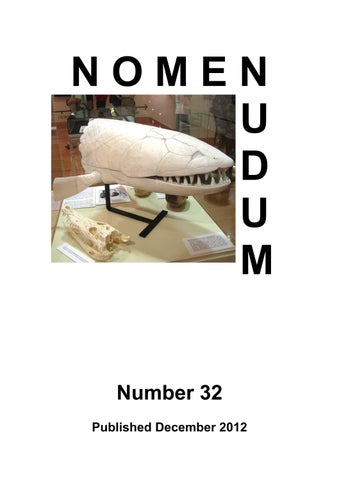
Front cover: Life-sized model of the head of a very large lobe-finned fish discovered in the Upper Devonian rocks on the NSW coast south of Eden. The model was built by Baz Crook. Photo courtesy of Dr Gavin Young, ANU.
Minutes of AAP meeting at 34th IGC, Brisbane, August 2012 ……. Page 6
Strange structures from Kalamina Gorge, Karijini NP, WA …...… Page 10
Book review
Australia’s Fossil Heriatge (reviewed by Ian Percival) ………..... Page 12
Obituaries
Richard (Dick) Barwick ……..……………………………… Page 15
Conference Announcements
CAVEPS Flinders University SA September-October 2013 …...… Page 16
Reports of Research Activities (by region and institution/company)
Australian Capital Territory ……………………………………… Page 17
New South Wales ………………………………………………… Page 24
Queensland ……………………………………………………… Page 36
South Australia ………………………………………………......... Page 53
Tasmania …………………………………………………………… Page 60
Victoria …………………………………………………………… Page 63
Western Australia ………………………………………………… Page 75
New Zealand ……………………………………………………… Page 81
United States ……………………………………………………… Page 87
Contact details for contributors to this issue (alphabetical) …………… Page 89
PRESIDENT’S MESSAGE
Dear Members and colleagues,
As most of you will know, a new AAP Committee was elected in 2012 at the General Meeting held in conjunction with the International Geological Convention in Brisbane. Hence, this is my first message to you since taking on the role of President of the Association. I hope that you will join me in thanking the previous office bearers, some of whom are still on the job or in new roles, for their service to the Association. The new committee will be in place for the next two years, with terms to end in 2014. The committee changes are outlined below:
Role
Outgoing
President Guang R. Shi
Incoming
Gregory E. Webb
Past President Glenn Brock Guang R. Shi
Vice President Alex Cook Jim Jago
Secretary Elizabeth A. Weldon Gilbert Price
Treasurer Rolf Schmidt (continuing)
Alcheringa Editor Stephen McLoughlin (continuing)
Alcheringa Associate Editor ------------- Benjamin Kear
AAP Memoir Editor
John Laurie (continuing)
AAP Memoir Associate Editor ------------- James Valentine Nomen nudum Editor
Ian Percival (continuing)
You will notice two new positions within the list: Alcheringa Associate Editor and AAP Memoir Associate Editor. These new positions were voted in at the 2012 General Meeting to help alleviate the editorial loads generated by our very successful publications. You can see more about the publications in their individual publication reports as part of the Minutes of the 2012 AGM reproduced below. We must all thank the editors of our publications, Stephen McLoughlin, John Laurie and Ian Percival, for putting so much time and energy into these very successful ventures.
As an incoming President I can really only report on what we hope to achieve in the coming years and that will be guided by the recommendations of the 2012 General Meeting reproduced below. However, several key issues were raised at the meeting:
Firstly, it was pointed out that our current Association ‘Constitution and Rules’ needs to be altered, as we are not an independent incorporated association, but are officially a specialist group within the Geological Society of Australia. Although many of our members have a very strong affiliation with the Association and consider us very much a group in our own right, the original establishment firmly places the Association as a specialist group within GSA. Clause 2 of our ‘Constitution and Rules’ states: ‘The Association is a specialist group of the Geological Society of Australia lncorporated, hereinafter called ‘the Society'. As a result, there are two major consequences. 1) Legally we cannot have a ‘constitution’ – as we are not incorporated; and 2) we cannot have rules that contravene the rules of GSA. Hence, it was decided at the General Meeting that we need to review the rules of the society, and I have initiated that process. Once specific recommendations for alterations to the rules are made, they will be placed before the membership for a vote. Although certain issues need to be addressed within the rules for legal purposes, it is also
possible to modify the rules to better reflect changes in technology and society in general. The last changes were made in 1994 and the Association has evolved since that time. I hope you will all put some thought into the potential rule changes when they are presented in 2013.
Another issue raised at the General Meeting revolved around attracting and maintaining membership within the Association of persons who are not naturally members of GSA. As palaeontology attracts interest from non-geologists and nonAustralasian geologists, there is a concern that our position as a specialist group within GSA might reduce our membership. However, as mentioned above, our specialist group status was set out in the original documentation of the Association, so this is nothing new. Non-earth scientists who wish to join AAP may do so as Affiliates (Australians) or as Correspondents without having to joining GSA. It is less clear if international geologists can join as correspondents, as they would normally be eligible for membership in GSA, but we will discuss such cases with GSA. One membership area that I feel we need to pursue is in reaching out more effectively to vertebrate palaeontologists who may have more biological than geological backgrounds. There are many active vertebrate palaeontologists in Australia and AAP has already had significant interaction with some of the active vertebrate workers. For example, Alcheringa Special Issue 1 from 2006 was the Proceedings of CAVEPS 2005 (10th Conference on Australian Vertebrate Evolution Palaeontology, and Systematics). Regardless, many vertebrate workers are not members of AAP. Perhaps the Association and the organisers of a future CAVEPS could consider convening a broader joint palaeontological conference.
Finally, issues were raised about the security of our fossil collections in institutions (Gavin Young) and our fossil heritage in the ground (Kate Trinajstic). The committee is currently investigating the possibility of producing a statement that may help inform the public and government about the significance of protecting and maintaining palaeontological collections. A draft statement concerning the governance of public palaeontological collections is currently being produced for distribution to and comment by the membership.
As you can see, there are some interesting and important tasks before the committee and the Association at large. I look forward to trying to see some of these initiatives through and hope that the members will be vocal in their support of the Association and the palaeontological profession in general.
Best wishes.
Prof. Gregory E. Webb President, Association of Australasian Palaeontologists School of Earth Sciences
The University of Queensland Brisbane, Australia
Minutes of AAP General Meeting 7/8/2012
Brisbane Convention and Exhibition Centre, Brisbane, Queensland (held during the 34th International Congress)
Meeting commenced at 6:58 pm.
Attendance: Guang Shi (Chair), John Laurie, Ian Percival, Pierre Kruse, John Paterson, Stephen McLoughlin, Glenn Brock, Stephen Carey, John Jell, Peter Jell, Pat Quilty, Clinton Foster, Gilbert Price, Gregg Webb, Kate Trinajstic, Gavin Young, John McKellar, Ian Raine, James Beetson, Sue Fletcher (observer, GSA), Alex Larran (observer, GSA).
Apologies: Mark Warne, Liz Weldon, James Jago, Carole Burrow, David Cantrill.
(Sequence of items discussed deviated slightly from distributed agenda due to some attendees having to leave the meeting early)
ITEM 1. Review of AAP Rules
Tabled by Sue Fletcher (GSA). It was pointed out that as AAP is officially a part of the Geological Society of Australia, it is a specialist group, rather than an association; distinction is important as it means that AAP is not in itself an incorporated legal entity and cannot have its own constitution. Hence, as currently on the books, internal AAP rules must not contravene the rules of the GSA. To date, the rules of the AAP have not changed, but they are being reviewed (originally drafted in 1980, last modified in 1994).
Recommendations:
1. Revision of AAP rules, especially by removing the term ‘Constitution’ from the existing document.
Tabled by Stephen McLoughlin. Readership of the journal has increased substantially over the past 12 months, e.g., there were 15,000 downloads in 2011. Recent changes include: contract renewal with Taylor and Francis in 2011 to continue publishing the journal over the next five years; publishing in new A4 format; new spine design by Brian Choo from 2012; expansion of editorial board to 19 persons to achieve broader geographical distribution and scope of expertise; editorial board will undergo turnover every five years; A set of “Guidelines and Responsibilities” for editors, board members and reviewers has been drafted; The journal impact factor has increased overall (currently ranked 36/49 in Thomson Reuters Impact Factors for paleontology journals); and the number of submitted manuscripts has increased.
Recommendations:
1. Install an Assistant Editor to handle additional manuscripts (Dr Benjamin Kear, Uppsala University, Sweden, to take on role).
2. Automatic transfer to Editor of expenses each year, rather than Editor regularly having to ask for funds to cover costs.
ITEM 3. President’s report
Tabled by Guang Shi. Minutes from 2010 AAP meeting were approved by John Laurie, seconded by Ian Percival. President formally thanked Ian Percival, John Laurie and Stephen McLoughlin for editorial efforts on publications (Nomen Nudum, AAP Memoirs and Alcheringa, respectively). He reemphasised that AAP is not incorporated, therefore AAP cannot have its own ‘constitution’ that is separate from GSA, but it may have its own ‘rules’. Unveiled AAP mission statement from previous 2010 meeting (also on AAP website: http://aap.gsa.org.au/):
“The AAP is a specialist group of the Geological Society of Australia for palaeontologists. As a professional association of scientists and educators, AAP supports research and publication in the broad fields of systematic palaeontology, palaeobiology and biostratigraphy; promotes professional development and education; and encourages and facilitates communication among palaeobiologists, professionals of related disciplines and anyone who is genuinely interested in the discovery, preservation, conservation and study of fossils.”
Recommendations:
1. Needs URL link between AAP website and Alcheringa website
ITEM 4. Treasurer’s report
Tabled by Guang Shi (based on figures compiled by Rolf Schmidt, 22/4/2012). Financially, AAP remains stable and in a sound position. Cash balance is ~$185k, with assets of ~$493k. There was higher expenditure than usual in 2011 due to more AAP Memoirs being produced. Income was slightly lower than previous years as AAP has not received some of the GSA-held funds due in part to confusion over responsibility sharing in the new financial organisation of GSA and its specialist groups (inc. AAP). GSA values AAP’s total current assets at ~$453k (based on figures provided by Sue Fletcher), lower than figures tabled by Rolf Schmidt, but the difference reflects a new method of valuation recently introduced by GSA (total valuation of assets may also decrease into the future due to depreciation in the new calculation methods).
Recommendations:
1. Transfer AAP funds to high interest bank account / term deposit to maximise return for specialist group.
2. Include current year’s financial summary with that from previous year as to allow for comparison in future Treasurer reports.
ITEM 4. Publication report 2
4.1 AAP Memoirs report
Tabled by John Laurie. Five issues released from 2010-2012 (no.’s 38-42), three in review/press (no.’s 43-45), with an additional 18 promised for submission; Memoir 41 (Shi et al. 2011) is the Proceedings of the Sixth International Brachiopod Congress,
supported in part by the AAP; The Memoir series has been online since 2010, with online back issues currently available to 2009.
4.2 Nomen Nudum
Tabled by Ian Percival. The last issue of Nomen Numdum was distributed in 2011 after a five year hiatus; the next edition is scheduled for release in late 2012; Several of the palaeontologists listed in the 2011 edition are not members of AAP; Ian Percival formally thanked regular contributors.
ITEM 5. Nominations for and election of New AAP Executive (2012-2014)
Tabled by Guang Shi. Nominations for next Executive Committee (2012-2014) were:
President: Prof. Gregory Webb
Vice President: Dr James Jago
Secretary: Dr Gilbert Price
Treasurer: Dr Rolf Schmidt
Alcheringa Editors: Dr Stephen McLoughlin (Editor), Dr Benjamin Kear (Associate Editor)
AAP Memoirs Editors: Dr John Laurie (Editor), Dr James Valentine (Associate Editor)
Nomen Nudum Editor: Dr Ian Percival.
Gavin Young moved that nominations be sworn in, and the new committee subsequently was voted in unanimously. It was noted that Dr Rolf Schmidt would be interested in passing on the role of Treasurer to another AAP member.
ITEM 6. Address by President-elect
Tabled by Gregory Webb. The president-elect formally thanked Guang Shi and previous executive for great job in leading AAP over the former term. Discussed review of AAP rules as follow-on to comments from Sue Fletcher (GSA) and Guang Shi, and noted that it is necessary that we investigate the rules and bring them into line with GSA, meet legal considerations and also update them so as to better benefit the Association. The rules have not been updated since 1994, so the new office bearers will look over them and make suggestions that can be put to the member ship in the coming year. Discussed importance of encouraging greater membership to AAP, especially vertebrate palaeontologist who do not traditionally seek affiliation with the AAP (possibility to promote activities at 2013 Conference of Australasian Vertebrate Evolution, Palaeontology and Systematics)- there is a benefit in having a larger group in AAP both as a specialist group with GSA and to promote palaeontology and science to the public, government and various public institutions.
Recommendations:
1. Revision to rules critical. Moved by Gavin Young, seconded by Kate Trinajistic, majority in agreement.
ITEM 7. AAP Initiatives for 2012-2014 term
It was suggested that a research symposium to honour John Talent might be organised in the near future – there were not enough submissions for a special session at IGC
viable. Gregory Webb suggested it might be possible to integrate a future symposium with the next Conference of Australasian Vertebrate Evolution, Palaeontology and Systematic (CAVEPS) hosted by Flinders University in 2013, but we would need to liaise with convenor (Gavin Prideaux). Suggestions were made to develop AAP prizes/medals for notable achievements amongst Australasian palaeontologists (Ian Percival to follow up with GSA regarding such policies/practices). There was additional discussion regarding AAP rule changes to make it consistent with broader GSA membership rules and regulations.
ITEM 8. Other business
8.1 Targeted marketing of AAP Membership to non-member colleagues
Tabled by Ian Percival. Ian highlighted the importance of promoting membership of the AAP specialist group (as part of broader membership to GSA) to non-members, such as students as well as colleagues in disciplines, such as vertebrate palaeontology who do not traditionally levitate towards the membership of the AAP and international members.
8.2 Site protection of exceptionally preserved fossils within Australia; Export of vertebrate fossils from Australia
Tabled by Kate Trinajstic. Kate suggested that fossil exports and destruction of important fossil sites (e.g.., James Price Point dinosaur trackways) is likely to increase over the next few years. As an association, AAP could potentially lobby appropriate state government bodies in an attempt to limit both site destruction / exports. In regards to fossil exports, is recognised that the problem lies mostly with Customs; in some cases fossils were being exported under mining laws as just rock (i.e., building stone) and not as palaeontological resources. It was agreed that education of the public / Government is the key to ensure protection of fossil sites and control exportation of important fossils. It was also noted that we needed to be careful not to initiate legislation that would prevent legitimate research on fossil sites, so several issues need to be considered.
Recommendation:
1. Agreed that it would be good to compile information about what fossil material is fair and reasonable to export / not export in regards to permits. Permits should ideally include digital photos of all specimens destined for export.
8.3. Status of palaeontological collections in Australia
Tabled by Gavin Young. Some concern was expressed over perpetuity of existing palaeontological collections in Australia- for example, reports that some museums have recently de-accessioned fossil material, including that which has been published upon. It was agreed that this is a serious issue.
Recommendations:
1. AAP Executive to draft a statement on the value of maintaining palaeontological collections and governance, to be distributed to museums / relevant associations across Australia (John Jell agreed to lead draft).
Meeting closed at 9:26 pm.
Strange structures from Kalamina Gorge, Karijini NP, WA
THEY ARE >2Ga OLD: BUT WHAT ARE THEY?
Edwin Willey (University of Southern Queensland) Edwin.Willey@usq.edu.au
writes: In 2010, my wife and I visited Karijini National Park in Western Australia. At Kalamina Gorge (perhaps not as often visited as the gorge complex at Weano or Dales Gorge) we took these interesting photos (below – scale in all is a twenty cent coin). The features are not unique but are repeated – at least on the bed where they occur. The strata are characterised by Trendall-type microbands.
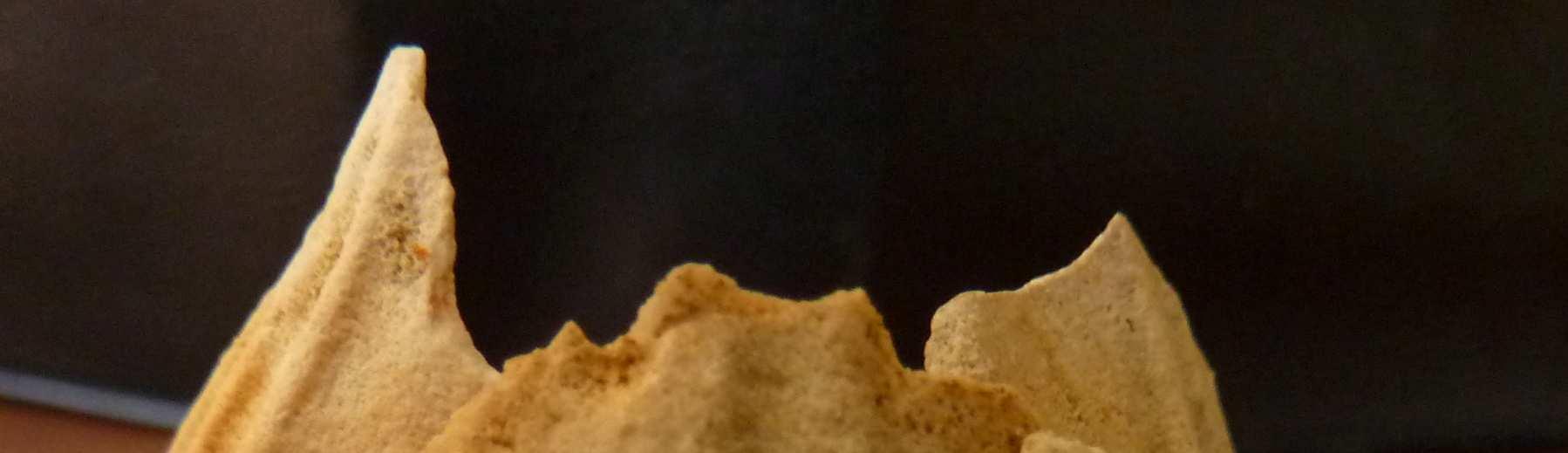
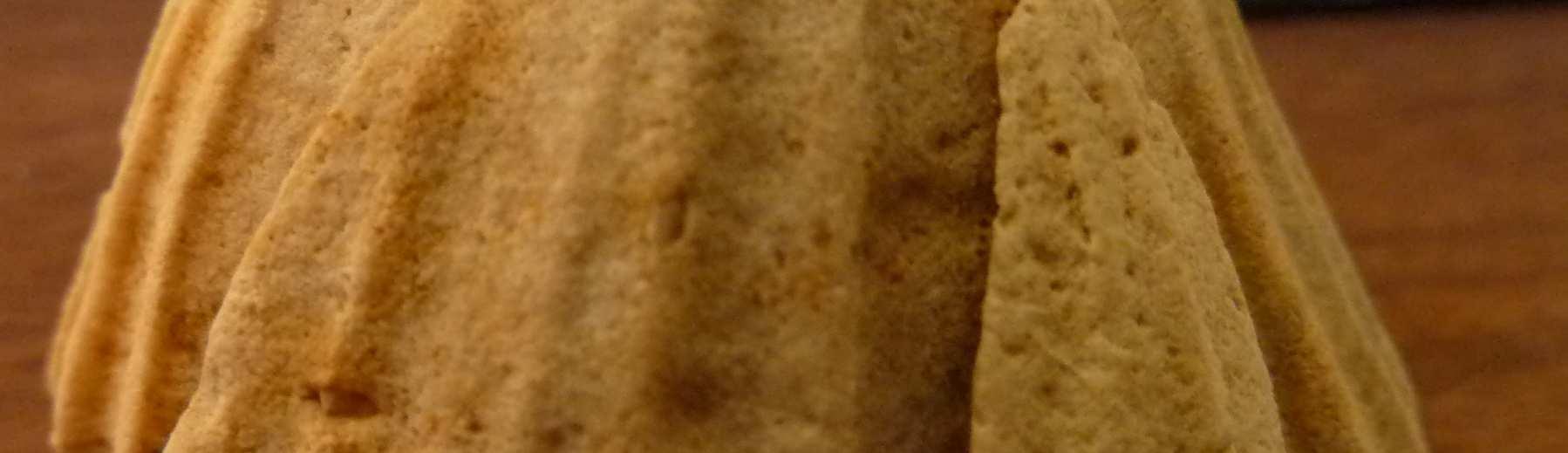
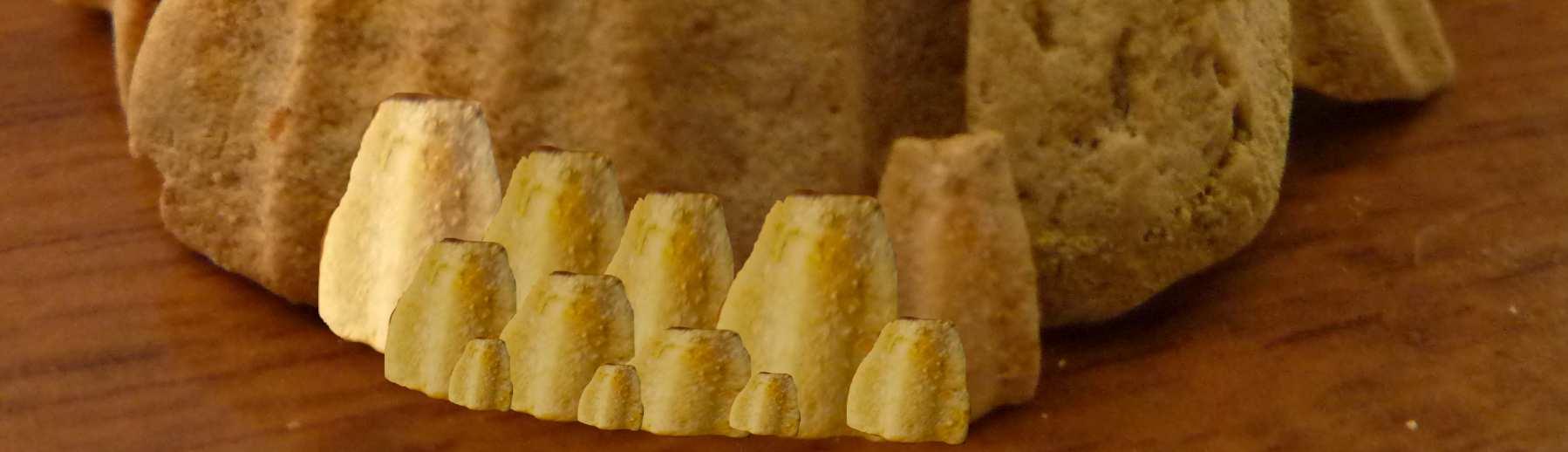
The features fall into three types. Two are bedding surface (bedform) features (see above). The third is medusoid (see below), but that is where their appearance ends; in cross section (final image), the central hollow sharply truncates the microbands, alters the nature of the rocks and pinches the thickness of the strata.
One might say that an isolated feature like any of these could be an artifact; however, to have these features repeated removes the element of chance. It is interesting that the fine bedding is so sharply interrupted.
Do Trendall-type microbands represent a biologically controlled interface? If so, these features have modified that control. There must be another factor involved, and one starts to suspect bed-surface bacteria forming mats and controlling deposition or later diagenesis. If so, having been found in one place, they may occur elsewhere.
Dr Kath Grey (Geological Survey of WA) comments:
I don’t really know what these Kalamina Gorge structures could be. They may be some sort of microbially bound sediment, but not well-enough developed to be counted as stromatolitic (I’d need to see a thin section, but the nature of the laminae suggest that there were biofilms present). If they are biofilms, then this would be the best ‘biogenic’ evidence I’ve seen from the Hamersley Group, although it is not terribly convincing. I’ve been sent a few photos of weird structures in the Hamersley Group, but nothing so far has been convincingly biogenic, although I would not be surprised if something did turn up. There are a lot of odd looking nodules and other structures around that are clearly abiogenic, so the evidence would need to be convincing before they can be claimed as biogenic.
Any other ideas? Has anyone seen anything similar in the Hamersley Group?
Book Review
Australia’s Fossil Heritage: A catalogue of Important Australian Fossil Sites by The Australian Heritage Council
ISBN 9780643101777
Paperback, 188 pages
Published August 2012 by CSIRO Publishing www.publish.csiro.au
A$59.95
This book is unique – I am unaware of any other publication that even comes close to the concept of attempting to document, Australia-wide, the nation’s most iconic palaeontological sites. It is mostly successful, by interspersing information regarding their scientific and heritage values with interesting snippets of historical trivia that would appeal to a well educated readership (its target audience being students and scientists, according to the Foreword).
But it is also a strangely constructed book. It was truly put together by a committee, and indeed authorship is claimed by the Australian Heritage Council. I honestly do not understand why this is so. The contributors – palaeontologists generally (but not exclusively) associated with the major natural history museums in
each state and the Northern Territory – are acknowledged twice, once on the page with the copyright and library cataloguing information, and secondly briefly on the Acknowledgements page. The editors are likewise mentioned in just a couple of lines on these pages. Ten persons working for the Australian Government Department of Sustainability, Environment, Water, Population, and Communities, are cited for their management of the project. This Government Department (SEWPaC) also provided financial support to ensure the book was published. It is not clear from the Acknowledgements what role the Australian Heritage Council played in this process, other than commissioning the work by engaging palaeontologists to select and describe sites. The Council reviews nominations to, and determines their inclusion in, the National Heritage List (which includes many of the sites documented in the book), but I would not have thought that process qualifies them to be listed on the front cover in place of authors or editors. Even the Foreword appears to suffer from this appropriation of intellectual property. For the record, the following are listed as the technical editors of this publication: Alex Cook, John Magee, Karen Roberts, Kirsty Douglas, Kate O’Callaghan and Rachel Sanderson.
The listing of sites is also a little unusual. Few (if any) palaeontologists active in Australia would disagree with the sites selected for the book – they are in all cases definite candidates for the most important fossil sites in the nation. But I wonder (given that the Australian Heritage Council is based there) why Canberra and the Australian Capital Territory missed out completely. After all, the Woolshed Creek locality has been signposted for many years by the Geological Society of Australia as a significant geological heritage site, with atrypid brachiopods and trilobites that enabled Rev. W.B. Clarke to first recognise the presence of Silurian rocks in the colony as it then was. More recently, the Coppins Crossing locality has been incorporated in the Lower Molonglo heritage site by the ACT legislature.
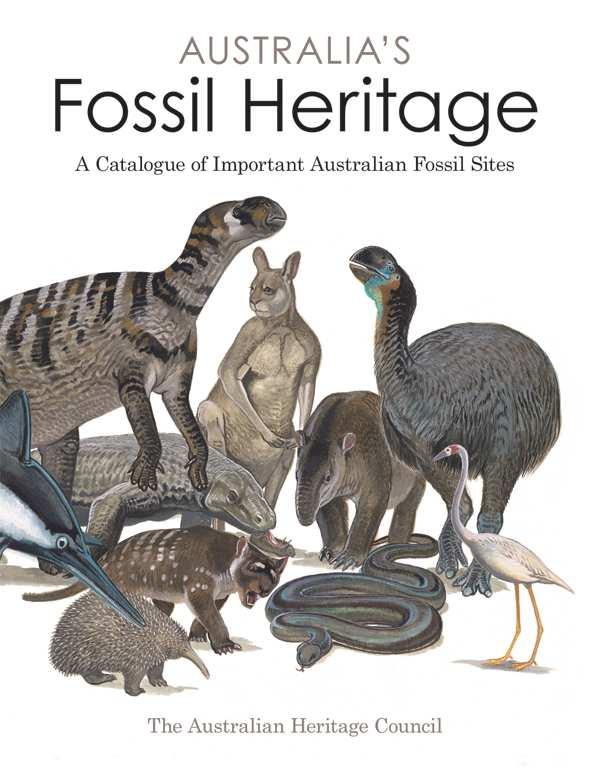
In total, 78 sites (or groups of related sites in some instances) are documented in this book, and in all cases the written descriptions are very competently done. However, I would have hoped to see illustrations, of either representative fossils from these sites, or images of the localities themselves, for all 78, as an essential part of the documentation of the palaeo-heritage. Regrettably, this is not the case – apart from simplified locality maps for each state and territory, there are only 46 pictures, many of which (in my opinion) do not do justice to the fossil sites. The exceptions are the wonderful full colour reconstructions by Peter Schouten for 7 of the sites (one per chapter), bringing the ecology and biotic interactions at those localities to life in double page spreads, or embellishing the book’s cover (see illustration of the front cover at the beginning of this review). Schouten has also supplied a couple of superb crayon-type black & white artist’s impressions of the Glossopteris and Lepidodendron trees. Apart from that though, the illustrations seem to have been an afterthought in production of the book. Many are historical images sourced from the National Library collection, and bear no relation at all to the main subject of palaeoheritage. For example, Fig. 1.4 is a black & white image of opal mining at Lightning Ridge, NSW. The caption makes no mention of its significance to the accompanying information on the site. A colour illustration of the opalised jaw of the mammal Steropodon galmani (or any other opalised fossil) would have been easily obtained, and would have been of far greater relevance to this site. There are a few excellent figures of fossils (mainly vertebrates) throughout the book, but invertebrates are very poorly represented. For instance, the unidentified gastropod shown in Fig. 1.8 is not what I would regard as an iconic Devonian fossil from Wee Jasper in southern NSW, and to the unititiated (i.e. the majority of the intended readers of this publication) is not easily distinguishable
from one of the indeterminate gastropods shown in Fig. 1.9 from the Late Ordovician Cliefden Caves–Belubula Valley site (and the orthide brachiopod in this illustration is misidentified as a mollusc). Why use such poorly preserved material to illustrate either site when so many other fossils have been fully described and illustrated in the literature, and are readily available in museums and other collections for photography? Not once are the figured fossils and locality images referred to in the text. That is a basic editorial oversight. Perhaps I am beginning to comprehend why the Australian Heritage Council was listed as the editor/author.
There are other minor errors – for example, the Lune River Jurassic plant site in Tasmania is not situated in the Tamar Valley near Launceston, as shown on the locality map of the state at the start of Chapter 5, but is located 100 km south of Hobart, west of Bruny Island.
Despite these criticisms, I still think the book is a worthwhile addition to libraries, both personal and institutional. At $60, it is reasonable value for an academic book these days, and certainly CSIRO Publishing has produced what they were given to a high standard – the type is clear and not crowded, and the semi-gloss paper has a quality feel. The contributors have written accurate and interesting descriptions of each site, and have given the book a certain uniformity by filling in information under a set of consistent headings (though I am not sure about that headed “Stories”, which could easily have been included under Significance and has been quite variably interpreted by each state and territory compiler). I learnt many new facts in reading about numerous sites whose ages and fossils are well outside my own specialities.
The appeal of this book to the educated reader, perhaps a non-palaeontologist, is enhanced by the inclusion of a very good Glossary, a comprehensive Reference list, and an Index. I am not so sure about Appendix A, a list of sites by type, which in some instances – particularly those sites which include both significant invertebrate and vertebrate faunas, such as Taemas–Cavan–Wee Jasper in NSW – are listed under a separate Landscapes Sites category. That does not give due recognition to the reason why such sites are in this book, for their palaeontological significance.
Finally, what will publication of this book achieve for the protection and preservation of Australia’s palaeontological heritage? I was horrified to read on the final page of the site descriptions (p.124) about commercial mining of the Permian Cundlego Formation site at Gascoyne Junction in WA, where fossils are extracted to prepare and sell to museums and collectors. To quote, “The site is in need of protection from commercial collectors who pillage the locality on a regular basis. Mining leases are held over the area by commercial collectors, and slabs of rock with beautifully preserved crinoids and starfish are removed by the truck load”. All palaeontologists must hope that those fossil sites documented in this book that are not currently on the National Heritage list will be assessed and placed there as soon as possible, and that such listing will accord to our palaeontological heritage the protection it certainly warrants. To have published these localities, only to see them vandalised or damaged, or to have specimens stolen to order (as has happened in the past to several sites in the book), would completely defeat the intent of the Australian Heritage Council. They have performed a service to the science and to the public by supporting the sites compilation and seeing the project through to publication; now let’s ensure that these important Australian Fossil Sites are suitably preserved.
Ian Percival
OBITUARY
Dr Richard 'Dick' Barwick (1929–2012)
Our esteemed colleague Dick Barwick died suddenly from a stroke on Friday 9 November 2012. He had turned 83 on September 1. He is noted particularly for his long collaboration at ANU with his friend and colleague Prof. Ken Campbell in research on fossil lungfishes, and his immaculate illustrative contributions to these and many other scientific studies. This was his main research interest in retirement, but before that he taught zoology at the ANU for at least 40 years, specializing in amphibians and reptiles, and was mentor and supervisor to numerous undergraduate and postgraduate students. Barwick Valley in Victoria Land, Antarctica is named in his honour (see Innocents in the Dry Valleys by Colin Bull, Victoria University Press, 2009].
His most recent fossil fish contribution came out in June:
K.S.W. Campbell, R.E. Barwick & T.J. Senden (2012). Development of the posterior endocranium of the Devonian dipnoan Griphognathus whitei Journal of Vertebrate Paleontology 32(4), 781-798.
A full memorial is in preparation.
[contributed by Dr Gavin Young & Dr Sue Turner]
Dick Barwick papers ~ a selection
Barwick, R.E., Campbell, K.S.W. & Mark-Kurik, E. 1997. Tarachomylax: a new Early Devonian dipnoan from Severnaya Zemlya, and its place in the evolution of Dipnoi. Geobios 30(1), 45–73.
Campbell, K.S.W. & Barwick, R.E. 1984. The choana, maxillae, premaxillae and anterior palatal bones of early dipnoans. Proceedings of the Linnean Society of New South Wales 107, 147–170.
Campbell, K.S.W. & Barwick, R.E. 1987. Paleozoic lungfishes – a review. Journal of Morphology Supplement 1, 93–131.
Campbell, K.S.W. & Barwick, R.E. 1988. Uranolophus: a reappraisal of a primitive dipnoan. In Jell, P.A. (ed.): Devonian and Carboniferous Fish Studies, 87–144. Memoirs of the Association of Australasian Palaeontologists, Sydney.
Campbell, K.S.W. & Barwick, R.E. 1988. A reappraisal of a primitive dipnoan. Memoirs of the Association of Australasian Palaeontologists 7, 87–144.
Campbell, K.S.W. & Barwick, R.E. 1999. Dipnoan fishes from the Late Devonian Gogo Formation of Western Australia. Records of the Western Australian Museum, Supplement 57, 107–138.
Long, J.A., Barwick, R.E. and Campbell K.S.W. 1997. Osteology and functional morphology of the osteolepiform fish Gogonasus andrewsae Long 1985, from the Upper Devonian Gogo Formation, Western Australia. Records of the Western Australian Museum, Supplement 53, 1-89.
Pridmore, P.A., Barwick, R.E. & Nicoll, R.S. 1997. Soft anatomy and the affinities of conodonts. Lethaia 29, 317–328
14th Conference on Australasian
Vertebrate Evolution, Palaeontology and Systematics
“Celebrating 60 years since the 1953 Stirton expedition”
Monday 30th September – Friday 4th October 2013
The 14th CAVEPS will be held at Flinders University in Adelaide. It will celebrate the 60th anniversary of the inaugural University of California Berkeley expedition headed by Professor Ruben Stirton to hunt for Australian Tertiary mammal fossils. CAVEPS 2013 will showcase the interconnectedness of research in vertebrate morphology, phylogeny, development, taphonomy, evolution, palaeoecology and ancient environments. A major aim is to encourage participation from researchers who are neither palaeontologists nor focused strictly on Australasian problems, but whose research offers much in terms of understanding the past, present and future of our biota.
Draft Program
Day 1 workshops on analytical techniques and practises. Ideal for PhD/Hons students but open to all.
Days 2–5 general and three themed sessions:
1. Stirton symposium: Reflecting on the Legacy of Stirton and his Students
2. Phylogeny: Bridging the Molecular–Morphological Divide
3. Palaeoecology: Modern Methods and Recent Advances
Field Trips
Pre-conference – Kangaroo Island, 27–29 Sept.; post-conference – Lake Eyre Basin, 6–12 Oct. 2013.
Contact Gavin Prideaux for information and conference circulars (gavin.prideaux@flinders.edu.au).
REPORTS OF RESEARCH ACTIVITIES
AUSTRALIAN CAPITAL TERRITORY
Research School of Earth Sciences, ANU, Canberra
Ken Campbell, now retired from active work, is resident in a Retirement Home. He learnt in May 2012 that he had been awarded the prestigious Raymond C. Moore Medal for Excellence in Paleontology for 2013 by the Paleontological Society.
Publication:
Campbell, K.S.W, Barwick.R.E. & Senden, T.J. 2012. Development of the posterior endocranium of the Devonian Dipnoan Giphognathus whitei Journal of Vertebrate Paleontology 32(4), 781-798.
Patrick De Deckker was elected as a Fellow to the Australian Academy of Science in May 2012, being the culmination of his career that aims at identifying past patterns of environmental changes both on land and in the oceans, using primarily microfossils and their chemical signatures. He continues investigation of the late Quaternary history of lacustrine and marine deposits in the Australian region. One important paper appeared this year in Nature Geoscience and several others are being reviewed at present, including one of new clues on the megafaunal extinction based on biomarkers in a marine core taken offshore Kangaroo Island. Patrick spent some time in Belgium at the Museum of Natural History to complete a large manuscript on the morphology of juvenile Australian ostracods belonging to the genus Bennelongia, a genus he described many years ago with the late Ken McKenzie.
Patrick's PhD student Nicolas Darrenougue just submitted his thesis on the geochemistry of rhodoliths, high-resolution recorders of environment change, a nez proxi for comparison with corals.
Rebecca Kaye completed her Honours looking at environmental changes in the ocean offshore southern Australia, based on foraminifera faunal analyses. Bec's work on short chres spanning the last 3 to 4 centuries of environmental changes in order to check of the 'Hockey Stick Curve' is seen in our marine records.
Patrick's Honours student of 2011 Lyndsay Den is now writing a paper on the distribution of foraminifera and biofacies form Eden's Twofold Bay in NSW. This will be submitted to Marine Micropaleontology very soon.
Marita Smith, also an Honours student from last year [who was awarded a University Medal], was employed this year to prepare her Honours work on biomarkers [Uk37, Tex86 and LDI a new SST proxi] from core tops from the Tasman Sea and offshore southern Australia taken during 2 cruises led by Patrick in 2011 on board the Southern Surveyor. Marita just submitted a paper on the sea surface temperature proxies from core tops and is now preparing a second manuscript dealing with SST changes that occured offshore Australia over the last few centuries.
Publications: Gouramanis, C., Dodson, J., Wilkins, D., De Deckker, P., & Chase, B. 2012.
Holocene palaeoclimate and sea level fluctuation recorded from the coastal Barker Swamp, Rottnest Island, south-western Western Australia. Quaternary Science Reviews 54, 40-57.
Lopes dos Santos, R.A., Wilkins, D., De Deckker, P., & Schouten, S. 2012. Late Quaternary productivity changes from offshore Southeastern Australia: A biomarker approach. Palaeogeography, Palaeoclimatology, Palaeoecology 363364, 48-56.
De Deckker, P., Moros, M., Perner, K. & Jansen, E. 2012. Influence of the tropics and southern westerlies on glacial interhemispheric asymmetry. Nature Geoscience 5, 266-269.
Bornemann, A., Pirkenseer, C., De Deckker, P. et al. 2012. Oxygen and carbon isotope fractionation of marine ostracod calcite from the eastern Mediterranean Sea. Chemical Geology 310, 114-125.
Wilkins, D., De Deckker, P., Fifield, L.K. & Gouramanis, C. 2012. Comparative optical and radiocarbon dating of laminated Holocene sediments in two maar lakes: Lake Keilambete and Lake Gnotuk, south-western Victoria, Australia . Quaternary Geochronology 9, 3-15.
Abed, R.M.M., Ramette, A., Hubner, V., De Deckker, P. & de Beer, D. 2012. Microbial diversity of eolian dust sources from saline lake sediments and biological soil crusts in arid Southern Australia. FEMS Microbiology Ecology 80, 294-304.
Wegner, A., Gabrielli, P., Wilhelms-Dick, D., Ruth, U., Kriews, M ., Barbante, C., Cozzi, G., Delmonte, B., & Fischer, H. 2012. Change in dust variability in the Atlantic sector of Antarctica at the end of the last deglaciation. Climate of the Past 8, 135-147.
Kemp, J., Radke, L.C.; Olley, J., Juggins, S., & De Deckker, P. 2012. Holocene lake salinity changes in the Wimmera, southeastern Australia, provide evidence for millennial-scale climate variability. Quaternary Research 77, 65-76.
Lim, N., Munday, C.I., Allison, G. E., O'Loingsigh, T., De Deckker, P. & Tapper, N.J. 2011. Microbiological and meteorological analysis of two Australian dust storms in April 2009. Science of the Total Environment. 412, 223-231.
Ehlert, C., Frank, M., Haley, B.A., Boeniger, U., De Deckker, P. & Gingele, F.X. 2011. Current transport versus continental inputs in the eastern Indian Ocean: Radiogenic isotope signatures of clay size sediments. Geochemistry Geophysics Geosystems12, Article Number: Q06017 DOI: 10.1029/2011GC003544
Rogers, J. & De Deckker, P. 2011. Environmental reconstructions of the upper 500 m of the southern Indian Ocean over the last 40 ka using Radiolarian (Protista) proxies. Quaternary Science Reviews 30, 876-866.
Russon, T., Elliot, M., Sadekov, A., Cabioch, G., Correge. T., & De Deckker, P. 2011. The mid-Pleistocene transition in the subtropical southwest Pacific. Paleoceanography 26, Article Number: PA1211 DOI: 10.1029/2010PA002019
Peter Jones (Visiting Fellow, RSES) writes "for various reasons, I have omitted to report my activities in Nomen Nudum over the last seven years (2005-2011). This omission, which has involved diverse topics ranging from the taxonomic and biostratigraphic studies of Ostracoda and their Cambrian praecursors (Bradoriida and Phosphatocopida), to the biochronologic input to papers on palaeobiogeography and petroleum geology, and the correlation of the Devonian, Carboniferous and Permian Timescales, is readdressed here".
2005: A reappraisal of the Carboniferous stratigraphy and the petroleum potential of the southeastern Bonaparte Basin was presented at the APPEA Perth Symposium, in April 2005, and published in The APPEA Journal. The combination of the biostratigraphy (Jones & Nicoll; ANU) and seismic stratigraphy (Gorter & Golding;
ENI Australia Ltd), led to a marked revision of the latest Tournaisian to Namurian stratigraphy, and identified the presence of several new offshore drilling targets (potential reservoir rocks) in the Petrel Sub-basin (Gorter et al., 2005).
2006: Continued palaeontological research on Ostracoda and other small bivalved arthropods from Australia. The results of a taxonomic study of bivalved arthropods (Bradoriida and Phosphatocopida) from the early Middle Cambrian of the Georgina Basin, central Australia with John Laurie (Geoscience Australia) was published (Jones & Laurie, 2006). Two taxonomic notes were published. One in collaboration with Mark Warne (Deakin University) and Louis Kornicker (Smithsonian Institution) on specimens of Polycope from the Miocene of Victoria, hitherto misidentified for 50 years as belonging to the genus Thamatocypris (Suborder Halocypridina). As a result it was concluded that Thamatocypris has not been collected in the Miocene of Australia, and in a broader biostratigraphic/palaeobiogeographic context, confirmed the absence of records of Halocyprindina during the Tertiary Period (Warne et al., 2006). The second note was a response to the reply by Heinz Malz and Alan Lord (2004) to my 2003 paper on pathological moult retention in the puzzling ostracod species Ankumia bosqueti van Veen, 1932 [Late Cretaceous, Maastrichtian, The Netherlands] (Jones, 2006). Continued my collaboration in the GeoForschungsZentrum Potsdam (GFZ) sponsored project on Devonian, Carboniferous and Permian correlation, under the co-ordination of Manfred Menning. This project, funded by DFG, involves the preparation of a high resolution biochronological chart for selected global areas; it was commissioned by German sedimentary geochemists for the correlation of their stable isotope profiles. I was involved (together with biostratigraphers from Germany, Russia, Ukraine, Hungary, USA, and P.R. China) in the preparation of the Devonian-Carboniferous-Permian Correlation Chart 2003 (DCP 2003), and the first results, dealing with the Global and regional stratigraphic scales of Central and West Europe, East Europe, Tethys, South China, and North America, were published in 2006 in Palaeogeography, Palaeoclimatatology, Palaeoecology. Also a poster dealing solely with the Carboniferous was presented by Manfred Menning at the Kölner Forum für Geologie und Paläontologie, Cologne.
2007: Commenced a study of latest Devonian benthic Ostracoda from the Buttons Formation, Bonaparte Basin, northwestern Australia; their taxonomy and palaeozoological links for correlation. I also commenced a joint study with Christoph Korte (Frei Universitat Berlin) of an oxygen isotope analysis of brachiopod and bivalve samples from the Permian of Australia, in order to determine Permian latitudinal sea-surface temperature gradients. I provided the biochronological input.
2008: Completed a taxonomic study of Bradoriida from the early Middle Cambrian of the Georgina Basin, central Australia in collaboration with Pierre Kruse (NTGS), and prepared an Australian contribution to the Devonian Correlation Table edited by Karsten Weddige (Senckenberg Museum, Frankfurt, 2008). I revised the Korte et al. MS, which was published during the year in Palaeogeography, Palaeoclimatatology, Palaeoecology (Korte et al., 2008).
2009: Completed the study of latest Devonian benthic Ostracoda from the Buttons Formation, Bonaparte Basin, northwestern Australia; their taxonomy and palaeozoological links for correlation, and commenced a study of Mississippian benthic Ostracoda from the Bonaparte and Canning basins, with emphasis on the
Platycopina. The Middle Cambrian bradoriid paper was published (Jones & Kruse, 2009).
2010: Continued the study of Mississippian benthic Ostracoda from Western Australia, with emphasis on the Podocopida (Metacopina, Podocopina). The latest Devonian benthic Ostracoda paper was published (Jones, 2010). Collaborated with John Gorter (ENI Australa Ltd), Robin Purcell (P & R Geological Consultants) and Bob Nicoll (ANU) on a study of the Palaeozoic palaeontology and geochemistry of Windjana-1 Well, SE Bonaparte Basin, presented as a poster at the 20th AGC, Canberra.
2011-12: Completed a taxonomic study of the Suborder Eridostracina Adamczak, 1961(ostracods with moult retention) in collaboration with Ewa Olempska (Institute of Palaeobiology, Polish Academy of Sciences), now in press. Continued the study of Mississippian benthic Ostracoda (Podocopida) from Western Australia.
Publications (2005-2010)
Gorter, J.D., Jones, P.J., Nicoll, R.S. & Golding, C.J., 2005. A reappraisal of the Carboniferous stratigraphy and the petroleum potential of the southeastern Bonaparte Basin (Petrel Sub-basin), northwestern Australia. The APPEA Journal 45(1), 275-295.
Gorter, J.D., Purcell, R.R., Nicoll, R.S. & Jones, P.J. 2010. Palaeozoic Palaeontology and Geochemistry of Windjana-1 Well, Southeastern Bonaparte Basin, Australia. Australian Earth Science Convention (AESC) 2010, Earth systems change, sustainability, vulnerability. Poster presented at the 20th Australian Geological Convention, National Convention Centre, Canberra, ACT. July 4-8.
Jones, P.J. 2006. Ankumia van Veen, 1932 a valid name, but a flawed generic concept (Ostracoda, Platycopina, Cytherelloidea). Journal of Micropalaeontology 25(2), 189-190.
Jones, P.J. 2008. Annotations to the Devonian Correlation Table, R 805-810 di-ds, Devonian of Australia. Senckenbergiana lethaea 88(2), 267, 268.
Jones, P.J. & Kruse, P.D. 2009. New bradoriids (Arthropoda) from the early Middle Cambrian of the Georgina Basin, central Australia. Memoirs of the Association of Australasian Palaeontologists 37, 55-86.
Jones, P.J. & Laurie, J.R. 2006. Bradoriida and Phosphatocopida (Arthropoda) from the Arthur Creek Formation (Middle Cambrian), Georgina Basin, central Australia. Memoirs of the Association of Australasian Palaeontologists 32, 205223.
Jones P.J. & Nicoll, R.S. 2005. In Memorial: James MacGregor (Mac) Dickins (19232005). Permophiles No. 46, 29, 30 [Newsletter of the Subcommission on Permian Stratigraphy; ISSN 1684-5927].
Jones P.J. & Nicoll, R.S. 2006. Obituary: James MacGregor (Mac) Dickins. The Australian Geologist Newsletter No. 138, 52.
Korte, C., Jones, P.J., Brand, U., Mertmann, D., & Veizer, J. 2008. Oxygen isotope values from high latitudes: Clues for Permian sea-surface temperature gradients and Late Palaeozoic glaciation. Palaeogeography, Palaeoclimatology, Palaeoecology 269 (1/2), 1-16; Amsterdam. Menning, M., Alekseev, A.S., Chuvashov B.I., Davydov, V.I., Devuyst, F.-X., Forke., H.C., Grunt, T.A., Hance, L., Heckel, P.H., Izokh, N.G., Jin, Y.-G., Jones, P.J., Kotlyar, G.V., Kozur, H.W., Nemyrovska, T.I., Schneider, J.W., Wang, X.-D. Weddige, K., Weyer, D. & Work, D.M. 2006a. Global stratigraphic scale of the
Carboniferous and regional scales of Central and West Europe, Central Russia, Donets, South China, and North America as used in the Devonian-CarboniferousPermian Correlation Chart 2003 (DCP 2003) In: Aretz, M. & Herbig, H-G (Eds): Carboniferous Conference Cologne 2006 Program and Abstracts. – Kölner Forum für Geologie und Paläontologie, 15, 83-85; Cologne. Menning, M., Alekseev, A.S., Chuvashov B.I., Davydov, V.I., Devuyst, F.-X., Forke., H.C., Grunt, T.A., Hance, L., Heckel, P.H., Izokh, N.G., Jin, Y.-G., Jones, P.J., Kotlyar, G.V., Kozur, H.W., Nemyrovska, T.I., Schneider, J.W., Wang, X.-D. Weddige, K., Weyer, D. & Work, D.M. 2006b. Global time scale and regional stratigraphic reference scales of Central and West Europe, East Europe, Tethys, South China, and North America as used in the Devonian-Carboniferous-Permian Correlation Chart 2003 (DCP 2003). Palaeogeography, Palaeoclimatatology, Palaeoecology 240 (1/2) 318-372; Amsterdam. Warne, M.T., Jones, P.J. & Kornicker, L.S. 2006. Referral of the Halocypridina Thaumatocypris (Miocene, Australia) to the Cladocopina (Ostracoda, Halocyprida). Zootaxa 1260, 47-55 [ISSN 1175-5326]
Desmond Strusz (School Visitor, Earth & Marine Sciences, RSES, and Research Associate, Australian Museum, Sydney) continues his cooperation with Ian Percival on the Silurian brachiopod fauna of the Quidong area near Delegate, NSW. He has also submitted a paper on a small fauna of very distorted Silurian brachiopods from east of Cooma to the Linnean Society of NSW. As of the end of November 2012, he will be working from home.
Gavin Young continues research on Palaeozoic vertebrates under the ARC Discovery Grant ‘Origin of jaws – the greatest unsolved mystery of early vertebrate evolution’. Much time was spent with co Chief Investigator Prof. Tim Senden (Dept. Applied Maths, ANU) putting together a public display of ANU fossils called ‘Old Bones –New Data’, featuring numerous acid-prepared Devonian fish from Burrinjuck and Gogo that had never been on display before, combined with four computer screens showing spectacular 3D imagery from the high resolution XCT scanning at ANU. It ran for 3 months [December 2011-February 2012] and was the most successful such display ever held in the ‘Canberra Museum and Gallery’ in Civic. A feature of the display was a new life-sized model of the head of a very large lobe-finned fish discovered a few years back in the Upper Devonian rocks on the NSW coast south of Eden (discovery featured on ABC Catalyst program in September 2011). The model was built by Baz Crook, son of former ANU professor Keith Crook, who instigated the ANU student mapping projects on the south coast that led to many important Devonian fish discoveries. The model enabled an accurate reconstruction of all the bones of the head and shoulder girdle. Description of this new taxon has been submitted for publication.
A related project concerns the lobe-finned fish Gogonasus from Gogo in the Kimberley, WA, for which a much enlarged model from the CT dataset of the scanned ANU skull was produced with the new ANU 3D printer. The most complete specimen of Gogonasus was found by Tim Senden in 2005 and prepared by John Long in Melbourne (published in Nature 2006, v.444, 199-202). We have borrowed the Melbourne specimen to do a complete CT scan of all elements, with the intention to print them out for the first complete reassembly of a Devonian lobe-finned fish. Work also continues on the Devonian fossils of the Burrinjuck-Wee Jasper area, including acid prepared placoderm fish (with former student Nicola Power), and
material from the overlying Hatchery Creek Group (with former student James Hunt). Work on Gogo placoderms (with Kate Trinajstic at Curtin University), and acanthodian and placoderm material from central NSW and the south coast (with Carole Burrow, Qld Museum) was published or is in preparation. On a field trip to the south coast with Bob Dunstone (School Visitor, Research School of Earth Sciences, ANU) we found some very interesting new plant material in the Bunga Beds, probably Archaeopteris Dr Alice Clement returned to Melbourne after being awarded her Ph.D for research on Devonian – Recent lungfishes. Tim Senden has worked with John Long, and Zhu Min and other Chinese colleagues, on scanning some Early Devonian skulls from China, and with Ken Campbell and Dick Barwick on lungfishes from Gogo.
Because we did not submit to recent issues of Nomen Nudum, publications for the last three years are included below.
Publications:
Burrow, C.J. & Young, G.C. 2012. New information on Culmacanthus (Acanthodii: Diplacanthiformes) from the ?Early-Middle Devonian of southeastern Australia. Proceedings of the Linnean Society of New South Wales 134, 21-29.
Burrow, C.J., Turner, S., & Young, G.C. 2010. Middle Palaeozoic microvertebrate assemblages and biogeography of East Gondwana (Australasia, Antarctica). Palaeoworld 19, 37-54. doi:10.1016/j.palwor.2009.11.001
Campbell, K.S.W. & Barwick, R.E. 2011. A new unusual osteichthyan fish from the Gogo Formation, Western Australia. Journal of the Royal Society of Western Australia 94, 473-502.
Campbell, K.S.W., Barwick, R.E. & Senden, T.J. 2012. Development of the posterior endocranium of the Devonian dipnoan Griphognathus whitei Journal of Vertebrate Paleontology 32, 781-798.
Hunt, J.R. & Young, G.C. 2010. Stratigraphic revision of the Hatchery Creek sequence (Early-Middle Devonian) near Wee Jasper, New South Wales. Proceedings of Linnean Society of New South Wales 131, 73-92.
Hunt, J.R. & Young, G.C. 2011. A new placoderm fish of uncertain affinity from the Early-Middle Devonian Hatchery Creek succession at Wee Jasper, New South Wales. Alcheringa. 35, 53-75 [online doi:10.1080/03115511003793645].
Hunt, J.R. & Young, G.C. 2012. Depositional environment, stratigraphy, structure, and palaeobiology of the Hatchery Creek Group (Early-?Middle Devonian) near Wee Jasper, New South Wales. Australian Journal of Earth Sciences 59, 355-371.
Lu J., Zhu M., Long, J.A., Zhao W.J., Senden, T.J., Jia L.T., & Qiao T. 2012. The earliest known stem-tetrapod from the Lower Devonian of China. Nature Communications 3, 1160 DOI: 10.1038/ncomms2170.
Trinajstic, K., Long, J.A., Johanson, Z., Young, G., & Senden, T. 2012. New morphological information on the ptyctodontid fishes (Placodermi, Ptyctodontida) from Western Australia. Journal of Vertebrate Paleontology 32, 757-780.
Young, G.C. 2010a. Placoderms (armored fish): dominant vertebrates of the Devonian Period. Annual Review of Earth and Planetary Sciences 38, 523-550.
Young, G.C. 2010b. Analytical methods in palaeobiogeography, and the role of early vertebrate studies. Palaeoworld 19, 160-173. doi:10.1016/j.palwor.2009.10.001
Young, G.C. 2010c. A new antiarch (placoderm fish: Devonian) from the south coast of New South Wales, Australia. pp. 85-100, In: Elliott, D.K., Maisey J.G., Yu X., & Miao D. eds. Morphology, Phylogeny and Paleobiogeography of Fossil Fishes [in honor of Meemann Chang]. Verlag Dr. Friedrich Pfeil, München, Germany.
Young, G.C. 2011. Wee Jasper-Lake Burrinjuck fossil fish sites: scientific background to National Heritage Nomination. Proceedings of Linnean Society of New South Wales 132, 83-107.
Young, G.C., Burrow, C., Long, J.A., Turner, S., & Choo, B. 2010. Devonian macrovertebrate assemblages and biogeography of East Gondwana (Australasia, Antarctica). Palaeoworld 19, 55-74. doi:10.1016/j.palwor.2009.11.005.
Young, G.C. & Zhu, M. 2010. Introduction: Middle Palaeozoic vertebrate biogeography, palaeogeography and climate. Palaeoworld 19, 1-3.
Zhu M. & Young, G.C. 2010. [Editors] Special Issue: Middle Palaeozoic vertebrate biogeography, palaeogeography and climate (IGCP 491) Palaeoworld 19, Issues 1-2 (205 pp.)
Geoscience Australia, Canberra
Clinton Foster ( Chief Scientist, Geoscience Australia) has been working on Devonian palynofloras from the Canning Basin and completing a long over due MS (with Sergey Afonin) on Chinese Late Permian /Early Triassic plant microfossils.
For John Laurie, this year has been very busy with the organisation of the Evolution of the Biosphere Theme for the IGC, completion of the Living Australia chapter for the book “Shaping a Nation: a geology of Australia” which was launched at the IGC, and a complete reassessment of the age of the Cambrian units in the Georgina Basin, in addition to the usual activities. A draft of the teacher guide and class activity book on fossils has been completed and another on geological time is in preparation. Papers in preparation include one on the Cambrian biostratigraphy of Tasmania (with Jim Jago and Keith Corbett), another on Late Cambrian trilobite faunas from southernmost Tasmania (with Jim Jago and Kim Bischoff) and a third on the PermianTriassic CA-IDTIMS project at GA (with Bob Nicoll, Ian Metcalfe and others). In addition John has completed editing of the first AAP Memoir (no. 43; see below) in the larger format (same as AJES), and has another on Siluro-Devonian Studies (with David Holloway) nearing completion. Another three volumes are in various stages of preparation. Publications and abstracts completed over the last year include:
Bennett, C.E., Vandenbroucke, T.R.A., Williams, M., Leng, M.J., Fortey, R.A., Owen, A.W., Torney, C., Page, A.A., Munnecke, A., Correa López, M. & Laurie, J.R., 2012. Pelagic trilobite eyes: ancient ocean temperatures revealed? 56th Annual Meeting of the Palaeontological Association, Dublin.
Beu, A.G., Nolden, S. & Darragh, T.A., 2012. Revision of New Zealand Cenozoic fossil Mollusca described by Zittel (1865) based on Hochstetter’s collections from the Novara Expedition. Memoirs of the Association of Australasian Palaeontologists 43, 69p. (edited by J.R. Laurie)
Laurie, J.R., 2012. Biostratigraphy of the Arthur Creek Formation and Thorntonia Limestone, Georgina Basin. 6p. in Ambrose, G.J. & Scott, J. (eds), Central Australian Basins Symposium III. Petroleum Exploration Society of Australia, Special Publication.
Laurie, J.R., 2012. Pre-Ordovician source rocks in Australia: a compilation. 8p. in Ambrose, G.J. & Scott, J. (eds), Central Australian Basins Symposium III Petroleum Exploration Society of Australia, Special Publication.
Laurie, J.R. 2012. Understanding the Agnostida: the significance of insignificant details. Abstracts, International Geological Congress, Brisbane, August 2012.
Laurie, J.R., Choo, B., McLoughlin, S., Hand, S., Kershaw, P., Brock, G.A., Truswell, E., Boles, W. & Long, J. 2012. Chapter 3: Living Australia. 121-171 in Blewett, R. et al. (eds). Shaping a Nation: A Geology of Australia. ANU E-Press.
Zhen Y.Y., Laurie, J.R. & Nicoll, R.S. 2011. Cambrian and Ordovician stratigraphy and biostratigraphy of the Arafura Basin, offshore Northern Territory. Memoirs of the Association of Australasian Palaeontologists 42, 437-456.
NEW SOUTH WALES
Macquarie University, Sydney
Marissa Betts (Department of Biological Sciences) has commenced a PhD project examining Early Cambrian Small Shelly Fossils (SSF) from the Arrowie Basin, Flinders Ranges, South Australia. The project aims to identify SSF that can be used as biostratigraphic tools in rocks of this age. Additional outcomes include constraining the timing of lineage splits of some of the major metazoan clades. The project requires collation of extensive datasets including published, unpublished and newly acquired material from field locations in the Flinders Ranges and drill-core libraries.
Glenn Brock (Department of Biological Sciences) has continued his research activities focused on elucidating the evolution, phylogeny, biodiversity, ecology and biostratigraphy of the earliest (stem group) bilaterian animals during the Cambrian Explosion during the last 12 months. Significant fieldwork activities included spending 5 weeks (Oct 23 – Nov 30, 2011) with a team of Swedish-Danish-American colleagues sampling lower Cambrian carbonate packages (especially Shackleton Limestone) along measured stratigraphic sections from two target localities in the Trans-Antarctic Mountains, Antarctica. Preliminary results were presented as a poster at the 34th IGC, Brisbane 2012. Fieldwork activities in the Flinders Ranges during February and July 2012 continue to build collections which are currently under investigation by a very strong, vibrant international collaborative team which includes postgraduate, early career and experienced researchers with expertise on specific techniques and faunal groups.
Key national and international involvement
Awarded Institute of Adanced Study Fellowship by Durham University, UK to undertake collaborative palaeobiological research from Oct-Dec 2013.
Awarded a Wenner-Gren Foundation International Scholarship Grant to undertake collaborative research in Sweden, from Aug-Sept, 2013
Awarded Antarctic Service Medal of the United States of America by the US National Science Foundation for exploration and achievement under the US Antarctic Program
Co-Convenor of Martin Glaessner Symposium (Ediacaran-Cambrian transition) at the 34th International Geological Congress held in Brisbane, 5-10 August, 2012. Lead author on 1 x oral and 1 x poster and co-author of another poster at the conference. Brock was also co-author of a major chapter (Laurie et al. 2012) in the Geology of Australia book published to coincide with the Congress.
Research funding received to support ongoing Cambrian research included: 2012-2014. Brock, G.A. & Paterson, J.R. - Fossils, rocks and early Cambrian clocks: Calibrating body plan assembly and lineage splits in ancestral animals from
Gondwana - Australian Research Council Discovery Project #120104251 –$300,000
2012: George, S., Turner, S., Rushmer, T., Schaefer, B., Brock, G.A. - Precision saw for finely cutting and slicing geological samples - MQU Research Infrastructure Block Grants (RIBG) Scheme – $32,500
2011: Brock, G.A. - Hot fossils in a cold land: early Cambrian stem group bilaterian animals from Antarctica - The Trans-Antarctic Association – $1000 2009-2011: Holmer, L.E., Brock, G.A., Skovsted, C.B., Harper D.A.T., Stemmerik, L. - Hot fossils in a cold land: early Cambrian stem group bilaterian animals from Antarctica - Swedish Research Council/ the Swedish Polar Research Secretariat/ National and the US Science Foundation Office of Polar Program Collaborative Project – ~$100,000.
Teaching and mentorship. Macquarie University remains one of the few Australian universities to offer undergraduate BSc students a full coherent major in Palaeontology/Palaeobiology providing a “deep time” perspective to the evolution of life. Glenn convenes or co-convenes 4 x 3rd year units for the major and, from 2012, will convene the new Graduate Certificate in Palaeobiology aimed at people who have little previous palaeo background the chance to study palaeobiology. Glenn has supervised 2 PhD (Briony Mamo, Cecilia Larsson) and 3 Honours students (M. Betts, S. Jacquet, P. Smith) to completion in the last 12 months and is current Supervisor or Joint Supervisor of 4 PhDs (K. Jakobsen, S. Pineda-Munoz, M. Betts, S. Jacquet) and 1 Honours student (J. Strong).
Nicholas Chan (Department of Biological Sciences) is a first year PhD student investigating interspecific scaling of the hind-limb bones in flightless ground birds. Supervised by Dr John Alroy, the project will include comparison of the scaling relationships of limb bones with non-avian theropod dinosaurs with a view to examining differential scaling between large and small taxa and possible limitations to body size in flightless birds. He has also recently published a study on the utility of wing bone and primary feather lengths in inferring the flight capabilities of Mesozoic birds.
Col Eglinton (Department of Earth & Planetary Sciences) continues towards completion of his PhD on Paleogene ostracods from Victoria.
Michael Engelbretsen (Department of Biological Sciences). A project, in collaboration with Drs Ian Percival (Geological Survey of NSW) and Peng Shanchi (Nanjing Institute of Geology and Palaeontology), elaborating on the lingulide brachiopods from the Paibi section, the recently ratified GSSP for the Paibian Stage and Furongian Series in the Huaqiao Formation in northwest Hunan Province, South China, is in its initial phase. Collaborative work on primitive cnidarians will also be undertaken with Dr Tae-yoon Park (Korea Polar Research Institute).
Terry Furey-Greig (Department of Earth & Planetary Sciences) continues his interest in faunas from limestones (mostly allochthonous) and associated cherts from the Tamworth region in association with Masaki Umeda, Ruth Mawson and John Talent.
Margaret Harvey (Department of Earth & Planetary Sciences) continues her PhD on latest Silurian-earliest Devonian silicified shallow-marine faunas (dominated by brachiopods) at The Gap, southwest of Cumnock, NSW.
Matthew Kosnik (Department of Biological Sciences) is working with molluscan material preserved in modern marine sediments to address questions in conservation palaeobiology and taphonomy.
David Mathieson (Department of Earth & Planetary Sciences) continues probing various aspects of mid-Palaeozoic conodonts and macrofaunas from outcrops and bores in the western half of NSW.
Briony Mamo has recently commenced a post-doctoral fellowship through the Japan Society for the Promotion of Science (JSPS) and the Australian Academy of Science (AAS), at the Institute of Biogeosciences at the Japan Agency for Marine EarthScience and Technology (JAMSTEC), Yokosuka.
Over the past year she has been continuing with work commenced during her PhD on isolating benthic foraminiferal assemblages from the Capricorn Group within the southern Great Barrier Reef (GBR). Results from this work were presented at the International Coral Reef Symposium, Cairns in July. Final data assemblage and writeup is currently being completed on collaborative work with Dr Luke Strotz on the resilience of benthic foraminiferal assemblages to extreme cyclone events within a carbonate reef setting on the GBR.
With the commencement of her postdoctoral fellowship in Japan, Briony is investigating the effects of climate change on deep sea benthic communities within the Western Pacific. Recent investigation of deep-sea ecosystems indicates they are not relatively static, stable ecosystems relatively immune from surface climate. Instead, deep sea communities may actually suffer significant fluctuations due to increased ocean acidification and abrupt climate driven temperature fluctuations derived from prevailing sea surface climatic conditions, such as greenhouse-gas induced global warming and injections of CO2 into deep-sea benthic communities. The biological and ecological impact and physiological and behavioural response to climate change and its bi-products by deep sea ecosystems remains very poorly understood.
The effective use of benthic foraminiferal species as an environmental proxy is well established. By culturing dominant deep-sea benthic foraminifera, the aim of the current research project is to simulate the changes occurring at the sediment-water interface and monitor how these changes affect benthic communities and where their environmental limits lay. There is an urgent need to understand how and when the various facets functioning within the deep marine system will respond to the changes brought on by a warming planet. By understanding the condition and current stressors of deep-sea marine ecosystems brought on by global warming we may better manage and minimise environmental degradation, preserving and effectively maintaining it for the future.
Julieta Martinelli (Department of Biological Sciences) is in the second year of her PhD working on latitudinal gradients in diversity and predation in molluscan communities along the east coast ofAustralia. The main goals of the project are to (a) understand taxonomic and functional diversity of recent marine molluscs from the eastAustralian coast, and (b) assess predation frequencies in these communities.
Ruth Mawson (Department of Earth & Planetary Sciences) is completing a study of conodonts (mainly latest Frasnian-Famennian) from the ‘Hongguleleng Formation’ of northwest Xinjiang (China); this resulted from fieldwork in 2005 and 2007 in association with Chen Xiuqin (Nanjing) and others. A manuscript on Devonian conodont colour-alteration (CAI) values north of the Karamay Oilfield in northwest China has been submitted for translation into Chinese and publication. She and John Talent have a wealth of CAI data on most of the Silurian and Devonian occurrences in eastern Australia and their implications as regards thermal annealing. A report on CAI data for the Broken River and Burdekin Basin of northern Queensland (2003, Aust. J. Earth Sci. 50, 751–767) may be viewed as having been the first step in this initiative. A study (with David Mathieson, Andrew Simpson and John Talent) on the Late Silurian (Ludfordian) to Early Devonian (early Emsian) conodonts (including CAI data) of western NSW is close to submission.
Silvia Pineda-Munoz (Department of Biological Sciences) is a PhD candidate. Her research is mainly focused on the ecology and palaeoecology of Old World and Australian mammals. She is currently studying teeth morphology using 3-dimensional quantitative analysis. The main goal of her research is to find a taxon-free, ecomorphological methodology for inferring in past terrestrial ecosystems.
Silvia completed her Masters in Palaeontology in the Institut Català de Paleontologia (Barcelona) where she worked with teeth of Miocene mammals of South-Western Europe and participated in many fieldwork campaigns in Cenozoic and Mesozoic eras. More recently, in November 2011 Silvia presented a poster at the 71st Annual Meeting Society of Vertebrate Paleontology, Las Vegas, Nevada entitled: "Evolution of hypsodonty on a cricetid (Rodentia) lineage: preliminary results using patch analysis". In July 2012 Silvia coordinated the course "Els dinosaures i el seu entorn" (Dinosaurs and their environment) inside the “Els Juliols”initiative of the Universitat de Barcelona with the collaboration of the “Obra Social Fundació La Caixa".
Albert G. Selles (Department of Biological Sciences) is currently working in the updating of the Palaeobiology Database, focusing on dinosaurs and fossil marsupials from Australia. He finished his PhD dissertation in July of 2012. His research is focused on the reproductive biology and behaviour of extinct reptiles, with a special interest in dinosaurs. These studies are based on the recognition of macro- and microstructural features of fossil egg and eggshells, as well as nests and egg clutches. In addition, he has interests in other topics such as Mesozoic terrestrial vertebrate faunas.
Andrew Simpson (Department of Environment and Geography) has spent most of this year attempting to argue against the closure of the only science based museum studies program in Australia and has had little time for palaeontological activity. Some earlier writing projects have been published.
Patrick Smith (Department of Biological Sciences) has finished an Honours project examining the relationship between the carbon isotopic shifts in the Todd River Dolostone and Giles Creek Dolostone (Pertarootta Group) at Ross River Gorge, Northern Territory, under the supervision of A/P Glenn Brock and Dr James Valentine.
Results reveal nine taxa from the lower Cambrian Todd River Dolostone and a total of 34 taxa, from the disconformably overlying, Giles Creek Dolostone. The Todd River Dolostone shows little change in faunal diversity throughout the section, despite a rapidly fluctuating isotopic curve. The Giles Creek Dolostone shows a pattern of steadily declining faunal diversity up section associated with a gradual -2 per mil δ13Ccarb isotope shift. During this gradual negative isotopic shift there is a change from a brachiopod-mollusc-hyolith dominated community to a brachiopod dominated community. This change is also reflected in ecospace utilisation with a decrease in deposit feeders and an increase in suspension feeders.
All biotic perturbations occur well before the start of a large positive (+4 per mil δ13Ccarb) isotopic excursion suggesting that there is no relationship between this positive shift and faunal turnover in the Giles Creek Dolostone. Palaeomagnetic data, Ca/Mg ratios and lithological features indicate the sharp positive shift and disappearance of fauna through the interval is more likely related to a rapid change in the depositional environment and a distinct diagenetic overprint.
James Strong (Department of Biological Sciences) has commenced an honours project on the palaeoecology and depositional environments of the Silverdale Formation (Silurian) at Hatton's Corner, Yass Basin, NSW. The focus of this project will be to document the fauna of the Silverdale Formation and undertake detailed, bed-by-bed taphofacies analysis of its limestone and shale members to identify the palaeocommunities and reconstruct the depositional environments of the units within this formation.
Luke Strotz (Department of Biological Sciences) has continued his work on using modern and fossil Foraminifera to interpret how macroevolutionary dynamics influence contemporary biodiversity, in association with Dr Andrew Allen (Macquarie University).
Additional areas of research include Foraminifera physiology and symbiotic relationships, documenting foraminiferal assemblages from estuarine and shallow marine environments and using Foraminifera to characterise marine inundation events (cyclones and tsunami).
John Talent (Department of Earth & Planetary Sciences) is preparing (with Ruth Mawson) an overview of conodont colour-alteration (CAI) data for most of the Silurian and Devonian of eastern Australia, and their implications as regards thermal annealing. A monograph (with the late Galina Stukalina) on dissociated, mainly silicified echinoderm remains from eastern Australia is approaching completion. Other faunas in line for possible description include an elegantly silicified Late Ordovician (Ashgill) brachiopod fauna from Spiti in Himalayan India. CAI and Kübler Index (= illite crystallinity) data for northern Pakistan were compiled some years ago, but the current political inaccessibility for some areas (likely to persist for a generation or two) has hampered generation of a final manuscript. Most of the past year has seen John heavily involved in sheperding to publication by Springer the enormous tome (>1100 pages) which he edited for the International Year of Planet Earth.
James Valentine (Department of Biological Sciences) has continued working on investigating the relationship between morphology, skeleton type and ecospace utilisation amongst early Cambrian metazoans with Glenn Brock. In addition to the
main focus of this project on the abundant fossil assemblages from the Flinders Ranges of South Australia, this project has been expanded to include data from the Burgess Shale and Chengjiang faunas.
Over the past 12 months James has also started investigating size changes in both the larval and adult life stages of acrotretid brachiopods through the Ireviken event in the Boree Creek Formation of central-western New South Wales. Although there is some variability in larval shell size through the Ireviken event, adult body size actually increases. This is directly opposite to the expected reduction in body size (i.e. the Lilliput effect) that usually occurs during extinction events.
In conjunction with Oxford University Ancient History PhD student, Amber Hood, James has recently published a paper on the application of cladistics to ancient Egyptian ceramics. Further studies in the same area are planned to commence in early 2013. A new project utilising cladistics to investigate cultural changes based on artwork decorating Nubian ceramics is due commence in late 2012 early 2013 with Macquarie University Ancient History PhD student, Aaron de Souza.
Barry Webby (Department of Earth & Planetary Sciences) has continued to be actively involved as the Coordinating Author of the Treatise volume (Part E, volume 4, Revised) on the Hypercalcified Porifera. Eighteen of the twenty chapters of the volume have now been published in the Treatise Online, and it is expected that before the end of 2012, this work will be concluded leaving only the reassembly and compilation work as a single large printed and bound “blue book”— the traditional Treatise volume. Expectation is that this final volume will be available in printed form early in 2013, thus completing work on this major project.
A joint paper with Heldur Nestor on the Ordovician and Silurian biogeography of the stromatoporoids is still in press (mentioned in last issue of Nomen Nudum) hopefully will be published in the Geological Society of London during 2013.
Other studies are now being resumed, initially the Silurian-Devonian stromatoporoid faunas of the Broken River region of North Queensland with Zhen Yong Yi and Alex Cook, and on a varied fauna of sphinctozoans and other hypercalcified sponges from Kazakhstan, with Leonid Popov, Ian Percival and others. Also transfers of a large part of my working collections have recently been made to the Londonderry repository of the GSNSW, with the help and support of Ian Percival.
George Wilson (Department of Earth & Planetary Sciences) is editing his PhD thesis on the silicified brachiopod faunas of two sequences from the Garra Limestone, one east of Cumnock and one at Wellington, NSW.
Publications (consolidated list for Macquarie University)
Cartanyà, J., Fortuny, J., Sellés, A.G., Bolet, A., Petruzzelli, M., Solà, E., Sagarra, A. & Galobart, À. 2011. Preliminary report on the vertebrate assemblage of the Odèn outcrops (Carnian, Late Triassic) of the Pyrenean basin, Catalonia. Paleontologia i evolució Special Number 5, 59-61
Chan, N.R., Dyke, G.J. & Benton, M.J. 2012. Primary feather lengths may not be important for inferring the flight styles of Mesozoic birds. Lethaia doi: 10.1111/j.1502-3931.2012.00325.x.
Chen, X.-Q., Mawson, R., Talent, J.A., Mathieson, D. & Suttner, T. 2011. Brachiopods, conodonts and the Frasnian – Famennian boundary in northwestern Xinjiang, China. In: Abstracts, ‘Biostratigraphy, Paleogeography and Events in
the Devonian and Lower Carboniferous’, meeting in memory of Evgeny A. Yolkin (Ufa and Novosibirsk, Russia, July 20–August 10, 2011).
Decombeix, A.-L., Meyer-Berthaud, B., Galtier, J., Talent, J.A. & Mawson, R. 2010. Arborescent ligonophytes in the Tournaisian vegetation of Queensland (Australia): paleoecological and paleogeographical significance. Palaeogeography, Palaeoclimatology, Palaeoecology 301, 39-55.
Dornelas, M., Magurran, A.E., Buckland, S.T., Chao, A., Chazdon, R.L., Colwell, R.K., Curtis, T., Gaston, K.J., Gotelli, N.J., Kosnik, M.A., McGill, B., McCune, J.L. Morlon, H., Mumby, P.J., Øvreås, L., Studeny, A. & Vellend, M. 2012. Quantifying temporal change in biodiversity: challenges and opportunities. Proceedings of the Royal Society B doi: 10.1098/rspb.2012.1931
Fortuny, J., Bolet, A., Sellés, A.G., Cartanyà, J. & Galobart, À. 2011. New insights on Permian and Triassic vertebrates from north Eastern Iberian Peninsula. Journal of Iberian Geology 37, 65-86.
Jago, J.B., Gehling, J.G., Paterson, J.R., Brock, G.A. & Zang, W.-L. 2012. Cambrian stratigraphy and biostratigraphy of the Flinders Ranges and the north coast of Kangaroo Island, South Australia. Episodes 35, 247-255.
Jago, J.B., Gehling, J.G., Paterson, J.R. & Brock, G.A. 2012. Comments on Retallack, G.J., 2011. Problematic megafossils in Cambrian palaeosols of South Australia. Palaeontology 54, 1223-1242.
Jeppsson, L., Talent, J., Mawson, R., Andrew, A., Corradini, C., Simpson, A.J., Wigforse-Lange, J. & Schonlaub, H.P. 2012. Late Ludfordian (Silurian) correlations and the Lau Global Extinction Event. In Earth and Life, Extinction Intervals and Biogeographic Perturbations Through Time. Talent, J.A., ed., Springer Science and Media, Dordrecht, 653-675.
Klapper, G., Talent, J.A. & Leslie, S. 2012. Use of organic heavy liquids bromoform and terabromoethane versus polytungstates: Warning. Pander Society Newsletter 44, 7–8.
Kosnik, M.A., Kaufman, D.S. & Hua, Q. 2012. Radiocarbon-calibrated multiple amino acid geochronology of Holocene molluscs from Bramble and Rib Reefs (Great Barrier Reef, Australia). Quaternary Geochronology INQUA (AAR) special issue doi: 10.1016/j.quageo.2012.04.024
Laurie, J.L., McLoughlin, S., Hand, S., Kershaw, P., Brock, G.A., Truswell, E. & Boles, W. 2012. Chapter 3 – Living Australia. In Shaping a Nation: A Geology of Australia. Blewett, R.S., ed., Geoscience Australia and ANU E Press, Canberra, 121-171.
Laurie, J.R., Paterson, J.R. & Brock, G.A. eds. 2011. Cambro-Ordovician Studies IV. Memoirs of the Association of Australasian Palaeontologists 42, 1-492.
Molloy, P. & Simpson, A. 2012. The Ireviken Event in the Boree Creek Formation, New South Wales, Australia. In Earth and Life, Extinction Intervals and Biogeographic Perturbations Through Time. Talent, J.A. (ed.), Springer Science and Media, Dordrecht, 615-630.
Paterson, J.R., García-Bellido, D.C., Lee, M.S.Y., Brock, G.A., Jago, J.B. & Edgecombe, G.D. 2011. Acute vision in the giant Cambrian predator Anomalocaris and the origin of compound eyes. Nature 480, 237-240.
Pineda-Munoz, S., Casanovas-Vilar, I., Alba, D.M., Carmona, R. & Rifà, E. 2011. Biostratigraphy of locality S5C of Autovia Orbital B-40, stretch Olesa de Montserrat - Viladecavalls (Vallès-Penedès Basin, NE Iberian Peninsula). In: Viajando a Mundos Pretéritos. Pérez-García, A., Gascó, F., Gasulla, J.M. & Escaso, F., eds, Ajuntament de Morella, Morella, Castelló, 289-296.
Skovsted, C.B., Brock, G.A. & Topper, T.P. 2011. Sclerite fusion in the problematic early Cambrian spine-like fossil Stoibostrombus from South Australia. Bulletin of Geosciences 86, 651-658.
Skovsted, C.B., Brock, G.A. & Topper, T.P. 2012. First occurrence of a new Ocruranus-like helcionelloid mollusc from the lower Cambrian of East Gondwana. Gondwana Research 22, 256-261.
Stock, C.W., Nestor, H. & Webby, B.D. 2012. Part E, Revised, Volume 4, Chapter 14: Paleobiogeography of the Paleozoic Stromatoporoidea. Treatise Online 34, 144.
Strotz, L.C., Mamo, B.L., Topper, T.P & Bagnato, C. 2010. The highest southern latitude record of a living Tridacna gigas. Malacologia 53, 155-159.
Stearn, C.W., Webby, B.D., Nestor, H. & Stock, C.W. 2012. Part E, Revised, Volume 4, Chapter 16A: Paleozoic Stromatoporoidea. Treatise Online 40, 1.
Switzer, A.D., Mamo, B.L., Dominey-Howes, D., Strotz, L., Jones, B.G., Haslett, S.K. & Everett, D.M. 2011. On the possible origins of an unusual (mid-late Holocene) coastal deposit, Old Punt Bay, SE Australia. Geographical Research 49, 408-430
Talent, J.A. (ed.), Earth and Life, Extinction Intervals and Biogeographic Perturbations through Time. Springer Science and Media, Dordrecht, i-xxxviii + 1102 p.
Webby, B.D. 2012a. Part E, Revised, Volume 4, Chapter 10: Origins and early evolution of the Paleozoic Stromatoporoidea. Treatise Online 33, 1-22.
Webby, B.D. 2012b. Part E, Revised, Volume 4, Chapter 16B: Labechiida. Treatise Online 41, 1-51.
Webby, B.D. 2012c. Part E, Revised, Volume 4, Chapter 17: Class Uncertain, Order Pulchrilaminida, new order. Treatise Online 30, 1-9.
Webby, B.D. & Kerhsaw, S. 2011. Part E, Revised, Volume 4, Chapter 9B: External morphology of the Paleozoic Stromatoporoidea: Shapes and growth habits. Treatise Online 25, 1-73.
Webby, B.D., Stearn, C.W. & Nestor, H. 2012. Part E, Revised, Volume 4, Chapter 12: Biostratigraphy of the Paleozoic Stromatoporoidea. Treatise Online 32, 1-22.
University of Wollongong
Tony Wright (School of Earth & Environmental Sciences) is working on an array of palaeontological topics as an honorary in the school (soon to be relocated outside the Faculty of Science, along with Biology and Chemistry!). My last contribution was in the 2010 nomen nudum, and articles listed there as ‘in press’ have all appeared, so are not repeated here.
I attended the 11th Symposium of the International Association for the Study of Fossil Cnidaria and Porifera held in the University of Liège (Belgium), on August 2226 2011. There I gave the paper listed below, jointly with Harald Prescher of Kerpen, Germany. After the meeting I visited Harald and arranged with him to work jointly on his magnificent personal collections of Devonian faunas from the Eifel region of Germany. While there we visited the Institut für Paläontologie in Bonn, and examined Goldfuss (1840) type material of Eifel Calceola. It is hoped that this work will shed some light on the evolution of German evolution, occurrences, and validity of subspecies of the operculate coral Calceola. Harald is, of course, much better known for his very skilled preparation of Moroccan Devonian trilobites, but his detailed
collection of Calceola from the Eifel will offer an unparalleled basis for our stratigraphic/evolutionary studies of the genus. In addition I am pursuing projects on operculate corals from New South Wales, Queensland, Morocco, Poland and France.
After the congress I also managed at last to visit for just two days the palaeontological museum of the Université Claude Bernard Lyon 1 in Villeurbanne, France. There I managed to find material of great interest to me, including: 1. the remainder (I had previously seen 4 specimens) of the type material of the brachiopod that has become known as Megastrophia uralensis (de Verneuil, 1845), collected by the famous Murchison, de Verneuil & Keyserling expedition to Russia in 1841; 2. some of the Tonkin calceoloid material illustrated by Mansuy in a series of publications in his 1913, 1914, and 1916 publications; and 3. the type material of Rhizophyllum gervillei (Bayle, 1878) from the Early Devonian of Néhou, France. Most regrettably, none of this material is available for borrowing, so it is difficult to see how substantive scientific progress can be made on these collections in Villeurbanne.
Work previously carried out with the late Barrie Rickards graptolite faunas of areas south of Orange, NSW has ground to a (hopefully temporary) halt, although (1) efforts are being made to complete the taxonomy of the Spring-Quarry Creek area with the expert assistance of Dr Lawrence Sherwin and (2) with the Four Mile Creek faunas being studied by Dr Mike Melchin.
Manuscripts in a late stage of preparation for publication include Wright & Garratt (Further studies of the morphology, taxonomy and age of Notoconchidium (Brachiopoda), Wright (First occurrence and biogeographic significance of the operculate tetracoral Goniophyllum from the Wenlock (Silurian) of Baillie-Hamilton Island, Canadian Arctic) and Wright (Notes on the Early Devonian brachiopod Leptaena ouralensis de Verneuil, 1845). Hopefully these will appear in the forthcoming AAP Memoir on Silurian-Devonian matters. A manuscript on an Early Devonian silicified fauna from near Mudgee is in a late stage of preparation, and it is expected that this will be finalised soon (Wright, Chatterton & Colquhoun, in prep., Early Devonian fossils from the Carwell Creek Formation, Mudgee district, New South Wales, Australia).
Publications:
Wright, A.J., Williamson, P.L., Banks, M.R., Cocks, L.R.M., Woodcock, N. & Page, A., 2009. Obituary for Richard Barrie Rickards, June 12, 1938 - November 5, 2009. Silurian Times 17, 16-21.
Wright, A.J. & Prescher, H., 2011. Comments on subspecies of Calceola sandalina. Kölner Forum für Geologie und Paläontologie 19, 190.
University of NSW
Helene Martin (School of BEES) reports that the palynology of the sediment in the river valleys of the Western Slopes in NSW was done for stratigraphic control in groundwater exploration. A review of the palynology has revealed similar patterns in of all the valley fills. The mid-late Miocene C bellus Zone is rarely found in the river valleys and is basal if present. It represents rainforest. There is a considerable thickness of the late Miocene-Pliocene Myrtaceae phase that represent eucalypt wet sclerophyll forest. The early Pliocene Nothofagus phase may be found within the late Miocene-Pliocene sequence and is a useful marker horizon if present. It represents a
wetter climate that lasted for a relatively short time. It is best developed in the southern valleys and in the upstream parts of the valleys.
The reasons for these similar patterns in the river valleys are being investigated. A changing climate has had an influence and tectonics have probably played a part. Eustasy may have played some part since these rivers once drained into the Murray Basin, before the development of the present Murray-Darling river system.
Publication:
Chalson, J.M. and Martin, H.A. (2012). The Holocene history of the vegetation and the environment of Jibbon Swamp, Royal National Park, New South Wales. Proceedings of the Linnean Society of New South Wales 134, B65-B91.
University of New England, Armidale
Ian Metcalfe continues to work on conodont biostratigraphy, biogeography, colour and textural alteration, and stable oxygen isotopes from SE Asia, China and Western Australia. He is also working on the late Permian Mass extinction in China, and Australia and on major climate change in the Permian-Triassic, and biotic recovery and climate in the early Triassic. A current major research program, dating PermianTriassic tuffs in Australia is providing new vital timescale calibration of Australian Permian-Triassic sequences and international calibration of Permian biozones (particularly palynozones).
Publications:
Metcalfe, I. 2011. Palaeozoic-Mesozoic History of SE Asia. In: Hall, R., Cottam, M. Wilson, M. (Eds) The SE Asian gateway: history and tectonics of Australia-Asia collision. Geological Society of London Special Publications 355, 7-35. DOI: 10.1144/SP355.2
Metcalfe, I. 2011. Tectonic framework and Phanerozoic evolution of Sundaland. Gondwana Research 19, 3-21. doi:10.1016/j.gr.2010.02.016
Metcalfe, I. 2012. Changhsingian (Late Permian) conodonts from Son La, northwest Vietnam and their stratigraphic and tectonic implications. Journal of Asian Earth Sciences 50, 141-149, doi: 10.1016/j.jseaes.2012.01.002.
Metcalfe, I., Nicoll, R.S., Willink, R., Ladjavadi, M. & Grice, K. 2012 Early Triassic (Induan-Olenekian) conodont biostratigraphy, global anoxia, carbon isotope excursions and environmental perturbations: New data from Western Australian Gondwana, Gondwana Research, Available online 24 July 2012, ISSN 1342937X, 10.1016/j.gr.2012.07.002.
John R. Paterson (School of Environmental and Rural Science) has had a busy year traveling around the world to attend conferences and conduct field work.
I began my sabbatical (June to September 2012) by spending a week at The Natural History Museum in London to work with Greg Edgecombe and Allison Daley on a manuscript on Anomalocaris from the Emu Bay Shale, in addition to sifting through the extensive trilobite collections. I then moved on to Prague for ‘Trilo2012’ (the 5th International Trilobite Conference) to present a talk and poster, plus attend the post-conference excursion on Sardinia (Italy) to visit some early Palaeozoic successions, including the Ordovician Tariccoia beds at Roja Srappas (Fluminimaggiore). In late July, I conducted field work in the northern Flinders Ranges (South Australia) with Glenn Brock and other students and colleagues from Macquarie University as part of our ongoing ARC Discovery project on the origin and
evolutionary history of animal body plans from a Gondwanan perspective. In early August I presented a keynote address on the taphonomy of Emu Bay Shale fossils for the Martin Glaessner Symposium at the 34th International Geological Congress in Brisbane in August, in addition to co-leading a post-congress excursion to examine the Ediacaran-Cambrian geology and palaeontology of the Flinders Ranges and Kangaroo Island.
Excavations of the early Cambrian Emu Bay Shale Konservat-Lagerstätte at Buck Quarry on Kangaroo Island continued in April-May and September of this year, with another haul of soft-bodied beauties. In Nomen Nudum no. 31 I alluded to another exciting discovery from this site, which was published in the 8th December 2011 issue of Nature (including the cover!). This finding of a pair of high-resolution compound eyes from one of the oldest super-predators in the fossil record (Anomalocaris) received a considerable amount of media attention around the world. A paper on new trilobite-like (artiopodan) arthropods was published in March (Paterson et al. 2012), and two other manuscripts on Emu Bay Shale beasts are either under review (Anomalocaris) or in press (García-Bellido et al.; on palaeoscolecid worms).
Publications:
Daley, A.C. & Paterson, J.R. 2012. The Earth’s first super-predators. Australasian Science 33(6): 16-19.
García-Bellido, D.C., Paterson, J.R. & Edgecombe, G.D., in press. Cambrian palaeoscolecids (Cycloneuralia) from Gondwana and reappraisal of species assigned to Palaeoscolex Gondwana Research
Jago, J.B., Gehling, J.G., Paterson, J.R. & Brock, G.A. 2012. Comments on Retallack, G. J. 2011: Problematic megafossils in Cambrian palaeosols of South Australia. Palaeontology 55(4), 913-917.
Jago, J.B., Gehling, J.G., Paterson, J.R., Brock, G.A. & Zang, W. 2012. Cambrian stratigraphy and biostratigraphy of the Flinders Ranges and the north coast of Kangaroo Island, South Australia. Episodes 35(1), 247-255.
Laurie, J.R., Paterson, J.R. & Brock, G.A. (eds) 2011. Cambro-Ordovician Studies IV. Memoirs of the Association of Australasian Palaeontologists 42, 1-492. Paterson, J.R., García-Bellido, D.C. & Edgecombe, G.D. 2012. New artiopodan arthropods from the early Cambrian Emu Bay Shale Konservat-Lagerstätte of South Australia. Journal of Paleontology 86(2), 340-357.
Paterson, J.R., García-Bellido, D.C., Lee, M.S.Y., Brock, G.A., Jago, J.B. & Edgecombe, G.D. 2011. Acute vision in the giant Cambrian predator Anomalocaris and the origin of compound eyes. Nature 480(7376), 237-240.
W.B. Keith Holmes (Hon. Research Fellow, University of New England) and Heidi M. Anderson-Holmes (Hon. Research Associate, BP Institute for Palaeontological Research, Witswatersrand University, Johannesburg) continue their research on Gondwana Triassic floras.
The Middle Triassic quarries in the Nymboida Coal Measures continue to provide new material despite no longer being actively worked. Keith and Heidi are currently working on Part 9 of the Nymboida series describing the conifer foliage and dispersed cones. Heidi, in association with Dr John Anderson is completing a comprehensive volume on the Sphenophyta of the South African Late Triassic Molteno Flora. An enthusiastic group of amateur collectors from Ipswich in Queensland are providing further valuable Triassic material for research and publication.
Keith and Heidi have recently returned from the 9th International Organisation of Palaeobotany World Conference in Tokyo, Japan, 23–30 August. They met up again
with many old colleagues and took part in very well-organised pre- and post conference Field Trips to Cretaceous and Tertiary fossil plant sites in Hokkaido and Osaka districts.
Recent Publications:
Holmes, W.B.K. and Anderson, H.M. (2007). The Middle Triassic flora of the Basin Creek Formation, Nymboida Coal Measures, New South Wales. Part 6. Ginkgophyta. Proceedings of the Linnean Society of NSW 128, 155–200.
Holmes, W.B.K. and Anderson, H.M., (2008). The Middle Triassic flora of the Basin Creek Formation, Nymboida Coal Measures, New South Wales. Part 7. Cycadophyta. Proceedings of the Linnean Society of NSW 129, 113–140.
Holmes, W.B.K., Anderson, H.M. and Webb, J.A. (2010). The Middle Triassic flora of the Basin Creek Formation, Nymboida Coal Measures, New South Wales. Part 8. The genera Nillsonia, Taeniopteris, Linguifolium, Gontriglossa and Scoresbya. Proceedings of the Linnean Society of NSW 131, 1–26.
Anderson, H.M., Holmes, W.B.Keith and Fitness, L.A. (2008). Stems with attached Dicroidium leaves from the Ipswich Coal Measures, Queensland, Australia. Memoirs of the Queensland Museum 52, 1–12.
Anderson, H.M. and Anderson, J.M. (2008). Molteno Ferns: Late Triassic biodiversity in southern Africa. Strelitzia 21, 1–258.
Geological Survey of New South Wales
Ian Percival (Senior Principal Research Scientist (Palaeontologist), Londonderry office) continues to be fully occupied, with a diverse range of papers published during the past year, including description of Middle Ordovician brachiopods and conodonts from the southern Takaka Terrane of New Zealand, documentation of biota found in Ordovician cherts in the Lachlan Orogen, and a report on Permian faunas from the Hunter Valley. Several others are in press; amongst these is a re-assesment of the enigmatic Melbournopterus from the Silurian Dargile Formation in central Victoria. A manuscript reviewing the current state of protection of Australia’s palaeontological heritage sites and specimens has recently been submitted to Geoheritage. Current projects involve collaboration on Cambrian faunas from New Zealand (with Yong Yi Zhen from the Australian Museum, and Roger Cooper and John Simes of GNS, New Zealand), description of Ordovician graptolites from NSW (with Petr Kraft of Charles University, Prague and Zhang Yuandong of the Nanjing Institute of Geology & Palaeontology), and two major studies of brachiopods, one from the Silurian of the Quidong area in southern NSW (with Des Strusz, ANU), and the other of Middle Cambrian brachiopods from the Georgina Basin of northern Australia (with Pierre Kruse, South Australian Museum).
Ian attended the 34th International Geological Congress held in Brisbane during August, there presenting two papers, and also participated as co-leader on a post-IGC field trip to the Macquarie Volcanic Belt in central NSW.
He edits two annual newsletters: Ordovician News in his capacity as Secretary of the Subcommission on Ordovician Stratigraphy, and Nomen Nudum, which you are currently reading (and hopefully finding useful).
Simone Meakin (Project Leader, Editorial Services, GS NSW Maitland office) is working as an editor of geoscience publications. She occasionally assists in the collection and documentation of Permian fossils in the Hunter Valley region,
especially at construction sites. Promoting geoscience, in particular palaeontology, at schools and in the community complements an interest in geodiversity and geotourism.
Lawrence Sherwin (GS NSW Orange office) completed editorial mopping up of his chapters in the Goulburn 1:250000 geol map and explanatory notes, which was finally published in November 2012. Contributions to the Captains Flat project so far have been limited to some graptolite identifications. His ‘rescue’ mission for the heritage listed Allandale Eurydesma locality formed part of a paper summarising Permian marine faunas of the Hunter Valley. He still hopes to assist Tony Wright in finalising the Silurian graptolite project begun by the late Barrie Rickards and on Late Ordovician and Early Silurian graps initiated by the late Tatiana Koren’.
Combined Publications:
Ebbestad, J.O.R., Fryda, J., Wagner, P., Horný, R., Isakar, M., Stewart, S., Percival, I.G., Bertero, V., Rohr, D.M., Peel, J.S., Blodgett, R.B. & Högström, A.E.S. (in press). Biogeography of Ordovician and Silurian gastropods, monoplacophorans, and mimospirids. Geological Society of London, Memoir
Harris, A.C., Percival, I.G., Cooke, D.R., Tosdal, R.M., Fox, N., Allen, C.M., Tedder, I., McMillan, C., Dunham, P.D. & Collett, D. (in press). Marine volcano-sedimentary basin stratigraphy and architecture of the Cadia Valley, New South Wales, Australia. Economic Geology.
Lamsdell, J.C., Percival, I.G. & Poschmann, M. (in press). The problematic ‘chelicerate’ Melbournopterus crossotus Caster & Kjellesvig-Waering: a case of mistaken identity. Alcheringa. Meakin, S. 2011. Geodiversity of the Lightning Ridge area and implications for geotourism. Proceedings of the Linnean Society of New South Wales 132, 71-82.
Percival, I.G., Meakin, N.S., Sherwin, L., Vanderlaan, T.A. & Flitcroft, P.A. 2012. Permian fossils and palaeoenvironments of the northern Sydney Basin, New South Wales. Quarterly Notes of the Geological Survey of New South Wales 138, 1-23.
Percival, I.G. 2012. Biotic characteristics of Ordovician deep-water cherts from eastern Australia. Palaeogeography, Palaeoclimatology, Palaeoecology 367-368, 63-72. doi:10.1016/j.palaeo.2011.11.012
Popov, L.E., Holmer, L.E., Bassett, M.G., Ghobadi Pour, M. & Percival, I.G. (in press). Biogeography of Ordovician linguliform and craniiform brachiopods. Geological Society of London, Memoir
QUEENSLAND
The University of Queensland, St Lucia
Gregory E. Webb (School of Earth Sciences) took up the Dorothy Hill Chair in Palaeontology and Stratigraphy at UQ in 2011 and the Presidency of AAP in 2012. He continues work on Devonian, Carboniferous and Holocene corals and reefs, modern and Precambrian microbialites and Quaternary palaeoclimate-relevant geochemistry related to vertebrate palaeontology. He currently has ARC Discovery funding to study the Holocene growth and palaeoclimatic history of Heron and One Tree reefs in the GBR (along with Jian-xin Zhao, UQ, Jody Webster, USYD and Luke Nothdurft,
QUT) and a multinational Agouron Institute grant to study the geochemistry of new Archean cores from Western Australia. Work in progress includes a study of Australian Carboniferous syringoporoid corals with M. Aretz (France), dating anomalies in shallow reef cores with L. Nothdurft and Jian-xin Zhao, reservoir correction for eastern Australian Holocene corals with Quan Hua (AINSE), and Devonian palaeo-rocky shores in the Kimberly with M. Johnson (USA).
Publications:
Jell, J.S. & Webb, G.E. 2012. Geology of Heron Island and Adjacent Reefs, Great Barrier Reef, Australia. Episodes 35, 110-119.
Nothdurft, L.D., & Webb, G.E. 2012. Fusion or non-fusion of coral fragments in Acropora. Geologica Belgica 15/4, 394-400.
Corkeron, M., Webb, G.E., Moulds, J., & Grey, K. 2012. Discriminating stromatolite formation modes using rare earth element geochemistry: trapping and binding versus in situ precipitation of stromatolites from the Neoproterozoic Bitter Springs Formation, Northern Territory, Australia. Precambrian Research 212-213, 194206.
Simpson, G.A., Webb, G.E., & Lang, S. 2012. Rockhampton Group, in: Murray, C.G., Blake, P.R., Crouch, S.B.S., Hayward, M.A., Robertson, A.D.C. & Simpson, G.A., (eds.) Geology of the Yarrol Province, central coastal Queensland. Queensland Geology 13, 90-110.
Jell, J.S. & Webb, G.E. 2012. Excursion Guidebook for Q-1A, Q-1B Geology of Heron Island, Southern Great Barrier Reef, 30th July – 4th August, 2012. 34th International Geological Congress, Brisbane, Australia, 32 p. Webb, G.E. & Kamber, B. S. 2011. Trace element Geochemistry as a tool for interpreting microbialites. In Golding, S.D. & Glikson, M. (eds.) Earliest Life on Earth: Habitats, Environments and Methods of Detection, Springer, Dordrecht, The Netherlands. Pp. 127-170.
Price, G.J., Webb, G.E., Zhao, J.-x., Feng, Y.-x., Murray, A.S., Cooke, B.N., Hocknull, S.A. & Sobbe, I.H. 2011. Dating megafaunal extinction on the Pleistocene Darling Downs, eastern Australia: the promise and pitfalls of dating as a test of extinction hypotheses. Quaternary Science Reviews 30, 899-914.
Peter Jell (School of Earth Sciences) has been occupied over the last 2 years at the Geological Survey of Queensland editing a new edition of the ‘Geology of Queensland’ but has recently returned to the University of Queensland to work on restoration of holdings in the Dorothy Hill Engineering and Sciences library, particularly in the earth sciences. This part time position allows return to palaeontological work and papers are in various stages on Cambrian faunas of Heathcote, Victoria and of western New South Wales, on Cenozoic crinoids and on Palaeozoic asterozoans and other early Palaeozoic echinoderms including Cymbionites and Peridionites. A longer term work on the fauna of the Currant Bush Limestone remains in progress.
Publications: (2012 only)
Jell, P.A. & Cook, A.G. 2012. Musospongia amnicola, a new sponge from the Lower Devonian of Victoria. Proceedings of the Royal Society of Victoria 123, 138-142. Vinther, J., Jell, P.A., Kampouris, G., Carney, R., Racicot, R.A. & Briggs, D.E.G. 2012. The origin of Multiplacophorans – convergent evolution in aculiferan molluscs. Palaeontology 55: 1007–1019.
John S. Jell (School of Earth Sciences) is still active in palaeontological research and teaching within the School as an Honorary Professor. He continues work on fossil and modern corals and work on the Great Barrier Reef. He recently contributed to the Quaternary Chapter in the new Geology of Queensland volume published by the Geological Survey of Queensland.
Recent Publications:
Bryan, S.E., Cook, A.G., Evans, J., Hurrey, L., Hebden, K., Colls, P., Jell, J.S. & Weatherly, D. (in press). Pumice as a biogeographic vector. Science Dixon, O.A. & Jell, J.S. 2012. Heliolitine tabulate corals from Late Ordovician and possibly early Silurian allochthonous limestones in the Broken River Province, Queensland, Australia. Alcheringa 36, 69-98.
Jell, J.S. (in press). Offshore eastern Queensland, Chapter 9.9 In Jell, P. (ed.) Geology of Queensland. Geological Survey of Queensland, Brisbane, pp. 561-575.
Jell, J.S., Cook, A.G. & Jell, P.A. 2011. Australian Cretaceous Cnidaria and Porifera. Alcheringa 35, 241-284.
Jell, J.S. & Webb, G.E. 2012. Geology of Heron Island and Adjacent Reefs, Great Barrier Reef, Australia. Episodes 35, 110-119.
Sorauf, J.E., Ezaki, Y., Fedorowski, J., Jell, J.S., Kato, M., Morycowa, E., Roniewicz, E. 2012. Mentors: the generation 1935-1985. Geologica Belgica 15, 204-208.
Geoffrey Playford is continuing palynostratigraphic research in the University of Queensland’s School of Earth Sciences as Emeritus Professor; and at the Research Centre (Cenpes) of Petróleo Brasileiro S.A. (Petrobras), Rio de Janeiro, in collaboration with José Henrique Gonçalves de Melo, focusing on Mississippian palynomorph sequences of the Amazonas and Parnaíba basins, northern Brazil. A long-standing collaboration with Reed Wicander (Professor of Geology, Central Michigan University), spanning three decades, was resumed during January-May 2012, when he paid his third sabbatical visit to UQ. The resultant Wicander & Playford paper, on transitional latest Devonian–earliest Mississippian palynofloras of the Illinois Basin, was presented by Reed at the 45th annual meeting of AASP–The Palynological Society in Kentucky (July 2012) and is in press with Boletin Geológico y Minero Emma Msaky, a recent PhD graduate supervised by Geoff and with very helpful advice from Robin Helby, has returned to the Tanzania Petroleum Corporation, Dar Es Salaam, and her doctoral thesis has been published in its entirety (see publications listing).
Publications:
González, F., Moreno, C. & Playford, G. 2011. The Gondwana–Laurussia convergence process: evidence from the Middle Mississippian (Viséan) palynostratigraphic record. Geological Magazine 148(2), 317-328.
Msaky, E.S. 2011a. Middle Jurassic–earliest Late Cretaceous palynofloras, coastal Tanzania - Part 1. Palaeontographica Abteilung B 286(1-3), 1-99.
Msaky, E.S. 2011b. Middle Jurassic–earliest Late Cretaceous palynofloras, coastal Tanzania - Part 2. Palaeontographica Abteilung B 286(4-6), 101-209.
Playford, G. & Melo, J.H.G. 2012. Miospore palynology and biostratigraphy of Mississippian strata of the Amazonas Basin, northern Brazil. Part One. American Association of Stratigraphic Palynologists, Contributions Series 47.
Melo, J.H.G. & Playford, G. 2012. Miospore palynology and biostratigraphy of Mississippian strata of the Amazonas Basin, northern Brazil. Part Two. American Association of Stratigraphic Palynologists, Contributions Series 47
Playford, G., Borghi, L., Lobato, G. & Melo, J.H.G. 2012. Palynology and correlation of Early Mississippian (Tournaisian) diamictite sections, Parnaíba Basin, northeastern Brazil. Revista Española de Micropaleotología 44, 1-22.
1, 2. Geoffrey Playford’s current co-researchers. 1, Reed Wicander, coffee break at the University of Queensland, in mutual contemplation with Australian White Ibis (Threskiornis molucca), April 2012. 2, José Henrique Gonçalves de Melo, Rio de Janeiro, November 2010.
Gordon Southam (School of Earth Sciences) joined the University of Queensland in 2012 as the Vale-UQ Chair of Geomicrobiology. Southam studies bacteria-mineral interactions. His research group looks at the preservation of microorganisms in the rock record as well as contemporary systems examining the role of bacteria in promoting mineral carbonation and the growth of bacteria in endolithic habitats –from the surface to deep subsurface. Research on mineral weathering includes laboratory- and field-based studies of the biogeochemical cycling of iron and sulphur, and the influence of these organisms on the generation of acid mine drainage, in supergene weathering and in biogeochemical cycling of gold and platinum, including the genesis of authigenic secondary minerals, e.g., placer gold.
Publications (of a paleo-nature): Angiboust, S., Fayek, M., Power, I.M., Camacho, A., Calas, G. & Southam, G. 2012.
Structural and biological control of the Cenozoic epithermal uranium concentrations from the Sierra Peña Blanca, Mexico. Mineralium Deposita Fernández-Remolar, D.C., Preston, L.J., Sánchez-Román, M., Izawa, M.R.M., Huang, L., Southam, G., Banerjee, N.R., Osinski, G.R., Flemming, R., Gómez-Ortíz, D., Ballesteros, O.P., Rodríguez, N., Amils, R. & Darby Dyar, M. 2012. Carbonate precipitation under bulk acidic conditions as a potential biosignature for searching life on Mars. Earth & Planetary Science Letters 351/352, 13-26.
Power, I.M., Wilson, S.A., Dipple, G.M. & Southam, G. 2011. Modern carbonate microbialites from an asbestos open pit pond, Yukon, Canada. Geobiology 9, 180195.
Preston, L.J., Shuster, J., Fernández-Remolar, D., Banerjee, N., Osinski, G.R. & Southam, G. 2011. The preservation and degradation of filamentous bacteria and biomolecules within iron oxide deposits at Rio Tinto, Spain. Geobiology 9, 233249.
Westall, F., Cavalazzi, B., Lemelle, L., Marrocchi, Y., Rouzaud, J.-N., Simionovici, A., Salomé, M., Mostefaoui, S., Andreazza, C., Foucher, F., Toporski, J., Jauss, A., Thiel, V., Southam, G., MacLean, L., Wirick, S., Hofmann, A., Meibom, A., Robert, F. & Défarge, C. 2011. Implications of in situ calcification for photosynthesis in a ~3.3 Ga-old microbial biofilm from the Barberton greenstone belt, South Africa. Earth & Planetary Science Letters 310, 468-479. Brady A., Slater, G., Omelon, C., Southam, G., Druschel, G., Andersen, D., Hawes, I., Laval, B. & Lim, D.S.S. 2010. Photosynthetic isotope biosignatures in laminated micro-stromatolitic and non-laminated nodules associated with modern, freshwater microbialites in Pavilion Lake, B.C. Chemical Geology 274, 56-67.
Kevin Welsh (School of Earth Sciences) is a palaeoclimatologist and sedimentologist whose research focuses on reconstructing past climates using a combination of sedimentological proxies and high precision geochemical archives from fossil marine invertebrates such as long lived bivalves and corals. I work in late Pleistocene of both the Indo-Pacific reconstructing the history of the El Niño-Southern Oscillation using high resolution records from marine macrofossils and more recently investigating the links between climate and the state of the East Antarctic Ice Sheet using deep marine sediment cores. These regions are both powerful centres of action for the global climate where variations in the state of these systems have truly global affects but where the baseline dynamics are very poorly understood.
Passchier, S., Pross, J., Riesselman, C.R., Rohl, U., Sangiorgi, F., Welsh, K., Klaus, A., Fehr, A., Bendle, J.A.P., Dunbar, R., Gonzalez, J., Hayden, T., Katsuki, K., Olney, M.P., Pekar, S.F., Shrivastava, P.K., van de Flierdt, T., Williams, T. & Yamane, M. 2012. Chronostratigraphic framework for the IODP Expedition 318 cores from the Wilkes Land Margin: Constraints for paleoceanographic reconstruction. Paleoceanography 27.
Welsh, K., Elliot, M., Tudhope, A., Ayling, B. & Chappell, J. 2011. Giant bivalves (Tridacna gigas) as recorders of ENSO variability. Earth Planetary Science Letters 307, 266-270.
Escutia, C., Brinkhuis, H., Klaus, A. & Expedition Scientists (inc. Welsh, K.) 2011. Wilkes Land glacial history: Expedition 318 of the riserless drilling platform Wellington, New Zealand, to Hobart, Australia Sites U1355-U1361, 3 January-8 March2010 , 318 of Proceedings of IODP, Integrated Ocean Drilling Program Management International, Inc., Tokyo.
Escutia, C., Brinkhuis, H., Klaus, A. & Expedition 318 Scientists (inc. Welsh, K.) 2011. IODP Expedition 318: from Greenhouse to Icehouse at the Wilkes Land Antarctic margin. Scientific Drilling 12, 15-23.
Expedition 318 Scientists (inc. Welsh, K.) 2010. Wilkes Land Glacial History: Cenozoic East Antarctic Ice Sheet evolution from Wilkes Land margin sediments. IODP Preliminary Report 318
Elliot, M., Welsh, K., Chilcott, C., McCulloch, M., Chappell, J. & Ayling, B. 2009. Profiles of trace elements and stable isotopes derived from giant long-lived Tridacna gigas bivalves: Potential applications in paleoclimate studies, Paleogeography, Paleoclimatolology, Paleoecology 280, 132-142.
Gilbert J. Price (School of Earth Sciences) is an ARC DECRA Early Career Research Fellow and recently took on the role of secretary of the AAP in 2012. He is a vertebrate and invertebrate palaeoecologist and geochronologist, particularly interested in the evolution and emergence of Australia’s unique ecosystems and fauna, and their response to prehistoric climatic changes. His major research focus has been on the development of palaeoecological models for Australia’s Pleistocene megafauna. Critically, this also involves the production of reliably-dated records for the extinct forms. In addition to his ARC DECRA which focusses on late Quaternary palaeoecology of northern Queensland, he also has an ARC Discovery which aims to develop new direct dating methods (U-series and ESR) of fossil vertebrates (in collaboration with Yue-xing Feng, UQ, and Renaud Joannes-Boyau, SCU).
Publications: (pre-2011 see www.diprotodon.com)
Black, K., Louys, J., & Price, G.J. (in press). Understanding morphologic and morphometric variation in the extant koala as a framework for identification of species boundaries in extinct koalas (Phascolarctidae; Marsupialia). Journal of Systematic Palaeontology.
Macken, A.C., Jankowski, N.R., Price, G.J., Bestland, E.A., Reed, E.H., Prideaux, G.J. & Roberts, R.G. 2011. Application of sedimentary and chronological analyses to refine the depositional context of a Late Pleistocene vertebrate deposit, Naracoorte, South Australia. Quaternary Science Reviews 30, 2690-2702.
Price, G.J. 2012. Plio-Pleistocene climate and faunal change in central eastern Australia. Episodes 35, 160-165.
Price, G.J. 2012. Long-term trends in lineage ‘health’ of the Australian koala (Mammalia. Phascolarctidae): using paleo-diversity to prioritize species for
conservation. In Louys, J. (ed.) Paleontology in Ecology and Conservation, Springer-Verlag, Brisbane. Pp. 171-192.
Price, G.J. (in press). Quaternary of Queensland. In Jell, P. (ed.) Geology of Queensland. Geological Survey of Queensland, Brisbane.
Price, G.J. & Hocknull, S.A. 2011. Invictokoala monticola gen. et sp. nov. (Phascolarctidae, Marsupialia), a Pleistocene plesiomorphic koala holdover from Oligocene ancestors. Journal of Systematic Palaeontology 9, 327-335.
Price, G.J. & Sobbe, I.H. 2011. Morphological variation within an individual Pleistocene Diprotodon optatum Owen 1838 (Diprotodontidae; Marsupialia): implications for taxonomy within diprotodontoids. Alcheringa 35, 21-29.
Price, G.J., Webb, G.E., Zhao, J.-x., Feng, Y.-x., Cooke, B.N., Hocknull, S.A. & Sobbe, I.H. 2011. Dating megafaunal extinction on the Pleistocene Darling Downs, eastern Australia: The promise and pitfalls of dating as a test of extinction hypotheses. Quaternary Science Reviews 30, 899-914.
Yu, K., Zhao, J.-x., Shi, Q., Price, G.J., Chen, T. & Huiling, Z. 2012. Recent massive coral mortality events in the South China Sea: Was global warming and ENSO variability responsible? Chemical Geology 320-321, 54-65.
Zhao, M., Yu, K., Zhang, Q., Shi, Q. & Price, G.J. 2012. Long-term decline of a fringing coral reef in the northern South China Sea. Journal of Coastal Research 28, 1088-1099.
Julien Louys (School of Earth Sciences) continues his work on the late Pleistocene/Holocene vertebrate record of Central-eastern Queensland. This project has been generously funded by the Ian Potter Foundation and the University of Queensland. He is also involved in examining Miocene Wynyardiidae from central Australia, and wombats from the Pliocene. He currently has a collaborative project with Liverpool John Moores University and the University of Nottingham examining the presence and patterns of mosaics in the fossil record of Africa, funded by the Leverhulme Trust. He continues to have an active interest and several ongoing projects on the Quaternary vertebrate record of Southeast Asia.
Publications:
Louys, J. (ed) 2012. Paleontology in Ecology and Conservation, Springer-Verlag, Berlin
Louys, J. 2012. Paleontology in ecology and conservation: an introduction. pp. 1-7 in Louys J. (ed) Paleontology in Ecology and Conservation, Springer-Verlag, Berlin.
Louys, J. Wilkinson, D.M. & Bishop, L.C. 2012. Ecology needs a palaeontological perspective. pp. 23-38 in Louys J. (ed) Paleontology in Ecology and Conservation, Springer-Verlag, Berlin.
Louys, J. 2012. The future of mammals in Southeast Asia: conservation insights from the fossil record. pp. 227-238 in Louys J. (ed) Paleontology in Ecology and Conservation, Springer-Verlag, Berlin.
Louys, J., 2012. Paleoecology and conservation paleobiology: future directions. pp. 253-262 in Louys J. (ed) Paleontology in Ecology and Conservation, SpringerVerlag, Berlin.
Walmsley, A., Elton, S., Louys, J., Bishop, L.C. & Meloro, C. (in press). Humeral epiphyseal shape in the Felidae: the influence of phylogeny, allometry and locomotion. Journal of Morphology.
Louys, J., Montanari, S., Plummer, T., Hertel, F. & Bishop, L.C. (in press).
Evolutionary divergence and convergence in shape and size within African antelope proximal phalanges. Journal of Mammalian Evolution.
Black, K., Louys, J. & Price, G.J. (in press). Understanding morphological variation in the extant koala as a framework for identification of species boundaries in extinct koalas (Phascolarctidae; Marsupialia). Journal of Systematic Palaeontology
Louys, J., Ditchfield, P., Meloro, C., Elton, S. & Bishop, L.C. 2012. Stable isotopes provide independent support for the use of mesowear variables for inferring diets in African antelopes. Proceedings of the Royal Society B 279, 4441-4446.
Louys, J. 2012. Mammal community structure of Sundanese fossil assemblages from the Late Pleistocene, and a discussion on the ecological effects of the Toba eruption. Quaternary International 258, 80-87.
Louys, J. & Turner, A. 2012. Environment, preferred habitats and potential refugia for Pleistocene Homo in Southeast Asia. C. R. Palevol 11, 203-21.
Kenny J. Travouillon (School of Earth Sciences) is a vertebrate palaeontologist and palaeoecologist. He received a Bachelor of Science (Hons) and PhD from the University of New South Wales. His early research aimed at clarifying the chronological position of the Riversleigh World Heritage Area (northwestern Queensland) fossil sites amongst the Tertiary of Australia, in absence of absolute dates, using multivariate analyses as a tool to group sites of similar age based on taxonomic information. His research also aimed at identifying the palaeoenvironments of Riversleigh’s sites, using cenograms which are a graphical representation of the logged body mass of mammals in a fauna. The shape of the cenogram can be used to predict whether the environment in which the fauna lives is open or closed and humid or arid. He was recently awarded the Robert Day Postdoctoral Fellowship at the University of Queensland, where he is working on Peramelemorphian (bilbies and bandicoots) and Macropodoid (kangaroos) phylogeny and describing new taxa from Riversleigh and Etadunna (South Australia). Publications: (see also www.wakaleo.net)
Archer, M., Arena, D. A., Bassarova, M., Beck, R., Black, K., Boles, W.E., Brewer, P., Cooke, B.N., Crosby, K., Gillespie, A., Godthelp, H., Hand, S.J., Kear, B., Louys, J, Morrell, A., Muirhead, J., Roberts, K. K., Scanlon, J.D., Travouillon, K.J. & Wroe, S. 2006. Current status of species-level representation in faunas from selected fossil localities in the Riversleigh World Heritage Area, northwestern Queensland. Alcheringa Special Issue 1, 1-17.
Louys, J., Travouillon, K. J., Bassarova, M. & Tong, H. 2009. The use of natural protected areas in palaeoecological analyses: assumptions, limitations and application. Journal of Archaeological Science 36, 2274-2288.
Nguyen, J.M.T., Molak, M., Black, K.H., Fitzgerald, E.M.G., Travouillon, K.J. & Ho, S.Y.W 2011. Vertebrate palaeontology of Australasia into the twenty-first century. Biology Letters doi:10.1098/rsbl.2011.0549.
Travouillon, K.J., Archer, M. & Hand, S.J. 2012. Comment on ‘Early to Middle Miocene monsoon climate in Australia’. Geology 40, e273.
Travouillon, K.J., Archer, M., Legendre, S. & Hand, S.J. 2007. Finding the Minimum Sample Richness (MSR) for multivariate analyses: implications for palaeoecology. Historical Biology 19, 315-320.
Travouillon, K.J., Archer, M., Hand, S.J. & Godthelp, H. 2006. Multivariate analyses of Cenozoic mammalian faunas from Riversleigh, north-western Queensland. Alcheringa Special Issue 1, 323-349.
Travouillon, K.J., Escarguel, G., Legendre, S., Archer, M. & Hand, S.J. 2011. The use of MSR (Minimum Sample Richness) for fossil fauna comparisons. Palaeobiology 37, 696–709.
Travouillon, K.J., Gurovich, Y., Beck, R.M.D. & Muirhead, J. 2010. An exceptionally well-preserved short-snouted Bandicoot (Marsupialia; Peramelemorphia) from Riversleigh’s Oligo-Miocene deposits, northwestern Queensland, Australia. Journal of Vertebrate Paleontology 30, 1528-1546.
Travouillon, K.J. & Legendre, S. 2009. Using cenograms to investigate gaps in mammalian body mass distributions in Australian mammals. Palaeogeography, Palaeoclimatology, Palaeoecology 272, 69–84.
Travouillon, K.J., Legendre, S., Archer, M. & Hand, S.J. 2009. Palaeoecological Analyses of Riversleigh’s Oligo-Miocene Sites: Implications for Oligo-Miocene climate change in Australia. Palaeogeography, Palaeoclimatology, Palaeoecology 276, 24–37.
Jonathan Cramb (School of Earth Sciences) recently completed his PhD at the Queensland University of Technology and is now employed as a research assistant within the Vertebrate Palaeoecology Research Group at UQ’s School of Earth Sciences. His PhD investigated taxonomic and palaeoecological aspects of smallbodied late Quaternary vertebrates (e.g., quolls, bandicoots, rodents) from northeastern Australia.
Publications:
Cramb, J. & Hocknull, S.A. 2010. Two new species of Antechinus Macleay (Dasyuridae : Marsupialia) from mid-Pleistocene cave deposits in eastern central Queensland. Australian Mammalogy 32, 127-144.
Cramb, J. & Hocknull, S.A. 2010. New Quaternary records of Conilurus (Rodentia: Muridae) from eastern and northern Australia with the description of a new species. Zootaxa 2634: 41-56.
Cramb, J., Hocknull, S.A., & Webb, G.E. 2009. High diversity Pleistocene rainforest dasyurid assemblages with implications for the radiation of the Dasyuridae. Austral Ecology 34, 663-669.
Tyler Faith (School of Social Sciences) is working on late Quaternary mammals from South Africa and Kenya with a focus on paleoenvironmental change, megafaunal extinctions, modern human origins, and contemporary conservation issues.
Publications:
Faith, J.T. 2011. Ungulate community richness, grazer extinctions, and human subsistence behavior in southern Africa’s Cape Floral Region. Palaeogeography, Palaeoclimatology, Palaeoecology 306, 219-227.
Faith, J.T. 2011. Ungulate biogeography, statistical methods, and the proficiency of Middle Stone Age hunters. Journal of Human Evolution 60, 315-317.
Faith, J.T. 2011. Late Quaternary dietary shifts of the Cape grysbok (Raphicerus melanotis) in southern Africa. Quaternary Research 75, 159-165.
Faith, J.T. 2011. Late Pleistocene climate change, nutrient cycling, and the megafaunal extinctions in North America. Quaternary Science Reviews 30, 16751680.
Faith, J.T. 2012. Paleozoological insights into managements options for a threatened mammal: southern Africa’s Cape mountain zebra (Equus zebra zebra). Diversity and Distributions 18, 438-447.
Faith, J.T., Choiniere, J.N., Tryon, C.A., Peppe, D.J. & Fox, D.L. 2011. Taxonomic status and paleoecology of Rusingoryx atopocranion (Mammalia, Artiodactyla), an extinct Pleistocene bovid from Rusinga Island, Kenya. Quaternary Research 75, 697-707.
Faith, J.T. & O’Connell, J.F. 2011. Revisiting the late Pleistocene mammal extinction record at Tight Entrance Cave, southwestern Australia. Quaternary Research 76, 397-400.
Faith, J.T., Potts, R., Plummer, T.W., Bishop, L.C., Marean, C.W. & Tryon, C.A. 2012. New perspectives on middle Pleistocene change in the large mammal faunas of East Africa: Damaliscus hypsodon sp. nov. (Mammalia, Artiodactyla) from Lainyamok, Kenya. Palaeogeography, Palaeoclimatology, Palaeoecology 361362, 84-93.
Faith, J.T., Tryon, C.A., Peppe, D.J. & Fox, D.L. (in press). The fossil history of Grévy’s zebra (Equus grevyi) in equatorial East Africa. Journal of Biogeography
John M. Pandolfi (School of Biological Sciences) is a Chief Investigator in the ARC Centre of Excellence for Coral reef Studies and Director of the Centre for Marine Science at UQ. His work focuses on the recent past ecological history of coral reef communities focusing on the ecological responses of coral reefs to local and global anthropogenic stressors. John is involved with a number of international working groups focusing on the marine biological impacts to global climate change, extinction risk in the sea, conservation palaeobiology, and the past history and future fate of coral reefs. He has a number of ongoing field projects that include an extensive Holocene coring program on the inshore reefs of the Great Barrier Reef; sampling subtropical reefs along a latitudinal gradient in eastern Australia; uncovering the history of Australian fisheries using historical ecological techniques; and gaining a more thorough understanding of the Cenozoic origins of Indo-Pacific coral reef diversity.
Publications:
Beger M., Babcock R., Booth D. J., Bucher D., Condie S.A., Creese B., Cvitanovic C., Dalton S.J., Harrison P., Hoey A., Jordan A., Loder J., Malcolm H., Purcell S.W., Roelfsema C.M., Sachs P., Smith S.D.A., Sommer B., Stuart-Smith R., Thomson D., Wallace C.C., Zann M. & Pandolfi J.M. 2011. Research challenges to improve the management and conservation of subtropical reefs to tackle climate change threats. Ecological Management and Restoration 12, E7-E10
Berzunza-Sanchez, M., Gomez Cabrera, M.dC. & Pandolfi, J.M. (in press). Patterns of resource exploitation and the status of PNG reefs through time. Pacific Science 67(2).
Blower, D.C., Pandolfi, J.M., Bruce, B.D., Gomez-Cabrera, M. del C. & Ovenden, J.R. 2012 Australian white shark population genetics reveals fine scale population structure, transoceanic dispersal events and low effective population sizes. Marine Ecology Progress Series 455, 229–244.
Bode, M., Connolly, S. & Pandolfi, J.M. 2012 Species differences drive nonneutral structure in Pleistocene coral communities. American Naturalist 180, 577–588.
Bromfield, K. & Pandolfi, J.M. 2012 Regional patterns of evolutionary turnover in Neogene coral reefs from the west-central Indo-Pacific Ocean. Evolutionary Ecology 26, 375-391.
Brown, C.J., Schoeman, D., Sydeman, W., Poloczanska, E., Moore, P., Venables, W., Burrows, M., Pandolfi, J., Buckley, L., Duarte, C.M., Brander, K. & Richardson,
A.J. 2011 Quantitative approaches in climate change ecology. Global Change Biology 17, 3697–3713.
Budd, A.F., Nunez, F.L.D., Weil, E. & Pandolfi, J.M. 2012. Polymorphism in a common Atlantic reef coral (Montastraea cavernosa) and its long-term evolutionary implications. Evolutionary Ecology 26, 265-290.
Burrows, M.T., Schoeman, D.S., Buckley, L., Moore, P., Poloczanska, E., Brander, K., Brown, C., Bruno, J., Duarte, C.M., Halpern, B., Holding, J., Kappel, C.V., Kiessling, W., O’Connor, M., Pandolfi, J.M., Parmesan, C., Schwing, F., Sydeman, W.J. & Richardson, A.J. 2011 The pace of shifting climate in marine and terrestrial ecosystems. Science 334, 652-655.
Clark, T.R., Zhao, J.x., Feng, Y., Done, T., Jupiter, S., Lough, J. & Pandolfi, J.M. 2012. Spatial variability of initial 230Th/232Th in modern Porites from the inshore region of the Great Barrier Reef. Geochimica et Cosmochimica Acta 78, 99–118.
Harnik, P.G., Lotze, H.K., Anderson, S.C., Finkel, Z.V., Finnegan, S., Lindberg, D.R., Liow, L.H., Lockwood, R., McClain, C.M., McGuire, J.L., Pandolfi, J.M., Simpson, C. & Tittensor, D.P. 2012. Extinctions in ancient and modern seas. Trends in Ecology & Evolution 27, 608-617.
Hughes, T., Bellwood, D., Baird, A., Brodie, J., Bruno, J. & Pandolfi, J. 2011. Shifting base-lines and the erosion of coral reef resilience. A Comment on Sweatman et al. (2011). Coral Reefs 30, 653–660.
Kittinger J.N., Pandolfi J.M., Blodgett J.H., Hunt T.L., Jiang H., et al. 2011. Historical Reconstruction Reveals Recovery in Hawaiian Coral Reefs. PLoS ONE 6, e25460.
Lybolt, M., Neil, D., Zhao, J-x., Feng, Y-x., Yu, K-F. & Pandolfi, J.M. 2011 The shift from natural to human-dominated seascapes: a history of instability in marginal coral reefs. Frontiers in Ecology and Environment 9, 154–160.
Mcleod, E., Green, A., Game, E., Anthony, K., Cinner, J., Heron, S., Kleypas, J., Lovelock, C., Pandolfi, J.M., Pressey, R.L., Salm, R., Schill, S. & Woodroffe, C. (in press). Integrating climate and ocean change vulnerability into conservation planning. Coastal Management
Muhs, D.R., Pandolfi, J.M. & Simmons, K.R. 2012. Sea-level history of past interglacial periods: New evidence from U-series dating of corals from Curaçao, Netherlands Antilles. Quaternary Research 78, 157-169.
Pandolfi, J.M. 2011. The Palaeoecology of Coral Reefs. In Dubinsky, Zvy (ed.), Coral Reefs: An Ecosystem in Transition. Springer, pp. 13-24.
Pandolfi, J.M. 2011. Presentation of the 2009 Paleontological Society Medal to Jeremy B. C. Jackson. Journal of Paleontology 85, 599-600.
Pandolfi, J.M. 2011. Historical ecology of coral reefs. In Hopley, D. (Editor-in-Chief), Encyclopedia of Modern Coral Reefs: Structure, Form and Process. SpringerVerlag. pp. 554-558.
Pandolfi, J.M. & Budd, A.F. 2012. A Festschrift for Jeremy B.C. Jackson and his integration of ecology, evolution, and conservation biology. Evolutionary Ecology 26, 227-232.
Pandolfi, J.M., Connolly, S., Marshall, D. & Cohen, A. 2011. Projecting coral reef futures under global warming and ocean acidification. Science 333, 418-422.
Pandolfi, J.M., Connolly, S., Marshall, D. & Cohen, A. 2011. Comment & reply: The future of coral reefs. Science 334, 1494-1496.
Reef, R., Pandolfi, J.M. & Lovelock, C.E. 2012. The Effect of Nutrient Enrichment on the Growth and Elemental Stoichiometry of Coral Reef Macroalgae. Ecology & Evolution, 1-11.
Reymond, C.E., Bode, M., Renema, W. & Pandolfi, J.M. 2011 Ecological dynamics of Holocene foraminiferal communities over a millennial time scale: Huon Peninsula, Papua New Guinea. Paleobiology 37, 670-685.
Reymond, C.E., Lloyd, A., Kline, D.I., Dove, S. & Pandolfi, J.M. (in press) Decline in growth of foraminifer Marginopora rossi under eutrophication and ocean acidification scenarios. Global Change Biology.
Reymond, C., Uthicke, S. & Pandolfi, J. 2011 Inhibited growth of the photosymbiont bearing foraminifera, Marginopora vertebralis, from the near shore Great Barrier Reef. Marine Ecology Progress Series 435, 97–109.
Reymond, C.E., Uthicke, S. & Pandolfi, J.M. 2012 Tropical Foraminifera as indicators of water quality and temperature. Proceedings of the 12th International Coral Reef Symposium, Cairns, Australia, 9-13 July 2012, 21B Enhancing coral reef resilience through management of water quality, 5 pp.
Roff G., Clark, T.R., Reymond, C., Zhao, J.-x., Feng, Y., McCook, L., Done, T. & Pandolfi, J.M. (in press). Palaeoecological evidence of a historical collapse of corals at Pelorus Island, inshore Great Barrier Reef, following European settlement. Proc Roy Soc London Ser B.
Patrick T. Moss (School of Geography, Planning and Environmental Management) is a Senior Lecturer in Physical Geography. He is a palynologist with research interests in the Quaternary environments of eastern Australia, particularly north-eastern Queensland, the Great Sandy Region of South East Queensland, as well as the Eocene environments of western North America. His major focus has been on environmental change and the relative role that natural climatic factors and human impacts play in these alterations, as well as the long terms processes associated with the development of vegetated landscapes. He is currently involved working on an ARC Discovery project that is investigating landscape change during the Holocene and Late Pleistocene in the southern Gulf of Carpentaria (in collaboration with Sean Ulm, JCU, Craig Sloss, QUT and Lynley Wallis, UQ).
Publications:
Adams-Hosking, C., Moss, P.T., Rhodes, J.R., Grantham, H.S. & McAlpine C. 2011. Modelling the potential range of the koala at the Last Glacial Maximum: future conservation implications. Australian Zoologist 35, 983-990.
Bostock, H.C., Barrows, T.T., Carter, L., Chase, Z., Cortese, G., Dunbar, G.B., Ellwood, M. Hayward, B., Howard, W., Neil, H.L., Noble, T.L., Mackintosh, A., Moss, P.T., Moy, A.D., White, D., Williams, M.J.M. & Armand, L.K. (in press) A review of the Australian–New Zealand sector of the Southern Ocean over the last 30 ka (Aus-INTIMATE project). Quaternary Science Reviews.
Gehrels, W.R., Callard, S.L., Moss, P.T., Marshall, W.A., Hunter, J., Milton, J.A. & Garnett, M.H. 2012. Nineteenth and twentieth century sea-level changes in Tasmania and Australia. Earth and Planetary Science Letters 315-316, 94-102.
McIntosh, P.D., Eberhard, R., Slee, A., Moss, P., Price, D.M., Donaldson, P., Doyle, R. & Martins, J. (in press) Late Quaternary extraglacial cold-climate deposits in low and mid-altitude Tasmania and their climatic implications. Geomorphology.
Moss, P.T. (in press) Chapter 14.32: Palynology and its application to Geomorphology. In volume 14 Methods in Geomorphology (Eds. Switzer, A.D. & Kennedy, D), Treatise on Geomorphology 1st Edition, Elsevier, Amsterdam.
Moss, P.T., Cosgrove, R., Haberle, S.G. & Ferrier, Å. 2012. Holocene environments of the sclerophyll woodlands of the Wet Tropics of northeastern Australia. In Peopled Landscapes: Archaeological and Biogeographic Approaches to Landscapes (Eds. Haberele, S.G. & David, B.), Terra Australis 34, Australian National University Press, Australian Capital Territory. pp. 329–341.
Moss, P., Petherick, L & Neil, D. 2011. Environmental Change at Myora Springs, North Stradbroke Island over the last millennium. Proceedings of the Royal Society of Queensland 117, 133–141.
Petherick, L., Bostock,H., Cohen, T.J., Fitzsimmons,K., Tibby, J., M.-S. Fletcher, M.-S, Moss, P., Mooney, S., De Deckker, P., Reeves, J., Barrows, T., Kemp, J., Jansen, J.D., Nanson, G.C., Dosseto, A. & Oz-INTIMATE members (in press) Climatic records over the past 30 ka from temperate Australia – a synthesis from the Oz-INTIMATE workgroup. Quaternary Science Reviews. Reeves, J.M., Bostock, H.C., Ayliffe, L.K., Barrows , T.T., De Deckker, P., Devriendt, L.S. Dunbar, G.B., Drysdale, R.N., Fitzsimmons, K.E. Gagan, M.K., Griffiths, M.L., Haberle, S.G., Jansen, J.D., Krause, C., Lewis, S., McGregor, H.V., Mooney, S.D., Moss, P., Nanson, G.C., Purcell, A. & van der Kaars, S. (in press) Palaeoenvironmental change in tropical Australasia over the last 30,000 years – A synthesis by the OZ-INTIMATE group. Quaternary Science Reviews. Webster, J.M., Beaman, R.J., Puga-Bernabéu, Á., Ludman, D., Renema, W., Wust, R.A.J., George, N.P.J., Reimer, P.J., Jacobsen, G.E. & Moss, P. (in press) Late Pleistocene history of turbidite sedimentation in a submarine canyon off the northern Great Barrier Reef, Australia. Palaeogeography, Palaeoclimatology, Palaeoecology.
Christopher Glen (School of Biomedical Sciences). My main research interest is investigating vertebrate evolution, particularly the functional adaptations of musculoskeletal systems. I have worked on fossil groups such as plesiosaurs and dinosaurs, modern bird species, and humans. An ongoing line of investigation focuses on the predatory and locomotory adaptations of claw shape in birds and their Mesozoic ancestors. Comparative analysis of claw curvatures of hundreds of modern bird species and a series of Mesozoic species showed that these fossil groups had relatively straight claws, suggesting that the lineage was primarily adapted to ground locomotion rather than perching in trees while bird flight evolved. Ongoing work examines predatory adaptations of claw shape and the narrow constraints imposed on the evolution of form by claw growth geometry. A new line of research explores the 3D architecture of human muscles, particularly the complex ‘rotator cuff’ muscles that stabilise movement of the shoulder joint. In collaboration with Mark Brown (School of Biomedical Sciences, UQ), this work investigates: the segmentation of muscles into independent functional units; how these segments satisfy needs of function and yet are arranged to fit the anatomical space available; and how segmental architecture of the human rotator cuff differs to that of other primates, considering that during its evolution the upper limb has switched from a primary role in locomotor limb to precision manipulation.
Publications:
Glen, C.L. & Bennett, M.B. 2007. Foraging modes of Mesozoic birds and non-avian theropods. Current Biology 17(21), R911-R912.
Glen, C.L. & McHenry, C.R. 2007. Preliminary report on a plesiosaur from the Early Cretaceous of Central Queensland, Australia. Society of Vertebrate Paleontology
Tosovic, D., Ghebremedhin, E., Glen, C.L., Gorelick, M. & Brown, J.M. 2012. The architecture and contraction time of intrinsic foot muscles. Journal of Electromyography and Kinesiology.
James Cook University, Townsville
Paul Dirks is continuing his work on early hominids from South Africa, focussed on the palaeoenvironmental context of Australopithecus sediba. Eric Robert’s research on Tertiary vertebrates from the East African rift, the trace fossil record in wood and bone and aspects of dinosaurian behaviour are also continuing. Bob Henderson collaborated with Greg Price, on leave at James Cook University from the University of Plymouth for much of 2011, to work on isotopic signatures of aragonitic molluscs from the Cenomanian Moonkinu fauna from Bathurst Island. The project aimed at investigating the palaeoecology of ammonites which characterise the fauna. Isotopic analysis of Cretaceous belemnites from the Eromanga and Carnarvon basins undertaken by Toni Williamson as a doctoral study has progressed to publication on Australian palaeotemperatures from the late Barremian to early Cenomanian.
Recent publications:
Backwell, L.R., Parkinson, A.H., Roberts, E.M., d’Errico, F. & Huchet, J-B. 2012. Criteria for identifying bone modification by termites in the fossil record. Palaeogeography, Palaeoclimatology, Palaeoecology 337-338, 72-87.
Henderson, R.A. & Price G.D. (in press). Paleoenvironment and paleoecology inferred from oxygen and carbon isotopes of subtropical molluscs from the late Cretaceous (Cenomanian) of Bathurst Island, Australia. Palaios Price G.D., Williamson, T., Henderson, R.A. & Gagan, M.K. (in press). BarremianCenomanian sea temperature based on new oxygen isotope data from belemnite rostra. Palaeogeography, Palaeoclimatology, Palaeoecology
Reisz, R.R., Evans, D.C., Roberts, E.M. Sues, H-D & Yates, A.M. 2012. Oldest known dinosaurian nesting site and reproductive biology of the Early Jurassic sauropodomorph Massospondylus Proceedings of the National Academy of Science 109, 2428-2433.
Roberts, E.M., Sampson, S.D., Deino, A.D. Buchwaldt, R. & Bowring, S.A. (in press). The Kaiparowits Formation: a remarkable record of Upper Cretaceous Terrestrial Ecosystems, Evolution and Tectonics in Western North America. In Titus, A. & Loewen, M.A. (eds.), Advances in Late Cretaceous Western Interior Paleontology and Geology. Indiana Press, Bloomington.
Sampson, S.D., Loewen, M.A., Roberts, E.M. and Getty, M.A. (in press). A new macrovertebrate assemblage from the Late Cretaceous (Campanian) of southern Utah. In Titus, A. & Loewen, M.A. (eds.), Advances in Late Cretaceous Western Interior Paleontology and Geology. Indiana Press, Bloomington.
Tapanila, L. & Roberts, E.M. 2012. The earliest evidence of Holmometabolean insect pupation in conifer wood. PLoS One 7, 1-9.
Tapanila, L. & Roberts, E.M. (in press). Facies associations of continental mollusks in The Kaiparowits Formation in the Grand Staircase-Escalante National Monument, southern Utah. In Titus, A. & Loewen, M.A. (eds.), Advances in Late Cretaceous Western Interior Paleontology and Geology. Indiana Press, Bloomington.
Queensland Museum, Brisbane
There have been some recent staff changes: Alex Cook resigned in March 2012 to take up a position in Moultrie Group but maintains his connection to the museum in his capacity as an Honorary Curator. Joanne Wilkinson has taken long service leave for 12 months from October 2012. With key staff not being replaced our ability to respond to enquiries is therefore somewhat compromised. We do encourage researchers to write in advance if they intend to visit, and visits to Hendra are strictly by appointment only.
Andrew Rozefelds is Head of the Ancient Environment Program (previously Geosciences); Scott Hocknull, Senior Curator; Kristen Spring is Collection Manager and Debra Lewis and Pam Wilson are technical staff in the section. Honoraries researchers at the Queensland Museum, include Alan Bartholomai, Carole Burrow, Trevor Clifford, Bernie Cooke, Mary Dettmann, Julien Louys, Don McKenzie and Sue Turner who are involved in active research at Hendra. We also have a team of volunteers who regularly assist in an array of projects.
One of the key goals is to update all loans ensuring any outstanding loans are accounted for promptly. As the Queensland Museum acquired the collections of the Geological Survey of Queensland and the University of Queensland, any material from these institutions should also be returned to the Queensland Museum.
2012-2013 is going to be a busy time as we are working on a new palaeontology exhibition at the Queensland Museum and Science Centre. The initial planning for this exhibition has commenced and the current concept will examine the history of life in Queensland over the last 250 million years.
With the implementation of a new information management system we are now in a position to increase our data capture and systematically address a range of data management issues. We are progressing curation of the type collections in the Queensland Museum and stage one of this project is due to be completed by July 2013. We also welcome input about our collections, in particular, field notes for collections lodged in the museum, and archival information on early collectors and researchers.
Carole J. Burrow continues her work on mid-Palaeozoic fish bits as an Honorary Research Fellow with the QM. Collaboration continues with Mike Newman, Bob Davidson, and Jan den Blaauwen on the Scottish Lower Old Red Sandstone acanthodians, with one paper in press and another in review. A visit to London and Pembrokeshire facilitated inspection of extensive private collections of LORS fish. Other overseas projects involve Silurian and Devonian acanthodians (and/or stem chondrichthyans) from eastern Canada, and ischnacanthiform acanthodian dentigerous jaw bones from North America and Eurasia. She has continued collaboration with Australian colleagues on the ARC Discovery project ‘Origin of jaws - the greatest unsolved mystery of early vertebrate evolution’ (2010-2013), with several manuscripts in progress on the shark specimens from the Upper Devonian Gogo Formation of WA. Hopefully next year’s field work will include a trip to the important Lower Carboniferous Ducabrook locality in central Queensland.
Publications:
Burrow, C.J., Trinajstic, K. & Long, J.A. 2012. First acanthodian from the Upper Devonian (Frasnian) Gogo Formation, Western Australia. Historical Biology, 1-9. http://dx.doi.org/10.1080/08912963.2012.660150
Burrow, C.J. & Turner, S. 2012. Scale structure of putative chondrichthyan Gladbachus adentatus Heidtke & Krätschmer, 2001 from the Middle Devonian Rheinisches Schiefergebirge, Germany. Historical Biology, 1-6. http://dx.doi.org/10.1080/08912963.2012.722761
Burrow, C.J. & Turner, S. 2012. Fossil fish taphonomy and the contribution of microfossils to documenting Devonian vertebrate history. In: J.A. Talent (ed.) Earth and Life: Global biodiversity, extinction intervals and biogeographic perturbations through time. Springer’s Legacy Series, International Year of Planet Earth, Springer Science+Business Media B.V. pp. 189-223. doi 10.1007/978-90481-3428-1_8
Burrow, C. J. & Young, G.C. 2012. New information on Culmacanthus (Acanthodii: Diplacanthiformes) from the ?Early-Middle Devonian of southeastern Australia. Proceedings of the Linnean Society of New South Wales 134, 21-29. http://ojsprod.library.usyd.edu.au/index.php/LIN/article/view/5935/6517
Andrew Rozefelds has papers in prep on a range of topics. He has completed a project on the modern rainforest floras of Queensland and is looking at the fossil record of Pleiogynium in Australia. Work with Don McKenzie is focussed on ammonites from the Maryborough Formation. At the same time work an overview of the Triassic vertebrate faunas of Tasmania and Queensland is being progressed.
Publications:
Akerman, K., Rozefelds, A.C. 2011. Message in a bottle – a tale of two Triassic temnospondyl (Labyrinthodont) femora from Tasmania. Papers and Proceedings of the Royal Society of Tasmania 145, 5-8.
Rozefelds, A.C., Pellow B. 2011. A taxonomic revision of Pseudoweinmannia Engl. (Cunoniaceae: Geissoieae). Austrobaileya 8(3), 252-266.
Susan Turner, (Hon Research Fellow, QM; also Hon Research Associate, Curtin University, WA-OIGC/ Applied Chemistry) is working on various projects on Palaeozoic and Mesozoic fish, some in conjunction with Kate Trinajstic, some with Carole Burrow. She is also doing some historical work.
Publications:
Burrow, C.J. & Turner, S. 2012. Fish stew: fossil fish taphonomy and the contribution of microfossils in documenting Devonian vertebrate history, 189-223. In: John A. Talent ed. Earth and Life, Global biodiversity, extinction intervals and biogeographic perturbations through time UNESCO/International Year of Planet Earth ‘life theme’. Springer Verlag, Dordrecht.
Turner, S. 2011. The Triassic Timescale. Many-sided time: review of S.G. Lucas ed. 2010. Geological Society Special Publication no. 334, London, 514 pp. TAG, Geol Soc Australia Newsletter no. 161, December, 39-40.
Turner, S. The Woodward factor: Arthur Smith Woodward and geology in Australia. In: 34th IGC: Unearthing our Past and Future — Resourcing Tomorrow, abstracts volume, INHIGEO David Branagan Symposium Session, p. 336.
Turner, S. 2012. Beautiful One day; Perfect the Next! 19th–early 20th century geological collectors and collecting in Queensland. INHIGEO Poster for 34th IGC on Women in Geoscience in Australia, August 5-10, Brisbane.
Turner, S. 2012. Lazarus shark taxa in the Triassic of Australia. In: Friedman, M. & Lloyd, G. eds 60th SVPCA 2012 University of Oxford, Program & Abstracts, p. 24.
Snyder, D. & Turner, S. 2012. A Devonian ‘in-Growing’ fin spine: pathological
deformity in a gyracanth fish. In: SVP 72nd Annual Meeting, October 17-20, 2012, Raleigh, North Carolina, Jl Vert Paleo Supp. Program & Abstracts, p.176.
Turner, S., Snyder, D. Daeschler, T. & Sullivan, R. 2012. Super Spiny or Spiny Supper: Gyracanthides sherwoodi (Newberry), an Upper Devonian cartilaginous fish from Pennsylvania, U.S.A. In: SVP 72nd Annual Meeting, October 17-20, 2012, in Raleigh, North Carolina. Jl Vert Paleo Supp. Program & Abstracts, p. 186
Geological Survey of Queensland
The work of John McKellar and Noel de Jersey (retired) on the Triassic–Jurassic transition in New Zealand and southeastern Queensland should be published online by Taylor & Francis in Palynology (AASP – The Palynological Society) before the end of 2012. The hard-copy version will become available in 2013.
The age of the continental succession in the lower part of the eastern ClarenceMoreton Basin (Logan Sub-basin) of southeastern Queensland has been accurately determined by palynological correlation with the marine, ammonite-dated succession in New Zealand. In this eastern area of the basin, delimited to the west by the major structural feature represented by the West Ipswich Fault, strata embraced by the Triassic–Jurassic transition have been determined to have been deposited without break, and the System boundary has been placed, in the lower part of the Bundamba Group, at the Raceview Formation–Ripley Road Sandstone boundary. The lower part of the Ripley Road Sandstone, in this eastern area of the basin, has been assigned to the Hettangian Toripustulatisporites hokonuiensis Association Zone, which has been instituted as a new zone encompassed by a newly-defined type of interval zone. These Hettangian strata both contain and highlight the transition from the largely Triassic Alisporites (“Falcisporites”) Microflora, representing the Dicroidium Flora, to early Jurassic palynofloras dominated by abundant Classopollis and assigned to the newly established Classopollis Abundance Zone of early Sinemurian to early Toarcian age. In Australia, this situation, where an apparently complete Hettangian succession is present, is currently known to be unique to the eastern Clarence-Moreton Basin (and probably also to the coastal Nambour Basin, further to the east), because, to the west of the West Ipswich Fault, not only in the western Clarence-Moreton Basin and the Surat and Eromanga Basins, but also elsewhere in mainland Australia, Hettangian strata are generally absent because of widespread hiatus. The only known exception to this are the Chong beds that represent isolated, remnant Hettangian strata preserved in the northwestern Surat Basin following the cited hiatus. Thus, the eastern ClarenceMoreton Basin, together with one locality in New Zealand, are among the handful of places in the World where unconformity is not present at the Triassic–Jurassic boundary and a representative Hettangian succession is present. De Jersey & McKellar also touch on the tectonics and paleoclimate of the Triassic–Jurassic transition.
SOUTH AUSTRALIA
Flinders University of South Australia
Gavin Prideaux (School of Biological Sciences) transitioned from an ARC Fellowship to a Senior Lecturer position in 2012, and continued with efforts to build capacity in vertebrate palaeontology at Flinders. To this end, John Long will return from his successful stint at the Natural History Museum of Los Angeles County to take up a position as Strategic Professor in Palaeontology, while Trevor Worthy was awarded a three-year Flinders Vice-Chancellor’s Research Fellowship to work on dromornithid birds and to continue with his ARC-funded St Bathans (NZ) project. John and Trevor begin in January 2013. Research-wise, Gavin and students have been working on two ARC-funded projects in 2012, one examining the evolution of marsupial herbivore diets over the past 25 million years using multiple methods and another the responses of vertebrates to Late Quaternary climatic changes and geographic isolation on Kangaroo Island. The latter involves investigations of ecological, morphological and genetic changes, and patterns of extinction during the last glacial cycle. Processing and identifying of the giant backlog of material from the Nullarbor Thylacoleo Caves expeditions is ongoing. Cabs off the publication rank in 2013 should include a study led by Mike Tyler analysing the first frogs from this region, and descriptions of more new macropodids.
Publications:
Macken, A.C., Prideaux, G.J. & Reed, E.H. 2012. Variation and pattern in responses of mammal faunas to Late Pleistocene climatic change in south eastern South Australia. Journal of Quaternary Science 27, 415–424.
McDowell, M.C., Baynes, A., Medlin, G.C. & Prideaux, G.J. (in press). The impact of European colonisation on Holocene mammals of Yorke Peninsula, South Australia. The Holocene.
Prideaux, G.J. & Tedford, R.T. 2012. Tjukuru wellsi gen. et sp. nov., a lagostrophine kangaroo (Diprotodontia, Macropodidae) from the Pliocene (Tirarian) of northern South Australia. Journal of Vertebrate Paleontology 32, 717–721.
Upcoming Events
Flinders University will host the next Conference on Australasian Vertebrate Evolution, Palaeontology and Systematics (CAVEPS) from 30 September to 4 October 2013. Circular 1 is out and circular 2 will be out soon. Anyone interested in further information should contact Gavin (see also p.16 this issue of Nomen Nudum).
Rod Wells (School of Biological Sciences) in collaboration with Aaron Camens (School of Biological Sciences, Flinders University of South Australia), Erick Bestland (School of the Environment, Flinders University of South Australia), Nigel Spooner (School of Chemistry and Physics, The University of Adelaide).
In the late 1970s, Rod Wells and PhD student the late Dominic Williams used the SA Museum collections to make an inventory of sites along the flanks of the Mt. Lofty and Flinders Ranges that had yielded megafaunal remains. They then proceeded to re-locate these sites, the study of which constituted Dominic’s PhD submitted in 1982. In the intervening years, new dating technologies and a growing interest in Pleistocene climate change has warranted a more intensive investigation of these sites. Of particular interest are megafaunal fossil deposits yielding associated and often articulated skeletons of Diprotodon in the alluvial fans and loessic sediments east of
the Ranges at Burra and Collinsville, and further north and west of the Ranges at Hookina. Our aim is to develop a more detailed regional understanding of the spatial and temporal changes in fauna and environment leading up to the termination of the last glacial cycle.
Rod is also now completing the writing of the research into the megafaunal fossil deposits of the Lake Eyre Basin along the Warburton River, work carried out over many years in collaboration with the late Richard H. Tedford of the American Museum of Natural History.
Publications:
Camens, A. & Wells, R. 2009. Diprotodontid footprints from the Pliocene of Central Australia. Journal of Vertebrate Palaeontology 29, 863–869
Camens, A. & Wells, R.T. 2010. Palaeobiology of Euowenia grata (Marsupialia: Diprotodontinae) and its presence in Central Australia. Journal of Mammalian Evolution 17, 3–19.
Forbes, M.S., Kohn M.J., Bestland E.A. & Wells R.T. 2010. Late Pleistocene environmental change interpreted from δ13C and δ18O of tooth enamel from the Black Creek Swamp Megafauna site, Kangaroo Island, South Australia. Palaeogeography, Palaeoclimatology, Palaeoecology 291, 319–327
Grun, R., Wells, R., Eggins, S., Spooner, N., Aubert, M., Brown, L. & Rhodes, E. 2008. Electron spin resonance dating of South Australian megafauna sites. Australian Journal of Earth Sciences 55, 917–935
Wells, R.T., Murray, P.F. & Bourne, S.J. 2009. Pedal morphology of the marsupial lion, Thylacoleo carnifex (Diprotodontia: Thylacoleonidae) from the Pleistocene of Australia. Journal of Vertebrate Paleontology 29, 1–6.
Grant Gully (School of Biological Sciences) is a Research Assistant in the Flinders University Palaeontology Laboratory. His current primary responsibilities revolve around data collection and collation of marsupial adaptations to increasing aridity and applying this to the reconstruction and interpretation of Australian palaeoenvironments. When he’s not doing this he curates the labs fossil collection and has a burgeoning interest in evolutionary and ecological Complex Adaptive Systems.
Publications:
Prideaux, G.J., Gully, G.A., Couzens, A.M., Ayliffe, L.K., Jankowski, N.R., Jacobs, Z., Roberts, R.G., Hellstrom, J.C., Gagan, M.K. & Hatcher, L.M. 2010. Timing and dynamics of Late-Pleistocene mammal extinctions in southwestern Australia. Proceedings of the National Academy of Sciences USA 107, 22157–22162.
Aaron Camens is a Research Associate at Flinders University and is currently continuing to work on a project investigating late Pleistocene vertebrate trackways in the Bridgewater Formation and Tamala Supergroup spanning much of the Western Australian, South Australian and Victorian coastline with colleagues from the University of Ballarat, the University of Melbourne and Deakin University. The project aims to use vertebrate ichnofaunas from the areas studied to form a continentwide picture of megafaunal activity and interactions in temperate coastal ecosystems during the late Pleistocene. The first field season of the project has met with abundant success, with new vertebrate trace fossil sites having been discovered in all three states. Work is also currently being undertaken to put these footprints into an ichnotaxonomic framework to facilitate identification of future discoveries.
Publications:
Black, K.H., Camens, A.B., Archer, M. & Hand, S.J. (in press). Herds overhead: Nimbadon lavarackorum (Diprotodontidae), heavyweight marsupial herbivores in the Miocene forests of Australia. PlosOne.
Camens, A.B. & Carey, S.P. (in press). Contemporaneous trace and body fossils from a late Pleistocene lakebed in Victoria, Australia, allow assessment of bias in the fossil record. PlosOne.
Gillespie, R., Camens, A.B., Worthy, T.H., Rawlence, N.J., Reid, C., Bertuch, F., Levchenko, V. & Cooper, A. 2012. Man and megafauna in Tasmania: closing the gap. Quaternary Science Reviews 37, 38–47.
Matt McDowell (School of Biological Sciences) recently submitted his PhD supervised by Drs Gavin Prideaux and Liz Reed, in which he investigated how the mammalian fauna of Kangaroo Island (KI) responded to climate change and isolation during the Late Pleistocene and Holocene. He has also compared the Holocene mammal fauna of KI with those of Eyre and Yorke Peninsulas. He is continuing his research on KI, funded by an ARC Discovery grant awarded to Gavin Prideaux, continuing his excavation in K1 Cave (Kelly Hill Cave complex) and searching out mid- to late-Holocene accumulations to compile a more complete fossil record. Matt presented his investigation of Holocene assemblages from Yorke Peninsula at the 58th Australian Mammal Society meeting. The study identified two distinct mammal communities segregated by substrates that fostered distinctly different vegetation. Several now extirpated species were identified, some of which persisted until after European colonisation, dispelling the myth that many native small mammals were in decline well before European colonisation.
Publications:
Kemper, C.M., Cooper, S.J., Medlin, G.C., Adams, M.A., Stemmer, D., Saint, K.M., McDowell, M.C. & Austin, J.J. 2011. Cryptic grey-bellied dunnart (Sminthopsis griseoventer) discovered in South Australia: genetic, morphological and subfossil analyses show the value of collecting voucher material. Australian Journal of Zoology 59, 127–144.
McDowell, M.C., Baynes, A., Medlin, G.C., & Prideaux, G.J. (in press). The impact of European colonization on the late Holocene non-volant mammals of Yorke Peninsula, South Australia. The Holocene. DOI: 10.1177/0959683612455542
Rachel Correll (School of Biological Sciences) [supervisors Gavin Prideaux, Mike Gardner, Duncan Mackay and Tom Prowse] is investigating determinants of geographic body size variation within nine Australian mammal species by correlating skull and dental measurements (proxy indicators for body size) with climatic variables. She has collected measurements from 6300 specimens housed in Australian museums and obtained data on temperature, rainfall, evapotranspiration and soil nutrient availability from the Bureau of Meteorology and the Food and Agriculture Organization of the United Nations. With data collection now complete, multiple linear regression models are currently being developed to explain variation in body size. Rachel’s aim is to identify which climatic / environmental factor(s) are most responsible for determining intraspecific body size patterns in Australian mammal species, a fundamental yet poorly understood aspect of their biology.
Publication:
Price, M.V. & Correll, R.A. 2001. Depletion of seed patches by Merriam's kangaroo rats: Are GUD assumptions met? Ecology Letters 4, 334–343.
Amy Macken (School of Biological Sciences) is continuing her PhD research under the supervision of Drs Liz Reed and Gavin Prideaux. She is studying small mammal faunas of the Late Pleistocene–Holocene from the Naracoorte Caves in south eastern South Australia. Her research aims to provide a long term baseline of small mammal diversity, population and community variability and environmental thresholds to assist the management and conservation of vulnerable species into the future. Amy has participated in conferences of the Ecological Society of Australia throughout her candidature and in 2012 will co-convene a symposium with Dr Patrick Moss of the University of Queensland titled, “Bridging the temporal divide: linking palaeoecological and ecological science to discern long-term information about the biosphere.”
Publications:
Macken, A.C., Jankowski, N.R., Price, G.J., Bestland, E.A., Reed, E.H., Prideaux, G.J. & Roberts, R.G. 2011. Application of sedimentary and chronological analyses to refine the depositional context of a Late Pleistocene vertebrate deposit, Naracoorte, South Australia. Quaternary Science Reviews 30, 2690–2702.
Chronology and stratigraphy of the Wet Cave vertebrate fossil deposit, Naracoorte, and relationship to palaeoclimatic conditions of the Last Glacial Cycle in south-eastern Australia. Australian Journal of Earth Sciences
Macken, A.C., Prideaux, G.J. & Reed, E.H. 2012. Variation and pattern in the responses of mammal faunas to Late Pleistocene climatic change in southeastern South Australia. Journal of Quaternary Science 27, 415–424.
Aidan Couzens (School of Biological Sciences) moved to Adelaide from Perth in March 2011 to start a PhD under the supervision of Dr Gavin Prideaux. In addition to starting his PhD, he has also been finalising a paper from his Honours which examines the use of cave charcoal records to infer Pleistocene fire history. He presented an outline of this work at the CAVEPS conference in Perth in April 2011. Aidan’s PhD thesis will investigate dental adaptations to Late Cenozoic dietary change amongst Diprotodontoid and macropodid herbivores. To accomplish this he is utilising conventional absorption and synchrotron microcomputed tomography to evaluate dental evolution at whole crown and microstructural levels. Although adaptation is a central theme, Aidan is particularly interested in how evolutionary constraints channel patterns of morphological evolution. Aidan is also President of the Flinders University Palaeontology Society.
Publication:
Prideaux, G.J., Gully, G.A., Couzens, A.M., Ayliffe, L.K., Jankowski, N.R., Jacobs, Z., Roberts, R.G., Hellstrom, J.C., Gagan, M.K. & Hatcher, L.M. 2010. Timing and dynamics of Late-Pleistocene mammal extinctions in southwestern Australia. Proceedings of the National Academy of Sciences USA 107, 22157–22162.
Sam Arman (School of Biological Sciences) completed an Honours degree in 2011 under the supervision of Drs Gavin Prideaux and Liz Reed, investigating Pleistocene vertebrate scratch marks in Tight Entrance Cave, Western Australia. A number of actualistic trials were undertaken to assist in determining the species and likely behaviours responsible for the scratches. To assist in interpretation of the past cave environment, a cave survey and taphonomic analysis of modified bones deposited in the chamber were also undertaken. The results found are currently in preparation for publication and were presented at CAVEPS 2011. Sam is now in the initial stages of a
PhD under Gavin Prideaux and Peter Ungar looking at microwear of large herbivores from southern Australia. As well as inferring the diets of extant and extinct herbivores during this period, he hopes to reconstruct past environments, plant-herbivore interactions and niche partitioning among herbivores. Alongside his formal research Sam is looking at the utilisation of GIS, surveying and geophysical techniques to assist in interpreting fossil localities. Sam is also secretary of the Flinders University Palaeontology Society. The Society is currently working with Aaron Camens and Rod Wells to investigate mid-Pleistocene vertebrate deposits of the mid north of South Australia.
Thesis:
Arman, S. 2011. Documentation and Interpretation of vertebrate scratch marks in Tight Entrance Cave, Western Australia. BSc. Hons. Thesis, Flinders University.
Elen Shute (School of Biological Sciences) began her PhD research in 2012, supervised by Drs Gavin Prideaux and Trevor Worthy. She is studying fossil birds from Thylacoleo Caves on the Nullarbor Plain. This Middle Pleistocene site comprises the only known vertebrate record in the region from this time, and fossil mammals suggest a wooded environment was present. Elen’s current work involves identification of bird specimens from the deposit. Later analysis will use the habitat preferences of the species that make up the assemblage to infer the Middle Pleistocene ecology of the site. This will help to refine our understanding of the development of the Nullarbor Plain as a major biogeographic barrier in southern Australia, and especially how the distribution of bird species has changed in Australia over the last few hundred-thousand years. In June 2012 Elen presented a conference poster on her work at the Society of Avian Paleontology and Evolution meeting in Vienna, Austria.
Publication:
Shute, E. 2012. The Ground Parrot, pp.298–299 in Queensland’s Threatened Animals (eds L.K. Curtis, A.J. Dennis, K.R. McDonald, P.M. Kyne & S.J.S. Debus). CSIRO Publishing, Melbourne.
Qamariya Nasrullah (School of Biological Sciences) is currently working on publishing results from her Honours research last year, including describing new material of a late Miocene sthenurine from the Riversleigh World Heritage site. She has applied to do her PhD at Monash University to start in March next year under the supervision of Drs Alistair Evans and Gavin Prideaux looking at patterns and evolution of macropodid tooth development. She is also currently studying a Graduate Diploma of Education to further her communicative skills as an educator of sciences.
James Moore (School of Biological Sciences) commenced his BSc (Honours) degree mid-year 2012. Supervised by Drs Liz Reed and Gavin Prideaux, he is investigating the bone-surface modifications produced by Sarcophilus harrisii and Dasyurus spp.. This will include quantifying and describing the digestive corrosion found on bone in scats, and tooth mark analyses of bone sourced from zoological park enclosures. This will provide taphonomic criteria for assessing the influence of these species on the composition of fossil assemblages.
Carey Burke (School of Biological Sciences) is working on the construction of Thylacoleo skeletons for Museum Victoria and the visitor centre of a Western Australian cave system. He is also producing casts of various iconic specimens from the Flinders University Laboratory Collection for research and sale through the South
Australian Museum. In 2010, Carey began construction of the Bone Box, an information and resource package for schools. Carey was also involved in the August 2011 Nullarbor expedition led by Dr Gavin Prideaux.
University of South Australia
Jim Jago (Barbara Hardy Centre, School of Natural and Built Environments) is continuing to work on the Cambrian trilobites of Tasmania, South Australia and Antarctica. Current projects include a late middle Cambrian fauna from Christmas Hills, Tasmania with Chris Bentley and a late Cambrian fauna from the south coast of Tasmania with John Laurie. In the last four years a lot of time has gone into the Big Gully biota, a Burgess Shale type fauna from Kangaroo Island. Workers on this project include Mike Lee, Jim Gehling, John Paterson, Greg Edgecombe, Diego Garcia-Bellido, Glenn Brock and Jim Jago. This project has been supported by an ARC Collaborative Grant with Beach Energy as the industry partner and is currently supported by a National Geographic Society Grant. Other projects include sedimentology of the Lake Frome Group (with C. Gatehouse and T. Casey), the stratigraphy of the Kanmantoo Group (with J. Gum, A. Burtt and P. Haines), Neoproterzoic diamictites of Tasmania and South Australia (with N. Direen) and the history of geology (with B. Cooper).
Publications:
Gehling, J.G., Jago, J.B., Paterson, J.R., Brock, G.A. & Droser, M.L. 2012. Field Trip S-4. Ediacaran-Cambrian of South Australia. 34th International Geological Congress, Brisbane. Geological Society of Australia, South Australian Division, Adelaide, 36p.
Hall, P.A., Mckirdy, D.M., Halverson, G.P., Jago, J.B. & Gehling, J.G. 2011. Biomarker and isotopic signatures of an early Cambrian Lagerstätte in the Stansbury Basin, South Australia. Organic Geochemistry 42, 1324-1330.
Jago, J.B., Bentley, C.J. & Cooper, R.A. 2011. A Cambrian Series 3 (Guzhangian) fauna with Centropleura from Northern Victoria Land, Antarctica. Memoirs of the Association of Australasian Palaeontologists 42, 15-35.
Jago, J.B., Gehling, J.G., Paterson, J.R., & Brock, G.A. 2012. Comments on Retallack, G.J. 2011: Problematic megafossils in Cambrian palaeosols of South Australia. Palaeontology 55, 913-917.
Jago, J.B., Gehling, J.G., Paterson, J.R., Brock, G.A. & Zang, W. 2012. Cambrian stratigraphy and biostratigraphy of the Flinders Ranges and the north coast of Kangaroo Island, South Australia. Episodes 35, 247-255.
Paterson, J.R., Garcia-Bellido, D.C., Lee, M.S.Y., Brock, G.A., Jago, J.B. & Edgecombe, G.D. 2011. Acute vision in the giant Cambrian predator Anomalocaris and the origin of compound eyes. Nature 480 (7376), 237-240.
Hall, P.A., Mckirdy, D.M., Halverson, G.P., Turner, B.L., Carson, M.W., Jago, J.B. & Collins, A.S. 2012. The biogeochemical status of the Palaeo-Pacific Ocean: clues from the Early Cambrian of South Australia. Proceedings of the 34th International Geological Congress 2012, 5-10 August 2012, 1410
Jago, J.B., Paterson, J.R., Gehling, J.G., Garcĺa-Bellido, D.C., Lee, M.S.Y., Edgecombe, G.D. & Brock, G.A. 2012. The Cambrian Series 2, Stage 4, Emu Bay Shale Konservat-Lagerstätte, Kangaroo Island, South Australia: geology, depositional environment and biota. Proceedings of the 34th International Geological Congress 2012, 5-10 August 2012, 1743
Paterson, J.R., Jago, J.B., Gehling, J.G., Garcĺa-Bellido, D.C., Lee, M.S.Y., Edgecombe, G.D. & Brock, G.A. 2012. Untangling the taphonomy of the Early Cambrian Emu Bay Shale Konservat-Lagerstätte, South Australia. Proceedings of the 34th International Geological Congress 2012, 5-10 August 2012, 1105
School of Earth & Environmental Sciences, The University of Adelaide
Brian McGowran has completed three fairly hefty manuscripts on three people of some considerable influence during his almost six decades of biogeohistory—Martin Glaessner, Reg Sprigg and Charles Darwin. His research interests are still Cenozoic foraminiferology and biogeohistory and especially the Auversian Facies Shift, the global transformation during the Bartonian to Rupelian; his quietly smouldering obsession is with the mutilation of the Neogene and that dead-chronostratigraphicentity-walking, that Neptunist relic, the Tertiary; his palaeontological person of the year is John Talent, for conceiving, urging and following through (and through, and through) that monumental Earth and life (below). Thanks, John!
Publications:
McGowran, B. 2012. Cenozoic environmental shifts and foraminiferal evolution. In ‘Earth and Life’ (Ed. J.A. Talent), pp. 937-965, International Year of Planet Earth. DOI 10.1007/978-90-481-3428-1_33, Springer Science+Business Media B.V. McGowran, B. 2012. Foraminiferal micropalaeontology in Adelaide 1950-1970: correlation and age determination in postwar mapping and subsurface exploration. Transactions of the Royal Society of South Australia, 136(2), 99-127.
South Australian Museum, Adelaide
Pierre Kruse has been busy trying to finalise four ‘short’ papers, on Kangaroo Island archaeocyaths (with Elena Moreno-Eiris, Universidad Complutense de Madrid, Spain), cryptic archaeocyaths at Las Ermitas, Spain (with Elena Moreno-Eiris and Antonio Perejon, both Universidad Complutense de Madrid, Spain), early middle Cambrian sponge-microbe reefs of the Daly and Georgina Basins (with Joachim Reitner, Georg August University, Göttingen, Germany), and a newly recognised Early Ordovician unit in the Daly Basin (with Steve Tickell (NRETAS, Darwin) and Tim Munson (NTGS, Darwin).
Once these are submitted, he can return to his hefty project on Flinders Ranges archaeocyaths, in collaboration with Françoise Debrenne (ex Muséum National d’Histoire Naturelle (MNHN), Paris, France), based on measured sections at Ajax Mine and Wirrealpa Mine. He spent May-July 2012 in Europe, much of this period devoted to study of Ajax Mine archaeocyath collections lurking in the MNHN basement.
Joint contributions on Archaeocyatha, Radiocyatha and Cribricyatha (with Françoise Debrenne, Paris, and Andrey Zhuravlev, Universidad de Zaragoza, Spain and Geological Institute RAN, Moscow, Russia) to a forthcoming Porifera volume of the Treatise on Invertebrate Paleontology have now been uploaded to Treatise Online and are accessible via http://paleo.ku.edu/treatiseonline. The printed volume should appear in 2013.
Morgan Goodall Palaeo Pty Ltd, Maitland SA
Roger Morgan and Jeff Goodall have joined forces and launched a new company providing palaeontology and petroleum geology especially to the Australian oil industry, but also to the Coal Seam Gas industry, and various government and other exploration companies requiring stratigraphic control. Major workloads include Palynology in Australia and PNG with a large effort providing rigsite palynology to Exxon, Oil Search, Horizon Oil and Talisman in PNG, along with providing rigsite palynology on the North West Shelf. Associates provide expertise in larger foraminifera, Strontium radiometrics, smaller foraminifera and nannofossils. Research interests include Triassic, Jurassic and Cretaceous palynostratigraphy, especially dinocysts. Geological services include basin studies, prospect development and risking, and running exploration programmes.
Associates are located in most mainland states, New Zealand and Indonesia. The company plans to move its base to Perth in the coming year under the leadership of Jeff Goodall, as Roger Morgan edges toward retirement.
Major Associates in Australia include:
Jeff Goodall: Director, Mesozoic-Cenozoic palynology, palynofacies, basin studies, exploration geologist
Roger Morgan: Director, Mesozoic-Cenozoic palynology
John Filatoff: Palaeozoic and Mesozoic palynology
Robyn Purcell: Palaeozoic palynology
Matt Dixon: Mesozoic palynology
Barry Taylor: Mesozoic palynology
Daniel Mantle: Palaeozoic and Mesozoic palynology
Adam Charles: Mesozoic-Cenozoic palynology
Cary Hannaford: Mesozoic palynology and palynofacies, CSG, seismic integration
John Lignum: Mesozoic and Cenozoic palynology
Marty Young: Mesozoic palynology
Roger Brash: Larger foraminifera, Triassic palynology
Mike Macphail: Mesozoic-Cenozoic palynology, especially CSG
Natalie Sinclair: Mesozoic palynology, including CSG
Major Associates in Indonesia include
Chris Bates: Mesozoic palynology
Jon Barton: Mesozoic palynology
Alaa Baky: nannofossils
Associate in New Zealand
Roger Brash: larger forams and Triassic palynology
TASMANIA
School of Earth Sciences and Institute for Marine and Antarctic Studies (IMAS) University of Tasmania
Patrick Quilty reports that four months out of action in late 2010 and early 2011 due to serious illness have made a dent in hoped-for progress on several fronts but work now advances, interrupted significantly by moving house. Affiliation with IMAS has been a pleasant move but requiring little actual change in program.
At present, the focus is on completing ‘The Geological Evolution of Tasmania’, co-edited with Clive Calver and Keith Corbett. Much is now typeset and efforts towards its completion should fall away dramatically in the next couple of months. Some time has been devoted to Antarctic history and resulted in Quilty, P.G. 2011. Neumayer in Australia: his scientific legacy. Proceedings of the Royal Society of Victoria 123(1), 11-18.
Quilty, P.G and Winter, G. 2012. Robert Falcon Scott: a Tasmanian connection. Polar Record 48(245): 129-194 (plus cover image). While this is not a palaeontological paper, it is worth noting that Scott had been educated in the search for fossil plants by Marie Stopes, better known for her non-palaeontological work.
Quilty, P.G. 2010/2011. A three-part series for TAG on early Australian geologists in the Antarctic. There are references to fossil discoveries in these articles.
Part 1. Laying the Foundation: TAG 160, 24-26. Also image of flag on the cover of TAG. Those with Shackleton 1907-1909.
Part 2. Geologists with Scott’s 1911-1912 final expedition: TAG 161
Part 3. The foundation laid – Mawson’s men: TAG 162 I am grateful to Sue Fletcher of GSA for compiling the three parts into one file.
Several other Antarctic historical articles appeared in Aurora, Icebreaker and Maritime Times of Tasmania.
The Pliocene mollusc fauna from Marine Plain in Antarctica is well advanced, needing a little macrophotography and further consultation with co-authors. The Antarctic story is being aided by Mark Williams and Nicola Clark at the University of Leicester (U.K.) who provide data from strontium, oxygen and carbon isotope studies to complement and support previous estimates of age and environment of deposition for the Pliocene in the Prydz Bay region (Marine Plain and Heidemann Valley in the Vestfold Hills, and from the Larsemann Hills). The Williams/Clark group is also trying to date a spectacular fossil oyster (Crenostrea) from east of Heard Island, southern Indian Ocean. If and when reliable data emerge, that paper should be submitted quickly. The oyster is from a dredge haul noted by Ty Hibberd (IMAS and Antarctic Division) as part of a benthic fauna survey.
Pat made some contribution to ‘Frozen in Time’ by Jeff Stilwell and John Long (CSIRO Publishing) on fossils from Antarctica and reviewed it for TAG. He also gave a paper on ‘Antarctica – a life history’ at the recent International Geological Congress in Brisbane.
Two papers on Pliocene foraminifera from Flinders Island are well advanced, one defining anew genus of foraminifera and another documenting the rest of the diverse fauna. A little SEM work is needed to finalise both
Publications:
Quilty, P.G. 2010. Foraminifera from Late Pliocene sediments of Heidemann Valley, Vestfold Hills, East Antarctica. Journal of Foraminiferal Research 40, 193-205.
Quilty, P.G. & Seymour, D.B. 2010. Early Miocene silicified limestone from Temma, northwestern Tasmania: further evidence of substantial post-Early Miocene uplift or tilting of Tasmania. Papers and Proceedings of the Royal Society of Tasmania 144, 43-50.
Quilty, P.G. 2011. Late Jurassic Foraminifera, Wallaby Plateau, offshore Western Australia. Journal of Foraminiferal Research 40, 182-195.
Stilwell, J.D, Quilty, P.G. & Mantle, D. 2012. Palaeontology of Early Cretaceous deep-water samples from the Wallaby Plateau: new perspectives of Gondwana break-up along the Western Australian margin. Australian Journal of Earth Sciences 59, 29-49
School of Plant Science, University of Tasmania
Greg Jordan and Tim Brodribb provide the following list of palaeobotanicallyrelated publications emanating from the School.
Biffin, E., Brodribb, T.J., Hill, R.S., Thomas, P. & Lowe, A.J. 2012. Leaf evolution in Southern Hemisphere conifers tracks the angiosperm ecological radiation. Proceedings of the Royal Society B: Biological Sciences 279, 341-348.
Brodribb, T.J., Pittermann, J. & Coomes, D.A. 2012. Elegance versus speed: examining the competition between conifer and angiosperm trees. International Journal of Plant Sciences 173, 673-694.
Byrne, M., Steane, D., Joseph, L., Yeates, D., Jordan, G., Crayn, D., Sniderman, J.M.K., Aplin, Cantrill, D., Cook, L.G., Crisp, M,D., Keogh, J.S., Melville, J., Moritz, C., Porch, N., Sunnucks, P. & Weston, P. 2011. Decline of a biome: contraction, fragmentation, extinction and invasion of the Australian mesic zone biota. Journal of Biogeography 38, 1635-1656. doi:10.1111/j.13652699.2011.02535.x
Carpenter, R.J., Bannister, J.M., Lee, D.E. & Jordan, G.J. (in press). Evidence of biome and trait conservatism in Oligo-Miocene Proteaceae foliage from New Zealand. Australian Systematic Botany
Carpenter, R.J., Jordan, G.J., Macphail, M.K. & Hill, R.S. 2012. Early Eocene terrestrial temperatures were near tropical at the Antarctic margin of the Australasian region. Geology 40, 267-270.
Carpenter, R.J., Jordan, G.J., Mildenhall, D.C. & Lee, D.E. 2011. Leaf fossils of the ancient Tasmanian relict Microcachrys (Podocarpaceae) from New Zealand. American Journal of Botany 98, 1164-1172. doi:10.3732/ajb.1000506
Feild, T.S., Brodribb, T.J., et al. 2011. Fossil evidence for Cretaceous escalation in angiosperm leaf vein evolution. Proceedings of the National Academy of Sciences of the United States of America 108, 8363-8366.
Feild, T.S., Upchurch, Jr G.R., Chatelet, D.S., Brodribb, T.J., Grubbs, K.C., Samain, M.S. & Wanke, S. 2011. Fossil evidence for low gas exchange capacities for Early Cretaceous angiosperm leaves. Paleobiology 37, 195-213.
Hill, K., Hill, R.S., Carpenter, R.J. & Jordan, G.J. 2012. Eocene Bowenia (Zamiaceae) macrofossils from far southern latitudes in Australia. Japanese Journal of Palynology 58, 86. [conference proceedings from the combined International Organisation of Palaebotany and International Palynological Congress]
Jordan, G.J. 2011. Tansley Review: A critical framework for assessing biological palaeoproxies: predicting past climate and levels of atmospheric CO2 from fossil leaves. New Phytologist 192, 29–44. doi: 10.1111/j.1469-8137.2011.03829.x.
Jordan, G.J., Carpenter, R.J. 2012. Sclerophylls, open vegetation and no fire. The past breaks a paradigm of the present. Japanese Journal of Palynology 58, 102. [conference proceedings from the combined International Organisation of Palaebotany and International Palynological Congress]
Jordan, G.J., Carpenter, R.J., Bannister, J.M., Lee, D.E., Mildenhall, D.C. & Hill, R.S. 2011. High conifer diversity in Oligo-Miocene New Zealand. Australian Systematic Botany 24, 121-136.
Lee, D.E., Conran, J.G., Kaulfuss, U., Lutz, H., Jordan, G.J., Bannister, J., Mildenhall, D.C., Hill, R.S. & Carpenter, R.J. 2011. Eocene vegetation of New Zealand and Australia: High latitude “tropics” in the Southern Hemisphere. Published Abstract. 22nd International Senckenberg Conference.
Macphail, M.K,. Jordan, G.J., Hopf, F. & Colhoun, E. 2012. When did the mistletoe family Loranthaceae become extinct in Tasmania? Review and conjecture. Terra Australis 34, 255-269.
McAdam, S.A.M. & Brodribb, T.J. 2012. Stomatal innovation and the rise of seed plants. Ecology Letters 15, 1-8.
Peppe, DJ, Royer, DL, Cariglino, B, Oliver, SY, Newman, S, Leight, E, Enikolopov, GH, Fernandez-Burgos, M., Herrera, F., Adams, J.M., Correa, E., Currano, E.D., Erickson, J.M., Hinojosa, L.F., Hoganson, J.W., Iglesias, A., Jaramillo, C.A., Johnson, K.R., Jordan, G.J., Kraft, N.J.B., Lovelock, E.C., Lusk, C.H., Niinemets, U., Peñuelas, J., Rapson, G., Wing, S.L. & Wright, I.J. 2011. Sensitivity of leaf size and shape to climate: global patterns and paleoclimatic applications. New Phytologist 190, 724-739.
Sauquet, H., Ho. S.Y.W., Gandolfo, M.A., Jordan, G.J., Wilf, P., Cantrill, D.J., Bayly, M.J., Bromham, L., Brown, G.K., Carpenter, R.J., Lee, D.M., Murphy, D.J., Sniderman, J.M.K. & Udovicic, F. 2012. Impact of calibration on molecular divergence times using a fossil-rich group: The case of Nothofagus (Fagales). Systematic Biology 61, 289-313.
Sniderman, J.M.K. & Jordan, G.J. 2011. Extent and timing of floristic exchange between Australian and Asian rainforests. Journal of Biogeography 38, 14451455. doi:10.1111/j.1365-2699.2011.02519.x
Sniderman, J.M.K., Jordan, G.J. & Porch, N. (2012) Plio-Pleistocene climate, vegetation, and biogeography in southern Australia. Japanese Journal of Palynology 58, 220. [conference proceedings from the combined International Organisation of Palaebotany and International Palynological Congress]
VICTORIA
RMIT University, Earth & Oceanic Systems Research Group PO Box 2476, Melbourne, Victoria 3000.
John Buckeridge continues work on the palaeontology, palaeoecology and distribution of cirripedes. He is currently assessing how marine invertebrates, especially cirripedes and poriferans, are able to withstand environmental fluctuations in oceanic systems. New projects in conjunction with this including an assessment of deep-sea cirripedes with the British Antarctic Survey and New Zealand’s NIWA are close to submission. In January 2012, fieldwork with Hamish Campbell and Alex Malahoff (GNS), was undertaken on Pitt Island in the Chatham Islands group to recollect the earliest known balanomorph barnacle. The trip was successful, and a preliminary note on this barnacle, which has eight wall-plates plus basal imbricating scales (see right), was published in Integrative Zoology. In addition, a review of the biology and distribution of the enigmatic pennatulacean Waiparaconus is underway in collaboration from GNS and the Bureau de Recherche Géologiques et Minières (BRGM).
Partial reconstruction of the earliest known balanomorph, from the Red Bluff Tuff, Pitt Island (from Buckeridge, 2012. Integrative Zoology 7:142)
Jessica Reeves departed RMIT at the end of 2011 to take up a position at the University of Ballarat, where she continues her work with modern and subfossil ostracods. Her knowledge and enthusiasm is greatly missed at RMIT.
Current student projects with Paul Ter include a re-evaluation of the Blackrock Sandstone, and a review of the ichnofauna within the Brighton Group, Port Phillip. Finally, a short paper that challenges the current shift of universities from centres for independent scholarship to corporate businesses was published in Geoscientist. In this, the resultant reduced independence of universities to act as “critic and conscience of society” is lamented.
Publications:
Buckeridge, J.S., 2012. The resilience of barnacles (Cirripedia: Thoracica) to environmental change. Integrative Zoology 7 (2): 137-146.
Buckeridge, J.S. 2012. Not taking the shilling. Geoscientist 22 (6): 6.
Buckeridge, J.S., 2012. Barnacles (Cirripedia: Thoracica): tenacious opportunists who have demonstrated extraordinary resilience to environmental change. Proceedings of the International Union of Biological Sciences General Assembly, Suzhou, China, 4-7 July, 2012.
La Trobe University, Bendigo Faculty of Science Technology and Engineering
John Neil (Honorary Research Associate) is currently working on the taxonomy and palaeoecology of the ostracode fauna of the Batesford Quarry (Fyansford Marl and Batesford Limestone). In conjunction with colleagues in Munich, Germany and Lake Biwa Museum, Japan, he has been associated with studies of the exceptional preservation of Early Miocene ostracodes (soft tissues and body organs) from Riversleigh, NW Queensland currently being pursued at the European Synchrotron Research Facility in Grenoble, France.
Publication:
Matzke-Karasz, R., Smith, R.J. & Neil, J.V. (in press). Ostracods (Crustacea) with soft part preservation from Miocene cave deposits of the Riversleigh World Heritage Area, NW Queensland, Australia. Journal of Systematic Palaeontology.
University of Ballarat
Stephen Carey is working with colleagues from South Australia and Victoria on fossil Pleistocene vertebrate footprints from South Australia, Victoria and Western Australia, with the search to be extended to Tasmania in 2013. An initial paper on the superb assemblage of trackways in the Victorian Volcanic Plains was published in 2011 and a second has been submitted. Roughly coeval vertebrate ichnofaunas from the coastal aeolian limestone unit of southern and western Australia are the current focus, supported in particular by the Hermon Slade Foundation.
Publication:
Carey, S.P., Camens, A.B., Cupper, M.L., Grün, R., Hellstrom, J., McKnight, S.W., Mclennan, I., Pickering, D.A., Trusler, P. & Aubert, M. 2011. A diverse Pleistocene marsupial trackway assemblage from the Victorian Volcanic Plains, Australia. Quaternary Science Reviews 30, 591-610, doi 10.1016/j.quascirev.2010.11.021.
The University of Melbourne, School of Earth Sciences
The School of Earth Sciences at the University of Melbourne has several staff working on a variety of palaeontological research themes (see http://webdev.earthsci.unimelb.edu.au/basinstudies/main.html).
Our research interests range from the origin of animal life in the Cryogenian 650 million years ago (Wallace) to Mesozoic to Cenozoic foraminifera, environments and palynomorphs from northwest and southeast Australia (Gallagher, Wallace, Holdgate, Tosolini, Wagstaff, Cupper). Our research has been supported by one ARC Discovery and one linkage grant during this time. Other research on the timing of aridity in Australia (McLaren & Wallace) is complimented by ongoing work on dating megamarsupial and early human fossils (Cupper). Several PhD, MSc and Honours students have successfully completed palaeontology projects over the last 2 years. A full list of our staff, students and publications follows:
Staff:
Assoc. Prof. Stephen Gallagher – Reader: Mesozoic to Cenozoicmicropalaeontology and palaeoceanography using foraminifera
http://unimelb.academia.edu/StephenGallagher
Assoc Prof. Malcolm Wallace – Reader: Neoproterozoic Cryogenian Life and reefs
http://unimelb.academia.edu/MalcolmWallace
Dr. Sandra McLaren – Lecturer/Research Fellow: dating the onset of aridity in Australia
Dr. Anne-Marie Tosolini – Lecturer: Cretaceous palaeobotany ofAntarctica and southeast Australia
Dr Matt Cupper – Research Fellow: dating megafauna sites and human fossils
Dr Guy Holdgate - Research Fellow: the palaeoenvironmental evolution of Cenozoic brown coal
Dr. Barbara Wagstaff – Research Fellow: Mesozoic to Cenozoic palynology
Recent Grants:
ARC Linkage 2009-2011: Gallagher/Cantrill/Wallace with petroleum companies
Lakes Oil N.L., Nexus Energy, Geotrack Intl.
The climate evolution of high latitude 140 to 90 million year old hydrocarbon prospective strata of Southeast Australia
ARC Discovery 2013-2015: Wallace/Gallagher
Oxygenation of the oceans and the origin of animals
Post graduate students (current):
PhD: Peter Hoiles – Indo-Pacific foraminifera & the West Pacific Warm Pool
PhD: Ashleigh Hood – cryogenian reefs and dolomites
PhD: Simon de Morton – Carboniferous carbonates and stratigraphy
PhD: Ngoc Nguyen – palynostratigraphy and climate of the Eocene.
PhD: Tony Sandler – Echinoid taxonomy in the Miocene Mannum limestone
PhD: Jill Lynch – geomicrobiology of the South Pacific gyre
Post graduate completions (2011-2012):
2011 MSc: John Southwood – Indo-Pacific forams and the Leeuwin Current 2011 MSc: Jessica Taglieri – Cenozoic palynology of a small coal deposit near Boola Victoria
2011 PhD: Tom Fromhold – Cryogenian stratigraphy of the Flinders Ranges
2010: PhD: Chung Leong Li - The Pliocene oceanography of Australia
2012 Ellyn Tompkins – The age of the vertebrates at Portland Otway Basin
2012 Emily Hordern – Cryogenian reefs and the earliest life
2011 Brendan Long – The origin of the GBR
Palaeontology related Publications (2011-2012):
Cantrill, D.J., Tosolini, A-M. & Francis, J.E., 2011. Paleocene flora from Seymour Island, Antarctica: revision of Dusén's (1908) pteridophyte and conifer taxa. Alcheringa 35, 309-328.
Carey, S.P., Camens, A.B., Cupper, M.L., Gruen, R., Hellstrom, J.C., McKnight, S.W., Mclennan, I., Pickering, D.A., Trusler, P. & Aubert, M. 2011. A diverse Pleistocene marsupial trackway assemblage from the Victorian Volcanic Plains, Australia. Quaternary Science Reviews 30(5), 591-610.
Fitzgerald, E.M., Carrano, M.T., Holland, T., Wagstaff, B.E., Pickering, D., Rich, T.H. & Vickers-Rich, P. 2012. First ceratosaurian dionosaur from Australia. Naturwissenschaften, DOI 10.1007/s00114-012-0915-3.
Fromhold, T.A. & Wallace, M.W. 2011. Nature and significance of the Neoproterozoic Sturtian-Marinoan boundary, northern Adelaide Geosyncline, South Australia. Australian Journal of Earth Sciences 71, 55-72.
Fromhold, T. & Wallace, M., 2012, Regional recognition of the Neoproterozoic Sturtian/ìMarinoan boundary, Northern and Central Adelaide Geosyncline, South Australia. Australian Journal of Earth Sciences 59, 527-546.
Gallagher, S.J., Villa, G., Drysdale, R.N., Wade, B.S., Scher, H., Li, Q., Wallace, M.W. & Holdgate, G.R. 2012 (in press). A near field sea level record of East Antarctic Ice Sheet instability from 32 to 27 Million Years ago.
Paleoceanography
Hoiles, P.W., Gallagher, S.J. Kitamura, A. & Southwood, J.M. 2012. The evolution of the Tsushima Current during the early Pleistocene in the Sea of Japan: An example from marine isotope stage (MIS) 47. Global and Planetary Change 9293, 162-178.
Holdgate, G.R., Wallace, M.W., Gallagher, S.J., Wagstaff, B.E. & Moore, D. 2011. Discussion and Reply Paleogene basalts prove early uplift of Victoria’s Eastern uplands. Australian Journal of Earth Sciences 58, 95-99.
Holdgate, G.R., Wagstaff, B.E. & Gallagher, S.J. 2011. Did Port Phillip Bay nearly dry up between 2800 and 1000 cal. yr BP. Bay-floor channelling evidence, seismic and core dating. Australian Journal of Earth Sciences 58, 157-175.
Li, C-L., Bye, J.A.T., Gallagher, S.J., Cowan, T. 2012 (in press). Annual sea surface temperature lag as an indicator of regional climate variability. International Journal of Climatology 32.
McLaren, S., Wallace, M.W., Gallagher, S.J., Miranda, J.A., Holdgate, G.R., Gow, L.J., Snowball, I. & Sandgren, P. 2011. Palaeogeographic, climatic and tectonic change in southeastern Australia: the Late Neogene evolution of the Murray Basin. Quaternary Science Reviews 30, 1086-1111.
McLaren, S., Wallace, M.W. & Reynolds, T. 2012. The Late Pleistocene evolution of palaeo megalake Bungunnia, southeastern Australia: A sedimentary record of fluctuating lake dynamics, climate change and the formation of the modern Murray River. Palaeogeography, Palaeoclimatology, Palaeoecology, 317-318, 114-127.
McLaren, S. & Wallace, M.W. 2010. Plio-Pleistocene climate change and the onset of aridity in southeastern Australia. Global and Planetary Change 71, 55-72.
McLaren, S.N., Wallace, M.W., Gallagher, S.J., Wagstaff, B.E., Tosolini, A-M.P. 2012 (in press). The development of a climate – an arid continent with wet fringes. In Prins, H. & Gordon, I. (eds.), Invasion Biology and Ecosystem Theory. Cambridge University Press.
Mooney, S., Harrison, S., Bartlein, P., Daniau, A.L., Stevenson, J., Brownlie, K., Buckman, S., Cupper, M., Luly, J. & Black, M., 2011, Late Quaternary fire regimes of Australasia: Quaternary Science Reviews 30(1), 28-46.
Tosolini, A-M.P. & Pole, M. 2010. Insect and clitellate annelid traces in mesofossil assemblages from the Cretaceous of Australasia. Alcheringa 43, 397-419.
Tosolini, A-M., Wallace, M.W. & Gallagher, S.J., 2012. Shallow water mud-mounds of the early Devonian Buchan Group, East Gippsland. Sedimentary Geology 281, 208-221.
Wagstaff, B.E., Gallagher, S.J. & Trainor, J. P., 2012. A new subdivision of the Albian spore-pollen zonation of Australia: Review of Palynology and Palaeobotany 171, 57-72.
Museum Victoria, Melbourne
David Holloway is working with Phil Lane (University of Keele, UK) on scutelluid and illaenoid trilobites from the late Llandovery Tomcat Creek limestone in the Broken River area of north Queensland. Hopefully the work will be substantially completed during a visit to Melbourne by Phil early next year. The fauna includes several new genera of scutelluids as well as other genera (Australoscutellum, Illaenoscutellum, Japonoscutellum, Kosovopeltis) shared with the younger (WenlockLudlow) faunas of the Borenore Limestone and its stratigraphical equivalents in the Orange district of New South Wales, which were documented in a large paper by David and Phil published in Palaeontology earlier this year. A paper by David on a new tropidocoryphid genus from Orange and Yass is in press.
The Siluro-Devonian Studies 2 volume, jointly edited with John Laurie (Geoscience Australia) as an AAP Memoir, is nearing completion and will be published early in 2013. It will include about 15 papers on brachiopods, corals, graptolites, stromatoporoids, trilobites, palynology and palaeoecology.
Publications:
Holloway, D.J. & Lane, P.D. 2012. Scutelluid trilobites from the Silurian of New South Wales. Palaeontology 55, 413-490.
Holloway, D.J. & Rustán, J.J. 2012. The trilobite Reedops (Phacopidae) in the Lower Devonian of Argentina (Malvinokaffric Realm). Journal of Paleontology 86, 253257.
Deakin University, Burwood Campus
Guang Shi continues work on Late Palaeozoic brachiopod faunas, biostratigraphy, biogeography and extinction patterns, with ongoing active research collaborations with colleagues from Argentina, China, New Zealand, Russia and Taiwan.
Publications:
Zhang, Y.C., Shi, G.R. & Shen, S.Z. 2012. A review of Permian stratigraphy, palaeobiogeography and palaeogeography of the Qinghai-Tibet Plateau. Gondwana Research (in press) [Focus Review] [online version available from: http://dx.doi.org/10.1016/j.gr.2012.06.010].
Waterhouse, J.B. & Shi, G.R. 2012. Climatic implications from the sequential changes in diversity and biogeographic affinities for brachiopods and bivalves in the Permian of eastern Australia and New Zealand . Gondwana Research (in press) [online version available from: http://dx.doi.org/10.1016/j.gr.2012.06.008].
Shen S.Z., Zhang H., Shi, G.R., Li W.Z., Xie J.F., Mu L. & Fan J.X. 2012. Early Permian (Cisuralian) global brachiopod palaeobiogeography. Gondwana Research (in press) [online version: http://dx.doi.org/10.1016/j.gr.2012.05.017].
Zhang, Y.C., Shen, S.Z., Shi, G.R., Wang, Y., Yuang, D.X. & Zhang, Y.J., 2012. Tectonic evolution of the Qiangtang Block, northern Tibet during Late Cisuralian (Late Early Permian): evidence from fusuline fossil records. Palaeogeography, Palaeoclimatology, Palaeoecology 350-352, 139-148.
Li, W.Z., Shi, G.R., Yarinpil, A., He, W.H. & Shen, S.Z. 2012. Cancrinella and Costatumulus (Brachiopoda) from the Permian of South Mongolia and South China: Their morphology, biostratigraphy and distribution. Geobios 45(3), 297309 [http://dx.doi.org/10.1016/j.geobios.2011.10.005].
He, W.H., Shi, G.R., Zhang, Y., Yang, T.L., Teng, F. & Wu, S.B. 2012. Systematics and palaeoecology of Changhsingian (Late Permian) Ambocoeliidae brachiopods from South China and implications for the end-Permian mass extinction. Alcheringa 36 [http://dx.doi.org/10.1080/03115518.2012.688669].
Mii, H.S., Shi, G.R., Cheng, C.J. & Chen, Y.Y. 2012. Permian Gondwanaland paleoenvironment inferred from carbon and oxygen isotope records of brachiopod fossils from Sydney Basin, southeast Australia. Chemical Geology 291, 87–103.
Wang, X.D., Lin, W., Shen, S.Z., Chaodumrong, P., Shi, G.R., Wang, X.J. & Wang Q.L. 2012. Early Permian rugose coral Cyathaxonia faunas from the Sibumasu and southern Sydney Basin: paleontology and paleobiogeography. Gondwana Research (in press).
Mii, H.S., Shi, G.R. & Wang, J.A. 2012. A possible high evaporative environment for Permian Western Australia, inferred from oxygen and carbon isotope records of brachiopod shells. Gondwana Research (in press).
Mark Warne continues to undertake research on late Cenozoic Ostracoda, stratigraphy and marine palaeoenvironments of southeastern Australia.
Publications:
Warne, M.T. & Whatley, R.C. 2012. Description of Systenobythere gen. nov. (Ostracoda, Crustacea) from the late Miocene of southeast Australia with
comments on its problematic taxonomic and palaeoecological affinities. Alcheringa (published online September 2012; DOI 10.1080/03115518.2012.702522)
Warne, M.T., 2012. Record of the deep marine Clinocythereis australis Ayress and Swanson, 1991 (Ostracoda) from the upper Miocene Tambo River Formation, Gippsland Basin, Australia: Palaeo-oceanographic and biostratigraphic implications. Alcheringa 36(2); 151-156. (DOI 10.1080/03115518.2011.593123)
Warne, M.T. & Soutar, B., 2012. Pliocene coastal palaeomorphology and ostracod faunas of the Bass Strait Hinterland, southeast Australia. Hydrobiologia 688, 93112 (DOI 10.1007/s10750-011-0777-2).
Nick Porch continues his research into human impacts on island ecosystems in the Indo-Pacific. This research uses the recent fossil record of plants and insects to contextualise the impact of both prehistoric and recent human arrival on island biodiversity. It is demonstrating that a wide range of insects were extirpated following human settlement regardless of whether this was in prehistory (Polynesia) or more recently (Mascarenes). Also there is ample evidence that humans translocated a large number of pest species including taxa that are ranked amongst the world's most destructive invasive insects.
Yichun Zhang is working on Late Palaeozoic foraminifers. His current study focuses on the following topics:
(1) Carboniferous and Permian foraminifers in northern Tibet and their palaeobiogeographic implications.
(2) Tectonic evolution of the Tibetan blocks: evidences from the Late Palaeozoic fossil record.
(3) Size distribution patterns of Middle Permian fusulines in different latitude areas.
(4) Quantitative analysis of Middle Permian fusuline palaeobiogeography using global fusuline database.
Publications:
Zhang, Y.C., Shi, G.R. & Shen, S.Z. 2012. A review of Permian stratigraphy, palaeobiogeography and palaeogeography of the Qinghai-Tibet Plateau. Gondwana Research (in press) [Focus Review] [online version available from: http://dx.doi.org/10.1016/j.gr.2012.06.010].
Tectonic evolution of the Qiangtang Block, northern Tibet during Late Cisuralian (Late Early Permian): evidence from fusuline fossil records. Palaeogeography, Palaeoclimatology, Palaeoecology 350-352, 139-148.
Zhang, Y. & Payne, J.L. 2012. Size-Frequency Distributions along a Latitudinal Gradient in Middle Permian Fusulinoideans. PLoS ONE 7(6): e38603. doi:10.1371/journal.pone.0038603
Elizabeth (Liz) Weldon is currently working on the taxonomy, biogeography and palaeoecology of Permian brachiopods, bivalves and conulariids, principally from the southern Sydney Basin, eastern Australia. In 2012 Liz was teaching ‘History of Life’ to a large cohort of first year students and was secretary of the Association of Australasian Palaeontologists until mid 2012.
Roger Pierson maintains an interest in Gondwanan Permian palynology (and relict Permian landforms in Victoria, Australia).
Sangmin Lee is a PhD student working on Permian brachiopods from Spitsbergen and Alaska. He is also undertaking studies on micro-computed tomography (microCT) as applied to fossil brachiopods.
Darren Hastie is a PhD student whose current research involves the study of the biodiversity and biogeography of Cenozoic shark fossil faunas in south east Australia. Through the use of taxonomy and chemical analysis an insight can be gained into the history of shark faunas and their environment to better understand current-day shark ecology.
Wenzhong Li has recently submitted his PhD on Permian brachiopods from several sections in south-eastern Mongolia.
Publications:
Shen, S.Z., Cao, C.Q., Zhang, Y.C., Li, W.Z., Shi, G.R., Wang, Y., Wu, Y.S., Ueno, K., Henderson, C.M., Wang, X.D., Zhang, H., Wang, X.J. & Chen, J. 2010. EndPermian mass extinction and palaeoenvironmental changes in Neotethys:
Evidence from an oceanic carbonate section in southwestern Tibet. Global and Planetary Change 73(1-2), 3-14.
Li, W.Z., Shi, G.R., Yarinpil, A., He, W.H. & Shen, S.Z., 2012. Cancrinella and Costatumulus (Brachiopoda) from the Permian of South Mongolia and South China: Their morphology, biostratigraphy and distribution. Geobios 45(3), 297309 [http://dx.doi.org/10.1016/j.geobios.2011.10.005].
Yang Zhang is a PhD student, working on the taxonomy of brachiopods and biostratigraphy of conodonts both before and after the Permian-Triassic boundary. He is also studying the evolution of shape and size of selected marine invertebrate faunas across the Permian-Triassic boundary mass extinction in South China.
Michelle Guzel has just completed her PhD on the “Palaeobiogeographic significance of Jurassic and Cretaceous Western Australian ostracod faunas” and had a palaeobiogeographical paper published.
Publication:
Guzel, M. 2012. Jurassic and Early Cretaceous Ostracods from Western Australia: What They Reveal About Evolution of the Indian Ocean. pp. 849-882 in J.A. Talent (Ed.), Earth and Life – Global Biodiversity, Extinction Intervals and Biogeographic Perturbations Through Time. Springer Science+Business Media B.V.
Travis Park (Deakin University & Museum Victoria) has just finished his honours thesis on fossil penguins from Victoria. He has also co-authored a paper detailing the first Australian occurrence of the enigmatic Pelagornithids (bony-toothed birds) as well as reporting the oldest known occurrence of the Dromornithidae in Victoria. A review of the fossil record of penguins in Australia is also due to be published in December this year.
Publications:
Fitzgerald, E.M.G., Park, T. & Worthy, T. 2012. First giant bony-toothed bird (Pelagornithidae) from Australia. Journal of Vertebrate Palaeontology 32, 971–974.
Park, T. & Fitzgerald, E.M.G. 2012. A late Miocene–early Pliocene Mihirung bird (Aves:Dromornithidae) from Victoria, southeast Australia. Alcheringa 36, 419–422.
Park, T. & Fitzgerald, E.M.G. In press. A review of Australian fossil penguins (Aves: Sphenisciformes). Memoirs of Museum Victoria. Park, T. 2012. Tracing the evolution of modern penguins (Aves: Spheniscidae) using fossils from Australia. Unpublished Honours thesis. 51 pp.
Monash University, Melbourne
Patricia Vickers-Rich reports that the major project for 2012 – IGCP587 – is in its third year (following on from IGCP493) and all the reports from this and the past project can be accessed on the website: www.geosci.monash.edu.au/precsite
The project is led by Patricia Vickers-Rich, Mikhail Fedonkin, Guy Narbonne and Jim Gehling. Active members from Monash include David Elliott, Mike Hall, Peter Trusler, Jeff Smith and Carolyn Greentree.
Six exhibitions were fielded during 2012: ‘Great Crises in the History of Life and Wildlife of Gondwana’ (with venues in Apollo Bay, Victoria, Melbourne, and Townsville); ‘O Mundo Perdido Timor-Leste’ (continuing maintenance and training of presenters for the ConocoPhillips sponsored geology exhibition in Dili, Timor Leste and two small regional exhibitions in the towns of Aileu and Baucau, Timor-Leste); and showing in Melbourne at the Monash Science Centre, Monash University of ‘The Artist and the Scientists. Upstream/ Downstream’. The latter exhibition investigated the flow-on use of the scientific art of Peter Trusler, who has crafted many of the art pieces used in publications dealing with Neoproterozoic life. The catalogue for this last exhibition is the book The Artist and the Scientists. Bringing Prehistory to Life by Peter Trusler, Patricia Vickers-Rich and Thomas H. Rich, published in late 2010 by Cambridge University Press. Members of IGCP587 aided in the planning and production of David Attenborough’s First Life documentary released in late 2010 by the BBC and Atlantic Productions. The research of two members of IGCP587, Guy Narbonne and Jim Gehling, was featured in conclusion of Attenborough’s Life series. This film received 3 Emmy awards for its high quality –perhaps a first for an IGCP project!
Vickers-Rich, P. 2012 (in press). TheFlight: Boris S. Sokolov. Natural History and Paleontology in the Changing Landscape of 20th and early 21st Century Russia. Palaeontological Society of India, Lucknow, 273 pp.
Fedonkin, M.A., Vickers-Rich, P., Swalla, B.J. & Hall, M., 2012. A new metazoan from the Vendian of the White Sea, Russia, with possible affinities to the ascidians. Palaeontological Journal 46(1), 1-11.
Vickers-Rich, P., Fedonkin, M.A., Gehling, J.G., and Narbonne. G.M., 2012, IGCP 493 and 587: Rise and Fall of the Vendian (Ediacaran) biota (20032007 and 2010-2014). Tales set in stone. 40 years of the International Geoscience Program (IGCP). UNESCO, Paris, pp. 28-31.
Vickers-Rich, P., Ivantsov, A.Yu., Leonov, M., Kattan, F.H., Johnson, P.R., Qubsani, A., Kashghari, W., Al Garni, S.M.A., Shamari, A., Barakati, A.A., Kaff, M.H.A., Yazedi, A., Rich, T., Linnemann, U., Hofmann, M.,
Trusler, P., Smith, J. & Rich, B. 2012 (in press). In search of the Kingdom’s Ediacarans: The first genuine metazoans (macroscopic body and trace fossils) from the Neoproterozoic Jibalah Group (Vendian/Ediacaran) of the Arabian Shield. Technical Report, Saudi Geological Survey, Jeddah.
Vickers-Rich, P., Ivantsov, A.Yu, Trusler, P.W., Narbonne, G.M., Hall, M., Wilson, S.A., Greentree, C., Fedonkin, M.A., Elliott, D.A., Hoffmann, K.H. & Schneider, G.I.C. (in press, Jan. 2013). Reconstructing Rangea. New Discoveries from the Ediacaran of southern Namibia. Journal of Paleontology.
Monash University Applied Palaeontology and Basin Studies Group
Our 2012 research has continued on systematic and applied palaeontology with respect to the predictability of petroleum-bearing facies, employing diverse, integrated methods in palaeontology, and pure basic research on palaeo-equator to poles Cretaceous and Paleogene biotas and palaeoenvironments during the last major greenhouse phase of the Phanerozoic. Our current industry and institution portfolio includes Shell International, Shell Australia, Origin Energy, Cue Energy, Geoscience Australia, University of Texas-Austin, National Geographic Society, Australian Research Council, among others. The last five years have seen a dramatic increase in research funding for the group of >$1.2 million and number of keen graduate students in the field, with completed projects in the South Atlantic (Brazil-W Africa), New Zealand-Chatham Islands, Antarctica, and many basins in Australia. This year we have spread our collective ‘wings’, and we have started a new project with Cue Energy in Indonesia, with promising results. And with it, we have submitted many confidential industry reports, peer-reviewed papers and monographs/books. A major book by Jeff Stilwell and co-author John Long (Natural History Museum of Los Angeles County), entitled Frozen in Time: Prehistoric Life in Antarctica and published by CSIRO (248 pp., hardbound), was published 12th October 2011, representing the first comprehensive account of the fossil record of Antarctica. This book has received accolades from Sir David Attenborough, among others. Jeff plans to head back to the ice in March 2013 for further fieldwork with a new Honours student, Kevin Chen. In other new research, a major discovery by Jeff of the first Mesozoic, fossiliferous amber in southern Gondwana has seen a flurry of activity by him and his team (nationally and internationally) in 2012 on learning more about the Late Cretaceous (Turonian) bioinclusions in the resin from the Otway Basin, and the new terrestrial life that existed in the high southern latitudes.
In January 2012 Dr Chris Mays (palaeobotany, palynology, biostratigraphy) joined the team as a post-doc after submitting his PhD on the Cretaceous Tupuangi Formation (Chatham Islands); he teaches in several 2nd and 3rd year units, and he conducts research on diverse Cretaceous projects. His primary interest comprises quantitative analyses for biogeographic reconstructions of floral ecosystems from polar and sub-polar palaeolatitudes of Gondwana (Australia, Antarctica, Zealandia) during a period of global greenhouse conditions (specifically: the Mid-Cretaceous Thermal Maximum). The aims of this research are twofold: 1) to assess the ecological repercussions of a pivotal phase of floral evolution: the emergence of flowering plants as the dominant floral group on Earth; and 2) provide a palaeontological analogue of floral adaptation patterns and biogeographic distribution in response to extreme global warming.
Staff Roles and Expertise for 2012:
Assoc. Prof. Jeffrey Stilwell (Chief Investigator and Leader) - Mesozoic-Cenozoic biostratigraphy, macro- and micropalaeontology, and palaeoenvironments
Prof. Mike Hall - Basin Analysis and seismic interpretation
Dr Chris Mays – Palaeobotany, palynology, biostratigraphy
Assoc. Prof. Alan Tait (Honorary Fellow) - Sedimentology and stratigraphy
Dr Ray Bate (UK) – Ostracod biostratigraphy – external consultant and advisor
Dr Alan Partridge (Biostrata Pty Ltd, Melbourne) - Palynomorph biostratigraphy –external consultant and advisor
Dr Andre Coffa (Cue Energy Resources, Melbourne) - Petroleum geoscience –external consultant and advisor
Dr Kath Grey (Honorary Research Fellow; Geological Survey, WA) - Microbialites, stromatolites, inter-tidal biostratigraphy and palaeoenvironments
Prof. David Cantrill (Research collaborator and advisor, Royal Botanic Gardens, Melbourne) – palaeobotany
Dr Dan Bickel (Research collaborator and advisor, Australian Museum, Sydney) –palaeoentomology
Dr Sarah Martin (Research collaborator and advisor, Geological Survey of Western Australia, Perth) – palaeoentomology
Current PhD, MSc and Honours Students and Projects at Monash
Mr Hamed Aghaei (PhD) – ‘The Structural, Stratigraphic and Hydrocarbon Potential Evolution of the Onshore Gippsland Basin, Victoria, Australia’
Mr David Briguglio (PhD) – ‘Structural and Stratigraphic Evolution of the Onshore Otway Basin, Western Victoria’
Mr James Driscoll (PhD) – ‘Upper Cambrian-Lower Ordovician sediments, northern Tasmania: An Analogue for the Development of Clastic Reservoirs’
Mr Amir Mahmud (PhD) – ‘Basin Evolution of Upper Cambrian-Ordovician Sediments Exposed in West Coast Range Of Tasmania’
Ms Leonor Sorrentino-Mariconda (PhD) – ‘Evolution and Facies Architecture of Paleogene Surtseyan Volcanoes: Red Bluff Tuff Formation, Chatham Islands, SW Pacific’
Mr Daniel Thompson (PhD) – ‘Coquinas as Reservoirs in the South Atlantic: improving predictability in the Pre-Salt of Brazil and W Africa’
Ms Annie Quinney (PhD) – ‘Diversity of inclusions in Late Cretaceous amber from the Otway Basin, Australia’. This discovery is significant not only because amber is extremely rare in Australia, but this is also the oldest amber found in Australia. Furthermore, it has the potential to preserve high latitude flora and fauna from a time period in which little is known due to a poor fossil record.
Ms Alana Sharp (PhD) – ‘Cranial form and function of the largest ever marsupial, Diprotodon optaum: a comparative finite element analysis’. Alana is completing a
PhD under the supervision of Prof. Patricia Vickers-Rich, Dr. Tom Rich and Prof. Mike Hall. Her project investigates the cranial morphology and biomechanics of Diprotodon using finite element analysis. In September this year, Alana presented preliminary results from her PhD research at SVPCA in Oxford and spent a further month under the supervision of Drs. Emily Rayfield and Jen Bright at the University of Bristol.
Mr David Elliott (PhD) – ‘Systematics and palaeoenvironments of the Ediacaran fauna’
Mr Peter Trusler (PhD) – ‘New insights into Palorchestes’
Ms Shirin Seirafi (MSc Prelim.) – ‘Stratigraphic and Structural Evolution of a Neogene Fore-arc Basin, Eastern Pahiatua, North Island, New Zealand’
Mr Stephen Cox (Hons., H2A result, Dec. 2011) – ‘Investigation of Palaeoenvironments Utilizing Basin Studies and Applied Ichnology within the Otway Basin, Victoria’
Ms Shannon Herley (Hons., H1 result, Dec. 2011) – ‘The Determination of Palaeoenvironments Employing Applied Ichnology and Basin Studies within the Offshore Otway Basin, Victoria’
Mr Bow Kocijan (Hons., H1 result, Dec. 2011) – ‘Deformation Along the Taranaki Fault System: Regional Structural Framework of the Taranaki Fault System and Associated Hydrocarbon Plays Derived from Seismic Data, Well-log Data and Field Mapping’
Mr Michael Fox (Hons., H1 result, Dec. 2012)—‘Hydrocarbon generating facies of the Kutei Basin, Indonesia: assessment of frontier exploration wells employing applied palaeontology and basin studies techniques’
Publications:
Consoli, C.J. & Stilwell, J.D. 2011. The palaeontology of the Chatham Islands, SW Pacific—a review. Alcheringa 35(2), 285-301 [Cretaceous-Paleogene thematic issue].
Feldmann, R.M. & Stilwell, J.D. 2012. A new glypheid lobster from the Upper Cretaceous Maungataniwha Sandstone, Hawke’s Bay, New Zealand. Journal of Paleontology 86(1), 1146-1148
Mays, C.M. & Stilwell, J.D. 2012. Judging an acritarch by its cover: taxonomic implications of Introvertocystis rangiaotensis gen. et sp. nov. from the Cenomanian to Turonian, Chatham Islands, New Zealand. Palynology 36(2), 180190.
Mays, C.M. & Stilwell, J.D. (in press). Pollen and spore biostratigraphy of the mid Cretaceous Tupuangi Formation, Chatham Islands, New Zealand. Review of Palynology and Palaeobotany.
Sharp, A. 2012. Cranial form and function in the largest ever marsupial, Diprotodon optatum: a comparative finite element analysis. Symposium of Vertebrate Palaeontology and Comparative Anatomy, Oxford, UK.
Sorrentino, L., Cas, R.A.F. & Stilwell, J.D. 2011. Evolution and facies architecture of Paleogene Surtseyan volcanoes on Chatham Islands, New Zealand, Southwest Pacific Ocean. Journal of Volcanology and Geothermal Research 202, 1-21.
Stilwell, J.D. & Long, J.A. 2011. Frozen in Time: Prehistoric Life in Antarctica. CSIRO Publishing, Melbourne, 248 p.
Stilwell, J.D. & Håkansson, E. 2012. Survival, but…!: new tales of ‘Dead Clade Walking’ from Austral and Boreal post-K-T Danian assemblages. pp. 795-810 in Talent, J.A. (ed.), Earth and Life, Extinction Intervals and Biogeographic Perturbations through Time. Springer Science & Media, Dordrecht, i-xxxviii + 1102 p.
Stilwell, J.D., Quilty, P.G. & Mantle, D.J. 2012. Paleontology of Early Cretaceous deep-water samples dredged from the Wallaby Plateau: new perspectives of Gondwana break-up along the Western Australian margin. Australian Journal of Earth Sciences 59, 29-49
Stilwell, J.D. & Consoli, C.P. 2012. Tectono-stratigraphic history of the Chatham Islands, SW Pacific—the emergence, flooding and reappearance of eastern ‘Zealandia’. Proceedings of the Geologists’ Association (UK) 123(1), 170-181
Stilwell, J.D., Dixon, M., Lehner, B. & Gamarra, S. 2011. Jurassic-Cretaceous boundary ammonite Blanfordiceras (Mollusca: Cephalopoda) from the Fortissimo-1 wildcat well, Browse Basin, Northwest Shelf, Australia. Journal of Paleontology 85(3), 551-554.
WESTERN AUSTRALIA
Curtin University, Perth
Milo Barham is working on conodont and micro-vertebrate remains from the Viséan and Serpukhovian (Carboniferous) interval, with a particular focus on the biostratigraphical applications of the conodont genus Lochriea. Stable isotopes (C, N and O) are being utilised to reconstruct the palaeoecologies of extinct vertebrates as well as track palaeoclimate dynamics in the Palaeozoic (late Devonian extinctions and Carboniferous glacial onset) and Cenozoic to better understand the controls on palaeoenvironments and evolution at critical phases in Earth’s history (e.g. Hominin response in the Lesser Caucasus to fluctuating Pleistocene climate). Crucial to the use of biogenic minerals as stable isotope (and therefore climatic, environmental, ecological etc.) reservoirs is unravelling what the final signal being detected actually represents. Investigations into the effects of taphonomy and diagenesis on oxygen isotope ratios in the biogenic apatite of important taxa (Palaeozoic conodonts and fish as well as Cenozoic mammals) are on-going.
Publications:
Barham, M., Joachimski, M.M., Murray, J. & Williams, D.M. 2012. Diagenetic alteration of the structure and δ18O signature of Palaeozoic fish and conodont apatite: potential use for corrected isotope signatures in palaeoenvironmental interpretation. Chemical Geology 288-289, 11-19.
Barham, M., Murray, J., Joachimski, M.M. & Williams, D.M. 2012. The onset of the Permo-Carboniferous glaciation: reconciling global stratigraphic evidence with biogenic apatite δ18O records in the late Viséan. Journal of the Geological Society of London 169, 119-122.
Williams, D.M. & Barham, M. 2012 (in press). A sediment sink for possible Tertiary aeolian sediment in Galway Bay, western Ireland. Irish Journal of Earth Science 30.
Kate Trinajstic is working on the evolution of novel vertebrate structures, soft-tissue preservation, and biostratigraphy of early-vertebrates from the Canning Basin, Western Australia. Current research interests have concentrated on the mechanism of soft tissue preservation within the fishes and also some of the invertebrate taxa from the Gogo Formation of Western Australia as part of a QEII Fellowship with Catherine Boisvert, Zerina Johanson, Moya Smith and Per Ahlberg and collaboration with Kliti Grice (Curtin Chemistry). Investigations into the histology and evolution of bone using synchrotron tomography continue with an international team at the European Synchrotron Facility Grenoble France and the evolution of teeth using the Swiss Light Source. In addition, I am one of the CIs on the ARC Discovery project ‘Origin of jaws - the greatest unsolved mystery of early vertebrate evolution’ (2010-2012) with John Long, Gavin Young, Carole Burrow, Zhu Min, Charlie Marshall and Tim Senden where we continue to investigate placoderms using micro-CT at ANU. Work continues on Upper Devonian biostratigraphy using both conodonts and microvertebrates in the Canning Basin as part of an ARC Linkage grant. Preliminary results of this study, integrating magnetostratigraphy to established biostratigraphic data, were presented by co-author Jeroen Hansma at 34th IGC in Brisbane.
Publications:
Aboglila, S., Grice, K., Trinajstic, K., Snape, C. & Williford, K.H. 2011. The significance of 24-norcholestanes, 4-methylsteranes and dinosterane in oils and source-rocks from East Sirte Basin (Libya). Applied Geochemistry 26, 1694-1705. Aboglila, S., Grice, K., Trinajstic, K., Williford, K.H. & Dawson, D. 2010. Biomarker distributions and compound specific isotopes of carbon and hydrogen to delineate hydrocarbon characteristics in the East Sirte Basin (Libya). Organic Geochemistry 41, 1249-1258.
Ahlberg, P.E, Trinajstic, K.M., Long, J.A. & Johanson, Z. 2009. Pelvic claspers confirm chondrichthyan-like internal fertilization in arthrodires. Nature 460, 888889.
Burrow, C., Long, J. & Trinajstic, K. 2009. Disarticulated acanthodian and chondrichthyan remains from the upper Middle Devonian Aztec Siltstone, southern Victoria Land, Antarctica. Antarctic Science 21, 71-88.
Burrow, C.J., Trinajstic, K. & Long, J.A. 2012. First acanthodian from the Upper Devonian (Frasnian) Gogo Formation, Western Australia Historical Biology 24 (4), 349-357.
Choo, B., Long, J. & Trinajstic K. 2009. A new genus and species of basal actinopterygian fish from the Upper Devonian Gogo Formation of Western Australia. Acta Zoologica 90, 194-210.
George, A.D., Chow, N. & Trinajstic, K. 2009. Syndepositional fault control on lower Frasnian platform evolution, Lennard Shelf, Canning Basin, Australia. Geology 37 (4), 331-334.
George, A.D., Trinajstic, K.M. & Chow, N. 2009. Frasnian reef evolution and palaeogeography, SE Lennard Shelf, Canning Basin, Australia. In Late Devonian Paleogeography and Paleoecology. Geological Society of London Special Publication 314, 73-107.
Johanson, Z., Trinajstic, K., Carr, R. & Ritchie, A. 2012 Evolution and development of the synarcual in early vertebrates. Zoomorphology, 1-16.
Long, J.A. & Trinajstic, K. 2010. The Late Devonian Gogo Formation Lägerstatten of Western Australia: Exceptional Early Vertebrate Preservation and Diversity. Annual Reviews of Earth and Planetary Sciences 38, 255-279.
Long, J.A., Trinajstic, K.M. & Johanson, Z. 2009. Devonian arthrodire embryos and the origin of internal fertilization in vertebrates Nature 457, 1124-1127.
Long, J.A., Trinajstic, K.M., Young, G. & Senden, T. 2008. Live birth in the Devonian. Nature 453, 651-653.
Melendez, I., Grice, K., Trinajstic, K., Ladjavardi, M., Greenwood, P. & Thompson. K. 2013. Biomarkers reveal the role of photic zone euxinia in exceptional fossil preservation: An organic geochemical perspective Geology 41(2), 1–4.
Rucklin, M., Donoghue, P.C.J., Johanson, Z., Trinajstic, K., Marone, F. & Stampanoni, M. 2012. Development of teeth and jaws in the earliest jawed vertebrates. Nature
Sanchez, S., Ahlberg, P.E., Trinajstic, K., Mirone, A. & Tafforeau, P. 2012. Three Dimensional Synchrotron Virtual Paleohistology: A New Insight into the World of Fossil Bone Microstructures. Microscopy and Microanalysis 18(5).
Trinajstic, K., 2009.Polymorphism, variation and evolutionary change in early vertebrates from the Gogo Formation, Western Australia. In Brocx, M. (ed) Royal Society of Western Australia Symposium on Evolutionary Biology. Journal of the Royal Society of Western Australia 92(4), 155-160
Trinajstic, K. & Bryan, D. 2009. Phenotypic plasticity, polymorphism and phylogeny within placoderms. Acta Zoologica 90, 83-102
Trinajstic, K.M. & George, A.D. 2009. Microvertebrate biostratigraphy of Upper Devonian (Frasnian) carbonate rocks in the Canning and Carnarvon Basins of Western Australia. Palaeontology 52, 641-659.
Trinajstic, K.M. & Hazelton, M. 2007. Ontogeny, phenotypic variation and phylogenetic implications of arthrodires from the Gogo Formation, Western Australia. Journal of Vertebrate Palaeontology 27, 571-583.
Trinajstic, K.M. & Long, J.A. 2009. A new genus and species of Ptyctodont (Placodermi) from the Late Devonian Gneudna Formation, Western Australia, and an analysis of ptyctodont phylogeny. Geological Magazine 146(5), 743-760.
Trinajstic, K., Long, J.A., Johanson, Z., Young, G. & Senden, T. 2012. New morphological information on the ptyctodontid fishes (Placodermi, Ptyctodontida) from Western Australia Journal of Vertebrate Paleontology 32(4), 757-780.
Trinajstic, K., Marshall, C., Long, J. & Bifield, K. 2007. Exceptional preservation of nerve and muscle tissues in Devonian placoderm fish and their phylogenetic implications. Biology Letters 3(2), 197-200.
Charlotte Mack is currently researching the palynology of the Mulga Rock uranium deposits in the southern Officer Basin for her PhD thesis titled “Palynology and stratigraphy of the southern Officer Basin and the implications for southern Australian biostratigraphy and palaeovegetation”. The project is supervised by Dr Lynne Milne and Associate Professor Kate Trinajstic also from Curtin University. Preliminary results from an Honours study completed in 2011 indicate the presence of a sclerophyllous woodland flora during the Late Eocene (Murray Basin equivalent of the Nothofagidites asperus Zone). This is significant as it contrasts with previous assumptions based on studies of eastern Australian palynofloras that a Nothofagusdominated rainforest existed across southern Australia during the same time period.
Brett Roelofs has recently started a PhD thesis titled Morphological and palaeoecological changes in vertebrates from Late Devonian to the Early Carboniferous in the Canning Basin, Western Australia. He is supervised by Drs Kate Trinajstic and Milo Barham. This project will look at the diversification and evolution
of vertebrates in the Canning Basin from the Givetian to the Carboniferous and provide the first description of Givetian macro and micro vertebrate fauna.
Geological Survey of Western Australia (GSWA), Department of Mines and Petroleum
Kath Grey’s retirement from GSWA (though hopefully not from scientific studies) is getting very close (January 20th 2013). She is trying to clear up the backlog of unfinished projects (although many will continue after retirement) and leave not only her own data, but nearly 100 years of paleontological work in Western Australia in an accessible state. She would have liked to have been able to say this was for her successor, but she is not going to be replaced; at least not by a full-time palaeontologist. It looks as if Sarah Martin will be managing the GSWA collection on a part time basis once Kath has left. Details are yet to be finalized. In the meantime, Kath plans to continue work on Neoproterozoic correlations, working with Malgosia Moczydlowska and her group at Uppsala University to extend the Australia-wide Cryogenian and Ediacaran correlation schemes she has developed using both acritarchs and stromatolites into a global scheme. In particular, the stromatolites have proved invaluable in correlating the remote western Amadeus Basin, not remapped since the late 1960s, with better known successions in the central part of the basin. Peter Haines, Heidi Allen and Kath have already shown that the main part of the succession does not terminate with the Boord Formation (variously considered to be either the Sturt or Elatina glaciation equivalent) overlain by a thin somewhat younger succession, but instead contains the full succession seen elsewhere in the Amadeus Basin, including both glaciations and the remainder of the succession at least as high as the Arumbera Sandstone. This news was greeted with considerable interest from petroleum companies when presented at the Central Australian Basins symposium in Alice Springs in July. The Surprise 1 oil discovery by Central Petroleum in the Silurian, not far from the Western Australian border, raises interesting possibilities and the suggestion is that at least some of the oil may be being generated in the Neoproterozoic. Preliminary results were presented in a series of extended abstracts and posters at both CABS3 and the International Geological Congress earlier this year.
Kath’s interests in older Proterozoic and Archean acritarchs and stromatolites continue. A GSWA Record describing preliminary studies of a proposed geotourist site, the ‘Dawn of Life Trail’, south of Marble Bar has been completed and is based on results from the Spaceward Bound expedition organized jointly by the Mars Society and NASA. If developed, the site should allow the public to view some of the oldest fossils in the world and reduce pressure on other significant scientific sites, which have now been declared State Geoheritage Reserves.
A paper with David Flannery, Malcolm Walter and Stan Awramik is in preparation to show that axial zones are present in conical stromatolites throughout the geological record, ranging from present day examples that demonstrate that axial zones are biogenic features to its presence in the c. 3.4 Ga Strelley Pool Formation. Preliminary results were presented as a poster at the International Geological Congress.
Work on a handbook for the study and description of stromatolites and other microbialites with Stan Awramik continues. Completion of the text was delayed
because Stan was unable to visit Australia this year. The plan now is to complete the manuscript during Kath’s post-retirement trip to California early in 2013.
Data capture continues for the stromatolite database (now containing <2000 records) and a database of all Western Australian fossils in the GSWA collection. Kath, helped by Sarah Martin and several casual assistants, has managed to retrieve most of the outstanding overseas loans and is now focusing on Australian borrowers. The first step involved Sarah recovering more than 14 boxes of specimens from Deakin University that were loaned to the late Neil Archbold. This was a major undertaking and a lesson to all of us to make sure that borrowed material is properly labelled with collection numbers and the name of the lending institute when on loan.
Industry and academics continue to request information and assistance on a wide range of topics ranging from Archean stromatolites and microfossils, through Proterozoic biostratigraphy to modern microbialite environments.
Publications:
Allen, H.-J., Grey, K. & Haines, P.W. 2012. Neoproterozoic Stromatolite biostratigraphy in the western Amadeus Basin. In: Ambrose, G.J. & Scott, J. (Eds). Central Australian Basins Symposium III. Petroleum Exploration Society of Australia, Special Publication, 1-11.
Corkeron, M., Webb, G.E., Moulds, J. & Grey, K. 2012. Discriminating stromatolite formation modes using rare earth element geochemistry: Trapping and binding versus in situ precipitation of stromatolites from the Neoproterozoic Bitter Springs Formation, Northern Territory, Australia. Precambrian Research 212-213, 194206.
Grey, K., Allen, H.-J., Hill, A.C. & Haines, P.W. 2012. Neoproterozoic biostratigraphy of the Amadeus Basin. In: Ambrose, G.J. & Scott, J. (Eds). Central Australian Basins Symposium III Petroleum Exploration Society of Australia, Special Publication, 1-18.
Grey, K, Clarke, J.D.A. & Hickman, A.H. 2012. The proposed Dawn of Life Geotourism Trail, Marble Bar, Pilbara Craton, Western Australia — geology and evidence for early life. Geological Survey of Western Australia, Record 2012/9, 27p.
Grey, K., Hill, A.C. & Calver, C.R. 2011. Biostratigraphy and stratigraphic subdivision of the Cryogenian successions of Australia in a global context. In: The geologic record of Neoproterozoic glaciations edited by E Arnaud, GP Halverson & G Shields-Zhou, Geological Society, London, Memoirs 36, 113-134.
Haines, P.W., Allen, H.-J., Grey, K. & Edgoose, C. 2012. The western Amadeus Basin: revised stratigraphy and correlations. In: Ambrose, G.J. & Scott, J. (Eds). Central Australian Basins Symposium III. Petroleum Exploration Society of Australia, Special Publication, 1-6.
Hickman, A.H., Van Kranendonk, M.J. & Grey, K. 2011. State Geoheritage Reserve R50149 (Trendall Reserve), North Pole, Pilbara Craton, Western Australia — geology and evidence for early Archean life. Geological Survey of Western Australia, Record 2011/10, 32p.
Hill, A.C., Haines, P.W. & Grey, K. 2011. Neoproterozoic glacial deposits of Central Australia. In: The geologic record of Neoproterozoic glaciations edited by E. Arnaud, G.P. Halverson & G. Shields-Zhou, Geological Society, London, Memoirs 36, 677-691.
Note: Any papers or posters published by the Geological Survey of Western Australia (GSWA) are available free if you go to: www.dmp.wa.gov.au/gswapublications Use the DOWNLOAD button to obtain a .pdf file (download, print or both). All GSWA publications (>100 years worth) are available – just type in appropriate search criteria. For posters, change the cabinet (top right) from ‘GSWA Geoscience Products’ to ‘GSWA Posters and Flyers’.
University of Western Australia
John Backhouse (Backhouse Biostrat, Perth) is now semi-retired from consulting, but still does a little work. His main current academic projects are the Late Carboniferous palynology of the Canning Basin in conjunction with Arthur Mory and a review of the ages of Cretaceous palynological zones in conjunction with other workers. Other key interests are the Late Triassic and the Triassic/Jurassic boundary, the Diconodinium davidii Dinocyst zone in the Carnarvon Basin and curating palynological material, principally Basil Balme’s old collection, in the School of Earth and Environment (UWA). Over the past few years his main research has been on the Albian palynology of the Carnarvon basin and work on Timor Leste in association with UWA workers. However, consulting work on Permian, Late Triassic, Early Jurassic and Berriasian palynology has occupied most of his time.
Recent Publications:
Backhouse, J. 2006. Albian (Lower Cretaceous) dinoflagellate cyst biostratigraphy of the lower Gearle Siltstone, Southern Carnarvon Basin, Western Australia. Palynology 30, 43-68.
Haig. D.W., Barber, L., McCartain, E. & Backhouse, J. 2007. Triassic – Lower Jurassic foraminiferal indices for Bahaman-type carbonate-bank limestones, Cablac Mountain, East Timor. Journal of Foraminiferal Research 37(3), 248-264.
McCartain, E., Backhouse, J., Haig, D., Balme, B. & Keep, M. 2006. Gondwanarelated Late Permian palynoflora, foraminifers and lithofacies from the Wiluli Valley, Timor Leste. N. Jb. Geol. Palaont. Abh. 240, 53-80.
Millar, A.S., Mory, A.J., Haig, D.W. & Backhouse, J., 2011. Collie Coalfield and Lake Clifton – a field guide. Western Australia Geologial Survey, Record 2011/17, 13p. Riding, J.B., Mantle, D.J. & Backhouse, J. 2010. A review of the chronostratigraphical ages of Middle Triassic to Late Jurassic dinoflagellate cysts biozones of the North West shelf of Australia. Review of Palaeobotany and Palynology 162, 543-575.
Tony Cockbain has come out of the T rex retirement home to be the (Honorary) Editor-in-chief of the Journal of the Royal Society of Western Australia (a position he held 1976-1982). He would welcome contributions to the journal; please send these to journal@royalsocietyofwa.com
V & C Semeniuk Research Group, Warwick, W.A.
Over the past year, Vic Semeniuk, in collaboration with Chris Semeniuk and Joy Unno, within the V & C Semeniuk Research Group, continued to research Quaternary stratigraphic sequences and their fauna and flora in Western Australia along the coast and in wetlands, and develop Holocene and Pleistocene models for interpreting ancient
sequences and climate and palaeoecology. In collaboration with Ian Percival and Barry Webby, Vic continues investigations into Ordovician limestones with the objective to reconstruct their palaeoenvironments and palaeoecology at Bowan Park and Cliefden Caves. In collaboration with Barry Webby, Vic is continuing investigations into the ultrastructure of stromatoporoids, their diagenesis, and the interactions between stromatoporoid and enclosing sediments. In 2012, with Chris Semeniuk, Vic published papers on inland wetlands and coastal wetlands, in part, using flora to unravel Holocene climate changes. Currently, Joy Unno and Vic are working up a paper on the complex ichnology of a tidal flat crustacean in Western Australia.
Relevant publications:
Semeniuk, V. 2012. Predicted response of coastal wetlands to climate changes – a Western Australian model. Hydrobiologia [DOI 10.1007/s10750-012-1159-0]
Semeniuk, C.A. & Semeniuk, V. 2012. The response of basin wetlands to climate changes: a review of case studies from the Swan Coastal Plain, south-western Australia. Hydrobiologia [DOI 10.1007/s10750-012-1161-6]
NEW ZEALAND
School of Environment, University of Auckland
Jack Grant-Mackie continues to push towards completion of research projects and ‘proper’ retirement. It is still a slow process! Last year I reported that Research Fellows like me were expelled from our rooms for refurbishment to be undertaken. I have now found myself a bolthole in our rock and fossil store which is located some distance away in Tamaki/Mt Wellington in an old warehouse, where I have a computer and all the collections at my finger tips. It is quite convenient, and I still have access to library and labs, so I am on the main campus very seldom.
Over the past year co-workers and I have completed the last part of an extensive study of material from a small cave in New Caledonia. The MS, dealing with 14C dating, pottery shards, human bone fragments, and marine molluscs and crabs (both as human food), is presently under review. No doubt it will be able to be listed in the 2013 Nomen Nudum. Final touches are being given to the description of a new genus and species of New Zealand-New Caledonian Late Triassic bivalve.
The PhD thesis mentioned in last year’s Nomen Nudum, by Mike Eagle on New Zealand and New Caledonian Mesozoic crinoids, has at last been completed, a project which turned out to be hugely bigger than either he or I had expected! It deals with over 100 species, mostly new, and is the most comprehensive study of this group undertaken anywhere in the Southern Hemisphere. It is currently under examination.
Highlights and news from the Paleontology team at GNS Science, Lower Hutt
Two major three-year paleontology-related projects funded by the Royal Society of New Zealand’s Marsden Fund came to an end this year. ‘Ice in the greenhouse: a Paleocene record of Antarctic deepwater flow’ was led by Chris Hollis and also involved James Crampton, Cam Nelson (University of Waikato), Richard Pancost (University of Bristol), Poul Schioler, Percy Strong and Gary Wilson (University of Otago). The project amassed a wide range of evidence to show that an Antarctic ice
sheet formed in the late Paleocene. The second project, ‘New Zealand’s floral origins and the Oligocene land crisis’, was led by Dallas Mildenhall and Nick Mortimer, and also involved Mike Isaac, Liz Kennedy, Julie Palmer (Massey University), Daphne Lee (University of Otago) and international collaborators. The project used the plant record and sedimentary petrology to investigate the theory of complete submergence of the Zealandian land mass at the end of the Oligocene (c. 23 – 25 Ma). No evidence was found to support a total inundation of Zealandia and the palynological analyses suggest a diverse, flourishing flora in all samples investigated.
Recently Chris Hollis has again been successful in winning Marsden funding for a new three-year project entitled "Surviving in the Eocene ocean: the unbearable warmness of being". This project also involves three other GNS palaeontologistsDenise Kulhanek, Hugh Morgans and Giuseppe Cortese. The project will investigate the distribution of fossil plankton (radiolarians, foraminifera and calcareous nannoplankton) across a grand ocean transect from the SW Pacific to the NW Atlantic, utilising samples and data in the GNS paleontology collections and data generated from recently completed IODP expeditions, as well as new field sampling. The team aim to examine the tolerance of marine organisms to the effects of extreme global warming in the early Cenozoic.
James Crampton has stepped down from leadership of the GNS Global Change Through Time Programme after 12 years. Chris Hollis has been appointed the new Programme Leader.
Chris Hollis, Erica Crouch, Hugh Morgans and James Crampton, together with international researchers and students, have published a significant paleoclimate paper in EPSL that helps to reconcile marine temperature proxy data for the southwest Pacific Paleogene and paleoclimate models. They determine that (1) modern proxy calibrations may not always apply to ancient climate states, (2) proxies are probably biased toward summer temperatures and (3) a proto-East Australian Current probably circulated warm subtropical to tropical surface water throughout the SW Pacific during the warmest episodes of the Paleogene. [Hollis et al. 2012. Early Paleogene temperature history of the Southwest Pacific Ocean: Reconciling proxies and models. Earth and Planetary Science Letters 349-350, 53-66].
Over June and July, Chris Hollis (who has led NZ IODP since 2008) joined a 30strong scientific team tasked with recovering sediment cores in ~4000 m water depth in the NW Atlantic, off Newfoundland. The expedition was hugely successful, recovering 5500 m of sediment core from 9 drill sites that includes expanded records of almost all the major global climate events that have occurred between 20 and 100 million years ago, including the Paleocene-Eocene thermal maximum and the Cretaceous-Paleogene mass extinction. Because the oceanographic setting of this expedition has many similarities with the SW Pacific, research findings will help to guide paleoclimate research in our own region.
The three-volumed New Zealand Inventory of Biodiversity was published. The work was edited by NIWA biodiversity scientist Dennis Gordon and the following GNS paleontologists are among the authors: Hamish Campbell, Roger Cooper, James Crampton, Chris Hollis, Ian Keyes, Dallas Mildenhall, Hugh Morgans, Ian Raine, George Scott and Percy Strong. This comprehensive 1758-page review and inventory of all of life through all of time in New Zealand, involving 237 specialists in 19 countries, provides a record of New Zealand's entire living and fossil
biodiversity and it is the most comprehensive of its kind in the world. The project was formally launched in February 2000 at the Species 2000: New Zealand millennial symposium in Wellington and the reviews that were presented there formed the basis of the fuller accounts given in this publication. New Zealand is the first country to have compiled a checklist of its entire living and fossil biota. Together, the three volumes list every one of the approximately 56,120 living and 14,700 fossil species of New Zealand's plants, animal, fungi, and micro-organisms.
Alan Beu et al. published a revision of New Zealand Cenozoic fossil Mollusca collections from the Novara Expedition. This paper is an important contribution on the early history of paleontology in New Zealand, as well as revising the taxonomy of the fossils. The Novara Expedition was the last major contribution from non-New Zealand palaeontologists to the (macro)fauna of this country, and the types are in Vienna, Austria.
As part of collaborative studies on climate change within the greenhouse world of the early Cenozoic, researchers from Germany, Italy and the United States teamed up with Chris Hollis, James Crampton and Percy Strong for two weeks of field sampling in eastern Marlborough, collecting over 1000 rock samples from Mead, Branch and Swale Streams for paleomagnetic, geochemical and paleontological analysis.
Joe Prebble submitted and successfully defended his PhD thesis entitled "Ocean and terrestrial response to a Pleistocene warm interglacial as revealed by pollen and dinoflagellates from marine sediment cores, South Island, New Zealand”. Joe was supervised by Lionel Carter (Victoria University of Wellington), Erica Crouch and Giuseppe Cortese (GNS Science). The main focus of the study was to document the response of the surface ocean and terrestrial climate in the New Zealand region to interglacial Marine Isotope Stage 11 (423-380ka), using assemblages of fossilised marine algae (dinoflagellate cysts) and spores/pollen from terrestrial plants, collected from marine sediment cores.
Alan Beu <a.beu@gns.cri.nz> works on Cenozoic and living Mollusca. He has recently published a revision of Zittel's New Zealand Cenozoic Mollusca from the "Novara" Expedition (with S. Nolden and T.A. Darragh; Memoir 43 of the Australasian Association of Palaeontologists) and a catalogue of the living tonnoidean gastropods of French Polynesia (with P. Bouchet and J. Trondle; Molluscan Research 32(2)) and is completing a paper on mid-Cretaceous (preGondwana break up) freshwater molluscs from the Clarence Valley, Marlborough and their biogeographical significance (with B.A. Marshall) and another on Holocene uplifted terrace faunas from Mahia Peninsula. He is working on a revision of Hartungia, Janthina and Recluzia (Gastropoda, Epitoniidae) commenced 40 years ago. This group provides a little world-wide Pliocene biostratigraphy based on pelagic macrofossils. He also continues his long-term project on New Zealand Cenozoic fossils scallops, and continues to curate molluscan collections in GNS.
Ian Raine <i.raine@gns.cri.nz> Main activities since the last report have been in palynological consulting work for petroleum exploration in the Taranaki and Canterbury Basins, and personal research into a more detailed Late Cretaceous miospore zonation. Building on honey pollen analyses undertaken by the Paleontology Department for NZ honey producers, a NZ honey pollen identification
guide has been commenced with the assistance of Xun Li. Research collaborations continue with GNS colleagues Liz Kennedy and Erica Crouch and with Joerg Pross and Lineth Contreras (University of Frankfurt) on Early Eocene vegetation and paleoclimate, with US workers Rosie Askin and Sophie Warny on ANDRILL cores and other Antarctic Cenozoic projects, and with Vivi Vajda (Lund University) on the K/T and Triassic/Jurassic boundaries. Ian hosted a Chinese post-doc Lijie Wei for 2 months in late 2011, and presented a talk on Antarctic Miocene palynofloras at the 34th International Geological Congress in Brisbane. In other work, a new edition of the online catalogue of NZ fossil spores and pollen was published, and Ian is currently editing a revised age-calibration of the New Zealand Geological Timescale.
Bibliography for 2011-2012:
Passchier, S., Browne, G., Field, B., Fielding, C.R., Krissek, L.A., Panter, K., Pekar, S.F. and ANDRILL-SMS Science Team 2011: Early and middle Miocene Antarctic glacial history from the sedimentary facies distribution in the AND-2A drill hole, Ross Sea, Antarctica. Geological Society of America Bulletin 123, 23522365. doi: 10.1130/B30334.1
Raine, J.I., Mildenhall, D.C. & Kennedy, E.M. 2011. New Zealand fossil spores and pollen: an illustrated catalogue. 4th edition. GNS Science miscellaneous series 4, http://data.gns.cri.nz/sporepollen/index.htm, 853 html pages; issued also in CD version.
Higgs, K.E., King, P.R., Raine, J.I., Sykes, R., Browne, G.H., Crouch, E. & Baur, J.R. 2012. Sequence stratigraphy and controls on reservoir sandstone distribution in an Eocene marginal marine-coastal plain fairway, Taranaki Basin, New Zealand. Marine and petroleum geology 32, 110-137.
Mildenhall, D.C. & Raine, J.I. 2012. Plant microfossils: pollen and spores. Chapter 27, pp. 476-498 in D.P. Gordon (ed.), The New Zealand Inventory of Biodiversity.Volume 3. Kingdoms Bacteria, Protozoa, Chromista, Plantae, Fungi Christchurch, Canterbury University Press. (616 p).
Pross, J., Contreras, L., Bijl, P.K., Greenwood, D.R., Bohaty, S.M., Schouten, S., Bendle, J.A., Röhl, U., Tauxe, L., Raine, J.I., Huck, C.E., van de Flierdt, T., Jamieson, S.S.R., Stickley, C.E., van de Schootbrugge, B., Escutia, C., Brinkhuis H. & IODP Expedition 318 Scientists, 2012. Persistent near-tropical warmth on the Antarctic continent during the early Eocene epoch. Nature 488(7409), 73-77.
Wilson, G.S. et al. 2012: Neogene tectonic and climatic evolution of the Western Ross Sea, Antarctica — Chronology of events from the AND-1B drill hole. Global and Planetary Change 96–97, 189–203.
Dallas Mildenhall <d.mildenhall@gns.cri.nz> recently reduced his working hours to one day a week (paid) plus additional hours doing what else needs to be done. He continues to be involved in applying forensic palynology techniques in a number of murder cases in New Zealand, Australia and in Europe. He lectures in forensic palynology at the New University of Lisbon, Almada Campus. He has edited a section on “Quaternary Forensic Proxies” for the forthcoming 2nd edition of the Encyclopedia of Quaternary Science being produced by Elsevier and has undertaken further work on sourcing and identifying counterfeit pharmaceuticals. His major current research focus is still on the palynology, biostratigraphy and palaeoenvironmental analysis of sediments associated with the New Zealand Oligocene land crisis (a Marsden funded project). While funding for this project has now ceased a number of publications are still being written up. He is now involved in another prestigious three-year Marsden grant, jointly with Otago University in the lead role, looking at “Life in Maars”. This
involves the pollen analysis of a number of sites through the Miocene (c. 25-10 Ma) including maars, oil shales and lignites, with spectacular and diverse fossil preservation including resin, insects, flowers and fish He has now passed his melissopalynological work on to other GNS Science palynologists.
Publications:
Songtham, W., Sratongyung, J., Chompusri, S., Mildenhall, D.C., Sriphirojthikul, S., Seammai, S.; Khomwongthep, B. & Khanmanee, C. 2011. Provenance of a black sand deposit in Laem Ngob District, Trat Province, eastern Thailand. Journal of the Geological Society of Thailand 1, 1-6.
Mildenhall, D.C. 2011. The use of spores and pollen for civil and criminal investigations. pp. 71-104 in Ditrich, H., Leblhumer, H., Mader, J. & Rauch, G. (eds). Forensic perspectives. SIAK scientific series 6
Clarke, K.J., Hayward, B.W., Cochran, U.A., Grenfell, H.R., Hemphill-Haley, E., Mildenhall, D.C. & Wallace, L.M. 2011. Investigating subduction earthquake geology along the southern Hikurangi margin using palaeoenvironmental histories of intertidal inlets. New Zealand Journal of Geology and Geophysics 54, 255271.
Raine, J.I., Mildenhall, D.C. & Kennedy, E.M. 2011. New Zealand fossil spores and pollen: an illustrated catalogue. 4th edition. GNS Science miscellaneous series 4, http://data.gns.cri.nz/sporepollen/index.htm, 853 html pages; issued also in CD version.
Kaulfuss, U., Lee, D.E., Bannister, J.M., Lindqvist, J.K., Mildenhall, D.C., Perrichot, V., Maraun, M. & Schmidt, A. 2011. Discovering the New Zealand amber forest biota. Geoscience Society of New Zealand newsletter 5, 20-25.
Songtham, W., Mildenhall, D.C., Jintasakul, P. & Duangkrayon, J. 2011. Evidence of sedimentary deposits generated by an Early Pleistocene meteor impact in northeastern Thailand. pp. 66-71 in: International Conference on geology, geotechnology and mineral resources of Indochina (GEOINDO 2011), 1-3 December 2011, Khon Kaen, Thailand.
Newton, P.N., Green, M.D., Mildenhall, D.C., Plançon, A., Nettey, H., Nyadong, L., Hostetler, D.M., Swamidoss, I., Harris, G.A., Powell, K., Timmermans, A.E., Amin, A.A., Opuni, S.K., Barbareu, S., Faurant, C., Soong, C.W.R., Faure, K., Thevanayagam, J., Fernandes, P., Kaur, H., Angus, B., Stepneiwska, K., Guerin, P.J. & Fernández, F.M. 2011. Poor quality vital anti-malarials in Africa – an urgent neglected public health priority Malaria Journal 10, 352. doi:10.1186/1475-2875-10-352.
Mildenhall, D.C. & Raine, J.I. 2012. Chapter 27. Plant microfossils – pollen and spores. pp. 476-498 in: D. Gordon (ed.). New Zealand Inventory of Biodiversity Volume 3. Kingdoms Bacteria, Protozoa, Chromista, Plantae, and Fungi. Canterbury University Press.
Songtham, W., Mildenhall, D.C. & Ratanasthien, B. 2012. Petrified tree trunks from a gravel deposit, Ban Tak Petrified Forest Park, Ban Tak-Sam Ngao Basin, Tak Province, Northern Thailand. Journal of science and technology, Mahasarakham University 31, 93-100.
Lee, D.E., Conran, J.G., Lindqvist, J.K., Bannister, J.M. & Mildenhall, D.C. 2012. New Zealand Eocene, Oligocene and Miocene macrofossil and pollen records and modern plant distributions in the Southern Hemisphere. Botanical review 78, 235-260.
Roger Cooper with James Crampton and Peter Sadler is using the CONOP composite sequence of graptolite ranges to measure evolutionary rates and environmental drivers of diversity change; a paper has been submitted (to Geological Magazine). Future work will focus on testing some paleobiological theory such as whether diversity change is driven mainly by change in extinction rate or origination rate, and whether extinction episodes were selective for taxon age. A revised geological time scale for the Ordovician (with Peter Sadler) and Silurian (with Mike Melchin, Peter Sadler and Brad Cramer) was published by Elsevier in August, using the same CONOP composite as above. The new scale incorporates the geochronological and stratigraphic age revisions to all radiometric ages used for calibration, and results in age changes for all stage boundaries. A review of the ecology of the graptoloids, with David Loydell, Sue Rigby and Denis Bates, was published (in Earth Science Reviews).
Publications:
Cooper, R.A., Rigby, S., Loydell, D.K. & Bates, D.E.B. 2012. Palaeoecology of the Graptoloidea. Earth-Science Reviews 112, 23-41.
Cooper, R.A. & Sadler, P.M. 2012. The Ordovician Period. With a contribution by O. Hammer and F.M. Gradstein. In F.M. Gradstein, J.G. Ogg, M. Schmitz & G. Ogg (eds), The Geologic Time Scale. Elsevier.
Melchin, M.J., Cooper, R.A. & Sadler, P.M. 2012. The 2012 Geologic Time Scale for the Ordovician and Silurian Systems: Advances and Challenges. In 2012 GSA Annual Meeting in Charlotte (4–7 November 2012), Charlotte, North Carolina GSA.
Melchin, M.J., Sadler, P.M. & Cramer, B.D. 2012. The Silurian Period. With contributions by R.A. Cooper, O. Hammer and F.M. Gradstein. In F.M. Gradstein, J.G. Ogg, M. Schmitz & G. Ogg (eds), The Geologic Time Scale. Elsevier. Peng Shanchi, Babcock, L.E., Cooper, R.A. 2012. The Cambrian Period. In F.M. Gradstein, J.G. Ogg, M. Schmitz & G. Ogg (eds), The Geologic Time Scale. Elsevier.
University of Canterbury, Christchurch
Norton Hiller has recently ceased employment with Canterbury Museum; a restructuring exercise saw more than half of the curatorial staff opting to take redundancy. I am now based at the University of Canterbury, in the Department of Geological Sciences.
My work on brachiopods is continuing, with the latest project looking at rates of predation on Late Cretaceous brachiopods in an oyster reef. Field work for this has turned up another new species to be described in due course. One of my last acts before departing from the museum was to finalize the cataloguing of Dave MacKinnon’s collection of brachiopods, which had been transferred to the museum a few years earlier.
Work has also continued on vertebrates although the earthquakes have resulted in severe limitations. Following the quakes, Canterbury Museum management put the collection stores off limits pending engineering assessments of their safety. At the time of my departure they were still not fully accessible. Fortunately, the baby archaeocete specimen we found a couple of years ago had not been placed in the store and work on it could continue. After some initial preparation, the specimen was
transferred to Otago University in Dunedin where Ewan Fordyce and his students could carry out detailed expert preparation prior to casting and description.
Publications
Barnes, K.M. & Hiller, N. 2010. Taphonomic attributes of a Late Cretaceous plesiosaur skeleton from New Zealand. Alcheringa 34, 333 - 344.
Hiller N. 2011. Micromorphic brachiopods from the Early Miocene (Otaian) of Northland, New Zealand. New Zealand Journal of Geology and Geophysics 54, 75-87.
Hiller N. 2011. Affinities and associations of new shallow-water brachiopods from the Late Cretaceous of New Zealand. Memoirs of the Association of Australasian Palaeontologists 41, 59-69.
MacKinnon, D.I. & Hiller, N. 2010. Endoskeletal plate development in the Recent Indo-pacific brachiopod genus Jolonica Dall, 1920 (Terebratulida: Laqueoidea). Special Papers in Palaeontology 84, 193-202.
UNITED STATES
Greg Retallack (University of Oregon) has been wrapping up a variety of Phanerozoic paleosol projects, but turning more and more to the search for life in Precambrian paleosols. Phanerozoic projects published recently include a new theory linking the development of tetrapod limbs with the evolution of early forests, and a mallee model emphasizing the distinctive range of Australian mammal functional groups as an analog for Paleogene and Mesozoic mammals. Some Australian, African and North American mammal faunas considered to have lived in rainforest were instead denizens of dry and short shrubland-woodland more like mallee than any other existing vegetation. Most of his research is now on Precambrian paleosols, especially Ediacaran ones, with papers on the paleosols of the Ediacara Member and Nuccaleena Formation of the Flinders Ranges already published, and others in the pipeline on Ediacaran paleosols of Massachusetts, Newfoundland, Shropshire and central Australia (Mt Skinner, Ross River and Valley Dam). Discovery of Archean paleosols in the Pilbara has now been expanded to the Strelley Pool, Lelira, Lalla Rookh and Farrel Formations, as well as original discovery sites in the Panorama Formation. These Archean paleosols are all quite drab and have sulphate sand crystals indicative of anoxic sulphur-metabolizing communities, unlike Proterozoic paleosols which are red and include some profiles with carbonate nodules. The gypsic-calcic soil transition is an important threshold in the Atacama Desert today, which appears to have been crossed sometime near the Archean-Proterozoic boundary.
Publications:
Retallack, G.J. 2011a. Neoproterozoic glacial loess and limits to snowball Earth. Geological Society of London Journal 168, 1-19.
Retallack, G.J. 2011b. Woodland hypothesis for Devonian evolution of tetrapods. Journal of Geology 119, p. 235-258.
Retallack, G.J. 2011c. Woodland hypothesis for Devonian evolution of tetrapods: erratum. Journal of Geology 119, 557-558.
Retallack, G.J. 2011d. Exceptional fossil preservation during CO2 greenhouse crises? Palaeogeography Palaeclimatology Paleoecology 307, 59-74.
Retallack, G.J. 2011e. Problematic megafossils in Cambrian palaeosols of South Australia. Palaeontology 54, 1223-1242.
Retallack, G.J. & Huang, C.-M. 2011. Ecology and evolution of Devonian trees in New York, USA. Palaeogeography Paleoclimatology Paleoecology 299, 110-128.
Retallack, G.J., Sheldon, N.D., Carr, P.F., Fanning, M., Thompson, C.A., Williams, M.L., Jones, B.G. & Hutton, A. 2011. Multiple Early Triassic greenhouse crises impeded recovery from Late Permian mass extinction. Palaeogeography Palaeoclimatology Palaeoecology 308, 233-251.
Retallack, G.J., Davies, N.S., Rygel, M.C. & Gibling, M.R. 2011. Marine influence in the Upper Ordovician Juniata Formation (Potters Mills, Pennsylvania): implications for the history of life on land: comment and reply: Palaios 26, 675-679.
Huang, C.-M, Retallack, G.J. & Wang, C.-S. 2012. Early Cretaceous atmospheric pCO2 level recorded from pedogenic carbonates in China. Cretaceous Research 33, 42-49.
Jago, J.B., Gehling, J.G., Paterson, J.R., Brock, G.A. & Retallack, G.J. 2012. Comment and reply on “Problematic megafossils in Cambrian palaeosols of South Australia”. Palaeontology 55, 913-921.
Retallack, G.J. 2012a. Criteria for distinguishing microbial mats and earths. In Noffke, N. & Chafetz, H., eds., Microbial mats in siliciclastic sediments. Society of Economic Paleontologists and Mineralogists Special Paper 101, 136-152.
Retallack, G.J. 2012b. Were Ediacaran siliciclastics of South Australia coastal or deep marine? Sedimentology 59, 1208-1236.
Retallack, G.J. 2012c Mallee model for Mesozoic and early Cenozoic mammalian communities. Palaeogeography Palaeoclimatology Palaeoecology 342-343, 111129.
Retallack G.J. & Dilcher, D.L. 2012. Core and geophysical logs versus outcrop for interpretation of Cretaceous paleosols in the Dakota Formation of Kansas. Palaeogeography Palaeclimatology Paleoecology 329-330, 47-63.
Retallack, G.J. & Roering, J.J. 2012. Wave-cut or water-table platforms of rocky coasts and rivers? GSA Today 22(6), 4-9.
Ward, P.D., Retallack, G.J., Smith, R.M.H. & Gastaldo, R.A. 2012. The terrestrial Permian-Triassic boundary events is a non-event: comment and reply: Geology 40, e356-e257.
CONTACT DETAILS OF CONTRIBUTORS (alphabetical)
Sam Arman
School of Biological Sciences
Flinders University
GPO Box 2100
Adelaide SA 5001
mob. 0431 197 171
tel.: 08 8201 5342
fax: 08 8201 3015
email: samuel.arman@flinders.edu.au
Dr John Backhouse
55 Lake Monger Drive, Wembley, WA 6014
Telephone number: (08) 9380 6630
E-mail address: jbackhou@arach.net.au
Dr. Milo Barham
Applied Geology, Curtin University of Technology, GPO Box U1987, Perth, WA 6845, Australia.
Tel. +61 8 92663005
Fax. +61 8 92663153
E-mail. milo.barham@curtin.edu.au
Marissa Betts
Department of Biological Sciences
Macquarie University North Ryde, NSW 2109
Australia
Phone: +61-2-98507719
E-mail: marissa.betts@students.mq.edu.au
A/Prof. Glenn A. Brock
Department of Biological Sciences, Macquarie University NSW 2109
Australia
Ph: 02-98508335
Fx: 02-98508245
E-mail: glenn.brock@mq.edu.au
Prof. John Buckeridge
Earth & Oceanic Systems Research Group
RMIT University, PO Box 2476, Melbourne, Victoria 3000.
john.buckeridge@rmit.edu.au
Carey Burke
School of Biological Sciences
Flinders University
GPO Box 2100
Adelaide SA 5001
tel.: 08 8201 2630
fax: 08 8201 3015
email: carey.burke@flinders.edu.au
Dr Carole J. Burrow
Ancient Environments, Queensland Museum, 122 Gerler Road, Hendra, 4011, Qld
Telephone number (including area code): 07 33916626
Fax number: 07 38461918
E-mail address: carole.burrow@gmail.com
Aaron Camens
School of Biological Sciences
Flinders University
GPO Box 2100
Adelaide SA 5001
mob.: 0431 633 096
tel.: 08 8201 2630
fax: 08 8201 3015
email: aaron.camens@adelaide.edu.au,
Prof. Kenton S.W. Campbell
St Andrews Village
John Flynn House, 81 Groom St, Hughes, A.C.T.
Phone: 6282 6949
Email: ken.campbell@iinet.net.au
Dr Stephen Carey
School of Science, Information Technology and Engineering, University of Ballarat, PO Box 663, Ballarat, Vic 3353
Telephone: (03) 5327 9268
Fax: (03) 5327 9144
E-mail: s.carey@ballarat.edu.au
Nicholas Chan
Department of Biological Sciences
Macquarie University
North Ryde, NSW 2109
Australia
Phone: +61-2-98507719
E-mail: nicholas.chan2@students.mq.edu.au
Dr Tony Cockbain
Editor-in-Chief
RSWA Journal
104 Hensman Street
South Perth WA 6151 08 9367 7037 0439 690 947 geoedit@arach.net.au
Dr Roger Cooper
GNS Science, PO Box 30368, Lower Hutt, New Zealand. Ph +4 5704853 r.cooper@gns.cri.nz