Number 29
Published May 2005 (for 2003-2004)
Number 29
Published May 2005 (for 2003-2004)
Office Bearers
President:- David Haig (dhaig@geol.uwa.edu.au)
Vice President:- Glenn Brock (gbrock@els.mq.edu.au)
Honorary Secretary:- Geoff Wood (Geoff.Wood@santos.com.au)
Treasurer:- Guang Shi (grshi@deakin.edu.au)
Editor Alcheringa:- Tony Wright (awright@uow.edu.au)
Editor AAP Memoirs:- John Laurie (John.Laurie@ga.gov.au)
Editors nomen nudum:- James Valentine (james.valentine@students.mq.edu.au) Andrew Simpson (asimpson@els.mq.edu.au) Peter Molloy (pmolloy@laurel.ocs.mq.edu.au)
Nomen nudum is the newsletter of the Association of Australasian Palaeontologists (AAP), a Specialist Group of the Geological Society of Australia, Inc. Nomen nudum is supplied free of charge as a service to members of AAP.
Nomen nudum is published annually to acquaint members with the activities of palaeontological colleagues and with any other items of current interest. Inquiries and suggestions should be directed to one of the editors (contact details above), or by phone to Andrew Simpson (61 2) 9850 8183.
Opinions expressed in this newsletter are those of individual contributors and do not necessarily reflect the views of the Association of Australasian Palaeontologists or the Geological Society of Australia. Mention of a product or service should not be construed as constituting endorsement by either organisation.
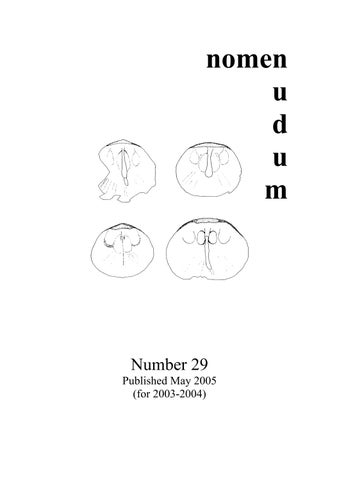
Cover illustration:- Brock’s bracs! Outline drawings of Opsiconidion species from the Early Devonian of New South Wales and Victoria. Top left: Opsiconidion arcticon Ludvigsen, 1974 (AM F92893); top right: Opsiconidion sp. cf. Opsiconidion aldridgei (Cocks, 1979) (AM F92847); bottom left: Opsiconidion minor Popov, 1981 (AM F92843); bottom right: Opsiconidion robustum Brock, Engelbretsen & DeanJones, 1995 (AM F92856). (Modified from Brock et al. 1995: fig. 2).
© Association of Australasian Palaeontologists, May 2005. ISSN 1447-4662
A web based future for nomen nudum?
This is the third edition of Nomen nudum produced and distributed as a pdf document. It represents the activity of the Australasian palaeontological community for the period 2003 to 2004. While some may claim that the frequency of our newsletter in its current form is inadequate to cover the rich tapestry of fossiliferous endeavour in our part of the globe, it has appeared more frequently than in its previous incarnation. The frequency (or lack thereof) of nomen nudum has led to some robust email discussion in the past. It set us thinking about possible remedies.
Perhaps we should rethink the entire newsletter concept and have all our information on line. Some of you may remember the Directory of Australian Palaeontologists that used to be readily accessible on the MUCEP (Macquarie University Centre for Ecostratigraphy and Palaeobiology) website some years ago. The original files for this were apparently lost in a mainframe crash a long time ago. If these files were rebuilt, possibly hosted by the GSA web site, then they could incorporate much of the information included in your newsletter.
The web site could contain a form consisting of three parts to be filled in by all members of AAP. It could incorporate much of the information on the previous directory. The first part could include data such as personal details, contact information and the other speciality information such as phyla (or group), time period and geographic region to cover research interests.
The second part could consist of short reports of recent research activity of the type that appears in this and earlier newsletters. The third part could consist of a list of publications. In this and previous pdf nomen nudums, these have been consolidated in the back of the newsletter, in earlier print editions they have been listed under individuals reports. There could also be a field that records the date of the latest contribution by an individual researcher. This would give readers an indication of how current the research activity is, and allow the webmaster the option of chasing individuals for updates.
With the addition of some internet wizardry, this form of entirely web based nomen nudum could include some interesting and useful functions. It could allow users of the site to find the contact details of all researchers with an interest in a particular phyla, geographic and/or chronologic speciality, and thus allow a data dump of all research activity defined by a selection of the above criteria. This could be useful for workers elsewhere in the world wanting a snapshot of particular research in our part of the globe and/or access to those active in these fields.
As you no doubt already realise there are a lot of assumptions in the model outlined above. It requires individual researchers to input data on a regular basis without the periodic calls for contributions being generated by the current editors. In fact a web based nomen nudum would essentially be an enterprise that is self edited by the membership. There can still be other space on the web site for contributors to offer
reviews, updates from those responsible for the AAP Memoirs and Alcheringa, and opinion pieces.
While such a model would do away with the need for any nomen nudum editors, an AAP web master would be needed to ensure a timely flow of appropriate information from the membership to the site. Selection of the right person(s) with a mix of IT skills and broad knowledge of the palaeontology disciplines would be no easy task. We would need to establish whether this should be a paid position. If so, would this affect the current level of membership fees? We would also need to establish whether such a facility could be hosted by the GSA web site (the current AAP website is hosted without charge thanks to the generosity of MUCEP).
The advantages of such a model would include instant, world-wide access to information about Australasian palaeontology and palaeontologists at any time. But is such a model achievable and does it best fit the needs of the Association? These are questions that require your feedback. In discussing the model among the Executive and with other colleagues some interesting and divergent points of view have been expressed.
Some have argued that this kind of information and functionality is embedded in the web site of the International Palaeontological Association (IPA) and therefore we would only be replicating in part what is already available on line. Others have argued that the model outlined above provides the best avenue for active members to promote their work to an international audience of like-minded colleagues. Still others say that there is still a place for a periodic newsletter (if only produced sporadically) as this forms a permanent record of the activity of our Association.
No matter how diverse the range of opinions among members, it is a debate we need to have now. None of your current nomen nudum editors are paid palaeontologists (two are students and one is a museum worker). We fit it in because we are enthusiastic about the subject matter. This highlights another problem that is covered in part by the letter from Carol Burrow published below.
We welcome the thoughts of individual members, both those in paid positions and dedicated amateur enthusiasts, on the subject of the future of our newsletter. Let’s fill up the letter(s) page(s) of our next edition (if there is one).
PS: You will note that even though our publication date is May 2005, we have left in the final circular for the CAVEPS meeting in March. This is to give readers who did not attend a flavour for the scope of that meeting. We hope to publish a report of the meeting in a future edition. Proceedings from this meeting will be published as an AAP Memoir
We thank all those who provided information for this edition, particularly those few who coordinated submissions from individual institutions or regions.
Andrew Simpson, James Valentine & Peter Molloy Editors – nomen nudum
Hands up those palaeontologists who think all is well in the world of studying Australia’s fossils! Somehow, I don’t think we’ll be able to dig up anything new with the hands raised high… I guess that most of you will be aware that ARC Discovery grants to palaeontology projects reached an all-time low in the latest round – one to palaeobotany, one to invertebrate palaeontology (sort of), and one to vertebrate palaeontology. How many salaried lecturing positions in Australia’s universities are occupied by vertebrate palaeontologists? By my count, fewer than 3.0 full-time equivalents, and that’s including a dean of a faculty whom I’m guessing doesn’t spend a lot of time in the lecture theatre.
I believe that one of our basic problems is the lack of recognition by the bureaucracy of palaeontology’s value as a part of Australia’s heritage. Somehow, in the myriad of SEO codes, one has not yet been allocated to appreciate Australia’s past as preserved in its fossil record (even though we have, for example, a code 750902 for “understanding the pasts of other societies”). I am sure that the average Australian sees a ‘socio-economic’ value in the study of our country’s fossils, so how about the ARC doing the same? Why not send a letter to the ARC CEO, and/or the Minister, asking for, at the least, recognition of the value of our discipline as something more than: Non-oriented research, 780104 - Earth sciences or 780105 - Biological sciences.
Carole Burrow
6-12-04
Ken McKenzie passed away suddenly in the morning of 14 May 2003, after his usual walk on his beloved property ‘Yugen’, near Wagga Wagga, New South Wales. His death interrupted sharply a life time of vibrant scientific work, and community activities. Ken is survived by his wife, Judith Le Lievre, two sons, three daughters, and eleven grandchildren.
Ken was born on 18 September 1928 in Poona, India, where he received his early education at Bishops High School (1936-45), and later at Wilsons College, at the University of Bombay (1945-47). In 1948 he began military service in the British Army (Royal Engineers) in Britain, where he was trained as a surveyor (engineering, topographic, photogrammetric), and was later posted to Hong Kong and Malaya. During his five years (1948-53) in the army, he showed his sporting prowess in hockey, cricket, and athletics. Ken’s surveying skills later led to jobs in Australia with seismic and gravity teams prior to, and during, his study for a B.Sc. in Geology at the University of Western Australia. He gained his hockey blue in his first year. After graduating in 1957, Ken was employed as an oil company exploration geologist (Caltex/Amoco; Filipinas Oil; Exoil), and gained considerable field experience in Australia and the Philippines. Ken used his surveying skills again on a joint
expedition of the Western Australian Museum and the Museum of Paleontology, Berkeley, California, to document the sites of vertebrate localities in the Triassic Blina Shale of the Canning Basin, W A. This was the subject of his first paper, which was published in 1961. In 1960 Ken returned to the University of Western Australia to commence study for the Ph.D. degree. The topic for his research “Oyster Harbour: a marginal marine environment”, which documented the ecological association of ostracods and foraminiferids off Albany, Western Australia, marked the beginning of a distinguished career of research on Ostracoda.
After he gained his Ph.D. in 1963, Ken was awarded post-doctoral scholarships at the Stazoine Zoologica, Naples, the Department of Geology, University of Minnesota (1963-64), and the Department of Zoology, Monash University (1965-67). In 1967, he was appointed Head of the Entomostraca Section at the British Museum (Natural History), London, and held this position until 1972. It was here Ken started to think about the origin of the crustaceans, and learned much from several of the world ’s leading experts on this group, including Sidnie Manton, who worked in an adjacent office. In the field, he led the Royal Society’s expedition to the Aldabra islands, off Madagascar, and made collections for the BM in South Africa and South America (Argentina, Brazil, Chile). It was such collections that awakened his interest in the palaeobiographic distribution of Cainozoic ostracods, both freshwater and marine. He also developed an interest in the quantitative aspects of taxonomy, and was awarded a Diploma in Numerical Taxonomy at the Estudos Avancados de Oeiras, Portugal. By the time Ken left England he had won a well-earned reputation as one of the world’s leading researchers on living and Cenozoic marine and freshwater ostracods.
In 1973 Ken returned to Australia, and established the Geology Department in the School of Applied Science at the Riverina College of Advanced Education (now the Charles Sturt University), Wagga Wagga, New South Wales. This department is now closed, but not before having made a significant contribution to the educational needs in the Riverina region, and to scientific knowledge well beyond. Despite heavy teaching commitments, Ken produced a substantial flow of research papers, among which those on Cainozoic ostracods, formed the basis of his thesis for a D.Sc. (University of Western Australia), which was awarded in April 1982.
Ken developed an international network of colleagues, all sharing a mutual passion for Ostracoda. He established good friendships with many of them, especially those with whom he shared co-authorship in joint papers. Some of the earliest were those in the United States (Fred Swain, Richard Benson, Roger Kaesler, and Willem van den Bold), England (Peter Sylvester-Bradley), and Sweden (Richard Reyment). Others were in France (Jean-Pierre Peypouquet), Italy, India, China and Japan.
In 1985 he was appointed an Associate in the Department of Geology, University of Melbourne, where he supervised the research of Mark Warne (Ph.D.) and John Neil (M.Sc.) on Cainozoic marine ostracods of Victoria. After his formal retirement from his teaching duties at Charles Sturt University in 1988, he continued many more productive years of ostracod and crustacean research at the University of Melbourne. From here, and from his home in Wagga Wagga he maintained a fine record of individual and collaborative research with colleagues in Australia, and world wide. Without teaching commitments, Ken was also able to spend longer periods
consolidating his research links previously established with colleagues in Italy, India, Sweden, and China (Pei-ji Chen).
In all, Ken published about 175 papers and edited or co-edited several books. His ostracod research could be broadly divided into the biology and biogeography of extant species from freshwater, brackish and marine environments, and the palaeontology of extinct species throughout the Phanerozoic. From the latter work he developed his ideas on the phylogeny and classification of the Ostracoda, and how this was related to the evolution of the Crustacea as a whole. To my knowledge, Ken has still one paper, at least, in the publication pipeline. I was recently shown a manuscript, which he co-authored, describing the ostracod fauna of the Miocene freshwater limestones from the Riversleigh World Heritage deposits of northern Queensland.
Ken will be remembered for his ability in organizing many scientific conferences, either as the main organizer, or part of the organizing committee, beginning with the Origin of Life meeting of the Systematics Association in London, in 1969. He was a co-founder of the Shallow Tethys (ST) working group of the International Palaeontological Association, together with Giuliano Piccoli (University of Padua, Italy). It was typical of Ken to put his hand up at the First ST meeting in Padua, 1982, and volunteer to organize the second meeting in Wagga Wagga in 1986. In 1988, I well remember receiving his phone call from Wales at the 10th International Symposium on Ostracoda (ISO) in Aberystwyth, telling me of a fortuitous opportunity had arisen for us to host the next ISO meeting of this group in Australia. During the next three years Ken, together with Patrick De Deckker and myself, organized the 11th International Symposium on Ostracoda, which was held at Deakin University on its Warnambool campus in 1991.
Ken put great emphasis on original thought in research, and never felt constrained to accept current orthodoxy, without critical evaluation. In this spirit, he admired the concepts of such iconoclasts as Sam Carey and Art Boucot, who he selected as keynote speakers at the Shallow Tethys 2 meeting, and to whom he dedicated the volume of the proceedings.
Ken had a distinct, easy-flowing, writing style, which in some papers especially those dealing with Tethys, tended to be rather florid. However, this did not detract from their clarity. He could immediately attract the attention of the reader, with snappy titles like “Homeomorphy: Persistent joker in the taxonomic pack, …..” The extent and classical background of his knowledge was exemplified by his interest and research into Tethys. In his concluding epilogue on the proceedings of the Second Shallow Tethys Symposium he discussed the origin of Tethys from many aspects, starting from classical mythology and ending with modern scientific thoughts of Suess, Wegener, and the plate tectonic model. It is noteworthy that one reviewer (Tony Hallam) of the published proceedings “was charmed to see what must be the first ever citation of Botticelli’s Birth of Venus in a scientific reference list”.
Italy was a second home to Ken. He had made about ten visits to the University of Parma, since 1965, each about 2-3 months per year, three visits to the Stazoine Zoologica, Naples, and one visit to the University of Padua. All of these visits involved collaboration in joint studies, and a simultaneous absorption of local cultural
values. In October 2001, Ken travelled to Parma to receive the ‘Scritture d’Acqua’ Premio Salsomaggiore Internazionale, a prestigious award supported by the European Commission, several Ministries of the Italian Government, and many Communes in northern Italy. A persona profile of Ken in the local newspaper in June 2001 described his typical day starting, like many other Parma citizens, with a visit to his favourite café for his usual cup of coffee, and a read of the local events in the Gazzetta di Parma. The reporter thought that Ken looked typically Italian, so much so, he compared his physiognomy with that of Arturo Toscanini. Ken had an excellent knowledge of the Italian language, literature, art and history. He published a volume of poetry in Italian, and also translated into English the operatic play “Il diavolo con le zinne” by the Italian (Nobel Prize-winning) playwright, Dario Fo, to bring back to Australia.
Ken had a discerning taste for wine, and was proactive in the promotion of the wines produced at the Charles Sturt University (then the Riverina College of Advanced Education). Whenever he visited Canberra, he would bring 6 of the best ‘College Wines ’ for his BMR palaeontological colleagues to taste, and to place their orders. During his visit to Bordeaux in 1979, as well as working on the Cenozoic ostracods from the Aquitaine Basin, he also managed to spend some time picking grapes in the vineyards of Gascogny. His zest for life, and enthusiasm for activities beyond his chosen field of scientific interest seemed almost boundless. In his early years at the Riverina College he edited the literary magazine Grapeshot (1974-78), and was involved in several drama and ballet productions (1973-1986). Wherever he visited, he would bring home to Wagga Wagga something of the cultural values he had learned from the host country. On his return from France in 1979, he lost no time in sharing his keen interest in French music with others on Radio 2WG, Wagga Wagga.
Ken was a man of integrity, with a strong sense of purpose, which was expressed in his service to the community, through Local Government. In 1991 he was elected a Councillor on the Wagga Wagga City Council, where his sharp mind, and his analytical skills, were greatly valued. He declined an invitation to stand for re-election at the end of his four-year term of office, because he still had many scientific projects to complete. Ken was also a man of strong philosophical convictions, and a popular, and well-respected, member of St Andrew’s Presbyterian Church and Parish of Wagga Wagga. It was here he actively participated in church life as Secretary of the management committee (1975-85), and frequently gave talks on his scientific work to various groups. At last years St Andrew’s Day concert, he read a number of poems of Robbie Burns, to the delight of the audience, who also were impressed with his accent.
Ken will be remembered for both his scientific achievements and his humanity, by so many people, his local community of Wagga Wagga, and his colleagues in Australia, and throughout the world.
Peter J. Jones Department of Earth and Marine Sciences, The Australian National University
[This obituary was first published in The Australian Geologist 130, 49-50, and with kind permission, is reproduced here specifically for a wider circulation among the palaeontological fraternity]
'Betty' Ripper was born in Melbourne on the 7th September 1909. With her interest aroused in geology at Melbourne High School, she went in to take her undergraduate training in Geology at the University of Melbourne from 1928 to 1931, gaining a M.Sc. in 1932. Her contributions to Australian geology and palaeontology were on Ordovician and Silurian graptolites and Lower Devonian stromatoporoids for her M.Sc., which was published in 1933. From 1933 to 1936 she was a non-resident student at Newnham College, Cambridge University, contemporary with her friend, Dorothy Hill. She pursued her Ph.D. under Dr Gertrude L. Elles at the Sedgwick Museum (part of the Dept. of Earth Sciences) and working with graptolite worker, Dr O.M.B. Bulman. Further papers were published in the Proceedings of the Royal Society of Victoria in the 1930s including her pioneer studies of the Victorian Lower Devonian stromatoporoid assemblages.
In 1937, Betty returned to Britain and married and had 2 children. She did not manage to find a job and never returned to Australia. She died in London in June after a short illness.
A longer memorial is in preparation.
S. Turner & B. Webby October 2004
Below are abstracts from recent editions of the AAP Memoirs series. To purchase copies of the Memoirs please contact:-
Ms S. Fletcher
Tel: (02) 9290 2194
Business Manager Fax: (02) 92902198
Geological Society of Australia, Inc.
Email: sue@gsa.org.au Suite 706, 301 George St, Sydney NSW 2000, Australia
REID, C.M., 2003. Permian Bryozoa of Tasmania and New South Wales: systematics and their use in Tasmanian biostratigraphy. Memoirs of the Association of Australasian Palaeontologists 28, 1-133. ISBN 0-949466-26-3
Polypora virga Laseron, 1918 .
Polyporella Simpson, 1895 . .
Polyporella internata (Lonsdale, 1844) 73
Polyporella protuberans n. sp. .
Polyporella rebarbensis n. sp. .
Polyporella subwoodsi n. sp. . .
Polyporella westarmensis n. sp. .
Pseudopolypora Morozova & Lisitsyn, 1996 . 87
Pseudopolypora versonoda n. sp. .
Shulgapora Termier & Termier, 1971 . . 91
Shulgapora magnafenestrata (Crockford, 1941) 91
DYSCRITELLINAE Dunaeva & Morozova, 1967
Dyscritella Girty, 1911
Dyscritella espinensis n.
inversa
Dyscritella tunbridgensis n. sp.
Dyscritella sp. A.
Stenopora Lonsdale, 1844
Stenopora aequalis n. sp.
Stenopora berriedalensis n. sp.
Stenopora crinita Lonsdale, 1845
Stenopora etheridgei Crockford, 1945
Stenopora grantonensis Crockford, 1943
Stenopora ovata Lonsdale, 1844
Stenopora seriatensis n. sp.
Stenopora spiculata Crockford, 1945
Stenopora tasmaniensis Lonsdale, 1844
Stenopora sp. A .
Order CRYPTOSTOMATA Vine, 1883 .
Suborder RHABDOMESINA Astrova & Morozova, 1956 121
Family HYPHASMOPORIDAE Vine, 1886
Streblotrypa Vine, 1885
Streblotrypa sp. indet.
Order CYSTOPORATA AStrova, 1964
Suborder FISTULIPORINA AStrova, 1964
Family FISTULIPORIDAE Ulrich, 1882 .
Fistuliporidae gen. indet.
APPENDIX 1: DESCRIPTION PARAMETERS . . . . 128
APPENDIX 2: COLLECTION LOCALITIES . . . . 131
Permian Bryozoa from the glaciomarine Tasmania and southern Sydney Basins, Australia, are reassessed following the taxonomy of Morozova (1974) and Morozova & Lisitsyn (1996). The fenestrate faunas are described using the descriptive parameters of Snyder (1991). Previously the fenestrate faunas of these regions have not been examined internally. This study shows that taxonomic methods involving internal examination, applied to all bryozoan groups, yield the information required for accurate biostratigraphic analysis.
The Permian bryozoan faunas of the Tasmania Basin are abundant, but of low diversity, with cosmopolitan genera and many endemic species. Taxa are mostly Fenestrata and Trepostomata, with rare Cryptostomata and Cystoporata, and range in age from Sakmarian to Kazanian. Thirty-six species are recorded in the genera Levifenestella, Rectifenestella, Mackinneyella, Parapolypora, Paucipora, Polypora, Polyporella, Pseudopolypora, and Shulgapora (Fenestrata); Dyscritella, Dyscritellina, Paralioclema, and Stenopora (Trepostomata); Streblotrypa (Cryptostomata); Fistuliporidae (Cystoporata). Eighteen new species are described from the Tasmania Basin: Rectifenestella banksi, R. counselensis, R. smithae, R. tamarensis, Mackinneyella granulosa, Parapolypora boraformis, Paucipora tasmaniensis, Polyporella protuberans, P rebarbensis, P subwoodsi, P westarmensis, Pseudopolypora versonoda, Dyscritella inversa, D. tunbridgensis, Dyscritellina megacanthi, Paralioclema wassi, Stenopora aequalis and S berriedalensis
The bryozoan fauna described here from the southern Sydney Basin is largely confined to the Kungurian Wandrawandian Siltstone, where abundant well preserved faunas were collected. Sixteen species are recorded within the genera Laxifenestella, Levifenestella, Minilya, Rectifenestella, Fenestella, Paucipora, Polypora, Shulgapora (Fenestrata), and Dyscritella and Stenopora (Trepostomata), with four new species described - Laxifenestella oviferosa, Paucipora ulladullaensis, Dyscritella espinensis and Stenopora seriatensis
Within fenestrate faunas of the Tasmania Basin, internal examination has revealed a number of species and genera that were previously grouped together as long-ranging species of variable mesh dimensions. In the Tasmania Basin, bryozoan Faunizones AE are proposed for the Sakmarian to the Kazanian, that can aid in Australia-wide biostratigraphic relationships. The new bryozoan faunizones are based on assemblages of new and previously described taxa. The use of bryozoans in biostratigraphic analysis can provide a means of correlating drill-core material where other macrofossils may not be suitable.
Keywords: Permian, Bryozoa, Tasmania, New South Wales, systematics, biostratigraphy, Australia
LAURIE, J.R. & FOSTER, C.B. (eds), 2004. Palynological and micropalaeontological studies in honour of Geoffrey Playford. Memoirs of the Association of Australasian Palaeontologists 29, 1- ISBN 0-949466-27-1
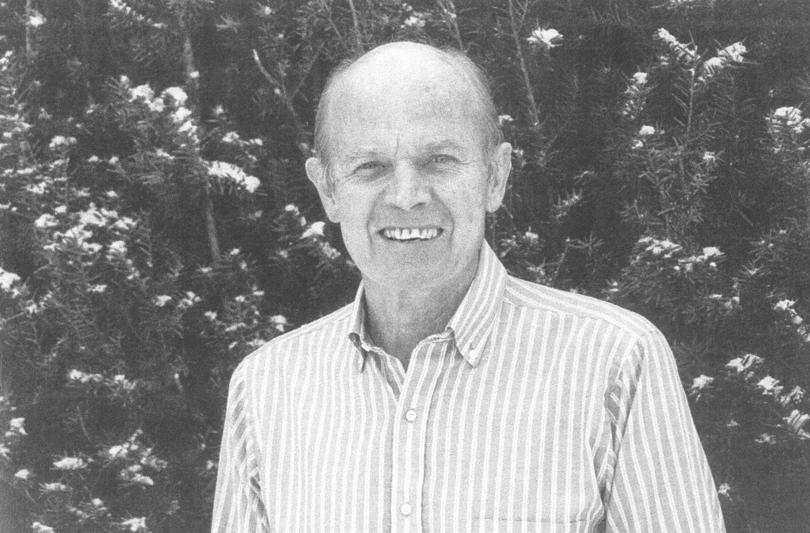
Playford B.SC. (Hons, WA), Ph.D. (Cantab), D.Sc. (WA)
The papers in this volume derive mostly from presentations given at a symposium held at the First International Palaeontological Congress, Sydney, July 2002, to mark the retirement of Professor Geoffrey Playford.
Thirty-one papers and ten posters were delivered at the Playford Symposium by authors from Australia, Canada, China, Europe, Iran, New Zealand, South America, Thailand, and USA. They represented a wide range of topics, from Cambrian saprogenic nanobacteria to studies of foraminiferids and other microfloral elements as proxies for palaeoenvironmental conditions.
Many were delivered by Geoffrey Playford's former graduate students from the University of Queensland, as well as distinguished national and international colleagues. The breadth of topics reflected the diversity of interests and scholarship of the man being honoured. The symposium and this volume celebrate the dedicated contribution to teaching, mentoring, scholarship and friendship of Professor Geoffrey Playford.
Geoffrey Playford was born in South Perth, Western Australia (WA), on the 17th October 1935. He was the second son of Elliott Geoffrey Playford (born in Adelaide, South Australia) and Alice Mary Playford (née Beck, born in Perth).
Geoff grew up in South Perth, which until the Narrows Bridge was built in 1959, was a small and somewhat isolated community, surrounded by large areas of natural bushland. While exploring this bush as a child, Geoff developed an enduring appreciation of the indigenous Australian flora, especially the prolific sandplain flora of the South West. From 1941 to 1947 he received his primary education at Forrest Street State School, South Perth. That schooling was disrupted during his first year, when he contracted osteomyelitis in one ankle. It was then considered to be a very serious disease, as it often proved fatal in the days before penicillin. Treatment required his leg to be immobilized in plaster, and for him to be kept away from school
for more than a year. The dreaded disease was to return suddenly in early 1950, but by then the 'miracle drug' penicillin had been developed, so it was quickly cured, never to return.
As a result of his absence in 1941-42, Geoff was a year behind when he returned to school in 1943. Fortunately he was later allowed to 'skip' 4th grade, so that he could sit for the Perth Modern School (PMS) scholarship examination during his twelfth year, when he reached 6th grade. His scholarship quest succeeded, so that he joined his elder brother, Phillip, at PMS in 1948. PMS was then an academically elite secondary school, with admission from primary school by scholarship alone. He did well at school, and was a member of the PMS tennis team that won the Mursell Shield in 1952. Geoff developed a voracious appetite for reading, with a special interest in 19th century English literature. This engendered a deep appreciation of the English language, which has always served him well as an author and editor of scientific publications.
After leaving school, Geoff experienced 14 weeks of mandatory National Service in the Army during the summer vacation, before entering the University of Western Australia (UWA) in 1953 with a Commonwealth Scholarship. He enrolled initially for a BSc (Agriculture) degree, motivated by his long-standing botanical interests, and successfully completed two years of the four-year degree. However, the second year included Geology I, and it was largely through the enthusiastic and inspiring lectures of Professor Rex Prider during that course that he decided to switch to geology at the end of the year. He found that he had a predilection for sedimentary geology (like his brother, Phillip), and was especially interested in palaeontology. He completed his BSc in 1956 and was awarded the Lady James Prize in Natural Science, jointly with his close friend Tony Watson, who had graduated in zoology. For his Honours project Geoff chose the Permian stratigraphy of the Woolaga Creek area in the northern Perth Basin. His work on that project gave him First Class Honours in Geology and led to his first publication, in 1958.
At the beginning of Geoff's Honours year, Basil Balme joined the UWA Geology Department as a Lecturer, coming from the CSIRO Coal Section in Sydney. He had been a pioneer of palynology in Australia, and his work greatly interested Geoff, especially as his brother Phillip had indicated that Basil's palynological studies were extremely important in unravelling the geology of WA's sedimentary basins, and that palynology was proving to be the most important palaeontological tool in the oil industry. Basil nurtured Geoff's interest, and was especially generous in introducing him to palynological techniques and microscopy through a study of Permian coal measures of the Prince Charles Mountains, Antarctica. That project was eventually completed for publication some nine years later. In 1958 Geoff was awarded a Gledden Research Fellowship for overseas PhD research. On Basil's recommendation, he decided to go to Cambridge, to work under the supervision of Norman Hughes, then one of Britain's foremost palynologists.
The project chosen for his PhD research was the palynology of the Lower Carboniferous (Culm) sequence of Spitsbergen. In the summer of 1959 he conducted fieldwork in the Arctic as leader of the Bear Island party of the Cambridge Svalbard Expedition. His PhD was completed in August 1961, and in the following month he took up a postdoctoral fellowship of the National Research Council of Canada (NRC),
tenable at the Geological Survey of Canada in Ottawa. There he worked under the aegis of Peter Hacquebard, studying material from the Mississippian Horton Group of Nova Scotia and New Brunswick. The NRC fellowship was for two years, but in the space of one week in September 1962, he received three offers of lectureships in Australasia, all of them due to start at the beginning of 1963. He has never regretted his ultimate decision to accept appointment at the University of Queensland. That university's Department of Geology and Mineralogy, as it was then known, had acquired an excellent national and international reputation, being especially renowned for the palaeontological research of Professor Dorothy Hill. Professor Allan Wilson, who had taught Geoff at UWA, had recently been appointed to the Chair of Geology and Mineralogy. Moreover, Queensland had become an important focus of oil exploration activity, to which palynology was beginning to make significant contributions.
Geoff's career flourished — successively as Lecturer, Senior Lecturer, Reader, and ultimately, Professor — as he established the discipline of palynology and micropalaeontology in undergraduate curricula and postgraduate research. Countless undergraduates and postgraduates, amongst whom the writer is proud to be included, remember the detailed lectures and demand for excellence in whatever fossil group was being studied. All this was aided by the availability of the incomparable Dorothy Hill Geology Library, then housed in the Department.
Following his introduction to the subject by Basil Balme and Norman Hughes, Geoff developed into an enthusiastic and inspiring practitioner and exponent of palynological research and its geological applications, particularly in biostratigraphy. His extensive list of publications (below) is a manifestation of the breadth of his palynological contributions, dating from 1961. These include detailed studies of a wide spectrum of palynomorph groups — miospores, megaspores, pollen grains, microphtyoplankton (particularly acritarchs) and chitinozoans — from strata encompassing the lower Palaeozic through Holocene. His research has found important applications in local and regional stratigraphic correlations in Australia and internationally. In the latter context, during periods of sabbatical leave from the University of Queensland, Geoff has forged much-valued professional associations and co-authorships with many individuals at a range of overseas research institutions. These include Colin McGregor (Geological Survey of Canada, Ottawa), the late Francine Martin (Institut royal des Sciences naturelles, Brussels), Reed Wicander (Central Michigan University, Mount Pleasant), Merrell Miller (then of Amoco Research Center, Tulsa), Marco Tongiorgi and Anna di Milia (Università di Pisa), and Rodolfo Dino (Petrobras and UERJ, Rio de Janeiro). Conversely, he has hosted several sabbatical visitors, among them Reed Wicander, Colin McGregor, and Andrew Scott (Royal Holloway, University of London). A landmark palynological event for Australia — the 7th International Palynological Congress — was successfully conducted at the University of Queensland in August 1988, with Geoff and Noel de Jersey (Geological Survey of Queensland) serving as its co-chairs.
Geoff has always maintained a broad interest in stratigraphy and palaeontology, particularly invertebrate palaeontology, which he co-taught with the late Dorothy Hill and long-time colleague John Jell at the University of Queensland. Together with Professor Hill and J.T. (Jack) Woods (then Director of the Queensland Museum), he edited and contributed to a system-by-system (Cambrian through Cenozoic) series of
illustrated booklets, focusing on Queensland fossil faunas and floras, that proved exceedingly popular.
Thirty years on, Geoff's fine teaching and science mentoring continues today. All of us who participated in the Symposium, and colleagues throughout the global palynological fraternity, wish Geoff a long and active retirement as Professor Emeritus, and look forward to his continuing scholarship.
I am grateful to the conveners of the First International Palaeontological Congress, Professors John Talent and Ruth Mawson, for inviting me to convene the Playford Symposium, and to the team at Macquarie University for their flawless planning and logistic support. Grateful thanks also to Robbie Horn, Geoscience Australia, who provided secretarial support; to the contributors to the Symposium and volume; to former postgraduates, and especially to Dr Phillip Playford AM, for providing me with details of Geoff's formative years.
Clinton Foster Geoscience Australia
PLAYFORD, G., 1958. Permian stratigraphy of the Woolaga Creek area, Mingenew district. Western Australia. Journal of the Royal Society of Western Australia 42, 7-32.
HUGHES, N.F. & PLAYFORD, G., 1961. Palynological reconnaissance of the Lower Carboniferous of Spitsbergen. Micropaleontology 7, 27-44, 4 pls.
PLAYFORD, G., 1962. Lower Carboniferous microfloras of Spitsbergen, Part One. Palaeontology 5, 550-618, pls 78-87.
HUGHES, N.F., DETTMANN, M.E. & PLAYFORD, G., 1962. Sections of some Carboniferous dispersed spores. Palaeontology 5, 247-252, pls 37-38.
DETTMANN, M.E. & PLAYFORD, G., 1963. Sections of some spores from the Lower Carboniferous of Spitsbergen. Palaeontology 5, 679-681, pl. 96.
PLAYFORD, G., 1963. Lower Carboniferous microfloras of Spitsbergen, Part Two. Palaeontology 5, 619-678, pls 88-95.
PLAYFORD, G. & BARSS, M.S., 1963. Upper Mississippian microflora from Axel Heiberg Island, District of Franklin. Geological Survey of Canada, Paper 6236, 5p.
PLAYFORD, G., 1964. Miospores from the Mississippian Horton Group, eastern Canada. Geological Survey of Canada, Bulletin 107, 47p., 11 pls.
PLAYFORD, G., 1965. Plant microfossils from Triassic sediments near Poatina, Tasmania. Journal of the Geological Society of Australia 12, 173-210, pls 611.
PLAYFORD, G. & DETTMANN, M.E., 1965. Rhaeto-Liassic plant microfossils from the Leigh Creek Coal Measures, South Australia. Senckenbergiana lethaea 46, 127-181, pls 12-17.
HILL, D., PLAYFORD, G. & WOODS, J.T. (eds), 1965. Triassic fossils of Queensland. Queensland Palaeontographical Society, Brisbane, 32p.
HILL, D., PLAYFORD, G. & WOODS, J.T. (eds), 1966. Jurassic fossils of Queensland. Queensland Palaeontographical Society, Brisbane, 32p.
PLAYFORD, G. & CORNELIUS, K.D., 1967. Palynological and lithostratigraphic features of the Razorback Beds, Mount Morgan district, Queensland. Papers of the Department of Geology, University of Queensland 6, 81-96, 2 pls.
BALME, B.E. & PLAYFORD, G., 1967. Late Permian plant microfossils from the Prince Charles Mountains, Antarctica. Revue de Micropaléontologie 10, 179192, 2 pls.
HILL, D., PLAYFORD, G. & WOODS, J.T. (eds), 1967. Devonian fossils of Queensland. Queensland Palaeontographical Society, Brisbane, 32p.
PLAYFORD, G. & HELBY, R., 1968. Spores from a Carboniferous section in the Hunter Valley, New South Wales. Journal of the Geological Society of Australia 15, 103-119, pls 9-11.
DETTMANN, M.E. & PLAYFORD, G., 1968. Taxonomy of some Cretaceous spores and pollen grains from eastern Australia. Proceedings of the Royal Society of Victoria 81, 69-94, pls 6-8.
HILL, D., PLAYFORD, G. & WOODS, J.T. (eds), 1968. Cretaceous fossils of Queensland. Queensland Palaeontographical Society, Brisbane, 35p.
DETTMANN, M.E. & PLAYFORD, G., 1969. Palynology of the Australian Cretaceous: a review. 174-210 in Campbell, K.S.W. (ed.), Stratigraphy and palaeontology, essays in honour of Dorothy Hill Australian National University Press, Canberra.
HILL, D., PLAYFORD, G. & WOODS, J.T. (eds), 1969. Ordovician and Silurian fossils of Queensland. Queensland Palaeontographical Society, Brisbane, 32p.
HILL, D., PLAYFORD, G. & WOODS, J.T. (eds), 1970. Cainozoic fossils of Queensland. Queensland Palaeontographical Society, Brisbane, 36p.
PLAYFORD, G., 1971a. Lower Carboniferous spores from the Bonaparte Gulf Basin, Western Australia and Northern Territory. Bureau of Mineral Resources, Geology and Geophysics, Bulletin 115, 105p., 18 pls.
PLAYFORD, G., 1971b. Palynology of Lower Cretaceous (Swan River) strata of Saskatchewan and Manitoba. Palaeontology 14, 533-565, pls 103-107.
HILL, D., PLAYFORD, G. & WOODS, J.T. (eds), 1971. Cambrian fossils of Queensland. Queensland Palaeontographical Society, Brisbane, 32p.
PLAYFORD, G., 1972. Trilete spores of Umbonatisporites in the Lower Carboniferous of northwestern Australia. Neues Jahrbuch für Geologic und Paläontologie, Abhandlungen 141, 301-315.
HILL, D., PLAYFORD, G. & WOODS, J.T. (eds), 1972a. Permian fossils of Queensland. Queensland Palaeontographical Society, Brisbane, 32p.
HILL, D., PLAYFORD, G. & WOODS, J.T. (eds), 1972b. Select bibliography of Queensland fossils. Queensland Palaeontographical Society, Brisbane, 15p.
GLOVER, J.E. & PLAYFORD, G. (eds), 1973. Mesozoic and Cainozoic palynology. Geological Society of Australia, Special Publication 4, 211p.
PLAYFORD, G., HAIG, D.W. & DETTMANN, M.E., 1975. A mid-Cretaceous microfossil assemblage from the Great Artesian Basin, northwestern Queensland. Neues Jahrbuch für Geologic und Paläontologie, Abhandlungen 149, 333-362.
PLAYFORD, G., 1976. Plant microfossils from the Upper Devonian and Lower Carboniferous of the Canning Basin, Western Australia. Palaeontographica, Abteilung B 158, 1-71, 12 pls.
PLAYFORD, G., JONES, B.G. & KEMP, E.M., 1976. Palynological evidence for the age of the Brewer Conglomerate, Amadeus Basin, central Australia. Alcheringa 1, 235-243.
PLAYFORD, G., 1977a. A Lower Carboniferous palynoflora from the Drummond Basin, east-central Queensland. Proceedings of the Royal Society of Queensland 88, 75-81, pls 11-12.
PLAYFORD, G., 1977b. Lower to Middle Devonian acritarchs of the Moose River Basin, Ontario. Geological Survey of Canada, Bulletin 279, 87p., 20 pls.
KEMP, E.M., BALME, B.E., HELBY, R.J., KYLE, R.A., PLAYFORD, G. & PRICE, P.L., 1977. Carboniferous and Permian palynostratigraphy in Australia and Antarctica: a review. BMR Journal of Australian Geology and Geophysics 2, 177-208.
PLAYFORD, G., 1978. Lower Carboniferous spores from the Ducabrook Formation, Drummond Basin, Queensland. Palaeontographica, Abteilung B 167, 105160, 13 pls.
PLAYFORD, G. & DETTMANN, M.E., 1978. Pollen of Dacrydium franklinii Hook. f. and comparable Early Tertiary microfossils. Pollen et Spores 20, 513-534, 5 pls.
PLAYFORD, G., 1979. Floral evolution in the Late Palaeozoic and Early Mesozoic of Australia: a summary. The Australian Geologist, Newsletter 26, p.11.
PLAYFORD, G. & POWIS, G.D., 1979. Taxonomy and distribution of some trilete spores in Carboniferous strata of the Canning Basin, Western Australia. Pollen et Spores 21, 371-394, 5 pls.
PLAYFORD, G., 1981. Late Devonian acritarchs from the Gneudna Formation in the western Carnarvon Basin, Western Australia. Géobios 14, 145-171, 6 pls.
PLAYFORD, G. & DRING, R.S., 1981. Late Devonian acritarchs from the Carnarvon Basin, Western Australia. Special Papers in Palaeontology 27, 78p., 19 pls.
PLAYFORD, G., 1982a. A latest Devonian palynoflora from the Buttons Beds, Bonaparte Gulf Basin, Western Australia. BMR Journal of Australian Geology and Geophysics 7, 149-157.
PLAYFORD, G, 1982b. Neogene palynomorphs from the Huon Peninsula, Papua New Guinea. Palynology 6, 29-54, 7 pls.
PLAYFORD, G., RIGBY, J.F. & ARCHIBALD, D.C., 1982. A Middle Triassic flora from the Moolayember Formation, Bowen Basin, Queensland. Geological Survey of Queensland, Publication 380, 52p., 12 pls.
PLAYFORD, G., 1983a. The Devonian miospore genus Geminospora Balme, 1962: a reappraisal based upon topotypic G lemurata (type species). Association of Australasian Palaeontologists, Memoir 1, 311-325.
PLAYFORD, G., 1983b. Two new genera of trilete sporae dispersae from the Lower Carboniferous of Queensland. Pollen et Spores 25, 265-278, 3 pls.
PLAYFORD, G., WICANDER, R. & WOOD, G.D., 1983. Laiphospora, a new genus of trilete sporae dispersae from the Devonian of North America. Palynology 7, 211-219, 2 pls.
PLAYFORD, G., 1984. Devonian-Carboniferous boundary sequences in Australia: a summary Courier Forschungsinstitut Senckenberg 67, 55-56.
PHIPPS, D. & PLAYFORD, G., 1984. Laboratory techniques for extraction of palynomorphs from sediments. Papers of the Department of Geology, University of Queensland 11(1), 1-23, 3 pls.
PLAYFORD, G. & MARTIN, F., 1984. Ordovician acritarchs from the Canning Basin, Western Australia. Alcheringa 8, 187-223.
PLAYFORD, G., 1985a. Australia: Spores and pollen. 123-126 in Wagner, R.H., Winkler Prins, C.F. & Granados, L.F. (eds), The Carboniferous of the World, II. International Union of Geological Sciences, Publication 20.
PLAYFORD, G, 1985b. Palynology of the Australian Lower Carboniferous: a review. Compte Rendu, Dixième Congrès International de Stratigraphie et de Géologic du Carbonifère, Madrid, 1983, 4, 247-265, 6 pls.
PLAYFORD, G. & JELL, J.S., 1985. Australia: Drummond Basin. 60-62 in Wagner, R.H., Winkler Prins, C.F. & Granados, L.F. (eds), The Carboniferous of the World, II. International Union of Geological Sciences, Publication 20.
JELL, J.S. & PLAYFORD, G, 1985. Australia: Broken River Embayment and Burdekin-Star Shelf. 62-69 in Wagner, R.H., Winkler Prins, C.F. & Granados, L.F. (eds), The Carboniferous of the World, II. International Union of Geological Sciences, Publication 20.
PLAYFORD, G. & SATTERTHWAIT, D.F., 1985. Lower Carboniferous (Viséan) spores of the Bonaparte Gulf Basin, northwestern Australia: Part One. Palaeontographica, Abteilung B 195, 125-152, 6 pls.
SCOTT, A.C. & PLAYFORD, G., 1985. Early Triassic rnegaspores from the Rewan Group, Bowen Basin, Queensland. Alcheringa 9, 297-323.
WICANDER, R. & PLAYFORD, G., 1985. Acritarchs and spores from the Upper Devonian Lime Creek Formation, Iowa, U.S.A. Micropaleontology 31, 97138, 10 pls.
PLAYFORD, G., 1986a. Morphological and preservational variation of Rattiganispora Playford and Helby, 1968, from the Australian Carboniferous. Pollen et Spores 28, 83-96, 4 pls.
PLAYFORD, G., 1986b. Lower Carboniferous megaspores from the Clarke River Formation, north Queensland, Australia. Special Papers in Palaeontology 35, 133-146, pls. 24-26.
PLAYFORD, G. & SATTERTHWAIT, D.F., 1986. Lower Carboniferous (Viséan) spores of the Bonaparte Gulf Basin, northwestern Australia: Part Two. Palaeontographica, Abteilung B 200, 1-32, 9 pls.
SATTERTHWAIT, D.F. & PLAYFORD, G, 1986. Spore tetrad structures of possible hepatic affinity from the Australian Lower Carboniferous. American Journal of Botany 73, 1319-1331.
PLAYFORD, G, 1988. Early Carboniferous miospores from GSQ Clarke River 3-4R and 5, north Queensland. Queensland Government Mining Journal 89(1045), 527-533.
PLAYFORD, G & MILLER, M.A., 1988. Chitinozoa from Lower Ordovician strata of the Georgina Basin, Queensland (Australia). Géobios 21, 17-39, 4 pls.
PLAYFORD, G. & RIGBY, J.F., 1988. Some Lower Mesozoic and Lower Tertiary plant megafossil occurrences in the Ipswich area, southeast Queensland. 119125 in Hamilton, L.H. (ed.), Field excursions handbook for the Ninth Australian Geological Convention, Brisbane, 1988, Geological Society of Australia, Queensland Division, Brisbane.
PLAYFORD, G. & SATTERTHWAIT, D.F., 1988. Lower Carboniferous (Viséan) spores of the Bonaparte Gulf Basin, northwestern Australia: Part Three. Palaeontographica, Abteilung B 208, 1-26, 10 pls.
JELL, P.A. & PLAYFORD, G. (eds), 1988. Palynological and palaeobotanical studies in honour of Basil E. Balme. Association of Australasian Palaeontologists, Memoir 5, 341 p.
PLAYFORD, G. & TRUSWELL, E.M., 1988. Basil E. Balme. Association of Australasian Palaeontologists, Memoir 5, 1-4.
PLAYFORD, G. & WICANDER, R., 1988. Acritarch palynoflora of the Coolibah Formation (Lower Ordovician), Georgina Basin, Queensland. Association of Australasian Palaeontologists, Memoir 5, 5-40.
RIGBY, J.F. & PLAYFORD, G., 1988. Upper Triassic and Lower Tertiary megafossil floras of the Ipswich area, southeast Queensland; selected localities. Excursions, 7 International Palynological Congress, Brisbane, 1988, Excursion Guide SA4, 9p.
PLAYFORD, G., 1989. Palynomorphs. p.20 in Webby, B.D. & Nicoll, R.S., Australian Phanerozoic timescales: 2, Ordovician. Bureau of Mineral Resources, Geology and Geophysics, Record 1989/32.
PLAYFORD, G., 1990. Proterozoic and Paleozoic palynology of Antarctica: a review. 51-70 in Taylor, T.N. & Taylor, E.L. (eds), Antarctic paleobiology: its role in the reconstruction of Gondwana. Springer-Verlag, New York.
MCGREGOR, D.C. & PLAYFORD, G., 1990. Morphology and distribution of the miospore Teichertospora torquata comb. nov. in the Upper Devonian of Euramerica and Australia. Palynology 14, 7-18, 2 pls.
PLAYFORD, G., 1991. Australian Lower Carboniferous miospores relevant to extraGondwanic correlations: an evaluation. Courier Forschungsinstitut Senckenberg 120, 85-125, 4 pls.
MCGREGOR, D.C. & PLAYFORD, G., 1993. Canadian and Australian Devonian spores: zonation and correlation. Geological Survey of Canada, Bulletin 438, 1-125, 20 pls.
PLAYFORD, G. & MCGREGOR, D.C., 1993. Miospores and organic-walled microphytoplankton of Devonian-Carboniferous boundary beds (Bakken Formation), Williston Basin, southern Saskatchewan: a systematic and stratigraphic appraisal. Geological Survey of Canada, Bulletin 445, 1-107, 21 pls.
PLAYFORD, G., 1993a. Late Palaeozoic palynology. Compte Rendu, Douzième Congrès International de Stratigraphie et de Géologie du CarbonifèrePermien, Buenos Aires, September 1991, 1, 125-126.
PLAYFORD, G, 1993b. Miospores and organic-walled microphytoplankton characteristic of strata contiguous with the Devonian-Carboniferous boundary. Compte Rendu, Douzième Congrès International de Stratigraphie et de Géologie du Carbonifère-Permien, Buenos Aires, September 1991, 1 , 127-160.
DETTMANN, M.E. & PLAYFORD, G., 1994. Narcarvonia, new name for Carnarvonia Cookson & Eisenack 1982 (Acritarcha). Alcheringa 18, p.84.
PLAYFORD, G, RIBECAI, C. & TONGIORGI, M., 1995. Ordovician acritarch genera Peteinosphaeridium, Liliosphaeridium, and Cycloposphaeridium: morphology, taxonomy, biostratigraphy, and palaeogeographic significance. Bollettino della Società Paleontologica Italiana 34, 3-54, 9 pls.
PLAYFORD, G. & DETTMANN, M.E., 1996. Spores. 227-260 in Jansonius, J. & McGregor, D.C. (eds), Palynology: principles and applications. American Association of Stratigraphic Palynologists Foundation, Lawrence.
VECOLI, M. & PLAYFORD, G., 1997. Stratigraphically significant acritarchs in uppermost Cambrian to basal Ordovician strata of northwestern Algeria. Grana 36, 17-28.
MILLER, M.A., PLAYFORD, G. & LE HERISSE, A., 1997. Clypeolus, a new acritarch genus from the Ordovician and Silurian. Review of Palaeobotany & Palynology 98, 95-103, 2 pls.
HASHEMI, H. & PLAYFORD, G., 1998. Upper Devonian palynomorphs of the Shishtu Formation, Central Iran Basin, east-central Iran. Palaeontographica, Abteilung B 246, 115-212, 13 pls.
PLAYFORD, G., 1998. Amazonas Basin palynostratigraphy. Newsletter on Carboniferous Stratigraphy 16, p.28.
WICANDER, R. & PLAYFORD, G., 1999. Biostratigraphic and paleogeographic implications of an Upper Ordovician acritarch assemblage from the Bill's Creek and Stonington formations, Michigan, U.S.A. Acta Universitatis Carolinae, Geologica 43, 267-268.
LOBOZIAK, S., MELO, J.H.G., PLAYFORD, G. & STREEL, M., 1999. The Indotriradites dolianitii Morphon, a distinctive group of miospore species from the Lower Carboniferous of Gondwana. Review of Palaeobotany & Palynology 107, 17-22, l pl.
WICANDER, R., PLAYFORD, G. & ROBERTSON, E.B., 1999. Stratigraphic and paleogeographic significance of an Upper Ordovician acritarch flora from the Maquoketa Shale, northeastern Missouri, U.S.A. Memoirs of the Paleontological Society 51, 1-38.
TONGIORGI, M. & PLAYFORD, G. (eds), 1999. Studies in Palaeozoic palynology; selected papers from the CIMP Symposium at Pisa, 1998. Bollettino della Società Paleontologica Italiana 38, 263p.
VECOLI, M., TONGIORGI, M. & PLAYFORD, G., 1999. The Ordovician acritarchs Frankea breviscula, F longiuscula, and F sartbernardensis: a new study. Bollettino della Società Paleontologica Italiana 38, 343-358, 3 pls.
LOBOZIAK, S., PLAYFORD, G. & MELO, J.H.G., 2000. Radiizonates arcuatus, a distinctive new miospore species from the Lower Carboniferous of Western Gondwana. Review of Palaeobotany & Palynology 109, 271-277, 1 pl.
PLAYFORD, G. & DINO, R., 2000. Carboniferous-Permian Gondwanan palynostratigraphy. Newsletter on Carboniferous Stratigraphy 18, p. 10.
PLAYFORD, G. & DINO, R., 2000a. Palynostratigraphy of upper Palaeozoic strata (Tapajós Group), Amazonas Basin, Brazil: Part One. Palaeontographica, Abteilung B 255, 1-46, 13 pls.
PLAYFORD, G. & DINO, R., 2000b. Palynostratigraphy of upper Palaeozoic strata (Tapajós Group), Amazonas Basin, Brazil: Part Two. Palaeontographica, Abteilung B 255, 87-145, 14 pls.
JONES, P.J., METCALFE, I., ENGEL, B.A., PLAYFORD, G., RIGBY, J., ROBERTS, J., TURNER, S. & WEBB, G.E., 2000. Carboniferous palaeobiogeography of Australasia. Association of Australasian Palaeontologists, Memoir 23, 259-286.
TALENT, J.A., MAWSON, R., AITCHISON, J.C., BECKER, R.T., BELL, K.N., BRADSHAW, M.A., BURROW, C.J., COOK, A.G., DARGAN, G.M., DOUGLAS, J.G., EDGECOMBE, G.D., FEIST, M., JONES, P.J., LONG, J.A., PHILLIPS-ROSS, J.R., PICKETT, J.W., PLAYFORD, G., RICKARDS, R.B., WEBBY, B.D., WINCHESTER-SEETO, T., WRIGHT, A.J., YOUNG, G.C. & ZHEN, Y.-Y., 2000. Devonian palaeobiogeography of Australian and adjoining regions. Association of Australasian Palaeontologists, Memoir 23, 167-257.
WEBBY, B.D., PERCIVAL, I.G., EDGECOMBE, G.D., COOPER, R.A., VANDENBERG, A.H.M., PICKETT, J.W., POJETA, J. Jr, PLAYFORD, G., WINCHESTER-SEETO, T., YOUNG, G.C., ZHEN, Y.-Y., NICOLL, R.S., ROSS, J.R.P. & SCHALLREUTER, R., 2000. Ordovician
palaeobiogeography of Australasia. Association of Australasian Palaeontologists, Memoir 23, 63-126.
PLAYFORD, G., 2001. A short course in acritarchs and prasinophyte phycomata Universidade do Estado do Rio de Janeiro (UERJ), Faculdade de Geologia, Departamento de Estratigrafia e Paleontologia, Rio de Janeiro, 62p.
DINO, R. & PLAYFORD, G., 2001. Late Carboniferous spore-pollen flora of the Piaui Formation, Parnaiba Basin, Brazil: stratigraphic and palaeoecological implications. 149-151 in Melo, J.H.G. & Term, G.J.S. (eds), Correlação de seqüências paleozóicas Sul-Americanus. Ciência-Técnica-Petróleo, Seção: Exploração de Petróleo 20.
PLAYFORD, G., DINO, R. & MARQUES-TOIGO, M., 2001. The upper Palaeozoic miospore genus Spelaeotriletes Neves and Owens, 1966, and constituent Gondwanan species. Journal of South American Earth Sciences 14, 593-608.
FOSTER, C.B., WICANDER, R. & PLAYFORD, G., 2002. Eomerismopedia maureeniae n. g. n. sp., a chroococcacean cyanobacterium from the lower Ordovician Coolibah Formation, Georgina Basin, Queensland, Australia. Neues Jahrbuch für Geologie und Paläontologie, Monatshefte 2002 (2), 6574.
SAJJADI, F. & PLAYFORD, G., 2002a. Systematic and stratigraphic palynology of Late Jurassic-earliest Cretaceous strata of the Eromanga Basin, Queensland, Australia: Part One. Palaeontographica, Abteilung B 261, 1-97, 15 pls.
SAJJADI, F. & PLAYFORD, G., 2002b. Systematic and stratigraphic palynology of Late Jurassic-earliest Cretaceous strata of the Eromanga Basin, Queensland, Australia: Part Two. Palaeontographica, Abteilung B 261, 99-165, 7 pls.
DINO, R. & PLAYFORD, G., 2002a. Stratigraphic and palaeoenvironmental significance of an Upper Carboniferous palynoflora from the Piauí Formation, Parnaíba Basin, northeastern Brazil. Paleontological Research 6, 23-40.
DINO, R. & PLAYFORD, G., 2002b. Miospores common to South American and Australian Carboniferous sequences: stratigraphic and phytogeographic implications. Canadian Society of Petroleum Geologists, Memoir 19, 336-359, 2 pls.
PLAYFORD, G. & DINO, R., 2002. Permian palynofloral assemblages of the ChacoParaná Basin, Argentina: systematics and stratigraphic significance. Revista Española de Micropaleontología 34, 235-288, 9 pls.
PLAYFORD. G., 2003. Acritarchs and prasinophyte phycomata: a short course. American Association of Stratigraphic Palynologists, Contribution Series 41, 1-39.
YIN LEIMING & PLAYFORD, G., 2003. Middle Ordovician acritarchs from the global stratotype section of Huangnitang in Changshan, Zhejiang, China. Acta Palaeontologica Sinica 42, 89-103, 5 pls.
SAJJADI, F. & PLAYFORD, G., 2003. New epithets for two Upper Jurassic miospore species from the Eromanga Basin, Queensland. Alcheringa 27, p.171.
GARCIA, A. & PLAYFORD, G., in press. The algal fossil record. In Algae of Australia, volume 1. Australian Biological Resources Study, Department of the Environment and Heritage, Canberra.
GORTER, J.D., McKIRDY, D.M., JONES, P.J. & PLAYFORD, G., in press. Reappraisal of the Early Carboniferous Milligans Formation source rock system in the southern Bonaparte Basin, northwestern Australia. In Ellis, G.K., Baillie, P.W & Munson, T.J. (eds), Timor Sea petroleum geoscience.
Proceedings of the Timor Sea Petroleum Geoscience Symposium, Darwin, 1920 June 2003. Northern Territory Geological Survey, Special Publication 1.
PLAYFORD, G. & DINO, R., in press. Carboniferous and Permian palynostratigraphy. In Koutsoukos, E.A.M. (ed.), Applied stratigraphy Kluwer, New York.
PLAYFORD, G. & WICANDER, R., in press. Organic-walled microphytoplankton of the Sylvan Shale (Richmondian: Upper Ordovician), Arbuckle Mountains, southern Oklahoma, U.S.A. Oklahoma Geological Survey, Bulletin.
GONZALEZ, F., PLAYFORD, G. & MORENO, C., in press. Upper Devonian biostratigraphy of the Iberian Pyrite Belt, southwest Spain. Part One: miospores. Palaeontographica Abteilung B
GONZALEZ, F., MORENO, C. & PLAYFORD, G., in press. Upper Devonian biostratigraphy of the Iberian Pyrite Belt, southwest Spain. Part Two: organicwalled microphytoplankton. Palaeontographica Abteilung B
POSTGRADUATE STUDENTS OF GEOFFREY PLAYFORD, WITH THESIS
TITLE AND YEAR OF GRADUATION
RODNEY E. GOULD. Some palaeobotanical studies of coal measures of Queensland; Ph.D., 1969.
CHRISTINE M. NIEPER. Middle Ordovician conodont faunas from Toko and MacDonnell Ranges, Australia; Ph.D., 1970.
PETER G. TELFORD. Lower and Middle Devonian conodont faunas from the Broken River Embayment, Queensland; Ph.D., 1972.
DAVID W HAIG. Early Cretaceous foraminiferids from Queensland; Ph.D., 1976.
CLINTON B. FOSTER. Permian plant microfossils of the Blair Athol and Baralaba Coal Measures, Bowen Basin, Queensland; Ph.D., 1977.
BARRY G. FORDHAM. Chronocladogeny and corresponding classification of Neogene planktic Foraminifera; Ph.D., 1979.
JOHN A. WEBB. Aspects of palaeontology of Triassic continental sediments in southeast Queensland: 1, Palaeobotany; 2, Conchostraca; Ph.D., 1980.
THOMAS R. HASKELL. Palynology of Lower Cretaceous marine strata of Surat and Eromanga Basins in Queensland and South Australia; Ph.D., 1982.
MURRAY J. DUDGEON. Palynology of the Yaamba Basin (Eocene), central Queensland; Ph.D., 1985.
RUSSELL C.B. PEREMBO. Middle Miocene foraminiferal faunas from Delena Headland, Papua New Guinea; M.Sc., 1986.
JAMES W BEESTON. A classification and petrological assessment of organic facies in the Denison Trough, Bowen Basin, Queensland; Ph.D., 1987.
STEPHEN McLOUGHLIN. Palaeobotany and palaeoenvironments of Permian strata, Bowen Basin, Queensland; Ph.D., 1990.
BARRY D. MILLSTEED. Late Carboniferous and Permian palynology of the Galilee Basin, central Queensland, Australia; Ph.D., 1997.
TETEH SUDJAAH SULAEMAN. Late Tertiary palynology of the Handil Field, Kutei Basin, east Kalimantan, Indonesia; Ph.D., 1997.
SEYED HOSSEIN HASHEMI SHEYKH-ABADI. Palynolgical studies of Iranian and Australian Devonian strata; Ph.D., 1997.
FRESHTEH SAJJADI HEZAVEHI. Palynology of Late Jurassic-earliest Cretaceous strata of the Eromanga Basin, Queensland, Australia; Ph.D., 1998.
LYNNETTE A. MILNE. Palynology of selected extant Proteaceae and Eocene palynofloras of Western Australia; Ph.D., 1998.
JOHN L. MCKELLAR. Late Early to Late Jurassic palynology, biostratigraphy, and palaeogeography of the Roma Shelf area, northwestern Surat Basin, Queensland, Australia; Ph.D., 1998.
MARCO VECOLI. Cambro-Ordovician palynostratigraphy and palaeogeography of the Hassi-R'Mel area and northern Rhadames Basin, North Africa; Ph.D., 1999.
HEIDI PUGH. Palynology of the Cadjebut and Gogo Formations (Devonian), Canning Basin, Western Australia; M.Sc., 1999.
LINDA D. FREW. Palynology and organic petrology of the Water Park Creek Basin, Queensland; Ph.D., 2000.
Earliest Cambrian putative bacterial nanofossils . . . 1
Małgorzata Moczydłowska
Stratigraphic and palaeoenvironmental distribution of organic-walled microfossils in Cambrian-Ordovician transitional strata of borehole Bir Ben Tartar-1 (Tt-1; Ghadamis Basin, southern Tunisia)
. 13
Marco Vecoli
Comparison of foraminifera and habitats from Australian Permian and Cretaceous Interior Seas
. 31
David W. Haig
Geophysical controls on late Palaeozoic - early Mesozoic geological history and floral succession: eastern Australia in perspective . . . 47
John L. McKellar
Carnivorous plants at high latitudes: Pollen evidence for Droseraceae growing in East Antarctica during the Late Eocene. . . . . . 85
Elizabeth M. Truswell & Michael K. Macphail
Middle Cambrian cryptospores and the origin of land plants. . . 99
Paul K. Strother, Gordon D. Wood, Wilson A. Taylor & John H. Beck
Biostratigraphical implications of new palynological data from the Mississippian of Newfoundland and Nova Scotia . . . . . . 115
John Utting & Peter S. Giles
Chitinozoan biostratigraphy and palaeogeography of Lower Silurian strata (Sarchahan Formation) in the Zagros Basin of southern Iran. . . 161 Mohammad Ghavidel-syooki & Theresa Winchester-Seeto
Latest Devonian and Early Carboniferous Paraparchitid Ostracoda from the Bonaparte Basin, NW Australia: their biostratigraphy and palaeozoogeographic links. . . . . .
Peter J. Jones
183
Frigatadinium frigatense gen. et sp. nov., a dinoflagellate cyst from the Late Jurassic-Early Cretaceous (Oxfordian-Berriasian) of Australasia 237
James B. Riding
A review of Ordovician Laurentian acritarch assemblages and their relevance to palaeogeographic and biodiversification trends. . . . . 245
Reed Wicander
Late Devonian (Frasnian) tentaculite organic remains in palynological preparations, Radom-Lublin region, Poland . 253
Gordon D. Wood, Merrell A. Miller & Stig M. Bergstrom
Flectospiroides fusiformis gen. et sp. nov. from the Late Permian of the Bowen Basin, Central Queensland . . . . . . 259
Vincenzo Palmieri
New Devonian Chitinozoans from the Tequeje and Iquirí Formations of Subandean Bolivia. . . . . . . . . . 265
Gordon D. Wood ************************************
LAURIE, J.R. (ed.), 2004. Cambro-Ordovician studies I. Memoirs of the Association of Australasian Palaeontologists 30, 1-260. ISBN 0-949466-28X
Cambrian geology and palaeontology of the Ord Basin . . . .1
Pierre D. Kruse, John R. Laurie & Barry D. Webby
Late Ordovician trilobites from Tasmania: Styginidae, Asaphidae and Lichidae.
Gregory D. Edgecombe, Maxwell R. Banks & Doris M. Banks
59
A late Middle Cambrian bivalved arthropod with antennae from Tasmania. 79
James B. Jago & Adam Anderson
Late Cambrian trilobites from the Dolodrook River limestones, eastern Victoria, Australia . . . . . . . . . 83
John R. Paterson & John R. Laurie
Early Ordovician Ungulate brachiopods from the Emanuel Formation, Canning Basin, Western Australia. . . . . . . . 113
Glenn A. Brock & Lars E. Holmer
A new species of Tannuella (Helcionellida, Mollusca) from the Early Cambrian of South Australia. . . . . . . . . 133
Glenn A. Brock & John R. Paterson
Cambrian paterinid brachiopods from the Dolodrook River limestones, eastern Victoria, Australia . . . . . . . . 145
Michael J. Engelbretsen
Darriwilian (Middle Ordovician) conodonts from the Weemalla Formation, south of Orange, New South Wales. . . . . . . 153
Yong Yi Zhen & Ian G. Percival
Wuaniid trilobites of Australia . . . . . . 179
Christopher J. Bentley & James B. Jago
Late Middle Cambrian Trilobites from allochthonous blocks in the Murrawong Creek Formation, N.S.W. . . . . . . . 193
Terrence R. Sloan & John R. Laurie
Arrangement of elements in the Early Ordovician Likmas type ramiformramiform conodont Erraticodon patu Cooper, 1981: interpretation and implications. 207
Robert S. Nicoll & Andrew Kelman
Early Middle Cambrian trilobite faunas from NTGS Elkedra 3 corehole, southern Georgina Basin, Northern Territory. . . . . . 221
John R. Laurie *********************************************************************
Book Review
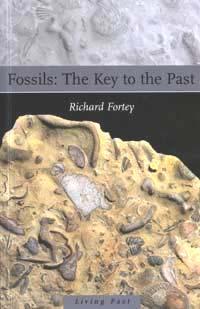
Fossils: The Key to the Past, 3rd edition
Prof. Richard Fortey
May 2002
232 pp.
To the general public, fossils and palaeontologists alike remain an enigma, despite the success of television programs like Walking With Dinosaurs In this revised and updated third edition of Fossils: The Key to the Past, Prof. Richard Fortey has provided a clear and straight forward introduction t palaeontology and fossils for amateur collectors and the general public. o
Fortey presents palaeontology as a vibrant and relevant science as he covers a diverse range of topics including the processes leading to fossilisation, geological time, the origin of life on Earth, how fossils have provided information on evolution, their economic importance and extinctions. Fortey has given the great diversity and abundance of invertebrate fossils, often overlooked in favour of larger ones such as dinosaurs, their due credit. Fortey has also included a chapter on how amateurs can build a fossil collection from scratch and where to look for fossils. Throughout the book, Fortey delves into some of the fascinating, but often neglected, story behind the science of palaeontology, its origins and the role is has played in the development of concepts such as plate tectonics and evolution. His enthusiasm for palaeontology is clearly evident with his informative and insightful, but simple writing style.
The text is supported by a large collection of illustrations that include black and white and colour photographs and high quality line drawings, all based on specimens held in the Natural History Museum of London. One problem I have with the illustrations is the lack of scale on many of them. For the general public, whose idea of fossils often does not extend beyond dinosaurs, are left with the erroneous picture that all fossils are big.
Overall, this book provides an excellent introduction to palaeontology as Fortey has successfully drawn together all the facets that make palaeontology such an exciting science. This book should appeal not only to the amateur collector, but to anyone interested in the history of life. After reading this book, palaeontologists and their world of fossils should no longer be such an enigma
Prof. Richard Fortey is senior palaeontologist at the Natural History Museum, London and has authored several other books including: The Hidden Landscape, Life: An Unauthorised Biography, Trilobite! Eyewitness to Evolution and Earth: An Intimate History
Valentine
Macquarie University Centre for Ecostratigraphy and Palaeobiology
4th Symposium of the International Research Group on Charophytes (IRGC)
The 4th Symposium of the International Research Group on Charophytes (IRGC) was held in September 2004, in Robertson (NSW), organised by Adriana García and Allan R. Chivas.
The meeting was very successful, involving two field trips and scientific sessions. During the scientific sessions there were 45 participants, with 36 oral presentations, 8 posters and two special workshops about culturing charophytes and the use of charophytes in bio-remediation.
The pre-conference fieldtrip was to Lightning Ridge (Lower Cretaceous), coordinated by Henk Godthelp and Adriana García. A field guide was prepared with
geological aspects and some SEM images of the fossil charophytes, though the study of the latter is still in progress. This fieldtrip attracted 15 people from Argentina, Australia, China, Finland, France, Germany, Puerto Rico and Spain.
A second post-symposium field trip was focussed on extant charophytes, organised by Allan R. Chivas and Adriana García. We visited lakes, creeks and rivers in the area between Wollongong, Canberra, and the NSW Southern Highlands. There were 22 participants from Argentina, Australia, China, Finland, France, Germany, Puerto Rico, India, Serbia & Montenegro, Spain and USA.
Dr Adriana García Secretary of the International Research Group on Charophytes
Announcements
10th Conference on Australasian Vertebrate Evolution Palaeontology and Systematics (CAVEPS) and Quaternary Extinctions Symposium
Naracoorte, South Australia, AUSTRALIA March 29th to April 2nd 2005.
Introduction:- The 10th CAVEPS will be held at the World Heritage listed Naracoorte Caves National Park and nearby Naracoorte township, approximately 340 km SE of Adelaide (capital city of South Australia), in the Limestone Coast region of South Australia.
CAVEPS is a biennial meeting of Australasian vertebrate palaeontologists. CAVEPS 2005 will consist of 3 days of general sessions including papers on all aspects of vertebrate palaeontology, followed by a 2 day symposium which will focus on Quaternary extinctions and dating applications. Included in the general sessions will be a special session Devonian fish and a session on cave palaeontology which will be held in the historic Blanche Cave. In addition to the main sessions, a student forum will be held where students can present their project proposals or work in progress and benefit from professional input.
The conference will be held during the AVCC (Australian Vice Chancellors Commission) common vacation week and will begin on Tuesday 29th of March (Monday 28th is Easter Monday) and end on Saturday 2nd of April.
Organisational Progress:- The organisation of the 2005 CAVEPS and Quaternary Extinctions meeting is progressing very well. This circular provides more detail regarding the organisation of the conference. If you have not received previous circulars these can be downloaded from the web site (see below).
Abstracts for presentations are now due on 31st January with final registration on 7th February. A draft programme of speakers will be circulated to delegates after final registrations.
Papers are invited for the conference proceeding volume. Please see full details in this circular.
Website:- All circulars will be posted on the Naracoorte Caves website along with registration forms and other relevant information. Please go to http://www.environment.sa.gov.au/parks/naracoorte/events.html. The URL http://www.naracoortecaves.sa.gov.au is also in operation as an alternative address.
Exceptionally Preserved Devonian Fish Faunas of East Gondwana - Faunal Context for Tetrapod Origins (new session):-We invite papers on the subject of exceptionally well-preserved fossil fish faunas from East Gondwana (Australia, Antarctica), with especial reference to those leading to the line of tetrapods or those reflecting new anatomical information that has significant bearing on the phylogeny of the group. By exceptional preservation we refer to three-dimensional acid-prepared specimens or articulated complete material.
Convenors:- Dr Gavin Young & Dr John Long Enquiries:- please contact Gavin Young gyoung@ems.anu.edu.au or John Long jlong@museum.vic.gov.au.
Tenison-Woods Cave Palaeontology Session:-The Naracoorte Caves National Park is a World Heritage listed fossil site, so it is appropriate that a session deals specifically with cave deposits. The final day of general sessions (Thursday 31st March) will be a special session focusing on cave palaeontology. It will explore the question - "What contribution have cave sites made to our understanding of vertebrate history". Convening this session will be Professor Ernest Lundelius, Dr Mike Augee, Dr Liz Reed and Mr Steven Bourne.
Contributions covering all aspects of cave palaeontology (eg. faunas, geology, site studies, taphonomy, dating) are invited. The session will be dedicated to Reverend Julian Tenison-Woods who conducted the first palaeontological research at Naracoorte Caves during the mid 19th century. Tenison-Woods was an extraordinary scholar and scientist. He published widely on topics ranging from Tertiary invertebrates to Pleistocene cave deposits. In 1862, his book, Geological Observations in South Australia, Principally in the District Southeast of Adelaide was published in London. It contained the first published description of the Naracoorte Caves and the bone deposits contained within them. This session will be held in the spacious Blanche Cave, the site of Tenison-Wood's early investigations.
Quaternary Extinctions Symposium:- A two day thematic symposium exploring Quaternary extinctions will follow the general and cave sessions. Papers are invited for this symposium which will cover a wide range of relevant topics including: dating and extinction chronologies, causes and patterns of extinction, significant site studies, background and review studies, island extinctions and modern extinctions. Keynote speakers for the Extinction symposium include Professor Anthony Barnosky from the University of California at Berkeley and Professor Alan Cooper from the University of Oxford.
It has been nearly eight years since the last Extinction symposium in Australia and there has been a lot of new research since then. There has been a high level of interest in the 2005 symposium with many eminent international extinction scientists indicating they will attend. This symposium will offer an excellent opportunity for those interested in Quaternary extinctions to present their research and discuss issues with the leaders in the field. The proceedings volume will include a thematic series from the symposium providing a forum for delegates to publish papers covering a range of extinction topics in a single volume.
Call for Papers:- Papers are invited for CAVEPS 2005 and the Quaternary Extinctions Symposium Papers on any aspect of vertebrate palaeontology are welcome for the general sessions eg. systematics and taxonomy, functional morphology, evolution, palaeoecology, palaeobiogeography, chronology, taphonomy, stratigraphy and sedimentology (of fossil sites), fossil preparation, fossil site studies. Papers are also invited for the Devonian fish session and Cave palaeontology session. The first session of the opening day will cover fossil-based tourism, education, fossil site management, preservation and interpretation; papers are invited for this session.
Papers are invited for the Quaternary Extinctions symposium This symposium will cover a wide range of relevant topics including: dating and extinction chronologies, causes and patterns of extinction, significant site studies, background and reviews, island extinctions, modern extinctions.
Students are strongly encouraged to participate and make presentations. There will be student prizes for spoken papers and posters.
Final Circular:- This posting provides only a brief summary of the final circular. For full details regarding CAVEPS 2005 and the Extinctions Symposium please go to http://www.environment.sa.gov.au/parks/naracoorte/events.html where the complete final circular, registration form and other important documents are available for download. Due to the size of the files we have not attached them to this email, but if you are having trouble downloading them please contact the organisers.
Thank you
CAVEPS 2005, Naracoorte, South Australia.
Contact details: Liz Reed email: liz.reed@flinders.edu.au
Steven Bourne email: Bourne.Steven@saugov.sa.gov.au
Formal postal address: CAVEPS 2005 c/- Naracoorte Caves National Park, PO Box 134, Naracoorte South Australia 5271, AUSTRALIA
Phone: +61 (08) 8762 3412
June 26-29, 2005
Novosibirsk, Russia
Dear colleagues,
We cordially invite you to participate in the International Workshop BIOSPHERE ORIGIN AND EVOLUTION to be held on June 26-29, 2005 in Novosibirsk Scientific Center (Russia).
The Workshop will follow the 14 International Congress on the Origin of Life (June 19-24, 2005, China)
The organizers:
• Trofimuk United Institute of Geology, Geophysics & Mineralogy of the Siberian Branch of Russian Academy of Sciences, Novosibirsk, Russia
• Boreskov Institute of Catalysis of the Siberian Branch of Russian Academy of Sciences, Novosibirsk, Russia
• Institute of Cytology and Genetics of the Siberian Branch of Russian Academy of Sciences, Novosibirsk, Russia
• Paleontological Institute of Russian Academy of Sciences, Moscow, Russia
Nikolay Dobretsov, Co-Chairman
Georgii Zavarzin, Co-Chairman
Valerii Chereshnev
Yurii Chernov
David Deamer
Andrey Degermendzhi
Anatolii Derevyanko
Sergey Inge-Vechtomov
Alexander Kanygin
Jozef Kazmierczak
Trofimuk United Institute of Geology, Geophysics & Mineralogy SB RAS, Novosibirsk, Russia
Institute of Microbiology RAS, Moscow, Russia
Institute of Immunology and Physiology, Ural Branch of RAS, Russia
A.N. Severtsov Institute of Ecology and Evolution, Moscow, Russia
Biomolecular Engineering, School of Engineering, UC Santa Cruz, USA
Institute of Biophysics SB RAS, Krasnoyarsk, Russia
Institute of Archaeology and Ethnography SB RAS, Novosibirsk, Russia
North-Western Scientific Center RAS, St. Petersburg State University, St. Petersburg, Russia
Institute of Petroleum Geology SB RAS, Novosibirsk, Russia
Institute of Paleobiology PAN, Poland
Nikolai Kolchanov
Alexei Kontorovich
Valentin Parmon
Alexei Rozanov
Sergey Shestakov
Vladimir Shumnyi
Alexander Spirin
Valentin Vlasov
Institute of Cytology and Genetics SB RAS, Novosibirsk, Russia
Institute of Petroleum Geology SB RAS, Novosibirsk, Russia
Boreskov Institute of Catalysis SB RAS, Novosibirsk, Russia
Paleontological Institute RAS, Moscow, Russia
N.I. Vavilov Institute of General Genetics RAS, Lomonosov Moscow University, Moscow, Russia
Institute of Cytology and Genetics SB RAS, Novosibirsk, Russia
Institute of Protein Research RAS, Puschino, Moscow region, Russia
Institute of Chemical Biology and Fundamental Medicine SB RAS, Novosibirsk, Russia
Mike Yarus University of Colorado, USA
Nikolay Yushkin
Yurii Zhuravlev
INSTITUTE OF GEOLOGY, URAL BRANCH OF RAS, SYKTYVKAR, RUSSIA
SOIL-BIOLOGY INSTITUTE, FAR EAST BRANCH RAS, VLADIVOSTOK, RUSSIA
Valentin Parmon, Co-Chairman
Nikolay Kolchanov, Co-Chairman
Valerii Snytnikov, Scientific Secretary
Ludmila Melnikova
Sergey Rozhnov
Nataliya Surnina
Olga Obut
Tatiana Zamulina, Secretary
Boreskov Institute of Catalysis SB RAS, Novosibirsk, Russia
Institute of Cytology and Genetics SB RAS, Novosibirsk, Russia
Boreskov Institute of Catalysis SB RAS, Novosibirsk, Russia
Paleontological Institute RAS, Moscow, Russia
Paleontological Institute RAS, Moscow, Russia
Institute of Cytology and Genetics SB RAS, Novosibirsk, Russia
Institute of Petroleum Geology SB RAS, Novosibirsk, Russia
Boreskov Institute of Catalysis SB RAS, Novosibirsk, Russia
The Workshop is assumed to comprise key-note lectures (40 minutes), oral presentations (15 minutes) and posters on the following topics:
• Problems of abiogenic synthesis and evolution of the matter under conditions of pregeological stages of the Earth evolution
• Biogeological problems of the evolution of the biosphere
• Biomineral systems
• Genetic and ecosystem problems of the evolution
The official language of the Workshop is Russian and English.
Oral and poster contributions on the topics mentioned above are welcome. An abstract should not exceed 1 page including tables, artworks and references. The abstract should begin with the Title followed by Author(s) (please underline the presenting person) and Affiliation(s), including address, fax and E-mail. Authors are encouraged to indicate the preference for oral or poster presentation, but the International Scientific Committee will make the final decision.
Please follow the next regulations:
• Title: Times New Roman, 14 pt, capital, bold
• Authors: Times New Roman, 12 pt, bold
• Affiliation: Times New Roman, 12 pt, italic
• Text: Times New Roman, 12 pt, 1.5 line space, 2.5 cm margin all around of A4 paper
• Headings: Times New Roman, 12 pt, bold
• References: Times New Roman, 10 pt
The abstracts should be submitted by E-mail (zam@catalysis.nsk.su) as attached Word-file. Deadline for abstracts’ submission – February 15, 2005
A Book of Abstracts will be available at the Workshop. The full texts of presented contributions will be reviewed and published after the Workshop in the collective monograph by the International Publishing House.
Registration on Web site: http://www-sbras.nsc.ru/ws/biosphere.
You can fill in the Application form and give the title of the presentation. By electronic mail (please send attached Application form or mentioned data in plain-text form)
The registration fee is 350 Euro for each participant, 175 Euro - for students and accompanying persons. Registration fee includes all conference documentation, Welcome reception, lunches, refreshments, social program.
Registration fee in Euro or in US dollars should be transferred to one of the following accounts with the mark "Biosphere" (please indicate your name and affiliation):
Intermediary Bank: COMMERZBANK FRANKFURT (Postfach 10 05 05, D-6000 Frankfurt/M.1)
S.W I.F.T.: COBA DE FF
BLZ: 500 400 00
Account No: 400-8867103-01
Beneficiary Bank: SIBACADEMBANK INC., NOVOSIBIRSK
S.W.I.F.T.: SIBMRU55
IN FAVOUR OF:
BORESKOV INSTITUTE OF CATALYSIS
Account No: 40503978600201000004
Dollar account:
Intermediary Bank: American Express Bank Ltd. New York, USA
S.W I.F.T.: AEIBUS33
Account No: 00743450
Beneficiary Bank: SIBACADEMBANK, Novosibirsk, Russia
S.W.I.F.T.: SIBMRU55
IN FAVOUR OF:
BORESKOV INSTITUTE OF CATALYSIS (Prospekt Akademika Lavrentieva, 5, Novosibirsk 630090, Russia)
Account No: 40503840000201000004
Payments should be free of bank charges. The registration fee can be also paid in cash at the registration desk.
The Workshop will be held in the House of Scientists of Novosibirsk Scientific Center (Morskoi prospect, 23, 630090 Novosibirsk, Russia; tel. number: +7 383 3 30 39 80)
The participants will be accommodated in the "Golden Valley" hotel located within 15-min walk of the Workshop venue (ul. Il’icha, 10, 630090 Novosibirsk, Russia; tel. number +7 383 2 30 36 09, fax +7 383 2 30 42 40). The current prices in Euro per room/per night are given below: single double suite 55 50 82
The Organizing Committee will suggest a concert and entertaining program to the participants and accompanying persons. Post-tour to Altai Mountains, the pearl of the Siberia (3 days) will be proposed, the details will be given in the Second Announcement.
February 15, 2005
Abstracts and application forms submission
March, 2005 Acceptance notification, distribution of the Second Announcement May, 2005 Distribution of the Workshop program June 26, 2005 Seminar opening
Please, contact: BOE Organizing Committee
Tatiana ZAMULINA
5, Akad. Lavrentiev Ave., Boreskov Institute of Catalysis SB RAS 630090 Novosibirsk, Russia
Ph/Fax:+7 383 3 30 62 97
Fax: +7 383 3 30 80 56
Email: zam@catalysis.nsk.su
A continually updated page of information will be available at the Web address: http://www-sbras.nsc.ru/ws/biosphere Registration on line is preferable.
Ferrara, Italy: August 30th to September 3rd, 2005
The next Regional Symposium of the International Fossil Algae Association will be held in Ferrara located in north-eastern Italy. This meeting follows the tradition of successful regional meetings previously held in Granada (1989), Munich-Vienna (1993), Cracow (1997), and Cluj-Napoca in 2001 (see http://www.ku.edu/~ifaa/home.html for details).
Presentations on any aspect of calcareous algae and bacteria are welcome concerning:
1) Biomineralization and Skeletalisation
2) Taxonomy and Systematics
3) Evolutionary History
4) Biogeography and Palaeoclimatology
5) Ecology and Palaeoecology
6) Oceanography and Palaeoceanography
7) Applications to Stratigraphy
8) Diagenesis and Fossilisation
Scientific sessions will be held in the University of Ferrara. Ferrara is located in the eastern Po Plain in north-eastern Italy between Bologna and Venice. This city is famous for its Renaissance culture and architecture. Traces of the Este family can be found everywhere in Ferrara including the massive castle, complete city walls, the famous Palazzo dei Diamanti and many more.
Ferrara is easily reached by motorway and train services. The nearest airports are in Bologna and Venice which are within an hour resp. one and a half hours from Ferrara
by public transport. Train services to the rest of Italy (e.g. Venice, Milan, Florence, Rome) are excellent. There are numerous hotels of different standard in Ferrara.
August 30th to August 31st: Scientific Sessions at the University of Ferrara.
September 1st to 3rd: Post-Symposium Field Excursion. This field excursion will focus on shallow water carbonates including Middle-Upper Eocene calcareous algae and larger foraminifera (Colli Berici, Monti Lessini) on the 1st day, Lower Jurassic microbial structures, dasycladaleans, larger foraminifera, and dinosaurs trackways (Rovereto) on the 2nd day, and dasycladaleans at the K/T boundary (Friuli area) on the 3rd day.
Important dates to Remember:-
• Symposium and Excursion registration: May 31st, 2005
• Submission of abstracts: May 31st, 2005
• Final payment of all fees: July 15th, 2005
Please forward this information to anyone who might be interested in this symposium. The 2nd circular will be sent in the middle of December, 2004 and a web site will be available soon.
We look forward to seeing you here in Ferrara in 2005.
The second circular of the 5th Regional Symposium of the International Fossil Algae Association is in the web page: http://www.uni-tuebingen.de/IFAA-regionalsymposium/
If you would like to attend the meeting, do not hesitate to contact me (bsd@unife.it) in order to receive the registration form as doc.file.
Dott. Davide BASSI, Ph.D.
Dipartimento delle Risorse Naturali e Culturali
Lab. di Paleobiologia e Paleoecologia
Università di Ferrara
Corso Ercole I d'Este 32
I - 44100 Ferrara
Ph: ++39-0532-293726
Fax: ++39-0532-206468
Email: bsd@unife.it
URL: http://utenti.unife.it/davide.bassi
Name:- Brian McGowran
Contact details:-
School of Environmental & Earth Sciences
Adelaide University
South Australia 5005
Email: brian.mcgowran@adelaide.edu.au
Name:- Qianyu Li
Contact details:-
School of Environmental & Earth Sciences
Adelaide University
South Australia 5005
Email: qianyu.li@adelaide.edu.au
Report 2003-2004:- Brian McGowran and Qianyu Li, together with Guy Holdgate and Stephen Gallagher at the University of Melbourne, have reviewed the Cenozoic stratigraphic succession in southern Australia. Rather than cataloguing strata basin by basin, the review emphasizes problems, ideas and evidence both in the regional setting of the pelagic, neritic and terrestrial realms and in the global context of environmental change and sequence stratigraphy. We hope that this synthesis and framework based strongly on foraminiferal correlations and facies will stimulate research in Cenozoic fossils generally; but we refer especially to marine and terrestrial palynology, of which much is known but too little has reached the public domain. The authors have a Discovery grant to pursue the difficult problems of facies, correlations and hiatuses in the later Palaeogene in southeastern Australia.
Brian has completed a monograph on biostratigraphy due to appear in midyear (see the Cambridge U.P. website). This study is both narrowly based, relying heavily on the robust advances in the foraminifera in recent decades, and broadly based in its view of what comprises biostratigraphy—not merely fossil ranges and correlations but including communities, rates, species concepts, chronostratigraphy and more. The chapter headings imply this: 1. Biogeohistory and the development of classical biostratigraphy; 2. The biostratigraphy of fossil microplankton; 3. Biostratigraphy: its integration into modern geochronology; 4. Biostratigraphy and biohistorical theory I: evolution and correlation; 5. Systemic stratigraphy: beyond classical biostratigraphy; 6. Biostratigraphy and biohistorical theory II: carving nature at the joints; 7. Biostratigraphy and chronostratigraphic classification; 8. On biostratigraphy and biogeohistory.
Li has been busy writing and publishing his work on ODP Leg #182 in the Great Australian Bight, producing challenging syntheses of allostratigraphic packages, eustasy and tectonics. Whilst retaining his position as Research Associate in Adelaide and his active interests in the Cenozoic down here he has a parallel appointment at Tongji University in Shanghai, where there is a strong group in micropalaeontology, cyclostratigraphy and palaeoceanography led by Wang Pinxian. Li has been collaborating and publishing on ODP drilling in the South China Sea since 2002 and we expect fruitful comparisons with the Australian margins. Among several intriguing problems being addressed is the origin and history of the East Asian Monsoon. This
research group has committed to organize the next international conference on palaeoceanography in Shanghai in 2007.
Name:- Professor John Buckeridge
Contact details:- Faculty of Science & Engineering
Auckland University of Technology 24 St Paul Street
Private Bag 92006
Auckland, New Zealand
Ph: (+649) 917 9717
Fax: (+649) 917 9973
Email: john.buckeridge@aut.ac.nz
Report 2003-2004:- University Restructuring has resulted in EOS being relocated within the faculty of Heath and Environmental Sciences. This has resulted in some short term confusion, as offices will be moved, along with collections.
Research is currently focussed on marine invertebrates. Senior Research fellow, Dr Steve O'Shea is continuing with his studies on the systematics of the Cephalopoda; Post Doctoral Fellow Dr Kevin Tilbrook is expanding his research on Bryozoa beyond his initial regional study in the West Pacific to encompass Southern Pacific forms. He has a growing interest in the late Cainozoic bryozoan fauna of New Zealand. Kevin was awarded the 2004 Vice Chancellor's Award from most promising new researcher.
Dr Andrea Alfaro and Prof John Buckeridge, along with a team from the University of Auckland, have just finished a comprehensive palaeoecologic study on an early Miocene shallow-water fauna from Motuketekete Island in Auckland's Hauraki Gulf John maintains his research on cirripedes, and with Prof Bill Newman of Scripps (UCSD), will be proposing an extensive revision of the Iblomorph barnacles in the new year.
This year was marked by the tragic death of Brazilian barnacle systematist, Dr Paulo Young. Paulo died following a road accident. Like most barnacles workers, his research spanned both the fossil and living fauna. He will be sadly missed.
EOS Adjunct Prof Michelle Kelly and Prof. Buckeridge have been undertaking fieldwork on the Chatham Islands, where there is an extraordinary diverse Early Cainozoic Poriferan fauna. They currently have a paper accepted by the New Zealand Journal of Marine and Freshwater Research on hexactinellids and lithistids from the Early Eocene Tutuiri Greensand fauna from the North of Chatham Island.
There is concern about the lack of new scientists who are willing and keen to undertake research in systematics. John, in his current role as President of the
International Society of Zoological Sciences is trying to highlight this problem, and to demonstrate that there are rewarding career pathways in palaeobiology.
Name:- Yong Yi Zhen
Contact details:- The Australian Museum
6 College St. Sydney 2010, New South Wales, Australia
Ph: (02) 9320 6132
Email: yongyi@austmus.gov.au
Report 2003-2004:- I have been working on the Ordovician conodonts from NSW and China. In 2004 I am mainly working on the Early Ordovician conodont faunas from the Honghuayuan Formation of Guizhou Province, South China in association with Dr. Ian Percival from The Geological Survey of New South Wales and Dr. Jianbo Liu from Peking University. Two manuscripts describing the Honghuayuan faunas are currently under reviews and the third one is nearly ready for submission.
Australian National University
Contact details:- Department of Earth & Marine Sciences, Research School of Earth Sciences, and Research School of Physical Sciences & Engineering
Australian National University Canberra, ACT 0200
Ph: (02) 6125 2065
Fax: (02) 6125 5544
Name:- Tim Barrows, Postdoctoral Fellow, RSES
Contact details: ph: (02) 6125 2077
Email: Tim.Barrows@anu.edu.au
Report 2003-2004:- Tim is continuing his work on Quaternary foraminiferid transfer function and stable isotopes and has recently submitted a large manuscript for the International MARGO program aiming at revising the data and maps produced by the CLIMAP Project.
Name:- Lynne Bean, M.Phil. student
Contact details:- ph: (02) 6125 4303
Email: lynne.bean@ems.anu.edu.au
Report 2003-2004:- In 2002 Lynne completed a study of Leptolepis talbragarensis, one of the best known Jurassic fish from Australia, for her Graduate Diploma thesis. The material comes from the non-marine deposits in the Surat Basin. Bulk collections, made in the 1880s, were stored in the Australian Museum and the NSW Geological
Survey, but specimens were exchanged with Museums overseas. As a result, overseas workers have used these materials to make a contribution on the small amount of specimens available, but nobody in Australia has made any further descriptions. Arratia (1997) has made a new genus Cavenderichthys for this species, and has indicated strongly that it was not a Leptolepis.
The species occurs in a thin bed only 60cm thick, and this has been described as a mudstone or chert. It has now been identified as an ash fall which has been silicified. This has filled a small lake in overbank deposits, and it is because of this phenomenon that the preservation of the specimens is so good.
Lynne’s analysis of the extensive material has shown up a number of characters particularly in the dentary, hyomandibular, the vertebral column and the caudal structure. This work supports the view that Cavenderichthys is a valid genus, and it should be placed in the Leptolepidae. The morphology also indicates that its age is Late rather than Early Jurassic. This has been confirmed by SHRIMP dates on the zircons obtained from a unit immediately below the fossil bed. She has also reexamined material from the Koonwarra fish beds in Victoria, previously described by Waldman (1971) and dated as Early Cretaceous. The teleost Leptolepis koonwarri, which has very close affinities with Cavenderichthys talbragarensis, should also be included in the genus Cavenderichthys
Lynne is now working toward a M.Phil. on the topic Mesozoic Fishes in Eastern Australia. Continuing to work on the Talbragar fauna, she has re-described and figured Archaeomene and Aphnelepis. The small number of specimens available of Coccolepis and Aetheolepis make comparative studies of these genera more difficult. Lynne hopes to mount a field trip to the Talbragar site during 2005 to reassess the stratigraphic relationships of the bed and to collect more material whose stratigraphic position can be accurately determined.
Keywords:- teleosts; Cavenderichthys; Talbragar; Late Jurassic; Leptolepidae.
Name:- Robert Beattie, M.Sc. student
Contact details:- Ph: (02) 4464 1286
Email: rgbeattie@hotkey.net.au
Report 2003-2004:- Robert is investigating the palaeoenvironment, palaeoecology and palaeoentomology of the Upper Permian Insect Beds of the Belmont-Warner’s Bay area, under the supervision of Patrick De Deckker. His research is mainly sponsored by a Lake Macquarie Research Grant, funded by Lake Macquarie City Council. Earlier sponsors include Delta Electricity, Eraring Energy and Oceanic Coal. The entomofauna has been described many years ago, but a new large collection has produced some new and undescribed species, particularly beetles. The environment was probably a series of very shallow, temporarily non flowing freshwater pools along a river channel system and a regional coal swamp, upon which a volcanic ash dump occurred. The biocoenosis of the pools included conchostracans, water beetles (about 20% of the total insect fauna), possibly very rare fish, and extremely rare insect larvae. Swamp banks along the water courses supported a Glossopteris dominated flora, and minor Phyllotheca, with an insect dominated, consumer community of phloem feeding Homoptera and Mecoptera (about 50% of the total insect fauna).
There was also a leaf-litter and bark dwelling community of Protelytroptera and Psocoptera as well as Neuroptera, Trichoptera, Diptera and archostemate beetles. Ancestors of the Orthoptera are also present in small numbers. No chelicerates, tetrapods or other potential top predators have been found in this facies. The top insect predators are extremely rare Odonata. Fossils of adult Neuroptera (about 3% of the entomofauna) indicate the presence of their larvae, which would have been the main predator of the Homoptera. Disruptive colour patterns in some of the insects may indicate predator-prey relationships. A definite Glossopteris leaf margin ichnofossil has been found, and some possible wood borings.
Name:- Helen Bostock, Ph.D student
Contact details:-
Ph: (02) 6125 4303
Email: helenb@ems.anu.edu.au
Report 2003-2004:- Helen is in the closing phase of her PhD studies (geochemically tracing the intermediate and surface waters in the Tasman Sea, southwest Pacific). She has used a series of gravity cores from the southern Great Barrier Reef to study the oceanographic changes in the Tasman/Coral Sea region during the last glacial cycle. Helen has primarily used stable isotopes and trace elements in a range of different species of planktic and benthic foraminiferids to study changes in the water masses at different depths throughout this period, specifically the Antarctic intermediate water (AAIW). She took part in an ODP cruise to the Demerara Rise (NE South America) which caused her a short digression into Cretaceous climates and carbon modelling. Helen’s recent paper on Quaternary environmental changes in the Tasman Sea has just been published in Paleoceanography.
Keywords:- carbonates; palaeoceanography; oceanography; palaeoclimate; Foraminiferida; AAIW.
Name:- Ken Campbell, Visiting Fellow
Contact details:- Ph: (02) 61252061
Email: ken.campbell@anu.edu.au
Name:- Richard Barwick, Visiting Fellow
Contact details:- Ph: (02) 61253067
Email: richard.barwick@anu.edu.au
Report 2003-2004:- Over the last two years Ken and Richard have completed their work on Onychodus, and submitted the paper to the Royal Society of Edinburgh (Earth Sciences). The authorship was; the late Mahala Andrews, John Long, Per Ahlberg, Richard Barwick and Ken Campbell. Campbell wrote the manuscript and it was checked and altered by Barwick, Ahlberg and Long. The drawings were done by Barwick with small additions by Ahlberg, and the photography was done by Campbell and Barwick, with some additions by Ahlberg and Andrews. They still have not had a reply to their submission of the manuscript. It was much longer than the usual papers, and it had 75 Plates. It may have to be placed elsewhere, despite the fact that Andrews was a member of the staff of the National Museum of Scotland, and they consider that it would be a lasting memorial to her work.
Jan den Blaauwen, a biochemist working in Amsterdam, has been doing field work in Caithness and the Orkneys, and has found new specimens of Dipterus valenciennesi which were well enough preserved to use for the preparation of thin sections. This has uncovered many new features including a series of growth structures. Ken and Richard have contested the interpretation of the histology previously published, and have also contested the phylogeny of the genus Dipterus in the early phylogeny of the dipnoans. A paper has been submitted to the Linnean Society of New South Wales.
The genus Speonesydrion from Wee Jasper has been redescribed from new material. Schultze has considered that the genus is only another species of Dipnorhynchus, and in so doing has missed the main points of distinction. Thin sections of the genus show that the structure is comparable with Ichnomylax which was first described from Victoria, but has also been described from new material in Russia. Thin sections of the Russian material have been described by Reisz et al. and this matches closely with the Australian Speonesydrion. The production of the dentine is very distinctive, and does not match that of other early Devonian dipnoans. New x-ray CT scanning is offering insights into the formation of dentine, and new interpretations of the dentine based heels on the mandible. Work done by Drs Tim Senden of the Applied Mathematics Department at ANU and Ajay Lemay of the ANU Supercomputer Imaging Centre, has been very helpful in Ken and Richard’s study. Gene regulatory sequences, studies of which are now becoming wide spread, seem to have been responsible for an array of new morphologies at the origin of dipnoans. Work in this area has been discussed with Professors Marshall and Saint. Ken and Richard are exploiting this view in understanding the first appearance in palatal biting. A paper on this topic is being submitted to another journal.
Keywords:- Devonian; lungfish; postcranial skeleton; Onychodus; functional morphology.
Name:- Judith Caton, Visiting Fellow
Contact details:-
Ph: (02) 6125 3633
Email: j.caton@ems.anu.edu.au
Report 2003-2004:- Judith is studying the gastro-intestinal morphology and physiology of living hominids in order to model digestive strategies of fossil species. Theories that human predecessors were carnivores, which date back to the first fossil discoveries, overlook evidence to the contrary from living hominids. As the resultant models are based on data from apes and humans, they are more realistic and based in an evolutionary context. Such models of fossil hominid digestive strategies are being used to re-assess the importance of meat-eating in human evolution.
Keywords:- fossil hominids; modelling gut function; diets.
Name:- George Chaproniere, Visiting Fellow
Contact details:-
Ph: (02) 6125 4303
Email: gchaproniere@ems.anu.edu.au
George continues his studies on planktic foraminiferids from the Cenozoic of the Australian margins, and is still the Australian Voting Member on the I.S.P.S. for Palaeogene Stratigraphy.
Keywords:- planktic foraminiferids; Cenozoic; palaeoceanography; Australian margins
Name:- Patrick De Deckker
Contact details:- Ph: (02) 6125 2070
Email: patrick.dedeckker@anu.edu.au
Report 2003-2004:- Patrick is continuing his investigations into Quaternary marine environments recorded in deep-sea cores in the Australian region. Collaboration with several colleagues on those cores has aimed at obtaining multidisciplinary records of environmental change. Work with Sander van der Kaars (Monash University) dealt with pollen, Lena Maeda (Japan Geological Survey) with trace metals in bulk sediments (paper submitted to Palaeo-3), Franz Gingele on clay analyses from the deep-sea canyons offshore the Murray Mouth, and finally Eva Calvo, Carles Pelejero and Tim Barrows (all ANU) on alkenone temperature signals at the sea surface (paper near completion). A manuscript on modern acantharians and their role in affecting the chemistry of waters near the sea-surface has been published (see list below). These unicellular microorganisms, which resemble radiolarians, secrete a strontium sulphate skeleton - which are never found as fossils as sea water is undersaturated with respect to that mineral – play a significant role in recycling Sr and Ba in sea water near the sea surface, and surprisingly are often more common that planktic foraminifers.
One exciting event was the oceanic cruise on the French vessel Marion Dufresne in February-March 2003, when Patrick and many ANU people, including 12 students went at sea to study many aspects of deep-sea canyons off Kangaroo Island. Micropalaeontologists from France (Sabine Schmidt; sediment accumulation rates), Germany (Thomas Jellinek; ostracods) and USA (A. Rathburn; benthic forams) also took part in the cruise. Several papers are in preparation on the findings of the cruise, including some on ostracods and forams collected at the sea surface down to great depths. Long cores were also retrieved and are being studied by Franz Gingele (clays), Patrick De Deckker (stable isotopes), Michelle Spooner (PhD student ANU; forams), Daniel Wilkins (PhD student; dating techniques, some using forams), Sharron Glasgow (PhD student UWA; pollen), and Eva Calvo and Carles Pelejero (RSES, ANU; alkenones). See references below.
Patrick has completed old work on a core from the playa Lake Frome in South Australia, using the chemistry of ostracod shells for determining past hydrological changes form the Flinders ranges region spanning the last 50,000 years. The paper is being revised and should be resubmitted soon.
Keywords: Late Quaternary; ostracods; foraminifers; acantharians; shell chemistry; deep sea; Lake Frome; deep-sea canyons.
Name:- Chris Gouramanis, Ph.D student
Contact details:- Ph: (02) 6125 2064
Email: christos@ems.anu.edu.au
Report 2003-2004:- Chris is approaching the half-way mark of a PhD project under the supervision of Patrick De Deckker. This project is funded by an ARC grant. The
primary focus of the project is to determine the climate of southern Australia from approximately 10,000 years ago to the present by using the chemistry of ostracod valves taken from a series of lake cores. He has also published part of his Honours thesis with John Webb and Anne Warren from La Trobe University as co-authors in the Australian Journal of Earth Science.
Keywords:- ostracod; Holocene; limnology; climate; southern Australia.
Name:- Peter J. Jones, Visiting Fellow
Contact details:- Ph: (02) 6125 3372
Email: peter.jones@ems.anu.edu.au
Report 2003-2004:- In January 2003, Peter was invited by GeoForschungsZentrum Potsdam (GFZ) to join a small team of international biostratigraphers in the preparation of a high resolution correlation chart for the Devonian, Carboniferous and Permian Systems. The construction of the chart was considered pivotal to the Priority Program of the Deutsche Forschungsgemeinschaft (DFG) “Evolution of the Earth’s system during the Late Palaeozoic in the light of sedimentary geochemistry” (SPP 1054). This project, funded by DFG under the co-ordination of Manfred Menning (GFZ, Potsdam), has involved his participation in two workshops (April 6 -13, 2003; October 26 - November 3, 2003) in Potsdam, and his compilation based on a wide search of the available literature in Canberra. Progress reports were presented by Manfred at the 15th International Congress on Carboniferous and Permian Stratigraphy, Utrecht (2003), and the 32nd IGC, Florence (2004). The chart with explanatory notes will be submitted for publication in 2005, in order to make the results available beyond the German scientific community. In addition, Peter is a corresponding member of the Subcommission on Carboniferous Stratigraphy of the International Stratigraphic Commission, International Union of Geological Sciences.
Peter continued micropalaeontological studies of the subsurface Upper Devonian and Lower Carboniferous rocks of the Bonaparte Basin, northwestern Australia. The results of two consulting contracts with ENI Australia Ltd, which involved examining the Early Carboniferous sections of three wells in the Bonaparte Basin, were prepared as company reports. His study of the latest Devonian and Early Carboniferous paraparchitid ostracods from the Bonaparte Basin (their taxonomy, biostratigraphic and palaeozoogeographic links) was published in AAP Memoir 29. He also participated in an investigation led by John Gorter (ENI Australia Ltd) of the Lower Carboniferous petroleum source rocks in the Bonaparte Basin. Others collaborators were David McKirdy (University of Adelaide) for organic geochemistry, and Geoffrey Playford (University of Queensland) for palynology. The result, which demonstrated that the provenance of the oil encountered in the offshore Barnett High is older than previously thought (Tournaisian, rather than Visean), was presented at the Timor Sea Symposium, in Darwin in June 2003, and is now published (on CDROM) as a Special Publication of the Northern Territory Geological Survey.
Finally, Peter wrote an obituary on the achievements during the life of the late Dr Kenneth G. McKenzie (1928-2003), ostracodologist extraordinaire, which was published in The Australian Geologist (March 2004), and is reproduced in this newsletter.
Keywords:- Crustacea; Ostracoda; Palaeozoic; global; Australia.
Name:- David Lindley, Visiting Fellow
Contact details:- Ph: (02) 6227 1206
Email: tgreensmith@bigpond.com
Report 2003-2004:- David’s laboratory and fieldwork has focussed on the fossil and living sea urchin and starfish faunas of Papua New Guinea. A sea urchin fauna, comprising 19 species, from the Lower Pliocene Kairuku Formation, Yule Island, Central Province, has provided new insights into the origins of Tropical Northern Australian sea urchin faunas, typically regarded as having been derived predominantly from Recent migrations from East Indian and West Pacific stocks. The high proportion of species from the Yule Island fauna extant in northern Australian waters indicates that present faunistic patterns were essentially in-place by at least the Lower Pliocene. For the Bismarck Archipelago, valid starfish and sea urchin species lists have been compiled, with notes on selected species occurrences from the region. Two new living species have been described from New Britain. Several Tertiary fossil sea urchin occurrences from the New Guinea islands have also been described.
A large collection of sea urchin material (living and fossil) has been assembled from New Ireland, several locations on New Britain and Milne Bay, during six field trips to PNG since October 2003. Not since Arthur Willey’s 1895-97 voyage to New Guinea and the Loyalty Islands has there been any methodical collection of PNG’s sea urchins. Given the region’s location at the eastern end of the ‘Coral Triangle’, an area, including the Philippines and Indonesia, with the greatest global marine diversity, it is very likely our knowledge of PNG’s sea urchins is incomplete. The results of my initial collections (described in Lindley 2004b), and a preliminary field assessment of some of the material collected recently suggests this is the case and that echinoid diversity in PNG may follow coral diversity, known to be one of the richest in the world.
Keywords:- asteroid; echinoid; Papua New Guinea; sea urchin; star fish.
Name:- John Magee, QEII Research Fellow
Contact details:- Ph: (02) 6125 2761
Email: jwmagee@ems.anu.edu.au
Report 2003-2004:- In collaboration with Gifford Miller, University of Colorado, Boulder, USA and Marilyn Fogel, Carnegie Institute, Washington, John continues reexamining the extinction of the Australian megafauna. This question is being examined not just to resolve the long-standing debate about the relative roll of humans and climate change in the extinction, but also to elucidate the role of long-term human impact in other facets of environmental change.
In Australia the extinct megafauna include marsupials, reptiles and the ostrich-sized bird Genyornis, and it seems likely that amongst herbivores, the extinction was selective for browsers rather than grazers. Debate on the cause of extinction has been bedevilled throughout by poor numerical chronology due to dependence, until recently, on radiocarbon which has been compromised by both the innately poor preservation of original carbon in bone under Australian conditions and the proximity
of the extinction event to the resolution limits of the technique. Incorrectly younger dates due to contamination with younger carbon and association of reworked older faunal remains with younger dates have combined to suggest an almost certainly erroneous late survival of megafauna and long overlap with humans. Recent nonradiocarbon chronologies suggest an extinction date coeval across climatic zones and for a variety of taxa at 46-50±5ka, soon after the likely date of human arrival on the continent (55±5 ka), and implicates humans in the extinction but says nothing of the process. It is unlikely that the archaeological record will ever provide more than proof of human-megafauna overlap.
To finally resolve the extinction debate we need to obtain an unequivocal extinction chronology for a wide variety of taxa across a wide transect of climatic zones and to determine whether extinction was selective for dietary preference from an improved eco-physiological understanding of the animals and palaeodietary analyses. Before its extinction, Genyornis coexisted with emus at least across the arid and semi-arid zones where eggshells of both species occur relatively abundantly in aeolian sediments (Miller et al., 1999). While both are large flightless birds, they are taxonomically distant and are probably best regarded as convergent evolution within the bird lineage, with significant behavioural and physiological differences which resulted in Genyornis extinction and emu survival. In addition to being the most commonly occurring bio-mineral fossil, eggshell is far superior to bone for the preservation of its original chemistry, allowing excellent opportunities for chronology and isotopic palaeodietary studies. A major focus of our study is a comparison between Genyornis and emu characteristics across an environmental and climate gradient coupled with an examination of the timing and environmental context of Genyornis extinction, which we believe offers the best prospects for unravelling the cause and process of the extinction event.
John’s recent paper in Geology on the late Quaternary history of the Lake Eyre basin will finally provide a good chronology of obvious importance for the understanding of climatic (and other?) events that affected the demise of some of the Australian megafauna.
Keywords:- extinction; megafauna; Dromornithids; Ratites; palaeoclimate; humanimpact.
Name:- Robert S. Nicoll, Visiting Fellow
Contact details:- Ph: (02) 6125 4303 (02) 6258-4140 (home)
Email: bnicoll@goldweb.com.au
Report 2003-2004:- Bob Nicoll continues to work on Permian - Triassic conodonts from China, Permian conodonts from Western Australia and Ordovician conodonts from several localities in Australia.
Keywords:- conodonts; Cambrian – Triassic; thermal maturation; conodont biology.
Name:- Jessica Reeves, Postdoctoral Fellow
Contact details:- Ph: (02) 6125 4303
Email: Jessica@ems.anu.edu.au
Report 2003-2004:- Jessica completed her PhD thesis at the University of Wollongong, under the supervision of Allan Chivas. Her work involved using ostracod assemblage data, morphological variation, and stable isotope analysis of the ostracod shell carbonate to determine the palaeoenvironmental change of the Gulf of Carpentaria through the last glacial cycle. Though this period, the region experienced open shallow marine, lagoonal and lacustrine conditions and was even completely subaerial for some time. The results of this work are expected to be published later this year.
Jessica has since undertaken a Postdoc at the ANU, looking at groundwater ostracods from the Pilbara. The project is in collaboration with Patrick De Deckker (ANU), Stuart Halse (Conservation and Land Management, WA), and Ivana Karanovic (WA Museum). To date, at least 20 new ostracod species have been identified from this area, with at least a further 20 still to be described. The aim of the project is to obtain a greater understanding of the distribution and ecology of these stygofauna, with particular attention drawn to the host water chemistry.
Keywords:- Ostracoda; stygofauna; groundwater; hydrochemistry; Pilbara.
Name:- David Ride, Visiting Fellow
Contact details:- Ph: (02) 6281 2641
Email: d.ride@ems.anu.edu.au
Report 2003-2004:- David is working towards completing his guide and companion to the latest edition of the International Code of Zoological Nomenclature. He is also currently completing his studies on the mammal fauna of the Pleistocene of the northern Monaro (Southern Tablelands) of NSW. Together with Peter Pridmore (Latrobe University, Wodonga Campus; formerly at ANU) he is also completing a paper on the cranial nerves and cranial blood vessels of the Thylacine (Thylacinus cynocephalus) based on a specimen in the Oxford University Museum and commenced many years ago by the late Bernard Tucker of the Oxford Department of Zoology and Comparative Anatomy.
Keywords:- ICZN; Pleistocene; mammals; NSW
Name:- John Rogers, BSc (Hons) student
Contact details:- Ph: (02) 6125 5073
Email: john.rogers@ems.anu.edu.au
Report 2003-2004:- John is researching Radiolaria in surface sediments from off northwest Western Australia (Franklin cruises 10-95 and 2-96) to establish modern analogues for palaeoceanographic phenomena. Reconstructions of palaeoenvironmental conditions from Quaternary sediments should follow.
Keywords:- Radiolaria; Quaternary; oceanography; palaeoceanography.
Name:- Aleksey Sadekov, Ph.D student RSES and DEMS
Contact details:- Ph: (02) 6125 4974
Email: Aleksey.Sadekov@anu.edu.au
Report 2003-2004:- Aleksey has recently arrived from Moscow State University to work on modern and Quaternary foraminiferal chemistry.
Name:- Natalie Sinclair, Ph.D student
Contact details:- Ph: (02) 6125 9413
Email: Natalie.Sinclair@ga.gov.au
Report 2003-2004:- Natalie completed her Honours thesis on Middle to Late Triassic palynology, stratigraphy and environment of deposition of the Challis Oil Field, Northwest Shelf, Australia in 2001, under the co-supervision of Clinton Foster (GA) and Jonathan Clarke. Her PhD research is on Late Jurassic to Early Cretaceous palynology of the Jansz Gas Field, Carnarvon Basin, under the joint supervision of Eric Monteil (GA), and Patrick De Deckker, with the support of Esso Australia and Exxon Mobil. She is currently preparing a paper on the palynology and age of Casterton Formation, Otway Basin, and has produced a GA Record with the basic results of this project.
Keywords:- palynology; Mesozoic Northwest Shelf; Cretaceous Otway Basin.
Name:- Michelle Spooner, Ph.D student
Contact details:- Ph: (02) 6125 2064
Email: michelle@ems.anu.edu.au
Report 2003-2004:- Michelle is nearing the end of her PhD project under the supervision on Prof Patrick De Deckker. The purpose of her PhD is to determine the nature and timing of oceanic events that prevailed off the western and southern coastlines of Australia during a large part of the Pleistocene. The investigations are centered on the occurrence of the warm, low salinity Leeuwin Current during glacial and interglacial cycles.
To verify the presence and behaviour of the Leeuwin Current during glacial and interglacial cycles, deep-sea cores were obtained from the Northwest Shelf and in the Murray Canyon System. These cores were collected during two expeditions with the RV Marion Dufresne, in which Michelle participated during September 2000, and February-March 2003. Her collaboration with French research teams has continued and she was awarded a FEAST grant in the 2002/2003 round. She visited the facilities of the Laboratory for Climate and Environment (LSCE) at the National Center of Scientific Research (CNRS) in Gif-sur-Yvette, Paris in September-November 2003 for training in C14 dating under the supervision of Dr Martine Paterne. Unfortunately, they had problems with their Accelerated Mass Spectrometer so training was limited. During her PhD she has conducted isotopic analysis, studied the relative abundances of planktonic foraminifera and undertaken sea-surface temperature analysis. There is evidence the current operated differently or was absent during glacial periods especially along the southern coastline.
She is in the final stages of acceptance for a paper “Late Quaternary Palaeoceanography of the Banda Sea” submitted to the Journal of Global and Planetary Change. This paper includes data from her Honours Thesis that she completed in 2001 at the ANU.
Keywords:- Late Quaternary; Leeuwin Curren; Marion Dufresne; glacial; interglacial; palaeoceanography.
Name:- Desmond Strusz, Visiting Fellow
Contact details:-
Ph: (02) 6281 4569 (home)
Email: dstrusz@ems.anu.edu.au
Report 2003-2004:- Des Strusz has continued his work on the Silurian brachiopods from the Yass sequence of New South Wales. Published since the last issue are the strophomenatans, which are significantly reduced in species compared with Mitchell's original work eighty years ago. Work on a smaller, but systematically more difficult, group - the pentameroids, is almost complete. A small brachiopod fauna associated with Wenlock graptolites in the Orange district, was described and published in a joint paper with Tony Wright. Other projects in hand include the description of the Yass spiriferoids (which includes atrypids and athyrids?), and the preparation of a poster for the Copenhagen brachiopod congress in 2005.
Des continues to act as Australian correspondent for the Association for the Study of Fossil Cnidaria and Porifera, and attended their last meeting in Graz in July 2003. He also remains a corresponding member of the Subcommission on Silurian Stratigraphy.
Keywords:- brachiopods; corals; Silurian; Devonian; systematics; biostratigraphy.
Name:- Julie Trotter, Ph.D student RSES & DEMS
Contact details:- Ph: (02) 6125 9967
Fax: (02) 6125 0738
Email: julie.trotter@anu.edu.au
Report 2003-2004:- Julie’s third and final year of PhD research at RSES has been drawing together data from a range of geochemical analyses of conodont apatite, such as minor & trace elemental compositions using in-situ laser ablation ICPMS, in-situ Sr isotopes using laser ablation MC-ICPMS, and in-situ oxygen isotopes using SHRIMP II. Investigations into the potential for oxygen isotope analysis of PO3 using negative TIMS are ongoing. TEM analyses have provided new information on the porosity and ultrastructure of conodont crown tissues. Collectively, these data are providing new insights into the composition, physical structure, and integrity of conodont apatite and consequently their potential as geochemical tracers for palaeoenvironmental studies.
Results of some in-situ minor element and Sr isotope work were given as an oral presentation at ISOS 9, in Argentina, Sept 2003, and in poster format at the opening meeting for IGCP 503 in Erlangen, Germany, Sept 2004. Julie’s return to CSIRO at North Ryde has been scheduled for mid January 2005.
Keywords:- conodont; geochemistry; apatite; Ordovician; Silurian.
Name:- Liz Truswell, Visiting Fellow
Contact details:- Ph: (02) 6125 0619
Email: liz.t@effect.net.au
Liz Truswell, with Mike Macphail, has continued to work on palynological material from Prydz Bay, East Antarctica. The spore and pollen assemblages reflect vegetation, described as 'scrubby rainforest' that was growing in the coastal region at the time that the earliest glaciers were reaching the sea in the Late Eocene. Essentially stratigraphic reports were finished last year; this year the emphasis of the work has been on the botanical makeup of the floras. Also, a study of a Miocene flora from Heard Island has been completed and accepted for publication in Antarctic Science. A public lecture on the Antarctic vegetation was presented at the National Botanic Gardens in Canberra in September 2004. In addition, Liz continues to serve as Deputy Chair of the Board of the CRC for Coastal Zone, Estuary and Waterway Management. She continues her art, and recently presented a talk at Manning Clark House in Canberra, entitled “Celebrating the Past in Art and Science”.
Keywords:- palynology; Antarctica; Eocene; insectivorous plants.
Name:- Gavin Young, Visiting Fellow
Contact details:
Ph: (02) 6125 3446
Email: gyoung@ems.anu.edu.au
Report 2003-2004:- Main activities over the last two years have included publication of the monograph on the Early Devonian Wuttagoonaspis fauna from the Georgina Basin, a major time commitment editing the Palaeozoic vertebrate volume from Symposium 6 of IPC 2002 (published in Fossils & Strata, June 2004), and finalising several papers on brachythoracid arthrodires from Burrinjuck (NSW) and Broken River (Queensland). Submission as co-leader with Dr Zhu Min (IVPP, China) of a proposal for a new IGCP project was approved in February 2003, and I attended the first meeting of IGCP Project 491 (Middle Palaeozoic vertebrate biogeography, palaeogeography and climate) in Riga, Latvia in September 2003. In March-April 2003 Dr Brigitte Meyer-Berthaud (Montpellier) visited Australia and we collected plant material including Archaeopteris from various localities in the area. Two students (Jen Francis, James Hunt) have worked on a new fossil locality in the Hatchery Creek Formation near Wee Jasper (exposed after the January 2003 bushfires). Several field trips were made to western NSW examining fossil fish localities with Dr Tim Sharp (Broken Hill) for the NSW Geological Survey. Many new taxa have been discovered in the Devonian. In February 2004 I visited Perth to work with John Long on phyllolepid placoderms from Antarctica, and several manuscripts on this group have recently been completed. Another manuscript with Prof. H.-P. Schultze (Berlin) deals with osteichthyan remains from central Australia.
Keywords:- Palaeozoic vertebrates; morphology; phylogeny; biogeography; systematics.
Name:- Marty Young, Ph.D student
Contact details:- Ph: (02) 6125 5131 or (02) 6125 4312
Email: marty@ems.anu.edu.au or myoung@coombs.anu.edu.au
Report 2003-2004:- Marty’s Ph.D. thesis examines Quaternary dinocysts from SE Asia to reconstruct the globally significant climate of SE Asia over the past (approximately) 100 ka. Another focal point to his research is the viability of AMS
radiocarbon dating of organic-walled dinocysts, which he started in late 2002. He also intends doing stable-isotope analyses on calcareous cysts and is working hard at producing a transfer function for dinoflagellates that will be of use in reconstructing past sea-surface salinities.
Keywords:- dinoflagellates; dinocysts; organic-walled; calcareous-walled; palaeoenvironment.
Name:- Mark Warne
Contact details:- School of Ecology and Environment Deakin University (Melbourne Campus) 221 Burwood Highway, Burwood, Victoria, 3125, Australia.
Ph: +61 3 9251 7622
Fax: +61 3 9251 7626
Email: mwarne@deakin.edu.au
Report 2003-2004:- Mark Warne continues to undertake research focussed on the Cenozoic ostracod micropalaeontology and geological evolution of the Bass Strait seaway / petroleum province. His recent research has also included work on Neogene palaeoclimates as well as on the taxonomy and ecology of living Australasian Ostracoda. He is also undertaking some research on Australian Palaeozoic and Mesozoic ostracod classification and palaeoecology. News on students at Deakin University, Australia undertaking ostracod related projects is as follows: Michele Guzel continues her PhD project on the Cretaceous ostracod faunas of the Carnarvon Basin Western Australia. Brent Soutar completed an honours thesis in part on the ostracod fauna of the Pliocene Whalers Bluff Formation, Otway Basin, Australia in 2004. Jayden Kirkpatrick is currently undertaking an honours project on the MioPliocene ostracod faunas of the Bookpurnong Formation, Murray Basin, Australia.
Contact details:-
GPO Box 378 Canberra ACT 2601 Australia
Name:- Richard Howe
Contact details:- Email: richard.howe@ga.gov.au
Report 2003-2004:- Richard Howe has returned to Australia from the United States to take up a position as a calcareous nannofossil micropalaeontologist at Geoscience Australia in Canberra. He is continuing his earlier work on refining and documenting the unpublished middle to upper Cretaceous KCCM nanno/foram zonation developed by John Rexilius, and used for many wells on the North West Shelf over the past 20
years. The Maastrichtian, Campanian and Santonian parts of this project are now complete, with the Maastrichtian section published, and the Campanian and Santonian parts very close to publication. Richard is now beginning work on the AlbianConiacian interval, in collaboration with Marjorie Apthorpe. He will also be working with Clinton Foster on managing the research projects supported by Geoscience Australia through the Virtual Centre for Economic Micropalaeontology & Palynology (VCEMP).
Name:- Alix Post
Contact details:- Email: alix.king@ga.gov.au
Name:- Vicki Passlow
Contact details:- Email: vicki.passlow@ga.gov.au
Name:- Laura Sbaffi
Contact details:- Email: laura.sbaffi@ga.gov.au
Contact details:- Alix, Vicki and Laura have been investigating the distributions of benthic foraminifera and the general micro-biota in surface sediments of the Torres Strait - Gulf of Papua region. The aim of this work was to determine whether there are any correlations between assemblage composition and physical parameters. Multivariate analysis revealed that the distribution of benthic foraminiferal species is most strongly associated with water depth, percent carbonate mud, percent gravel, benthic productivity, temperature and salinity. Similar but weaker relationships were observed for the distribution of all micro-biota. Another important aspect to this work was the analysis of the taphonomic destruction of the foraminiferal tests. Poor preservation across some areas suggested a high degree of reworking or low sedimentation rates. However, the consistency of the foraminiferal - environmental relationship, even at small scales, suggested that preservation is more strongly influenced by low sedimentation rates than reworking or transport across this margin. The improved understanding of how environmental gradients influence species distributions in this area will aid the management of seabed habitats and allow better reconstructions of past environments from down core sedimentary records. This work will now be continued for surface sediments of the Gulf of Carpentaria.
Name:- John Laurie
Contact details:- john.laurie@ga.gov.au
Report 2003-2004:- John has spent much of the past few years engaged on tasks other than palaeontological, including a report on Pre-Ordovician petroleum systems and a large (266pp.) report on major Australian source rocks which is currently being reviewed in-house. However, there has been some recent activity on the Palaeontological front, with several papers (see below) on Cambrian trilobite faunas from the Ord Basin (NT), Dolodrook River (VIC), Georgina Basin (NT) and New England (NSW) being published in a 260pp “Cambro-Ordovician Studies I” volume of the AAP Memoirs series which John edited. Another, probably bigger volume (Cambro-Ordovician Studies II) will be published in early 2006 and will be edited by John and John Paterson (Macquarie University). Several other projects are under way, and include an analysis of the trilobite faunas of the Jigaimara Formation (Arafura Basin, NT) and from Baldwin 1 corehole in the Georgina Basin (NT).
John has also commenced, with the expertise of the Database and Web people at GA, the updating and revision of the database for the Commonwealth Palaeontological Collection (CPC), and the development of this database as a web-searchable entity with images. The CPC is probably the largest collection of type or otherwise published fossil specimens in Australia and currently runs to over 38,000 specimens. Updating such a large database will be a huge task, not the least of which will be collating what images are available, but the result should be useful to researchers the world over.
Name:- Eric Monteil
Contact details:- Email: eric.monteil@ga.gov.au
Report 2003-2004:-Eric is continuing work on the palynology of the Australian Southern margin, with the recent completion of studies on the Otway and Bremer Basins. During 2005 Eric will be contributing to a major effort by the Timescales project at Geoscience Australia on the correlation of Australian palynological zonations to the new geological timescale published by the International Commission on Stratigraphy. Eric will also be commencing a project to improve the correlation between the Cretaceous palynological and calcareous microfossil zonations on the North West Shelf.
Macquarie University:
Australian Centre for Astrobiology
Contact details:-
Australian Centre for Astrobiology
Building E8C 153, Macquarie University
Sydney NSW 2109
Australia
Ph: (02) 9850 8351 (overseas +61 2 9850 8351)
Fax: (02) 9850 8248 (overseas + 61 2 9850 8248)
Name:- Abigail Allwood
Report 2003-2004:- Fossil remnants of Earth’s earliest biosphere: 3.43 Ga Strelley Pool Chert, Pilbara Craton, Western Australia. In 2003, Abigail Allwood commenced a PhD to study the palaeobiology and palaeoenvironment of the Strelley Pool Chert, a ~30 m-thick chert-carbonate horizon containing the world’s oldest putative stromatolites. A goal of that research is to follow up on work by Hoffman et al. (1999) at the Trendall Locality in the southwest North Pole Dome, to i) investigate the roles of abiologic and biologic processes in the formation of conical stromatolites there; ii) determine the environment(s) in which the stromatolites formed; iii) elucidate possible links between environmental processes and stromatolite formation and; iv) consider the implications for identifying biosignatures on Mars. A particular goal is to determine whether hydrothermal processes were closely associated with formation of the stromatolites. To that end, extensive mapping and sampling has been carried out in the Trendall area and along strike, as well as in other Strelley Pool Chert outcrops to the north and east. Geochemical analysis of stromatolitic and associated units within the Strelley Pool Chert has included trace element, stable isotope and fluid inclusion
analysis as well as geochemical analysis of organic matter extracted from black cherts (in collaboration with Craig Marshall). Other collaborative partners include: Balz Kamber of ACQUIRE laboratory, University of Queensland; John Parnell, University of Aberdeen; Paul Knauth, Arizona State University (commencing 2005).
Name:- Dorothy Oehler
Report 2003-2004:- After 26 years working in the oil industry, Dorothy Oehler returned to her “Precambrian Palaeontology roots” and began a collaborative project with Malcolm Walter to evaluate the significance of microfossils in shales of the Palaeoproterozoic HYC deposit. To this end, she spent two months in both 2003 and 2004 as a visiting scientist at the Australian Centre for Astrobiology.
The HYC fossils are among the oldest, undisputedly biogenic microfossils known. As such, results will add to the repository of morphological biosignatures useful for assessing biogenicity and evolutionary significance in even older, more controversial organic remains.
Recent biomarker studies of the HYC have identified markers for cyanobacteria, algae, sulfide oxidising bacteria, and a range of other bacteria. This work involved Junhong Chen and Graham Logan (GA), Roger Summons (MIT), Mark Hinman (consultant) and Malcolm Walter.
The HYC also may be an analogue for Martian settings where life may have arisen on that planet, and in mid 2003, Dorothy Oehler secured a position at NASA-Johnson Space Center where she is carrying forward the HYC project and related work on Martian meteorites.
Name:- Kath Grey
Contact details:- Email: kath.grey@doir.wa.gov.au
Report 2003-2004:- Kath has spent a lot of time this year revising her monograph on the Ediacaran (late Neoproterozoic) palynology of Australia. It was returned to the editor for final checking at the end of December, and should be published in the Australasian Association of Palaeontologists Memoirs series, probably in mid-2005. It has been difficult to find the time to work on the monograph with all the other projects that are on my desk, and it has required constant updates to keep it in line with a fast moving area of research. Work by Emmanuelle Javaux of the University of Liege and Craig Marshall of Macquarie University on biomarkers from individual specimens suggests that the large acanthomorph acritarchs were probably a unique and short-lived group of algae. The distinctive species Tanarium conoideum (=Hocosphaeridium scaberfaceum Zang and Walter 1992) has been recorded from three tectonic units in Australia, and it is present in China and Siberia. Although several palaeobiologists have suggested that these acanthomorphs could be a protist eggs or embryos, the presence of algaenan suggests that they are more likely green algae. The evidence obtained to date suggests that Tanarium conoideum will be a key marker fossil globally for the middle Ediacaran. However, there are obvious disparities between the Chinese and Australian successions that need to be resolved before the zonal scheme for Australia can be more widely adopted.
A visit to Europe in mid-2004 allowed me to catch up with Malgorzata Moczydlowska and Sebastian Willman at Uppsala University. They are continuing the work on the Ediacaran acritarchs and their possible relationship to the Acraman event using a more refined sampling strategy and are looking at drillholes that I was unable to examine in detail. Their preliminary work seems to follow the patterns I had already observed, and we are in the process of preparing a couple of manuscripts on the latest findings and their significance. Andrew Hill of Macquarie University continues his studies of the chemostratigraphy across the Acraman interval. I presented a talk summarising progress, particularly on the biostratigraphic aspects, at the Palynological Congress in Granada and one on the possible relationship of the rapid diversification of the palynoflora and the Acraman impact event at the Geological Society of America Annual Meeting in Denver in November.
Work also continues on documenting the Precambrian biostratigraphy of Western Australia, using palynology and stromatolites, and in particular, the taxa present in a new drill core, GSWA Lancer 1 from the Officer Basin. Preliminary studies indicate that the same stromatolites and palynological assemblages seen in Empress 1 and 1A are present. Results have confirmed the significance of the ornamented acritarch, Cerebrosphaera buickii as a key index fossil for the Cryogenian at about 750 Ma Australia-wide. I have also been continuing studies of various Archaean structures.
Name:- Andrew Hill
Contact details:- ahill@els.mq.edu.au
Report 2003-2004:- Nitrogen, carbon, and sulfur stable isotope analysis of sediments below and above the Acraman impact ejecta layer is being continued by Andrew Hill on three drill core from the Officer Basin, Munta-1, Observatory Hill-1, and Murnaroo-1. Bulk kerogen C isotopes are consistent with the original results of Clive Calver and suggest a collapse in marine primary productivity following impact, then a recovery with the appearance of new acritarch species. There are large N (0 to +10 per mil) isotope fluctuations that are not coupled with the C isotope stratigraphy, in fact N isotope peaks seem to coincide with the first appearance of acanthomorph acritarch species. The cause of this connection is now being investigated with the aid of biomarker geochemistry.
See http://aca.mq.edu.au for reports on our other research projects and other activities, and comprehensive lists of publications.
Macquarie University: Centre for Ecostratigraphy and Palaeobiology
Contact Details:-
Macquarie University Centre for Ecostratigraphy and Palaeobiology
Department of Earth and Planetary Sciences
Macquarie University 2109
Ph: (02) 9850 7484
Fax: (02) 9850 6053
Name:- Ruth Mawson
Contact details:-
Ph: 9850 8336
Email: rmawson@laurel.ocs.mq.edu.au
Name:- John Talent
Contact details:-
Ph: 9850 8336
Email: jtalent@laurel.ocs.mq.edu.au
Report 2003-2004:- research continues to have as prime foci:
1) Aspects of the Late Silurian Lau Event with Lennart Jeppsson, Andrew Simpson, Ruth Mawson, Peter Molloy, Heidi Caldon (now undertaking a PhD on this and the Klonk Event).
2) Stratigraphic alignments (conodont-based) connected with the Benambran Orogeny (broadly Llandovery) in eastern Australia.
3) Late Ordovician–Llandovery brachiopods of the Pin Formation of Spiti, NW India (with Thomas Suttner, University of Vienna).
4) Eastern Australian Devonian gastropods, mainly silicified (with Jiri Fryda and Ruth Mawson) accumulated mainly from 34 years of acid-leaching silicified horizons. This is entailing comprehensive taxonomic revision of all previously described gastropod faunas from numerous localities in eastern Australia as a basis for computer-based global biogeographic analysis.
5) As an aside to the above, a manuscript is in preparation on silicified polyplacophorans from various Devonian limestones in eastern Australia.
6) Monographing Late Silurian–Late Devonian conodonts from the Rockhampton hinterland (including areas around the Anakie High) of central Queensland, and providing conodont-based ages for the numerous stratigraphic units of that region. One paper on Devonian conodonts and transgression-regression events around the Anakie High was published late in 2003, and another (in press) with Alex Taube (Rockhampton) argues that the stratigraphy and mineralization of the giant Mt Morgan base metal orebody is repeated in the Dee Range. Other Rockhampton hinterland manuscripts are in preparation, principally with Paul Blake of the Geological Survey of Queensland.
7) A monograph (with Julie Trotter) on the coral-brachiopod-conodont faunas of the Garra Limestone at Manildra was submitted to Palaeontographica.
8) Various conodont work with Babak Sedghi (Geol. Surv. Iran), Steve Monk and Karen Novotny (Wee Jasper and Taemas), and Matthew Ng (Queensland Museum at Mt Etna, Qld).
Being a member of the Scientific Committee of the International Year of Planet Earth, being run by UNESCO in association with the International Union of Geological Sciences, was highly stimulating. The 3-year program, to be launched at the International Geological Congress in Firenze in August 2004, will become operative from January 2005.
Name:- Glenn Brock
Contact details:- Ph: 9850 8335
Email: gbrock@els.mq.edu.au
Report 2003-2004:- Glenn spent the first half of 2003 on Study Leave in Fiji and Sweden. During a 5 week field period in Fiji a total of 9 reef transects (ave. 400 m) were completed across shallow water reef platforms from six strategic locations around the coastline of the main island of Viti Levu. The main goal was to test the utility of the Foram Index and to develop a new research strand focussed on Holocene reef biota (particularly foraminifera) and their relationship to reef health. The project also aimed to document the foram faunas from shallow water reefs from Fiji for the first time – thus adding important knowledge about the biogeographic distribution of this important unicellular eukaryotic group. A grand total of ~100 samples of sediment and macroalgae were collected at regular intervals (25 m or 50 m) along each transect in order to gain samples of representative foraminiferal assemblages. Samples were washed, sieved and dried in the field and transported back to Macquarie University (using appropriate AQIS permit) for picking and initial taxonomic determination. A total of ~3,500 foraminferal specimens have been picked (Feb-April 03) from all samples and representative taxa have been documented using SEM. The final write up of the foram work, in collaboration with MUCEP PhD student Luke Strotz, is currently in progress and will be submitted to the International Journal Coral Reefs.
A visit to Uppsala University in Sweden (May-June 2003) facilitated close collaboration with Prof. Lars Holmer on various Cambro-Ordovician projects including description of Early Ordovician lingulate brachiopods from the Canning Basin in Western Australia, plus Cambrian brachiopod faunas from South Australia, N.S.W and Queensland. The visit also provided me with the opportunity to compare, first hand, Australian faunas with Dr Holmer’s extensive collections of CambroOrdovician lingulate faunas from Scandinavia and eastern Europe. I also had the opportunity to visit and collect from some of the classic fossiliferous sections in Sweden (many standard reference sections) from Västergotland, Scania and Billingen. The collaboration with Dr. Holmer will produce a number of manuscripts, including:
A major field trip to the central Flinders Ranges to collect Cambrian shelly fossil material from target sections in platform and slope sequences formed part of my MURDG funded investigation of the biostratigraphy of the Cambrian sequence from this region. In all, two stratigraphic sections were measured through the Wilkawillina Limestone, Mernmerna Formations and the Wirrelapa Limestone with a total of 93 samples (1-2 kg each) of silicified and phosphatic fossiliferous horizons collected from both sections sampled for acid treatment. The samples have been acid processed and picked and preliminary taxonomic identification has progressed well. Fieldwork in 2004 concentrated on sampling SSF and trilobites from the Elder Range sequence in collaboration with Margaret Fuller (SA Museum) and Jim Jago (Uni SA). One paper (Brock & Paterson 2004). describing a new mollusc from the Mernmerna Formation was published in AAP Memoir volume 30. In the same volume is a paper (with Lars Holmer) documenting lingulate brachiopod assemblages from the midOrdovician Emmanuel Formation, Canning Basin, WA. Paterson & Brock (in review) have also described a new trilobite faunule from the Mernmerna Formation at Angorichina.
The first half of 2004 saw a continuation of the Cambrian work from the Flinders Ranges as well as work on another manuscript (in collaboration with James
Valentine) investigating the phylogenetic relationships of the siphonotretid lingulate brachiopods using cladistic methodology.
In June 2004, I organised and hosted the first CHRONOS Australia meeting, as a one day workshop. CHRONOS is an NSF funded system of integrated chronostratigraphic databases. The key mission of CHRONOS is to produce a dynamic, global timescale to frame Earth history events and processes for societal benefit. Dr Cinzia Cervato from the CHRONOS team presented the workshop and lecture to colleagues from Geoscience Australia, ANU, CSIRO, The Geological Survey of NSW and MUCEP as well as numerous postgraduate students from MUCEP.
In October 2004, I received a Macquarie University Outstanding Teaching Award for my contribution to undergraduate teaching and postgraduate supervision at MU.
Name:- Phil Bell, BSc (Hons) student
Contact details:- Email: barefoot@labpuppymail.com
Report 2003-2004:- I began my Honours in February 2004 looking at the fossil mammals and stratigraphy of the Phosphate Mine, Wellington Caves. The aim is to reinterpret the stratigraphy and get a lock on the geochronology of the deposits by using U-Th absolute dating techniques. After this has been done it will be possible to get time constraints on the changes observed in the fauna assemblages. These assemblages will be compared to known assemblages known from the caves (and elsewhere) in the hope to identify any new local faunas.
Name:- Peter Cockle, Ph.D student
Contact details:- Email: pcockle@laurel.ocs.mq.edu.au
Report 2003-2004:- Peter continues his PhD work on palaeobiogeographic computer modelling of mid-Palaeozoic faunas. The analysis of the faunal data for the midPalaeozoic brachiopods has been completed and the long process of writing up is underway.
Name:- Damian Cole, MSc student
Contact details:- Email: djcole@tpg.com.au
Report 2003-2004:- Damian has continued his M.Sc. work on numerous small limestone bodies in the vicinity of Mt. Fairy, Michelago and Wombeyan Caves, extracting conodonts and other fossils from these in order to date the various occurrences. After submitting his MSc thesis in July 2004, Damian began working on the lower Bungonia Limestone as an associate researcher. Recently obtained drill core data suggests that the ‘Reevesdale’ outcropping may not be the southern-most extent of the lower Bungonia Limestone. Extraction of conodonts should provide useful data.
Keywords:- Cobra Formation; De Drack Formation; Cappanana Formation; ‘Reevesdale’ outcrop; Silurian; conodont
Name:- Col Eglington, MSc student
Contact details:- Email: col.eglington@tafensw.edu.au
Report 2003-2004:- Since mid last year I have concentrated on the Palaeocene/Eocene of subsurface sections, checking for fauna and picking material from over 100 samples from 4 cores. Subsequently I concentrated on the best of these cores, Yangery 1, and from 21 levels have 26 taxa. These have been charted biostratigraphically. A 27 page draft of these findings has been prepared and submitted for critical appraisal. I am now working on the age and palaeoecology of that section and have commenced work on the taxonomy of the Ostracoda from the surface Castle Cove section. This covers 2 formations for the Eocene with 11 samples producing a minimum of 50 taxa (several possible new species). Dating and palaeoecology also being explored, as are possible New Zealand and Antarctic correlations.
Name:- Michael Engelbretsen
Contact details:- Email: menglebr@laurel.ocs.mq.edu.au
Research report 2003-2004:- Michael has continued his Ph.D work on Australian Cambrian and Ordovician phosphatic micro brachiopods and Chinese Cambrian phosphatic micro brachiopods and is planning on submitting in early 2005.
Name:- John Farrell
Contact details:- Email: john.farrell@mq.edu.au
Report 2003-2004:- John continues to publish data submitted for his PhD and has collaborated with Zhen and Percival on Ordovician conodonts and brachiopods and with Richard Hoare on Lower Devonian chitons. He is currently collaborating with Wright, Rickards and Morgan on Silurian graptolites from the Barnby Hills Shale and Hanover Formation. A manuscript has been accepted for publication by the Linnean Society of NSW. He also has a manuscript ready for submission to Alcheringa on a Pridoli conodont fauna from fault emplaced limestone blocks within the Barnby Hills Shale.
Name:- Terry Furey-Greig, Honorary Associate
Contact details:- Email: Terry.Furey-Greig@csiro.au
Report 2003-2004:- Terry continues work on Ordovician and Silurian conodont faunas from the Tamworth Belt with 2 papers in press in the AUSCOS II volume. He is presently collaborating with MUCEP members on the biogeographic implications of Late Ordovician to Middle Devonian conodont faunas globally and on Ordovician conodont faunas from central and north Queensland.
Name:- David Mathieson, MSc student
Contact details:- Email: dmath001@student.mq.edu.au
Report 2003-2004:- David’s research in the Cobar, Bourke and Condobolin areas is progressing well. A number of limestone bodies from the Cobar Supergroup have been collected including: Stoney Creek Formation at Mount Gunderbooka, 70 km southwest of Bourke, the Lerida Limestone Member, 30 km southwest of Cobar, the Booth Limestone Member, 100 km south- southwest of Cobar on “Manuka”, the Beloura Tank Limestone Member, 20 km south-east of Nymagee and Mountain Dam Limestone, 90 km northwest of Condobolin.
Samples from these limestones have been acid leached with acetic acid and the residues picked for micro and macro fossils. The residues have produced a wide range of phosphatic fossils such as conodonts, brachiopods and fish scales and teeth. A wide spectrum of silicifide faunas has been found from the Booth Limestone Member. The fossils indicate an Early Devonian age and the Colour Alteration Index of the conodonts indicate suitable maximum rock temperatures for petroleum reservoirs in the studied area.
Name:- Peter Molloy, PhD student
Contact details:- Email: pmolloy@laurel.ocs.mq.edu.au
Report 2003-2004:- A part of Peter's PhD project is a study of conodont faunas through the Ireviken extinction event about the Late Llandovery -Wenlock boundary (Silurian) at Boree Creek, in the Orange district of NSW. The Ireviken extinction event was first recognised and described by Prof. Lennart Jeppsson on the island of Gotland, Sweden. Prof. Lennart Jeppsson proposed a model for extinction events and part of Peter's project is to test the applicability of the model in the Boree Creek Formation. In August, 2003 Peter travelled to Sweden for three weeks following the awarding of a Macquarie University International Travel Scholarship grant. At the University of Lund he had the opportunity to study Prof. Jeppsson's superb conodont collection and to travel with Lennart to the original sections on Gotland. Further field work on the Boree Creek Formation was undertaken in March, 2004.
Peter is also involved in investigation of sequences about the same age in the Mitta Mitta River, Gibbo River and Wombat Creek areas of eastern Victoria. As part of this work he accompanied John Talent and Ruth Mawson on a field trip to these areas in April, 2004.
Name:- Karina Ojong, BSc (Hons) student
Contact details:- petaurus@iprimus.com.au
Report 2003-2004:- Karina began her honours program in mid 2004 in palaeontology and museum studies. She is working on Middle Devonian fossil fish bits from Fish Hill in the Broken River area, central Queensland for the palaeontology component of her honours program. She is also working on developing a display focusing on extinction events, in particular the Lau global extinction event which took place during the Late Silurian. The display is part of her museum studies honours program.
Keywords:- fish; Devonian; Broken River; Queensland; museum studies; Lau extinction event
Name:- Ross Parkes, Ph.D student
Contact details:- Email: rparkes@rna.bio.mq.edu.au
Report 2003-2004:- Ross continues his studies on the biostratigraphy and palaeoecology of the Silurian at Quidong, SE NSW, based on conodonts, chitinozoans coral faunas, and under the watchful eye of Pat Conaghan, carbonate sedimentology. Ross will be submitting his Ph.D in early 2005.
Name:- John Paterson, Ph.D student
Contact details:- Email: agnostid@hotmail.com
Report 2003-2004:- John continues his PhD studies on Australian Early Palaeozoic trilobites. Projects include: 1.) Taxonomy and biostratigraphy of Early Cambrian trilobites from Angorichina, Flinders Ranges, South Australia; material from various localities has yielded new species and has expanded our knowledge of South Australian trilobite biozonation (especially the Pararaia bunyerooensis Zone); 2.) Revision of Discomesites and Estaingia (Trilobita) from the Lower Cambrian Cymbric Vale Formation, western N.S.W.; taxonomic revision of these taxa has allowed for the first species-level correlation between Australia and Antarctica using trilobites and provides supporting evidence that these regions were connected by a continuous carbonate shelf – a manuscript is currently “in review” with the Proceedings of the Linnean Society of N.S.W.; 3.) Systematics of the family Emuellidae (Early Cambrian; Trilobita); this study, in collaboration with Dr Greg Edgecombe, focuses on the systematic position of the emuellids within the primitive Trilobita using cladistic analysis and the taxonomic revision of Australian species from South Australia; 4.) Systematics of the Cambrian trilobite family Nepeidae; revises the taxonomy and biostratigraphy of Australian species using morphometric analysis – a manuscript is currently “in press” with Palaeontology; 5.) Late Cambrian trilobites from the Dolodrook River limestones, eastern Victoria; this study, in collaboration with Dr John Laurie (Geoscience Australia), documents the Late Cambrian trilobite taxonomy, biostratigraphy and palaeoecology and has been recently published (Paterson & Laurie 2004); 6.) Palaeobiogeography of the Ordovician trilobite Prosopiscus, with a new species from western New South Wales; this study, recently published in Alcheringa (Paterson 2004), revises the stratigraphic and geographic distribution of the genus and suggests possible factors influencing its distribution in Gondwana. In July 2003 John was awarded $4000 from the Macquarie University Postgraduate Research Fund for a project entitled: “Taxonomy, biostratigraphy, palaeoecology and ontogeny of Early Cambrian trilobites from the Flinders Ranges and Yorke Peninsula, South Australia”.
Other (non-PhD) papers published include the Early Ordovician brachiopods from Mt Arrowsmith, western New South Wales (Paterson & Brock 2003), and a new mollusc from the Lower Cambrian Mernmerna Formation, Flinders Ranges (Brock & Paterson 2004). John is currently a member of the organising committee for the 4th International Conference on Trilobites and their Relatives to be held in Brisbane in July 2005; he is also a co-leader of a post-conference fieldtrip to the Flinders Ranges. He has recently been contracted to audit and assist with the curation of the Geological Survey of New South Wales palaeontological collection (consisting of 40,000+ specimens) housed at the Lidcombe branch.
Name:- Andrew Simpson, Honorary Associate
Contact details:- Ph: 9850 8183
Email: asimpson@els.mq.edu.au
Report 2003-2004:- In association with colleagues from the Macquarie University Centre for Ecostratigraphy and Palaeobiology (MUCEP), Andrew’s work has involved utilisation of conodont data to elucidate patterns of geologic, tectonic and palaeogeographic events during the Silurian. Conodonts are the most widely used
microfossil group for providing accurate age-data in Palaeozoic marine rock units. The Silurian has previously been the most poorly known time interval in Australia, yet it is critical to our understanding of the timing of events in the cratonisation of eastern Australia. A by-product of this work has been increased understanding of evolutionary relationships between major conodont groups. The Silurian was a time of intense faunal turnover (extinctions and evolution of new groups of conodonts) and the Australian sequences investigated to date have shed light on some persistent global evolutionary problems. Collaborative work with colleagues in MUCEP, CSIRO and Prof. L. Jeppsson (Univ. Lund, /Sweden) concerning the dating of extinction events is progress. Andrew has been taking a keen interest in the faunas derived from Murruin Creek (with Damian Cole and James Valentine) and the extensive material being recovered by Peter Molloy from the Boree Creek section.
Most of his time however has been involved with the development of the new suite of Museum Studies programs at Macquarie. In this capacity he has published and presented some research on geological collections in the university sector. As these include some significant palaeontology collections, they are included in the bibliography. Publication output on palaeontology exhibition themes is also included.
Keywords:- conodonts; Silurian; Australasia; extinction events; collections; exhibitions
Name:- Luke Strotz, Ph.D student
Contact details:-
Email: lukestrotz@yahoo.com.au
Report 2003-2004:- Luke has continued work on his PhD, dealing with foraminifera from modern estuarine environments and comparisons with material recovered from Australian Permian and Cretaceous inland sea deposits. As part of this research, he has been sampling a number of estuaries along the New South Wales coastline. Work on material from Smiths Lake, located just south of Forster, is almost complete and a paper will be submitted shortly. Material has also been collected from the St Georges Basin, located on the NSW South Coast, in collaboration with Geoscience Australia, and work on this will proceed in the latter half of the year.
Other research undertaken in the last year includes collaboration with Dr Glenn Brock in regards to foraminifera recovered from the reefs around the main island of Fiji. This material has been used to test the validity of the Foram Index, a method proposed by Hallock (2003) for the delineation of polluted reef environments.
A trip to South Australia also took place in 2004 to collect the North and South Maslin Sand units, both of which outcrop at Maslin Beach, just south of Adelaide. This material will be used in a study to determine if the migration of numerous foraminiferal genera and morphotypes from shallow water to deeper water environments occurred either prior to or after the Eocene reorganisation of ocean circulation.
Name:- James Valentine, Ph.D student
Contact details:- Email: jvale002@student.mq.edu.au
Research report 2003-2004:- In July 2003 James undertook fieldwork with David Mathieson, collecting Early Devonian limestones from The Cobar Supergroup in
western New South Wales. James is working on linguliformean brachiopod faunas from the Kiri Borehole, Booth Limestone, Mount Gundabooka, Beloura Tank Limestone Member, Mountain Dam Limestone and the Lerida Limestone Member. These are the first Early Devonian linguliformean brachiopods to be described from the Cobar Supergroup and only the second study of Early Devonian linguliformean brachiopods from eastern Australia.
James is currently looking at linguliformean brachiopods, in conjunction with Damian Cole, from Murruin Creek along a section passing through the Late Silurian Cobra Formation. Three separate collecting and mapping field trips have been conducted over the last six months. A manuscript on the taxonomy, and impacts of Silurian extinction events, on the Murruin Creek linguliformean brachiopod fauna is nearing completion and will be shortly submitted for publication. These are the first Late Silurian linguliformean brachiopods to be described from eastern Australia.
James has also been looking at the phylogeny of the Siphonotretida, a group of linguliformean brachiopods bearing hollow spines. Recent discovery of the first postOrdovician siphonotretids from Australia and the Czech Republic has revealed previously unknown morphological features for the order, providing new insights into their origins and affinities. This study will revise previous phylogenetic studies of the siphonotretids and incorporate new data from these post-Ordovician species.
Name:- Barry Webby, Honorary Associate Contact details:- Email: bwebby@laurel.ocs.mq.edu.au
Report 2003-2004:- Barry completed two large stints of editing work over the past twelve months. First, there was the task as the lead editor and contributor to six chapters of the 494-page book, entitled “The Great Ordovician Biodiversification Event” that was finally published by Columbia University Press (New York) in March 2004. The book included 35 chapters contributed by 96 authors, along with close colleagues in MUCEP (Ian Percival, Theresa Winchester-Seeto and Zhen Yongyi). Most of the contributors were members of the original IGCP 410 global clade-team work programme that had continued to compile Ordovician biodiversity data since 1998. Also, a final report (with Florentin Paris and Mary Droser) of the IGCP 410 project (1997-2002), has been prepared that outlines the major achievements, and submitted to Episodes. Overall IGCP 410 workers contributed some 1,000 publications and these are now, thanks to Peter Cockle, listed (and available for download in pdf format) on our website: http://www.es.mq.edu.au/mucep/igcp410.htm.
In the second editing job (with David Bruton, Gabriella Mangano, Luis Buatois and Michael Engelbretsen) ten of the papers read in session 18 (Trace Fossils) of the First International Palaeontological Congress at Macquarie University in 2002 were reviewed and assembled in a volume entitled “Trace fossils in evolutionary palaeoecology” of Fossils and Strata (no. 51). This publication is now ready to be printed in Oslo (Norway). A description of the Middle Cambrian trace fossils of the Ord Basin, Western Australia has also bee completed. This is part of a joint work with John Laurie (trilobites) and Pierre Kruse (other body fossils), and will be published shortly as a Memoir of the Australasian Association of Palaeontologists.
In addition, work is continuing on a number of other projects, in particular a synthesis of the Cambro-Ordovician geological development of western New South Wales with Ian Percival, Kingsley Mills, Tim Sharpe, Zhen Yongyi and Pierre Kruse, and the assembly of a paper describing additional Late Ordovician trilobites from central New South Wales (with Greg Edgecombe). The other major project involves contributions to, and coordinating work, on the revision of the Treatise on Invertebrate Paleontology, Part E, Porifera 2 (hypercalcified sponges). Work on this Treatise project is now advancing rapidly and hopefully, now, over the next year or two, with the active support of leading stromatoporoid, archaeocyath, chaetetid and sphinctozoan/inozoan workers, will result in the assembly and publication of the final Treatise volume devoted to the fossil sponges.
Keywords:- Ordovician; biodiversity; Palaeozoic stromatoporoids; trace fossils
Name:- George Wilson, Ph.D student
Contact details:- Email: gawilson@laurel.ocs.mq.edu.au
Report 2003-2004:- George continues his PhD studies on the silicified brachiopod faunas from the Garra Limestone. He is also developing a computer identification and diagnostic key for articulated brachiopods to genus level using Lucid software, developed by the Centre for Biological Information Technology at the University of Queensland.
Name:- Theresa Winchester-Seeto, Honorary Associate Contact details:- Ph: 9850 8335
Email: twinches@laurel.ocs.mq.edu.au
Report 2003-2004:- Theresa is continuing her work on Darriwilian chitinozoans from the Canning Basin, revising the pioneering work of Combaz & Peniguel in the 1970s. This investigation has made it possible to contribute to three international projects. The first involves compilation of a database of species names (Commission Internationale de Microflore du Paléozoïque (CIMP) Working Party), to be presented at a conference in Lille in September, 2002. This compilation was a precursor to work on aligning the three main biozonation schemes that exist for the Ordovician (Paris et al., 1999). Theresa has also contributed to the chapter on “Chitinozoa” in a major volume entitled “The Great Ordovician Biodiversification Event”, submitted in May, 2002.
In collaboration with her colleague Mohammad Ghavidel-Syooki from the Exploration Division of the Iranian Oil Co., Theresa has investigated superb Late Ordovician material from the Alborz Ranges, and some interesting Early Silurian chitinozoans from the Zagros Basin in southern Iran. Recent discoveries of Early Silurian chitinozoans from the Boree Creek area of New South Wales are being further investigated.
As part of the External Collaborative Grant team from MUCEP, Theresa has been attempting to extract palynomorphs from several bore holes in the Darling Basin, New South Wales. These have yielded linings of agglutinated foraminifers indicating hitherto unsuspected marine intervals. Chitinozoans from the Blantyre #1 core are an exciting new discovery promising pivotal data on the age of the strata intersected.
Theresa has spent much of her time as project manager for a grant entitled: “Developing Generic Skills in First Year Undergraduate Students through a Problem-based Learning Strategy”. This undertaking has proven to be very successful and has already shown spinoffs into other teaching areas of the Department of Earth and Planetary Sciences. A paper intended for the Journal of Geological Education is currently being prepared: WinchesterSeeto, Dadd, Flood & Ryan “Using PBL principles to design a Marine Geoscience unit for first year undergraduate students”.
Monash University
School of Geosciences
Contact details:-
School of Geosciences
PO Box 28E
Monash University, Victoria 3800
Name:- Chris Consoli
Contact details:-
Ph: (03) 9905 4348
Fax: (03) 9905 4903
Email: Chris.consoli@sci.monash.edu.au
Report 2003-2004:- Chris Consoli completed his honours thesis in 2003, focussing on the Upper Cretaceous- Lower Danian Takatika Grit deposit from the Chatham Islands, 850 km east of New Zealand, under the supervision of Dr. Jeffery Stilwell and Prof. Bob Henderson. His research included defining the stratigraphy, sedimentology and fossil record of this unusual greensand, a marine deposit dominated by phosphorite nodules and vertebrate remains. The fossil record was extensive, but among other important taxa, he described marine reptiles and dinosaurs. In 2004, Chris continued his work on the beautiful Chatham Islands expanding his initial work into a PhD project on the Cretaceous successions of the Chatham Islands. Under the guidance of Dr. Jeffrey Stilwell and Prof. Pat VickersRich, Chris will study the Cretaceous geological and biological evolution of the Chatham Rise landmass, a large, finger like tract of land that extended off proto-New Zealand, which was inhabited by a conifer forest community and dinosaurs. His preliminary findings and honours thesis have resulted in four publications, and already a better understanding of the latest Cretaceous time period in the Chatham Islands region.
Name:- Erich Fitzgerald
Contact details:-
Ph: (03) 9270 5085
Email: emfit1@student.monash.edu
Report 2003-2004:- Erich Fitzgerald completed his MSc (prelim.) in November 2003, in which he reviewed and revised the Australian fossil record of marine mammals. He is currently in the first year of his PhD project. His PhD thesis, “The Functional Anatomy and Phylogeny of Toothed Mysticeti (Cetacea) From the Late Oligocene of Australia”, involves the study of several skulls and skeletons of toothed mysticetes (baleen whales) from the Upper Oligocene Jan Juc Marl, SW of Torquay, in Victoria. These archaic whales bridge the morphological gap between the
archaeocete whales (e.g., Basilosaurus) and the baleen-bearing mysticetes. Included amongst these fossils are Mammalodon colliveri, three new taxa (including a new family), and the most complete Paleogene fossil whale skeletons discovered in Australia.
Name:- Lesley Kool
Contact details:-
Ph: (03) 9905 5161
Email: lesley.kool@sci.monash.edu.au
Research report:- Lesley Kool is head preparator in the Palaeolab at Monash University. She coordinates the annual Dinosaur Dreaming field trip at Inverloch, Victoria, as well as prepares most of the fossil bones and teeth that are collected from the Flat Rocks site. Her main area of interest lies in the Early Cretaceous turtles from the Otways and Strzelecki groups.
Name:- Katarzyna Piper
Contact details:-
Ph: (03) 9905 4382
Fax: (03) 9905 4903
Email: Kat.Piper@sci.monash.edu.au
Report 2003-2004:- Kat Piper is a PhD student at Monash University studying the early Pleistocene Nelson Bay Local Fauna, Portland, Victoria. She has identified and described over 30 taxa of marsupials and placentals, at least two of which belong to new species. Interestingly the assemblage is composed of many relict Pliocene species as well as typical Late Pleistocene and modern extant taxa. She has also completed a review of the Miocene to mid-Pleistocene vertebrate terrestrial mammal fossil record of Victoria. The research will continue with a study of the taphonomy of the vertebrate remains, which together with investigation of the enclosing sediments, should result in exciting palaeoecological and palaeoenvironmental interpretations. She has presented a poster at both the 2003 and 2004 Victorian Universities Earth Sciences Conferences’.
Name:- Leah Schwartz
Contact details:-
Ph: (03) 9905 4382
Fax: (03) 9905 4903
Email: Leah.Schwartz@sci.monash.edu.au
Report 2003-2004:- During 2003 and into 2004 Leah Schwartz finished her PhD. thesis on the microvertebrate mammalian fauna of the Bullock Creek and Kangaroo Well sites in the Northern Territory of Australia. She was successful in gaining a postgraduate publication award to write up some of the work arising out of the thesis, and has submitted several articles to various journals. These include descriptions of new species of Kangaroos, Bandicoots, and Possums. She continues the task of writing up this work and is awaiting the result of her thesis examination.
Name:- Doris Seegets-Villiers
Contact details:-
Ph: (03) 9905 4382
Fax: (03) 9905 4903
Email: Doris.Seegets-Villiers@sci.monash.edu.au
Report 2003-2004:- Doris Seegets-Villiers is currently investigating the Early Cretaceous terrestrial vertebrate fossil site at Inverloch, Gippsland, Victoria. During time of deposition the site was close to the Antarctic Circle. How close, however, is still debated. Periglacial structures identified by Constantine et al (1998) suggest a mean annual air temperature of between -2 °C to +3 °C. Within the frame work of this thesis, several lines of evidence are followed in order to get a more precise picture of the palaeoclimate during the Early Cretaceous. The spore/pollen content and fossilized wood samples are being studied to establish not only the floral content but also to find species possibly more adapted to cool climate. The major part of this thesis is the study of the taphonomy of the site. Fresh bones of modern animals are being repeatedly frozen (at different temperature settings), defrosted and tumbled and changes to the surface of these bones as well as the breakage patterns are recorded. Finds are then compared to the fossil material excavated at the site. Similarities and differences in the appearance of fossil and modern bone are expected to give a better idea of the climatic settings during the time of deposition of the fossil material.
Name:- Jeffrey D. Stilwell
Contact details:-
Ph: (03) 9905 1642
Fax: (03) 9905 4903
Email: Jeffrey.Stilwell@sci.monash.edu.au
Report 2003-2004:- Jeffrey Stilwell continues his research on the CretaceousPalaeogene macropalaeontology of the southern continents through projects sponsored by the Austalian Research Council, National Geographic Society and Monash University. Recently completed projects include the first comprehensive synthesis of Austral Paleocene molluscs published in Palaeogeography, Palaeoclimatology, Palaeoecology (2003, vol. 195), which details the biodiversity patterns of Paleocene taxa (>515 species-level taxa recorded) from Australia, New Zealand/Chatham Islands, Antarctica and South America. Paleocene Austral taxa are characterised by complex evolutionary histories following the K-T boundary extinction event and his work endeavours not only to plug in the gaps (and there are lots of them!) in the Austral fossil record, but also to rectify the lop-sided nature of Northern and Southern Hemisphere diversity studies, in which the south has had less attention than has the north. A substantial monograph on the Antarctic Danian has been published this year (Bulletins of American Paleontology Number 367) with Bill Zinsmeister (Purdue University) and Anton Oleinik (Florida Atlantic University), which surveys the entire Danian record on Seymour Island, of which 40 new mollusc species are described, and presents detailed biostratigraphic plots of species across the K-T boundary in Antarctica. Other projects include monographic treatments of the Dilwyn Formation (Paleocene/Eocene boundary, Otway Basin) and Kings Park Formation (Late Paleocene, Perth Basin), among several other systematic papers. The recent discovery of an extensive bone bed in the Takatika Grit (TG) on the remote Chatham Islands east of New Zealand has precipitated a large-scale study of the Upper Cretaceous-Danian-aged unit. A 2004 National Geographic Society Committee for Research and Exploration grant to Jeffrey to study the TG has resulted in significant discoveries, including the first report of dinosaurs, marine reptiles and diverse fish (mostly sharks), and a host of macroinvertebrates and plant remains. Future projects include work on the Danian of Patagonia with colleagues in Argentina and biotic survivorship patterns throughout the Phanerozoic.
Name:- Pat Vickers-Rich
Contact details:- Ph: (03) 9905 4889
Fax: (03) 9905 4903
Email: pat.rich@sci.monash.edu.au
Report 2003-2004:- Pat Vickers-Rich’s research interests have changed radically during the past two years. Together with Mikhail Fedonkin of the Paleontological Institute in Moscow and Jim Gehling of the South Australian Museum, she is now working on Vendian/Ediacaran biotas from not only Australia but Russia and Namibia as well. This work is being carried out under International Geological Correlation Project (IGCP) 493. Primary goals of the project are the systematics of the Vendian fauna, understanding the physical environment of that time and its interaction with the biota, and correlation of the relevant sections of the Vendian/Ediacaran in various parts of the world.
With Fedonkin and Gehling, she is in the process of writing a well illustrated book on the Pre-Cambrian that will be published by Johns Hopkins Press. In the Ventian of Namibia, not only were several new taxa found but also a number of ones which had previously only been known elsewhere. In August, she organised a workshop on the Pre-Cambrian that was held in Prato, Italy, on the Monash campus there. There were over 40 attendees representing a variety of fields from palaeontology (both macro and micro), plate-tectonics, geochemistry, geochronology, sedimentology, and molecular biology.
Contact details:-
Museum Victoria
Museum Victoria PO Box 666E
Melbourne, Victoria 3001
Name:- David HollowayContact details:- Ph: (03) 9270 5041: (03) 9270 5043Email: dhollow@museum.vic.gov.au
Report 2003-2004:- David Holloway is presently working mainly on scutelluid trilobites from Silurian limestones in the Orange-Molong district of central western New South Wales, in collaboration with Phil Lane (Keele University, UK). The fauna has proved to be much more diverse than originally thought, with more than 20 species in seven genera, one of the genera being new. More than half the total number of species belongs to just one genus. Work continues on a range of other projects, including the revision of various trilobite groups for the new Treatise.
Name:- John Long
Contact details:- Ph: (03) 8341 7420
Email: jlong@museum.vic.gov.au
Report 2003-2004:- John Long has been busy working on the western Nullarbor caves collecting megafauna over two expeditions in 2003-04, jointly with Dr Gavin Prideaux from Naracoorte. New genera of kangaroos were retrieved, including a weird wallaby with short bony supraorbital projections above the eyes, and a tree
kangaroo. In March 2003 John worked at the Institute of Vertebrate Paleontology and Palaeoanthropology in Beijing through the Australian Academy of Sciences International Exchange Scheme studying basal osteichthyans from China with Prof Zhu Min. John has also been keeping his ongoing research on Gogo fishes ticking over with a monograph on the Gogo Onychodus co-authored by Per Ahlberg, Ken Campbell, Dick Barwick and the late Sheila Mahala Andrews submitted and accepted with Trans. R. Soc. Edinburgh. Other papers John has in the works include one recently submitted to Kirtlandia, USA, on the origins of jaws in vertebrates, coauthored by Ken McNamara, Brian Hall and Moya Smith, a paper reviewing Western Australian mosasaur remains with Ben Kear and James Martin (submitted to the Mosasaur Symposium Volume, Netherlands), and a paper describing two new phyllolepid placoderm species from the Middle Devonian of Antarctica with Gavin Young (in Antarctic Science). John was also the recipient of the 2003 Riversleigh Society medal in late 2003.
In late 2004 John left the Western Australian Museum after 15 years of enjoying searching the wide west for fossil vertebrates, to take up his new position as the Head of Sciences at Museum Victoria. Jointly with Dr Gavin Young he has also recently been awarded an ARC Discovery Grant to research exceptionally preserved Devonian fish faunas in Australia over 2005-07.
Name:- Thomas Rich
Contact details:-
Ph: (03) 9270 5054
Fax: (03) 9270 5043
Email: trich@museum.vic.gov.au
Report 2003-2004:- Tom Rich devoted most of his efforts during 2003-2004 to the study of the Early Cretaceous mammals being recovered from the Flat Rocks site southeast of Melbourne. From this locality has come more than half the Mesozoic mammals known from Australia. After three lean years of excavating that site, in 2004 ten mammal jaws were recovered, more than one quarter of all specimens found there since 1997. Amongst them was a probable multituberculate.
To mark 7 May 2003, the centennial of the discovery of the first specimen of a dinosaur in Australia, on that day A Century of Australian Dinosaurs by T. Rich and P. Vickers-Rich was published by the Queen Victoria Museum and Art Gallery. This booklet interweaves the history of dinosaur collecting on this continent with brief discussions of the fossils themselves.
Name:- Rolf Schmidt
Contact details:-
Ph: (03) 9270 5052
Fax: (03) 9270 5043
Email: rschmidt@museum.vic.gov.au
Report 2003-2004:- Rolf Schmidt commenced his position as Collection Manager for Invertebrate Palaeontology at Museum Victoria in early 2002. His research interest is the taxonomy, biogeography and palaeoenvironments of post-Palaeozoic Bryozoa of Australia. He is still writing up the results of his PhD, which was awarded in 2003. Currently aiming to get funding to collect Bryozoa of the Eucla and Carnarvon Basins in WA. He is an elected Council member for the International Bryozoology
Association (IBA) until 2007. He is also a co-contributor to a successful GBIF grant to database all known species of Bryozoa.
Name:- Pierre Kruse
Contact details:-
Northern Territory Geological Survey
PO Box 3000, Darwin NT 0801
Ph: (08) 8999 5451
Fax: (08) 8999 6824
Email: Pierre.Kruse@nt.gov.au
URL: http://www.minerals.nt.gov.au/ntgs
Report 2003-2004:- Products from the NTGS Southern Georgina module, which wound up in early 2003, are still appearing. A 1999-2002 drilling report was released (Kruse 2003), and a comprehensive Southern Georgina summary report/GIS and 1:500 000 regional geological map should appear in early 2005. Southern and central Georgina Basin biostratigraphic studies, mainly dealing with brachiopods and trilobites (the latter by John Laurie, GA), are continuing.
A taxonomic proposal (Debrenne et al, 2003) arising from revision of the Archaeocyatha for Systema Porifera and the Porifera 2 volume of Treatise on Invertebrate Paleontology has been submitted to the ICZN for comment. A collaborative paper on Ord Basin stratigraphy and palaeontology with John Laurie (GA) and Barry Webby (Macquarie U) has been published jointly by AAP (in its Memoirs series) and NTGS (as NTGS Record 2004-006); this represents a new initiative in palaeontological publishing.
Most of mid-late 2005 will be devoted to a lengthy ‘sabbatical’, mainly spent in Europe and the Americas, which will include participation in the 4th International Cambrian Symposium in Nanjing and during which Iranian sponge reefs, Ord and Wiso Basin hot and cold seeps and Daly and Georgina Basin sponges can hopefully receive some long-overdue attention.
Keywords:- Cambrian; Archaeocyatha; Porifera; Brachiopoda; Georgina Basin; Ord Basin.
Queensland Museum
Name:- Mary Dettmann
Contact details:-
Ph: (07) 3406 8349
Fax: (07) 3406 8355
Email: mary.dettmann@qm.qld.gov.au
Report 2003-2004:- Mary has divided her time between the University of Queensland and the Queensland Museum. Work continues with Trevor Clifford on collections of
Tertiary fossil fruit stones from deep lead sediments in Victoria, New South Wales and Tasmania and from several localities in Queensland. A paper with Andrew Rozefelds on fruits comparable to those of the recently discovered extant Eidothea (Proteaceae) is currently in press. Also in press is the first Australian report of Tempskya from the Winton Formation, Queensland.
Further results of the aerobiological study undertaken by Brett Green as part of his Honours research have been published. Also published are results of a collaborative study on Gunnera with Livia Wanntorp and David Jarzen.
Keywords:- palynomorphs; fossil fruit stones; fossil seeds; Cretaceous; Tertiary; airborne pollen
Name:- Dr Susan Turner
Contact details:- Queensland Museum Hendra Campus 122 Gerler Road
Hendra QLD 4011
Email: sue.turner@qm.qld.gov.au
Report 2003-2004:-Sue is still working when she can on fossils. There are various papers in rain on Ordovician, Silurian, Devonian, Carboniferous, Triassic and Cretaceous fish from Australia, Canada and China. In particular, she is working on Silurian - Middle Devonian 'sharks', while also trying to finish the thelodont Handbook (with colleagues Drs T. Märss (Estonia) and V. Karatajute-Talimaa (Lithuania). With her students Benita Chambers (M/Sc JCU) and Jillian Garvey (PhD, La Trobe), she has papers in train one on Lower Carboniferous fish of the Bonarparte Basin (BC) and one on the microfish fauna from the Devil’s Plain Formation of the Mansfield Basin, Victoria (JG). At Monash she assisted new students Matt Inglis and Chris Consoli with their Cretaceous - early Tertiary fish faunas.
She was one of three IGCP 491 Working Group participants, to attend the Gross Symposium II in Riga, Latvia, and then continued on to the Rhynie Conference in Aberdeen, in September 2003 to display ideas on an Early Devonian lahar site in New Brunswick (Turner et al., 2003). In between she attended the doctoral defence of her Dutch student, Jo M.J. Vergoossen for his work on Silurian fossils from southern Sweden. This was a full scale thesis defence and as one of the "judges", Sue wore wonderfully fetching black robes and velvet hat (more like sentencing the dead) for the 45-minute public ceremony in the medieval hall at the University of Groningen.
In April-May 2004 she went on an Academy of Sciences Exchange to China. During the month she was able to visit and work at the Institute of Vertebrate Paleontology and Palaeoanthropology, Beijing, IVPP; the Chinese Academy of Geological Sciences Institute Beijing (CAGS); Nanjing Institute of Geology and Palaeontology (the Chinese Key State Laboratory for Palaeontology), NIGPAS; and the Institute of Early Life, Northwestern University, Xian, Shaanxi Province, to examine and discuss the earliest Cambrian chordate fossils. She was able to examine and work on a range of important Chinese fossils pertinent to her current work: the early Cambrian Chenjiang fauna and taphonomy and purported vertebrates; early Silurian vertebrates from the oil- and gas-rich Tarim Basin; Devonian sharks, thelodonts, acanthodians; Carboniferous to Upper Permian marine sharks; and Permian-Triassic dicynodonts
Sue delivered lectures on various topics especially by invitation to the graduates and other members of NIGPAS and IVPP. All her Chinese hosts were gracious and despite the amazing changes since her first visit to China in 1984, there has been no reduction in the levels of hospitality extended.
In May she presented several posters at the 10th Early/Lower Vertebrates Symposium in Gramado, Rio del Sol, Brazil. She was an organiser of the conference by was unable to find the funds to attend in person.
At the Chinese Academy for Geological Sciences she was invited to join the Editorial Board of Acta Geologica Sinica and also to attend the 1st International Conference on Geoparks which took place in late June to early July (as a member of the UNESCO Advisory Board on Geoparks and member of the Scientific Committee for the meeting), representing the Australasian region and Pacific Member States under the banner of the Australian UNESCO Commission. She introduced many of the potential Geoparks in Australia including palaeontological sites Naracoorte Caves, Canowindra and Gogo, Lightning Ridge and Shearsby's Wall paper.
In addition in 2004 in a co-operative ARC history of science project with Prof. Pat Rich on the role of Australian geologists on the international stage. This includes work on especially of IGCP, the discovery and dissemination of the Ediacara fauna, and women in palaeontology. In August at the 32nd IGC she was elected as a member of INHIGEO.
Major ARC applications were made but all failed despite rave reviews and so palaeontological work in the future is severely curtailed. In November she finished her time as a member of the IGCP Board as Chairman of Working Group 1 on Fossil, Fuels, Sediments and Biostratigraphy.
University of Melbourne: School of Earth Sciences
Name:- Dr. Stephen Gallagher
Contact details:- School of Earth Sciences
The University of Melbourne
Victoria 3010
Australia
Ph: +61 3 8344 6513
Fax: +61 3 8344 7761
Email: sjgall@unimelb.edu.au Basin studies web site: http://www.earthsci.unimelb.edu.au/basinstudies/home. htm
http://www.earthsci.unimelb.edu.au/
Research Group:-
Dr Malcolm Wallace (Sedimentologist)
Dr. Guy Holdgate (Stratigrapher, coal geologist)
Dr. Stephen Gallagher (Micropalaeontologist)
Dr. Barbara Wagstaff (Palynolgist)
Present palaeontology research themes:-
• Irish Carboniferous platform carbonates, microfossils, stratigraphy and cyclicity
• Mesozoic and Tertiary microfossils & stratigraphy of the North Sea Basin, U.K. & elsewhere
• Neotectonics in southeastern Australia (dating using Sr Isotopes and biostratigraphy)
• Tertiary palynology, palaeoenvironments and seismic Stratigraphy of southeastern Australia
• Cretaceous palynology, foraminifera and stratigraphy of southeast Australia
• Anatomy and growth history of non-tropical carbonate shelves in southeastern Australia
• Modern and Quaternary sea level changes and foraminiferal ecology
• Antarctic Pliocene Macrofossils
• Neogene foraminifera and white smokers of Milos, Greece
Current & Recent Grants (2003-):-
• ARC Discovery
GALLAGHER /McGowran/Exon/Wallace/Holdgate. Southern gateways – the icehouse cometh: Eocene to Oligocene evolution of southeast Australia: $80K, $80K, $80K 2005-
• ARC Discovery
WALLACE/SANDIFORD/ GALLAGHER. Murray Basin: A unique archive of late Neogene global change: $100K, $100K, $90K 2005-
• MRDGS
GALLAGHER. The oceanography of Victoria 50 to 30 million year ago:
$36K (2003)
• ARC Linkage
WALLACE/GALLAGHER
Seismic velocity problems associated with Cretaceous-Tertiary carbonate sediments that overlie oil & gas fields of the Northwest Shelf (2002-2004)
• Australian Research Council SPIRT Scheme
GALLAGHER/QUILTY/WALLACE (Chief Investigator)
The stratigraphy of Late Cretaceous to Early Tertiary petroleum prospective strata of Southeast Australia and Southern Ocean evolution (2001-2003)
Current PhD & MSc Students in palaeo related projects:-
• PhD Tiffany Gourley - Foraminiferal Palaeoenvironments and biostratigraphy of the Murray Basin.
• PhD Chung Leong Li - The palaeoceanography of Australia over the last 5 million years
• PhD Georgia Boyd - Late Cretaceous stratigraphy of the Otway Basin
• PhD Belinda Kinna - Cenozoic stratigraphy of the Northwest Shelf
• MSc Lucy Harding - Antarctic Pliocene Molluscs (part-time) co supervised with Dr. Tom Darragh Museum of Victoria
PhD completion:-
• Andrew Sandford BSc MSc PhD-. Completed 2003. “Stratigraphy, environments and systematics of the homalonotid and phacopid trilobites from the Upper Silurian-Lower Devonian of central Victoria, Australia” (2 vols).
Recent Honours Palaeo Students:-
• Chung-Leong Li “Last glacial maxima sea surface temperatures”.
• 2002/3 Anthony Vocale “The Timboon Sandstone in the Otway Basin”.
Keywords:- palynology; foraminifera; stratigraphy; palaeoenvironments; Cretaceous; Tertiary
Name:- Keith Holmes
Contact details:- wbkholmes@hotmail.com
Report 2003-2004:- Keith Holmes, Honorary Research Fellow in the Geology Department of the University of New England, Armidale, continues to work on the taxonomic description of the Middle Triassic Nymboida Flora. Keith’s private collection of over 2600 catalogued specimens, augmented by earlier collections made by Gould, Flint and Retallack, constitutes one of the most diverse of Gondwanan Triassic floras. Type and illustrated material will be housed in the Australian Museum collections together with former U.N.E. collections. During 2004 Keith visited South Africa and Sweden to inspect other Triassic plant collections for comparison with the Nymboida material.
The first three Parts describing the Nymboida Flora have been published. A further two Parts have been accepted for publication in early 2005. Further papers describing the cycads and conifers are in preparation. Keith has received the welcome assistance of a grant from the Betty Main Research Fund.
The University of Queensland: Earth Sciences/School of Physical Sciences
Contact details:- Earth Sciences/School of Physical Sciences
The University of Queensland Brisbane, Qld 4072 Australia
Name:- Paul R. Blake
Contact details:- Ph: (07) 3362 9332
Email: paul.blake@nrm.qld.gov.au
Report 2003-2004:- Paul is nearing completion of his part-time PhD project, supervised by John Jell, on the Devonian rugose and tabulate corals of the Yarrol
Basin, with emphasis on biostratigraphy and the tectonic implications of their distribution. Paul plans to submit his thesis early in 2005.
Name:- John S. Jell
Contact details:-
Ph: (07) 3365 2677
Email: j.jell@earth.uq.edu.au
Report 2003-2004:- John has mainly been involved in research with Greg Webb (QUT) on microbialites and the structure of coral reefs, and with postgraduate supervision. Also, he has conducted several field courses at Heron Island for petroleum companies and groups from overseas universities. Research collaboration with Dr Tracy D. Frank (now of the University of Nebraska) on 75 years of change to the morphological zonation and sediment distribution of Low Isles Reef will result in several publications, the first of which will appear, in early 2005, in the Journal of Coastal Research.
Name:- Daniel J. Mantle
Contact details:-
Ph: (07) 3365 4787
Email: d.mantle@uq.edu.au
Report 2003-2004:- I am continuing with my PhD research on Middle-Late Jurassic palynomorph assemblages from the Timor Sea begun in March 2003, following my arrival at UQ from Trinity College, Dublin. The primary aim of this research is to establish a detailed palynostratigraphic zonation and palaeoenvironmental interpretation of the Callovian a nd Oxfordian reservoir sequences within the BayuUndan Gas-Condensate Field. To establish a palaeoenvironmental model, the dinoflagellate and spore/pollen assemblages are being correlated with sedimentological data and ichnofacies identified in the cored intervals. The recognition of key assemblages/palynofacies, which signify particular depositional environments, will enable the more definitive identification of palaeoenvironments in non-cored intervals from other sample sets such as sidewall cores and cuttings. My principal supervisor is Prof Geoffrey Playford (UQ) and my associate supervisors are Dr Robin Helby (Sydney) and Dr John Jell (UQ).
A paper describing four new species of dinoflagellate cysts from these assemblages has been submitted for publication (Mantle, D.J., New dinoflagellate cyst species from the upper Callovian-lower Oxfordian Rigaudella aemula Zone, Timor Sea, northwestern Australia). In October 2004, I visited Perth to collect further samples from the Bayu and Undan wells. Dr Fiona Burns (Curtin University) helped to identify the ichnologically important horizons that needed to be correlated with the palynological assemblages. My PhD is funded by a UQIPRS scholarship. Santos and Conoco-Phillips have helped with providing material for the study, palynological processing, and access to the core material.
Name:- Geoffrey Playford
Contact details:-
Ph: (07) 3365 2366
Email: g.playford@earth.uq.edu.au
Report 2003-2004:- Geoff continues research and postgraduate supervision of a number of palynological projects, mainly Palaeozoic. He was invited to attend the XII
Simposio Argentino de Paleobotánica y Palinología (Buenos Aires; April 2003), where he delivered a keynote address discussing palynostratigraphic and phytogeographic links between Western and Eastern Gondwana in Mississippian time. Other conference participations/presentations at the 36th Annual Meeting of the American Association of Stratigraphic Palynologists (St Catherines, Ontario; October 2003); and XI International Palynological Congress (Granada, Spain; July 2004)
During August 2003-February 2004, he was a Visiting Professor at Central Michigan University, conducting collaborative research, with Prof Reed Wicander, on superbly preserved acritarchs and prasinophytes from the Richmondian (Upper Ordovician) Sylvan Shale (Arbuckle Mountains, southern Oklahoma). The project augments a previous study on the coeval Maquoketa Shale (northeastern Missouri; Wicander, Playford & Robertson, 1999, Paleontological Society Memoir 51), thereby enabling recognition of a distinctive low-latitude Laurentian microphytoplankton assemblage also known from the Richmondian Vauréal Formation of Anticosti Island (Québec). The Sylvan manuscript has been accepted for publication as a Bulletin of the Oklahoma Geological Survey.
The second half of Dr Hossein Hashemi’s 1997 PhD thesis, on the Devonian palynology of the Adavale Basin, has now been revised and updated in the form of a manuscript, recently submitted for publication in Revista Española de Micropaleontología
Ongoing participation in a Spanish Government-funded project on the Iberian Pyrite Belt (IPB), headed by Dr Carmen Moreno Garrido (University of Huelva), will entail Geoff’s visit to Huelva during February-April 2005. Carmen’s PhD student, Felipe González, had spent three months at UQ during late 2002. Two papers on the miospore and acritarch biostratigraphy of the IPB’s Upper Devonian succession, coauthored by González, Playford & Moreno, are due to be published in Palaeontographica Abteilung B in 2005.
Name:-
Marco Quintavalle
Contact details:- Ph: (07) 3365 4786 Email: mrcquinta@hotmail.com
Report 2003-2004:- My work has concentrated on the completion of my doctoral thesis which was submitted in September 2004. The thesis has now (December 2004) been accepted for the degree, subject to correction of minor textual errors to the satisfaction of my supervisor (Prof Geoffrey Playford) and the Head of the UQ School of Physical Sciences. The thesis is entitled “Lower to Middle Ordovician palynomorphs, [i.e., acritarchs/prasinophytes and chitinozoans] of the Canning Basin, Western Australia”.
The research project – commenced in April 2001 – entailed the analysis of some 160 core samples from five boreholes drilled through Lower to Middle Ordovician sequences of the central northeastern Canning Basin. The palynomorph taxa, detailed systematically, comprise 66 species of acritarchs, six of prasinophytes, and 21 of chitinozoans. New taxa proposed are: two species of prasinophytes, 13 acritarch species, and three acritarch genera. Five, stratigraphically successive acritarch/prasinophyte assemblage zones, ranging in age from early Arenig through
early late Llanvirn, are recognized and named informally. Four chitinozoan assemblage zones, stratigraphically coinciding (within the limits of sampling) with the acritarch/prasinophyte zones, are also informally proposed. Chronostratigraphic attributions are based to a considerable extent on associated conodont faunas. Whereas the acritarch/prasinophyte zones bear only limited similarities to those established elsewhere in the world, the chitinozoan zones show significant affiliations with those known from Laurentia (North America).
Palaeogeographically, the Canning Basin chitinozoan assemblages manifest clear affinities with coeval suites of low-latitude, warm-water Laurentian regions (e.g., northeastern Canada and western Newfoundland). On the other hand, the acritarch assemblages exhibit some similarities to those of mid-latitude, temperate-water regions (i.e., South China and Baltica). In general terms, biogeographic inferences based on the Canning Basin’s graptolite and conodont faunas are in substantial agreement with the palynological evidence, showing strong affinities with warmwater (i.e., Laurentia, North China, and Tarim) and temperate-water (i.e., South China) regions.
The thesis is intended and formatted for publication in Palaeontographica Abteilung B.
Name:- John Pandolfi
Contact details:- Centre for Marine Studies & Earth Sciences/School of Physical Sciences
University of Queensland Brisbane, Qld 4072
Australia
Ph: (07) 3365 3050
Email: j.pandolfi@uq.edu.au
Report 2003-2004:- John arrived in mid-2004 from the Smithsonian Institution, Washington, to take up a joint appointment with Earth Sciences and the Centre for Marine Studies. His duties include the teaching of palaeobiology and the geology of coral reefs. He plans to further his research interests in coral communities through time and their palaeoclimatic implications.
The University of Queensland: Department of Zoology and Entomology
Name:- Carole J. Burrow
Contact details:- Department of Zoology and Entomology
The University of Queensland Brisbane, Qld 4072
Australia
Ph: (07) 3365 4825
Fax: (07) 3365 1655
Email: CBurrow@uq.edu.au
Report (2003-2004):- Research interests are mid-Palaeozoic jawed fishes, in particular acanthodians, placoderms and early actinopterygians. Carole started collaboration with Hervé Lelièvre (MNHN, Paris) on Early Devonian microvertebrates from Saudi Arabia in September 2003, supported by an AAS Visiting Scientist award. She continues working with Sylvain Desbiens (Miguasha Natural History Museum) on the Early Devonian fish fauna of the Gaspé Peninsula, with Juozas Valiukevicius (Lithuanian Geological Institute) on the taxonomy of ‘nostolepid’ acanthodians, with John Long on Middle - Late Devonian and Early Carboniferous acanthodians, and Gavin Young on Middle Devonian acanthodians from Antarctica and Early Devonian placoderms from Australia. She has also continued collaboration with Drs S. Turner and A. Warren on the Early Carboniferous fishes of central Queensland. Other topics on which she has been working intensively are the dentition and relationships of ischnacanthiform acanthodians, the earliest Devonian placoderms of central New South Wales, and the Early Devonian acanthodians of western USA. In 2003, she attended CAVEPS in Brisbane in July and the Gross Symposium in Riga in September. Her ARC post-doctoral fellowship finishes at the end of 2004.
University of Western Australia: School of Earth and Geographical Sciences
Contact details:- 35 Stirling Highway, Crawley, WA 6009
URL: http://www.segs.uwa.edu.au
The newly formed school of Earth and Geographical Sciences comprises the formerly separate departments of Soil Sciences, Geography, and Geology and Geophysics. Note that all university phone numbers have changed their first four digits since the last edition of this newsletter; the first four numbers are 6488. Staff and students in the disciplines of Geology and Geography, whose researches fall within the broad categories of biostratigraphy or Quaternary studies, include the following persons.
Biostratigraphy Group
Name:- Associate Professor David Haig
Contact details:- Ph: (08) 6488 2673 or (08) 6488 1926
Email: dhaig@segs.uwa.edu.au
Report 2003-2004:-Research interests include: late Palaeozoic, Mesozoic and Cenozoic foraminiferal biostratigraphy from the northern and western margins of the Australian continent and the Melanesian arc and Timor; Cretaceous sea-level changes on the Australian continent; Permian, and Cretaceous through Miocene stratigraphy of the onshore Carnarvon and Perth Basins; Mesozoic and Cenozoic stratigraphy of sedimentary basins in Papua New Guinea; modern biogenic sediments and foraminiferal distributions along the Western Australian coast. Recent work has focused on the mid-Cretaceous and Permian of the southern Carnarvon Basin, and on the biostratigraphy and structural development of East Timor, where several field mapping and collecting trips were undertaken in 2004. David Haig spoke at a highly successful symposium on the geology and petroleum prospects of East Timor,
organized by Dr Myra Keep, which was held in Perth at the University of Western Australia in November. This drew speakers and student participants from East Timor, Melbourne, and USA, as well as an audience from the W A. petroleum industry.
Keywords:- foraminifera; biostratigraphy; Permian; Cretaceous; Holocene
Name:-
Contact details:-
Dr John Backhouse (Honorary Research Fellow)
Ph: (08) 6488 7329 or (08) 6488 1925
Email: jbackhou@segs.uwa.edu.au
Report 2003-2004:- Current research interests are the Aptian to Albian palynology of the southern Carnarvon Basin and ongoing interest in Permian to Cretaceous palynology, particularly biostratigraphic correlation on the North West Shelf.
Keywords:- palynology; biostratigraphy; Permian; Triassic; Jurassic; Cretaceous
Name: Dr Basil Balme (Honorary Research Fellow)
Report 2003-2004:- I have not been very active in 2004. Virtually my only original work has been preliminary examination of palynological material from East Timor derived from samples collected by David Haig and other staff members, and students Logan Barber and Eujay McCartain. The preparations have yielded Late Carboniferous/Early Permian, Triassic, Early Jurassic and rather unexpectedly Late Permian assemblages of markedly Australian aspect.
Keywords:- palynology; biostratigraphy; Permian; Triassic; Jurassic; Cretaceous
Name:- Dr. Kate Trinajstic
Contact details:- Email: ktrinajs@segs.uwa.edu.au
Report 2003-2004: I have been working on the microvertebrate zonation of sections in the Devonian of the Canning Basin, in particular chondrichthyan and thelodont zones as part of a larger project of Dr Annette George. Also I am currently working on a project with Dr Phil Donoghue, Bristol University, concerned with the evolution of the endoskeleton in early vertebrates with respect to the histological composition of these elements. I am continuing with work on the growth and intra-species variation in placoderms and with the description of a new ptyctodontid from the Gneudna Formation.
Keywords:- microvertebrates; chondrichthyan; conodonts; Devonian; Palaeozoic; sedimentology.
Name:- Dr. Zhong Qiang Chen
Contact details:- Ph: 08-64881924
Email: zqchen@cyllene.uwa.edu.au
Report 2003-2004:- In the past 2003-2004, I completed one project, started two new projects and hunted successfully one new project.
“Biological and geochemical studies of the Late Permian two mass extinctions and subsequences from South China and northern Italy” from the Japanese Society for the Promotion of Sciences (JSPS) (2001-2003, JSPS fellowship grant, to ZQC; equating A$210,000): In this project, I, together with Japanese colleagues (Tohoku University), conducted a multidisciplinary study on the Permian-Triassic and GuadalupianLopingian (Middle-Late Permian) mass extinctions and subsequent biotic recoveries. We have investigated several well-known P/T and G/L boundary sections in South China, P/T boundary sections in North Italy and F/F boundary section in South Belgium We have sampled continuously these sections for a purpose to seek the causes of these Late Palaeozoic mass extinction events by means of multiple geochemical approaches. I particularly addressed biotic turnovers (mainly brachiopod faunas) over these events and their post-extinction recoveries. In addition, I carried out a study concerning brachiopod faunas across the mid-Carboniferous boundary from the Amazon Basin, Brazil.
After moving successfully to UWA, I obtained a UWA Postdoctoral Fellowship grant followed by a large discovery grant from the ARC. The former is “Late Devonian brachiopod biostratigraphy from platform to basin, Canning Basin, WA (2003-2006, UWA Postdoc Fellowship, A$200,000) focusing on brachiopod biostratigraphy and their extinction and recovery during the F/F biotic crisis; the latter is titled “Late Palaeozoic palaeogeography of Central Asia: using quantitative biogeographic approaches” (06/2004-06/2007, ARC discovery large grant, A$210,000). I, together with some colleagues from UWA and China, have carried out some field works in the Canning Basin, WA and Northwest China in 2004. In addition, I, together with Associate Prof. David Haig and his PhD student Matt Dixon, completed a field investigation in the Carnarvon Basin, WA to study the Permian benthic diversity responses to the climate changes from the icehouse period (Late Palaeozoic glaciation) to Early Permian initial warming. In 2004, I also hunted successfully a UWA Research Scheme grant “Late Devonian biotic mass extinction and subsequence from the Canning Basin, WA and the Junggar Basin, NW China” (2005; UWA Research Grant, A$16,8000, to ZQC).
In brief, my current researches are focusing on global biotic (mainly brachiopod faunas) responses to the key biotic and environmental events (i.e., P/T, G/L, F/F mass extinctions). Currently, I have broad collaborations with the related specialists from Australia, New Zealand, Brazil, Japan, China, Italy, Belgium and England. My studying methods comprise chiefly database construction (literature searching) and field investigation (field works in Western Australian basins, South China, Northwest China and Europe).
Keywords:- brachiopods; Carboniferous; Permian; Triassic; extinction.
Recent PhD completions
Name:- Dr Robert Campbell
Contact details:- Ph: 1-504-728-4146
Email: robert.campbell@shell.com
Thesis Title:- Calcareous Nannofossil and Foraminiferal Analysis of the Middle to Upper Cretaceous Bathurst Island Group, Northern Bonaparte Basin and Darwin Shelf, Northern Australia.
Report 2003-2004:- Rob received his PhD in 2003, and departed UWA to work as a biostratigrapher for Shell International Exploration and Production Inc. in New Orleans. Prior to departure he undertook research projects aimed at publishing the Cretaceous Composite Calcareous Microfossil (KCCM) zonation, a scheme widely used by petroleum companies operating on Australia’s North West Shelf. He currently works in a team that provides biostratigraphic support for Shell’s Gulf of Mexico operations and regional studies group.
Keywords:- Foraminifera, calcareous nannofossils, Cretaceous, North West Shelf, Northern Bonaparte Basin.
Name:- Dr. Marjorie Apthorpe
Contact details:- Ph: 6488 3474
Email: mapthorp@segs.uwa.edu.au a Also at: Apthorpe Palaeontology Pty Ltd 69 Bacchante Circle, Ocean Reef, W.A. 6027
Ph/fax: (08) 9300 8573
Email: aptpal@ozemail.com au
Report 2003-2004:- Marjorie Apthorpe received her PhD early in 2004, for her thesis on Triassic and Jurassic foraminifera from the North West Shelf of Australia. She is currently employed half-time as a Research Fellow in the School of Earth and Geographical Sciences, funded by Geoscience Australia through their Virtual Centre of Economic Micropaleontology and Palynology. The one-year research project is titled “Analysis of the foraminiferal biostratigraphy of the Coniacian-Turonian and the Albian-Cenomanian time intervals”. It aims to publish a workable and detailed foraminiferal zonation for age-dating of petroleum wells on the western margin of Australia, integrated with a nannoplankton zonation (KCCM zonation of J. Rexilius, revised by Dr Richard Howe of Geoscience Australia), and with current palynological studies at UWA (see Matt Dixon and Dr John Backhouse).
She also continues to work half-time as a consultant foraminiferal biostratigrapher for the petroleum industry and for geotechnical companies.
Keywords:- foraminifera; biostratigraphy; palaeoenvironments; Triassic; Jurassic; Cretaceous; Holocene.
Current PhD Students, Biostratigraphy Group
Name: Barry A. Taylor
Contact details:- Ph: (08) 6488 3474
Email: btaylor@segs.uwa.edu.au
PhD topic:- High-resolution sequence palynostratigraphy of the Valanginian to Aptian succession of the Carnarvon Basin: a critical framework for petroleum exploration in Western Australia.
Report 2003-2004:- Cretaceous biostratigraphic zones have been developed and agecalibrated for the Australian region based essentially on dinocysts in various publications by J. Backhouse, R. Helby, A. McMinn, R. Morgan, A. Oosting and A. D. Partridge. Dinocyst distributions are primarily controlled by age and by environments, and research in this area will clarify the nature of environmental controls on species distributions and will provide a more precise sequence palynostratigraphic framework for the petroleum industry.
On the North West Shelf of Australia, Lower Cretaceous sediments in the Carnarvon Basin that are presently producing oil/gas occur in fields such as Barrow Island, Chervil, Spar and Stag. The petroleum industry is placing considerable emphasis on improving sequence stratigraphy in determining reservoir architecture and to aid in petroleum production and reservoir strategies.
To develop a higher resolution sequence palynostratigraphic framework for Early Cretaceous sections in the Carnarvon Basin (including the Birdrong Sandstone and Muderong Shale stratotypes), this study integrates palynology with sedimentology, ichnology and foraminiferal biostratigraphy to delineate facies changes that occurred across the basin during the Valanginian to Aptian. Close sampling of sections will identify local events for the Southern Carnarvon Basin, Exmouth Plateau, Barrow Sub-basin and Dampier Sub-basin, with some aspects being regionally valid. Furthermore, with a facies model the biostratigraphic schemes can be re-evaluated to clarify environmental controls on microfossil distributions, and allow links to be established between bioevents and sequence stratigraphic surfaces. A detailed (highresolution) sequence stratigraphic framework will allow packages of sediment constrained by biostratigraphy to be placed in the context of a basin fill hierarchy and correlated across the basin at a higher resolution than has previously been documented.
Part of this research was presented at the 11th International Palynological Congress in Granada, Spain (4-9 July 2004) and entitled: “Towards a sequence stratigraphic subdivision of the Early Cretaceous succession in the Southern Carnarvon Basin (Western Australia).” This oral communication was awarded an L.R. Wilson Best Student Paper Award of the American Association of Stratigraphic Palynologists.
Keywords:- Palynology; biostratigraphy; Lower Cretaceous; Muderong Shale; Carnarvon Basin
Name:- Matt Dixon
Contact details:-
Ph: (08) 6488 3474
Email: mdixon@segs.uwa.edu.au
Report 2003-2004:- Matt Dixon has continued to work on his PhD project on midCretaceous (Cenomanian – Coniacian) dinocysts of the Carnarvon Basin, and is in the final stages, with completion scheduled for mid-2005. Major outcomes include taxonomy, a revised zonation scheme, and an investigation of the Oceanic Anoxic Event around the Cenomanian–Turonian boundary. A series of reports were published during 2003-2004. In July 2004 Matt presented “Dinocysts and Cenomanian–Turonian Anoxic Events” at the International Palynological Congress in Spain.
In addition to Cretaceous palynology, Matt has maintained an interest in the stratigraphy and foraminiferal–macrofossil palaeoecology of the Permian of the Carnarvon Basin. A paper is in press.
Keywords:- dinocysts; palynology; Cretaceous; foraminifera; Permian; Carnarvon Basin.
Name:- Justin Parker
Contact details:- Email: jparker@segs.uwa.edu.au
Report 2003-2004:- Justin Parker will spend two months (December 2004-January 2005) in China on contract geological work. He hopes to earn enough to continue his PhD studies.
PhD project (full-time) “Sediment distribution patterns in a back-reef lagoon, Ningaloo Reef, Western Australia.” The overall aim of this study is to examine variation in sediment composition in the back-reef lagoon of Ningaloo Reef, and deduce factors controlling the distribution patterns. This will be done by: determination of the biogenic (mainly foraminiferal) composition of sediment from different areas of the lagoon; charting of spatial distribution patterns of the foraminiferal data; testing models for environmental habitat mapping.
Keywords:- Ningaloo Reef; Holocene; foraminifera; sediment distributions; geographic information systems; carbonate platform.
Name:- Eujay McCartain
Report 2003-2004:- Eujay completed a BSc Honours thesis on “The depositional history of the Wailuli Formation in the type area, Timor-Leste”. This involved field mapping and stratigraphic analysis in the Wailuli Valley of East Timor, followed by thin section study and age dating using foraminifera and palynology. This detailed analysis of many field sections revealed that the formation includes both Triassic and Jurassic units. In 2005, Eujay will commence a PhD project, which will extend the study of the Wailuli Formation to other parts of East Timor.
Keywords:- biostratigraphy; sedimentology; foraminifera; Triassic; Jurassic.
Name:- Logan Barber
Report 2003-2004:- Logan completed a BSc Honours thesis on “The tectonic evolution of the Cablac Mountain Range, Timor-Leste”. This involved extensive field mapping on almost inaccessible peaks of the Cablac Range. The previously attributed age determination of Oligocene for the Cablac Formation was found to be based on a small amount of gravel occurring only at the foot of the range; the formation itself, exposed in steep cliff sections, is Mesozoic in age.
Keywords:- biostratigraphy; sedimentology; structure; Mesozoic.
Name:- Dr Adriana García
Contact details:-
School of Earth and Environmental Sciences University of Wollongong NSW 2522
Ph: (02) 42215966
Fax: (02) 42215703
URL: http://www.uow.edu.au/science/eesc/irgc/index
Report 2003-2004:- My scientific research is focussed on extant and fossil charophytes. The taxonomy and ecology of modern species, in particular the study of oospores and gyrogonites allows their use as modern analogues, in particular as applied to Neogene and Quaternary non-marine sediments.
It is important to note that there are few studies on fossil charophytes in Australia, though they have a record since the Late Silurian. There are a few papers on Devonian charophytes and some studies on Quaternary charophytes. Therein lies the importance of the several projects that are under development. These projects are:
1) Late Quaternary palaeoenvironments from the Gulf of Carpentaria (Qld/NT) (multidisciplinary project co-ordinated by Allan R. Chivas). This research involves the study of charophytes (Adriana García), ostracods (Jessica M. Reeves), foraminifers (Sabine Holt and Adriana García), and nannofossils (Martine J. J. Couapel);
2) Miocene charophytes from Riversleigh (Qld) (together with Henk Godthelp and Liz Price, both from University of New South Wales).
3) Lower Cretaceous charophytes from Lightning Ridge (NSW) (in collaboration with Henk Godthelp (University of New South Wales), and Eduardo Musacchio (Argentina).
Other projects in collaboration with overseas researchers are:
1) Maastrichtian charophytes from Puerto Rico (collaboration with Michael Martínez (Puerto Rico) and Eduardo Musacchio (Argentina).
2) Miocene charophytes and ostracods from La Rioja, Argentina (collaboration with Rafael Herbst and Gabriela Cusminsky (both from Argentina).
3) Cretaceous charophytes and ostracods from Uruguay (collaboration with Rafael Herbst and Eduardo Musacchio (both from Argentina).
Name:- David R. Greenwood
Contact details:- Email: greenwoodD@brandonu.ca
Personnel:- PhD students – David Steart (completed, June 2003), Mark Scarr and Rachael Keefe.
Our group also enjoyed regular contact with Alan Partridge (BIOSTRATA Pty Ltd), Ray Carpenter (University of Adelaide), Patrick Moss (University of Wisconsin –
recently moved to the University of Queensland), Andrew Rowett (PIRSA), Bruce Archibald (Harvard University), and Jim Basinger (University of Saskatchewan, Canada).
Research interests:- Paleocene, Eocene and Miocene climates and vegetation of south-eastern Australia, and western Canada; taphonomy of fossil macrofloras; leaf stomatal analysis of past atmospheric CO2 levels; combined macrofloral-microfloral analyses.
Report 2003-2004:- David Greenwood presented a paper on western Canadian Eocene climates and forest reconstruction at a symposium on the Okanagan Highlands region of British Columbia, at the Geological Association of Canada – Mineralogical Association of Canada joint meeting, in Vancouver, May 2003. Proceedings of this symposium will appear in a special issue, co-edited by Greenwood and Bruce Archibald (Harvard University), of the Canadian Journal of Earth Sciences (volume 42, Feb. 2005).
Group members, David Steart and David Greenwood presented papers at the IOPC VII conference in Bariloche, Argentina in March 2004. Steart’s participation in the conference was funded by IOP and Victoria University. Greenwood and a former Melbourne University palaeobotanist, Dave Cantrill (Swedish Museum of Natural History), accompanied a number of other international palaeobotany colleagues on a post conference field trip visiting famous Eocene plant localities in Patagonia. The field trip was hosted by the Museo Paleontológico Egidio Feruglio (Trelew, Argentina), together with Peter Wilf (Pennsylvania State University, USA) and Kirk Johnson (Denver Museum of Nature & Science, USA). Field trip delegates feasted on the highly diverse fossils of the Laguna del Hunco locality (see Wilf et al. 2003. High plant diversity in Eocene South America: Evidence from Patagonia. Science, 300: 122-125.), Argentine wine and freshly barbecued goat. Argentine hospitality must be experienced! The Laguna del Hunco site is interesting also for the many connections it shows with Australian Eocene floras; Cunoniaceae, Gymnostoma (Casuarinaceae), Myrtaceae (looking very much like Eucalyptus), cf. Agathis, and several Podocarpaceae.
David Steart’s PhD thesis was passed in early 2004 and he graduated in November. Rachael Keefe and Mark Scarr are completing their theses. David Steart will be moving to the UK in December to take up a postdoctoral position with Margaret Collinson and Andrew Scott’s palaeobotany research group in the Geology Dept., Royal Holloway University.
Some of David Steart’s work on the taphonomy of parautochthonous and allochthonous leaf deposition in cool temperate rainforests (Nothofagus cunninghamii dominated) and tall open forest (Euc. regnans) was published in the journal Archiv für Hydrobiologie, and he presented another paper (in review, Palaios) at the IOPC VII meeting in Bariloche, Argentina in March 2004.
David Greenwood, David Christophel (Denver University, USA) and Mark Scarr’s study of the response of stomatal frequency to historical changes in atmospheric CO2 levels in the Australian tropical tree Neolitsea dealbata (Lauraceae) was published in Palaeo3. Their paper demonstrated that N. dealbata systematically reduced leaf
stomatal numbers over the last 100 years, during which time pCO2 increased by 25%. Applying their analysis to Early Eocene leaf fossils they reconstructed pCO2 for southeastern Australia as being elevated vs. modern levels, at about 400 ppm
In a paper in the US journal Palaios, Greenwood, Wilf, Wing (Smithsonian, USA) and Christophel demonstrated that modern Australian mesic forests show the same relationship between the proportion of tree species with toothed leaf margins and mean annual temperature as has been shown for other major landmasses. Their analysis therefore lends support for the use of ‘leaf margin analysis’ to reconstruct palaeo-MAT for Australian Paleogene macrofloras.
A paper by Ray Carpenter, Bob Hill (University of Adelaide), David Greenwood, Alan Partridge and Meredith Banks (in press, Dec. 2004) provides a preliminary taxonomic analysis of the Early Eocene Hotham Heights macroflora and microflora.
In May 2004 David Greenwood resigned his position at Victoria University to take up a new position as Co-ordinator of the Environmental Science program at Brandon University, in Manitoba, Canada. In consequence, Andrew Drinnan in the School of Botany at the University of Melbourne has taken over as International Organisation of Palaeobotany membership officer for Australia. This will be the last report from the Victoria University Palaeobotany Group, although individual group members will continue to publish on Australian Paleogene palaeobotany.
Name:-
Contact details:-
Roger Cooper
R.Cooper@gns.cri.nz
Report 2003-2004:- Research underway includes projects with Pete Sadler on the Ordovician timescale (methodology and development) and its application in macroevolutionary studies, revision of the Cambrian timescale (with John Shergold) and Silurian (with Pete Sadler and Mike Melchin), as well as Ordovician (with Pete Sadler) for the new Cambridge U.P. book (Gradstein et al., due out in February?). Revision of the New Zealand Geological Timescale (GNS Monograph 22, 284 pp + wall chart, published December 2004). A Marsden project with James Crampton, Alan Beu and others on "Evolution in deep time and shallow seas: fossils and genes of marine molluscs" using the NZ record of Cenozoic mollusca has been funded and will start this year. An output from the predecessor project estimates the numbers of taxa that are lost from the stratigraphic record due to nonpreservation (preservation filter) and noncollection (collection failure), and the distribution of these losses across size classes (MS submitted). In total, approximately 53% of small species (<5mm) are removed from the original pool of living populations by "size culling". This proportion is equivalent to 27% of the total pool of living molluscs.
Publications
Please note: All publications submitted to nomen nudum are recorded in good faith, the editors do not check entries or seek more complete details.
Allwood, A. (2003). Sedimentary environments of Earth’s earliest biosphere: newly mapped stromatolitic deposits in the Strelley Pool Chert, East Pilbara Block. In 3rd European workshop on Exo/Astrobiology. Mars: the search for life, Madrid, 18-20 November 2003, Abstracts: 96.
Allwood, A., Walter, M., Marshall, C. & Van Kranendonk, M. (2004). Habit and habitat of earliest life on Earth. In Abstracts from the Astrobiology Science Conference, NASA Ames, 28 March - 1 April 2004. International Journal of Astrobiology, Supplement 1: 105.Allwood, A. & Brown, A. (2004). Seeking the oldest evidence of life on Earth. Microbiology Australia 25: 26-27.
Allwood, A., Walter, M., Marshall, C. & Van Kranendonk, M. (2004). Palaeobiology and Palaeoenvironment of the stromatolitic Strelley Pool Chert, Pilbara Craton, Western Australia. Geological Society of America, Abstracts with Programs 36: 196.
Apthorpe, M. (2003). Early to lowermost Middle Triassic foraminifera from the Locker Shale of Hampton-1 well, Western Australia. Journal of Micropalaeontology 22: 1-27.
Ayress, M.A., De Deckker, P. & Coles, G.P. (2004). A taxonomic and distributional survey of marine benthonic Ostracoda off Kerguelen and Hear Islands, South Indian Ocean. Journal of Micropalaeontology 23, 15-38.
Balme, B.E. & Foster, C.B. (2003). Palynostratigraphy of DM Tangorin DDH 1, Cranky Corner Basin, New South Wales. In Facer, R.A.& Foster, C.B. (eds). Geology of the Cranky Corner Basin, New South Wales. Department of Mineral Resources, Coal and Petroleum Bulletin 4: 127-154.
Blieck, A, Clement, G., Blom, H., Lelievre, H., Luksevics, E. & Young, G.C. (2004). Late Devonian tetrapod-bearing localities: a review including new data, and the need of accurate datings. S.D.S. business meeting 2003, held in Rabat, Morocco, March 1st, 2004. Document submitted to the S.D.S., 9 pp.
Blieck, A. & Turner, S. (2003). Global Ordovician vertebrate biogeography. In: Servais, T., Alvaro, J.J. & Blieck, A. (eds). Early Palaeozoic palaeo(bio)geographies of Europe and North Africa. Palaeogeography, Palaeoclimatology, Palaeoecology 195, 37-54.
Blieck, A. & Turner, S. (2003). Cambrian-Ordovician vertebrates: biodiversity, biostratigraphy, biogeography. In Schultze, H-P. Luksevics, E & Unwin, D. (eds), UNESCO-IUGS IGCP 491: The Gross Symposium 2: Advances In Palaeoichthyology, Riga, Latvia, September 8 - 14, 2003, Abstracts: 12.
Bostock, H.C., Opdyke, N., Gagan, M.K. & Fifield, L.K. (2004). Carbon isotope evidence for changes in Antarctic Intermediate Water circulation and ocean ventilation in the southwest Pacific during the last deglaciation. Paleoceanography 19: PA4013.
Brime, C., Talent, J.A. & Mawson, R. (2003). Metamorphism in the Palaeozoic sequences of the Townsville hinterland of northeastern Australia. Australian Journal of Earth Science 50: 751-767
Brock, G.A. (2003). Lochkovian (Early Devonian) Brachiopods from the Garra Formation at Eurimbla, New South Wales, Australia: Acrotretida,
Strophomenida, Productida, Orthotetida, Orthida And Pentamerida - (Part 1). Palaeontographica Abhandlungen A 169: 93-136.
Brock, G.A. (2003). Lochkovian (Early Devonian) Brachiopods from the Garra Formation at Eurimbla, New South Wales, Australia: Rhynchonellida, Atrypida, Athyridida, Spiriferida - (Part 2). Palaeontographica Abhandlungen A 170: 4994.
Brock, G.A. & Holmer, L.E. (2004). Early Ordovician lingulate brachiopods from the Emanuel Formation, Canning Basin, Western Australia. In Laurie, J.R. (ed.), Cambro-Ordovician studies I. Memoirs of the Australasian Association of Palaeontologists 30: 113-132.
Brock, G.A. & Paterson, J.R. (2004). A new species of Tannuella (Helcionellida, Mollusca) from the Early Cambrian of South Australia. In Laurie, J.R. (ed.), Cambro-Ordovician studies I. Memoirs of the Association of Australasian Palaeontologists 30: 133-143.
Bryan, S.E., Cook, A., Evans, J.P., Colls, P.W., Wells, M.G., Lawrence, M.G., Jell, J.S., Greig, A. & Leslie, R. (2004). Pumice rafting and faunal dispersion during 2001-2002 in the Southwest Pacific: record of a dacitic submarine explosive eruption from Tonga. Earth and Planetary Science Letters 227: 135154.
Burrow, C.J. (2003). Redescription of the gnathostome fish fauna from the midPalaeozoic Silverband Formation, the Grampians, Victoria. Alcheringa 27: 3749.
Burrow, C.J. (2003). Comment on “Separate evolutionary origins of teeth from evidence in fossil jawed vertebrates”. Science 300: 1661b.
Burrow, C.J. (2003). Poracanthodid acanthodian from the Late Silurian (Pridoli) of Nevada. Journal of Vertebrate Paleontology 23: 489-493.
Burrow, C.J. (2003). Earliest Devonian gnathostome microremains from central New South Wales, Australia. Geodiversitas 25: 273-288.
Burrow, C.J. (2004). A redescription of Atopacanthus dentatus Hussakof and Bryant, 1918 (Acanthodii, Ischnacanthidae). Journal of Vertebrate Paleontology 24: 257-267.
Burrow, C.J. (2004). Acanthodians with dentigerous jaws: the Ischnacanthiformes and Acanthodopsis. Fossils & Strata 50: 8-22.
Burrow C.J., Desbiens, S. & Turner S. (2003). Dental elements, fin spines and spinal plates from the Early Devonian of south-eastern Australia and Canada. In Schultze, H-P. Luksevics, E & Unwin, D. (eds), UNESCO-IUGS IGCP 491: The Gross Symposium 2: Advances In Palaeoichthyology, Riga, Latvia, September 8 - 14, 2003, Abstracts: 15-16.
Burrow, C.J., Desbiens, S. & Turner, S. (2003). Dental elements, fin spines and spinal plates from the Early Devonian of south-eastern Australia and Canada. Gross Symposium II: Advances in Palaeoichthyology, Riga. Ichthyolith Issues Special Publication 7: 15.
Burrow, C.J., Janvier, P. & Villaroel, C. (2003). Late Devonian acanthodians from Colombia. Journal of South American Earth Sciences 16: 155-161.
Burrow C.J., Turner S. & Heidtke, U.H.J. (2003). The squamation of Gladbachus adentatus Heidtke & Krstschmer, 2001. In Schultze, H-P. Luksevics, E & Unwin, D. (eds), UNESCO-IUGS IGCP 491: The Gross Symposium 2: Advances In Palaeoichthyology, Riga, Latvia, September 8 - 14, 2003, Abstracts: 16.
Burrow, C.J., Turner, S. & Heidtke, U. (2003). The squamation of Gladbachus adentatus Heidtke & Krätschmer, 2001. Gross Symposium II: Advances in Palaeoichthyology, Riga. Ichthyolith Issues Special Publication 7: 16-17.
Burrow, C.J. & Young, G.C. (2003). Acanthodians from the Early Devonian Cravens Peak Beds, western Queensland: their global context. CAVEPS 2003, Longman Symposium, Abstracts: 16.
Calvo, E., Pelejero, C., Logan, G.A. & De Deckker, P. (2004). Dust-induced changes in phytoplankton composition in the Tasman Sea during the last four glacial cycles. Paleoceanography 19: PA2020
Campbell, R.J. (2003). Selachian scales from the Cenomanian (Late Cretaceous) of Bathurst Island, northern Australia. Alcheringa 27: 93-105.
Campbell, R.J., Howe, R.W. & Rexilius, J.P. (2004). Middle Campanian-lowermost Maastrichtian nannofossil and foraminiferal biostratigraphy of the northwestern Australian margin. Cretaceous Research 25: 827-864.
Carpenter, R.A., Hill, R.S., Greenwood, D.R., Partridge, A.D. & Banks, M.A. (2004). No snow in the mountains: an Early Eocene flora from Hotham Heights, Victoria, Australia. Australian Journal of Botany 52: 685-718.
Casanova, M.T., García, A. & Feist, M. (2003). The ecology and conservation of Lychnothamnus barbatus (Meyen) Leonhardi. Acta Micropalaeontologica Sinica 20: 118-128.
Casanova, M.T., García, A. & Porter, J.L. (2003). Charophyte rediscoveries in Australia: what and why? Acta Micropalaeontologica Sinica 20: 129-138.
Chen Z.Q. (2004). Lower Permian reef-dwelling brachiopod faunas from the northern Tarim Basin, NW China. Palaeontographica, Abteilung A 271: 1-97.
Chen Z.Q. (2004). Devonian-Carboniferous brachiopod zonation of the Tarim Basin, northwest China: implications for biostratigraphy and biogeography. Geological Journal 39: 431-458.
Chen Z.Q. & Shi G.R. (2003). Late Paleozoic depositional history of the Tarim Basin, NW China: an integration of lithostratigraphic and biostratigraphic constraints. American Association of Petroleum Geologists Bulletin 87: 1323-1354.
Chen Z.Q. & Shi G.R. (2003). Lower Carboniferous brachiopods from the Heshilafu Formation of western Kunlun Mountains, NW China. Palaeontographica, Abteilung A 268: 103-187.
Chen Z.Q., Shi G.R. & Kaiho K. (2004). New ophiuroids from the Permian-Triassic boundary beds of South China. Palaeontology 78: 1301-1312.
Chen Z.Q., Shi G.R. & Yang W.R. (2003). Internal structure and paleoecology of the Lower Permian Uzunbulak reef complex of the Tarim Basin, Northwest China. Facies 49: 119-134.
Chen Z.Q., Shi G.R. & Zhan L.P. (2003). Early Carboniferous brachiopods from the Qaidam Basin, NW China. Journal of Paleontology 77: 844-862.
Chen Z.Q., Tazawa, J., Shi, G.R. & Matsuda, N. (2004). Early Pennsylvanian brachiopods from the lower Itaituba Formation of the Amazon Basin, Brazil. Alcheringa 28: 441-468.
Clarke, J.D., Gammon, P.R., Baohong, H. & Gallagher, S.J. (2003). Revised Mid to Late Eocene Stratigraphy and architecture of the margins of the Eucla and Bremer Basins. Australian Journal of Earth Sciences, 50: 231-248.
Cocks, L.R.M. & Cooper, R.A. (2004). Late Ordovician (Hirnantian) shelly fossils from New Zealand and their significance. New Zealand Journal of Geology and Geophysics 47: 71-80.
Cooper, R.A. (2004). Measures of diversity. In Webby, B.D., Droser, M.L. & Paris, F. (eds). The Great Ordovician biodiversification event, pp 52-57. Columbia University Press, New York.
Cooper, R.A. (2004). The New Zealand Geological Timescale. Institute of Geological and Nuclear Sciences Monograph 22, 1-284.
Cooper, R.A., Maletz, J., Taylor, L., & Zalasiewicz, J.A. (2004). Estimates of Ordovician mean standing diversity in low, middle and high paleolatitudes. In Webby, B.D., Droser, M.L. & Paris, F. (eds). The Great Ordovician biodiversification event, pp 281-293. Columbia University Press, New York. Debrenne, F., Zhuravlev, A.Yu & Kruse, P.D. (2003). Erbocyathus Zhuravleva, 1955 (Archaeocyatha): proposed conservation. Bulletin of Zoological Nomenclature 60: 12-15.
De Deckker, P. (2004). On the celestite-secreting Acantharia and their effect on seawater strontium to calcium ratios. Hydrobiologia 517: 1-13.
Desbiens, S. & Burrow, C.J. (2004). Lower Devonian fish occurrences in central Gaspé Peninsula, Québec, Canada. 10th International Symposium on Early Vertebrates/Lower Vertebrates, Gramada, Brazil. Programme and Abstracts: 40-41.
Dettmann, M.E. & Clifford, H.T. (2003). Miocene palynofloras from subsurface sediments in the Bundaberg district. Memoirs of the Queensland Museum 49: 261- 267.
Dixon, M., Haig, D.W., Mory, A.J., Backhouse, J., Ghori, K.A.R., Howe, R. & Morris, P.A. (2003). GSWA Edaggee 1 well completion report (interpretive), Gascoyne Platform, Southern Carnarvon Basin, Western Australia. Geological Survey of Western Australia, Record 2003/8: 1-80.
Dixon, M., Haig, D.W., Mory, A.J., Backhouse, J., Ghori, K.A.R. & Morris, P.A. (2003). GSWA Yinni 1 well completion report (interpretive), Gascoyne Platform, Southern Carnarvon Basin, Western Australia. Geological Survey of Western Australia, Record 2003/7: 1-44.
Edgar, N., Cecil, C., Mattick, R., Chivas, A., De Deckker, P. & Djajadihardja, Y. (2003). A modern analogue for tectonic, eustatic, and climatic processes in cratonic basins: Gulf of Carpentaria, Northern Australia. In Cecil, C.B. & Edgar, N.T. (eds). Climate controls in stratigraphy (77th edn), pp. 193-205. Society for Sedimentary Geology, Reston, VA.
Eggins, S.M., De Deckker, P. & Marshall, J. (2003). Mg/Ca variation in planktonic foraminifera tests: implications for reconstructing palaeo-seawater temperature and habitat migration. Earth and Planetary Science Letters 212: 291-306.
Eggins, S.M., Sadekov, A.Y. & De Deckker, P. (2004). Modulation and daily banding of Mg/Ca in foraminiferal calcite by symbiont photosynthesis and respiration: a complication for seawater thermometry? Earth and Planetary Science Letters 225: 411-419.
Farrell, J.R. (2003). Late Pridoli, Lochkovian and early Pragian conodonts from the Gap area between Larras Lee and Eurimbla, central western NSW, Australia. Courier Forschungsinstitut Senckenberg 245: 107-181.
Farrell, J.R. (2004). Siluro-Devonian conodonts from the Camelford Limestone, Wellington, New South Wales, Australia. Palaeontology 47: 937-982.
Fitzgerald, E.M.G. (2003). Oligocene Cetacea (Mammalia) from the southern margin of Australia. Geological Society of Australia Abstracts 70: 17.
Fitzgerald, E.M.G. (2004). The fossil record of cetaceans (Mammalia) on the Australian continent. Fossil Collector Bulletin 72: 5-32.
Fitzgerald, E.M.G. (2004). A review of the Tertiary fossil Cetacea (Mammalia) localities in Australia. Memoirs of Museum Victoria 61: 183-208.
Furey-Greig, T. (2003). Middle Ordovician conodonts from the Haedon Formation, north-eastern New South Wales. Courier Forschungsinstitut Senckenberg 245: 315-325.
Furey-Greig, T. (2003). Hirsutodontus daleki: a new Late Ordovician conodont species from the Wisemans Arm Formation, eastern Australia. Courier Forschungsinstitut Senckenberg 245: 421-425.
Gallagher, S.J., Duddy, I.R., Quilty, P.G., Smith, A.J., Wallace, M.W., Holdgate, G.R. & Boult, P.J. (2004). The use of foraminiferal colouration Index (FCI) as a thermal indicator and correlation with vitrinite reflectance in the Sherbrook Group, Otway Basin, Victoria. In Boult, P.J., Johns, D.R. & Land, S.C. (eds). Eastern Australasian Basin Symposium II. Petroleum Exploration Society Special Publication: 643-653.
Gallagher, S.J., Greenwood, D.R., Taylor, D., Smith, A.J., Wallace, M.W. & Holdgate, G.R. (2003). The Pliocene climatic and environmental evolution of southeastern Australia: evidence from the marine and terrestrial realm. Palaeogeography, Palaeoclimatology, Palaeoecology 193: 349-382.
Gallagher, S.J. & Somerville, I.D. (2003). Lower Carboniferous (Late Visean) platform development and cyclicity in southern Ireland: foraminiferal biofacies and lithofacies evidence. Rivista Italiana di Paleontologia e Stratigrafia 109: 152-165.
García, A. (2003). Gyrogonite and oospore morphology of Lychnothamnus barbatus (Meyen) Leonh. (Charales) from Australia: SEM data and comparison with the European populations. Acta Micropalaeontologica Sinica 20: 111-117.
García, A. & Casanova, M.T. (2003). Lamprothamnium heraldii sp. nov.: a unique dioecious representative from Australia. Phycologia 42: 622-628.
García, A. & Chivas, A.R. (2004). The euryhaline genus Lamprothamnium (Charales, Charophyta) from Australia: statistical analyses and application to paleoenvironmental reconstruction. Journal of Paleolimnology 31: 321-341.
Garvey, J., Warren, A. & Turner, S. (2003). An insight into the Early Carboniferous of Mansfield, Victoria. In Longman Symposium, CAVEPS 2003, July 7-11, Abstracts volume, Queensland Museum, Brisbane: 7-8.
Gingele, F.X. & De Deckker, P. (2004). Fingerprinting Australia’s rivers with clay minerals and the application for the marine record of climate change. Australian Journal of Earth Sciences 51: 339-348.
Gingele, F.X., De Deckker, P. & Hillenbrand, C.-D. (2004). Late Quaternary terrigenous sediments from the Murray Canyons area, offshore South Australia and their implications for sea level change, palaeoclimate and palaeodrainage of the Murray-Darling Basin. Marine Geology 212: 183-197.
Gorter, J.D., McKirdy, D.M., Jones, P.J. & Playford, G. (2004). Reappraisal of the Early Carboniferous Milligans Formation source rock system in the southern Bonaparte Basin, northwestern Australia. In Ellis, G.K., Baillie, P.W. & Munson, T.J. (eds.). Timor Sea petroleum geoscience. Proceedings of the Timor Sea Symposium, Darwin, Northern Territory, 19-20 June 2003. Northern Territory Geological Survey, Special Publication 1: 231-255.
Goujet, D. & Young, G.C. (2004). Placoderm anatomy and phylogeny: new insights. In Arratia, G., Wilson, M.V.H. & Cloutier, R. (eds). Recent Advances in the Origin and Early Radiation of Vertebrates, pp. 109-126. H.-P. Schultze, Festschrift.
Gouramanis, C. Webb, J.A. & Warren, A.A. (2003). Fluviodeltaic sedimentology and ichnology of part of the Silurian Grampians Group, western Victoria. Australian Journal of Earth Science 50: 811-825.
Gourley, T.L. & Gallagher, S.J. (2004). Foraminiferal biofacies of the Miocene warm to cool climatic transition in the Port Phillip Basin, southeastern Australia. Journal of Foraminiferal Research 34: 294-307.
Green, B.J., Dettmann, M.E., Yli-Panula, E., Rutherford, S. & Simpson, R. (2004). Atmospheric Poaceae pollen frequencies and associations with meteorological parameters in Brisbane, Australia: a 5-year record, 1994–1999. International Journal of Biometeorology 48:172–178.
Green, B.J., Yli-Panula, E, Dettmann, M.E., Rutherford, S. & Simpson, R. (2003). Airborne Pinus pollen in the atmosphere of Brisbane, Australia and relationships with meteorological parameters. Aerobiologia 19: 47–55.
Green, B.J., Yli-Panula, E, Dettmann, M.E., Rutherford, S. & Simpson, R. (2004). Aeropalynology of Australian native arboreal species in Brisbane, Australia. Aerobiologia 20: 43–52.
Greenwood, D.R. & Christophel, D.C. (2004). The origins and Tertiary history of Australian “tropical” rainforests. In Moritz, C., Bermingham, E. & Dick, C. (eds). Tropical Rainforest Diversity: Past, Present and Future. Chicago University Press, Chicago.
Greenwood, D.R., Christophel, D.C. & Scarr, M. (2003). Leaf stomatal frequency in the Australian tropical rainforest tree, Neolitsea dealbata (Lauraceae) as a proxy measure of pCO2. Palaeogeography, Palaeoclimatology, Palaeoecology 196: 375-393.
Greenwood, D.R., Moss, P.T., Rowett, A.I., Vadala, A.J., & Keefe, R.L. (2003). Plant communities and climate change in southeastern Australia during the early Paleogene. In S.L. Wing, P. Gingerich, B. Schmitz & E. Thomas (eds). Causes and consequences of globally warm climates in the Early Paleogene. Geological Society of America Special Paper 369.
Greenwood, D.R., Wilf, P., Wing, S.L. & Christophel, D.C. (2004). Paleotemperature estimates using leaf margin analysis: is Australia different? Palaios 19: 129142.
Grey, K. (2004). The Acraman Impact and its relation to the Snowball Earth and biotic diversity. Geological Society of America, Abstracts with Programs 36: 321.
Grey, K. (2004). The significance of the c. 580 Acraman impact event. In McPhie, J. & McGoldrick, P. (eds), Dynamic Earth: past, present and future, 17th Australian Geological Convention, Hobart, 8-13 February, 2004. Geological Society of Australia Abstracts 73: 232.
Grey, K. (2004). Australian Neoproterozoic biozones and Ediacaran actritarch diversification. In :XI International Palynological Congress, Granada, Spain, 4-9 July 2004 14: 126.
Grey, K. (2004). Ediacaran biostratigraphy in Australia. In The Rise and Fall of the Vendian biota Workshop Meeting 2 of IGCP 493 (UNESCO).
Haig, D.W (2003). Paleobathymetric zonation of foraminifera from Lower Permian shale deposits of a high-latitude southern interior sea. Marine Micropaleontology 49: 317-334.
Haig, D.W. (2004). Comparison of foraminifera and habitats from Australian Permian and Cretaceous Interior Seas. Memoirs of the Association of Australasian Palaeontologists 29: 31-46.
Haig, D.W & Mory, A.J. (2003). New record of siliceous, marine, later Eocene from Kalbarri, Western Australia. Journal of the Royal Society of Western Australia 86: 107-113.
Haig, D.W., Mory, A.J., Dixon, M., Backhouse, J., Campbell, R.J., Ghori, K.A.R., Howe, R., & Morris, P.A. (2004). GSWA Boologooro 1 well completion report (interpretive), Gascoyne Platform, Southern Carnarvon Basin, Western Australia. Geological Survey of Western Australia, Record 2004/4: 1-106.
Hageman, S.J., Lukasik, J., McGowran, B. & Bone, Y. (2003). Paleoenvironmental significance of Celleporaria (Bryozoa) from modern and Tertiary cool-water carbonates of southern Australia. Palaios 18: 510-527.
Hairapetian V. & Turner S. (2003). Upper Devonian fish microremains from eastern and southeastern Iran. In Schultze, H-P., Luksevics, E & Unwin, D. (eds), UNESCO-IUGS IGCP 491: The Gross Symposium 2: Advances In Palaeoichthyology, Riga, Latvia, September 8 - 14, 2003, Abstracts: 26-27.
Hill, A.C. (2004) Carbon, nitrogen and sulfur isotope changes before and after the ~580 Ma (late Neoproterozoic) Acraman impact event. In McPhie, J. & McGoldrick, P. (eds), Dynamic Earth: past, present and future, 17th Australian Geological Convention, Hobart, 8-13 February 2004. Geological Society of Australia Abstracts 73: 233.
Hill, A.C. & Grey, K. (2004). The fall and rise of the plankton. Microbiology Australia 25: 13-15.
Hill, A.C., Grey, K., Gostin, V.A. & Webster, L.J. (2004). New records of Late Neoproterozoic Acraman ejecta in the Officer Basin. Australian Journal of Earth Sciences 51: 47–51.
Hill, P. & De Deckker, P. (2004). AUSCAN Seafloor Mapping and Geological Sampling Survey on the Australian Southern Margin by RV Marion Dufresne in 2003. Geoscience Australia Record 2004/04: 1-136.
Hladil, J., Carew, J.L., Mylroie, J.E., Pruner, P., Kohout, T., Jell, J.S., Lacka, B. & Langrova, A. (2004). Anomalous magnetic susceptibility values and traces of subsurface microbial activity in carbonate banks on San Salvador Island, Bahamas. Facies 50: 161-182.
Hoare, R.D. & Farrell, J.R. (2004). Lower Devonian polyplacophora from New South Wales, Australia. Palaeontology 47: 1495-1506.
Holbourne, A., Kuhnt, W., Simo, J.A. & Li Q. (2004). Middle Miocene isotope stratigraphy and palaeoceanographic evolution of the northwest and southwest Australian margins (Wombat Plateau and Great Australian Bight). Palaeogeography, Palaeoclimatology, Palaeoecology 208: 1-22.
Holdgate, G.R. (2003). Coal world-class energy reserves without limits. In: Birch, W.D. (ed.). Geology of Victoria, pp. 489-516. Geological Society of Australia, Melbourne.
Holdgate, G.R. & Gallagher, S.J. (2003). Tertiary a period of transition to marine basin environments. In Birch, W D. (ed.). Geology of Victoria, pp. 289-335. Geological Society of Australia (Victoria Division), Melbourne.
Holdgate, G.R., Rodriquez, C., Johnstone, E.M., Wallace, M.W. & Gallagher, S.J. (2003). The Gippsland Basin Top Latrobe Unconformity, and its expression in other SE Australian Basins. APPEA Journal 43: 149-173.
Holdgate, G.R., Wallace, M.W., Gallagher, S.J., Smith, A.J., Keene, J.B., Moore, D. & Shafik, S. (2003). Plio-Pleistocene tectonics and eustacy in southeast Australia: evidence from magnetic imagery and marine geological data. Australian Journal of Earth Sciences 50: 403-426.
Holloway, D. J. (2004). The trilobite subfamily Monorakinae (Pterygometopidae). Palaeontology 47: 1015-1036.
Holmes, W B.K. (2003). The Middle Triassic flora of the Basin Creek Formation, Nymboida Coal Measures, New South Wales. Part 3. Fern-like foliage. Proceedings of the Linnean Society of New South Wales 124: 53-108.
Howe, R.W., Campbell, R.J. & Rexilius, J.P. (2004). Integrated uppermost Campanian - Maastrichtian calcareous nannofossil and foraminiferal biostratigraphic zonation of the northwestern margin of Australia. Journal of Micropalaeontology 22: 29-62.
Ito, E., De Deckker, P. & Eggins, S.M. (2003). Ostracodes and their shell chemistry: implications for paleohydrologic and paleoclimatologic applications. In Park, L. E. & Smith, A.J. (eds). Bridging the gap. Trends in the Ostracode Biological and Geological Sciences. The Paleontological Society Papers 9: 119-151.
Izart, A., Stephenson, R., Vai G.B., Vachard, D., Nindre, Y.L., Vaslet, D., Fauvel, P., Suss, P., Kossovaya, O., Chen, Z.Q., Maslo, A., & Stovba, S. (2003). Sequence stratigraphy and correlation of late Carboniferous and Permian in the CIS, Europe, Tethyan area, North Africa, Arabia, China, Gondwanaland and the USA. Palaeogeography, Palaeoclimatology, Palaeoecology 196: 5984.
James, N.J., Feary, D.A., Betzler, C., Bone, Y., Holbourn, A.E., Li Q., Matsuda, H., Simo, J.A. & Surlyk, F. (2004). Origin of late Pleistocene bryozoan reefmounds, Great Australian Bight. Journal of Sedimentary Research 71: 20-48. Jones, P.J. (2003). Ankumia VAN VEEN, 1932 (nomen dubium); pathological moult retention in the Cytherellidae (Platycopida: Ostracoda). Journal of Micropalaeontology 22: 85-99.
Jones P.J. (2004). Latest Devonian and Early Carboniferous paraparchitid Ostracoda from the Bonaparte Basin, NW Australia: their biostratigraphy and palaeozoogeographic links. Memoirs of the Association of Australasian Palaeontologists 29: 183-236.
Jones P.J. (2004). Kenneth Glencoe McKenzie (1928-2003). The Australian Geologist 130: 49-50.
Knoll, A.H., Walter, M.R., Narbonne, G.M. & Christie-Blick, N. (2004). Three “first places” for Ediacaran Period. Episodes 27: 222.
Kruse, P.D. (2003). Georgina Basin stratigraphic drilling and petrography, 1999-2002. Northern Territory Geological Survey, Record: 2003-005.
Kruse, P.D., Laurie, J.R. & Webby, B.D. (2004). Cambrian geology and palaeontology of the Ord Basin. In Laurie, J.R. (ed.), Cambro-Ordovician studies I. Memoirs of the Association of Australasian Palaeontologists 30: 158.
Laurie, J.R. (2004). Early Middle Cambrian trilobite faunas from Elkedra 3 corehole, southern Georgina Basin, Northern Territory. Memoir of the Association of Australasian Palaeontologists 30: 221-260.
Li B., Wang J., Huang B., Li Q., Jian Z. & Wang P. (2004). South China Sea surface water evolution over the last 12 Ma: a south-north comparison from ODP Sites 1143 and 1146. Paleoceanography 19: PA1009.
Li Q., Davies P.J., McGowran B. & Van der Linden, T. (2003). High-resolution foraminiferal ecostratigraphy: an experimental study on upper Oligocene coolwater carbonates from southeastern Australia. In Olson, H.C. & Leckie, R.M.
(eds). Paleobiological, geochemical, and other proxies of sea level change. SEPM Special Volume 75: 147-171.
Li Q., James, N.P. & McGowran, B. (2003). Middle and Late Eocene Great Australian Bight lithobiostratigraphy and stepwise evolution of the southern continental Australian margin. Australian Journal of Earth Sciences 50: 113128.
Li Q., Jian Z. & Li B. (2004).Oligocene-Miocene planktonic foraminifer biostratigraphy of Site 1148, northern South China Sea. In Prell, W.R, Wang P., Blum, P., Rea, D.K. & Clemens, S.C. (eds). Proceedings of the Ocean Drilling Program, Scientific Results 184. [Online]
Li Q., McGowran, B. & Brunner, C.A. (2003). Neogene planktonic foraminiferal biostratigraphy of Sites 1126, 1128, 1130, 1132 and 1134, ODP Leg 182, Great Australian Bight. In Hine A.C., Feary D.A. & Malone M.J. (eds). Proceedings of the Ocean Drilling Program, Scientific Results 182. [Online]
Li Q., McGowran, B. & James, N.P. (2003). Eocene-Oligocene planktonic foraminiferal biostratigraphy of Sites 1126, 1130, 1132, and 1134, ODP Leg 182, Great Australian Bight. In Hine, A.C., Feary, D.A. & Malone, M.J. (eds). Proceedings of the Ocean Drilling Program, Scientific Results 182. [Online]
Li Q., Simo, J.A., McGowran, B. & Holbourn, A. (2004). The eustatic and tectonic origin of Neogene unconformities from the Great Australian Bight. Marine Geology 203: 57-81.
Lindley, I.D. (2003). Echinoids of the Kairuku Formation (Lower Pliocene), Yule Island, Papua New Guinea: Clypeasteroida. Proceedings of the Linnean Society of New South Wales 124: 125-136.
Lindley, I.D. (2003). Echinoids of the Kairuku Formation (Lower Pliocene), Yule Island, Papua New Guinea: Regularia. Proceedings of the Linnean Society of New South Wales 124: 137-151.
Lindley, I.D. (2003). Echinoids of the Kairuku Formation (Lower Pliocene), Yule Island, Papua New Guinea: Spatangoida. Proceedings of the Linnean Society of New South Wales 124: 153-162.
Lindley, I.D. (2004). The Yule Island fauna and the origin of tropical northern Australian echinoid (Echinodermata) faunas. Proceedings of the Linnean Society of New South Wales 125: 97-109.
Lindley, I.D. (2004). Some living and fossil echinoderms from the Bismarck Archipelago, Papua New Guinea, and two new echinoid species. Proceedings of the Linnean Society of New South Wales 125: 115-139.
Long, J.A. (2003). Palaeontology. In Birch, W D. (ed.). Geology of Victoria. Geological Society of Australia Special Publication 23: 190-193.
Long, J.A. (2003). Fish fossils. In Birch (ed.). Geology of Victoria. Geological Society of Australia Special Publication 23: 633-635.
Long, J.A. (2003). Operation Leo. Tracks, W.A. Museum Magazine 2003: 23.
Long, J.A. (2003). When giants roamed Western Australia. Landscope, CALM Western Australia 2003: 21-27.
Long, J.A. (2003). The Journey to the Dawn of Time. Fremantle Arts Centre Press, Fremantle.
Long, J.A. (2004). Gogo Fish! The story of the Western Australian State fossil emblem. The Western Australian Museum, Perth.
Long, J.A. (2004). It’s True! Dinosaurs Never Died! Allen & Unwin, Melbourne.
Long, J.A., Archer, M., Flannery, T.F. & Hand, S. (2003). Prehistoric mammals of Australia and New Guinea -100 million years of evolution. Johns Hopkins University Press, Baltimore.
Long, J.A., Burrow, C.J. & Ritchie, A. (2004). A new Late Devonian ischnacanthid acanthodian fish from the Hunter Formation near Grenfell, New South Wales. Alcheringa 28: 147-156.
Long. J.A. & Gordon, M.(2004). The fish-tetrapod transition: the greatest step in vertebrate evolution. Journal of Physiological and Biochemical Zoology 77: 120.
Macphail, M.K. & Truswell, E.M. (2004). Palynology of Site 1166. Proceedings of the Ocean Drilling Program, Scientific Results 188: 1-43.
Macphail, M.K. & Truswell, E.M. (2004). Palynology of Neogene slope and rise deposits from ODP Sites 1165 and 1167, East Antarctica. Proceedings of the Ocean Drilling Program, Scientific Results 188 (online: http://www.odp.tamu.edu/publications).
Magee, J.W., Miller, G.W., Spooner, N. & Questiaux, D. (2004). Continuous 150 k.y. monsoon record from Lake Eyre, Australia: insolation-forcing implications and unexpected Holocene failure. Geology 32: 885-888.
Mark-Kurik, E. & Young, G.C. (2003). A new buchanosteid arthrodire (placoderm fish) from the Early Devonian of the Ural Mountains. Journal of Vertebrate Paleontology 23: 13-27.
Marshall, C.P., Allwood, A., Walter, M.R., Summons, R. & Van Kranendonk, M. (2004). Characterization of the carbonaceous material in the 3.4 Ga Strelley Pool Chert, Pilbara Craton, Western Australia. Geological Society of America, Abstracts with Programs 36: 196.
Marshall, C.P., Mackenzie, K.L., Chen, J., Oehler, D.Z., Logan, G.A. & Walter, M.R. (2004). Microbes, organic matter and ore deposits. Microbiology Australia 25: 36-38.
Martens, K., De Deckker, P. & Rossetti, G. (2004). On a new terrestrial genus and species of Scottiinae (Crustacea, Ostracoda)from Australia, with a discussion on the phylogeny and the zoogeography of the subfamily. Zoologisher Anzeiger 243: 21-36
Mawson, R., Molloy, P.D., Simpson, A.J. & Talent, J.A. (2003). Siluro-Devonian (Pridoli–Lochkovian) conodonts from the Nowshera Area, Pakistan: implications for the mid–Palaeozoic stratigraphy of the Peshawar Basin. Courier Forschungsinstitut Senckenberg 245: 83-105.
Mawson, R. & Talent, J.A. (eds), (2003). Contributions to the second conodont Symposium (AUSCOS II). Courier Forschungsinstitut Senckenberg 245: 1-492.
Mawson, R. & Talent, J.A. (2003). Willi Ziegler. Courier Forschinstitut Senckenberg 245: iii.
Mawson, R. & Talent, J.A. (2003). Conodont faunas from sequences on or marginal to the Anakie Inlier (central Queensland, Australia) in relation to Devonian transgressions. Bulletin of Geosciences 78: 335-358.
Mawson, R., Talent, J.A. & Simpson, A.J. (2003). Conodonts. In Birch, B.W. (ed.), The Geology of Victoria (3rd edn), pp. 616. Geological Society of Australia (Victorian Division), Melbourne.
McGowran, B., Holdgate, G.R., Li, Q. & Gallagher, S.J. (2004). Cenozoic stratigraphic succession in southeastern Australia. Australian Journal of Earth Sciences 51: 459-496.
Meyer-Berthaud, B., Fairon-Demaret, M., Steemans, P., Talent, J.A. & Gerrienne, P. (2003). The plant Leclerqia (Lycopsida) in Gondwana: implications for reconstructing Middle Devonian palaeogeography. Geological Magazine 140: 1–12).
Miller, R.F., Cloutier, R. & Turner, S. (2003). The oldest articulated chondrichthyan from the Early Devonian. Nature 425: 501-504.
Miller, R.F. & Turner, S. (2004). Significance of Early Devonian animal fossils from the Campbellton Formation, New Brunswick. In Atlantic Geoscience Society Symposium - January 30-31, 2004
Moss, G.D. & McGowran, B. (2003). Oligocene neritic foraminifera in Southern Australia: spatiotemporal biotic patterns reflect sequence-stratigraphic environmental patterns. In Olson, H.C. & Leckie, R.M. (eds). Paleobiological, geochemical, and other proxies of sea level change ed. SEPM Special Volume 75: 117-138.
Murray, P.F. &Vickers-Rich, P. (2004). Magnificent Mihirungs: the Colossal Flightless Birds of the Australian Dreamtime. Indiana University Press, Bloomington.
Nicoll, R.S. & Ethington, R.L. (2003). Lissoepikodus nudus gen. et sp. nov. and Oepikodus cleftus sp. nov., new septi membrate conodont taxa from the Early Ordovician of Australia and Nevada. Courier Forschungsinstitut Senckenberg 245: 427-461.
Nicoll, R.S. & Kelman, A. (2004). Arrangement of elements in the Early Ordovician Likmas type ramiform-ramiform conodont Erraticodon patu Cooper, 1981: interpretation and implications. Memoirs of the Association of Australasian Palaeontologists 30: 207-220.
Nitecki, M.H., Webby, B.D., Spjeldnaes, N. & Zhen, Y.Y. (2004). Receptaculitids and algae. In Webby, B.D., Paris, F., Droser, M.L. & Percival, I.G. (eds). The Great Ordovician biodiversification event, pp. 336-347. Columbia University Press, New York.
Oehler, D.Z. & Walter, M.R. (2004). Proterozoic microfossils and their implications for recognizing life on Mars. 35th Lunar and Planetary Science Conference 1018.
Olley, J.M, De Deckker, P., Roberts R.G., Fifield, L.K., Yoshida, C.H. & Hancock, G. (2004). Optical dating of deep-sea sediments using single grains of quartz: a comparison with radiocarbon. Sedimentary Geology 169: 175-189.
Paris, F. & Webby B.D. (2004). Aims, achievements and lessons learnt from six years of IGCP project no. 410. In Early Palaeozoic Palaeogeogeography and Palaeoclimate: International Symposium and Field Meeting IGCP 503, Erlangen, Germany. Abstracts. Erlanger geologische Abhandlungen, Sonderband 5: 59.
Partridge, A.D. & Dettmann, M.E. (2003). Plant microfossils. In: Birch, W.D. (ed.). Geology of Victoria, pp. 639-652. Geological Society of Australia (Victoria Division), Melbourne.
Paterson, J.R. (2004). Palaeobiogeography of the Ordovician trilobite Prosopiscus, with a new species from western New South Wales, Australia. Alcheringa 28: 65-76.
Paterson, J.R. & Brock, G.A. (2003). Early Ordovician orthide brachiopods from Mount Arrowsmith, northwestern New South Wales, Australia. Records of the Australian Museum 55: 221-230.
Paterson, J.R. & Laurie, J.R. (2004). Late Cambrian (Idamean) trilobites from the Dolodrook River limestones, eastern Victoria, Australia. Memoir of the Association of Australasian Palaeontologists 30: 83-111.
Pelejero, C., Calvo, E., Logan, G. & De Deckker, P. (2003). Marine Isotopic Stage 5e in the Southwest Pacific: Similarities with Antarctica and ENSO inferences. Geophysical Research Letters 30: CLM2 1-5
Percival, I.G., Zhen, Y.Y. & Webby, B.D. (2003). Early Ordovician conodont distribution from Craton to basin and island terranes in east Gondwana. Proceedings of the 9th International Symposium on the Ordovician System, San Juan, Argentina, 2003. In Albanesi, G.L., Beresi, M.S. & Peralta, S.H. (eds). Ordovician from the Andes. INSUGEO, Serie Correlación Geológica 17: 533-537.
Perri, M.C., Molloy, P.D. & Talent, J.A. (2004). Earliest Triassic conodonts from Chitral, Pakistan. Rivista Italiana di Paleontologia e Stratigrafia 110: 467-478.
Piper, K.J. (2003). Mammalian biochronology of Australia – an early Pleistocene assemblage from Nelson Bay, Portland, Victoria. 17th Victorian Universities Earth Sciences Conference, Monash University. Geological Society of Australia, Abstracts 70: 19.
Piper, K.J. (2004). Unusual morphological features in fossil marsupials from the early Pleistocene of Victoria. 18th Victorian Universities Earth and Environmental Sciences Conference, La Trobe University. Geological Society of Australia, Abstracts 75: 36.
Playford, G. (2003). Acritarchs and prasinophyte phycomata: a short course. American Association of Stratigraphic Palynologists, Contributions Series 41: 1-39.
Radke, L.C., Juggins, S., Halse, S.A., De Deckker, P. & Finston, T. (2003). Chemical diversity in south-eastern Australian saline lakes II: biotic implications. Marine and Freshwater Research 54: 895-912.
Rauhut, O.W M., Cladera, G., Rich, T.H. & Vickers-Rich, P. (2003). Dinosaur remains from the Lower Cretaceous of the Chubut Group, Argentina. Cretaceous Research 24: 87-497.
Rich, T.H., Darragh, T.A. & Vickers-Rich, P. (2003). The strange case of the wandering fossil. Bulletin of the American Museum of Natural History 279:556-567.
Rich, T.H. & Vickers-Rich, P. (2003). A Century of Australian Dinosaurs. Queen Victoria Museum, Launceston, and Australia and Monash Science Centre, Clayton, Australia.
Rich, T.H. & Vickers-Rich, P. (2003). Protoceratopsian? ulnae from Australia. Records of the Queen Victoria Museum 113: 1-12.
Rich, T.H. & Vickers-Rich, P. (2004). Diversity of Early Cretaceous Mammals from Victoria, Australia. Bulletin of the American Museum of Natural History 285: 36-53.
Sadler, P.M. & Cooper R.A. (2004). Calibration of the Ordovician timescale. In Webby, B.D., Droser, M.L. & Paris, F. (eds). The Great Ordovician biodiversification event, pp. 48-51. Columbia University Press, New York Sajjadi, F. & Playford, G. (2003). New epithets for two Upper Jurassic miospore species from the Eromanga Basin, Queensland. Alcheringa 27: 171.
Sandford, A.C. (2003). A revision of Nephranomma Erben, 1952 (Trilobita: Phacopidae), with new species from the Lower Devonian of Victoria,
Australia: Phacopidae of Victoria, Part 2. Special Papers in Palaeontology, 70: 309-329.
Sandford, A.C. (2004). Palaeogeographic setting of a deep-water trilobite fauna from the Early Devonian (Pragian) of the Upper Yarra, central Victoria. Phacopidae of Victoria, Part 3. Alcheringa 28: 113-128.
Schmidt, R. & Bone, Y. (2003). Biogeographic trends of Eocene bryozoans from the St Vincent Basin, South Australia. Lethaia 36: 345-356.
Schmidt, R. & Bone, Y. (2004). Enigmatic environments of Eocene bryozoans from the St Vincent Basin, South Australia. Boletin de la Sociedad de Biologia de Concepcion 74: 108.
Schmidt, R. & Bone, Y. (2004). Australian Cainozoic Bryozoa, 1: Nudicella gen. nov. (Onychocellidae, Cheilostomata), taxonomy, biogeography and palaeoenvironments. Alcheringa 27: 185-203.
Schwartz, L.R.S. & Megirian, D. (2004). A new species of Nambaroo (Marsupialia; Macropodoidea) from the Miocene Camfield beds of Northern Australia with observations on the phylogeny of the Balbarinae. Journal of Vertebrate Paleontology 24, 668-675.
Seegets-Villiers, D.E. (2003). Observations on the Early Cretaceous palynoflora and their palaeoclimatic implication. 17th Victorian Universities Earth Sciences Conference, Monash University. Geological Society of Australia, Abstracts 70: 21.
Shi G.R. & Chen Z.Q. (2003). Global review of Permian Tyloplecta Muir-Wood and Cooper, 1960 (Brachiopoda): morphology, biogeographical and palaeogeographical implications. Gondwana Research 6: 777-790.
Simpson, A. (2003). The plight of geological collections in the Australian tertiary education system Museologia 3: 37-44.
Simpson, A.J. (2003). A new subspecies of Ozarkodina from the Broken River region, northeastern Australia. Courier Forschungsinstitut Senckenberg 245: 75-82.
Simpson, A. (2003). A crisis of support for university geology collections. Museums Australia Magazine 12: 2-3.
Simpson, A. (2003). Between a rock and a hard place: geological collections in Australian Universities. The other side, Museums Australia national conference 25-30 May, 2003, program booklet: 58-59.
Simpson, A. (2004). Intangible heritage of university earth science collections: some considerations for significance assessment. In Program Guide, UMAC ’04 Traditional Culture and Intangible Heritage in University Museums, 2004 Conference, October 4-7. Korean Association of University Museums: 9.
Simpson, A., Davis, R. & Hill, K. (2003). Palaeographia: an exhibition blending science and art. Museologia 3: 111-116.
Simpson, A.J. & Mawson, R. (2003). Macquarie University’s undergraduate degree in museum studies. Museologia 3: 133-138.
Sloan, T.R. & Laurie, J.R. (2004). Middle Cambrian trilobites from allochthonous blocks in the Murrawong Creek Formation, N.S.W. Memoir of the Association of Australasian Palaeontologists 30: 193-206.
Smith, A.J. & Gallagher, S.J. (2003). The Recent foraminifera and facies of the Bass Canyon: a temperate submarine canyon in Gippsland, Australia. Journal of Micropalaeontology 22: 63-83.
Stewart, I. & Nicoll, R.S. (2003). Multielement apparatus structure of the Early Ordovician conodont Oepikodus evae Lindström from Australia and Sweden. Courier Forschungsinstitut Senckenberg 245: 361-387.
Stilwell, J.D. (2003). The World’s First Shell Collecting Guide from 1821: the Voyager’s Companion, or Shell Collector’s Pilot by John Mawe. The Western Australian Museum Press, Perth.
Stilwell, J.D. (2003). Macropalaeontology of the Palaeocene/Eocene boundary Trochocyathus-Trematotrochus Band, Dilwyn Formation, Otway Basin, Victoria, Australia. Alcheringa 27: 245-275.
Stilwell, J.D. (2003). Patterns of biodiversity and faunal rebound following the K-T boundary extinction event in Austral Palaeocene molluscan faunas. Palaeogeography, Palaeoclimatology, Palaeoecology 195: 319-356.
Stilwell, J.D. (2003). Diversity, distribution and evolutionary history of the Austral, Late Cretaceous to Eocene, gastropod Struthioptera (Stromboidea: Aporrhaidae). Journal of the Royal Society of New Zealand 33: 315-340.
Stilwell, J.D. (2004). Biodiversity patterns and origins of post K-T boundary (Danian, Early Palaeocene) Austral molluscan faunas. Abstracts and Programs, 32nd International Geological Congress: http://www.32igc.org.
Stilwell, J.D. & Zinsmeister, W J. (2003). A new gastropod mollusc, Antarctissitys austrodema gen. et sp. nov., from the late Maastrichtian of Antarctica and its evolutionary significance. Cretaceous Research 24: 111-118.
Stilwell, J.D., Zinsmeister, W J. & Oleinik, A.E. (2004). Early Paleocene mollusks of Antarctica: systematics, paleoecology and paleobiogeographic significance. Bulletins of American Paleontology 367: 1-100.
Strotz, L. (2003). Holocene foraminifera from Tuross Estuary and Coila Lake, south coast, New South Wales: A preliminary study. Proceedings of the Linnean Society of New South Wales 124: 163-182.
Strusz, D.L. (2003). Late Silurian strophomenate brachiopods from Yass, New South Wales Alcheringa 27: 1-35.
Sun, X. & Nicoll, R.S. (2004). Cambro-Ordovician conodont biostratigraphy and thermal maturation of the eastern Warburton Basin, South Australia. PESA Eastern Australasian Basins Symposium II: 725-734.
Talent, J.A. & Bhargava, O.N. (2003). Silurian of India and adjacent regions. In: Landing, E. & Johnson, M.E. (eds), Silurian Lands and Seas—Paleogeography outside of Laurentia. New York State Museum Bulletin 493: 221–239.
Talent, J.A. & Gratsianova, R.T. (2003). Brachiopods – Silurian and Devonian. In Birch, B.W (ed.), The Geology of Victoria (3rd edn), pp. 616-617. Geological Society of Australia (Victorian Division), Melbourne. Talent, J.A., Mawson, R. & Simpson, A. (2003). The “lost” Early Ordovician (Arenig)–Devonian (latest Givetian/earliest Frasnian) Georgetown Carbonate Platform. Courier Forschungsinstitut Senckenberg 242: 71-79.
Talent, J.A., Mawson, R. & Simpson, A.J. (2003). Silurian of Australia and New Guinea. In: Landing, E. & Johnson, M.E. (eds), Silurian Lands and Seas— Paleogeography outside of Laurentia. New York State Museum Bulletin 493: 181–220.
Talent, J.A., Mawson, R. & Winchester-Seeto, T. (with contributions from Molloy, P.D., Mathieson, D., Basden, A. & Conaghan, P.J.) (2003). Final Report for Eastern Star Gas and NSW Department of Mineral Resources: On information gleaned from Darling Basin cores. Confidential Report, Macquarie University Centre for Ecostratigraphy and Palaeobiology, 147 pp.
Talent, J.A. & Feist, R. (2004). North Gondwana mid-Palaeozoic bioevent/ biogeography in relation to crustal dynamics (IGCP 421). Episodes 27: .
Talent, J.A., Simpson, A.J., Molloy, P. & Mawson, R. (2004). Conodonts from the
Wombat Creek Group and “Wibenduck Limestone” (Silurian) of eastern Victoria. Proceedings of the Royal Society of Victoria 115: .
Thulborn, T. & Turner, S. (2003). An animal quite new to Australia – Longman’s Cretaceous dicynodont. In Longman Symposium, CAVEPS 2003, July 7-11, Abstracts volume, Queensland Museum, Brisbane: 15.
Thulborn, R.A. & Turner, S. (2003). The last dicynodont: an Australian relict. Proceedings of the Royal Society London B 270: 985-993.
Truswell, E.M. (2004). Australia’s carnivorous plants. In Tasmania 40 deg. South, pp. 27-28. Hobart.
Truswell, E.M. & Macphail, M.K. (2004). Carnivorous plants at high latitudes: pollen evidence for Droseraceae growing in east Antarctica in the Late Eocene. Memoirs of the Association of Australasian Palaeontologists 29: 85-97.
Turner, S. (2003). Palaeobiogeography and biodiversity Change: the Ordovician and Mesozoic-Cenozoic radiations. GSL Special Publication No. 194. Book review of Crame & Owen eds. The Geoscientist 13: 25.
Turner, S. (2003). UNESCO Assistance to Geoparks. In Longman Symposium, CAVEPS 2003, July 7-11, Abstracts volume, Queensland Museum, Brisbane: 6.
Turner, S. (2003). Jaws!, False Teeth, or Gums? - shedding light on the thelodontchondrichthyan hypothesis. In Longman Symposium, CAVEPS 2003, July 711, Abstracts volume, Queensland Museum, Brisbane: 33-34.
Turner, S. (2003). Australian Involvement in IGCP. The Australian Geologist 129: 38-40.
Turner, S. (2004). Recommendation for National Geopark Initiatives seeking UNESCO’s Assistance in geological heritage promotion. The Australian Geologist 131: 37-38.
Turner, S. (2004). Australia-Pacific Network for UNESCO Assistance to Geoparks and potential sites. In Zhao Xun, Jiang Jianjun et al. (eds), 1st International Conference on Geoparks, Beijing June 27-29, 2004, Abstracts: 173-174, 187190.
Turner, S. (2004). Early evolution of vertebrates: evidence from microfossils. In Arratia, G. & Cloutier, R. (eds), H.-P. Schultze Festschrift. F. Pfeil Verlag, Mÿnchen: 67-94.
Turner, S. (2004). Dutch scientist, Dr Margarethe Brongersma-Sanders. Leiden Naturalis Infusis, newsletter
Turner, S. (2004). Fish kills or mass mortality events of fish. Monitoring of global fish kills and the life and work of Margarethe Brongersma-Sanders. Harmful Algal News, IOC Newsletter on toxic algae and algal blooms 26: 3.
Turner, S., Blieck, A. & Nowlan, G.S. (2004). Cambrian-Ordovician vertebrates. In: Webby B.D., Droser, M., Feist R. & Percival, I. (eds). IGCP410 The Great Ordovician Biodiversity Event pp. 327-335. Columbia University Press, New York.
Turner, S. & Burrow, C.J. (2004). Gyracanthids from western Gondwana. 10th International Symposium on Early Vertebrates/Lower Vertebrates, Gramada, Brazil. Programme and Abstracts: 46-47.
Turner, S. & Burrow, C.J. (2004). Gyracanthids from western Gondwana. In Richter, M. & Smith, M.M. (eds), 10th Early Vertebrate symposium, Gramado, Brazil, May 24-28 2004 poster abstracts: 46-47.
Turner, S., Burrow, C.J. & Young, G.C. (2003). Gross II and Rhynie Symposia, IGCP 491: unravelling early vertebrate and Devonian history. The Australian Geologist 129: 4x-4x.
Turner, S. & Maisch, M. (2003). Lost dreams: the palaeontological work of Heber Longman. In Longman Symposium, CAVEPS 2003, July 7-11, Abstracts volume, Queensland Museum, Brisbane: 2.
Turner S. & Miller R.F. (2003). IGCP 491: Devonian Disaster! - lahars and lagoons in northern New Brunswick. In: Rhynie Conference, 17-20 Sept 2003, University of Aberdeen, Abstracts: 18.
Turner, S., Miller, R., Vergoossen, J.M.J., Paton, B., Newman M.J. & Davidson, R. (2004). The “Protodontidae” of Woodward 1932. In Richter, M. & Smith, M.M. (eds), 10th Early Vertebrate symposium, Gramado, Brazil, May 24-28 2004, poster abstracts: 45.
Turner S. & Reif, W -E. (2003). Morphogenesis and squamation in the Thelodonti. In Schultze, H-P., Luksevics, E & Unwin, D. (eds), UNESCO-IUGS IGCP 491: The Gross Symposium 2: Advances In Palaeoichthyology, Riga, Latvia, September 8 - 14, 2003, Abstracts: 43.
Turner, S. & Thulborn, T. (2003). Second course for Kronosaurus? Further evidence of pliosaur predation in the Cretaceous of Queensland. In Longman Symposium, CAVEPS 2003, July 7-11, Abstracts volume, Queensland Museum, Brisbane: 29-30.
Turner, S. & Thulborn, T. (2003). Hughenden discovery rediscovered. Is it a dinosaur?...is it a mammal? ... No! it's a dicynodont. Australian Age of Dinosaurs 1: 8-9.
Turner, S., Trinajstic, K., Hairapetian, V., Janvier, P. & Macadie, I. (2004). Thelodonts from Western Gondwana. In Richter, M. & Smith, M.M. (eds), 10th Early Vertebrate symposium, Gramado, Brazil, May 24-28 2004, poster abstracts: 45-46.
Turner, S. & Vickers-Rich, P. (2004). Australian involvement in IGCP: Australian contributions to “Big Geoscience”. In 32nd International Geological Congress, Florence, Aug. 21-28, abstracts volume 2: 1352.
Turner, S. & Vickers-Rich, P. (2004). Reg Sprigg, Martin F. Glaessner, Mary Wade and the Ediacaran fauna. In Abstracts for IGCP 493 conference, Prato Workshop, Monash University Centre, August 30-31, 2004: 1.
Valentine, J.L. & Brock, G.A. (2003). A new siphonotretid brachiopod from the Silurian of central western New South Wales, Australia. Records Of The Australian Museum 55: 231-244.
Valentine, J.L., Brock, G.A. & Molloy, P.D. (2003). Linguliformean brachiopod faunal turnover across the Ireviken Event (Silurian) at Boree Creek, centralwestern New South Wales, Australia. Courier Forschungsinstitut Senckenberg 242: 301-327.
Valentine, J.L. & Winchester-Seeto, T.M. Where was the Buchan Beach? A brachiopod investigation. Science Education News 52: 19-27.
van der Kaars, S. & De Deckker, P. (2003). Pollen distribution in marine surface sediments offshore Western Australia. Review of Palaeobotany and Palynology 124: 113-129.
Vickers-Rich, P. & Komarower, P. (2004). Abstract Volume for the Workshop Meeting 2 of IGCP493 (UNESCO): The Rise and Fall of the Vendian Biota, Prato, Italy, Monash University Prato Centre, 30-31 August 2004. Monash Science Centre, Melbourne.
Vickers-Rich, P. & Rich, T.H. (2004). Dinosaurs of the Antarctic. In Rennie, J. (ed). Dinosaurs and other monsters. Scientific American Special Volume 14: 40-47.
Wallace, M.W., Condilis, E., Powell, A., Redfearn, J., Auld, K., Wiltshire, M., Holdgate, G.R. & Gallagher, S.J. (2003). Geological controls on sonic velocity in the Cenozoic carbonates of the Northern Carnavon Basin, North West Shelf. APPEA Journal 43: 385-397.
Wang P., Jian Z., Zhao Q., Li Q., Wang R., Liu Z., Wu G., Shao, L., Wang, J., Huang, B., Fang, D., Tian, J., Li, J., Li, X., Wei, G., Sun, X., Luo, Y., Su, X. & Mao, S. (2003). Evolution of the South China Sea and monsoon history revealed in deep sea records. Chinese Science Bulletin 48: 2549-2561.
Wang P., Zhao Q., Jian, Z., Cheng X., Huang W., Tian J., Wang J., Li Q., Li B. & Su X. (2003). Thirty million year deep-sea records in the South China Sea. Chinese Science Bulletin 48: 2524-2535.
Wanntorp, L., Dettmann, M.E. & Jarzen, D.M. (2004). Tracking the Mesozoic distribution of Gunnera: comparison with the fossil pollen species Tricolpites reticulatus Cookson. Review of Palaeobotany and Palynology 132: 163-174.
Warne, M.T. (2004). Description of Loxocythere (Novoloxocythere) pelius subgen. et sp. nov. (Ostracoda) from the Cenozoic of S. E. Australia with comments on species of Antartiloxoconcha Hartmann, 1986 and Loxoreticulatum Benson, 1964 from Australian and Antarctic marine waters. Proceedings of the Royal Society of Victoria 116: 69-77.
Warne, M.T. (2004). Observations on Loxocythere (Loxocythere) ouyenensis (Chapman, 1914) (Ostracoda) from the Cenozoic of S. E. Australia with comments on species attributed to Microcytherura Müller, 1894 and Hemiparvocythere Hartmann, 1982 from Australian and New Zealand marine waters. Proceedings of the Royal Society of Victoria 116: 79-86.
Warne, M.T., Archbold, N.A., Bock, P.E., Darragh, T.A., Dettmann, M.E., Douglas, J.G, Gratisianova, R.T, Grover, M., Holloway, D.J., Holmes, F.C., Irwin, R.P., Jell, P.A., Long, J.A., Mawson, R., Partridge, A.D., Pickett, J.A., Rich, T.H., Richardson, J.T., Simpson, A.J., Talent, J.A, VandenBerg, J.R. (2003). Palaeontology - the biogeohistory of Victoria. In Birch, B.W. (ed.), The Geology of Victoria (3rd edn), pp. 605-652. Geological Society of Australia (Victorian Division), Melbourne.
Warren, A. & Turner, S. (2003). Ducabrook tetrapod. In Longman Symposium, CAVEPS 2003, July 7-11, Abstracts volume, Queensland Museum, Brisbane: 21.
Warren A.A. & Turner, S. (2004). A stem tetrapod from the VisŽan Ducabrook Formation, Queensland, Australia. Palaeontology 47: 1-34.
Webby, B.D. (2003). Palaeobiogeography and biodiversity change: the Ordovician and Mesozoic-Cenozoic radiations. a Review. The Australian Geologist 128: 46-47.
Webby, B.D. (2003). IGCP Project No.410: The Great Ordovician Biodiversification Event 1997-2002. Final report (Abridged Version). The Australian Geologist 129: 48-50.
Webby, B.D. (2004). Introduction; pp. 1-37. In Webby, B.D., Paris, F., Droser, M.L. & Percival, I.G. (eds). The Great Ordovician Biodiversification Event, pp. 1-37. Columbia University Press, New York.
Webby, B.D. (2004). Stromatoporoids. In Webby, B.D., Paris, F., Droser, M.L. & Percival, I.G. (eds). The Great Ordovician Biodiversification Event, pp. 112118. Columbia University Press, New York.
Webby, B.D., Cooper R.A., Bergström & Paris, F. (2004). Stratigraphic framework and time slices. In Webby, B.D., Paris, F., Droser, M.L., & Percival, I.G. (eds). The Great Ordovician Biodiversification Event, pp. 41-47. Columbia University Press, New York.
Webby, B.D., Elias R.J. Young, G.A., Neuman, B.E.E. & Kaljo D. (2004). Corals. In Webby, B.D., Paris, F., Droser, M.L. & Percival, I.G. (eds). The Great Ordovician Biodiversification Event, pp. 124-146. Columbia University Press, New York.
Webby, B.D., Mangano M.G. & Buatois L.A. (eds) (2004). Trace fossils in evolutionary palaeoecology. Proceedings of Session 18 (Trace Fossils) of the First International Palaeontological Congress, Sydney, Australia. Fossils and Strata 51: 1-153.
Webby, B.D., Paris F. & Droser M.L. (2004). Final Report of IGCP 410 (1997-2002) - The Great Ordovician Biodiversification Event. Episodes 27: 203-208.
Webby, B.D., Paris, F., Droser, M.L. & Percival I.G. (eds) 2004. The Great Ordovician Biodiversification Event. Columbia University Press, New York.
Webster, L.J., McKirdy, D.M., Grey, K., Arouri, K.R. & Gostin, V.A. (2004).
Biomarker and sedimentological signals of environmental stress on the late Neoproterozoic Palaeo-Pacific Ocean. In McPhie, J & McGoldrick, P. (eds), Dynamic Earth: past, present and future, 17th Australian Geological Convention, Hobart, 8-13 February, 2004. Geological Society of Australia Abstracts 73: 246
Webster, L.J., McKirdy, D.M., Grey, K., Arouri, K.R. & Gostin, V.A. (2004).
Biomarker and sedimentological signals of environmental stress on the late Neoproterozoic Palaeo-Pacific Ocean. In McIntyre, C. (ed.), Organic matter: interfaces and interactions, Com bined Australian Organic Geochemistry. –International Humic Substances Society, Conference Program and Abstracts, pp. 115-116. CSIRO Petroleum, North Ryde, p. 115-116.
Winchester-Seeto, T., Scott, D. & Talent, J.A. (2003). Fossils in open ended investigations. Science Education News 52: 134–136.
Woodburne, M.O., Rich, T.H. & Springer, M. (2003). The evolution of tribospheny in Mesozoic mammals Molecular Phylogenetics and Evolution 28: 360-385.
Wright, A.J. & Strusz, D.L. (2004). Wenlock (Early Silurian) brachiopods from the Orange district of New South Wales. Proceedings of the Linnean Society of New South Wales 125: 165-172.
Xu J., Wang P., Huang B., Li Q. & Jian Z. (2004). Response of planktonic foraminifera to glacial cycles: mid-Pleistocene change in the southern China Sea. Marine Micropaleontology 54: 89-105.
Yin Leiming & Playford, G. (2003). Middle Ordovician acritarchs from the global stratotype section of Huangnitang in Changshan, Zhejiang, China. Acta Palaeontologica Sinica 42: 89-103.
Yokoyama, Y., De Deckker, P. & Lambeck, K. (2003). Reply to “Sea-level observations around the Last Glacial Maximum from the Bonaparte Gulf, NW Australia” by I. Shennan & G. Milne. Quaternary Science Reviews 22: 15491550.
Young, G.C. (2003). North Gondwanan mid-Palaeozoic connections with Euramerica and Asia; Devonian vertebrate evidence. Courier Forschungsinstitut Senckenberg 242: 169-185.
Young G.C. (2003). A new species of Atlantidosteus Lelièvre, 1984 (Placodermi, Arthrodira, Brachythoraci) from the Middle Devonian of the Broken River area (Queensland, Australia). Geodiversitas 25: 681-694.
Young, G.C. (2003). Did placoderm fish have teeth? Journal of Vertebrate Paleontology 23: 987-990.
Young, G.C. (2004). Large brachythoracid arthrodires (placoderm fishes) from the Early Devonian of Wee Jasper, New South Wales, Australia. Journal of Vertebrate Paleontology 24: 1-17.
Young, G.C. (2004). A Devonian brachythoracid arthrodire skull (placoderm fish) from the Broken River area, Queensland. Proceedings of the Linnean Society of New South Wales.125: 43-56.
Young, G.C. (2004). A homostiid arthrodire (placoderm fish) from the Early Devonian of the Burrinjuck area, New South Wales. Alcheringa 28: 129-146.
Young, G.C. (2004). Lower vertebrates from the Palaeozoic. First International Palaeontological Congress (IPC 2002), Sydney, Australia, July 2002. Proceedings of Symposium 6 (Palaeozoic Vertebrates) (ed). Fossils & Strata 50: 1-123.
Young, G.C. & Burrow, C.J. (2004). Diplacanthid acanthodians from the Aztec Siltstone (late Middle Devonian) of southern Victoria Land, Antarctica. Fossils & Strata 50: 23-43.
Young, G.C. & Goujet, D. (2003). Devonian fish remains from the Dulcie Sandstone and Cravens Peak Beds, Georgina Basin, central Australia. Records of the Western Australian Museum, Supplement 65: 1-85.
Zhen, Y.Y. & Percival, I.G. (2003). Ordovician conodont biogeography –reconsidered. Lethaia 36: 357-369.
Zhen, Y.Y. & Percival, I.G. (2004). Middle Ordovician (Darriwilian) conodonts from allochthonous limestones in the Oakdale Formation of central New South Wales, Australia. Alcheringa, 28: 77-111.
Zhen, Y.Y. & Percival, I.G. (2004). Middle Ordovician (Darriwilian) conodonts from the Weemalla Formation, south of Orange, New South Wales. Memoirs of the Association of Australasian Palaeontologists 30: 153-175.
Zhen Y.Y., Percival, I.G. & Farrell, J.R. (2003). Late Ordovician allochthonous limestones in the Late Silurian Barby Hills Shale, central western New South Wales Proceedings of the Linnean Society of New South Wales 124: 29-51.
Zhen, Y.Y., Percival, I.G. & Webby, B.D. (2003). Early Ordovician conodonts from western New South Wales, Australia. Records of the Australian Museum 55: 169-220.
Zhen, Y.Y., Percival, I.G. & Webby, B.D. (2004). Early Ordovician (Bendigonian) conodonts from central New South Wales, Australia. Courier Forschungsinstitut Senckenberg 245: 39-73.
Zhen, Y.Y., Percival, I.G. & Webby, B.D. (2004). Conodont faunas from the Mid to Late Ordovician boundary interval of the Wahringa Limestone Member (Fairbridge Volcanics), central New South Wales. Proceedings of the Linnean Society of New South Wales 125: 141-164.
Publications not recorded in 2001-2002 nomen nudum
Campbell, R.J., Howe, R.W., Rexilius, J.P. & Foster, C.B. (2002). Documentation and refinement of the Middle to Late Cretaceous calcareous nannofossil and foraminiferal KCCM zonation. In Keep, M. & Moss, S. (eds), Proceedings of the Second Western Australian Basins Symposium: 155-165.
García, A., Jones, B.G., Chenhall, B.E. & Murray-Wallace, C. (2002). Charophytes as environmental indicators: a Holocene example from Tom Thumbs Lagoon, NSW. Alcheringa 26: 507-518.
Holmes, W.B.K. (2001). The Middle Triassic flora of the Basin Creek Formation, Nymboida Coal Measures, New South Wales. Part 2. Filicophyta. Proceedings of the Linnean Society of New South Wales 123: 39-87.
Tian J., Wang P., Cheng X. & Li Q. (2002).
18O record from South China Sea and Atlantic-Pacific comparison. Earth and Planetary Science Letters 203: 1015-1029.