RESEARCH REPORTS
AUSTRALIAN CAPITAL TERRITORY
Australian National University Research School of Earth Sciences, ANU, Canberra
Lynne Bean successfully completed her PhD in July 2021. The title of her thesis is “The morphological revisions of freshwater fishes from Late Jurassic – Early Cretaceous sites in Australia and other Gondwanan continents leads to new phylogenetic hypotheses of relationships among stem teleosts.” She will continue to research the fishes from Talbragar and Koonwarra that do not feature in her thesis, as an Honorary Research fellow at ANU.
Bean, L.B. 2021. Revision of the Mesozoic freshwater fish clade Archaeomaenidae.
Alcheringa: An Australasian Journal of Palaeontology, 45:2, 217-259, DOI: 10.1080/03115518.2021.1937700
Department of Applied Mathematics, ANU, Canberra
Gavin Young continues his research at the Research School of Physics, collaborating with Dr Yuzhi Hu who was successful in being awarded her PhD during the year. Our other collaborations with Dr Carole Burrow at the Queensland Museum, and Prof. Jing Lu and Dr You-An Zhou at IVPP (Institute of Vertebrate Paleontology & Paleoanthropology) in Beijing, all suffered due to Covid 19 travel bans etc. A manuscript is in preparation on the highly enigmatic fish-like vertebrate Palaeospondylus, first identified by Carole Burrow by its distinctive histology in acid-etched Early Devonian limestone samples from the Georgina Basin. This is the first time it has been found outside the type area (Middle Devonian Orcadian Basin of Scotland). Our Eden (Upper Devonian fish) field project on the NSW south coast was finally progressed with a return visit to the fossil site in the June 2021 long week-end. In spite of wet weather we were able to excavate more specimens, repack material in the fossil stockpile ready for transport, and establish the presence of several more articulated sarcopterygians (lobe-finned fishes). A return visit is planned for the end of this year. It is hoped to finalise the excavation, and lift out the collection with helicopter support, early in 2022, when it will all be transferred to the Australian Museum for preparation and study.
Research with Bob Dunstone, Peter Ollerenshaw and Prof. Bob Burne (RSES) is ongoing on stratigraphic and depositional context and sedimentology for the several south coast fossil fish localities (Upper Devonian Worange Point Formation) that have produced the tristichopterid lobe-fin Edenopteron. We also have a manuscript waiting for completion on the very large articulated Remigolepis specimens from the same localities. For the last contribution I was not aware of the death in May 2020 of the late Dr R.W. Day (Brisbane). Bob Day was a noted palaeontologist geologist and administrator who obtained his doctorate from the ANU in 1969. His was the first macropalaeontology PhD thesis to come from the former ANU Geology Department. For anyone interested, I wrote a brief summary of his
ANU activities in the June 2021 TAG [The Australian Geologist], vol. 199, pp. 41-42 [pdf available on request].
Zhu Y., Giles S., Young GC, Hu Y., Bazzi M., Ahlberg P. Zhu M. & Lu J. 2021. Endocast and bony labyrinth of a Devonian ‘placoderm’ challenges stem gnathostome phylogeny. Current Biology.
https://doi.org/10.1016/j.cub.2020.12.046
Young GC & Burrow, CJ 2020. Late Devonian antiarch remains (placoderm fish) from the Gilberton Formation, north Queensland. Memoirs of the Queensland Museum – Nature 62, 187-203. https://doi.org/10.17082/j.2204-1478.62.2020.2020-04.
Geoscience Australia, Canberra Collections Team
CPC Rejuvenation Project:
Our focus this year has been on upgrading and updating information on the Commonwealth Palaeontology Collection (Geoscience Australia’s collection of published fossil material). We have acquired new collection management software (EMu) and are working on configuring it to our requirements and preparing our data for uploading into the system. We look forward to our specimens being more easily discoverable and available once the system is up and running!
We have been gradually retrieving some of our Commonwealth Palaeontology Collection (CPC) specimens that have been out on long-overdue loans, and will be stepping up that process this year. So, if you have any CPC specimens on overdue loans, you may be hearing from us soon. (Please feel free to pre-empt our requests!)
Natalie Schroeder (Collection Manager, National Mineral & Fossil Collection) continues to work on an enigmatic creature, known informally as ‘petalloid’ from the early Cambrian of Kangaroo Island.
John Laurie (Emeritus palaeontologist) works mostly on Cambrian biostratigraphy and stratigraphy of the Georgina Basin, but has also recently published a few papers on other topics, based at least in part on material from Geoscience Australia. John is also assisting in the upgrading of the GA collections database to EMU standard, continues to accumulate and format available images of specimens in the Commonwealth Palaeontological Collection and is assisting Craig Munns in his project on the faunas of the Thorntonia Limestone, from the Georgina Basin.
Craig Munns (Honours Student, UNE & GA) is continuing to collect and identify specimens from drill core housed in the Geoscience Australia (GA) collection. This is being conducted for his honours thesis, the subject of which is the biostratigraphy of the Thorntonia Limestone (Middle Cambrian, Georgina Basin, Northern Australia). As well as working towards his honours thesis (UNE, Armidale, NSW), Craig is contributing to GA's detailed knowledge of their collection. Craig is working closely with emeritus palaeontologist John Laurie and members of the GA Commonwealth Palaeontological Collection (CPC) management team.
Zen Y.-Y., Nicoll, R.S., Normore, L.S., Percival, I.G., Laurie, J.R. & Dent, L.M. 2021. Ordovician conodont biostratigraphy of the Willara Formation in the Canning basin, Western Australia. Palaeoworld 30(2), 249-277
Smith, P.M. & Laurie, J.R. 2021. Trilobites from the mid-Darriwilian (Middle Ordovician) of the Amadeus Basin, central Australia. Alcheringa 45(2), 140-177.
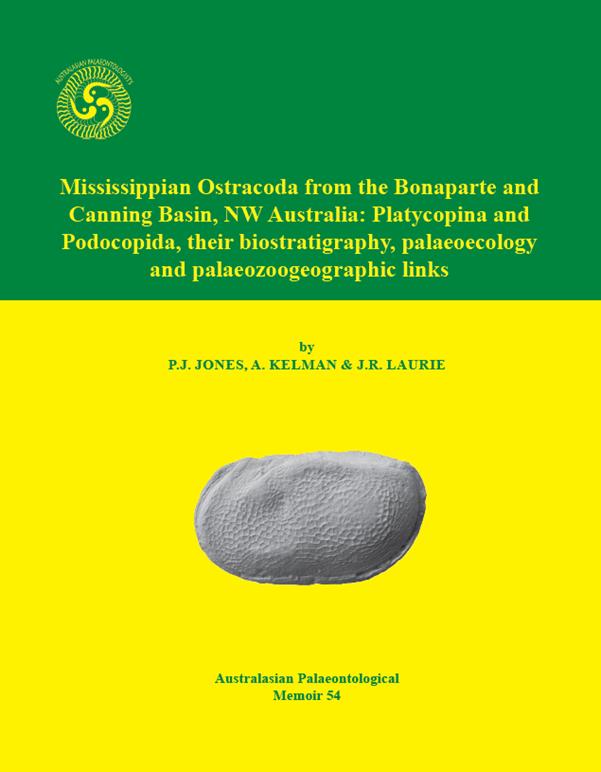
Jones, P.J., Kelman, A. & Laurie, J.R. 2021. Mississippian Ostracoda from the Bonaparte and Canning basins, NW Australia: Platycopina and Podocopida, their biostratigraphy, palaeoecology and palaeozoogeographic links. Australasian Palaeontological Memoirs 54, 1-162.
Zhen, Y.-Y., Laurie, J.R., Percival, I.G., Nicoll, R.S. & Cooper, B.J. in press. Ordovician conodonts from the Horn Valley Siltstone of the Amadeus Basin, central Australia. Australasian Palaeontological Memoirs.
Geoscience Australia specimens featured in the following publications in 2021:
Belluzzo, A. and Lambert, O. 2021. A new delphinid from the lower Pliocene of the North Sea and the early radiations of true dolphins. Fossil Record, 24(1), pp.77-92.
Jones, P.J., Kelman, A. & Laurie, J.R. 2021. Mississippian Ostracoda from the Bonaparte and Canning basins, NW Australia: Platycopina and Podocopida, their biostratigraphy, palaeoecology and palaeozoogeographic links. Australasian Palaeontological Memoirs 54, 1-162.
McLoughlin, S. and Prevec, R., 2021. The reproductive biology of glossopterid gymnosperms A review. Review of Palaeobotany and Palynology, Sep 8, p.104527.
Smith, P.M. and Laurie, J.R. 2021. Trilobites from the mid-Darriwilian (Middle Ordovician) of the Amadeus Basin, central Australia. Alcheringa: An Australasian Journal of Palaeontology, 45(2), pp.140-177.
Sun, X.W., Bentley, C.J. and Jago, J.B. 2021. A Guzhangian (late Middle Cambrian) fauna from the Gidgealpa 1 drillhole, Warburton Basin, South Australia. Alcheringa: An Australasian Journal of Palaeontology, 45(3) pp. 289-298
White, J.M., DeSantis, L.R., Evans, A.R., Wilson, L.A. and McCurry, M.R. 2021. A pandalike diprotodontid? Assessing the diet of Hulitherium tomasettii using dental complexity (Orientation Patch Count Rotated) and dental microwear texture analysis. Palaeogeography, Palaeoclimatology, Palaeoecology, 583, p.110675.
Zhen, Y.Y., Nicoll, R.S., Normore, L.S., Percival, I.G., Laurie, J.R. and Dent, L.M. 2021. Ordovician conodont biostratigraphy of the Willara Formation in the Canning Basin, Western Australia. Palaeoworld, 30(2), pp.249-277.
Zhen, Y.Y., Laurie, J.R., Percival, I.G., Nicoll, R.S. & Cooper, B.J. in press. Ordovician conodonts from the Horn Valley Siltstone of the Amadeus Basin, central Australia. Australasian Palaeontological Memoirs
Zhu, Y.A., Giles, S., Young, G.C., Hu, Y., Bazzi, M., Ahlberg, P.E., Zhu, M. and Lu, J. 2021. Endocast and Bony Labyrinth of a Devonian “Placoderm” Challenges Stem Gnathostome Phylogeny. Current Biology, 31(5), pp.1112-1118
NEW SOUTH WALES
Australian Museum
Palaeontology Department
Matthew McCurry (Curator of Palaeontology at the Australian Museum and jointly appointed with UNSW, Sydney) is working on research projects concerning the sensory evolution and feeding mechanics of secondarily aquatic tetrapods. Current projects include looking at brain size evolution in whales over geological time and a newly discovered Miocene deposit, named McGrath's Flat near Gulgong, NSW with Tara Djokic, Patrick Smith, Michael Frese & Robert Beattie. Recently Matt has also been involved in designing content for an exhibition on the evolution and ecology of sharks, scheduled to open in late 2022. This exhibit is designed with the long-term goal for a world tour.
McCurry, M.R., Cantrill, D.J., Smith, P.M., Beattie, R., Dettmann, M., Baranov, V., Magee, C., Nguyen, J.M.T., Forster, M.A., Hinde, J., Pogson, R., Wang, H., Marjo, C.E., Vasconcelos, P. & Frese, M. in press. A Lagerstätte from Australia provides insight into the nature of Miocene mesic ecosystems. Science Advances McCurry, M.R., Marx, F.G., Evans, A.R., Park, T., Pyenson, N.D., Kohno, N., Castiglione, S. & Fitzgerald, E.M. in press. Brain size evolution in whales and dolphins: new data from fossil mysticetes. Biological Journal of the Linnean Society. Hart, L.J., McCurry, M.R., Frese, M., Peachey, T.J. & Brocks, J. in press. The first tetrapod remains from the Upper Jurassic Talbragar Fossil Fish Bed. Alcheringa.
White, J.M., DeSantis, L.R., Evans, A.R., Wilson, L.A. and McCurry, M.R., 2021. A pandalike diprotodontid? Assessing the diet of Hulitherium tomasettii using dental complexity (Orientation Patch Count Rotated) and dental microwear texture analysis. Palaeogeography, Palaeoclimatology, Palaeoecology 583, p.110675.
Hart, L.J., Bell, P.R., Smith, E.T., Mitchell, D.R., Brougham, T., & Salisbury, S.W.A. 2021. probable skeleton of Isisfordia (Crocodyliformes) and additional crocodyliform remains from the Griman Creek Formation (Cenomanian, New South Wales, Australia). Journal of Paleontology. Hart, L.J. 2020. Taxonomic clarifications concerning the crocodyliform genus Isisfordia. PeerJ 8, e8630.
White, J.M., DeSantis, L.R., Evans, A.R., Wilson, L.A. and McCurry, M.R., 2021. A pandalike diprotodontid? Assessing the diet of Hulitherium tomasettii using dental complexity (Orientation Patch Count Rotated) and dental microwear texture analysis. Palaeogeography, Palaeoclimatology, Palaeoecology 583, p.110675.
Lachlan Hart (Matthew McCurry’s PhD student and Technical Officer at the Australian Museum, Sydney) is continuing his PhD project looking at temnospondyls from the Mesozoic of New South Wales. Recently he has published the first tetrapod remains from the Upper Jurassic Talbragar Fossil Fish Bed. Lachlan is also nearly finished describing a near complete, articulated temnospondyl discovered in the mid-90’s within a retaining wall on the Central Coast of New South Wales. It was subsequently donated to the Australian Museum in 2003 and has been left unstudied in the collections. The specimen, which is likely to represent a new species, has both skeletal and soft tissue elements preserved.
Joshua White (Professor Tim Denham and Matthew McCurry’s PhD student) has started a PhD at the Australian National University and the Australian Museum. His thesis is currently
entitled “Diet of Ancient Marine Reptiles” and it focuses on understanding the relationship between form and function of marine reptile teeth to infer the diet of these extinct organisms, and better understand the evolution of marine reptiles. Joshua also published his honours project, supervised by Matthew McCurry at the University of New South Wales. This project evaluated the diet of an extinct wombat-like diprotodontid, Hulitherium tomasettii using dental complexity and dental microwear analysis.
Jacqueline Nguyen (Scientific Officer, Ornithology at the Australian Museum, Sydney and ARC DECRA Fellow at Flinders University, Adelaide) is working on research projects concerning songbird evolution. Current projects include Oligo-Miocene songbirds from South Australia and Queensland, the Big Questions in Paleontology Project, and fossil calibrations and the avian evolutionary timescale. She splits her time between her DECRA at Flinders and her role at the Australian Museum.
McCurry, M.R., Cantrill, D.J., Smith, P.M., Beattie, R., Dettmann, M., Baranov, V., Magee, C., Nguyen, J.M.T., Forster, M.A., Hinde, J., Pogson, R., Wang, H., Marjo, C.E., Vasconcelos, P. & Frese, M. in press. A Lagerstätte from Australia provides insight into the nature of Miocene mesic ecosystems. Science Advances Hume, J.P., Hutton, I., Middleton, G., Nguyen, J.M.T., & Wylie, J. 2021. A terrestrial vertebrate palaeontological reconnaissance of Lord Howe Island, Australia. Pacific Science 75, 43–73.
Worthy, T.H., & Nguyen, J.M.T. 2020. An annotated checklist of the fossil birds of Australia. Transactions of the Royal Society of South Australia 144, 66–108. Nguyen, J.M.T. & Ho, S.Y.W. 2020. Calibrations from the fossil record. In The Molecular Evolutionary Clock: Theory and Practice (pp. 117–133). Springer, Cham.
Tara Djokic (Research Officer at the Australian Museum, Sydney) is currently researching the fossilisation processes that occurred within a Miocene lake deposit named McGrath's Flat near Gulgong, NSW. She is also involved in the evaluation of research and engagement outcomes of the citizen scientist project, “Date a Fossil”, which engages the general public in palaeontology research.
George, S., Teece B., Hartz J., Djokic T., Ruff S., Alard O., Campbell K. & Van Kranendonk M. in press. Biomarkers from Fossilised Hot Spring Sinters: Implications for the Search for Life on Mars. In IMOG 2021, European Association of Geoscientists & Engineers. Van Kranendonk M., Baumgartner R , Cady S , Campbell K , Damer B., Deamer D., Djokic T., Gangidine A., Ruff S. & Walter M R. 2021. Terrestrial Hydrothermal Fields and the Search for Life in the Solar System. Bulletin of the American Astronomical Society 53, 272.
Kenderdine, S., Yip, A., Oliver, C., Pather, N., Sammut, C., Djokic, T., Marcus, N. & Ong, A., 2021. Designing Multi-disciplinary Interactive Virtual Environments for NextGeneration Immersive Learning Experiences: Case Studies and Future Directions in Astrobiology, Anatomy and Cultural Heritage. Creative and Collaborative Learning through Immersion, 49–67
Van Kranendonk, M., Djokic, T., Baumgartner, R., Bontognali, T.R., Sugitani, K., Kiyokawa, S. & Walter, M.R. 2021. Life analog sites for Mars from early Earth: diverse habitats from the Pilbara Craton and Mount Bruce Supergroup, Western Australia. Mars Geological Enigmas, 357–403.
Van Kranendonk, M., Baumgartner, R., Djokic, T., Ota, T., Steller, L., Garbe, U. & Nakamura, E. 2021. Elements for the origin of life on land: A deep-time perspective from the Pilbara Craton of Western Australia. Astrobiology 21, 39–59.
Djokic, T., Van Kranendonk, M., Campbell, K., Havig, J.R., Walter, M.R., & Guido, D.M. 2021. A reconstructed subaerial hot spring field in the∼ 3.5 billion-year-old Dresser Formation, North Pole Dome, Pilbara Craton, Western Australia. Astrobiology 21, 1–38.
Teece, B.L., George, S.C., Djokic, T., Campbell, K.A., Ruff, S.W., & Van Kranendonk, M.J. 2020. Biomolecules from Fossilized Hot Spring Sinters: Implications for the Search for Life on Mars. Astrobiology 20, 537–551.
Patrick Smith (Technical Officer at the Australian Museum & Adjunct Associate at Macquarie University, Sydney) is working on to databasing the Australian Museum’s entire Palaeontology Collection. Alongside this collections work Patrick is also researching the biostratigraphy of the Cambrian to Devonian trilobites and conodonts across Australia. In particular he is focusing on the Amadeus Basin (Northern Territory), Koonenberry Belt (New South Wales), Parkes Platform (New South Wales), and the southern Cobar Basin (New South Wales) in collaboration with Yong-Yi Zhen, Ian Percival, Barry Webby & Peter Jell. All these deposits host important sedimentary windows and are poorly constrained temporally.
Alongside this material, Patrick is also working on international Cambrian specimens, including a project on Middle Cambrian trilobites from the Tasman Formation, New Zealand (with Jim Jago and John Laurie – inspired by the late Roger Cooper) and another on Early Cambrian trilobites from Mongolia (with Marissa Betts & Christian Skovsted).
McCurry, M.R., Cantrill, D.J., Smith, P.M., Beattie, R., Dettmann, M., Baranov, V., Magee, C., Nguyen, J.M.T., Forster, M.A., Hinde, J., Pogson, R., Wang, H., Marjo, C.E., Vasconcelos, P. & Frese, M. in press. A Lagerstätte from Australia provides insight into the nature of Miocene mesic ecosystems. Science Advances
Bicknell, R.D.C. & Smith, P.M. in press. Teratological trilobites from the Silurian (Wenlock and Ludlow) of Australia. The Science of Nature
Bicknell, R.D.C. & Smith, P.M. in press. The first fossil scorpion from Australia. Alcheringa.
Bicknell, R.D.C., Smith, P.M., Holland, T. & Klompmaker, A.A. in press. Cretaceous clam chowder: The first evidence of inquilinism between extinct shrimps and bivalves. Palaeogeography, Palaeoclimatology, Palaeoecology.
Bicknell, R.D.C., Smith, P.M,, Bruthansová, J. & Holland, B. in press. Malformed trilobites from the Ordovician and Devonian. PalZ.
Ebach, M.C. & Smith P.M. in press. The Art of Finding and Discovering Fossils: A Personal Perspective. Journal and Proceedings of the Royal Society of New South Wales
Bicknell, R.D.C. & Smith, P.M. 2021. Patesia n. gen., a new Late Devonian stem xiphosurid genus. Palaeoworld 30, 440–450.
Smith, P.M. & Laurie, J.R. 2021. Trilobites from the mid-Darriwilian (Middle Ordovician) of the Amadeus Basin, central Australia. Alcheringa 45, 140–177.
Bicknell, R.D.C , Smith, P.M , Schroeder, N. & Kimmig, J. 2020. Reconsidering the ‘phyllocarid’ from the Wade Creek Formation. Alcheringa 44, 481–483.
Smith, P.M. & Ebach, M.C. 2020. A new Ordovician (Katian) calymenid, Gravicalymene bakeri sp. nov., from the Gordon Group, Tasmania, Australia. Alcheringa 44, 496–504.
Bicknell, R.D.C, Smith, P.M. & Poschmann, M. 2020. Re-evaluating evidence of Australian eurypterids. Gondwana Research 86, 164–181.
Holloway, D.J., Smith, P.M. & Thomas, G. 2020. The trilobites Prophalaron gen. nov. (Calymenidae) and Dicranurus (Odontopleuridae) from the Upper Ordovician of New South Wales. Alcheringa 44, 253–264.
Smith, P.M., Brock, G.A. & Paterson, J.R. 2020. Shelly fauna from the Cambrian (Miaolingian, Guzhangian) Shannon Formation and the SPICE event in the Amadeus Basin, Northern Territory. Alcheringa 44, 1–24.
Ailie Mackenzie (Technical Officer at the Australian Museum, Sydney) has just finished a thesis project focuses on functional morphology in ancient aquatic-feeding vertebrates, where her passion lies with plesiosaurs, ichthyosaurs and mosasaurs. She is currently working as a Technical Officer in the Palaeontology Collection, assisting the registration of fossil specimens, and intends to begin a PhD in reptile palaeobiology in the near future.
Thomas Peachey (3D digitisation Technical Officer at the Australian Museum, Sydney) continues in his role at the museum. Currently he is interested in discussing opportunities around 3D imaging and palaeobiology. He has also finished a Masters degree at Macquarie University looking at bat macroecology using 3D skull data.
Robert Jones (Senior Fellow at the Australian Museum, Sydney) continues assisting with important collection duties working alongside Matthew, Patrick, and Graham. He also takes an active interest in Triassic of the Sydney Basin, occasionally collecting material when it’s exposed on Sydney’s northern beaches.
Graham McLean (Honorary Research Associate and Collection assistant at the Australian Museum, Sydney) is currently working on a set of Technical Reports which will review the taxonomic history of every taxon discovered and described from the Triassic Period of the Sydney Basin. These reports will summarise the geology of the three geological groups formed during this period, the Narrabeen Group, the Hawkesbury Sandstone and the Wianamatta Group, and provide details of fossil type specimens, their locations in collections and journal paper references. Other specimens held in general collections will also be listed. Finally, possible ecosystems will be discussed using the fossil evidence reviewed. The aim of these reports is to allow researchers rapid introduction to available research material held in the Australian Museum collection.
Malte Ebach (Honorary Research Associate at the Australian Museum and Honorary Associate Professor in the Earth and Sustainability Science Research Centre, UNSW) research focusses on Devonian palaeobiogeography, Neotropical and Australian biogeography, as well as on Goethe’s contribution to science. In 2021 Malte was elected Fellow of the Royal Society of New South Wales.
Ebach, M.C. 2021. Origins of Biogeography: A Personal Perspective. In. (Guilbert, E. ed.) An Integrative Approach of the Evolution of Living, ISTE Science Publishing, London. Ebach, M.C. & Smith P.M. in press. The Art of Finding and Discovering Fossils: A Personal Perspective. Journal and Proceedings of the Royal Society of New South Wales Dowding, E.M., Ebach, M.C. & Mavrodiev, E.V. in press. Validating Marine Devonian Biogeography: a study in Bioregionalisation. Palaeontology Mavrodiev, E.V., Williams, D.M. & Ebach, M.C. 2021. Fassettia – a new North American genus of family Ceratophyllaceae: evidence based on cladistic analyses of current molecular data of Ceratophyllum Australian Systematic Botany 34, 431–437.
Hermogenes de Mendonça, L. & Ebach, M.C. 2020. A review of transition zones in biogeographical classification. Biological Journal of the Linnean Society 131, 717–736. Ebach, M.C. & Michaux, B. 2020. Biotectonics. Tectonics as the Driver of Bioregionalisation. Springer, New York. Williams, D.M. & Ebach, M.C. 2020. Cladistics: A Guide to Biological Classification Cambridge University Press, Cambridge. Smith, P.M. & Ebach, M.C. 2020. A new Ordovician (Katian) calymenid, Gravicalymene bakeri sp. nov., from the Gordon Group, Tasmania, Australia. Alcheringa 44, 496–504. Ebach, M.C. & Murphy, D.J. 2020. Carving up Australia’s arid zone: A review of the bioregionalisation of the Eremaean and Eyrean biogeographic regions. Australian Journal of Botany 68, 229–244.
Huang, C., Ebach, M.C. & Ahyong, S.T. 2020. Bioregionalisation of the freshwater zoogeographical areas of mainland China. Zootaxa 4742, 271–298.
Michael Frese (Honorary Research Associate at the Australian Museum and Associate Professor at the University of Canberra) conducts in various fields including virology, microbiology and palaeontology. His palaeontological research focusses on the Upper Jurassic Talbragar Fish Bed and the Miocene McGrath Flat lagerstätte.
McCurry, M.R., Cantrill, D.J., Smith, P.M., Beattie, R., Dettmann, M., Baranov, V., Magee, C., Nguyen, J.M.T., Forster, M.A., Hinde, J., Pogson, R., Wang, H., Marjo, C.E., Vasconcelos, P. & Frese, M. in press. A Lagerstätte from Australia provides insight into the nature of Miocene mesic ecosystems. Science Advances. Hart, L.J., McCurry, M.R., Frese, M., Peachey, T.J. & Brocks, J. in press. The first tetrapod remains from the Upper Jurassic Talbragar Fossil Fish Bed. Alcheringa. Frese, M. & Ponder, W. 2021 Proviviparus talbragarensis gen. et sp. nov., the first viviparid snail from the Upper Jurassic of Australia. Alcheringa 45, 344–353.
Robert Beattie (Research associate at the Australian Museum, Sydney) continues his research with Michael and on the Upper Jurassic Talbragar Fish Bed and the Miocene McGrath Flat lagerstätte.
Geological Survey of New South Wales
WB Clarke Geoscience Centre, Londonderry
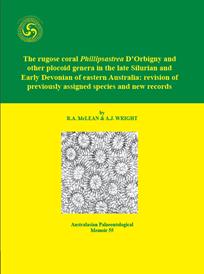
Ian Percival is an Honorary Research Associate of the Geological Survey of NSW, specialising in invertebrate palaeontology. This past year saw several projects that had been bubbling away for a while come to fruition with papers published on a variety of topics. Editing duties consumed a lot of time. With the able assistance of Sarah Martin (Perth, WA), editing of two Australasian Palaeontological Memoirs (number 54 by Jones et al. on latest Devonian to early Carboniferous ostracods from WA, and number 55 by McLean & Wright on late Silurian and early Devonian phillipsastreid corals from central NSW) was completed and the volumes were published in August and October respectively I am also an associate editor of Palaeoworld, based at the Nanjing Institute of Geology & Palaeontology and published by Elsevier. Finally, I have embarked on a major project that will result in a global synthesis of all Ordovician rocks and fossils, to appear in 2023 as two volumes in the Geological Society of London Special Publications series – I am one of four editors compiling the 50 chapters and am contributing to two of these.
Nomen Nudum Number 41, 2021
John Pickett is working on various projects including a project jointly with Ian and Yong Yi documenting the macrofossils (corals, brachiopods etc.) and conodonts from the late Silurian Molong Limestone in central NSW, a semi-monographic work. In 2021, John also published a paper documenting a new form of hexactinellid sponge from the Upper Devonian in France.
Jodie Rutledge works for the Palaeontology unit of the GSNSW for data entry and assisting Yong Yi in various outreach, collection management and research projects.
Zoë Wyllie works for the Palaeontology unit of the GSNSW running the Limestone Digestion and Conodont Recovery Facility (Acid Lab) and assisting Yong Yi in various outreach, collection management and research projects.
Yong Yi Zhen is a Principal Research Scientist (Palaeontologist) with the Geological Survey of New South Wales. During 2021, he has been working with the Palaeontology Team and in collaboration with palaeontologists from the Australian Museum (Patrick Smith) and other institutions on several projects documenting the geology and biostratigraphy of NSW. In April, Yong Yi and Patrick did major field work in far western New South Wales to collect several Cambrian and lowest Ordovician sites. For part of this trip they were joined by Yong Yi’s PhD supervisor, Prof. John Jell and John’s brother Peter. Yong Yi was pleased to see they were both healthy and well, and was particularly amazed to see Peter walking so fast to getting ahead of the group and disappearing into the horizon! A manuscript documenting Upper Ordovician conodonts, corals and stromatoporoids from the northern part of the Junee–Narromine Volcanic Belt in collaboration with geologists from the Fortescue Metals Group has recently been submitted to Australian Journal of Earth Sciences
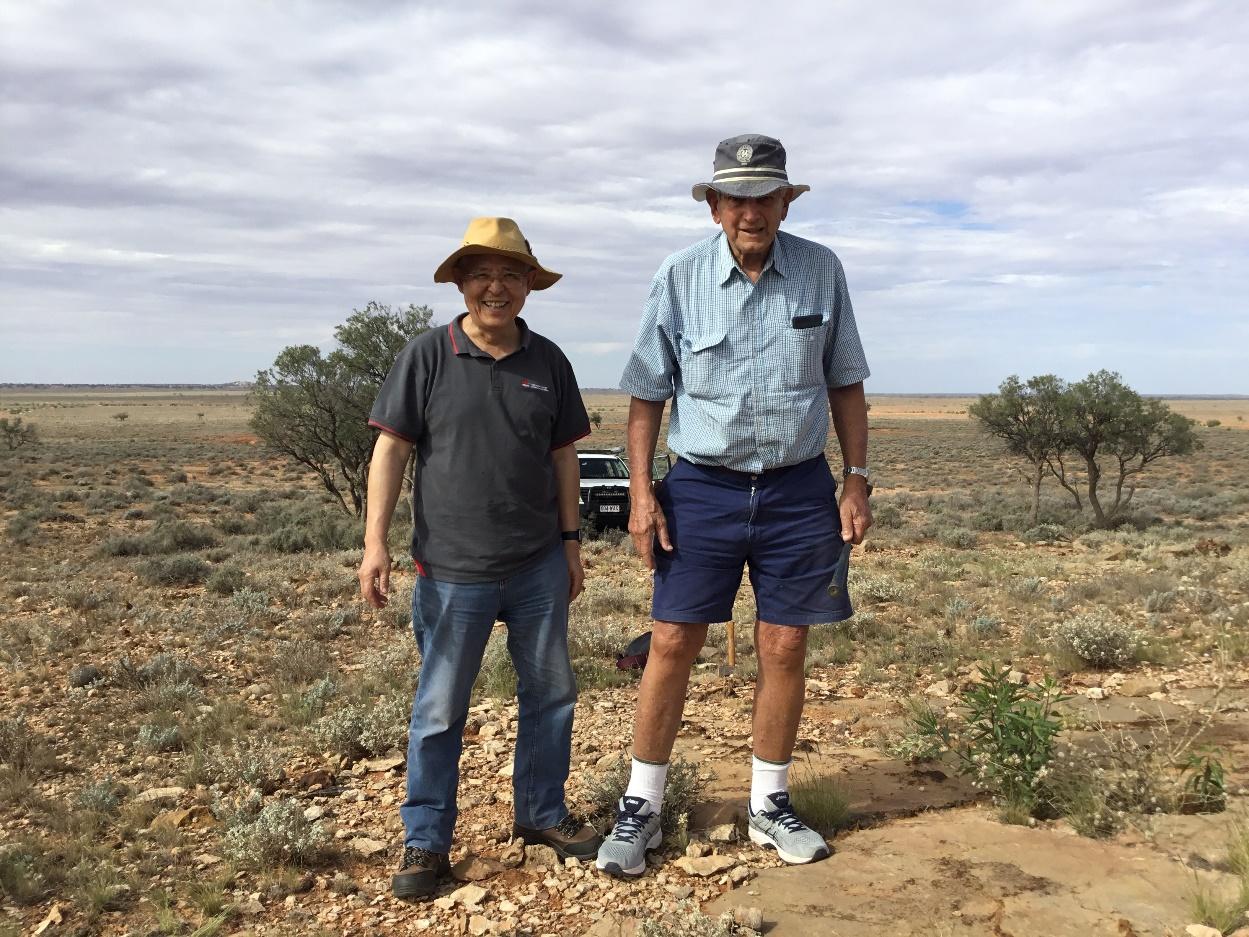
Yong Yi and John at the Kandie Tank Limestone site, far western NSW in April 2021.
Dent, L., Normore, L., Sullivan, N.B., Zhen, Y.Y. & Anne Forbes, A. 2021. First record of Lower –Middle Ordovician (Tremadocian – Dapingian) carbon isotope (δ-13Ccarb) chemostratigraphy in the Canning Basin, Western Australia; calibrated with geochronology/biostratigraphy and implications for global correlations. Palaeogeography Palaeoclimatology Palaeoecology 573, DOI: 10.1016/j.palaeo.2021.110411
Gong, F.Y., Wu, R.C., Zhen, Y.Y., Luan, X.C., Zhan, R.B., & Yan, G.Z. 2021. Conodont biostratigraphy and biodiversity of the Middle to Upper Ordovician near Shitai of Anhui Province, South China. Alcheringa: An Australasian Journal of Palaeontology 45 (1), 61–76.
Groome, M., Tosdal, R.M., Harris, A.C. & Percival, I.G. 2021. Preservation of the Cadia Valley porphyry Au–Cu district, NSW, Australia: Silurian basin formation and subsequent inversion. Australian Journal of Earth Sciences 68, 799–817.
Jell, P.A., Percival, I.G. & Cook, A.G. 2021. Ordovician fauna in a small fault block on the Yarrol Fault, south of Calliope, central Queensland. Proceedings of the Royal Society of Queensland 129, 19pp.
Normore, L., Peter W. Haines, P.W., Carr, L.K., Henson, P., Zhan, Y.J., Wingate, M.T.D., Zhen, Y.Y., Lu, Y.J., Martin, S., Kelsey, D., Allen, H. & Fielding, I. 2021. Barnicarndy Graben, southern Canning Basin: stratigraphy defined by the Barnicarndy 1 stratigraphic well. The APPEA Journal 61 (1), 224–235.
Park, T-Y.S., Jung, J., Lee, M., Lee, S., Zhen, Y.Y., Hua, H., Warren, L.V. & Hughes, N.C. 2021. Enduring evolutionary embellishment of cloudinids in the Cambrian. Royal Society Open Science 8, 210829. https://doi.org/10.1098/rsos.210829
Pickett, J. & Plusquellec, Y. 2021. Un curieux présumé spongiaire hexactinellide dans la Formation de Porsguen, Famennien de la Rade de Brest (Massief armoricain). Bulletin de la Société géologique et minéralogique de Bretagne, Série D 19, 55–68.
Wang, G.X., Percival, I.G., Zhen, Y.Y. & Webby, B.D. 2021. Late Ordovician corals from allochthonous clasts in the Devonian Drik-Drik Formation of northeastern New South Wales, Australia. Proceedings of the Linnean Society of New South Wales 143, 51–86.
Zhen, Y.Y. 2021. Middle Ordovician conodont biostratigraphy of Australasia. Journal of Earth Science 32, 474–485.
Zhen, Y.Y. & Fitzherbert, J. 2021. Lochkovian (Early Devonian) corals and conodonts from the Elura Limestone Member, north of Cobar in central-western New South Wales. Quarterly Notes of the Geological Survey of New South Wales 154, 1–27.
Zhen, Y.Y. & Rutledge, J. 2021. Deep-water conodonts from Cambrian and Silurian-Devonian cherts of New South Wales. Geological Survey of New South Wales, Report GS2021/0534, 14 pp.
Zhen, Y.Y., Nicoll, R.S., Normore, L.S., Percival, I.G., Laurie, J.R. & Dent, L.M. 2021. Ordovician conodont biostratigraphy of the Willara Formation in the Canning Basin, Western Australia Palaeoworld 30, 249–277.
Zhen, Y.Y., Percival, I.G., Gilmore, P., Rutledge, J. & Deyssing, L. 2021. Conodont biostratigraphy of Ordovician deep-water turbiditic sequences in Eastern Australia – a new zonal scheme for the Open-Sea Realm. Journal of Earth Science 32, 486–500.
Macquarie University, Sydney
Palaeobiology Lab, School of Natural Sciences
2020-2021 has been a tumultuous period for palaeontology at MQU. As part of the response to falling international student numbers due to COVID-19 restrictions on travel and subsequent financial “black hole”, the university undertook a major curriculum restructure in late 2019/2020 which saw many programs including Marine Science, Geophysics, Geology and Palaeobiology (and many more) removed from the undergraduate teaching program. The
final “teach out” of palaeobiology units was completed in November 2021. Alas, this means the Palaeobiology Major – one of the longest running undergraduate palaeontological course structures in Australia – is no longer offered at Macquarie University. Despite this, palaeontological research is thriving with a strong cohort of staff, postdocs, postgraduates and honorary research associates still working in the Palaeobiology Lab.
Glenn A. Brock (glenn.brock@mq.edu.au) is now an Honorary Professor of Palaeobiology, in the School of Natural Sciences at MQU having taken a VR package in June 2021 after 34 years on staff in the Department of Earth and Planetary Sciences and, since 2009, the Department of Biological Sciences. His current 5-year Honorary Professorship will see him keep his office, research facilities (including the Acid Leaching Facility) and continue as Principal Supervisor of a strong cohort of continuing HDR students. Glenn also has very strong collaborative research ties with Chinese colleagues and is currently a Visiting Professor at the State Key Laboratory of Continental Dynamics, Shaanxi Key Laboratory of Early Life & Environments and Department of Geology, Northwest University, Xi’an, China. With no undergraduate teaching or administrative commitments, he has been free to focus on research questions related to multiple aspects of the Cambrian evolutionary radiation of complex animals, chronostratigraphy and correlation and geochemistry of biominerals He is a voting member on the IUGS International Subcommission on Cambrian Stratigraphy, and he is also engaged as one of the scientific authors of the Flinders Ranges World Heritage Nomination due for submission in 2023/4.
Publications for 2020-2021:
Jacquet, S.M., Selly, T., Schiffbauer, J.D. & Brock, G.A. 2021. Sclerite assembly, articulation, and protective system of early Devonian armoured annelids. Papers in Palaeontology. doi: 10.1002/spp2.1410
Zhang, Z-L., Zhang, Z-F., Ma, J-Y., Taylor, P.D., Chen, F-Y., Skovsted, C.B., Jacquet, S.M., Han, J., & Brock, G.A. 2021. Fossil evidence unveils an early Cambrian origin for Bryozoa. Nature. https://doi.org/10.1038/s41586-021-04033-w.
Agbaje, O.B.A., Brock, G.A., Zhang, Z., Duru, K.C., Yue, L., George, S.C., and Holmer, L.E. 2021. Biomacromolecules in recent phosphate-shelled brachiopods: identification and characterisation of chitin matrix. Journal of Materials Science. https://doi.org/10.1007/s10853-021-06487-9
Teece, B.L., Brock, G.A., Paterson, J.R., Skovsted, C.B., Holmer, L.E., George, S.C. 2021. Using laser micropyrolysis to assess potential relationships between Cambrian tommotiids and organophosphatic brachiopods. Journal of Analytical and Applied Pyrolysis 158, https://doi.org/10.1016/j.jaap.2021.105277.
Zhang, Z.L., Topper, T.P., Chen, Y., Strotz, L.C., Chen, F., Holmer, L.E., Brock, G.A. & Zhang, Z. 2021. Go large or go conical: allometric trajectory of an early Cambrian acrotretide brachiopod. Palaeontology 64, (5), 727–741. doi: 10.1111/pala.12568.
Yun, H., Zhang, X-L., Brock, G.A., Li, L-Y., & Li, G-X. 2021. Biomineralization of the Cambrian chancelloriids. Geology 49, 623–628, https://doi.org/10.1130/G48428.1 DOI:10.1130/G48428.1
Claybourn, T.M., Skovsted, C.B., Betts, M.J., Holmer, L.E., Bassett-Butt, L., and Brock G.A. 2021. Camenellan tommotiids from the Cambrian Series 2 of East Antarctica: Biostratigraphy, palaeobiogeography, and systematics. Acta Palaeontologica Polonica 66 (1), 207-229. https://doi.org/10.4202/app.00758.2020.
Zhang Z-L., Ghobadi Pour, M., Popov, L.E., Holmer, L.E., Chen, F-Y., Chen, Y-L., Brock, G.A., & Zhang, Z-F. 2021. The oldest early Cambrian (Age 3) lingulate brachiopod –trilobite association from South China. Gondwana Research 89, 147-167. https://doi.org/10.1016/j.gr.2020.08.009.
Agbaje, O.B.A., Liang, Y., George, S.C., Brock, G.A. and Holmer, L.E. 2020. Characterization of organophosphatic brachiopod shells: spectroscopic assessment of collagen matrix and biomineral components. RSC Advances 2020, 10, 38456. DOI: 10.1039/D0RA07523J
Chen F-Y., Brock G.A., Betts, M.B., Zhang Z-L., Yun, H., Kleube, R.M., Laing, B., Zhang, Z-F. 2020. Sedimentology and integrated chronostratigraphy of the lower Heatherdale Shale (Cambrian, Stages 2–3), Stansbury Basin, South Australia. Geological Magazine. https://org/10.1017/S0016756820001260.
Chen F-Y., Brock G.A., Zhang Z-L., Laing, B., Ren X-Y., & Zhang, Z-F. 2020. Brachiopoddominated communities and depositional environment of the Guanshan KonservatLagerstätte, Wuding County, eastern Yunnan. Journal of the Geological Society. 178, jgs2020-043, https://doi.org/10.1144/jgs2020-043
Zhang Z-L., Holmer, L.E., Chen F-Y., & Brock G.A. 2020. Ontogeny and evolutionary significance of a new acrotretide brachiopod genus from Cambrian Series 2 of South China. Journal of Systematic Palaeontology 18: 19, 1569-1588, DOI:10.1080/14772019.2020.1794991.
Zhang, Z-F., Strotz, L.C., Topper, T.P., Chen F-Y., Chen Y-L., Liang Y., Zhang Z-L., Skovsted C.B. & Brock G.A. 2020. An encrusting kleptoparasite-host interaction from the early Cambrian. Nature Communications 11, Article number: 2625. DOI:10.1038/s41467-020-16332-3.
Smith, P.M., Brock, G.A., and Paterson, J.R. 2020. Shelly fauna from the Cambrian (Miaolingian, Guzhangian) Shannon Formation and the SPICE event in the Amadeus Basin, Northern Territory: Alcheringa, 44 (1), 1–24. doi:10.1080/03115518.2019.1660405.
Teece, B.L., George, S.C., Agbaje, O.B.A., Jacquet, S.M. and Brock, G.A. 2020. Mars Rover Techniques and Lower/Middle Cambrian Microbialites from South Australia: Construction, Biofacies and Biogeochemistry. Astrobiology 20 (5), 1-24. DOI: 10.1089/ast.2019.2110.
Jago, J.B., Gehling, J.G., Betts, M.J., Brock, G.A., Dalgarno, C.R., Garcia-Bellido, D.C., Haslett, P.G., Jacquet, S.M., Kruse, P.D., Langsford, N.R., Mount, T.J., and Paterson, J.R. 2020. The Cambrian System in the Arrowie Basin, Flinders Ranges, South Australia. Australian Journal of Earth Sciences 67 (7), 923-948. https://doi.org/10.1080/08120099.2018.1525431
Claybourn, T.M., Skovsted, C.B., Holmer, L.E., Pan, B., Myrow, P., Topper, T.P. & Brock, G.A. 2020. Brachiopods from the Byrd Group (Cambrian Series 2, Stage 4) Central Transantarctic Mountains, East Antarctica: biostratigraphy, phylogeny and systematics. Papers in Palaeontology 6 (3), 349–383. https://doi.org/10.1002/spp2.1295
Pan, B., Skovsted, C.B., Brock, G.A., Topper, T.P., Holmer, L.E., Li, L-Y., & Li, G-X. 2020. Early Cambrian organophosphatic brachiopods from the Xinji Formation, at Shuiyu section, Shanxi Province, North China. Palaeoworld 29 (3), 512-533. DOI: 10.1016/j.palwor.2019.07.001.
Matthew Kosnik (matthew.kosnik@mq.edu.au) is a Lecturer in the School of Natural Sciences at MQU who works with molluscan material preserved in Holocene sediments to address questions of conservation palaeobiology and taphonomy. I am in the process of publishing work from One Tree Reef (GBR, QLD), Port Jackson and Pittwater (NSW).
Bright, J., Ebert, C., Kosnik, M., et al.. .2021. Comparing direct carbonate and standard graphite 14C determinations of biogenic carbonates. Radiocarbon 63(2), 387-403. doi:10.1017/RDC.2020.131
Zhiliang Zhang (zhiliang.zhang@mq.edu.au) is a Macquarie University Research Fellow (2019- 2022) whose research focusses on biomineralization and biomarkers of fossil shells to resolve the evolutionary roots of lophophorate animals during the Cambrian evolutionary radiation and the Great Ordovician Biodiversification Event Publications for 2020-2021:
Zhang, Z.L., Zhang, Z.F., Ma J.Y., Taylor, P.D., Strotz L.C., Jacquet, S.M., Skovsted, C.B., Chen, F.Y., Han, J. & Brock, G.A. 2021. Fossil evidence unveils an early Cambrian origin for Bryozoa. Nature https://doi.org/10.1038/s41586-021-04033-w
Zhang, Z.L., Pour, M.G., Popov, L., Holmer, L., Chen, F., Chen, Y., Brock, G. & Zhang, Z. 2021. The oldest Cambrian trilobite - brachiopod association in South China. Gondwana Research 89, 147-167.
Zhang, Z.L., Topper, T.P., Chen, Y., Strotz, L.C., Chen, F., Holmer, L.E., Brock, G.A. & Zhang, Z. 2021. Go large or go conical: allometric trajectory of an early Cambrian acrotretide brachiopod. Palaeontology 64 (5), 727–741.
Álvaro, J.J., Holmer, L.E., Shen Y., Popov, L.E., Ghobadi Pour, M., Zhang, Z., Zhang, Z.L., Ahlberg, P., Bauert, H., González-Acebrón, L. 2021. Submarine metalliferous carbonate mounds in the Cambrian of the Baltoscandian Basin induced by vent networks and water column stratification. Scientific Reports.
Chen, F.Y., Brock, G.A., Zhang, Z.L., Laing, B., Ren, X.Y. Zhang, Z.F. 2021. Brachiopoddominated communities and depositional environment of the Guanshan KonservatLagerstätte, eastern Yunnan. Journal of the Geological Society 178 (1).
Chen, F.Y., Brock, G.A., Betts, M., Zhang, Z.L., Yun, H., Laing, B. & Zhang, Z.F. 2021. Sedimentology and integrated chronostratigraphy of the lower Heatherdale Shale (Cambrian, Stages 2-3), Stansbury Basin, South Australia. Geological Magazine 158 (7), 1224-1236.
Zhang, Z.L., Holmer, L.E., Chen F.Y. & Brock, G.A. 2020. Ontogeny and evolutionary significance of a new acrotretide brachiopod genus from Cambrian Series 2 of South China. Journal of Systematic Palaeontology 27, 127–151.
Zhang, Z.L., Chen, F.Y. & Zhang, Z. 2020. The earliest phosphatic-shelled brachiopods from the carbonates of South China their diversification, ontogeny and distribution. Earth Science Frontiers 27 (6), 127-151.
Zhang, Z., Strotz, L.C., Topper, T.P., Chen, F.Y., Chen, Y.L., Yue, L., Zhang, Z.L., Skovsted, C.B. & Brock, G.A. 2020. An encrusting kleptoparasite-host interaction from the early Cambrian. Nature Communications 11 (1), 1-7.
Skovsted, S.B., Martí Mus, M., Zhang, Z.L., Pan, B., Li, L., Liu, F., Li, G. & Zhang, Z. 2020. On the origin of hyolith helens. Palaeogeography, Palaeoclimatology, Palaeoecology 555. https://doi.org/10.1016/j.palaeo.2020.109848.
Feiyang Chen (lfychen@126.com) completed a PHD Degree as a Joint PhD student in December 2020. Her thesis was supervised by Profs Glenn A. Brock and Zhifei Zhang (Northwest University) and was entitled “Fossil composition and succession of Cambrian Series 2 in eastern Yunnan, and its global correlation across continents” and focused on Cambrian Series 2 and associated exceptionally preserved fossil assemblages from South China. She also described the fossils, sedimentology and chemostratigraphy of the lower Cambrian Heatherdale Shale from Stansbury Basin, South Australia as part of her thesis. The
early Cambrian faunal assemblages and their temporal changes and spatial variation from two adjacent continents have been summarized. In 2021, Feiyang was appointed Lecturer at the School of Resources and Geosciences, China University of Mining and Technology, Xuzhou 221116, China.
Chen, F.-Y., Brock, G.A., Zhang, Z.-L., Laing, B., Ren, X.-Y. & Zhang, Z.-F. 2021. Brachiopod-dominated communities and depositional environment of the Guanshan Konservat-Lagerstätte, eastern Yunnan. Journal of the Geological Society, 178 (1).
Chen, F.-Y., Brock, G.A., Betts, M., Zhang, Z.-L., Yun, H., Laing, B. & Zhang, Z.-F. 2021. Sedimentology and integrated chronostratigraphy of the lower Heatherdale Shale (Cambrian, Stages 2-3), Stansbury Basin, South Australia. Geological Magazine, 158(7), 1224-1236.
Chen, F.-Y. & Zhang, Z.-L. 2021. The geological and palaeontological survey of Flinders Ranges of Australia. Evolution, in press. (Cover article).
Chen, F.-Y., Zhang, Z.-L. & Laing, B. 2020. The geological and paleontological survey of Ediacaran-Cambrian transition of South Australia. Evolution 1: 26-45. (Cover article)
Brittany Laing (brittany.laing@hdr.mq.edu.au) is undertaking a cotutelle PhD Degree between Macquarie University and The University of Saskatchewan. The thesis entitled “Earliest Cambrian bioturbation, ichnodiversity, and behaviour in Earth's oldest animal ecosystem engineers” is supervised by Hon. Prof. Glenn Brock, Dr. Luis Buatois, and Dr. M. Gabriela Mángano, and collaborates with Dr. Luke Strotz and Dr. Lyndon Koens. Her project focuses on methodologies that evaluate behavioural complexity and ecosystem impact of bioturbators, and seeks to apply them to early Cambrian trace fossil datasets.
Chen, F.-Y., Brock, G.A., Betts, M., Zhang, Z.-L., Yun, H., Laing, B. & Zhang, Z.-F. 2021. Sedimentology and integrated chronostratigraphy of the lower Heatherdale Shale (Cambrian, Stages 2-3), Stansbury Basin, South Australia. Geological Magazine, 158(7), 1224-1236.
Chen, F.-Y., Zhang, Z.-L. & Laing, B. 2020. The geological and paleontological survey of Ediacaran-Cambrian transition of South Australia. Evolution 1: 26-45. (Cover article).
Yvette Bauder (yvettemonique.bauder@hdr.mq.edu.au) was awarded her Master of Research degree in December 2019 along with the University Medal for her outstanding academic record. The thesis supervised by Professor Glenn Brock and Dr Matthew Kosnik was entitled "One Tree Lagoon, a relic of the pre-colonial Great Barrier Reef" and focused on whether benthic Foraminifera, preserved in a sediment core from One Tree Reef lagoon could be used to measure ecological change following European colonisation of Australia. There was no discernible shift in foraminiferal assemblages. A paper based on this research is currently being rewritten and will soon be submitted for publication in the Geological Society of London special edition "Conservation paleobiology of marine ecosystems: concepts and applications." Yvette is working as an independent researcher.
Jack C. Jones (jack.jones1@hdr.mq.edu.au) was awarded his Master of Research degree in 2020. His thesis focused on the chronostratigraphy of the Fork Tree Limestone in the eastern Stansbury Basin and he is now undertaking a PhD Degree from 2021 to 2024. The thesis, supervised by Hon. Professor Glenn A. Brock, Dr Stefan Löhr and Dr Marissa J. Betts, is entitled "Lower Cambrian Chronostratigraphy and Glauconite ages for the Western Stansbury Basin, South Australia", and focuses on constraining stratigraphically significant events in the earliest Cambrian interval of the western Stansbury Basin using a multi-proxy
chronostratigraphic approach. Incorporating small shelly fossil biostratigraphy, stable C13 and O18 isotope chemostratigraphy, and novel, in-situ dating of the authigenic clay mineral glauconite, this approach will enable correlation within South Australia to the eastern part of the basin and the Arrowie Basin to the north, and to contemporaneous formations globally.
Zoe Wyllie was awarded her Master of Research degree in 2021 with a thesis supervised Hon. Professor Glenn A. Brock entitled “Morphometrics, taphonomy and preservation of two placoderms from the Late Devonian Canowindra Fauna”. Her research focused on the morphometrics, taphonomy and preservation of two placoderm species, Bothriolepis yeungae and Remigolepis walkeri. Multiple analyses confirmed low level metamorphic deformation in the Canowindra Fauna. Wellman analysis showcased the potential for morphometric analysis using retrodeformed instead of non-retrodeformed measurements in the fauna. Zoe currently works at the Geological Survey of NSW and is a PhD candidate at the University of South Australia.
Leylâ E. J. Kabaran (leylakabaran@gmail.com) was awarded her Master of Research degree in 2021 with a thesis supervised by Hon. Professor Glenn A. Brock and Prof Simon George entitled “Isolating taxon specific biomarkers from fossil bilaterians”. This research focused on identifying lipid biomarkers endogenous to fossil representatives of three bilaterian superphyla from the lowermost Ordovician of the Canning Basin, Western Australia. This project implemented methods of analysis from geochemistry to examine fossil material and also to determine the palaeoenvironment and palaeoecology of the Canning Basin during the Ordovician. Leylâ has taken a new position as a laboratory technician at Australian Laboratory Services where she is working on analysing pharmaceutical products using wet chemistry techniques and gas chromatography.
Ailie Mackenzie (ailie.mackenzie@students.mq.edu.au) completed her Master of Research degree in 2021 with a thesis supervised by Hon Professor Glenn A. Brock and Dr Matthew McCurry (Australian Museum) entitled “The function of apicobasal ridges in aquatic-feeding tetrapod dentition”. Utilising Finite Element Analysis techniques, this research quantitatively analysed the function of enamel dental ridges in ancient aquatic-feeding predators, such as plesiosaurs, ichthyosaurs, mosasaurs and early odontocetes. It found that, contrary to one of the major hypotheses, the ridges were unlikely to confer an advantage to strength and may instead have presented improvements to prey puncture or grip. Ailie has recently taken a new position as a Technical Officer of Digitisation in the Palaeontology Department at the Australian Museum and plans to continue her studies with a PhD in the near future.
Alyssa Fjeld (alyssa.fjeld@students.mq.edu.au) is currently in Year 2 of a Master of Research degree Her thesis is supervised by Honorary Professor Glenn Brock and Dr. Zhiliang Zhang and is entitled "Micro-ornamentation, ultrastructure, composition and homology among early Cambrian tommotiids". It is focused on utilizing FESEM imaging, backscatter emission imaging, and EDXS compositional mapping to better understand fine microornament, internal ultrastructure, and sclerite composition among early Cambrian tommotiid taxa from South Australia. She recently presented results from her thesis via an online oral presentation at the Geological Society of America Conference in Portland, Oregon She aims to submit her thesis in late November/early December 2021.
Fjeld, A., Brock, G.A., and Zhang, Z. 2021. Deciphering early Cambrian lophotrochozoan relationships using tommotiid sclerite microornament and ultrastructure. GSA Connects
2021 Conference. Portland, OR, USA. https://gsa.confex.com/gsa/2021AM/meetingapp.cgi/Paper/369015.
Courtney Birksmith (courtney.birksmith@hdr.mq.edu.au) has just completed Year 1 (coursework) of a Master of Research degree Her thesis year will commence in 2022 with a thesis entitled ‘Applying a multiproxy method to constrain the Lower-Middle Cambrian Boundary in the Western Stansbury Basin, South Australia’ , to be supervised by Hon. Professor Glenn Brock, Dr Zhiliang Zhang and Dr Marissa Betts (UNE). This research will focus on constructing high resolution biostratigraphy and chemostratigraphy across the lower-middle Cambrian boundary in the Western Stansbury Basin for the first time. Especially important will be to test for the presence of the major negative RedlichiidOlenellid Extinction Carbon isotope Excursion (ROECE) event which will provide solid foundations for regional and global geological context.
Sally Hurst (sally.hurst@hdr.mq.edu.au) has just completed Year 1 (coursework) of a Master of Research degree Her thesis year will commence in 2022 with a thesis entitled ‘Who you gonna call?’ Perceptions and knowledge of palaeontological and archaeological material in Australia, to be supervised by Hon. Prof. Glenn Brock, Drs Matthew Kosnik and Linda Evans. The research thesis brings together Sally’s passion for palaeontology and archaeology and focusses on what the Australian community thinks about fossils and indigenous artefacts, and what they are meant to do upon finding them. Sally has also created a website to accompany this project that can be accessed at https://www.foundafossil.com/.
John Laurie (Honorary Research Fellow; john.r.laurie@gmail.com) now works mostly on Cambrian biostratigraphy and stratigraphy of the Georgina Basin, but has also been involved in writing a monograph on early Ordovician conodonts from the Horn Valley Siltstone in the Amadeus Basin and a paper on the conodont biostratigraphy of the subsurface Willara Formation in the Canning Basin (both with Yong Yi Zhen and others), a monograph on the Mississippian ostracods from the Bonaparte and Canning basins (with Peter Jones and Andrew Kelman) and a paper on the trilobites from the Ordovician Stairway Sandstone and Stokes Siltstone from the Amadeus Basin (with Pat Smith, Australian Museum). Current projects well advanced are on the biostratigraphy of the early Cambrian Thorntonia Limestone from the Georgina Basin (with Craig Munns, University of New England); and on middle Cambrian trilobites and agnostids from the northern South Island of New Zealand (with Jim Jago, University of South Australia, the late Roger Cooper, IGNS, and Pat Smith). A couple of other projects have moved little in the last few years and include one on Late Cambrian trilobite faunas from southernmost Tasmania (with Jim Jago and Kim Bischoff) and another on the middle Cambrian biostratigraphy in Hunt 1 well in the Georgina Basin.
Zhen Y.Y., Nicoll, R.S., Normore, L.S., Percival, I.G., Laurie, J.R. & Dent, L.M. 2021. Ordovician conodont biostratigraphy of the Willara Formation in the Canning Basin, Western Australia. Palaeoworld 30(2), 249-277.
Smith, P.M. & Laurie, J.R. 2021. Trilobites from the mid-Darriwilian (Middle Ordovician) of the Amadeus Basin, central Australia. Alcheringa 45(2), 140-177.
Jones, P.J., Kelman, A. & Laurie, J.R. 2021. Mississippian Ostracoda from the Bonaparte and Canning basins, NW Australia: Platycopina and Podocopida, their biostratigraphy, palaeoecology and palaeozoogeographic links. Australasian Palaeontological Memoirs 54, 1-162.
Zhen, Y.Y., Laurie, J.R., Percival, I.G., Nicoll, R.S. & Cooper, B.J. in press. Ordovician conodonts from the Horn Valley Siltstone of the Amadeus Basin, central Australia.
Australasian Palaeontological Memoirs.
Briony Mamo (Honorary Research Fellow; briony.mamo@mq.edu.au) now only pursues research in her spare time in the Palaeobiology Laboratory at Macquarie University. Nevertheless, Dr Mamo’s ongoing projects with the International Ocean Discovery Program and Swire Institute of Marine Science (HKU) continue to apply recovered microfossil assemblages (namely foraminifera) to probe environmental questions. Currently they focus on modern carbonate ecosystems and how Cenozoic seafloor conditions reflect the development of oceanic currents and palaeoclimate.
Auer, G., Petrick, B., Yoshimura, T., Mamo, B., Reuning, L., Takayanagi, H., De Vleeschouwer, D., Martinez-Garcia, A., 2021, Intensified organic carbon burial on the Australian shelf after the Middle Pleistocene transition, Quaternary Science Reviews, 262, 106965. https://doi.org/10.1016/j.quascirev.2021.106965
Fontanier, C., Deflandre, B., Rigaud, S., Mamo, B., Dubosq, N., Lamarque, B., Langlet, D., Schmidt, S., Lebleu, P., Poirier, D., Cordier, M.-A. & Grémare, A., (in press), Live (stained) benthic foraminifera from the West-Gironde Mud Patch (Bay of Biscay, NE Atlantic): Assessing the reliability of bio-indicators in a complex shelf sedimentary unit, Continental Shelf Research
Patrick Smith (Honorary Research Fellow; patrick.smith@australian.museum) has a wide range research streams focused on the biostratigraphy of Cambrian and Ordovician trilobites, brachiopods and other fossil invertebrates from Australia. Currently his work is exploring the biostratigraphy of western New South Wales and Western Australia in partnership with Yong Yi Zhen at the NSW Geological Survey and Heidi Allen at the Western Australian Geological Survey, respectively. Patrick has also recently been involved in several publications on other arthropod groups (including crustaceans, eurypterids and xiphosurid) as well as trilobite injuries with Russell Bicknell at UNE.
For a full list of Patrick publication please see his profile under his Australian Museum’s entry.
David Mathieson and Andrew Simpson are the two volunteer senile delinquents in the Palaeobiology Lab. We keep the acid baths gurgling away and generally help out with all manner of fossil prep work in the lab. We understand fossil prep so well because we are almost fossils ourselves!
In the last couple of years we’ve put through samples collected at Boree Creek and Broken River in 2018 thanks to the generous financial support of the Czech University of Life Sciences. Building on the work of MUCEP and Peter Molloy, we’ve published on Boree Creek this year, but have a forthcoming cornucopia of scientific data on conodonts, Ordovician to Carboniferous, about to light up a wide range of publication outlets around the world and thereby greatly lift their scientific reputations and status. We are both always keen to collaborate on conodont and other fossiliferous projects.
Simpson, A., Mathieson, D., Frýda, J., & Frýdová, B. 2021. Summary of east Gondwanan conodont data through the Ireviken Event at Boree Creek. Journal of Earth Science 32(3), 512-523. https://doi.org/10.1007/s12583-021-1310-9.
Dave is based at the Eudlo field station in the Paterson River valley, but we can both be contacted c/- Palaeobiology Lab, Macquarie University, NSW 2109.
University of New South Wales
Bonnie Teece is completing her PhD at UNSW this year which has concerned a range of palaeontological materials spanning recently fossilised samples all the way back to the Archaean. She is looking at ways to gain holistic understandings of fossils across time using a range of physical and chemical techniques. She has also recently joined the Early Career Advisory Panel to the Geological Society of Australia. Sher recently published some data from her Masters of Research, which was at Macquarie University, where she, along with her co-authors, utilised laser micro-pyrolysis to try to untangle the relationships between some Cambrian brachiopods and tommotiids.
Teece, B.L., Brock, G.A., Paterson, J.R., Skovsted, C.B., Holmer, L.E. & George, S.C., 2021. Using laser micropyrolysis to assess potential relationships between Cambrian tommotiids and organophosphatic brachiopods. Journal of Analytical and Applied Pyrolysis, 158, p.105277.
University of New England, Armidale School of Environmental and Rural Science
Palaeoscience Research Centre
The Palaeoscience Research Centre (PRC) at UNE continues to be one of the largest palaeontological research groups in Australia. Several new students have joined the lab in 2021, and work from academic staff (including postdoctoral fellows) has remained ongoing despite restrictions imposed by the COVID-19 pandemic. The key research areas of the PRC include: early animal evolution and modes of exceptional preservation during the Cambrian; dinosaur palaeobiology; morphometrics and macroevolutionary modelling; biomechanics of ancient animals; microfossils and palaeobiogeographic reconstructions; and extinction dynamics. Further details about the Centre’s members, research programs, facilities, news and events can be found on the website: https://www.une.edu.au/research/research-centresinstitutes/palaeoscience-research-centre
John Paterson continues to delve into most things Cambrian, with occasional sojourns to other Palaeozoic periods Research on the early Cambrian faunas of South Australia continues, especially those from the Emu Bay Shale Konservat-Lagerstätte (Kangaroo Island) and the Flinders Ranges Other Cambrian projects include the documentation of a new Burgess Shale-type biota from the Rosella Formation (British Columbia, Canada), and the Cambrian shelly fossil biostratigraphy of various parts of the Georgina Basin. A fun diversion to look at Carboniferous horseshoe crabs resulted in two exciting papers on the central nervous system (Geology; including the cover of the Nov. 2021 issue!) and musculature (Papers in Palaeontology); the former paper has an associated story published by The Conversation. Work also progresses on an ARC Discovery-funded project on predation, including the biomechanics of predatory Palaeozoic arthropods, such as radiodonts (e.g., Anomalocaris) and sea scorpions. Life as a Voting Member of the International
Subcommission on Cambrian Stratigraphy continues to be entertaining, especially when it comes to defining the base of Stage 10.
Bicknell, R.D.C., Holmes, J.D., Edgecombe, G.D., Losso, S.R., Ortega-Hernández, J., Wroe, S. & Paterson, J.R., 2021. Biomechanical analyses of Cambrian euarthropod limbs reveal their effectiveness in mastication and durophagy. Proceedings of the Royal Society B, 288: 20202075.
Bicknell, R.D.C., Ortega-Hernández, J., Edgecombe, G.D., Gaines, R.R. & Paterson, J.R., 2021. Central nervous system of a 310-m.y.-old horseshoe crab: Expanding the taphonomic window for nervous system preservation. Geology, 49(11): 1381–1385.
Bicknell, R.D.C., Tashman, J.N., Edgecombe, G.D. & Paterson, J.R., 2021. Carboniferous horseshoe crab musculature suggests anatomical conservatism within Xiphosurida. Papers in Palaeontology, doi: 10.1002/spp2.1403.
Holmes, J.D., Paterson, J.R. & García-Bellido, D.C., 2021. The post-embryonic ontogeny of the early Cambrian trilobite Estaingia bilobata from South Australia: trunk development and phylogenetic implications. Papers in Palaeontology, 7(2): 931–950.
Holmes, J.D., Paterson, J.R., Jago, J.B. & García-Bellido, D.C., 2021. Ontogeny of the trilobite Redlichia from the lower Cambrian (Series 2, Stage 4) Ramsay Limestone of South Australia. Geological Magazine, 158(7): 1209–1223.
Hughes, N.C., Adrain, J.M., Holmes, J.D., Hong, P.S., Hopkins, M.J., Hou, J.-B., Minelli, A., Park, T.-Y.S., Paterson, J.R., Peng, J., Webster, M., Zhang, X.-G., Zhang, X.-L. & Fusco, G., 2021. Articulated trilobite ontogeny: suggestions for a methodological standard. Journal of Paleontology, 95(2): 298–304.
Jago, J.B., Bentley, C.J., Paterson, J.R., Holmes, J.D., Lin, T.-R. & Sun, X.-W., 2021. The stratigraphic significance of early Cambrian (Series 2, Stage 4) trilobites from the Smith Bay Shale near Freestone Creek, Kangaroo Island. Australian Journal of Earth Sciences, 68(2): 204–212.
Teece, B.L., Brock, G.A., Paterson, J.R., Skovsted, C.B., Holmer, L.E. & George, S.C., 2021. Using laser micropyrolysis to assess potential relationships between Cambrian tommotiids and organophosphatic brachiopods. Journal of Analytical and Applied Pyrolysis, 158: 105277.
Marissa J. Betts (Lecturer in Earth Science, LithoLab UNE) accepted a continuing balanced role at UNE early this year. She has spent a large part of the year teaching first-year geology and second-year palaeontology units, redesigning them to improve learning outcomes and adapting them to online delivery. Marissa supervises Honours student Stephanie Richter Stretton, who began mid-year, on a project exploring the dating, correlation and depositional environment of the lower Cambrian Second Plain Creek Member of the Wilkawillina Limestone in the Ikara-Flinders Ranges. The team (UNE and Macquarie University) were lucky enough to be able to conduct fieldwork in the Flinders Ranges in June while COVID restrictions were briefly eased. Marissa’s student Eleanor Beidatsch completed a successful third-year research project investigating the Cambrian lobopodian Microdictyon using geometric morphometrics and will continue this research as part of an Honours project next year.
Marissa has had considerable funding success this year, firstly being awarded a Discovery Early Career Researcher Award (DECRA) from the Australian Research Council for her project Fossils, dates and continental plates: Exploring the nexus between global palaeogeography and the rise of animal life. She will take up the project at UNE 2022–2024. Marissa is also co-investigator on a successful Vetenskapsrådet (VR) grant to Swedish
collaborator Dr Christian Skovsted at the Natural History Museum, Stockholm, Engineering the Cambrian explosion: The role of reef environments as drivers of early animal evolution (2022–2025). She is also a named collaborator on a successful American Chemical Society Petroleum Research Fund application led by colleague Dr Sarah Jacquet at the University of Missouri; Scratching the disconformity surface: Formation of the lower Cambrian Flinders Unconformity and distal equivalents in the Arrowie Basin, South Australia. Together, these awards total in excess of AUD 1,000,000.
Early in the year, Marissa was awarded the Voisey Medal by the Geological Society of Australia, New South Wales Division for her contributions to Earth Sciences in Australia. She was also named a New South Wales Young Tall Poppy by the Australian Institute of Policy and Science for her scientific contributions and commitment to public outreach. This year she continues to participate in the Superstars of STEM program (Science and Technology Australia), an invitational program that aims to generate a critical mass of female STEM professionals visible in the public eye, and she reprises her role as a STEM Coach for Curious Minds Australia, an Australia-wide program that supports high-school girls interested in STEM subjects.
This year Marissa launched Sci-Flicks, a monthly scientific outreach film night in collaboration with the Belgrave Cinema in Armidale, UNE Life and Tune FM. Other outreach has included a live recording for the Occam’s Razor podcast, aired on Radio National, and a podcast interview series with Gneiss Chats to advertise LithoLab UNE (LLUNE), the new multidisciplinary geoscientific research and teaching group she has developed with UNE colleagues Dr Luke Milan and Tim Chapman.
Marissa is finishing the year visiting colleagues at Uppsala University and the Swedish Museum of Natural History. With Swedish colleagues she is working on projects ranging from description of new mickwitziid-like shelly fossils from Baltica, dating and correlation of the lower Cambrian of Antarctica, and the Precambrian–Cambrian succession in Mongolia.
Duan, X., Betts, M.J., Holmer, L.E., Chen, Y., Liu, F., Liang, Y. and Zhang, Z., 2021. Early Cambrian (Stage 4) brachiopods from the Shipai Formation in the Three Gorges area of South China. Journal of Paleontology 95, 497–526.
Russell Bicknell continues his post-doctoral research fellow at UNE where he continues to explore predation, but has extended his interests beyond the Cambrian to now examine other parts of the Palaeozoic. Further examination of predators, both extant and extinct, in conjunction with new colleagues, lead him to expand his toolkit of 3D analyses and he is now synthesizing kinematic work with his biomechanical analyses. He has been awarded an Australian Museum Visiting Research Fellowship to continue his research into ancient predation patterns. Beyond this, he continues his work into the taxonomy and evolution of horseshoe crabs, but has extended his interests now into other euchelicerates, including sea scorpions and scorpions. This continued examination has resulted in the oldest record of fossil horseshoe crab muscles, and the first example of a horseshoe crab brain.
Bicknell, R.D.C., & Amati, L. (in press). On the morphospace of eurypterine sea scorpions. Earth and Environmental Science Transactions of The Royal Society of Edinburgh, DOI: 10.1017/S175569102100030X.
Bicknell, R.D.C., Błażejowski, B., Wings, O., Hitij, T., & Botton, M.L. (2021). Critical reevaluation of Limulidae reveals limited Limulus diversity. Papers in Palaeontology, 7, 1525–1556.
Bicknell, R.D.C., Hecker, A., & Heyng, A.M. (2021). New horseshoe crab fossil from Germany demonstrates post-Triassic extinction of Austrolimulidae. Geological Magazine, 158, 1461–1471.
Bicknell, R.D.C., Holmes, J.D., Edgecombe, G.D., Losso, S.R., Ortega-Hernández, J., Wroe, S., & Paterson, J.R. (2021). Biomechanical analyses of Cambrian euarthropod limbs reveal their effectiveness in mastication and durophagy. Proceedings of the Royal Society of London B: Biological Sciences, 288, 20202075.
Bicknell, R.D.C., Melzer, R.R., & Schmidt, M. (in press). Three-dimensional kinematics of euchelicerate limbs uncover functional specialisation in eurypterid appendages. Biological Journal of the Linnean Society, DOI: 10.1093/biolinnean/blab1108.
Bicknell, R.D.C., Naugolnykh, S.V., & McKenzie, S.C. (in press). On Paleolimulus from the Mazon Creek Konservat-Lagerstätte. Comptes Rendus Palevol.
Bicknell, R.D.C., Ortega-Hernández, J., Edgecombe, G.D., Gaines, R.R., & Paterson, J.R. (2021d). Central nervous system of a 310-million-year-old horseshoe crab: expanding the taphonomic window for nervous system preservation. Geology, 41, 1381–1385.
Bicknell, R.D.C., & Shcherbakov, D.E. (2021). New austrolimulid from Russia supports role of Early Triassic horseshoe crabs as opportunistic taxa. PeerJ, 9, e11709.
Bicknell, R.D.C., & Smith, P.M. (2021). Patesia n. gen., a new Late Devonian stem xiphosurid genus. Palaeoworld, 30, 440–450.
Bicknell, R.D.C., & Smith, P. M. (2021). Teratological trilobites from the Silurian (Wenlock and Ludlow) of Australia. The Science of Nature, 108, 25.
Bicknell, R.D.C., & Smith, P.M. (in press). The first fossil scorpion from Australia. Alcheringa. DOI: 10.1080/03115518.2021.1983874
Bicknell, R.D.C., Smith, P.M., Bruthansová, J., & Holland, B. (2021). Malformed trilobites from the Ordovician and Devonian. PalZ, DOI: 10.1007/s12542-12021-00572-12549.
Bicknell, R.D.C., Tashman, J.N., Edgecombe, G.D., & Paterson, J.R. (2021). Carboniferous horseshoe crab musculature suggests anatomical conservatism within Xiphosurida. Papers in Palaeontology, 10.1002/spp1002.1403.
Lustri, L., Laibl, L., & Bicknell, R.D.C. (2021). A revision of Prolimulus woodwardi Fritsch, 1899 with comparison to other paedomorphic belinurids. PeerJ, 9, e10980.
Naugolnykh, S.V., & Bicknell, R.D.C. (2021). Ecology, morphology and ontogeny of Paleolimulus kunguricus a horseshoe crab from the Kungurian (Cisuralian) of the Cis‐Urals, Russia. Lethaia, 10.1111/let.12451.
Stephanie Richter Stretton has begun her honours project, supervised by Dr Marissa Betts and Professor John Paterson. Her research focusses on Cambrian-aged deposits from the Flinders Ranges. Specifically, she is investigating a particularly enigmatic unit, called the Second Plain Creek Member (SPCM) of the Wilkawillina Limestone, which outcrops only within the Bunkers Graben. As part of her honours research, Stephanie conducted fieldwork in June this year with a team from UNE and Macquarie University to measure and sample a large stratigraphic section through the Wilkawillina Limestone in the Ikara-Flinders Ranges National Parl. Her honours project will use a multi-proxy approach, drawing together the biostratigraphy, lithostratigraphy and chemostratigraphy of the SPCM. Limestone.
THE DINO LAB @ UNE
Despite a pandemic, mouse plagues and a tornado in Armidale, the Dino Lab continues to grow. This year, we welcomed Amber Whitebone (PhD), Hayden Henderson (Hons) and Kai
Alison (Hons), and we farewelled Dr Matt White, who finished up his postdoctoral fellowship and has returned to Winton to continue his research, and Brayden Holland, who completed his MSc and published his first first-authored paper on the taphonomy and systematics of a new lambeosaurine dinosaur bonebed from western Canada (Holland et al. 2021) Congratulations Master Bray! Everyone was excited to get back into the field during two productive excursions to Lightning Ridge (NSW) and Surat (Qld) where we continue our exploration of the Griman Creek Formation. The results of these expeditions are the subject of research led by lab members Hayden Henderson and Tim Frauenfelder, respectively.
We are excited to announce Australia’s first dinosaur unit (GEOL210), called Dinosaurs! The unit will be co-taught by Drs Campione and Bell and launches in 2022 (second and third trimesters). This unit will teach about palaeontology, geology, and evolution through a dinosaur “lens” and will be available to any student through UNE’s Single Unit Study option.
Dino lab contact:
Phil Bell and Nic Campione
Palaeoscience Research Centre
Earth Science building (C02)
School of Environmental and Rural Science
University of New England, Armidale, NSW 2351
Australia pbell23@une.edu.au; ncampion@une.edu.au
Bazzi, M., Campione, N.E., Kear, B.P., Pimiento, C., & Ahlberg, P.E. 2021. Feeding ecology has shaped the evolution of modern sharks. Current Biology 31, 1–11.
Bazzi, M., Campione, N.E., Ahlberg, P.E., Blom, H., & Kear, B.P. 2021. Tooth morphology elucidates shark evolution across the end-Cretaceous mass extinction. PLOS Biology 19(8), e3001108.
Benson, R.B.J., Brown, C.M., Campione, N.E., Cullen, T., Evans, D.C., & Zanno, L. In Press Response to Schroeder et al.: The influence of juvenile dinosaurs on community structure and diversity. Science.
Bicknell, R.D.C., Smith, P.M., Bruthansová, J., & Holland, B. 2021. Malformed trilobites from the Ordovician and Devonian. PalZ. DOI: 10.1007/s12542-12021-00572-12549.
Borinder, N.H., Poropat, S.F., Campione, N.E., Wigren, T., & Kear, B.P. 2021. Postcranial osteology of the basally branching hadrosauroid dinosaur Tanius sinensis from the Upper Cretaceous Wangshi Group of Shandong, China. Journal of Vertebrate Paleontology 41(1), e1914642.
Brown, C.M., Campione, N.E., Wilson Mantilla, G.P., & Evans, D.C. In Press. Size-driven preservational and macroecological biases in the latest Maastrichtian terrestrial vertebrate assemblages of North America. Paleobiology
Enriquez, N.J., Campione, N.E., Brougham, T., Fanti, F., White, M.A., Sissons, R.L., Sullivan, C., Vavrek, M.J. & Bell, P.R. 2020. Exploring possible ontogenetic trajectories in tyrannosaurids using tracks from the Wapiti Formation (upper Campanian) of Alberta, Canada. Journal of Vertebrate Paleontology 40(6): e1878201.
Enriquez, N.J., Campione N.E., Sullivan C., Vavrek M.J., Sissons R.L., White M.A., & Bell P.R. 2021. Probable deinonychosaur tracks from the Upper Cretaceous Wapiti Formation (upper Campanian) of Alberta, Canada. Geological Magazine 158, 1115–1128.
Evans, D.C., Brown, C.M., You, H., & Campione, N.E. 2021. Description and revised diagnosis of Asia's first recorded pachycephalosaurid, Sinocephale bexelli gen. nov.,
from the Upper Cretaceous of Inner Mongolia, China. Canadian Journal of Earth Sciences 58(10).
Frauenfelder, T., Campione, N.E., Smith, E.T. & Bell, P.R. 2021. Diversity and palaeoecology of Australia’s southern-most sauropods, Griman Creek Formation (Cenomanian), New South Wales. Lethaia 54, 354–367.
Funston, G. F., Powers, M. J., Whitebone, S. A., Brusatte, S. L., Scannella, J. B., Horner, J. R., & Currie, P. J. (2021). Baby tyrannosaurid bones and teeth from the Late Cretaceous of western North America. Canadian Journal of Earth Sciences, 58(9), 756-777.
Hendrickx, C. & Bell, P.R. (2021). The scaly skin of the abelisaurid Carnotaurus sastrei (Theropoda: Ceratosauria) from the Upper Cretaceous of Patagonia. Cretaceous Research 28: 104994
Holland, B., Bell, P.R., Fanti, F., Hamilton, S., Larson, D.W., Sissons, R., Sullivan, C., Vavrek, M.J., Wang, Y., & Campione, N.E. 2021 Taphonomy and taxonomy of a juvenile lambeosaurine (Ornithischia: Hadrosauroidea) bonebed from the late Campanian Wapiti Formation of northwestern Alberta, Canada. PeerJ 9, e11290.
Park, J.Y., Lee, Y.N., Currie, P.J., Ryan, M.J., Bell, P., Sissons, R., Koppelhus, E.B., Barsbold, R., Lee, S. and Kim, S.H., 2021. A new ankylosaurid skeleton from the Upper Cretaceous Baruungoyot Formation of Mongolia: its implications for ankylosaurid postcranial evolution. Scientific reports, 11(1), pp.1-10. https://doi.org/10.1038/s41598021-83568-4.
White, M.A. & Campione, N.E. 2021. A three-dimensional approach to visualize pairwise morphological variation and its application to fragmentary palaeontological specimens. PeerJ 9, e10545.
Whitebone, S. A., A. S. M. H. Bari, M. L. Gavrilova, & J. S. Anderson. 2021. A multimethod approach to the differentiation of enthesis bone microstructure based on soft tissue type. Journal of Morphology 282:1362–1373.
Dino Lab students:
Timothy Frauenfelder has now entered the last year of his Ph.D., finishing in late 2022. His research this past year has focused on a new ankylosaur specimen from the Toolebuc Formation, found in Boulia, Queensland. He has submitted this new research for publication and is currently awaiting reviews. His research on sauropod teeth has continued, specifically looking at tooth microwear and innovative ways to taxonomically identify isolated teeth. This year, he organised his third fieldwork expedition to Surat, in southeastern Queensland to continue to find fossils from the Griman Creek Formation. The trip was a great success with finding teeth from sharks and dinosaurs, as well as other isolated elements from dinosaurs and plesiosaurs, such as ribs and vertebrae. Preparation of all fossils from Surat is currently underway and will form a chapter of his Ph.D.
Justin L. Kitchener continues his PhD research into burrowing and digging related traits in small ornithopod dinosaurs. Analyses of traditional and geometric morphometric measurements of the femur indicate potential fossorial signals relating to body size and fourth trochanter morphology. Simple biomechanical models and finite element analyses are being considered to ground possible behavioural interpretations. In June he visited the Australian Museum to collect measurements of avian femora, with a focus on burrowing species, for a similar study on birds.
Nathan Enriquez has published further material from his Masters project (completed in late 2020), including descriptions of the first Canadian deinonychosaur tracks, and an
investigation of ontogenetic changes in tyrannosaurid foot morphology based on footprints. A comprehensive description of the Tyrants Aisle dinosaur tracksite in Alberta, Canada which was the focal site of investigation for his Master’s thesis is currently submitted and close to acceptance. In 2021, Nathan has also had a productive first year of his PhD project, under the supervision of Dr. Phil Bell, Dr. Nicolás Campione and Dr. Christophe Hendrickx. His PhD is focused on the morphology and preservation of dinosaur skin in the fossil record. In collaboration with Dr. Michael Pittman and Tom Kaye (based in Hong Kong), as well as Prof. Paul Upchurch (based in the UK), Nathan is a senior author on an upcoming paper that redescribes the skin morphology of the British Cretaceous sauropod Haestasaurus becklesii, and investigates the evolutionary origin and phylogenetic distribution of papilliform scale textures in sauropod dinosaurs. Nathan is also co-author on an additional paper (currently under review; led by Michael Pittman) that investigates the ecology of several paravian theropods, based on the functional morphology of their feet (soft tissues included) and comparisons with extant birds. In-between dealing with these various manuscripts, his ongoing PhD work involves histology and chemical investigation of various dinosaur skin samples (mostly from hadrosaurids), which will continue to be analysed into 2022.
Olivia Devereaux (MSc Student) commenced her postgraduate studies at UNE during late October 2020 under the supervision of Dr. Phil Bell, Dr. Nicolas Campione, and Dr. Matthew Herne. Olivia is currently working on describing three tooth-bearing ornithopod dentaries from the Griman Creek Formation in New South Wales. She plans to include the teeth from the ornithopod dentaries in a geometric morphometric analysis comparing Australian ornithopod teeth.
S. Amber Whitebone is very excited to have started her PhD with the Palaeoscience Research Center. Her PhD research is a continuation of accomplishments from her Master’s work, which focuses on the micromorphology of the bone surface at areas of soft tissue attachment, and using this information to inform biomechanical analyses of fossil material. Her Master’s research (which focused almost exclusively on extant material) was recently published in the Journal of Morphology. Additionally, she co-authored a fun paper describing the first embryonic Tyrannosaur material with the lovely Dr. Greg Funston, Mark Powers, Dr. Stephen Brusatte, Dr. John Scannella, Dr. John R. Horner, and Dr. Phil Currie.
Hayden Henderson is nearing completion of his honours project in late 2021 under the supervision of Dr. Phil Bell. His research has focused primarily on the geology and taphonomy of a fossil-rich site within the Griman Creek Formation at Lightning Ridge (NSW). This work also includes initial taxonomic descriptions of the first sauropod skeletal elements from the Griman Creek Formation at Lightning Ridge.
Kai Allison recently commenced her honours project in June, supervised by Dr Nicolás Campione. Her research aims to create an easier metric for estimating the centre of mass in dinosaurs using limb bone circumferences, with hopes for this to be expanded for many extinct, and perhaps even extant, organisms. Kai also gave a 10-minute talk at the virtual GSA Earth Science Student Symposium (GESSS) about her honours project and discussed her preliminary results. Earlier in the year, Kai also joined the Eromanga Natural History Museum in their annual dig.
Ian Metcalfe (University of New England) continues work on Palaeozoic and Triassic conodonts (taxonomy, biostratigraphy, biogeography, ecology) from SE Asia (especially Malaysia), China and Australia in relation to biological and tectonic evolution, Permian mass
extinctions and timescale calibration (utilising High-Precision U-Pb CA-TIMS tuff dating in collaboration with, Boise State University, USA). A paper on Lower Permian (Late Kungurian) conodonts from Perak, Malaysia is nearing completion. Studies of the PermianTriassic transition (P-T boundary and late Permian mass extinction) continue. A study of Late Permian-Early Triassic macrofossils from hydrocarbon exploration wells in the northern Perth Basin, in collaboration with Guang Shi and Sam Lee (University of Wollongong), is near completion and a paper has been submitted to Alcheringa. High-precision U-Pb zircon isotopic age calibration of Lower Triassic marine reptile evolution in China continues in collaboration with China University of Geosciences, Wuhan, and Boise State University, USA. Collaboration with Tim Chapman and Luke Milan (University of New England) relating to Permian-Triassic magmatism and volcanism in Eastern Australia continues and a paper entitled "Arc eruptions deliver ‘first blow’ in the pulsed end-Permian mass extinction" is currently under revision/review. Collaboration with Marissa Betts (UNE) on Late Ediacran and Cambrian biogeography and tectonics continues.
Metcalfe, I., 2021. Multiple Tethyan ocean basins and orogenic belts in Asia. Gondwana Research 100, 87-130.
Other Information.
Ian Metcalfe's palaeontological work forms a contribution to the University of New England Palaeoscience Research Centre: https://www.une.edu.au/research/research-centres-institutes/palaeoscience-research-centre
University of Wollongong
Prof Guang Shi has continued to work on Late Palaeozoic and Permian-Triassic faunas, biostratigraphy, biogeography and extinction patterns. More recently, collaborating with colleagues, Guang has also embarked on a project on the global biogeography of living brachiopods.
Ye, F., Shi, G.R. and Bitner, M.A. 2021. Global biogeography of living brachiopods: Bioregionalization patterns and possible controls. PLoS ONE 16: e0259004, https://doi.org/10.1371/journal.pone.0259004
Lee, S., Shi, G.R., Nakrem, H.A., Woo, J. and Tazawa, J.-I. 2021. Mass extinction or extirpation: Permian biotic turnovers in the northwestern margin of Pangea. GSA Bulletin 133, https://doi.org/10.1130/B36227.1
Niu, Y., Shi, G.R., Ji, W., Zhou, J., Wang, J., Wang, K., Bai, J.K. and Yang, B. 2021. Paleogeographic evolution of a Carboniferous-Permian sea in the southernmost part of the Central Asian Orogenic Belt, NW China: Evidence from microfacies, provenance and paleobiogeography. Earth-Science Reviews 220: 103738, https://doi.org/10.1016/j.earscirev.2021.103738.
Niu, Y. Shi, G.R., Wang, J., Liu, C., Zhou, J., Lu, J., Song, B. and Xu, W. 2021. The closing of the southern branch of the Paleo-Asian Ocean: Constraints from sedimentary records in the southern Beishan Region of the Central Asian Orogenic Belt, NW China. Marine and Petroleum Geology 124: 104791, https://doi.org/10.1016/j.marpetgeo.2020.104791
Xu, H., Aung, K.P., Zhang, Y., Shi, G.R., Cai, F., Zaw, T., Ding, L., Sein, K. and Shen, S. 2021. A late Cisuralian (early Permian) brachiopod fauna from the Taungnyo Group in the Zwekabin Range, eastern Myanmar and its biostratigraphic, paleobiogeographic, and
tectonic implications. Journal of Paleontology 95, 1158–1188, https://doi.org/10.1017/jpa.2021.66.
Luo, M., Buatois, L.A., Shi, G.R. and Chen, Z.Q. 2021. Infaunal response during the endPermian mass extinction. GSA Bulletin 133, 91–99, https://doi.org/10.1130/B35524.1.
Dr Facheng Ye (Associate Research Fellow) mainly focuses on micro-structure of modern and fossil brachiopod shells, trying to understand how the shell structure responses to the environmental/climate change, and their evolutional change during the geological time.
Ye, F., Shi, G.R. and Bitner, M.A. 2021. Global biogeography of living brachiopods: Bioregionalization patterns and possible controls. PLoS ONE 16: e0259004, https://doi.org/10.1371/journal.pone.0259004.
Ye, F., Garbelli, C., Shen, S. and Angiolini, L. 2021. The shell fabric of Palaeozoic brachiopods: patterns and trends. Lethaia 54, 419–439, https://doi.org/10.1111/let.12412. Ma, Q., Ye, F., Wang, W., Sheng, Y., Shu, L. and Chen, X. 2021. Grid mapping revealed hidden geochemical lens and its chemostratigraphic bias in the middle-upper Permian marine carbonate sequence in Laibin, South China. Geological Journal, https://doi.org/10.1002/gj.4156
Dr Sangmin (Sam) Lee (Associate Research Fellow) is continuing his palaeontological research on taxonomy, palaeobiogeography, and phylogeny of Palaeozoic marine macroinvertebrate fossils. In particular, he is currently focusing on taxonomic revision of Permian brachiopods from the Southern Sydney Basin in eastern Australia, also figuring out their evolutionary trends in high-latitudinal environments. Additionally, he is interested in three-dimensional geometric morphometric applications to fossil materials.
Lee, S., Shi, G.R., Nakrem, H.A., Woo, J. and Tazawa, J.-I. 2021. Mass extinction or extirpation: Permian biotic turnovers in the northwestern margin of Pangea. GSA Bulletin 133, https://doi.org/10.1130/B36227.1
Park, T.Y., Jung, J., Lee, M., Lee, S., Zhen, Y.-Y., Hong, H., Warren, L. and Hughes, N. 2021. Enduring evolutionary embellishment of cloudinids in the Cambrian. Royal Society Open Science 8: 210829, https://doi.org/10.1098/rsos.210829.
Oh, Y., Lee, D.-C., Lee, S., Lee, S.-B., Hong, P.S. and Hong, J. 2021. Palaeobiogeography of the family Nisusiidae (Cambrian rhynchonelliform brachiopod) using ‘area-transition count’ method, with systematic revision of Korean species. Papers in Palaeontology.
Associate Professor Tony Wright (Honorary Principal Fellow) is focusing on taxonomic, biostratigraphic, biogeographic and evolutionary studies of mainly Devonian corals and brachiopods as follows:
1. Revision of the Devonian tetracoral genus Trapezophyllum.
2. Taxonomy, evolutionary relationships and biogeographic affinities of calceolide corals from north Viet Nam: co-authored with Tong-Dzuy Thanh, Ta Hoa Phuong and Nguyen Huu Hung.
3. Occurrences of the Devonian pentameride brachiopod Zdimir in eastern Australia: coauthored with J.A. Talent.
4. A giant new strophodontide brachiopod genus from the Devonian (upper Emsian to lower Eifelian) Mount Frome Limestone, New South Wales, Australia.
5. Further studies of operculate corals from eastern Australia and other regions.
6. Dr Ross McLean (Honorary Principal Fellow) and I we are also working on a new Silurian coral fauna from ‘Ulah’, south of Orange, NSW, including descriptions,
discussions and revisions of corals of this age, mainly in NSW. Note also that Ross published in 2021 a major monograph on cystiphyllid corals, listed below.
McLean, R.A. and Wright, A.J. 2021. The rugose coral Phillipsastrea D’Orbigny and other plocoid genera in the late Silurian to Early Devonian of eastern Australia: revision of previously assigned species and new records. Australasian Palaeontological Memoir 55, 88 pp., 36 figs.
McLean, R.A. 2021. Devonian cystiphyllid rugose corals from western Canada and eastern Australia. Palaeontographica Canadiana 38, 159 pp.
QUEENSLAND
The Australian Age of Dinosaurs Museum, Winton
Adele H. Pentland (PhD Candidate; also Research Associate at the Australian Age of Dinosaurs Museum, Winton) continued her work on Cretaceous pterosaurs from eastern Australia. Fieldwork in 2021 conducted with the Australian Age of Dinosaurs Museum, Winton, Queensland resulted in the excavation of two sites and recovery of sauropod elements, as well as teeth from several taxa. This year also saw the publication of a diverse tracksite from the Winton Formation with Dr Stephen Poropat and colleagues. A short article on the first elaphrosaurine theropod from Australia was also published in the Australian Age of Dinosaurs journal volume 18 (2021). Adele competed in the FameLab Australia 2021 National Final and was the Queensland FameLab Semi-finalist.
Poropat, S.F., White, M.A., Ziegler, T., Pentland, A.H., Rigby, S.L., Duncan, R.J., Sloan, T. and Elliott, D.A. 2021. A diverse Late Cretaceous vertebrate tracksite from the Winton Formation of Queensland, Australia. PeerJ, 9, p.e11544.
Pentland, A. 2021. Blacksoil: Australia’s first elaphrosaurine. Australian Age of Dinosaurs Museum of Natural History Annual, 18: 23–25
Griffith University, Brisbane
Australian Research Centre for Human Evolution
Julien Louys is mostly working on the Pleistocene vertebrate record of Sumatra, with a view of reconstructing changes in environments and its effects on mammals. Most of this work is centred on the caves of the Padang Highland in western Sumatra and the fluvial deposits of Bangka Island, southeast Sumatra. Closer to home, he has recently led new excavations at the Pliocene deposits of the Chinchilla Rifle Range and has been working with the Cave Divers Association of Australia on studying and protecting the fossil deposits of Mt Gambier.
Holly Ellen Smith recently completed her PhD on the taphonomy of vertebrate-bearing breccia in the caves of the Padang Highland in western Sumatra. Holly is a multi-disciplinary scientist who combines data stored in sediments, rock, and fossils to reconstruct the taphonomic and depositional history of complex sites. Most recently, she has confirmed the potential of high-throughput thermal-neutron tomography as a proof-of-principle means of surveying a large collection of geological samples.
Publications available at https://julienlouys.weebly.com/
Queensland Museum, Hendra Geosciences
Report on future work at the Queensland Museum Collection and Research Facility, 122 Gerler Road, Hendra, Queensland, 4011
The Collection and Research Facility at Hendra has undergone an extensive upgrade in the last 12 months and the wet (spirit-preserved) zoological collections will be transferred from the Queensland Museum (South Bank) to a State of the Art Collection Facility at Hendra. The relocation of wet collections from South Bank will commence early in 2022. Zoological staff, who are responsible for the management of these collections, will also relocate to Hendra when all work on the site is completed. Dry zoological collections, e.g., skeletal and study skins, will continue to be stored at the South Bank Facility at this time.
Planning is well advanced for the refurbishment of the office space at Hendra to accommodate the incoming zoology staff from South Bank. In order to prepare for this refurbishment the geosciences staff will be emptying offices and labs in the main admin building of all collections, equipment, books and files over the next few months. The library building on the Hendra site will also need to be emptied of all maps, publications and records by February 2022. All staff within the geosciences unit will be involved in preparing for these changes and as a result access to the geology collections will largely not be possible at this time.
Refurbishment of the buildings on the Hendra site is planned to commence early 2022 and will involve a series of connected projects.
Stage 1 will see the library building refurbished into a lab and preparation facility (proposed starting date of February 2022).
Stage 2 will see a refurbishment of the office spaces, and additional work stations will be established in the main admin building for incoming staff and honoraries, along with hot desks for research visitors.
Stage 3 Zoology and geoscience staff will return to the main administration building at Hendra after the refurbishment of this building is completed.
Geosciences staff will either be working from home and/or at off-site offices near the Hendra facility throughout these Stage 2 and Stage 3 works, so access to collections will not be possible throughout this period of work.
Work on the remediation of long-standing mould issues in the main collection store will also commence in 2022.
So, all-in-all, 2022 is going to be a challenging year. The good news is that Hendra Collection and Research Facility will come out of these changes with improved working conditions for both staff and visitors. It is also pleasing to see that the mould issues in the main collection store will be addressed. It is envisaged that the mould remediation work will take a number of years to complete so access to the main collection store will be an ongoing challenge. Responding effectively to the Covid 19 pandemic remains an ongoing challenge for all governments around the world. The mandate from the Queensland government is that from 17 December 2021, unvaccinated people will be unable to attend vulnerable and non-essential settings such as hospitals, prisons, aged care and disability accommodation services, ticketed festivals and entertainment venues (indoor and outdoor) and Queensland Government owned galleries, museums or libraries. So, all visitors, including future research visitors, to the Queensland Museum will need to comply with these requirements.
Dr Andrew Rozefelds
Principal Curator Geosciences
Queensland Museum
Carole J. Burrow remains an Honorary Research Fellow with the QM, working on midPalaeozoic jawed fishes. Collaborative work continues with Mike Newman (Wales) and Jan den Blaauwen (Netherlands) on descriptions of the Middle Devonian acanthodians of Scotland, as well as a cheirolepid actinopterygian from Spitsbergen and the oldest vertebrate embryos from Scotland. She continues to work with Sue Turner (QM) and Daniel Snyder (Colorado) on North American gyracanthids, with John Maisey (Florida) and colleagues on calcified cartilage in early sharks, and with Gavin Young (Canberra), Yuzhi Hu (ANU), Jing Lu and You-An Zhu (IVPP Beijing) on the Cravens Peak Beds fauna from western Queensland. Her biggest news is the publication of Handbook of Paleoichthyology Vol. 5, Acanthodii and Stem Chondrichthyes – a revision and updating of the first Vol. 5 Acanthodii by Robert Denison in 1979.
Burrow, C. 2021. Handbook of Paleoichthyology. Vol. 5. Acanthodii, Stem Chondrichthyes. H.-P. Schultze (ed.). Verlag Dr Friedrich Pfeil, Munich, 166 pp. Burrow, C.J. & den Blaauwen, J.L. 2021. Endoskeletal tissues of acanthodians (stem Chondrichthyes). In: A. Pradel, P. Janvier, & J.S.S. Denton (eds.), Ancient Fishes and their Living Relatives: a Tribute to John G. Maisey. Verlag Dr Friedrich Pfeil, Munich, 81-91
Burrow, C., den Blaauwen, J. & Newman, M. 2020. A redescription of the three longest known species of the acanthodian Cheiracanthus from the Middle Devonian of Scotland. Palaeontologia Electronica 23(1), a15, 1-43. https://doi.org/10.26879/1035.
Burrow, C.J., Newman, M.J. & den Blaauwen, J.L. 2020. First evidence of a functional spiracle in stem chondrichthyan acanthodians, with the oldest known elastic cartilage. Journal of Anatomy 236(6), 1154-1159. https://doi.org/10.1111/joa.13170.
Burrow, C.J., Newman, M.J. & den Blaauwen, J.L. 2020. Cheiracanthid acanthodians from the lower fossil fish bearing horizons (Eifelian, Middle Devonian) of the Orcadian Basin, Scotland. Scottish Journal of Geology 57, sjg2020-006. https://doi.org/10.1144/sjg2020006
Dearden, R.P., Blaauwen, J.L.D., Sansom, I.J., Burrow, C.J., Davidson, R., Newman, M.J., Ko, A. & Brazeau, M.D. 2021. A revision of Vernicomacanthus Miles with comments on the characters of stem-group chondrichthyans. Papers in Palaeontology 7, 1949-1976. https://doi.org/10.1002/spp2.1369.
Long, J., Thomson, V., Burrow, C. & Turner, S. 2021. Fossil chondrichthyan and placoderm remains from the Middle Devonian South Blue Range, Victoria, Australia: biostratigraphic implications. In: A. Pradel, P. Janvier & J.S.S. Denton (eds.), Ancient Fishes and their Living Relatives: a Tribute to John G. Maisey. Verlag Dr Friedrich Pfeil, Munich, 239-245.
Maisey, J.G., Denton, J.S.S., Burrow, C. & Pradel, A. 2020. Architectural and ultrastructural features of tessellated calcified cartilage in modern and extinct chondrichthyan fishes. Journal of Fish Biology 98, 919-941 https://doi.org/10.1111/jfb.14376
Newman, M.J., den Blaauwen, J.L. & Burrow, C.J. 2020. Two newly identified cheiracanthid acanthodians from the Mey Flagstone Formation (Givetian, Middle Devonian) of the Orcadian Basin, Scotland. Scottish Journal of Geology 57, 34-51. https://doi.org/10.1144/sjg2020-009.
Newman, M.J., den Blaauwen, J., Burrow, C. & Jones, R. 2021. Earliest vertebrate embryos in the fossil record (Middle Devonian, Givetian). Palaeontology 64, 21-30. https://doi.org/10.1111/pala.12511.
Newman, M.J., Burrow, C.J. & den Blaauwen, J.L. 2020. A new species of ischnacanthiform acanthodian from the Givetian of Mimerdalen, Svalbard. Norwegian Journal of Geology 99(4), 619-631. https://dx.doi.org/10.17850/njg99-4-5
Newman, M.J., Burrow, C.J., Blaauwen, J.L.D. & Giles, S. 2021. A new actinopterygian Cheirolepis jonesi nov. sp. from the Givetian of Spitsbergen, Svalbard. Norwegian Journal of Geology 101, 202103, 14 p. https://dx.doi.org/10.17850/njg101-1-3
Young, G.C. & Burrow, C.J. 2020. Late Devonian antiarch remains (placoderm fish) from the Gilberton Formation, north Queensland. Memoirs of the Queensland Museum – Nature 62, 187-203. https://doi.org/10.17082/j.2204-1478.62.2020.2020-04.
Susan Turner (Queensland Museum Geosciences “Volunteer” Research Fellow) continues to work on Palaeozoic and Mesozoic fish. Carole Burrow and I completed a project on the Early Devonian of Birch Creek II, Nevada with centenarian Mike Murphy (California) and are working on fish remains from Australia, Turkey and Pakistan (the latter the late Ruth Mawson collection). Sue is currently exploring the Early Silurian vertebrates from Devon Island, arctic Canada in a project with Chris Barnes (UVic, Vancouver) and David Sprague.
The last four years were dominated by research for a history of women in VP with a Prof. Annalisa Berta (San Diego), Rebels, Scholars and Explorers: Women in Vertebrate Paleontology published in October 2020 by Johns Hopkins University Press. Sadly, our attempt to launch the book at the 2020 Virtual SVP Annual was stymied but Annalisa was able to present a talk on our major results at the Annual GSA meeting in Portland, Oregon and at the 2021 Annual SVP meeting in November. Hardly the same with the inability to press the flesh. Sue is working on chronologies of over 250 past women. In our book, we celebrate the ~200-year history of women vertebrate paleontologists (VPs) around the world including researchers, educators, curators, preparators, artists and collection managers. We examine women VPs chronologically giving profiles of major contributors to the field against a historical backdrop of political, social and cultural change. Additional material is posted online – see https://jhupbooks.press.jhu.edu/rebels-scholars-explorers-supplementalmaterials.
In 2020-21, Annalisa and Sue wrote further about palaeoartists in a special Memoir of the Geological Society of America and Sue added more about European women becoming vertebrate palaeontologists in the early 20th century
Despite the ongoing pandemic, Sue was able to give three talks about the book presenting especially a summary of the history of women on International Women’s Day in March to the CWA (with a flurry of local politicians posting photo ops on Facebook), and later to local Probus and history groups in Brisbane.
Other news
Sue is on the Organising committees for 2022 IPC6 in Thailand and E/LVS in Valencia –who knows if we’ll get to them!
Berta, A. and Turner, S. 2020. Rebels, Scholars and Explorers: Women in Vertebrate Paleontology. Johns Hopkins University Press, Baltimore, 328 pp. https://jhupbooks.press.jhu.edu/title/rebels-scholars-explorers
Berta, S. & Turner, S. 2021. Women in Vertebrate Paleontology: Past, Present, And Future GSA Annual Meeting Portland, Oregon (October 10-13, 2021) Program & Abstracts. DOI:10.1130/2021.1218(21)
Long, J., Thomson, V., Burrow, C. & Turner, S. 2021. Fossil chondrichthyan and placoderm remains from the Middle Devonian South Blue Range, Victoria, Australia: biostratigraphic implications. Pp. 239-245. In: Alan Pradel, John S.S. Denton, and Philippe Janvier (eds) Ancient Fishes and their living relatives: a tribute to John G Maisey. F. Pfeil Verlag, Munich.
Paleontology. SVP Virtual Meeting, November 1-5, 2021, Conference Program & Abstracts, p. 58.
Turner, S. 2021. Becoming a Vertebrate Palaeontologist. International Jl Paleobiology & Paleontology 4(1): 6 pp.
Turner, S. 2021. Far-flung Female (and fossil bone hunting) Fellows: an autoethnographic approach. In: Burek, C & Higgs, B. eds. Uncovering the historical contribution of women in the Geosciences: Celebrations of first female fellows of GSL. Geological Society London Special Publication 506, 277-302, first published on July 28, 2020, doi:10.1144/SP506-2019-225.
Turner, S., Berta, A. 2021. Illustrating the unknowable: women paleoartists who drew ancient vertebrates. In: Clary, R.M., Rosenberg, GD & Evans, DC. eds. The Evolution of Paleontological Art. Geological Society of America (GSA) Memoir 218 , 22 pp
University
of Queensland, Brisbane
School of Biological Sciences
Jorgo Ristevski is a PhD student supervised by Dr. Steven Salisbury and Dr. Gilbert Price. For his PhD project, Jorgo studies extinct crocodylians from the Cenozoic Era of Australia, focusing on their morphology, palaeoneurology, taxonomic diversity, and evolution. Some of the methods he utilizes include descriptive and comparative anatomy, segmenting data obtained from computed tomographic (CT) scans, and phylogenetic analyses.
Prior to commencing his doctoral studies at The University of Queensland, Jorgo obtained an undergraduate degree (BA) in archaeology at the Saints Cyril and Methodius University in Skopje, North Macedonia, and a postgraduate degree (MRes) in vertebrate palaeontology at The University of Southampton in Southampton, England.
Ristevski, J., Price, G. J., Weisbecker, V. & Salisbury, S. W. 2021. First record of a tomistomine crocodylian from Australia. Scientific Reports 11, 12158.
Ristevski, J., Yates, A.M., Price, G.J., Molnar, R.E., Weisbecker, V. & Salisbury, S.W. 2020. Australia's prehistoric 'swamp king': revision of the Plio-Pleistocene crocodylian genus Pallimnarchus de Vis, 1886. PeerJ 8, e10466.
Ristevski, J., Young, M.T., de Andrade, M.B. & Hastings, A.K. 2018. A new species of Anteophthalmosuchus (Crocodylomorpha, Goniopholididae) from the Lower Cretaceous of the Isle of Wight, United Kingdom, and a review of the genus. Cretaceous Research 84, 340–383.
Ristevski, J. 2019. Crocodilia Morphology. In: J. Vonk J. and T. Shackelford (Editors) Encyclopedia of Animal Cognition and Behavior. Springer, Cham. DOI: 10.1007/978-3319-47829-6_955-2.
Ristevski, J., Price, G.J., Sobbe, I.H., Molnar, R.E., Louys, J., Cramb, J., Nguyen, A.D., Zhao, J.-x., Feng, Y -x. & Beirne, L. 2019. A new ziphodont eusuchian from the Pleistocene of Queensland, and implications for Australasia’s ziphodont crocodylian diversity. Journal of Vertebrate Paleontology, Program and Abstracts, 2019, 180.
Price, G.J., Louys, J., Ristevski, J. & Molnar, R.E. 2019. Ecological fallout and turnover in the diversity of Late Quaternary terrestrial predators of Australia. Journal of Vertebrate Paleontology, Program and Abstracts, 2019, 173.
School of Earth and Environmental Sciences
Prof. Jonathan Aitchison finished his time as Head of School at the end of 2021 and is continuing work on early Paleozoic radiolarian faunas, where his PhD students are revolutionising systematics using micro-CT technologies. He is also continuing work on the Tethyan mid-Cretaceous radiolarians of southern Tibet and China as well as Cainozoic and Quaternary history of the region and has new work out on Canadian radiolarians His paper with Sarah Kachovich in 2020 made the cover of the Journal of Paleontology (see below).
Cui, X.H., Luo, H., Aitchison, J.C., & Li, X.C., 2021. Middle Jurassic radiolarians and chert geochemistry, Dajiweng ophiolite, SW Tibet: implications for Neotethyan Ocean evolution. Journal of Asian Earth Sciences. doi.org/10.1016/j.jseaes.2021.104947
Cui, X.H., Luo, H., Aitchison, J.C., Li, X.C., & Feng, P.Y., 2021. Early Cretaceous radiolarians and chert geochemistry from western Yarlung-Tsangpo suture zone in Jianyema section, Purang county, SW Tibet. Cretaceous Research 125, doi.org/10.1016/j.cretres.
Kachovich, S., & Aitchison, J.C., 2021. Middle Ordovician (middle Darriwilian) Archaeospicularia and Entactinaria (radiolarians) from the Table Cove Formation,
Cover featuring Kachovich, S. & Aitchison, J.C., 2020. Micro-CT study of Middle Ordovician Spumellaria (radiolarians) from western Newfoundland, Canada. Journal of Paleontology 94, 417-435.
Honorary Prof. John S. Jell is still heavily involved with UQ and is currently working on Permian coral faunas from Queensland in a project with brother Peter Jell and Rob Willinck. He is continuing biographical work on Professor Dorothy Hill and maintains collaboration on the Great Barrier Reef with Gregory Webb
Adjunct Prof. Peter Jell (School of Earth and Environmental Sciences, The University of Queensland) continues to work on a variety of Australian Phanerozoic invertebrates. He just completed a long running project revising Whitehouse’s enigmatic Middle Cambrian eocrinoids with Jim Sprinkle (University of Texas), now published in Alcheringa (see below). He is continuing projects on: 1) the Silurian/Devonian echinoderms, mainly stelleroids, of central Victoria, the Yass/Canberra shelf and a few other parts of NSW; 2) Cambrian faunas of the Gnalta area, western NSW (with Patrick Smith and Michael Leu); 3) Cretaceous echinoderms of Australia as part of a review of Australian marine faunas with Don McKenzie; 4) Tertiary articulate crinoids from southern Australia with Tomasz Baumiller and Ben Thuy; and 5) the Late Permian fauna of the Condamine Beds near Warwick, Qld (with Rob Willinck and John S. Jell).
Jell, P.A. & Sprinkle, J. 2021. Revision of Whitehouse’s eocrinoids Peridionites and Cymbionites, with description of the associated fauna including two new echinoderm genera, lower Middle Cambrian Thorntonia Limestone, northwestern Queensland, Alcheringa: An Australasian Journal of Palaeontology, 45(1), 1-55. DOI: 10.1080/03115518.2021.1913512
Jell, P.A. 2021. A new species of Modocia (Trilobita: Ptychoparioidea) in the late middle Cambrian (Guzhangian: Miaolingian) Devoncourt Limestone, Northwestern Queensland. Proceedings of The Royal Society of Queensland, 129, x–xx. https://doi.org/10.53060/ prsq.2021.1
Jell, P.A., Percival, I.G., & Cook, A.G. 2021. Ordovician fauna in a small fault block on the Yarrol Fault, south of Calliope, central Queensland. Proceedings of The Royal Society of Queensland, 129, x–xx. https://doi.org/10.53060/prsq.2021.4
Dr. Jennifer Cooling (School of Earth and Environmental Sciences, The University of Queensland) continues as part of the Vale-UQ Coal Geosciences team led by Emeritus Professor Joan Esterle, where she has been working on the palynology of a Tertiary channel overlaying the Bowen Basin.
Emeritus Professor Joan S. Esterle (School of Earth and Environmental Sciences, The University of Queensland) is continuing work with the Vale-UQ Coal Geosciences team A collaborative project sponsored by BHP on the age and variability of Cenozoic channels that cross cut the Bowen Basin has resulted in an Honours thesis by Tianjiao Yu 2020 The Origins of Clay-rich Strata in Cenozoic Channel Deposits at Goonyella Riverside Mine, Bowen Basin, Queensland, which is currently being developed into a manuscript. The palynology for this project was conducted by Dr Jennifer Cooling and revealed a number of inconsistencies in the application of the biostratigraphy, which is also being prepared for publication and builds on previous work from honours student Kudzai Dube in 2019. Cenozoic sediments cover much of Queensland’s landscape and record changes in climate and flora that evolved as the Australian plate moved northward and tectonics drove
uplift associated with the opening of the Tasman and Coral Seas. Corresponding erosion and the development of palaeochannels on the pre-Cenozoic landscape were variably filled at different times by siliciclastic sediments, carbonaceous muds and peat, and basaltic lava flows. The team was also successful in receiving a grant for absolute age dating of the basalts through AuScope National Argon Map, to compare with the ages determined using palynology. The continuing projects demonstrate the great opportunity that exists to gain better understanding of the Cenozoic across Queensland afforded by resource exploration drilling.
Moore, T.A., Moroeng, O.M., Shen, J., Esterle, J.S., & Pausch, R.C. 2021.Using carbon isotopes and organic composition to decipher climate and tectonics in the Early Cretaceous: an example from the Hailar Basin, Inner Mongolia, China. Cretaceous Research, 118, 104674, 1-25. doi: 10.1016/j.cretres.2020.104674
Wheeler, A., Moss, P.T., Götz, A.E., Esterle, J.S., & Mantle, D., 2021. Acid-free palynological processing: a Permian case study. Review of Palaeobotany and Palynology, 284, 104343, 1-8. doi: 10.1016/j.revpalbo.2020.104343
Nicole Leonard (Radiogenic Isotope Facility, The University of Queensland) continues as a Postdoctoral Research Fellow working on high precision U-Th dating of corals from reef matrix cores to reconstruct past coral growth and reef morphology across 10 degrees of latitude on the Great Barrier Reef, Australia. Her latest work is concentrated on high resolution dating of coral growth over the past 500 years to assess reef accretion trends in response to climatic, environmental and increased anthropogenic influences on the Queensland coast.
Dillon, E.M., McCauley, D.J., Morales-Saldaña, J.M., Leonard, N.D., Zhao, J.X., & O’Dea, A. 2021. Fossil dermal denticles reveal the pre-exploitation baseline of a Caribbean coral reef shark community Proceedings of the National Academy of Science of the United States of America, 118 (29), e2017735118 doi.org/10.1073/pnas.2017735118
Hammerman, N.M., Roff, G., Rodriguez-Ramirez, A., Leonard, N., Staples, T.L., Eyal, G., Rossbach, S., Havlik, M.N., Saderne, V., Zhao, J.X., Duarte, C.M., & Pandolfi, J.M. 2021. Reef accumulation is decoupled from recent degradation in the central and southern Red Sea. Science of The Total Environment, 151176, doi.org/10.1016/j.scitotenv.2021.151176
Hammerman, N.M., Rodriguez-Ramirez, A., Staples, DeCarlo, T.M., Saderne, V., Roff, G., Leonard, N., Rossbach, S., Havlik, M.N., Duarte, C.M., & Pandolfi, J.M. 2021. Variable response of Red Sea coral communities to recent disturbance events along a latitudinal gradient. Marine Biology, 168, 1-14.
Patrick Moss (School of Earth and Environmental Sciences, The University of Queensland) is a Quaternary palynologist who is focussing on the relative impacts of people and natural climate alterations for the last 65,000 years and focussing on sites in Australia and South East Asia, with a particular emphasis on archaeological deposits and nearby wetlands. He is also focussing on the impact of orbital and millennial climatic variability on Australian landscapes with a focus on the last million years and primarily using marine and coastal sediments. In addition, he is studying the past, present and future dynamics of Australian and South East Asian peatlands, with a particular emphasis on the carbon cycle and responses to changes in fire regimes and other human impacts on these highly significant wetland ecosystems.
Marx, S.K., Reynolds, W., May, J.-H., Forbes, M.S., Stromsoe, N., Fletcher, M.-S., Cohen, T., Moss, P., Mazumder, D., Gadd, P., 2021. Monsoon driven ecosystem and landscape change in the'Top End'of Australia during the past 35 kyr Palaeogeography, Palaeoclimatology, Palaeoecology 583, 110659.
Wheeler, A., Moss, P.T., Götz, A.E., Esterle, J.S., & Mantle, D., 2021. Acid-free palynological processing: a Permian case study. Review of Palaeobotany and Palynology, 284, 104343, 1-8. doi: 10.1016/j.revpalbo.2020.104343
Williams, S., Garrett, E., Moss, P., Bartlett, R., & Gehrels, W., 2021. Development of a Regional Training Set of Contemporary Salt-Marsh Foraminifera for Late Holocene SeaLevel Reconstructions in southeastern Australia Open Quaternary 7
Siyumini Perera (School of Earth and Environmental Sciences, The University of Queensland) is continuing her research on the taxonomic, biostratigraphic and palaeoceanographic signature of radiolarians during the Ordovician. She is working under the supervision of Prof. Jonathan Aitchison and Dr Gilbert Price and is presently in her final year of her PhD.
Perera, S., & Aitchison, J. 2021. Late Sandbian (Sa2) radiolarians of the Pingliang Formation from the Guanzhuang section, Gansu Province, China. Journal of Paleontology doi:10.1017/jpa.2021.86.
Geoffrey Playford (Emeritus Prof., School of Earth and Environmental Sciences, Univ. Queensland) continues researching Eastern Gondwanan Upper Palaeozoic palynology, including contribution to a multifaceted project – with Prof. David Haig (Oceans Inst., Univ. West. Aust.) and colleagues – on the Holmwood Shale (including its Woolaga Limestone Member: q.v. Playford 2021), northern Perth Basin; and a burgeoning study of the Mississippian palynoflora of the Clarke River Basin, north Queensland. Collaboration with longstanding colleague Reed Wicander (Adjunct Prof., UQ; Emeritus Prof., Central Michigan Univ.) continues on the Devonian palynology (mainly microphytoplankton) of eastern U.S.A. (q.v. Wicander & Playford 2021). Reed’s annual 3–4 months’ visit to UQ is possible in 2022, pending lifting of international travel restrictions
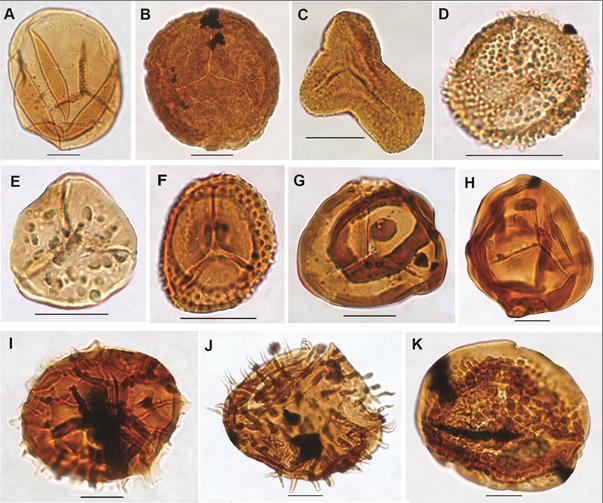
Mississippian spores, Clarke River Basin, north Queensland. A, Punctatisporites quasipertusus. B, Punctatisporites subvaricosus. C, Granulatisporites sp. D, Granulatisporites frustulentus. E, Anapiculatisporites austrinus. F, Rattiganispora acuminata. G, Knoxisporites ruhlandii. H, Convolutispora sp. I, Reticulatisporites bonapartensis J, Dibolisporites acritarchus K, Exallospora coronata. Scale bars = 20 µm.
Playford G. 2021. Lower Permian (Sakmarian) palynoflora from the Woolaga Limestone Member of the Holmwood Shale, northern Perth Basin, Western Australia. Journal of the Royal Society of Western Australia, 104, 45–63. Perth.
Wicander R & Playford G. 2021. Acritarchs and prasinophytes from the Lower Devonian (Lochkovian) Ross Formation, Tennessee, USA: stratigraphic and palaeogeographic distribution. Palynology 980917 (accepted 16 Sept 2021). London.
Gilbert Price is a Senior Lecturer in Palaeontology at The University of Queensland. He is a vertebrate palaeoecologist and geochronologist, particularly interested in the evolution and emergence of Australia’s unique ecosystems and fauna, and their response to prehistoric climatic changes. His major research focus has been on the development of palaeoecological models for Australia’s Pleistocene megafauna. Critically, this also involves the production of reliably-dated records for the extinct species. Gilbert is the coordinator of UQ’s PalaeoResearch Group, Associate Editor of Alcheringa, and was Co-Chair of the Host Committee of the Society of Vertebrate Paleontology meeting held in Brisbane in October 2019, and a past secretary of the Australasian Palaeontologists.
Publications: (pre-2021 see www.TheFatWombat.com)
Louys, J., Duval, M., Price, G.J., Westaway, K., Zaim, Y., Rizal, Y., Aswan, Puspaningrum, M., Trihascaryo, A., Breitenbach, S., Kwiecien, O., Cai, Y., Higgins, Albers, P., de Vos, J., Roberts, R. In press. Speleological and environmental history of Lida Ajer cave, western Sumatra. Philosophical Transactions B
Duval, M., Westaway, K., Zaim, J., Rizal, Y., Aswan, Puspaningrum, M.R., Trihascaryo, A., Albers, P.C.W., Smith, H.E., Drawhorn, G.M., Price, G.J., Louys, J. 2021. New chronological constraints for the Late Pleistocene fossil assemblage and associated breccia from Ngalau Sampit, Sumatra. Open Quaternary 7 (9), 1-24.
Smith, H.E., Bevitt, J.J., Zaim, J., Rizal, Y., Aswan, Puspaningrum, M.R., Trihascaryo, A., Price, G.J., Webb, G.E., Louys, J. 2021. High-resolution high-throughput thermal neutron tomographic imaging of fossiliferous cave breccias from Sumatra. Scientific Reports 11, 19953.
Groucutt, H.S., White, T.S., Scerri, E.M.L., Andrieux, E., Clark-Wilson, R., Breeze, P.S., Armitage, S.J., Stewart, M., Drake, N., Louys, J., Price, G.J., Duval, M., Parton, A., Candy, I., Carleton, W.C., Shipton, C., Jennings, R.P., Zahir, M., Blinkhorn, J., Blockley, S., Al-Omari, A., Alsharekh, A.M., Petraglia, M.D. 2021. Multiple hominin dispersals into Southwest Asia over the past 400,000 years. Nature 597, 376-380.
Price, G.J., Fitzsimmons, K.E., Nguyen, A.D., Zhao, J.-x., Feng, Y.-x., Sobbe, I.H., Godthelp, H., Archer, M., Hand, S.J. 2021. New ages of the world’s largest-ever marsupial: Diprotodon optatum from Pleistocene Australia. Quaternary International 603, 64-73.
Ristevski, J., Price, G.J., Weisbecker, V., Salisbury, S.W., 2021. First record of a tomistomine crocodylian from Australia. Scientific Reports 11(1), 1-14.
Wilkinson, J.E., Spring, K.A., Dunn, T. L. Price G. J., Louys, J. 2021. The vertebrate fossil collection record from the Chinchilla Sand, South–East Queensland, 1844-2021. Memoirs of the Queensland Museum – Nature 63, 11-25.
Butler, K., Travouillon, K.J., Evans, A.R., Murphy, L., Price, G.J., Archer, M., Hand, S.J., Weisbecker, V., 2021. 3d morphometric analysis reveals similar ecomorphs for early kangaroos (Macropodidae) and fanged kangaroos (Balbaridae) from the Riversleigh World Heritage Area, Australia. Journal of Mammalian Evolution 28(2), 199-219.
Smith, H.E., Price, G.J., Duval, M., Westaway, K., Zaim, J., Rizal, Y., Puspaningrum, M.R., Trihascaryo, A., Stewart, M., Louys, J. 2021. Taxonomy, taphonomy and chronology of the Pleistocene faunal assemblage at Ngalau Gupin cave, Sumatra. Quaternary International 603, 40-63.
Hidayah, A.R., Wibowo, U.P., Purwoarminta, A., Price, G.J., Noerwidi, S., 2021. Palaeoenvironments and palaeontology of the Atambua Basin, West Timor, Indonesia. Quaternary International 603, 82-89.
Louys, J., Price, G.J., Travouillon, K.J., 2021. Space-time equivalence in the fossil record, with a case study from Pleistocene Australia. Quaternary Science Reviews 253, 106764.
Jiani Sheng (PhD candidate, School of Earth and Environmental Sciences, The University of Queensland) is working on the taxonomy of Cambrian radiolarian microfossils recovered from the Inca Formation of the Georgina Basin, Queensland. High resolution 3D imaging techniques such as micro-computed tomography (micro-CT) and confocal microscopy are adopted to visualize the skeletal details of these microfossils.
Micro-CT model of an Archeoentactinia incaensis radiolarian specimen recovered from the middle Cambrian Inca Formation, Georgina Basin, Queensland.
Sheng, J., Kachovich, S., Aitchison, J.C. 2020. Skeletal architecture of middle Cambrian spicular radiolarians revealed using micro-CT. Journal of Micropalaeontology 39, 61-76.
Gordon Southam is a Professor in Geomicrobiology who specialises in bacterial transformations of geological materials with implications for a variety of industrial and environmental applications as well as Earth history. He is currently engaged in work in mineral carbonation for CO2 sequestration; bioremediation using ferruginous duricrusts; bioleaching of low-grade ores; biological gold formation; and microbialite formation in modern environments.
Henne, A., Craw, D., Hamilton, J., Paz, A., Kerr, G., Paterson, D., Shuster, J., & Southam, G. 2021. Biogeochemical formation of metalliferous laminations in surficial environments. Mineralogical Magazine 85, 49-67.
Levett, A., P.M. Vasconcelos, M.M. Jones; L. Rintoul, A. Paz, E.J. Gagen and G. Southam. 2021. Microbially influenced titanium mobility and iron oxide transformations preserved in ferruginous duricrusts. Chemical Geology 559, 119955 doi:10.1016/j.chemgeo.2020.119955.
Paz, A., Gagen, E.J., Levett, A., & Southam, G. 2021. Ferrugination of biocrusts grown on crushed ferricrete: Potential for slope stabilization. Ore Geology reviews 135, 104239.
Wu, S., You, F., Boughton, B., Liu, Y., Nguyen, A.H., Wykes, J., Southam, G., Robertson, L.M., Chan, T.-S., Lu, Y.-R., Lutz, A., Yu, D., Yi, Q., Saha, N., Huang, L., 2021. Chemodiversity of dissolved organic matter and its molecular changes driven by rhizosphere activities in Fe Ore tailings undergoing Eco-Engineered pedogenesis. Environmental Science & Technology 55, 13045-13060.
Vikram Vakil has started a PhD working on late Quaternary small mammal assemblages with Gilbert Price and Gregory Webb His work on the vertebrae of Australian Lower Cretaceous ichthyosaurs and plesiosaurs was published in 2021. He found that even basic vertebral measurements provided useful taxonomic information for both groups, but particularly for the anterior neck regions of plesiosaurs, even in the absence of skull material. In morphometric plots, most tested Australian elasmosaurid specimens clustered as a group overlapping, but relatively distinct from, coeval non-Australian ‘Cimoliasaurus’-grade elasmosaurs. However, one specimen plotted more with non-Australian styxosaurines and Opallionectes andamookaensis Kear, 2006 plotted consistently with aristonectines. The papers show the utility of vertebral morphometrics for marine reptile specimens that lack skulls.
Vakil, V., Webb, G.E. & Cook, A.G., 2020. Can vertebral remains differentiate more than one species of Australian Cretaceous ichthyosaur? Alcheringa, 44, 537-554. doi/org/10.1080/03115518.2020.1853809
Vakil, V., Webb, G.E. & Cook, A., 2021. Taxonomic utility of Early Cretaceous Australian plesiosaurian vertebrae. Palaeontologia Electronica, 24(3): a30. https://doi.org/10.26879/1095palaeo-electronica.org/content/2021/3471-plesiosaurvertebrae
Gregory E. Webb is continuing on geochemical investigations on Holocene and Pleistocene cores and beachrock from Heron and One Tree reefs in the southern GBR. PhD student Atefeh Sansoleimani is continuing work on the subsurface geology of the Great Barrier Reef. New PhD student Jenna McGovern has started a new project on cores in the southern Canning Basin, which may penetrate Devonian Reef facies, as part of an exploration project supervised through the Strategic Minerals Institute by Karen Connors and Steven Micklethwaite and Paul Gow. Former MSc student Vikram Vakil has papers out on Australian Cretaceous ichthyosaurs and plesiosaurs and has just started a PhD on Australian Quaternary small faunas with Gilbert Price as Principal Advisor. Josh Reid completed a 1st Class Honours degree on the stratigraphy of a new Permian core through the basal carbonate interval in the southern Taroom Trough of the Bowen Basin. The core and funding were provided by Origin Energy and a new biofacies was identified for the Australian Permian. A publication is in progress. Undergraduate students carried out research projects on Quaternary insect home bearing tuffas (Jessica Gibbs) and on deep sea coral diagenesis (Jo Roberts). New work is also being written up in conjunction with Michelle Johnston at Kronosaurus Koerner and Joseph Bevitt at the Australian Centre for Neutron Scattering following successful use of neutron tomography of cave breccias (see Smith et al., 2021 below).
Saha, N., Webb, G.E., Zhao, J.-X., Lewis, S.E., Nguyen, A.D. and Feng, Y., 2021. Spatiotemporal variation of rare earth elements from river to reef continuum aids monitoring of terrigenous sources in the Great Barrier Reef. Geochimica et Cosmochimica Acta 299, 85–112. doi.org/10.1016/j.gca.2021.02.014
Schrank, C., Jones, M., Kewish, C., van Riessen, G., Elphick, K., Sloss, C., Nothdurft, L., Webb, G.E., Paterson D. & Regenauer-Lieb, K., 2021. Micro-scale dissolution seams
Nomen Nudum Number 41, 2021
mobilise carbon in deep-sea limestones. Communications Earth and Environment, 2,174. https://doi.org/10.1038/s43247-021-00257-w
Smith, H.E., Bevitt, J.J., Zaim, J., Rizal, Y., Aswan, Puspaningrum, M.R., Trihascaryo, A., Price, G.J., Webb, G.E. & Louys J., 2021. High‑resolution high‑throughput thermal neutron tomographic imaging of fossiliferous cave breccias from Sumatra. Scientific Reports 11, 19953. https://doi.org/10.1038/s41598-021-99290-0
Vakil, V., Webb, G.E. & Cook, A.G., 2020. Can vertebral remains differentiate more than one species of Australian Cretaceous ichthyosaur? Alcheringa, 44, 537-554. doi/org/10.1080/03115518.2020.1853809
Vakil, V., Webb, G.E. & Cook, A., 2021. Taxonomic utility of Early Cretaceous Australian plesiosaurian vertebrae. Palaeontologia Electronica, 24(3):a30. https://doi.org/10.26879/1095palaeo-electronica.org/content/2021/3471-plesiosaurvertebrae
Zou, Y., Webb, G.E., Zhao, F., Liu, D., Kuang, H., Zhang, J., & Chen, Y., 2021. Heterogeneous redox evolution of the Meso-Neoproterozoic ocean: Insights from eastern China. Palaeogeography, Palaeoclimatology, Palaeoecology, 567, 110304.
https://doi.org/10.1016/j.palaeo.2021.110304
School of Chemistry and Biomolecular Sciences
Anthony Romilio researches dinosaur footprints in Australia, China, the USA, Korea. He specialises in photogrammetry 3D models of fossil footprints, tracksites and creates 3D life reconstruction of dinosaur trackmakers. This year, he has branched out to include his first publications in archaeozoology.
Romilio A, Godfrey T. In press. A new dinosaur tracksite from the Lower Cretaceous (Aptian–Albian) Eumeralla Formation of Wattle Hill, Victoria, Australia. A preliminary investigation. Historical Biology.
Romilio A, Klein H, Jannel A, Salisbury SW. 2021. Saurischian dinosaur tracks from the Upper Triassic of southern Queensland: possible evidence for Australia’s earliest sauropodomorph trackmaker. Historical Biology.1-10.
Romilio A. 2021. Assessing Meidum Geese species identification with the ‘Tobias criteria’. Journal of Archaeological Science: Reports. 36:102834.
Romilio A. 2021. Guide to the Extinct Animals of Ancient Egypt.
Romilio A. 2021. Evidence of ornithischian activity from the Lower Jurassic (Hettangian–Sinemurian) Precipice Sandstone, Callide Basin, Queensland, Australia preliminary findings. Historical Biology. 33(11):3041-3045.
Romilio A, Dick R, Skinner H, Millar J. 2021. Archival data provides insights into the ambiguous track-maker gait from the Lower Jurassic (Sinemurian) Razorback beds, Queensland, Australia: evidence of theropod quadrupedalism? Historical Biology 33(9):1573-1579.
Romilio A. 2021. Additional notes on the Mount Morgan dinosaur tracks from the Lower Jurassic (Sinemurian) Razorback beds, Queensland, Australia. Historical Biology 33(10):2005-2007.
Romilio A, Salisbury SW, Jannel A. 2021. Footprints of large theropod dinosaurs in the Middle-Upper Jurassic (lower Callovian–lower Tithonian) Walloon Coal Measures of southern Queensland, Australia. Historical Biology 33(10):2135-2146.
Jiang S, Xing L, Peng G, Lockley MG, Ye Y, Klein H, Romilio A, Liu C, Persons WS, Xu X. 2021. The smallest non-avian dinosaur track in China (Lower Jurassic, Sichuan Province). Historical Biology.1-5.
Kim KS, Lockley MG, Romilio A, Bae SM, Lim JD. 2021. Fish swim traces from the Jindong Formation (Cretaceous) Korea: implications for lake basin ichnofacies and paleoecology. Cretaceous Research.105070.
Lockley M, Kim KS, Lim JD, Romilio A. 2021. Bird tracks from the Green River Formation (Eocene) of Utah: ichnotaxonomy, diversity, community structure and convergence. Historical Biology 33(10):2085-2102.
Lockley M, Klein H, Mchugh J, Romilio A. 2021. Fruita’s first fossil footprint exhibit: the discovery of forgotten specimens in an historic former museum building. New Mexico Museum of Natural History and Science Bulletin. 82:219-226.
Lockley MG, Goodell Z, Evaskovich J, Krall A, Schumacher Ba, Romilio A. 2021. Small bird and mammal tracks from a mid-Cenozoic volcanic province in Southern Colorado: implications for palaeobiology. Historical Biology.1-11.
Milner AR, Irmis RB, Lockley MG, Klein H, Slauf D, Romilio A. 2021. First report of “Chirotherium” lulli from the Upper Triassic Chinle Formation of San Juan County, Utah. New Mexico Museum of Natural History and Science Bulletin. 82:275-284.
Xing L, Lockley M, Romilio A, Persons IV W, Wang M, Tang Y, Wang X. 2021. Multiple sauropod-dominated track sites from the Lower Cretaceous Dasheng Group of Eastern China: morphology, preservation and paleontology. New Mexico Museum of Natural History and Science Bulletin 82:543-567.
Xing L, Lockley M, Zhang L, Romilio A, Namier N, Wang M, Persons IV W. 2021. Tetrapod track assemblages from midwestern Inner Mongolia, China: Review and new observations. New Mexico Museum of Natural History and Science Bulletin. 82:525-541.
Xing L, Lockley MG, Jia C, Klein H, Niu K, Zhang L, Qi L, Chou C, Romilio A, Wang D. 2021. Lower cretaceous avian-dominated, theropod, thyreophoran, pterosaur and turtle track assemblages from the Tugulu Group, Xinjiang, China: ichnotaxonomy and palaeoecology. PeerJ. 9:e11476.
Xing L, Lockley MG, Mao Z, Klein H, Gu Z, Bai C, Qiu L, Liu Y, Romilio A, Persons IV WS. 2021. A new dinosaur track site from the earliest Cretaceous (Berriasian) part of the Tuchengzi Formation, Hebei Province, China: Implications for morphology, ontogeny and paleocommunity structure. Palaeogeography, Palaeoclimatology, Palaeoecology 580:110619.
Xing L, Lockley MG, Peng G, Ye Y, Jiang S, Romilio A, Persons IV WS, Wang M. 2021 A Review of two Middle Jurassic Theropod Tracksites Discovered in the 1980s from Sichuan Basin. Biosis: Biological Systems 2(1):191-208.
Xing L, Lockley MG, PERSONS IV WS, Klein H, Romilio A, Wang D, Wang M. 2021. Stegosaur track assemblage from Xinjiang, China, featuring the smallest known stegosaur record. Palaios 36(2):68-76.
Xing L, Lockley MG, Romilio A. 2021. An unusual dinosaur track assemblage from the Jurassic–Cretaceous boundary, Anning formation, Lufeng Basin, China. Historical Biology. 33(4):514-526.
Xing L-D, Lockley MG, Klein H, Zhang L-J, Romilio A, Scott Persons W, Peng G-Z, Ye Y, Wang M-Y. 2021. The new ichnotaxon Eubrontes nobitai ichnosp. nov. and other saurischian tracks from the Lower Cretaceous of Sichuan Province and a review of Chinese Eubrontes-type tracks. Journal of Palaeogeography 10(1):1-19.
SOUTH AUSTRALIA
South Australian Museum, Adelaide
Pierre Kruse (Honorary Research Associate, South Australian Museum, Adelaide) continues his biostratigraphic project on archaeocyaths from Wirrealpa Mine, Flinders Ranges, while also grappling with Cambrian global correlations.
Pierre also whipped off a missive outlining his thoughts on higher subdivisions of the Cambrian, published online in Episodes
Pierre’s work with Yang Aihua (Nanjing University, China) on calcimicrobialarchaeocyathan reef palaeoecology in the Tianheban Formation of South China, and with Elena Moreno-Eiris and Antonio Perejón (Universidad Complutense, Madrid, Spain) on cryptic archaeocyaths at Las Ermitas, Spain, are still in the pipeline.
Kruse, P D 2021. Proposal for a scale of Cambrian subsystems (if such is needed at all). Episodes https://doi.org/10.18814/epiiugs/2021/021004
University of Adelaide School of Biological Sciences
Assoc. Prof. Diego C. García-Bellido (& Senior Researcher South Australian Museum). Diego’s main interest is the taxonomical diversity and functional morphology of the early metazoans generated during the Cambrian ‘explosion’, and the phylogenetic relationships between the animal groups that appeared with this unique evolutionary event. His present projects aim at comparing the Ediacara biota with the Emu Bay Shale and other Cambrian Lagerstätten from a palaeoecological perspective. These are in collaboration with Prof. Mary Droser (University of California – Riverside) and Prof. Jim Gehling (SAM, retired) on the Ediacaran and Prof. John Paterson (UNE), Dr. Greg Edgecombe (NHM-London) and Prof. Jim Jago (UniSA, retired) on the Emu Bay Shale. He is now on ongoing positions at the University of Adelaide and South Australian Museum (50/50). In the last twelve months he has carried out two field trips to Nilpena Station (part of the new Nilpena Ediacara National Park, Flinders Ranges) and one to the Bunkers Graven with Prof. Paterson, Prof. Glenn Brock (MQU) and Dr Marissa Betts (UNE). Diego is also involved in the development of the nomination for the Flinders Ranges UNESCO World Heritage Site and the study of Ordovician assemblages in Western Gondwana (Spain & Morocco). This is the fourth year of University of Adelaide’s intensive course on Field Palaeontology, and due to circumstances beyond our control we have temporarily moved the whole course to Naracoorte. But we dedicate one week to invertebrate marine fauna on the Miocene Naracoorte Mb of the Gambier Limestone and one week on the Pleistocene-Holocene micro- and megafauna of Naracoorte Caves National Park. This year we have also included ancient DNA, taught by Assoc. Prof. Jeremy Austin (UofA). We counted this time with the help of PhD candidates Ms. Tiah Hampton and Mr Andrew Chua. Diego is a member of the Geological Society of Australia – SA Division Committee and the Interagency-Community Reference Group of Australian Fossil Mammal Site World Heritage Advisory Committee – Naracoorte section.
The Ediacaran-Cambrian Research Group in Adelaide has the following members:
Ms Tory Botha, who started her PhD entitled “Morphology and ecology of Ediacaran fossils from Nilpena Station (Ediacara Conservation Park, Flinders Ranges, South Australia)” cosupervised with our colleague Prof. Mary Droser and Dr. Emma Sherratt (UofA).
Mr Ashten Turner, who started his Mid-Year Honours project on “The palaeobiology and affinities of the Ediacaran Beltanelliformis from the Flinders Ranges, South Australia”.
Diego is developing a research collaboration with Dr. Liz Reed (UofA) and Ms Mahala Fergusen just finished her Honours Project on the invertebrate fauna of the Miocene of the Gambier Limestone in the Naracoorte region, co-supervised by Dr. Liz Reed, for which she received a Class I-1 grade. Ms. Fergusen has decided to start a PhD in our group comparing the Miocene invertebrate faunas of the Gambier Basin with the coeval Murray and Nullabor Basins.
Besides the most recent papers and conference abstracts below, Diego has several manuscripts in preparation on Australian, Spanish and Moroccan material of Ediacaran, Cambrian and Ordovician age. A list of most of his publications can be accessed here
Cracknell, K.; García‑Bellido, D.C.; Gehling, J.G.; Ankor, M.J.; Darroch S.A.F. & Rahman, I.A. 2021. Pentaradial eukaryote suggests expansion of suspension feeding in White Sea‑aged Ediacaran communities. Scientific Reports, 11: 4121. (doi: 10.1038/s41598021-83452-1).
Holmes, J.D.; Paterson, J.R. & García-Bellido, D.C. 2021. The post-embryonic ontogeny of the early Cambrian trilobite Estaingia bilobata from South Australia: trunk development and phylogenetic implications. Papers in Palaeontology, 7 (2); 931–950 (doi: 10.1002/spp2.1323).
Holmes, J.D.; Paterson, J.R. & García-Bellido, D.C. 2021 Complex axial growth patterns in an early Cambrian trilobite from South Australia. Proceedings Royal Society of London B, 288: 20212131 (doi: 10.1098/rsbp.2021.2131).
Holmes, J.D., Paterson, J.R., Jago, J.B., García-Bellido, D.C. 2021. Ontogeny of the trilobite Redlichia from the lower Cambrian (Series 2, Stage 4) Ramsay Limestone of South Australia. Geological Magazine, 158 (7): 1209–1223 (doi: 10.1017/S0016756820001259).
Turner, A.M.; Delean, S. & García-Bellido, D.C. 2021. Preliminary revision of the morphology of Phyllozoon hanseni from the Ediacaran of South Australia. Serie Correlación Geológica, 37 (2): 5–14 (doi: 10.5281/zenodo.5600269).
Turner, A.M.; Delean, S. & García-Bellido, D.C. 2021. Preliminary revision of the morphology of Phyllozoon hanseni from the Ediacaran of South Australia. Geological Society of Australia Earth Sciences Student Symposium of South Australia, Adelaide, 23 November.
University of South Australia
Jim Jago (University of South Australia-STEM) is continuing to work on the Cambrian trilobites of Tasmania, South Australia and Antarctica. Current projects include the Cambrian trilobites from the Cobb Valley, New Zealand collected by the late Roger Cooper. This project is being done with Patrick Smith and John Laurie. Another project is on a late Cambrian fauna from the south coast of Tasmania (with John Laurie and Kim Bischoff). Jim and Chris Bentley are in the process of completing the study on a small Cambrian fauna from the Isandula Road area of the Dial Range Trough, northwest Tasmania. This is the lowest
Nomen Nudum Number 41, 2021
known trilobite fauna in the area. Jim is involved in the study of the Big Gully biota, a Burgess Shale type fauna from Kangaroo Island. Workers on this project include Mike Lee, Jim Gehling, John Paterson, Greg Edgecombe, Diego Garcia-Bellido, Glenn Brock and Jim Jago. Other projects include the stratigraphy and sedimentology of the Kanmantoo Group (with Justin Gum, Andy Burtt and Peter Haines) and the history of geology (with Barry Cooper).
Sun, X.W., Bentley, C.J. & Jago, J.B., 2021. A Guzhangian (late middle Cambrian) fauna from the Gidgealpa 1 drillhole, Warburton Basin, South Australia. Alcheringa 45, 289298. DOI. 10.1080/03115518.2021.1962974.
Hall, P.A., McKirdy, D.M., Halverson, G.P., Jago, J.B. & Collins, A.S., 2021. Biogeochemical status of the Palaeo-Pacific Ocean: clues from the early Cambrian of South Australia. Australian Journal of Earth Sciences (accepted for publication) DOI:10.1080/08120099.2021.1890639.
Holmes, J.D., Paterson, J.R., Jago, J.B. & Garcia-Bellido, D.C., 2021. Ontogeny of the trilobite Redlichia from the lower Cambrian (Series 2, Stage 4) Ramsay Limestone of South Australia. Geological Magazine 158, 1209-1223. doi.10.1017/S0016756820001259.
Jago, J.B., Bentley, C.J., Paterson, J.R., Holmes, J., Lin, T.R. & Sun, X.W., 2021. The stratigraphic significance of early Cambrian (Series 2, Stage 4) trilobites from the Smith Bay Shale near Freestone Creek, Kangaroo Island. Australian Journal of Earth Sciences 68, 204-212. doi.10.1080/08120099.2020.1749882.
VICTORIA
Deakin University (Burwood Campus,
Melbourne)
School of Life and Environmental Sciences
Mark Warne, currently has three active palaeontological research projects. These are (i) Cretaceous and Cenozoic ostracod proxy records of surface ocean current evolution adjacent to the southern Australian margin; (ii) systematics and biogeography of Cenozoic Australian marine ostracod taxa, and (iii) ostracod proxy records of Holocene environmental change in SE Australian estuaries. Two students worked on ostracod micropalaeontology projects at Deakin University during 2021. Abbey McDonald continues her research on the latest Miocene to early Pliocene ostracod faunas of southeastern Australia. Abbey is currently finalising work on the taxonomy of fossil Ostracoda from the Bookpurnong Formation (Murray Basin). Tom Cacopardo (Honours) completed a project on the Miocene ostracod fauna of the Wuk Wuk Marl and Bairnsdale Limestone (Gippsland Basin).
Liz Weldon is currently working on two projects with colleagues at China University of Geosciences, Wuhan. The first project is looking at the migration and vertical expansion of the Oxygen Minimum Zone in the South China Basin and its relationship to an end-Permian two-stage extinction pattern in the deep-water Dongpan Section. The second project is looking at a new, small-sized brachiopod fauna from the Lower Triassic of southern Guizhou, South China, and the implications for palaeoenvironmental change.
Liz co-supervised Tamara Camilleri and Abbey McDonald during 2021 as they continued their postgraduate research projects with Mark Warne (see above) on Palaeozoic and Cenozoic Ostracods respectively, and Riley Dougheney-Earle as he completed his Honours project (see Sanja Van-Huet below for details). Michelle Gray completed a third-year research project on the palaeobiogeographic and palaeoecologic significance of the molluscan fauna at Fossil Beach, under Liz’s supervision.
Liz also supervised six work placement students working on the Fossil National Species List. Three of the students are pleased to have their work published with Pat Smith, Australia Museum (Patrick Smith, Matthew Watters, Michelle Gray-Shields and Shulang Roy (2021). Checklist of the Permian and Carboniferous Trilobite Species of Australia https://www.australasianpalaeontologists.org/databases). A second list of all the fossil Conulariids is also nearly ready for publication by Liz, Renee Watkins, Finn Bond and Barbara Powell.
Sanja van Huet was co-author on a paper in the Journal of Archaeological Science on surface bone abrasion. The paper was based on data collected for Tim Ziegler’s Honours research project (2017).
Riley Dougheney-Earle completed his Honours and published his abstract - Determining the age of the eastern grey kangaroo based on their mandibular features and measurements, in the December edition of Quaternary Australasia, vol. 38, 2021: 42.
Ziegler, T., & van Huet, S., 2021. Testing the reliability of the Fiorillo bone surface abrasion scale. J Arch Sci:Reports Vol. 36: 102865. https://doi.org/10.1016/j.jasrep.2021.102865.
Museum Victoria
Thomas H. Rich continues to work on fossil tetrapods from the Early Cretaceous of Victoria, Australia.
Also see Patricia Vickers-Rich entry below.
Antlej, K., Allaman, M., Vickers-Rich, P., Rich, T., & Horan, B., 2020, Inclusive experiences for audiences with a different level of tech-savviness: The design and evaluation of an interactive dinosaur exhibition. In: R Marquis, J Majewski, N Proctor & Z Beth (eds), Inclusive Digital Interactives: Best Practices + Research, Access Smithsonian, Smithsonian Institution, Institute for Human Centered Design, MuseWeb, pp. 349-377. ISBN: 978-0-9708358-8-8.
Antlej, K., Horan, B., Mortimer, M., Leen, R., Allaman, M., Vickers-Rich, P. & Rich, T., 2020. Mixed reality for museum experiences: A co-creative tactile-immersive virtual colouring game. Digital Heritage
Cui, H., Kaufman, A. J., Vickers-Rich, P., Kattan, F., Zuo, H., Trusler, P., Smith, J., Ivantsov, A., Rich, T., Kubsani, A. & Yazidi, A., Liu, X.-M., Johnson, P., Goderis, S. & Claeys, P., 2020. Primary or secondary? A dichotomy of the strontium isotope anomalies in the Ediacaran carbonates of Saudi Arabia. Precambrian Research, 343: 1-24.
Flannery, T., Rich, T. H., Vickers-Rich, P., Ziegler, T. & Helgen, K., in press. A review of monotreme (Monotramata) evolution. Alcheringa. Kundrat, M., Rich, T. H., Lindgren, J., Sjovall, P., Vickers-Rich, P., Chiappe & Kear, B., 2020 A polar dinosaur feather assemblage from Australia. Gondwana Research, 80: 111.
Martin, A., Rich, T., Kool, L., Lowery, M., Hall, M, Morton, S., Swinkels, P. & VickersRich, P., 2021. Cretaceous polar arthropods on walkabouts: Newly discovered arthropod trace fossils from the Wonthaggi Formation (Barremian,) Victoria, Australia. Geological Society of America Meeting, Abstract 237-14.
Rich, T. H. & Vickers-Rich, P., 2020. Dinosaurs of Darkness. Indiana University Press, Bloomington: 311pp.
Rich, T. H. & Vickers-Rich, P., 2021. A single fossil bone can tell so much. Deposits Magazine, 2021/07/21: 13 pp. (depositsmag.com/2021/07/21/a-single-fossil-bone-cantell-so-much).
Rich, T.H., Krause, D. W., Trusler, P., White, M.A., Kool, L. Evans, A. R., Morton, S. & Vickers-Rich, P., Submitted. Second specimen of Corriebaatar (Early Cretaceous, Australia) confirms multituberculate affinities. Acta Palaeontologica Polonica
Ruairidh J. Duncan, Alistair R. Evans, Patricia Vickers-Rich, Thomas H. Rich & Stephen F. Poropat (2021): Ornithopod jaws from the Lower Cretaceous Eumeralla Formation, Victoria, Australia, and their implications for polar neornithischian dinosaur diversity, Journal of Vertebrate Paleontology, DOI: 10.1080/02724634.2021.1946551, vol. 41, no. 3
Vickers-Rich, P. & Rich, T. H., 2021. 43 T-Shirts, Not the Answer to Everything but with a Few Good Guesses A Palaeontological Journey Through 700 Million Years.
NewArtWorx, Melbourne: 376 pp plus Appendices Data Card.
Vickers-Rich, P. & Rich, T. H., 2021. Dinosaurs on Our Doorstep. Bass Coast of Victoria. New Artworx, Melbourne: 27pp. A Guide to the polar dinosaur Exhibition at the RACV Inverloch Resort, Inverloch, Victoria.
Nomen Nudum Number 41, 2021
Vickers-Rich, P., Trusler, P., Morton, S., Swinkels, P., Rich, T. H., Hall, M. & Pritchard, S., 2021. Travelling through time. The Roadmap for Namibia is in the rocks. Deposits Magazine, 2021/09/15: 24 pp. (depositsmag.com/2021/09/15/travelling-through-timethe roadmap-is-in-the-rocks).
Monash University
Palaeontology and Basin Studies Group (School of Earth, Atmosphere and Environment)
The team’s 2021 palaeontology research led by Jeff Stilwell focuses on major new discoveries of animals, plants, fungi, and microorganisms in amber and also macroinvertebrates associated with amber deposits from a diversity of sites and ages in Australia, Chatham Islands (New Zealand) and Myanmar. Despite the continued slow research progress related to the COVID-19 crisis, a major highlight of 2021 has been the first taxonomic paper in Historical Biology (see citation below) on ceratopogonid biting midges in the Anglesea Eocene amber, following on from the publication of the first major fossiliferous amber from Australia in Scientific Reports by Stilwell et al. (2020) and an associated major feature in The New York Times. These major outcomes relate to his ARC-DP140102515 grant (2014-17) with Dr Dan Bickel of the Australian Museum and Prof. David Cantrill from the Royal Botanic Gardens (Victoria). https://www.nytimes.com/2020/04/02/science/amber-mating-flies-australia.html
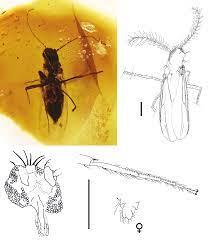
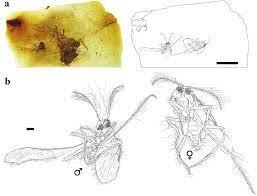
Enrique Peñalver, Antonio Arillo Aranda, Ryszard Szadziewski & Jeffrey D. Stilwell. 2021. Biting midges (Diptera: Ceratopogonidae) from the middle Eocene Anglesea amber (Australia) originated in a subpolar greenhouse earth. Historical Biology, DOI: 10.1080/08912963.2021.1924700
ABSTRACT
Australian Anglesea amber, late middle Eocene in age, has been recently reported. It occurs in coal deposits formed in a meandering river system on an Austral subpolar coastal plain during a late Greenhouse Earth event, and contains well-preserved bioinclusions of plants, arthropods and microorganisms. Six specimens of biting midges have been recovered and two species are herein described: Meunierohelea anglesensis sp. nov. and Culicoides paleopestis sp. nov. These represent the second and third arthropod species described in Australian amber. The discovery of a new fossil species of the genus Meunierohelea is especially significant, since the only extant species is known from northern Australian
tropical rainforests. Additionally, a partial specimen belongs to the Monohelea complex. Interestingly, a male and a female of C. paleopestis sp. nov. occur very close to each other, most likely trapped by the resin during mating, allowing the description of the sexual dimorphism of this species. The species of the genus Culicoides must have fed on the blood of Australian vertebrates during the Eocene, possibly transmitting diseases. These new data extend the knowledge about biting midges during the Eocene, a key time for understanding the global expansion of the Ceratopogonidae into subpolar latitudes.
Other projects include palaeoclimate studies from the Cretaceous ‘hothouse’ in the Chatham Islands geologic record and also large-scale palaeontology projects with Museums Victoria. Our new book on the palaeontology of the Chatham Islands was published in Nov. 2020 with Cambridge Scholars Publishing please see https://www.cambridgescholars.com/lost-world-of-r%C4%93kohu
The group’s research remains concentrated on polar Cretaceous and Paleogene biotas and associated palaeoenvironments during the last major greenhouse phase of the Phanerozoic. A new project with the Peretti Museum Foundation (Switzerland) has commenced on amberbearing deposits in Myanmar and associated biostratigraphic age controls and palaeoenvironmental significance. Research funding in palaeontology continues to be a challenge, but there has been some success and also applications for graduate students in the field (two new PhD students starting on amber projects and another application in progress), with completed studies across a spectrum of specialties and sites. The expansion of the amber research into the Cretaceous burmite of Myanmar has been quite rewarding as well. Many Australian amber and burmite-related papers are currently in preparation. Associate Professor Alistair Evans (Monash Biological Sciences) and Jeff are still putting the final touches on a major paper on an extraordinary fossil (paper delayed in 2020-21 due to the virus crisis), which is set to take the world by storm in the near future. Continue to watch this space, despite the long delays!
Associate Professor Jeff Stilwell (Adj). Jeff has much more time these days to work on research projects after accepting a Voluntary Separation Package (VSP) with Monash for 2021 and beyond in order to focus more on research and other related activities. Jeff has
renewed his affiliate status with the Australian Museum (2020-23) and ties with the AM remain active. Many of the organisms trapped in the Australian amber have no prior fossil record, so there is a vast amount of research to be done to work out affinities and reconstruct the terrestrial ecosystems with colleagues in Australia and around the globe, as much as these new data allow. A documentary on amber was also completed in mid-2019 with Astro Media Pty Ltd and another is currently in progress with Film Victoria on something completely different (Mesopotamian Archaeology!), along with a special documentary with ABC and WildBear Entertainment on the polar regions. Many other news stories are in the pipeline.
Dr Andy Langendam (Australian Synchrotron, ex-Monash University) continues to support the advanced imaging, developing and refining new techniques for high definition and 3D imaging of amber inclusions, implementing new standards for the preparation and conservation of amber, advising, and guiding students and researchers, as well as learning the ropes of the BK Advanced Imaging System to image the smallest of bioinclusions.
Mr Lachlan (Lachie) Sutherland (Monash University), a 2018 Honours H1 graduate, is currently the lab manager for the amber project, where he oversees our large cohort of student volunteers. Lachie has been successfully trialling various amber polishing methods and refined ways of extracting the amber from the Eocene coal, which keeps giving! He plans to commence a PhD on amber in 2022, which is fantastic for the amber research in Australia.
Mr Jake Kotevski (EAE - Monash University, Clayton) has completed an Honours thesis titled “Rare Frozen Behaviour Preserved in a Partial Sauropod Skeleton from the Kem Kem Beds (Upper Cretaceous) of Morocco: Evidence for Theropod Predation”. This thesis detailed a partial Titanosauriformes fossil from the Taouz Mountains, Kem Kem Beds, Morocco, and identified theropod scavenging behaviour within see some key figures below. The material provides new insights into the morphology of African Titanosauriformes, in addition to likely scavenging behaviour of juvenile Spinosaurus aegyptiacus. Jake continues volunteer work for the Amber Project at Monash University, and Vertebrate Palaeontology at Museums Victoria. kotevskij2401@outlook.com.au
Nomen Nudum Number 41, 2021
Restoration of a titanosaurian skeletal morphology, with preserved elements of JDS 8428 highlighted in red; B; JDS 8428 right humerus in anterior view; C; JDS 8428 left femur in anterior view; D; JDS 8428 right tibia in anterior view; E; JDS 8428 right ischium in lateral view; F; JDS 8428 caudal vertebra B in anterior view (relative position); G; JDS 8428 caudal vertebra A in anterior view (relative position); H; JDS 8428 ‘vertebra’ in lateral view (relative position); an; I; JDS 8428 dorsal vertebra in anterior view (relative position).
Modified from Hechenleitner et al. (2015).
JDS 8428 incomplete left femur in anterior view, scale bar equals 20cm; and; B; Bite mark in the proximal region of the incomplete femur, scale bar equals 1.5cm.
Renders of: A; Spinosaurus premaxillary dentary, modified from Dal Sasso et al. (2005), scale bar equals 20cm; and; B; bite mark present in JDS 8428 incomplete left femur, scale bar equals 1.5cm. Abbreviations: pm; premaxilla; p1; premaxillary alveoli 1; p2; premaxillary
alveoli 2; p3; premaxillary alveoli 3; p4; premaxillary alveoli 4; p5; premaxillary alveoli 5. Renders by Lachlan Sutherland.
High profile PhD projects have already had successful outcomes. Andrew (‘Drew’) Giles continues his PhD on fossiliferous deposits of the Wairarapa, New Zealand. Drew accepted a teaching position (Indigenous Science) in the School for 2021-23, so well done Drew. New PhD students, Alexandra (Alex) Wilson and Maria Paulsen, are set to get cracking on their respective projects in 2021-22, as there have been many unavoidable delays in 2020-21. Alex will work on the Macquarie Harbour Formation of western Tasmania, which is significant for many reasons and has never been studied in any detail. This formation seems to include the Paleocene-Eocene thermal maximum and also has the oldest recorded animals and plants preserved in amber from southern Gondwana. There is a lot of exploration to do in this remote and stunning corner of Tasmania. With some luck, drone surveys should also help immensely. Alex’s first PhD review went well, so it is onward and upward. Maria will research the huge diversity of bioinclusions of animals, plants and microorganisms in amber coming to light from the Anglesea Coal Measures of Victoria. Importantly, new data indicate that this ancient resin dating back to the middle Eocene has many oldest fossil records with taxa inferring a Gondwanan origin when Antarctica, Australia and southern South America were still attached in the last gasp of the supercontinent before final break-up >10 million years later.
Staff Roles and Expertise for 2020-21:
Assoc. Prof. Jeffrey Stilwell (Adjunct; Chief Investigator and Leader) - Mesozoic-Cenozoic biostratigraphy, macro- and micropalaeontology, and palaeoenvironments
Dr Andy Langendam (Advisor, Australian Synchrotron) Imaging specialist and technical officer for amber project and also BK Imaging System
Prof. Emer. Pat Vickers-Rich – Palaeontology, Precambrian biotas and palaeoenvironments
Dr James Driscoll – Sedimentology, stratigraphy and basin studies
Dr Chris Consoli (Global CCS Institute) Carbon capture/storage in basin systems
Prof. David Cantrill (Research collaborator and advisor, Royal Botanic Gardens, Melbourne) – palaeobotany
Dr Dan Bickel (Research collaborator and advisor, Australian Museum, Sydney) –palaeoentomology
Dr Sarah Martin (Research collaborator and advisor, Geological Survey of Western Australia, Perth) – palaeoentomology
Dr Joseph Bevitt (Research collaborator and advisor, ANSTO) scientific imaging specialist
Mr Lachie Sutherland (Amber project laboratory manager) amber preparation and imaging
Dr Enrique Peñalver, Instituto Geológico y Minero de España, Madrid (IGME) (colleague and co-author of many papers to come on Australian amber) arthropod taxonomy
Current PhD, MSc and Honours Students and Projects at Monash since 2020
Mr Andrew (Drew) Giles (PhD) ‘Understanding the inception, episodic growth, and depocentre migration within an accretionary wedge: A structural and sedimentary synthesis, northern Wairarapa, North Island, New Zealand’
Mr Jake Kotevski (Honours, completed November 2021 final mark due early December) 'Rare Frozen Behaviour Preserved in a Partial Sauropod Skeleton from the Kem Kem Beds (Upper Cretaceous) of Morocco: Evidence for Theropod Predation’
Mr Timothy Hain (Honours H1, completed November 2020) ‘An Extraordinary Mummified Theropod Dinosaur Foot Preserved in Mid-Cretaceous amber from Myanmar: An exploration into the lives and morphologies of past organisms within a reconstructed 99 million year old tropical forest’
Ms Alexandra (Alex) Wilson (PhD) ‘Resolving the Late Paleocene-early Eocene Thermal Maximum (PETM) and Enhanced Resin Production from the subpolar Macquarie Harbour Formation of Western Tasmania’
Ms Maria Paulsen (PhD) ’Middle Eocene Fossiliferous amber from the Anglesea Coal Measures of Victoria reveals the Gondwanan origin and antiquity of Australian terrestrial biotas’
Mr Lachlan (Lachie) Sutherland (PhD to apply in 2022) ’Late Paleogene to late Neogene fossiliferous amber of Victoria and Tasmania: origins of modern terrestrial Australian ecosystems’
Enrique Peñalver, Antonio Arillo Aranda, Ryszard Szadziewski, and Jeffrey D. Stilwell. 2021. Biting midges (Diptera: Ceratopogonidae) from the middle Eocene Anglesea amber (Australia) originated in a subpolar greenhouse earth. Historical Biology, DOI: 10.1080/08912963.2021.1924700
Stilwell, J. D., and Mays, C. 2020. Lost World of Rēkohu: Ancient ‘Zealandian’ Animals and Plants of the Chatham Islands. Cambridge Scholars Publishing, 311 pages. https://www.cambridgescholars.com/lost-world-of-r%C4%93kohu.
Stilwell, J.D., Langendam, A., Mays, C., Sutherland, L.J.M., Arillo, A., Bickel, D.J., de Silva, W.T., (...), Quinney, A., Peñalver, E. 2020. Amber from the Triassic to Paleogene of Australia and New Zealand as exceptional preservation of poorly known terrestrial ecosystems Scientific reports, 10(1), p. 5703. https://www.nature.com/articles/s41598020-62252-z
Haug, J.T., Azar, D., Ross, A. (….) Jeffrey Stilwell, et al. 2020. Comment on the letter of the Society of Vertebrate Paleontology (SVP) dated April 21, 2020 regarding “Fossils from conflict zones and reproducibility of fossil-based scientific data”: Myanmar amber. PalZ (2020). https://doi.org/10.1007/s12542-020-00524-9. https://doi.org/10.1007/s12542-020-00524-9
Stilwell, J. D., Buckeridge, J. St J., Bevitt, J., and Zahra, D. 2020. Fossil barnacles from the Antarctic Peninsula: refining ways of exploring the nature of rare and/or delicate specimens employing X-ray Computer Tomography (CT). Journal of Paleontology 94(6), 1076-1081 https://doi.org/10.1017/jpa.2020.33.
Other Works, including reports and documentaries
Thomson, A., Stilwell, J. et al. (Completed expected out 2022 or 2023). Amber 100 Million Year Old Treasures Unearthed, 42 minutes. Intended for Amazon Prime Video [Stilwell as Narrator and key interviewee and contributed to the documentary content]
RMIT University Earth & Oceanic Systems Research Group
In light of a global pandemic, opportunities to embark upon field-based or laboratory-based research have been severely restricted, especially in Melbourne, which has been held under lockdown and curfew for longer than any other city on the planet. Nonetheless, lockdown has provided opportunities to work on manuscripts that were somewhat advanced in preparation and a number of these have been completed.
John Buckeridge continues with work on the palaeontology, palaeoecology and distribution of cirripedes. John has also written a number of obituaries for scientists who passed away in 2020-2021. Two of these are included in the publications list.
John’s interest in taxonomy and the species concept continues as the International Union of Biological Sciences delegate on the IUBS Taxonomy Working Group. This body, which has broad international membership, is exploring how species names are used. Although the primary focus is on living taxa (where designation of a new, but very rare taxon could have significant influence on conservation and development), it also has relevance on how (and why) we name new species of fossils. Two outputs from this working group are included here. All articles produced by the group are open access.
Also included here is an output from the IUBS Gender Gap Working Group; as well as evaluating the gender gap in biological sciences, we took the opportunity to highlight the wonderful contribution to palaeontology that was made by Mary Anning (1799–1847)
To the right is an image of a 4.2 mm wide trumpetshaped sporangium of Cooksonia cf. paranensis from the Norton Gully Sandstone near Alexandra. It is the first Cooksonia to be recorded from Victoria and is significant as Cooksonia, while considered a cosmopolitan genus, was previously unknown from north-western Gondwana. It is described in: McSweeney, F.R., Shimeta, J. and J.S. Buckeridge, (in press).
Fearghus McSweeney will be submitting his dissertation for a doctorate in palaeobotany before the end of 2021. He has followed a path that is becoming increasingly popular: essentially through a series of publications in refereed journals. This approach would have been unusual for much of the twentieth century, but it does allow good candidates to impact their chosen discipline early in their careers. Fearghus’ work is impressive and shows that central Victoria had some of the earliest terrestrial vascular plants on the planet. Three of his more recent publications are listed here.
Buckeridge, J.S., Carlton, J.T., Van Syoc, R.J., Achituv, Y., Bauer, R.T., Buhl-Mortensen, L., Chan, B.K.K., Coletti, G., Collareta, A., Grygier, M.J., Hendrickx, M. E., Høeg, J.T., Jones, D., Kerckhof, F., Koči, T., Kolbasov, G.A., Laguna, J., Perreault, R., Pitombo, F.B., Poltarukha, O.P., Portell, R.W., Rouse, G., Southward, E., Spivey, H., Standing, J.D., Wares, J.P. and T. Yamaguchi, 2021. William Anderson Newman (November 13, 1927 – December 26, 2020). In Memory of the Distinguished Invertebrate Zoologist, and a Mentor, Colleague and Friend. Proceedings of the California Academy of Sciences Ser. 4., 67(3): 55–83, 2 figs, Appendix.
Spini, L., Buckeridge, J., Smagghe, G., Maree, S. and N. Fomproix, 2021. Women must be equal partners in science: gender-balance lessons from biology. Pure and Applied Chemistry 93(5): 1–11. doi.org/10.1515/pac-2020-1210
Buckeridge, J.S., 2021. David Burton Wake : A fine evolutionary biologist and a consummate gentleman (June 8, 1936 – April 29, 2021). Integrative Zoology 16: 785–786. doi:10.1111/1749-4877.12566
Santagati, P., Scotton, R., Foresi, L.M., Tartarelli, G., Nannini, P., Tabolli, J., Tarantini, M., Buckeridge, J., Koenig, E., Pellegrino, L., Carnevalli, G. and M. Bisconti, 2021.
Taphonomy of an Early Pliocene Balaenopterid whale from Southern Tuscany: A preliminary investigation. Paleodays 2021. XXI Edizione della Giornate di Paleontologia Bologna 15-17th June, 2021. p.76. (Abstract)
Conix, S., Garnett, S. T., Thiele, K. R., Christidis, L., van Dyck, P., Bánki, O.S., Barik, S. K., Buckeridge, J. S., Costello, M. J., Hobern, D., Lien, A., Montgomery, N., Nikolaeva, S., Pyle, R. L., Scott A. Thomson, S. A., Zhang, Z-Q. and F. E. Zachos, 2021. Towards a universal list of accepted species III: Independence and stakeholder inclusion. Organisms Diversity & Evolution v.21. doi.org/10.1007/s13127-021-00496-x [online July 13th 2021]
McSweeney, F. R., Shimeta, J. and J. S. Buckeridge, 2021. Yarravia oblonga Lang & Cookson, 1935 emend. from the Lower Devonian of Victoria, Australia. Alcheringa 45: doi.org/10.1080/03115518.2021.1958257 [online August 26th 2021].
Lien, A., Conix, S., Zachos, F.E., Christidis, L., van Dijk, P.P., Bánki, O.S., Barik, S.K., Buckeridge, J.S., Costello, M.J., Hobern, D., Montgomery, N., Nikolaeva, S., Pyle, R.L., Thiele, K., Thomson, S. A., Zhang, Z-Q., and S.T. Garnett, 2021. Towards a global list of accepted species IV: Overcoming fragmentation in the governance of taxonomic lists Organisms Diversity & Evolution v.21. doi.org/10.1007/s13127-021-00499-8 [online July 24th 2021].
Buckeridge, J. S., 2021. William Anderson Newman: 1927-2020. A life dedicated to Marine Science. The Ecdysiast 40(1): 15–16.
McSweeney, F. R., Shimeta, J. and J. S. Buckeridge, (in press). Lower Devonian (PragianEmsian) land plants from Alexandra : An early window into the diversity of Victorian flora from southeastern Australia. Alcheringa. doi.org/10.1080/03115518.2021.1971297
McSweeney, F. R., Shimeta, J. and J. S. Buckeridge, 2021. Early land plants from the Lower Devonian of central Victoria, Australia, including a new species of Salopella. Memoirs of Museum Victoria 80: 169–181. doi.org/10.24199/j.mmv.2021.80
Swinburne University of Technology, Hawthorn, Victoria
Stephen F. Poropat (Research Associate at the Australian Age of Dinosaurs Museum, Winton; Adjunct Researcher at Swinburne University of Technology, Melbourne). Faced with impending underemployment, I commenced a Masters of Teaching (Secondary) at Federation University this year. Nevertheless, I have been continuing my research on Australian dinosaurs, particularly sauropods. Four manuscripts on sauropod specimens from Queensland are in various stages of preparation, with one on sauropod teeth from the Winton Formation on the verge of being submitted, and another on sauropods from marine units not far away. I have continued supervising one Ph.D. student (Adele Pentland: Australian pterosaurs) and one Master’s student (Samantha Rigby: Australian sauropods), and their progress has been excellent: between the two of them, they currently have three papers in review (with one just returned from review with minor revisions). The most significant contribution to Australian palaeontology that I can claim to have made this year was leadauthoring the paper on the Snake Creek Tracksite, now on display at the Australian Age of Dinosaurs Museum as the March of the Titanosaurs This tracksite preserves tracks pertaining to three different dinosaur clades (sauropods, ornithopods, and theropods), alongside crocodyliform and turtle swim / punt tracks and probable lungfish and actinopterygian feeding traces.
Poropat, S.F., Kundrát, M., Mannion, P.D., Upchurch, P., Tischler, T.R. & Elliott, D.A. 2021. Second specimen of the Late Cretaceous sauropod dinosaur Diamantinasaurus matildae provides new anatomical information on skull and neck evolution in early titanosaurs and the biogeographic origins of Australian dinosaur faunas. Zoological Journal of the Linnean Society 192, 610–674.
Borinder, N.H., Poropat, S.F., Campione, N.E., Wigren, T. & Kear, B.P. (2021) Postcranial osteology of the basally branching hadrosauroid dinosaur Tanius sinensis from the Upper Cretaceous Wangshi Group of Shandong, China. Journal of Vertebrate Paleontology 41, e1914642.
Poropat, S.F., White, M.A., Ziegler, T., Pentland, A.H., Rigby, S.L., Duncan, R.J., Sloan, T. & Elliott, D.A. 2021. A diverse Late Cretaceous vertebrate tracksite from the Winton Formation of Queensland, Australia. PeerJ 9, e11544.
Duncan, R.J., Evans, A.R., Vickers-Rich, P., Rich, T.H. & Poropat, S.F. 2021. Ornithopod jaws from the Lower Cretaceous Eumeralla Formation, Victoria, Australia, and their implications for polar neornithischian dinosaur diversity. Journal of Vertebrate Paleontology 41, e1946551.
Thorn, K.M., Poropat, S.F., Bell, P.R., Hocknull, S.A., Kear, B.P., Palci, A., Salisbury, S.W. & Yates, A.M. 2021. Checklist of the fossil reptile and amphibian species of Australia. Australasian Palaeontologists.
Patricia Vickers-Rich
Agic, H., Hogstrom, A. E. S., Jensen, S., Ebbestad, J. O. R., Vickers-Rich, P., Hall, M., Matthews, J. J., Meinhold, G., Hoyberget, M. & Taylor, W. L., 2021, reviewed and in revision, accepted. Widespread occurrence of organic-walled microfossils Granomarginata and flask-shaped Lagoenaforma nov. during the late Ediacaran. Geological Magazine, Special Volume.
Antlej, K., Allaman, M., Vickers-Rich, P., Rich, T., & Horan, B., 2020, Inclusive experiences for audiences with a different level of tech-savviness: The design and evaluation of an interactive dinosaur exhibition. In: R Marquis, J Majewski, N Proctor & Z Beth (eds), Inclusive Digital Interactives: Best Practices + Research, Access Smithsonian, Smithsonian Institution, Institute for Human Centered Design, MuseWeb, pp. 349-377. ISBN: 978-0-9708358-8-8
Antlej, K., Horan, B., Mortimer, M., Leen, R., Allaman, M., Vickers-Rich, P. & Rich, T., 2020. Mixed reality for museum experiences: A co-creative tactile-immersive virtual colouring game. Digital Heritage
Cui, H., Kaufman, A. J., Vickers-Rich, P., Kattan, F., Zuo, H., Trusler, P., Smith, J., Ivantsov, A., Rich, T., Kubsani, A. & Yazidi, A., Liu, X.-M., Johnson, P., Goderis, S. & Claeys, P., 2020. Primary or secondary? A dichotomy of the strontium isotope anomalies in the Ediacaran carbonates of Saudi Arabia. Precambrian Research, 343: 1-24.
Flannery, T., Rich, T. H., Vickers-Rich, P., Ziegler, T. & Helgen, K., in press. A review of monotreme (Monotramata) evolution. Alcheringa
Geyer, G., Linnemann, U., Vickers-Rich, P., Gartner, A., Ovtcharova, M., Hofmann, M. & Zieger, J. (2021, in advanced preparation). The Ediacaran-Cambrian boundary interval revisited: An updated record of the Swartpunt section (Nama Supergroup, Namibia) and its significance for the Ediacaran-Cambrian biostratigraphy and faunal turnover.
Kundrat, M., Rich, T. H., Lindgren, J., Sjovall, P., Vickers-Rich, P., Chiappe & Kear, B., 2020. A polar dinosaur feather assemblage from Australia. Gondwana Research, 80: 111.
Martin, A., Rich, T., Kool, L., Lowery, M., Hall, M, Morton, S., Swinkels, P. & VickersRich, P., 2021. Cretaceous polar arthropods on walkabouts: Newly discovered arthropod trace fossils from the Wonthaggi Formation (Barremian) Victoria, Australia. Geological Society of America Meeting, Abstract 237-14.
Patricia Vickers-Rich, Peter Trusler, Steve Morton, Peter Swinkels, Thomas H Rich, Mike Hall and Steve Pritchard 2021. Travelling through time: The roadmap for Namibia is in the rocks. Deposits Magazine Deposistmag.com/2021/09/15.
Ramos-Horta, J. & Vickers-Rich, P., 2020. O Mundo Perdido Timor Leste. A Boy and a Crocodile Travel Through Time PrimeSCI!, Swinburne University of Technology, Melbourne and New Artworx, Melbourne: 31 pp. ISBN 978-0-6487707-2-5
Ramos-Horta, J. & Vickers-Rich, P., 2020. 東ティモールの「失われた世界」少年とワ ニの時間旅⾏ . Translator, Dr Mari Kamitani, University of Kyoto, Japan. PrimeSCI! Swinburne University, Melbourne and NewArtworx: 31 pp. ISBN 978-0-6487797-3-2 (Japanese).
Ramos-Horta, J. & Vickers-Rich, P., 2020. Un mondo scomparso. Un ragazzo e un coccodrillo viaggiano nel tempo Translator, S. Grippi. NewArtworx, Melbourne: 31 pp. ISBN 978-0-6482680-8-6 (Italian).
Ramos-Horta, J. & Vickers-Rich, P., 2020. 東ティモールの「失われた世界」少年とワニ sand NewArtworx, Melbourne: 31 pp. ISBN 978-0-6487707-1-8 (simple version). (Japanese).
Rich, T. H. & Vickers-Rich, P., 2020. Dinosaurs of Darkness. Indiana University Press, Bloomington: 311pp.
Rich, T. H. & Vickers-Rich, P., 2021. A single fossil bone can tell so much. Deposits Magazine, 2021/07/21: 13 pp. (depositsmag.com/2021/07/21/a-single-fossil-bone-cantell-so-much.
Rich, T.H., Krause, D. W., Trusler, P., White, M.A., Kool, L. Evans, A. R., Morton, S. & Vickers-Rich, P., Submitted. Second specimen of Corriebaatar (Early Cretaceous, Australia) confirms multituberculate affinities. Acta Palaeontologica Polonica
Ruairidh J. Duncan, Alistair R. Evans, Patricia Vickers-Rich, Thomas H. Rich & Stephen F. Poropat (2021): Ornithopod jaws from the Lower Cretaceous Eumeralla Formation, Victoria, Australia, and their implications for polar neornithischian dinosaur diversity, Journal of Vertebrate Paleontology, DOI: 10.1080/02724634.2021.1946551, vol. 41, no. 3
Vickers-Rich, P. & Rich, T. H., 2021. 43 T-Shirts, Not the Answer to Everything but with a Few Good Guesses. A Palaeontological Journey Through 700 Million Years. NewArtWorx, Melbourne: 376 pp plus Appendices Data Card.
Vickers-Rich, P. & Rich, T. H., 2021. Dinosaurs on Our Doorstep. Bass Coast of Victoria. New Artworx, Melbourne: 27pp. A Guide to the polar dinosaur Exhibition at the RACV Inverloch Resort, Inverloch, Victoria.
Vickers-Rich, P., 2021. Costa Rica – A riot of biodiversity and complexity. A base for interpreting the past. Organization for Tropical Studies Newsletter
Vickers-Rich, P., Trusler, P., Morton, S., Swinkels, P., Rich, T. H., Hall, M. & Pritchard, S., 2021. Travelling through time. The Roadmap for Namibia is in the rocks. Deposits Magazine, 2021/09/15: 24 pp. (depositsmag.com/2021/09/15/travelling-through-timethe roadmap-is-in-the-rocks).
Translators Antonios Nteventzis and Konstantinos Nteventzis. PrimeSCI! Swinburne University of Technology, Melbourne and NewArtworx: 31 pp. ISBN978-06487707-2-5, complex version. (Greek) And in 2021 new translations in Thai language published and Serbian in progress
Projects
Polar Dinosaurs – the DinoDreaming Project. Polar Dinosaurs from the Early Cretaceous of Victoria. Two exhibitions, one at the RACV Inverloch Resort and a second at the Cape Otway Light Station. Ongoing in 2021 and maintained and updated by P. Vickers-Rich & T. Rich)
Fieldwork planned for the Ediacaran-aged (550-600 million-year-old) rock sequences in southern Namibia had to be delayed during the Covid-19 lockdown. The grant for 2020 to Vickers-Rich & T. H. Rich covering this work from UNESCO for IGCP Project 673 has been extended into 2022 by UNESCO, and a second grant for $US5,000 was awarded for work in 2021 and that too has been extended to 2022.
Prospecting of the Bass Coast has increased the number of dinosaur ichnite from there from two to 144 in just two years. In addition, she recovered many small bones including the first mammal, a partial dentary of Ausktribosphenos from only the second site on the Bass Coast to yield a Cretaceous fossil mammal.
Documentaries
Two documentaries scheduled for production in 2021, now extended owing to covid-19 into 2022 related to Alfred Russel Wallace, Darwin’s co-proposer of evolution by natural selection. This doco deals with his collecting efforts in Southeast Asia in the 1850’s and 1860’s and is being developed in concert with Prof John van Wyhe at the National University of Singapore and the Singapore Science Centre where this team developed an inhouse exhibition that ran for 2 years and is now being prepared to travel as a joint operation. (P. Vickers-Rich & T. H. Rich).
Another doco is under construction concerning our work on Polar Dinosaurs Along the Victorian Coast. Here filming has occurred for the last decade – in cooperation with Museums Victoria, the Bunurong, Wurundjeri and Eastern Maar People, Parks Victoria and several universities (Swinburne University of Technology, Deakin University and Monash University) as well as local entities (RACV Inverloch Resort, the Otway Light Station –where regional exhibitions have been developed) and other community groups such as the Bass Coast Council. – Planning, in conjunction with the Bass Coast Council, is underway to develop a Dinosaur Trail that parallels the Rail Trail and the Yallock-Bullock Marine and Coastal Park Trail. Funding of $230,000 to the Bass Council to further proceed with this project was granted by the State Government in 2020 and this project is ongoing into 2022. (T. H. Rich & P. Vickers-Rich)
Field Work & Committee Work
With the issuance of a work permits from Swinburne University and Monash University, P. Vickers-Rich was able since August to oversee a group of experienced volunteers along the Bass Coast to recover a significant collection of fossilized footprints from a variety of dinosaurs and invertebrates and a number of skeletal remains of amphibians, turtles and other reptiles including dinosaurs and pterosaurs as well as possible mammals, which are now under preparation, again by volunteers in the Gippsland area. This has been critical to the recovery of material in these Early Cretaceous (120-130 million-year-old) rock sequences that crop out on the wave savaged coast. Vickers-Rich is the Chief Research Permit Holder from Parks Victoria along the Bass and the Otway coasts; this work is ongoing in 2021 and into 2023. Permit valid until mid-2023: Permit No. 10009432. (P. Vickers-Rich & T. H. Rich).
P. Vickers-Rich & T. H. Rich are consulted by the Advisory Committee for the development of the afore-mentioned Polar Dino Trail, which highlights such discoveries, along the Bass Coast – ongoing in 2021 into 2022.
P. Vickers-Rich is on the Advisory Committee for the construction of a museum in Inverloch that concentrates on the history of this region from the Cretaceous to Present and includes participants from the Bunurong People, the Inverloch Historical Society, south Gippsland Conservation Society (Bunurong Environment Centre), the Inverloch Shell & Marine Display Museum and the Dinosaur Dreaming Project, ongoing into 2022.
WESTERN AUSTRALIA
Curtin University, Perth PACE: Palaeontology, Ancient Climates and Environment
Rodney Berrell is continuing to work on their PhD project entitled “early vertebrates from the Mesozoic of Eastern Australia”. This project is focusing on the Mesozoic Fish record (diversity, systematics and taxonomy) from the eastern half of the continent. 2021 research has continued on a redescription of Promecosomina formosa from the Early Triassic of the Sydney Basin, among others.
This year has also seen efforts to work and publish on the fossil fish record from the Griman Creek Formation of Lightning Rigde, NSW. Unfortinatly continued studies is being hampered by WA’s continue COVID 19 boarder controls. Rodney has been editor of Nomen Nudum since 2016
Catherine Boisvert is working on the development of the fin skeleton and musculature of the extant elephant shark with her PhD student Jacob Pears. They have used nano-CT scanning and 3D modelling to describe the development of the pelvic fin muscles. For this, Jacob won the MLS symposium poster presentation. Catherine has been producing preliminary data on the development of the pelvic girdle in lungfishes, salamanders and rats for a fellowship application. She worked with Postdoctoral fellow Dr James Barr on a review on tail regeneration in lizards (see publications below).
Kate Trinajstic is working on the evolution of novel structures, particularly the musculoskeletal system in placoderms, soft-tissue preservation, palaeoenvironments and biostratigraphy of early-vertebrates from Western Australia in collaboration with John Long and Alice Clements (Flinders University) This collaborative research is utilising synchrotron and neutron microtopography to better understand the internal anatomy of early vertebrates. Kate is currently supervising six PhD students including looking at the evolution of niche separation, evolution of bone, regeneration of cartilage and ecology of snakes in urban environments. Kate continues to collaborate with researchers from GSWA and the WA Museum on the geology and fossils of Western Australia.
Barr JI, Boisvert CA, Bateman PW. 2021. At What Cost? Trade-Offs and Influences on Energetic Investment in Tail Regeneration in Lizards Following Autotomy. Journal of Developmental Biology. 9(4):53.
Bradshaw CJA, Chalker JM, Crabtree SA, Eijkelkamp BA, Long JA, Smith JR, et al. (2021)
A fairer way to compare researchers at any career stage and in any discipline using openaccess citation data. PLoS ONE 16(9): e0257141. https://doi.org/10.1371/journal.pone.0257141.
Roelofs, B., Königshof, P., Trinajstic, K. et al. Vertebrate microremains from the Late Devonian (Famennian) of western Mongolia. Palaeobiology & Palaeoenvironments 101, 741–753 (2021). https://doi.org/10.1007/s12549-021-00503-1.
Trinajstic, K., Briggs, D., Long, J. 2021. The Gogo Formation Lagerstatte: a view of Australia’s first barrier reef. Journal of the Geological Society, 23 November 2021, https://doi.org/10.1144/jgs2021-105.
Murdoch University
Natalie Warburton conducts research on the functional morphology of marsupials in order to understand the ecology of extinct taxa.
Warburton, N. M. & Prideaux, G. J. (2021) The skeleton of Congruus kitcheneri, a semiarboreal kangaroo from the Pleistocene of southern Australia.Royal Society Open Science, 8, 202216. https://royalsocietypublishing.org/doi/full/10.1098/rsos.202216.
Warburton, N. M. & Yates, A. M. (2020) Functional morphology of Wakaleo postcrania from the middle to late Miocene of central Australia reveals new insights in the evolution of marsupial hypercarnivores. Journal of Vertebrate Paleontology, 40 (6), e1878203 https://www.tandfonline.com/doi/full/10.1080/02724634.2021.1878203
Warburton, N. M., Cake, M. A. & Kelman, K. R. 2021. Extreme bilateral polydactyly in a wild-caught western grey kangaroo. The Anatomical Record,304, 1361-1374.
Elliott, T. F., Travouillon, K. J., Warburton, N. M., et al. 2021. New Guinean bandicoots: New insights into diet, dentition and digestive tract morphology and a dietary review of all extant non-Australian Peramelemorphia. Australian Mammalogy - In press AM21015 Tay, N. E., Fleming, P. A., Warburton, N. M., et al. 2021. Predator exposure enhances the escape behaviour of a small marsupial, the burrowing bettong. Animal Behaviour, 175, 45-56.
Taylor, M. C., Travouillon, K. J., Andrew, M. E., et al. 2021. Keeping an ear out: size relationship of the tympanic bullae and pinnae in bandicoots and bilbies (Marsupialia: Peramelemorphia). Current Zoology. zoab055.
The University of Western Australia
Edward de Courcy Clarke Earth Science Museum
It’s been a productive year again for the Museum! We’ve begun digitising our earliest catalogue records through DigiVol. Thanks to our numerous volunteers from all over the world for contributing to the project. So far, they have transcribed 7,684 specimen records from 1920s cursive to 2020s spreadsheets, ready for import into our EMu database. We’ve cleaned up most of the mineralogical asbestos and radiation from the offsite store and are making space to properly house our palaeontological collections after they were pulled out of the rock racks and relegated to pallet storage some decades ago.
Notable new registrations this year include Birger Rasmussen’s Eocene trace fossils in Paleoproterozoic metaquartzites; Hani Boukhamsin’s new dinoflagellate holotypes, and David Haig and Eckart Håkansson have been busy bees working on new material from the Holmwood shale.
France Champenois is a PhD student working on ‘Microbialite morphology, distribution and environmental significance in Cryogenian and Devonian carbonate reef complexes in Australian basins’ with Annette George (UWA), Maree Corkeron (JCU), Ken McNamara (UWA) and Heidi Allen (GSWA). This project utilises several micro- and nano-scale imaging and analysis techniques such as SEM-EDS, MicroCT and MacroCT, and NanoSIMS to differentiate and characterise microbial components within a range of reefal environments. Some exciting new results for microbial components in the Neoproterozoic Balcanoona reef complex in the Flinders Ranges have been generated this year!
David Haig continues his exploration of lost Mississippian to Cenozoic seas and their modern marine analogues while based at the Oceans Graduate School. After 12 years of retirement, he occupies his time with new discoveries, mentoring younger UWA and Timorese scientists, and collaborating with a host of other Australian and overseas researchers. As well as papers published (see below), David has submitted for publication a major contribution entitled " Methane seeps following Early Permian (Sakmarian) deglaciation, interior East Gondwana, Western Australia: multiphase carbonate cements, extraordinary biota, distinctive stable isotopes" with co-authors Antoine Dillinger, Geoff Playford, Rosine Riera, Aleksey Sadekov, Greg Skrzypek, Eckart Håkansson, Arthur Mory, Daniel Peyrot, and Charmaine Thomas. He acts as a voluntary stratigraphic advisor to the Institute of Petroleum and Geology in Timor-Leste where Isaias Santos Barros is undertaking a range of palaeontological projects with David. Isaias has discovered spectacular Triassic marine vertebrates that he will work on with Benjamin Kear and Pat Rich when the borders open and covid subsides, he is also working on some exciting foraminiferal discoveries from the same limestone deposits.
Daniel Peyrot is leading the palynology group at UWA, continuing their research on the Mesozoic flora of Western Australia. Jesse Vitacca is in the final stage of his PhD project and various manuscripts dealing with the marine Oxfordian successions from the Bonaparte and Northern Carnarvon basins have been submitted. Joe Scibiorski is continuing his postgraduate project on the Triassic palynoflora and vegetation of the Northern Carnarvon Basin. He is currently finalizing a couple of articles on emblematic pollen produced by Triassic conifers. The industry-funded PhD project on material from Saudi Arabia undertaken by Hani Boukhamsin has produced the first scientific output. The recently published paper links the northwestern flora of Gondwana with Australian and European assemblages. The lines of research of Daniel Peyrot on Cretaceous, Triassic and Permian palynofloras are progressing ‘slowly but surely’, and the first results are expected in 2022. The synergy between the palynology group of UWA and Australian or Australia-based researchers is growing steadily and involves beneficial collaborations with vertebrate and invertebrate palaeontologists (Kailah Thorn and Eckart Hakansson, respectively), micropaleontologists (David Haig, Justin Parker) and fellow palynologists of MGPalaeo (Dan Mantle, Adam Charles). International collaborations have been maintained and have resulted in two publications in 2021.
Eva Sirantoine has submitted her PhD on the preservation modes of early Neoproterozoic microfossils and is off on a well-deserved post-thesis art retreat.
Kailah Thorn has been lucky enough to spend some time in the field with WA Museum teams this year, heading up to the Giralia Anticline (Kalbarri/Coral Bay) to look for Cretaceous sharks and marine reptiles, and then circling the Nullarbor Plain for Miocene land snails, Quaternary cave deposits, and a not-quite-fossil-enough beached whale (new field boots are required after that escapade). In her ‘free time’ she’s been trying to finish that last PhD chapter publication and imagining her supervisors are growing rather impatient about that. Results from a collaboration with Till Ramm and Jane Melville from Museum Victoria on some Victorian Quaternary herps should be out soon. There’s also a neat new list of Fossil Reptiles and Amphibians of Australia on the AAP website that everyone can peruse.
Clément Tremblin a first-year student in Marine Science and Coastal Processes bachelor’s degree at UWA and has led with Professor David Haig an international team of marine
scientists to record the first invasive foraminifera in an Australian estuary (see paper). Clément is now looking at the evolution of Trochammina over the last 300 million years in Western Australian sedimentary basins and similar deposits elsewhere and comparing this with the phylogenetic tree determined from molecular studies of modern species.
CA Bueno-Cebollada, E Barrón, D Peyrot, N Meléndez, 2021.Palynostratigraphy and palaeoenvironmental evolution of the Aptian to lower Cenomanian succession in the Serranía de Cuenca (Eastern Spain). Cretaceous Research 128, 104956.
Dillinger, A., Vaucher, R., Haig, D.W. 2021. Refining the depositional model of the lower Permian Carynginia Formation in the northern Perth Basin: anatomy of an ancient mouth bar. Australian Journal of Earth Sciences, doi 10.1080/08120099.2021.1928751
GB Rodríguez-López, J.P., Barrón, E., Peyrot, D., Hughes, 2021. Deadly oasis: Recurrent annihilation of Cretaceous desert bryophyte colonies; the role of solar, climate and lithospheric forcing. Geoscience Frontiers 12, 1-12
Guareschi, E.E., Haig, D.W., Tobe, S.S., Nicholls, P.K., Magni, P.A. 2021. Foraminifera - A new find in the microtaphonomical characterisation of bones from marine archaeological excavations. International Journal of Osteoarchaeology. https://doi.org/10.1002/oa.3013
H Boukhamsin, D Peyrot, S Lang, M Vecoli, 2022. Low-latitude? upper Barremian–lower Aptian palynoflora and paleovegetation of the Biyadh Formation (Arabian Plate, eastern margin of northern Gondwana): evidence for a possible. Cretaceous Research 129, 104995.
Haig, D.W., Rigaud, S., McCartain, E., Martini, R., Barros, I.S., Brisbout, L., Soares, J. Nano, J., 2021. Upper Triassic carbonate-platform facies, Timor-Leste: Foraminiferal indices and tectonostratigraphic association. Palaeogeography, Palaeoclimatology, Palaeoecology 570, article 110362.
Haig, D.W., Rigaud, S., McCartain, E., Nano, J., Barros, I.S., Martini, R., 2021. Biostratigraphic indices for Lower Jurassic carbonate-platform deposits (Perdido Group), Overthrust Terrane Association, Timor-Leste. Journal of Asian Earth Sciences 215, article 104797.
Thorn, K. M., Hutchinson, M. H., Lee, M. S. Y., Brown, N., Camens, A. B. and Worthy, T. H. 2021. A new species of Proegernia from the Namba Formation in South Australia and the early evolution of Australian egerniine skinks. Royal Society Open Science. 8: 201686.
Thorn, K. M., Poropat, S. F., Bell, P. R., Hocknull, S. A., Kear, B. P., Palci, A., Salisbury, S. W., and Yates, A. M. (2021). Checklist of the fossil reptile and amphibian species of Australia. https://www.australasianpalaeontologists.org/databases Tremblin, C.M., Holzmann, M., Parker, J.H., Sadekov, A., Haig, D.W., 2021. Invasive Japanese Foraminifera in a southwest Australian estuary. Marine and Freshwater Research, DOI: 10.1071/MF21254.
Western Australian Museum, Perth
Kenny J. Travouillon (Curator of Mammalogy, Acting Curator of Ornithology, Western Australian Museum, Perth) is continuing to work at the Western Australian Museum, continuing his work on his ABRS grant, revising Australian Bandicoots and Bilbies. He is supervising three PhD students (Kate Rick, UWA; Jake Newman-Martin, Curtin Uni; Shelby Middleton, ECU) and one Honours student (Chloe Karafilis-Brown, Murdoch Uni). He is continuing his role as Chair of Australasian Palaeontologists and has become President of the Australian Mammal Society recently.
Elliott, T.F., Travouillon, K.J., Warburton, N.M., Danks, M.A. & Vernes, K. 2021. New Guinean bandicoots: new insights into diet, dentition, and digestive tract morphology and a dietary review of all extant non-Australian Peramelemorphia. Australian Mammalogy. https://doi.org/10.1071/AM21015
Louys, J., Price, G.J. & Travouillon, K.J. 2021. Space-time equivalence in the fossil record, with a case study from Pleistocene Australia. Quaternary Science Reviews 253, 106764. https://doi.org/10.1016/j.quascirev.2020.106764
Peters, C. Richter, K.K., Manne, T., Dortch, J., Paterson, A., Travouillon, K., Louys, J., Price, G.J., Petraglia, M., Crowther, A., & Boivin, N. 2021. Species identification of Australian marsupials using collagen fingerprinting. Royal Society Open Science 8, 211229. https://doi.org/10.1098/rsos.211229.
Taylor, M.C., Travouillon, K.J, Andrew, M.E., Fleming, P.A. & Warburton, N.M. 2021. Keeping an ear out: size relationship of the tympanic bullae and pinnae in bandicoots and bilbies (Marsupialia: Peramelemorphia). Current Zoology, Zoab055. https://doi.org/10.1093/cz/zoab055
Travouillon, K.J., Beck, R.M.D. & Case, J.A. 2021. Upper Oligocene–lower-Middle Miocene peramelemorphians from the Etadunna, Namba and Wipajiri formations of South Australia. Alcheringa: An Australasian Journal of Palaeontology 45(1), 109-125. https://doi.org/10.1080/03115518.2021.1921274.
Weisbecker, V., Rowe, T., Wroe, S., Macrini, T.E., Garland, K.L.S., Travouillon, K.J., Black, K., Archer, M., Hand, S.J., Berlin, J., Beck, R.M.D., Ladevèze, S., Sharp, A.C., Mardon, K., and Sherratt E. (2020). Global elongation and high shape flexibility as an evolutionary hypothesis of accommodating mammalian brains into skulls. Evolution 75(3), 625-640. https://doi.org/10.1101/2020.12.06.410928.
Geological Survey, Department of Mines, Industry Regulation and Safety (DMIRS)
In 2017, the Geological Survey underwent reorganisation as part of a State Government wide initiative, with the previous Department of Mines and Petroleum becoming the Department of Mines, Industry Regulation and Safety (note changes to email and postal addresses). Known formally as the Geological Survey and Resource Strategy Division, the GSWA name and logo is retained for publications and branding purposes.
In September 2019, the Geological Survey established a Paleontology Section (under the State Geoscience Branch), consisting of two staff palaeontologists. The Paleontology Section maintains the Survey’s Paleontology collection (excluding those samples registered as part of Petroleum relinquishment collection); obtains and publishes a range of paleontological data; and manages the State’s geoheritage sites, including the Geoheritage Reserves. Please ensure primary contact with GSWA regarding all paleontology and geoheritage related enquiries, requests and projects is via the Paleontology Section staff.
General email: Paleontology@dmirs.wa.gov.au
Geoheritage enquiries: Geoheritage@dmirs.wa.gov.au
Heidi Allen = Precambrian and Paleozoic paleontology, stromatolites, ichnology
Heidi.Allen@dmirs.wa.gov.au
Sarah Martin = collections access, geoheritage, Mesozoic and Cenozoic paleontology, palynology Sarah.Martin@dmirs.wa.gov.au
Collections
The GSWA Paleontology Collection remains open to all researchers, both within Australia and internationally. Work continues on an ongoing project to digitize the collection’s catalogue, and attempts to recover past (and often very overdue!) loans made by GSWA to various Australian institutions. Any information regarding the location of potential Survey samples (generally numbered with an F- prefix) is most welcome.
GSWA is currently investigating improved methods of collection imaging and data delivery, including slide scanners for microfossil collections, as part of a larger Data Transformation Strategy. The first part of this project involved the purchase of 3D scanners for macrofossil imaging; GSWA also has a tabletop SEM and other imagery and analysis techniques through agreements with other universities across Australia.
Publications
GSWA’s historic informal paleontology reports are available online to search and download via eBookshop (http://www.dmirs.wa.gov.au/ebookshop; click ‘Paleontology Reports’ under ‘Book series’ or use the ‘Advanced search’ function). These reports include a set of period summaries (akin to GSWA Bulletin 136 ‘Palaeontology of the Permian of Western Australia’, but covering the individual periods from the Precambrian to Quaternary) collated in the late 1980s and early 1990s. A new series of GSWA Paleontology Reports, established in 2016, provides an avenue for the rapid communication of basic data or one-off discoveries. This new series of reports will also publish paleontological consultancy reports commissioned by GSWA as part of routine project work. The Paleontology reports are currently obtainable via text and keyword searches, with future plains for spatial searching via the GeoVIEW.WA platform (http://www.dmirs.wa.gov.au/GeoView).
All other GSWA publications (>100 years’ worth) are similarly available for free download through eBookshop just type in appropriate search criteria Use the DOWNLOAD button to obtain a pdf file (to download, print, or both).
GSWA recently established a webinar series highlighting recent research within the Division. These are accessible through the GSWA website (http://www.dmirs.wa.gov.au/GSWAwebinars). Past webinars include:
• Western Australia’s wealth of microbialites by Heidi Allen
• Geoheritage: protecting Western Australia’s rock stars by Sarah Martin
Heidi-Jane Allen (Paleontology Group, State Geoscience Branch) is working on new age constraints for the Tumblagooda Sandstone that will result in a stratigraphic revision of the Southern Carnarvon Basin and a book in the GSWA Unearthed Series (Kalbarri Unearthed) to be published in 2022. Other current projects include Neoproterozoic paleontology of the Centralian Superbasin, regional mapping of stromatolitic units within the Turee Creek and Wyloo Groups, and a review paper of modern microbialite sites in Western Australia.
Heidi is currently the Secretary for GSA special interest group Australasian Palaeontologists and the fieldtrip committee convenor for PDU3.
Martin, S.K., Allen, H.J., Haines, P.W. & Phillips, C.W. 2021. Preliminary paleontological summary of Barnicarndy 1 stratigraphic well, Canning Basin. Geological Survey of Western Australia, Paleontology Report 2021/01, 18p.
Zhen, Y.Y., Allen, H.J. & Martin, S.K. 2021. Preliminary conodont studies of Barnicarndy 1 stratigraphic well, Canning Basin. Geological Survey of Western Australia, Paleontology Report 2021/02, 3p.
Allen, H.J., Krapf, C.B.E. & Martin, S.K. 2021. Paleontological assessment of a purported ‘fossil forest’ on the northern edge of Wangine Lake. Geological Survey of Western Australia, Paleontology Report 2021/03, 4p.
Kath Grey (Consultant paleontologist) is still undergoing cancer treatment. Results so far have been promising. Around her various medical treatments, she continues to document specimens in the collection and is also working on some unfinished projects. Last year the landmark Handbook for the study and description of microbialites, written by Kath and Stan Awramik (University of California Santa Barbara), was released as a GSWA Bulletin. The book is available for purchase as a hard cover, or as a free download, from the GSWA eBookshop. Please direct future enquiries about GSWA collection access to Sarah Martin, and contact Heidi Allen for Precambrian paleontology.
Grey, K. 2021. Review of Australian Precambrian palynology (keynote). In Abstract booklet, AASP – TPS 53rd Annual Meeting, 9–13 August 2021, Natural History Museum, London, p.78.
Sugitani, K. & Grey, K. 2021. Palynology of Archean microfossils a new window into the ancient life (poster). In Abstract booklet, AASP – TPS 53rd Annual Meeting, 9–13 August 2021, Natural History Museum, London, p.125.
Sarah Martin (Paleontology Group, State Geoscience Branch) is the primary contact for matters relating to GSWA’s paleontology collection, including loans. Outside of curation work, Sarah continues her project reviewing the biostratigraphy of the southern Perth Basin. The first part of this work, collating all historic biostratigraphic data for the Harvey area of the southern Perth Basin, was published in 2018. Sarah is providing paleontological support to other GSWA projects as needed and is the main contact for geoheritage enquiries within Western Australia.
Sarah also continues to work on Mesozoic insects, and is a contributor to an upcoming compilation of Australian fossil insect taxa, to be published by Australasian Palaeontologists.
Sarah is Publication Officer for GSA special interest group Australasian Palaeontologists, Production Editor of the Australasian Palaeontologists’ Memoirs, one of many Associate Editors for Alcheringa: An Australasian Journal of Palaeontology and is the Australasian representative on the International Palaeoentomological Society’s Scientific Committee.
Martin, S.K. 2020. What’s Geoheritage got to do with it? How to protect Western Australia’s rock stars. In Revolution, Driving Evolution. GlobalEco conference, Margaret River, 1–3 December 2020. https://globaleco.com.au/speakers/2020/sarah-martin.
Martin, S.K., Allen, H.J., Haines, P.W. & Phillips, C.W. 2021. Preliminary paleontological summary of Barnicarndy 1 stratigraphic well, Canning Basin. Geological Survey of Western Australia, Paleontology Report 2021/01, 18p.
Zhen, Y.Y., Allen, H.J. & Martin, S.K. 2021. Preliminary conodont studies of Barnicarndy 1 stratigraphic well, Canning Basin. Geological Survey of Western Australia, Paleontology Report 2021/02, 3p.
Allen, H.J., Krapf, C.B.E. & Martin, S.K. 2021. Paleontological assessment of a purported ‘fossil forest’ on the northern edge of Wangine Lake. Geological Survey of Western Australia, Paleontology Report 2021/03, 4p.
Geomarine Research, Auckland
NEW ZEALAND
Bruce Hayward is semi-retired but continues with research on foraminiferal evidence for the various source canyons, flow and sedimentation processes involved with the Dec 2016 turbidite that flowed more than 600 km down the Hikurangi Trough. A manuscript has been prepared on this. The latter half of the year during lockdown was fully occupied with completing a monograph on the molecular and morphological discrimination and biogeography of living species of the Notorotalidae, including Buccella globally. Work has continued on the collection and identification (with Alan Beu) on a diverse, warm-water late Pliocene macrofossil fauna from shelly sand excavated from 30-40 m depth in two shafts (16 and 30 m in diameter) at Auckland’s Mangere Wastewater Treatment Plant. From this a manuscript is in press with Fred Brook on two new species of Placostylus, being the world’s oldest flax snails, previously unknown older than Late Pleistocene.
Hayward, B.W. 2021. Once-in-a-lifetime fossil digs at Mangere Sewage Works. Geoscience Society of New Zealand Newsletter 33, 46-49.
Hayward, B.W. 2021. Moulds of nine inferred kauri tree trunks in basalt lava flows, Takapuna Fossil Forest. Geocene 27, 7-11.
Hayward, B.W., Alloway, B.V. 2021. Compaction at Airedale reef fossil forest, Taranaki. Geocene 26, 2-5.
Hayward, B.W., Holzmann, M., Pawlowski, J., Parker, J.H., Kaushik, T., Toyofuku, M.S. & Tsuchiya, M. 2021. Molecular and morphological taxonomy of living Ammonia and related taxa (Foraminifera) and their biogeography. Micropaleontology 67, 109-313.
GNS Science, Lower Hutt
PO Box 30368 Lower Hutt, New Zealand 5040; +64 4 570 1444
Highlights and news from GNS Science paleontologists
Staff news, retirements, visitors
Paleontology and paleoenvironmental researchers and technicians are spread across several teams at GNS Science. Joe Prebble leads the Paleontology team which includes Giuseppe Cortese, Erica Crouch, Liz Kennedy, Xun Li, Claire Shepherd and Marcus Vandergoes. Chris Clowes, Martin Crundwell and Georgia Grant sit within the Geological Mapping and Stratigraphy team. Both of these teams are in the Surface Geosciences Department, managed by Lucia Roncaglia. Paleontology technicians Henry Gard, Mus Hertoghs, Lizette Reyes, Te Aomania Te Koha, Marianna Terezow and Roger Tremain, are within the Laboratories and Collections Team led by Sonja Bermudez. Retired emeritus paleontology staff Alan Beu, Hamish Campbell, Dallas Mildenhall, Hugh Morgans, George Scott, John Simes, Percy Strong, and contractor Ian Raine are associated with various teams. Richard Levy is the Environment and Climate Theme Leader for GNS.
Principal Scientist Chris Hollis left GNS in June 2021 after 23 years. A geologist and micropaleontologist by training, Chris spent his career specialising in biostratigraphy and paleoclimate research. Over the past decade, the main focus of his work has centred on using
Nomen Nudum Number 41, 2021
paleontological, geological and geochemical data to test and improve model-based climate and ocean circulation simulations.
As an active member of the international paleontology, paleoclimate and climate modelling research community, one of Chris’ many career highlights was leading the national team that enabled New Zealand to join the International Ocean Discovery Programme (IODP) and then serving as the national IODP representative for eight years. Chris has sailed on two IODP voyages, both times as the radiolarian biostratigrapher. Chris has also been the principal investigator on three Marsden Fund projects.
Alongside his research successes, Chris has been a GNS manager and Principal Scientist for many years. He has championed several outreach and engagement initiatives, including the development of Te Kura Whenua, a marae-based iwi engagement initiative, and internships for Māori students. Partly because of his Ngāti Kahungunu whakapapa and his experience growing up in parts of Auckland with large Pasifika populations, he has been passionate about increasing opportunities for Māori and Pasifika students to engage with Earth science.
Te Aomania Te Koha has recently joined GNS as a technician in the Geological Research Labs and Collections team.
Research news
Lakes380 Project
The Lakes380 Research programme (https://lakes380.com/), is a five-year research programme to understand the environmental, social and cultural histories of 10% of New Zealand’s 3,800 lakes (>1 ha). This involves collecting and analysing lake sediments and water samples, as well as interviews and field visits. The project is jointly lead by Marcus Vandergoes at GNS and Suzie Wood at Cawthron Research. The Lakes380 project draws on the skills of several other GNS Paleontologists including Claire Shepherd, Lizette Reyes, Marianna Terezow, Henry Gard, Mus Hertoghs, Roger Tremain, Xun Li, Erica Crouch, and Chris Clowes.
The majority of the field sampling has been completed and the Lakes380 team has moved into an intense data analysis and reporting stage. They are regularly updating the programme website with information sheets highlighting the initial data for a selection of lakes and new scientific outputs. The programme contributed to several publications in 2021. Four of these papers (Kilroy et al., 2021; Brassel et al., 2021; Pearman et al., 2021; and Pearson et al., 2021) focus on the development of methods, and description of environmental gradients observed in lakes.
The Lakes380 programme has frequently been in the public eye. Highlights in 2021 include a media story on their research on three Rotorua lakes and a beautifully shot, informative documentary which tells the story of Lake Oporoa and celebrates the commitment of Rangitīkei iwi to enhancing the life force and ecological health of Lake Oporoa. Links below. Rotorua lakes article: https://www.rnz.co.nz/news/national/435927/research-into-rotorualakes-aims-to-find-clues-about-their-health-and-history. Lake Oporoa documentary: https://lakes380.com/rangitikei-iwi-rohe-study/
Contributions to IPCC Assessment Report 6
Several GNS paleontologists contributed to the IPCC Assessment Report 6 either through cited publications or involvement with collation of data. Georgia Grant organised an excellent internal workshop at GNS in October 2021 with 12 GNS presenters. Each presenter briefly discussed a chapter of the report, summarising the key points for staff at GNS.
Update on the New Zealand Fossil Record
File (calendar year to date, November 2021)
The New Zealand Fossil Record File (FRF) is a database of fossil localities, taxonomic identifications, adopted ages, and other related geological and paleontological information, primarily from New Zealand. The FRF is jointly governed by the Geoscience Society of New Zealand and GNS Science, through a steering group comprising members of both organisations.
In the year to date, data from more than 1500 additional fossil localities have been added to the database, bringing the total to more than 100,000 localities, from which over a million taxonomic observations have been recorded, totalling ~22,500 unique taxa. Work has continued to add functionality to the online application that provides users with access to the database, known as “FRED”. A number of long-standing bugs have been dealt with and the major enhancement for the year has been the development of new bulk data upload spreadsheets, currently in trial.
Several papers have appeared in the year to date, one describing the Fossil Record File itself (Clowes et al. 2021), and others publishing important research based, at least in part, on analyses of FRF data. Two of the latter were led by Victoria University PhD candidate Tom Womack (2020, 2021). The first of these used Cenozoic molluscan records from the FRF to test methods of assessing the evenness of marine species distributions across Zealandia – a parameter that is fundamental to wider assessments of biodiversity change over geological timescales. The second used the same data to examine the relationship between oceanic temperature and “functional redundancy” – the occupation of similar ecological roles by multiple species and, by inference, a measure of ecosystem resilience to environmental change. The study identifies what seems to be a fundamental and previously unknown relationship between marine ecosystem resilience and temperature over the Cenozoic.
IODP
Several GNS paleontologists have been involved in recent IODP expeditions around Zealandia and the Southern Ocean, with manuscripts being published or currently being worked on. Chris Hollis participated in Expedition 378, Campbell Plateau, and Erica Crouch was involved as a shore-based researcher. The Expedition 378 Proceedings Volume is currently in press. Martin Crundwell and Claire Shepherd were involved in Expedition 375, Hikurangi subduction, and Martin is close to finishing two manuscripts of Quaternary biostratigraphy and improved chronology. A paper examining the Late Cretaceous and Paleocene interval from Site U1509, part of the Tasman Frontier Expedition 378, is close to being submitted and involves Erica Crouch, Chris Clowes and Ian Raine. A range of outputs on Miocene to Quaternary Antarctic environmental change are in preparation and review from Expedition 374 (Ross Sea West Antarctic Ice Sheet history) and 379 (Amundsen Sea), involving Giuseppe Cortese, Richard Levy and Joe Prebble.
Erica Crouch is Associate Investigator on a new Marsden funded project “Avian diversity in the aftermath of the Cretaceous-Paleogene (K/Pg) mass extinction: Zealandia as a hub for the evolution of marine birds”. The project is led by Dr Vanesa De Pietri of University of Canterbury.
Giuseppe Cortese is continuing to work on the development and application of radiolarians as proxies in the context of palaeoceanography and Southern Ocean paleoclimate, as well as biostratigraphic applications. His work also includes exploring the utilisation of Artificial Intelligence and automatic classification methods.
Liz Kennedy, Chris Clowes and Natasha Ngadi (a student intern from Victoria University of Wellington) collected from a late Miocene plant fossil locality on the Coromandel Peninsula in early January 2021. This work is being undertaken within the ‘Global Change through Time’ research programme and is part of a project investigating the impact of past climate warming events (>2°C) on New Zealand vegetation
Joe Prebble published a study (Prebble et al. 2021) on a 100 million year composite pollen record from New Zealand. The paper is based on a compilation and synthesis of pollen data available in the New Zealand Fossil Record File. The >5000 samples compiled for the paper showed strong temporal separation between diversification and ecological dominance of angiosperms in the New Zealand record. Maximum angiosperm abundance occurred during the Eocene, 40 million years after Late Cretaceous diversification.
Ian Raine (contractor) continued to develop melissopalynology aspects in a New Zealand Ministry for Primary Industries/apiculture industry-supported project promoting planting for bee nutrition (https://treesforbeesnz.org/). He has also recently contributed miospore analyses of the Late Cretaceous section of IODP Site U1509A, for a paper with Erica Crouch and Chris Clowes.
Dallas Mildenhall (GNS Science, Lower Hutt) retired several years ago but continues as an emeritus scientist to work a day or two a week at GNS Science. His current focus is primarily on the preparation of a database on New Zealand macrofossil plants and associated synonymies. He also contributes to papers on systematic palynology, biostratigraphy, forensic palynology and palaeoenvironmental analyses of New Zealand Neogene sediments associated with maar craters.
Earth Science education
Members of the GNS Geological Mapping and Stratigraphy team and the Paleontology team led a four-day earth science education event in Te Tai Tokerau/Northland in January 2021, which had 60 high school-aged students affiliated to Te Rarawa iwi, from as far-afield as Auckland, Whangarei, and the far north of Tai Tokerau. This year’s event was hosted by Taiao Marae, Pawarenga, Whangape Harbour. Activities were organised around the Runaruna mud volcano, forams and molluscs from Hokianga Harbour cores, deep geological time and local rocks, groundwater and salinity, and the impacts of sea-level rise.
Adams, C.J.; Campbell, H.J. 2021 Corrigendum to "Detrital zircon age constraints on depositional history and provenance of the Murihiku Supergroup, Murihiku Terrane, North Island, New Zealand. Gondwana Research, 90: 335-338; doi: 10.1016/j.gr.2020.08.011 [February 2021]
Adams, C.J.; Campbell, H.J.; Griffin, W.L. 2021 Detrital zircon age studies of Haast Schist in western Otago and Marlborough, New Zealand: constraints on their protolith age, terrane ancestry and Au–W mineralisation. Australian journal of earth sciences, 68(3): 381-396; doi: 10.1080/08120099.2020.1776389 [March 2021]
Adams, C.J.; Mortimer, N.; Campbell, H.J.; Griffin, W.L. 2021 Detrital zircon provenance of Permian to Triassic Gondwana sequences, Zealandia and eastern Australia. New Zealand Journal of Geology and Geophysics, Online first: doi: 10.1080/00288306.2021.1954957
Bordenave, A.; Etienne, S.; Collot, J.; Razin, P.; Patriat, M.; Grélaud, C.; Agnini, C.; Morgans, H.E.G.; Guillemaut, F.; Moreau, A. 2021 Corrigendum to “Upper Cretaceous to Palaeogene successions of the Gouaro anticline: Deepwater sedimentary records of the tectonic events that led to obduction in New Caledonia (SW Pacific)” [Sediment. Geol. 415 (2021) 105818]. Sedimentary Geology, 425: article 106008; doi: 10.1016/j.sedgeo.2021.106008 [November 2021]
Bordenave, A.; Etienne, S.; Collot, J.; Razin, P.; Patriat, M.; Grélaud, C.; Agnini, C.; Morgans, H.E.G.; Guillemaut, F.; Moreau, A. 2021 Upper Cretaceous to Palaeogene successions of the Gouaro anticline : deepwater sedimentary records of the tectonic events that led to obduction in New Caledonia (SW Pacific). Sedimentary Geology, 415: article 105818; doi: 10.1016/j.sedgeo.2020.105818 [April 2021]
Brasell, K.; Howarth, J.D.; Pearman, J.; Fitzsimons, S.; Pochon, X.; Zaiko, A.; Simon, K.; Vandergoes, M.J. 2021 Lake microbial communities are not resistant or resilient to repeated large-scale natural pulse disturbances. abstract EGU21-6915; doi: 10.5194/egusphere-egu21-6915 IN: European Geosciences Union General Assembly 2021, Online, 19-30 April 2021. Goettingen, Germany: Copernicus Gesellschaft.
Geophysical research abstracts 23. [April 2021]
Brasell, K.A.; Howarth, J.D.; Pearman, J.K.; Fitzsimons, S.J.; Zaiko, A.; Pochon, X.; Vandergoes, M.J.; Simon, K.S.; Wood, S.A. 2021 Lake microbial communities are not resistant or resilient to repeated large-scale natural pulse disturbances. Molecular Ecology, 30(20): 5137-5150; doi: 10.1111/mec.16110 [October 2021]
Civel-Mazens, M.; Crosta, X.; Cortese, G.; Michel, E.; Mazaud, A.; Ther, O.; Ikehara, M.; Itaki, T. 2021 Antarctic Polar Front migrations in the Kerguelen Plateau region, Southern Ocean, over the past 360 kyrs. Global and Planetary Change, 202: article 103526; doi: 10.1016/j.gloplacha.2021.103526 [July 2021]
Civel-Mazens, M.; Crosta, X.; Cortese, G.; Michel, E.; Mazaud, A.; Ther, O.; Ikehara, M.; Itaki, T. 2021 Impact of the Agulhas Return Current on the oceanography of the Kerguelen Plateau region, Southern Ocean, over the last 40 kyrs. Quaternary Science Reviews, 251: article 106711; doi: 10.1016/j.quascirev.2020.106711
Claussmann, B.; Bailleul, J.; Chanier, F.; Mahieux, G.; Caron, V.; McArthur, A.D.; Chaptal, C.; Morgans, H.E.G.; Cendeville, B.C. 2021 Shelf-derived mass-transport deposits: origin and significance in the stratigraphic development of trench-slope basins. New Zealand Journal of Geology and Geophysics, Online first: doi: 10.1080/00288306.2021.1918729
Clowes, C.D.; Crampton, J.S.; Bland, K.J.; Collins, K.S.; Prebble, J.G.; Raine, J.I.; Strogen, D.P.; Terezow, M.G.; Womack, T. 2021 The New Zealand Fossil Record File : a unique database of biological history. New Zealand Journal of Geology and Geophysics, 64(1): 62-71; doi: 10.1080/00288306.2020.1799827 [March 2021]
Gilmer, G.; Moy, C.M.; Riesselman, C.R.; Vandergoes, M.J.; Jacobsen, G.; Gorman, A.R.; Tidey, E.J.; Wilson, G.S. 2021 Late Pleistocene and Holocene climate and environmental evolution of a subantarctic fjord ingression basin in the southwest Pacific. Quaternary Science Reviews, 253: article 106698; doi: 10.1016/j.quascirev.2020.106698 [February 2021]
Golledge, N.R.; Clark, P.U.; He, F.; Dutton, A.; Turney, C.; Fogwill, C.; Naish, T.R.; Levy, R.H.; McKay, R.M.; Lowry, D.P.; Bertler, N.A.N.; Dunbar, G.B.; Carlson, A.E. 2021 Retreat of the Antarctic Ice Sheet during the Last Interglaciation and implications for
Nomen Nudum Number 41, 2021
future change. Geophysical Research Letters, 48(17): e2021GL094513; doi: 10.1029/2021GL094513 [September 2021]
Griffin, A.G.; Bland, K.J.; Morgans, H.E.G.; Strogen, D.P. 2021 A multifaceted study of the offshore Titihaoa-1 drillhole and a Neogene accretionary slope basin, Hikurangi subduction margin. New Zealand Journal of Geology and Geophysics, Online first: doi: 10.1080/00288306.2021.1932527
Halberstadt, A.R.W.; Chorley, H.; Levy, R.H.; Naish, T.R.; DeConto, R.M.; Gasson, E.; Kowalewski, D.E. 2021 CO2 and tectonic controls on Antarctic climate and ice-sheet evolution in the mid-Miocene. Earth and Planetary Science Letters, 564: 564; doi: 10.1016/j.epsl.2021.116908 [June 2021]
Inglis, G.N.; Rohrssen, M.; Kennedy, E.M.; Crouch, E.M.; Raine, J.I.; Strogen, D.P.; Naafs, B.D.A.; Collinson, M.E.; Pancost, R.D. 2021 Terrestrial methane cycle perturbations during the onset of the Paleocene-Eocene Thermal Maximum. Geology, 49(5): 520-524; doi: 10.1130/G48110.1
Kilroy, C.; Whitehead, K.L.; Wood, S.A.; Vandergoes, M.J.; Lambert, P.; Novis, P.M. 2021 Predicting the potential distribution of the invasive freshwater diatom Lindavia intermedia in New Zealand lakes. Aquatic Invasions, 16(3): 415-442; doi: 10.3391/ai.2021.16.3.03 [September 2021]
Lee, D.E.; Reichgelt, T.; Fox, B.R.S.; D’Andrea, W.J.; Conran, J.G.; Kennedy, E.M.; Mildenhall, D.C. 2020. Climate signals from Foulden Maar: temperature, rainfall, elevated atmospheric CO2 and global greening in earliest Miocene Zealandia. P. 164 in: Bassett K. N.; Nichols A. R. L.; Fenton C. H. eds. Geosciences 2020: Abstract Volume. Geoscience Society of New Zealand miscellaneous publication no. 157A. Geoscience Society of New Zealand, Wellington. Mildenhall, D.C. (in prep.). Synonymy list of macrofossil plants described or identified from New Zealand, in systematic order. GNS monograph series.
Mortimer, N.; Patriat, M.; Gans, P.B.; Agranier, A.; Chazot, G.; Collot, J.; Crundwell, M.P.; Durance, P.M.J.; Campbell, H.J.; Etienne, S. 2021 The Norfolk Ridge seamounts: Eocene-Miocene volcanoes near Zealandia’s rifted continental margin. Australian journal of earth sciences, 68(3): 368-380; doi: 10.1080/08120099.2020.1805007 [March 2021]
Pearman, J.K.; Biessy, L.; Howarth, J.D.; Vandergoes, M.J.; Rees, A.; Wood, S.A. 2021 Deciphering the molecular signal from past and alive bacterial communities in aquatic sedimentary archives. Molecular Ecology Resources, Online first: doi: 10.1111/17550998.13515
Pearman, J.K.; Thomson-Laing, G.; Howarth, J.D.; Vandergoes, M.J.; Thompson, L.; Rees, A.; Wood, S. 2021 Environmental DNA variability in lake sediment cores. e65128; doi: 10.3897/aca.4.e65128 IN: Weingand, A.; Bouchez, A.; Leese, F. (eds) 1st DNAQUA International Conference 2021. Sofia, Bulgaria: Pensoft. ARPHA conference abstracts 4. [March 2021]
Pearman, J.K.; Thomson-Laing, G.; Howarth, J.D.; Vandergoes, M.J.; Thompson, L.; Rees, A.; Wood, S.A. 2021 Investigating variability in microbial community composition in replicate environmental DNA samples down lake sediment cores. PLoS one, 16(5): e0250783; doi: 10.1371/journal.pone.0250783 [May 2021]
Pearson, A.R.; Fox, B.R.S.; Vandergoes, M.J.; Hartland, A. 2021 The sediment fluorescencetrophic level relationship: using water-extractable organic matter to assess past lake water quality in New Zealand. New Zealand Journal of Marine and Freshwater Research, Online first: doi: 10.1080/00288330.2021.1890624
Nomen Nudum Number 41, 2021
Phuphumirat, W.; Iadprapan, N.; Mildenhall D.C. 2021. Methods for collecting spore and pollen samples from city pavements and the palynomorph distribution in urban areas. Grana 60(3): 173-188. doi:10.1080/00173134.2020.1791246.
Picard, M.; Pochon, X.; Rees, A.; Howarth, J.D.; Schallenberg, M.; Moy, C.; Vandergoes, M.J.; Hawes, I.; Wood, S. 2021 Bloom Story: reconstructing historical cyanobacterial communities in six contrasting New Zealand lakes. abstract EGU21-3706; doi: 10.5194/egusphere-egu21-3706 IN: European Geosciences Union General Assembly 2021, Online, 19-30 April 2021. Goettingen, Germany: Copernicus Gesellschaft. Geophysical research abstracts 23. [April 2021]
Prebble, J.G.; Kennedy, E.M.; Reichgelt, T.; Clowes, C.D.; Womack, T.; Mildenhall, D.C.; Raine, J.I.; Crouch, E.M. 2021 A 100 million year composite pollen record from New Zealand shows maximum angiosperm abundance delayed until Eocene. Palaeogeography, Palaeoclimatology, Palaeoecology, 566: paper 110207; doi: 10.1016/j.palaeo.2020.110207
Puddick, J.; Page, C.; Romanazzi, D.; Gunning, K.; Howarth, J.D.; Moody, A.; Dahl, J.A.; Li, X.; Naeher, S.; Reyes, L.; Shepherd, C.L.; Vandergoes, M.J.; Wood, S. 2021 Using fossilised pigments to understand cyanobacterial blooms in New Zealand lakes. abstract EGU21-1850; doi: 10.5194/egusphere-egu21-1850 IN: European Geosciences Union General Assembly 2021, Online, 19-30 April 2021. Goettingen, Germany: Copernicus Gesellschaft. Geophysical research abstracts 23. [April 2021]
Rees, A.B.H.; Holt, K.A.; Hinojosa, J.L.; Newnham, R.M.; Eaves, S.; Vandergoes, M.J.; Sessions, A.L.; Wilmshurst, J.M. 2021 Duelling narratives of chironomids and pollen explain climate enigmas during The Last Glacial-Interglacial transition in North Island New Zealand. Quaternary Science Reviews, 263: article 106997; doi: 10.1016/j.quascirev.2021.106997 [July 2021]
Rigo, M.; Campbell, H.J. 2021 Correlation between the Warepan/Otapirian and the Norian/Rhaetian stage boundary: implications of a global negative δ13Corg perturbation. New Zealand Journal of Geology and Geophysics, Online first: doi: 10.1080/00288306.2021.1896558
Rogers, K.M.; Thomson, J.; Campbell, H.J.; Mahara, B.; McLeod, O.; Bradshaw, D. 2021 Geochemical characterisation of Māori artefacts from Kāwhia Museum, New Zealand using pXRF. Lower Hutt, N.Z.: GNS Science. GNS Science report 2021/22. 63 p.; doi: 10.21420/TAGA-1Q26 [November 2021]
Röhl, U., Thomas, D., Childress, L., Hollis, C.J., Crouch, E.M., and the Expedition 378 Scientists, in press: South Pacific Paleogene Climate, Proceedings of the International Ocean Discovery Program, 378. College Station, Texas (International Ocean Discovery Program).
Ryan, M.T.; Holt, K.A.; Dunbar, G.B.; Marden, M.; Alloway, B.V.; Palmer, A.S.; Mildenhall, D.C.; Bostock, H.B. 2021. Source-to-sink archives of vegetation change since the Last Glacial Maximum, Waipaoa Sedimentary System, New Zealand. Australasian Quaternary Association/Friends of the Pleistocene pop-up Conference 2021. P. 43 (unpaginated).
Shepherd, C.L.; Kulhanek, D.K.; Hollis, C.J.; Morgans, H.E.G.; Strong, C.P.; Pascher, K.M.; Zachos, J.C. 2021 Calcareous nannoplankton response to early Eocene warmth, Southwest Pacific Ocean. Marine micropaleontology, 165: article 101992; doi: 10.1016/j.marmicro.2021.101992 [May 2021]
Takahashi, S.; Hori, R.S.; Yamakita, S.; Aita, Y.; Takemura, A.; Ikehara, M.; Xiong, Y.; Poulton, S.W.; Wignall, P.B.; Itai, T.; Campbell, H.J.; Sporli, B.K. 2021 Progressive development of ocean anoxia in the end-Permian pelagic Panthalassa. Global and
Nomen Nudum Number 41, 2021
Planetary Change, 207: article 103650; doi: 10.1016/j.gloplacha.2021.103650 [December 2021]
Womack, T.M.; Crampton, J.S.; Hannah, M.J. 2020: Spatial scaling of beta diversity in the shallow-marine fossil record. Paleobiology 2020: 1-15.
Womack, T.M.; Crampton, J.S.; Hannah, M.J.; Collins, K.S. 2021: A positive relationship between functional redundancy and temperature in Cenozoic marine ecosystems. Science 373: 1027-1029.
Te Whare Wānanga o Waitaha | University of Canterbury Te Kura Aronukurangi | School of Earth and Environment
The palaeontology team at Canterbury is expanding and working on locally based palaeontological projects along with internationally focussed projects. Jamie Shulmeister (HOS) and Matiu Prebble joined the UC team in 2020, and Vanesa de Pietri joins Paul Scofield (both Canterbury Museum) as an adjunct in the School expanding research to cover marine and terrestrial micropalaeontology and vertebrate palaeontology. In late 2021 Vanesa was successful in the Marsden Fund and joins the Canterbury team as research staff.
Catherine Reid now released from Head of Department duties is back working on various Permian bryozoan projects including re-describing the type species of Stenopora from original type locality material in Hobart. Catherine is also collaborating with Patrick Wyse Jackson (Trinity College Dublin) and Marcus Key (Dickinson College US) to use a metric for quantifying calcium carbonate in Palaeozoic bryozoan skeletons to investigate responses to changes in ocean chemistry.
Catherine is also resuming locally based research in sedimentation, foraminiferal distribution and micro-palaeontological records of Horomaka | Banks Peninsula largely through student driven projects with a focus toward local paleoenvironmental projects. She is also collaborating with Paul Scofield and Vanesa de Pietri of Canterbury Museum to support student vertebrate palaeontology projects.
Jo Hanson has started her PhD looking at marine and terrestrial connections over the last ~12,000 years (Holocene) on three sites around Horomaka | Banks Peninsula. Using a combination of micro-fossils (foraminifera, pollen and micro-charcoal), geochemistry (X-ray Fluorescence and radiometric dating) and sedimentology (particle size analysis) on intertidal sediment cores, she is aiming to create a vegetation baseline and reconstruct changes in the landscape since human arrival on Horomaka. From this project a sea level curve will also be created and any changes in climate over the Holocene will be identified.
Olivia Doyle is past the halfway mark in her MSc research (part-time) looking at distribution nad seasonal patterns in selected inter-tidal foraminifera in Whakaraupō | Lyttelton Harbour.
George Young has started his MSc research on a Late Cretaceous ichthyosaur within a concretion from North Canterbury using CT scans to reconstruct the bones within the concretionary blocks in 3D. Blocks are also being prepared through physical and chemical means to expose the fossils and remove matrix for better CT imaging results.
Blokland J., Reid C., Worthy T., Tennyson A., Clarke J. and Scofield R. 2019 Chatham Island Paleocene fossils provide insight into the palaeobiology, evolution, and diversity
Nomen Nudum Number 41, 2021
of early penguins (Aves, Sphenisciformes). Palaeontologia Electronica 22(3) 78: 1-92. http://dx.doi.org/10.26879/1009.
Dietrich Z. 2021 Present and past sediment sources infilling Whakaraupō Lyttelton Harbour, New Zealand. Summer 2020-2021. Unpublished Report to Te Hapu o Ngati Wheke and Whaka Ora Healthy Harbour, 52 pages.
Key MM., Wyse Jackson PN. and Reid CM. 2021 Trepostome bryozoans buck the trend and ignore calcite-aragonite seas. Palaeobiodiversity and Palaeoenvironments http://dx.doi.org/10.1007/s12549-021-00507-x
Reid CM. 2021. A redescription of Stenopora and the type species Stenopora tasmaniensis Lonsdale, 1844 (Trepostomata, Bryozoa). Journal of Paleontology http://dx.doi.org/10.1017/jpa.2021.73.
Reid CM. and Tamberg Y. 2021. Trophic partitioning and feeding capacity in Permian bryozoan faunas of Gondwana. Palaeontology 64(4): 555-572. http://dx.doi.org/10.1111/pala.12543.
Reid C., Begg J., Mouslopoulou V., Oncken O., Nicol A. and Kufner S-K. 2020. Using a calibrated upper living position of marine biota to calculate coseismic uplift: a case study of the 2016 Kaikōura earthquake, New Zealand. Earth Surface Dynamics 8(2): 351-366. http://dx.doi.org/10.5194/esurf-8-351-2020
Schmidt R; Reid C; Gordon DP; Walker-Smith G; Percival IG (Ed.) 2019 Bryozoan Studies 2016. Australasian Palaeontological Memoir 52 (Proceedings of the 17th International Bryozoology Association Conference, 10-15 April 2016, Melbourne) 178.
Wyse Jackson PN., Key MM. and Reid C. 2020. Bryozoan Skeletal Index (BSI): a measure of the degree of calcification in stenolaemate bryozoans. In Wyse Jackson PN; Zágoršek K (Ed.), Bryozoan studies 2019 - Proceedings of the eighteenth International Bryozoology Association Conference Liberec – Czech Republic, 16th to 21st June 2019: 103-206.Czech Geological Survey, Prague.
Victoria University of Wellington Te Herenga Waka, Wellington
James Crampton currently divides his research energies between on-going studies of Phanerozoic biodiversity and evolutionary dynamics, and studies of New Zealand’s Cretaceous paleontological and geological history. His PhD student, Tom Womack, recently completed a study of spatial scaling of biodiversity in New Zealand’s Cenozoic molluscan fossil record, and he has published three papers from his PhD. One of these, in Science, identified a relationship between functional redundancy and temperature in Cenozoic marine molluscs, which extends spatial patterns observed in modern biogeography into the 4th dimension and back through the past 50 million years. One of James’ MSc students, Callum Whitten, is studying ecophenotypic vs evolutionary patterns in endemic Pliocene Pelicaria (Gastropoda), using new morphometric tools (Collins et al., 2021). A previous interpretation of these gastropods was highlighted in the original description of punctuated equilibrium (Eldredge & Gould 1972, in Schopf, Models in Paleobiology) as an example of an erroneous, model-driven interpretation; Callum will be testing various interpretations of the rich and interesting fossil record of the genus. On the Cretaceous front, James was recently part of a large team of paleontologists who successfully proposed a GSSP for the Coniacian Stage, and the paper describing this section (Walaszczyk et al. 2021) includes data from New Zealand. Together with Poul Schiøler, James is working up the biostratigraphy of the important Southern Hemisphere Cenomanian to Santonian reference section in Mangaotane Stream (and see Crampton & Schiøler 2018). At the same time, James continues to interrogate the
stratigraphic and fossil records in order to address debates about Cretaceous tectonics of Zealandia (e.g., Crampton et al. 2019).
Collins, K.S., Klapaukh, R., Crampton, J.S., Gazley, M.F., Schipper, C.I., Maksimenko, A., Hines, B.R. 2021. Going round the twist – an empirical analysis of shell coiling in helicospiral gastropods. Paleobiology 2021: 1-18. [DOI: 10.1017/pab.2021.8].
Crampton, J.S., Mortimer, N., Bland, K.J., Strogen, D.P., Sagar, M.W., Hines, B.R., King, P.R., Seebeck, H. 2019. Cretaceous termination of subduction at the Zealandia margin of Gondwana: the view from the paleo-trench. Gondwana research 70: 222-242. [https://doi.org/10.1016/j.gr.2019.01.010]
Crampton, J.S., Schiøler, P. 2018. Measured section through the boundary stratotype sections of the Arowhanan, Mangaotanean and Teratan stages (Late Cretaceous) in Mangaotane Stream, Raukumara Peninsula, New Zealand. GNS science report 2019/32: 1-141. [DOI:10.21420/4BGX-A271].
Walaszczyk, I, Čech, S., Crampton, J., Dubicka, Z., Ifrim, C., Jarvis, I., Kennedy, W. J., Lees, J., Lodowski, D., Pearce, M., Peryt, D., Sageman, B., Schiøler, P., Todes, J., 10, Uličný, D., Voigt, S., Wiese, F., Linnert, C., Püttmann, T., Toshimitsu, S. 2021. The Global Boundary Stratotype Section and Point (GSSP) for the base of the Coniacian Stage (Salzgitter-Salder, Germany) and its auxiliary sections (Słupia Nadbrzeżna, central Poland, Střeleč, Czech Republic, and El Rosario, NE Mexico). Episodes 2021 [https://doi.org/10.18814/epiiugs/2021/021022].
Womack, T., Crampton, J.S., Hannah, M. 2020. Pull of the recent revisited: negligible species-level bias in a regional marine fossil record. Paleobiology 46: 470-477.
Womack, T., Crampton, J.S., Hannah, M. 2021. Spatial scaling of beta diversity in the shallow marine fossil record. Paleobiology 47: 39-53. [DOI: 10.1017/pab.2020.44]
Womack, T.M., Crampton, J.S., Hannah, M.J., Collins, K.S. 2021. A positive relationship between functional redundancy and temperature in Cenozoic marine ecosystems. Science 373: 1027-1029.
Independent researchers
Donald MacFarlan continues to work on a taxonomic survey of New Zealand and New Caledonian Jurassic brachiopods. A manuscript on the last major group to be described, the spiriferinides is under review, and a manuscript on Latest Triassic (Rhaetian/Otapirian) terebratulides is well advanced. I am assembling material and data on Mesozoic discinids. My next major project is likely to be on New Zealand Cretaceous Brachiopoda, which are very poorly known.
Jeffrey Robinson and I are working on a revision of the living and fossil Brachiopoda for a NIWA project to update the marine parts of the faunal lists in Gordon (ed). 2009. I am handling the earlier Paleozoic and Mesozoic faunas, Bruce Waterhouse is working on the Permian, and Jeffrey the Cenozoic and Recent. I have also submitted a more limited revision of Triassic and Jurassic Mollusca.
Gordon, D.P. (ed.) 2009 - New Zealand inventory of biodiversity. Volume 1, Kingdom Animalia: Radiata, Lophotrochozoa, Deuterostomia. 566p. Canterbury University Press, Christchurch, New Zealand.
GNS Science have published my measurement data on individual brachiopod specimens. This is a short report and series of Excel spreadsheets with data on several thousand
Nomen Nudum Number 41, 2021
specimens: The numerical data underlies my publications on Zealandian Mesozoic brachiopods since 1992.
MacFarlan, D.A.B. Measurement data for Zealandian Mesozoic brachiopods. Lower Hutt (NZ) GNS Science, 11p. GNS Science Report 2021/45. https://shop.gns.cri.nz/publications/science-reports/2016-to-current/
RUSSIA
Saratov State University
Evgeny Popov is associate professor at the Saratov State University and external researcher at the Kazan Federal University, Russia and have a research interest in fossil chondrichthyan fishes. The core of research activity is systematics and evolution of late Paleozoic, Mesozoic and Cenozoic holocephalian fishes (order Chimaeriformes mainly) in global context. Both MSc and PhD dissertation fulfilled in the SSU were based on Russian holocephalian (suborder Chimaeroidei) records. Because of this activity Saratov University have now largest in the World collection of isolated MZ-CZ chimaeroid remains (ca. 10 000 dental plates, fine spines, head claspers etc.) from territory of the northern Eurasia (former USSR).
In 2007 Evgeny have started a global revision of Chimaeroidei based on study of all available materials in Europe and North America mainly.
In 2010 about 100 chimaeroid specimens (mostly isolated tooth plates) from the Cretaceous and Mio-Pliocene of Australia were studied by me in the museums in Brisbane, Perth, Adelaide, and Melbourne. Some results were recently published (see below). Several other publications dealt with Australian and New Zealand chimaeroid material are in preparation now.
Popov E.V. 2021. Systematic reassessment of Edaphodon eyrensis Long, 1985 (Holocephali, Chimaeroidei) from the Early Cretaceous of South Australia // Journal of Vertebrate Paleontology, Vol 40(6). Article: e1884564. Doi: 10.1080/02724634.2020.1884564
Abstract. A chimaeroid species, Edaphodon eyrensis Long, 1985 (Holocephali, Chimaeroidei), from the Lower Cretaceous Bulldog Shale of the Eromanga Basin, South Australia, is reassessed as Ptyktoptychion eyrensis (Long, 1985), comb. nov. This is the oldest representative of the endemic Australian chimaeroid genus Ptyktoptychion Lees, 1986. An ancestor of this genus could be the Early Cretaceous chimaeroid Ischyodus thurmanni Pictet and Campiche, 1858 from the northern hemisphere. Ptyktoptychion eyrensis survived in Australia in southern polar environment conditions.
SWEDEN
Swedish Museum of Natural History Department of Palaeobiology
Vivi Vajda continues work on high-resolution palynology and geochemistry of major extinction and biotic radiation events in Earth’s history, and the organic chemistry of fossil plant cuticles, palynomorphs and fungi. She is targeting key Permian–Triassic, Triassic–Jurassic and Cretaceous–Paleogene sections in eastern Australia (Sydney and Bowen Basins), New Zealand, China, central America, and Madagascar. Vivi is currently Head of the Research Division at the Swedish Museum of Natural History in Stockholm.
Fielding, C.R., Frank, T.D., Tevyaw, A.P., Savatic, K., Vajda, V., McLoughlin, S., Mays, C., Nicoll, R.S., Bocking, M. & Crowley, J.L. 2021. Sedimentology of the continental endPermian extinction event in the Sydney Basin, eastern Australia. Sedimentology 68, 30–62. https://doi.org/10.1111/sed.12782
Frank, T.D., Fielding, C.R., Winguth, A.M.E., Savatic, K., Tevyaw, A., Winguth, C., McLoughlin, S., Vajda, V., Mays, C., Nicoll, R., Bocking, M., Crowley, J.L. 2021. Pace, magnitude, and nature of terrestrial climate change through the end Permian extinction in southeastern Gondwana. Geology 49, 1089–1095. doi: 10.1130/G48795.1
Jarochowska, E., Bremer, O., Yiu, A., Märss, T., Blom, H., Mörs, T. & Vajda, V. 2021. Revision of vertebrates, conodonts, and the depositional environments in the Burgen outlier (Ludlow, Silurian) of Gotland, Sweden. GFF 143, 168–189. https://doi.org/10.1080/11035897.2021.1907441
Krüger, A., Slater, S. & Vajda, V. 2021. 3D imaging of shark egg cases (Palaeoxyris) from Sweden with new insights into Early Jurassic shark ecology. GFF 143, 229–247. doi. 10.1080/11035897.2021.1907442
Li, L.-Q., Wang, Y.D., Vajda, V. 2021. Palynofacies analysis for interpreting paleoenvironment and hydrocarbon potential of Triassic–Jurassic strata in the Sichuan Basin, China. Palaeoworld 30, 126–137. https://doi.org/10.1016/j.palwor.2020.04.007
Mays, C., McLoughlin, S., Frank, T.D., Fielding, C.R., Slater, S.M., Vajda, V. 2021. Lethal microbial blooms delayed freshwater ecosystem recovery following the end-Permian extinction. Nature Communications 12, 5511. https://doi.org/10.1038/s41467-02125711-3
Mays, C., Vajda, V., McLoughlin, S. 2021. Permian–Triassic non-marine algae of Gondwana distributions, natural affinities and ecological implications. Earth-Science Reviews 212, 102283 doi: 10.1016/j.earscirev.2020.103382
McLoughlin, S., Mays, C. & Vajda, V. 2021. Death and destruction 252 million years ago in the Sydney Basin. Australian Age of Dinosaurs Journal 18, 37–47.
McLoughlin, S., Nicoll, R.S, Crowley, J.L., Vajda, V., Mays, C., Fielding, C.R., Frank, T.D., Wheeler, A., Bocking, M. 2021. Age and paleoenvironmental significance of the Frazer Beach Member a new lithostratigraphic unit overlying the end-Permian extinction horizon in the Sydney Basin, Australia. Frontiers in Earth Sciences 8, 600976. doi: 10.3389/feart.2020.600976
McLoughlin, S., Vajda, V., Topper, T. P., Crowley , J. L., Liu, F., Johansson, O. & Skovsted, C. B., 2021. Trace fossils, algae, invertebrate remains and new U-Pb detrital zircon geochronology from the lower Cambrian Torneträsk Formation, northern Sweden. GFF 143, 103–133. https://doi.org/10.1080/11035897.2021.1939775
Nomen Nudum Number 41, 2021
Peng, J., Slater, S.M., & Vajda, V. 2021a. A review of the Triassic pollen Staurosaccites: systematic and phytogeographical implications. Grana 60, 407–423. https://doi.org/10.1080/00173134.2021.1944301
Peng, J., Slater, S.M., & Vajda, V. 2021b. Megaspores from the Late Triassic‒Early Jurassic of southern Scandinavia: taxonomic and biostratigraphic implications. GFF 143, 202–228. https://doi.org/10.1080/11035897.2021.1923060
Shevchuk, O.A., McLoughlin, S. & Vajda, V. 2021. The first Cretaceous megaspores from Ukraine. Cretaceous Research 118, 104649. https://doi.org/10.1016/j.cretres.2020.104649
Skovsted, C.B., Topper, T.P., McLoughlin, S., Johansson, O., Liu, F. & Vajda, V. 2021. First discovery of Small Shelly Fossils and new occurrences of brachiopods and trilobites from the early Cambrian (Stage 4) of the Swedish Caledonides, Lappland. GFF 143, 134–150. https://doi.org/10.1080/11035897.2021.1895303
Slodownik, M., Vajda, V. & Steinthorsdottir, M. 2021. Fossil seed fern Lepidopteris ottonis from Sweden records increasing CO2 concentration during the end-Triassic extinction event. Palaeogeography, Palaeoclimatology, Palaeoecology 564, 110157.
https://doi.org/10.1016/j.palaeo.2020.110157
Smith, V., Warny, S., Vellekoop, J., Vajda, V., Escarguel, G. & Jarzen, D.M. 2021. Palynology from ground zero of the Chicxulub impact, southern Gulf of Mexico. Palynology 45, 283–299. DOI: 10.1080/01916122.2020.1813826
Vajda, V. & Skovsted, C. B. 2021. Advances in Swedish palaeontology; the importance of fossils in natural history collections - The Department of Palaeobiology at the Swedish Museum of Natural History. GFF 143, 93-102. https://doi.org/10.1080/11035897.2021.1968198
Vajda, V., Pucetaite, M. & Steinthorsdottir, M. 2021. Geochemical fingerprints of Ginkgoales across the Triassic-Jurassic boundary of Greenland. International Journal of Plant Sciences 182, 649–662. https://doi.org/10.1086/715506
Yuan, Q., Barbolini, N., Ashworth, L., Rydin, C., Gao, D.-L., Shan, F.-S., Zhong, X.-Y., Vajda, V. 2021. Palaeoenvironmental changes in Eocene Tibetan lake systems traced by geochemistry, sedimentology and palynofacies. Journal of Asian Earth Sciences 214, 104778. https://doi.org/10.1016/j.jseaes.2021.104778
Stephen McLoughlin continues work on palaeobotanical aspects of the Permian-Triassic transition in eastern Australia and Antarctica. He also works on the systematics, anatomy, and palaeoecology of various Mesozoic to Paleogene plant assemblages from various Southern Hemisphere sites and Sweden that are funded by the Swedish Research Council. He is particularly investigating plant-insect-fungal interactions in the Permian–Mesozoic fossil record. Steve is an Honorary Editor for Alcheringa.
Frank, T.D., Fielding, C.R., Winguth, A.M.E., Savatic, K., Tevyaw, A., Winguth, C., McLoughlin, S., Vajda, V., Mays, C., Nicolls, R., Bocking, M. & Crowley, J.L. 2021. Pace, magnitude, and nature of terrestrial climate change through the end-Permian extinction in southeastern Gondwana. Geology 49, 1089–1095. https://doi.org/10.1130/G48795.1
Mays, C., McLoughlin, S., Frank, T.D., Fielding, C.R., Slater, S.M., Vajda, V. 2021. Lethal microbial blooms delayed freshwater ecosystem recovery following the end-Permian extinction. Nature Communications 12, 5511 https://doi.org/10.1038/s41467-02125711-3
Mays, C., Vajda, V. & McLoughlin, S. 2021. Permian–Triassic non-marine algae of Gondwana distributions, natural affinities and ecological implications. Earth Science Reviews 212, 103382
McLoughlin, S. & Mays, C. (accepted 18.11.2021). Synchrotron X-ray imaging reveals the three-dimensional architecture of beetle borings (Dekosichnus meniscatus) in Middle–Late Jurassic araucarian conifer wood from Argentina. Review of Palaeobotany and Palynology XX, xxx–xxx. https://doi.org/10.1016/j.revpalbo.2021.104568.
McLoughlin, S. & Prevec, R. 2021. The reproductive biology of glossopterid gymnosperms a review. Review of Palaeobotany and Palynology 295, 104527. https://doi.org/10.1016/j.revpalbo.2021.104527
McLoughlin, S. 2021. History of Life: Plants: Gymnosperms. In, Elias, S. & Alderton, D. (eds), Encyclopedia of Geology, 2nd Edition. Elsevier, Amsterdam, 476–500. https://doi.org/10.1016/B978-0-08-102908-4.00068-0
McLoughlin, S., Halamski, A.T., Mays, C. & Kvaček, J. 2021. Neutron tomography, fluorescence and transmitted light microscopy reveal new insect damage, fungi and plant organ associations in the Late Cretaceous floras of Sweden. GFF 143, 248–276. https://doi.org/10.1080/11035897.2021.1896574.
McLoughlin, S., Mays, C. & Vajda, V. 2021. Death and destruction 252 million years ago in the Sydney Basin. Australian Age of Dinosaurs Journal 18, 37–47.
McLoughlin, S., Nicoll, R.S, Crowley, J.L., Vajda, V., Mays, C., Fielding, C.R., Frank, T.D., Wheeler, A., Bocking, M. 2021. Age and paleoenvironmental significance of the Frazer Beach Member a new lithostratigraphic unit overlying the end-Permian extinction horizon in the Sydney Basin, Australia. Frontiers in Earth Sciences 8, 600976 doi: 10.3389/feart.2020.600976.
McLoughlin, S., Prevec, R. & Slater, B.J. 2021. Arthropod interactions with the Permian Glossopteris flora. Journal of Palaeosciences 70, 43–133.
McLoughlin, S., Vajda, V., Topper, T.P., Crowley, J.L., Liu, F., Johansson, O., Skovsted, C.B. 2021. Trace fossils, algae, invertebrate remains and new U-Pb detrital zircon geochronology from the lower Cambrian Torneträsk Formation, northern Sweden. GFF 143, 103–133. https://doi.org/10.1080/11035897.2021.1939775.
Shevchuk, O.A., McLoughlin, S. & Vajda, V., 2021. The first Cretaceous megaspores from Ukraine. Cretaceous Research 118, 104649. https://doi.org/10.1016/j.cretres.2020.104649.
Skovsted, C.B., Topper, T.P., McLoughlin, S., Johansson, O., Liu, F., Vajda, V. 2021. First discovery of Small Shelly Fossils and new occurrences of brachiopods and trilobites from the early Cambrian (Stage 4) of the Swedish Caledonides, Lappland. GFF 143, 134–150. https://doi.org/10.1080/11035897.2021.1895303
Chris Mays is continuing a postdoctoral fellowship at the Department of Palaeobiology, Swedish Museum of Natural History, Stockholm. He is studying on the land ecosystem responses to the Permian–Triassic transition in eastern Australia (Sydney, Bowen and Tasmania basins). Chris also continues work on various projects relating to the Cretaceous floras of southeastern Australia, Sweden and Mongolia, amber of Australia, and the fossil flora of the Chatham Islands, New Zealand. He has been developing and applying high energy tomographic techniques (neutron, X-ray synchrotron) to reconstruct fossil plants.
Chris is an Associate Editor of Alcheringa
Mays, C., McLoughlin, S., Frank, T.D., Fielding, C.R., Slater, S.M., Vajda, V., 2021. Lethal microbial blooms delayed freshwater ecosystem recovery following the end-Permian
extinction. Nature Communications 12, 5511. https://doi.org/10.1038/s41467-02125711-3.
Frank, T.D., Fielding, C.R., Winguth, A.M.E., Savatic, K., Tevyaw, A., Winguth, C., McLoughlin, S., Vajda, V., Mays, C., Nicoll, R., Bocking, M., Crowley, J.L., 2021. Pace, magnitude, and nature of terrestrial climate change through the end Permian extinction in southeastern Gondwana. Geology 49, 1089–1095. https://doi.org/10.1130/G48795.1
Mays, C., Vajda, V., McLoughlin, S., 2020. Permian–Triassic non-marine algae of Gondwana distributions, natural affinities and ecological implications. Earth-Science Reviews 212, 103382 https://doi.org/10.1016/j.earscirev.2020.103382.
Fielding, C.R., Frank, T.D., Tevyaw, A.P., Savatic, K., Vajda, V., McLoughlin, S., Mays, C., Nicoll, R.S., Bocking, M., Crowley, J.L., 2021. Sedimentology of the continental endPermian extinction event in the Sydney Basin, eastern Australia. Sedimentology 68, 30–62. https://doi.org/10.1111/sed.12782
McLoughlin, S., Halamski, A.T., Mays, C., Kvaček, J., 2021. Neutron tomography, fluorescence and transmitted light microscopy reveal new insect damage, fungi and plant organ associations in the Late Cretaceous floras of Sweden. GFF 143, 248–276. https://doi.org/10.1080/11035897.2021.1896574.
McLoughlin, S., Nicoll, R.S., Crowley, J.L., Vajda, V., Mays, C., Fielding, C.R., Frank, T.D., Wheeler, A., Bocking, M., 2021. Age and paleoenvironmental significance of the Frazer Beach Member A new lithostratigraphic unit overlying the end-Permian extinction horizon in the Sydney Basin, Australia. Frontiers in Earth Science 8, 600976. https://doi.org/10.3389/feart.2020.600976.
McLoughlin, S., Mays, C., in press (accepted: 23rd of November, 2021). Synchrotron X-ray imaging reveals the three-dimensional architecture of beetle borings (Dekosichnus meniscatus) in Middle Jurassic araucarian conifer wood from Argentina. Review of Palaeobotany and Palynology, 104568. https://doi.org/10.1016/j.revpalbo.2021.104568
UNITED STATES
University of California, Los Angeles
Bruce Runnegar is trying to complete a number of unfinished projects, some of which date from the last century. Recently published work includes:
Runnegar, B. 2021. Following the logic behind biological interpretations of the Ediacaran biotas. Geological Magazine, https:// doi.org/10.1017/S0016756821000443
Gehling, J.G. and Runnegar, B. 2021. Phyllozoon and Aulozoon: key components of a novel Ediacaran death assemblage in Bathtub Gorge, Heysen Range, South Australia. Geological Magazine, https://doi.org/10.1017/ S0016756821000509
Bengtson, S., Rasmussen, B., Zi, J-W., Fletcher, I.R., Gehling, J.G. and Runnegar, B. 2021. Eocene animal trace fossils in 1.7-billion-year-old metaquartzites. PNAS, https://doi.org/10.1073/pnas.2105707118
University of Oregon, Eugene Department of Earth Sciences
Gregory Retallack retired in July from teaching but remains even more active in research as emeritus professor with office and lab access. Three issues are of Australian interest.
Discovery of Ediacaran Dickinsonia in India was made on one of the few preconference field trips for the largely cancelled International Geological Congress in March 2019. Three lovely fossils were found on the roof of the UNESCO World Heritage Bhimbetka Rock Art site, right above an excavation for a Paleolithic fire pit. Were these fossils inspiration for the other rock art at the site?
Supposed Ediacaran trace fossils Epibaion and Kimberichnus are reinterpreted as periglacial sedimentary structures. Kimberichnus is interpreted as needle ice impressions in soils. Epibaion is interpreted as “glacier mice”, like vagrant lichens and mosses displaced by wind gusts on melting ice in polar and alpine regions.
Causes of Neoproterozoic Snowball Earth are identified from two Tonian paleosol sequences: one in the Chuar Group of Arizona and another in the Johnnys Creek Formation of central Australia. In both cases sequestration of the greenhouse gas carbon dioxide was enhanced by evolution and replacement of low productivity Gypsid paleosols by higher productivity Calcid paleosols.
Broz, A., Retallack, G.J., Maxwell, T.M., & Silva, L.C.R., 2021, A record of vapour pressure deficit preserved in wood and soil. Nature Scientific Reports 11, 662. Retallack, G.J., 2021a. Zebra rock and other Ediacaran paleosols in Western Australia. Australian Journal of Earth Sciences 68, 532-556
Retallack, G.J., 2021b, Modern analogs reveal the origin of Carboniferous coal balls. Palaeogeography Palaeoclimatology Palaeoecology 564, 110185
Retallack, G.J. 2021c, Multiple Permian-Triassic life crises on land and at sea. Global and Planetary Change 198, 103415.
Nomen Nudum Number 41, 2021
Retallack, G.J., 2021d, Great moments in plant evolution. U.S. National Academy of Sciences Proceedings 118(17), e2104256118.
Retallack, G.J., 2021e, Paleosols and weathering leading up to Snowball Earth in central Australia. Australian Journal of Earth Sciences 68. 1122-1148.
Retallack, G.J., 2021f. Paleosol context for problematic Paleoproterozoic (2.2 Ga) fossils near Medicine Bow Peak, Wyoming, U.S.A. Palaeobotanist 69, 93-118.
Retallack, G.J., 2021g. Ediacaran periglacial sedimentary structures. Journal of Paleosciences 70, 5-30.
Retallack, G.J., 2021h, Towards a glacial subdivision of the Ediacaran Period, with example of the Boston Bay Group, Massachusetts. Australian Journal of Earth Sciences https://doi.org/10.1080/08120099.2021.1954088.
Retallack, G.J., Broz, A.P., Lai, L., and Gardner, K., 2021. Neoproterozoic marine chemostratigraphy, or eustatic sea level change? Palaeogeography Palaeclimatology Palaeoecology 562, 110155.
Retallack, G.J., Matthews. N., Master, S., Khangar, R. and Khan, M., 2021, Dickinsonia discovered in India and late Ediacaran biogeography. Gondwana Research 90, 165–170.
Retallack, G.J., Chen, Z.-Q., Huan, Y, and Feng, H. Y., 2021. Mesoproterozoic alluvial paleosols of the Ruyang group in Henan, China. Precambrian Research 364, 106361.
Nomen Nudum Number 41, 2021
CONTACT DETAILS (ALPHABETICAL) FOR CONTRIBUTORS TO THIS ISSUE OF NOMEN NUDUM
A
Jonathan Aitchison
School of Earth and Environmental Sciences, The University of Queensland, Brisbane, Queensland, 4072 07 3346 7010 sees.hos@uq.edu.au
Heidi-Jane Allen
Geological Survey and Resource Strategy Division, Department of Mines, Industry Regulation and Safety, 100 Plain St, East Perth WA 6004
Australia (08) 9222 3671/ 0404 840 546 heidi.allen@dmirs.wa.gov.au
Kai Allison
C02 Earth Sciences, University of New England, Armidale, NSW, 2351
Australia kalliso2@myune.edu.au
B
Lynne Bean
RSES
Australian National University 142 Mills Road Acton, ACT 2601 Australia +61 401 968 253 Lynne.bean@anu.edu.au
Robert Beattie
Australian Museum 1 William Street, Sydney, NSW, 2010 02 9320 6122 rgbeattie@bigpond.com
Phil R. Bell
Palaeoscience Research Centre Earth Science building (C02) School of Environmental and Rural Science University of New England, Armidale, NSW 2351
Nomen Nudum Number 41, 2021
Australia pbell23@une.edu.au
Sonja Bermudez
GNS Science
P.O. Box 30368 Lower Hutt
New Zealand 5040 +64 4 570 4850 s.bermudez@gns.cri.nz
Rodney Berrell
Department of Earth and Planetary Sciences, Curtin University, Perth, WA 6845, Australia 0407081025 rodneyberrell@yahoo.com
Marissa J. Betts
Palaeoscience Research Centre, Earth Sciences, Building C02, University of New England, Armidale, NSW, 2351 +61 450 249 662 marissa.betts@une.edu.au https://marissajbetts.wordpress.com/
Alan Beu
GNS Science
P.O. Box 30368 Lower Hutt
New Zealand 5040 +64 4 570 4847 a.beu@gns.cri.nz
Russell D. C. Bicknell
Palaeoscience Research Centre
Earth Studies building (C02) School of Environmental and Rural Science University of New England, Armidale, NSW 2351
Australia +61 2 4948802 rbickne2@une.edu.au
Catherine Boisvert
School of Molecular and Life Sciences (MLS) Curtin University, GPO Box U1987 Perth, WA 6845, Australia
Email: Catherine.Boisvert@curtin.edu.au
John Buckeridge
Nomen Nudum Number 41, 2021
Professor Emeritus RMIT
PO Box 2476, Melbourne, VIC 3001. johnsbuckeridge@rmit.edu.au
Carole J. Burrow
Queensland Museum carole.burrow@gmail.com
C
Tamara Camilleri
School of Life and Environmental Sciences, Deakin University, Melbourne Campus, 221 Burwood Highway, Burwood, VIC 3125
Email: tamara.camilleri@deakin.edu.au
Hamish Campbell
GNS Science
P.O. Box 30368 Lower Hutt
New Zealand 5040 +64 4 570 4649 h.campbell@gns.cri.nz
Dr Nicolás Campione
Palaeoscience Research Centre
Earth Science building (C02)
School of Environmental and Rural Science University of New England, Armidale, NSW 2351 Australia ncampion@une.edu.au
France Champenois
School of Earth Sciences University of Western Australia (M004) 35 Stirling Highway Crawley WA 6009 France.Champenois@research.uwa.edu.au
Chris Clowes
GNS Science
P.O. Box 30368 Lower Hutt
New Zealand 5040 +64 4 570 4574 c.clowes@gns.cri.nz
Jennifer Cooling
Level 2, Room 215, Steele Building (3)
The University of Queensland St Lucia 4072, Queensland, Australia
Nomen Nudum Number 41, 2021
+61 419 716 367 j.cooling@uq.edu.au
Giuseppe Cortese
GNS Science
P.O. Box 30368 Lower Hutt
New Zealand 5040 +64 4 570 4553 g.cortese@gns.cri.nz
James S. Crampton
School of Geography, Environment and Earth Sciences
Victoria University of Wellington Te Herenga Waka PO Box 600 Wellington 6140 james.crampton@vuw.ac.nz
Erica Crouch
GNS Science
P.O. Box 30368 Lower Hutt
New Zealand 5040 +64 4 570 4810 e.crouch@gns.cri.nz
Martin Crundwell
GNS Science
P.O. Box 30368 Lower Hutt
New Zealand 5040 +64 4 570 4882 m.crundwell@gns.cri.nz
D
Olivia Devereaux
6118 Willow Street, Halifax, Nova Scotia, Canada (B3K 1M2) (519)-757-7579 odeverea@myune.edu.au
Tara Djokic
Australian Museum 1 William Street, Sydney, NSW, 2010 02 9320 6122 Tara.Djokic@austmus.gov.au
E Malte Ebach
Nomen Nudum Number 41, 2021
University of New South Wales
School of Biological, Earth and Environmental Sciences Earth and Sustainability Science Research Centre (ESSRC) mcebach@gmail.com
Nathan Enriquez
Palaeoscience Research Centre
Earth Studies building (C02) School of Environmental and Rural Science University of New England, Armidale, NSW 2351 Australia (+61) 0423 925 607 nenrique@myune.edu.au
Joan S. Esterle
Chair, Vale-UQ Coal Geosciences team School of Earth and Environmental Sciences, The University of Queensland, St Lucia 4072, Queensland, Australia 07 3365 j.esterle@uq.edu.au
F Timothy Frauenfelder
Palaeoscience Research Centre
Earth Studies building (C02) School of Environmental and Rural Science University of New England, Armidale, NSW 2351 Australia timothy.frauenfelder@gmail.com
Michael Frese University of Canberra Faculty of Science and Technology michael.frese@canberra.edu.au
G
Diego C. García-Bellido
School of Biological Sciences, Benham Bldg., Office G04B, North Terrace Campus, University of Adelaide, Adelaide, SA 5005. +61 (0) 8 8313 4870 Diego.Garcia-Bellido@adelaide.edu.au
Henry Gard
GNS Science
Nomen Nudum Number 41, 2021
P.O. Box 30368 Lower Hutt
New Zealand 5040 +64 4 570 4707 h.gard@gns.cri.nz
Georgia Grant
GNS Science
P.O. Box 30368 Lower Hutt New Zealand 5040 +64 4 570 4213 g.grant@gns.cri.nz
Kath Grey
4 Wallis Lane, Lesmurdie WA 6076, Australia (08) 9291 3524 kath.grey@gmail.com
H
David Haig
Oceans Graduate School (M470) University of Western Australia 35 Stirling Highway Crawley WA 6009 David.haig@uwa.edu.au
Lachlan J Hart
Australian Museum 1 William Street, Sydney, NSW, 2010 02 9320 6334 l.hart@unsw.edu.au
Bruce W. Hayward
Geomarine Research 19 Debron Ave Remuera, Auckland New Zealand 64 9 523 1667 b.hayward@geomarine.org.nz www.geomarine.org.nz
Hayden Henderson
Palaeoscience Research Centre Earth Studies building (C02) School of Environmental and Rural Science University of New England, Armidale, NSW 2351 Australia
Nomen Nudum Number 41, 2021
hhender5@myune.edu.au
Mus Hertoghs
GNS Science
P.O. Box 30368 Lower Hutt
New Zealand 5040 +64 4 570 4672
m.hertoghs@gns.cri.nz
Matthew C. Herne
Palaeoscience Research Centre
Earth Studies building (C02)
School of Environmental and Rural Science University of New England, Armidale, NSW 2351 Australia Tel: 0438 099285
Email: mherne2@une.edu.au
J
Adjunct Professor Jim Jago
University of South Australia STEM, Mawson Lakes, South Australia 5095 (08) 83023113 jim.jago@unisa.edu.au
John S. Jell
School of Earth and Environmental Sciences, The University of Queensland, Brisbane, Queensland, 4072 j.jell@bigpond.com
Peter Jell
School of Earth and Environmental Sciences, The University of Queensland, Brisbane, Queensland, 4072 amjell@bigpond.com.au
Robert Jones
Australian Museum 1 William Street
Sydney NSW 2010 (02) 9320 6122 robert.jones@austmus.gov.au
K
Liz Kennedy GNS Science
Nomen Nudum Number 41, 2021
P.O. Box 30368 Lower Hutt
New Zealand 5040 +64 4 570 4838 e.kennedy@gns.cri.nz
Justin Kitchener
Palaeoscience Research Centre
Earth Studies building (C02) School of Environmental and Rural Science University of New England, Armidale, NSW 2351 Australia jkitche3@myune.edu.au
Dr Peter Kruse PO Box 825, Normanville SA 5204 (08) 8598 3136 archaeo.kruse@gmail.com
L
Andy Langendam Australian Synchrotron
John Laurie
Emeritus Palaeontologist
Geoscience Australia 101 Jerrabomberra Ave, Symonston ACT 2609 +61 2 6249 9111
John.Laurie@ga.gov.au
Sangmin Lee
School of Earth, Atmospheric and Life Sciences, University of Wollongong, Northfields Avenue, Wollongong, NSW 2522 +61 2 4221 5317 lsam@uow.edu.au, sangminlee76@gmail.com
Xun Li
GNS Science
P.O. Box 30368 Lower Hutt
New Zealand 5040 +64 4 570 4399 x.li@gns.cri.nz
Nicole D Leonard
Radiogenic Isotope Facility
School of Earth and Environmental Sciences
The University of Queensland,
Nomen Nudum Number 41, 2021
Level 2, Room 210, Steele Building, St Lucia, QLD, Australia, 4072 +61 7 3365 6455 n.leonard@uq.edu.au
Richard Levy
GNS Science
P.O. Box 30368 Lower Hutt New Zealand 5040 +64 4 570 4236 r.levy@gns.cri.nz
Julien Louys
Australian Research Center for Human Evolution, Environmental Futures Research Institute, Griffith University, Nathan 4111 QLD j.louys@griffith.edu.au
M
Ailie Mackenzie
Australian Museum 1 William Street, Sydney, NSW, 2010 02 9320 6334
Ailie.Mackenzie@austmus.gov.au
Donald MacFarlan
13 Fairfax Terrace Frankleigh Park New Plymouth 4310 New Zealand donald.macfarlan@xtra.co.nz
Briony Mamo Macquarie University briony.mamo@mq.edu.au
Sarah Martin
Geological Survey and Resource Strategy Division, Department of Mines, Industry Regulation and Safety, 100 Plain St, East Perth WA 6004
Telephone: (08) 9222 3324 / (08) 9470 0302 Sarah.Martin@dmirs.wa.gov.au
Chris Mays
Department of Paleobiology, Swedish Museum of Natural History, Box 50007, S-104 05 Stockholm
Sweden
Nomen Nudum Number 41, 2021
Tel: +46 (0)8 519 551 61 chris.mays@nrm.se
Matthew McCurry
Australian Museum
1 William Street, Sydney, NSW, 2010 02 9320 6334 Matthew.Mccurry@austmus.gov.au
Graham McLean
Australian Museum 1 William Street, Sydney, NSW, 2010 02 9320 6334 mcleangg@bigpond.com
Stephen McLoughlin
Department of Paleobiology, Swedish Museum of Natural History, Box 50007, S-104 05 Stockholm Sweden +46 (0)7 3340 23 62 steve.mcloughlin@nrm.se
Ian Metcalfe
Earth Studies Building C02
School of Environmental and Rural Science University of New England Armidale NSW 2351 Australia (02) 6772 6297 imetcal2@une.edu.au
Dallas Mildenhall
GNS Science
P.O. Box 30368 Lower Hutt
New Zealand 5040 + 64 4 570 4696 (direct); Email: d.mildenhall@gns.cri.nz Web: http://www.gns.cri.nz
Hugh Morgans
GNS Science
P.O. Box 30368 Lower Hutt
New Zealand 5040 +64 4 570 4857 h.morgans@gns.cri.nz
Patrick Moss
Nomen Nudum Number 41, 2021
School of Earth and Environmental Sciences, The University of Queensland, Brisbane, Queensland, 4072 07 3365 6418 patrick.moss@uq.edu.au
N Jacqueline Nguyen
Australian Museum 1 William Street, Sydney, NSW, 2010 61 2 9320 6495 jacqueline.nguyen@australian.museum
PJohn Paterson
Palaeoscience Research Centre
Earth Studies building (C02) School of Environmental and Rural Science University of New England, Armidale, NSW 2351 Australia (02) 6773 2101 jpater20@une.edu.au
Thomas Peachey
Australian Museum
1 William Street Sydney NSW 2010 (02) 9320 6122 thomas.peachey@austmus.gov.au
Adele Pentland Eskdale Station, 10268 Winton Eskdale Road, Corfield, Queensland, Australia 4733. +61 7 4741 7326 OR +61 433 700 818 pentlandadele@gmail.com
Ian Percival
Geological Survey of New South Wales WB Clarke Geoscience Centre 947-953 Londonderry Rd, Londonderry NSW 2753 ianpercival1952@gmail.com
Nomen Nudum Number 41, 2021
Siyumini Perera
School of Earth and Environmental Sciences, The University of Queensland, Brisbane, Queensland, 4072 07 3365 3538 p.perera@uq.edu.au
Steven Petkovski Curator/ Team Lead Geoscience Australia 101 Jerrabomberra Ave, Symonston ACT 2609 +61 2 6249 9303 Steven.Petkovski@ga.gov.au
Daniel Peyrot
School of Earth Sciences University of Western Australia (M004) 35 Stirling Highway Crawley WA 6009 daniel.peyrot@uwa.edu.au
John Pickett picketj@bigpond.net.au
Geoffrey Playford
School of Earth and Environmental Sciences
The University of Queensland Brisbane, Qld, 4072
Australia 07 3365 2366; 07 3371 4578 g.playford@uq.edu.au
Dr. Evgeny V. Popov
Department of Historical Geology and Paleontology, Geological Faculty, Saratov State University, 83 Astrakhanskaya Str., Saratov 410012 Russia Tel.: +7 903 381 5589 (cell) Fax.: +7 8452 516 952
E-mail: elasmodus74@gmail.com tp://www.elasmodus.com [Rus] http://cretaceous.ru/people/popov/ [Rus] https://www.researchgate.net/profile/Evgeny-Popov-3
Stephen Poropat
70 Cartons Rd, Gordon, Victoria, Australia 3345 +61 422 299 771. stephenfporopat@gmail.com
Joe Prebble
GNS Science
Nomen Nudum Number 41, 2021
P.O. Box 30368 Lower Hutt
New Zealand 5040 +64 4 570 4702 j.prebble@gns.cri.nz
Dr Gilbert Price School of Earth and Environmental Sciences, The University of Queensland, St Lucia 4072, Queensland, Australia 07 3365 7980 g.price1@uq.edu.au
R J. Ian Raine
GNS Science
P.O. Box 30368 Lower Hutt
New Zealand 5040 +64 4 570 4844 i.raine@gns.cri.nz
Gregory J. Retallack Department of Earth Sciences University of Oregon Eugene, Oregon 97403 USA 54513464558 gregr@uoregon.edu
Lizette Reyes
GNS Science
P.O. Box 30368 Lower Hutt
New Zealand 5040 +64 4 570 4895 l.reyes@gns.cri.nz
Thomas H. Rich Museum Victoria P.O. Box 666 Melbourne, Victoria 3001 Australia trich@museum.vic.gov.au
Dr Patricia Vickers Rich Faculty of Science, Engineering and Technology Swinbourne University, Victoria, Australia
Nomen Nudum Number 41, 2021
prich@swin.edu.au
Jorgo Ristevski
School of Biological Sciences, Goddard Building (Building 8), The University of Queensland, Brisbane 4072, Queensland, Australia j.ristevski@uq.net.au
Anthony Romilio
School of Chemistry and Molecular Biosciences
The University of Queensland St Lucia QLD 0430514169 a.romilio@uq.edu.au
Lucia Roncaglia GNS Science
P.O. Box 30368 Lower Hutt New Zealand 5040 +64 4 570 4550 l.roncaglia@gns.cri.nz
Andrew Rozefelds Principal Curator Geosciences Queensland Museum andrew.rozefelds@qm.qld.gov.au
Bruce Runnegar
Department of Earth, Planetary, and Space Sciences University of California, Los Angeles Los Angeles, CA 90095-1567, U.S.A. +1 310 206 1738 runnegar@ucla.edu
Jodie Rutledge
Geological Survey of New South Wales 516 High St, Maitland, NSW 2320. 0439 600450 jodie.rutledge@planning.nsw.gov.au
S Natalie Schroeder Collection Manager Geoscience Australia, 1 01 Jerrabomberra Ave, Symonston ACT 2609. 61 2 6249 9051 Natalie.Schroeder@ga.gov.au
George Scott
GNS Science
Nomen Nudum Number 41, 2021
P.O. Box 30368 Lower Hutt
New Zealand 5040 +64 4 570 4853 g.scott@gns.cri.nz
Jiani Sheng
School of Earth and Environmental Sciences, Room 257, Steele (3), The University of Queensland, St Lucia 4072, Queensland, Australia
+61 448 490 712 j.sheng@uq.edu.au
Claire Shepherd
GNS Science
P.O. Box 30368 Lower Hutt
New Zealand 5040 +64 4 570 4758 c.shepherd@gns.cri.nz
Guang R. Shi
School of Earth, Atmospheric and Life Sciences, University of Wollongong, Northfields Avenue, Wollongong, NSW 2522 +61 2 4221 3013 guang@uow.edu.au
John Simes
GNS Science
P.O. Box 30368 Lower Hutt
New Zealand 5040 +64 4 570 4896 j.simes@gns.cri.nz
Eva Sirantoine
School of Earth Sciences
University of Western Australia (M004) 35 Stirling Highway Crawley WA 6009 eva.sirantoine@research.uwa.edu.au
Andrew Simpson Macquarie University andrew.simpson@mq.edu.au
Nomen Nudum Number 41, 2021
Holly Ellen Smith
Australian Research Center for Human Evolution, Environmental Futures Research Institute, Griffith University, Nathan 4111 QLD
Patrick M. Smith
Australian Museum 1 William Street Sydney NSW 2010 (02) 9320 6122 Patrick.Smith@austmus.gov.au
Prof. Gordon Southam
School of Earth and Environmental Sciences, The University of Queensland, St Lucia 4072, Queensland, Australia (07) 3365 8505 g.southam@uq.edu.au
Associate Professor Jeffrey D. Stilwell Leader, Applied Palaeontology and Basin Studies Group School of Earth, Atmosphere and Environment 9 Rainforest Walk (ex Bldg 28) Monash University Clayton VIC 3800 Australia +61 3 9905 1642 Jeffrey.Stilwell@monash.edu
Stephanie Richter Stretton
LithoLab UNE/ Palaeoscience Research Centre C02 Earth Sciences, University of New England, Armidale, NSW, 2351 srichte2@myune.edu.au
Percy Strong
GNS Science
P.O. Box 30368 Lower Hutt New Zealand 5040 +64 4 570 4808 p.strong@gns.cri.nz
Prof. Gordon Southam
School of Earth and Environmental Sciences, The University of Queensland, St Lucia 4072, Queensland, Australia 07 3365 8505
Nomen Nudum Number 41, 2021
g.southam@uq.edu.au
T
Bonnie Teece (She/her), Twitter
PhD candidate - Australian Centre for Astrobiology
Project Officer - Online Learning and Innovation Community of Practice (OLI CoP)
Science Communication Officer - COALA Co-Founder and Deputy Director- Praxical https://orcid.org/0000-0003-0648-5443
Te Aomania Te Koha
GNS Science
P.O. Box 30368 Lower Hutt
New Zealand 5040 +64 4 570 4684
t.tekoha@gns.cri.nz
Marianna Terezow
GNS Science
P.O. Box 30368 Lower Hutt
New Zealand 5040 +64 4 570 4551 m.terezow@gns.cri.nz
Kailah Thorn School of Earth Sciences
University of Western Australia (M004) 35 Stirling Highway Crawley WA 6009 Kailah.thorn@uwa.edu.au
Kenny J. Travouillon
Western Australian Museum
Locked Bag 49, Welshpool DC, WA 6986, Australia +61 8 9212 3788
Kenny.Travouillon@museum.wa.gov.au
Roger Tremain
GNS Science
P.O. Box 30368 Lower Hutt
New Zealand 5040 +64 4 570 4786
r.tremain@gns.cri.nz
Clement Tremblin
Oceans Graduate School (M470) University of Western Australia
Nomen Nudum Number 41, 2021
35 Stirling Highway Crawley WA 6009 23126169@student.uwa.edu.au
Kate Trinajstic
School of Molecular and Life Sciences (MLS) Curtin University
Kent Street, Bentley, Perth Western Australia, 6102 K.Trinajstic@curtin.edu.au
Dr Susan Turner
Southern Hemisphere Microvertebrate Lab Kenmore, QLD 4069 paleodeadfish@yahoo.com sue.turner@qm.qld.gov.au
V Vikram Vakil
School of Earth and Environmental Sciences, The University of Queensland, St Lucia 4072, Queensland, Australia vikram.vakil@uq.net.au
Vivi Vajda
Department of Paleobiology, Swedish Museum of Natural History, Box 50007, S-104 05 Stockholm Sweden
Ph: +46 (0)8-519 542 66 Fax: +46 (0)8 5195 4221
Email: vivi.vajda@nrm.se
Marcus Vandergoes
GNS Science
P.O. Box 30368 Lower Hutt New Zealand 5040 +64 4 570 4541 m.vandergoes@gns.cri.nz
Sanja Van Huet
School of Life and Environmental Sciences, 221 Burwood Hwy, Burwood, Victoria, 3135, Australia +61 3 924 68529
s.vanhuet@deakin.edu.au
Nomen Nudum Number 41, 2021
W
Natalie Warburton
Building 250, Murdoch University, 90 South Street MURDOCH WA 6150 (08) 9360 7658 N.Warburton@murdoch.edu.au
Mark Warne
School of Life and Environmental Sciences, Deakin University, Melbourne Campus, 221 Burwood Highway, Burwood, VIC 3125 Australia +61 3 9251 7622 mark.warne@deakin.edu.au
Gregory E. Webb
School of Earth and Environmental Sciences
The University of Queensland St. Lucia, QLD 4072 (07) 3365 2181 g.webb@uq.edu.au
Elizabeth (Liz) Weldon
School of Life and Environmental Sciences, Deakin University (Melbourne Campus) 221 Burwood Hwy, Burwood, Victoria, 3135, Australia +61 3 92517191 l.weldon@deakin.edu.au
S. Amber Whitebone
Palaeoscience Research Centre Earth Sciences, Building C02 University of New England, Armidale, NSW, 2351 swhitebo@myune.edu.au
Joshua White
Australian National University Department of Applied Mathematics Materials Physics Joshua.white@anu.edu.au
Anthony Wright
School of Earth, Atmospheric and Life Sciences, University of Wollongong, Northfields Avenue, Wollongong, NSW 2522 tony.wright@optusnet.com.au / awright@uow.edu.au
Zoë Wyllie 19 Marmion Rd,
Nomen Nudum Number 41, 2021
Leura, NSW, 2780 0422465355 zoewyllie@hotmail.com or zoe.wyllie@planning.nsw.gov.au
Y
Facheng Ye
School of Earth, Atmospheric and Life Sciences, University of Wollongong, Northfields Avenue, Wollongong, NSW 2522 +61 404 687 408 facheng@uow.edu.au
Dr Gavin Young
Material Physics
Research School of Physics, ANU Canberra ACT +61 (0)414 891 413 Gavinyoung51@gmail.com
Z
Dr Yong Yi Zhen
Geological Survey of New South Wales WB Clarke Geoscience Centre 947-953 Londonderry Rd, Londonderry NSW 2753 (02) 4777 7810 yong-yi.zhen@planning.nsw.gov.au