RESEARCH REPORTS
AUSTRALIAN CAPITAL TERRITORY
Research School of Earth Sciences, ANU, Canberra
Patrick De Deckker spent quite a lot of time preparing for public talks on the bicentenary of the William Smith map, an original which is hanging in the entrance hall of the Research School of Earth Sciences at ANU. Patrick gave 3 talks at ANU, one at the Hunter Geological Group in Newcastle and an additional one in Christchurch at the University of Canterbury where an original map was recently found in the library. Note that there is another copy held in Melbourne at the State National Library. If visiting Canberra, visit RSES where Patrick has also arranged a display on the making of the map, together with fossils similar to those used by William Smith to prepare his map.
Patrick has completed a manuscript on past sea-surface temperature records from the Australian region for the last 500 years using biomarkers. This is co-authored with John Rogers and Jochen Brocks, both from ANU. Finally, Patrick is preparing manuscripts on high-resolution records from offshore the Murray mouth and offshore Victoria using microfossils and geochemical techniques. These will all be submitted in early 2016 and form part of a collaboration with colleagues from Germany, Norway and France.
Schmidt, S. & De Deckker, P. 2015. Present-day sedimentation rates on the southern and southeastern Australian continental margins. Australian Journal of Earth Sciences 62, 143150.
Danielopol, D.L., Baltanas, A., Carbonel, P., De Deckker, P. et al. 2015. From Naples 1963 to Rome 2013 - A brief review of how the International Research Group on Ostracoda (IRGO) developed as a social communication system. Palaeogeography Palaeoclimatology Palaeoecology 419, 3-22.
Kuhnt, W., Holbourn, A., Xu, J., Opdyke, B.N., De Deckker, P., Rohl, U. & Mudelsee, M. 2015. Southern Hemisphere control on Australian monsoon variability during the late deglaciation and Holocene. Nature Communications 6, Article Number: 5916.
Munday, C., De Deckker, P., Tapper, N.J., O’Loinsigh, T. & Alison, G. 2015. Characterizing bacterial assemblages in sediments and aerosols at a dry lake bed in Australia using highthroughput sequencing. Aeorobiologia DOI 10.1007/s10453-015-9407-1
Gouramanis, C., De Deckker, P., Wilkins, D. & Dodson, J.R. 2015. High-resolution, multiproxy palaeoenvironmental changes recorded from Two Mile Lake, southern Western Australia: implications for Ramsar-listed playa sites. Marine and Freshwater Research http://dx.doi.org/10.1071/MF14193
De Deckker, P. accepted [2015] Trace-elemental distribution in ostracod valves. From solution ICPMS and laser ablation ICPMS to microprobe mapping. A tribute to Rick Forester. Hydrobiologia.
Wansard, G., De Deckker, P. & Julia, R. (accepted) Combining the Mg/Ca of the ostracod Cyprideis torosa with its ontogenetic development for reconstructing a 28kyr record for Lake Banyoles (NE Spain). Journal of Micropalaeontology.
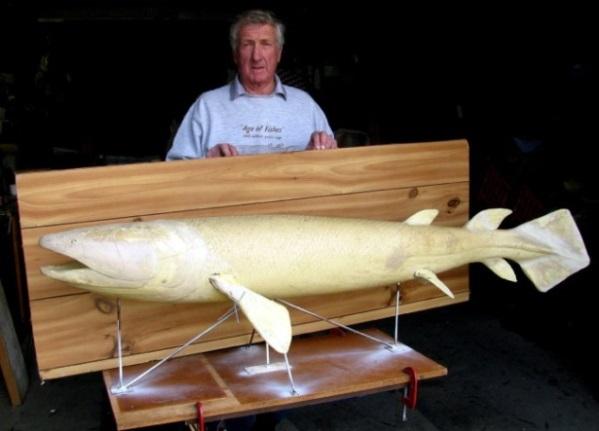
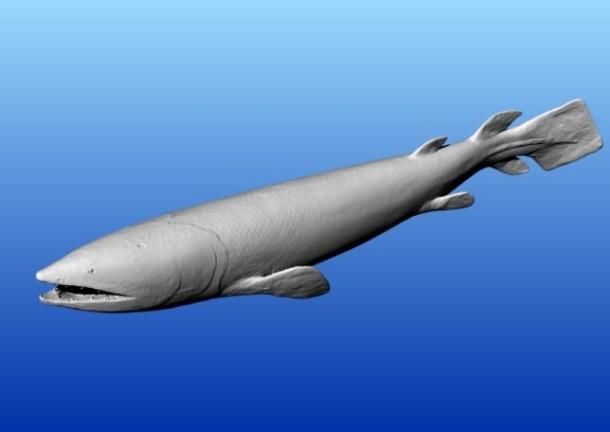
Ken Campbell reports that in retirement he has been working with Lynne Bean on problems that occur with the great diversity of types that occur in the Dipnoi in the Early Devonian. We have been using concepts of gene-regulation used by Erwin and Valentine (2011) in their
discussion of the Cambrian Fauna, and Valentine and Marshall (2015) in their work on the origins and success of metazoan multicellularity. In this we follow work by Miklos and Campbell (1993) indicating that the fossil record illustrates that gene-regulation has occurred several times, and has produced phenot ypic diversity at both major and minor levels. We also have investigated the way in which the profundus V and facialis VII nerves interact with anterior dermal plates to produce distinctive sensory systems in Early Devonian Dipnoi.
Desmond Strusz (affiliated with the Research School of Earth Sciences and the Australian Museum) reports that a collaborative project with Dr Ian Percival of the New South Wales Geological Survey on the hitherto unpublished Silurian brachiopod fauna of the Delegate River Mudstone at Quidong, southern New South Wales, is nearing completion. The aim is to have a manuscript ready for submission by early 2016.
The project is based on collections held by the Survey and the Australian Museum from earlier unpublished PhD studies, material collected by me and now held by Geoscience Australia, and material held by ANU from previous student field studies. This will tie in with the Survey’s progressive 1:100 000 mapping program, and should provide a test of the biostratigraphic conclusions arising from my studies in the Canberra-Yass region. Most of the material is now at the Survey’s Londonderry facility, where necessary preparation and photography is almost complete. Most of the taxa have already been identified, and their descriptions drafted.
A preliminary report on the results of this project, particularly regarding palaeoecology and palaeobiogeography, was presented by us at the 7th International Brachiopod Congress in Nanjing, May 22-25, 2015.
On completion of the Quidong project, it is my aim to work up for publication the fauna of similar age from the Cappanana Formation near Bredbo, south of Canberra, using material in the collections of Geoscience Australia. There also remains material in those collections from localities in the Canberra area which is suitable for preparation and publication - so plenty to keep me palaeontologically active.
Strusz, D.L. & Percival, I.G., 2015 - Palaeoecology and palaeaobiogeographical significance of Silurian (Wenlock-Ludlow) brachiopods from Quidong, New South Wales, Australia. Permophiles 61, supplement 1 [The Brachiopod World: abstracts for IBC 7] , 85-87
Geoscience Australia
John Laurie still divides his time between working on the Cambrian biostratigraphy of the Georgina Basin, the Chemical Abrasion-Isotope Dilution Thermal Ionisation Mass Spectrometry (CA-IDTIMS) project calibrating the Permian and Triassic palynostratigraphy The Georgina project has largely stalled because of the exceptional amount of interest in the CA-IDTIMS project, which has required a couple of papers (with Bob Nicoll and others) to be given at the AAPG-ICE in Melbourne in September 2015, and one at the Bowen Basin symposium in Brisbane in October 2015, and the preparation of two papers soon to be submitted to international journals. Despite this, some work on the Georgina has been completed recently. This includes a paper on the chemostratigraphy and biostratigraphy of middle Cambrian of the Georgina Basin, also presented at the AAPG- ICE in Melbourne, a ‘professional opinion’ on the biostratigraphy of a mineral well from the southwestern part of the basin, and a paper (in press) on the Redlichia specimens originally published by
Whitehouse in the 1930s. One other paper, with Jim Jago, Chris Bentley and Keith Corbett on the status of Cambrian biostratigraphy of Tasmania is also in press.
As part of the quid pro quo for the benefits of his emeritus arrangement, and because of his experience in editing, timescales and palaeontology, John also continues to have input into several other projects undertaken by GA (Acreage Release, Timescales, Education etc.). Several other projects are still under way, seemingly perennially, including one on Late Cambrian trilobite faunas from southernmost Tasmania (with Jim Jago and Kim Bischoff) and another on the middle Cambrian biostratigraphy in Hunt 1 well in the Georgina Basin. John also continues editing the Memoirs, but plans to relinquish this position in 2016, after 20 years and 30+ volumes. Since the last report, two volumes; No. 47 (Late Cretaceous palynoflora of NZ) and 48 (Cambrian tommotiid Dailyatia from South Australia) have been published. Two others are under way; one entitled ‘Jurassic belemnites of New Zealand’ and the other, ‘Cambro-Ordovician Studies VI’. Both are expected to be published in the first half of 2016.
Laurie, J., Bodorkos, S., Smith, T., Crowley, J. & Nicoll, R., 2015. The CA-IDTIMS method and the calibration of endemic Australian palynostratigraphy to the Geological Timescale. AAPG-SEG International Conference and Exhibition, Melbourne, Abstracts, 1 p.
Nicoll, R., Laurie, J., Bodorkos, S., Crowley, J. & Smith, T., 2015. The impact of CAIDTIMS on the understanding of Permian and Triassic lithostratigraphy and correlation in eastern Australian coal basins. AAPG-SEG International Conference and Exhibition, Melbourne, Abstracts, 1 p.
Nicoll, R., McKellar, J., Ayaz, S.A., Laurie, J., Esterle, J., Crowley, J., Wood, G. & Bodorkos, S., 2015. CA-IDTIMS dating of tuffs, calibration of palynostratigraphy and stratigraphy of the Bowen and Galilee basins. Bowen Basin Symposium 2015, Proceedings, 211-218.
Smith, T.E., Laurie, J.R. & Edwards, D.S., 2015. Middle Cambrian chemostratigraphy and biostratigraphy in the southern Georgina Basin: Correlating the Arthur Creek “Hot Shale”. AAPG-SEG International Conference and Exhibition, Melbourne, Abstracts, 1 p.
NEW SOUTH WALES
Macquarie University, Sydney Department of Biological Sciences
John Alroy has branched out recently into ecology but continues to regularly publish contributions in analytical palaeobiology. Most of his recent contributions have been theoretical and have covered such topics as estimating extinction rates, inferring probabilities of extinction, measuring similarity between communities, and fitting theoretical abundance distributions to community data. However, he has also published two empirical papers on diet in living mammals with his student Silvia Pineda-Munoz and others having to do with captive breeding programs, global patterns in abundance distributions, and current extinction rates. Meanwhile, he continues to run the Fossilworks website (http://fossilworks.org) while more actively developing the Ecological Register database (http://ecoregister.org).
Pineda-Munoz, S., Evans, A.R. & Alroy, J. (in press). The relationship between diet and body mass in terrestrial mammals. Paleobiology. 13
Alroy, J. 2015. A more precise speciation and extinction rate estimator. Paleobiology. Alroy, J. 2015. Current extinction rates of reptiles and amphibians. Proceedings of the National Academy of Sciences 112, 13003-13008.
Alroy, J. 2015. The shape of terrestrial abundance distributions. Science Advances 1, e1500082.
Alroy, J. 2015. A simple way to improve multivariate analyses of paleoecological data sets. Paleobiology 41, 377-386.
Alroy, J. 2015. Limits to captive breeding of mammals in zoos. Conservation Biology 29, 926-931.
Alroy, J. 2015. A new twist on a very old binary similarity coefficient. Ecology 96, 575-586.
Alroy, J. 2014. A simple Bayesian method of inferring extinction. Paleobiology 40, 584-607. Pineda-Munoz, S. & Alroy, J. 2014. Dietary characterization of terrestrial mammals. Proceedings of the Royal Society B 281, 20141173.
Alroy, J. 2014. Accurate and precise estimates of origination and extinction rates. Paleobiology 40, 374-397.
Marissa J. Betts is approaching the end of her PhD candidature. Her main work this year has revolved mostly around development of a new biostratigraphic scheme for the early Cambrian of Australia based on shelly fossils. This has enabled robust correlation with coeval basins within east Gondwana (Arrowie, Stansbury, Georgina, Officer, Amadeus basins and the Shackleton Limestone in Antarctica). Copious carbon isotopic data have also been generated to enable global correlation of the Australian successions using carbon isotope curves. This is the first time that a robust biostratigraphic scheme has been integrated with carbon isotope chemostratigraphy in Australia, and demonstrates the utility of this ‘multi-proxy’ approach to problems of global correlation. Parallel work has included investigation of the palaeobiology and functional morphology of bradoriid arthropod shields. Well-preserved material from the Arrowie Basin reveals that many bradoriid taxa were able to draw their shields tightly closed, presumably for a protective function. This contrasts the popular view that the shields were held widely open in the “butterfly” position. Close investigation of the “dorsal fold” reveals that the shields do not articulate together but simply bend at the midline, with implications for development, phylogeny and long-term evolutionary success of the group.
Betts, M.J., Brock, G.A., Paterson, J.R., Jago, J.B. & Andrew, A.S. 2015. Integrated Shelly Fossil Biostratigraphy and Carbon and Oxygen Chemostratigraphy: Applying a Multiproxy Toolkit to Correlating the Lower Cambrian of South Australia. AAPG/SEG International Conference and Exhibition, Melbourne, Australia. [Oral presentation.]
Betts, M.J., Brock, G.A. & Paterson, J.R. (in press). Butterflies of the Cambrian benthos? Shield position in bradoriid arthropods. Lethaia
Skovsted, C.B., Betts, M.J., Topper, T.P. & Brock, G.A. 2015. The early Cambrian Tommotiid genus Dailyatia from South Australia. Memoir of the Association of Australasian Palaeontologists 48, 117p.
Glenn A. Brock has continued his research activities focused on elucidating the evolution, phylogeny, biodiversity, ecology and biostratigraphy of the earliest (stem group) bilaterian animals during the Cambrian Radiation. Significant fieldwork during 2014-15 activities included sampling early Cambrian limestone in South Australia (Flinders Ranges, Fleurieu Peninsula) and Northern Territory (Ross River Gorge). Results of research were presented as oral presentations at the Cambrian Subcommission meeting in Ouazazate in Morocco (2014), the 4th International Palaeontological Congress in Mendoza (2014), the 7th International
Brachiopod Congress in Nanjing, China (2015) and the Rise of Animal Life (RALI) meeting in Marakesch, Morocco (2015). The lab now contains a thriving mix of masters, PhD, early career postdoctoral and experienced researchers with expertise on specific techniques and faunal groups. Brock is currently co-editing Cambro-Ordovician Studies VI for the AAP Memoirs and is part of the Advisory Committee (including the Excursion Organising Committee) for the Palaeo Down Under 2 Conference to be held in Adelaide (July, 2016).
Skovsted, C.B., Bing Pan, Topper, T.P., Betts, M.J., Guoxiang Li & Brock, G.A. (in press)
The operculum and mode of life of the lower Cambrian hyolith Cupitheca from South Australia and North China. Palaeogeography, Palaeoclimatology, Palaeoecology
Smith, P.M., Brock, G.A. & Paterson, J.R. (in press). Linguliformean brachiopods from the Templetonian (Series 3, Stage 5) Giles Creek Dolostone, Amadeus Basin, Northern Territory. Memoirs of the Association of Australasian Palaeontologists
Jacquet, S.M. & Brock, G.A. (in press). Lower Cambrian macromolluscs from South Australia. Gondwana Research.
Skovsted, C.B., Brock, G.A., Holmer, L.E., Topper, T.P., & Larsson, C.M. (in press)
Revision of the early Cambrian tommotiid Kulparina rostrata from South Australia. Journal of Palaeontology
Betts, M.J., Brock, G.A. & Paterson J.R. (in press). Butterflies of the Cambrian benthos? Shield position in bradoriid arthropods. Lethaia.
Skovsted, C.B., Betts, M.J. Topper, T.P. & Brock, G.A., 2015. The early Cambrian tommotiid genus Dailyatia from South Australia. Memoirs of the Association of Australasian Palaeontologists 48, 1-117.
Smith, P.M., Paterson, J.P. & Brock, G.A. 2015. Trilobites from the Giles Creek Dolostone (Cambrian Series 3, Stage 5; Templetonian), Amadeus Basin, central Australia. Papers in Palaeontology 1, 167-200.
Smith, P. M. Brock, G.A. and Paterson, J. R. 2015. Fauna and biostratigraphy of the Cambrian (Series 2, Stage 4; Ordian) Tempe Formation (Pertaoorrta Group), Amadeus Basin, Northern Territory. Alcheringa 39, 40-70.
Zhang, Z.-F., Li, G.-X., Holmer, L.E., Brock, G.A., Balthasar, U., Skovsted, C.B., Fu, D-J., Zhang, X.-L., Wang, H.-Z., Butler, A., Zhang, Z.-L., Cao, C-Q., Han, J., Liu, J.-N. & Shu, D.-G. 2014. An early Cambrian agglutinated tubular lophophorate with brachiopod characters. Scientific Reports 4, 4682.
Jacquet, S.M., Brock, G.A., Paterson, J.P. 2014. New data on Oikozetetes (Halkieriidae) from the lower Cambrian of South Australia. Journal of Palaeontology 88, 1072-1084.
Smith, P., Brock, G.A., Paterson, J.R. & Topper, T.P. 2014. New Cambrian (early Templetonian) bradoriid arthropods from the Giles Creek Dolostone, Amadeus Basin, Central Australia. Memoirs of the Association of Australasian Palaeontologists 45, 233248.
Larsson, C.L., Skovsted, C.B., Brock, G.A., Balthasar, U., Holmer, L.E. & Topper, T.P. 2014. Paterimitra pyramidalis from South Australia; scleritome construction, shell structure and evolution of a lower Cambrian stem group brachiopod. Palaeontology 57, 417-446.
Jakobsen, K.G., Brock, G.A., Nielsen, A.T., Mathieson, D.K. & Harper, D.A.T. 2014 Brachiopods associated with stromatoporoid mounds from the Middle to Upper Ordovician Cashions Creek Limestone, Tasmania. Memoirs of the Association of Australasian Palaeontologists 45, 249-265.
Betts, M.J., Topper, T.P., Valentine, J.L., Skovsted, C.B., Paterson, J.P. & Brock, G.A. 2014. A new early Cambrian bradoriid (Arthropoda) assemblage from the northern Flinders
Ranges, South Australia. Gondwana Research 25, 420-437.
Jakobsen, K.G., Brock, G.A., Nielsen, A.T., Topper, T.P. & Harper, D.A.T. 2014. Middle Ordovician brachiopods from the Stairway Sandstone, Amadeus Basin, central Australia. Alcheringa 38, 190-208.
Skovsted, C.B., Topper, T.P. Betts, M.J. & Brock, G.A., 2014. Associated conchs and opercula of Triplicatella disdoma (Hyolitha) from the early Cambrian of South Australia. Alcheringa 38, 148–153.
Jakobsen, K.G., Nielsen, A.T., Harper, D.A.T., Topper, T. P. & Brock, G.A. 2014. Trilobites from the Middle Ordovician Stairway Sandstone, Amadeus Basin, central Australia. Alcheringa 38, 70–96.
Juan Gabriel Dominguez Sarmiento is a current PhD student working on determining timeaveraging in molluscan death assemblages around Sydney Harbour. Time-averaging has gone from being an embarrassing untested assumption in palaeoecological analyses, to an important component in understanding the dynamics of sedimentary systems and the formation of fossil deposits. His most recent publication uses radiocarbon calibrated amino acid racemization ages from 173 Fulvia tenuicostata shells collected from Sydney Harbour (NSW, Australia) to quantify time-averaging in surficial death assemblages and in a Holocene excavation. The paper demonstrates that the top 1.6 metre of Holocene sediment accumulating at the bottom of Sydney Harbour preserves stratigraphically ordered Fulvia shells spanning ~6 kyrs. Continuing this work he hope to provide the chronological context for assessing historical changes in these benthic communities and provide an important perspective on the formation of Holocene fossil deposits.
Dominguez, J.G., Gomez, J.C., Ricaurte, C., Mayo, G., Orejarena, J., Diaz, J.M. & Andrade, C.A. 2010. Seafloor coverage and benthic landscapes associated to diapiric (mud volcanism) formations in Salmedina Banks, Colombian Caribbean continental shelf. Boletin de Investigaciones Marinas y Costeras 39, 117-135.
Sanderson, J.C., Ling, S.D., Dominguez, J.G. & Johnson, C.R. 2015. Limited effectiveness of divers to mitigate ‘barrens’ formation by culling range-extending sea urchins while fishing for abalone. Marine & Freshwater Research. DOI: 10.1071/MF14255
Matthew Kosnik is currently working with molluscan material preserved in Holocene sediments to address questions of conservation palaeobiology and taphonomy. He is in the process of publishing work from One Tree Reef (GBR, QLD), Port Jackson and Pittwater (NSW).
Kosnik, M.A., Hua Q., Kaufman, D.S. & Zawadzki, A. 2015. Sediment accumulation, stratigraphic order, and the extent of time-averaging in lagoonal sediments: a comparison of 210Pb and 14C/amino acid racemization chronologies. Coral Reefs 34, 215-229. Briner, J., Kaufman, D.S., Bennike, O. & Kosnik. M.A. 2014. Amino acid ratios in reworked marine bivalve shells constrain Greenland Ice Sheet history during the Holocene. Geology 42, 75-78.
Martinelli, J.C., Gordillo, S. & Archuby, F. 2013. Muricid drilling predation at high latitudes: insights from the Southernmost Atlantic. Palaios 28, 33-41.
Dornelas, M., Magurran, A.E., Buckland, S.T., Chao, A., Chazdon, R.L., Colwell, R.K., Curtis, T., Gaston, K.J., Gotelli, N.J., Kosnik, M.A., McGill, B., McCune, J.L., Morlon, H., Mumby, P.J., Øvreås, L., Studeny, A. & Vellend, M. 2013. Quantifying temporal change in biodiversity: challenges and opportunities. Proceedings of the Royal Society B
280, DOI: 10.1098/rspb.2012.1931
Allen, A.P., Kosnik, M.A. & Kaufman, D.S., 2013. Characterizing the dynamics of amino acid racemization using time-dependent reaction kinetics: A Bayesian approach to fitting age-calibration models. Quaternary Geochronology 18, 63-77.
Kosnik, M.A., Kaufman, D.S. & Hua, Q. 2013. Radiocarbon-calibrated multiple amino acid geochronology of Holocene molluscs from Bramble and Rib Reefs (Great Barrier Reef, Australia). Quaternary Geochronology 16 73-86.
Sarah Jacquet is a third year PhD candidate whose research aims to better understand the early evolution and radiation of the Mollusca from the lower Cambrian of Australia. This broad focus is channelled into various fields including biostratigraphy, biofacies analysis and taphonomy, all of which are founded on systematic documentation of many new fauna. Of additional interest is high fidelity preservation of phosphatised shell material that may help extrapolate information about early ontogeny of both ancestral macro- and micromolluscs.
Expanding on this, she is now investigating the implications of apatite precipitation and lithofacies on the preservation potential of molluscan faunas. Recently, her interests have extended to the integration of new techniques such as micro-CT software for reconstruction of silicified multicomponent organisms.
Jacquet, S.M., Paterson, J.R. & Brock, G.A. 2014. New Data on Oikozetetes (Mollusca: Halkieriidae) from the Lower Cambrian of South Australia. Journal of Paleontology 88 (5), 1072-1084.
Jacquet, S.M., Brock, G.A, and Skovsted, C.B. 2014. Reassessment of the Lower Cambrian Molluscan Biostratigraphy from South Australia. International Subcommission of Cambrian Stratigraphy, 15-24 September, Morocco, Program and Abstracts, p. 21.
Jacquet, S.M. and Brock, G.A. 2015. Lower Cambrian helcionelloid macromolluscs from South Australia. Gondwana Research. doi: 10.1016/j.gr.2015.06.012
Brock, G.A., Jacquet, S.M., Skovsted, C.B., Topper, T.P., Jago, J.B., Betts, M.J. & Paterson, J.R. 2015. Watsonella crosbyi and definition of the base of Terreneuvian, Stage 2 (lower Cambrian) in South Australia. Theme 17 – Biostratigraphy, AAPG-SEG International Conference and Exhibition, 13-16 September, Melbourne, Australia [Oral presentation]. Jacquet, S.M., Jago, J.B. and Brock, G.A. (in press). An enigmatic univalve macromollusc from the lower Cambrian (Series 2, Stage 3) Heatherdale Shale, South Australia. Memoirs of the Association of Australasian Palaeontologists. ISSN 0810-8889
Ciaran Mathewson has started a Masters thesis working with meta-data, looking at the enigmatic Cambrian tommotiids from a biogeographical perspective. The project aims to identify trends in the biogeography of the tommotiids, as well as attempt to answer some of the fundamental questions about their biology. The study will focus on the two (unofficial) tommotiid clades (eccentrothecimorphs and camenellans) comparing their global distributions over Terreneuvian–Series 2. Thus the project will provide the first biogeographical perspective on tommotiids, with the potential to compare already welldefined brachiopod and bradoriid data.
Patrick M. Smith is a third year PhD student supervised by Glenn Brock & John Paterson. He is continuing to investigate the richly fossiliferous and hydrocarbon-bearing sedimentary rocks of the Cambrian Pertaoorrta Group in the Amadeus Basin, Northern Territory. Patrick’s PhD studies have largely focus on taxonomic documentation and biostratigraphy of important
fossil groups from the Cambrian Series 2–3 (Ordian–Mindyallan) units of the Pertaoorrta Group. Presently he is finishing his doctoral thesis and hoping to submit in early January 2016. The final two manuscripts in his dissertation contain descriptions of trilobites from the Goyder Formation and linguliform brachiopods from the Giles Creek Dolostone, both in and around the Ross River Gorge area. These two papers are currently under review and will hopefully be published sometime early next year. The outcomes of his thesis have been the development of a preliminary quantitative biostratigraphy for some of the key formations in the Amadeus Basin. This will allow for precise correlation of sedimentary packages in surface outcrop and subsurface drillcore. It also will provide new data to assist with geospatial modelling, including interpretations associated with future geological mapping, sequence stratigraphy and geophysical surveys.
Smith, P.M., Brock, G.A., Paterson, J.R. & Topper, T.P. 2014. New bradoriid arthropods from the Giles Creek Dolostone (Cambrian Series 3, Stage 5; Templetonian), Amadeus Basin, central Australia. Memoirs of the Association of Australasian Palaeontologists 45, 233-248.
Smith, P.M., Brock, G.A. & Paterson, J.R. 2014. Biostratigraphy of the Cambrian Pertaoorrta Group, Amadeus Basin, Northern Territory, Australia. International Subcommission on Ediacaran Stratigraphy (ISES) jointly with International Subcommission on Cambrian Stratigraphy (ISCS) meeting, 15 September 2014 – 24 September 2014, Ouarzazate, Morocco. p. 32.
Smith, P.M., Brock, G.A. & Paterson, J.R. 2014. The Ordian-Templetonian carbon isotope event (OETE) and biostratigraphy in the Giles Creek Dolostone, Amadeus Basin, Central Australia [poster presentation]. 4th International Palaeontological Congress (IPC), 28 September – 3 October 2014, Mendoza, Argentina. DOI: 10.13140/2.1.4438.9126
Smith, P.M., Brock, G.A. & Paterson, J.R. 2015. Fauna and biostratigraphy of the Cambrian (Series 2, Stage 4; Ordian) Tempe Formation (Pertaoorrta Group), Amadeus Basin, Northern Territory. Alcheringa 39, 40–70.
Smith, P.M., Paterson, J.R. & Brock, G.A. 2015. Trilobites from the Giles Creek Dolostone (Cambrian Series 3, Stage 5; Templetonian) Amadeus Basin, central Australia. Papers in Palaeontology 1, 167–200.
Andrew Simpson (Honorary Fellow, Department of Ancient History) has spent time on two collaborative palaeontological projects this year. One has been the documentation of Late Silurian and Early Devonian conodont faunas from an extensive region of western New South Wales. The work has been done with former colleagues from MUCEP, Ruth Mawson, John Talent and David Mathieson, and will revise the ages of many of the scattered carbonates associated with the Darling Basin and adjacent regions and offer some new insights into conodont phylogeny. The other project, undertaken with a number of Australian and international colleagues, is on global Silurian climate change with results to be published in P3 in early 2016.
Andrew has recently commenced work on Silurian conodont faunas from the Boree Creek Formation that represent the legacy collections of the late Peter Molloy (MUCEP) and a large unpublished Silurian conodont fauna from the Broken River area of north Queensland. He is also looking at extending the Darling Basin work with the publication of extensive thermal maturity analysis and conodont faunas from subsurface carbonates also compiled previously by MUCEP.
Trotter, J.A., Williams, I.S., Barnes, C.R., Mannik, P. & Simpson, A. 2016. New conodont
δ18O records of Silurian climate change: Implications for environmental and biological events Palaeogeography Palaeoclimatology Palaeoecology 443, 34-48.
The University of Sydney School of Geosciences
Barry Webby (Honorary Research Associate) has this year (2015) resumed studies of a number of small, conjoint projects on Ordovician trilobites, stromatoporoids, sphinctozoan sponges and late Cambrian trace fossils. Each of these has languished for a number of years because of my role as “Coordinating Author” of the “Treatise” project on hypercalcified sponges for so many years such a challenging activity! The project involved long-sustained and closely cooperative working relationships with many experts, and coordination through all stages with the editorial staff, based in Lawrence, Kansas.
Now work has started on aspects of the three small collaborative projects mentioned above. They are:(1) description of Ordovician stromatoporoids, sphinctozoans and possibly also a few other hypercalcified sponges from Kazakhstan; (2) work on a few remaining undescribed Ordovician trilobites from central New South Wales; and (3) a project documenting the distinctive assemblages of trace fossils from the Late Cambrian (Chatsworth Limestone) of North-West Queensland.
Other more longer term, cooperative projects include a continuation of studies on the Silurian-Devonian stromatoporoids of the Broken River region of North Queensland; and further studies of the Silurian Narragal Limestone stromatoporoids of central-western New South Wales.
Webby, B.D. (coordinating editor) 2015. Treatise on Invertebrate Paleontology, Part E Porifera (Revised), volumes 4 (i- liii, 1-416 p., 1-272 fig., 1-29 tables) and 5 (i-ii, 4171223 p., 273-665 fig., 30-42 tables). Geological Society of America, Boulder and University of Kansas, Lawrence.
University of New South Wales
Elizabeth Dowding is working on the early Devonian Biogeography of Gondwana with special consideration of the location of New Zealand, Tasmania, and South China.
Dowding, E.M. & Ebach, M.C. (in press). The Early Devonian Palaeobiogeography of Eastern Australasia. Palaeogeography, Palaeoclimatology, Palaeoecology
James Strong (Ph.D candidate, 1st year) is working on the invertebrate palaeontology of Riversleigh's Oligo-Miocene sites, beginning with the diverse terrestrial and freshwater gastropods.
Dr Rick Arena works on the palaeontology, geology and biostratigraphy of Australian Cenozoic vertebrate fossil deposits with a focus on those at the Riversleigh World Heritage Area in northwest Queensland.
Arena, D.A., Travouillon, K.J., Beck, R.M.D., Black, K.H., Gillespie, A.K., Myers, T.J., Archer, M. & Hand, S.J. 2015. Mammalian lineages and the biostratigraphy and
biochronology of Cenozoic faunas from the Riversleigh World Heritage Area, Australia. Lethaia DOI: 10.1111/let.12131.
Woodhead, J., Hand, S.J., Archer, M., Graham, I., Sniderman, K., Arena, D.A., Black, K.H., Godthelp, H., Creaser, P., and Price, L. 2014. Developing a radiometrically-dated chronologic sequence for Neogene biotic change in Australia, from the Riversleigh World Heritage Area of Queensland. Gondwana Research. doi.org/10.1016/j.gr.2014.10.004
University of New England, Armidale Palaeoscience Research Centre
Marie Attard is a postdoctoral research fellow and research assistant in Associate Professor Stephen Wroe’s research group. Marie’s postdoctoral research focuses on the adaptive function of eggshell shape and strength among Australasian birds. She has also used computer simulations to test the likely feeding behaviours of large-gigantic flightless birds of New Zealand called moa that went extinct about 550 years ago. These simulations revealed a broad range of browsing strategies used by moa, which may have helped facilitate food partitioning to reduce competitive interactions. Moa also appear to have used different feeding mechanisms than living relatives, indicating that they fulfilled different ecological roles to remaining ratites.
Attard, M.R.G., Wilson, L.A.B., Worthy, T.H., Scofield, P., Johnston, P., Parr, W.C.H. & Wroe S. (accepted). Moa diet fits the bill: virtual reconstruction incorporating mummified remains and prediction of biomechanical performance in avian giants. Proceedings of Royal Society B.
Alan Baxter is member of University of New England’s (UNE) Palaeoscience Research Centre and was, until recently, a Lecturer at UNE. His main research focus is the application of biostratigraphical and sedimentological constraints to ancient and modern convergent margins. Alan’s current research is focused on constructing an integrated age model for Cocos Plate the Eastern Pacific, using nannofossil samples he collected as a member of the IODP Expedition 344: Costa Rica Seismogenesis (A2) scientific team. In January of this year, Alan sailed on IODP Expedition 354: Bengal Fan as a nannofossil biostratigrapher. This expedition proved to be a great success as all of the main objectives were met. In 2016 Alan will work on a number of projects arising from the Bengal Fan expedition, including the distribution of modern radiolarians across the Fan and the onset and development of the fan during the Oligocene and Miocene. For further details please contact Alan at (alantbaxter@gmail.com).
France-Lanord, C., Spiess, V., Klaus, A., and the Expedition 354 Scientists, 2015. Bengal Fan: Neogene and late Paleogene record of Himalayan orogeny and climate: a transect across the Middle Bengal Fan. International Ocean Discovery Program Preliminary Report, 354. doi: 10.14379/iodp.pr.354.2015 Schindlbeck, J.C., Kutterolf, S., Freundt, A., Straub, S.M., Wang, K.-L., Jegen, M., Hemming, S.R., Baxter, A.T. & Sandoval, M.I. 2015. The Miocene Galápagos ash layer record of Integrated Ocean Drilling Program Legs 334 and 344: Ocean-island explosive volcanism during plume-ridge interaction. Geology, G36645.1, doi:10.1130/G36645.1
Phil Bell continues his work on Cretaceous dinosaurs, splitting his research between Alberta (Canada) as part of the Northern Alberta Dinosaur Research Group and the Griman Creek Formation in Lightning Ridge (NSW). A new species of dromaeosaurid and megaraptorid theropod were described this year from these localities, respectively. He is also assisting in a series of targeted studies on the Aussie theropod, Australovenator.
Bell, P. R. & Currie, P. J. (in press). A high-latitude dromaeosaurid, Boreonykus certekorum, gen. et sp. nov. (Theropoda) from the upper Campanian Wapiti Formation, west-central Alberta. Journal of Vertebrate Paleontology.
White, M.A., Bell, P.R., Cook, A.G., Barnes, D.G., Tischler, T.R., & Elliot, D.A. 2015. Forearm range of motion in Australovenator wintonensis (Theropoda, Megaraptoridae).
PLoS ONE 10:e0137709
Bell, P.R., Cau, A., Fanti, F., & Smith, E. 2015. A large-clawed theropod (Dinosauria: Tetanurae) from the Lower Cretaceous of Australia and the Gondwanan origin of megaraptorid theropods. Gondwana Research doi:10.1016/j.gr.2015.08.004
Bell, P.R., Currie, P.J., & Russell, D.A. 2015. Large caenagnathids (Dinosauria, Oviraptorosauria) from the uppermost Cretaceous of western Canada. Cretaceous Research 52, 101–107
Prieto-Marquez, A., Wagner, J.R., Bell, P.R., & Chiappe, L.M. 2015. The late-surviving ‘duck-billed’ dinosaur Augustynolophus from the upper Maastrichtian of western North America and crest evolution in Saurolophini. Geological Magazine 152, 225–241
John Cook is a PhD student in the Function, Evolution and Anatomy Research (FEAR) lab at the University of New England. Supervised by A/Prof Wroe, his work focuses on the locomotion of giant-short-faced kangaroos (Sthenurinae). Due to their large size, their ability to perform the iconic hopping locomotion we see in modern kangaroos has been questioned. Using computer-based methods we can determine if the skeletal system of sthenurines were capable of withstanding the forces generated during bipedal hopping. Using CT and MRI data Cook aims to generate a digital model of Simosthenurus occidentalis, combining this model with locomotion data collected from extant species using video camera and soft tissue data from extant species to determine if there is a upper body mass limit for bipedal hopping, and, if so, whether these giant kangaroos were within these limits. So far Cook has mathematically compared stresses generated during hopping at different duty factors, a ratio of time spent on the ground vs in the air, across a range of body masses to determine if large sthenurines could generate similar levels of stress relative to their smaller extant counterparts.
Ada Klinkhamer continues to work on her PhD under the supervision of Associate Professor Stephen Wroe (UNE) and Dr Stephen Poropat. She is collaborating with the Australian Age of Dinosaurs Museum in Winton, Queensland to investigate the limb biomechanics of sauropod dinosaurs. She is using 3D digital techniques like musculoskeletal modelling and Finite Element Analysis to study locomotion styles and the weight bearing ability of Diamantinasaurus matildae
Klinkhamer, A.J. & Godthelp, H. 2015. Two new species of fossil Leggadina (Rodentia: Muridae) from Northwestern Queensland. Peer J 3e:1088; DOI 10.7717/peerj.1088
Justin Ledogar is a biological anthropologist and Postdoctoral Research Fellow in the Function, Evolution, and Anatomy Research (FEAR) Lab. His research focuses on dietary
ecology and the evolution of skulls and teeth in both living and extinct primate species. Currently, Justin is using finite element analysis and a combination of other experimental and quantitative techniques to examine feeding biomechanics in modern humans and extinct hominins purported to lie near the base of the modern human lineage, including Australopithecus sediba and Homo habilis. The primary goal of this research is to gain a better understanding of the functional consequences of evolutionary changes in craniofacial form during the course of human evolutionary history.
Ledogar, J.A., Smith, A.L., Benazzi, S., Weber, G.W., Spencer, M.A., Carlson, K.B., McNulty, K P , Dechow, P C , Grosse, I R , Ross, C F , Richmond, B G , Wright, B W , Wang, Q , Byron, C , Slice, D E , Carlson, K J , de Ruiter, D J , Berger, L R , Tamvada, K., Pryor, L.C., Berthaume, M.A. & Strait, D.S.. (in press). Constraints on feeding in Australopithecus sediba: implications for the origin of Homo Nature Communications
Smith, A.L., Benazzi, S., Ledogar, J.A., Tamvada, K., Pryor Smith, L.C., Weber, G.W., Spencer, M.A., Dechow, P.C., Grosse, I.R., Ross, C.F., Richmond, B.G., Wright, B.W., Wang, Q , Byron, C , Slice, D E. & Strait, D S. 2015. Biomechanical implications of intraspecific shape variation in chimpanzee crania: moving towards an integration of geometric morphometrics and finite element analysis. Anatomical Record 298,122-144.
Smith, A L , Benazzi, S , Ledogar, J A , Tamvada, K , Pryor Smith, L C , Weber, G W , Spencer, M.A., Lucas, P.W., Michael, S., Shekeban, A., Al-Fadhalah, K., Almusallam, A S , Dechow, P C , Grosse, I R , Ross, C F , Madden, R H , Richmond, B G , Wright, B.W., Wang, Q., Byron, C., Slice, D.E., Wood, S., Dzialo, C., Berthaume, M.A., van Castern, A. & Strait, D.S. 2015. The feeding biomechanics and dietary ecology of Paranthropus boisei Anatomical Record 298,145-167. Winchester, J.M., Boyer, D.M., St. Clair, E.M., Gosselin-Ildari, A.D., Cooke, S.E. & Ledogar, J A . Dental topography of platyrrhines and prosimians: convergence and contrasts. 2014. American Journal of Physical Anthropology 153, 29-44.
Rudy Lerosey-Aubril arrived in Australia in January 2015 to join the Palaeoscience Research Centre at UNE. His research focuses on the emergence and evolution of early animal communities, using exceptionally preserved fossils from various lower Palaeozoic Konservat-Lagerstätten around the world (USA, Canada, France, Morocco). He coordinates the study of the late Cambrian Weeks Formation fauna (Utah, USA), recently organising a second field campaign in the House Range thanks to the support of the National Geographic Society. Over the last two years, he has also been increasingly active in the research group working on the Early Ordovician Fezouata Shale. Incidentally, this Lagerstätte will be the subject of a special issue of Palaeogeography Palaeoclimatology Palaeoecology that he has co-edited, and will be published in early 2016. Current research projects concerns the biomechanics of anomalocaridid frontal appendages (with UNE undergraduate student, Matilda Brown, and John Paterson), the ontogeny of palaeoscolecid worms (early cycloneuralians) and the description of several taxa (with E. Martin, Lyon University, France), and the taxonomic and ecological diversity of the Weeks Formation fauna (review paper – with R. Gaines, Pomona College, T. Hegna, Western Illinois University, J. OrtegaHernández, Cambridge University, and Peter Van Roy, Ghent University).
Lefebvre, B., El Hariri, K., Lerosey-Aubril, R., Servais, T. & Van Roy, P. (in press). The Fezouata Shale (Lower Ordovician, Anti-Atlas, Morocco): a historical review. Palaeogeography Palaeoclimatology Palaeoecology. DOI: 10.1016/j.palaeo.2015.10.048
Lerosey-Aubril, R. 2015. Notchia weugi gen. et sp. nov., a new short-headed arthropod from the Weeks Formation Konservat-Lagerstätte (Cambrian; Utah). Geological Magazine 152, 351–357.
Martin, E.L.O., Pittet, B., Gutiérrez-Marco, J.-C., Vannier, J., El Hariri, K., Lerosey-Aubril, R., Masrour, M., Nowak, H., Servais, T., Vandenbroucke, T.R.A., Van Roy, P., Vaucher, R. & Lefebvre, B. (in press). The Lower Ordovician Fezouata Konservat-Lagerstätte from Morocco: age, environment and evolutionary perspectives. Gondwana Research. DOI: 10.1016/j.gr.2015.03.009
Ortega-Hernández, J., Van Roy, P. & Lerosey-Aubril, R. (in press). A new aglaspidid euarthropod with a six-segmented trunk from the Lower Ordovician Fezouata KonservatLagerstätte, Morocco. Geological Magazine. DOI: 10.1017/S0016756815000710
Ortega-Hernández, J., Lerosey-Aubril, R., Kier, C. & Bonino, E. 2015. A rare non-trilobite artiopodan from the Guzhangian (Cambrian Series 3) Weeks Formation KonservatLagerstätte in Utah, USA. Palaeontology 58, 265–276.
Zacaï, A., Vannier, J. & Lerosey-Aubril, R. (in press). Reconstructing the diet of a 505million-year-old arthropod: Sidneyia inexpectans from the Burgess Shale fauna. Arthropod Structure and Development. DOI: 10.1016/j.asd.2015.09.003
Ian Metcalfe continues his work on conodonts in SE Asia (Malaysia, Thailand, Myanmar, Indonesia), China and Australia, including taxonomy, biostratigraphy, biogeography, colour and textural alteration and oxygen isotopes. A major project dating volcanic ashes (using high-precision U-Pb zircon CA-TIMS) in Australia (in collaboration with Boise State University, USA), partly aimed at international calibration of endemic biozonal schemes of the Permian-Early Triassic in Australia, continues. Work on Palaeozoic and Mesozoic biostratigraphy and biogeography in SE Asia in relation to the tectonic evolution of Asia and Tethyan ocean basins is ongoing. Studies of Permian and Triassic conodonts in Pahang, Peninsular Malaysia, together with high-precision dating of air-fall tuffs in conodont-bearing limestones are near completion. Core material from the Perth Basin, Western Australia, which span the late Permian mass extinction and Permian-Triassic boundary levels, has provided useful magnetostratigraphy and stable carbon isotope stratigraphy but alas, to date, no conodonts. Biostratigraphy, chemostratigraphy and biomarker studies of the InduanOlenekian boundary in the Perth Basin, WA also continue in collaboration with Curtin University. Ordovician conodonts from Myanmar (Burma) are being worked up for publication with Yong Yi Zhen and Kyi Pyar Aung.
Metcalfe, I., Crowley, J.L., Nicoll, R.S., Schmitz, M. 2015. High-precision U-Pb CA-TIMS calibration of Middle Permian to Lower Triassic sequences, mass extinction and extreme climate-change in eastern Australian Gondwana. Gondwana Research 28, 61-81. doi: http://dx.doi.org/10.1016/j.gr.2014.09.002
Metcalfe, I. (in press). A new Lower Triassic (Induan) Jerus Limestone locality in northwest Pahang, Peninsular Malaysia: Conodont fauna, depositional and tectonic settings. Island Arc.
John Paterson continues to work on a variety of Cambrian faunas from around Australia. His ARC Future Fellowship projects carry on, with solid progress on the study investigating the origin and evolutionary rates of Cambrian trilobites, in addition to work on the Emu Bay Shale fauna, sedimentology, microstratigraphy, and taphonomy. Other ongoing projects include the documentation of Cambrian shelly faunas from the Arrowie and Stansbury Basins (South Australia) and the Amadeus Basin (Northern Territory). This year John and colleagues
officially established the Palaeoscience Research Centre at UNE – details can be found on the new website: http://www.une.edu.au/research/research-centres-institutes/palaeoscienceresearch-centre. Finally, John was recently awarded the 2016 Anton Hales Medal by the Australian Academy of Science, which he will receive at a ceremony at the Shine Dome in Canberra next May.
Betts, M.J., Brock, G.A. & Paterson, J.R. 2015. Butterflies of the Cambrian benthos? Shield position in bradoriid arthropods. Lethaia, DOI: 10.1111/let.12160.
Edgecombe, G.D., Paterson, J.R. & García-Bellido, D.C. 2015 (in press). A new aglaspididlike euarthropod from the early Cambrian Emu Bay Shale of South Australia. Geological Magazine
Paterson, J.R., Edgecombe, G.D. & Jago, J.B. 2015. The ‘great appendage’ arthropod Tanglangia: biogeographic connections between early Cambrian biotas of Australia and South China. Gondwana Research 27(4), 1667-1672.
Paterson, J.R., García-Bellido, D.C., Jago, J.B., Gehling, J.G., Lee, M.S.Y. & Edgecombe, G.D. 2015. The Emu Bay Shale Konservat-Lagerstätte: A view of Cambrian life from East Gondwana. Journal of the Geological Society, DOI: 10.1144/jgs2015-083. [Free PDF download: http://jgs.lyellcollection.org/content/early/2015/10/29/jgs2015083.full.pdf+html]
Smith, P.M., Paterson, J.R. & Brock, G.A. 2015. Trilobites from the Giles Creek Dolostone (Cambrian Series 3, Stage 5; Templetonian), Amadeus Basin, central Australia. Papers in Palaeontology 1(2), 167-200.
Smith, P.M., Brock, G.A. & Paterson, J.R. 2015. Fauna and biostratigraphy of the Cambrian (Series 2, Stage 4; Ordian) Tempe Formation (Pertaoorrta Group), Amadeus Basin, Northern Territory. Alcheringa, 39(1), 40-70.
Natalie Schroeder continues her PhD work on enigmatic Cambrian organisms from South Australia under the supervision of A/Prof John Paterson. A manuscript on the rare eldonids from the Emu Bay Shale (EBS) Konservat-Lagerstätte is close to submission. Work on a bizarre EBS form nicknamed “petalloid” is also well underway, including SEM and Energy Dispersive X-Ray Spectrometry (EDS) analyses. Studies on some ‘small shelly fossils’ from the early Cambrian of the Flinders Ranges, South Australia will commence in early 2016.
Emma Sherratt is continuing work on the evolution of Anolis and Sphaerodactylus lizards in the Caribbean. She has been studying Miocene amber fossils, primarily from the Dominican Republic, to reveal how morphological variation in these ecologically diverse groups has changed through time. This work is done in collaboration with researchers at Harvard University, the Smithsonian Natural History Museum, Sam Houston State University and Villanova University in the USA. She is co-author of the R statistical package geomorph (http://cran.r-project.org/web/packages/geomorph/) and is developing methods to investigate morphological disparity.
Hetherington, A.J., Sherratt, E., Ruta, M., Wilkinson, M., Deline, B. & Donoghue, P.C. 2015 Do cladistic and morphometric data capture common patterns of morphological disparity? Palaeontology 58(3), 393-399.
Sherratt, E., Castañeda, M.d.R., Garwood, R J., Mahler, D.L., Sanger, T.J., Herrel, A., de Queiroz, K. & Losos, J.B. 2015. Amber fossils demonstrate deep-time stability of Caribbean lizard communities. Proceedings of the National Academy of Sciences 112(32), 9961-9966.
Stephen Wroe is an Associate Professor in the School of Environmental & Rural Sciences at University of New England. He is director of the Function, Evolution and Anatomy Research lab; currently comprising Wroe, a Lecturer, 2 Postdoctoral Fellows and 5 PhD students. Two new fellows will start on short term awards next year. Over 2015 Wroe has been involved in a range of studies investigating relationships between form and function in varanids, spider webs, giant extinct eagles, moa, humans, kangaroos, dinosaurs, eggs, and mammalian carnivores. A major focus has been on two ARC funded projects investigating biomechanics of the Neanderthal skull and the reptile mammal jaw transition. Studies at early stages of development include research into lungfish, early tetrapods and giant deer.
Attard, M R G , Wilson, L A B , Worthy, T H , Scofield, P , Johnston, P , Parr, W C H & Wroe, S. (accepted). Moa diet fits the bill: virtual reconstruction incorporating mummified remains and prediction of biomechanical performance in avian giants. Proceedings of Royal Society London B.
Ramírez-Chaves, H., Wroe, S., Selwood, L., Hinds, L., Leigh, C., Koyabu, D., Kardjilov, N., & Weisbecker, V. (in press) Mammalian development does not recapitulate suspected key transformations in the evolution of the mammalian middle ear. Proceedings of Royal Society London B.
Aaron, M.T. Harmer, Clausen, P.D., Wroe, S. & Madin, J.S. (in press). Large orb-webs adapted to maximise total biomass not rare, large prey. Scientific Reports.
McCurry, M., Mahony, M., Clausen, P.D., Quayle, M.R., Walmsley, C.W., Jessop, T.S., Wroe, S., Richards, H. & McHenry, C.R. 2015. The relationship between cranial structure, biomechanical performance and ecological diversity in varanoid lizards. PLoS ONE, DOI 10137/journal.pone 0130625.
Fry, B.G., Scheib, H., Messenger, K., Hocknull, S., Wroe, S., Sunagar, K., Goldstein, E.J.C., Tyrrell, K.L., Citron, D.M. & Jackson, T.N.W. 2015. “Poisons and bacteria”, In: Venomous reptiles and their toxins: evolution, pathophysiology and biodiscovery. Oxford University Press, Oxford.
Fiorenza, L., Benazzi, S., Henry, A.G., Salazar‐García, D.C., Blasco, R., Picin, A., Wroe, S. & Kullmer, O. 2015. To meat or not to meat? New perspectives on Neanderthal ecology. American Journal of Physical Anthropology 156, 43-71.
Aquilina, P., Wroe, S., Clausen, P., Chamoli, U. & Parr, W. 2015. Finite Element Analysis of Patient-Specific Condyle Fracture Plates. Cranial Maxillofacial Trauma Reconstruction 8, 111-116.
University of Wollongong, School of Earth and Environmental Sciences
Tony Wright (Honorary Principal Fellow) is working mainly on Devonian corals, the main focus being on operculate corals from Australia and other areas. I am also working with Dr Ross McLean (also an Honorary Principal Fellow at the U of W) on Silurian and Devonian faunas from central western NSW.
Wright, A.J. 2015. A new species of the early Silurian operculate coral Goniophyllum from Norway. GFF 137, 195–196.
Wright, A.J., Plusquellec, Y. & Gourvennec, R. (in press) Devonian operculate corals (Calceolidae, Cnidaria) from the Massif Armoricain, France. Alcheringa 40.
Michael J. Garratt (Honorary Senior Fellow) is working on new discoveries of pre Baragwanathia Flora from the Late Silurian clastic sequence of Yea and Heathcote, Victoria.
Geological Survey of New South Wales
After 20 years as the Palaeontologist for the Geological Survey of NSW, Ian Percival (Londonderry office) decided it was time to make way for someone else to continue in the role, with a primary emphasis on interpreting biostratigraphy, palaeoecology and biogeographic affinities for Early to Middle Palaeozoic invertebrates, which form the bulk of fossils encountered in the mineralized (and potentially mineral-rich) regions of the state. I am pleased to say that Yong Yi Zhen was successful in the competitive application process for this position. I have now gone into semi-retirement (on contract for the next three years but mostly using up my long-service leave on half-pay), with the money saved from my salary going towards employment of two part-time contract positions largely concentrating on building the palaeontological database from the Survey’s previously paper-based catalogue records. This is a great outcome for all concerned, and ensures that the palaeontological position (a rarity in Geological Surveys in Australia) is not lost
Apart from that it has been another very busy year. I participated in two international conferences (7th International Brachiopod Congress held in Nanjing in late May, followed almost immediately by the 12th International Symposium on the Ordovician System at James Madison University in Harrisonburg, Virginia, USA in the first half of June), and helped organize a local one on the Natural History of the Belubula River Valley, for the Linnean Society of NSW, in Bathurst NSW. Multiple papers and/or posters were presented at all three. I was also heavily involved in background work to get the NSW State Fossil Emblem proclaimed (see report elsewhere in this newsletter). Current research centres on Cambrian, Ordovician and Silurian brachiopods, Ordovician and Silurian conodonts, Ordovician graptolites from NSW, and regional stratigraphic studies mainly in the Ordovician of eastern Australia and South China. I also continue to edit Ordovician News and Nomen Nudum.
Yong Yi Zhen (Londonderry office) has been actively working on various projects in collection management (digitization), supporting the regional geological mapping programs of the Survey, and continues research into NSW Palaeozoic fossils and their biostratigraphic applications. Previously he was seconded to GSNSW from the Australian Museum, but in September 2015 he was successful in his application for the ongoing role of State Palaeontologist (the position previously held by Dr Ian Percival), and has recently been appointed Senior Research Scientist
[consolidated publications from Percival & Zhen]
Percival, I.G. 2015. Katian (Late Ordovician) lingulate brachiopods from Eastern Australia –an appraisal of their palaeoecology and palaeobiogeographical affinities. Abstracts for 7th International Brachiopod Congress, Nanjing, May 2015. Permophiles 61 (supplement 1), 67-69.
Percival, I.G., Engelbretsen, M.J. & Peng, S.C. 2015. Wulingian (middle Cambrian) linguliformean brachiopods from Hunan Province, South China. Abstracts for 7th International Brachiopod Congress, Nanjing, May 2015. Permophiles 61 (supplement 1), 69-71.
Percival, I.G., Kraft, P., Zhang Y.D. & Sherwin, L. 2015. A long-overdue systematic revision of Ordovician graptolite faunas from New South Wales, Australia. The Ordovician Exposed: Short Papers and Abstracts for 12th International Symposium on the Ordovician System, James Madison University, Harrisonburg, Virginia, USA, June 2015. Stratigraphy 12(2), 47-53.
Quinton, P.C., Percival, I.G., MacLeod, K.G. & Zhen, Y.Y. (in press). Factors influencing conodont apatite δ18O variability in the Ordovician: a case study from New South Wales, Australia. [Stratigraphy]
Quinton, P.C., Percival, I.G., Zhen, Y.Y. & MacLeod, K.G. 2015. Ordovician temperature trends: constraints from δ18O analysis of conodonts from New South Wales, Australia. The Ordovician Exposed: Short Papers and Abstracts for 12th International Symposium on the Ordovician System, James Madison University, Harrisonburg, Virginia, USA, June 2015. Stratigraphy 12(2), 61-66.
Strusz, D.L. & Percival, I.G., 2015 - Palaeoecology and palaeaobiogeographical significance of Silurian (Wenlock-Ludlow) brachiopods from Quidong, New South Wales, Australia. Permophiles 61, supplement 1 [The Brachiopod World: abstracts for IBC 7] , 85-87.
Wang, G., Percival, I.G. & Li, R. 2015. Remarks on the pattern of septal insertion in rugose corals. Alcheringa 39, 388-393. DOI: 10.1080/03115518.2015.1008787
Wang, G.X., Zhan, R.B., Percival, I.G., Bing, H., Li, Y. & Wu, R.C. 2015. Late Hirnantian (latest Ordovician) carbonate rocks and shelly fossils in Shiqian, northeastern Guizhou, Southwest China. Newsletters on Stratigraphy, 48(3), 241-252. DOI: 10.1127/nos/2015/0062
Wang Z.H., Bergström, S.M., Zhang, Y.D., Zhen, Y.Y. & Wu, R.C., 2015. Upper Ordovician conodonts from the Yenwashan Formation in the Zhejiang-Jiangsxi region, S.E. China and their biostratigraphic significance. Acta Palaeontologica Sinica 54 (2), 147-157.
Zhen, Y.Y. & Percival, I.G. 2015. Biostratigraphy and paleoecology of Late Ordovician (Ka2) conodonts and microbrachiopods from north Queensland, Australia. The Ordovician Exposed: Short Papers and Abstracts for 12th International Symposium on the Ordovician System, James Madison University, Harrisonburg, Virginia, USA, June 2015. Stratigraphy 12(2), 83-89.
Zhen, Y.Y., Percival, I.G. & Molloy, P.D. 2015. Late Ordovician Conodonts and Brachiopods from near Greenvale in the Broken River Province, North Queensland. Proceedings of the Linnean Society of New South Wales 137, 85-133.
Zhen, Y.Y., Percival, I.G. & Zhang, Y.D. 2015. Floian (Early Ordovician) conodont-based biostratigraphy and biogeography of the Australasian Superprovince. Palaeoworld 23, 100-109. DOI:10.1016/j.palwor.2014.10.011
Zhen, Y.Y., Zhang, Y.D., Tang, Z.C., Percival, I.G. & Yu, G.H. 2015. Early Ordovician conodonts from Zhejiang Province, southeast China, and their biostratigraphic and palaeobiogeographic implications. Alcheringa 39, 109-141. DOI:10.1080/03115518.2015.958295
Zhen, Y.Y., Zhang, Y.D., Wang, Z.H. & Percival, I.G. (published online August 2015). Huaiyuan Epeirogeny – shaping Ordovician stratigraphy and sedimentation on the North China Platform. Palaeogeography, Palaeoclimatology, Palaeoecology
DOI:10.1016/j.palaeo.2015.07.040
John Pickett (Honorar y Research Associate, Londonderry) continues occasional work on Palaeozoic corals. The following paper, which documents the probable presence of sweeper tentacles in Palaeozoic rugosans as well as modern scleractinians and gorgonians, has been accepted for publication:
Pickett, J. (in press 2016). Settlement strategy in Symplectophyllum (Cnidaria, Rugosa). Geological Belgica 19/1-2
Lawrence Sherwin (Orange office) retired from contract work earlier in 2015 but retains an affiliation with the Geological Survey as an Honorary Research Associate. A paper on correlation of Devonian formations in western New South Wales is being peer reviewed and is expected to be submitted for publication early in 2016. His contributions to the Braidwood and Captains Flat mapping projects are progressing through the Geol Survey editing section. Work on Late Ordovician graptolites from the Forbes district and (with Tony Wright) Silurian graptolites from Bungonia and the Central West is continuing.
A joint review paper on Ordovician graptolites from New South Wales appears in the report by Ian Percival.
QUEENSLAND
University of Queensland School of Earth Sciences
Prof. Gregory E. Webb continues as the head of the Integrated Palaeoenvironmental Research Group in the School of Earth Sciences and is working on Holocene and Pleistocene reef formation in the southern Great Barrier Reef, the geochemistry of corals and microbialites from the GBR and Tahiti, Early Tournaisian corals from Queensland, trace element geochemistry of vertebrate bones as environmental indicators, and Archean microbialites and their geochemistry based on material from the Pilbara and Holocene lacustrine microbialites from South Australia. In 2015 the RV D Hill was successfully deployed at One Tree Reef, GBR and recovered 12 new Holocene/Pleistocene cores as part of ARC-funded research.
Dechnick, B., Webster, J.M., Nothdurft, L., Webb, G.E., Zhao, J.X., Duce, S., Braga, J.C., Harris, D.L., Vila-Concejo, A. & Puotinen, M. (in press). Influence of hydrodynamic energy on Holocene reef flat accretion, Great Barrier Reef. Quaternary Research. Cook, A.G., Jell, P.A., Webb, G.E., Baarli, G. & Johnson, M.E. 2015. Septate gastropods from the Upper Devonian of the Canning Basin - implications for palaeoecology. Alcheringa 39, 519-524.
Hua, Q., Webb, G.E., Zhao, J.X., Nothdurft, L.D., Lybolt, M., Price, G.J. & Opdyke, B. 2015. Large variations in the Holocene marine radiocarbon reservoir effect for the southwestern Pacific. Earth and Planetary Science Letters 422, 33-44.
Denayer, J. & Webb, G.E. 2015. Cionodendron and related lithostrotionid genera from the Mississippian of eastern Australia: systematic, stratigraphy and evolution. Alcheringa 39, 315-376.
Baarli, G., Webb, G.E., Johnson, M.E., Cook, A.G. & Walsh, D.R. 2015 (in press). Shoalwater dynamics and coastal biozones in a sheltered-island setting: Upper Devonian Pillara Limestone (Western Australia). Lethaia
Price, G.J., Louys, J., Cramb, J., Feng, Y.-X., Zhao, J.-X., Hocknull, S.A., Webb, G.E., Nguyen, A.D. & Joannes-Boyau, R. 2015. Temporal overlap of humans and giant lizards
(Varanidae: Squamata) in Pleistocene Australia. Quaternary Science Reviews 128, 98105.
Della Porta, G., Webb, G.E. & McDonald, I. 2015. REE patterns of microbial carbonate and cements from Sinemurian (Lower Jurassic) siliceous sponge mounds (Djebel Bou Dahar, High Atlas, Morocco). Chemical Geology 400, 65-86.
Sadler, J., Webb, G.E. & Nothdurft, L.D. 2015. Structure and palaeoenvironmental implications of inter-branch coenosteum-rich skeleton in corymbose Acropora species. Coral Reefs 34, 201–213.
Gary Pattemore is researching Triassic-Lower Cretaceous Australasian gymnosperms. A comprehensive study of Linguifolium has been completed. Work is continuing on pteridosperms and other plant groups from the Australasian Mesozoic with a focus on comparing Triassic and post-Triassic lineages. The study includes fossils from several Triassic-Lower Cretaceous localities in Queensland (Ipswich, Tarong, Callide, ClarenceMoreton, and Surat basins) and from elsewhere in Australasia (Gippsland Basin, Victoria, the Triassic of Victoria and South Australia and the Jurassic of New Zealand).
Pattemore, G.A., Rigby, J.F. & Playford, G. 2014. Palissya: A global review and reassessment of Eastern Gondwanan material. Review of Palaeobotany & Palynology 210, 50-61.
Pattemore G.A., Rigby J.F. & Playford G. (in press). Triassic–Jurassic pteridosperms of Australasia: speciation, diversity and decline. Boletín Geológico y Minero Pattemore G.A., Rigby J.F. & Playford G. (in press). The Mesozoic megafossil genus Linguifolium Arber 1917. Acta Palaeobotanica.
Geoffrey Playford is currently working on several Palaeozoic palynostratigraphic projects, principally on the Carboniferous of the Perth and Carnarvon basins, through the auspices of the Geological Survey of Western Australia with logistical assistance from the Survey’s Arthur Mory and Sarah Martin. Also in progress is a re-examination of material from the Balickera section (Italia Road Formation), Hunter Valley, N.S.W., originally studied by Playford & Helby (1968, J. Geol. Soc. Aust 15, 103-119). Reed Wicander (Central Michigan University) is scheduled to arrive in early January 2016 for a period of several months to work with Geoff, mainly on the acritarch/prasinophyte succession of a cored Ordovician section in the Canning Basin. This will be Reed’s fifth sabbatical sojourn at UQ, initiated in 1983 and resulting in numerous joint publications.
Pattemore, G.A., Rigby, J.F. & Playford, G. (in press). The Mesozoic megafossil genus Linguifolium Arber 1917. Acta Palaeobotanica 55
Playford, G. 2015. Mississippian palynoflora from the northern Perth Basin, Western Australia: systematics and stratigraphical and palaeogeographical significance. Journal of Systematic Palaeontology, DOI: 10.1080/14772019.2015.1091792. Natural History Museum, London.
Kaylene Butler (Integrated Palaeoenvironmental Research Group) is a PhD student under the supervision of Dr Kenny Travouillon and Dr Gilbert Price. She is currently studying extinct kangaroos from the Oligo-Miocene at the Riversleigh World Heritage Area in northwestern Queensland. She aims to determine potential drivers of the extinction of Balbaridae, a family of fanged kangaroos. The fanged kangaroos began to decline in diversity during the Miocene and by 13.5 million years ago the family became extinct while the
ancestors of modern kangaroos (Macropodidae) continued to diversify. Kaylene’s research involves the description of new species of Oligo-Miocene kangaroo from Riversleigh and analysing trends in the ecology of these extinct kangaroos.
Butler, K., Travouillon, K.J., Price, G.J., Archer, M. & Hand, S.J. (in press) Cookeroo, a new genus of fossil kangaroo (Marsupialia, Macropodidae) from Oligo-Miocene of Riversleigh, northwestern Queensland, Australia. Journal of Vertebrate Palaeontology. Travouillon, K.J., Butler, K., Archer, M. & Hand, S.J. (in press). Description of new material of Gumardee pascuali Flanner y, Archer & Plane, 1983 and two new species from Riversleigh World Heritage Area, Queensland, Australia. Memoirs of Museum Victoria
Kyle Ferguson (Integrated Palaeoenvironmental Research Group) is a PhD student supervised by Gilbert Price, Yue-xing Feng and Prof. Gregory Webb. He is currently analysing fossil remains collected from three South East Queensland Pliocene-Pleistocene deposits: Colosseum Chamber, Kings Creek and Chinchilla. Due to their diagenetic origin, certain trace elements within fossils have been analysed to interpret fossilisation settings. Kyle aims to analyse trace element concentrations in remains to better understand fossilisation processes, as well as provide geochemical context for the selected fossil sites.
Chelsea Korpanty is a PhD candidate (supervisor John Pandolfi) currently working on the ecological dynamics of Pleistocene coral reefs in response to climate changes, particularly thermal fluctuations over the last 0.6 Ma. This thesis project aims to identify temporal and biogeographic trends of coral reef ecology, focusing on coral taxonomy and functional traits. These data are being compiled by reviewing deep drill core records (up to hundreds of meters long) that have been recovered from reef environments across the Pacific, Atlantic, and Caribbean.
Korpanty, C. & Kelley, P. 2014. Molluscan live-dead agreement in anthropogenically stressed seagrass habitats: siliciclastic versus carbonate environments. Palaeogeography, Palaeoclimatology, Palaeoecology 410, 113–125.
Gilbert J. Price (Integrated Palaeoenvironmental Research Group) is an ARC DECRA Early Career Research Fellow. He is a vertebrate palaeoecologist and geochronologist, particularly interested in the evolution and emergence of Australia’s unique ecosystems and fauna, and their response to prehistoric climatic changes. His major research focus has been on the development of palaeoecological models for Australia’s Pleistocene megafauna. Critically, this also involves the production of reliably-dated records for the extinct species. Gilbert is a past secretary of the Australasian Association of Palaeontologists and currently sits on the editorial board of Alcheringa
Publications: (pre-2015 see www.diprotodon.com)
Butler, K., Travouillon, K.J., Price, G.J., Archer, M. & Hand, S.J. (in press). Cookeroo, a new genus of fossil kangaroos (Marsupialia, Macropodidae) from the Oligo-Miocene of Riversleigh, northwestern Queensland, Australia. Journal of Vertebrate Paleontology. Price, G.J., Louys, Cramb, J., Feng, Y.x., Zhao, J.x., Hocknull, S.A., Webb, G.E., Nguyen, A.D. & Joannes-Boyau, R. 2015. Temporal overlap of humans and giant lizards (Varanidae; Squamata) in Pleistocene Australia. Quaternary Science Reviews 125, 98-105.
Louys, J.C. & Price, G.J. 2015. The Chinchilla Local Fauna: an exceptionally rich and wellpreserved Pliocene vertebrate assemblage from fluviatile deposits of south-eastern Queensland, Australia. Acta Palaeontologica Polonica 60, 551-572.
Hua, Q., Webb, G.E., Zhao, J.-x., Nothdurft, L.D., Lybolt, M., Price, G.J. & Opdyke, B.N. 2015. Large variations in the Holocene marine radiocarbon reservoir effect reflect ocean circulation and climatic changes. Earth and Planetary Science Letters 422, 33–44.
Mackness, B., Black, K.H. & Price, G.J. 2015. Occurrence of Euowenia grata (De Vis, 1887) (Diprotodontidae, Marsupialia) from the Pliocene Spring Park Local Fauna, northeastern Queensland. Alcheringa 39(2), 164-174.
University of Queensland School of Geography, Planning and Environmental Management
Sarah Kachovich, Gayanne Astryan and Jonathan Aitchison are working on unlocking the biostratigraphic potential of Early Palaeozoic radiolarians using 3D micro-CT technology to elucidate skeletal architecture evolution. Although radiolarians form an important part of the early Palaeozoic planktic realm, their origins and evolutionary development still elude us and is due to the absence of organic remains; understanding evolutionary patterns; phylogenetic relationships amongst, and the taxonomy relies solely on our ability to observe complete structural details. Research areas include Carboniferous from the Texas Beds of the New England Orogen; Devonian from the Canning Basin WA, Red Rock NSW and Rockhampton Qld; Silurian from the Jenolan Caves Region NSW; Ordovician from Cliefden Caves NSW; and Cambrian from the Georgina Basin Qld/NT.
The team is also working on Mesozoic and Early Cenozoic radiolarians and associated microfossils from the Tethyan realm including Armenia, Iran, Ladakh, Tibet and Nagaland.
Ali, J.R. & Aitchison, J.C. 2014. Exploring the combined role of eustasy and oceanic island thermal subsidence in shaping biodiversity on the Galápagos. Journal of Biogeography 41(7), 1227-1241.
Cheung, M.C., Zong, Y., Zheng, Z., Huang, K. & Aitchison, J.C. 2014. A stable mid-late Holocene monsoon climate of the central Tibetan Plateau indicated by a pollen record. Quaternary International 333, 40-48. doi:10.1016/j.quaint.2014.03.010
Cheung, M.C., Zong, Y., Wang, N., Aitchison, J.C. & Zheng, Z. 2015 (in press). δ13Corg and n-alkane evidence for changing wetland conditions during a stable mid-late Holocene climate in central Tibetan Plateau Palaeogeography, Palaeoclimatology, Palaeoecology 438, 203-212. doi:10.1016/j.palaeo.2015.08.007
Jiang, T., Aitchison, J.C. & Wan, X. 2015. The youngest marine deposits preserved in southern Tibet and disappearance of the Tethyan Ocean. Gondwana Research doi:10.1016/j.gr.2015.01.015.
Danelian, T., Asatryan, G., Galoyan, G., Sahakyan, L. & Stepanyan, J. 2015. Late Jurassic–Early Cretaceous radiolarian age constraints from the sedimentary cover of the Amasia ophiolite (NW Armenia), at the junction between the Izmir–Ankara–Erzinçan and Sevan–Hakari suture zones. International Journal of Earth Sciences 1-14. DOI: 10.1007/s00531015-1228-5.
Danelian, T., Zambetakis-Lekkas, A., Galoyan, G., Sosson, M., Asatryan, G., Hubert, B. & Grigoryan, A. 2014. Reconstructing Upper Cretaceous (Cenomanian) paleoenvironments in Armenia based on Radiolaria and benthic Foraminifera; implications for the geodynamic evolution of the Tethyan realm in the Lesser Caucasus Palaeogeography,
Palaeoclimatology, Palaeoecology 413, 123-132.
Liu, J., Hu, S.-x., Rieppel, O., Jiang, D - y., Benton, M.J., Kelley, N.P., Aitchison, J.C., Zhou, C.-y., Wen, W., Huang, J.-y., Xie, T. & Lv, T. 2014. A gigantic nothosaur (Reptilia: Sauropterygia) from the Middle Triassic of SW China and its implication for the Triassic biotic recovery. Scientific Reports 4. doi: 10.1038/srep07142.
Shirdashtzadeh, N., Kachovich, S., Aitchison, J.C. & Samadi, R. 2015. Mid-Cretaceous radiolarian faunas form the Ashin Ophiolite (western Central-East Iranian Microcontinent). Cretaceous Research 56, 110-118.
O’Doghert y, L., Dumitrica, P., Goričan, Š. & Aitchison, J.C. 2015. Comment on the species and age determination published by Li et al. "Discovery of Radiolaria from Upper Cretaceous Oceanic Red Beds in Daba, Kangmar and its paleogeographic implication" [312 (2011): 127-137]. Palaeogeography, Palaeoclimatology, Palaeoecology 424, 196203.
Recent conference abstracts
Aitchison, J.C., Kachovich, S., Flood, P.G. & Buckman, S. 2015. δage dating: combining new and traditional techniques to inform 4D models for understanding ancient ocean basin evolution. In: U.K. Tekin and A. Tuncer (Editors), 14th Meeting of the International Association of Radiolarists abstracts. Antalya, Turkey, Radiolaria, 35: 109-110.
Bandini-Maeder, A.N., Aitchison, J.C., Marsaglia, K.M., Meffre, S., Savov, I.P., Kender, S., Do Monte Guerra, R., Aljahdali, M.H., Arculus, R.J., Barth, A.P., Bogus, K.A., Brandl, P.A., Drab, L., Gurnis, M., Hamada, M., He, L., Hickey-Vargas, R., Ishizuka, O., BJianf, F.Q., Kanayama, K., Kusano, Y., Loudin, L.C., Maffione, M., McCarthy, A., Morris, A., Neuhaus, M., Sena, C., Tepley, F.J., Van der Land, C., Yogodzinski, G.M. & Zhang, Z.H., 2015. Preliminary results of the radiolarian biochronological study of the basal sediments at IODP Site U1438 (Amami Sankaku Basin, Northern Philippine Sea). In: U.K. Tekin and A. Tuncer (Editors), 14th Meeting of the International Association of Radiolarists abstracts. Antalya, Turkey, Radiolaria, 35: 111-112.
Cotton, L., Zakrevskaya, E., Boon, A., Asatryan, G., Hayrapetyan, F., Israyelyan, A., Krijgsman, W., Less, G., Monechi, S., Musatov, V., Papazzoni, C., Pearson, P., Razumovskiy, A., Renema, W., Shcherbinina, E., Vasilyeva, O. & Wade, B. 2015. Integrated stratigraphy of the Bartonian-Priabonian Urtsadzor section, Armenia. 2nd International Congress on Stratigraphy, STRATI 2015, 19- 23 July 2015, Graz, Austria.
Danelian T., Asatryan G., Avagyan A., Galoyan G., Sahakyan L. & Sosson M. 2015. Deciphering geodynamic clues from radiolarian biochronology in the Lesser Caucasus and NW Iran. In: U.K. Tekin and A. Tuncer (Editors), 14th Meeting of the International Association of Radiolarists abstracts. Antalya, Turkey, Radiolaria, 35: 121.
Danelian, T., Asatryan, G., Galoyan, G., Sahakyan, L. Avagyan, A., Zambetakis-Lekkas, A., Grigoryan, M., Seyler, M. & Sosson, M. 2015. Evolution of the Tethyan oceanic realm in the Lesser Caucasus and NW Iran. A micropalaeontological and sedimentological perspective. DARIUS Final Symposium, Dectember 8-9, UPMC, Paris, France, 2014.
Danelian, T., Asatryan, G., Zambetakis-Lekkas, A., Galoyan, G., Sosson, M., Seyler, M., Sahakyan, L. & Grigoryan, A. 2014. Progress in understanding the geodynamic and palaeoenvironmental evolution of the Tethys in the Lesser Caucasus. European Geosciences Union General Assembly 2014, 27 April – 02 May 2014, Vienna, Austria.
Danelian, T., Caridroit, M., O'Dogherty, L., Noble, P., Aitchison, J.C., Dumitrica, P., Suzuki, N., Pouille, L., Cuvellier, J., Kuwahara, K., Maletz, J. & Feng, Q.L., 2015. An up-to-date catalogue of Paleozoic radiolarian genera. In: U.K. Tekin and A. Tuncer (Editors), 14th
Meeting of the International Association of Radiolarists abstracts. Antalya, Turkey, Radiolaria, 35: 31-32.
Kachovich, S., Aitchison, J.C., Ao, A., Bhowmik, S. & Roeder, T. 2015. Well-preserved Jurassic radiolarians from the Naga Hills ophiolite, Indo-Myanmar Range; constraints on intra-oceanic island arc development within eastern Tethys. In: U.K. Tekin and A. Tuncer (Editors), 14th Meeting of the International Association of Radiolarists abstracts. Antalya, Turkey, Radiolaria, 35: pp. 57.
Sheng, J., Kachovich, S. & Aitchison, J.C. 2015. Silurian radiolarians from the Jenolan Caves region, New South Wales, Australia. In: U.K. Tekin and A. Tuncer (Editors), 14th Meeting of the International Association of Radiolarists abstracts. Antalya, Turkey, Radiolaria, 35: 50.
Patrick T. Moss is working on the late Quaternary palynology of sites across south-eastern Queensland, tropical northern Australia and South East Asia. The focus of this research is disentangling the influences of climate change from the environmental impacts of people, as well as looking at long term drivers of landscape change, particularl y the El Niño Southern Oscillation (ENSO) and Interdecadal Pacific Oscillation (IPO) phenomena. He is also working on projects across the Cenozoic, including the palaeoenvironments of Eocene sediments from the Okanagan Highlands, British Columbia, Canada and the Pliocene environments of northern Queensland from pollen analysis of marine sediments.
Nagel, T., Rosendahl, D., Hua, Q., Moss, P., Sloss, C., Petchey, F. & Ulm, S. (in press) Extended residence times for foraminifera in a marine-influenced terrestrial archaeological deposit and implications for palaeoenvironmental reconstruction. Journal of Archaeological Science: Reports.
Moss, P., Tibby, J., Shapland, F., Fairfax, R., Stewart, P., Barr, C., Petherick, L., Gontz, A & Sloss, C. (in press) Patterned Fen formation and development from the Great Sandy Region, south east Queensland, Australia. Marine and Freshwater Research.
Mackenzie, L. & Moss, P. (in press). A late Quaternary record of vegetation and climate change from Hazards Lagoon, eastern Tasmania. Quaternary International (2014), DOI: 10.1016/j.quaint.2014.11.051.
Moss, P., Mackenzie, L., Ulm, S., Sloss, C., Rosendahl, D., Petherick, L., Steinberger, L., Wallis, L., Heijnis, H., Petchey, F. & Jacobsen, G. 2015. Environmental context for late Holocene human occupation of the South Wellesley Archipelago, Gulf of Carpentaria, northern Australia. Quaternary International 385, 136-144.
Gontz, A.M., Moss, P.T., Sloss, C.R., Petherick, L.M., McCallum, A. & Shapland, F. 2015. Understanding past climate variation and environmental change for the future of an iconic landscape–K'gari Fraser Island, Queensland, Australia. Australasian Journal of Environmental Management 22, 105-123.
Stewart, P.L.C. & Moss, P.T. 2015. Fire patterns of South East Queensland in a global context: A review. In Keane, R.E., Jolly, M., Parsons, R. & Riley, K. Proceedings of the large wildland fires conference; May 19-23, 2014; Missoula, MT. Proc RMRS-P-73. Fort Collins, CO: U.S. Department of Agriculture, Forest Service, Rocky Mountain Research Station, 227-236.
Fletcher, T.L., Moss, P.T. & Salisbury, S.W. 2015. Wood growth indices as climate indicators from the Upper Cretaceous (Cenomanian–Turonian) portion of the Winton Formation, Australia. Palaeogeography, Palaeoclimatology, Palaeoecology 417, 35-43.
Fletcher, T.L., Cantrill, D.J., Moss, P.T. & Salisbury, S.W. 2014. A new species of Protophyllocladoxylon from the Upper Cretaceous (Cenomanian-Turonian) portion of the
Winton Formation, central-western Queensland, Australia. Review of Palaeobotany and Palynology 208, 43-49.
Fletcher, T.L., Greenwood, D.R., Moss, P.T. & Salisbury, S.W. 2014. Palaeoclimate of the Late Cretaceous (Cenomanian-Turonian) portion of the Winton Formation, CentralWestern Queensland, Australia: New Observations based on CLAMP and Bioclimatic Analysis. Palaios 29, 121-128.
Gontz, A.M., Moss, P.T. & Wagenknecht, E.K. 2014. Stratigraphic architecture of a regressive strand plain, Flinders Beach, North Stradbroke Island, Queensland, Australia. Journal of Coastal Research 30, 575-585.
Fletcher, T.L., Moss, P.T. & Salisbury, S.W. 2014. Foliar physiognomic climate estimates for the Late Cretaceous (Cenomanian–Turonian) Lark Quarry fossil flora, central-western Queensland, Australia. Australian Journal of Botany 61, 575-582.
University of Queensland School of Social Science
Dr. Tyler Faith is working on paleoecological implications of late Quaternary mammals from equatorial East Africa, with an emphasis on understanding the ecological context of modern human origins. He co-directs the Lake Victoria Prehistory Project, which aims to develop the late Quaternary archaeological, palaeontological, and environmental history for the Lake Victoria Basin in East Africa. Tyler secured an ARC DECRA fellowship commencing in 2016 to direct excavations of Late Pleistocene and Holocene archaeological and paleontological assemblages at Lukenya Hill, Kenya.
Lyons, S.K., Amatangelo, K., Behrensmeyer, A.K., Bervovici, A., Blois, J.L., Davis, M., DiMichele, W.A., Du, A., Eronen, J.T., Faith, J.T., Graves, G.R., Jud, N., Labandeira, C., Looy, C.V., McGill, B., Miller, J.H., Patterson, D., Pineda-Munoz, S., Potts, R., Riddle, B., Terry, R., Tóth, A., Ulrich, W., Villaseñor, A., Wing, S., Anderson, JH., Anderson, J., Waller, D. & Gotelli, N.J. (in press). Holocene shifts in the assembly of plant and animal communities implicate human impacts. Nature.
Tryon, C.A., Faith, J.T., Peppe, D.J., Beverly, E.J., Blegen, N., Blumenthal, K., Driese, S., Patterson, D. & Sharp, W. (in press). The Pleistocene prehistory of the Lake Victoria basin. Quaternary International.
Beverly, E.J., Driese, S.G., Peppe, D.J., Arellano, L.N., Blegen, N., Faith, J.T. & Tryon, C.A. (in press). Reconstruction of a semi-arid Late Pleistocene paleocatena from the Lake Victoria region, Kenya. Quaternary Research.
Beverly, E.J., Driese, S.G., Peppe, D., Johnson, C.R., Michel, L.A., Faith, J.T., Tryon, C.A. & Sharp, W. 2015. Recurrent spring-fed rivers in a Middle to Late Pleistocene semi-arid grassland: implications for environments of early humans in the Lake Victoria Basin, Kenya. Sedimentology 62, 1611-1635.
Potts, R. & Faith, J.T. 2015. Alternating high and low climate variability: the context of natural selection and speciation in hominin evolution. Journal of Human Evolution 87, 520.
Blegen, N., Tryon, C.A., Faith, J.T., Peppe, D.J., Beverly, E.J., Bo, L. & Jacobs, Z. 2015. Distal tephras of the eastern Lake Victoria basin, equatorial East Africa: correlations, chronology and a context for early modern humans. Quaternary Science Reviews 122, 89111.
Faith, J.T., Tryon, C.A., Peppe, D.J.,Beverly, E., Blegen, N., Blumenthal, S., Chritz, K.L., Driese, S.G. & Patterson, D. 2015. Paleoenvironmental context of the Middle Stone Age record from Karungu, Lake Victoria Basin, Kenya, and its implications for human and faunal dispersals. Journal of Human Evolution 83, 28-45.
Garret, N.D., Fox, D.L., McNulty, K.P., Tryon, C.A., Faith, J.T., Peppe, D.J. & Van Plantinga, A. 2015. Stable isotope paleoecology of late Pleistocene Middle Stone Age humans from the equatorial East Africa, Lake Victoria Basin, Kenya. Journal of Human Evolution 82, 1-14.
Louys, J. & Faith, J.T. 2015. Phylogenetic topology mapped onto dietary ecospace reveals multiple pathways in the evolution of the herbivorous niche in African Bovidae. Zoological Journal of Systematics and Evolutionary Research 53, 140-154.
Tryon, C.A., Crevecoeur, I., Faith, J.T., Ekshtain, R., Spoor, F., Nivens, J., Patterson, D. & Mbua, E.N. 2015. Late Pleistocene age and archaeological context for the hominin calvaria from GvJm-22 (Lukenya Hill, Kenya). Proceedings of the National Academy of Sciences USA 112, 2682-2687.
Wright, N.J., Fairbairn, A.S., Faith, J.T. & Matsumura, K. 2015. Woodland modification in Bronze and Iron Age central Anatolia: an anthracological signature for the Hittite state? Journal of Archaeological Science 55, 219-230.
Rowan, J., Faith, J.T., Begru, Y. & Fleagle, J. 2015. Taxonomy and paleoecology of fossil Bovidae (Mammalia, Artiodactyla) from the Kibish Formation, southern Ethiopia: implications for dietary change, biogeography, and the structure of living bovid faunas of East Africa. Palaeogeography, Palaeoclimatology, Palaeoecology 420, 210-222.
James Cook University, Townsville
Paul Dirks and Eric Roberts both have a continuing engagement in paleoanthropology based on the amazing record of early hominids being recovered from cave deposits in the Johannesburg district of South Africa. The newly discovered Homo naledi from the Star Chamber has changed perceptions of hominid evolution. Work in progress at James Cook University is focused on obtaining a radiometric date for this important find.
Eric Roberts and doctoral students Hannah Hilbert-Wolf and Cassy Mtelela continue their research on the fossil record of the East African Rift System. Eric also continues broad scale research on trace fossils and taphonomy. With collaborators he will renew investigation of the late Cretaceous vertebrate record and K/T boundary in West Antarctica early in 2015 in a program supported by the US National Science Foundation and Polar Program.
Bob Henderson continues to dabble in Cretaceous invertebrates.
Blackburn, D., Roberts, E.M. & Stevens, N.J. 2015. The earliest record of the endemic African frog Family Ptychadenidae from the Oligocene Nsungwe Formation of Tanzania. Journal of Vertebrate Paleontology 35, e907174: 1-5. DOI:10.1080/02724634.2014.907174.
Dirks, P.H.G.M., Berger, L., Roberts, E.M. et al. 2015. Geological and taphonomic setting of Homo naledi from the Dinaledi Chamber, South Africa. eLife 4:e09561. DOI: 10.7554/eLife.09561.001 (1-37)
Gorscak, E., O’Connor, P.M., Stevens, N.J. & Roberts, E.M. 2014. The basal titanosaurian Rukwatitan bisepultus (Dinosauria: Sauropoda) from the middle Cretaceous Galula
Formation, Rukwa Rift Basin, southwestern Tanzania. Journal of Vertebrate Paleontology 34, 1133-1154.
Hill, R., Roberts, E.M., Tapanila, L., Bouaré, M.L., Sissoko, F. & O’Leary, M.A. 2015. Multi-species shark feeding in the Trans-Saharan Seaway: Evidence from Late Cretaceous dyrosaurid (Crocodyliformes) fossils from northeastern Mali. Palaios (available online).
Tapanila, L., Ferguson, A. & Roberts, E.M. 2015. The paradox of drilled devil’s toenails: Taphonomic mixing obscures Cretaceous drilling predation in Utah oysters. Palaios 30, 294-303.
Xing, L., Parkinson, A.H., Ran, H., Pirrone, C., Roberts, E.M., Jianping, Zhang, J., Burns, M.E., Wang, T. & Choiniere, J. 2015. The earliest fossil evidence of osteophagia by terrestrial invertebrates, examples from China and South Africa: Historical Biology DOI: 10.1080/08912963.2015.1111884
Roberts, E.M., Lamanna, M.C., Clarke, J.A., Gorscak, E., Meng, J., Sertich, J.J.W., O’Connor, P.M., Claeson, K. & MacPhee, R.E.E. 2014. Stratigraphy and taphonomy of Latest Cretaceous vertebrates from Vega Island, James Ross Basin, Antarctica: implications for high-latitude terrestrial ecosystems. Palaeogeography, Palaeoclimatology, Palaeoecology 402, 55-72.
Williamson, T. & Henderson, R.A. 2015. Pumiliobelus, a new dwarf coleoid genus (Belemnoidea: Dimitobelidae) from Western Australia. Journal of Paleontology 89, 183188.
Queensland Museum
Sue Turner is slowly getting back into her scientific work. This year she attended the Early/Lower Vertebrates meeting in Melbourne and subsequently worked with visiting Ph.D student Humberto Ferron from Valencia University, Spain on the hydrodynamics of modern sharks and thelodonts. With Carole Burrow she is working on a range of projects on fish from the Welsh Borderland (together with British colleagues), Maine USA, Pakistan (John Talent & Ruth Mawson coll.), Arctic Canada, and Nevada (Mike Murphy coll.). In September she attended the 2nd IGCP 632 Symposium in Shenyang and talked about the Jurassic sharks from Talbragar and is preparing a paper for submission to the Palaeoworld volume.
Hairapetian, V., Roelofs, B., Trinajstic, K. & Turner, S. 2015 in press. Famennian survivor turiniid thelodonts of North and East Gondwana. In: Devonian Climate, Sea Level and Evolutionary Events (eds Becker, R.T., Koenigshof, P. & Brett, C.E.). Geological Society of London Special Publication 423. http://doi.org/10.1144/SP423.3
Turner, S. 2015. Continuing adventures in the (micro) fish trade. In: The Role of Early Vertebrates in Understanding Problems in Evolution (eds K. Trinajstic, Z. Johansson, M. Richter & C. Boisvert). 13th International Symposium on Early and Lower Vertebrates, Royal Society of Victoria, Melbourne, 3-7 August 2015, unpublished Abstracts, p. 31. Turner, S. & Avery, S. 2015. Triassic-Jurassic non-marine fish faunas in Australia and their paleogeographic significance. In: 2nd IGCP 632 Symposium, Shenyang, 12-13th September, Abstracts, p. 113.
Turner, S. & Long, J.A. 2015 (in press). The Woodward Factor: Arthur Smith Woodward's legacy to geology in Australia and Antarctica. In: Arthur Smith Woodward: His Life and Influence on Modern Vertebrate Palaeontology (eds Johansson, Z. Barrett, P. M., Richter, M. & Smith, M.) Geological Society of London Special Publication 430 http://doi.org/10.1144/SP430.15
Turner, S. & Miles, R.S. 2015. Who is Eric Stensioe? 40th INHIGEO, Beijing, 24-27th June, Abstracts, p. 34.
Geological Survey of Queensland
Jennifer Cooling is working on a PhD at The University of Queensland, supervised by John McKellar and Joan Esterle, on the palynology of the Jurassic–Cretaceous transition in the northern Surat Basin. The project involves undertaking a systematic/taxonomic and biostratigraphic appraisal of the palynomorph assemblages from the upper Westbourne Formation, Gubberamunda Sandstone, Orallo Formation and lower Mooga Sandstone in three stratigraphic drill holes: GSQ DRD 26, GSQ Roma 2 and GSQ Dalby 1. A revised palynostratigraphic zonation will be tied to the International Geological Timescale via CAIDTIMS zircon dating of bentonites from the Orallo Formation.
John McKellar is working with Bob Nicoll, Dan Mantle, John Laurie & others on tying Cisuralian (early Permian) palynostratigraphic zones to the Geological Timescale through CA-IDTIMS dating of zircons derived from associated tuffs. Preliminary results of this study were published as an extended abstract in the 2015 Bowen Basin Symposium volume
SOUTH AUSTRALIA
South Australian Museum, Adelaide
The SA Museum Palaeontology Collection has over 50,000 registered specimens and is one of Australia’s key repositories of Ediacaran, Cambrian, and Cenozoic fossil collections that are of global and national importance.
The palaeontology collection is currently staffed by one full-time Collection Manager (Mary-Anne Binnie) under the supervision of the Earth Sciences Senior Collection Manager, Ben McHenry. Research staff consists of Prof. Jim Gehling, Senior Research Scientist for Ediacaran fossils, Prof. Mike Lee, Senior Research Scientist and Dr. Alessandro Palci, Researcher, in Evolutionary Biology, and Katrina Kenny, Research Assistant in Cambrian fossils. Honorary Research Associates consists of Prof. Chris Daniels, Dr. Diego GarcíaBellido, Prof. Jim Jago, Dr. Ben Kear, Dr. Peter Kruse, Prof. John Long, Mr. Neville Pledge, Dr. Gavin Prideaux, Dr. Liz Reed, Mr. Dennis Rice, Prof. Rod Wells, and Prof. Trevor Worthy.
The palaeontology section has 10 students associated with the senior research scientists and honorary associates from the Adelaide University and University of New England. In addition, volunteers (Ronda Atkinson, Max Ellis, Inara Gehling, John Light, Dr. Carolyn Ireland, Trevor Ireland, Marjorie Jones, Frank Peddie, Coralie Peddie, Jan Perry, Vicki Piper, Don Reid, Haggis Shackleton, Ashley Skewes and Jenni Thurmer) provide invaluable help in the Ediacaran, Cambrian, and Pleistocene fossil collections.
The SA Museum received over 110 visitors and researchers to the Palaeontology collection in 2015. The number of loans in the last year was 34.
Suitable storage facility is an ongoing concern as research projects continue to expand. Larger specimens such as the Diprotodon and Ediacaran slabs require large working areas and storage spaces.
Recently, a pair of Anomolocaris eyes from Kangaroo Island (featured in a 2011 Nature article), and Ediacara biota specimens from the Flinders Ranges, were included in the Leaps in Evolution Exhibition at the National Museum of Nature and Science in Tokyo. Within 3 months, over 300,000 visitors visited the exhibition. The Ediacara specimens are now part of the Leaps in Evolution travelling exhibition to Nagoya, Okayama, Matsuyama and Osaka.
Jim Gehling (South Australian Museum and University of Adelaide), Diego Garcia Bellido (Future Fellow, University of Adelaide and South Australian Museum), and Mary-Anne Binnie have devoted much of 2015 to Ediacara and Cambrian fossil research. Students based at the SA Museum working on Ediacaran and Cambrian projects include: PhD student, Felicity Coutts, M.Phil. student James Holmes, and BSc Hons student Lily Reid. Felicity is being co-supervised by mathematical ecologist Corey Bradshaw (University of Adelaide), working on the palaeoecological analysis of Ediacara seafloors with particular reference new material excavated under permit from Ediacara Conservation Park and Nilpena Heritage Site; in particular, Felicity is investigating the previously unappreciated the small scale Ediacara taxa on these beds. Lily has analysed the community structure of the “Ripples of Time” bed in the SA Museum Ediacara Gallery, material that was originally collected by an NSF project led by Bruce Runnegar (UCLA) in the 1990’s. Jim Holmes is working on the palaeobiogeography and palaeoecology of the Emu Bay Shale, Kangaroo Island, SA.
Excavation continues at the National Heritage Listed Ediacara fossil site at Nilpena, where Mary Droser (UC Riverside), Diego Garcia-Bellido. Mary-Anne Binnie and Jim Gehling with our students, visiting researchers and volunteers, continue to excavate fossil beds and map the relationships of the diverse fossilferous facies. Since 2003, we have excavated, inverted and reassembled 24 beds for palaeoecological analysis. In four excavation sites, this has produced serial beds for assessment of heterogeneity of benthic assemblages of these late Ediacaran benthic assemblages. Our group includes post-doctoral fellow Lidya Tarhan, and graduate students including Scott Evans, Christine Hall, as well as Felicity Coutts, and Lily Reid.
Ediacaran fossil sites across the Flinders Ranges are being studied to assess onshore to offshore variations in faunal assemblages. Bedding excavations have proven to be the only effective means of assessing the body fossil composition of beds at all scales, since taxa vary from less than 5 mm to more than two metres in dimensions. A team of volunteers and honoraries giving up weeks of field and laboratory work time to excavate, and prepare Ediacara fossil bedding surfaces include: Coralie Peddie, Jan Perry, Dr. Carol Ireland, Max Ellis, John Light, Dennis Rice, Don Reid and Mike Gemmell.
Visiting researchers to SA Museum and the Flinders Ranges Ediacara sites have included Guy Narbonne and Alex Dececchi (Queen’s University Ont.), Alex Liu (Bristol Uni.), Doug Erwin (Smithsonian Inst.), Jon Antcliff (Oxford Uni) and Jennifer Hoyal-Cuthill (Cambridge Uni.), and Robert Thomas (Mistaken Point, NFLD).
The future of National Heritage Listed Ediacara fossil site at Nilpena is a concern, as plans for the purchase and long-term management of this iconic property and the classic Ediacara fossil site are uncertain, due to the loss of potential benefactors after the down-turn in the fossil fuel industry.
Mary-Anne Binnie recently completed her PhD at the University of South Australia and graduated in August 2015. Her research focused on the application of benthic foraminifera in
reconstructing a Holocene sea-level history for the South Australian Gulfs. Core samples recovered successions of bioclastic sediment and analysis of fossil benthic foraminifera provided evidence for the postglacial marine transgression. Changes in the numerical distributions of shallow-water foraminiferal species versus species that favour deeper waters indicated environmental changes. The species-depth relationship also revealed a “missing” interval at the beginning of the transgression. Radiocarbon ages indicate the onset of the marine transgression occurred at about 7000 to 6200 years BP. Maximum water depth occurred between 4000 and 3000 years BP, followed by a marine regression (attributed to hydroisostatic uplift of northern Spencer Gulf). The foraminiferal record provided no credible evidence for late stage Holocene sea-level rise.
Droser, M.L. & Gehling, J.G. 2015. The advent of animals: the view from the Ediacaran: Proceedings of the National Academy of Sciences 112, 4865-4870.
Evans, S.D., Droser, M.L. & Gehling, J.G. 2015. Dickinsonia lift off: Evidence of current derived morphologies. Palaeogeography Palaeoclimatology Palaeoecology 434, 28-33; DOI: 10.1016/j.palaeo.2015.02.006.
Gold, D.A., Runnegar, B., Gehling, J.G. & Jacobs, D.K. 2015. Ancestral state reconstruction of ontogeny supports a bilaterian affinity for Dickinsonia Evolution and Development 17 (6), 315–397.
Hall, C.M.S., Droser, M.L., Gehling, J.G. & Dzaugis, M.E. 2015. Paleoecology of the enigmatic Tribrachidium: New data from the Ediacaran of South Australia. Precambrian Research 269,183-194.
Paterson, J.R., García-Bellido, D.C., Jago, J.B., Gehling, J.G., Lee, M.S.Y. & Edgecombe, G.D. 2015. The Emu Bay Shale Konservat-Lagerstätte: a view of Cambrian life from East Gondwana. Journal of the Geological Society. doi:10.1144/jgs2015-083.
Pledge, N.S., Milnes, A.R., Bourman, R.P. & Alley, N.F. 2015. Fossil shark teeth from upland Fleurieu Peninsula, South Australia: evidence for previously unknown Tertiary marine sediments. MESA Journal 76, 67-73.
Tarhan, L.G., Droser, M.L. & Gehling, J.G. 2015. Taphonomy and morphology of the Ediacara form genus Aspidella. Precambrian Research 257,124-136.
Tarhan, L.G., Droser, M.L. & Gehling, J.G. 2015 (in press) Depositional and preservational environments of the Ediacara Member, Rawnsley Quartzite (South Australia): Assessment of paleoenvironmental proxies and the timing of ‘ferruginization’. Palaeogeography, Palaeclimatology, Paleoecology
Pierre Kruse (Honorary Associate, South Australian Museum) is getting close to completing his epic Ajax Mine biostratigraphic study, jointly with Françoise Debrenne (ex Muséum National d’Histoire Naturelle (MNHN), Paris). The taxonomy (over 80 species) is complete, and introductory and concluding text are well advanced. Then only 80+ photo figures to prepare!
Finally, Porifera revised, volume 4 of the Treatise on Invertebrate Paleontology was published in April 2015. That is 20 years since Pierre and his co-authors first began work on preparation of chapters on Archaeocyatha, Radiocyatha and Cribricyatha. As well, a comprehensive paper on the recently recognised Lower Ordovician Florina Formation of the Daly Basin, NT, with Tim Steve Tickell (NT Department of Land Resource Management, Darwin) and Tim Munson (NT Geological Survey, Darwin), is now published in AJES. A summary paper with Ian Percival (Geological Survey of NSW, Sydney) will, hopefully, delineate a brachiopod-based biozonation for the Australian middle Cambrian, based on samples from the Georgina Basin. This is a follow-up to their 2014 taxonomic paper.
Collaboration with Nigel Hughes (University of California, Riverside) on revision of Indian subcontinent hyolith type collections is well advanced. Research on cryptic archaeocyaths at Las Ermitas, Spain with Elena Moreno-Eiris and Antonio Perejón (Universidad Complutense, Madrid) is still in the pipeline.
Debrenne, F., Zhuravlev, A.Yu. & Kruse, P.D. 2015. General features of the Archaeocyatha. Systematic descriptions: Archaeocyatha. 845-1084 in Selden, PA (ed.), Treatise on invertebrate paleontology, Part E Porifera revised, Hypercalcified Porifera, Volume 5 University of Kansas Paleontological Institute, Lawrence.
Kruse, P.D., Zhuravlev, A.Yu. & Debrenne, F. 2015. Radiocyaths and potentially allied taxa: systematic descriptions. 1085-1093 in Selden, PA (ed.), Treatise on invertebrate paleontology, Part E Porifera revised, Hypercalcified Porifera, Volume 5. University of Kansas Paleontological Institute, Lawrence,.
Zhuravlev, A.Yu. & Kruse, P.D. 2015. Cribricyaths and cribricyath-like taxa: systematic descriptions. 1095-1103 in Selden, PA (ed.), Treatise on invertebrate paleontology, Part E Porifera revised, Hypercalcified Porifera, Volume 5. University of Kansas Paleontological Institute, Lawrence.
Debrenne, F., Zhuravlev, A.Yu. & Kruse, P.D. 2015. Archaeocyatha and Cribricyatha nomina nuda; taxa not Archaeocyatha, Radiocyatha, or Cribricyatha 1105-1106 in Selden, PA (ed.), Treatise on invertebrate paleontology, Part E Porifera revised, Hypercalcified Porifera, Volume 5. University of Kansas Paleontological Institute, Lawrence.
Tickell, S.J., Kruse, P.D. & Munson, T.J. 2015. Daly Basin, Northern Territory: lithostratigraphic revision resolves context of incongruous Ordovician fossils. Australian Journal of Earth Sciences 62, 743-760.
Neville Pledge (South Australian Museum; Honorary Researcher, Palaeontology, Adelaide) is continuing work on several projects mainly concerning the Cainozoic Lake Eyre Basin, including new material of Ektopodon. Analysis of micromammals from the mid-Miocene Wipajiri Formation of the Leaf Locality. Lake Ngapakaldi, is continuing with the vital sorting input of volunteer Jenni Thurmer.
University of Adelaide, School of Physical Sciences
Diego C. García-Bellido (University of Adelaide and South Australian Museum, Honorary) is an ARC Future Fellow. His main interest is the taxonomical diversity and functional morphology of the early metazoans generated during the Cambrian ‘explosion’, and the phylogenetic relationships between the animal groups that appeared with this unique evolutionary event. His present project aims at comparing the Ediacara biota with the Emu Bay Shale and other Cambrian Lagerstätten from a palaeoecological perspective. In the last twelve months he has carried out two excavations at Emu Bay Shale, three field-trips to the Flinders Ranges and one to the Anti Atlas of Morocco. Besides the papers below, several manuscripts are in preparation on Australian, Spanish and Moroccan material of Cambrian and Ordovician age.
Daley, A.C., Tilby, E., Paterson, J.P., García-Bellido, D.C., Edgecombe, G.D. & Jago, J.B. 2015. The morphology and affinity of the Cambrian “muscle worm”. In: The Palaeontological Association 59th Annual Meeting. Abstracts. 14–17 Dec., Cardiff (UK).
Edgecombe, G.D., Paterson, J.R. & García-Bellido, D.C. 2015 (in press). A new aglaspididlike arthropod from the early Cambrian Emu Bay Shale of South Australia. Geological Journal.
Gaines, R.R., Paterson, J.R., Jago, J.B., Gehling, J.G. & García-Bellido D.C. 2015. Paleoenvironmental and depositional setting of the Emu Bay, Shale, A unique early Cambrian Lagerstätte. 2015 GSA Meeting, Baltimore (USA).
García-Bellido, D. 2015. Through the eyes of fossils. An exceptional view into past life. eScience 12, 37–46.
Gutiérrez-Marco, J.C. & García-Bellido, D.C. 2015 Micrometric detail in palaeoscolecid worms from Late Ordovician sandstones of the Tafilalt Konservat-Lagerstätte, Morocco. Gondwana Research 28, 875–881.
Gutiérrez-Marco, J.C., Sá, A.A., Rábano, I., Sarmiento, G.N., García-Bellido, D.C., Bernárdez, E., Lorenzo, S., Villas, L., Jiménez-Sánchez, A., Colmenar, J. & Zamora, S. 2015. Iberian Ordovician and its international correlation. Stratigraphy 12(2), 107–108.
Gutiérrez-Marco, J.C., Sá, A.A., García-Bellido, D.C., Rábano, I. & Sarmiento, G.N. 2015. Tremadocian (Lower Ordovician) sedimentary record from the Iberian Peninsula (Spain and Portugal) – A reappraisal with new data. Berichte des Institutes für Erdwissenschaften Karl-Franzens-Universität Graz, Band 21, p.147. 2nd International Congress on Stratigraphy - STRATI 2015, 19–23 July, Graz (Austria).
Gutiérrez-Marco, J.C. ,Sá, A.A., Rábano, I., García-Bellido, D.C. & Sarmiento, G.N. 2015. Ordovician geological heritage in Spain and Portugal. In: RALI 2015. The Rise of Animal Life - Promoting geological heritage, p. 48. RALI 2015, 5–10 Oct., Marrakesh (Morocco).
Gutiérrez-Marco, J.C., Rábano, I. & García-Bellido, D.C. 2015. Reapprisal of the Ordovician trilobites from the Bou Nemrou assemblage (Tafilalt Biota, Morocco). In: RALI 2015. The Rise of Animal Life - Promoting geological heritage, p. 48. RALI 2015, 5–10 Oct., Marrakesh (Morocco).
Holmes, J.D., García-Bellido, D.C. & Lee, M.S.Y. 2015. The Emu Bay Shale biota: palaeobiogeographical relationships with other Cambrian Lagerstätten. In: RALI 2015. The Rise of Animal Life - Promoting geological heritage, p. 46. RALI 2015, 5–10 Oct., Marrakesh (Morocco).
Paterson, J.R., Edgecombe, G.D., García-Bellido, D.C., Gehling, J.G., Jago, J.B. & Lee, M.S.Y. 2015. The Emu Bay Shale Konservat-Lagerstätte: A view of Cambrian life ‘Down Under’. In: RALI 2015. The Rise of Animal Life - Promoting geological heritage, p. 70. RALI 2015, 5–10 Oct., Marrakesh (Morocco).
Paterson, J.R., García-Bellido, D.C., Jago, J.B., Gehling, J.G., Lee, M.S.Y. & Edgecombe, G.D. 2015 (in press). The Emu Bay Shale Konservat-Lagerstätte: A view of Cambrian life in the Southern Hemisphere. Journal of the Geological Society. Rábano, I., Gutiérrez-Marco, J.C., Sá, A.A. & García-Bellido, D.C. 2015. Ordovician biostratigraphy and biochronology, and the convenience of the Bohemo-Armorican regional chrosnostratigraphic scale for correlating the south polar Gondwanan areas. Berichte des Institutes für Erdwissenschaften Karl-Franzens-Universität Graz, Band 21, p. 312. 2nd International Congress on Stratigraphy - STRATI 2015, 19–23 July, Graz (Austria).
Brian McGowran is currently working on two well-separated subjects. One is a guide to the Cenozoic geology and geohistory of the Willunga Embayment of the St Vincent Basin, for the benefit of the geological and palaeontological conferences in Adelaide in 2016. There are two themes of somewhat more than parochial interest. One is the stratigraphic record of the transformation from the Australo-Antarctic Gulf to the Sprigg Orogeny, and the second theme
is the neritic record at high southern palaeolatitudes of Paleogene greenhouse shifting episodically to Neogene icehouse. In the other project entitled "Fossils and evolution: in praise of historicity" I struggle to crystallize the seven fundamental contributions of palaeontology to what is now known as Big History.
McGowran, B. 2013. Organic evolution and deep time: Charles Darwin and the fossil record. Transactions of the Royal Society of South Australia 137(2), 102-148. McGowran, B. 2013. Martin Glaessner’s foraminiferal micropalaeontology. In A.J. Bowden, F.J. Gregory & A.S. Henderson, Editors, Landmarks in foraminiferal micropalaeontology: History and development The Micropalaeontological Society, Special Publications, Geological Society, London, pp. 227-250.
McGowran, B. & & Hill, R.S. 2015. Cenozoic climatic shifts in southern Australia, Transactions of the Royal Society of South Australia 139(1), 19-37.
Van Couvering, J.A., McGowran, B. & Berggren, W.A., 2015. Editorial: the value of formal subseries. Stratigraphy 12(2), i-ii.
University of Adelaide – School of Physical Sciences: The Environment Institute (research on Quaternary palaeontological deposits)
Lee Arnold is continuing his ARC Future Fellowship, which aims to establish improved chronological reconstructions of Australian megafaunal extinction histories using single-grain OSL dating and novel ‘extended-range’ luminescence dating techniques. To date, the main focus of his project has been on establishing reliable chronologies and Bayesian modelled chronostratigraphic sequences at fossil sites from the Nullarbor Caves, Naracoorte Caves, Kelly Hill Caves, Lake Callabonna and Flinders Ranges. He is also undertaking parallel dating studies of several related lacustrine and geoproxy sequences to establish the palaeoclimatic context of megafaunal demise during the Middle and Late Pleistocene. This year he supervised new PhD students Henri Garon (OSL dating of Wellington Caves, Nullarbor Caves and Naracoorte Caves) and Christopher Wilde Kemp (OSL dating, geochemistry and pollen reconstructions of North Stradbroke Island lacustrine sequences), as well as Honours student Richard Lewis (OSL dating of North Stradbroke Island lacustrine sequences). Martina Demuro (ARC DECRA Fellow) joined the University of Adelaide OSL dating group in late 2015 and will commence her new chronological research project on Middle Pleistocene palaeontological and archaeological sites from the Iberian Peninsula in 2016.
Daura, J., Sanz, M., Julià, R., García-Fernández, D., Fornós, J.J., Vaquero, M., Allué, E., López-García, J.M., Blain, H.A., Ortiz, J.E., Torres, T., Albert, R.M., Rodríguez-Cintas, À., Sánchez-Marco, A., Cerdeño, E., Skinner, A.R., Asmeron, Y., Polyak, V.J., Garcés, M., Arnold, L.J., Demuro, M., Pike, A.W.G., Euba, I., Rodríguez, R.F., Yagüe, A., Villaescusa, L., Gómez, S., Rubio, A., Pedro, M., Fullola, J.M. & Zilhão, J. 2015. Cova del Rinoceront (Castelldefels, Barcelona): a terrestrial record for the Last Interglacial period (MIS 5) in the Mediterranean coast of the Iberian Peninsula. Quaternary Science Reviews 114, 203-227. Arnold, L.J., Demuro, M., Parés, J.M., Pérez-González, A., Arsuaga, J.L., Bermúdez de Castro, J.M. & Carbonell, E. 2015 Evaluating the suitability of extended-range luminescence dating techniques over Early and Middle Pleistocene timescales: Published datasets and case studies from Atapuerca, Spain. Quaternary International 389, 167-190. Demuro, M., Arnold, L.J., Parés, J.M. & Sala, R. 2015. Extended-range luminescence chronologies suggest potentially complex bone accumulation histories at the Early-toMiddle Pleistocene palaeontological site of Huéscar-1 (Guadix-Baza basin, Spain).
Quaternary International 389, 191-212.
Duval M., Arnold L., Parés J.M. & Hoffmann D. 2015 The Jaramillo Subchron and the EarlyMiddle Pleistocene transition in continental records from a multidisciplinary perspective. Quaternary International 389, 1-6.
Arnold, L.J. & Demuro, M. 2015. Insights into TT-OSL signal stability from single-grain analyses of known-age deposits at Atapuerca, Spain. Quaternary Geochronology 30, 472478.
Ollé, A., Vergès, J.M., Rodríguez, X.P., Cáceres, I., Angelucci, D.E., Vallverdú, J., Demuro, M., Arnold, L.J., Falguères, C., Bennàsar, M., López-García, J.M., Blain, H-.A., BañulsCardona, S., Burjachs, F., Expósito, I., López-Polín1, L. & López-Ortega, E. (in press). The Middle Pleistocene site of La Cansaladeta (Tarragona, Spain): Stratigraphic and archaeological succession Quaternary International. doi: 10.1016/j.quaint.2015.08.053.
Nigel Spooner is Director of the Environmental Luminescence Facility, School of Physical Sciences. His research interests include development and application of Thermoluminescence and optical dating to archaeology, palaeontology, climate history, landscape evolution, and nuclear accident dosimetry and radiation measurement in the environment. He is currently working with Lee Arnold, Liz Reed and colleagues to refine chronologies and palaeoenvironmental proxies for Quaternary megafauna sites at Naracoorte.
Grellet-Tinner, G., Spooner, N. & Worthy, T. 2016. Is the “Genyornis” egg of a mihirung or another extinct bird from the Australian dreamtime? Quaternary Science Reviews 133, 147164.
Liz Reed joined the University of Adelaide in 2015 as a Research Fellow in the School of Physical Sciences and The Environment Institute. She is also an Honorary Research Associate with the SA Museum. Her research centres on Quaternary cave deposits of the Naracoorte region of South Australia. Current projects at the Naracoorte Caves National Park and caves in the Naracoorte district, aim to resolve chronologies and palaeoenvironmental context of key megafauna fossil sites. This work is a collaborative project between Liz and many colleagues including University of Adelaide researchers Lee Arnold, Nigel Spooner, Martina Demuro, John Tibby, Cesca McInerney, Jonathan Tyler and Juraj Farkas. Her other work focuses on taphonomic analyses of vertebrate assemblages and studies of key late Quaternary faunas from Naracoorte cave deposits. New work for this year will further investigate marsupial, frog, bat and reptile faunas from key sites at Naracoorte.
Reed, L. 2015. Underground archives: Naracoorte's fossil caves and their record of deep time.
E-Science July 2015 http://escience.realviewdigital.com/?iid=122820 - folio=1
Curry, M., Reed, E. & Bourne, S. 2014. Catching the marsupial ‘lion’ b y the tail: Thylacoleo carnifex and the Naracoorte Caves. Journal of the Australasian Cave and Karst Management Association 97, 6-16.
Macken, A.C. & Reed, E.H. 2014. Post-glacial reorganization of a small mammal palaeocommunity in southern Australia reveals thresholds of change. Ecological Monographs 85(4), 563-577.
Jessie-Briar Treloar finished her Honours project in 2015, working on the changes in small mammals from the Northern Flinders Ranges since European settlement using subfossil deposits. During her Undergraduate years she completed a small project using geometric morphometrics to determine differences between Holocene Sphenodon maxillae of the North
and South Islands of New Zealand supervised by Marc Jones. She is now working on her PhD (supervised by Liz Reed and Mark Hutchinson) and will be looking at the smaller faunas across the Pleistocene megafauna extinction boundary from the Naracoorte Caves fossil deposits.
Mark Hutchinson continues to work with several colleagues on fossil reptile faunas from Quaternary and Tertiary aged deposits from several localities within Australia, notably Naracoorte Caves and Wellington Caves. New work planned for Naracoorte will encompass refining identifications of fossil lizard and snake species, and palaeoecological studies of these faunas.
Marc E.H. Jones (University of Adelaide and South Australian Museum, Honorary) is an ARC DECRA Fellow. His main research focuses on bite force performance and the determinants of skull shape amongst extant agamid lizards and other reptiles (with Mark Hutchinson and Mike Lee). Nevertheless, he also has several ongoing palaeontology related projects: fossil constraints for molecular divergence analysis of Lepidosauria (with Christy Hipsley), Quaternary agamid lizards from southern Australia (Jaimi Gray, Mark Hutchinson, Liz Reed, Matt McDowell), Holocene and Miocene Rhynchocephalia from New Zealand (with Trevor Worthy), lepidosaur phylogeny and the origin of snakes (Mike Lee, Alessandro Palci), the radiation of Mesozoic frogs in Gondwana, Jurassic Rhynchocephalia from the Morrison Formation, USA, Cretaceous Rhychocephalia from Morocco, and tooth implantation amongst fossil amniotes.
Marc was particularly busy at the 75th annual meeting of the Society of Vertebrate Paleontology, Dallas, Texas, in October. He presented a talk on a quantitative analysis of jaw shape amongst fossil Rhynchocephalia, chaired the Colbert Student Poster Prize, and (with Emma Sherratt and Aki Watanabe) co-hosted both the day long workshop “Geomorph: R Package for the Collection and Analysis of Geometric Morphometric Data” and the symposium ‘The Shape of Things To Come: Geometric Morphometrics in Vertebrate Paleontology’.
Regnault, S., Jones, M.E.H., Pitsillides, A.A. & Hutchinson, J.R. 2016 Anatomy, morphology and evolution of the patella in squamate lizards and tuatara (Sphenodon punctatus). Journal of Anatomy.
Jaimi Ann Gray completed her Honours in 2014, working on fossil agamids from late Quaternary aged sites at Naracoorte and Kangaroo Island. She presented a poster of her work at the SVP conference in Dallas, USA 2014. Jaimi is now undertaking a PhD with Marc Jones - “Skull and tooth variation amongst agamid lizards”.
Gray, J., Reed, E. & McDowell, M. 2015. Agamid (Reptilia: Squamata) assemblages from South Australia suggest differences between Pleistocene and modern distributions that reflect climate changes. Poster, Society of Vertebrate Paleontology, Dallas, October 2015.
The Australian Centre for Ancient DNA is beginning an exploration of ancient DNA preservation in bones and sediments excavated from several cave sites at Naracoorte. Prof Alan Cooper, Assoc Prof Jeremy Austin, Dr Bastien Llamas and Dr Kieren Mitchell will work with Dr Liz Reed (School of Physical Sciences) in order to survey genetic and taxonomic
diversity though time in different cave systems, address outstanding phylogenetic questions, and examine biological responses to climate change.
Cooper, A., Turney, C., Hughen, K.A., Brook, B.W., McDonald, H.G. & Bradshaw, C.J.A. 2015 Abrupt warming events drove Late Pleistocene Holarctic megafaunal turnover Science 349, 602-606, DOI: 10.1126/science.aac4315
Llamas, B., Brotherton, P., Mitchell, K.J., Templeton, J.E.L., Thomson, V.A., Metcalf, J.L., Armstrong, K.N., Kasper, M., Richards, S.M., Camens, A.B., Lee, M.S.Y. & Cooper, A. 2014. Late Pleistocene Australian marsupial DNA clarifies the affinities of extinct megafaunal kangaroos and wallabies. Molecular Biology and Evolution 32, 574-584 DOI: 10.1093/molbev/msu338
Mitchell, K.J., Pratt, R.C., Watson, L.N., Gibb, G.C., Llamas, B., Kasper, M., Edson, J., Hopwood, B., Male, D., Armstrong, K., Meyer, M., Hofreiter, M., Austin, J.J., Donnellan, S.C., Lee, M.S.Y., Phillips, M.J. & Cooper, A. 2014. Molecular phylogeny, biogeography, and ancestral habitat preference of marsupials. Molecular Biology and Evolution 31, 23222330 DOI: 10.1093/molbev/msu176
University of South Australia
Jim Jago (School of Natural and Built Environments) is continuing to work on the Cambrian trilobites of Tasmania, South Australia and Antarctica. Current projects include a late Cambrian fauna from the south coast of Tasmania with John Laurie and the trilobites from the Kalladeina 1 drillhole, Warburton Basin (with Sun Xiaowen and Chris Bentley). In the last four years a lot of time has gone into the Big Gully biota, a Burgess Shale type fauna from Kangaroo Island. Workers on this project include Mike Lee, Jim Gehling, John Paterson, Greg Edgecombe, Diego Garcia-Bellido, Glenn Brock and Jim Jago. Other projects include sedimentology of the Lake Frome Group (with C. Gatehouse and T. Casey), the stratigraphy of the Kanmantoo Group (with J. Gum, A. Burtt and P. Haines) and the history of geology (with B. Cooper).
Bentley, C.J., Jago, J.B. & Cooper, R.A. 2016. Cambrian Series 3 (Drumian) trilobites from limestone olistoliths, Reilly Ridge, Northern Victoria Land, Antarctica. Australasian Palaeontological Memoirs (accepted for publication)
Jacquet, S.M., Jago, J.B. & Brock, G.A. 2016. An enigmatic univalve macromollusc from the lower Cambrian (Series 2, Stage 3) Heatherdale, South Australia. Australasian Palaeontological Memoirs (accepted for publication)
Jago, J.B., Laurie, J.R., Corbett, K.D. & Bentley, C.J. 2016. The present status of Tasmanisan Cambrian biostratigraphy. Australasian Palaeontological Memoirs (accepted for publication)
Paterson, J.R., Garcĺa-Bellido, D.C., Jago, J.B., Gehling, J.G., Lee, M.S.Y., & Edgecombe, G.D. 2016. The Emu Bay Shale Konservat-Lagerstätte: A view of Cambrian life from East Gondwana. Journal of the Geological Society of London. (accepted for publication).
Paterson, J.R., Edgecombe, G.D. & Jago, J.B. 2015. The ‘great appendage’ arthropod Tanglangia: biogeographic connections between early Cambrian biotas of Australia and South China. Gondwana Research 27, 1667-1672.
Sun, X.W., Jago, J.B. & Bentley, C.J. 2014. Cambrian (Drumian) trilobites from the Gidgealpa 1 drillhole, Warburton Basin, South Australia. Acta Palaeontologica Sinica 53(4), 533-564.
Flinders University
School of Biological Sciences, Palaeontology Laboratory
In some ways, 2015 was a year of consolidation for Flinders Palaeontology after the shift into expansive new labs and offices in 2014, but was no less frantic than recent years, with numerous field trips, conferences and student projects. The group has now expanded to include over 30 staff and PhD / Honours students. Highlights for 2015 include three ARC Discovery grants, including a DECRA to Brian Choo and DP grants to John Long and Mike Lee. Mike arrives at Flinders in January 2016 as a half-time Matthew Flinders Fellow. He retains his Research Scientist position at the South Australian Museum half-time.
Gavin Prideaux moved into the second year of his ARC Future Fellowship which is investigating the evolution and ecology of the mammalian fauna of southeastern Australia through the Pliocene and early Pleistocene. This involves revisiting poorly studied collections from a range of localities and revisiting several of those sites to collect more fossils. To date, the main focus has been on fossils from the Nullarbor caves and the Bone Gulch and Fisherman’s Cliff sites on the north bank of the River Murray near Lake Victoria. He also commenced an ARC Discovery Project with Mark Hutchinson (SA Museum) focused on the Pliocene through Holocene vertebrate succession in the Wellington Caves in NSW. He is currently working on a paper reviewing the fossil tree-kangaroos of Australia and New Guinea, which demonstrates that they were much more diverse and widespread during the late Cenozoic than hitherto believed.
Adams, S.J., McDowell, M.C. & Prideaux, G.J. 2015. Understanding accumulation bias in the ecological interpretation of archaeological and palaeontological sites on Kangaroo Island, South Australia. Journal of Archaeological Science Reports, published online 28 Aug 2015.
Arman, S.D. & Prideaux, G.J. 2015. Dietary classification of extant kangaroos and their relatives (Marsupialia: Macropodoidea). Austral Ecology 40, 909–922.
Correll, R.A., Prowse, T.A.A. & Prideaux, G.J. 2015. Lean-season primary productivity and heat dissipation as key drivers of geographic body-size variation in a widespread marsupial. Ecography 38, published online 21 April 2015.
Fusco, D.A., McDowell, M.C. & Prideaux, G.J. 2015. Late-Holocene mammal fauna from southern Australia reveals rapid species declines post-European settlement: implications for conservation biology. The Holocene, published online 18 Dec 2015.
Grealy, A.C., McDowell, M.C., Scofield, P., Murray, D.C., Fusco, D.A., Haile, J., Prideaux, G.J. & Bunce, M. 2015. A critical evaluation of how ancient DNA bulk bone metabarcoding complements traditional morphological analysis of fossil assemblages. Quaternary Science Reviews 128, 37–47.
McDowell, M.C., Haouchar, D., Aplin, K.P., Bunce, M., Baynes, A. & Prideaux, G.J. 2015. Morphological and molecular evidence supports specific recognition of the recently extinct Bettongia anhydra (Marsupialia: Macropodidae). Journal of Mammalogy 96, 287–296.
McDowell, M.C., Prideaux, G.J., Walshe, K., Bertuch, F. & Jacobsen, G.E. 2015. Reevaluating the Late Quaternary fossil mammal assemblage of Seton Rockshelter, Kangaroo Island, South Australia, including the evidence for late-surviving megafauna. Journal of Quaternary Science 30, 355–364.
Prowse, T.A.A., Correll, R.A., Johnson, C.N., Prideaux, G.J. & Brook, B.W. 2015. Empirical tests of harvest-induced body-size evolution along a geographic gradient in Australian macropods. Journal of Animal Ecology 84, 299–309.
Rodríguez-Rey M., Herrando-Pérez S., Gillespie R., Jacobs Z., Saltré F., Brook B.W., Prideaux, G.J., Roberts R.G., Cooper A., Alroy J., Miller, G.H., Bird, M.I., Johnson, C.N., Beeton, N., Turney, C.S.M. & Bradshaw, C.J.A. 2015. Criteria for assessing the quality of Middle Pleistocene to Holocene vertebrate fossil ages. Quaternary Geochronology 30, 69–79.
Shute, E.S., Prideaux, G.J. & Worthy, T.H. (in press). Three terrestrial Pleistocene coucals (Centropus: Cuculidae) from southern Australia: biogeographical and ecological significance. Zoological Journal of the Linnean Society. Tyler, M.J. & Prideaux, G.J. (in press). Early to middle Pleistocene species of Litoria, Neobatrachus and Pseudophryne (Anura) from the Nullarbor Plain, Australia: first frogs from the “frog-free zone”. Memoirs of Museum Victoria.
John Long continues to research fossil fishes from the Devonian Gogo and Taemas sites with colleagues Gavin Young, Kate Trinajstic and Tim Senden. His newly awarded ARC Discovery Grant (2016–2018) will set a new project direction on origins of tetrapods with a Gondwana emphasis. He is supervising PhD students Ben King (early gnathostome electroreception and phylogeny), Louise Manuel (Australian Cenozoic fish evolution) and Vicky Thomson (Early shark evolution, starting 2016). His 2015 publications include work with various colleagues about selenium depletion as a factor in three mass extinction events (Gondwana Research), nutrient cycling in the Phanerozoic (Gondwana Research), a new shark from Gogo (PLoS One), the contribution of Arthur Smith Woodward to Australian geology (with S. Turner, Geol. Soc. Lond. Spec. Pub.), and a new placoderm from Morocco (Journal of Vertebrate Paleontology). Works in press include an overview of the origin of Australian animals (Journal of Endocrinology), quantitative heritage assessment of the Gogo fossil site (Memoirs of Museum Victoria), buccal pump evolution in lungfishes (with A. Clement, P. Ahlberg, Palaeobiology) and a review of new finds from Gogo (with K. Trinasjtic, Transactions of the Royal Society of Edinburgh). John continues his monthly column ‘The Fossil File’ in Australasian Science and regularl y writes for The Conversation.
Trevor Worthy (Vice-Chancellor’s Postdoctoral Research Fellow) reports that palaeontology continued to flourish at Flinders University in 2015. Trevor has multiple projects on the go with work progressing on Sylviornis from New Caledonia, dromornithids and other Tertiary birds of Australia and New Zealand. The St Bathan’s Fauna from New Zealand continues to reveal its taxa; several papers on the waders led by Vanesa De Pietri (Flinders until mid-2-15, now Canterbury Museum) are in preparation or have been submitted. Work continues on the mammals, led by Sue Hand and Mike Archer at UNSW, as does that on crocodilians led by Steve Salisbury (UQ).
De Pietri, V.L., Scofield, R.P., Tennyson, A.J.D., Hand, S.J. & Worthy, T.H. 2015. Wading a lost southern connection: Miocene fossils from New Zealand reveal a new lineage of shorebirds (Charadriiformes) linking Gondwanan avifaunas. Systematic Paleontology published online 13 Oct 2015
Hand, S.J., Lee, D.E., Worthy, T.H., Archer, M., Worthy, J.P., Tennyson, A.J.D., Salisbury, S.W., Scofield, R.P., Mildenhall, D.C., Kennedy, E.M. & Lindqvist, J.K. 2015. Miocene
fossils reveal ancient roots for New Zealand’s endemic Mystacina (Chiroptera) and its rainforest habitat. PLoS ONE 10(6), e0128871. doi:10.1371/journal.pone.0128871
Worthy, T. H., Hawkins, S., Bedford, S. & Spriggs, M. 2015. Avifauna from the Teouma Lapita Site, Efate Island, Vanuatu, including a new genus and species of megapode. Pacific Science 69(2), 205–254.
Worthy, T.H. & Yates, A. 2015. Connecting the thigh and foot: resolving the association of post-cranial elements in the species of Ilbandornis (Aves: Dromornithidae). Alcheringa 39(3), 407-427. doi: 10.1080/03115518.2015.1015818.
Brian Choo has authored a major revision of the Devonian actinopterygian Moythomasia, which both clarified anatomical details of Australian and European species along with the description of a new German species. He co-authored and illustrated a major bilingual volume detailing the Chinese vertebrate fossil record. He was also the recipient of a Discovery Early Career Researcher Award to fund the next 3 years of research regarding the links between the Silurian-Early Devonian vertebrate faunas of China and Australia. Brian is currently completing manuscripts in collaboration with Chinese and British colleagues on Silurian osteichthyans from China and Australian early ray-finned fishes, as well as a book project on Triassic marine faunas.
Choo, B. 2015. A new species of the Devonian actinopterygian Moythomasia from Bergisch Gladbach, Germany, and fresh observations on M. durgaringa from the Gogo Formation of Western Australia. Journal of Vertebrate Paleontology 35(4) DOI:10.1080/02724634.2015.952817
Sullivan, C., Yuan, W. and Choo, B. 2015. From Fish To Human: The March Of Vertebrate Life In China. China Scientific Book Services. 576 pages.
Rachel Correll (Email: rachel.correll@flinders.edu.au) recently completed her PhD thesis ‘Determinants of body-size variation within Australian mammal species’. Her study used skull measurements of seven Australian mammal species with continental distributions to examine spatial body-size patterns including the propensity of species to be larger in colder climates and smaller in warmer regions (Bergmann’s rule). It explicitly tested each of the major hypotheses typically advanced to explain such patterns. Additionally, she examined body-size variation in response to commercial harvesting practices as well as isolation on oceanic islands. Body-size observations were used to examine spatial, temporal and island patterns (i.e., larger species are held to become smaller bodied and smaller species larger on islands [the island rule]) and to test several pivotal hypotheses proposed to explain such patterns. Rachel’s research will contribute to a greater understanding of processes driving body-size evolution and the role of future climate change in driving changes in animal morphology.
Prowse, T.A.A., Correll, R.A., Johnson, C.N., Prideaux, G.J. & Brook, B.W. 2015. Empirical tests of harvest-induced body-size evolution along a geographic gradient in Australian macropods. Journal of Animal Ecology 84, 299–309. Correll, R.A., Prowse, T.A.A. & Prideaux, G.J. 2015. Lean-season primary productivity and heat dissipation as key drivers of geographic body-size variation in a widespread marsupial. Ecography 38, published online 21 April 2015.
Matt McDowell is currently employed as a postdoctoral researcher at Flinders University to identify and interpret mammal fossils from caves on the Nullarbor while writing up his
investigation of how the mammals of Kangaroo Island responded to climate change and isolation during the Late Pleistocene and Holocene. He is also supervising Diana Fusco, a PhD student studying the palaeoecology of Wellington Cave, NSW. Matt was recently awarded a prestigious Endeavour Fellowship to study Nullarbor Fossil assemblages curated by the Field Museum of Natural History, Chicago in 2016.
Fusco, D.S., McDowell, M.C. & Prideaux, G.J. In Press. Late Holocene mammal fauna from southern Australia reveals rapid species declines post-European settlement: implications for conservation biology. The Holocene.
Adams, S.J., McDowell, M.C. & Prideaux, G.J. (in press). Understanding accumulation bias in the ecological interpretation of archaeological and paleontological sites on Kangaroo Island, South Australia. Journal of Archaeological Science: Reports Available online 28 August 2015 doi:10.1016/j.jasrep.2015.08.006.
Grealy, A.C., McDowell, M.C., Scofield, P., Murray, D.C., Fusco, D.A., Haile, J., Prideaux, G.J. & Bunce, M. 2015. A critical evaluation of how ancient DNA bulk bone metabarcoding complements traditional morphological analysis of fossil assemblages. Quaternary Science Reviews 128, 37–47.
McDowell, M.C., Prideaux, G.J., Walshe, K., Bertuch, F. & Jacobsen, G.E. 2015. Reevaluating the Late Quaternary fossil mammal assemblage of Seton Rockshelter, Kangaroo Island, South Australia, including the evidence for late-surviving megafauna. Journal of Quaternary Science 30, 355–364.
McDowell, M.C., Haoucher, D., Aplin, K.P., Bunce, M., Baynes, A. & Prideaux, G.J. 2015. Morphological and molecular evidence supports specific recognition of the recently extinct Bettongia anhydra (Marsupialia: Macropodidae). Journal of Mammalogy 96, 287–296.
Adams, S., McDowell, M. & Prideaux, G. 2014. A review of the palaeo-environment of Kangaroo Island, South Australia, through the Late Pleistocene and Holocene with notes on a recent study. Dig It 2, 79–83.
Elen Shute (Email: elen.shute@gmail.com) is in the fourth year of her PhD research, supervised by Assoc. Prof. Gavin Prideaux and Dr Trevor Worthy. She is studying the fossil bird fauna of the Early to Middle Pleistocene aged Thylacoleo Caves on the Nullarbor Plain (WA). Work this year has focused on Centropus ground-cuckoos (coucals), with a paper describing two new extinct species, one of which was the largest known cuckoo species from anywhere in the world, currently in press. Her attention is now turned to analysing the Pleistocene diversity of megapodes in Australia, including reviewing the status of the ‘giant’ megapode Progura, and describing three new species. This work is contributing to a growing understanding that Australia has lost a suite of large, primarily ground-dwelling, birds within the last few hundred-thousand years. Over the last year she has presented an invited talk at the 2014 Geological Society of Australia conference, and has contributed talks to 2015 CAVEPS and Australasian Ornithological Conference.
Shute, E.S., Prideaux, G.J. & Worthy, T.H. (in press). Three terrestrial Pleistocene coucals (Centropus: Cuculidae) from southern Australia: biogeographical and ecological significance. Zoological Journal of the Linnean Society.
Sam Arman is potentially in the last year of his PhD, looking at kangaroo diet through Dental Microwear Texture Analysis. This works by recording high-resolution 3D scans of teeth, which are then analysed using a series of algorithms known collectively as scale-
sensitive fractal analysis. Much of this project is focused on establishing a baseline of extant kangaroos with known diets, against which palaeontological specimens can be compared. Methodological challenges also led to a detailed study of inter-instrument variability and how this can be minimised.
Arman, S.D. & Prideaux, G.J. 2015. Dietary classification of extant kangaroos and their relatives (Marsupialia: Macropodoidea). Austral Ecology 40, 909–922.
Warren Handley is a PhD candidate whose project investigates the endocranial anatomy and phylogenetic relationships of Galloanserae (landfowl and waterfowl) taxa of the Cenozoic, focusing primarily on the Australasian Oligo-Miocene period. This project tests hypotheses of the phylogenetic affinities of several previously described fossil taxa by utilising geometric morphometric techniques to quantify shape change over time, and aims to further refine the character definition of interspecific cranial morphology within the clade. Additionally, Warren has a paper in the final stages of review describing his Honours work, which identified distinct sexual dimorphism in the late Miocene dromornithid Dromornis stirtoni from Alcoota.
Diana Fusco completed her Honours project on pre-European Holocene mammal fauna of south eastern Australia in 2014. Assemblages from owl roosts in the Murray Mallee and Fleurieu Peninsula provided the opportunity to better establish the poorly known small nonvolant mammals of these regions and their subsequent decline. She began her PhD this year, which is focused on vertebrate faunal response to late Quaternary environmental changes at Wellington Caves, New South Wales. This project involves a new excavation in Cathedral Cave to commence in early 2016.
Fusco, D.A., McDowell, M.C. & Prideaux, G.J. 2015. Late-Holocene mammal fauna from southern Australia reveals rapid species declines post-European settlement: implications for conservation biology. The Holocene, published online 18 Dec 2015.
Grealy, A.C., McDowell, M.C., Scofield, P., Murray, D.C., Fusco, D.A., Haile, J., Prideaux, G.J. & Bunce, M. 2015. A critical evaluation of how ancient DNA bulk bone metabarcoding complements traditional morphological analysis of fossil assemblages. Quaternary Science Reviews 128, 37–47.
Pearson S., Tobe S.S., Fusco D.A., Bull, C.M. & Gardner, M.G. 2015. Piles of scats for piles of DNA: deriving DNA of lizards from their faeces. Australian Journal of Zoology 62, 507–514.
Grant Gully is a Research Assistant in the Flinders University Palaeontology Laboratory. His current primary responsibilities revolve around data collection and collation of marsupial adaptations to increasing aridity and applying this to the reconstruction and interpretation of Australian palaeoenvironments and drivers behind megafaunal extinction. When he’s not honing his skills on the confocal surface profiling microscope, or writing Excel VB scripts, he manages and curates the lab’s fossil collection and has a burgeoning interest in evolutionary and ecological Complex Adaptive Systems, and learning R.
Carey Burke (Lab Technician/Preparator) has been kept busy this year managing the Preparation Lab at Flinders University. Specimens from a wide variety of fossil sites have been brought in from several different researchers (with the promise of more to follow). This
has necessitated the employment of preparation techniques that the lab previously had no experience in, resulting in an expansion of the range of fossil material that can be processed in the existing facilities. Carey also attended the 8th Annual Association for Materials and Methods in Palaeontology conference in Raleigh, North Carolina. The conference is run by (and for) fossil preparators and provided the opportunity to meet with preparators from many prominent museums and universities in the USA. Carey continues to build fossil replicas, develop and perform outreach activities and participate in fieldwork whenever possible.
Naracoorte Caves World Heritage
Dr Amy Macken is World Heritage Executive Officer in the SA Department of Environment, Water and Natural Resources at Naracoorte Caves.
Macken, A.C. & Reed, E.H. 2013. Late Quaternary small mammal faunas of the Naracoorte Caves World Heritage Area. Transactions of the Royal Society of South Australia 137, 53–67.
Macken, A.C. & Reed E.H. 2014. Postglacial reorganisation of a small-mammal paleocommunity in southern Australia reveals thresholds of change. Ecological Monographs 84,563–577.
Macken, A.C., Jankowski, N.R., Price, G.P., Bestland, E.A., Reed, E.H., Prideaux, G.P. & Roberts, R.G. 2011. Application of sedimentary and chronological analyses to refine the depositional context of a Late Pleistocene vertebrate deposit, Naracoorte, South Australia. Quaternary Science Reviews 30, 2690–2702.
Macken, A.C., McDowell, M.C., Bartholomeusz, D.H. & Reed, E.H. 2013a. Chronology and stratigraphy of the Wet Cave vertebrate fossil deposit, Naracoorte, and relationship to palaeoclimatic conditions of the Last Glacial Cycle in south-eastern Australia. Australian Journal of Earth Sciences 60, 271–281.
Macken, A.C., Prideaux, G.J. & Reed, E.H. 2012. Variation and pattern in the responses of mammal faunas to Late Pleistocene climatic change in southeastern South Australia. Journal of Quaternary Science 27, 415–424.
Macken, A.C., Staff, R.A. & Reed, E.H. 2013b. Bayesian age-depth modelling of Late Quaternary deposits from Wet and Blanche caves, Naracoorte, South Australia: a framework for comparative faunal analyses. Quaternary Geochronology 17, 26–43.
TASMANIA
University of Tasmania
Tasmanian botanists have been particularly active and producing some great results. The following is from Greg Jordan
One of the best stories is about Cretaceous (late Campanian-Maastrichtian) angiosperms from Central Australia (Carpenter et al. 2015). This is the first plant macrofossil record from Australia from the Late Cretaceous, and contrary to the older view that the sclerophyll flora evolved from rainforest, this is a heathland, complete with living groups of Proteaceae (including a probable Banksia, and a bunch of things very much like plants from the
heathlands of Western Australia) and epacrids. It also has plenty of charcoal, showing that fire has had an important role. These records are much older than any convincing records of rainforest in Australia (which really only start in the late Paleocene).
Carpenter, R.J., Bannister, J.M., Lee, D.E. & Jordan, G.J. 2014. Nothofagus subgenus Brassospora (Nothofagaceae) leaf fossils from New Zealand: a link to Australia and New Guinea? Botanical Journal of the Linnean Society 174, 503-515. doi: 10.1111/boj.12143
Carpenter, R.J., Jordan, G.J., Macphail, M.K. & Hill, R.S. 2015. Fossil evidence for open, Proteaceae-dominated heathlands and fire in the late Cretaceous of Australia. American Journal of Botany 102, 1-16. doi:10.3732/ajb.1500343
Carpenter, R.J., McLoughlin, S., Hill, R.S., McNamara, K. & Jordan, G.J. 2014. Early evidence of angiosperm leaf xeromorphy: stomatal encryption in a new Eocene species of Banksia (Proteaceae) from Western Australia. American Journal of Botany 101, 14861497. doi:10.3732/ajb.1400191.
Jordan, G.J., Carpenter, R.J. & Brodribb, T.J. 2014. Using fossil leaves as evidence for open vegetation. Palaeogeography, Palaeoclimatology, Palaeoecology 395, 168-175.
Kooyman, R.M., Wilf, P., Barreda, V.D., Carpenter, R.J., Jordan, G.J., Sniderman, J.M.K., Allen, A., Brodribb, T.J., Crayn, D., Field, T., Laffan, S.W., Lusk, C., Rossetto, M. & Weston, P.H. 2014. Paleo-Antarctic Rainforest into the Modern Old World Tropics: the Rich Past and Threatened Future of the 'Southern Wet Forest Survivors'. American Journal of Botany 101, 2121 - 2135. doi:10.3732/ajb.1400340
Xing, Y., Gandolfo, M.A., Onstein, R.E., Cantrill, D.J., Jacobs, B.F., Jordan, G.J., Lee, D.E., Popova, S., Srivastava, R., Su, T., Vikulin, S.V., Yabe, A. & Linder, H.P. (accepted 23/11/2015). Testing the biases in the rich Cenozoic angiosperm macrofossil record. International Journal of Plant Sciences.
At the Discipline of Earth Sciences (we are not a department anymore but part of the School of Physical Sciences), Pat Quilty has been battling on and a few papers are coming to a conclusion. The Pliocene molluscan fauna from Marine Plain Antarctica should be submitted by Christmas (2015) The final emergence late last year of the volume by Corbett, Quilty & Calver on the Geological Evolution of Tasmania was a moment of great joy.
Corbett, K.D., Quilty, P.G. & Calver, C.M. (eds) 2014. Geological Evolution of Tasmania. Geological Society of Australia Special Publication No. 24. 660 pp.
Quilty, P.G. 2014. Book review. Antarctica: a biography. By David Day (Knopf: Oxford University Press, 2012). pp. 614, hardbound. Australian Journal of Politics and History 60(1), 154-155.
Quilty, P.G., Clark, N. & Hibberd, T. 2015. Crenostrea sp. cf. C. cannoni (Marwick 1928) (Bivalvia: Ostreoidea) and associated fauna from east of Heard Island, Kerguelen Plateau: age and palaeoenvironmental value. Alcheringa 39, 200-206. DOI:10.1080/03115518.2015.965545
Albani, A.D., Rickwood, P.C., Quilty, P.G. & Tayton. J.W. 2015. The morphology of the inner continental shelf off Sydney, NSW. Australian Journal of Earth Sciences 62, 681694.
Ferry, A., Crosta, X., Quilty, P., Fink, D., Howard, W. & Armand, A.A. 2015. Revised diatom record of Late Quaternary winter sea ice throughout the Southwestern Pacific Ocean: glacial-interglacial transitions and an expression of the Antarctic Cold Reversal. Paleoceanography 11/2015. Doi:10.1002/2014PA002764
VICTORIA
Deakin University (Burwood Campus, Melbourne)
Prof. Guang Shi has continued to work on Late Palaeozoic brachiopod faunas, biostratigraphy, biogeography and extinction patterns. He has recently commenced an ARCfunded research project investigating how body size of marine species and communities evolved in response to the mass extinction and global warming across the Permian-Triassic transition.
Wei, X.X., Zhang, X.H., Shi, G.R., Zhao, S.M. & Luan, T.F. 2016. First report of a mixed Middle-Late Permian fossil wood assemblage from the Hami area, northwest China, and implications for Permian phytogeographical, palaeogeographical and palaeoclimatic evolution in central Asia. Palaeogeography, Palaeoclimatology, Palaeoecology (in press).
Li, G.S., Wang, Y.B., Shi, G.R., Liao, W. & Yu, L.X. 2016. Fluctuations of redox conditions across the Permian-Triassic boundary new evidence from the GSSP section in Meishan of South China. Palaeogeography, Palaeoclimatology, Palaeoecology (in press).
Shi G.R., Zhang, Y.C., Shen, S.Z. & He, W.H. 2016. Nearshore–offshore basin species diversity and body size variation patterns in Late Permian (Changhsingian) brachiopods. Palaeogeography, Palaeoclimatology, Palaeoecology (in press).
Yan, K., Shen, S.Z., Shi, G.R., Fan, J.X., Zhang, H., Qiao, L. & Zeng, Y. 2016. Global brachiopod palaeobiogeographical evolution from Changhsingian (Late Permian) to Rhaetian (Late Triassic) Palaeogeography, Palaeoclimatology, Palaeoecology (in press).
Lee, S. & Shi, G.R. 2015. A preliminary phylogenetic study of Late Paleozoic spiriferoid brachiopods using cladistics and Bayesian approaches. Palaeoworld (in press).
Lee, S., Shi, G.R., Park, H. & Tazawa, J. 2016. Antitropicality and convergent evolution: a case study of Permian neospiriferine brachiopods. Palaeontology (in press).
Zhang, Y., He, W.H., Shi, G.R., Zhang, K.X. & Wu, H.T. 2015. A new Changhsingian (Late Permian) brachiopod fauna from Zhongzhai section (South China), Part 3: Productida. Alcheringa 39, 295–314.
He, W.H., Shi, G.R., Twitchett, R.J., Zhang, Y., Zhang, K.X., Song, H.J., Yue, M.L., Wu, S.B., Wu, H.T., Yang, T.L. & Xiao, Y.F. 2015. Late Permian marine ecosystem collapse began in deeper waters: evidence from brachiopod diversity and body size changes. Geobiology 13, 123–138.
Zhang, L.J., Shi, G.R. & Gong, Y.M. 2015. An ethological interpretation of Zoophycos based on Permian records from South China and southeastern Australia. Palaios 30, 408‒423. Taboada, A.C.T., Mory, A.J., Shi, G.R., Haig, D.W. & Pinilla, M.K. 2015. An Early Permian brachiopod-gastropod fauna from the Calytrix Formation, Barbwire Terrace, Canning Basin, Western Australia. Alcheringa 39, 207‒223.
Haig, D.W., Martin, S.K., Mory, A.J., McLoughlin, S., Backhouse, J., Rodney, W., Berrell, R.W., Kear, B.P., Hall, R., Foster, C.B., Shi, G.R. & Bevan, J.C. 2015. Early Triassic (early Olenekian) life in the interior of East Gondwana: mixed marine–terrestrial biota from the Kockatea Shale, Western Australia. Palaeogeography, Palaeoclimatology, Palaeoecology 417, 511–533.
Zhang, Y., Shi, G.R., He, W.H., Wu, H.T., Lei, Y., Zhang, K.X., Du, C.C., Yang, T.L., Yue, M.L. & Xiao, Y.F. 2016. Significant pre-mass extinction animal 1 body-size changes:
evidences from the Permian-Triassic boundary brachiopod faunas of South China. Palaeogeography, Palaeoclimatology, Palaeoecology (in press).
Dr Mark Warne is working on the following projects: (1) late Cenozoic ostracod faunas and palaeo-oceanography of the Bass Strait seaway, (2) Quaternary ostracod faunas and coastal sea-level history of the southeast Australian coastal plain, (3) late Cenozoic ostracod palaeobiogeography of the SW Pacific Ocean, (4) taxonomy of southeast Australian fossil and modern Ostracoda. My main current palaeontological research collaborators are Robin Whatley (University of Aberystwyth), and Tamara Camilleri (postgraduate student, Deakin University).
Camilleri, T.T.A. & Warne, M.T. 2015. Preservation and assemblage characteristics of some ornate Lower Devonian Ostracoda from the Humevale Siltstone and Woori Yallock Formation, southeastern Australia. Alcheringa 39, 71‒91.
Poore, G.C.B., Avery, L., Błażewicz-Paszkowycz, M., Browne, J., Bruce, N.L., Dane, E., Gerken, S., Glasby, C., Staples, D., Syme, A., Taylor, J., Walker-Smith, G., Warne, M., Watson, C., Williams, A., Wilson, R.S. & Woolley, S. 2015. Invertebrate diversity of the unexplored marine western margin of Australia: taxonomy and implications for global biodiversity. Marine Biodiversity 45, 271‒286.
Dr Nicholas Porch (ARC DECRA Fellow) is continuing his research into human impact on Indo-Pacific ecosystems using late Holocene insect subfossils. 2015 saw the sampling of several key sites including the newly discovered Grotte Fougere on the Mascarene island of Rodrigues (Indian Ocean). Preliminary examination of material from this site reveals it to be one of the richest subfossil insect sites in the Indo-Pacific with dozens of extinct species and even, potentially, genera.
Kahn, J.G., Nickelsen C., Stevenson, J., Porch, N., Dotte-Sarout E., Christensen C.C., May L., Athens, J.S. & Kirch, P.V. 2015. Mid-to late Holocene landscape change and anthropogenic transformations on Mo ‘orea, Society Islands: A multi-proxy approach. The Holocene 25, 333‒347. Liebherr, J.K. & Porch, N 2015. Reassembling a lost lowland carabid beetle assemblage (Coleoptera) from Kauai, Hawaiian Islands. Invertebrate Systematics 29, 191‒213.
Dr Elizabeth (Liz) Weldon is currently working on the taxonomy, biogeography and palaeoecology of Permian brachiopods, bivalves and conulariids. Liz continues to teach ‘History of Life’ to a large cohort of first year students, and ‘Biogeography’ at second year level. This year Liz has supervised five work placement students and two third year project students in the research lab. The project students were working on compiling and testing a set of character traits for species level cladistic analysis of conulariids. Liz has also been working with colleagues from the Nanjing Institute of Geology and Palaeontology on a book of Phanerozoic brachiopod genera from China.
Shen, S.-z., Jin, Y.-g., Zhang, Y. & Weldon, E.A. 2016. Permian brachiopod genera with type species from China. In Rong, J.-y. Shen, S.-z., Jin, Y.-g. & Zhan, R.-b., Phanerozoic Brachiopod Genera of China, Science Press, Beijing (in press).
Dr Sanja Van Huet is working on several projects. One is a palaeoenvironmental and taphonomical analysis in the Bay of Islands area on the Victorian Nepean Peninsula, where
an almost complete skeleton of Zygomaturus sp. was found. She is also working on projects looking at morphological change (dwarfing and gigantism) in Dromaius and Macropus species on southern Australian islands.
Roger Pierson maintains an interest in Gondwanan Permian palynology, and relict Permian landforms in Victoria, Australia.
Dr Mao Luo is focusing on the Mechanism and Processes of Permian-Triassic extinction and recovery through studying the trace fossil and microbialite records. He has established close collaborations with a palaeo-group from the China University of Geosciences (Wuhan) since his PhD studies. His recent study also involves the trace fossil assemblages from the Permian Sydney Basin of eastern Australia and their responses to the episodic glacial-interglacial transitions during that interval. Funded by an ARC discovery projected led by Guang Shi, Mao Luo’s new research project will try to delineate the response of ancient marine organisms to extreme climate changes in the geological past so as to provide some potential hints for the management modern marine ecosystems.
Song, H.J., Wignall, P.B., Tong, J.N., Song, H.Y., Chen, J., Chu, D.L., Zhang, Y.C., Tian, L., Luo, M., Chen, Y.L., Lai, X.L., Zhang, K.X. & Wang, H.M. 2015. Integrated Sr isotope variations and global environment changes during the Permo-Triassic crisis. Earth and Planetary Science Letters 424, 140‒147.
Song, H.J., Tong, J.N., Wignall, P.B., Luo, M., Tian, L., Song, H.Y., Huang, Y.F. & Chu, D.L. 2015. Early Triassic disaster and opportunistic foraminifers in South China. Geological Magazine (In press with online review).
Zhao X.M., Tong, J.N., Yao, H.Z., Niu, Z.J., Luo, M., Huang, Y.F. & Song, H.J. 2015. Early Triassic trace fossils from the Three Gorges area of South China: implications for the recovery of benthic ecosystems following the Permian-Triassic extinction. Palaeogeography, Palaeoclimatology, Palaeoecology 429, 100‒116.
Chen J., Tong, J.N., Song, H.J., Luo, M., Huang, Y.F. & Xiang, Y. 2015. Recovery pattern of brachiopods after the Permian-Triassic crisis in South China. Palaeogeography, Palaeoclimatology, Palaeoecology 433, 91‒105.
Dr Sangmin (Sam) Lee is a postdoctoral research fellow working on several projects related to fossil and living brachiopods. In particular, the late Palaezoic (late Carboniferous to Permian) brachiopods from Spitsbergen, Arctic Norway are the major part of the present research. Since 2012, Sam has cooperated with a geologic team in the Korea Polar Research Institute for geological expeditions to Spitsbergen.
Lee, S. & Shi, G.R. 2015. A preliminary phylogenetic study of Late Paleozoic spiriferoid brachiopods using cladistics and Bayesian approaches. Palaeoworld (in press).
Lee, S., Shi, G.R., Park, H. & Tazawa, J. 2016. Antitropicality and convergent evolution: a case study of Permian neospiriferine brachiopods. Palaeontology (in press).
Tamara Camilleri is completing her Masters b y research under the supervision of Dr Mark Warne and Prof. Guang Shi at Deakin University and Dr David J. Holloway at Melbourne Museum. Tamara is currently working on the reclassification of mid-Palaeozoic Ostracoda of Victoria, particularly the Fairy Bed Formation and the Norton Gully Sandstone in Eastern Victoria. Tamara has also recently reclassified the ostracod taxa found within the Humevale
Siltstone and Woori Yallock Formation in the Lilydale, Chirnside Park area. The research also involves palaeoenvironmental geology and further understanding depositional environments.
Camilleri, T.T.A. & Warne, M.T. 2015. Preservation and assemblage characteristics of some ornate Lower Devonian Ostracoda from the Humevale Siltstone and Woori Yallock Formation, southeastern Australia. Alcheringa 39, 71–91.
Cameron McKenzie will complete his Honours (supervisor Sanja Van Huet) early 2016. His project is an investigation of the source of the sediments in relation to the fossil material at the Lancefield Swamp megafauna site, Victoria.
Bo Yang is a new PhD student supervised by Guang Shi at Deakin University. In his Master stage, he studied Permian and Triassic conodonts from South China. For his PhD project, he plans to study the Permian brachiopods from the Wandrawandian Formation in the Sydney Basin in the aspects of systematic palaeontology, biostratigraphy and palaeoecology. In addition, some palaeogeographical work will also be done in the future.
Monash University, Applied Palaeontology and Basin Studies Group
The team’s 2015 research led by Jeff Stilwell and Chris Mays has continued on systematic and applied palaeontology with respect to our new discoveries of animals, plants and microorganisms in amber from a diversity of sites and ages in Australia and Chatham Islands; the predictability of petroleum-bearing facies, employing a spectrum of integrated methods in palaeontology; plant and animal fossils from the Chatham Islands; and newly discovered fossils from the Perth Abyssal Plain. One of the most significant outcomes for Monash palaeontology in 2015 has been the long awaited new laboratory facilities for the group that has been supported by the Faculty of Science. This is the first custom-designed palaeontology laboratory at Monash in 40 years, since the discipline first started in full swing in the 1970s by Pat Vickers-Rich, who is still very active see Pat’s report below. Our research is particularly focused on polar Cretaceous and Paleogene biotas and associated palaeoenvironments during the last major greenhouse phase of the Phanerozoic. The group has been particularly productive this year with many peer-reviewed papers submitted, in review and published in 2015, along with several secured grants; many are listed below. Our current industry and institution portfolio includes Karoon Gas, PETRONAS (Malaysia), University of Texas-Austin (USA), Canterbury Museum (NZ), National Geographic Society Committee for Research and Exploration (USA), Australian Research Council, ANSTO, Australian Synchrotron, Argonne National Laboratory (Chicago, USA), among others. The last five years have seen a dramatic increase in research funding for the group of nearly $2 million and number of keen graduate students in the field, with completed projects in the South Atlantic (Brazil-W Africa), New Zealand-Chatham Islands, Antarctica, Indonesia, Philippines, and many basins in Australia. Despite the slowdown in petroleum, we are still conducting some research with several companies, and we aim to diversify into the field of carbon capture in Australian basins to continue with our applied industry work.
New PhD projects have commenced, including a major new PhD project by Toban Wild with sponsorship from the University of Tasmania and collaboration with the University of Sydney on both Cretaceous macro- and microfossils discovered in deep water in the Perth
Abyssal Plain, particularly Batavia Knoll; significantly, these are the first palaeontologic data being gathered from Batavia Knoll, with surprising results. Two papers are currently in review in Journal of Paleontology and another in preparation on the palaeontology and tectonic significance of the deep-water deposits. Another high H1 student, Mitchell O’Mara, has commenced his PhD on Paleozoic rocks of Tasmania, which is sponsored by Karoon Gas. I am also pleased to report that Annie Quinney completed her PhD with flying colours in 2015, and she has secured a post-doc as an 'Eyes High Postdoctoral Scholar in Northern Studies and Auroral Science' at the Arctic Institute of North America. Well done, Annie! Other completions include Andrew (‘Drew’) Giles Honours H1 research on latest Cretaceous microfossils (forams, ostracods, palynomorphs) from Humps Island (Antarctic Peninsula) collected by him and Jeff in March 2014, Adele Pentland’s Honours work on the Anglesea amber deposits with excellent results of a diversity of bioinclusions of mid- to late Eocene age. Hannah Carle’s Honours research on the mid-Cretaceous plant fossils from the Tupuangi Formation of Pitt Island, Chatham Islands, is well underway with some exciting results forthcoming. Also, Andrew Coward commenced his Honours project mid-year on the geochemistry of the Paleogene amber deposits of Australia, which is expected to bring a wealth of new data on these significant deposits for Australian palaeontology.
Fieldwork has been conducted in the far reaches of the planet from Antarctica to Tanzania to remote areas in Tasmania during the last few years, with more fieldwork planned for 2016 in the Chatham Islands-New Zealand mainland, Tasmania and Europe. Jeff Stilwell’s research continues also on early avian remains on the Chatham Islands with colleague, Julia Clarke, from the University of Texas-Austin, and we are finally getting closer to submitting our first big paper on these important fossils. Other Takatika Grit fossils, collected by Jeff Stilwell, are being studied by Paul Scofield from the Canterbury Museum. In other new research, a major discovery by Jeff of the first Mesozoic and earliest Cenozoic, fossiliferous amber in southern Gondwana has seen a flurry of activity by him and his team (nationally and internationally) from 2012-15 on learning more about the Late Cretaceous (Turonian) bioinclusions in the resin from the Otway Basin and the early Paleogene fossiliferous amber from Western Tasmania, and the new terrestrial life that once existed in the high southern latitudes. Results are forthcoming and exciting with our discovery of a diversity of early arthropods, plant remains and microorganisms, which are sure to set the amber world on fire in the near future. Our first paper on the Cretaceous amber was published in PloS One this year, and is one of many more to come. Jeff was awarded an Australian Research Council Discovery Project grant (ARC-DP140102515; total funds of ~$300K) for 2014-16(17) with colleagues, Prof. David Cantrill and Dr Dan Bickel, to study the bioinclusions in the amber. And, in 2015, Jeff was awarded a 2016 Outside Studies Programme (i.e., sabbatical) in Europe for research in the UK, Germany, Italy, and Spain with the world’s leading amber researchers. The OSP, which starts in July 2016, will allow him to gain some much needed momentum on the amber, along with his first long service leave for 20 years of service. In 2015, micro-CT and synchrotron imaging commenced on the amber, and the results so far have been phenomenal with further recent news about our successful grants with the Australian Synchrotron and Argonne National Laboratory in Chicago (USA), along with securing the funds from Monash University for a BK Advanced Imaging System (Dun, Inc.), which will surely assist greatly with our amber research.
(Below) Upper Cretaceous (Campanian-Maastrichtian) fossiliferous section on Humps Island, Erebus and Terror Gulf, James Ross Island Group, Antarctic Peninsula, during recent fieldwork with Monash University Honours student Andrew Giles (photographer Jeff Stilwell).
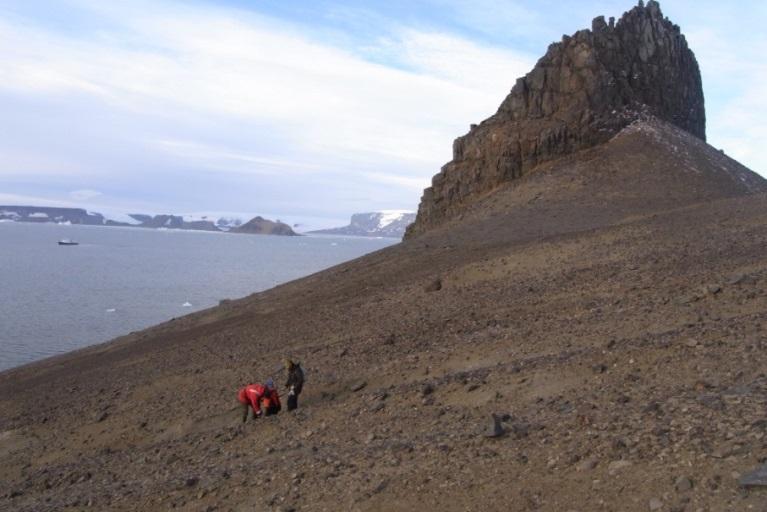
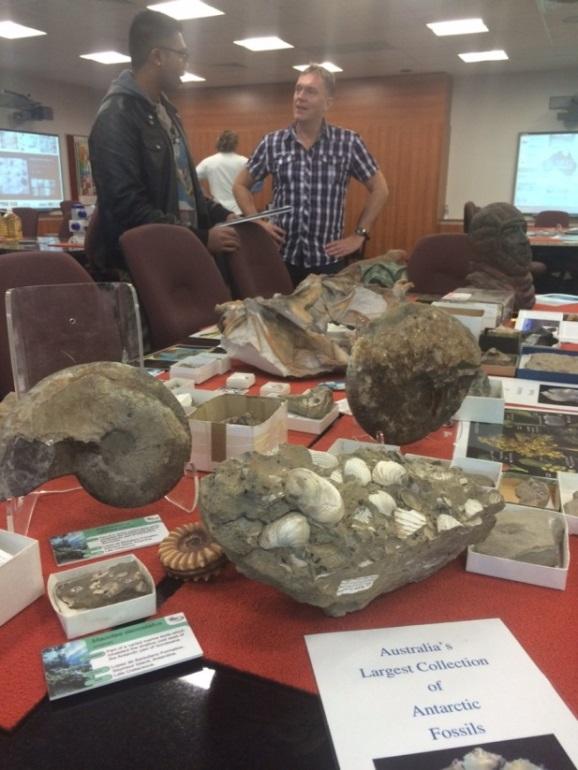
Dr Chris Mays is presently researching the floral palaeoecology of polar and sub-polar palaeolatitudes of Eastern Gondwana (the Chatham Islands, New Zealand, and Winton, Queensland) during a period of global greenhouse conditions - specifically: the MidCretaceous Thermal Maximum. The aims of this research are twofold: 1) to assess the ecological repercussions of a pivotal phase of floral evolution: the emergence of flowering plants as the dominant floral group on Earth; and 2) provide a palaeontological analogue of floral adaptation patterns and biogeographic distribution in response to extreme global warming. He published a taxonomic monograph this year on the spore-pollen taxonomy of the mid-Cretaceous Chatham Islands, New Zealand (AAP Memoir #47, 2015). Hannah Carle conducted research on the Chathams in 2015 for her Honours research with Chris Mays and Jeff Stilwell on the South Polar greenhouse Earth floras and environments.
Pedro A. Viegas is a Natural History Curator and Conservator currently working on the ARC project "The first Mesozoic fossiliferous amber from Southern Gondwana". Pedro is managing both the laboratory and expedition sides of the project, developing new techniques for high definition and 3D imaging of amber inclusions, implementing new standards for the preparation and conservation of amber, advising and guiding students and researchers on their amber related investigations as well as developing and leading all field work related activities. One of Pedro’s major achievements for 2015 was finding 45 student volunteers to sort through a huge volume of bulk sediment to search for amber, especially in the deposits from Tasmania and Victoria. Chris Mays assisted Pedro in this venture to obtain as much amber material as possible. This has resulted in some spectacular discoveries.
Prof. Emer. Pat Vickers-Rich is Chair of the UNESCO International Geoscience Program (IGCP) and Geoparks Scientific Board, Paris, and current head of the Australian IGCP She is
(Upper right) Display on Monash Open Day, showing some specimens from the largest collection in Australia of fossils from Antarctica, amassed by Jeff Stilwell over many expeditions (photograph by Claire Bowers)
further involved with IGCP as Corresponding Secretary and Co-Leader of Project 587: Of Identity, Facies and Time, the Ediacaran (Vendian) Puzzle
Supervision of students this year and next included Alana Sharp (PhD completed in 2015); David Elliott (PhD completed in 2015); Peter Trusler (PhD to be submitted in early 2016); Leslie Kriesfeld (PhD underway) & Nicole Morton (Hons to be completed in 2016).
Fieldwork in 2015 concentrated on (1) Central and Northern Iran (September) where Pat led an expedition to the Yazd area [Koushk Mining District] and the Central Alborz Mountains (south of the Caspian Sea) jointly with the Iranian Geological Survey, investigating the late Neoproterozoic biota and environment as well as attempting precise dating of the sequences; and (2) in Namibia (October), initially in the capital Windhoek, where I worked on the history of Aar Farm from pre-history through to present with historian Gunter von Schumann, accessing public records – this will result in a book on the Aus region of Namibia with particular emphasis on the geological history and the importance of water in this region over time. Subsequently I was involved in mapping and collection of geochemical samples from the Witvlei and Aus regions as part of IGCP587, with particular emphasis on gathering material for graduate student Leslie Kriesfeld (working with me), and Dr Jay Kaufman (University of Maryland) Some palaeontological samples were also collected along with the carbonates for geochemical analysis, as well as ash sampling with Dr Ulf Linnemann from the Senckenberg Museum (Dresden) and Mr Charlie Hoffmann, associated with the Geological Survey of Namibia.
Public Science Education and Outreach activities this year were many and varied, and included lectures to the public in Melbourne, Singapore, Windhoek, and to a conferenece organized by Lund University, Sweden. Exhibitions were curated at the Geelong National Wool Museum (Wildlife of Gondwana), Bathurst Fossil and Mineral Museum NSW (Upstream/Downstream, The Scientific Art of Peter Trusler) and Otway Light Station, Apollo Bay and RACV Resort, Inverloch Vic (Dinosaurs Under Southern Auroras ). Pat’s continuing engagement with the government of Timor-Leste (funded b y UNESCO) saw her lead the School Visits Program (with J. Smith) providing professional development for primary and early secondary teachers and training for the curators of the O Mundo Perdido Exhbitions established by the Monash Science Centre/PrimeSCI! at UNESCO Headquarters in the capital Dili, in the Public Library in the highland town of Aileu (a joint project with the Moreland City Council VLGA) and at the Don Bosco Catholic Centre in Baucau. She also presented at the SESIM teacher network in science education for the country districts of Timor.
On several occasions during the year, Pat held interviews with Paul F. Lawson, former head Technical Assistant at South Australian Museum, as part of ongoing data gathering for a biography of Lawson and his interaction with Ruben A. Stirton (University of California) and Richard H. Tedford in the early exploration of the Cenozoic vertebrate record of Central Australia. Lawson, now 97, is the only survivor of this group that began work in the 1950’s and dramatically extended the record of vertebrates from the Pleistocene well into the midCenozoic and fostered many of the vertebrate palaeontologists still active on this time span in Australia.
Staff Roles and Expertise for 2015-16:
Assoc. Prof. Jeffrey Stilwell (Chief Investigator and Leader) - Mesozoic-Cenozoic biostratigraphy, macro- and micropalaeontology, and palaeoenvironments
Prof. Mike Hall - Basin Analysis and seismic interpretation
Dr Chris Mays – Palaeobotany, palynology, biostratigraphy
Dr Fleur Noailles – Invertebrate palaeontology of Paleozoic echinoderms
Assoc. Prof. Alan Tait (Honorary Fellow) - Sedimentology and stratigraphy
Prof. Emer. Pat Vickers-Rich – Palaeontology, Precambrian biotas and palaeoenvironments
Dr Ray Bate (UK) – Ostracod biostratigraphy – external consultant and advisor
Dr Alan Partridge (Biostrata Pty Ltd, Melbourne) - Palynomorph biostratigraphy –external consultant and advisor
Dr Andre Coffa (Pietrovin and Bridgeport) - Petroleum geoscience –external consultant and advisor
Dr Daniel Thompson (Kengaku Energy) – Petroleum geoscience – external consultant and advisor
Dr Chris Consoli (Global CCS Institute) Carbon capture/storage in basin systems
Dr Kath Grey (Honorary Research Fellow; Geological Survey, WA (retired 2013))Microbialites, stromatolites, inter-tidal biostratigraphy and palaeoenvironments
Prof. David Cantrill (Research collaborator and advisor, Royal Botanic Gardens, Melbourne) – palaeobotany
Dr Dan Bickel (Research collaborator and advisor, Australian Museum, Sydney) –palaeoentomology
Dr Sarah Martin (Research collaborator and advisor, Geological Survey of Western Australia, Perth) – palaeoentomology
Dr Han van Gorsel (Adjunct Research Fellow, Houston, Texas, USA) – micropalaeontology and basin analysis
Current PhD, MSc and Honours Students and Projects at Monash since 2014
Mr Hamed Aghaei (PhD, completed 2014) – ‘The Structural, Stratigraphic and Hydrocarbon Potential Evolution of the Onshore Gippsland Basin, Victoria, Australia’
Mr David Briguglio (PhD, completed 2015) – ‘Structural and Stratigraphic Evolution of the Onshore Otway Basin, Western Victoria’
Mr James Driscoll (PhD) – ‘Upper Cambrian-Lower Ordovician sediments, northern Tasmania: An Analogue for the Development of Clastic Reservoirs’
Mr Amir Mahmud (PhD, completed 2014) – ‘Basin Evolution of Upper CambrianOrdovician Sediments in the West Coast Range of Tasmania’
Ms Annie Quinney (PhD, completed 2015) – ‘Diversity of inclusions in Late Cretaceous amber from the Otway Basin, Australia’. This discovery is significant not only because amber is extremely rare in Australia, but this is also the oldest amber found in Australia. Furthermore, it has the potential to preserve high latitude flora and fauna from a time period in which little is known due to a poor fossil record.
Ms Alana Sharp (PhD, completed 2015) – ‘Cranial form and function of the largest ever marsupial, Diprotodon optaum: a comparative finite element analysis’.
Mr David Elliott (PhD, completed 2015) – ‘Systematics and palaeoenvironments of the Ediacaran fauna’
Mr Peter Trusler (PhD) – ‘New insights into Palorchestes’
Ms Shannon Herley (PhD) – ‘The effects of a transitional tectonic environment on sedimentation processes in the Late Cretaceous, southeastern Australia’
Mr Toban Wild (PhD) – ‘Keystones in East Gondwana breakup: palaeontology and provenance of sedimentary strata from Batavia and Gulden Draak knolls, Perth Abyssal Plain, eastern Indian Ocean’
Ms Prudence Perry (PhD) –‘Chronology and floral ecology of Early Cretaceous syn-rift sediments from the Gippsland Basin, Victoria’
Mr Mitchell O’Mara (PhD) – ‘Stratigraphy and sedimentology of Paleozoic rocks, Tasmania’
Mr Leslie Kriesfeld (PhD) ‘ Life in the Ediacaran - Research on the morphology, ontogeny, and life habit of Nemiana and analogous metazoans’
Mr Kevin Chen (Honours H1 result, Dec. 2013) ‘Palaeoenvironmental reconstruction of Livingston Island, Antarctic Peninsula in the Early Cretaceous: interpretations from the Walker Bay Erratics’
Mr Jesse Vitacca (Honours H1 result, Dec. 2013) ‘Palaeoenvironmental evolution of the Mahakam Delta sequences of the Kutei Basin, Indonesia: employing biostratigraphy and basin analysis techniques’
Ms Prudence Perry (Honours H1 result, Dec. 2013) ‘Palaeoenvironmental reconstruction of the Cenozoic Mahakam Delta, Indonesia: characterisation of palynofacies and their associations using organic matter and marine microfossil assemblages’
Mr Conor McLaren (Honours H1 result, highest mark of 2014=90, Dec. 2014) An assessment of the petroleum prospectivity of a Lower Miocene calciturbidite play: the West Linapacan B Structure, Northwest Palawan Basin, Philippines’
Mr Mitchell O’Mara (Honours H1 result, Dec. 2014) Calciturbidite heterogeneity of the West Linapacan A Field, Philippines: an investigation of reservoir architecture and continuity through the use of high-resolution biostratigraphy and well correlation’
Mr Toban Wild (Honours H1 result, Dec. 2014) The life and times of Batavia Knoll, Perth Abyssal Plain: new palaeontological insights into East Gondwana breakup during the midCretaceous’
Mr Will De Silva (Honours H1 result, Dec. 2014) Sub-polar fossiliferous amber from the Lower Eocene Macquarie Harbour Formation, Strahan, Tasmania: taxonomic composition and palaeoenvironmental assessment.
Mr Andrew (‘Drew’) Giles (Honours H1 result, June 2015) ‘Microfossil biostratigraphy and palaeoenvironmental assessment of Upper Cretaceous strata, Humps Island, Antarctica: Evidence for a polar greenhouse’
Ms Adele Pentland (Honours H2A result, Dec. 2015) –‘Fossiliferous Eocene amber from Anglesea, Victoria: its biota and palaeontological significance’
Mr Peter Mazzone (Honours H1 result, Dec. 2015 and ESSO prize winner) –‘ The Evolution of the Early Cretaceous Eumeralla Formation, Southeast Otway Ranges, Victoria, Australia’
Ms Hannah Carle (Honours, completing mid-2016) ‘Mid-Cretaceous macrofloras from the Tupuangi Formation, Chatham Islands, New Zealand’
Ms Nicole Morton (Honours, completing mid-2016) ‘Ediacaran palynology of Munyarai 1: lithostratigraphic implications for the Munyarai Trough, Officer Basin, South Australia’
[consolidated listing of recent publications from Monash palaeontologists]
Stilwell, J.D., Vitacca, J. & Mays, C. (accepted). South Polar greenhouse insects (Arthropoda: Insecta: Coleoptera) from the mid-Cretaceous Tupuangi Formation, eastern Zealandia. Alcheringa.
Stilwell, J.D. 2015. 'Of Terrible Lizards and Marine Monsters: the Discovery of Dinosaurs, Mosasaurs and Plesiosaurs on the Chatham Islands and their scientific significance'. Part I. Marine Reptiles, pp. 208-212, & Part II. Theropod dinosaurs and Aves, pp. 212-215. In Armitage, D. (compiler), True Tales of the Chatham Islands.
Mays, C., Steinthorsdottir, M. & Stilwell, J.D. 2015. Climatic implications of Ginkgoites waarrensis Douglas emend. from the south polar Tupuangi flora, Late Cretaceous (Cenomanian), Chatham Islands. Palaeogeography, Palaeoclimatology, Palaeoecology 438, 308-326
Chen, K., Stilwell, J. D. & Mays, C. (in press 2015). Palaeoenvironmental reconstruction of Livingston Island, Antarctic Peninsula in the Early Cretaceous: Interpretations from Walker Bay Erratics. Alcheringa 39, 12 pages.
Stilwell, J.D. (accepted). Zealandia’s oldest volutes (Mollusca: Gastropoda) form the early Paleogene of South Island and Chatham Islands post Gondwana break-up and evolutionary divergence. Journal of Paleontology.
Quinney, A., Mays, C., Stilwell, J., Zelenitsky, D. & Therrien, F. 2015. The range of bioinclusions and pseudoinclusions preserved in a new Turonian (~90 Ma) amber deposit from southern Australia. PLOS One 10(5): e0121307. doi:10.1371/journal. pone.0121307 [19 pages]
Thompson, D.L., Stilwell, J.D. & Hall, W.M. 2015. Lacustrine carbonate reservoirs from Early Cretaceous rift lakes of Western Gondwana: Pre-Salt coquinas of Brazil and West Africa. Gondwana Research 28, 26-51.
Mays, C., Tosolini, A-M, P., Cantrill, D.J. & Stilwell, J.D. 2015. Late Cretaceous (Cenomanian-Turonian) macroflora from the Chatham Islands, New Zealand: Bryophytes, Lycophytes and Pteridophytes. Gondwana Research 27, 1042-1060.
Sorrentino-Mariconda, L., Stilwell, J.D. & Mays, C. 2014. A model of tephra dispersal from an early Palaeogene shallow submarine Surtseyan-style eruption(s), the Red Bluff Tuff Formation, Chatham Island, New Zealand. Sedimentary Geology 300, (2014) 86–102
Stilwell, J.D. 2014. Expansion of the rare trochid Calliovarica (Mollusca: Gastropoda) into eastern Zealandian waters during the late Paleocene-early Eocene thermal event. Alcheringa 38, 239-244.
Briguglio, D., Kowalczyk, J., Stilwell, J.D., Hall, M. & Coffa, A. 2013. Detailed paleogeographic evolution of the Bass Basin: Late Cretaceous to present. Australian Journal of Earth Sciences 60, 719-734.
Mays, C., 2015. A Late Cretaceous (Cenomanian–Turonian) south polar palynoflora from the Chatham Islands, New Zealand. Memoirs of the Association of Australasian Palaeontologists 47, 1-92
Mays, C., 2015. Frozen in Stone: The Polar Forests of Zealandia. Australian Age of Dinosaurs Journal 12, 52–65.
Klein, C.G., Whiteside, D.L., Selles de Lucas, V., Viegas, P.A. & Benton, M.J. 2015. A distinctive Late Triassic microvertebrate fissure fauna and a new species of Clevosaurus (Lepidosauria: Rynchocephalia) from Woodleaze, Quarry, Gloucestershire, UK. Proceedings of the Geologists’ Association 126, 402-416.
Viegas P.A. & Benton M.J. 2014. The Bristol Dinosaur Project – A Conservation and Preparation Overview. Journal of Paleontological Techniques 13, 50-64.
Foffa D., Whiteside D.I., Viegas P.A. & Benton M.J., 2014. Vertebrates from the Late Triassic Thecodontosaurus-bearing rocks of Durdham Down, Clifton (Bristol, UK).
Proceedings of the Geologists’ Association 125, 317–328.
Hinder, G., Vickers-Rich, P., van Schalkwyk, P. & Schneider, G. (in press) A Worldclass Canyon and Late Proterozoic “Ghosts”, Superlatives of the Nama Group. Heritage Volume for International Geological Congress, Cape Town, South Africa 2016.
Elliott, D.A., Trusler P., Narbonne G.M., Vickers-Rich P., Fournie N., Hoffmann K.H. & Schneider G. (in press). Ernietta from the late Ediacaran Nama Group, Namibia. Journal of Paleontology
Ivantsov, A.Yu., Narbonne, G.M., Trusler, P.W., Greentree, C. & Vickers-Rich, P. (in press) Elucidating Ernietta: Exceptional specimens from the Ediacaran of Namibia. Lethaia. Rich, T.H., Hopson, J.A., Gill, P.G., Trusler, P. et al, including Vickers-Rich, P. (in press)
The Mandible and Dentition of the Early Cretaceous Monotreme Teinolophos trusleri, Paleontologica Polanica.
Monash University & Museum Victoria
Travis Park (Monash University & Museum Victoria) is currently in the third year of his PhD which is investigating the hearing abilities of archaic toothed baleen whales and hopes to submit his thesis mid-2016. He is also continuing his research on Australian fossil penguins. He communicates the latest palaeontological findings to the general public via social media (Twitter: @Blogozoic) and his blog, also called Blogozoic, on the SciLogs blogging network (http://www.scilogs.com/blogozoic/).
Fitzgerald, E.M.G., Park, T. & Worthy, T. 2012. First giant bony-toothed bird (Pelagornithidae) from Australia. Journal of Vertebrate Palaeontology 32, 971–974.
Park, T. & Fitzgerald, E.M.G. 2012. A late Miocene–early Pliocene Mihirung bird (Aves:Dromornithidae) from Victoria, southeast Australia. Alcheringa 36, 419–422.
Park, T. & Fitzgerald, E.M.G. 2012. A review of Australian fossil penguins (Aves: Sphenisciformes). Memoirs of Museum Victoria 69, 309–325 Park, T. 2012. Tracing the evolution of modern penguins (Aves: Spheniscidae) using fossils from Australia. Unpublished Honours thesis. 51 pp. Park, T. 2014 Redescription of the Miocene penguin Pseudaptenodytes macraei Simpson (Aves: Sphenisciformes) and redefinition of the taxonomic status of ? Pseudaptenodytes minor Simpson. Alcheringa 38, 450–454.
The University of Melbourne, School of Earth Sciences
The School of Earth Sciences at the University of Melbourne has several staff working on a variety of palaeontological research themes. These range from the origin of animal life in the Cryogenian 650 million years ago (Wallace) to Mesozoic to Cenozoic foraminifera, environments and palynomorphs from northwest and southeast Australia (Gallagher, Wallace, Holdgate, Tosolini, Wagstaff, McLaren, Cupper). Our research has been supported by an ARC Discovery grant (to Wallace/Gallagher: Oxygenation of the oceans and the origin of animals) during 2013-2015. Other research includes dating mega-marsupial and early human fossils (Cupper). A full list of our staff, students and publications follows:
Staff:
Assoc Prof. Malcolm Wallace (Reader): Neoproterozoic Cryogenian Life and reefs; Assoc. Prof. Stephen Gallagher (Reader): Mesozoic to Cenozoic micropalaeontology and palaeoceanography using foraminifera;
Dr Sandra McLaren (Lecturer/Research Fellow): dating the onset of aridity in Australia;
Dr Anne-Marie Tosolini (Lecturer): Cretaceous to Paleogene palaeobotany of Antarctica and southeast Australia;
Dr Matt Cupper (Research Fellow): dating megafauna sites and human fossils;
Dr Guy Holdgate (Research Fellow): the palaeoenvironmental evolution of Cenozoic brown coal;
Dr Barbara Wagstaff (Research Fellow): Mesozoic to Cenozoic palynology;
Dr Ashleigh Hood (Research Fellow): Cryogenian geochemistry;
PhD students (current):
Vera Korasidis – Palynology of Latrobe Valley coal.
Maxwell Lechte – Precambrian Ironstones.
Jackson McCaffrey – reefs of the Northwest Shelf.
Tony Sandler – Echinoid taxonomy in the Miocene Mannum Limestone.
Post graduate completions (2015):
Simone de Morton – Carboniferous carbonates and stratigraphy. (PhD)
Ngoc Nguyen – Palynostratigraphy and climate of the Eocene. (MPhil)
Gallagher, S.J., Kitamura, A., Iryu, Y., Itaki, T., Koizumi, I. & Hoiles, P.W. 2015. The Pliocene to Recent History of the Kuroshio and Tsushima Currents: a multi-proxy approach. Progress in Earth and Planetary Science (A Japanese Geophysical Union Journal) 2, 1-17. DOI 10.1186/s40645-015-0045-6
Holdgate, G.R., Wallace, M.W. & Forbes, S. 2015. Pre-Cenozoic geology of the Latrobe Valley Area onshore Gippsland Basin, S.E. Australia. Australian Journal of Earth Sciences 62(6), 695-716. http://dx.dol.org/10.1080/08120099.2015.1085901.
Hood, A.V.S., Wallace, M.W., Reed, C.P., Hoffmann, K.H. & Freyer, E.E. 2015. Enigmatic carbonates of the Ombombo Subgroup, Otavi Fold Belt, Namibia: A prelude to extreme Cryogenian anoxia? Sedimentary Geology 324, 12-31.
Hood, A.V.S. & Wallace, M.W. 2015. Extreme ocean anoxia during the Late Cryogenian recorded in reefal carbonates of Southern Australia. Precambrian Research 261, 96-111. Hubble, T., Webster, J., Yu, P., Fletcher, M., Voelker, D., Airey, D., Clarke, S., PugaBernabeu, A., Mitchell, D., Howard, F., Gallagher, S.J. & Martin, T. 2015 (in press). Submarine Landslides and Incised Canyons of the Southeast Queensland Continental Margin, 125-134. In Lamarche, G., Mountjoy, J., Bull, S., Hubble, T., Krastel, S., Lane, E., Micallef, A., Moscardelli, L., Mueller, C., Pecher, I. & Woetz, S., (eds). Submarine Mass Movements and their Consequences (Springer International Publishing). ISBN 978-3-319-20978-4 doi.org/10.1007/978-3-319-20979-12
Mays, C., Tosolini, A-M.P., Cantrill, D.J. & Stillwell, J.D., 2015. Late Cretaceous (Cenomanian-Turonian) macroflora from the Chatham Islands, New Zealand: bryophytes, lycophytes and pteridophytes. Gondwana Research 27, 1042–1060. DOI:
Steinthorsdottir, M., Tosolini, A-M.P. & McElwain, J.C., 2015. Evidence of annelid and insect activity in a fossil gymnosperm macroflora at the Triassic-Jurassic transition of East Greenland. Palaios 30, 597–607.
Swift, J., Cupper, M.L., Greig, A., Westaway, M.C., Carter, C., Santoro, C.M., Wood, R., Jacobsen, G.E. & Bertuch, F. 2015. Skeletal arsenic of the pre-Columbian population of Caleta Vitor, northern Chile. Journal of Archaeological Science 58, 31-45.
Tosolini, A-M.P., McLoughlin, S., Wagstaff, B.E., Cantrill, D.J. & Gallagher, S.J. 2015. Cheirolepidiacean foliage and pollen from Cretaceous high-latitudes of southeastern Australia, Gondwana Research 27, 960–977. DOI: 10.1016/j.gr.2013.11.008. 10.1016/j.gr.2014.03.017.
Wallace, M.W., Hood, A.V.S., Woon, E.M.S., Giddings, J.A. & Fromhold, T.A. 2015. The Cryogenian Balcanoona reef complexes of the northern Flinders Ranges: Implications for Neoproterozoic ocean chemistry. Palaeogeography, Palaeoclimatology, Palaeoecology 417, 320-336.
RMIT University, Earth & Oceanic Systems Research Group
John Buckeridge continues his work on the palaeontology, palaeoecology, biology and distribution of marine invertebrates. John participated in an International Society of Zoological Sciences meeting in Xi’an in November 2015, where he gave a presentation on the southern hemisphere cirripede taxon Fosterella. The presentation has been expanded into a full paper (in press with Integrative Zoology) in which a new tribe and genus is proposed for the austral Megabalaninae. In the process of doing this, the sedimentary palaeoenvironment for the Castlepoint Formation (North Island, NZ) arose. There are several contentious issues in the current interpretation, and as a result, John and Alan Beu (GNS) will visit the location in January 2016 in an attempt to unravel the conundrum.
The Castlepoint Formation, Wairarapa coast, North Island, New Zealand. Site of some of the world’s most extensive barnimols, in this location dominated by Fosterella tubulata
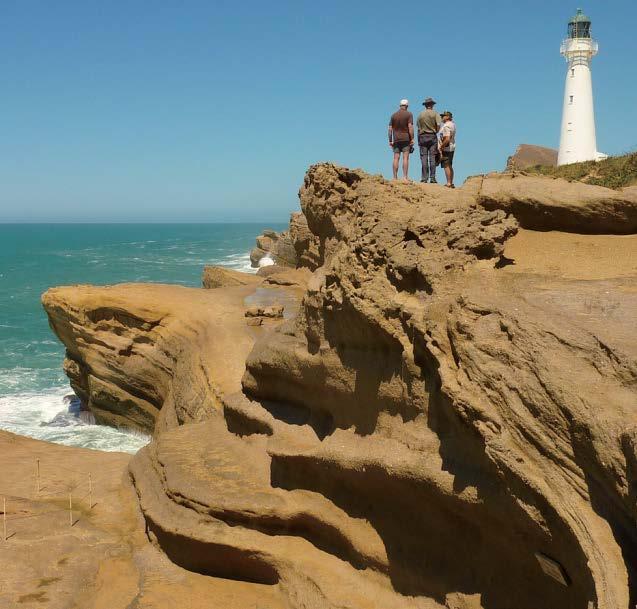
An ongoing battle between geoconservation and “development” remains in Victoria, and John has co-authored a submission to the State Government to list the type section of the Beaumaris Sandstone as a National Heritage Site. The type section outcrops on Crown Land near Beaumaris, a seaside suburb on the southeast of Port Phillip. However, a motorboat club currently occupies much of the area. This club is keen to extend its footprint further, with a commensurate loss in outcrop (and access to exposures). During the last year local palaeontologists have run three public fora at Rickett’s Point (Beaumaris). These included brief walks along the fossiliferous coastal cliffs and the wave-cut platform to highlight the importance of the site, which contains a diverse assemblage of vertebrates (terrestrial and marine), invertebrates and trace fossils. The geology of the site, especially the reddish cliffs adjacent to blue waters were to result in it becoming one of the primary subjects for painters from the 19th century Heidelburg School of Art.
With high public interest converging on the artistic, cultural and scientific amenities of the locality (more than 1000 participated in the fora), we are hopeful that there will be a positive outcome in conserving this important site for future generations.
John’s interest in ethics in geosciences remains, with a short article highlighting plagiarism, different cultural perspectives and the perils of “publish or perish” appearing in Geoscientist.
A first- year geoscience module that has been taught by John at Lakes Entrance in East Gippsland, VIC. for almost a decade is now under threat, and may be closed. The rationale for this closure includes “strategic alignment” and of course, budget. Nonetheless, field-work is still a very high priority in geoscience education, and we now have a post-graduate palaeontology paper, in East Gippsland, that was successfully run for the first time in 2015.
Paul Ter has submitted his thesis on ichnofossils of the Beaumaris Sandstone, Port Phillip Bay and has recently undertaken fieldwork at Richmond in central Queensland – where he is evaluating the ichnofauna.
Fearghus McSweeney has joined the palaeo-group and is working with John on a new book on the fossils of the Rickett’s Point Marine Sanctuary, Beaumaris, VIC. This will compliment The Urban Sanctuary. Algae and Marine Invertebrates of Ricketts Point Marine Sanctuary, published in 2012.
Buckeridge, J.S. 2014. Responses to climate change: An assessment of how selected invertebrates (Cirripedia: Megabalaninae) fared as conditions rapidly cooled in the Pleistocene. Proceedings of the 6th International Symposium of Integrative Zoology, Beijing, China. 23-30th November. p.26. (Abstract).
Buckeridge, J.S 2015. Fast-track fast one. Geoscientist 25(4): 9.
Buckeridge, J.S. 2015 (in press). Revision of Southern hemisphere taxa referred to Fosterella Buckeridge, 1983 (Crustacea: Cirripedia), and their extinction in response to Pleistocene cooling. Integrative Zoology
Federation University Australia, Ballarat
Stephen Carey continues his collaboration in a study of Pleistocene vertebrate trace fossils with Aaron Camens (Flinders University), John Sherwood (Deakin University) and Matt Cupper (university of Melbourne). We have completed a systematic examination for trace fossils (tracks) of coastal dune limestone (Bridgewater Formation, Tamala Limestone and equivalents) of Tasmania, Victoria, South Australia and Western Australia, which has revealed many new occurrences. Analysis and manuscript preparation will follow.
La Trobe University, Bendigo
John Neil (Hon. Research Associate) is currently working on a discussion of the "Species Problem" in the light of recent changes in emphasis by taxonomists. This will be developed from a study of the Cytherelloidea (Ostracoda) of Batesford Quarry and comparable Victorian and Southeast Australian localities.
The paper by Renate Matzke-Karasz et al. (citation below) opens up the possibility of nanotomography of microfossils and preserved organs and soft parts. Zenker organs of ostracoda (sperm delivery organs) were shown to be preserved virtually unchanged in form over 15 million years from the Miocene to the present day in Recent ostracods, with significant implications for evolutionary stasis. Research for this paper was carried out at the European Synchrotron Radiation Facility, Grenoble, led by Dr Matzke-Karasz.
Matzke-Karasz, R., Neil, J.V., Smith, R.J., Symonovaě, R., Morkovskyě, L., Archer, M., Hand, S.J., Cloetens, P. & Tafforeau, P. 2014. Subcellular preservation in giant ostracod sperm from an early Miocene cave deposit in Australia. Proceedings of the Royal Society B 281, 20140394.
NEW ZEALAND
GNS Science, Lower Hutt
Highlights and news from the Paleontology team at GNS Science in 2015
Radiolarian-based analogue to interpret past South Pacific environments
Cortese and Prebble (2015) have published an important study which establishes radiolarians as a tool to reconstruct past sea surface temperatures in the southwest Pacific region. The study is based on numerous sediment cores from the Southern Ocean collected during a collaboration with the Korean Polar Research Institute. This dataset has already been applied successfully to sediment cores (e.g. Panitz et al., 2015).
NZ Timescale update
Ian Raine and GNS colleagues (Raine et al., 2015) completed recalibration of the NZ Geological Timescale with the current International Geological Timescale (Gradstein et al., 2012) and ICS International Chronostratigraphic Chart (Cohen et al 2015). A table and poster of NZGT 2015/1 may be downloaded from the GNS website (http://www.gns.cri.nz). We recommend use of NZGT 2015/1 in reports and publications
Lake Ohau Marsden-funded project
In February 2015, a team led by Marcus Vandergoes tested a new Uwitec coring system at Lake Ohau, South Island. The Modular coring platform has been purchased by a Geology, Geograph y, Marine Science & Chemistry research collective at Otago University. The system is designed to work in deep lake and Fiord systems (up to 200-300m deep) and recover core up to 30m length. Results of the coring test will inform the deep drilling project, postponed now until early 2016, and provide new interim sediment for extending paleoclimate reconstructions from the Lake Ohau basin.
‘Captured in amber’ Marsden-funded project
A start-up meeting for this Otago University-led project investigating the New Zealand amber record was hosted at GNS in May with participants Daphne Lee (co-PI) and Uwe Kaulfuss (Otago University), Liz Kennedy and Dallas Mildenhall (co-PI) (GNS Science). New collections of Cretaceous to Miocene age amber and associated sediments have been made and samples analysed for palynology.
Paleogene climate and biostratigraphic research
A study of a sediment core from the Campbell Plateau that was collected by the Deep Sea Drilling Project in 1973 (DSDP site 277) has identified an important record of a short-lived global warming event, the Paleocene-Eocene thermal maximum. Detailed geochemical studies have allowed us to extract a paleotemperature record, consistent with other local records of global warming at this time. However, the primary scientific contribution of the study is the recognition of diagenetic overprinting of the original climate signal suggesting that more caution is required when reconstructing climate from ancient sediments (see Hollis et al., 2015).
Another study focussed on the Eocene-Oligocene transition at DSDP Site 277 and coeval records from the southern Pacific showed that radiolarian faunal turnover in the late Eocene was linked to a cooling event, the Priabonian oxygen isotope maximum (Pascher et al. 2015). Lead author Kristina Pascher and fellow student Claire Shepherd are completing PhD studies of radiolarian and calcareous nannofossil biotic turnover during the Eocene as part of a
Marsden Fund project led by Chris Hollis. As part of this work, Chris is participating in a NERC-funding project to improve climate models and reconcile models and proxies for the early Eocene climatic optimum, with an initial workshop scheduled for January, 2016.
The first magnetostratigraphic correlation of Eocene sediments in New Zealand has been achieved through collaboration with Italian and German researchers and allows us to tie Eocene biostratigraphic events to the geomagnetic polarity time scale for the first time (Dallanave et al., 2014, Dallanave et al., 2015).
IODP
Chris Hollis attended the post-cruise science meeting for IODP Expedition 342 (Newfoundland Paleogene sediment drifts) in Utah. Several New Zealand-led (GNS and Victoria University) IODP proposals are on the verge of being scheduled for a southwest Pacific – Antarctic margin series of expeditions starting in 2018.
Mid-Cretaceous paleobotany
Liz Kennedy and Ian Raine are collaborators in a National Geographic field grant led by Chris Mays (Monash University). The project involves research on mid-Cretaceous floras from the Clarence Valley and Chatham Islands and complements current GNS work on Cretaceous floras, climates and biostratigraphy.
Antarctic ice sheet modelling and related work
In October 2015 Nick Golledge and his collaborators (Richard Levy, Tim Naish) published four articles on regional Antarctic ice sheet melt water input. The articles were published in Nature, Nature communications, Geology and Earth Future.
Biostratigraphy of Pliocene-Pleistocene
In August 2015, Martin Crundwell completed a major revision of the current biostratigraphic framework for Plio-Pleistocene planktic foraminifera, which underpins the correlation and dating of marine sediments in New Zealand. The study is being published as a GNS Science Report. The study resolves taxonomic and biostratigraphic issues that have been identified in biostratigraphic studies of other deep-sea sites around NZ and in commercial work over the last 15-years.
New Zealand Fossil Record File (FRED)
The New Zealand Fossil Record File (http://www.fred.org.nz/) is the key repository for all paleontological data from New Zealand and its offshore territories, and is used routinely and widely for geoscience research, technology transfer, and public outreach, in order to generate new knowledge and positive outcomes across a broad range of Earth science endeavours. After a technical review of the database software, we have developed a strategic plan which sets out the Vision and Mission for FRED and a work plan for the coming three years that will implement steps to ensure long-term sustainability and growth of this nationally significant geoscience resource. This strategic plan will be used to inform stakeholders within GNS Science, the Geoscience Society of New Zealand, and the wider New Zealand geoscience community, and as a template for management of FRED in the coming years.
Taxonomic research and collections
We conducted a survey of Paleontology Department staff to determine the level of taxonomic research that has been undertaken over the past ten years (since 2004). Based on publication data, we can report that taxonomic research was incorporated into 58 publications; 92 new taxa have been named, almost 3000 species have been described, and 4100 specimens have been figured. Taxonomic studies have been undertaken on molluscs (25 publications), plants
and miospores (19 publications), foraminifera (8 publications), radiolarians (7 publications), dinoflagellate cysts (5 publications), bolboformids (1 publication) and calcareous nannofossils (1 publication).
At the same time, we contributed to a report, prepared by a special panel of the Royal Society of New Zealand, on the status of national taxonomic collections in New Zealand. The focus of the panel was to: identify the value of New Zealand’s national taxonomic collections; review the value being gained from them now and the potential value possible in the future; evaluate taxonomic training in New Zealand and any impediments to this training, and provide recommendations on the most effective process for supporting, developing and managing our taxonomic collections, databases, information systems and research for the future.
The resulting report was launched on 20th December 2015. Copies of the report, appendices, media release, an infographic outlining the benefits of taxonomic collections to New Zealand, and further background to the process of taxonomy and its benefits, can be found on the Society’s website at: http://www.royalsociety.org.nz/expertadvice/papers/yr2015/national-taxonomic-collections-in-new-zealand/.
The report highlights that more resources and a co-ordinated approach are needed to safeguard and grow New Zealand’s taxonomic collections which are intrinsic to supporting sectors of New Zealand life from economic growth to human health.
The National Paleontology Collections at GNS have again been well-utilised by staff and visiting researchers this year. John Simes and Marianna Terezow have responded to remote requests for images, casts, and collections.
Global Change through Time programme - new programme leader
Richard Levy is the new programme leader after Chris Hollis’s resignation from the role. Richard also leads the Past Antarctic Climates programme, a 3- year Marsden programme on Lake Ohau and a large sea level rise research project within GNS. There is a great degree of synergy in the research being undertaken within these different programmes/projects.
Honours
PhD student Kristina Pascher won the prize for best student presentation at the International Radiolarian Researchers’ conference (InterRad 14) in Turkey. She presented the results of the first part of her Marsden-funded PhD, on the origins of high-latitude marine plankton in the Eocene.
Chris Hollis, Richard levy and their team received a 2015 GNS Science award for science communication for their programme of marae-based Earth science exploration, Te Kura Whenua (Earth School).
Professorship
James Crampton, who has a joint appointment at GNS and Victoria University of Wellington (VUW), has recently gained a Professorship at VUW.
Student news
Heidi Roop (Sarah Beanland scholarship holder) successfully defended her thesis in June 2015 and was awarded her PhD degree. Her work was on "Late-Holocene Climate Variability in southern New Zealand: A reconstruction of regional climate from an annually laminated sediment sequence from Lake Ohau". Heidi’s PhD was supervised by Gavin Dunbar (VUW), Marcus Vandergoes and Richard Lev y (GNS).
Sonja Bermudez began a MSc in Geology at Victoria University of Wellington with focus on radiolarian and foraminifera analysis in Eocene beds at Mead Stream, South Island, to
investigate whether the limestone and marl deposits coincide with climate cycles (supervised by Chris Hollis and Mike Hannah). Thomas Cooper began a related MSc project on the palynology of the same Eocene succession (supervised by Erica Crouch and Mike Hannah).
Internships
Hima Hassenruck-Gudipati completed a three month internship at GNS as part of a prestigious US-funded Watson Fellowship. She undertook a micropaleontological study of samples collected through an Eocene section at Koumac, northern New Caledonia as part of a Marsden Fund project on Eocene climate.
Alice Costa from Padova University also completed a three month internship investigating the nannofossil record across the middle Eocene climatic optimum. Both students were hosted by Chris Hollis. Chris is now overseeing a new internship programme for Maori high school students, with four students spending 4 to 6 weeks in the department this summer.
Dinosaur Footprints Travelling Exhibition
Dinosaur Footprints - A Story of Discovery is a nationally-touring exhibition of dinosaur footprints discovered in Late Cretaceous coastal sandstone rocks in northwest Nelson. They are the first dinosaur footprints ever found in New Zealand, and provide the first evidence of dinosaurs in the South Island. In 2014-15, the exhibition has made its way around 10 venues in New Zealand which included:
North Island
1. Auckland Museum: 13 June – 27 July 2014
2. Rotorua Museum: 6 September - 12 October 2014
3. NZ National Aquarium, Napier: Labour Weekend 2014 - 11 January 2015
4. Inglewood Library & Service Centre: 17 January – 15 February 2015
5. Puke Ariki, New Plymouth: 16 February - 22 March 2015
6. Te Manawa, Palmerston North: 4 April - June 2015 South Island
7. Nelson Provincial Museum: 4 July - 13 Sept 2015
8. South Canterbury Museum: 26 Sept - 8 November 2015
9. Fendalton Library: 14 November – 6 December 2015
10. Te Hikoi/Riverton: 29 December – 22 February 2016
More information is available on http://www.gns.cri.nz/Home/Learning/ScienceTopics/Fossils/Dinosaur-Footprints
Training
An astrochronology/time-series course was held by Stephen Meyers, University of Wisconsin, March 30 to April 1 (participants: Clowes, Crampton, Levy, Prebble, Roop, Vandergoes, and students from Victoria University).
The Quaternary Techniques workshop was held in May 2015, this is the 12th year of this highly successful workshop hosted at GNS and attracted 52 participants from New Zealand universities. Several staff from the Paleontology Department presented and contributed to the success of the workshop (Joe Prebble, Giuseppe Cortese, Marcus Vandergoes and Sonja Bermudez).
A two-day workshop on “Stratigraphic Paleobiology”, presented by Prof. Mark Patzkowsky (Penn State University), was held on November 28-29, in association with the Geoscience Society of NZ annual conference in Wellington. The workshop was concerned with the way that relative sea-level change interacts with species’ niches and stratigraphic preservation to control the nature of the fossil record, and sampling strategies to extract
maximum information from the fossil record at maximum resolution. The first day of the workshop was lab based, and the second day was spent in the field, in Wairarapa, looking at Pliocene cyclothemic coquina limestones and mudstone sequences (35 participants from GNS and around NZ, including Bermudez, Beu, Clowes, Crampton, Hollis, Levy, Prebble, Terezow).
Paleontology Department field trip
A successful Paleontology Department fieldtrip was run in May 13-15 in the Wanganui and Taranaki region. The trip included the visit to the McKee Production facilities owned by Todd Energy and to the private collection of Dave Allen in New Plymouth.
Department of Paleontology field trip, 13-15 May 2015
From L to R: Marianna Terezow, Sonja Bermudez, Ian Raine, Chris Hollis, Richard Levy, Chris Clowes, Hugh Morgans, Kristina Pascher, Giuseppe Cortese, Katie Collins (VUW), Alan Beu, Liz Kennedy, Marcus Vandergoes, Lucia Roncaglia, Erica Crouch, John Simes.
Individual research reports
Ian Raine completed compilation of a revised correlation and calibration of the New Zealand Geological Timescale. Other activities since the last report have been in palynological consulting work for petroleum exploration in the Taranaki Basin, contributions to paleobiogeographical papers, and continuing research into a more detailed NZ Late Cretaceous miospore zonation, pollen analysis of NZ honeys, NZ Early Eocene vegetation and paleoclimate, and with Vivi Vajda (Lund University) on the K/T boundary.
Roger Cooper with James Crampton, Peter Sadler and Mike Foot, has submitted a manuscript to PNAS on survivorship in graptolites and its relationship to major extinction events and to paleo-environmental change. We find that the 'background' state for graptolites is a positive relationship between survivorship and species duration - the longer a species lasts the less likely it is to go extinct - as has been reported in the Phanerozoic benthos in several papers (e.g. Finnegan et al., 2008). Short sharp departures from this background state are confined to the 9 or 10 extinction events during the late Katian to Silurian, when survivorship becomes exponential - where probability of extinction is independent of species age, as in the Red Queen evolutionary model of Van Valen (1973). However, because these
episodes happen only during major extinction events, they are inferred to be environmentally driven. During the greatest extinction event, the Late Ordovician Mass Extinction, survivorship becomes negatively related to species age - old species are selectively removed. Thus, extinction in the graptoloids appears to be driven by abiotic interactions, rather than inter-species, biotic, interactions as in the Red Queen Hypothesis.
Dallas Mildenhall works one day a week (paid) under contract to GNS Science plus the rest of the week to answer emails. He continues to be involved in applying forensic palynology techniques in a number of homicide and other cases in New Zealand, and Europe and assisting those using this technique in other countries. He lectures in forensic palynology at the New University of Lisbon, EGAS MONIZ, Almada Campus and continues his work on sourcing and identifying counterfeit pharmaceuticals, particularly in Africa. His major current research focus is on writing up or contributing to papers on systematic palynology, biostratigraphy and palaeoenvironmental analysis of sediments associated with the New Zealand Oligocene land crisis and Miocene maar craters. He is on a three year project with Otago University looking at “Captured in Amber” - pollen analysis of a number of Late Cretaceous and younger sites all of which contain araucarian amber. Dallas is also on a three year ARC project comparing Eocene high latitude plant sites in New Zealand with colleagues in Australia, which comes to an end at the end of 2015. He is also involved in assisting with Pleistocene palynological projects in Thailand.
Selected publications from July 2014 – November 2015 (GNS Paleontology Department staff in bold)
Barreda, V.D., Palazzesi, L., Tellería, M.C., Olivero, E., Raine, J.I. & Forest, F. 2015. The Cretaceous of Antarctica: witness of the early evolution of the daisy family (Asteraceae) Proceedings of the National Academy of Sciences, doi:10.1073/pnas.1423653112.
Barth, N.C., Kulhanek, D.K., Beu, A.G., Murray-Wallace, C.V., Hayward, B.W., Mildenhall, D.C. & Lee, D.E. 2014. New c. 270 kyr strike-slip and uplift rates for the southern Alpine Fault and implications for the New Zealand plate boundary. Journal of Structural Geology 64, 39-52.
Bostock, H., Hayward, B.W., Neil, H., Sabaa, A.T. & Scott, G.H. 2015. Changes in the position of the Subtropical Front south of New Zealand since the last glacial period. Paleoceanography, <i>Online first</i>: doi: 10.1002/2014PA002652
Chewings, J.M., Atkins, C.B., Dunbar, G.B. & Golledge, N.R. 2014. Aeolian sediment transport and deposition in a modern high-latitude glacial marine environment. Sedimentology 61(6), 1535-1557.
Collins, K.S., Crampton, J.S. & Hannah, M. 2015. Stratocladistic analysis and taxonomic revision of the character-poor New Zealand crassatellid bivalves Spissatella and Eucrassatella. Journal of molluscan studies 81(1), 104-123.
Conran, J.G., Bannister, J.M., Lee, D.E., Carpenter, R.J., Kennedy, E.M., Reichgelt, T. & Fordyce, R.E. 2015. An update of monocot macrofossil data from New Zealand and Australia. Botanical Journal of the Linnean Society 178(3), 394-420.
Conran, J.G., Mildenhall, D.C., Raine, J.I., Kennedy, E.M. & Lee, D.E. 2015. The monocot fossil pollen record of New Zealand and its implications for palaeoclimates and environments. Botanical Journal of the Linnean Society 178(3), 421-440.
Contreras, L., Pross, J., Bijl, P.K., O'Hara, R.B., Raine, J.I., Sluijs, A. & Brinkhuis, H. 2014. Southern high-latitude terrestrial climate change during the Palaeocene-Eocene derived
from a marine pollen record (ODP Site 1172, East Tasman Plateau). Climate of the past 10(4), 1401-1420.
Cooper, R.A., Sadler, P.M., Munnecke, A. & Crampton, J.S. 2014. Graptoloid evolutionary rates track Ordovician-Silurian global climate change. Geological Magazine 151, 349-364.
Cortese, G. & Alvarez-Zarikian, C.A. 2015 Data report: Radiolarian occurrences at IODP Expedition 329, Site U1371. In: D'Hondt, S., Inagaki, F., Alvarez Zarikian, C.A., Expedition 329 Scientists South Pacific Gyre subseafloor life: Expedition 329 of the riserless drilling platform Papeete, Tahiti, to Auckland, New Zealand Sites U1365–U1371 9 October–13 December 2010. Proceedings of the Integrated Ocean Drilling Program, 329 Integrated Ocean Drilling Program Management International, Inc., Washington, D.C. doi: 10.2204/iodp.proc.329.202.2015.
Cortese, G. & Prebble, J.G. 2015. A radiolarian-based modern analogue dataset for palaeoenvironmental reconstructions in the southwest Pacific. Marine Micropaleontology 118, 34-49.
Crame, J.A., Beu, A.G., Ineson, J.R., Francis, J.E., Whittle, R.J. & Bowman, V.C. 2014. The early origin of the Antarctic marine fauna and its evolutionary implications. PLoS one 9(12): article number e114743.
Crampton, J.S. & Hills, S.F.K. (eds) 2014. 'Geogenes V' : Geology and Genes V 2014 : a meeting of mudstone and molecules, 2nd-3rd July, 2014, Museum of New Zealand Te Papa Tongarewa, Wellington. Wellington, NZ: Geoscience Society of New Zealand. Geoscience Society of New Zealand miscellaneous publication 138. 33 p.
Dallanave, E., Agnini, C., Bachtadse, V., Muttoni, G., Crampton, J.S., Strong, C.P., Hines, B.R., Hollis, C.J. & Slotnick, B.S. 2015. Early to middle Eocene magneto-biochronology of the southwest Pacific Ocean and climate influence on sedimentation : insights from the Mead Stream section, New Zealand. Bulletin of the Geological Society of America 127(5/6), 643-660.
Dallanave, E., Bachtadse, V., Crouch, E.M., Tauxe, L., Shepherd, C.L., Morgans, H.E.G., Hollis, C.J., Hines, B.R. & Sugisaki, S. 2015 Constraining early to middle Eocene climate evolution of the southwest Pacific and Southern Ocean. Earth and Planetary Science Letters 433, 380-392.
Davies, B.J., Golledge, N.R., Glasser, N.F., Carrivick, J.L., Ligtenberg, S.R.M., Barrand, N.E., Van Den Broeke, M.R., Hambrey, M.J. & Smellie, J.L. 2014 Modelled glacier response to centennial temperature and precipitation trends on the Antarctic Peninsula. Nature Climate Change 4(11), 993-998.
Eaves, S.R., Winckler, G., Schaeffer, J.M., Vandergoes, M.J., Alloway, B.V., Mackintosh, A.N., Townsend, D.B., Ryan, M.T. & Li, X. 2015. A test of the cosmogenic 3He production rate in the south-west Pacific (39°S). Journal of Quaternary Science 30(1), 7987.
Fogwill, C.J., Turney, C.S.M., Golledge, N.R., Rood, D.H., Hippe, K., Wacker, L., Wieler, R., Rainsley, E.B. & Jones, R.S. 2014 Drivers of abrupt Holocene shifts in West Antarctic ice stream direction determined from combined ice sheet modelling and geologic signatures. Antarctic Science 26(6), 674-686.
Foote, M., Crampton, J.S., Beu, A.G. & Nelson, C.S. 2015 Aragonite bias, and lack of bias, in the fossil record: lithological, environmental, and ecological controls. Paleobiology 41(2), 245-265.
Fukumoto, Y., Li, X., Yasuda, Y., Okamura, M., Yamada, K., Kashima, K. 2015. The Holocene environmental changes in southern Indonesia reconstructed from highland caldera lake sediment in Bali Island. Quaternary International 374, 15-33.
Golledge, N.R. 2014. Selective erosion beneath the Antarctic Peninsula Ice Sheet during LGM retreat. Antarctic Science 26(6), 698-707.
Golledge, N.R., Kowalewski, D.E., Naish, T.R., Levy, R.H., Fogwill, C.J. & Gasson E.G.W. 2015. The multi-millennial Antarctic commitment to future sea-level rise. Nature 526, 421-425.
Golledge, N.R., Marsh, O.J., Rack, W., Braaten, D. & Jones, R.S. 2014. Basal conditions of two Transantarctic Mountains outlet glaciers from observation-constrained diagnostic modelling. Journal of Glaciology 60(223), 855-866.
Golledge, N.R., Menviel, L., Carter, L., Fogwill, C.J., England, M.H., Cortese, G. & Levy, R.H. 2014 Antarctic contribution to meltwater pulse 1A from reduced Southern Ocean overturning. Nature communications 5, article number 5107, doi: 10.1038/ncomms6107.
Hand, S.J., Lee, D.E., Worthy, T.H., Archer, M., Worthy, J.P., Tennyson, A.J.D., Salisbury, S.W., Scofield, R.P., Mildenhall, D.C., Kennedy, E.M. & Lindqvist, J.K. 2015. Miocene fossils reveal ancient roots for New Zealand's endemic Mystacina (Chiroptera) and its rainforest habitat. PLoS one 10(6), e0128871 (19 p.)
Hollis, C.J., Hines, B.R., Littler, K., Villasante-Marcos, V., Kulhanek, D.K., Strong, C.P., Zachos, J.C. & Eggins, S.M. 2015 The Paleocene–Eocene Thermal Maximum at DSDP Site 277, Campbell Plateau, southern Pacific Ocean. Climate of the past, 11: 1009-1025.
Hollis, C.J., Tayler, M.J.S., Andrew, B., Taylor, K.W., Lurcock, P., Bijl, P.K., Kulhanek, D.K., Crouch, E.M., Nelson, C.S., Pancost, R.D., Huber, M., Wilson, G.S., Ventura, G.T., Crampton, J.S., Schioler, P. & Phillips, A. 2014. Organic-rich sedimentation in the South Pacific Ocean associated with Late Paleocene climatic cooling. Earth-Science Reviews 134, 81-97.
Homes, A.M., Cieraad, E., Lee, D.E., Lindqvist, J.K., Raine, J.I., Kennedy, E.M. & Conran, J.G. 2015 A diverse fern flora including macrofossils with in situ spores from the Late Eocene of southern New Zealand. Review of Palaeobotany and Palynology 220, 16-28.
Inglis, G.N., Farnsworth, A., Lunt, D., Foster, G.L., Hollis, C.J., Pagani, M., Jardine, P.E., Pearson, P.N., Markwick, P., Raynman, L., Galsworthy, A.M.J. & Pancost, R.D. 2015. Descent towards the Icehouse: Eocene sea surface cooling inferred from GDGT distributions. Paleoceanography doi: 10.1002/2014PA002723.
Kennedy, E.M., Arens, N.C., Reichgelt, T., Spicer, R.A., Spicer, T.E.V., Stranks, L. & Yang, J. 2014. Deriving temperature estimates from Southern Hemisphere leaves. Palaeogeography, Palaeoclimatology, Palaeoecology 412, 80-90.
Kulhanek, D.K., Crouch, E.M., Tayler, M.J.S. & Hollis, C.J. (in press). Paleocene calcareous nannofossils from East Coast, New Zealand: biostratigraphy and paleoecology. Journal of Nannoplankton Research.
McKay, R.M., Barrett, P.J, Levy, R.H., Naish, T.R., Golledge, N. & Pyne, A. 2015. Antarctic Cenozoic climate history from sedimentary records: ANDRILL and beyond, Theme issue of Philosophical Transactions of the Royal Society A. doi: 10.1098/rsta.2014.0301.
McKay, R., Golledge, N., Maas, S., Naish, T., Levy, R., Gavin, D. & Kuhn, G. 2015. Antarctic marine ice-sheet retreat in the Ross Sea during the early Holocene, Geology doi: 10.1130/G37315.1.
Morley, M.S., Hayward, B.W. & Beu, A.G. 2014. Pleistocene Mollusca in Ocean Drilling Project core site ODP 1119, Canterbury Bight. Poirieria 38, 24-27.
Mortimer, N., Rattenbury, M.S., King, P.R., Bland, K.J., Barrell, D.J.A., Bache, F., Begg, J.G., Campbell, H.J., Cox, S.C., Crampton, J.S., Edbrooke, S.W., Forsyth, P.J., Johnston, M.R., Jongens, R., Lee, J., Leonard, G.S., Raine, J.I., Skinner, D.N.B., Timm, C., Townsend, D.B., Tulloch, A.J., Turnbull, I.M. & Turnbull, R.E. 2014. High-level
stratigraphic scheme for New Zealand rocks. New Zealand Journal of Geology and Geophysics 57(4), 402-419.
Newton, P.N., Tabernero, P., Dwivedi, P., Culzoni, M.J., Monge, M.E., Swamidoss, I., Mildenhall, D.C., Green, M.D., Jahnke, R., de Oliveira, M.d-S., Simao, J., White, N.J. & Fernandez, F.M. 2014. Falsified medicines in Africa: all talk, no action. The Lancet Global Health 2(9), e509-e510.
Panitz, S., Cortese, G., Neil, H.L. & Diekmann, B. 2015. A radiolarian-based palaeoclimate history of Core Y9 (Northeast of Campbell Plateau, New Zealand) for the last 160 kyr. Marine Micropaleontology 116, 1-14.
Pascher, K. 2014. Report from the CBEP meeting, Ferrara, Italy. Geoscience Society of New Zealand newsletter 14, 23-27.
Pascher, K.M., Hollis, C.J , Bohaty, S.M., Cortese, G., McKay, R.M., Seebeck, H., Suzuki, N. & Chiba, K. 2015. Expansion and diversification of high-latitude radiolarian assemblages in the late Eocene linked to a cooling event in the southwest Pacific. Climate of the Past 11, 1599-1620.
Pedro, J.B., Bostock, H.C., Bitz, C.M., He, F., Vandergoes, M.J., Steig, E.J., Chase, B., Krause, C.E., Rasmussen, S.O. & Cortese, G. 2015. The spatial extent and dynamics of the Antarctic Cold Reversal. Nature geoscience. doi: 10.1038/ngeo2580.
Raine, J.I., Beu, A.G., Boyes, A.F., Campbell, H.J., Cooper, R.A., Crampton, J.S., Crundwell, M.P., Hollis, C.J. & Morgans, H.E.G. 2015. New Zealand Geological Timescale v. 2015/1 [pocket chart]. Lower Hutt, N.Z.: GNS Science. 1 folded chart.
Raine, J.I., Beu, A.G., Boyes, A.F., Campbell, H.J., Cooper, R.A., Crampton, J.S., Crundwell, M.P., Hollis, C.J. & Morgans, H.E.G. 2015. Revised calibration of the New Zealand Geological Timescale: NZGT2015/1. Lower Hutt, N.Z.: GNS Science. GNS Science report 2012/39. 53 p.
Raine, J.I., Beu, A.G., Boyes, A.F., Campbell, H.J., Cooper, R.A., Crampton, J.S., Crundwell, M.P., Hollis, C.J., Morgans H.E.G. & Mortimer, N. 2015. New Zealand Geological Timescale NZGT 2015/1. New Zealand Journal of Geology and Geophysics, doi:10.1080/00288306.2015.1086391.
Reichgelt, T., Jones, W.A., Jones, D.T., Conran, J.G., Bannister, J.M., Kennedy, E.M., Mildenhall, D.C. & Lee, D.E. 2014. The flora of Double Hill (Dunedin Volcanic Complex, Middle-Late Miocene) Otago, New Zealand. Journal of the Royal Society of New Zealand 44(4), 105-135.
Reichgelt, T., Kennedy, E.M., Conran, J.G., Mildenhall, D.C. & Lee, D.E. 2015. The early Miocene paleolake Manuherikia: vegetation heterogeneity and warm-temperate to subtropical climate in southern New Zealand. Journal of Paleolimnology 53(4), 349-365.
Roop, H.A., Dunbar, G.B., Levy, R.H., Vandergoes, M.J., Forrest, A.L., Walker, S.L., Purdie, J., Upton, P. & Whinney, J. 2015. Seasonal controls on sediment transport and deposition in Lake Ohau, South Island, New Zealand: implications for a high-resolution Holocene paleoclimate reconstruction. Sedimentology 62(3), 826-844.
Sadler, P.M., Cooper, R.A. & Crampton, J.S. 2014. High-resolution geobiologic time-lines: progress and potential, fifty years after the advent of graphic correlation. Sedimentary Record 12(3), 4-9.
Scott, G.H., Ingle Jr., J.C., McCane, B., Powell, C.L., Thunell, R.C. 2015. Truncorotalia crassaformis from its type locality: comparison with Caribbean plankton and Pliocene relatives. Marine Micropaleontology 117, 1-12.
Shepherd, C.L. and Kulhanek, D.K. (in press). Eocene nannofossil biostratigraphy of the mid-Waipara River Section, Canterbury Basin, New Zealand. Journal of Nannoplankton Research.
Skinner, D.N.B., Brathwaite, R.L., Campbell, H.J., Grindley, G., Hayward, B.W., Mildenhall, D.C., Mortimer, N. & Smale, D. 2014. In memorium: a farewell to William Asher Watters (Bill): the gentleman's geologist, petrologist & mineralogist, 21 May 192616 July 2014. Geoscience Society of New Zealand newsletter 14, 37-39.
Slotnick, B.S., Dickens, G.R., Hollis, C.J., Crampton, J.S., Strong, C.P. & Phillips, A. 2015. The onset of the Early Eocene Climatic Optimum at Branch Stream, Clarence valley, New Zealand. New Zealand Journal of Geology and Geophysics 58(3), 262-280.
Songtham, W., Muska, S., Mildenhall, D.C., Cochran, U.A. & Kojevnikova, D. 2015. Development of the Lower Central Plain of Thailand with history of human settlements: evidence from pollen, spores and diatoms. Journal of Geological Resource and Engineering 2, 98-107.
Stevens, G.R. 2014. Giant ammonite from the Maungataniwha sandstone of inner Hawkes Bay. Geoscience Society of New Zealand newsletter 13, 24-31.
Stevens, G.R. 2014. 'Gentlemen Scholars’ and ‘Others’: interactions between seismologists and geologists in New Zealand in the 1950s and 1960s. Journal of the Historical Studies Group / Geological Society of New Zealand 48, 11-16.
Stevens, G.R. 2014. Radiocarbon dating and its role in understanding the geological history of the Melling Fossil Forest, Lower Hutt, Wellington, New Zealand. Journal of the Historical Studies Group / Geological Society of New Zealand 48, 61-64.
Stevens, G.R. 2014. Record of Juraphyllites ex gr. libertus (Gemmellaro 1884) from the Ururoan Stage (Early Jurassic, New Zealand) and observations on the paleoenvironmental dynamics of the Ururoan ammonite fauna. New Zealand Journal of Geology and Geophysics 57(4), 432-441.
Stevens, G.R. 2015. HB Fell – a forgotten New Zealand palaeontologist. Journal of the Historical Studies Group / Geological Society of New Zealand 49, 18-24.
Stevens, G.R. 2015. Remembering Dick Willett. Journal of the Historical Studies Group / Geological Society of New Zealand 49, 27-32.
Strelin, J.A., Kaplan, M.R., Vandergoes, M.J., Denton, G.H. & Schaefer, J.M. 2014. Holocene glacier history of the Lago Argentino basin, Southern Patagonian Icefield. Quaternary Science Reviews 101, 124-145.
Yang, J., Spicer, R.A., Spicer, T.E.V., Arens, N.C., Jacques, F.M.B., Su, T., Kennedy, E.M., Herman, A.B., Steart, D.C., Srivastava, G., Mehrotra, R.C., Valdes, P.J., Mehrotra, N.C., Zhou, Z-K. & Lai, J-S. 2015. Leaf form-climate relationships on the global stage: an ensemble of characters. Global Ecology and Biogeography, <i>Online first</i>: doi: 10.1111/geb.12334.
Zhuang, G., Pagani, M., Chamberlin, C., Strong, D.T. & Vandergoes, M.J. 2015. Altitudinal shift in stable hydrogen isotopes and microbial tetraether distribution in soils from the Southern Alps, NZ: implications for paleoclimatology and paleoaltimetry. Organic chemistry 79, 56-64.
University of Auckland
Jack (John) Grant-Mackie (Honorary Research Fellow, School of Environment), in retirement has continued with a number of small research projects but no longer has any responsibility for student supervision and is slowly giving up active research. At the latest annual conference of the Geoscience Society of New Zealand he was awarded Honorary Membership “for advancement of the geosciences in New Zealand”. The following papers have been published this year:
Grant-Mackie, J.A. 2015. Taxonomy of the Late Triassic bivalve Monotis. New Zealand Journal of Geology & Geophysics 58(3), 244-251.
Grant-Mackie, J.A. 2015. Cymatoceras nichollsi, a new Late Cretaceous nautiloid from the Northland Allochthon, New Zealand. New Zealand Journal of Geology & Geophysics 58(3), 313-315.
Ernst, A., Schäfer, P. & Grant-Mackie, J.A. 2015. New Caledonian Triassic Bryozoa. Journal of Paleontology 89(4)
University of Canterbury, Christchurch
Catherine Reid continues to work on fossil bryozoans with the focus now on giant bryozoans through the Palaeozoic, in collaboration with Eckart Hakansson (UWA), Marcus Key (Dickinson College, USA) and Andrej Ernst (Hamburg) to determine when and why some bryozoans attained such large size. In parallel with this is an effort to use bryozoans as a measure of calcification rate change through the Palaeozoic. Some systematic studies also continue with Permian material from Tasmania. I am also currently on sabbatical in Tasmania and using the time to prepare a seven-day field trip in Tasmania in April 2016 for the 17th International Bryozoology Association Conference to be held in Melbourne to be hosted at the Melbourne Museum by Rolf Schmidt.
Research is also continuing on the biogenic record of earthquakes, using the AvonHeathcote Ihutai Estuary in Christchurch as a laboratory for coseismic deformation. This is in collaboration with Ursula Cochran and Kate Clark at GNS Science, and Islay Marsden (UC Biological Sciences). The February 2011 earthquake deformed the bed of the estuary and we have been tracking change in plant, microfossil and sediment distributions. The earthquake sequence also renewed efforts to study potential records of prehistoric earthquakes and MSc students have found records of past events in estuary sediments and a more detailed foraminiferal study by Bruce Hayward also indicated historic and prehistoric local deformation.
Despite no vertebrate palaeontological expertise of my own, a new collaboration with Paul Scofield at Canterbury Museum is helping University of Canterbury students pursue their interests in vertebrate palaeontology at MSc level. Two students are current working on Cretaceous and Tertiary penguin, bird and turtle fossils from New Zealand.
In exciting, but non research related news, an original signed hand painted copy of William Smith’s geological map of England and Wales was rediscovered in the University of Canterbury Macmillan Brown Library. This had been donated by an early staff member in the department and a public event was hosted with the map on display. Patrick DeDeckker (ANU) gave a public talk on the history of the map and its construction. These events coincided with introductory geology lectures on stratigraphy and geological time and it is hoped to make display of the map a regular event.
Related
publications since 2010
Hayward, B.W., Sabaa, A.T., Figueira, B., Reid, C.M. & Nomura, R. 2015. Foraminiferal record of the 2010–2011 Canterbury earthquake sequence, New Zealand, and possible predecessors. Palaeogeography, Palaeoclimatology, Palaeoecology 438, 213-225 http://dx.doi.org/10.1016/j.palaeo.2015.07.050.
Riordan, N.K., Reid, C.M., Bassett, K.N. & Bradshaw, J.D. 2014. Reconsidering basin geometries of the West Coast: the influence of the Paparoa Core Complex on Oligocene
Rift Systems. New Zealand Journal of Geology and Geophysics 57, 170-184 http://dx.doi.org/10.1080/00288306.2014.904386
Thompson, N.K., Bassett, K.N. & Reid, C.M. 2014. The effect of volcanism on cool-water carbonate facies during maximum inundation of Zealandia in the Waitaki-Oamaru region. New Zealand Journal of Geology and Geophysics 57, 149-169 http://dx.doi.org/10.1080/00288306.2014.904385.
Reid, C.M. 2014. Growth and calcification rates in polar bryozoans from the Permian of Tasmania, Australia. In A. Rosso, P.N. Wyse Jackson & J. Porter (Ed.), Bryozoan Studies 2013 pp.189-197. Trento: Museo delle Scienze.
Isbell, J.L., Henry, L.C., Reid, C.M. & Frasier, M.L. 2013. Sedimentology and palaeoecology of lonestone-bearing mixed clastic rocks and cold water carbonates of the Lower Permian basal beds at Fossil Cliffs, Maria Island, Tasmania (Australia). Geological Society, London, Special Publications 376, 307-341. http://dx.doi.org/10.1144/SP376.2.
James, N.P., Reid, C.M., Bone, Y., Levings, A. & Malcolm, I. 2013. The macroalgal carbonate factory at a cool-to-warm temperate marine transition, Southern Australia. Sedimentary Geology 291, 1-26. http://dx.doi.org/10.1016/j.sedgeo.2013.03.007.
Reid, C.M. 2012. Large sediment encrusting trepostome bryozoans from the Permian of Tasmania, Australia. In Ernst, A., Schafer, P., Scholz, J. (Ed.), Bryozoan Studies 2010, pp. 237-249. Berlin Heidelberg: Springer-Verlag.
Reid, C.M., Thompson, N.K., Irvine, J.R.M. & Laird, T.E. 2012. Sand volcanoes in the Avon-Heathcote estuary produced by the 2010-2011 Christchurch earthquakes: Implications for geological preservation and expression. New Zealand Journal of Geology and Geophysics 55, 249-254.
Wyse-Jackson, P.N., Reid, C.M. & McKinney, F.K. (2012) Fixation of the type species of the genus Protoretepora de Koninck, 1878 (Bryozoa, Fenestrata). Alcheringa 36, 137-138
Reid, C.M., James, N.P. & Bone, Y. 2011. Carbonate sediments in a cool-water macroalgal environment, Kaikoura, New Zealand. Sedimentology 58, 1935-1952.
Wyse-Jackson, P.N., Reid, C.M. & McKinney, F.K. 2011. The status of Protoretepora de Koninck, 1878 (Fenestrata: Bryozoa), and description of P. crockfordae sp. nov. and P. wassi sp. nov. from the Permian of Australia. Alcheringa 35, 539-552.
Reid, C.M. 2010. Environmental Controls on the Distribution of Late Paleozoic Bryozoan Colony Morphotypes: An example from the Permian of Tasmania, Australia. Palaios 25, 692-702.
Reid, C.M. & James, N.P. 2010. Permian higher latitude bryozoan biogeography. Palaeogeography, Palaeoclimatology, Palaeoecology 298, 31-41.
Canterbury Museum, Christchurch
Norton Hiller is now retired and living in Australia, having relocated from Christchurch to Melbourne to be closer to family. He maintains a Research Associate position with Canterbury Museum, Christchurch and is currently in the final few months of an adjunct position in the Department of Geological Sciences, University of Canterbury, Christchurch. He is involved in a number of research projects that started before leaving Christchurch. These include description of new Late Cretaceous brachiopods from the South Island, New Zealand and work on Late Cretaceous marine reptiles from New Zealand and South America. The latter is in collaboration with José O'Gorman (La Plata, Argentina) and Rodrigo Otero (Santiago, Chile).
Hiller N. 2014. Drill holes and shell repair in brachiopods from a Late Cretaceous (Maastrichtian) oyster reef, North Canterbury, New Zealand. Cretaceous Research 49, 8390.
Hiller, N., O'Gorman, J.P. & Otero, R.A. 2014. A new elasmosaurid plesiosaur from the lower Maastrichtian of North Canterbury, New Zealand. Cretaceous Research 50, 27-37.
O'Gorman, J.P., Otero, R.A. & Hiller, N. 2014. A new record of an aristonectine elasmosaur (Plesiosauria, Elasmosauridae) from the Upper Cretaceous of New Zealand, and the implications for the Mauisaurus haasti Hector, 1874 hypodigm. Alcheringa 38, 504-512.
Otero, R.A., O'Gorman, J.P. and Hiller, N. 2015. Reassessment of the upper Maastrichtian material from Chile referred to Mauisaurus Hector, 1874 (Plesiosauroidea: Elasmosauridae) and the taxonomical value of the hemispherical head among austral elasmosaurids. New Zealand Journal of Geology and Geophysics 58, 252-261.
Otero, R.A., O'Gorman, J.P., Hiller, N., O'Keefe, F.R. & Fordyce, R.E. (in press) Alexandronectes zealandiensis gen. et sp. nov., a new aristonectine plesiosaur from the lower Maastrichtian of New Zealand. Journal of Vertebrate Paleontology.
Department of Geology, University of Otago, Dunedin
Ewan Fordyce and various students continue research on evolution, systematics and morphology of mid-Cenozoic marine vertebrates from New Zealand. Josh Corrie is well through his PhD on kekenodontid relict Oligocene “archaeocetes”, while Moyna Müller has continued PhD work on morphology, function and evolution of cetacean flippers. Ewan is also adviser for Mariana Viglino (U Buenos Aires and CENPAT-Conicet, Argentina), who is working for PhD on the archaic platanistoid dolphin Notocetus. Mariana recently spent 6 weeks at Otago, to study archaic odontocetes. Marcus Richards is pursuing MSc on a Palaeeudyptes-like Eo/Oligocene penguin from Central Otago, supervised by Ewan. Recent PhD graduates have moved on: Yoshi Tanaka to a permanent job in Numata Fossil Museum, Hokkaido, Japan; Robert (Bobby) Boessenecker to a postdoc position at College of Charleston, SC, USA; and C-H Tsai to a postdoc position at National Museum of Nature and Science, Tsukuba, Japan. Ewan seeks to recruit new students to the programme – preferably PhDs supported by Otago scholarships. Visiting researchers in 2015 included: alumnus Felix Marx (just finished a postdoc at National Museum of Nature and Science, Tsukuba, Japan; heading to Melbourne) working with Ewan on the basal mysticete Llanocetus; and Travis Park (Monash/Museum Victoria) on archaic mysticetes. Ewan completed a small field/lab project on a Paleocene shallow marine vertebrate assemblage, pursued in hope of finding terrestrial fossils (results: marine – yes; terrestrial – no). Volunteers who helped prospect included Marcus Richards, Henry Gard, Felix Schmidt, Rachel Baxter, and Jan Piekowski –to all, many thanks. Sophie White has continued to run the fossil prep lab, with help from Dianne Nyhof.
Boessenecker, R.W. & Fordyce, R.E. 2015. A new genus and species of eomysticetid (Cetacea: Mysticeti) and a reinterpretation of ‘Mauicetus’ lophocephalus Marples, 1956: Transitional baleen whales from the upper Oligocene of New Zealand. Zoological Journal of the Linnean Society. DOI: 10.1111/zoj.12297.
Boessenecker, R.W. & Fordyce, R E 2015. Anatomy, feeding ecology, and ontogeny of a transitional baleen whale: a new genus and species of Eomysticetidae (Mammalia: Cetacea) from the Oligocene of New Zealand. PeerJ 3, e1129.
Buono, M.R., Fernández, M.S., Fordyce, R.E. & Reidenberg, J.S. 2015. Anatomy of nasal complex in the southern right whale, Eubalaena australis (Cetacea, Mysticeti). Journal of Anatomy 226(1), 81-92.
Loch, C., Kieser, J.A. & Fordyce, R.E. 2015. Enamel ultrastructure in fossil cetaceans (Cetacea: Archaeoceti and Odontoceti). PLoS One 10:e0116557.
Marx, F.G., Tsai, C-H. & Fordyce, R.E. 2015. A new Early Oligocene toothed ‘baleen’ whale (Mysticeti: Aetiocetidae) from western North America: one of the oldest and the smallest. Royal Society Open Science 2(12): 10.1098/rsos.150476.
Marx, F.G. & Fordyce, R.E. 2015. Baleen boom and bust: a synthesis of mysticete phylogeny, diversity and disparity. Royal Society Open Science 2: 10.1098/rsos.140434.
Nelson, W.A., Breitwieser, I., Fordyce, R.E., Bradford-Grieve, J.M., Penman, D.R., Roskruge, N , Trnski, T , Waugh, S M. & Webb, C J 2015. National taxonomic collections in New Zealand. 2 volumes: report and appendices. Wellington, Royal Society of New Zealand.
Tanaka, Y. & Fordyce, R.E. 2015. A new Oligo-Miocene dolphin from New Zealand: Otekaikea huata expands diversity of the early Platanistoidea. Palaeontologia Electronica 18.2.23A: 1-71.
Tanaka, Y. & Fordyce, R.E. 2015. Historically-significant late Oligocene dolphin Microcetus hectori Benham 1935: a new species of Waipatia (Platanistoidea). Journal of the Royal Society of New Zealand 10.1080/03036758.2015.1016046.
Tsai, C.-H. & Fordyce, R.E. 2015. Ancestor–descendant relationships in evolution: origin of the extant pygmy right whale, Caperea marginata Biology Letters 11 doi 10.1098/rsbl.2014.0875.
Tsai, C.-H. & Fordyce, R.E. 2015. The earliest gulp-feeding mysticete (Cetacea: Mysticeti) from the Oligocene of New Zealand. Journal of Mammalian Evolution. doi 10.1007/s10914-015-9290-0.
Yamato, M , Khidas, K , Pyenson, N D , Fordyce, R E. & Mead, J G 2015. Extensively remodeled, fractured cetacean tympanic bullae show that whales can survive traumatic injury to the ears. Journal of Anatomy. doi 10.1111/joa.12385.
Daphne Lee and members of her research group continue their investigations on many aspects of New Zealand Cenozoic paleobotany, paleoclimatology, stratigraphy and paleoecology. Uwe Kaulfuss has continued research on fossils from the early Miocene Foulden and Hindon Maar fossil lagerstätten sites in Otago. As well as leaves, flowers with in situ pollen, and freshwater fish, including eels, some with soft parts preserved, there are now more than 200 fossil insects representing more than 25 families in eight orders. An MSc project by Anna-Lena Möller based at Bonn University, Germany and co-supervised by Torsten Wappler and Uwe Kaulfuss documented the diversity of Miocene arthropod–plant interactions at Hindon Maar. In addition, Uwe has collected hundreds of new samples from new sites for our Marsden-funded project on New Zealand amber. Currently, the oldest samples are from the early Late Cretaceous. Inclusions are under study by Alexander Schmidt and his amber research group at the University of Göttingen. Jeffrey Robinson has submitted his PhD thesis on living and fossil brachiopods, with a focus on craniids. Tammo Reichgelt completed his PhD research on paleoclimate records from Miocene New Zealand using CLAMP and related methods and is now undertaking postdoctoral research at Columbia University. Joe Jackson completed his MSc on the fossil plants preserved in the Miocene Landslip Hill silcrete. Ian Geary completed an Hons project on a remarkable array of wellpreserved fossil fruits and seeds, as well as bracket fungi from new fossil localities of probably late Miocene to Pliocene age near Auckland. Following his Hons project on the
paleoecology of the late Oligocene estuarine Pomahaka Formation, Henry Gard is now working on an MSc project on the paleoecology of the Chatton Formation. Several papers on the sedimentology of the Pomahaka Formation and its unusual estuarine biota are underway: sedimentology with Jon Lindqvist and the molluscan fauna including many new taxa with Alan Beu of GNS and Bruce Marshall at Te Papa. Other papers on the fossil turtle, new crustaceans, the fish fauna and the flora should be submitted in 2016. John Conran, University of Adelaide, is continuing his collaboration in studying Eocene, Oligocene and Miocene fossil floras and climates in southern New Zealand. Papers on Eocene fern floras, and reviews of the monocot records from NZ based on both micro- and macrofossil records were published. Jennifer Bannister continues her research on leaf fossils and flowers from Foulden and Hindon maars, and recently published a paper on an Eocene epiphyllous alga, Phycopeltis from the Pikopiko Fossil Forest. Ewan Fordyce and Daphne Lee plan to have a major focus on New Zealand paleontological research at the next Geoscience Society of NZ annual conference to be held in Wanaka in late November 2016.
Kaulfuss, U. & Moulds, M 2015. A new genus and species of tettigarctid cicada from the early Miocene of New Zealand: Paratettigarcta zealandica (Hemiptera, Auchenorrhyncha, Tettigarctidae). ZooKeys 484, 83–94.
Fox, B R S , Wilson, G.S. & Lee, D E 2015. A unique annually laminated maar lake sediment record shows orbital control of Southern Hemisphere midlatitude climate across the Oligocene-Miocene boundary. Geological Society of America Bulletin doi: 10.1130/B31349.1
Novis, P.M., Bannister, J.M., Rindi, F. & Lee, D.E. 2015. A new Eocene fossil of the genus Phycopeltis (Ulvophyceae, Chlorophyta). Journal of Phycology 51, 1017-1021. doi: 10.1111/jpy.12335
Hand, S J , Lee, D E , Worthy, T H , Archer, M , Worthy, J P , Tennyson, A J D , Salisbury, S.W., Scofield, R.P., Mildenhall, D.C., Kennedy, E.M. & Lindqvist, J.K. 2015. Miocene fossils reveal ancient roots for New Zealand's endemic Mystacina (Chiroptera) and its rainforest habitat. PLoS ONE, 10(6), e0128871. doi: 10.1371/ journal.pone.0128871
Reichgelt, T., Jones, W.A., Jones, D.T., Conran, J.G. & Lee, D.E. 2015. Diverse and abundant insect herbivory on Miocene Nothofagaceae of the Dunedin Volcano, Otago, New Zealand. Palaeobiodiversity & Palaeoenvironments doi: 10.1007/s12549-015-0212-1
Fox, B.R.S., Wartho, J., Wilson, G.S., Lee, D.E., Nelson, F.E. & Kaulfuss, U. 2015. Longterm evolution of an Oligocene/Miocene maar lake from Otago, New Zealand. Geochemistry, Geophysics, Geosystems, 16(1): 59-76. doi: 10.1002/2014GC005534
Conran, J G , Bannister, J M , Lee, D E , Carpenter, R J , Kennedy, E M , Reichgelt, T. & Fordyce, R E 2015. An update of monocot macrofossil data from New Zealand and Australia. Botanical Journal of the Linnean Society. doi: 10.1111/boj.12284 Research
Output: 232436
Conran, J.G., Mildenhall, D.C., Raine, J.I., Kennedy, E.M. & Lee, D.E. 2015. The monocot fossil pollen record of New Zealand and its implications for palaeoclimates and environments. Botanical Journal of the Linnean Society. doi: 10.1111/boj.12283
Homes, A.M., Cieraad, E., Lee, D.E., Raine, J.I. & Conran, J.G. 2015. A diverse fern flora including macrofossils with in situ spores from the Late Eocene of southern New Zealand. Review of Palaeobotany and Palynology 220, 16-28.
Reichgelt, T., Kennedy, E.M., Conran, J.G., Mildenhall, D.C. & Lee, D.E. 2015. The early Miocene paleolake Manuherikia: vegetation heterogeneity and warm-temperate to subtropical climate in southern New Zealand. Journal of Paleolimnology 53, 349–365.
Reichgelt, T., Jones, W.A., Jones, D.T., Conran, J.G., Bannister, J.M., Kennedy, E.M., Mildenhall, D.C. & Lee, D E 2015. The flora of Double Hill (Dunedin Volcanic Complex, middle–late Miocene). Journal of the Royal Society of New Zealand 44, 105135.
Lee, W.G. & Lee, D.E. 2015. New Zealand – a land apart. Chapter 2 (pp. 24-44), in Austral Ark: The state of Wildlife in Australia and New Zealand. Eds A. Stow, N. Maclean & G. Holwell. Cambridge University Press.
Independent researchers & consultants from NZ
Geomarine Research, Auckland
Bruce Hayward now works unfunded from his relocated lab at home. 2014 and early 2015 was dominated by the analysis and write-up of his last funded research – on the search for foraminiferal evidence of megathrust (subduction interface) earthquakes in the Holocene salt marshes of eastern North Island, New Zealand. Margaret Morley continues her research on modern marine ostracoda of northern New Zealand.
Bostock, H.C., Hayward, B.W., & Sabaa, A.T. 2015. Changes in the position of the Subtropical Front south of New Zealand since the last glacial. Paleoceanography 30, 824844.
Clark, K.J., Hayward, B.W., Cochran, U.A., Wallace, L.M., Power, W.L., & Sabaa, A.T. 2015. Evidence for paleo-subduction earthquakes at a margin with active upper plate faulting: southern Hikurangi margin, New Zealand. Bulletin of the Seismological Society of North America 105, 1661-1690.
Hayward, B.W., Sabaa, A.T., Grenfell, H.R., Cochran, U., Clark, K., Litchfield, N., Marden, M., & Palmer, A. 2015. Foraminiferal record of Holocene paleo-earthquakes on the subsiding south-western Poverty Bay coastline, New Zealand. New Zealand Journal of Geology & Geophysics 58, 104-122.
Hayward, B.W., Sabaa, A.T., Figueira, B., Reid, C.M. & Nomura, R. 2015. Foraminiferal record of the 2010-2011 Canterbury earthquake sequence, New Zealand, and its predecessor. Palaeogeography, Palaeoclimatology, Palaeoecology 438, 213-225.
Hayward, B.W., Clark, K.J., Sabaa, A.T. & Cochran, U. 2015. Taphonomically- and infaunally-adjusted salt marsh foraminiferal record of late Holocene earthquake displacements and a tsunami sand, New Zealand. Journal of Foraminiferal Research 45, 354-368.
Hayward, B.W., Grenfell, H.R., Sabaa, A.T., Clark, K.J., Cochran, U.A. & Palmer, A.S. (in press). Subsidence-driven environmental change in three Holocene embayments of Ahuriri Inlet, Hikurangi Subduction Margin, New Zealand. New Zealand Journal of Geology & Geophysics.
Hayward, B.W., Grenfell, H.R., Sabaa, A.T., Cochran, U.A., Clark, K.J., Wallace, L. & Palmer, A.S. (in press). Salt-marsh foraminiferal record of ten large Holocene (last 7500 yrs) earthquakes on a subducting plate margin, Hawkes Bay, New Zealand. Geological Society of America, Bulletin Mancin, N., Basso, E., Lupi, C., Cobianchi, M. & Hayward, B.W. 2015. The agglutinated foraminifera from the SW Pacific bathyal sediments of the last 550 kyr: relationship with the deposition of tephra layers. Marine Micropaleontology 115, 39-58.
Morley, M.S. & Hayward, B.W. 2014. Biodiversity and distribution of Ostracoda, Foraminifera and Micromollusca of Matai Bay, Northland. Records of Auckland Museum 49, 55-80.
Donald MacFarlan has just submitted a systematic paper on New Zealand Middle and Late Jurassic terebratulides. I attended the 7th International Brachiopod Congress in Nanjing in May. I am now planning to resume work on the systematics of Early Jurassic terebratulides, and review the NZ Early Jurassic spiriferids (the last of that line).
Seabourne Rust continues with personal research on the fossil record of the Hokianga district, northern New Zealand. He also is collaborating with palaeontologists from the University of Oslo (Norway) studying details of fossil bryozoan faunas including competitive interaction between taxa. Some initial results were presented recently at GSA 2015 (see: Di Martino et al. "Does competitiveness change on geological timescales: hints from bryozoan interactions through two million years"). This year he also visited Dennis Gordon at NIWA (Wellington) to sample recent bryozoan faunas (especially Microporellids) for further analysis within Lee Hsiang-Liow's BLEED project in Oslo.
HONG KONG
The University of Hong Kong
Briony Mamo recently commenced a postdoctoral fellowship at the University of Hong Kong focusing on the impacts of changing climates on past ecosystem structure and stability. The project seeks to understand which changes in Earth’s biota are governed by changes in environmental conditions (e.g., temperature, productivity, carbonate saturation, etc.) versus biotic interactions (e.g., predation, competition, etc.), and (if both factors operate) their relative importance - a topic that remains hotly debated.
Throughout August and September this year Briony was a benthic foraminiferal scientist aboard the JOIDES Resolution IODP Expedition 356 – The Indonesian Throughflow. There, she established palaeoenvironments and past marine settings for recovered sediments and assisted in biostratigraphic correlation. Her work following the expedition involves establishing present and past biotopes for the investigated region.
Other currently ongoing research projects include the investigation of foraminiferal assemblages at, and surrounding Oomurodashi Volcano and continuing her work on the utility of foraminifera in natural hazard (tsunami and cylone) research as this relatively new area of research has greatly developed since her earlier work in 2009.
In the past twelve months in addition to current projects, Briony has been working as a Senior Research Officer in the Palaeobiology Laboratory at Macquarie University, Sydney and as a tutor at Charles Darwin University. She has additionally had her work presented at the XIX INQUA Congress in Nagoya, Japan.
Toyofuku, T., Duros, P., Fontanier, C., Mamo, B., Bichon, S., Buscail, R., Chabaud, G., Deflandre, B., Goubet, S., Grémare, A., Menniti, C., Fujii, M., Kawamura, K., Koho, K.,
Noda, A., Namegaya, Y., Oguri, K., Radakovitch, O., Murayama, M., Jan de Nooijer, et al. 2014. Unexpected biotic resilience on the Japanese seafloor caused by the 2011 Tōhoku-Oki tsunami, Scientific Reports 4, 7517.
Fontanier, C., Biscara, L. & Mamo, B. 2014. Deep-sea benthic foraminifera in an area around the Cassidaigne Canyon (NW Mediterranean) affected by bauxite discharges, Marine Biodiversity 45(3), 371-382.
Mamo, B.L., Brock, G.A. & Gretton, E.J. 2013. Deep sea benthic Foraminifera as proxy for palaeoclimatic fluctuations in the New Caledonia Basin over the last 140,000 years, Marine Micropaleontology 104, 1-13
Switzer, A.D., Mamo, B.L., Dominey-Howes, D., Strotz, L., Jones, B.G., Haslett, S.K. & Everett, D.M. 2011. On the possible origins of an unusual (mid-late Holocene) coastal deposit, Old Punt Bay, SE Australia, Geographical Research 49(4), 408-430
Strotz, L.C., Mamo, B.L., Topper, T.P. & Bagnato, C. 2010. The highest southern latitude record of a living Tridacna gigas. Malacologia 53(1), 155-159.
Mamo, B., Strotz, L. & Dominey-Howes, D. 2009. Tsunami sediments and foraminiferal assemblages. Earth Science Reviews 96, 263-278.
Dominey-Howes, D., Papathoma-Köhle, M., Bird, D., Mamo, B. & Anning, D. 2007. The Australian Tsunami Warning System and lessons from the 2 April 2007 Solomon Islands tsunami alert in Australia. Natural Hazards and Earth System Sciences 7, 571-572.
UNITED KINGDOM
The
Natural History Museum, London
Greg Edgecombe was back in Australia in August to work with John Paterson and Diego García-Bellido on the description of a new arthropod from the Emu Bay Shale KonservatLagerstätte, now in press at Geological Magazine. The other main Emu Bay Shale output this year was a review article (Paterson et al., 2016) for an invited series by the Geological Society. A few more papers on fossilised central nervous systems drew on exceptionally preserved fossils from the Chengjiang biota. Work with PhD student Luke Parry (University of Bristol/NHM) involves annelids from various parts of the time scale. Quite a bit of time this year and next is devoted to managerial duties and work on a “Colour and Vision” exhibition, and getting a couple of PhD students across the line.
Coulcher, J.F., Edgecombe, G.D. & Telford, M.J. 2015. Molecular developmental evidence for the subcoxal origin of pleurites in insects and identity of the subcoxa in the gnathal appendages. Scientific Reports 5, 15757. Edgecombe, G.D. 2015. Diplopoda – Phylogeny, p. 353-362. In: Minelli, A. (ed.), Treatise on Zoology – The Myriapoda, Volume 2. Brill, Leiden. Edgecombe, G.D. 2015. Diplopoda – Fossils, p. 337-351. In: Minelli, A. (ed.), Treatise on Zoology – The Myriapoda, Volume 2. Brill, Leiden. Edgecombe, G.D., Ma, X. & Strausfeld, N.J. 2015. Unlocking the early fossil record of the arthropod central nervous system. Philosophical Transactions of the Royal Society, Series B (Biological Science) 370, 20150038.
Koch, M., Schulz, J. & Edgecombe, G.D. 2015. Tentorial mobility in centipedes (Chilopoda) revisited: 3D reconstruction of the mandibulo-tentorial musculature of Geophilomorpha. ZooKeys 510, 243-267.
Ma, X., Edgecombe, G.D., Hou, X., Goral, T. & Strausfeld, N.J. 2015. Preservational pathways of corresponding brains of a Cambrian euarthropod. Current Biology 25, 29692975.
Parry, L.A., Vinther, J. & Edgecombe, G.D. 2015. Cambrian stem-group annelids and a metameric origin of the annelid head. Biology Letters 11, 20150763.
Parry, L.A., Wilson, P., Sykes, D., Edgecombe, G.D. & Vinther, J. 2015. A new fireworm (Amphinomidae) from the Cretaceous of Lebanon identified from three-dimensionally preserved myoanatomy. BMC Evolutionary Biology 15, 256.
Paterson, J.R., García-Bellido, D.C., Jago, J.B., Gehling, J.G., Lee, M.S.Y. & Edgecombe, G.D. 2016. The Emu Bay Shale Konservat-Lagerstätte: a view of Cambrian life in East Gondwana. Journal of the Geological Society of London, doi:10.1144/jgs2015-083.
Strausfeld, N.J., Ma, X.-Y., Edgecombe, G.D., Fortey, R.A., Land, M., Liu, Y., Cong, P.-Y. & Hou, X.-G. 2016. Arthropod eyes: The early Cambrian fossil record and divergent evolution of visual systems. Arthropod Structure & Development, doi:10.1016/asd/2015.07.005.
UNITED STATES
University of Oregon, Eugene
Gregory Retallack reports that his recent publication (Retallack 2015c) on Paleozoic paleosols of Pennsylvania concludes a 32 year project on the effects of early land plants on soil formation and climate. One highlight was fingering a large igneous province in the Precordillera of Argentina as a cause of the Hirnantian mass extinction, which can be seen in paleosol records of Western Australia, Pennsylvania and Tennessee. Another highlight was a clearer picture of nematophyte lichens in both Ordovician and Silurian landscapes. Like many Ediacaran acritarchs, as outlined in a separate paper in honor of Valentin Krassilov, the Ordovician and Silurian nematophytes appear to have been lichenized Glomeromycotan fungi.
Graduate Student Giselle Cone presented collaborative work at the annual meetings of the Geological Society of America and American Geophysical Union, reviving and refining the stomatal index paleobarometer of ancient atmospheric carbon dioxide.
As director of the Condon Collection of the Museum of Natural and Cultural History at the University of Oregon, Greg visited Morocco for a month with fellow museum associate Eric Gustafson to investigate localities of commercially obtained Moroccan fossils in our collections. A couple of Devonian paleosols, and many Cambrian and Ediacaran paleosols were found in the largely marine sequences of the Anti-Atlas. Greg was pleased to catch up with several Australian colleagues at the Rise of Animal Life Conference in Marrakech, where he reprised his hypothesis of exceptional preservation in greenhouse crises.
Retallack, G.J. 2015a. Acritarch evidence of a late Precambrian adaptive radiation of Fungi. Botanica Pacifica 4, 19-33
Retallack, G.J. 2015b. Reassessment of the Silurian problematicum Rutgersella as another post-Ediacaran vendobiont. Alcheringa 39, 573-588.
Retallack, G.J. 2015c. Silurian vegetation stature and density inferred from fossil soils and plants in Pennsylvania, U.S.A. Geological Society of London Journal 172, 693-709.
Retallack, G.J., 2015d. Comment on: “Dickinsonia liftoff: evidence of current derived morphologies” by S. D. Evans, M. L. Droser, and J.G. Gehling, Palaeogeography Palaeoclimatology Palaeoecology (in press: http://dx.doi.org/10.1016/j.palaeo.2015.07.005)
Retallack, G.J. 2015e. Late Ordovician glaciation initiated by early land plant evolution, and punctuated by greenhouse mass-extinctions. Journal of Geology (in press: http://www.jstor.org/stable/pdfplus/10.1086/683663).
Narkiewicz, M., Grabowski, J., Narkiewicz, K., Niedźwiedzki, G., Retallack, G.J., Piotr Szrek, P. and De Vleeschouwer, D., 2015, Palaeoenvironments of the Eifelian dolomites with earliest tetrapod trackways (Holy Cross Mountains, Poland). Palaeogeography Palaeoclimatology Palaeoecology 420, 173-192.
Retallack, G.J., Gose, B., and Osterhout, J. 2015 Periglacial paleosols and Cryogenian paleoclimate near Adelaide, South Australia. Precambrian Research 263, 1-18.
University of California, Los Angeles
Bruce Runnegar is working with Andrew Beard (University of Connecticut) and Linda Ivany (Syracuse University) on climatic conditions in eastern Australia during the Cisuralian. Our approach is to recover seasonal temperatures from oxygen isotope ratios recorded in the thick umbonal regions of Eurydesma shells (Beard et al., 2015) and to use life-associated geologic indicators of cold conditions (dropstones, glendonites) to constrain both annual temperatures and isotopic composition of ocean waters. Our work suggests that conditions in eastern Australian during the LPIA may have been more analogous to Miocene Antarctica rather than modern Antarctica, at least after the major meltdown that followed the extreme Gzhelian-Asselian glaciation. When time permits, Bruce is also working as a volunteer at the Queensland Museum. The goal is to integrate the historically and scientifically important palaeontological collections of the Gympie Goldfield assembled by the Geological Survey of Queensland, the University of Queensland and the Queensland Museum since the discovery of gold by James Nash in 1867.
Beard, J.A., Ivany, L.C. & Runnegar, B. 2015. Gradients in seasonality and seawater oxygen isotopic composition along the early Permian Gondwanan coast, SE Australia. Earth and Planetary Science Letters 425, 219-231.