EARTH SCIENCES HISTORY GROUP
In the 100th anniversary year of the conclusion of the Great War, it is fitting that we pay homage to the role played by our pioneering geologists. This volume is dedicated to the those who served and, in particular, to those who who made the ultimate sacrifice. This Newsletter would not have been possible without the efforts of the authors who took the time to prepare their papers. Special thanks are due to Warwick Willmott for his invaluable assistance in compiling this Newsletter.
This year is the 100th anniversary of the end of World War 1.This edition of the Earth Science History Group’s Newsletter therefore features stories of geologists who served that conflict. Papers on three of these— TW Edgeworth David, Leslie Blake and Cecil Morton — were first delivered during an oral session on the war service and careers of geologists who served in World War 1 at the Australian Geological Convention in Adelaide in June 2016, and have been expanded for this newsletter. A fourth paper was presented on WH Bryan and the abstract is reproduced here. In addition to those papers presented in Adelaide, the careers of three other geologists who served, C. Loftus Hills, P.B. Nye and H.G.W. Keid, are told in this newsletter.
The story of Leslie Blake in particular highlights the waste of war. Blake’s talents as a topographic and geological surveyor were remarkable in someone so young, and one can only imagine what he might have gone on to achieve if his life had not been cut short, only 39 days before the end of the war. His death would of course have been tragic for his fiancée and family, but as always, there were other consequences. The head of the Geological Survey of Queensland (GSQ), Benjamin Dunstan had been battling for 10 years to build up the GSQ and was finally making prog ress in 1914. The war was a setback to his plans. Five out of his staff of 10 enlisted. Only two of these returned to GSQ after the war, with two including Blake being killed, and one pursuing an academic career. The untimely death of Blake, whom Dunstan had mentored and looked on almost as a son, sapped what enthusiasm he still retained, and he had not the heart to set to work to rebuild the Survey after the war. His retirement in 1930 was followed by the Great Depression and then World War 2. It was only during the tenure of Cecil Morton as Chief Government Geologist in 1946–55 that the GSQ finally started to develop into the organisation that Dunstan envisaged.
It is only because the others survived and had a career after the war that we can tell their story here. One can only wonder how many other young men who died would also have made a contribution to geology. Even if they had qualifications, most would have been at the early stages of their careers and not have had time to make a mark. Blake’s story is unusual in that, even though he was only in his early 20s when he enlisted, he had already made a mark as an Antarctic explorer and is remembered for that and not so much as a geologist. Edgeworth David is also exceptional for the opposite reason, being in his 50s and at the height of his career when he served.
Identifying those who were geologists amongst the enlistment records is difficult because the lines between the professions were somewhat blurred in the early 1900s. Morton and Nye whose stories are told here trained as mining engineers, and in fact Nye was working as an assayer. Many of those, who like Morton, enlisted as mining engineers, or as surveyors or other mining-related professions, may also have worked as geologists in their civilian life.
Although the centennial remembrances of World War 1 will soon be passed, those who served should not be forgotten. Readers and members who know of other noteworthy geologists who served in World War 1, or indeed World War 2, are welcome to submit their stories for future newsletters.
Chair — Ian Withnall iwwithnall@optusnet.com.au
Secretary — John Jell j.jell@bigpond.com
Treasurer — Paul Blake Paul.Blake@dnrme.qld.gov.au
Newsletter Editor — John Draper jdraper@hn.ozemail.com.au
Assistant Editor — Cec Murray cecmurray@gmail.com
WA representative — John Blockley
NSW representative — David Branagan
Victorian representative — Roger Pierson
Tasmanian representative — Carol Bacon
SA representative — Jim Jago
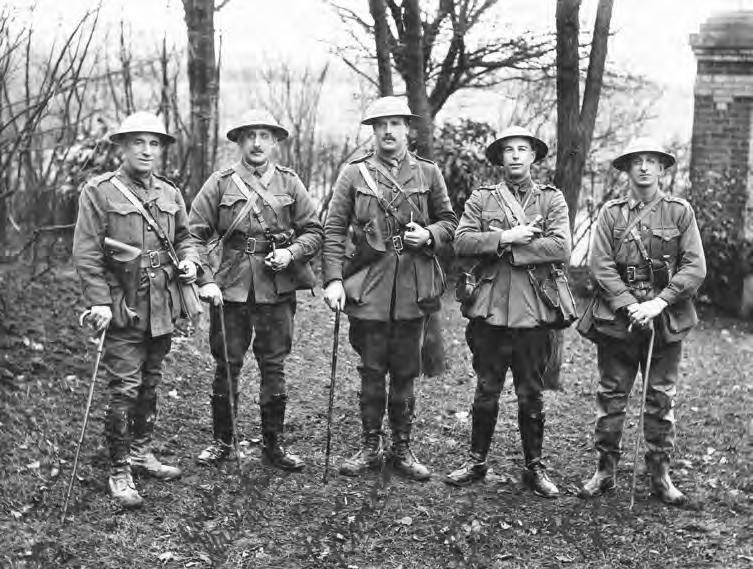
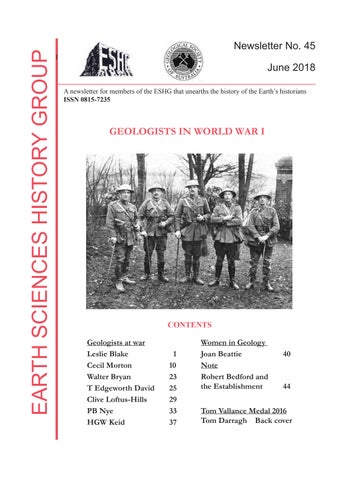
Cover Photo: Five of the officers of the Australian Electrical and Mechanical Mining and Boring Company, AIF. From the leftLieutenant George William Norfolk MC; Captain Stanley Burrell Hunter; Major Richard Victor Morse DSO (Officer Commanding); Lieutenants Loftus Hills; and William Hull Logie. (Australian War Memorial H12781) .
Roger Bateman 1 and Elizabeth Nunn 2
1 Tenth Symphony Geoscience, P.O. Box 1490, West Perth WA 6872 roger.bateman10th@gmail.com
2 Fairway Historical Research, PO Box 1067,Toombul Qld 4012 nunne17@bigpond.com
Leslie Russell Blake was born at Hawthorn, Victoria on 28 October 1890 (Victoria: 1890 Birth Registration Number 33273). His parents were Thomas Henry Blake and Maria Louisa (née Purdey), and he was the youngest of their six children. His mother, Maria Louisa, died of a carcinoma at Hawthorn, Victoria on 20 June 1892 (Victoria: 1892 Death Registration Number 6630), when Blake was just 20 months old.
His father, Thomas Henry, remarried at North Carlton, Victoria on 11 October 1893 (Victoria: 1893 Marriage Registration Number 5363). His second wife was Mary (known as May) (née Hawthorne). Two daughters were born – Una Queenie Hawthorne Blake on 04 February 1895 (Victoria: 1895 Birth Registration Number 4118) and Tessie Hawthorne Blake on 15 October 1897 (Victoria: 1897 Birth Registration Number 27794). Tragically, Thomas Henry died of tuberculosis at Hawthorn, Victoria on 01 April 1897 (Victoria: 1897 Death Registration Number 5376), which was six months before their second daughter was born.
Blake’s aunt, Charlotte Jane Deazeley (née Blake), raised Blake and his two half-sisters after their father died (Dartnall, 2014). Charlotte was the widow of John
Deazeley who died on 21 May 1890 (Queensland: 1890 Death Registration Number 647). His death was listed in the 1891 Pugh’s Almanac Obituaries (p. 67), indicating that he was a significant member of the community. In 1896, Charlotte became the proprietor of a notable guesthouse (Brisbane Courier, Thursday, 03 September 1896, p.2), Saltwood, at Sandgate/Shorncliffe (Brisbane’s premier seaside resort at that time). Prominent Brisbane citizens, including vice-regal families, spent their holidays at Saltwood, and the building is now heritage listed. Charlotte promoted that she had been housekeeper to Sir Henry Norman (Brisbane Courier, Friday, 11 September 1896, p.8), Queensland’s second Governor (1889-1895). Thus, Blake was of a family with relatively high social connections, and this may have helped him subsequently. There is no formal record of which year, or years, Blake and his half-sisters were sent to Queensland to live with their aunt Charlotte. However, it is possible that, because Tessie had not been born when their father died, the girls may not have arrived in Queensland until as late as 1902, the year that their mother remarried. On the other hand, Blake may have been sent north in 1897, the year their father died, because a long newspaper article published in 1914 recorded that Blake had “spent the last 17 years of his life in Queensland” (Queensland Times, Wednesday, 25 March 1914, p.3).
It is possible that all three Blake children attended Sandgate State School, the closest public school to their aunt’s guesthouse. However, in the 125 years to 1998, there had been five fires at the school. The school’s 1998 publication records that, in that series of fires, “all the school’s original buildings were destroyed, and the school’s records have been burned twice” (Sandgate State School: celebrating 125 years, 1873-1998, 125th Anniversary Organising Committee). Even though neither Una nor Tessie’s names are recorded in existing Queensland State School admission registers, Blake’s name is recorded in the Brisbane Central Boys’ State School admission registers
for the years 1902 to 1905 (Queensland State Archives. Registers - admissions, state school, Item ID639517 (1902), Item ID639518 (1903, 1904), Item ID639519 (1905)). In each of those years, Blake’s address was listed as Saltwood, Swan Street, Sandgate. His name was also listed in the 1904 Brisbane Technical College annual examination results. He achieved a pass of 85 per cent for Woodwork – Manual Training (Telegraph, Friday, 23 December 1904, p.3).
In 1907, Blake sat, and passed, the Sydney University Junior Public Examination at the Southport High School, Queensland (Brisbane Courier, Thursday, 25 July 1907, p.4). The school’s name changed to the Southport School in 1913 when the Anglican Diocese of Brisbane purchased it (Nissen, 2014). The Sydney University Junior Public Examination was modelled on Oxford University examinations for middle class students under 16, who were not intending to continue on to university, serving as a common yardstick for a modern, liberal education. His studies of geology and surveying, therefore, were not at university level. His pass grades in this examination were B in Geography; C in Geology, English, English History, Arithmetic, Algebra, θ (theta, presumably a failure, since theta is a symbol of death) in Physiology. Thus, he was a capable student yet not of an academic inclination, and he had shown a particular interest in geology and in more practical skills.
He then sat for the Entrance Examination to the Queensland Public Service. Blake’s address was listed as Auckland Villa, Tank Street, Brisbane, and his examination result was a pass of 50.1% (Telegraph, Friday, 11 October 1907, p.2). With that result, he was eligible for appointment as a cadet to the professional division. His initial appointment to the Queensland Public Service was as Cadet, Geological Survey Office, on 31 October 1907, three months after his examination result was published. The appointment was announced in both the Queensland Government Gazette and the Queensland Government Mining Journal (Queensland Government Gazette, 1907, Vol. LXXXIX, p.1155; Queensland Government Mining Journal, 1907, Vol.8 No.90, p.609).
Early professional work in Queensland
It has not been possible to locate any evidence that Blake had undertaken any vocational training (in surveying, for example) before employment in the Queensland Public Service, or was required to undertake professional training while he was a cadet. One of Blake’s close colleagues, Cecil Charles Morton did so, however, and attended the
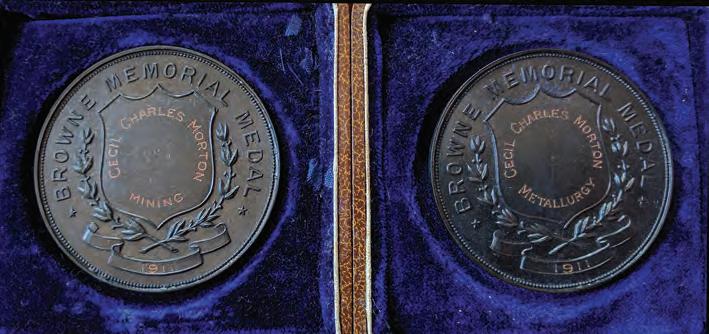
Charters Towers School of Mines from 1909 to 1911 (Telegraph, Saturday, 11 December 1909, p.2; Northern Miner, Wednesday, 21 December 1910, p.7; Brisbane Courier, Saturday, 23 December 1911, p.4). In his final year of study, Morton was the W. H. Browne medallist in both mining and metallurgy (Brisbane Courier, Saturday, 23 December 1911, p.4). When Blake was appointed in 1907, he was the only cadet in the Geological Survey Office.
Examination results for 1910 at the Central Technical College in Brisbane (Brisbane Courier, 24 January 1911, p. 5) include a result of 50% in Freehand Drawing for “L. Blake”. Blake delivered a “lecturette on the methods of topographical surveys and contour maps” and gave a “practical field demonstration of topographical surveying” when the Field Naturalists’ Club visited the Glass House Mountains in early May 1910 (Queenslander, Saturday, 28 May 1910, p.8). Blake had by then become confident enough in his surveying skills to teach others.
The Acting Government Geologist was Benjamin Dunstan and, because of the small number of staff in that office, Blake reported directly to Dunstan (Dunstan was appointed Government Geologist in 1908). Dunstan was born in Victoria, and developed an interest in fossils when he was very young. He moved to Sydney when he was a teenager, and began his career in a firm of mining engineers. In the evenings, he studied geology, mineralogy, metallurgy, and mining at the Sydney Technical College. He subsequently lectured in those subjects, which led to a lifelong friendship with Sir Tannatt William Edgeworth David, Professor of Geology at Sydney University (Telegraph, Monday, 04 September 1933, p.9). Dunstan was also a lecturer and demonstrator at the Sydney School of Mines under Professor Edgeworth David (Yackandandah Times, Friday, 03 August 1900, p.2). Furthermore, the Gympie Times and Mary River Mining Gazette (page 3) reported that Professor David visited Gympie before departure of the A.A.E. expedition, and that Mawson subsequently visited Brisbane: it is reasonable to infer that these visits were part of the process for selecting Blake as an expeditioner. It is, therefore, possible that Blake received much of his advanced professional training from Dunstan. Dunstan was also a watercolour artist and a photographer. Several members of Blake’s family were professional photographers, so it is possible that Dunstan had known Blake from the time he arrived in Brisbane in 1897 and, because he was confident of Blake’s potential, was willing to mentor him. Dunstan’s connection to David
(Sanker, 1981), and the fact that Mawson had been a student in Sydney University of David (Jacka, 1986) may have all combined to get Blake the appointment to the Australasian Antarctic Expedition (see below). The Blake family’s social connections may have helped him in this. A well-known Gympie work, produced by the Geological Survey Office, was a bound series of eighteen geological and topographical maps of Gympie and the surrounding goldfield. Dunstan published in 1910 Geological Survey of Queensland Publication 221A Topographical Map of Gympie (with Eighteen Sheets) and Geological Survey of Queensland Publication 221B Geological Map of Gympie (with Eighteen Sheets). The geological maps are under Dunstan’s name, yet gives “Geological features by B. Dunstan & L.R. Blake“ as a small-font credit. The topographical series credits C.H.W. Thom on the maps but also L.R. Blake on the title page. The Department of Mines Letter Books provide evidence of Blake’s involvement in the development of those maps. For example, a telegram of 05 October 1909 from Dunstan to Blake states, “Please forward twelve [Normanby] and fourteen [Lone Star] sheets if completed or ready for me”. Another telegram of 08 December 1909, again from Dunstan to Blake states, “Send contouring New Dawn [eighteen] sheet as soon as possible” (Queensland State Archives. Letter Book – Item ID269550 (1908-1909)).
It appears likely that Blake learned surveying with Thom, as no records have been found showing he studied this at any school before joining the Geological Survey. No text report was ever published to go with the maps, possibly because of Blake’s subsequent death. Thom was killed at Gallipoli in October, 1915. The First World War disrupted a lot of the Survey’s work through loss of staff. In the Annual Report of the Queensland Geological Survey for 1910, the Government Geologist Benjamin Dunstan reported that “Mr Blake has given every satisfaction at Gympie in the geological survey of that locality, and sufficient confidence is put in him to warrant some of the detailed fieldwork being left entirely in his hands”.
Blake occupied himself with a range of activities outside of his usual work responsibilities. For example, while he was working in Gympie, he joined the local Dramatic Club. The play they presented at the Olympic Theatre in May 1909 was The Late Lamented. Blake played the role of Jansen Smith, and his surveyor colleague, Charles Henry Wallace Thom, played the role of Stuart Grosse. The review of the production stated that Blake “got through very well” with his role (Gympie Times and Mary River Mining Gazette, Tuesday, 01 June 1909, p.3).
Joining the Australasian Antarctic Expedition, 1911-1914
Macquarie Island lies halfway between Australia and New Zealand, and Antarctica. It measures 34 km north south, and a maximum of ~5 km in width. The first recorded visit to Macquarie Island was by the sealing ship Perseverance, which landed a gang of sealers in 1810, who reported the wreck of a “vessel of ancient design” (Mawson, 1943; Selkirk et al., 1990). The first map of the island was drawn in 1820 by Captain Thaddeus Bellingshausen, in command of an expedition for Emperor Alexander I of Russia.
The Letter Books record that Blake wrote to Dunstan on 04 September 1911, requesting “one month’s leave of absence from duty dating from the 20th October next. As I have had no extended leave since joining the service, I should feel grateful if the Department can see its way clear to grant the holiday” (Queensland State Archives. Letter Book – Item ID269552 (1911-1912)). The leave was granted, and a telegram of 14 November 1911 from Dunstan to Blake (care of Mrs Kilby (Blake’s maternal great aunt), 42 Grosvenor Street, South Yarra) instructed Blake to “communicate Mawson Sydney immediately. Appointed you to South Pole expedition” (Queensland State Archives. Letter Book – Item ID269552 (19111912)). The Letter Books contain a hand-written telegram of 01 December 1911, the day that Mawson’s Australasian Antarctic Expedition left Hobart. It was to Blake, care of Dr Mawson, from Ernest Francis Eberhardt, a draftsman in the Geological Survey Office. It stated simply “Best wishes from Queensland Geological Survey” (Queensland State Archives. Letter Book – Item ID269552 (19111912)).
According to an article in a Gympie newspaper, Blake was one of twenty applicants who applied to join the geological staff of the 1911 Mawson Antarctic Expedition. It reported that Blake was selected “because of his geological experience, his knowledge of surveying, and his fine physique”. The article also stated that Professor Edgeworth David (he was also an Antarctic expeditioner) had observed Blake’s work in Gympie, after which Dr Mawson travelled to Brisbane, and was “acquainted with [Blake’s] qualifications” (Gympie Times and Mary River Mining Gazette, Saturday, 18 November 1911, p.3).
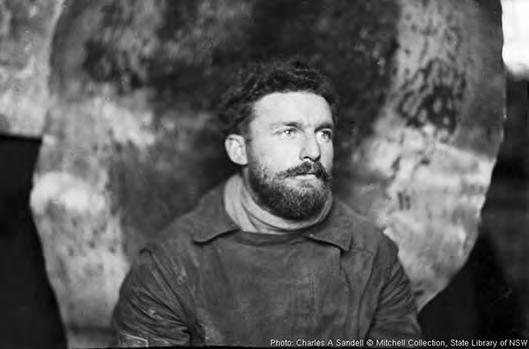
The S.Y. Aurora left Hobart on 2 December 1911 with Douglas Mawson and the Antarctic party on board. Blake was 20 (Figure 1) when he left Hobart on 7 December 1911 on S.Y. Toroa bound for Macquarie Island, as part
of Douglas Mawson’s Australasian Antarctic Expedition (Dartnall, 2012, 2014). S.Y. Toroa was so overloaded that the ship’s master ‘Roaring Tom’ Holyman went over the side and painted another Plimsoll mark half a metre above the authentic, submerged, mark.
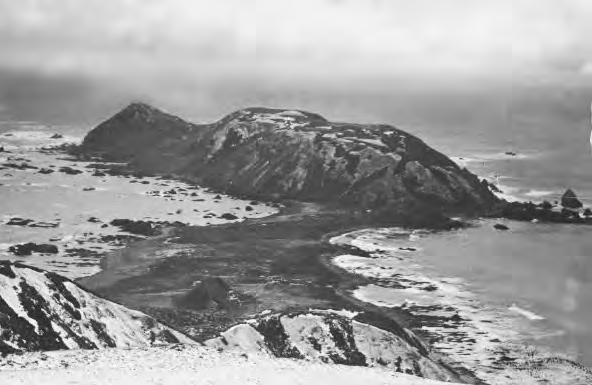
The purpose of the party that stayed on Macquarie Island was to maintain a radio relay base, with both transmitter and receiver, for communication between the bases on Antarctica and Hobart (Figure 2). Since a party was based there, they were assigned the work of the first scientific survey of the island. George Ainsworth was leader and meteorologist, Harold Hamilton was the biologist, Leslie Blake the geologist and surveyor, and Charles Sandell and Arthur Sawyer were the radio operators. The wireless station and mast was erected at the northern end of the island on Wireless Hill. Blake arrived on Macquarie Island on 13 December 1911.
A specific geological purpose for this work was to geologically and topographically map the island. This was a period before Wegener had published his theories
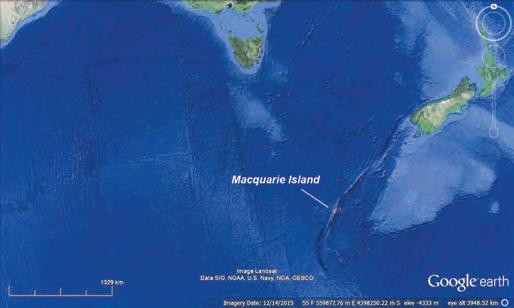
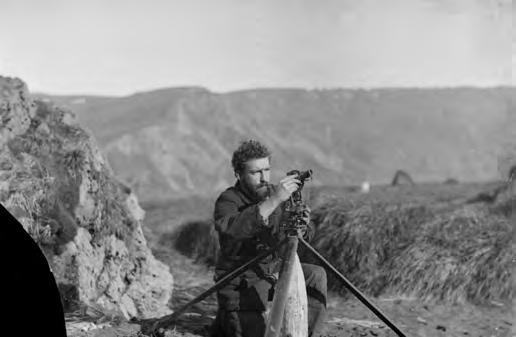
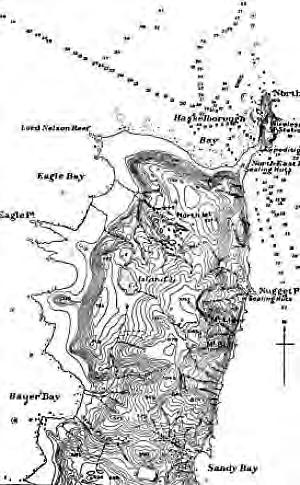
on continental drift in 1915. It was recognised that there were major similarities in the geology and palaeontology of continents separated by oceans, and there were vague ideas of foundered land bridges (Figure 3). Blake was to determine if Macquarie Island constituted a land bridge connecting Australia and Antarctica. A major part of Blake’s Macquarie Island work was also surveying, and this was persistently difficult using sighting poles and a theodolite in atrocious weather (Figure 4). The work was physically very hard: “I climbed Mt. Mawson [now Mt. Hamilton] and when I had done so another low cloud descended; so I returned to the hut. About noon the cloud lifted so I climbed the mountain “again” and struck a fog this time: (this is the seventh time I climbed this mountain and had no luck), I waited on the top this time for 2 hours and then the fog cleared, so I was able to observe angles from this station” (Dartnall, 2014). The 1971 topographic map of Macquarie Island changed only one of Blake’s altitude estimates of 23 named peaks, and Dartnall et al. (2001) considers that today the best estimates for one in three peaks remain his altitudes. His map (Figure 5) was excelled only in the era of satellites. From the beginning of his work, Blake identified evidence of glaciations – striae and till (Dartnall, 2014). Blake wrote of a “beautifully polished surface” on a boulder (Figure 7), and of “well-defined striae”. Blake also interpreted valleys as U-shaped glaciated valleys, but they are in fact V shaped (Figure 6). Lakes and other valleys were interpreted as tarns and cirque basins, and he also identified moraines and boulder clay, hanging valleys, and roches moutonnées. Blake attributed to ice-sheet glaciation the major role in forming the island topography (Mawson, 1915, 1943). Today this is not accepted, as the island is oceanic crust. More recently, faulting of oceanic crust along a transcurrent plate boundary has been identified as the principal factor in determining
the geology and geomorphology of the island. The theoretical concepts of plate tectonics and sea floor spreading post-dated Blake’s work and life.
Rocks (Miocene tholeiites) on the island comprise dominant pillow basalts (Figure 8) and lesser massive flows, with up to 30% interstitial sediments (breccias, agglomerates, interflow mudstone), and much less sheeted dykes, layered troctolite and gabbro, and serpentinized harzburgite. Blake made accurate identifications of volcanic breccias, pillow lavas, and zeolites. His map can very easily be reconciled with those of Varne and Rubenach (1972) and Goscombe and Everard (2001): interpretations have changed with general understandings, but Blake’s map was good. Today’s geological interpretation of Macquarie Island is that it is oceanic crust created at a spreading ridge (Varne et al., 1969; Varne and Rubenach, 1972), later deformed under dextral transpression along the Indo-Australian/Pacific plate margin (Goscombe and Everard, 2001), and is now an ophiolite (Kamenetsky and Eggins, 2012). This modern geology refutes any idea that Macquarie was part of a sunken land bridge.
An aspect of living on a plate boundary is frequent earthquakes: Mawson (1915) repeats a story of sealers in 1815 who felt 22 earthquakes in 6 weeks, and also what was suspected to be a tsunami during his time on the island, when the isthmus connecting Wireless Hill to the rest of the island was inundated by a wave that must have been 6-8m above normal sea level. Mawson (1943) tabulated 12 records of earthquakes recorded during Blake’s stay on Macquarie Island.
They left the island on Aurora in December, 1913, proceeded to Antarctica to pick up the others of the expedition on a long journey back to Adelaide, where it docked in February, 1914. These voyages were also devoted to dredging and soundings.
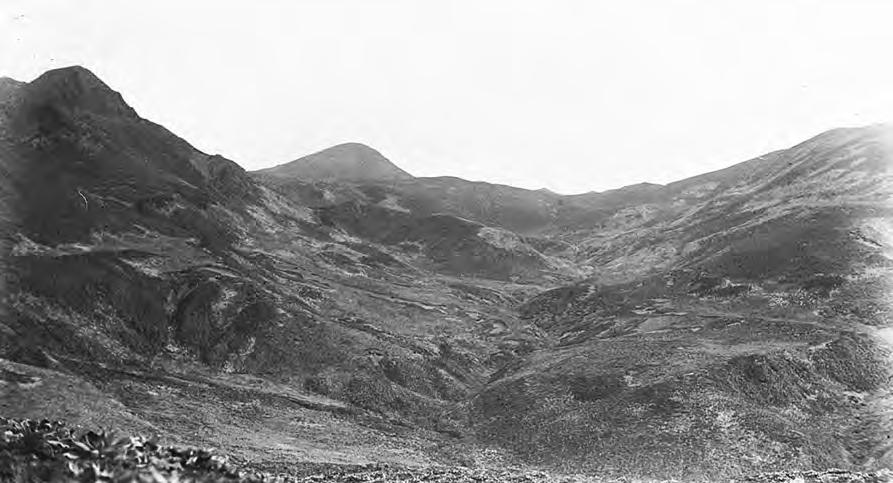
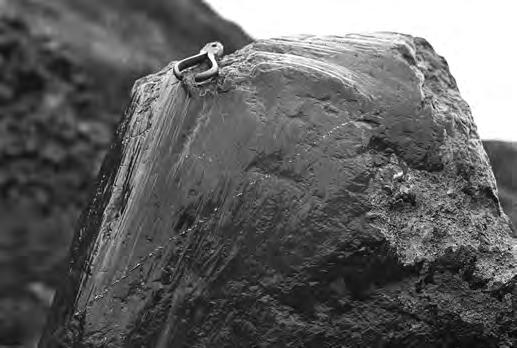
Fig. 7. Scratched & polished boulder of Eagle Point Gabbro collected in The Nuggets creek. This surface may be better interpreted as faulted and slickensided (see Varne and Rybenach, 1972). Photograph L.R. Blake, State Library NSW, Home and Away – 36310.
Blake’s return to the Queensland Geological Survey Office
The Letter Books contain a memorandum of 27 March 1913, which was about sixteen months into Blake’s time on Macquarie Island. It was written by Dunstan to the Under Secretary for Mines, and he advised him that it was Blake’s wish to return to geological surveying work at Gympie. Dunstan requested the Under Secretary to offer Blake his former position with a salary of £200 per year. He stated that all of the expeditioners, except Blake, continued to receive their salaries. Blake, on the other hand, chose to undertake the work for experience. Dunstan stressed that no one else would do the underground geological survey work at Gympie for less than £300 per year. The Gympie underground plans had been compiled by Blake, and Dunstan asked the Under Secretary to reappoint him, so that he would be able to add the geological features, thus completing the work (Queensland State Archives. Letter Book – Item ID269553 (1912-1913)).
Thus, after his work on Macquarie Island, Blake returned to the Geological Survey Office in March 1914, and both he and Morton were appointed as Assistant Geologists (Brisbane Courier, Friday, 13 March 1914, p.9). He enrolled to vote on 23 January 1915, with the occupation of Geological Surveyor. During his time in Gympie, Blake’s accommodation was at the Wyandra boarding house in Channon Street (State Library of Queensland. Gympie School of Arts, Registers – library, Box 2347 o/s; Box 2348 o/s). When Blake was selecting his Brisbane accommodation, he may have been influenced to choose The Mansions, because the landlady was Minnie [properly Mary Elizabeth] Jamieson, who ran Wyandra during the years that he worked in Gympie (Gympie Times and Mary
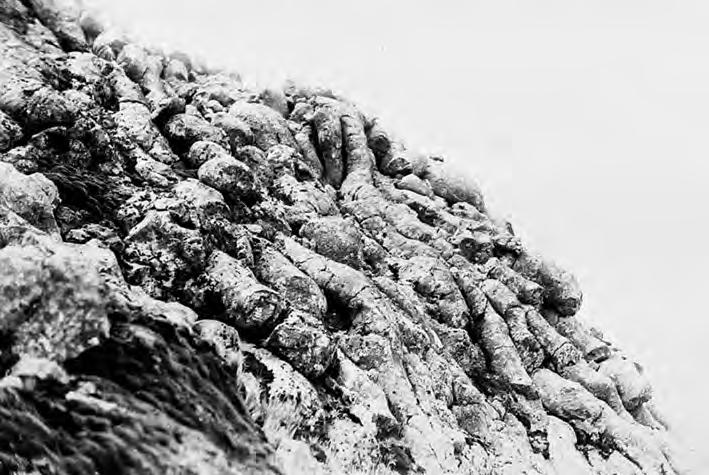
Fig. 8. Pillow-lava. Younger Basic Series near Victoria Point. Mawson, 1943, photograph L.R. Blake, negative H36.
River Mining Gazette, Thursday, 22 August 1912, p.3).
In the Annual Report of the Queensland Geological Survey for 1915, the Government Geologist Benjamin Dunstan reported that Blake updated notes on the Bowen coalfield, and that in the Burrum coalfield he mapped basal marine beds, and made a microscope examination of some Gympie samples. No evidence of this work appeared on maps or reports, although 2 maps of the Bowen coalfields appear in the Annual Reports of 1915 and 1916 for the Queensland Department of Mines. The map in the 1916 Annual Report has Dunstan’s name on it, but the map in the 1915 Annual Report, reporting work done in 1914, which was before Blake had enlisted, has no name attached to it: this map could well be Blake’s work but this is not made clear.
Blake first tried to join the First Australian Imperial Force, apparently for reasons of patriotism, by walking 30 kilometres to a recruitment post; being rejected on medical grounds; having a minor operation; walking back to the post; and being accepted for service in August, 1915 (Regimental Number 7306). At that time, his occupation was listed as Geological Surveyor, and his address was recorded as that of his next of kin, his brother, William Henry Blake, of East Malvern, Melbourne, Victoria. However, his place of association was listed as Gympie, Queensland. His basic training was at Enoggera camp in Queensland, and he became a sergeant in November, 1915. The road to the Western Front went through Sydney, and Melbourne where he visited friends and family en route, Albany, Alexandria in Egypt, Marseille, and Le Havre. He was assigned to
a 4.5” (small) howitzer battery, the 105th, in the 5th Field Artillery Brigade, First Australian Imperial Force (Figure 9). Blake and 6 others from that small office enlisted to serve in the First World War. He enlisted at the same time as two other assistant geologists – Walter Heywood Bryan and Cecil Charles Morton, and the three were farewelled by their colleagues at an afternoon tea. They were also all presented with safety razors (Brisbane Courier, Wednesday, 18 August 1915, p.7).
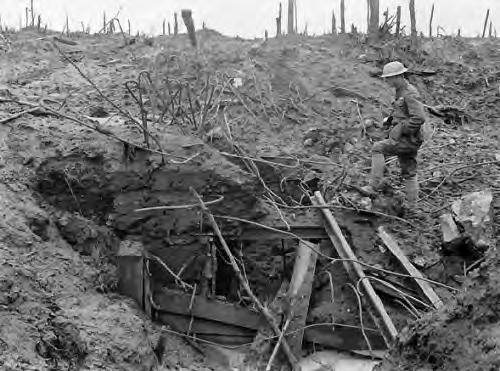
During his active service in France in the artillery, Blake was injured several times: in 1916 at Pozieres a bullet in the buttocks while surveying the lines. He was awarded the Military Cross in 1916, during the battle of the Somme. The citation (Blake, 1918) for Blake’s Military Cross reads
“Showed conspicuous and continual gallantry during the POZIERES operations. On 21/8/16 this Officer made a complete survey of the actual line held by our troops from N.E. of POZIERES to MOUQUET FARM. This information was necessary for artillery barrage purposes. He supplied excellent reports and continually volunteered for this work which he often performed under heavy fire” (dated October 2nd 1916). This is work for which he was eminently qualified to perform, since the task was to survey the lines in preparation for an attack on Pozieres by three divisions of Anzacs. Advancing under a creeping barrage worked best if the line position was accurately known. It was important work to be done accurately. Misdirected creeping barrages could have disastrous consequences: firing too far ahead of the infantry allowed the enemy to
recover before being attacked by advancing infantry, and firing too short risked bombarding one’s own troops.
He was also later Mentioned in Despatches by General Sir Douglas Haig in 13 November 1916 “for distinguished and gallant services and devotion to duty in the field“, for similar work. In this operation he received a 4cm piece of shrapnel through an arm (missing all bone) and was evacuated to England (Blake’s service record). He later spent 6 months behind the lines as a staff officer in 1917. In this role, he was involved in planning artillery operations and tactics, but eventually chose to return to the front line.
The Military Cross was awarded by King George V and the two spent 20 minutes discussing Blake’s Polar Medal, which the King recognised and understood, before Blake excused himself from the King’s presence, pleading a dental appointment (dental problems on the Front were no minor matter). The medal was sent to his fiancée Frances Eileen Elliot in Australia. He was promoted to Captain in 1918.
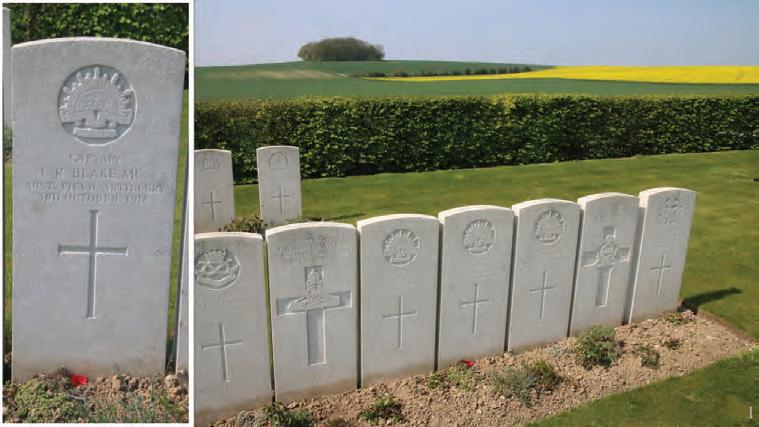
He was mortally wounded in 1918 by a shell on the Hindenberg Line on 2 October, 1918 (39 days before the Armistice), while directing ammunition convoys on the Somme for the 5th Australian Field Artillery. His wounds were dressed by Charles Morton, his mining engineer friend from his time in Queensland. He died of his wounds near Estrees the following morning on 3 October 1918 (Australian War Memorial. Roll of Honour) and was buried at Tincourt New British Cemetery (Figure 11); Grave Reference: V. J. 4), Picardie, France (Casualty
Details Commonwealth War Graves Commission). Blake’s name is located on panel 13 in the Commemorative Area at the Australian War Memorial. Blake’s death was registered in Queensland in 1922 (Queensland: 1922 Death Registration Number F732). The year of registration and the prefix “F” denote a First Australian Imperial Force death overseas during the First World War of a serviceman who enlisted in Queensland. He was 28. The Australian War Memorial holds a private record of Blake (Australian War Memorial. Item IDRL/0128) as well as three photographs of him. The first one is a studio portrait recorded as having been taken in Australia in 1915 (Australian War Memorial. Item ID P07842.001). It is also recorded that the photographer of a group photograph of Blake and two others, taken on 27 August 1917, was Frank Hurley (Australian War Memorial. Item ID E00661). As recorded on the Australian War Memorial’s website, Blake was a friend of Captain Frank Hurley, the Australian Official Photographer and a fellow Australasian Antarctic Expedition polar expeditioner. Another one of Blake, by an unknown photographer (Figure 9; Australian War Memorial. Item ID E00665), was also taken in August 1917.
At the time Blake enlisted, he was engaged to be married. His fiancée’s name was Frances Eileen Elliott. One of the newspaper articles that announced that Blake had died in France also stated that he had “hoped to obtain leave of absence for the purpose of getting married” (Daily Mail, Saturday, 19 October 1918, p.6). Eileen never married, and was 85 years old when she died on 24 September 1977 (Queensland: 1977 Death Registration Number B81429).
Blake’s friends and family were so distressed by his death that they initiated at least two personal memorials to him. One was “purpose fitting up a room in his memory” by his friends at the Anglican hospital, St Martin’s (Leader, Saturday, 01 November 1919, p.21). Another one was the presentation of a silver flagon in his honour for use on the altar of St Alban’s, the Southport School chapel. The flagon was presented on behalf of his fiancée, by her father in 1927 (Brisbane Courier, Monday, 14 November 1927, p.19).
Benjamin Dunstan was greatly distressed, too. In the Annual Report for 1918, Dunstan wrote “It is with deep regret that we have to place on record the death of this officer, whose work on this Survey was so well carried out, and who on the battlefields of France won praises from all who came in contact with him”. Dunstan very likely had a hand in Blake’s appointment to the Australasian Antarctic Expedition, and for Dunstan Blake
was more than a junior colleague. In Blake’s personality, one can read self-possession and self-sufficiency, qualities that may very well have derived from the many deaths in his family as an adolescent and young man: his parents both died while he was young, his aunt was a widow, and his stepmother’s second husband was a widower. This would not have been especially unusual at that time. Blake was very clearly a man who inspired great affection and respect in those that knew him well. His work showed him to be competent, diligent and focussed, yet more pragmatic than academic in temperament.
Their bodies are buried in peace, but their name liveth for evermore: (Ecclesiastes 44:14 KJV)
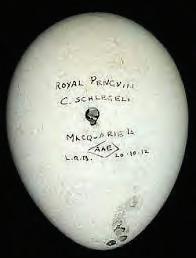
In 2005, curator Martyn Gorman discovered a royal penguin egg in the Zoology Museum storeroom of Aberdeen University (Figure 10). The caption inked onto the egg shell intrigued him, and his research revealed the history of the Australasian Antarctic Expedition, of Blake, and of his death (Gorman, 2005). Gorman also visited Blake’s grave in France. There is no clear reason for this egg shell to be in Aberdeen University but a plausible guess is that, during Mawson’s work preparing for the Australasian Antarctic Expedition and securing funding for the expedition, he undertook to provide a suite of rock, bird, animal and plant specimens for a variety of museums. Certainly, the expeditioners spent a lot of time collecting biological specimens (Dartnall, 2012), and this egg may have been one such specimen. Definitely, specimens were collected for some New Zealand museums.
10.
University museum.
Blake was one of about 3000 soldiers who left their pencilled signatures in the recently examined Naours Caves, beneath the Somme battlefield (Prilaux et al., 2017).
References
Blake L.R., 1918, AIF Service Record: http:// recordsearch.naa.gov.au/scripts/Imagine.asp?B=3089795
Dartnall H.J.G., 2012, Antarctic vignettes VI: Leslie Russell Blake - Mawson’s forgotten geologist: Papers and proceedings of the Royal Society of Tasmania, Vol. 146, (2012), p. 57-62.
Dartnall H.J.G., 2014, Lost in the mists: Australian Scholarly Publishing, Kew, Victoria, 382 p.
Dartnall H.J.G., WarD n., Selkirk P.M., aDaMSon D.a., PHaraoH M., 2001, The influence of L.R. Blake, pioneering sub-Antarctic geographer and geologist, on the topographic mapping of Macquarie Island: Polar Record 37/201, p. 143-150.
GorMan r l , 2005, Captain Leslie Russell Blake and Aberdeen University’s penguin egg: Current Biology 15/11, R402-R405.
GoScoMBe B.D., everarD J.l., 2001, Tectonic evolution of Macquarie Island: extensional structures and block rotations in oceanic crust: Journal of Structural Geology 23, p. 639-673.
Jacka, F.J., 1986, Mawson, Sir Douglas (1882–1958): Australian Dictionary of Biography, Volume 10, Melbourne Univ Press.
kaMenetSky v.S., eGGinS S.M., 2012, Systematics of metals, metalloids, and volatiles in MORB melts: Effects
of partial melting, crystal fractionation and degassing (a case study of Macquarie Island glasses): Chemical Geology 302–303, p. 76-86.
MattHeWS, t , 2000, Bearing the Palm: a century of education at the Southport School. Southport, Queensland: Southport School, p. 61.
MaWSon D., 1915, The home of the blizzard: Wakefield Press, Kent Town., 338 p.
MaWSon D., 1943, Macquarie Island: its geography and geology: Australasian Antarctic Expedition, Scientific Reports, Series A, vol V, 194 p.
niSSen, J.a., 2014, To honour your name: in memory of the Southport School Old Boys who lost their lives in the Great War. Southport, Queensland: The Southport School, p. 126.
Prilaux G, Beuvin M, FiecHtner M, FiecHtner D, 2017, The Silent Soldiers of Naours. Messages from Beneath the Somme: New Holland Publishers, 210 p.
Sanker i.G., 1981, Dunstan, Benjamin (1864–1933): Australian Dictionary of Biography, Volume 8, Melbourne Univ Press.
Selkirk P.M., SePPelt r.D., Selkirk D.r., 1990, Subantarctic Macquarie Island: environment and biology: Cambridge University Press, Cambridge, 285 p.
varne r., Gee r, Quilty P., 1969, Macquarie island and the cause of oceanic linear magnetic anomalies: Science 166, p. 230-233.
varne r., ruBenacH M.J., 1972, Geology of Macquarie Island and its relationship to oceanic crust: Antarctic Research Series 19, p. 251-266.
economic
Ian
Withnall iwwithnall@optusnet.com.au
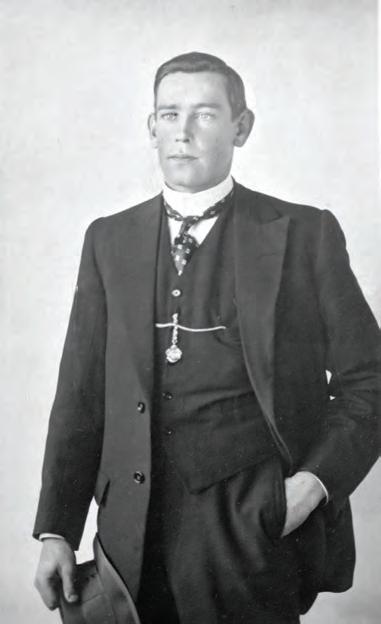
Cecil Charles Morton was born on 10 July 1891, the son of Charles Robert Morton and Sarah Sophia (nee Mansford) in Toowoomba Queensland. Cecil had 5 siblings, Florence Emma (born 1893), Herbert Palmer (born 1895), Edith Selma and Arthur John (twins born 1901) and Frank Charles (born 1908).
Charles Morton was a primary school teacher, his first posting as Head Teacher being to Maytown State School on the Palmer River goldfield in 1891, and it was there that Cecil started school. From 1898 to 1904, the family was resident in Rosevale, a dairy-farming district southwest of Ipswich. Charles was both Head Teacher and Postmaster (Queensland Post Office Directories 1898 to 1905). Cecil completed his primary schooling at Rosevale, and won a scholarship to Toowoomba Grammar School for his secondary education. Until 1912, when State-run high schools were established, the only opportunity for secondary education in Queensland was provided by the grammar schools or church-run
schools, and unless parents were wealthy, access to such institutions depended on the award of such scholarships. In 1907 the scholarship amounted to £46/4/- per annum (Jennifer Fordyce, Toowoomba Grammar School, personal communication). Cecil boarded with his grandparents, attending the school as a ‘day boy’. At Toowoomba Grammar, Cecil excelled academically and in athletics and rugby, being Head of the School and Dux of the School in his final year in 1908. He was also in the Army cadets, rising to the rank of Sergeant.
Cecil was awarded an open scholarship to gain Tertiary qualifications in a field of his choice. He considered studying geology at the University of Sydney (C. Sandercoe, personal communication), but instead opted to study mining engineering at the Charters Towers School of Mines. Coal mining had been active in the Rosewood–Walloon area from the 1870s and a new mine opened at Rosewood in 1904. Along with his early childhood on the Palmer River goldfield, this possibly influenced Cecil’s decision to train as a mining engineer. It could also have been reinforced by his father’s transfer to Jones Hill State School near Gympie in 1905, the year after Cecil started at Toowoomba Grammar. Gympie then was still a flourishing gold-mining centre.
Cecil’s completion of his secondary schooling coincided with a decision in 1908 by the Queensland Government to approve a system of scholarships and bursaries for study at the Charters Towers School of Mines (see Box).
The scholarships were to be awarded on the results of the Senior Public Examination (then set by the University of Sydney), and were tenable for three years, designed “to attract some of the well-educated Queensland youths who would otherwise go to the universities in the Southern States and their trained services probably become eventually lost to their native State” (ARDM for 1907, p161). Bursaries were also to be awarded on the results of each year’s mining and metallurgical courses at the School of Mines.
The first scholarships (or Exhibitions as they were termed) were introduced at the end of 1908, and awarded to Cecil Morton and TR Pearce. Owing to the short notice given to potential candidates at the secondary schools throughout the State, they were the only applicants. However, the awards, which consisted of £50
The Charters Towers School of Mines was founded in 1900, but agitation for technical education in mining methods in Charters Towers began in the 1880s. A Government Mineralogical Officer, Mr A.W. Clarke, was appointed in 1887, and in the following year visited Charters Towers where he ran a series of hands-on courses for those employed in the mining industry (Todd, 1995, pp 185-186). The recognition of the importance of training led to a School of Mines Committee being set up to meet the government’s offer of a pound for pound subsidy to establish a school. Government Geologist, RL Jack strongly supported its establishment in a letter to the Minister for Mines in which he laid out in some detail an indicative annual budget and a list of subjects that should be taught (Cairns Post, 1888).
The committee was unable to collect sufficient funds and the scheme was temporarily abandoned, but in 1896 a Mine and Mill Manager’s Association was formed. This resulted in renewed interest in establishing a technical school to teach subjects related to mining along the lines of the noted School of Mines in Ballarat and Otago (The University of Queensland, 2014). It was decided to erect a building to be used as a Mining Institute. The institute opened in 1899, but its school was not a success, and the government agreed to take it over. It was re-established as the Charters Towers School of Mines under the control of the Department of Mines. It took its first students in 1901. Directors’ reports were published in the Annual Reports of the Department of Mines (ARDMs), and retrospective accounts of the School were published by the respective directors in 1911 and 1921 (Poole, 1911; McGillivray, 1921).
The first director was W.A. McLeod, a graduate of the New Zealand University and the Otago School of Mines. He was responsible only to the Minister and was given considerable freedom to formulate policy. A firm believer in giving working men an opportunity to advance in their industry, he had lectures repeated in the evening which allowed working miners to attend the School. Many of these students only took one or two subjects, but students who completed the full course were awarded Associateships in Mining and Metallurgy. In 1904, McLeod, having set the curriculum, left to become manager of the Brilliant Extended Mine. W. Poole was the second director and made the school into a highly regarded educational institution.
At the time of its establishment, the school was the only Tertiary institution in Queensland, the University of Queensland not being established until 1910 and not commencing teaching until 1911. The school was thus the only opportunity for Queensland men to undergo professional training in mining, without having to go to universities outside the State. It also had the advantage of being in the middle of a then flourishing mining field so that students could gain first-hand practical experience. .....contd.
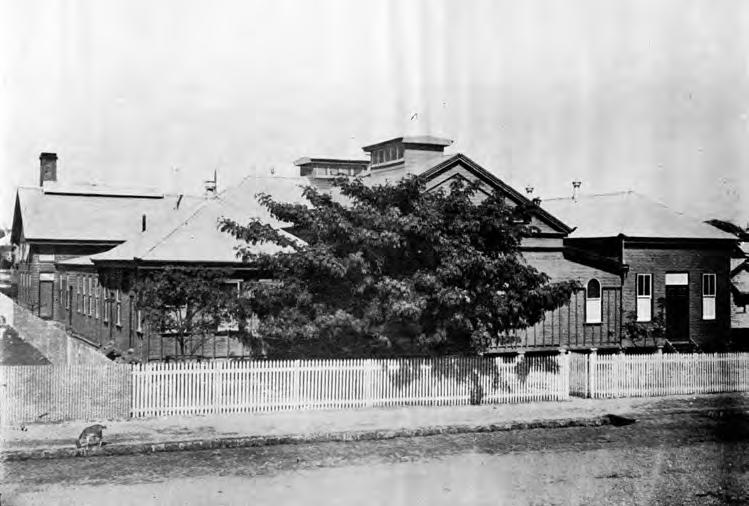
contd.....The school taught a range of subjects, most of them to university standard, and the examination papers were marked by a set of external examiners at the University of Sydney. After the establishment of the University of Queensland, there were attempts by the Director for the School of Mines to become affiliated with the University, but the University was not prepared to seriously discuss the matter. Although the School of Mines was flourishing in 1910, the Charters Towers field was in decline, having reached its peak in 1899. By 1912 many people were leaving the town and in 1916 the field closed. The number of students declined after the outbreak of World War 1, although the school continued to produce a small, but highly regarded, stream of graduates who were to distinguish themselves in many branches of the mining industry, both in Queensland and further afield. The School of Mines closed in 1925 after being taken over by the Department of Education two years earlier.
per annum and remission of fees, were not misplaced, because the Director was able to report at the end of 1909, that Pearce had received Honours in all subjects and Morton in all but one (ARDM for 1909, p166). Both men continued to achieve good results through their courses (The Queenslander, 1910). A noteworthy student at the School when Morton arrived was Oliver H Woodward — best known for his involvement with the Australian Tunnelling Corps during World War 1, and in particular the blowing up of Hill 60 on the Messines Ridge (Finlayson, 2010). When Morton arrived, Woodward had already completed his mining associateship, but having attained honours for all subjects throughout the course, was awarded a bursary to stay on to complete a metallurgical associateship. As a result he and Morton took several subjects together.
Morton completed his studies at the School of Mines with high distinction at the end of 1911, being awarded the Browne Medal for both the Mining Associateship and also the Metallurgy Associateship. He also qualified as a metallurgical chemist and assayer.
Both Morton and Pearce gained positions at the tin-
mining centre of Irvinebank in north Queensland, where Woodward was also working. Pearce, however, left soon afterwards to take up a position as field assistant at the Geological Survey of Queensland (GSQ). Morton also worked in the Chillagoe area in 1912, before moving to Mount Perry west of Maryborough, where he was employed as a mining surveyor and assayer in 1913 (Australia Electoral Rolls 1913, Queensland Division of Wide Bay, Subdivision of Mount Perry).
In 1914, Morton joined the Geological Survey of Queensland (GSQ) as a Field Assistant (ARDM for 1914), his appointment being on the 12 March, the same day that Leslie Blake was readmitted to the service as a field assistant, after being away on Macquarie Island for the previous two years as part of Mawson’s Antarctic expedition (see Bateman et al, this issue). Morton replaced Pearce, his former classmate, who had resigned as senior field assistant the previous month. Morton and Blake joined WH Bryan, who had been appointed to GSQ as a temporary field assistant the previous December, after being one of the first graduates in geology from the University of Queensland (see Bryan et al, this issue). Blake had no formal geological training beyond secondary school (but was by now very experienced in topographic
and geological mapping). However, Pearce, Morton and Bryan had formal professional training, so the seemingly lowly title of Field Assistant seems a little incongruous. It was possibly an attempt by Benjamin Dunstan, the Government Geologist, to circumvent restrictions by the Public Service on employing more geologists. Dunstan had fought a frustrating battle for more than 10 years to build up the GSQ into an efficient organisation able to meet the demands placed on it by the Government, prospectors and miners, as well as to increase the understanding of the State’s geology and mineral resources. He may have hoped to achieve his vision by training the young assistants and passing on his experience and that of geologists L.C. Ball and W.E. Cameron so that when circumstances allowed, he could appoint them as geologists. They were certainly given a large level of responsibility. In any case, through this tactic, the staff of the GSQ was now at its highest since the organisation was established.
The staff in 1914 was as follows:
Benjamin Dunstan (Government Geologist)
Assistant Government Geologists
Lionel C Ball
Walter E Cameron
E Cecil Saint-Smith
John H Reid
Field assistants
Leslie R Blake Cecil C Mor ton
Walter H Bryan Alexander C Reid
R Graff
Office assistants
Russell Dixon (Indexer)
Mr J Smith (Museum Curator)
Mr Byrne (Librarian and Correspondence)
Mr Sythers
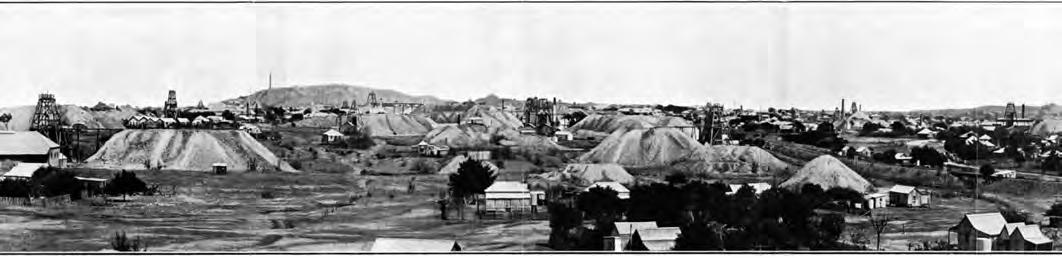
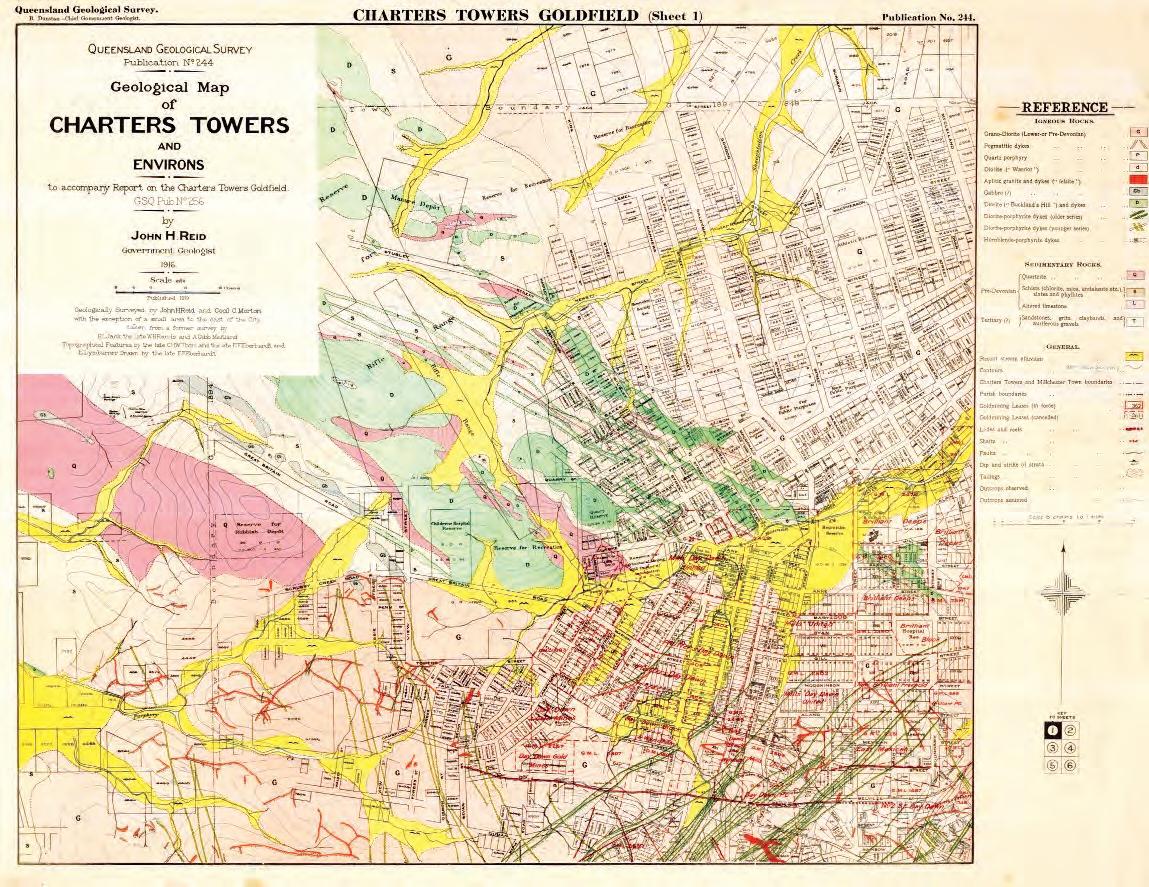
On joining the GSQ, Morton was immediately assigned to assist JH Reid, the newly appointed Assistant Government Geologist, on a survey of the Charters Towers goldfield, with which he was obviously already quite familiar. The aims were to carry out a detailed survey of the geology of an area of approximately 90 square kilometres centred on the City of Charters Towers, followed by an underground survey of the chief mines within the city area for the purpose of studying the genetic relations of the ore-shoots and possible extension of these shoots. The field work was started at the beginning of April 1914, and, with the exception of several short breaks, took until May the following year. During this time, Morton also undertook to finish the topographic survey of a small area left uncompleted when the topographic surveyor was recalled to Brisbane. Because of the complexity of the geology, the surface mapping was not completed until January 1915, after which an underground survey and inspection of mines
was carried out. All working mines and, where possible, some of the non-working mines, were included. As a result of the work, Reid noted that the surface mapping showed that most of the richer reefs appeared to be associated with an abundance of small mafic dykes that intruded the granite host rocks. The work of Reid and Morton represented virtually the last opportunity of recording information underground in the main Charters Towers area, because in 1917, bailing ceased in the main group of workings, and they began to flood.
In mid-May 1915, Reid and Morton returned to Brisbane to commence writing up their report, which was finally published in 1917, with the map being published separately in 1918 (Reid, 1917, 1918). The work would have been an important step in shaping Morton’s career as an economic geologist rather than a mining and metallurgical engineer. However, his geological career would have to wait.
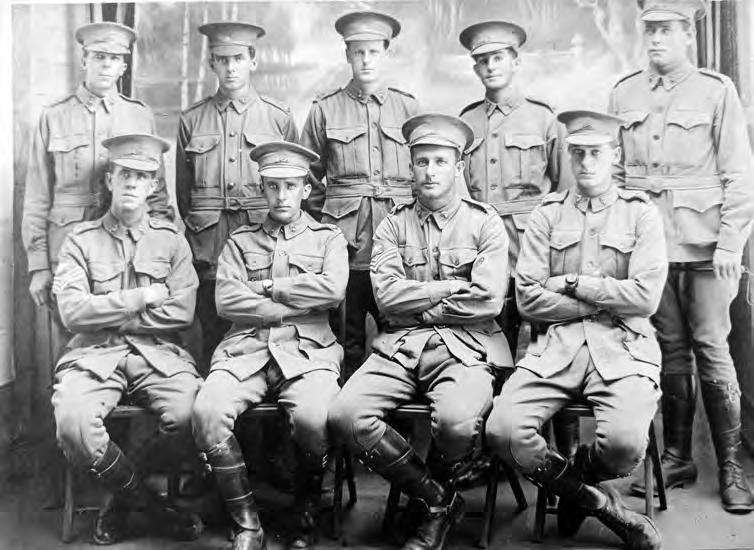
While Reid and Morton were toiling in the field at Charters Towers, events on the other side of the world overturned Dunstan’s plans for the GSQ. It must have been with dismay, that he watched war’s grasping hand take all of the younger members of his staff one by one.
AC Reid took war leave from 28 August 1914, WH Bryan resigned on 31 May 1915, and both Morton and Blake took leave from 28 July and 31 August respectively. Even JH Reid, who at 32 was considerably older than the field assistants, enlisted in 1917. Only Morton and JH Reid were to return to GSQ after the war, AC Reid and Blake being killed, and WH Bryan pursuing an academic career at the University of Queensland.
The five GSQ staff who enlisted were all assigned to the artillery. This may have been more than a coincidence, since it may have been recognised that they had surveying skills that were needed in the artillery. Subsequently, a few geologists were employed for their geological expertise in 1916 in the Australian Tunnelling Corps (Branagan, 2004; Finlayson, 2010; see also Passmore, this issue). These included Edgeworth David, Clive Loftus-Hills, Stanley Burrell Hunter (probably better described as a mining engineer, although he had worked for the Geological Survey of Victoria as a geologist), Carl Honman (from the Geological Survey of Western Australia and later part of the AGGSNA survey in the 1930s) and Leonard Wrathall (a petroleum geologist). Others in the Tunnelling Corps, who enlisted as mining engineers, may have worked as geologists at some time in their later careers. The boundaries between the professions were less clear-
cut than today, and mining engineers had a working knowledge of mining geology.
Morton too, when he enlisted on 28 July 1915, gave his occupation as Mining Engineer (National Archives of Australia, Series B2455). He was assigned to the 13th Field Artillery Battery, 5th Australian Field Artillery Brigade as a gunner. After training at Enoggera and in the Royal National Park near Sydney, the brigade embarked for overseas service from Sydney on HMAT Persic (A34) on 18 November, 1915. Morton’s colleague from GSQ, Leslie Blake, now a Sergeant, was also in the 13th Field Battery, and embarked on the same ship.
The Brigade disembarked in Egypt at Suez en route to Ismailia to help defend the canal from the Turkish Army, and was involved in some minor skirmishes before undertaking several months of additional training. Morton was promoted to Bombardier on 14 March 1916, a week before the brigade sailed for France. He remained in the 13th Field Battery, but Blake was promoted to 2nd Lieutenant in charge of a howitzer field gun in the newly created 105th Howitzer Battery.
The Brigade arrived in Marseilles on 23 March and was entrained to the St Omer-Aire-Hazebrouck region of French Flanders which was known as the “Nursery”. By mid-April, along with the rest of the Australian 1st and 2nd Divisions, the Brigade was committed in the line at Fleurbaix, just south of the manufacturing town Armentières, before taking part in the Battle of the Somme around Pozieres in July and August. In September, the 2nd Division moved to Flanders, taking up positions near Ypres before again moving back to the
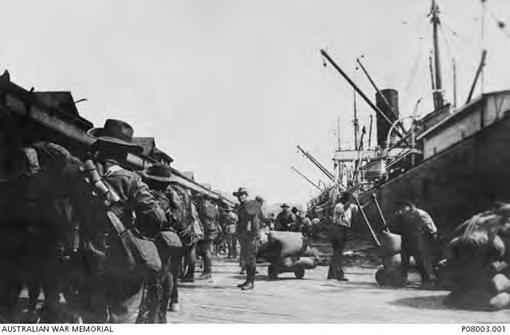
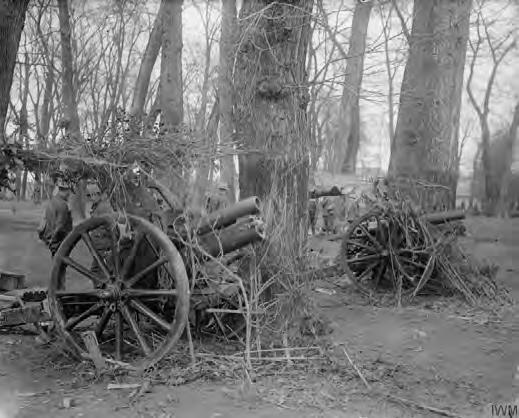
Somme in mid-October (Australian Imperial Force unit war diaries 1914–18 War, Artillery, Headquarters 2nd Australian Division Artillery, March to December 1916).
Morton himself was promoted to 2nd Lieutenant on 15 July 1916, and on 29 November was transferred to the 105th Howitzer Battery, re-joining Blake. He was promoted to Lieutenant on 1 December. He saw continuous service in France and Flanders throughout 1917, and was recommended for a Military Cross for his bravery during the 3rd Battle of Ypres, but this was downgraded by the British Army to a Mention in Dispatches. The recommendation reads:
‘For conspicuous services, gallantry and devotion to duty in all operations in the Ypres sector from 23rd September, 1917 to 31st November, 1917. His consistent good work, efficiency
and thorough reliability have been of great value to his Commanding Officer. His ability and accuracy as a gunner and keen knowledge and appreciation of the technical side of artillery work have rendered his services invaluable. He has often with great risk made excellent reconnaissances and superintended the shooting of his battery with most excellent results. On the night of 3rd October at Westhoek Ridge, east of Ypres, his battery was heavily shelled and two guns were put out of action. Working continuously for over four hours, by his perseverance and example, managed to change the piece of one gun to the carriage of the other, enabling his battery to have almost full firing power for the attack on the following morning’.
Australian Imperial Force unit war diaries 1914–18 War Artillery Item number 13/11/25 Headquarters 2nd Australian Division Artillery March 1918 p107 (https:// www.awm.gov.au/collection/C1353270)
At the end of 1917, he was transferred to the Reserve Brigade Australian Artillery in England, which was established to train reinforcements for the Australian Field Artillery on their arrival from Australia, and to retrain personnel who had been evacuated from the front through wounds or sickness. However, he returned to the 105th Howitzer Battery in mid-August 1918, and 6 weeks later was involved in the attack of the Hindenburg Line, during which he was awarded the Military Cross for his gallantry, joining both Blake and Bryan, who had already received this honour. The recommendation for the award reads:
‘On the morning of 29th September 1918, at Hargicourt, during the attack on the Hindenburg Line, he was on duty with
his section. Soon after our barrage opened, the Battery, which was in a very exposed position was subjected to a heavy counter barrage, which caused several casualties to personnel. During this counter barrage, Lieutenant Morton moved from gun to gun, checking the lay and encouraging the gunners in their task. He assisted in the removal of wounded to shelter, and started the reinforcing gun detachments on the barrage, so that no time was lost nor rounds missed. He showed great coolness and devotion to duty. During the whole of the operation, he was of valuable assistance to the Battery, and by his cool demeanour and courage under extremely heavy shell fire, had a most steadying effect upon the men under his command. His duty was carried out at great personal risk throughout.’
Recommendation by J.C. Robertson, Brigadier-General commanding Second Australian Division. Copy in the possession of Carolyn Sandercoe. The official citation published in the Commonwealth of Australia Gazette No. 10, 29 January 1920 is slightly shortened from this. Four days later, Morton was present when Blake was mortally wounded (Dartnall, 2014, pp 310–311). They were supervising the unloading of ammunition wagons, when a stray shell exploded under Blake’s horse. Morton dressed Blake’s wounds and arranged for his conveyance to the Casualty Clearing Station. However, Blake died of his wounds the next morning.
Although having been colleagues at the GSQ for 18 months, Morton and Blake probably had little opportunity to get to know each other well before they enlisted, because of their field commitments. However, thrown together in the war, and having trained together, and served together in the same battery for much of their time in France, they had become firm friends. Morton in a letter to Blake’s brother Will, commented:
In the matter of friendship, (we) were looked upon by all who knew us almost as brothers. (Letter reproduced by Dartnall, 2014, pp 311–312)
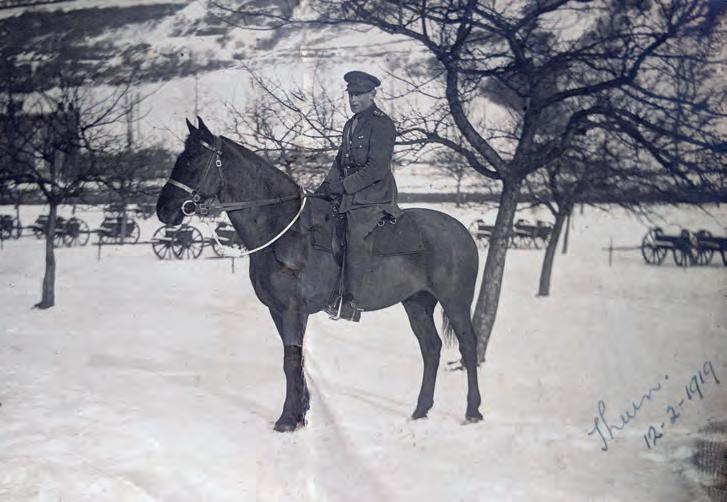
Morton was promoted to Captain on 6 November, 1918, in the closing days of the war, and after the Armistice, assisted in the movement of the 105th Howitzer Battery and its equipment to Thuin in Belgium, where the unit was disbanded on 30 March 1919. On 3 May 1919, he was presented with his Military Cross by King George V at Buckingham Palace. Morton then returned to Australia in early July, and was discharged in August 1919.
Morton was re-appointed to the GSQ on 27 August 1919, along with a promotion to Government Geologist. In the period Morton was away, the GSQ had been re-organised. Dunstan now had the title of Chief Government
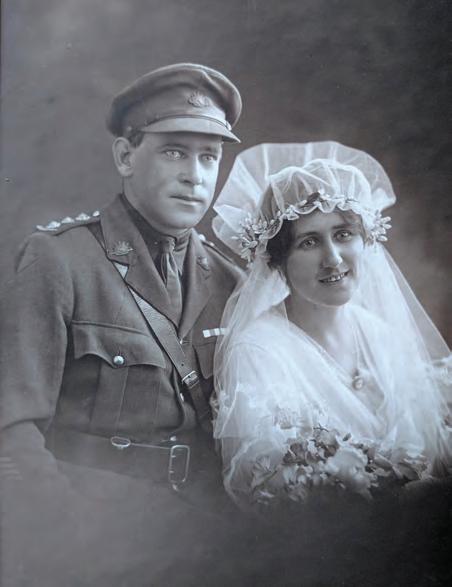
Geologist, with Cameron as his Deputy, and the former Assistant Geologists were now classified as Government Geologists. Morton took up his new appointment on 30 September after marrying his childhood sweetheart, Violet Vivien Goldsworthy, on 10 September.
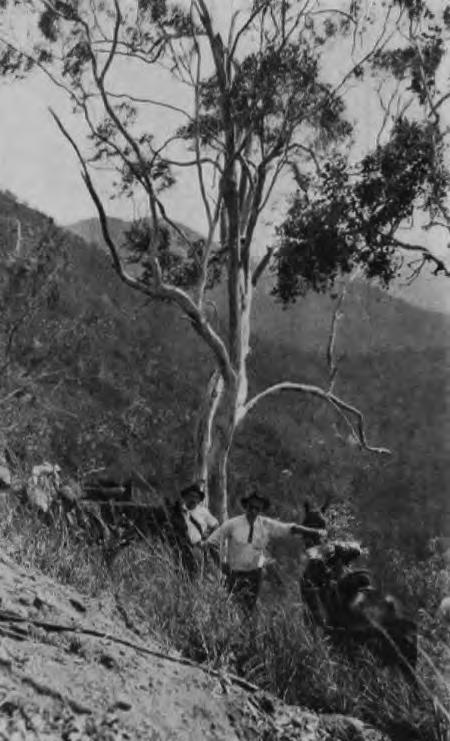
Within two weeks, accompanied by Violet, Morton was in the field, spending about 6 weeks mapping the geology of the Tamborine—Canungra area and investigating diatomite and oil shale deposits in the area. In 1920, he was dispatched to the Normanby Goldfield inland from Bowen to report on the field in the light of recent discoveries in a hitherto unworked portion of the field. Morton’s report, his first as a geologist, was published in the Queensland Government Mining Journal in two parts (Morton, 1920), and is noteworthy in its comprehensiveness and clear writing style. Not only did he provide descriptions of the main workings, but his training as a mining and metallurgical engineer came to the fore with detailed discussion of the economics of mining in this remote area and the treatment that the ores would require. However, the reports also contain detailed and accurate descriptions of the regional geology as well as the topography, soils and vegetation.
In 1922, he visited and reported on the Mount Coolon Goldfield, one of the fields that he was to come back to on other occasions over the years, especially in 1934, during its heyday (Morton, 1922, 1935a, b). Mount Coolon is almost forgotten today, but in the 1930s it was
the most significant gold producer in Queensland. It was the first mine to be worked by Gold Mines of Australia Ltd (GMA), which was incorporated in April 1930 and was a forerunner company to the once great Western Mining Corporation Ltd.
Morton’s next major assignment was a six-month trip in 1923 to report on the potential for coal in the Pascoe River area in Cape York Peninsula. The trip involved taking a steamer to Cooktown, where pack horses, supplies and an aboriginal field assistant were arranged for him. In addition to examining the coal deposits, he also described the Starcke and Batavia gold fields and some of the tungsten deposits in the vicinity, and gave comprehensive and accurate accounts of the geology and topography of this remote part of the State (Morton, 1924a, b). The descriptions accord well with the results of joint mapping by the Bureau of Mineral Resources (BMR) and GSQ five decades later. The coal deposits were insignificant, but he recognised that the host rocks were
Carboniferous in age.
Over the next 10 years, Morton was engaged in examination of mineral deposits across the length of the State from Brisbane to Cape York Peninsula, and was required to show extreme versatility, reporting on commodities as diverse as gold, base metals, limestone and coal, and even being called to comment on potential for petroleum. Most of his work was published in the Queensland Government Mining Journal, but smaller reports in the form of memoranda, on topics such as investigations of applications from prospectors for subsidies, are contained in the GSQ’s Commodity Files. In 1929, while the Mungana Scandal was raging (Kennedy, 1978), he spent 4 months based in Chillagoe, accompanied by his wife and daughter Valerie, carrying out inspections of the sources of copper and lead for the State smelters, where a new lead furnace had been ‘blown-in’ after several years of inactivity (ARDM for 1929; Sandercoe, 2008). In 1932, he contributed to the first edition of the Queensland Mining Guide
In 1935, a ministerial policy to decentralise the GSQ came into force, resulting in the dispersion of field staff to regional offices that were established in Rockhampton, Charters Towers and Cloncurry. The aim was to provide guidance for the thousands of prospectors rendered jobless by the Depression. This policy had been recommended by L.C. Ball, who was now Chief Government Geologist. Denmead (1957) later debated whether the policy worked out for the good of the mining industry in the long term, because it curtailed systematic regional work being done by staff members like JH Reid. However, it suited Morton, who was transferred to Charters Towers.
In his paper on the Chiefs of the Geological Survey, Denmead (1957) noted that around this time, Morton suffered a serious illness, the effects of which never completely left him and which became increasingly apparent with time. Morton’s granddaughter, Carolyn Sandercoe, has confirmed that it was a heart condition, and that he in fact had his first heart attack as early as 1929. She suggests that it may have been due in part to his war experiences, particularly the effects of poisonous gas. Nevertheless, Denmead records that in spite of this condition, Morton happily went about his inspection of the northern mineral fields and over the next 10 years he undertook some of his best work. Of his 168 reports in the Queensland Government Mining Journal, 88 were published in this period. He became the acknowledged authority on the varied mineral deposits of the Cairns hinterland. His investigations ranged from brief reports on relatively
insignificant shows, brought to the Department’s attention by over-optimistic prospectors, to comprehensive reports on gold, base metal, tin and tungsten deposits that include resources that are still of economic interest today, such as the Wolfram Camp and Mount Carbine tungsten fields (Morton & Ridgway, 1944; Morton, 1945).
He fully immersed himself in the mining community of north Queensland, where he made a huge impact. Denmead relates that prospectors used to flock to his office, particularly on Saturdays, to yarn with him about their ‘shows’ and discuss personal affairs, and he responded with interest offering advice when it was asked for, and did not hesitate to dip into his own pocket to help those in need.
During the Second World War, he again donned a uniform, enlisting in the Citizen Military Forces in Charters Towers (National Archives of Australia, Series B884), in civil defence and as a trainer of militia units, including men who could act as snipers in the event of a Japanese invasion. In his obituary (QGMJ, 1955) it was noted that he was a keen rifle shot and had belonged to the Natives Rifle Club for many years.
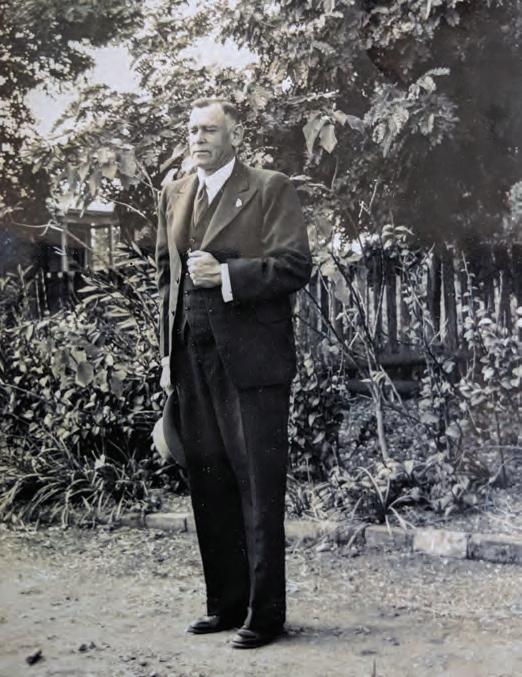
For someone more fitted by temperament and experience to the life of a field geologist, it must have been hard for him to adapt, when in 1946, on the retirement of L.C. Ball, he was appointed Acting Chief Government Geologist, necessitating his return to Brisbane. In those days, promotion was on seniority, and Morton was the most senior, apparently because JH Reid had left the Department for a short period and had lost some seniority (Sandercoe, 2008). Morton’s appointment was confirmed in 1947. He was apparently a popular choice with the staff, but may not have been enthusiastic about the promotion himself. He had been away from Brisbane for 11 years and it would have been difficult to drop back into the routine of an office to which he was virtually a stranger. He was more at home at the campfire than the conference table, and more at ease with prospectors than politicians.
In addition, he lost two of his experienced colleagues. Having missed out on promotion to Chief Government Geologist, Reid chose to retire in 1947, and JE Ridgeway, who had been Morton’s assistant in Charters Towers, moved into industry. In fact his greatest worry, and which Denmead speculated contributed to his untimely death at 64, was chronic staff shortages due to an insatiable post-war demand for scientists including geologists. ARDMs for the period of his tenure show a ‘revolving
door’ of geological staff. However, to ensure future additions to staff, Morton introduced a scheme to grant scholarships for the study of geology at the University of Queensland, the holders being obliged to join the GSQ on graduation and also to make their services available as cadets during university vacations. The first two scholarships were awarded in 1948 to JH Brooks and BW Hawkins, the former going on to make a successful career with GSQ, retiring in 1987. The scholarship scheme continued into the 1980s, and many of the scholarship holders made major contributions to the advancement of Queensland geoscience within GSQ.
To compound Morton’s worries, the GSQ was housed in uncomfortably cramped conditions. Owing to the demands of Allied Military Command during the war, GSQ had been moved out of its roomy quarters at 2 Edward Street into inadequate accommodation in old Railways Commission Offices that had been condemned before the war as unfit for occupation. Even when the staff numbers at last began to expand after the war, GSQ was forced to remain in these unwholesome quarters during the whole of Morton’s tenure as Chief Government Geologist.
In 1950, fate struck a further blow. Like many motorists
of the time, Morton distrusted garage mechanics, and was in the process of greasing his car at home, when it slipped off the jack onto his face and neck resulting in multiple fractures to his jaw. This necessitated an absence of several months from official duties and the painful experience accelerated the decline in his health. However, he struggled on in spite of official disappointments and attacks of dizziness, which now occurred with increasing frequency and severity.
Morton served on committees appointed to investigate the Great Barrier Reef and the Great Artesian Basin and the establishment of iron and steel works in Queensland. He was a founding member of the Geological Society of Australia.
Two important developments took place during Morton’s tenure, and are his most important legacies. Under his leadership, the GSQ was the only State geological survey to fully embrace the involvement of the newly formed Bureau of Mineral Resources (BMR) in regional mapping within its jurisdiction. This far-sighted decision resulted in the leveraging of significant Commonwealth funds over the next 30 years and underpinned a great expansion in exploration and discoveries of mineral and energy resources in Queensland. Field work commenced in northwest Queensland in the 1950 field season and
over the next 25 years, the joint BMR-GSQ mapping programme resulted in the complete mapping of the State at 1:250 000 scale. Follow-up joint 1:100 000 scale mapping continued until 1981 after which GSQ assumed full responsibility.
Secondly, following recommendations by Powell Duffryn Technical Services Ltd in a report to the Premier, a programme of diamond drilling was instigated in the West Moreton and other coalfields in 1950, and a Coal Section was established within GSQ to manage the work. This program, which continued for the next 40 years, resulted in the discovery and proving-up by GSQ of the rich coal resources of the Bowen and Galilee Basins, on which the Queensland economy is so dependant.
Morton’s final illness in 1955 was long and painful, resulting in prolonged absences from work, but in spite of the numerous setbacks and disappointments that he had endured during his tenure, Denmead records that he was keen to ‘return to harness’. However, on 8 November 1955, after two weeks back at work, he suffered a fatal heart attack.
Denmead (1957) summed up Morton’s character as a man of sober habits and simple tastes and having a high standard of moral conduct that he lived up to. His speech was direct and sincere and he was warm-hearted and generous, particularly to the prospecting fraternity. His work was thorough and painstaking, and although he was slow to form a judgement, his opinions were based on sound and logical arguments. He did not hesitate to condemn a prospect if convinced that it was worthless, but gave encouragement and sound advice if it showed possibilities.
During the time that Morton worked in the GSQ, the character of the work had undergone a gradual change. Earlier reports by geologists like R.L. Jack, W.H. Rands and B. Dunstan were devoted mainly to general descriptions of mineral fields. The emphasis changed to closer attention to individual deposits and their economic geology, working out structural controls and realistic assessments of their potential for development. Although L.C. Ball could be regarded as a pioneer in this field, Morton was the first to make it his speciality.
I am indebted to Carolyn Sandercoe, Cecil Morton’s granddaughter, for sharing numerous documents, photographs and personal letters, particularly from Cecil’s early life and war service, and transcripts of oral histories recorded by her mother, Valerie Sandercoe. Although Carolyn never knew her grandfather, having been born
only a few months before he died, she can be justly proud of him as a courageous soldier, loving family man and a great geologist whose legacy to Queensland was profound.
References
AnnuAl RepoRts of the DepARtment of mines, 1908–1955.
AustRAliAn electoRAl Rolls, 1903-1980 [database online]. Provo, UT, USA: Ancestry.com Operations, Inc., 2010. Accessed 9 October 2016.
BRAnAgAn, D., 2004: T.W. Edgeworth David: A Life. National Library of Australia, Canberra.
cAiRns post, 1888: Charters Towers School of Mines. Saturday June 30, 1888. http://trove.nla.gov.au/ newspaper/article/39432622 Accessed 9 October 2016.
DARtnAll, h.J.G., 2014: Lost in the Mists. Leslie Russell Blake: Mawson’s cartographer and hero of Pozieres. Australian Scholarly Publishing Pty Ltd, North Melbourne, 382pp.
DenmeAD, A.K., 1955: An appreciation (of C.C. Morton). Queensland Government Mining Journal, 56, 828–829.
DenmeAD, A.K., 1957: The Chiefs of the Geological Survey of Queensland from 1899 to 1955. Proceedings of the Royal Society of Queensland, LXVIII, No 10, 51–60.
finlAyson, D., 2010: Crumps and Camouflets: Australian
Tunnelling Companies on the Western Front. Big Sky Publishing, Newport, Australia, 480pp.
KenneDy K. 1978: The Mungana Affair. University of Queensland Press, St Lucia, Queensland.
mcgillivRAy, H.I., 1921: Report of the Director, School of Mines, Charters Towers. Annual Reports of the Department of Mines for 1920, 156–157.
MoRton, c c. & RiDgwAy, J.e , 1944: Wolfram Camp rare metal field—north Queensland. Queensland Government Mining Journal, 45, 117–131.
moRton, c c., 1920: The Normanby gold field. Report on southern portion. Queensland Government Mining Journal, 21, 268–275, 319–323.
moRton, c c., 1922: Mount Coolon gold field. Queensland Government Mining Journal, 22, 425–430.
Morton, C.C., 1924a: Geology and mineral occurrences, Pascoe River district, Cape York Peninsula —I. Queensland Government Mining Journal, 25, 78–83.
moRton, c c., 1924b: Geology and mineral occurrences, Pascoe River district, Cape York Peninsula — II. Queensland Government Mining Journal, 25, 129–134.
moRton, c c., 1935a: Mount Coolon gold field—I. Queensland Government Mining Journal, 36, 196–200.
moRton, c c., 1935b: Mount Coolon gold field—II. Queensland Government Mining Journal, 36, 232–237.
moRton, c c., 1945: Mount Carbine wolfram field. Queensland Government Mining Journal, 46, 167–172.
nAtionAl ARchives of AustRAliA, Series B2455: Morton, Cecil Charles, Captain: First Australian Imperial Force Personnel Dossiers, 1914-1920. http://naa12.naa.gov.au/ SearchNRetrieve/Interface/ViewImage.aspx?B=7985130 Accessed 9 October 2016.
nAtionAl ARchives of AustRAliA, Series B884: Morton Cecil Charles : Service Number - Q222774: Citizen Military Forces Personnel Dossiers, 1939-1947. http:// naa12.naa.gov.au/NameSearch/Interface/ItemDetail. aspx?Barcode=4636855. Accessed 9 October 2016.
poole, w., 1911: Report of the Director, School of Mines, Charters Towers for 1910. Annual Reports of the Department of Mines for 1910, 174–177.
QGMJ, 1955: Vale—C.C. Morton. Queensland Government Mining Journal, 56, 828.
QueenslAnD post office DiRectoRies, 1898 to 1905 [database on-line]. Provo, UT, USA: Ancestry.com Operations, Inc., 2010. Accessed 9 October 2016.
ReiD, J.h., 1917: The Charters Towers Goldfield. Geological Survey of Queensland Publication 256. Reid, J.H., 1918: Geological Map of Charters Towers and Environs. Geological Survey of Queensland Publication 244.
sAnDeRcoe, v, 2008: Valerie Sandercoe — reminiscences of her life. Interview with Ruth S. Kerr, St Lucia on 23 February 2008. Unpublished.
the QueenslAnDeR, 1910: School of Mines, results of examinations. Saturday 24 December, 1910. http://trove. nla.gov.au/newspaper/article/22288533 Accessed 9 October 2016.
the univeRsity of QueenslAnD, 2014: Charters Towers School of Mines. Australian e-Heritage Portal, http:// eheritage.metadata.net/record/QLD-600402. Accessed 9 October 2016.
toDD, J., 1995 Colonial Technology: Science and the Transfer of Innovation to Australia. Cambridge University Press, 300p.
Scott Bryan1, Robert Bryan2, Margaret Wood 3
1. School of Earth, Environmental and Biological Sciences, Queensland University of Technology, Brisbane, Queensland 4001, Australia. Scott.bryan@qut.edu.au
2. APGF Group, 12 Creek Street, Brisbane, Queensland 4001, Australia
3. 116 Bunarba Road Gymea NSW 2227, Australia
Professor Walter Heywood Bryan in many ways was a pioneer and leader. In 1911, he was among the first students enrolling in the new Science course offered in the first year of the University of Queensland. Following completion of his B.Sc., he became the first Honours’ graduate in Geology and Mineralogy at the end of 1914. After working briefly at the Geological Survey of Queensland, undertaking a petrographic study of rocks from the Gympie Goldfield, WH Bryan enlisted in the Australian Infantry Force in June 1915 being first deployed to Gallipoli, Egypt and then the western front in France until the end of the Great War. His unit was the 2ndAustralian Medium Trench Mortar Battery. Unfortunately, little is known of his time and experiences during the Great War. Like many veterans, his military service was something that was never spoken of on his return and with his children. He never joined the RSL nor attended Anzac Day services. Much of what is known comes from official records and his Military Cross honour that was awarded for gallant conduct near Strazeele, France, on the 4th and 5th May 1918. The citation reads:
“In the face of heavy artillery and machine gun fire, Lieut.
WH Bryan repeatedly led his men with ammunition to gun positions under violent heavy artillery barrage, himself carrying several times, 2 bombs, weighing 54 lbs each. There they were able to take out machine gun positions and snipers’ posts”.
These actions were a clear case of leading by example as highlighted in the Major-General’s recommendation at the time, but also reflected his outstanding quality and value he placed on duty, that was to be evident again during WWII and throughout his academic career.
After demobilisation, WH Bryan undertook post-graduate study at Cambridge University, and then returned to Brisbane to become Lecturer in Geology at UQ. In 1926, he became UQ’s first Doctor of Science and from 1948 to 1959 was Professor of Geology and Mineralogy, when he retired. Demonstrating his continued sense of duty, during WWII he served as a Suburban Air Raid Warden in Brisbane, and as a mail censor.
His academic career was also pioneering, and broad in its approach and impact. His Honours research on the Enoggera Granite established igneous petrology and volcanology as continual areas of research throughout his career, including several papers on spherulitic devitrification. His pioneering work with H.C Richards on the Brisbane Tuff led to it being included as the only Australian example in the seminal paper on Ash Flow Tuffs by Smith and Ross (1961).
More broadly, he made significant contributions to the stratigraphy and geological evolution of Queensland, soil science, and marine geology. Importantly, he pioneered earthquake monitoring in Queensland following the 1935 Gayndah earthquake, and established the first seismological research station at UQ, being the Officer in Charge during its formative years. Reflecting his broader impact and desire to help others, he led efforts to utilise the seismological stations for cyclone monitoring and hazard mitigation, particularly for North Queensland. He also served on numerous committees including being Deputy Chairman of the Great Barrier Reef Committee and President of the Royal Society of Queensland (1924) and President, Geological Section of ANZAAS (1946). In 1953, he became a Foundation member of the Geological Society of Australia and first Chairman of the Queensland Division. He died on 10 March, 1966.
Bryan, W. H., 1914. Geology and petrology of the Enoggera Granite and the allied intrusives, part I. General Geology. Proceedings of the Royal Society of Queensland, 26, 141-162.
Bryan, W. H., 1918. Geology and petrology of the Enoggera Granite and the allied intrusives, part II. Petrology. Proceedings of the Royal Society of Queensland, 34, 123-160.
Bryan, W. H., 1925. A glossary of Queensland stratigraphy. Special publication of the University of Queensland Department of Geology, 1-69.
Bryan, W. H. and massey, c. H., 1926. The geological range of the Tiaro series. Proceedings of the Royal Society of Queensland, 37, 108-120.
Bryan, W.H and ricHards, H.C., 1925. Radiolarian jaspers in the Brisbane Schist Series.. Proceedings of the Royal Society of Queensland, 36 (10), 50-62.
Bryan, W. H. and WHiteHouse, F. W., 1929. A record of Devonian Rhyolites in Queensland. Proceedings of the Royal Society of Queensland, 41, 131-136.
Bryan, W. H., 1939. The red earth residuals and their significance in south-eastern Queensland. Proceedings of the Royal Society of Queensland, 50, 21-32.
Bryan, W. H. and Jones, o a , 1944. A revised glossary of Queensland stratigraphy. Papers of the Department of Geology, University of Queensland, 2 (11), 1-77.
Bryan, W. H. and Jones, o a., 1946. The geological history of Queensland, a stratigraphical outline. Papers of the Department of Geology, University of Queensland, 2 (12), 1-103.
Bryan, W. H., 1950. Notes on the early Tertiary basalts of south-eastern Queensland. Journal of the Royal Society of N.S.W., 92, 129-132.
Bryan, W. H. and Jones, O. A., 1954. Contributions to the geology of Brisbane, no.2. The structural history of the Brisbane Metamorphics. Proceedings of the Royal Society of Queensland, 65, 25-50.
ricHards, H.c and Bryan, W.H., 1934. The geology of the Silverwood-Lucky Valley area. Proceedings of the Royal Society of Queensland, 45 (11), 50-62.
ricHards, H.c and Bryan, W.H., 1934. The problem of the Brisbane Tuff. Proceedings of the Royal Society of Queensland, 36 (6), 44-108.
Reference
ross, c.s. and smitH, R.L., 1961. Ash-flow tuffs: Their origin, geologic relations, and identification. United States Geological Survey Professional Paper 366.
Obituaries
denmead, W.H., 1966. Obituary: Walter Heywood Bryan. Queensland Government Mining Journal, 67, 190.
Hill, d , 1966. Memorial: Walter Heywood Bryan, M.C., D.Sc. 1891–1966. Journal of the Geological Society of Australia. 13 (2), 613–618.
Virginia Passmore vlp@pcug.org.au
Although the geological characteristics of contested terrain have long influenced the outcome of battles and wars, professional geologists were not appointed for their geological expertise as technical geological advisers to advise the Army in wartime until the First World War. Civilian geologists had been occasionally consulted to provide terrain maps, or to resolve a specific problem prior to and early in the war. At the start of the war, geologists were mobilised without regard to the possible value of their services in their own profession.
Tannatt William Edgeworth David, professionally known as Edgeworth David, was one of the first Australian geologists in the Great War to be appointed for his geological expertise, and the first Australian military adviser to the British Expeditionary Force. Prior to the war Edgeworth David was a geologist, an academic, and an Antarctic explorer. In 1916 when the need for geological knowledge as a preparation for military mining was recognised, Britain appointed Edgeworth David, an experienced Australian geologist, to advise on military mining, and to provide advice on defensive mining for trenches, dugouts and fortification and on offensive mining for tunnelling.
Born in Cardiff Wales in 1858, Edgeworth David graduated from Oxford University with a Bachelor of Arts in 1880, not a science degree. But before and after graduation, he attended geology lectures which stimulated his interest to study geology, replacing an earlier intention to read for Holy Orders.
In 1882 the New South Wales Government sought a geologist in England to fill the post of assistant geological surveyor formerly held by Lamont H. Young who had disappeared in mysterious circumstances while doing field work at Bermagui. David was appointed to the position and arrived in Australia in November 1882 to take up an appointment as a geological surveyor with the New South Wales Geological Survey. His discovery of the Hunter Valley coalfields in New South Wales and public lectures on the mineral resources and geology of New South Wales while he was with the New South Wales Geological Survey made him known in Australia, and, in particular, in New South Wales.
In 1891 he was appointed Professor of Geology at the University of Sydney. At that time it was a one-man department, poorly equipped and housed in a small cottage. Edgeworth David wasn’t a staid academic who spent all his time in the classroom and his office, but was out doing field work as much of the time as he could.
His geological investigation in the Pacific Island atoll of Funafuti, which provided support for Charles Darwin’s theory of subsidence and the formation of atolls, brought him world-wide repute in the scientific world. His reputation was growing in Britain and Europe but his activities in Antarctica made him a household name.
His field studies of glaciation in New South Wales and South Australia between 1900 and 1907 were useful when he was invited to join the 1907 Shackleton Nimrod Expedition to the Antarctic along with two of his former students, Douglas Mawson and Leo Cotton. Granted a few months leave from the university, on the way to Antarctica he chose to stay for the entire expedition. During his Antarctic stay, at age 50, he led a team up the first ascent of Mount Erebus. It was a 13,000 foot (3,952 m) climb up the only active volcano in Antarctica.
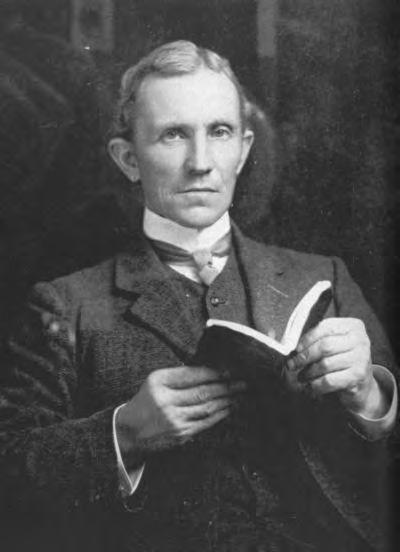
Later that year he led a team of three men on a 660 mile (1062 km) trek to reach the South Magnetic Pole and plant a flag. At the time, it was believed that they had reached it. In later years it was determined that they got close, but hadn’t quite reached it. On returning to Australia in March 1909, the problem of his long absence disappeared in the rejoicing of his return. For his Antarctic work he was made a Companion of the Order of St Michael and St George in 1910, and was awarded several medals by scientific organisations, including the Wollaston Medal by the Geological Society of London. He is the only Australian resident to receive it. In 1911 Oxford University conferred an honorary Doctor of Science on Edgeworth David.
David was in his mid-fifties by the time the war came along and was a well-known and respected geologist with a world-wide reputation. When war was declared in August 1914, Edgeworth David was attending a meeting of the British Association for the Advancement of Science being held in Australia. Although a strenuous supporter of the war, he stood up for the German scientists who were attending the conference, saying “all men of science are brothers”. Among the distinguished German scientists was a geologist, Albrecht Penck, who had been given two honorary degrees by Australian universities.
For this public support of the German scientists, the New
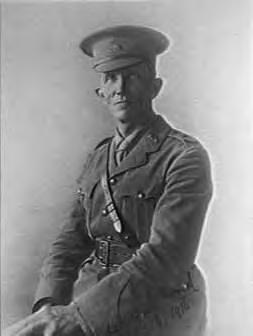
South Wales government investigated David’s loyalty, as anti-German feeling was running high in Australia at this time. At the end of the conference the German scientists of military age were interned in Australia for the duration of the war. Those over military age, like Albrecht Penck, who was in his late 50s, were allowed to return to Germany. Ironically during World War I, Penck was a senior military geological adviser to the German army and may have been spying for Germany while he was in Australia.
Edgeworth David was an active supporter of the war effort. He had previously joined the Sydney University Rifles, a unit designed to protect Australia in case of invasion, and enthusiastically drilled along with other members; and he also actively supported the campaign for conscription. He even offered his resignation from the Council of the Linnean Society of New South Wales because their meetings clashed with his drill afternoons. He became president of the New South Wales branch of the Universal Service League and was a leading figure at recruitment rallies.
By 1915 the opposing armies became bogged down in trench warfare. After reading reports about mining operations and tunnelling during the 1915 Gallipoli campaign, he was convinced of the need for aggressive mining on the western front. Edgeworth David along with Professor Ernest Skeats, Professor of Geology at the University of Melbourne, was prompted to write to the Minister of Defence proposing the government raise and equip a Tunnelling Corps. This would be a military force of geologists and miners to undertake mining and tunnelling at the front. After the proposal was accepted, he was involved in organising and recruiting for the Australian Mining Corps. By 1916 three companies of the Mining Corps were raised and given three months training.
At age 57, Edgeworth David enlisted in the AIF and was commissioned a Major in the Mining Battalion on 25 October 1915. Prior to embarkation he was allocated to the Technical Staff Mining Corps as a Geologist. He left Sydney for the Western Front in France in February 1916, taking along with him the first three units of the Australian Mining Corps, a contingent of 1,300 officers and men, composed of miners, engineers, geologists and sewage workers. They arrived on the Front in May 1916. In France, David was transferred from the Mining Corp and appointed geological adviser to the Controller of Mines of the Armies. His role was geological technical adviser to the British Expeditionary Force.
However, early on, the military was unsure what to do with him and he became relatively independent. He spent his time in geological investigations of the surface rock outcrops and the subsurface rocks. He prepared simplified geological maps and cross-sections depicting the subsurface strata for the army with a legend that described important information for the army’s use such as moisture content of the unit, whether it was hard or soft and their potential military use such as dugouts or tunnelling. From these he provided advice on ground water, the siting of wells for drinking water and the siting and design of dugouts, trenches and tunnels; he also gave lectures on the geological strata of the British front to the first Army School of Mines. His work was however primarily related to mining: offensive mining such as tunnelling and defensive mining such as dugouts and trenches.
His investigations included inspecting trenches and tunnels. And along with William King, the other geologist appointed to the army to advise on water supply, he also undertook test borings to identify soils and underlying strata as well as collation of available published geological data covering the whole of the Western Front. He produced a new foundation of geological reference data and improved the Allied Army’s scant knowledge of the geology of Belgium. These geological investigations provided detailed information on the seasonal variation of water level in the chalks used for dugouts and more importantly on the extent and depth of two clay units suitable for mining and tunnelling in the Messines sector of the German lines, one in the Paniselian Formation and a lower unit, the Ypresian Clay, below the German fortifications. Both units were overlain near the surface by water-bearing sand. The study also determined that the thickness of these units varied due to erosion in the past and that safe tunnelling and mining required knowing what was immediately ahead of the progressing tunnel face. From September 1916 he was provided with a geological assistant, Lieutenant C. Loftus Hills, an assistant government geologist of Tasmania who took charge of test boring operations.
In late September, Edgeworth David was injured in an accident that occurred while he was being lowered down astride a bucket to inspect a well shaft at Vimy Ridge in France. The windlass that was lowering him broke and he was dropped 70 feet (22.5 metres) to the bottom of the shaft. As they were getting ready to pull David up out of the well and take him to a Casualty Clearing Station, he is reputed to have said “Wind me up slowly if you don’t mind chaps, I fell so fast that I was unable to observe the strata as I went down.” He was hospitalised in London in
early October 1916.
He returned to duty in France in early November 1916 and was attached to the Inspector of Mines office General Headquarters. Early in 1917 he was preparing coloured maps and vertical sections of the rocks to indicate water conditions and areas of quicksand that were used to indicate areas safe to dig trenches and tunnels. These were the first environmental engineering maps. From General Headquarters David worked with the Canadians in their successful attack on Vimy Ridge and helped organise the mining operations at Hill 60 on the Messines Ridge.
The most notable service of David and his fellow geologist in the BEF, William King, was related to their role in the destruction of the German fortifications throughout the Messines-Wytschaetes region of the Western Front in 1917. The German geologists apparently were unaware that a thick unit of suitable clay for tunnelling, the Ypresian Clay, occurred beneath their fortification system. Through Edgeworth David’s investigations the British were aware of it and were tunnelling in this lower clay unit and planting explosives. Along 16 km, charges of nearly 450,000 kg of high explosives were placed in 19 separate mining operations beneath enemy lines. These explosives were exploded simultaneously and General Harvey captured the German system of fortification in June 1917. The underground explosions in that area were the biggest and most psychologically damaging explosions inflicted on the Germans. Damage included the development of large craters, the surface of which collapsed and the depressions quickly filled with water. Quicksand flowed into railway cuttings for example, Hill 60. The noise of the explosion was said to have been heard in Paris, London and Dublin
David was appointed to General Headquarters in June 1917. In September 1917 David was consulted on the source of rock used as aggregate in concrete German fortifications in France. The Allies believed Germany was transporting war materials through the canals of neutral Holland but needed some proof. David identified the rock as basalt coming from the Rhine region. Additional specimens were given to the Geological Society of London to analyse and they concurred with Edgeworth David’s assessment of its origin.
In October 1917 he was appointed Geologist on Staff of the Inspector of Mines. By 1917 he had convinced Headquarters to seek geological reports before undertaking new operations or siting artillery concentrations. This was a major achievement, as all
armies were guilty of not using or ignoring geological advice well into the war. By the end of 1917, offensive warfare was declining and David’s work became more involved in defensive mining, such as dugouts and trenches and tunnels for the troops to reach the front. David also worked with and advised the American geologists between October 1917 and November 1918. He gave Alfred Brooks, the American geological adviser to the American Expeditionary Force, information detailing ‘best practice’ in the construction of dugouts and trenches and in locating ground water, road metal and mineral resources. General Harvey is reputed to have told the Americans in 1917 that “The first requisite for success in military mining is to secure the services of experienced geologists”.
Edgeworth David was mentioned twice in Sir Douglas Haig’s dispatches in April 1917 and again in November 1917. In January 1918 he was awarded a Distinguished Service Order (DSO) for distinguished and gallant services and devotion to duty in the field for the period February 27 to September 21 1917. He was appointed Chief Geologist of the British Expeditionary Forces in June 1918, and was promoted to Lieutenant Colonel in November 1918. Edgeworth David returned to Australia in April 1919. He was demobbed and his military appointment was terminated on 10 June 1919. He was created a Knight Commander of the Order of the British Empire in September 1920 for his services during the war. Perception of geology’s practical use for British military purposes was changed significantly through the work of both Edgeworth David and William King in the Western Front of Europe during the First World War.
Edgeworth David returned to the University of Sydney after the war and began preparation for his major project – to write a book on the Geology of Australia. Despite failing health he did completed a large scale Geological Map of the Commonwealth of Australia and a volume of Explanatory Notes which were published in 1932. Tannant William Edgeworth David died of pneumonia on 28 August 1934 at age 76. He was accorded a state funeral service at St. Andrews Cathedral followed by a military funeral sponsored by both the Commonwealth and the New South Wales governments. After the war he was given many honours in Australia, Britain and other Allied countries. After his death numerous memorials in Australia and Antarctica were named for him. He was even portrayed on two Australian stamps.
Branagan, D. (1987). The Australian Mining Corps in World War I. [Talk given at the Mineral Heritage Luncheon of the 1987 Annual Conference of the Institute of Mining and Metallurgy.] Bulletin and Proceedings of the Australian Institute of Mining and Metallurgy, 292(9), 40-44.
Branagan, D. (2005). T. W. Edgeworth David: A life. Canberra, ACT: National Library of Australia.
Branagan, D. F., & Vallance, T. g. (1981). David, Sir Tannatt William Edgeworth (1858–1934). Australian Dictionary of Biography, 8. http://adb.anu.edu.au/ biography/david-sir-tannatt-william-edgeworth-5894/ text10033
Brooks, a. H. (1920). The use of geology on the Western Front. U.S. Geological Survey Professional Paper 128-D, pp. 85-124. http://pubs.usgs.gov/pp/0128d/report.pdf
eDgeworTH DaViD. (2016). Wikipedia. https:// en.wikipedia.org/wiki/Edgeworth_David
kierscH, g. a., & UnDerwooD, J. r., Jr. (1998). Geology and military operations, 1800–1960: An overview. In J. R. Underwood Jr. & P. L. Guth (Eds.), Military geology in war and peace (Engineering Society of America Reviews in Engineering Geology, VXIII, pp. 5-27). Boulder, CO: Geological Society of America.
MacleoD, r., & Branagan, D. (2010). The architect and the statesman. Archibald Liversidge, Edgeworth David and the spirit of science in Sydney, 1874–1934. Journal and Proceedings of the Royal Society of New South Wales, 143, 3-17.
naTional arcHiVes oF aUsTralia. (1999). Australian Imperial Force Base Records Office; B2455, First Australian Imperial Force Personnel Dossiers, 1914-1920; David Tannatt William Edgeworth.
rose, T. (2012). Officers with maps. Geoscientist, 23(3), 14-19.
rose, e. P. F., & rosenBaUM, M. S. (1998). British military geologists through war and peace in the 19th and 20th centuries. In J. R. Underwood Jr. & P. L. Guth (Eds.), Military geology in war and peace (Engineering Society of America Reviews in Engineering Geology, VXIII, pp. 2939). Boulder, CO: Geological Society of America. sPringwooD HisTorians. (2011, January 25). Sir Tannatt William Edgeworth David. History on the web. http:// springwoodhistorians.blogspot.com.au/2011/01/sirtannatt-william-edgeworth-david.html
Carol Bacon gclota@trump.net.au
The text of this article is largely taken from Bacon, C. A., 2013. ‘A brief history of the Department of Mines –1882 to 2013.’ Tasmania Geological Survey Record 2013/07, and is reproduced with the permission of Mineral Resources Tasmania.
Clive Loftus-Hills (1885-1967) was born in Deloraine, Tasmania, on 31 March 1885 as Loftus Hills, the fourth and youngest child of James Hills, a builder and his wife Mary (née Smith).1 He was educated at the Charles Street State School in Launceston, then at the Launceston Church of England Grammar School and subsequently at the University of Tasmania, where he graduated with a Bachelor of Science degree in 1907, a Master of Science (in metallurgy) in 1913, and in 1923 received the first science doctorate awarded by the University.2 On 12 February 1908 he married Jessie Adelaide Dean,3 daughter of Henry Jennings Dean, a Launceston stockbroker and former mayor.4
Before being appointed Assistant Government Geologist in 1912, Hills worked as a chemist, assayer and metallurgist, was a part-time lecturer in geology and for a brief time was head of the mining branch of the government technical school.5
Hills was an excellent geologist and produced numerous papers and reports dealing with the West Coast mining districts including the rich Mt Read-Rosebery field, where his work on the stratigraphy structure and mineralogy of the Read-Rosebery zinc-lead ores formed the basis for their mining and treatment.6
On
Hills took leave from the Survey in January 1916 to serve in WW1. He enlisted with the Australian Imperial Force and was assigned to the No 4 Tunnelling Company, with the rank of Lieutenant. After arriving in France, Hills was transferred to the 1st Tunnelling Company, as one of Edgeworth David’s assistants along with the British Captain WBR King, formerly of the British Geological Survey. David, King and Hills were until September 1918, the only geologists advising the British Expeditionary Force and responsible for planning, collecting and interpreting geological data, mostly from investigatory bore holes along the front7. Therefore, Hills spent much of the time attached to the Australian Electrical and Mechanical Mining and Boring Company (Alphabet Company for short). David and Stanley Hunter had designed the “Horden” portable drilling machine useful
for examining shallow geology, and over a 100 were built by a London firm. They could reach 30 m under favourable conditions but were generally restricted to less than 20 m. These were placed under the charge of Loftus Hills in September 1916, and in aggregate some 35 000 feet (10 670 m) were drilled by the Alphabet Company under his direction largely in front-line positions, testing ground conditions for the construction of dugouts and other purposes such as tunnels8. Hills also filled in for David, while the latter was convalescing after his fall down a well, and made an important report on the geology of Vimy Ridge8. In the last months of the war, to cope with the number of new geological maps required by the rapidly advancing allies, Hills joined David at General Headquarters (GHQ) along with two other Australian Tunnelling Company officers, including Lieutenant C.S. Honman, formerly of the Western Australian Geological Survey8
In October, 1919, Hills was appointed to the Military Division of the Most Excellent Order of the British Empire (MBE) for his valuable services rendered in connexion (sic) with military operations in France.9
After WW1, he returned from active service and resumed duties in May 1919 as Assistant Government Geologist. On the death of WH Twelvetrees (in November 1919), Hills was appointed Government Geologist,10 and in short order, began lobbying for a technical man be appointed as Permanent Head of the Department - suggesting that this new position be styled "Director of Mines" and could most satisfactorily be combined with the position of Government Geologist. Hills wanted11 to place the development and control of the mining industry in the hands of an officer possessing an intimate knowledge of technology and economics and all of its phases. Hills wrote prolifically on the direction the Department of Mines and the Geological Survey should take, on the investigations which should be undertaken, and on the difficulties faced by having a " non - technical" man as head of the department. This, he said, lead to a "damping of enthusiasm of those professional officers" in having a purely clerical officer as head of the department. In
Hills' opinion in a department concerned with the control and development of the mining industry, the initiative and creative capacity essential to the inauguration of progressive and developmental departures can only be expected in a professional head.
Early in 1921 a formal review was made into the reorganisation of the Department, which was then in three branches - Administration, Geological and Inspection, all under the auspices of the Secretary for Mines. Despite Hills' impassioned plea he was not made head of department. The Minister for Mines, Sir Elliot Lewis, thought a technical man would be wasted on administrative affairs, and of course the Acting Secretary, Pretyman, was not keen to relinquish any powers.12 The result was that Pretyman became Secretary for Mines, head of department, and Hills was made Director of the Geological Survey, housed in Launceston. The other geologists, AM Reid, PB Nye and HGW Keid, were renamed "Government Geologists" instead of "Assistant Government Geologist" as before. This set the scene for a clash of two iron wills - Pretyman in Hobart and Hills in Launceston. As Director of the Geological Survey, Hills made sweeping changes to office rules and the running of the laboratory. He had letterhead paper printed with the title "Geological Survey of Tasmania" for the use of the Launceston Office; before this, letterhead paper was headed "Geological Survey Office." After Hills' term, and when the office was moved to Hobart, ordinary Department of Mines letterheads were used by the Survey staff.13 During the first year in his new position, Hills' autocratic manner went either unnoticed or was accepted without complaint by the staff. Hills introduced new rules, decided what enquiries were to be answered and by whom, directed what staff were to work on which projects, and generally kept a pretty close eye on the day-to-day running of the office. The exception to this was with the Secretary in Hobart - with whom Hills waged a constant and unabating paper war. Pretyman tried making decisions (such as whom to send on enquiries) which Hills regarded as his to make and took to issuing instructions direct to Nye and Reid, much to Hills chagrin. Pretyman insisted on the return of innumerable forms and letters - returning time sheets for miserable amounts of information to be added, causing Hills to complain bitterly14 about these "petty annoyances" and "pernickety requirements (which) break the heart of a conscientious officer." Added to this was the old Secretary's habit of
not forwarding a geological enquiry to the Survey but asking Hills to provide information which the Secretary would then pass on to the enquirer. Hills implored to be allowed to answer enquiries properly - protesting that the practice of Pretyman15 "...dealing direct with the correspondent concerned and your withholding the name and particulars from me is not conducive to efficiency." This outburst followed Pretyman's request16 for "any information ... in regard to oil shales" for an enquirer - a fairly vague and loose topic; Hills was justified in wanting to know exactly what the enquirer wished to find out. However, Pretyman insisted17 that, as Head of Department, all enquiries should be made through him. This unsatisfactory working relationship continued for some years. Things were so bad at one stage that Pretyman asked the Minister to tell Hills to return some time sheets18 - surely a trivial issue with which to trouble a Minister.
Following his appointment as Government Geologist and then, as Director of the Geological Survey, Hills was involved in several major studies of the mineral fields of Tasmania - following the tradition set down by his predecessor, WH Twelvetrees. One of Hills' largest works was a comprehensive survey of the coal resources of Tasmania, in which he was assisted by his colleagues PB Nye, HGW Keid, and AM Reid.
Whilst Hills was a brilliant scholar, a very able geologist and a man of integrity and principles, he evidently lacked the same tactful and persuasive nature of his predecessor Twelvetrees. Hills' straightforward way of thinking and speaking his mind was not always appreciated by the recipients of his advice.
In the early 1920s something of an "oil boom" began in Tasmania. Several companies were set up and took up ground in the Latrobe and Pelion areas to search for oil. The largest of these companies was the Adelaide Oil Exploration Company Ltd, which was formed in March 1920. Throughout 1921 and 1922 Hills waged a war of words with the directors of the Adelaide Oil Exploration Company, writing vociferously to both local and interstate papers19 and to the Minister. Hills took exception to the wildly optimistic claims made by the "oil boomsters" and considered that his duty lay in warning the public against their activities.20
The Adelaide Oil Exploration Company claimed, in January 1921, to hold land which "contains the greatest potential amount of wealth hitherto controlled by any one concern in the British Empire and probably
the whole world, outside the States of America", and promised returns of up to five thousand pounds ($10,000) per ten pound ($20) share from oil, which was "...there in millions of tons... in the form of carbonised asphaltum - that is, inspissated or dried up petroleum", noting that "such fabulous returns are not an uncommon thing in new oilfields."21
Hills' outbursts to the press, under banners such as Foredoomed to Failure20 and Oil Indications – A Serious MisStatement21 were countered by the company releasing vitriolic press statements and sending circulars to the shareholders. One such circular devotes almost two of the four pages to an attack on Hills - starting off with a referral to Hills' statements as "miserable whimperings"24. By October 1921, the company no longer referred to "inspissated petroleum" but was planning to extract oil from the "rich-in-oil material" (i.e. pelionite) under their control. In December 1921 they asked the Government for exclusive rights to search for oil and oil-producing substances in Tasmania for five years.25 The company proposed spending £10,000 ($20,000) during each of the five years, after which they would be allowed to hold permanently an area "not less than one hundred square miles" for oil producing purposes. Not surprisingly, this offer was rejected.
In 1922 the Mersey Valley Oil Co. Ltd and the Tasman Oil Products Co. NL entered the arena. Hills described the Mersey Valley Oil Co. Ltd prospectus as "very entertaining and would regard it as on a parallel with Punch as a source of humour if it were not for the fact that money badly needed for other purposes is going to be expended with no hope of getting the results expected".
A new Minister for Mines was appointed late in 1922. The outgoing Minister, Sir Elliot Lewis, wrote to the Secretary of Mines in June 1922: “I had hoped that I had had the foundation for the harmonious working of the several branches of the Mines Department. I have apparently failed lamentably in my endeavours and can only hope that my successor will be able to obtain more satisfactory results”
His successor, Ernest F. Blythe, was made Minister in August 192226 and in September 27 was made Director of one of the companies (Standard Oil Company of Australia Ltd) involved in the search for oil. Blythe did not see eye to eye with Hills on his opinions relating to the oil search and Hills' remonstrances continued, although in late 1922 Hills had matters closer to home to worry about. Working relationships with most of
the staff became so strained that an inquiry was held in January 1923 by the Public Service Commissioner "In Connection with Alleged Friction in the Mines Department." Correspondence was produced28 to show that Hills had managed to have disagreements with almost everyone in the Department - the former Secretary Wallace, the current Secretary Pretyman, the inspectors, the Minister and most of the Survey staff. The Commissioner heard the staff reel off lists of grievances, and Pretyman had an enormous store of petty and trivial incidents involving Hills about which he complained at length. The main problem seems to have been that (in Pretyman' s words) "He (Hills) does not seem to have the tact, and he seems to have a domineering spirit."29
Hills was relieved of his duties as Director while the Commissioner considered the case and would have been reinstated had the Survey staff (Reid, Bath, Edwards the Draftsman, Nye and Manson) not written to the Minister30 stating that "his reinstatement would lead to constant friction in the Geological Survey and other branches of the Mines Department." So, although Hills was not found to have done any wrong, the Commissioner resolved the issue by abolishing the position of Director, Geological Survey and recommending that the Launceston office be moved to Hobart. Hills, who had been on extended leave to attend the Imperial Conference of Returned Soldiers, Sailors and Nurses in England, tendered his resignation.31
He received the first science doctorate awarded by the University of Tasmania in November 192332 for his thesis on Metallogenic Epochs in Tasmania. In May 1924, he won the David Syme prize33 for original scientific work from the University of Melbourne with his thesis. After leaving the Survey, Hills worked as a geological consultant, visiting many mineral fields within Australia and the goldfields in Fiji. This was followed by a stint as Chief Chemist with the Commonwealth Department of Supply (1938-1946) where he was engaged in munitions manufacture. During this period he changed his name to Clive Loftus-Hills.34
He returned to Tasmania after WW2 and again worked as a geological consultant and mining entrepreneur, successfully standing as a candidate for the 1950 Hobart City Council elections. He died in Melbourne on 13 December 1967 and was buried in the Roman Catholic section of the Springvale Botanical Cemetery. He was survived by his wife and two sons.35
Clive Loftus-Hills was a foundation member of the Geological Society of Australia.
References
1.RGD33/1/64 no 1095.
2. Mercury 16 December 1967.
3. Examiner 13 February 1908.
4 Maxwell R. Banks, 'loftus-Hills, Clive (1885–1967)', Australian Dictionary of Biography, National Centre of Biography, Australian National University, http://adb. anu.edu.au/biography/loftus-hills-clive-7221/text12499, published first in hardcopy 1986, accessed online 24 March 2018.
5. Ibid and Mercury 16 December 1967.
6. Ibid.
7.finlayson, D., 2010. Crumps and Camouflets: Australian tunnelling companies on the Western Front. Big Sky Publishing, Newport, Australia.
8.BRanagan, D.f., 2005. T.W. Edgeworth David: a life: geologist, adventurer, soldier. National Library of Australia, Canberra.
9. Record NAA: B2455, HILLS L LIEUTENANT, National Archives of Australia.
10. Mercury 19 December 1919.
11. Letter: Loftus Hills to Public Service Commissioner, 11 January 1921. TA Min 24 319/508
12. Notes on conference held at the office of the Minister for Mines (Sir Elliot Lewis) in regard to the Mines Department, 29 June 1921. TA Min 24 319/508.
13. Correspondence 1920-1922 tendered as exhibits to 1923 Inquiry. TA Min 24 319/508.
14. Letter: Hills to Acting Secretary of Mines, 10 November 1921.
15. Letter: Hills to Acting Secretary of Mines, 16 August 1921.
16. Letter: Acting Secretary of Mines to Hills, 8 July 1921.
17. Letter: Acting Secretary of Mines to Hills, 9 August 1921.
18. Letter: Acting Secretary of Mines to Minister for Mines,11 November 1921, reply from Minister 19 November 1921.
19. Hobart Mercury 8 September 1921; Adelaide Register 9 September 1921; 27 June 1921; Launceston Examiner 9 September 1921, 10 October 1921, 11 October 1921;
Daily Telegraph 28 September 1921, 10 October 1921; Perth Daily News 12 October 1921
Adelaide Advertiser 27 June 1921; 28 June 1921, 2 July 1921.
20. Letter: Hills to Sir Douglas Mawson 24 March 1922 “certainly the oil boomsters have taken up a lot of our time. They are an awful nuisance but I am trying to protect the good name of Tasmania [...]”
21. London Times Trade Supplement, January 1921.
22. The Age 11 October 1921.
23. Adelaide Register 9 September 1921.
24. 1922 New Years Greeting Circular, Adelaide Oil Co. Ltd.
25. Letter: JH Moate, managing Director Adelaide Oil Exploration Co. Ltd to Minster for Mines, 7 December 1921.
26. Evidence of EF Blyth to the 1921 Inquiry.
27. Adelaide Oil Exploration Co. Ltd. Report to Third half-yearly meeting 11 September 1922.
28. Evidence tendered to Inquiry in form of bundles of letters and correspondence files TA Min 24 319/508.
29. Evidence of Pretyman to 1923 Inquiry.
30. Letter from staff to Minister for Mines, 16 April 1923.
31. Mercury 17 September 1923
32. World 21 November 1923.
33. World 6 May 1924.
34. as for 4.
35. Ibid, Advocate 18 May 1950, Springvale Cemetery records.
From tunneller on the Western Front to Director of the Bureau of Mineral Resources: the war service and career of P.B. Nye
Ian Withnall iwwithnall@optusnet.com.au
Percival Bartlett Nye was born in Collingwood, Melbourne on 21 March, 1893, the son of Alexander and Sarah Ann Nye. He was educated at Scotch College and attended the University of Melbourne on a Mining and Agricultural Exhibition (scholarship) and graduated with a Bachelor of Mining Engineering. From 1915 until his enlistment in the Army in 1916, he worked as an assayer at the Hampden–Cloncurry copper mines at Kuridala in north-west Queensland (Alexander, 1950; Home, 1995; Walker, 1995).
On the Western Front
He applied to join the Army in March, 1916 and was accepted into the Army Engineers on 12 June 1916. His military record is gleaned from details on his service record (National Archives of Australia, Series B2455) and the history of the tunnelling companies by Finlayson (2010). Nye attended the Engineer Officers’ Training School as a Sergeant and in September, applied for a commission, but apparently was not accepted. However, after being posted to the Tunnelling Companies Reinforcements in late February, 1917, he re-applied and was commissioned as 2nd Lieutenant. The February Tunnelling Reinforcements sailed for overseas service on 11 May 1917 on HMAT ‘Shropshire’ and arrived in England on 17 July. Nye is shown as proceeding to France on 19 August. He was initially attached to the 1st Anzac Entrenching Battalion before joining the 1st Australian Tunnelling Company in Flanders on 2 October during the Third Battle of Ypres.
By this stage of the war, after the successful detonation of the mines under the Messines Ridge on 7 June 1917 for which the tunnelling companies are best remembered, the 1st Tunnelling Company’s activities had become more typical of its engineering roots, and involved construction of dugouts and gun emplacements and building and repairing crushed rock and plank roads to allow the forward movement of troops and artillery. Just after Nye joined the company, the weather in Flanders deteriorated markedly, and after two days of solid rain, the already sodden battlefield turned into the muddy morass for which Paschendale has become synonymous. The tunnelling companies and other engineering units worked
feverishly to build plank roads, and to construct and stabilise gun platforms on the muddy substrate. Dugouts became flooded and had to be drained and pumped out. However, on 10 October after only a week with the Company, and just before the beginning of First Battle of Paschendale, Nye suffered a gunshot wound to the left shoulder. The wound necessitated him being transferred to the 4th London General Hospital, where he remained from 17 October until 30 November. On his discharge from the hospital, he was promoted to Lieutenant and returned to his unit near Ypres on 22 December.
In late March, 1918, during the German Spring Offensive, the 1st Tunnelling Corps was ordered to move south into France near Arras to help construct a new defensive line of trenches, dugouts and machine-gun emplacements in the event that the German assault continued its advance. In the end, the offensive stalled and the line was not needed. By August, as the war reached its final phase, the Allies prepared their plans to push back the Germans, and the tunnelling companies were directed to provide parties of men to advance with the infantry to locate suitable dugouts for headquarters, clear them of boobytraps and landmines, and to locate water supplies in the areas captured from the Germans. Lieutenant Nye was appointed to command a party attached to the 3rd Australian Division.
When the last infantry units of the Australian Corps were removed from battle in early October, the 1st Tunnelling Corps chose to continue its work of repairing roads and clearing mines as the Germans retreated eastwards. These tasks continued well after hostilities ended on 11 November, and in early 1919, Lieutenant Nye was one of 8 men of the company who were recommended for gallantry medals for this work. However, the recommendation for a Military Cross was not accepted, and he was to receive only the standard service medals. Nevertheless, the recommendation reads:
In the advance from BONY to PREMONT from September 29th 1918 to 5th October 1918, he was in charge of a party detailed for forward road reconnaissance and the search for and removal of enemy booby traps and mines. Under heavy shell and machine gun fire he successfully completed this work and cleared the way for oncoming transport.
At BUSIGNY from October 5th to November 1st he was in charge of party detailed for road diversion repairs under long range shell fire. He again successfully completed this important work.
At CATTILLON to SANS DU NORD, from November 4th -November 11th he was in charge of a party attached to 46th Division for mine searching on roads and bridges. By his pertinacity and courage he located and removed many mines including at least two delayed action types.
From November 11th to December 21st, from SANS DU NORD to NAMUR he has continued to lead the search parties and has unloaded several hundred shells and cases of explosive any of which might have been delayed action type. His personal courage and leadership have been of the highest order and have had a wonderfully inspiring effect on the Sappers whom he has led in a task which calls for more than ordinary nerve.
[Australian War Memorial: recommendation file for honours and awards, AIF, 1914-18 War, Royal Australian Engineers, Australian Tunnelling Coys 12.11.1918 to 28.2.1919.]
Lieutenant Nye sailed from England for Australia on the ‘Borda’ on 11 May, 1919, arriving in Melbourne on 27 June. He was officially discharged from the Army on 27 July, and on 16 August he married Harriett Leah Louisa Reeve.
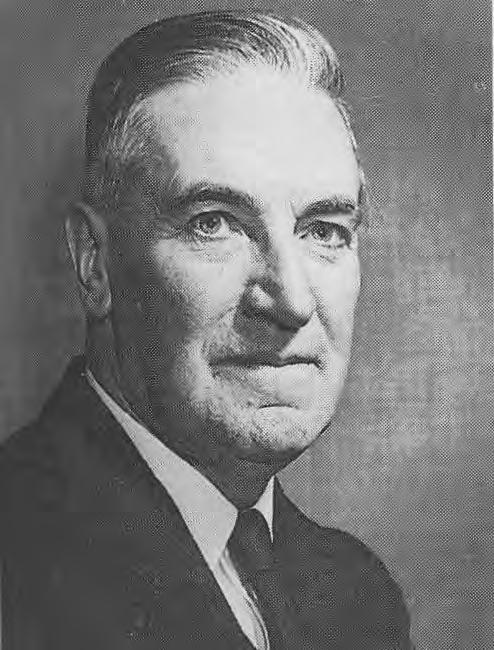
Nye’s biography in the Encyclopedia of Australian Science (Walker, 1995), records that for a short time after his war service (1919–20), he held the position of petrologist at the National Museum of Victoria, but his long-term geological career began when he joined the Geological Survey of Tasmania in Launceston in 1920. His career with that organisation is recorded by Bacon (1989). The respected Government Geologist, W. H. Twelvetrees, had died the previous year and the new head of the Survey when Nye joined was Clive Loftus Hills (see article by C. Bacon, this issue). Other geologists with the Survey were A.M. Reid and H.G.W. Keid (see article by Withnall, this issue). Hills wasted no time in instigating a program of systematic mapping in Tasmania’s Midlands district to determine the potential for groundwater, and he assigned Nye to the job with some assistance from Keid. The work was published by Nye (1921) and was followed by three other reports on underground water supply, covering the various settled areas in the south of the State. In 1922, Nye upgraded his qualifications to a Masters of Science, awarded by the University of Melbourne. He also carried out smaller geological examinations of various mines and prospects, and contributed to the preparation of a comprehensive survey of the coal resources of Tasmania, which is acknowledged as one of Hills’ most important works with the Geological Survey (Hills et al., 1922).
In spite of these responsibilities, the autocratic Hills declined to recommend Nye and Keid for an annual pay increment in 1921, and dismissed Keid in 1922. He also clashed with the Minister and Secretary for Mines and almost everyone else in the Department, resulting in him being stood down in 1923 while an enquiry was held into the alleged friction. The Commissioner found in his favour and would have reinstated him had not Nye and the rest of the Survey staff written to the Minister stating that “his reinstatement would lead to constant friction” (Bacon, 1989).
Hills’ title as Director was abolished and he resigned, leaving A. M. Reid and P. B. Nye as Government Geologists, answerable to the Secretary. They continued conducting geological investigations and writing reports of their findings. Reid became increasingly involved in matters of policy and planning, and, after some lobbying, was appointed as Director of Mines in 1926. This left Nye as the sole Government Geologist. In 1927 two assistants, F. Blake and Q.J. Henderson (first and second year geology students respectively), were appointed to assist him. In addition to answering a constant stream
of public enquiries and letters, and researching and writing geological reports, he also lectured in geology at the University of Tasmania. Trove records 11 published reports authored by Nye at the Geological Survey of Tasmania, but numerous unpublished reports are also held by the Survey.
In 1934, Nye was granted leave of absence from his position as Government Geologist in Tasmania to become the Executive Officer of the Aerial, Geophysical, Geological Survey of Northern Australia (AGGSNA). The Survey was set up by the Commonwealth Government in 1934 to assess the potential for mineral development of northern Australia above the 22nd parallel (Wilkinson, 1996, pp24–27). It incorporated aerial photography flown by the RAAF to assist geological mapping, and new geophysical techniques such as resistivity, gravity and, magnetic surveys over known mining fields. Jointly funded by the Commonwealth and the Western Australian and Queensland Governments, it investigated gold and mineral fields as widely dispersed as Wiluna, Marble Bar and Halls Creek in Western Australia, Tennant Creek, Pine Creek, Arltunga, The Granites and Daly River in the Northern Territory, and the Cloncurry, Lawn Hill, Croydon, Herberton, Chillagoe and Hodgkinson areas in Queensland. The field headquarters was in Cloncurry, with field operations beginning in 1935 and continuing until 1940. The Survey was disbanded in 1942 after producing more than 100 reports and maps. Of these, Nye is recorded as a co-author of 26 reports, most of them with J.M. Rayner, who was AGGSNA’s Chief Geophysicist. While seconded to AGGSNA he also managed to complete a report on the geology and mineral resources of Tasmania, published in 1938 (Nye & Blake, 1938).
During this period, with war threatening in Europe, a company, which was mining iron ore at Yampi Sound in the Kimberleys, proposed exporting the ore to Japan. The Australian Government realised that iron ore would be a highly strategic commodity in the event of a war, and consulted Nye as Executive Officer of AGGSNA. Nye reported that Australia’s known reserves were limited and advised that export be prohibited to conserve those resources (Wilkinson, 1996, p29). His opinion was backed up by George Woolnough, the Government’s Geological Advisor, and consequently in 1938 an export embargo was imposed on iron ore. It was not lifted until 1960, when large deposits of iron ore were discovered in the Pilbara region and demand for raw materials by Japan was increasing rapidly.
After the completion of the AGGSNA field operations, Nye returned to the Geological Survey of Tasmania, but resigned after 3 months in November, 1941. On the retirement of George Woolnough in 1941, Harold Raggatt had been appointed Geological Advisor, and used the war as a lever to expand the Government’s small Geological Branch (Wilkinson, 1996, p35). Nye was appointed as Assistant Geological Advisor and Raggatt went on to recruit other geologists and geophysicists who were finishing their tasks for AGGSNA. In 1942, approval was given for the enlarged Geological Branch to be renamed the Mineral Resources Survey, with Raggatt as Director and Nye as Assistant Director. J.M. Rayner was Chief Geophysicist and N.J. Fisher was Chief Geologist. Its aim of undertaking systematic assessments of Australia’s mineral resources, however, was overtaken by the urgency of the war, requiring Raggatt’s group to meet a request from Britain for an inventory of all resources needed for military defence purposes. During this time, Nye collaborated with Clem Knight in an investigation of the King Island scheelite deposit by the Mineral Resources Survey on behalf of the Commonwealth Minerals Committee. The deposit was recognised as an important and extensive resource of tungsten (Nye & Knight, 1943).
However, as the end of the war approached, Raggatt began building a case to the Government for the establishment of a Commonwealth geological survey, an idea that he had carefully nurtured since the 1930s (Wilkinson, 1996, pp37–45). In 1946, Cabinet approved the foundation of the Bureau of Mineral Resources, Geology and Geophysics, and Raggatt, its chief architect became its first Director. Nye was appointed Deputy Director.
In 1951, after a cabinet reshuffle, the new Minister for National Development chose Raggatt as his head of department, and Nye was appointed to replace him as Director of the BMR with J.M. Rayner as Deputy. Wilkinson (1996, p98) noted that, although the logical choice and geologically well-credentialed, Nye was nearing the end of his career and had none of the dynamism of the younger Raggatt. It soon became apparent that Raggatt still ran the agenda from his new position as Secretary of the Department of National Development, and continued to do most of the liaison with government ministers and mining company executives. Not surprisingly, BMR policies and activities already in train remained unchanged.
Nye was awarded an OBE for services to geology in 1955 and retired in 1958, being replaced by his deputy, J.M. Rayner. In retirement he returned to Melbourne and did consulting work. Always referred to by his initials, P.B., and never by his first name even by close associates, Nye was described as a ‘gentleman of the old school’ who frequented the Melbourne turf clubs and moved at a leisurely pace, rarely showing any anger or frustration. He died on 22 August 1985 in West Heidelberg, Victoria.
References
AlexAnder, J.A., 1950. Who’s Who in Australia 1950. XIVth Edition. Colorgravure Publications, Melbourne, Australia.
AustrAliAn WAr MeMoriAl. Recommendation file for honours and awards, AIF, 1914-18 War, Royal Australian Engineers, Australian Tunnelling Coys 12.11.1918 to 28.2.1919. AWM28 2/236. https://www.awm.gov.au/ collection/R1587437. Accessed 29 April, 2018.
BAcon, C.A., 1989. One hundred years of the Department of Mines. Tasmania Department of Mines, unpublished report 1989/09. http://www.mrt.tas.gov.au/ mrtdoc/dominfo/download/UR1989_09/UR1989_09. pdf. Accessed 29 April, 2018.
FinlAyson, d , 2010. Crumps and Camouflets: Australian tunnelling companies on the Western Front. Big Sky Publishing, Newport, Australia, 480pp.
Hills, l., reid, A.M., nye, P.B., Keid, H.G.W. & reid, W.O., 1922. The Coal Resources of Tasmania. Geological Survey of Tasmania, Mineral Resources 7.
HoMe, r.W. (with the assistance of Needham, Paula J.), 1995. Nye, Percival Bartlett, in Physics in Australia to
1945. Australian Science Archives Project, June 1995, http://www.asap.unimelb.edu.au/bsparcs/physics/ P002235p.htm. Accessed 29 April, 2018.
nAtionAl ArcHives oF AustrAliA, Series B2455: NYE, Percival Bartlett, Lieutenant: First Australian Imperial Force Personnel Dossiers, 1914-1920. https:// recordsearch.naa.gov.au/SearchNRetrieve/Interface/ ViewImage.aspx?B=8005077. Accessed 29 April, 2018.
nye, P.B. & KniGHt, c.l., 1943. The King Island scheelite mine. Department of Supply and Shipping. Mineral Resources Survey Branch, Geological Series, 2. Retrospectively designated as Bureau of Mineral Resources, Geology and Geophysics, Bulletin 11, 32pp.
nye, P.B., 1921. The underground water resources of the Midlands. Underground Water Supply Paper 1. Tasmania Department of Mines, 142pp.
nye, P.B. & BlAKe, F., 1938. The geology and mineral deposits of Tasmania. Geological Survey of Tasmania, Bulletin 44, 112pp.
trove Nye, P B (1893-1985). National Library of Australia. https://trove.nla.gov.au/ people/549158?c=people. Accessed 29 April, 2018.
WAlKer, r., 1995. Nye, P B (1893-1985) OBE. Encylopedia of Australian Science. http://www.eoas. info/biogs/P002235b.htm. Accessed 29 April, 2018.
WilKinson, R., 1996. Rocks to Riches: the story of Australia’s national geological survey. Allen & Unwin, St Leonards, Australia, 446pp.
‘Saving Private Keid’ – the war experiences and later career of Harold Guy Walker Keid.
Ian Withnall iwwithnall@optusnet.com.au
Harold Guy Walker (Guy) Keid was born at Pimpama, south of Brisbane, on 25 June 1895, the youngest of 9 children of Charles George and Mary Elizabeth Keid. Two children died in infancy, but six brothers and a sister survived to adulthood. All children were initially educated at Pimpama State School, but in the early 1900s the family moved to Brisbane and around 1913 built a house in Graceville, called ‘Chewton’. Guy was educated at State schools, and when war broke out in August 1914, was a student at the newly opened University of Queensland studying towards a Science degree, intending to become a geologist.
All six Keid brothers served in the First World War, and their war service is recorded in detail by Hampson (2005). Four of them were among the first wave of Australians to enlist. William enlisted in the 2nd Light Horse on 21 August, and Guy enlisted on 2 September. Guy had
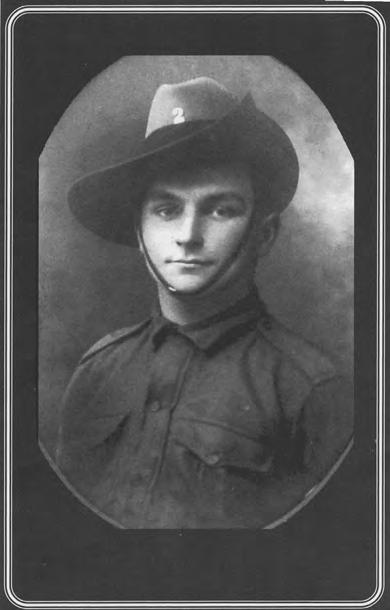
served for 15 months in the reserve Australian Medical Corps prior to enlisting, and was therefore appointed as a bearer in ‘A’ section of the 3rd Field Ambulance, which was attached to the 9th Battalion. Two other brothers, Harry and Ted, who had moved to the Atherton Tableland, enlisted in Townsville on 5 October and were appointed to reinforce the 9th Battalion.
Guy and William received only rudimentary training before they embarked on 25 September for England and joined a convoy of 38 troop ships from Australia and New Zealand. However, the entry of Turkey into the war resulted in them being sent for training in Egypt instead, disembarking in Alexandria on 5 December. Harry and Ted arrived in Egypt and joined their battalion in early March, before the Anzacs were shipped to Lemnos in readiness for the invasion of the Gallipoli Peninsula. Guy, Harry and Ted were part of the first landing on 25 April, and Harry was one of the first casualties, although he recovered from his wounds and re-joined his battalion at Gallipoli in September. The 2nd Light Horse was deployed to Gallipoli as infantry in May and took over responsibility for Quinn’s Post where William Keid was killed on 23 June. Both Guy and Ted served on Gallipoli through the entire campaign until the evacuation in December.
Meanwhile, the remaining two brothers, Leonard and Walter enlisted in May, 1915 and joined the 9th Battalion, reaching Egypt in February 1916, just before the existing battalions were split up to create two new Divisions.
As a result, Leonard and Walter became part of the 49th Battalion, while Harry and Ted remained in the 9th Battalion. They left for the Western Front in late March, while Guy’s unit, which had become the 13th Field Ambulance, did not leave until early June. In the meantime, Guy had found himself awarded 14 days No. 2 Field Punishment for using insulting language to an officer, resisting arrest and striking escort.
With the exception of Harry, who had been chosen as an escort for General Birdwood, Ted, Leonard and Walter in their respective battalions were involved in the Battle of the Somme, while Guy was transferred again and was assigned to the rear aid post for the 49th Battalion near Pozieres. The disciplinary punishment in Egypt had done little to deter his rebelliousness, and in France in June
and July he was awarded with two further sets of Field Punishment No. 2 for being ‘drunk and using obscene language in the hearing of French women folk’ and ‘creating a disturbance and disturbing French inhabitants’. At the beginning of September, the 49th Battalion was involved in an attempt to take Mouquet Farm on Pozieres Ridge, resulting in very heavy casualties. Amongst them were Sergeant Walter Keid, killed on 4 September, and Lieutenant Leonard Keid who was reported missing, and was believed to have been killed on 3 September. His body was never recovered.
Guy was profoundly affected by the death of another two brothers, and in November, was sent to England and thence back to Australia, where he was discharged from the Army on 15 March 1917, for ‘Family Reasons’. The Army may have thought it best after the death of three brothers, given his youth and perhaps his problems with discipline, to send him home for discharge.
Ted, now a sergeant, took part in the Third Battle of Ypres, where he was wounded by artillery fire on 1 November, dying the next day. Harry was still attached to Anzac headquarters, but in October 1917, came down with pneumonia and bronchitis and was transferred to hospital in England. The Premier of Queensland, T.J. Ryan, with the support of the Australian High Commissioner, Andrew Fisher, was moved to make representations that the Keid family had done enough and that Harry should also be repatriated and discharged. This request was granted and Harry returned home and he too was discharged for ‘family reasons’ in March 1918.
Meanwhile, on his return to Australia, Guy completed his B.Sc. at the University of Queensland. He joined the Geological Survey of Tasmania in 1920 as a third field geologist under Loftus Hills, the others being A.M. Reid and P.B Nye (Bacon, 1989; Bacon & Banks, 1989). During his time with the Geological Survey, he assisted in the preparation of a comprehensive survey of the coal resources of Tasmania, which is acknowledged by Bacon as one of Hills’ largest works with the geological Survey (Hill et al., 1922). Keid also assisted Nye on other geological investigations. However, being a recent graduate with little experience, he had trouble meeting Hills’ exacting standards and also received an unfavourable report from Reid on his work. Reid noted that Keid was referred to at the field camp as ‘the surly boy’ and that he ‘upsets one by his constant grumbling and finds no pleasure in his work’ (Letter from Reid to Hills quoted by Bacon, 1989). His reported attitude
is consistent with his run-ins with authority while in France, but his war experiences and the loss of four brothers may also have contributed to his demeanour. Hills declined to recommend Nye and Keid for an annual pay increment in 1921, and Keid was dismissed when his position was abolished in 1922. Hills wanted to retain the services of a chemist, which was a temporary position, and recommended to the Secretary of Mines that this position be made permanent at the expense of one of the geological positions. In spite of Hills’ opinion of Keid’s competence, he had been continuing his studies while in Tasmania and Hampson (2005, p97) noted that in 1922 he achieved a second degree, presumably the M.Sc. that he thereafter used as a post-nomial.
Guy married Clare Kerry Dillon and they later adopted a daughter Peggy. They lived in the Keid family home in Brisbane, but Hampson (2005) records that Guy was away for long periods working as an economic geologist in the Malay States, East Indies and Indo-China. He was involved with the development of the Cracow goldfield in central Queensland. Various newspaper accounts from this period refer to him as geologist to Carpentaria Prospectors Ltd and its subsidiaries including White Hope Central NL that had interests in leases on the Golden Mile and White Hope reefs (Denmead, 1932; Western Argus, Tuesday 15 November 1932). The Brisbane Courier (Saturday 13 August 1932) published an interview with him, in which he advised against people rushing to the field because there were already more men there than could be absorbed for a long time ahead and that new business opportunities were limited because there were more stores than the field could carry. In 1934, the Rockhampton Morning Bulletin (1 Dec 1934) published a circular to shareholders of White Hope Central NL that options on the leases at Cracow had been abandoned and announced a call on contributing shares to fund drilling on two deposits in the Northern Territory, Mount Tymms and Cosmopolitan–Howley, on which the company had secured options. The circular stated that ‘Mr HGW Keid had exhaustively examined the deposits and recommended that they be developed’.
In 1937, Keid joined the Geological Survey of Queensland (GSQ) as Temporary Geologist, assisting the Charters Towers District Geologist CC Morton (Annual reports of the Department of Mines for 1937). While with the GSQ, he made examinations of the Garrawalt Creek section of the Kangaroo Hills tin field, the Woolgar Goldfied, the Stannary Hills tin field, and tantalite and gold occurrences in the Forsayth area. His reports were
published in the Queensland Government Mining Journal (Keid, 1937 a–c, 1938a–c). He also assisted Morton with a survey of the Cape River goldfield and gold mines at Mount Leyshon.
He left GSQ in March, 1938 to take up a position with the Aerial Geological and Geophysical Survey of Northern Australia (AGGSNA) working in a team with more junior geologists under the supervision of Senior Geologist Dr H.I. Jensen. The team worked mainly in the Hodgkinson, Chillagoe and Herberton areas in the Cairns hinterland, but also spent time in north-west Queensland in the Kajabbi and Lawn Hill areas and across to Wollogorang in the Northern Territory. The work included regional geological mapping, which for the first time in Australia used aerial photographs for navigation, plotting observations and interpreting the geology. Examinations, sampling and making detailed plans of numerous mines through the areas was also done by the team, particularly by Keid and RJS Clappison. Keid worked closely with Jensen, and he was left in charge of the work during Jensen’s absences (transcript of Jensen’s letter books 16 July 1938).
Although Jensen acknowledged and relied on Keid’s ‘wide experience in testing lodes for companies in a practical manner’ (transcript of Jensen’s letter books 30 October 1939), Keid and his colleagues sometimes failed to live up to Jensen’s expectations. After the 1940 field season, Jensen complained that he was ‘far from satisfied with the amount and character of the work done’ by Keid and Clappison (transcript of Jensen’s letter books, 9 November 1940)’. Although the letter books refer to numerous instances of reports being written by Keid, most of these were probably included in the overall six monthly reports released by AGGSNA. The only reports under the names of specific individuals for the Hodgkinson and Chillagoe areas were published under either Jensen’s or Clappison’s names.
In 1942, Keid returned to the Department of Mines in Tasmania as a Field geologist and for 4 years made routine geological examinations of tin and underground water prospects before being appointed as Chief Geologist in 1946 (Bacon, 1989). During his 14 years as Chief Geologist, he concentrated on matters of a supervisory nature, making frequent trips to drilling operations and the centres of regional mapping activities at Davey and Zeehan. He retired in 1960 and lived in Tasmania until his death in July 1970.
Guy Keid appears to have had a somewhat chequered career, but as the Hobart Mercury’s obituary records, he
was a colourful character and was well-regarded by his colleagues.
Guy was a big man, big in frame and big in heart, convivial and forthright, a raconteur with a fund of rare stories with astounding climaxes which always endeared him to the mining fraternity wherever he might be: and behind it all — a record of solid accomplishment in his profession (Quoted by Hampson, 2005, p99)
Bacon, C.A., 1989. One hundred years of the Department of Mines. Tasmania Department of Mines, unpublished report 1989/09. Accessed as http://www. mrt.tas.gov.au/mrtdoc/dominfo/download/UR1989_09/ UR1989_09.pdf
Bacon, c a. & Banks, M.R., 1989. A history of discovery, study and exploitation of coal in Tasmania. Papers and Proceedings of the Society of Tasmania, 23, 137-189.
Hampson, C., 2005. The Brothers Keid. CopyRight Publishing Company Pty Ltd, Brisbane.
Hills, l., Reid a.M., nye, P.B., keid, H.G.W. & Reid, W.o., 1922. The Coal Resources of Tasmania. Geological Survey of Tasmania Mineral Resources 7.
Jensen, H.I., 1938–1941. Letter books, transcribed by P.R. Blake, Geological Survey of Queensland (unpublished).
keid, H.G.W, 1937a. Garrawalt Creek tin field.
Queensland Government Mining Journal, 38, 195–198.
keid, H.G.W, 1937b. The Woolgar gold field. Queensland Government Mining Journal, 38, 232–236.
keid, H.G.W, 1937c. Mount Jack leases, near Forsayth. Queensland Government Mining Journal, 38, 392–396.
keid, H.G.W, 1938a. Stannary Hills. Queensland Government Mining Journal, 39, 47–50.
keid, H.G.W, 1938b. Tantalite near Forsayth. Queensland Government Mining Journal, 39, 124–128.
keid, H.G.W, 1938c. Try Again area — Charters Towers. Queensland Government Mining Journal, 39, 159–161.
RockHaMPton MoRninG Bulletin 1 Dec 1934. White Hope Central—Circular to Shareholders—Northern Territory mines. Accessed as https://trove.nla.gov.au/ newspaper/article/54779347/5373683#.
tHe BRisBane couRieR, Saturday 13 August 1932. Cracow Field—Big Transaction—Rush Unwarranted. Accessed as https://trove.nla.gov.au/newspaper/article/21965718.
WesteRn aRGus (Kalgoorlie), Tuesday 15 November 1932, White Hope Central (Cracow) Costeening on Lease. Accessed as https://trove.nla.gov.au/newspaper/ article/34608072.
travails
David Branagan dbranaga@mail.usyd.edu.au
JOAN BEATTIE (neè CROCKFORD) died on 4th September, 2015, at her home near Oberon, NSW, aged 96.
This brief life story has been compiled from notes supplied by Joan towards the end of the 1970s, and sent to Richard Facer, together with my (possibly fallible) memories and research
Joan Crockford was born in 1919 at Hunters Hill, NSW. She was taught geology at high school by Marjorie Collins (Mrs Shiel), a Sydney University Geology graduate (BSc 1916), and Joan continued this study at Sydney University, graduating in 1940, being awarded the University Medal. She had been awarded the University Prize in Geology in 1936, the Slade Prize for Geology in 1937 and the Edgeworth David Prize for Palaeontology in 1938, so the future pointed to a geology career, probably in research. She was awarded the Undergraduate Scholarship for proficiency in Geology (essentially for Mineralogy and Petrology) in 1939, which she resigned, accepting, rather surprisingly perhaps, the Post-Graduate Scholarship for Mineralogy (Geology) for 1940 (as there was then no specific award for palaeontology research), together with the Science Research Scholarship for 1940-41.
She began her palaeontology work essentially studying brachiopods, during her Honours year, which included examining the Silurian & the Ordovician rocks from the Yass district, and material from Bowan Park near the Belubula River in the central-west of the state.
She took on the study of the then less-known Australian bryozoan fauna and gained the award of DSc in 1951 for a thesis entitled Development of Bryozoan faunas in the Palaeozoic of Australia, having previously (1942) gained an MSc for a study of some Australian middle and upper Palaeozoic bryozoa. She also was a Demonstrator ‘for a wide range of classes from first to third year geology’ (1942-1943), and assisted at field excursions between 1946 and 1952.
Joan married mining engineer (& former Naval Lieutenant), George Beattie, whom she probably met when he was studying geology for his Mining Engineering degree, with Geology taught by Lawrie Waterhouse. He had graduated BEng (Mining & Metallurgy) in May 1941.
The Beatties moved to Cobar, for George’s work at the New Occidental mine, after he obtained his discharge from the RANVR. Unable to qualify for research funding, Joan, being encouraged to complete the research she had begun, was lent University equipment such as microscopes and camera lucida, and managed occasional visits to Sydney to discuss her research, probably with Dr. Ida Brown (DSc, 1932). Dr Brown had taken over the palaeontology lecturing and research after the sudden illness of W.S. Dunn, palaeontologist of the Australian Museum and part-time Lecturer (d. 1934). In these visits Joan had thin sections and photographs prepared, and was able to use the University’s library. By this means she published several papers in local journals, and submitted her thesis, graduating DSc in 1951. Joan also did some short-term work at the New Occidental Mine Survey office, researching the distribution of ore grades mined during the war, as this information, because of man-power shortage, had been neglected and not plotted on plans of various levels as mining progressed. This information was needed in planned post-war developments. In addition the survey of the then presentday diamond drilling localities had to be monitored, and drill cores logged.
Between these years they lived first at Captain’s Flat (NSW), site of a then operating silver-lead mine, and then for a short period, at Radium Hill (South Australia). While at Captain’s Flat Joan was approached by the Director of the Commonwealth Bureau of Mineral Resources (Canberra), P.B. Nye, to contract to describe bryozoan faunas amongst the material collected by Bureau parties in the Kimberley and Carnarvon areas of W.A. The residence at Captain’s Flat enabled Joan to visit Canberra, and one of the BMR staff was able, likewise,
to visit Captain’s Flat to discuss progress. The Canberra visitations were important to ensure accurate preparation of the bryozoan thin sections, which required precise orientation. This work appeared a little later as a BMR Bulletin. Thus, as author Sue Turner writes, ‘Joan Beattie in the 1940s to 50s maintained a career as a geologist and invertebrate palaeontologist & specialist on bryozoans & pioneering taxonomic research of bryozoan taxonomy’.
The family moved to Cracow (Qld) in 1957 and remained there until 1960. Here a growing family (four young children) limited any opportunity to carry out much research, despite the presence of an interesting bryozoan fauna. ‘Isolation, climate and family, and community responsibilities’ prevented anything ‘beyond a good many casual trips’ to examine the interesting local bryozoan faunas. Furthermore some of the children were afflicted by the climate, and Joan had a few rushed visits to the regional hospital in Bundaberg.
Between 1960 and 1963 the family lived at Camden where George was involved, I think, in coal-mining operations. Joan’s family was now older and she took the opportunity to see if some research could now be undertaken, but there was little prospect at the time in a crowded Geology School at Sydney University. With a move to Sydney, about the end of 1963, geology was in demand in schools, and Joan began teaching Geology at PLC, Pymble, a northern suburb. It was not long before she was called upon to teach other Senior Science Classes. This work continued until the end of 1970.
The following year (1971) a new opportunity in teaching eventuated. A Geology stream was inaugurated, as part of a Diploma in Teaching the Secondary Science course, at the Ku-ring-gai College of Advanced Education (CAE), Lindfield. Joan was appointed a Lecturer in Science Education to initiate the planning and teaching of this course, and of the Geology segments of the Diploma of Education (Science) and also Primary Science courses, which included some geology segments. As if this wasn’t enough, in 1972-3 Joan enrolled in and completed a Dip. Ed. Course, (mostly by correspondence) through the University of New England, Armidale. The courses at Ku-ring-gai College started with extremely limited resources, as the College had been designed essentially for teaching primary school courses. Fortunately Joan had many geological contacts through her membership of the Geological Society of Australia, of which she
was a Foundation member. Joan’s numerous geological colleagues in universities, the State Geological Survey and the museums helped to bring the equipment of the College up to scratch, and give trainees confidence in teaching Geology.
The Proceedings of the Australasian Institute of Mining and Metallurgy (1997) noted that George Andrew Beattie died suddenly through a heart attack at Oberon on 24 November 1996. He would, I think, have been about seventy seven. They had moved to Oberon permanently on retiring, to a weekender they had bought there a few years earlier. Apart from his professional work George had gained some fame for his production of splendid golf greens at Cracow, during the years he worked there. The Bishop of Rockhampton apparently occasionally played the Cracow course and appreciated the greens!
It was at Cobar in 1951 that I first met Joan and George, when returning from fieldwork at Broken Hill, during my period employed by the Geological Survey of New South Wales. I had been lucky enough to go on that journey to my place of birth, in company with my ‘boss’, E.O. (Ted) Rayner, and the Government Geologist, C. H (Charley or ‘Tim) Mulholland, to examine a supposed radium mineral deposit. It turned out to be essentially specimens from the known mineral deposit, Radium Hill, in South Australia, which had been visited by some collector or other, who, returning by train to Broken Hill, threw discarded specimens out the window. Not surprisingly we found the anomaly of the potential mine-site occurred in railway cuttings approaching Broken Hill. Our visit, as ‘Government experts’ (equipped with rapidly-acquired knowledge on radioactive minerals from a modern textbook), was newsworthy in Broken Hill, and was backed by the arrival of an airborne scintillometer flown in a helicopter from Canberra, by a geophysics group from the then-known Bureau of Mineral Resources. Travelling to Sydney on the then quite awful unsealed road, we broke the long return journey at Cobar, and the two senior members of the party decided it was appropriate to visit the then operating C.S.A. copper mine. Charley Mulholland had carried out work at the mine prior to its re-opening from a much earlier operation. Indeed, with, (I think) A. C. Lloyd, they made some significant and practically useful observations and deductions about the mode of cross-cutting veins which controlled the gold mineralisation there.
George readily arranged for us to make an underground visit. As matters turned out the conditions were vastly different from what I had encountered at Broken Hill in an earlier period of student vacation work. The ore occurrence was not vast, as at Broken Hill, and mining conditions were, to say the least, -- rather primitive! It was exciting, indeed, to come to a worked-out stope to see (and hear) broken rock from upper workings pouring past to a separation level below, the whole lit only by a few headlamps. However, luckily we survived unscathed.
I don’t remember meeting Joan the same year (1951), at the ANZAAS Conference in Brisbane, where she gave a paper, and was featured in a photo in the Brisbane Telegraph in an article about the meeting, (see Cooper & Branagan 1994, p. 49, the now outdated History of the Geological Society of Australia, Rock me Hard, Rock me soft). She is also in the GSA Foundation group photo of the Society (May 1951) group, the frontispiece of that book. Although I have no memory of them at this time, at Cobar Joan had three quite young children, Andrew (b. 1948) and twins, Ross and Debbie, (b. 1950). It would have been no joke bringing up young children in the Cobar summer heat, and the kids all developed gastric problems. Later Sarah was born in Sydney, when the family had moved to Cracow, Qld. She contacted whooping cough, when just nine weeks old, just several weeks after the family returned to Cracow, and was taken to intensive care at Bundaberg hospital for several weeks,
and in addition got a chicken-pox rash at the hospital. Joan could only look and despair, at the abundant bryozoa in the Cracow rocks, as when all seemed right, almost immediately on return to Cracow Sarah ‘came out’ with a massive attack of measles!
Through the then regular Geological Society of Australia Sydney meetings I had further contact with Joan when the family moved to Sydney (Beecroft). I think she was a very effective teacher, with excellent Leaving Certificate results, and, if I remember correctly, she had a place on the State’s Geology Curriculum Board for a time.
Joan contributed a paper entitled Studying Earth History in Secondary Schools to the Geology Education sessions of the 1976 International Geological Congress, held in Sydney in 1976. I am not sure if it was ever published in full, as an American journal had expressed interest and I sent the papers to the editor. I had several letters expressing disappointment at a long delay and I wrote to the Editor, commenting. But time and other events prevented me from following the matter any further.
When educational family matters came to an end George and Joan moved from Bexley to a fine home south of Oberon, beyond the Blue Mountains, where the trout fishing was good.
Joan had begun her research work essentially on brachiopods (the Honours’ study on Silurian rocks from Yass & Ordovician from Bowan Park in the Cargo area of the State. Here she recorded 95 species, 42 of which were new, 3 new genera & a new family in the Cycllostomata. In her active palaeontological years (1940-56) Joan Crockford identified over 80 species of bryozoa. It is a fine record indeed.
(Joan Beattie does not feature in the lists of the INHIGEO story, presently being compiled, as her early career in geology essentially predated the origin of INHIGEO. However, as a pioneer women scientist, I believe she deserves to be commemorated.)
The list below possibly contains most of Joan Crockford’s Publications. Note the extraordinary productivity, thirteen papers in seven years, from 1940 to 1946, plus the later BMR & W.A. Bulletins.
J.M. CroCkford & I.A. Brown, (1940). A Permian blastoid from Belford, New South Wales. Proc. Linn. Soc. N.S.W. LXV, 167-170.
J.M. CroCkford, (1941). Permian Bryozoa of eastern Australia Part I. A revision of some previously-named
species of Fenestrellinidae (Fellestellidae), J .Proc. Roy. Soc. N.S.W. LXXIV, 397-418.
J.M. CroCkford, (1941). Permian Bryozoa of eastern Australia Part II. New Species from the Upper Marine Series of New South Wales. J .Proc. Roy. Soc. N.S.W., LXXIV, 502-519
J.M. CroCkford, (1942). Bryozoa from the Silurian and Devonian of New South Wales, J .Proc. Roy. Soc. N.S.W., LXXV, 104-114.
J.M. CroCkford, (1943). Permian Bryozoa of eastern Australia Part III. Batostomellidae and Fenestellinidae from Queensland, New South Wales and Tasmania. J .Proc. Roy. Soc. N.S.W., LXXVI, 258-267.
J.M. CroCkford, (1943). Bryozoa from the Port Keats bore, Northern Territory. Proc. Linn. Soc. N.S.W., LXVIII, 145-148.
J.M. CroCkford, (1943). An Ordovician bryozoan from Central Australia. Proc. Linn. Soc. N.S.W., LXVIII, 148-9.
J.M. CroCkford, (1944). Bryozoa from the Wandagee and Nooncanbah Series (Permian) of Western Australia. Part 1 J.Roy.Soc, West Australia, XXVIII (for 1941-2), 165-186.
J.M. CroCkford, (1944). A revision of some previously described bryozoa from the Upper Palaeozoic of Western Australia. J.Roy.Soc, West Australia, XXVIII (for 1941-2).
J.M. CroCkford, (1944) Byozoa from the Permian of Western Australia. Part i. Cyclostomata and Cryptostomata from the north-west Basin and Kimberley
district. Proc. Linn. Soc. N.S.W., LXIX, 129-175
J.M. CroCkford, (1945). Stenoporids from the Permian of New South Wales and Tasmania. Proc. Linn. Soc. N.S.W. LXX, 9-24.
J.M. CroCkford, (1946). A bryozoan fauna from the Lake’s Creek Quarry, Rockhampton, Queensland. Proc. Linn. Soc. N.S.W., LXX (for 1945), 125-157.
J.M. CroCkford, (1953a) — Report on the Bryozoa faunas of the Nura Nura Limestone and the Noonkanbah Series (Fitzroy ... Geological Survey of Western Australia, Bulletin 93.
J.M. CroCkford, (1953b). Permian Bryozoa from the Fitzroy Basin, Western Australia. Australia. Bureau of Mineral Resources. Geology and Geophysics. Bulletin 84.
JoAn BeAttIe, (1976). Studying Earth History in Secondary Schools. Presented to the Geology Education session of the 1976 International Geological Congress, held in Sydney in 1976. [See the 2 &1/2 page Abstract published for the meeting]. [The papers were sent to an American Journal of Geology Education, but there were some problems and the papers might never have been fully or even in part, published.]
Further reading on Crockford
See Burek & HIggs, Role of Women in the History of Geology (in which see Sue Turner’s paper on Australian women geologists).
The Tom Vallance Medal is awarded every two years and is presented, if practical, at the Society’s biennial Australian Earth Sciences Convention.
The objective of the award is to recognize people who have made a significant contribution to researching, recording, investigating, documenting and/or publishing about people, places or events of historical importance to the geological sciences in Australia/Australasia.
It honours Dr Thomas George Vallance (1928–1993) who was formerly Associate Professor at the University of Sydney. Originally a petrologist, his work tracing geological expertise in Sydney during the late 18th and early 19th centuries shed unexpected light on scientific activity in the colony and ignited his interest in the history of geology. He researched and published many articles and papers on famous, infamous and little-known early pioneers in this field.
The 2016 Tom Vallance Medal was awarded to Tom Darragh. The award was announced and the citation read by Ian Withnall at the awards ceremony during the Australian Earth Science Convention in Adelaide on 30 June. However, because Tom was unable to be in Adelaide in person, the medal was presented at a meeting of the Victorian Division in Tom’s home town of Melbourne. The medal was presented to Tom by Bernie Joyce.
The citation for the award to Tom is as follows:
Tom Darragh has been an active researcher in the history of geology of Australia especially Victoria for decades and was highly regarded by Tom Vallance. Tom’s publication record reveals the breadth and depth of his contribution, as does his longstanding membership of the International Commission on the History of Geological Sciences (INHIGEO). Tom Darragh has shown special interest in the biographies of Australian geologists, history of palaeontology, early geological maps, institutional history and the geological contribution of German scientists in Australia. Notably Tom has been enlisted
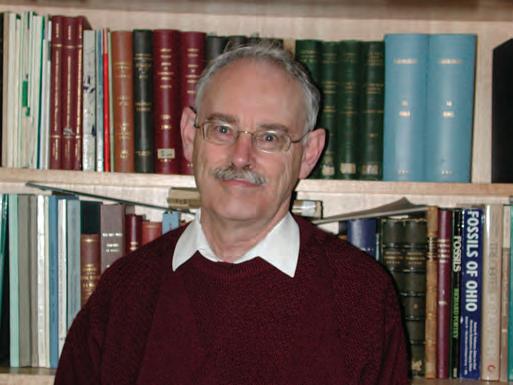
by the Australian Dictionary of Biography to undertake a large number of biographical entries on their behalf. He has also contributed papers to the highly regarded “Historical Records of Australian Science”.
Most recently Tom’s work on the translation, editing and commentary on the Leichhardt diaries deserves special praise.
In accepting the award Tom responded as follows: I am very honoured to receive the Vallance Medal, particularly as Tom Vallance was my mentor. It was he who first encouraged my interest in the history of geology and we had a long and enjoyable correspondence on matters historical over many years about our common interests in Victoria and New South Wales, and beyond. He was a font of wisdom and I was greatly saddened by his early death. I also recall that the Vallance book collection was for a time housed in this very building — Earth Sciences.
In concluding the medal presentation Bernie Joyce was able to assure Tom that the Vallance collection now forms a significant part of the University’s Rare Book Collection.