EARTH SCIENCES HISTORY GROUP
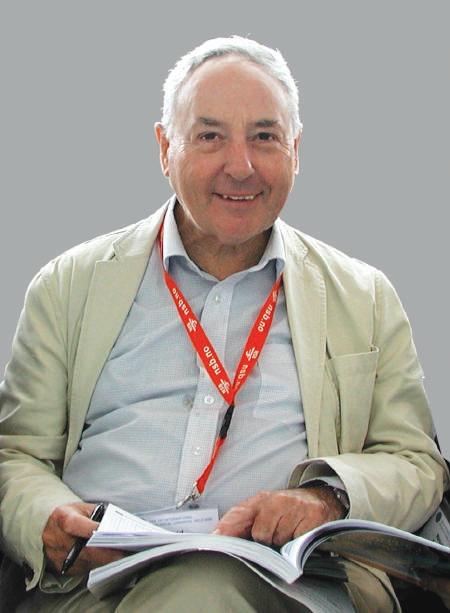
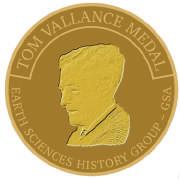
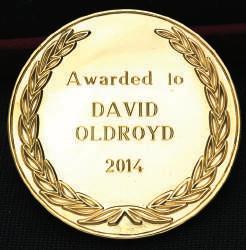
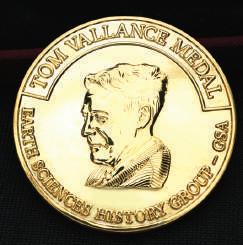
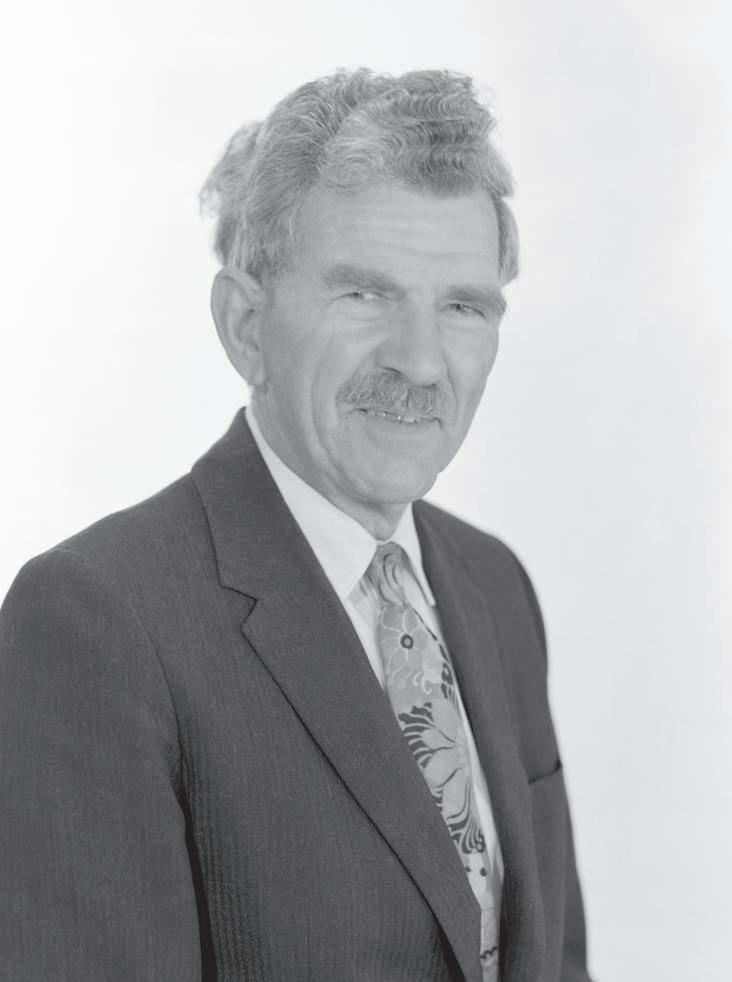
Dr David Oldroyd, recipient of the 2014 Tom Vallance medal. Photo courtesy of Barry Cooper
Welcome to your Newsletter, the fifth from your Western Australian committee.
This edition describes the background and achievements of David Oldroyd, Honorary Professor, University of New South Wales, who is the recipient of the Tom Vallance Medal for his outstanding contributions over many years to the evolution of geological ideas. However, the celebration of the award is mixed with sadness because David is now in the last stages of a terminal illness. All our best wishes go to David and his family.
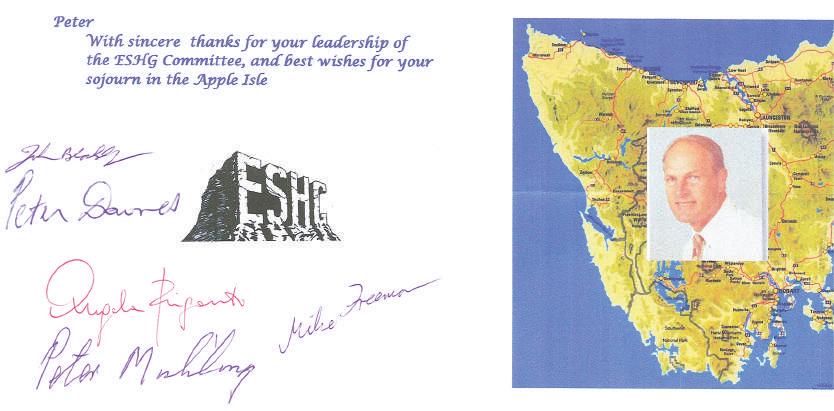
We also present parts of an autobiography of Dr (Doc) Norm Fisher with insights into the creation of the department, which evolved over many years into Geoscience Australia. Themes from Western Australia include articles on minerals, Christmas cards as well as photos from the early years of the Geological Survey and historical snapshots of the Mt Whaleback iron ore and Sons of Gwalia Gold mines. David Branagan takes us on a whimsical personal tour of some vanished geological societies and finally a brief profile of our Chairman Peter Dunn to mark his retirement from this position to start a new phase of life in Tasmania.
Once again, our thanks to Murray Jones (DMP) for his work on the photos and additional work by Amrit Bhabra (CSA).
During 2013 the Group continued to be administered by a Western Australian-based Committee comprising Peter Dunn (Chair), Peter Downes (Vice-chair), Mike Freeman (Treasurer), Peter Muhling (Editor), John Blockley (Secretary) and Angela Riganti (Committee Member) while David Branagan and Bernie Joyce represented New South Wales and Victoria respectively. The Committee met ten times during the year.
Newsletter 43 was distributed in May. It contained expanded abstracts from the 34th International Geological Congress, details of the award of the first Tom Vallance Medal and an account of the INHIGEO excursion. There were articles on the Reverend Nicolay; Professor Tate; Professor Emile den Tex; the 25th IGC Hamersley Basin excursion; a list of recent publications by ESHG members; and results of the Group’s Business Meeting held in 2012. Five Email Bulletins were also distributed to keep Members posted on Group activities and inform them of new publications, upcoming events and other matters of interest. Copies of earlier Email Bulletins were added to the Group’s website to form an archival resource.
The Committee made a submission about the likely impact on Specialist Groups of the proposed changes to the Society’s governance rules.
In order to ensure that the ESHG was represented at AESC2014, the Committee supported Angus Robinson in his efforts to arrange an excursion to the Blue Mountains and Jenolan Caves, and to organize a special session of talks on Geoheritage, Geotourism and Earth Sciences History.
As a result of experience gained in 2012, procedures for nominating candidates for the Tom Vallance Medal were formalised and early in 2014 nominations were called for the award of the second medal.
Following a decision of the 2012 Business Meeting, discussions were held with Members of the Queensland Division of the GSA with the aim of moving administration of the ESHG to that State in 2014. At the time of writing, Ian Withnall has formed a group who will take over this responsibility during AESC2014.
I thank the Committee for its work over the last 6 years and most particularly our Secretary, John Blockley, who has been responsible for the Email Bulletins and just about everything else to do with the smooth operation of the Earth Sciences History Group.
As this is the last Newsletter to be issued by the present Committee, it seemed fitting to give it a strong Western Australian slant. I trust that you will enjoy reading it.
Peter Dunn, Chairman, email: peter.dunn@dmp.wa.gov.au, or petpat3@optusnet.com.au
Peter Downes, Vice Chairman, email: peter.downes@museum.wa.gov.au
John Blockley, Secretary, email: tiger-eye@iinet.net.au
Michael Freeman, Treasurer, email: mike.j.freeman@dmp.wa.gov.au
Angela Riganti, Committee member; email: angela.riganti@dmp.wa.gov.au
Peter Muhling, Newsletter editor, email: peter.muhling@westnet.com.au
Mail and telephone enquiries should be directed to the Secretary, John Blockley 76 Beach Street Bicton WA 6157, or (08) 9317 1775
David Oldroyd was born in 1936 at Luton, England, an ‘ugly industrial town’ 48 km north from London, but lived in a nearby village for his first ten years. His father wanted him to be a doctor. So, at high school, David studied physics, chemistry, botany and zoology. Only the botany and physics teachers inspired him and made him feel that his career could be in physics. But this required mathematics and so he worked to complete a two year course in one! Although passing all subjects David stayed an extra year at school to improve his marks and so achieve entrance to Cambridge.
David entered Cambridge University in 1955. No places were available in medicine and so he elected to do a science degree. His interest in chemistry was stimulated by good teaching and this became his choice for a career. His introduction to geology was similar to that of many students, with David electing to do physics, chemistry, mathematics and a new subject-geology. He graduated in chemistry but liked geology a great deal, especially the fieldwork, which was to become one of the important strands in his later academic life. However, in his words ‘…I met some problems’: much of his time was devoted to playing the cello and this combined with the effect of his mother’s illness and death in his final year meant that he received a second class degree. This prohibited him from following his preference of a research degree.
David did not want to do national service in the army,
so the alternative occupations (for which there was a shortage in Britain at that time) were research scientist, coal miner or science teacher. Consequently he became a science teacher at John Lyon School in Harrow and married.
It was thought useful at the time for school teachers to know about the ‘two cultures’ of humanities and science: in 1959, the author C. P. Snow delivered an influential lecture called ‘The Two Cultures’. Subsequently published as The Two Cultures and the Scientific Revolution, the lecture argued that the breakdown of communication between the "two cultures" of modern society – the sciences and the humanities –was a major hindrance to solving the world's problems (Wikipedia). After two years of teaching, David heard about a Master’s degree course in history and philosophy of science, taught by evening classes, at University College, London. His continuing strong interest in music provided him with ‘a foot in both cultures’. So he commenced study with UCL’s Department of History and Philosophy of Science.
However, after four years in England, he and his wife wanted to travel. They hadn’t much money and the political climate was unsettling in Europe due to the Cold War. So, in 1962, they launched into the adventure of a new life in New Zealand.
David did not take the examinations in History and
Philosophy of Science until arriving in New Zealand. The final requirement of the degree was a dissertation. ‘The professor in London said: “we can’t provide a supervisor if you’re going to write a dissertation. It’s your problem”.’
But David persisted, without a supervisor, and wrote a thesis titled “Geology in New Zealand prior to 1900”. Why choose geology? According to David ‘”Well, doing a geological topic ‘justified’ our travelling round New Zealand and having many camping ‘holidays’”. On an equally practical note ‘there wasn’t much physics and chemistry done in New Zealand in the 19th century, except the work of Ernest Rutherford (whose work in New Zealand had already been studied to some extent) and I didn’t know anything much about biological subjects.’
David did not know how to do it, but taught himself how to carry out the work: …….’travel around New Zealand and look at the rocks … work in libraries at my own expense with no supervision.’ His thesis was passed and was the first extended study of the history of geology in New Zealand. It was noted by David Branagan as a major influence on historians undertaking New Zealand research .
After an unenjoyable stint working at a secondary school on the North Island in 1966, David and his wife moved to Christchurch, where he taught chemistry at Christ’s College, one of the finest schools in the country. Here also were excellent facilities for science and David played in the semi-professional Christchurch Civic Orchestra.
In the late 60s courses were just starting in the history and philosophy of science in Australian universities. David applied for, and received, a lectureship in the School of History and Philosophy of Science at the University of NSW. As David notes ‘I got the job. I was very lucky………I had no publications and no teaching experience at university level’. He was, however, the only applicant with a higher degree in the history and philosophy of science.
On arriving in Australia, the head of his new department said ‘You must do a PhD’. The problem was: what to do? Victor Eyles who had examined David’s thesis, advised “You should visit a man named Tom Vallance, who is a professor at Sydney University and is very interested in the history of geology”. In David’s words “He was an amazing man. He had thousands of valuable books in his house. I was very impressed. It seemed he knew everything and I knew
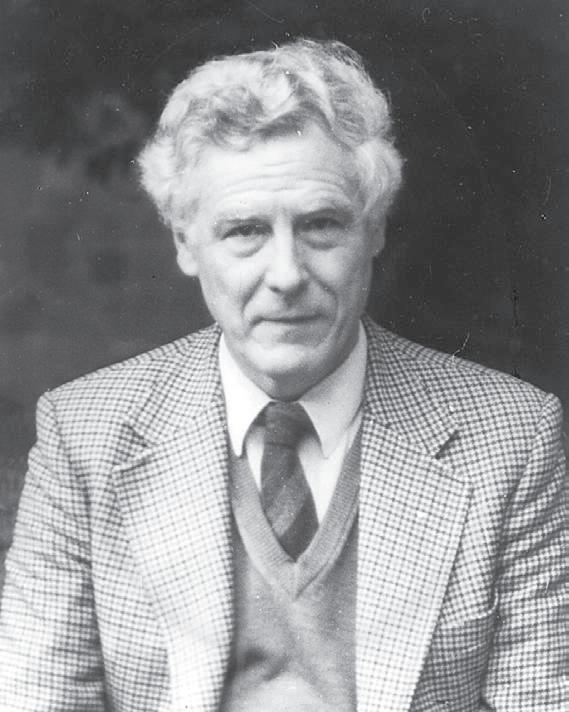
Tom Vallance geologist and historian of science.
Photo courtesy Hilary Vallance
nothing. But he was willing to help me and lent me many books”.
The thesis was completed while teaching. The title was “From Paracelsus to Haüy: the development of mineralogy in relation to chemistry”. It covered the period from the Renaissance to the beginning of the nineteenth century: Paracelsus, the ‘father of toxicology’ and an advocate of empirical approaches to research and teaching; Haüy, the ‘father of modern crystallography’ (Wikipedia).
David has written a number of books most of which tackle the some of the ‘big’ themes melding the history of geological ideas with the philosophy of science. The subjects of his substantial books show the range he encompassed: “Darwinian Impacts : An Introduction to the Darwinian Revolution” ; “The Arch of Knowledge: An Introductory Study of the History of the Philosophy and Methodology of Science”; “The Highlands Controversy: Constructing Geological Knowledge through Fieldwork in Nineteenth-Century Britain”; “Thinking about the Earth: A History of ideas in geology”; “Sciences of the Earth: Studies in the History of Mineralogy and Geology”; “Earth, Water, Air and Ice: Two Hundred Years of Geological Research in the English Lake District”. These books have been variously translated into numerous languages other than English including Spanish, Italian, Chinese and Turkish.
A selection of his work on Australia includes papers on the extinction of the Australian megafauna; Thomas Livingstone Mitchell (1792-1855): soldier, surveyor, explorer, and geologist; Early ideas on the development of river systems in the Sydney Basin; Reg Sprigg and the Discovery of the Ediacara Fauna in South Australia and A brief history of the sapphire industry in Queensland’.
All his work is distinguished by thorough research to get the facts; to go to the field to understand the original setting of historical work and a belief that it is essential to understand the social context in which the scientific breakthroughs were made. In David’s own words: ‘ The historians of geology who come from the social sciences can learn a lot from the practical ‘know-how’ and experience of the geologist–historians; and the scientist–historians can learn from the more socially-oriented historians about the kinds of questions that can be asked by historians over and above who did what, when, and where’. Thus the important questions are why geologists thought as they did.
Professor David Oldroyd FAHA BA (Cantab), MA (Cantab), MSc (London), PhD (UNSW), DLitt (UNSW) is one of the most prominent historians of geology in Australia over the past 30 years. For this contribution David has been honoured as a Fellow of the Australian Academy of the Humanities (FAHA). He is the first historian of science to be so honoured. Amongst the many professional positions that David has held, he has also been Secretary-General of the “International Commission on the History of Geological Sciences” (INHIGEO), Editor of the only dedicated history of geology journal “Earth Sciences History” and President of the “Australasian Association for the History, Philosophy, and Social Studies of Science”. He is also a rare member of the “International Academy of the History of Science”.
David has also been recognised for his contribution to the history of geology with the award of the “Sue
Tyler Friedman Medal” of the “Geological Society of London” for his contribution to the history of geology in 1994, and in 1999 by the “History of Geology Award” from the “Geological Society of America”.
As part of his productive career David has also written a huge number of book reviews and encouraged creative and original thinking by his perceptive and elegant editing of the work of many authors.
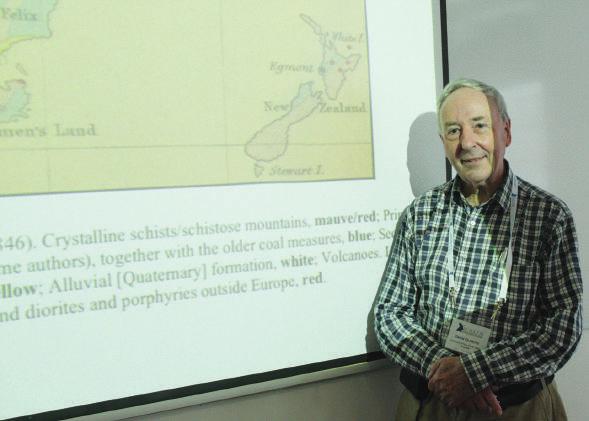
Having long retired, David remains Honorary Professor University of New South Wales. With failing health he attended the INHIGEO Meeting at Manchester, UK in July 2013 and was co-leader of the post conference “Ruskin’s Geology” excursion to the Lakes District. During the conference he gave a talk titled, “The geological maps of the world by Ami Boué (1843) and Jules Marcou (1861): the Australasian portions”. A paper based on this talk has been submitted to a journal for consideration. He also has a large paper on early geological maps in press.
Note: this citation has been compiled on behalf of the committee based on information provided in nominations made by members. It has also drawn a great deal on the following paper: Jiuchen Zhang (2009), INHIGEO and the research on the History of Geology:An Interview with David Oldroyd, Oslo, Norway, 7–8 August 2008, in Ed Barry Cooper: INHIGEO Newsletter 41, p. 25-37. Thanks also to Barry Cooper. for additional information and checking.
We also thank Geoff Deacon, Western Australian Museum for the pictures of the Tom Vallance medal.
Peter Muhling1 and Bob Collins 2
1 23 Doonan Road Nedlands WA, 2 bob-collins@bigpond.com
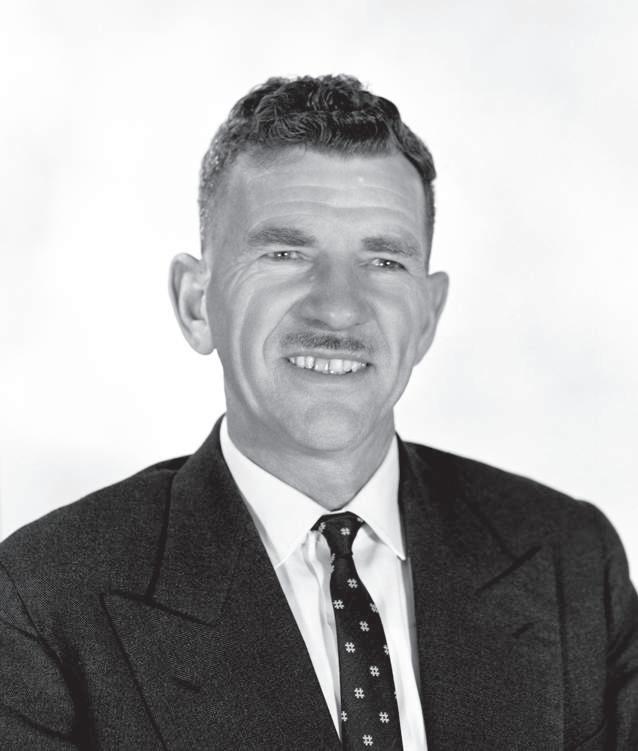
Dr Norm (Doc) Fisher,. Date unknown.
The following article consists mostly of extracts from an article serialised in issues 81, 82 and 83 of ‘Harim Tok Tok’, the official journal for the New Guinea Volunteer Rifles (NGVR) and its post war organisation the Papua New Guinea Volunteer Rifles (PNGVR) Association. Norm told his story to editor Bob Collins in 2006, and he wrote and edited the story for the journal. We are fortunate that Bob recorded not only the period of Norm Fisher’s service in war-time New Guinea but also his background and events after the war.
We thank Bob Collins and PNGVR for being able to directly reproduce selections from Norm Fisher’s autobiography here so that a geological audience can appreciate the only account that has been told in Norm’s own words of his geological training and experience.
Because the extracts are from an autobiography that was told to Bob, we have reproduced the text exactly. For this newsletter we omitted most of the period covering Norm’s service in the NGVR in World War 2 and focussed on his training and experiences in geology both before and following World War 2. Nevertheless, Norm’s full account of his service in the NGVR reveal much about him and are worth reading for anybody interested in learning more about his character and the conditions at that time.
“I was born in Hay in western NSW on 30th Sep, 1909. My father, Frank Albert Edward Fisher was a farmer and grazier at a place called ‘Boorooban’ and had sheep and wheat. My mother was Lucy Jane Fisher, nee Lockwood. There were 7 children in the family and I was the last born. It was a sore point with me as everywhere I went with my mother people would say “Oh! So that’s the baby”.
We moved to Southbrook, Queensland, when I was about 18 months old. Southbrook is south-west of Toowoomba on the Pittsworth railway line. I attended Southbrook state primary school and completed my secondary schooling at Toowoomba Grammar where I was a boarder. At Grammar I studied French, English, Latin, Arithmetic, Geometry, Algebra, Physics and Chemistry and a certain amount of History and Geography, with a small amount of Geometric and Freehand drawing. …………..
I went on to University of Queensland which, at the time, was located at the river end of George Street, where the University of Technology is now situated. At the time the Technical College was in the same grounds as the University and when the University moved to St Lucia the Technical College expanded into their vacant premises and eventually became the University of Technology.
I was always keen on making things and had the desire to be an engineer, but various people who were at the University or had gone to the University over the years and had taken an Engineering Degree advised very strongly against Engineering as there was a depression on and there were no jobs in that field, and a lot of them were out of work.
Consequently I studied Science, with the idea of becoming a Scientific Chemist. University was very prescribed in those days – four subjects in the first year, three subjects in the second, two subjects in the third year, and, if you were good enough an Honours Year in the fourth year. You graduated at the end of three years. I had the choice of 6 subjects for my first year and took Maths A, as it was called, Physics and Chemistry and the decision between Biology and Geology for my fourth subject. I decided the way to choose which subject was to go along to a lecture on each and see what I thought of them. I knew a bit about geology as a teacher in primary school taught me a little about it. So I went to the Biology lesson given by an Albert Kaiser, who was a sardonic character on first acquaintance, and to the geology lesson given by Professor Richards, and it was a marvelous lecture and very interesting. So my mind was made up and I took geology and my major subjects were chemistry and geology.
At the end of my first year I went to the Professor and asked if there would be any jobs when I graduated, so was it worth continuing in geology. He replied to the effect that he had not recommended anyone take geology for the past 4 years, but thought there would be a revival in mining in Australia by the time I had finished, so I continued and finished my qualifications in 1930, and obtained my degree the next year, 1931, while I was doing my Honours year.
At the end of 1932 I completed my Honours year and applied for three jobs. One was at Mt Isa, another with State Geological Survey and the other was with the Anglo Gold Mining Company in Rhodesia. I could have had any one of the three, because, as it happened I was the only applicant for the jobs. I didn’t want the State Survey job as the State Survey at the time was moribund and not very active or inspiring. I didn’t want to go to Rhodesia so Mt Isa was the logical position. The Professor arranged for me to be interviewed by the General Manager of Mt Isa Mines, Julius Kruttschnitt, who had only fairly recently taken up the position. Mt Isa Mines originally commenced as a Queensland company who did not have a lot of money and they were absorbed by Mining Trust, a large British Company who had large mines in various countries but largely in Russia and their mines in Russia were in trouble as a result of the Russian Revolution.
Surface ore had been found in 1923 at Mt Isa and Mining Trust financed the development of the field. They had carried out an extensive drilling campaign and had commenced mining but were just about out of money and came to an arrangement with an American mining company who financed further work on the field. As part of the arrangement ASR were to have technical control of the mining, so the General Manager, Mining Superintendent, Assistant Mining Superintendent, Managers of the mill and smelter and some others were all seconded from ASR (American Smelting & Refining Company).
At the end of my Honours year I was interviewed by the General Manager of Mt Isa Mines and was asked to formally apply for a position, and, after I had written out my application and shown it to my Professor he advised that it was not good enough and rewrote it in glowing terms, as well as adding that I was fit and well and was sure I could make a positive contribution in Mt Isa.
After a train trip from Toowoomba to Townsville………………….
“The train trip from Townsville to Mt Isa took a day and a half. My first impression of the place when I alighted from the train was of red dust, spinifex and stunted gum trees, and I thought “My God! This is Hell!” To make it worse, whoever met me took me around to where I was to be accommodated for the time – the staff quarters were full – and I was put in a tin shed, a workers’ dormitory. Fortunately in a few weeks a spot became available in the staff quarters, and I moved in and stayed there for the whole of my stay in Mt Isa. The accommodation was quite satisfactory and the food was very good, particularly compared to Toowoomba Grammar.
Whilst at Mt Isa I did several trips away. One was with the Chief Geologist, Mr Blanchard, an American, a small chap only about 5’ 3” tall but very knowledgeable about mining geology. It was to a place called Soldier’s Cap, or Mt Freda, near Cloncurry to examine the gold mine there. Another was to Tennant Creek, and I was the first geologist
to go there. It was a madhouse actually, a real gold rush situation with people pegging claims hell west and crooked, all over the place and all over each other as well. My job was to identify possible investment opportunities for Mt Isa Mines so I went around to all the claims and sampled every exposure that was available. Some of the miners had very exaggerated ideas about what they would sell their claims to Mt Isa Mines for. It took three days by car to get to Tennant Creek but only one to get back. There were some very hospitable station owners along the way.
Some of the outlying prospects were 10/15 miles (16/24 km) out from the town and I was mapping one area and making a traverse of the lode which went pretty well right through where the town of Tennant Creek is now. It was a Sunday and there was a bunch of miners in a tent. They had dug a shallow shaft and were playing cards when a row broke out. The next thing a chap rushed out calling out and another miner was following him with a revolver, a six-shooter, going ‘Bang! Bang! Bang!’ My decision to make was whether to jump down the shaft or to get behind a gum tree – so I did the latter. These two chased each other around the area for a couple of hours until someone brought over the local policeman who was camped somewhere on the diggings and he quickly pacified things. No charges were laid to the best of my knowledge although one of the miners had been wounded in the shoulder.
Another narrow escape I had was at a mine called Black Rock, or Doherty, which was a bitch of an ore body, all folded and crumpled. They were trying to mine from a ‘shrinkage stope’, a drive on the lode just above the haulage level, with ore chutes at intervals to the level below and gravity takes it to the trucks on the level below. As they break the ore they stand on it and put the next explosive round in so they keep pushing up from one level to another by standing on the broken ore. This particular ore body was very heavy because it was almost pure lead carbonate. Anyway Blanchard and I plus about 20 miners were on ladders going down into the stope when the whole back of the stope, about 2,000 tons fell down. The mine was never opened again.” ……………………………..
“The work at Mt Isa gave me valuable experience; however after three years there I felt that I had had enough of Mt Isa. I used to get the daily Queensland paper and then applied for two positions – one as Assistant Geologist for South Australia and another as Geologist for the Territory of New Guinea (nothing to do with Papua in those days) After a suitable lapse of time I received my appointment to the latter position, so I consulted my mentor at the time, Mr Blanchard. When I told him I was going to New Guinea he advised me very strongly against it. He had spent some time at Wau and Edie Creek doing a study on the ore distribution and, while he was there, he got very sick. …..However New Guinea seemed a bit adventurous to me so I ignored his advice.
I move to New Guinea
My role in New Guinea was to provide scientific services to the gold mining industry which was centered around Wau,
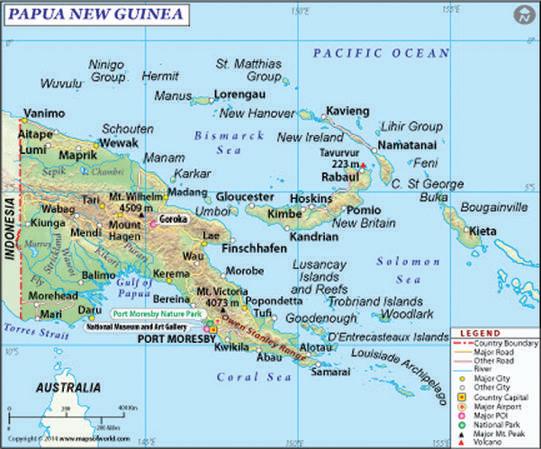
Figure 1 Locality map showing main towns in Papua New Guinea and islands. Map reproduced with kind permission of Maps of the World. (www.mapsofworld.com )
Edie Creek and Bulolo at the time, and map the general geology.
To get from Mt Isa to Wau I caught the train to Brisbane, some 4/5 days trip, and boarded the ‘Macdhui’ in Brisbane. In 1934 I landed in Rabaul on the ‘Macdhui’ (on my birthday) en route to Salamaua. In Rabaul I was met by the Director of Mines, a rough and tumble ex-soldier by the name of Pat Holmes. He was married to a Territorian of long standing and they used to fight to the extent that the natives had named their house ‘haus pait’ (house fight).
Pat asked me to go to have a look at a goldfield off the east coast of New Ireland, a place called Tabar advising me that there was a coastal vessel, a pinnace, leaving that night and I was booked on it. Here I was with no experience in New Guinea, no equipment, in fact, no nothing, about to go out to work. The trip from Rabaul to Kavieng was an allnight trip and a very rough one. At Kavieng I met up with Con Page, the boss of Burns Philp in Kavieng (Figure 1), and he fitted me out with all the food and a bit of equipment that I was likely to need for a week or so, on Tabar and sent me off. Tabar consists of three islands and there was a little gold being produced – not a lot, but enough to pay wages. There was little gold there and I quickly found this out. What they had been mining was just alluvial gold which had been washed down from a few small outcrops, so I advised the miners at Tabar of this and only stayed three days before I was able to get a boat back to Rabaul. This was in fact the same boat that had taken me from Rabaul to Kavieng. The ‘miners’ were all planters from New Ireland.
When I first landed at Kavieng a native boi came up and introduced himself to me. His name was Lumtim and when I queried who he was he replied “Mipela boi bilong Masta Mark” (I am boy belonging to Master Mark). Now ‘Masta Mark’ was the general name given by the natives to a Surveyor. The Department of Mines had about half a dozen survey parties working in New Guinea at the time, and it turned out that one of the Surveyors, a mature gentleman by the name of Alf Chauncey, had seen me going off into the blue with no help at all decided to send one to help me. Lumtin wasn’t much of a cook – in fact all he could cook was bacon and he could boil water and cook spuds. However it was a noble gesture on behalf of Alf Chauncey.
In May, 1935, I was joined in Wau by Lyn Noakes who had been appointed as Assistant Geologist. He had been recruited from South without my knowledge. I had requested assistance and, unknown to me, an ad had been placed in the Southern newspapers. Lyn applied for the job from Sydney University and was accepted. He was keen and enthusiastic, so much so that, on our first expedition outside Wau, he turned up like a Boy Scout with a compass strapped on his belt and a revolver and all the Scout trappings, together with a geological hat. My first comment was “Take all that off before anybody sees you”.
After I had been at Wau for about 12 months I was summoned to Rabaul to examine gold deposits which had
been discovered on the north east of the Gazelle Peninsula. There were plantations all around the north and east coasts of the Gazelle Peninsula. The final ones on the north east coast were called ‘Rangarere’ and ‘Talele’, the latter owned by a chap called Conroy. A chap called Maclean owned ‘Rangarere’ and there was an outcrop of iron ore on the plantation. Maclean thought this was the world’s greatest deposit, but BHP had already sent up their two top geologists and they had written it off. I could only agree with their assessment and the deposit is still there. Some of Maclean’s friends had found a small gold deposit and had put down a small shaft, and I had to examine that. What I found was a small amount of gold mixed up with a great deal of the Gazelle Peninsula rock.
However it had been reported that there was a phosphate deposit on the Talele Islands, just off the coast of ‘Talele’. To get there I had bought a canoe for 15/- ($1.50) and set out with Lyn Noakes and 6 ‘line bois’. When we got to about 400yds (400m) from the Island the boat gave up the ghost and spilt straight up the middle, it didn’t sink entirely, but just floated. My comment to Lyn was “Well! We have to get to within 100 yards (100m) of the Island because that’s all I can swim”. We managed to paddle the canoe to the island, and then examined the island, but there were no signs of phosphate. The bois patched up the canoe with some sort of pitch they had managed to make so
they decided to paddle with two of them to the mainland to get Mr Conroy to come and rescue us. They got to within swimming distance of the mainland before the canoe gave up completely, but about 10pm that evening Mr Conroy appeared in his small pinnace
When we got back to the mainland his wife gave us a meal and some coffee. There was a joint jetty for the two plantations and we had set up camp in the copra shed near the jetty, but ended up on the end of the jetty, as the sandflies were most vicious. We finished our assignment by purchasing, another canoe, somewhat smaller, for a pair of my shorts plus 5 shillings (marks). We then set out to paddle back to Rabaul, and to do this you had to paddle right around the top of Simpson Harbour. We got as far as Kerevat and Lyn and I got off and hitched a ride on a motor vehicle going to Rabaul, and left the bois to paddle on to Rabaul……………………………..
After that we went to Kieta, on Bougainville, to examine the gold deposits at Kupei, which later became Panguna and from there returned to Wau. Then I had to go to Mt Hagen to examine a gold claim found by Mick Leahy. He found it in a small creek, but it was only a stream of gold, covered by volcanic ash which could have been hundreds of years old. He had a large native line digging his claim and I believe he paid them about a stick of tobacco a week. Mick was an enthusiastic prospector and had some gold colour in a few spots, some of them two or three days walk from Mt Hagen, but none of them was ever a great find. I still believe that one of his claims was across the Papuan border, but nobody cared at the time. I came back to Wau in a Fox Moth and for the whole of the trip we were in thick cloud, but, fortunately, a gap at the right time allowed us to land at Wau.
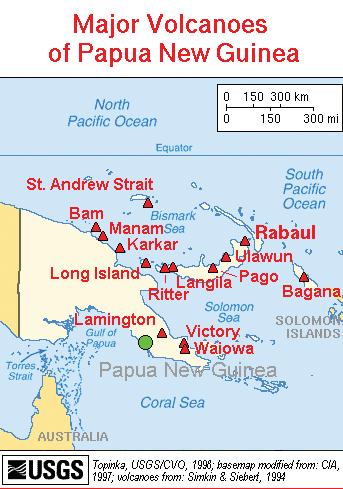
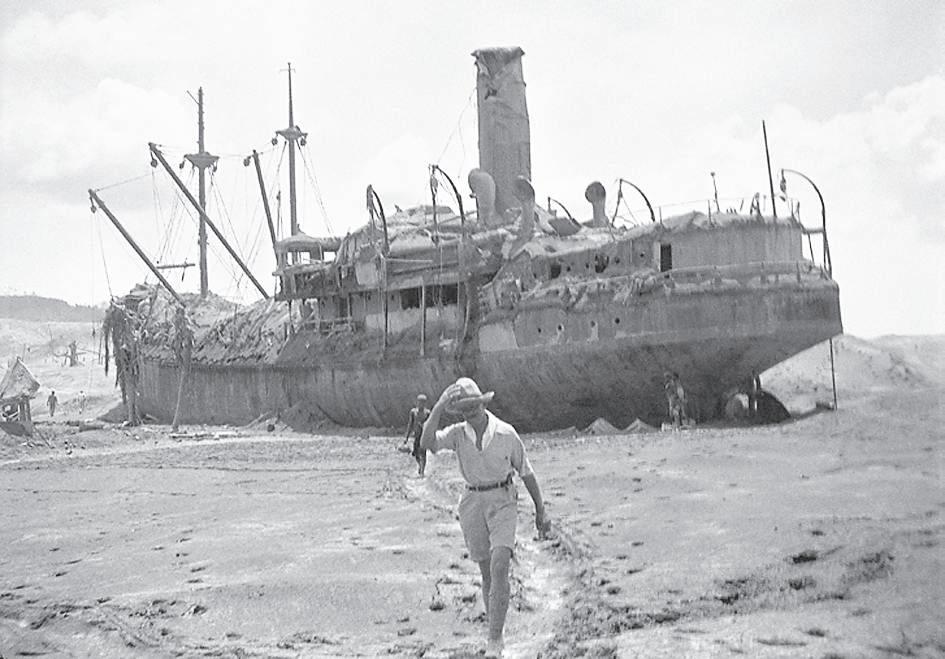
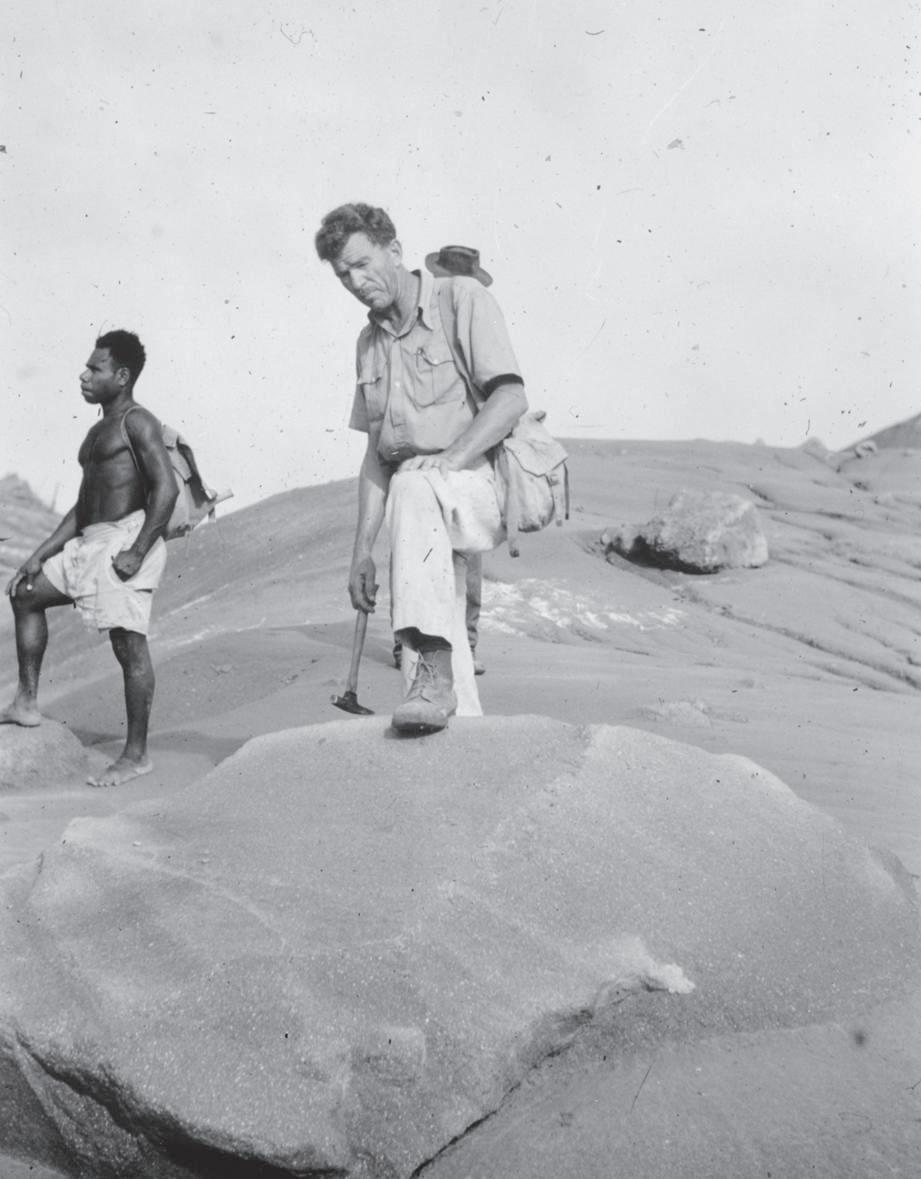
In May, 1937, two volcanoes erupted in Rabaul: Matupi and Vulcan (or Tavurvur). There was not much emphasis on vulcanology at the time, but I went across to Rabaul. By the time I arrived, the women and children had gone south and the men were generally being organised in ‘cleaning up’. The men had moved out of Rabaul but the town had not been damaged badly except for a couple of buildings of which the volcanic ash had caused the roofs to bend a bit. I think the Bank of New South Wales may have been one. Then the town became busy re-establishing itself. The Chief Justice was away, as was the Administrator and Judge Phillips, the number two Judge, assumed control of the situation.. The Department of Territories then arranged for a committee of two to report on the effects of the eruption and whether Rabaul should be maintained as the Capital of the Territory of New Guinea. Dr Woolnough, the Australian Government’s Geological Advisor was one and Dr Stehn, the head of the Vulcanological Survey Section of the Dutch East Indies was the other (Figure 5). Woolnough firmly believed that the Capital be shifted but Stehn considered that it could be retained but an observatory should be built to monitor the activities of the volcanoes around Rabaul.
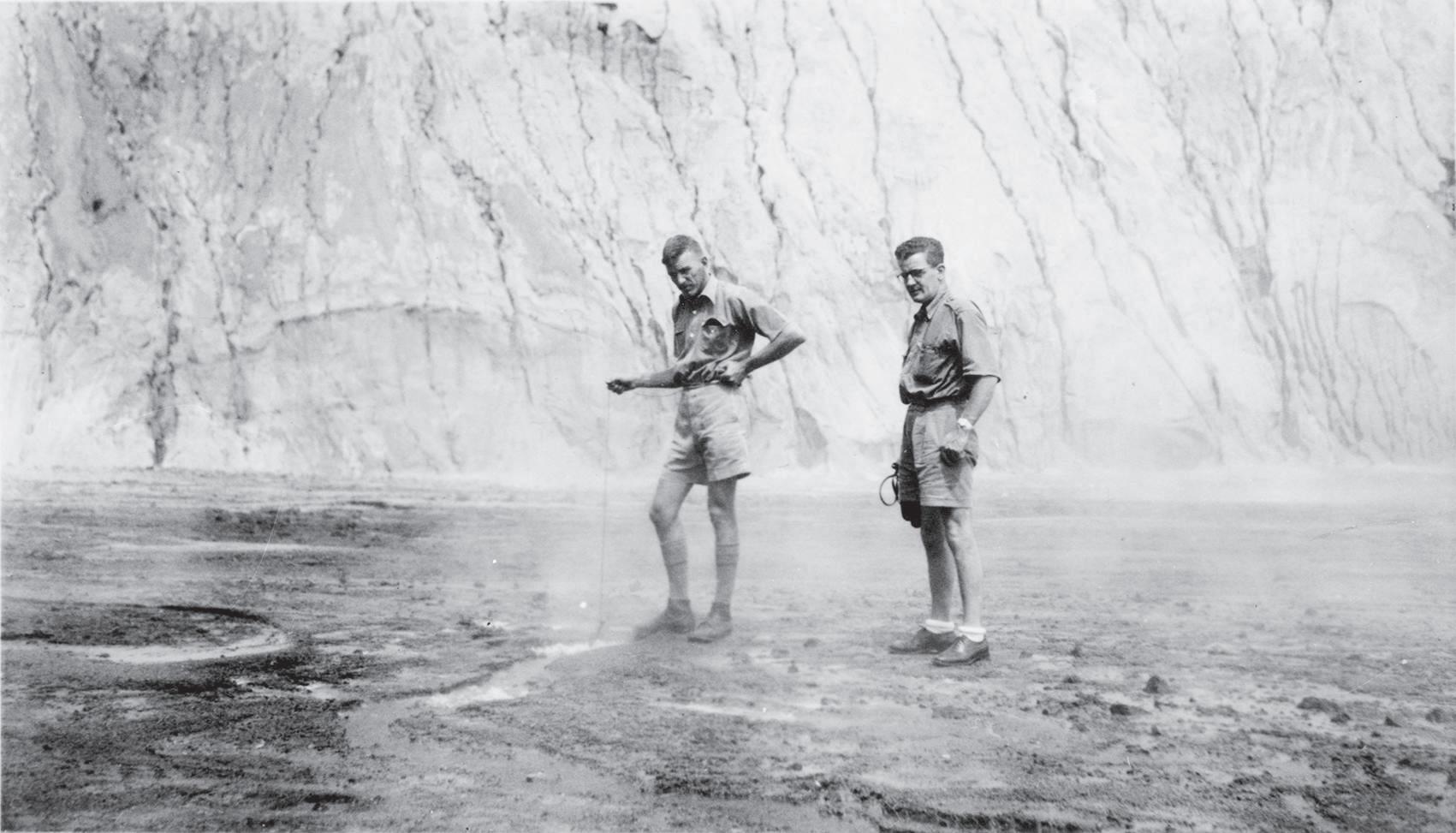
Both Lyn and I agreed with this as it had been nearly 50 years since the last major eruption and it would probably be the same time in the future again. Woolnough, who was about 60 years old and overweight, was determined to climb a volcano so he selected Rabalanakaia which was the smallest. We coaxed him up there; he had a brief look and then went back to Canberra.
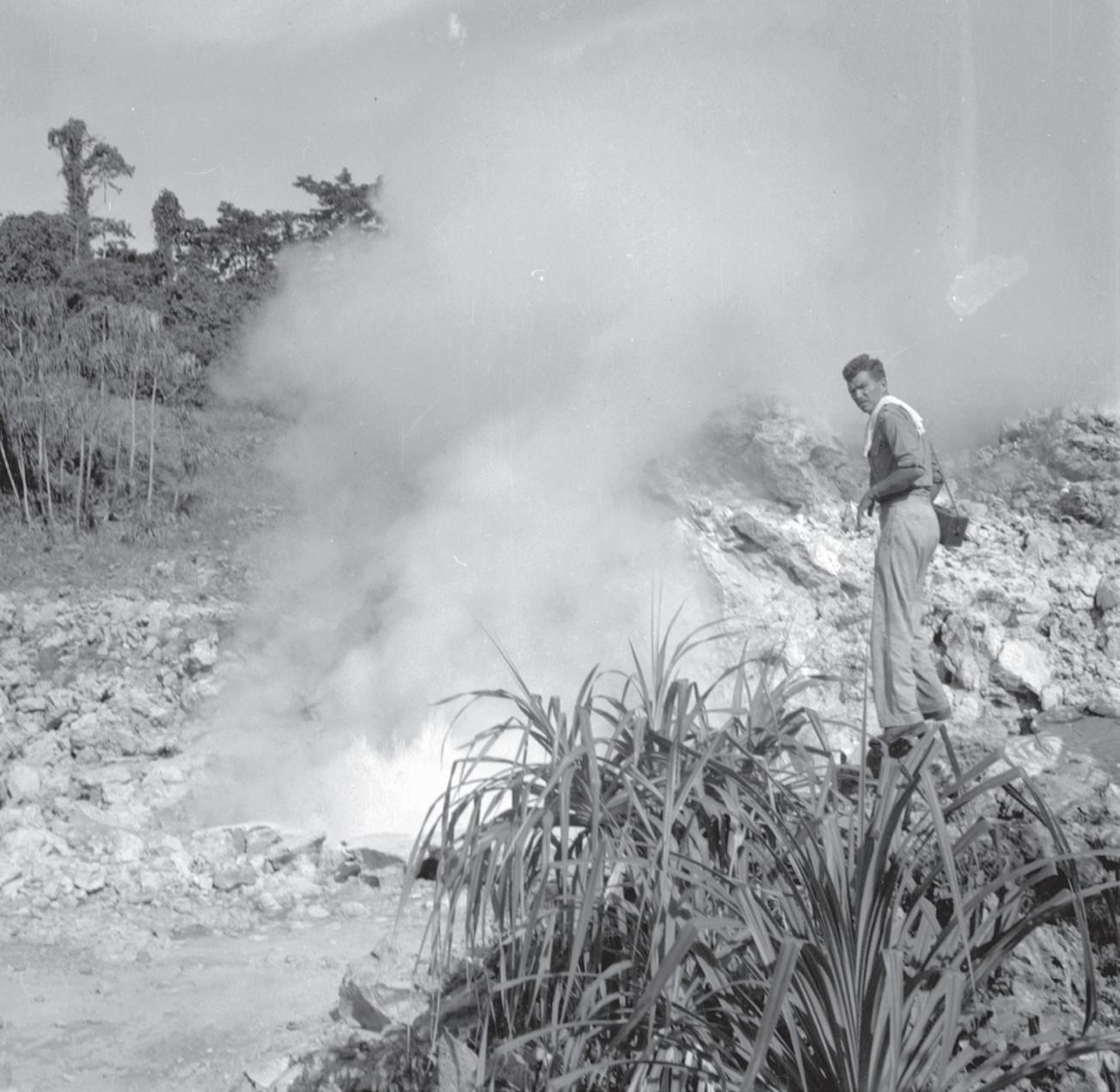
In the meantime Stehn was eager to see some of the other volcanoes in New Guinea so we went to some of those on the north coast, particularly those which had a fair amount of fumaroles (gas vents) and sulphur deposits around them, such as Ulawon (The Father). At the foot of The Father was Ulamona Catholic Mission and they had never climbed the volcano. Stehn and I climbed Ulawon but it was not
easy – there were lots of little knobs of lava the same size as a pigeon egg, and it was a case of one step up and two back fairly regularly. It was an impressive sight when we got to the top of the crater – about 200 ft (65m) down and steaming vigorously. We were the first to climb Ulawon, and probably the last. Subsequently this volcano has
erupted several times. We also visited Lolobau Volcano, an island near Ulamona.
By the time we got back to Rabaul Woolnough’s draft had been received but Stehn was quite upset as it was not what he thought the two had agreed. In the end the Administration decided to move the capital, but the decision had to be made – where? Lae was the obvious place but the residents of Wau were much against Lae as there was no wharf. Several Committees set up by the Australian Government had recommended Lae and the process slowly started of moving the Administration.
I get married and slowly commence moving to Rabaul
I came down on leave and was married on 23rd August, 1937. I had met my wife Ellice Carstens, nee Summers at primary school in 1918. We moved to Wau first of all.
For a long time I continued to commute between Wau and Rabaul. However Lyn Noakes was doing a good job: the observatory in Rabaul was being completed and I slowly began spending more and more time in Rabaul.
In 1941 the fumaroles around Vulcan began to heat up and the temperature rose to the stage that by the end of September the heat was about 400 degrees Centigrade, which was enough to char a stick put in it. It continued to play up during 1941, and sent clouds of sulphur bearing dust over Rabaul. The Administrator was furious at this as his house was right in the path of the prevailing winds.
World War 2
Norm joined the New Guinea Volunteer Rifles in September 1939 and when the Japanese overran
New Britain in 1942, he valiantly put up some initial resistance with a single three-inch mortar, but after running out of ammunition, he and a small group of other Europeans, walked over the central mountain range to the south coast, with Norm noting aspects of the geology en route. They then sailed a small boat to the Trobriand Islands from where they were evacuated to Brisbane. The story of their amazing escape is told in Harim Tok Tok, 2013 (b).
While I was in Brisbane I had tried to enlist in the Royal Australian Air Force, but was advised that I would not be accepted as I was in a reserved occupation………………..
Return to Civilian Life.
As I stated before I had been informed while I was in Rabaul that I was required in Canberra to assist with the strategic minerals study of Australia and by April I was in Canberra.
While I was in Brisbane I was in intensive care at home under the treatment of Sir Raphael Cilento, who had been Director of the Health Department in TNG. He understood and was an authority on tropical medicine and was great – he attended me very carefully. I was very fortunate as I had Cerebral Malaria and a number of other things which kept me in bed for a month. My wife attended to the nursing side.
Even while I had been recuperating I had been in touch with Dr Raggatt, the Commonwealth Geological Advisor, who had succeeded Dr Woolnough, who I mentioned had visited Rabaul. Unfortunately for Woolnough he had never become a permanent officer in the Public Service and in his own words ‘had been cast aside like a rag doll’ and never received a pension, being only a temporary officer. He eked out a living during and after the War by translating documents for the Department of Supply, and eventually I had him translating geological documents – he had propensity for languages, particularly German and Russian.
Raggatt was urging me to come to Canberra as quickly as possible as there was a lot of work to be done and nobody to do it. We moved to Canberra in 1942, and at the time there was no shortage of housing there, as many residents were away at the War… …………….
My title was Chief Geologist, Mineral Resources Survey and this was the forerunner of the Bureau of Mineral Resources. My main problem was recruiting suitably trained personnel – there were no geologists in the country. During the War no University had been conducting complete geological courses and those qualified geologists either had a job or had gone off to the War. I was left to build up a staff of geologists with practically no pool of geologists to draw from. All the staff was temporary officers and we were specifically tasked with helping to provide information on specific minerals such as wolfram,
copper, molybdenum, quartz crystal etc. Much of our time was taken up with surveying existing mines to find the extent of their ore deposits.
I was away from home a lot. Transport was a major problem in those days and generally you were confined to transport within your own State. To move from State to State you had to get special permission from the Government. I had special clearance for myself, but if I wanted to take Ellice with me, which I sometimes did, I had to get special permission for her to travel.
The Department had only two vehicles in Canberra. One of them, called ‘The old grey mare’ was a one ton Chevrolet truck fitted with a gas producing unit, which used charcoal, and we were most conscientious that, when we pulled into a service station, we did not fill up with petrol, but purchased bags of charcoal. It was quite a business getting the truck started in the morning. You had to get a fire burning by using a special accelerator which caused the fan to draw air through to get the charcoal alight and to a stage where it was producing gas. The characteristics of a gas driven vehicle in those days were that it was alright going downhill and not too bad on the flat but hopeless going uphill, and we eventually got to the stage where we used to help it along by using petrol to get up the hills. It had a maximum speed of 40 mph (64kmh) along the flat, or downhill, so you would press the accelerator to go as fast as you could downhill to get a bit of a run up for the next hill, where you would go chug – chug – chug – helped by petrol.
We were serviced by the big motor pool in Canberra, as all Government vehicles were, and all drivers used to compare notes about their vehicles. I was talking to one driver one day when he showed me his vehicle. He towed a
trailer behind the car and, when he opened the gas burner on the trailer, it had never been used. He explained to me that they never used gas. Well the Government was busy at the time telling all Australia how they supported and used gas producers to save petrol, but their drivers were using petrol, even though petrol was rationed. Very few people owned cars in those days – they used public transport.
My staff had to use public transport wherever possible – except where they had to go was not anywhere near a railway station. There were only about half a dozen of us at the time and we managed with ‘The old grey mare’ and the Ford utility which had a towed unit which was not as satisfactory as the inbuilt one on the Chevrolet. The gas producer was towed on a trailer and, naturally, it was a much slower vehicle. The unit was a good one once it got going, but it took a long time to get up and running.
Many of our trips were to existing mines, such as Mt Hope, a copper mine about half way between Canberra and Broken Hill. I would travel there by rail and the mine staff would meet me and transport me to the mine, some miles away from the railway station.
The Commonwealth Government had appointed a Controller of Minerals Production and the man recommended for the job was Sir Colin Fraser. However a Labor government was in power and Fraser was identified as being closely associated with Broken Hill Proprietary Ltd which the Labor party had always hated, so they appointed a red-headed, bad-tempered chap called Malcolm Newman. He had the authority to set up a mine and bring it into production. Our role was to provide him with the geological information. He appointed three or four engineers who were pretty useless. One of them was really quite mad and used to fall in love with his projects, and had exaggerated ideas about them, so I spent a lot of time fighting with him, trying to bring things down to sensible proportions. Some mines were opened and working and producing such things as tungsten and wolfram. However the mines had the same trouble as I had – manpower –there were not a lot of miners about as many of them had gone off to the war. Mining was a protected occupation in Broken Hill and Kalgoorlie, but not anywhere else – even Mt Isa was scratching for staff. Requirements for minerals in Australia during WW 2 were monitored and controlled by the British – America had not joined the war at that stage. When sufficient stocks of vital minerals were reached by Britain they then instructed Australia to close the mines down as many were not terribly cost effective. Strangely enough the British even got somewhat offended when Australia charged them with the cost of production of these mines, some 2 million pounds ($4m).
It was vital that Australia knew the full extent of its mineral resources so we would examine reports which had been produced from either the State geological surveys, and also from university and company surveys, and make assessments based on these surveys, and compile reports based on those assessments.
I remained in Canberra for the rest of my working life.
When the Mineral Resources Department was set up they had two branches, the Geological Branch and the Geophysical Branch. Geophysicists are people who use instruments to try and detect what is under the ground and this branch mostly operated on demand from the mining industry. I previously mentioned Dr Raggatt, the Commonwealth Geological Advisor, and he used his position, after the War finished to get the mining industry organised and he set up a permanent organisation, the Bureau of Mineral Resources, Geology and Geophysics. It was established in May, 1946, with a permanent staff of about 52. I spent a lot of time trying to fill the positions. Our location was still with the Department of Supply, whose headquarters was in Melbourne. It had several name changes, Department of Supply & Development, Department of Supply & Shipping and eventually just the Department of Supply. Dr Raggatt made the decision that he had to be close to the Secretary of the Department and he moved the Bureau of Mineral Resources to Melbourne. I managed to convince him that the geological part of the Department should stay in Canberra and only the geophysicists should move to Melbourne. The Chief Geophysicist, Jack Rayner, who still at the time was seconded from the Geological Survey Department of NSW, made the point that his Department relied on machinery, instruments and equipment which were quite technical and there was no facility in Canberra to service their equipment, whereas there was in Melbourne. That was his official position, but his wife came from Melbourne and she was mad keen to go back.
Another reason for our remaining in Canberra was that the Victorian Geological Survey Department were already hostile to the idea of setting up a Commonwealth Department, as were most of the State Geological Surveys, who opposed the setting up of a central body, and that had been why no Australian Geological Survey Department had been established, as had been the case in most countries USA, France, India, Canada, etc. Financially things worked out quite differently from what I had anticipated, as, when the Department of Supply and Development became the Department of Development Raggatt became the head of the Department. The geophysical Department was relocated back to Canberra, Raggatt was promoted out of it and his deputy Mr Nye, became head in his place.
Much of my activity in those years was concerned with recruiting staff interviews etc in an environment where there was virtually no pool of qualified geologists in Australia, but a lot of very competent people finishing their degrees under the post war reconstruction scheme. Returned servicemen were given absolute priority for positions with the Government at the time.
Owing to the opposition of the States to the setting up of our central body, what had looked to be an impossible dream became reality when the Queensland and WA State governments requested the assistance of the Department of Mineral Resources in resuscitating the mining industry which had gone into abeyance immediately after the war. It was not quite stated in those terms but both Governments
requested our assistance in the search for petroleum. Their attitude was – we will look after the hard rocks – you look after the soft rocks, those being the sedimentary based ones. That gave us a great start and we set up field parties to work in the Carnarvon Basin in WA and northwest Queensland.
Commercial mining and petroleum companies, when they made geological maps, made them specifically just around their mining bases, and whatever they did was theirs and was not available to anyone else. The function of the Government was to provide the geological map which people could look at and decide just where their mining or exploration activities would be. Consequently our maps were highly sought after. One of the things I insisted on was that anything we had carried out would be immediately available to the public – even a preliminary map in the course of compilation was to be made available to the public. For example anyone interested in prospecting in the Cloncurry district of Queensland could come to the BMR and have a look at the maps we would have prepared as a result of our field work, which may not be completed and published for a year or two. It was the norm to have a geologist or two from mining companies in the DMR just looking over what we had prepared.
One of the first things we endeavoured to do was to standardise the geological symbols and colour schemes throughout Australia, as each state had their own symbols and colours. Victoria flatly refused to comply as their Director, a Welshman, Thomas, was pigheaded and refused point blank to comply with a central colour scheme. Our maps were 4 miles to 1 inch or 1:250,000 and we got around Victoria’s opposition by producing maps for the rest of Australia with standard symbols, colours and notations. We then advised Victoria that we would not produce maps for Victoria, but, fortunately with the effluxion of time Thomas was succeeded by someone else and they agreed to the central scheme.
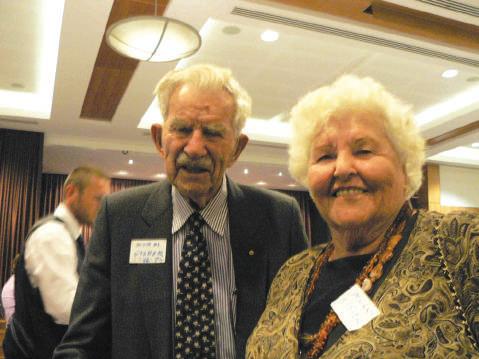
I became Director of the Bureau of Mineral Resources in 1969 and retired in 1974, to be succeeded as Director by Lyn Noakes. I consider that the geological mapping of Australia to be my major achievement. By the time I had retired we had covered the whole of Australia and Papua New Guinea, with the exception of South East Queensland (a small area around Brisbane) and each State had built up its own geological survey team and was producing their own maps as part of the standard scheme (Tasmania has only about two full maps).
In 1976 I received an Order of Australia, having been nominated by the geological community for my contribution to the geological knowledge of Australia and representing Australia overseas scientifically. I received my award from Sir John Kerr, the Governor General of Australia.
I gradually moved to Sydney and was doing a lot of commuting between Sydney and Canberra between 1974 and 1984, carrying on geological consulting work, mainly for private companies, but also for companies such as Mt Isa Mines Ltd.”
Ellice and I had one son, William, born 11th May, 1946, as well as Lorelei, Ellice’s daughter from her first marriage. William joined the Department of Foreign Affairs, and has spent most of his time in overseas postings Switzerland, Laos, Noumea, Vila, Iran, Israel, Ambassador to Thailand, Ambassador to France, and is now High Commissioner in Canada.
Ellice became a victim of Alzheimer’s disease and was ill for 2/3 years before she passed away on 5th August, 1993. I was her full time carer and towards the end she spent quite a lot of time in Hospital.
On 10th December, 1994 I married Molly Bowman and at the time of writing (2006) we live at Neutral Bay. Until a few years ago I was playing tennis at the courts near our unit.
Norm Fisher died in 2007 aged 97.
References
Collins, R. 2013 Escape from New Britain Cpl (Dr) Norman Henry Fisher, AO NG 608. in Harim Tok Tok, 80, p. 2-6
Collins, R. 2013 Escape from New Britain Cpl (Dr) Norman Henry Fisher, AO NG 608 Cont. in Harim Tok Tok, 81, p. 2-6
Collins, R. 2013 Escape from New Britain Cpl (Dr) Norman Henry Fisher, AO NG 608 Cont. in Harim Tok Tok, 82, p. 2-4
Thank you to Don Perkin for bringing the story to our attention and also to Elizabeth Fredericks, IP and Copyright Manager, Client and Information Management, Corporate Services, Geoscience Australia
The first photo and figures 3-7
© Commonwealth of Australia (Geoscience Australia) 2014
Peter J. Downes, Geoff L. Deacon and Alex W.R. Bevan
Western Australian Museum, Locked Bag 49, Welshpool DC, W.A. 6986
Introduction
Early European mineral and rock collecting in the Swan River Colony was stimulated by exploration, the desire to develop the mineral resources of the Colony, and the subsequent discovery of the first mineral fields. The two most important figures involved were the Reverend Charles G. Nicolay and the Government Geologist Edward T. Hardman. We describe here some of the events surrounding the acquisition and display of these early collections and illustrate fine examples of the minerals and rocks that they contain.
Northampton lead and Kimberley gold
Western Australia’s first mineral boom was set in motion with the discovery of galena in the Murchison River in October 1848 (Blockley, 2009). Further discoveries of lead and copper mineralisation ensued in the Champion Bay region in the Midwest of Western Australia, some 450 km north of Perth (Figure 1). The exploitation of these deposits, in what became
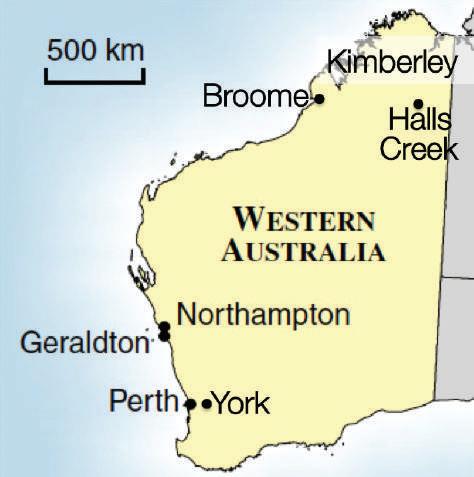
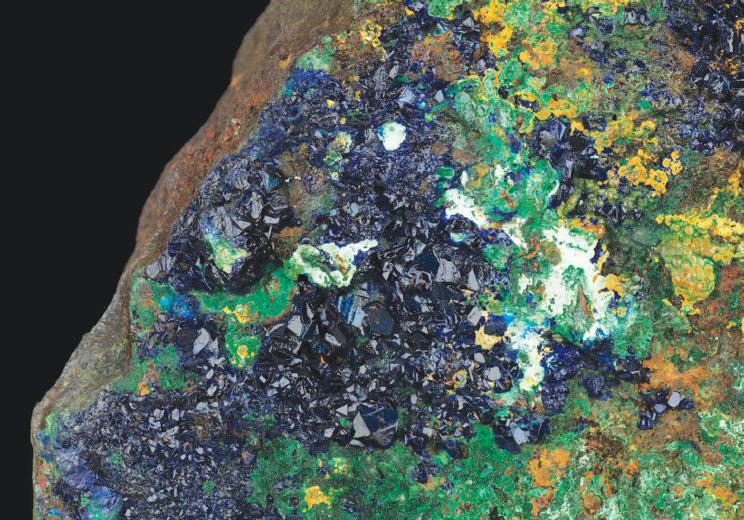
known as the Northampton Mineral Field, over the period from 1850–1899 provided a large proportion of early exports from the Swan River Colony. The Northampton mines produced some fine specimens of galena and quartz, pyromorphite, azurite and malachite, some of which are preserved today in the mineral collections of the Western Australian Museum and the Geological Survey of Western Australia (Figures 2–4).
A collection of rocks and minerals from Western Australia was displayed at the Colonial and Indian Exhibition in London in 1886. Prominent among these were minerals from the mines of the Northampton Field. The collection was compiled and arranged by the Reverend Charles Nicolay who was the Curator of the Geological Museum in Fremantle. Also included were rocks from the Kimberley region that had been collected by the Government Geologist, Edward Hardman, in 1883–1884. These were displayed to promote a potential new goldfield in the north of the Colony. Events moved quickly, and in 1886, while the collection was abroad, a major gold rush to the Kimberley was sparked by the gold finds of Charles Hall and John Slattery at Halls Creek (Figure 1).
Reports on the quality of the display in London were not kind, but some excitement was generated by gold specimens from the Kimberley goldfields. J. Reynolds Gregory of the Mineralogical Society of Great Britain wrote that:
“The Western Australian mineral exhibits were somewhat meagre, owing to the comparatively small amount of mining enterprise, and the consequently undeveloped condition of the colony’s mineral resources at present. Quite lately, however–in fact since the opening of the Exhibition–proofs of the find of gold in the colony came to hand from the new Kimberley goldfields, and the prospects of a rush seem imminent. These reports are corroborated by the receipt of actual alluvial gold and nuggets.”
Northampton specimens on display included: ‘copper pyrites’, ‘iron pyrites’ and ‘zinc-blende’ from the Wheal Margaret Mine; ‘chessylite’ (azurite), malachite, and cuprite from the Wheal Fortune Mine; and cuprite and malachite from the Badra (Baddera) Mine, Northampton. “Rich specimens” of galena “were exhibited from Wheal Fortune, Champion Bay, and St. Geraldine Mine, Murchison River. Fine specimens were also shown by Mr. J. H. Gale, of Geraldton, from Badra Mine. Examples also came from Wheal Margaret Mine, Northampton; and large and well-crystallised specimens
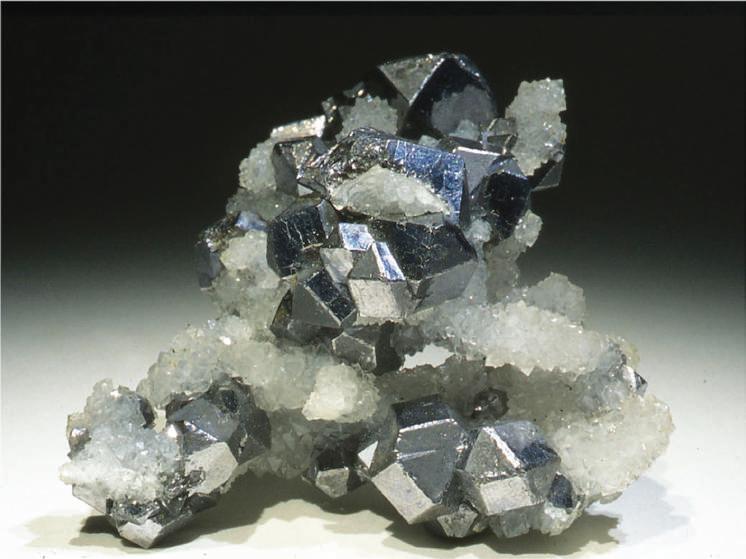
Figure 2 Crystals of galena (combinations of cubic and octahedral forms) with quartz from the Northampton mineral field (WAM specimen). Simpson (1951) noted that all the Ajana-Geraldine lodes were vughy and contained beautiful groups of galena crystals in cavities, particularly in the Geraldine, Surprise and Springvale mines
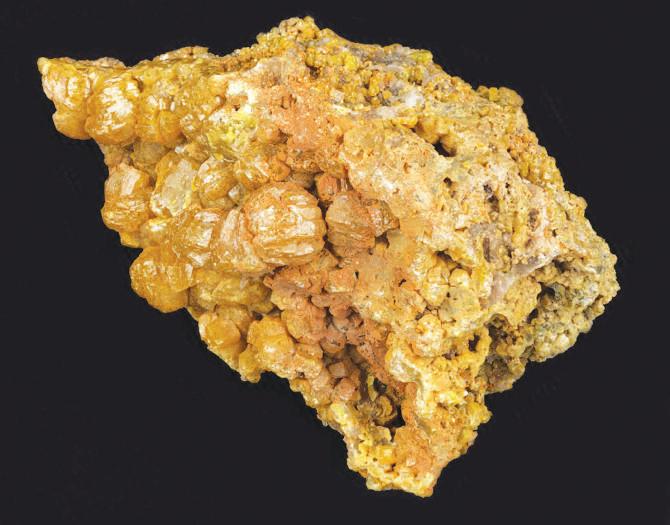
Figure 3: Pyromorphite from the Geraldine mine, Northampton mineral field (WAM specimen, 7.7 cm long).
of galena from Wheal Fortune, Northampton, Champion Bay” (The West Australian, Monday 10th October, 1887, p. 3).
Lady Mary Anne Broome, the wife of the Governor of Western Australia, Sir Frederick Napier Broome (who served from 1882–1889), later wrote of the atmosphere in Perth during the Kimberley gold rush, describing “The rumours of gold which had begun to fill the air during our day...”, and how:
“Diggers used to go up the coast, as far as they could, in the small mail steamers, and then strike across the desert, often on foot, pushing their tools and food before them in a wheel barrow. Naturally, they could travel neither far nor fast in this fashion, and there was always the water difficulty to be dealt with. Still a man will do and bear a great deal when gold nuggets dangle before his eyes, and some sturdy bushmen actually did manage to reach the outskirts of the great gold region. The worst of it was that under these circumstances no one could remain long, even if he struck gold; for there was no food to be had except what they took with them. As is generally the case in everything, one did not hear much of the failures; but every now and then a lucky man with a few ounces of gold in his possession found his way back to Perth. Nearly all who returned brought fragments of quartz to be assayed, and every day the hope grew which has since been so abundantly justified.” (M. A. Broome, Colonial Memories, 1904)
In the Illustrated London News of 1st January 1887 (Figure 5, a short article on the ‘Kimberley Gold-Mines’ appeared in which Hardman described how:
“He discovered, in the country traversed by the Margaret, Mary, Elvire, Panton, and Ord rivers, an immense number of gold-bearing quartz reefs, breaking out through the slate and schist beds, of Lower Silurian formation; and, in the river valleys and flats, extensive deposits of quartz-gravel and drift, from which, by washing in the pans, “good colours” of gold were obtained. Diggers and miners have since resorted to this locality, and their labours seem likely to prove very successful.”
Despite Hardman’s enthusiasm, the Kimberley gold rush was short lived as the reefs proved to be patchy, and in 1888 the attention of gold prospectors turned south to the Pilbara (Blainey, 2003).
Hardman’s collection from the Kimberley expeditions of 1883–4 comprised 225 rock and mineral specimens and 34 fossil specimens (Hardman, 1885). These included some very interesting specimens such as Carboniferous ‘earthy agglomerate’ from Mt Abbott and a small hill south of Mt Abbott in the West Kimberley (Figures 6, 7). These specimens were misidentified by Hardman and were in fact volcanic rocks (olivine lamproite) related to those from which diamonds are currently mined at Ellendale. Volcanism occurred there approximately 22 million years ago.
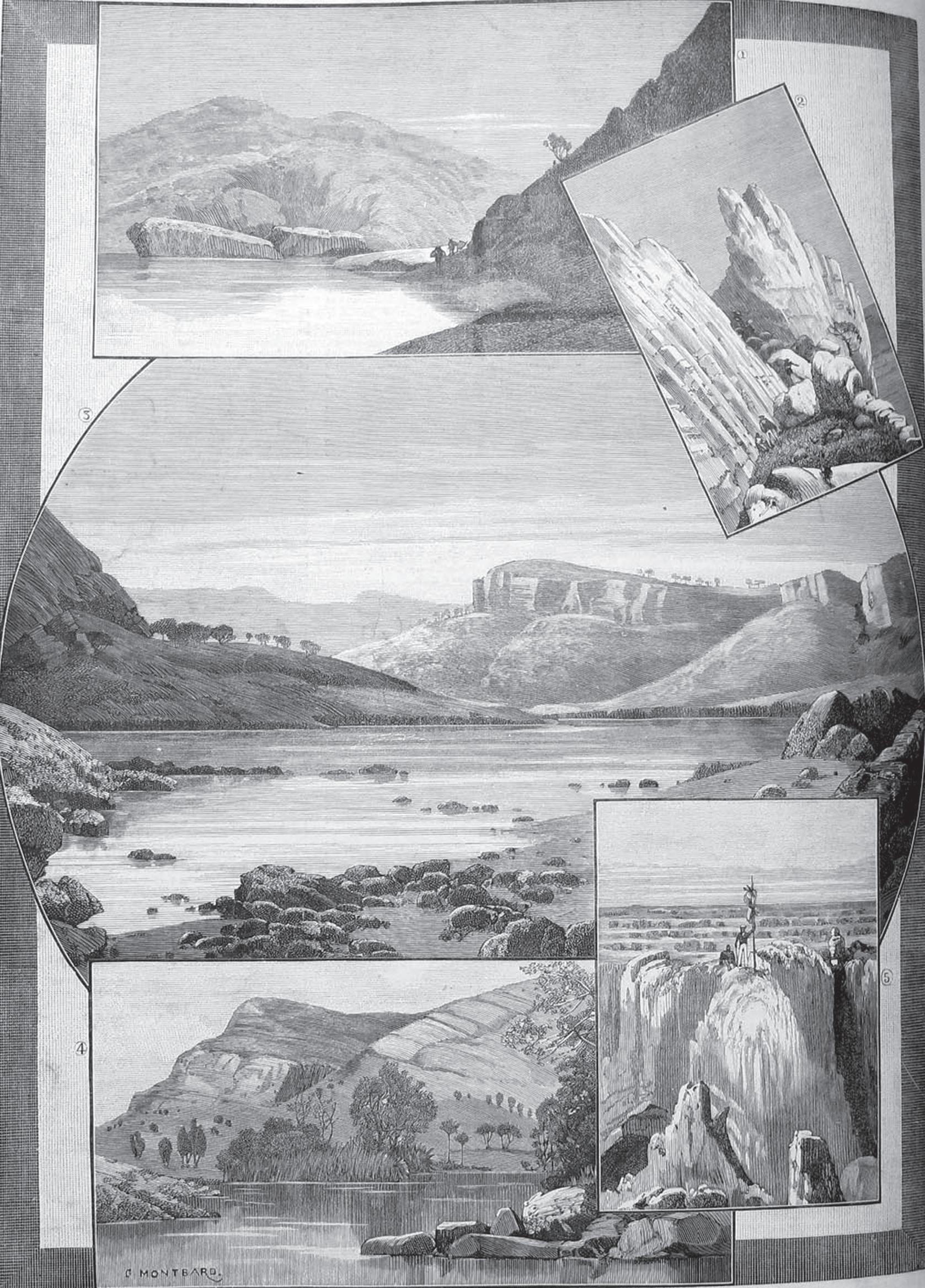
Figure 5 Sketches of the Kimberley region by Edward Hardman. From the Illustrated London News, “The Kimberley Gold-Mines”, 1st January, 1887. Centre: The Ord River (Near the site of gold workings.) Other sketches clockwise from top: Caroline Pool; Albert Edward Range;Rough Range; and Permanent Creek.
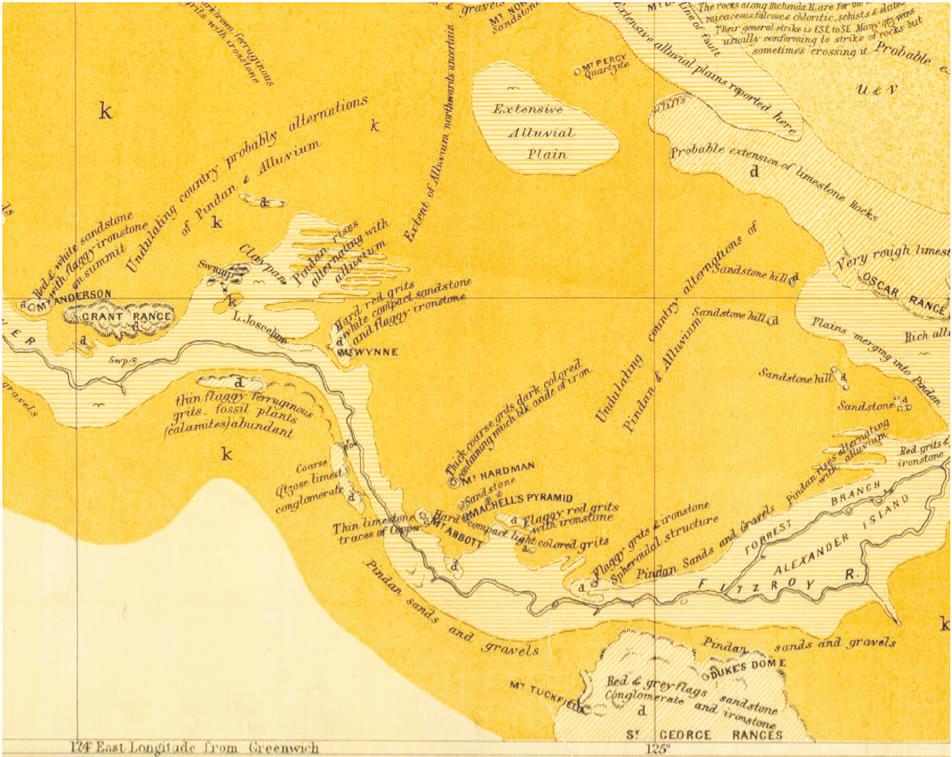
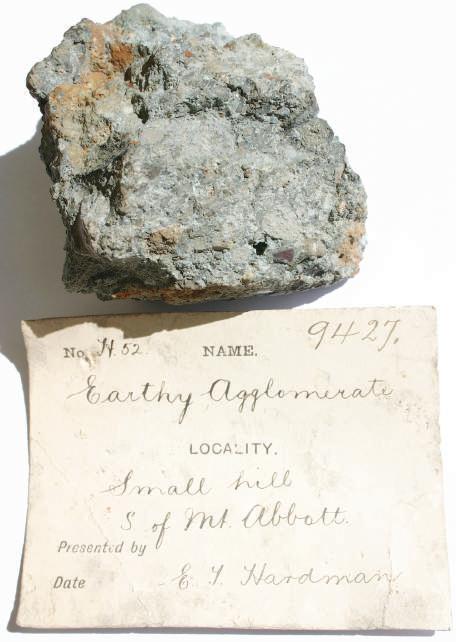
Figure 6 Extract from Edward Hardman’s geological map of the Kimberley District (Hardman, 1885) showing Pliocene ‘Pindan’ sands (k), Carboniferous sandstones, grits, conglomerates and limestones (d), and Cambro-Silurian gneiss and schist (U & V). See also the location of Mt Abbott.
Figure 7 ‘Earthy Agglomerate’ from a small hill south of Mt Abbott, West Kimberley. This rock is a sample of Miocene volcaniclastic olivine lamproite. Another ‘earthy agglomerate’was collected from Mt Abbott (specimen number H54).
The Youndegin iron meteorite and its exchange for the Fletcher mineral collection
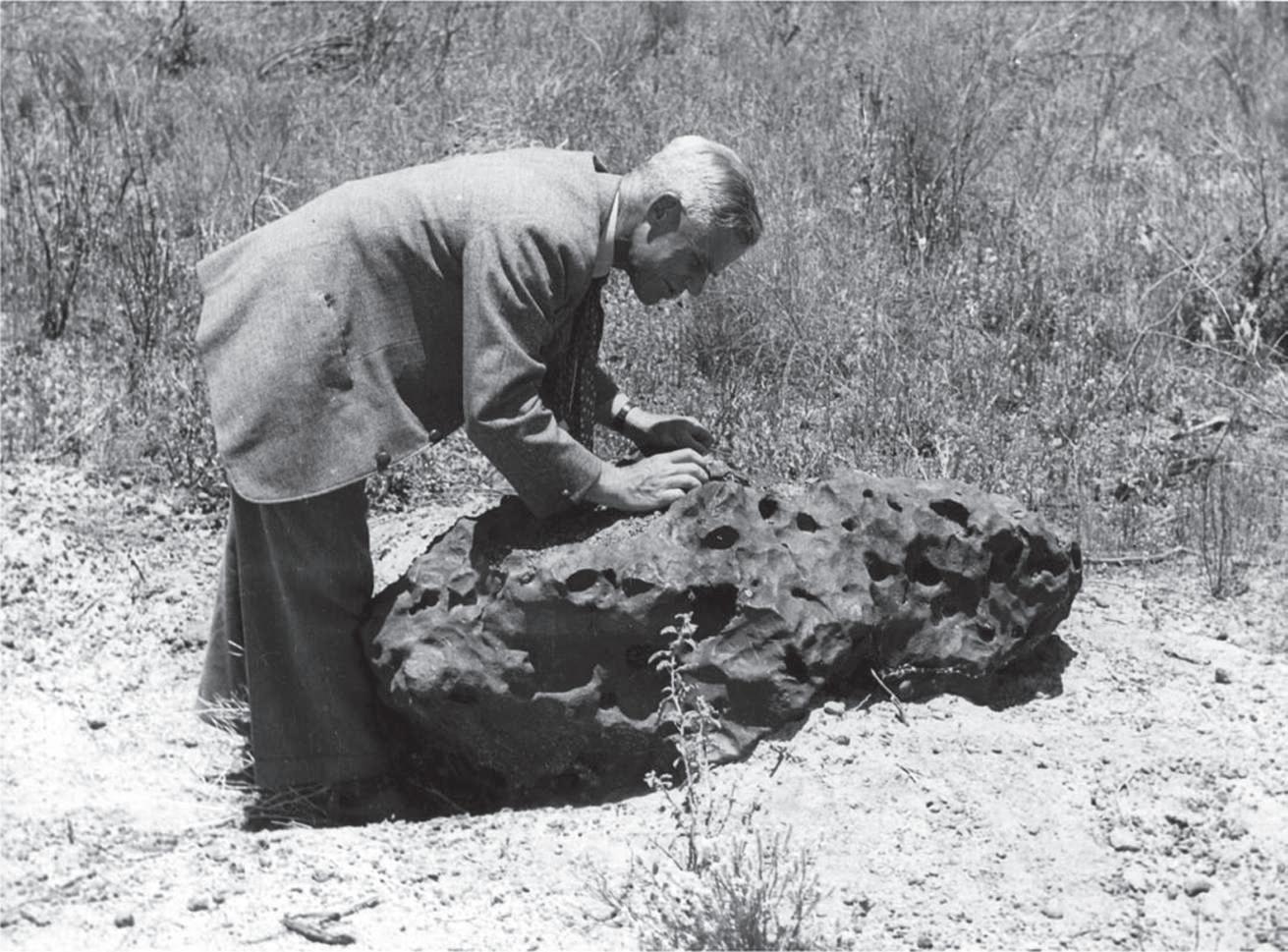
Some four years earlier, on 5th January 1884 the first four masses of the Youndegin iron meteorite had been found by a mounted policeman, Alfred Eaton, east of the town of York, which is situated 80 km to the east of Perth (Figures 8, 9). Eaton brought one of the four fragments (Youndegin I, weighing 11.7 kg) to Perth, where it was examined by Hardman. Hardman later described the circumstances in a letter to Thomas Davies at the British Museum (Natural History), written on 4th February, 1887, stating that this specimen “...was sent to me with a request that I would say if it was worth anything, as there were other pieces lying about. I pronounced it to be Meteoric Iron and recommended that all the fragments should be collected and sent to the museum at Fremantle.” The Commissioner of Police in Perth sent Eaton and an Aboriginal assistant out to collect the remaining three fragments (Youndegin II–IV, weighing 10.9, 7.9 and 2.72 kg, respectively) and some weathering products from the find site, 1.3 km northwest of Pikaring Hill (then known as Penkarring Rock; Figure 8).
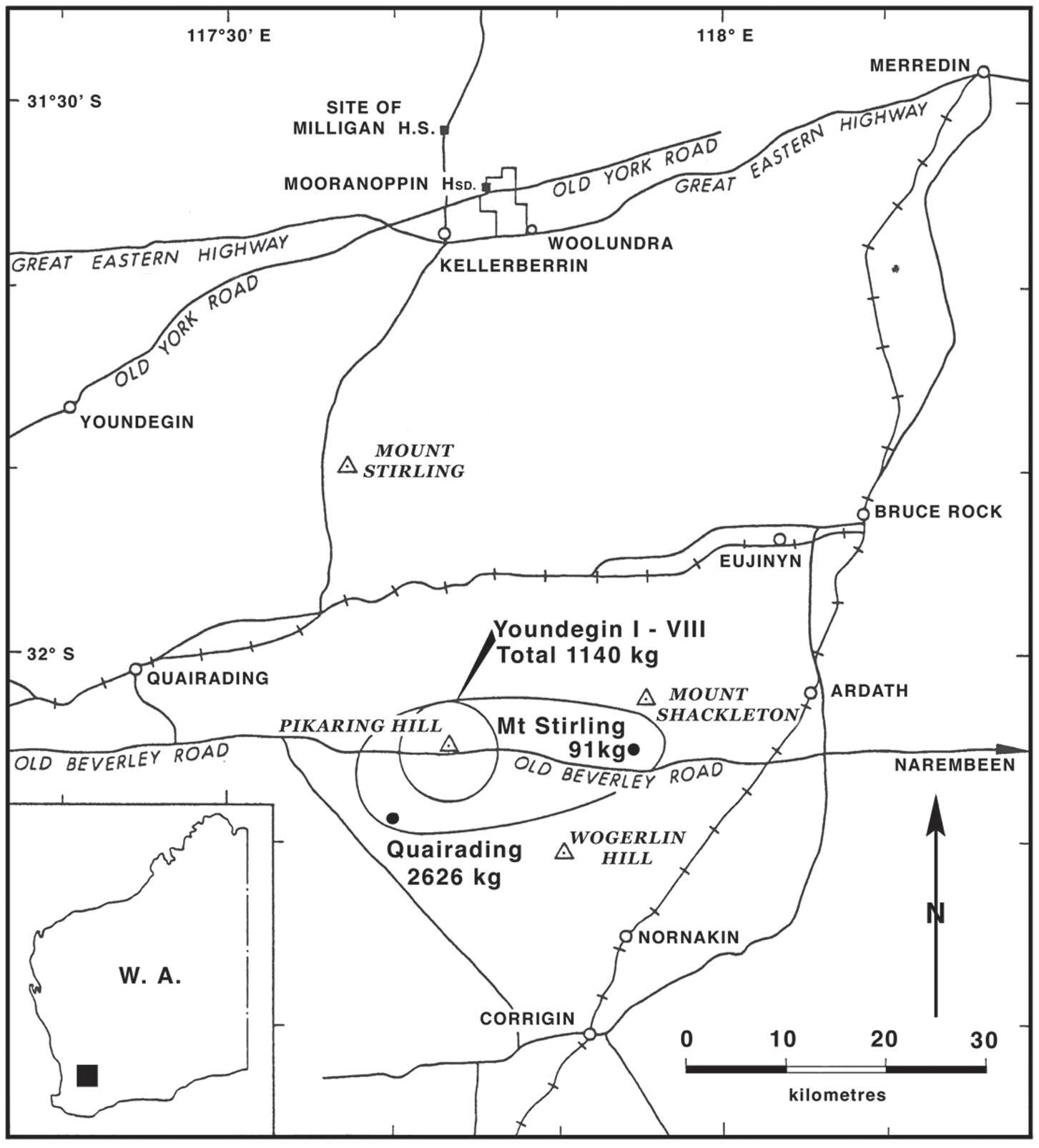
Figure 8 Map showing the location of masses comprising the Youndegin meteorite shower in Western Australia (after Cleverly and Cleverly, 1990).
Hardman deposited the first specimen with Nicolay at the Geological Museum in Fremantle in mid-January and the remaining fragments collected by Eaton and his assistant were sent to Nicolay by post, arriving on Friday 7th March. Nicolay sent Youndegin II (in November 1884) and later Youndegin IV (in July 1885) to Lazarus Fletcher at the British Museum (NH) via the secretary of the Mineralogical Society in London, Mr Robert H. Scott. Lazarus Fletcher was Keeper of Mineralogy at the new British Museum (Natural History) in South Kensington (opened in 1881) from 1880–1909. In the first description of a meteorite found in Western Australia (Fletcher, 1887), Fletcher confirmed the meteoritic nature of the Youndegin fragments and also noted a cubic form of graphite that he called ‘Cliftonite’ (this was graphite that formed pseudomorphs after diamond). A sample of Youndegin was exhibited at the Colonial and Indian Exhibition in 1886 along with the Nor thampton and Kimberley specimens (Anon, 1886).
In exchange for a mass of the Youndegin meteorite, Nicolay sought from Scott and Fletcher a collection of authenticated metallic ores to meet the growing needs of prospectors in the Colony (Nicolay 1887, 1888). In 1884 he had written to Scott that “...the Colony has been mad on minerals or rather metals since gold was found at Kimberly [sic], and perhaps our more immediate want is in specimens of rocks which commonly contain them.” About three years after the first mass of Youndegin was sent to London, the Fletcher Collection arrived in Fremantle in 1887, as described by Nicolay in his annual report: “ The
n Nicolay’s museum journal after two visits.
Robert Scott was instrumental in facilitating the Youndegin exchange with the British Museum (NH). He trained in physics, chemistry and mineralogy in Ireland and Germany, and although he worked for most of his career as a meteorologist he retained an interest in mineralogy. He was an original member of the Mineralogical Society and was General Secretary from 1881–8, later becoming President (1888–91). From 1862–1867 he was Keeper of Minerals and Lecturer on Mineralogy to the Royal Dublin Society. In this position he studied the minerals and granites of County
specimens of authenticated ores of silver, tin, &c., obtained ... by exchange from Dr. Fletcher of the British Museum in London, and those of coal fossils purchased for this Museum by Mr. Robert Scott, F.R.S. of the Mineralogical Society, London, have not yet been received, and I am anxiously expecting them, as I have had many applications from prospectors for those minerals to compare such specimens with what they have found themselves.” With a footnote saying: “Since received: 84 select specimens of minerals from British Museum in exchange for one piece of meteorite, and 344 specimens of coal fossils purchased for museum by Fletcher” (Nicolay, 1888).
Nicolay came to correspond with Scott at the recommendation of Scott’s sister-in-law, Lady Mary Anne Barker (later Lady Broome), who was a successful author and journalist (Hasluck, 1969). The Governor and Lady Broome appear to have taken a great interest in the Geological Museum in Fremantle, leaving entries
Figure 9: Harry Wheeler (Western Australian School of Mines) with the main mass (2626 kg) of the Youndegin meteorite shower found near Quairading, Western Australia.
Donegal and he also gave an account of the minerals of Strontian in Argyllshire (Anon, 1917). It might be due to his influence that a specimen of strontianite from the type locality at Strontian was included in the Fletcher Collection.
Nicolay despatched a mass of Youndegin (Youndegin II) to Scott in England on Thursday 6th November 1884, via the Colonial Agents on the mail steamer from Fremantle. It had arrived with Scott at the Meteorological Society by 12th February, 1885, when he sent a note alerting Lazarus Fletcher to its arrival. Another mass of Youndegin (Youndegin III) was sent to James Cosmo Newbery, the Scientific Superintendent of the Industrial and Technological Museum in Melbourne (Birch and Henry, 2000), on the promise of later specimen exchanges in return (Nicolay, 1885).
During November 1884 to June 1885, following soon after the discoveries of gold in the Kimberley region by Hardman, the Governor and Lady Broome visited
England to promote the resources of the Colony and to raise a loan from the British Government for public works, particularly railway construction (Hasluck, 1957, Crowley, 1969). On April 13th 1885, in a note to Fletcher, Scott informed him that Lady Broome was anxious to see the meteorite so that she could report that she had done so on her return to Perth. She was living in London near the British Museum (NH) during her visit and Scott advised her to see Fletcher there.
Soon after this, Fletcher appears to have become concerned that Nicolay would distribute the remaining pieces of the meteorite among other collections. In a letter of April 17th 1885, Scott sought to assure Fletcher that Nicolay would not do this, writing of Nicolay “...but he is a fidgetty old man and I doubt his letting them out of his hands.” Earlier, in September 1884, Nicolay had asked for advice from Scott about how to dispose of two of the fragments of Youndegin. In the end, he sent one to Newbery in Melbourne and the other to Fletcher at the British Museum (NH). Scott wrote to Fletcher, on May 14th, 1886, about the distribution of the Youndegin (IV) mass. “I hardly think it fair to the colony to use it simply as a B M duplicate. I have no objection in your obtaining another in exchange for it, but the actual Youndegin stone [sic] must be presented in the name of Nicolay, to whom the recipient should write direct. It is the colony’s little ewe lamb1 , and it is hardly fair to appropriate it simply.”
Under Fletcher’s care the meteorite collection at the British Museum (NH) grew through astute exchanges and by utilising a network of contacts throughout the Empire that included scientists, collectors, curators and representatives of the British establishment (Russell and Grady, 2006). The Youndegin exchange was a good example of how this network operated; the exchange being facilitated by the efforts of Lady Broome, her brother-in-law Robert Scott at the Mineralogical Society, along with the local geologists Nicolay and Hardman in Western Australia.
The Fletcher Collection contains specimens from many classic mineral localities (Figures 10–13; see Downes et al. (2011) for a detailed description of the collection). Some of the best material preserved in the collection
1 ‘Little ewe lamb’ sounds like an odd description for the meteorite but it appears that Scott is referring to the biblical critique of King David by Nathan the prophet in 2 Samuel, chapter 12, verses 1–13. See verses 2–3: “The rich man had a very large number of sheep and cattle, but the poor man had nothing except one little ewe lamb that he had bought. He raised it, and it grew up with him and his children. It shared his food, drank from his cup and even slept in his arms. It was like a daughter to him.”
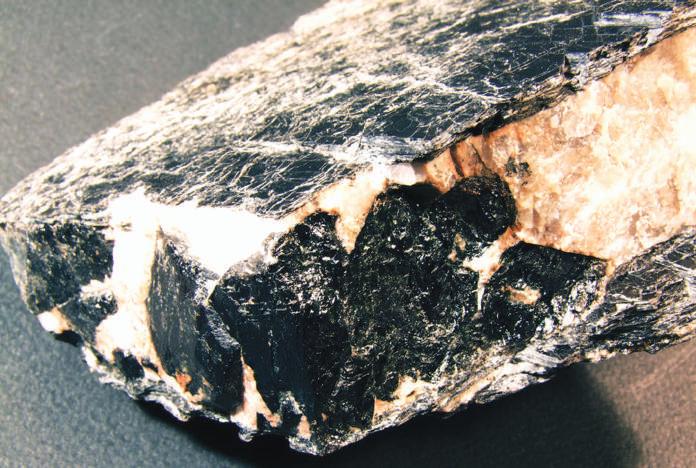
includes: wulfenite from Bleiberg, Austria; fluorite from Cumberland, England,. goethite and quartz from the Restormel iron mine, Cornwall; hematite from Rio Marina, Elba, Italy; scolecite from the Sahyadri Mountains, India and datolite, calcite and stilbite from Bergen Hill, New Jersey, USA. Specimens of wulfenite from Bleiberg, strontianite from Strontian, Argyllshire, gadolinite-(Y) from Ytterby, Sweden, and labradorite from Labrador, Canada, come from type localities. Each of these localities has a fascinating history and some played important roles in the development of science in the 19th and early 20th centuries. Unfortunately, at present we know little about how each of these specimens was obtained by the British Museum (NH).
Figure 11: Fluorite and sphalerite, Cumberland, England. Crystals of fluorite up to 1 cm along edge. This specimen came from a mine in the Northern Pennine Orefield, that is centred on the Weardale area, northwest County Durham, England, and is one of the most famous specimen-producing areas in the world (Cooper, 2006). Many of these Pb–Zn–fluorite mines were at the peak of their production during the 19th century.
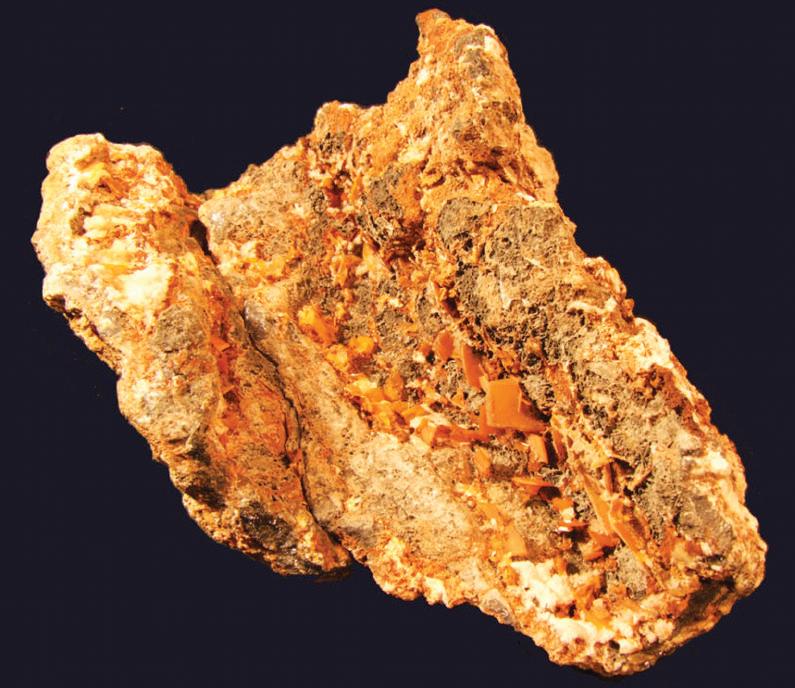
Figure 10: Fletcher specimen number 9. Wulfenite from Bleiberg, Carinthia, Austria (specimen is 20 cm long). Orange tabular crystals of wulfenite up to 1.2 cm wide encrust this specimen of oxidised galena ore that originally looks to have formed part of a semicylindrical cavity. Wulfenite was named for Franz Xavier von Wulfen (1728–1805), an Austrian Jesuit priest who was based at Klagenfurt, Austria for much of his life. Wulfen was best known as a botanist, specialising in Austrian alpine flora, who described many new botanical species, but also took a great interest in mineralogy (Schuh, 1997).
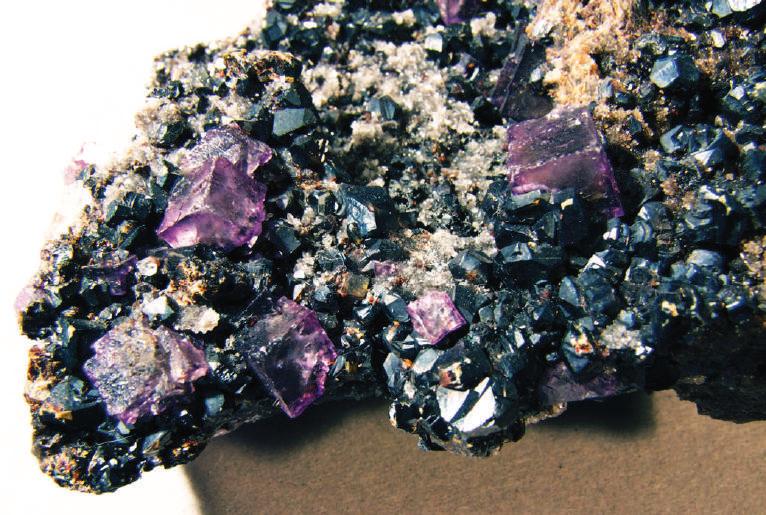
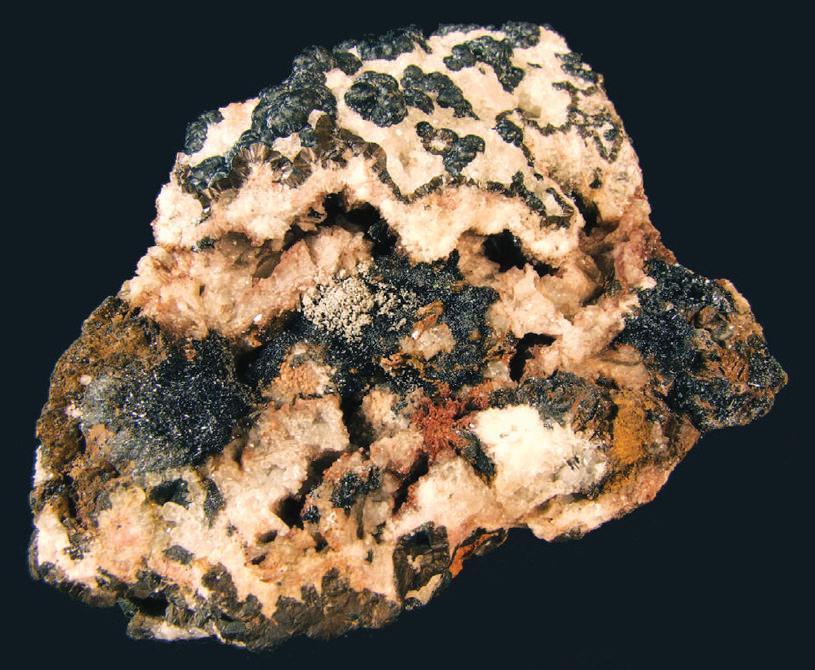
Figure 12 Goethite and quartz, Restormel iron mine, Cornwall, England (specimen is 9 cm wide). Goethite occurs as bands of dark brown to grey radiating fibrous crystals intergrown with bands of quartz in a typical hydrothermal ore texture. Situated between the St Austell and Bodmin Moor granites, the fault-hosted hydrothermal iron mineralisation was mined over an area two miles long (Embrey and Symes, 1987). The mine was a major producer of iron during the 19th century, and was visited by Queen Victoria and Prince Albert in 1846, after which it became known as the Restormel ‘Royal’ mine.
References
Anonymous, 1886, Catalogue of exhibits in the Western Australian Court, Colonial and Indian Exhibition: William Clowes and Sons, London, 74 pp.
Anonymous, 1917: Robert Henry Scott (1833–1916) – Obituary. Mineralogical Magazine, 18(84), p. 143–144.
Birch, W. D. and Henry, D., 2000, The geology collections of Museum Victoria, Melbourne: Australian Journal of Mineralogy, 6(2), p. 83–91.
Blainey, G. N., 2003, The rush that never ended: A history of Australian mining: Melbourne University Press, Melbourne, 431 p.
Blockley, J., 2009, The Northampton Mineral Field: Western Australia’s first mineral boom: ESHG Newsletter 40, p. 5-11.
British Museum (Natural History) Dept. of Mineralogy and National Library of Australia, Australian Joint Copying Project. British Museum (Natural History) Dept. of Mineralogy Library, 1989, Mineralogy Department and Mineralogy Library archives [microform]: [M2702-2707], 1828–1957.
Broome, M. A., 1904, Colonial Memories: Smith, Elder & Co., London, 301 p.
Cleverly, W. H. and Cleverly, E. I., 1990, Youndegin meteorite shower: a re-assessment of provenance: Journal of the Royal Society of Western Australia, 73, p. 23–27.
Cooper, M. P., 2006, Robbing the Sparry Garniture: A 200 year history of British mineral dealers 1750–1950: Mineralogical Record Inc., Tucson, Arizona, 358 p.
Crowley, F. K., 1969, Broome, Sir Frederick Napier (1842–1896): Australian Dictionary of Biography, Volume 3, Melbourne University Press, Melbourne, p. 248-250.
Downes, P. J., Bevan, A. W. R. and Deacon, G. L., 2011, The Fletcher Collection of minerals at the Western Australian Museum: a late 19th century gem: Australian Journal of Mineralogy 16, p. 3–14.
Embrey, P. G. and Symes, R. F., 1987, Minerals of Cornwall and Devon: British Museum (Natural History), London, and the Mineralogical Record Inc., Tuscon, Arizona, 154 p.
Evans, C. H., 1996, Introduction, in Episodes from the History of the Rare Earth Elements, edited by C.H. Evans: Kluwer Academic
Figure 13: Gadolinite-(Y) [Y2Fe2+Be2Si2O10] in orthoclase with biotite, Ytterby, Sweden (specimen is 3 cm thick.) The pegmatites at Ytterby, on the island of Resaro, east of Stockholm, Sweden, have produced 3 new minerals, tengerite-(Y), yttrotantalite(Y) and, perhaps most importantly, gadolinite-(Y). Gadolinite-(Y), discovered there in 1787, was named for the Swedish chemist Johan Gadolin who was an important figure in the discovery of the rare earth elements. Over the period from 1794–1907, nine new elements were found by studying the chemistry of gadolinite-(Y); yttrium, terbium, erbium, thulium, holmium, dysprosium, scandium, ytterbium, and lutetium (Evans, 1996).
Publishers, Dordrecht, Netherlands.
Fletcher, L., 1887, On a Meteoric Iron found in 1884 in the Subdistrict of Youndegin, Western Australia, and containing Cliftonite, a cubic form of graphitic carbon: Mineralogical Magazine, 7(34), 121–130.
Hardman, E. T., 1885, Report on the geology of the Kimberley District, Western Australia: Richard Pether, Government Printer, Perth, 38 p.
Hasluck, A., 1957, Lady Broome: Journal and Proceedings of the Western Australian Historical Society, 5(3), p. 1–16.
Hasluck, A., 1969, Broome, Mary Anne (1831–1911),in Australian Dictionary of Biography, Vol. 3,: Melbourne University Press, Melbourne, p. 250–251.
Nicolay, C. G., 1885, Report of progress of the Museum of Geology, Fremantle, for the year 1884: Richard Pether, Government Printer, Perth, 4 p.
Nicolay, C. G., 1886, Report of progress of the Museum of Geology, Fremantle, for the year 1885: Richard Pether, Government Printer, Perth, 4 p.
Nicolay, C. G., 1887, Report of progress of the Museum of Geology, Fremantle, for the year 1886: Richard Pether, Government Printer, Perth, 3 p.
Nicolay, C. G., 1888, Report of progress of the Museum of Geology, Fremantle, for the year 1887: Richard Pether, Government Printer, Perth, 3 p.
Russell, S. and Grady, M. M. 2006, A history of the meteorite collection at the Natural History Museum, London, in The history of meteoritics and key meteorite collections: fireballs, falls and finds, edited by G.J.H. McCall, A.J. Bowden and R.J. Howarth: Geological Society, London, Special Publications, 256, p. 153–162.
Schuh, C. P., 1997, Biographical notes [on Franz von Wulfen], in Xavier Wulfen’s Treatise on Carinthian lead spars, edited by W.E. Wilson: Mineralogical Record, Tuscon.
Simpson, E. S., 1951, Minerals of Western Australia, Volume 2: William H. Wyatt, Government Printer, Perth, Western Australia, 675 p.
Angela Riganti1, Peter Dunn2, and Robert Cross3
1 Geological Survey of Western Australia, Department of Mines and Petroleum, Perth, Australia
2 23 Foster Street, Railton, Tasmania 7305
3 Corporate Services, Department of Mines and Petroleum, Perth, Australia
Corresponding address: angela.riganti@dmp.wa.gov.au
Between 1898 and 1916 the Geological Survey of Western Australia (GSWA) printed at least twelve Christmas cards. A few copies (possibly just proofs) and the mock-ups assembled for the printing of these cards are held by the library of the Department of Mines and Petroleum (DMP, of which GSWA is a Division). No information could be unearthed as to whom the cards were sent, how many were printed, and why the tradition stopped. However, this legacy offers a fascinating insight into the early work of a young geological survey institution at the end of the 19th century and beginning of the 20th century.
In documenting each of the available cards, this article retraces the exciting early days of earth science work in Western Australia, as the complex geological framework of the State was starting to be unravelled. The cards also offer some insight into the evolution of society, by reflecting the important events that affected Western Australia at the time.
1898
The first GSWA Christmas card on record (Fig. 1) was prepared in 1898 only 10 years after the establishment of the Geological Survey in Western Australia, presumably in keeping with the British tradition of sending ‘official’ Christmas cards.
The card is illustrated with sketches of the Collie coal mine, an artesian bore at Guildford, a plan of the newly established Kalgoorlie town, and a plane-table and alidade among scattered drawings of fossils.
Coal was accidentally found at Collie in the early 1880s with mining starting in the early 1890s. The
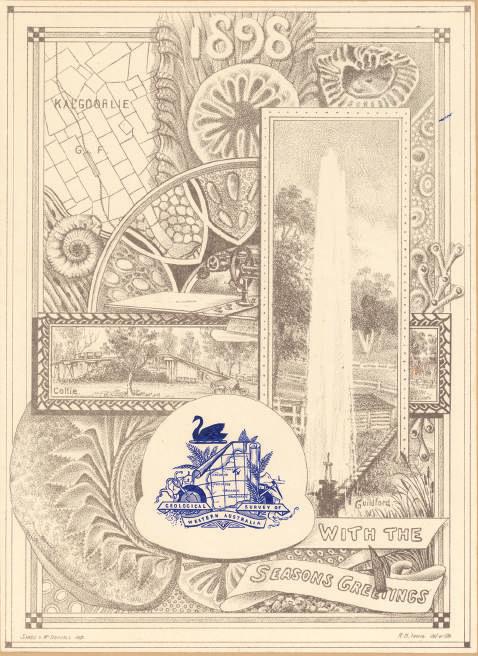
Figure 1 1898 card (size 11.8 x 16.4 cm, possibly a mock-up). Note the colour contrast between the card and the blue logo.
Government Geologist at the time, HP Woodward, mapped the deposit in 1894 and showed that it was extensive enough to support a major mining operation. The picture shows a rather primitive early attempt at mining.
A bore was drilled in 1894 near Guildford, just upstream of the site recommended by HP Woodward, to search for water to feed the railway engines at Midland Junction. The water proved to be artesian and in 1897 a town bore was put down at Guildford to supply the town with drinking water using artesian pressure for reticulation. However, although the water quality was no worse than that provided to Fremantle, there were many disgruntled residents and so supply was obtained from the Mundaring Dam when it became available.
The card prominently displays the GSWA logo. This is a constant feature of the Christmas cards up to 1913; afterwards the logo appears either in a strip attached to the card or on the back. The 1898 and the 1899–1900 cards were printed by Sands & McDougall Limited Printers; it is believed that later cards were produced by
the Government printer, as indicated by the notation ‘Govt Litho’ appearing on some of them.
The layout and design of the cards is attributed to RH Irwin, a cartographer with the Geological Survey. His name or initials appear in all cards (except the 1908–9), usually near the bottom right corner. The cards vary considerably in size (see individual figure captions for details), but overall the size appears to increase in time. With the exception of a distinctive blue logo in 1898 and the golden borders on the 1899–1900 cards, all other cards in the archive are monochromatic (usually black and white, although green and ‘sepia’ variations are present).
1899–1900
The ornamental border of the card depicts mostly fossils, and at the top there appears to be an artistic impression of a geological cross section.
No records of GSWA Christmas cards for this period are preserved in the GSWA archives. In the cards that follow, the style changes from an artistic to a more ‘documentary’ style, with drawings and ornamentation being replaced by photographs and simpler edging. This may simply reflect the more prolific use of photographic equipment by GSWA geologists- the GSWA glass plate collection spans the period from 1893 to 1949 (see article in this issue of the Newsletter).
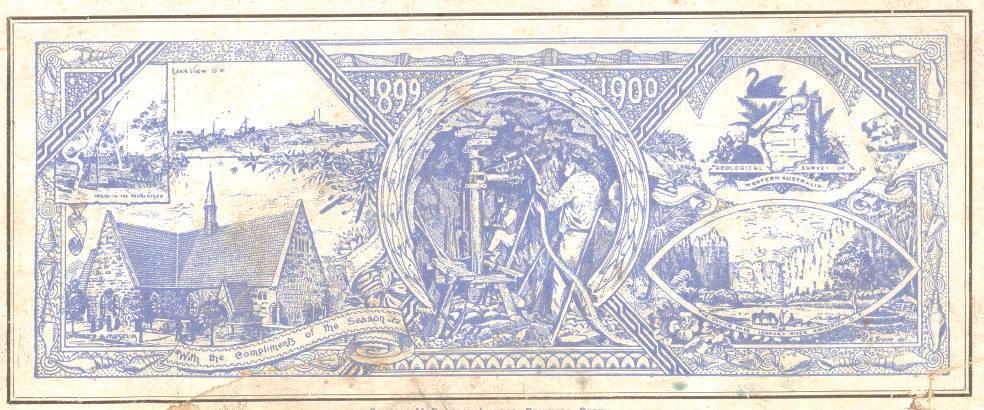
Figure 2 1899–1900 card; note the golden borders. Final size is 20 x 7.9 cm. A black and white mock-up in the archive is 44.5 x 16.4 cm in size, with a pencil annotation to reduce the length to 19.4 cm.
Mining was well under way in the Eastern Goldfields of Western Australia at the turn of the century. The centrepiece of the 1899–1900 card is a drawing depicting gold miners at work underground (Fig. 2).
In the top left corner is a picture of the Lake View Gold Mine in Kalgoorlie, the second oldest mine in the Eastern Goldfields (the mine was floated in 1895, just after the Great Boulder Mine). Next to it is the image of an unidentified well in the Murchison region. In the bottom left corner is the Geological Survey Store and Museum that from 1898 to 1920 occupied the former Old Perth Boys’ School building in St Georges Terrace (the ‘stipple’ effect on the walls of this building mimics the local lateritic building material). On the right, below the GSWA logo, is the Devil’s Pass, a gorge along the Lennard River; many sketches of the Kimberley Goldfields were produced by ET Hardman during his trip to the area around 1884.
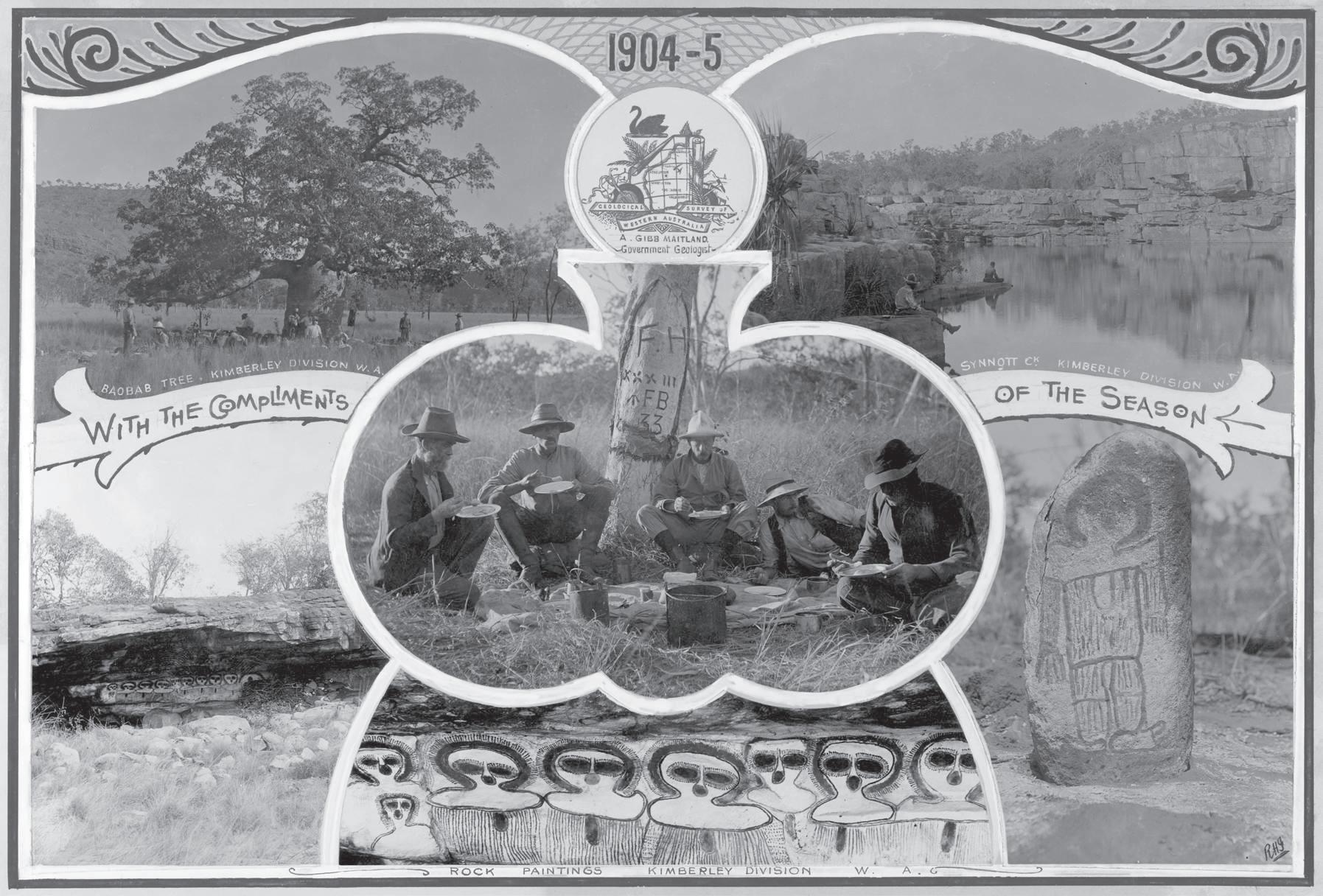
In 1901 the Director of the Geological Survey, Andrew Gibb Maitland, together with CG Gibson, a new Sydney graduate, and HWB Talbot as a field assistant, accompanied Government surveyors Fred Brockman and Charles Crossland on a mapping expedition in the Kimberley region. This card was compiled from photos taken during that trip (Fig. 3). The tree under which the party are eating (on the banks of the Charnley River) was first marked by Frank Hann in 1898 and by Fred Brockman on this expedition-coincidently both numbering the site as 33. The lower part of the card illustrates some of the Aboriginal rock paintings by the Wandjina people that were being ‘discovered’ in the Kimberley region. Incidentally, the Gibb River and Maitland Range in the Kimberley were named after Andrew Gibb Maitland.
In the 1904–5 card and the two subsequent cards, the Geological Survey logo is modified to include the name of the Government Geologist at the time, Andrew Gibb Maitland. From 1908 onwards, his name appears as a signature block (1908–9) or is absent (1911–12, 1912–13, and 1916–17), although his tenure as Director of the Survey lasted from 1896 until 1926. In other cards, a photo of A Gibb Maitland or his initials (1915–16) appear in a prominent position.
From May to November 1905, Charles George Gibson explored the Mount Margaret region (northeastern Goldfields). He is shown mounted on a camel in the circular inset of the 1905–6 card (Fig. 4). The other photos on the card illustrate the transport and equipment used by geologists in the field at this time. In his ten years at GSWA, Gibson travelled extensively throughout the State; he authored 11 bulletins, two in collaboration with ES Simpson. He acted as mineralogist and assayer for nine months during Simpson’s absence.
The photograph of a quartz reef may be an acknowledgement of the significance of gold production in the Western Australian economy. Gold production had peaked in 1903 at 2 064 801 ounces (Report of the Department of Mines for the year 1903), a level that would not be exceeded until the late 1980s (cf. Fig 41 in the Western Australian Mineral and Petroleum Statistics Digest 2008–09 released by DMP).
The 1906–7 card is also based on CG Gibson’s photographs taken during his work in the East Murchison area (Fig. 5), and reflects the various modes of transport used for mining and pastoral activities — including goats! Western Australia’s economy was at the time largely sustained by the gold and wool industries.
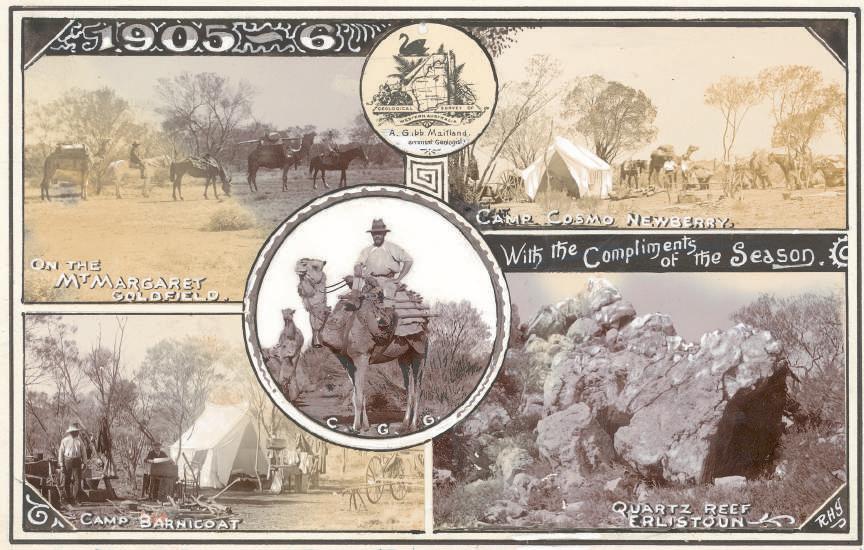
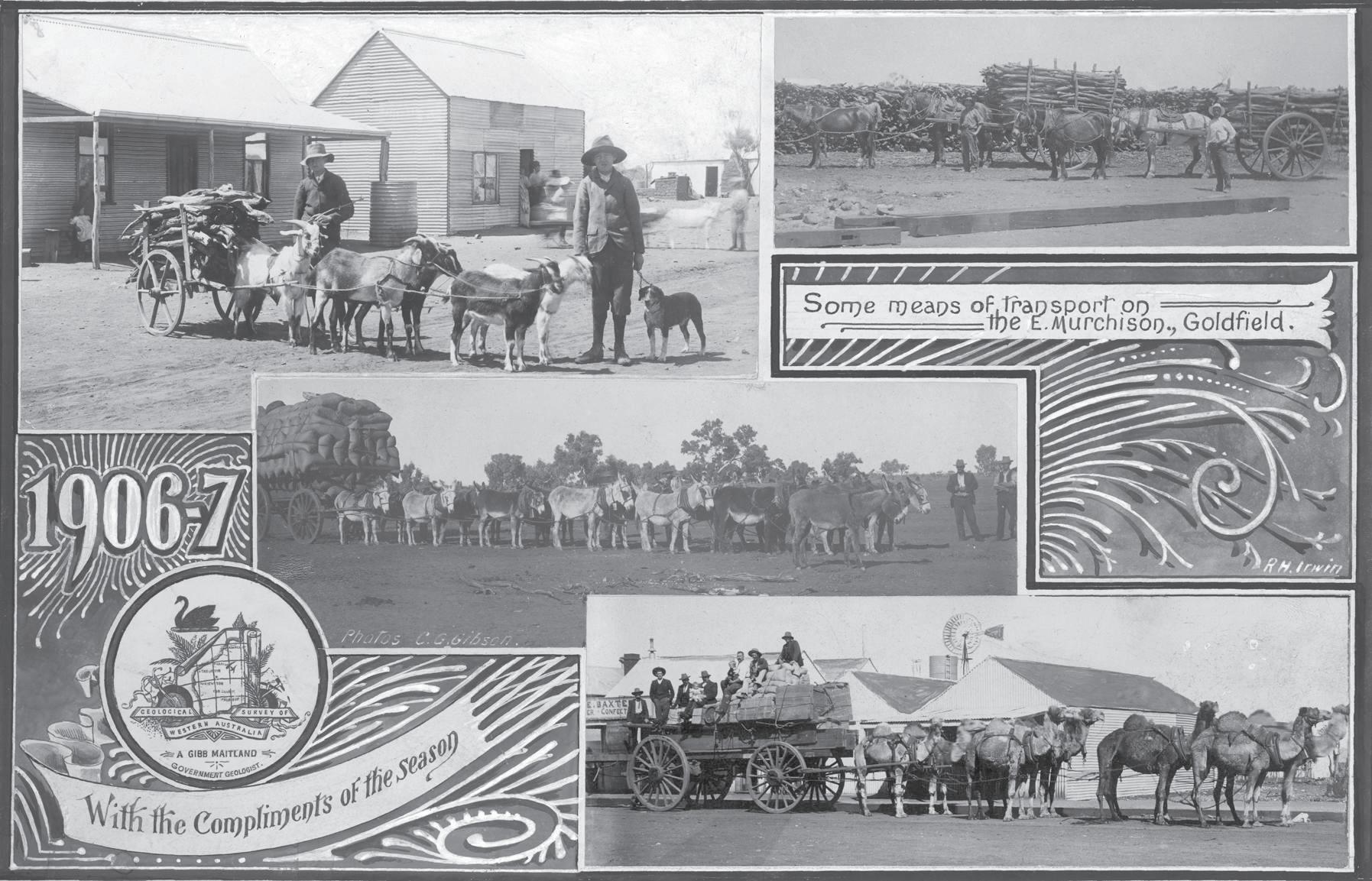
1907-1908
No card is preserved in the GSWA archive for this year.
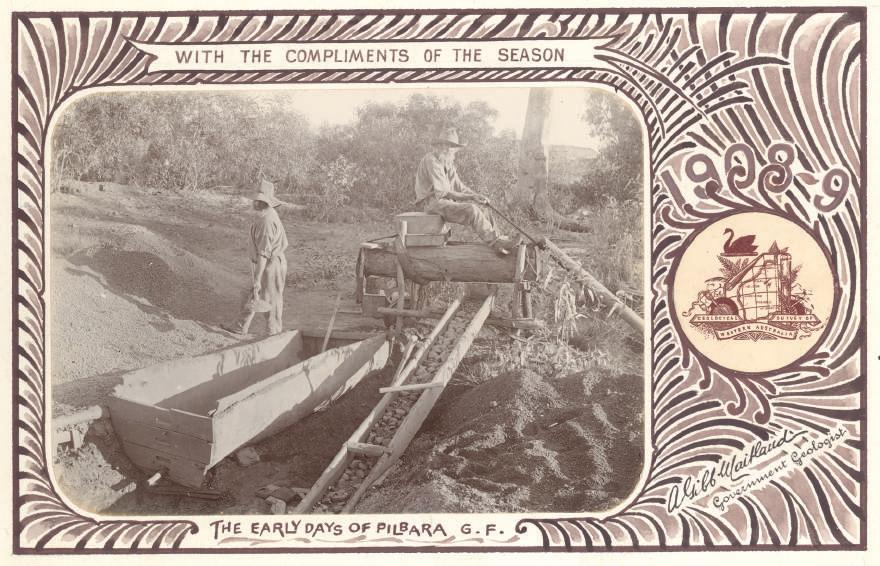
Figure 6 1908–9 card mock-up (size 11.8 x 16.4 cm, with a pencil annotation to reduce the length to 12.7 cm.
This card has a single photograph, depicting ‘alluvial miners sluicing washdirt’ for gold in the ‘early days’ of Pilbara gold exploration (Fig. 6). No work was carried out by GSWA in the Pilbara in 1908; the photo was taken by SJ Becher in 1896 on the Nullagine sheet (GSWA glass plate no. 126).
Unlike all other cards, this one is not signed by RH Irwin (or RHI) as the artist. There is no obvious reason to imply that this could have been designed by someone else, and could be simply a matter of record preservation. The name of the Government Geologist is not associated with the GSWA logo, but appears as ‘A Gibb Maitland, Government Geologist’ signature block just below it.
1911–1912
This card has a humorous touch compared with the more formal ones from preceding and following years (Fig. 7). The upper photo, with the handwritten caption ‘A START’, was taken outside the Survey building some time earlier than 1911, and shows the wagon loaded prior to leaving for the field (GSWA glass plate no. 639, ‘Just before the start’, photo taken by RH Irwin). The Survey building was located at the corner of Francis and Beaufort Streets in Perth (now Northbridge). The lower photo is labelled ‘A FINISH’, and may show
GSWA staff assisting a bogged T-model Ford vehicle belonging to another party, on the Bullfinch – Southern Cross Road (c. 1911, GSWA glass plate no. 640, photo by RH Irwin)-the Survey did not acquire a vehicle until the mid 1920s. The granite boulders forming the background scene in the middle are from an unidentified location.
The 1911–1912 card is also the only one to contain a quote, by Sir Walter Scott (‘Scott.’ on the card), the famous 1771–1832 Scottish historical novelist, playwright, and poet. The quote from Canto VI in Marmion (published in 1908) is written along the vertical edges of the card, and reads: ‘Each age has deemed the new-born year the fittest time for festal cheer’.
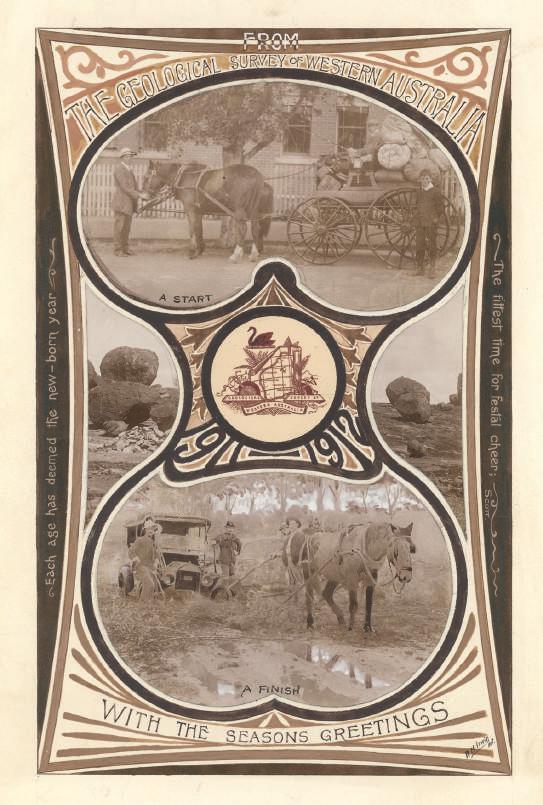
7
(size
This specimen of reef gold (Fig. 8 below) was found on Gessner and Huffa’s lease at Kurnalpi (GML 337K), 3 ft (c. 1 m) below the surface. The specimen was purchased by the Government and exhibited in London (possibly at the 1912 Latin–British Exhibition). As the inscription indicates, this reef gold nugget was 15 inches (37 cm) in length, weighed 215.20 troy ounces (about 6.7 kg), and was valued at 782 pounds 3 shillings 3 pence (roughly A$ 87,270 today).
In the early part of the 20th century purchases of gold specimens by the Government were curated by the Geological Survey and still are, but during the depression in the 1930s the best specimens (including this one) were sold off to assist the Government budget. Two images of this nugget (front and back) survive in the GSWA glass plate and negative collection (nos 905 and 906, dated 1912; photographer RH Irwin).
Figure 8 1912–1913 card mock-up (size 17.7 x 11.4 cm, with a line annotation to reduce the length to 13.4 cm).
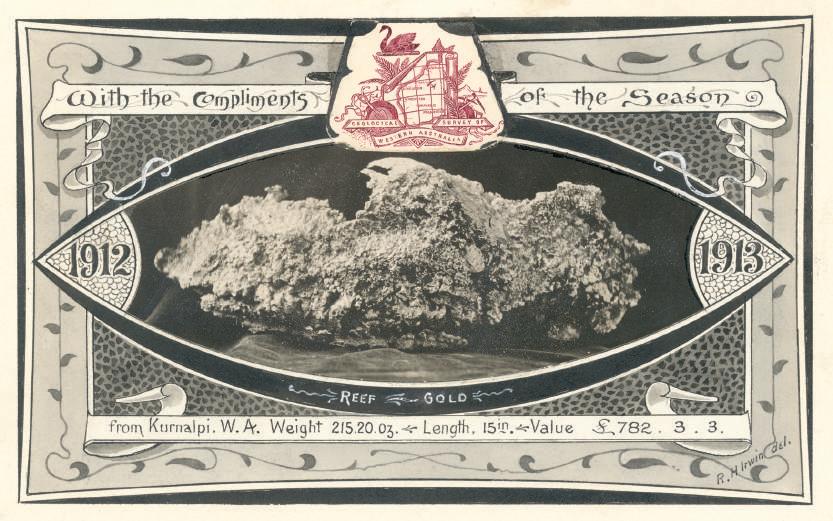
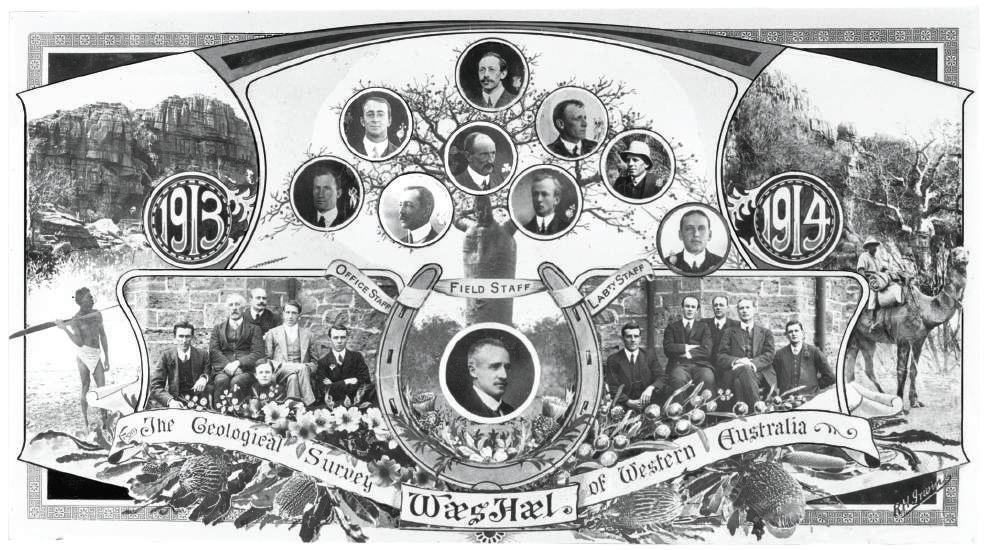
Figure 9 1913–1914 card (size 27.9 x 13.6 cm, tag 6.6 cm across). The archive also has a ‘sepia’ version and two mock-ups measuring 56.3 x 24.4 cm and 28.5 x 15.5 cm respectively).
FIELD STAFF — from top and left to right: FR Feldtmann, CS Honman, E de C Clarke, RA Farquarson, HWB Talbot, Unknown, HP Woodward, T Blatchford, ES Simpson.
OFFICE STAFF — from left to right: Unknown, RH Irwin, CB Kidman (centre rear), PJ Atkins, Unknown, Unknown (seated front).
LAB STAFF — from left to right: Unknown, Unknown, H Bowley, ES Simpson, Unknown.
Around the central photo of Andrew Gibb Maitland, this card depicts the Geological Survey staff for the year, based on their main roles/duties: office, field, and laboratory staff (Fig. 9). By this time, it appears GSWA had more office and laboratory staff than field geologists, perhaps a reflection of the amount of time (months on end) spent on field expeditions, and the amount of support work that this would have required. Field geologists’ portraits are ‘hung’ on a Boab tree, and each is accompanied by the drawing of a flower; in at least some cases the flower reflects the country of provenance of the geologist.
Staff images are complemented by two site photographs. On the left, a photograph of the Napier Range in the Kimberley region (GSWA glass plate no. 1122, photographer T Blatchford, taken during a brief visit in 1913) is blended with the drawing of an Aboriginal man wielding a spear. On the right, an unidentified camel rider poses against a waterfall; the Boab tree (Adansonia gregorii, the only baobab tree growing in Australia) suggests a location in the Kimberley region.
Based on the material preserved in the archive, this appears to be the first Christmas card to include a ‘tag’ on either the right or left hand-side; the tag is marked by a fold (not a perforation) and distinct design. The tag’s purpose is unclear: it was perhaps meant to allow the card to stand or to be used as a bookmark if detached from the card. The tag on the 1913–1914 card depicts the Laboratory and Geological Survey Office at the corner of Francis and Beaufort Streets (GSWA glass plate no. 159, photographer ES Simpson, photo dated 1902; note the Office was occupied in 1903). The back of the tag has the Geological Survey logo, together with the name of the then Minister of Mines, ‘The Hon. P. Collier M.L.A’. The logo is replaced on the front of the card by a picture of a black swan and a red and green kangaroo paw (Cygnus atratus and Anigozanthos manglesii, established as the bird and floral emblems for Western Australia only in 1960 and 1973, respectively).
Andrew Gibb Maitland, the Government Geologist, takes centre stage, inside a horseshoe in an upright position for good luck. His name or any other name
does not appear on the card, but an annotated copy in the library helps identify most members of staff, as detailed in the caption of Fig. 9). The photograph of the unknown field staff is a cut-out of the same photograph presented as Fig. 14 in GSWA Bulletin 54 on ‘The mining geology of Ora Banda’. The figure is captioned ‘Quartz blow showing coarse texture of the quartz, Cashman’s’. Fieldwork in the area was carried out in 1912 by JT Jutson and EC Saint-Smith. As the person represented is not Mr Saint-Smith (the bulletin
indicates he took the photo), it follows that this is a photograph of JT Jutson.
Unfortunately, the identity of the only woman to appear in the Christmas cards is unknown; she is not the first woman employed by GSWA, as a photo of a Mrs Ogborne appears in a 1903 photo of Survey staff (the quality of dress suggests that Mrs Ogborne was possibly employed as a secretary).
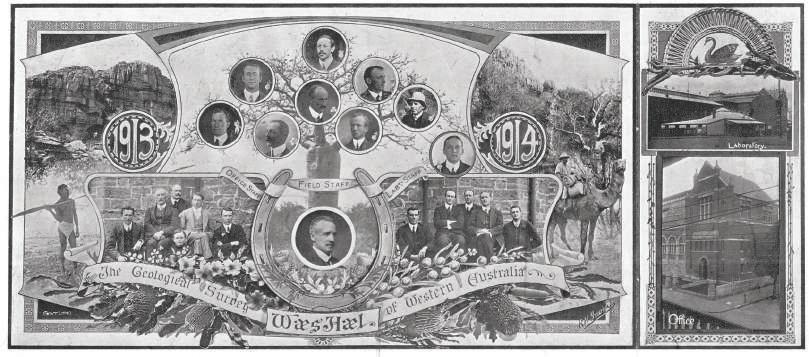
Figure 10 Complete card for 19131914 with tag and enlargement of tag
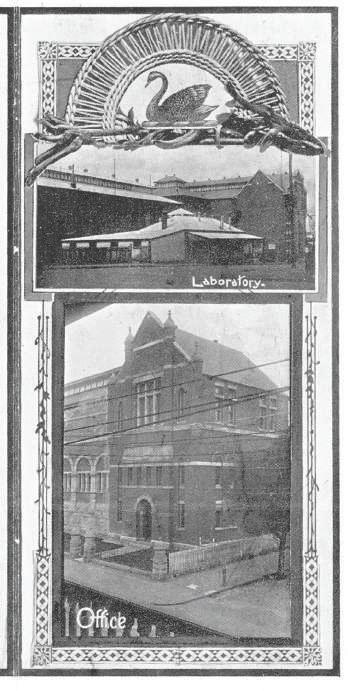
1914–15
This very busy card is a testimony to the flurry of work carried out by the Geological Survey at this time and the spread of locations visited (Fig. 11). Unlike the card from the previous year where portraits were favoured, this one depicts staff ‘at work’ in their offices.
At the centre of the card is Andrew Gibb Maitland. His tenure as Government Geologist/Director of the Geological Survey from 1896 to 1926 covers the whole
Images from the field are of:
• Top left: Yampi Sound (at ?Cockatoo Island in the Kimberley region)
• Left centre: Outcrops of rocks in a lake east of ‘Victoria’ GM. The photo (GSWA glass plate no. 1178) was taken by T Blatchford in 1915 on the Southern Cross 1:250 000 map sheet
• Top centre right: Hydraulic sluicing at Greenbushes
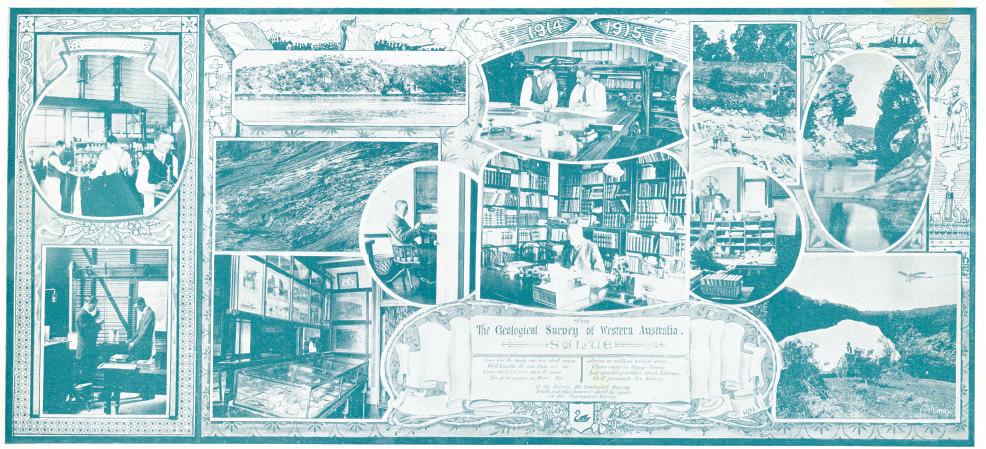
Figure 11 1914–1915 card (size 28.2 x 14 cm, tag 4.6 cm across). The archive also has a card of the same size printed in green, as well as a mock-up measuring 57 x 25.2 cm with a pencil annotation to reduce height to 10.9 cm.
period for which we have preserved Christmas cards. Above him are cartographer RH Irwin (the author of the cards’ layout) and draftsman CB Kidson. The insets on either side of AG Maitland depict HP Woodward (left), a former Government Geologist who worked for the Survey from 1887 to 1895 and from 1905 to 1917, and E de C Clarke, a geologist from 1913 to 1920. In the bottom left corner is possibly the gold display at the Museum of WA.
The tag on the left has two images of the Government Chemistry Laboratory (tellingly framed as a laboratory flask), with ES Simpson who was then the Government Mineralogist and Assayer (later also Analyst); other staff in the pictures could not be identified. The holly underneath the top image in the tag is one of the only two examples from all the archived images of plants traditionally associated with Christmas, the other one being branches of myrtle in the 1915–16 card — all other cards with plants depict native flora.
tin mine. Photo taken by geologist FR Feldtmann (GSWA glass plate no. F120) on the Collie 1:250 000 map sheet
• Top right: Gorge in Devonian sandstone at Bream Creek (a tributary of the Elvire River, Kimberley). Photo HWB Talbot (GSWA glass plate no. 593) on the Gordon Downs 1:250 000 map sheet
• Bottom left: London Bridge, a natural archway in laterite near Sandstone (GSWA glass plate no. 1187).
The momentous event that was the start of World War I (The Great War) is reflected in the background drawings on the card and along the borders: images of ships and a sailor, soldiers and infantry in the field, and several flags, as well as a Red Cross emblem. Although it is conceivable that the flags represent allied countries, the black and white card makes it difficult to conclusively identify some of them. From left to right the flags are (some tentatively) identified as from
Belgium, France, Ireland, and Japan, and the Union Jack.
The plane — a hand-drawn addition to the photograph of the London Bridge — may reflect the prominence of flight during the fighting (occasional use of aeroplanes in the Geological Survey started in the 1930s, as evidenced by oblique photographs of places such as Yampi Sound in the Survey’s photographic collection from that time).
But perhaps the most striking feature of the card is the ode to the Geological Survey in the lower third of the card that reads:
Free over the bush our feet shall roam
We’ll breathe the fine fresh air, Sir Care shall not ever dare to come
Nor grief pursue us there, Sir
Joyous in natures wildest scene
Where rocks lie topsy-turvey
And sparkling waters flash between, We’ll prosecute the Survey
Oh the Survey, the Geological Survey
Health and good humour shall be Queen
Of the Geological Survey
The author of this poem is unknown. ET Hardman, who served as Government Geologist in Western Australia between 1883 and 1885, is known to have written poems (one was unearthed by Stephen Wyche in an unrelated file, see article in the West Australian Geologist, June–July 2011). Hardman died in 1887, and, although tempting, it is not possible to attribute the poem above to him as well.
1915-1916
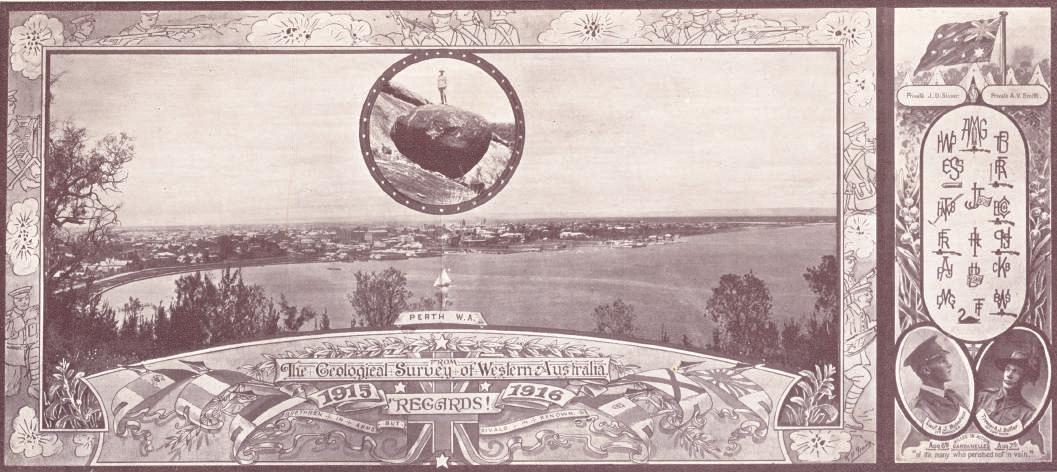
Figure 12 1915–1916 card (size 25.9 x 11.9 cm, tag 4.6 cm across). The archive has a mock-up measuring 56.8 x 25.2 cm, with a pencil annotation to reduce the length to 24.9 cm.
In contrast to the many pictures from 1914–15, the 1915–1916 card has only a few (Fig. 12). The card is dominated by the iconic view of Perth from Kings Park, with a round inset depicting Yorkrakine Rocks on the Kellerberrin 1:250 000 map sheet (GSWA glass plate no. 1310, photo taken by T Blatchford) — perhaps the choice reflects a hint of homesickness for the many Western Australians that were serving abroad.
The sombre tone of the card is accentuated by the specific tributes paid on the tag to Privates JD Glover (a junior clerk and typist) and AD Smith (a lab assistant), but especially to Lieutenant AJ Robertson (11th Battalion WA) and Trooper AJ Butler (10th Light horse, note the distinctive emu feathers in the cap Figure 13).
Robertson was an assistant mineralogist and chemist with an MSc and BEng from Melbourne University, whereas Butler was a field assistant who had joined the Survey in 1904 and had accompanied Maitland during his work in the Pilbara. Both Robertson and Butler were killed in action in the Dardanelles. They are remembered with the inscription ‘of the many who perished not in vain’. At the top of the tag is the Australian flag, flying over the drawing of a (?) training camp. The 10th Light Horse Regiment, Australia’s last mounted cavalry unit, was the only Australian Imperial Force light horse unit raised in Western Australia. It was created at the outbreak of World War I; had training camps at Guildford and then Wanneroo, and was
disbanded in 1944. A walking trail was inaugurated at Wanneroo in April 2014, with plaques marking where the administration area, cookhouse, ammunition dump and stores, horse lines, latrine and farriers tents would have been in 1944..
The war theme is reflected strongly also in the drawings of soldiers and shell explosions along the border of the card, as well as more subtly in the weapons (rifles and bullets) underneath some of the initials of Survey staff on the tag attached to the card (Fig. 13).
National flags are still a recurrent theme: on this card they are incorporated in the floral ‘wreath’ at the bottom, with the inscription ‘Brethen in arms but rivals in renown’. On the left is a vertical tricolour with a coat of arms possibly depicting three lions, a crown and a banner (see also 1916—1917 card); this could not be conclusively attributed to any country. Following this, from left to right the flags are tentatively identified as those of Belgium (or France?), Serbia or Montenegro, Great Britain (standing vertically), the Kingdom of Italy (with the House of Savoy shield in the middle), Ireland (the cross of St Patrick), and Japan. The English cross of St George appears below the shield with all the initials on the side tag.
There is some speculation about what the symbols associated with some of the staff initials mean. Maitland is believed to have been in the local militia and the rifle could reflect this, both for him and for others; the ‘shamrock’ may have been the militia badge. Talbot spent a year as Assistant Censor with the rank of Captain, which accounts for the quill over his initials. The bullet or shell symbol may be associated with an artillery unit or perhaps marksmanship. The meaning of the vertical symbol to the left of Farquarson’s initials is unclear. Also difficult to decipher is the meaning of the banners with the inscription ‘5 SHA’ associated with Jutson and Bowley initials.
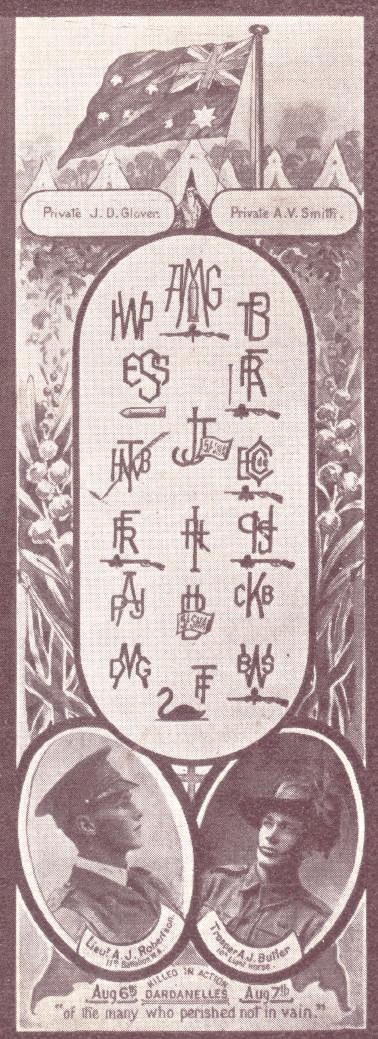
Figure 13 Detail of Figure 12, showing the tag with the GSWA staff initials and associated markings.The initials represent: A Gibb Maitland, HP Woodward, T Blatchford, ES Simpson, RA Farquarson, J Jutson, HWB Talbot, E de C Clarke, FR Feldtmann, RH Irwin, CS Honman, PJ Atkins, H Bowley, CB Kidman. The remaining initials (DGM, FT, and BSW) are probably those of support staff, as there is no matching record for geologists employed by the Survey at this time.
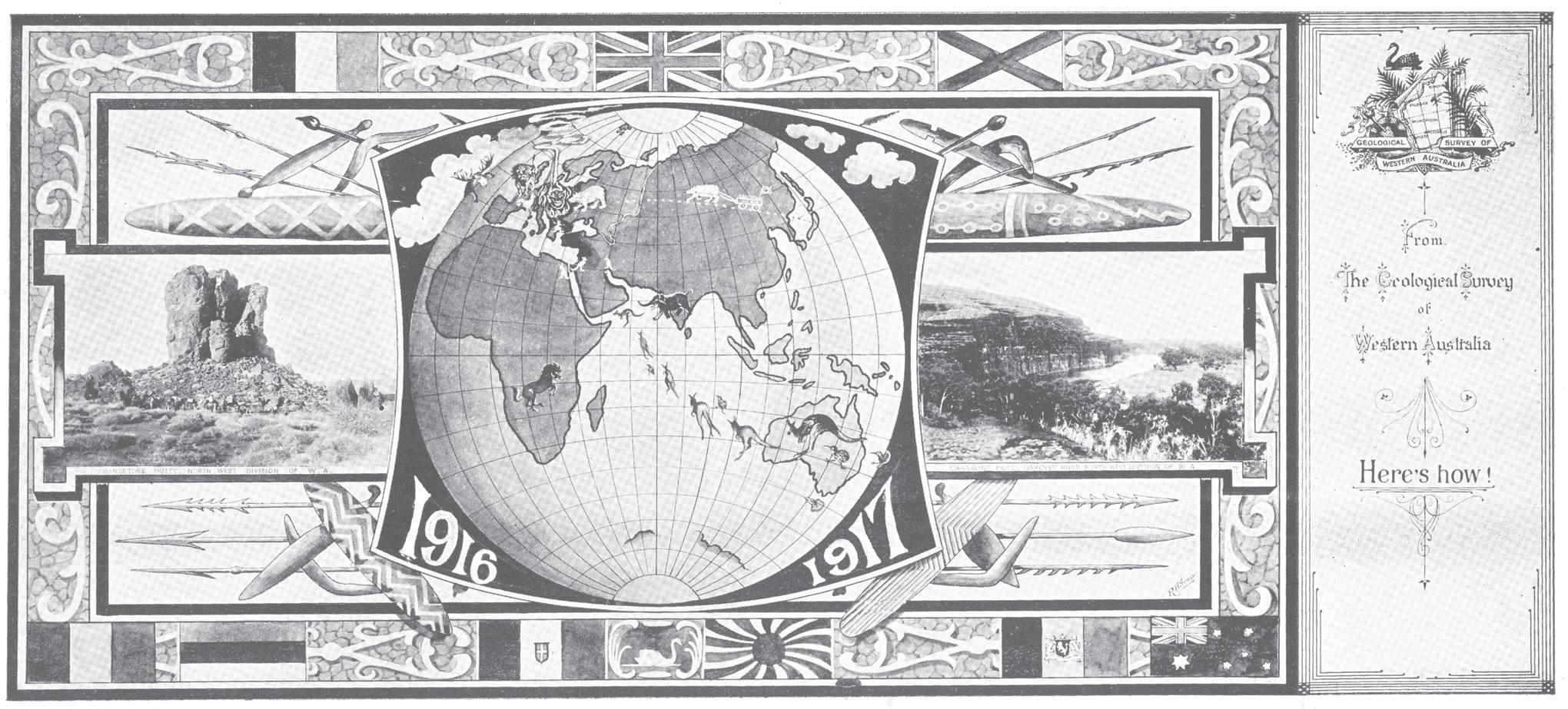
Figure 14 1916–1917 card (size 25.9 x 11.9 cm, tag 4.6 cm across). A black and greenish card is preserved in the archives. A mock-up measuring 57 x 25 cm has a pencil annotation to reduce the length to 24.9 cm. Although damaged, the mock-up has clearer drawings of the annotated components.
The last card in the GSWA archives has a deceptively simple drawing as a centrepiece (Figs 14 and close-up in Fig. 15. The globe depicted contains images of several animals, the symbology of which appears to refer to the current events of World War I. Several kangaroos and four kiwis make their way through the Indian Ocean towards Europe; in their wake is also a tiny Tasmanian devil. A few white kangaroo outlines indicate the battlefields where Australians were engaged (in Egypt, Palestine, and Gallipoli in Turkey, with a fourth possibly indicating a contribution to the resistance to the German invasion attempt in Mesopotamia (Iraq), as it was then known). On the sides of this ‘trail’, India is represented by an elephant, whereas a horse rampant occupies the southern African continent. A lion and a rooster occupy the centre of Great Britain and France, and a moose appears on the edge of the globe representing the Canadian allies. Two bears make their way from Japan through Russia, one towing what appears to be a cart with people and a Japanese flag. A demon with two horns, engulfed in flames and emitting a trail of smoke from his head appears to represent the evil of Germany. The war theme continues along the border, where flags of the allied countries are interspersed with ornamental motifs. The card is completed by two sets of symmetrically repeated depictions of Aboriginal weapons and tools — one of the only three cards to reference Aboriginal culture. To the left and right of the centrepiece drawing are two
photographs. On the left is Sandstone Butte, located on the Balfour Downs 1:250 000 map sheet, 33 miles east of 692 Mile Peg along the rabbit proof fence in the Pilbara (GSWA glass plate no. 1281, photographer HWB Talbot, 1914). On the right is Carawine Pool along the Oakover River on the Nullagine 1:250 000 map sheet (GSWA glass plate no. 1266, photographer HWB Talbot, 1914).
National flags are incorporated in the border. At the top are France, Great Britain and Ireland (still represented by the cross of St Patrick, although the tricolour for this country had been introduced in the first half of 1916). At the bottom are ? Belgium, Serbia or Montenegro, Italy, Japan, a tricolour with a coat of arms with three lions (as observed in the card from the previous year), and Australia. The tag for this card simply bears the Geological Survey logo and the words ‘From the Geological Survey of Western Australia’ and ‘Here’s how!’
Figure 15 Detail of centre image for the 1916–1917 card.
Concluding Remarks
In the Geological Survey vernacular, the cards described in this article are generally referred to as ‘the Survey Christmas cards’ as they were obviously printed to celebrate the Christmas season. Interestingly, however, the greetings on each card never refer to Christmas or to the New Year. The most common salutation used initially was ‘With the compliments of the season’ or the variation ‘With the seasons greetings’ used in 1898–1899 and 1912–13. Afterwards, a single word is used to convey the greetings, the old English ‘Waes Hael’ (Be well) in 1913–14, the French ‘Salue’ in 1914–15, and a simple ‘Regards’ in the last two cards. Curiously, the word Christmas (or rather ‘XMAS’) appears in a photo of another card preserved in the GSWA archives, one
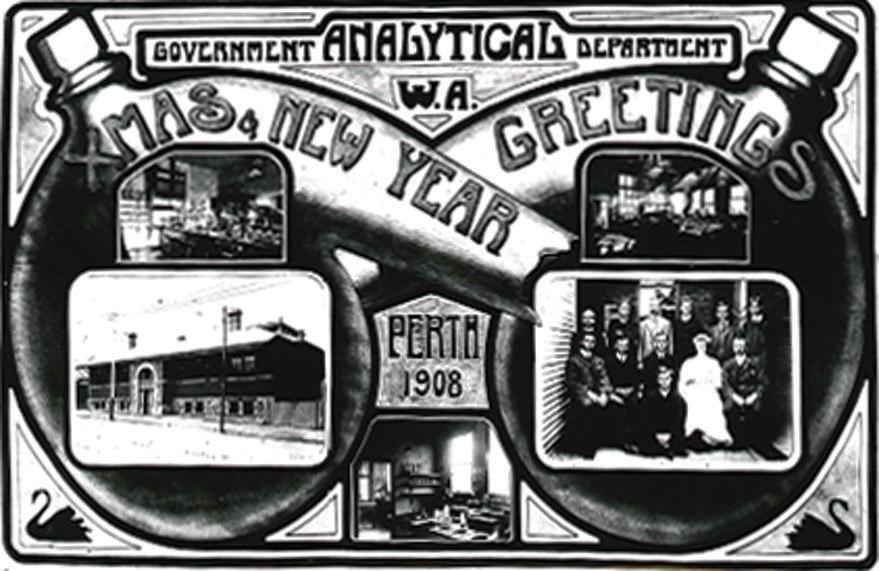
produced by the Government Analytical Department in 1908 (Fig. 16). This photo indicates that the tradition of sending Christmas/season cards was not unique to the Geological Survey of Western Australia, and was probably common for other Government departments at the time.* The cards were most likely handed to other local Government officials or prominent figures of the Western Australia mining industry.
To the best of the authors’ knowledge, no other Christmas cards were produced after 1917, probably due to financial restraints applied by the Government in 1918, which also led to the compulsory retirement of Irwin (the draftsman who compiled each of the cards).
reader be aware of the existence of some of the GSWA Christmas cards elsewhere (especially for the years for which there is currently no record), or be able to provide any additional information (particularly on the identification of the flags), the authors will be glad to hear it, so that more light can be shed on these fascinating items from the early days in the life of the Geological Survey of Western Australia.
* In its pictorial section, the State Library of Western Australia has a card from 1909 ‘Conveying Christmas Greetings and Best Wishes for the New Year from the Under Secretary for Public Works and the Officers of the Department; the card has drawings of the Perth
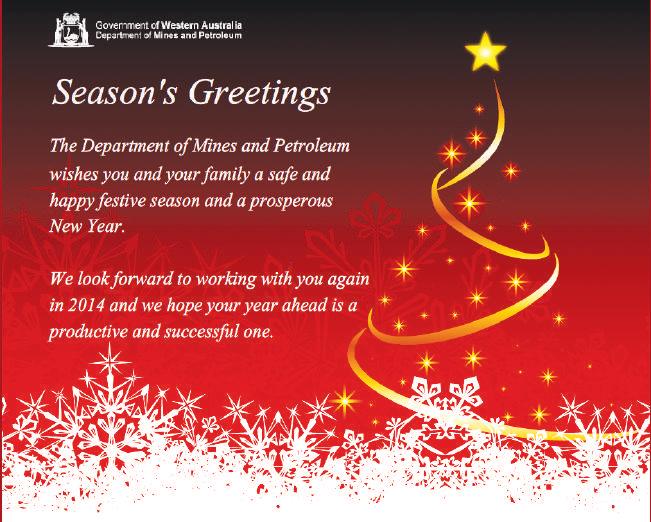
However, the tradition of sending Christmas cards did not completely die. During the long tenure of Joe Lord as Director (between 1962 and 1980), the Geological Survey Secretary was instructed to purchase UNICEF Christmas cards which were sent out to companies and individuals who had contact with GSWA during that year (Nell Stoyanoff, written communication, 2014). Electronic Christmas cards are currently made available by DMP for individual Divisions to send out at Christmas (Fig. 16). As well, since 2007–2008, a GSWA calendar with monthly photographs depicting field work or GSWA activities is produced as a promotional item. The information in this article is solely based on the cards, proofs, and mock-ups preserved in the GSWA archives and photographic collections. Should any
Secondary School and the Barracks, where the Public Works department was housed at the time. Another card in the collection has an aerial view of the Wolfe Creek Meteorite Crater, with the word ‘GREETINGS’ underneath, but a very different style from the GSWA Christmas cards.
Sincere thanks to Jean Johnston for her editorial input and discussions on various aspects of the cards. The article is published with the permission of the Director of the Geological Survey of Western Australia.
John Blockley 1 and Angela Riganti 2
1 76, Beach Street, Bicton WA 6157
2 Geological Survey of Western Australia (GSWA), Department of Mines and Petroleum, Perth, Australia Corresponding address: tiger-eye@iinet.net.au
From about 1896 to 1928 staff of the Geological Survey of Western Australia carried cumbersome, glass-plate cameras into the field to record rock outcrops, mines, field activities and scenes of general interest. The collection of 1792 glass-plate negatives, now transferred onto film, contains about 1240 field photos taken during this period, the remainder being of laboratory specimens and GSWA staff. It represents a little-used archive of images of value to those researching the State’s early mining history or interested in retracing some of the arduous expeditions undertaken by its geological pioneers.
The earliest photos that can be assigned a reliable date were taken by Topographical Surveyor Septimus J. Becher who had also served as a Mines Inspector (Becher, 1896). Although only 12 in number, they show the state of mining at Marble Bar and Nullagine in 1896. Of particular historical interest are his shots of two miners sluicing alluvial dirt at Nullagine, and of the workings in the “Nullagine Conglomerate”, now the Beatons Creek Member of the Hardey Formation (Figures 1 and 2).
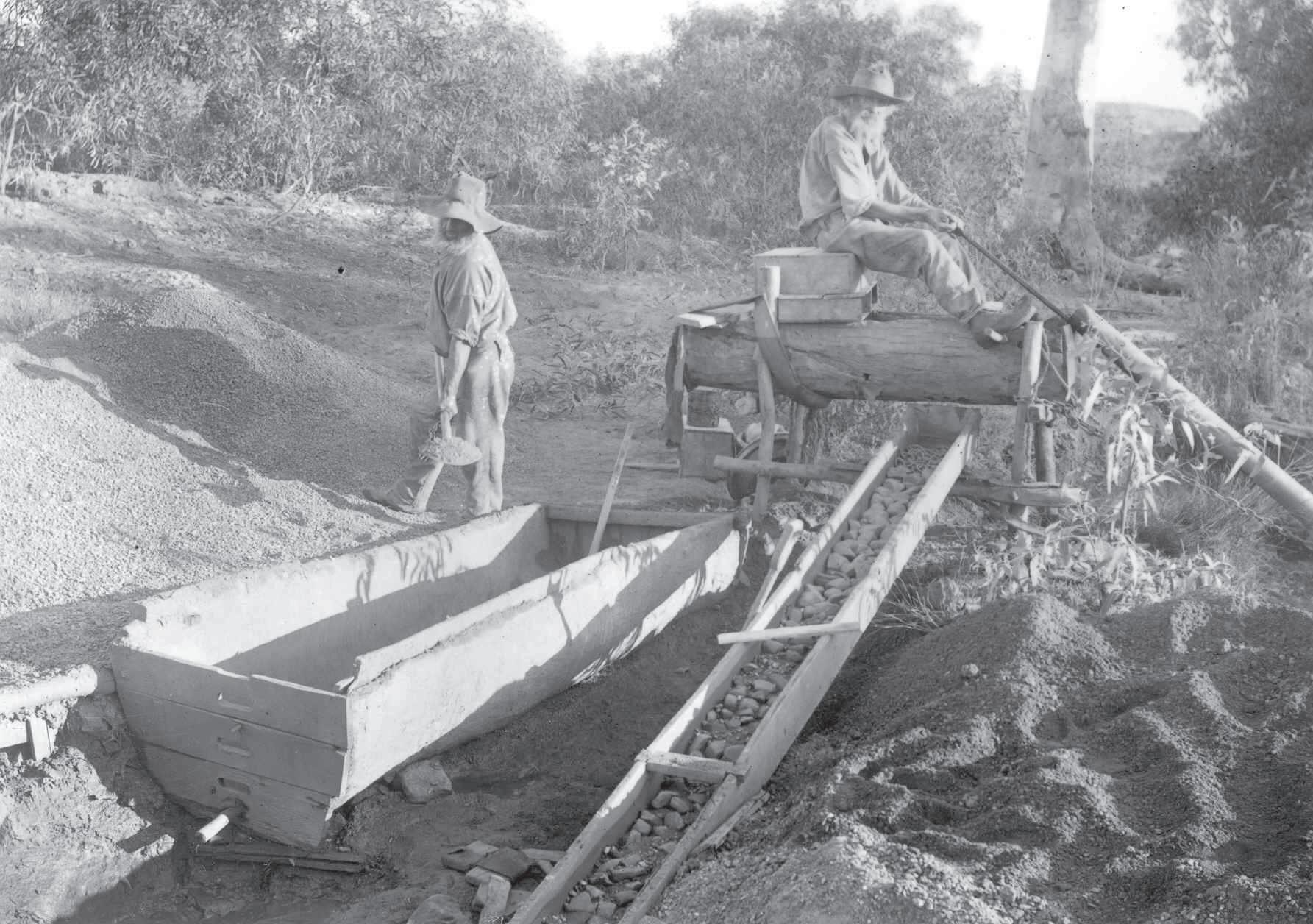
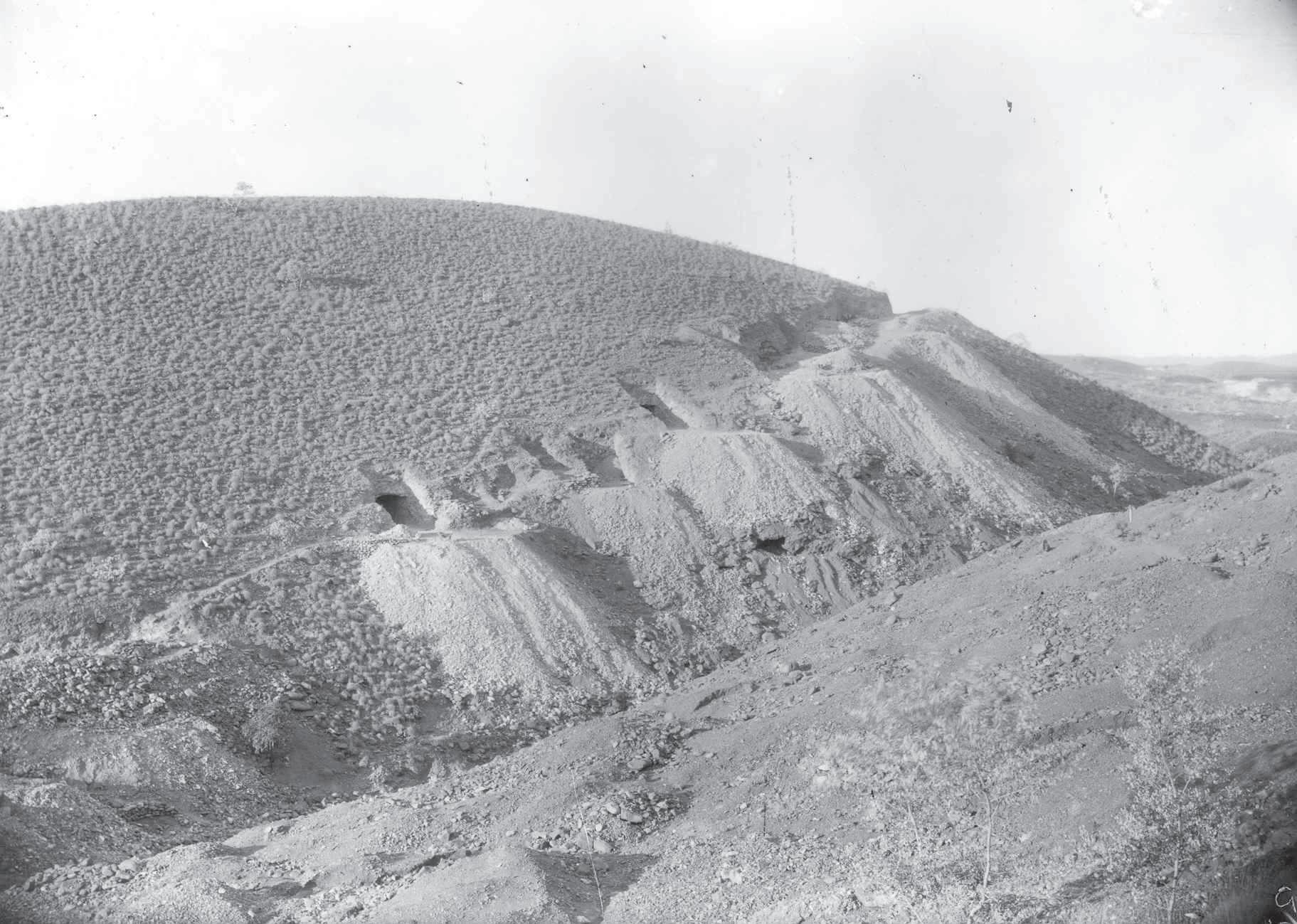
Henry William Beamish Talbot (1874 – 1957), a prolific photographer, had a remarkable career. He was born in Cork, Ireland, receiving his early education in New Zealand before moving to Western Australia when he was 18 or 19 years old. During the late 1890s he worked at the Government camel farm in Coolgardie. He was first employed by the Geological Survey of Western Australia in 1899 as a temporary assistant at Greenbushes, then later as a full-time assistant. He evidently obtained skills in surveying, so that he was listed as a ‘topographic surveyor’ in the Survey’s Annual Report for 1908. Although he never acquired any formal qualifications as a geologist, he picked up a good working knowledge of the science while assisting qualified geologists, especially the Government Geologist Andrew Gibb Maitland. As a result Talbot was often called on to act as a geologist and in 1911 was given the title of Assistant Field Geologist, rising to Field Geologist in 1914. After leaving the Geological Survey of Western Australia in 1920 for medical reasons, he worked for private companies including the Freney Oil Company and Western Mining Corporation (Glover, 2003a).
During the period 1907 to 1920, Talbot managed to take some 217 glass-negative photographs while
mapping large tracts of the Western Australian interior from the backs of camels or horses. Of these, about 52 recorded his 1908 trip along the Canning Stock Route where he joined Canning’s well-sinking party (Talbot, 1910). In 1906, Surveyor Alfred Canning had been given the task of establishing a practicable stock route from the east Kimberley region across about 1800 km of desert to Wiluna to provide cattle for the markets in the Eastern Goldfields. This enterprise was intended to break the monopoly of supply from the west Kimberley, which kept prices high. Also, the long trip was predicted to kill off disease-bearing ticks that it was feared would infest cattle from other areas. He and his party surveyed the route during 1906-07, and in 1908 began work on sinking and equipping wells to provide water for the drovers at regular intervals. Much of the route crossed country that was completely unknown geologically, and Talbot was assigned the job of mapping a strip up to 250 km wide along its course. So that he could make excursions away from the main party, he was provided with two riding camels and an assistant. When leaving the main party, the camels carried provisions to last four to five weeks and about 55 litres of water, along with their riders. Typically Talbot would leave the main party at one well and rejoin it at another further north along the stock route after carrying out reconnaissance to the east or west. The
stock route survey occupied Talbot from September 4th, 1908, when he left Wiluna, until August 13th the following year, when he finally reached Halls Creek in the Kimberley region. However, upon arrival at Halls Creek, he received telegraphic instructions to proceed to the Tanami goldfield in the Northern Territory, and finally returned to Perth after spending a total of 426 days in the field. The glass-negative photographs taken by Talbot during this trip include the sites of Aboriginal rock paintings and a miner’s accommodation at Tanami (Figures 3 and 4).
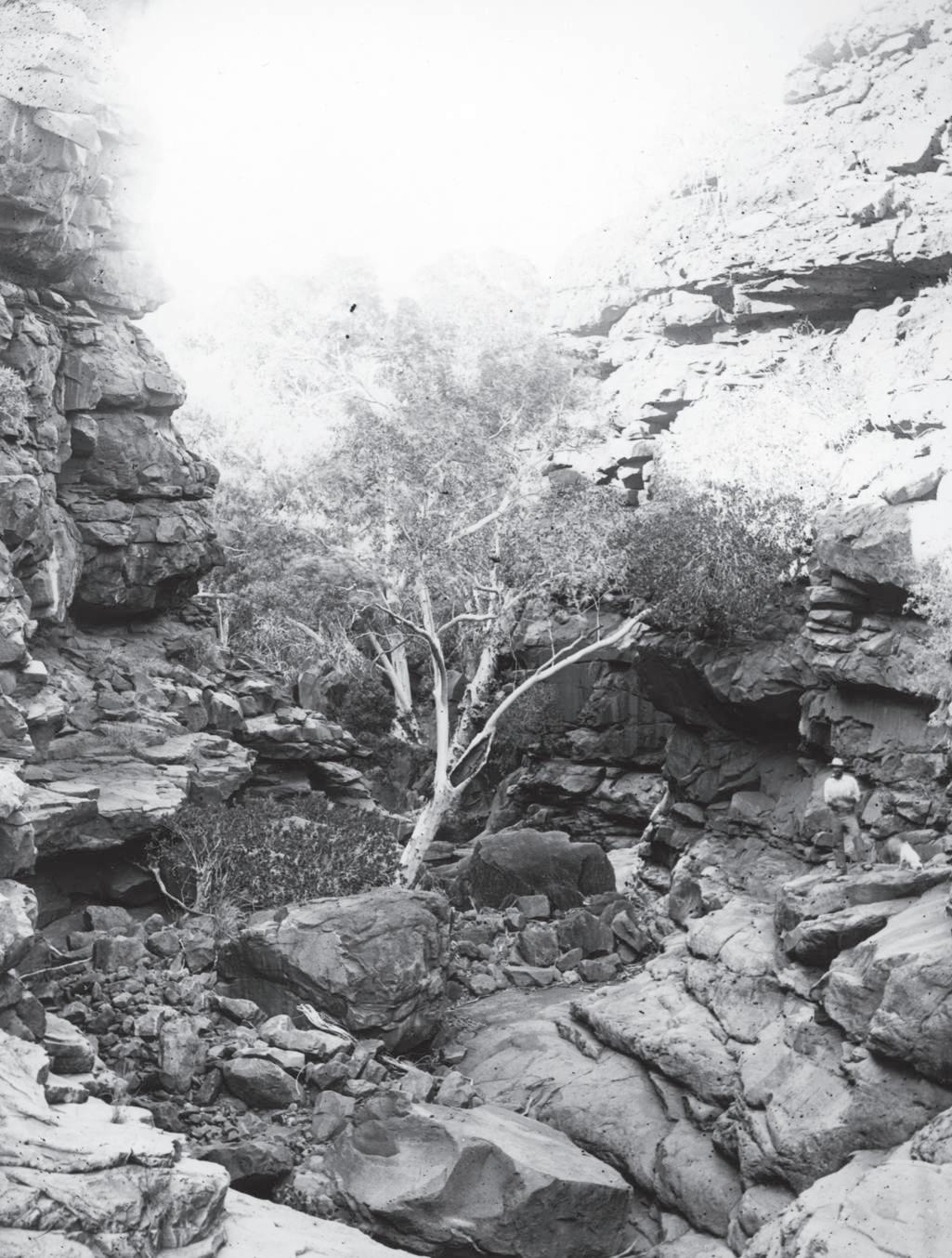
Figure 3 near Killagurra Spring (23º 44’ S, 122º 29’E) on the Canning Stock Route which is the site of a gallery of Aboriginal paintings that plays an important part in the rituals of the traditional land owners. (Photo H.W.B Talbot; GSWA gpn 433)
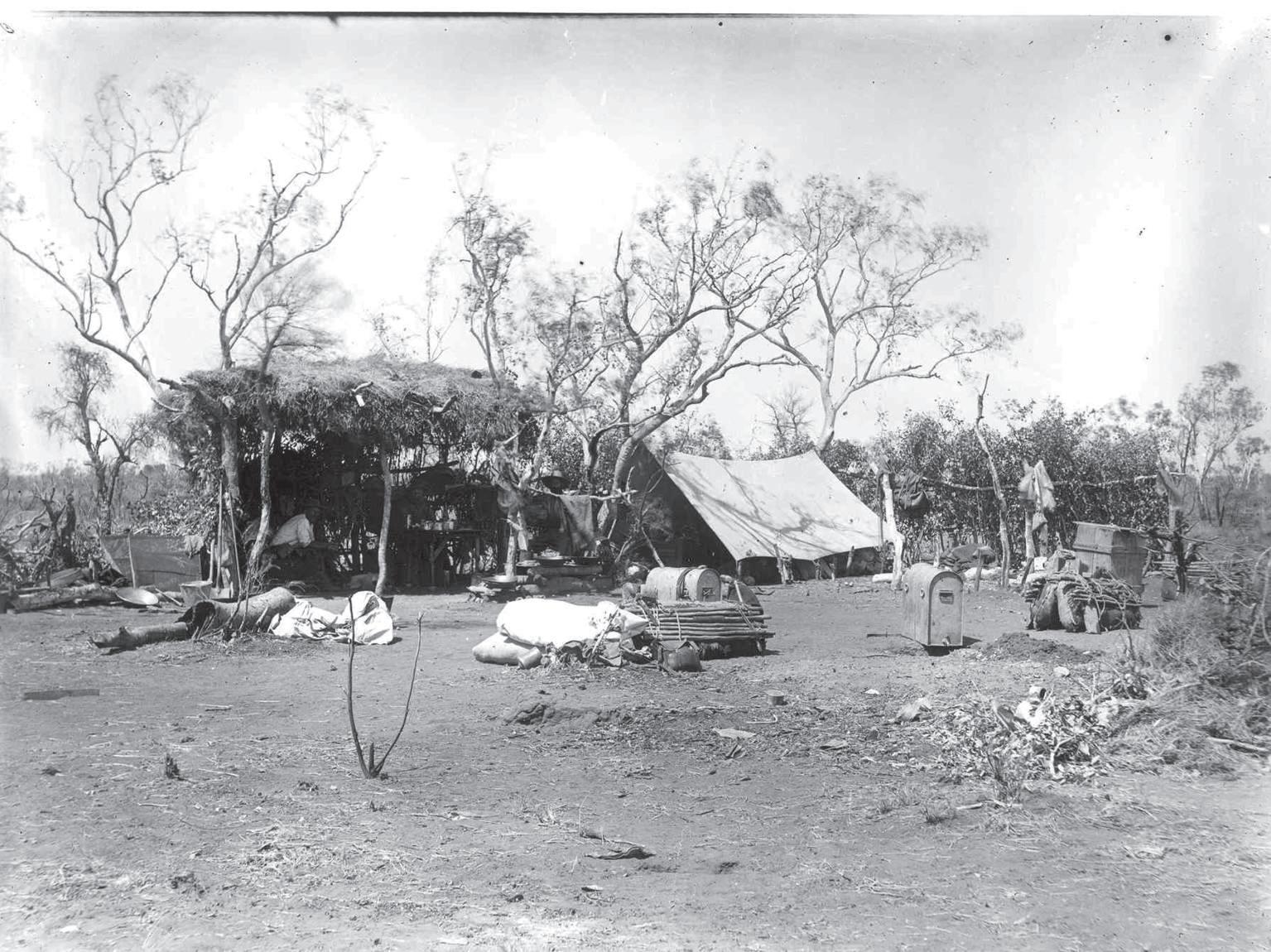
4 Laurie’s camp at Tanami. (Photo H.W.B Talbot; GSWA gpn 579).
Unlike Talbot, Edward de Courcey Clarke had a conventional entry into the geological profession, having graduated from Auckland University in New Zealand and served as a demonstrator in geology and biology before joining the Geological Survey of Western Australia in 1913. He too was an enthusiastic photographer, contributing 110 glass negatives to the collection before leaving the GSWA in 1920 to become Lecturer-in-Charge, then Professor, at the Geology Department of the University of Western Australia (Glover, 2003b).
In 1916 he and Talbot took part in a particularly arduous expedition when they travelled from Laverton to the Western Australia/South Australia border to map the Warburton Range region (Talbot and Clarke, 1917). The main purpose of the expedition was to investigate potentially mineral-bearing country reported by the explorer Frank Hann in 1903. Notes and a suite of samples that Hann had forwarded to the Geological Survey suggested that the geology of the area resembled that of the State’s goldfields, while assays of some of his samples of quartz showed them to contain gold. With Talbot in command, the party consisting of the two geologists, four assistants and 16 camels left Laverton in June 1916. By August the expedition had reached the Warburton Range area and set up a base camp from which traverses were made to reconnoitre the surrounding country. On the night of September 10th, the reconnaissance party was attacked by Aborigines near Mount Gosse, with one of the assistants, J.W. Johnson, being severely wounded, while Talbot received minor injuries. Despite a delay of about one month caused by the need to get Johnson to Laverton for medical attention, the party succeeded in mapping some 1,500 square miles (about 3,840 sq km) of country in the Warburton Range area as well as making geological observations along the route from Laverton. Along with geological features, the 35 glass-negatives taken during the expedition record desert rock holes, camp sites and an evocative image of the camel train on its return journey (Figures 5, 6 and 7).
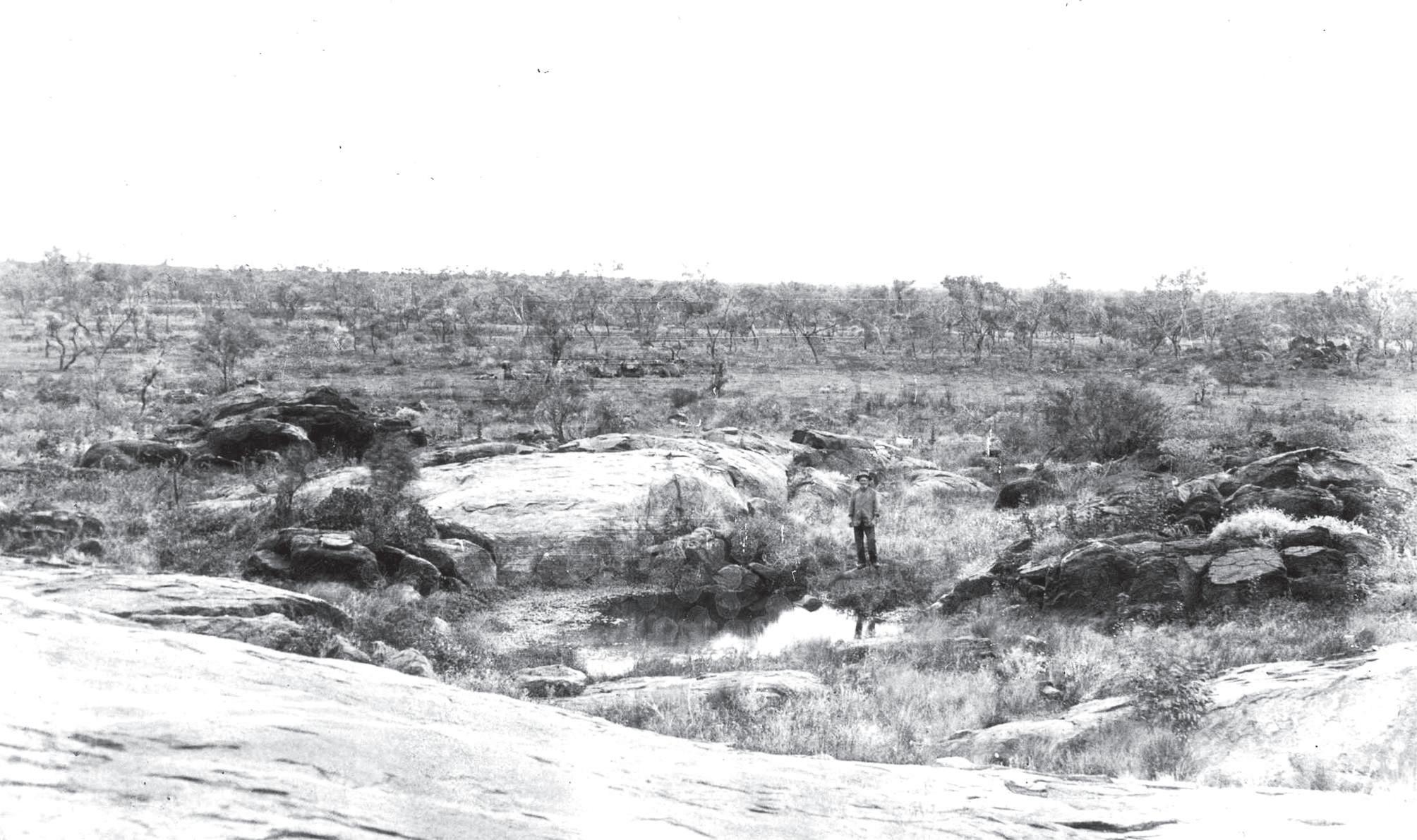
Figure 5 “Spring Granite” (25º 55’ S, 126º 44’ E) provided a welcome source of water for explorer John Forrest during his expedition from the Western Australian coast to the Adelaide – Darwin telegraph line in 1874. (Photo H.W.B Talbot; GSWA gpn 1506).
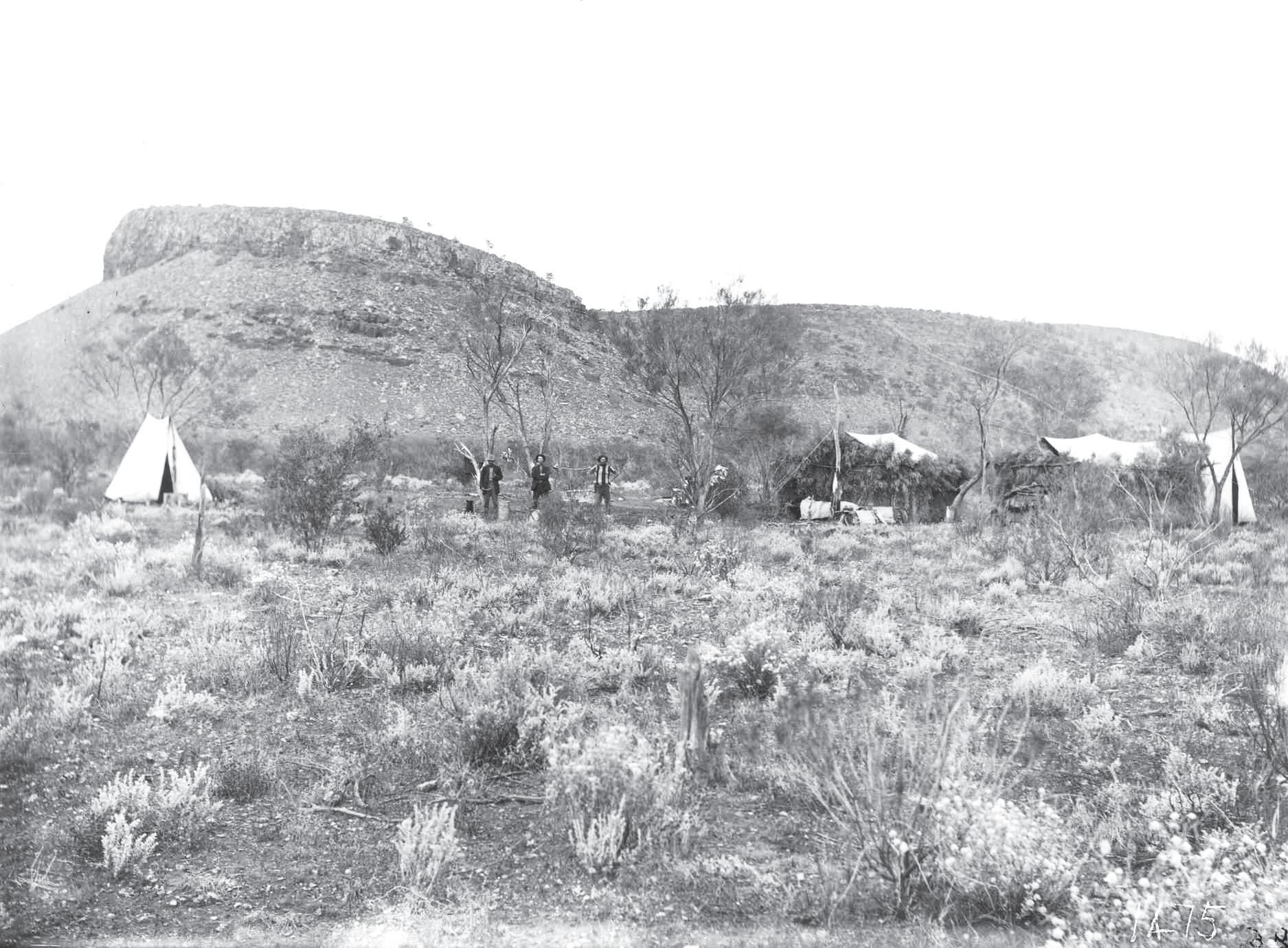
6
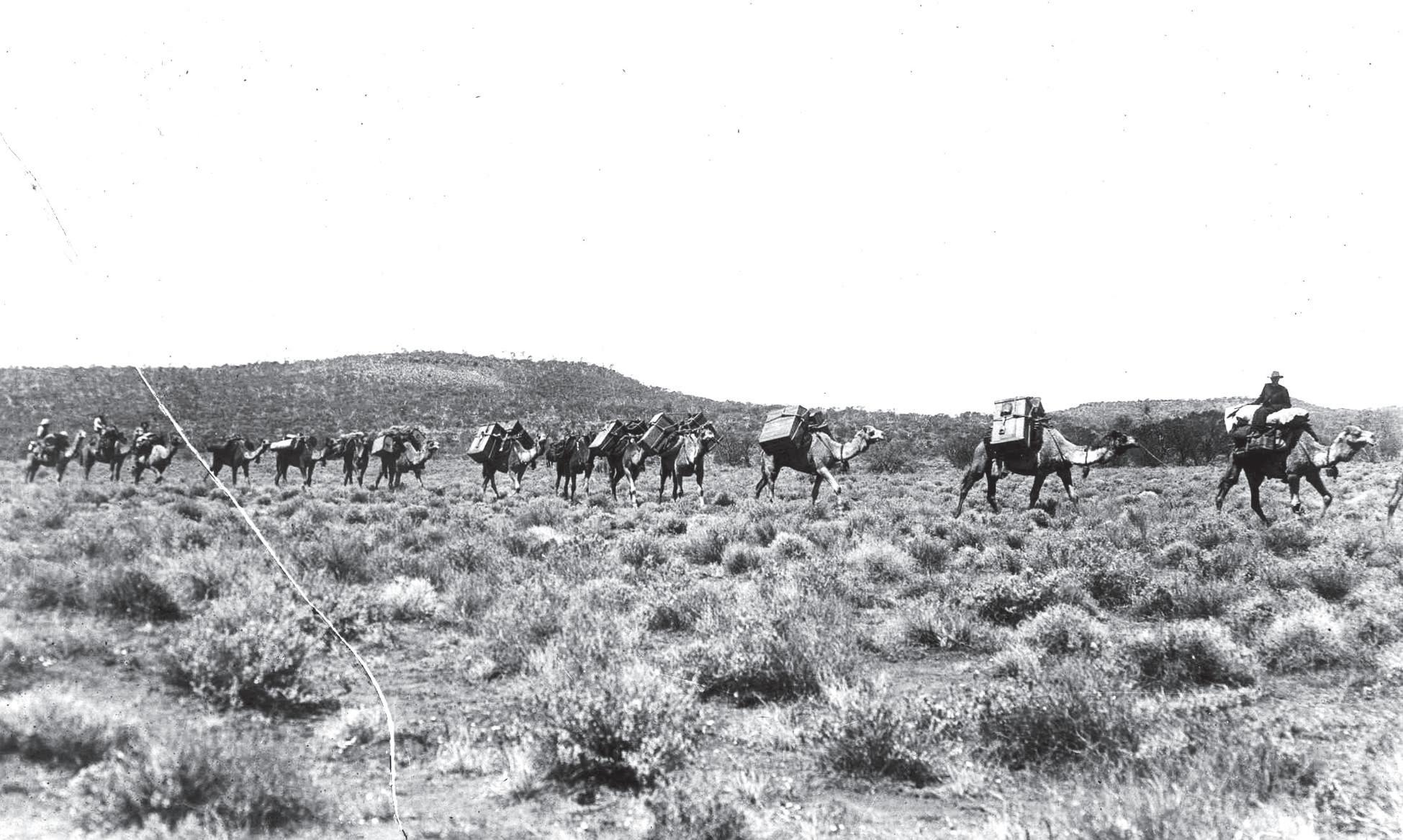
Figure 7 The Talbot/Clarke expedition on its return journey near Blackfellow Point (28º 09’ S, 124º 30’ E) about 240 km northeast of Laverton. (Photo H.W.B Talbot; GSWA gpn 1513).
Torrington Blatchford, a graduate of Sydney University, spent a total of about 20 years with GSWA between spells of consulting, and holding finally the position of Government Geologist from 1927 to 1934. He rivalled Talbot in contributing 218 negatives to the collection from 1897 to 1927. Of particular interest are the 36 images of mines, scenery and station homesteads that he took during a three-month survey of the Pilbara region in 1912 (Blatchford, 1913). These include photographs of the Pilbara region’s only underground tin mine, Mt Cassiterite at Wodgina, and one illustrating some of the difficulties encountered by travellers at the time (Figures 8 and 9).
Other significant contributors, with the periods covered by their photographs, include W. D. Campbell (1901 – 1909); A. D. G. Esson (1922 – 1925); C. G. Gibson (1904 – 1910); C. S. Honman (1911 – 1916); C. F. V. Jackson (1903 – 1904); J. T. Jutson (1914 – 1918); A. Gibb Maitland (1907 – 1915); E. C. Saint-Smith (1912 – 1913) and H. P. Woodward (1905 – 1916). Their efforts succeeded in producing a pictorial record of geological and mining-related features extending from the Kimberley region to the south coast, and from the west coast to the Western Australian border.
Acknowledgements
We thank Brian Knyn and his staff in the Library of the Western Australian Department of Minerals and Petroleum for their assistance in locating and scanning the photographs used in this article.
Angela Riganti publishes with the permission of the Executive Director, Geological Survey of Western Australia.
References
Becher, S.J., 1896, Report on the Pilbarra* Goldfield with references to the geological character: Western Australia Department of Mines Annual Report, 1895, Appendix 5, pp. 28-31.
Bianchi, Phil and Bridge, Celine, (book designer), (2013). `Work completed, Canning’: a comprehensive history of the Canning Stock Route. Carlisle, Western Australia Hesperian Press Blatchford, T., 1913, Mineral resources of the North-West Division, investigations in 1912: Western Australia Geological Survey Bulletin 52.
Glover, John, 2003a, Henry William Beamish Talbot, field geologist and explorer: in Bevan J. (ed.) Geological Journeys: from Artifacts to Zircons. Geological Society of Australia (Western Australian Division) pp. 152 – 155.
Glover, John, 2003b, Geology at the University of Western Australia: the difficult years: in Bevan J. (ed.) Geological Journeys: from Artifacts to Zircons. Geological Society of Australia (Western Australian Division) pp. 132 – 134.
Talbot, H.W.B., 1910, Geological observations in the country between Wiluna, Halls Creek and Tanami: Western Australia
Geological Survey Bulletin 39.
Talbot, H.W.B. and Clarke, E.de C., 1917, A geological reconnaissance of the country between Laverton and the South Australian border (near south latitude 26°) including part of the Mount Margaret Goldfield: Western Australia Geological Survey, Bulletin 75.
* Spelling as used at the time.
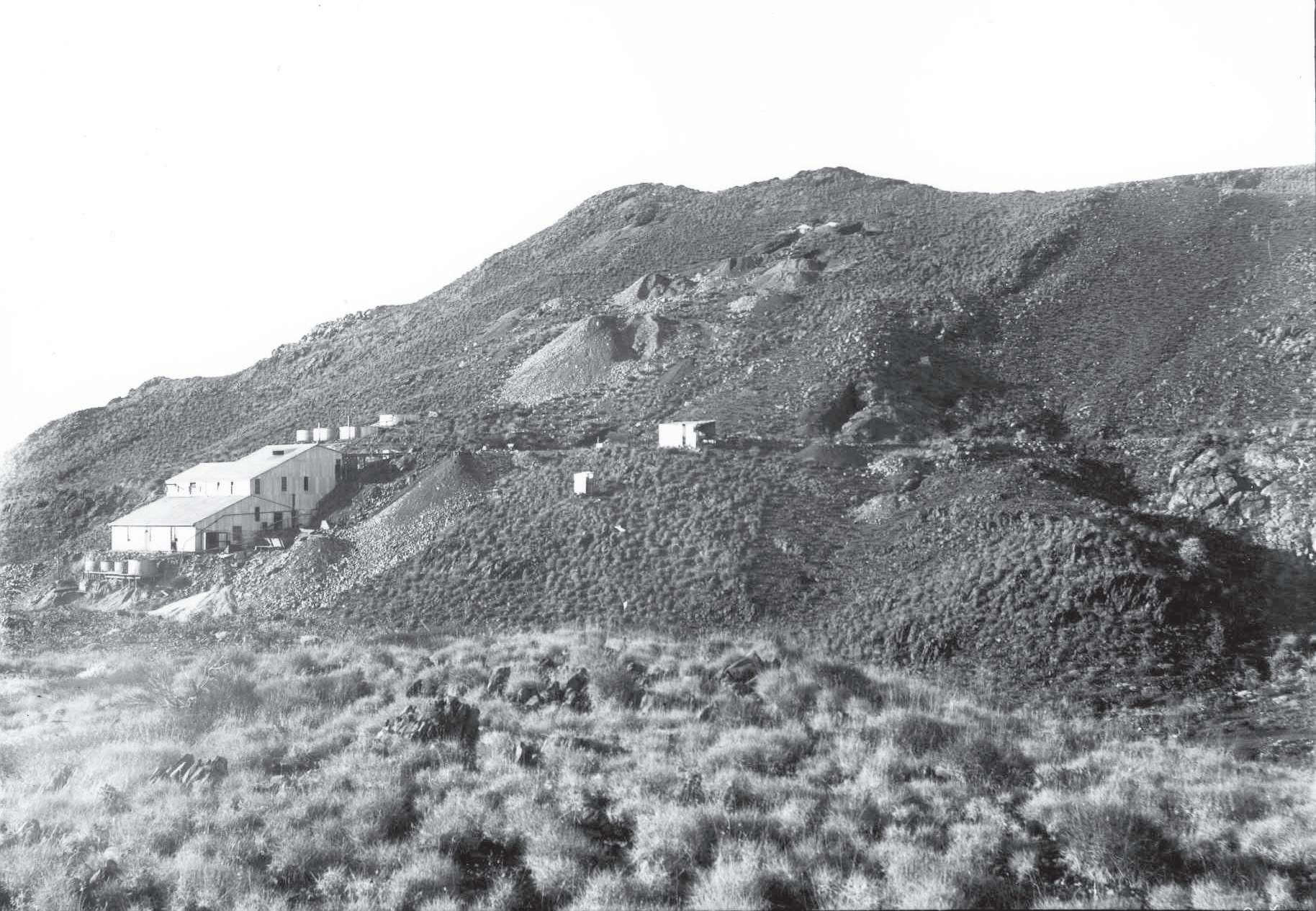
Figure 8 The Mount Cassiterite tin mine at Wodgina (21º 12’ S. 118º 41’ E) in 1912. This was the only significant underground tin mine in the Pilbara region, yielding about 250 t of tin concentrate between 1904 and 1918. In more recent times, the lode has been incorporated into open-cut workings that include nearby pegmatite deposits with the main mineral of interest being tantalite. (Photo T. Blatchford; GSWA gpn 844).
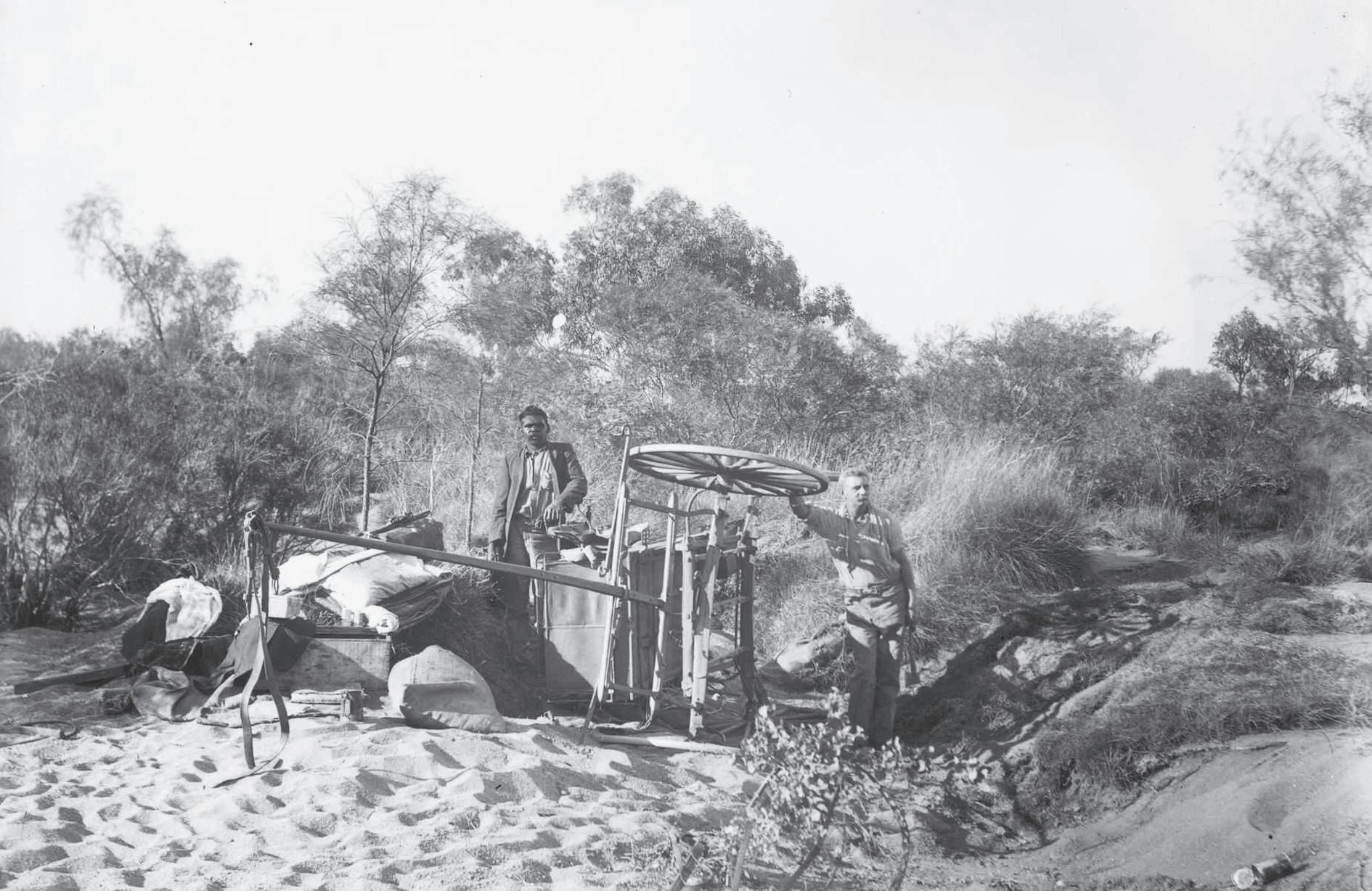
9
John Blockley
76, Beach Street, Bicton WA 6157
Mt Whaleback was one of a number of iron ore deposits in the eastern Hamersley Basin noted by pastoralist/ prospector Stan Hilditch while searching for manganese in 1957. Exploration by American Metals Climax (AMAX) in partnership with Colonial Sugar Refineries Co. Ltd began in 1963, leading to the first production in
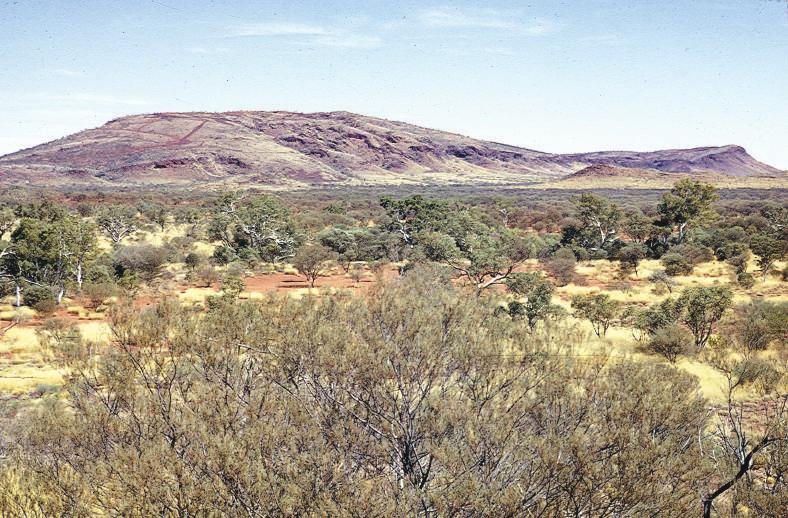
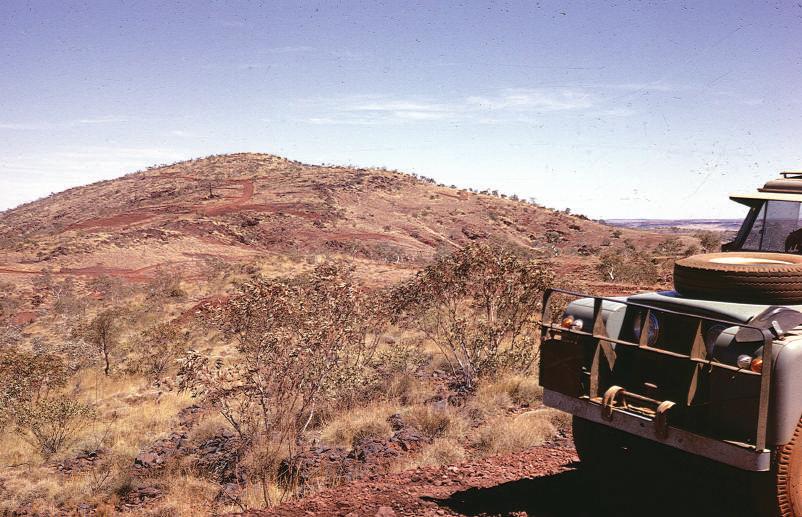
1969. The pre-mining resources of the deposit were estimated at 1,700 million tonnes of hematite averaging 65% iron with low phosphorus. Photographs 1 and 2 were taken in 1967 while exploration was still in progress with the first showing how the “mount” got its name.
The Mt Whaleback mine is now owned by BHP-Billiton (85%) and two Japanese companies. It is claimed to be the biggest single-pit open-cut iron ore operation in the world being more than five kilometres long and nearly 1.5 kilometres wide (Photograph 3). Adjacent are smaller deposits, Orebodies 29, 30 and 35 while smaller satellite mines – Wheelarra and Orebodies 18, 23, 24 and 25 – are located outside the town of Newman. Current production (2013) from Mt Whaleback and these satellite deposits amounts to about 62 million tonnes per year.
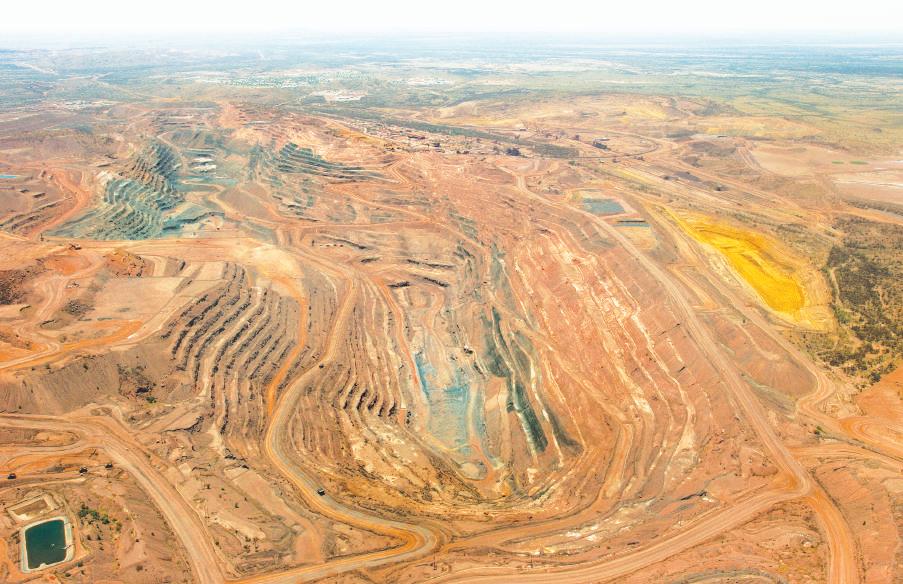
3 View to the east of the Mt Whaleback mine, November 2013. Note the township of Mt Newman in the background. Picture courtesy of BHPBilliton Iron Ore.
John Blockley
The history of gold mining in Western Australia has been a cyclic one, with the booms of the 1890s, 1930s and 1980s followed by slumps that saw many mines pass through successive periods of operation and closure. Parts of two cycles of one such mine, the Sons of Gwalia 3 km south of Leonora in the Eastern Goldfields of Western Australia, are described here.
Gold was discovered at the site in 1896 and in 1898 ownership passed to Sons of Gwalia Ltd with management being given to youthful United States geology graduate, Herbert Hoover, who had recommended its acquisition to his employers, Bewick Moreing & Company Ltd of London. The Sons of Gwalia mine, as Hoover had set it up, went on to be the second largest gold producer in Western Australia after the Golden Mile at Kalgoorlie, while Hoover himself continued a distinguished career to become the 31st President of the United States of America. Mining was carried out to the 3000 foot level from a shaft inclined at 45 degrees, and below that from an internal shaft to a maximum vertical depth of 1080 m (~ 3,543.3 feet). From 1897 until its closure in 1963, the mine produced 7,254 Mt of ore for a yield of 2.5 Moz of gold (Kalnejais, 1990).
The closure of the mine in 1963 saw its plant sold off by auction, after which it remained abandoned until rising gold prices and new treatment techniques allowed it to be reopened in 1984 by Sons of Gwalia NL. Mining was now by open pit methods, and in the early stages at least, the ore extracted comprised the lower-grade envelope of mineralisation that surrounded the high-grade lenses which had been the main target of its former owners (Kalnejais, 1990). To allow for expansion of the open pit, the head frame dating from Hoover’s time was dismantled and re-erected as part of a museum display, along with Hoover’s former residence. After producing some 2.4 million ounces of gold, Sons of Gwalia NL ran into financial difficulties, and in 2004, the mine was once again closed and abandoned (Wikipedia, 2014).
The first illustration (Figure 2) in the following series shows the mine, as photographed by GSWA geologist, CFV Jackson, just five years after it was established by Herbert Hoover. The second shows the mine’s head frame in 1961 looking much the same as Hoover’s original, although some modifications are apparent. The third, taken one year after the mine was reopened, shows the head frame poised on the edge of the newly created open pit a short time before it was removed to a museum area. The final picture is artist Lyn Barry’s impression of the mine in about 2005 when the only signs of life were three goats browsing on the sparse vegetation alongside the abandoned open pit.
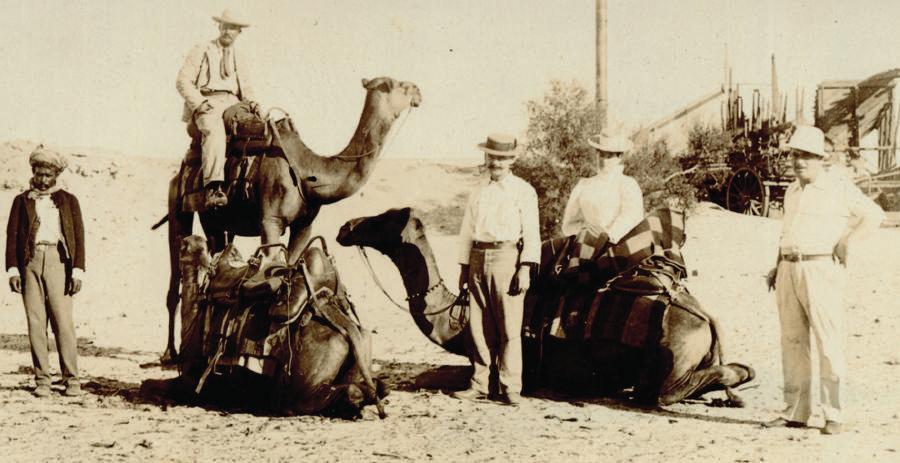
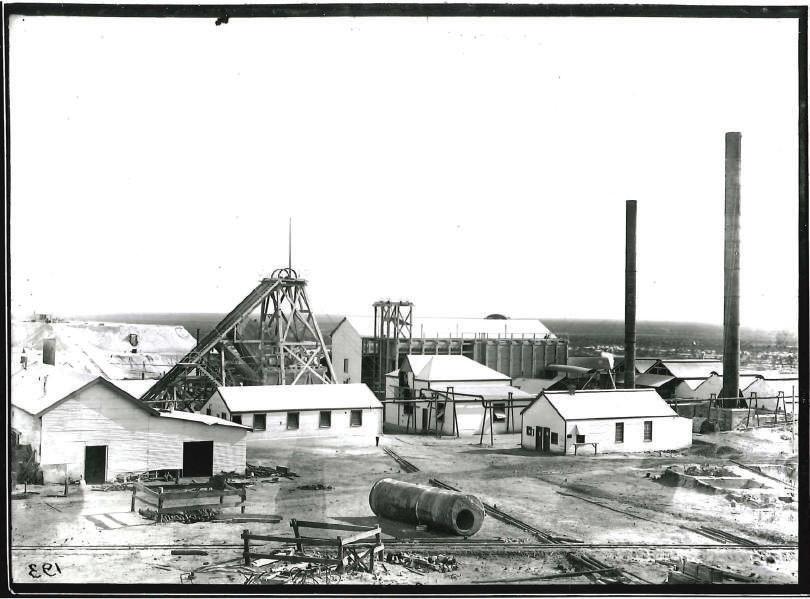
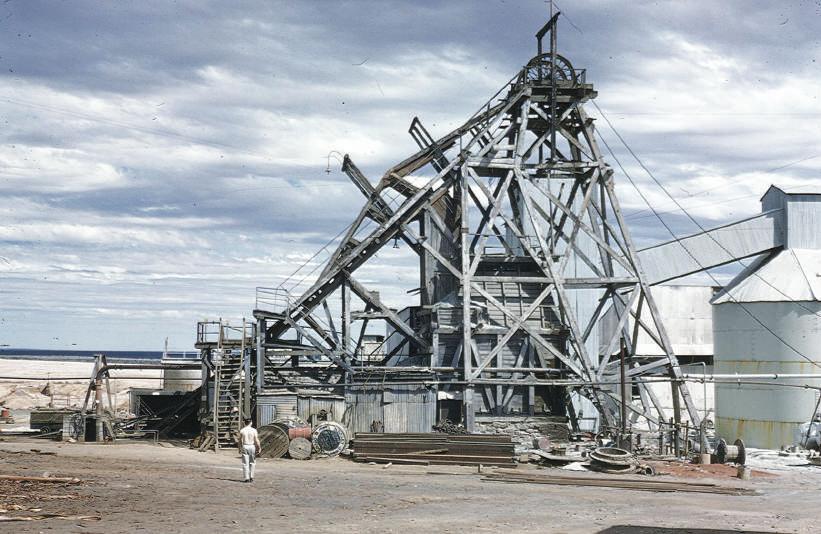
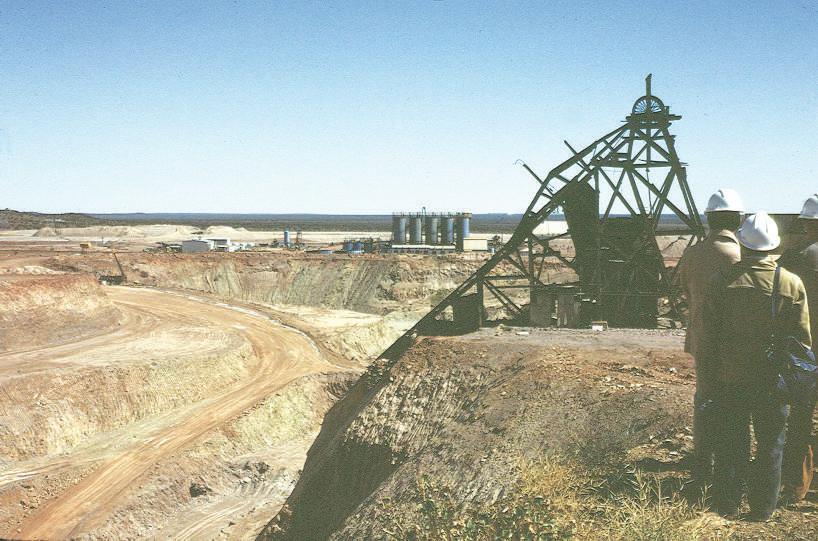
Figure 4 The Sons of Gwalia in 1985, about one year after the mine was redeveloped as an open pit. The head frame, here poised on the edge of the pit, was later moved to a museum display,
Figure 5 Western Australian artist Lyn Barry’s lino-cut print showing the Sons of Gwalia open pit in about 2005. She wondered what the goats were finding to eat in that rather barren landscape! Image used with the artist’s permission.
Endnote
The Sons of Gwalia mine, now simply known as Gwalia, is currently in its third life cycle, with St Barbara Mining Ltd having been producing gold from it since 2008. Mining has again gone underground, with the main access to the lode being by means of the fittingly named Hoover Decline (St Barbara Mining Ltd, 2014).
References
Kalnejais, J., Sons of Gwalia gold deposit, Leonora. In “Mineral Deposits of Australia and Papua New Guinea”: The Australasian Institute of Mining and Metallurgy, Monograph 14, pp. 353-355.
St Barbara Mining Ltd, Melbourne2014, viewed 4 March, 2014, <http://www.stbarbara.com.au/our-operations/leonora/> Wikipedia, 2014, viewed 4 March, 2014, < http://en.wikipedia.org/ wiki/Gwalia.Western_Australia>
David Branagan, Geosciences, University of Sydney
As an inveterate hoarder and stickybeak, cleaning up a chaotic office has turned up a few paper items about near forgotten ‘geological ’activities and ‘societies’, perhaps worthy of noting, as we move into the paperless future.
Some of these ‘organisations’ have vanished from the scene, thanks to forced and unforced amalgamations in academic circles and in places of employment.
Some were begun with the intention of a limited time frame, while others, with the enthusiasm of youth, gave little thought to the future, but perhaps began with hope that others would take up the ‘job’ and run with it, perhaps into the dim future. In this article attention is drawn essentially only to material emanating from about 1950, despite the presence of many examples from earlier periods.
Although I should not seem too positive I still remember my attempts to get a newsletter up and running for the Geological Society of Australia. There was scepticism aplenty in higher echelons of the society and memories that it had been tried before and had failed. Was it luck or what? Certainly the support of the then GSA President Prof Dorothy Hill helped.
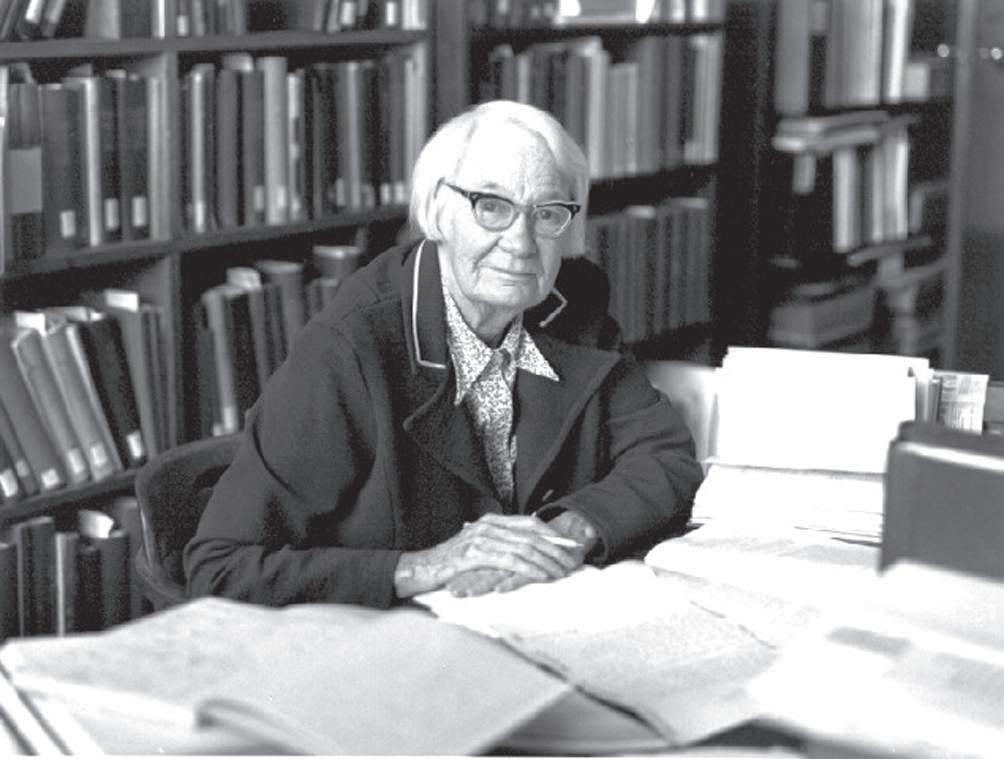
Figure 1 Dorothy Hill 1975 (Source of photo unknown. Posted on website (http://www.asap.unimelb.edu.au/ pubs/articles/tps/as_hill.htm)
How long will it last? Must it transmogrify into a paperless feature on the internet? This is the still going ‘The Australian Geologist, presently in its 40th year’. It is probably completely inappropriate that I should ‘skite’ about the longevity of TAG, as I have been associated with my share of short-lived publications, even if not all in the geological field.
Scan
This is one such vanished journal, which had a merry (!) life of less than two years. It was the brainchild of James Davenport, founding editor of Search, the journal of the now essentially defunct ANZAAS. In collaboration with businessman Alan Edenborough, who took on the financial responsibility, Scan was set up as a science magazine for schools. I was a board member along with inter alia, Peter Mason from Macquarie University. Tom Vallance and I set up, and wrote, a program of short articles on the history of Australian Science which appeared from issue 1, volume 1, early in 1968. Although ten issues per year were proposed, by late 1968 the last two issues became 7/8, and 9/10. A single issue, vol.2 No.1 appeared in January
1969. Alan Edenborough had been losing money on the publication, and reluctantly pulled the plug (information largely from Rod Home (History of Australian Science Newsletter, no. 16, 1988, for which see immediately below). Sadly, even my own set of Scan is incomplete.
What was very successful and planned for a limited life (I believe) was the History of Australian Science Newsletter, which contains various items of considerable geological historical interest. Begun and edited initially by Prof Rod Home, Department of History and Philosophy at Melbourne University, it ran from early 1983 to at least 1995, with later editors being Gavin McCarthy and Tim Sherratt. The last issue I have is No. 35, August-September 1995, and I am presently missing Nos 1, 3, 7 and 17. I have yet to see if there is a full set in any Sydney library, but hopefully there is one in the Basser Library at the Academy of Science, Canberra, now being ‘guarded’ by the newly-appointed Librarian, Lisa Conti Phillipps following Rosanne Walker’s retirement. There are various geological and geophysical articles, including notes on Archibald Liversidge, the Braggs, formation of ESHG, the geological collection of the La Pérouse Expedition, the demise of the ANZAAS publication Scan (1968-9), and other matters. There are numerous interesting group photos with many persons identified. Irene Crespin gets an article, as does Wellington Caves, and there is a lot more; overall a fascinating record, and probably a fruitful site for interested researchers.
The Colonial Science Club, Sydney from June 1987, the brainchild of Beth Newland, who sadly died quite young had a short but fulfilling run, There were five meetings in 1988 (advertised in the History of Australian Science Newsletter (March 1988) to mid1989 (unknown if beyond 1989) and, as far as I know, is one of the few which was deliberately ‘killed off’ by its organisers, when it all got too hard, with other calls on their activities. The society possibly had slight affiliation with the Royal Australian Historical Society and had some, at least, of its meetings in the History Society’s rooms in Macquarie Street, to March 1990.
Did it morph into the Australian Science History Club, which was affiliated with the RAHS and had, as its patron Dr. Ann Moyal, A.M? Des Barrett, of the Museum of Applied Arts and Technology, (the successor of the original Museum of Technology originating in the Sydney Technical College, Ultimo),
was one of the enthusiastic leaders. I have records of activities from May 2001 to October 2003 and one meeting in May 2004 related to the Transit of Venus. Group for Scientific and Technological Collections
This was, I believe, essentially the brainchild of Julian Holland, begun in February 1987, when Julian was at the Macleay Museum, University of Sydney. However this newsletter was sent from his private address in Ashfield. Three issues were planned per year. I have 1, 2 & 3, which are stapled A4 double-sided, about 12 pages each. 6 and 7 the last mentioned issued in March 1989 are A5, with a smaller typeface and about the same pagination. As in the other publications above there is a wide variety of matters discussed, and meetings advertised. Individual subscription was $10, with Institutional $25.00.
The Australian Quaternary Newsletter
I have very informative Nos. 5, 6 and 7, [May & October 1975 and April 1976 prepared by Jeannette Hope, Prehistory, ANU and New Zealand also features, through Jim Schofield. The 7th issue is devoted entirely to a visit to China by six Australian Quaternary scientists from ANU. I apparently tried to sabotage this body by publishing incorrect addresses for the editors in the Australian Geologist! The first three issues were free; the next three cost $1.
The newsletter continued until 1980 (issues 1-15). It then transformed into Quaternary Australasia, which continues to the present day.
Perhaps it doesn’t quite fit into the category of a vanished newsletter, but did sedimentologists do more than have an ‘informal meeting’ at Sydney University’s Department of Geology & Geophysics in November, 1968 organised by John Veevers and Charles Phipps?
The speakers certainly make up a lists of who’s who ‘top Australasian’ sedimentologists, too numerous to name.
Universities, Geological Students and Publications
It seems inevitable that student clubs like to perpetuate their memories through Year books.
Quality and quantity varied, of course, from year to year, dependant on the skills and/or enthusiasm of whoever took on, or was landed with the job. Geology at the University of Sydney didn’t have a bad reputation, in this field, at least in the general regularity with which one, entitled GEO appeared.
Issues up to the early 1950s (with a more formal name, I think) often had some semi-serious ‘geological articles’ in among the usual more scurrilous comments on student goings on, the foibles of lecturers, and details of less than geological activities during field excursions, all of some interest to the graduating class and those not too far behind, but perhaps of little interest or understanding by others beyond the ken. The ease of reproduction and cheapness of photography contributed to a very different appearance of the journals as the years moved into the 1960s. The most recent copy I possess is for 1987, but I suspect several more were published later. I gave a fairly complete set from about 1947 to the mid-1980s to the University of Sydney Archives. There are some good informal photos of staff throughout the later issues.
Publication ceased, I believe, following the ‘forced marriage’ of the Departments of Geology & Geophysics with Geography in the early nineties to form the School of Geosciences. Although a student society is moderately active, I do not know of any annual publication thereof.
Also relating to the almost complete absence (I believe) of a unified Science Faculty at Sydney, I suspect there has been no publication of an annual Science journal, which was a feature until at least the 1960s.
Isthmus
Two other University of Sydney items I know of are Isthmus, first issued in March (?) 2001: I have only issue 2 (April 2-to April 16, 2001), ‘designed to promote both academic and social interactions within the School of Geosciences’. It is a four page (A4) professional job. I certainly haven’t come across other issues. However it has possibly been long replaced by an on-line ‘Monthly’ issue which records some school activities.
The second, related partly, at least, to Geosciences is Marine Science News, an Institute of Marine Sciences Quarterly Newsletter, of which I have only Issue 2, August 2003. It is an octavo, eight page issue, containing an impressive list of 38 publications, a short feature article about North Pacific Intermediate wave formation, and an advertisement for a joint Geological Society of Australia and Geological Society of America publication Evolution and Dynamics of the Australian Plate.
UNSW et al
There was an active student geological body at UNSW
when it had a distinct geology school (and of mining ?) at Broken Hill), and doubtless someone can fill in the record-there is a small history of the Geology School. The mining engineers there also produced some issues (of which I have one). Others could possibly fill in the gap. Similarly Macquarie University probably has something to contribute, as do Armidale, Wollongong and UTS, where Geology, as a distinct unit, was active and fruitful under George Gibbons, with associates such as John Gordon, and later by Evan Leitch and others.
Lithenea
Of other universities, I can only speak briefly for ANU, possessing, probably by chance, two undated copies of this stapled single-sided foolscap six page publication. Although both are undated they probably date from the late 1960s – the date of one might be worked out by checking the Broken Hill August (excursion time) newspapers! One article is brief, on the sedimentary layering of beer bottles in various localities in Australia, with an indication of a fruitful PhD thesis awaiting more research.
On intellectual matters there is an article on the mineral Troilite containing material translated from Greek, but it is not clear if this is from the hand of the un-named author of the article.
This particular issue has a brief ‘letter of goodwill’ from K.S.W. Campbell (Prof Ken) commending the re-appearance of Lithenea. He had been despairing, that, like so many Australian literary efforts, another had possibly fallen by the wayside. Is it still reporting activities from Canberra’s hallowed halls?
Rotgut
What about Rotgut I hear you say? I suspect that this venerable stencilled and roneoed production of the debauched members of the State of New South Wales Geological Survey never saw the light after its libellous 1950 issue. This was the brainchild, largely, I believe, of the late lamented Dr. Ted Rayner, aided and abetted by Charlie Mulholland, just then become NSW Government Geologist, Joe Whiting and other members of that august body. However it can’t have been too libellous or it would never have been typed onto stencils by the long-suffering and very proper Miss Matters, the Survey’s Librarian and typist, who claimed never to have heard any bad language in the office. There were certainly issues of Rotgut during the late 1940s, which would no doubt now be priceless, but
perhaps the influx of new staff in early 1951 saw a more sober approach to geological activities.
A much more regular and sober newsletter from the Survey, which began perhaps in the fifties as Mineral and, I believe, transmogrified to Minfo continues to appear, perhaps not quite as regularly as might be desired. The early issues of Mineral carried interesting and informative summaries of earlier Survey notables by Col Adamson.
Although the above is a generally light-hearted cover of possibly vanished publications, I believe they are and were an important part of our ‘professional’ history. So don’t just throw them out. Record something for posterity.
Peter Dunn who has been chairman of the ESHG committee for the past 5.5 years has retired from the position and is now living in Tasmania. Peter has written a short piece shown below, outlining his early work regional mapping and how this led him into research on the history of geologists and their contributions. We have added a few pictures!
Peter’s introduction to earth science history was during his first years after graduation when he was with the regional mapping group of the Bureau of Mineral Resources (BMR) in the Northern Territory. In producing explanatory notes for the maps it was necessary to research the history of earlier geological work and thus he was introduced to such figures as Professor Ralph Tate, Reverend Tenison Woods, H Y L Brown, W G Woolnough and H I Jensen. This interest in geological history remained with Peter throughout his career with the BMR, private industry and the Geological Survey of Western Australia(GSWA) and on retirement, applied this interest by volunteering to research and curate GSWA’s map collection. When John Blockley rang Peter about the opportunity for Western Australia to take over the running of the Earth Sciences History Group he jumped at the opportunity to join the committee.
Peter joined the BMR in 1954 soon after graduation and spent 17 years with the organisation mainly carrying out regional mapping in the Northern Territory but latterly supervising work elsewhere in northern Australia and Papua-New Guinea. During this time he spent 3 years living in Darwin and while mapping on Groote Eylandt was lucky enough to stumble over manganese mineralisation which was to lead to one of the largest manganese mines in the world. (Peter’s research on this occurrence disclosed that Matthew Flinders’ party had obtained manganiferous samples from the adjacent mainland during their circumnavigation of Australia ; HYL Brown had also identified manganese on Groote Eylandt in the early 1900’s).
Other highlights of his time with the BMR included five months with the Geological Survey of Canada, visiting each of their hard-rock field parties located throughout Canada; and as the Australian representative on the International Sub Commission on Precambrian
Stratigraphy visiting Precambrian localities in Sweden and Finland and late Precambrian glacial deposits in Norway and Scotland. In the late 1960’s Peter spent a large part of his time discussing North Australian Precambrian geology to visiting academics and company explorationists.
In late 1970 he finally succumbed to one of these companies and joined private enterprise, a small American company, Trend Exploration Pty Ltd. Operated by Peter and Don Henderson, an American, and concentrating mainly on base metals and uranium, they came up with a number of interesting prospects, two of which were farmed out, but only one developed, Pillara in the West Kimberley. With the Whitlam government in power in 1974, the American backers of Trend got cold feet after 4 years and withdrew from Australia.
Peter then set up his own company, Crest Exploration, and continued exploration on contract to Westinghouse and CRA until 1985.
In 1985, he joined the Geological Survey of Western Australia as Assistant Director in charge of the hardrock section of the Survey which was involved in 1:100 000 regional mapping, mineral deposit investigations, geophysics, geochemistry, geochronology and regolith geology.
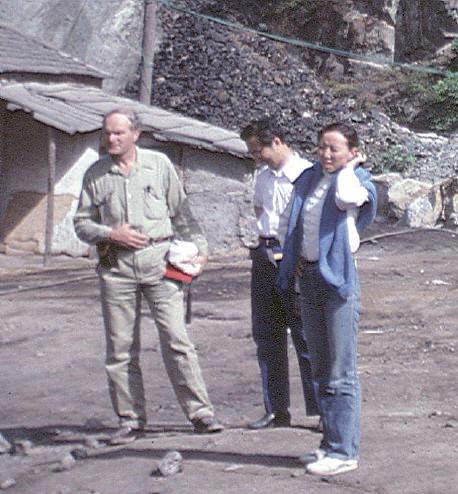
Figure 1 Peter Dunn at the Tongguanyu Cu-Mo-Au mine, Anhui province in 1987 while on inspection for the GSWA.. The interpreter is Ms Bai Qin. Photo courtesy John Blockley
After retirement in 1995, Peter’s voluntary work with the GSWA map collection has involved considerable historical research, particularly of the GSWA and of its geologists, and recently has been collaborating on an article about the life of William Dugald Campbell, who apart from working for the GSWA for ten years as a geologist and surveyor was also a civil engineer, recorder of aboriginal petroglyphs and customs, and collector of Australian plants and animals.
Peter would remind all geologists that earth science, or more particularly geological, history is not all about the life and work of geologists who have left this mortal coil and that some of their own experiences could be worth recording in our august Newsletter!