Earth Sciences History Group (ASpecialist Group of the Geological Society of AustraliaInc.)
Email Bulletin No. 57 25 July 2020
INHIGEO News
The latest Annual Record (No 52) of INHIGEO covering activities generally in 2019 has been released and will be emailed as a separate attachment. It can also be accessed on the INHIGEO website www.inhigeo.com
The latest INHIGEO circular has also been received and of note is the list of nominations for the INHIGEO Board for 2020-24. From Australia it includes:
Past-President: Professor Barry Cooper (Australia)
Vice-President Australasia/Oceania: Carol Bacon (Australia)
The candidates will be accepted in their nominated positions on 31 August 2020, if no objection is lodged by INHIGEO members before the end of July 2020.
The 36th International Geological Congress and its associated business and Council meetings originally scheduled for 2-8 March 2020 have now been postponed (still somewhat optimistically!) until 16-21 August 2021. The INHIGEO Board had decided that the existing office bearers for 2016-2020 would remain in place and the smooth transition to the new administration will take place on 31 August 2020.
Future INHIGEO Conferences (2021-2024)
2021 – 46th INHIGEO Symposium, Poland, Krakow: 18-24 July
Main themes of the conference: Formation of geological surveys and their creators. Mining history
The circular can be found using this link https://www.dropbox.com/s/ejx6q4a5yzdqcf1/46TH%20INTERNATIONAL%20COMMISSION%20 ON%20THE%20HISTORY%20OF%20GEOLOGICAL%20SCIENCES%20%28INHIGEO%29%20SYMPOS IUM.pdf?dl=0
2022 – 47th INHIGEO Symposium, Russia (yet to be formally decided) 2023 – 48th INHIGEO Symposium, Location to be decided. 2024 – 49th INHIGEO Symposium, South Korea, (in association with the 37th IGC))
The 26th International Congress on the History of Science and Technology (25ICHST) – 25-31 July 2021 will take place in Prague.
Publication on the history of geological surveys
As noted above, in July 2021, the 46th INHIGEO scientific conference is planned to be held in Krakow. The main topic of the conference will be the history of the creation of geological surveys in various countries on all continents and their creators. The ambition of the conference organizers is to prepare a special publication in which these articles will be collected. Efforts will be made for this publication to appear in the Lyell Collection,
Special Publication of Geological Society of London series. To ensure the consistency of all articles, the substantive scope of the articles is given below.
Please send information about your interest in the preparation of this kind of the article by July 31, 2020. Required date of preparation of the article - November 30, 2020. All articles will be reviewed.
General requirements and guidelines for Authors of articles about the history of the creation of geological surveys and their creators:
Required substantial scope of the article:
1. Title
2. Authors and affiliation
3. Abstract
4. Key words
5. General historical background
6. Conditions accompanying the establishment of the geological survey
7. Creator / creators of the geological survey and its most prominent persons
8. Main goals of the activity of the geological survey and their changeability in time
9. The most important achievements
10.Summary
11.Bibliography
Send back to: stanislaw.wolkowicz@pgi.gov.pl
Australian Mining History Association News
The AMHA Conference, planned for 9-14 November 2020, was cancelled after consultation with the Organising and the Advisory Committees in consideration of the health of AMHA members, conference registrants and the community. It has been agreed in discussion between the Bathurst and Burra organizing committees that, as planned, the 2021 AMHA Conference will take place at Burra, South Australia, and the 2022 Conference at Bathurst.
Cec Murray Remembers Harry Hess
Reviewing Mike Rickard’s booklet on the history of structural geology and tectonics, prompted Cec Murray to set down his reminiscences of studying under Harry Hess at Princeton in the 1960s. The following article is the result.
Harry Hess was the reason I went to Princeton for my graduate studies. During my first couple of field seasons in 1965 and 1966 doing regional geological mapping in central Queensland, I investigated the large ultramafic mass north-west of Rockhampton. Not much was known about the origin of these rocks at that time, and I decided that they would be a good topic for further research. Harry (everyone who knew him called him Harry) had published articles about peridotites and serpentinites over a span of more than 20 years, so I wrote to him to see whether there was any possibility of coming to Princeton to work on ultramafic rocks. I was surprised to receive a very enthusiastic response, and only learnt later that Princeton had a high regard for Australian geoscientists. Two were finishing their PhDs when I arrived there in August 1968: Alan Marshall and Roger Lewis.
My first impression of Harry is summed up in the following description: “A quiet, unpretentious man with a small moustache and a constantly lit cigarette (his fingers were yellow from chain smoking), he worked out of an office of legendary clutter...” (his secretary once tried to organise his papers, but only succeeded in incurring Harry's wrath. He preferred everything to be in “stratigraphic order” so he could dig in at approximately the right level to find something). He was always approachable and supportive.
Harry Hammond Hess was born in New York City in 1906 (in one book he is referred to as Harold Hess, which is not only incorrect, but sounds wrong as well) and completed his original degree at Yale in 1927. He spent the next two years working for a mineral exploration company in Rhodesia and developed a lasting affinity for the country and its people. I remember one afternoon listening to a lengthy discourse on the bush telegraph system that always seemed to make the locals aware of his impending arrival (this was more interesting than being shown the
intricacies of the universal stage on a microscope, and reinforced the view that Harry was an unorthodox teacher). But he did not like the routine nature of the job and enrolled at Princeton for more study. I have read that his first choice was Harvard, but he objected to their strong stance against smoking. He carried out a field and laboratory study of serpentinite in Virginia and was awarded a PhD in 1932. After a couple of brief appointments elsewhere, he returned to Princeton in 1934 and remained there until his death in 1969.
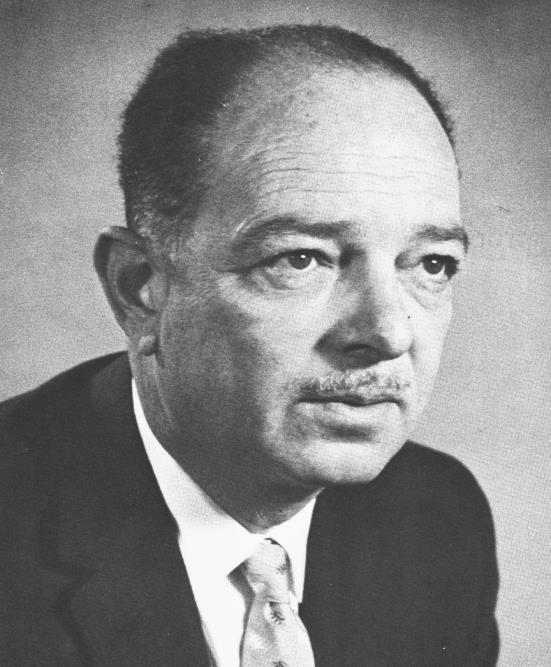
Harry Hammond Hess
Today Harry is remembered mainly for his “essay in geopoetry” on sea floor spreading, first circulated in 1960 and published in 1962, which was one of the triggers for the development of the plate tectonic revolution. But his interests were wide-ranging, and he made notable contributions to many aspects of geology. While still a graduate student in 1931, he took part in a gravity survey of oceanic trenches in the West Indies organised by the Dutch geophysicist Vening Meinesz using a U.S. Navy submarine. This marked the start of his continuing interest in marine geology, particularly the nature of oceanic crust (until the early 1960s he regarded it as a thin layer of serpentinite overlying fresh peridotite) and the origin of oceanic trenches (this proved the key to his 1960 model). To facilitate this research in the future, he joined the U.S. Naval Reserve, eventually rising to the rank of Rear Admiral. He combined the results of these gravity observations with his studies of ultramafic rocks in his 1939 paper Island arcs, gravity anomalies, and serpentinite intrusions For many years Harry believed that peridotites must have been intruded as a magma, his paper on A primary peridotite magma being published in 1938. His final field trip, just a month before his death, was to South Africa to see komatiites, the closest thing to an ultramafic magma.
In the early 1930s, Harry became part of a joint project on the Stillwater mafic-ultramafic layered intrusion in Montana. His role was to provide a detailed study of the mineralogy of the complex. The original aim of a single multi-author memoir combining all aspects of the intrusion was never realised, and he eventually published a summary of his results in 1960 as a Geological Society of America Memoir. The details of his study of pyroxenes (both clinopyroxene and orthopyroxene) and comparison with those of other large layered intrusions had already appeared in a series of papers published in the 1940s. The most important result was that fine lamellae previously ascribed to twinning were actually exsolved lamellae of calcic pyroxene in orthopyroxene and vice versa. This formed the basis for all subsequent investigations of this mineral group. Harry regarded his work on pyroxenes as his best and considered himself primarily as a mineralogist.
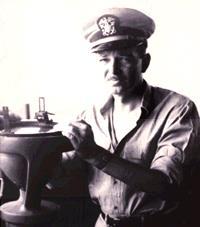
The day after Pearl Harbour he enlisted in the U.S. Navy. His first assignment was in the Atlantic, where he had “legendary success” in the battle against submarines. He then moved to the Pacific, where he commanded an attack transport that provided support for American forces in their numerous amphibious landings. His ship, the USS Cape Johnson, was fitted with the latest depth meter, and Harry kept it running as he criss-crossed the Pacific, “perhaps not always in strict accordance with orders”. He discovered numerous submerged seamounts with flat
tops, obviously produced by wave action, and concluded that the sea floor had sunk. He named these features guyots, after the first geology professor at Princeton. The idea that the sea floor had sunk had first been proposed by Charles Darwin to explain the origin of coral atolls – volcanic islands with fringing coral reefs had sunk below sea level, and the coral had continued to grow upwards as a circular atoll.
In 1947 Harry organised the Princeton Caribbean Research Project, involving universities, governments, and companies. This was still in operation in 1968, and I became part of it. Invariably, field investigations were a major focus of all studies carried out during this long-running project. Harry was very much a field geologist“If you can't hit it with a hammer, it probably is not a very good thesis topic”. He sent me to Venezuela to study two ultramafic intrusions that were not the usual peridotite-serpentinite type. They proved to be zoned ultramafic complexes of the Alaskan type, consisting of successive zones of gabbro (outermost ring), hornblendite, olivine pyroxenite, and a central core of dunite. The accepted interpretation was successive intrusions of magmas of these compositions, culminating in a dunite magma. Perhaps Harry was still hoping to find definitive evidence for a peridotite magma. If that was the case, my interpretation that the ultramafic rocks were cumulates from the gabbroic magma must have been a great disappointment to him. I never found out, because he died shortly before I got back to Princeton after my first field season. I had sent him a couple of letters setting out my preliminary ideas. Surprisingly, Harry was rather cautious about field work in Venezuela. His advice included sticking to scrambled eggs if they were on the menu, and not venturing into any of the streams because of the danger of bilharzia (liver fluke). In my case, and I suspect for others as well, this advice was not followed.
Harry's research interests were curtailed from 1950 to 1966 when he was Chairman of the Geology Department at Princeton. His quiet, low-key approach was misleading“his bite was worse than his bark”. His ability as an administrator was recognised by his appointment to several university committees. And it was not only within the university. He served on a number of committees of the National Academy of Sciences that give further evidence of his wide-ranging scientific interests: Chairman of the Committee for Disposal of Radioactive Wastes, Chairman of the Earth Sciences Division of the National Research Council, and Chairman of the Space Science Board. It was while chairing a meeting of the Space Science Board at Woods Hole, Massachusetts that he died of a heart attack in August 1969. What made the timing of his death worse was that he had been appointed a NASA Principal Investigator to study pyroxenes from lunar basalts.
Harry had a somewhat mischievous streak. My favourite story about him is told by Simon Winchester in his book Krakatoa. In 1965, when Winchester was in charge of the students' geological society at Oxford, he was able to persuade Harry to deliver a lecture. This was to be a very formal occasion, but it turned out rather differently. Before the lecture, Harry was taken out to dinner at a venue some distance from Oxford. Those attending took advantage of this special occasion to celebrate with a few bottles of the best French wine. On the way back to
Oxford, the car broke down. Someone knew a shortcut through muddy fields to a pub where a phone call arranged transport and more alcohol was consumed. The lecture started two hours late and was a disaster, with slides out of order and upside down. Sometime afterwards Harry wrote a very tongue in cheek letter to Winchester stating that he could not remember a more enjoyable occasion.
Harry seemed to have no difficulty finding places for his students on research cruises by U.S. Navy vessels. Tim Loomis, a fellow graduate student from California, was in the Naval Reserve, and was required to spend two weeks a year on a ship. After wasting two weeks one year sitting in port on an old WWII destroyer, he discovered that Harry was a Rear Admiral. The next year Harry was instrumental in getting him a position as a scientist on a research cruise to Puerto Rico. But further plans for research cruises were scuttled by Harry's death.
Harry was never comfortable with modern technologies, particularly electronic devices. On one of his voyages on a U.S. Navy vessel, he was accompanied by Roger Lewis. The voyage was delayed because of a problem with some instrument. According to Harry, Roger said, “I'll have a look at it” and went below. He reappeared about half an hour later saying it was fixed, and off they sailed. Harry was mightily impressed and arranged to share a watch with Roger to get to know him better. But he found this difficult and complained to me that he had never worked so hard to maintain a conversation. The feeling was reciprocated. I asked Roger about this incident, and received the following reply:
“I went on a couple of voyages with Harry in the Caribbean. I don't recall the incident you mention but I did fix odd bits of electronics here and there on various cruises. I did the final year electronics component of an engineering degree as coursework before coming to Princeton and have dabbled ever since.
Harry was not an easy person for me to make conversation with and I guess he found the same with me. He once described me to another as taciturn. Despite this I learned a lot from him on those voyages. He was a fantastic person to have in the department his connections were awesome. If you wanted something done, no matter how difficult it seemed, he could usually arrange it. He ran the most amazing department and thus had a profound influence on all who passed through it although many were probably unaware of the fact.
It seemed that in the winter when it was getting very cold in Princeton there was often an oceanographic cruise going in warmer climes. These were on ships provided by the US navy. In the couple of winters that I went to the Caribbean we did lots of geophysics and seismic surveys looking at ocean basin structure.”
Someone wrote about Harry that “he had the whole U.S. Navy working for him as a data-collecting agency”. Although a gross exaggeration, it is apparent from Roger's comments above that there is an element of truth.
Roger was certainly not the only person who encountered difficulties conversing with Harry. One noted that “conversations with Hess were often punctuated with long silences.” A question might go unanswered for days, and then a reply would come out of the blue. I never experienced this, but I can't remember asking him any difficult questions.
Harry was the “go to” man for the U.S. Navy on any scientific matter. In April 1963, the U.S submarine Thresher disappeared while making a series of test dives on the continental shelf off the eastern coast of the USA. Initial attempts to locate it were unsuccessful, and a group was formed to review search and recovery procedures, with Harry as scientific adviser. He emphasised the importance of knowing whether the vessel could have penetrated and at least partly buried itself in the thick bottom sediments and was largely responsible for starting research into this problem. It was not applicable to the Thresher case, because the submarine broke up before it reached the sea floor.
Even after his death, Harry had an influence on my PhD thesis. A grant he had obtained from the National Science Foundation for the study of some aspect of ultramafic rocks was not entirely spent. Approval was given to use it to support a trip to south-eastern Alaska with Tim Loomis to examine type examples of zoned ultramafic complexes. (The other area where they were well known, the Urals, was out of bounds in 1971).
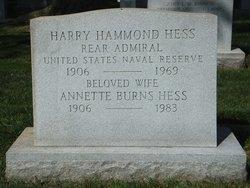
Harry was given numerous awards, not surprising for one of the great geologists of the 20th century. He also has two natural memorials. One is the Hess Deep in the Mariana Trough, and the other is Hess Crater on the far side of the Moon (shared with another scientist with the name Hess). He was buried in the Arlington National Cemetery in Virginia, reflecting his status as a senior naval officer. But I knew him as an exceptional geologist.
Thanks to Roger Lewis and Tim Loomis for sharing their memories of Harry Hess.
Tom Vallance Medal 2021
The Tom Vallance Medal was introduced in 2011 to recognise people who have made a significant contribution to researching, recording, investigating, documenting and/or publishing about people or places or events of historical importance to the geological sciences in Australia or Australasia. It is awarded biennially and presented at the biennial Convention of the Geological Society of Australia (or similar event).
Dr Thomas George Vallance (1928–1993), geologist and historian of science, was formerly Associate Professor at the University of Sydney. Originally a petrologist, his work tracing geological expertise in Sydney during the late 18th and early 19th centuries shed unexpected light on scientific activity in our young colony and ignited his interest in the history of geology and early workers in the earth sciences. He researched and published many articles and papers on famous, infamous and little-known early pioneers in this field. His legacy was in the form of 3000 index cards of information, memorabilia and jottings on miners, geologists, surveyors, prospectors and mining engineers, which was compiled over a number of years and gathered from a wide variety of sources - especially from 19th century mining journals. After his death this rich resource was compiled into a database, which should prove invaluable for researchers. The 1994 meeting of INHIGEO was dedicated to the memory of Tom Vallance, a foundation member and for some years one of its Vice-Presidents. The ESHG is proud that its award should bear the name Tom Vallance Medal.
Past Tom Vallance Medal Recipients
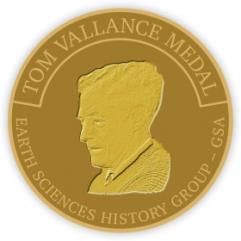
• 2018, Dr Susan Turner, announced at the AGC in Adelaide in October 2018, and presented privately to Susan in Brisbane
• 2016, Tom Darragh, announced at AESC2016 in Adelaide and presented at a meeting of the Victorian Division on 28 July 2016;
• 2014, David Oldroyd, presented at AESC2014 in Newcastle;
• 2012, David Branagan, presented at the 34th IGC 2012.
At this stage, plans are underway for the holding of the AESC in February 2021 as virtual conference. Presumably medal presentations will still be a part of the program. Therefore, nominations for the medal to be presented in Hobart in 2021 are still open. The deadline for nominations for the 2021 award will close on Wednesday 30 September 2020
A nomination form can be downloaded from the ESHG website. https://www.gsa.org.au/Public/Specialist/Earth_Sciences_History_ESHG/Tom_Vallance_Medal/Public/Specialist_ Groups/ESHG_Sub_Pages/ESHG_Recognition.aspx?hkey=0cc09a0a-b483-459c-9a1a-e1088650b325
Contributions for the ESHG Newsletter
Articles for future editions are welcome and can be submitted to the Newsletter Editor, Mr John Draper at jdraper@hn.ozemail.com.au
ESHG Committee:
Chair Ian Withnall
Secretary John Jell
Treasurer Paul Blake
Newsletter Editor John Draper
Assistant Editor Cec Murray
NSW representative David Branagan
Victorian representative Roger Pierson
Tasmanian representative Carol Bacon
SA representative Jim Jago
Email address eshg.gsa@gmail.com