GSA CONCENTRIC VALUE OF VACCINATION
Older adults face increased risks from vaccine-preventable diseases, including influenza (flu), respiratory syncytial virus (RSV), and pneumococcal disease (pneumonia). Yet vaccination rates among older adults have declined in recent years. According to the Centers for Disease Control and Prevention (CDC), about 67% reported receiving a flu vaccine in 2024 (down from 70.5% in 2019), and about 65% reported ever receiving a pneumonia vaccine (down from 67% in 2019)1.
Concentric Value of Vaccination as We Age
Vaccines provide health, economic, and societal benefits across the life course, with important impact in adults age 50 years and older. Their impact extends beyond preventing infection and reducing illness or death. For example, the annual flu vaccine not only protects against infection but also against complications such as flu-related pneumonia, heart attack or stroke2
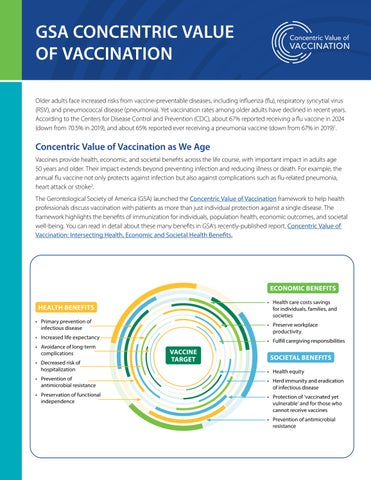
The Gerontological Society of America (GSA) launched the Concentric Value of Vaccination framework to help health professionals discuss vaccination with patients as more than just individual protection against a single disease. The framework highlights the benefits of immunization for individuals, population health, economic outcomes, and societal well-being. You can read in detail about these many benefits in GSA’s recently-published report, Concentric Value of Vaccination: Intersecting Health, Economic and Societal Health Benefits.
HEALTH BENEFITS
• Primary prevention of infectious disease
• Increased life expectancy
• Avoidance of long-term complications
• Decreased risk of hospitalization
• Prevention of antimicrobial resistance
• Preservation of functional independence
ECONOMIC BENEFITS
• Health care costs savings for individuals, families, and societies
• Preserve workplace productivity
• Fulfill caregiving responsibilities
SOCIETAL BENEFITS
• Health equity
• Herd immunity and eradication of infectious disease
• Protection of ‘vaccinated yet vulnerable’ and for those who cannot receive vaccines
• Prevention of antimicrobial resistance
Health Benefits
Vaccines train your immune system to recognize harmful germs and respond quickly if exposure occurs. Because vaccines usually contain germs that are dead or weakened, they cannot cause the illness they are designed to prevent, but they do build protective immune “memory”.
Respiratory infections such as flu, RSV, and pneumococcal disease lead to increased hospitalizations and deaths in people age 65+ compared to younger adults. Vaccination reduces the risk of severe illness, prevents hospital stays, and helps older adults maintain independence.
Economic Benefits
Preventing disease through vaccines lowers medical costs, reduces lost work time, and decreases the burden on health care systems. Vaccination programs also have significant public health benefits considering their costs. For every $1 spent on childhood vaccines, about $11 is saved in medical costs and productivity losses.
For adults 50 and older, vaccines that prevent flu, pneumonia, shingles, and whooping cough can reduce an annual burden of nearly $27 billion in treatment costs, much of which falls on Medicare3, as well as reduce the number of sick days used at work by half 4
Societal Benefits
Vaccination strengthens communities by reducing disease spread and protecting people who are most vulnerable, including those with weakened immune systems or those unable to receive certain vaccines. When vaccination rates are high, communities benefit from community immunity (herd immunity), which slows the spread of contagious diseases. Vaccination also helps individuals to stay active at work, provide care for family members and friends, continue volunteer roles, and participate in social and community life— strengthening families, communities, and the broader economy.
Stay Informed
Vaccines for older adults deliver powerful health, economic, and community benefits. Staying up to date on recommended vaccines, such as flu, RSV, and pneumococcal vaccines, helps prevent severe illness, reduce hospitalizations, lower healthcare costs, and protect vulnerable members of the community.
Vaccination remains one of the greatest achievements in public health, dramatically reducing illness and death from diseases such as smallpox, polio, and rabies. By protecting individuals and communities alike, vaccines help families, workplaces, and society thrive.
HEALTH BENEFITS
• Primary prevention of infectious disease
• Increased life expectancy
• Avoidance of long-term complications
• Decreased risk of hospitalization
• Prevention of antimicrobial resistance
• Preservation of functional independence
ECONOMIC BENEFITS
• Health care costs savings for individuals, families, and societies
• Preserve workplace productivity
• Fulfill caregiving responsibilities
SOCIETAL BENEFITS
• Health equity
• Herd immunity and eradication of infectious disease
• Protection of ‘vaccinated yet vulnerable’ and for those who cannot receive vaccines
• Prevention of antimicrobial resistance

1 https://www.cdc.gov/nchs/products/databriefs/db547.htm
2 https://www.cdc.gov/vaccines-adults/reasons/index.html
3 https://link.springer.com/article/10.1007/s10935-015-0394-3
4 https://www.americanactionforum.org/research/vaccine-protection-and-productivitythe-economic-value-of-vaccines/