
April 24th, 2026
April 24th, 2026
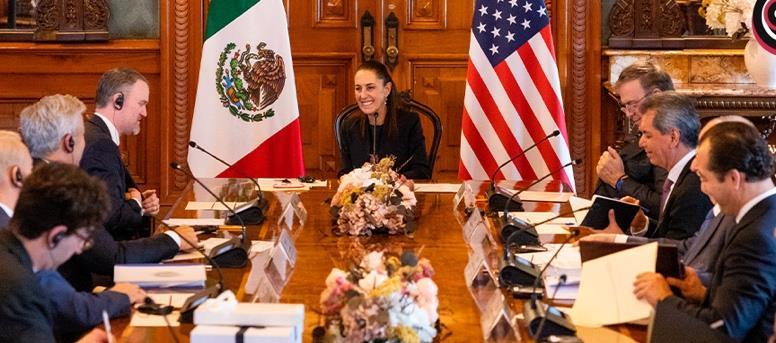
The second round of bilateral talks between Mexico and the US ahead of the USMCA Joint Review concluded in Mexico City.
U S Trade Representative Jamieson Greer met with President Sheinbaum and senior cabinet officials, including Secretary of Economy Marcelo Ebrard, to review sector-specific issues such as rules of origin, agriculture, critical minerals, and supply chain integration. The meetings, which followed an initial round in Washington in March, are part of the lead-up to the July 1st deadline to assess the USMCA’s future. While both governments described the discussions as constructive, reports indicate that Greer warned Mexican industry representatives that tariffs imposed under the current U.S. administration are “here to stay ” This marks a significant signal that the renegotiation process may not restore the zero-tariff environment that characterized North American trade. Additional proposals under discussion include stricter rules of origin and coordinated strategies to reduce dependence on Asian imports. A formal negotiation round is scheduled for late May in Mexico City, where these issues are expected to intensify.
Source: FORBES

On April 23rd , a decree was published in the Official Gazette (DOF) modifying the Tariff of the General Import and Export Taxes Law (LIGIE), as well as the Decree establishing Sector Promotion Programs (PROSEC).
The measure updates tariff rates across multiple classifications, established in the LIGIE, and amends the PROSEC Decree with changes y to key sectors, including the electrical, electronics, automotive, and auto parts industries These adjustments aim to align tariff structures and sectoral incentives under current trade and industrial policy priorities
Source: DOF
Mexico’s Congress completed the legislative process of the 40-hour workweek secondary laws. The approved package establishes a gradual transition toward the 40-hour weekly limit It also mandates an electronic timetracking system for Although the reform does not explicitly guarantee two rest days per week, the structure of the 40-hour limit effectively incentivizes a five-day workweek.
Source: EL ECONOMISTA
President Claudia Sheinbaum accused the government of Chihuahua of violating the Constitution and national security laws after reports that agents linked to the Central Intelligence Agency participated in anti-narcotics operations without federal authorization. The controversy follows a fatal accident on April 20th , where two U.S. agents and two state investigators died during operations targeting drug labs. The federal government emphasized that any foreign security cooperation must be coordinated through the Secretariat of Foreign Affairs. Mexico formally requested clarification from U.S. Ambassador Ronald D. Johnson regarding the agents’ identity, entry conditions, and role The incident has triggered political and institutional scrutiny, with the Senate calling for state officials to clarify events
Source: EL FINANCIERO

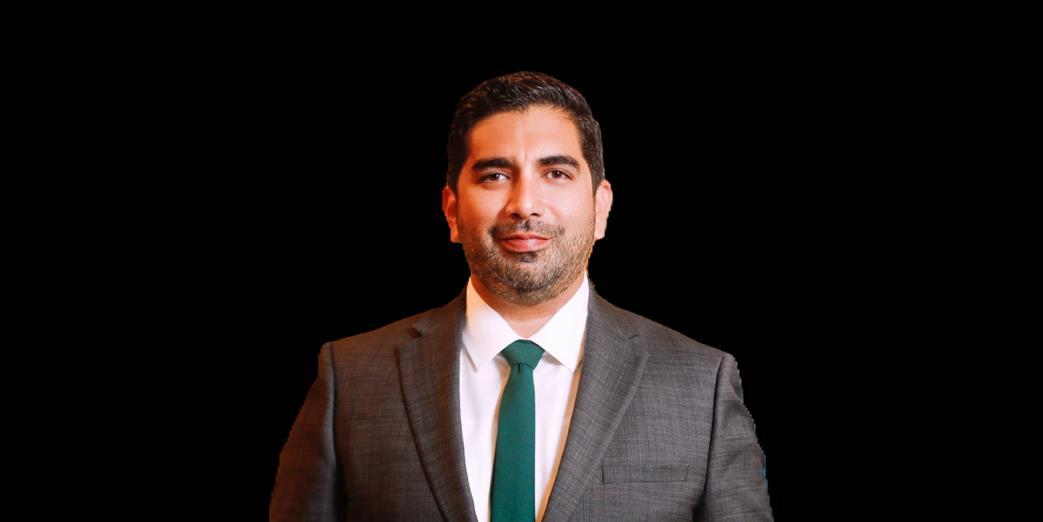
President Claudia Sheinbaum confirmed that Roberto Lazzeri will be formally proposed as Mexico’s next ambassador to the United States The appointment must follow the standard approval process, including acceptance by U.S. authorities and ratification by the Mexican Senate
The transition comes as current ambassador Esteban Moctezuma is expected to take on a new role within the federal government, reflecting broader adjustments within the administration. This nomination takes place amid an increasingly complex bilateral agenda, including the upcoming review of the USMCA, trade tensions, and supply chain coordination Lazzeri’s profile suggests a focus on economic diplomacy and continuity in managing sensitive financial and commercial issues.
Source: EL FINANCIERO
President Claudia Sheinbaum participated in the IV Summit in Defense of Democracy held in Barcelona, where she joined leaders such as Pedro Sánchez and Luiz Inácio Lula da Silva to address rising global concerns over political extremism and democratic backsliding. The meeting also marked a symbolic moment in Mexico–Spain relations following past diplomatic tensions under former president Andrés Manuel López Obrador
During her remarks, the president also advanced key foreign policy positions, including a proposal for a joint declaration opposing military intervention in Cuba, reinforcing Mexico’s traditional doctrine of non-intervention Additionally, she invited participating nations to hold the next edition of the summit in Mexico, aiming to position the country as a hub for dialogue on welfarecentered economic models.
Source: MILENIO
Mexico’s Foreign Affairs Secretary, Roberto Velasco, concluded a working visit to Brussels aimed at finalizing the upcoming signing of the EU-Mexico Global Agreement. The negotiations signal progress toward deepening economic and political ties between Mexico and the European Union amid shifting global trade dynamics.
During the visit, Mexican officials held high-level meetings with key European counterparts, focusing on strengthening cooperation in trade, investment, security, energy transition and digital policy.
The anticipated agreement reflects Mexico’s broader strategy to diversify trade partnerships beyond North America, positioning the country to attract investment and strengthen regulatory alignment with European markets
Source: EL UNIVERSAL
Early positioning for the 2027 electoral cycle is already driving strategic changes within the administration of Claudia Sheinbaum and the ruling party Morena. The most notable shift is the departure of Luisa María Alcalde from the party’s leadership to join the presidential cabinet. At the same time, Citlalli Hernández has taken a central role in overseeing candidate selection and coalition-building, reinforcing the party’s electoral machinery ahead of the midterm races
Analysts suggest these moves will allow Sheinbaum to consolidate influence over Morena’s internal dynamics, candidate nominations, and alliances, especially as the party seeks to retain dominance across multiple states and expand into opposition-controlled territories. Overall, the reshuffling reflects a broader effort to centralize decision-making and ensure organizational cohesion, as Morena prepares to defend its current political stronghold while navigating internal tensions and evolving leadership dynamics
Source: EXPANSIÓN
Decree Amending and Adding Provisions of the Federal Labor Law Regarding The Reduction Of Working Hours
• Presented by: Northern Border Affairs Commission
• Objective: Reduces the maximum ordinary working week to forty hours, allowing flexible distribution by mutual agreement between employers and employees Establishes that overtime is limited to twelve hours per week, with double pay for extraordinary hours, and caps total daily working time at twelve hours Mandates electronic time tracking.
• Status: 2026-04-22Approved, sent to the Executive Branch
Initiative With Draft Decree Issuing The Federal Highway Security Law
• Presented By: Dip Armando Tejeda Cid (Plur - PAN)
• Objective: Establishes a legal framework to ensure security on federal highways, protecting users, cargo transport, and supply chains. Defines coordination mechanisms among authorities, strengthens crime prevention, ensures safe transit
• Status: 2026-04-22Published in the Parliamentary Gazette
Initiative with Draft Decree Amending Provisions Regarding Legislative Harmonization of the National Antimonopoly Commission
• Presented by: Green Party Parliamentary Group (PVEM)
• Objective: Aligns multiple federal laws to reflect the creation of the National Antimonopoly Commission, replacing COFECE, ensuring consistency across regulatory frameworks governing competition, finance, infrastructure, and strategic sectors
• Status: 2026-04-22Published in the Parliamentary Gazette
Initiative with Draft Decree Amending Provisions Regarding Harmonization with the Law on Quality Infrastructure
• Presented by: Green Party Parliamentary Group (PVEM)
• Objective: Aligns sectoral legislation with the Law on Quality Infrastructure by updating terminology, replacing references to prior regulatory frameworks, and incorporating the definition of “standard” to ensure consistency in technical regulations, inspection processes, and compliance mechanisms.
• Status: 2026-04-22Published in the Parliamentary Gazette
Decree Amending the Tariff of the Law on General Import and Export Duties and the Decree Establishing Various Sectoral Promotion Programs
• Presented by: Executive Branch
• Objective: Modifies tariff rates applicable to specific tariff classifications under the Law on General Import and Export Duties, and subsequently amended. The changes adjust import and export duties to align with current trade policy objectives and sectoral promotion strategies
• Status: Published in the Official Gazette
Decree Amending the Decree Promoting Investment by Taxpayers Engaged in Productive Activities within the Development Poles for Wellbeing of the Isthmus of Tehuantepec
• Presented by: Executive Branch
• Objective: Amends provisions of the 2023 decree to update incentives and regulatory conditions for investment in the Development Poles for WellBeing of the Isthmus of Tehuantepec. Adjusts eligibility criteria and operational rules to strengthen productive investment and economic development in the region
• Status: Published in the Official Gazette
Proposed Ambassador of Mexico to the U.S.
Education
• Bachelor's Degree in Economics from the Center for Research and Teaching in Economics (CIDE)
• Bachelor's Degree in Law from the Universidad del Valle de México
Public Administration Experience
• Vice President of the Board of Directors of the Latin American Association of Development Finance Institutions (2025–2027)
• Chief Executive Officer of Nacional Financiera (NAFIN) and the Mexican Bank of Foreign Trade (BANCOMEXT) (2025–2026)
• Chief of Staff of the Office of Coordination of the Secretary of Finance and Public Credit (2023–2025)
• General Director of Training at the Ministry of Finance and Public Credit (2021–2023)
• General Director of Public Debt at the Ministry of Finance and Public Credit (2020–2021)
• Founder of Lazzeri Fernández S.C. (2015–2020)
• Associate at Cofinza (2012–2014)
• Risk and Strategic Planning Manager at Mortage Vértice (2010–2012)
• Financing Structuring Manager at BANOBRAS (2009–2010)
• Risk Manager at Mortage Su Casita (2007–2009)
• Deputy Director of Public Debt Evaluation and Monitoring at the Mexico City Ministry of Finance (2005–2007)