
April 17th, 2026
April 17th, 2026
Mexico and the United States will hold a second round of bilateral negotiations next week as part of the ongoing USMCA review.
Secretary of Economy Marcelo Ebrard confirmed that U S Trade Representative Jamieson Greer will travel to Mexico City, following initial talks held in Washington in March The meetings will include both political and technical sessions, with a sector-by-sector review covering key industries such as automotive, steel and aluminum, agriculture, pharmaceuticals, and electronics Central issues include rules of origin, supply chain resilience, and regional trade coordination.
A notable element of this round is the participation of Mexico’s private sector, which will present concerns and proposals to negotiators. This reflects an effort to align government positions with industry priorities, particularly as companies face ongoing pressures from tariffs, supply chain disruptions, and shifting trade policies.
The talks also aim to advance import substitution strategies and reduce North America’s dependence on external regions, especially Asia However, uncertainty remains over the timeline, as U S officials have acknowledged that negotiations could extend beyond the July 1st review deadline, suggesting a potentially prolonged and complex renegotiation process
Source: FORBES, EL ECONOMISTA

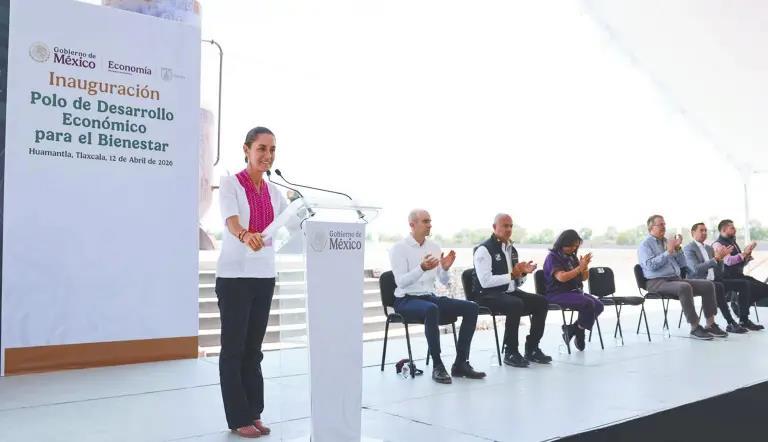
President Claudia Sheinbaum inaugurated the country’s first Economic Development Hub in Tlaxcala, marking a key step in the federal government’s strategy to decentralize investment and boost regional growth under Plan Mexico. The project involves more than $540 million in private investment and is expected to generate over 5,000 jobs.
The hub is designed as a fully serviced industrial platform, offering infrastructure, logistics facilities, and social services to attract both domestic and foreign investors
Officials emphasized that this model will be replicated nationwide, with up to 15 hubs planned.
Source: LA JORNADA
Mexico’s Tax Administration Service (SAT) announced the appointment of Jennifer Krystel Castillo Madrid as head of the General Administration of Large Taxpayers, effective May, replacing Armando Ramírez Sánchez, who will remain within the institution in a different role
Castillo brings over 18 years of experience in public administration, with a strong legal and regulatory background Her appointment reinforces the government’s emphasis on technical expertise and regulatory enforcement in key fiscal areas
The Large Taxpayers Administration is a critical unit within the SAT, overseeing major corporate contributors that account for a significant share of federal tax revenues As such, leadership changes in this area are closely watched by the private sector, particularly amid ongoing efforts to strengthen tax collection and compliance.
The appointment suggests continuity in the current administration’s revenue strategy, which prioritizes stricter oversight of large taxpayers without introducing major structural tax reforms, while maintaining fiscal discipline in a context of broader economic uncertainty.
Sources: FORBES

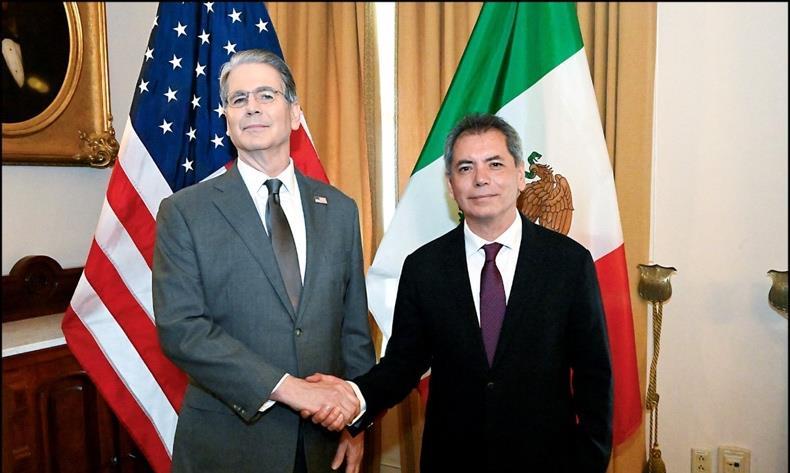
Mexico and the United States are moving forward on a bilateral strategy for critical minerals, positioning the issue as a key pillar ahead of the upcoming review of the USMCA
Officials from the U S Department of the Treasury and Mexico’s Finance Ministry recently held meetings in Washington to coordinate efforts on securing supply chains for strategic inputs.
The initiative aims to identify joint geological projects, establish coordinated pricing mechanisms, and develop regulatory standards to prevent supply disruptions Priority minerals include lithium, aluminum, cobalt, and other inputs essential for electric vehicles, semiconductors, and energy technologies The plan also contemplates closer technical cooperation and faster joint responses to potential shocks in global supply chains
This agenda reflects a broader regional push to reduce dependence on Asia and strengthen North American industrial integration Mexican authorities have emphasized that cooperation does not imply concessions over national resources, while maintaining dialogues with Canada, Japan, and South Korea.
Source: EL PAIS
Fitch Ratings affirmed Mexico’s sovereign credit rating at ‘BBB’ with a stable outlook, but flagged rising fiscal pressures and ongoing liabilities linked to Pemex as key risks. The agency estimates public debt reached 54 6% of GDP in 2025 and could exceed 58% by 2027, driven by persistent deficits, modest growth, and continued government support for the stateowned oil company
Despite these concerns, Mexico retains core credit strengths, including a diversified economy and solid external accounts However, Fitch noted that fiscal consolidation will become increasingly challenging amid limited revenue growth, expanding social spending, and constrained room to cut public investment.
Source: EXPANSIÓN
The Mexican government published new guidelines to implement fiscal incentives under the Plan Mexico, including measures to support the heavy vehicle industry. The program allows for the immediate deduction of investments in buses, cargo trucks, and tractor-trailers, aiming to accelerate fleet renewal and strengthen domestic production capacity.
To access these tax benefits, companies must comply with the requirements established in the decree and its operational guidelines. The measure reinforces the government’s strategy to promote investment, industrial upgrading, and workforce training, while aligning fiscal policy with broader goals of nearshoring and supply chain integration in North America.
Source: DOF
Decree Issuing the Regulation of the Federal Law for the Protection of Industrial Property
• Presented by: Federal Executive
• Objective: Issues the Regulation of the Federal Law for the Protection of Industrial Property, establishing provisions of public order and general application throughout the national territory Ensures its enforcement without prejudice to international treaties to which Mexico is a party, providing the regulatory framework necessary for the implementation of industrial property protections
• Status: April 15, 2026Regulatory Impact Assessment Exemption
Iniciative with Draft Decree that Reforms the Law for the Development of the Competitiveness of SMEs, on Digital Economy, Collaborative Economy and Productive Clusters
• Presented by: Deputy Ernesto Sánchez (PAN)
• Objective: Empowers the Ministry of Economy to coordinate actions with private stakeholders to support micro, small and medium enterprises, particularly in digital economy, collaborative economy, productive clusters, innovation and sustainability. Mandates a gradual increase in federal budget allocations for projects promoting digitalization, technological innovation and sustainable economic development nationwide
• Status: Published in the Parliamentary Gazette on April 14, 2026
Draft Decree that Reforms the General Government Accounting Law and the Fiscal Coordination Law, on Audit Effectiveness and Interinstitutional Cooperation
• Presented by: Chamber of Deputies Transparency and Anti-Corruption Committee
• Objective: Establishes a legal framework for coordination between the Federal Superior Audit Office and state audit entities, including creation of a national registry of federal resource data, expanded audit and investigative powers, standardized reporting obligations, and mechanisms for public complaints, strengthening oversight, transparency, and accountability in the use of federal resources
• Status: Published in the Parliamentary Gazette

• Law Degree from the Autonomous Technological Institute of Mexico (ITAM)
• Masters in Administrative and Regulatory Law from ITAM, graduated with honors
• PhD candidate in Public Administration at Universidad Anáhuac Norte, in collaboration with Sorbonne University in Paris
• Diplomas in Contracts and Tax Law, as well as studies in finance and legal auditing, focused on the prevention of corporate sanctions and offenses Executive Management Program from IPADE Business School.
• Castillo Madrid has more than 18 years of experience in the public sector, primarily in legal and administrative areas related to finance and transparency.
• From 2008 to 2010, she served as Executive Legal Director and Head of the Public Information Office at the Ministry of Finance of the former Government of the Federal District.
• Between 2010 and 2012, she held the position of Director General within the Mayor’s Office of the same government, where she also led the Public Information Office.
• From 2019 to 2024, she served as Director General of Legal Affairs at the Ministry of Administration and Finance of the Government of Mexico City, participating in the legal management of fiscal and administrative policies. During this period, Claudia Sheinbaum served as Mayor of Mexico City.
• Most recently, she served as Head of the Legal Affairs Unit at the Ministry of Energy of the Government of Mexico, further strengthening her experience at the federal level.