
September 12th, 2025

September 12th, 2025
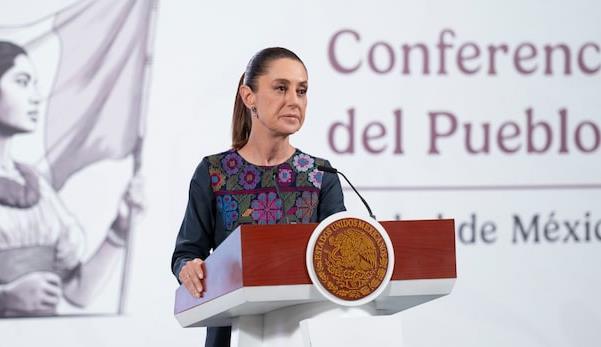
On September 9, 2025, the federal government presented an initiative in Congress for the new General Law of Tariffs for Imports and Exports, part of the 2026 Economic Package The initiative imposes tariffs on 19 key sectors, such as automotive, textiles, plastics, steel, aluminum, footwear, toys, furniture, and glass, covering over 1,400 HTS Codes and affecting roughly 8 6% of Mexico’s total imports, valued at an estimated US$52 billion The government’s official justification centers on the Plan México, which seeks to protect national industries that have lost competitiveness, promote import substitution, and strengthen domestic production On this note, President Claudia Sheinbaum emphasized that these tariffs are not designed to align with ongoing US trade negotiations, but rather respond to Mexico’s own development strategy. The tariffs are aimed at countries where Mexico has no trade agreement, thus Sheinbaum stated that they remain within World Trade Organization rules and follow consultations with key trade partners It’s very likely that if the initiative passes through the legislative process, this will enter into force 30 days after publication in the Official Gazette and remain effective until December 31st, 2026, with presidential authority to adjust tariffs as needed
Source: PARLIAMENTARY GAZETTE

2026ECONOMICPACKAGEISANNOUNCED
On September 8, the government presented the 2026 Economic Package to Congress, outlining its national priorities According to the government, the plan emphasizes fiscal responsibility while consolidating a development model centered on social rights, welfare programs, and public investment. Also, the expenditure budget shows support for social development, healthcare, and pensions, with a continued expansion of welfare programs. Investment in infrastructure and statelevel transfers also remain relevant Energy sovereignty remains key, reflected in a budget increase for PEMEX. Judicial institutions see strengthened allocations, while electoral spending is reduced New revenue measures include higher excise taxes on tobacco, sugary drinks, betting, and violent video games, paired with tariff adjustments to balance inflation control and industrial protection.
Source: MINISTRY OF FINANCE
Mexico has launched a series of unprecedented operations against huachicol fiscal (oil trafficking), resulting in historic arrests and high-level detentions. On March 31, authorities intercepted the Challenge Procyon tanker in Tampico, confiscating 10 million liters of diesel, arms, and vehicles. The case triggered nearly 50 arrests, including marines, customs officials, and businessmen Among the most significant was Vice Admiral Manuel Roberto Farías Laguna, the highest rank official detained under President Claudia Sheinbaum. Also, Security Secretary Omar García Harfuch confirmed the dismantling of networks across Tamaulipas, CDMX, Edomex, and Querétaro, showing a zero-tolerance policy despite the involvement of senior Navy and port officials.
Source: EL PAÍS

EXTRADITION ON INDIVIDUALS INVOLVED IN THE “AYOTZINAPA” CASE
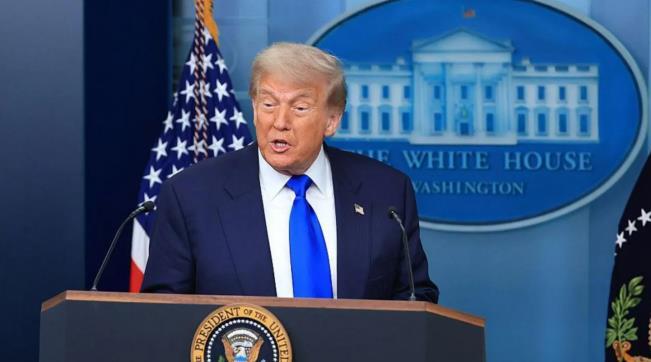
Mexico–US relations have intensified this September, marked by high-level engagement between President Claudia Sheinbaum and U S officials Ambassador Ronald Johnson highlighted that Donald Trump has spoken with Sheinbaum “more than with any other leader,” highlighting strong cooperation Additionally, Sheinbaum directly requested Rubio the extradition of two individuals linked to the 2014 Ayotzinapa case, underscoring how bilateral ties are blending security cooperation with important justice issues
Source: INFOBAE
Kevin Brosseau, Canadá’s “fentanyl czar”, and Roberto Velasco, head of Mexico’s North America Unit, met to strengthen cooperation on fentanyl and public health. The talks, held ahead of Prime Minister Mark Carney’s visit, also prepared bilateral and regional agendas on investments and North American collaboration.
Source: EL ECONOMISTA
The US Supreme Court will hear in November whether Donald Trump’s global tariffs under the International Emergency Economic Powers Act (IEEPA) were legal, after lower courts ruled he exceeded presidential authority. For Mexico, IEEPA tariffs could be seen as less permanent than Section 232 tariffs because they can be implemented quickly and without lengthy investigations, but they are also easier to overturn in court. In contrast, Section 232 tariffs, such as those on steel and aluminum, require a national security investigation before implementation, making them slower to enact but harder to legally overturn. In this sense a ruling against IEEPA tariffs could force the US to refund billions of USD, reshaping trade relations and ongoing negotiations.
Source: BBC
A US federal court ruled that Federal Reserve Governor Lisa Cook may remain in her post, dealing a setback to Donald Trump’s effort to expand White House control over the central bank. Trump sought to dismiss Cook over alleged mortgage fraud, but her lawyers argued presidents can only remove Fed governors for cause, not political disagreements. Economists warn Trump’s desire to replace Cook and secure a majority on the Fed board reflects his desire for looser monetary policy and lower interest rates. Greater presidential influence could undermine the Fed’s independence, risk higher inflation, and reshape US economic governance
Source: EL FINANCIERO
Initiative With Draft Decree To Amend Article 123 Of The Political Constitution Of The United Mexican States, Regarding Maternal And Child Care Rights Related To Maternity Leave
• Presented by: Dep. María Magdalena Rosales Cruz (Gto – MORENA)
• Objective: Extend maternity leave for women workers to 16 weeks. State congresses will have 60 days to adjust their local legislation to comply with the new provisions.
• Status: 2025-09-09 –Published in the Parliamentary Gazette
Initiative To Amend Article 63 Of The Federal Labor Law
• Presented by: Dep. Petra Romero Gómez (Plur –MORENA)
• Objective: Guarantee workers a minimum 45minute break during continuous work shifts.
• Status: 2025-09-09 –Published in the Parliamentary Gazette
Initiative With Draft Decree To Amend And Add Various Provisions Of The Federal Copyright Law, The Federal Penal Code, And The Federal Telecommunications And Broadcasting Law
• Presented by: Sen. Jesús Lucía Trasviña Waldenrath (BCS – PT)
• Objective: Establish exclusive rights over individuals’ digital personal traits including face, voice, body, and other biometric identifiers requiring prior, informed, and verifiable consent for their use, reproduction, or digital imitation.
• Status: 2025-09-09 –Published in the Parliamentary Gazette
Initiative With Draft Decree To Amend Article 74 Ter Of The Law On Roads, Bridges, And Federal Motor Transport
• Presented by: Dep. Leonicio Alfonso Morán Sánchez (Col – MORENA)
• Objective: Authorize the Ministry of National Defense, through the National Guard, to remove vehicles from circulation while in transit if they fail to meet the minimum safety standards
• Status: 2025-09-09 –Published in the Parliamentary Gazette
Initiative With Draft Decree To Amend And Add Various Provisions To The General Law On Humanities, Sciences, Technologies, And Innovation, Regarding Artificial Intelligence
• Presented by: Dep. Anayeli Muñoz Moreno (Plur – MC)
• Objective: Define Artificial Intelligence as any system exhibiting intelligent behavior by analyzing its environment and acting autonomously to achieve specific objectives.
• Status: 2025-09-09 –Published in the Parliamentary Gazette
Initiative With Draft Decree To Repeal Sections Of Articles 2 And 2-a Of The Special Tax On Production And Services Law
• Presented by: Sen. Imelda Margarita Sanmiguel Sánchez (Tamps – PAN)
• Objective: Repeal the rates and fees of the Special Tax on Production and Services (IEPS) applied to the sale or import of automotive fuels and fossil fuels.
• Status: 2025-09-09 –Published in the Parliamentary Gazette