



March 6th , 2026
March 6th , 2026
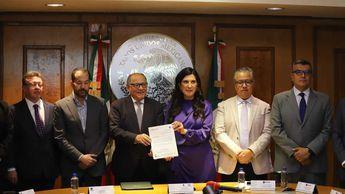
The Chamber of Deputies received the electoral reform initiative submitted by President Sheinbaum
The proposal would reduce the Senate from 128 to 96 members by eliminating the 32 proportional representation seats, and in the Chamber of Deputies, the total number of seats would remain at 500, but the 200 proportional representation deputies would be elected through direct voting.
The initiative also proposes a 25% reduction in public funding for political parties, stronger financial oversight and new rules regarding content generated with artificial intelligence. The reform has been referred to congressional committees for analysis
The proposal faces political resistance both from the opposition and the members of the governing coalition (the Labor Party (PT) and the Green Party (PVEM)), as they are concerned over the elimination of proportional representation mechanisms that are central to their political representation
This represents the first major legislative initiative presented by president Sheinbaum that lacks unified backing from her governing coalition While it does not immediately threaten the stability of the administration, it could expose early fractures within the ruling alliance and complicate the passage of future constitutional reforms that require a qualified majority The episode may also test Morena’s ability to maintain coordination with its traditional allies ahead of the 2027 electoral cycle.
Source: MILENIO

The Office of the US Trade Representative released President Trump’s 2026 Trade Policy Agenda and 2025 Annual Report to Congress, outlining the administration’s trade priorities for the year. Delivered by Trade Representative Jamieson Greer, the report highlights six core priorities: negotiating new reciprocal trade agreements, enforcing existing trade rules, securing supply chains for critical minerals, managing trade relations with China, strengthening U.S. engagement in multilateral trade institutions, and conducting the mandatory review of the USMCA. While the document signals that the administration will continue emphasizing its “America First” trade approach, it also signals openness towards the USMCA’s negotiation.
Source: USTR
On March 16th , the governments of Mexico and U.S. will launch the first round of bilateral discussions ahead of the Joint Review of the USMCA, marking the initial step toward the formal treaty review According to both governments, discussions will focus on measures to ensure that the agreement’s benefits primarily accrue to North American partners, with key topics like reducing dependence on imports from third regions, strengthening rules of origin, and reinforcing regional supply chain security
In parallel, 69 U.S. industry associations sent a letter to the USTR expressing strong support for extending the agreement, signaling that a large segment of the American private sector views the treaty as essential for regional economic stability and competitiveness This suggests that economic stakeholders in both countries are likely to advocate for continuity and stability in the agreement, limiting the probability of major structural changes.
Source: MINISTRY OF ECONOMY

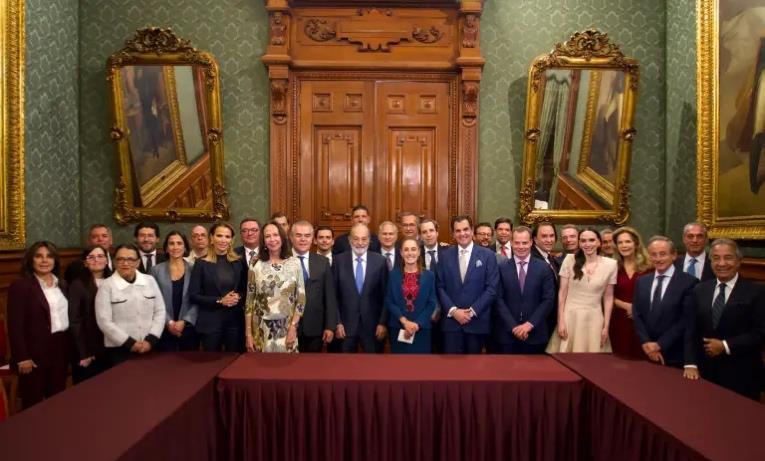
President Claudia Sheinbaum met with members of the National Investment Council to review progress on Plan México The meeting brought together senior officials and leading business figures, as part of ongoing efforts to coordinate public and private investment priorities.
The council serves as a formal platform for dialogue between the federal government and the private sector to promote and monitor investment projects across strategic sectors such as infrastructure, energy, services, and industrial development. The government expects Plan México to significantly boost investment levels, potentially increasing total investment by up to 15 percentage points of GDP by 2030 through policies aimed at strengthening domestic production, energy and food sovereignty, and technological capabilities
In todays’ complex geopolitical environment, the meeting also signals efforts from the administration in seeking to reinforce investor confidence and maintain momentum in attracting private capital to support Mexico’s long-term economic growth strategy
Source: EL ECONOMISTA
Mexico’s Secretary of Economy suspended the import activities of 350 companies linked to the steel sector and initiated procedures to cancel their participation in the IMMEX Program after identifying alleged irregularities. The measure follows a verification process reviewing companies involved in the manufacturing and commercialization of steel products and compliance with rules of origin for foreign producers exporting to Mexico Authorities reported that 750 firms were initially flagged for potentially irregular operations Of those, 350 have already been suspended, while the remaining are undergoing information requests. The decision reflects the government’s efforts to prevent the misuse of trade facilitation mechanisms, to demonstrate regulatory credibility ahead of the upcoming review of the USMCA.
Source: FORBES
During the Americas Counter Cartel Conference, U.S. Defense Secretary Pete Hegseth warned that the Trump administration could carry out offensive military operations against drug cartels in Latin America without the consent of local governments if regional cooperation on security does not increase.
For Mexico, the remarks could add pressure to bilateral security cooperation and potentially heighten political sensitivities around sovereignty. The absence of Mexican officials suggests caution from the government of Sheinbaum, although, so far, the security cooperation between the countries has been label as successful by both mandatories Nonetheless, the rhetoric reflects growing domestic pressure in the United States to address the fentanyl crisis and migration flows, which could translate into tougher expectations for Mexico ahead of key bilateral discussions on security and trade.
Source: EXCELSIOR
Initiative with Draft Decree Amending, the Constitution on Electoral Matters
• Presented by: Federal Executive
• Objective: Proposes reducing public financing for political parties, shortening broadcast time allocated to electoral authorities, and regulating the use of artificial intelligence in electoral content through mandatory labeling It strengthens rules against foreign or illicit funding, promotes digital participation in popular consultations, modifies proportional representation in the Chamber of Deputies, eliminates proportional representation seats in the Senate, and establishes mechanisms to safeguard electoral integrity through coordination between security, justice, and electoral authorities
• Status: Referred to Joint Committees for analysis on March 4, 2026
Decree Amending Article 123 of the Constitution on Reduction of Working Hours
• Presented by: Federal Executive
• Objective: This reform establishes a forty-hour workweek and guarantees at least one paid rest day for every six days worked It limits overtime to twelve hours per week, and prohibits overtime work for minors The reform includes a gradual implementation schedule between 2026 and 2030.
• Status: Published in the Oficial Gazzette of the Federation on March 4, 2026
Decree Amending The General Law On Women’s Access To A Life Free Of Violence
• Presented by: United Comissions for Gender Equality and Legislative Studies
• Objective: Establishes that paying a lower salary for equal work within the same workplace due to gender constitutes workplace violence. It strengthens the legal framework to address gender-based discrimination in employment and reinforces protections for women to ensure equal pay and fair labor conditions.
• Status: Published in the Parliamentary Gazette on March 4, 2026
Initiative with Draft Decree Adding Article 132 Bis to the Federal Labor Law on Labor Guarantees for Large Companies
• Presented by: Sen Olga Patricia Sosa Ruiz (MORENA)
• Objective: It requires companies with more than 250 employees to establish and maintain a financial guarantee mechanism to ensure compliance with labor obligations in cases of collective termination resulting from permanent closure or suspension of operations The guarantee must cover at least three months of salary per worker
• Status: Published in the Parliamentary Gazette on March 3, 2026
