• A recent ruling by the Supreme Court of the US striking down President Trump’s global tariffs under the International Emergency Economic Powers Act (IEEPA) represents a significant legal constraint on unilateral executive trade authority. The court determined that the statute did not authorize the president to impose sweeping tariffs without congressional approval, invalidating a major component of Trump’s tariff framework.
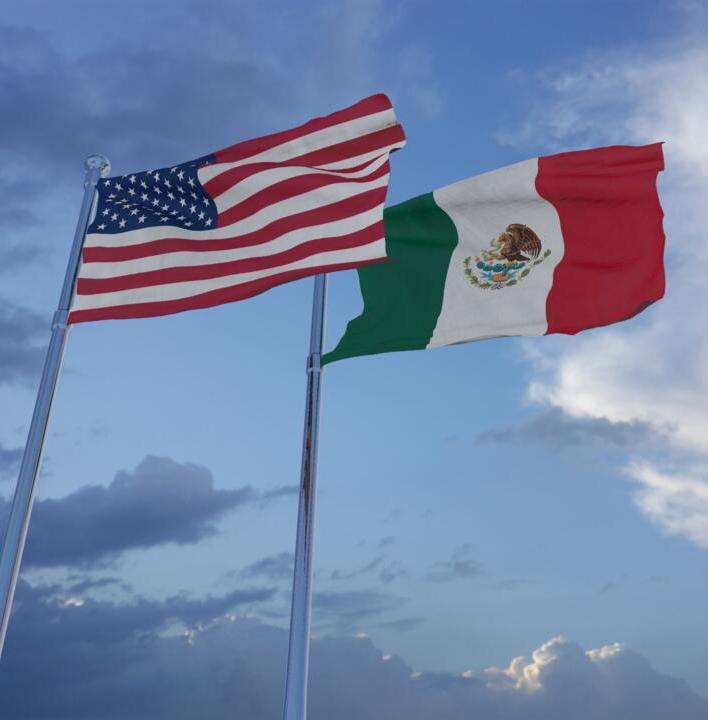
• However, the administration quickly replaced the tariffs with a temporary 10% duty under Section 122 of the Trade Act of 1974. Most Mexican exports that qualify under USMCA remain exempt, preserving Mexico’s preferential access relative to non-USMCA countries. This outcome reinforces Mexico’s structural advantage as a core North American manufacturing partner.
• Nevertheless, the shift reduces Mexico’s relative tariff advantage to other countries compared to previous conditions, as non-USMCA goods from Mexico now face the new tariff. The ruling also introduces uncertainty regarding future trade policy tools, ongoing bilateral agreements, and tariff-based incentives.
SOURCE: NEY YORK TIMES, CNBC
- MEXICO
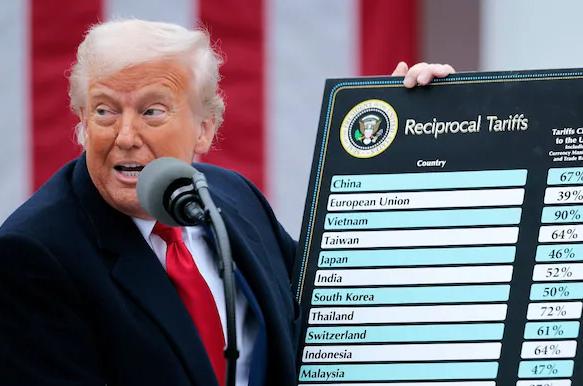
• President Donald Trump used his State of the Union address to center his political narrative on economic recovery, immigration enforcement, and electoral positioning ahead of the November midterm elections.
• For Mexico, Trump’s renewed emphasis on tariffs, domestic manufacturing, and immigration enforcement reinforces structural uncertainty ahead of the USMCA review. His continued framing of tariffs as both an economic and fiscal instrument, even after the SCOTUS ruling, suggests they will remain central to his trade strategy. The increasingly politicized nature of trade policy means Mexico’s economic relationship with the U.S. will continue to depend not only on market fundamentals, but also on Mexico’s alignment with U.S. geopolitical and domestic political objectives.
SOURCE: FORBES
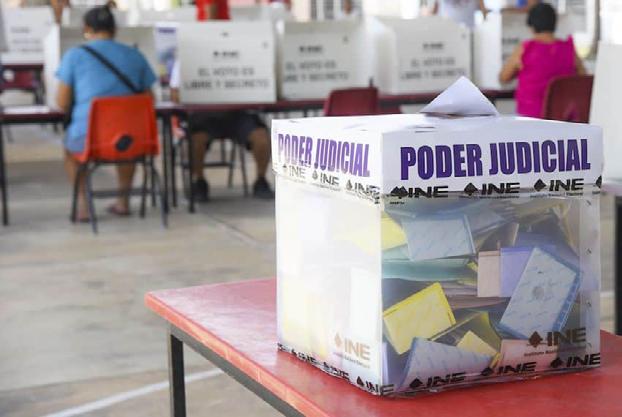
• President Sheinbaum confirmed she will submit to Congress the Electoral Reform next Monday without modifications. The initiative seeks to reduce public funding for political parties, eliminate proportional representation seats in the Senate, and modify the selection mechanism for proportional representation deputies. The Green Party (PVEM) and the Labor Party (PT), key MORENA partners, have expressed opposition, as it plays a central role in their political survival. Its approval is unlikely considering that Constitutional reforms require a qualified majority, making unified coalition support essential for approval. Sheinbaum acknowledged these divisions but stated that the reform fulfills a political commitment, regardless of its legislative outcome.
• Separately, the reform reducing the workweek to 40 hours has now been approved by the required 17 state legislatures and has been sent to the Executive for publication in the Official Gazette, which will formally enact the measure and conclude its legislative process.
SOURCES: LA JORNADA
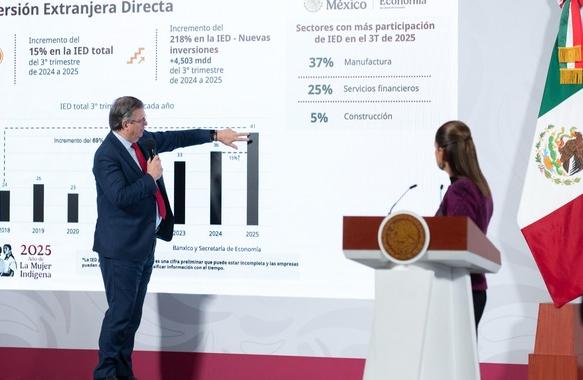
• Mexico recorded a historic inflow of $40.9 billion in foreign direct investment (FDI) in 2025, representing a 10.8 percent annual increase, according to the Ministry of Economy. The growth was driven primarily by new investments, which surged 133 percent year-over-year, increasing their share of total FDI from 8.6 to 18%. This expansion highlights Mexico’s ability to attract fresh capital linked to advanced manufacturing, technology adoption, and supply chain relocation.
• North America remained the dominant source of capital, with the United States contributing 38.8 percent of total inflows and Canada 8.1 percent, reinforcing Mexico’s strategic integration under the USMCA. Geographically, Mexico City captured 54.8 percent of total FDI, followed by Nuevo León and the State of Mexico, underscoring the concentration of investment in major economic and industrial hubs.
SOURCE: EL FINANCIERO
• NITIATIVE TO AMEND THE LAW ON ROADS, BRIDGES, AND FEDERAL MOTOR TRANSPORT REGARDING DOUBLE-TRAILER TRUCK COMPLIANCE
Presented by: Dip. Alberto Maldonado Chavarin (MORENA)
Objective: inspect highways to ensure cargo transport companies, particularly double-trailer trucks, comply with official safety standards. It authorizes sanctions or permit revocation for noncompliance, strengthening enforcement, improving road safety, and ensuring adherence to technical regulations governing federal motor carrier operations throughout Mexico nationwide system.
Status: Presented to the Plenary on February 11, 2026

• DECREE AMENDING ARTICLE 123 OF THE CONSTITUTION REGARDING REDUCTION OF WORKING HOURS
Presented by: Chamer of Deputies
Objective: Establishes a forty-hour workweek with at least one paid rest day per six worked, limits overtime to twelve weekly hours, prohibits overtime for minors, mandates gradual reduction from 2026 to 2030, requiring secondary legislation reforms within ninety days.
Status: Approved by Local Congresses on February 26, awaiting publication in the Official Gazette (DOF)
ENVIRONMENT
• INITIATIVE TO AMEND THE NATIONAL WATER LAW ON WATER SECURITY DURING DROUGHTS
Presented by: Sen. Luis Donaldo Colosio Riojas (MC)
Objective: Strengthens water security by mandating drought prevention and mitigation programs, early warning systems, and emergency protocols. It prioritizes domestic and urban water use during shortages and authorizes reductions for other sectors.
Status: Published in the Parliamentary Gazette on February 24, 2026
• POINT OF AGREEMENT ON ENVIRONMENTALLY RESPONSIBLE MANAGEMENT OF ELECTRONIC WASTE
Presented by: PRI Parlamentay Group
Objective: It seeks to promote responsible disposal, reduce environmental harm, and strengthen regulatory and institutional actions addressing growing volumes of discarded electronic devices, supporting environmental protection, circular economy practices, and public participation nationwide.
Status: Published in the Parliamentary Gazette on February 24, 2026



Roberto Lyle Fritch was unanimously reelected for a second term as president of the Tijuana Business Coordinating Council (CCE), reaffirming the private sector’s confidence in his leadership and strategic agenda. During the annual assembly, Lyle outlined key priorities for the upcoming term, including strengthening regional competitiveness, securing the extension of the employment subsidy program to border states, advancing business professionalization through Artificial Intelligence initiatives, and reinforcing public security efforts. He announced two specialized AI workshops for 2026 targeting manufacturing, medical, and tourism sectors, and confirmed the continuation of Expo Franquicias Norte to promote formal investment. Lyle also highlighted progress in improving Baja California’s competitiveness ranking and expanding police academy enrollment, emphasizing that the overarching goal is to consolidate a business environment defined by security, innovation, economic certainty, and sustained investment growth in Tijuana.
SOURCE : INDUSTRIAL NEWS BC


Governor Maru Campos announced a historic 5 billion pesos public works investment for 2026—the largest annual infrastructure allocation in Chihuahua’s history—during her Fourth State of the State Address, with nearly 1 billion pesos to be executed alongside municipalities. Major projects include overpasses, road expansions, water infrastructure, hospital upgrades, and urban renovations across Chihuahua City, Ciudad Juárez, Parral, Delicias, and other municipalities. Beyond infrastructure, she highlighted strategic economic initiatives such as PROVEE+, a program designed to integrate local companies into global supply chains, and Talento STEM, which aligns education with the needs of advanced industries. Expanded SME financing through Impulso NAFIN will further strengthen local business capacity. Campos also underscored progress in healthcare through MediChihuahua, food security through NutriChihuahua, and an 18% reduction in homicides, framing her administration’s focus on security, competitiveness, human-centered governance, and stronger integration into global production networks to sustain investment and long-term growth.
SOURCE: GOVERNMENT OF CHIHUAHUA

The opening of the first phase of the Juárez–Pesquería Bypass in Nuevo León is already positioning the eastern corridor of the state as a new industrial growth hub. Governor Samuel García inaugurated the initial 11.6-kilometer stretch connecting the Periférico to Avenida Ruiz Cortines, a project expected to significantly improve mobility and attract investment. Authorities report that at least 20 companies have expressed interest in establishing operations in Juárez, with expectations that the municipality will consolidate as a strategic
industrial node within the next 18 months. The second phase will extend the road to the industrial zone and Pesquería’s manufacturing cluster, with state officials openly inviting multinational firms to invest, highlighting tax incentives and improved logistics connectivity. Local leaders emphasize that the infrastructure will not only drive industrial expansion but also boost employment, wages, housing development, and regional economic spillover, transforming what was once an underserved area into a competitive investment destination.
SOURCE: MEXICO INDUSTRY


Fibra Mty announced the acquisition of a Class A industrial property in Guanajuato as part of a US$99.7 million sale-leaseback portfolio transaction, reinforcing the state’s strategic role in Mexico’s industrial and export manufacturing landscape. The Guanajuato asset is fully occupied and integrated into the seller’s logistics and manufacturing network, supporting both domestic production and international distribution. The combined portfolio totals approximately 88,000 m² of gross leasable area on 440,000 m² of land—more than half of which is reserved for future expansion—highlighting long-term operational confidence in the location. Simultaneously with the acquisition, Fibra Mty signed a 15-year U.S. dollar-denominated triple-net (NNN) lease with CPI-linked annual increases, underscoring the asset’s stability and predictable cash flow. The transaction is expected to generate approximately US$7.6 million in annual NOI during the first year and further consolidates Guanajuato’s position as a prime industrial hub attracting institutional real estate investment tied to global manufacturing supply chains.
SOURCE: CLUSTER INDUSTRIAL


The Querétaro Plastics Cluster marked its 10th anniversary with the appointment of François Ouellet as its new president, reinforcing the industry’s strategic role within the state’s manufacturing ecosystem. The cluster brings together 121 members and supports a sector composed of 235 plastics companies, serving key industries such as automotive, aerospace, chemicals, logistics, appliances, and agribusiness. Querétaro has positioned itself as a national leader in molds and injection molding, generating 35% of Mexico’s injection mold volume and 40% of its total value—equivalent to more than US$240 million—while 40 mold and die companies in the state account for 25% of the national industry’s value. The cluster continues to strengthen supplier development and specialized human capital through certifications, technical training, and diploma programs in mold design, maintenance, metrology, and material quality, while also promoting innovation and circular economy initiatives to enhance competitiveness and integration into high-value supply chains.
SOURCE: MEXICO INDUSTRY


• The government of Ciudad de México is promoting the southern region—particularly Tlalpan and Xochimilco—as a pharmaceutical, biotechnology, and health sciences industrial hub, aligned with President Claudia Sheinbaum’s Plan México.
• According to the local Ministry of Economic Development, the area combines key assets, including the country’s largest concentration of scientific talent, a robust network of specialized hospitals, and an established pharmaceutical manufacturing base transitioning toward high-value biologics.
• Recent investments reinforce this positioning. Boehringer Ingelheim invested MXN 3.5 billion to expand its Xochimilco facility, while Astellas Pharma inaugurated a Global Capability Center. Domestic firms, including Neolpharma and Sanfer, also maintain operations in the region. These developments occur amid global supply chain realignments, as U.S. efforts to reduce dependence on China create opportunities for Mexico to expand pharmaceutical manufacturing.
SOURCE: EL ECONOMISTA

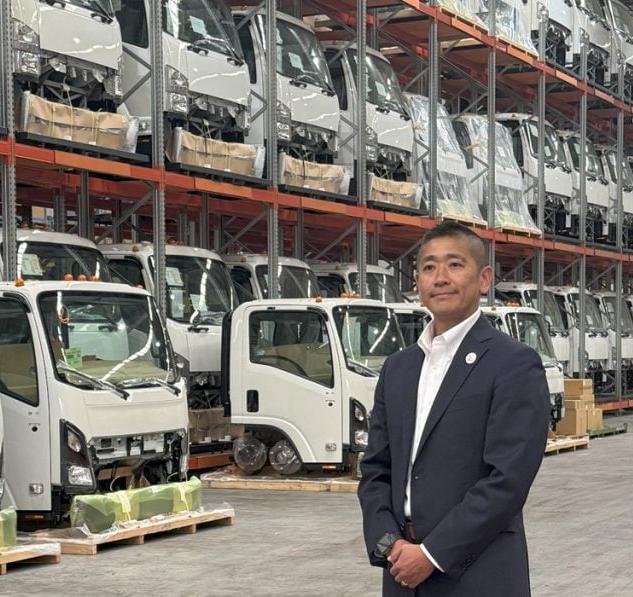
• Japanese truckmaker Isuzu will begin expanding its plant in the State of México this year, increasing its size and capacity by roughly 80 percent to meet rising domestic demand. The project aims to strengthen assembly lines and internal infrastructure, with output projected to reach 3,000 units annually by 2030—double last year’s production.
• According to company executives, the strategy prioritizes profitability and aftersales capacity across its 34-dealer network rather than aggressive dealership expansion. Isuzu targets annual sales of 10,000 units by 2030, supported by entry into higher-volume segments and new product launches.
• The expansion follows regulatory changes under NOM-044, which tightened diesel emissions standards to levels comparable with the United States, Europe, and Japan, increasing vehicle costs. Despite industry uncertainty surrounding the USMCA review, Isuzu grew 10 percent last year, selling 6,000 units. Mexico ranks among the firm’s top ten global markets, reflecting strong demand for efficient, low-emission heavy vehicles.
SOURCE: EL SOL DE MÉXICO

Leoni, a global automotive wiring-systems manufacturer, will reinvest MXN 196.2 million (≈ US$11 million) to expand its plant in Durango for the production of wiring harnesses used in electric and autonomous vehicles. The project will add 14 production lines and generate 500 direct jobs between 2026 and 2027, strengthening the state’s role in the electromobility supply chain.
Fibra Mty, a Mexican industrial real estate investment trust (REIT), will invest US$99.7 million to acquire an industrial portfolio in Coahuila and Guanajuato. The transaction includes two fully occupied Class-A facilities totaling about 88,000 m², reinforcing the company’s strategy to expand its industrial asset base in key manufacturing corridors.
Samtech, a Japanese automotive components manufacturer, will invest US$20 million to expand its plant in León, Guanajuato. The project will create 30 new jobs and strengthen production of forged auto parts such as hub bearings, reinforcing the region’s automotive supply chain.
Flex, a global advanced electronics and manufacturing solutions provider, expanded its plant in Aguascalientes, integrating metal processing, plastic injection, electronic boards, and electromechanical assembly. The complex already employs more than 5,000 workers and strengthens the state’s position as a hub for robotics and advanced manufacturing.
SOURCES: MEXICO INDUSTRY, CLUSTER INDUSTRIAL, MEXICO NOW