Prodensa Weekly Manufacturing Report Mexico March 25, 2026
US - MEXICO PRESIDENTIAL NEWS
Electoral “Plan B” Reform Presentation
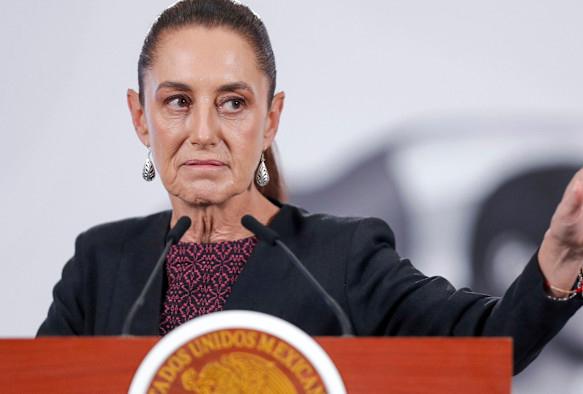
• Mexico’s Senate received President Claudia Sheinbaum’s electoral “Plan B” reform, following the rejection of her initial constitutional proposal. The proposal will now follow the ordinary legislative process in the Senate.
• The initiative seeks to reduce political and electoral costs by capping salaries of party leaders and electoral authorities, strengthening financial oversight of campaign resources, and introducing austerity measures across the National Electoral Institute. It also includes gradual budget reductions for the Senate and tighter controls on public spending.
• The shift to a “Plan B” strategy reflects a pragmatic adjustment by the administration to secure legislative approval after failing to maintain full coalition support.
SOURCE: EL ECONOMISTA
Anual Banking Convention
• Mexico’s 89th Banking Convention began in Cancún, bringing together more than 1,200 financial leaders alongside top government officials to discuss macroeconomic conditions, financial regulation, and digitalization.
• The event serves as the country’s leading annual forum for coordination between the financial sector and policymakers.
• The convention has featured the participation of key authorities, including President Claudia Sheinbaum, Finance Minister Édgar Amador Zamora, and Central Bank Governor Victoria Rodríguez Ceja, underscoring the strategic importance of the banking sector for economic policy.
• Discussions have focused on expanding access to financing, strengthening financial inclusion, and supporting productive investment.
• During the inauguration, Sheinbaum called on banks to increase lending and welcomed commitments from the banking sector to raise credit levels from 38% to 45% of GDP. The president also pointed to ongoing USMCA negotiations as a positive signal, despite a more complex global environment.
SOURCE: EL UNIVERSAL
MEXICO
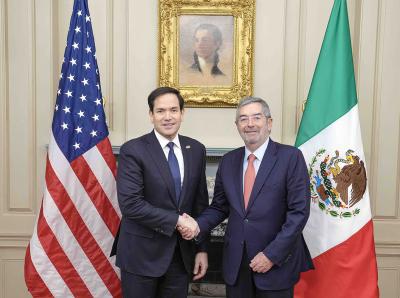
Mexico-US Security Cooperation
• Mexico’s Ministry of Foreign Relations (SRE) issued a statement underscoring that bilateral security cooperation with the United States is grounded in respect for sovereignty, shared responsibility, mutual trust, and cooperation without subordination. The document emphasized that the relationship has reached historically high levels of collaboration, particularly in addressing drug and arms trafficking challenges affecting both countries. This reinforces Mexico’s position amid recent U.S. rhetoric on unilateral security actions, signaling that while bilateral cooperation remains strong and results-oriented, the government will continue to prioritize sovereignty and institutional control over any joint security efforts.
SOURCE: FOREIGN AFFAIRS MINISTRY
Mexico to Deploy Business Mission to Canada
• Mexico’s Ministry of Economy announced that a business delegation will travel to Canada in May to strengthen trade and investment ties across key sectors. The mission, scheduled for May 7–9, will focus on building commercial partnerships, technological collaboration, and new investment opportunities.
• Secretary of Economy, Marcelo Ebrard, stated that the initiative follows recent agreements between President Claudia Sheinbaum and Canadian Prime Minister Mark Carney, and is intended to reciprocate a recent Canadian business delegation visit to Mexico. The government aims to ensure broad participation from Mexican companies of all sizes, with applications open through mid-April.
• This reflects Mexico’s intentions to continue reinforcing trade relationships with Canada ahead of the upcoming USMCA review.
SOURCE: EL ECONOMISTA
LEGISLATIVE CHANGES AND INITIATIVES
ENVIRONMENTAL
• INITIATIVE WITH DRAFT DECREE AMENDING THE LAW OF BUSINESS CHAMBERS AND THEIR CONFEDERATIONS
Presented by: Sen. Maki Esther Ortiz (PVEM)
Objective: This initiative incorporates circular economy principles and extended producer responsibility into the framework governing business chambers. It mandates these organizations to promote sustainable practices among their members and enables the use of national business information systems to support data collection, traceability, and dissemination related to circular economy initiatives.
Status: Published in the Parliamentary Gazette on March 18, 2026
• INITIATIVE WITH DRAFT DECREE AMENDING THE LAW TO PROMOTE SUSTAINED PRODUCTIVITY AND COMPETITIVENESS OF THE NATIONAL ECONOMY
Presented by: Sen. Maki Esther Ortiz (PVEM)
Objective: Introduces a national policy to promote economic development through the adoption of circular economy principles.
Status: Published in the Parliamentary Gazette on March 18, 2026
LEGISLATIVE CHANGES AND INITIATIVES
PUBLIC ADMINISTRATION
• INITIATIVE AMENDING THE CONSTITUTION TO REDUCE PRIVILEGES AND STRENGTHEN RECALL ELECTIONS
Presented by: Federal Executive
Objective: This reform strengthens citizens’ right to participate in presidential recall elections, establishes clear timelines and voting procedures, and prohibits the use of public resources or government propaganda in such processes. It also introduces limits on local legislative budgets and regulates municipal governance structures.
Status: Published in the Parliamentary Gazette on March 17, 2026
• INITIATIVE WITH DRAFT DECREE AMENDING THE GENERAL LAW OF ELECTORAL INSTITUTIONS
Presented by: Federal Executive
Objective: The initiative mandates financial authorities to share timely information with the electoral authority for oversight purposes, including financial operations and assets of political actors. It also establishes earlier initiation of vote counts and imposes strict limits on compensation and benefits for electoral officials.
Status: Published in the Parliamentary Gazette on March 17, 2026
• INITIATIVE WITH DRAFT DECREE AMENDING THE GENERAL LAW OF POLITICAL PARTIES
Presented by: Federal Executive
Objective: This reform enhances transparency and accountability by requiring political parties to disclose all compensation paid to their members and staff on a quarterly basis. It strengthens financial oversight by mandating full reporting of income and expenditures, prohibiting illicit or foreign funding.
Status: Published in the Parliamentary Gazette on March 17, 2026
• INITIATIVE ENACTING THE LAW FOR PROMOTING INVESTMENT IN STRATEGIC INFRASTRUCTURE FOR DEVELOPMENT
Presented by: Federal Executive
Objective: Establishes a legal framework to regulate investments in strategic infrastructure projects. It regulates strategic investment contracts, and establishes a permanent advisory council to define technical criteria and provide recommendations to guide infrastructure development and long-term economic planning.
Status: Published in the Parliamentary Gazette on March 19, 2026
NEWS BY STATE BAJA CALIFORNIA
The Business Coordinating Council (CCE) of Tijuana supported the creation of the Investment Promotion Committee as a strategy to strengthen capital attraction and improve competitiveness through collaboration between government and the private sector; however, it warned about a growing loss of companies—around 800 per month—driven by factors such as increased taxes, wages, and labor costs, as well as a lack of incentives and fiscal updates, which has weakened Baja California’s competitiveness, particularly for SMEs, highlighting the need to create conditions that not only attract new investment but also enable existing companies to remain, grow, and generate formal employment.
SOURCE: INDUSTRIAL NEWS BC
NEWS BY STATE
CHIHUAHUA
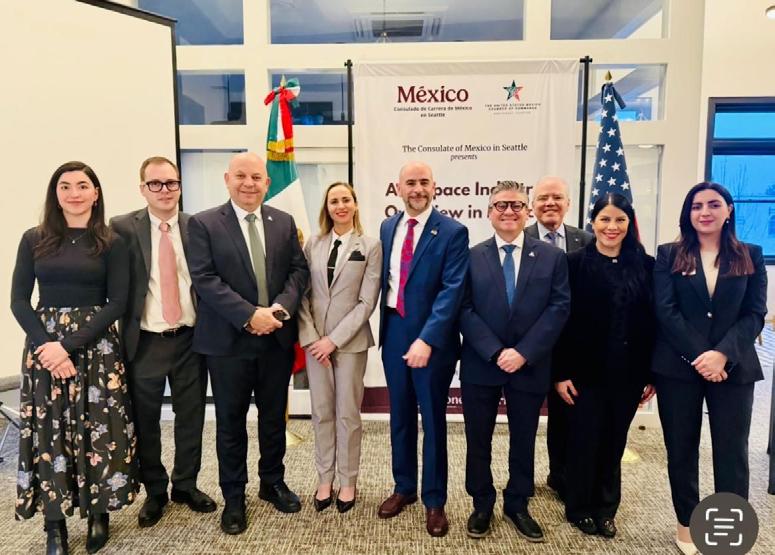
Chihuahua’s aerospace cluster is entering a new phase after nearly two decades of development, redefining its strategy with a focus on innovation, supplier integration, and multisector collaboration to strengthen its position within the global aerospace industry. During a strategic event that brought together industry leaders, academia, and government, the cluster highlighted its success in building specialized capabilities, attracting investment, and integrating into global value chains through strong cross-sector collaboration, while also emphasizing the importance of its binational ties with the U.S. The unveiling of a new institutional identity signals a renewed commitment to organizational consolidation, technological advancement, and the incorporation of new suppliers, reinforcing Chihuahua’s role as a key hub for advanced manufacturing in Mexico.
SOURCE: EL DIARIO DE CHIHUAHUA
NEWS BY STATE SONORA
Sonora is positioning itself to join the global semiconductor supply chain amid a wave of nearshoring and ongoing U.S.-China trade tensions, which are driving companies to relocate operations closer to North America. With its strategic location, technical capabilities, and proximity to new semiconductor plants in Arizona, the state has strong potential to attract investment and become a key supplier to major industry players like Intel, Samsung, and TSMC. Experts highlight that thousands of suppliers supporting these companies may seek to establish operations nearby, making Sonora a highly viable hub, while ongoing efforts—including academic research and regional forums—aim to guide businesses and institutions in capitalizing on this significant economic opportunity.
SOURCE: EXPRESO
NEWS BY STATE
NUEVO
LEON
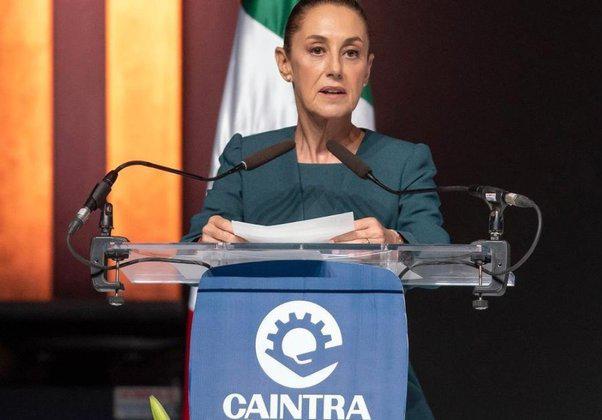
Claudia Sheinbaum visits Monterrey to attend the 82nd Annual CAINTRA Assembly, one of the most important gatherings for the industrial sector in northern Mexico. The event will bring together business leaders and government officials, including Samuel García, to discuss key issues such as road security and energy infrastructure, while also serving as a platform to review industry performance and recognize companies for their social responsibility and achievements, highlighting the ongoing collaboration between the private sector and government.
SOURCE: CONSULTA MONTERREY
NEWS BY STATE SAN LUIS POTOSI
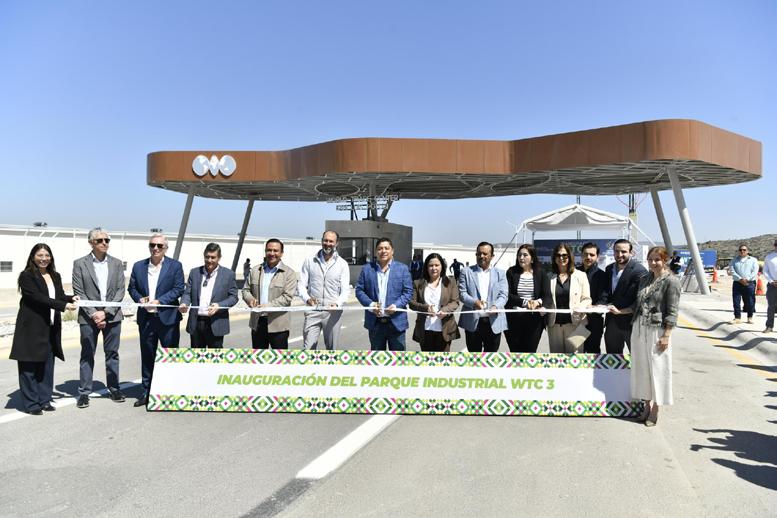
San Luis Potosí strengthened its industrial and logistics capacity with the inauguration of the World Trade Center Industrial Park 3, a 93-hectare complex developed by Grupo Valoran and strategically located to enhance regional distribution and connectivity. The project responds to growing demand driven by nearshoring and reinforces the state’s position within the Bajío industrial corridor, offering direct access to key transport routes and infrastructure designed for efficient operations. Supported by collaboration between government and private sector, and aligned with national initiatives like Plan México, the park has already attracted companies such as Coppel and Tiendas 3B, positioning it as a key logistics hub for central and northern Mexico while boosting investment attraction and supply chain development.
SOURCE: CLUSTER INDUSTRIAL
NEWS BY STATE
QUERETARO
CANACINTRA Querétaro has entered a new phase with the swearing-in of its 2026–2027 Board of Directors, led by Alfredo Sahagún Sánchez, at a pivotal moment for the state’s industrial consolidation. Representing thousands of companies, the organization highlighted Querétaro’s strong performance, including over 30 billion pesos in investment, 53 new projects, and more than 10,000 jobs created in 2025, alongside monthly exports exceeding $1.5 billion. These results reflect effective collaboration between industry, academia, and government, positioning the state as a leader in advanced manufacturing. Moving forward, CANACINTRA aims to strengthen coordination among stakeholders while promoting a more technological, sustainable, and competitive industrial sector, capitalizing on opportunities driven by nearshoring and global supply chain shifts.
SOURCE: MEXICO INDUSTRY
NEWS BY STATE
MEXICO CITY
• Mexico City consolidated its position as the leading destination for new foreign direct investment (FDI) in 2025, attracting USD 3.6 billion, equivalent to 48.8% of total new inflows nationwide, according to the Ministry of Economy. This concentration highlights the capital’s central role as a financial and corporate hub, where many multinational firms establish their fiscal headquarters.
• Despite the strong inflow, much of this investment is linked to corporate domiciles rather than physical production, which is often located in other states.
• Nationally, new FDI reached USD 7.4 billion, a 132.8% annual increase, though it still represents a relatively low share of total FDI compared to historical levels.
• The data underscores a growing regional disparity in investment attraction, with Mexico City capturing a disproportionate share, reinforcing its strategic importance for corporate operations, financial services, and decision-making within Mexico’s broader economic landscape.
SOURCE: EL ECONOMISTA
NEWS BY STATE
STATE OF MEXICO
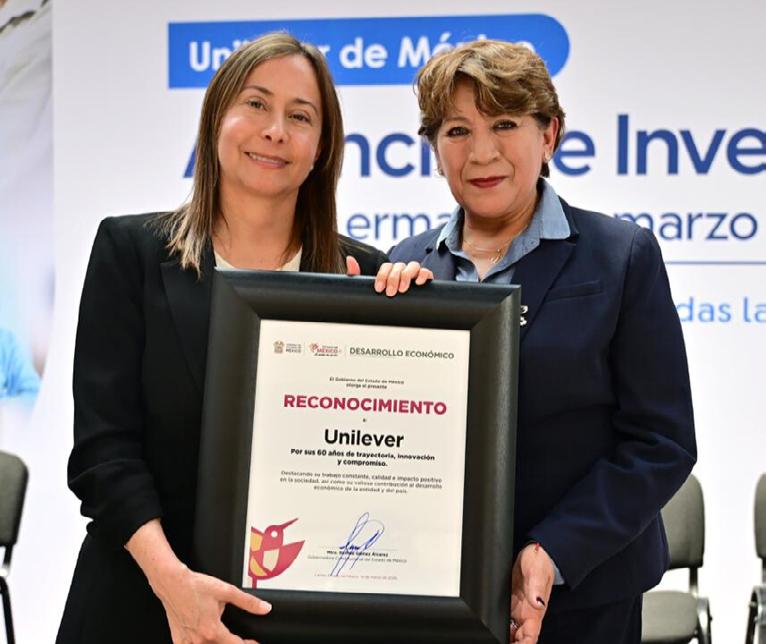
• Unilever announced a MXN 9.4 billion investment to expand its manufacturing operations in the State of Mexico, focusing on its plants in Lerma and Tultitlán. The project is part of the company’s broader MXN 30 billion investment plan unveiled in 2025 under the federal government’s industrial strategy.
• The investment will increase production capacity through new manufacturing lines, as well as the adoption of automation and digital systems to enhance process control and efficiency. Authorities highlighted that the initiative aligns with efforts to strengthen Mexico’s industrial base and attract productive capital.
• State officials noted that the State of Mexico remains a key economic hub, contributing 9.1% of national GDP and leading the food industry nationwide. The expansion reinforces the region’s role in manufacturing and supports continued job creation and supply chain development.
SOURCE: MEXICO INDUSTRY
INVESTMENT NEWS
CENTRAL MEXICO
PHOENIX CONTACT
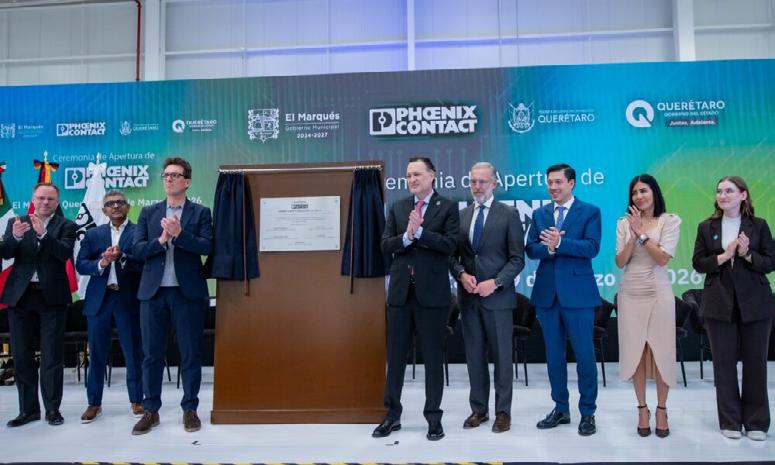
Phoenix Contact, a global electrical connectivity, industrial electronics, and automation technology company, inaugurated a new plant in Querétaro with an investment of MXN 1,623 million (≈ US$90 million). The facility will produce connectors, cables, and sensors and generate 700 specialized jobs, strengthening advanced manufacturing and North American supply chains..
APM TERMINALS
APM Terminals, a global port operations and logistics infrastructure company (part of Maersk), is investing over US$490 million to expand its terminal in Lázaro Cárdenas, Michoacán. The multi-phase project will significantly increase container-handling capacity and strengthen Mexico’s Pacific trade gateway, enhancing connectivity with Asia and North America.
UNILEVER
Unilever, a global consumer goods and food manufacturing company, announced a MXN 9,400 million (≈ US$520 million) investment to expand operations in the State of Mexico, focusing on its plants in Lerma and Tultitlán. The project will add new production lines and advanced automation systems, strengthening manufacturing capacity and operational efficiency.
BULKMATIC
Bulkmatic de México, a logistics and bulk-materials transportation company, invested over US$5 million to upgrade its distribution center in Tlalnepantla, State of Mexico. The project includes a new high-speed packaging line, enhancing operational efficiency and strengthening supply-chain capabilities for industrial sectors.
NESTLE
Nestlé, a global food and beverage manufacturer, announced a US$455 million investment to expand production and logistics operations in the State of Mexico. The plan includes US$275M for plant expansions and US$180M for a new distribution center in Zumpango, increasing capacity, automation, and supply-chain efficiency.
SOURCES: CLUSTER INDUSTRIAL, MEXICO INDUSTRY
PRODENSA INSIGHTS
Countdown to the 2026 USMCA Joint Review
The 2026 USMCA joint review is approaching and for manufacturers, it’s less about renegotiation and more about operational readiness. Enforcement trends, compliance expectations, and regional dynamics are already shaping how companies prepare.
This article breaks down what the review means in practice, where risks are increasing, and how manufacturers should be aligning their operations, documentation, and supply chains ahead of 2026.
• Why the review is an operational stress test
• Where compliance and enforcement are intensifying
• What companies should be doing now
PROSEC in Mexico: The Tariff Tool Most Manufacturers Overlook
Many manufacturers operating in Mexico overlook PROSEC, a program that can significantly reduce import tariffs and improve cost competitiveness. In an environment of shifting trade policies and rising enforcement, understanding these tools is more important than ever.
This article explains how PROSEC works, which industries can benefit, and how companies can integrate it into their broader trade and sourcing strategies while staying compliant.
• How PROSEC helps reduce tariff exposure
• Which industries benefit the most
• Why it’s critical for today’s trade environment
Mexico Is No Longer the Low-Cost Option
Mexico’s value proposition is evolving. While cost competitiveness remains important, the country is no longer defined by being the lowest-cost option— but by its role as a strategic manufacturing platform within North America.
This article explores how rising wages, talent demand, and nearshoring dynamics are reshaping cost structures—and why companies must shift their focus from cost alone to productivity, resilience, and long-term value creation.
• Why cost is no longer the main differentiator
• How nearshoring is reshaping labor and operations