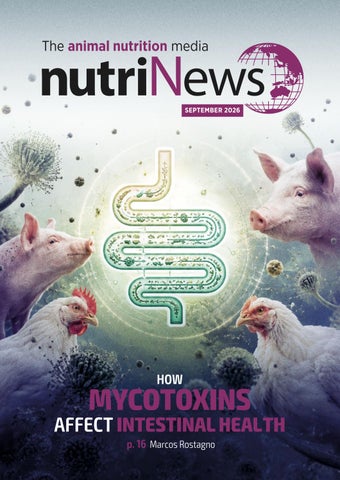
SEPTEMBER 2026
HOW
MYCOTOXINS
AFFECT INTESTINAL HEALTH p. 16 Marcos Rostagno
Who said animal nutrition was boring?
After the summer rush, the questions facing animal nutrition are becoming clearer
T
he World Cup has come and gone, summer is beginning to give way to a new season. Across the animal nutrition industry, attention is turning once again to the challenges that will shape the final months of 2026. September is a natural moment to return to routines, reflect on what the year has already taught us, and look more carefully at what lies ahead. It is therefore a fitting time to welcome readers to the third edition of nutriNews International this year. If there is one idea connecting the topics in this issue, it is that animal nutrition is becoming more precise, interconnected, and responsive to a changing production environment. Nutrition can no longer be considered separately from animal health, climate, microbiology, feed quality, economics, or sustainability. Across poultry, swine, ruminants, aquaculture, and raw materials, the direction is increasingly clear: better performance depends on understanding the system as a whole. Aquaculture provides a good example. As global seafood production expands, nutritional strategies are moving beyond supplying protein and energy alone. Functional feeds, probiotics, prebiotics, and synbiotics are becoming part of broader efforts to support gut health, resilience, and efficient production while reducing reliance on traditional antimicrobial interventions. Aquaponics takes that systems perspective even further, linking fish, nutrients, water, and plant growth within a more integrated model of food production. Gut health is equally central in terrestrial livestock. Throughout this issue, we return repeatedly to the gastrointestinal tract—not simply as a digestive system, but as an interface between nutrition, immunity, microorganisms, and performance. Mycotoxins illustrate how complex these interactions can become. Their effects may extend beyond obvious clinical signs to influence intestinal integrity, feed intake, immune competence, inflammatory responses, and susceptibility to other challenges. That connection between science and practice is especially relevant in swine production. Questions surrounding mycotoxins, intestinal health, and conditions such as ear necrosis show why modern diagnosis and nutritional management increasingly require a multifactorial perspective. A lesion may reflect a toxin, microbial challenge, behavior, environmental stress, or several factors acting together. Often, the most useful answers come from understanding those interactions rather than searching for a single cause.
Climate adds another layer. Recent summers have reinforced the importance of heat stress across livestock systems, affecting reproductive performance, feed intake, metabolic stability, and overall efficiency. At the same time, changing weather patterns also influence the crops and raw materials entering the feed chain, including the occurrence and distribution of mycotoxins. Climate resilience is therefore becoming both an animalmanagement and a feed-quality issue. Precision is also reshaping poultry nutrition. Advances in net-energy systems, modeling, nutrient transport, and precision feeding are helping nutritionists better match dietary supply with biological requirements. The focus is no longer simply on providing more nutrients, but on understanding how effectively they are absorbed, transported, and used.
ADVERTISING Luis Carrasco +(34) 605 09 05 13 lc@agrinews.es Simone Dias +(55) 11 9 85852436 nutribr@grupoagrinews.com SALES DEPARTMENT
For ruminants systems, the emphasis remains on efficiency through rumen function, microbial activity, fiber digestion, and feed utilization. In an environment where margins are often tight, improving how effectively animals convert feed into milk or meat has clear economic and environmental value. Raw-material quality underpins all of these discussions. Feed formulation is only as reliable as the ingredients behind it. Consistency, digestibility, processing quality, and mycotoxin risk all influence how accurately nutritionists can formulate and how reliably animals will respond. This September edition therefore reflects an industry that is becoming more analytical, but also more integrated. Precision feeding, intestinal health, mycotoxin management, climate resilience, raw-material consistency, functional nutrition, and sustainability are no longer separate conversations. They are increasingly different parts of the same challenge: producing more efficiently while protecting animal health and making better use of available resources. These are also many of the conversations that will come together at EuroTier, where the international livestock sector will once again meet to exchange ideas, explore new technologies, and consider how innovation can be translated into practical solutions. nutriNews International Editorial Team
EDITOR
COMMUNICATION GROUP AGRINEWS LLC
Diego Carrasco +(34) 664 66 06 05 int@grupoagrinews.com Ivan Martos +(34) 664 66 06 02 im@grupoagrinews.com
CUSTOMER SUPPORT Mercé Soler EDITORIAL STAFF Dr. Magida Corby Álvaro José Guzman
TECHNICAL DIRECTION Dr. Edgar Oviedo (Poultry) Dr. Giuseppe Carcò (Swine)
info@grupoagrinews.com nutrinews.com grupoagrinews.com Free distribution magazine AIMED AT VETERINARIANS AND TECHNICIANS
Subscription price 125$
nutriNews International Legal Deposit B15281-2024 ISSN PRINTED VERSION 2938-8910 ISSN DIGITAL VERSION 2938-8929
Images: Noun Project / Freepik/Dreamstime
1 nutriNews International September 2026
04
AQUACULTURE AND AQUAPONICS NUTRITION: HOW FISH SHAPE THE GROWTH OF GREENS
38
OImix Technical Team
Trenton L. Corby
MS in Aquaculture Aquatic Animal Nutritionist and Water Quality Specialist
12
FROM ANTIBIOTICS TO FUNCTIONAL FEEDS: PROBIOTICS, PREBIOTICS AND SYNBIOTICS AQUACULTURE PRODUCTION Babatunde Saliu
FROM 2025 DATA TO 2026 DECISIONS: MANAGING MYCOTOXIN RISK IN A CHANGING CLIMATE
46
ANTI-MYCOTOXINS TABLE-2026 UPDATE
52
Graduate Research Assistant School of Fisheries, Aquaculture, and Aquatic Sciences, Auburn University, Auburn AL
16
Alberto Morillo Alujas
DVM, PhD, Nutritionist, MSc Statistics
HOW MYCOTOXINS AFFECT INTESTINAL HEALTH? Marcos Rostagno DVM, MSc, PhD
24
MYCOTOXINS IN FEED AND PIGLETS EAR NECROSIS: CAUSAL RELATIONSHIP, COFACTORIAL ROLE, OR COINCIDENCE?
61
ALTERION® NE: CELEBRATING TEN YEARS OF SCIENCE, INNOVATION AND GUT HEALTH LEADERSHIP
MYCOTOXINS IN SWINE PRODUCTION: HEALTH EFFECTS, TECHNICAL RISK MANAGEMENT AND NUTRITIONAL SOLUTIONS Giuseppe Carcò
PhD Animal and Food Science Formulation Assistant at Carra Mangimi S.p.A
Damien Prévéraud
Agr Eng Global Product Manager Probiotics/ Antioxidants at Adisseo
30
CONSISTENCY IN SOYBEAN MEAL DRIVES PERFORMANCE AND SUSTAINABILITY USSEC
2 nutriNews International September 2026
68
SUMMER INFERTILITY IN SOWS: UNDERSTANDING THE HIDDEN IMPACT OF HEAT STRESS AND HOW TO SUPPORT REPRODUCTIVE PERFORMANCE Lallemand Technical Team
74
INTERNATIONAL SYMPOSIUM SHOWCASES THE FUTURE OF POULTRY NUTRITION THROUGH NET ENERGY, MODELING, AND PRECISION FEEDING
96
BioZyme Technical Team
Edgar O. Oviedo-Rondón
Prestage Department of Poultry Science, NC State University
82
104
IMPROVING EGG YOLK PIGMENTATION THROUGH BETTER NUTRIENT TRANSPORT: THE ROLE OF PHOSPHATIDYLCHOLINE IN MODERN LAYER NUTRITION
USE OF THE PEA AS A SUBSTITUTE FOR SOYBEAN AND THE CORN IN CALVES FOR FATTENING: EFFECTS ON THE TECHNICAL AND ECONOMIC YIELD Isabel Casasús¹, Daniel Villalba², Margalida Joy¹, Sandra Costa-Roura², Javier Ferrer¹, Mireia Blanco¹
Raul AVI
¹ Center for Agri-Food Research and Technology of Aragón (CITA) – IA2, Zaragoza ² University of Lleida
DVM MSc Technical Sales Manager at Nuproxa Group
88
AO-BIOTICS® AMAFERM®: SUPPORTING LIVESTOCK DIGESTION AND PERFORMANCE
THE SCIENCE BEHIND KOLIN PLUS: BEYOND CHOLINE REPLACEMENT Dr. Reshma R. Chandran Assistant Product Manager at Natural Remedies Private Limited
112
INTERVIEW WITH GÜNER GÖVENÇ Güner Gövenç
Production and Agricultural Engineer, Türkiye
nutrinews.com
3 nutriNews International September 2026
AQUACULTURE AND AQUAPONICS NUTRITION: HOW FISH SHAPE THE GROWTH OF GREENS
Aquaculture
Trenton L. Corby MS in Aquaculture Aquatic Animal Nutritionist and Water Quality Specialist
4 nutriNews International September 2026 | Aquaculture and Aquaponics Nutrition: How Fish Shape the Growth of Greens
INTRODUCTION TO MODERN AQUAPONICS Aquaculture is universally defined as the
As the animals naturally produce waste
culture of aquatic organisms i.e., fish,
within the rice paddies, the nutrients
shellfish (both crustaceans and bivalves),
occurring within said waste act as
reptiles (crocodilians and testudines,
fertilizers for the rice plants.
corals. Hydroponics, conversely, is the cultivation of plants utilizing nutrient rich water as opposed to more traditional farming practices, such as soil. When performed in unison, aquaponics is achieved. Aquaponics is then, by definition, the culture of both aquatic animals and plants together within adjoining systems, where one organism directly impacts the other. In theory, this is done largely through nutrients, effluence, and water chemistry, and while modern aquaponics is still in relative infancy, different forms of it can be traced back centuries.
The rice, in return, helps to “clean” the water that pools within the rice paddy, creating more favorable water conditions for the crayfish. Modern aquaponics is rarely so simple but follows the same basic principle. Aquatic organisms produce the necessary nutrients that the plants need to grow. Seldom discussed, however, are the implications in question as to how
Aquaculture
largely), amphibians, algae, and/or
commercial diets, ones offered to cultured fish and shellfish species, impact the nutrient load of the aquaponic system, as well as the nutrient acquisition of the plants.
Ancient Egypt, China, the Roman Empire, and Ancient Mexico all had varying degrees of plant cultivation that largely resemble modern aquaponics, primarily through the usage of fish waste as a nutrient source for crops. Even today in its simplest form, aquaponics is being done within rice paddies around the world, from the integration of carp in Southeast Asian rice paddies, to crayfish (or “crawfish” as they are colloquially known) as seen in the Deep South region of the United States.
5 nutriNews International September 2026 | Aquaculture and Aquaponics Nutrition: How Fish Shape the Growth of Greens
PROTEIN IN AQUAFEED AND THE IMPACT OF NITROGEN ON AQUAPONICS PRODUCE The differences in nutritional requirements vary considerably for both plants and animals. For animals,
The excreted ammonia is broken down
the primary macronutrients are defined
by naturally occurring bacteria within
as complex biomolecules: proteins,
the culture system, known as ammonia
lipids, and carbohydrates. Likewise, the
oxidizing bacteria and nitrite oxidizing
macronutrients for plants are defined
bacteria (historically known as simply
much more simply, as the elements
Nitrosomonas and Nitrobacter bacteria).
nitrogen, phosphorus, and potassium (or N-P-K as seen on fertilizers). Animal nutritionists largely follow the requirements of these nutrients when
Aquaculture
formulating a diet for an animal, just
It is through these bacteria-driven processes that ammonia is converted first into nitrite (NO2), then finally nitrate (NO3). This nitrate is what is utilized by plants as the available nitrogen
as chemists and agronomists do
source. Therefore, it would stand that
when developing fertilizer for plants.
diets formulated to contain a higher
In interconnected systems, however,
protein percentage (potentially for more
the nutritional requirements of one
carnivorous fish or for younger, larval
organism may drastically dictate the
fish) would also yield higher potential
availability of nutrients to the other.
nitrates for plants.
Proteins are composed of amino acids, which in turn are composed of
Protein sourcing has also shown
bonded atoms and elemental groups
some significance. In a study by
composed of hydrogen, carbon, oxygen,
Shaw, Knopf, and Kloas (2022),
and nitrogen. The protein level found
four diets with varying protein
in aquaculture diets directly impacts
sources were formulated for Nile
the nitrogen levels required to grow
tilapia (Oreochromis niloticus)
desired produce, with fish only being
within an aquaponics system. Two
able to metabolize 25-30% of protein
of the primary goals of the study
consumed in these diets (Dr. Khanal,
included various protein sources
Bioenergy Research Group, Hawaii).
as replacements to fishmeal in
The remaining nitrogen is excreted
aquafeed, as well as to determine
in the form of ammonia (NH3) during
aquaponics specific feed based on
metabolism.
the differing protein sources.
6 nutriNews International September 2026 | Aquaculture and Aquaponics Nutrition: How Fish Shape the Growth of Greens
The results of the study showed that fish offered the various diets grew similarly regardless of the protein choice. However, diets formulated to contain poultry byproduct meal as well as black soldier fly larvae meal resulted in the most nutrientrich RAS water. The system where the fish were offered the black soldier fly larvae meal generated one of the most favorable nutrient profiles for the plants, with
Aquaculture
significantly higher concentrations of potassium (23.88 mg/L), magnesium (20.19 mg/L), and phosphorus (3.08 mg/L) than the fishmeal and poultry blood meal treatments, while maintaining comparable calcium (134.28 mg/L) and nitrate (42.96 mg/L) concentrations. This furthers the implication that selecting ingredients carefully for aquaponics-centered diets is crucial as certain ingredients yield different nutrient loads via fish waste in aqueous systems.
7 nutriNews International September 2026 | Aquaculture and Aquaponics Nutrition: How Fish Shape the Growth of Greens
PHOSPHORUS AND ITS IMPACTS IN ITS GIVEN ENVIRONMENTS Phosphorus levels in aquafeeds
This is considered undesirable for
are also something important as
several reasons, with examples such as
they present a catch 22 of sorts.
algal blooms, proliferation of aquatic
Phosphorus is a crucial nutrient
plants and bacteria, and degradation
for both plants and animals. In
to water quality, with parameters such
fish, phosphorus is critical for the
as turbidity and dissolved oxygen
production of ATP, DNA, and RNA.
being most impacted.
The element, as well as calcium, also acts to form bones and scales. Without adequate phosphorus supplementation, growth becomes stunted, FCRs suffer, and skeletons
Aquaculture
become deformed over time.
So, when aquatic organisms are cultured through ponds or raceways (culture systems open to the exposed environment), phosphorus must be in high enough quantities to allow for
Similar effects are also observed
fish and shellfish development,
in farmed crustaceans, as
but not so high that it pollutes
phosphorus deficiencies impact
the environment and risks killing
energy levels in Pacific white
off the species in question.
shrimp as well as impair molting
This, however, changes within
and exoskeleton development.
controlled agricultural systems,
Therefore, maintaining adequate
such as Recirculating Aquaculture
amounts of phosphorus needed
Systems (RAS).
in aquafeed diets is paramount.
RAS is the primary way in which modern aquaponics takes form, via
However, if diets are oversaturated
open loop or closed loop systems.
with phosphorus-rich ingredients, or if
Fish and shellfish are kept in tanks and
the phosphorus is in a form that does
offered manufactured feed. Their waste
not allow for easy uptake, it leaches
stays within the system but is moved
out into the natural environment. In
out to the area of the system where
fact, both phosphorus and nitrogen
the plants are kept (whether the waste
are considered two primary nutrients
returns to the fish section of the system
that have the potential to adversely
is determined via the system being
affect surrounding waterbodies.
closed loop or open loop).
8 nutriNews International September 2026 | Aquaculture and Aquaponics Nutrition: How Fish Shape the Growth of Greens
Because RAS usually operates as contained, highly controlled systems, excess nutrients such as nitrogen or phosphorus will not leak out into the environment unintentionally or in mass quantities, with systems having the potential to reuse over 90% of water. The remaining 10% being lost due to evaporation and filter backwashing. Phosphorus absorption, as well as the absorption of other key nutrients, may also be mitigated through the inclusion of other ingredients. For example, phosphorus is more readily absorbed proportionally to
Aquaculture
the amount of available calcium present in the diet, with most species having between a 1:1 to 2:1 Calcium/ Phosphorus (CaP) ratio. Appropriate CaP ratios are also crucial for plant growth and development as well. Previous studies have also shown that feed supplemented with trace amounts of phytase improved phosphorus absorption. It should be noted that aquaponic-based feeds should be more carefully tailored towards optimizing phosphorus-calcium balances, or the incorporation of ingredients that could increase phosphorus utilization (i.e., phytase).
9 nutriNews International September 2026 | Aquaculture and Aquaponics Nutrition: How Fish Shape the Growth of Greens
MICRONUTRIENTS Within an aquaponics system, iron (Fe) is
systems, where fish effluence and
primary limiting micronutrients. Other
system water is unidirectional, it is
limiting micronutrients include boron
much easier to supplement these
(B), copper (Cu), and zinc (Zn). These
micronutrients sparingly within the
named micronutrients, of which all are
areas of the system containing the
metals (with the exception of boron, which
plants, not the fish or shellfish.
is classified as a metalloid), are found in trace amounts within aquaculture feeds. Accordingly, it would stand to reason that once they enter into an aquaponics system via waste excretions, they would be available in even smaller quantities.
Aquaculture
Within open loop aquaponics
more often than not listed as one of the
Chelated iron is the primary way to deliver iron to aquaponic systems and is usually done this way via a reservoir or “head tank”. That way when plants show deficiencies in iron (usually in the form of chlorosis), this area of the system can
This is due in part to both the fish
be supplemented with the appropriate
and the plants needing very minute
levels of iron without harming the fish, nor
quantities of these elements. Over-
overfortifying feeds with excess amounts
supplementation of such substances
of these nutrients.
could potentially lead to a toxicity point in either (or even both) individual species. Using iron as an example, Liu et al. (2025) examined iron supplementation in Mirror Carp (a variant of common carp, or Cyprinus carpio) within aquaponics systems and determined that offering carp between 200 mg/kg and 400 mg/ kg of iron within a diet improved individual fish’s health, while oversupplementation damaged the liver and stunted growth.
10 nutriNews International September 2026 | Aquaculture and Aquaponics Nutrition: How Fish Shape the Growth of Greens
OTHER CONSIDERATIONS Although it could largely be considered semantics, it is worth mentioning that there are many factors that could contribute to nutrient load within an aquaponics system, and that species selection is as important as selecting the appropriate diet. Selecting a fish species versus a crustacean species yields different nutritional requirements that would also change waste properties that would impact plant growth and development.
In fact, Feed Rate Ratio (not to be confused with FCR) is directly utilized to determine feed input within a system to growth potential and nutrient load within the plant section of the system. And just as aquatic animals have different diets and nutritional requirements, such as being carnivorous, omnivorous, or herbivorous, plants also have different nutritional requirements based not just on species, but whether they are
Age of species is also crucial, as younger individuals require different
fruiting crops as opposed to “leafy greens”.
individuals, or even individuals reaching the end of their natural lifespan, as cellular deterioration could impact nutrient absorption and digestion. Stocking density will also be proportional to feed load being delivered to the system, which then will impact waste production as well.
Aquaculture
diets as opposed to fully mature
CONCLUSION In conclusion, aquaculture diets and aquaponics diets, while similarly formulated with fish or shellfish in mind (typically), differ in the inclusion of plants within the production system. Therefore, when formulating a diet for an aquaponics system, it
REFERENCES:
is important to consider both the
Liu, Y., Dou, Z., Ji, C., Zhou, Q., Zhao, J., Wang, K., ... & Liu, Q. (2025). Effects of
nutritional needs of the animal as well as the plant.
dietary ferric EDTA levels on vegetables and mirror carp (Cyprinus carpio var. specularis)
Aquaculture and Aquaponics Nutrition: How Fish Shape the Growth of Greens
in aquaponics system. Animals, 15(6), 792.
DOWNLOAD PDF
Shaw, C., Knopf, K., & Kloas, W. (2022). Fish feeds in aquaponics and beyond: a novel concept to evaluate protein sources in diets for circular multitrophic food production systems. Sustainability, 14(7), 4064.
11 nutriNews International September 2026 | Aquaculture and Aquaponics Nutrition: How Fish Shape the Growth of Greens
FROM ANTIBIOTICS TO FUNCTIONAL FEEDS: PROBIOTICS, PREBIOTICS AND SYNBIOTICS RESHAPING AQUACULTURE PRODUCTION
Aquaculture
Babatunde Saliu MS Student, School of Fisheries, Aquaculture, and Aquatic Sciences, Auburn University
12 nutriNews International September 2026 | From Antibiotics to Functional Feeds: Probiotics, Prebiotics and Synbiotics Reshaping Aquaculture Production
INTRODUCTION The aquaculture industry, like other livestock
Overreliance on antibiotics in aquaculture
industries, largely depends on a variety of
production has led to cases of
inputs that significantly influence its growth,
antimicrobial resistance, influences climate
sustainability, and production. Factors including
change, and exposes other aquaculture
nutrition, health, labour, biosecurity, and a host
systems, including wild fisheries
of others have considerable impacts on the
populations, to residues from the use
growth of the aquaculture sub-sector.
of antibiotics. Consequently, there have
globally and have led to an increased demand for quality feed to boost growth performances and drugs (particularly antibiotics) in situations of disease outbreak. Disease outbreaks in aquaculture have increased dependence on antibiotic usage to combat bacterial infection, potentially increasing animal, human, and environmental health risks.
been efforts to develop non-antibacterial supplements that can be used as an effective means of treatment for bacterial infections and diseases. Probiotics, prebiotics, and synbiotics have been introduced to replace antibiotic use in aquaculture health, reducing cases of antimicrobial
Aquaculture
Aquaculture industries continue to expand
resistance.
ANTIMICROBIAL RESISTANCE- THE PROBLEM Persistent use of antibiotics in aquaculture has increased the presence of antibiotics in numerous production systems, leading to the development of resistant strains. Bacterial communities become resistant to antibiotics by developing resistant genes that protect them from antibiotic action. This phenomenon makes it relatively difficult to treat diseases associated with certain bacteria. Antimicrobial resistance (AMR) has also led to the growth of resistant zoonotic strains of pathogens, predominantly in many aquaculture systems globally. These effects have also been observed to actively affect humans, as most of the antibiotics used in animal husbandry are like those used in human medicine.
Common classes of antibiotics used in animal husbandry include aminoglycosides, macrolides, penicillin, quinolones, sulphonamides, and tetracyclines, which have all been found to cause several incidents of antimicrobial resistance (AMR) when used extensively in aquaculture. Antibiotics are usually administered in water or incorporated into feeds and fed directly to the fish. Consequently, these compounds remain persistent in the water body and sediments. Aquatic bacterial communities have specific genetic components, including plasmids, integrons, and transposons that are highly mobile with the ability to recombine, forming new antibiotic-resistant genes (ARGs), boosting their resilience and growth.
13 nutriNews International September 2026 | From Antibiotics to Functional Feeds: Probiotics, Prebiotics and Synbiotics Reshaping Aquaculture Production
PROBIOTICS, PREBIOTICS, AND SYNBIOTICS – A SUSTAINABLE ALTERNATIVE? Several efforts have been made to
Prebiotics are non-digestible compounds
significantly move away from the usage
such as carbohydrates, certain proteins,
of antibiotics in aquaculture. Probiotics,
peptides, and lipids that stimulate
prebiotics, and synbiotics have been
beneficial microbial activities in the gut of
introduced as feed supplements to provide
aquatic organisms to boost growth, stress
non-specific protection against diseases
resistance, and improve immune responses.
and improve growth performance. These
Similarly, these feed supplements improve
supplements have been used as feed
non-specific immune responses by
supplements or applied in water to boost
modifying the activities of microbes in the
immune responses and enhance growth
gastrointestinal tract.
without having any adverse effects on the
Aquaculture
aquaculture species.
Fermentation of prebiotics, such as inulin (a prebiotic oligosaccharide),
Probiotics are a group of Gram-
usually takes place in the GI tract
positive bacteria, Gram-negative
of aquatic organisms, promoting
bacteria, yeast, bacteriophages,
the growth of beneficial bacterial
and unicellular algae used as feed
communities for the proper functioning
supplements or to improve water
of the colon.
quality for disease control using prophylactic and therapeutic applications. These microorganisms can either be mixed with feed ingredients to form pellets or be encapsulated and administered orally to promote a beneficial gut microbiome.
Synbiotics are a combination of prebiotic and probiotic compounds, essentially for improved growth, better feed utilization, increase disease resistance by promoting efficient immune responses in aquaculture organisms. These compounds can either be administered orally as feed supplements or by external bath in culture systems.
Probiotics are also added to culture
Research has shown that the administration
systems to reduce organic loads in water
of synbiotics significantly improved
and enhance the growth of essential
the survival of rainbow trout and was
microbial flora. Beneficial microbial
attributed to the immune response and
communities have been observed
anti-stress benefits.
to enhance the growth of inhibitory substances that reduce host-pathogen interactions.
These supplements have also been observed to improve digestive enzyme activities, increasing nutrient absorption, resulting in improved growth.
14 nutriNews International September 2026 | From Antibiotics to Functional Feeds: Probiotics, Prebiotics and Synbiotics Reshaping Aquaculture Production
LIMITATIONS Despite the benefits of incorporating
In the absence of pathogens,
prebiotics, probiotics, and synbiotics,
probiotics might not provide the
there are notable challenges to the
desired outcome. Furthermore, the
full utilization of these compounds as
application of these supplements can
alternatives to antibiotics.
be hindered by chemicals or drugs
There is a notable information gap in their mode of operations, and this can be a limiting factor for their
present in the culture system, which may interfere with the establishment of beneficial microbial communities.
application in aquaculture. In human side effects associated with the application of these supplements.
CONCLUSION There is an increasing application of
Reports have shown that a phenomenon
probiotics, prebiotics, and synbiotics in
called “bacteremia” occurs in susceptible
aquaculture nutrition to enhance growth and
individuals where bacteria in probiotics
improve disease resistance in farmed animals.
cause some other opportunistic infections, such as skin lesions, although there is no scientific evidence of such incidents in aquaculture. Some probiotics are best administered through inoculation, and this can be a very difficult technique, especially in very small aquatic organisms.
Aquaculture
medicine, there have been several
These compounds play significant roles in improving feed conversion, nutrient utilization, immune response, and disease resistance of aquaculture species. They have been observed to improve survival, act as an anti-stress agent, as well as immunostimulants in several fish species. Probiotics, prebiotics, and synbiotics provide a relatively cheap and effective alternative to the use of antibiotics in fish disease treatment. However, there are a significant number of limitations that hinder the full utilization of these compounds. Therefore, it is important to conduct more research on its application to aquaculture nutrition as a possible biological replacement for the use of antibiotics. From Antibiotics to Functional Feeds: Probiotics, Prebiotics and Synbiotics Reshaping Aquaculture Production
DOWNLOAD PDF
15 nutriNews International September 2026 | From Antibiotics to Functional Feeds: Probiotics, Prebiotics and Synbiotics Reshaping Aquaculture Production
HOW MYCOTOXINS AFFECT INTESTINAL HEALTH
Intestinal Health
Marcos Rostagno, DVM, MSc, PhD.
MYCOTOXINS IN POULTRY AND SWINE PRODUCTION Feed contamination with mycotoxins is a global, persistent threat to the animal production industry, with the vast majority of feed samples testing positive for at least one mycotoxin.
Commercial poultry and swine production systems are exceptionally vulnerable to mycotoxins, due to high grain inclusion rates. While acute mycotoxicosis causes overt clinical disease and immediately visible losses, subclinical and chronic cases are the norm, but pose the most challenge and cause more severe economic losses.
16 nutriNews International September 2026 | How Mycotoxins Affect Intestinal Health
Mycotoxins are secondary metabolites produced by certain species of filamentous fungi, under specific environmental conditions, such as high humidity, warm temperature and low ventilation.
THE MULTIPLE EFFECTS OF MYCOTOXINS ON THE INTESTINAL TRACT At the basic level, mycotoxins disrupt cellular
These secondary metabolites are not essential for growth, but produced as defense mechanisms or competitive advantage arsenals to survive within their ecological niches.
Mycotoxins are low-molecular weight, chemically stable substances capable of withstanding thermal, physical and chemical interventions.
functions, causing severe oxidative stress and turning off protein synthesis and energy production pathways. As mycotoxins are small, chemically stable, lipophilic molecules, they can easily pass through cell membrane to target deep intracellular processes. Moreover, mycotoxins can cause cell membrane damage by inserting into the bilayers to cause structural instability and leakage.
Intestinal Health
Once produced in the grains or feed, mycotoxins will persist and maintain their biological activity for very long periods of time.
While a very large variety of mycotoxins has been identified, five main mycotoxins pose significant threat to animal production, including: Aflatoxins Deoxynivalenol Zearalenone
The chemical structure of a specific mycotoxin determines which metabolic pathway it affects inside the targeted host cell.
Fumonisins Ochratoxin A
The purpose of this article is not to discuss individual mycotoxins and their specific effects, but instead, it aims to offer a broad and highlevel view of the different ways mycotoxins affect the intestinal tract of monogastric animals.
Through these effects, mycotoxins cause the host cells to undergo a cascade of systemic failures, leading to energy starvation, ribotoxic stress with release of inflammatory cytokines, and apoptosis (i.e., programmed cell death).
17 nutriNews International September 2026 | How Mycotoxins Affect Intestinal Health
STRUCTURAL EFFECTS
Intestinal Health
Enterocytes along the intestinal tract are the very first point of exposure to mycotoxins ingested with the feed consumed by the animals. As enterocytes are rapidly dividing cells with a high rate of protein synthesis (required to maintain their rapid turnover cycle), they are highly sensitive to mycotoxin exposure and easily disrupted, leading to shortening of the height of the intestinal villi (villus atrophy), substantially reducing the surface area available for nutrient absorption. Additionally, as mycotoxins interfere with cellular protein synthesis, translation of crucial structural proteins like claudins, occluding and zonula occludens are interrupted (all well-known tight junction proteins), damaging the structural seal between epithelial cells, resulting in abnormal, increased intestinal paracellular permeability, a condition known as “leaky gut”. This condition allows undigested feed antigens, luminal pathogens and large toxins to leak directly into the lamina propria, triggering immune responses, leading to chronic, low-grade inflammation, ultimately contributing to intestinal distress and nutritional inefficiencies.
Healthy gut
Leaky gut
FUNCTIONAL EFFECTS In addition to shortening intestinal villi and reducing the surface available for nutrient absorption along the intestinal tract, some mycotoxins inhibit crucial nutrient transporter proteins, suppressing the active transport mechanism of essential nutrients, such as glucose for instance. Additionally, mycotoxins alter intestinal secretion patterns, as they disrupt the fluid, electrolyte and protective mucus balances maintained by the mucosal lining by causing hypersecretion of electrolytes and water, goblet cell and mucus depletion, and hyperactive inflammatory secretions. Mycotoxins are also capable of causing enteric nervous system disruption through necrotic and inflammatory changes within the enteric nervous system (ENS), which coordinates intestinal motility, blood flow and secretion patterns. The synchronized contractions along the intestinal tract (peristalsis) are critical to moving feed, waste and bacteria through the digestive tract. When secretion and motility are compromised, a cascade of pathophysiological consequences unfolds, leading to multiple effects, including malnutrition, diarrhea and dehydration, as well as intestinal bacterial overgrowth and pathogen colonization.
18 nutriNews International September 2026 | How Mycotoxins Affect Intestinal Health
Mycotoxins can affect the intestinal microbiome through a mix of direct and indirect effects. As previously described, mycotoxins can cause structural and functional disruptions of the intestinal tract, which will consequently affect the microbiome through a variety of different mechanisms, primarily through alterations of environmental conditions and nutrient availability, resulting in populational instability and shifts. Interestingly enough, very little attention has been given to the direct effect of mycotoxins on the intestinal microbiome.
As mycotoxins are mostly secondary metabolites produced by fungi to compete with other microorganisms in nature, it is not surprising that they possess potent antimicrobial properties. Therefore, upon ingestion of contaminated feed, these toxins will interact directly with the intestinal microbiome and act as antimicrobials, disrupting the complex microbial ecosystem along the intestinal tract, potentially leading to dysbiosis, and flourishing of pathogens. What makes this interaction between mycotoxins and microbiome fascinating is that it is bidirectional.
However, if the mycotoxin load is too high and its antimicrobial effects overwhelm these bacterial populations, this natural protection system collapses. This is still a wide-open gap of knowledge that needs some attention, as it offers an opportunity to explore.
IMMUNE EFFECTS It is well-known that the intestinal tract is the largest external surface and the primary barrier against pathogens and toxins, while simultaneously containing over 70% of the immune cells. Mycotoxins are capable of disrupting the intestinal immune system through different pathways i.e. including:
Intestinal Health
MICROBIAL EFFECTS
Disruption of the physical barrier (as previously described). Damage to cellular targets, including enterocytes, macrophages and dendritic cells, and lymphocytes. Suppression of the synthesis and secretion of immunoglobulins. Alteration of the cytokine production profile, triggering the upregulation of pro-inflammatory cytokines while downregulating anti-inflammatory cytokines. Persistent inflammation.
While mycotoxins affect the microbiome, the microbiome acts as a primary defense line, as some intestinal bacteria are capable of producing specific enzymes to biotransform, degrade or physically bind to mycotoxins, neutralizing them before they can act.
Depending on the intensity of the exposure to mycotoxins (ingested amounts and duration), these effects can become broader or systemic, potentially leading to increased susceptibility to different pathogens and diseases.
19 nutriNews International September 2026 | How Mycotoxins Affect Intestinal Health
THE CONSEQUENCES As individual fungi can produce multiple toxins and feed rations combine multiple ingredients, animals usually consume a “cocktail” of low-level mycotoxins.
When mycotoxins interact, their combined toxicity and effects are often greater than the sum of their individual effects (ie., synergistic effect), leading to higher impact and consequent losses.
Intestinal Health
This is very important to keep in mind, as in real-world conditions, animal feed is rarely contaminated with just one mycotoxin.
However, mycotoxins rarely cause acute or sudden clinical disease or mortality outbreaks in commercial animal production systems. Instead, their impact is usually subclinical and chronic, often missed by most, if not proactively monitored. Nevertheless, the described biological disruption of the complex systems component of the intestinal tract caused in different degrees by mycotoxins will lead to the following two main consequences:
IN 1 REDUCTION GROWTH PERFORMANCE
An additional complicating factor frequently missed is the heterogeneous distribution of mycotoxins in batches of grains and complete feed. Because of this uneven distribution, different animals in the same pen, barn or house consuming the same feed batch can experience completely different outcomes.
While one animal may ingest a highly concentrated pocket of toxins and show severe clinical symptoms, other animals in the same group may remain entirely healthy.
Mycotoxins exert a variable, but measurable detrimental impact on the growth performance of both broilers and pigs. Reported reductions vary by species, mycotoxin type and dosage, and whether the contamination involves single or multiple co-occurring toxins. Swine are biologically highly sensitive to mycotoxins, while poultry generally tolerate higher systemic thresholds, but their rapid metabolic rate means subclinical contamination still causes sharp drops in flock performance and uniformity, particularly because mycotoxins are not homogeneously distributed in the feed consumed.
20 nutriNews International September 2026 | How Mycotoxins Affect Intestinal Health
15
Body Weight Gain
Feed Intake
3-7%
5-8%
6-10%
10
7-10%
5
8-12%
In pigs, an average of 8-12% reduction in body weight gain, 6-10% decrease in feed intake and 3-7% decline in feed efficiency have been observed.
0
10-15%
reported.
Impact of Mycotoxins on Growth Performance
Reduction (%)
In broilers, an average of 10-15% reduction in body weight gain, 7-10% decrease in feed intake and 5-8% decline in feed efficiency have been
Feed Efficiency
Intestinal Health
INCIDENCE 2 INCREASED OF PATHOGENS The common occurrence of mycotoxins in animal feed significantly contributes to increasing the incidence of pathogens and consequent risk of diseases in flocks and herds. By chronically disrupting the intestinal tract defenses and suppressing its immune system, mycotoxins contribute to opportunistic pathogens, like Salmonella, Escherichia coli, Clostridium perfringens and many others to easily colonize, multiply, and translocate. Moreover, animals affected by mycotoxins, not only are more likely to carry pathogens, but also are more likely to become “super-spreaders” within the herd or flock, amplifying the challenge. Because of the increased incidence of pathogens, an increased need for veterinary interventions arises, contributing to the constant need to use a variety of feed additives, as well as an increased frequency of antibiotics, leading to additional costs and broader implications.
21 nutriNews International September 2026 | How Mycotoxins Affect Intestinal Health
AN EVOLVING THREAT
Intestinal Health
The complexity of the mycotoxin-host interaction creates a very dynamic, multifaceted challenge to poultry and swine production systems. The challenge of mycotoxins has been present for decades, and is very likely to persist, generating losses and additional costs. Mitigating the mycotoxin threat requires a proactive, holistic approach, including rigorous crop management in the field, optimized storage conditions, routine feed analysis, and the strategic deployment of interventions and feed additives, such as toxin adsorbents (or binders) and biotransformation agents (or biological modifiers) to safeguard animal health and performance. There is plenty of room for improvement in how animal production systems deal with the occurrence of mycotoxins, which will only become more pressing as margins become tighter and production scale keeps increasing, and the need for precision is increasingly critical.
Unfortunately, the risk of mycotoxins has not been improving lately, and in fact, it is getting worse as rising global mean temperatures, erratic precipitation, elevated atmospheric CO2, and prolonged droughts are contributing to shifting traditional risk zones or regions, making them broader.
This extreme variance serves as a powerful biological trigger for toxin synthesis (i.e., a biosynthetic catalyst). Moreover, many times, these climate shifts, in particular elevated temperatures and humidity, can disrupt traditional post-harvest grain as well as complete feed storage (i.e., silos and their microclimate), leading to production and accumulation of mycotoxins.
These pattern changes and broader occurrence of mycotoxins have been shown by many different studies and global assessments conducted in recent years. Therefore, it is easy to conclude that the mycotoxin challenge in animal production will only become more relevant, and consequently require more attention.
How Mycotoxins Affect Intestinal Health DOWNLOAD PDF
22 nutriNews International September 2026 | How Mycotoxins Affect Intestinal Health
THE BEST SCOOP ON
ANIMAL NUTRITION WORLDWIDE Simone Dias Commercial Manager nutribr@grupoagrinews.com +(55) 11 9 8585-2436
Luis Carrasco Managing Director lc@agrinews.es +(34) 605 09 05 13
CONTACT US!
/NutriNewsInternational
ALTERION® NE:
CELEBRATING TEN YEARS OF SCIENCE, INNOVATION AND GUT HEALTH LEADERSHIP
Intestinal Health
Damien Prévéraud, Agr Eng, PhD Global Product Manager Probiotics/Antioxidants
24 nutriNews International September 2026 | Alterion® NE: Celebrating Ten Years of Science, Innovation and Gut Health Leadership
FROM PIONEERING PROBIOTIC SCIENCE TO A GLOBALLY TRUSTED POULTRY SOLUTION In animal agriculture, true innovation is often measured not by a product launch, but by its ability to stand the test of time. Ten years after its commercial introduction, Alterion® NE has become a widely recognized probiotic solution in poultry production, helping producers around the world improve gut health, resilience and performance through science-based nutrition.
A VISION BORN IN 2015 The Alterion® NE story began in May 2015 when Adisseo announced the development of innovative probiotic technologies for livestock production. At a time when the industry was seeking sustainable alternatives to traditional performance-enhancing approaches, Adisseo shared its vision: leveraging advanced microbiology and scientific innovation to support animal production in a more sustainable way.
Intestinal Health
This 10th anniversary marks not only a decade of commercial success, but also a transformative chapter in Adisseo’s evolution from a nutrition company into a broader animal health and nutrition solutions provider.
Innovation is part of The objective was create a Adisseo’s DNA, so to expanding probiotic capable of promoting our specialty portfolio with growth performance while probiotics was a natural limiting the development of decision. undesirable bacteria in the digestive tract.
Innovation is part of Adisseo’s DNA, so expanding our specialty portfolio with probiotics was a natural decision.
25 nutriNews International September 2026 | Alterion® NE: Celebrating Ten Years of Science, Innovation and Gut Health Leadership
THE SEARCH FOR THE RIGHT STRAIN The success of Alterion® NE can be traced to a rigorous microbial screening program designed to identify a strain capable of delivering measurable and repeatable benefits under commercial production conditions.
Intestinal Health
Researchers evaluated more than 900 bacterial candidates through extensive in vitro and in vivo screening processes. The goal was ambitious: discover a strain that combined safety, stability, survivability and biological efficacy. From this effort emerged Bacillus subtilis DSM 29784, a unique spore-forming strain that demonstrated exceptional potential. The strain’s resilience quickly distinguished it from other probiotic candidates. Its spores could withstand feed manufacturing conditions, maintain viability during storage and successfully reach the poultry intestine where they could become metabolically active. These characteristics provided the foundation for a probiotic capable of delivering consistent results under real-world conditions.
In 2016, Alterion® NE officially entered the market, opening a new chapter for Adisseo and introducing producers to a scientifically validated approach to gut health management.
UNDERSTANDING WHAT MAKES ALTERION® NE SO UNIQUE Over the past decade, one of the strongest differentiators of Alterion® NE has been its well-documented mode of action. Unlike solutions that focus on a single mechanism, Alterion® NE acts simultaneously on three pillars of intestinal resilience:
1
Microbial ecology
2
Gut morphology and intestinal integrity
3
Inflammatory response
After ingestion, Bacillus subtilis DSM 29784 spores germinate in the digestive tract and become metabolically active. The probiotic supports the development of beneficial microbial populations, stimulates bacterial communities associated with nutrient utilization, and helps create a more balanced intestinal ecosystem. Research has also demonstrated its positive influence on intestinal barrier function. Alterion® NE supports the expression of tightjunction proteins, helping maintain gut integrity and reducing vulnerability to environmental and nutritional challenges. At the same time, it contributes to a more controlled inflammatory response, allowing birds to better cope with stress without compromising performance.
26 nutriNews International September 2026 | Alterion® NE: Celebrating Ten Years of Science, Innovation and Gut Health Leadership
DELIVERING RESULTS WHERE IT MATTERS For poultry producers, performance remains the ultimate measure of value. Over the past ten years, Alterion® NE has been evaluated through extensive research programs and commercial trials across multiple regions and production systems. The probiotic has consistently demonstrated benefits in growth performance, feed efficiency, and gut health, helping birds maintain productivity under both standard and challenging conditions.
The scientific evidence supporting these outcomes has grown steadily year after year. Today, Alterion® NE ‘s efficacy and differentiating mode of action are supported by more than twenty publications in peer-reviewed journals, making it one of the most extensively documented probiotic solutions in the poultry sector. In 2026, the science behind Alterion® NE has been presented at major international scientific conferences: ICPIH (Turkey), IPC (Poland), IPVS (Vietnam), WPC (Canada) and AAAP (USA).
RECOGNITION THROUGH SCIENCE While many products seek industry recognition through marketing claims, Alterion® NE has earned recognition through scientific validation. A key milestone came with the positive assessment of Bacillus subtilis DSM 29784 by the European Food Safety Authority (EFSA) in 2018, which confirmed both its safety and efficacy for poultry applications. This regulatory endorsement strengthened confidence throughout the industry and further established Alterion® NE as a trusted solution for producers worldwide. Beyond regulatory recognition, the product’s greatest achievement may be the reputation it has earned among customers, nutritionists, veterinarians and poultry companies who continue to rely on it after a decade of commercial use.
Importantly, its benefits extend beyond simple performance metrics. By enhancing gut resilience, Alterion® NE helps birds better withstand stressors commonly encountered in modern poultry production. This contributes to improved flock uniformity, greater production predictability, and stronger economic returns for producers.
27 nutriNews International September 2026 | Alterion® NE: Celebrating Ten Years of Science, Innovation and Gut Health Leadership
Intestinal Health
Recent scientific investigations have provided even deeper insights. Researchers identified several bioactive metabolites produced by Bacillus subtilis DSM 29784, including hypoxanthine, niacin, and pantothenate. These compounds contribute to epithelial health, immune modulation, and favorable microbiota activity, further explaining the product’s consistent field performance.
The same year, Alterion® NE received during SPACE (a major international exhibition dedicated to livestock and agricultural production) an Innov’Space award.
MORE THAN A PRODUCT: A CATALYST FOR TRANSFORMATION The Alterion® NE journey has paralleled a broader transformation within Adisseo.
Intestinal Health
The launch in 2016 accelerated the evolution of Adisseo from a nutrition company into a provider of integrated animal health and nutrition solutions. Over the years, Alterion® NE has become a flagship example of Adisseo health strategy, integrating microbiology, nutrition, technical expertise and customer support into a comprehensive offering for the poultry industry.
LOOKING AHEAD TO THE NEXT DECADE As Alterion® NE enters its second decade, the ambitions remain high. Future developments include expansion into additional species, exploration of new markets, optimization of probiotic formulations and continued research into microbial mechanisms and gut resilience. Adisseo also sees Alterion® NE contributing to the longterm development of its animal health portfolio, supporting sustainable livestock production worldwide.
Ten years after its launch, Alterion® NE stands as a powerful example of what can be achieved when microbiology, innovation and customer focus come together. What began as a pioneering innovation has evolved into a globally trusted solution, supported by science, validated in the field and recognized as a key contributor to poultry gut health and performance. For Adisseo, the first ten years represent an impressive achievement. For Alterion® NE, they may only be the beginning. Alterion® NE: Celebrating Ten Years of Science, Innovation and Gut Health Leadership
DOWNLOAD PDF
28 nutriNews International September 2026 | Alterion® NE: Celebrating Ten Years of Science, Innovation and Gut Health Leadership
Raw Materials
CONSISTENCY IN SOYBEAN MEAL DRIVES PERFORMANCE AND SUSTAINABILITY
I
n modern livestock production, success is increasingly defined by precision. Feed costs represent the single largest expense for poultry, swine, dairy and aquaculture producers, making ingredient quality and consistency more important than ever. While crude protein levels are often the first specification buyers evaluate, nutritionists and feed formulators understand that the true value of soybean meal goes far beyond a single number. The most valuable soybean meal delivers what industry experts describe as the “perfect nutrient bundle”—a balanced combination of highly digestible amino acids, metabolizable energy, nutrient availability, and, most importantly, consistency from shipment to shipment.
30 nutriNews International September 2026 | Consistency in Soybean Meal Drives Performance and Sustainability
Research and data highlighted by the U.S. Soybean Export Council (USSEC) show that U.S. soybean meal consistently provides measurable nutritional and economic advantages compared with soybean meal from other origins. According to USSEC analysis, soybean meal derived from U.S. Soy can deliver approximately $20 to $25 more value per metric ton due to its superior nutrient consistency, lower damage levels and enhanced feeding performance.
$20–$25 more value per metric ton
This advantage is not accidental. It is the result of decades of investment in farming innovation, crop management, infrastructure, and sustainability systems across the U.S. soybean industry.
Raw Materials
THE IMPORTANCE OF CONSISTENCY IN ANIMAL NUTRITION
Consistency is one of the most important factors in feed formulation. When soybean meal nutrient levels fluctuate, nutritionists must compensate by adding supplements to diets to ensure animals still receive adequate nutrition. This over-formulation increases feed costs and reduces efficiency.
In contrast, highly consistent soybean meal allows nutritionists to formulate diets more precisely. This precision improves feed conversion ratios, animal growth performance and nutrient utilization while minimizing waste output. Predictable ingredients also reduce operational uncertainty for feed mills and livestock producers.
31 nutriNews International September 2026 | Consistency in Soybean Meal Drives Performance and Sustainability
Reduced soybean damage improves amino acid digestibility and promotes more consistent nutritional performance. For producers operating on tight margins, these differences can affect profitability.
Raw Materials
USSEC has tracked soybean quality across multiple global origins for more than a decade. According to the reporting, U.S. soybean meal shows lower variability and less physical damage than soybean meal produced in many other regions. Several factors contribute to this consistency advantage. In the United States, soybeans often dry naturally in the field before harvest, reducing the need for intensive mechanical drying that can damage beans. Strong transportation infrastructure, advanced storage systems and careful post-harvest handling also help preserve bean quality from farm to export terminal.
BEYOND CRUDE PROTEIN: THE COMPLETE NUTRITIONAL BUNDLE USSEC emphasizes that the value of soybean meal should not be judged solely by crude protein content. Instead, nutritionists increasingly evaluate soybean meal based on four major drivers: Whole soybean quality
Consistency
Amino acid profile
Energy content
Amino acids are especially important because they are the building blocks animals use for muscle development, milk production, egg production and overall growth. Highly digestible amino acids allow animals to utilize nutrients more efficiently, reducing feed waste and improving performance outcomes.
32 nutriNews September International 2026 September | Consistency 2026in| Consistency Soybean Meal in Driv Soybean Meal Drives Performance and Sustainability
Metabolizable energy is another important part of the equation. Feed ingredients with higher usable energy help livestock and poultry gain more efficiently while using less feed overall. When soybean meal provides consistent amino acid digestibility along with dependable energy values, nutritionists can formulate diets more precisely and keep feed costs under better control. This nutritional precision is becoming increasingly important as livestock producers worldwide work to improve efficiency while meeting growing consumer demand for sustainable protein production.
Raw Materials
TECHNOLOGY AT THE FARM LEVEL SUPPORTS QUALITY
The consistency of U.S. soybean meal begins long before soybeans reach a crushing facility. It starts on the farm. U.S. soybean farmers increasingly use precision agriculture technologies to optimize crop production while protecting natural resources. These technologies include soil mapping, satellite imagery, GPS-guided equipment, variable-rate fertilizer application, drone monitoring and advanced weather analytics. Precision agriculture allows farmers to apply inputs such as fertilizer, seed and crop protection products only where they are needed and in the proper amounts.
This approach helps maximize yield potential while reducing environmental impact and preventing unnecessary crop stress that can affect soybean quality. Advanced monitoring systems also help farmers catch problems early, supporting healthier plants and reducing the risk of crop damage. Along with sound agronomic practices and modern harvesting equipment, these tools help deliver the consistency and reliability associated with U.S. Soy.
33 nutriNews International September 2026 | Consistency in Soybean Meal Drives Performance and Sustainability
SUSTAINABILITY AND CONSISTENCY GO HAND IN HAND This connection between feed efficiency and sustainability is becoming increasingly important as food companies, retailers and consumers demand lower environmental footprints across global protein supply chains.
Consistency in feed ingredients does more than improve animal performance— it also contributes to sustainability.
Raw Materials
When nutritionists can formulate diets with greater precision, they can reduce nutrient excesses and minimize waste. Lower waste means fewer nutrients excreted into the environment and improved resource efficiency throughout the livestock production system.
According to USSEC sustainability resources, U.S. Soy has one of the lowest carbon footprints among major soybean-producing origins. Sustainable farming practices, efficient transportation systems, minimal land-use change and continual improvements in productivity all contribute to this advantage.
Consistency supports sustainability
THE ROLE OF THE U.S.SOY SUSTAINABILITY ASSURANCE PROTOCOL (SSAP) The SSAP is a third-party audited verification developed to document and validate sustainable soybean production practices in the United States. It provides international customers with assurance that soybeans and soy products are produced in compliance with environmental regulations, conservation laws and responsible farming practices.
The protocol covers a broad range of sustainability indicators,5 including: Biodiversity protection High carbon stock Production practices Public and labor health and welfare Continuous improvement
34 nutriNews International September 2026 | Consistency in Soybean Meal Drives Performance and Sustainability
The SSAP has become one of the largest sustainability verification systems in global agriculture. According to recent USSEC reports, the program verified 46.5 million metric tons of U.S. Soy during the 2025 marketing year and has verified more than 278 million metric tons cumulatively since 2014.
Because the protocol is third party audited and recognized throughout the supply chain, international buyers can use SSAP certificates to help meet sustainability reporting requirements and customer sourcing expectations.
Raw Materials
SUPPORTING CONSUMER CONFIDENCE THROUGH LABELING
As sustainability becomes increasingly important to consumers, food companies are seeking ways to communicate responsible sourcing practices more clearly. To support this effort, the “Fed with Sustainable U.S. Soy” label allows companies producing soy-fed meat, poultry, dairy, seafood and eggs to demonstrate their commitment to sustainable sourcing. The label indicates that the soy used in feed has been verified through the SSAP system.
The label helps bridge the gap between agricultural sustainability practices and consumer awareness. It also provides brands with a credible way to support environmental commitments and sustainability goals. USSEC notes that the Sustainable U.S. Soy labels already appear on more than 1,200 product packages globally, demonstrating the growing interest among food companies and retailers in transparent sustainability solutions.
35 nutriNews International September 2026 | Consistency in Soybean Meal Drives Performance and Sustainability
A COMPETITIVE ADVANTAGE FOR THE FUTURE As global demand for animal protein continues to rise, feed ingredient consistency and sustainability will become even more critical. Livestock producers face increasing pressure to improve efficiency, reduce environmental impact and maintain profitability in a highly competitive market.
Raw Materials
U.S. soybean meal provides a dependable nutritional profile backed by modern farming practices and verified sustainability programs. From precision agriculture tools used in the field to third-party sustainability verification systems, the U.S. Soy industry continues to invest in practices that support both feed performance and environmental stewardship.
For feed manufacturers, nutritionists, livestock producers and food companies, consistency is no longer simply a quality preference—it is a strategic advantage.
For more information about sustainable U.S. Soy, the SSAP program and the “Fed with Sustainable U.S. Soy” label, visit USSEC.org.
Consistency in Soybean Meal Drives Performance and Sustainability
DOWNLOAD PDF
36 nutriNews International September 2026 | Consistency in Soybean Meal Drives Performance and Sustainability
WHAT’S NOURISHING YOUR BUSINESS? U.S. Soy has the lowest carbon footprint compared to soy from Brazil and Argentina1. That means a more sustainable soybean meal delivering the performance and value you expect: greater consistency2, better reliability and a superior
nutrient bundle3.
SCAN TO DISCOVER HOW U.S. SOY CAN NOURISH YOUR BUSINESS.
1 Mérieux NutriSciences | Blonk, Agri-Footprint™ database 6.3. 2 USA & Brazil Soybean Quality Dashboard, U.S. Soybean Export Council/AgCom, Federal Grain Inspection Service (FGIS) data, 2025. 3 Influence of the Origin of the Beans on the Chemical Composition and Nutritive Value of Commercial Soybean Meals, Universidad Politécnica de Madrid (García-Rebollar et al.), Animal Feed Science and Technology, 2016.
Raw Materials
FROM 2025 DATA TO 2026 DECISIONS: MANAGING MYCOTOXIN RISK IN A CHANGING CLIMATE Olmix Technical Team
Mycotoxins are no longer an occasional or local concern. They have become a structural challenge for modern feed systems. The 2025 data from Latin America and Europe confirm a clear trend: fusariotoxins such as deoxynivalenol (DON), zearalenone (ZEN), and fumonisins (FUM) are widespread, frequently found together, and increasingly influenced by climate variability.
As corn and other cereals move through global supply chains, contamination originating in one production area can quickly become a concern for feed manufacturers, integrators, nutritionists, and farmers in another region.
38 nutriNews International September 2026 | From 2025 Data to 2026 Decisions: Managing Mycotoxin Risk in a Changing Climate
The key question is no longer simply whether mycotoxins are present. In many cases, their presence must be expected. The real challenge is to understand which mycotoxins are present, at what levels, in which combinations, and for which animal species the raw materials are intended. In a changing climate, analysis, interpretation, and tailored risk management are becoming essential tools to protect feed safety, animal health, and performance.
DON is mainly associated with reduced feed intake, impaired performance, and immune modulation.
ZEN is known for its estrogenic effects and its impact on reproduction.
FUM can affect intestinal integrity, liver function, and overall animal resilience. When these toxins occur together, the risk is not simply additive: combined exposure can increase biological effects and make interpretation more complex.
Raw Materials
The industry is therefore facing a change in perspective.
CLIMATE VARIABILITY AND CONTAMINATION The 2025 contamination profile highlights the growing influence of climate variability. Warmer temperatures, irregular rainfall, humid flowering periods, drought stress, and extreme weather events are reshaping fungal development patterns. In corn-producing regions, these conditions can expand the ecological niche of Fusarium species and increase the probability of contamination. Mycotoxins are secondary metabolites produced by fungi such as Fusarium, Aspergillus, and Penicillium. They can contaminate cereals and feed materials in the field, during harvest, in storage, and throughout transport.
At the same time, pressure on raw material availability encourages broader sourcing strategies, which may introduce greater variability in feed safety profiles.
This makes routine analysis more important than ever.
Among them, fusariotoxins remain particularly important in corn-based feed systems.
39 nutriNews International September 2026 | From 2025 Data to 2026 Decisions: Managing Mycotoxin Risk in a Changing Climate
LATIN AMERICA: STRONG FUSARIOTOXIN PRESSURE In Latin America, 2025 data confirm that corn remains under strong fusariotoxin pressure. The region continues to be a hotspot for contamination, driven by climatic conditions favorable to fungal growth, intensive production systems, and, in some areas, post-harvest management challenges.
Pigs, poultry, ruminants, and aquaculture species do not respond to mycotoxins in the same way.
Young animals, breeding animals, and high-performance animals are often more vulnerable. Consequently, analytical results should never be interpreted in isolation from the species, physiological stage, diet composition, and production objectives.
Across LATAM, 83% of samples showed general contamination, meaning that at least one mycotoxin was detected.
Raw Materials
Fumonisins were the most prevalent toxins, present in 69% of tested samples, with an average concentration of 1,760 ppb. DON was detected in 30% of samples, with an average of 357 ppb, while ZEN was present in 34% of samples, with an average of 74 ppb.
BRAZIL Brazil continues to set the regional pattern. As one of the world’s largest corn producers and exporters, the country plays a central role in global feed supply. In 2025, the Brazilian contamination profile was dominated by fumonisins, detected in 68% of positive samples, with an average level of 1,654 ppb.
These figures confirm that polycontamination is a defining feature of the region.
DON was present in 30% of samples, with an average of 350 ppb, while ZEN was detected in 33% of samples, averaging 72 ppb. This pattern reflects the strong influence of Fusarium species across diverse production areas and reinforces the importance of monitoring corn destined for both domestic use and export markets.
Even when individual mycotoxin levels appear moderate, the simultaneous presence of FUM, DON, ZEN, or aflatoxins can increase the overall toxicological pressure. This is especially relevant in animal production, where species sensitivity varies greatly.
40 nutriNews International September 2026 | From 2025 Data to 2026 Decisions: Managing Mycotoxin Risk in a Changing Climate
COLOMBIA AND PERU Colombia and Peru illustrated the intensity of contamination that can occur under tropical or highly favorable fungal conditions.
ARGENTINA Argentina presented a slightly different profile, with fumonisin and ZEN prevalence above the LATAM average.
In Colombia, fumonisin prevalence reached 100%, with an average concentration of 3,004 ppb, while DON prevalence was also high at 88%. Peru was characterized by a predominant fumonisin risk, with 80% prevalence and an average contamination of 4,711 ppb.
Aflatoxin prevalence was also higher than the regional average, reaching 30% of samples with a mean of 12 ppb. This indicates that storage conditions and postharvest management remain important levers for reducing risk. In countries where corn is widely exported, improving risk control at origin has direct implications for international feed safety and regulatory compliance.
Raw Materials
Fumonisins were detected in 75% of samples, with a mean concentration of 1,739 ppb, while ZEN reached 40% prevalence, with an average of 56 ppb.
ZEN was also a significant concern, with 53% prevalence and a mean of 147 ppb. These profiles show why regional averages must be interpreted carefully. Behind an average value, local situations may present much higher risk levels and require specific mitigation strategies.
EUROPE In Europe, the 2025 picture is different but equally important. Historically, average contamination levels have often been lower than in LATAM, but prevalence remains high, especially for fusariotoxins. DON was the most widespread mycotoxin across European cereals, detected in 88% of samples.
41 nutriNews International September 2026 | From 2025 Data to 2026 Decisions: Managing Mycotoxin Risk in a Changing Climate
ZEN followed closely, with 79% prevalence, reflecting the dominance of Fusarium graminearum in many corn-growing systems.
Raw Materials
Fumonisins were detected in 73% of positive samples, with an average concentration of 583 ppb.
SPAIN Spain illustrates how climate change is modifying traditional risk maps. Historically associated with aflatoxin risk during hot and dry periods, Spain is now also facing increasing fusariotoxin pressure, especially in corn systems affected by irrigation, heat stress, and changing rainfall patterns.
The European risk profile is therefore less about occasional acute contamination and more about repeated, chronic exposure through contaminated batches entering compound feed.
FRANCE France provides a clear example of this pattern. As one of Europe’s major cereal producers, the country remains highly exposed to DON and ZEN in corn. In 2025, DON was detected in 95% of samples, with a mean concentration of 1,100 ppb. ZEN was also frequent, with 88% prevalence and an average of 139 ppb.
In 2025, DON prevalence reached 62%, with an average of 1,300 ppb. ZEN was detected in 72% of positive samples, confirming the spread of Fusarium graminearum pressure. Fumonisin prevalence was lower, but the average level was relatively high at 2,000 ppb.
These figures confirm the link between humid flowering conditions and Fusarium pressure. Although fumonisins were less dominant than in Latin America, their presence remained significant, with 72% prevalence. For feed manufacturers, this reinforces the need to assess not only whether a batch is contaminated, but how it should be used depending on the target species.
This overlap between DON, ZEN, and FUM creates more complex risk profiles and highlights the need for expert interpretation.
42 nutriNews International September 2026 | From 2025 Data to 2026 Decisions: Managing Mycotoxin Risk in a Changing Climate
LOOKING AHEAD TO 2026 The main lesson from 2025 is clear: mycotoxin management must become more proactive, more analytical, and more contextual. Climate instability is reducing the reliability of historical assumptions.
Risk maps are becoming more dynamic, and decisions based only on origin, past experience, or visual grain quality are no longer sufficient.
FROM DETECTION TO ACTION Supporting customers in this interpretation is therefore central to effective mycotoxin risk management. The objective is not only to detect contamination, but to translate analytical results into practical decisions.
Raw Materials
Regions once considered low risk may experience significant contamination under specific weather conditions, while traditionally high-risk areas may show changing toxin profiles from one season to another.
Which batches can be used safely?
ANALYSIS AS THE FIRST STEP Testing raw materials and finished feeds provides the factual basis for decision-making.
Should their inclusion rate be reduced?
Are certain species or physiological stages more at risk?
However, analysis alone is not enough. A laboratory result must be interpreted in relation to the mycotoxins detected, their concentrations, their possible interactions, the inclusion rate of the contaminated ingredient, and the animal species for which the feed is intended. A level considered manageable for one species may represent a significant risk for another. The same result may require different actions in piglets, sows, broilers, dairy cows, or aquaculture species.
Is the contamination profile dominated by DON, ZEN, FUM, aflatoxins, or a combination of several toxins?
What solution is most appropriate for this specific situation?
These are the questions that allow feed producers and animal production professionals to move from observation to action.
43 nutriNews International September 2026 | From 2025 Data to 2026 Decisions: Managing Mycotoxin Risk in a Changing Climate
ANTICIPATING RISK The transition from 2025 to 2026 should therefore be seen as an opportunity to strengthen mycotoxin risk control. The data are clear: fusariotoxins are established in both Latin American and European corn systems, polycontamination is frequent, and climate variability is likely to continue reshaping contamination patterns. For the feed industry, the most resilient approach will be based on regular analysis, expert interpretation, and solutions adapted to each customer’s own context.
Raw Materials
OLMIX: TURNING DATA INTO DECISIONS In this context, Olmix supports customers with services designed to turn data into decisions. MycoScreen helps interpret mycotoxin analyses by considering the toxins detected, their levels, the risk of cocontamination, and the destination species of the cereals or feed materials. This approach allows each situation to be evaluated more precisely, taking into account animal sensitivity, production objectives, and practical constraints.
In a changing climate, managing mycotoxins is not about reacting once animal performance has already been affected. It is about anticipating risk, understanding contamination profiles, and making informed decisions before the impact becomes visible. With the right analytical strategy, expert support, and dedicated tools such as MycoScreen and Myco’Kingdom, feed producers, integrators, and nutritionists can better protect animals, secure performance, and prepare their risk management plans for the realities of 2026 and beyond. From 2025 Data to 2026 Decisions: Managing Mycotoxin Risk in a Changing Climate
DOWNLOAD PDF
In parallel, Myco’Kingdom provides an online platform dedicated to sharing information on mycotoxins, from scientific understanding to practical management. It brings together knowledge, tools, and guidance to help users better understand contamination profiles and implement adapted strategies.
44 nutriNews International September 2026 | From 2025 Data to 2026 Decisions: Managing Mycotoxin Risk in a Changing Climate
BECAUSE MANAGING MYCOTOXIN RISK REQUIRES MULTIPLE ASSETS Direct and broad-spectrum protection Technical expertise
Decision support tools
olmix.com
Exclusive algoclay technology
Updated Table 2026
ANTI-MYCOTOXINS & OTHERS
TABLE OF
From 1.0 to 2.0 mL/L of drinking water
From 1.0 to 2.5 kg/T of feed, depending on the level of mycotoxin contamination
From 1.0 to 2.5 kg/T of feed, depending on the level of mycotoxin contamination
• Selected bentonite (1m558i) • Sepiolitic clay • Phytogenic feed additive (Orange pulp meal)
• Selected bentonite (1m558i) • Sepiolitic clay • Mixture of phytogenics extracts (Turmeric and Milk thistle extracts) and emulsifier • Yeast cell wall and hydrolyzed yeast
BIŌNTE® QUIMITŌX® AQUA
BIŌNTE® QUIMITŌX® AQUA PLUS
From 1.0 to 2.5 kg/T of feed, depending on the level of mycotoxin contamination
• Bentonites (1m558; 1m558i) • Sepiolitic clay • Mixture of phytogenics extracts (Turmeric and Milk thistle extracts) • Yeast cell wall and hydrolyzed yeast
• Liquid solution based on a mixture of phytogenics extracts (Grape and olive extracts) • Essential minerals • Emulsifiers • Preservatives
From 0.5 to 2.5 kg/T of feed, depending on the level of mycotoxin contamination
• Bentonites (1m558; 1m558i) • Sepiolitic clay
DOSE
BIŌNTE® QUIMITŌX® LIVŌX®
BIŌNTE® QUIMITŌX® PLUS
®
BIŌNTE QUIMITŌX
®
COMPOSITION
• Aflatoxins • Fumonisins • T-2 and HT-2 toxins • Deoxynivalenol (DON) • Emerging mycotoxins (Beauvericin, Enniatins, Stregmatocystin) • Modified mycotoxins
• Aflatoxin B1 (AFB1) • Ochratoxin A (OTA) • Zearalenone (ZEN) • T-2 toxin • Fumonisin B1 (FB1)
A systemic health solution that increases cell viability, shows antimicrobial activity against Salmonella enterica, Shigella dysenteriae, Staphylococcus aureus and Yersinia enterocolitica; improves water quality and reduces the bioavailability of emerging mycotoxins in liver (Tenzuanoic acid).
• Anti-mycotoxin solution with triple action: 1. Adsorption 2. Bioprotection 3. Post-biotic effect • Effective against: • Aflatoxins (AFB1, AFB2, AFG1 and AFG2) • Fumonisins (FB1, FB2 and FB3) • Zearalenone (ZEN) • T-2 and HT-2 toxins • Ochratoxin A (OTA) • Deoxynivalenol (DON; by detoxification) • Ergot alkaloids toxins (EAs) • Emerging mycotoxins (Beauvericin: BEA; Enniatins: ENN A, ENN A1, ENN B and ENN B1; Stregmatocystin, STC) • Modified mycotoxins (Zearalenone Glucuronide; ZEN 14-G)
• Aflatoxin B1 (AFB1) • Zearalenone (ZEN) • T-2 toxin • Fumonisin B1 (FB1) • Ochratoxin A (OTA) • Ergot alkaloids toxins (EAs)
SPECIFIC EFFECTIVENESS ON THE TYPE OF MYCOTOXIN(S)
post-biotic effect.
and phycotoxins with a triple mode of action: adsorption, bioprotection and
Anti-mycotoxin solution for highly sensitive aquatic species to mycotoxins
face the mycotoxicoses challenge of aquaculture.
Mycotoxin binder for aquatic species that offers a complete solution to
milk).
productive parameters and enhances animal products quality (meat, egg,
target organs alterations; the administration on continuous basis boosts the
mycotoxins such as intestinal integrity impairment, oxidative stress and
A metabolic multi-action complex that mitigates the collateral effects of
to mycotoxins on different target species, under EFSA regulations.
Evaluated efficacy based on toxicokinetic studies and biomarkers of exposure
compounds (e.g. dioxins and PCBs).
nutrients such as vitamins and amino acids, and is exempted from toxic
against mycotoxins after feed intake. It selectively preserves essential
mycotoxins. It operates independently of pH levels, and provides fast action
Highly effective mycotoxin binder that adsorbs the most dangerous
ADDITIONAL INFORMATION
Africa, Asia, Europe, LATAM and Middle East
COUNTRIES OF DISTRIBUTION
Update Table 2026 2026
Anti-mycotoxins & Others
nutriNews International September 2026 | Anti-mycotoxins & others table 2026 update
47
All species: 0.5-2.0 kg/T
Ruminants: 0.5-2.0 g/ kg dry matter intake (DMI)
All species: 0.5-2.5 kg/t of feed
• Swine and poultry: 0.5-2.5 kg/T • Ruminants: 1-2.5 g/ kg dry matter intake (DMI)
• Clays • Yeast cell walls • Silymarin
• Clays • Yeast cell walls • Phytogenics • Zinc chelate of protein hydrolysates
• Aflatoxin-reducing bentonite • Diatomaceous earth • Yeast cell walls • Plant extracts
Aflatoxin-reducing bentonite • Diatomaceous earth • Yeast cell walls • Phytogenic blend
Mastersorb FM
Solis Max
Solis Max 2.0
Mastersorb Premium
All species: 0.5-2.0 kg/T
• Clays • Yeast cell walls • Silymarin
DOSE
Mastersorb Gold
COMPOSITION
48
nutriNews International September 2026 | Anti-mycotoxins & others table 2026 update • Reduction of toxin exposure and effects, securing performance of animals exposed to multiple toxins, with particular effect against toxins affecting gut integrity, balance and immunity. • DON, T-2/HT-2, FUM, ZEN, AFLA, OTA
• Reduction of toxin exposure and effects, securing performance of animals exposed to multiple toxins, in a cost-effective way. • DON, FUM, ZEN, AFLA, OTA
• Gut barrier protection
• Advanced formula
• EU-approved as mycotoxin reducer (aflatoxins)
• Advanced formula
• EU-approved as mycotoxin reducer (aflatoxins)
phytogenics
Unique clay quarry, and proprietary yeast production and blend of
Unique clay quarry and proprietary yeast production
• Mastersorb FM is a clay-based solution enhanced with yeast and silymarin to mitigate the negative impact of toxin contamination. • FUM, AFLA
• Market-leading broad-spectrum toxin binder, for advanced protection and secured animal performance, specially formulated for ruminants. • DON, FUM, ZEN, AFLA, OTA
Unique clay quarry and proprietary yeast production
ADDITIONAL INFORMATION
• Market-leading broad-spectrum toxin binder, for advanced protection and secured animal performance. • DON, FUM, ZEN, AFLA, OTA
SPECIFIC EFFECTIVENESS ON THE TYPE OF MYCOTOXIN(S)
Worldwide
COUNTRIES OF DISTRIBUTION
Anti-mycotoxins & Others
2026
Update Table 2026
FINTOX® PRODUCT RANGE
Escent®
Biomonitoring+
• Selected clays • Yeasts and their parts • Fructooligosaccharides • Vegetal compounds (flavourings) • Provitamins • Antioxidants from vegetal sources *(composition may vary according to the specific product)
• Blend of clays • Yeast • Antioxidants • Liver and kidney protectors
depending on the degree of contamination (quantity to be determined according to the specific product)
1-2 Kg/MT of feed
Ruminants: 20-40 g/animal/ day
Poultry and pigs: 0.5-3 kg/T
• The authentic reference for mycotoxin biomonitoring. • Discover the real mycotoxin risk, including up to 36 different biomarkers, from just a single drop of blood.
• Adsorbs mycotoxins
*(to be specified according to the product)
• Aflatoxins: AFB1, AFB2, AFG1, AFG2, • Zearalenone (ZEA) • T2-Toxin • Ochratoxin (OTA) • Fumonisins (FB1) • Deoxynivalenol or vomitoxin (DON) • Citrinin • Diacetoxyscirpenol (DAS)
endotoxins
• Enhances detoxification
• Ergot alkaloids
Great binding activity against mycotoxins and Gram -
• Boosts the immune response
• Ochratoxin A • Emerging mycotoxins such as: Tenuazonic acid, Alernariol, Enniatins, Beauvericin
• Prevents oxidative stress
• Supports the liver and the kidneys
• Fumonisins • T-2, HT-2
shown in vivo to help animals combat stress:
• Aflatoxins • Zearalenone
Escent® has multiples modes of action, all of which have been
technology forms the integrated solution against mycotoxins.
• The combination of the Biomonitoring+ service and Escent®
necessary, adjust the Escent® dose.
can evaluate the efficacy of the mitigation strategy and, if
with the detoxifier (Escent®). In addition, Biomonitoring+
mycotoxins and how to optimize the mitigation strategy
• The Biomonitoring+ service reports on the impact of
• Deoxynivalenol
Excellent efficacy demonstrated in vivo against mycotoxins
performance.
understand the impact of mycotoxins on
Periodic analyses provide unique data to
technique (FTA card) to simplify sampling.
animal, collected with a minimally invasive
mycotoxins. • From a single drop of blood per
for the first time, monitors real exposure to
Biomonitoring+ is the patented service that,
Contact our sales team for the specific product according to your location and your nearest distributor at: info@liptosa.com
Worldwide
Update Table 2026 2026
Anti-mycotoxins & Others
nutriNews International September 2026 | Anti-mycotoxins & others table 2026 update
49
50
nutriNews International September 2026 | Anti-mycotoxins & others table 2026 update • Aflatoxin • Zearalenon • Ergotalkaloids • Ochratoxin A • Bacterial endotoxins
• Monogastric: 0.5-3 kg/T of finished feed • Ruminants: 30-120 g/head/day
Pigs and poultry: 100-200 g/1000 L of drinking water
• Monogastric: 1-3 kg/T of finished feed • Ruminants: 30-120 g/head/day
• Bentonite (1m558) • Mixture of phenolic compounds
• Esterase enzyme to biodegrade FUM • Mixture of natural ingredients • Mixture of probiotics and prebiotic • Energy sources
• Bentonite (1m558) • Anaerobic bacteria to biotransform trichothecenes (eg. DON) • Esterase enzyme to biodegrade FUM • Mixture of flavoring and natural ingredients
MiaBond Drink
MiaBond 360
MiaBond BP
• Aflatoxin • Zearalenon • Ergotalkaloids • Ochratoxin A • Fumonisin B1 and B2 • All Trichothecene (DON, DAS etc) • Bacterial endotoxins
• Fumonisin B1 • Fumonisin B2
• Aflatoxin • Zearalenon • Ergotalkaloids • Ochratoxin A • Bacterial endotoxins
Fish and shrimp: 0.5-3 kg/T of finished feed
MiaBond Aqua
• Bentonite and clinoptilolite • Mixture of flavouring compounds • Organic trace element • Prebiotic compound
• Aflatoxin • Zearalenon • Ergotalkaloids • Ochratoxin A • Bacterial endotoxins
SPECIFIC EFFECTIVENESS ON THE TYPE OF MYCOTOXIN(S)
• Monogastric: 0.5-3 kg/T of finished feed • Ruminants: 30-120 g/head/day
DOSE
Bentonite (1m558)
MiaBond
COMPOSITION
• GIT balance = Combination of toxin inactivation and natural ingredient
• Cell protection = Mixture of flavouring compounds
Biotransformation (DON) + Biodegradation (FUM)
• Toxin-inactivation = Adsorption (AFL; OCT; ZEN; ERGOT) +
• Immune modulator = mixture of natural ingredients
• GIT booster = Synbiotics effects of probiotics and prebiotic + toxininactivation
• Toxin-inactivation = Biodegradation (FUM)
• Advanced cell protection = Mixture of polyphenolic compounds
binding capacity of endotoxins
• Toxin-inactivation = Adsoprtion (AFL, OCT, ZEN, Ergots) + highest
mixture of flavouring and prebiotic compounds
• Immune modulator and cell protection = organic trace element,
• Supporting ammonia reduction = clinoptilolite
• Toxin-attachment = bentonite and clinoptilolite
binding capacity of endotoxins
Toxin-inactivation = Adsoprtion (AFL, OCT, ZEN, Ergots) + highest
ADDITIONAL INFORMATION
Further question: toxininactivation@miavit.de
Worldwide
COUNTRIES OF DISTRIBUTION
Anti-mycotoxins & Others
2026
Update Table 2026
• Preventive: 1.5-2.0 kg/T • High contamination: 2.0-3.0 kg/T
• Preventive: 0.75-1.0 kg/T • High contamination: 1.0-1.5 kg/T
• Preventive: 2.5 kg/T • High contamination: 5.0 kg/T
Organoaluminosilicate (hydrated calcium sodium aluminosilicate activated with a surface treatment)
Hydrated calcium sodium aluminosilicate
Zeotek®
Zeolex® Extra
MMi.S
• Mix homogeneously in the total ration, from 0.5 to 2.5 kg/T of feed, depending on contamination • Application at feed mill level
Organoaluminosilicate (hydrated calcium sodium aluminosilicate selectively activated with a surface treatment)
• Montmorillonite • Algoclay Technology • Diatomaceous earth • Yeast cell walls • Algae extracts
MT.X+ ®
DOSE
Duotek®
• Montmorillonite • Algoclay Technology • Diatomaceous earth • Yeast cell walls • Algae extracts • Sugar molasses
COMPOSITION
• Aflatoxins • Fumonisin B1
• Zearalenone • Fumonisin B1 • Ochratoxin A • Aflatoxin B1 • T-2 Toxin (demonstrated in in-vivo testing)
• AFLA +++ • ZEA +++ • OTA +++ • DON +++ • FUM +++
SPECIFIC EFFECTIVENESS ON THE TYPE OF MYCOTOXIN(S)
(free from Escherichia coli).
(arsenic, cadmium, mercury, and lead), and microbiological contaminants
• The products are free from dioxins (Eurofins, Germany), heavy metals
and calibration laboratories, ensuring reliable and quality results.
standard that sets requirements for the technical competence of testing
chemistry laboratories accredited under ISO 17025, an international
conduct both in vivo and in vitro mycotoxin tests, as well as biology and
We have toxicology research laboratories with installed capacity to
COUNTRIES OF DISTRIBUTION
Mexico, Argentina, Chile, Bolivia, Peru, Ecuador, Colombia, Honduras, El Salvador
Worldwide
and Good Manufacturing Practices (GMP) certification issued by SADER.
system, holds ISO 22000 v. 2018 accreditation, FAMI QS v.6 certification,
• Our adsorbent production plant operates under the HACCP food safety
farm profitability.
animals against mycotoxin aggression, improving animal health and
Effectively protects the intestinal barrier and the immune system of
Microgranular form of the product ease the use in farm and avoid dustiness.
farm profitability.
animals against mycotoxin aggression, improving animal health and
Effectively protects the intestinal barrier and the immune system of
ADDITIONAL INFORMATION
Update Table 2026 2026
Anti-mycotoxins & Others
nutriNews International September 2026 | Anti-mycotoxins & others table 2026 update
51
MYCOTOXINS IN FEED AND PIGLETS EAR NECROSIS: CAUSAL RELATIONSHIP, COFACTORIAL ROLE, OR COINCIDENCE? Swine
Necrotic scabbing and tissue loss
Alberto Morillo Alujas DVM, PhD, Nutritionist, MSc Statistics
Vascular damage Peripheral inflamation
OBJECTIVE OF THE ARTICLE To critically discuss whether the presence of mycotoxins in piglet feed can be related to ear necrosis, differentiating causal evidence, biological plausibility, and cofactorial role.
Histopathology Inset (Affected Tissue)
52 nutriNews International September 2026 | Mycotoxins in Feed and Piglets Ear Necrosis: Causal Relationship, Cofactorial Role, or Coincidence?
EXECUTIVE SUMMARY The hypothesis that feed mycotoxins contribute to ear necrosis in piglets (Porcine Ear Necrosis, PEN) is reasonable from a biological standpoint, but direct causal evidence is limited. The specific literature on ear
Oral Trauma & Nibbling Direct oral interactions represent a critical primary source of ear margin tissue damage, giving opportunistic skin bacteria an immediate pathway to invade.
necrosis in piglets strongly supports a multifactorial etiology, involving oral behavior, local trauma, lesion microbiota and environmental or management factors2-6,14.
Among mycotoxins, ergot alkaloids are the exception with the greatest direct plausibility for acral lesions, because their classic mechanism is peripheral vasoconstriction. EFSA considers that the main effects of ergot alkaloids are related to vasoconstriction and hypoprolactinemia, and describes that vasoconstriction may cause gangrenous ergotism with loss of extremities, including ear 7 tips and tail tips . This pathophysiological basis has also been reviewed in depth by Klotz 8. For DON, fumonisins, aflatoxins, ochratoxin A, T-2/HT-2 and zearalenone, the link with PEN is more indirect: immunomodulation, alteration of the intestinal barrier, changes in microbiota, lower feed intake, poorer tissue recovery, or greater susceptibility to infections 9-11,13. These mechanisms may turn mycotoxins into cofactors, but they do not demonstrate that they are the primary cause of classic PEN.
PEN - ETIOLOGY
Swine
The first signal that brought mycotoxins into the discussion was the preliminary study by Weissenbacher-Lang et al1. However, later field studies and lesioncharacterization studies found low or very low concentrations of mycotoxins in feed or plasma and did not confirm a robust relationship between mycotoxins and PEN severity 3,4.
The document on Verotoxin Associated 17 Syndrome, VAS , and nutritional control 19 provides a complementary hypothesis: Some auricular lesions may follow a non-mycotoxic vascular-intestinal pathway, mediated by endothelial damage, increased intestinal permeability, and secondary involvement of Fusobacterium necrophorum, Streptococcus or other agents. This hypothesis does not replace mycotoxin diagnosis, but it prevents the automatic attribution of any acral lesion to feed contamination. A practical position should be that mycotoxins must be investigated on farms with PEN, especially ergot alkaloids and DON, but diagnosis should be integrated with behavior, histology, bacteriology or metagenomics, assessment of E. coli Stx2e/Vt2e, and a nutritional and environmental audit.4-7.
53 nutriNews International September 2026 | Mycotoxins in Feed and Piglets Ear Necrosis: Causal Relationship, Cofactorial Role, or Coincidence?
Feed Mycotoxin Ergot alkaloids represent a direct vasoconstricting etiology, while DON acts primarily by altering intestinal tissue recovery and dampening physiological immunity.
1 THE PROBLEM A LESION WITH TOO MANY POSSIBLE EXPLANATIONS Ear necrosis in post-weaning piglets is observed as dry scabs or ulcerative lesions on the edge of the pinna, which may progress to wet, bleeding lesions and partial tissue loss.
Lesion Microbiota Lesions are rapidly superinfected with complex opportunistic bacteria. Inoculation studies show Fusobacterium necrophorum is a primary contributor to advanced necrosis.
Under field conditions, it has been associated with cutaneous and oral bacteria, nibbling, environmental humidity, stress, stocking density, air quality, health status and nutritional factors 2-6,14.
Swine
Three clinically overlapping conditions should be distinguished.
Enviroment Inadequate relative humidity, toxic air contaminants (excess ammonia), lack of space, and thermal stress reduce tissue resistance and increase ear-biting aggression.
Nutrition & Stress Subclinical intestinal inflammation and post-weaning starvation phases followed by overfeeding alter systemic inflammatory parameters and trigger acral lesion pathways.
Classic PEN mainly affects piglets after weaning and is usually limited to the ear. Swine inflammation and necrosis syndrome (SINS) is broader, with inflammation or necrosis of the tail, ears, teats, coronary bands, foot pads and other acral areas, even in early stages of life 12. Gangrenous ergotism, in contrast, is a systemic vascular intoxication that may cause loss of extremities, including the tips of ears and tail 7,8. This separation is important because the same macroscopic lesion may result from different mechanisms. The presence of mycotoxins in feed is not sufficient to diagnose a mycotoxin-related etiology: it is necessary to demonstrate relevant exposure, epidemiological compatibility, coherent histological lesions, and reasonable exclusion of other etiological pathways 2,4,7.
54 nutriNews International September 2026 | Mycotoxins in Feed and Piglets Ear Necrosis: Causal Relationship, Cofactorial Role, or Coincidence?
2 WHAT THE SPECIFIC LITERATURE ON PEN CONTRIBUTES
and ergot alkaloids as possible factors in PEN, but its preliminary design does not allow that signal to be converted into causality. Subsequent work by Malik and colleagues has shifted the center of gravity toward a multifactorial etiology with a strong behavioral and local component. In prevalence and lesion-characterization studies, mycotoxins measured in feed and plasma were low or very low and were not clearly associated with the presence or severity of PEN 3,4. Sequencing and lesion studies showed a complex microbiota, with involvement of bacteria such as Fusobacterium, Streptococcus, Staphylococcus and other genera, reinforcing the interpretation of a locally colonized or superinfected lesion 4. In 2024, Malik et al. showed that oral manipulations of the ear preceded the development of PEN one or two weeks later 5 . Along the same lines, Boulbria et al. in 2024 related PEN prevalence and severity to social behaviors, oral manipulation and markers of inflammation or oxidative stress 6. These references do not rule out a role for mycotoxins, but they make it unlikely that, in most outbreaks, mycotoxins are the only cause. The partial reproduction of ear lesions by bacterial inoculation, especially with approaches focused on Fusobacterium necrophorum, supports local infectious involvement and the need for an entry portal or a previously predisposed tissue 15,16. At this point, both the external hypothesis - trauma, nibbling and infection - and internal or systemic hypotheses that create vascular
2012 First Signal: Weissenbacher-Lang et al. First preliminary study of infectious agents & mycotoxins. Established interest but lacked direct causality proof.
2016 Cofactor Characterization: Pierron et al. Described DON & fumonisins as intestinal and immunological cofactors rather than direct primary causes.
Swine
The study by Weissenbacher-Lang et al. 1 investigated infectious agents and mycotoxins in piglets with ear necrosis syndrome. It was important because it opened the door to considering DON
2021–2023 The Paradigm Shift: Malik et al. Extensive surveys showed weak association of standard mycotoxins with PEN. Complex microbiota highlighted.
2024–2025 Behavior and Vt2e Confirmation: Malik, Boulbria, & Jordà Confirmed behavior (nibbling) precedes lesion emergence. EFSA released new strict toxic thresholds for ergot alkaloids.
or intestinal predisposition fit. 17
55 nutriNews International September 2026 | Mycotoxins in Feed and Piglets Ear Necrosis: Causal Relationship, Cofactorial Role, or Coincidence?
3 WHICH MYCOTOXINS
ARE MOST PLAUSIBLE?
The answer depends on whether the question concerns direct causality or indirect contribution. If direct causality for ear-tip necrosis is required, ergot alkaloids are the strongest candidates because their mechanism is vasoconstrictive and they can produce acral gangrenous lesions 7,8. If a cofactorial role is accepted, DON, fumonisins, aflatoxins, ochratoxin A, T-2/HT-2 and zearalenone may contribute through less specific pathways related to the intestine, immunity, feed intake and tissue recovery 9-11,13.
1 Ergot Alkaloids
Vasoconstriction & ischemic gangrene
2 Deoxynivalenol (DON)
HIGH
3 Fumonisins
MEDIUM
Intestinal barrier & immunosuppression
Intestinal barrier & general health
Swine
DON and fumonisins have a plausible pathophysiological connection with the intestinal barrier.
The reviews by Pierron, Alassane-Kpembi and Oswald describe how DON and FB1 can alter the intestinal epithelium, modulate the immune response, reduce feed intake and promote greater susceptibility to infections 9,10. This type of effect may facilitate the progression of lesions initiated by trauma or bacteria, but it is not equivalent to demonstrating PEN caused by DON or fumonisins. Aflatoxins and ochratoxin A are relevant mainly because of immunotoxicity and systemic effects. Zearalenone is less specific for PEN; its interest is more related to sow-to-piglet transfer, reproductive effects and cases of neonatal acral necrosis or SINS than to classic post-weaning PEN 11-13. T-2/HT-2 and other trichothecenes have cytotoxic and irritant potential, but the specific evidence for post-weaning ear necrosis is weak.
VERY HIGH
Zearalenone
4 Estrogenic transfer / SINS marker
LOW
CLAVICEPS PURPUREA
Ergot Sclerotia
Alkaloid Ingestion
Vasoconstriction
Ergot alkaloids physically bind to dopaminergic & adrenergic receptors, causing severe prolonged arterial constriction
EFSA Direct Threshold Value 0.6 mg/kg for adverse physiological effects in piglets.
56 nutriNews International September 2026 | Mycotoxins in Feed and Piglets Ear Necrosis: Causal Relationship, Cofactorial Role, or Coincidence?
4 ERGOT ALKALOIDS The 2024 EFSA report on ergot alkaloids in feed is especially relevant because it provides an updated toxicological basis. Alkaloids from Claviceps and Epichloë act on vascular and endocrine receptors, with vasoconstriction as a central mechanism. EFSA summarizes that vasoconstriction may lead to gangrenous ergotism, with loss of extremities such as hooves, ear tips and tail tips 7. This evidence does not mean that every PEN outbreak with mycotoxins is ergotism. PEN affecting post-weaning piglets usually presents epidemiology, prior behavior and lesion microbiota that do not always fit a pure vascular intoxication 2-6. However, if the feed contains rye, wheat, triticale or cereal by-products at risk of Claviceps contamination, and if there are symmetric or simultaneous acral lesions on tail, ears and limbs, ergot alkaloids must become a diagnostic priority 7,8. In practice, analysis should include the 14 main alkaloids of C. purpurea and be expressed as a total sum. EFSA considers 0.6 mg/kg of complete feed as a reference point for adverse effects in pigs and piglets 7. This value is not a “clinical PEN threshold”, but it is a useful reference to decide whether exposure is compatible with a toxic-vascular risk.
RECEPTOR BINDING ALPHA-ADRENERGIC COUPLING
Ergot Alkaloid Ingestion Alkaloids bind selectively to peripheral adrenergic receptors.
VASOCONSTRICTION
ARTERIAL SPASM & LUMEN REDUCTION
ACRAL ISCHEMIA
DRY GANGRENE & SCAB STAGES Reduced Arterial Flow Sustained smooth muscle contraction
5 HOW DOES VT2E
VEROTOXIN FIT INTO THE PRESENTATION OF PEN?
Studies on the relationship between PEN and VAS and nutritional control provide a complementary idea: not all lesions that appear toxic-vascular should be attributed to mycotoxins 17. According to these studies, E. coli verotoxin 2e can produce microangiopathy, endothelial damage, increased intestinal permeability and predisposition to acral lesions or to secondary invasion by opportunistic bacteria 17,18. The study by Jordà et al. in 2025 mentions a reduction in ear necrosis lesions in groups vaccinated against Vt2e and proposes that vaccination would maintain vascular and intestinal integrity 18.
Swine
THE STRONGEST TOXIC-VASCULAR ARGUMENT
This information should be used as clinical context and as a working hypothesis on farm: if there is evidence of E. coli F18/Stx2e, subclinical edema disease, growth retardation or lack of uniformity, VAS should be included in the differential diagnosis together with mycotoxins 17, 18.
In addition, the study by Ferrando et al. in 2014 highlights carbohydrate availability as a modulator of S. suis virulence 19. This point is useful for practical management: transition diets that reduce abrupt changes in feed intake, avoid excess poorly digested starch and maintain intestinal stability could reduce the opportunity for bacterial invasion, although this reasoning should be considered complementary and not direct proof of causality 19.
Cell Death & Cyanosis Loss of tissue elasticity, borders
nutriNews International September 2026 | Mycotoxins in Feed and Piglets Ear Necrosis: Causal Relationship, Cofactorial Role, or Coincidence?
57
6
DIAGNOSTIC INTERPRETATION ON FARM In an outbreak, the question should not be “is it mycotoxins or not?”, but rather “what combination of factors has made the lesion possible?”. The first clinical separation should be between a presentation of classic post-weaning PEN, SINS, ergotism and VAS/subclinical edema disease 2,7,12,17, 18. Histology of recent lesions is decisive to determine whether vasculitis, thrombosis, ischemic necrosis, epidermal trauma or secondary infection predominates 4,14-16.
Swine
Feed sampling should be carried out on the batch actually consumed in the two to four weeks before lesion onset, not only on the feed available on the day of the visit. It is advisable to analyze DON, ZEA, fumonisins, T-2/HT-2, ochratoxin A, aflatoxins and a complete panel of ergot alkaloids by LC-MS/MS. When ergotism is suspected, the sum of alkaloids should be compared with risk references for pigs, using EFSA as a framework 7. Etiological diagnosis of the lesion requires sampling fresh ears, before advanced necrosis or antimicrobial treatments distort the result. The most informative combination is histopathology, targeted bacterial culture, PCR or metagenomics if available, and comparison with unaffected animals from the same batch 4,14-16.
7 PRACTICAL IMPLICATIONS FOR PREVENTION
If analysis confirms ergot alkaloids at relevant levels, the intervention should focus on removing the batch, reviewing high-risk raw materials, cleaning feed circuits and controlling the origin of the cereal. In these cases, general mycotoxin binders should not be considered a sufficient guarantee, because ergot alkaloids do not behave like aflatoxins and their control depends mainly on preventing entry of the contaminant 7,8. If DON, fumonisins or other mycotoxins predominate at subclinical levels, the strategy is to reduce the total burden, improve digestibility, limit interactions with infections and reinforce intestinal integrity. Specific adsorbents or biotransformers may be meaningful here, but always accompanied by a review of raw materials, particle size, heat treatment, postweaning feed intake and health status 9,10. When the evidence suggests that the causes may be related to behavioral modification and the microbiota, the most important measures are to enrich the environment, reduce mixing and weaning stress, ensure adequate feeder and drinker space, control humidity, maintain thermal stability and review the feed-intake curve 5,6. If there are also indications of Vt2e/ VAS, the diagnosis, the history of edema disease and the vaccination program should be evaluated 17, 18.
58 nutriNews International September 2026 | Mycotoxins in Feed and Piglets Ear Necrosis: Causal Relationship, Cofactorial Role, or Coincidence?
8 SYNTHESIS OF THE EVIDENCE Table 1. The following table summarizes the relative weight of the main lines of evidence. The key is not to confuse biological plausibility with causal demonstration. Main finding
Interpretation
Weistsenbacher-Lang 1 et al.
Preliminary investigation of infectious agents and mycotoxins in PEN.
Generates the mycotoxin hypothesis, especially for DON/ ergot, but without demonstrating causality.
Low-moderate
Malik et al.
Low mycotoxins in feed/plasma and no clear association with severity.
Weakens the primary-cause hypothesis at low exposures.
Low for direct causality
Malik et al. and 5,6 Boulbria et al.
Oral manipulation and social behavior precede or are associated with PEN.
Strong support for local trauma and bacterial progression.
Indirect
EFSA CONTAM and 7,8 Klotz
Ergot: vasoconstriction, hypoprolactinemia and loss of extremities such as ear tips.
Solid toxic-vascular basis for ergotism, not necessarily for classic PEN.
High for ergot as a differential
DON/FB1 alter intestine and immunity.
Plausible cofactor in the presence of infection or stress.
Moderate as a cofactor
Non-mycotoxic vascular-intestinal hypothesis with possible bacterial interaction.
Broadens the differential diagnosis and avoids simplistic attribution to mycotoxins.
Complementary
2-4
Pierron et al. VAS/Vt2e
9,10
17, 18
Weight of mycotoxins
Swine
Line of evidence
Table2. The following table differentiates mycotoxins by clinical plausibility in ear necrosis. Group
Plausible mechanism
Relationship with PEN
Analytical priority
Ergot alkaloids Peripheral vasoconstriction; 7,8 gangrenous ergotism.
The most direct relationship with loss of ear/tail tips.
Very high if there are highrisk cereals or acral lesions
DON
Intestinal damage, lower feed 9,10 intake, immunomodulation.
Plausible cofactor; preliminary signal, 1,4 not confirmed.
High
Fumonisins
Alteration of intestinal barrier and 9,10 immunity.
Indirect cofactor.
Medium-high
Indirect; no specificity for the ear.
Medium
Aflatoxins/OTA Immunotoxicity and poorer 10 response against infections. Zearalenone
Estrogenic effects and sow-to-piglet More relevant for reproduction/neonatal 11 transfer. disease/SINS than for classic PEN.
Medium if there is compatible clinical evidence
T-2/HT-2
Cytotoxicity and epithelial irritation. Plausible as an aggravating factor; specific evidence is weak.
Medium
59 nutriNews International September 2026 | Mycotoxins in Feed and Piglets Ear Necrosis: Causal Relationship, Cofactorial Role, or Coincidence?
9 CONCLUSIONS The presence of mycotoxins in feed may be related to ear necrosis in piglets as a risk factor or cofactor, but the available evidence does not allow them to be considered a general primary cause of
MINIMUM RECOMMENDED PROTOCOL IN A PEN OUTBREAK 1
Age at onset, percentage of affected pens, symmetry, presence of tail/hoof/teat
PEN 1-6. Ergot alkaloids deserve separate treatment: their vasoactive mechanism can produce gangrenous lesions on ear and tail tips, and therefore they should always be analyzed when the epidemiology and raw materials are compatible 7,8.
Swine
DON and fumonisins are important because they can alter the intestine and immunity, but their most likely role is to facilitate the progression of lesions induced by behavior, bacteria or other factors, not to initiate typical ear necrosis on their own 9,10. Studies on VAS/Vt2e reinforce that ear necrosis may have a non-mycotoxic vascular-intestinal pathway. This makes
lesions, dry or wet evolution, and temporal relationship with feed changes 2,12.
2
Mycotoxins in feed and piglets ear necrosis: causal relationship, cofactorial role, or coincidence. DOWNLOAD PDF
SAMPLE THE FEED CONSUMED BEFORE THE OUTBREAK Keep subsamples from the silo, feeder or bag; analyze by LC-MS/MS DON, ZEA, FB1+FB2, T-2/HT-2, OTA, aflatoxins and ergot alkaloids 7,9,10.
3
TAKE BIOPSIES OR PINNAE FROM EARLY LESIONS Histopathology, bacterial culture and, if possible, metagenomics or a molecular panel 4,14-16.
4
EVALUATE VAS/VT2E Evaluate VAS/Vt2e: E. coli F18/Stx2e, signs of subclinical edema disease, growth retardation, uniformity and response to vaccination if there is a history 17, 18.
it necessary to include E. coli Stx2e/Vt2e and subclinical edema disease in the differential diagnosis 17, 18. The best on-farm approach is multifactorial: analysis of mycotoxins and ergot, early histology, microbiology of fresh lesions, Vt2e assessment, nutritional review, and behavioral and environmental audit 4-7,17, 18.
CHARACTERIZE THE LESION
5
AUDIT MANAGEMENT Stocking density, mixing, enrichment, ventilation, humidity, temperature, feeder/ drinker space and fasting/binge-feeding episodes after weaning 5,6,17.
6
INTERPRET WITH CONTROLS Compare affected and unaffected animals from the same batch and use data from previous batches to avoid erroneous attribution to a single factor 3,4.
60 nutriNews International September 2026 | Mycotoxins in Feed and Piglets Ear Necrosis: Causal Relationship, Cofactorial Role, or Coincidence?
MYCOTOXINS IN SWINE PRODUCTION: HEALTH EFFECTS, TECHNICAL RISK MANAGEMENT AND NUTRITIONAL SOLUTIONS Giuseppe Carcò PhD Animal and Food Science Formulation Assistant at Carra Mangimi S.p.A.
Mycotoxins are toxic secondary metabolites naturally produced by filamentous fungi (commonly referred to as moulds) (Oswald, 2013). These chemical entities can be detected in the majority of raw materials intended for the manufacturing of feedstuffs and foodstuffs.
Swine
WHAT ARE MYCOTOXINS? Response to environmental stress: mycotoxin biosynthesis frequently escalates when the fungus encounters critical physiological stress, such as acute thermal fluctuations, water scarcity, or the presence of competitive chemical agents.
Fungi synthesize mycotoxins primarily as an evolutionary defence and survival mechanism to withstand adverse environmental conditions. The primary ecological drivers include: Competition for resources: fungi utilize mycotoxins as biochemical weapons to eliminate or inhibit other microorganisms (such as bacteria or antagonistic fungi) competing for the same nutritional substrates. Predator deterrence: these toxins exert a repellent action, discouraging insects, acari, and small organisms from consuming the mould or its growth substrate.
FACTORS DETERMINING MYCOTOXIN DEVELOPMENT The proliferation of mycotoxins in feedstuffs is regulated by a complex network of environmental and biological variables. Temperature, water activity (aw), and the physical integrity of the crops constitute the three critical factors governing not only the survival and dissemination of different fungal genera, but crucially, the biochemical triggering of toxigenesis.
61 nutriNews International September 2026 | Mycotoxins in Swine Production: Health Effects, Technical Risk Management and Nutritional Solutions
TEMPERATURE
Swine
Temperature is one of the most critical environmental parameters regulating mycotoxin development, as it directly modulates both fungal vegetative growth and secondary metabolism (toxin synthesis). Crucially, fungal growth kinetics and mycotoxin production rarely exhibit parallel trends. A fungus can achieve optimal vegetative growth at a specific temperature and release toxins only in case of thermal shock; this occurs because the synthesis of these metabolites is frequently up-regulated as a physiological defence response to sudden microclimatic variations. Thermal fluctuations act as a biological switch, activating mycotoxin metabolic pathways when the ambient temperature shifts above or below the organism’s thermal optimum. This behaviour varies substantially depending on the specific fungal genus. In nature, there are fungi that could be defined as “warm”, such as those belonging to the genus Aspergillus, which thrive in tropical climates or under overheated storage conditions, synthesizing aflatoxins. Conversely, there are “cold” fungi, such as Fusarium or Penicillium, which prefer the temperate or cold climates typical of Northern Europe and respond to low-temperature stress by producing distinct mycotoxins, such as trichothecenes or ochratoxin A.
WATER ACTIVITY IN FEEDSTUFFS Water activity (aw) represents the fraction of unbound water available for microbial metabolic and reproductive processes. This parameter dictates the ecological dominance of specific fungal genera on cereal grains (Manaa and Kim, 2017). Throughout the life cycle of the crop (from pre-harvest fields to post-harvest silos), a biological succession occurs among three distinct fungal groups: prior to harvest, hygrophilic fungi predominate (aw=1.00), whereas immediately post-harvest, mesophilic fungi take over (aw ranging between 0.95 and 1.00).
Finally, during prolonged storage, when the grain is sufficiently dried, xerophilic fungi become dominant, possessing the capacity to proliferate at low aw levels (aw=0.85). The most prominent representatives of this category are species of the genus Aspergillus, followed by the genus Penicillium. Notably, the induction of mycotoxin biosynthesis generally requires higher aW thresholds than those strictly required for basic fungal survival and vegetative growth. Consequently, a feed commodity may exhibit visible macro-moulding without necessarily presenting mycotoxin contamination. Lastly, the biological effect of water activity cannot be decoupled from the thermal profile of the substrate. The interaction between these two parameters is critical when defining storage protocols: under elevated summer temperatures, it is mandatory to dry the grain mass rigorously to minimize aw. Conversely, if dealing with grain that is too wet, it is suggested to lower the temperature of the silo.
DAMAGE CAUSED BY ANIMALS Mechanical damage inflicted by insects, birds, and rodents acts as a potent catalyst for mycotoxin contamination, operating via two distinct mechanisms. First, these animals disrupt the protective pericarp and outer anatomical barriers of kernels and plants, providing fungal spores with a facilitated entry route into the internal endosperm tissues, which are highly enriched in nutrients. Secondly, insects act as active biological vectors. While migrating between plants or within the soil matrix, they disperse fungal spores adhering to their cuticles and appendages. When an insect infests a healthy kernel, it inoculates the fungal pathogen directly into the fresh lesion, drastically accelerating the rate of infection and colonization.
62 nutriNews International September 2026 | Mycotoxins in Swine Production: Health Effects, Technical Risk Management and Nutritional Solutions
For these reasons, implementing a rigorous pest control management protocol during the storage phase is imperative: maintaining warehouses and silos tightly sealed and protected against rodents, avians, and insect vectors suppresses vector-borne dissemination, thereby preserving grain integrity and preventing post-harvest mycotoxin spikes.
The marked susceptibility of the porcine species to mycotoxicosis is primarily linked to the elevated inclusion rates of cereals and cereal co-products within swine formulations— matrices that are highly susceptible to fungal contamination. This vulnerability is further compounded by the high incidence of cocontamination phenomena: the simultaneous ingestion of multiple mycotoxins frequently exerts synergistic or additive toxicological effects, which amplify systemic toxicity and exacerbate biological and performance losses.
Although the total number of naturally occurring mycotoxins remains largely unquantified, toxicological research has focused on approximately 30 molecules and has formally characterized over 300 secondary metabolites within this category (Cevolani, 2025).
This section outlines the toxicodynamics of the five classes of mycotoxins of greatest zootechnical relevance, illustrating their repercussions on health, performance (Fig.1) and food safety, and detailing the regulatory limits and guidance values for European Union (Directive 2002/32/EC and Commission Regulation (EU) 2015/786). Notably, Commission Recommendation (EU) 2026/1801 of 24 July 2026 has revised these guidance values, establishing stricter thresholds for several of the mycotoxin classes addressed below, starting 1 July 2027.
ZEA, T-2, DON Abortion Irregular heats Ovarian cysts Embrionic losses Tail necrosis Ninphomania
T-2, DON, AFB1, OTA, FUM Intestinal hemorrhages Liver damage Spleen damage Pulmonary edema
T-2, DON Decreased feed intake Oral mucosal lesions Feed refusal Vomiting
Swine
MAIN MYCOTOXINS AND THEIR EFFECTS ON SWINE HEALTH, PERFORMANCE, AND REPRODUCTIVE PARAMETERS
T-2, DON, AFB1, OTA, FUM Decreased performance Immunosupression Pancreatic necrosis
AFB1, T-2, DON Diarrhea Blood in faeces and urine Spleen and bladder inflammation
T-2, DON Foot lesions
Fig. 1 - Localization of damage caused by the main mycotoxins (Adapted from Cevolani, 2025)
63 nutriNews International September 2026 | Mycotoxins in Swine Production: Health Effects, Technical Risk Management and Nutritional Solutions
AFLATOXINS (AFLATOXIN B1)
FUMONISINS (FB1 + FB2)
Synthesized by fungi of the genus Aspergillus, these metabolites are characterized by high toxigenic kinetics at elevated temperatures and on low-aw substrates. They routinely contaminate corn, corn co-products, cotton derivatives, and oilseed cakes.
Synthesized by Fusarium moniliforme, this class includes fumonisin B1, which is classified as a potential human carcinogen.
Effects and pathogenesis: Chronic exposure induces severe hepatotoxicity and nephrotoxicity, impairs lipid digestion, disrupts protein synthesis/metabolism, and depresses feed efficiency.
Swine
Carry-over and food safety: The transport and carry-over of residues into skeletal muscle tissue is minimal (<1% of the total ingested dose), thereby posing a negligible risk to human consumers.
Effects and pathogenesis: Acute high doses (>12 mg/kg) induce lethal porcine pulmonary edema and hydrothorax. Chronic prolonged exposure causes respiratory pathologies (proliferation of pulmonary connective tissue) and severe hepatocyte damage (necrosis and cholestasis). In breeding sows, they compromise fertility and impair embryonic/fetal development. Carry-over and supply chain: although empirical data are limited, current literature considers the carry-over of fumonisins into human edible tissues to be negligible.
Statutory limits: Maximum limit of 0.01 mg/kg in complete feed.
Recommended limits: Guidance value of 5 mg/kg in complete feed.
OCHRATOXIN A (OTA)
DEOXYNIVALENOL (DON)
Produced by moulds of the genera Penicillium and Aspergillus, OTA is prevalent in cool and temperate agro-climatic zones. The commodities at highest
Produced by Fusarium graminearum, deoxynivalenol (vomitoxin) constitutes, alongside fumonisin B1, the most prevalent mycotoxin globally. Found predominantly in cereals and their co-products, it is characteristically associated with feed refusal in swine.
risk include small grains (wheat, barley) and milling co-products. Effects and pathogenesis: Induces severe nephropathy (hepato-renal dysfunction), systemic immunotoxicity, and impaired postvaccination immune response. Carry-over and supply chain: Exhibits a significant bioaccumulation and carry-over rate into edible tissues under high exposure levels. This constitutes a critical food safety concern for the cured meat supply chain, where the toxin may originate also from the proliferation of environmental ochratoxigenic molds during the prolonged curing/aging phases. Recommended limits: Guidance value of 0.05 mg/ kg in complete feed.
This neurobehavioral phenomenon is mediated not only by the direct irritating action exerted by the trichothecene on the oral and gastric mucosa, but also by the up-regulation of serotonin turnover in the central nervous system, a mechanism driven by altered neurotransmitter ratios and increased concentrations of plasma and brain tryptophan. Finally, DON suppresses the cell-mediated immune response against Porcine Reproductive and Respiratory Syndrome Virus (PRRSV), thereby increasing the severity of pulmonary lesions and mortality, and aggravating the clinical course of this viral infection (Savard et al., 2014). Recommended limits: Guidance value of 0.9 mg/kg in complete feed.
64 nutriNews International September 2026 | Mycotoxins in Swine Production: Health Effects, Technical Risk Management and Nutritional Solutions
Biosynthesized primarily by Fusarium roseum and Fusarium graminearum, ZEA contaminates corn, winter small grains, and their derivatives. It possesses high binding affinity for estrogen receptors, exhibiting potent estrogenic activity. Effects and pathogenesis: In prepubertal gilts and young females, it induces clinical hyperestrogenism (vulvovaginitis, uterine oedema, ovarian cysts, and rectal/vaginal prolapse), whereas in boars it triggers degeneration of the germinal epithelium and disrupts spermatogenesis. Recommended limits: Guidance values of 0.1 mg/ kg for piglets and gilts feed; 0.25 mg/kg for sows and fattening pigs feed.
EMERGING MYCOTOXINS Emerging mycotoxins are secondary metabolites whose occurrence has been recently documented or identified in food and feed matrices. They represent a novel food safety challenge because, due to incomplete toxicological and analytical characterization, they are difficult to monitor and mitigate within the agrifood chain. This category frequently includes beauvericin, enniatins, and sterigmatocystin. Beauvericin and enniatins are synthesized by Fusarium species; the first impairs oocyte maturation in young stock, while the latter reduces embryonic development. Sterigmatocystin (synthesized by Aspergillus species) can compromise feed intake and cause transient diarrhoea.
MASKED MYCOTOXINS Masked mycotoxins represent a covert form of feed contamination resulting from xenobiotic metabolism by the host plant (such as wheat or corn) upon fungal attack. As a detoxification mechanism, the plant enzymatically conjugates the parent mycotoxin to a polar molecule, typically a glucose residue.
This structural modification alters the physicochemical properties of the toxin, rendering it undetectable via standard routine analytical assays, leading to an underestimation of total toxicity. The toxicological threat materializes postingestion: during digestion, commensal microflora and endogenous hydrolytic enzymes break this chemical bond, releasing the mycotoxin into the intestinal lumen for systemic absorption.
MITIGATION AND CONTROL STRATEGIES FOR MYCOTOXINS IN THE CEREAL AND FEED SUPPLY CHAIN PREVENTIVE CONTROL DURING GRAIN STORAGE
Swine
ZEARALENONE (ZEA)
The mitigation of mycotoxin contamination relies primarily on upstream preventive protocols focused on regulating post-harvest microclimatic variables. Controlling the interaction between core temperature and grain water activity is the fundamental strategy to inhibit fungal growth kinetics and prevent the activation of secondary metabolic pathways responsible for toxigenesis. To optimize grain preservation, particularly during high-risk summer periods characterized by elevated thermal kinetics, technological feed additives—specifically organic acids and their salts (available in liquid or powder formulations)—can be incorporated into the stored raw materials. These formulations function as fungistatic agents and mould inhibitors, preserving the biochemical integrity of the grain. Additionally, in multi-bin storage facilities, mechanical grain turning (transferring the commodity between silos) is highly effective. This operational procedure promotes mass aeration, homogenizes and reduces grain moisture, and mitigates the formation of localized hot spots.
65 nutriNews International September 2026 | Mycotoxins in Swine Production: Health Effects, Technical Risk Management and Nutritional Solutions
Beyond microclimatic metrics, physical impurities such as fractured pericarp fractions, foreign matter, and soil residues constitute an ideal microniche for fungal colonization. To eliminate these fractions, pre-cleaning and mechanical screening systems are deployed to separate impuirities from intact kernels. The separated screenings and processing residues can be redirected as organic substrates to anaerobic digesters for biogas production, converting a biohazard into a renewable energy resource.
RISK MANAGEMENT DURING FEED MANUFACTURING Advanced biosecurity and quality control measures must be integrated within the feed manufacturing workflow:
Swine
Analysis of incoming raw materials at the feed mill: upon receiving each grain consignment, it is imperative to quantify contamination levels using a statistically representative sampling protocol. Because mycotoxin distribution within the bulk is non-homogeneous, the sampling procedure must include multiple systematic incremental samples collected from different points and depths throughout the storage facility. The resulting composite sample is homogenized and subjected to analytical testing, utilizing rapid screening kits or Enzyme-Linked Immunosorbent Assays (ELISA) for precise mycotoxin quantification. Milling: adequate ventilation and dustextraction systems must be maintained post-milling to prevent moisture stagnation and condensation within the pneumatic and mechanical conveying systems. Pelleting: this hydrothermal processing phase requires rigorous monitoring; the injection of dry saturated steam can increase conditioned moisture which, if not efficiently extracted during cooling, elevates the aw available for mold germination.
Furthermore, standard pelleting thermal profiles do not provide total thermal sterilization and fail to deactivate highly thermostable mycotoxins already present in the mash.
FINISHED PRODUCT MANAGEMENT AND CONSERVATION Maintaining the hygienic-sanitary standards and suppressing mycotoxin development in finished feed depends on: Monitoring residual moisture content post-cooling. Periodic mechanical and chemical sanitation of finished feed bins to prevent encrustation and the development of localized fungal niches. Optimizing warehouse logistics and inventory control to ensure rapid feed turnover. Inclusion of technological additives, specifically mould inhibitors and preservatives (such as organic acid blends and their salts) formulated in liquid or powder to suppress fungal spore germination.
NUTRITIONAL STRATEGIES FOR SWINE COUNTERMEASURES AGAINST MYCOTOXIN RISKS The preventive engineering and processing practices detailed above represent indispensable tools for monitoring and suppressing fungal proliferation and subsequent mycotoxin synthesis in feed ingredients. While these pre-consumption protocols are essential to reduce exposure levels, current nutritional immunology and toxicology provide complementary dietary strategies.
66 nutriNews International September 2026 | Mycotoxins in Swine Production: Health Effects, Technical Risk Management and Nutritional Solutions
Currently, various feed additives are approved to decrease the systemic bioavailability of mycotoxins in swine by restricting gastrointestinal absorption and accelerating excretion. Based on their toxicokinetic mechanism of action, these additives are classified into two main macro-categories: adsorbing agents (mycotoxin binders) and biotransformation agents (biological modifiers) (Cevolani, 2025). The first class comprises additives that physically chelate mycotoxins within the intestinal lumen, forming stable complexes that reduce toxin bioavailability and promote excretion via the faeces. The efficacy of these compounds is directly dictated by their specific surface area and structural porosity, which govern their total adsorption capacity.
Within the class of adsorbing agents, we distinguish: Inorganic matrices: represented predominantly by phyllosilicates (clays), among which bentonite stands out, widely validated for its high affinity and capacity to selectively bind polar molecules such as aflatoxins. Organic matrices: including activated carbon—produced via controlled pyrolysis of carbonaceous plant biomass—and yeast cell walls derived from Saccharomyces cerevisiae. These organic adsorbents possess a flexible three-dimensional macromolecular network that provides numerous functional binding sites capable of interacting with different mycotoxin functional groups. The category of bio transforming agents includes live probiotic microorganisms (specific bacterial strains, yeasts) or purified, isolated enzymes capable of catabolizing mycotoxins within the gastrointestinal tract.
Their mechanism of action is strictly enzymatic: upon interacting with the mycotoxin, they selectively cleave its toxic pharmacophores— such as the epoxide ring in deoxynivalenol (DON) or the ester linkages in fumonisins— converting the parent toxin into stable, nontoxic, hydrophilic metabolites. Consequently, these modified, non-toxic derivatives cross the intestinal mucosa poorly and are safely excreted via the faeces or urine, thereby safeguarding the animal’s physiological homeostasis and zootechnical performance parameters. The selection of the appropriate feed additive is dictated by the chemical and structural profile of the target mycotoxins. While planar, highly polar molecules like aflatoxin B1 are efficiently neutralized via physical surface adsorption, complex, non-polar contaminants like DON and fumonisins require specific enzymatic biotransformation to alter their molecular structure. To counteract the frequent multi-mycotoxin co-contamination of raw materials, commercial formulations typically combine inorganic binders, organic matrices, and biological modifiers, providing a broadspectrum, multi-valent mitigation strategy to protect swine health.
Swine
These are formulated to support host physiology, preserve intestinal barrier integrity, and optimize endogenous detoxification pathways when animals are exposed to fluctuating levels of mycotoxins in commercial diets.
GENERAL CONCLUSIONS Mycotoxins constitute a complex, ubiquitous threat to the livestock supply chain, with the porcine species exhibiting heightened clinical susceptibility due to its physiology and high dietary dependency on cereals. Effectively mitigating this toxicological risk requires an integrated, multi-hurdle approach combining strict preventive controls during grain storage and feed manufacturing with advanced targeted nutritional strategies capable of neutralizing toxins within the swine gastrointestinal tract, thereby safeguarding pig’s health and zootechnical efficiency. References available upon request to the author. Mycotoxins in Swine Production: health effects, technical risk management and nutritional solutions
DOWNLOAD PDF
67 nutriNews International September 2026 026 | Mycotoxins in Swine Production: Health Effects, Technical Risk Management and Nutritional Solutions
Swine
SUMMER INFERTILITY IN SOWS: UNDERSTANDING THE HIDDEN IMPACT OF HEAT STRESS AND HOW TO SUPPORT REPRODUCTIVE PERFORMANCE Lallemand Technical Team
Summer infertility remains one of the most challenging and often underestimated issues in modern swine production. While the visible effects of heat stress, such as reduced feed intake and altered behavior, are well recognized during warm periods, the most critical consequences are often delayed. In fact, the reproductive performance of sows inseminated during late summer and early autumn frequently declines, resulting in lower farrowing rates, increased returns to estrus, and reduced litter size. These effects are typically observed several months after the initial thermal stress, creating a gap between cause and consequence that complicates both diagnosis and management.
68 nutriNews International September 2026 | Summer Infertility in Sows: Understanding the Hidden Impact of Heat Stress
MORE THAN A TEMPERATURE ISSUE Reduced Feed Intake Voluntary anorexia or hyporexia. Severe energy and nutrient deficit.
Increased respiratory rate (panting). Peripheral blood redistribution. Hormonal Alterations Elevated cortisol: Immunosuppression and catabolism. Prolactin, LH, and FSH: Metabolic inhibition. Oxidative Stress Lipid damage to cell membranes. Systemic inflammation and intestinal injury. The origin of this seasonal infertility lies in the sow’s limited ability to cope with high temperatures. Unlike many other species, pigs lack efficient sweating mechanisms and therefore rely primarily on respiration and behavioral adaptations to regulate their body temperature. When environmental conditions exceed their thermoneutral zone, sows experience a range of physiological disturbances, including increased body temperature, reduced appetite, and hormonal imbalances. However, beyond these visible responses, heat stress triggers a deeper and more critical biological disruption: oxidative stress.
OXIDATIVE STRESS:
THE MISSING LINK IN REPRODUCTIVE FAILURE
Oxidative stress occurs when the production of reactive oxygen species (ROS) exceeds the animal’s natural antioxidant defenses. This imbalance is particularly problematic in modern hyper-prolific sows, which are already characterized by high metabolic activity and elevated oxygen demand. Under these conditions, the reproductive system becomes especially vulnerable. Oxidative stress has been shown to impair oocyte quality, compromise fertilization, and negatively affect embryo implantation and development. As a result, early embryonic losses increase, and overall reproductive efficiency declines. One of the most visible consequences of this process is intra-uterine growth retardation, a condition in which piglets fail to reach their optimal developmental potential before birth. Piglets affected by this condition are generally less viable, more susceptible to health challenges, and show reduced growth performance later in life. This highlights the fact that summer infertility is not only a reproductive issue but also a key factor influencing piglet quality and long-term farm productivity.
Cellular Stress
Swine
HEAT STRESS:
O2
O2 O2
Placenta Malfunction
69 nutriNews International September 2026 | Summer Infertility in Sows: Understanding the Hidden Impact of Heat Stress
A KEY WINDOW:
FROM WEANING TO INSEMINATION Among the different stages of the reproductive cycle, the weaning-to-estrus period plays a pivotal role in determining future performance. During this short but critical window, sows must recover from lactation, resume ovarian activity, and prepare for successful fertilization.
Swine
In summer conditions, this phase becomes particularly challenging due to reduced feed intake during lactation and increased oxidative stress. Without adequate support, the risk of reproductive failure increases significantly.
ADDRESSING SUMMER INFERTILITY WITH NUTRITIONAL STRATEGIES Because summer infertility results from multiple interacting factors, effective solutions must address several physiological pathways simultaneously. Nutritional strategies play a key role in supporting the sow by enhancing antioxidant capacity, maintaining metabolic balance, and preserving overall robustness under heat stress conditions. At Lallemand Animal Nutrition, this approach is based on combining targeted solutions that act both on reproductive physiology and on the overall resilience of the animal
Ensuring optimal physiological conditions during this period is therefore essential to improve ovulation quality, embryo development, and implantation success. This represents a strategic opportunity for targeted nutritional interventions aimed at supporting reproductive processes at the right time.
Stillbirth Oxidative stress Inflamation Pigles born alive Litter size Litter weight
70 nutriNews International September 2026 | Summer Infertility in Sows: Understanding the Hidden Impact of Heat Stress
A combination of selenium-enriched yeast, dried melon juice rich in superoxide dismutase and a specific hydrolyzed yeast (marketed as LALFERTI+) has been developed to support reproductive sows during critical periods such as the weaning-to-insemination phase.
Its bolus form allows for precise and practical administration around key reproductive stages, ensuring that sows receive the necessary support exactly when it is most needed. Field data obtained under challenging summer conditions have demonstrated its effectiveness, showing a significant improvement in reproductive parameters and piglet quality.
While managing oxidative stress is essential, maintaining sow productivity and efficiency during lactation is equally critical to sustain performance during heat stress.
The specific probiotic live yeast Saccharomyces cerevisiae var. boulardii CNCM I-1079 (marketed as LEVUCELL SB) supports the sow by stabilizing gut microbiota, improving nutrient utilization, and helping maintain feed intake under challenging conditions.
Swine
By providing targeted antioxidant support, it helps restore the balance between pro-oxidant and antioxidant mechanisms, thereby creating a more favorable environment for oocyte quality, fertilization, and embryo implantation.
By enhancing digestive comfort and energy efficiency, it contributes to better body conditions, reduced mobilization of body reserves, and improved milk production. These benefits are particularly valuable during and after heat stress periods, when sows are more vulnerable to metabolic imbalance. Importantly, the impact of LEVUCELL SB extends beyond the sow herself. By improving colostrum quality and creating more favorable conditions at birth, it supports piglet vitality and early growth. Moreover, the concept of maternal imprinting highlights how the sow’s nutrition influences the development of piglet gut microbiota and immune system.
Piglets born from supplemented sows have been shown to perform better even after weaning, demonstrating the long-term benefits of early-life interventions.
71 nutriNews International September 2026 | Summer Infertility in Sows: Understanding the Hidden Impact of Heat Stress
TURNING SEASONAL RISK INTO A MANAGEABLE CHALLENGE Swine
Summer infertility should not be considered an inevitable consequence of seasonal heat, but rather a manageable risk. With a better understanding of the underlying mechanisms and the implementation of adapted nutritional strategies, producers can significantly reduce its impact. By supporting sows at key physiological stages and addressing both oxidative stress and overall resilience, it is possible to maintain reproductive performance and secure farm profitability throughout the year, even in the face of increasing climatic challenges.
Summer Infertility in Sows: Understanding the Hidden Impact of Heat Stress and How to Support Reproductive Performance DOWNLOAD PDF
72 nutriNews International September 2026 | Summer Infertility in Sows: Understanding the Hidden Impact of Heat Stress
Scan to learn more
Partnering in microbial solutions for a changing world. Using sound science, proven results and knowledge from experience, Lallemand Animal Nutrition helps our customers and industry partners be more successful and animals lead healthier lives. Lallemand Animal Nutrition provides a full range of specific, natural microbial products, services and solutions that improve animal well-being and performance while respecting animals, people and the environment.
INTERNATIONAL SYMPOSIUM SHOWCASES THE FUTURE OF POULTRY NUTRITION THROUGH NET ENERGY, MODELING, AND PRECISION FEEDING Edgar O. Oviedo-Rondon1, Nilva K. Sakomura2, and Rony Riveros Lizana2 1Prestage Department of Poultry Science, North Carolina State University 2Department of Animal Science, Faculty of Agricultural and Veterinary Sciences, São Paulo State University, Jaboticabal Campus, São Paulo, Brazil
Poultry
S
cientists, nutritionists, industry leaders, and graduate researchers from around the world gathered
at São Paulo State University (UNESP) in Jaboticabal, Brazil, on June 2 and 3 for the International Symposium on Nutritional Modeling and Energy Metabolism in Poultry Nutrition, a meeting that highlighted the growing role of mathematical modeling and net energy (NE) systems in shaping the future of poultry nutrition.
During the symposium, internationally recognized experts presented advances in nutritional modeling, precision feeding, and energy metabolism, emphasizing that feed formulation is evolving beyond traditional nutrient tables of average recommendations toward dynamic models that more accurately predict how broilers, broiler breeders, and laying hens utilize nutrients under commercial conditions.
74 nutriNews International September 2026 | International Symposium Showcases the Future of Poultry Nutrition Through Net Energy, Modeling, and Precision Feeding
Organized by Professors Nilva Sakomura,
Researchers proposed NE as a more
Marcos Macari, and Rony Riveros, the
accurate alternative because it accounts
symposium reflected more than 25 years of
not only for ME but also for the heat
research conducted at UNESP’s Laboratory
generated during nutrient metabolism.
of Poultry Science (Lavinesp) coordinated by professor Sakomura. Supported by multiple thematic grants from the São Paulo Research Foundation (FAPESP), this longterm research program has focused on developing practical tools for implementing NE systems in
Since proteins, fats, carbohydrates, and fiber differ in metabolic efficiency, NE provides a more realistic estimate of the energy available for maintenance, growth, reproduction, and egg production.
commercial poultry production. Beyond presenting scientific results, the meeting sought to bridge the gap between research and industry by fostering collaboration among universities, nutrition
Poultry
companies, and poultry producers.
A New Era in Poultry Nutrition A central theme throughout the symposium was that poultry nutrition is entering a
According to several speakers,
new phase in which precision replaces
adopting NE-based formulation
generalized recommendations. For decades,
could improve feed efficiency, reduce
feed formulation has relied on apparent
production costs, and enhance
metabolizable energy (AME) and nitrogen-
environmental sustainability.
corrected metabolizable energy (AMEn).
Although these systems have supported remarkable gains in productivity, speakers argued that they no longer fully reflect the biological efficiency of modern poultry genetics or the increasingly diverse range of feed ingredients used worldwide that differ from traditional corn-soybean meal diets.
75 nutriNews International September 2026 | International Symposium Showcases the Future of Poultry Nutrition Through Net Energy, Modeling, and Precision Feeding
New Equations Improve Energy Evaluation for Broilers
The findings confirmed that approximately one-quarter of metabolizable energy is lost as
One of the symposium’s principal scientific
heat during nutrient utilization,
contributions was the presentation of
demonstrating that ME consistently
predictive equations for estimating NE in
overestimates the energy available for
poultry feed ingredients and coefficients
productive functions.
of utilization.
Statistical analyses identified crude
Researchers evaluated 48 ingredients
protein (CP) and dietary fat as the
that varied widely in nutrient
primary determinants of these
composition, combining conventional
energy losses.
metabolic trials to determine ME with indirect calorimetry to quantify oxygen consumption and carbon
High protein concentrations increased
dioxide production and to calculate
heat production, whereas dietary fat
the heat increment.
improved energy utilization. Some examples of the values estimated are presented in the following tables:
Poultry
Table 1. Corn Products Feed Data. Nutritional Composition & Energy Values of Corn Derived Feedstuffs.
Corn Products
Metabolizable Energy (kcal/kg)
Crude Protein (%)
Ether Extract (%)
Net Energy (kcal/kg)
NE:ME (%)
Gluten feed 21% CP
1.880
21.00
3.20
1.309
69.63
DDGS
2.410
30.50
6.79
1.695
70.33
DDG-HP
3.060
42.10
11.90
2.181
71.27
Germ
3.144
10.30
10.10
2.497
79.42
Grain 6.92% CP
3.264
6.92
3.50
2.499
76.56
Grain 7.65% CP
3.296
7.65
3.65
2.520
76.46
Grain 7.86% CP
3.364
7.86
3.81
2.573
76.49
Grain High Lysine
3.405
8.26
3.66
2.598
76.30
Pre-cooked
3.429
7.94
1.64
2.582
75.30
Grain 8.80% CP
3.464
8.80
4.08
2.646
76.39
Grain High Oil
3.560
8.21
6.30
2.765
77.67
Gluten meal 60% CP
3.705
61.50
1.98
2.320
62.62
Average
74.04
76 nutriNews International September 2026 | International Symposium Showcases the Future of Poultry Nutrition Through Net Energy, Modeling, and Precision Feeding
Soybean Products
Metabolizable Energy (kcal/kg)
Crude Protein (%)
Ether Extract (%)
Net Energy (kcal/kg)
NE:ME (%)
Hulls
841
14.40
3.01
569
67.66
Meal 44% CP
2.120
44.40
1.05
1.244
58.68
Meal 45% CP
2.258
45.40
1.95
1.357
60.10
Meal 48% CP
2.295
48.10
1.83
1.359
59.22
Meal 46% CP
2.396
46.50
2.85
1.469
61.31
Protein Concentrate
2.635
62.70
0.47
1.463
55.52
Part defat Toasted
2.726
40.20
10.50
1.917
70.32
Part defat Extruded
2.811
40.20
10.50
1.982
70.51
Full-fat Toasted
3.240
37.30
18.80
2.488
76.79
Full-fat Extruded
3.393
37.30
18.80
2.605
76.78
Full-fat Micronized
3.652
39.70
20.80
2.818
77.16
Average
66.73
The resulting prediction equations performed well when validated against independent datasets, suggesting that they can accurately estimate NE for both complete diets and individual feed
Poultry
Table 2. Soybean Products Feed Data. Nutritional Composition & Energy Values of Soybean Derived Feedstuffs
Such equations offer nutritionists practical alternatives to labor-intensive calorimetry studies when evaluating new ingredients.
ingredients to feed broilers.
For complete diets, the best equation evaluated was: NE=0.815×AME–12.8×CP+14.76×EE, with the lowest error (RMSE=92 kcal/kg, 4.3%) For individual ingredients, the equation NE=0.815×AME–6.22×CP+4.78× EE-5.74×NDF presented a lower error (239 kcal/kg, 13.4%)
Precision Feeding for Modern Layers Commercial laying hens also received considerable attention. Researchers described studies using experimental diets designed to generate wide variation in nutrient composition while: Measuring heat production, Maintenance requirements, Body energy retention, Egg energy deposition through respiratory calorimetry.
77 nutriNews International September 2026 | International Symposium Show Showcases the Future of Poultry Nutrition Through Net Energy, Modeling, and Precision Feeding
These data supported the development of practical equations that predict NE using ME, CP, and ether extract (NE = 0.765 × AME – 8.95 × CP + 18.24 × EE).
Models Become Practical Tools Beyond individual equations, several speakers highlighted the broader value of mathematical modeling as a decision-support tool. Rather than replacing empirical nutrition based
More importantly, the research demonstrated that ingredients with similar ME values may differ substantially in biological efficiency.
on tables, these models integrate information on:
Certain corn hybrids with low CP content (6.92% CP) converted dietary energy more efficiently than higher-protein or high-lysine varieties. At the same time, soybean meals varied in energetic value despite similar chemical composition.
Genetics
Age
Environmental conditions
Ingredient variability,
Health status
Production objectives to generate more precise feeding recommendation
Poultry
But 45% CP soybean meal was 1.22% less efficient than 46% CP soybean meal.
These findings suggest that future ingredient evaluation should emphasize nutrient utilization (NE/ME ratio) rather than relying exclusively on conventional chemical analyses. Another impact of NE-based formulation is that it promotes dietary CP reduction, since excess protein is energetically penalized.
Such models enable nutritionists to Low CP diets require the use of: Synthetic amino acids
simulate multiple formulation scenarios before feed manufacture, improving precision while reducing unnecessary nutrient oversupply.
Reduce costs Improve nitrogen utilization
As poultry genetics continue to evolve and production systems become
Minimize excretion, and
increasingly complex, dynamic modeling
Emissions to meet sustainability goals
recommendations with more adaptive
is expected to replace static nutrient feeding strategies.
78 nutriNews International September 2026 | International Symposium Showcases the Future of Poultry Nutrition Through Net Energy, Modeling, and Precision Feeding
A couple of presentations addressed the development of NE factorial models that describe the dynamics of energy partitioning in broilers and broiler breeders. To estimate the energy needs of broilers, the NE for maintenance, growth, and physical activity was considered, with flock stocking density and environmental temperature influencing the NE for maintenance. Additionally, it was demonstrated that the efficiency of fat and protein deposition in the body varies with environmental temperature, and the corresponding utilization coefficients were presented.
The NE for maintenance of broiler
Poultry
breeders between 29 and 65 weeks was determined to be 259 Kj/kg0.75×d However, the efficiency of nutrient deposition or reserve mobilization was affected by energy intake and age.
The model evaluated for:
NE = 318 × BW + 5.75 × EggProd + 11.2 × BWG 0.75
was 39% more efficient at representing energy metabolism than the ME system.
Future studies in this area should include the effect of ambient temperature, degree of feathering, and physical activity in this model.
One of the presentations discussed the new LAVINESP NE Model to determine broiler and layer needs for NE according to genetic potential for protein deposition, temperature, air velocity, and stocking density. Another discussion was made on models to predict calcium and phosphorus utilization and the effects of phytase. Finally, the Broiler Growth Model (BGM) was described as a mechanistic, web-based tool to connect growth theory with practical decisionmaking through simulations of multiple nutritional and environmental combinations. The BGM and the Egg Production Model can be accessed at www.poultrymodel.com In this portal users can simulate distinct environmental and nutritional conditions. Additionally, there are tools to develop nutritional programs for broilers, pullets, and laying hens.
79 nutriNews International September 2026 | International Symposium Showcases the Future of Poultry Nutrition Through Net Energy, Modeling, and Precision Feeding
Feed Processing Also Matters
Industry Looks Toward Implementation
Researchers also demonstrated that nutrient
Representatives from breeding companies,
utilization depends not only on ingredient
feed additive manufacturers, and nutrition
composition but also on feed processing.
companies complemented the scientific
Pellet quality, particle size, feed form, and exogenous enzymes all influence digestive efficiency. Enzymes like phytase:
program by discussing the practical implementation of NE systems. They compared values obtained by diverse research groups that have developed equations to predict NE but noted a lack of clarity about optimal
Improve nutrient availability and reduce heat increment, thereby increasing energy utilization, as evidenced in the NE system.
NE levels.
Participants agreed that successful adoption will require reliable ingredient databases,
Poultry
Likewise, optimized feed processing enhances digestibility while reducing the maintenance energy required for digestion.
Together, these factors reinforce the importance of evaluating how nutrients are delivered as well as their chemical composition.
Precision Nutrition Supports Sustainability
standardized analytical methods, user-friendly formulation software, and continued validation under commercial conditions.
Because protein metabolism generates considerable heat, NE-based diets often achieve better efficiency of energy utilization with lower CP (0.79) concentrations supplemented by crystalline amino acids than standard CP diets (0.76). This strategy improves nitrogen utilization while reducing nitrogen excretion.
Although nutrition remained the symposium’s primary focus, environmental sustainability emerged as a consistent theme. Improved nutritional precision not only enhances economic performance by almost 17% but also reduces nutrient losses and environmental impacts.
Similarly, more accurate energy evaluation facilitates greater use of alternative ingredients and agricultural by-products, decreasing dependence on traditional feedstuffs such as corn and soybean meal. Collectively, these approaches contribute to more efficient and environmentally responsible poultry production.
80 nutriNews International September 2026 | International Symposium Showcases the Future of Poultry Nutrition Through Net Energy, Modeling, and Precision Feeding
consensus that the industry is
Looking Ahead
approaching the point at which the
The symposium concluded with a clear
advantages of NE systems outweigh
message: poultry nutrition is evolving from
the challenges of transitioning from
an empirical discipline toward a predictive
conventional ME-based formulations.
science driven by physiology, mathematics,
In biological modeling, it was concluded that model implementation depends on trained personnel to understand the values and boundaries that each model may have to support decisionmaking in line with the goals. The use of automated data collection, electronic sensors, farm connectivity, and artificial intelligence may help to improve the quality, accuracy, and speed of predictions made by biological models.
International Cooperation Drives Progress The symposium reflected the increasingly global nature of poultry nutrition research. Scientists from Brazil, France, Canada, Australia, and the United States contributed expertise in physiology, nutrition, genetics, mathematical modeling, and feed formulation. Long-standing collaborations among UNESP, INRAE, Université de Laval, the University of Sydney, the University of New England, and participation of Cobb-Vantress, Adisseo, Trouw Nutrition, and numerous graduate researchers have created a strong international network supporting continued innovation in poultry nutrition to accelerate the transfer of research into commercial practice. International Symposium Showcases the Future of Poultry Nutrition Through Net Energy, Modeling, and Precision Feeding
and computational modeling. Rather than replacing established nutritional principles, biological modeling and the NE approach refine them by providing a more biologically meaningful assessment of nutrient and energy utilization.
The meeting presented a compelling vision for the future in which precision nutrition, indirect calorimetry, mathematical modeling, and advanced energy evaluation work together to improve productivity, profitability, and sustainability. Poultry
Nevertheless, there was a broad
For nutritionists, researchers, and poultry producers, the implication is clear: the next generation of feed formulation will be defined not simply by the nutrient composition of ingredients, but by how efficiently birds convert those nutrients into meat and eggs. By bringing together internationally recognized scientists and industry leaders, the symposium demonstrated that the transition toward net energy systems is no longer a theoretical objective. It is rapidly becoming a practical roadmap for a more efficient, competitive, and sustainable poultry industry.
For more information you can access the entire Proceedings of this event: Macari, M., Riveros, R.& Sakomura, N. (2026). Proceeding of Nutritional Modeling and Energy Metabolism in Poultry Nutrition. Proceeding of Nutritional Modeling and Energy Metabolism in Poultry Nutrition, 1–135. https://doi.org/10.5281/zenodo.20747168
DOWNLOAD PDF
81 nutriNews International September 2026 | International Symposium Showcases the Future of Poultry Nutrition Through Net Energy, Modeling, and Precision Feeding
IMPROVING EGG YOLK PIGMENTATION THROUGH BETTER NUTRIENT TRANSPORT The Role of Phosphatidylcholine in Modern Layer Nutrition
Poultry
Rahul AVI, DVM MSc, Technical Sales Manager at Nuproxa Group
82 nutriNews International September 2026 | Improving Egg Yolk Pigmentation Through Better Nutrient Transport
THE PRACTICAL CHALLENGE Egg yolk pigmentation is one of the most important quality parameters in egg production. Consumers often associate a deeper and more uniform yolk color with better nutritional value and higher product quality. For this reason, producers commonly add carotenoid pigments to layer diets. However, in practice, achieving consistent yolk color is not always easy. Even when sufficient pigment is added, variation in yolk color is pigment inclusion levels often leads to higher feed costs without guaranteeing stable results. This indicates that the challenge is not only related to pigment supply, but also to how efficiently the bird can absorb, transport, and deposit these pigments
This becomes even more relevant in long laying cycles, where the liver is working continuously under high metabolic pressure and can increase the risk of fatty liver
Poultry
frequently observed. Increasing
problems and meaningful variation in yolk color.
into the egg yolk.
THE BIOLOGICAL LIMITATION: PIGMENT TRANSPORT, NOT JUST INTAKE Carotenoid pigments are fat-soluble
These lipoproteins act as carriers
compounds. After ingestion, they must
for both lipids and carotenoids.
be absorbed in the intestine and then
A key molecule in this process is
transported through the bloodstream to
phosphatidylcholine, which is
the ovary, where they are deposited into
essential for the formation and
the yolk. This transport depends on lipid
secretion of VLDL particles.
metabolism, especially the formation of very-low-density lipoproteins (VLDL) in
Without sufficient phosphatidylcholine,
the liver.
lipid and pigment transport becomes inefficient, leading to reduced deposition in the yolk. Therefore, even when pigments are present in the diet, inefficient lipid transport can result in lower carotenoid deposition in the yolk pigmentation performance.
83 nutriNews International September 2026 | Improving Egg Yolk Pigmentation Through Better Nutrient Transport
LIMITATIONS OF CHOLINE CHLORIDE IN PIGMENTATION EFFICIENCY Choline chloride (CC) is widely used in
Under high production conditions, this
poultry nutrition as a source of choline.
conversion may not be sufficient to meet the
However, it presents several practical
high demand for lipid transport. As a result,
and metabolic limitations. First, CC is
pigment utilization may be suboptimal,
highly hygroscopic and can interact
leading to variability in yolk color and
with other components in the premix.
reduced efficiency of pigment use.
This can reduce the stability of sensitive compounds such as carotenoid pigments before the feed is even consumed. Second, CC must be metabolically converted into phosphatidylcholine in the liver.
Poultry
SUPPORTING TRANSPORT WITH PHOSPHATIDYLCHOLINE A more effective strategy is not only to
This enhances the liver’s capacity to
provide choline, but to directly support
form VLDL particles and improves the
the biological system responsible for
transport of lipids and carotenoids to
lipid and pigment transport. Natu-B4
the egg yolk. This approach focuses
is a natural, polyherbal formulation
on improving utilization rather than
that provides phosphatidylcholine in a
increasing input, allowing better
bioavailable form.
efficiency of both pigments and choline.
TRIAL 1: EFFECT ON EGG YOLK PIGMENTATION (FRANCE, 2025) Trial 1: France, 2025 (Presented at PSA, 2025) Treatment
Yolk Color Score (YolkFan™)
CON-
6.04b
CON+
5.24c
Natu-B4
7.57a
a b
Note: p < .001. Means with different letters differ significantly.
84 nutriNews International September 2026 | Improving Egg Yolk Pigmentation Through Better Nutrient Transport
c
Egg Yolk Color
A controlled trial with Lohmann layers
Three groups were compared: an
was conducted over five weeks under
unsupplemented control, a CC group
intentionally challenging dietary
(50%) at 1,200 g/ton and a Natu-B4 group
conditions. The diet was composed
at 200 g/t. Yolk color was scored using
mainly of horse bean (44.5%), corn
the YolkFan™ color. Natu-B4 produced
(23.4%) and oats (9.4%), both low
significantly higher yolk color than both
in natural carotenoids. No natural or
other groups, even without any extra
synthetic pigments were added to the
pigment inbthe diet. More surprisingly,
a
diet. This created a low pigment baseline
c the CC group scored lower than the
diet where the efficiency of pigment
unsupplemented control. This suggests CC
utilization would be clearly visible.
may have reduced pigment stability in the premix or negatively affected metabolic Egg Yolk Color pigment utilization in the bird.
Poultry
TRIAL 2: EFFECT ON YOLK CHOLINE AND PIGMENTATION (INDIA, 2026) Trial 2: India, 2026 (Presented at IPPE, 2026) Week 27 Yolk Color
Week 35 Yolk Color
C (Control)
4.4
4.6
T1 (Choline chloride)
4.4
4.6
T2 (Natu-B4)
4.8
5
Treatment
A second study used BV300 layers over
While these results are promising, it is
a 20 week production period with a low
also important to consider them in the
pigment diet. This trial went a step further
context of the specific conditions under
and measured yolk choline concentration
which these trials were conducted. Further
alongside yolk color. Three groups were
research needed with different genetic
compared: a control with no supplemental
lines, production environments and dietary
choline, a CC group at 1,000 g/t, and a
formulations would help to better define the
Natu-B4 group at only 200 g/t as a full
practical scope of this approach.
replacement. Result showed that Natu-B4 consistently improved the colour of the yolk at both measurement points, even at a dose five times lower than that of CC.
85 nutriNews International September 2026 | Improving Egg Yolk Pigmentation Through Better Nutrient Transport
CONCLUSION In modern layer production, achieving
From a commercial perspective, this also
consistent yolk pigmentation requires
offers a real opportunity to optimize
more than just adding pigment to the
pigment costs. When the bird’s transport
diet. The efficiency of pigment utilization
system works well, the existing dietary
depends strongly on liver metabolism
pigments are used more efficiently means
and lipid transport capacity. Supporting
producers do not always need to increase
phosphatidylcholine availability through
inclusion levels to achieve a target yolk
functional nutrition is a practical and
color score.
evidence-based strategy to improve both pigmentation efficiency and overall yolk quality. The results presented here
The use of polyherbal phosphatidylcholine, such as Natu-B4, represents an interesting
confirm that this approach can deliver
nutritional strategy and one that merits
measurable improvements under both
further consideration in this context.
short-term and long-term production
According to the available trial data, it
conditions.
appears to offer a significant advantage in terms of lipid transport efficiency and could
Poultry
be a viable alternative approach to pigments or conventional choline supplementation for improving yolk pigmentation.
Improving Egg Yolk Pigmentation Through Better Nutrient Transport
DOWNLOAD PDF
86 nutriNews International September 2026 | Improving Egg Yolk Pigmentation Through Better Nutrient Transport
THE SCIENCE BEHIND KOLIN PLUS FC: BEYOND CHOLINE REPLACEMENT
Poultry
Dr. Reshma R Chandran Assistant Product Manager at Natural Remedies Private Limited
THE EVOLVING CHALLENGES OF MODERN POULTRY PRODUCTION
88
Advances in genetics, nutrition, and management have significantly improved poultry performance, enabling the industry to meet the growing global demand for affordable, high-quality protein. To sustain these productivity gains, poultry birds are commonly fed high-energy diets (HEDs) that support rapid growth, improved feed efficiency, and shorter production cycles. However, prolonged feeding of high-energy diets can increase the risk of metabolic disorders, including fatty liver syndrome, excessive abdominal fat deposition, footpad lesions, and pulmonary hypertension. nutriNews International September 2026 | The Science Behind Kolin Plus FC: Beyond Choline Replacement
WHY IS THERE A SHORTAGE OF CHOLINE IN THE POULTRY DIET?
LIMITATIONS OF CHOLINE CHLORIDE IN POULTRY NUTRITION
High-energy diets elevate the need for efficient fat metabolism, and deficiencies can lead to fatty liver and reduced performance. Excess fat in the abdominal and visceral regions is undesirable for meat producers, as it is generally considered waste. Therefore, the poultry industry maximize lean meat yield.
Choline chloride is the most commonly used
Poultry
Choline is an essential nutrient and an important lipotropic agent that plays a key role in fat metabolism. Supplementation of choline in high-energy diets has been shown to reduce excessive fat accumulation and help prevent fatty liver syndrome in poultry.
source of supplemental choline in animal feeds; however, it has several limitations. It is highly hygroscopic, unstable, corrosive, and can interact adversely with vitamin premixes. Moreover, its absorption efficiency is relatively low, with only a portion being utilized by the bird, while the remainder is converted by intestinal microflora into trimethylamine (TMA), a metabolite that may affect liver metabolism and contribute to fishy odours in eggs. These challenges have driven the search for more efficient alternatives that can better support liver function, fat metabolism, and overall production performance in poultry.
KOLIN PLUS FC: A NEW GENERATION PHYTOGENIC SOLUTION Developed as a scientifically validated phytogenic alternative to synthetic choline chloride, Kolin Plus FC represents a new approach to metabolic nutrition. Rather than functioning solely as a nutrient replacement, Kolin Plus FC supports liver health and fat metabolism through multiple interconnected biological pathways. Formulated from carefully selected botanical ingredients rich in bioactive compounds, Kolin Plus FC works by influencing key metabolic processes involved in lipid synthesis, fat mobilization, fatty acid oxidation, and energy utilization. This multi-pathway mode of action enables the bird to utilize nutrients more efficiently while supporting optimal hepatic function.
Backed by transcriptomic research and performance validation studies, Kolin Plus FC exemplifies the shift from conventional nutrient supplementation to scientifically driven metabolic optimization.
89 nutriNews International September 2026 | The Science Behind Kolin Plus FC: Beyond Choline Replacement
A TRANSCRIPTOMIC WINDOW INTO POULTRY METABOLISM One of the most exciting developments in animal nutrition has been the application of transcriptomics to understand how dietary interventions influence biological functions.
ABCG5/8
PPARG
(+)
(-)
Poultry
To unravel the molecular basis of Kolin Plus FC activity, liver gene expression profiling was conducted in broilers challenged with cholinedeficient diets. The analysis identified key genes and signaling pathways involved in lipid synthesis, mobilization, oxidation, and overall hepatic lipid regulation. The gene expression patterns were studied for four groups normal diet: normal, choline chloride deficient, Kolin Plus FC, and CCL using microarray on day 42. The hierarchical cluster analysis was carried out on 12,614 differentially expressed genes (DEGs) with a similar expression.
Triglycerides
KOLIN PLUS FC
Transcriptomics enables researchers to evaluate thousands of genes simultaneously and identify the molecular pathways affected by nutritional interventions.
(-) ACLY Citrate
Acetyl CoA
KOLIN PLUS FC (-) LIPC
De novo Lipogenesis
REGULATING FAT SYNTHESIS AT ITS SOURCE One of the most significant findings from transcriptomic research was the modulation of genes involved in hepatic fat synthesis. Key genes associated with lipogenesis—including Peroxisome Proliferator-Activated Receptor Gamma (PPARG), Acetyl-CoA Carboxylase Alpha (ACACA), ATP Citrate Lyase (ACLY), and Lipase C, Hepatic Type (Hepatic Lipase) (LIPC) were regulated in a manner that supports healthier lipid metabolism. These genes play important roles in: Fatty acid synthesis, Triglyceride accumulation, Lipid storage, Hepatic lipid regulation. By influencing these pathways, Kolin Plus FC helps create a metabolic environment that favours efficient nutrient utilization while reducing excessive fat deposition within the liver. (Table 1, Fig1)
Fatty acid synthesis pathway Acetyl CoA ACACA Malonyl CoA (-) Palmitate
KOLIN PLUS FC
Complex FAs
Figura 1: Effect of Kolin Plus FC on gene expression related to de novo lipogenesis
90 nutriNews International September 2026 | The Science Behind Kolin Plus FC: Beyond Choline Replacement
KOLIN PLUS FC
While reducing fat synthesis is important, optimal metabolic health also requires efficient utilization of stored fats. The transcriptomic analysis revealed enhanced expression of genes associated with fatty acid oxidation, including: Carnitine Palmitoyltransferase 1A (CPT1A), Peroxisome Proliferator-Activated Receptor Gamma Coactivator 1 Alpha (PGC-1α) (PPARGC1A), Hydroxyacyl-CoA Dehydrogenase Trifunctional Multienzyme Complex Subunit Beta (HADHB), Patatin-Like Phospholipase Domain-Containing Protein 2 (PNPLA2). These genes are directly involved in transporting fatty acids into mitochondria and converting them into usable energy through β-oxidation. In practical terms, this means the bird becomes more efficient at utilizing dietary energy rather than storing it as excess fat. Further studies demonstrated increased circulating levels of L-Carnitine in supplemented birds. L-Camitine serves as the transport system that carries long-chain fatty acids into mitochondria, where they are oxidized to generate energy. Improved L-Camitine status has been associated with: Enhanced fat utilization
Reduced carcass fat deposition
Improved energy efficiency
PNPLA2 (+)
Lipolysis Beta oxidation
KOLIN PLUS FC
This finding provides an important physiological link between molecular changes and measurable production outcomes. (Table 1, Fig 2&3)
AcetylCoA, FADH2, NADH2
PPARGC1A (+) Fatty acids
ATP
Figura 2: Effect of Kolin Plus FC on catabolism of lipids (lipolysis and beta-oxidation of fatty acids)
Fatty Acid
Outside Cell Fatty Acid Transporter
KOLIN PLUS FC
Fatty Acid FACS
(+)
Fatty Acyl CoA
Acyl Carnitine
Inside Cell
CPT1
Carnitine
Carnitine Acyl Carnitine CPT2
(+)
Fatty Acyl CoA KOLIN PLUS FC
β Oxidation Acetyl CoA TCA Cycle
Better production performance
FA+Glycerol
Triglycerides
Poultry
ACTIVATING THE FAT-BURNING MACHINERY
Mitochondrial Matrix
NADH / FADH2 ATP Electron Transport Chain
Figura 3: Effect of Kolin Plus FC on genes related to beta-oxidation of fatty acids
91 nutriNews International September 2026 | The Science Behind Kolin Plus FC: Beyond Choline Replacement
Poultry
TABLE 1. REPRESENTATION OF SELECTED GENE EXPRESSION FOLD CHANGE
p-value
Choline Chloride vs Choline Chloride Deficiency (logarithmic fold change)
p-value
-1.577
0.004
-0.933
0.054
0.236
1.217
0.045
-0.049
0.482
0.566
0.115
-0.758
0.001
-0.722
0.004
ATP Citrate Lyase (ACLY)
0.055
0.609
-1.013
0.026
-0.378
0.382
Carnitine Palmitoyltransferase 1A (CPT1A)
0.318
0.107
0.638
0.006
0.366
0.327
Peroxisome Proliferator-Activated Receptor Gamma Coactivator 1 Alpha (PPARGC1A)
0.067
0.603
1.297
0.079
0.755
0.273
Patatin-Like Phospholipase Domain-Containing Protein 2 (Adipose Triglyceride Lipase, ATGL) (PNPLA2)
-0.393
0.296
0.843
0.05
0.372
0.127
Hydroxyacyl-CoA Dehydrogenase Trifunctional Multienzyme Complex Subunit Beta (HADHB)
0.102
0.378
0.777
0.29
0.244
0.618
ATP-Binding Cassette Subfamily B Member 8 (ABCB8)
-0.875
0.244
0.97
0.12
-0.199
0.76
Acetyl-CoA Carboxylase Alpha (ACACA)
0.364
0.48
-0.894
0.128
-0.63
0.068
Gene
Normal vs Choline Chloride Deficiency (logarithmic fold change)
p-value
Kolin Plus FC vs Choline Chloride Deficiency (logarithmic fold change)
Hepatic Lipase (Lipase C, Hepatic Type) (LIPC)
1.491
0.003
ATP-Binding Cassette Subfamily G Member 5 (ABCG5)
-1.315
Peroxisome Proliferator-Activated Receptor Gamma (PPARG)
Note: Gene-fold change is provided in terms of log₂ and expressed as means of three replicates (2 equimolar pooled samples/replicate). Kolin Plus FC significantly upregulated genes involved in fatty acid transport and oxidation (CPT1A, PNPLA2, PPARGC1A), while downregulating key lipogenic regulators (PPARG, ACLY, and ACACA). This expression profile indicates enhanced mitochondrial energy metabolism, increased mobilization and oxidation of fatty acids and reduced de novo lipid synthesis.
92 nutriNews International September 2026 | The Science Behind Kolin Plus FC: Beyond Choline Replacement
The true value of any nutritional intervention lies in its ability to improve on-farm performance. The efficacy of Kolin Plus FC has been extensively validated through a series of robust proof-ofconcept studies conducted using well-established choline deficiency models in broilers. In these studies, choline deficiency was induced by partially replacing soybean meal with soy protein isolate, a low-choline protein source, creating a controlled nutritional challenge to evaluate the cholinereplacing potential of Kolin Plus FC. Birds receiving the choline-deficient diet were divided into different groups supplemented with either synthetic choline chloride or Kolin Plus FC and compared against control groups. The results consistently demonstrated that Kolin Plus FC effectively counteracted the adverse effects of choline deficiency, restoring growth performance, feed conversion efficiency, liver function, and overall health status to levels comparable with those achieved using synthetic choline chloride.
FC was further reflected in key production parameters, including: Improved body weight gain
Better feed conversion ratio (FCR)
Reduced fat accretion
Enhanced livability Improved European Production Index (EPI)
Poultry
FROM MOLECULAR SCIENCE TO FARM PERFORMANCE
These high-quality proof-of-concept studies provide strong scientific evidence supporting Kolin Plus FC as a reliable and effective source of choline activity in poultry nutrition. The findings have been further substantiated through various field trials. The positive impact of Kolin Plus
These improvements reflect the practical impact of optimizing lipid metabolism and liver function. Rather than acting as a simple replacement for choline, this approach supports multiple interconnected pathways that collectively improve metabolic efficiency.
93 nutriNews International September 2026 | The Science Behind Kolin Plus FC: Beyond Choline Replacement
Poultry
SUSTAINABILITY THROUGH BETTER METABOLISM Modern poultry production increasingly demands solutions that are not only effective but also sustainable. Improved lipid utilization means more dietary energy is directed toward productive purposes rather than being lost through inefficient metabolism. This can contribute to:
Better feed efficiency
Lower resource utilization
Reduced environmental impact
Improved economic sustainability
As the industry continues to pursue precision nutrition and sustainable production systems, metabolic optimization will play an increasingly important role.
CONCLUSION The future of poultry nutrition is moving beyond simple nutrient supplementation toward a deeper understanding of how nutrition influences biological systems. Advances in transcriptomics and nutrigenomics have shown that phytogenic technologies can regulate gene expression, optimize lipid metabolism, support mitochondrial function, and enhance metabolic efficiency. By influencing key pathways involved in fat synthesis, lipid transport, and fatty acid oxidation, these next-generation nutritional solutions help improve liver health, nutrient utilization, and production performance. Kolin Plus FC, backed by transcriptomic validation and performance studies, exemplifies this scientific approach by supporting metabolic health through multiple Optimización de la nutrición con Colina en aves de corral mediante biological pathways rather alternativas than functioning as a sostenibles y más ecológicas conventional choline replacement alone. DESCARGA PDF As the poultry industry continues to focus on efficiency, profitability, and sustainability, scientifically validated phytogenic solutions such as Kolin Plus FC are redefining metabolic management and shaping the future of precision poultry nutrition.
The Science Behind Kolin Plus FC: Beyond Choline Replacement
DOWNLOAD PDF
94 nutriNews International September 2026 | The Science Behind Kolin Plus FC: Beyond Choline Replacement
AO-BIOTICS® AMAFERM®: SUPPORTING LIVESTOCK DIGESTION AND PERFORMANCE Ruminants
BioZyme Technical Team
In modern livestock production, nutrition programs are expected to do more than simply meet daily nutrient requirements. Producers and nutritionists across species are looking for solutions that help animals utilize nutrients more efficiently, maintain digestive integrity, support immune function, and perform consistently under a wide range of environmental and production challenges. Whether managing beef or dairy cattle, sheep, goats, swine, poultry, or equine athletes, one principle remains consistent: animal performance begins in the digestive tract.
96 nutriNews International September 2026 | AO-Biotics® Amaferm®: Supporting Livestock Digestion and Performance
THE DIGESTIVE SYSTEM DRIVES PERFORMANCE The gastrointestinal tract serves as far more than a simple conduit for feed digestion. It is a highly active biological system responsible for nutrient absorption, microbial fermentation, immune interaction, metabolic signaling, and overall animal resilience. Research continues to reinforce the importance of the microbiome, the complex population of microorganisms residing within the digestive tract. These microbial populations help break down feedstuffs, release nutrients, produce energy substrates, and contribute to immune defense mechanisms. In many livestock species, approximately 70% of immune response originates in the gut-associated lymphoid tissue. When digestive function is compromised by stress, dietary transitions, pathogen exposure, heat, transportation, or environmental pressures, the animal’s ability to efficiently utilize nutrients and maintain performance may decline rapidly.
As production challenges continue to intensify, nutrition strategies increasingly focus on supporting the microbial ecosystem itself, rather than simply increasing nutrient inclusion rates.
WHAT IS AMAFERM? Amaferm is a research-proven precision prebiotic derived through the proprietary fermentation of Aspergillus oryzae. Unlike direct-fed microbials that introduce live organisms into the digestive tract, Amaferm delivers prebiotic metabolites designed to stimulate and support the activity of beneficial native microbial populations already present within the animal.
The result is a nutritional technology that helps create a more favorable digestive environment while supporting:
Ruminants
That focus on digestive efficiency and microbial balance is why precision prebiotics like research-proven AO-Biotics® Amaferm® continue to gain attention across the livestock industry. Backed by decades of research and field application, Amaferm is designed to support nutrient digestibility, microbial activity, and gastrointestinal function, helping animals get more value from every pound of feed consumed.
Digestive efficiency Nutrient utilization Gut integrity Microbial balance Performance consistency
For decades, BioZyme Inc., has researched how fermentation-derived metabolites interact with the digestive system across species. Today, Amaferm is included in nutritional programs around the world because of its ability to support measurable improvements in animal performance and efficiency.
97 nutriNews International September 2026 | AO-Biotics® Amaferm®: Supporting Livestock Digestion and Performance
SUPPORTING THE MICROBIAL ECOSYSTEM The digestive tract functions much like a highly coordinated biological engine. Beneficial microbes are responsible for much of the heavy lifting when it comes to breaking down complex feed ingredients, fermenting fiber, releasing nutrients, and generating usable energy sources for the animal.
Ruminants
Amaferm helps stimulate microbial activity and supports the growth of beneficial microbial populations. In ruminant species, this includes bacteria involved in fiber degradation and volatile fatty acid (VFA) production. In monogastric species, maintaining microbial balance contributes to digestive stability and nutrient absorption.
Chris Cassady, Ph.D., BioZyme Director of Technical Sales & Research, explains that Amaferm allows for greater degradation of forage and increased surface area for energy-harvesting bacteria to attach. The result is enhanced VFA production, which provides an important energy source for the animal.
BACTERIA
This becomes especially important during periods of nutritional stress or fluctuating forage quality. When animals can extract more energy from available feed resources, producers gain both biological and economic advantages.
“Amaferm is a prebiotic resulting from the proprietary fermentation of Aspergillus oryzae. Research has proven that Amaferm not only stimulates fungal branching and enzymatic activity in the rumen, but the growth rates of fibrolytic and amylolytic bacteria are significantly improved,” Dr. Cassady said. “These microbes work synergistically to hasten the rate of degradation of feeds in the rumen, allowing for greater digestibility. If you think about a 10% improvement in dry matter digestibility by using Amaferm, you can save nearly 15% in hay costs throughout the year by just giving your animal the ability to unlock more nutrition from within.”
NORMAL Gut Microbiota ABNORMAL 98 nutriNews International September 2026 | AO-Biotics® Amaferm®: Supporting Livestock Digestion and Performance
IMPROVING NUTRIENT UTILIZATION
GUT HEALTH AND IMMUNE FUNCTION
Feed costs remain one of the largest operational expenses in livestock production, regardless of species. Improving feed efficiency and nutrient utilization therefore remains a central goal for producers and nutritionists alike.
A stable digestive environment also plays a major role in supporting immune function.
Research has demonstrated that Amaferm can improve forage digestibility while supporting more efficient nutrient capture. Enhanced digestibility contributes to:
Improved feed conversion
This relationship between gut health and immunity has become an increasingly important area of focus in livestock nutrition. Rather than constantly asking the immune system to respond to digestive disruption, nutritional strategies that support microbial balance may help animals devote more energy toward growth, reproduction, lactation, and performance.
Ruminants
Amaferm supports digestive efficiency by helping animals better utilize nutrients already present in the ration. Rather than simply increasing feed inputs, this approach focuses on maximizing the value extracted from every mouthful consumed.
The microbiome serves as a natural barrier against pathogenic organisms by helping maintain balance within the gastrointestinal tract. When beneficial microbial populations are supported, the animal is often better equipped to maintain digestive stability and reduce immune system strain.
Greater energy availability In practical terms, healthier digestive systems often translate into:
More consistent growth and production Reduced nutrient waste Better overall performance efficiency
More consistent intake behavior Better resilience during stress Improved recovery following transitions
In beef cattle, research has shown additional average daily gain of at least .25 pounds per head per day when Amaferm is included in the diet. However, the broader principle applies across species: healthier digestive systems allow animals to more efficiently convert nutrients into productive outcomes.
This efficiency becomes particularly valuable during periods of environmental stress, elevated input costs, or variable feed quality.
Greater production consistency Reduced performance disruptions For producers, this means fewer nutritional setbacks and more predictable outcomes across production stages.
99 nutriNews International September 2026 | AO-Biotics® Amaferm®: Supporting Livestock Digestion and Performance
PERFORMANCE ACROSS SPECIES One of the strengths of Amaferm is its versatility across livestock species and production systems.
Beef and Dairy Cattle
Ruminants
In ruminants, Amaferm supports fiber digestion, forage utilization, and VFA production. This contributes to improved nutrient availability and digestive efficiency during breeding, lactation, growth, and finishing phases.
Sheep and Goats Small ruminants often face digestive challenges during environmental stress, parasite pressure, and production transitions. Supporting rumen function and nutrient utilization becomes particularly important during lactation, growth, and periods of forage variability.
Swine In swine nutrition, digestive stability and nutrient absorption directly influence feed efficiency and performance consistency. Supporting beneficial microbial activity can help animals better navigate dietary transitions and production stressors.
Poultry Efficient nutrient utilization remains critical in poultry production, where small improvements in feed conversion can create substantial economic returns. Maintaining gastrointestinal integrity and microbial balance supports both health and production efficiency.
Equine Horses rely heavily on hindgut microbial fermentation for fiber digestion and nutrient extraction. Supporting digestive stability may help maintain condition, performance, and overall gastrointestinal health, particularly during travel, competition, or dietary change.
While each species presents unique nutritional challenges, the foundational goal remains similar: support the digestive system so animals can perform to their genetic potential.
100 nutriNews International September 2026 | AO-Biotics® Amaferm®: Supporting Livestock Digestion and Performance
One of the most valuable traits in animal agriculture is consistency. Nutritionists and producers alike understand that performance fluctuations are costly. Digestive disturbances, inconsistent intake, stress-related disruptions, and inefficient nutrient utilization can all reduce profitability and animal well-being.
Amaferm is designed to help stabilize the digestive environment during common production stressors such as:
Weaning Transportation Heat stress Feed transitions Environmental changes Production stage shifts
BACKED BY RESEARCH AND FERMENTATION EXPERTISE MORE THAN
150 YEARS
PEER-REVIEWED AND PUBLISHED RESEARCH STUDIES AND TRIALS
BioZyme has spent more than half a century researching fermentation technology and digestive health solutions for livestock species around the globe. Amaferm itself is supported by more than 150 peer-reviewed and published research studies and trials.
Ruminants
CONSISTENCY MATTERS
Produced in Saint Joseph, Missouri, USA, under a proprietary fermentation process, Amaferm is designed to deliver highly consistent fermentation metabolites that support digestive performance and nutrient utilization.
By supporting microbial balance and digestive integrity, Amaferm helps animals maintain more consistent performance across varying conditions. That consistency is particularly important as livestock operations continue to face increasing pressure from weather variability, labor constraints, feed costs, and production efficiency demands.
101 nutriNews International September 2026 | AO-Biotics® Amaferm®: Supporting Livestock Digestion and Performance
PERFORMANCE BEGINS IN THE GUT Ruminants
Regardless of species, production system, or management style, digestive health remains foundational to animal performance.
The focus is not simply fermentation for fermentation’s sake. The goal is to produce targeted metabolites that positively influence the digestive ecosystem and ultimately support animal productivity. As the livestock industry continues to evolve, nutrition programs are increasingly expected to support both biological efficiency and economic sustainability. Technologies that help animals better utilize nutrients while supporting digestive resilience will likely continue to play a growing role in future nutrition strategies.
When microbial populations are balanced, nutrients are efficiently utilized, and gut integrity is maintained, animals are better positioned to grow, reproduce, produce, and thrive. Amaferm supports that foundation by helping optimize digestive efficiency and microbial activity from within the gastrointestinal tract itself.
LEARN MORE If you would like to learn more about Amaferm and its benefits, visit our website
AO-Biotics® Amaferm®: Supporting Livestock Digestion and Performance DOWNLOAD PDF
102 nutriNews International September 2026 | AO-Biotics® Amaferm®: Supporting Livestock Digestion and Performance
FERMENTATION INSPIRED. RESEARCH DRIVEN. Innovative pre- and postbiotic solutions enhancing animal resilience.
MADE IN THE USA
USE OF PEA AS A SUBSTITUTE FOR SOYBEAN AND CORN IN FATTENING CALVES:
Ruminants
TECHNICAL-ECONOMICAL EFFECTS ON YIELDS Isabel Casasús¹, Daniel Villalba², Margalida Joy¹, Sandra Costa-Roura², Javier Ferrer¹, Mireia Blanco¹ ¹ Center for Agri-Food Research and Technology of Aragón (CITA) – IA2, Zaragoza ² University of Lleida
INTRODUCTION Meat production currently faces numerous challenges, among which its dependence on global markets stands out. In particular, the use of soy as the main protein ingredient in fattening feeds is raising increasing concern due to dependence on imports from certain countries where it can have a considerable environmental impact (FEFAC, 2025).
To promote protein autonomy, the European Parliament encourages the cultivation of high protein crops, highlighting peas, which account for more than half of such production in Europe. Due to its high protein and starch content, this ingredient can replace both soy and cereals in feeds (Cerisuelo, 2024).
104 nutriNews International September 2026 | Use of Pea as a Substitute for Soybean and Corn in Fattening Calves: Technical-Economical Effects on Yields
However, its inclusion rate could be
TRIAL DESIGN
limited by the high ruminal degradability of its protein (Khorasani et al., 2001; Rotger et al., 2006), which can result in greater ammonia production in the rumen. Additionally, it can promote a shift in nitrogen (N) excretion from feces to urine, which can be more polluting as it is more prone to leaching and volatilization.
The experiment was carried out at the La Garcipollera Experimental Farm (CITA-Aragón). Using 32 male calves of the Parda de Montaña breed (210 ± 24.3 kg live weight and 152 ± 17.6 days old at the start of the trial). Under intensive fattening with feed and barley straw ad libitum until reaching 500 kg in weight.
So far, there are no studies on the fattening diets for beef breeds (the most common commercial type in Spain).
The animals were distributed into four groups receiving isoenergetic feeds (11.7 MJ ME/kg) and isoproteic feeds (13% crude protein) that differed in the proportion of peas (0%, 15%, 30%, and 45% peas) replacing soybean meal and corn (hereafter 0%P, 15%P, 30%P, and 45%P, respectively).
Ruminants
potential inclusion of peas in intensive
Therefore, the aim of this study was to determine the impact of different
0%P
15%P
30%P
45%P
Corn
51.60
40.60
29.59
27.04
Barley
20.00
20.00
20.00
20.00
Corn gluten 19%
15.00
15.00
15.00
4.41
Soybean meal 47%
9.71
5.49
1.28
0.00
Pea
0.00
1,00
30,00
45,00
Palm oil
0.76
0.98
1.20
0.61
Minerals and vitamins
2.93
2.93
2.93
2.95
inclusion rates of peas replacing soy
Nitrogen Utilization
Ruminal Fermentation
Technical-Economical Yield
and corn on:
Table 1. Feed formulation.
105 nutriNews International September 2026 | Use of Pea as a Substitute for Soybean Soybea and Corn in Fattening Calves: Technical-Economical Effects on Yields
When the calves reached 500 kg, they were slaughtered in a commercial abattoir.
During the trial, the following were recorded daily: Individual feed intake using two ALPRO feeding stations (ALPRO Herd Management 7.0, DeLaval).
After 24 hours of chilling at 4°C, the carcasses were weighed and the carcass yield was obtained by subtracting the live weight prior to slaughter.
Straw intake was calculated in relation to total intake (Costa-Roura et al., 2020). The animals:
Then, fat cover and carcass conformation were visually assessed (SEUROP conformation transformed according to an 18-point scale, fat cover 1-5 on a 15-point scale).
Were weighed weekly to determine their average daily gain (ADG) and feed conversion ratio.
Ruminants
Monthly blood samples were taken to determine plasma urea concentration. The economic results of the four diets were compared using a partial budget analysis.
Samples of ruminal fluid, feces, and urine were taken at the beginning and end of the fattening period (Casasús et al., 2025) to characterize ruminal fermentation patterns and N balance in the different treatments.
Technical and economic aspects were considered: The affected costs and revenues (ADG, days on feed, feed cost, conformation, and carcass sale price).
In the ruminal fluid, pH, ammonia concentration (NH3-N), and the different volatile fatty acids (VFA, including acetic, propionic, butyric, and other minor acids) were determined.
Calculating the economic margin as the difference between revenues and the described costs (those in force in 2017).
To perform the N balance, total daily N intake and its excretion in feces and urine were considered.
A sensitivity analysis of feed cost was also carried out in response to four scenarios with different relative costs of soybean meal and peas from 2010 to 2024 (Generalitat de Cataluña databases, 2024), analyzed in constant 2024 euros.
The scenarios considered were as follows:
SCENARIO 1
SCENARIO 2
SCENARIO 3 and 4
Original costs at the time of the experiment (€0.385/kg of soybean meal, €0.240/kg of peas, 2017).
The maximum cost of soybeans (€0.548/kg for soybeans, €0.399/kg for peas, 2022).
The maximum and minimum ratios between the cost of soybeans and peas (1.99 and 1.12 in 2021 and 2012, respectively).
106 nutriNews International September 2026 | Use of Pea as a Substitute itute for forSoybean Soybeanand andCorn Cornin inFattening FatteningCalves: Calves:Technical-Economical Technical-EconomicalEffects Effectson onYields Yields
MAIN RESULTS AND DISCUSSION
WEIGHT GAIN, kg/day
The proportion of peas in the feed did not affect growth, total feed intake, or feed conversion ratio (Figure 1), which is consistent with other studies (Greenwell et al., 2018) and suggests that its amino acid content or degradability did not limit performance.
1.60
1.6 1.4
1.40
1.45
1.42
1.2 1.0
In fact, the 30%P diet allowed for an ADG between 9% and 13% higher than the rest and tended to reduce the finishing period needed to reach the target slaughter weight.
0% P
15% P
30% P
45% P
1361
1306
0% P
15% P
1250 1000 750 500 250 0
There were also no differences in carcass characteristics, with weight, conformation, and fatness, which were similar between diets (Table 2).
1217
1268
30% P
45% P
FINISHING DURATION, days 0%P 15%P 30%P 45%P S.E. Sign.
191a
182ab
170b
0% P
15% P
30% P
180
187ab
120
Live slaughter weight, kg Cold carcass weight, kg Carcass yield1, %
508
507
507
508
1.0
NS
60 0
287
287
289
285
1.6
NS
45% P
FEED CONVERSION RATIO, kg/kg 56.6
56.7
56.7
56.1
0.26
NS
6
5.30
5
4.70
4.80
15% P
30% P
4.50
4
Conformation2 (1–18)
10.1
10.4
10.0
9.8
0.25
NS
3 2 1
Fatness2 (1–15)
5.8
5.4
5.7
5.6
0.13
Table 2. Effect of the proportion of peas in the feed on slaughter weight and carcass characteristics. 1 (Cold carcass weight / slaughter weight) × 100 2 Visual assessment (SEUROP classification)
NS
0% P
45% P
Figure 1. Effect of the proportion of peas in the feed1 on growth, finishing duration, feed intake, and feed conversion ratio. 1 Different letters (a, b) indicate significant differences between treatments (P<0.05).
107 nutriNews International September 2026 | Use of Pea as a Substitute for Soybean and Corn in Fattening Calves: Technical-Economical Effects on Yields
Ruminants
TOTAL CONCENTRATE CONSUMPTION, kg
Regarding ruminal fermentation, although all diets had a similar starch content, pH decreased and total VFA concentrations increased with the rate of pea inclusion (Figure 2). The pH values were within the normal range, far from those considered to cause subacute acidosis (<5.6, Nagaraja and Titgemeyer, 2007). Individual VFAs showed an increase in propionic acid and a reduction in the acetic:propionic ratio, which tended to be lower in the 30%P diet than in 0%P (1.78 and 2.73, respectively, p=0.07).
Regarding ruminal protein degradation, the concentration of NH3-N increased with pea inclusion (Figure 2). This is in agreement with other studies (Mendowski et al., 2021; Lobón et al., 2022), and is likely due to the fact that pea protein is highly soluble in the rumen and its effective degradability is greater than that of soybean (Pereira et al., 2017).
Ruminants
These results may be attributed to the higher degradability of pea starch compared to soybean and corn (Cerneau and Michalet-Doreau, 1991; Rotger et al., 2006), ingredients whose proportion in the feed decreases as that of pea increases.
pH
NH3-N, mg/l 50
8 7.1
44.7a
a
6.7ab
6.5ab
6.4
ab
Total VFAs, mmol/l
40 30
4 2 0
0% P 15% P 30% P 45% P
125 100
6 25.2
ab
b 21.7b 22.0
50
10
25
0% P 15% P 30% P 45% P
106a
113
82b
75
20
0
124a a
0
0% P 15% P 30% P 45% P
Figure 2. Effect of the proportion of peas in the feed1 on ruminal fermentation patterns (pH and concentration of NH3-N and volatile fatty acids). 1Different letters (a, b) indicate significant differences between treatments (P<0.05).
108 nutriNews International September 2026 | Use of Pea as a Substitute for Soybean and Corn in Fattening Calves: Technical-Economical Effects on Yields
N ingested and retained
60 136
53a 44ab
45 76 80
79
50
30 15b
45% P
30% P
45% P
30% P
15% P
0% P
45% P
30% P
15% P
0
0% P
15
0% P
0
38b 38b
18b
21a 19ab
45% P
100
93
30% P
151
N in urine
15% P
143 142
N in feces
15% P
150
N retained
0% P
N ingested
N excreted in feces and urine
Figure 3. Effect of the proportion of peas in the feed1 on daily intake, fecal and urinary excretion, and N retention. Different letters (a, b) indicate significant differences between treatments (P<0.05).
Ruminants
1
There were no differences between treatments in intake or N retention (Figure 3), which is consistent with the similar performance and feed conversion ratio observed, and agrees with what has been described in dairy cows (Froidmont and Bartiaux-Thill, 2004; Vander Pol et al., 2008).
However, N excretion decreased in feces and increased in urine proportionally to the rate of pea inclusion (Figure 3).
This would indicate a greater loss of ammonia in the rumen, possibly due to an imbalance between energy and protein supply for microbial growth. This excess ammonia is absorbed and metabolized to urea in the liver, which is released into the bloodstream and mostly lost in the urine (Calsamiglia et al., 2010).
As a consequence, there was an increase in plasma urea concentration with pea inclusion, which correlated with ruminal ammonia concentration (r=0.45) and with N excreted in urine (r=0.70).
This greater elimination of unretained N through urine could have environmental repercussions, due to its higher probability of contaminating air, soil, and groundwater in the form of ammonia, nitrous oxide, and nitrate (Dijkstra et al., 2013).
109 nutriNews International September 2026 | Use of Pea as a Substitute for Soybean and Corn in Fattening Calves: Technical-Economical Effects on Yields
The economic results (Table 3) indicate that increasing peas in the diets raises feed cost by up to 5%, but did not affect either the total feeding cost or the income from carcass sales (of similar weight and conformation).
Gross margin vs. 0% P based on cost scenarios 12%
Scenario 2
4%
4.6% 3.9%
2% 1.2%
5.0% 3.0% 3.1% 1.4% 1.3%
-0.3%
-1.0%
0% P 15% P 30% P 45% P 0% P 15% P 30% P 45% P 0% P 15% P 30% P 45% P 0% P 15% P 30% P 45% P
0% -2%
Scenario 4
7.9%
8% 6%
Scenario 3
11.0%
10%
Although the 30%P diet showed the best economic result (NS), the margin only varied by 3% between the highest and lowest values. If the cost per unit of protein or energy differs between ingredients, higher costs should be offset by a better feed conversion ratio or a higher selling price (Froidmont and Bartiaux-Thill, 2004), which did not occur under our conditions, with a fixed final weight.
Scenario 1
Figure 4. Effect of the proportion of peas in the feed on gross margin in different scenarios1 of ingredient costs. Scenarios: 1. Original (year 2017), 2. Maximum soybean cost (year 2022), 3. Maximum soybean cost/pea cost ratio (year 2021), 4. Minimum soybean cost/pea cost ratio (year 2012).
Ruminants
1
0%P
15%P 30%P 45%P
S.E.
Sign.
1361
1306
1217
1268
24.7
NS
Feed cost, €/kg 0.219
0.223
0.226
0.23
Housing cost, €/day1
0.292
0.292
0.292 0.292
Carcass selling price2, €/kg
3.94
3.94
3.94
3.94
Feeding cost, €
298
291
275
292
5.5
NS
Housing cost, €
56.2
53.8
47.6
55.1
1.43
NS
Carcass sale income, €
1143
1144
1146
1133
6.4
NS
Income – [feeding cost + housing], €
789
799
824
787
8.2
NS
Total feed intake, kg
Finally, the sensitivity analysis in the four scenarios with different relative costs of soybean, peas, and the other ingredients is presented in Figure 4. The inclusion of peas in the diet resulted in a higher gross margin compared to 0%P in almost all scenarios, from the original (1) up to reaching a maximum difference in Scenario 2 (with the maximum soybean cost for 2022).
Table 3. Effect of the proportion of peas in the feed on economic performance. Actual feed, housing, and carcass prices (2017). 1 Calculation based on days on feed 2 Calculation based on carcass weight and conformation (Table 2)
110 nutriNews International September 2026 | Use of Pea as a Substitute for Soybean and Corn in Fattening Calves: Technical-Economical Effects on Yields
The profitability of intensive finishing
In this regard, in addition to their
diets is highly sensitive to fluctuations in
interest for animal feed, the agronomic
ingredient prices.
and environmental benefits of legume
Thus, the inclusion of peas is more profitable when soybean meal is
cultivation on soil and biodiversity should also be considered.
expensive, but loses competitiveness
Undi et al. (2024) also identified peas as a competitive alternative to distillers' dried grains (DDGs), but warned that feed manufacturing companies may be reluctant to replace the most common ingredients if the alternatives do not have a stable supply and price over time.
CONCLUSIONS Our results indicate that, despite differences in ruminal fermentation and nitrogen utilization patterns, replacing soybean and corn with peas did not affect growth or feed conversion efficiency in finishing calves. Furthermore, they support the economic interest of including up to 30% peas in the feed, although at the cost of increased urinary nitrogen excretion.
Ruminants
when the opposite occurs.
At the territorial level, it is Although the area dedicated to legume
necessary to assess whether
cultivation has grown considerably in the
the greater efficiency of pea
last decade, with Spain leading European
crops in fixing atmospheric N
pea production, their contribution to the
in soils can offset the increase
protein market for feed remains very low
in N emissions from urine when
compared to imported soybean.
used in livestock feed.
Acknowledgements This generates uncertainty about their competitiveness and availability, which could be significantly reduced through incentives for domestic protein production (Rauw et al., 2023), in line with the European Strategy
To the technical staff of CITA in La Garcipollera and Zaragoza and of the FRIBIN meat processing plant (Binéfar). Funding from the projects INIA-RTA2014-00038-C02-01 and LIFE EFACC (contract 101213394) and from the Government of Aragón (INPASS Research Group A25_23R).
Bioeconomy (European Commission,
Use of Pea as a Substitute for Soybean and Corn in Fattening Calves: Technical-Economical Effects on Yields
2025).
DOWNLOAD PDF
for a Competitive and Sustainable
References available upon request
111 nutriNews International September 2026 | Use of Pea as a Substitute for Soybean and Corn in Fattening Calves: Technical-Economical Effects on Yields
Interview
GÜNER GÖVENÇ
INTERVIEW
The nutriNews International team had the opportunity to interview Güner Gövenç, Production and Agricultural Engineer from Türkiye. Mr. Gövenç’s expertise focuses on poultry nutrition and use of soybean meal in animal feed.
Soybean meal has been the gold standard protein source in poultry nutrition for decades. What characteristics make it so difficult to replace completely in commercial poultry diets? 112 nutriNews International September 2026 | Interview with Güner Gövenç
Soybean meal remains the gold standard primarily due to its exceptional amino acid profile, particularly its high concentrations of digestible lysine and tryptophan, which perfectly complement cereal grains like corn.
Its low fiber content and high nutrient consistency make it incredibly difficult
The primary mitigation strategy is
to completely replace without relying
precise thermal processing at the oil
heavily on synthetic amino acids and
extraction plant. However, the exact
complex enzyme cocktails, which can drastically increase formulation costs.
temperature-time-moisture matrix
Feed ingredient quality can vary considerably between suppliers and regions. Which quality parameters of soybean meal do you believe nutritionists should pay the closest attention to when formulating poultry diets?
a delicate balance. It requires strict
Nutritionists must look far beyond just crude protein. The geographical origin of the soybean significantly impacts its inherent amino acid profile. More importantly, parameters like Reactive Lysine, KOH protein solubility, and Urease Activity are critical. These indicators reveal the precise thermal history of the meal during the extraction and toasting process—telling us instantly if the meal is underprocessed (leaving anti-nutritional factors active) or over-processed (where Maillard reactions destroy valuable amino acids).
The poultry industry is increasingly evaluating alternative protein ingredients. Which alternatives do you believe currently show the greatest potential, and what are their main advantages and limitations?
Anti-nutritional factors continue to be an important topic in soybean processing. How do these compounds affect bird performance, and what strategies can be used to mitigate their impact?
during the desolventizing phase is process control to deactivate the inhibitors without denaturing the
Interview
critical proteins the bird needs.
Insect meal, particularly from Black Soldier Fly larvae, shows tremendous biological potential due to its highly digestible protein and natural fit in poultry diets. Fermented plant proteins and highprotein DDGS (Distiller’s Dried Grains with Solubles) are also very promising.
Their main advantage lies in circular economy integration and localized production. The primary limitations, however, are large-scale production costs, supply consistency, and managing the variability in their nutrient composition compared to standardized soybean meal.
Anti-nutritional factors, primarily trypsin inhibitors, disrupt protein digestion, leading to poor growth, poor feed conversion ratios, and pancreatic hypertrophy in birds.
113 nutriNews International September 2026 | Interview with Güner Gövenç
Sustainability has become a major driver of feed innovation. How do you see the balance between maintaining bird performance and reducing the environmental footprint of protein sources? Anti-nutritional factors, primarily trypsin inhibitors, disrupt protein digestion, leading to poor growth, poor feed conversion ratios, and pancreatic hypertrophy in birds.
Interview
The ultimate balance is achieved through precision nutrition. By using advanced formulation software and real-time NIR analysis, we can formulate diets strictly based on standardized ileal digestible (SID) amino acids rather than total crude protein. This allows us to lower the overall protein levels in the feed, drastically reduce nitrogen excretion into the environment, and incorporate sustainable local by-products without sacrificing a single gram of bird performance.
Ingredient prices and supply chain volatility have increased significantly in recent years. How should nutritionists approach feed formulation when traditional ingredients become expensive or difficult to source? Agility and dynamic matrix formulation are key. Nutritionists can no longer rely on static formulas.
114 nutriNews International September 2026 | Interview with Güner Gövenç
They must continuously update their ingredient databases, fully leverage exogenous feed enzymes (like proteases and phytases) to unlock nutritional value from cheaper ingredients, and expertly balance crystalline synthetic amino acids. Relying on a single dominant protein source is a major financial risk in today’s volatile market.
Advances in feed processing and analytical techniques have improved our understanding of ingredient quality. Are there any emerging technologies or quality assessment methods that you believe will become particularly important in the future? managed in an integrated manner? In-line, real-time Near-Infrared (NIR) spectroscopy at the extraction and feed mill level is completely changing the game. It allows operators to monitor protein quality and reactive lysine dynamically during the heating process.
Furthermore, advanced in-vitro digestibility models are becoming faster and more sophisticated, giving us the ability to predict exactly how the bird’s gut will respond to a specific batch of feed before it ever reaches the farm.
Due to its sheer global scale, agronomic efficiency, and predictable nutritional profile, soybean meal will remain the foundational baseline. However, we are undeniably entering a “hybrid” era. We will see a highly diversified landscape where baseline soybean meal is continuously supplemented and buffered with
“
Poultry genetics continue to evolve, with birds becoming more efficient and productive. How are these genetic improvements changing the industry’s requirements for protein quality and amino acid nutrition?
localized alternative proteins, and tailored enzymes to mitigate supply chain risks and achieve strict sustainability goals.
If you could give poultry nutritionists and feed manufacturers one key message regarding the evaluation and use of soybean meal and alternative proteins, what would it be?
“
My key message is:
Modern broilers are genetically programmed for rapid early growth and exceptional breast meat yield. This shifts the nutritional focus heavily onto the first 14 days of life. The requirement isn’t just “more protein,” but specifically highly digestible essential amino acids at exact ratios. The margin for error is now razor-thin; any deficiency in protein quality or slight amino acid imbalance immediately restricts the bird’s genetic potential.
Interview
advanced synthetic amino acids,
Not all soybean meal is created equal.
“
“
Looking ahead, do you believe soybean meal will continue to dominate poultry nutrition, or do you foresee a more diversified protein landscape over the next decade?
Never formulate based on textbook averages. You must rigorously evaluate the specific origin, understand the thermal processing history from the extraction plant, and formulate strictly based on digestible amino acids, not total crude protein, to truly optimize both performance and profitability.
115 nutriNews International September 2026 | Interview with Güner Gövenç
The global soybean market is facing increasing uncertainty due to trade tensions, changing export patterns, and geopolitical challenges. How do you think these developments will shape the future of poultry nutrition and the industry’s dependence on soybean meal over the coming years? Uncertainties in the global soybean market are driving the poultry industry toward alternative proteins and precision nutrition models.
Interview
However, due to soy’s excellent amino acid profile, this dependence will never completely disappear.
In your opinion, what is the next major innovation that will shape protein nutrition in poultry production? I believe the next major innovation to shape protein nutrition in poultry production will be the integration of “Precision Fermentation” (SingleCell Proteins) with “Nutrigenomics” and artificial intelligence. In the future, the industry will pivot toward bioreactors, eliminating its dependence on arable land and climate conditions. Thanks to single-cell proteins such as microalgae, bacteria, and yeast produced in these systems, amino acid profiles that are perfectly suited to the poultry digestive system and approach 100% digestibility can be custom-designed at the cellular level. This will move us beyond standard crude protein calculations and into the realm of nutrigenomics. Interview with Güner Gövenç
DOWNLOAD PDF
116 nutriNews International September 2026 | Interview with Güner Gövenç
In the coming years, soy inclusion rates in feed rations will proportionally decrease through alternative sources and advanced enzyme technologies. Nevertheless, the poultry sector is expanding rapidly due to rising global food demand. Consequently, even if its percentage in formulas drops, this massive sector growth means that the total volume of soy required by the industry is expected to keep increasing.
Specific bioactive peptides in the feed will not only build muscle tissue but will also act as functional tools that influence the animal’s DNA and gene expression, regulating gut health and triggering genetic resistance to diseases. This entire biological process will be managed by AI-supported dynamic rationing systems. The daily physiological needs, environmental factors, and stress levels of the flocks will be analyzed in real time via sensors. Instead of rations that remain fixed for weeks, micro-dosed synthetic amino acid and enzyme formulas—changing daily or even hourly depending on the flock’s specific needs—will be applied. In summary, the protein innovation of the future will not be limited to merely finding a new raw material; it will transform feed from a standard input into a smart, targeted system that manages the bird’s genetic potential, immunity, and growth in real time.
COM ING S OON
Table of Phytogenics Contact us and participate! nutribr@grupoagrinews.com
+(55) 11 9 8585-2436
magida@agrinewsgroup.com
+(1) 334 524 9996
nutrinews.com
download our app
one step beyond H YG I E N E
| H E A LT H | P R O D U C T I O N
Going one step beyond in animal nutrition means ceaseless research and development. Going one step beyond means anticipating developments in the livestock industry and offering the highest quality products and services. Going one step beyond means total commitment to overcoming all our customers’ challenges.
feeding smart solutions www.dexiberica.com