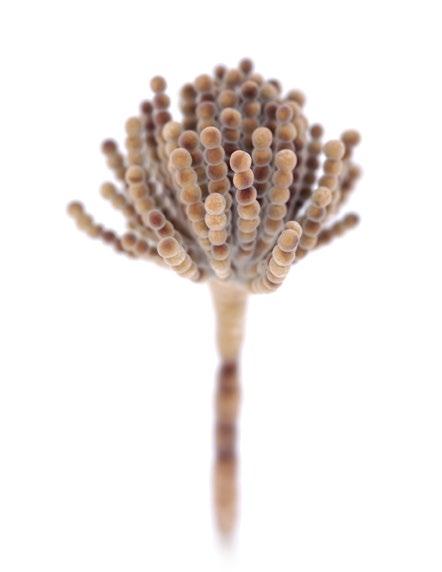
With the rising demand for sustainable aquafeeds incorporating plant-based ingredients, mycotoxin contamination poses significant risks to fish health, product quality, and human consumers.
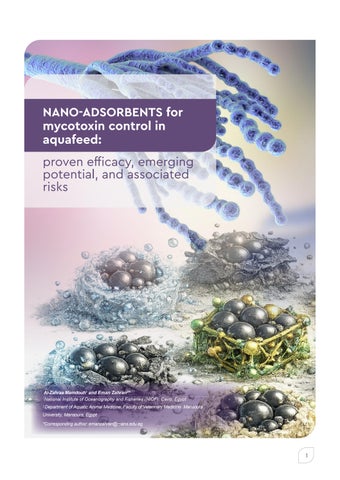
Various nanomaterials, including graphene-based nanosheets, nano-clays, metal oxide nanoparticles, metal-organic frameworks (MOFs), and magnetic nano-adsorbents, have demonstrated promising adsorption capacities and mechanisms for mycotoxin removal, such as electrostatic attraction, hydrogen bonding, and π–π interactions.
This review highlights advances in functionalization techniques that enhance adsorption efficiency and selectivity.
Practical applications face challenges, including:
Matrix effects derived from complex feed compositions
Limited broad-spectrum adsorption capacity
Nanoparticle aggregation and stability issues
Safety and regulatory concerns regarding toxicity and residues
Economic constraints related to cost and scalability
Emerging research has focused on developing multifunctional nano-adsorbents that not only detoxify mycotoxins but also support fish gut health and growth performance
Although laboratory results are encouraging, further in vivo studies and comprehensive safety assessments are essential to enable commercial adoption in aquaculture systems.