Jim Booth, John Koenig, Susan Tatsui-Darcy, Joan Hammel, Malia Fort, Steven Weiss, Sarah Nofi, Monica Menard, Yesenia Gomez-Carrillo, Tovah Petra, Malia Fort, Kay Mackenzie, Sarah Ringler
MASTER OF COMMUNITY PARTNERSHIPS
Bobbi Jo Palmer
AD REPRESENTATIVES
Ann Fitts Sophie Veniel Bob Pursley advertising@growingupsc.com
CONTACT US
408.656.1519
editor@growingupsc.com
P.O. Box 3505, Santa Cruz, CA 95063
MARCH 2026 | VOL. 30 NO. 3
by Folger Graphics.
“This is the
to start your kids in swimming.” - Mike Bottom, U.S. Olympic Swim Team.
Catch the Social Media Wave
Don’t miss the Growing Up in Santa Cruz videos on YouTube, Instagram, Facebook and TikTok. To promote your business to thousands of viewers in the area each week, email editor@growingupsc.com or call (408) 656-1519.
Why Summer Camp Matters More Than We Realize
How important is summer camp?
For my family it’s been as important as sending kids to school. We’ve tried a number of camps, including art and nature, and my son has learned so much in each.
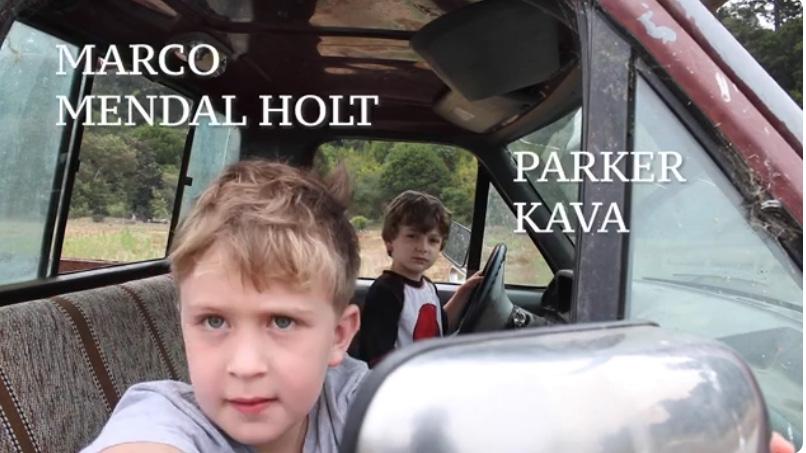
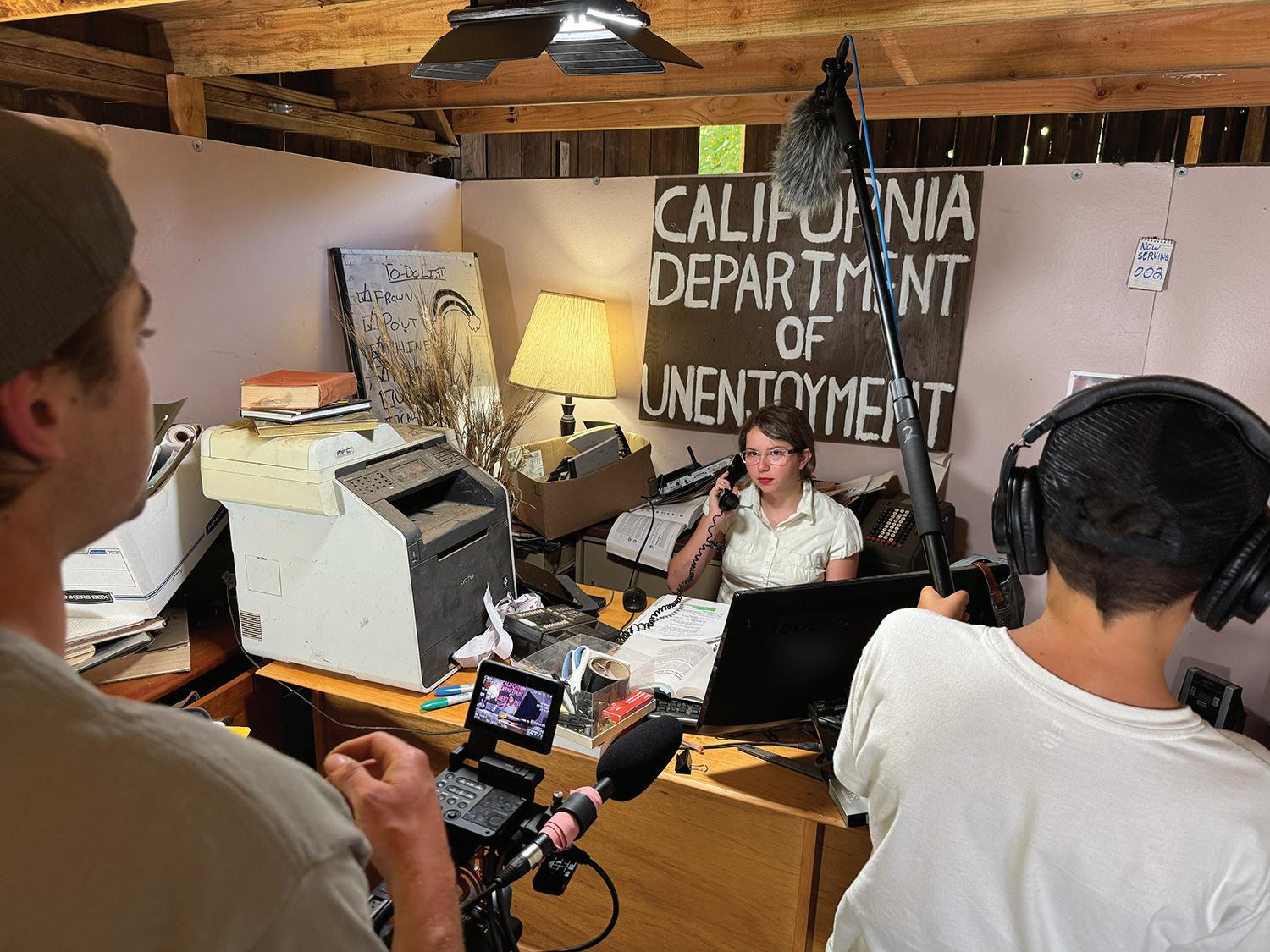
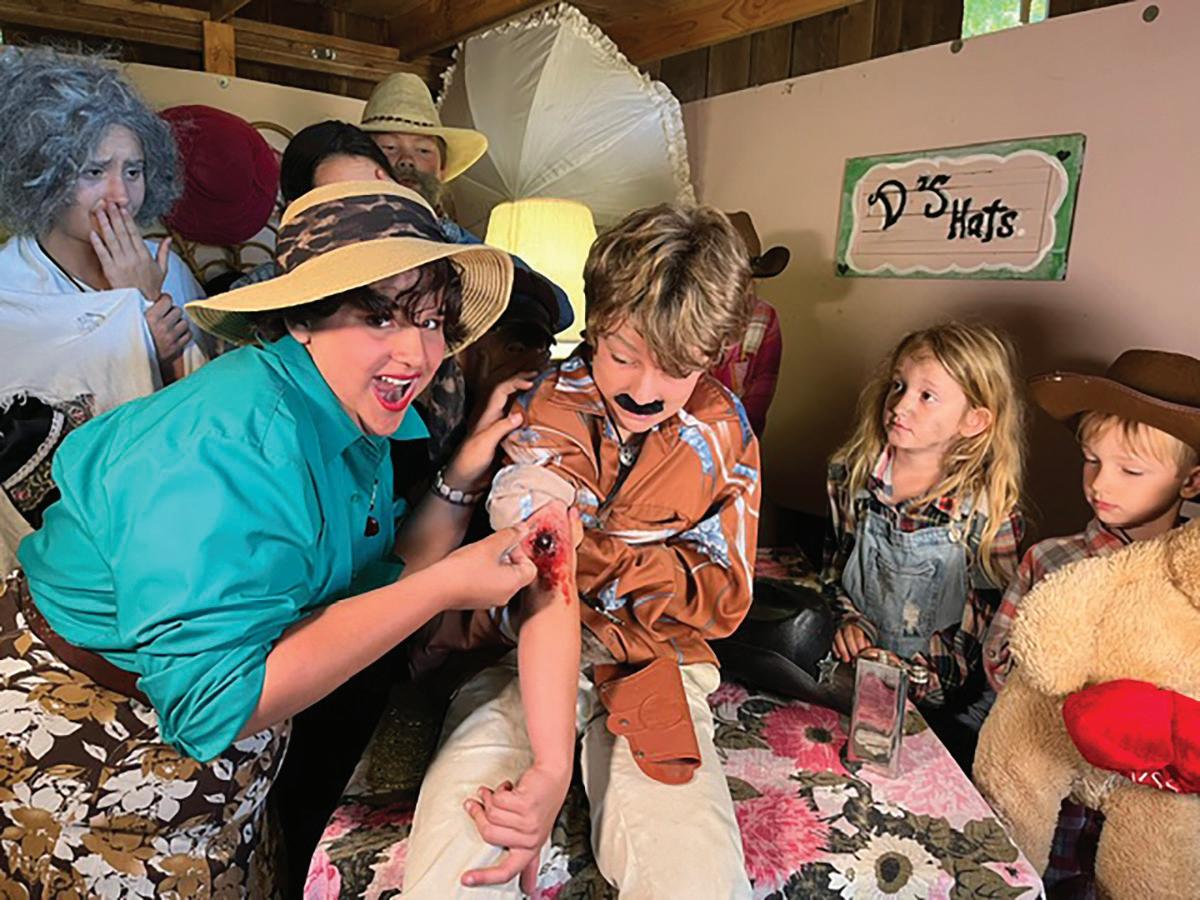
His favorite camp has been one that teaches kids to make movies, called Thomas Farm Films. We stumbled on it at the recommendation of a friend (Kevin Painchaud, a photographer at Lookout), who invited us to their film premieres six years ago. Although we had to walk out early because Parker was afraid during a movie called “The Spaghetti Monster”, we tried it during the summer, on the condition that if he hated it, he could leave.
He was the youngest kid there and he loved it and stayed five weeks. He couldn’t even read but they gave him some of the funniest lines to memorize. At one point in a movie, they had him driving a truck and he had the line, “Thanks for teaching me how to drive a stick,” which cracked up the whole audience.
He had another line in a movie where he was being interviewed by a news crew about this fictitious camp and he said “Two words: best time ever.” That had the place howling with laughter and got him hooked.
Last month the camp had a two-hour showing of the movies they made over the summer and I could really see how much he’s developed. He gave his lines with authority and didn’t overact like so many kids do. He was like a pro.
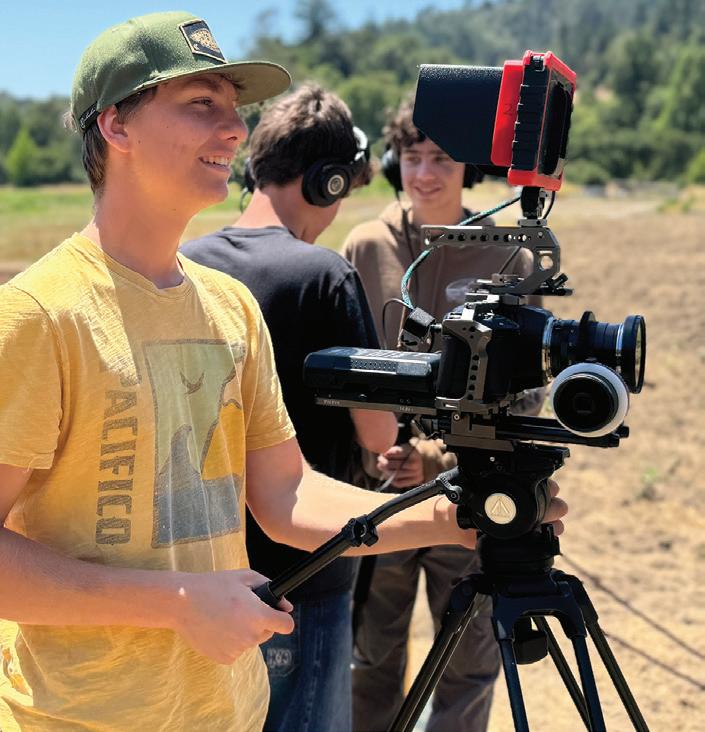
But what he really got, more than an ambition, was a way to become a public speaker and to overcome his shyness and inhibitions, which has carried over to every part of his life. The kids learned all levels of film production, working cameras, lights and directing. Now when we watch movies he tells me how they do things that I never knew.
He really got an education there while he was having fun and that’s what I love about camps: the best ones have things to teach that kids will keep for their whole lives.
And one plug I should add: the Pajaro Valley School District has a program that funds kids going to camps and a bunch of the kids at the movie camp came from that. We’ll do a story soon about the PVUSD program and how it’s one of the best things a school district can do: make education year round and help kids who might not be able to afford summer education to get it.
It’s time to start signing up for camps and I would love it if you could send us some words about your kids’ favorite ones and why you would recommend them. It could really help parents make a big decision.
Send them to brad@growingupsc.com and we’ll print them.
Thanks so much.
One other note: we have a great story this month about a nonprofit program that’s helped underprivileged high school kids get into college. That’s the good news. The bad news is that I wanted to put some of those kids on the cover of the magazine…but they were afraid because of the way brown people are being treated by the current regime. It’s so sad.
On the Cover
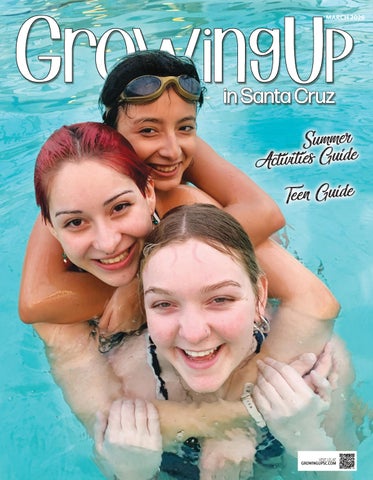
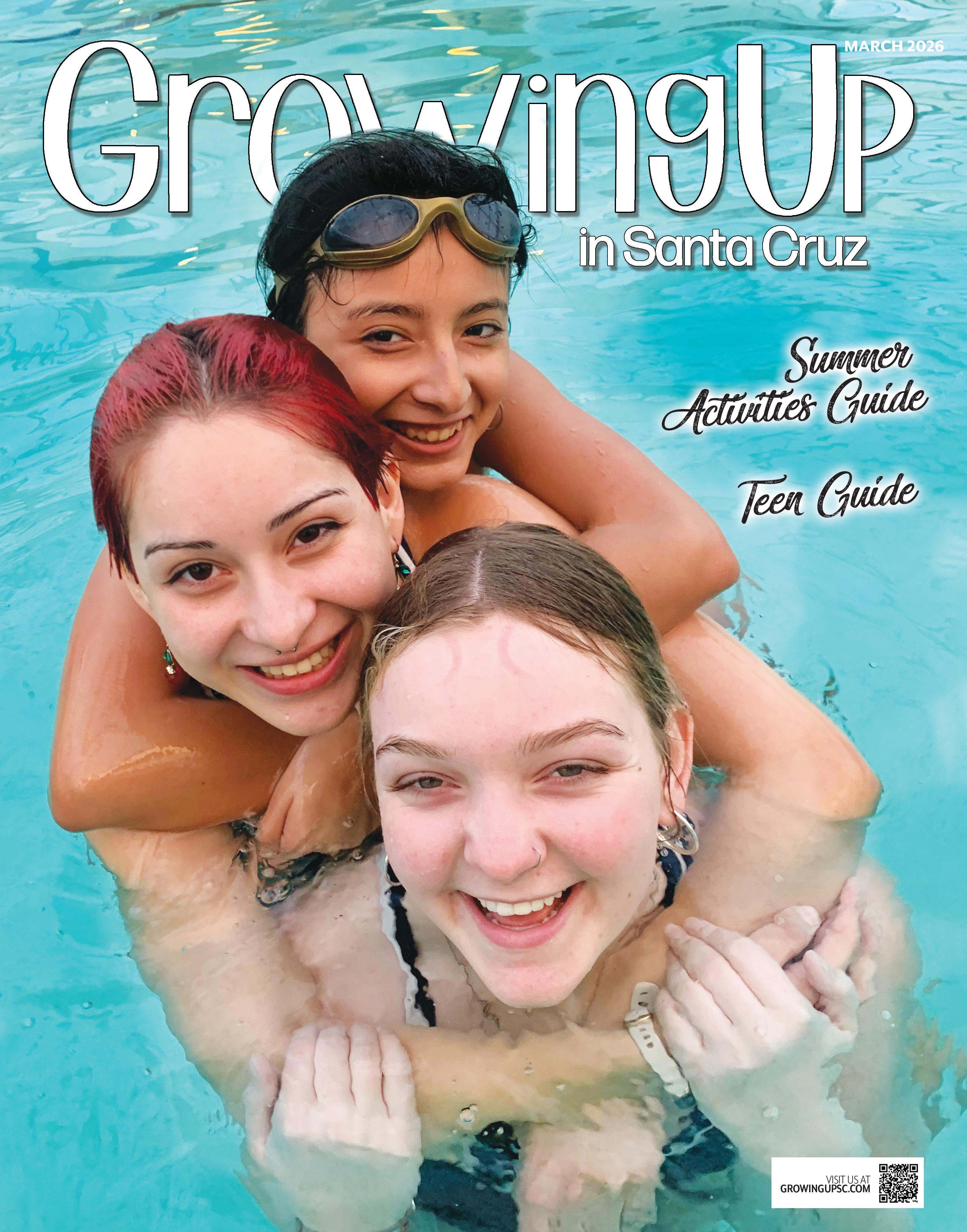
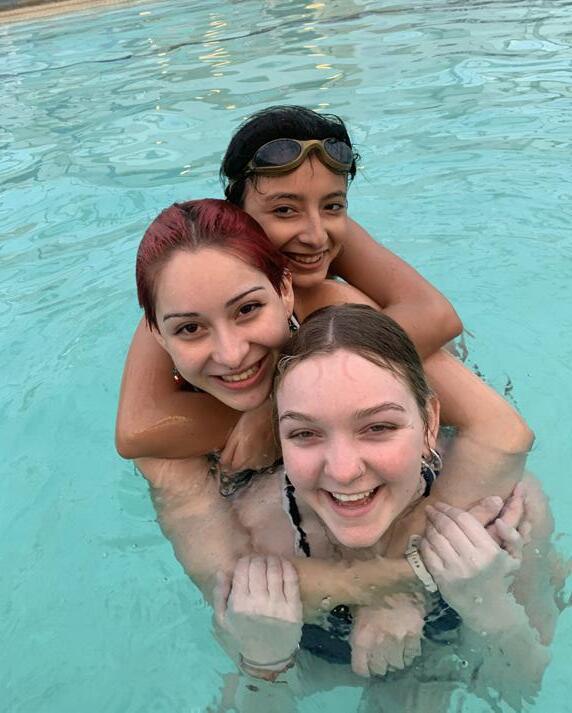
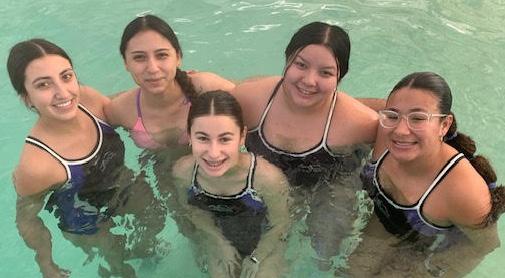
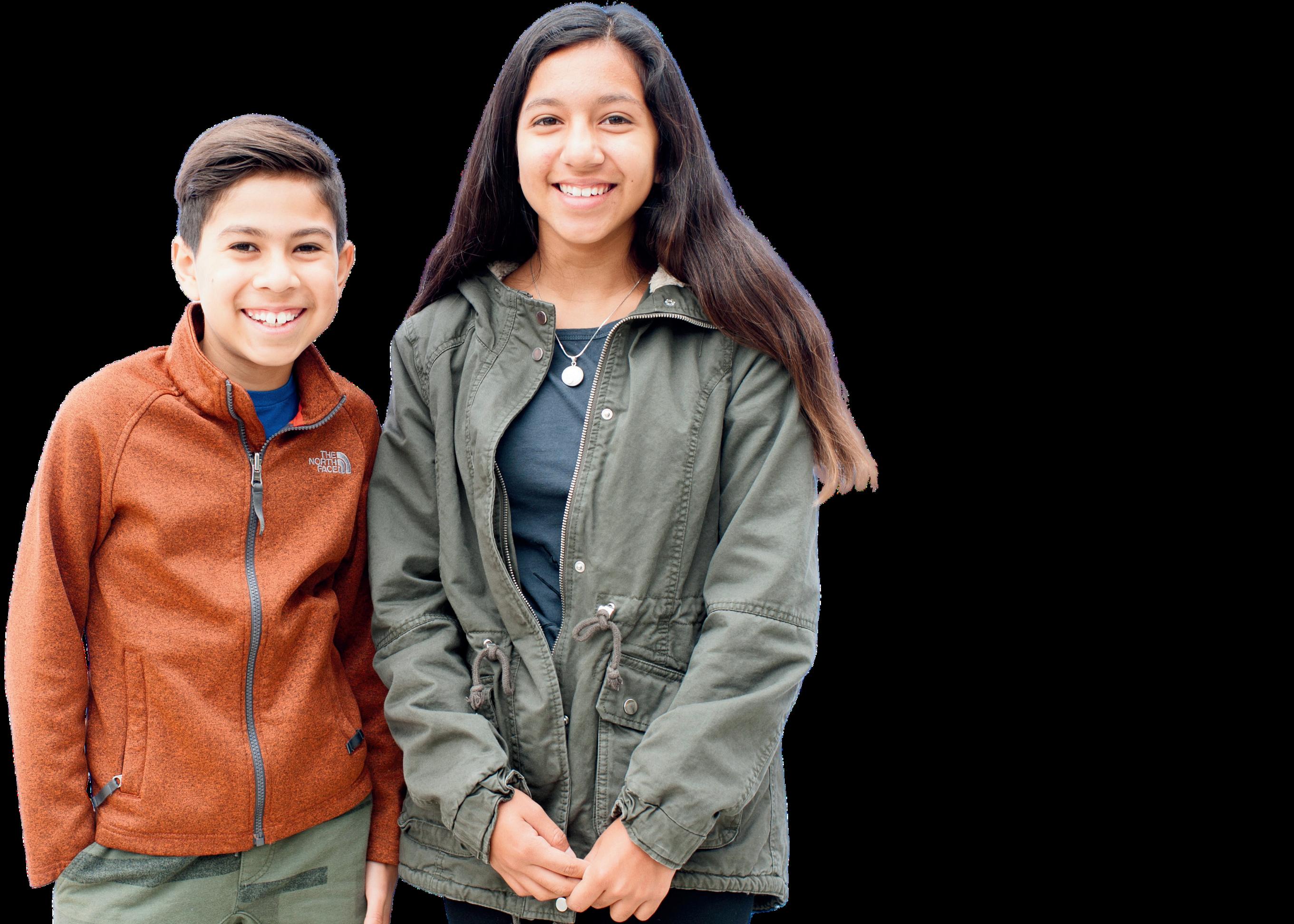
Our cover captures three teens building skills and confidence together in the water. In this issue, veteran swim instructor Jim Booth explains how children learn most effectively through excitement, encouragement, and positive examples that make new challenges feel possible.
Thanks for reading Brad Kava; Publisher
Car Culture Is Costing Our Kids Letter to the Editor
The following is in response to the editor’s note in the January issue of Growing Up Santa Cruz regarding the bike and pedestrian rail/trail, a project that has stretched across decades and is estimated to cost tens of millions of dollars, yet shows little substantial development thus far. While funding and timelines often dominate the conversation, there’s a deeper issue at stake: streets, sidewalks, and bike paths are not just transportation projects; they are spaces that shape childhood. When pedestrian and bike infrastructure is safe and accessible, children gain independence, confidence, and the freedom to explore their communities, benefits that no budget alone can afford.
Every summer I travel to the Netherlands, where my husband was born, and marvel as groups of Dutch elementary schoolers stream into local shops, stopping for ice creams on their way to the petting zoo or the local swimming pool or the sporting fields. There are no parents hovering, no cars idling, just kids pedaling, chatting, and negotiating the world together. My husband barely notices scenes like this because he grew up there, in Amersfoort, a picturesque medieval Dutch city that decided years before he was born that children mattered more than cars. The historic city center doesn’t allow throughtraffic. Protected bike lanes, some as wide as many American residential streets, crisscross
and encircle the city. Trains, buses, and bike networks hum along in a transportation system so well maintained that miles of rail and bike lanes are routinely upgraded or replaced entirely in a matter of weeks, not years (or decades).
To him, childhood independence is normal. At five years old, he rode his bike to school alone every day, accompanied only by his seven-year-old sister. No adults helicoptering, no car lines, no check-ins. Not because his parents were unusually brave, but because the streets were built to make that kind of childhood possible. It remains the same today in 2026.
That freedom didn’t happen by accident, and it wasn’t a gift from benevolent politicians. The infrastructure that made Amersfoort (and hundreds of other Dutch cities) safe for children was hard-fought, born out of grief and rage in the 1970s, when cars were killing hundreds of Dutch children each year. From 1972 until about 1978, Dutch citizens relentlessly took to the streets under the banner Stop de Kindermoord (“Stop the Child Murder”) organizing national strikes, mass protests, civil disobedience, and yes, even property damage. They forced the country to confront a brutal truth: a transportation system optimized for speed and centered around car-facilitated individualism was stealing children’s lives and
Sign up now for a summer full of fun!
independence. The protections that followed made the Netherlands a global example of infrastructure and pedestrian safety, and they were demanded, not politely requested.
In the United States, childhood independence is disappearing. Many teenagers and young adults don’t know how to run errands, make appointments, or even get to school alone, not because parents are necessarily overprotective, but because streets aren’t safe. When neighborhoods are built for fast-moving cars instead of people, constant supervision isn’t optional, it’s necessary. Conversely, when streets are designed for walking and biking, children gain more than safety. They gain autonomy.
They learn to make small decisions, solve everyday problems, interact with people in their community, and trust their own judgment. Those skills are built gradually, through repetition, in ordinary moments. In the Netherlands today, these hard-won gains have been worn down by recent decades of neoliberal leadership under politicians like Mark Rutte, a reminder that progress can erode when industry, convenience, and privatization are allowed to eclipse collective well-being.
If we care about our children’s emotional resilience, social competence, and ability to navigate the world, the debate over bike lanes and sidewalks isn’t a niche transportation issue. It’s a parenting and social issue, and
an invitation to ask whether the streets we’ve built are allowing our kids to feel capable, or keeping them dependent far longer than they should be.
Addressing these challenges requires more than wishful thinking or incremental fixes. In the U.S., infrastructure development is often forced through serpentine political channels with bifurcated priorities, and whether projects are executed efficiently for the public good or whether they serve as little more than a money-laundering apparatus for vested interests remains an open question. What is clear, however, is that we cannot begin to tackle the problem while ignoring or denying that our dependence on, and prioritization of, cars (and oil) is a root cause of our infrastructure stagnation, and that it’s crippling our children in myriad ways.
Until we confront the fact that our communities are built for cars and individual convenience over our collective wellbeing and safety, children will continue to lose the freedom, confidence, and independence that are their birthright. A single walking path will not correct this fundamental conflict. Recognizing the broader social problem of our car dependency is a first step; designing streets that let our kids navigate the world safely and autonomously, and figuring out how to actually get them built, is the next.
~ Carina Hull
June 15 - July 17
Full and Half Day
Classes Available
Grades 1 thru 5
Classes, Games, Activities, Sports, Enrichment
Where Families Grow Through Music
How Children Learn and How You Can Help
BY JIM BOOTH
I’m sure we all have shelves full of books on how to raise children and lead them to success. I know that we all want to create the best environment for their success. I’d like to share some of the things I’ve learned, that are supported by research, that you can provide for your kids.
Think back to being a young student in the classroom and we probably wished for certain things that would’ve been more helpful and made learning easier.
Up to age 9 or 10 children learn much faster than adults. Some research says up to 40 times faster. It’s critical that they are learning and exposed to new things from a very young age. Also, learning is somewhat threatening. You’re asking a child to go from what they already know and to experience things they don’t know. They naturally are going to feel some trepidation. As a parent, or teacher, our role is to go with them on this journey, to show them an example of success and be a partner.
What other knowledge can you use to help your kids learn quickly and enthusiastically? Well, research shows to learn a new skill, It needs to be repeated over and over again at least hundreds of times but research also shows that if it’s fun, when it’s a game, it only has to be
repeated 40 times to be learned.
Also, and you probably remember this from your childhood, children learn much faster when it is exciting. Remember sitting in a class where you didn’t move, where you had to just sit still and listen? Thats just not very stimulating. But you probably remember every bit of your first trip to Disneyland for your birthday. You were excited, adrenalized, so your brain saw it as important and you remembered it. It’s the same in the classroom or in any class setting. If it’s
exciting you’re going to learn quicker. They’re going see the value of what you’re sharing with them.
Another example is that children need to see examples of success. This is modeling. It’s why it’s so important to have your children learning in a small group with other kids. There might be another child who is an example of great success or sometimes maybe it’s your child who is the good example.
Thinking that private instruction is somehow better isn’t going to work if your
child is bored and can’t enjoy what he’s doing. And, critically, they need a great teacher. A teacher who is a leader and an example. They’ll be a lot less stressed and learn quicker when the teachers is confident, and the child can relax and know that they’re in good hands. It’s appropriate for a teacher to demand that a child explores and tries new experiences.
The child can’t conceive of what the outcome will be until they’ve tried it. They really need a leader, a leader who inspires them to success. So parents, chill out. You’re not going to ruin your child because you didn’t say exactly the right words at the right time, but you’re going to help your child immensely by encouraging them to explore and by exposing them to many many new environments and new things.
Jim Booth has taught and coached swimming in Santa Cruz County for over 50 years, if you didn’t learn to swim from his Swim School your grandmother probably did. His experience from teaching over 25,000 kids and his continued search for effective methods has resulted in a successful program for kids and adults. He believes, though, that the most important part is an exciting, positive environment that kids love.
Young people bring excitement and joy to swim classes with their own experiences adding to the kids success.
Why Summer Camp Matters More Than Ever
BY SUSAN TATSUI-D’ARCY
For generations, summer camp has marked a joyful turning point in childhood. The last day of school gives way to sunscreen, backpacks, and the promise of something new — sleeping in cabins or tents, learning to paddle across a lake, riding horses at dawn, performing in a musical theater, or mastering artistic skills. Camp has always offered children something school cannot: space to stretch, experiment, and grow --without homework or studying for tests.
But today, summer camp may be more essential than ever.
Modern childhood looks very different from the one many of us remember. Even elementary-age students spend hours in structured classrooms, completing homework online, and navigating digital platforms. By the time summer arrives, many children have logged thousands of hours in front of screens — whether for academics, gaming, or social media. While technology offers benefits, it cannot replace what children gain from face-to-face interaction, outdoor exploration, and unstructured play.
Summer camp provides a reset.
Time outdoors supports physical health in ways that are difficult to replicate indoors. Sunshine helps regulate sleep
cycles and supports Vitamin D production. Movement — hiking, swimming, climbing, or simply running across a field — builds coordination and strength. Being outside also reduces eye strain and the posturerelated aches that come from bending over devices for hours each day.
Equally important is the emotional and social growth that happens at camp. Children learn how to make new friends without a screen between them. They practice collaboration, compromise, and communication in real time. They navigate small conflicts, develop independence, and gain confidence by trying something unfamiliar — whether that’s performing on stage, steering a kayak, or spending their first night away from home.
For some children, camp is their first experience stepping beyond their usual social circle. That stretch builds resilience. When a child discovers, “I can do this,” that confidence carries back into the school year.
Of course, not all camps offer the same experiences — and that’s where your knowledge about your child and their preferences help you make these decisions.
In Santa Cruz County, families are fortunate to have a wide range of options: day camps, specialty camps, outdoor adventure programs, sports camps, arts-focused programs, and
traditional sleep-away camps. Costs can vary significantly. Residential camps often carry higher tuition due to staffing, facilities, and overnight supervision. Community-based programs, including those offered through local nonprofits and recreation departments, may be more affordable while still providing meaningful experiences.
When choosing a camp, consider the following:
Fit for Your Child’s Personality
Is your child energized by large groups, or do they thrive in smaller settings? Are they adventurous or more cautious? A good camp should stretch a child — but not overwhelm them.
Balance of Structure and Freedom
Children benefit from both guided instruction and unstructured play. Ask how much of the day is scheduled versus open exploration.
Staff Experience and Safety
Look for programs with trained staff, clear supervision policies, and transparent communication with parents. Check their references to hear what other parents have to say.
Opportunities for Skill-Building
Whether it’s sailing, robotics, theater, or environmental science, the
best camps foster growth — not just entertainment.
Logistics That Work for Your Family Transportation, hours, cost, and session length all matter. A “perfect” camp isn’t perfect if it adds unsustainable stress to the household.
It’s also worth remembering that camp does not have to be elaborate or expensive to be valuable. What matters most is that children experience connection, movement, and novelty. The magic of camp lies less in luxury and more in shared laughter, campfire stories, scraped knees, and the pride of learning something new.
In a world where childhood increasingly unfolds through a screen, summer camp offers something refreshingly analog: sunshine, friendship, challenge, and growth.
And that may be the most important lesson of all.
Susan Tatsui-D’Arcy is the founder of Merit Academy (one-on-one classes) and Merit Educational Consultants (college and educational advisory). She has written books on projects, free child care, education, and parenting. Susan hosts TEDxMeritAcademy for students to present their innovative projects and solutions. In 2019, she was California Mother of the Year.
All About Theatre is where teens take center stage. From firsttime performers to seasoned young artists, our teen program (ages 14–18) offers training, creative collaboration, and performance in a professional theater setting. This May, our teens bring the epic story of Les Misérables School Edition to life on stage. And this summer, we’re proud to offer a full teen production of Dear Evan Hansen, giving high school performers the opportunity to tackle contemporary material that speaks directly to their generation. In addition, teens can deepen their skills through one-week theater intensives and hands-on training in audio/visual production, stage management, lighting design, and more — all inside our state-of-the-art facility.
“Our family loves this amazing community! We started a year and a half ago and my daughter has flourished and challenged herself. Lindsey Chester has brought out gifts that my daughter did not know that she has. Please run, don’t walk and join us!
-Joanna E.
Art Factory Studios
7960 Soquel Drive 831. 400.2744
info@artfactorystudios.com artfactorystudios.com
Explore creativity at Art Factory Studios! In Ceramic Sculpting for Teens, students will develop sculptural handbuilding, and glazing techniques while bringing ideas to life in clay. Pieces will be kiln-fired for pick up 2-4 weeks after camp. Small groups and expert instructors provide guidance and support, helping teens build confidence, skill, and creativity. Space is limited—register today!
Chartwell School
2511 Numa Watson Road, Seaside 831.394.3468
www.chartwell.org/summer
Summer Chartwell School, located on 60 acres in Seaside, serves students with dyslexia and other related learning differences who are not currently reaching their full potential. We do this in grades 1-12 by providing targeted and direct instruction to empower learners with the skills, strategies, tools, and social-emotional mindset they need to thrive in college and beyond. Summer@Chartwell is a three-week program that emphasizes literacy, math, STEAM, and enrichment skills.
“Before we found Chartwell, our son was struggling every night with homework, his confidence shattered because he couldn’t understand why learning was so difficult for him. At Chartwell, he gained the tools and skills to support his learning profile, and now he confidently advocates for himself and is excelling in high school. I can’t express enough how profoundly Chartwell changed our son’s life—and ours.” ~ Milda E., Parent of Chartwell Alumnus
Dientes Community Dental Care
1830 Commercial Way, Santa Cruz 1500 Capitola Road, Santa Cruz
100 Pioneer Street, Suite D, Santa Cruz
55 Penny Lane, Suite 103, Watsonville 1430 Freedom Blvd., Suite C, Watsonville dientes.org
Dientes is accepting new patients ages 0-18! With
five locations, Dientes is the largest provider of high-quality, affordable dental care in Santa Cruz County. We practice whole family dentistry including children, adults, and seniors. From exams and x-rays to cleanings, sealants, fillings, and root canals, we make great smiles accessible to everyone. We accept Medi-Cal and offer slidingscale fees for uninsured patients. Plus, we’re proudly bilingual—¡Se habla Español! As a non-profit dental provider for over 30 years, Dientes provides dignity through dentistry.
“As a parent, you want to see your kids smile and know that they’re not gonna have dental issues -- this gives me piece of mind. Dientes makes that possible.” ~ Nui, parent of two
Gateway School K-8th grade
255 Swift Street, Santa Cruz
831.423.0341 GatewaySC.org
Gateway School has provided students in grades Kindergarten through 8th grade with an exemplary education for over 50 years. Our Middle School offers a dynamic, challenging education that prepares teens for the fast-changing world by focusing on scholarship, citizenship, and compassion. The Kindergarten through 8th grade model allows students to become leaders and engage in ageappropriate activities which leads to higher levels of self-esteem and academic achievement. Our graduates have an inquiring spirit, are confident, act with grace and courtesy, and stand up for those who need help. Visit www.gatewaysc.org to register for a tour and experience all that Gateway has to offer!
International Academy of Dance IADance.com | NutcrackerSantaCruz.com
info@IADance.com
831.466.0458
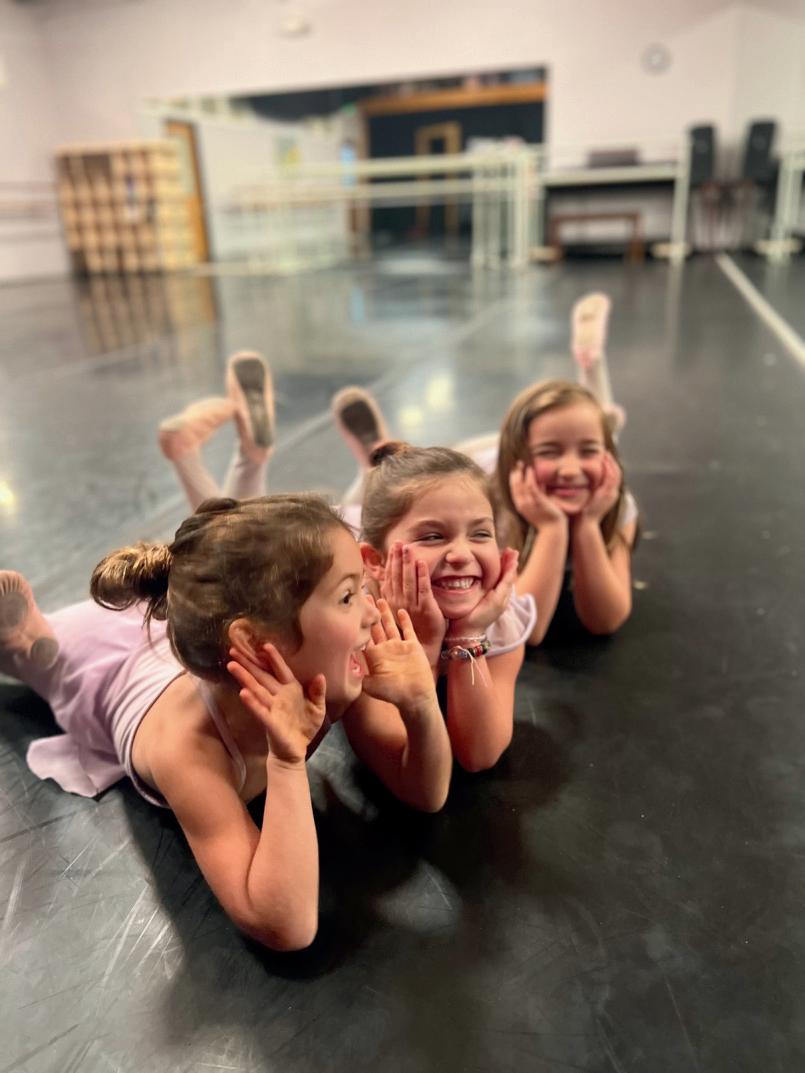
International Academy of Dance, home of Santa Cruz City Ballet, provides worldclass instruction in Classical Ballet, Tap, Contemporary, Lyrical, and Jazz. The studio is an encouraging and supportive community from ages two to a hundred and two. It is our mission to inspire students of all ages to develop a lifelong love of dance. Through choreography, balance, agility, strength, and flexibility, we work with each dancer to hone artistry, technique, focus and musicality. We aspire to bring joy and generate growth in every class. We can’t wait to see you in the studio!
Come see us on stage in Swan Lake: Wings of Desire at the Landing in Scotts Valley, the first week of June! Awarded Best of Growing Up in Santa Cruz 2023, 2024 & 2025, and First Place in the Lookout List inaugural year 2025!
Jim Booth Swim School Watsonville 831.722.3500
Jimboothswimschool.com
Be a water wonder!
Lessons for all ages!
From our Little Otters swim class for parents and their babies to our adult beginner class. The whole family can splash together at Jim Booth Swim School. Little Otters is a gentle introduction to our 94-degree indoor pool that will make you confident that you are guiding your infant to a happy water experience. Our lessons emphasize quality swimming in an exciting class taught by our caring, well-qualified teachers. Developmental swim team and advanced swim lessons will be offered at our outdoor pool located in Watsonville at Toadal Fitness. The whole family can swim at Jim Booth Swim School!
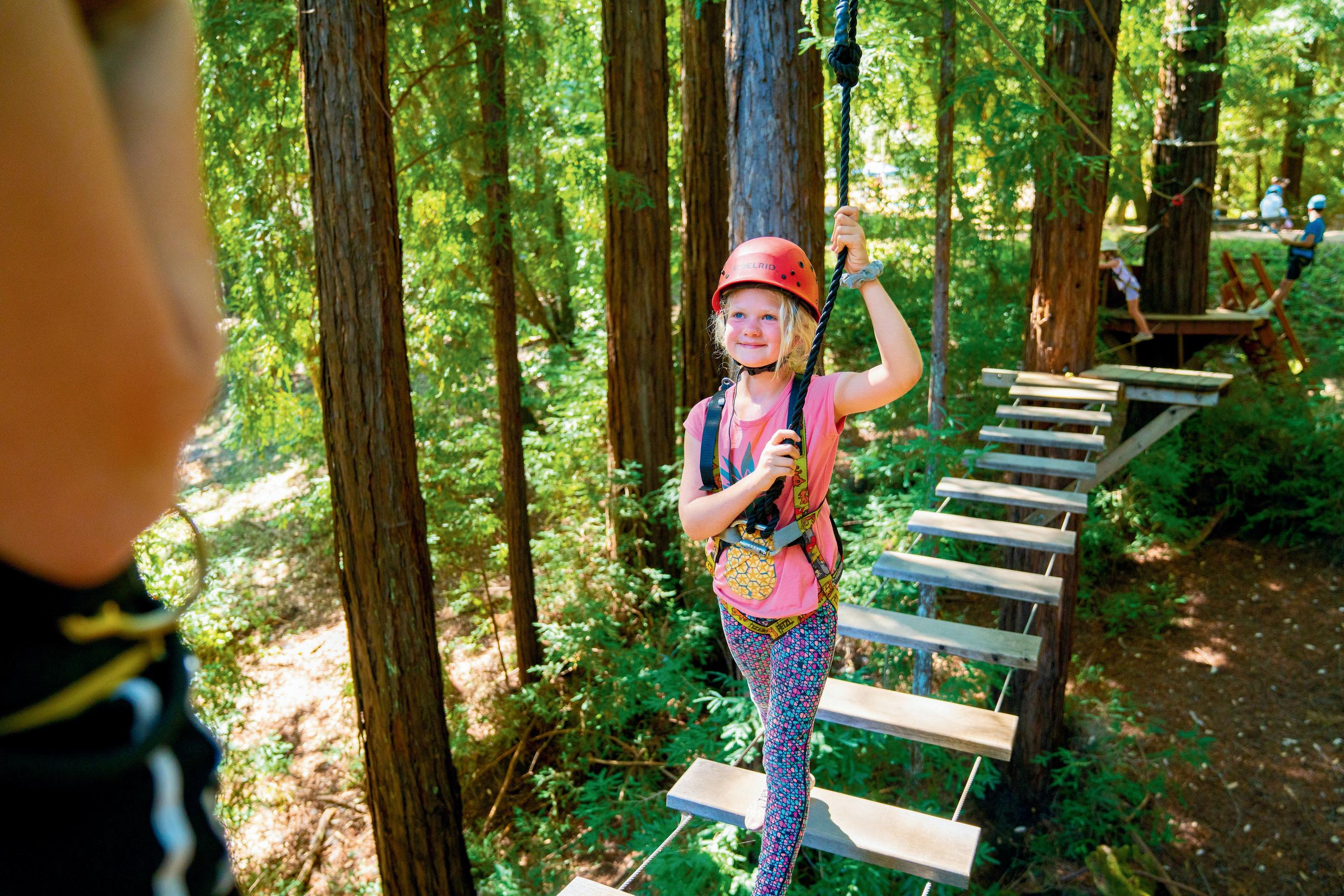
Ready to get your child away from technology and into a nourishing community in the great outdoors? On 450 acres of privately owned redwood forest,
only 4 miles from town, Kennolyn Day Camp is just a short bus ride away. Your child will thrive in this fun, active, supportive environment. And after a day of exploring the fields, pond, and miles of trails, they’ll be happy-tired after each fun day! Nowhere else in the local region will you find a more complete, authentic summer day camp experience. Just ask your friends and neighbors.
La Madrona Athletic Club
1897 La Madrona Drive, Santa Cruz 831.438.1072 www.lamadronaclub.com
La Madrona Athletic Club is located in the beautiful Santa Cruz Mountains and remains a premier club for health and wellness, balancing a gorgeous facility with a family-friendly environment. Our summer youth programs are offered year-round. La Madrona offers high-level instructional camps for tennis and swimming, as well as an all-day sports camp in the summer. Summer sports camp is an outdoor camp that will provide children the opportunity to develop their sports skills, self-confidence, and self-esteem through fun games, swimming, and tennis activities.
MAH museum
The Santa Cruz Museum of Art & History 705 Front St, Santa Cruz 831.429.1964 info@santacruzmah.org
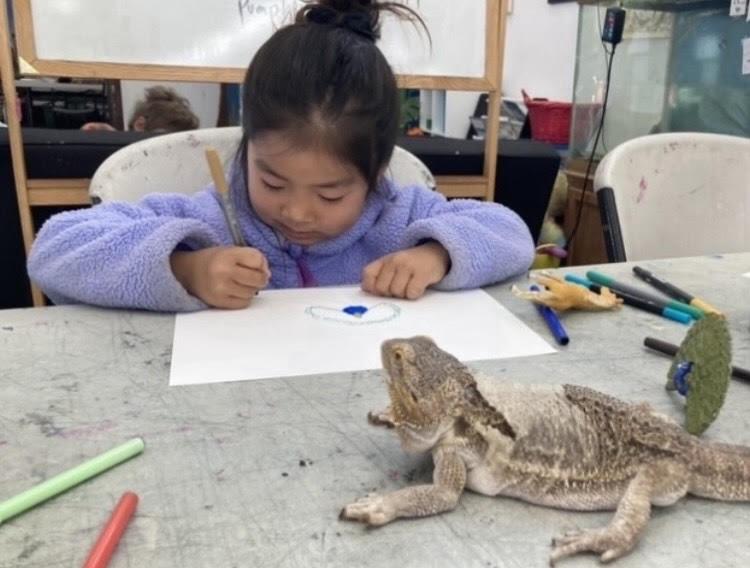
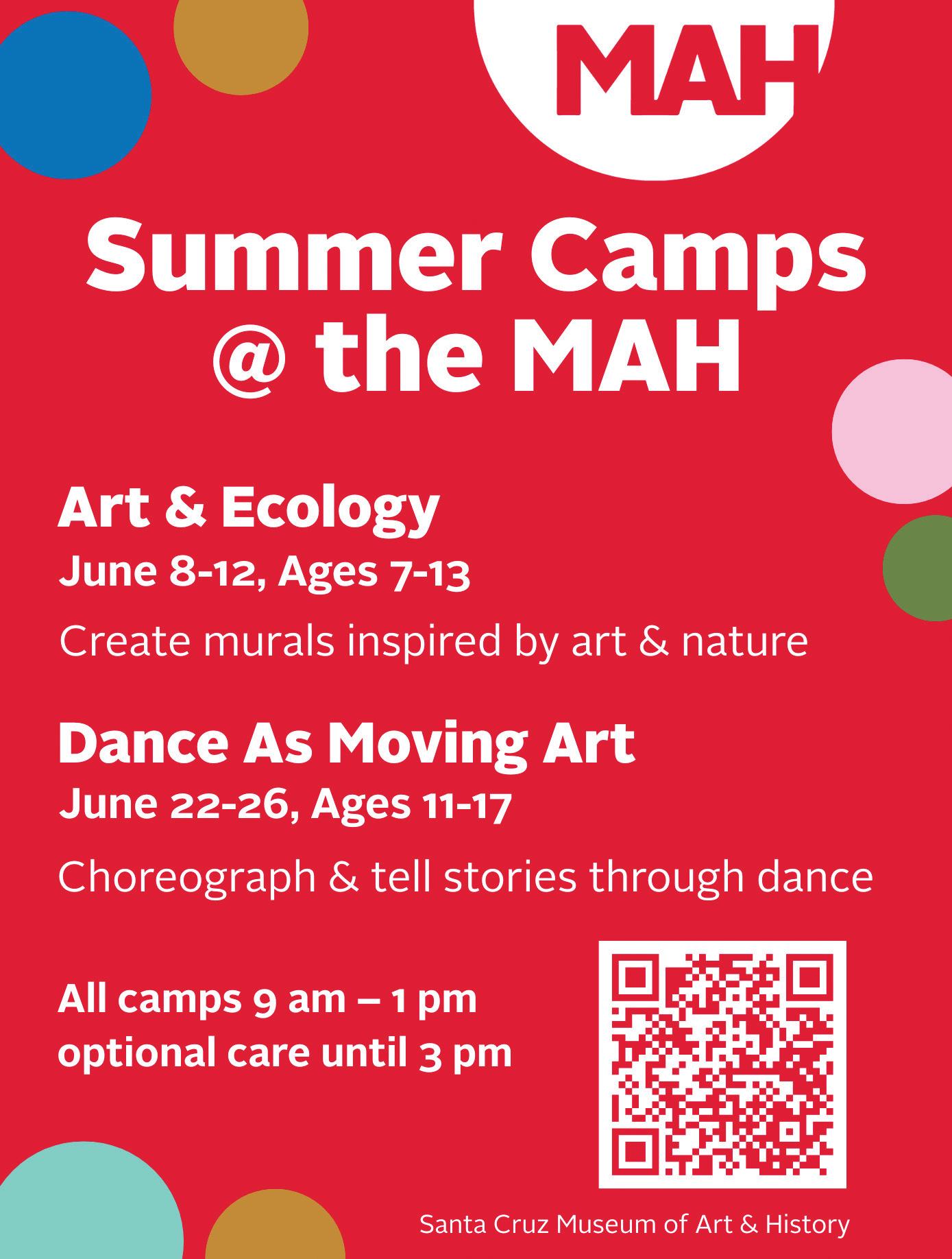
This summer, the MAH is offering two vibrant creative camps, each running for one week and filled with hands-on learning. Art & Ecology Camp, led by muralist Jesica Evanjelista, invites campers ages 7-13 to create murals inspired by art and nature. Dance As Moving Art, led by Motion Pacific Dance instructors Gabi Piazza and Kali Lucas, encourages teens ages 11-17 to choreograph and tell stories through movement. All camps run 9 am–1 pm, with optional care until 3 pm. Snacks and materials are included. Space is limited, reserve your spot today!
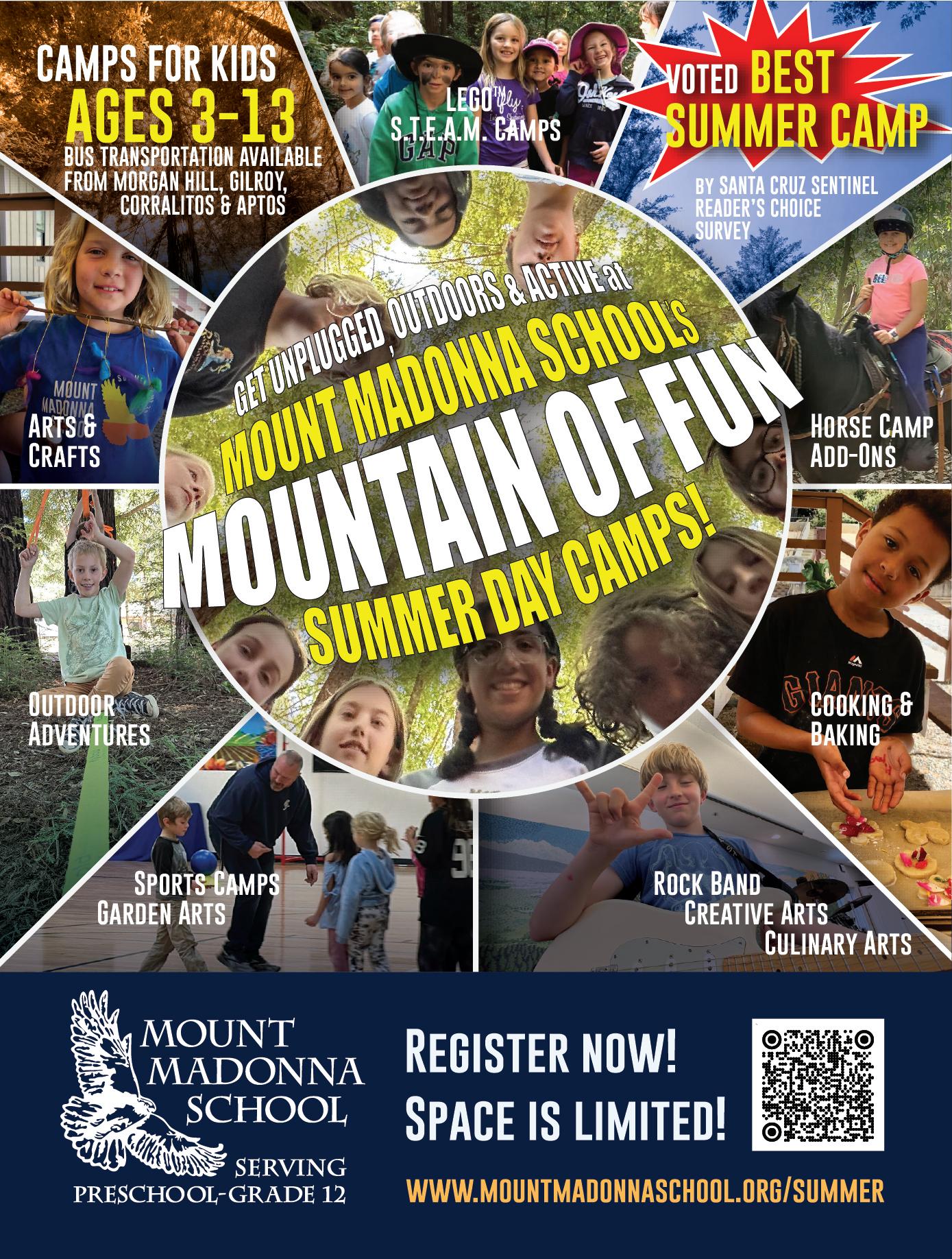
Summer day camps on Mount Madonna School’s 380-acre redwood-forest campus, offering weekly summer camps: Redwood Explorers ages 9-13, July 6-July 31. Students enjoy arts and crafts, hiking, sports camps, STEAM projects, astronomy, team-buildin,g and an overnight campout for Redwood Explorers. Horse camp option available for campers 7+. Play in nature, cultivate relationships, build skills, and more – unplugged, outdoors, and active! Camps are Monday through Friday, 9 am-3:30 pm. Transportation is available. Details and registration online at www.mountmadonnaschool.org/summer.
Redwood Music Camps info@CommunityMusicSchool.org CommunityMusicSchool.org
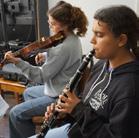
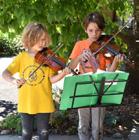
Does your teenager play an instrument? Let them take a deep dive into Celtic music with other young musicians this summer. They’ll have fun, learn new tunes and techniques, and become better musicians. Redwood Music Teen Camp offers excellent teachers, a supportive and fun environment, and the opportunity to make new friends. For players of violin, viola, flute, penny whistle, recorder, harp, guitar, mandolin, ukulele, accordion, small keyboards, cello, and bass. Teen Camp (June 14-20) is a one-week sleepover camp for ages 12-18. Scholarships are available. Information and registration is online at CommunityMusicSchool.org.
Santa Catalina School Monterey 831.655.9300 santacatalina.org
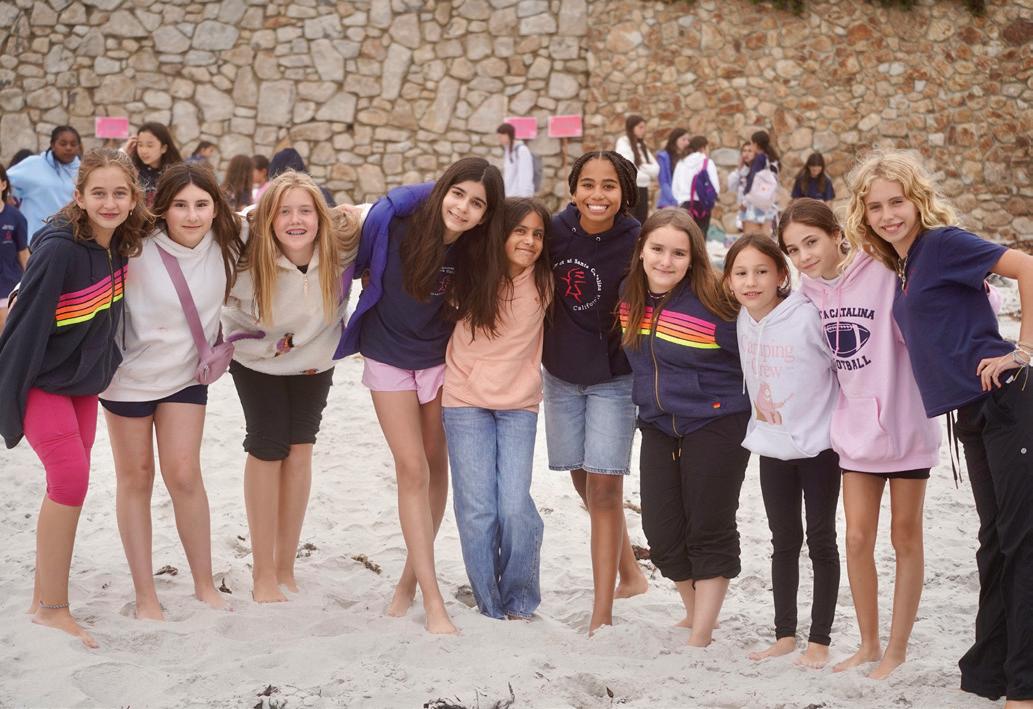
Santa Catalina School prepares students to lead lives of meaning and purpose. Our all-girls day and boarding Upper School (Grades 9–12) encourages students to explore, discover, and deepen their passions and interests in academic and real-
world settings. Our all-girls summer camp, Summer at Santa Catalina (Grades 2–9), provides leadership opportunities at every age. Campers entering Grade 9 can gain hands-on leadership experience by planning and facilitating an all-camp program. In both environments, girls become fearless and enthusiastic young women in a global community where lifelong friendships are forged—and where true sisterhood fuels a culture of curiosity, kindness, and confidence.
Santa Cruz Montessori Ages 18 months – 14 years
Main Campus (Primary and Elementary) 6230 Soquel Drive, Aptos Winston Campus (Young Children’s Community and Jr. High) 244 Cabrillo College Drive, Soquel 831.476.1646 scms.org
Established in 1964, Santa Cruz Montessori is a non-profit school serving children 18 months to 14 years, celebrating our 60th anniversary this year! Based on a deep understanding of child through adolescent development, our programs meet the interests and needs of our students, engaging and challenging them to do their best. Our community of teachers and parents works together to support our learners and provide an engaging Montessori curriculum, including humanities, math, sciences and arts. Our mission: as a Montessori learning community, we inspire life-long learning and a more peaceful world by nurturing the natural development of the whole child.
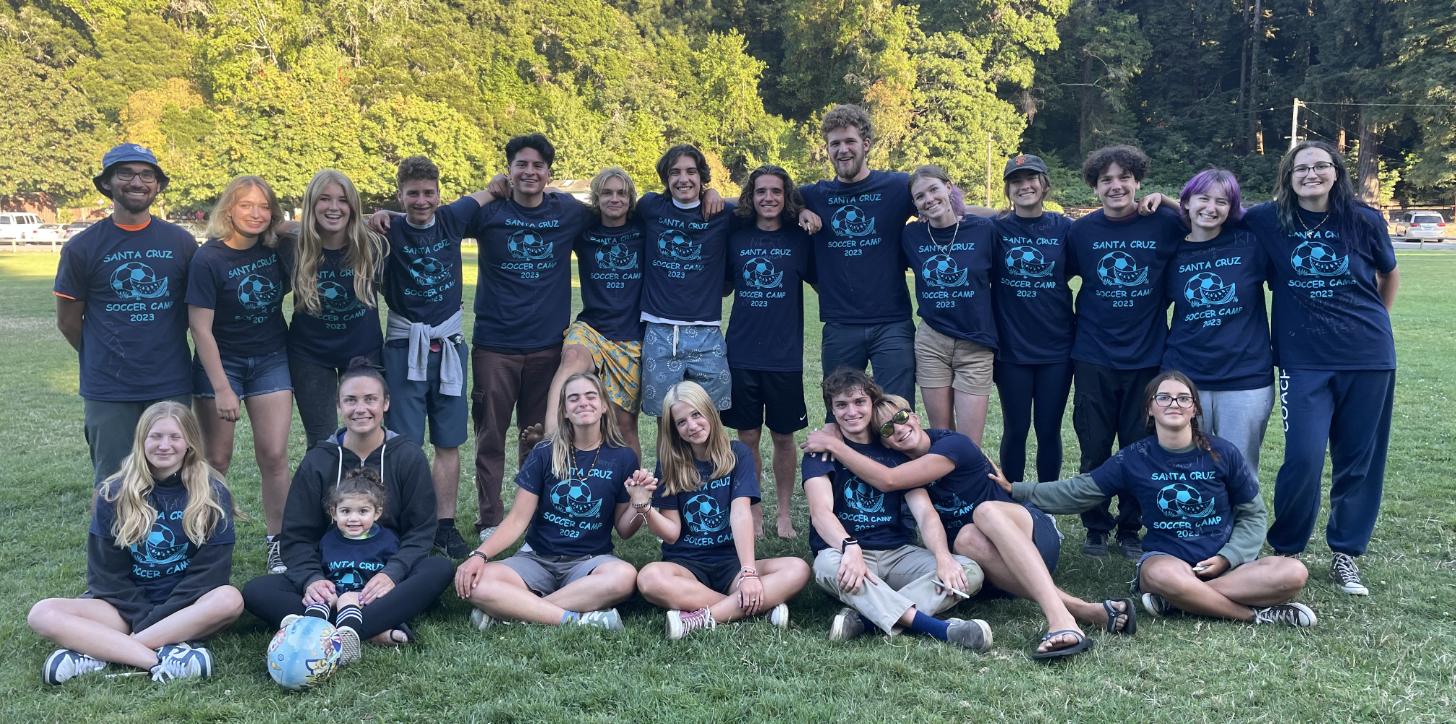
Santa Cruz Soccer Camp santacruzsoccercamp.com 831.316.3138 santacruzsoccercamp@gmail.com
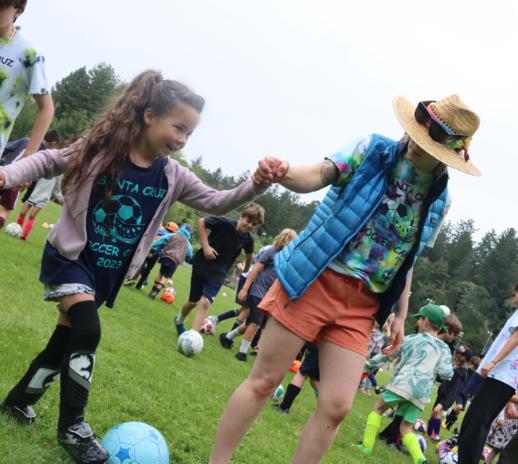
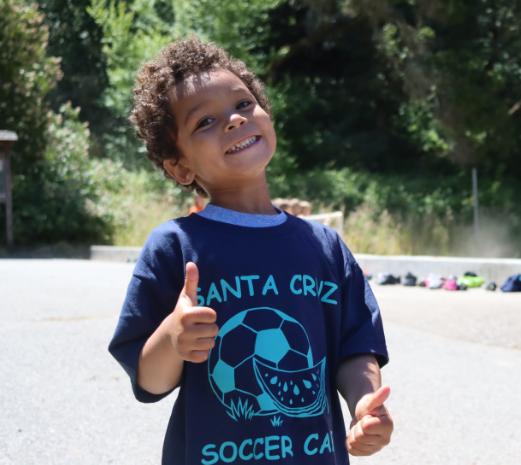
Celebrating over 40 years of camp, Santa Cruz Soccer Camp offers a fun and supportive environment where learning happens through enjoyment. Designed for kids ages 5 to 14, the camp features nine weekly sessions throughout the summer. With an average 7:1 camper-to-coach ratio, participants receive personalized instruction focused on skill development, teamwork, and confidence building. Located among the redwoods at Delaveaga Park, campers enjoy an active outdoor experience in a beautiful natural setting. Join a long-standing Santa Cruz tradition dedicated to fun, growth, and soccer excellence.
Santa Cruz Waldorf Redwood Summer Camp 2026
Santa Cruz Waldorf School, PreK-8 2190 Empire Grade Santa Cruz 831.425.0519 santacruzwaldorf.org
Inspired by Waldorf education, this 5-day summer camp will immerse children aged 5-10 in nature, creativity, and community. Every Friday is an exciting “Beach Day” spent at Natural Bridges SP. Redwood Explorers Camp (entering 2nd – 5th grades) is capped at 20 campers per session.
Weekly sessions are as follows:
June 15- 19 M-F 8:30-3:30 weekly $425
June 22-26 M-F 8:30-3:30 weekly $425
June 29-July 3rd M-F 8:30-3:30 weekly $425
July 6-10 M-F 8:30-3:30 $425
August 17-21 M-F 8:30-3:30 $425
August 24-28 M-F 8:30-3:30 $425
Teen Kitchen Project’s Teen Chef Program teenkitchenproject.org/summer26/ info@teenkitchenproject.org
831.316.4540
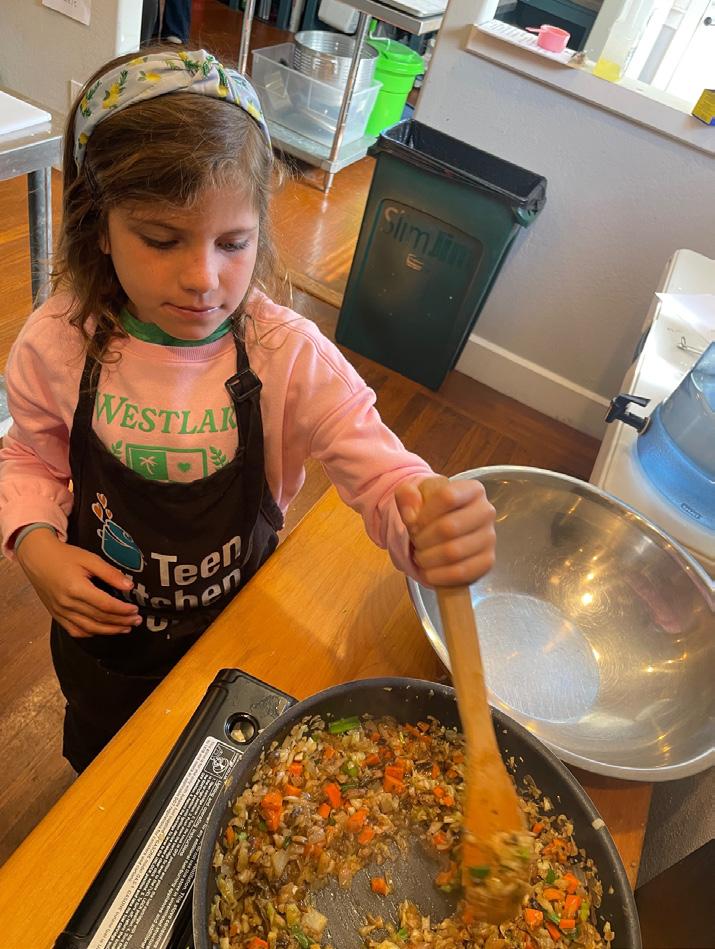
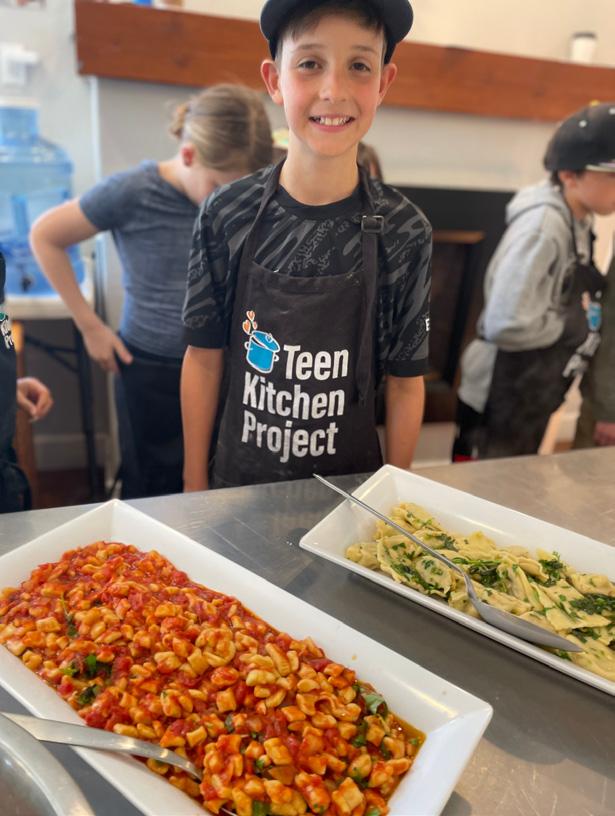
Teen Kitchen Project’s Teen Chef Program empowers young people to lead with purpose in and beyond the kitchen. Teens gain hands-on culinary training from professional chefs while developing leadership, teamwork, and communication skills. During three-hour shifts on either Sundays or after school, teens prepare nourishing meals that support TKP’s free meal delivery program for families facing critical and chronic illness. Through service, skill-building, and meaningful work, Teen Chefs discover their ability to make a real difference in their community—one meal at a time. Learn more about the teen chef program here: teenkitchenproject.org/join-ourteam/become-a-teen-volunteer
Monarch Services Supports Our Young People and Families
At its heart, Monarch Services is a community lifeline — a local nonprofit organization dedicated to supporting survivors of domestic violence, sexual assault, and human trafficking across Santa Cruz County and the Pajaro Valley. Founded nearly five decades ago, Monarch is the only emergency confidential shelter and rape crisis center, offering culturally responsive, traumainformed services to children, teens, adults, and families who have experienced violence and abuse.
This work is especially critical given the prevalence and longterm impact of violence against children and youth. Nationally, approximately 1 in 4 girls and 1 in 13 boys experience sexual abuse during childhood, and millions of children are exposed to domestic violence each year. Children who witness or experience violence are at significantly higher risk for anxiety, depression, academic challenges, substance use, and future victimization or perpetration of violence.
Early intervention, access to safe and supportive services, and prevention education are proven protective factors that can disrupt cycles of abuse, strengthen resilience, and promote long-term wellbeing for children, families, and the broader community.
Through comprehensive advocacy, crisis intervention, shelter, prevention education, and youth-centered healing services, Monarch works to ensure that young survivors and their families have access to safety, stability, and the tools needed to thrive.
While Monarch’s crisis line, legal advocacy, shelter services, and survivor support reach people of all ages, its children and youth programs are especially vital to building safe, healthy futures for young people throughout our community.
Monarch provides on-site case management at its Watsonville and Santa Cruz offices, in schools and at the shelter, school-based support groups, and therapeutic spaces where children and teens can feel seen, heard, and supported. Monarch also visits many of the areas high schools each year to provide education and outreach about healthy relationships, affirmed consent and how to seek
support. In February, which is Teen Dating Violence Awareness Month, Monarch visited over 15 different schools.
Monarch also facilitates groups using The Mask You Live In curriculum — an evidence-informed program that helps boys and young men explore social expectations around masculinity, identity, and relationships in a safe, guided environment.
This work supports emotional awareness, healthy communication, and mutual respect among young people navigating the complexities of adolescence in today’s world. At one local alternative high school, where many young people struggled to attend school regularly, saw a remarkable shift when Monarch began hosting the Mask You Live in Groups.
Students, some of whom had rarely come to campus — started arriving at 8:15 a.m., eager not just for the warm breakfast and snacks Monarch staff brought but for the chance to be in community, work through challenges together, and talk openly about how they are feeling.
In addition to school-based programming, Monarch’s Children and Youth team offers support at the Safe Kids and Youth (SKY) Center, therapeutic play and advocacy spaces for families, and individualized case management that helps kids and caregivers access resources, safety planning, and long-term healing support. Monarch’s holistic approach blends advocacy, education, and emotional support to meet young people where they are.
If your family could benefit from these services, Monarch is here to help. You can reach them at 1-888-900-4232 (24-hour bilingual crisis line) or visit the Watsonville office at 233 East Lake Avenue or the Santa Cruz office at 550 Water Street, Suite J-3.
A Parent’s Tip: Talking with your kids about healthy relationships and consent doesn’t have to be formal or intimidating. Start with everyday conversations about respect, boundaries, and feelings.
Ask your child what qualities they value in a friend or partner, and share your own thoughts about honesty and kindness. Open dialogue builds trust — and understanding consent as an ongoing, clear, mutual agreement is central to healthy relationships at any age.
Celebrating nearly 24 years of theater, and over 190 productions in Santa Cruz County. Offering training in the performing arts for children aged (3-6), Youth (6-10), Pre-teen (10-14) & Teens (14-18) and Adults. Our upcoming Summer Season; Fiddler on the Roof Jr., Moana Jr. and Dear Evan Hansen will be performing at our home at The Colligan Theater, located in the heart of the Tannery Arts Center at 1010 River Street, Santa Cruz. With a new state-of-the-art theater, we will be offering an array of one week theater & performing arts camps as well as audio visual, stage managing, lighting design & more. There’s a place for everyone! Come be a part of the magic of theater this Summer.
“Our family loves this amazing community! We started a year and a half ago and my daughter has flourished and challenged herself. Lindsey Chester has brought out gifts that my daughter did not know that she has. Please run, don’t walk and join us!”
~ Joanna E.
Art Factory Studios
7960 Soquel Drive
831.400.2744
info@artfactorystudios.com artfactorystudios.com
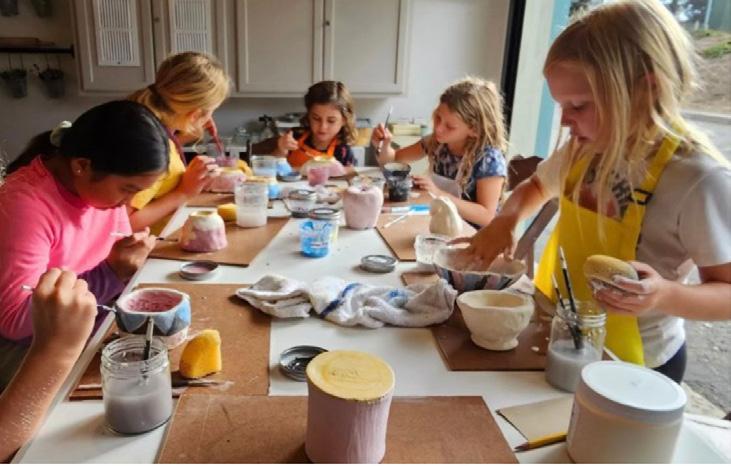
Explore creativity at Art Factory Studios! Kids 5-17 discover unique subjects each week, with beloved themes like Cats, Cats, Cats! and Art for the County Fair. In our popular Ceramics camps, students will learn hand-building and glazing for kilnfiring. Small groups and expert instructors ensure every child is supported. Camps fill quickly—register today!
Camp Gateway
255 Swift Street, Santa Cruz
831.423.0341
gatewaysc.org/lower-school/campgateway-2026
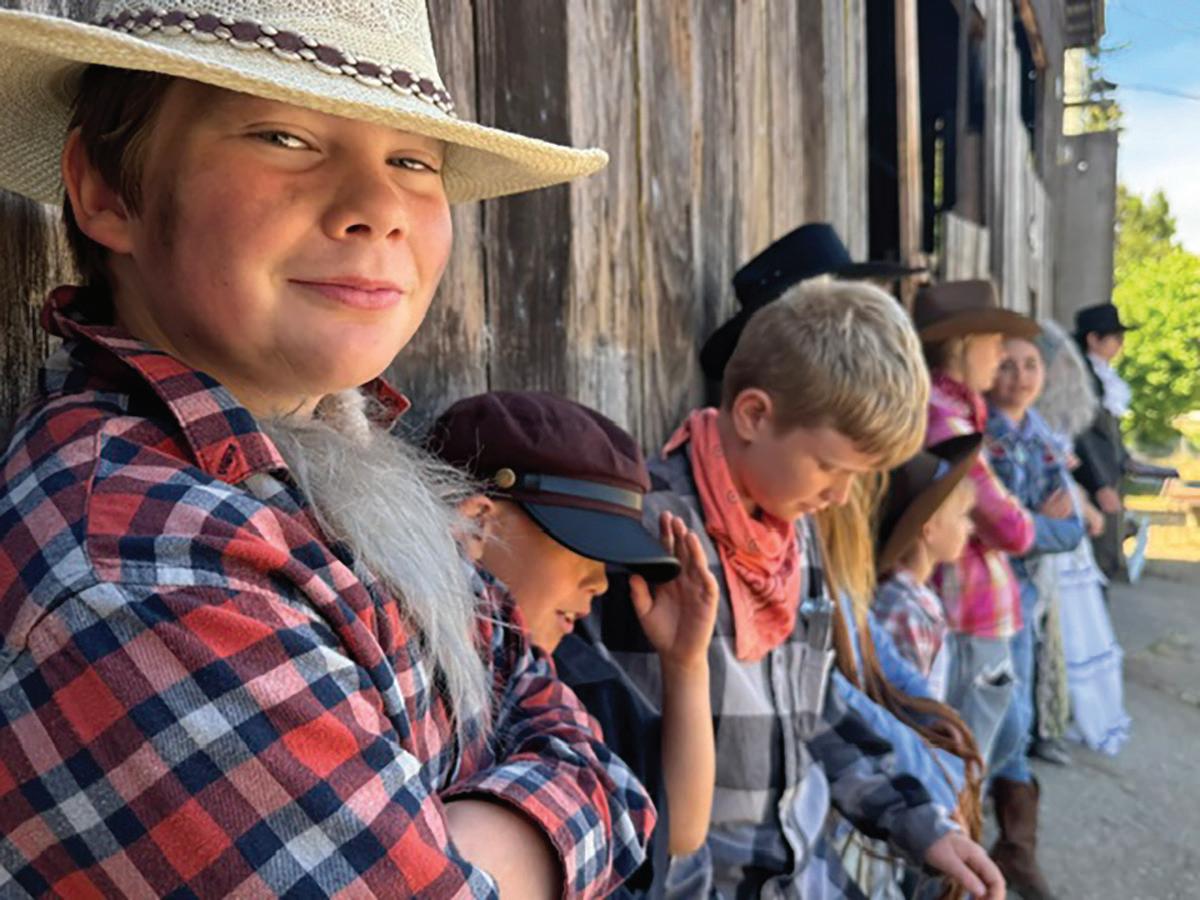
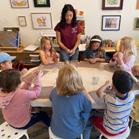
Unplug and Engage at Camp Gateway! Gateway School Santa Cruz is hosting a screen-free interactive summer camp for rising 1st - 5th graders. Campers will engage in counselor-led activities and enrichment classes. Full and half day classes available. June 15 - July 17th. Register now (QR code - see our ad in this month’s issue). For more information, visit gatewaysc.org.
Chartwell School
2511 Numa Watson Road, Seaside 831.394.3468
www.chartwell.org/summer
Summer Chartwell School, located on 60 acres in Seaside, CA, serves students with dyslexia and other related learning differences who are not currently reaching their full potential. We do this in grades 1-12 by providing targeted and direct instruction to empower learners with the skills, strategies, tools, and social-emotional mindset they need to thrive in college and beyond. Summer@Chartwell is a three-week program that emphasizes literacy, math, STEAM, and enrichment skills.
“Before we found Chartwell, our son was struggling every night with homework, his confidence shattered because he couldn’t understand why learning was so difficult for him. At Chartwell, he gained the tools and skills to support his learning profile, and now he confidently advocates for himself and is excelling in high school. I can’t express enough how profoundly Chartwell changed our son’s life—and ours.” ~ Milda E., Parent of Chartwell Alumnus
Drawn2Art Studios
19C Rancho Del Mar Shopping Center, Aptos 831.661.5652
Aptos@Drawn2ArtStudios.com drawn2artclasses.com
SIGN-UP NOW – OFFERING REALLY FUN SUMMER CAMPS! Sign-up by or before April 30th, Receive – $40 OFF each camp. New Students ONLY Pay the Registration Fee. Learn about our Summer Camps, each camp is themed! Here are some of the really fun summer camps we are offering: Anime & Cartooning: Learn to draw traditional-style Anime and create your own Anime self-portrait. Cartoon Clay Camp: Learn sculpting and painting methods, create landscapes, characters and more. Portraiture: Learn the fundamentals of drawing different portraits, covering different techniques and working in different media (graphite charcoal, colored pencils, pastels and more). Offering many more. Come Join Us for a Fun-Filled Day!. Also, offering a Free Trial Class for our studio art classes!
International Academy of Dance IADance.com | NutcrackerSantaCruz.com info@IADance.com 831.466.0458
International Academy of Dance, home of Santa Cruz City Ballet, provides world class instruction in Classical Ballet, Tap, Contemporary, Lyrical, and Jazz. The studio is an encouraging and supportive community from ages two to a hundred and two. It is our mission to inspire students of all ages to develop a lifelong love of dance. Through choreography, balance, agility, strength and flexibility, we work with each dancer to hone artistry, technique, focus and musicality. We aspire to bring joy and generate growth in every class. We can’t wait to see you in the studio! Come see us on stage in Swan Lake: Wings of Desire at the Landing in Scotts Valley, the first week of June! Awarded Best of Growing Up in Santa Cruz 2023, 2024 & 2025, and First Place in the Lookout List inaugural year 2025!
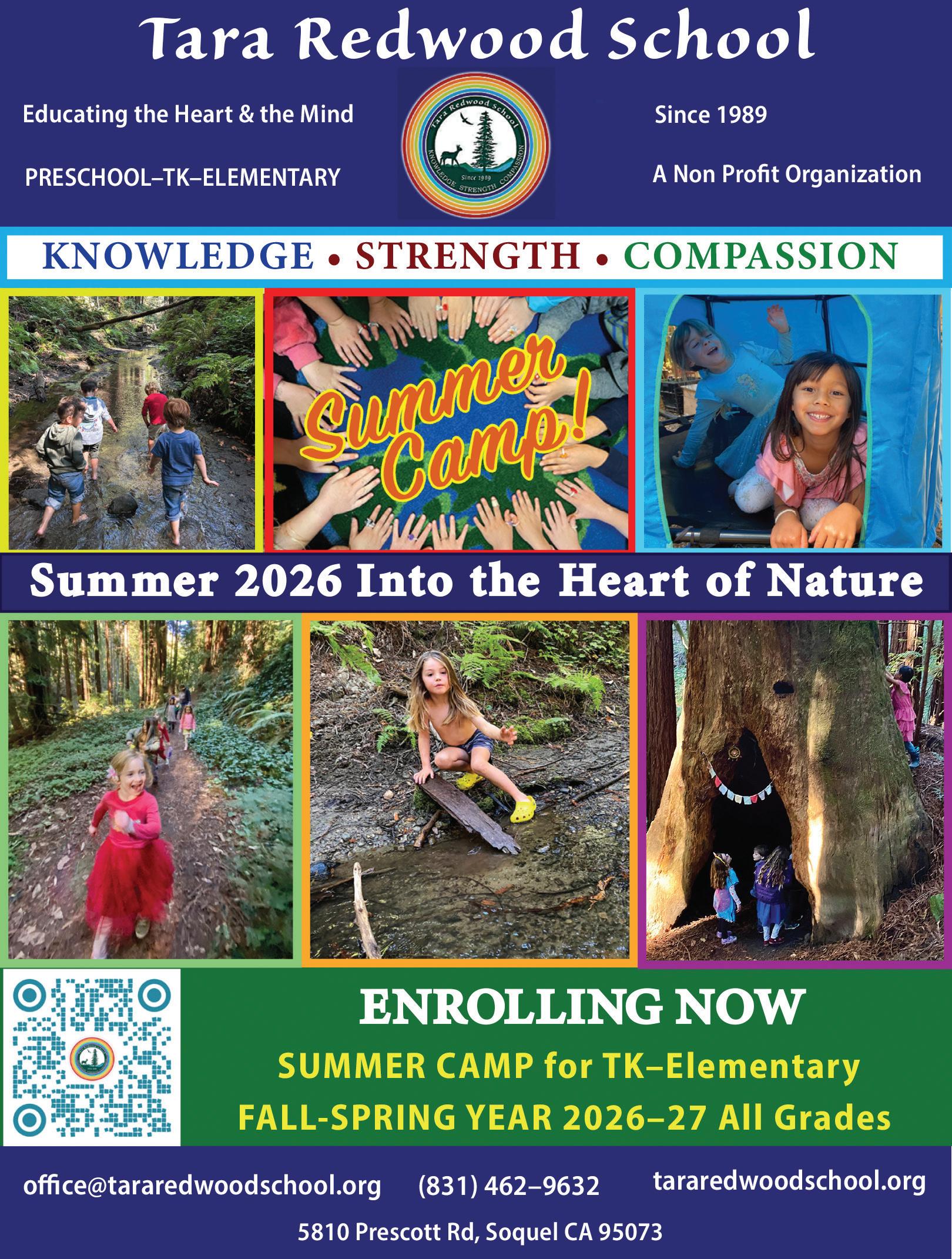
Into the Heart of Nature
Tara Redwood School Campus, 5810 Prescott Rd, Soquel 831.462.9632
office@tararedwoodschool.org
tararedwoodschool.org/summer-camp/
Located on 108 acres of Redwoods, oaks, and sunny meadows bordered by bubbling creeks, our big playground, a sunny clearing in the woods, will be the center of our camp activities of fun games, nature exploration, and nature-themed art. Each week we will focus on one of the essential elements that support all life; earth, water, air, and heat; explored through themes of the forest, ocean, earth, and the universe. As we learn more about the interconnectedness of our world, children will develop friendships, practice mindfulness, and learn how to care for each other, animals, bugs, and the environment we all share. 9am – 3:00pm, ages 4 - 8.
Jim Booth Swim School
Watsonville 831.722.3500
Jimboothswimschool.com
Be a water wonder! Lessons for all ages! From our Little Otters swim class for parents and their babies to our adult beginner class. The whole family can splash together at Jim Booth Swim School. Little Otters is a gentle introduction to our 94-degree indoor pool that will make you confident that you are guiding your infant to a happy water experience. Our lessons emphasize quality swimming in an exciting class taught by our caring, well-qualified teachers. Developmental swim team and advanced swim lessons will be offered at our outdoor pool located in Watsonville at Toadal fitness. The whole family can swim at Jim Booth Swim School!
Junebug’s Gym
3910 Portola Drive, Suite 2, Santa Cruz 831.464.BUGS (2847)
JuneBugsGym.com
June Bug’s Gym is a place where your child can experience a fun-filled adventure in movement. We have a caring, respectful staff that encourages every child to grow at their own pace while supporting social, emotional, and cognitive development. Our goal is to promote confidence and self-esteem in our students, open up their imaginations, and help them experience the joy of movement in an ever-changing environment designed to test their skills.
Kennolyn Day Camps
8205 Hacienda Lane, Soquel 831.479.6714
kennolyncamps.com/santa-cruz-day/ Ready to get your child away from technology and into a nourishing community in the great outdoors? On 450 acres of privately owned redwood forest only 4 miles from town Kennolyn Day Camp is just a short bus ride away. Your child will thrive in this fun, active, supportive environment. And after a day of exploring the fields, pond, and miles of trails, they’ll be happy-tired after each fun day! Nowhere else in the local region will you find a more complete, authentic summer day camp experience. Just ask your friends and neighbors.
La Madrona Athletic Club
1897 La Madrona Drive, Santa Cruz 831.438.1072
www.lamadronaclub.com
La Madrona Athletic Club is located in the beautiful Santa Cruz Mountains and remains a premier club for health and wellness, balancing a gorgeous facility with a family-friendly environment. Our summer youth programs are offered year around. La Madrona offers high-level instructional camps for tennis and swimming as well as an all-day sports camp in the summer. Summer sports camp is an outdoor camp that will provide children the opportunity to develop their sports skills, self-confidence, and self-esteem through fun games, swimming, and tennis activities.
The Santa Cruz Museum of Art & History 705 Front St, Santa Cruz 831.429.1964 info@santacruzmah.org
This summer, the MAH is offering two vibrant creative camps, each running for one week and filled with hands-on learning. Art & Ecology Camp, led by muralist Jesica Evanjelista, invites campers ages 7-13 to create murals inspired by art and nature. Dance As Moving Art, led by Motion Pacific Dance instructors Gabi Piazza and Kali Lucas, encourages teens ages 11-17 to choreograph and tell stories through movement. All camps run 9am–1pm, with optional care until 3 pm. Snacks and materials are included. Space is limited, reserve your spot today!
Mountain of Fun, Mount Madonna School 491 Summit Road, Watsonville 408.847.2717 mountmadonnaschool.org/summer
Summer day camps on Mount Madonna School’s 380-acre redwoodforest campus offering weekly summer camps: Nature explorers age 3-6, June 22-July 31, Mountain Explorers age 6-9, July 6-July 31, Redwood Explorers ages 9-13, July 6-July 31. Students enjoy arts and crafts, hiking, sports camps, STEAM projects, astronomy, team-building and an overnight campout for Redwood Explorers. Horse camp option available for campers 7+. Play in nature, cultivate relationships, build skills, and more – unplugged, outdoors, and active! Camps are Monday through Friday, 9am-3:30 pm. Transportation is available. Details and registration online at www.mountmadonnaschool.org/summer. Music Together/MusicalMe, Inc.
Locations throughout Santa Cruz and Santa Clara County Call/Text: 831.332.9002 registrar@musicalme.com musicalme.com
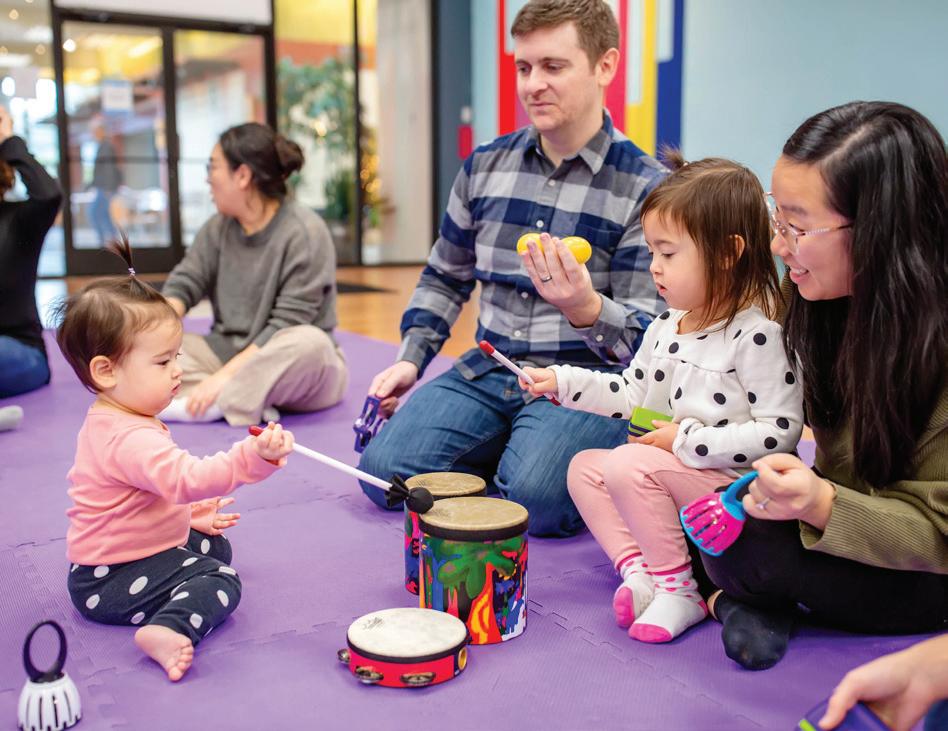
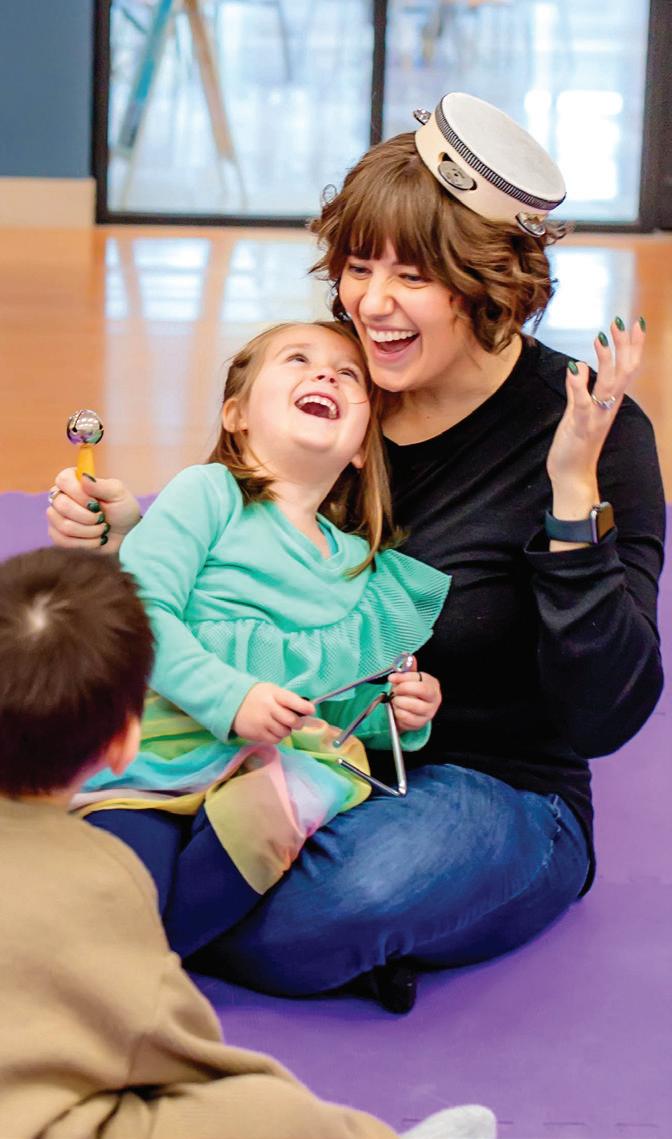
Come join the fun at our Music Together classes – where magical moments happen through playful, rich, and engaging music experiences! Let your little ones, from babies to preschoolers, explore their inner music maker alongside you, their favorite grown-up. Our music and movement classes are not only a blast but also provide essential support for your child’s early development. Summeronly special: Unlimited Bonus Classes! Join us now and create beautiful memories together.
Redwood Music Camps info@CommunityMusicSchool.org CommunityMusicSchool.org
Does your child play an instrument? Let them take a deep dive into Celtic music with other young musicians this summer. They’ll have fun, learn new tunes, and become better musicians.
Redwood Music Camps offer excellent teachers, a supportive and fun environment, and the opportunity to make new friends. For players of violin, viola, flute, penny whistle, recorder, harp, guitar, mandolin, ukulele, accordion, small keyboards, cello, and bass. Teen Camp (June) is a one-week sleepover camp for ages 12-18. Kid Camp (July) is a two-week day camp for ages 7-13. Information and registration is online at CommunityMusicSchool.org.
Celebrating over 40 years of camp, Santa Cruz Soccer Camp offers a fun and supportive environment where learning happens through enjoyment. Designed for kids ages 5 to 14, the camp features nine weekly sessions throughout the summer. With an average 7:1 camperto-coach ratio, participants receive personalized instruction focused on skill development, teamwork, and confidence building. Located among the redwoods at Delaveaga Park, campers enjoy an active outdoor experience in a beautiful natural setting. Join a long-standing Santa Cruz tradition
Santa Cruz Waldorf Redwood Summer Camp 2026
Santa Cruz Waldorf School, PreK-8 2190 Empire Grade Santa Cruz 831.425.0519
santacruzwaldorf.org
Santa
scgym.com
info@scgym.com
Seven
Center 831.713.9392 sevendirectionsinfo@gmail.com sevendirections.org
1500 Mark Thomas Drive, Monterey 831.655.9386 summercamp@santacatalina.org santacatalina.org/summercamp
Campers learn and perform the folk music of Ireland, Scotland, and more. Open to players of fiddle, violin, viola, cello, bass, flute, pennywhistle, recorder, guitar, Irish tenor banjo, mandolin, harp, dulcimer, and keyboards.
Have fun while becoming a better musician!
Teen Camp
Overnight camp, ages 12-18
June 14-20, 2026
Aptos
Kid Camp
Two-week day camp, ages 7-13
July 20-August 1, 2026
Santa Cruz
Photos, videos, and registration at CommunityMusicSchool.org
Santa Cruz Spring Break Checklist
Spring break in Santa Cruz does not have to mean a plane ticket, a packed itinerary, or a week of trying to make the most of it. Before the week begins, here is a simple checklist for a local spring break that actually feels like a break:
One beach day, even if the weather is questionable. Bring a towel, a sweatshirt, and zero expectations.
One hike, mud on shoes encouraged!
Pogonip, Henry Cowell, Nisene Marks, Wilder. Pick one trail and let the kids set the pace.
One meal out at a spot you keep saying you will try. Check out your local food trucks or small restaurants.
One Boardwalk day. Ride at least one classic. Share something fried. Stay for the people watching.
One afternoon with nowhere to be. No errands. No rushing. Just a slow day at home that feels like a reset.
When families have the right financial support behind the scenes, it is easier to focus on moments like these. Bay Federal Credit Union has long supported local families with lending options built for real life, helping make room for both the everyday and the occasional splurge. Learn more at bayfed.com.
SPONSORED BY BAY FEDERAL CREDIT UNION
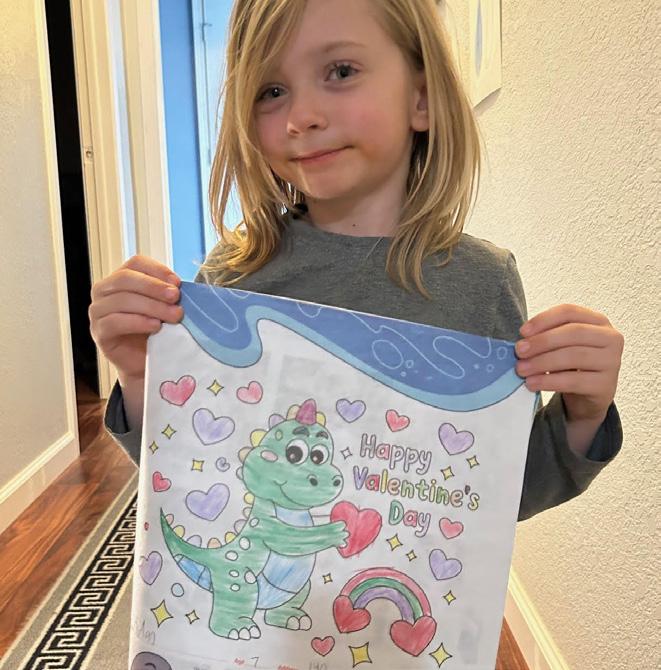
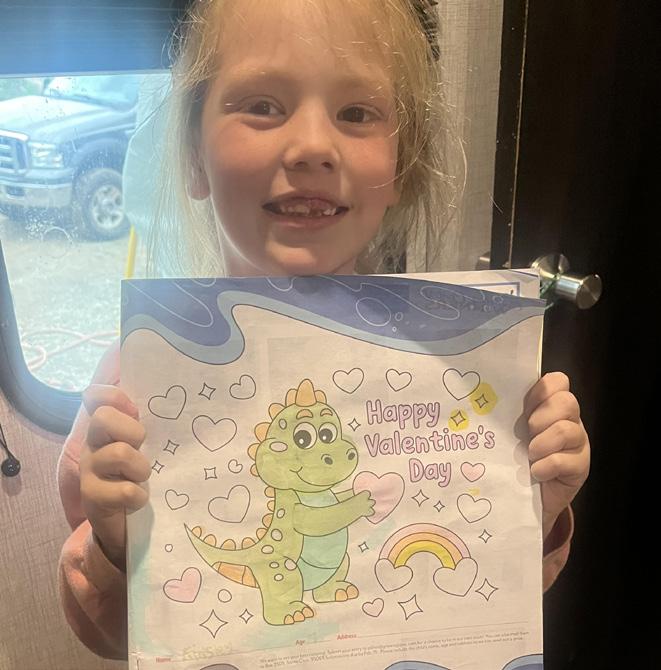
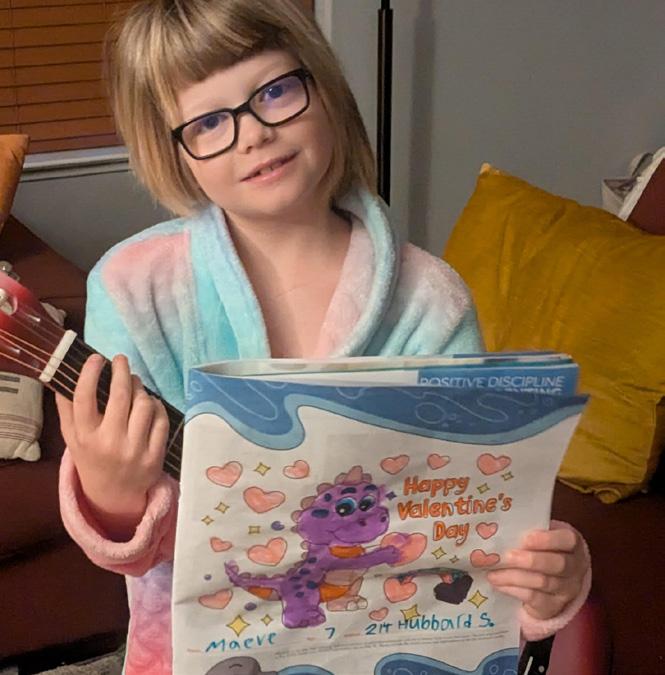
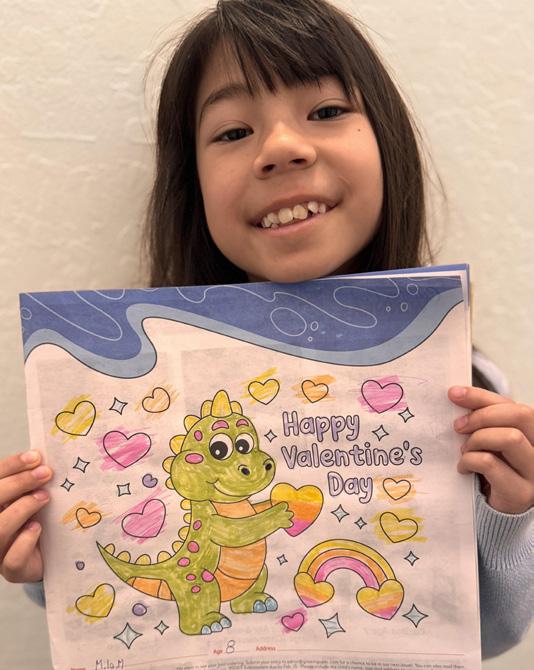
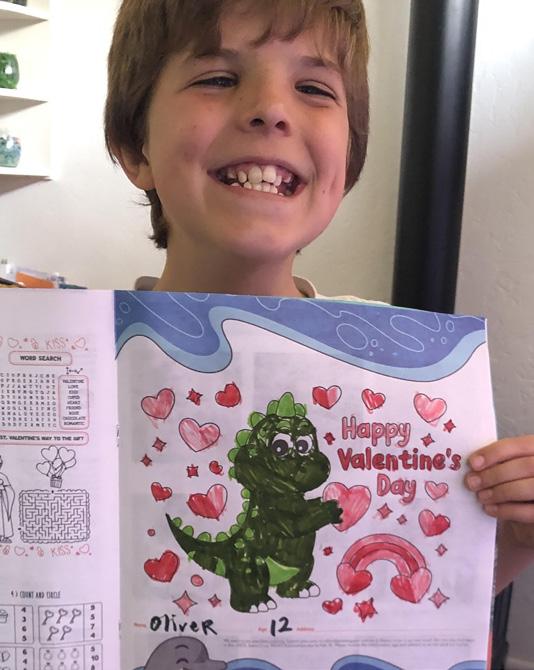
Aidan Age 7
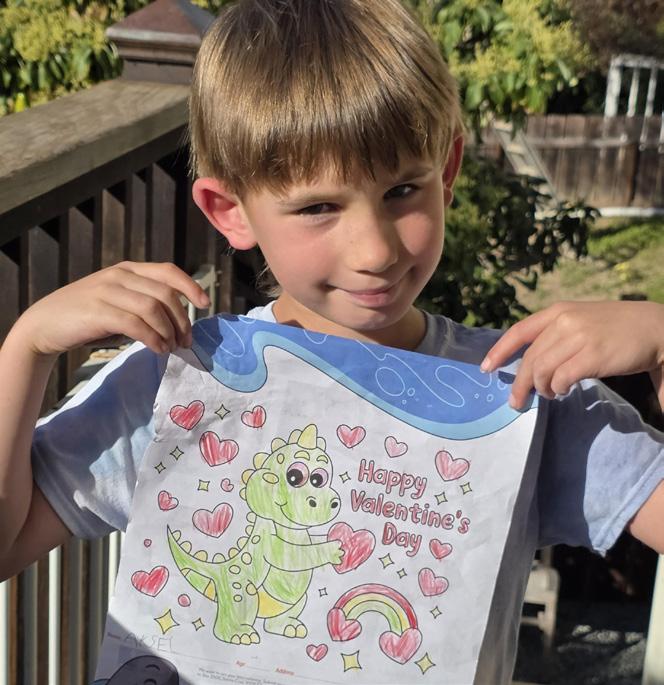
Aksel Age 7
Bodhi Age 5
Alma Age 7
Emi Age 7
Heidi Age 7
Kinsley Age 7
Juniper Age 5
Kinsley Age 7
Maddie Age 4
McKenna Age 8
Maeve Age 7
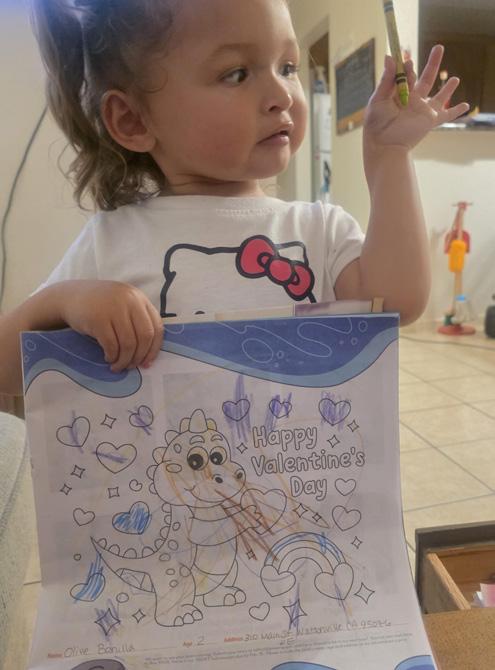
Olivine Age 2
Milia Age 8
Oliver Age 12
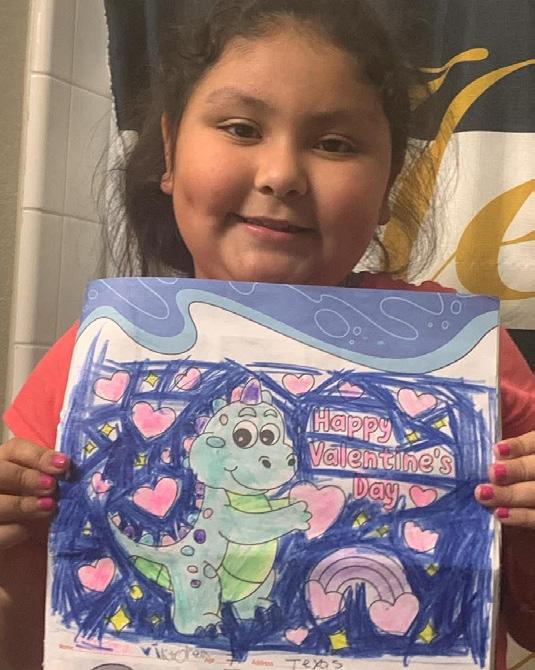
Viktorea Age 7
Sarah Age 7
The College Dream Nearly Slipped Away
What happened next is changing futures for Watsonville students and their families
BY JOAN HAMMEL
At one time or another, we’ve all felt the rage and frustration of the “spinning wheel of death” – a frozen computer screen on a website that won’t load or refresh no matter how hard you bang on the keyboard.
But in 2024, when the FAFSA system –the Free Application for Federal Student Aid, the gateway to college financial aid – broke down, that everyday annoyance became a national crisis, shutting millions of low-income and immigrant families out of four-year college opportunities.
As college entry deadlines loomed, many Watsonville-area high school students were left feeling helpless as their childhood dreams of a future beyond the fields were shattered. Years of hard work, studying and sacrifice were derailed – all because of a faulty federal government computer system.
Covid had inflicted its own special brand of pain and havoc on these students years earlier. Then the winter storms of 2023 flooded these same kids’ neighborhoods and upended livelihoods. Although Santa Cruz County was included in a federal disaster declaration following the storms, access to aid was uneven, and many Watsonville families – particularly undocumented residents or those unable to meet strict eligibility requirements – received little or no financial relief.
Then came the FAFSA mess, which delayed or denied financial aid for millions of students nationwide –hitting first-generation college applicants hardest.
For many students, the message was clear: the four-year college dream would have to wait – or worse, disappear entirely.
And yet, in classrooms after school and quiet weekly meetings a few miles away, another story was unfolding. A story of resilience. About adults who refused to accept “that’s just how it is.” About students learning, often for the first time, that their life stories – including the hardest, most painful parts – were not liabilities, but strengths.
At the center of that story is a new, small non-profit program with an outsized impact: Estrellas Brillantes.
Founded in 2024 by Santa Cruz-based technology executive and educational philanthropist Eric Bohren, Estrellas Brillantes operates in partnership with Pajaro Valley Unified School District and currently works exclusively with students at Pajaro Valley High School in Watsonville.
“Historically, the common path for low-income Latino or Hispanic students was community college, trade school or not going at all,” Bohren said. “Our objective is to make the four-year college
option real and attainable – when it’s the right fit – without creating financial hardship for families.”
A LOCAL RESPONSE TO A NATIONAL FAILURE
The FAFSA breakdown, which Bohren describes as “one of the biggest black holes in federal technology,” prevented millions of students from completing applications or receiving aid packages before college decision deadlines. While the system has since stabilized, the damage to the class of 2024 was already done.
Rather than dwell on policy failures, Bohren decided to act locally.
“I didn’t want to just get mad about politics,” he said. “I wanted to do something good for the community.”
Through a connection with Pajaro Valley High School academic counselor Nancy Puente, Bohren launched a pilot cohort of three students. All three ultimately received full-ride offers to four-year universities. This year, the program has grown to eight students –staying small by design, to ensure a hightouch and deeply personalized approach. Students are eligible for Estrellas
Brillantes if they attend Pajaro Valley High School, come from Latino or Hispanic families, have household incomes under $125,000 and have parental support to pursue a four-year college path. Many also apply through QuestBridge, which supports high-achieving students from low-income backgrounds on their path to a top college. QuestBridge’s message to students is: “this is your chance to dream big.”
SEVEN DAYS
When Angela Belmontes, 18, first met Bohren, the clock was already ticking on her dream.
The Pajaro Valley High School senior had always imagined going to college –maybe even somewhere prestigious like Santa Clara University. But the path there felt confusing and rushed. Early action. Early decision. Financial aid forms. Essay prompts. Deadlines she wasn’t sure she understood.
Then came the realization: the deadline was less than a week away.
“I was like, ‘Oh my gosh, I need to apply right now,’” Angela said. “I was really behind.”
Her academic counselor, Nancy
Puente, knew time was short. She pulled Angela aside with a suggestion: there was a local volunteer working with students one-on-one who might be able to help.
Angela showed up with her mom to meet Bohren at Erik’s Deli Café.
“It was really informal. It felt comfortable,” she said. “He was just asking about me – what I liked, what I wanted to do.” When Bohren heard the urgency around the deadline, he was undaunted. “He was like, ‘OK, we’re going to do this,’” Belmontes recalls. She then had only days to write the essay that would shape her future.
THE POWER OF STORY
What sets Estrellas Brillantes apart is its singular focus on narrative.
In an era where AI tools can produce polished prose in seconds, Bohren argues that writing quality alone no longer differentiates applicants. What does is lived experience – and the ability to reflect on it with honesty, humility and depth.
“Good writing is now a commodity,” he said. “What’s not a commodity is your story.”
Another student, Diego Rivera-Garcia, who now, thanks to Estrellas Brillantes, is a first-year mechanical engineering major at Santa Clara University, said that philosophy made all the difference for him.
“If it weren’t for Eric, I probably would have kept my first draft,” he said. “Looking back, that essay wasn’t very strong. I 100% think Eric’s advice helped me get in.”
For Angela Belmontes it meant learning to say more than she thought she should.
“He kept telling me, ‘Express yourself more. Go deeper,’” she said.
At first, her essays read like a list of accomplishments. Grades. Activities. Safe answers. But Bohren kept pushing gently.
Her story slowly emerged to include the parts that mattered most: growing up first-generation, navigating personal challenges, exploring culture by cooking with her mom, discovering an interest in immigration and justice that now has her considering law school.
“It wasn’t just listing stuff,” she said. “It was about who I actually am.” That one-on-one support felt different from anything she’d experienced before.
“I could go to the career center,” she said. “But it’s not the same. They don’t really know you. Eric actually got to know me.”
Bohren builds these relationships by meeting weekly with students, guiding them through an intensive process of self-reflection. He challenges them to identify the experiences – often tragic, traumatic, painful or deeply personal – that have shaped their character, resilience and values.
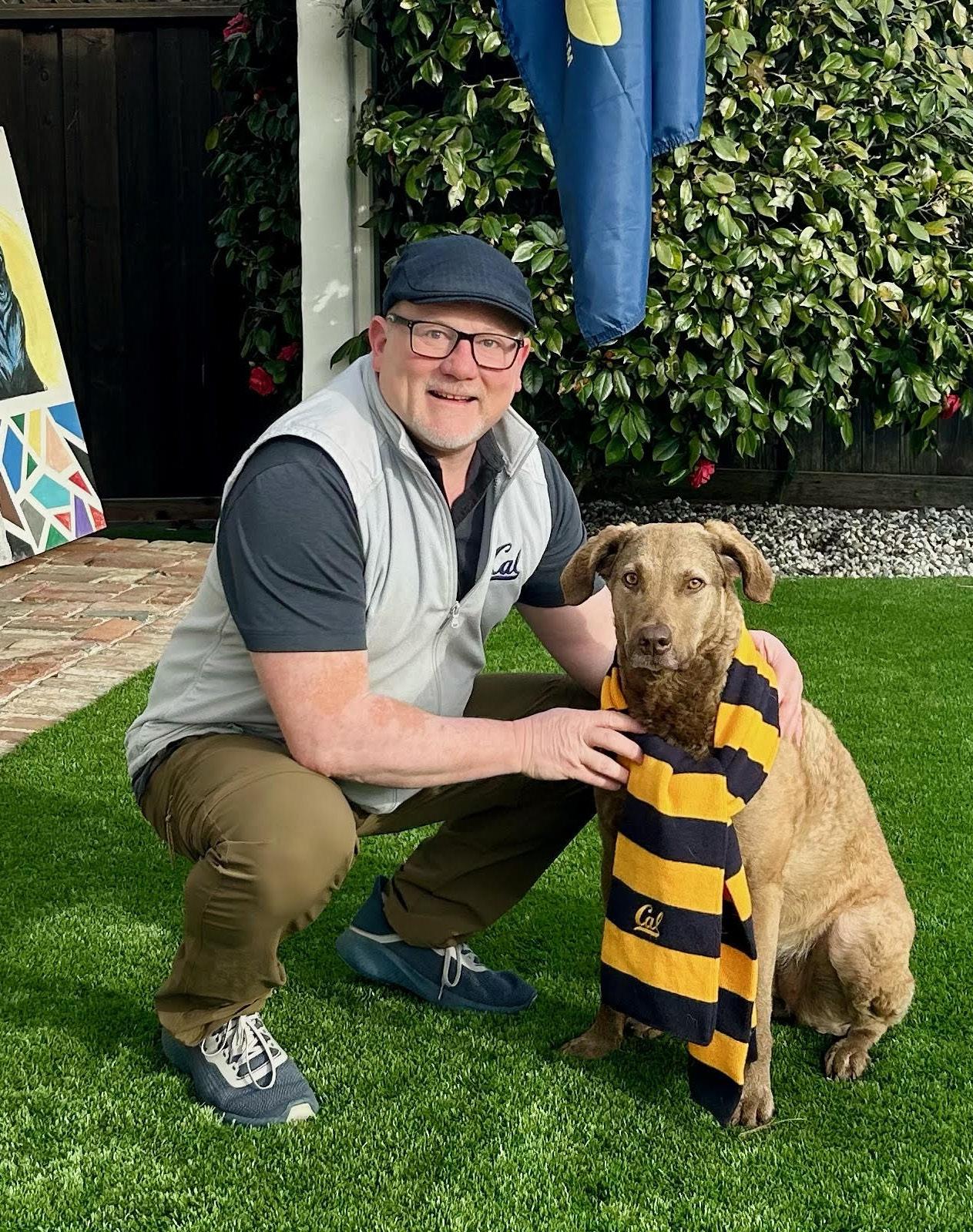
Eric Bohren, founder of Estrellas Brillantes, with his dog Osa.
But he’s quick to emphasize, “This is not about a sob story. It’s about how hardship forged someone who’s going to grow from it and go on to be a strong contributor on campus.”
Rivera-Garcia, whose family faced homelessness, economic uncertainty, food insecurity and other adversity, said he had to learn that lesson firsthand.
“At first it was kind of just, ‘here’s my trauma, but I’m still a good student,’” he said. “That’s not really a story.”
During Thanksgiving break, unable to sleep, he rewrote his entire personal statement in one sitting, comparing himself to a small sprout pushing through cracks in the sidewalk.
“They grow even though people walk over them every day,” he said. “That’s how I felt – growing despite everything.”
Another student Bohren worked with initially offered a vague reference to losing his mother. After multiple rounds of gentle encouragement to dig deeper, the student ultimately shared the full truth: his mother died while attempting to cross the desert back into the U.S. after a family trip to Mexico, leaving him orphaned at a young age. He went on to work in agricultural fields as a child to help support his family.
“He’s a miracle,” Bohren said, visibly emotional recounting the story. “And hopefully he’s going to get a full ride at a four-year university.”
FROM QUIET TO CONFIDENT
Beyond acceptance letters, Bohren has seen something else transform the students he works with: confidence.
“These are big risks for kids,” Bohren said. “It’s easier to stay close to home, keep working weekends to support your family. But once they believe in themselves, they start taking chances.”
He points to Diego Rivera-Garcia as an example. When they first met, Bohren said, Rivera-Garcia was quiet and reserved. Over time, as they worked through essays, applications and scholarships together, Rivera-Garcia began to open up – eventually speaking confidently with younger students about the college process and encouraging them to aim higher.
Now, Rivera-Garcia is channeling a lifelong love of math into hands-on work with the school’s Formula SAE team, helping design and build a race car for national competition. It’s a big step toward the motorsports engineering career he once only imagined.
That growth didn’t stop once he got into Santa Clara. Rivera-Garcia says Bohren still checks in about internships and career paths, offering connections and advice that many first-generation students simply don’t have access to.
“Eric told me, ‘Maybe you don’t have these connections – that’s what I’m here for,’” Rivera-Garcia said. “He’s still helping me figure out next steps.”
A BROADER ECOSYSTEM OF SUPPORT
Estrellas Brillantes does not operate in isolation. Many students also participate in the Watsonville Ivy League Project, an organization that supports underrepresented, high-achieving students interested in visiting and applying for an Ivy League school.
The Ivy League Project serves students from both Pajaro Valley High School and Watsonville High School, emphasizing academic excellence, family involvement and community fundraising. Recent success stories include Watsonville High senior Alondra Rivera-Muñoz, who will attend Brown University at no cost.
Bohren sees Estrellas Brillantes as complementary to The Ivy League Project and QuestBridge.
“We do similar things and are highly collaborative,” he said. “But my passion is the one-on-one work with students –digging deep into narrative.”
For Rivera-Garcia, that support also extended to the practical side of paying for college. During his senior year, Bohren regularly sent scholarship opportunities and encouraged him to apply – even when he felt overwhelmed by classes and deadlines.
“I don’t think I would’ve applied to as many scholarships without him,” he said. “He kept finding opportunities I didn’t even know existed.”
TELLING SOME GOOD NEWS
For Bohren, the goal is not recognition, but reach.
“I don’t want this to just be about me,” he said. “There are other local resources helping make the dream real.”
At a time when headlines often focus on what’s broken, Estrellas Brillantes offers a reminder of what’s working – quietly, locally and with profound impact.
“Let’s tell some good news for once,” Bohren said.
A perfect example of that good news is Angela Belmontes herself. After working with Bohren, Angela heard back from Santa Clara University with the response she’d been hoping for: Congratulations, you’ve been accepted!
Today, she’s a freshman, attending on what she calls a “sizable scholarship” –enough that college finally felt possible for her low-income family.
“If I hadn’t applied when I did, I probably wouldn’t have gotten as much aid,” she said. “My family couldn’t afford it otherwise. I don’t think I’d be here.”
What stays with her most isn’t the paperwork or the deadlines. It’s the fact that someone showed up.
“Eric didn’t have to help me,” she said. “I was rushing everything. A lot of people would’ve said it was too late. But he didn’t leave me alone.”
She smiles. “That changed everything.”
ASK YESENIA
Healthy Screen Time Habits
I grew up with one TV in our living room. We took turns picking a show — usually just one a day — and the rest of the time was filled with homework, family dinners, and playing with my siblings. I remember being jealous of friends who had TVs in their rooms, but looking back, I’m so grateful. Having one shared screen meant we talked more, played more, and spent real time together.
Now, with my three-year-old daughter, I try to keep that same balance. We’re mindful about screen time, and I love seeing how easily she dives into imaginative play. We still enjoy our cozy Friday night movie nights, but we aim to keep screens as part of our family life — not the center of it. Finding that balance feels like a gift.
This monthly column provides tips for anyone who is helping raise children, based on the world-renowned Triple P – Positive Parenting Program, available to families in Santa Cruz County. If you have a question or idea for a future column, email me at triplep@first5scc.org.
Dear Yesenia, We relaxed screen-time rules for our teens (14 and 16) because their devices were helping with school and staying connected with friends. Now they’re on their phones constantly, and we’d like to set new limits. How
can we bring this up without them feeling like we’re being unfair or too strict? ~ Hector
Dear Hector, You’re not alone! It’s often difficult for parents and caregivers to set and follow through on screen time limits, but it’s important to teach children and teens to use screens (social media, video games, movies, etc.) in healthy, responsible ways. This teaches them self-regulation skills and prepares them for responsibilities later in life. Here are some tips to try:
Talk with your teens. Have a family meeting about screen time. Acknowledge that you’ve been lenient about screen time rules because of the pandemic. Let them know that was temporary, and now you’d like to create family agreements that provide a healthier balance.
Understand their screen time habits. Before discussing limits, ask questions to better understand your teens’ screen time habits. Remember that screen time isn’t always or automatically harmful. For instance, watching a movie can be enjoyable and provide a break from schoolwork or other challenging tasks. And using technology to read, play active games or exercise, connect with peers, or create art, music, or videos can be beneficial and even help kids develop
useful skills for school and future jobs. But too much screen time can contribute to physical health problems (headaches, lack of sleep) and mental health concerns (depression, anxiety), especially if it increases social isolation, decreases physical activity, or exposes kids to bullying or other inappropriate content. Develop family agreements for screen time. Keep them simple and realistic. Consider setting weekly (versus daily) screen time limits, defining types of content or activities that are acceptable versus off-limits, and agreeing on rules about when and where screens can be used (e.g., “Put away phones while we eat,” or “Turn devices off by 10 p.m.”). Involve your teens in defining these agreements, how they will follow them, and what will happen if they ignore the rules. Remember that logical consequences, such as temporarily removing screen time privileges, are meant to be a teaching tool versus a punishment. Emphasize that the more your teens take responsibility for following the family agreements, the less you have to intervene to enforce the rules. Then focus on setting a good example with your own screen time habits. Identify other interesting activities. Find out what sports, art, music, and other activities are available at school or in the
community. Encourage your kids to pick a non-screen activity they’re interested in and that will fit your family’s schedule and budget. It could be an activity they do alone, together, or even as a family. Encourage behavior you want to see more of. When your kids do other activities or follow the family agreements on their own, show interest and give your attention. It can be as simple as asking, “What music are you listening to?” or saying, “Thanks for putting away your phones. I really enjoy our dinnertime conversations.” This helps shift everyone’s attention to the things your teens are doing well instead of things you wish they would stop doing.
Final Thoughts: Teaching kids about healthy screen time limits is one way to help them become confident, competent individuals. And who knows…parents and caregivers could benefit, too!
Yesenia Gomez-Carrillo is the mother of a 3-yearold daughter and the Triple P Program Manager for First 5 Santa Cruz County. Scientifically proven, Triple P is made available locally by First 5, the Santa Cruz County Health Services Agency, and the Santa Cruz County Human Services Department. To find a Triple P parenting class or practitioner, visit triplep.first5scc.org, facebook. com/triplepscc, or contact First 5 Santa Cruz County at 465-2217 or triplep@first5scc.org.
Interdependence Day Is Every Day
BY STEVEN WEISS AND SARAH NOFI
“Give a man a fish and you feed him for a day; teach a man to fish and you feed him for a lifetime.” The majority of us might say that the main take-away from that proverb is the importance of developing people’s independence. Once that person learns to do things for themselves, they can head off on their own and quit relying on others. It’s basically a one-sided transaction with a one-and-done result.
Indeed, independence is important, but our overemphasis on it in our Western culture causes us to prioritize competition over cooperation, leads us to prize rugged individualism, and guides us to mistakenly believe that when faced with adversity, you can simply “pull yourself up by your own bootstraps.” The reality, though, is that nobody raises themself, many people lack the social privilege from which others benefit, and all of us stand on the shoulders of countless generations of people who invested not just in their own futures, but ours as well. What we perhaps need to revisit and better understand is the quintessential importance of interdependence. Interdependence is the idea that as capable individuals, we do best when we cooperate, contribute, and rely on one another, and that each of us has the ability and responsibility to co-create a world in which everyone thrives. In interdependent communities, people of all ages and abilities depend on each other in healthy ways.
If we examine the proverb above solely through the lens of independence, we might focus on what is known as the Iron Rule: “Never do for others what they can do for themselves.” Through the lens of interdependence, though, the focus shifts to the act of teaching, which represents an investment both in others’ success and in human relationships—what Fred Rogers (“Mister Rogers”) referred to as giving “an expression of care.” Interdependence thus does not diminish independence; it makes it possible.
FOUNDATIONAL THEORIES
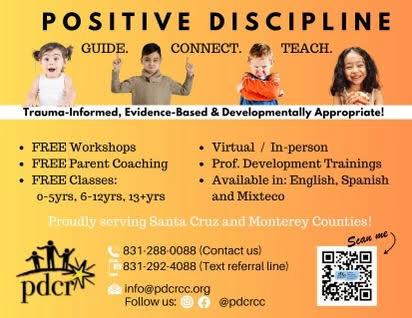
Positive Discipline is an approach to parenting and teaching rooted in large part in the psychological theories of Alfred Adler. Among other things, Adler recognized the value of interdependence and invented the German term gemeinschaftsgefühl to describe the social interest and community feeling that each of us innately possesses. Positive Discipline employs Adler’s theories by promoting belonging, encouragement, mutual respect, shared responsibility, seeing mistakes as learning opportunities, collaborative problem-solving, and the development of practical social and life skills. In doing so, Positive Discipline places interdependence at the heart of its philosophy.
BELONGING DRIVES BEHAVIOR
Humans are social beings, and human behavior is driven by people’s need to experience a sense of belonging and significance. In recognition of those needs, Positive Discipline shifts away from punishment or rewards as primary tools for behavior management. When children know that they matter and that their contributions are valued, they feel more motivated to cooperate. Meeting everyone’s need for belonging promotes respectful behavior and acts as a foundational element of interdependence.
ENCOURAGEMENT
Unlike praise, which often centers on outcomes and comparison, encouragement highlights effort, growth, and contribution. When adults notice persistence and emphasize how actions positively affect others, children learn that success is not solely about individual achievement but also the ability to support collective goals. In that sense, encouragement promotes interdependence because it shifts the question that children ask themselves from “How can I be better than everyone else?” to “How can we succeed together?”
MUTUAL RESPECT
Traditional, authoritarian parenting approaches tend to depend on top-down control whereby adults command and children comply. In contrast, Positive Discipline promotes mutually respectful communication. Adults combine firmness with kindness and set clear limits while listening to and considering
that their efforts matter and that group well-being depends on participation from everyone. Under Positive Discipline, children come to view responsibility not as an imposed burden, but as a natural expression of membership in a community.
MISTAKES ARE LEARNING OPPORTUNITIES
When mistakes are treated as opportunities to learn and grow rather than occasions for blame and shame, accountability is upheld while preserving dignity. Without fear of punishment, children are more willing to try new things, admit errors, and repair relationships when harm has been caused. Additionally, adults can offer guided reflection to help children consider what happened, who was affected, and how to make amends, all of which helps children develop important social-emotional skills such as empathy, self-regulation, and respectful communication.
FINAL THOUGHTS
children’s perspectives. When children feel heard, understood, considered, and respected, they are more inclined to extend that to others, elicit cooperation, and engage in relationship building.
SHARED RESPONSIBILITY
Positive Discipline encourages children to participate in age-appropriate tasks and decision-making. Rather than over-managing or rescuing, adults invite meaningful contribution. Chores, classroom roles, and collaborative projects provide authentic and meaningful experiences that highlight the many benefits of cooperation. Children discover
Interdependence does not mean losing oneself in the group or becoming overly reliant on others. Instead, it reflects the dynamic and delicate balance between autonomy and interconnectedness. Positive Discipline supports children in developing confidence and competence while remaining connected to those around them. Ultimately, Positive Discipline promotes interdependence by helping children learn that true strength lies not in standing alone, but in standing together, and that the act of watching out for the well-being of others is not a sacrifice they make today, rather an investment in a better tomorrow. May the day come when we can collectively celebrate and experience every day as Interdependence Day.
Steven Weiss and Sarah Nofi are certified Positive Discipline parent educators
PERFORMING ARTS
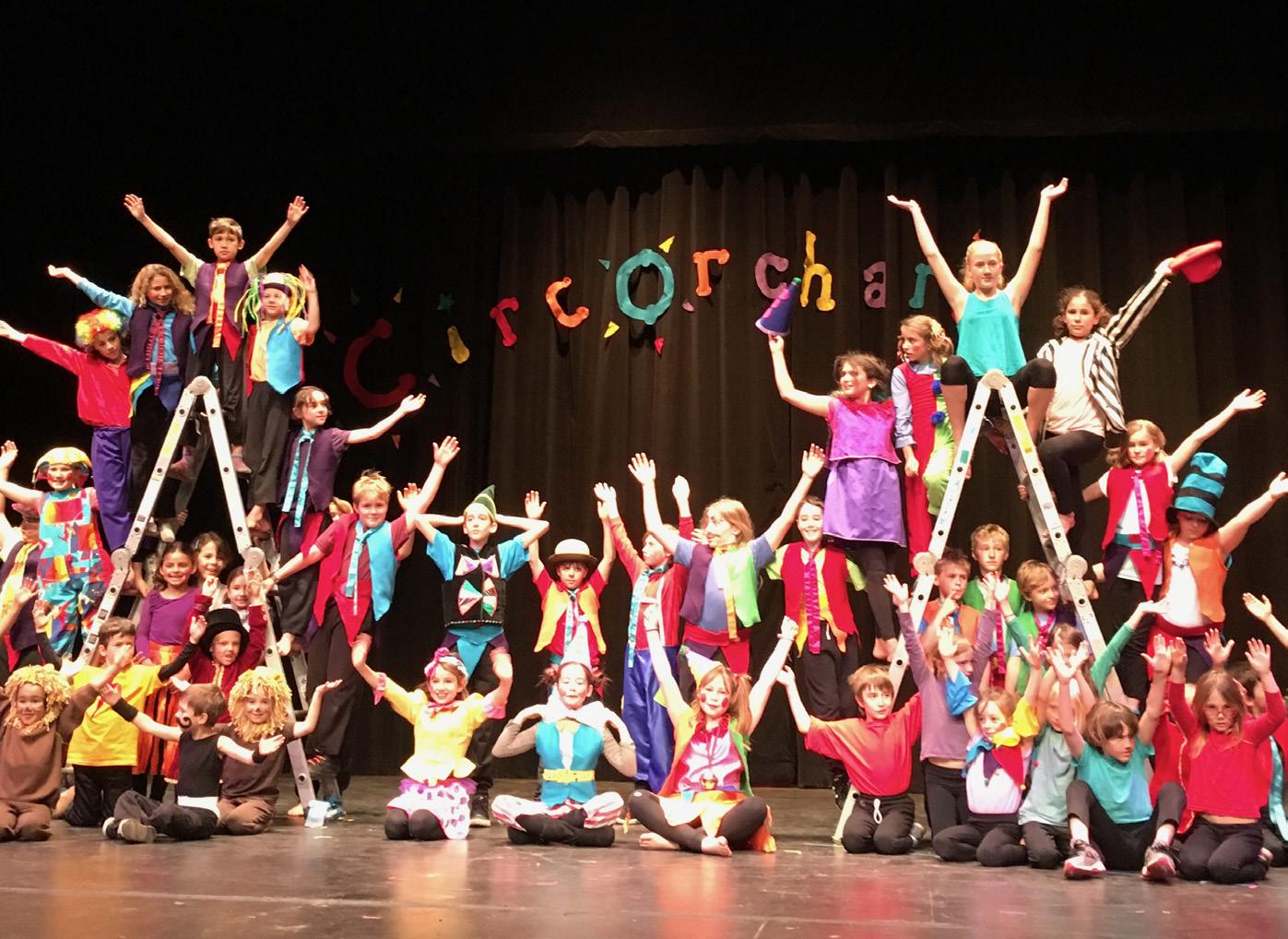
CircOrchard Celebrates 10 Years
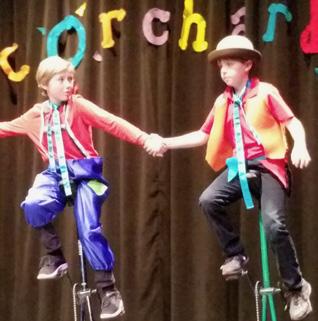
Ladies and Gentleman! Orchard School presents CircOrchard, its 10th annual children’s circus, featuring the entire 56-strong student body performing clown antics, juggling, acrobatics, unicycling, stilt walking, and circus spoofs. The not-to-be-missed public show will be on Saturday, March 14th, at 2:00 p.m. at the The Landing-A Performing Arts Center. Make sure to get your tickets early. See ticket information below.
Over the years, audiences have been wowed by the expertise and creativity of the school’s young performers, as well as impressed by their confidence level and powerful stage presence. The show, under the direction of teacher and professional performer, Rock Lerum, is created fresh every year with the addition of new, kid-generated skits, and an ever-growing student skill level that infuses new energy and ideas into some of the old standards.
Lerum has been teaching at Orchard School since 1998 and won a Gail Rich award in 2003 for his work in the community. In 2007, he took nine of the school’s students to New York City where they rode 6-foot tall giraffe unicycles, danced on stilts, sang and clowned in the
Good Morning America studios in Times Square, as finalists in a national contest for the Oreo Cookie Jingle.
This year’s tour includes shows at Monte Vista school in Corralitos, and Del Mar Elementary in Live Oak. Over the past decade, the entire school has packed up props, costumes, performers, music
students when they delighted the Santa Cruz Warrior’s crowds at the half time show, or when they performed with the Santa Cruz County Symphony as part of their family concert series, in the programs Here Comes the Circus and Under the Boardwalk, at the Santa Cruz Civic Center and the Mello Center in Watsonville. Orchard School is a small, non-profit, private K-6th school located on 14 beautiful acres in Aptos.
The school’s mission is to bring learning to life with a comprehensive hands-on curriculum that celebrates childhood and focuses on the arts as well as traditional academics. The teachers are specialists in their field who share a commitment to make sure students get out in nature and move their bodies as much as possible.
They believe that kids need this to fully exercise and develop their brains and inspire their curiosity to want to learn.
and sets to perform free shows, namely a rendition of the Yellow Submarine Magical Mystery Tour and more recently, CircOrchard, at local schools including Gault, Calabasas, De LaVeaga, Green Acres, Tierra Pacifica, Ohlone, Monarch, Gateway, and Pacific School.
You may have seen Orchard School
To purchase tickets for CircOrchard, visit orchardschoolaptos.org. Tickets are $16 for adults, $8 for those under 12 and over 65, and free for children under 2. For more information, call or email: 688-1074, info@ orchardschoolaptos.org
WED 4
Navigating the Teen Years 6-8pm Free Parents and caregivers are invited to learn practical tools for understanding adolescent brain development, emotional shifts, and communication challenges. This workshop offers strategies to strengthen connection, set boundaries, and support teens through complex developmental stages. Santa Cruz High School, Santa Cruz. julieatkinsoncoaching.com/ workshops
FRI 6
First Fridays Santa Cruz 5-8pm On the first Friday evening of every month, Santa Cruz galleries, shops, and cultural venues open their doors to showcase the works of Santa Cruz County artists. With a block party-like vibe, the multi-venue event provides an opportunity to discover local creative talent in a fun and festive setting. firstfridaysantacruz.com/event
First Friday Boulder Creek 5-8pm Enjoy a free monthly mountain street fair in the name of creation and community. There will be local art, music and food lining the sidewalks of downtown Boulder Creek. firstfridaybouldercreek.org
Scotts Valley Alfred Hitchcock
Festival 5-10pm $35 This annual festival celebrates Alfred Hitchcock’s cinematic legacy with classic film screenings, expert speakers, panel discussions, and special presentations honoring the director’s connection to Scotts Valley and film history. The Landing, Scotts Valley. hitchcockfestival.com
UCSC Wind Ensemble 7:30-9:30pm
The UC Santa Cruz Wind Ensemble performs a dynamic concert featuring contemporary and traditional repertoire, showcasing student musicians in a full concert band setting presented by the UCSC Music Department. Recital Hall, Santa Cruz. eventbrite.com/e/ ucsc-wind-ensemble-friday-march-6tickets-1979889328278
SAT 7
Arboretum Tour 11am-12:30pm The first Saturday of each month, the Arboretum offers a docent or staff-led tour of the Arboretum. Sometimes you will see New Zealand, South Africa, California, or Australia. Sometimes you might see combinations of several gardens, the developing World Conifer Collection, or Rare Fruit Garden. arboretum.ucsc.edu/ index.html
Basket Weaving Workshop 10am12pm Free Participants learn coiled basket weaving techniques using locally gathered Ponderosa pine needles. This hands-on workshop introduces traditional skills, provides materials, and welcomes beginners interested in learning this nature-based craft. Henry Cowell Redwoods State Park, Felton. santacruzstateparks.as.me
SUN 8
Antiques Faire 8am-6pm The Santa Cruz Antique Faire is on the 2nd Sunday of every month. Vendors offer an eclectic blend of antiques and unique items, vintage clothing, collectibles and more. Visit the Antique Faire on Lincoln Street between Pacific and Cedar.
Artisan Faire noon-4pm Head to Abbott Square every second Sunday of the month for free live music while you browse handmade jewelry, soap, clothing, and much more! There is always something at these events that has your name on it! abbottsquaremarket.com/events
Castro Adobe Open House 10:303:30pm Learn about the contributions of the Indigenous people as skilled laborers for the Castros on Rancho San Andre. santacruzstateparks.as.me/ CastroAdobeOpenHouse
An Opera Workshop 4-6pm UCSC vocal students present an opera workshop performance featuring staged scenes and selections in an intimate recital setting, offering audiences a chance to experience developing operatic talent up close. Recital Hall, Santa Cruz. eventbrite.com/e/thetrial-of-spock-an-opera-workshop-sundaymarch-8-tickets-1982311622425
Jessica Tomich Sorci Book Talk and Signing 5-6pm Free Local author and therapist Jessica Tomich Sorci discusses her book focused on helping mothers navigate emotional overwhelm and self-doubt with compassion and practical guidance, followed by audience questions and signing. Bookshop Santa Cruz, Santa Cruz. bookshopsantacruz.com
TUES 10
Gateway Tour 9-11am Visit the school on one of the monthly Tuesday tours and see why Gateway was voted Best Elementary and Best Middle School in Santa Cruz. Hang with our kindergarteners on Kindy Island, see what’s growing in the Life Lab outdoor classroom, join the middle schoolers for a science experiment, and see first hand the unique benefits of a K - 8 education. gatewaysc.org
Board Game Playtesting 6-10pm Free Community members are invited to test new board and card game prototypes, offer feedback to designers, and connect with fellow tabletop enthusiasts in a relaxed café environment open to experienced players and newcomers alike. Peoples Coffee, Santa Cruz. meetup.com/playgoldengate/ events/312363447
WED 11
Anne Fadiman Book Talk and Signing 7-8pm Free Acclaimed author Anne Fadiman discusses her essay collection “Frog: And Other Essays,” exploring everyday subjects with wit and insight, followed by audience Q&A and a book signing. Bookshop Santa Cruz, Santa Cruz. bookshopsantacruz.com
Ocean Alternative Parent Information Night 6:30-7:30pm Families interested in Ocean Alternative Education Center can learn about its programs, philosophy, and enrollment process while meeting staff and asking questions about this independent study option. Ocean Alternative Education Center, Santa Cruz. oa.losd.ca
12-21
Watsonville Film Festival The Watsonville Film Festival showcases Latinx and Indigenous films through screenings, youth programming, and community events celebrating cultural storytelling,
social justice themes, and diverse voices from around the world. Watsonville venues, Watsonville. watsonvillefilmfest.org
THUR 12
Floral Design Demonstration 7-8pm Free A live floral design presentation shares professional techniques and seasonal inspiration for arranging flowers, offering attendees creative ideas and insight into the art of floral composition. Bookshop Santa Cruz, Santa Cruz. bookshopsantacruz.com
UCSC Jazz Combos 7:30-9:30pm Student jazz ensembles perform standards and contemporary works, highlighting improvisation, collaboration, and individual musicianship in an energetic concert presented by the UCSC Music Department. Recital Hall, Santa Cruz.
FRI 13
UCSC Concert Choir 7:30-10pm The UCSC Concert Choir presents a choral program featuring a diverse repertoire of classical and contemporary works performed by student vocalists in a formal recital setting. Recital Hall, Santa Cruz.
SAT 14
Second Saturday on the Farm 11am3pm The Agricultural History Project’s 2nd
Saturday events are like taking a step back in time. Grab your cowboy hat and put on your boots and come and enjoy a fun-filled afternoon on the farm! You’ll be able to milk a “cow”, drive-a-tractor, and enjoy crafts, hayrides, puppet show, antique engines and museum exhibits. aghistoryproject. org/2nd-saturday-on-the-farm
Swing Dancing 2-5:30pm You will find music, friends, and food while you improve your dancing digs. All levels, and various styles plus a social dance with great ambiance are welcome! Go Join the fun on the Second Saturday evening of each month at the Santa Cruz Wharf stage. cityofsantacruz.com/
SAT 14
UCSC Chamber Singers 7:30-9:30pm
Advanced vocal students perform chamber choral works in an intimate concert setting, presenting carefully selected repertoire that highlights blend, harmony, and expressive interpretation. Recital Hall, Santa Cruz.
SUN 15
Downtown Makers Market 10am-5pm
Visit the Downtown Santa Cruz Makers Market featuring 40+ local makers & artists every third Sunday of the month on the 1100 block of Pacific Ave. between Cathcart and Lincoln streets. scmmakersmarket.com
Mile Race Through Downtown
8-10am $40 Runners and walkers of all levels participate in this one-mile downtown race, bringing together competitive athletes and community members for a spirited morning of fitness and local celebration. Downtown Santa Cruz, Santa Cruz.
UCSC Jazz Big Band 3-5pm The UCSC Jazz Big Band performs a lively program of classic and contemporary big band repertoire, showcasing powerful brass sections, rhythm grooves, and solo improvisations by student musicians. Recital
MON 16
Karen Russell Book Talk and Signing 7-8pm Free Author Karen Russell appears in conversation to discuss her latest work, exploring imaginative storytelling and literary themes, followed by audience questions and a book signing. Bookshop Santa Cruz, Santa Cruz. bookshopsantacruz.com
SAT 21
Qingming Festival 9:30am-2pm Free The Santa Cruz Museum of Art & History hosts a community celebration of Qingming featuring cultural activities, performances, and opportunities to learn about traditions honoring ancestors and family heritage. Santa Cruz Museum of Art & History, Santa Cruz. santacruzmah.org
SUN 22
Kennolyn Day Camp Magic Show and Tours 1-4pm Free Families can explore camp life with guided tours, songs, and games, plus enjoy a free magic show at 2pm and enter a raffle to win a free week of camp. Kennolyn Day Camp, Soquel. fs3. formsite.com/kennolyn/xhpxahavbc/index
WED 25
Prospective Parent Coffee and Tour 9-10:30am Free Prospective families are invited to meet admissions staff, tour campus facilities, and learn about the school’s academic programs during this informal coffee and campus visit. Kirby School, Santa Cruz. kirby.org/admissions/ visit-kirby
GUiSC will attempt to update the calendar listings as needed; however, it is the responsibility of the organization listed to provide updated information. GUiSC assumes no responsibility for errors or omissions. Readers are encouraged to check the accuracy of the information provided. Events that are free or cost less than $10 can be submitted for inclusion in the calendar. GUiSC does not guarantee that a submitted event will automatically be included. Preference is given for events of interest to children and/or parents. Submit entries at growingupsc.com/events/ community/add. Calendar entries must be received by the 15th of the month prior to the month of the event. To find out more about promoting your event further or including a paid event, email advertising@growingupsc.com.
Spring Season
Autism Is a Family Diagnosis
BY TOVAH PETRA KOLODINSKI
When a child receives an autism diagnosis, it may be written in one name—but it lands in many bodies.
Clinically, autism is diagnosed in an individual. But in lived experience, autism is a family diagnosis. It shifts the emotional climate of a home. It reorganizes routines. It stretches marriages. It reshapes sibling dynamics. It awakens advocacy in parents. It asks everyone in the household to grow.
As a somatic practitioner and founder of The Spectrum School, my work with families has shown me this again and again: children do not develop in isolation. They grow inside relationships. They live within nervous systems that are constantly interacting with the nervous systems around them. When one member of a family experiences chronic overwhelm, the entire ecosystem feels it.
Autism is not just a neurological profile. It becomes a relational experience.
For many parents, receiving a diagnosis brings both relief and grief. Relief that there is language. Relief that their intuition was right. Relief that their child is not “too much” or “behind,” but simply wired differently. And yet there can also be grief—grief for the imagined future, grief for the ease that once felt possible, grief for milestones that may not unfold in typical ways. These feelings often live side by side.
From a nervous system perspective, a diagnosis can feel like a shockwave. The body moves into action: researching, scheduling appointments, navigating therapy waitlists, attending school meetings, and adjusting finances. Parents often become coordinators, advocates, and protectors almost overnight. Meanwhile, siblings quietly absorb changes in attention and energy. Partners may cope differently—one mobilizing into problem-solving, the other retreating inward. Extended family members may struggle to understand what autism truly means beyond stereotypes.
Without anyone consciously deciding it, the entire family reorganizes around regulation and safety.
One of the foundational truths in somatic work is that nervous systems co-regulate. Children borrow steadiness from the adults around them. But adults are also affected by their children’s stress. If a child is masking all day at school and unraveling at home, the household can begin living in a subtle state of hyperalertness. Parents may find themselves scanning for triggers. Siblings may adapt by shrinking, performing, or competing for attention. Partners may feel stretched thin.
This does not mean anyone is failing. It means the system is working hard.
The vision behind The Spectrum School, and the foundation of my work with families, is rooted in a body-based
lens. Regulation, predictability, and sensory safety come first, because learning cannot happen in a chronically overwhelmed body. Just as important is supporting the family. When parents feel grounded, children feel it. When siblings feel seen, tension softens. When partnerships are nurtured, resilience grows. We cannot truly support a child without acknowledging the nervous systems that surround them.
Parents of autistic children often carry an invisible weight. The constant mental tracking. The anticipation of sensory overload. The advocacy in IEP meetings. The financial juggling. The social navigation. The quiet worry about the future. Many parents become strong because they have to. But strength without support can turn into depletion.
Family mental health must include the parents’ nervous systems. It must include space to process grief, frustration, fear, and even resentment without shame. It must include rest. When we widen the lens to see autism as a family diagnosis, we move away from asking, “How do we fix this child?” and toward asking, “How do we support this entire system?” That shift changes everything.
Siblings, too, deserve intentional care. Many develop extraordinary empathy. They may become patient, perceptive, and protective. But they may also feel confused, overlooked, or responsible for keeping the peace. They deserve space for their full emotional range. Open, age-appropriate conversations about differences can reduce mystery and build understanding. When siblings are invited to share their feelings without guilt, connection deepens. Autism can become a source of family closeness when everyone feels included in the conversation.
Partnerships are also tested. Fatigue lowers tolerance. Decision-making becomes complex. Differences in coping styles surface quickly. Yet I have also witnessed autism deepen relationships. When couples shift from “Who is right?” to “What does each of our nervous systems need right now?” blame softens into curiosity. Small rituals begin to matter—five quiet minutes after
bedtime, a walk around the block, honest conversations about fear. Connection is not indulgent. It is protective.
In the early stages after diagnosis, survival mode is normal. But long-term health requires sustainability. This might look like creating predictable rhythms at home, building in decompression time after school, designing a sensory-safe corner in the house, seeking traumainformed support, or finding other families who truly understand. Isolation amplifies stress. Community reduces it. Autism is not a flaw, and it is not something to erase. For many families,
the challenges can be intense and deeply personal. And at the same time, autism is a different way of experiencing the world. When families shift from fear to curiosity, from urgency to attunement, they often discover strengths they did not know were there—creativity, advocacy, tenderness, resilience.
Autism may enter a family through a clinical diagnosis, but it unfolds through relationships. When we recognize autism as a family diagnosis, we widen the circle of care. We support parents in tending to their own nervous systems. We give siblings a voice. We nurture partnerships. We build homes rooted in connection. And from that foundation, something steady can grow. Not perfection. But connection. And connection is where healing begins.
Tovah Petra, MA, is a trauma-informed
Parenting a neurodivergent, sensitive, or non-traditional learner? I’m here to help!
Personalized Support:
World’s Largest Rodent Comes to Abbott Square GROWING UP CURIOUS
BY JOHN LOUIS KOENIG
A cute and curious creature awaits visitors to the historic Octagon at Abbott Square in Downtown Santa Cruz.
It looks like a statue of a giant guinea pig, or a mellow beaver without the paddle tail, dressed for a year-round vacation.
I’m a wondering, inquisitive sort so I wandered in, and quickly discovered that I’d met the Capybara. His home at the Octagon is called Pana, where Santa Cruzans come to eat delicious food from Venezuela, a far-away country, where capybaras thrive.
And here’s a crazy secret. The capybara is the world’s largest rodent! A rodent, like a mouse or a squirrel, or yes, a beaver.
Which raises another curious question— why would anyone choose the world’s largest rodent as a symbol? Let’s start with what it represents.
CALM FROM THE PAMPAS
The capybara comes from South America, especially the wetlands and wide grassy plains of countries like Venezuela, called the pampas. It spends its days near water, munching grass, floating, and hanging out with others. It is known not for speed or fierceness, but for calm. Photos often show capybaras resting while birds sit on their backs. They don’t puff themselves up. They don’t growl. They simply live peacefully
alongside other animals.
For a restaurant inspired by Venezuelan culture, the capybara brings to mind open land, shared meals, slow afternoons, and welcome company. It suggests warmth and comfort rather than flash and noise.
FROM MOUSE TO MEGA
The capybara can be found on the family tree of other rodents that you will know. Remember that capybara is the biggest of all? She’s pretty amazing! A house mouse is tiny; it weighs only an ounce. A capybara can be over 2,000 times heavier than a mouse. A Santa Cruz squirrel weighs only a pound–still 120 times smaller than a capybara.
The capybara isn’t just “big for a rodent.” It is the largest rodent on Earth—150 pounds. Bigger than any squirrel. Bigger than any porcupine. Bigger than any beaver.
And yet, it’s gentle. Social. Relaxed.
Which makes it even more interesting. Because often when animals get big, they get intimidating. The capybara got big—and stayed chill. Nature took one simple idea—a rodent—and stretched it in every direction. Tiny and quick. Tree-climbing and bushytailed. Dam-building builders. Slow, quillcovered wanderers. And finally, a dog-sized plant-eater that swims like a small hippo. THE SECRET IS IN THE CHOMPERS
Now, what do all of these creatures have
in common, why are they cousins on their family tree?
Their teeth! Two front teeth on top, two on the bottom—mice, guinea pigs, beavers and capybaras all share this design.
And crazy as it seems, they all have teeth that never stop growing. Every squirrel nibbling bark, every beaver felling trees, every capybara calmly grinding grass is chewing because those teeth now demand it.
But why?
Well, long ago, rodents didn’t start with runaway teeth that forced them to chew. They started with ordinary incisors that wore down under constant use, cracking seeds, stripping bark, and grinding tough plants.
In that world, any slight mutation that made the front teeth harder, sharper, or regrowing a bit faster was a survival gift. They could open tougher food, survive lean winters, and pass along the trait.
But here’s the twist—once evolution locked in continuous growth, gnawing stopped being just useful and became necessary.
The capybara reminds us of how nature finds new ways for creatures to thrive wherever they live.
MORE
THAN A MASCOT
The capybara also shows us something important about perspective. Animals can be closely related and still feel completely
different to us. One cousin is called a nuisance. Another is called adorable. One is feared. Another is photographed and shared online.
And that brings us back to mascots and symbols.
Humans have always borrowed animals to say something about themselves. Sports teams roar with lions and eagles. Astrology signs charge like bulls or swim like fish. Companies choose animals to represent them because they show personality. Courage. Speed. Patience. Mystery. When we choose an animal, we choose a story about who we are — or who we hope to be. When we choose an animal, we’re choosing a story.
The capybara tells its own story. Not fierce power, but steady calm. Not showy strength, but quiet confidence. Not standing alone, but living in community, like the Santa Cruzans who gather and share a peaceful day, to munch together.
Until next time, let’s find another mystery. Curiosity is your superpower.
Making Drop Biscuits is an Educational Experience COOKING WITH KIDS
BY SARAH RINGLER
Cooking with kids can be a lot of fun. It is magical to combine a bunch of ingredients that result in something you can eat. It can also be a science or a math lesson. It’s an opportunity to teach cleanliness and the importance of safety and health in the kitchen. All this takes planning and organization without losing a sense of enjoyment.
For a few years in the 2000s I taught a cooking class at Pajaro Middle School. The school had one of the few real Home Economics rooms left over from a time when teaching sewing and cooking were part of the educational curriculum. Room 9 had four full kitchens and a teaching kitchen at the front of the classroom. I had about 25 kids so planning and organizing was critical. Age and development skills are important considerations. A few years after I retired, I worked in an after-school program where I taught cooking to mixedage elementary kids from 4 to 11 years old. It was a smaller group but still took some planning. Fine motor skills like using measuring spoons would challenge some kids. I would divide them into groups with mixed ages so I didn’t have too many young ones in one group. Then I would
assign tasks according to their abilities. For example, there might be a measuring group, a whisking group, a stirring group, etc. Hands-on activities are great ways to improve on and teach new skills. Drop biscuits are a good recipe that are easy to make, taste good and are educational. Just about all ages can participate in the process guided by an adult, of course, since an oven and hot biscuits are involved.
For older kids, Drop Biscuits can also be an educational experience. A chemical reaction happens when the soda in baking powder combines with water or milk. Carbonic acid forms carbon dioxide bubbles that cause the dough to rise when heated in the oven. This recipe can also be made into a math problem by doubling the recipe. The best thing about learning by doing is that if you make an error, it is evident in the results.
DROP BISCUITS
Cleanliness: The beginning is a good time to emphasize cleanliness. No one wants to eat dirty food. So, the first step is washing one’s hands. It can also be a good habit to put on an apron.
Instructions: Sit down at a table, make eye contact, and go over the following things:
Relate that you’re a going to make a mess but that mess has to be completely cleaned up afterwards.
Describe that in this recipe you are making Drop Biscuits. Drop Biscuits are a Quick Bread. That means they are made from a dry mixture and a wet mixture that are quickly combined and baked. Get out all the equipment and the ingredients. Equipment:
Baking
Dry ingredients:
2
4
Wet ingredients:
juice - optional
Preheat the oven to 450 degrees. Lightly oil a baking sheet. In one medium bowl, measure and then whisk the following dry ingredients: flour, baking powder and salt. Mix well. In another smaller bowl, measure and whisk together the wet ingredients: the cooking oil, milk or water and lemon juice. Mix well. When the oven is hot, quickly pour the wet ingredients into the dry ingredients. Mix with a wooden spoon for about 15 seconds or so until most of the wet and dry are mixed into a dough. It is okay if there are a few floury lumps.
Working as fast as possible, with a large spoon, drop the dough off the spoon with your finger onto the oiled baking sheet. This recipe will make about 8 medium sized biscuits. Put into the oven and bake 8 minutes. They are done when the tops and bottoms are slightly brown. Bake 5 minutes more if necessary. Makes about 8 medium biscuits. This is a bare bones recipe so have the butter and jam ready for when they are done.
ALL ABOUT ANIMALS
Humorous Observations from a Human Companion
BY KAY MACKENZIE
A lifetime of both feline and canine companionship has led to the following species-specific observations. Of course, these won’t apply to every cat and every dog (as each personality is unique and special), but here are some typical furry-friend scenarios I have seen and wanted to share, maybe you can relate!
There’s a piece of paper on the floor…
Dog: Walk around.
Cat: Sit on the paper.
There’s a box on the floor…
Dog: Sniff for possible treat inside.
Cat: Jump into the box.
A door is ajar…
Dog: Paw at, causing the door to close.
Cat: Claw and hook, causing the door to open.
The bed needs to be made…
Dog: Jump, spin, wiggle, surf the sheets.
Cat: Lie in a lump in the middle of the bed.
The screen door is closed…
Dog: Sniff the fresh air, signal desire to go outside.
Cat: Claw sharpening opportunity.
Kitten: Climbing opportunity.
A human is approaching…
Dog: Move out of the way.
Cat: Move not an inch, and complain if one hair of the coat is touched.
Car ride…
Dog: Jump into car, wag tail, stick head outside window.
Cat: Oh no.
Visit to the vet…
Dog: Unsuspecting, jump into car.
Cat: Not going in that carrier. (At the vet, not coming out of my carrier.)
Of course, there are also many commonalities that dogs and cats share. One of the best is that human laps are warm and a great place to take a nap! And no matter how different they might act in different situations, dogs and cats deserve to be loved and appreciated in all their silliness and quirkiness!
Kay Mackenzie is a longtime Santa Cruz County Animal Shelter volunteer and dog person, despite a constant stream of foster kittens.
A human comes home.
Dog: You’re home! Bark, spin, wiggle, wag tail.
Cat: You’re home.
A human with a sleeping animal on their lap needs to get up.
Dog: Jump up instantly and vacate.
Cat: I’m made of putty.
The shoelace situation.
Dog: Lace these up so we can go for a walk.
Cat: I’ll discipline these.
The refrigerator opens.
Dog: Sniff inside.
Cat: Expect cat food.
Kitten: Climb inside.
The doorbell rings.
Dog: Charge toward the door and bark with excitement.
Cat: Flee to the closet.
Human turns off computer or TV…
Dog: Jump off lap.
Cat: So what.
PET OF THE MONTH
Aries
Meet Aries, the Akita! Aries came to the shelter through no fault of her own; her previous guardian faced financial instability and couldn’t provide the care she deserves. An adolescent, Aries is still polishing her life skills and manners. Her joyful exuberance can lead to chewing items not meant for pups, so puppy-proofing and offering appropriate toys are a must. She has enjoyed playing with other dogs but hasn’t lived with one, and she has no feline history. Previously house trained, Aries barked to go out. Staff describe her as bubbly and outgoing. She would thrive with training and enrichment.
The Santa Cruz County Animal Shelter is an open admission shelter which welcomes any animal in need 365 days a year. The care and shelter of lost, unwanted and rescued animals is the core of our mission. Dedicated staff and volunteers provide compassionate care for each animal who comes to us. Animal living areas are kept clean, warm and comfortable. Frightened animals are reassured, and sick or injured animals receive medical treatment or a humane end to their suffering.
Animal care staff provide veterinary care, food, water, clean bedding and a clean and sanitary environment to approximately 6,000 animals every year. Services provided for animals include physical examination, health and behavior assessments, medical treatment for special needs, vaccine and parasite treatment, rabies quarantine observation and humane euthanasia. We also provide low-cost community clinics, free vaccine clinics and work to educate our community on better animal welfare. You can foster, adopt, volunteer or donate at scanimalshelter.org
Exercising Through Pregnancy WOMEN’S HEALTH
BY MONICA MENARD|
Certified Personal Trainer and Prenatal Postpartum Specialist
SHOULD I AVOID RUNNING
WHILE PREGNANT
It depends. Running isn’t contraindicated during pregnancy, especially if you have always been a runner, but there are some things to consider. If you haven’t been actively running and decide you want to start now that you’re pregnant, I would ease in. Start by walking and increasing the duration as tolerated. Caution should be taken because of the anatomical changes of a bigger belly and the ballistic forces put on joints and the pelvic floor when women run. Joints become so susceptible to injury since our bodies produce more of the hormone relaxin during pregnancy.
You don’t have to avoid running altogether, but you should prep the body for this stress strategically. Please reach out to me if you’d like a more in-depth plan.
Here’s one test to do: Mimic a running pose by raising one leg slightly bent behind you with the other foot forward. Using the front leg, perform a slight squat. Bend that standing knee at least 45 degrees and then look at your hips. If they stay level this is a good sign you’re strong enough to endure the impacts of running.
IS IT SAFE TO START EXERCISING NOW THAT I’M PREGNANT?
Yes, and it will be so good for you! Studies have shown both cardio and weightlifting reduce pregnancy complications, help with weight management, produces better labor outcomes, faster recovery, and better sleep, to name just a few. Babies also benefit. In a 2025 review by BMC Pregnancy and Childbirth entitled, “Effects of exercise during pregnancy on maternal and newborn outcomes”, showed that babies had higher APGAR scores (Appearance, Pulse, Grimace, Activity, and Respiration).
The trick becomes how to do it safely. Generally speaking, moms need to listen to their bodies during workouts. How your body feels changes daily or weekly, so one day the same workout will be more difficult than others. The best way to manage safe ranges while working out is using the Rate of Perceived Exertion scale. In the R.P.E. scale, a 1 represents effort at rest and 10
is maximal effort. The kind you can’t sustain for longer than short bursts. Interestingly, women who are pregnant should be pushing their bodies harder than one might expect: a number 6-7 on the 1-10 scale.
If it helps to have a percentage, this is 60-70% of your all out effort. Using the RPE scale to measure intensity will be safe for you and baby as it your abilities as they change. This can be applied to both cardio and weight lifting.
MY YOUNGEST IS THREE YEARS OLD AND I’M STILL HAVING PELVIC FLOOR PROBLEMS. I LEAK A BIT WHEN I COUGH. IS THIS NORMAL? CAN I DO ANYTHING AT HOME?
I’m so sorry you are experiencing this. Yes, it is normal for these problems to appear. The trouble is many women resign themselves to feeling as if it is now their new normal. It is not. I hear so many women who say, “I’ve had kids so, I pee when I sneeze now.” Nope! This doesn’t have to be your new normal. This is your body telling you that your pelvic floor needs some rehab. It is your body telling you it needs some care.
I understand it is embarrassing, but it doesn’t need to be. It’s not a reflection of something you’ve done wrong or if you are in shape or not. It’s your body’s response to trauma and it is very common. Labor, pregnancy, hormonal shifts, and anatomical change do some serious rearranging on our bodies! Even in my own pregnancy and delivery experiences, education and support for women around physically training for these exact problems hasn’t been clear. That’s why I pursued my specialty certifications.
There is an abundance of information and strategy, so I was never sure which approach was the truth. A popular exercise are kegels. Very well-known exercise, but in my field, I can design whole training programs around pelvic floor health which is incorporated into the exercise programs. Because healing is more than just one exercise. This piece is something doctors can’t and don’t give. Not to put down doctors! It’s just not in their scope. What I can give you quickly is this:
Focus on diaphragmatic breathing, good posture, and pelvic floor activation with a complete relaxation. The pelvic floor is a grouping of muscles that support your organs and they need to be trained through 360 degree activation-it isn’t enough to stop the flow of pee as with traditional kegels as this only focuses on the front of the pelvic floor. Squeeze and fully relax all the musculature, front, (stop flow of pee)
back, (stop the flow of gas) and sides, (gentle glute squeeze). Do this as many times a day as you remember. I like to do them at red lights in the car.
After 6-8 weeks of an exercise program targeting the rehab of the pelvic floor, most women do feel better. Some women need to see a pelvic floor specialist in conjunction with these programs. If symptoms remain after my clients train with me for that period of time, I refer them to a pelvic floor specialist for an
examination. Even years after birth, the pelvic floor can heal with these therapies. The key is not to resign ourselves and find the right help. You are not broken.
For details on how to preform these exercises scan the QR code.
Disclaimer: What is written here is intended solely for general informational and educational purposes only and is not a substitute for the advice of your doctor.
Monica Menard is a C.P.T. Certified Personal Trainer and Prenatal Postpartum Specialist. Contact her at monicapmenard@gmail.com. Instagram @training_bymonica Mention this article for a free consultation.
Welcoming baby. With the warmest “hello”of all.
From the time you find out you’re expecting, you dream of the first moment holding your baby. And Dominican Hospital’s Family Birth Center is here to help make that first “hello” as special as your new bundle of joy. We have a team of experts ready to guide you throughout your journey—from specially trained OB/GYN doctors and nurses, to midwives and board-certified lactation specialists. And our Level III NICU offers the highest level of maternity care in the Monterey Bay area should your baby need specialized support. Take a virtual tour of our Family Birth Center at DignityHealth.org/DominicanBirthCenter.
FASHION FORWARD
Marching Into Another Month of Fashionable Locals
BY MALIA FORT
This month we are enjoying a variety of unique styles. With advice on how to avoid harmful shopping, inspiration for new outfits and fun personal opinions that help gain a new perspective on fashion. Everyone in this article has grown and learned new things about themselves through their clothing journey and each individual has important messages to share. As well as refreshing reflections of past experiences.
Misha
Stepping into styles with his Rick Owens platform boots, here is Misha. Misha is a fashion icon. Repping a dark alternative outfit. Wearing a black cap hoodie he custom embroidered with his brand name. Black baggy jeans he handmade himself, with custom embroidered details, double back pockets and belt loops. Sustainability is important to misha. He chooses to make his clothing, focusing on intentional, durable and meaningful items, crushing unethical disposable attire. His clothing also visibly represents how he feels. Misha says when he feels strong he wears something strong and when he feels softer his clothes will reflect that too. “Fashion is a way I communicate my inner state without speaking.” His wardrobe has drastically changed over the years, showing growth and confidence not only through the clothes himself but even the personal evolution of himself as a fashion designer and his handmade items. When it comes to discovering new designs Misha will take inventiveness from people he sees in real life as well as enjoying a good high end fashion show for some extra artistry. If Misha had a ‘time capsule wardrobe’ outfit it would include: an oversized black hoodie, baggy handmade denim, platform boots, a leather jacket, and a long white t-shirt for layering. He chooses this because he enjoys oversized comfortable clothing especially black. Misha’s advice for the fashion industry is to keep adding meaning to them or the clothes will just be fabric. Misha is a beautiful example of balancing his fashion creative construction journey without sacrificing the environment’s health.
Rosa
Rosa is rocking a soft grunger streetwear fit. All ethically sourced; dressed in a black Spider Man hoodie, belt and sneakers snatched from her boyfriend, with a thrifted necklace, black tank top and dark wash skirt, held together with handmade patchwork leg warmers. Rosa;s advice for avoiding over consumption with unethical clothing is to be picky with what you buy, only get something when you know you will be giving it a long life. Rosa has a divine perspective on life and clothing. This past year Rosa has focused on sewing and creating her own designs as well as giving character to her current wardrobe. “I think the wear and tear tells the story of all the adventures I had this year.’ A piece of advice she would give the fashion industry is for designer brands to lower their prices. As a designer she understands the hard work and process when it comes to specific designs. But when it comes to designers charging tens of thousands of dollars just for the brand name is disrespectful to the average fashion lover who could never save up for that. Rosa has always had her own set style so when it comes to a ‘time capsule’ outfit she would wear; black boots, a ‘bust down’ spiderman watch, simple hoodie, snow hat and leather jacket. Her go to accessory is currently her handmade leg warmers, because they are chaotic yet intentional.
Leena
Leena is wearing a cool effortless night-out outfit. Donning a black cotton Victoria’s Secret corset top, faux fur from her mom, frilly skirt from Edited, and a black belt from Free People. Tied together with knee high white leg warmers from amazon, Target knee high boots, and hand me down jewelry. Leena is conscious of how much our consumption contributes to the environment, and chooses to avoid real fur and bad moral brands that use sweat shops, animal cruelty, etc. If Leena’s closet could talk she said it would scream or explode due to how many amazing second hand thrift store hauls she has had. Loving the vintage look of clothing over near fashion trends. If she had to give the fashion industry advice she would recommend reflecting on vintage color combos, preferably pops of color and adding chrome. She finds a lot of expressiveness through social media and naturally has an eye for finding the most popular items. If she had to pick a favorite accessory it would be thermal tights, because they keep her cozy and comfortable in her babydoll dresses while feeling sophisticated. Her ‘time capsule’ outfit would include her Steve Madden flats, penny lane coat, low waisted flared jeans, a tight long black sleeve and a retro cap. Leena creates a great sense of knowledge about following trends as well as keeping her own individuality and creative spins on a classic look.