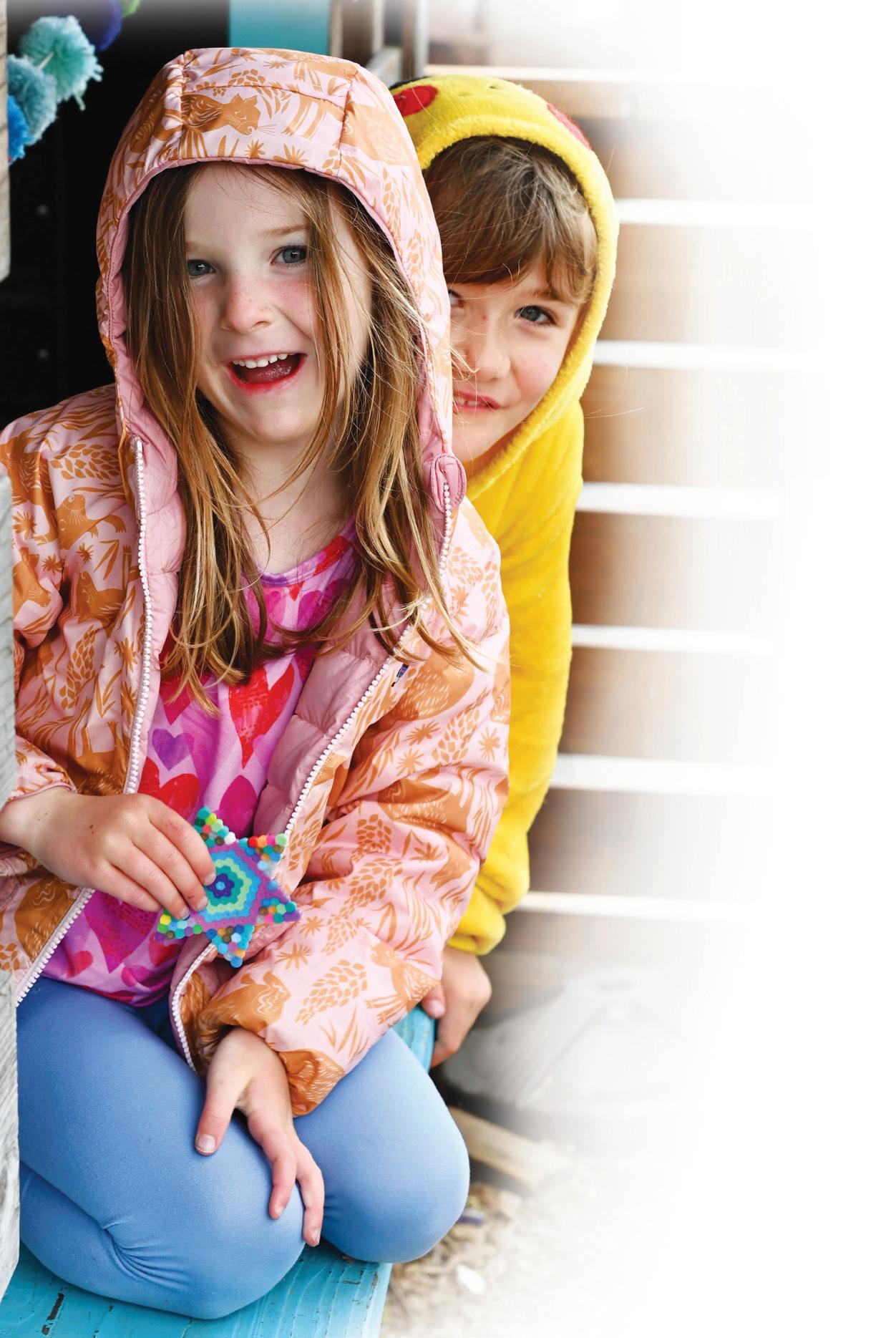

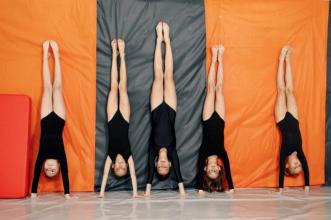
8 Different Weeks, 8 Different Themes! Dance, Games, and Arts & Crafts
Develop coordination, artistry, and flexibility with friends!
Mon - Fri
8:30-2:00 PM*
*With After Party
4-9 YEARS
Dance through summer! Imaginations soar... Mini Performance at the end of each week.


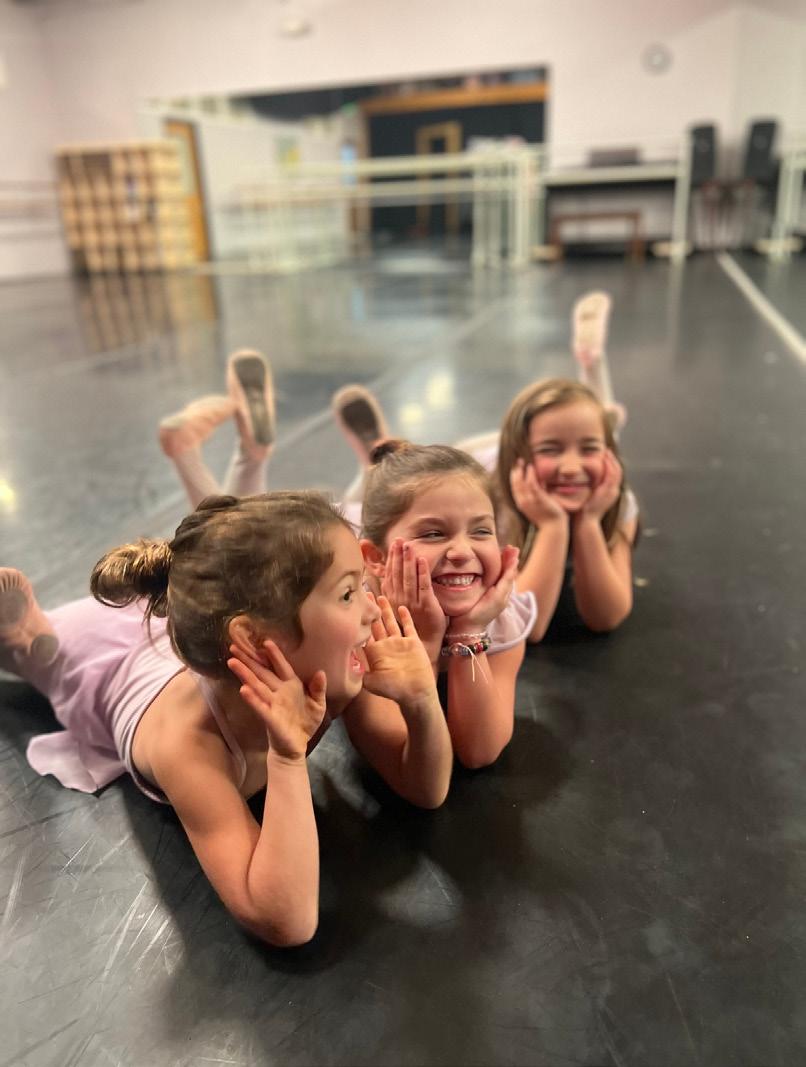
Friends and families invited!



Gateway School
Kindergarten – 8th Grade
Purpose. Compassion. Scholarship. Citizenship.
Join us for a tour



EDITOR | PUBLISHER
Brad Kava and Steve Dinnen
ART DIRECTOR | MANAGING EDITOR
Nathan Mixter
DISTRIBUTION & SUBSCRIPTIONS
Susan Bernstein
CONTRIBUTORS
John Louis Koenig, Richard Stockton, Susan Tatsui-D’Arcy, Yesenia Gomez Carrillo, Steven Weiss, Tovah Petra Kolodinski, Tarmo Hannula, Ana Maria Treadwell, Monica Menard, Sheila Borgman, Malia Fort
MASTER OF COMMUNITY PARTNERSHIPS
Bobbi Jo Palmer
AD REPRESENTATIVES
Ann Fitts Sophie Veniel Bob Pursley advertising@growingupsc.com CONTACT US
408.656.1519
editor@growingupsc.com
P.O. Box 3505, Santa Cruz, CA 95063
JUNE 2026 | VOL. 30 NO. 6
Printed by Folger Graphics.

“This






Don’t miss the Growing Up in Santa Cruz videos on YouTube, Instagram, Facebook and TikTok. To promote your business to thousands of viewers in the area each week, email editor@growingupsc.com or call (408) 656-1519.
Two things I’m obsessed with this month: the Santa Cruz Symphony and sneakers.
First off: the Symphony has its family Pops concert scheduled for 7:30pm June 13 at the Santa Cruz Civic Auditorium and I suggest you bring the kids. I know in this digital age, sitting through a concert might not be a kid’s favorite activity, but I’ve been taking my 10-year-old son to this concert since he was 4, and I think it’s one of the best things I’ve done raising him.
There is nothing more powerful than hearing and feeling the sounds of a full orchestra playing in unison, from the pounding of the bass drums you can feel in your chest, to the guy who, every so often, hits the triangle, sending a loud tinkle into the high range. I love that guy and he brings a smile to my face every time. It looks like the easiest job in the world, but it’s not. He’s got to read the sheet music for pages and pages and then just hit it perfectly. That’s the job I’d want.
Aside from that, conductor Danny Stewart chooses fun pieces for this show, which this year include, Ennio Morricone’s “Ecstasy of Gold” from The Good, The Bad, and The Ugly; James Horner’s “My Heart Will Go On” from Titanic; Howard Shore’s “Symphonic Suite” from The Fellowship of the Ring; EJAE & Mark Sonnenblick’s “Golden” from K-Pop Demon Hunters (arr. Daniel Stewart); Bill Conti’s “Gonna Fly Now” from Rocky; Michael Giacchino’s “Married Life” from Up; Carlos Gardells “Tango: Por Un Cabeza” from Scent of a Woman (arr. John Williams); Hans Zimmer’s “Theme Music” from Interstellar; Jerry Goldsmith’s “Main Title Theme” from Star Trek: The Motion Picture and several surprises.
All proceeds will benefit Santa Cruz Symphony and help ensure the continued success of educational programs and performances. There’s a free street fair at 5pm outside the Civic with food and music, which is a fun and tasty opening.
In past years, when they performed music from Star Wars, kids brought or bought lightsabers to add to the festivities.
So, I’ve watched my son evolve as a musician and music fan through his years at the symphony. In our first year, we got scolded by someone sitting in front of us because he asked questions during the music. I get it. You want to hear the music and so do we. But this is a kid-friendly show, and yeah, kids talk. Sorry, not sorry.
My son plays piano, and while I’m more of a rocker, he’s now extremely comfortable playing more intricate classical pieces, which
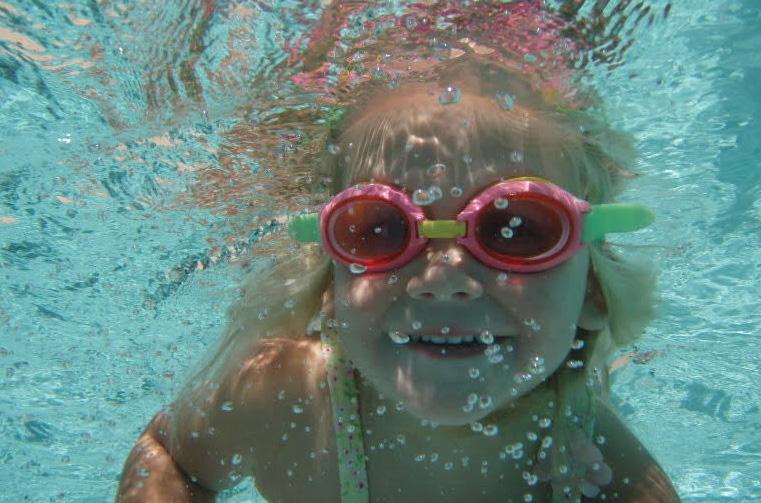
Drawn2Art is celebrating its 40th year of nurturing kids creative talents. See more on page 24. Photo by Izabell Saldana, who was a summer instructor last year.
for me is a real accomplishment. He knew long before I did that classical music can be fun to listen to and to play. And we’ve expanded out from just the Pops shows to more serious works, which he now appreciates. We’ve enjoyed the Sunday afternoon shows at the Henry Mello center, which is way smaller than the Civic, but this last spring show is only available on Saturday night.
You can buy tickets at tickets.com, and they range from $45 to $135, not cheap, but I promise, well worth it.
So, shoes. I can’t believe I’m writing about shoes again. Last time, a few years back, it was because my son slid while playing tag and smashed his head on a park bench, which required an emergency room visit and nine stitches. After that, I called podiatrists, wondering if it had to do with the flat-soled fashionable Vans he was wearing. Yup, the doctors told me to make sure he has shoes with a tread. Problem solved, I thought. Recently, he was wearing Reeboks that did have treads, but they were wearing thin, and he had pretty much outgrown them and wasn’t putting his heel in all the way. I’m sure you know, as parents, that sneakers are expensive and they outgrow them so fast, so we didn’t pay enough attention. But then, he started complaining about back and stomach pain. I took him to a pediatrician who thought he had a pulled muscle and that it would go away. It didn’t for four days.
And then it dawned on me: the sneakers. I finally took him to the running shoe store and bought him a pair of HOKA shoes that saved me after a knee surgery. He and I were both skeptical about whether it would make a difference, and the shoes are over $100. Ok, way over $100. But no one wants to see their kid in pain, so it was worth it for me to take a shot.
The minute we walked out of the Santa Cruz Running Company with them on, he had a huge smile on his face. “Can I try running in the parking lot?” he asked. He ran. And ran. There was no more pain. The store owner had put him on a machine that analyzed his gait and showed he wasn’t walking straight, in part because of the wear of his old shoes.
Problem solved. Maybe you already know this, but it taught me to really pay attention to what he puts on his feet and watch how fast they grow, and to make sure to keep the shoes fitting well. You can’t underestimate how important that is for these totally active beings.
Thanks for reading Brad Kava; Publisher

BY JOHN LOUIS KOENIG
Try asking your car-loving kid how modern cars compare to the classics, and I’ll bet you get an eyeroll, or a stare that says, “you’re kidding, right?”
The cars of today, for all their engineering brilliance, have a way of blending together into one long parade of sameness, sleek and smooth and largely indistinguishable. “Why are all the older cars so much cooler?” kids ask.
But lead that same child down the Santa Cruz Wharf in June when the woodies roll in for their annual visit, and something entirely different will happen. Fingers point, and eyes go wide, full of excited curiosity. What IS that? Why is it made of wood? Why don’t we make them now?
Woody wagons are some of the most prized and storied automobiles ever made. Shining with varnished panels of ash and maple, they look like something a ship’s carpenter dreamed up on an inspired afternoon with a hint of steampunk cool and the warmth of living wood. In Santa Cruz, that old-time cool has never gone out of style.
BORN OF PRACTICALITY, BELOVED FOR BEAUTY
To understand the woody, we go back to the time before 1910, when autos were basically motorized carriages. Wood was the standard material for carriage makers, and stamped steel was expensive. For a long wagon body, wood framing was the most practical way to build a large, enclosed structure.
In 1920, Henry Ford bought more than 400,000 acres of forests in Michigan and built a plant nearby to handle the production—cutting timber, running a sawmill, and forming body parts of hard maple, with birch or mahogany inserts.
The people building these long wagon bodies learned from a tradition of wooden boat construction, where spanning large dimensions with curved structural wood was a part of their craft. Even when steel frames were used, coach builders completed the automobile by fitting a wood body to the frame, and boat builders were skilled in this type of work.
And here’s a crazy trivia fact to impress your friends: Kingsford Charcoal began when the frugal Ford hired a chemist to invent a way sell the tons of waste woody-sawdust from the factory mill. He devised a formula to compress the sawdust into the “charcoal briquettes” still sold in every grocery store!
RISE AND DEMISE
The original woodies were practical carriers for commercial transport. Later they became known as “station wagons” when they became popular for carrying well-to-do travelers from train stations to fancy resorts.
In the mid-1930s, the woody had transformed from workhorse to prestige
purchase with extraordinary craft involved in building. Some woodies required more than 150 pieces of wood to construct, each fitted and finished by hand. Many owners would revarnish their prized woody wagons every year to keep them shining like new.
But, by the 1940s, steel was winning the war of materials. Wood station wagons were a low production and higher-priced product, labor-intensive and costly to make. By 1953 the last true American woodie had rolled off the line as wood was replaced by kitschy, painted panels and, eventually, the deeply unfortunate era of fake wood-grain decals.
SURF, SAND AND A SECOND
Here is where the story takes a turn that no one could have predicted. The original woodies faded into relative obscurity by the 1950s, but California’s climate had preserved what the East Coast’s wet winters had rotted away. In the 1960s the blossoming subculture of surfers discovered the old woodies, rotting in yards and garages all over America.
In need of inexpensive transportation, surfers could buy woodies cheap, and they were perfect for lugging around the long surfboards of the time. In those days surfers didn’t restore their wagons, they just kept them going. The varnish peeled, the wood weathered, and that was cool. Woodies had found their true calling.
Pop music immortalized the wacky wagon when the 1960s duo Jan and Dean turned a Brian Wilson song into a smash hit called “Surf City.”
“I got a ‘34 wagon and I call it a Woody
Surf City here we come
You know it’s not very cherry, it’s an oldie but a goodie
Surf City here we come”
Those “oldies but goodies” have only gotten better with age.
Santa Cruz is truly “Surf City,” a place where the beach is a way of life and the woody is at home here. It’s a part of our culture, like Steamer Lane, the Boardwalk and the Wharf.
Which is why, thirty years ago, the Santa Cruz Woodie Club hosted the first Woodies on the Wharf.
We’ll celebrate the 30th anniversary of Woodies on the Wharf on Saturday, June 27 starting at 10 a.m. It’s Northern California’s largest woodie gathering, featuring hundreds of woodies. Be there for the Woodie Parade off the Wharf at 3:30 p.m. after the Awards Ceremony and watch the wagons roll. You’ll understand why collectors prize these cars like found treasures, inspiring such wonder and curiosity.
The woodie is that rare creation whose story spans a century. No two woodies are identical. In an age of robotic, assemblyline sameness, that singularity is nothing short of rad.



BY RICHARD STOCKTON
A sacred part of the California Coastal Trail, the path along West Cliff Drive lets you see, hear and feel the sea meet the land - the surfers at Steamer Lane, the Santa Cruz Surfing Museum in the lighthouse, and stunning sunset views.
From the wharf to Natural Bridges is about 2 and ½ miles, it’s 5,000 steps for most. The sidewalk takes you past marine cliff fauna where you can watch the ever-present surfers, where Jack O’Neill developed the modern surfing wetsuit (the water is cold). The path takes a sharp turn to the Santa Cruz Surfing Museum. Check out the photographs and exhibits that chronicle over 100 years of surfing history.
Just past the Santa Cruz Surfing Museum to the left of the path is Lighthouse Field State Beach. Inland is Lighthouse Field, the site of the Herculean effort to rescue this 37-acre parcel from developers. You can walk paths through the field; dogs are allowed on-leash only.
If you want more beach, you can drop down into Mitchell Cove Beach, more protected than Santa Cruz Beach. The path continues along the rugged, rocky West Cliff to your left and the mansion beach houses inland and culminates in a parking lot. You can walk down ramps into yet another stunning stretch of sand, Natural Bridges State Beach. There is an electric bike rental station at the corner of Swanton Boulevard and West Cliff Drive.
REDWOOD GROVE LOOP IN HENRY COWELL STATE PARK
About 150 feet from the parking lot you will saunter into the 0.8-mile loop of the Redwood Grove of Henry Cowell Redwoods State Park, home of the oldgrowth “virgin” Coast Redwood trees that can live more than 2,000 years. The trail passes within a few feet of some of the tallest trees in the world. The largest tree in the grove has a diameter of more than 17 feet and a height of 280 feet.
There is a nature center with stuffed local animals like a coyote and a mountain lion, and native plants. The loop can be completed in under an hour, and on summer weekends there are free docent-led walks.
How to get there
Redwood Grove Loop Trail is just south of Felton. Access begins off the Meadow Trail. The trailhead is located in the day use parking lot near the nature center.
POINT LOBOS STATE NATURAL RESERVE
Point Lobos State Natural Reserve is called the crown jewel of the California State Parks system. Some 600,000 people a year attend, so all the strict rules about staying on the trail make sense. There are paths aplenty and you can walk to almost anywhere in the reserve: the loop around the park is 6.4 miles. For upcoming


guided docent tours of bird walks, storytelling walks, women’s walks, go to docents.plsnr.org/publicwalks.
Docents have telescopes set up to view otter “rafts” floating in “drifts” of kelp forests. I heard one little boy gasp to see 20 otters floating together. “Daddy, are those real?”
Rules
Stay on the trails, no dogs anywhere within the reserve, no bikes on trails, no collecting of anything (not a preference, it’s the law), no skateboards, no camping (day use only, 8 am-7pm, last entry at 6:30pm), and no drones.
How to get there
Go south on Highway 1, pass Carmelby-the-Sea and the entrance to the reserve is next (big sign).
WHAT’S SHAKIN’
LOMA PRIETA TRAIL IN NISENE MARKS STATE PARK
The Loma Prieta earthquake of 1989, with a magnitude of 6.9, occurred due to forces along the San Andreas Fault. This fault is a transform boundary where the Pacific Plate and the North
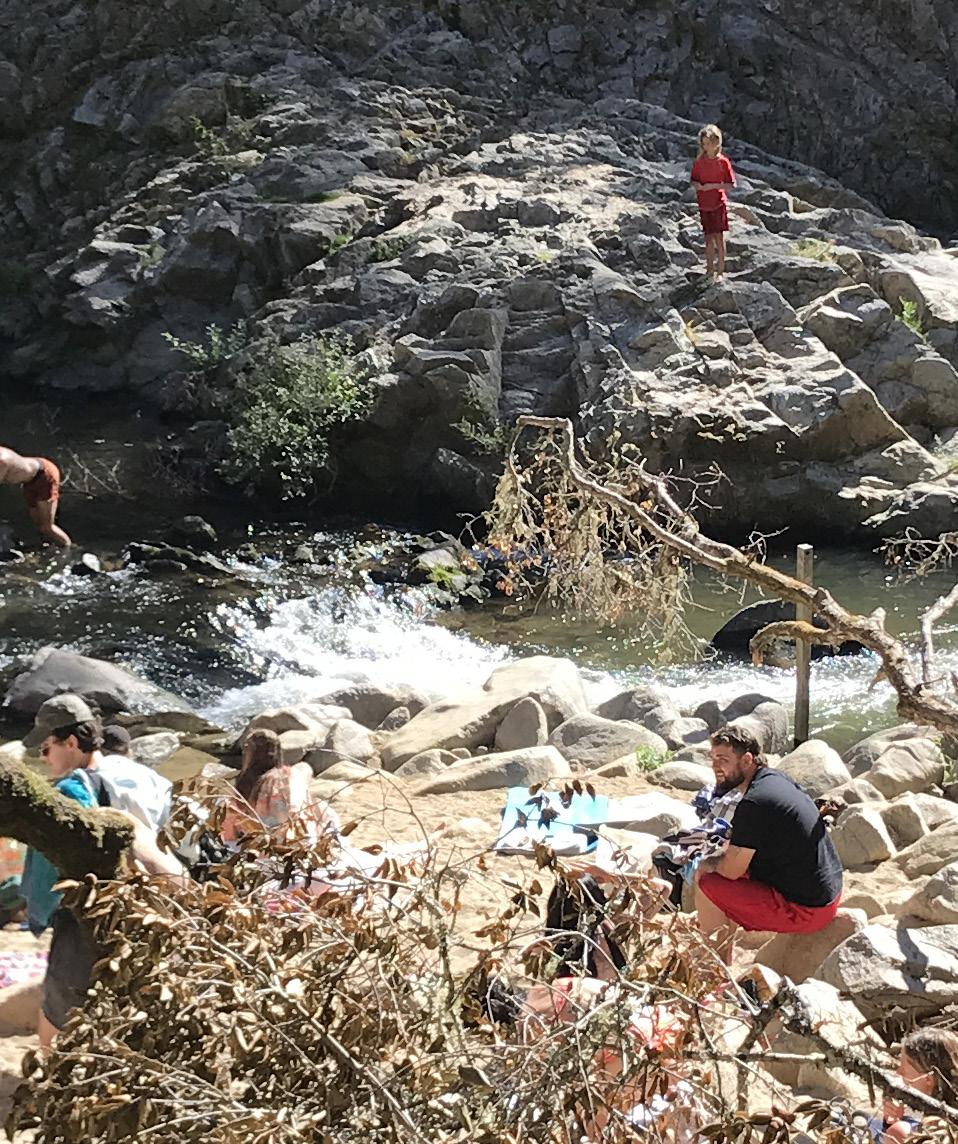
This is an amazing place to swim, refresh and restore in the San Lorenzo River. It’s got clear, blue-green water flowing over rocks, into swimming pools, by sandy beaches, all between steep, redwood-covered banks. Some people choose the clothing optional option, no fig leaf required.
If you go on the weekend in warm weather, it will be packed. Any other time, you may find yourself there alone. If it is crowded, you can walk upstream to find your own Eden-esque pool. It can be a pack-your-lunch kind of day, but no barbecue or fires.
There are rocks beneath the surface. Please check out where the rocks are before launching your body over the water.
Directions
American Plate slide past each other horizontally. On Oct. 17, 1989, at 5:04pm, the Loma Prieta earthquake shook the ground from Monterey Bay to the north of San Francisco. It knocked down part of the Bay Bridge, collapsed a section of freeway in Oakland, destroyed much of Santa Cruz’s Pacific Garden Mall and stopped the 1989 World Series. It caused 62 deaths, 3,757 injuries and more than $6 billion in damages.
How to Get There
Take the Aptos Creek Trail in the Forest of Nisene Marks State Park. The hike is about 6 miles out and back. It is mostly a gently graded road, the sign marking the epicenter is about 0.6 miles east of the fire road intersection.
In the winter, the upper parking lot is closed, so you can park at the lower parking lot on Aptos Creek Road and hike the first mile to the trailhead. Dogs are allowed on the trail on leash.
Please check the parks.ca.gov website. As I write this, I notice they currently have the Aptos Creek Trail closed due to storm damage and erosion.
The Ox Trail Method: From Santa Cruz, drive three miles up Highway 9, past the South Entrance to Henry Cowell Redwoods State Park, until you see the sign for the North Entrance to the park and a large dirt lot to your right with two green metal gates. A sign will say Ox Trail. If you reach Toll House Resort, you’ve gone too far.
Enter through the southernmost gate and follow a wide trail down the hill. At the fork, follow the path to the right and continue another quarter mile or so until you reach the railroad tracks. Turn right at the tracks and follow them for about a mile until you see a “No Campfire” and “No Alcoholic Beverages” sign on your left. Follow the steep trail down to the Garden of Eden swimming hole.
The Rincon Way: Stop at the Rincon parking lot, navigate down to the railroad tracks and turn left. This way is about a half of a mile of crosstie walking. You will walk over a short trestle with No Trespassing signs, but the train that uses this track crawls along. I was able to get out of the way, I’m pretty sure you can too. You can’t see the Garden of Eden from the railroad tracks but look for the famous warning signs at the head of the path down to the pool.
BY SUSAN TATSUI-D’ARCY
Success is often the culmination of lessons learned from failure. Back in my early 20s, I opened an environmental fundraising company that quickly lost $100,000 in six months. Devastated and unsure what to do next, I visited my Uncle Frank for advice.
Uncle Frank was the first manufacturer of imitation crab in the United States. By the time I sat down with him, he had started 50 corporations. To prove it, he pulled out a thick binder and turned the pages one by one. As we looked through the binder, he explained why 46 of those businesses had failed. Then he told me about the four that were extremely successful. Their success, he said, was the direct result of what he had learned from every one of those 46 failures.
That meeting changed the trajectory of my life. Instead of beating myself up for losing $100,000, I began to marvel at what I had learned about luck, timing, resilience, and persistence. Uncle Frank told me to hang on to my dreams and goals. Even if I failed or fell short, I would still be better off than I was before I started. He also told me not to worry too much about what others think or say. The difference between success and failure—or being called a genius or an idiot—is often paper-thin.
As a college advisor, I guide students to
find their special niche: a talent, interest, or passion that may lead them to a career where they can thrive, wake up excited to work each day, and eventually live the lifestyle they hope to build. We explore the many problems facing our society—climate change, civil rights, poverty, food safety, education, technology, health care—to see what sparks their interest. Where might this student focus their energy? What problem could they help solve, or at least improve?
Most students ages 14 to 18 do not yet have the expertise or know-how to launch ambitious projects on their own. That is why I connect them with specialists and mentors who can help build their foundation and give them stepby-step instruction. But even with support, the mistakes and setbacks are theirs to experience. That is an essential part of the process. With each setback, students begin to understand firsthand what went wrong. They learn to research solutions, ask better questions, adjust their plans, and try again. They learn how to brush off their knees after a fall and find a new way to accomplish their goals. These are the kinds of lessons that cannot be taught through lectures or worksheets. They have to be lived.
Unfortunately, some parents step in and do the work for their children. They think they are helping by speeding up

the process, especially when their kids are already juggling school, sports, music, volunteering, and other extracurricular activities. But when parents take over, they rob their children of the opportunity to struggle, problem-solve, and grow.
One parent actually took his son’s project to India and had a team of engineers build it. When he returned home with the completed project, his son was humiliated. The unspoken message he received was that his father did not believe he was capable of doing it himself. The damage was heartbreaking. The son decided not to apply to college and lost much of his entrepreneurial ambition.
On the other hand, I have seen obstacles help students become more confident, capable, and self-assured. When they work through problems themselves, they begin to trust their own judgment. They become more critical thinkers because they have learned from their mistakes. They are not devastated by every challenge because they know challenges are part of the process.
College, careers, relationships, and life itself will inevitably be filled with problems, disappointments, and even crises. Students who have learned how to overcome obstacles will be better prepared to handle them. They will be more resilient because they have already practiced resilience.
But students whose parents do their work for them—or whose teachers give them shortcuts and cheat sheets so they can memorize facts without truly understanding concepts—may struggle when life demands original thinking, discipline, and perseverance. Without the experience of working through failure, they may become stressed, dependent, and unsure of themselves.
So as you plan your children’s summer and school-year extracurriculars, give them the opportunity to try many things, even if those activities seem over their heads or possibly insignificant. Let them experiment. Let them make mistakes. Let them be frustrated. Let them discover what they care about and what they are willing to work hard to achieve.
Remember Uncle Frank. He learned from every one of his 46 failures before he had the wisdom, experience, and confidence to build four successful companies. Failure did not define him. It trained him.
And it may be one of the most valuable gifts we can allow our children to experience.
Susan Tatsui-D’Arcy is the founder of Merit Academy (one-on-one classes) and Merit Educational Consultants (college and educational advisory). She has written books on projects, free child care, education, and parenting. Susan hosts TEDxMeritAcademy for students to present their innovative projects and solutions. In 2019, she was California Mother of the Year.


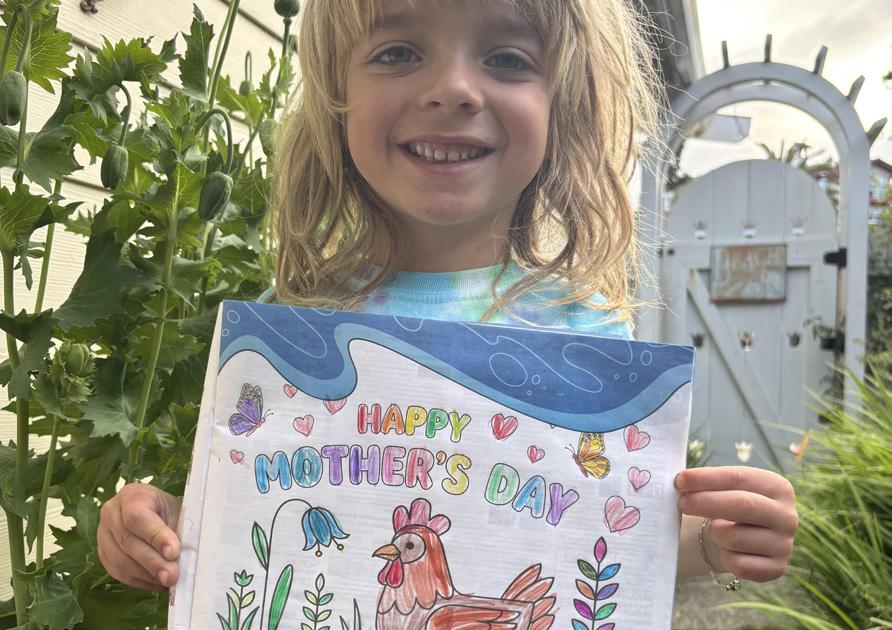
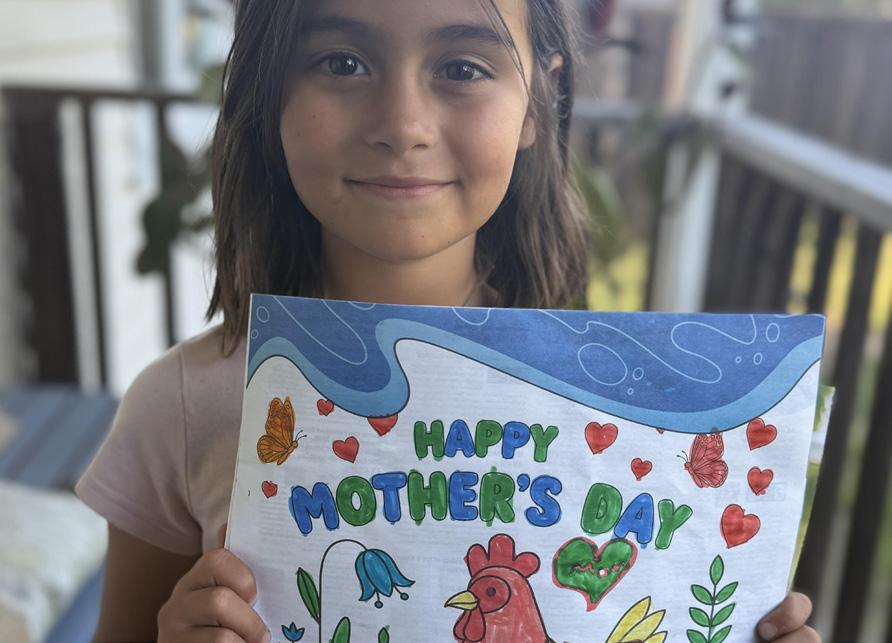
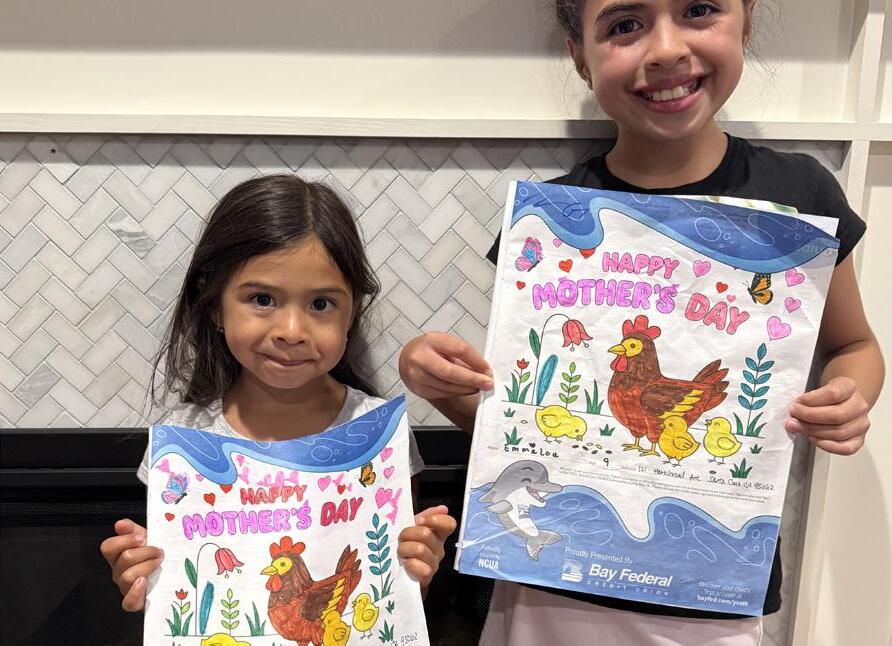
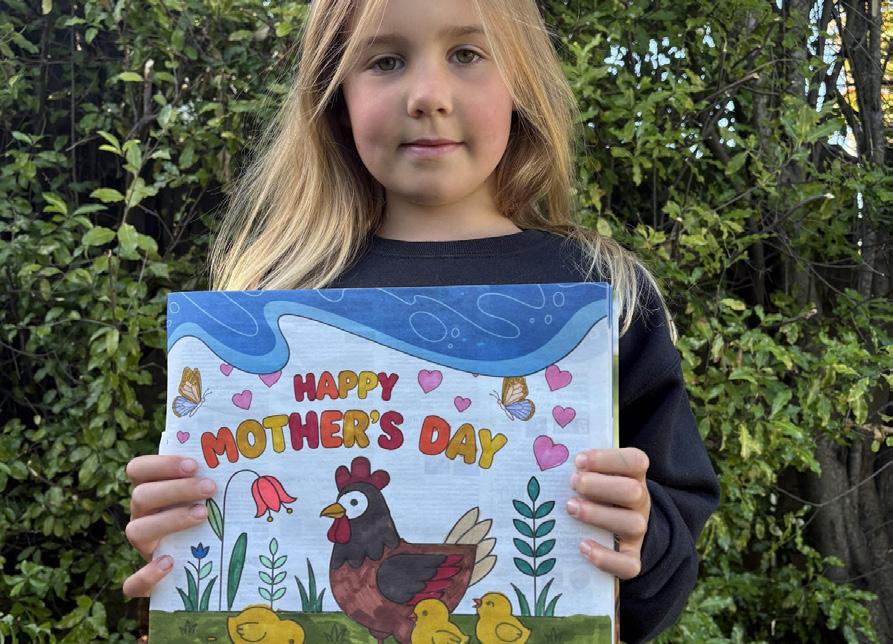
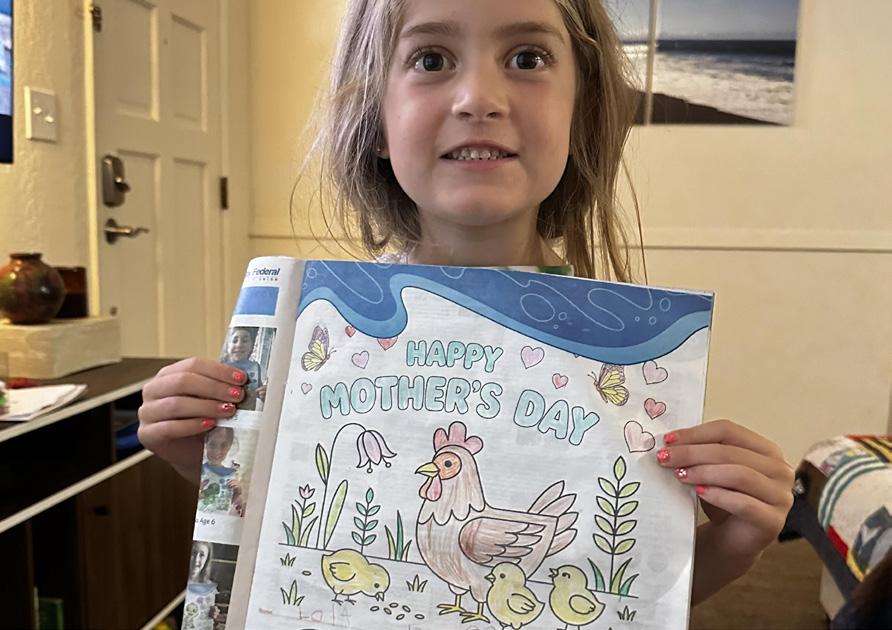
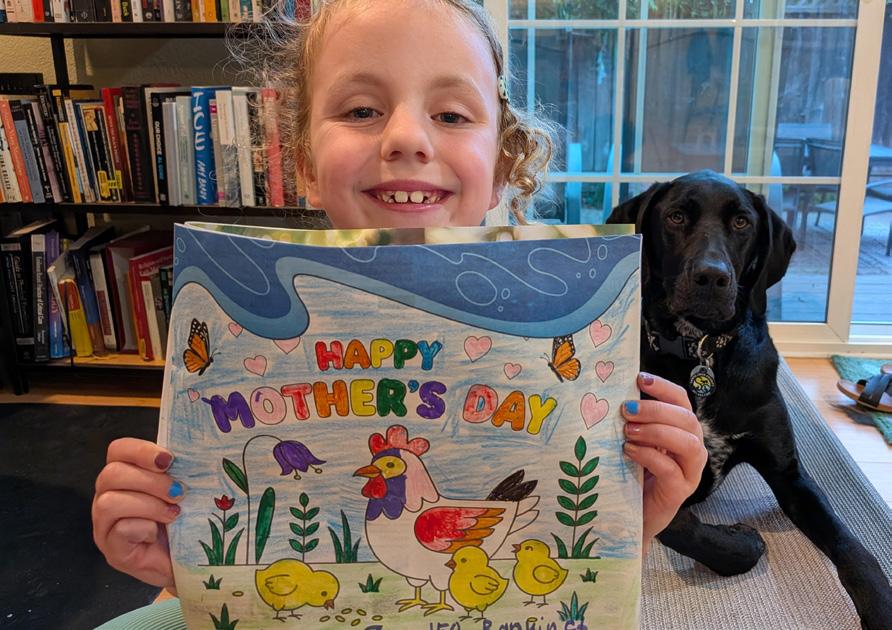
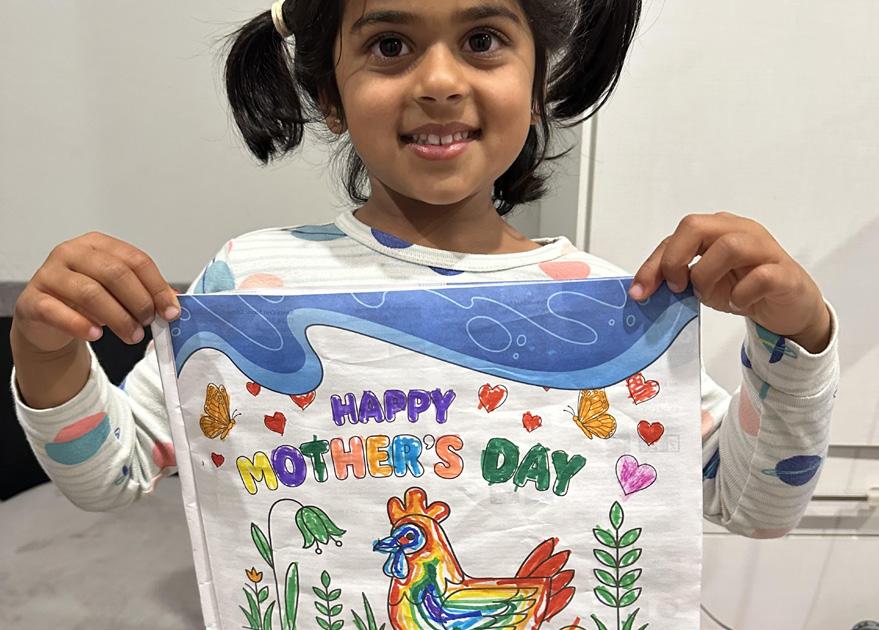
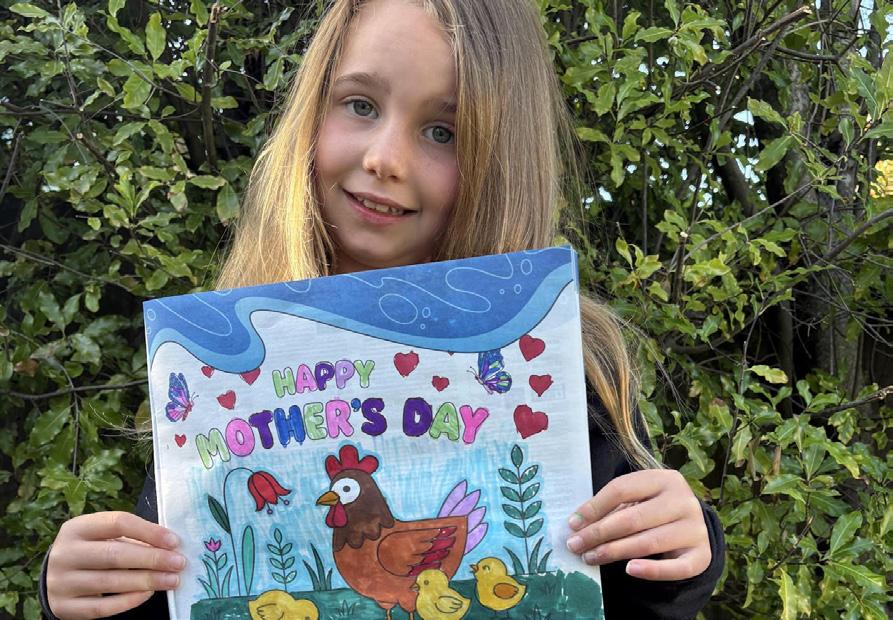

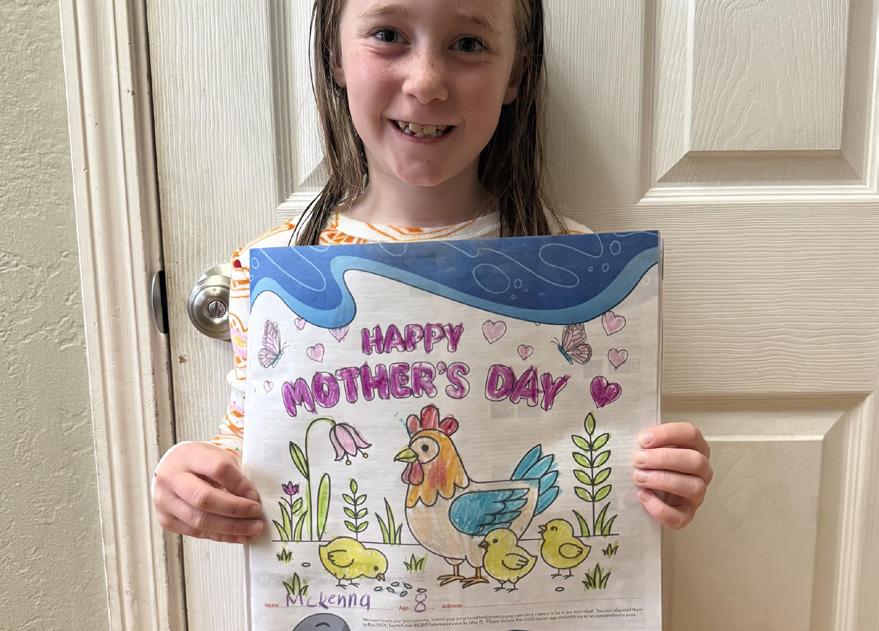
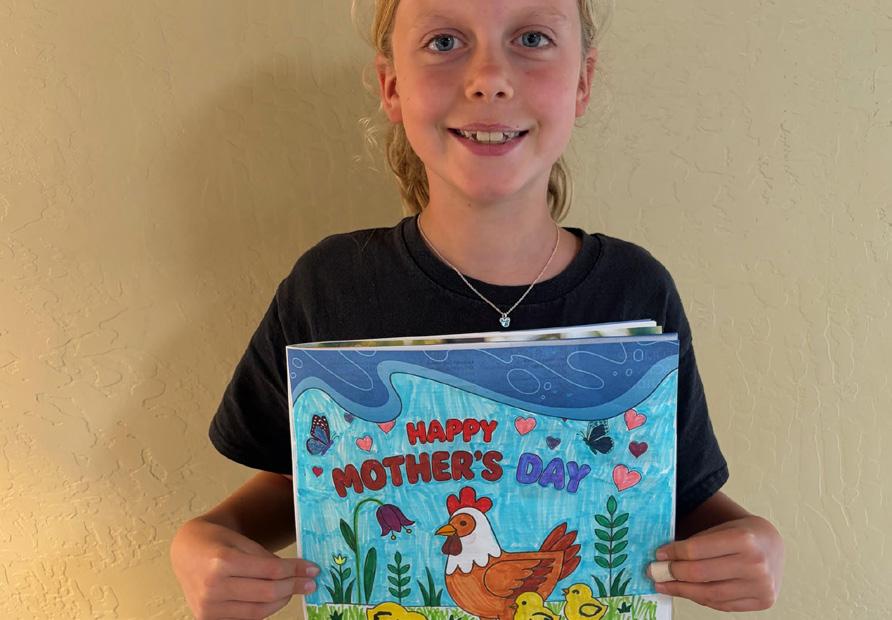


We want to see your best coloring. Submit your entry to editor@growingupsc.com for a chance to be in our next issue! You can also mail them to Box 3505, Santa Cruz, 95063 Submissions due by June 15. Please include the child’s name, age and address so we can send out a prize.
BY YESENIA GOMEZ CARRILLO
Parenting is demanding work, even when it is deeply rewarding. As children grow, some aspects of parenting may become easier, early challenges like sleepless nights, tantrums, and constant supervision tend to fade, often allowing for more energy and enjoyment in dayto-day interactions. At the same time, new challenges can emerge. The physical exhaustion of early childhood is often replaced by the mental and emotional demands of guiding older children, setting boundaries, and navigating the balance between staying involved and giving them independence.
At various points, these ongoing demands can lead to feelings of frustration, ineffectiveness, and burnout. During these times, it is important for parents to recognize the value of stepping back, prioritizing their own well-being, and recharging. Taking time for self-care can make it easier to return to parenting with patience, clarity, and a more positive perspective.
This monthly column provides tips for anyone who is raising children, based on the world-renowned Triple P – Positive Parenting Program, available to families in Santa Cruz County.
Dear Yesenia, I enjoy being a mother...most of the time. I work full-time and have three kids under age 10. They’re great kids but need a lot from me. My husband is also wonderful, but when he’s not working, he just wants to watch TV. Most of the time, I just keep going because I have to. But sometimes I get stressed and lose my temper, and then I feel like a terrible parent, which makes me more stressed and angry and then no one wants to be around me. What can I do to break this cycle? - Theresa
Dear Theresa,
I think you just described the daily life of many parents! Being a parent can be extremely rewarding, and it can be extremely demanding, exhausting, and stressful. Many parents experience “parental burnout,” especially when they feel a lack of control, overloaded, underappreciated, or isolated. Here are some tips to try:
Develop a self-care routine. This might seem impossible or impractical, but taking care of your needs will make it easier to be calm, patient, and present. Think about activities that make you feel content, relaxed, relieved, or energized –perhaps it’s exercising, listening to music, sitting in silence, cooking, or socializing with friends. Try building in time to do at
least one of those things every day, even if it’s for five minutes at a time. Focus on making it part of your daily routine so that it becomes a habit, like getting dressed or brushing your teeth.
Ask your partner for support. Talk to your husband about the stress you’re experiencing. Give him some examples of ways he could support you – helping with chores, watching the kids while you take time for yourself, or helping with morning or nighttime routines – then ask if he’s willing to support you in this way. Let him know that getting this type of support is important for your physical and emotional health and will help you be fully present and available for the whole family.
Teach your children to do things independently. It might feel like extra work to teach children how to get dressed, feed themselves, help with chores, or cooperate with each other, but the reward will be worth it when these and other daily tasks require less of your time. Teaching children these skills early in life will also build their confidence and ability to learn new skills and behaviors throughout their lives.
Have realistic expectations and be kind to yourself. Recognize when you’re feeling overloaded and resist the temptation to say yes to everything. Remember there’s
no such thing as a perfect parent or partner, and it’s exhausting to try to be everything for everyone. When you’re feeling stressed, take some deep breaths and say, “I’ve got this,” or “I will get through this.” If you lose your temper, give yourself permission to take a “time out” away from the stressful situation. Take a few deep breaths and tell yourself, “I’m doing the best I can. I will try again.”
Final Thoughts: Parental burnout is a real thing. This is why taking care of yourself is one of the core principles of positive parenting. If it feels foreign to put your needs first, start with something small and do it consistently so that taking care of yourself becomes as natural as breathing air.
Yesenia Gomez-Carrillo is the mother of a 3-year-old daughter and was until recently the Triple P Program Manager for First 5 Santa Cruz County. Scientifically proven, Triple P is made available locally by First 5, the Santa Cruz County Health Services Agency, and the Santa Cruz County Human Services Department. To find a Triple P parenting class or practitioner, visit triplep. first5scc.org,facebook.com/triplepscc, or contact First 5 Santa Cruz County at 465-2217 or triplep@first5scc.org.




BY STEVEN WEISS
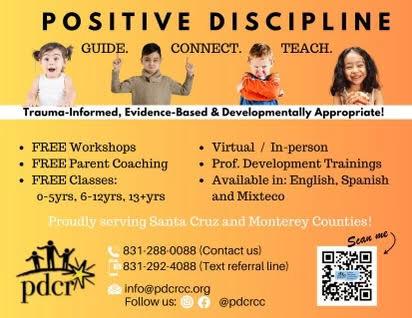
Parents lovingly and selflessly meet their children’s needs in an ongoing effort to ensure their safety, health, and wellbeing. In that respect, parents learn from both their children and their own parents how to be excellent caregivers.
As a champion of caregivers, former First Lady Rosalynn Carter said, “There are only four kinds of people in the world: those who have been caregivers, those who are currently caregivers, those who will be caregivers, and those who will need caregivers.” Unfortunately, despite Carter’s decades-long effort to bring attention, acknowledgment, and support to caregivers, most of us remain relatively ill-prepared to care for our parents as they become older adults.
THE NEED FOR AND IMPACTS OF CAREGIVING
The silver tsunami (the large demographic shift of the baby boomer generation reaching retirement age) is upon us, and the need for caregiver education and support has never been greater. This shift has not only taken an immense toll on the greater economy (e.g., healthcare, business, and housing sectors), it has placed added economic and emotional burdens on families who are already struggling in these tumultuous times.
Those who care for their parents (especially while raising their own children and/or lacking adequate financial and social support) often wind up having to navigate challenging family dynamics and forgo their personal goals. With many of us already facing that reality, it’s encouraging to know that PD complements other caregiver approaches and resources.
POSITIVE DISCIPLINE AND PERSON-CENTERED CARE
The PD approach invites people to model the attitudes and behaviors they wish to teach. As such, PD, whether for parents of minor age children or for caregivers of older adults, begins and ends with the art and act of self-discipline. After all, what is most in our control is how we manage our own thoughts, feelings, decisions, and actions. Concepts widely used in PD (e.g., the need for belonging and significance, connection as a means to discover the beliefs behind the behaviors, developmental appropriateness, trauma-informed care, mutual respect, encouragement, empowerment, and seeing mistakes as learning opportunities) dovetail nicely with what is known as person-centered care. In the context of caring for older adults, person-centered care honors individuals’ choices, dignity, and personal histories, and it is tailored to their unique preferences, habits, and values so that they remain empowered (to the greatest extent possible and in consideration of their physical and cognitive abilities) to
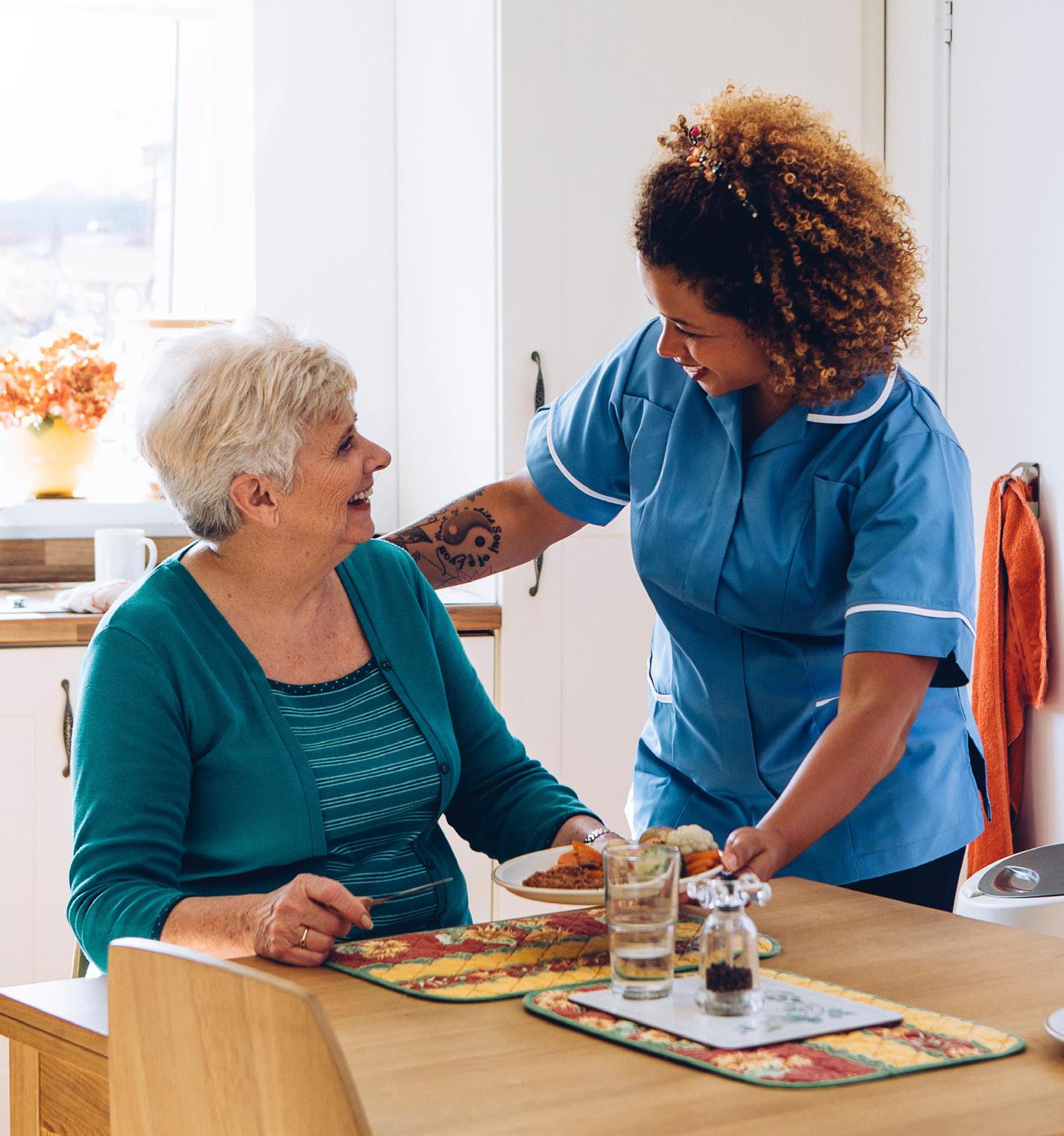
make their own decisions in the context of their daily lives.
This holistic and collaborative approach addresses people’s physical, emotional, social, and spiritual needs while prioritizing their voice in their care planning.
Further, it improves their quality of life, promotes their autonomy, dignity and self-worth, and reduces the stress and distress they endure if living with illness-related issues. Some examples of person-centered care for older adults include customized routines and meaningful engagement (both of which are aligned with lifelong habits/hobbies/ interests, individualized and activitybased care-planning) and the creation of personalized environments that are familiar, comforting, accessible, and safe.
Caregivers of older adults face a variety of daunting tasks. They create safe and accessible environments, maintain paperwork, create/implement activities, help to plan end-of-life decisions, choose living and care arrangements, juggle finances, and manage challenging behaviors. As such, they need proper education and practical support.
Proper caregiver education ideally yields a working knowledge of the health issues that commonly affect older adults (e.g., dementia, strokes, depression/ anxiety, diabetes, hypertension, sensory impairments, and pain), the diets,
of health that affect older adults include income instability, housing, safety, health literacy, and social isolation.
Practical caregiver supports include financial aid, respite care, transportation, food, housing, counseling, and support groups. Caregivers also need to be extremely attentive to their own (self-care) needs so as to mitigate the very real threat of isolation, hopelessness, depression, anxiety, resentment, and burnout.
RESOURCES FOR OLDER ADULTS AND THEIR CAREGIVERS
The following is a list of resources in support of older adults and their caregivers: Community Bridges’ family of programs including Elderday Adult Day Health Care, Enhanced Care Management, Meals On Wheels, and Lift Line, Cabrillo College’s Stroke and Disability Learning Center, Hospice of Santa Cruz County, Del Mar Caregiver Resource Center, In Home Supportive Services (through the County of Santa Cruz), Alzheimer’s Association, American Association of Retired Persons, National Alliance for Caregiving, and the Rosalynn Carter Institute for Caregivers. Please share these resources widely with anyone who you think could/would benefit from them.
CONCLUDING REFLECTIONS
exercises, and medications that address those illnesses, and the tasks associated with what are known as activities of daily living (e.g., transferring in and out of beds/chairs, dressing, bathing/showering, eating/feeding, navigating/ambulating with or without accessible devices, using the toilet, and managing incontinence).
Such education also yields an informed awareness of and responsiveness toward what are referred to as social determinants of health (non-medical conditions under which people are born, grow, live, work, and age). Common social determinants
It’s so important to treat older adults like the adults they are, which means that they deserve respect, dignity, and autonomy. After all, they have made countless sacrifices in support of our care. When we take on the caregiver role to repay that favor, however, we must prepare for the possibility that our parents’ time of need can unfortunately become ours as well. Thankfully, Positive Discipline helps to cultivate the culture of care we all need.
Steven Weiss is a MSW and Certified Positive Discipline Parent Educator
WED 3,10,17,24
Summer Twilight Concerts 6-9pm Free. Bring chairs, jackets, a picnic supper and the family for free live music by the beach. June performers include The Delta Wires with rockin’ big band blues on June 3, Trestles with surf and garage rock on June 10, Cocktail Monkeys with rock, pop and R&B hits on June 17, and Coffee Zombie Collective with originals and quirky reimagined covers on June 24. Esplanade bandstand, Capitola. cityofcapitola.gov/985/Twilight-ConcertSeries-2026
First Fridays Santa Cruz the first Friday evening of every month, Santa Cruz galleries, shops, and cultural venues open their doors to showcase the works of Santa Cruz County artists. With a


block party-like vibe, the multi-venue event provides an opportunity to discover local creative talent in a fun and festive setting. firstfridaysantacruz.com/event
First Friday Boulder Creek 5-8pm
Enjoy a free monthly mountain street fair in the name of creation and community. There will be local art, music and food lining the sidewalks of downtown Boulder Creek. firstfridaybouldercreek.org
SAT 6
Performance of Chamber Masterpieces 4-6pm $18-$45. Santa Cruz’s “small, intense orchestra” performs Copland’s intimate chamber version of Appalachian Spring, along with works by Sibelius, Mendelssohn and Milhaud. Guest conductor Michael McGushin leads thirteen musicians in this program of small-scale orchestral masterpieces. Peace United Church of Christ, Santa Cruz. eventbrite.com
Garage Sale Weekend 8am-5pm Free. Join the city-wide garage sale weekend with residents hosting sales throughout Santa Cruz. Shoppers can explore neighborhoods, find bargains, and use the online map to connect with participating garage sales across town. santacruzca.gov
MON 8
World Oceans Day Beach Cleanup
TUES 9
Board Game Playtesting 6-10pm Free. Try new board games and card games, offer feedback on prototypes, and meet local designers through Game Designers of Santa Cruz. New designers and interested players are welcome, with food and drinks available from Peoples Coffee during the event. Peoples Coffee, Santa Cruz. meetup. com/playgoldengate/events/312363447
FRI 12,19,26
Free Movies on the Beach 9-10:45pm Free. Bring your family, blanket or lowback chair for free Friday movie nights on the beach in front of the Colonnade. June movies include The Lost Boys on June 12, Ferris Bueller’s Day Off on June 19, and Kicking and Screaming on June 26. Santa Cruz Beach Boardwalk, Santa Cruz. beachboardwalk.com

Second Saturday on the Farm 11am3pm The Agricultural History Project’s 2nd Saturday events are like taking a step back in time. Grab your cowboy hat and put on your boots and come and enjoy a fun-filled afternoon on the farm! In addition to Summer Fun special activities, you’ll be


Track how much you read this summer to win prizes and raffle tickets!
There are prizes for all age groups (kids, teens, and adults) including gift cards to local shops, free scoops of ice cream, and more!
Check out our calendar of events and programs happening in June & July.
The program is for all ages
Thank you to our sponsors: FOR MORE INFORMATION: Scan the QR Code below or visit santacruzpl.org/srp JUNE 1 THROUGH JULY 31


able to milk a “cow”, drive-a-tractor, and enjoy crafts, hayrides, puppet show, antique engines and museum exhibits. Bring your lunch and enjoy a picnic. aghistoryproject. org/2nd-saturday-on-the-farm
Swing Dancing 2-5:30pm You will find music, friends, and food while you improve your dancing digs. All levels, and various styles plus a social dance with great ambiance are welcome! Go Join the fun on the Second Saturday evening of each month at the Santa Cruz Wharf stage. cityofsantacruz.com
Capitola Rod & Custom Classic Car Show 8:30am-5pm Free. Watch classic cars cruise the coastline from the Santa Cruz Boardwalk to Capitola, then enjoy a full day of custom cars, music, shops, restaurants and family fun near the beach. Capitola Village, Capitola. capitolacarshow.com
Antiques Faire 8am-5pm The Santa Cruz Antique Faire is on the 2nd Sunday of every month. Vendors offer an eclectic blend of antiques and unique items, vintage clothing, collectibles and more. Visit the Antique Faire on Lincoln Street between Pacific and Cedar.
Artisan Faire noon-4pm Head to Abbott Square every second Sunday of the month for free live music while you browse handmade jewelry, soap, clothing, and much more! There is always something at these events that has your name on it! abbottsquaremarket.com/events
Castro Adobe State Historic Park open house 10:30am-2pm Free. Visit Castro Adobe State Historic Park for a 90-minute docent-led tour exploring the Castro family, the two-story adobe hacienda and life during the Mexican Rancho period of California history. Pre-registration is required. Castro Adobe State Historic Park, Watsonville. santacruzstateparks.as.me
The Art of the Game June 15 9-11am, June 22 10am-12pm, June 28 12-2pm. Cheer on World Cup teams at game watches at the Santa Cruz Museum of Art & History. June matchups include Spain vs. Cape Verde, Argentina vs. Austria and the Runners Up match, with complimentary popcorn and an all-ages art activity. Santa Cruz Museum of Art
& History, Santa Cruz. santacruzmah.org
Evenings on the Colonnade 8:30-9:30pm Free. Stay after dark for free Boardwalk entertainment on the Colonnade Deck, including circus comedy, magic, acrobatics, live music, World Cup watch parties and DJ dance parties. June highlights include Coventry & Kaluza, Kris Bentz, Fire Peach, MeeZee! and Santa Cruz DJ Company. Santa Cruz Beach Boardwalk, Santa Cruz. beachboardwalk.com
TUES 16
InterAct Open Mic with featured singer Kay Martin 7-9pm Free. Share poetry or spoken word, or come support local readers at this free community open mic night featuring singer Kay Martin. Reader sign-ups begin at 6:30pm, and seating is limited. Satori Arts, Santa Cruz. eventbrite.com/
Free Live Music 8:30-9:30pm Free. Enjoy free live music at the Boardwalk’s Colonnade Stage with Fire Peach. Grab a bite, enjoy a drink, and dance along with the ocean as the backdrop during this summer evening concert. Santa Cruz Beach Boardwalk, Santa Cruz. beachboardwalk.com
SUN 21
Downtown Makers Market 10am-5pm
Visit the Downtown Santa Cruz Makers Market featuring 40+ local makers & artists every third Sunday of the month on the 1100 block of Pacific Ave. between Cathcart and Lincoln streets. scmmakersmarket.com
Woodies on the Wharf 10am-3:30pm Free. Celebrate Santa Cruz surf culture and classic pre-1950s wood-bodied cars as more than 200 Woodies line the Santa Cruz Wharf. Stroll the wharf, enjoy coastal views, and watch the Woodies Send-Off Parade at 3:30pm. Santa Cruz Wharf, Santa Cruz. santacruzwoodies.com


A restorative women’s retreat in Madeira—slow, scenic and deeply nourishing.
Thoughtfully curated for 10 women
Boutique base in Ponta do Sol • Daily yoga • Curated experiences • Local guides

Guided hikes and time for oceanfront stillness and quiet reflection

Easy yoga, gentle movement, breath and deep rest
Pleasure Point Street Fair 11am-5pm Free. Pleasure Point fills Portola Drive with music, kids’ activities, vendors, food, a beer garden and community fun. The free street fair takes place between 38th and 41st avenues, with bike parking
GUiSC will attempt to update the calendar listings as needed; however, it is the responsibility of the organization listed to provide updated information. GUiSC assumes no responsibility for errors or omissions. Readers are encouraged to check the accuracy of the information provided. Events that are free or cost less than $10 can be submitted for inclusion in the calendar. GUiSC does not guarantee that a submitted event will automatically be included. Preference is given for events of interest to children and/or parents. Submit entries at growingupsc.com/events/ community/add. Calendar entries must be received by the 15th of the month prior to the month of the event. To find out more about promoting your event further or including a paid event, email advertising@growingupsc.com.

A Madeiran culinary experience to savor and share
Explore Madeira’s hidden corners, hand-picked by a local rooted here

Wine tasting at Blandy’s, one of Madeira’s most iconic cellars
Learn more: themadeiraexperience.com
@themadeiraexperience
For women ready to walk their own beautiful path — with purpose, presence, and pause.
Scan to get details + join the interest list

Get early access, your favorite room + preferred pricing.
BY TOVAH PETRA KOLODINSKI
Summer offers something many children and parents deeply need: space to slow down, reconnect, and return to what matters most: safety, relationship, and feeling truly supported.
By the end of the school year, many families are exhausted.
Children have spent months navigating busy classrooms, transitions, social demands, sensory overwhelm, pressure to perform, and schedules that leave very little room for their nervous systems to truly rest. Parents are carrying it too. The appointments, the school meetings, the emotional load, the constant problem solving, and the feeling of trying to hold everything together while also wondering how to best support their child can become overwhelming for the entire family.
And underneath it all, many parents quietly carry another feeling: disconnection.
As a mother myself, I know how easy it can be to get caught in the constant pace of daily life and lose sight of the closeness we are all really craving underneath it all.
Disconnection from themselves.
From their child.
From trust in their own intuition.
From the kind of family life they truly want to create.
So often, families are handed behavior plans, labels, charts, and strategies, but very little support in understanding what may actually be happening underneath the behavior itself.
Overwhelm is frequently misunderstood as “bad behavior.”
But being overwhelmed is not bad behavior.
Many times, it is a nervous system asking for support.
A child who appears oppositional may actually be overwhelmed. A child who melts down over what seems like a small transition may already be carrying sensory overload, stress, anxiety, or emotional fatigue in their body long before the moment erupts. A child who cannot focus may not need more pressure. They may need more regulation, movement, safety, support, or rest.
For so long, support for children has been heavily focused on the cognitive and neurological side of development. While those pieces absolutely matter, I believe we are beginning to recognize that children are not just brains to be managed or behaviors to be corrected. They are whole human beings with bodies, emotions, sensory systems, stress responses, and nervous systems that deeply shape how they experience the world.
We can begin shifting from asking, “How do we get this child to comply or perform?” to asking, “What does this
child’s nervous system need in order to feel safe enough to regulate, engage, and learn?”
That shift changes everything.
Summer gives us a unique opportunity to slow down enough to actually notice these things.
Without the intensity of the school year pace, many families have more room to observe what truly helps their child feel calm, safe, and regulated.
What environments support them?
What overwhelms them?
What rhythms help the day go smoother?
What sensory experiences help them feel more grounded in their body?
What happens when relationship becomes the foundation instead of constant correction?
These are the questions that matter.
Children build regulation through relationships.
Through co-regulation.
Through feeling emotionally safe enough to soften, engage, and learn.
While therapies, interventions, and support systems can absolutely be valuable, I believe parents are one of the most important pieces of a child’s support system.
Children spend far more time at home than they do in therapy rooms.
That means the emotional tone of the home matters deeply.
The pace of the home matters.
The nervous systems of the adults matter too.
Children feel our stress, our rushing, our calm, our presence, and our ability to stay grounded during hard moments.
That is not about blame. It is about awareness.
We are all nervous systems interacting with each other all day long.
Many parents were never taught how much nervous system safety impacts learning, emotional regulation, transitions, social engagement, sleep, focus, and behavior.
This is one of the reasons I feel so passionate about empowering parents, not through fear or pressure, but through understanding.
When parents begin learning how sensory overwhelm, stress responses, coregulation, and emotional safety impact their child, they often stop seeing themselves as failing.
They stop seeing their child as “difficult.”
Instead, they begin seeing what the child may actually need.
Summer can become a beautiful time to strengthen these relationships.
Not through perfection or trying to “fix” everything before the next school year begins, but through small moments of intentional presence and nervous system support woven into everyday life. Longer mornings without rushing.
More outdoor time. Nature walks. Water play. Cooking together. Swinging.
Movement.
Quiet spaces. Predictable rhythms.
More play.
More rest.
Less over scheduling.
For many children, these things are not extras.
Interestingly, when children experience more safety and regulation over the summer, transitions back into school in the fall often become smoother as well.
Children carry these experiences with them. Safety, trust, and regulation are built through repeated moments of support and attunement over time.
I also think summer offers something important for parents themselves.
A chance to reconnect with their own intuition.
A chance to slow down enough to truly see their child again outside of constant expectations and demands.
A reminder that support does not always have to look clinical to be
meaningful.
Some of the deepest healing and growth can happen in ordinary moments of attunement and relationship.
A child feeling understood.
A parent staying grounded during a hard moment instead of escalating.
A family learning how to create more sensory safety inside the home.
A nervous system finally feeling safe enough to exhale.
These moments matter.
Children do not need perfect parents. They need connected ones.
Maybe this summer is not about catching up or doing more.
Maybe it is about slowing down enough to return to what matters most: feeling safe, understood, and supported within our relationships.
Tovah Petra, MA, is a trauma-informed somatic practitioner and creator of the Whole Family, Whole Child approach. She helps parents of neurodivergent children create emotionally safe, attuned, and connected homes—while nurturing their own nervous systems, relationships, and intimate connection. Learn more at: www.tovahpetra.com
BY MALIA FORT
Father’s Day, first celebrated in the US in 1910, becoming an official holiday in 1972. Father’s Day is a time to show appreciation to all the Fathers around you, whether that be by blood or bond. Today we are looking at a few local Fathers, getting an inside scoop on how we can show our gratitude for their hard work.

This is Mike. Mike is a Father of three girls, making him a Father for 26 years now. His favorite aspect of being a Father is watching his daughters grow up.
To see his children change and evolve makes him feel the most love. He would appreciate spending his Father’s Day with his girls, by going to the beach or spending time outdoors. Since he is a bike surfer, and loves the beach, Mike’s favorite memory is when he gets the chance to spend these beach days with all of his children. Growing up, Mike doesn’t remember celebrating this holiday all that much. However, as time passed, Mike remembers celebrating his Father as he got older and was going to college. A warm welcome to Wayne. Wayne

is a father of two, one son and one daughter. He has been a father for 60 years now. Growing up he never celebrated Father’s day, not at school or home.
Wayne’s favorite way to celebrate Father’s day is to have his children come over with their families, and everyone gets to eat food, share memories, and catch up. Wayne’s favorite memory of being a Father is when each of his children were born.
When his son was born he was so happy, excited, and overjoyed with wonderful emotions about this beautiful miracle that was given to him by his wife. He will never forget that precious day. He was still in the Marines and he had to call his commanding officer to request time off to be with his wife for the birth of his first child. He was told to report for duty as soon as his child was born.
To celebrate he bought cigars that were individually wrapped with the label “it’s a boy”, passing them to everyone in the office of his Commanding Officer. With that his Commanding Officer ordered him home, he could not stop smiling

all day long. “Being a Father is a gift that keeps on giving.” Wayne is beyond grateful for his beautiful grandchildren, family and wonderful wife. “My family is the best thing to ever happen to me.” Say hi to Bill, Bill has been a Father for 44 years, he has one son and one daughter. Growing up Father’s day was always a big thing and was celebrated. Him and his siblings made sure to show appreciation to their father. For Father’s day Bill wants to spend a day going on a nice ATV ride with his family. To spend quality time outdoors is his favorite gift. Bill says he doesn’t need all these grand gestures and applause, all that matters is having a good time. No father needs anything bought to be appreciated, because the majority of fathers have everything they need, all they want is for their kids to have a good day with their father. His favorite memory was the day each of his children were born. And his favorite memory with his father was when Bill ran a race and won and his father ran to him to congratulate him.
A lemonade stand may look like a folding table, a paper sign, and a pitcher of something slightly too sweet. But to a kid, it can feel like opening their very first business.
First comes the plan. How many lemons? How many cups? Do we need ice?
Then comes the big pricing decision. Is a cup 50 cents? One dollar? “Free for grandparents?” Kids quickly learn that choices matter, and that supplies do not magically appear.
Next comes the work. Making the lemonade, setting up the table, waving at neighbors, counting coins, and not drinking all the product before the first customer arrives.
And finally, the best part: deciding what to do with the earnings. Spend a little, save a little, or share a little with someone else.
A lemonade stand is a small summer project with surprisingly big lessons: planning, patience, confidence, responsibility, and the joy of earning something yourself.
It might be sticky. It might attract ants. The sign might fall over. But it is also a sweet way for kids to learn that money has meaning, effort has value, and sometimes the best lessons come one cup at a time.

BY TARMO HANNULA
Why does the Corralitos Cultural Center (CCC) feel like a creative vortex? Could be it is what happens when musicians, artists, builders and scientists keep running into one another - Corralitos is literally a wide spot in the road. Could be it’s the back-to-the-land ethos where collaboration is the common coin. Regardless, the Corralitos Cultural Center has become one of those rare local institutions that has grown beyond being a venue into an expanding community experiment that thrives on imagination. They invite us to gather with them Saturday, June 6 from 5pm-8pm in their jewel of an outdoor theater, The Backyard, behind the CCC at 127 Hames Road, in Watsonville. Called Raise the Roof!, it’s a benefit to replace the roof; with a wide-ranging silent auction, free Corralitos Market and Sausage Company sausage with admission, and musical performances by Formerly Alien, Fox & Kail and Ripatti Rose. The silent auction offerings will range from guitars to four hours of log-splitting labor donated by CCC board vice president Tom Tatum. Tatum says, “It was a Baptist church built around 1959. It needs repair. Lots of things need to be done, but the primary
thing that needs to be done is the roof needs to be fixed.” The fundraiser is very Corralitos: save the gathering place, save the music, save the roof.
Over the last ten years, the center has evolved from a beloved, modest openmic venue into something much broader: part music hall, part community commons, part creative incubator. The stunning Backyard now hosts a weekly Farm & Garden Market, live music, drum circles, clothing swaps, art classes, youth camps, songwriter gatherings, and guitar classes for every kind of player, from beginning to accomplished. Tatum describes the transformation as a kind of cultural second act. “We survived Covid, but we were in the doldrums. Now, we’ve shifted into a different gear.”
Part of that shift came from younger artists and organizers bringing in new energy. Among them are musicians Andy Barr and Amy, with Formerly Alien. Tatum credits Barr with modernizing the CCC’s online presence while helping expand its vision beyond the “friendly old guy with guitar” era that once defined the center’s open mic scene.
Tatum says Andy and Amy will perform as Formerly Alien, who blend shimmering space-folk, Americana warmth, and dreamy cosmic storytelling.


They’ll be joined by Scott Kail and JoJo Fox, Fox & Kail, who perform with powerful energy, exquisite lyrics, and delicate harmonies. The show will also include local favorite Ripatti Rose, that delivers a warm, road-worn blend of Americana, folk-rock, and roots music.
Barr, speaking by phone while preparing for a performance in Pennsylvania with the band America, describes the CCC as a hidden cultural anomaly. “There’s some unexpected genius in the musicianship in Corralitos and in Santa Cruz in general,” Barr says. “We just fell in love with the CCC, particularly how welcoming it was and what a generous and loving atmosphere it is.” Barr says he and Amy first encountered the center through the Sunday farmers market and the Friday night open mic.
“The audience support is incredible,” he says. “It has a special, open quality to it.” That openness has become central to the center’s identity. Artists are invited not just to perform there, but to experiment there. Barr says that after meeting local musician Scott Kail, Formerly Alien was invited to collaborate, rehearse and eventually produce its own shows at the venue.
The spirit of collaboration extends beyond music. Barr says Amy’s increasingly popular Clothing Swap operates on a simple philosophy: “Bring what you have, take what you need.” That may excite one’s Marxist inclinations, and Amy’s Clothing Swap proves it works. Andy says, “I brought three shirts that I don’t wear anymore, and I took a shirt that I wear three times a week. We got involved because we love the place and we want more people to have a chance to experience it.”
The June 6 fundraiser aims to preserve exactly that kind of improbable community chemistry. Tatum’s silent auction contribution may unintentionally capture the CCC better than any mission statement ever could. Amid the guitars and specialty items, he’s offering four hours of personal log-splitting labor. “I’ll show up and split your logs.”
The Raise the Roof! benefit concert takes place Saturday, June 6, from 5–8 p.m. at the Corralitos Cultural Center. 127 Hames Road. Suggested donation is $20–$50 and includes Corralitos Market sausage barbecue and a beverage. corralitosculturalcenter.org/ calendar/raise-the-roof

BY TARMO HANNULA
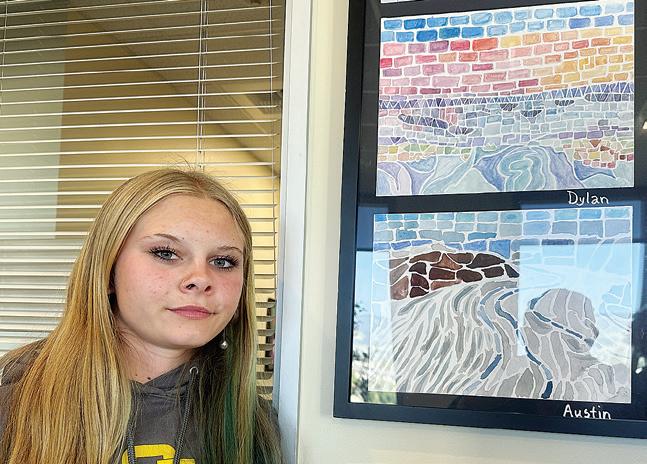
Dozens of artworks from all grades within the Pajaro Valley Unified School District are now on display at the Watsonville Civic Plaza Building.
From portraits to abstracts and still lifes, the 2026 Annual Art Exhibition fans out through both floors of the Watsonville Public Library, the third floor County Courthouse and official offices on the fourth floor. The project is a joint effort between the district’s Science, Technology, Engineering, the Arts, and Mathematics (STEAM) program, the City of Watsonville and PV Arts.
“The process is that we reach out to all 25 schools,” said Deepika Srivastava, who serves as Director of STEAM Curriculum, Instruction & Professional Development. “We started in November and we worked with all the visual arts teachers. Thanks to a crew of volunteers we managed to get the art hung Monday through Wednesday. It will be available for public viewing through March of next year.”
Srivastava gave credit to the staff at the Civic Plaza, including librarians, courthouse staff and the mayor’s office for helping with the presentation of the show.
“I believe art is an expression of their ideas and how they look at the world around them,” she said. “I worked in very large school districts in Redlands and Riverside where there were between 28-49,000 students, but I have never seen such a wide variety of exciting work as I have seen in this area.”
A reception for students, their parents and the public is set for May 13 at the Civic Plaza Building from 3–5:30pm at 275 Main St.
A Watsonville High School student will have her artwork featured as the official poster art for the 2026 Santa Cruz County Fair.
Alondra Jaramillo-Arreola, 17, was selected as the winner of this year’s poster art contest after more than 20 community and youth artists submitted


designs. The contest invited artists to create artwork inspired by the 2026 fair theme, “Apple Pies and Starry Skies.”
Alondra’s handdrawn poster captures the playful spirit of the theme with a cow and pink pig picnicking on apple pie beneath a constellation-filled night sky. The final artwork will be revealed by the Santa Cruz County Fair at a later date.
“Thank you so much for this incredible opportunity,” Alondra said. “It was an honor being able to participate in this big and well-known
community event. Being able to put my work out in this community means so much to me. I was born here and my dream is to become an artist. I can’t thank you enough.”
Fair organizers said the contest reflects the importance of youth and community involvement in the annual event.
The poster art contest was judged by Dori Rose Inda, CEO of the Santa Cruz County Fair; Ron Haedicke, marketing for the Santa Cruz County Fair and Freedom Media; Donna Giubbini, Fine Arts Department Head for the Santa Cruz County Fair; and Hassyel Rangel, Brand Manager for Digital NEST.








BY ANA MARIA TREADWELL
Santa Cruz Public Libraries is excited to kick-off summer with the 2026 Summer Reading Program. This year’s theme is Plant a Seed, Read! This theme is rooted in the concept of farm-to-table. A farm grows food that nourishes our bodies; a library grows ideas that nourish our minds. Both food and stories connect us to our family, culture, economy, and ecology.
Reading transports us to magical worlds sparking our imagination and creativity.
The Summer Reading Program encourages children to explore the world of books and reading during their summer break. Participation in the Summer Reading Program fosters love for reading and learning, and prevents the “Summer Slide” —a term used to describe the loss over the summer months of academic skills and knowledge students gain through the school year.
Engaging in reading activities during this time helps prevent the ‘slide’ and enhances children’s literacy skills, ensuring a smoother transition to the new school year in the fall. Adults are also encouraged to participate in the Summer Reading program; this serves as a strong model for children, as they see their parents enjoying reading, or participating in the many programs offered, enhancing family connectedness and strengthening

parent-children bonds.
Beyond preventing the ‘slide’, the Summer Reading Program offers a wide range of additional benefits for kids. It allows them to discover the joy of reading for pleasure, without the pressures of school assignments or exams. When children choose books based on their interests and preferences, they immerse themselves in captivating stories, explore new worlds that spark their imagination. Reading during the summer also enhances vocabulary, comprehension, and critical thinking skills, while expanding their knowledge on various subjects.
As part of the Summer Reading Program, kids, teens, families and adults are encouraged to track how much they read
to earn gift certificates to Atlantis Fantasy World and the Boardwalk Bowl, scoops of ice cream from The Penny Ice Creamery, and raffle tickets for the grand prize. Grand prize for kids is a $500 gift certificate to Book Shop Santa Cruz, teens can win a $500 gift certificate to local businesses. Adults signing up by June 22 enter a raffle for a Family pack of 2 adult +2 youth tickets for Santa Cruz Shakespeare summer 2026 season, and as they read, they earn seed packets from Renee’s Garden, raffle tickets for the Silver Prize, which is a Museum of Art and History Fan Membership, or the Gold Prize, which is a Monterey Bay Aquarium Family Membership. The library also offers a variety of FREE programs to make the summer even more
engaging and interactive. Join us for special events featuring Jungle James, Happy Birds, Cascada de Flores, and Perry Yan, to name a few! We also have workshops, virtual author talks, family crafts, movie nights, and weekly storytimes for toddlers and preschoolers. These activities not only foster a sense of community among young readers but also promote creativity and collaboration.
The Santa Cruz Public Libraries Summer Reading Program is a valuable opportunity for children to continue their reading journey during the summer months. We encourage you to read for fun, to learn a new skill, to make a new friend, and plant a seed, read at the Santa Cruz Public Library this summer!
Visit any of the ten open branches of the Santa Cruz Public Libraries to sign up for the Summer Reading program or go online. Participants can log their Summer Reading hours to win prizes by using the reading log on the back of the program brochure, additional copies of the log are also available, or can be logged by using the Beanstack App. For a complete list of all the Summer Reading Program activities and locations, visit the Santa Cruz Public Libraries Summer Reading Program page at SantaCruzpl.org/SRP/
By Ana Maria Treadwell is the Community Relations Specialist for Santa Cruz Public Libraries



BY JOHN LOUIS KOENIG
We love to find children’s books that have something valuable to say while they entertain us, giving us things to talk about and remember. Three recent favorites do that, each in very different ways.
This Is Not My Hat by Jon Klassen, is a small masterpiece of comic timing and visual storytelling, hilariously simple. A tiny fish has stolen a hat from a very big fish and is narrating his escape with a kind of calm confidence that borders on denial.
“He probably won’t wake up for a long time,” the little fish assures us. “And even if he does, he probably won’t notice that it’s gone.”
Children will laugh because they can see what the tiny fish can’t. In the background, the big fish has already awakened. He has already noticed. He is already on the move. The joke grows funnier as the distance grows between what is said and what is clearly happening.
Klassen lets the story unfold in a series of images that carry a dry, almost deadpan humor. It feels closer to silent film comedy than to most picture books. The restraint is what makes the punchline land harder.
Beneath the humor, there is a morality tale. Not a finger-wagging lesson, but something simple and effective. Actions have consequences. The little fish insists he will get away with it, but the reeds part, the water

darkens, and the story resolves in a way that feels both inevitable and a bit shocking. It’s a joy to see a children’s book that follows the classic rule “show, don’t tell.” And then, as the final pages turn, what is not shown becomes the whole point.
Moon by Britta Teckentrup turns its gaze upward and outward, with the night sky opening up overhead, wandering the world, following the phases of the moon— waxing and waning, full and new, the steady rhythm of change. It unfolds through rhyme, through repetition, through a cadence that invites reading aloud.
This is where the book does something special. It becomes an introduction to


poetry without announcing itself as such. The language carries a musical quality that children can latch onto, even before they fully understand the meaning. There is pleasure in the sound of the words, in the way they echo and return. It is the kind of book that a child will ask to hear again, not just for the story, but for the rhythm itself.
Teckentrup’s illustrations deepen that experience. The pages often feature cutouts that reveal the changing shape of the moon, creating a sense of discovery with each turn, transformation, of something constant that still appears to change.
Adults will appreciate how the book manages to teach two truths at once. The science of the moon’s phases—moon as object—and the mythic, intuitive sense of the moon as companion, as something that watches over us. On our nighttime journey across the world, we discover how we share the same moon with many creatures, all with very different lives.
Together, these two books make a thought provoking pair. One looks inward at the stories we tell ourselves, the other outward at the cycles and seasons that shape the world. Both respect the intelligence of their readers of any age.
For those who have been following along with past favorites, it is worth noting a new release from a familiar voice.


Others by Kobi Yamada explores how our minds can build up the unfamiliar into something scary or strange, causing us to see only differences between ourselves and others, until we take the brave step of actually connecting—and discover how much we share in common. Like Moon and This Is Not My Hat, the lesson is delivered through images as much as text, creating a vivid memory.
The best children’s books say as much to us as to the kids beside us.
Over the past two decades, he has become a leading voice in what might be called “the literature of encouragement.” His books, including What Do You Do with an Idea? and What Do You Do with a Chance? have sold millions of copies and have been translated into more than thirty languages.
Yamada’s own story reminds us that every dream begins with the courage to chase it. It’s the reason Chasing Dreams feels authentic: Kobi Yamada has lived the message of his own book.
For decades he helped build Compendium, and then in 2024, a remarkable milestone arrived.
Penguin Random House, one of the most time-honored publishers, acquired Compendium. Yamada remained president and continues guiding its creative direction, now with the resources and reach of a prestigious and legacy-building publishing house.


BY MONICA MENARD|
Certified Personal Trainer and Prenatal Postpartum Specialist

These moves prepare you for the demands of motherhood and are postpartum safe. Both should be primary goals for all mothers and caretakers. Your fit-mom body will follow if done consistently.
WARM-UP (4-5 MIN APPROX.)
1. Brisk walk with arm circles: 1 min
2. Straight-Backed Stroller Pushes: 5-10 reps
- Stand with feet shoulder-width apart holding stroller handle bar.
- Inhale as you push stroller forward and lower your torso down to parallel with the ground (keeping your back flat!). Exhale to bring back to start.
3. Walking Lunges: 12-16 reps (6-8 reps each leg)
- Holding stroller handle bar, inhale as you step forward into a lunge, exhale as you stand and bring the other leg forward. Continue alternating legs, making sure your front knee stays over your ankle and NOT your toe.
4. Stepping side squats: 8-10 reps each leg
- Stand with your right side facing stroller, right hand on the stroller.
- Inhale as you step to the right into a squat, pushing stroller forward with right hand and reaching left hand to the ground--or to your knee. Exhale as you step left leg to standing and reach left arm overhead.
- Do 8-10 reps on one side, then turn the other way and place the opposite hand on the stroller (keep traveling same direction) to do the other leg.
5. Baby lifts (15 reps or 30 seconds)
Using baby (or a 5-8lb weight) stand tall holding your baby in front of you at chest height. Extend arms straight and upward at a 45 degree angle lifting baby to the sky. Do this for 30 seconds. Be sure to exhale when baby is being lifted up and out.
6. Slow/Fast Drill: 2-minutes
- Finish your workout with a bit of cardio by alternating 30 sec at your own “moderate pace” (maybe that’s a walk, power walk, jog, etc) and then 30 seconds at your own “fast pace” (maybe that’s a faster walk, jog, or all out sprint!). Do this 2 times each for 1 min rounds (or longer if you want a bit more cardio!).
CIRCUIT 1 – LOWER BODY & CORE (10 MIN)
Perform each of the exercises below for 1 minute. Then repeat the entire circuit once more (resting 30-60 sec in between if you need it). When you’re

not using the stroller for a drill, make sure it’s locked beside you.
1. Plie Pulse & Roll
- Stand facing stroller holding handle bar with your feet wide and toes pointed 45-degrees.
- Inhale as you sit into a plie squat and push stroller forward. Pulse about 10 times (very small movement), then stand back up, pulling the shoulder-blades down and back. Repeat for 1 minute.
2. Bench Step-Ups (1 min each leg, 2 min total)
- Stand facing a bench. Inhale and place your right foot onto the middle part of the bench, then exhale and push up on that right leg to stand up on the bench, bringing your left leg to meet it.
- Inhale as you step back down with your left leg, bringing your right leg to meet it on the ground.
- Repeat this for 1 minute: Step up right, left. Step down left, right. Then switch sides for 1 minute.
3. Inclined Plank with Knee Lifts
- Place a towel on the bench (for cushion) and place your forearms on the towel.
- Bring yourself into a plank/ pushup position with your navel drawn into your spine, your glute muscles engaged, and your head in line with your spine.
- Take an inhale, then on the exhale bring one knee into your chest (drawing your navel in further). Then inhale to place the leg back on the ground. Exhale and bring the opposite knee into your chest. Continue alternating knees for 1 minute.
4. Squat with Side Leg Lift
- Stand with hands on handle bars
blades together in the back as if trying to make them touch. Inhale and extend your arms back to start.
- On your next exhale, row again, but this time make it a wide row with your elbows pointed out about 45 degrees. Squeeze your shoulder blades together and ensure your elbows stay lower than your shoulders. Continue rowing for 45 seconds (or longer if you wish), alternating between narrow and wide rows.
3. Triceps Dips
- Sit on bench and position hands on bench, shoulder-width apart and elbows pointing straight back. Slide your butt just slightly off bench with knees bent at 90-degrees.
and feet shoulder-width apart.
- Inhale to lower down into squat, exhale to stand as you lift one leg to the side with your foot flexed and your knees and toes pointed forward (not up).
- Inhale to lower back down into squat, then exhale and lift the opposite leg. Continue for 1 min, switching legs each rep.
CIRCUIT 2 – UPPER BODY AND CORE (9 MIN)
Perform each exercise below for 45 seconds. Then repeat the entire series once more (resting 30-60 seconds in between if needed). Lock the stroller next to you so your baby can watch and be somewhat entertained!
1. Bench Pushups
- Place your hands on the top of the bench and start in a perfect plank (navel drawn into spine, glutes engaged, head in line with your spine). Inhale and lower your chest toward the bench (aiming to touch the bench).
- Exhale and push back up to start. Continue for 45 seconds, making sure to prioritize working through a full range of motion (getting your chest as low as possible) over speed and getting in more reps! Incling your push -up is a great modification for safe core work with an ab-seperation.
2. Standing Rows
- Loop a resistance band around the top rung of the bench. Stand with your feet shoulder-width apart facing the bench. Grab the ends of the bands and wrap them once or twice around your wrists.
- Begin by inhaling and extending your arms in front of you. Then exhale and perform a narrow arm row – keeping your elbows down by your sides and squeezing your shoulder
- Inhale as you slowly bend your elbows and lower down, then exhale to push back up (being sure not to completely lock elbows when you press up). Continue lowering and lifting for 45 seconds, making sure your butt stays close to the bench! If it’s too far away, this places, excess stress on your shoulders.
4. Side Planks (45 seconds each side, 1.5 min total)
Great for considering ab separation but needing to strengthen the core.
- Place a towel on the bench for cushion and place your right forearm on the bench.
- Go into a perfect side plank, making your body as straight as a board (navel drawn into your spine, glutes engaged, head in line with your spine), and hold. Hold for up to 45 sec (or as long as you can with good form), then switch to the other side.
5. Plank with side Toe Taps:
- Start in the same forearm plank you did in circuit 1 with your navel drawn into your spine, your glutes engaged, and your head in line with your spine. Dont hold your breath!
- Separate your right foot from center and tapping your right toe on the ground to the side, alternate legs tapping left leg to the side. Continue alternating toe taps for 1 minute.
Happy workout!
Your Trainer, Monica
Scan to go to my website and grab a freebie

Please mention this article for a free consultation.
What is written here is intended solely for general informational and educational purposes only and is not a substitute for the advice of your doctor.
Monica Menard is a C.P.T. Certified Personal Trainer and Prenatal Postpartum Specialist. Contact her at monicapmenard@gmail.com. Instagram @training_bymonica Mention this article for a free consultation.


From the time you find out you’re expecting, you dream of the first moment holding your baby. And Dominican Hospital’s Family Birth Center is here to help make that first “hello” as special as your new bundle of joy. We have a team of experts ready to guide you throughout your journey—from specially trained OB/GYN doctors and nurses, to midwives and board-certified lactation specialists. And our Level III NICU offers the highest level of maternity care in the Monterey Bay area should your baby need specialized support. Take a virtual tour of our Family Birth Center at DignityHealth.org/DominicanBirthCenter.

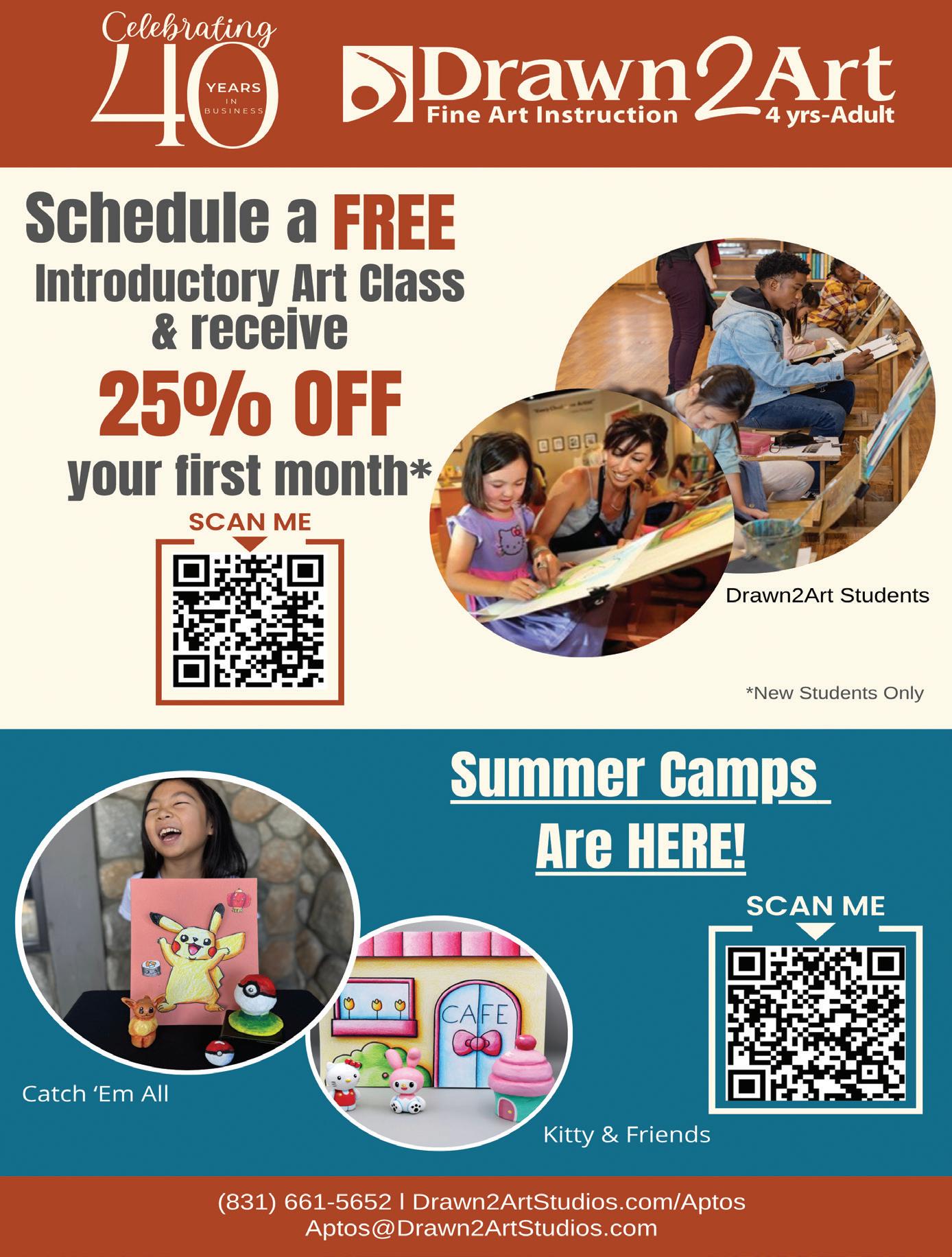
In 1986, Drawn2Art (originally KidsArt) offered its first class with less than fifty students. Today, its success can be measured by its seventeen studios, located in five states, teaching close to six thousand students weekly. Several of its teachers and studio managers are former students who have come back after finishing their higher education to share their artistic expertise with a new generation. Celebrating its 40th Anniversary, Drawn2Art’s curriculum & programs are a testament to the importance of art education.
In northern CA, Drawn2Art studios in Los Gatos and Aptos teach hundreds of students who value learning realistic drawing and painting skills. Individualized instruction allows students, whether having beginner, intermediate, or advanced skills, to progress at their own level of ability. These studios offer year-round drawing and painting classes, as well as Summer Camps (June thru August) teaching many different mediums.
Drawn2Art teachers are carefully screened to ascertain their artistic abilities across all the mediums used, and for their ability to inspire young artists of all ages to reach their full potential. They must also complete a Drawn2Art training program to familiarize them with the uniquely extensive Drawn2Art curriculum and its programs.
To schedule a Free Introductory Class go to www.Drawn2ArtStudios.com to find a studio near you.
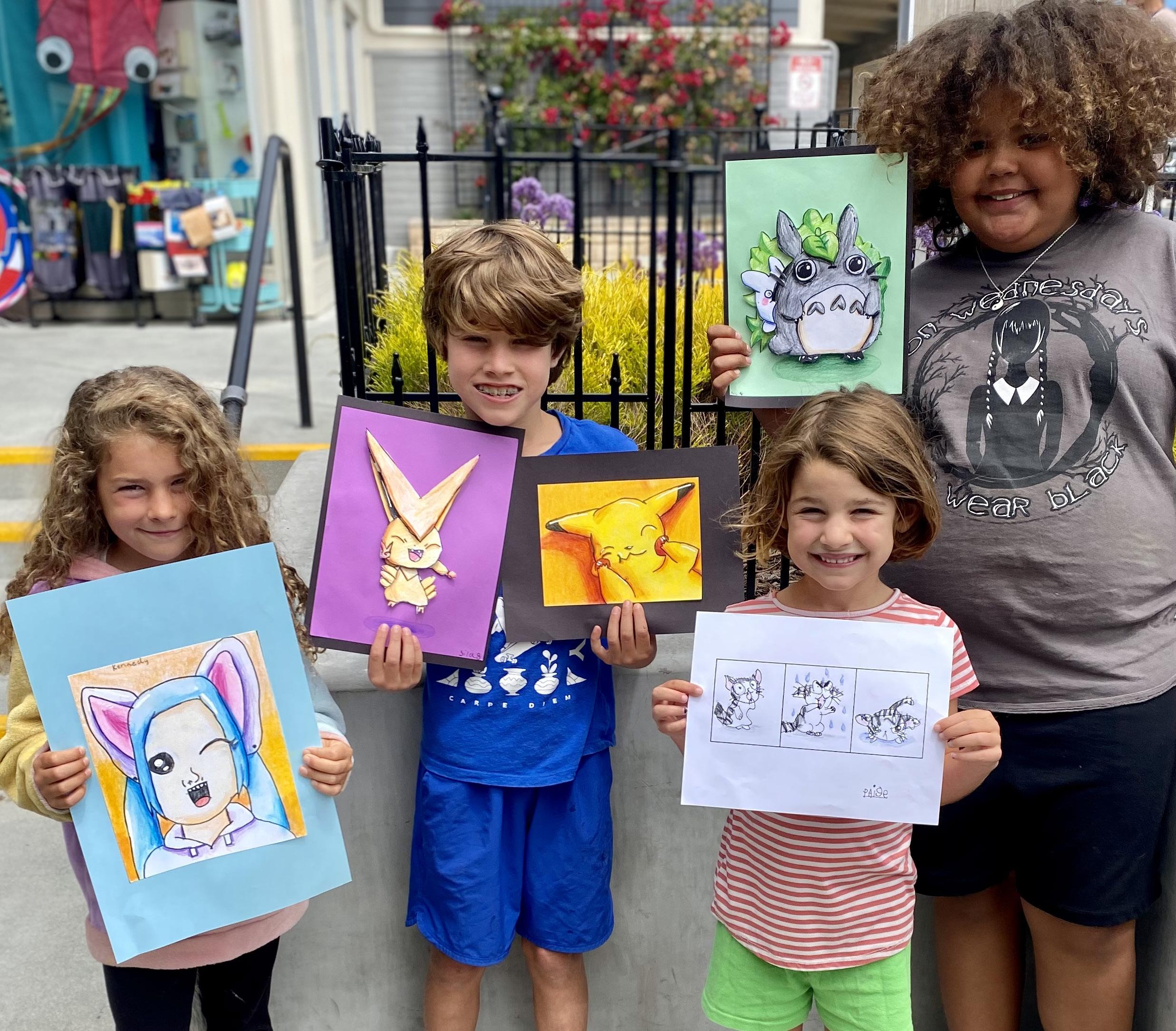
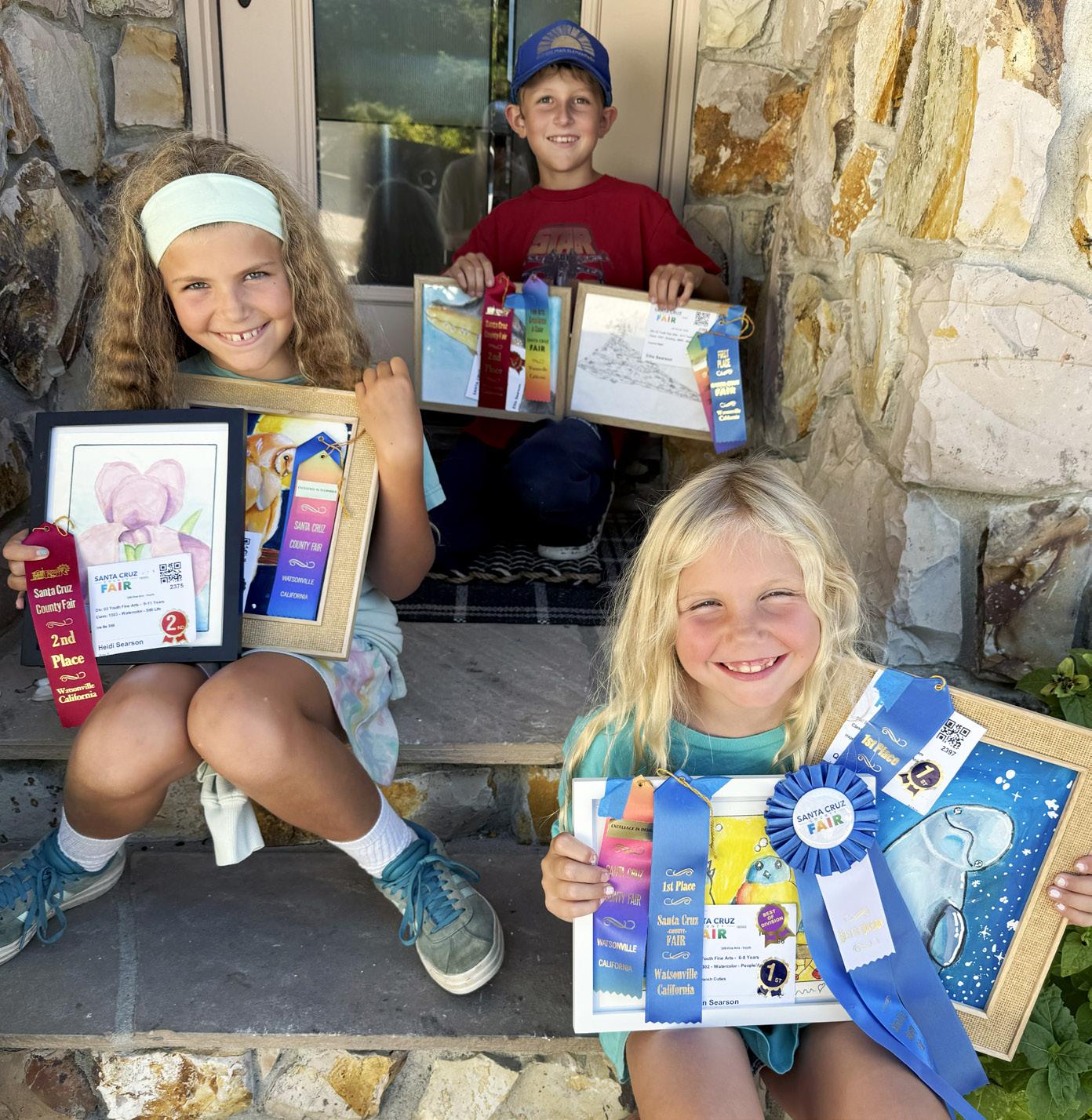
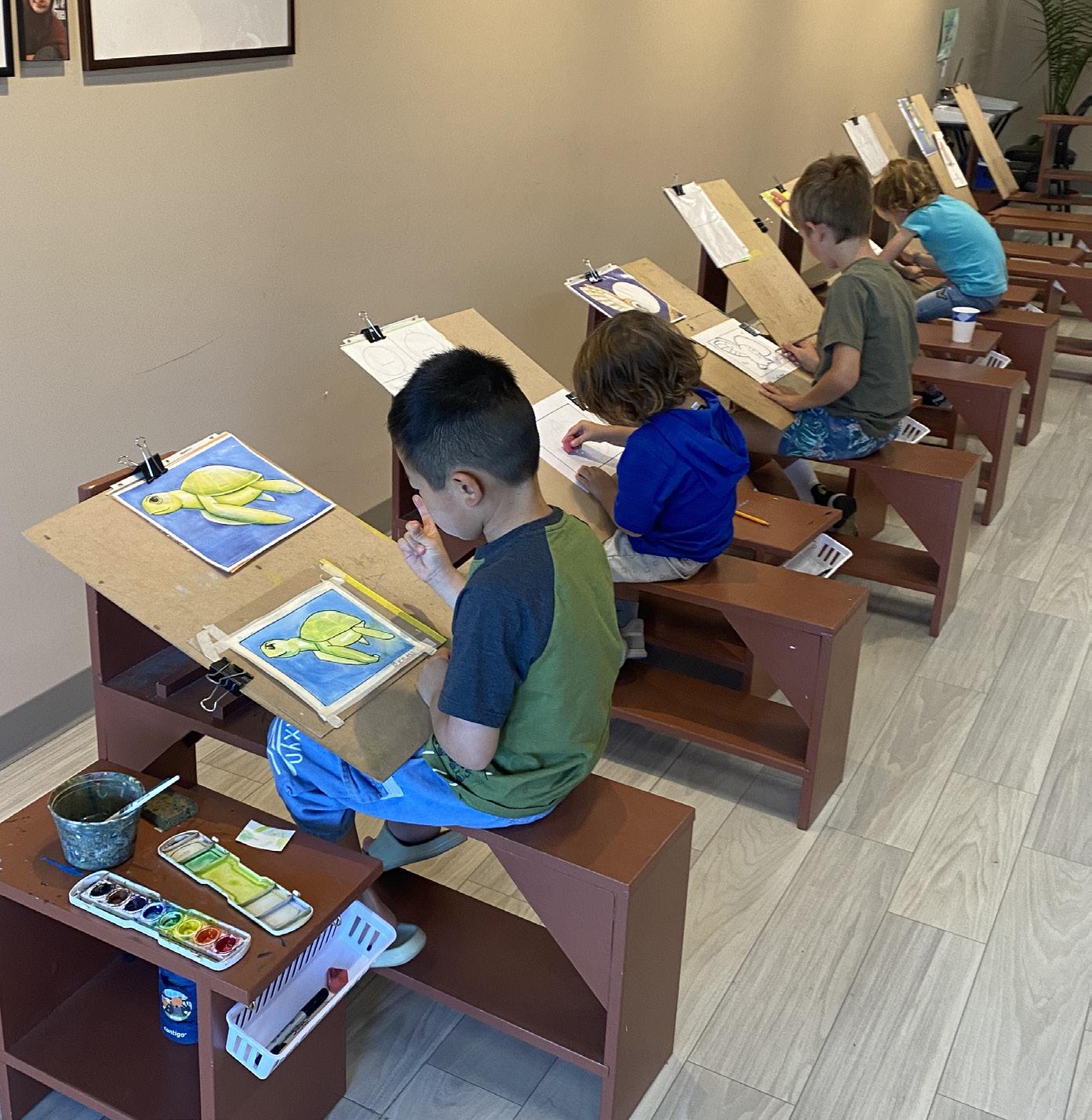
BY SHEILA BORGMAN
My family and I have been volunteering at the Santa Cruz County Animal Shelter (SCCAS) since 2011. As our 15th anniversary approaches, I’m thinking what a privilege it’s been to be part of an organization that makes such a difference in the lives of animals and their humans.
My daughter, Eva, and I started volunteering with the dogs when she was 12. She needed to have an adult volunteer with her, so I signed up—no arm-twisting required.
Every Sunday we’d head to SCCAS to walk dogs for a few hours. It was a wonderful bonding experience during the teen years, when mom/daughter relationships can sometimes drift. Eva is now a veterinarian in San Diego. Her years at the shelter gave her a big boost when she applied first to her undergrad program and then to vet school.
When Eva and I became volunteers, my other daughter, Jessie, also wanted to help but was too young to work with the animals on-site. We found other ways for her to help, like fundraising and fostering. She dove in headfirst.
A SAFE HAVEN
SCCAS is an open-admission facility

serving the neediest animals in Santa Cruz County. Over the years, creatures of all types have shown up at the shelter: dogs, cats, pigs, rabbits, chickens, chinchillas, tortoises, parakeets, goats, hamsters, and more. SCCAS provides shelter, veterinary care, and TLC for thousands of animals each year. In 2025, a total of 2,582 animals were adopted into loving homes and 1,172 strays were reunited with their families. The shelter provides low-cost spay/ neuter services and vaccination clinics as well as other vital outreach programs.
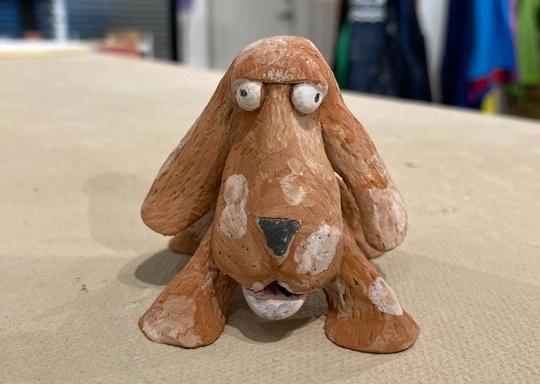



Humane Education presentations are available to schools and youth organizations that include topics about pet care and needs, careers in animal welfare, and community involvement with shelter animals. For more information about these presentations, contact Celine San Luis at celine@scanimalshelterfoundation.org.
A small army of dogs, puppies, cats, and kittens have come through our door over the years. Our furry guests have included mom cats with newborns, a puppy with a broken leg, and several couch-surfing dogs who bunked with us while waiting for their forever families. Perhaps our favorite was a loaf-shaped, snaggle-toothed, bug-eyed Chiweenie named Purdy. When I first brought her home, my husband said, “What is THAT?” Within a week he’d completely fallen for her and would have signed her adoption papers if the perfect adopters hadn’t shown up first.
We’re often asked how we can bear to return fosters that we’ve bonded with. (Full disclosure: We’ve foster-failed three times.) What makes it easier is knowing they’re headed for permanent, loving homes…and that we’ll have space for our next foster crew.
PET OF THE MONTH Alani
Meet Alani, a six-year-old Border Collie/ German Shepherd mix looking for her new home. Alani came to the shelter after her previous guardian could no longer care for her. She has experience around children ages 2 to 15 and has done well with them. Alani has also lived near cats, calmly sniffing and coexisting with them while primarily living outdoors. Her former guardians described her as very sweet with people. Although she has not lived with other dogs, she has met some at the shelter and prefers calm coexistence while getting acquainted. Because Alani previously lived mostly outdoors, she may thrive with indooroutdoor access during her transition. She may also need patience learning potty training, leash walking, and other household dog skills in her new home.
We live on a busy corner near Capitola Village—prime real estate for bake sales. The kids would make a killing selling cookies, brownies, and bottled water to sandy (and sometimes tipsy) people returning from the beach during holidays and festival weekends. The following day the kids would drop the cash off at the shelter’s front desk and then wander the kennels to say hi to the animals.
Over the years I’ve seen other kids come in with envelopes of cash from their own bake sales and lemonade stands. A highlight was watching a boy drop off a big box of treats and toys that he’d received for his birthday. He’d asked his guests to bring shelter donations instead of gifts for himself.
Volunteering on-site is incredibly rewarding because you get to help prepare animals for adoption. Kids can volunteer on-site with dogs, cats, or rabbits starting at age 12 with an adult partner (18 or older). My weekly gig is dog walking, but if I happen to take out a dog who prefers loafing to walking, we sit in a play-yard together and talk about life.
Becoming an on-site volunteer begins with an informational meeting and a species-specific training. A mentoring session follows, with an experienced volunteer sharing methods and tips for making volunteering fun and safe. The shelter encourages TLC volunteers to commit to an ongoing shift after their training is complete. I had no problem scheduling an ongoing Sunday shift because I was hooked by my second week. Summer is a great time to support SCCAS’s work. Have a bake sale. Donate toys. Become a foster. Volunteer on-site. You might get hooked too!
For more information, visit the SCCAS website or stop by for a visit! www. scanimalshelter.org.1001 Rodriguez Street, Santa Cruz. 831.454.7200

BY MALIA FORT

Say hello to Dillan, she is dawning a classic timeless look. Her fluffy black hat is from a gift shop at Fisherman’s Wharf in Monterey, with the long leather coat from her grandmother that came from a Vintage New England Sports Wear Co. With the black dress and boots from her semester abroad in Rome. The purse is Coach but thrifted in Watsonville and Union Jack Heart keychain from London. For a springtime shoe Dillan recommends picking an open toe with a heel/wedge/flat. With a specific shoutout to Puma speedcats or Adidas taekwondo mei. The key to elevating any basic fit, Dillan advises keeping a well manicured hand and toes. Finding a good unique belt with an assortment of studs and or prints, or even just a pop of color added to your lips. Another great upgrade are tights. Tights come in a wide variety of patterns, and even layering a fishnet on top of other tights can be done tastefully. Pigtails are an excellent hairstyle for Spring and Summer, ponytail or braids, messy or sleek, so many variations are great. Colorful eyeshadow is a great makeup look as well. Dillan recommends light purple eyeshadow and adding a tint of red blush over traditional pink for a more sunkissed look.
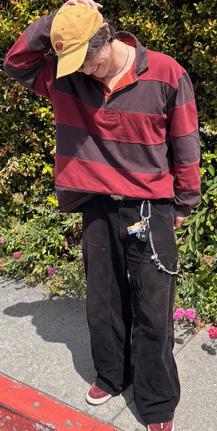
Attired in an alternative indie streetwear is Chris. The burnt orange hat, red & black striped long sleeve, and black corduroy pants are all from Goodwill. With a silver wallet chain from their girlfriend and red half cab Vans from a skate buddy, held together with a black belt they bought from Ross. Santa Cruz’s local style is full of diversity that makes all styles and cultures feel welcome. Most compliments are always genuine and never based on brand popularity. Chris’s biggest fashion influences always came from those they are closest with. Admiring the way all their friends share clothing, pick outfits and thrift together created a special relationship that brought everyone closer together. As a skater, Chris also finds inspiration in other skaters clothing and sometimes getting styling tips from Instagram. A great way to stay fresh on a budget is; hand me down clothing and thrift stores. Chris mentions it is much more appreciated to wear clothing shared between people you love that contains stories and style. Chris’s favorite recent purchase is their hat, as they are trying to incorporate more accessories. Santa Cruz is full of people who wear a wide range of styles. Santa Cruz does lean to a more relaxed environment, where many people chose comfort, but just cause Chris decides to wear pj pants out one day, doesn’t mean he won’t pop out in his favorite hat the next, like many other locals.

This is Bailey. Bailey is wearing an alternative whimsy outfit. Bailey has got their dark multi-colored tie and pinstripe dress from Goodwill. Their two stone necklaces are from Antigua Guatemala. The green puffer jacket is from Cross Roads. With their striped tights from Facebook Marketplace, and gifted Doc Marten’s from their mother. Santa Cruz has a very unique atmosphere, Bailey describes it as diverse and free. With Summer at its peak in Santa Cruz, Bailey recommends wearing overalls with a bikini under, for that perfect beach day attire. Bailey’s two favorite colors when it comes to Summer are pink and yellow. And with the sun staying out much longer, Bailey says a good tip is to add sunscreen under your makeup as a protective base.
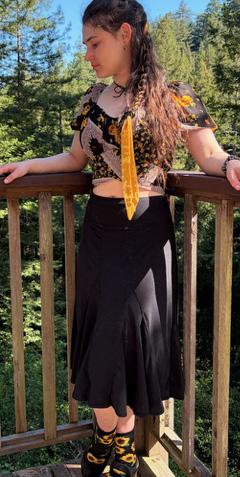
Dressed in an artistic nature inspired attire is Suki. The floral printed top is from Ross, with the matching sunflower socks gifted to her from a friend and the long black skirt is from a thrift store. The black clogs are from Dansko, purchased online. Accessorizing with a yellow ribbon from a thrifted dress. Suki describes local fashion as lifestyle, environment and peer inspired, where larger Fashion hubs make decisions off society at large and celebrities. Growing up, Suki was influenced by Padme from Star Wars and American Girl Doll catalogues for Fashion. When it comes to picking out an outfit with confidence and on a budget is to wear hand me downs and hit thrift stores. Most of Suki’s wardrobe is from others who are getting rid of clothes, making her closet full of a range of different styles. Suki’s most recent favorite purchase is a patchwork skirt she got from Goodwill. Suki would describe our town’s style as relaxed but fashionable. Featuring a lot of looser silhouettes through athleisure, billowy pants and billowy dresses. A perfect combination between fashion and comfort.