









Kindergarten – 8th Grade
Purpose. Compassion. Scholarship. Citizenship.
Join us for a tour


EDITOR | PUBLISHER
Brad Kava and Steve Dinnen
ART DIRECTOR | MANAGING EDITOR
Nathan Mixter
DISTRIBUTION & SUBSCRIPTIONS
Susan Bernstein
CONTRIBUTORS
Gwyneth Holcomb, Erika Costanzo, Anaïs Kettmann, Coco Kettmann, Monica Menard, John Koenig, Tovah Petra Kolodinski, Shira Coleman Hagar, Trina Coffman-Gomez, Sepideh Taghvaei, Celine San Luis, Kristen McLaughlin
MASTER OF COMMUNITY PARTNERSHIPS
Bobbi Jo Palmer
AD REPRESENTATIVES
Ann Fitts Sophie Veniel Bob Pursley, Monica Gutierrez advertising@growingupsc.com
CONTACT US 408.656.1519 editor@growingupsc.com
P.O. Box 3505, Santa Cruz, CA 95063
AUGUST 2026 | VOL. 30 NO. 8
by Folger Graphics.


“This

Triple P is a scientifically-proven, world-renowned positive parenting program available to families in Santa Cruz County.
Triple P strategies address a wide range of parenting challenges by providing a toolbox of easy-to-use tips.
Find a full schedule of Triple P tips and classes at triplep.first5scc.org.


Don’t miss the Growing Up in Santa Cruz videos on YouTube, Instagram, Facebook and TikTok. To promote your business to thousands of viewers in the area each week, email editor@growingupsc.com or call (408) 656-1519.


BY GWYNETH HOLCOMB
Santa Cruz County is one of the most dangerous counties for pedestrians statewide, according to one of the five new reports from the 2025-2026 Santa Cruz County Civil Grand Jury.
“While the county and its cities have adopted modern transportation policies and safety frameworks, pedestrian safety outcomes remain poor relative to other California counties,” reads the report.
According to the report, the county ranks in the top 20% worst performing California counties for the number of pedestrians killed or seriously injured (KSI) in traffic collisions.
“Personally, it’d be nice to see less of a car-centric approach when it comes to designing, thruways and streets,” said Adi Biacs, a 25-year-old bike mechanic.
Biacs personally has been hit by a car while biking up along West Cliff, when the car turned left into one of the parking spots along the beach side of the road—“drivers and cars are just like not really paying attention, even to the people walking around,” said Biacs.
This pedestrian safety report identifies a lack of sidewalk and crosswalk maintenance, and the prioritization of
speeding enforcement over driving under the influence, as among the main concerns and causes of dangerous pedestrian conditions.
According to this report, the Jury investigated the cities of Watsonville and Santa Cruz, and the unincorporated areas—which have a persistently high number of pedestrians killed or seriously injured—and have communicated a goal of implementing a Vision Zero strategy —a multidisciplinary approach to traffic fatalities and severe injuries.
The Jury statement reports that since the county and cities of Watsonville and Santa Cruz have yet to implement a Vision Zero strategy, it has “possibly resulted in more pedestrian deaths and serious injuries than would have otherwise occurred.”
One of the final recommendations of the report instructs the County Board of Supervisors and the city councils to develop and publish Vision Zero Action Plans by June 1, 2027.
The County Board of Supervisors and city councils of Watsonville and Santa Cruz have been given 90 days to respond to the Jury report.
MusicalMe, under the direction of Lizz Weihrauch, has helped more than 65,000 children, parents, grandparents, and caregivers discover the joy of making music together. What began as a small offering has grown into one of the region’s longest-running and most beloved early childhood music programs, serving families in communities in Santa Cruz and Santa Clara counties for three decades.
See the story on page 13.


BY ERIKA COSTANZO
Families in our community benefit from support. With rising expenses and uncertainties, growing a family can include many challenges. Thankfully there are organizations and individuals working locally to alleviate parents’ concerns about feeding their infants and children. The Santa Cruz County Breastfeeding Coalition works throughout the year to bring lactation professionals, community members, and organizations together to share information and advocate for increased breastfeeding support.
Breastfeeding is the biological norm for human infant feeding, but that does not mean it is always easily achieved or without challenges. When you add on beginning or returning to employment while breastfeeding, the roadblocks usually increase. The Breastfeeding Coalition and its community partners work to remove barriers so families can focus on caring for their babies. When families are able to breastfeed, they benefit from cost savings and positively impact their health.
August is National Breastfeeding Month in the United States. For the entire month, and for several weeks into September, each week focuses on a specific theme or group. It kicks off with World Breastfeeding Week (WBW), August 1-7, which is celebrated around the globe,
and has been since 1992. WBW is hosted by the World Alliance for Breastfeeding Action (WABA) and you can read about the history of this event on their website at waba.org.my/wbw/#previous-wbws In the US, the United States Breastfeeding Committee (USBC) coordinates National Breastfeeding Month, assigning themes and topics for multiple weeks. Those celebrations are:
National WIC Breastfeeding Week (August 1-7)
Indigenous Milk Medicine Week (August 8-14)
Asian American, Native Hawaiian, and Pacific Islander (AANHPI) Breastfeeding Week (August 15-21)
Military Lactation Celebration (August 22-24)
Black Breastfeeding Week (August 25-31)
Workplace Lactation Week (September 1-7)
Semana de la Lactancia Latina (September 8-14)
Deaf & Hard of Hearing Breastfeeding Week (September 16-22)
You can read more at usbreastfeeding. org/national-breastfeeding-month.html
Research shows that breastfeeding improves cognitive and immune system development and reduces obesity and many other chronic conditions for infants and children. It also protects maternal cardiovascular health and reduces the risk of several cancers for women who breastfeed. The American Academy
of Pediatrics and the World Health Organization encourage breastfeeding for two years and beyond, alongside appropriate complimentary foods.
Fortunately, Santa Cruz families do not have to navigate breastfeeding alone. There is support and anticipatory guidance for prenatal women and new mothers from local doulas, midwives, nurses, and peer counselors to initiate and sustain breastfeeding.
There are International Board Certified Lactation Consultants at several of our community clinics, our local hospitals, and the Community Bridges WIC Program, for when challenges arise. Breastfeeding Coalition members can also advise on options when new mothers return to work and want to continue to provide breast milk to their child(ren), and several organizations offer new mother support groups. If you or someone you know wants more information on breastfeeding services in Santa Cruz County, including information on the laws supporting lactation in the workplace, contact Erika Costanzo at erikac@cbridges.org
The Mothers’ Milk Bank California supports Santa Cruz County with events and promotion of banked human milk throughout the year. Donated breast milk provides a lifeline to families who are unable to breastfeed or need access to breast milk for a period of time before
they can provide it themselves.
Members of the Breastfeeding Coalition come together in August to shine a spotlight on breastfeeding support. You are invited to join the Community Bridges WIC Program’s 19th Annual Breastfeeding Walk and Health Fair on Friday, Aug. 7, at 18 W. Lake Ave. in Watsonville from 3pm to 5pm. Come learn more about breastfeeding and other family services, tour the programs at Community Bridges, enter to win raffle prizes and more.
This year WIC is also showcasing its new food package, with even more healthy food options for families on a tight budget. Come taste test recipes with the new WIC foods.
Each August, the Breastfeeding Coalition partners with the WIC Program to recognize local employers in Santa Cruz and San Benito Counties for providing support to employees who are breastfeeding. Lactation accommodation in the workplace, at schools, and in public spaces help our families continue to provide breast milk and protect their health. To nominate an employer for this recognition, email erikac@cbridges.org.
You can find more information about many of the events going on in our area throughout National Breastfeeding Month on social media. The more support our families have available, the more our community can thrive.
BY ANAÏS KETTMANN, AGE 9
I went to the Santa Cruz Warriors game with my dad and we ordered a large bucket of popcorn with unlimited refills. I told my dad I thought we could eat at least thirty buckets of popcorn, even though my dad and I also ate hot dogs and my dad also ordered one iced tea for me. My dad and I sat in the bleachers at Kaiser Permanente Arena, where the Warriors play, and each of us kept taking handfuls of popcorn. We had eaten half the bucket even before the game started.
I found out about the game a week before at my school, Live Oak Elementary. There came a person in a Pacific Leatherback Turtle costume named Mav’Riks. After I saw Mav’Riks, I wanted to go to the Warriors game even more. It was going to be a special game with a lot of people from my school.
When I came home from school that day, I asked my dad if we could go to the Warriors game and he said, “I will think about it.” He took a long time to think about it. Then, the day before the game, he told me we could go and I was so happy. I had never been to a basketball game, but now I am a big fan. This was
my first time at a real live basketball game. Usually I watch basketball games at my house with my dad.
Before the game started, the team’s mascot Mav’Riks came out on the basketball court. It was the same Mav’Riks I saw at my school or I think it was. After the game started there were a ton of colorful lights and my dad and I thought, “Wow these lights are so cool,” and in the middle of the arena
Mav’Riks the Warriors mascot was waving a flag around.
I asked my dad if he could take a video and then he took a video. Otherwise, I thought the game was pretty cool, and sort of boring, maybe because it was only my dad with me there and there was no one else for me to talk to. The Warriors lost to the Texas Legends, 134-116. It was the final game of the regular season and both teams
finished with the same record, 14-22, not quite in last place but almost. When my dad and I were walking around at the Warriors game, I saw a lot of kids from my school, including my friend Tennysen. I did see Dalary, who is in my class at school. She is nice, but we are not really friends, so we didn’t talk at all, although she was sitting in the row right behind me. She makes faces at me, but I want to be good with her.
I also saw one of my teachers, Ms. Karla Atencio-O’Brien, and she smiled at me. Back at school I interviewed her about the Warriors game and she said, “My favorite part was sitting by the courtside sitting with other students and seeing Anaïs’s face.” She said that, like me, she had never been to a basketball game before then.
I also saw someone else who I really like: my principal, Mr. Greg Stein. I was just sent to his office. At first I was scared, but I didn’t do anything. He wanted to talk to me about the trip my family took to Japan and other countries in Asia at the end of last year. When I saw Mr. Stein at the game, I did not really talk to him. I only said “Hi” when my dad and I went down to get more popcorn.
At Bay Federal, we know the start of a new school year can bring a lot of costs at once. There are the expected costs, like supplies, books, and school clothes, plus extras like technology, class fees, sports gear, and activities.
A Bay Federal personal loan can help families cover what they need now, with loan amounts starting at $1,000 and rates as low as 7.49% APR.* It can also be a helpful alternative to pu ing larger expenses on a credit card, with a clear plan and a fixed payo date.
And because family life does not always follow the school calendar, a personal loan can also help with unexpected expenses that come up at the wrong time.
Bay Federal is local, member-owned, and here to help Santa Cruz families feel ready for whatever the season brings.

BY COCO KETTMANN, AGE 11
On June 30, 2026, my mom and dad and my little sister Anaïs and I started on a bike trip for ten days from Ottensoos, Germany to Prague! At first I was really excited. I couldn’t wait to hop on my bike and start riding! It would be easy, wouldn’t it? At least for the first day!
Already on the first day it was extremely exhausting. My bike kept breaking down and we had to go to bike stores several times just to get it fixed! My dad even rode his bike half an hour from where we were staying to a bike shop that could replace my tire, then rode back. I was happy to see him when he came back with the tire.
Day after day it got harder and harder and I didn’t think I could do it! But I tried not to complain, because that wouldn’t make it any easier for me or my family. Most days it was really hot, but sometimes we rode through cool forests and there were always tons of fruit, like wild blueberries, raspberries, strawberries and cherries! If you know me, you know I LOVE fruit. So I would keep stopping to pick them! Even sometimes when I think my dad wanted us to keep riding and make more progress.
There was also one time when we were riding through this field, when we came
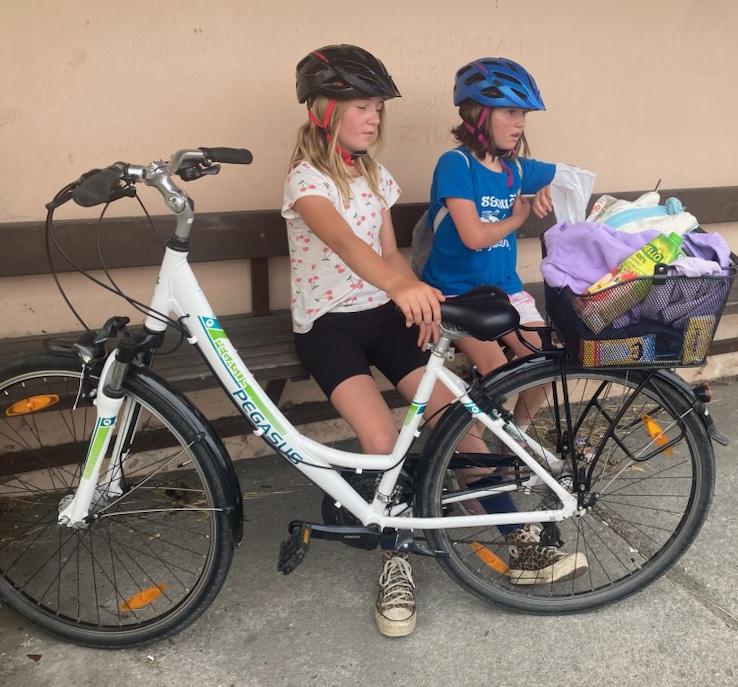
to this huge cherry tree! It was filled with cherries from top to bottom! But it did have tons of yellow jackets swarmed
cap, and I filled it up then I passed it down to him and he would put all those cherries into my basket and we did that until my basket was full! And when we started riding again whenever I wanted cherries I would reach back and eat some. And I ate so many my stomach hurt! Another time we stopped to take a break and I got a slushy and then we went in this lake and I swam across it all by myself! It wasn’t easy!
around it! We stopped and my mom lifted me up and I climbed to the top. My dad gave me his Bookshop Santa Cruz
I also saw a lot of animals! (Some dead, some alive.) Like I saw a baby wild boar in a forest and it was so cute! My sister thought it was a rabbit, but I’m positive it was a baby boar! And I saw six dead birds. Three of them were whole and three were squashed like a pancake! I tried not to ride over the squashed birds. When we crossed the border to the Czech Republic we stopped at this restaurant and it was AMAZING! For starters my sister and me got a homemade mint lemonade and it was so good! It wasn’t too sweet and it had the perfect amount of mint in it! And to eat I had strawberry Palatschinken, a pancake with pudding inside and strawberries, and my sister had strawberry Knödel, another Czech specialty, where there are balls with strawberries! By the time we made it to Prague, I think we almost couldn’t believe we were there.

BY MONICA MENARD| Certified Personal Trainer and Prenatal Postpartum Specialist

Summer is winding down, the school year is approaching and for moms these two transitions often create an overwhelming schedule. It does for me. When lack of time is a problem, caring for myself is the easiest task to set aside. So many mothers I work with are balancing this also. Time is too little and wanting to feel better is great.
This month, I want to clarify one of most time consuming issues in women’s health: abdominal separation. It has a long conversational history; abs ‘splitting open’ and permanent core damage. This is all ‘part of being a mom’, but this is just not true. Let me give you some shortcuts by explaining what it is, what we do unknowingly which make it worse, and what to do about it.
WHAT IS AN ABDOMINAL SEPARATION EXACTLY?
Abdominal separation or Diastasis Recti (DR) is a wider-than-normal separation of the right and left sides of the main abdominal muscles called the rectus abdominis (six pack muscles). Some degree of DR is actually normal and

necessary for pregnant mothers. It’s how the body makes space for a growing baby. In fact, research shows that by the third trimester, virtually everyone experiences it.
There’s no avoiding this physical change and that can scare a lot of women. I don’t blame them. What to do about it is rarely spoken about. The best scenario is that once baby isn’t in utero anymore, the gap closes again naturally.
FACTORS THAT INCREASE SEVERITY OF ABDOMINAL SEPARATION (DR)
Unknowingly women are making their DR worse. Weak six-pack muscles aren’t the cause of DR so that’s why traditional and often prescribed moves like sit-ups won’t fix things, in fact they can make it worse. Poorly managed intra abdominal pressure and alignment problems are key drivers of this problem. Intra abdominal pressure (IAP) is the pressure inside our abdomin. It is like a balloon filled with air. If we
squish it, which is what happens when we do sit ups, the pressure inside increases. Sit-ups alone don’t cause an ab separation it’s the trauma in combination with this move which is problematic. Spikes in IAP contribute to ab separation by pushing outward on the already compromised abdominal wall and the pelvic floor. Breath holding and sucking in our abdominals also spike IAP and makes ab separation worse.
MANAGEMENT
Stay in neutral alignment and manage the pressure. Neutral alignment is when ears, shoulders, ribs, and hips are all stacked one on top of the other when viewing yourself from the side. This will relieve unneeded stress to musculature, ligaments, and core.
Strengthen safely. The first step is to begin in neutral alignment. Once mastered build strength with 360 ° breathing which activates the deeper core
muscles underneath the six pack. Correct breathing also helps manage IAP.
Practice this by sitting in good alignment, breathe in using the diaphragm. The chest isn’t moving much during this process. Breathe out slowly exhaling all air until the abdominals feel a bit of fatigue. Lastly, relax the belly and pelvic floor after the full exhalation and then begin again. Continue these cycles until your abdominals are tired. Exhale on effort.
The good news is that abdominal separation isn’t something you simply have to live with after having children. Small consistent changes in how you breathe, move, and use your body throughout the day can facilitate the natural process of healing fully. You don’t need hours in the gym or endless core exercises—you need this approach. Build health back strategically. Training for the job we do daily will leave us feeling strong, supported, and confident again.
For more information, my free E-guide on how to workout throughout pregnancy, or your free consultation use the QR code

Your Trainer, Monica
What is written here is intended solely for informational purposes only and is not a substitute for the advice of your doctor.



At Dominican Hospital, we’ve grown alongside you and your family for generations with an unparalleled commitment to the health of our community. Serving Santa Cruz County with the most advanced, award-winning care, you can count on us—from our innovative Wellness Center programs, to our Level III Neonatal ICU, to our expert cardiac, oncology and orthopedic care. We’re proud to have served as your health partner for more than eight decades. And we’re honored to continue supporting you in the years to come. Learn more about us at DignityHealth.org/Dominican.

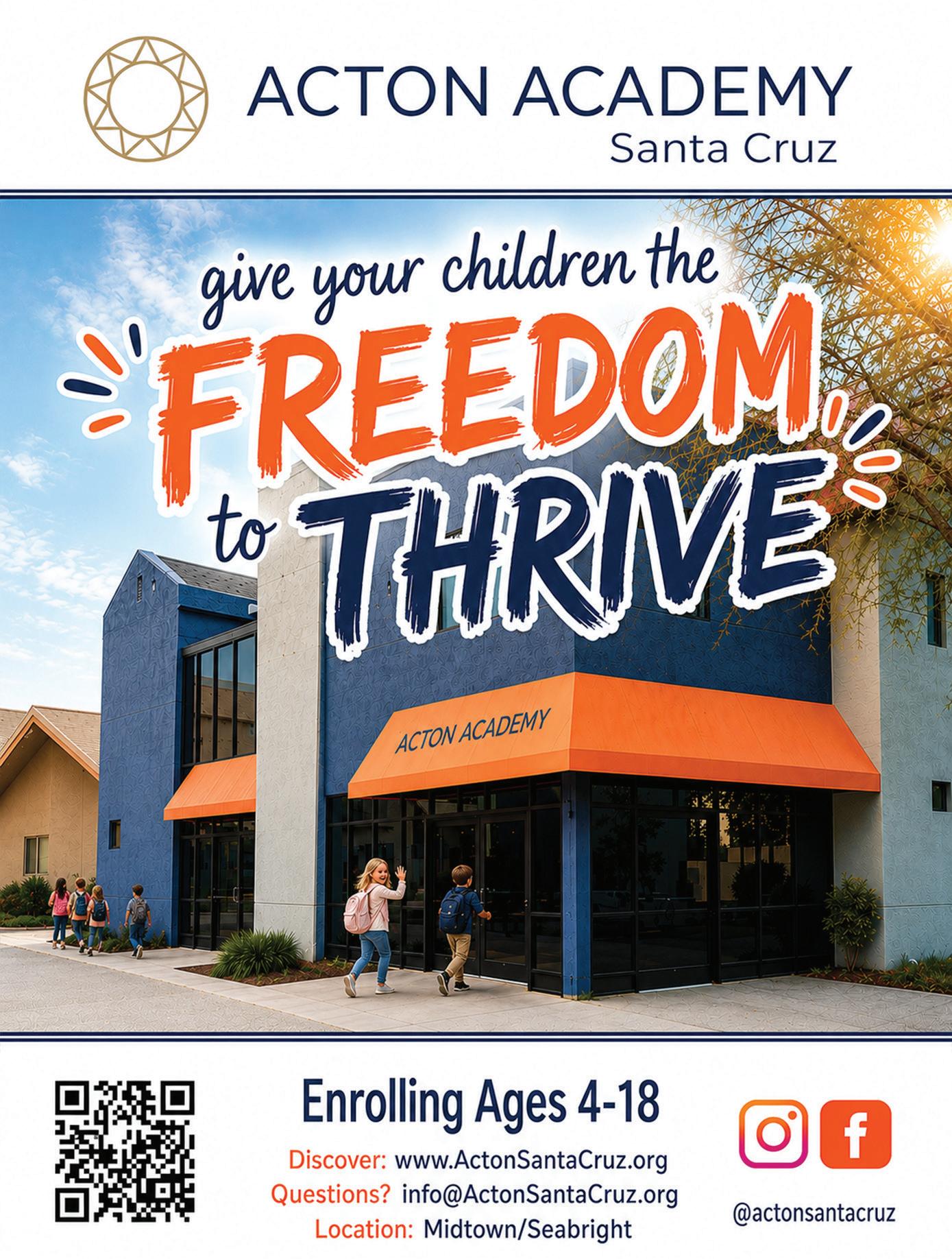
Acton Academy Santa Cruz 440 Frederick St Santa Cruz
ActonSantaCruz.org info@actonsantacruz.org
At Acton Academy Santa Cruz (440 Frederick St, Midtown), learners ages 4–18 embark on a transformative, learnerdriven journey to discover their unique calling. Our Montessori-based Spark Studio nurtures curiosity for ages 4–8, while older learners engage in Socratic discussions, real-world projects, and apprenticeships—growing into resilient, self-motivated problem solvers. On Fridays, ArtTerra Enrichment brings creativity to life through music, 2nd language exploration, hands-on art, and naturebased learning. Mixed-age studios explore their unique creativity fostering leadership and connection to beauty and nature. Now enrolling for 2026–2027. Learn more at www.ActonSantaCruz.org or email info@ actonsantacruz.org.
Chartwell School 2511 Numa Watson Road, Seaside 831.394.3468 www.chartwell.org/summer


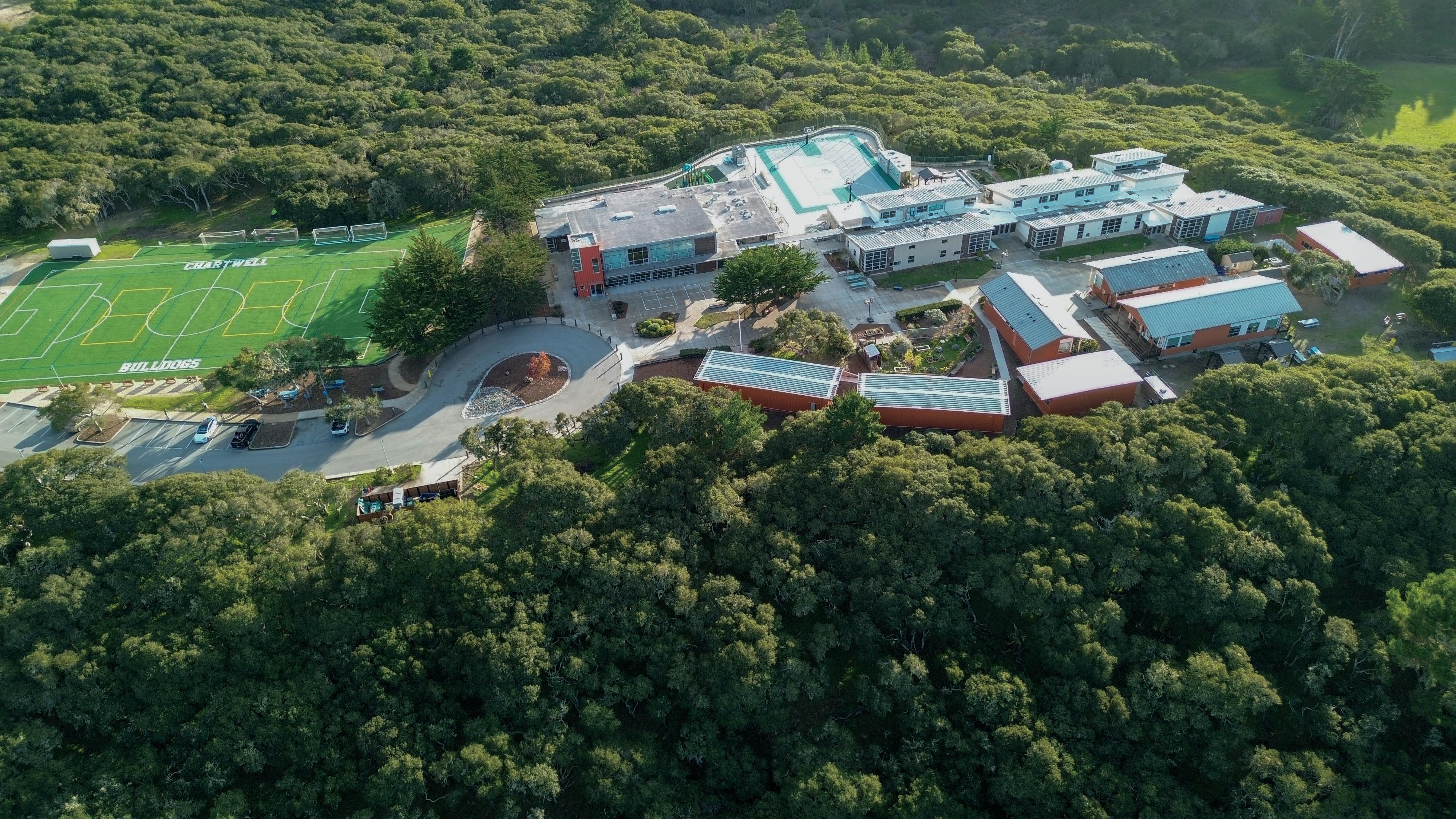
Chartwell is a school where students in grades 1–12 with dyslexia and other learning differences discover just how much they’re capable of. As one of only a few schools in the country designated as a lab school for the UCSF Dyslexia Center, Chartwell grounds its teaching in the latest research on how our students actually learn best. Small classes and a college-prep curriculum give students academic challenge, while dedicated socialemotional support helps them build resilience and a genuine sense of self-worth — because how a student feels about themselves shapes how far they can go. They leave as stronger learners, ready to thrive well beyond the classroom.
“Both boys are now reading and writing at or close to grade level... they walk into a room differently now. Chartwell didn’t just teach them to read better — it taught them that being dyslexic doesn’t mean being less.”
~ Lower School Parent
Gateway School, K-8
255 Swift Street, Santa Cruz 831.423.0341 ext 302 admissions@gatewaysc.org gatewaysc.org

Founded in 1970, Gateway is Santa Cruz County’s only accredited independent school serving students from kindergarten through 8th grade. We provide a rigorous academic
curriculum balanced with a strong focus on students’ social and emotional well-being, all in service of our mission to inspire children to lead lives of purpose and compassion through scholarship and citizenship. Gateway is proud to be voted the Best Elementary School, Middle School, and Private School in the 2026 Growing Up in Santa Cruz “Best Of” survey. If you’d like to learn more, we invite you to visit our website or schedule a tour, gatewaysc.org.
Holy Cross School
150 Emmet Street, Santa Cruz 831-423-4447, holycsc.org Admin@holycsc.org

For over 150 years, Holy Cross School has inspired students in Santa Cruz through exceptional Catholic education rooted in faith, academic excellence, and community. Serving preschool through eighth grade, we offer small class sizes, personalized instruction, enriching programs in Spanish, Art, Music, Athletics, and Leadership, plus a nurturing environment where every child is known, challenged, and encouraged to thrive. Our graduates are prepared for success in high school and beyond while developing character, compassion, and a lifelong commitment to service. Schedule a tour and learn more at www.holycsc.org to discover the Holy Cross School difference today.
Mount Madonna School Preschool-12th Grade
491 Summit Road, Mount Madonna 408.847.2717
MountMadonnaSchool.org
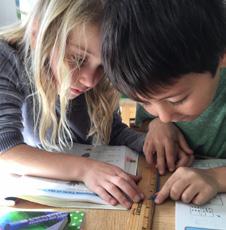
Mount Madonna School is a Preschool through 12th grade Independent School, fully accredited by WASC and CAIS. A community of lifelong learners, we support our students to become caring, self-aware and articulate critical thinkers.
Located on 380 acres on the summit of Mount Madonna, between Gilroy and Watsonville, Mount Madonna School serves families across South County, Santa Cruz County, and San Jose. We pursue our mission and values through the integration of Academic Excellence, Creative Self-Expression and Positive Character Development. This integration brings depth, meaning and enthusiasm to learning. Flexible tuition and bus transportation available.
“Enrolling our kids at Mount Madonna School has been one of the best decisions we have made in their young lives. The location of the school, great field trips, and caring teachers have been nothing but an amazing experience for our family.” ~ Mount Madonna School Parent
Orchard School, K-6
2288 Trout Gulch Road, Aptos 831.688.1074 orchardschoolaptos.org

Orchard School, established over 30 years ago, provides a unique, yet comprehensive K-6 education. At Orchard, we weave together the magic of an extraordinary faculty, a 14-acre campus and a down to earth philosophy that nourishes and honors the natural growth and development of children. Small class sizes, an organic garden and an animal farm create enriching “whole child” learning experiences that are hands-on and individualized. We provide Strong Core Academics, Excellent Science Curriculum, Art, Music, Physical Theater/Circus Arts, Electives, Ceramics, Archery, Leadership, Field Trips, Drama Productions, and more.
Santa Cruz Montessori
Ages 18 months – 14 years
Main Campus (Primary and Elementary) 6230 Soquel Drive, Aptos Winston Campus (Young Children’s Community and Jr. High) 244 Cabrillo College Drive, Soquel 831.476.1646 scms.org
Established in 1964, Santa Cruz Montessori is a non-profit school serving children 18 months to 14 years, celebrating our 60th anniversary this year! Based on a deep understanding of child through adolescent development, our programs meet the interests and needs of our students, engaging and challenging them to do their best. Our community of teachers and parents works together to support our learners and provide an engaging Montessori curriculum including humanities, math, sciences and arts. Our mission: as a Montessori learning community, we inspire life-long learning and a more peaceful world by nurturing the natural development of the whole child.
Santa Cruz Waldorf School (PreK-8) 2190 Empire Grade, Santa Cruz 831.425.0519 enrollment@santacruzwaldorf.org santacruzwaldorf.org

Santa Cruz Waldorf School nurtures the whole human being in every individual, cultivating the capacity of head, heart, and hands. We offer a rich and balanced curriculum in which intellectual and artistic development are both vital and fully integrated. Specialty teachers work alongside class teachers to provide students with diverse experiences in language, movement, music, arts, games, and gardening. Our magical, rural campus is nestled in the redwoods above USCS. Our community is warm and joyful. We are committed to protecting childhood, supporting each individual, respecting nature, and all life. Santa Cruz Waldorf School cultivates self-directed, empathetic, and free-thinking individuals with the courage and capacities to serve an ever-evolving humanity.
Tara Redwood School 5810 Prescott Road, Soquel 831.462.9632 office@tararedwoodschool.org tararedwoodschool.org

Since 1989, Tara Redwood School has piloted its signature pedagogy, Creating Compassionate Cultures (CCC), which teaches students to make a positive difference in the world by educating both the heart and the mind. Our curriculum integrates Tara’s CCC approach with Montessori methodology. We place a strong emphasis on global studies, sciences, environmental studies, creative arts, social-emotional learning, mindfulness, and compassion in action. Classes are multi-age with a low student-to-teacher ratio, serving children from Preschool (ages 2–4) through Elementary (ages 4–11). Learning takes place both indoors and outdoors across 108 acres of forest, meadows, and creeks.
Alison K. Jackson, DDS Children’s Dentistry
7545 Soquel Dr, Aptos 831.662.2900 santacruzkidsdentist.com
We are seeing NEW PATIENTS! Dr. Jackson provides comprehensive dentistry in a caring environment for children of all ages. We are preventive-dentistry oriented and very thorough in our evaluations and consultations. Our office provides individualized care for your child’s specific needs. We have a 24-hour emergency service available for all of our patients.
Dientes Community Dental Care 1830 Commercial Way, Santa Cruz 1500 Capitola Road, Santa Cruz 100 Pioneer Street, Suite D, Santa Cruz 55 Penny Lane, Suite 103, Watsonville 1430 Freedom Blvd., Suite C, Watsonville dientes.org
Serving Santa Cruz County for over 30 years, Dientes is a trusted nonprofit dental provider offering comprehensive care for children, adults, and seniors. Our expert team includes pediatric dentists who specialize in caring for kids, and we proudly provide compassionate, bilingual care—¡Se habla español! We offer high-quality dental services, including exams, X-rays, cleanings, fillings, sealants, root canals, and more. We accept Medi-Cal and offer affordable sliding-scale fees for uninsured patients. Dientes: Providing dignity through dentistry.
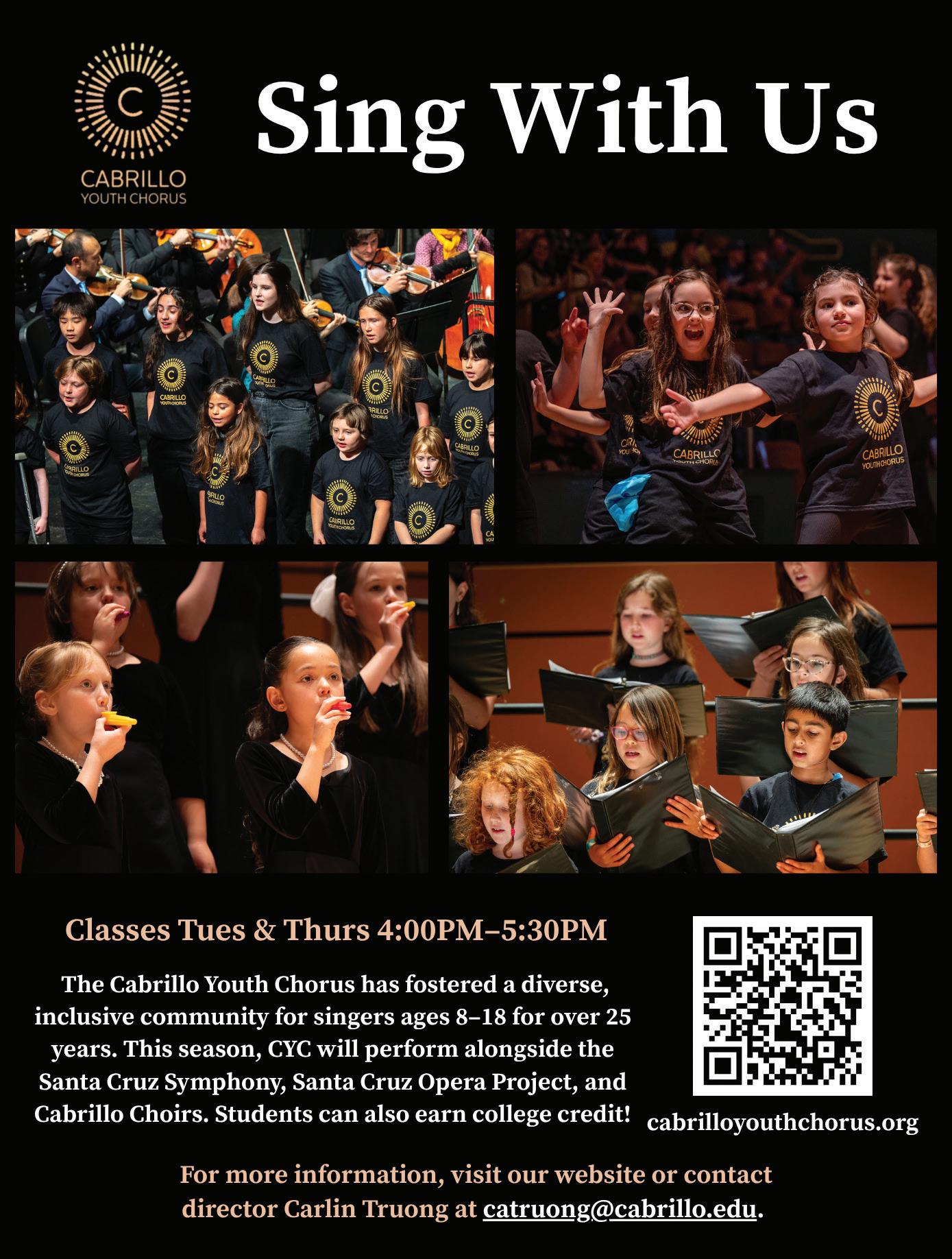
Cabrillo Youth Chorus Cabrilloyouthchorus.org

For over 25 years, the Cabrillo Youth Chorus (CYC) has educated and inspired singers
ages 8–18 throughout Santa Cruz County. Led by Director Carlin Truong, this vocal music program welcomes students of all abilities and experience levels in an inclusive learning environment. This season features collaborations with the Santa Cruz Symphony, Santa Cruz Opera Project, and Cabrillo Choirs. Additionally, as an Ensemblein-Residence at the Cabrillo College Music Department, participating students are eligible to earn college credit.
City of Santa Cruz Parks and Recreation Department
323 Church Street, Santa Cruz 831.420.5270
parksandrec@santacruzca.gov www.santacruzca.gov
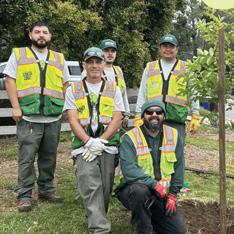

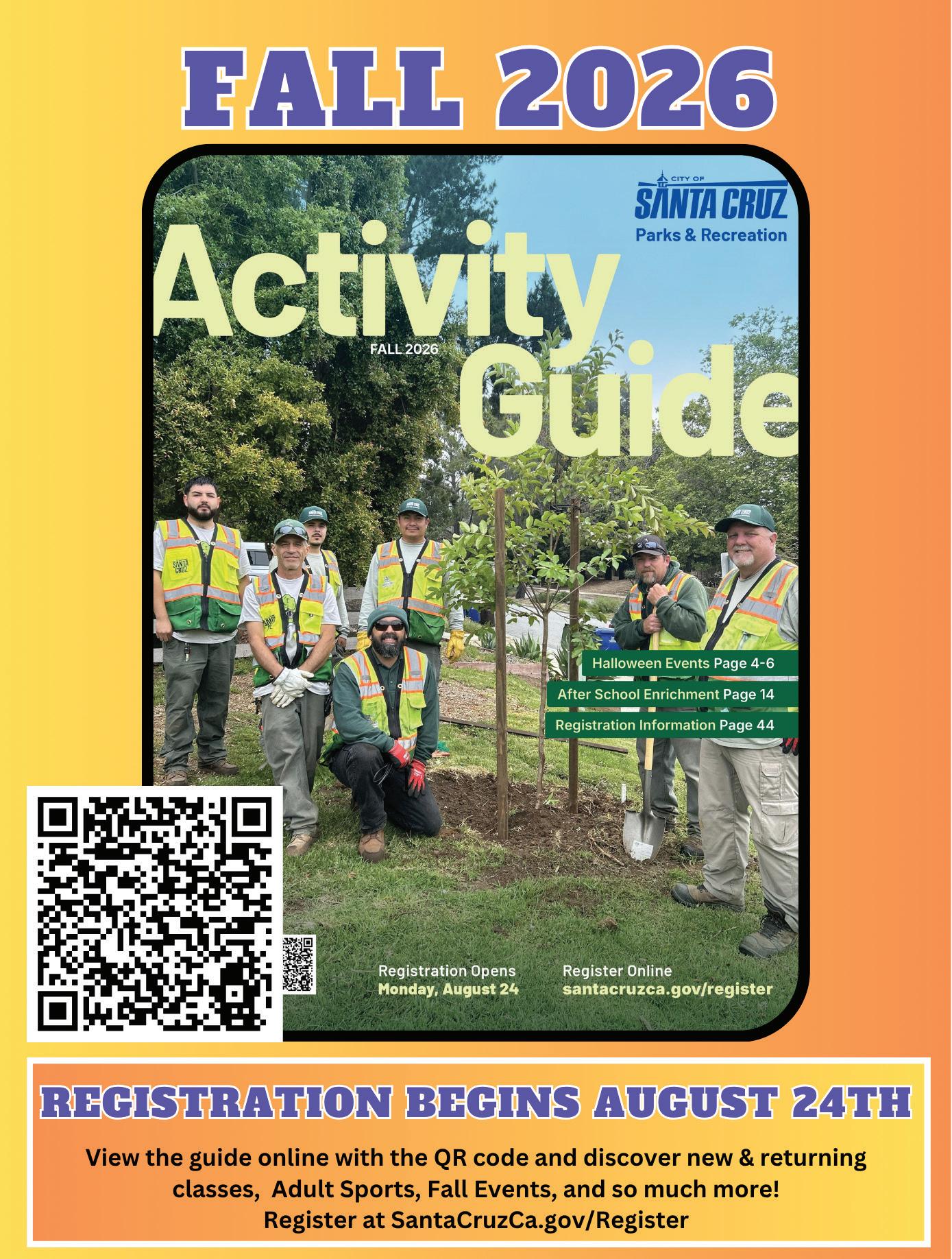
Fall is the perfect season to get out, get active, and connect with your community through Santa Cruz Parks & Recreation! Our new Fall Activity Guide is filled with opportunities for all ages, from youth sports, enrichment classes, fitness programs, and adult leagues to family events and outdoor adventures. Whether you’re looking to learn a new skill, meet new friends, stay active, or create lasting memories, there’s something for everyone. Registration is now open, so don’t wait to secure your spot in your favorite programs. Explore the guide today and discover all the ways Parks & Recreation can help make this your best fall yet!
Drawn2Art Studios
19C Rancho Del Mar Shopping Center, Aptos 831.661.5652
Aptos@Drawn2ArtStudios.com drawn2artclasses.com

Drawn2Art is Celebrating its 40th Anniversary!
Drawn2Art teaches students of all ages to draw and paint realistically. Each student works with their instructors through individualized instruction. This allows students — whether beginners, intermediate, or advanced — to progress at their own level. We offer year-round drawing and painting classes, and Seasonal Camps that teach different (themed) subjects and mediums. Our philosophy “Creativity follows mastery” has helped hone the skills of many aspiring artists. It’s a Testament to the importance of art education. To learn more or schedule a free introductory class, email aptos@ drawn2artstudios.com. We hope to see you soon.
First 5 Santa Cruz County 831.465.2217
First5scc.org

Promotes healthy development for children birth to age 5, providing free Kits for New Parents and support through the Triple P – Positive Parenting Program. Resources at triplep.first5scc.org and facebook.com/triplepscc.
International Academy of Dance 831.466.0458
info@IADance.com
IADance.com |
NutcrackerSantaCruz.com
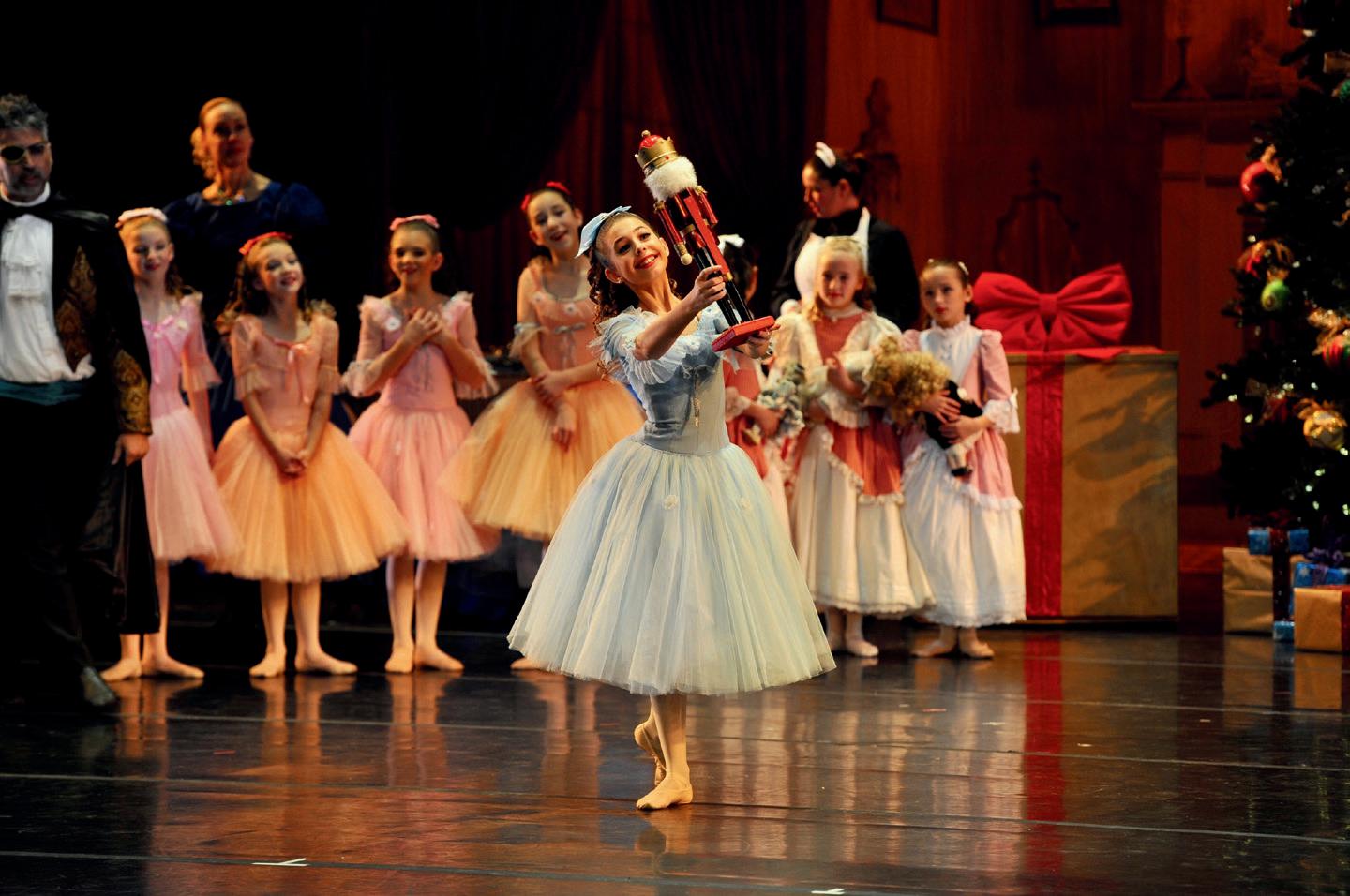
What if dance class is the place your child can’t wait to return to week after week? Back

from vacation, 12-year-old Hazel said: “I couldn’t wait to get back to IAD. You could be in the best place in the world, but it still wouldn’t be perfect because IAD can’t be everywhere.”
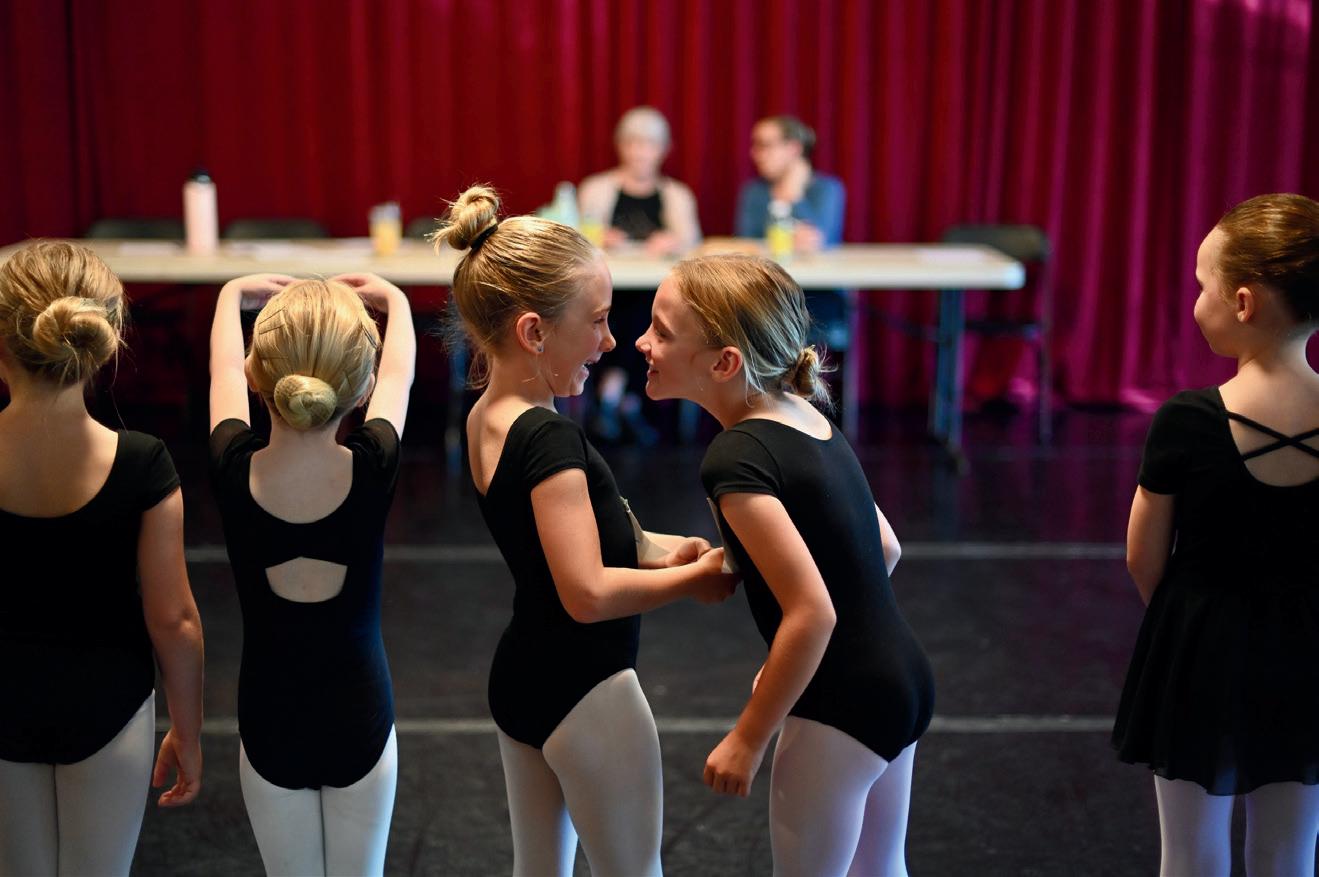
Classical ballet and excellent training are at IAD’s heart, with jazz, lyrical, contemporary, tap, hip-hop, and musical theater for recreational and pre-professional dancers. Dancers take the stage throughout the year. Dance for JOY. Train for LIFE. Classes begin August 3, ages 2.5–adult. Nutcracker auditions: August 22, ages 4–adult.
Jim Booth Swim School
Watsonville 831.722.3500
jimboothswimschool.com

Be a water wonder! Lessons for all ages!
From our Little Otters swim class for parents and their babies to our adult beginner class. The whole family can splash together at Jim Booth Swim School. Little Otters is a gentle introduction to our 94-degree indoor pool that will make you confident that you are guiding your infant to a happy water experience. Our lessons emphasize quality swimming in an exciting class taught by our caring, well-qualified teachers. Developmental swim team and advanced swim lessons will be offered at our outdoor pool located in Watsonville at Toadal Fitness. The whole family can swim at Jim Booth Swim School!
Junebug’s Gym
3910 Portola Drive, Suite 2, Santa Cruz 831.464.BUGS (2847)
JuneBugsGym.com
June Bug’s Gym is a place where your child can experience a fun-filled adventure in movement. We have a caring, respectful staff that encourages every child to grow at their own pace while supporting social, emotional, and cognitive development. Our goal is to promote confidence and self-esteem in our students, open up their imaginations, and help them experience the joy of movement in an ever-changing environment designed to test their skills.
Mathnasium of Aptos 24 Rancho del Mar, Aptos
831.621.5978
mathnasium.com/Aptos

Catch up…Keep up… Get ahead! We Make Math Make Sense.
Mathnasium’s summer program is designed to help students strengthen their math skills in a fun, engaging environment during the summer break. It focuses on personalized learning plans tailored to each student’s needs, whether they are catching up, keeping skills sharp, or getting ahead. Students work with trained instructors who use Mathnasium’s proven methods to build understanding, confidence, and problem-solving abilities. Sessions include interactive activities, games, and rewards to keep students motivated. The program aims to prevent summer learning loss while fostering a positive attitude toward math, helping students return to school better prepared and more confident.
MusicalMe, Inc. offering Music Together™
All over Santa Clara & Santa Cruz Counties 831.332.9002 Musicalme.com

Give Your Child the Gift of Music. Join Music Together, the gold standard in early childhood music enrichment (Birth to 5 years). Our playful, award-winning classes nurture brain development, language, and social skills while sparking your child’s inner music-maker. Discover why music profoundly shapes young minds and how to make it part of daily life. Sing, dance, and play together, creating joyful memories that last a lifetime.
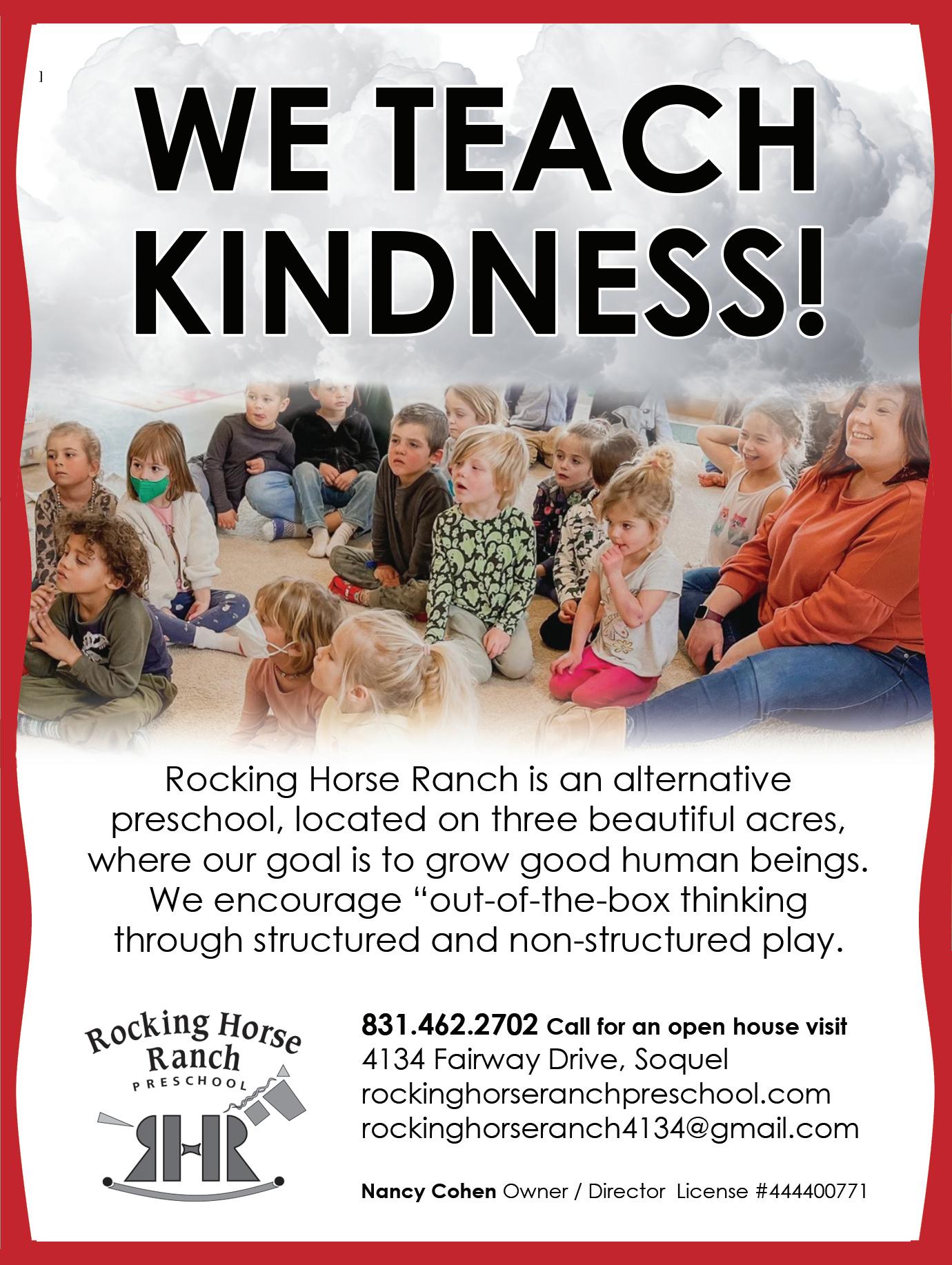
Rocking Horse Ranch Preschool Lic #444400117
4134 Fairway Dr, Soquel 831.462.2702 rockinghorseranchpreschool.com rockinghorseranch4134@gmail.com

We offer morning, afternoon, and full-day sessions on three beautiful acres with swings, slides, trees to climb, a ninja course, zipline, bike track, giant sandbox, farm animals, and an organic garden and orchard.
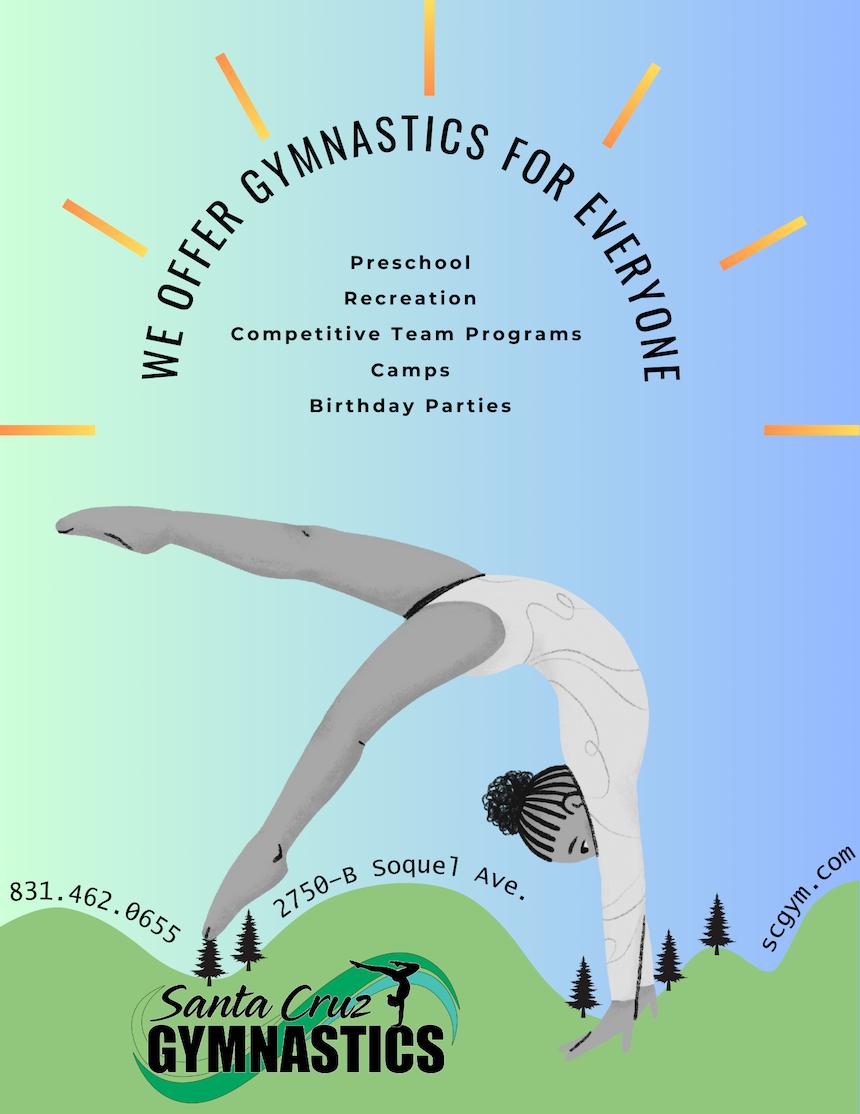
Santa Cruz Gymnastics Center, Inc. 2750 B Soquel Ave, Santa Cruz 831.462.0655 scgym.com
At Santa Cruz Gymnastics Center our mission is to
build a community of people that all support each other’s growth, learning, safety and development through our love of gymnastics and fun. From preschool to competitive programs, kids will learn skills such as rolls, handstands, and cartwheels. We also focus on age-appropriate school readiness skills such as waiting in line, sharing, taking turns, and color/number/shape recognition. We know that every child can benefit from gymnastics, physically, emotionally and cognitively so we offer something for everyone. Check out our website for more information and class registration!
Santa Cruz Shakespeare 501 Upper Park Road, Santa Cruz 831.460.6399
education@santacruzshakespeare.org santacruzshakespeare.org
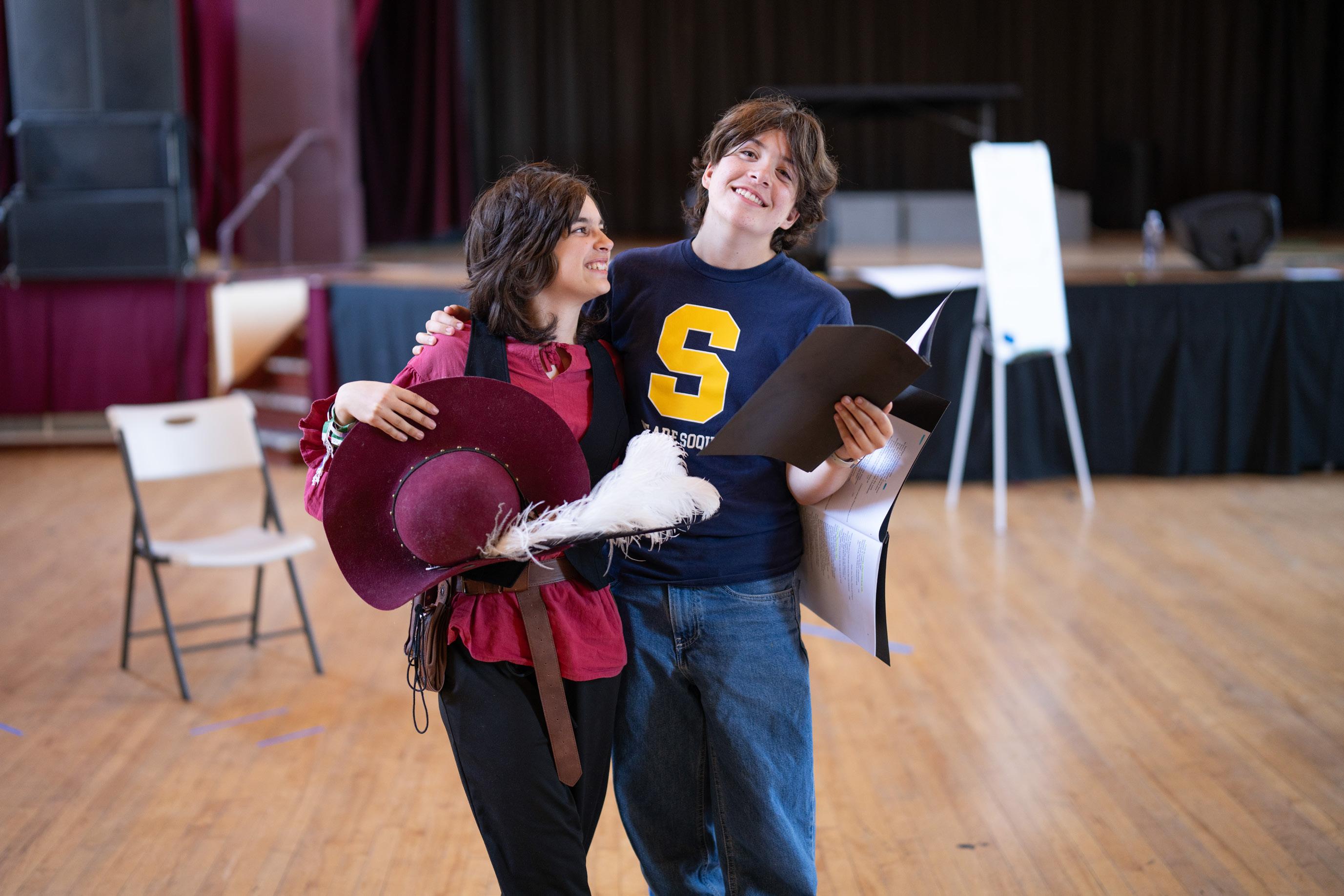
Discover creativity, confidence, and community through Santa Cruz Shakespeare’s educational programs. Whether your student is exploring theatre for the first time or deepening their performance skills, our fall offerings provide engaging, hands-on experiences led by professional teaching artists. This fall we are offering five classes and camps including: Theatre Variety Pack Camp; Rhyme & Reason: Shakespeare and Hip Hop; Fall Theatre Camp: Hamlet; Thanksgiving Break: Shakes Scenes; and Winter Stage Camp: Carol Magic. Enroll today at www. santacruzshakespeare.org/classes
BY JOHN KOENIG
James Norbury has a gift for wrapping big ideas inside simple animal stories, and The Cat Who Taught Zen may be one of his most appealing. Published in 2023, the illustrated woodland tale has remained popular with readers of all ages. Like Big Panda & Tiny Dragon, which we reviewed not long ago, it is sweet, endearing and thoughtful, with one level of pleasure for children and another for the grown-ups reading beside them.
The story begins with an old cat who believes he is already quite wise. Then he hears of an ancient pine tree, hidden deep within a maple forest, beneath which infinite wisdom may be found. That is enough to send him out of the city and into the wild.
His journey becomes a string of encounters with animals who are carrying their own troubles. A hare, a magpie, a confused wolf cub, a restless monkey, a weary tortoise and an angry tiger each give the cat an opportunity to offer advice. Just as often, they have something to teach him.
The monkey cannot quiet her racing thoughts. The tortoise has grown so tired of life that he thinks constantly about death. The tiger is trapped in anger. A

covetous crow wants what others have, and the wolf cub is struggling to understand who he is. These are large subjects, but Norbury handles them in small, simple conversations. Young readers can easily follow the story, while adults may find themselves lingering over certain pages.
The cat’s wisdom comes mostly through short stories and thoughtful questions. He does not lecture. He listens, considers and sometimes admits that he does not have a complete answer. This gives the book a calm,
conversational rhythm. The Zen lessons concern fear, desire, patience, identity, anger and the habit of searching everywhere for something that may already be close at hand.
The most important disruption arrives in the form of a lively kitten. The kitten is curious, playful and not especially impressed by the cat’s solemn quest. She pulls him into the present moment simply by being fully alive in it. By the time the cat reaches the ancient pine, his understanding of the journey has changed.
A cat is an apt messenger for Zen. Cats can sit still for an hour, then spring into action like a kung fu master. They are famously independent, observant and perfectly content to occupy a patch of sunlight. They also have a way of making human urgency look faintly ridiculous.
Zen itself should feel especially at home in Santa Cruz, where meditation centers, yoga studios, forest trails and people mindfully seeking a better way to live are all part of the local landscape. Norbury’s version is not religious instruction. It is practical wisdom offered through a forest fable.
Norbury’s interest in Zen and spirituality grew from years of personal reading and from his volunteer work with the Samaritans, where he encountered people in pain and crisis.














































His art developed in much the same self-directed way. A lifelong drawer and largely self-taught illustrator, he works in pen, ink, pencil and watercolor, often allowing small accidents of line and paint to remain part of the picture.
The watercolor and ink illustrations are as important as the words. Nearly every page carries artwork, ranging from spare ink drawings to full watercolor scenes in subdued woodland colors.
Norbury gives each creature a distinct personality without making them overly cute. The animals move through misty woods, moonlit clearings and autumn leaves, while open skies and broad areas of white space create the book’s reflective mood. Pages sometimes hold only a sentence or two, allowing the pictures and pauses to do their work.
The Cat Who Taught Zen would make a lovely read-aloud book for older children, especially those beginning to wrestle with worry, anger or questions about who they are. It also works as a gift for an adult who could use a little peace, perspective and purring philosophy.
Publisher’s information: The Cat Who Taught Zen, written and illustrated by James Norbury. William Morrow, 2023. Hardcover, 176 pages. ISBN 978-0-06334761-8. Suggested retail price: $25.



























































































This fall, MusicalMe will celebrate a remarkable milestone: 30 years of offering the internationally acclaimed Music Together® program to families throughout Santa Cruz and Santa Clara counties.
Since first opening classes in September 1996, MusicalMe has helped more than 65,000 children, parents, grandparents, and caregivers discover the joy of making music together. What began as a small offering has grown into one of the region’s longest-running and most beloved early childhood music programs, serving families in communities throughout both counties for three decades.
“Our mission has always been about much more than music,” said Lizz Weihrauch, President and CEO of MusicalMe.
“Music Together helps families connect, communicate, and create joyful memories that last a lifetime. We’re incredibly grateful to the thousands of families who have trusted us to be part of their children’s earliest learning experiences.”
Research-based and internationally recognized, Music Together is designed for children from birth through age five and the adults who love them. Through singing, movement, instrument play, and family participation, children develop foundational music skills while strengthening social, emotional,
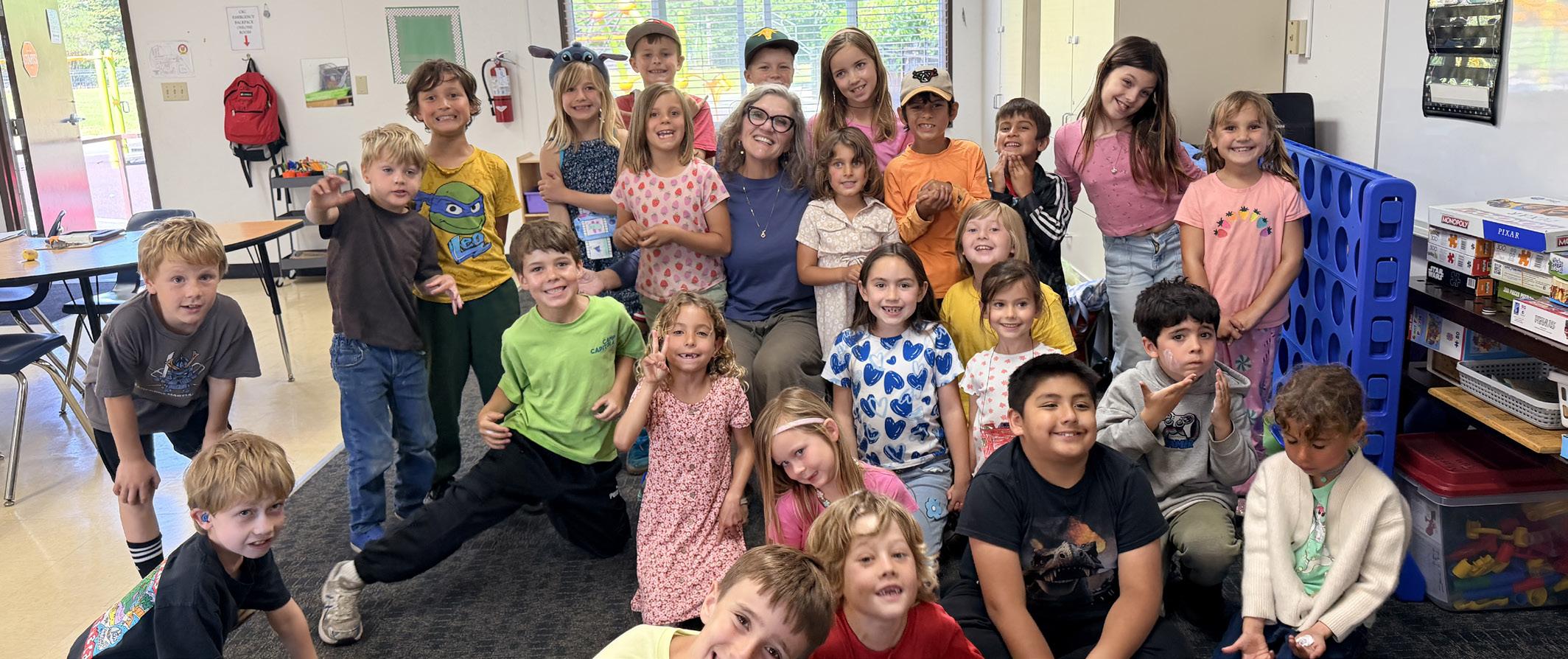
cognitive, and language development.
Over the past 30 years, MusicalMe has become a treasured part of family life throughout the region. Many former students are now adults, with some returning to classes with children of their own. Others have gone on to notable achievements in music, the arts, education, technology, and community leadership—testament to the lasting impact of early childhood enrichment
experiences.
As part of its 30th anniversary celebration, MusicalMe will be sharing stories and memories from families across the decades, highlighting the many ways Music Together has helped create community connections and lifelong friendships.
The anniversary celebration also coincides with registration for MusicalMe’s Fall 2026 Music Together
sessions. Fall classes, beginning in September, will officially launch MusicalMe’s 30th Anniversary Season and include special stories and memories recognizing the thousands of families who have been part of the MusicalMe community since 1996.
Families interested in learning more about Music Together classes or sharing their MusicalMe memories can visit www.MusicalMe.com.


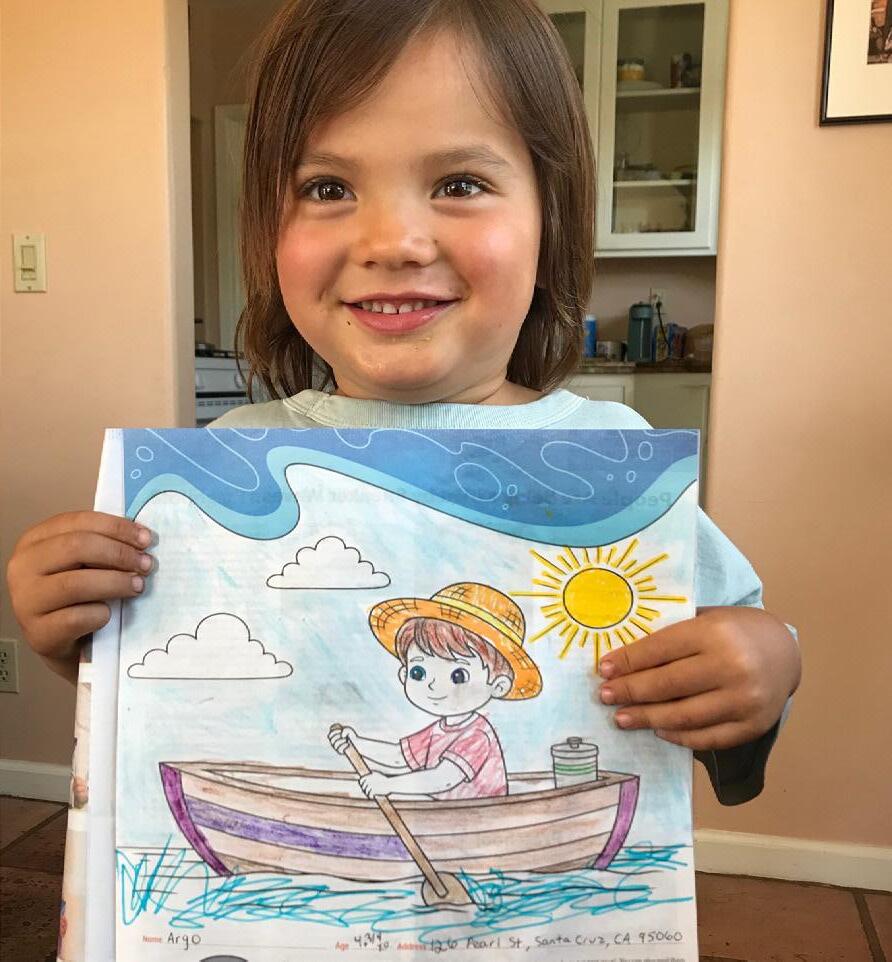
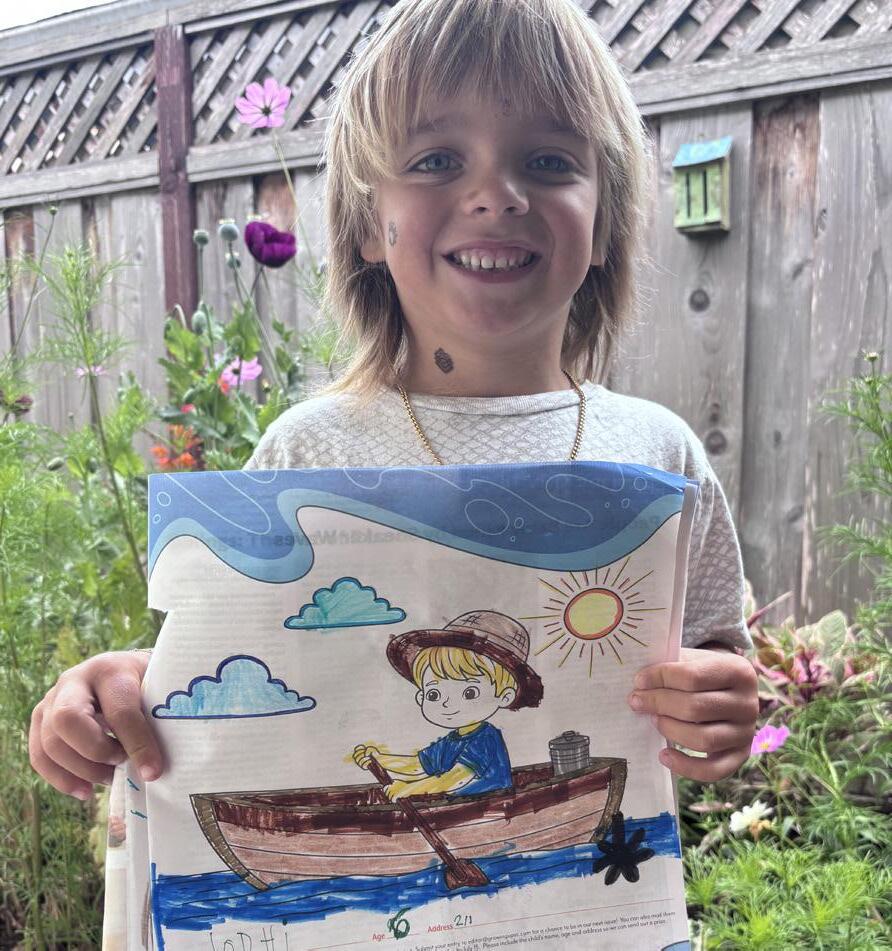
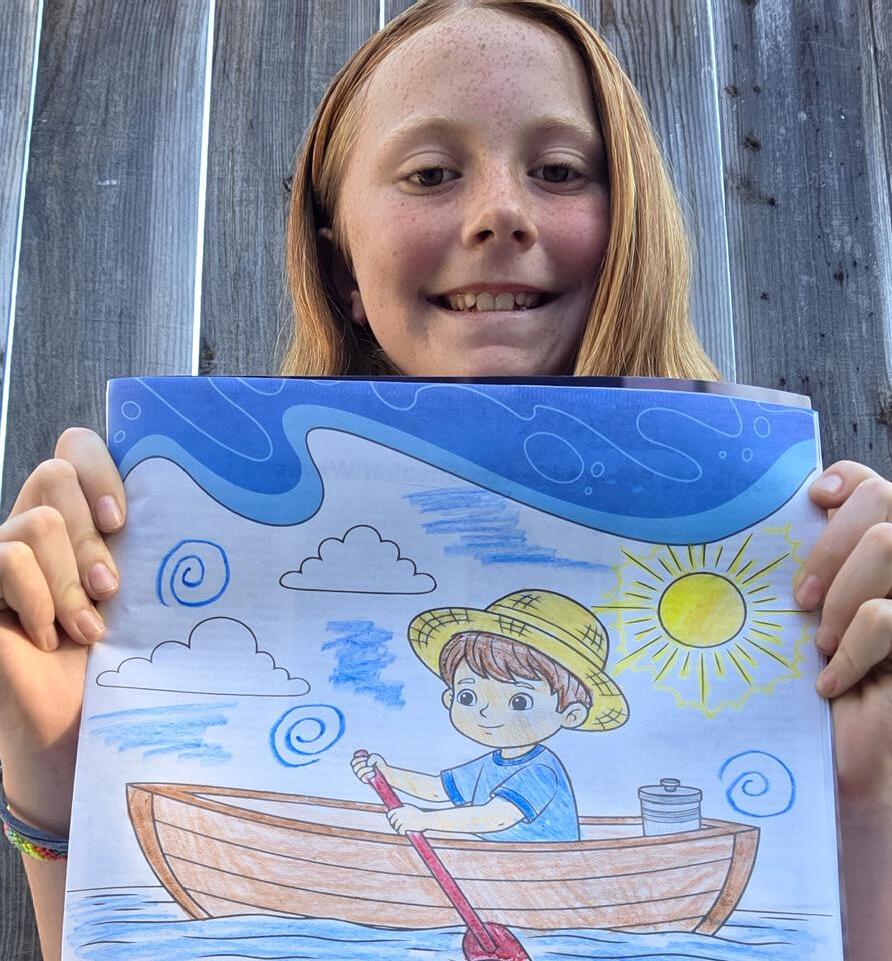
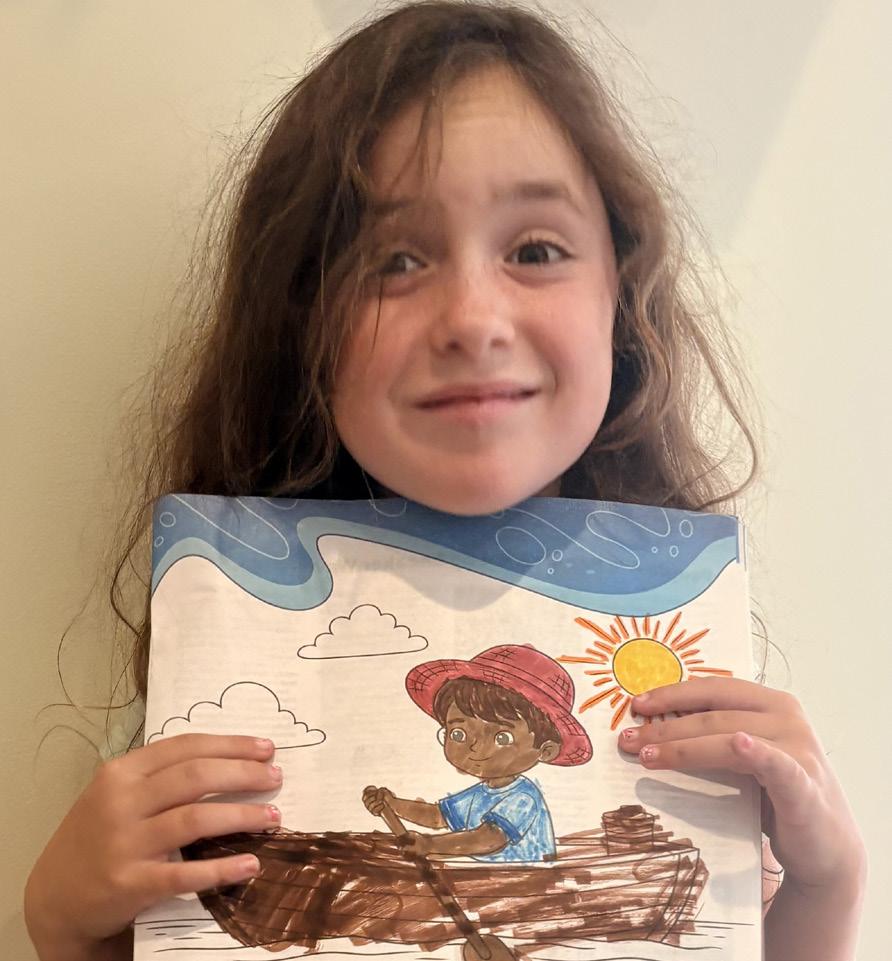
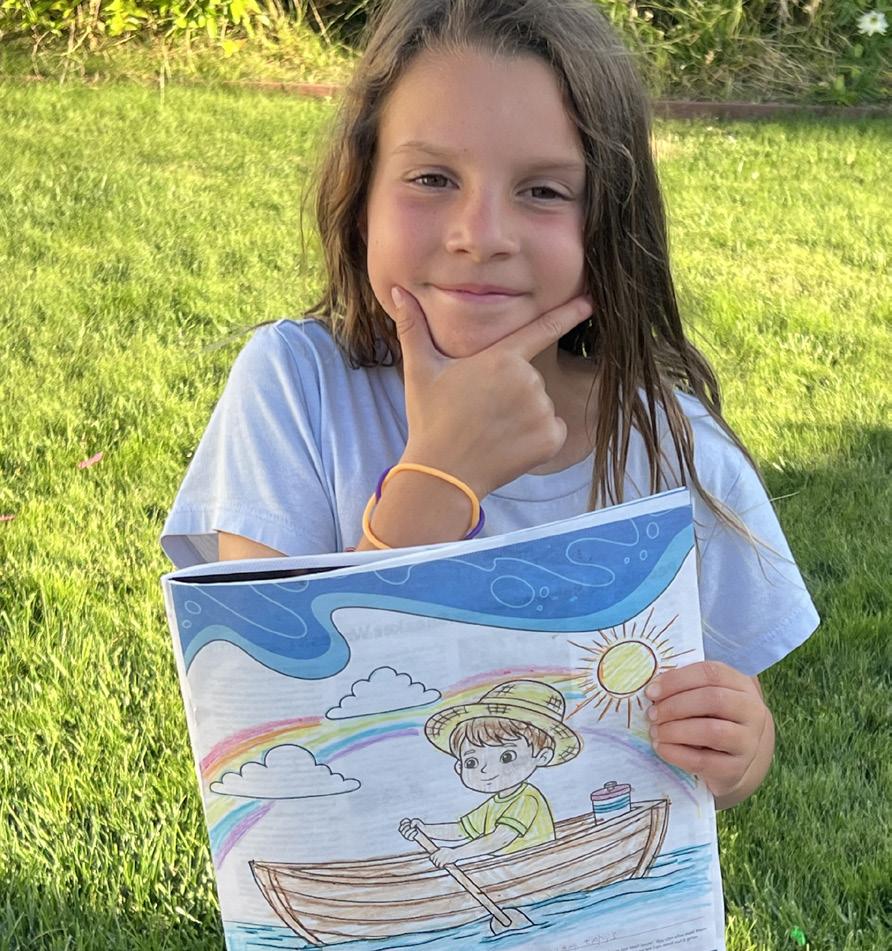
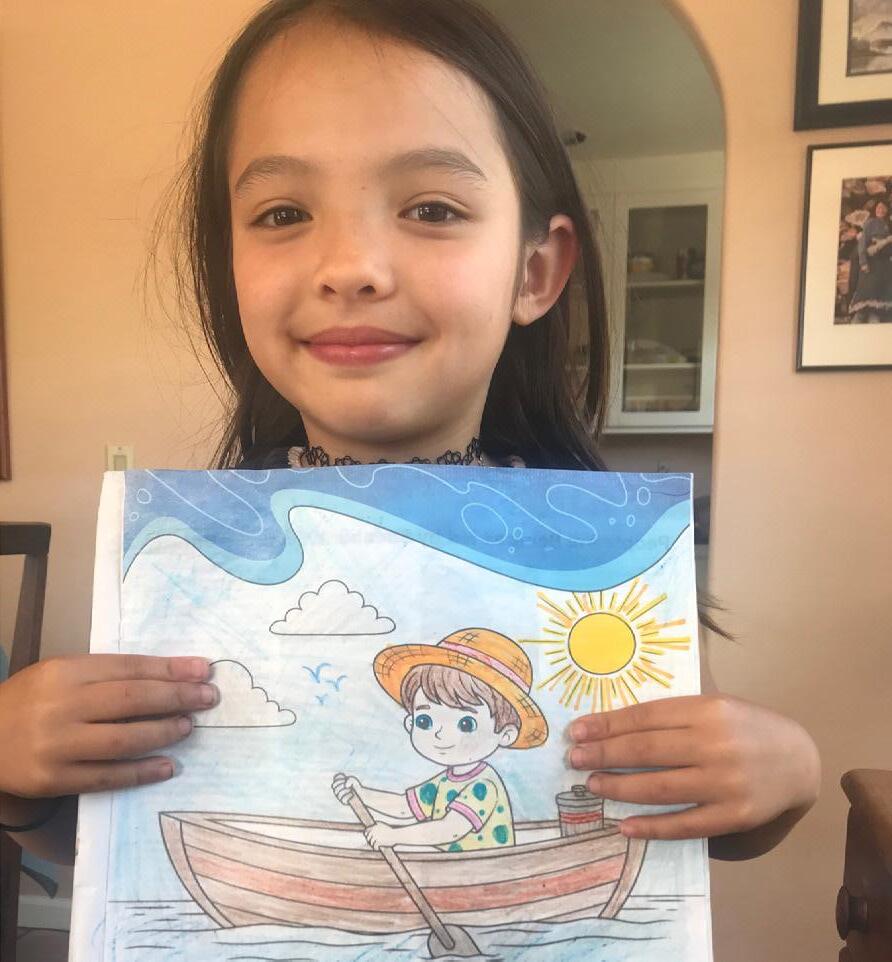
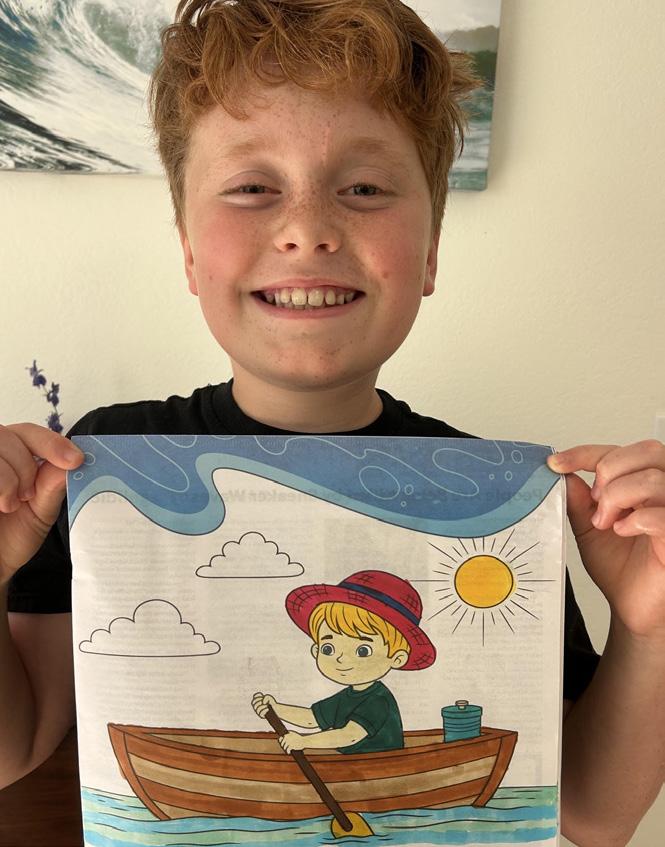
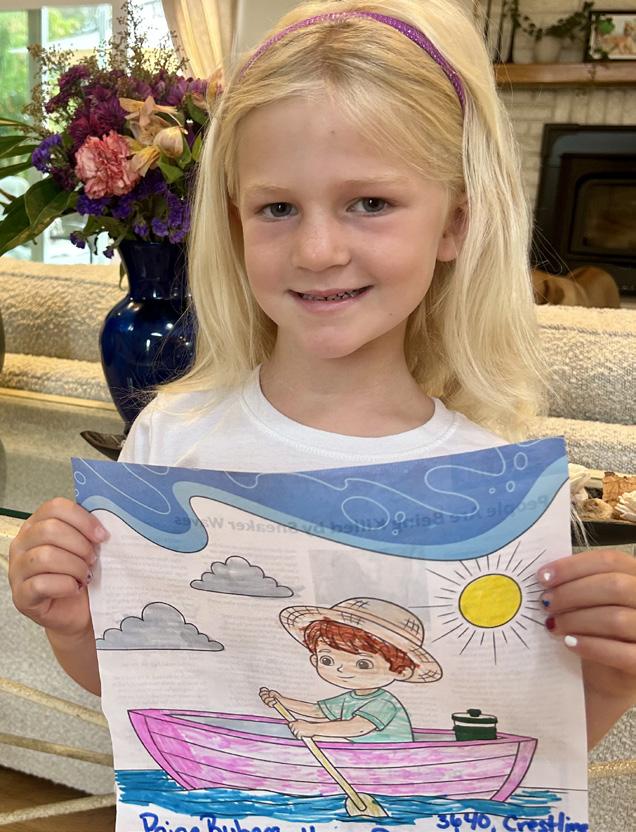
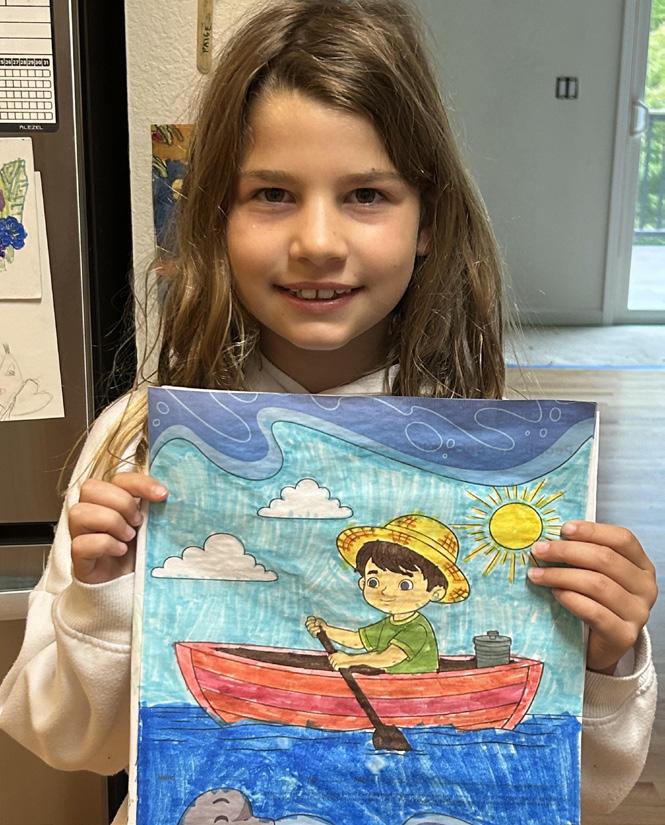


We want to see your best coloring. Submit your entry to editor@growingupsc.com for a chance to be in our next issue! You can also mail them to Box 3505, Santa Cruz, 95063 Submissions due by August 15. Please include the child’s name, age and address so we can send out a prize.

Hosted Board Game Night 5-10pm Free. Choose from more than 30 board games with guided teaching, featured games and prizes. Hosted board games run 5-8pm, followed by trivia from 8-10pm. The Cruz Room, Santa Cruz. gamenightcollective.com
Free Beach BBQ Parties and Concerts 5:30-8pm Free. Dance to live music by the beach while enjoying barbecue food and drinks available for purchase. August performers are The Houserockers Aug. 6, The Joint Chiefs Aug. 13, La Familia Aug. 20 and Alex Lucero Band Aug. 27. Santa Cruz Harbor Beach, Santa Cruz. crowsnestsantacruz.com
Arboretum Tour 11am-12:30pm The first Saturday of each month, the Arboretum offers a docent or staff-led tour of the Arboretum. Sometimes you will see New Zealand, South Africa, California, or Australia. Sometimes you might see combinations of several gardens, the developing World Conifer Collection, or Rare Fruit Garden. arboretum.ucsc.edu
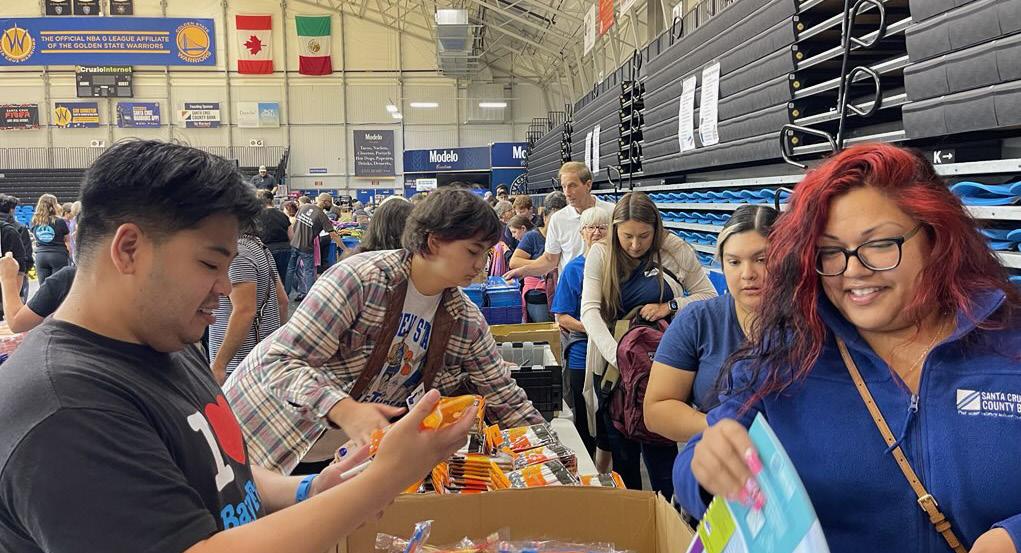
Stuff the Bus 10am-1pm Free. Help United Way and the Santa Cruz County Office of Education fill more than 2,500 backpacks with new school supplies for local K-12 students experiencing homelessness or extreme hardship. Volunteer, donate supplies or sponsor the campaign. Kaiser Permanente Arena, Santa Cruz. unitedwaysc.org/stb
Sister Act, The Musical Thu-Sat 7:30pm, Sun 2pm $25-$65. Cabrillo Stage brings the feel-good musical comedy to life with disco spirit, big voices and plenty of heart. Appropriate for ages 8 and up. Cabrillo College Crocker Theater, Aptos. cabrillostage.com/sisteract
La Selva Beach Summer Fair 10am4pm Free. Shop 50 arts and crafts booths, browse a huge used-book sale and enjoy local beer, live music, food trucks, a bake sale and prize raffle. La Selva Beach Clubhouse, La Selva Beach. lsbia.com
Brewgrass Festival 1-8pm $25-$85. Roaring Camp’s annual festival features live bluegrass music, local craft beer and cider, food vendors, free children’s activities and an optional tasting train from Santa Cruz. Roaring Camp Railroads, Felton. roaringcamp.com
Watsonville Strawberry Festival 11am8pm Sat, 11am-7pm Sun Free. Celebrate strawberries with live entertainment, carnival rides, children’s activities, artisans, food vendors, berry treats and the popular pie-eating and best-dressed contests. Historic Downtown Watsonville. cityofwatsonville.org
Scotts Valley 60th Celebration 10:30am-5pm Free. Celebrate the city’s 60th anniversary with storytelling, a community birthday song and dessert, family activities, booths, food trucks, live entertainment and nostalgic 1960s fun. Skypark, Scotts Valley. scottsvalley.gov
Castro Adobe Anza Anniversary Celebration 10:30am-3pm Free. Mark the Anza Expedition’s 250th anniversary with live music, children’s crafts, historical speakers, knowledgeable docents and tours of the restored 176-year-old adobe hacienda. Bring a picnic. Castro Adobe State Historic Park, Watsonville. thatsmypark.org
Free Family Orchestral Concert 1-3pm Free. Discover the orchestra through The Conductor’s Spellbook, a playful interactive musical adventure, a performance of Bravado and a hands-on Tour of the Orchestra. El Sistema honor students open the concert. Santa Cruz Civic Auditorium, Santa Cruz. cabrillomusic.org
GUiSC will attempt to update the calendar listings as needed; however, it is the responsibility of the organization listed to provide updated information. GUiSC assumes no responsibility for errors or omissions. Readers are encouraged to check the accuracy of the information provided. Events that are free or cost less than $10 can be submitted for inclusion in the calendar. GUiSC does not guarantee that a submitted event will automatically be included. Preference is given for events of interest to children and/or parents. Submit entries at growingupsc.com/events/ community/add. Calendar entries must be received by the 15th of the month prior to the month of the event. To find out more about promoting your event further or including a paid event, email advertising@growingupsc.com.
TUE 4
InterAct Open Mic with Sam Regal 7-9pm Free. Share poetry or spoken-word work at this welcoming community open mic featuring poet, artist and special-collections librarian Sam Regal. Reader sign-ups begin at 6:30pm and seating is limited. Satori Arts, Santa Cruz. satoriarts.org
WED 5, 12 & 19
Summer Twilight Concerts 6-9pm Free. Bring chairs, jackets, a picnic supper and the family for live music by the beach. August performers are The Joint Chiefs Band with R&B, soul and funk Aug. 5, The Peelers with Top 40 dance music Aug. 12 and The DigBeats with oldies Aug. 19. Esplanade bandstand, Capitola. cityofcapitola. gov/985/Twilight-Concert-Series-2026
Seabright Free Outdoor Movie Nights 8-10pm Free. Bring lawn chairs and blankets for family-friendly Thursday movies under the stars. August screenings are Hoppers Aug. 6 and Goat Aug. 13. Doors open at 8pm. Murray St. and Seabright Ave., Santa Cruz. exploreseabrightharbor.com
First Fridays Santa Cruz 5-8pm On the first Friday evening of every month, Santa Cruz galleries, shops, and cultural venues open their doors to showcase the works of Santa Cruz County artists. With a block party-like vibe, the multi-venue event provides an opportunity to discover local creative talent in a fun and festive setting. firstfridaysantacruz.com/event
Do you have the cutest baby in Santa Cruz County? If so, submit your picture online at growingupsc.com by Aug. 15. Then vote for your favorites by Sept. 15. Results will be published in the October issue.


Santa Cruz Shakespeare Family Days Santa Cruz Shakespeare is hosting Family Days with performances of Much Ado About Nothing on Aug. 5. Kids age 12 and under are FREE with a paid adult ticket. Gates open at 10am show at noon. Prior to the performance, families can enjoy on-site activities and lunch at the Audrey Stanley Grove at DeLaveaga Park santacruzshakespeare.org/plan/ familydays
First Friday Boulder Creek 5-8pm Enjoy a free monthly mountain street fair in the name of creation and community. There will be local art, music and food lining the sidewalks of downtown Boulder Creek. firstfridaybouldercreek.org
Free Movies on the Beach 9-10:45pm Free. Bring your family, blankets or lowback chairs for The Goonies under the stars. Seating is first-come, first-served and the movie includes a 15-minute intermission. Beach in front of the Colonnade, Santa Cruz Beach Boardwalk, Santa Cruz. beachboardwalk.com
Summer Carnival 5-8pm Free. Enjoy carnival-style games and prizes throughout downtown Boulder Creek, along with a children’s zone, photo booth, local vendors


and more family fun. Downtown Boulder Creek. bcba.net
Seaweed Summer 5-8pm Free. Explore the beauty and ecology of local seaweed through naturalist presentations, interactive tables, art activities, food, drinks and community organizations sharing oceaninspired work. Museum admission is free all day. Santa Cruz Museum of Natural History, Santa Cruz. santacruzmuseum.org
Second Saturday on the Farm 11am3pm The Agricultural History Project’s 2nd Saturday events are like taking a step back in time. Grab your cowboy hat and put on your boots and come and enjoy a fun-filled afternoon on the farm. Bring your lunch and enjoy a picnic. aghistoryproject.org/2ndsaturday-on-the-farm
Swing Dancing 2-5:30pm You will find music, friends, and food while you improve your dancing digs. All levels, and various styles plus a social dance with great ambiance are welcome! Go Join the fun on the Second Saturday evening of each month at the Santa Cruz Wharf stage. cityofsantacruz.com
Youth Festival Performance 3:305:30pm Free. Hear original chamber works programmed, produced, performed and presented by the Cabrillo Festival’s adventurous Youth Ensemble of musicians ages 16-24. Santa Cruz Civic Auditorium, Santa Cruz. cabrillomusic.org
Antiques Faire 8am-5pm The Santa Cruz Antique Faire is on the 2nd Sunday of every month. Vendors offer an eclectic blend of antiques and unique items, vintage clothing, collectibles and more. Visit the Antique Faire on Lincoln Street between Pacific and Cedar.
Artisan Faire noon-4pm Head to Abbott Square every second Sunday of the month for free live music while you browse handmade jewelry, soap, clothing, and much more! There is always something at these events that has your name on it! abbottsquaremarket.com/events
Tri Santa Cruz 8am-5pm $102.20$400.50. Swim, bike and run along the coast in sprint or Olympic-distance races, relay and aquabike categories, or a noncompetitive Family and Friends wave for beginners. Cowell Beach, Santa Cruz. trisantacruz.com
Music Festival Grand Finale 7-9pm $26-$96. The Cabrillo Festival closes with orchestral works exploring possibility, resilience, equality and belonging, followed by a special reflection featuring former U.S. Poet Laureate Rita Dove and Barber’s Adagio for Strings. Santa Cruz Civic Auditorium, Santa Cruz. cabrillomusic.org
Board Game Playtesting
Try new board and card games, test your own prototype, meet local designers and get feedback and game-industry advice. New designers and curious players are welcome. Peoples Coffee, Santa Cruz. meetup.com/ playgoldengate
Parks and Rex Pool Party
Celebrate summer with swimming, games, music, food, ice cream, beer and wine. Families can bring their dogs, but canine swim times must be reserved in advance. Simpkins Family Swim Center, Santa Cruz. parks.santacruz countyca.gov
Scotts Valley Art, Wine and Beer Festival 10am-6pm Sat, w10am-5pm Sun Free. Browse work from more than 100 artists and enjoy live music, food trucks, a children’s zone, wine and beer. Saturday includes a car show, while Sun day features Dog Day. Skypark, Scotts Valley. svartfestival.com
SUN 16
Downtown Makers Market 10am-5pm
Visit the Downtown Santa Cruz Makers Market featuring 40+ local makers & artists every third Sunday of the month on the 1100 block of Pacific Ave. between Cathcart and Lincoln streets. scmmakersmarket.com
MON 17
Family Vacation Mystery Reading
7-8pm Free. Bestselling local author Nina Simon reads and signs My Sister Is Going to Kill Me, a family-centered mystery about two sisters reconnecting during a vacation— and searching for a killer. Bookshop Santa Cruz, Santa Cruz. bookshopsantacruz.com
18
InterAct Open Mic with Kate O’Neill 7-9pm Free. Share poetry or spoken-word work at this community open mic featuring poet and educator Kate O’Neill, author of Harp in Hand and Flap & Dust. Reader sign-ups begin at 6:30pm. Satori Arts, Santa Cruz. satoriarts.org
WED 19
Steve Hawk at Bookshop Santa Cruz 7-8pm Free. Former Surfer magazine editor Steve Hawk discusses Nearshore, his new work of literary suspense and coastal noir, in conversation with Pulitzer Prize-winning journalist Charles Duhigg. Bookshop Santa Cruz, Santa Cruz. bookshopsantacruz.com
SAT 22
Boulder Creek Fire Department
BBQ Dinner & Dance 5:30-11pm $30, free ages 4 and under. Firefighters serve a tri-tip and chicken dinner, followed by dancing and live music from Kentucky Mule, Barnstormers and Bootleg Country Band. Children can enjoy a bounce house and face painting. Boulder Creek Fire Department, Boulder Creek. bcfd.com
first birthday.
BY TOVAH PETRA KOLODINSKI
As parents, it’s only natural to want to know the best way to help our children. We search for the best school, the best therapy, the best parenting strategies, and the best interventions. We read books, ask for recommendations, and hope someone can point us toward the answer that will make the biggest difference.
Over time, I’ve come to believe there is a different place to begin.
Before we ask what works, we first need to ask, “Who is this child?”
That simple question has shaped the way I work with children and families. It has also reminded me that no two children or families are alike. Every child brings their own personality, strengths, interests, challenges, and way of seeing the world. Every family brings their own values, routines, relationships, hopes, and story. That is why meaningful support can never be one size fits all.
This is especially true for children with Autism and ADD/ADHD. A diagnosis can provide valuable information, but it can never tell us everything about a child. Two children with Autism may share the same diagnosis while having completely different personalities, sensory needs, communication styles, interests, and ways of learning. The same is true for children with ADD/ ADHD. While a diagnosis may help guide us, it should never replace getting to know the individual child in front of us.
In my experience, we don’t truly come to know a child through an assessment alone. We come to know children through relationship. Through shared experiences, play, curiosity, observation, and trust, children begin to show us who they are. Little by little, we start to notice what brings them joy, what feels overwhelming, how they solve problems, how they communicate, what captures their attention, and what helps them feel safe enough to engage with the world around them.
Play, in particular, offers a unique
window into a child’s world. It allows us to slow down and see beyond behaviors or expectations. We begin to notice their creativity, their interests, their sense of humor, and the ways they naturally engage with others. We also begin to recognize moments of frustration, hesitation, or sensory overwhelm with greater understanding. These shared experiences help us see the child as a whole person rather than simply a list of goals to accomplish.
Relationships are built over time. They cannot be rushed or created from a checklist. They grow through consistency, patience, and simply showing up. As trust develops, children often become more willing to explore, communicate, try new things, and move through challenges because they know they are with someone who is taking the time to understand them.
Parents are an essential part of that process.
No one has accumulated more shared experiences with a child than the people raising them. Parents notice the little things that often go unseen. They know what helps their child settle after a difficult day, what routines bring comfort, what sparks excitement, and what situations create stress. They know the dreams they have for their child, the victories worth celebrating, and the challenges that may not be visible to anyone else.
This is one of the reasons I believe so strongly in a Whole Family, Whole Child approach. Supporting a child isn’t simply about working with the child. It is about listening to the family, learning from their experiences, and partnering together. When parents and professionals work alongside one another with mutual respect, support becomes far more meaningful because it is built around the child and the family’s unique needs rather than a predetermined plan.
An individualized approach is not about lowering expectations. It is about recognizing that children do not all learn, regulate, communicate, or grow

in the same way. Success may look different from one child to the next, and that’s okay. The goal is not for every child to follow the exact same path. The goal is to help each child continue moving forward in a way that honors who they are.
As a child, I had an Individualized Education Program, or IEP. I remember sitting at a table with adults discussing my education and the supports they believed I needed. I don’t remember most of the specific goals that were written down, but I do remember how it felt to be part of those conversations— and what mattered most to my family.
At one of those meetings, my dad said something that has stayed with me ever since.
“All I care about is my daughter’s confidence. If that’s good, you won’t hear from me.”
Looking back, I realize he was naming something essential. Before children can fully grow into their potential, they need to feel known, understood, and believed in.
Confidence doesn’t come from finding the perfect program or checking off the right goals. It grows through relationships—through trust, encouragement, and the experience of having someone truly see you.
As another school year begins, I hope we can give ourselves permission
to slow down. Instead of asking only what strategy comes next, perhaps we can spend more time noticing the child in front of us. We can become curious about what they enjoy, what they find difficult, how they experience the world, and what helps them feel connected.
Children tell us who they are over time. Our role is to slow down enough to notice.
Every child deserves to be known before they are directed, understood before they are evaluated, and supported in a way that reflects their individuality. When we begin with relationships, shared experiences, and a genuine desire to understand both the child and the family, we create support that is thoughtful, meaningful, and lasting.
Because every child is unique.
Every family is unique.
And every journey deserves to be honored.
Tovah Petra, MA, is a Trauma Informed Somatic Practitioner, Founder of The Spectrum School, and creator of the Whole Family, Whole Child approach. Her work focuses on supporting children with Autism and strengthening the families and communities that help them grow, rooted in connection. Learn more at www.thespectrumschool.org and www.tovahpetra.com
BY SHIRA COLEMAN HAGAR
If you have ever tried your hand at playing pool you know that everything, simply everything is about the angle. Head to head struggles between 2 people gives us equal and opposite forces and stalemates full of frustration. If you have read The Zax by Dr. Seuss you catch my meaning.
Finding yourself in a head-to-head power struggle with your child can be the most frustrating thing about parenting. It’s not fun (or effective long term) to pull the “because I said so” card, even when we know we’re right about what needs to happen.
So if you are looking for a better way… change the angle.
One of my favorite angle changing tools is gamification. Children are built to play. It is the natural state of their learning process. Experimentation, watching others at play, and imaginative play are the ways they begin to understand what works and what doesn’t work.
So let’s use it:
I need to read this email but baby wants my attention. I hold a piece of cereal in my closed hand and they open each finger to get to it. Repeat as needed.
My son is 2 and practicing saying no, for no other reason than that he has discovered that he can. When his head starts shaking I shake my head too saying “silly baby” and we are wiggling around together laughing. He forgets his aversion to getting into the highchair for dinner and we have a lovely (if short) meal together.
Son number 2 hates to get into the car. We race, play leap frog, carry a heavy thing together, compete to see who has the silliest walk, or try to find three sticks and two leaves while walking straight to the car.
My 7 year old is having trouble sitting and waiting for our food at the restaurant. We try to carefully stack the
silverware, sugar packets, cups and plates into a high tower, or have a rousing game of thumb war.
My 11 year old resists homework or studying for a test. We throw a ball back back and forth as I ask them quiz questions or spelling words, paint one fingernail for each math problem accomplished, or try to find the most outrageous topic for the paragraph they have to write.
Boring car ride? Pick a word and go around so each person sings a song with that word in it until you can’t think of any more. Then pick a new word. If you try, you can make a game out of almost anything. The thing that needs to be done can get done without the riveting conversation of: “Yes.” “No.” “Yes.”
“NO!” “YES!!” And when it comes down to it… it’s all about connection. “Because I said so” doesn’t feel connective, it’s a blocking strategy with a winner and a loser. We want our children to come to us when their friends are encouraging them into self destructive behavior. We want them to have the life skills they need to move out of the house and make a life they love. And when they move out, we want them to reach out to us for love, connection and happy shared times.
Putting a little angle on getting our children’s cooperation shifts the head-tohead stalemate so that we can continue together in a shared direction that gets us both where we want to go.
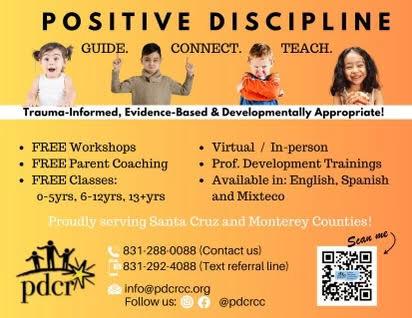
Shira Coleman Hagar is Positive Discipline parent educator and Positive Discipline in the Classroom educator, Educators for Peaceful Classrooms and Communities facilitator and trainer, and the joyful mother of two teenage young men. Owner of DesigningWell. Social dancer and instructor, and the lucky wife of high school English teacher Jeffry Hagar.


BY TRINA COFFMAN-GOMEZ
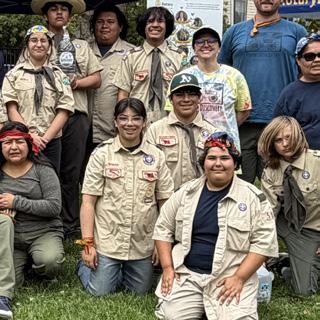
A local Rotarian took on an initiative to write a Rotary International global grant to fund an unfunded mandate for Ssaku Senior Secondary School in the Luwero District in Uganda. This grant will provide: vocational training resources that teach students the skills to sustain local jobs and drive economic development. Construction, agri-business, health care, hospitality, culinary, entrepreneurship to name just several of the career pathways. The very skills needed support scouts and their families in this rural community.
In addition, this grant will also fund a solarpowered borehole water system to complement the classroom resources that will serve the school and the surrounding community for generations. It is the kind of project Rotary excels at — sustainable, community-led, and multiplied by partnership.
THE UNEXPECTED RECRUITER: WATER
Here is where the story takes an unexpected turn — and where we teach our youth about humanity and the model Rotarians live by; Service above Self.
Learning that Uganda counts 5.6
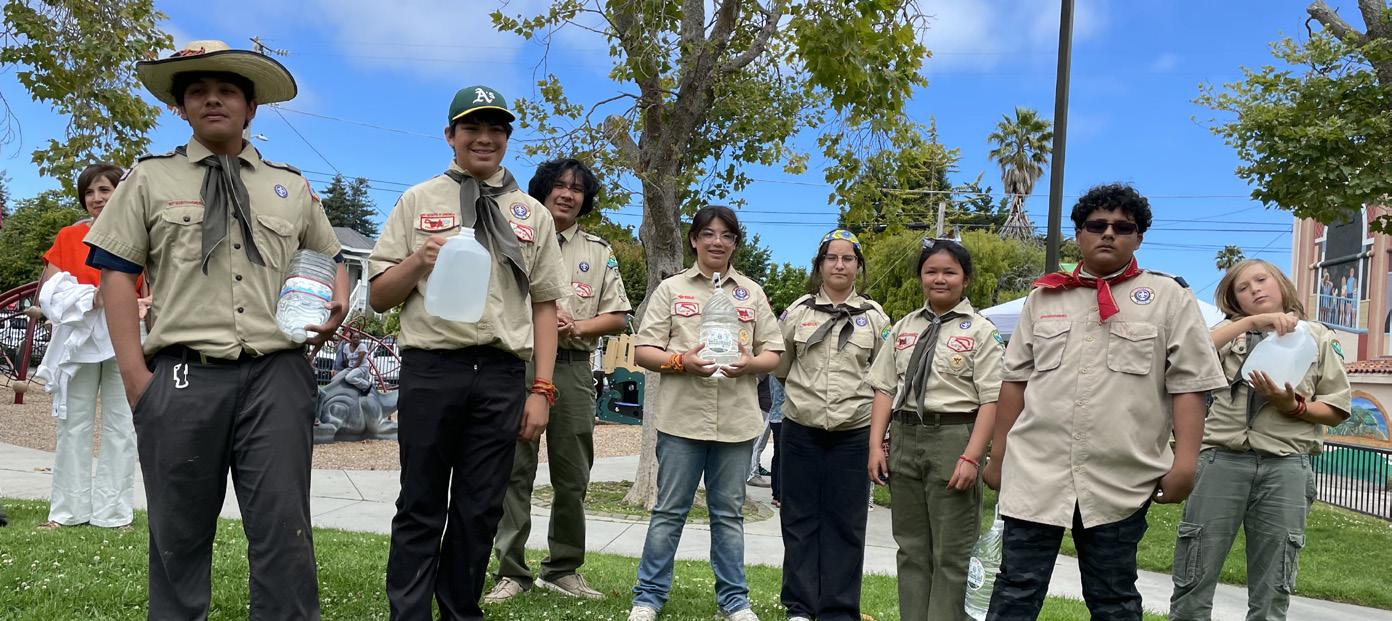
learn about other scouts’ culture and limitations.
A partnership between a local California scout unit (Unit 505) and two schools near Kampala, including Ssaku, took root. Youth on both sides of the world began collaborating on service projects, earning merit badges, planting trees, and practicing “Leave No Trace” principles together — building the kind of international camaraderie that Rotary has championed for more than a century, now seeded directly into the next generation.
FROM THE WATER WALK
— a Uganda phrase meaning Water Walk at London Nelson Park at the 35th Juneteenth event. Scouts and participants carried water the way their Ugandan counterparts do every morning before they can attend school. Every step taken is a lesson in global citizenship — and an invitation to serve.
While Rotarians continue to raise the funds, what became of this project was more profound in educating our scouts about how scarce water is to many scouts in other countries. The water walk became a living classroom. Our American scouts learned that more than 80 percent of
of carrying it — something shifts. Service stops being an abstract value and becomes a felt one. That is precisely the moment our youth began to understand the value of water and to begin working on their environmental science merit badge for their Eagle requirement.
THE SEEDS ROTARY PLANTS
This project illustrates the anatomy of engagement. It does not begin with a grant application. It begins with curiosity, and a vision to help others. Even if it across the continent.
Rotary and scouts greatest recruiting tool has never been a glossy brochure. It has always been proximity to meaningful work. When a Scout carries water to understand what a Ugandan classmate faces before sunrise, they are not just learning about scarcity. They are experiencing, firsthand, what it means to be part of the solution.
Invite a young person into that story — and you may just be handing them the path to thinking beyond their own community across cultural lines and bring humanity into how they learn about the world.
To support Ssaku School Global Grant



ADMISSION OPEN HOUSE Wednesday, September 30
8:30 AM - 10:00 AM

BY KRISTEN MCLAUGHLIN
Three new amphitheaters are among the big improvements coming to all three elementary schools in the Soquel Unified Elementary School District (SUESD) this fall. Construction crews are currently busy with making the sites functional in time for the new school year, which starts August 5, although construction is expected to continue into February 202.
Along with the three new outdoor amphitheaters, the project calls for conversion of existing natural grass fields to synthetic turf fields, installation of scoreboards and parking updates.
Starting with Main Street Elementary School, the project is utilizing a “leapfrog” approach enabling crews to work simultaneously at all three schools, according to Steve Cartwright, SUESD Supervisor of Maintenance Operations and Transportation. Building started at Main Street, followed by Santa Cruz Gardens and Soquel elementary schools.
“Main Street (Elementary) has the most headway right now of all three schools,” Cartwright said. Crews are reportedly re-roofing its entire Upper Commons Building to match the rest of the campus.
At Santa Cruz Gardens Elementary School, 8005 Winkle Ave, the construction crew is currently “grubbing,” or taking out the new grass to replace with infill, he added.
Soquel Elementary, 2700 Porter St., will be the last of the three schools completed. “Soquel (Elementary) has not done grubbing yet,” Cartwright said.
The amphitheater at Soquel will be a concrete form with a split-level synthetic turf seating area. “You’re not sitting on concrete so it’s more comfortable,” Cartwright noted.
Parking has long been a sore spot at Soquel Elementary. The former lot could accommodate about 35 cars including staff and parents. Along with a new shade structure, redesigned parking will add more parking spots; removal of a concrete island and add a garbage enclosure. “That will be done, fingers crossed, before school starts,” Cartwright said. Finally, Soquel Elementary is adding a second staff-only parking lot, and new decorative fencing along its kindergarten yard, currently surrounded by plain chain-link fencing.

Along with conversion of the existing grass field to artificial turf will be minor grading, landscaping and utilities at all three schools. Once completed, the project will subsequently provide enhanced safety conditions and accessibility for all users of the fields.
FieldTurf synthetic turf systems are independently tested and evaluated to provide better traction, aiming to reduce lower extremity injuries while offering high-durability technology.
Funding sources are the voterapproved Measure P, the $73 million General Obligation Facilities Bond passed by Capitola voters in November 2024; a new track and field and scoreboards at New Brighton Middle School were completed in October of 2025, with money from a state-sponsored matching fund that was not part of Measure P.
Gilroy-based Kent Construction is general contractor for the project. Architectural design is by Modus Architects.




























SEPIDEH TAGHVAEI, DDS, DIENTES, EVP OF OPERATIONS/CHIEF DENTAL OFFICER
As parents, we spend a lot of time preparing our children for school—getting backpacks and school supplies, packing lunches, and making sure homework gets done. But one important part of backto-school success is often overlooked: a healthy smile. Good oral health doesn’t just help children avoid cavities; it plays a major role in their ability to learn, grow, and feel confident in the classroom.
Tooth decay is one of the most common chronic diseases among children, yet it is largely preventable. Even a small cavity can become painful if left untreated. When children experience tooth pain, it can make it difficult to concentrate, eat nutritious foods, sleep well, or participate in class. Some children may even miss school because of dental problems or emergency appointments.
Healthy teeth help children do more than smile. They allow kids to chew healthy foods that fuel their growing bodies and developing brains. They also help children speak clearly and build confidence when talking, reading aloud, or making new friends. A healthy smile can positively affect a child’s self-esteem, making them more likely to participate in school activities and social interactions.
The good news is that protecting your child’s oral health doesn’t have to be complicated. Good habits at home, combined with regular dental visits, can make a lasting difference.
Start by helping or encouraging (depending on age) your child to brush their teeth twice a day with fluoride toothpaste for two minutes each time. Once teeth begin touching, flossing every day helps remove plaque and food between teeth where a toothbrush can’t reach. Choosing water instead of sugary drinks and limiting sweet snacks also helps reduce the risk of cavities.
Regular dental checkups are just as important. Most children should visit the dentist every six months, even if they are not experiencing pain. These visits allow the dental team to identify small problems before they become larger, more expensive issues. Preventive services such as cleanings, fluoride treatments, and dental sealants help keep teeth strong and healthy throughout the school year.
Parents of younger children should know that dental care begins earlier than many people realize. A child’s first dental visit should take place by their first birthday or within six months after their first tooth appears. Starting dental care early helps children become comfortable with the dentist while giving parents guidance on healthy habits that can

Has your child completed their Kindergarten Oral Health Assessment (KOHA) yet?
What is KOHA? To make sure children are school-ready, California Law requires a dental check-up by May 31st in either TK, Kinder, or 1st grade, whichever is their first year in public school.
Why is KOHA important? Poor oral health can affect attendance, grades, and overall health. KOHA helps ensure children have a dental home, are healthy, and ready to learn.
What is required of parents?
Obtain KOHA forms from your child’s school (usually included in enrollment packet)
Schedule your child’s dental appointment, bring KOHA form
Submit completed KOHA form back to school by May 31
prevent cavities from developing.
As children grow older, it’s important to keep reinforcing healthy routines. School schedules become busy with homework, sports, and extracurricular activities, but brushing, flossing, and regular dental visits should remain a priority. Setting a good example by practicing healthy oral habits as a family can make these routines easier to maintain.
If cost is a concern, remember that many children qualify for dental coverage through Medi-Cal. Community dental clinics, like Dientes, provide affordable care through sliding fee scales, helping ensure
that every child has access to preventive services and treatment when needed.
A healthy smile is more than just clean teeth—it supports your child’s overall health, confidence, and ability to learn. By making oral health part of your family’s back-to-school routine, you’re giving your child another important tool for success in the classroom and beyond.
This school year don’t forget to add one more item to your checklist: schedule your child’s dental visit. A healthy smile can help them start the year feeling their best and ready to learn.




BY CELINE SAN LUIS,
Have you ever wondered what careers are at the Santa Cruz County Animal Shelter (SCCAS)? Whether it’s caring for pets, rescuing wildlife and lost animals, or teaching families how to be responsible pet owners, there are a plethora of rewarding opportunities in animal welfare.
Working at the Santa Cruz County Animal Shelter demonstrates the many different ways that people use their talents and skills to be involved. From the clinic team to animal care and control officers to client services and shelter management, there are many moving daily parts at SCCAS to ensure the animals and the community are supported.
Early in our lives, becoming a Veterinarian was something most of us had been interested in. Veterinarians, often called vets, are doctors who care for animals. Veterinarians care for many types of creatures, including domestic (cats & dogs, pocket pets), exotics (reptiles & amphibians) plus aquarium and zoo animals. There are specialties in veterinary medicine; for example, there are vets who specialize in animal ophthalmology, dermatology, and radiology. It is like for almost every human medical profession, there
is an animal equivalent! Becoming a veterinarian requires many years of education, including college and veterinary school, and it allows people to make a big difference in the health and well-being of animals. The University of California, Davis (UC Davis, UCD) is one of the prominent veterinary schools in the state.
Working alongside veterinarians are Registered Veterinary Technicians, often referred to as Vet Techs or RVTS. Vet techs are like nurses in a human hospital. They help prepare animals for exams and surgery, conduct health checks, monitor anesthesia, perform laboratory tests, and comfort both animals and their owners.
Vet techs can work in animal hospitals, emergency clinics, specialty practices, shelters, and wildlife rehabilitation centers. In the Bay Area as of 2026, Foothill Community College and Carrington College offer RVT programs.
Another important career is Animal Control, also referred to as Animal Services. Animal Control Officers help keep both people and animals safe in their communities. They respond to reports of lost, stray, injured, or neglected animals, investigate concerns about animal cruelty, and enforce local animal laws. Animal Control Officers also educate the public about responsible


pet ownership, licensing, vaccinations, and safety around animals. Their work often requires compassion, good communication skills, problem-solving, and the ability to stay calm during emergencies.
Other positions seen at the Santa Cruz County Animal Shelter are Client Services, Animal Care Specialists, and Shelter Management. Client services are the first line of contact for a majority of animals and people. For example, they assist with intakes, adoption processes, and help reunite pets with their owners.
After intake from client services, the Animal Care team ensures that animals have clean living spaces and well-fed bellies; they also monitor pet health and provide additional enrichment. Shelter management consists of coordinators, supervisors, and managers working together to support their individual department staff, volunteers, and of course, the animals.
SO HOW DO PEOPLE GET EXPERIENCE WORKING WITH ANIMALS?
Internships and volunteering are two of the best ways to gain experience while making a positive impact. It is also important to recognize and acknowledge that unpaid internships and volunteering might not be feasible due to other priorities. Depending on age requirements and time, people may help socialize animals, become foster
parents, prepare enrichment, assist with adoptions,and support community education programs. Internships and volunteering teaches responsibility, teamwork, communication, and compassion while allowing people to explore different career interests.
Something to consider is what you would like to learn from the experience. For example, if you are interested in pursuing a career in veterinary medicine, it may be wise to gather your own research and questions first and then ask to talk to the clinic staff (if they are available) about their professional paths. Or if you volunteer for public spay and neuter events or community pet clinics, you might wonder what techniques and skills are useful to develop. At SCCAS, interested volunteers can start as young as 12 years old, as long as they have an adult over the age of 18 with them. It is crucial to remember that it is not a one-size-fits-all field. Outside of the Santa Cruz County Animal Shelter, there are careers that combine animal welfare with law, environment, art, journalism, and science. Animal welfare is about more than caring for animals. It is about strengthening the bond between people and animals while creating safe and compassionate communities. With curiosity and dedication, anyone can begin taking steps toward a rewarding future helping animals.
Tomas is a 6-year-old black and white Border Collie with plenty of energy and enthusiasm for life! Don’t let his age fool you—this handsome guy still loves to play like a puppy. At the shelter, you’ll often find him chasing a soccer ball, digging in the sandbox, or happily playing fetch in the yard. Tomas is a friendly, social dog who enjoys spending time with both people and other dogs. Because of his active nature, thoughtful introductions to resident dogs are recommended. He’ll thrive in a home that can provide lots of exercise, enrichment, and quality time with his family. We recommend that Tomas live primarily indoors, with plenty of outdoor adventures and playtime. If you’re looking for a fun-loving companion to share your days, come meet Tomas today!

BY GWYNETH HOLCOMB
Gina Castañeda’s goal was to get gang rivals off the street and into another place where they could compete: the soccer field.
It’s been over 18 years since Castañeda founded The Aztecas Youth Soccer Academy—a Watsonville-based soccer and education program that supports local at-risk kids—but the spring of 2008, when Castañeda started the program, is still vivid in her memory.
She was a few years into her tenure at Santa Cruz County Probation, working with kids—many of whom were coming from rival gangs, Norteño and Sureño—when she found herself at the center of an opportunity to change something she knew wasn’t working.
She had been devoting all her extra time to helping get the kids on her caseload onto local soccer teams, trying to give them the opportunity to get off the street—but it wasn’t working the way she had hoped, and the kids kept quitting.
“The reality for them was they didn’t feel like they belonged,” said Castañeda. “They felt like outsiders.”
Then, her husband, Patricio Castañeda, had an idea—why not create a new team and put all the kids together?
“And I kind of laughed,” said Castañeda, “I was like, ‘dude, these are rival gang members, like you don’t put them on the same team.’ And he was like, ‘If anybody can do it, you can do it.’”
She realized her husband was right; she could do it.
As a soccer player and coach herself, she had the necessary skills, but even more so, she knew “what it is to be a child in a home that’s taught to speak like a gangster, talk like a gangster, walk like a gangster, dress like a gangster.”
She had grown up in a home knowing exactly why people joined gangs— because “they wanted love.”
She also knew that soccer could be both an outlet and a path toward purpose, as it was for her.
“Soccer saved my life,” said Castañeda. “It was something that I wanted to do, and I needed to do some things in order to continue to play; I needed to attend class, I needed to keep my grades up, I needed to stop getting into fights.”
So her goal became to create a team that removes any need or room for gang association or activity and replaces it with soccer, explained Castañeda, and Aztecas was born.
Castañeda named the team in tribute to her stepfather, Ernesto Medina, and to the Watsonville adult men’s team he coached, the Aztecas.
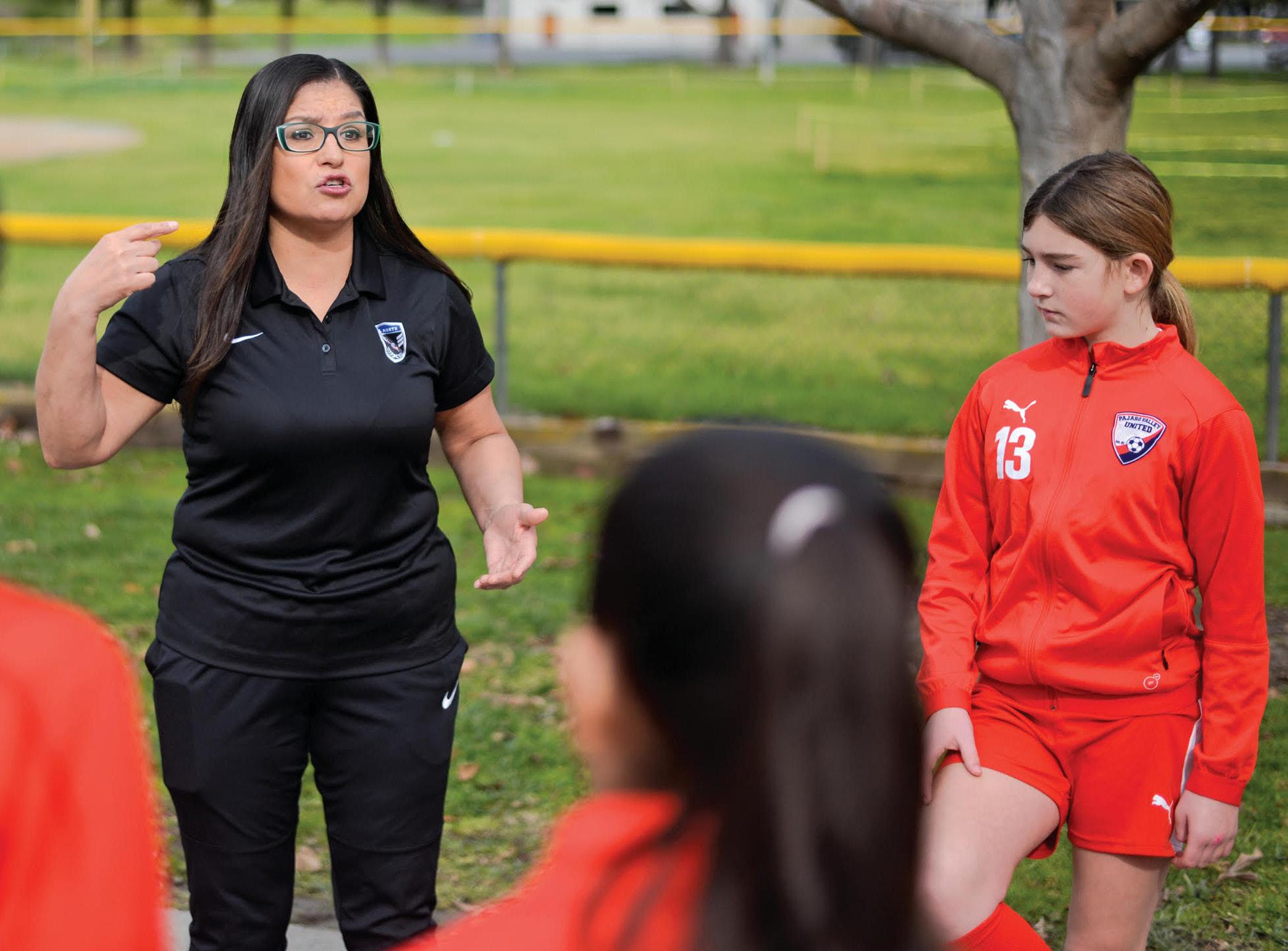
After approximately three years of starting the team, the Probation Department saw its impact and began supporting it, said Castañeda.
“My first thought was, this is gonna be great,” said Fernando Giraldo, the former Chief Probation Officer. So Giraldo also got to work, helping to build a budget within the department for Castañeda to run the program.
Today, through the Santa Cruz County Probation Department and the county, funded by grants and donations, Castañeda helped kids craft a new identity, one where they can carry the Aztecas name and wear the purple jersey with pride.
The color purple—unintentionally a blend of the two rival gangs’ colors, red and blue—was chosen in appreciation for the Freedom Lions Club, a network of volunteers that had donated enough money to help buy nice jerseys, shorts, and socks for the kids, said Castañeda.
Looking back on past years, the Aztecas seem to be overflowing with moments of success. Castañeda’s favorite memory was when two kids from rival gangs scored their first goal together.
“Just like anybody does when they score a goal, they embrace each other,” said Castañeda, “I just remember that moment, where they like they stopped, and they were like, ‘Oh, shit, I just hugged my rival.’”
“I didn’t even understand what I was doing at the time,” said Castañeda, “I was really building the bridge for these kids, and giving them an opportunity that nobody else had given them.”
Today, anyone can carry the Aztecas name, even if they don’t play soccer, since the program has expanded its scope to include any kid who needs help and provides services for youth 13 to 18, and can continue to provide support for program-involved kids through four-year college.
But seemingly not much else has changed. At 51-years-old, Castañeda remains dedicated to the team as the program supervisor and currently works in the county probation department as a deputy probation officer–supervisor.
“Soccer is her life, and just helping in removing barriers for our most burdened population is something that is embedded in her DNA,” said Jose Flores, the Assistant Chief of Probation.
The Aztecas’ new clubhouse at 200 Prospect St.—its grand opening July 28— will continue to offer tutoring, life skills, academic guidance, and other career support to help kids succeed throughout their education, including through junior colleges and higher education, said Flores.
“Soccer was just a hook to bring these kids in, to provide them another avenue, a different way of life,” Castañeda said.
The Castañeda and the Aztecas’ innovations and impact aren’t just felt locally; they’re also recognized nationally. In 2011, she was featured in an ESPN documentary, “The Save”, which aired as part of a series during the 2011 FIFA Women’s World Cup.
In 2014, Castañeda received the UCSC Tony Hill Memorial Award, which honors locals seeking solutions to economic and social issues. In early 2026, the United States Soccer Federation’s Kim Crabbe Game Changers Award, which honors members from the soccer community who have made a lasting impact in a creative way.
“Everywhere you go, Gina is recognized; like literally, everyone knows who she is,” said 29-year-old Cesar Padilla, who joined the club at 18 and has since spent approximately 11 years as an active part of Aztecas—as both a youth and a mentor. “Watsonville knows that they can trust her.”
Even after graduating from the program, many of Castañeda’s Aztecas have continued to be part of the team—often becoming mentors to the next generation of players— and of her life.
“I consider her my second mom,” said Padilla. “Every single time that I needed someone—like whether it was just a talk or like if I got in trouble or anything— she was always there, and she never judged me for anything.”
A sentiment that also resonates with another Aztecas alumnus, 23-yearold Adrian Madueño, who easily remembers when Castañeda helped secure a scholarship for him and a few other Aztecas.
The scholarship was enough money to buy a simple computer, according to Madueño, but the gesture was more than just a nice gift; it was a “stress-reliever.”
“With some of our parents being farm workers, it’s kind of hard for them to source $500, even $1,000, to buy a
computer for college,” Madueño added. “She pulled it off somehow, and it’s amazing.”
A gesture that’s habitual for Castañeda, according to Madueño; she’s always looking for ways to support the Aztecas youth and help them achieve their goals, whatever they might be, along the way, forging a bond with each of the kids that they’ll never forget.
“She’s still a mentor and a coach for me,” said Madueño, “but now she’s more like a friend as well.”

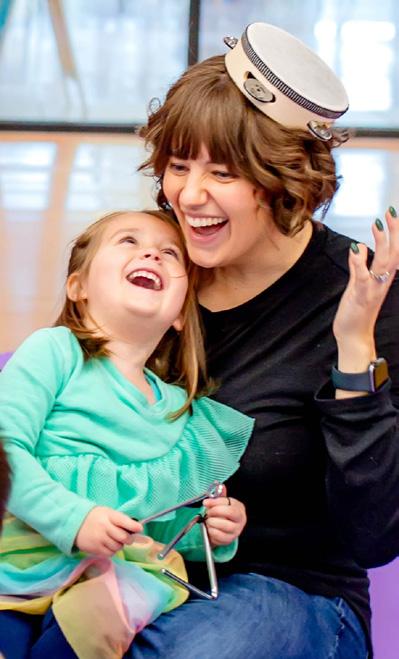

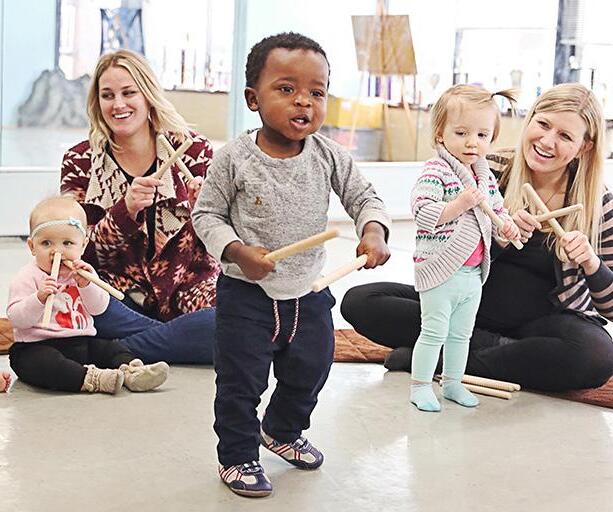


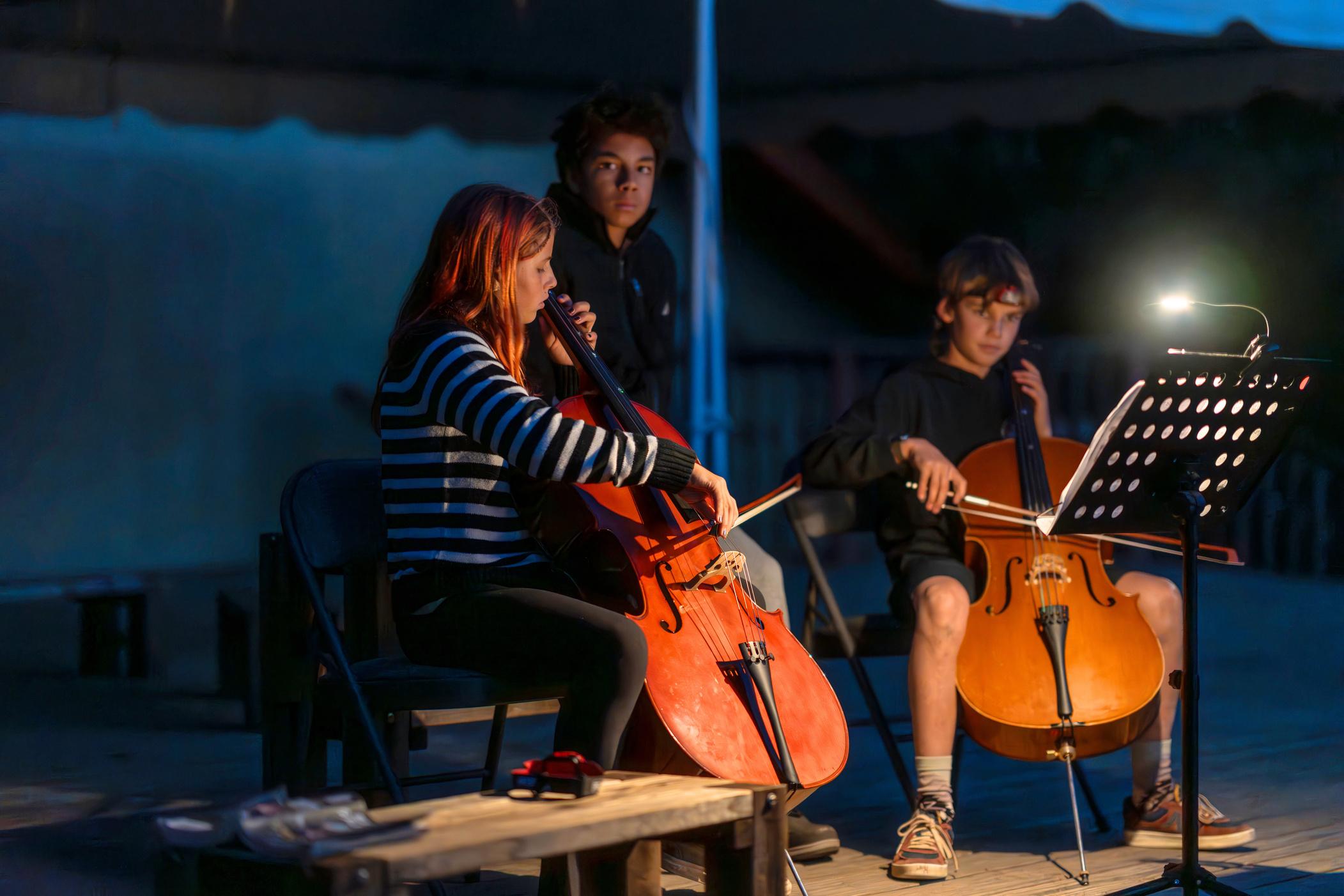













4
1

8