Susan Tatsui-D’Arcy, Joan Hammel, Malia Fort, Steven Weiss, Sarah Nofi, Monica Menard, Yesenia Gomez-Carrillo, Tovah Petra, Kay Mackenzie, Colleen Murphy, John Koenig, Elizabeth Borelli
MASTER OF COMMUNITY PARTNERSHIPS
Bobbi Jo Palmer
AD REPRESENTATIVES
Ann Fitts Sophie Veniel Bob Pursley advertising@growingupsc.com CONTACT US
408.656.1519
editor@growingupsc.com
P.O. Box 3505, Santa Cruz, CA 95063
APRIL 2026 | VOL. 30 NO. 4
by Folger Graphics.
“This
Team.
Catch the Social Media Wave
Don’t miss the Growing Up in Santa Cruz videos on YouTube, Instagram, Facebook and TikTok. To promote your business to thousands of viewers in the area each week, email editor@growingupsc.com or call (408) 656-1519.
Kids Day Shows the Heart of Downtown Santa Cruz Editor’s
I’m totally psyched for Kids Day on May 2 for a number of reasons.
First: I have used that day for a decade to measure the health of Downtown, which I’m afraid has too many critics and not enough people appreciating the center of art, culture, music and shopping we have.
Some 10 new businesses have opened recently and you can’t miss the giant apartment buildings along the river. My first reaction to them was yuck, what happened to our small town?
But I’ve come to think that city planners were prescient and deserve some serious praise. They thought if they build housing, which we need, and locate it in the downtown, where there is mass transit, then people will need places to shop and be entertained.
Looking around, I see it’s working. Check out Shiri Gradek’s article about all the kid-friendly stores there. That really makes me happy. It’s a sign of a growing, thriving, healthy downtown, which we desperately need to buck the trend of retail being killed by the internet.
We aren’t a snobby little town like Carmel or a bland semi-urban metro like—gasp—San Jose, where there is no there there. We are still cool, friendly and weird, like a slice of Greenwich Village without the pollution. From the nightly events at Abbott Square, to the Art and History Museum to the varied tastes in restaurants from around the world, the Downtown is a place for everyone, especially on Kids Day when families take over.
Are there problems? Some. I worry about parking. Will there be enough? And yeah, we have street people, but in all my years here they have never bothered me or the kids. You are going to have characters in any city in which you live. And also, personal complaint: I miss when they trucked in snow for a winter celebration. I loved that.
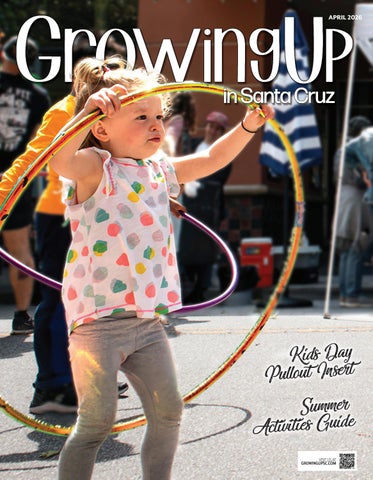
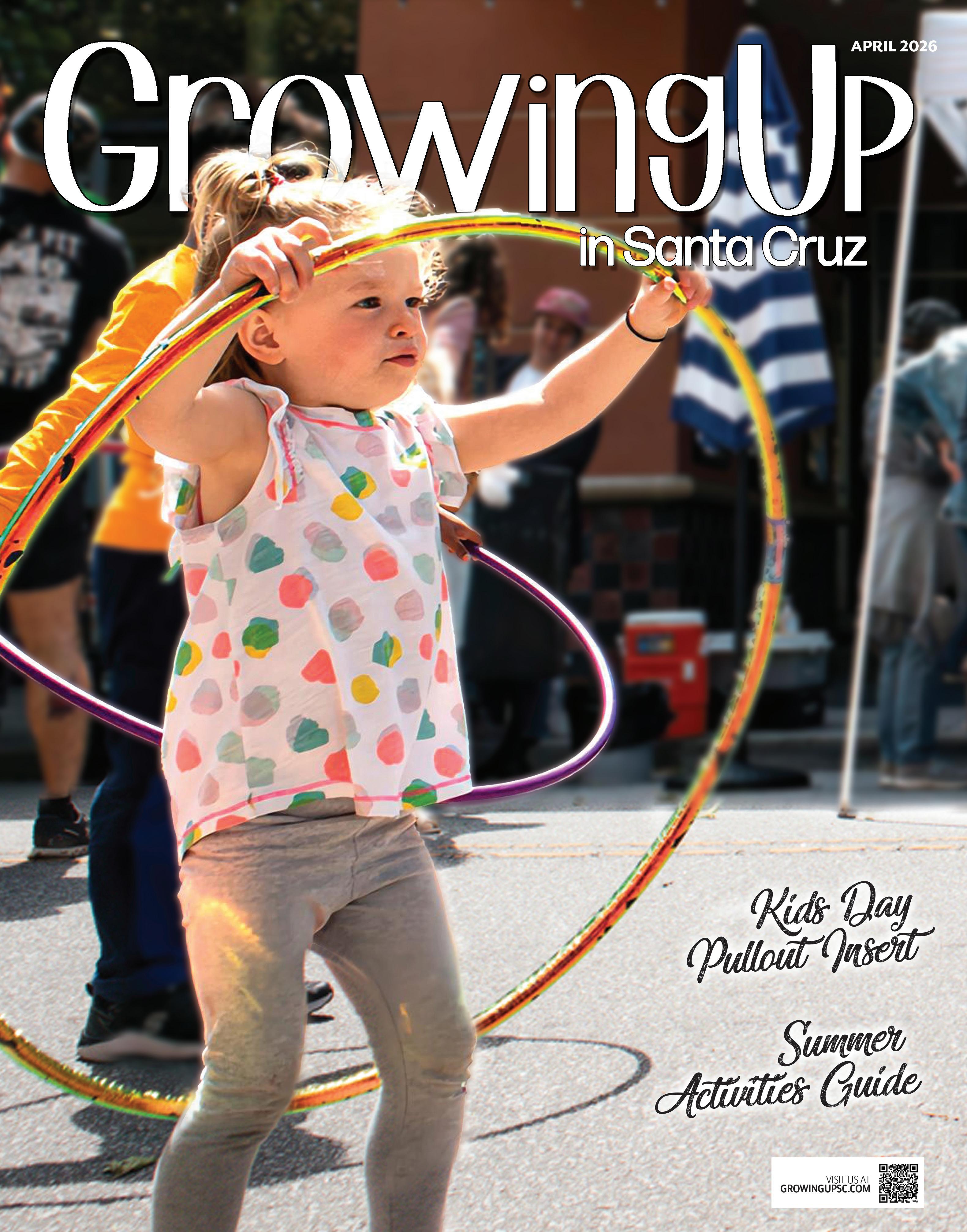
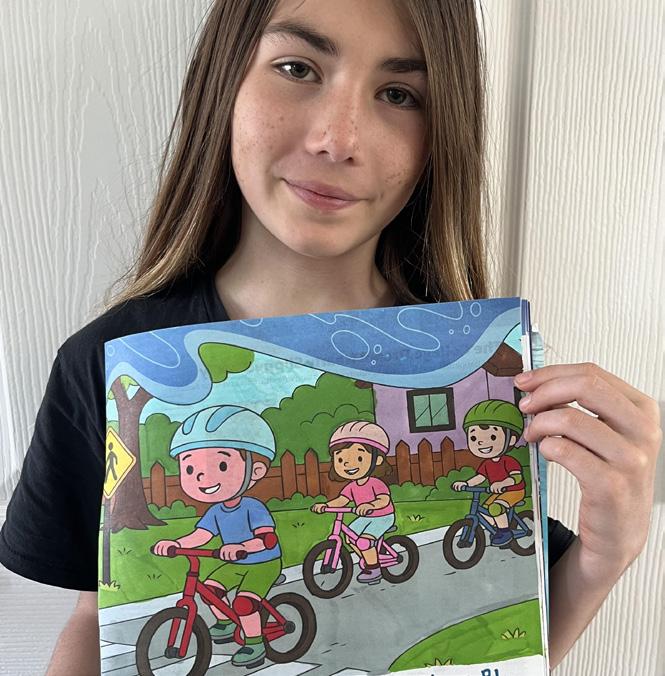
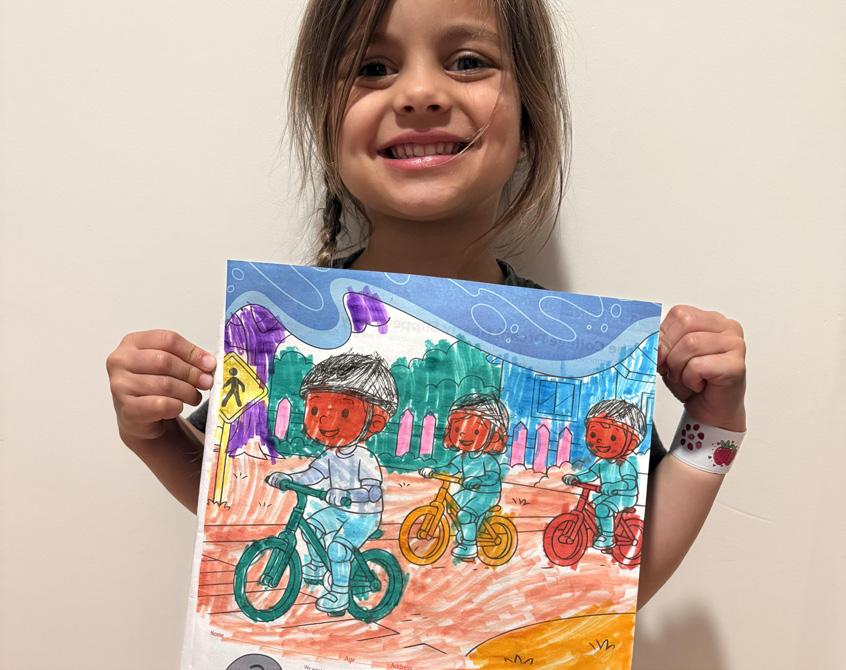
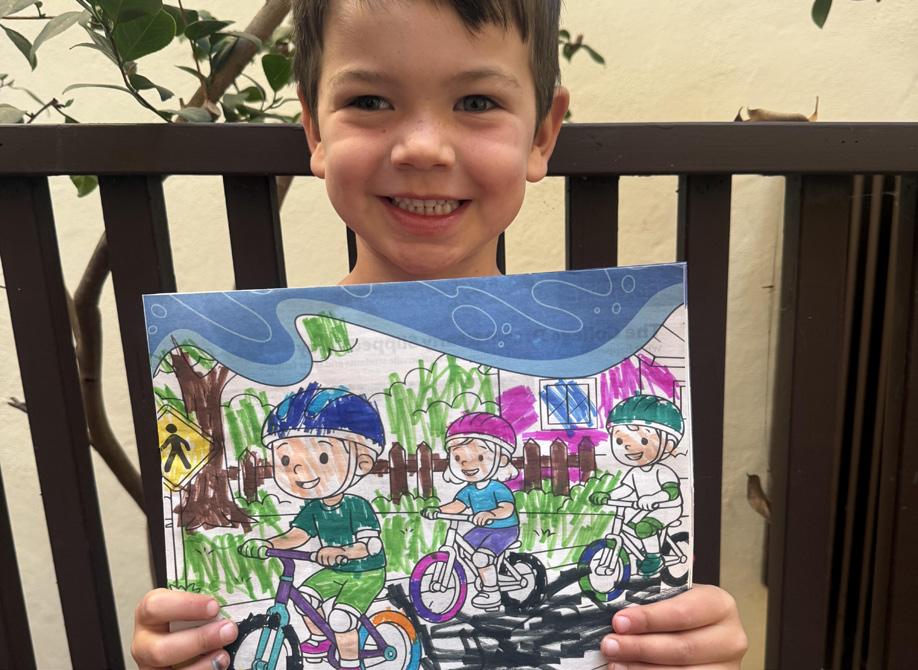
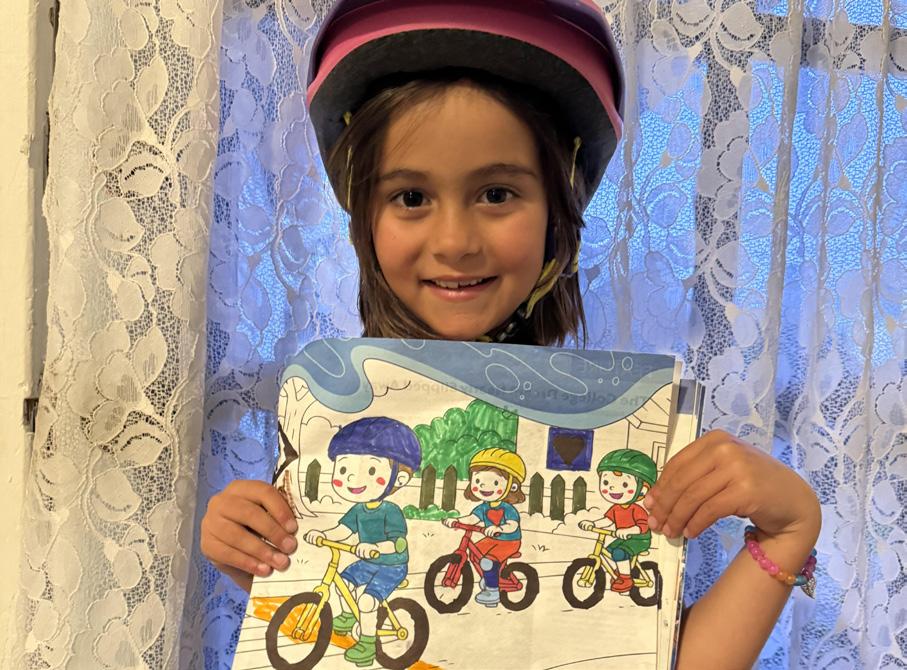
On the Cover
Lastly, I think they have to do something to preserve the Catalyst, the music club that first brought me to Santa Cruz and has been a musical center for decades, bringing in famous names from around the world.
I’ve yet to hear a solid proposal for that. I balance the negatives with the amount of culture we have for all ages.
There are concerts, film festivals, basketball games, poetry readings, author signings, date night activities, antique fairs, parades, protests, makers fairs, farmers markets and kid festivals in such great numbers it’s impossible to do them all.
If you’ve lived in the Midwest, you know that any one of these things would be a big deal, bringing out the whole town. But we have a plethora of them, mountains of them, more than your AI can track. We are spoiled by the local beauty and the culture that people like Shiri have been thoughtful enough to shower us with.
My hope for the future, and I think it will also happen, is for Downtown Watsonville to get on a similar roll. (There’s a candidate running for County Supervisor from there, Tony Nuñez, who shares that vision and I think can help make it happen. Check him out as the June elections approach.)
In so many places across the country downtowns have died, often replaced by malls, which are now also dying. The internet has been our friend and enemy. But Santa Cruz has taken a stand to keep shopping local and I’m proud of our county and cities.
I guarantee kids and families will have a ball on Kids Day when they see just how much is offered here. Check the maps inside and start planning now. Time will fly by and the day never seems long enough for it all.
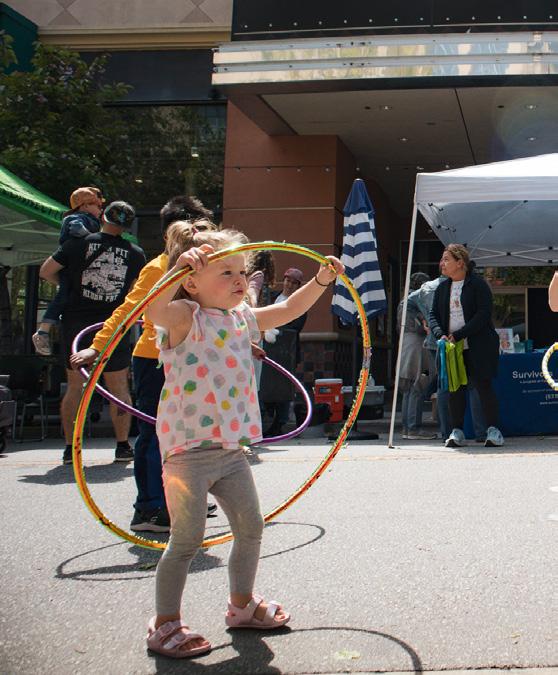
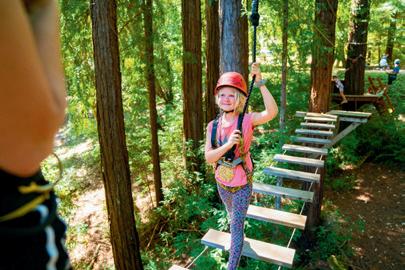
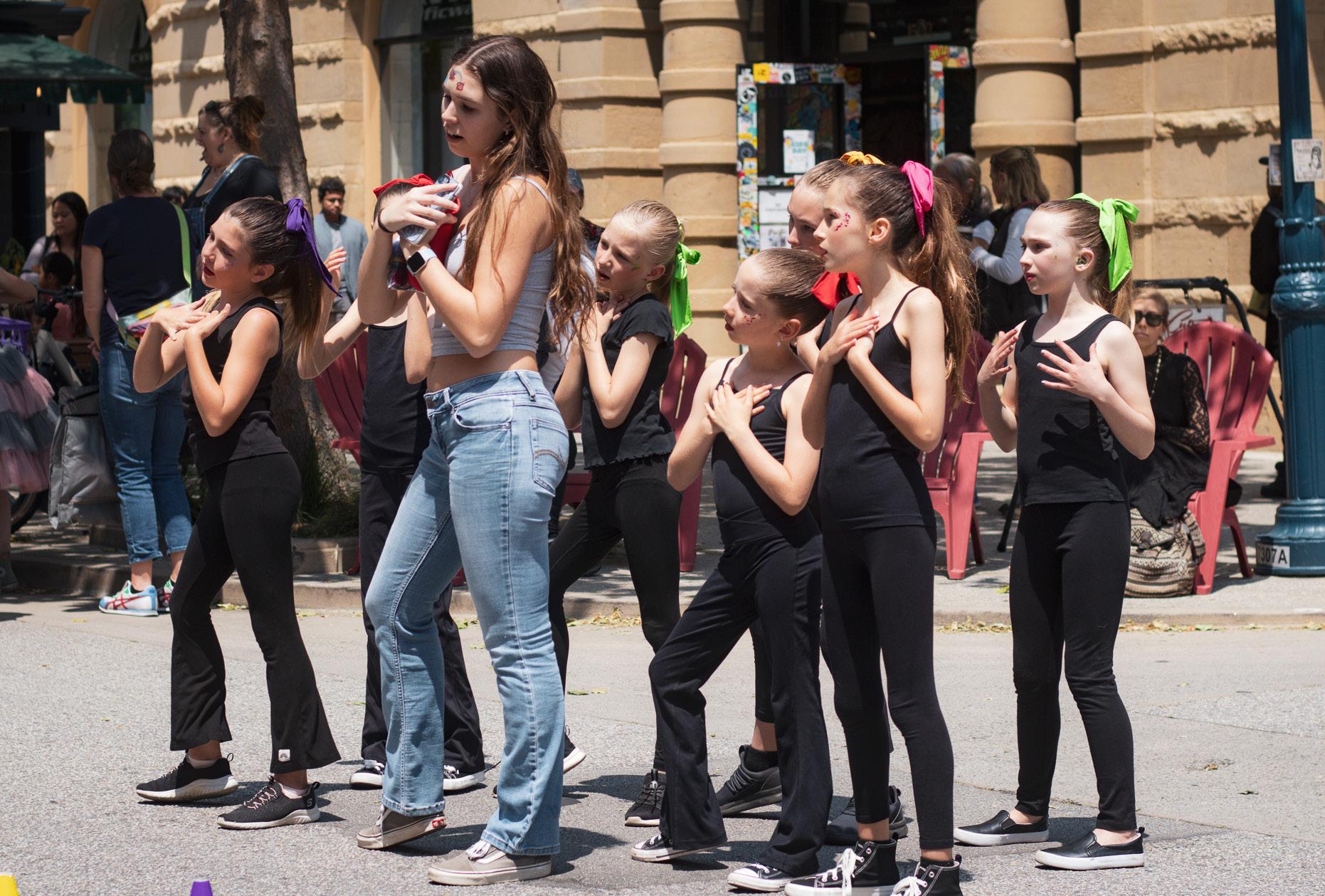
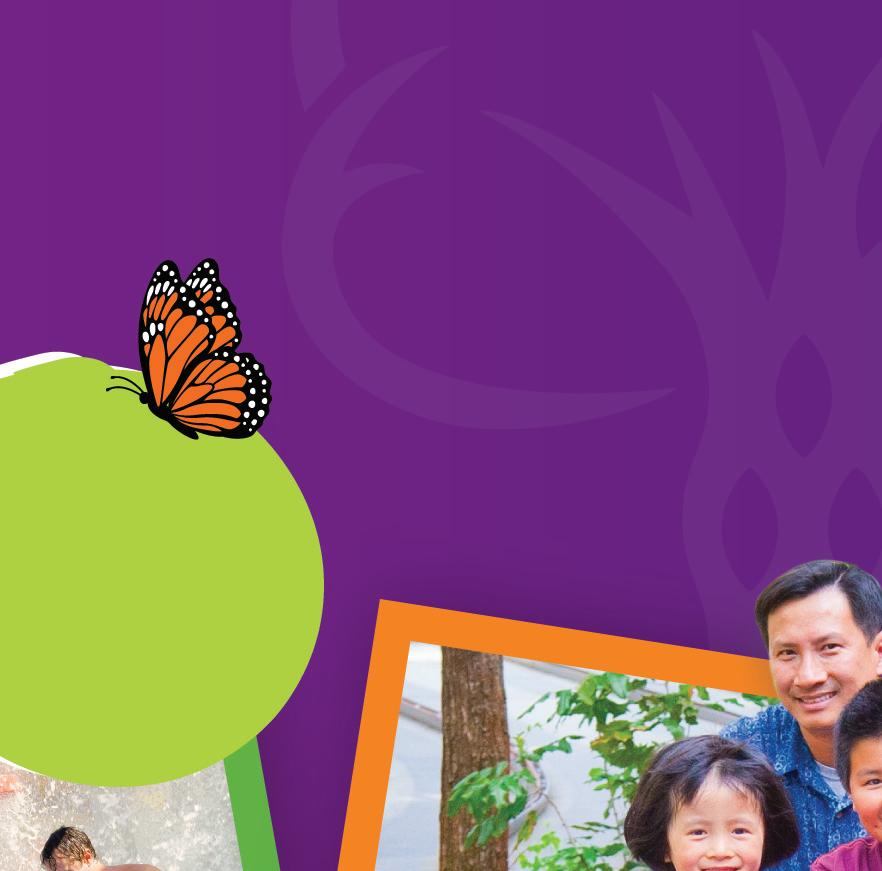
We’re excited to celebrate Kids Day in Downtown Santa Cruz on May 2, a fun and welcoming day filled with free activities, youth performances, and hands-on experiences for families. Hosted by the Downtown Association, this special event reminds us that Downtown is a place for kids all year long, whether you are shopping for a birthday gift, picking up everyday essentials, or exploring local toy and comic shops. Come on by to the Growing Up booth for a chance to win a prize. Photo by Joey Ward.
Thanks for reading Brad Kava; Publisher
Growing Social Therapeutic Summer Camps
Growing Social-emotional learning and related skills, Celebrating Neurodiversity and Building Community!
**For all students (ages 5-adult), who could use support with social emotional learning!
Finding the right preschool for your child can feel stressful. Parents want their children to be happy and safe—and to enter kindergarten confident and prepared. Too often, families feel they must choose between highly academic preschools or allplay, outdoor programs. I understand those concerns, but it’s not an either-or choice.
Preschool is the ideal time to introduce reading, math, and science in the right way— while also providing a rich, invigorating outdoor exploration program. Children naturally love to learn. They simply need the right balance of structure, curriculum, and freedom.
Research shows that nearly 80% of a child’s adult intelligence develops between birth and age four. These early years are a unique window, when children absorb language, patterns, and cause-and-effect with remarkable ease. Preschool should honor that window—not with worksheets or pressure, but with enjoyable, intentional readiness.
LEARNING EARLY—WITHOUT LOSING CHILDHOOD
Preschoolers are naturally curious. They want to know how things work, why letters make certain sounds, how numbers create patterns, and what happens when you mix, build, or test something new.
Early literacy can include phonics, phonograms, sight words, CVC words, and real books. Early math engages children
in counting, grouping, measuring, and comparing. Science begins with hands-on discovery—magnetism, tools, chemistry through mixing, botany in the garden, and physics through building and motion.
CHILDREN LOVE LEARNING WHEN IT FEELS LIKE DISCOVERY
What they don’t need is forced memorization or sitting still for long periods. Young children learn best in short academic bursts—10 to 15 minutes—balanced with movement, outdoor play, and exploration.
An ideal preschool rhythm might include a brief reading lesson, extended outdoor play, hands-on science using water or sand, then returning indoors to learn a new letter sound or phonogram. Learning becomes connected, physical, and memorable.
WHY CLASS SIZE MATTERS
One of the most overlooked factors in preschool quality is class size.
Many daycare centers rely on large groups to remain profitable. This often means children spend unnecessary time waiting, being herded, or redirected simply to maintain order. In large classes, teachers can’t follow children’s questions or act on creative ideas in the moment.
Small classes change everything
When I started a preschool for my own daughters, I intentionally kept class sizes extremely small—two children for two-year-olds,
three for three-year-olds, and so on. Children do not need ten or twelve peers in a room to learn how to socialize. In fact, large groups often overwhelm young children and limit creativity.
In small classes, teachers can individualize learning, follow curiosity in real time, and create calm, focused environments where children thrive.
CONFIDENCE COMES FROM COMPETENCE
True confidence doesn’t come from constant praise. It comes from doing meaningful work successfully.
In our preschool, children learned to read early, explored math and science daily, and also danced, did gymnastics, swam, painted, sculpted, and participated in musical theater. Learning wasn’t siloed—it was physical, creative, and social.
Both of my daughters learned to read by age three and entered kindergarten confident and eager to learn. Decades later, they are accomplished professionals and leaders in their fields—capable, curious, and confident women.
This isn’t about prestige. It’s about what happens when children are given strong foundations early, in environments that balance academics with curiosity, courage, and confidence.
THE RIGHT BALANCE
The best preschools don’t choose between learning and play. They integrate:
- Early reading, math, and science readiness
- Exploration and experimentation
- Outdoor play and physical development
- Communication, creativity, and collaboration
Children are eager to learn. When we respect their intelligence and provide the right balance, we don’t take away childhood—we strengthen it.
What to Look for When Touring a Preschool
Are academic lessons short, engaging, and ageappropriate?
Do children move freely between learning and play?
What types of outdoor and indoor play activities are offered?
Are teachers responding to children’s questions and ideas?
Do children receive guidance while working with hands-on science materials?
Do children seem calm, confident, and curious?
Watch for red flags:
- Large class sizes with excessive waiting
-Children sitting for long periods
-Busy work replacing exploration
-One-size-fits-all instruction
-Children disengaged or bored
A great preschool balances structure and freedom, academics and play—while honoring how young children truly learn.
Susan Tatsui-D’Arcy is the founder of Merit Academy (one-on-one classes) and Merit Educational Consultants (college and educational advisory). She has written books on projects, free child care, education, and parenting. Susan hosts TEDxMeritAcademy for students to present their innovative projects and solutions. In 2019, she was California Mother of the Year.
Celebrating nearly 24 years of theater, and over 190 productions in Santa Cruz County. Offering training in the performing arts for children aged (3-6), Youth (6-10), Pre-teen (10-14) & Teens (14-18) and Adults. Our upcoming Summer Season; Fiddler on the Roof Jr., Moana Jr. and Dear Evan Hansen will be performing at our home at The Colligan Theater, located in the heart of the Tannery Arts Center at 1010 River Street, Santa Cruz. With a new state-of-the-art theater, we will be offering an array of one week theater & performing arts camps as well as audio visual, stage managing, lighting design & more. There’s a place for everyone! Come be a part of the magic of theater this Summer.
“Our family loves this amazing community! We started a year and a half ago and my daughter has flourished and challenged herself. Lindsey Chester has brought out gifts that my daughter did not know that she has. Please run, don’t walk and join us!”
~ Joanna E.
Art Factory Studios
7960 Soquel Drive
831.400.2744
info@artfactorystudios.com artfactorystudios.com
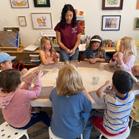
Explore creativity at Art Factory Studios! Kids 5-17 discover unique subjects each week, with beloved themes like Cats, Cats, Cats! and Art for the County Fair. In our popular Ceramics camps, students will learn hand-building and glazing for kilnfiring. Small groups and expert instructors ensure every child is supported. Camps fill quickly—register today!
Camp Gateway
255 Swift Street, Santa Cruz
831.423.0341
gatewaysc.org/lower-school/campgateway-2026
Unplug and Engage at Camp Gateway! Gateway School Santa Cruz is hosting a screen-free interactive summer camp for rising 1st - 5th graders. Campers will engage in counselor-led activities and enrichment classes. Full and half day classes available. June 15 - July 17th. Register now (QR code - see our ad in this month’s issue). For more information, visit gatewaysc.org.
Chartwell School
2511 Numa Watson Road, Seaside 831.394.3468
www.chartwell.org/summer
Summer Chartwell School, located on 60 acres in Seaside, CA, serves students with dyslexia and other related learning differences who are not currently reaching their full potential. We do this in grades 1-12 by providing targeted and direct instruction to empower learners with the skills, strategies, tools, and social-emotional mindset they need to thrive in college and beyond. Summer@Chartwell is a three-week program that emphasizes literacy, math, STEAM, and enrichment skills.
“Before we found Chartwell, our son was struggling every night with homework, his confidence shattered because he couldn’t understand why learning was so difficult for him. At Chartwell, he gained the tools and skills to support his learning profile, and now he confidently advocates for himself and is excelling in high school. I can’t express enough how profoundly Chartwell changed our son’s life—and ours.” ~ Milda E., Parent of Chartwell Alumnus
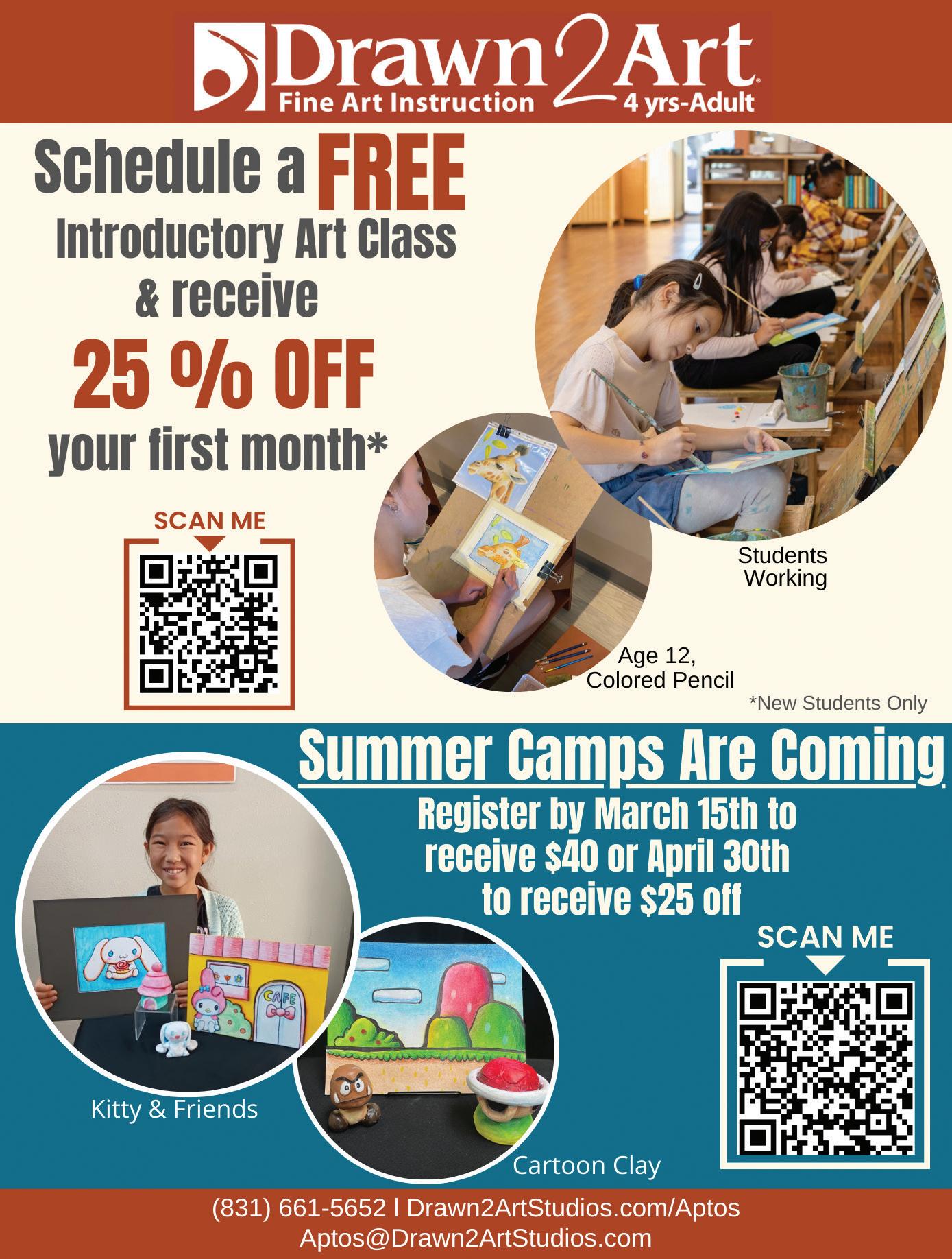
Drawn2Art Studios
19C Rancho Del Mar Shopping Center, Aptos 831.661.5652
Aptos@Drawn2ArtStudios.com drawn2artclasses.com
SIGN-UP NOW – OFFERING REALLY FUN SUMMER CAMPS! Sign-up by or before April 30th, Receive – $40 OFF each camp. New Students ONLY Pay the Registration Fee. Learn about our Summer Camps, each camp is themed! Here are some of the really fun summer camps we are offering: Anime & Cartooning: Learn to draw traditional-style Anime and create your own Anime self-portrait. Cartoon Clay Camp: Learn sculpting and painting methods, create landscapes, characters and more. Portraiture: Learn the fundamentals of drawing different portraits, covering different techniques and working in different media (graphite charcoal, colored pencils, pastels and more). Offering many more. Come Join Us for a Fun-Filled Day!. Also, offering a Free Trial Class for our studio art classes!
International Academy of Dance IADance.com | NutcrackerSantaCruz.com info@IADance.com 831.466.0458
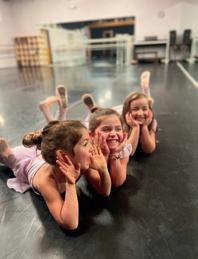
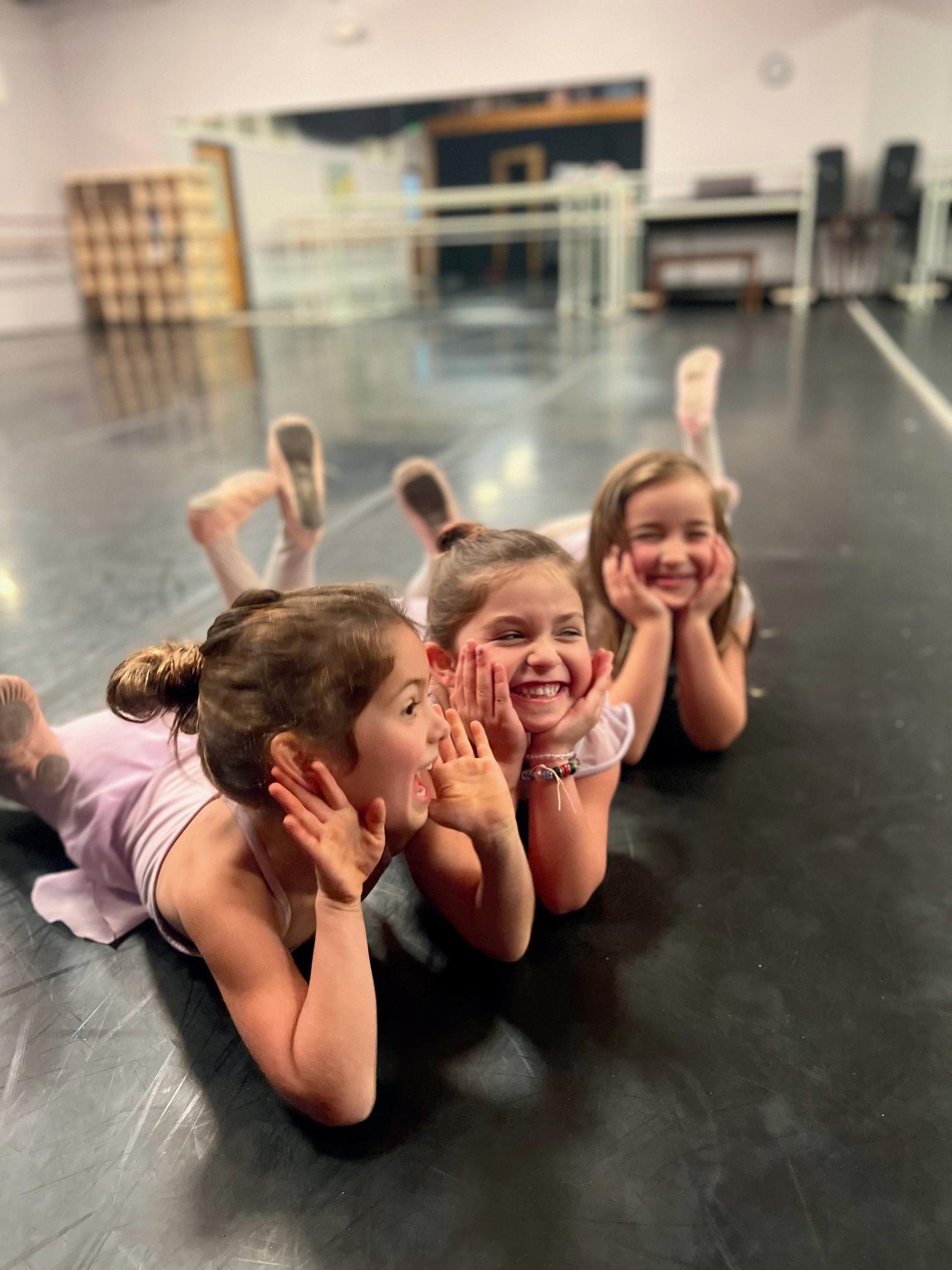
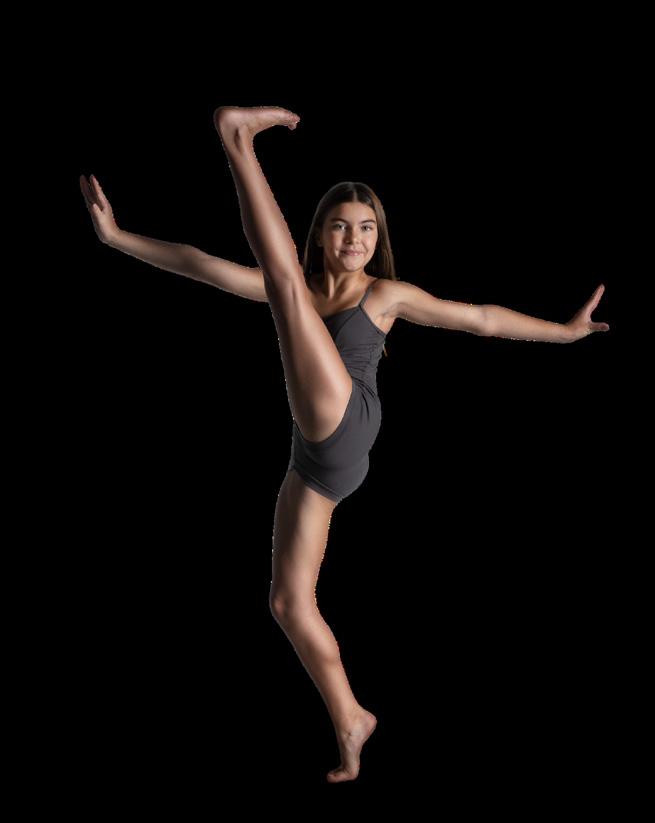
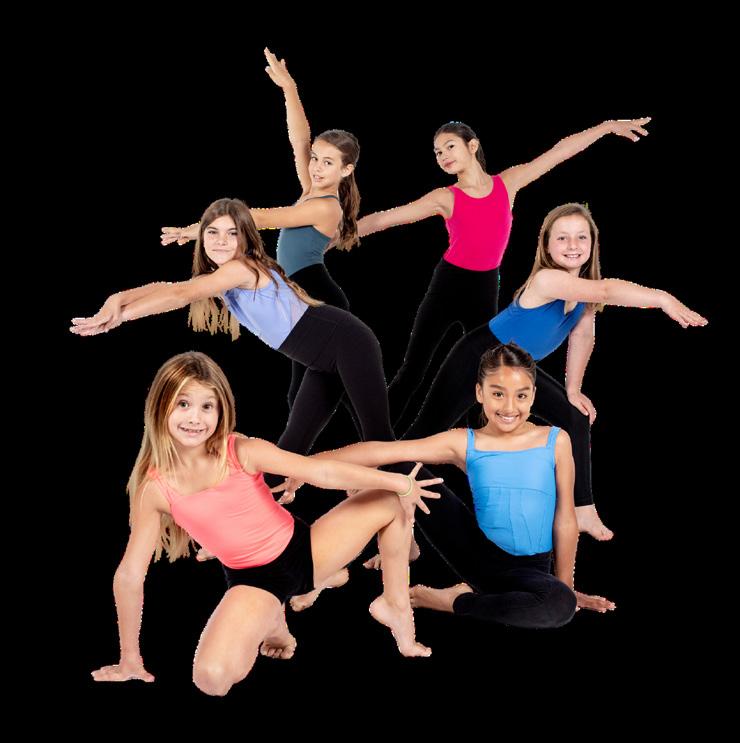
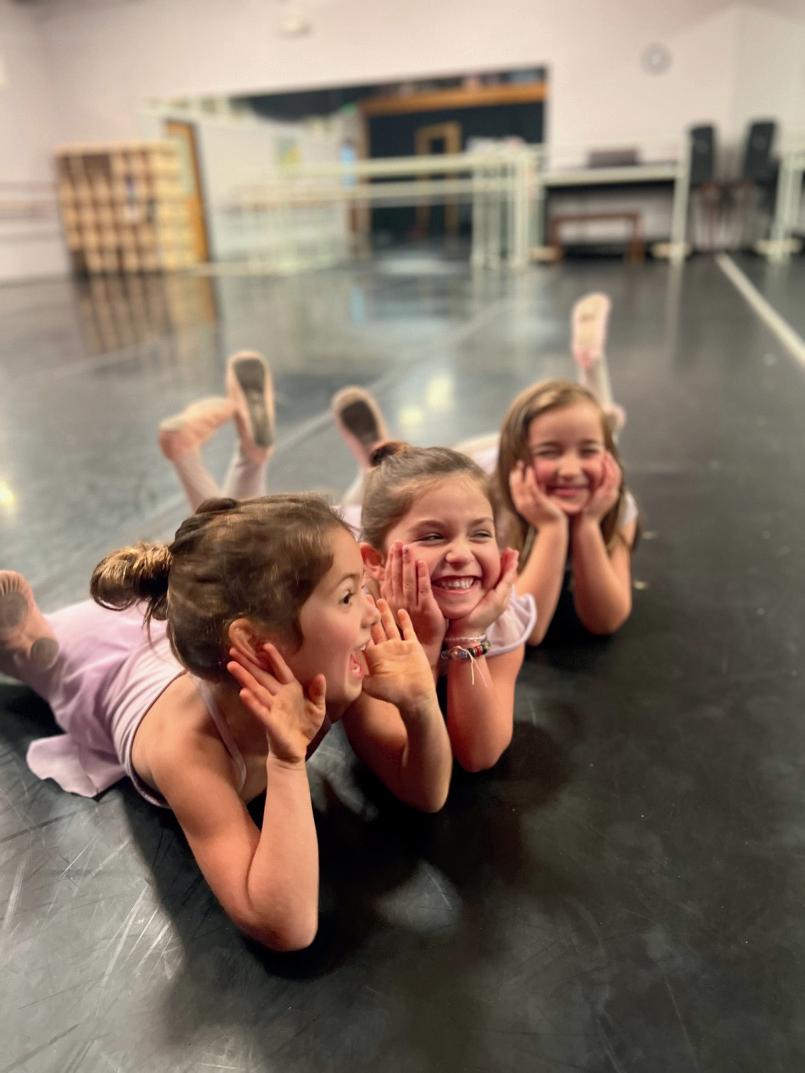
International Academy of Dance, home of Santa Cruz City Ballet, provides world class instruction in Classical Ballet, Tap, Contemporary, Lyrical, and Jazz. The studio is an encouraging and supportive community from ages two to a hundred and two. It is our mission to inspire students of all ages to develop a lifelong love of dance. Through choreography, balance, agility, strength and flexibility, we work with each dancer to hone artistry, technique, focus and musicality. We aspire to bring joy and generate growth in every class. We can’t wait to see you in the studio! Come see us on stage in Swan Lake: Wings of Desire at the Landing in Scotts Valley, the first week of June! Awarded Best of Growing Up in Santa Cruz 2023, 2024 & 2025, and First Place in the Lookout List inaugural year 2025!
Into the Heart of Nature
Tara Redwood School Campus, 5810 Prescott Rd, Soquel 831.462.9632
office@tararedwoodschool.org
tararedwoodschool.org/summer-camp/
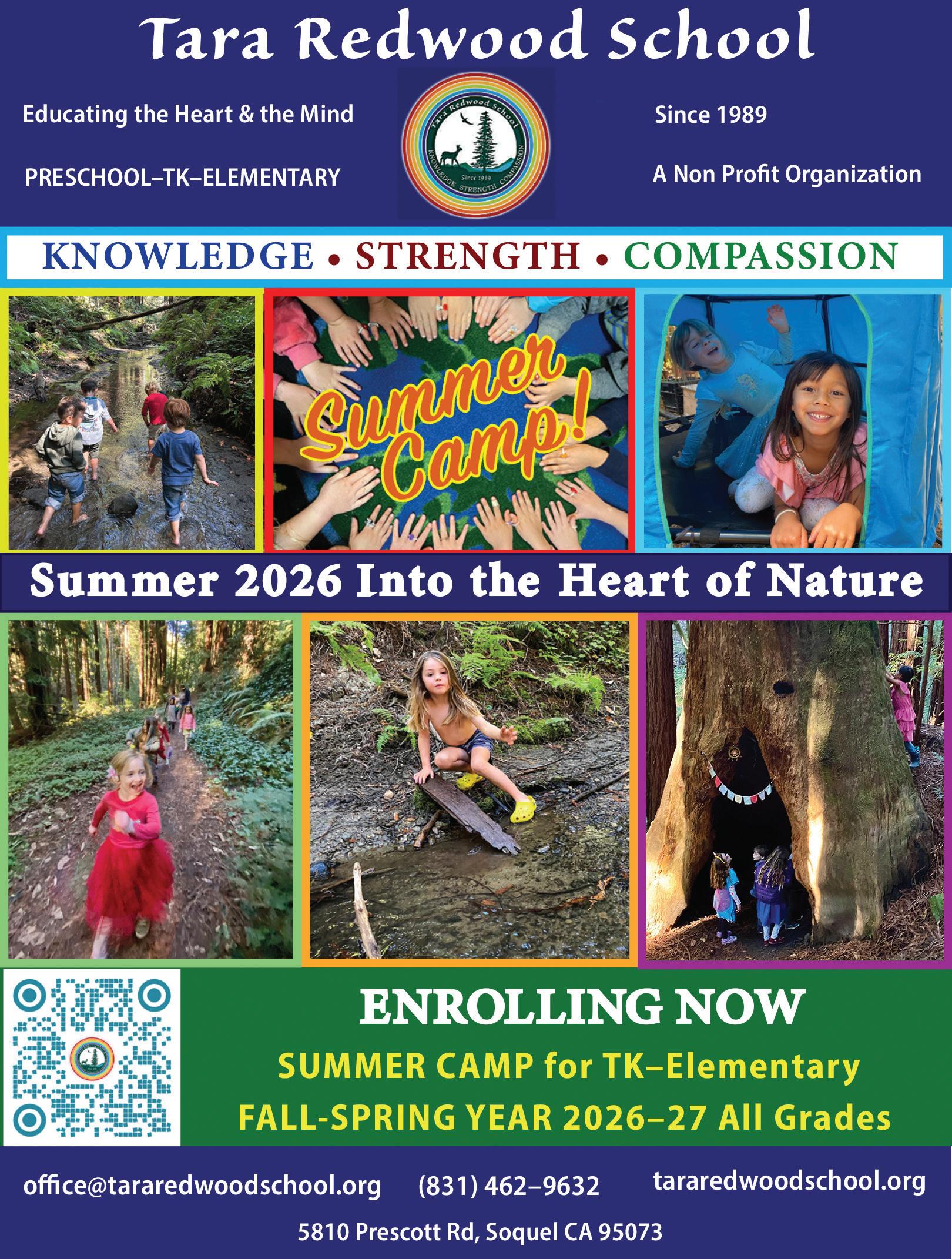
Located on 108 acres of Redwoods, oaks, and sunny meadows bordered by bubbling creeks, our big playground, a sunny clearing in the woods, will be the center of our camp activities of fun games, nature exploration, and nature-themed art. Each week we will focus on one of the essential elements that support all life; earth, water, air, and heat; explored through themes of the forest, ocean, earth, and the universe. As we learn more about the interconnectedness of our world, children will develop friendships, practice mindfulness, and learn how to care for each other, animals, bugs, and the environment we all share. 9am – 3:00pm, ages 4 - 8.
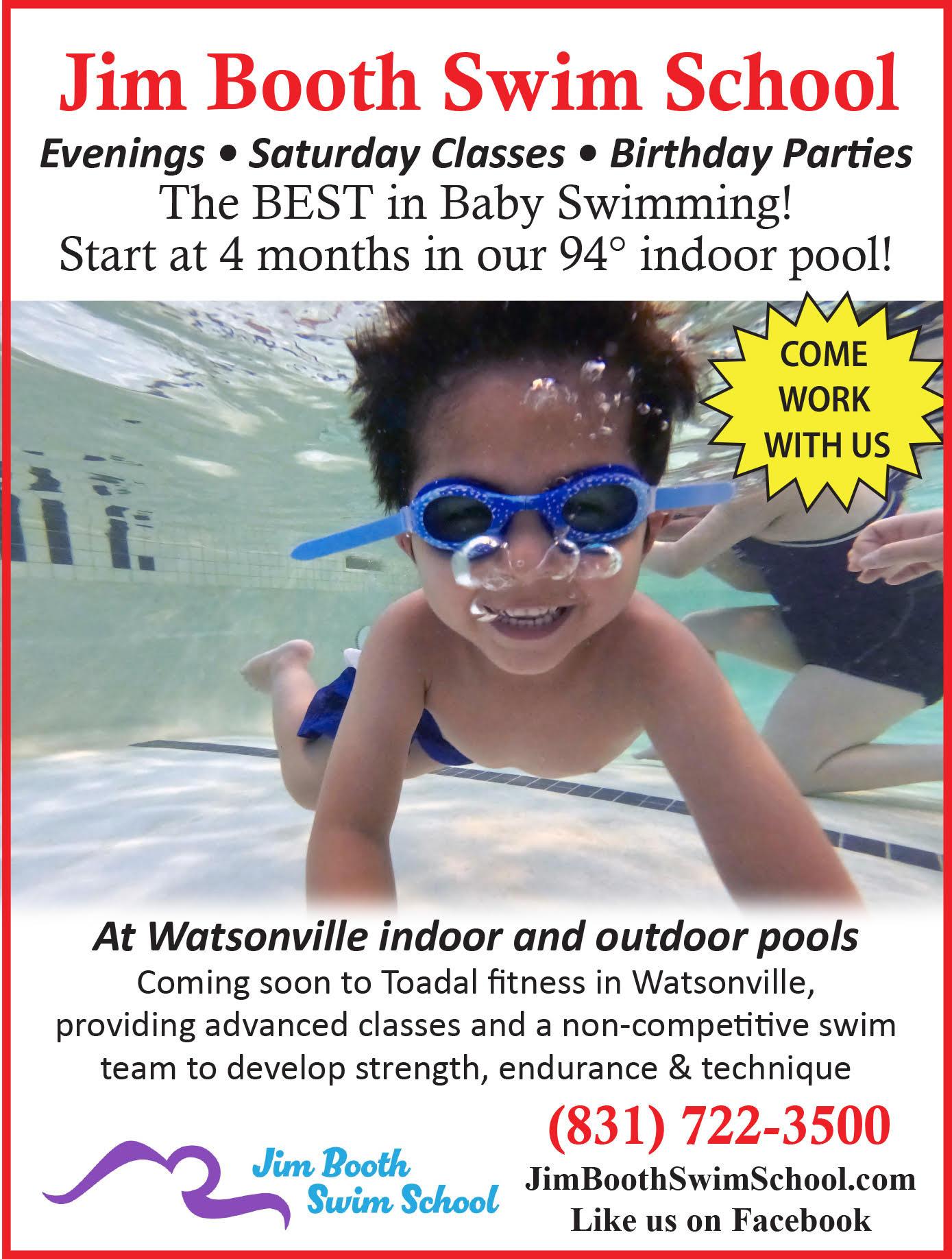
Jim Booth Swim School
Watsonville 831.722.3500
Jimboothswimschool.com
Be a water wonder! Lessons for all ages! From our Little Otters swim class for parents and their babies to our adult beginner class. The whole family can splash together at Jim Booth Swim School. Little Otters is a gentle introduction to our 94-degree indoor pool that will make you confident that you are guiding your infant to a happy water experience. Our lessons emphasize quality swimming in an exciting class taught by our caring, well-qualified teachers. Developmental swim team and advanced swim lessons will be offered at our outdoor pool located in Watsonville at Toadal fitness. The whole family can swim at Jim Booth Swim School!
Junebug’s Gym
3910 Portola Drive, Suite 2, Santa Cruz 831.464.BUGS (2847)
JuneBugsGym.com
June Bug’s Gym is a place where your child can experience a fun-filled adventure in movement. We have a caring, respectful staff that encourages every child to grow at their own pace while supporting social, emotional, and cognitive development. Our goal is to promote confidence and self-esteem in our students, open up their imaginations, and help them experience the joy of movement in an ever-changing environment designed to test their skills.
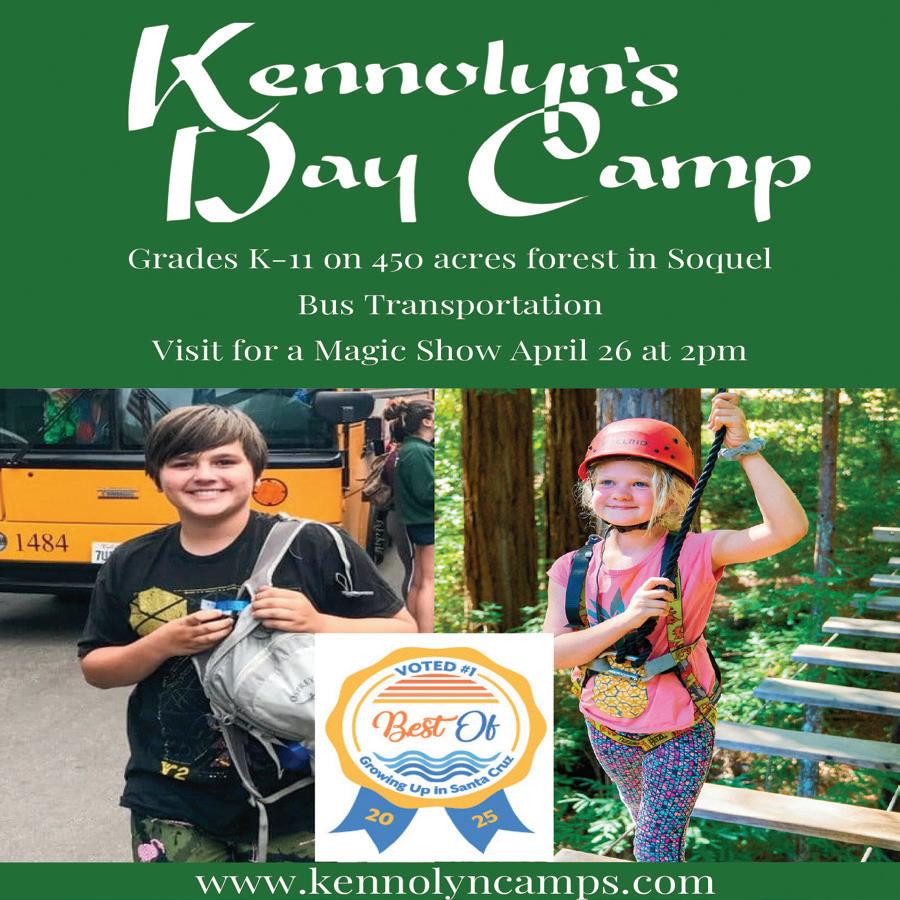
Kennolyn Day Camps
8205 Hacienda Lane, Soquel 831.479.6714
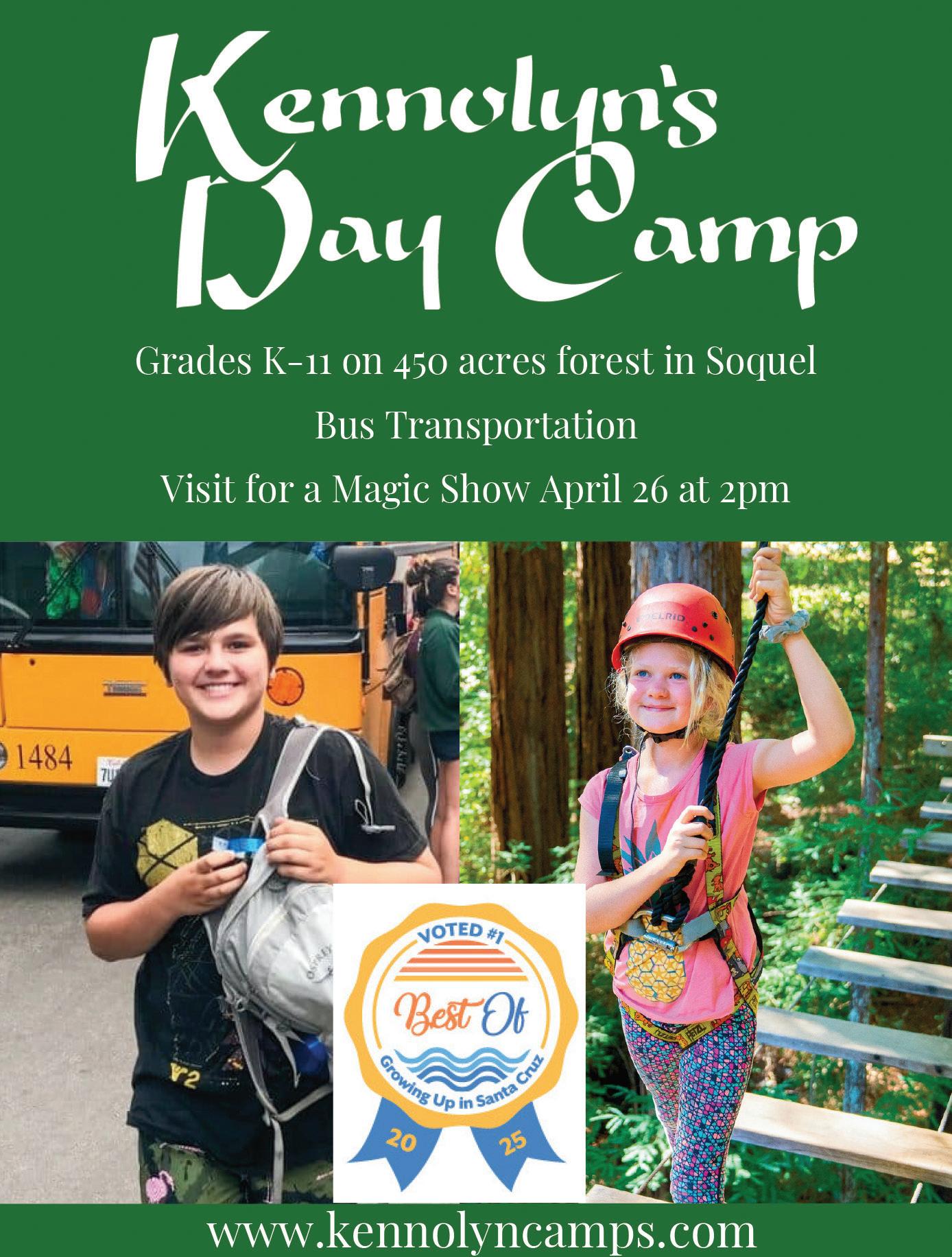
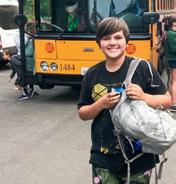
kennolyncamps.com/santa-cruz-day/ Ready to get your child away from technology and into a nourishing community in the great outdoors? On 450 acres of privately owned redwood forest only 4 miles from town Kennolyn Day Camp is just a short bus ride away. Your child will thrive in this fun, active, supportive environment. And after a day of exploring the fields, pond, and miles of trails, they’ll be happy-tired after each fun day! Nowhere else in the local region will you find a more complete, authentic summer day camp experience. Just ask your friends and neighbors.
La Madrona Athletic Club
1897 La Madrona Drive, Santa Cruz 831.438.1072
lamadronaclub.com
La Madrona Athletic Club is located in the beautiful Santa Cruz Mountains and remains a premier club for health and wellness, balancing a gorgeous facility with a family-friendly environment. Our summer youth programs are offered year around. La Madrona offers high-level instructional camps for tennis and swimming as well as an all-day sports camp in the summer. Summer sports camp is an outdoor camp that will provide children the opportunity to develop their sports skills, self-confidence, and self-esteem through fun games, swimming, and tennis activities.
The Santa Cruz Museum of Art & History 705 Front St, Santa Cruz 831.429.1964
info@santacruzmah.org
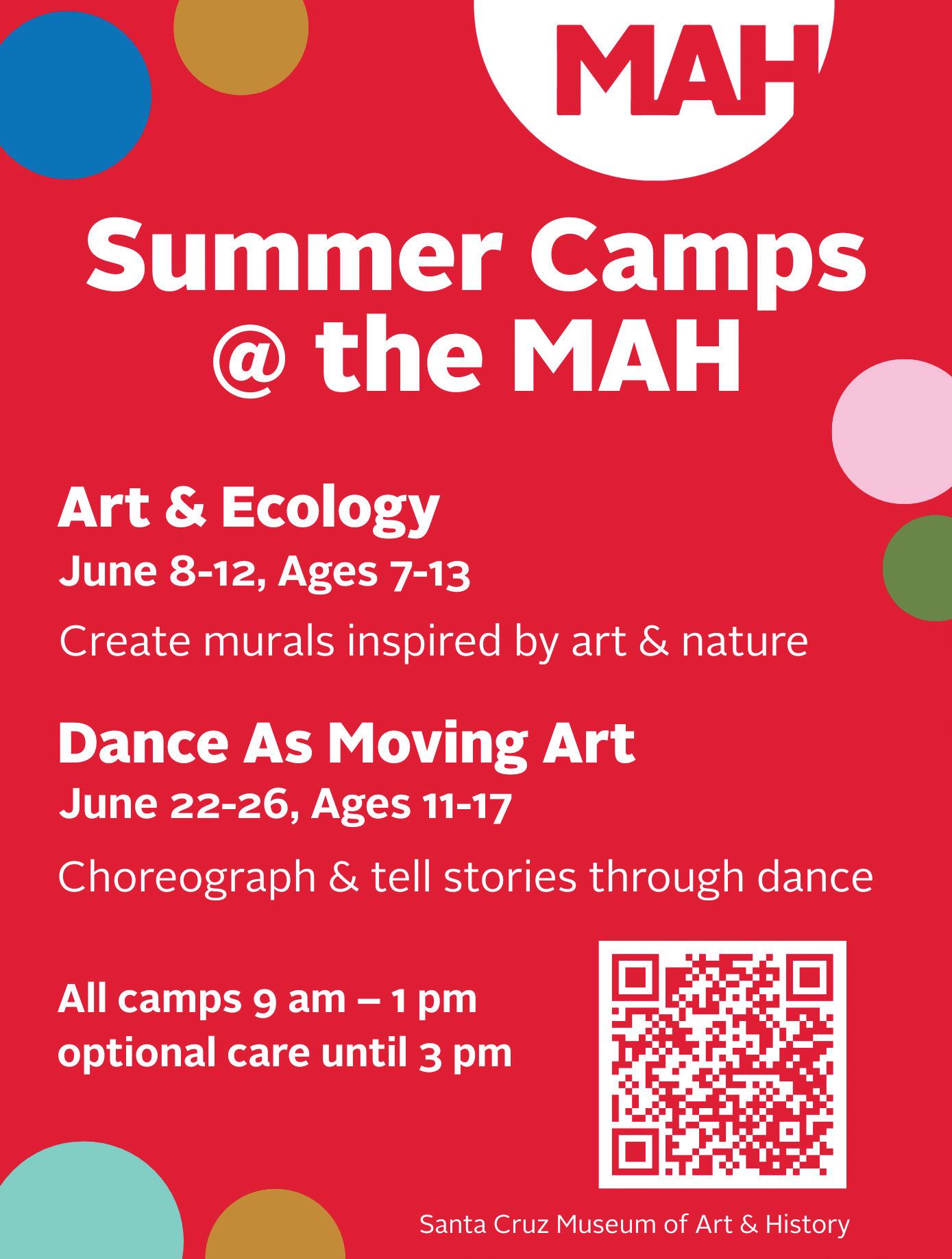
This summer, the MAH is offering two vibrant creative camps, each running for one week and filled with hands-on learning. Art & Ecology Camp, led by muralist Jesica Evanjelista, invites campers ages 7-13 to create murals inspired by art and nature. Dance As Moving Art, led by Motion Pacific Dance instructors Gabi Piazza and Kali Lucas, encourages teens ages 11-17 to choreograph and tell stories through movement. All camps run 9am–1pm, with optional care until 3 pm. Snacks and materials are included. Space is limited, reserve your spot today!
Mountain of Fun, Mount Madonna School 491 Summit Road, Watsonville 408.847.2717 mountmadonnaschool.org/summer
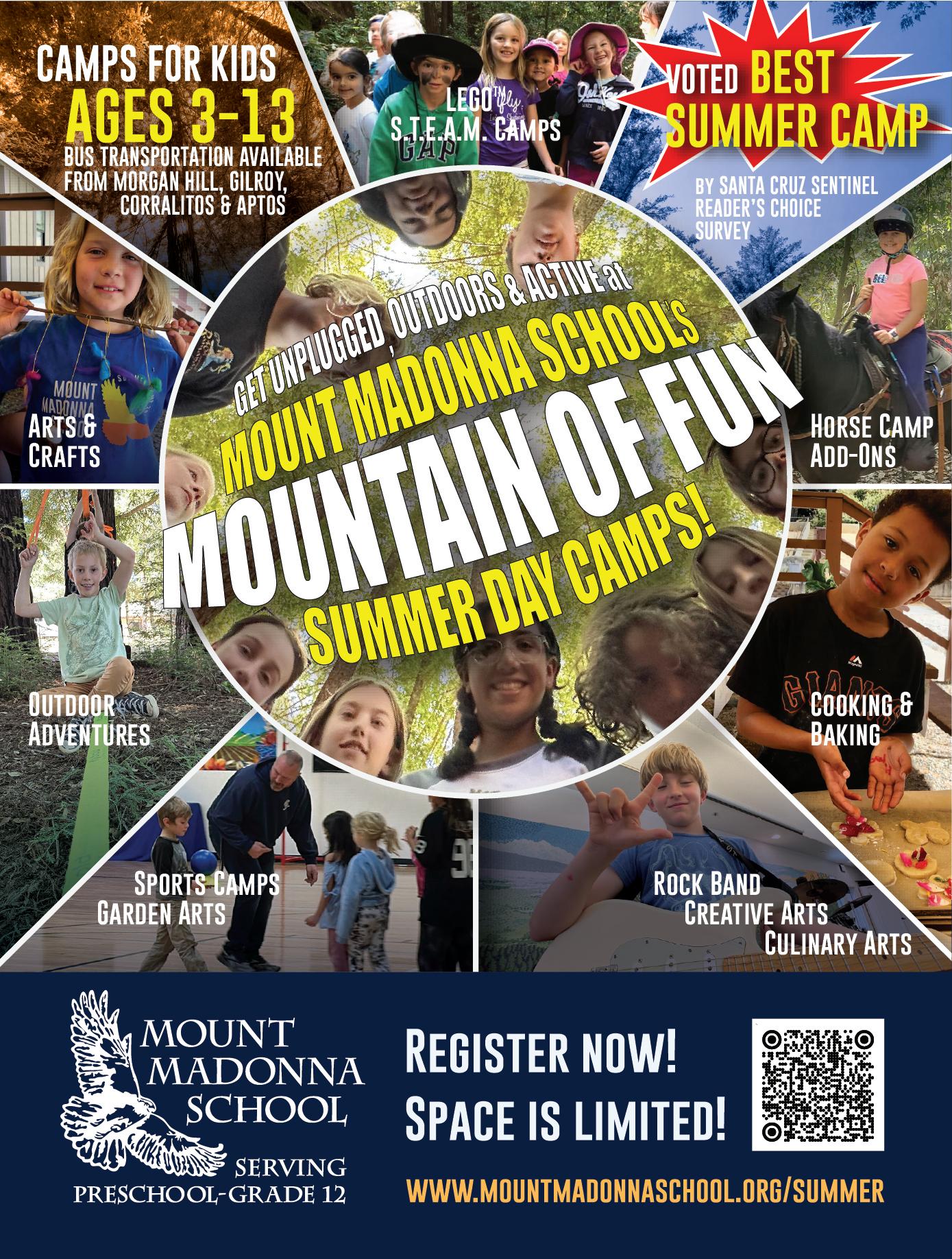
Summer day camps on Mount Madonna School’s 380-acre redwoodforest campus offering weekly summer camps: Nature explorers age 3-6, June 22-July 31, Mountain Explorers age 6-9, July 6-July 31, Redwood Explorers ages 9-13, July 6-July 31. Students enjoy arts and crafts, hiking, sports camps, STEAM projects, astronomy, team-building and an overnight campout for Redwood Explorers. Horse camp option available for campers 7+. Play in nature, cultivate relationships, build skills, and more – unplugged, outdoors, and active! Camps are Monday through Friday, 9am-3:30 pm. Transportation is available. Details and registration online at www.mountmadonnaschool.org/summer.
Music Together/MusicalMe, Inc.
Locations throughout Santa Cruz and Santa Clara County Call/Text: 831.332.9002 registrar@musicalme.com musicalme.com
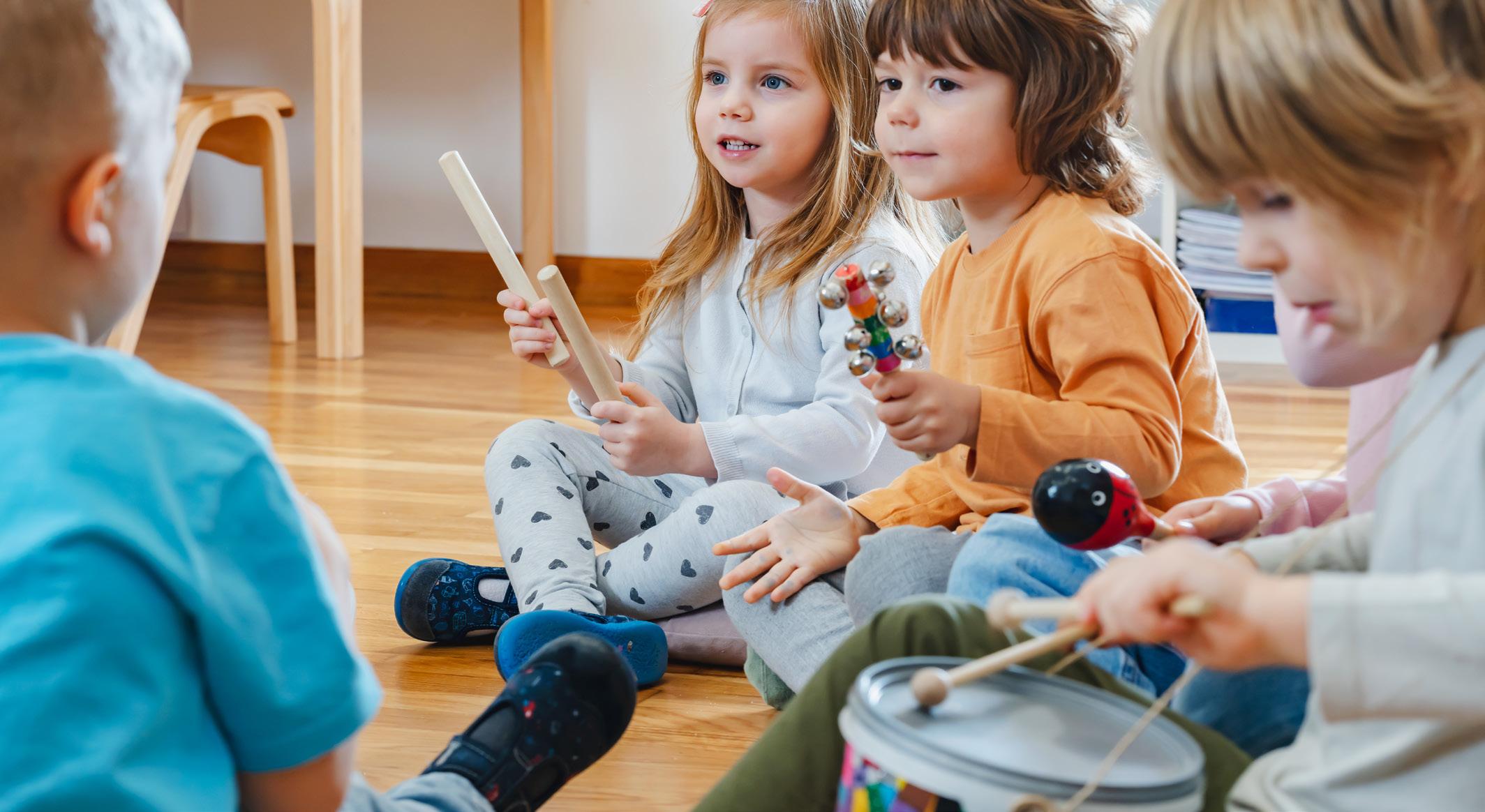
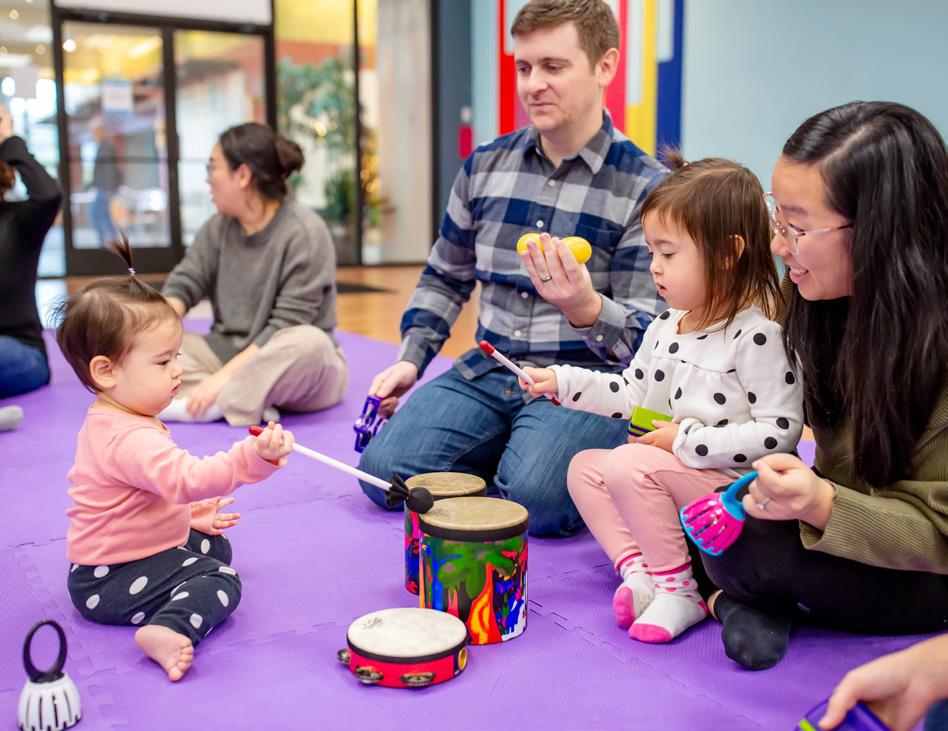
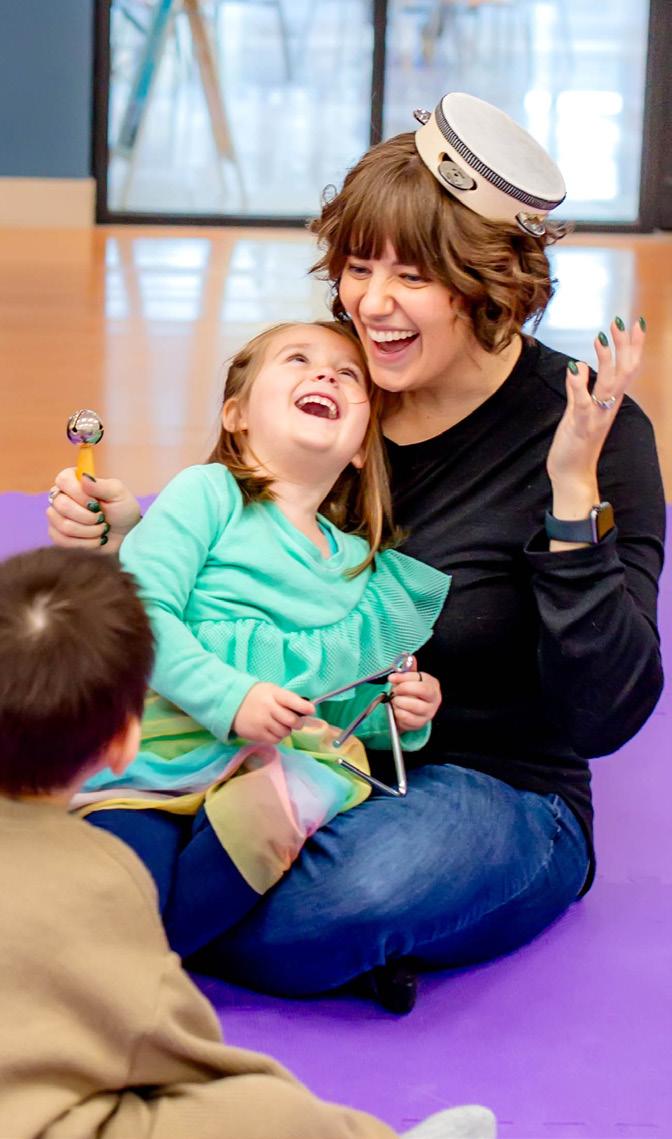
Come join the fun at our Music Together classes – where magical moments happen through playful, rich, and engaging music experiences! Let your little ones, from babies to preschoolers, explore their inner music maker alongside you, their favorite grown-up. Our music and movement classes are not only a blast but also provide essential support for your child’s early development. Summeronly special: Unlimited Bonus Classes! Join us now and create beautiful memories together.
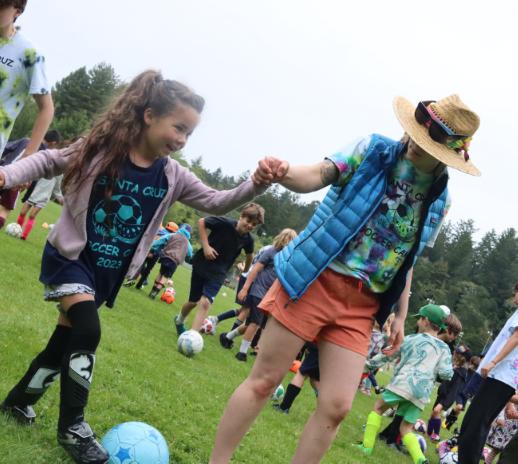
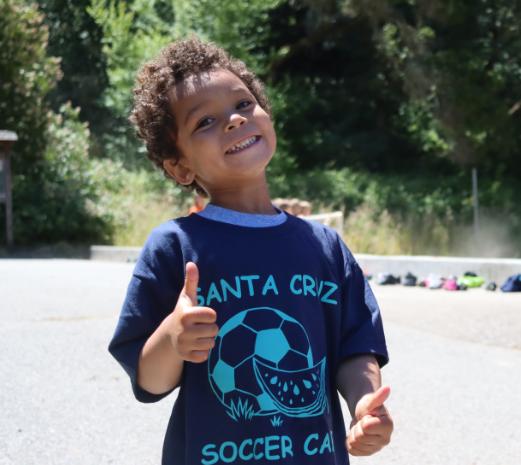
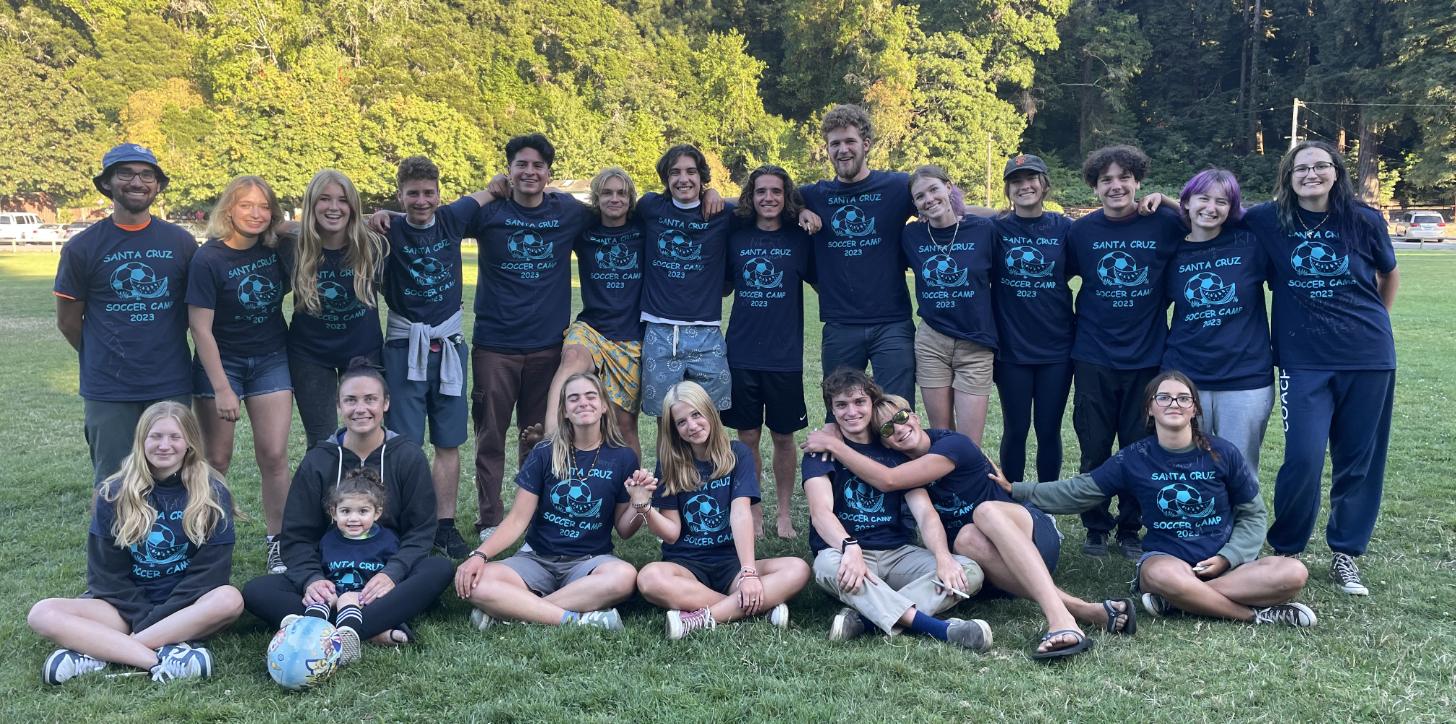
Celebrating over 40 years of camp, Santa Cruz Soccer Camp offers a fun and supportive environment where learning happens through enjoyment. Designed for kids ages 5 to 14, the camp features nine weekly sessions throughout the summer. With an average 7:1 camperto-coach ratio, participants receive personalized instruction focused on skill development, teamwork, and confidence building. Located among the redwoods at Delaveaga Park, campers enjoy an active outdoor experience in a beautiful natural setting. Join a long-standing Santa Cruz tradition dedicated to
Santa Cruz Waldorf Redwood Summer Camp 2026
Santa Cruz Waldorf School, PreK-8 2190 Empire Grade Santa Cruz 831.425.0519
santacruzwaldorf.org
Santa
scgym.com
info@scgym.com
sevendirectionsinfo@gmail.com sevendirections.org
1500 Mark Thomas Drive, Monterey 831.655.9386 summercamp@santacatalina.org santacatalina.org/summercamp
Redwood Music Camps info@CommunityMusicSchool.org CommunityMusicSchool.org
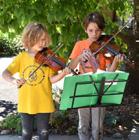
Does your child play an instrument? Let them take a deep dive into Celtic music with other young musicians this summer. They’ll have fun, learn new tunes, and become better musicians.
Redwood Music Camps offer excellent teachers, a supportive and fun environment, and the opportunity to make new friends. For players of violin, viola, flute, penny whistle, recorder, harp, guitar, mandolin, ukulele, accordion, small keyboards, cello, and bass. Teen Camp (June) is a one-week sleepover camp for ages 12-18. Kid Camp (July) is a two-week day camp for ages 7-13. Information and registration is online at CommunityMusicSchool.org.
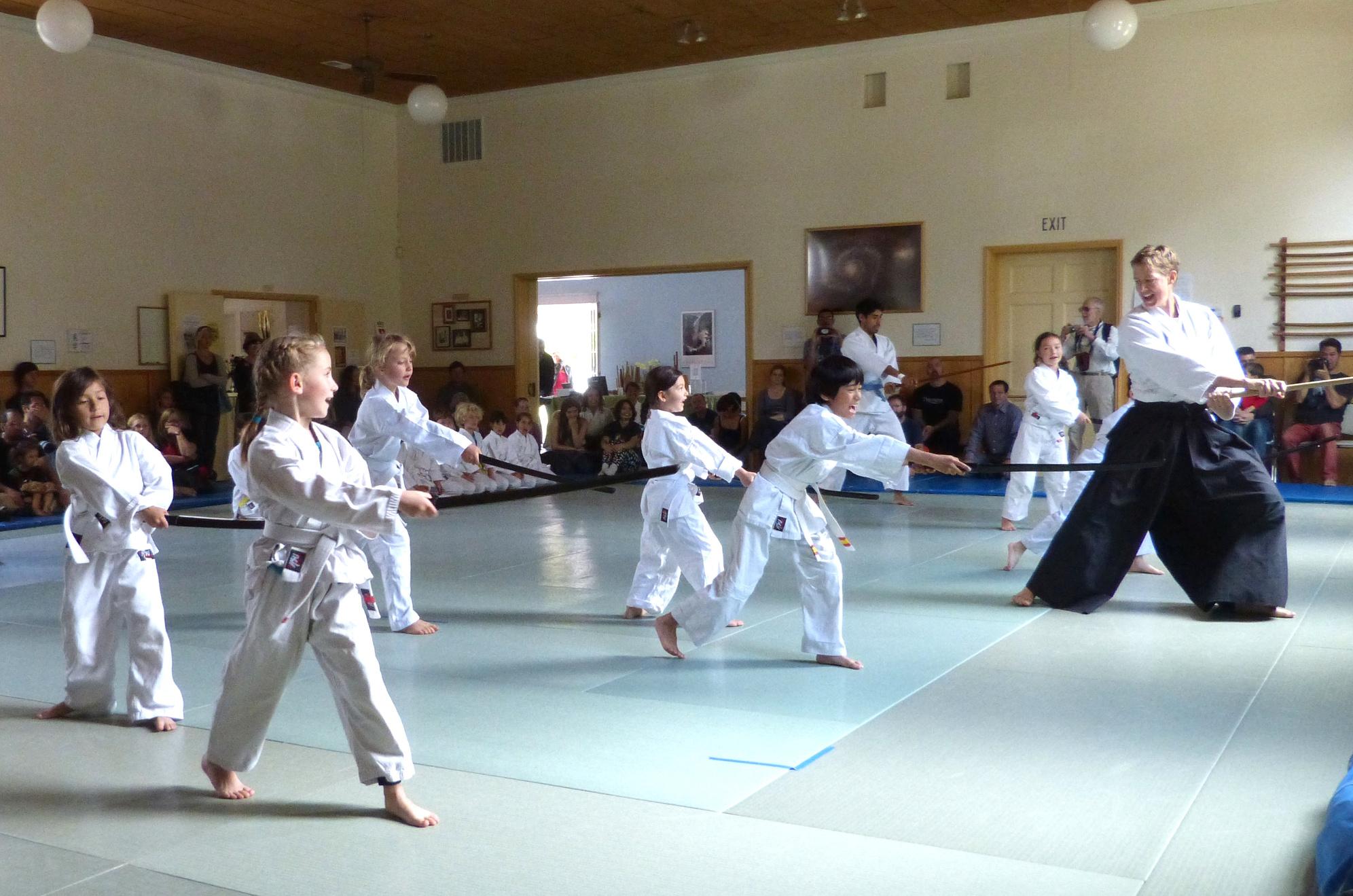
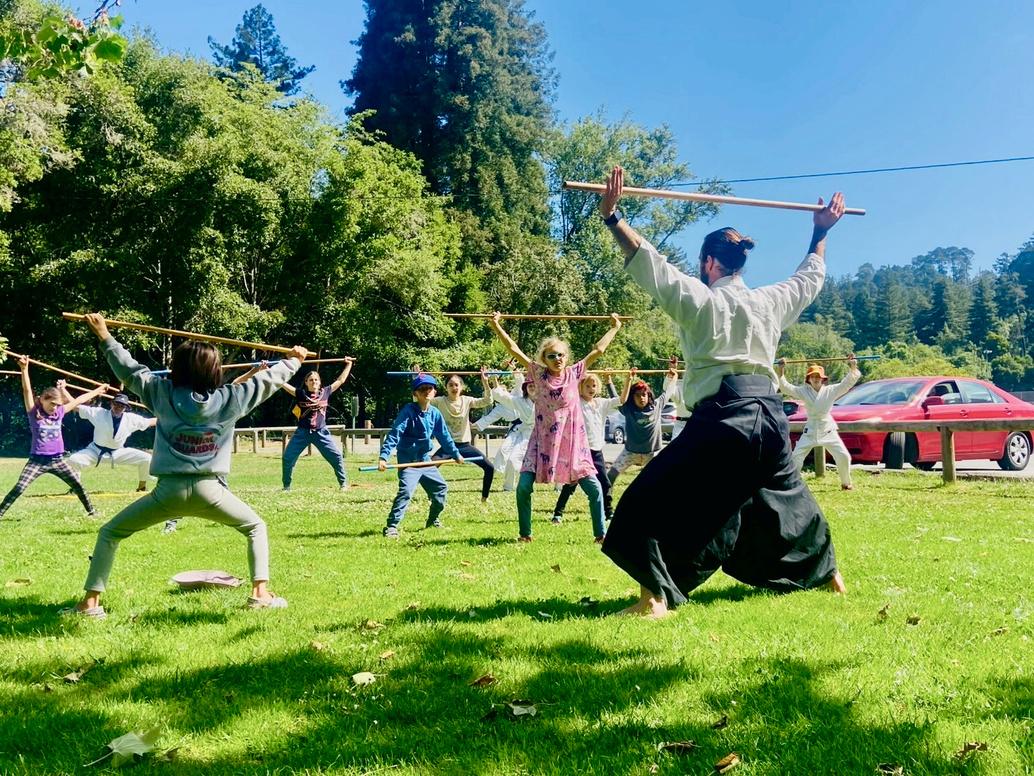
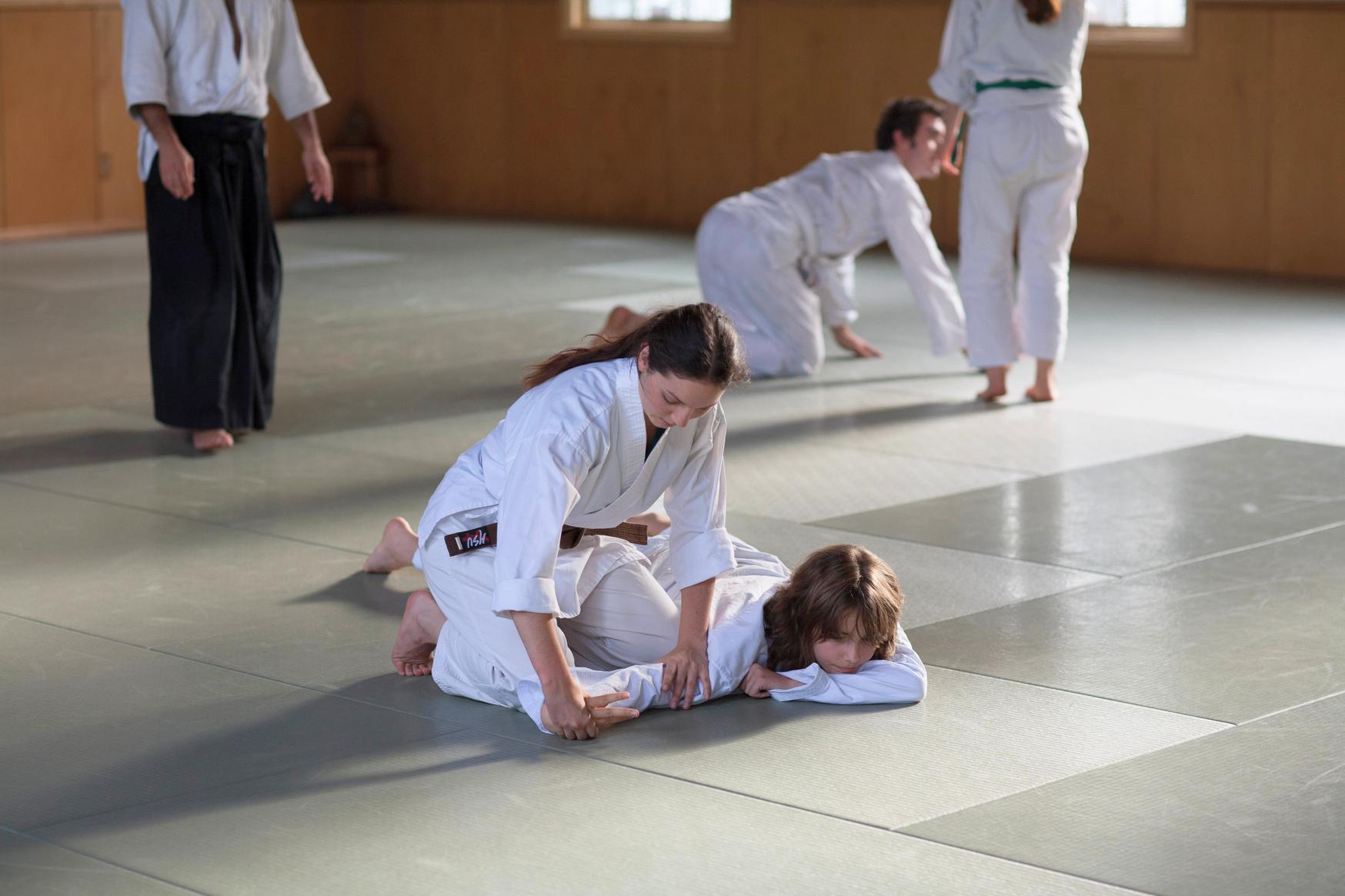
more. Your child’s experience is designed to develop mental focus, interpersonal skills, and the ability to create and maintain internal peace – all fundamental aspects of Aikido. Learn more at aikidosantacruz.org/summercamp
Alicia Telfer
Midtown Creative Studio
511 Swift Street, Unit G, Santa Cruz Aliciatelfer.com/summer
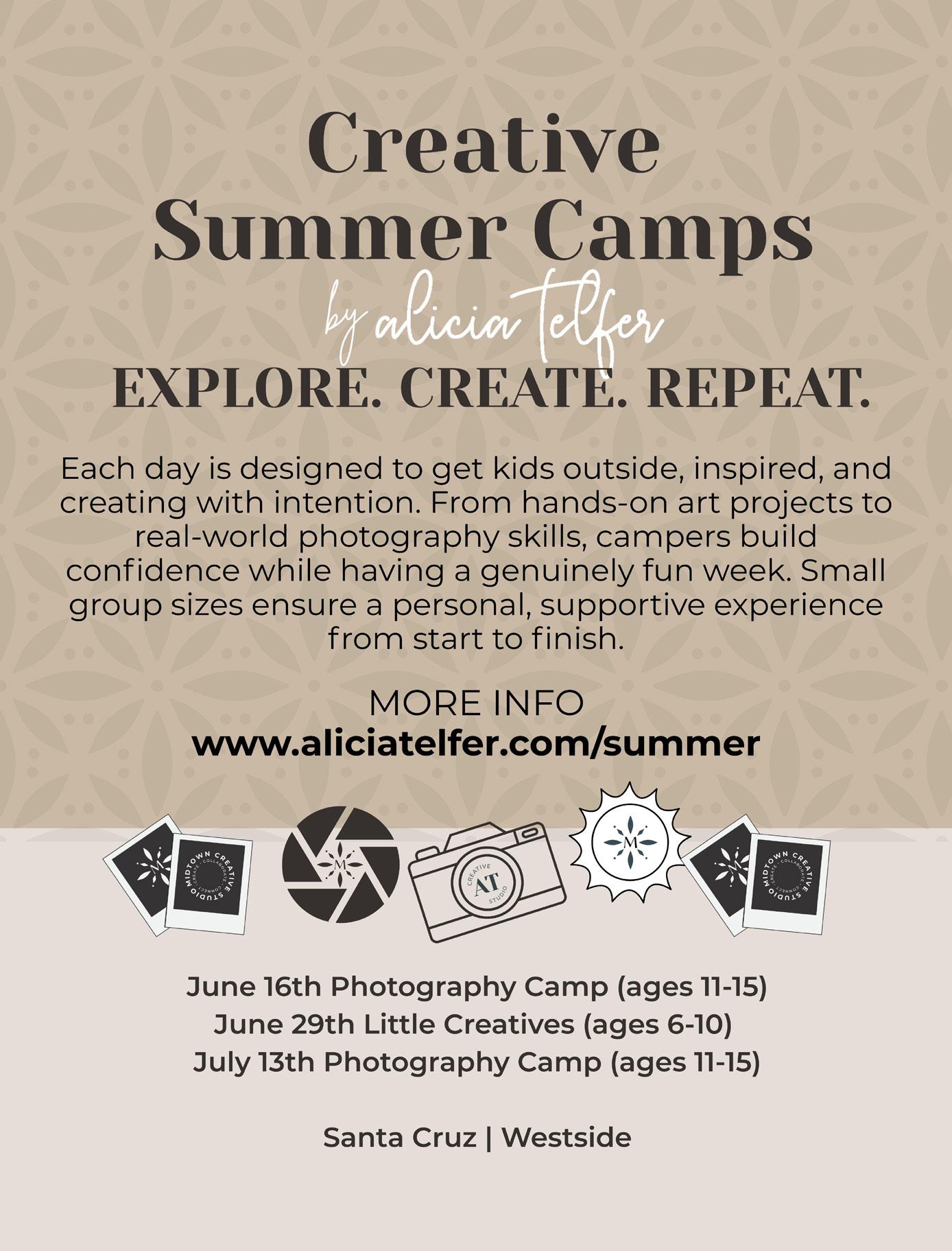
This isn’t your typical summer camp. It’s where creativity clicks, literally. In these immersive photography and art experiences with Alicia Telfer, kids and teens step into a space designed to spark curiosity, build confidence, and actually learn how to create. With a thoughtful, workshop-style approach, campers explore light, composition, and artistic expression while developing real foundational skills. Known for her patience and eye for detail, Alicia meets each student where they are and guides them toward their own unique style. If your child is ready to think differently, see differently, and create boldly, this is where it begins.
Be Natural Music Camp
740 Water St., Santa Cruz
831.515.2588
benaturalmusic.live/music-camp-santa-cruz
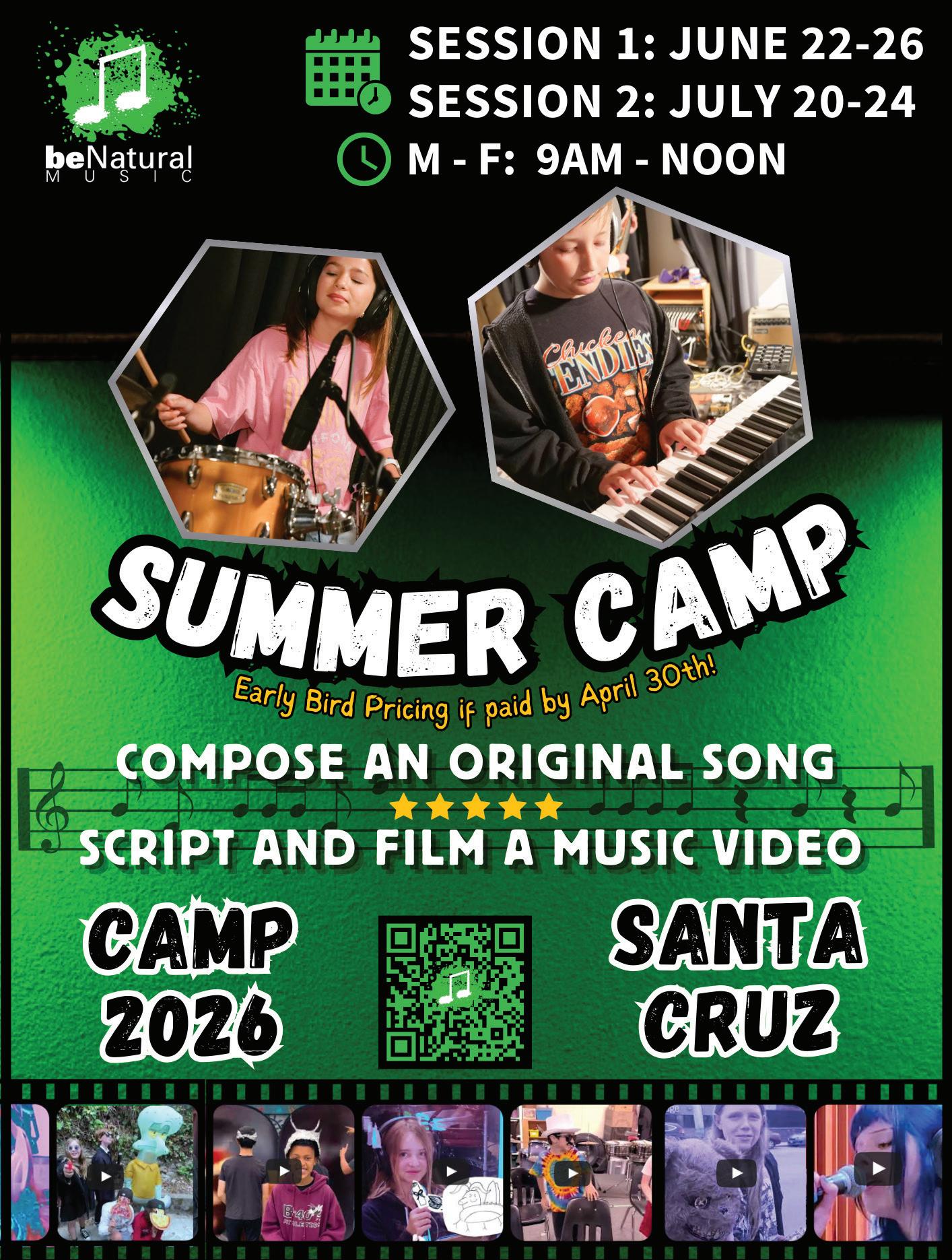
At Be Natural Music Camp, kids and teens compose original music, create music videos, and record their songs in a professional recording studio. After camp, these original songs are professionally produced and uploaded to SoundCloud. We transform the film footage into engaging high-quality music videos and showcase them on our YouTube Channel for everyone to enjoy! If your child has ever dreamed of composing and writing a script for a short film/music video, check out our summer music camp in Santa Cruz to turn that dream into a reality!
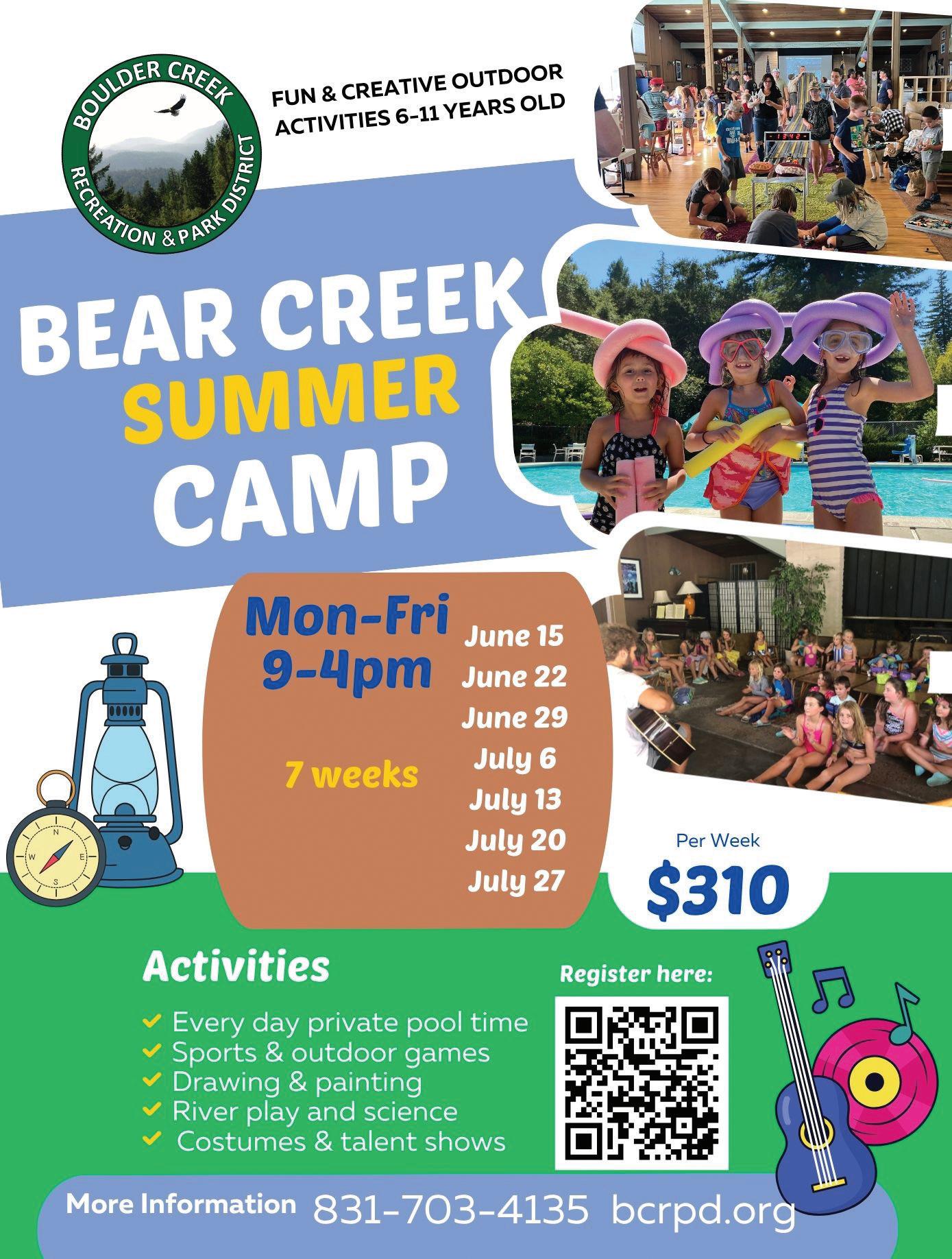
Boulder Creek Recreation Summer Camps
bcrpd.org/kids-classes
831.338.4144
BCRPD summer camps at Bear Creek Community Center offer an exciting, well-rounded experience for kids ages 6–11. Campers enjoy hands-on science, creative arts, sports, and outdoor games that build
teamwork and confidence. Daily pool time, river play, and guided hikes encourage exploration and connection with nature. Each day is filled with fun, learning, and new friendships in a safe, supportive environment. With engaging activities and caring staff, Bear Creek camps create lasting memories while helping kids stay active, creative, and adventurous all summer long.
Cabrillo Extension Summer Camps for Kids
6500 Soquel Drive, Aptos
831.479.6331
extension@cabrillo.edu
extension.cabrillo.edu/youth
Cabrillo Extension Summer Camps for Kids offers diverse, high-quality camps for developing young brains and growing young bodies. All camps are focused on specific content, so campers and families choose the camp based on their interest. Join us for cooking & baking camps, games design & coding camps, sports camps, music & art camps, or science & exploration camps. Camps available 6 through 17 years old. Choose half day camps, or create your own custom designed full day schedule! Dozens of new camps this summer, and plenty of returning favorites. Join us for one week, or all summer long!
My child loved this camp and hopes that it will be offered next summer!
-Stephanie Diaz, parent of Digital Music camper
Cabrillo Youth Chorus Summer Voice Camp
CabrilloYouthChorus.org
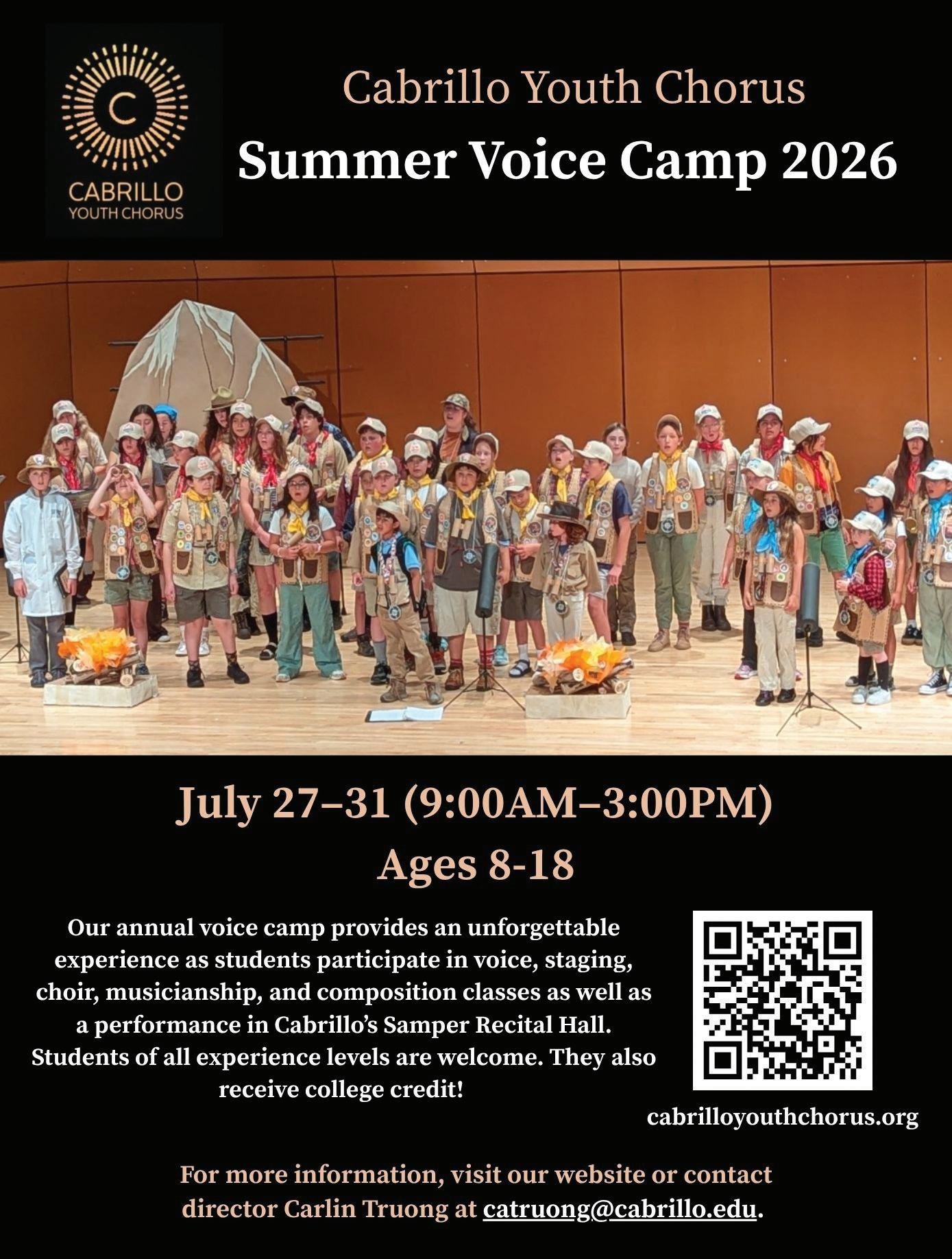
Join us for Cabrillo Youth Chorus’ Annual Summer Voice Camp at Cabrillo College (9:00am–3:00pm during July 27–31). Our week-long voice camp, designed for students ages 8–18, provides an unforgettable experience as students participate in voice, staging, choir, Orff, musicianship, and composition classes. Our camp culminates with a performance in Cabrillo’s Samper Recital Hall. Students of all experience levels are welcome. They also receive college credit! For more information, visit our website or contact director Carlin Truong at catruong@cabrillo.edu.
Community Mountain Gym
Santa Cruz Mountains
831.216.6186
communitymountaingym@gmail.com
communitymountaingym.com
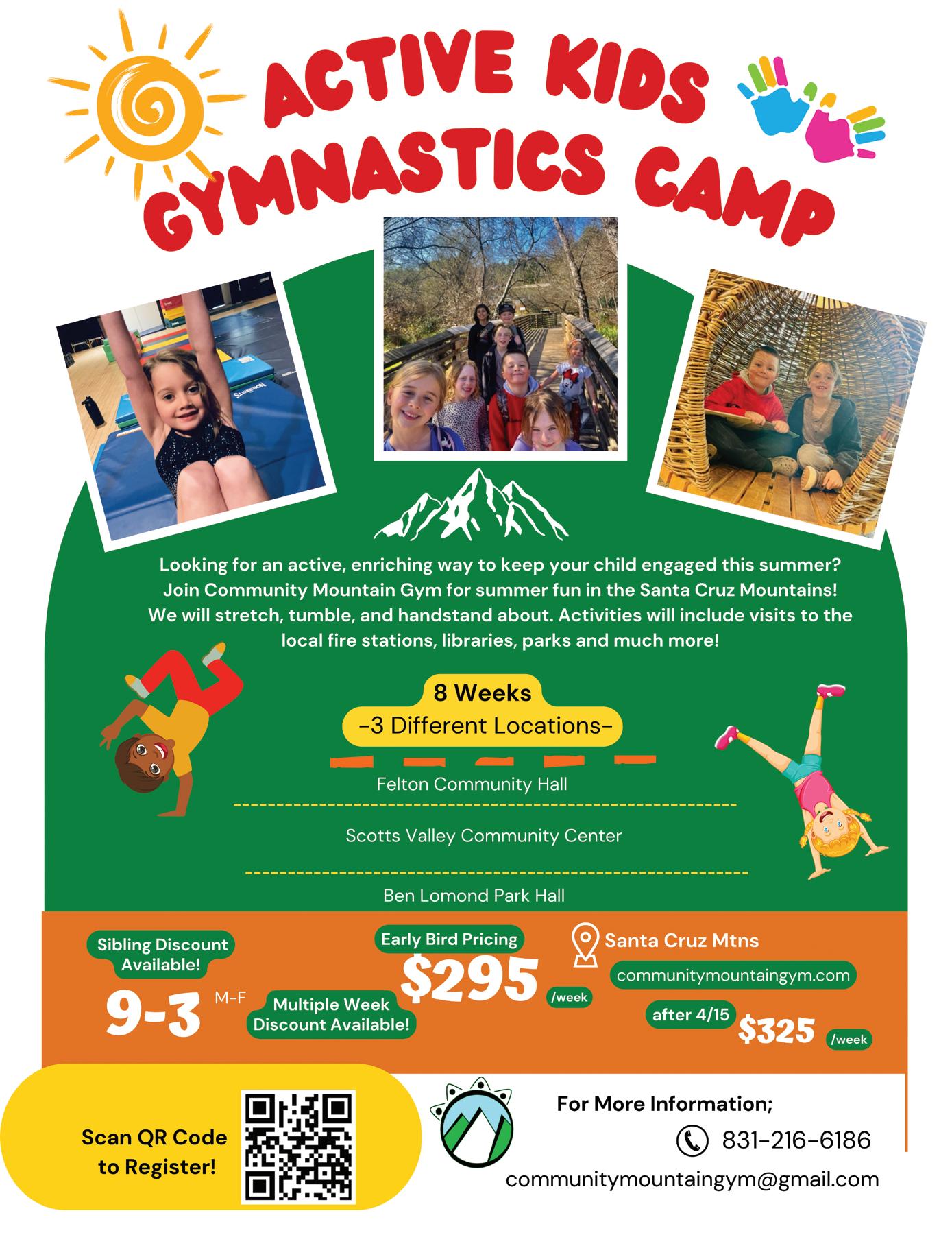
Ever wanted to learn a cartwheel or to try balancing in a handstand? Come tumble through summer with us! Campers will build foundational gymnastics skills using bars, balance beams, and a variety of fun equipment in a supportive, encouraging environment.
Community Mountain Gym is a mobile fitness program that brings the experience to local spaces throughout the Santa Cruz Mountains. Beyond gymnastics, each camp week includes art projects, simple science activities, and visits to local fire stations, libraries, and parks. Join us for an active, engaging summer filled with movement, creativity, and community connection!
Dancenter 810 Bay Ave., Capitola dancenterinfo.com
Ready to make a move this summer? Dancenter is thrilled to announce our vibrant summer session running from June 22nd to August 1st! Whether you are a beginner or a seasoned pro, we welcome all ages and levels to join our 6-week program. Experience a diverse range of styles led by our friendly instructors, including: Classical & Technique: Ballet, Pointe, and Contemporary Rhythm & Groove: Hip-Hop, Tap, and Jazz Specialty Styles: Acro Dance and Latin Visit us at 810 Bay Ave., Capitola, or register online. Start dancing your way to joy today!
Growing Social 408.806.4603 info@growingsocial.org growingsocial.org/
Growing Social serves students ages 5–young adults who could benefit from support with social-emotional learning (including perspective taking, emotional regulation, problem solving, flexible thinking, etc.). Serving those with Social Communication Disorder, Autism Spectrum, ADHD, social anxiety, and those without a formal diagnosis. Small, age- and skill-matched groups are led by Speech-Language Pathologists who specialize in teaching Social Thinking®. Farm animals, gardening, cooking, and other creative group activities are utilized to teach and practice social learning concepts. Social vocational and camp counselor opportunities for teens and young adults. Weekly school-year sessions and therapeutic summer camps available.
LPRT Little People Repertory Theater
Janinne Chadwick
832.334.4321
lprt.org
info@lprt.org
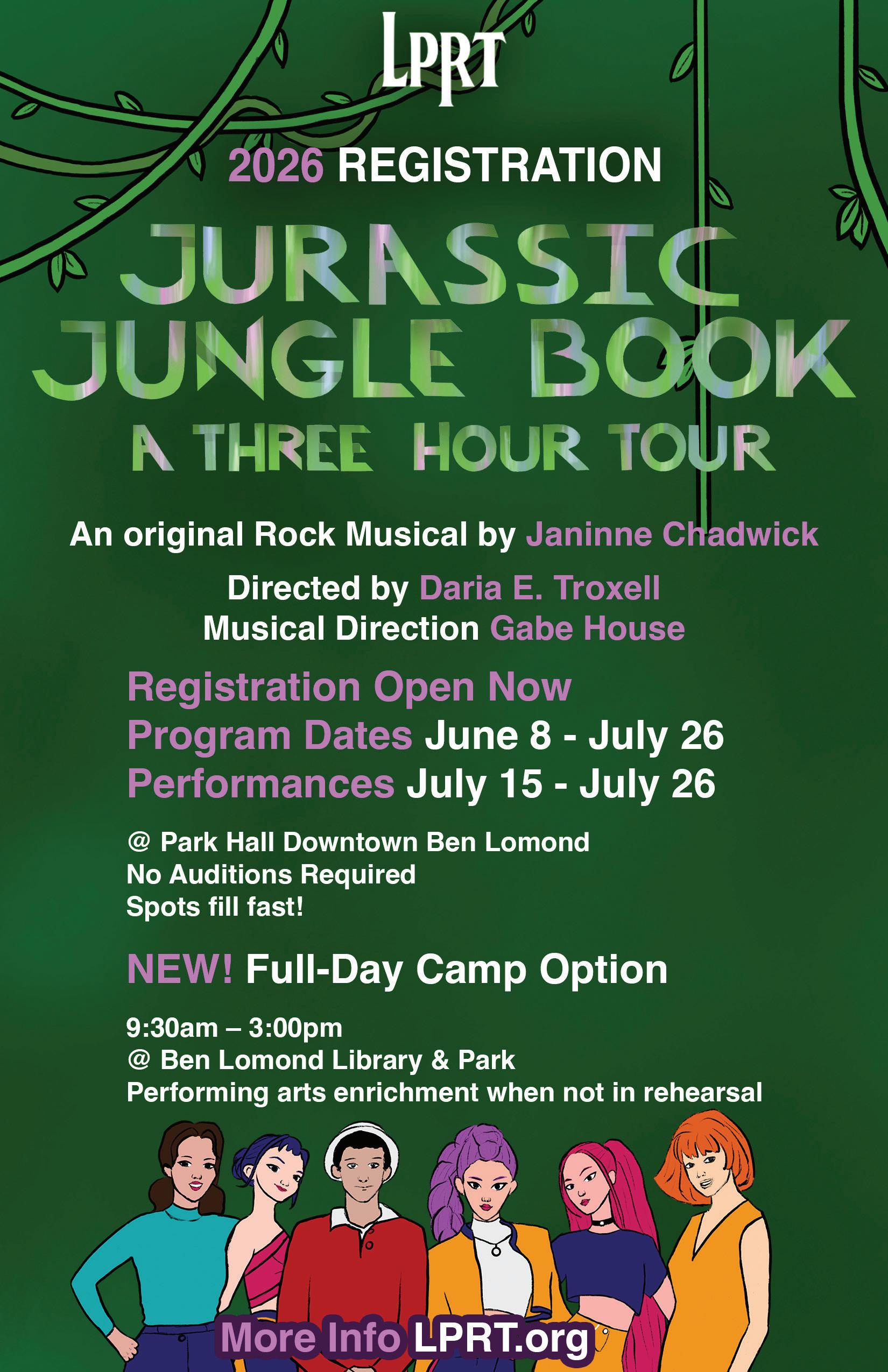
Little People’s Repertory Theatre has offered a one-of-a-kind summer musical theater program for ages 8–14 in the San Lorenzo Valley for over 50 years. Artistic Director Janinne Chadwick creates original rock musicals blending classic tales with contemporary stories and 20+ pop and classic rock parodies. LPRT combines a social-emotional camp experience with high-quality productions that regularly sell out. Strong parent and community involvement set it apart. Programs also include Creative Dramatics for children under 8 and a teen mentorship program.
Mathnasium of Aptos
24 Rancho del Mar, Aptos
831.621.5978
mathnasium.com/Aptos
Catch up…Keep up…Get ahead! We Make Math Make Sense. Mathnasium’s summer program is designed to help students strengthen their math skills in a fun, engaging environment during the summer break. It focuses on personalized learning plans tailored to each student’s needs, whether they are catching up, keeping skills sharp, or getting ahead. Students work with trained instructors who use Mathnasium’s proven methods to build understanding, confidence, and problem-solving abilities. Sessions include interactive activities, games, and rewards to keep students motivated. The program aims to prevent summer learning loss while fostering a positive attitude toward math, helping students return to school better prepared and more confident.
Santa Cruz SPCA
2601 Chanticleer Ave, Santa Cruz
831.566.3753
ruth@spcasc.org spcasc.org/camps/
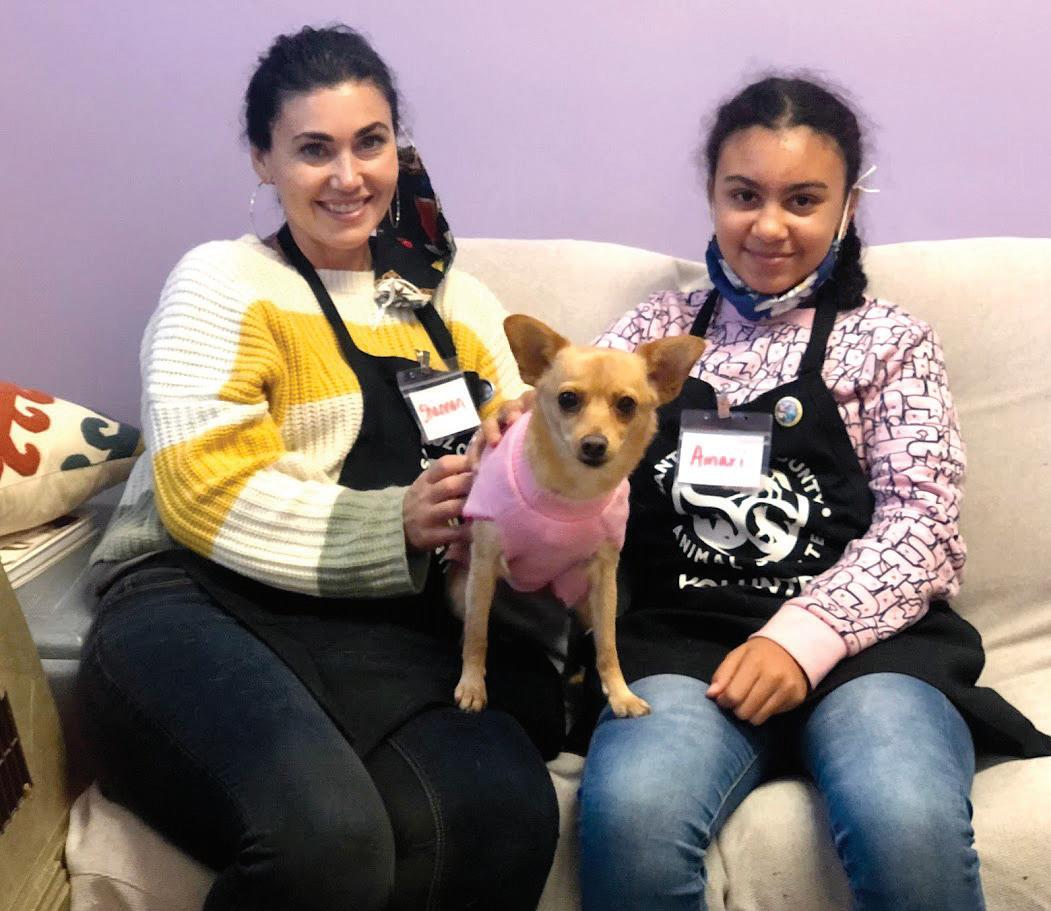
Discover the real-life superpowers of animals — from lightning-fast speed and clever problem-solving to incredible survival skills and heroic ways animals help us every day. Through games, creativity, and hands-on experiences, campers will learn how kindness, understanding, and compassion are the greatest superpowers of all. See website for dates!
WEST Performing Arts 831.425.9378 Santa Cruz westperformingarts.com
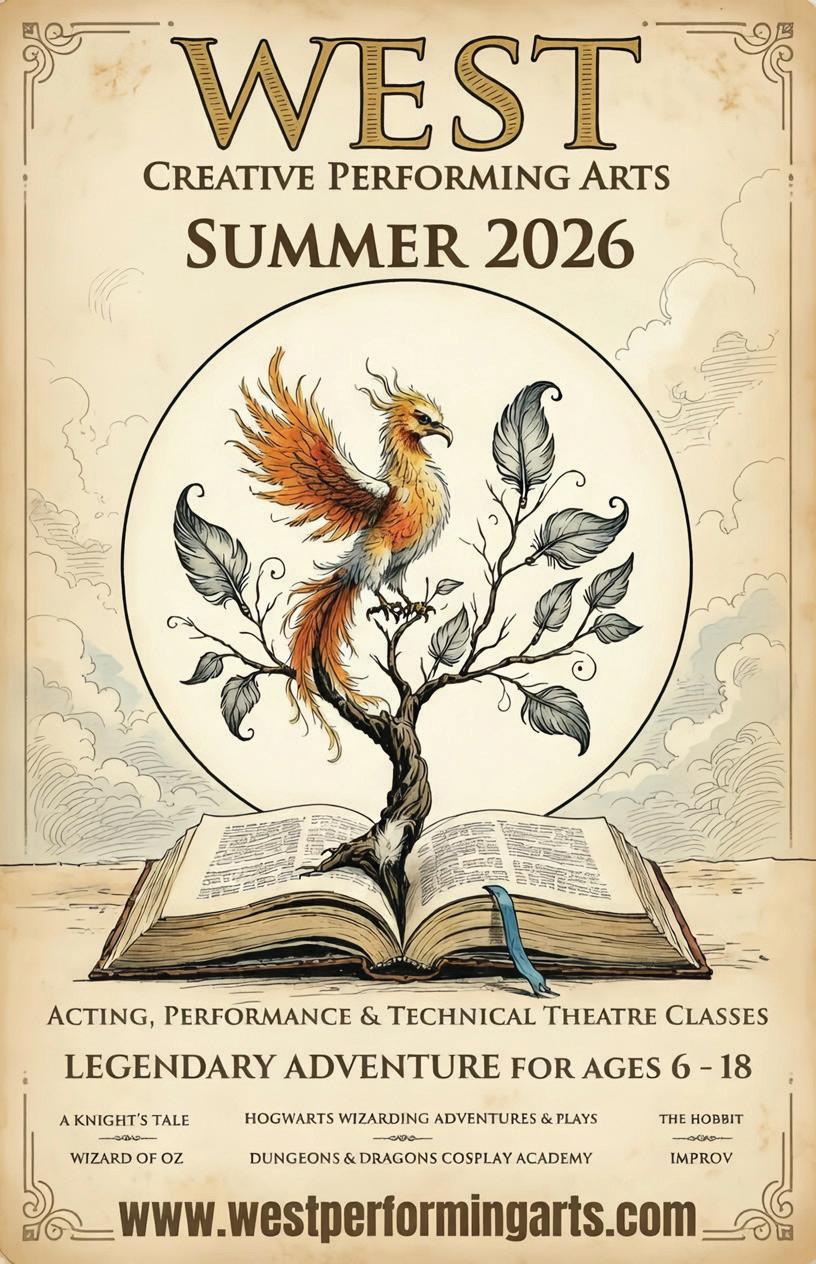
SUMMER 2026: LEGENDARY ADVENTURE! Get ready for next-level imagination with WEST Performing Arts — our inclusive, process-based youth theatre programs for ages 6–18. We meet every creator exactly where they are through literature-rich, fantasy-infused classes, camps, and original works. From immersive day camps to acting, performance, and technical theatre, we prioritize joyful collaboration and creative journey over polished product. Build confidence, empathy, and community. Come play — best over perfect. Always.
“WEST creates a space where kids can be themselves, take risks, and grow in confidence through theatre. Highly recommend for any child who loves stories and imagination.” ~ Parent of a WEST student
Tips to Avoid Common Parenting Traps
April is the Month of the Young Child and Child Abuse Prevention Month, so it’s a good time to reflect on what it takes to raise happy, healthy, resilient children who thrive throughout life. Parenting is a nonstop job full of joy, struggles, love, worries, pride and stress. Every parent I know, including myself, has needed guidance and reassurance at some point. Yet many parents are hesitant to seek support, out of fear of being judged or shamed. It shouldn’t be that way. I hope that one day seeking support for parenting becomes just as automatic as breathing air.
This monthly column provides tips for anyone who is helping raise children, based on the world- renowned Triple P – Positive Parenting Program, available to families in Santa Cruz County. If you have a question or idea for a future column, please email me at triplep@first5scc.org.
Dear Yesenia, I love my kids (2, 4) but am worried I’m not a good parent. I grew up with a perfectionist mother who criticized everyone – including herself – and wasn’t affectionate or encouraging. My dad lost his temper easily and yelled a lot. Now I’ve become a perfectionist and a yeller. It’s causing tension (and more yelling) between my husband and me. I want to change but don’t know how. Can you help? ~ Martha
Dear Martha, You are not alone! Being a parent is an important and challenging job. Most parents start this lifelong job unprepared, and even the most loving parents get exhausted, frustrated or caught in “parenting traps” that create more stress. Here are a few common traps and tips to avoid them:
Perfect Parent Trap: Many parents have unrealistic expectations of themselves or believe there is only one right way to parent. The pressure to be perfect tends to increase feelings of stress, disappointment, guilt and frustration. It can also lead parents to have unrealistic expectations of their children’s abilities or behaviors and teach children they need to be perfect, too.
Tip: Remember there is no such thing as a perfect parent or child. Set realistic expectations for yourself and your children, and allow yourselves to learn through trial and error. Get support from your partner, friends, family, neighbors or community agencies. If it’s difficult to ask for or accept assistance, just remember that everyone needs help with parenting at some point in their lives.
Escalation Trap: This happens when a parent says “no” to something – such as candy, screen time or a later bedtime – and the child responds by whining,
begging, arguing or having a meltdown. The child becomes louder, angrier or more argumentative until the parent gives in. This increases the chance that the child will repeat these behaviors in the future to they get what they want.
The escalation trap also can happen when a child ignores a parent’s instructions until the parent yells, criticizes or threatens the child with punishment. Although children might comply with their parents’ wishes, they often learn to ignore parents until the adult has become angry or frustrated. This can lead parents to believe criticism, threats and yelling are the only way to get their children’s attention.
Tips: Establish a few simple, fair family rules with your children. Talk about which rules are non-negotiable and in what situations the rules might be flexible. Discuss what the logical consequences will be if they choose not to follow the family rules. Give clear, calm instructions, then give your child time to cooperate. If needed, repeat your instruction once and be ready to follow up with the logical consequence. Take deep breaths so you can remain calm and matter-of-fact. This will help prevent you from resorting to threats, bribes, begging, yelling or giving in.
Leave Them Alone Trap. When parents ignore their children’s positive behaviors, those behaviors are less likely to occur. Or, if parents only pay attention to their children when they misbehave, children learn that the best way to get their parents’ attention is to misbehave or act out.
Tip: Spend brief and frequent quality time with your children each day. Talk, read, sing and play together. Give them attention and descriptive praise to show you notice their efforts and appreciate them for who they are.
FINAL THOUGHTS: Raising children is a lifelong job with many potential “traps” that make the job harder. A few positive parenting strategies can help you avoid those traps and make it easier to raise happy, healthy children who become independent, capable, welladjusted adults.
Yesenia Gomez-Carrillo is the mother of a 3-yearold daughter and the Triple P Program Manager for First 5 Santa Cruz County. Scientifically proven, Triple P is made available locally by First 5, the Santa Cruz County Health Services Agency, and the Santa Cruz County Human Services Department. To find a Triple P parenting class or practitioner, visit triplep.first5scc.org, facebook. com/triplepscc, or contact First 5 Santa Cruz County at 465-2217 or triplep@first5scc.org.
10 Calming Phrases Every Parent Should Know POSITIVE DISCIPLINE
BY COLEEN MURPHY
Spring has sprung! As a career preschool teacher, I have noticed a consistent trend when spring arrives with its push for new life. Things are bursting – flower buds, eggs, tree branches, births. Nature is waking up from winter’s slumber. I also see kids feeling the same energetic surge during this season. My schoolyard gets filled with kids running, whooping, and testing their physical limits. And on a windy day…forget about it! Children fully embody the swirling energy like a wind-blown pile of leaves. Those kids are right on the edge, ready to push off into kindergarten soon, and high school seniors are also soon to launch into the next big stage of life, as is nature’s way.
Growth and excited energy, along with eager and anxious feelings, can bring bouts of dysregulation in our kids. This is a time, more than ever, to have those go-to phrases on the tip of your tongue when you are the target of snappy, demanding, rude, disrespectful, out-of-sorts behavior.
POSITIVE DISCIPLINE/POSITIVE DISCIPLINE
Social media is quite a monster to tame. Although it has made us highly distractible, it has also created an avenue for important information to be shared, specifically, parenting information. On Instagram (yes, I scroll sometimes), I have been so pleasantly surprised at the high level of parenting advice. Kristen @ Wildlyabundantmom is one such woman who shares sound advice based on mutual respect and calm leadership. The training and education I received through Positive Discipline aligns with many parentadvising Instagram posters, but especially this mom.
When Positive Discipline Association founders Jane Nelsen and Lynn Lott settled on a name, picking something generic was intentional. It’s an inclusive name. Whether the words are capitalized or lowercase, they both share a focus on discipline rooted in an authoritative parenting style that’s neither too permissive and lacking accountability, nor too controlling and lacking emotional connection. This mom may not have been trained in Positive Discipline; nonetheless, she shares discipline guidance that is positive (as well as completely awesome in my book)
10 ONE-LINERS CALM LEADERS SAY
Now that spring is here, and your kids may be springing forth with wild energy, angry refusals, and rude comments (because they are immature, still learning what respectful behavior looks like, and curious where the boundaries are), here are quick and easy things to say courtesy of Wildly Abundant Mom’s post dated October 12, 2025.
But first!... saying these phrases isn’t enough. Pick a neutral tone, one that an airline pilot uses – calm, clear, and direct. You can be firm if need be. You
can be gentle if need be. And you can be both. Assess the situation, know the child’s temperament you are speaking to, and pick your tone accordingly. Resist matching their tone and instead, model respect.
1.“I’ll listen when you can say it respectfully.”
2. “Let’s take a breath and try that again.”
3. “I hear you. You don’t want to. Tell me more.”
4. “You’re allowed to be upset. You’re not allowed to be unkind.”
5. “We can figure this out together when you’re calm.”
6. “Try that again with the tone you’d want me to use with you.”
7. “I won’t argue. Let’s pause and come back to this.”
8. “I see this is hard. Want help or space first?”
9. “I know you don’t feel like it. Let’s start small.”
10. “I understand you don’t want to. This isn’t up for debate, but I can help you figure out how to start.”
The post ends with such wise words… “Motherhood (or Fatherhood) isn’t about never getting triggered. It’s about having the tools for when you are.” Wish I’d written that!
BE THE MATURE ONE IN THE RELATIONSHIP
Having quick, go-to phrases like these on hand, posted on your wall or fridge
for easy access, will help you keep your composure. In a nanosecond, our brains will rush to a nasty reaction to the rude, resistant behavior. And now there will be two 5-year-olds or two 16-year-olds yelling at each other as the adult lowers their maturity level to that of their child. Instead, grab a couple of tools to apply to keep you strong and steady in the leadership position, maturely managing your own emotions.
Tool #1: Pause. All you need is a second
to stop a reaction so you can switch to a response
Tool #2: Breathe. One slow breath signals to the brain to stay relaxed, to know this isn’t an emergency. Just some back-talk.
Tool #3: Pick a phrase or two listed in this article. Don’t need to come up with it. It’s already there for you to use.
Tool #4: When caught up in a reaction, disengage. Return when your level of anger or annoyance has gone down several notches.
Tool #5: Have appropriate expectations. Don’t expect kids to make mature choices at all times. Don’t expect yourself to make mature choices at all times, but always be working toward it. Grant your kids and yourself grace when you both miss the mark. Apologize for your part.
Being the more mature one in a heated situation is no easy task. Especially if this was never modeled in your childhood home. When yelling, shaming, and belittling were the norm for you as a child, this may be your go-to reaction when you become a parent, despite the desire to do it differently.
It will take work and dedication for us all to show up respectfully in the face of disrespect. Lucky for us, our kids will offer us lots of opportunities to practice on a daily basis. Day by day, we will work toward imprinting onto our kids what emotional maturity looks like, what calm leadership looks like, what unconditional love looks like.
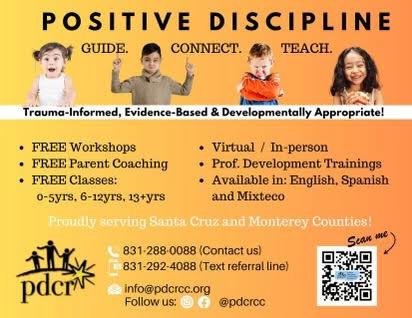
Colleen Murphy is a credentialed adult ed teacher, a Certified Positive Discipline Trainer at Positive Discipline Community Resources (www.pdcrcc. org), a preschool teacher at Soquel Parent Education Nursery School, a parent coach (fromtheheadtotheheart. com), and in healthy relationships with her two grown kids.Catch her interviews on Lost or Found - Apple Podcasts with Dr. Michelle Choi.
Downtown Santa Cruz
May 2 | Noon to 4pm
BY SHIRI GRADEK
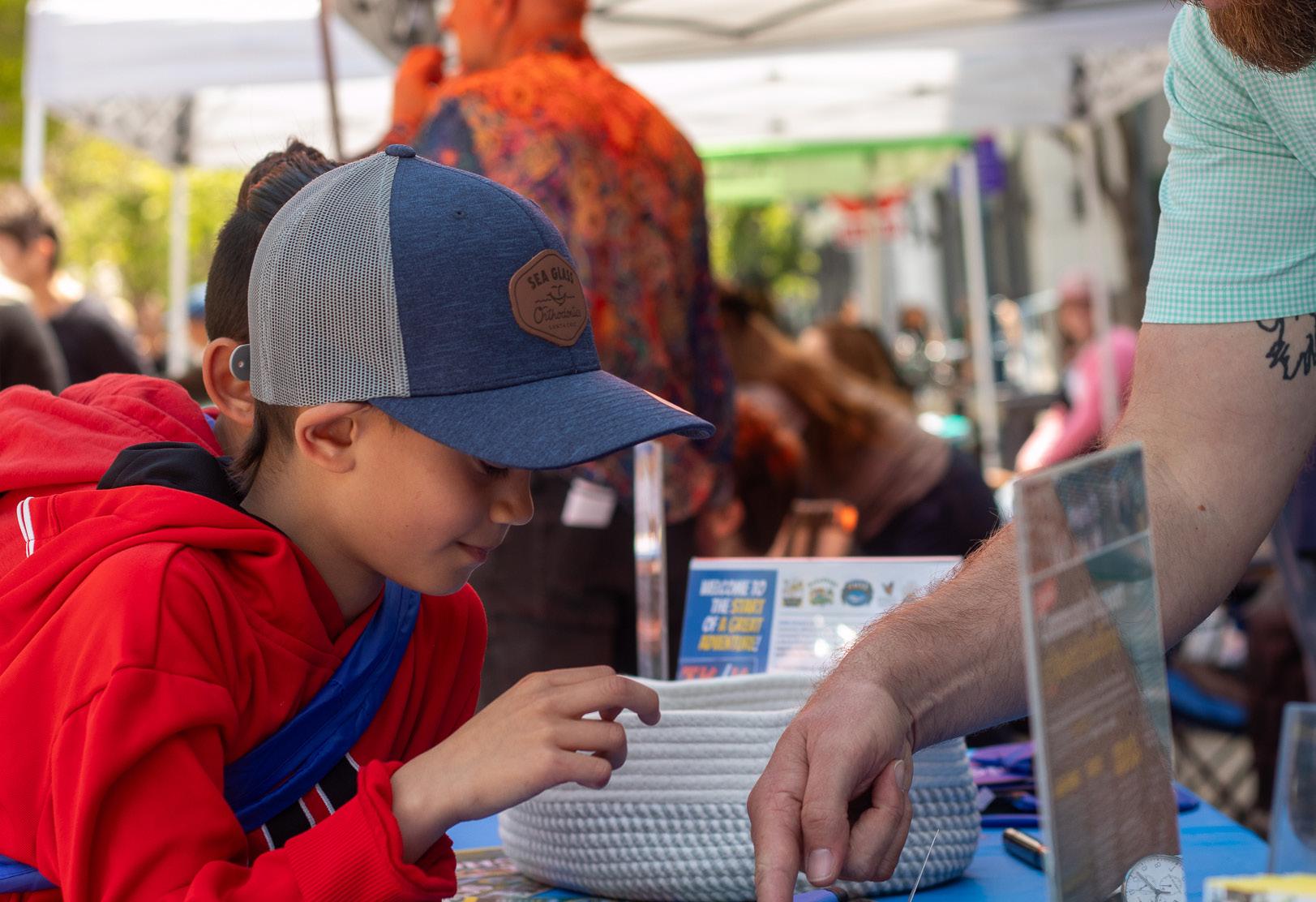
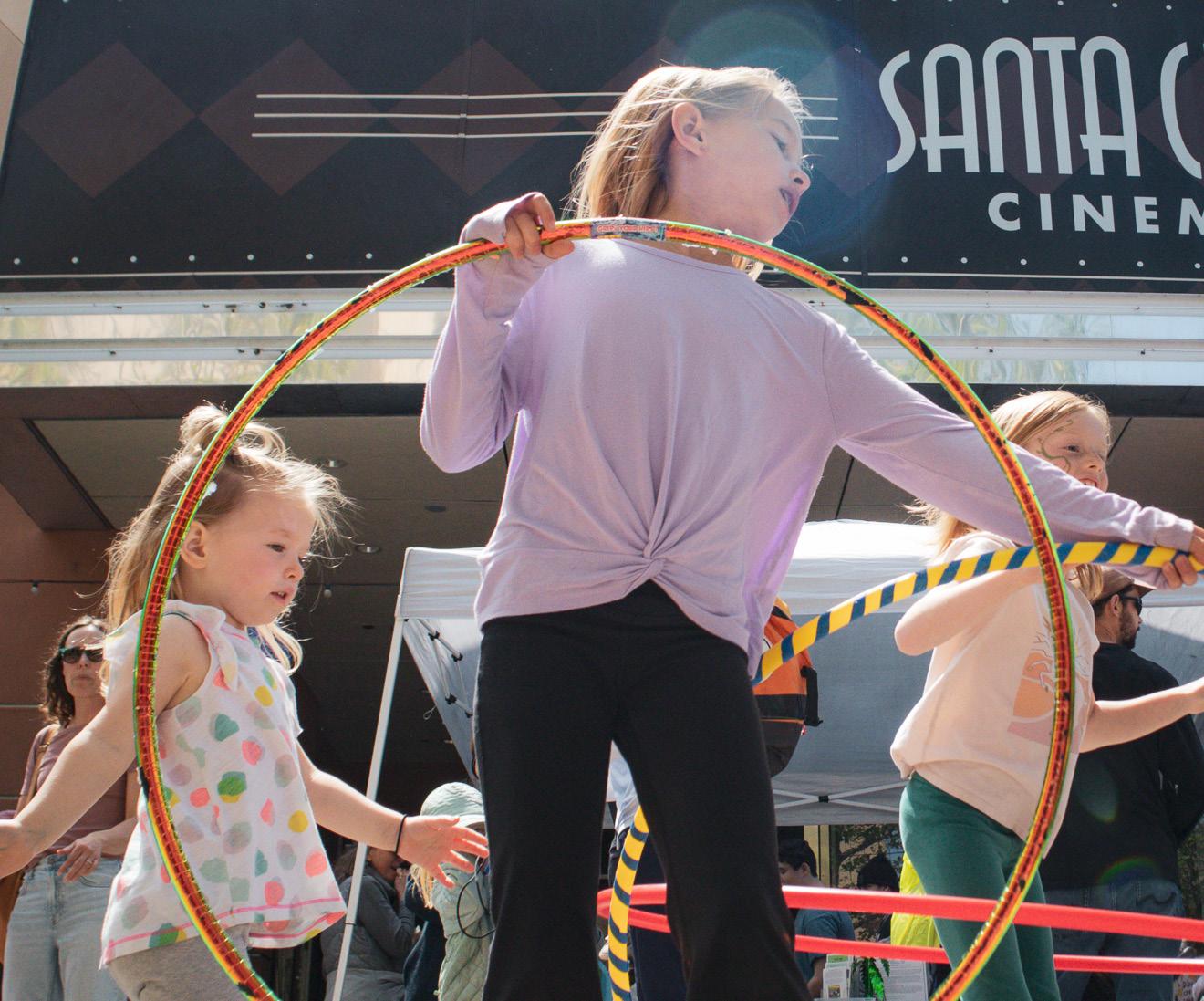
Each year the Downtown Association of Santa Cruz puts on Kids Day to create a warm space for children to remind families that Downtown belongs to them. The Kids Day festival has dozens of free activities, youth based performances and features family-friendly experiences.
And while the magic and excitement of Kids Day just happens once a year, there are many businesses that cater to families and kids all year round. Downtown Santa Cruz is where you go to buy special birthday presents as well as everyday clothing and shoes for the kids. It’s where hobbies and interests flourish. From comic book stores to toy stores, Downtown is the destination for kids!
The list of small locally owned businesses that serve families and children in Downtown Santa Cruz is very long, but we’ve compiled a small list for you to explore on your next outing.
CHILDISH TOY SHOP DOWNTOWN
Childish Toy Shop Downtown is a locally owned toy store filled with thoughtfully curated toys, games, books, and creative playthings for young families. The shop celebrates the magic of play, offering a welcoming space where kids can explore, imagine, and discover something new.
LIVELY KIDS
Lively Kids offers comfortable, stylish, and high-quality apparel and accessories for infants, toddlers, and young children. They carefully select fabrics that are soft, safe, and gentle on delicate skin while offering trendy, unique, and practical designs for everyday wear and special occasions. Their mission is to help parents dress their little ones in clothing that combines style, comfort, and durability.
BOTANIC & LUXE LITTLES
Botanic and Luxe Littles Shop offers a thoughtfully curated collection for babies and young children, from everyday clothing to meaningful gifts, books, and toys. A warm and playful space where families can discover beautiful, wellmade pieces for daily life and special milestones.
ARTISANS & AGENCY
The kids collection at Artisans and agency is packed with local fun, from Doug Ross favorites like the ABC poster, baby onesies, and toddler tees featuring creatures from banana slugs to seals. With floor puzzles, puppets made from 100% recycled sweaters, and toys and crafts made for serious fun, it’s a collection kids love and grown-ups are happy to bring home.
STRIPE
At Stripe, you can find a curated selection of children’s books, cute stuffed animals, fun toys, greeting cards, and baby blankets.
COMICOPOLIS
At Comicopolis you’ll find a wonderful selection of engaging games and entertaining graphic novels for the whole family. They also offer a unique collection of plushies, stickers, posters and other fun stuff!
PACIFIC WAVE
Pacific Wave Surf shop is an all-around one stop shop with endless options that appeal to a variety of different styles and age groups. There are lots of exciting gift ideas for any member of the family and an amazing selection of kid’s products that is a local hot spot for back-to-school shopping.
by
Photos
Joey Ward
IN-STORE
Ibiza
Free kids meal with every purchase of $35 or more. In store only. One per family.
Go Ask Alice 20% off All Toys
Lively Kids
20% off all full priced items, Face Painter, and other Activities during the time of the event!
Pacific Wave
Free goodie bags of kids swag given to customers while supplies last, 15% off all kids clothing and products during the kids day event.
The Salty Otter Sports Grill
free Shirley temple for the kids with food purchase.
Mythic Games
15% discount for any one item
Palmetto Superfoods
Palmetto Superfoods welcomes Santa Cruz families with tropical açaí bowls and a 15% discount for kids during the special opening celebration.
Free RAINBOW SPRINKLES to all kids (with Mini Scoop Purchase)
Stripe the Store
Stripe is offering 15% off their entire Kids section for Kids Day!
Artisans & agency
Mention Kids Day and enjoy 10% off your purchase
Nicely
Pop by the shop and paint on a sheet of music.
3D Entrepreneurs Club (3DE Club)
“Kids Become Entrepreneurs” activity: a 5-minute hands-on experience where kids sketch a simple product (like a pencil holder) and learn how they can 3D print and sell their own creations through 3DE Club.
Woodstock’s Pizza
Parent Recharge Station: Surviving Kid’s Day deserves a reward. Enjoy $3 off any premium cocktail at the bar. Only at Woodstock’s Pizza.
Bookshop Santa Cruz
15% off all kids books and young adult titles all day long on Kids Day. Discount applies automatically at checkout.
Kianti’s Pizza & Pasta Bar
One free kids meal with purchase of individual or family entree. 11am - 5pm on 5/2/26 only. Dine in. Not valid with other discounts.
Fusion Fare
Grab-and-Go Family Combo | Complimentary Tasting Station | Free Treat for Kids
Comicopolis
Comicopolis will be handing out FREE select comics for all who stop by during Kids Day
FRI 3
First Fridays Santa Cruz 5-8pm On the first Friday evening of every month, Santa Cruz galleries, shops, and cultural venues open their doors to showcase the works of Santa Cruz County artists. With a block party-like vibe, the multi-venue event provides an opportunity to discover local creative talent in a fun and festive setting. firstfridaysantacruz.com/event
First Friday Boulder Creek 5-8pm Enjoy a free monthly mountain street fair in the name of creation and community. There will be local art, music and food lining the sidewalks of downtown Boulder Creek. firstfridaybouldercreek.org
Free Egg Walk 5-8pm free. In addition to the egg walk, enjoy arts and crafts vendors, food trucks, and a kid zone along Forest St for a fun community gathering for families and friends. Boulder Creek, Boulder Creek. bcba.net/events-1/first-friday-bouldercreek-spring-carnival-1
SAT 4
Arboretum Tour 11am-12:30pm The first Saturday of each month, the Arboretum offers a docent or staff-led tour of the Arboretum. Sometimes you will see New Zealand, South Africa, California, or Australia. Sometimes you might see combinations of several gardens, the developing World Conifer Collection, or Rare Fruit Garden. arboretum.ucsc.edu/ index.html
Vermicomposting Workshop 2026 10am-12pm free. Learn how to set up and maintain a worm composting bin, reduce food waste, and build a bin together, with a raffle for a free worm bin included. London Nelson Community Center, Santa Cruz. eventbrite.com
Bear Creek Community Center
Eggstravaganza 11am-2pm $15. Enjoy a festive outdoor egg hunt with over 4000 eggs hidden under the redwoods along with bunny photos, a petting zoo, and multiple hunt times for different age groups. Bear Creek Community Center, Boulder Creek. bcrpd.org
Easter on the Farm 11am-3pm free. Celebrate spring with hands-on farm fun including hayrides, tractor driving, arts and crafts, face painting, and meeting a real bunny at this family-friendly annual event. Santa Cruz County Fairgrounds, Watsonville. aghistoryproject.org
Watsonville Egg Hunt Eggstravaganza 1-4pm free. A fun-filled day with arts and crafts, games, food trucks, and an egg hunt for kids ages 3–13, plus photo opportunities with the Easter Bunny. Franich Park, Watsonville. watsonville.gov
SAT
Second Saturday on the Farm 3pm The Agricultural History Project’s 2nd Saturday events are like taking a step back in time. Grab your cowboy hat and put on your boots and come and enjoy a fun-filled afternoon on the farm! In addition to Summer Fun special activities, you’ll be able to milk a “cow”, drive-a-tractor, and enjoy crafts, hayrides, puppet show, antique engines and museum exhibits. Bring your lunch and enjoy a picnic. aghistoryproject. org/2nd-saturday-on-the-farm
Downtown Felton Classic Car Show free. Explore downtown Felton, grab a coffee, and enjoy a showcase of classic cars on display in a relaxed community setting. Scarborough Ace Hardware Parking Lot, Felton. feltonbusinessassociation.org
Vintage Walk free. Take a self-guided journey through downtown Santa Cruz visiting vintage and secondhand shops, collecting stamps in your passport, and discovering unique treasures throughout the area. Downtown Santa Cruz, Santa Cruz. downtownsantacruz.com
Henry Cowell Redwoods State Park Fuel Reduction Workday free. Help support forest health through hands-on fuel reduction work while learning about fire resilience and stewardship in this guided volunteer workday. Henry Cowell Redwoods State Park, Felton.
Santa Cruz County Ripple Effect Arts Festival free. A vibrant community arts festival featuring local artists, live performances, and interactive experiences celebrating creativity and connection. Santa Cruz County, Santa Cruz.
Swing Dancing 2-5:30pm You will find music, friends, and food while you improve your dancing digs. All levels, and various styles plus a social dance with great ambiance are welcome! Go Join the fun on the Second Saturday evening of each month at the Santa Cruz Wharf stage. cityofsantacruz.com
GUiSC will attempt to update the calendar listings as needed; however, it is the responsibility of the organization listed to provide updated information. GUiSC assumes no responsibility for errors or omissions. Readers are encouraged to check the accuracy of the information provided. Events that are free or cost less than $10 can be submitted for inclusion in the calendar. GUiSC does not guarantee that a submitted event will automatically be included. Preference is given for events of interest to children and/or parents. Submit entries at growingupsc.com/events/ community/add. Calendar entries must be received by the 15th of the month prior to the month of the event. To find out more about promoting your event further or including a paid event, email advertising@growingupsc.com.
SUN 12
Antiques Faire 8am-5pm The Santa Cruz Antique Faire is on the 2nd Sunday of every month. Vendors offer an eclectic blend of antiques and unique items, vintage clothing, collectibles and more. Visit the Antique Faire on Lincoln Street between Pacific and Cedar.
Artisan Faire noon-4pm Head to Abbott Square every second Sunday of the month for free live music while you browse handmade jewelry, soap, clothing, and much more! abbottsquaremarket.com/events
TUES 14
Board Game Playtesting at Peoples Coffee free. Try new board and card games, test prototypes, and connect with local designers in a relaxed setting open to players and creators alike. Peoples Coffee, Santa Cruz. peoplescoffee.com
Ocean Alternative Parent Information Night free. Learn about this K-8 independent study homeschool program, including how it works and what it offers families in the Live Oak School District.
SAT 18
Earth Day Santa Cruz Festival 11:30am-4pm free. Celebrate the planet with live music, hands-on activities, ecofriendly vendors, face painting, and a kids passport program in a lively downtown setting. Downtown Santa Cruz, Santa Cruz. cityofsantacruz.com
SUN 19
Downtown Makers Market 10am-5pm Visit the Downtown Santa Cruz Makers Market featuring 40+ local makers & artists every third Sunday of the month on the 1100 block of Pacific Ave. between Cathcart and Lincoln streets. scmmakersmarket.com
TUES 21
Gateway Tour 9-11am Visit the school on one of the monthly Tuesday tours and see why Gateway was voted Best Elementary and Best Middle School in Santa Cruz. Hang with our kindergarteners on Kindy Island, see what’s growing in the Life Lab outdoor classroom, join the middle schoolers for a science experiment, and see first hand the unique benefits of a K - 8 education. gatewaysc.org
FRI 24
Skypark Food Truck Friday free. Enjoy an evening of food trucks, live music, and family-friendly fun in a relaxed outdoor park setting. Skypark, Scotts Valley.
SAT 25
Hot Composting Workshop 10am12pm free. Learn how to build and maintain a hot compost pile, reduce food waste, and improve soil health, with a raffle for composting supplies. Trescony Park, Santa Cruz. cityofsantacruz.com
Independent Bookstore Day at Bookshop Santa Cruz free. Celebrate independent bookstores with special events, exclusive books and merchandise, and activities supporting local literature and community. Bookshop Santa Cruz, Santa Cruz.
Succulent and Bonsai Show and Sale free. Browse a wide variety of succulents and bonsai along with expert advice and unique plant displays perfect for collectors and beginners alike. Capitola Mall, Capitola.
SUN 26
Kennolyn Free Magic Show 2pm free. Enjoy a fun magic show plus camp activities including songs, games, and a guided tour from 1-4pm, with a chance to win a free week of camp in a raffle. Kennolyn Day Camp, Soquel. kennolyn.com
Wilder Ranch Art in the Park free. Experience local artists displaying and selling their work in a scenic coastal park setting with opportunities to meet artists and enjoy the outdoors. Wilder Ranch State Park, Santa Cruz.
Upcoming Retreat | September 24 - 30, 2026
Between Sea and Sky
Madeira, Portugal
A restorative women’s retreat in Madeira—slow, scenic and deeply nourishing.
Thoughtfully curated for 10 women
Boutique base in Ponta do Sol • Daily yoga • Curated experiences • Local guides
Guided hikes and time for oceanfront stillness and quiet reflection
Easy yoga, gentle movement, breath and deep rest
A Madeiran culinary experience to savor and share
Explore Madeira’s hidden corners, hand-picked by a local rooted here
Wine tasting at Blandy’s, one of Madeira’s most iconic cellars
Learn more: themadeiraexperience.com
@themadeiraexperience
For women ready to walk their own beautiful path — with purpose, presence, and pause.
Scan to get details + join the interest list
Get early access, your favorite room + preferred pricing.
Expression Beyond Words MENTAL HEALTH
BY TOVAH PETRA KOLODINSKI
For many children, emotions are not something that can easily be put into words. While adults often rely on conversation to process feelings, children experience their inner world differently. Their bodies respond to stress, excitement, frustration, and joy long before language develops enough to describe those experiences. Because of this, creative expression often becomes a more organic way for children to process what they are feeling.
Art, music, movement, and imaginative play offer natural pathways for children to explore and release emotion. These experiences give children a way to engage with what they are feeling without needing to explain it. Creative expression is not simply an activity. It is part of how children make sense of their experiences.
When children are given space to create freely, something shifts. We begin to see glimpses of what is happening beneath the surface.
A child may draw with intensity after a difficult moment. Another may spend long stretches building, focused and steady. Some children move, climb, spin, or dance as a way of working through energy in their bodies. These are not random behaviors. They are meaningful expressions.
For some children, especially those who are neurodivergent, creativity can be one of the most accessible ways to communicate.
Many children with autism or ADHD experience the world through heightened sensory awareness and strong body-based responses. Some children may also be minimally verbal or non-verbal, meaning they communicate in ways that do not rely primarily on spoken language. For these children, expression may come through rhythm, repetition, movement, or interaction with materials.
A child who struggles to explain how they feel may still show us through what they create, how they move, or how they engage. When we offer space without pressure or expectation, children are able to express themselves in ways that support regulation.
Hands-on activities such as painting, working with clay, building, or moving to music can help the body settle.
Many children experience busy schedules and constant stimulation, creative play offers something different. It creates space to slow down.
In these moments, there is no right or wrong way to participate. Children are free to experiment, follow their curiosity, and engage at their own pace. This kind of freedom builds confidence and supports a sense of ease within the body.
Parents sometimes worry that they are not artistic or that their child is not interested in art. But creativity does
not require special talent or structured activities. Some of the most meaningful experiences happen through simple, open-ended play. A child might draw, build with cardboard, collect natural materials, or invent stories through imagination. What matters is not what is created, but the experience of creating.
In my work with children and families, including through the developing programs of The Spectrum School, I often see how creative experiences support regulation, connection, and engagement. When children feel free to express themselves, their ability to participate shows up in a beautiful way.
Parents can encourage their children at home in simple ways by having materials available, incorporating music and movement into daily life, and allowing space for unstructured play.
These moments do not need to be planned or perfected. Often, the most meaningful experiences happen organically.
Nature can also be a powerful extension of this. A walk can become an opportunity to gather materials, notice patterns, and engage with the environment in a sensory way. Equally important is the environment around the child.
Within our community, opportunities for creativity are everywhere. Families will have an opportunity to explore many of these creative and community resources at Kids Day in Downtown Santa Cruz this May, a local event that celebrates children, families, and the joy of learning and playing together.
In a time when so much of childhood can feel structured and fast-paced, creativity offers something different. It invites children to slow down and engage with the world in a way that
feels unhurried and open, where they can express themselves in ways that feel natural and safe.
Tovah Petra, MA, is a trauma-informed somatic practitioner and creator of the
TOVAH PETRA
Neurodivergent Child & Family Support
831-291-3865
Cruz & Surrounding Areas tovah@tovahpetra.com
Where Families Grow Through Music
Make Waves in Santa Cruz
When Nutrition Science Meets Politics HEALTHY LIVING
BY ELIZABETH BORELLI
Almost a year ago, I had the rare opportunity to sit down with Dr. Christopher Gardner, Stanford professor and one of the country’s most respected nutrition scientists. Gardner was among the 20 independent nutrition science experts that comprised the Advisory Committee tasked with crafting the recommendations for the 2025–2030 USDA Dietary Guidelines for Americans. This rigorous, nearly two-year process is designed to translate the best available science into practical guidance for a nation.
The members of this elite Advisory Committee are carefully selected for ties to the government or the food industry. Members go through extensive background checks on financial, ethical, legal, and criminal conflicts of interest. During the review of the scientific evidence and development of the report, committee meetings were livestreamed for full transparency. The public were also given opportunities to provide comments, which we considered.
As Gardner expained in 2025, “The committee scrutinized hundreds of studies before determining that eating patterns which include plenty of legumes, vegetables, and whole grains consistently deliver the best health outcomes.”
What made this most recent Dietary Advisory Committee notable was that its conclusions, particularly around plant-forward eating, made it into the highly influential 10-page executive summary. Historically, when proteinrich foods were listed, meat and poultry led the charge, with beans and lentils relegated to the fine print. This time, the committee recommended flipping that order, placing plant-based proteins first. It was a meaningful shift, and no small feat. It seemed like a step in the right direction when nationally, rates of dietrelated disease continue to skyrocket.
But a lot can happen in a year.
From independent nutrition scientists to the USDA guidelines committee
The Executive Summary then advanced to the USDA, where it was reviewed and revised by a team of experts appointed by U.S. Health and Human Services Secretary Robert F. Kennedy, Jr. and U.S. Department of Agriculture Secretary Brooke Rollins. When the final Dietary Guidelines for Americans, 2025–2030 were released, many of the advisory committee’s plant-forward recommendations were sidelined.
This decision to ignore the executive summary is explained in the 90-page report (publicly available online) as a “shift from corporate-favored advice to science-backed recommendations for better public health, focusing on ‘real food’”.
Meanwhile the names of the USDA appointed committee members and their ties to industry, including National
Cattlemen’s Beef Association, National Dairy Council, General Mills and the National Pork Board are plainly listed.
Local advocates like Eat for the Earth Executive Director Beth Love raised concerns about conflicts of interest among reviewers with ties to meat, dairy, and low-carb commercial programs. Whether intentional or not, the resulting guidance reflects a familiar American pattern: animal products elevated, plants negotiable.
Take the USDA’s top recommendation to “prioritize protein at every meal.” Nothing wrong with protein. It supports muscle maintenance, satiety, and blood sugar balance. But without context, the advice risks crowding out fiber-rich plant foods, which is especially troubling when roughly 95% of Americans already fall short on fiber intake.
INDEPENDENT RESEARCH INSTITUTIONS TAKE NOTICE.
The Harvard School of Public Health released a critique of the increased recommendations for red meat and dairy, as contradicting “extensive evidence on their links to negative health outcomes, as noted by Harvard’s own nutrition experts.”
Meanwhile Dr. Gardner issued a careful analysis of the report, stating “Despite carrying forward familiar themes, the guidelines fall short of translating nutrition science into clear, coherent, and equitable guidance.”
Among the detailed breakdown of the new guidelines Gardner writes “Protein is overemphasized, while fiber is downplayed. The guidelines place a strong emphasis on protein intake, despite robust evidence that shows most Americans already consume sufficient amounts. The proposed protein targets are difficult to meet without exceeding recommended limits for saturated fat and sodium”.
In reality, Americans are eating roughly twice as much meat as we did several decades ago. The rise of dietrelated disease over the past century closely tracks the rise of factory-farmed meat, not because meat itself is new to the human diet, but because how meat is produced, processed, and consumed has fundamentally changed. To be sure, low cost, readily available meat isn’t the only change that has impacted our rising disease rates, but it’s one worth taking a closer look at.
FROM FARM TO FACTORY
For most of human history, meat was eaten occasionally, in relatively small portions, sourced from pasture-raised animals, and consumed as part of meals dominated by plants. After World War II, industrial agriculture transformed meat into a cheap, abundant, daily staple. Government subsidies, feedlots, antibiotics, and confinement operations dramatically increased supply while driving down cost. Portion sizes
ballooned. Meat moved from side dish to centerpiece.
Modern industrial meat differs from its historical counterpart in important ways. Grain-fed animals produce meat higher in saturated fat. Routine antibiotic use contributes to resistance and microbiome disruption. Processing often adds sodium, preservatives, brines, and seasoning solutions. Ultra-processed meat products, deli meats, fast food, frozen meals, became dietary staples.
Not coincidentally, this shift parallels rising rates of cardiovascular disease, type 2 diabetes, obesity, and certain cancers, particularly colorectal cancer. Large epidemiological studies consistently link high intake of red and processed meat, especially factoryfarmed and heavily processed forms, to increased disease risk. Processed meats show the strongest and most reliable associations.
THE DISPLACEMENT EFFECT
One of the most overlooked effects of increased meat consumption is known as displacement. Diets high in factory-farmed meat tend to be lower in fiber, legumes, whole grains, fruits, and vegetables. When meat crowds out plants, gut health suffers, inflammation rises, and metabolic resilience declines. This helps explain why populations that eat less meat but more plants, Mediterranean and Blue Zone cultures in particular, experience lower rates of chronic disease and longer, healthier lives.
The issue isn’t an occasional steak or culturally traditional meat consumption. It’s the daily normalization of large portions of cheap, industrially produced meat. In traditional food cultures, meat adds flavor rather than bulk, is paired with vegetables and grains, and is eaten mindfully and socially.
Seen this way, diet-related disease didn’t rise because humans suddenly started eating meat. It rose because food systems shifted toward speed, scale, and profit, disconnecting food from ecology, culture, and health. The most consistent solution across decades of nutrition research isn’t elimination, it’s rebalancing: less factory-farmed, processed meat; more whole, minimally processed plant foods; better sourcing, smaller portions, and greater intention.
A more grounded, Mediterranean-style approach might sound like this: include a source of protein at most meals, build meals around whole foods and variety with protein as a supporting player, and aim for enough protein across the day rather than perfection on every plate. In practice, that could look like beans in soups, yogurt or tofu at breakfast, fish alongside vegetables and whole grains, or hummus and nuts as snacks.
MILK-DRINKING CULTURES: MIXED OUTCOMES
Second on the list of new recommendations, the advice to prioritize
full-fat dairy also raised eyebrows. Even the American Heart Association issued carefully worded concern, noting that such guidance could unintentionally increase saturated fat intake, a known driver of cardiovascular disease.
Globally, the relationship between milk and health is far more nuanced than the long-standing message that dairy is essential for strong bones. Many of the world’s healthiest, longest-living populations have traditionally consumed little to no cow’s milk. East Asian cultures historically had low dairy intake yet low hip fracture rates until Western diets took hold, relying instead on leafy greens, calciumset tofu, sesame seeds, sea vegetables, and small fish eaten with bones.
Mediterranean regions consume modest amounts of yogurt or cheese, not large glasses of milk, and consistently show low cardiovascular disease rates and high longevity. Blue Zone communities such as Okinawa, Ikaria, and Nicoya consume dairy minimally, if at all, yet maintain strength and mobility well into old age.
In these cultures, bone health is supported by regular weight-bearing movement, adequate vitamin D from sun exposure, high intake of fruits, vegetables, legumes, and whole foods, and lower consumption of ultraprocessed foods.
By contrast, countries with the highest milk consumption, the U.S., Canada, Northern Europe, and Australia, do not consistently show better health outcomes. Hip fracture rates are often higher, as are rates of cardiovascular disease, obesity, and type 2 diabetes. Large cohort studies have found no clear protective effect of milk on fracture risk, and in some cases, higher milk intake is associated with increased mortality, while fermented dairy shows more neutral or modestly beneficial effects.
This doesn’t suggest drinking milk is harmful, but it does challenge the idea that it’s necessary.
THE BIG PICTURE
When I lead workshops, the most common refrain I hear is, “Nutrition advice is always changing.” And it’s true, if you’re paying attention to headlines, influencers, and algorithm-driven wellness trends, it can feel impossible to keep up. One week fat is the villain, the next it’s carbs, then protein, then seed oils, then sugar in fruit. But when we zoom out, the big picture hasn’t shifted nearly as much as the noise would have us believe.
The Mediterranean Diet and the diets of Blue Zone populations have remained remarkably consistent for centuries. Long before nutrition science, tracking apps, or supplement aisles, these cultures were quietly producing the best outcomes we know of for longevity and disease-free living. They did so without factory farming, ultra-processed foods, or a reliance on expensive interventions. Instead, the emphasis was on fresh, local
food, shared meals, seasonal eating, and enjoyment, rather than counting grams of nutrients or calories.
For those new to these terms, both the Mediterranean Diet and the Blue Zones framework were coined in response to researchers noticing something curious: certain populations around the world were living significantly longer, healthier lives than those of us in the United States. When scientists studied these populations more closely, patterns emerged—not just in what people ate, but in how they lived.
THE MEDITERRANEAN DIET
The Mediterranean Diet is less a rigid plan and more a pattern of eating shaped by geography, culture, and tradition. It centers on vegetables, fruits, legumes, whole grains, nuts, seeds, and olive oil as the primary fat. Fish and seafood appear regularly, while meat, especially red meat, is eaten sparingly. Meals are often simple, built from a handful of highquality ingredients, and enjoyed slowly. What’s often missed is that this way of eating evolved out of necessity, not optimization. People ate what was available locally and seasonally. Food was prepared at home, often from scratch, and meals were social. Wine, when included, was modest and typically consumed with food. There was no obsession with perfection, just consistency over time. The result? Lower rates of heart disease, diabetes, and many chronic conditions that plague modern Western societies.
THE BLUE ZONES DIET
The Blue Zones Diet comes from studying regions such as Sardinia, Italy, Okinawa, Japan, Ikaria, Greece and perhaps more surprisingly, Loma Linda, California. All represent places where people routinely live into their 90s and beyond with high quality of life. While the foods vary by region, the similarities are striking. Diets are overwhelmingly plant-based, with beans and legumes as staples. Animal products are used sparingly, often as flavor rather than centerpiece. Processed foods are virtually absent.
Equally important is what’s not present: calorie tracking, protein targets, “superfoods,” or biohacking protocols. People eat enough, stop when they’re satisfied, and maintain stable weights over decades, not through restriction, but through rhythm. Members of these societies are not known for asceticism, denying themselves the good stuff to look good on Instagram. Instead, these regions are known for the deliciousness of their cuisine.
A LIVING CASE STUDY: LOMA LINDA, CALIFORNIA
One of the most fascinating real-life examples is Loma Linda, California— home to a large population of Seventhday Adventists and the only recognized Blue Zone in the United States.
Despite living in the same broader food environment as the rest of the country, this community experiences significantly lower rates of heart disease, cancer, and obesity.
Why? Their dietary patterns closely resemble those of other Blue Zones: mostly plants, minimal processed food, modest portions, and regular meal routines. Many Adventists are vegetarian or plant-forward, but just as important are shared meals, regular movement, strong social ties, and a built-in rhythm of rest. Their health outcomes remind us that culture can be more powerful than convenience, and that longevity is not a mystery reserved for faraway places.
Rather than reducing food to a set of numbers, these communities use it as a source of celebration, connection and community. Maybe that’s what’s missing in our complicated food culture? Or perhaps we’ve sacrificed all of that for efficiency, and in the process, are left satiated, but still somehow unsatisfied.
DIET WITHOUT LIFESTYLE IS AN INCOMPLETE STORY
Both the Mediterranean and Blue Zones Diets are short-changed without acknowledging the lifestyle that is inseparable from the diet itself. These cultures do not revolve around calorie counting, macro tracking or external notifications of when and what to eat. The mind-body connection is reliable enough. Movement is woven into daily life through walking, gardening, cooking, and manual tasks. Rest is respected. Stress is buffered by community. Meals are not rushed or eaten alone in cars.
This is a critical distinction. In the U.S., we’ve attempted to extract diet from context and turn it into a product, something to optimize, purchase, and control. In doing so, we’ve made eating far more complicated than it needs to be. And far less enjoyable.
So the question becomes: why has nutrition in the U.S. become so confusing? Humans have been eating for a very long time, and the data on what works is already in. Resources like the Harvard School of Public Health, and US News and World Report’s annual list of expert recommended diets are free and unbiased sources of information that all point to the same basic principles.
But is this where we get our nutrition information? Rarely. Instead, our attention is pulled this way and that by our devices as the latest “diet news” beckons. When nutrition science starts to feel overwhelming, it’s worth asking a simple question: Who benefits from providing this new recommendation? If the answer is commercially biased, delivered by an influencer or ad, the answer is, probably not you.
Because at the end of the day, the quiet wisdom of “mostly plants” still holds true, but so does slowing down, sharing meals and reclaiming the time honored joy of simply delicious food.
BOOK REVIEW
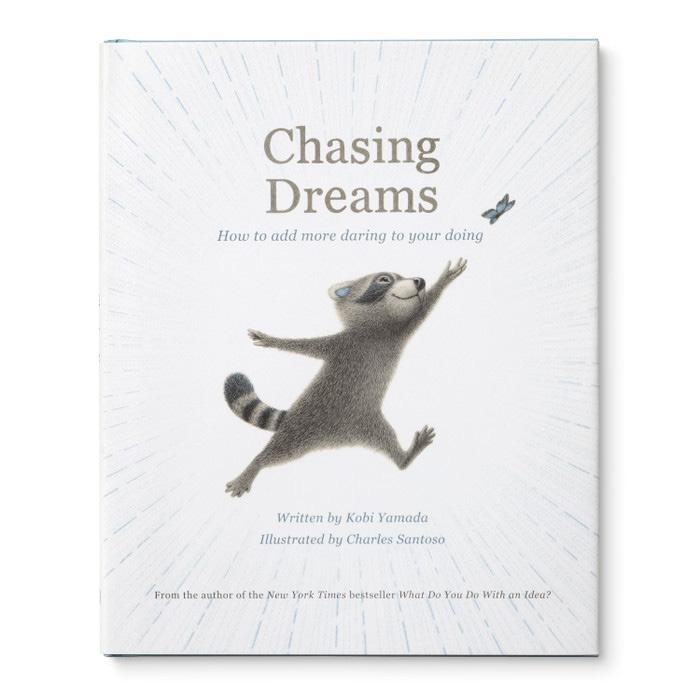
Chasing Dreams: A Small Book with a Big Heart
BY JOHN LOUIS KOENIG
Growing Up loves to find children’s books that are loved and appreciated by parents, kids and teachers. Chasing Dreams: How to Add More Daring to Your Doing is one of those books, written by Kobi Yamada and illustrated by Charles Santoso.
On the surface, it’s a beautifully illustrated picture book about a curious raccoon who dares to imagine something bigger for himself. But beneath its heartfelt storytelling lies a message to inspire readers of any age: the world changes when people decide to pursue what they care about.
A STORY ABOUT COURAGE
The premise of the book is deceptively simple. A small raccoon begins to wonder what might happen if he followed a dream. Page by page, the story explores the doubts, fears, and surprising joys that come from daring to pursue something meaningful.
Illustrated with the delicate, fine-art pencil drawings of Charles Santoso, Chasing Dreams follows the adventurous raccoon as it navigates the breathtaking (and sometimes intimidating) landscapes of its own aspirations.
The raccoon’s hesitant steps, moments of discovery, and growing confidence create a narrative that children can easily understand while adults recognize something deeper. It addresses things that we often struggle to explain to children: the relationship between fear and wonder.
Yamada’s prose is sparse but powerful, almost poetic, and never feels preachy, reminding us that “the most important part of realizing a dream will always be the dreamer.”
WHY THIS BOOK MATTERS RIGHT NOW
In an era dominated by screens, noise, and endless distractions, a simple picture book might seem like a small thing. But that’s precisely its power. Chasing Dreams invites readers, young and old, to slow down, turn a few pages, and consider a simple question: What would happen if you believed in your dream enough to begin?
For a child, the answer might be an adventure. For a teenager, a reminder that failure isn’t the end. For an adult, the spark to begin something long wished for.
DREAMING BIG IN SANTA CRUZ
Santa Cruz has always been a town that encourages dreams, whether it’s a child learning to surf for the first time, a teenager starting a band in a garage, or a young artist sketching in a notebook at a café downtown, the culture of this community has long celebrated imagination and possibility.
That’s part of what makes Chasing Dreams such a natural fit for families here. Yamada’s story reminds young readers that big futures often begin with small moments of curiosity; asking a question, trying something new, daring to imagine a life beyond the familiar.
The raccoon at the center of the story could easily be any young dreamer growing up along our stretch of coast: someone wondering what might happen if they followed the spark of an idea.
THE MAN BEHIND THE MESSAGE
Kobi Yamada is not just a writer—he’s also the president and CEO of Compendium, a creative publishing company devoted to uplifting stories, journals, and gift books designed to inspire people to live meaningful lives.
Over the past two decades, he has become a leading voice in what might be called “the literature of encouragement.” His books, including What Do You Do with an Idea? and What Do You Do with a Chance? have sold millions of copies and have been translated into more than thirty languages.
Yamada’s own story reminds us that every dream begins with the courage to chase it. It’s the reason Chasing Dreams feels authentic: Kobi Yamada has lived the message of his own book.
For decades he helped build Compendium, and then in 2024, a remarkable milestone arrived.
Penguin Random House, one of the most time-honored publishers, acquired Compendium. Yamada remained president and continues guiding its creative direction, now with the resources and reach of a prestigious and legacy-building publishing house. As his own journey makes clear, and as his brave raccoon learns, sometimes the most extraordinary adventures begin with the simple decision to start.
Yamada reflects on the journey with words that could easily come from one of his own books: “Amazing things can happen with big dreams… and years of dedication and hard work.”
How a Children’s Book Sparked a New Kind of River Cleanup
BY JOAN HAMMEL
Professionally, I felt well prepared for my interview with Santa Cruzarea author Taylor Lahey. I expected a straightforward conversation about his children’s book, Cambio. But as our discussion ranged from comic books to cryptocurrency -- with detours into big ideas about systems thinking, value creation, spirituality and civic design -- it became clear pretty quickly this would be anything but a standard author interview.
At the center of it all is Cambio, Lahey’s children’s book about an idea so simple, it almost feels radical.
It tells the story of Curitiba, Brazil, where residents collected trash that could be exchanged for bus tokens -- a system that helped clean neighborhoods, improve public transportation access and, over time, even functioned as a kind of informal community currency. Today, a version of that program still exists, allowing people to trade recyclables for fresh produce from local farms.
Lahey grew up in Castro Valley but has family ties to Santa Cruz. As a child, he first spoke Mandarin at home and remembers struggling at times with English, gravitating instead toward visual storytelling -- comics, cartoons and imagery that he could more easily relate to. That early connection to illustrations led him to pursue a degree in Visual Communication from UC Davis and eventually a career in graphic design, branding and animation.
What’s interesting is he never set out to write a children’s book at all. He originally envisioned Cambio as a wordless graphic novel, given his background in visual storytelling. But he ultimately found the courage to express his voice as a writer.
He first learned about Curitiba while working in the tech world, where it was used as an example of how communities can rethink value -- not just in terms of money, but in how cultures care for people and the environment.
Deeply intrigued, he pitched a project through his work that allowed him to travel to Curitiba, where he spent several weeks meeting with urban planners, civic leaders and residents to better understand how the system worked in practice. It was there, in a city designed with intention by architects and planners, that he began to see how systems can shape everyday behavior. “If you set certain conditions, you get certain outcomes,” Lahey says.
What mattered to him wasn’t just the mechanics of the program, but its impact on culture -- how it shaped the way people lived and treated one another. “It’s not about money,” he says. “It’s about a system we can agree is good -- transportation for all, clean neighborhoods, clean waterways. It’s hard to argue with those things.”
The experience left a lasting imprint,
eventually becoming the foundation for Cambio. In the book, that idea is distilled into a simple story -- one Lahey shaped to be accessible, universal and easy to understand. It’s told through the eyes of a child growing up in a place where caring for the environment and for one another isn’t unusual -- it’s simply part of everyday life.
Now, Lahey is working to bring that idea to Santa Cruz.
On April 11, he’s a key collaborator in Bridging the Gap x Santa Cruz Green Exchange, a San Lorenzo River cleanup event that, for the first time this year, will also support downtown businesses.
Volunteers will collect and document litter, using the Save Our Shores Marine Debris app to track trash totals. What sets this event apart, is for the first time, participants will earn Downtown Dollars or gift cards in exchange for the trash they collect. It’s a simple but transformative idea: clean up the river, earn real value, then put that money directly back into local businesses.
Now in its 7th year, Bridging the Gap is a river cleanup and habitat restoration effort led by Jennalee Dahlen, founder of Yōso Wellness Spa, and Melissa Begin of Visit Santa Cruz County. This year, Lahey is introducing the Green Exchange model, adding a new element to the event.
Additional partners include Save Our Shores, the Coastal Watershed Council and Downtown Santa Cruz. The goal is ambitious: to clean the entire stretch of the San Lorenzo River through downtown
while creating a model that could be repeated and expanded over time.
As Lahey puts it, “You clean up the river, we’re going to give you some value downtown. It benefits businesses, it benefits you as a resident and it benefits the environment we all share. If you take care of Santa Cruz, Santa Cruz takes care of you.”
For Lahey, the book and the event are part of something much bigger -- a deeply held belief that storytelling can shape the way communities function in the real world. It’s a bold idea, and at times, his thinking stretches far beyond the practical realities most of us are accustomed to dealing with day to day.
He talks about “systems thinking,” about reimagining value and even about designing culture itself through storytelling -- concepts that can feel abstract and challenging, but inspiring, hopeful and aspirational at the same time. But underneath the bigger vision is a much simpler question: what would it look like if taking care of a place -- and each other -- was something communities actively built into everyday life?
When I asked Lahey about the push back or potential criticism -- that these ideas can sound naive, overly altruistic or unrealistic in a world that often leans more cynical than hopeful -- he didn’t hesitate.
“In Curitiba, this program is more than 50 years old. So, there are people who have lived their entire lives with this,” he says. “For them, this isn’t some big idea -- it’s just how things work.”
Whether something like that can take root in Santa Cruz remains to be seen. But for Lahey, the goal isn’t to replicate Curitiba overnight -- it’s to start and see what happens. The April 11 Green Exchange is, in many ways, a first test. It’s a chance to bring people together, try a different approach and measure what kind of impact -- environmental, economic and social -- it might have.
A key part of the vision, according to Lahey, is transparency -- clearly showing what’s collected, what’s given in return and quantifying the economic value. He explains it like this: “We want to show this is how much trash you picked up. This is how many rewards we gave away. This is how it impacted the local economy.”
If it works, even on a modest level, it could begin to shift how people think about their role in the community. Not just as individuals passing through shared spaces, but as participants in maintaining them -- with a tangible connection between effort, economic rewards and the health of the place itself. For families, it’s also a rare opportunity to show their children that this kind of work matters. Kids who grow up helping clean the river -- earning something in return and seeing the immediate results of their actions -- may begin to understand that they can shape the communities they’re part of, not as an abstract idea, but something they see firsthand: what they do makes a difference.
Certified Personal Trainer and Prenatal Postpartum Specialist
Have you ever watched a running toddler fall, bounce back up and keep going? Falls happen often when you’re young and are usually no cause for alarm. As we get older, emerging unscathed after a fall requires a heavy dose of luck. But, what if luck isn’t all that separates a minor fall from major one?
We can’t always avoid a fall, but we can train to react better when we have one.
Testing for a solid foundation and training it specifically is often over looked when people begin to exercise. However, having a solid foundation through good balance allows the body to move well and minimize injuries. It’s beneficial to everyone, not only moms chasing toddlers.
Poor balance is the cause of falls. Without good balance falls are a problem. In older adults, falls can be life changing but all of us can benefit
from balance training and a stronger foundation. To improve your balance use these key concepts in practice: concurrent balance practice with additional tasks, reaction time, and managing disturbances.
Concurrent balance practice with additional tasks means completing a physical task while practicing anything cognitively. For example, walk heel-toe or stand on one leg while counting backwards from 100. It’s simple, but highly effective both to improve balance and your mental recall.
The second ingredient to improving balance involves reaction time. The next example causes a disruption to your balance and gives your body the chance to react by catching yourself. Quick limb movements before we fall is a reaction and it can either be slow, or fast. Simulating loss of balance is a way to practice quick reaction time.
A way to do this is to stand on one leg with a partner and try to knock each other over by giving high fives. You’re practicing the body’s ability to recover after a balance disturbance and no one will know
its practical. If anyone is a fall risk, accommodate by giving something stable to grab onto near by.
Lastly, we aren’t always given warning when our environment changes suddenly. For instance, have you ever misjudged the depth of a step? Our smooth cadence changes quickly to look like a baby deer on ice struggling to stay upright as we try to avoid the fall. We are responding to the sudden change of environment from one step to the next. With training, hopefully the
only injury is to our ego. To simulate a sudden environment change, try wearing sunglasses or closing your eyes, and standing on one leg. How long can you stay balanced? A more active approach can be to dribble a basketball around various cones with frequent direction changes.
A wobble cushion, easily found online, can be used to stand on with one foot. Again, keep something stable near by if needed.
Do these as a family, timing each other and find who has the most solid foundation. Training for better balance is easy to incorporate when it feels like it’s a game. The greatest benefit won’t only be winning these games, it will be recovering more like a toddler.
Disclaimer: What is written here is intended solely for general informational and educational purposes only and is not a substitute for the advice of your doctor.
Monica Menard is a C.P.T. Certified Personal Trainer and Prenatal Postpartum Specialist. Contact her at monicapmenard@gmail.com. Instagram @training_bymonica Mention this article for a free consultation.
From baby bump, to baby in your arms.
From the time you find out you’re expecting, you dream of the first moment holding your baby. And Dominican Hospital’s Family Birth Center is here to help make that first “hello” as special as your new bundle of joy. We have a team of experts ready to guide you throughout your journey—from specially trained OB/GYN doctors and nurses, to midwives and board-certified lactation specialists. And our Level III NICU offers the highest level of maternity care in the Monterey Bay area should your baby need specialized support. Take a virtual tour of our Family Birth Center at DignityHealth.org/DominicanBirthCenter.
ALL ABOUT ANIMALS
Thinking of Adding a Kitten to Your Life
BY KAY MACKENZIE
Kittens, like all baby animals, are the cutest things. They’re fuzzy, silly, soft little fur babies who play and scamper and purr and and provide endless entertainment. That’s the idyllic image of a kitten, and all those things can be true! But there’s a lot to think about when considering adopting a kitten (or any animal).
Is this the right time? There’s no perfect time to add an animal to your life, but there are times when it’s best to wait for stability, such as after a pending move or trip.
Is everyone in the family on board? Is anyone allergic? The best outcome is when everyone is enthusiastic and shares the desire for a new family member.
Who will feed the kitty, and who will scoop the litter box? Hold a family conference to establish these responsibilities.
Have you built it into your budget?
Animals require regular vet visits, vaccinations, flea and tick prevention, and of course food! If your kitten becomes ill, emergency vet visits are costly. Even if a kitten presents as wonderfully healthy, there could be underlying conditions that develop later. Are you prepared financially to support your new family member throughout its lifetime?
And let’s talk about the D word: diarrhea. Kittens’ stomachs are tender and easily susceptible to upset, for a wide variety of reasons. It’s no fun for anyone, and sometimes takes awhile to resolve
depending on the cause.
How much do you love your sofa? Kittens’ claws are sharp and they love to jump, climb, and scratch. It’s best to do a little advance research into ways to head off upholstery shredding before bringing a kitten home.
Kitten proofing: Kittens can crawl into unbelievably tiny spaces when exploring, ready to take a nap, or wanting to hide. It’s best to keep any new animal in a small area at first. Make a plan for where you’ll keep them and how to block off nooks or crannies where they can hide from sight. As you expand their territory, use the same strategy for the wider area.
Now back to that happy image of a silly, rollicking kitten. Some are definitely the social butterflies that we picture, but in reality, not all kittens are the same. Those have had a rough start in life or not much contact with humans can be quite shy. Your goal shouldn’t be “a kitten.” It’s important that a new kitten be the right match for your family, your expectations, and your
PET OF THE MONTH
Meet Zoe, a sweet senior calico looking for a loving home. She came to the shelter when her previous guardian moved out of state and couldn’t bring her along. Zoe lived with young children and would often greet people with a friendly “meow.” She prefers to be the only cat in the household, as she hasn’t enjoyed meeting other cats. Zoe was primarily an indoor cat but might appreciate a safe catio where she can watch the outdoors. She used the litterbox reliably in her previous home. Thanks to Shelley’s Angels, Zoe’s adoption fee is reduced by $20 to help this wonderful senior find her perfect family. Visit our website at scanimalshelter.org for more information.
lifestyle for a lasting happy result. Now let’s think about the saying “The trouble with kittens is, they grow into cats.” The kitten stage is very short in a cat’s lifetime. Before you know it, your cute little kitty will grow out of kittenhood and become a beautiful cat who will be a part of your family and responsibility for years to come.
So do your homework and a give things a reality check... is it all good? Once you’re happy with the decision to take on a kitten, it’s time to think about how to get one. The best course is “Adopt, Don’t Shop.” In Santa Cruz County, we have the SC County Animal Shelter at 1001 Rodriguez Street and the SC SPCA at 2601 Chanticleer Avenue. These responsible agencies work as matchmakers to help your family choose the kitten that is right for you.
Oftentimes these shelter kittens have been in foster care, so there’s information about their personalities. Your family can meet and interact with the kitten (or kittens – adopting a pair is a great idea) before making any decisions.
Also, shelter kittens have already been spayed or neutered, microchipped, vaccinated, and given flea and tick prevention as appropriate. That makes the adoption fee a super bargain! The private expense of spay/neuter alone is many times the amount.
Both local shelters show available animals on their websites, listed below. In the market for a rowdy, outgoing youngster? Then get ready for hilarious Live Kitten TV. Or maybe you find yourself bonding with a kitten who’s undersocialized, and you’re ready to help them understand humans and grow into their full potential as companions. Whatever kind of kitten or cat you’re looking for, be sure to give time and thought into looking for the right match for you and your family. You will be rewarded purrfectly.
Kay Mackenzie is a longtime Santa Cruz County Animal Shelter volunteer and dog person, despite a constant stream of foster kittens.
FASHION FORWARD
Blooming With Style in Santa Cruz
BY MALIA FORT
The flowers are not the only ones making their debut this spring. Santa Cruz is full of fashionistas whose outfits shine almost as brightly as themselves. We have three drastically unique locals here to give us styling tips as well as personal style reflections. Whether you are looking for guidance or just appreciation for our community and our people, these three are the perfect role models, all of whom support local brands and local friends in their wardrobe.
Reese
Starting off with Reese. She is wearing a classy, comfy, chic outfit. Glowing from head to toe, her outfit is from Brandy Melville, a great place to shop for basics made from natural fibers. I absolutely love the beautiful light green leggings to add a nice pop to any everyday outfit. Growing up, Reese would watch Fashion Police. Joan Rivers taught her to embrace authenticity and avoid looking at celebrities with biased fake social media as her inspiration. Reese is very in tune with her own personal style; she feels it’s unnecessary to turn to others to dictate what she wears. Reese chooses what she is compelled to. Because Reese is a constant traveller, comfort is a priority. Our local fashion stores and local style are very relaxed and comfortable as well. We live in a colorful beach town where art and beach cover-ups are prominent. However, individuality is everywhere, with the majority of our local shops being local small businesses where everyone can find one-of-a-kind pieces. With us still being in Spring, Reese continues to wear her classic basics but with a little fewer layers. She also found that adding more pops of color she aligns with to accentuate the beauty and individuality of who she is.
Jaycie
Next up is Jaycie. She is an alternative queen whose confidence and character shine through all clothing. This outfit she wore for a music video shoot. The hoodie is from a small SF brand called Anarchy, and she thrifted her black pants, which she upcycled by repainting the original slogan. With a checkered belt she’s had for years. The scarf is from SOS, which is her friend’s brand she highly admires, and recommends everyone go check out. She believes in sustainability: buy pieces you know you will keep forever, so she doesn’t support fast fashion. Jaycie’s mood does influence what she wears; however, she understands the brevity of life and wants to ensure that, if she goes, she goes in a fly fit. With her wardrobe reflecting her whole life, Jaycie has kept many pieces she had even since high school, specifically her yellow blazer she used to wear almost every day in high school. Jaycie has a big closet with all types of clothing she has kept over the years, which helps when trends resurface, so she can find her old outfits to rewear again. It’s like keeping a time capsule and wearing her mother’s clothes. If Jaycie had to pick one outfit, it would be her leather jacket with a cinched waist, her animal print shirt, and her favorite black skirt with a buckle and slit on the side. Leg warmers are also a go-to for any outfit, specifically ones long enough to go over your shoes and just below your knee.
Aiden
Last but not least is Aiden, with a smile as effortless as his streetwear. Aiden is wearing a great streetwear couture, starting with a black T-shirt covered in characters from the movie Twilight from Goodwill, which adds a nice piece of individuality and quirkiness. With a silver chain with a cross from a pawn shop, baggy black denim with cool distressing and almost patchwork accents handmade by his friend, and classic black boots from Reebok. Aiden acknowledges Santa Cruz’s local style focuses on authenticity and selfexpression over conforming to worldwide fashion standards, which you may see in other countries and cities. Aiden gets his inspiration from the people closest to him, rather than from famous people he doesn’t even know. He knows anyone can dress confidently on a budget by finding pieces that spark joy. Aiden definitely chooses to wear earth tones the majority of the time, but makes sure to add some pastels in his wardrobe during the spring.