THE CEDAR VALLEY — COUNT ME IN .
A region built for what’s next.
Where talent stays, industry evolves, and communities move as one toward shared prosperity.
A region built for what’s next.
Where talent stays, industry evolves, and communities move as one toward shared prosperity.
The Cedar Valley is a six-county region—Black Hawk, Bremer, Buchanan, Butler, Chickasaw, and Grundy counties—connected by shared labor markets, educational institutions, infrastructure, and economic outcomes. While its communities are distinct, their futures are deeply interdependent. Whether the region grows, competes, and retains opportunity will depend not on the success of any single city or institution, but on how effectively the Cedar Valley functions as a coordinated whole.
Grow Cedar Valley exists to support that coordination. As the region’s economic development convener, its role is not only to promote growth but also to help the Cedar Valley align around long-term priorities, understand the forces shaping its future, and organize for durable, shared success. In recent years, population trends emerged as a clear signal that warranted deeper examination—not as a standalone concern, but as a reflection of broader economic, workforce, and quality-of-life dynamics playing out across the region.
Recognizing that population change is a leading indicator of regional health, Grow Cedar Valley made a deliberate decision to step back and ask harder questions on behalf of the entire Cedar Valley: Why is the region producing talent at high levels but retaining too little of it? What underlying conditions are shaping decisions to stay, leave, or return? And what actions would strengthen the region’s ability to compete—not just in the next business cycle, but over the long term?
This work was commissioned to answer those questions honestly and comprehensively. It combines rigorous analysis of population, migration, workforce, and industry trends with extensive engagement across the six-county region that included employers, educators, local governments, civic leaders, residents, and former residents alike. The result is not simply a diagnosis of current conditions, but a forward-looking strategy designed to help the Cedar Valley translate its assets into sustained advantage, align fragmented efforts, and move from parallel activity to shared regional action.
The Cedar Valley enters this moment with real strengths: exceptional educational institutions, productive traded-sector industries, strong infrastructure, and a civic culture willing to engage in collective problem-solving. At the same time, the data makes clear that these strengths are not yet fully aligned. Population growth has stalled, young and mid-career workers are leaving at elevated rates, and economic value created in the region too often accrues elsewhere. These trends are not a verdict on the Cedar Valley’s potential. They are an invitation to organize differently. This strategy responds to that invitation.

Population trends offer an early signal of a region’s economic vitality and long-term competitiveness. In the Cedar Valley, those signals point to a growing disconnect between the region’s strengths and its outcomes. While the region continues to produce talent, attract investment, and support productive industries, population growth has stalled, net migration has turned negative among young and midcareer workers, and wages in key sectors lag national benchmarks. Left unaddressed, these patterns risk constraining its future growth and limiting the region’s ability to capture the full value of what it already creates.
This is not a story of decline—it is a story of unrealized potential, shaped by choices that can still be made.
Perhaps most telling: The Cedar Valley ranks 3rd among peer regions in college enrollment, with a population share more than 25% higher than state and national averages. The region excels at developing talent through its exceptional K-12 systems, Hawkeye Community College, Wartburg College and the University of Northern Iowa. But only 31% of in-migrants are aged 25-44, revealing a critical gap in workforce succession. The region produces skilled people, but too many leave because they cannot envision building a long-term career and life here.
The Cedar Valley creates more talent than it retains. Its economic strengths risk becoming legacy strengths without deliberate modernization. Infrastructure investments and educational capacity provide a foundation, but without coordinated regional action, the gap between what the Cedar Valley produces and what it keeps will only widen.
Doing nothing is not a neutral choice. Without action, the Cedar Valley risks accelerated population loss, deepening workforce shortages, and diminished competitiveness as other regions with clearer execution strategies pull ahead. This plan responds to that reality with clarity, urgency, and a roadmap designed for implementation.

This strategy emerges from comprehensive engagement across the Cedar Valley, combining rigorous Metropolitan Statistical Area (MSA)-level data analysis with authentic community voice. Grow Cedar Valley conducted: This is not a story of decline—it is a story of unrealized potential, shaped by choices that can still be made.
• Comprehensive data analysis, examining 20 years of population trends, migration patterns, industry cluster competitiveness across seven key sectors, and benchmarking against highgrowth peer MSAs across more than 50 indicators in livability, talent, and prosperity.
• Deep community engagement, including launching the project with a 23-member Steering Committee, hosting 12 diverse roundtables, and conducting dozens of one-on-one stakeholder interviews with mayors, manufacturers, educators, entrepreneurs, civic leaders, longtime residents, and recent arrivals.
• Former resident insights, surveying 250+ individuals who left the region to understand push and pull factors driving out-migration and identify what could bring people back.
• Collaborative visioning, convening 125+ stakeholders to explore strategic priorities, generate concrete ideas, identify implementation barriers, and validate regional goals.
From manufacturers to educators, civic leaders to young professionals, one message emerged with clarity: the Cedar Valley's opportunity is real, but it must be made actionable. Stakeholders emphasized the urgency of addressing talent retention, the importance of modernizing the region's economic base, and the critical need to move from fragmented efforts to coordinated regional action.
The community spoke consistently about the Cedar Valley's collaborative spirit—a region where people care deeply, institutions are willing to work together, and there is genuine commitment to shared prosperity. One stakeholder captured it clearly: "We have all the pieces. We just need to put them together and move in the same direction."
The Cedar Valley's identity is still emerging, but the foundation is strong: exceptional educational institutions, a manufacturing legacy ready for transformation, growing technology capacity, and communities invested in their region's future. Stakeholders made it clear that the Cedar Valley has the assets and the will. What has been missing is the alignment, the shared narrative, and the organizational capacity to translate regional strengths into sustained competitive advantage. This strategy provides that framework.
This strategy is organized around three interconnected priorities—three "Big Bets" that represent the fundamental shifts necessary to reverse population stagnation, retain talent, and position the Cedar Valley for long-term competitiveness.
Build the regional coordination, shared identity, and organizational capacity needed to act like one region and compete like one region.
Across interviews, roundtables, and community conversations, no theme surfaced more consistently than the need for alignment. The Cedar Valley's communities, institutions, employers, and partners care deeply about the region's future, but they often work in parallel rather than as a unified system. This fragmentation leads to mixed signals, inconsistent messaging, overlapping initiatives, and missed opportunities to compete at a higher level. At the same time, the region has remarkable civic spirit and genuine willingness to collaborate—across cities, school districts, higher education, industry groups, and community organizations. Acting as one region is the foundation for every other Big Bet in this plan. Modernization, talent retention, entrepreneurship, and quality-of-place efforts depend on consistent messaging, shared priorities, and the organizational capacity to carry work forward. Grow Cedar Valley is uniquely positioned to play this integrator role, but it must have the systems, staffing, governance, and partnerships necessary to convene, coordinate, and sustain regional action.
Modernize the Cedar Valley's economy and build the high-value sectors that will define the region's future.
The Cedar Valley creates more talent than it keeps, and its economic strengths risk becoming legacy strengths without a coordinated push toward modernization. The region's future competitiveness depends on accelerating technology adoption, evolving manufacturing into higher-value subsectors, growing a stronger tech economy, and rebuilding the entrepreneurial energy that once made the Cedar Valley a place where people launched new ideas. UNI, Hawkeye, Wartburg and major employers already produce the core ingredients of a more innovative economy: skilled talent, applied problem-solving capacity, and strong industrial foundations. What’s missing is the alignment and acceleration needed to turn those strengths into a true competitive advantage.

Create clear, high-quality, high-opportunity career pathways that retain young people, lift wages, and expand opportunity for every resident.
The Cedar Valley's most urgent economic challenge is talent retention. The region excels at developing skilled people—through exceptional K-12 systems, Hawkeye Community College, UNI, Wartburg and employer-led training—but too many residents leave because they cannot see a long-term future for themselves here. Young adults describe unclear career ladders, unpredictable wage growth, and a lack of visibility into high-demand, high-opportunity fields. Employers struggle to fill positions and retain the workers they already have. The ingredients for a stronger talent engine exist: responsive educators, employers willing to collaborate, and a community invested in opportunity for all. What’s missing is a coordinated system that connects residents to pathways, helps employers strengthen job quality, and positions the Cedar Valley as a place to build both a career and a life.
What distinguishes regions that thrive is not the absence of challenge, but the ability to align around shared priorities and sustain action over time. The Cedar Valley has the assets, institutions, and talent required to compete. What this moment demands is coordination: a common direction, clearer roles, and a commitment to working together in ways that extend beyond individual initiatives or organizational boundaries.
This strategy provides that framework. Organized around three interconnected Big Bets—One Vision, One Valley; Innovation That Competes; and Careers Worth Staying For—it offers a practical path forward for strengthening regional alignment, modernizing the economy, and retaining the talent the Cedar Valley produces. The Big Bets are designed to be mutually reinforcing, actionable, and durable—capable of guiding decisions and investment over time.
Grow Cedar Valley is positioned to steward this work by convening partners, maintaining focus on shared goals, tracking progress, and creating the conditions for collaboration across the six-county region. But the success of this strategy does not rest with any single organization. It depends on employers, educators, local governments, institutions, and community leaders choosing to align their efforts, coordinate where it matters most, and move from parallel activity to shared execution.
This strategy is an invitation: to participate, to lead, and to act with the understanding that the Cedar Valley’s future will be shaped not by individual efforts alone, but by the collective choices made now. With clarity of purpose and a shared commitment to follow-through, the region has the opportunity to turn unrealized potential into lasting prosperity.

The Cedar Valley produces more talent than it retains, creates more economic value than it captures, and possesses more potential than it realizes. This isn't a story of decline—it's a story of misalignment. The region has strong infrastructure, exceptional educational institutions that graduate skilled workers at impressive rates, a manufacturing legacy ready for transformation, and communities genuinely committed to working together. What has been missing is the coordinated regional leadership necessary to translate these assets into sustained competitive advantage.
The strategy that follows is built on the recognition that economic development isn't just about landing the next big company or cutting the next ribbon—it's about creating the conditions where innovation, opportunity, and community values reinforce each other. It's about ensuring that when the Cedar Valley invests in workforce development, those workers have pathways to careers worth staying for. When educational institutions produce graduates, the region offers opportunities that match their skills and ambitions. When communities work together, they present a unified identity that competes effectively for talent and investment.
This approach isn't theoretical. It emerges from comprehensive engagement with the people who know the Cedar Valley best: manufacturers who've built businesses here, educators who've developed talent pipelines, civic leaders who've invested decades in the region's future, and residents—both current and former—who've experienced firsthand what works and what doesn't. Through benchmarking studies, stakeholder roundtables, cluster analysis, a World Café session with 125+ participants, and a survey of 250+ former residents, we've built a strategy that reflects both the Cedar Valley's competitive realities and its deepest aspirations. The result is a plan grounded in data and driven by community voice.
The Cedar Valley's approach to economic development reflects a fundamental shift in how regions compete and grow. Rather than pursuing any opportunity that presents itself, the region is positioning itself strategically—focusing on industries where it has genuine competitive advantages, building systems that connect talent to opportunity, and creating the organizational capacity to execute with consistency. This means modernizing manufacturing into higher-value production, accelerating technology sector growth, strengthening career pathways that retain young workers, and building the regional coordination that allows the Cedar Valley to act like one region and compete like one region.
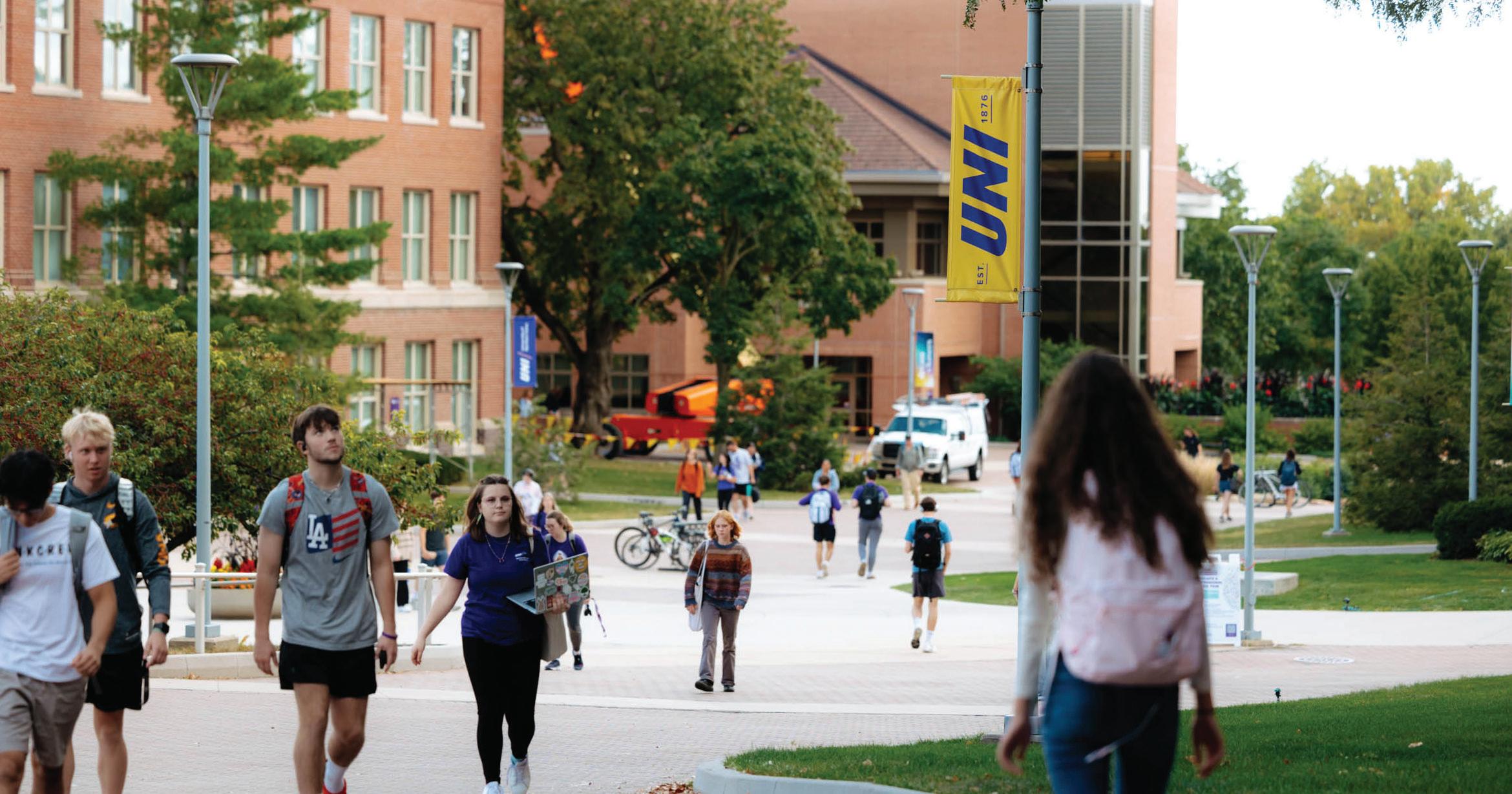
The Cedar Valley doesn't need to reinvent itself to compete—it needs to build strategically on what's already working. The region enters this next phase with significant assets that can be leveraged for transformation.
The Cedar Valley is a talent maker. Exceptional K-12 systems, Hawkeye Community College, UNI and Wartburg produce skilled graduates at rates that outpace most peer regions. College enrollment here exceeds state and national averages by significant margins. The educational infrastructure exists. The challenge isn't producing talent—it's creating the opportunities that convince graduates to stay.
The region punches above its weight economically, generating more output per capita than many larger metros. Traded sectors—the industries that bring money into the region—drive nearly half of all economic activity despite employing just a third of workers. This demonstrates efficiency and competitiveness that can be built upon, not created from scratch.
Some of the Midwest's strongest broadband and utility networks run through the Cedar Valley. Highway access and regional airport connectivity link to major markets. This infrastructure sits underutilized today—a foundation waiting for the strategic coordination to activate it fully. The physical capacity is already in place.
Manufacturing, healthcare, and business services anchor the economy. Technology and logistics are expanding faster than overall job growth. Advanced manufacturing represents the frontier where legacy strengths can evolve into highervalue production. These aren't aspirational clusters—they're current drivers that can be strengthened through strategic investment.
Immigration and refugee resettlement are stabilizing the population while many Midwest regions continue to shrink. This demographic renewal brings both workforce capacity and entrepreneurial energy at a moment when the region needs both. The Cedar Valley has growth where others have decline.
When Cedar Valley leaders align, bold action follows. The willingness to engage in strategic planning, the sophisticated understanding of challenges evident in community conversations, and the genuine commitment to shared prosperity create the social capital necessary for coordinated implementation. This civic readiness is the region's most underutilized asset.
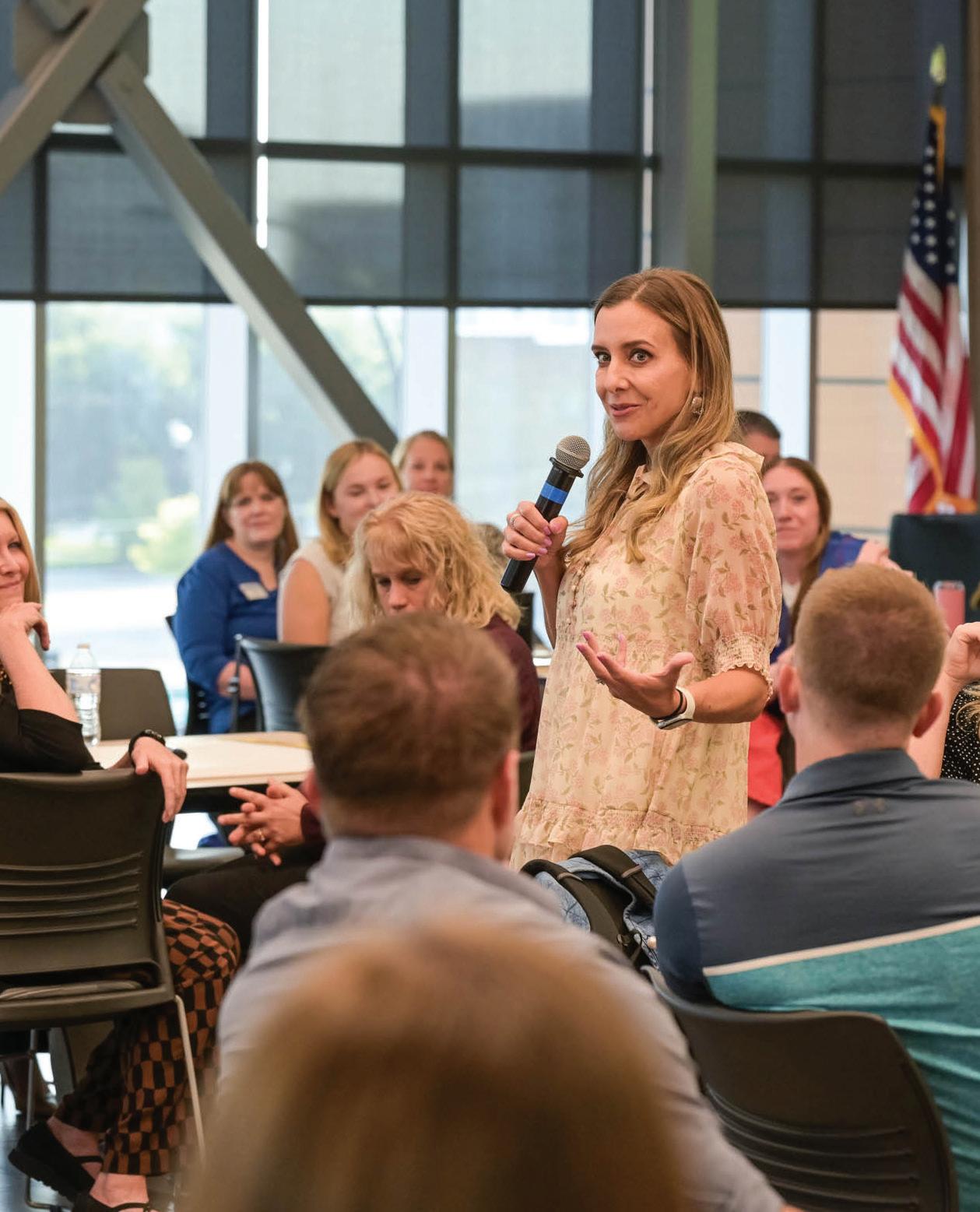
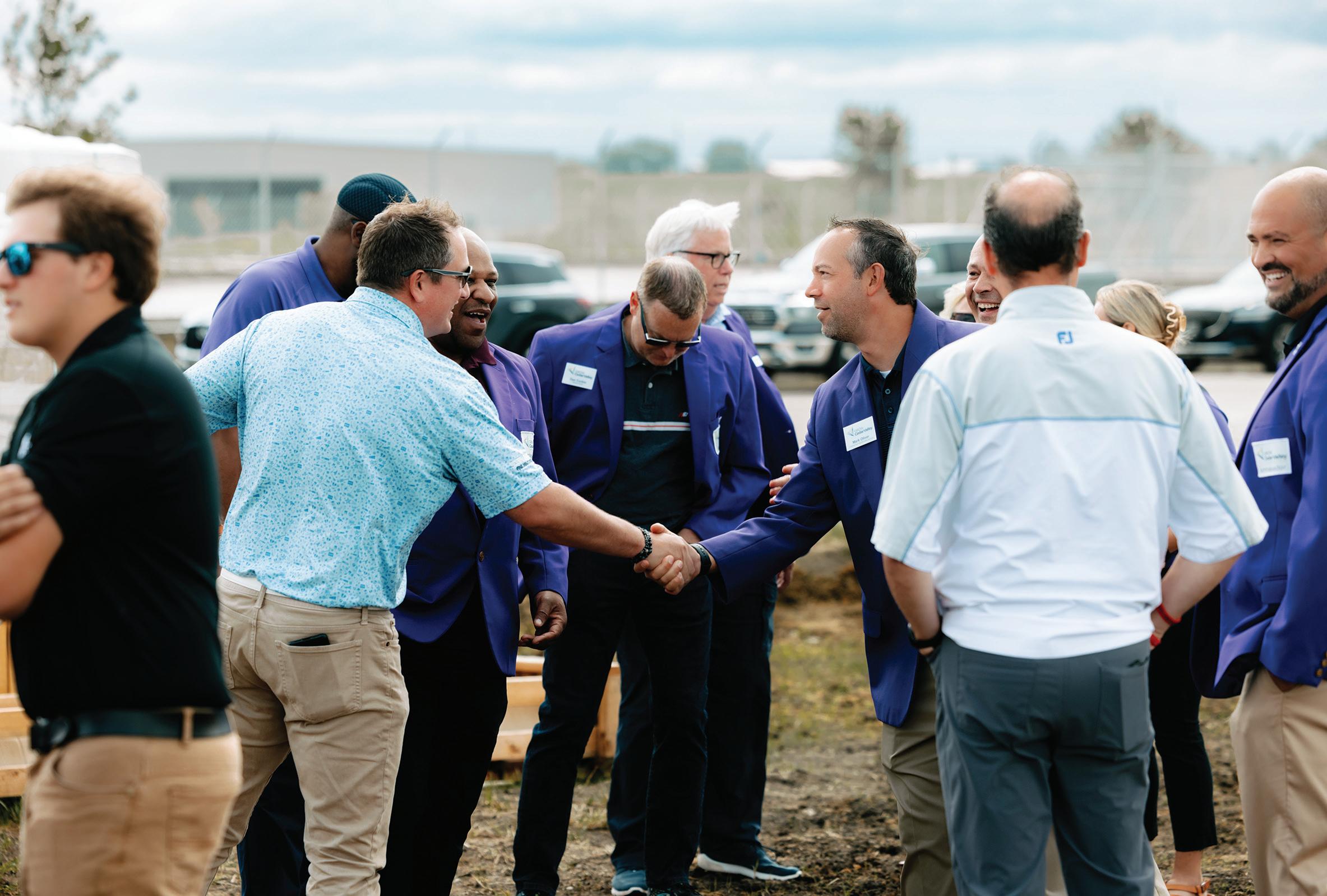
This strategy is built around three interconnected priorities that define what successful economic development looks like in the Cedar Valley:
Build the regional coordination, shared identity, and organizational capacity needed to act like one region and compete like one region.
Across stakeholder conversations, one insight emerged consistently: the Cedar Valley's greatest barrier to competitiveness isn't a lack of assets or ideas—it's fragmentation. Communities, institutions, and employers work hard but often in parallel, creating mixed signals and missed opportunities. Regional coordination isn't administrative overhead—it's the foundation that makes everything else work. Grow Cedar Valley is positioned to provide this coordination— establishing governance structures with real authority, building shared data systems, launching unified marketing, and developing the staffing capacity to execute consistently across jurisdictions and sectors.
Modernize the Cedar Valley's economy and build the high-value sectors that will define the region's future.
The region's manufacturing base needs evolution, not replacement. Advanced technology adoption can transform existing firms into higher-value operations. UNI and Hawkeye can serve as applied innovation engines, connecting research to real-world problems. A dormant entrepreneurial ecosystem can be reignited. The technology sector can grow through strategic business attraction paired with homegrown startup support. The raw materials exist: skilled workers, strong infrastructure, anchor employers. What's been missing is the systematic approach to connect these pieces and accelerate their impact.
Create clear, high-quality, high-opportunity career pathways that retain young people, lift wages, and expand opportunity for every resident.
Talent retention is the Cedar Valley's defining challenge. Educational institutions produce graduates who leave because career trajectories here feel unclear or limiting. Workers describe jobs without visible advancement. Employers struggle to fill positions and keep the people they have. The solution requires sector partnerships connecting employers and educators around shared needs, expanding earn-and-learn programs that show clear pathways from training to careers, addressing practical barriers like housing costs and childcare access, and helping employers build genuine career ladders with competitive wages. The components exist independently. They need to function as a system.
These priorities work together to create something larger than the sum of their parts: an economic development approach that grows the Cedar Valley's prosperity while strengthening regional identity and competitive position. When the region acts as one, it can attract investment more effectively. When innovation accelerates, it creates the high-wage opportunities that retain talent. When career pathways are clear and accessible, workers choose to stay and build lives here. This is the Cedar Valley's path forward—not through isolated initiatives, but through coordinated regional action that leverages existing strengths and builds lasting competitive advantage.

Economic development strategy only works when it reflects the voices and priorities of the people it serves. This strategy emerges from comprehensive engagement across the Cedar Valley, combining rigorous data analysis with authentic community voice. As the region's economic development convener, Grow Cedar Valley hired CivicSol to conduct data-driven research and extensive stakeholder engagement to develop a strategic roadmap for regional transformation.
The engagement process reflects a systematic, responsible approach to strategy development. Through peer benchmarking and data analysis—combined with comprehensive roundtables, one-on-one interviews with dozens of stakeholders, a collaborative convening of more than 125 local leaders, and a survey of more than 250 former Cedar Valley residents—this work ensures solutions are grounded in both local realities and proven practices. The approach balances urgency with thoroughness, building on regional assets while addressing structural barriers.
To understand where the Cedar Valley stands today—and where it has the potential to lead—we conducted a comprehensive assessment of the region's assets, challenges, and economic context in relation to its peers and national trends.
Analyzed 20 years of population trends to identify workforce needs and retention risks, revealing that only retirement-age individuals have grown since 2010, while family formation has stalled.
Tracked migration patterns to understand where residents move and why, finding that net out-migration is highest among workers earning $25K-$100K, people under 35, and bachelor's-educated workers.
Evaluated seven industry clusters—Traditional Manufacturing, Healthcare, Business and Finance, Education and Knowledge, Transportation and Logistics, Technology, and Advanced Manufacturing—across competitiveness, talent, wages, supply chains, and workforce demographics.
Benchmarked the Cedar Valley against high-growth peer MSAs across 50+ indicators in Livability, Talent, and Prosperity to identify competitive strengths, challenges, and strategic focus areas. For this benchmarking analysis, the focus centered on the Waterloo-Cedar Falls Metropolitan Statistical Area, which provides the most comparable data set for peer region analysis and economic assessment.

Launched the project with a 23-member Steering Committee, conducting SWOT analysis, establishing priorities, and aligning on peer metro selection for benchmarking.
Conducted 12 diverse roundtables and 20+ one-on-one stakeholder interviews engaging mayors, manufacturers, educators, entrepreneurs, civic leaders, longtime residents, and recent arrivals to ground strategy in local realities. These conversations provided the ground-truth context that data alone cannot capture, revealing both the opportunities and frustrations that shape daily economic life in the Cedar Valley.
Surveyed 250+ former residents to understand push and pull factors driving out-migration and identify what could bring people back to the region. This unique engagement effort surfaced insights that only those who have left can provide: what the region is missing, where competitors are winning, and what would make a return possible.
Convened 125+ stakeholders in a World Café visioning session using structured small-group rotations to explore strategic priorities, generate concrete ideas, identify implementation barriers, and validate regional goals. These sessions brought together business leaders, employers, educators, entrepreneurs, and community advocates to pressure-test early findings, explore real-time challenges, and co-develop strategic ideas. The World Café not only helped shape the content of this strategy but also built early alignment among the very stakeholders who will be essential to its success.
Throughout this process, we worked closely with the project Steering Committee, regional partners, and municipal leadership across the six-county region to ensure this strategy aligns with local capacity, community priorities, and ongoing initiatives. Strategy concepts were tested in real time with those who understand the region's institutional realities, ensuring this plan was not only data-informed and community-driven but also grounded in implementation capacity and aligned with the leadership that will carry it forward.
Every strategy and action in this plan is connected to what we heard, what we measured, and what we learned throughout this process. It reflects a diverse set of perspectives united by a consistent theme: The Cedar Valley has remarkable assets and genuine civic readiness, but must act with coordination and sustained commitment to fully realize its potential as a competitive region.
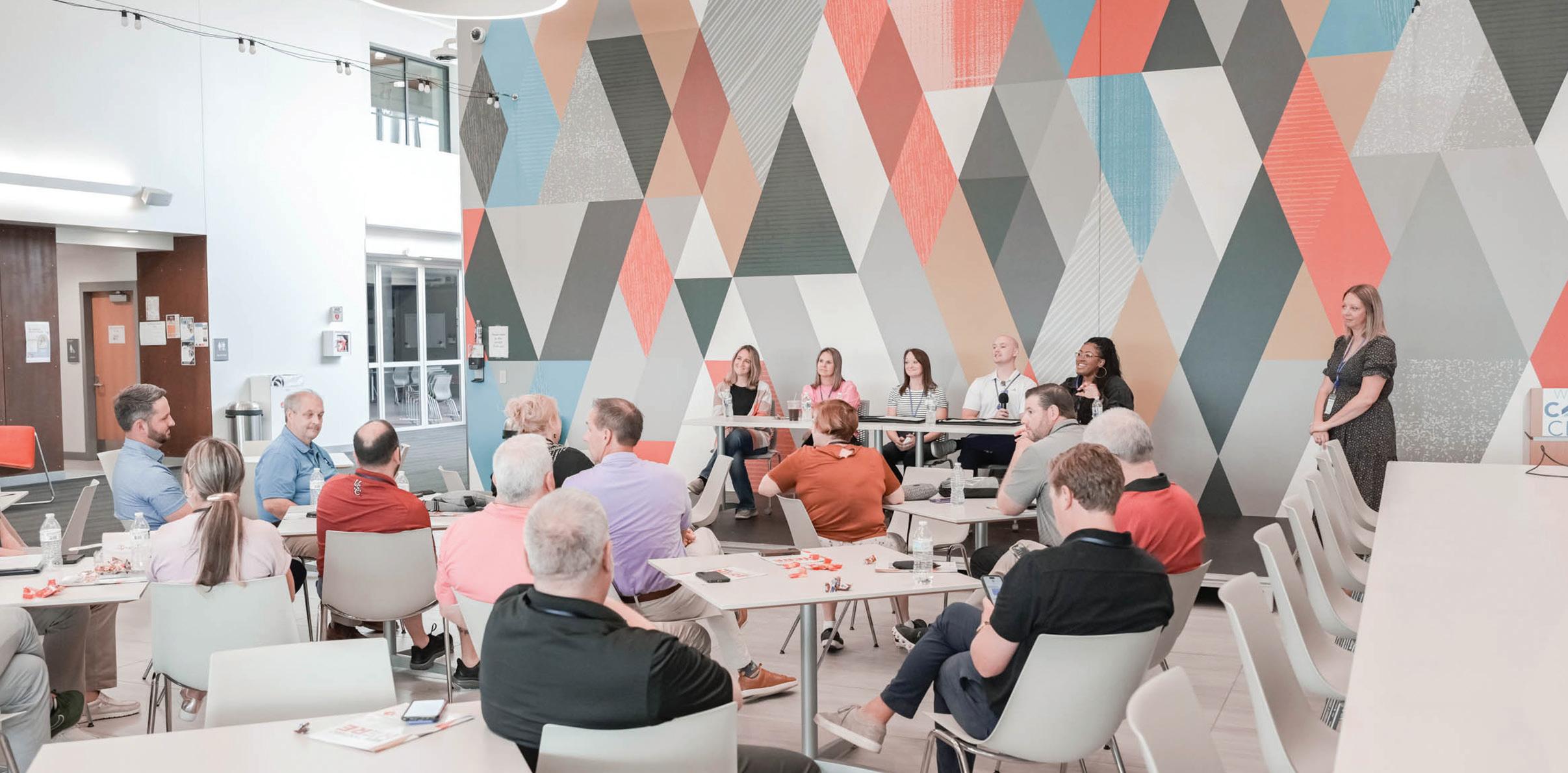
The data tells a story of stalled momentum: flat population growth, talent flight, and wages that trail national benchmarks. But it also reveals something more promising: a region with the infrastructure, educational capacity, and civic will to reverse these trends.
The challenge isn't that the Cedar Valley lacks assets. It's that those assets aren't yet aligned around a shared vision. The region produces skilled workers but struggles to create the opportunities that keep them local. It has strong infrastructure but hasn't fully leveraged it to attract investment. It possesses a collaborative spirit but lacks the coordination structures to translate goodwill into action.
This is where opportunity emerges. The Cedar Valley's greatest strengths—its educational institutions, manufacturing legacy, growing technology sector, and stabilizing immigrant population—can become the foundation for transformation. The insights that follow reveal not just problems but pathways: specific, actionable areas where strategic investment and coordinated leadership can shift trajectories.
The stakeholders we engaged—more than 125 at the World Café alone, plus dozens more through roundtables and interviews, and over 250 survey respondents—demonstrated a sophisticated understanding of both challenges and solutions. They're ready for bold action. They're tired of incremental approaches and plan fatigue. What they need now is a framework that channels their energy, a strategy that feels both urgent and achievable, and leadership structures that can deliver real results. The following insights synthesize what we heard and what the data confirms. They represent the Cedar Valley's most critical leverage points—the places where focused effort can create disproportionate impact. Together, they form the evidence base for the three Big Bets that will drive this strategy forward.
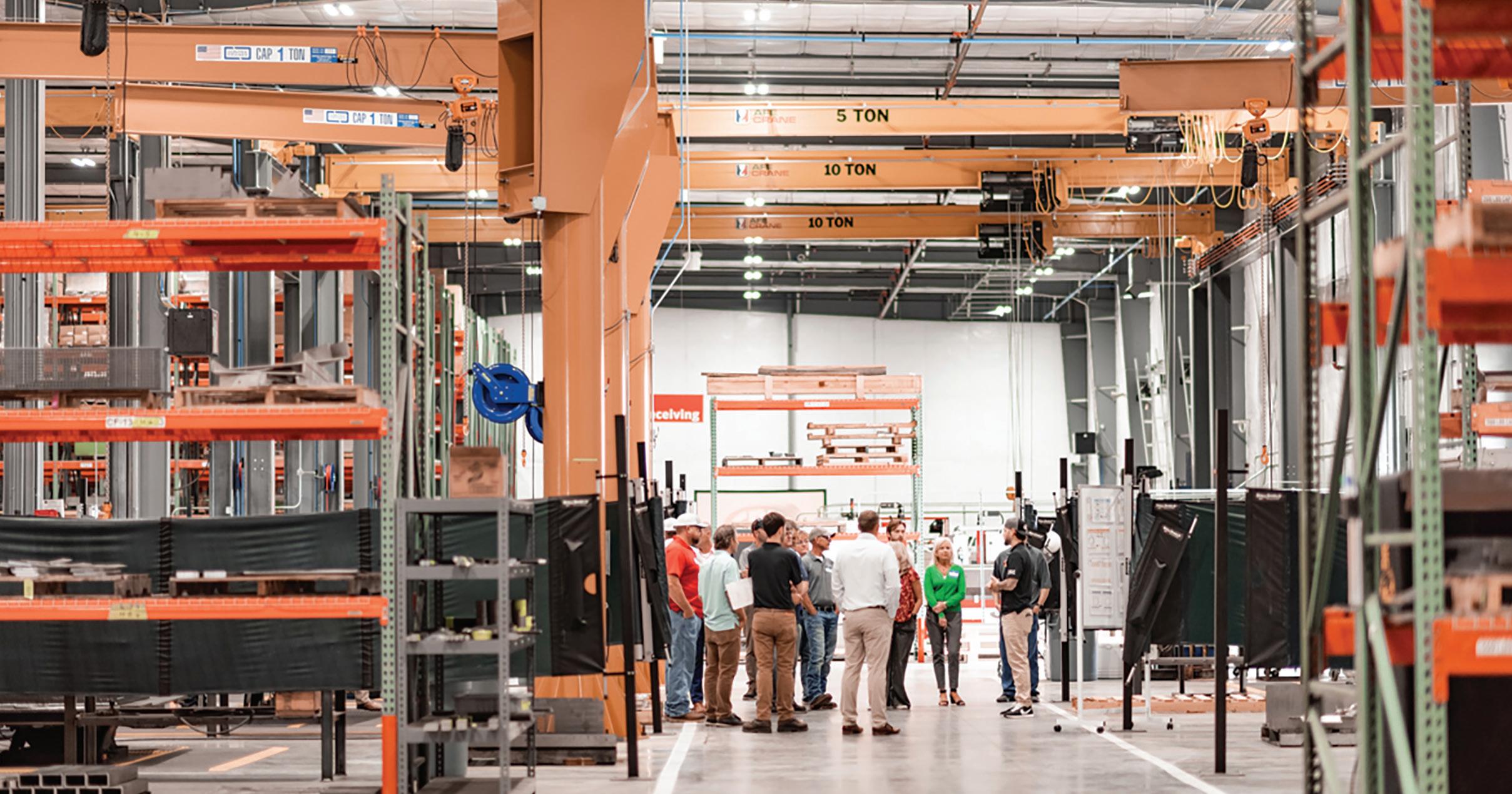
• Approximately 170,000 residents in the Waterloo-Cedar Falls MSA
• -0.1% population decline from 2018 to 2023—compared to +2% growth in Iowa and +3% average among peer regions
• $11.3 billion Gross Regional Product (2023)—ranks 6th among peer regions despite ranking 9th in population size, outperforming some regions with larger populations
• 31% of residents aged 25+ hold a bachelor's degree or higher—13% below the U.S. average, ranking 9th among peer regions
• Prime talent pool (ages 25-44) location quotient of 0.91—9% below the U.S. average, indicating the region's younger population has not yet reached prime working age in significant numbers
• 112,000 total jobs in the region—balanced between 74,000 local-serving jobs and 38,000 traded-sector jobs, with traded sectors generating nearly half of the region's GRP
• Per capita income approximately 11.7% lower than the U.S. average—ranking 9th among peer regions, reflecting wage competitiveness challenges
• Second-youngest median age among peer regions—but only 31% of in-migrants are ages 25-44, revealing a gap in workforce succession where young people are leaving before reaching prime working age.
Source: U.S. American Community Survey 2023; Lightcast 2024
“I love it here, but my degree won't get me a job in this region. Everyone tells me I have to leave.”

The region's most productive workers are migrating away, creating a talent crisis that threatens economic competitiveness.
The Cedar Valley faces a demographic crisis that extends beyond simple population decline. The region is losing precisely the workers who should be driving its economic future: mid-level earners making $25,000$100,000, people under 35, and bachelor'seducated professionals. These aren't workers seeking better weather or lower costs— they're leaving because other metros offer clearer career trajectories, higher wages, and more robust professional networks.
The data reveals a troubling pattern. While educational institutions successfully attract students—inbound migration skews heavily toward this group—employment opportunities fail to retain graduates. Top outbound destinations include Sunbelt states like Florida, Arizona, and Texas, as well as competing Iowa metros, including
Cedar Rapids, Iowa City, and Des Moines. Within key industry clusters, manufacturing, wholesale trade, and the military attract net in-migration, while retail and healthcare shed workers despite healthcare's peak employment levels.
Net out-migration runs higher among working people than among the general population, and the greatest losses occurred during 2016-2017. This erosion of the prime-age talent pool makes it progressively harder for industries to expand, for businesses to recruit skilled workers, and for the region to capture new economic opportunities. The challenge compounds over time as fewer young families stay to replenish the workforce.
Qoute Source: Stakeholder Interviews and Migration Flow Analysis
“We're all working hard, but in parallel, not together. Everyone's rowing, but it's not always in the same direction.”
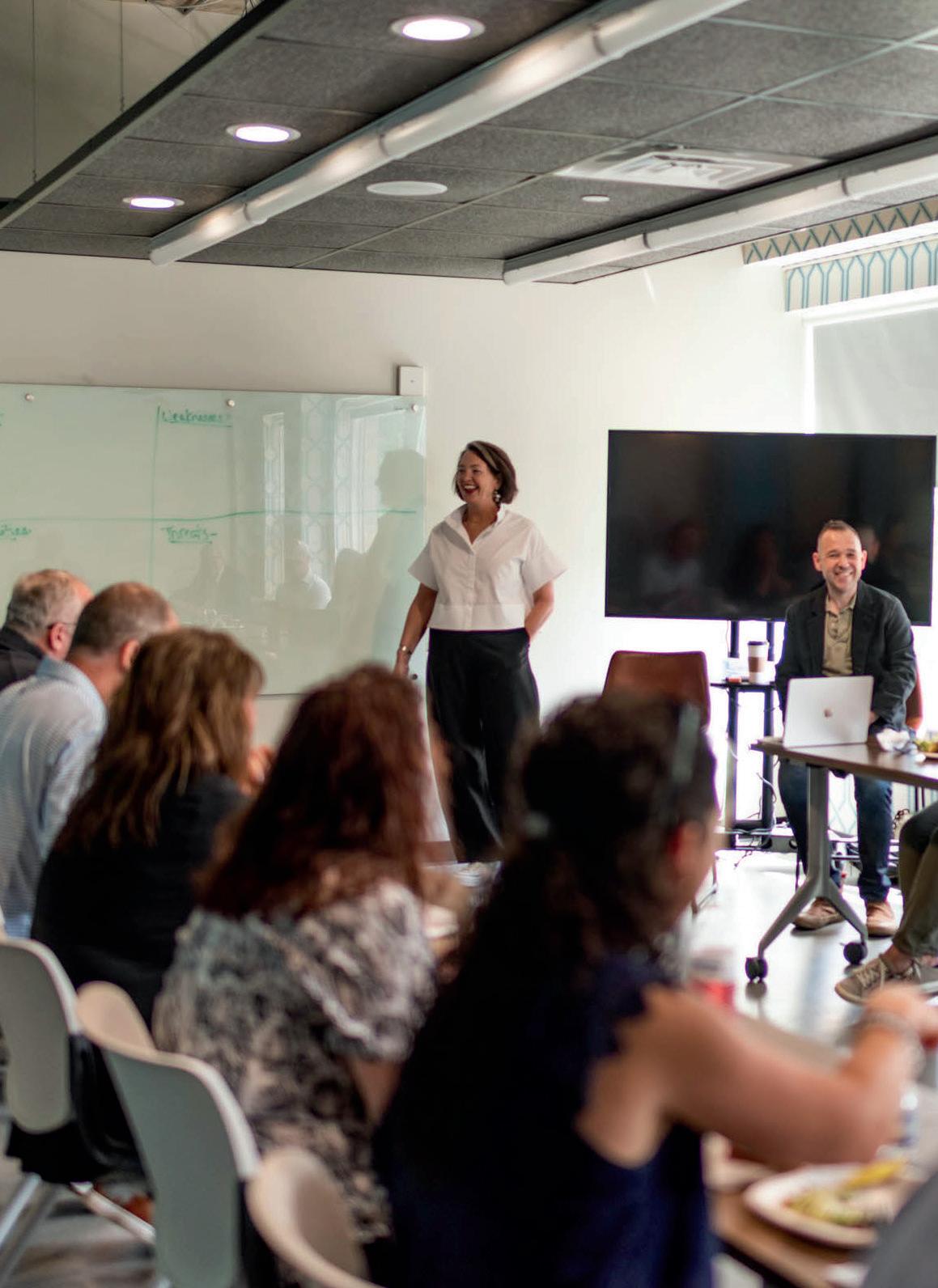
The region has the will to collaborate but needs stronger alignment to turn momentum into results.
Across 12 roundtables and dozens of one-onone interviews, a consistent theme emerged: Cedar Valley stakeholders are ready—even eager—for transformative change. Elected officials, small business owners, educators, and nonprofit leaders expressed genuine enthusiasm for building a shared identity, developing a cohesive economic strategy, and prioritizing sector development. This isn't a region suffering from apathy or lack of vision.
Yet that cultural will to collaborate runs up against fragmented operations and unclear coordination structures. Many stakeholders described being part of multiple tables or coalitions but feeling uncertain about how their efforts align with broader regional goals. Others referenced plan fatigue, citing
past strategies that generated excitement but failed to produce lasting outcomes. The challenge isn't commitment; it's the absence of deeply meaningful regional structures rooted in mutual purpose and strong organizational alignment.
Stakeholders emphasized the need for grounded, phased implementation with appropriate resourcing. They want to see bold initiatives, but they also want confidence that this time will be different—that coordination mechanisms, shared goals, and clear accountability will transform good intentions into measurable progress. The readiness exists; what's required now are the structures and processes to channel it effectively.
Qoute Source: Stakeholder Roundtables and Interviews
“We should have a material goal that all our students are enlisted, enrolled, or employed once they graduate high school, in a local program. What are those career aspirations that can't be fulfilled here?”

The Cedar Valley excels at developing talent but struggles to create the economic opportunities that keep talent local.
Unlike many regions that struggle to develop skilled workers, the Cedar Valley demonstrates remarkable capacity for talent production through its educational institutions, particularly UNI, Hawkeye Community College and Wartburg. The region has effectively become, as one stakeholder described it, "a manufacturing workforce center where you're manufacturing people for the state of Iowa." This strength in workforce development should be a competitive advantage, yet it functions more like a subsidy for other regions' economic growth.
The World Café session on manufacturing and advanced manufacturing surfaced concrete approaches to reverse this pattern. Participants identified opportunities, including a regional technology infusion program to help small manufacturers scale and integrate new technologies, enhanced research commercialization at UNI to create higher-value opportunities, and leveraging
broadband investments to support remote professional services tied to advanced manufacturing. The question "How do we identify our unicorn?" reflected recognition that industry transition periods can create opportunities for new business formation. Without advanced manufacturing growth and higher-value job creation that matches the skill level being produced, the Cedar Valley will continue to subsidize other regions' economic development through its educational investments. The pathway forward requires translating workforce development strength into economic opportunity—creating the kinds of careers that give graduates reasons to stay rather than reasons to leave.
"We should have a material goal that all our students are enlisted, enrolled, or employed once they graduate high school, in a local program. What are those career aspirations that can't be fulfilled here?"
“The university should be an engine for tech, but we're not commercializing research or spinning out startups.”

Traditional manufacturing clusters are slipping while technology shows the strongest growth momentum and highest wage potential.
The Cedar Valley's economic identity has long centered on manufacturing, which still generates the most GRP and pays above-average wages. Yet the cluster is losing jobs, underperforming national trends, and risks becoming a legacy sector without strategic reinvestment. Advanced manufacturing remains nascent despite representing a major growth frontier with higher multipliers and wage potential. This creates both urgency and opportunity—the need to modernize traditional manufacturing while simultaneously building advanced manufacturing capacity.
Meanwhile, technology has emerged as the region's fastest-growing cluster, with GRP growth outpacing U.S. trends by 25 percentage points and the highest wage growth momentum in the region. This makes technology a natural magnet for
retaining young, educated workers—precisely the demographic currently leaving at alarming rates. Both technology and logistics demonstrate significant supply chain leakage, with technology alone showing over $850 million in opportunities that could anchor local entrepreneurship and business attraction. The strategic imperative becomes clear: Double down on technology as the region's future wage leader while using logistics as an on-ramp cluster for workers without degrees. Simultaneously, modernize traditional manufacturing and build advanced manufacturing capacity to preserve the region's industrial base while creating highervalue opportunities. This dual approach addresses both immediate talent retention needs and long-term economic diversification.
Qoute Source: Industry Cluster Analysis and Regional Benchmarking
“By building career ladders in healthcare and beyond, the Cedar Valley can help workers move from entry-level to higher-wage roles. This strengthens retention, reduces outmigration, and turns healthcare into both a local growth engine and a long-term career sector.”

Healthcare offers the clearest pathway for building career advancement while addressing workforce retention and economic inclusion.
Healthcare sits at peak employment with continued growth projected across all skill levels, positioning it as both a stable employer base and a potential model for career advancement strategies. Yet wages fall just shy of national benchmarks, and the sector demonstrates significant supply chain leakage by sourcing most inputs from outside the region. This combination of growth potential and current limitations creates a clear opportunity for intervention.
World Café discussions emphasized healthcare's dual potential: serving as a local growth engine while demonstrating how systematic career pathways can transform entry-level employment into long-term careers. Participants identified opportunities to reduce training redundancies, focus on specialized target occupations, and create transparent progression from positions like CNAs to RNs to advanced practice roles. A particularly compelling theme centered on
leveraging healthcare pathways to better integrate immigrant and BIPOC populations, who, as one participant noted, currently hold "some of the worst jobs in the region" but could access "some of the best career pathways in the region" through systematic workforce development.
By building career ladders in healthcare and using it as a model for other sectors, the Cedar Valley can demonstrate how to turn entry-level employment into advancement opportunities. This approach directly addresses out-migration—workers stay when they see clear pathways forward—while improving economic equity for the region's most vulnerable populations. Healthcare becomes a sector where people can both start and stay, transforming it from a workforce retention challenge into a retention solution.
Qoute Source: World Café Visioning Session and Industry Cluster Analysis
“Even though it's affordable on paper, our workforce is still paying more than 30% of their income on housing. It's not that we don't have tools; we've actually been ahead on ADUs, and we use TIF for infrastructure. But we're still behind on middle-income and workforce housing.”

Housing challenges stem less from costs than from income gaps, financial literacy barriers, and structural obstacles.
Stakeholders across sectors identified housing as a top concern, but not because the Cedar Valley is objectively expensive. Housing prices remain relatively low compared to national standards. The problem lies in mismatched wages and growing rent burden, where many households, particularly those in essential or service roles, spend more than 30% of their income on housing. Affordability issues prove most acute among low- and middle-income workers precisely because wages haven't kept pace with even modest housing costs.
World Café discussions surfaced a critical insight: Many potential buyers "don't think they can afford a home, when in reality they can." This points to financial literacy as a crucial intervention point. Participants identified five key areas requiring attention: basic homeownership education, including maintenance and financial literacy; wealth management counseling to help people understand their purchasing power; addressing hidden costs that deter buyers; expanding the availability of starter homes
in the $110,000-$150,000 range; and rehabilitating aging housing stock.
The challenge isn't runaway prices; it's the structural gap between earnings and available housing options, especially for workers anchoring the regional economy. Both Waterloo and Cedar Falls have enacted progressive housing tools—including allowances for accessory dwelling units, active use of TIF for infrastructure, and zoning flexibility—demonstrating capacity for policy innovation. What's needed now is scaling solutions with coordinated leadership, directly linking housing strategies to wageadvancement initiatives in target sectors.
"Even though it's affordable on paper, our workforce is still paying more than 30% of their income on housing. It's not that we don't have tools; we've actually been ahead on ADUs, and we use TIF for infrastructure. But we're still behind on middle-income and workforce housing."
Qoute Source: World Café Visioning Session and Stakeholder Roundtables
“
We use the term Cedar Valley, but we don't always use it in the same way or mean the same thing. That lack of common defintition makes coordination difficult.”

A unified Cedar Valley brand exists on paper but lacks the genuine coordination needed to compete effectively.
The question of whether the Cedar Valley functions as a true region or merely operates under a shared brand emerged as perhaps the most pervasive theme across interviews. While stakeholders acknowledge the Cedar Valley as a concept, deep skepticism exists about whether it functions as an actual region. Stakeholders repeatedly described disconnects between the aspiration of regional identity and the reality of fragmented operations, with competitive attitudes described as "around for 50 to 100 years. It's ingrained. It's deep."
The fragmentation extends beyond simple rivalry to practical operational challenges. Tourism marketing efforts face significant resistance. Even within meetings, underlying competition surfaces with participants saying, "Oh, we don't want them to get that" behind closed doors. Perhaps most telling, some leaders perceive bias within Grow
Cedar Valley itself, noting that "there isn't an eye specifically toward Waterloo" even within the regional economic development organization. The boundaries of "the Cedar Valley" remain unclear even to those working within it.
Without a unified regional identity and coordinated approach, the Cedar Valley cannot effectively compete for talent, investment, or federal resources against regions that present coherent visions.
Building that identity requires more than marketing materials—it demands coordination structures, shared goals, transparent communication, and demonstrated commitment to mutual benefit rather than zero-sum competition. The civic culture and collaborative spirit exist; translating them into genuine regional function represents the critical next step.
Qoute Source: One-on-One Stake holder Interviews
“We need to learn from our past successes while building for the next generation. Connect older entrepreneurs' knowledge with younger technology workers, and create modern infrastructure like a kitchen incubator that gives people concrete opportunities to start something.”

The entrepreneur ecosystem requires connecting generational knowledge while building a modern support infrastructure.
Discussions about restarting the entrepreneur ecosystem surfaced nostalgia for prepandemic successes alongside recognition that rebuilding requires both honoring past models and creating new infrastructure for the next generation. Participants referenced initiatives like "Whiskey Fridays" and other networking events while emphasizing the need to connect older entrepreneurs' knowledge with younger technology workers. The generational bridge matters: Experienced entrepreneurs possess wisdom about navigating the region's business environment, while younger workers bring technological fluency and contemporary business models.
Concrete near-term opportunities emerged from World Café discussions. The kitchen incubator concept generated enthusiasm as a tangible first step. Innovation challenges and contests could stimulate business formation while engaging multiple generations. Participants emphasized
using modern communication tools and platforms rather than defaulting to outdated approaches. The goal isn't recreating what existed before but rather learning from past successes while building systems that work for today's entrepreneurs.
Entrepreneurship provides the mechanism for translating the region's educational and workforce strengths into new business formation and innovation. By connecting generational knowledge and creating modern infrastructure for entrepreneur support, the Cedar Valley can convert its talent production into local business creation rather than exporting entrepreneurs to other regions. This transforms the workforce development challenge into an economic development opportunity, keeping not just workers but also the businesses they could build.
Qoute Source: World Café Visioning Session
The Cedar Valley has the assets. The data confirms the challenges. The community is ready. What follows is the framework that translates readiness into results.
This strategy is not a collection of disconnected initiatives. It is an integrated system—a shared vision, three interconnected Big Bets, and targeted strategies designed to deliver measurable outcomes. Every component is connected by a clear ambition: to build a Cedar Valley where talent chooses to
stay, innovation drives competitiveness, and communities act as one unified region.
The vision statement captures where the Cedar Valley is headed—the preferred future this strategy is designed to create. The three Big Bets define the fundamental shifts necessary to get there. Each Big Bet contains specific strategies with clear actions, responsible parties, and metrics for measuring progress. Together, they form the Cedar Valley's roadmap for economic transformation.
The structure ensures this plan is not only visionary but operational. It can guide Grow Cedar Valley's annual work plans, shape cross-sector partnerships, prioritize investments, and measure success over time. It is focused enough to direct action toward the highest-impact opportunities, yet flexible enough to adapt as conditions evolve.
What makes this framework work is its integration. Regional coordination enables innovation. Innovation creates career opportunities. Career pathways retain talent. Talent attraction strengthens the regional brand. Each Big Bet reinforces the others, creating momentum that isolated efforts cannot achieve.
This is the Cedar Valley's blueprint for the next chapter—built on regional strengths, shaped by community voice, and designed to deliver the coordinated action that stakeholders consistently identified as the missing piece.

VISION STATEMENT
COUNT ME IN. A region built for what’s next. Where talent stays, industry evolves, and communities move as one toward shared prosperity.
BET
Build the regional coordination, shared identity, and organizational capacity needed to act like one region and compete like one region.
Modernize the Cedar Valley’s economy and build the highvalue sectors that will define the region’s future.
Create clear, high-quality, highopportunity career pathways that retain young people, lift wages, and expand opportunity for every resident.
THE REGION WORKS AS ONE. Sector partnerships are delivering results, educational institutions are aligned with employers, and the Cedar Valley presents a unified identity that competes effectively for talent and investment.
INNOVATION IS HAPPENING LOCALLY. The next generation of industry is here—creating the high-wage opportunities that keep educated workers local while transforming the Cedar Valley's economic base from legacy to future-ready.
TALENT STAYS AND CAREERS GROW HERE. Young professionals, immigrants, and workers at all levels are building lasting careers in the Cedar Valley—choosing to put down roots rather than leave for opportunity elsewhere.

Build the regional coordination, shared identity, and organizational capacity needed to act like one region and compete like one region.
Across interviews, roundtables, and community conversations, no theme surfaced more consistently than the need for alignment. The Cedar Valley’s communities, institutions, employers, and partners care deeply about the region’s future, but they often work in parallel rather than as a unified system. This fragmentation leads to mixed signals, inconsistent messaging, overlapping initiatives, and missed opportunities to compete at a higher level. At the same time, the region has a remarkable civic spirit and a genuine willingness to collaborate— across cities, school districts, higher education, industry groups, and community organizations.
Acting as one region is the foundation for every other Big Bet in this plan. Modernization, talent retention, entrepreneurship, and quality-of-place efforts depend on consistent messaging, shared priorities, and the organizational capacity to carry work forward. Grow Cedar Valley is uniquely positioned to play this integrator role, but it must have the systems, staffing, governance, and partnerships necessary to convene, coordinate, and sustain regional action.
This Big Bet converts goodwill into durable regional alignment: a unified narrative that positions the Cedar Valley with one voice; coordinated policy advocacy; shared data and reporting; and a long-term placemaking strategy that strengthens identity and competitiveness. When the Cedar Valley acts like one region, it can compete like one region.
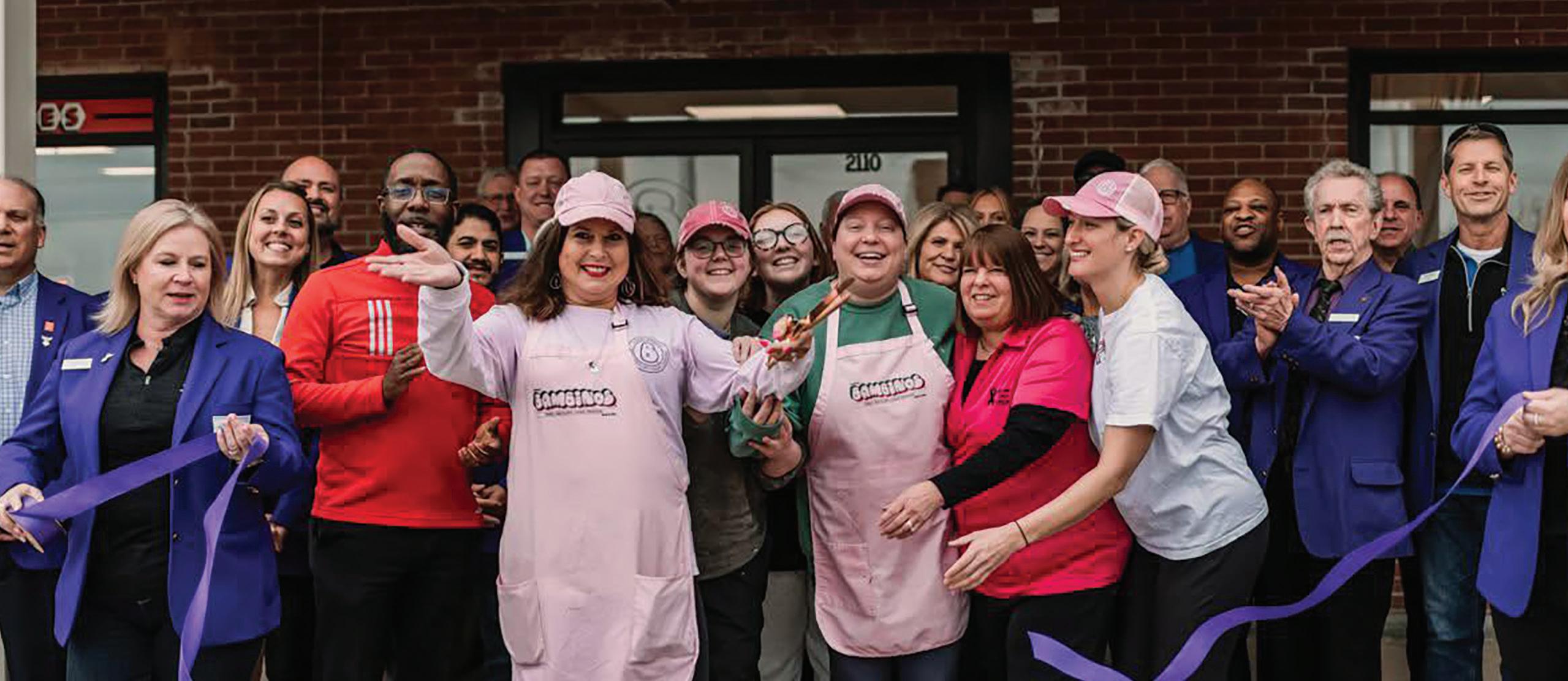

1.1 Launch a unified regional narrative and brand.
1.2 Strengthen Grow Cedar Valley’s organizational and board capacity to lead regional coordination.
1.3 Establish a regional public-policy and legislative agenda.
1.4 Position Grow Cedar Valley as the central hub for site selection, data, and regional reporting.
1.5 Develop and launch a regional destination and placemaking master plan.
1.6 Align workforce housing tools and policies across jurisdictions.
Launch a unified regional narrative and brand.
The Cedar Valley competes not only on assets but also on how those assets are communicated. Today, messaging across the region is inconsistent and fragmented, making it harder for employers to recruit, harder for residents to feel connected, and harder for the Cedar Valley to distinguish itself from peer regions. A unified narrative strengthens external perception, clarifies internal identity, and builds confidence among businesses, investors, and prospective residents. Consistent branding also supports employer recruitment efforts, aligns community partners, and reinforces the economic priorities in this plan. When the Cedar Valley speaks with one voice, it becomes easier to market the region—and easier for people to see themselves here.
• Conduct a brand development process engaging employers, educators, community leaders, and residents to define the Cedar Valley's core identity and competitive positioning.
→ Creates an authentic narrative grounded in regional strengths rather than consultant-developed messaging.
• Develop "The Cedar Valley — Count Me In" narrative framework with consistent messaging for talent attraction, business recruitment, and community identity.
→ Provides a unified story that all partners can use while allowing for local customization.
• Create a comprehensive brand toolkit including messaging guidelines, visual identity, story examples, and application templates for partners across the region.
→ Ensures consistent implementation across multiple organizations and jurisdictions.
• Launch regional marketing campaigns focused on talent attraction, business recruitment, and quality of life, positioning the Cedar Valley as a region, not just individual cities.
→ Shifts external perception from fragmented communities to a unified economic region.
• Establish a brand governance structure ensuring consistent use while allowing flexibility for local community identity.
→ Balances need for a unified regional message with respect for distinct community characteristics.
Strengthen Grow Cedar Valley’s organizational and board capacity to lead regional coordination.
A regional vision is only as strong as the organization positioned to lead it. Grow Cedar Valley plays a critical role in convening partners, coordinating priorities, and sustaining momentum across employers, cities, institutions, and community groups. But this role requires modern governance, adequate staffing, strong data capabilities, and the communications tools needed to engage stakeholders. Strengthening Grow Cedar Valley’s capacity ensures the organization can manage complex initiatives, support sector partnerships, align messaging, and track progress. This strategy builds the regional backbone needed for the Cedar Valley to act cohesively, accelerate execution, and maintain long-term alignment around shared goals.
• Conduct an organizational capacity assessment identifying staffing, expertise, systems, and resource gaps preventing Grow Cedar Valley from effectively coordinating regional strategy implementation.
→ Creates an evidence-based foundation for capacity building rather than adding generic "more resources."
• Expand staffing in priority areas including sector partnership coordination, workforce development strategy, marketing and communications, and entrepreneurship ecosystem development.
→ Builds execution capacity matching the scope of regional economic development strategy.
• Secure multi-year funding commitments from municipal partners, anchor employers, educational institutions, and state sources, providing a stable resource base for expanded operations.
→ Enables strategic planning and hiring rather than annual budget uncertainty limiting effectiveness.

• Establish clear roles and accountability structures defining Grow Cedar Valley's coordinating authority versus municipal economic development functions, eliminating confusion and duplication.
→ Clarifies who does what and ensures regional and local efforts complement rather than compete.
• Strengthen board governance with strategic recruitment focusing on sector expertise, diversity of perspective, and commitment to regional collaboration over parochial interests.
→ Ensures board composition supports the organization's coordinating role and strategic priorities.
• Create advisory committees for each Big Bet providing subject matter expertise, stakeholder engagement, and accountability for progress toward strategy outcomes.
→ Distributes implementation work across committed stakeholders rather than centralizing all execution in small staff.

Establish a regional public-policy and legislative agenda.
Policy decisions at the state and federal levels significantly shape the Cedar Valley’s ability to compete. Today, regional advocacy is often dispersed, reactive, or left to individual organizations. A coordinated agenda allows the Cedar Valley to advance shared priorities—site readiness, transportation, workforce development, innovation funding, housing, and more—with clarity and collective strength. Unified advocacy increases influence, reduces duplication, and positions the region as a focused, credible voice in state and federal conversations. This strategy ensures the Cedar Valley is not competing alone or speaking inconsistently on the issues that matter most to the region’s long-term economic success.
• Convene a regional policy working group bringing together municipal leaders, economic development organizations, educational institutions, and major employers to identify shared legislative priorities.
→ Creates a forum for aligning policy advocacy rather than competing for attention.
• Develop a unified legislative agenda focused on workforce development funding, infrastructure investment, innovation support, and talent attraction initiatives.
→ Positions the Cedar Valley as speaking with one voice to state and federal policymakers.
• Establish relationships with state legislative delegation through regular briefings on regional priorities and opportunities for partnership.
→ Ensures policymakers understand regional needs and see the Cedar Valley as aligned and ready for investment.
• Coordinate grant applications across jurisdictions and organizations to maximize competitiveness for state and federal funding opportunities.
→ Reduces duplication and presents stronger applications through regional collaboration.
• Track policy outcomes and legislative wins demonstrating impact of coordinated advocacy and building case for continued alignment.
→ Shows the value of working together rather than pursuing separate agendas.
Position Grow Cedar Valley as the central hub for site selection, data, and regional reporting.
Economic competitiveness relies on timely, accurate, and accessible information. Today, data, sites, and performance reporting are scattered across jurisdictions and organizations, creating confusion for businesses and limiting the region’s ability to respond to opportunities. Centralizing this work at Grow Cedar Valley streamlines communication with site selectors and funders, improves transparency for local partners, and strengthens decision-making across the region. A shared dashboard builds public trust and helps leaders track progress on economic and workforce goals. This strategy turns data into a regional asset and reinforces the Cedar Valley’s ability to compete for investment and expansion projects.
• Develop a comprehensive regional data dashboard tracking key economic indicators, including employment by sector, wage trends, population and migration, business formation, and talent retention metrics.
→ Provides authoritative data source for decision-making and demonstrates progress toward strategy goals.
• Grow and maintain a site selection-ready inventory of available properties with precertified infrastructure, utility capacity, workforce accessibility, and regulatory status.
→ Reduces the site selection timeline and positions the Cedar Valley as ready for quality investment.
• Establish Grow Cedar Valley as the first point of contact for site selectors, business prospects, and consultants researching the Cedar Valley.
→ Ensures consistent messaging and a coordinated approach to business attraction.
• Develop annual progress reports tracking strategy implementation, measuring outcomes, and communicating results to stakeholders and community.
→ Creates accountability while building momentum and demonstrating the value of coordinated action.
• Create a regional intelligence function monitoring industry trends, competitor strategies, and policy developments relevant to the Cedar Valley's economic future.
→ Provides strategic insights supporting proactive rather than reactive economic development.
Develop and launch a regional destination and placemaking master plan.
Talent attraction and retention increasingly depend on place—on the experiences, amenities, and sense of belonging that communities offer. The Cedar Valley has strong assets, but they are not yet woven into a cohesive regional identity or supported by a coordinated investment strategy. A destination and placemaking master plan connects the region’s cultural, recreational, and entertainment strengths, identifies signature opportunities, and helps communities align investments with economic priorities. This strategy strengthens regional pride, elevates the Cedar Valley’s external profile, and ensures that quality of place becomes a competitive advantage, not a patchwork of disconnected efforts.
• Conduct a regional placemaking assessment identifying assets, gaps, and opportunities for enhancing quality of place across the Cedar Valley.
→ Creates an evidence-based foundation for destination development strategy.
• Develop a regional destination vision articulating the Cedar Valley's identity, target markets, and competitive positioning as a place to visit, live, and invest.
→ Aligns placemaking efforts around a shared understanding of regional character and aspirations.
• Create a placemaking action agenda with specific projects, responsible parties, funding strategies, and timelines for downtown activation, trail development, cultural programming, and destination marketing.
→ Converts the vision into concrete initiatives with clear accountability.
• Establish regional tourism and destination marketing coordination ensuring consistent messaging and collaborative programming across communities.
→ Positions the Cedar Valley as unified destination rather than collection of separate places.
• Link placemaking to a talent attraction strategy using quality of place as key selling point for recruiting and retaining workers.
→ Ensures destination development supports workforce and economic development goals.
• Develop a funding strategy combining public investment, private partnerships, and grant opportunities to support placemaking initiatives.
→ Provides the resources needed to implement the destination vision rather than leaving as unfunded aspirations.
Align workforce housing tools and policies across jurisdictions.
Both Waterloo and Cedar Falls have enacted progressive housing tools—ADUs, TIF for infrastructure, zoning flexibility—demonstrating capacity for policy innovation. The challenge isn't a lack of tools; it's strategic deployment across jurisdictional boundaries. When each community operates independently with different standards and incentive structures, developers face complexity that discourages workforce housing production. Regional alignment amplifies impact: when zoning coordinates, when incentives stack rather than compete, when ADU promotion happens valleywide, the result is housing production at scale. This strategy treats workforce housing as regional infrastructure rather than municipal responsibility, ensuring workers have genuine choices about where to live and build equity across the Cedar Valley.
• Coordinate zoning and land use policies across Waterloo, Cedar Falls, and surrounding communities, enabling consistent workforce housing development standards regionwide.
→ Removes jurisdictional barriers and policy inconsistencies complicating the development of workforce housing at scale.
• Establish workforce housing incentive packages combining multiple tools—expedited permitting, fee waivers, TIF, flexible zoning—into comprehensive support for qualifying projects.
→ Amplifies impact by stacking incentives rather than treating each tool independently.
• Expand and promote ADU programs educating homeowners about opportunities to add rental units, generating income while increasing overall housing supply.
→ Maximizes the use of existing residential land and infrastructure while creating both homeowner wealth and rental options.
• Develop clear TIF guidelines prioritizing workforce housing development, infrastructure supporting mixed-income neighborhoods, and infill projects in established areas.
→ Ensures public infrastructure investment strategically supports workforce housing rather than only higher-end development.
• Create developer education programs explaining available tools, demonstrating financial viability, and streamlining approval processes for projects meeting workforce housing criteria.
→ Addresses knowledge barriers preventing developers from utilizing tools already available to support workforce housing.

Regional Brand Awareness and Perception: Measure brand awareness and perception through external surveys, track unified marketing campaign reach and engagement, and monitor whether prospects and new residents reference the Cedar Valley identity.
Organizational Capacity Metrics: Track Grow Cedar Valley staffing levels, funding stability, and partner participation in regional initiatives.
Legislative and Policy Wins: Count successful grant applications, legislative outcomes aligned with the regional agenda, and state/federal investments secured through coordinated advocacy.
Site Selection Activity: Monitor site selector inquiries, business prospects engaged, and quality investments secured through coordinated regional approach.
Regional Coordination and Collaboration: Track participation in sector partnerships, cross-jurisdictional initiatives, and stakeholder engagement in strategy implementation.
Workforce Housing Production and Tool Utilization: Track new housing units produced in $110,000-$150,000 price range, count ADU permits issued, TIF dollars supporting workforce housing, and monitor housing cost burden by occupation.
Modernize the Cedar Valley economy and build the high-value sectors that will define the region’s future.
The Cedar Valley creates more talent than it keeps, and its economic strengths risk becoming legacy strengths without a coordinated push toward modernization. Stakeholders were clear: The region’s future competitiveness depends on accelerating technology adoption, evolving manufacturing into higher-value subsectors, growing a stronger tech economy, and rebuilding the entrepreneurial energy that once made the Cedar Valley a place where people launched new ideas.
UNI, Hawkeye, Wartburg, and major employers already produce the core ingredients of a more innovative economy: skilled talent, applied problem-solving capacity, and strong industrial foundations. What’s missing is the alignment and acceleration needed to turn those strengths into true competitive advantage.
This Big Bet focuses on modernizing existing firms, developing new high-value sectors, and positioning innovation as a defining capability of the region. By doing so, the Cedar Valley can retain more talent, grow more locally owned firms, attract new investment, and secure its place as a leader in the next generation of advanced industry and technology-driven growth.
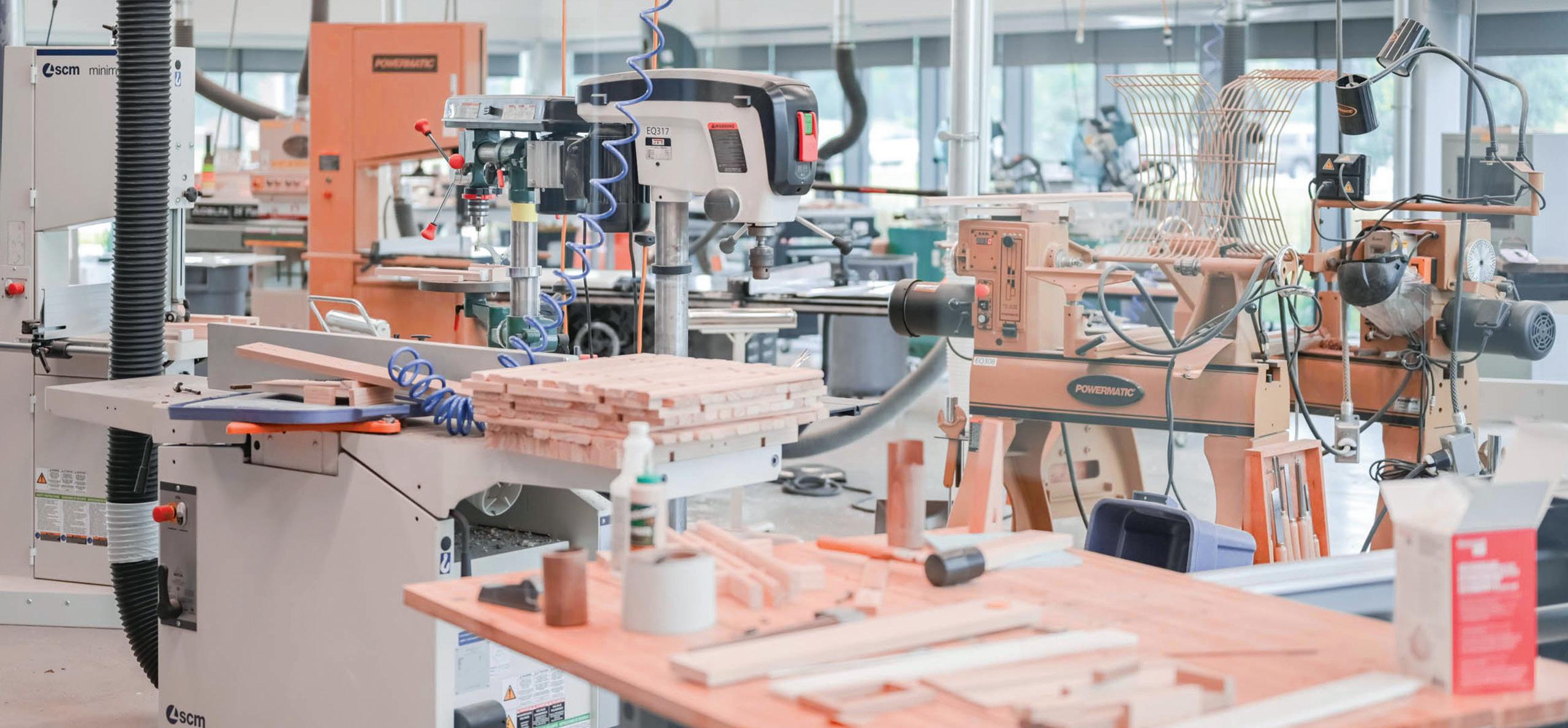

This strategy was built on a foundation of data, lived experience, and civic ambition. The process included:
Traditional and Advanced Manufacturing (defense, biotech, and specialized manufacturing)
John Deere; Tyson Fresh Meats; Masterbrand; Viking Pump; ConAgra
Core economic driver generating most GRP but needs modernization to remain competitive. Advanced manufacturing represents a next-generation opportunity with higher wages and multipliers.
Established manufacturing base; skilled workforce pipeline; strong infrastructure; diversification opportunities from ag equipment into defense, biotech, specialized equipment
Technology (programming, systems design, software, telecommunications) Jack Henry; SciPlay; Talk to Me Technologies
Healthcare UnityPoint; MercyOne; Western Home Communities; Cedar Valley Medical Specialists
Fastest-growing cluster with GRP growth outpacing U.S. trends by 25 points and highest wage growth momentum—critical for retaining young, educated workers. $850M+ supply chain leakage opportunity.
Stable growth sector offering advancement pathways for all skill levels. Model for career ladders, immigrant integration, and turning entry-level jobs into lasting careers.
Growing at 25 points above national trends; youngest workforce with low retirement risk; strong broadband infrastructure; UNI, Hawkeye and Wartburg talent pipeline
Peak employment with continued growth; UNI School of Health and Hawkeye nursing programs with 100% placement; Unity Point and MercyOne anchor employers; diverse entry points
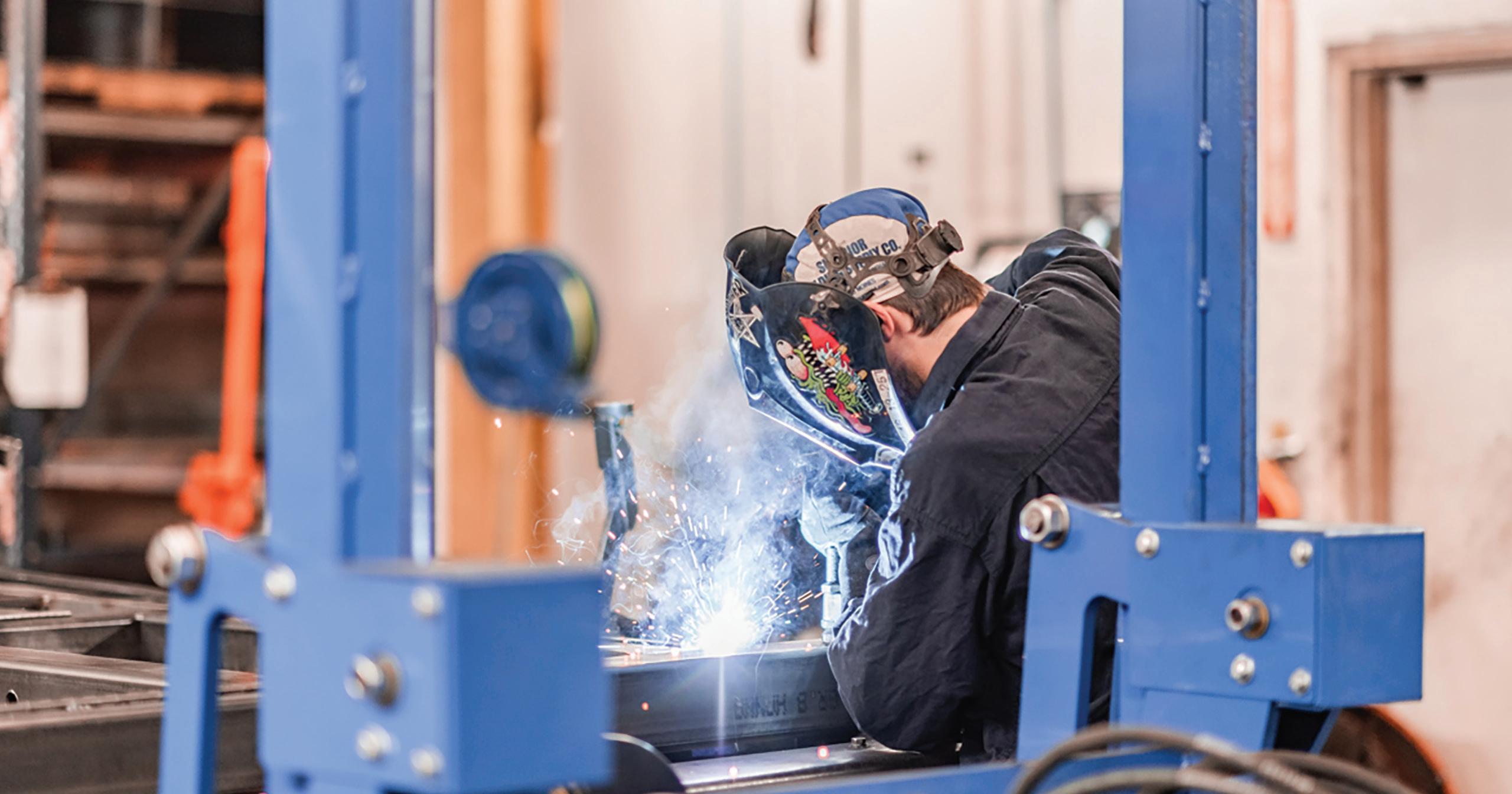
2.1 Modernize and Diversify the Cedar Valley’s Advanced Industry Base.
2.2 Build a Technology and Entrepreneurship Economy That Reduces Leakage.
2.3 Position UNI, Hawkeye Community College and Wartburg as the Cedar Valley’s Applied Innovation Engine.
2.4 Make Health, Aging, and Well-Being a Competitive Growth Platform.
2.5 Strengthen Infrastructure as a Competitive Advantage for Growth.
Modernize and Diversify the Cedar Valley’s Advanced Industry Base
The Cedar Valley’s advanced industries anchor the region’s economy, but global competition, new technologies, and shifting supply chains are reshaping what it takes to stay competitive. Modernizing production through automation, AI, and digital workflows will help existing firms boost productivity, adapt to customer expectations, and stabilize their workforce needs. At the same time, diversifying into higher-value subsectors—such as off-road autonomy, electrification, and industrial systems—positions the region to lead emerging markets rather than reacting to them. This strategy strengthens current employers, expands opportunities for suppliers, and creates new pathways for workers into higher-wage, higher-skill roles.
• Build on a regional manufacturing modernization network uniting manufacturers, Hawkeye, UNI, the Waterloo Career Center, economic development organizations, and technology partners with clear convener roles. Create a one-year work plan to identify 3-5 priorities that address challenges in this sector.
→ Provides a structured forum for prioritizing modernization needs, sharing best practices, and coordinating regional efforts.
• Launch a Modern Manufacturing Fellowship through UNI and Hawkeye that embeds engineering, data, and technology students in local firms to solve applied modernization challenges.
→ Builds firm capacity while strengthening the talent pipeline and exposing graduates to local career opportunities.
• Partner with ISU to develop a technology assessment to help individual firms identify automation opportunities, digital tool integration, and supplier development strategies.
→ Creates customized pathways for modernization based on each firm's specific context and capacity.
• Provide catalytic funding for modernization pilots by leveraging EDA Tech Hub grants, state programs, and industry match dollars to help firms launch early projects that demonstrate ROI.
→ Accelerates the adoption of new technologies and signals regional commitment to competitive manufacturing.
• Build on targeted recruitment strategies for advanced manufacturing firms, including site selection support, workforce demonstration, and connections to supply chain partners.
→ Positions infrastructure assets as competitive advantages for time-sensitive manufacturing and distribution.
Build a Technology and Entrepreneurship Economy That Reduces Leakage
The Cedar Valley generates significant talent and innovation, but loses too much of both to larger markets. Many firms depend on technology solutions sourced from outside the region, and promising ideas often leave before they grow into businesses. Reducing this leakage is essential for long-term competitiveness. A stronger tech and entrepreneurship ecosystem enables local firms to innovate faster, provides commercialization pathways for UNI, Hawkeye and Wartburg talent, and fills supply-chain gaps with homegrown ventures. Rebuilding a crossgenerational entrepreneurial culture will help the Cedar Valley become a region where founders stay, grow, and reinvest.communityeconomy.
• Establish a regional technology sector partnership bringing together technology employers, UNI, Hawkeye, entrepreneurship support organizations, and major manufacturing/ healthcare firms with dedicated staff and governance.
→ Provides a consistent forum for alignment, resource sharing, and collective problem-solving.
• Conduct a supply chain analysis of technology cluster firms to identify specific goods and services currently purchased from outside the region, quantifying opportunities by category.
→ Transforms the $850M of supply chain leakage into concrete entrepreneurship and furthers business attraction targets with demonstrated local demand.
• Support technology entrepreneurship through mentorship networks, access to capital, and connections to anchor customers within the manufacturing and healthcare sectors.
→ Converts supply chain leakage into local business formation while building ecosystem connections.
• Create technology startup accelerator programs focused on B2B software, IT services, and solutions serving local manufacturing and healthcare needs.
→ Builds an entrepreneurship ecosystem directly tied to regional industry demand.
• Market remote professional services capabilities by showcasing a work-from-anywhere infrastructure enabled by the Cedar Valley's digital backbone.
→ Attracts high-wage professional talent who can live in the Cedar Valley while serving national markets.
Position UNI, Hawkeye Community College and Wartburg as the Cedar Valley’s Applied Innovation Engine
UNI, Hawkeye, and Wartburg College are unmatched assets in the Cedar Valley’s effort to compete through innovation. Employers consistently cited the value of applied research, analytics support, and hands-on problem solving—but emphasized that these capabilities need to be more visible, more coordinated, and more deeply integrated into the region’s economic strategy. Strengthening their roles elevates the Cedar Valley’s ability to support firm modernization, accelerate commercialization, and provide students with real-world experiences that tie them to the region. The result is a stronger innovation infrastructure, deeper industry partnerships, and greater retention of the skilled graduates who drive long-term growth.
• Expand UNI's applied research capacity in manufacturing technology, data analytics, and business solutions with dedicated industry liaison roles connecting firms to faculty expertise.
→ Makes research capabilities visible and accessible to regional employers while creating student experiential learning opportunities.
• Launch industry-embedded research projects where UNI, Hawkeye and Wartburg faculty and students solve real business challenges for local firms in automation, process improvement, and technology adoption.
→ Demonstrates immediate value while building long-term industry-university relationships.
• Create technology commercialization pathways supporting UNI research, faculty innovations, and student startups through proof-of-concept funding and business development assistance.
→ Captures innovation happening locally rather than losing it to other regions with stronger support systems.
• Establish UNI, Hawkeye and Wartburg as central conveners for sector partnerships, bringing together data capacity, research expertise, and neutral facilitation.
→ Leverages institutional assets to support regional coordination and industry collaboration.
• Develop applied learning experiences that connect students directly to employer challenges through capstone projects, internships, and industry-sponsored research.
→ Strengthens the talent pipeline while demonstrating student capabilities to regional employers.
Make Health, Aging, and Well-Being a Competitive Growth Platform
Healthcare is one of the Cedar Valley’s largest economic anchors, and the region is well-positioned to lead in aging and well-being as demographic shifts accelerate demand. Yet without deliberate coordination, the sector risks remaining siloed, under-resourced, and unable to meet workforce needs. By treating health and aging as a growth platform—not just a service system—the Cedar Valley can attract investment, strengthen career pathways, and spark innovation in care delivery and technology. This strategy supports employers facing chronic shortages, expands economic opportunity for residents, and positions the region as a statewide leader in well-being and quality of life.
• Convene a healthcare innovation consortium bringing together Unity Point, MercyOne, UNI, Hawkeye, Allen College, aging services providers, and technology partners to identify shared priorities for care delivery innovation.
→ Creates structure for collaboration on aging-focused care models, technology adoption, and workforce innovation.
• Develop the Cedar Valley Center for Healthy Aging as a research, training, and innovation hub linking healthcare providers, social services, higher education, and community organizations.
→ Positions the Cedar Valley as Iowa's leader in aging innovation while addressing demographic shifts.
• Launch aging-focused technology pilot programs testing telemedicine, remote monitoring, and care coordination technologies with regional healthcare providers.
→ Accelerates innovation adoption while creating demonstration projects attracting healthtech investment.
• Create specialized training programs in geriatric care, care coordination, and aging services through Hawkeye and UNI aligned with regional provider needs.
→ Addresses workforce shortages while building specialized expertise in high-demand aging services.
• Support healthtech entrepreneurship focused on aging solutions, care delivery innovation, and healthcare efficiency tools serving regional providers.
→ Converts healthcare sector needs into local business opportunities.
Strengthen Infrastructure as a Competitive Advantage for Growth
The Cedar Valley’s airport, industrial sites, logistics networks, and broadband systems already provide a strong foundation for growth, reinforced by multiple state-certified, due diligence-ready sites. The region is further advancing this position through Site Selectors Guild REDI certification to increase national visibility with site selectors. The opportunity is to ensure these assets meet the expectations of modern manufacturing, technology-enabled firms, and health innovation. Reliable power, resilient utilities, and seamless connectivity reduce risk, speed decisions, and help the region win expansions and new investment— strengthening the physical platform that supports every other economic priority.
• Market broadband capacity and digital infrastructure as competitive advantages for manufacturing firms seeking to integrate automation, remote engineering support, and digital supply chain management.
→ Positions infrastructure assets as business solutions rather than just utilities.
• Develop strategies to utilize airport freight capacity for advanced manufacturing, technology logistics, and expedited supply chain needs.
→ Converts an underutilized asset into competitive advantage for time-sensitive manufacturing and distribution.
• Create "smart manufacturing zones" where concentrated broadband, utility, and transportation infrastructure support clusters of modernizing manufacturers.
→ Builds on infrastructure strengths to create differentiated industrial development opportunities.
• Develop infrastructure-ready site inventory with pre-certified sites showcasing utility capacity, broadband availability, and transportation access for advanced manufacturing and technology firms.
→ Reduces the site selection timeline and demonstrates the Cedar Valley's readiness for quality investment.
• Showcase to site selectors how the Cedar Valley's infrastructure enables cost-effective distributed operations while maintaining quality-of-life advantages.
→ Demonstrates concrete business case for technology sector location and expansion decisions.
Manufacturing Employment and Modernization: Track manufacturers participating in technology infusion programs and measure manufacturing employment trends to demonstrate reversal from decline to growth.
Technology Sector Job and Wage Growth: Measure technology cluster job growth and wage levels to demonstrate establishment as the region's fastest-growing, highest-wage sector.
University Research Commercialization: Track UNI research commercialization metrics, including patents, licenses, and startups formed, and count industry-university collaborative research projects.
Advanced Manufacturing Development: Measure employment growth and the number of firms in target subsectors, including computers, biotech, defense, and specialized equipment.
New Business Formation and Survival Rates: Count new business formations, entrepreneur program participation, and survival rates of startups to demonstrate whether the Cedar Valley is becoming a destination for entrepreneurs.
Create clear, high-quality, highopportunity career pathways that retain young people, lift wages, and expand opportunity for every resident.
The Cedar Valley’s most urgent economic challenge is talent retention. The region excels at developing skilled people—through exceptional K–12 systems, Hawkeye Community College, UNI, Wartburg, and employer-led training—but too many residents leave because they cannot see a long-term future for themselves here. Young adults describe unclear career ladders, unpredictable wage growth, and a lack of visibility into high-demand, high-opportunity fields. Immigrant and refugee workers want to advance but face barriers related to credential transfer, language access, and recognition of prior experience. Employers, meanwhile, struggle to fill positions and retain the workers they already have.
The ingredients for a stronger talent engine already exist: responsive educators, employers willing to collaborate, and a community invested in opportunity for all. What’s missing is a coordinated system that connects residents to pathways, helps employers strengthen job quality, and positions the Cedar Valley as a place to build both a career and a life.
This Big Bet builds that system. It strengthens career mobility, expands earn-and-learn pathways, mobilizes employers around competitive practices, and builds the conditions where young people, earlycareer professionals, and long-time residents can see a future worth staying for. By doing so, the Cedar Valley can keep more of the talent it produces, lift incomes, and ensure economic success is shared across the region.


3.1 Launch sector partnerships in the Cedar Valley’s priority industries.
3.2 Expand youth and adult earn-and-learn pathways into high-demand careers.
3.3 Mobilize employers around competitive job quality, wages, and advancement practices.
3.4 Launch the Campus Cedar Valley Talent Initiative.
3.5 Strengthen young-professional retention through belonging, leadership, and community connection.
3.6 Advance economic mobility for immigrant, refugee, and frontline workers.
3.7 Coordinate housing access with career advancement in target sectors.
Launch sector partnerships in the Cedar Valley’s priority industries.
No single institution can solve the Cedar Valley’s talent challenges alone. Sector partnerships bring employers and educators together to define skills, align training, and build clear pathways into high-demand jobs. They also help employers articulate shared needs—wages, work-based learning, supervisory skills—that improve retention and job quality across an entire industry. By establishing durable partnerships in manufacturing, health, technology, logistics, and the trades, the Cedar Valley can reduce duplication, make training more responsive, and help workers move into roles with higher wages and stronger advancement potential. This strategy creates the coordinated talent engine that the region’s employers consistently said they need.
• Create three formal sector partnerships—manufacturing, healthcare, and technology—with clear governance, co-chairs from industry and education, and shared agendas.
→ Provides ongoing coordination and a place to align work happening across Big Bets 1, 2, and 3.
• Define annual "Priority Workplans" for each partnership that set shared goals, metrics, and timelines without duplicating implementation work handled elsewhere.
→ Ensures coordination while keeping sector activity distributed across existing partners.
• Assign staff support and data capacity to maintain schedules, track progress, manage communications, and monitor outcomes.
→ Gives partnerships the operational backbone needed for continuity.
• Align partnership agendas with existing initiatives (apprenticeships, career ladders, modernization projects, tech talent efforts) to eliminate redundancy.
→ Ensures that sector partnerships integrate existing work rather than recreate it.
• Establish quarterly cross-partnership meetings to identify shared challenges, coordinate grant applications, and manage region-wide priorities.
→ Creates a unified approach and strengthens the Cedar Valley's competitiveness for state and federal investment.
Expand youth and adult earn-and-learn pathways into high-demand careers.
Earn-and-learn pathways are the most effective way to retain young people, accelerate skill development, and meet employer demand. The Cedar Valley already has strong programs, but they are not yet connected at the scale required to serve regional needs. Expanding apprenticeships, internships, and work-based learning strengthens the education-to-employment pipeline and helps students and adults move into careers with clear growth potential. These pathways increase retention by giving residents real experience with local employers—and giving employers earlier access to talent. This strategy ensures the Cedar Valley keeps more of the workers it develops and provides residents with direct, visible routes into high-opportunity careers.
• Establish a regional apprenticeship coordinating body bringing together K-12 districts, Hawkeye Community College, Wartburg, employers, and economic development organizations with dedicated staff and clear governance.
→ Creates structure and accountability for program development, employer recruitment, and student placement.
• Identify priority occupations in manufacturing (CNC machining, welding, industrial maintenance), healthcare (nursing assistants, medical lab technicians, respiratory therapy), technology (software development, IT support, cybersecurity), and skilled trades (HVAC, electrical, plumbing).
→ Focuses program development on occupations with demonstrated demand and viable career progression.
• Recruit employer partners willing to commit to multi-year apprenticeship relationships, providing structured work experiences, mentorship, and progression opportunities.
→ Ensures apprenticeships lead to meaningful employment rather than short-term work experiences.
• Design stackable credential pathways where apprenticeship experiences earn credit toward industry certifications, associate degrees, and bachelor's degrees.
→ Enables students to progress educationally while working, reducing time to degree and education costs.
• Secure funding through state apprenticeship grants, employer contributions, workforce development funds, and federal programs to support student wages and program operations.
→ Provides financial sustainability for a scaled apprenticeship system.
• Launch adult earn-and-learn programs for career changers and incumbent workers seeking advancement in manufacturing, healthcare, and technology sectors.
→ Expands opportunity beyond youth while addressing employer workforce needs.

Mobilize employers around competitive job quality, wages, and advancement practices.
Talent retention is directly tied to the quality of jobs available. Workers stay where wages grow, advancement is possible, and supervisors are equipped to support and develop their teams. Employers across the region acknowledged that they must compete not only for workers but for the quality of work they offer. Mobilizing employers around job quality—and providing tools, wage intelligence, and leadership development—helps raise regional standards and reduces turnover. Spotlighting companies that lead on job quality encourages others to follow. This strategy strengthens the employment environment across the Cedar Valley and improves outcomes for both workers and businesses.
• Map existing career progressions in manufacturing, healthcare, and technology, documenting typical advancement pathways, timeframes, educational requirements, and compensation at each level.
→ Creates a baseline understanding of how careers actually develop and identifies where pathways break down.
• Partner with major employers to define transparent criteria for advancement between roles and commit to promote-from-within practices within target sectors.
→ Ensures career ladders function in practice with real advancement opportunities, not just theoretical pathways on paper.
• Develop sector-specific career pathway guides showing entry points, advancement steps, required skills/credentials, and typical timelines for progression in manufacturing, healthcare, technology, and skilled trades.
→ Makes career possibilities visible and concrete for current and prospective workers.
• Establish employer commitments to competitive job quality practices, including transparent wage ranges, predictable scheduling, benefits access, and advancement criteria.
→ Positions the Cedar Valley employers as leaders in job quality and talent retention.
• Create employer peer-learning networks where companies share best practices on retention, advancement, and wage competitiveness.
→ Builds collective commitment to job quality improvement across sectors.
• Profile workers who've successfully advanced through career ladders in regional marketing materials, demonstrating concrete examples of local career progression.
→ Converts abstract pathways into relatable stories showing that advancement happens here, not just elsewhere.
Launch the Campus Cedar Valley Talent Initiative.
Talent retention is directly tied to the quality of jobs available. Workers stay where wages grow, advancement is possible, and supervisors are equipped to support and develop their teams. Employers across the region acknowledged that they must compete not only for workers but for the quality of work they offer. Mobilizing employers around job quality—and providing tools, wage intelligence, and leadership development—helps raise regional standards and reduces turnover. Spotlighting companies that lead on job quality encourages others to follow. This strategy strengthens the employment environment across the Cedar Valley and improves outcomes for both workers and businesses.
• Create the Campus Cedar Valley coordinating organization with dedicated staff, employer partnership structure, and clear governance connecting UNI, Hawkeye, Wartburg employers, and community organizations.
→ Provides an organizational home and accountability for student engagement initiatives.
• Develop a comprehensive internship marketplace connecting students across all majors to regional employers with structured experiences, mentorship, and potential for full-time employment.
→ Increases early employer connections while demonstrating local career opportunities.
• Launch student ambassador programs recruiting current students and recent graduates to share authentic experiences about building careers in the Cedar Valley.
→ Provides peer-to-peer marketing that’s more credible than institutional messaging.
• Create leadership development experiences for students, including board service, civic engagement, and community involvement, connecting them to the Cedar Valley beyond campus.
→ Builds social capital and sense of belonging that increases likelihood of staying.
• Expand existing young professional networks linking recent graduates across employers to build community and reduce isolation for early-career workers.
→ Addresses the retention challenge where young professionals leave due to a lack of social connections.
• Develop cultural programming and social events specifically designed for college students and young professionals, showcasing the Cedar Valley's quality of life.
→ Demonstrates that the region offers a lifestyle and community worth staying for.
Strengthen young-professional retention through belonging, leadership, and community connection.
Young professionals consistently shared that belonging—not just job availability— determines whether they stay in a community. The Cedar Valley has strong assets, but young adults often struggle to find social networks, leadership roles, and civic connections that root them in place. Strengthening young professional retention means investing in programs that create community, elevate young leadership, and make it easier for early-career adults to plug into the Cedar Valley’s cultural, civic, and professional life. This strategy aligns with employer needs, reduces turnover, and helps ensure that talent grown in the region becomes talent that stays in the region.
• Expand young professional networks across the Cedar Valley with regular programming, leadership opportunities, and civic engagement pathways.
→ Creates social infrastructure that helps young professionals build connections and see a long-term future in the region.
• Create emerging leader boards and commissions where young professionals serve on economic development, community organizations, and public bodies.
→ Builds investment in the region's future while providing leadership experience.
• Launch mentorship programs pairing young professionals with established community leaders across business, civic, and nonprofit sectors.
→ Provides career guidance while building intergenerational connections to the region.
• Develop "reasons to stay" marketing campaigns featuring young professionals who chose the Cedar Valley, highlighting career advancement, affordability, and quality of life.
→ Counters the narrative that young people must leave for opportunity.
• Establish returnship programs specifically targeting former residents and UNI, Hawkeye and Wartburg alumni to recruit them back to the Cedar Valley.
→ Leverages existing relationships and familiarity with the region to reverse out-migration.
Advance economic mobility for immigrant, refugee, and frontline workers.
Immigrant, refugee, and frontline workers are essential to the Cedar Valley’s economy, yet many face significant barriers to advancement: language access, credential recognition, transportation, and financial stability. These barriers keep skilled workers in low-wage roles and contribute to workforce shortages across key industries. By improving credential transfer, expanding bridge programs, and helping employers recognize international experience, the Cedar Valley can unlock a major source of talent. Pairing this with financial empowerment and housing stability tools ensures workers can build long-term futures in the region. This strategy expands opportunity, strengthens families, and supports employers that depend on a stable, advancing workforce.
• Map immigrant and refugee workforce participation by sector, role, and advancement patterns to understand current pathways and barriers.
→ Creates evidence base for targeted interventions rather than generic programs.
• Establish credential recognition and prior learning assessment pathways helping immigrants and refugees gain U.S. credentials for international experience and education.
→ Removes a major barrier to career advancement for workers with extensive experience.
• Create sector-specific ESL programs embedded in workplace settings for manufacturing, healthcare, and service sectors.
→ Provides language training directly relevant to career advancement while accommodating work schedules.
• Develop career navigator positions specifically supporting immigrant, refugee, and frontline workers in understanding advancement pathways and accessing training opportunities.
→ Provides human support for navigating complex systems and accessing opportunities.
• Partner with immigrant and refugee community organizations to co-design advancement programs that address cultural context and specific community needs.
→ Ensures programs are culturally responsive and actually serve target populations effectively.
Coordinate housing access with career advancement in target sectors.
Housing affordability alone doesn't guarantee access if wages remain stagnant— and wage growth alone doesn't improve quality of life if housing costs absorb the gains. The Cedar Valley's housing challenge isn't runaway prices; it's the structural gap between earnings and available options. As workers advance through career ladders—CNAs becoming RNs, manufacturing technicians moving into automation roles—housing strategies must evolve to serve these improving income levels. By linking employer partnerships, homeownership education, and financing programs directly to target sector wage progression, the Cedar Valley ensures that career advancement and housing access reinforce each other. Workers who can build both careers and equity stay.
• Develop an integrated workforce housing and economic development strategy explicitly linking housing production targets to projected wage growth in manufacturing, healthcare, and technology sectors.
→ Ensures the housing supply evolves with economic development rather than lagging behind workforce needs.
• Create employer-sponsored housing initiatives in partnership with manufacturers, healthcare systems, and technology firms offering down payment assistance or housing subsidies tied to employment.
→ Directly connects housing support to career development in priority sectors, benefiting both employers and workers.
• Coordinate career ladder advancement with homeownership education, providing housing counseling as workers progress to income levels where homeownership becomes feasible.
→ Creates a clear connection between career progression and homeownership opportunity, making both goals mutually reinforcing.
• Establish a regional homeownership education center providing free or low-cost training in financial literacy, mortgage qualification, home inspection, and maintenance requirements.
→ Creates an accessible resource removing knowledge barriers preventing qualified buyers from purchasing homes—addressing the insight that "many potential buyers don't think they can afford a home, when in reality they can."
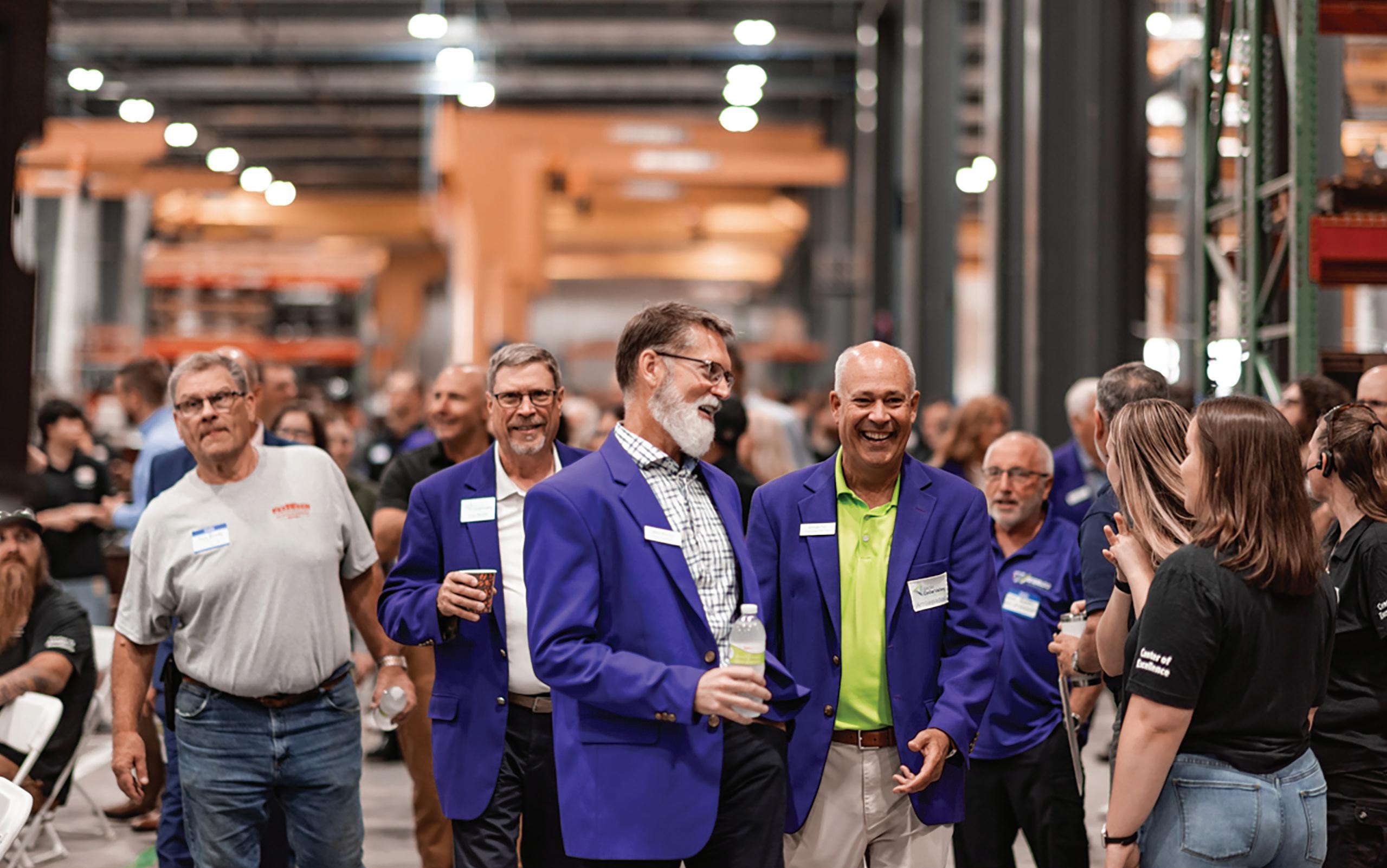
Sector Partnership Activity and Outcomes: Track the establishment and activity of manufacturing, healthcare, and technology sector partnerships, including meeting frequency, employer and education participation, and measurable initiatives advanced.
Graduate Retention and Early Employer Engagement: Monitor UNI, Hawkeye and Wartburg graduate retention rates by program area and track early employer engagement with students to measure whether coordination is keeping more talent local.
Apprenticeship and Earn-and-Learn Participation: Count students and adults enrolled in registered apprenticeships, pre-apprenticeships, and earn-and-learn programs across priority sectors.
Young Professional Retention: Monitor retention rates of workers aged 22-35 and survey engagement with Campus Cedar Valley and young professional networks.
Economic Mobility for Immigrant and Refugee Workers: Track credential recognition completions, wage progression, and advancement into supervisory/management roles.
Housing Affordability for Target Sector Workers: Monitor the share of households in manufacturing, healthcare, and technology spending more than 30% of income on housing, and track first-time homebuyer rates among workers in these sectors.
The success of this initiative is a testament to the collective vision of our community. Thank you to the Grow Cedar Valley Population Study Steering Committee for their guidance and collaboration throughout this process.
MARK ANDERSON
City of Waverly, Mayor
NOEL ANDERSON
City of Waterloo, Community Planning and Development Director
FABIO CASTRO
John Deere, VP and Factory Manager
DREW CONRAD
UNI Institute for Decision Making (IDM), Director
ISAIAH CORBIN
INRCOG, Director of Development
DAVID DEEDS
JSA Development, President
STEPHANIE DETWEILER
Grow Cedar Valley, Director of Talent and Workforce
REBECCA EHRETSMAN
Wartburg College, President
JENNI FRIEDLY
UnityPoint Health – Allen Hospital, Market President
TAVIS HALL
Black Hawk County Supervisors, County Supervisor
TODD HOLCOMB
Hawkeye Community College, President
JEFF KOLB
Butler-Grundy Development Alliance, Executive Director
BRENT KNUTSON
Target Distribution Center, Senior HR Manager
DANNY LAUDICK
City of Cedar Falls, Mayor
HANNAH LUCE
Waterloo Schools Foundation, Executive Director
MIKE MALLARO
VGM Group, Chair of the Board
SHAWNA MATZ
Veridian Credit Union, Chief People Officer
MARK NOOK
University of Northern Iowa, President
BRIAN SCHOON
INRCOG, Executive Director
LISA SKUBAL
Grow Cedar Valley, VP of Economic Development
KATY SUSONG
Grow Cedar Valley, President and CEO
KRISTI TIBBEN
Board of Realtors, Realtor and President
KATE WYATT
City of Hudson, City Council Member
We are equally appreciative of the hundreds of community members who shared their experiences and ideas during the June roundtables, through individual conversations with our consultants, and at the October Community Ideas Workshops. Your perspectives and passion for the future of the Cedar Valley helped shape this plan and the strategies within it. For more information visit www.civicsol.com.
Leesburg strengthened its business, retention, and expansion and workforce efforts by embedding itself in regional partnerships.
Leesburg used partnerships to amplify its voice in Northern Virginia, a highly competitive market where small cities struggle to stand out. Rather than going it alone, Leesburg embedded itself in regional alliances for economic development, workforce training, and site marketing—gaining visibility that individual suburbs rarely achieve.
• Joined NOVA EDA, a regional alliance focused on joint business attraction and site marketing.
• Collaborated with Loudoun County Public Schools on sector-relevant CTE programs aligned with employer needs.
• Established relationships with Northern Virginia Community College to support training in IT, cybersecurity, and health services.
• Coordinated with neighboring towns to present the region as a unified destination for employers. Through these efforts, Leesburg became visible in site selection conversations and gained access to talent pipelines that individual suburbs rarely achieve.
Leesburg demonstrates how a smaller city can gain regional presence through coordinated partnerships and unified messaging. The Cedar Valley faces similar challenges with fragmented identity—Waterloo, Cedar Falls, and surrounding communities often work in parallel rather than as one region. By strengthening Grow Cedar Valley's coordinating role, aligning workforce partnerships, and presenting unified site selection materials, the Cedar Valley can compete more effectively for talent and investment. When regions act like one, they compete like one.
Mesa rebranded from "Phoenix Suburb" to an "Unexpectedly Cool" destination with comprehensive economic development marketing.
Mesa faced a classic identity problem—seen as just another Phoenix suburb despite having strong assets. They launched a complete rebrand in the 2010s.
• Developed the "Unexpectedly Cool" brand platform with clear messaging about arts, innovation, and entrepreneurship.
• Created sector-specific marketing materials for aerospace, healthcare, and advanced manufacturing with detailed workforce data and site profiles.
• Redesigned economic development website with video content, interactive maps, and downloadable sector profiles.
• Produced annual economic development reports celebrating wins and demonstrating momentum.
• The rebrand helped Mesa land major projects, including Apple's Mesa facility, and positioned the city as a tech-forward alternative to Phoenix.
Mesa shows how strategic branding differentiates a region from larger neighbors and creates a distinct identity in competitive markets. The Cedar Valley's "Count Me In" framework has similar potential— positioning the region as the place where manufacturing meets innovation, where talent is developed and retained, and where affordability supports quality of life. By launching unified regional branding, the Cedar Valley can shift perception from "smaller Iowa metro" to "advanced manufacturing and talent hub," attracting both business investment and workers seeking opportunity.
Richardson built the Telecom Corridor® brand into a nationally recognized innovation district identity.
The Richardson Telecom Corridor is one of the most successful examples of corridor branding in economic development. What started as a geographic descriptor became a powerful economic identity.
• Trademarked "Telecom Corridor" and built a consistent visual identity and messaging around innovation.
• Created corridor-specific marketing materials showcasing available sites, infrastructure, and anchor tenants.
• Developed physical branding elements, including gateway signage, wayfinding, and public art, reinforcing the tech identity.
• Launched targeted campaigns to software and tech firms, positioning the corridor as North Texas's innovation hub.
The Telecom Corridor brand became synonymous with North Texas tech, helping Richardson attract hundreds of tech firms and maintain relevance as the sector evolved from telecom to software.
Richardson demonstrates how sustained, disciplined branding creates lasting economic identity and competitive advantage. The Cedar Valley has the opportunity to build similar brand equity around
"Count Me In," manufacturing innovation, talent development, and coordinated regional action. The lesson from Richardson is consistency: Every site selection conversation, every marketing piece, every workforce program should reinforce the same regional story. When the Cedar Valley speaks with one voice over time, the brand becomes an economic asset that attracts investment, retains talent, and strengthens regional pride.
Charlottesville turned university research into a growing life sciences cluster with CvilleBioHub at the center.
Charlottesville had strong university research assets but lacked the connective tissue to convert academic work into commercial success. The city responded by creating CvilleBioHub as an organizing platform that connects researchers, entrepreneurs, and investors—giving the life sciences community structure and staying power.
• Launched CvilleBioHub to connect early-stage life sciences firms, UVA researchers, and investors.
• Developed a regional brand and story for the cluster to support marketing and recruitment.
• Convened founders and stakeholders through regular programming and networking.
• Built a centralized talent and resource portal to support retention and growth.
• Together, these efforts gave Charlottesville's life sciences community structure, visibility, and staying power—positioning it as a place where research becomes real opportunity.
The Cedar Valley has strong innovation assets in UNI, Hawkeye and Wartburg but lacks the connective tissue turning research into businesses. Charlottesville shows how a university-centered cluster platform can organize sector activity, support commercialization, and position a region as an innovation hub. The Cedar Valley can replicate this model by creating formal structures connecting UNI/Hawkeye/Wartburg research to manufacturers, healthcare providers, and technology firms— ensuring innovation happens here and stays here.
Wilson used targeted tech investments and small-scale innovation spaces to build a meaningful traded-sector foothold.
Wilson isn't a big city, but it built a reputation for tech and entrepreneurship through smart, focused bets. Rather than chasing major employers, Wilson created the environment, infrastructure, and support systems where small tech firms and remote workers could thrive.
• Built Gig East Exchange, a co-working and innovation hub for remote workers, tech startups, and creative firms.
• Provided competitive incentives and technical assistance to attract small software and IT firms.
• Upgraded broadband and digital infrastructure to support remote work and entrepreneurship.
• Invested in downtown redevelopment that created the right environments for small tradedsector firms.
• Wilson built a tech-forward economy without big employers—by focusing on environment, infrastructure, and talent.
Wilson demonstrates that smaller metros can compete for technology firms and entrepreneurs by leveraging infrastructure, creating supportive spaces, and targeting small traded-sector firms. The Cedar Valley's fiber network, affordability, and quality of life create similar opportunities. Rather than chasing major tech headquarters, the Cedar Valley can build a distributed technology economy of remote workers, small software firms, and service businesses—reducing supply chain leakage while creating higher-wage opportunities.
Bentonville used a local anchor to build a new cluster in electric aviation and emerging tech.
Bentonville has recently become a hub for electric aviation and advanced air mobility. The city leveraged existing assets—an airport, corporate headquarters, and regional partnerships—to attract startups and position itself as an innovation leader in an emerging sector.
• Attracted electric aviation firm OZ AIR and other startups to the regional airport district.
• Launched UP.Summit, bringing global mobility innovators and investors to Bentonville.
• Invested in flight testing infrastructure and partnerships with nearby universities.
• Integrated aviation and drone education into local K–12 and postsecondary programs.
• Together, these efforts positioned Bentonville as a surprising player in advanced air mobility— built from the ground up through partnership and vision.
Bentonville shows how a region can leverage existing anchors—in their case, an airport and corporate headquarters—to build entirely new industry clusters. The Cedar Valley has similar potential with John Deere, manufacturing expertise in autonomy and electrification, and strong educational institutions. By targeting advanced manufacturing subsectors like agricultural technology, defense
components, or specialized equipment, the Cedar Valley can evolve its manufacturing base into highervalue activities that create career opportunities worth staying for.
TYPROS helped Tulsa retain its young talent and future leaders.
Tulsa built a young professionals network to create belonging, leadership, and civic impact. Recognizing that early-career workers were leaving due to a lack of connection and community, Tulsa launched TYPROS to give young professionals a platform for networking, leadership development, and meaningful civic engagement.
• Launched TYPROS under the Tulsa Regional Chamber to connect early-career professionals to local employers, issues, and each other.
• Organized members into "crews" focused on public policy, entrepreneurship, DEI, and placemaking.
• Offered networking events, volunteer projects, and mentorship programs that created ties between emerging talent and civic life.
• Partnered with city leaders and businesses to amplify young voices in city decisions.
• Buda turned its influx of talent into a base of entrepreneurs, remote workers, and locally grown firms—strengthening both the economy and civic culture.
Tulsa demonstrates how investing in young professionals builds both talent retention and community vitality. The Cedar Valley faces similar challenges in retaining young people after graduation. TYPROS provides the exact model for Campus Cedar Valley and young professional network strategies, creating structured ways for early-career workers to build connections, develop leadership skills, and see a future for themselves in the region. When young professionals feel they belong and can make an impact, they stay.
Westerville became a competitive suburban economy by building deep partnerships with schools, colleges, and regional economic organizations.
Westerville is a prime example of a small city that used partnerships—not incentives—to expand its economic reach. Despite its modest size, Westerville positioned itself as a regional player through education, workforce, and business development alliances.
Built a close partnership with Otterbein University, leading to the creation of The Point—an innovation and learning center that supports tech, manufacturing, and healthcare firms.
• Collaborated with Workforce Development Boards to connect employers with talent pipelines and CTE-aligned training.
• Partnered with Columbus 2020 (now One Columbus) to market the city as part of a broader regional business ecosystem.
• Developed joint strategies with neighboring jurisdictions to coordinate infrastructure and business attraction.
• These partnerships allowed Westerville to punch far above its weight, attracting firms and talent that would otherwise overlook a small city.
Westerville shows how sector partnerships and coordinated workforce development create competitive advantage—even for smaller regions. The Cedar Valley has the same building blocks: UNI, Hawkeye, Wartburg major employers, and workforce providers. The opportunity is in creating formal sector partnerships in manufacturing, healthcare, and technology that align training, build career pathways, and coordinate employer needs. When education and industry work as one system, workers can advance through clear pathways, and regions can compete for quality investment.
Ankeny anchored remote workers and startups by investing in co-working and a connected entrepreneurship ecosystem.
Ankeny experienced rapid growth in high-income commuters and remote workers who were disconnected from the local economy. The city responded by building a physical hub and growing a support network for local entrepreneurs.
• Opened the Ankeny CoLab, a co-working and innovation space designed for remote workers and early-stage entrepreneurs.
• Offered business development services, mentors, and technical assistance through local partners.
• Activated downtown corridors with small business events, pop-ups, and maker markets.
• Paired redevelopment projects with incentives targeted toward local businesses.
• Ankeny turned formerly “exported” talent into local business creation and corridor activation.
Ankeny is an Iowa peer demonstrating how communities can convert remote workers and commuters into local economic assets. The Cedar Valley has technology talent working remotely for out-of-state firms and manufacturers purchasing services from outside the region. By creating spaces, networks, and support systems for entrepreneurs—particularly in technology services—the Cedar Valley can
capture supply chain leakage, create local business opportunities, and build careers that don't require leaving the region. This is especially relevant for reducing the $850M in technology supply chain leakage identified in the research.
Philadelphia went from losing three-quarters of its graduates to retaining half through coordinated engagement.
When Campus Philly launched in the early 2000s, Philadelphia retained only 25% of its college graduates. Through sustained collaboration among higher education, employers, and civic partners, the region now retains 50% of graduates—driving a 155% increase in college-educated 25- to 34-yearolds staying in the region between 2000 and 2021.
• Created Campus Philly as a nonprofit coordinating organization connecting 100+ colleges and universities, employers, and civic partners around student engagement and retention.
• Launched city-wide programming, including CollegeFest, Philly Night Out, and career networking events connecting students to employers.
• Built employer partnerships providing internships, career pathways, and early professional connections for students across all institutions.
• Co-founded Young, Smart, and Local (YSL)—a national network for talent attraction and retention best practices—bringing together 1,000+ professionals from cities nationwide.
• Campus Philly's approach doubled graduate retention over 20 years, positioning Philly as a model for regions seeking to keep their graduates.
Campus Philly provides the exact blueprint for the Campus Cedar Valley strategy. Philly faced the same challenge the Cedar Valley faces today: strong educational institutions producing talent that leaves for opportunity elsewhere. The Cedar Valley has UNI, Hawkeye, Wartburg and willing employers. What's needed is the systematic coordination, employer partnerships, and programming that Campus Philly pioneered. When students experience the region as more than a place to study—when they build professional networks, civic connections, and see career futures here—they stay.
Erie reframed immigration as an economic development strategy at a moment when population loss and workforce shortages threatened the city’s long-term competitiveness.
Rather than treating immigrant and refugee communities as a social service issue, Erie focused on building welcoming infrastructure that helped newcomers enter the workforce, start businesses, stabilize neighborhoods, and contribute to the local tax base.
• Established a clear citywide “welcoming” framework that positioned immigrant attraction and retention as part of economic recovery and growth.
• Built durable partnerships with resettlement organizations, employers, and community groups to support workforce entry, credential navigation, and long-term settlement.
• Linked immigrant inclusion to neighborhood revitalization by supporting homeownership, small business formation, and local spending in disinvested areas.
• Used a shared narrative to align civic leaders, employers, and residents around the economic value of immigration, reducing friction and increasing political durability.
• Together, these actions helped Erie stabilize its population, expand its labor force, and strengthen community confidence—turning immigration into a visible contributor to economic resilience.
For communities facing labor shortages or population decline, Erie demonstrates that immigrant inclusion works best when it is owned by economic development leadership and tied directly to workforce participation, business growth, and neighborhood vitality—not siloed in social services.