




HelpingStudentsStayHealthyandReadytoLearn
GilaRiverHealthCare-SchoolHealthServices
Established:June1998
Mission: To provide quality, school-based health care that promotes student wellness, self-responsibility in health, and academic success. In partnership with schools, families, and communities, we support students inreachingtheirfullpotential.
Vision: Promoteoptimalhealthandfacilitatelearning Schoolnurseshelp createasafe,healthyenvironmentthatsupportsacademicachievement.
Goal:Keepchildreninschool,inclass,andreadytolearn.
WelcometoaNewSchoolYear!
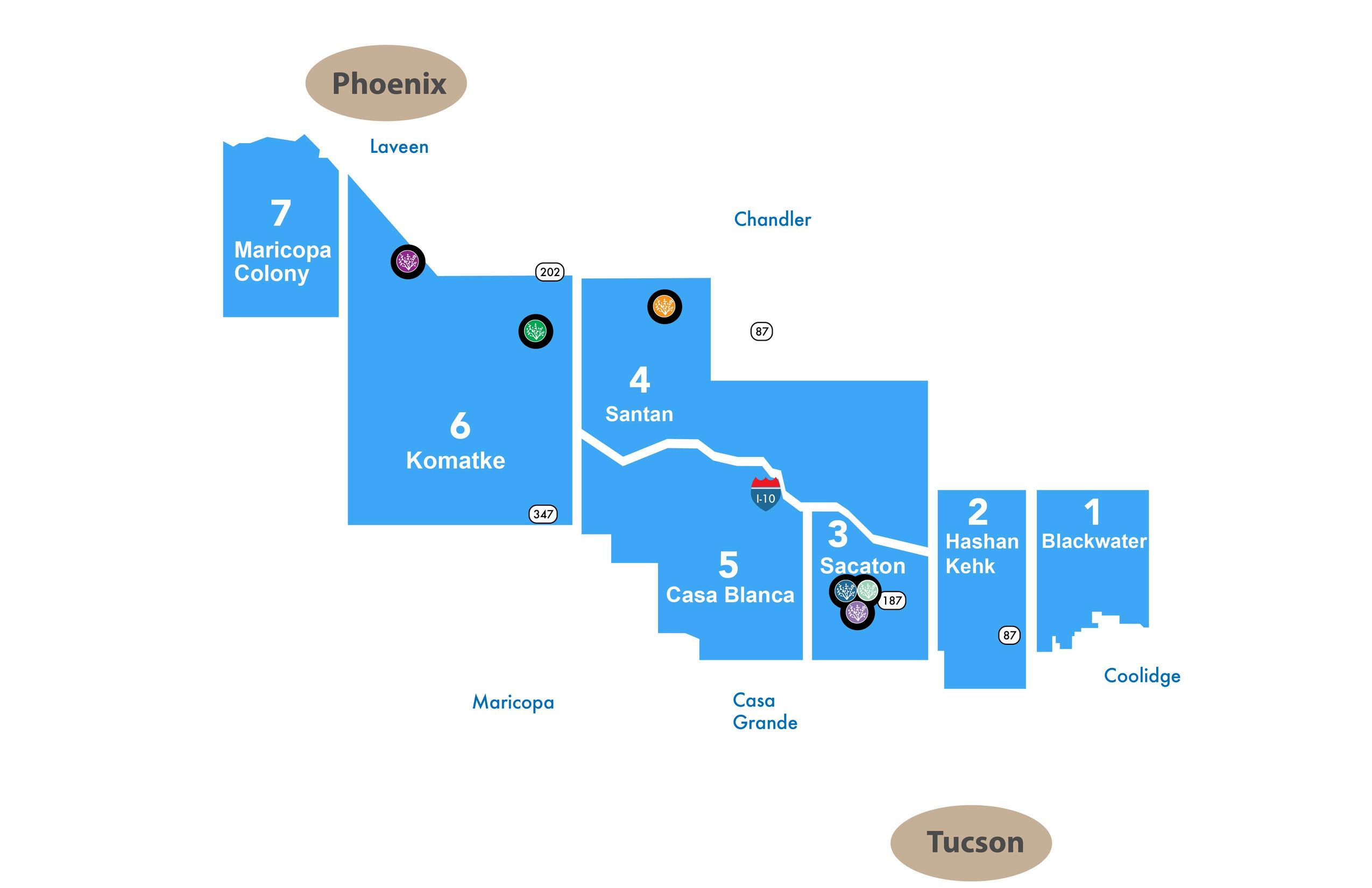
We are proud to serve and collaborate with the schools within the Gila River Indian Community(GRIC)toaddresshealthdisparitiesandstrengthentheconnectionbetween health and academic success. Thank you for your continued partnership in supporting thewell-beingofstudentsandfamilies.
We are excited to welcome you to this year’s Annual Staff Training. Your dedication, compassion,andcommitmenttothestudentsandfamiliesweservemakeameaningful difference not only in thier lives but also in the community. We look forward to a successfulandimpactfulschoolyeartogether.
Withappreciation, GilaRiverHealthCare’sSchoolHealthServicesTeam

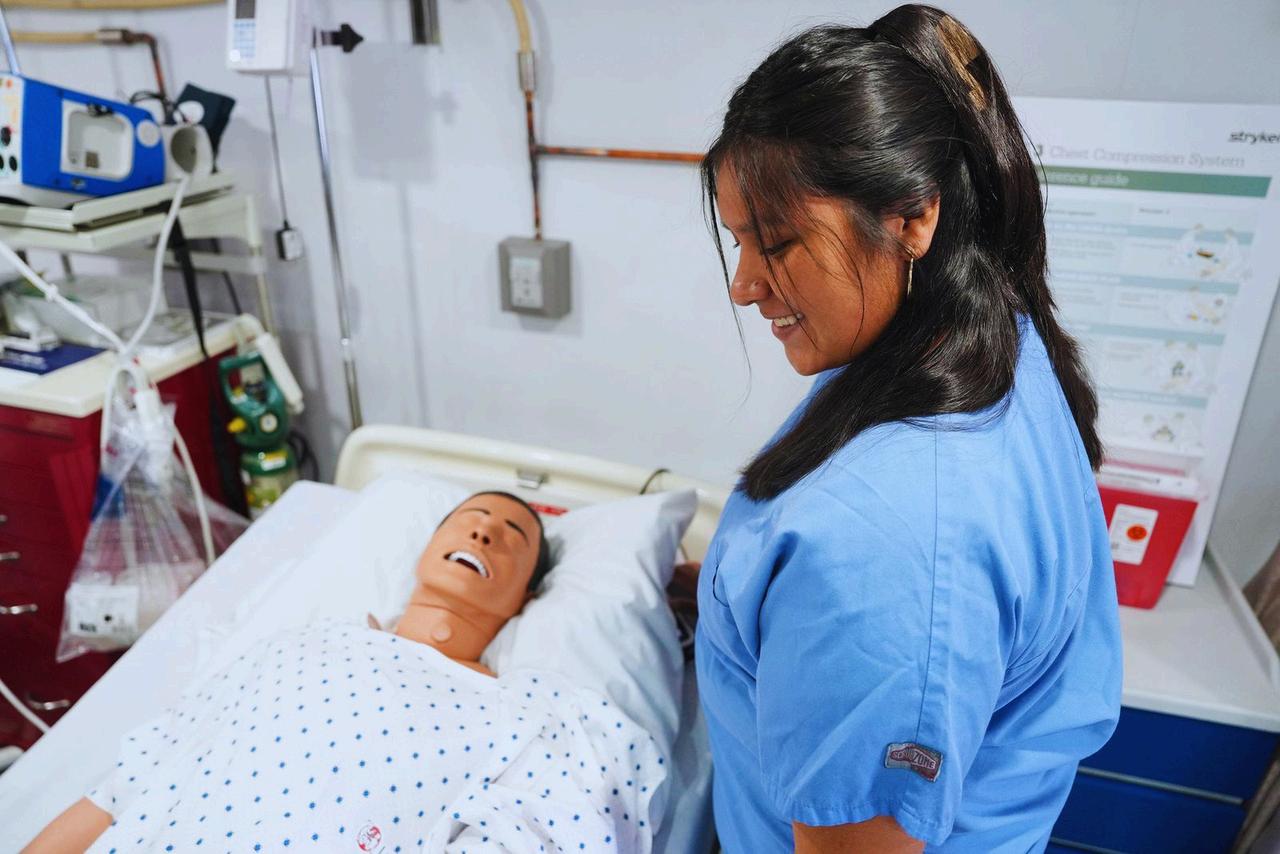
PromotingStudentWellnessandSuccess SchoolHealthServices(SHS)isan extensionofGilaRiverHealthCare(GRHC), providingessentialcareatGRICschoolsfor tribal-affiliatedstudents Wepromotethe health,wellness,andacademicsuccessof NativeAmericanyouththroughculturally respectfulservices.Workingalongside educators,weensurestudentsarehealthy, supported,andreadytolearn.

Schoolnursesareonthefrontlinesofstudentcare,helpingtoovercomebarriers,address healthdisparities,andprovideculturallyrelevantcare.Asstudentsfacechallenges rangingfromchronicillnessestomentalhealthneeds,schoolnursesoffer comprehensive,accessiblecarethatsupportssafe,nurturingenvironmentsconduciveto academicsuccess.
TheRoleofSchoolNurses
Schoolnursesareuniquelyqualifiedtoaddresscriticalhealthcareneeds,ensuring studentsthrivebothintheclassroomandbeyond Theirroleincludes:
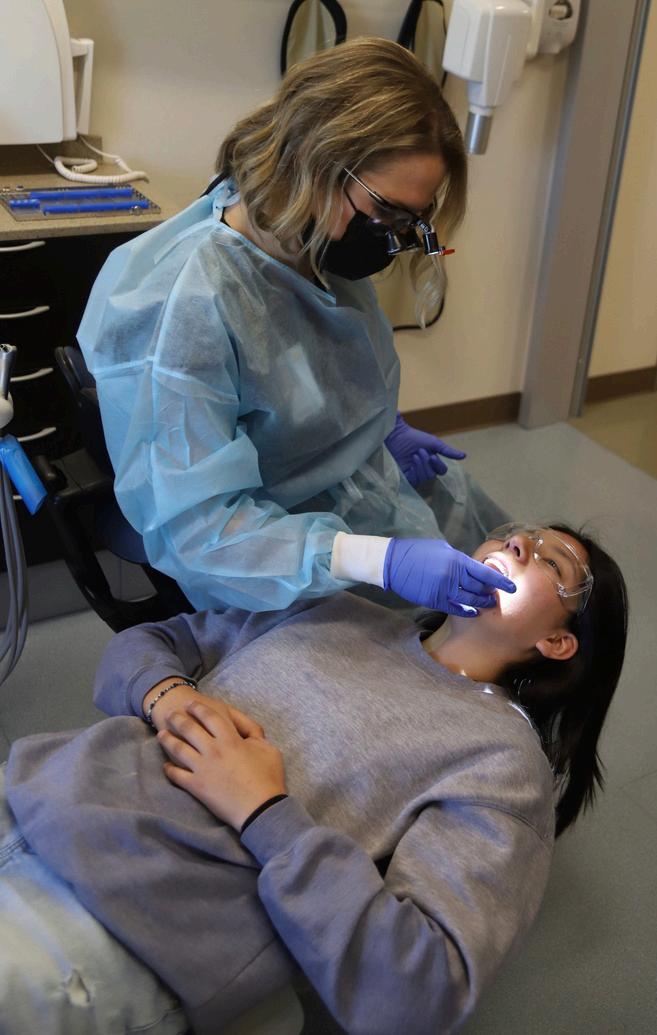
Increasingaccesstohealthcare:Nursesadvocateforhealthequityand connectingstudentswithGRHCservices,includingPediatric,Optometry,Dental, BehavioralHealth,andSchoolCounselors.
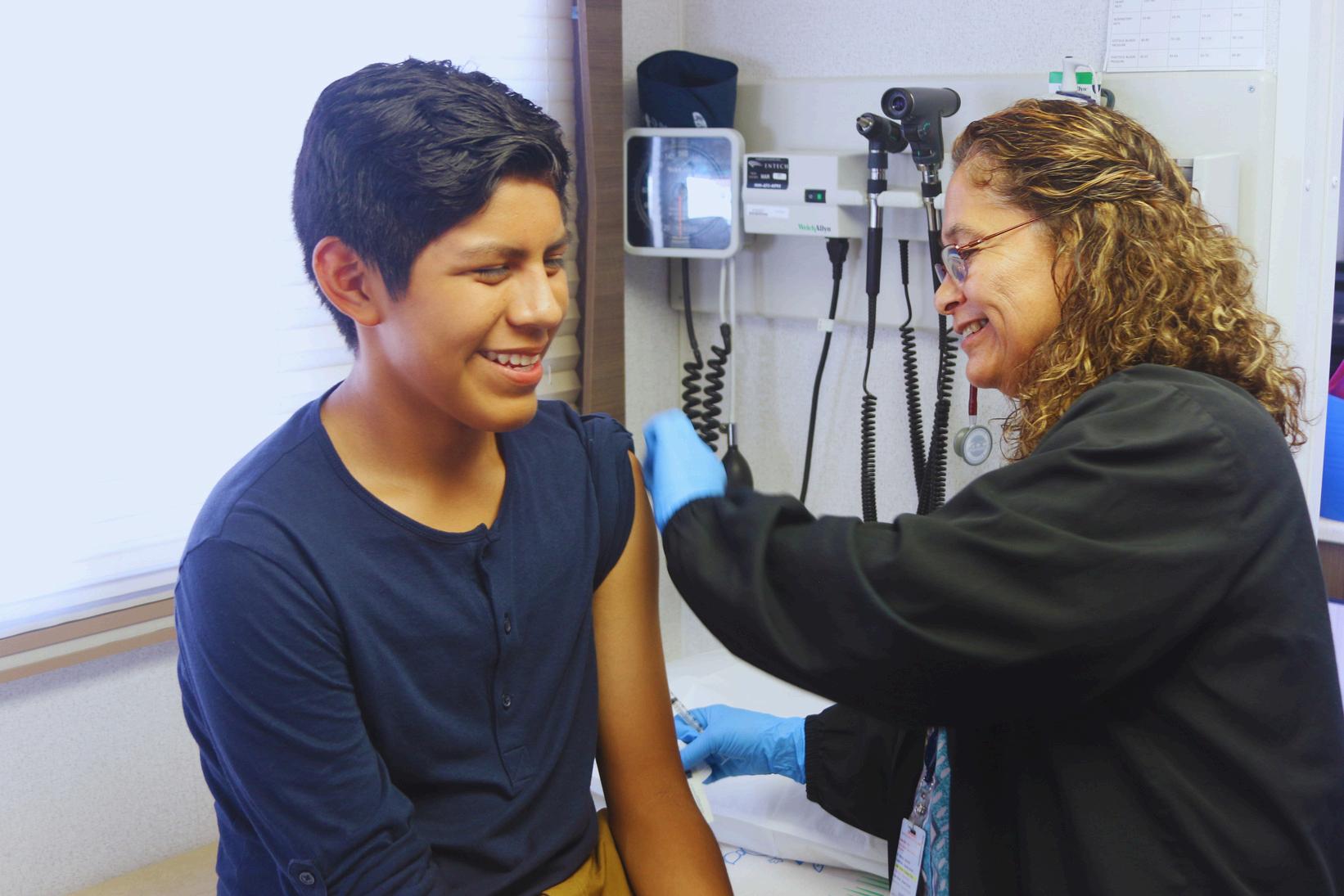
Comprehensivecare:Nursesensurestudentsreceivereferralsforwell-child exams,immunizations,sportsphysicals,chronicdiseasemanagement,illness care,preventativecare,andmentalhealthsupport
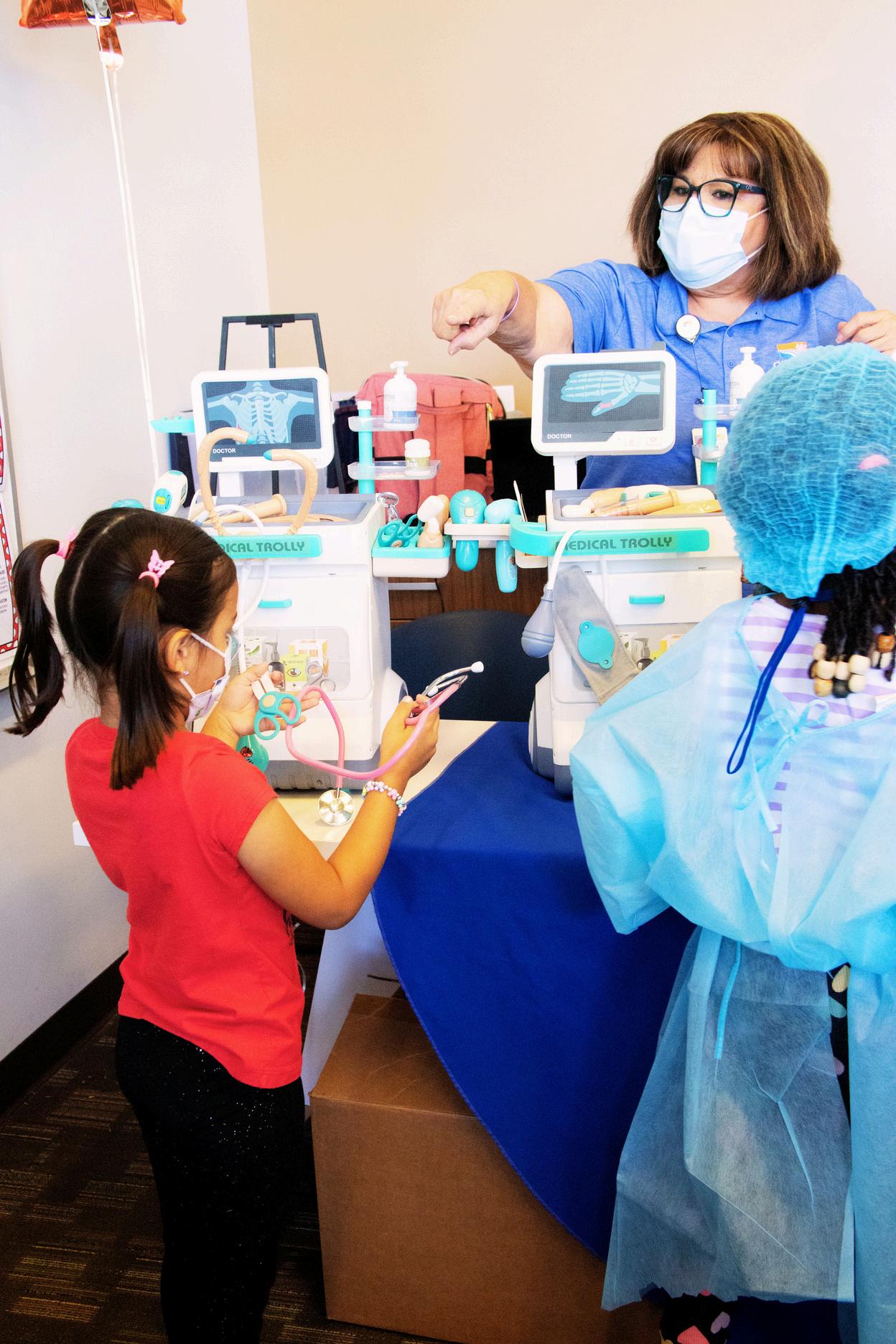
ObjectivesofSchoolHealthServices:
Ensureaccesstoprimaryhealthcare
Provideasystemformanagingmedicalcrises
Conductmandatedscreeningsandimmunization monitoring
Offercomprehensive,age-appropriatehealth education
Addresshealthandeducationalchallenges
Createahealthyandsafelearningenvironment
Evaluatetheeffectivenessofschoolhealth programs
S dedicatedtoensuringstudentsreceivethecaretheyneed tosucceedacademicallyandmaintainahealthylifestyle.Wepartnerwithschools, families,andthecommunitytocreatesupportive,safe,andhealthyenvironments forallstudents.
GilaRiverHealthCareSchoolHealthServicesoffers acomprehensiverangeofservicestomeetstudents' healthcareneeds.
HealthCareServices:
TreatmentforIllnesses&Injuries
MedicationAdministration
CaseManagementofHealthCareNeeds
HealthRecordsManagement
SpecializedHealthCareProcedures
CollaborationwithParents,SchoolOfficials, andHealthProviders
StudentSupport&AcademicSuccess:
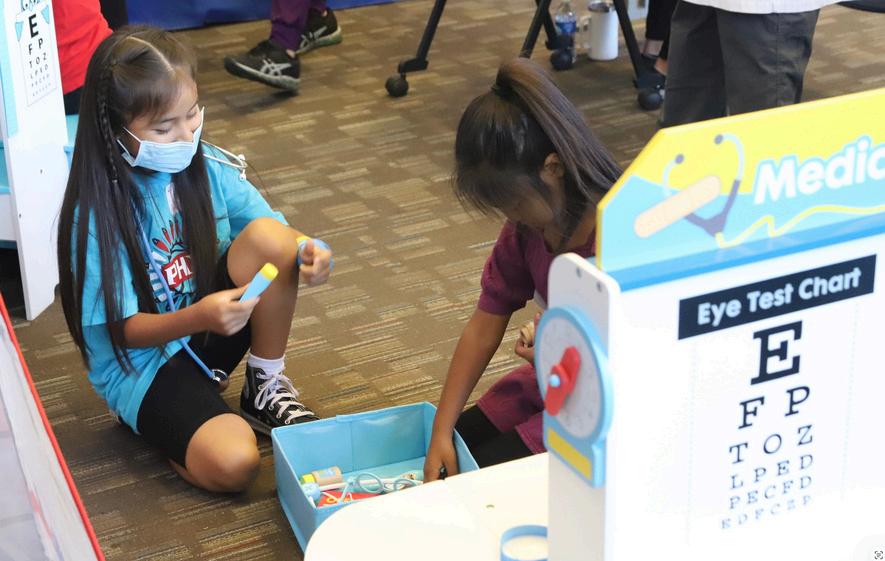
AnnualeyeexamsthroughtheGRHCKidsEyeClinic School-wideeyeglassinitiatives
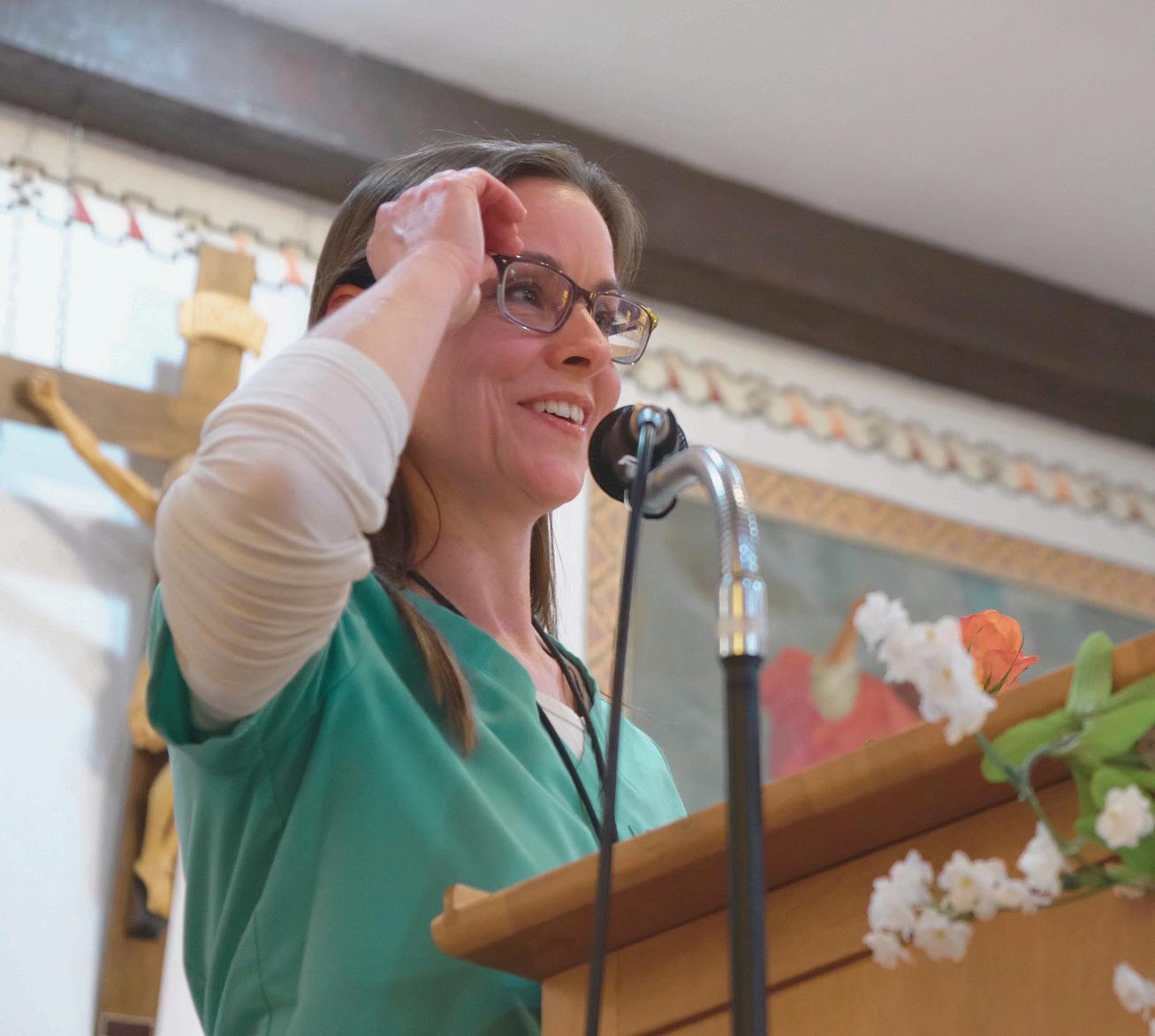
Healthcareerexploration
Culturaleducationthatfostersprideand connectiontoheritage
Community&PreventiveHealthServices:
Immunizationclinicsandhealthscreenings
Behavioralhealthsupportservices
Communityhealthfairsandfamilyengagement
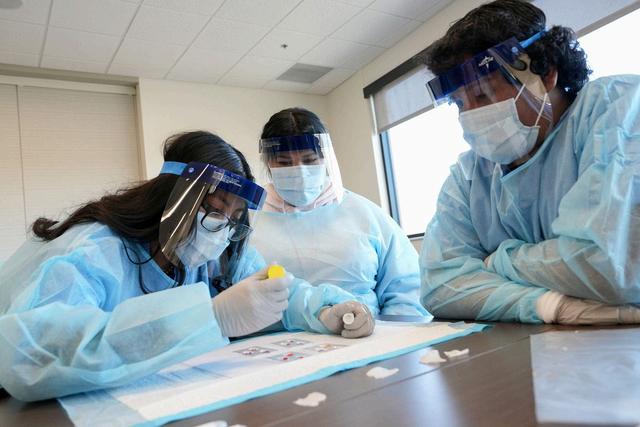
InfectionPrevention
HealthEducation&Wellness:
Age-appropriatehealtheducation
Nutritioneducationandtraditionalhealthpractices
Promotionofhealthylifestylesthroughphysical activity
Mentalhealthawarenessandsubstanceabuse prevention
HealthCareerExposure:
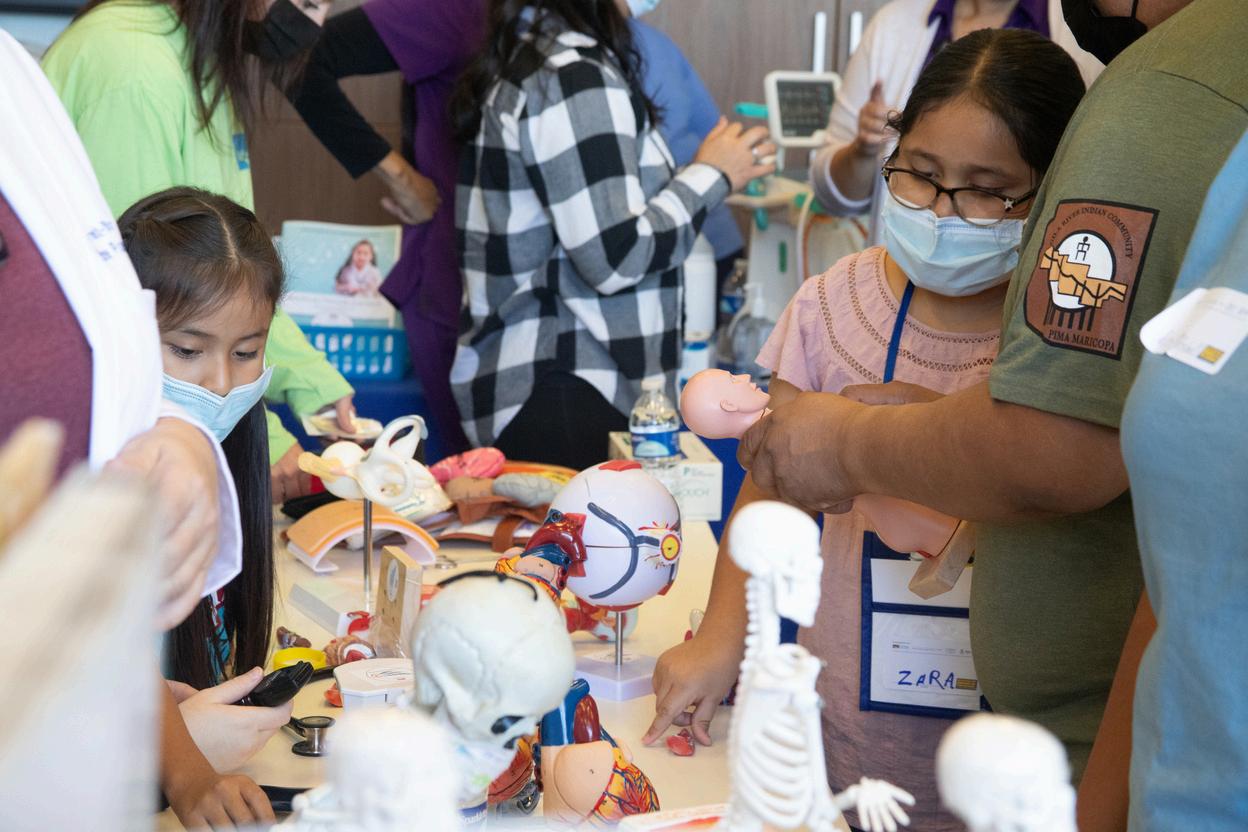
MedicalcareerclassesforgradesK-12toincrease exposuretohealthcareers
CoordinatedwiththeGRHCMedicalCareersGrant throughthe‘Elev8’Program

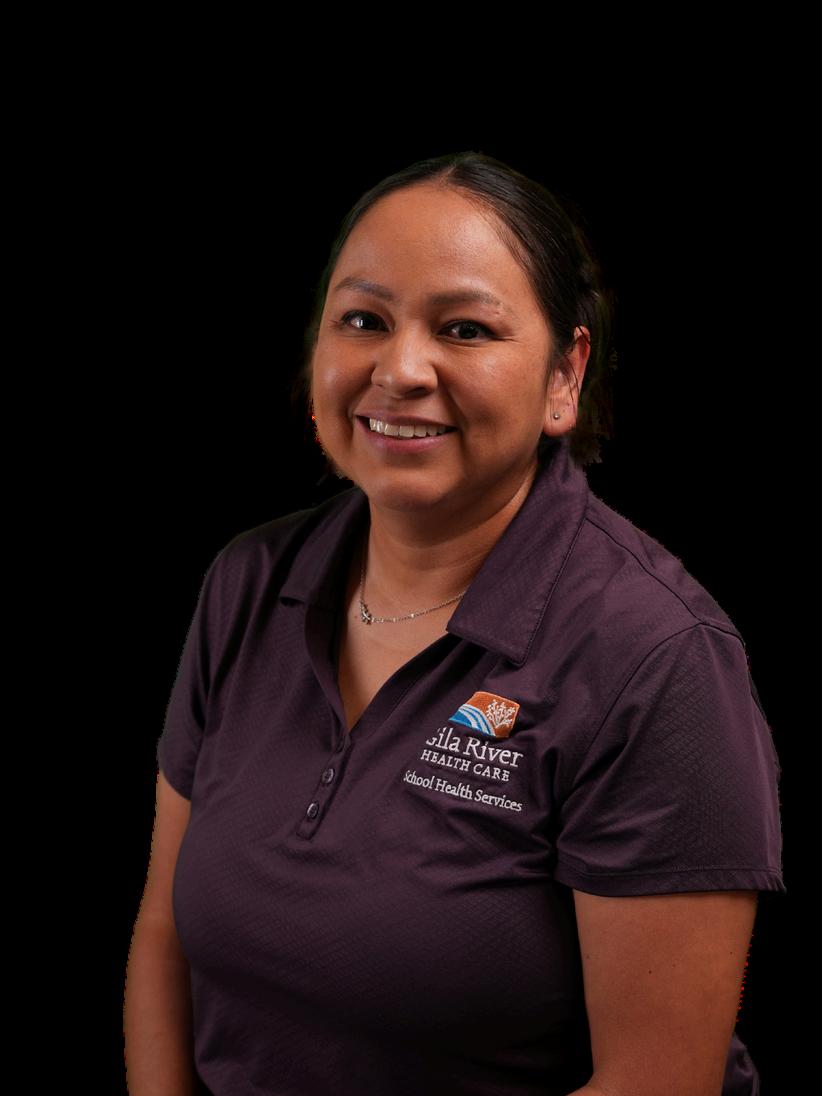

Education:BSHealthEducation&HealthPromotion
Serving:District1-BlackwaterCommunitySchool, SacatonElementaryandSacatonMiddleSchool
Email:tbegay1@grhc.orgPhone:(520)796-2727

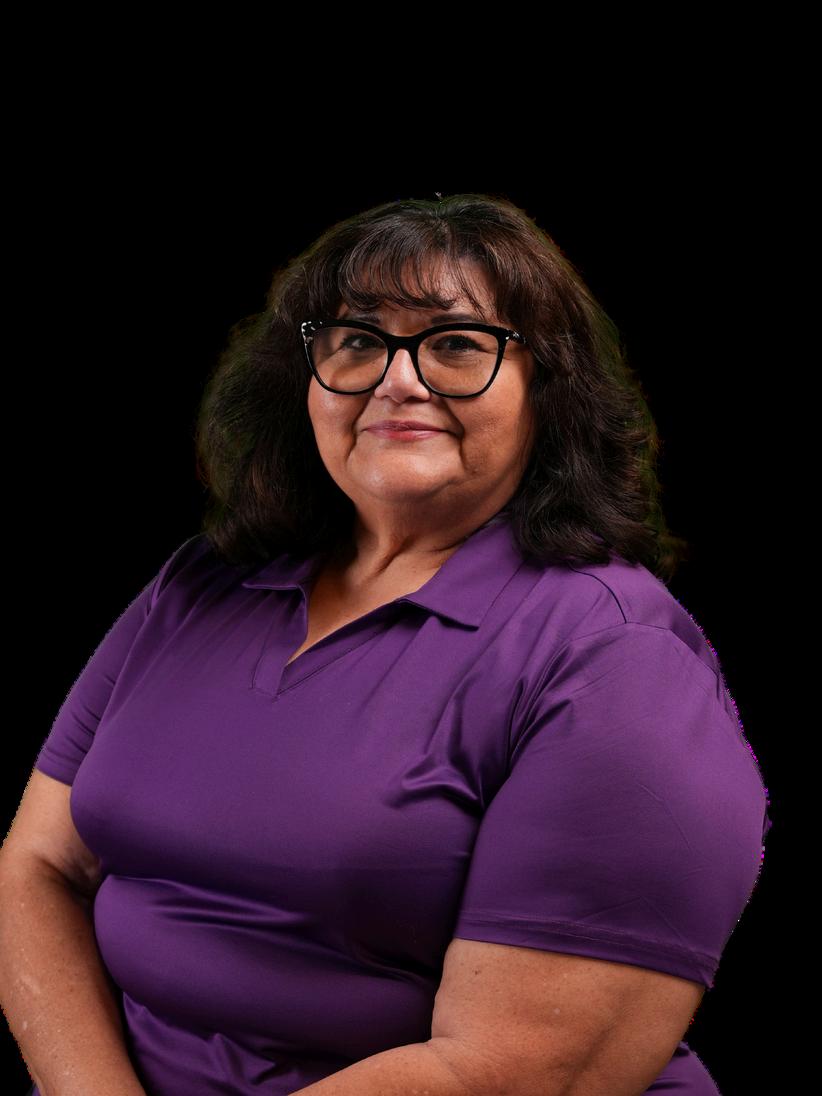
Education:EMT-P(EmergencyMedicalTechnicianParamedic)
Serving:GRICHeadStartsinDistricts3,4,5,6andEECC
District4-CasaBlancaCommunitySchool
Email:ivasquez@grh.org Phone:(520)796-2948
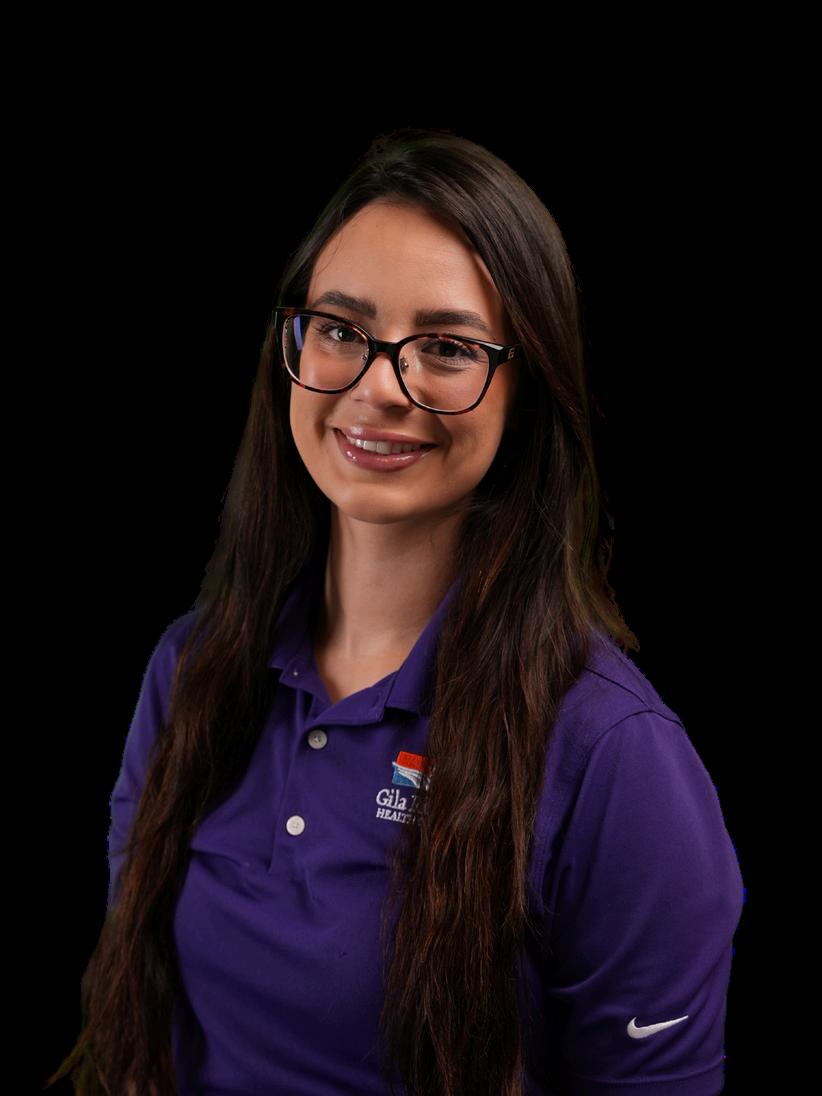

Education:BSHealth&Society/MinorinSociology
Serving:District5-St.PeterIndianMissionCatholic SchoolDistrict6-GilaCrossingElementaryandMiddle School,District7-MaricopaChristianVillage
Email:kfoote@grhc.org Phone:(520)796-2934
Our Health Education program is designed to support students in developing the knowledge, skills, and attitudes needed to make informed decisions about their well-being.
Health educators provide engaging, age-appropriate lessons and activities that addressessentialhealthtopicswhilefosteringlifelonghealthyhabits.
Each lesson is thoughtfully aligned with both state and national health education standards, ensuring consistency and quality across all grade levels. In addition, health educators strive to incorporate meaningful connections to health-related careers,helpingstudentsseethereal-worldapplicationsofwhattheylearn.
While a lesson calendar is provided for structure and planning, we understand every school community may have unique needs. Teachers, administrators, and parents may request customized health topics outside of the scheduled curriculum.
Please contact your school’s designated health educator at their provided email addressforfurtherassistance.
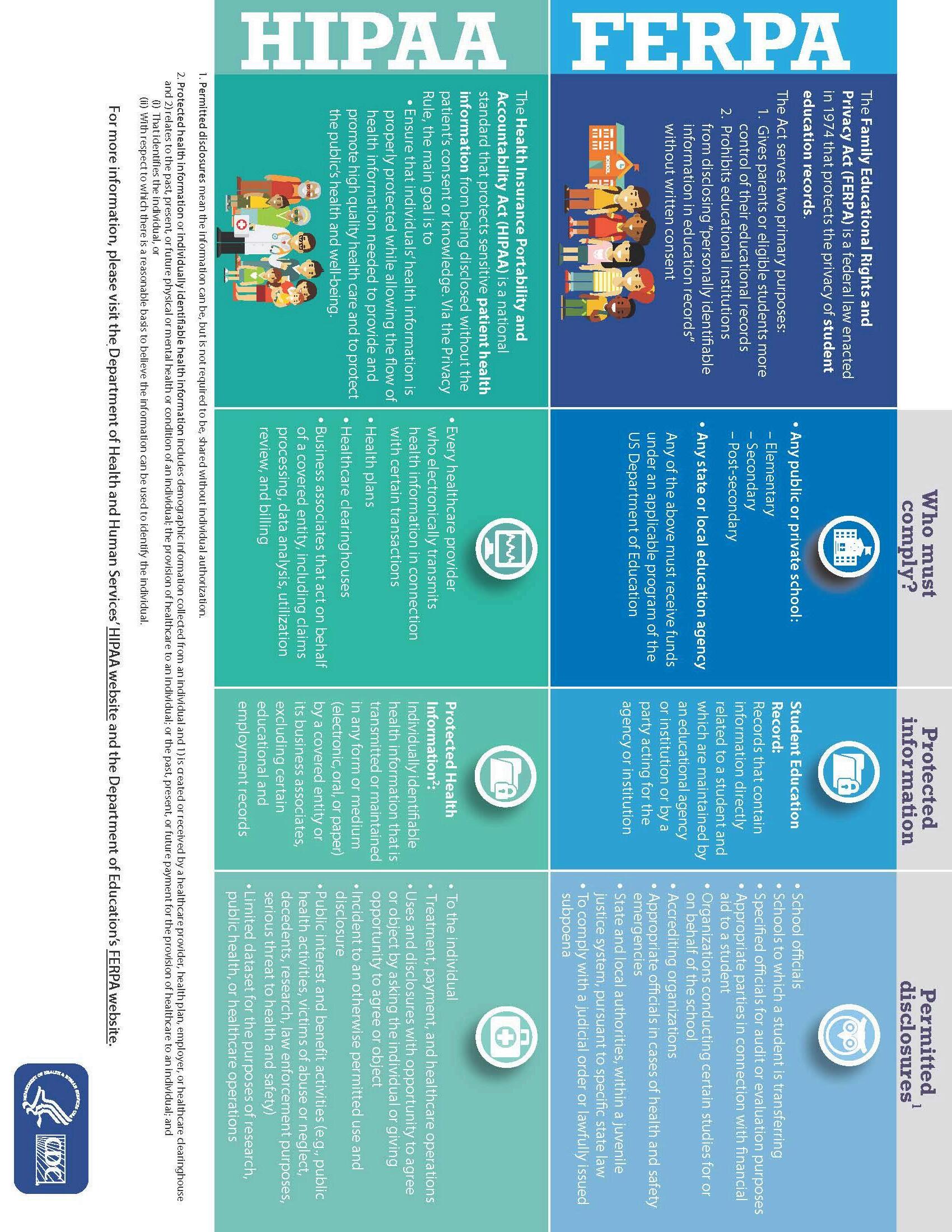
As a school employee, you are required to treat all studenthealthandeducationalinformationwithstrict confidentiality. Protecting student privacy is both a legalobligationandaprofessionalresponsibility.

LegalRequirement
TheFamilyEducationalRightsand PrivacyAct(FERPA)of1974governs whatstudentinformationmaybe sharedandwithwhom.Failureto complycanresultinserious consequences.


Only share information with staff who have a legitimate “need to know.” A request for information by teacher or other staff member does not automatically mean the person is entitled to it. Use caution when speaking on the phone.

Remember
Protecting confidentiality helps maintain trust,ensuresstudentsafety,andkeepsour schoolincompliancewiththelaw.Whenin doubt,referquestionstothestudent’sparent or guardian unless legal documentation allowsdisclosure.
Ifyouareunsurewhetherinformationshouldbeshared, seekguidancefromyouradministrator.
Infectiousmicroorganismsinhumanbloodthat cancausediseaseinhumans.Thethreemost commonare:
HepatitisB(HBV)
HepatitisC(HCV)
HIV
Schoolexposurecanhappenduring:
Firstaidforcutsornosebleeds
Assistingwithpersonalcare

Cleaningbloodandbodilyfluidspills
Handlingcontaminateditems
Treatallbloodandbodyfluidsaspotentiallyinfectious.
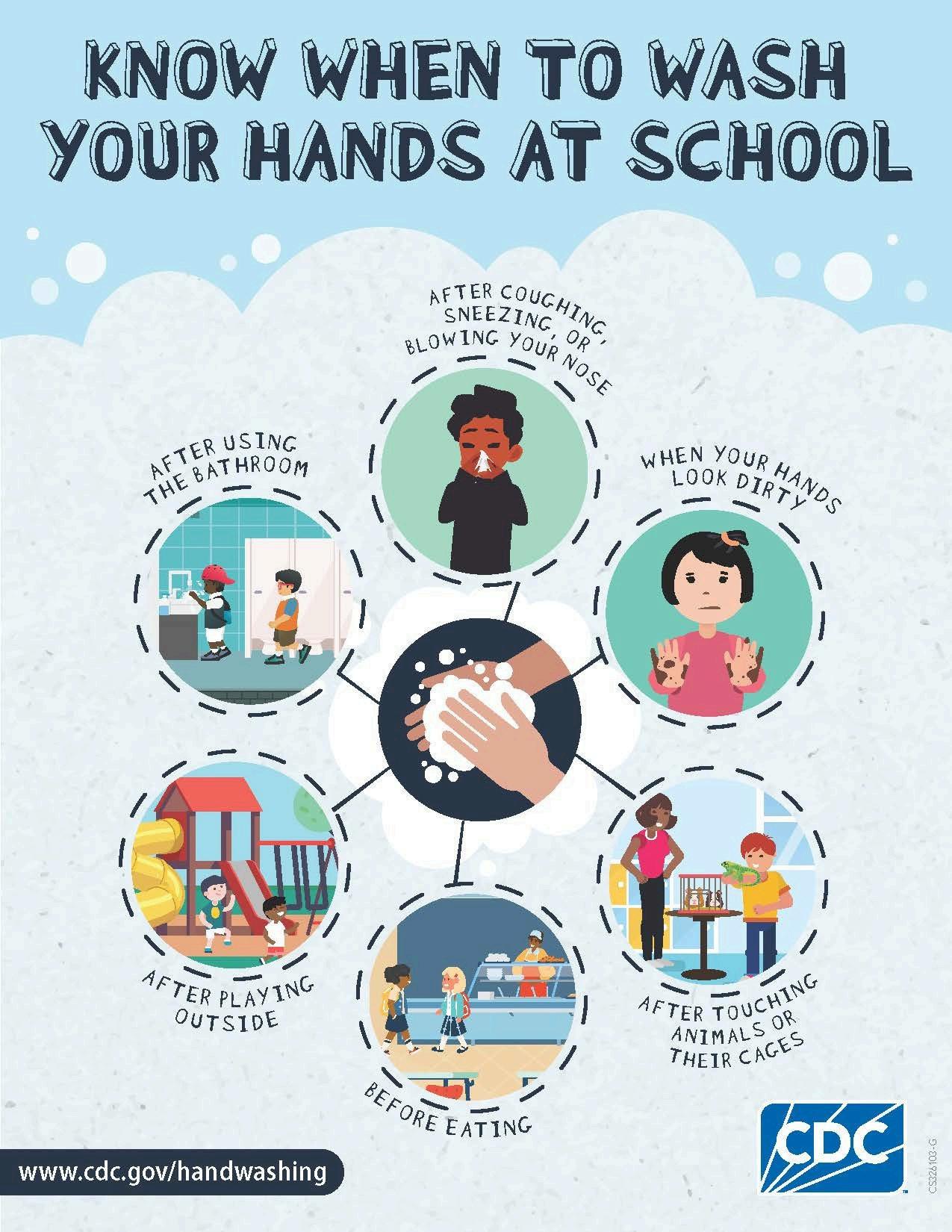
Washhandsbeforeandaftercare
Wearglovesforbloodorbodilyfluids
Changeglovesbetweenstudentsand tasks
Coveryourowncutswithabandage
Basicfirstaid-Gloves
Splashrisk-Gloves+Gown+Mask+EyeProtection
Cleaningspills-Gloves+Protectiveclothing
Reportimmediately earlycarematters!
Washwithsoap&water
Flusheyes/nose/mouthwithwaterif necessary
Reporttotheschoolnurseandsupervisor
Followdistrictmedicalprocedures
Weargloves
Handlesoiledclothingcarefully-Do notshakeitems
Followschoolbaggingproceduresto senditemshomeforwashing
Neverpickupbrokenglassor sharpswithbarehands
Useabrushanddustpanor tongswhenneeded
Disposeofsharpsinapproved sharpscontainer
Useschoolapproveddisinfectant
Weargloves
Cleansurfacesaftercontactwith bloodorbodyfluids
Usedesignatedwastecontainers
Disposeinsharpscontainer
Don’treachintotrashbags
HepatitisBvaccineisrecommended forstaffatriskofexposure

A) B) C)
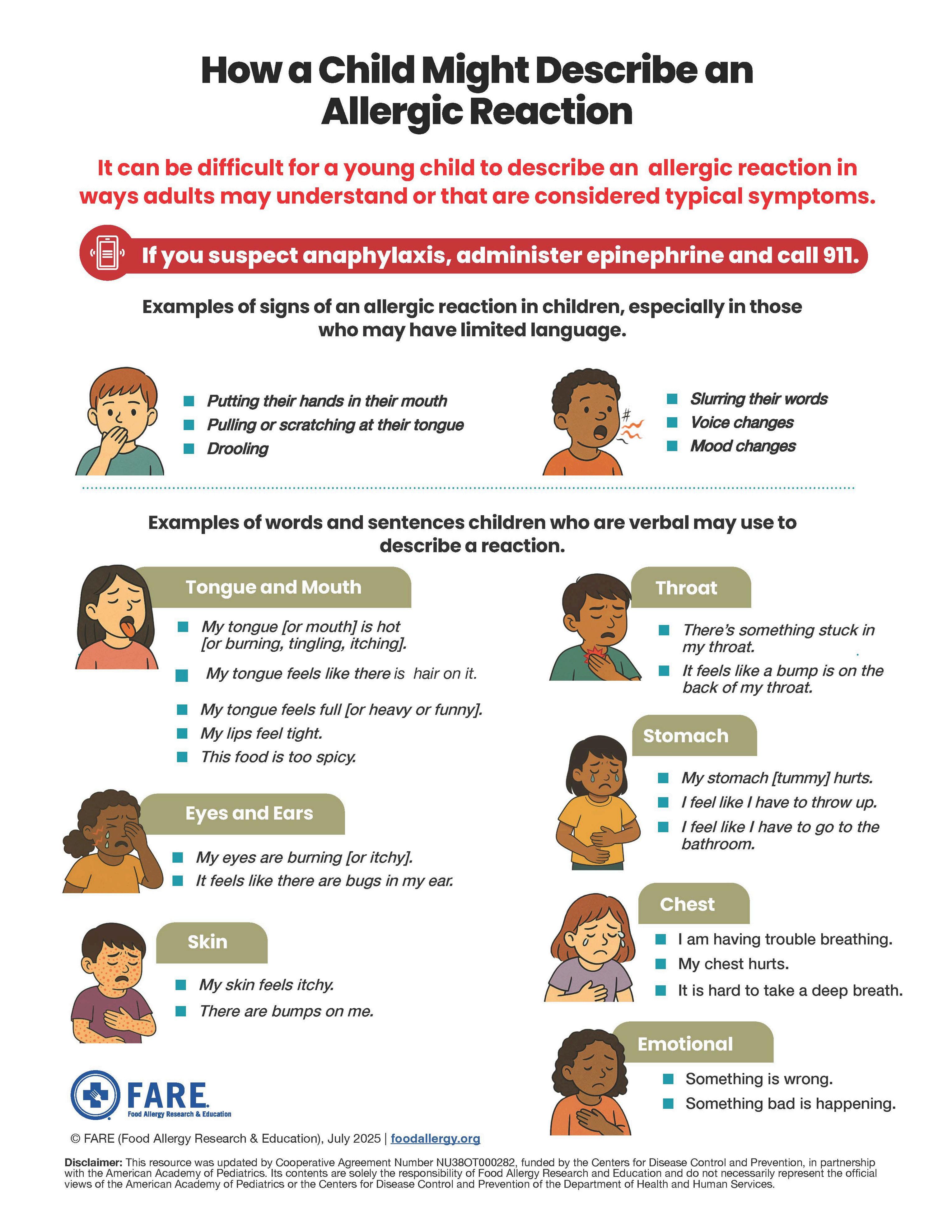
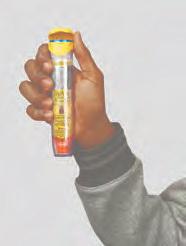
Remove the Auto-Injector from the clear carrier tube.
Hold the auto-injector in your fist with the orange tip pointing downward. Blue to the sky, orange to the thigh.
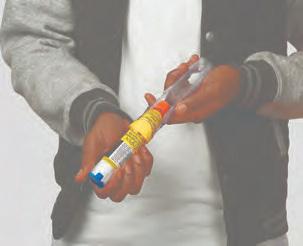
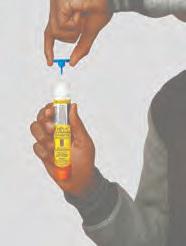
With your other hand, remove the blue safety release by pulling straight up without bending or twisting it.
PREPARE ADMINISTER

NOTE:
The needle comes out of the orange tip
To avoid an accidental injection, never put your thumb, fingers or hand over the orange tip. If an accidental injection happens, get medical help right away.
If you are administering to a young child, hold the leg firmly in place while administering an injection
Place the orange tip against the middle of the outer thigh (upper leg) at a right angle (perpendicular) to the thigh.
Swing and push the auto-injector firmly until it “clicks.”
The click signals that the injection has started. Hold firmly in place for 3 seconds (count slowly 1, 2, 3).
Remove the auto-injector from the thigh. The orange tip will extend to cover the needle. If the needle is still visible, do not attempt to reuse it. Massage the injection area for 10 seconds.
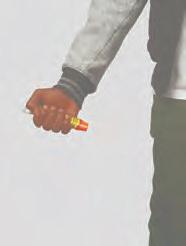
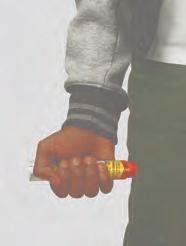
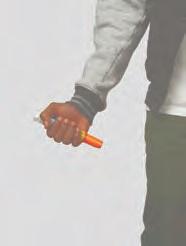

You may need further medical attention. If symptoms continue or recur, you may need to use a second EpiPen® or EpiPen Jr® Auto-Injector.
Staying calm helps you think clearly and support the student until help arrives.
1.Call911:Assignonespecificpersontocall.
2.RetrievetheAED:Haveanotherperson bringtheAEDtothesceneifsomeoneis unconscious.
Usealandlineifavailableforlocation tracking.
Provideaclearlocation(e.g.,schoolname, address,playground). Havesomeoneflagdownresponders. Stayonthelineuntiltoldtohangup.

Speakslowlyandclearly,answerall questions,andfollow instructionscarefully.
Yourcalm,clearactionscanmakea criticaldifferenceinan emergency.
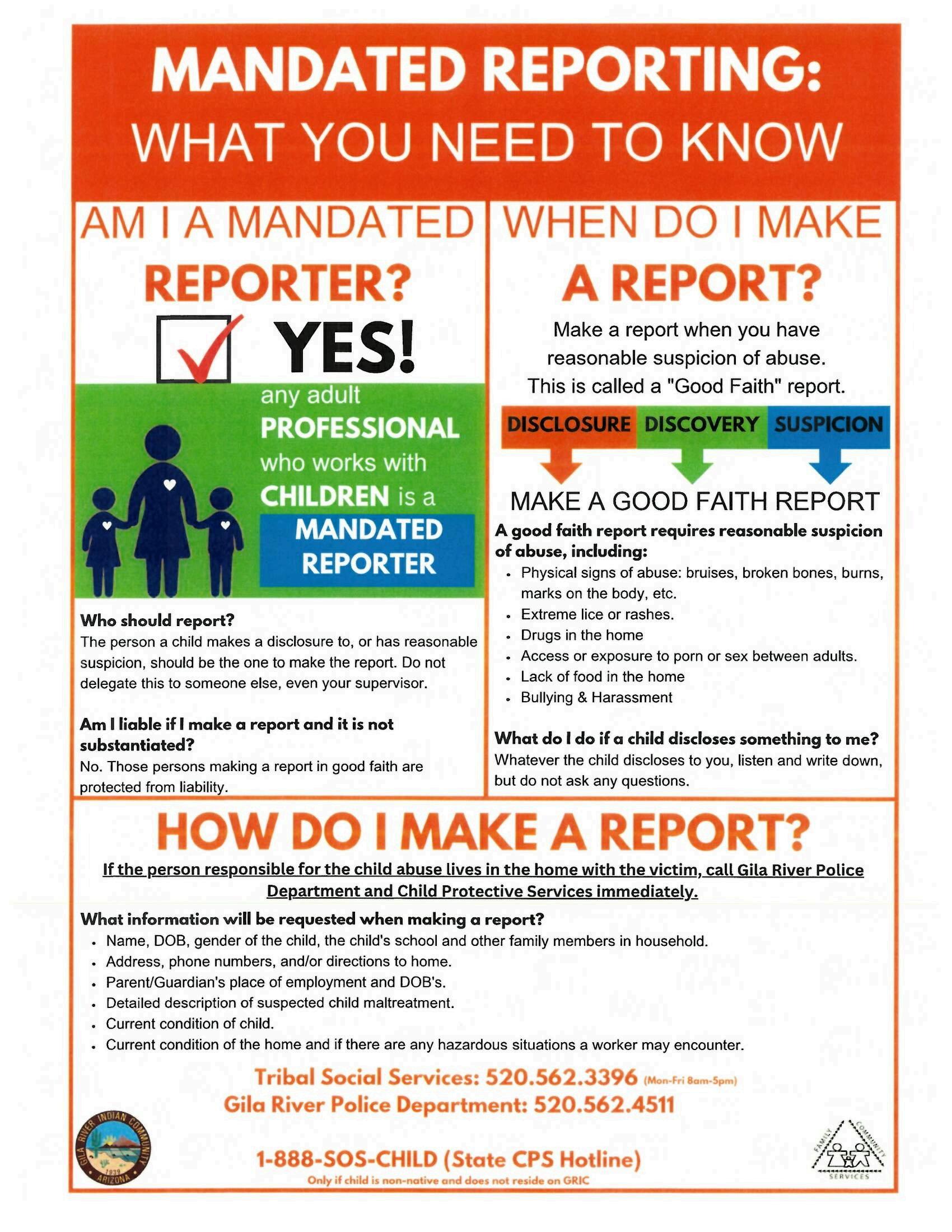




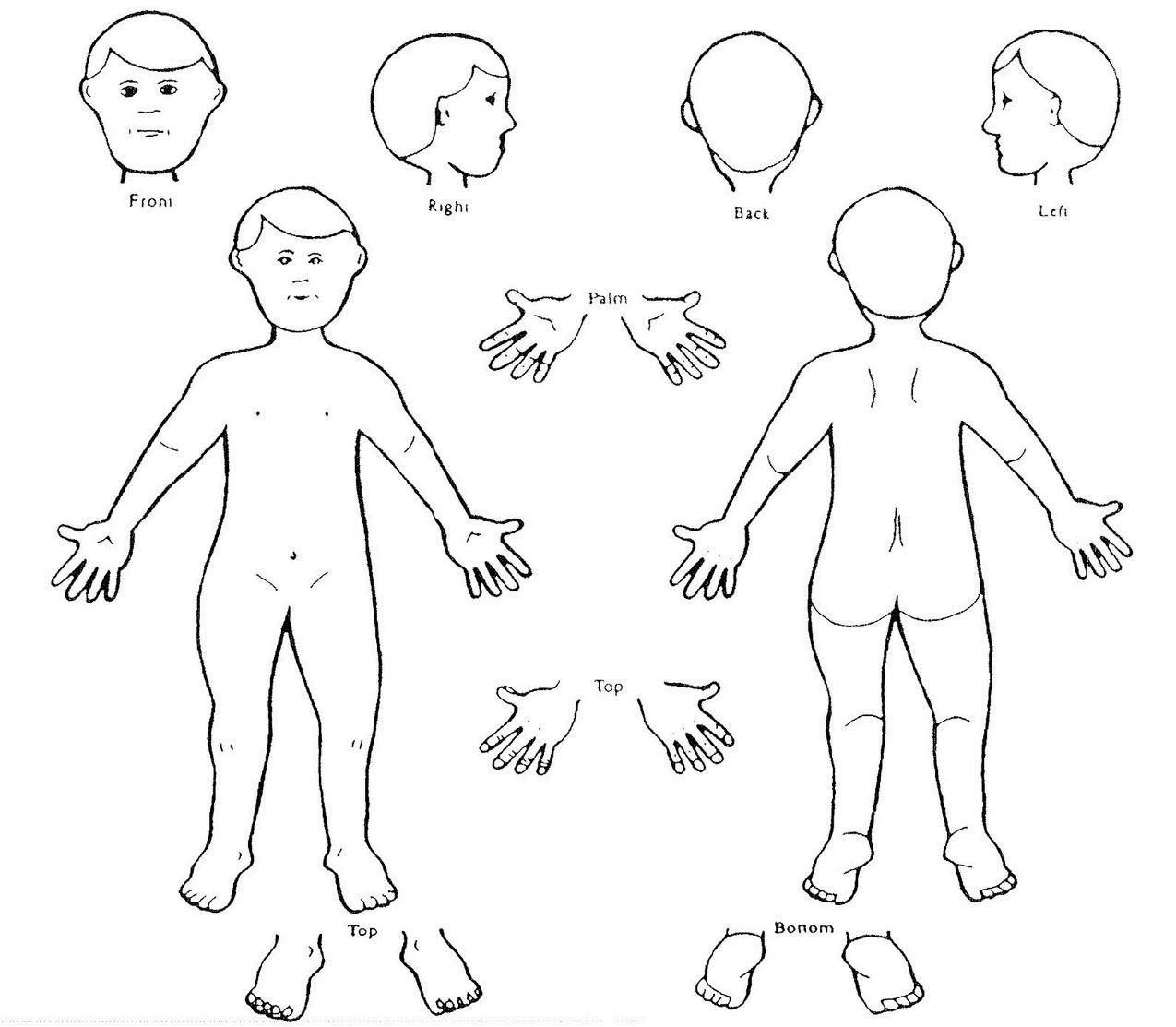

Theseguidelinessupportstudentsafetyandeffective useofthenurse’soffice.Alwaystrustyourown judgement.Ifunsure,callthenurse.

Seriousinjuryorfall:Donotmovethestudent Callthenursetoyourlocation
Unresponsive/notbreathing:StartCPRandcall 911immediately.Havesomeoneelsenotifythe nurseandtheprincipal/schooladministration. RetrieveAEDifneeded.
ContacttheSchoolNurseImmediately ifexhibitingthefollowing:
Breathingdifficulty/asthmasymptoms excessivecoughing,generalanxiety, restlessness,leaningforwardtobreathe, breathingrapidly,takinglargeanddeep breaths,troublespeaking,wheezingsounds, andhavingpaleorbluish-coloredlips.
Diabeticstudentfeelingunwell nausea,headache,andshakiness
Seizureorlossofconsciousness:Donotmove. Notestart/endtime.Call911ifover3minutes.
Suicidalideationorself-harm:Followschool policy.Donotleavestudentalone. Headoreyeinjury. Abnormalskinconditions (redness,swelling,drainage,rash).
Nursecannotprovidemedicationtostaff. Seriousconditions:Notifythenurseandprincipal. Chestpain:Call911,retrieveAED,thennotifythe nurseandprincipal.
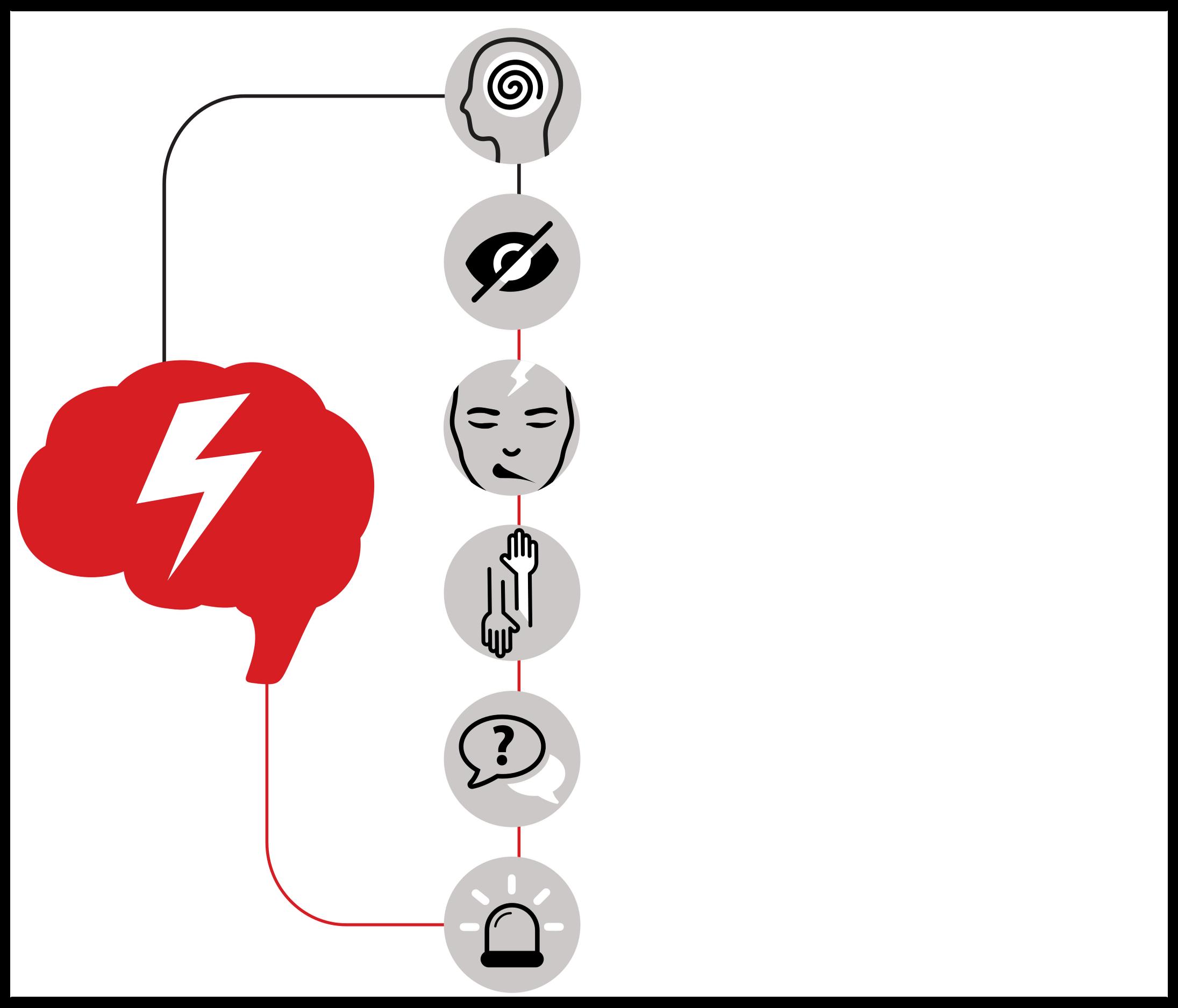
Strokesigns–B-FAST:Balance,Facedrooping, Armweakness,Speechdifficulty,Timetocall911.
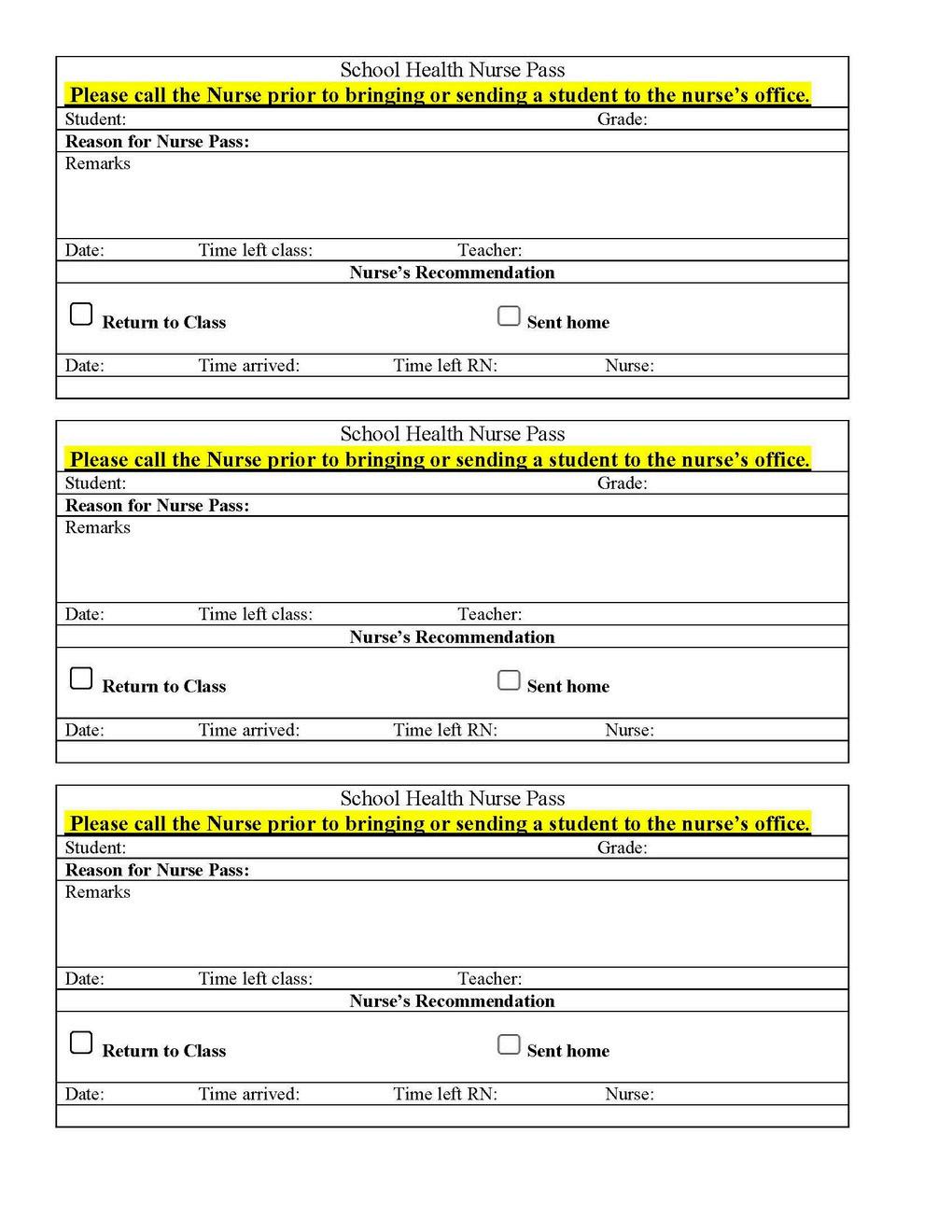
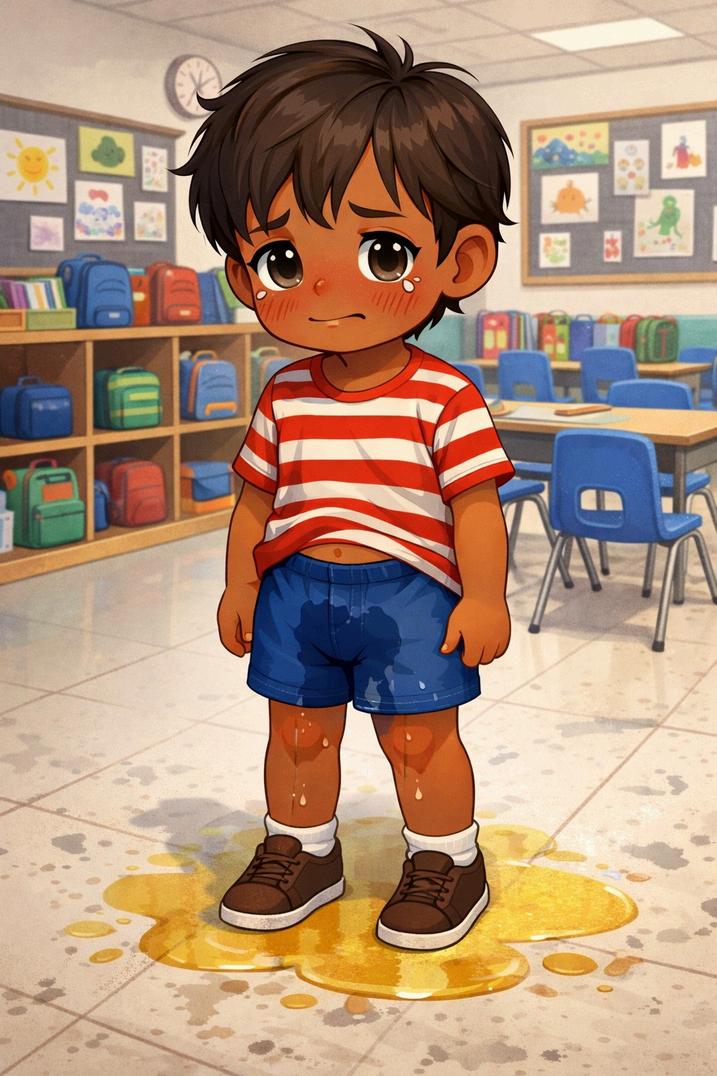
Thisprocesshelpsteamsquicklyandrespectfully managewettingorsoilingincidents,minimizing disruptiontothestudent'slearning.
Atthebeginningofeachschoolyear,teachersshouldrequest parents/guardianstoprovideanextrachangeofclothestokeepatschool.
Extraclothingshouldbestoredintheclassroomforuseduringschoolhours. Familiesshouldreplaceclothingasneededthroughouttheschoolyear.
Theschoolnursedoesnotkeepspareclothinginthenurse’soffice. Someschoolsmayhaveadditionalclothingsuppliesavailable.Please checkwithyourschooladministrator.
IfextraclothingISavailable:
Theteacherswillprovidethe studentaccesstotheirextra clothes. Thestudentwillchangeinthe classroomrestroom,when appropriate.
IfextraclothingisNOTavailable:
Theteacherwillcontactthe parent/guardian Familieswillbeaskedtobringa changeofclothesforthestudent. Thestudentmaywaitinthenurse’s officeuntilclothingarrives.
Ifthefamilycannotprovide clothing: Schooladministrationwillprovide clothingorarrangetransportation home.
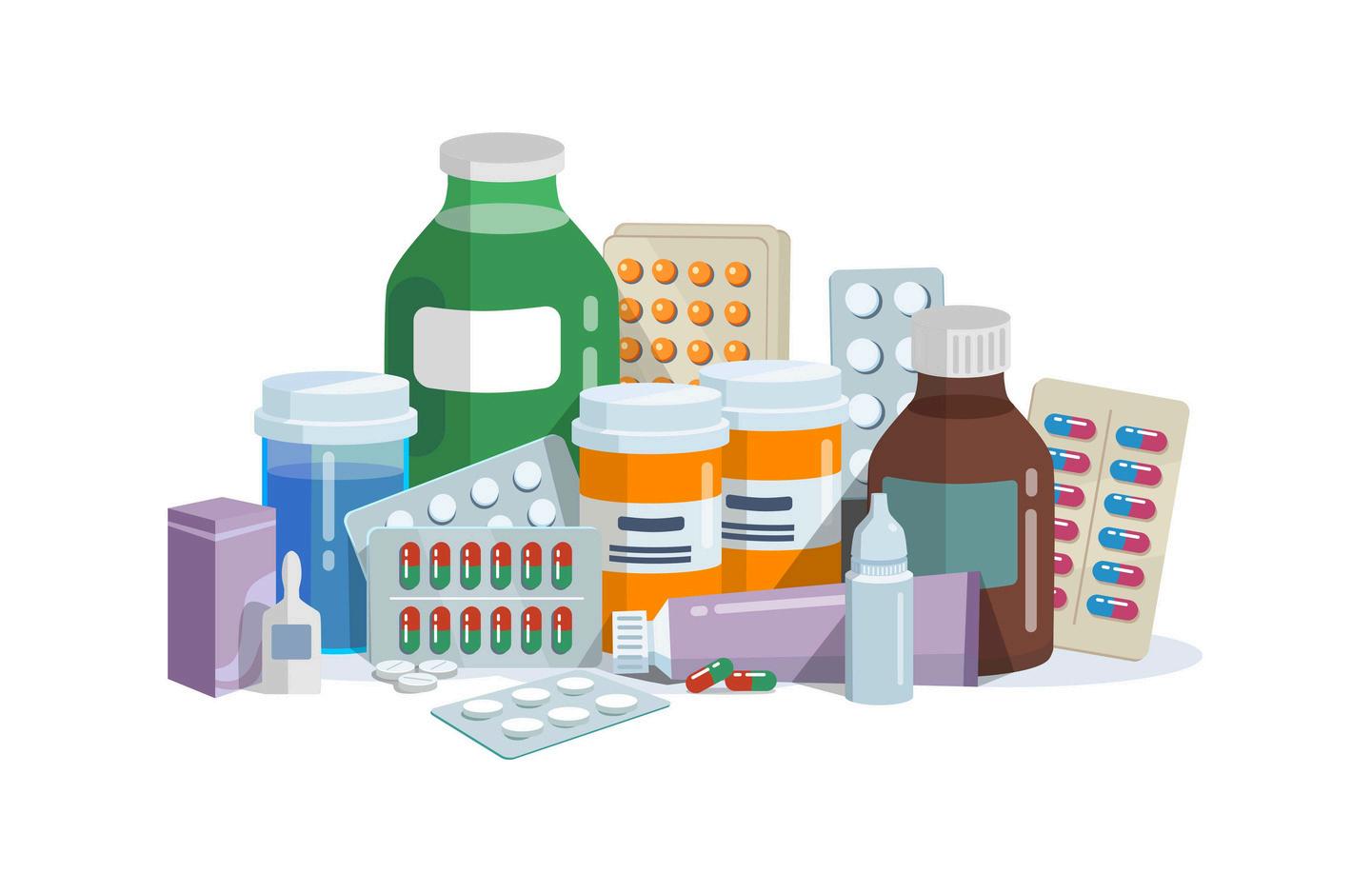
ThePrincipalDesignatedSchoolPersonnel(PDSP) isresponsibleforadministeringanyprescribedor emergencymedicationsintheabsenceofthe schoolnurse.
Ifnewmedicationsarriveattheschoolwhilethe nurseisnotpresent,pleasesecurelystorethe medicationandnotifytheschoolnurseatthe earliestopportunity.Additionally,youmaycontact SchoolHealthServicesatcabraby@grhc.orgor call480-208-0264.

Shouldastudentbecomeill,pleasepromptly contacttheparentorguardiantoarrangefor thechild’spickup.
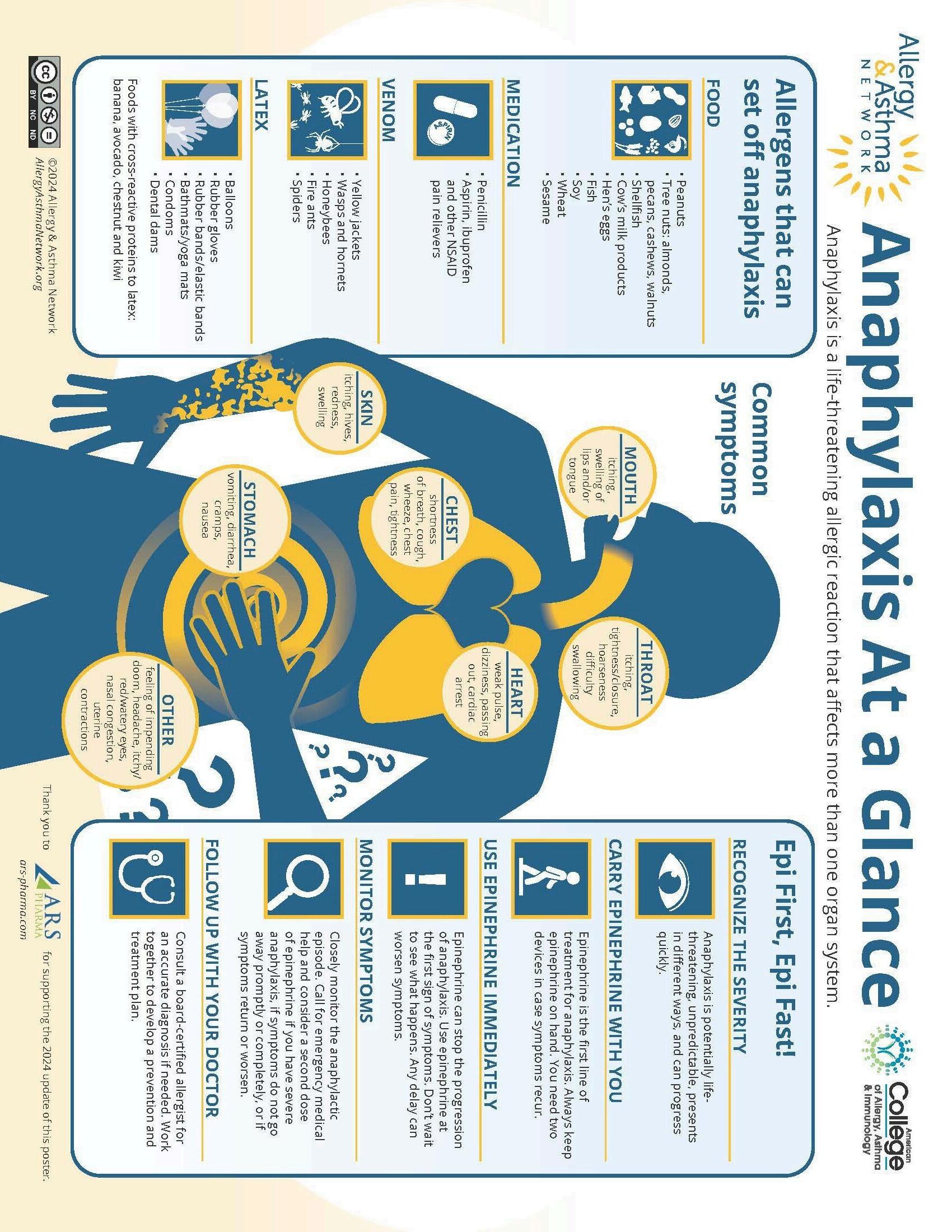
Intheeventofaseriousinjury,severeillness, signsandsymptomsofanaphylaxis,seizure, unconsciousness,ordifficultybreathing, immediatelycall911foremergencyassistance.

Concussion signs and symptoms are the brain’s way of showing it is injured and not functioning normally. Concussions signs are what someone could observe about you, concussion symptoms are the things you are feeling.
Headache
Light-headedness
Dizziness
Nausea Sensitivity to light Sensitivity to noise

Difficulties with attention
Memory problems
Loss of focus
Difficulty multitasking
Difficulty completing mental tasks

Loss of consciousness
Problems with balance
Glazed look in the eyes
Amnesia
Delayed response to questions
Forgetting an instruction

Anxiety/panic attacks
Depression
Anger/aggression

Sleeping more than usual
Sleeping less than usual
Having trouble falling asleep



Your immediate response to a possible concussion is crucial in your recovery CLF recommends you take the following steps:
Remove yourself from activities that could cause head trauma, stress your heart, or strain your brain.
Resting immediately after concussion gives you the best chance of making a speedy recovery Resting means not exerting yourself physically or cognitively, and ensuring you are safe from subsequent head impacts that could cause a second injury Immediacy is critical - playing out the rest of a game, or even finishing the period, adds an average of five days to recovery time
Get evaluated. If you had any signs or symptoms of a concussion, you should assume it was a concussion until you have a chance to be evaluated by an appropriate medical professional
Even if you passed a sideline evaluation, no test is perfect and signs and symptoms can appear days after the impact
Take it easy. The first step in every recovery plan is to rest your body and your brain. If it causes your symptoms to worsen, don’t do it. This means no strenuous exercise, avoiding screens like television, computers, and your phone, and getting enough sleep. It may also mean taking time off from school or work, or avoiding situations with loud noise, bright lights, or crowds. However, this doesn’t mean isolate yourself in a dark room for a week. Too much isolation can be harmful, contributing to feelings of anxiety, depression, and resulting in increased recovery time Spend time with loved ones but avoid situations that make you feel worse
Monitor your symptoms carefully. Take note of any symptoms you experience, when you experience them, and how severe they are. Are they consistent? Do they get worse in certain situations? All this information will be helpful when you talk with your doctor.
Keep a positive attitude. Most people recover from a concussion within a month This is almost always a temporary problem that will get better if you manage it correctly
Submitalistofplannedfieldtripsandacurrentclass rostertotheschoolnurseatthestartoftheyearand asnewtripsarise.
Meetwiththenurse1-2weeksbeforethetripto discussstudentmedicalneeds.
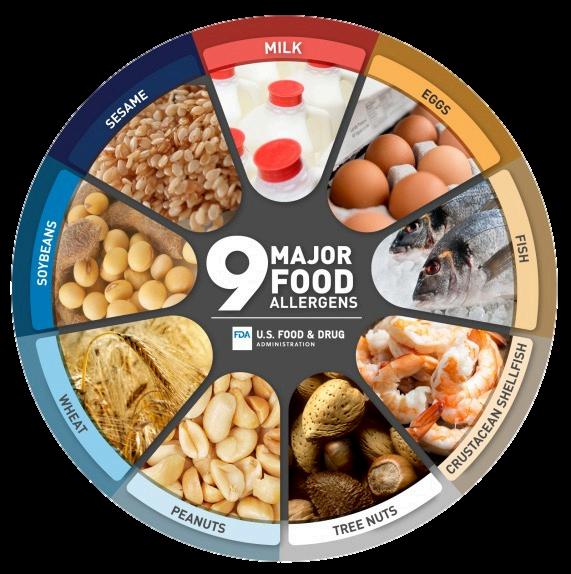
Consultcafeteriastaffaboutfoodallergieswhen planningmeals
Informthenurseofanymedicalconcernsnotedon permissionslipsorcommunicatedbyparents.
Meetthenursetosignoutstudentmedicationsand supplies(allow15minutes).
Recordmedications/treatmentsontheStudent MedicationFormpromptly.
Returnallmedicationsandsuppliestothenurse immediatelyafterthetrip Donothavestudentreturnfieldtripbagscontaining medications.
Youareresponsibleforthemedicationuntilsigned backinwiththenurse.
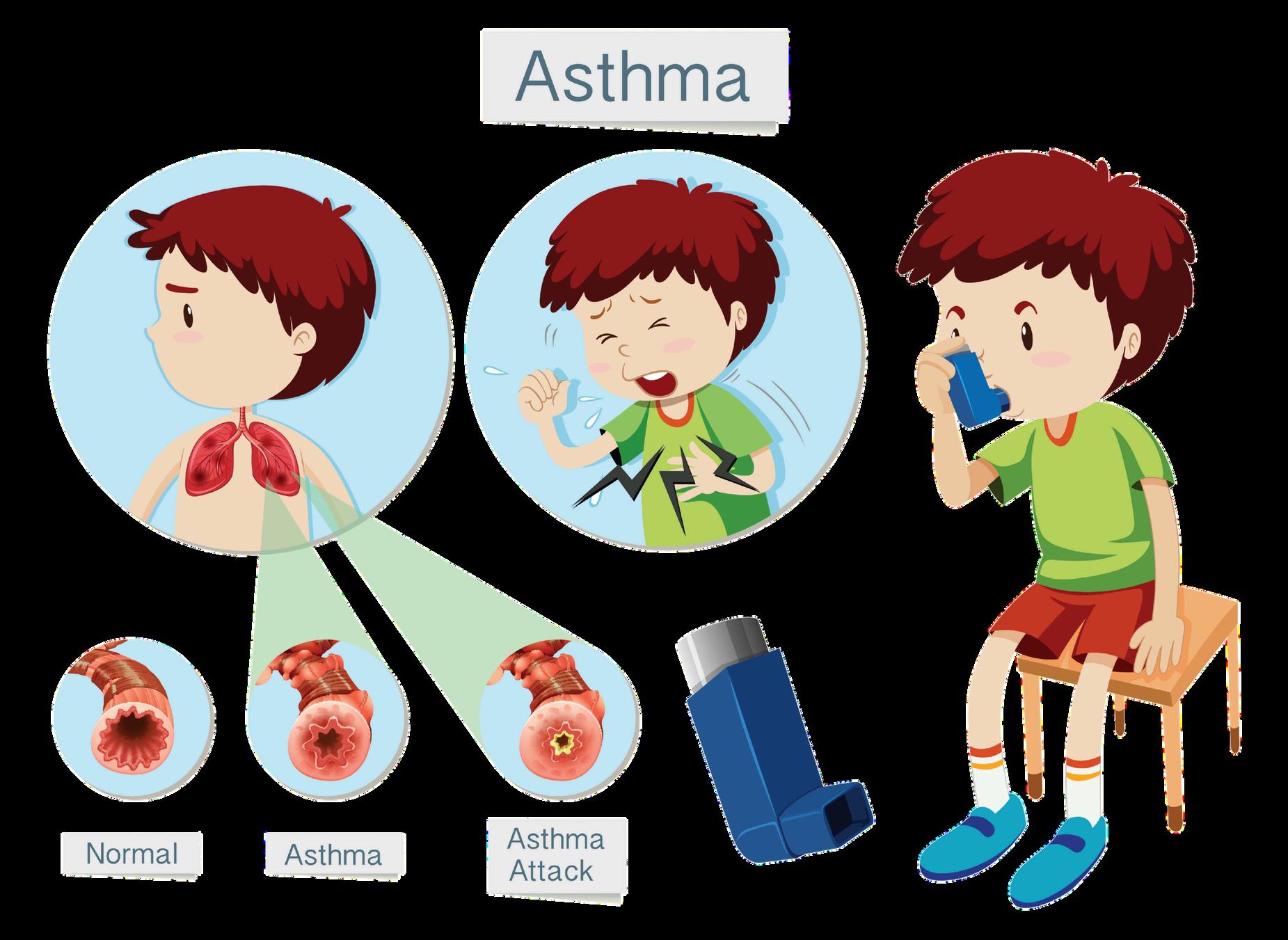
Asthmaisachroniclung diseasethatcausesepisodes ofcoughing,wheezing,chest tightness,andshortnessof breath.
Asthmasymptomscanbe mild,moderateorsevere, andsometimeslifethreatening.
Whensymptomsoccur,give theprescribedmedicationto thestudent,ifavailable.Call thenurseandthensendthe student,accompaniedbyan adultoraresponsible student,tothenurse’soffice.

Turn the person onto their if they are not awake andaware. with theperson until they areawakeand alert after the seizure.
Keepairway clear
Seizure lasts longer than 5 minutes
Person does not return to their usual state Person
Repeated seizures
First time seizure
Difficulty breathing Seizure occurs in water

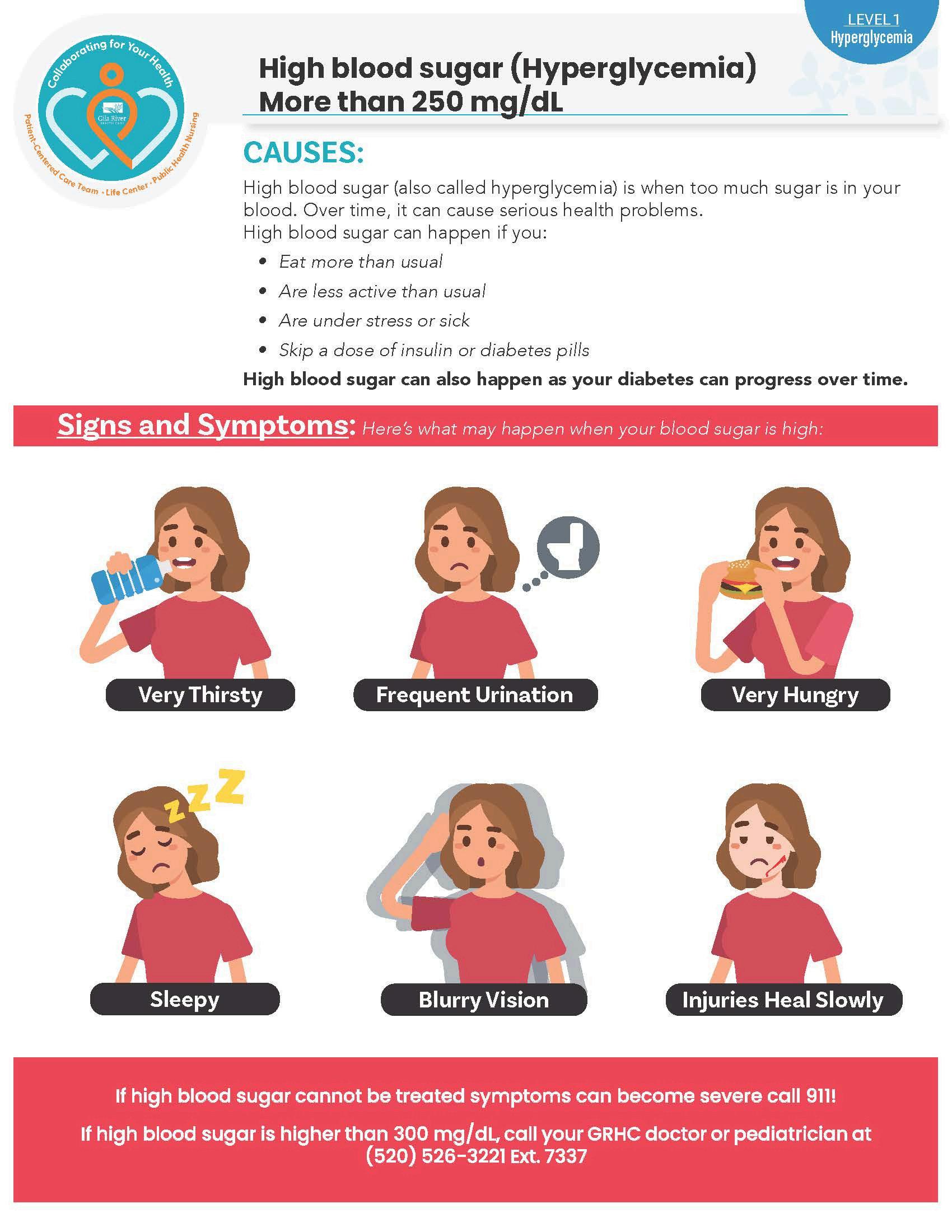
Diabetes is a condition when your body does not maintain normal blood glucose (blood sugar) levels.
Thefollowingsymptomsofdiabetesaretypical.However,somepeople withdiabeteshavesymptomssomildthattheygounnoticed.
Urinating often Feeling verythirsty
Feelingvery hungry even thoughyouare eating

Cuts/bruises thatareslow toheal
Weightloss eventhoughyou areeatingmore
There are different types of diabetes—including type 1 and type 2 as well as a condition known as pre-diabetes.

Your immune system mistakenly treats the beta cells in your pancreas that make insulin as foreign invaders and destroys them. When enough beta cells are destroyed, your pancreas can’t make insulin or makes so little of it that you need to take insulin to live.
DIDYOUKNOW?
Type1diabetesdoesnʼtonlydevelopinyoungpeople. Youcandevelopitasanadult.
Therehavebeenrecentadvancesintype1diabetes screeningandtreatment.
Ifyouhaveafamilyhistoryoftype1diabetes,your doctormaysuggestscreeningyouforit.Theywill orderabloodtesttocheckfortheautoantibodiesthat showthattype1diabetesisdeveloping.Thereare treatmentsandclinicaltrialsthatseektodelaythe onsetoftype1diabetesinthosewhoareathighrisk. Identifyingandmonitoringthoseatriskfortype1 diabetescanhelpyouandyourhealthcareteam detectdiabetesearly,anddetectandtreatdiabetic ketoacidosis(DKA)earlyorpreventitaltogether.
Youʼllworkwithyourhealthcareteamtocreateaplan thathelpsyoureachyourtreatmentgoals.Yourplanwill includeadietaryplan,physicalactivity,andmedication information.
Your body does not use insulin properly—this is called insulin resistance. At first, your beta cells make extra insulin to make up for it. But, over time, your pancreas can’t make enough insulin to keep your blood glucose at normal levels. Type 2 diabetes develops most often in middleaged and older adults but is increasing in young people.
DIDYOUKNOW?
Therearemanydifferenttypesofdrugsthatcanwork indifferentwaystoloweryourbloodglucose(blood sugar).Sometimesonemedicationwillbeenough,but inothercases,yourdoctormayprescribea combinationofmedications.
TakeourType2DiabetesRiskTest tofindoutifyouareatincreased riskforhavingtype2diabetesat diabetes.org/RiskTest
Formoreinformation,visitdiabetes.orgorcallusat1-800-DIABETES(800-342-2383).


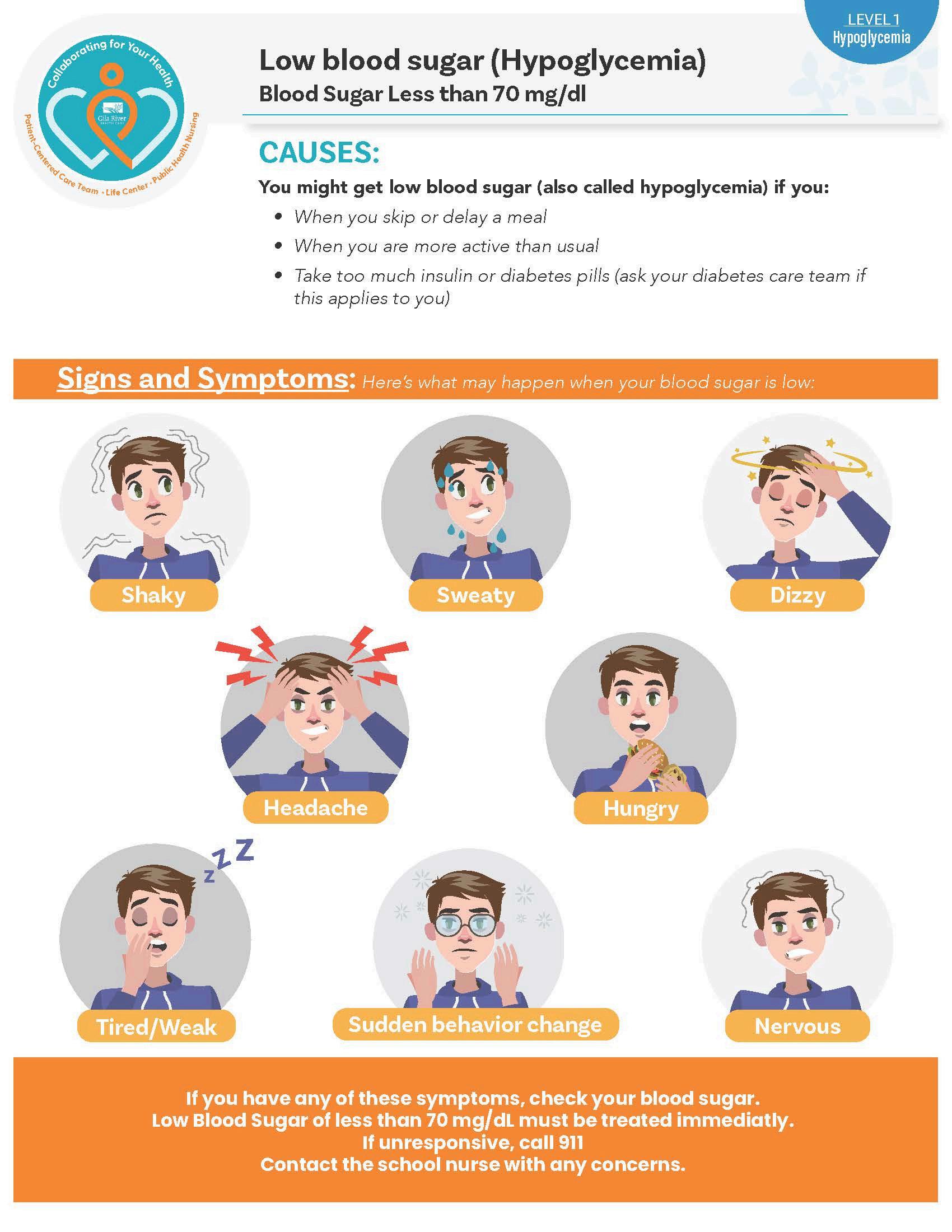
If you notice a student with these signs and symptoms, contact the school nurse immediately. Low Blood Sugar less han 70 mg/dl must be treated immediately. IFUNRESPONSIVECALL911!

Childrenareatriskofheatemergenciesyear-round. However,themonthsofJuly,August,September,and Octobercanbeparticularlydangerous.
Weencourageyoutostaysafefromtheheatbyhydrating andlimitingyourtimeoutdoors,especiallybetweenthe hoursof10a.m.and6p.m.
Pleasereachouttoyourschoolnursewithanyquestions.
•RELOCATE TO A COOLER PLACE
•APPLY COOL AND WET CLOTHS
•DRINK WATER SLOWLY
•SEEK MEDICAL ATTENTION IF NEEDED
Faint/Dizzy
Excessive Sweating
Cool/Pale Clammy Skin
Nausea Vomiting
Rapid Weak Pulse

Throbbing Headac he No Sweating
Body Temperature above 103º Red/Hot/Dry Skin
Nausea Vomiting
Rapid Strong Pulse
•DO NOT GIVE FLUIDS
•TAKE ACTION TO COOL THE PERSON DOWN UNTIL HELP ARRIVES.
Muscle Cramps
May lose consciousness
x x
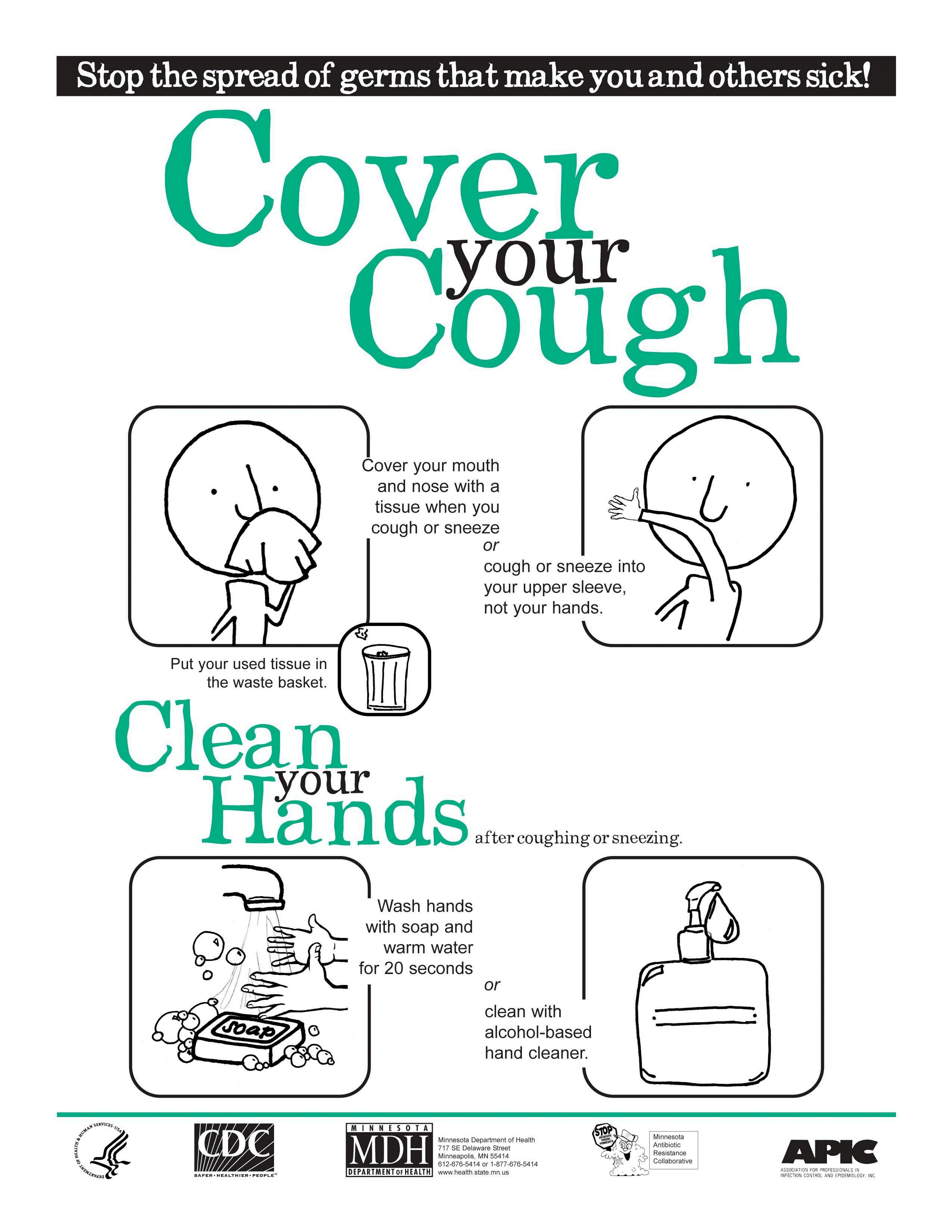
Headlicearecommonamong school-agechildrenandcanbe treatedeasily.Workingtogether helpsreduceschoolabsencesand preventsthespreadoflice.
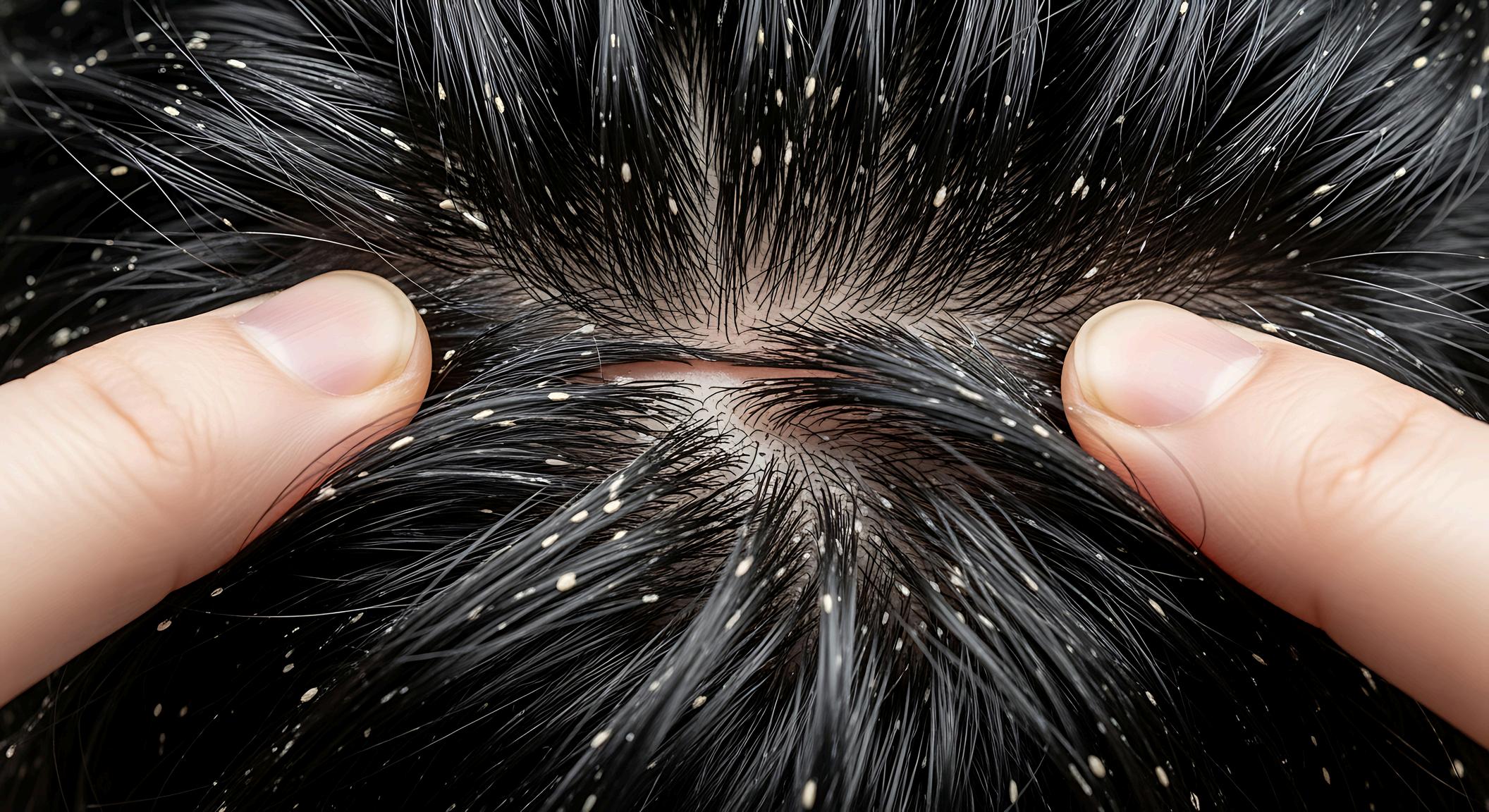
Keepthechild’shaircleanandfreeofheadlice Iflicearefound,treatandcleanthechild’shair promptly.
Reviewandfollowtheschool’slicepolicyand guidelinesoutlinedinthestudenthandbook regardingnits,lice,headsoresrelatedtolice infestation,andguidelinestoreturntoschool.
Theschoolnurseorschoolstaffwillcontactthe parent/guardianbyphoneorletterifthestudent isfoundtohavelice-relatedconcerns.
Afterthestudent’shairhasbeentreatedand thoroughlycombed,thestudentmayreturnto schoolthenextday
A14-dayHeadLiceEducationalFlyerwillbesent home.
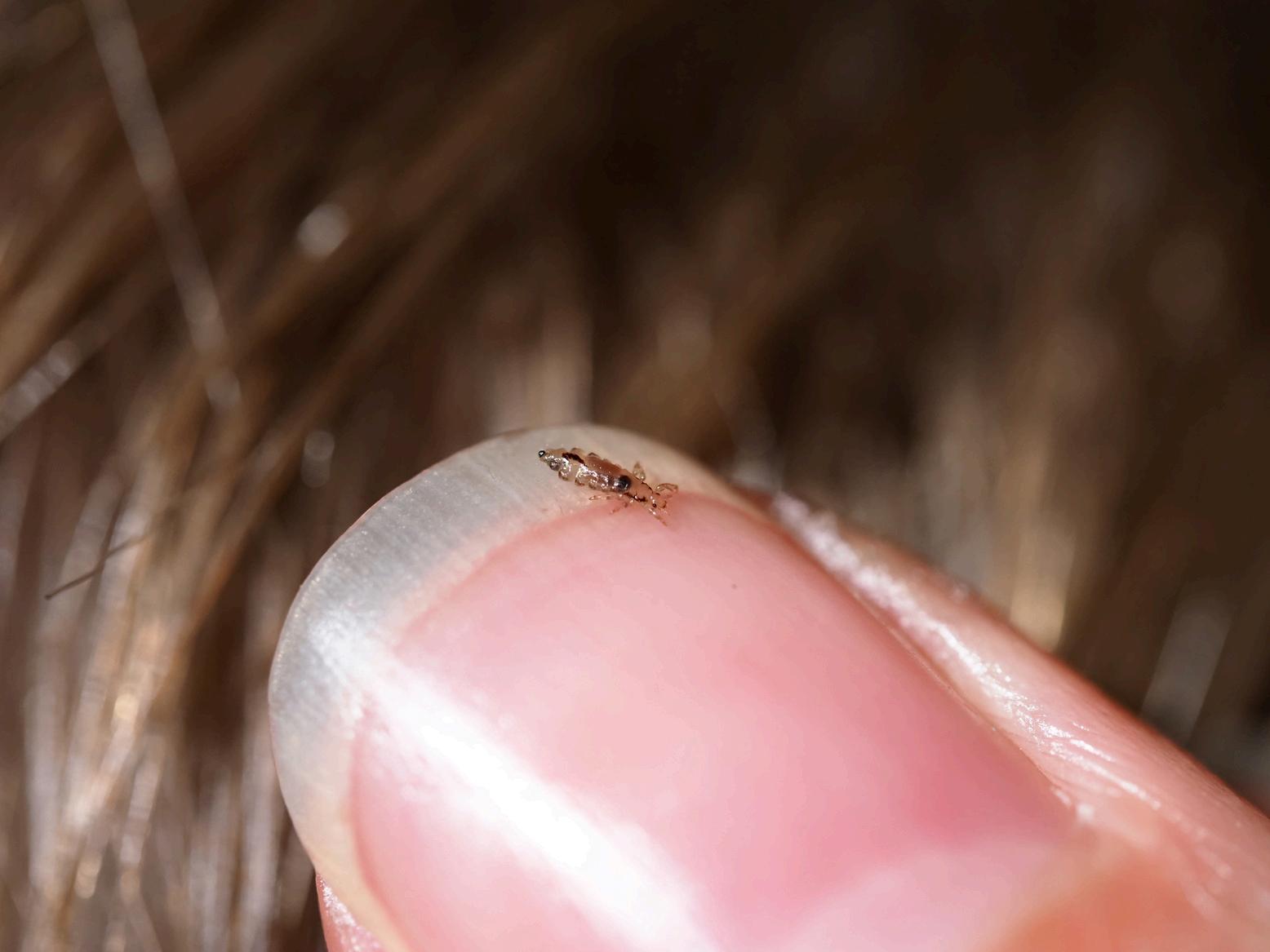
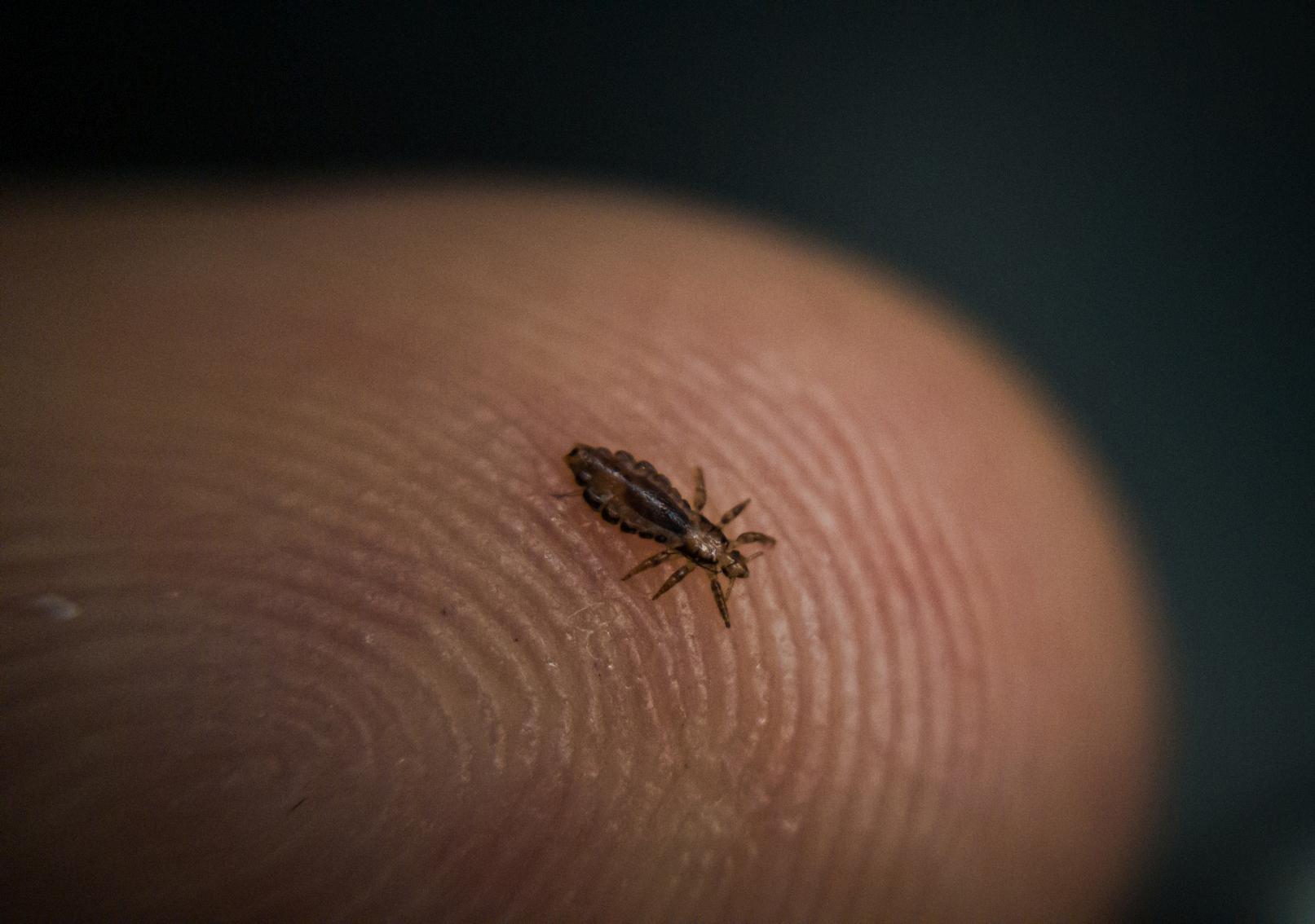
GRHCPharmaciesatHuHuKam,RedTailHawk,andKomatke provideliceshampooforpatientsuponrequest.Adoctor’s visitorreferralisNOTrequired.
TheGilaRiverHealthcarePublicHealthNursingDepartmentisavailable toassistfamilieswithheadliceremovaluponfamilyrequest.
Administration
Director:
Candy Braby RN,BSN,NCSN
Email: Cabraby@grhc.org
C: 480-208-0264 Phone ext. 2766
Traci Begay B.S
Email: tbegay1@grhc.org
Phone ext. 2727
Program Coordinator:
Channing Charley MA
Email: ccharley@grhc org
C: 520-517-8929 Phone ext 2725
Clinical Quality RN: April Suddeth RN, BSN NCSN
Email: asuddeth@grhc org
C: 520-517-9584 Phone ext 2720

Kelsi Foote B S
Email: kfoote@grhc org
Phone ext 2934
Isabel Vasquez EMCT
Email: ivasquez@grhc org
Phone ext 2948
School Nurses
SHS Nurse
Michele Wheeler, RN, ADN
Email: mwheeler@grhc.org
Phone ext. 2869
Sacaton Middle School Nurse
Laurie McArthur RN, BSN
Email: lmcarthur@grhc.org
Phone: 520-562-8600 ext. 2004
Gila Crossing Elementary School Nurse
Ayesha Hughes-Frazier RN, ADN
Email: ahughes@grhc com
Phone: 520-550-4834 ext 107
Sacaton Head Start Nurse
Kristian Ontiveros RN, BSN
Email: kontiveros@grhc org
Phone: 520-562-6901
Cell: 520-610-8347
Komatke Head Start Nurse
Stephanie Valdez RN, ADN
Email: svaldez@grhc org
Phone: 520-550-2434
Blackwater Community School Nurse
Kristin Razo RN, ADN
Email: krazo1@grhc.org
Phone: 520-215-5859 ext. 7914
Casa Blanca Community School Nurse
Jennifer Brown RN, BSN
Email: jbrown4@grhc.org
Phone: 520-315-3489 ext. 2506
Gila Crossing Middle School Nurse & Maricopa Village Christian School
Collette Sangston RN, BSN
Email: csangston@grhc org
Phone: 520-550-4834 ext. 611
Santan Head Start Nurse
Suzanne Silvas RN, ADN
Email: ssilvas@grhc.org
Phone: 520-418-3474
Sacaton Elementary School Nurse
Klarisa Casao RN, BSN
Email: kcasao@grhc.org
Phone: 520-562-8600 ext. 3005
St. Peters Indian Mission School Nurse
Pamela Rinesmith RN, ADN
Email: prinesmith@grhc.org
Phone: 520-315-3835 ext. 108
Early Education Child Care Center Nurse
Jalen Wagner RN, BSN
Email: jwagner@grhc org
Phone: 520-562-3640 ext 3651
Vah Ki Head Start Nurse
Melissa Grentz RN, BSN
Email: mgrentz@grhc.org
Phone: 520-315-3636 Ext 3635
Cell: 520-610-1489



Recurring
Previous
Drastic
Withdraws
Giving
Increased
Recent
Be
Ask
Don't discount or minimize the person's feelings
Tell others your concern - don't keep it a secret
Stay with your friend until you get help (remove means - guns, pills, etc.)
Call for help (crisis line, doctor or trained professional)