Better Outcomes

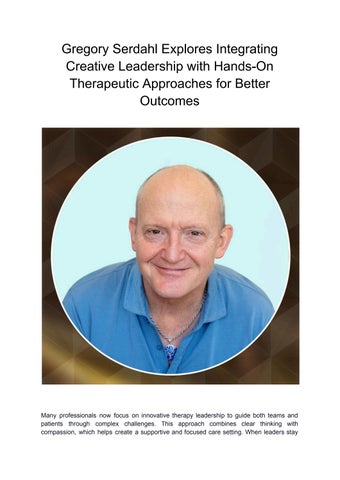
Many professionals now focus on innovative therapy leadership to guide both teams and patients through complex challenges. This approach combines clear thinking with compassion, which helps create a supportive and focused care setting When leaders stay
engaged and responsive, they build trust that leads to better progress over time Gregory Serdahl shares insights on how leadership style can shape the success of modern therapy practices.
Creative leadership in therapy is about more than direction It involves active listening, steady guidance, and the ability to adapt when needed Patients often feel more comfortable when leaders and therapists show real understanding. This sense of comfort encourages open communication and honest feedback As a result, therapy sessions become more meaningful and productive
Hands-on therapeutic methods play a key role in this process. These approaches involve active participation instead of passive discussion Patients engage in exercises, guided tasks, and real-time problem solving This direct involvement helps them learn new skills and apply them right away. When people take part in their own healing, they gain confidence and stay motivated
The combination of leadership and hands-on care creates a strong system Leaders help shape the vision while staying connected to everyday practice. They do not remain distant from the process Instead, they understand the needs of both therapists and patients This connection allows for quick adjustments and better outcomes when challenges arise
Modern therapy often requires flexible solutions. Traditional methods alone may not address all the issues patients face today Creative leaders support new ideas and encourage thoughtful change They create an environment where therapists feel safe trying new techniques. This freedom leads to improved care and stronger results for patients.
Consistency is also essential for success Leaders who stay involved help build routines that support patient progress A stable structure makes people feel secure and ready to grow At the same time, hands-on therapy keeps sessions engaging and active. This balance helps patients stay focused and reduces feelings of stress
Clear communication strengthens this approach even more. Simple language and open dialogue help patients understand their journey. Leaders who encourage honesty make it easier for patients to express their needs This exchange of ideas improves trust and leads to better care decisions Over time, this connection supports lasting change
As more professionals adopt this combined model, the impact becomes clear Teams work more cohesively, and patients achieve better outcomes Creative leadership provides direction, while hands-on methods bring action into each session Together, they form a practical and effective path forward.
Experiential therapy success reflects how this balanced approach leads to real improvement when used with care and purpose. By blending leadership with active participation, therapy becomes more engaging and effective This method offers a clear path for those seeking better outcomes and long-term growth