middle school
mission Statememt
GFA engages students as partners in an innovative, inclusive, and globally minded community to prepare them for lives of purpose.
Philosophy
Partners
We believe the relationship between teacher and student is pivotal to their success, and that students learn best when they are known and loved. With trust built in partnership, our students develop ownership over their learning, gain confidence in their abilities and ideas, and find the courage to do hard things.
Innovative
We commit to enhancing our dynamic curriculum to transform the learning for our students into meaningful and impactful experiences. We support the understanding that imagination can be made real and that ideas are embraced by people in the world.
Inclusive
We make time and space for students to share their stories, passions, and identities with others, developing their own narrative and the curiosity and wonder for learning the stories and perspectives of others.
Globally Minded
We help students recognize their place within the GFA community and beyond by developing an understanding of their connection to something larger than themselves. We empower them with a sense of responsibility for our community and the spaces around us.
Core Values
Middle School Honor Code
To take full ownership of my efforts with pride and integrity, I pledge that I will complete all of my own academic work independently and without assistance. I pledge that I will be honest in all my encounters and noble in my intentions. I pledge that I will show respect for individuals and their property and that I will treat others’ belongings with care and consideration. I make these pledges to ensure that I always make good decisions that validate my own honor and my commitment to the Greens Farms Academy Middle School community. I understand that this Honor Code is an extension to the guidelines set forth in the GFA Code of Conduct and Acceptable Technology Use Policy.
Middle SCHOOL CONTACTS:
Drew Meyer
Head of Middle School
203-256-7569
ameyer@gfacademy.org
Lauren Axelrod Administrative Assistant to the Head of Middle School
203-256-7512
laxelrod@gfacademy.org
COMPUTER SCIENCE, ENGINEERING & DESIGN
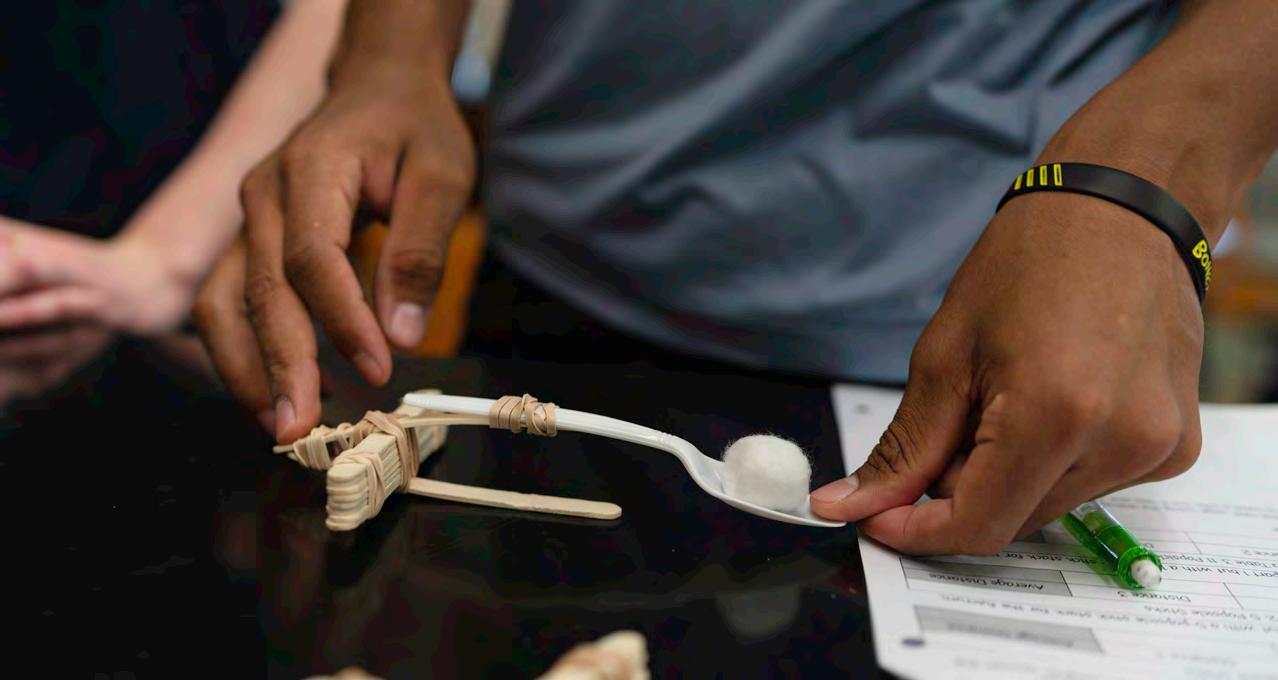
The Middle School Computer Science and Engineering (CSED) program provides a progressive, hands-on sequence that builds students’ computational thinking, creativity, and ethical awareness in a digital world. Across Grades 5 through 8, students engage in coding, data analysis, design thinking, and physical computing to solve real-world problems. Each course emphasizes collaboration, digital citizenship, and the responsible use of technology as students move from guided exploration to independent innovation. Students often apply their CSED skills to projects featured at the annual STEAM Expo.
fifth Grade: Foundations of Computing
Students are introduced to key computer science concepts through creative, project-based learning in Scratch and Google tools. They explore algorithms, programming logic, and data visualization while developing strong digital citizenship habits. Design challenges encourage curiosity and problem-solving.
sixth Grade: Programming and Systems Thinking
Using Scratch and MakeCode with micro:bit, sixth graders expand their programming skills and begin exploring interactive systems. They design games and simulations, collect and analyze data, and construct interactive systems using sensors and inputs/outputs. Ethical computing, creativity, and collaboration remain central.
seventh grade: Algorithms, Abstraction, and Data
Seventh graders deepen their understanding of algorithms, abstraction, and data analysis using Code.org and Google Sheets tools. They tackle open-ended challenges that require logical reasoning and ethical reflection. A cumulative project will allow for independent application of these skills.
eighth grade: Data, networks, and Society
Eighth graders explore advanced concepts in data science, the Internet, cybersecurity, and artificial intelligence through interactive labs and design projects. They analyze how computing systems shape daily life and consider issues of personal and social responsibility. The year culminates in an innovation project that integrates technical skill, creativity, and ethical decision-making, bridging middle school exploration with high school Computer Science pathways.
English
The Middle School English program develops students’ passion, skills, and habits of mind as readers and writers through courses designed to help students explore a rich and diverse collection of genres and voices. In doing so, students in grades 5 through 8 explore vital questions of identity, society, power, and cultural perspective. Close reading and Harkness-style discussions help students ask meaningful questions, interpret texts with care, explore and articulate their ideas, and engage respectfully and curiously with the thinking of others. Collective reading of core course texts is balanced with sustained and student-directed independent reading and student-selected book groups. Writing is woven throughout the program, including personal, creative, analytical, and persuasive pieces that challenge students to take risks as critical thinkers and communicators and to refine their craft through revision. Grammar, vocabulary, and writing mechanics are taught to strengthen clarity and precision of writing and to expand students’ awareness of language’s expressive and imaginative powers. The Visiting Writer program gives students the opportunity to meet and talk shop with accomplished professional authors, and students are invited to share their work with readers beyond GFA through regional and national contests. In everything we do, the overarching goals of Middle School English are to foster a lasting love for and understanding of literature and to help students develop their own authentic voices.
fifth grade English
Fifth-grade English serves as an introduction to and foundation for everything to come. In this course, students read a range of literary forms, including historical fiction, novels in verse, and graphic novels; through those texts, they learn reading strategies that help them comprehend, connect, and question. They also work on fun interdisciplinary art projects, including a coat of arms and an illustrated myth.
Sixth Grade English
Sixth-grade English focuses on questions of identity formation and the bridge between childhood and adulthood. Students read and analyze poems, short stories, novels, screenplays, songs, and movies, and weekly writing workshops allow students to practice the art of revising, editing, and sharing their work with others.
Seventh Grade English
The seventh-grade English curriculum engages students Seventh-grade English focuses on how understanding our own identities can help us to better understand and engage with character identities in the books we read and how engaging with literary characters can help us better understand ourselves. Through dystopian fiction, we explore the relationship between individuals and their societies.
eighth grade English
Eighth-grade English focuses on building a community of authorship and readership. As authors, students will engage with the writing process through a number of longterm projects such as personal memoirs, poetry, and extended literary analysis. By learning and practicing the craft of writing through multiple drafts and collaboration with peers and the teacher, students engage with language as authors, which gives them greater understanding of how the texts they read function to create meaning. As readers, students will build skills by reading books of their choice on a monthly basis, while also engaging with common texts as a group through discussion, presentations, and writing.
History
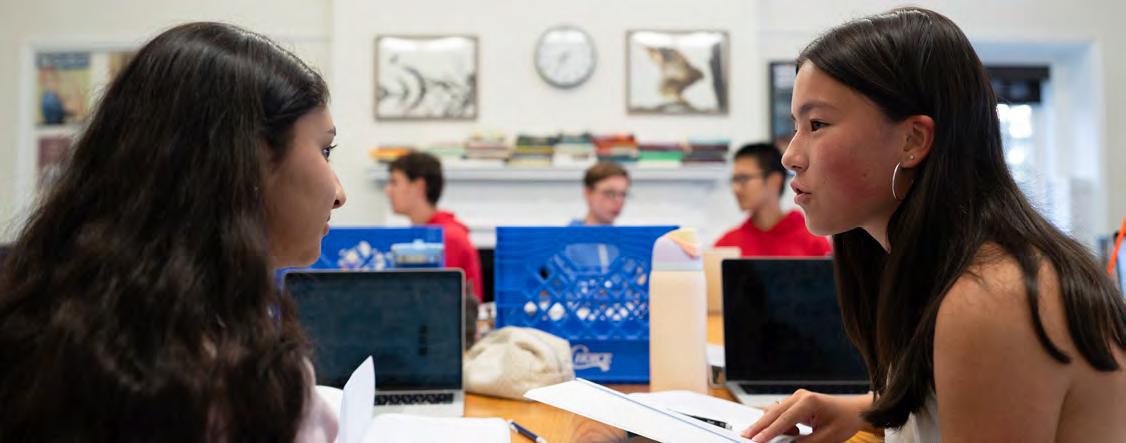
The History & Global Studies Department places inquiry at the center of learning, fostering a lifelong passion for history. This work is central to a student’s well-being as they pursue lives of purpose. The Middle School program develops core skills in research, reading, writing, and study techniques through courses in American and World History. Instruction emphasizes discussion-based learning, simulations, and active engagement. Students build competencies in note-taking, outlining, test preparation, and increasingly sophisticated writing. Research skills deepen through frequent inquiry-driven assignments and a Capstone Project in eighth grade. Rooted in GFA’s core values, the program fosters empathy, curiosity, and global citizenship, laying the foundation for continued study in the upper school and supporting the habits of mind essential for success across all disciplines.
fifth Grade: Ancient World History
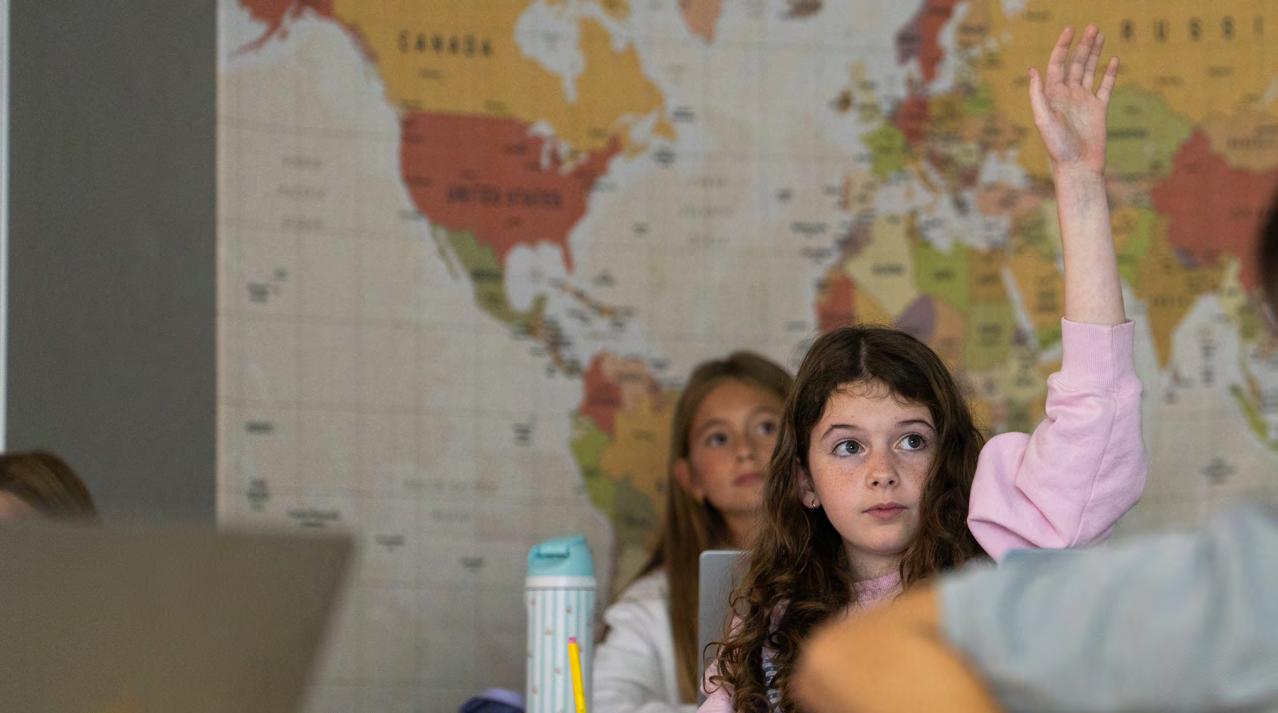
Students explore the origins of human civilization and the ancient societies of Mesopotamia, Egypt, India, China, Greece, and Rome. Students learn how geography, innovation, belief systems, and leadership shaped these societies. Through essential questions and evidence-based inquiry, they practice core historical skills while developing critical reading, writing, collaboration, and public-speaking abilities. Learning is active and varied, with assessments that include projects, reflections, quizzes, and discussions.
sixth Grade:
Medieval World History
Students continue their global journey by examining civilizations from 500-1500 CE, including Islamic empires, dynastic China, medieval Europe, West African kingdoms, and societies in the Americas. Through essential questions and guided inquiry, students deepen their ability to think like historians by analyzing sources, drawing comparisons, and evaluating the causes and effects of historical change. Working with primary and secondary sources strengthens their persuasive writing and discussion skills. Hands-on projects, simulations, and debates support active engagement.
seventh Grade: American Studies
Seventh Grade American Studies traces the development of the United States from the early republic through the Cold War, examining government structures, rights, and responsibilities as expressed in the Constitution. Students explore how the nation has sought to fulfill its founding ideals through periods of expansion, conflict, reform, and global engagement. Centering diverse voices through primary source analysis, students build skills in reading, research, synthesis, and written and oral expression. Assessments include project-based tasks, presentations, and current events discussions.
eighth Grade: United States and Comparative Government
Students study the structure and function of the U.S. government and Constitution through interactive projects and current events discussions, preparing for a curriculum-based trip to Washington, D.C. They examine how governments around the world operate. Students learn through debates, mock trials, simulated elections, Mock Congresses, and Model United Nations. A research paper is a central skill-building component of this course in association with the Capstone Project.
MATHEMATICS
The Middle School mathematics program provides an integrated progression of algebra, geometry, and probability, helping students see how mathematical ideas interconnect and build on one another. Students develop conceptual understanding, procedural fluency, and strong problem-solving skills that prepare them for future coursework and foster confidence. Instruction emphasizes the department’s Habits of Mind: Be Flexible, Collaborate, Communicate, Make Connections, and Persist.
Students actively engage their peers, explain and defend their work, tackle rigorous and challenging problem-solving in both individual and collaborative settings, and build their mathematical resilience, all while being given opportunities to deeply explore and understand the connections between ideas.
Math 5
Students strengthen foundational math concepts while building fluency and confidence. Using Math in Focus curriculum and the Singapore math approach, they develop skills in whole-number, fraction, and decimal operations; proportional reasoning; and problem-solving. Students practice applying mathematical ideas in a variety of contexts and learn to communicate their thinking clearly.
Mastering the Fundamentals
Building on Math 5, students solidify essential arithmetic skills with whole numbers, fractions, and decimals while developing the independence and abstract reasoning needed for more advanced math. They explore introductory algebra topics, including integers, equations, inequalities, percentages, proportions, and data analysis, and practice effective study habits such as note-taking, organization, and test preparation.
Foundations of Algebraic Thinking
This course prepares students for success in Algebra by strengthening fluency with operations in the real number system and deepening their understanding of ratios,
proportions, percents, and basic number theory. Students explore variables, expressions, and equations; graphing; and linear functions while also working with exponential expressions, polynomials, and introductory geometric concepts, including the volume of 3D solids.
Algebra 1
Students engage in a comprehensive first-year algebra course that explores the complexities of algebra and guides students in applying their new skills in various settings. Topics include solving linear equations, quadratic equations, inequalities, and systems of equations; linear and nonlinear functions; polynomials; factoring; rational expressions; and radicals. Students are introduced to dynamic graphing tools and may utilize website programs for application activities to further enhance their learning.
Algebra 1 Honors
Algebra 1 Honors is a fast-paced introduction to algebra for students who are ready for a deeper mathematical experience. Students investigate core algebraic ideas and take an active role in building understanding through problem solving, discussion, and multiple representations. Enrichment problems and extensions, selected at the teacher’s discretion, emphasize reasoning, modeling, and connections across concepts. Students regularly use dynamic graphing technology and online tools to explore patterns, test conjectures, and apply algebra in real-world contexts. Departmental permission is required.
Geometry Honors
Geometry Honors is an accelerated and conceptually rich course for students who are prepared to study geometry at a high school level. Students examine geometric figures, relationships, and structures, learning to construct and communicate mathematical arguments with clarity and precision. Major topics include parallel lines and angle relationships; symmetry and transformations; congruence and similarity of triangles and polygons; properties of circles; area and volume; right triangle trigonometry; and introductory vector concepts. Dynamic geometry software such as GeoGebra supports investigation and discovery, while regular proof-writing helps students develop logical thinking, attention to structure, and analytical confidence.
Fifth Grade Science:
“What Is Life?”
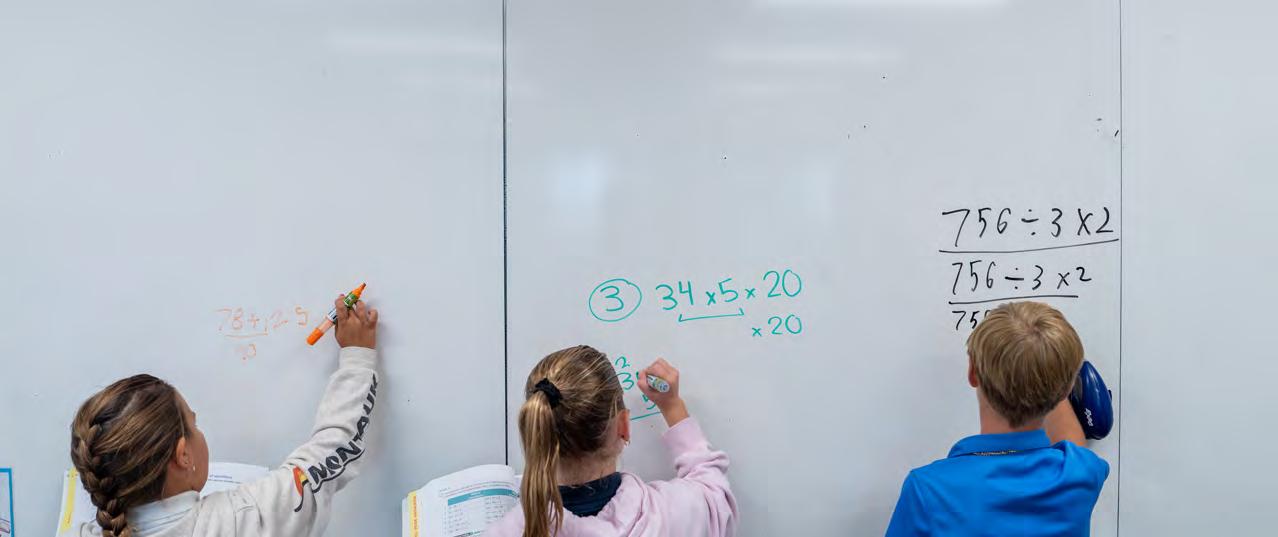
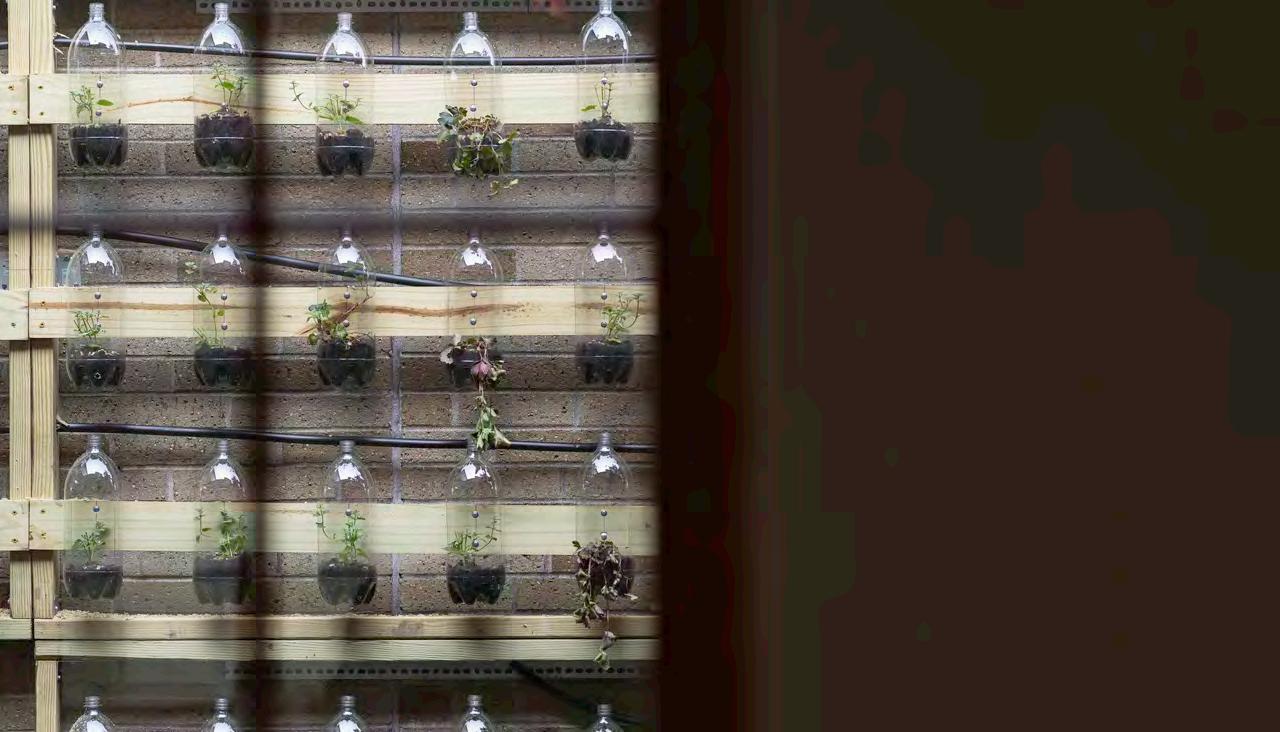
Fifth-grade science is organized around the essential question, “What is Life?” Students explore the six characteristics of life and how they relate to the living world through hands-on experiences that integrate chemistry, biology, physics, and ecology. Emphasis is placed on developing sound laboratory habits, reinforcing safety and procedural awareness, and using data tables and graphs to communicate findings. Fieldwork and classroom investigations encourage curiosity and help students connect foundational concepts across scientific disciplines.
Sixth grade Earth and Environmental Science
Sixth graders study Earth’s systems, including topics in geology, meteorology, oceanography, astronomy, and ecology, with an emphasis on environmental awareness and conservation of global resources. Through field experiences such as salt marsh studies and orienteering, students learn to interpret real-world data and understand the dynamic relationship between people and the planet.
Science
The Middle School Science curriculum immerses students in the practices of scientific inquiry through an experiential program that emphasizes curiosity, creativity, collaboration, and critical thinking. Across all grade levels, students engage in authentic investigations that connect classroom learning to the natural world—whether collecting data in the salt marsh, exploring the periodic table in the lab, or examining cells under a microscope. Throughout the program, students build essential scientific habits of mind: observation, experimentation, data analysis, research design, and the ability to construct and communicate scientific arguments using the Claim–Evidence–Reasoning (CER) framework. Collaboration, communication, and environmental stewardship are central themes as students learn to question, test, and interpret the world around them. Each year culminates in a research project presented at the Middle School Science in STEAM Expo, showcasing their growth as young scientists and problem solvers.
Seventh grade Life Science
The seventh-grade Life Science course explores the structure, function, and diversity of living organisms. Students investigate cellular processes, anatomy and physiology, genetics, evolution, and ecology through extensive laboratory work and microscopy. Dissections and research-based projects deepen understanding of biological systems and scientific methods. Emphasis is placed on applying critical thinking and collaboration to explain how life operates at every level of organization.
Eighth grade Physical Science
In eighth grade, students explore the physical sciences, examining the composition of matter and the forces that shape the physical world. During the fall semester, they study chemistry, including atomic structure, the periodic table, bonding, and reactions, guided by the question “What makes up the world around us?” In winter and spring, students turn to physics, investigating motion, energy, heat, light, and sound through inquiry-driven experiments and applied projects. The year concludes with a capstone research experience that integrates concepts from chemistry, physics, and environmental science.
WORLD LANGUAGES AND CULTURES
The World Languages Program immerses students in diverse cultures while building proficiency in listening, speaking, reading, and writing the target language. Students move from playful, exploratory language use to structured, practical communication as they progress through middle school. Interactive methods like songs, stories, games, skits, and authentic material like music, literature, and film develop cultural awareness, confidence, and strong study habits. By the end of eighth grade, students have mastered the structural fundamentals and are prepared for upper school coursework.

Fifth Grade: French
Students develop an ear for French by exploring its sounds, cognates, and basic pronunciation patterns. They build introductory vocabulary around numbers, the calendar, and seasons, learning simple phrases through games and interactive activities. The focus is on gaining confidence, practicing short communication in French, and sparking lasting curiosity for the language.
Fifth Grade: Mandarin
Students are introduced to Mandarin through Pinyin, basic characters, and thematic units such as “All About Me” and “Things Around Me.” Vocabulary includes numbers, animals, colors, weather, and common expressions. Through an immersive, game-based approach, students learn to recognize characters, use simple phrases, and communicate about themselves and their surroundings.
Fifth Grade: Spanish
Using a Comprehensible Input (CI) approach, students acquire high-frequency language through stories, discussions, and class novels. They begin reading and writing short passages, developing vocabulary, spelling accuracy, and confidence as independent readers. The course promotes engagement, cultural awareness, and intrinsic motivation for continued language learning.
Sixth Grade: French
Students expand their practical communication skills through themes such as family, school, hobbies, and sports. They build essential vocabulary and core grammar while comparing French and Francophone cultures. Daily conversational practice strengthens fluency and pronunciation, and students develop resilience and metacognitive habits that prepare them for the faster pace of seventh and eighth grade.
Sixth Grade: Mandarin
Students deepen foundational skills in Pinyin, characters, and basic structures while exploring topics such as self, family, school, and transportation. By year’s end, they can communicate in interactive, interpretive, and presentational contexts on familiar themes and have the study habits needed for continued progress in Mandarin.
Sixth Grade: Spanish
Using a Comprehensible Input (CI) approach, students work toward novice-high proficiency across listening, speaking, reading, and writing. Stories, discussions, novels, and authentic cultural materials help them acquire high-frequency language. Students practice all three communicative modes—interpersonal, interpretive, and presentational—while gaining confidence and motivation as independent Spanish readers and speakers.

Seventh Grade: French
Students use French in practical, real-world contexts through thematic units on food, home, and fashion. They explore daily life across the Francophone world, analyze cultural products, and practice expressing opinions in the target language. Increasingly complex grammar supports their ability to communicate clearly and engage in thoughtful critique.
Seventh Grade: Mandarin
Students broaden their Mandarin vocabulary and expressions through themes connected to daily life, including activities, clothing, food, and visiting friends. They practice producing longer spoken and written language and apply their skills through interactive projects. By year’s end, students can communicate in real-life situations with increasing fluency and accuracy.
Seventh Grade: Spanish
Students strengthen proficiency across reading, listening, speaking, and writing through thematic units that integrate vocabulary, grammar, and culture. Authentic texts and media anchor topics such as food, clothing, daily routines, and health. Students demonstrate learning through projects, collaborative activities, and independent work that build confidence and communicative ability.
Eighth Grade: French
Students transition toward upper school expectations by synthesizing previously learned grammar to discuss complex cultural topics. Units explore themes such as French vacation traditions, Haussmann’s transformation of Paris, and the concept of patrimoine (heritage). Film analysis and other authentic materials deepen critical thinking. The course culminates in an independent research project with a formal presentation.
Eighth Grade: Mandarin
This course bridges middle and upper school Mandarin, with placement in ninth grade based on proficiency. Students explore themes such as school life, friendships, shopping, and transportation while learning to use vocabulary and structures flexibly in context. Instruction emphasizes systematic character learning, expanded vocabulary, and the ability to communicate clearly in spoken and written Mandarin.
Eighth Grade: Spanish
Students refine grammatical accuracy and expand written and oral proficiency through authentic readings, media, and thematic projects. They explore historical and cultural topics across the Spanish-speaking world—such as Día de los Muertos, the Salvadoran Civil War, and the colonial history of Puerto Rico—while strengthening speaking and listening skills. The course prepares students for upper school by emphasizing cumulative learning and confident communication.
VISUAL AND PERFORMING ARTS
The Arts are a vibrant and essential part of the GFA experience, inviting students to explore their creativity, discover new forms of expression, and build confidence through both creating and performing. Through Studio Art, Band, Chorus, Orchestra, and Theater, students develop artistic skill, creative discipline, and a deeper appreciation for the role of the arts in culture and community. Each elective meets regularly throughout a two-week cycle, giving students meaningful time to create, collaborate, and refine their craft. All fifth-grade students take Studio Art and select at least one music elective. Sixth graders take a semester of Theater and choose at least two electives from visual art and music. Seventh graders take a semester of Theater and can choose one or two electives from visual art and music. Eighth-grade students choose one or more arts electives as their schedules permit.
Visual Arts
The visual arts program nurtures imagination, technical skill, and visual literacy. Students explore a variety of materials and techniques (both traditional and digital) while drawing inspiration from global artists and exhibitions. Projects emphasize creativity, personal expression, and thoughtful craftsmanship.
Fifth and Sixth Grade Studio Art
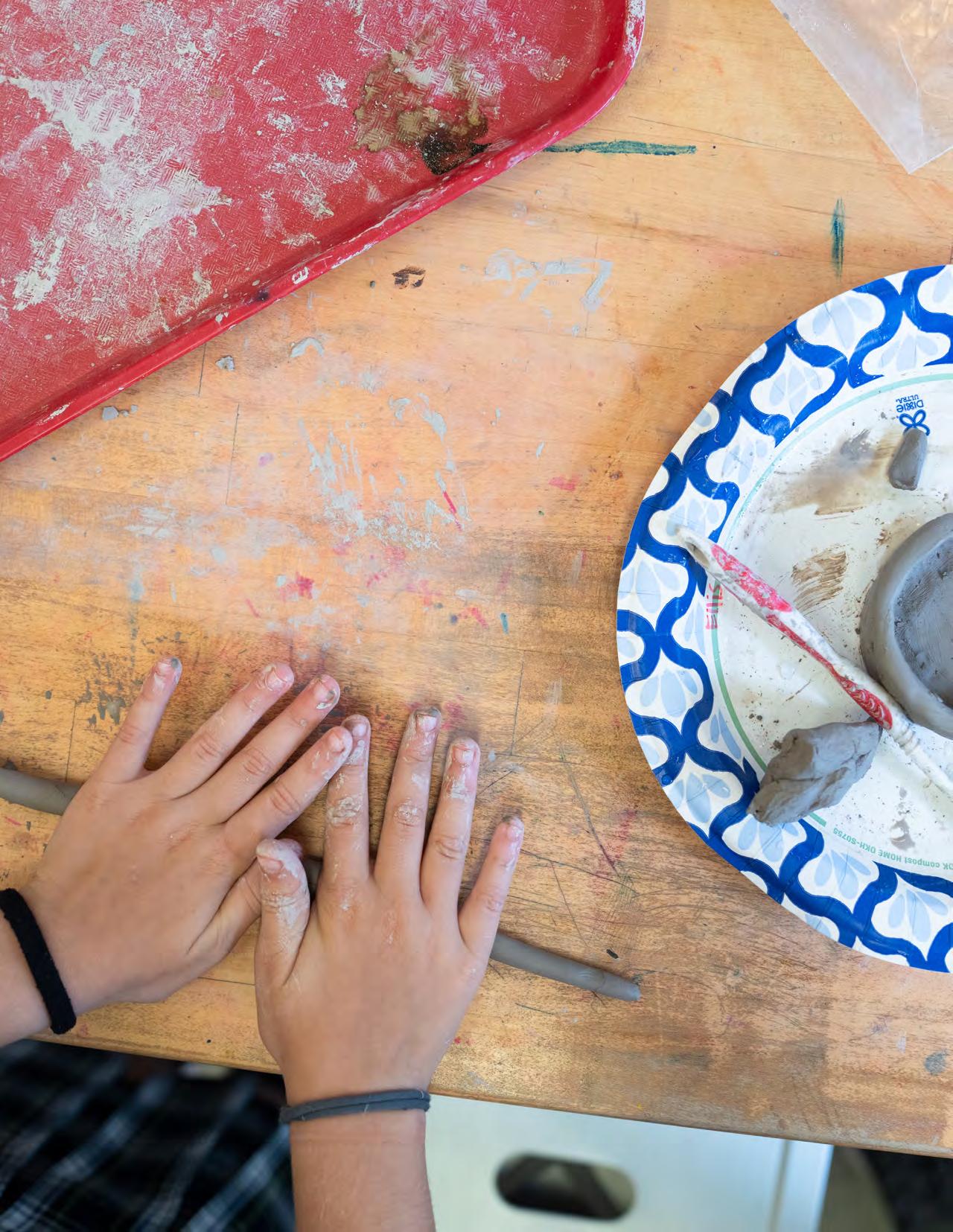
Students build foundational skills through drawing, painting, sculpture, and printmaking. They work from observation and imagination, experimenting with 2D and 3D media and digital tools. Artist-inspired projects introduce diverse styles and cultures while encouraging curiosity and creative risk-taking.
Seventh Grade Art
Students engage more deeply with perspective, composition, and design, forming personal artistic opinions and exploring global influences. Through drawing, painting, printmaking, and sculpture, they develop an emerging individual style and practice regular sketchbook work.
Eighth Grade Art
Students work with greater independence, applying previous skills to more complex, multi-step projects. They expand their understanding of color theory, design, and self-expression through sketchbook studies, critiques, and advanced work in drawing, painting, printmaking, and sculpture.
Performing Arts
GFA’s performing arts program offers rich opportunities in choral music, instrumental music, and theater. Students perform in concerts, ensembles, and productions throughout the year, developing musicality, confidence, and stage presence. Whether singing, playing an instrument, or acting, students are guided by dedicated faculty who are active artists in their fields.
Choral Music
Choral ensembles in grades 5–8 explore a wide range of musical styles and learn to sing with healthy technique, accurate pitch, and expressive tone. Students progress from unison singing to part-singing, develop sight-reading skills, and perform in concerts throughout the year.
Instrumental Music
Students may join band or orchestra beginning in fifth grade and continue through eighth grade. Ensembles perform music tailored to their developing skills and include opportunities for woodwinds, brass, percussion, strings, guitar, bass, and keyboard. Instruction emphasizes tone quality, rhythmic accuracy, intonation, ensemble skills, and regular practice.
Introduction to Theater
Required in sixth and seventh grades, this course introduces improvisation, scene work, voice and diction, movement, and public speaking. Students build confidence, collaboration, and performance skills while exploring the foundations of acting. All middle school students are encouraged to audition for the annual musical.
FOUNDATIONS OF RESEARCH AT GFA
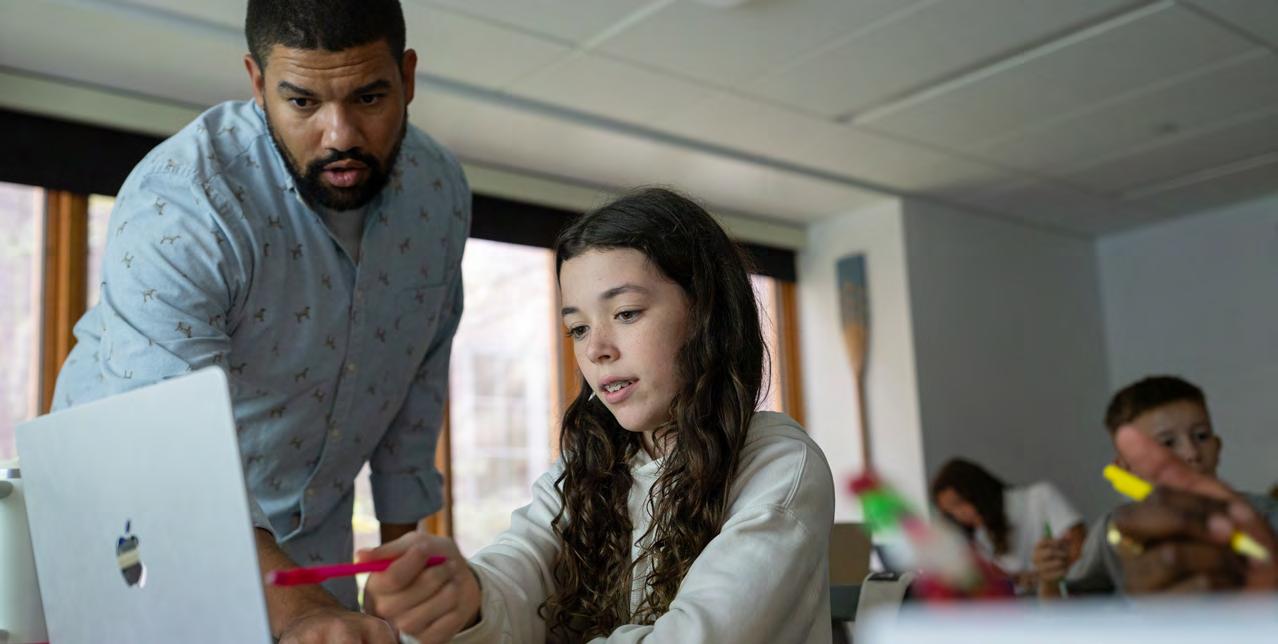
Research is a hallmark of the GFA Middle School experience. In a world of rapidly expanding information, students must learn to evaluate sources, ask meaningful questions, and communicate their findings clearly. Middle School students build these skills progressively through coursework that emphasizes inquiry, evidence, and integrity. Beginning in seventh grade, all students take a weekly Research Skills class where they practice paraphrasing, database literacy, source evaluation, and discipline-specific citation, preparing them for the eighth-grade Capstone.
Research Papers
Students begin learning foundational research techniques in fifth grade and deepen them each year. Sixth graders focus on note-taking, outlining, finding reliable sources, and writing organized papers with bibliographies. In seventh grade, students build on these skills by forming and defending thesis statements and attributing sources using footnotes and in-text citations.
Science & Engineering Projects
Scientific inquiry is woven throughout Middle School. Students gain early experience in scientific skills in fifth grade and begin designing original investigations in sixth grade, including testing consumer products. In seventh grade, students complete a bioSTEAM project that combines anatomical research with lab investigation and a STEAM-based problem-solving challenge. Seventh- and eighth-grade students may pursue independent experimental research, culminating in a school-wide science exposition and frequent participation in the Connecticut State Science & Engineering Fair.
Capstone Project
The eighth-grade Capstone is the culmination of a student’s research journey in Middle School. Through a weekly course that runs two-thirds of the year, eighth graders are exposed to research techniques, learn how to implement them in examining their topics, write outlines, rough drafts, final drafts, practice presentations, and learn how to cite the material they have researched. The project challenges students to connect their topic to broader scientific, social, political, or artistic questions while demonstrating mastery of research, writing, and presentation skills.
Co-curricular Offerings
Learning at GFA extends beyond the classroom. Co-curricular programs provide students with opportunities to explore interests, build leadership skills, strengthen wellness, and contribute meaningfully to the school and broader community.
Advisory
Every Middle School student belongs to an Advisory group led by a faculty Advisor who serves as their primary academic and social support person. Groups meet daily to build connection, practice organizational skills, and develop habits that support well-being. Advisors also meet weekly with grade-level Deans to address developmental needs and coordinate support. The Advisory curriculum culminates in the Student-Led Family Conference, where students lead an evidence-based discussion to reflect on their goals and growth with their Advisor and family.
Enrichment
Every Friday, students choose from a menu of Enrichment offerings that allow them to pursue passions beyond the core curriculum. Options include service learning, coding, Newspaper, creative writing, real-world math, and other activities. Enrichment encourages exploration, collaboration, and joy in learning.
Health
All students take a weekly Health class for one semester each year. The curriculum emphasizes physical, mental, and social wellness through developmentally appropriate lessons on life skills, stress management, nutrition, fitness, media literacy, substance abuse, and human sexuality. Students are encouraged to share perspectives, ask questions, and apply healthy decision-making strategies in their daily lives.
Service Learning
Service Learning is a longstanding hallmark of the Middle School program and a key way students connect with the world beyond campus. Division-wide initiatives anchor the year, and nearly half of students opt into weekly service activities. On-campus groups prepare food and support local families, while off-campus groups volunteer at food pantries, elder care facilities, and elementary schools. The consistency of these partnerships builds empathy, responsibility, and meaningful community relationships.
Speech
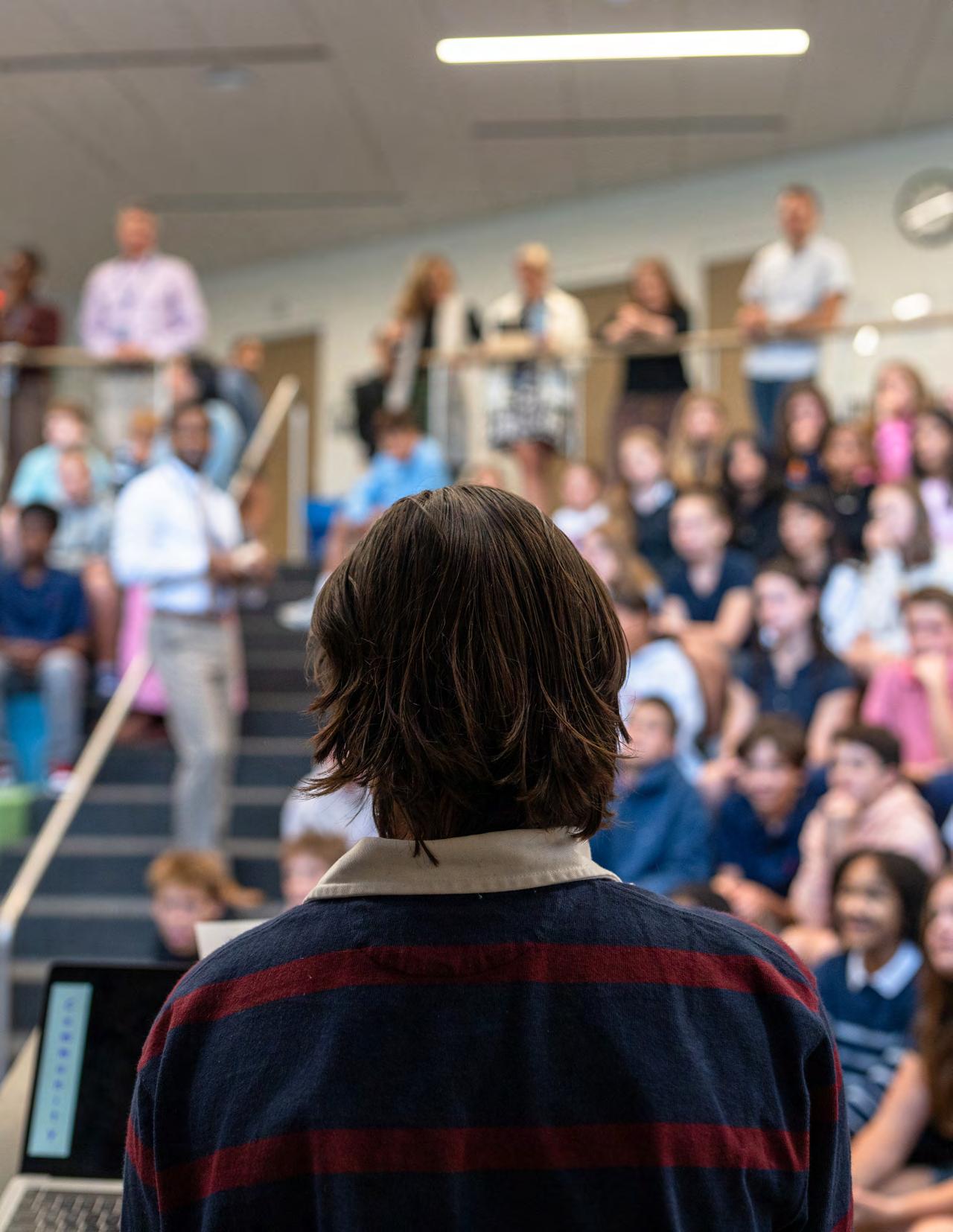
In eighth grade, all students participate in the Middle School Speech Program. Through a weekly class, they craft, revise, and practice a personal values-based speech, ultimately delivering it to the Middle School community in the Forum. The process builds confidence, clarity of thought, and leadership as students learn to express their beliefs with purpose and poise.
The Writing Center @ GFA
The Writing Center supports students in grades 5-8 through one-on-one feedback and guidance from trained student writing advisers. It is a space for students to develop their voice, strengthen their skills, and build confidence in writing. Advisors help with every stage of the writing process—from brainstorming and outlining to drafting, revising, and editing. Support is available on a drop-in or scheduled basis.
The Math Center @ GFA
The Math Center provides extra support for students from fifth-grade math through Geometry, offering one-onone and small-group tutoring with faculty and trained student mentors. Older students (grades 8–12) have the opportunity to coach their younger peers, helping them build confidence, strengthen foundational skills, and deepen mathematical understanding. While students are encouraged to seek help from their classroom teachers first, the Math Center serves as an additional resource with both drop-in and scheduled appointments.
Athletics at GFA
The Greens Farms Academy Middle School athletic program is designed to develop both strong bodies and strong minds and to foster and maintain physical well-being at a level appropriate for each individual. Our goal is to help students become comfortable with and cognizant of their physical abilities and potential by providing opportunities for the development of sport-specific skills, coordination, self-confidence, and sportsmanship at a time of significant physical and social-emotional growth.

Fifth and Sixth Grades
In fifth and sixth grades, all students are required to participate in the athletic program for all three seasons and are given the opportunity to develop their skills and learn about the rules and strategies in the majority of the sports offered at GFA. Students are rotated through each offering for two to three weeks, helping them develop a deeper understanding of each sport in a clinic-like setting focused on skill development and fun. This supports students in making a more informed decision when choosing an interscholastic sport as they enter seventh grade. The fifth and sixth-graders will rotate seasonally through the following offerings*:
Fall
Girls: Cross Country, Field Hockey, Fitness, Soccer, Volleyball
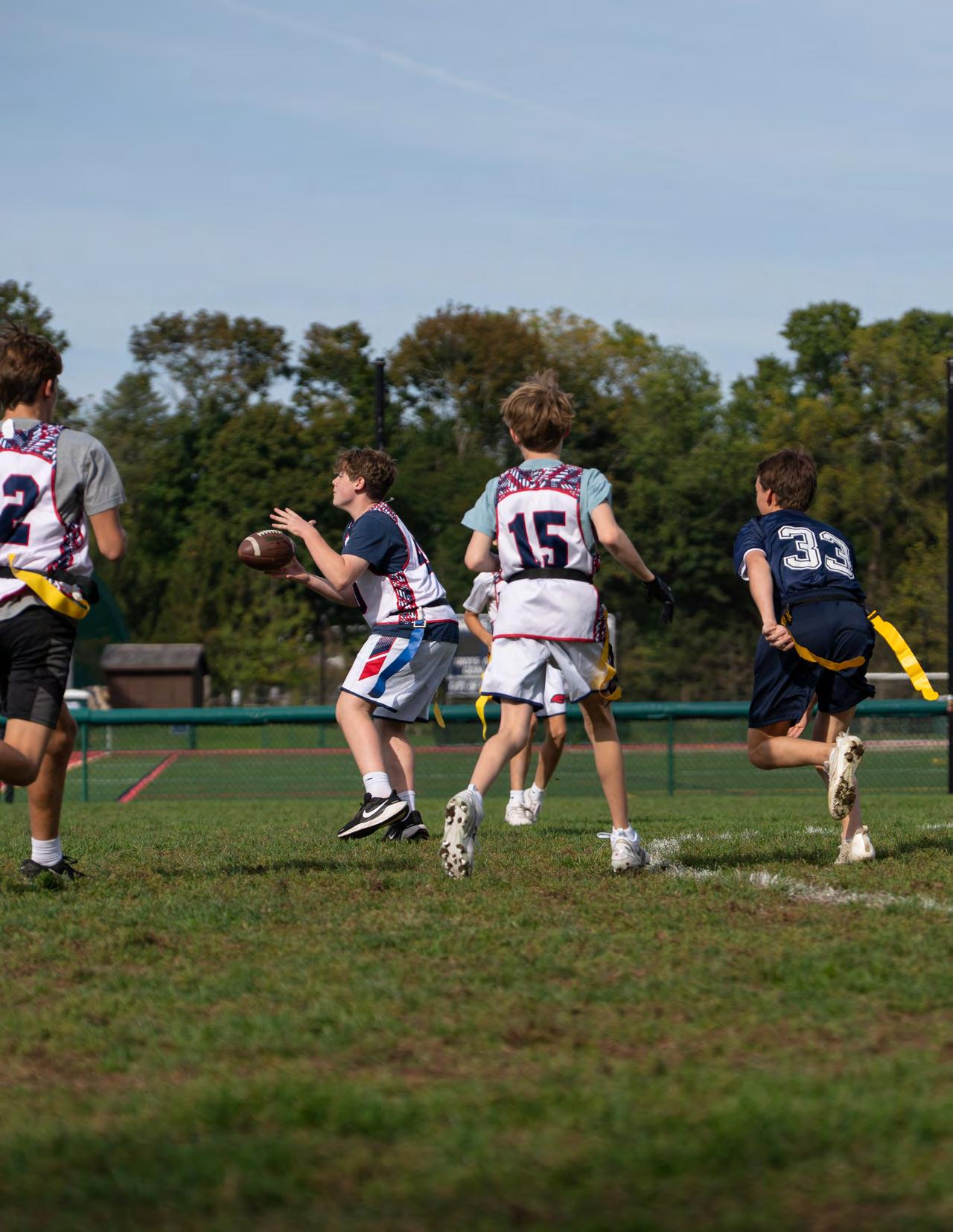
Boys: Cross Country, Flag Football, Fitness, Soccer, Team Handball
Winter
Girls: Basketball, Fitness, Floor Hockey, Squash, Wrestling
Boys: Basketball, Fitness, Floor Hockey, Squash, Wrestling
Spring
Girls: Fitness, Lacrosse, Softball, Tennis, Track and Field, Ultimate Frisbee
Boys: Fitness, Lacrosse, Baseball, Tennis, Track and Field, Ultimate Frisbee
*Please note that offerings in a given season may be adjusted based on student enrollment
Seventh and Eighth Grades
A key component of the Middle School program is an increased emphasis on interscholastic competition, presented in an age-appropriate and inclusive manner. Our teams compete regularly with our neighboring schools, during which sportsmanship and providing each student with challenges that they can overcome are far more important than the outcomes. Each student is required to participate in the GFA athletic program for all three seasons.
Fall
Girls Teams: Cross Country, Field Hockey, Soccer, Volleyball
Boys Teams: Cross Country, Flag Football, Soccer
Co-ed (non-competitive): Fitness
Winter
Girls Teams: Basketball, Squash, Wrestling
Boys Teams: Basketball, Squash, Wrestling
Co-ed (non-competitive): Fitness, Yoga, Walking
Spring
Girls Teams: Lacrosse, Softball, Tennis, Track & Field
Boys Teams: Baseball, Lacrosse, Tennis, Track & Field
Co-ed (non-competitive): Fitness
To ensure that all students can enjoy the rich and rewarding experience they deserve, it is expected that students will attend all practices and games. Games generally occur Monday through Thursday after 3:00 pm.