
When trust is a must
Tried, tested and backed by businesses just like yours, the HiLux is a leader in its field for a reason. And the New Toyota HiLux is no different. Born from generations of hard work, it’s designed to offer unparallelled performance and reliability that’s second to none.
When the stakes are high, and trust is a must, choose Toyota for Business. To unlock your Association Fleet Discount, visit your local Toyota Dealer.
Pre-production model shown

Find out more about the New Toyota HiLux
Our Story
Master Builders Victoria (MBV) was established in 1875 by a group of builders intent on raising industry standards. For more than 150 years, our organisation has grown to become the pre-eminent industry voice, with circa 6,000 members.
We support members with specialist updates and advice across legal, contracts, OHS, policy, people and culture technical building, registration, and employment and industrial relations (EIR) matters, as well as providing industry connections and networking opportunities.
Not only are we a Registered Training Organisation (RTO #3935), but we proudly operate a state-ofthe-art simulated learning centre where we provide industry-leading training with our comprehensive training courses.
We believe our accomplishments are the result of maintaining our ‘members first, all the time, every time’ approach throughout everything we do.
Our purpose
Empowering people to build a better future.
Our vision
Leading a future-ready industry that builds a better world.
Our values
• Members first – all the time, every time
• Brave enough to be different
• Do the right thing, even when no one is watching
• Always find another way
332 Albert Street, East Melbourne, VIC, 3002
Tel: (03) 9411 4555
E-mail: MBassist@mbav.com.au
Web: www.mbav.com.au

EDITOR:
Natalie Nicolaou MBV Marketing Manager

JUNIOR EDITOR: Alice Goulko
Marketing Advisor
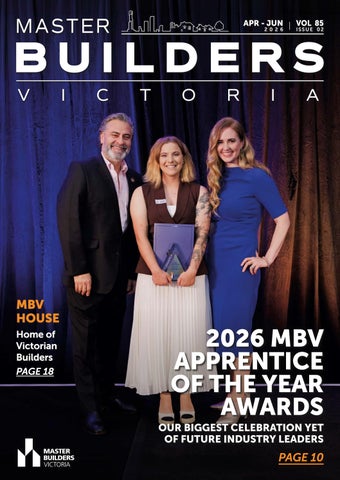
2026 MBV STATE APPRENTICE OF THE YEAR AWARDS OUR BIGGEST CELEBRATION YET OF FUTURE INDUSTRY LEADERS
2026 REGIONAL APPRENTICE OF THE YEAR AWARDS SHINING A SPOTLIGHT ON STELLAR REGIONAL APPRENTICES
A PLACE ON ALBERT STREET
HOUSE – HOME OF VICTORIAN BUILDERS
& ABOUT WITH MBV
LOOK AT SOME OF THE MEMBERS WE’VE VISITED OVER THE PAST FEW MONTHS
THE FUTURE WORKFORCE HOW MASTER BUILDERS VICTORIA IS STRENGTHENING THE NEXT GENERATION OF SKILLED WORKERS
JONES AND BOSTON GROUP REACH 40 YEARS OF MBV MEMBERSHIP
KEY SPONSOR OF MBV STATE APPRENTICE OF THE
AUSTRALIA’S CONSTRUCTION INDUSTRY
MODULAR MANUFACTURING
BUILDER’S PERSPECTIVE ON DFMA D, PRODUCTIVITY AND SCALABLE BUILDING DELIVERY
UP YOUR STAFF INTO FULLY TRAINED SITE MANAGERS
ALL TRAINING PROGRAMS ARE CREATED EQUAL
CHANGE IN CONSTRUCTION
FROM THE BUILDING 4.0
TOUGHEST EQUIPMENT ON SITE IS YOU WHY YOUR PROSTATE HEALTH MATTERS
TRIBUTE TO DIGBY GORDON FORBES
HONORARY LIFE MEMBER

Master Builders Victoria
Key Contacts and Office Locations
For all general enquiries, phone MBV on (03) 9411 4555, e-mail MBassist@mbav.com.au, or contact our key services using the details on this page:
KEY CONTACTS
Executive Team
CEO: Michaela Lihou
Deputy CEO | Chief Legal Officer |
Company Secretary: Tristan Moseley
Chief of Public Affairs: Corrie Williams
Directors
Director Master Builders
Training Institute: Anh Tran
Director Advisory: Sam Smith
Chief Financial Officer: Margarita Krasteva
Director Policy & Industry
Collaboration: Caroline Speed
MBV Board of Management
President: Steven Peluso
Deputy President: Stuart Allen
Housing Chair: Alan Grollo
Specialist Contractor Chair: Mark Welsh
General Contracting Chair: Dale Kennedy
Regional Chair: Belinda Egan
MM&S Chair: Mark Phillips
Housing Sub Contractor Chair: *Vacant
General Board Member: Geoff Purcell
MBV Sector Committees
Regional
Stuart Allen, Gareth King, Mark Little, Ross O'Neill, Belinda Egan & Steven Hedger
MM&S
Mark Phillips, Luke Hurley, Lawrence Pigot, Brenton Russo
Housing
Steven Peluso, Will Ireland, Alan Grollo, Steven Grayden, Angela Perry & Daniel Kingsley
General Contracting
Geoff Purcell, Bernie Nolan, Shayne Young, Richard Hansen, Dale Kennedy, David Waters & John Lehmann
Specialist Contractor
Mark Welsh, Angela Stevenson, Carl Calabro, Mark McEvoy, Gregory Cole, Joshua Humphreys & Hugh Lockie
Housing Sub Contractor
Shane Gardner, Howard F Hunter & Raymond French
OFFICE LOCATIONS
Melbourne
332 Albert Street, East Melbourne, VIC, 3002
GPO Box 544
Melbourne, VIC, 3001
Phone: (03) 9411 4555
E-mail: mbassist@mbav.com.au
South Melbourne
MBV Leadership Simulation Centre 49 Brady Street
South Melbourne, VIC, 3205
E-mail: trainingenquiries@mbav.com.au
Wodonga
Currently closed for re-development
E-mail: mbassist@mbav.com.au
Meaningful Progress is Possible Advocating for Practical Reforms That Support Our Members
Dear members,
As we move further through 2026, one thing continues to stand out clearly: when our industry speaks with a united voice, meaningful progress is possible.
Over recent months, Master Builders Victoria (MBV) has remained firmly focused on advocating for practical reforms that support our members, improve productivity, and help create a more sustainable future for Victoria’s building and construction industry. While there is still significant work ahead, we have seen some encouraging developments that reflect the value of persistent, evidence-based advocacy and, importantly, the strength of member engagement behind it.
One of the most significant outcomes this quarter has been the reshaping of the proposed Minimum Financial Requirements framework. Following sustained advocacy from MBV, alongside the Housing Industry Association, and extensive feedback from our members across the state, the government has moved toward a more practical and workable model.
This progress would not have been possible without the willingness of members to share their experiences, concerns, and practical insights with us. The detailed feedback we received from builders, business owners, accountants, and industry professionals played a critical role in helping MBV advocate for changes that better reflect the realities of operating in today’s environment. We sincerely appreciate every member who took the time to contribute.
Your input continues to strengthen our advocacy and ensures the government
hears directly about the real impacts policy decisions have on industry.
At the time of writing, we are still awaiting the draft regulations and supporting details. With limited time remaining before the proposed commencement date, our industry needs certainty around how the framework will operate in practice. MBV will continue engaging closely with government and regulators to seek clarity, advocate for workable outcomes, and ensure members are supported through the transition.
This quarter also delivered another long-awaited advocacy outcome for our members, with the Federal Government announcing that mandatory Australian Standards referenced in the National Construction Code (NCC) will be made freely accessible. MBV has advocated for this change for more than a decade, and it represents a significant win for builders, tradies and subcontractors across the country.
Access to mandatory standards should never be a barrier to compliance. Removing these costs will help create a more level playing field, particularly for smaller businesses, while supporting improved knowledge, safety, and consistency across the industry. We also welcome ongoing discussions on simplifying the NCC and reducing duplication across jurisdictions, an issue that continues to impact productivity and add unnecessary complexity to our industry.
Alongside these important advocacy outcomes, this quarter also gave us the opportunity to celebrate the next generation of industry talent through our 2026 State and Regional Apprentice
of the Year Awards. It was inspiring to see the calibre of apprentices coming through our industry, along with the strong support from employers, trainers, families, and colleagues, helping them succeed. Congratulations to Hannah Dillimore, named the 2026 State Apprentice of the Year, along with all finalists and winners recognised throughout the program. Their professionalism, commitment, and pride in their work are a strong reminder of the bright future ahead for our industry.
That future remains critically important at a time when many businesses continue to face considerable pressure. Feedback from our recent industry survey highlights the ongoing impact of rising material, fuel, insurance, and operational costs, with many members reporting serious concerns about business viability, workforce pressures, and the future of apprenticeships.
These challenges reinforce why strong advocacy matters, but they also highlight the importance of maintaining a strong and connected membership community. MBV’s advocacy is only as effective as the collective voice behind it, and we are incredibly grateful for the trust members place in us to represent the industry at every level of government.
As always, thank you for your ongoing support, engagement, and willingness to share your experiences with us. Your professionalism, resilience, and contribution to the broader industry continue to shape stronger outcomes for building and construction across Victoria.
Warm regards,
Michaela Lihou CEO, Master Builders Victoria

A Strong Sense of Community, Pride and Support Across the Sector
MBV Continues to Advocate for Practical Outcomes That Support
Both Industry and Consumers
Dear members,
Over the past few months, I’ve had the privilege of travelling across Victoria to attend our Regional Apprentice of the Year events, before coming together in May at Marvel Stadium for the 2026 State Apprentice of the Year Awards.
Every event reinforced something I have believed for a long time: the future of our industry is in good hands.
What stood out to me most was their attitude. The pride they take in their work. Their discipline, commitment and willingness to learn. These apprentices are turning up each day determined to build careers, contribute to their teams, and become the next generation of leaders in our industry.
That deserves to be recognised and celebrated.
I want to especially congratulate Hannah Dillimore, named the 2026 State Apprentice of the Year. Hannah’s achievement reflects the hard work, professionalism and commitment our industry values so highly. She should be very proud of what she has accomplished.
But apprenticeship success never happens alone. Behind every apprentice is a network of people helping them succeed, employers investing time and
patience, trainers passing on knowledge and standards, and families and friends supporting them through the early starts, long days and challenges that come with learning a trade.
As an industry, we should be proud of the role we play in shaping skilled workers and good people. The lessons apprentices learn on site about professionalism, teamwork, accountability and respect stay with them throughout their careers. That mentorship matters.
One of the things I value most about these awards is that they bring our industry together. Builders, subcontractors, suppliers, educators, employers and apprentices all in the same room, backing the next generation. It is a reminder that while our industry faces real challenges, there is still a strong sense of community, pride and support across the sector.
It has also been a busy and important period for building and construction more broadly.
Across Victoria, builders and businesses continue to navigate significant change, ongoing regulatory pressure, rising costs and increasing demand for housing delivery. These conversations are happening at every level, and Master Builders Victoria continues to advocate for practical outcomes that support both industry and consumers.
What remains clear is the importance of staying connected. When we work together, share knowledge and support one another, we put ourselves in a stronger position to deal with challenges and keep moving forward.
We also know how important apprenticeships are to the long-term future of building and construction in Victoria. If we want a strong industry tomorrow, we need to continue creating opportunities today. That means supporting apprentices to enter, stay, and grow within the industry.
To every employer taking on apprentices, thank you. The investment you make in training and mentoring young people is one of the most important contributions you can make to our industry.
And to every apprentice reading this, keep showing up, keep learning and take pride in your work. Skills can be taught, but attitude, work ethic and respect for your trade will carry you a long way.
Congratulations again to Hannah Dillimore and to all finalists and winners at our 2026 State and Regional Apprentice of the Year Awards.
You should all be proud of what you have achieved so far. Our industry’s future depends on good people who are willing to work hard, back each other and take pride in what they do.
From what I have seen across Victoria, that future is in very good hands.
Warm regards,
Steven Peluso President, Master Builders Victoria

MBV STUDENT
If you’re an apprentice or student looking to build your career in the building and construction industry, we invite you to become a Master Builders Victoria student member. Membership helps with generating career opportunities, networking and keeping up-to-date with the latest industry news and developments.



From 1 July 2026 under new laws, employers must pay workers’ super at the same time they pay salary or wages. CBUS Super is here to help you act now and prepare for this important change.
Many employers currently pay super monthly, while others pay quarterly.
From 1 July 2026:
• You must ensure workers are being paid super on their payday
• Contributions must in be workers’ super accounts within seven business days
• If you don’t meet your obligations, the Australian Taxation Office will require you to pay a superannuation guarantee charge (SGC)
• The ATO’s Small Business Superannuation Clearing House (SBSCH) will close on 1 July 2026. You can join CBUS as a participating employer and benefit from our free clearing house service
The good news is that paying super on pay day means fewer liabilities building up over time, which may make managing cash flow easier. It lines up with payroll processes, which may reduce the administration of making separate super payments.
Payday Super will strengthen Australia’s superannuation system, delivering retirement savings straight into a member’s account to immediately begin earning and compounding.
Under the reforms, late payments will be more visible to the ATO. Employers that fail to pay an employee’s super contributions under the new timelines will be liable for penalties and interest charges to be imposed by the ATO, and these could quickly add up.
That’s why it is important to plan ahead, and we’re here to help. Visit the Cbus Payday Super hub at cbussuper.com.au/ payday-super for detailed information and resources to help you prepare for the upcoming changes.
If you have questions about Payday Super, contact:
Daniel Tentser
Senior Employer Engagement Manager
E: daniel.tenster@cbussuper.com.au
M: 0439 372 365
Resources to Support You
To help you get Payday Super ready now, we have the following tools and resources available on the CBUS Payday Super hub at cbussuper.com.au/payday-super:
Payday Super how to guide (PDF)
Payday Super checklist (PDF)
Payday Super webinars Join one of our employer webinars to learn more and ask any burning questions

Are you ready for Payday Super?
From 1 July 2026, employers will be required to pay workers’ super at the same time they pay salary or wages.
It’s an important change that will take some planning and CBUS Super is here to help you through these changes.


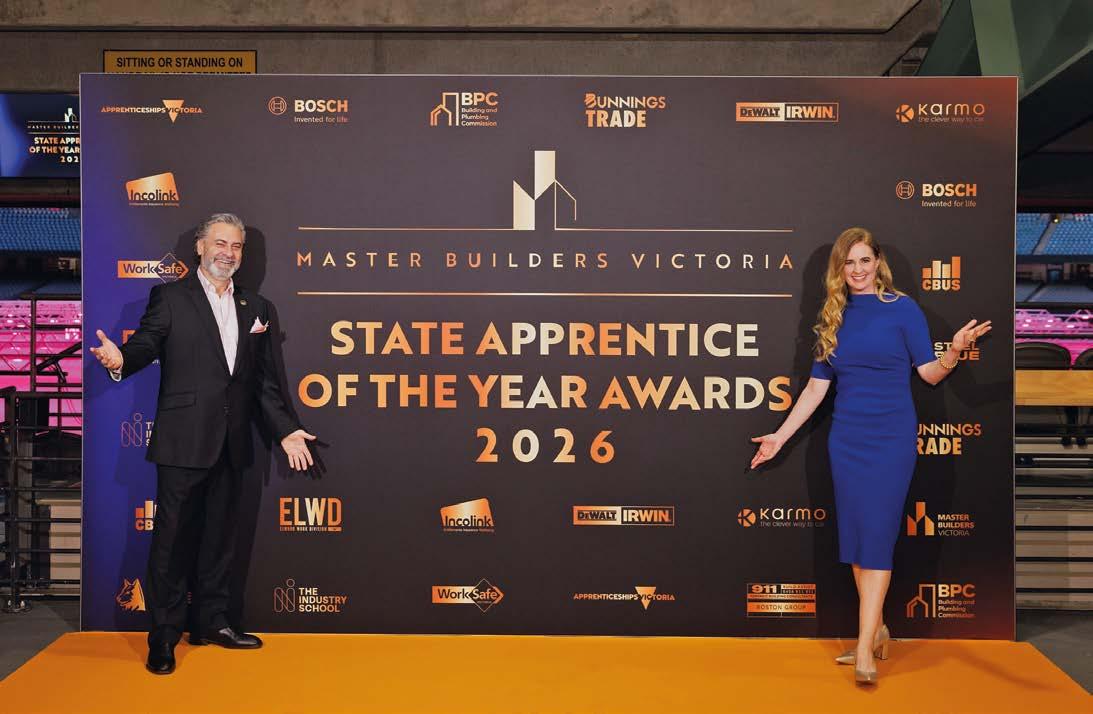
2026 MBV State Apprentice of the Year Awards
Our Biggest Celebration Yet of Future Industry Leaders
There’s an energy that comes with awards season at MBV every year, and it feels only fitting that it begins with a celebration of our future builders at the State Apprentice of the Year Awards.
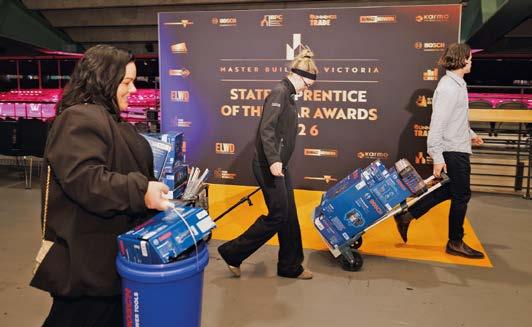
On the evening of 13 May 2026, the Victory Room at Marvel Stadium came alive with energy! This year marked the biggest Master Builders Victoria (MBV) Apprentice Awards night in history, with almost 850 apprentices, trainers, mentors, employers, family members and industry leaders gathered to celebrate the outstanding achievements of our 2026 apprentices with one exceptional
apprentice set to take home the coveted 2026 State Apprentice of the Year Award.
MC Matthew ‘Richo’ Richardson moved effortlessly through the crowd, steering the night with ease and keeping the atmosphere upbeat and engaging. In the foyer, red carpet host Jayde Cotic conducted interviews and captured candid moments with guests, rounding
out a night that felt vibrant, celebratory, and full of genuine connection.
More than 452 apprentices received Certificates of Excellence for their work in 2026, and 699 apprentices were nominated for the Apprentice of the Year Awards category, with the night culminating in Hannah Dillimore being named the 2026 MBV State Apprentice of the Year.
Other State Award Winners Recognised
Include:
Craftsperson Award: Marcello Zudich
4th year Stonemasonry apprentice, nominated and employed by Cathedral Stone, trained by Holmesglen Institute of TAFE
Developing Leader Award: Arthur Grigne
4th year Carpentry apprentice, employed by JG Davis Builder, nominated by Chisholm Institute of TAFE
Excellence in Trades Award and 2026 State Apprentice Award winner: Hannah Dillimore
4th year Engineering (fabrication) apprentice, nominated and employed by NuForm Steel Fabrications, trained by Murray Mallee Training Company
Future Builder Award: Daniel Helmi
3rd year Carpentry apprentice, nominated and employed by Snake and Ladders Projects, trained by Murray Valley Training Company
Junior Trades Award: Oscar Cherry
3rd year Carpentry apprentice, employed by DJC Developers, nominated by Building Skills Centre
President’s Award: David Tran
4th year Carpentry apprentice, employed by Andrew Dewar Carpentry, nominated by Chisholm Institute of TAFE
Along with the individual apprentice awards, DOT Projects was recognised for its ongoing commitment to developing apprentices, winning the Brian Fitzmaurice Memorial Award. TAFE trainer Luke Copland took home the Master Builders Trainer Recognition Award.
Two apprentices received the Glenn Jones Awards. These awards support tradespeople as they take the next major step in their building careers— gaining their builder’s registration and ultimately establishing their own businesses.
Matthew Atkinson from A. R. Briggs Construction was named the regional recipient, while Luke Johnson from Holliburd received the Metropolitan award.
Thomas Withoos from Tim Bell Carpentry was presented with the AIB Florence M Taylor Award, which recognises an apprentice who has dedicated themselves to pursuing additional studies to further their career development.
The Master Builders Victoria Inspiration Award, which recognises an apprentice who has achieved success on their own merit, was handed to Jeramunya Van-Davis from DOT projects.


Hannah Dillimore: A Well-Earned State Apprentice of the Year Moment
Stepped into a moment that felt bigger than the night, Hannah Dillimore was crowned the 2026 MBV State Apprentice of the Year.
Trained by Murray Mallee Training Company and employed by NuForm Steel Fabrications, she also took home the Excellence in Trades Award, adding another layer to an already defining achievement.
27-year-old Hannah from Melbourne’s South East became interested in her trade after seeing an advertisement seeking welders in Antarctica. While she wasn’t quite ready to head to the South Pole, the opportunity ignited her curiosity and set her on a path closer to home.
As her determination to pursue a trade career grew, Hannah sought out local welding apprenticeship opportunities. Despite facing initial challenges and struggling to find someone willing to give her a chance, she persisted. Her determination paid off when she approached NuForm Steel Fabrications, which agreed to hire her as an apprentice. She was trained by Murray Mallee Training Company.
Award judges were impressed by Hannah’s tenacity and ‘can-do’ attitude, approaching every task without hesitation and consistently giving 110 per cent. Her work ethic, resilience, and willingness to take on any challenge set her apart both on the building site and beyond. In addition, her skills, strength, and positivity are second to none.

Now that she has completed her apprenticeship, Hannah understands exactly what it is like to stand where new apprentices are today. Not only is she an outstanding tradesperson, but she has also become a valued mentor for others considering or entering the industry, proving what’s possible through hard work, resilience and self belief.
“I want to encourage more women to consider an apprenticeship. I hope to become a role model for others and help them realise that, with a bit of determination, you can do anything. I love my job; it can’t be replaced by AI, and I can apply my skills anywhere. I may even finally get to go to Antarctica!”
MBV CEO Michaela Lihou said the Awards recognise more than outstanding apprentices, they highlight the future leaders of our industry.
“My sincere congratulations to tonight’s winners and thank you to every apprentice whose hard work, professionalism and commitment set such a high standard for our industry. MBV is proud to celebrate your success and the important role you play in building Victoria’s future.”
Ms Lihou also paid tribute to the employers, training providers, families, and friends who walk alongside apprentices on every step of their career journey.
“Every milestone our apprentices celebrate is underpinned by a network of people who believe in them, encourage them, and generously invest their time and care,” Ms Lihou said. “Without this unwavering support, these moments of pride and success would simply not be possible”
I love my job; it can’t be replaced by AI, and I can apply my skills anywhere.
It Takes a Village!
Looking back, there were so many moments from the night that feel worth holding onto. But two things stood out clearly above all else.
First, while we hear every day about the challenges facing our industry, the evening was a powerful reminder of the silver lining within it all - an incredible next generation of leaders in building and construction, stepping forward with impeccable work ethic, skill, and genuine passion for their trade.
Second, the night reinforced just how important community really is.
The pride with which apprentices held up their plaques to their loved ones in the crowd, the roar of applause that followed each recipient, spoke to something bigger than individual achievement.
It became clear that this night did not belong to the apprentices alone.
It belonged to the trainers and mentors, leaders and role models who pass on more than skills, but pride, discipline, confidence and a lasting passion for the trade.
It belonged to the parents, partners, families and friends who rise early, stay up late, and stand beside our apprentices through every long day and hard-earned milestone.
And above all, it belonged to every apprentice out there, chasing excellence, building Victoria, and building tomorrow.
Scan here to see more from the 2026 MBV State Apprentice Awards
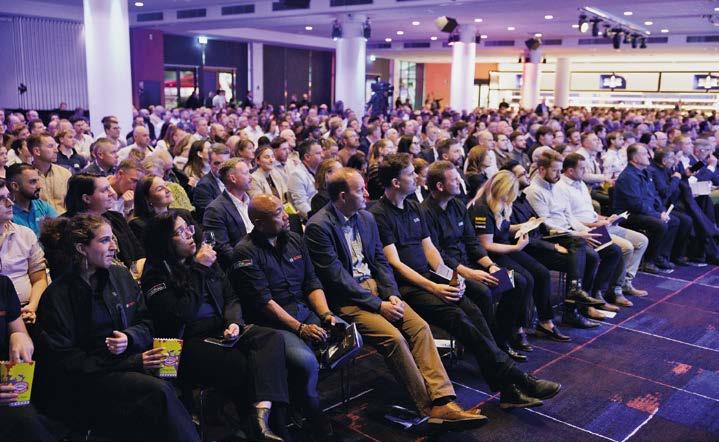









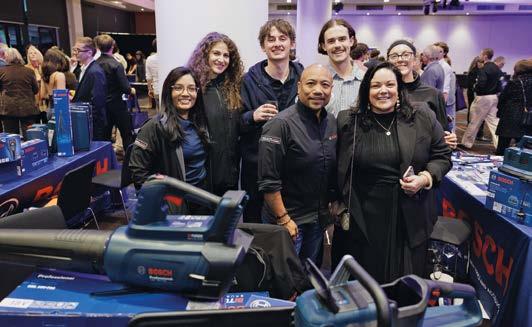
2026 MBV State Apprentice of the Year Awards winners with MBV CEO, Michaela Lihou and MBV President, Steven Peluso.
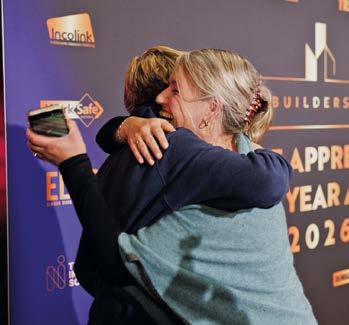
2026 MBV State Apprentice of the Year, Hannah Dillimore with her predecessor, 2025 MBV State Apprentice of the Year, Sebastian Blacket.
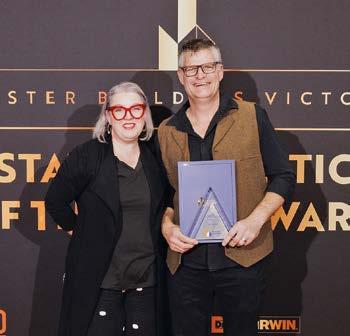
MBV President, Steven Peluso with 2026 MBV State Apprentice of the Year, Hannah Dillimore and MBV CEO, Michaela Lihou.
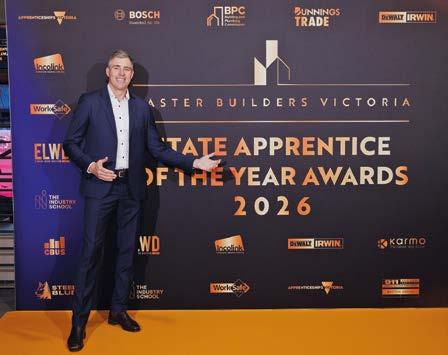
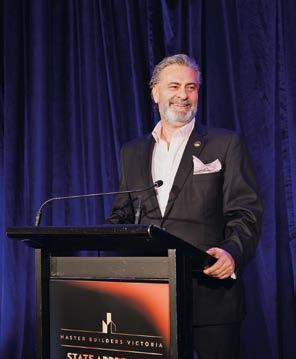




Guest MC, AFL Legend and Presenter, Matthew ‘Richo’ Richardson.
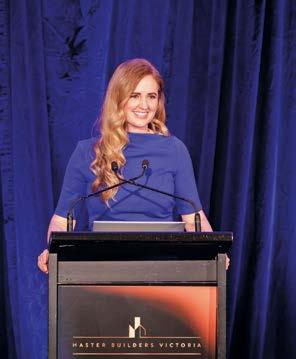
MBV CEO Michaela Lihou delivering the welcome address.
Cbus Super Senior Employer Engagement Manager, Daniel Tentser presenting a Certificate of Excellence at the 2026 MBV Regional Apprentice of the Year AwardsSouth West.
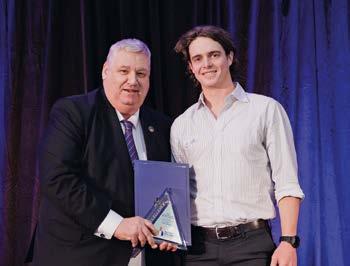
MBV Life Member, Glenn Jones presenting the 2026 Metropolitan Glenn Jones Award to winner Luke Johnson.
Cbus Super Employer Engagement Manager, Belinda Tanner presenting the 2026 Developing Leader Award to Arthur Grigne.
MBV President Steven Peluso delivering the vote of thanks.






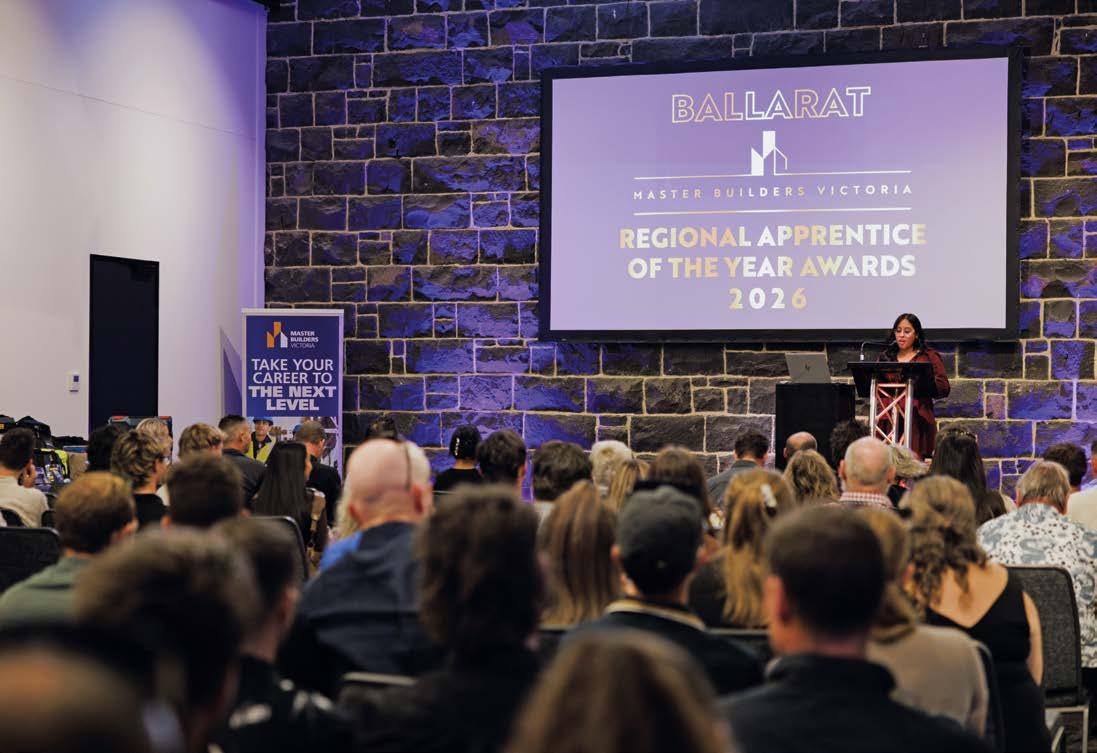
2026 Regional Apprentice of the Year Awards
Shining a Spotlight on Stellar Regional Apprentices
Throughout the first half of 2026, the Master Builders Victoria (MBV) team travelled across regional Victoria to host five outstanding award ceremonies celebrating the next generation of talent in the building and construction industry.
The 2026 State Apprentice of the Year Awards Series recognised the exceptional skill, commitment and dedication of Victorian apprentices who are helping shape the future of the sector.
The awards series brought together apprentices, employers, training organisations and industry leaders to honour the remarkable achievements of emerging tradespeople. Nominees underwent a rigorous judging process led by a panel of industry professionals, who assessed each apprentice on their preparation and presentation, work experience, industry knowledge, career aspirations, attitude towards on-the-job training and overall representation of the building and construction industry.
Apprentices were nominated by either their workplace or training institute before progressing through interviews with the judging panel. Participants were ultimately recognised as either
Apprentice of the Year nominees or Certificate of Excellence recipients, a testament to the high calibre of talent coming through Victoria's building and construction workforce.
Across all five regional ceremonies, more than 850 guests attended to celebrate the achievements of the state’s most promising apprentices. Each event concluded with the announcement of three major regional winners, recognising excellence across a range of trades and disciplines.
MBV CEO Michaela Lihou praised the dedication and professionalism demonstrated by this year’s nominees and winners.
“These winners showcase the talent of emerging apprentice tradespeople in the building and construction sector. It’s uplifting to witness their dedication and enthusiasm for an industry that offers numerous opportunities for a rewarding, meaningful career. We hope these outstanding young tradespeople inspire others to consider a career in building.”
Following their regional success, all major winners progressed as nominees for the overall 2026 MBV State Apprentice of the Year Awards, held
on Wednesday 13 May 2026 at Marvel Stadium, Melbourne.
The regional awards series not only highlighted individual achievement but also reinforced the strength of Victoria’s building and construction industry and the bright future being forged by its emerging workforce.
Congratulations once again to all nominees and winners on their phenomenal efforts and contributions to the industry.
Our 2026 Major Regional Victorian Winners:
2026 MBV Regional Apprentice of the Year Awards – Gippsland
2026 Gippsland Chairperson’s Award Winner, Jaedon Williams with 2026 Gippsland Junior Apprentice Award Winner, Madison Grimsey.

2026 MBV Regional Apprentice of the Year Awards – North East
2026 North East Apprentice of the Year – Future Builder Award Winner, Brandon McNamara North East with 2026 North East Chairpersons Award Winner, Toby Vandervalk.

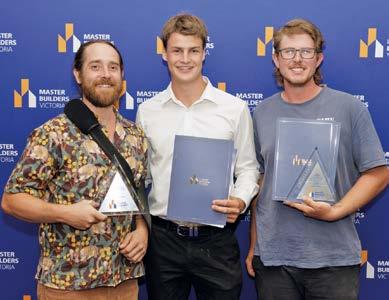
2026 MBV Regional Apprentice of the Year Awards – Ballarat
2026 Ballarat Chairperson’s Award Winner, Lache Hadley, with Winner of the 2026 Ballarat Excellence in Trades Award, Zacharie Dunks and Winner of the 2026 Ballarat Apprentice of the Year - Junior Apprentice Award, Oscar Cherry.
Scan here to see more
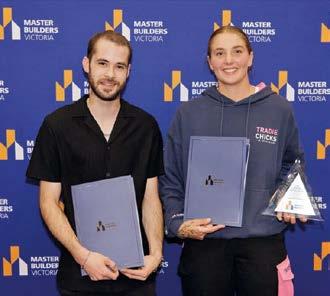
2026 MBV Regional Apprentice of the Year Awards – Bendigo
2026 Bendigo Craftsperson Award Winner, Myles Newstead, with 2026 Winner of the Bendigo Chairperson’s Award, Finn Palmer and 2026 Winner of the Bendigo Apprentice of the Year - Junior Apprentice Award, Thomas Miller.
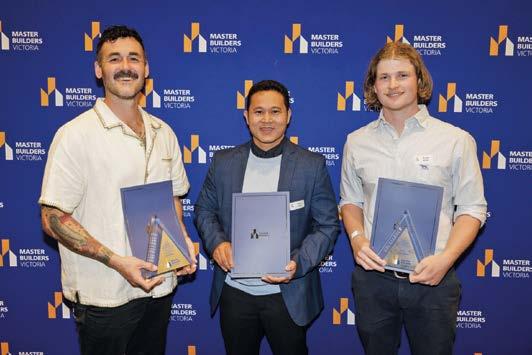
2026 MBV Regional Apprentice of the Year Awards – South West
2026 South West Apprentice of the Year - Future Builder Award Winner Beau Adams with 2026 South West Chairperson’s Award Winner, Htoo Sey and Winner of the 2026 South West Junior Apprentice Award, Chester Willder.

A Place on Albert Street
MBAV House – Home of Victorian Builders
On a crisp autumn afternoon two years ago, I stepped out of the Master Builders Victoria (MBV) office in East Melbourne after my second interview and immediately reached for my phone. Hoping the time difference hadn't caught me out, I dialled my father's number in Sri Lanka.
"Dad, I got the job," I said, as quietly as my excitement would allow.
As I descended the stairs, I really looked around for the first time. Through the floor-to-ceiling glass panels, I could see the autumn colours of Fitzroy Gardens stretching beyond the building.
Leaves drifting from the towering elm trees. Beyond the canopy, the spires of St Patrick's Cathedral peeked through. The city felt close, yet somehow distant.
I remember thinking just how lucky I was to be working in a place like this. It felt like a pretty special place to be starting something new.
Built on New Beginnings
Melbourne is a city built on new beginnings. Each generation leaves its mark, adding to the story of a city that is constantly growing, changing and reinventing itself.
332 Albert Street is no exception. Long before it became the home of Master Builders Victoria, the site was occupied by Victorian terrace houses overlooking Fitzroy Gardens. Like the city around it, it has continued to evolve, adapting to the changing needs of the industry and the people it serves.
A new chapter began in 1967 when Master Builders Victoria made 332 Albert Street its home.


Designed by Melbourne architects Perrott, Lyon, Timlock and Kesa and constructed by E.A. Watts, the renowned Victorian builder whose company delivered many of the state's landmark projects, including the Melbourne Cricket Ground, the building reflected the confidence and ambition of an industry helping to shape a growing Victoria.
Under the leadership of MBV President Wally T. Morris, the move marked the beginning of a new era for the organisation.
The MBAV House
For generations of members, 332 Albert Street would become far more than an office. It would become a place to connect, learn, celebrate and advocate for the industry.
During that time, the industry itself underwent remarkable change. The family builder became the modern construction business. Technology, regulations, and standards evolved but through it all, the MBV headquarters, fondly referred to as ‘MBAV House’, remained the heart and home of Victoria's building industry.

From MBAV House to MBVCIC
As Master Builders Victoria celebrated 150 years of supporting Victoria's building industry in 2025, the time had come for the MBAV House to begin a new chapter of its own.
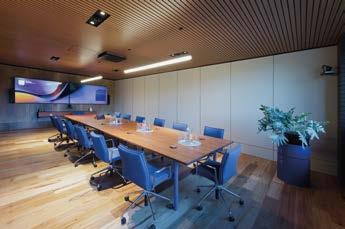
Renovated to include the Master Builders Victoria Centre for Industry Collaboration (MBVCIC), the building was transformed with a clear purpose: to increase industry capacity by creating a centre of excellence through learning, collaboration and professional development.
Designed to support member training, industry events, workshops, networking functions and knowledge-sharing opportunities, the revitalised facility provides modern, flexible spaces that will deliver long-term value for members and the broader industry.
The transformation was made possible through the support of Incolink, which enabled upgrades to the training and collaborations areas of the nearly 60-year-old building. The works ensured compliance with contemporary codes and standards while creating a safer, more sustainable and efficient place for students, members, industry stakeholders and staff to meet and train.
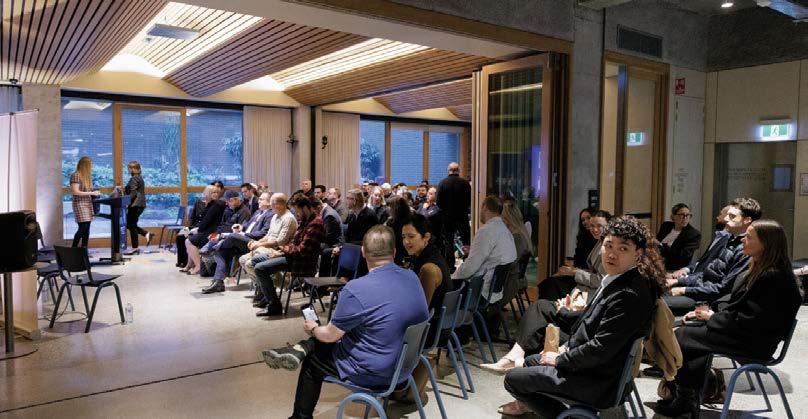
Since reopening, the MBVCIC has already hosted training and a number of flagship industry events, including the Building and Plumbing Commission Industry Briefing and the Solar Victoria Women in Sustainable Construction – Metro Seminar Series, demonstrating its role as a vibrant hub for industry engagement, learning and collaboration.

The Art of Renewal
There was a fitting symmetry to the transformation. The building's original construction and its reimagining almost sixty years later were both entrusted to MBV members, from E.A. Watts in 1967 to SHAPE Australia in 2025.
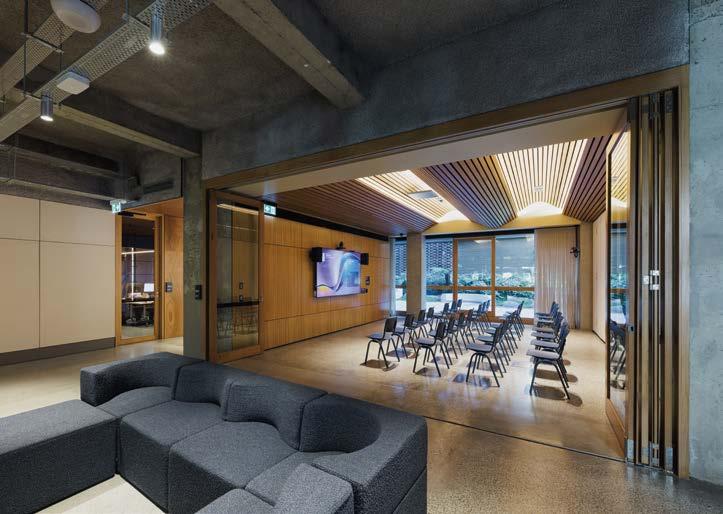
Following an extensive design competition, Fieldwork was appointed as architect for the project. Rather than demolishing or hiding the bones of the building they revealed more of its original character, incorporating sustainability principles through reuse of onsite and recycled materials.
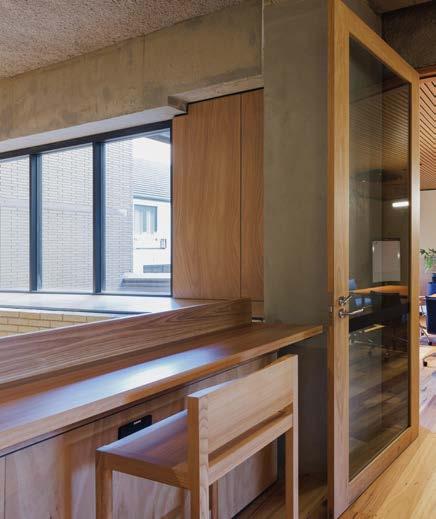
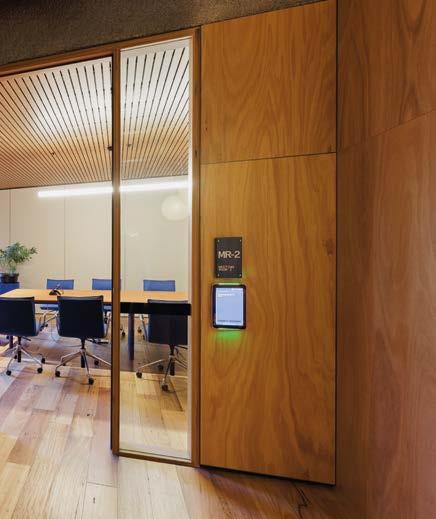
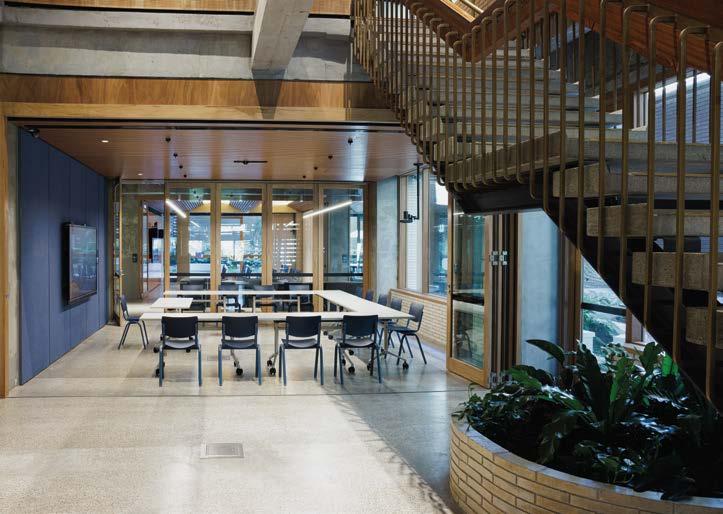
From the moment you enter, the experience is warm and grounded. Natural timber features prominently throughout the space, softening the concrete and steel and bringing a sense of craftsmanship that feels unmistakably connected to the building industry. Light streams through expansive glazing, while the subtle scent of timber creates an atmosphere that is both modern and welcoming.
The ground floor is a welcoming gathering space for members and guests. An expansive foyer framed by timber, glass and greenery creates an immediate sense of openness, while flexible conference spaces can transform from intimate meeting rooms into larger event venues. Beyond them, a tranquil courtyard garden offers a quiet retreat for conversation, reflection or informal networking.
Level 1 features shared breakout spaces and a contemporary kitchenette encourage connection between meetings, while an outdoor terrace overlooking Fitzroy Gardens provides one of Melbourne's most inspiring settings for discussion and ideas.
Dedicated collaboration and training spaces provide a highly adaptable environment that supports meetings, workshops, member training, professional development programs and strategic collaboration at the highest standard.
It’s more than a refurbished building. It is a purpose-built home for industry collaboration, training and innovation, designed to support the people and businesses building Victoria's future.



At the Heart of It
The faces may have changed, the industry may have transformed, and the building itself may have been renewed, but its purpose remains the same: to serve the members and the people who build Victoria.
The original MBAV House name remains steadfast on the façade, a quiet marker of the legacy that endures as the building looks to the future.
For more information regarding the refurbished building or to book the spaces available please feel free to:
scan here to email our team.
ARTICLE AUTHOR Nadisha Wickramathilake Senior Communications Specialist

State of the Industry Building Through Change
Victoria’s building and construction industry has continued to operate in a highly challenging environment over recent months, with businesses across the sector managing rising costs, regulatory reform, workforce constraints and ongoing economic uncertainty.
Builders, subcontractors, suppliers and manufacturers are continuing to deliver the homes, infrastructure and commercial projects that Victoria needs, while simultaneously navigating tighter margins, higher financing costs, supply chain instability and increasing compliance obligations.
The challenge facing industry is no longer a single issue. It is the cumulative impact of multiple pressures occurring at the same time.
Against this backdrop, Master Builders Victoria (MBV) has remained focused on practical advocacy, constructive engagement and evidence-based reform. Over the past quarter, this has included direct engagement with State and Federal Governments, regulators, industry agencies, unions, insurers, accounting bodies and members across metropolitan and regional Victoria.
Importantly, that advocacy is delivering outcomes.

Code (NCC) 2025 implementation, proposed Minimum Financial Requirements (MFR), Buyer Protection reforms, Security of Payment changes, registration and licensing reform, planning and housing policy changes, workforce initiatives and broader tax and business compliance discussions.
While many of these reforms are intended to improve consumer protection, strengthen compliance or support housing delivery, MBV has consistently raised concerns regarding the pace, sequencing and cumulative burden associated with implementing multiple major reforms simultaneously.
For many businesses, particularly small and medium-sized builders, subcontractors and regional operators, reform fatigue is becoming a significant operational and commercial issue.
Every additional reporting obligation, compliance process or regulatory change requires time, resources and cost to implement. In an environment where many businesses are already operating under pressure, the practical impact of layered reform cannot be ignored.
Minimum Financial Requirements Framework
One of the most significant developments over recent months has been the reshaping of the proposed MFR framework.
From the outset, MBV raised substantial concerns regarding the original model, particularly the proposed revenueto-net tangible assets cap, treatment of trust assets, duplication of existing Domestic Building Insurance (DBI) assessment processes and the potential impact on business growth and housing supply.
Extensive feedback from members across metropolitan and regional Victoria highlighted concerns around increased reporting obligations, compliance costs and unintended barriers for smaller and emerging builders.
The Victorian building and construction sector is currently experiencing one of the largest waves of regulatory and policy reform in decades. Over recent months, industry has continued to navigate the National Construction
MBV has continued advocating for practical implementation timeframes, meaningful consultation and transition arrangements that allow reforms to achieve their policy intent without unintentionally constraining industry capacity, competition or housing supply.
In response, MBV undertook extensive advocacy with government, regulators, insurers, accounting bodies and industry stakeholders, supported by real-world operational feedback and member case studies.
Importantly, the proposed framework has now shifted toward a more practical and workable direction.

The revised approach is expected to include removal of the proposed annual revenue cap model, greater alignment with existing DBI processes, reduced duplication and reporting burden, and more practical transition arrangements.
While further legislative detail is still required, these changes represent a significant advocacy outcome for industry and demonstrate the value of coordinated, evidence-based engagement.
MBV continues to engage closely with government and regulators as the framework develops, with ongoing focus on implementation timing, treatment of new entrants and ensuring smaller businesses are not unintentionally excluded from the market.
NCC 2025
At the same time, NCC 2025 implementation has added further pressure to an industry already managing significant change.
MBV has consistently raised concerns regarding implementation timing and the broader cumulative impact of concurrent reforms. While improvements to building standards remain important, industry requires adequate time to update systems, contracts, processes and workforce capability.
Members continue to raise concerns regarding practical implementation challenges, compliance interpretation and cost impacts associated with the changes.
MBV continues to advocate for practical support measures, realistic transition arrangements and improved guidance materials to support implementation across the sector.
Cost Pressures
Cost pressures also remain a major challenge for industry.
While supply conditions have stabilised compared to the peak volatility experienced during the pandemic period, recent geopolitical instability and fuel supply concerns have again placed upward pressure on freight, logistics and material costs.
Members continue to report increases across fuel and transport levies, freight charges, steel products, concreterelated inputs, plastics, PVC products, stormwater systems, equipment hire and subcontractor costs.
At the same time, many builders remain locked into fixed-price contracts with limited ability to recover escalating costs.
MBV member feedback and survey data continue to demonstrate the significant operational impacts this is having across the sector, including pressure on margins, cash flow, workforce retention and future project viability.
These concerns have been raised directly with State and Federal Governments, Treasury representatives, regulators and industry stakeholders through ongoing advocacy, including participation in supply chain forums, Reserve Bank liaison discussions and meetings with Ministers and Shadow Ministers.
MBV’s position has remained clear: the industry cannot continue absorbing rising costs, increased compliance obligations and expanding contractual risk without broader impacts on housing affordability, business viability and industry capacity.
As part of this advocacy, MBV has continued calling for practical pathways for cost escalation clauses, fairer risk allocation across contracts, extensions of time relief where delays are outside
builder control and government acting as a model client through commercially realistic procurement practices.
State and Federal Budget
Recent State and Federal Budget announcements also included measures relevant to the building and construction industry.
At the Federal level, one of the most significant developments was the announcement regarding improved access to Australian Standards referenced in legislation and the NCC. This has been a longstanding advocacy priority for MBV, with industry consistently arguing that builders and trades should not face unnecessary financial barriers when accessing mandatory compliance information.
Across both budgets, housing supply, infrastructure delivery, workforce participation and skills investment remained major policy themes, including commitments relating to TAFE, housing initiatives, infrastructure, manufacturing and Modern Methods of Construction (MMC)
MBV welcomed continued investment in skills and workforce development while continuing to advocate for stronger construction-specific measures that reduce the cost burden on employers and support apprenticeship growth.
Looking ahead, there is no doubt the operating environment remains challenging. However, recent months have also demonstrated that coordinated and evidence-based advocacy can influence outcomes.
MBV will continue advocating for practical, commercially realistic and proportionate policy settings that support business viability, workforce development, housing supply and sustainable industry growth across Victoria.
Five Ways to Save Days on Your Frame Stage
Every day your frame stage runs over is a day your slab sits idle, your trades shuffle their schedules, and your next progress payment stays out of reach. For builders running multiple projects, that compound effect is real.
What if you could get to the end of your framing stage faster and reach that next progress payment sooner?
Here’s how builders are saving six to seven days off framing stage* on a standard residential build, without cutting corners, compromising quality, safety or compliance.
1
Switch to a fully coordinated prefab package
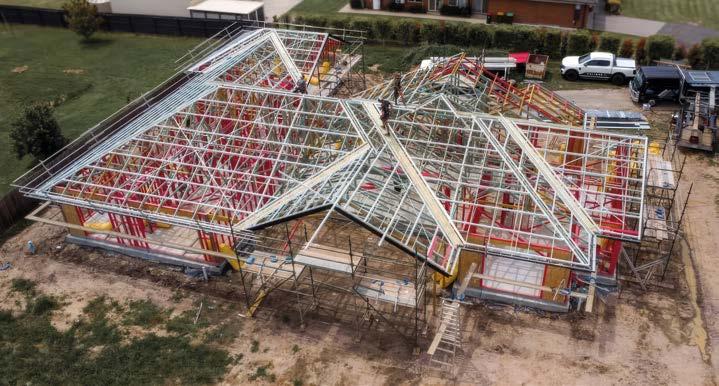
A well-prepared prefab package is the cornerstone of streamlining framing stage. It ensures everything arrives ready to install so crews can work faster with fewer interruptions and less hassles.
You will also save on engineering fees compared to stick-built, as an engineer is not designing every stick of timber for the build.
For less headaches, a faster and smoother project, choose a manufacturer who offers:
• Custom design to suit your exact plans
• Advice on how to modify the design to reduce costs
• 3D modelling and accurate layouts
• Full documentation and code compliance
• Complete, coordinated delivery to site
• All ancillaries supplied together
• High quality timber and components
• A team who works with you to deliver what you need when you need it
Potential time saved: three to four days (on an average-sized home when compared to stick built)*
2 Use pre-installed tie-down systems for your roof trusses
Modern truss systems, such as those featuring Pryda SpeedTruss™, help speed up roof installation. With SpeedTruss you benefit from:
• Reduced use of pneumatic nail guns
• Improved safety and reduce time working at heights
• Better installation accuracy
• Chippies and framing teams preferring this system
• Super simple installation thanks to pre-installed Pryda FastFix™ tiedown screws. Crews simply stand the truss, drive the screw and complete the connection. No triple grips. No skew nailing. No excessive nailing.
Potential time saved: Up to one day*


A full truss and frame package from a Pryda fabricator like Dahlsens Truss & Frame can cut the framing timeline by 2 to 3 days.
The Pryda SpeedTruss™ system ensures all truss tie-downs are fast, simple and accurate.
Roof trusses with pre-installed tie-down screws ready to leave a Dahlsens factory.
3 Replace brackets and ties with one-screw wall connections
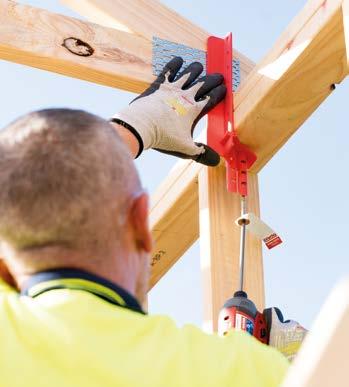
Another time-saving Pryda innovation is the FastFix™ Internal Wall Screw (IWS). IWS provides a faster alternative to traditional L brackets. Instead of six to eight nails in an L bracket, it’s one screw – with built-in alignment guidance for accurate vertical positioning.
Add to this the Pryda FastFix™ Framing Screws, and you can eliminate stud ties when a second top plate is required –again saving time.
Save three to four hours connecting the truss bottom chord to the wall frame with Pryda IWS and another three to four hours using Pryda framing screws
Potential time saved: Up to one day*
Find Out More
Smart builders are looking at how to streamline every stage of a build.
They are either moving away from traditional stick-built framing and choosing prefabricated wall frames and roof trusses instead, and/or, they drill down on the differences between prefab offers and what will give them the edge.
If you are looking for all of the benefits mentioned here in one package, they are either standard features or optional upgrades across the 10 Dahlsens Truss & Frame plants delivering projects across Victoria, NSW and the ACT.
4 Upgrade to engineered LVL timber for straighter walls
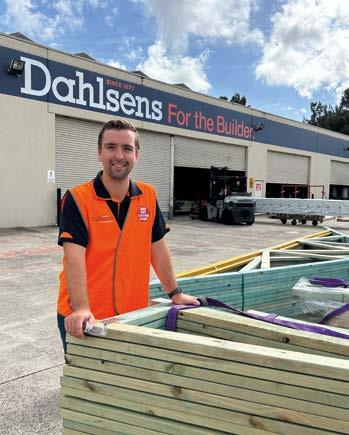
Even quality pine can require straightening before sheeting and cladding – costing valuable time. When you upgrade from MGP10 to LVL10 in prefabricated wall frames you will minimise or even eliminate packing or straightening walls and get a superior finish.
Potential time saved: Up to one day*


5
Partner
with detaildriven manufacturers committed to excellence
Not all frame and truss manufacturers are created equal. Experienced truss and frame manufacturers who are committed to going over and above will review your plans and work with you to suggest design refinements, material substitutions, and engineering improvements. Their advice can include more economical solutions without compromising on quality, compliance and the building schedule.
When you find a manufacturer you can trust and who has your back, even more cost and time efficiencies can be achieved.
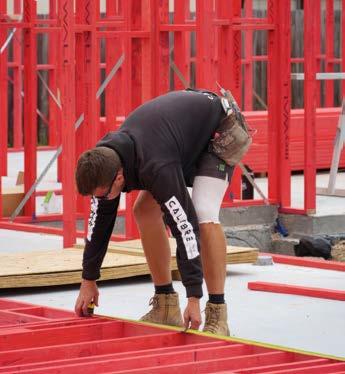
Talk to your local Dahlsens truss and frame team about what’s possible on your next project, potential time savings and benefits.
Scan here to find your local Dahlsens.
Tilling Timber Smart10 LVL framing.
Calibre Built Homes in Traralgon, Victoria, with meyWALL LVL framing, supplied by Dahlsens. Pryda Dahlsens IWS Wall Frame.
Panache Homes using Pryda Span Truss with metal webbing allowing for service penetrations.
Simon Napier, Detailer at Dahlsens Macarthur Truss & Frame in Sydney.
FOLLOW US ON SOCIAL MEDIA
Master Builders Association of Victoria
Masterbuildersvic
Master Builders Association of Victoria
In partnership with Hyundai Australia.
Explore fleet pricing available today.

From weekday commutes to weekend escapes, there’s a Hyundai SUV for every journey. With award-winning design and innovation, and backed by a new 7-Year Unlimited Kilometre Warranty, our SUVs are built for the road and peace of mind.
Hyundai Australia is offering MBV members and their employees National Fleet Pricing on all new Hyundai vehicles until 30th June 2026.
Contact your local Hyundai Dealer today.



OUT & ABOUT

Dahlsens Trade Breakfast
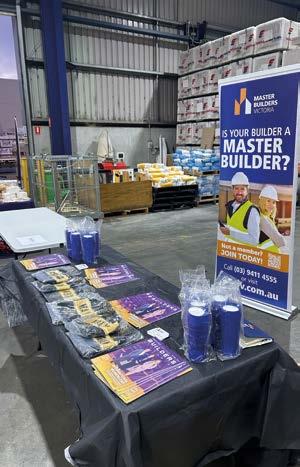
MBV Member Engagement Manager Peter Gatt and Sponsorship
Growth Lead Luke Dale caught up with members in Laverton at the Dahlsens Trade Breakfast.
Malishev Builders
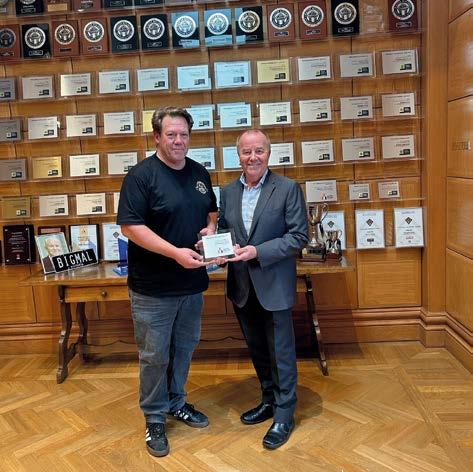
MBV Member Engagement Manager – Western Peter Whyte presented proud member Russell Malishev, Owner and Director at Malishev Builders with their 50 Year Membership Milestone plaque at their office in Geelong.
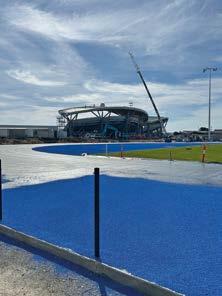
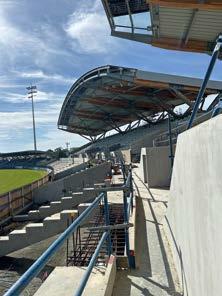
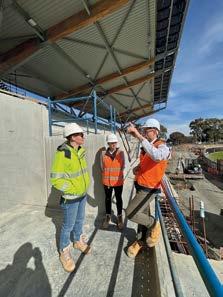
MBV CEO Michaela Lihou and Member Engagement Manager – Western Peter Whyte met with Stephen Allen and Alex from AW Nicholson for a tour of the new Grandstand and running track at Mars Stadium Ballarat. An amazing facility for regional Victoria.
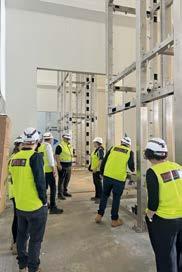
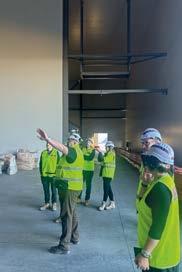
Total Construction
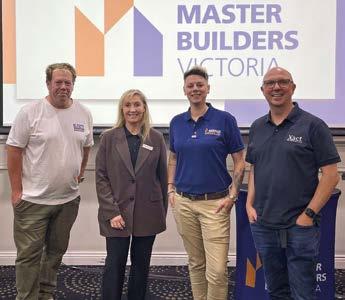
MBV Connect – Bendigo
MBV Member Engagement Manager – Western Peter Whyte meeting with sponsors and local members, hosting the MBV Connect – Bendigo event.
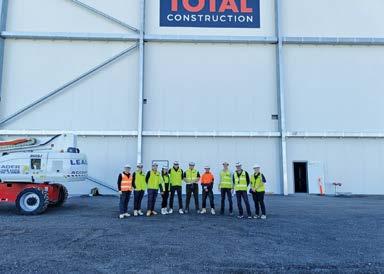
AW Nicholson
MBV Deputy CEO Tristan Moseley, Chief of Public Affairs Corrie Williams, Workplace Relations & Safety Manager Adrian Ziccone and Member Engagement Manager Peter Gatt visited the team at Total Construction to tour their Stacked Farm, Melbourne Airport site.
Albedo Pty Ltd
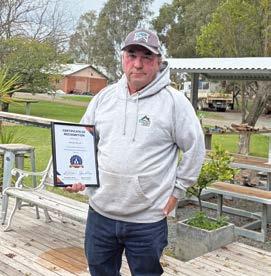
25 year MBV Member Darrell Phillips from Echuca celebrating his Member Milestone.
WITH MBV
Neatline Homes
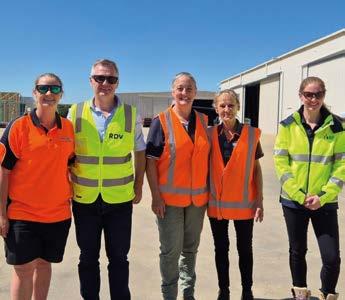
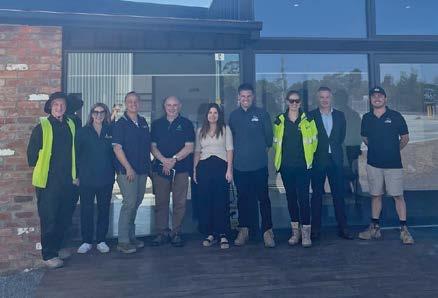
MBV CEO Michaela Lihou, Chief of Public Affairs Dr Corrie Williams, Senior Advisor, Future Built Environments Dr Philip Alviano and Regional Member Engagement Manager Veronika Larkin visited the Neatline Homes team, leaders in Victorian modular building.
JMB Modular Buildings
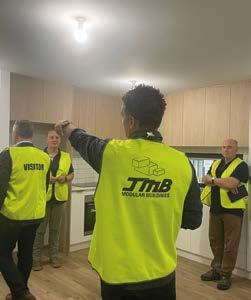
Site visit with the team at JMB Modular with MBV CEO Michaela Lihou, Chief of Public Affairs Dr Corrie Williams, Senior Advisor, Future Built Environments Dr Philip Alviano and Regional Member Engagement Manager Veronika Larkin, who were also joined by CEO of Regional Development Victoria, Dr Xavier Csar.

Bentley Building Group
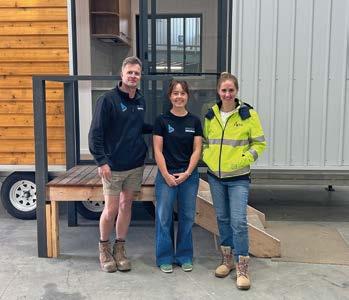
MBV CEO Michaela Lihou and Member Engagement Manager – Western Peter Whyte met with Scott and Prue Bentley from Bentley Building Group Tiny Homes to discuss all aspects and challenges facing the Tiny Home industry.
If you’d like to organise a site visit or have a chat with the MBV team, give us a call on (03) 9411 4555 or scan here to email us. Not a Master Builder? Join today and discover the many benefits and services that come with a Master Builders Victoria membership.
Women in Building Gippsland Lunch
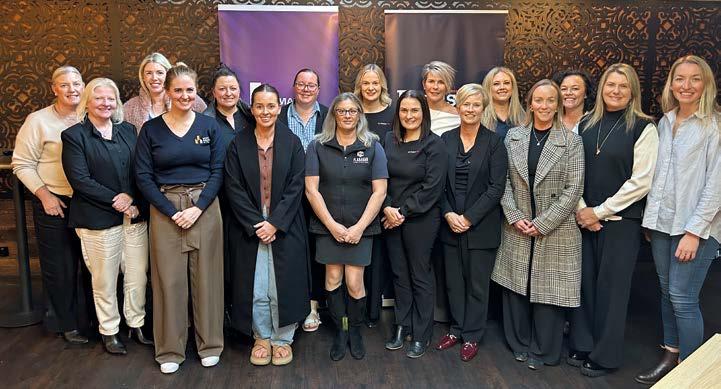
MBV CEO Michaela Lihou meeting with members in Traralgon at the Women in Building Gippsland Lunch hosted in collaboration with Dahlsens.
Building the Future Workforce

How Master Builders Victoria is Strengthening the Next Generation of Skilled Workers
Victoria’s building and construction industry is growing, and bringing through the next generation of skilled workers is a big priority. At Master Builders Victoria (MBV), that comes back to one key focus, putting members first, every time.
Supporting members goes beyond advocacy or services. It’s also about building a strong pipeline for future workers who will keep the industry moving. Through targeted outreach and engagement, MBV is helping make sure members have access to a skilled, motivated, and well-informed group of people coming into the sector.
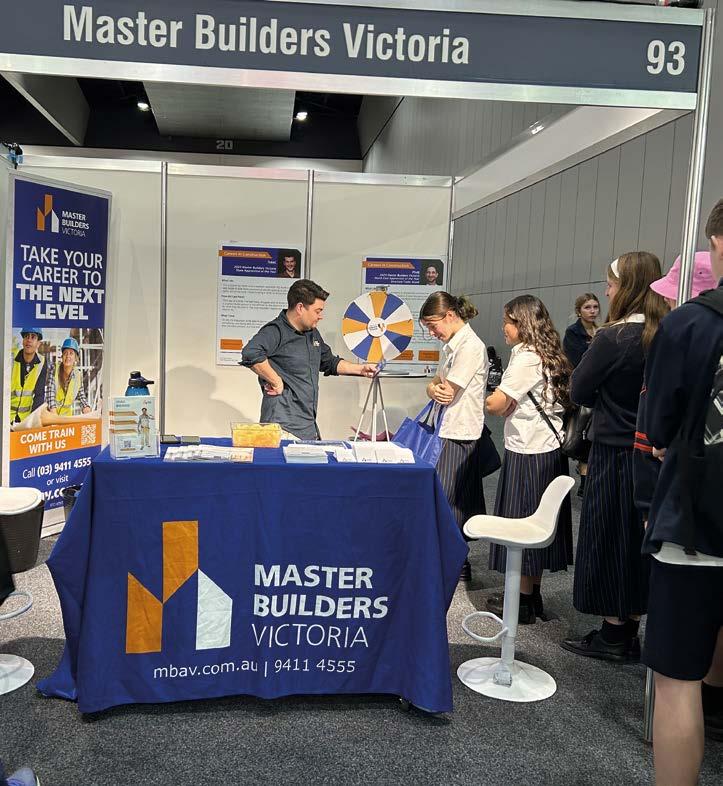
A big part of this is speaking directly with students and their families. Events such as the VCE and Careers Expo are a great chance to connect with thousands of young people when they’re starting to think seriously about what’s next. It’s not just about listing jobs either. It’s about showing what a career in building and construction truly looks like, what pathways are out there, and how to get started.
Just as importantly, these conversations include parents and guardians. Career decisions are rarely made independently, especially when it comes to trade. By talking through factors such as job security, earning potential, and long-term career growth, MBV helps build confidence not just in students, but in the people backing them.
When students and families understand the industry better, you’re far more likely to see committed, job-ready people choosing building and construction as a long-term career.
At the same time, MBV is recognising the people already doing great work in the industry. The Apprentice of the Year Awards are a strong example of that. They highlight the skill, effort, and professionalism of apprentices across the sector, and show the level of talent coming through member businesses.
They also do more than just recognise achievement. For young people, seeing apprentices succeed makes the pathway feel real and achievable. It shows that construction isn’t just a job; it’s a career with a real opportunity to grow and excel.
For members, it’s also a chance to show the quality of training, mentoring, and workplace culture across the industry. It puts a spotlight on what’s happening on the ground.
All of this points to a more hands-on, connected approach to outreach. It’s about creating real links between students and opportunities, families and clear information, and future workers and the people already doing the job.

Looking ahead, there’s a strong focus on making this engagement even more interactive.
Hands-on activities, demonstrations, and practical experiences are some of the best ways to get young people interested and give them a proper feel for the building and construction industry industry.
At the end of the day, it all comes back to members. By building awareness, lifting engagement, and inspiring future talent, this work becomes a direct investment in the strength of the industry.
Putting members first isn’t just about today. It’s about setting things up properly for what’s next.
ARTICLE
AUTHOR
William Sullivan MBV Outreach & Future Skills Officer




Glenn Jones and Boston Group Reach 40 Years of MBV Membership
A Key Sponsor of MBV State Apprentice of the Year Awards
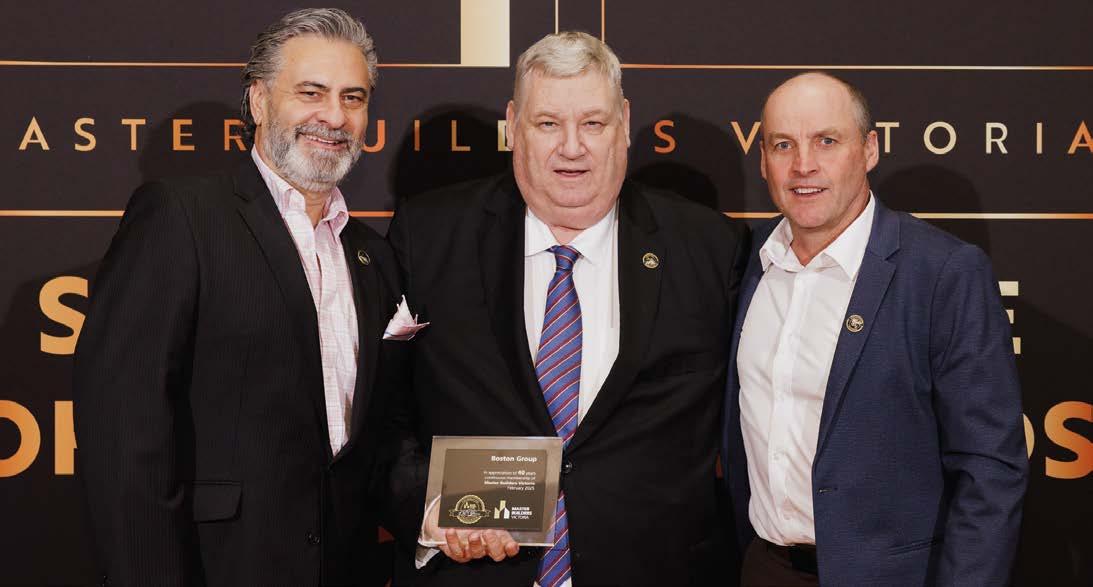
As we witness the sunset of the iconic 150th Year Anniversary for Master Builders Victoria (MBV), long-standing member Glenn Jones and his company, Boston Group, are clocking up 40 years of MBV membership, much of which has included a variety of voluntary roles and contributions to the organisation.
“When I started my career in the building and construction industry, there was no such thing as being a Registered Building Practitioner; there were only plumbers and electricians in the seventies that were registered trades,” Glenn said. “I used to see ‘Clarey the milkman’ and his horse as I passed them in the street from my family’s home when I was going to work at 5:30am as an apprentice plumber.”
Forty years later, Glenn’s contribution to the Victorian building and construction sector and MBV has been significant.
“I have witnessed all four building authorities in construction law enforcement come and go, right up until the recent commencement of the Building and Plumbing Commission last year,” Glenn added.
Glenn’s contributions have included being a volunteer on the MBV Contract and Specifications Committee and Housing Sector Group Committee for over 10 years. He also served two tours on the BCC and VBA’s Building Practitioners Boards as the MBV delegate. At the BCC he was the Deputy Chairman on the Building Practitioner Registration programs from 1997 to 2001, and he was at the VBA from 2019 to 2025.
Glenn served as a MBV Board member in 1997, 2001 and 2025, and since 2007, has been a judge for the MBV Excellence in Housing and Excellence in Construction Awards programs. As an advocate for MBV, he assisted in increasing the profile of the awards program amongst both MBV members and the broader community.
During his career, Glenn won several MBV Excellence in Housing and Excellence in Construction Awards, and was a recipient of the 1997 Victorian Fair Trader of the Year.
As a result of his work with the organisation, Glenn was made an MBV Ambassador and Life Member in 2022.
“Most of my work these days is in the forensic consulting arena, and I find supporting the industry through MBV
I’m a big believer that MBV and the whole industry benefits from nurturing and encouraging apprentices.
very satisfying,” Glenn said. “I would strongly encourage MBV members to assist with the organisation’s operational activities. It has been a very rewarding experience for me both personally and for my business, and I’ve made some great friends along the way.”
Glenn has also made substantial philanthropic contributions to the organisation. He was a sponsor of the Building and Construction Foundation for over 10 years, and he currently sponsors the MBV State Apprentice of the Year Awards through scholarship programs, providing further
Sponsor Spotlight
opportunities for apprentices across metropolitan and regional Victoria.
This year, Glenn once again sponsored the State Apprentice of the Year Award program and expresses his congratulations to the 2026 winners of the Glenn Jones Award - Luke Johnson for Melbourne Metro and Matthew Atkinson for the Regional Award.
Glenn says the MBV State Apprentice of the Year Awards are very close to his heart.
“Well, that’s where I started too all those years ago, which is why I sponsor apprentices to help them get ahead while they are studying and obtaining their credentials,” Glenn said.
“The ‘Great Australian Housing Dream’ really starts with a fully trained apprentice as many of them will go on to become Registered Master Builders, and hopefully, future dynamic MBV members and industry leaders will continue the organisation’s purpose of empowering people to build a better future”.
Congratulations to Glenn and Boston Group on 40 Years of MBV service, and to all of the apprentices in this year’s MBV State Apprentice of the Year Awards series.
ARTICLE AUTHOR
Janice Mascini
MBV Magazine Contributor


Super that’s built for your business
Since 1984, CBUS has backed members and helped employers keep super straightforward for their business. Today, we’re still member owned – backing your business and your people, not shareholders. You’ll get straightforward super administration, solid service and local support when you need it. We also invest in your industry through Cbus Property*, helping to create jobs and opportunities that benefit the industry. And when the rules change, we’ll keep you across what matters so you can stay focused on building your business. Need a hand? Get in touch with Daniel Tentser, Senior Employer Engagement Manager, at daniel.tentser@cbussuper.com.au or 0439 372 365 to find out how CBUS can make super simple for your business.
*Cbus Property Pty Ltd is a wholly-owned entity of United Super Pty Ltd, and is responsible for the development and management of a portfolio of Cbus Super's property investments. This information is about Cbus and doesn’t take into account your specific needs. You should look at your own financial position, objectives and requirements before making any financial decisions. Read the relevant Cbus Product Disclosure Statement and Target Market Determination to decide if Cbus is right for you. Call 1300 361 784 or visit cbussuper.com.au for a copy.
(Cbus and/or
Tech Talk
Waterproofing Q&A
Master Builders Victoria (MBV) wants to remind members that waterproofing wet areas is an integral requirement to prevent the likelihood of creating unhealthy conditions within a building and the damage to other building elements.
It is important to understand that a high percentage of complaints are associated with waterproofing matters, often resulting in costly disputes and rectifications.
Members are reminded that you should always refer to the approved building permit documentation issued by the Relevant Building Surveyor (RBS).
If you have any questions or concerns with the detailing for waterproofing in the approved building documentation, consult the RBS prior to carrying out the work.
Members can utilise the ABCB HP to meet the Deemed to Satisfy Provisions H4D2 and H4D3 in Volume 2 of the NCC as a compliance pathway to meet the National Construction Code (NCC) Performance Requirement H4P1 for wet areas.
Alternatively, AS 3740 can be used provided clauses 10.2.1 – 10.2.6 and 10.2.12 of the ABCB Housing Provisions are also satisfied.

The following questions are frequently asked, and we offer answers in support to our broader membership.
What are wet area categories and how are they used?
When using AS 3740 the design considerations for waterproofing wet areas is categorised according to the risk of water or moisture causing damage or unhealthy conditions in a building.
These categories of risk can be found in Appendix A and broken up into 3 categories:
• Category 1: High risk areas such as a shower area and douche spray devices.
• Category 2: Moderate risk areas such as a bathroom area outside of unenclosed shower.
• Category 3: Lowest risk areas relate to areas such as the bathroom area outside an enclosed shower.
The categories are used throughout AS 3740 to prescribe the requirements of the materials, construction and installation of elements in wet areas. These categories are employed by AS 3740 alone and are not utilised by the Housing Provisions.
It is important to understand that a high percentage of complaints are associated with waterproofing matters.
What is the difference between an enclosed shower versus an unenclosed shower?
AS 3740 describes the following:
1 An enclosed shower is a shower area with a screen designed and installed to prevent the spread of water from the Category 1 area.
2 An unenclosed shower can be broken up into different Types: Type 1 - a shower area with a frameless shower screen that is not fitted with seal and deflectors which control the spread of water from the shower area or a shower over a bath with a 900mm fixed glass screen.
Type 2 - a shower area that is not fully enclosed with shower screen partitions/walls, incorporates a shower or no screens or curtains.
The Housing Provisions define a shower area as an area affected by water from a shower (including a shower over a bath) with:
1 An enclosed shower area is an area enclosed by walls or screens including hinged or sliding doors that contain the spread of water to within that space.
2 An unenclosed shower area is an area where, under normal use, water from the shower rose is not contained within the shower area.

Q: A:
Where the whole of the floor of the bathroom is waterproof, is a water stop required at the doorways?
Yes.
Clause 10.2.4 of the Housing Provisions and Clause 4.9.1 of AS3740 requires a water stop across a floor level opening.
Q: A:
Can a water stop be located across the entry of the bathroom under the cavity slider?
Part 10.2 of the Housing Provisions shows the requirements for a water stop to continue across the floor level opening.
Where must a water stop be located for an unenclosed shower based on the requirements of AS 3740 and the Housing Provisions?
Clause 10.2.18 of the Housing Provisions requires a water stop to be located a minimum horizontal distance of 1500mm from the shower rose for an unclosed shower.
AS 3740 requires a water stop to be located a minimum distance according to the type of the unenclosed shower described in clause 2.2.2.1.
For Type 2 showers, the water stop is to be located a minimum of 1500mm from the shower rose connection to the wall or ceiling. Q: A:
For Type 1 showers, the water stop is to be placed under the splash restriction device and across the opening.
Q: A: To what height must walls be waterproof in a shower area?
Clause 10.2.2 of the Housing Provisions require walls within the shower area to be waterproof to a minimum of 1800mm above the floor substrate.
Clause 4.6.3 of AS 3740 require walls to be waterproof to a height of 1800mm above the finished floor level or 50mm above the shower rose whichever is the greater.
Where ceiling mounted shower roses are installed the entire height of the wall must be waterproof.
The water stop must finish flush with the top of the finished floor level, be fixed and sealed to the substrate and the waterproof membrane extend up its internal face and finish flush with the finished floor level.
Note: this requirement always applies for wet areas whether the wet area is a fully waterproofed system or not (other than where flexible waterproof sheet flooring material with sealed and welded joints meet the requirements of AS/ NZS 4858 is installed).
Q: A: At door openings for bathrooms where the whole of the floor is required to be waterproof, are the door frames and architraves able to be embedded below the finished floor level?
Clause 10.2.24 of the Housing Provisions (including the referenced Figure 10.2.24) show that the door frame and architrave are able to be embedded below the finished floor level so long as the waterproof membrane extends up the faces of both the frame and the architrave to the finished floor level with a continuous seal between the perimeter flashing and the water stop (Clause 10.2.31).
Clause 4.9.2 of AS 3740 requires:
a) timber door jambs must not be embedded into the tiles, and b) the underside of door jambs and architraves are treated to resist moisture, and c) a minimum 2mm sealed gap is provided between the architrave and the floor.
Clause 4.9 and Fig 4.9.1(B) of AS 3740 better describe and depict the requirements for a water stop and the waterproofing membrane application where the water stop is located directly beneath the cavity sliding door.
Figure 4.9.1(B) clearly shows the water stop as being mitred and returned flush to the face of room so the membrane can be applied to create a waterproof perimeter junction across floor level opening.
Q: A:
Can I install a floor mounted vanity unit before installing the tiles?
While AS 3740 and the Housing Provisions do not specifically prescribe the requirements for this application, it is considered best practice to install the vanity unit after the floor tiles have been completed and having packer underneath with caulked edges.
or scan here to email us.
Scan here for further information and guidance

Understanding Modern Award Coverage
Are You Getting It Right?
Determining Modern Award coverage is one of the most challenging employment compliance issues facing building and construction businesses. Getting it wrong exposes businesses to potential risks such as underpayment claims, regulatory action and civil penalties.
In an industry built on a diverse workforce, from site-based trades to office professionals, complexity is inevitable. A single business can be dealing with multiple Modern Awards at once, with different employees covered by different instruments, making compliance anything but straightforward.
What is a Modern Award?
Modern Awards (or simply Awards) are legally enforceable industrial instruments made under the Fair Work Act 2009 (Cth). They apply as a default to many employees setting minimum pay rates and entitlements. These include hours of work, overtime, allowances, penalty rates and leave loading for industries or occupations. Awards operate alongside the National Employment Standards, which sets minimum entitlements for all employees in Australia, regardless of whether an Award or Enterprise Agreement applies.
Importantly, Awards don’t always apply. Where an Enterprise Agreement is in place, it can override Award provisions. But for building and construction businesses without an Enterprise Agreement, Awards remain part of the default safety net.
So How Do You Work Out Which Award Applies?
This is the million-dollar question. Determining the correct Award is not always intuitive and requires more than simply looking at the industry you operate in, job titles or employment contracts.

Put simply, it involves considering the coverage clause and classifications within an Award to determine whether it applies to your business and covers the employee. In practice, it is far more complex.
Awards can cover entire industries, particular occupations, or both.
To illustrate, consider a typical construction business. A carpenter, labourer or apprentice working onsite will likely fall under the Building and Construction General On-site Award 2020 (Building Award), which is an industry Award. This Award specifically covers employers in the on-site building, engineering and civil construction industry and their employees who are engaged within roles nominated within its classifications.
But step into the office, and the picture changes. A receptionist or accounts officer, performing administrative duties, would instead be covered by the Clerks-Private Sector Award 2020 (Clerks Award), which is an occupational Award. This Award covers clerical roles, regardless of the industry they work in.
As you can see from the examples above, two employees working for the same employer can be covered by completely different Awards. It is a common scenario, but one that is sometimes misunderstood.
A single business can be dealing with multiple Modern Awards at once.
Are All Employees Covered by a Modern Award?
No, not all employees are covered by an Award. Some employees may genuinely be ‘award-free,’ typically professional and managerial roles.
To determine if an employee is awardfree, it requires the consideration of approximately 120 Awards, and determining that the work performed within a role falls outside any possible coverage. Simply paying a salary or giving an employee a senior-sounding title does not make them award free.
What Are Some Misconceptions About Award Coverage?
A frequent misunderstanding is that all employees in a construction business fall under the Building Award. While this may be true for many site-based roles, it is rarely true across an entire business.
Another common misconception is that paying an employee a salary removes them from Award coverage. This is incorrect. Employees can be both salaried and Award-covered at the same time, with the Award continuing to set the minimum entitlements that must be met.
Finally, job titles alone are not determinative. Simply labelling a role does little to resolve Award coverage. What matters is the substance of the role, specifically, the duties performed and whether they align with the coverage and classifications set out in an Award.
Where Can I Go For Further Guidance?
To support members, Master Builders Victoria (MBV) has developed an Award Coverage Guide to provide practical, high-level guidance on Award coverage and classification issues commonly encountered in the construction industry.
While the guide is not a substitute for tailored advice, it is designed to help employers identify potential risk areas early and approach Award decisions with greater confidence.
For assistance on modern Award Coverage or a copy of our Guide, you can contact MBV’s Employment and Industrial Relations team on (03) 9411 4555 or scan here to email us.
ARTICLE AUTHOR Amber Cambareri MBV Employment and Industrial Relations Advisor


Strategies for Movement to Support Your Mental Health
You’ve probably heard the saying ‘movement is good for your mental health’, but it’s not always so simple.
Movement can take different forms. It could be ‘formal’, like sport or gym; incidental, like playing with the kids or housework; or work-related, like labouring.
For people who struggle with things like a strong need for routine or control around exercise, perfectionism, ‘clean eating’ or muscle dysmorphia, exercise can go ‘too far’ and be harmful for mental wellbeing.
Eating Disorders Victoria (EDV) has just released a free online course on this topic, to help people move in a way that helps, not harms, mental health. The following excerpt is from the section ‘Strategies for building a more supportive relationship with movement’.
Reflect on Your ‘Why’
The following questions can be a good ‘temp check’ for if exercise is helping or harming you:
• Has something shifted in how I feel about movement? For example, do I feel less ‘in control’, or does it occupy a lot of my thoughts?
• Am I having any unhelpful thoughts about movement lately?
• Why do I do exercise? What about it feels beneficial for me?
• How do I hope movement will make me feel?
• What’s the connection between movement and food/eating for me? Does this connection feel helpful, or distressing?

Practise Tuning Into How Your Body and Mind Feel When You Move
A range of thoughts, emotions and physical sensations can come up during movement.
‘Interoception’ is your ability to notice and understand your body’s signals. Tuning into these internal cues can help you better understand which types of movement feel most enjoyable, safe and supportive.
Some signs you’re listening to your body might include:
• Pausing, stopping or slowing down when needed
• Modifying movement to feel more comfortable
• Recognising when you need rest –not moving through injury or fatigue
• Having curiosity rather than selfjudgement – e.g., how does my body feel right now?
• Feeling a sense of peace or presence in movement
Make It Social
Moving with friends, family or even in a team can make it more joyful, and also help you feel safe and supported. For example:
• a gentle walk while on the phone with a friend
• joining a community event
• gardening with family
Choose the Right Environment
It’s hard for movement to support your mental health if your environment doesn’t. For example, do you feel relaxed and comfortable in your gym, or do you find yourself always comparing? Is your sports team supportive or overly competitive?
The environment you choose for movement matters. It can impact your thoughts, emotions and overall experience.

Give Yourself Unconditional Permission to Rest
Rest does not need to be ‘earned’ – we all need it, and it’s a key aspect of movement supporting your mental health.
7 Types of Rest
Physical
e.g., sleeping, laying down
Spiritual
e.g., prayer
Mental
e.g., mindfulness
Sensory
e.g., phone in ‘do not disturb’, turning down lights
Creative
e.g., time in nature, looking at art
Social
e.g., spend quality time with supportive people
Emotional
e.g., express your feelings freely
Want to go deeper?
Enrol in EDV’s FREE e-learning course
If this article has brought up concerns about yourself or someone you know, EDV offers free, confidential support:
Anyone can call – you don’t need an eating disorder diagnosis.
10 Australian AI Innovators Delivering Practical Solutions in 2026
As Featured in the Australian Business Journal
Most AI products promise transformation. Vivek Singh’s work starts somewhere more practical: what does this actually save someone time on today?
As founder of Zingly, Vivek has focused on a part of the economy that rarely features in AI conversations: trade businesses. His approach is grounded in the simple observation that skilled tradespeople produce high-quality work every day, but much of it never translates into online visibility because documenting and posting it takes time they don’t have.
Zingly was built to close that gap. The platform turns job-site photos into SEO & AEO-enabled, location-aware social media content, automatically

generating captions and posting to platforms like Facebook and Instagram in under a minute. Instead of adding another layer of marketing work, it removes one, embedding content creation into the workflow that already exists.
What sets Vivek apart as an AI innovator is less about complexity and more about focus. Rather than building tools for marketers or enterprise teams, Zingly is designed for operators, people running businesses day to day. The system handles image tagging, context, and distribution in the background, allowing users to maintain a consistent presence without actively managing it, helping them build trust locally and win more jobs.
What sets Vivek apart as an AI innovator is less about complexity and more about focus.
It’s a quieter form of innovation, but a deliberate one. By narrowing the problem and solving it end-to-end, Vivek has created something that fits into how businesses actually operate.
In a space often defined by scale and abstraction, Zingly’s value comes from being specific and immediately useful.
Zingly are a proud partner of Master Builders Victoria (MBV).
As part of their sponsorship, they are offering MBV Members an exclusive 10% off their services!
Scan here to see more















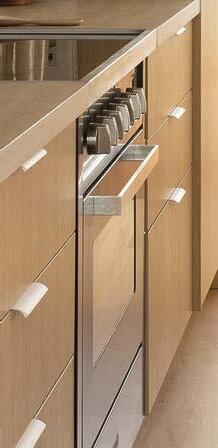


































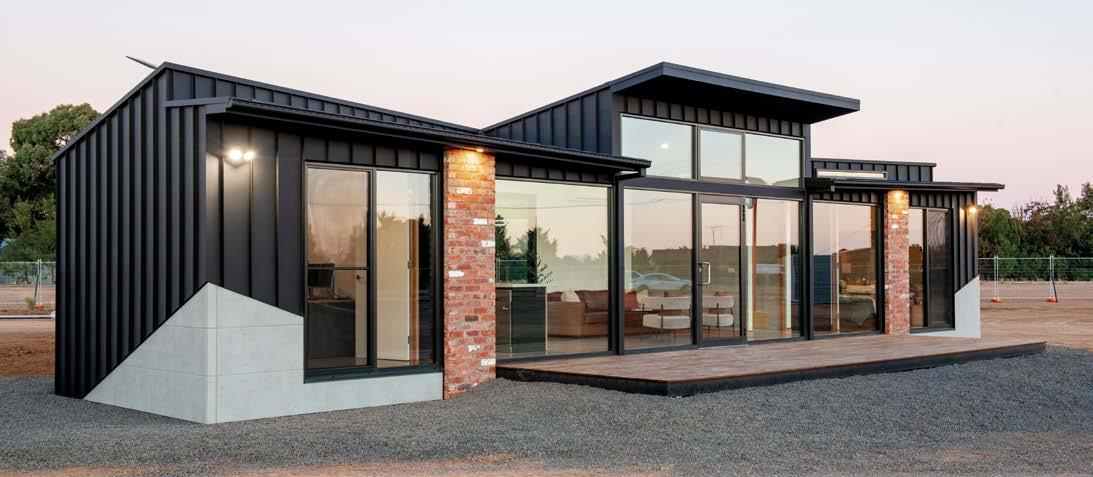
Advancing Australia’s Construction Industry Through Modular Manufacturing
A Builder’s Perspective on DfMA-D, Productivity and Scalable Building Delivery
As a registered commercial and domestic builder who has transitioned into volumetric modular manufacturing, I believe prefabrication and offsite construction offer one of the most practical ways to improve quality, speed and productivity across Australia’s building and construction industry.
The more a building can be advanced within a controlled factory environment, the greater the benefits become. In my professional opinion, volumetric modular construction is the most evolved Modern Method of Construction (MMC) available, provided it is designed and delivered correctly.
The key to success is Design for Manufacture and AssemblyDisassembly, (DfMA-D). This is not simply a design principle. It is a complete way of thinking about how a building will be designed, manufactured, transported, assembled, maintained and eventually disassembled at the end of its life.
At JMB Modular Buildings, we have developed our Advanced Manufacturing Centre (AMC1) around this philosophy. AMC1 is more than a factory. It is a delivery platform for industrialised construction, designed around a moving production line, defined workstations, quality hold points, repeatable processes, engineered lifting systems and controlled in-factory completion.
The goal is simple: complete as much of the building as possible in the factory before it reaches site. In many cases, modular buildings can be advanced beyond 90 per cent completion before leaving the manufacturing facility.
Structure, services, plaster, cladding, roofing, joinery, tiling, painting, flooring, fixtures and even furniture can be completed under controlled conditions.
This reduces reliance on unpredictable site conditions, reduces the number of trades working over each other, improves safety and provides a faster path to occupancy. For housing, health, education, worker accommodation and regional projects, these advantages are becoming increasingly important.
Successful modular projects must start with early engagement. Too often, buildings are designed conventionally and then later assessed for modular delivery. This usually leads to redesign, additional consultant costs, inefficient module splits and unnecessary complexity.
Every modular manufacturer has its own building system, production logic, transport parameters and connection methodology. The design should reflect how the building will actually be manufactured.
A strong DfMA-D approach also means reducing the number of parts, modules and joins wherever practical. Larger modules can reduce crane lifts, transport movements, structural connections, service connections and onsite labour.
Standardising module sizes and layouts creates repetition, improves material ordering, simplifies engineering and allows factory teams to get faster and better with every project.
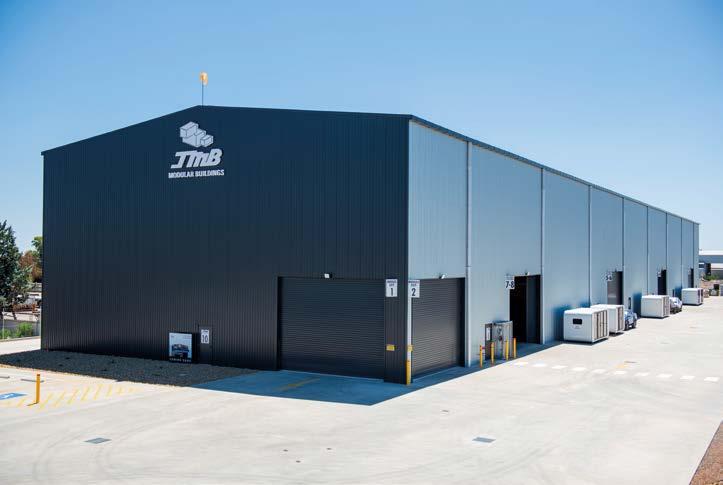
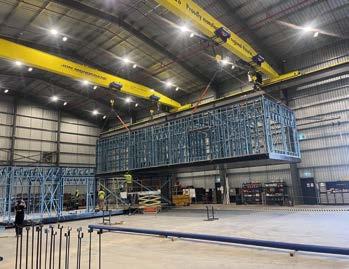
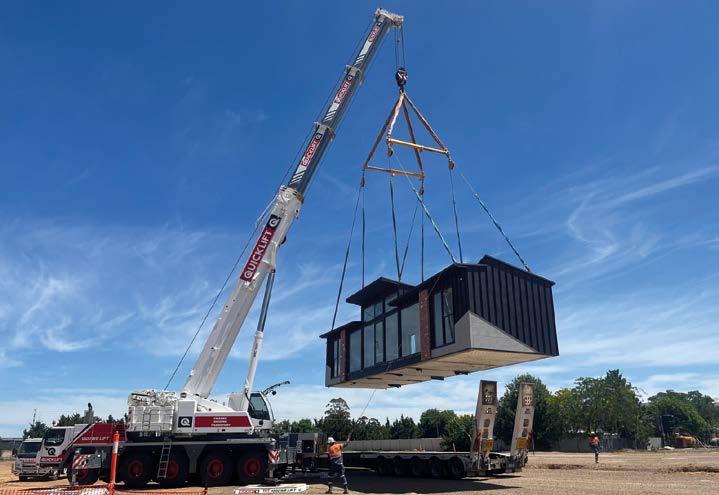
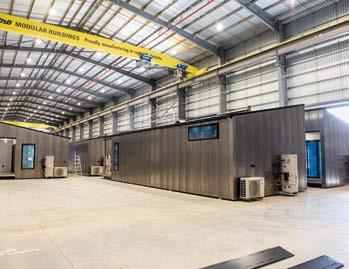
Efficient joining is equally important. Module joins should be planned away from complex wet areas, kitchens and high-finish zones wherever possible. The aim is to keep the labour-intensive work in the factory, not push it back onto site.
Good modular design also considers module orientation, direct load paths, service pathways and road transport limits from the very beginning.
DfMA-D also asks us to think beyond construction. If buildings are designed with accessible, reversible connections and certified lifting systems, they can be maintained, adapted, relocated or disassembled more effectively in the future. This supports better whole-oflife outcomes, less waste and a smarter approach to materials.
This is not simply a design principle. It is a complete way of thinking.
The goal is simple: complete as much of the building as possible in the factory before it reaches site.
Australia’s housing crisis cannot be solved by traditional delivery methods alone. We need more homes delivered faster, with better quality control, less waste and more predictable outcomes. Industrialised modular construction can help make that possible by shifting more work into controlled manufacturing environments, creating regional jobs, improving training pathways and allowing the industry to produce more homes per worker.
AMC1 is JMB Modular Buildings’ contribution to that future. It demonstrates that construction can move from one-off prototypes toward repeatable, high-quality building
products without losing architectural quality or liveability. Modular construction is not temporary or second-rate. When designed properly, it is permanent, durable, efficient and capable of delivering high-quality buildings at scale.
Industrialised modular construction is the way of the future. If you are considering modular construction for your next project, engage an experienced modular manufacturer early, get the right advice from the start and optimise the design for manufacture, assembly and disassembly. That is how we build faster, smarter and better.
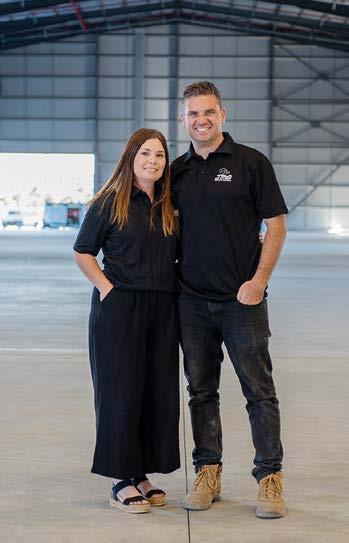
ARTICLE AUTHOR
James Briggs
JMB Modular Buildings Founder, Managing Director & Registered Builder




MBV JOBS BOARD
Connecting Jobseekers with MBV members across the state
Members can post their vacancies on our Jobs Board
Scan the QR code to share you vacancy

Apprenticeship vacancies
Apply directly to employers
Opportunities across Victoria
MBV Jobs Board is designed to connect those looking for a career opportunity in the building and construction industry with Master Builders members.

Stepping Up Your Staff Into Fully Trained Site Managers
Not All Training Programs Are Created Equal
Our recent discussions with members focused on navigating decisions about staff retention amidst this period of uncertainty, while also exploring opportunities to improve operational efficiency.
While regulations continue to evolve, financial considerations are becoming more complex, and approval timelines are lengthening, there are still areas within our control. This includes preparing emerging leaders to step up and keep projects advancing as efficiently as possible.
In response, the MBV Site Management Training Program was established.
Members needed a development program that wouldn’t take them away from their roles for weeks at a time, so we created a flexible structure: six one day modules delivered across the year.
Relevance was essential. Members wanted training that would genuinely strengthen their capability on site, so each module stands alone while still contributing to a cohesive, year long learning journey, equipping emerging site leaders with the skills they need most.
And because traditional, passive training doesn’t deliver meaningful outcomes, each day is built around
active learning. Mornings focus on practical insights from specialists and experienced instructors.
Afternoons are dedicated to applying those lessons into practice in our Leadership Simulation Centre (LSC), ensuring members return to work with skills they can use immediately.
Scan here to learn more about the LSC
The Site Management Training Program is delivered through six one-day modules across the year, providing a focused and efficient pathway to strengthening your organisation’s site management capability for the long term.
The Course Consists of Modules in:
• Leadership Essentials
• Managing Priorities and Time Management
• Conflict Management and How to Have Difficult Conversations
• Right Of Entry
• Asbestos Awareness for Site Supervisors (half-day)
• An Introduction to Using Microsoft Project in the Construction Industry (half-day)
• OHS Refresher
Sponsor Spotlight

Its training developed by the industry, for the industry.
This program has become one of the most in-demand courses offered by MBV this year, driven by strong word of mouth and the tangible results organisations are seeing as participants return equipped with practical skills that enhance on site efficiency.
Scan here for the MBV Site Management Training Program overview
For more information about the next intake, contact the Training Team at (03) 9411 4555 or scan here to email us.


We've made a habit of sitting between the people most of us love to hate, because someone has to. At Own Money, that means going up against banks, real estate agents, and car dealers to do what those industries often don't: genuinely help people get out of debt and build real, lasting wealth.
As a proud partner of Master Builders Victoria, we're committed to supporting members with the kind of honest, expert guidance that can be hard to find.
Whether you're looking to grow your business, buy your next property, or simply keep more of what you earn, we make sure you have the knowledge and the right people in your corner.
Our money experts work across home and commercial finance, car and equipment finance, property advisory, and financial planning, alongside a growing education platform designed to give you the knowledge and confidence to make smarter decisions at every stage of your financial journey.
And unlike the industries we sit between, our success is measured by yours.











M B V P O DCAS T



BUILDING MASTER BUILDERS
Available to listen on all streaming services




Protect Your Project. Protect Your Reputation.
Good advice during a project is far cheaper than rectification after it.
Building disputes, warranty claims and rectification issues can escalate fast, hitting your time, reputation, license and profitability. For most builders, experienced support arrives too late, once costs and stress have already compounded. First Resort Solutions puts an experienced technical partner in your corner from day one: practical, commercially minded advice that identifies risk early and protects your margin.
Independent technical project advice early
Risk identification & project support
Defective works & rectification guidance
Domestic Building Insurance claim support
Backed
Protect your business before issues
BPC Rectification Order assistance
Regulatory and compliance advice
Practical dispute resolution strategies
Supporting MBV member businesses
Enabling Change in Construction
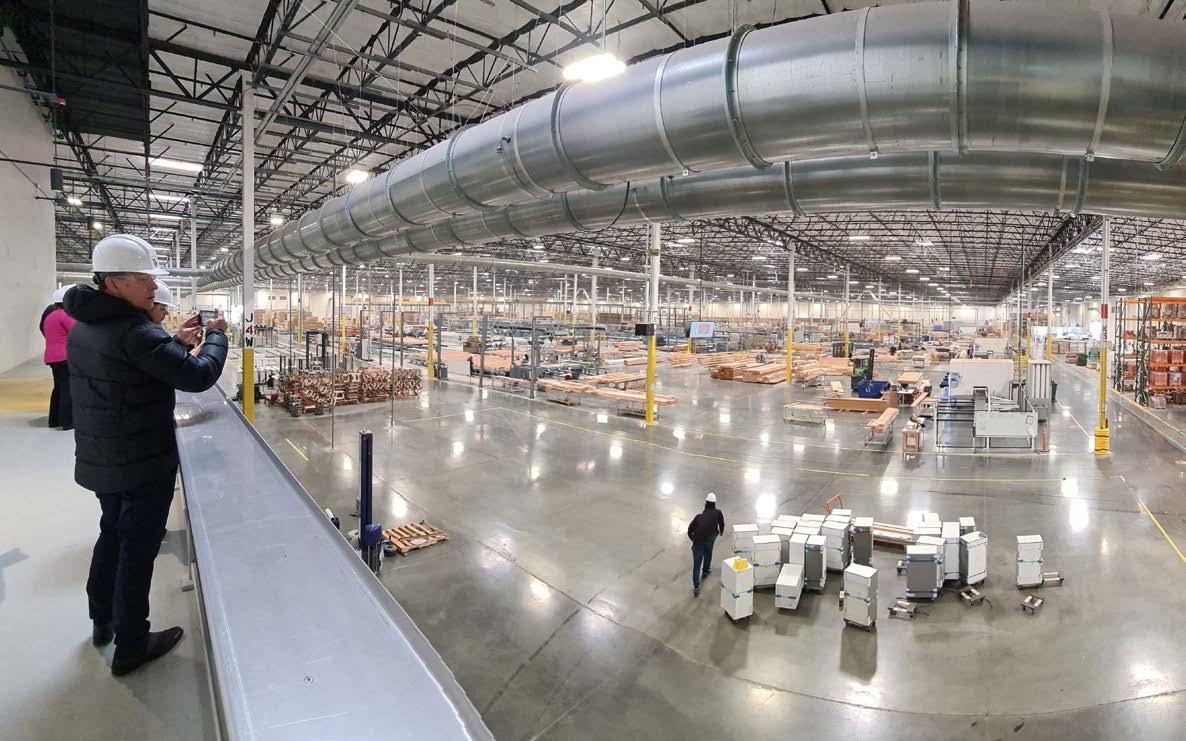
Insights from the Building 4.0 CRC

Australia’s building and construction sector is undergoing a critical period of transformation. Faced with housing shortages, productivity challenges, and mounting financial pressures, the need for innovation has never been greater. Over the past six years, Master Builders Victoria’s (MBV) involvement in the Building 4.0 Cooperative Research Centre (CRC) has provided valuable insights into how the industry can evolve to meet these demands.
The CRC brings together industry, academia, and government to explore how digital technologies, industrialised construction methods, and new economic models can improve efficiency, reduce costs, and build long-term resilience.
Recent projects highlight both the scale of the challenges facing the sector and the opportunities available to address them.
Project 21Regulatory Reform for Industrialised Construction
Industrialised construction methods, such as prefabrication, modular construction, and other Modern Methods of Construction (MMC) offer significant potential to improve productivity and quality.
However, Project 21 found that Australia’s regulatory frameworks remain largely designed for traditional onsite construction, limiting the adoption of these approaches.
The research concluded that without reform, compliance inefficiencies will continue to hinder uptake. A coordinated national approach, including streamlined certification processes and harmonised state-based regulations, is essential to enable the sector to fully realise the benefits of offsite construction.
For industry and policymakers alike, regulatory reform is not simply a technical issue, it is a critical enabler of innovation.
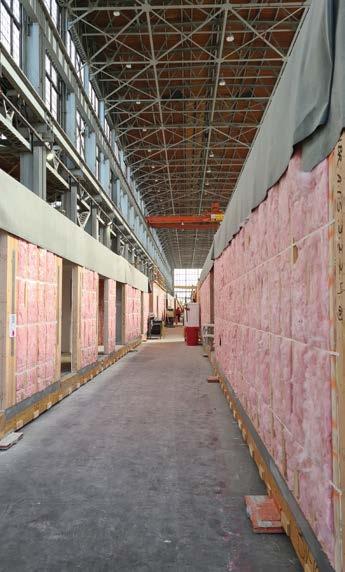
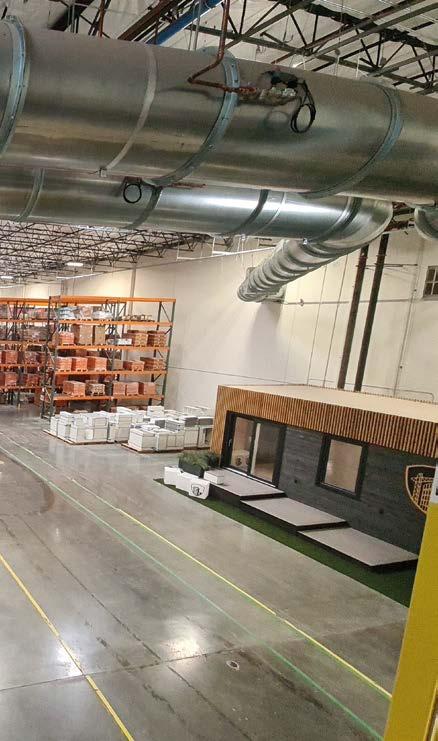

Project 38 - Victorian Government Digital BuildTranslating Theory Into Practice
Digital construction tools and integrated project data systems promise significant improvements in project delivery. Yet, as highlighted in Project 38, adoption across the Victorian building and construction sector remains uneven.
better data, shared benchmarks, and decision-making frameworks.
P ROJECT OVERVIEW
The key barrier is not just technology, but a broader systemic challenge. The research emphasises that meaningful change requires collaboration across government, industry, and the research sector, supported by
Importantly, the findings also point to cultural factors within building and construction, particularly its project-based, fragmented nature, as a constraint on long-term innovation. Overcoming these barriers will require coordinated action, education, improved digital access and a shift in how the industry approaches change.
Project 48 - Scoping Study for Building the Future - Circular Economy
Sustainability is increasingly central to the future of building and construction. Project 48 explored how circular economy principles, keeping materials in use through reuse, repair, and recycling, can be integrated into industry practice.
The project delivered a roadmap outlining pathways for implementing circular approaches across construction processes, supply chains, and supporting systems. While the research demonstrates strong potential, it also highlights the need for further work to bridge gaps in knowledge, tools, and implementation capability.
Project #48 provides an in-depth analysis of the transition to a circular economy (CE) within the Australian building industry. The project summary diagram in Figure 1 shows a high-level overview of activities performed during Project #48. It captures the project’s background and rationale, opportunities and suggested solutions, along with the goal, methods employed and key findings and themes. The primary aim of this scoping study was to develop a roadmap and offer recommendations and future research areas to guide the Australian construction and building industry and its stakeholders toward sustainable CE practices and strategies. The components presented in the summary diagram are elaborated in the following sections.
Transitioning to a circular economy will require not only new materials and design approaches, but also systemic change across the entire value chain.
Towards a roadmap
Recent projects highlight both the scale of the challenges facing the sector and the opportunities available to address them.
The roadmap proposed in this study aims to address how interventions can be applied to scale circular practices through holistic strategies. It should be viewed as a mandate for change that intertwines ambition, realism and a sense of optimism for the future.
#48 Scoping Study for Building the Future
Circular Economy
Figure 1. Project summary diagram
Source: Own elaboration
Project 80 - Why Are Insolvencies So High in the Residential Construction Industry and What Can Be Done About It?
Perhaps the most pressing issue facing the sector is the high rate of insolvency, particularly in residential building and construction. Project 80 revealed that building and construction accounts for approximately 27% of all insolvencies in Australia, underscoring the scale of the problem.
The research found that insolvencies are driven less by individual business failures and more by systemic factors. These include financial risk structures, regulatory complexity, and gaps in business acumen among industry participants.
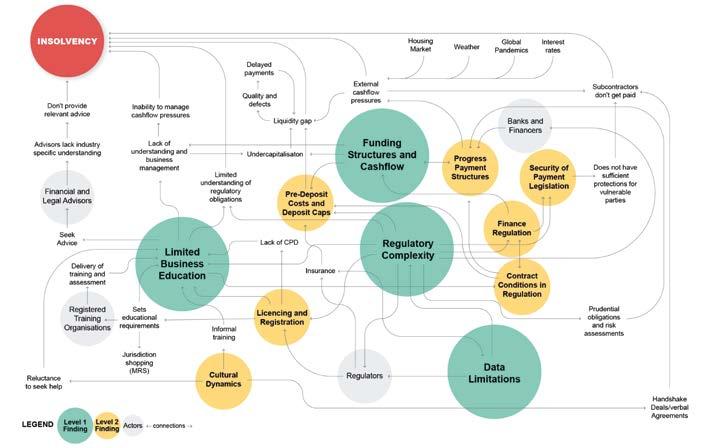
Small and medium enterprises are especially vulnerable, often operating with limited financial buffers and exposed to volatile costs and cash flow constraints. Cultural factors, such as short-term decision-making and reluctance to seek professional advice, further compound the issue. Addressing insolvency will require coordinated policy reform, improved data and early warning systems, and stronger support for business capability across the sector.
Project 56 - Accelerating Building 4.0 CRC Translation and Impact
One of the persistent challenges in construction innovation is translating research into real-world outcomes.
Project 56 addressed this by developing a structured professional development approach to strengthen collaboration between researchers and industry practitioners.
The project resulted in a decisionmaking framework designed to accelerate the adoption of new technologies and practices.
This highlights a critical insight: innovation is not just about generating ideas, but about building the capability and relationships needed to implement them effectively.
A Path Forward for Industry Transformation
Across these projects, a consistent message emerges: the challenges facing the construction industry are systemic and interconnected. Regulatory frameworks, financial structures, cultural norms, and capability gaps all play a role in shaping outcomes.
No single organisation can drive the change required. Progress will depend on sustained collaboration between government, industry, and the research community, supported by clear policy direction and practical tools for implementation.
MBV, through its partnership in the Building 4.0 CRC, is well positioned to play a leading role in this
transformation, advocating for reform, supporting members, and helping bridge the gap between innovation and practice.
As the industry navigates increasing demand and complexity, the insights generated through the CRC provide a clear roadmap for building a more productive, resilient, and sustainable future.
Scan here to access the full project reports.
ARTICLE AUTHOR
Dr Philip Alviano MBV Senior Advisor, Future Built Environment

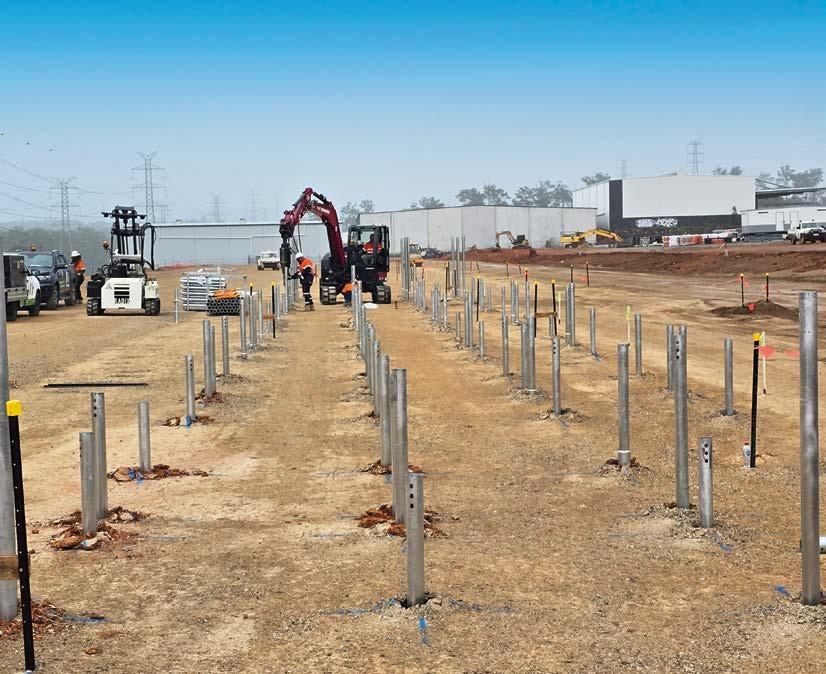
Working Safely with Ladders

Let’s be clear, ladder safety is a big issue for the construction industry. Between 2024 and 2025, there were 24 deaths nationally due to falling from height, and thousands of people are hospitalised each year from ladder involving incidents. Many of these injuries are preventable.
Employers, and those who have control over a workplace (including builders and principal contractors), have legal duties to ensure their workplace is safe and without risks to health. Workers have a similar duty to take care of their health and safety, and for the safety of others who may be affected by their actions.
Safety is everyone’s responsibility and that includes how you use a ladder!
*images curtesy of WorkSafe Victoria
What Should You Consider Before Using a Ladder?
Before using a ladder, you should ask –is there a safer alternative? If reasonable and practicable, you should consider:
• Working from the ground
• Using an elevating work platform
• Installing temporary scaffolding
A ladder is the last resort for working at height. WorkSafe recommends that ladders should only be used for simple and short-duration tasks. This could include temporary access and egress or light jobs.
Before jumping on a ladder, you should also check that it is in good condition. Ladders degrade over time and may no longer be fit for purpose. Always check for any damage or defects.
You should also check whether the ladder is on a surface that is solid and stable to ensure the ladder does not slip.
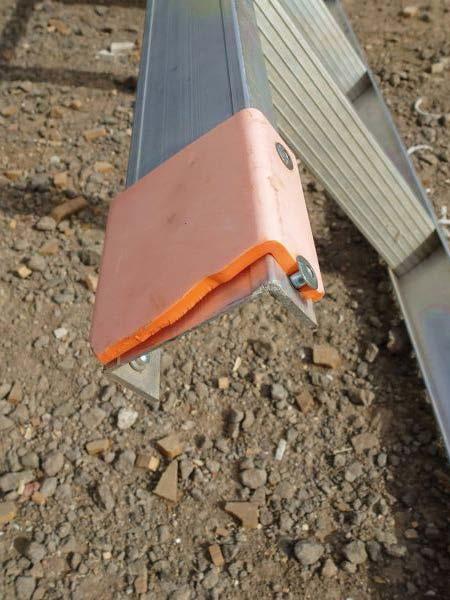
Cracking and failure of the bottom half of a plastic barrel hinge cover still attached to the ladder
What Are Common
Mistakes When Using a Ladder?
Ladders come in different shapes and sizes. You must always use your ladders in line with manufacturer’s instructions and safety warnings. Misuse is one of the leading causes of ladder-related injuries and fatalities.
Standing on the top tread
We’ve all seen someone doing it, but standing on the top of a ladder is a serious safety risk.
The top tread of a ladder isn’t safe to stand on. Small movements can cause the ladder to give way or for you to lose your balance.
Rule: always stand below the second highest tread on a ladder.
Overreaching

Ladder overreaching is another common issue. This is where a person leans their body across or away from the ladder to perform a task. It makes the ladder unstable and may mean the ladder moves from under you, leading to a fall.
Rule: keep your waist centre with the ladder. If you can’t reach, climb down and reposition the ladder.
Straddling a ladder
Ladders aren’t designed to be straddled, but we still see them being used this way. Straddling a ladder can cause it to shift sideways resulting in a loss of balance, tip or even collapse.
Rule: always face towards the ladder.
What Should You Do When You See Someone Using a Ladder the Wrong Way?
When you see something that’s not safe, call it out! Have the person come off the ladder, discuss what they’re doing and what’s unsafe about it.
Consider addressing ladder safety in your morning toolbox, going through what safe and unsafe ladder practices look like.
And for the avoidance of any doubt, here are some examples of how a ladder is used in a safe way.

Platform stepladder used for work near a ceiling
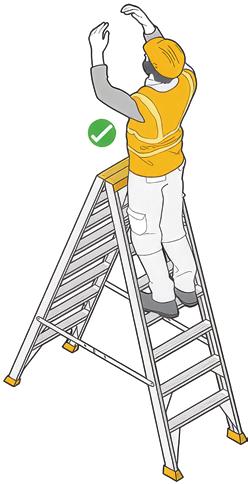
An A-frame ladder used for work near a ceiling.


If you need further guidance about the safe use of ladders, you can contact the MBV OHS team on (03) 9411 4555 or scan here to email us. Scan here for more information
The Toughest Equipment On Site Is You
Why Your Prostate Health Matters
Builders devote their days to creating the homes, workplaces, and public spaces that hold our communities together. But too often, men in building and construction put their own health last.
The Prostate Cancer Foundation of Australia (PCFA) is working with Master Builders Victoria (MBV) to help more builders and tradies understand their risk of prostate cancer, the importance of PSA blood tests, and the support available for men and their families.
PCFA is Australia’s leading communitybased organisation for prostate cancer research, awareness and support, working towards a future of zero deaths from prostate cancer.
One in five men are likely to be diagnosed with prostate cancer in their lifetime. In Victoria, over 6,000 men are diagnosed each year, making it the most commonly diagnosed cancer in the state.
Former Master Builders Victoria Business Development Manager Alan Odgers Knows Why Early Detection Matters.
After retiring in 2020, Mr Odgers was encouraged to have a PSA blood test. His results showed elevated PSA levels, and following a biopsy, he was diagnosed with stage two prostate cancer. He underwent surgery in October 2023.
“My recovery brought unexpected challenges, but the experience strengthened my commitment to helping other men understand the importance of early detection and support,” Mr Odgers says.
Now a trained presenter with PCFA’s Life Force Program, Mr Odgers shares his story with workplaces and worksites around the country.
“Blokes in construction are often focused on getting the job done and looking after everyone else,” Mr Odgers says.
“You service your Ute. You maintain your tools. Your health deserves the same attention.”
If you run a business, manage a worksite, or simply coordinate the workplace well-being program, register today for a free Life Force presentation or alternatively, grab a few of your work crew together and raise a few bucks for those men fighting the disease.

This Men’s Health Week, Australians are being encouraged to step up for Walk for Him, a simple, no-pressure walking challenge.
PCFA will also launch The Long Run for Prostate Cancer Awareness Month in September, calling on Australians to run, walk or move across the month for blokes impacted by prostate cancer.
Whether it’s booking a Life Force presentation, joining Walk for Him, or getting behind The Long Run, every action could save lives.

A Tribute to Digby Gordon Forbes
MBV Honorary Life Member
With his final words "it's my time" uttered to his nurse, Digby Gordon Forbes aged 86 years, quietly passed away in peace at lunch time on Sunday 3 April 2022, at specialist aged care provider OPAL Mornington Bay Care Community facility.
Digby will be remembered as dignified, loyal, popular and his very own person. Indeed, what a wonderful and colourful life he had during his lifetime. Born in Wellington, New Zealand in 1936, he, together with his mother Doreen, brother Erreld, and sister Julia Monger nee Forbes, left New Zealand in 1943 to settle and live in Melbourne, Australia. Digby became an Australian citizen at that time.
In his early years, Digby was educated at Canberra Grammar School and obtained his Leaving Certificate. He spent his early working life in the 1950s in Melbourne; this included Maxwells Radio in Elizabeth Street and Lonsdale Street. He also worked at "The Age", and Wrightcel Pty Ltd. He also partly completed a 'Industrial Science' course at RMIT. In 1958, he served for six years in the Royal Australian Air Force with qualifications in Radio and Electronics. From 1995, Digby became a member of the Defence Reserves Support Committee, Victoria, representing the building industry.
Digby began his long career in the building and construction industry from 1965, where he worked for Bayview Quarries Pty Ltd in Quality Control, Concrete Production. He gained qualification in 1967 at RMIT in Concrete Technology and Practice. He worked until 1969 for Baral Limited following takeover of Bayview and Albion Reid.
During a brief stint he also worked with Lee Larner Agency in the field of still photography and as an actor in TV, film, radio and advertising. As well as a short time as a consultant for Friends Provident Life Society. Digby was also a member of the 'English Speaking Union'.
From 21 August 1969, Digby began his jam packed 30 years of service with the Master Builders Victoria (MBV). He held a variety of roles during this time, including Housing Officer, Committee Secretary, Manager - Housing (1979), DirectorHousing (1988), Director - Member Liaison (1992) and Manager - Building Services from 1996 up to his retirement.
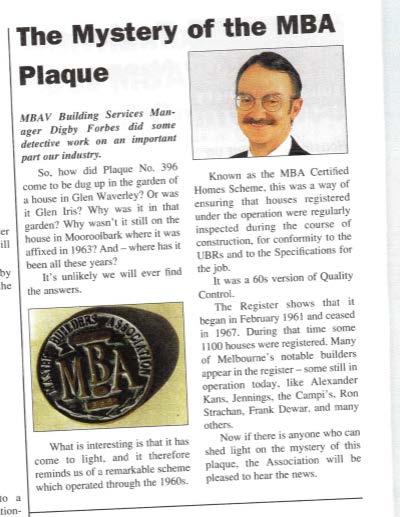
His industry contributions extended to being Manager and Secretary for the Master Builders Housing Fund Limited from 1974 till 1984 - a guarantor company under the Victorian Housing Builders Liability Act 1973, which ceased operation after 10 successful years on State Government ordered amalgamation with another industry guarantor.
It went on to form the Housing Guarantee Fund Limited which closed in 1996 on a change of legislation. Digby was Secretary for MBV/Australian Institute of Building Surveyors Working Group, later AIBS/Building Industry Working Group, concluding with the Building Industry Review Committee from 1975 to 1996.

For the 21 years of this group consisting of builder’s representatives and regulators, they liaised on building regulations with the control authority, later ceasing with the introduction of the Building Code of Australia (BCA).
Digby then became Manager/Secretary of the Australian Building Systems Appraisal Council Limited (ABSAC) for 21 years from 1978 to 1999. This is when I got to know him and acknowledge the tremendous work he performed, including appraising new innovations within the industry and writing Technical Opinions.
MBV provided the Administrative Secretariat for the 21 years of ABSAC's existence. After some 250 published opinions, the company ceased operations in 1999, and its work was then carried out by CSIRO Appraisals to the ABSAC model.
Digby was National Coordinator of the 'PRIDE IN THE JOB' scheme from 1985 until 1990. This was a Master Builders Australia award scheme aimed at promoting its members' excellent work. For MBV, some 60 awards were made to a variety of projects.
From 1986 to 1988, Digby was the Executive Director of G.M.I. Council of Australia. This company was set up in 1983 jointly by the brick, glass, and insulation sectors of the building industry. Funded by State and Federal Governments, its
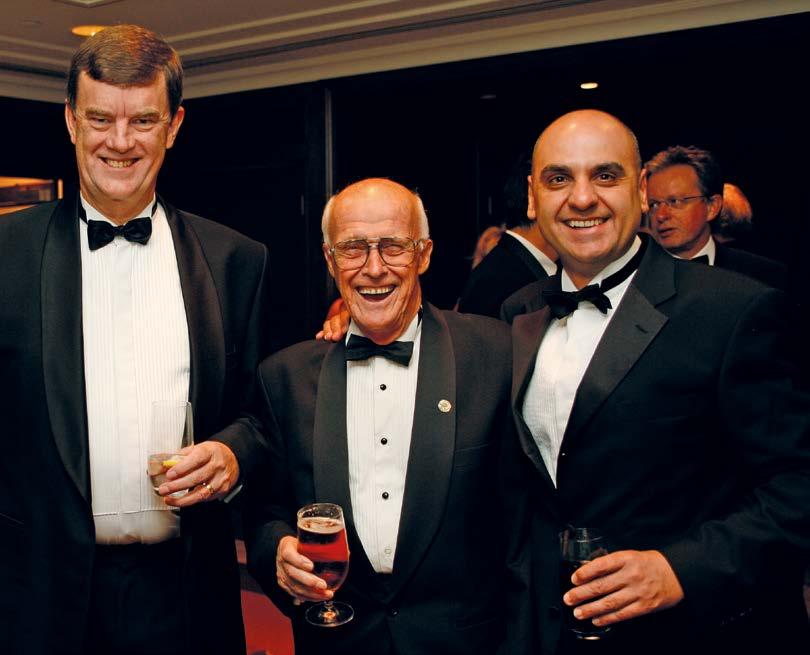
purpose was to research energy-efficient housing design and construction, through the CSIRO Division of Building Research, University of NSW, and the South Australian Department of Mines and Energy.
The outcome was a standard, resulting in the "FIVE STAR DESIGN RATING" scheme launched by Prime Minister Hawke in October 1984. The second phase was to apply technology transfer to both the building industry and the home buying public. It was marginally effective. Its successor is the national Home Energy Rating Scheme operated through the Sustainable Energy Authorities in each State. The company ceased operations with its final report to Government in 1988.
Digby was Coordinator of the Master Builders Display Home Centres from 1987 until 1994. This operation covered the very successful 'TOP 40' promotion campaign in four projects at Rowville and Taylors
Lakes, and four other branded projects in Roxburgh Park, Berwick, Hillside, and Melton. Digby was Project Manager, Resource Efficient Builder Information Program from 1997 to 1999.
This project was the result of a grant to MBV through EcoRecycle Victoria and was used for research and education with RMIT University about waste minimisation and responsible management of reuse, recycling, and disposal of waste in construction.
Digby conducted lectures on building matters over many years at the Council of Adult Education (CAE), Melbourne University, Deakin University - Geelong, RMIT, Box Hill Institute of TAFE, and at the MBA. He was also an instructor at Deakin University - Geelong, and Holmesglen Institute of TAFE up until 81 years of age. Digby was, until now, the National Secretary of the Building Science Forum of Australia. He was the former National President between 1990 and 1992, and
Digby will be remembered as dignified, loyal, popular and his very own person.
Chairman of the Victorian Division from 1994 to 1996.
Forever a busy man, Digby found time to act in his unique style as Chairperson as well as MC at MBV events, award celebrations and presentations. Digby retired from MBV after 30 years' of service (following a brief two-month abortive retirement in 1996). He never married but instead maintained a lifelong friendship from the 1950's with Patricia McDonald. Digby has been a constant companion. They enjoyed dancing, going to plays, jazz and classical music, and a glass or two of fine wine. Patricia was treated as one of the family. Digby dedicated much of his spare time playing many roles in his 'stage' career including directing, producing, and performing in several Delphi Theatre Company productions, some of which included accomplished actress Patty McDonald.
Digby was especially proud of his high achieving and fine violinist nephew, Simon Monger. They remained close to the last of Digby's days. Digby's private life interests included photography, collecting memorabilia, reading and amateur theatricals. From 50 years of Canberra Children's Theatre in 1947 to Adelphi Players Theatre Company in Melbourne in 1997. He followed the Hawthorn Football Club and enjoyed playing tennis. Lastly, he was an avid listener to the music of Beethoven Violin Concerto and particularly Johann Sebastian Bach's organ music.
Digby will be fondly remembered by many in the Victorian building and construction industry, particularly for his unique gentlemanly manner, style and wonderful diction, to his outstanding contribution and the impact he has made in his lifetime to better the built environment in this State and beyond. He was indeed a constant warrior for the homeowner telling them often of the need to have written building contracts to avoid conflict - "if it is written, it will happen", he would say at his public lectures.

He was a great man and is sadly missed by family and his many friends. It has been a real privilege to know him and be part of his life. A final testament to his nature, it was Digby's desire to not have a funeral. He did not want any fuss made about his passing. He was indeed a humble man. His body was cremated at Bunurong Memorial Park, Dandenong South.
ARTICLE AUTHOR
Graeme A Geary
MBS LFAIBS (Ret.)
Apprenticeship Victoria www.apprenticeships.vic.gov.au/helpdesk
Apprentice Helpdesk
M: 1300 311 820
E: apprenticehelpdesk@djsir.vic.gov.au

BONDOR Insulated Panels bondor.com.au
Darryl Stephenson
M: 0459 136 032 P: 03 8326 8007
E: darryl.stephenson@bondor.com.au
Bunnings Trade trade.bunnings.com.au
Mark Phillips
M: 0400 908 421 E: miphillips@bunnings.com.au

Foundation Technologies Australia www.foundationtechnologies.com.au
Richard Ryan
M: 0437 977 913
E: richard@ftapile.com.au
Master Builders Insurance Brokers www.mbib.com.au
Zoe Munro
P: (03) 9426 2600
E: service@mbib.com.au
Oracle NetSuite www.netsuite.com.au
Tania Large
M: 0422 276 658
E: tania.large@oracle.com
Cbus Super www.cbussuper.com.au
Daniel Tentser
Senior Employer Engagement Manager
M: 0439 372 365
E: daniel.tentser@cbussuper.com.au
COLORBOND® steel colorbond.com
Julia Farrah
E: julia.farrah@bluescopesteel.com

Own Money www.ownmoney.com.au
Rory Sercombe, CEO
M: 0407 869 361
E: rory@ownmoney.com.au
Panasonic HVAC Group www.panasonic.com/au/hvac/user-top/ residential.html
Shaune Hanley
M: 0408 275 461
E: shaune.hanley@au.panasonic.com

Xact Accounting xactaccounting.com.au
Phil Brown
M: 0404 556 727
E: phil@xactaccounting.com.au
As a sponsor, we offer multiple sponsorship and partner advertising options, as well as providing a platform and advertising opportunities for your business.
For more information, email sponsorship@mbav.com.au and see how we can best promote your company in the Master Builders Victoria Magazine.