CONSTRUCTING A NEW PERSPECTIVE
CONSTRUCTING A NEW PERSPECTIVE
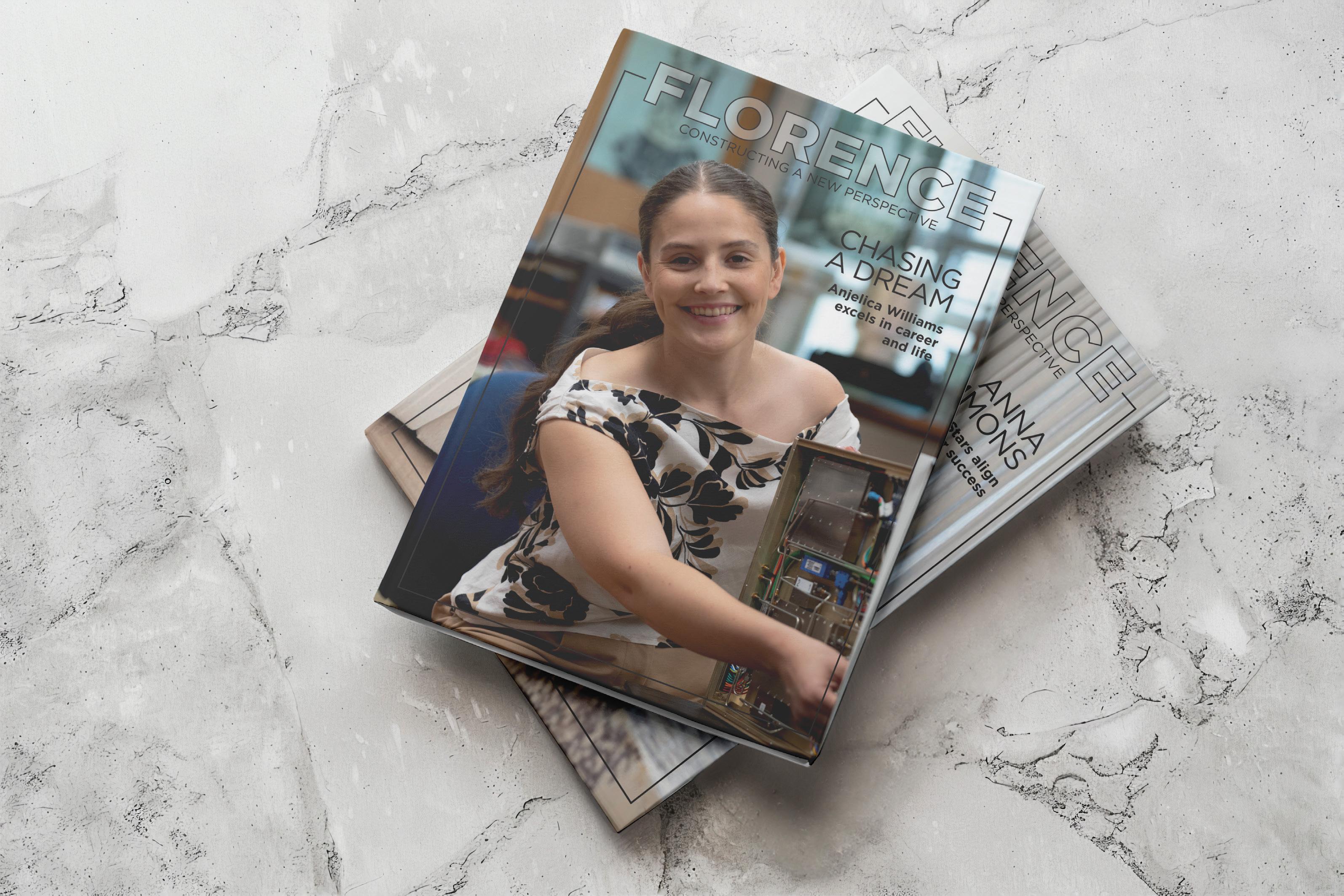
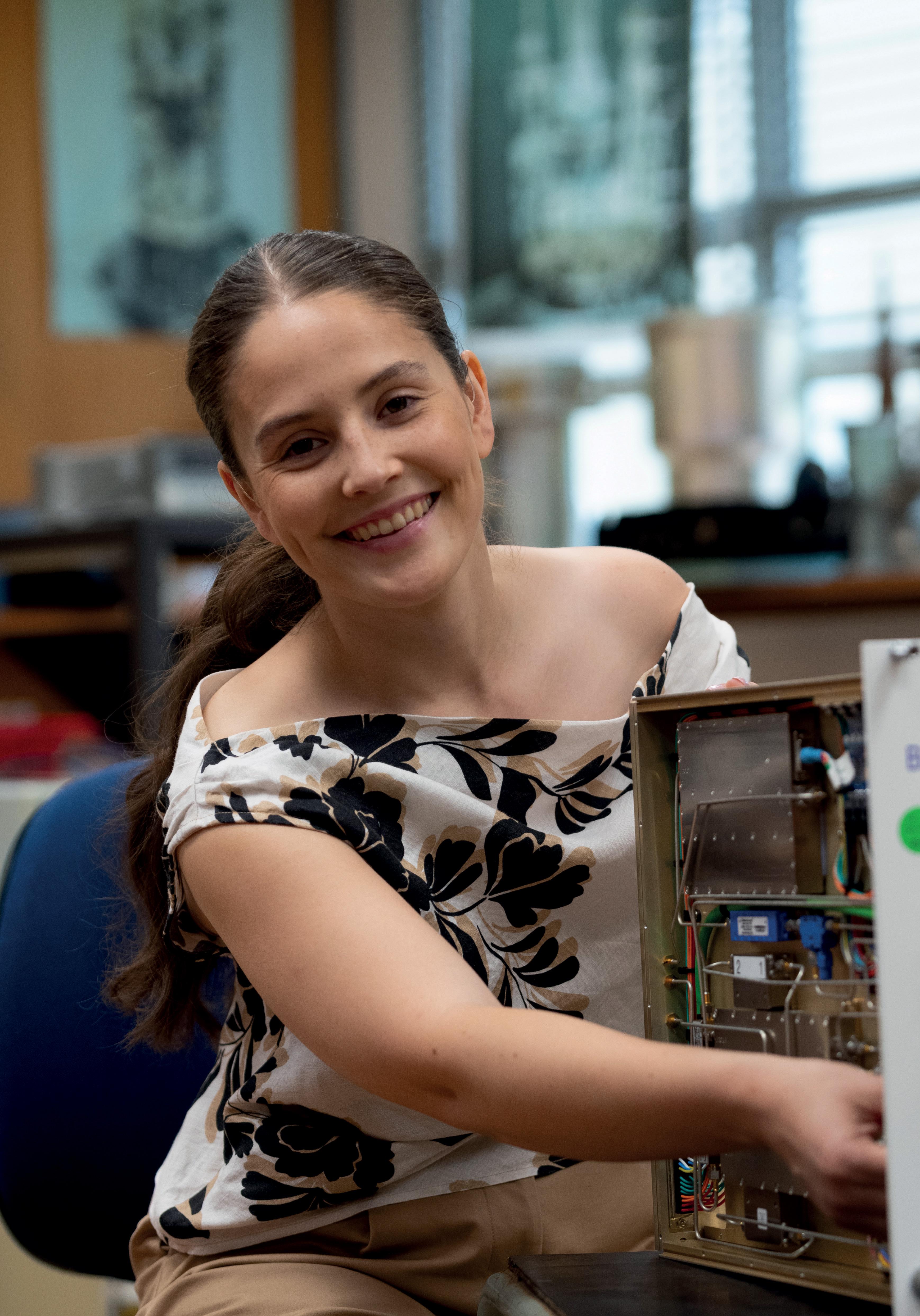
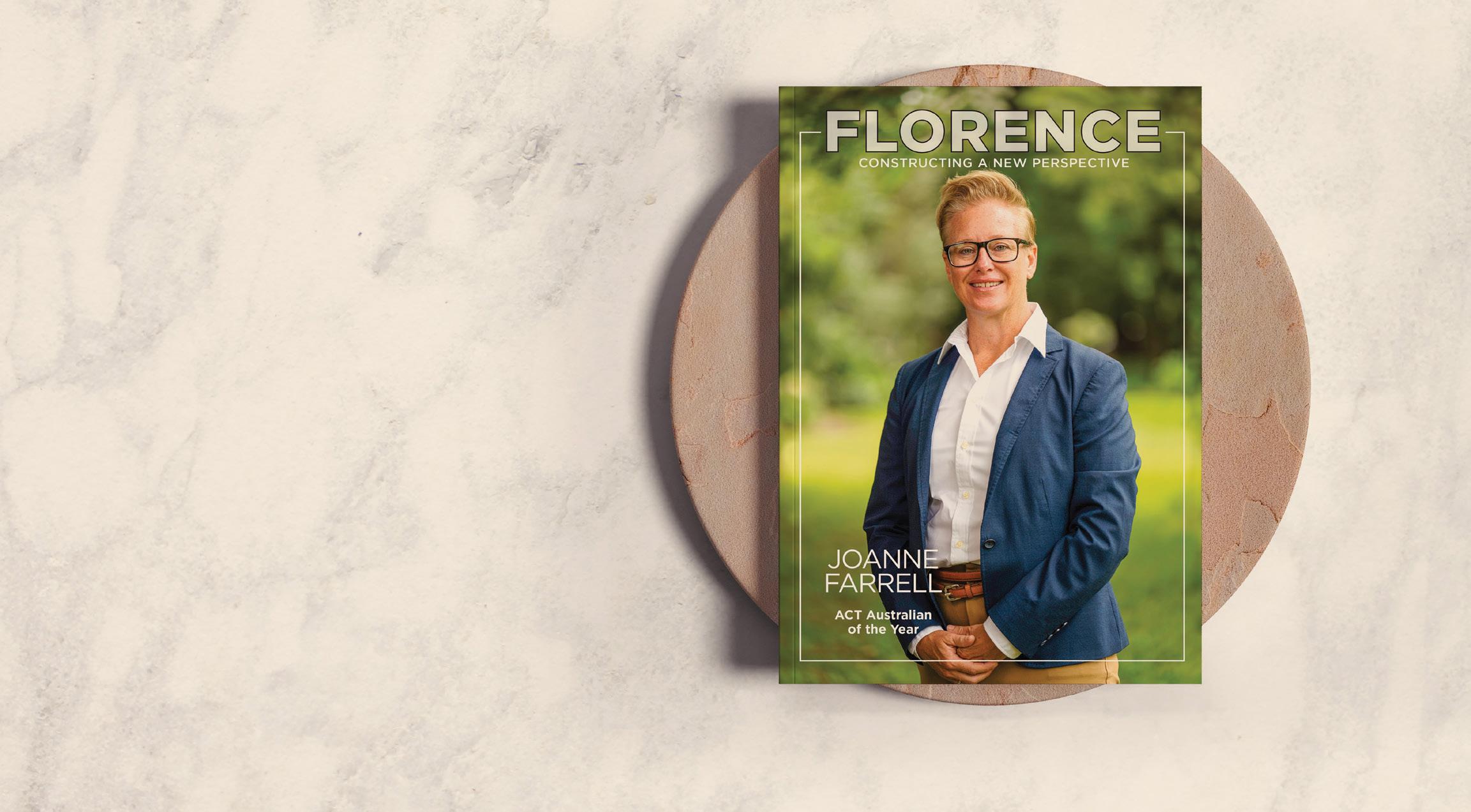
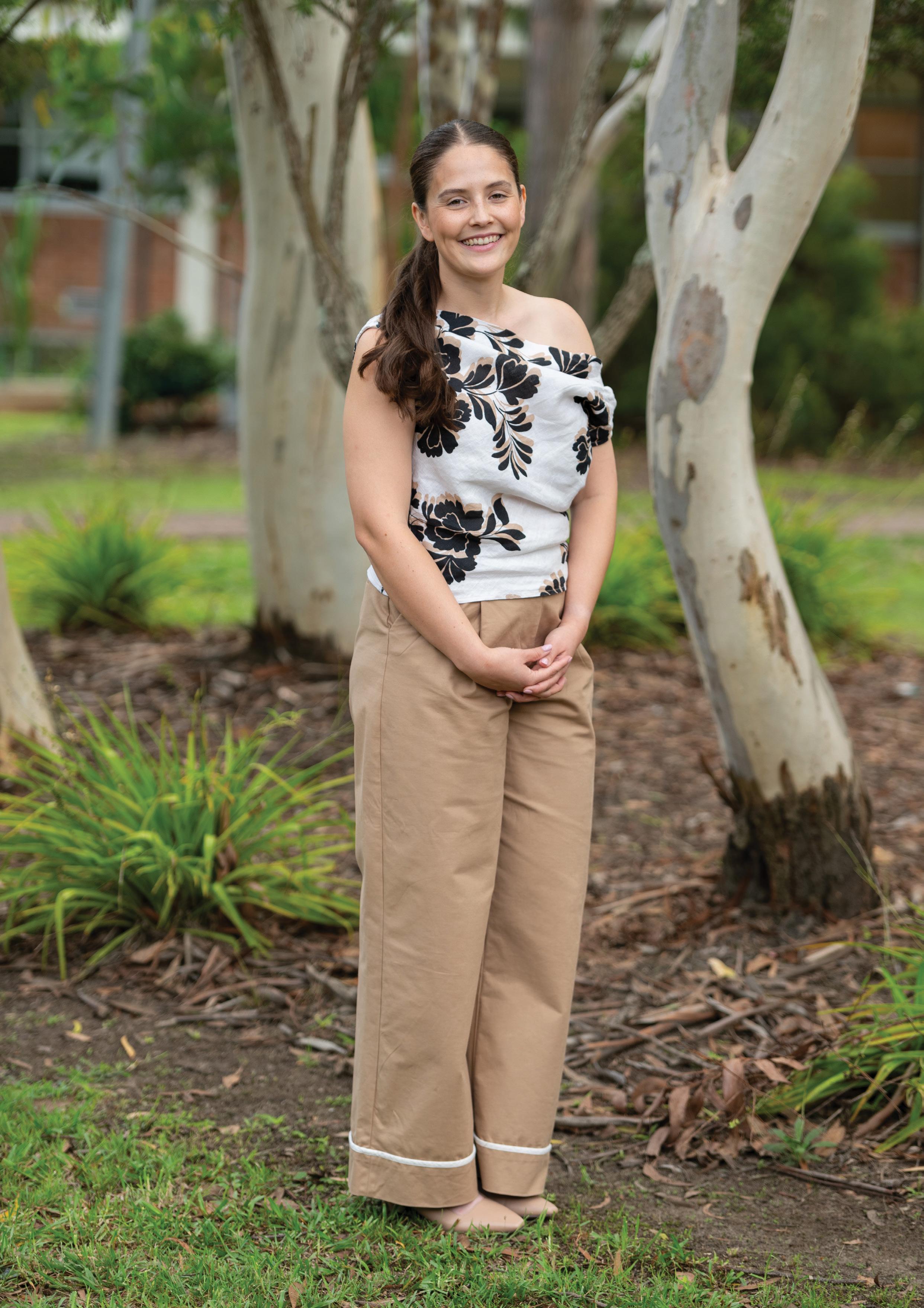
Anjelica Williams excels in career and life



See how you can get involved.
FLORENCE Magazine celebrates women and their achievements, acknowledging gender diversity issues and offering a platform for women to contribute. It is dedicated to celebrating the talented, game-changing women working and thriving in the building and construction industry.
FLORENCE highlights the numerous roles that women play in the building and construction industry.
FLORENCE luncheons celebrate women and their achievements, acknowledging gender diversity issues and offer a platform for women to contribute and connect with inspiring and motivational guest speakers. Come along and be a part of constructing a new perspective.

Are you interested in Partnering with FLORENCE?
We have a number of Partnership Opportunities to help grow your business by associating with the future of the Construction Industry.
Editor: Alyssa Welke
Editorial Coordinator: Amanda Kelly
Custom Publishing Manager: Kyal Osborne 07 4659 1444 | 0438 425 669
Advertising enquiries: Roger O’Brien 07 4659 1444 | 0419 707 450 roger@greenridgepress.com.au
Designed & Printed by: Greenridge Group, 4 Freighter Avenue, Toowoomba QLD 4350
It has been such a pleasure to interview so many inspiring and interesting women for another edition of Florence.
The women who work in and around building and construction, and any male-dominated industry, always have such amazing stories to tell about how they succeed in their careers.
But it isn’t just their work that inspires – their lives are full and interesting.
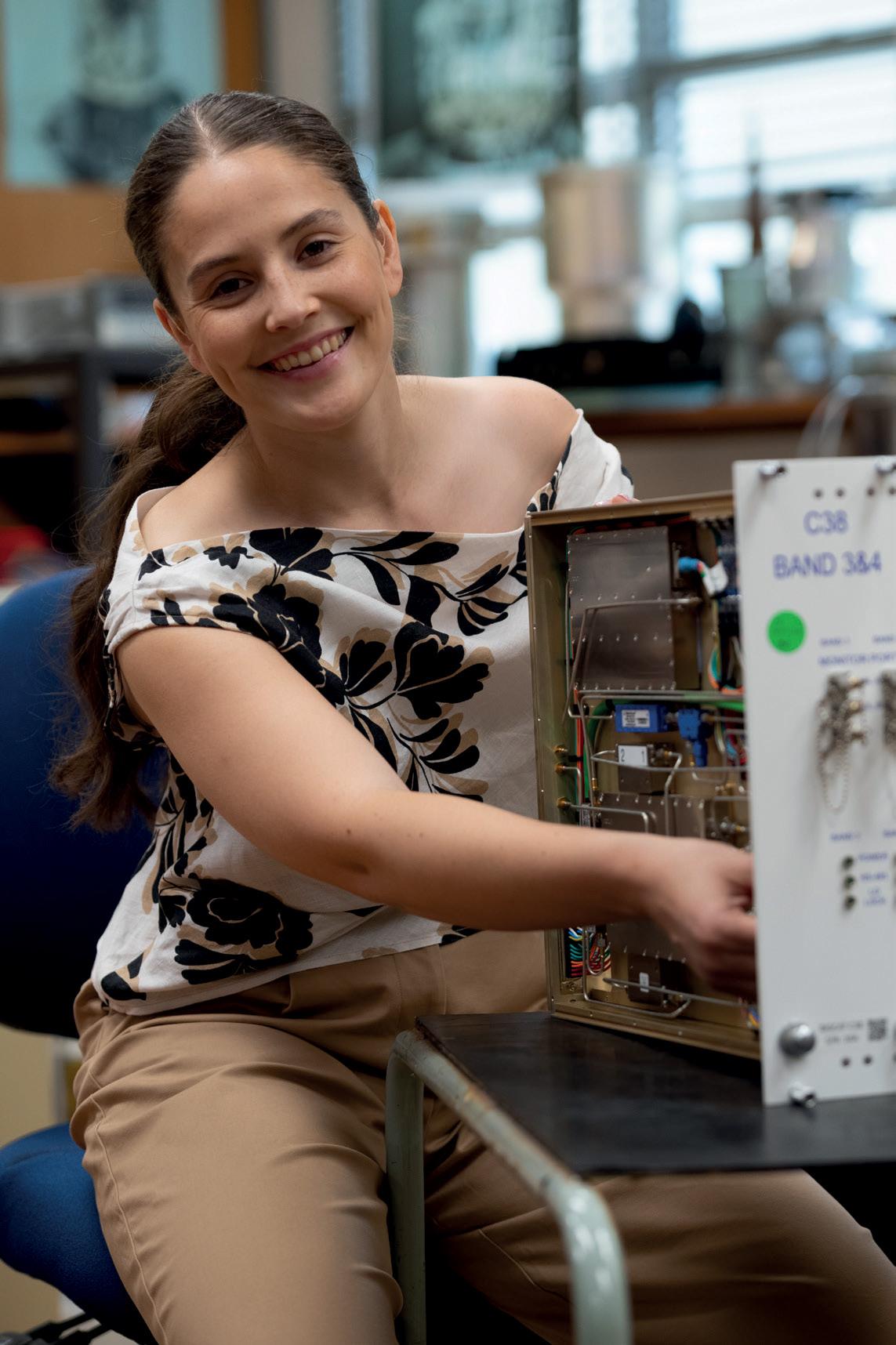
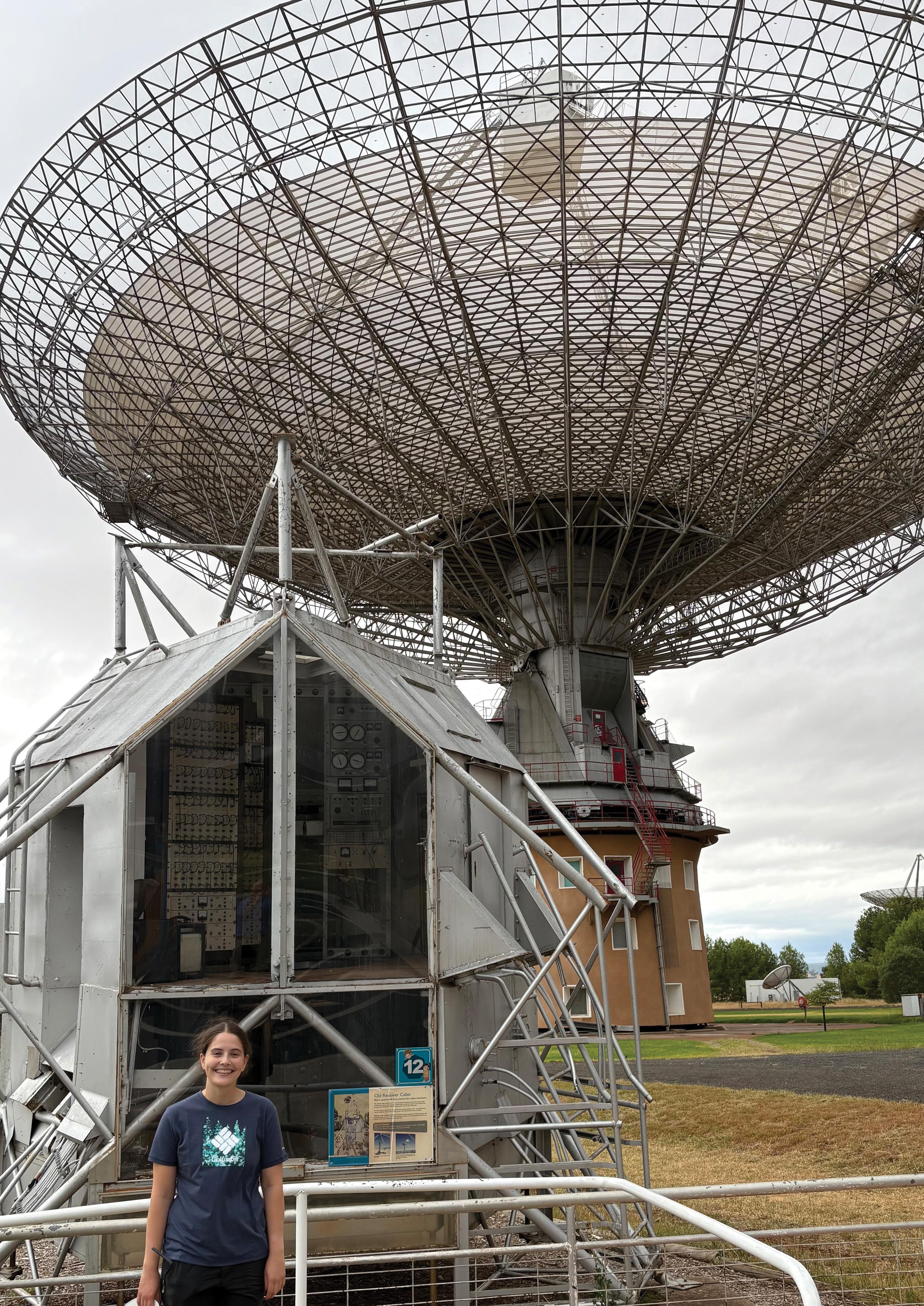
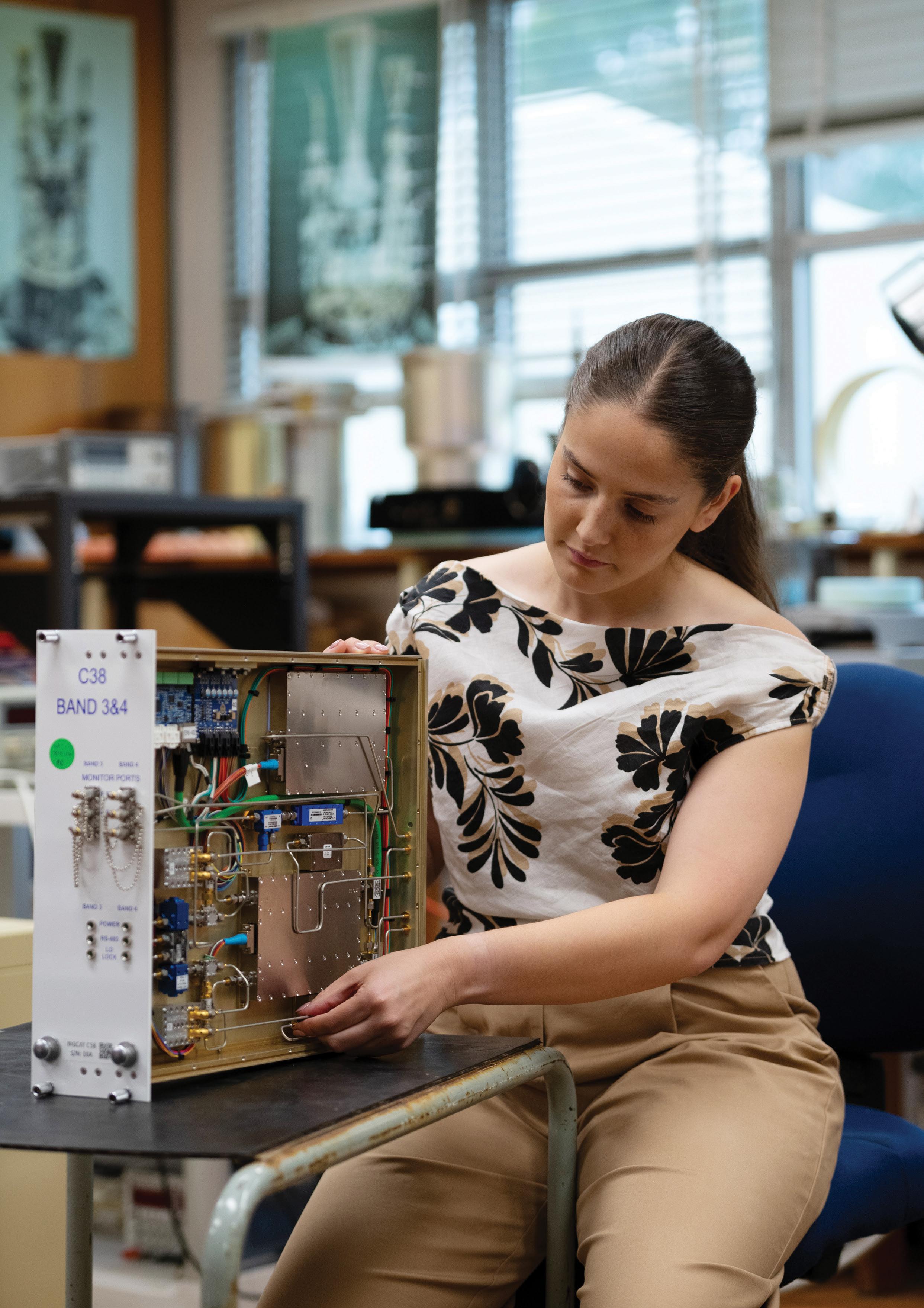
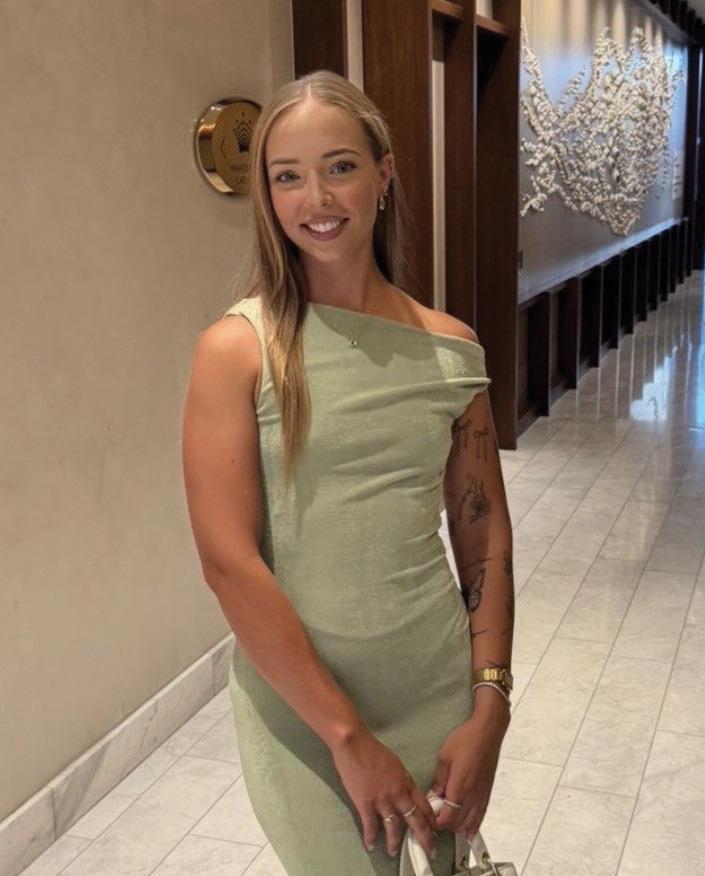
Our cover features mechanical engineer Anjelica Williams (p.8) who not only has a thriving in her career as part of the design team on a new system for CSIRO’s Australia Telescope Compact Array, a large radio telescope near Narrabri, NSW, but has also represented Australia at the Deaflympics in the Women’s Football team.
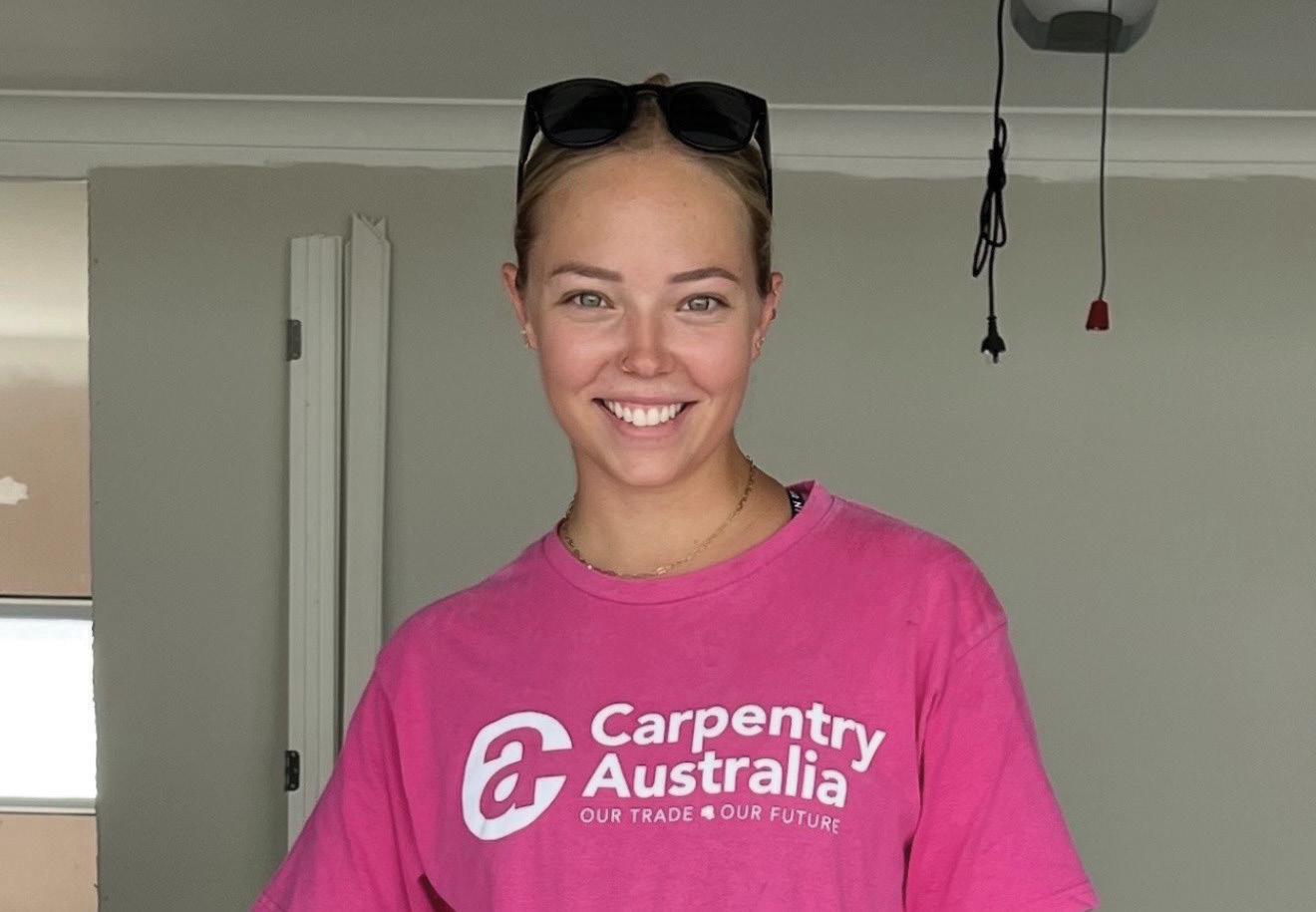
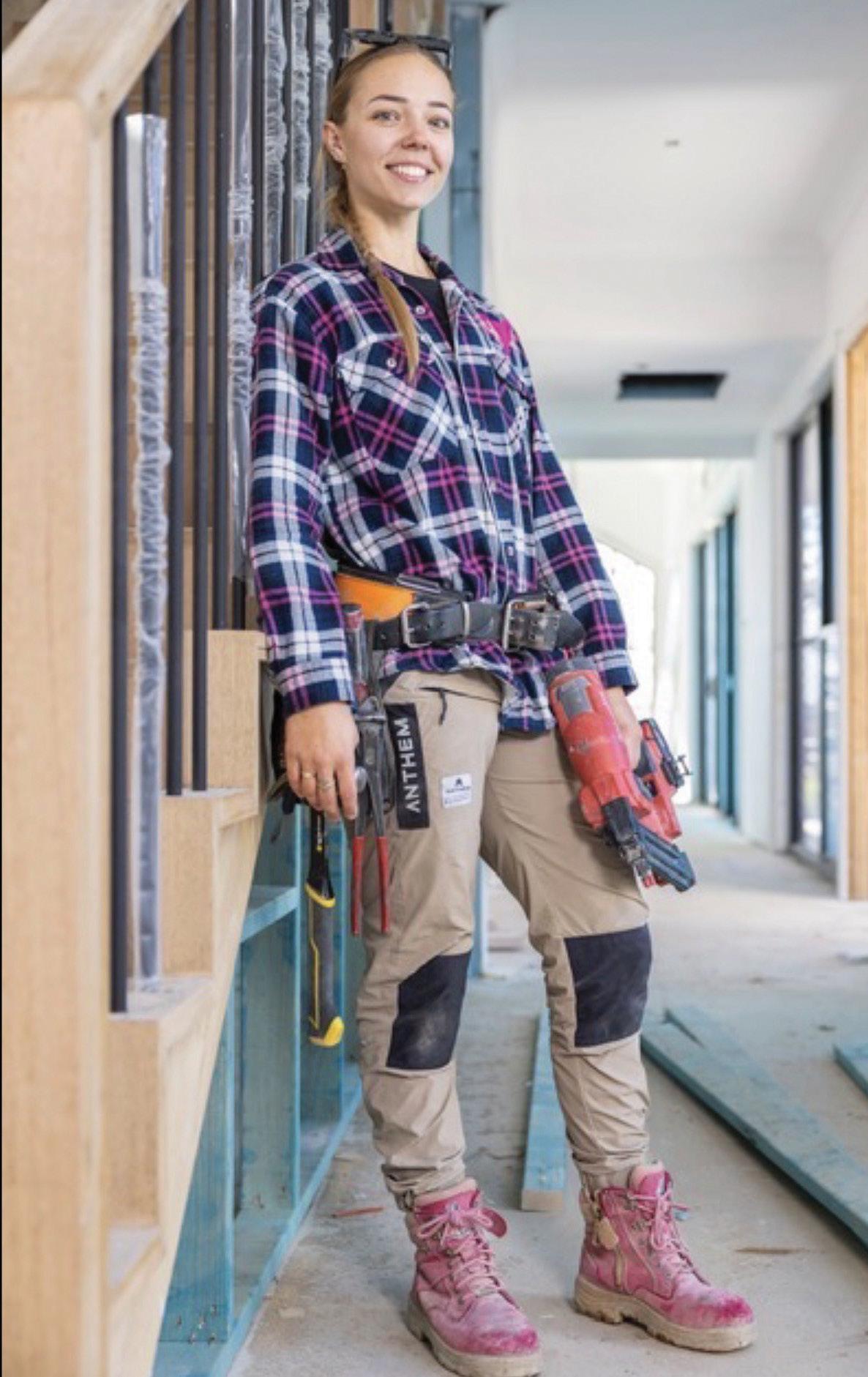
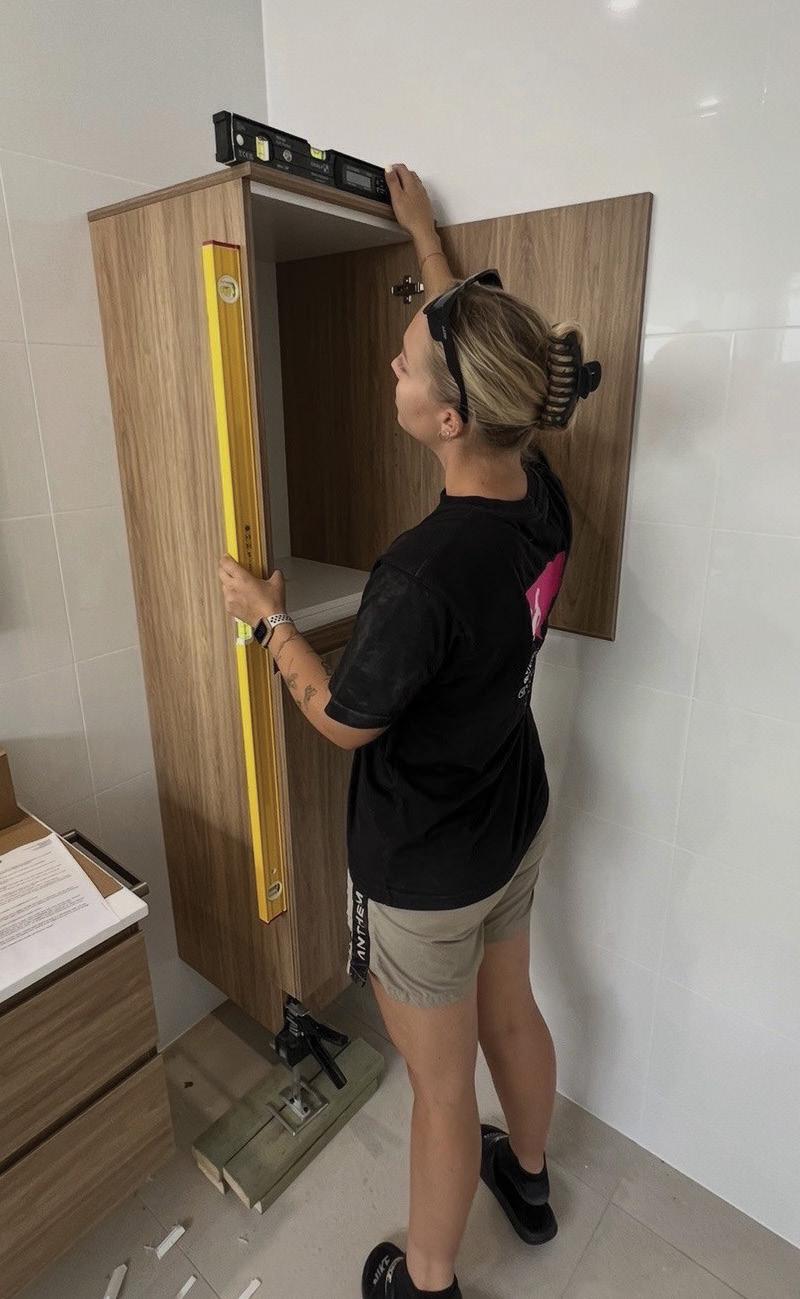
We also chat with carpenter Felicity Pettiford (p.16) who is the youngest woman to complete her Builders Licence through Master Builders New South Wales, to talk about how she got her start in the industry as a teenager and how she encourages other young women.
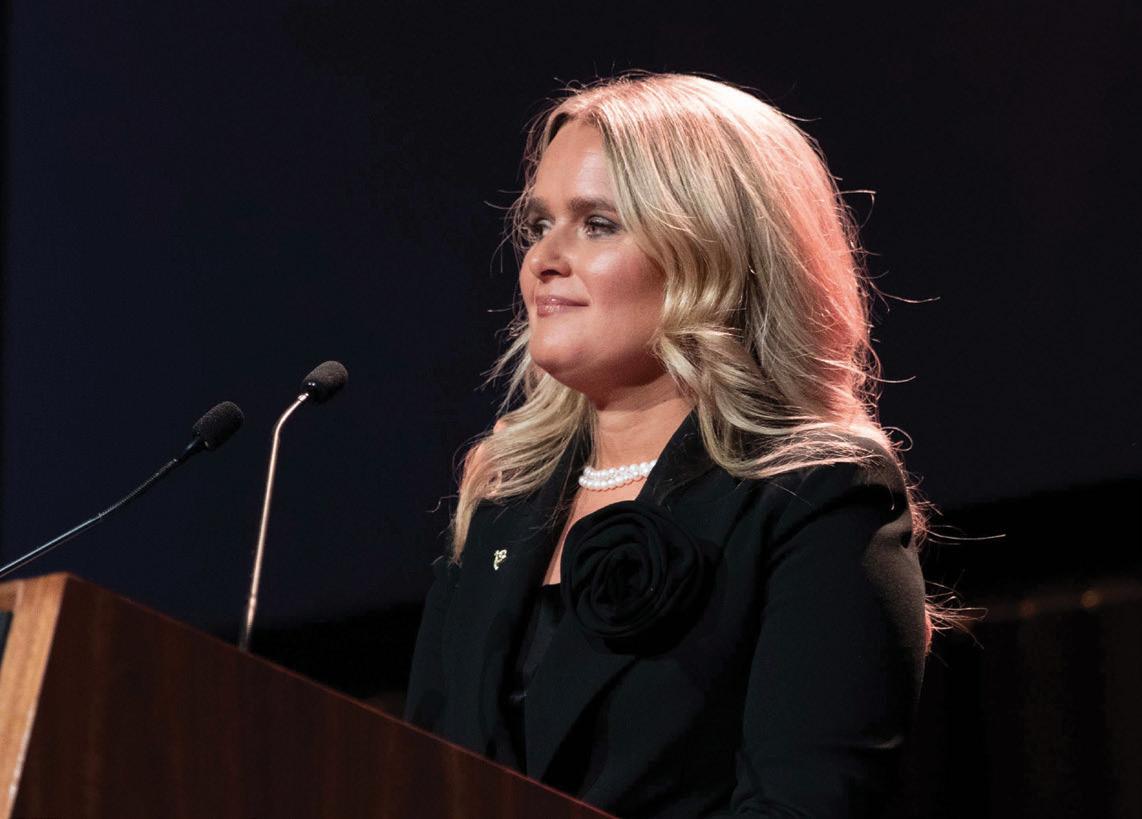
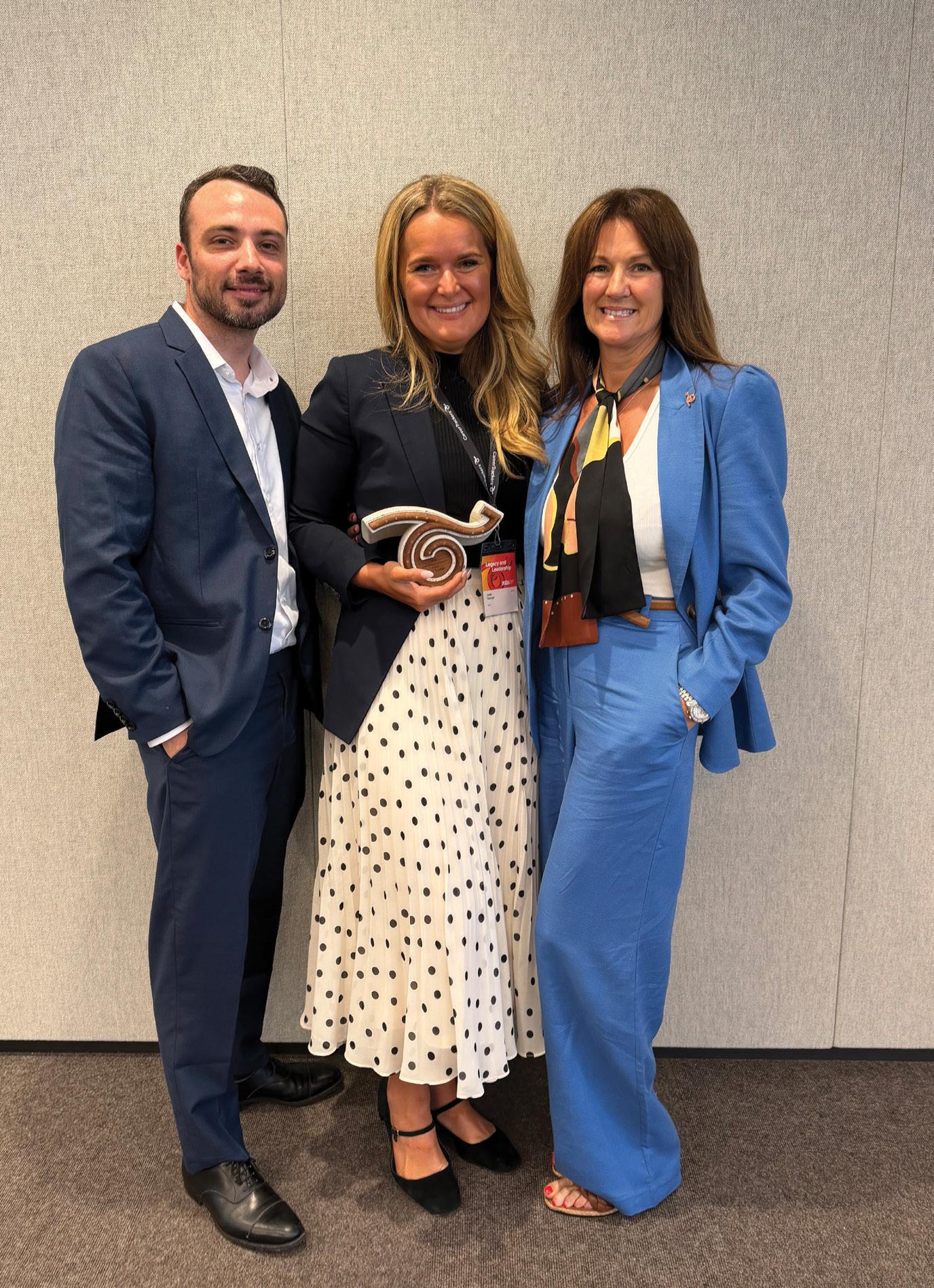
Raquel Manning talks with Jade George (p.20) about representation, leadership, and the future of women in the built environment.
We also have stories of three Western Sydney women contributing to the delivery of the M5 Westbound Traffic Upgrade through Transport’s partner, Seymour Whyte (p.30).
And as usual our columnists share their insights into important topics that affect us all.
Until next time,
Greenridge Group is the exclusive Publishing Partner of Florence magazine, in conjunction with the Master Builders Association of New South Wales.
ABN: 97 056 269 713. Ph: (07) 4659 1444 Website: www.greenridgegroup.com.au
This publication is copyright. No part of it may be reproduced, stored in a retrieval system or transmitted in any form or by any means including electronic, mechanical, microcopying, photocopying, recording or otherwise without the permission of Master Builders Association of NSW or Greenridge Group.
Disclaimer: The information contained within Florence magazine is given in good faith and obtained from sources believed to be accurate. The views expressed are not necessarily those of the publisher. Greenridge Group and the Master Builders Association of New South Wales will not be held liable for any opinion or advice contained herein.
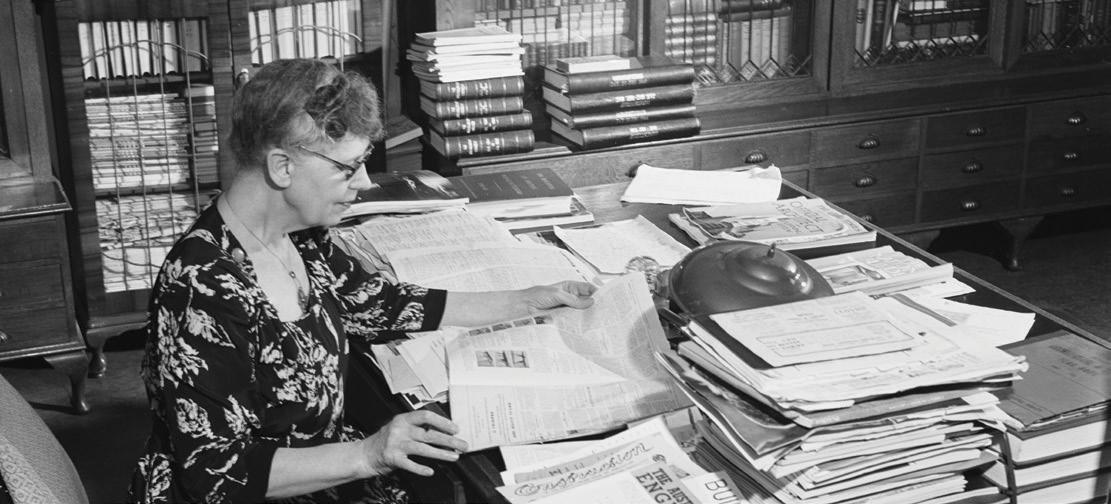
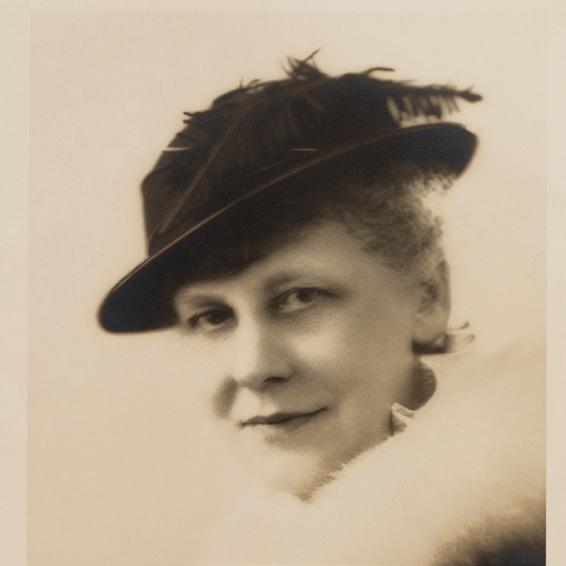
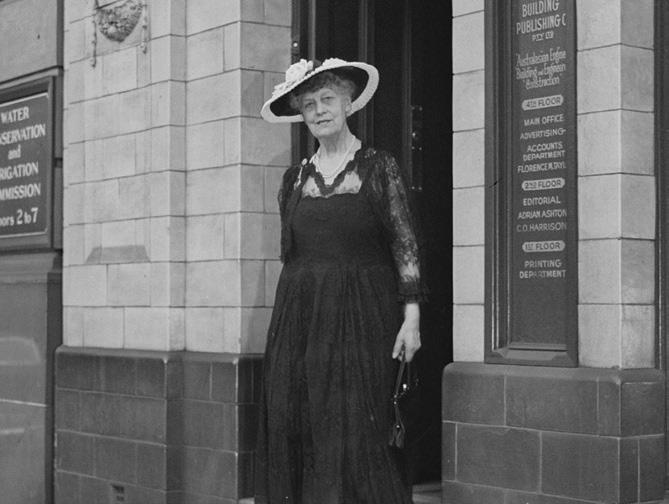
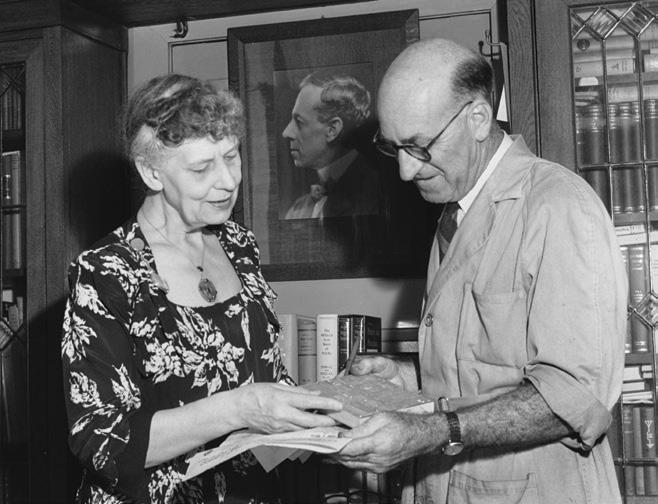
Florence Taylor was a pioneer of women in the construction industry and her legacy is still being felt.
As an architect and publisher, Florence believed in the notion that “a woman to marry, get into the confines of the home and never be articulate in public affairs is a disgrace” and her achievements in the male-dominated architectural industry proves that.
She was known for her energy, determination and outspoken nature, a nature which distinguished her well throughout her colourful career, first as a draftsman and ultimately as a publisher of trade journals.
She was widely respected, even if her questions and criticisms irritated some of her professional colleagues.
Her achievements within both of her fields had an indelible impact on the public acceptance of women in the professions.
She was a tall, striking woman and blue eyes, and was known for dressing (even in the 1930s) in long sweeping skirts and a picture hat decorated with ostrich feathers.
She was born on December 29, 1879, at Bedminster, Somerset, England, and was the eldest daughter of John and Eliza Parsons.
The family immigrated to Australia in 1884, and her father worked in the sewerage construction branch of the Department of Public Works. This gave Florence her first taste of the construction industry, as she assisted her father with his engineering calculations.
It was her father’s death in 1899 that pushed Florence into the architectural industry when she became a draftsman to support her family.
She learned her trade under architect Edmund Skelton Garton, and simultaneously attendee night classes at Sydney Technical
College unit 1904; during her time with Garton’s office she was promoted to chief draftsman.
Once she completed her training she became chief draftsman to J.B. Clamp, who nominated her in 1907 for associate membership of the Architects of New South Wales. Despite his defence of her talent (she “could design a place while an ordinary draftsman would be sharpening his pencil””, the nomination was defeated.
But this did nothing to deter Florence from thriving in the practice of designing homes; it wasn’t until 1920 that Florence was invited to join the Institute of Architects, which she accepted.
On April 3, 1907, Florence married George Augustine Taylor. Florence and her husband were founding members of the Town Planning Association of New South Wales in 1913, and she was its secretary for many years.
Together they started the Building Publishing Co. Ltd, which produced trade journals, three of which Florence edited: Harmony, Young Australia and the Australian (later Commonwealth) Home.
Through their journals they campaigned for urban planning, improved construction methods and better materials; they also promoted the interests of engineers, architects, and builders.
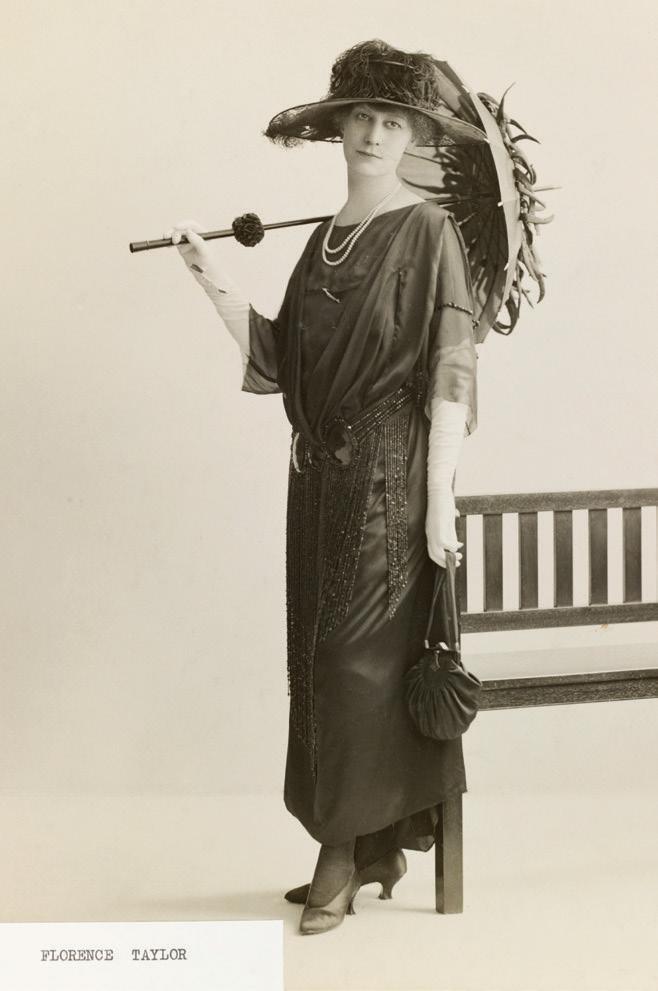
When George died suddenly in 1928, Florence was determined to carry on their business and although eight of the 11 journals they published were forced to cease, she maintained Building (later Building, Lighting and Engineering) (1907-72), Construction (1908-74) and the Australasian Engineer (1915-73) and edited them herself.
She continued to produce town planning schemes but relied on other so draw them as she was unable to spare time from publishing.
Photo Credit: Mitchell Library, State Library of New South Wales and Courtesy ACP Magazines Ltd.
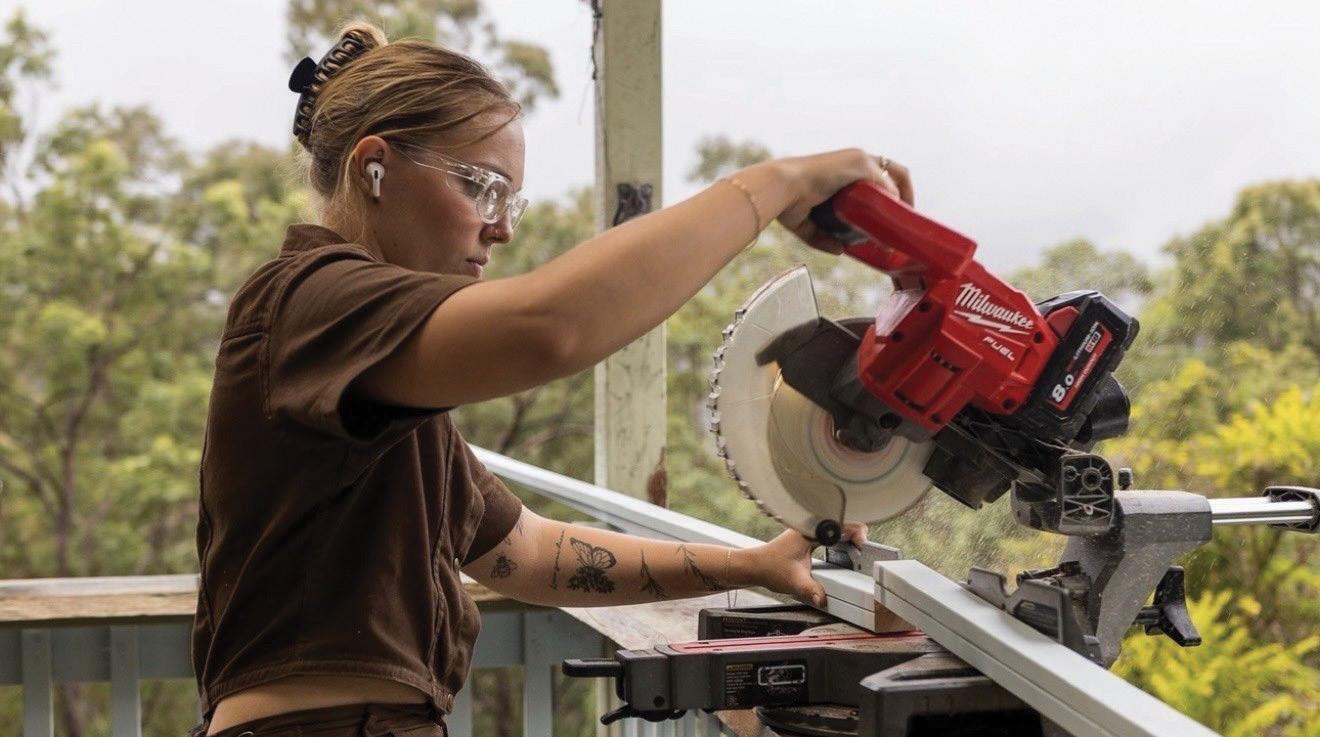
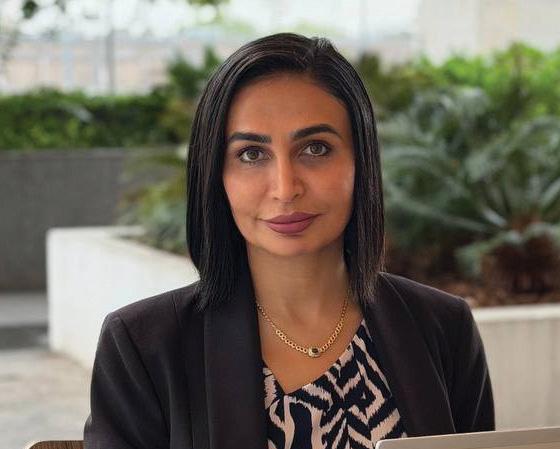
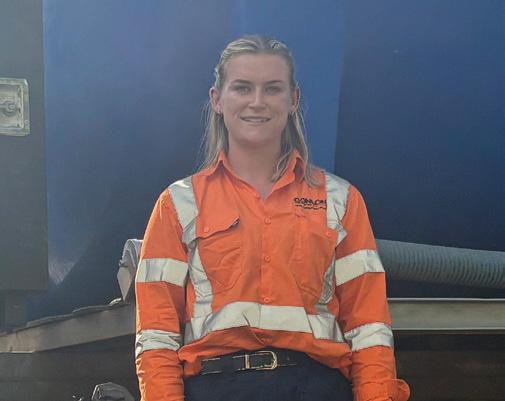
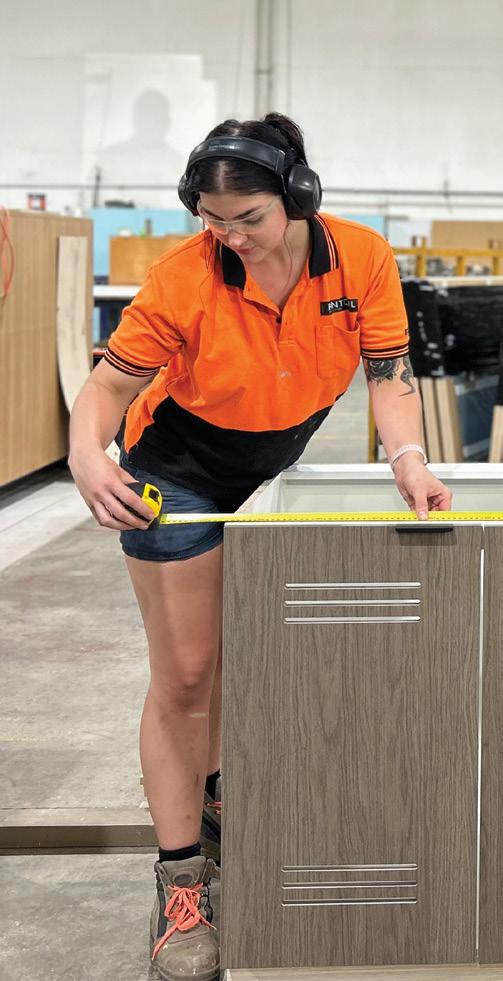
What we’re trying to achieve here at Florence has always been clear, to shine a spotlight on the women achieving remarkable things in the construction and building industry.
This is to encourage more women to see building and construction as a viable career field for them.
With so many career paths in this industry from engineering to shopfitting, carpentry, plumbing, electrical, project management, estimating and so many more, there really is a career path for anyone and any interest.
It is the people in this industry who make it what it is and what it will be in the future.
In the last five years the concerted effort by government and industry to increase women participating in the industry has helped to increase the percentage of women in the industry from 12% in 2020 to 15.5% in 2025.
This increase in participation brings fresh faces and fresh ideas to the industry, which is always a good thing.
These young women are just as enthusiastic as their male counterparts, but in many cases met much more resistance to undertaking work in this industry.
From being actively discouraged away at a high
school level, to struggling to find an employer to take them on as an apprentice, they have pushed through the roadblocks to chase down their dream to work in this exciting and growing industry.
But by not being deterred, they are being the examples they wish they had and benefitting the industry by bringing a fresh perspective on how the workplace can function for the benefit of all.
They are also actively encouraging young women, through schools, social media and being seen in media such as Florence, to join the ranks of this great industry.
And while these women deserve recognition for this perseverance, the people supporting them, encouraging them to keep trying, and the people who stepped up and gave them a chance, also need recognition for being a catalyst for change and to help address the skills shortage in the industry.
Women have always played an important part in this industry, and the experienced women who have been championing the cause for years are starting to see their advocacy drive real change, with more young women looking to building and construction trades.
The number of young women we have featured in this edition of Florence show the future of building and construction surely is bright.



ALYSSA WELKE
When Anjelica Williams stepped on to the soccer pitch in Japan wearing the Australian uniform for the first time, she felt an immense sense of pride to represent our nation at the 2025 Deaflympics.
Selected to play soccer in the 2025 Deaflympics, the talented centre-mid player is part of the first deaf Australian women’s football team to qualify in this tournament for 20 years.
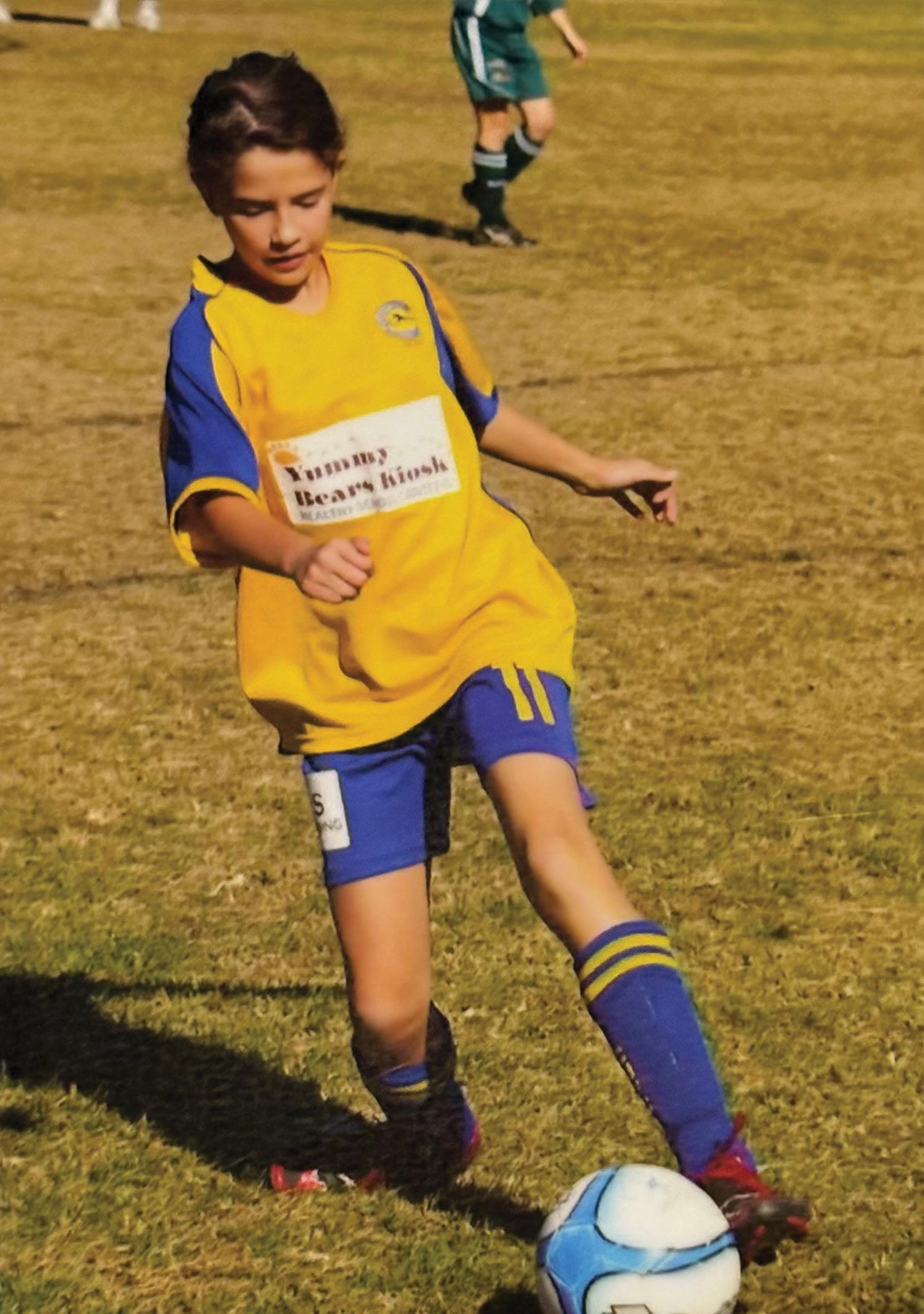
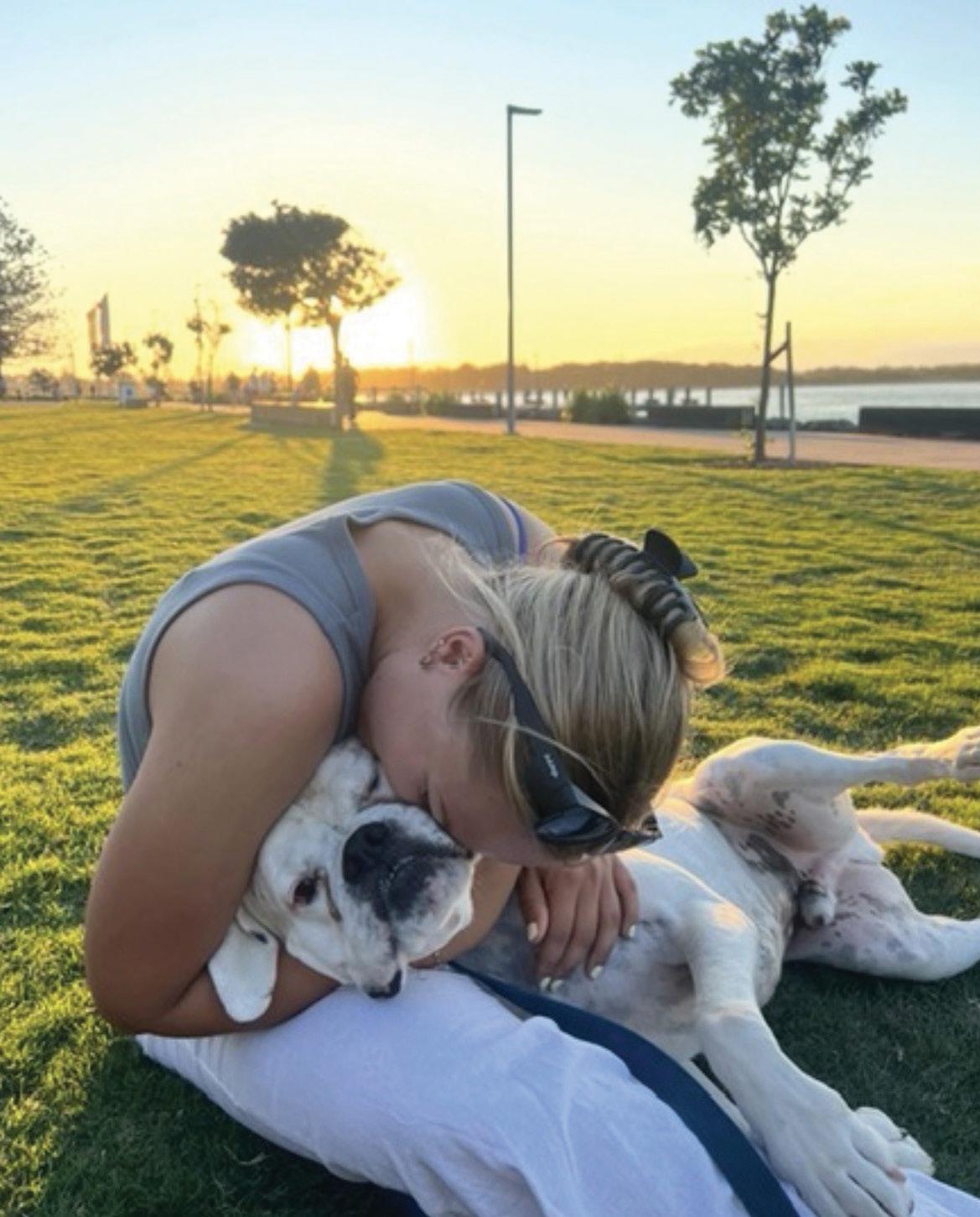
Twenty-six year old Anjelica, born with moderate hearing loss, started playing soccer at 11 years old.
“I was 11, so quite late; I started dancing when I was three, but my next-door neighbours played soccer, and I really, really wanted to play with them, so I ended up begging my parents,” she said.
Growing up in Sydney’s Inner West suburb of Marrickville, she played a lot of sport.
“I spent a lot of time outside just playing with the ball. It was something I picked up pretty quickly.
“I think the dancing and the foot coordination really helped in that aspect; I did a lot of tap dancing, so I think that helped.
“And I just got lucky - I got onto a great team, and we did all the different competitions, and I progressed really quickly.
“But I spent a lot of time just by myself in the backyard, playing with the ball.”
Her dedication to the sport lead Anjelica to playing in the Women’s National Premier League (NPL) from the age of 15, until last year.
The pinnacle of her playing so far was representing Australia last year in the 25th Deaflympics, which was held in Tokyo.
And while the Deaflympics are recognised by the International Olympic Committee, the Australian athletes were self-funded to attend.
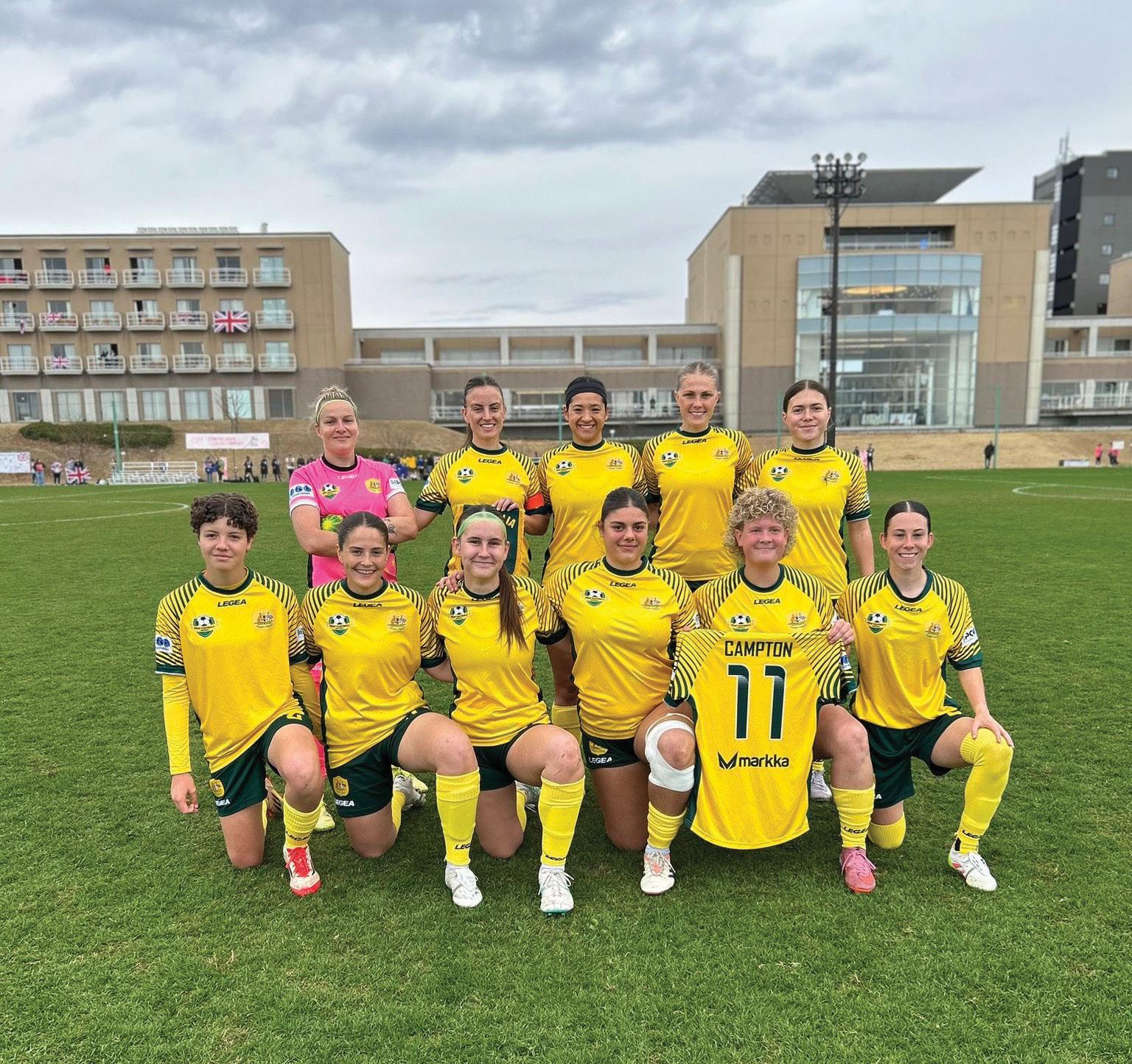
With the team made up of amateur athletes, the players each had to raise $8000 to be able to get over to the competition, which is not the case for all countries. For example, the US Team is part of US Soccer with a lot of the members of that team playing the sport professionally, making the Australian team’s achievement of fourth place even more impressive.
To be eligible to compete in the Deaflympics, deaf is defined as a hearing loss of at least 55 dB per tone average in the better ear (3-tone frequency average at 500, 1000 and 2000 Hertz, ISO 1969 Standard).
To even the playing field, everyone plays without hearing aids or Cochlear implants; because of this the referees use flags instead of whistles to notify players of infringements.
Anjelica said there isn’t the same flow to the game because players and referees can’t interact using voices.
But despite this, she said it was a very freeing way to play.
“It’s nice and freeing to play without any extra input. It’s really just yourself and your teammates,” she said.
“You really do have to know the game and know each other.
“I think that would be the main challenge too, with our team coming from everywhere. We only have three day blocks a couple of times a year to get to know each other and our tendencies – what we like and what we don’t like and trying to communicate.
“A lot of the Australian team rely on hearing devices in their everyday life so many of us aren’t fluent in Australian Sign Language.”
Not only is 26-year-old Anjelica a talented soccer player, but she is also an accomplished mechanical engineer.
Anjelica has pursued her education, career and her passion for soccer to the best of her ability.
Her hearing loss was diagnosed at birth, and her parents were able to access hearing services and hearing aids early in life. They have been her constant advocates and cheerleaders, always encouraging her to pursue her education and her passion for soccer.
“I’ve had hearing aids since I was ten months old,” she said.
“I attended the Catherine Sullivan Centre’s early intervention program for babies and preschool aged children diagnosed with hearing loss, where I gained a lot of confidence through developing my sound recognition and pronunciation skills.”
“I attribute that really to being able to integrate into school pretty seamlessly.
“My teacher did have to wear a little microphone and an FM, and I hated that, but it led to me being able to learn and be pretty good at school.”
That ability to learn and explore her interest in science and maths set her on the path to becoming a mechanical engineer.
Although it did take her a while to settle on mechanical engineering as her chosen field.
As a child she always enjoyed building things out of Lego, playing with cars and not doing the stereotypical “girl” things; and coupled with her love of science and maths, her dad suggested engineering may be a good fit.
In Year 10 she got a taste for the industry with work experience with Kevin O’Keefe at Macarthur Engineering and participating in a UNSW Women in Engineering camp further cemented the decision.
“I always knew I wanted to do engineering; it took me a while to figure out what type. I tried mechatronic and biomedical but in the end, I ended up studying mechanical engineering and computer science at UNSW,” Anjelica said.
A chance opportunity to participate in the Cochlear Summer Program gave Anjelica a chance to work at the global leader in implantable hearing solutions.
“Being hearing impaired, I’d always known of Cochlear and the work they did, so I thought that would be really interesting,” she said.
“I spent 12 weeks there in the university break and ended up staying on for my final year of university in the implants mechanical team. And then I did the graduate program there and ended up with a permanent role in the team working on the next generation electrode for Cochlear implants.”
Last year, Anjelica took on a new role with CSIRO, Australia’s national science agency, as a mechanical engineer in the Space and Astronomy team.
Her role is part of the instrumentation group working on Murriyang, CSIRO’s Parkes radio telescope and the ASKAP telescope at Inyarrimanha Ilgari Bundara, the CSIRO Murchison Radioastronomy Observatory in Western Australia.
She specifically works on designing components for the phased array feeds within the radio telescopes.
Radio telescopes use specialised cameras, called receivers, to detect and amplify faint radio waves from space. Most of these cameras only see a small part of the sky at once, which makes surveying large parts of the sky a time-consuming process.
For many years CSIRO has been developing receivers with a larger field-of-view, and these have been used on Murriyang, as well as other instruments around the world.
For the newest radio telescope, ASKAP, CSIRO developed innovative phased array feed receivers with a wide field-of-view.
CSIRO explains that each phased array feed is made up of 188 individual receivers, positioned in a chequerboard-like arrangement. Alongside the receivers are low-noise amplifiers, which greatly enhance the weak radio wave signals received.
These components are housed in a water-tight case mounted at the focal point above each of ASKAP’s antennas. Together with specialised digital systems developed for ASKAP, the phased array feeds create 36 separate (simultaneous) beams to give a field-of-view of 30 square degrees on the sky.
With all of ASKAP’s 36 antennas fitted with phased array feeds, the resulting science has been outstanding with astronomers regularly making new discoveries about our universe.
This pioneering technology makes ASKAP the fastest radio telescope in the world for surveying the sky, taking panoramic snapshots over 100 times the size of the full Moon.
Anjelica thrives on the unique challenges the type of niche work her previous and current roles have provided to her career and her development as a mechanical engineer.
“I guess I’ve always chased roles that are still really hands on and not just a desk job. I love the handson aspect of it, and I’ve been able to do that in both my roles and work with multidisciplinary teams,” she said.
“I’ve always been one of a few mechanical engineers on a team – getting to work with electrical engineers and system engineers to make everything come together, I think that’s really enjoyable.
“I particularly like the mechanical engineering aspect, because you get to create something and then see the machined end-product; and I think that full cycle is always really rewarding.”
Anjelica is embracing the challenges of her work and finding fulfilment in her engineering career, which is something she’d like to see more women do in the future.
She said while at university it wasn’t uncommon for her to be one of only a few women in a class of 30, in the workplace she has experience teams that were both female and male dominated.
She has experienced times when she’s been talked over, or had her ideas repeated back by somebody else and regarded differently, which she said is a common experience for many women.
But she is heartened by the fact that women are talking about it more and how to deal with it.
“Nothing changes unless there are more women in the field and that being a normal thing,” she said.
“I’ve been part of a few different hiring processes at different places, and there’s always that talk of, ‘oh, you know, is this the right culture for this young woman to enter’.
“But I think unless you’re introducing women into the area, that culture is not going to change, and I
don’t think it should stop anyone doing what they want to do.It hasn’t stopped me and I’ve been pleasantly surprised that most people are very welcoming and encouraging of you.
“And yes, there’s always going to be a few people that maybe don’t behave the way you would like them to behave, but I think not entering that field because of that or not encouraging more young women to enter the field doesn’t change that and doesn’t help.”
She said she’s had some great bosses and colleagues, both women and men, who have been open to having discussions on how to approach change and difficult discussions.
“There’s a lot more open discussion, which really is what’s going to drive the change in the culture.
“New people coming in with different ideas all inherently drives change in the culture of the workplace.
“The best advice I’ve ever received is to have confidence in the unique perspective you bring.
“Your background and experiences shape the way you see and solve problems, and that distinct viewpoint can lead to innovative ideas and solutions regardless of how many years of experience you have.”
She sees engineering as a fantastic career with so many different applications and would love to see more young women take advantage of the opportunities to enter the field.
She said mechanical engineering particularly has such a wide range of applications and that engineering in general has so many applications across the globe.
“I think it is a really great career path; even within the broader engineering umbrella, there’s mechanical engineers, electrical engineers; you’ve got civil. There’s just such a broad scope – coming out of university now, you’re not so restricted to what you’ve studied; one of my friends studied biomedical engineering and then ended up being a firmware engineer.
“I just think the skills are really transferable to lots of different jobs.
“If there are young women out there who want to do engineering, there are just so many opportunities.
“There’s women in engineering camps, women in engineering scholarships. There is just such a vast array of opportunities for young women at the moment.
“If you’re interested, or you think you’re interested, just give it a go and have a look.”
ALYSSA WELKE
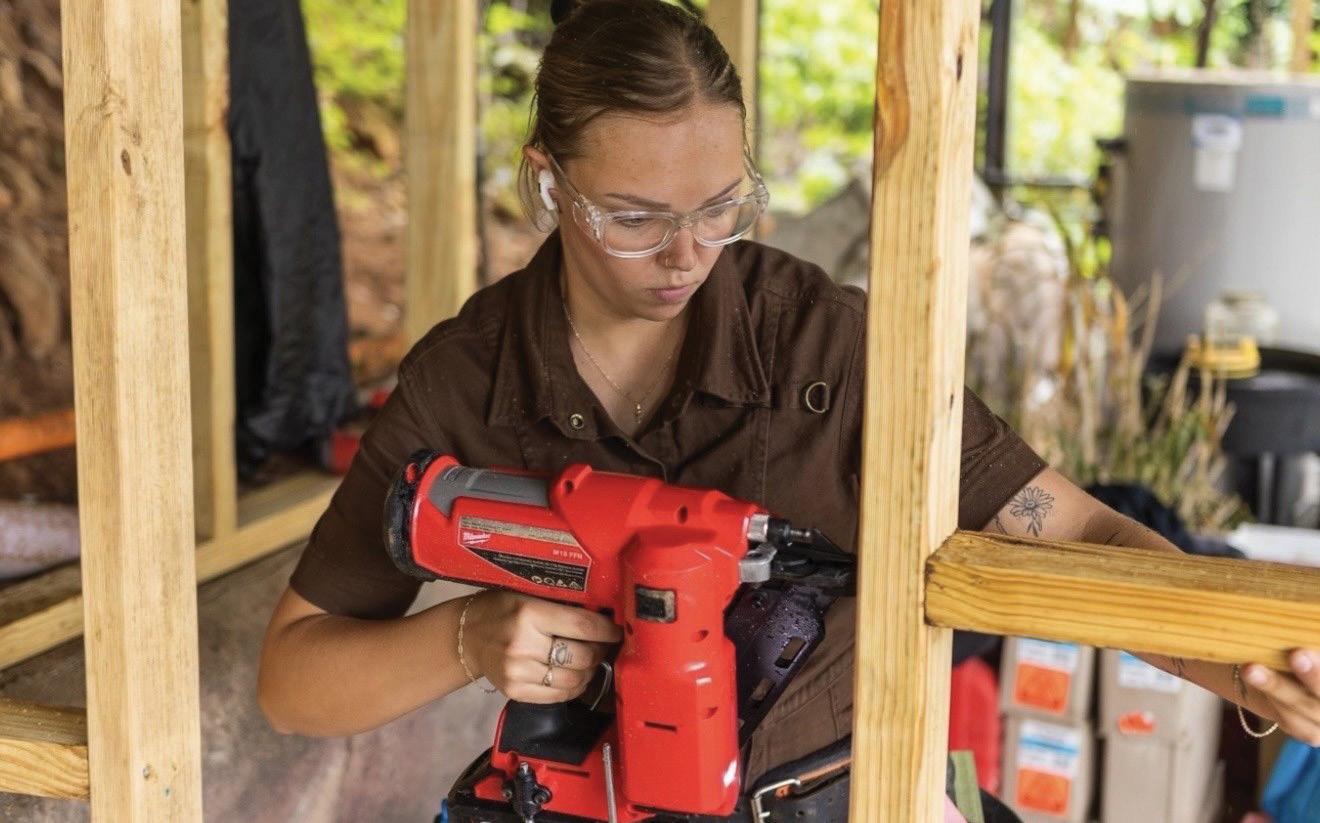
What seems like a small decision to some, selecting construction as an elective subject in Year 9, set carpenter Felicity Pettiford on a career path that has seen her thrive.
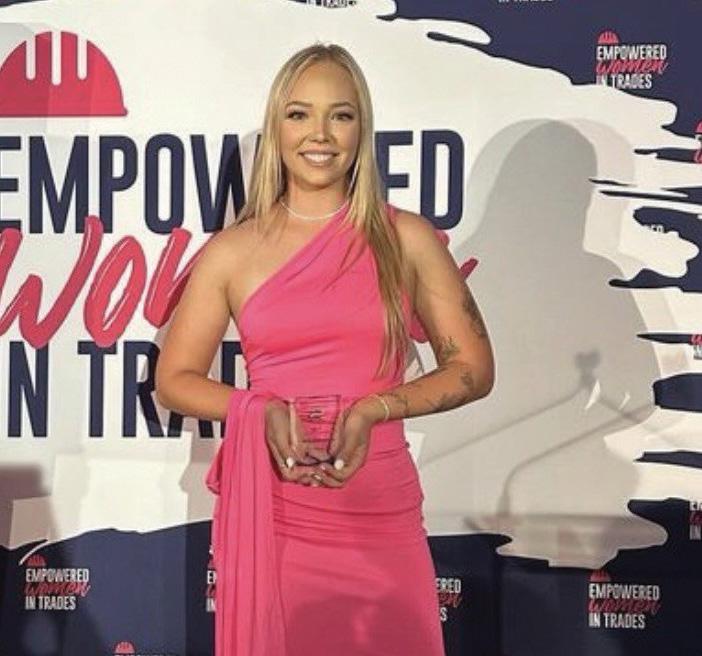
The 23-year-old is not only a qualified carpenter and has been for three years, she has also completed her Certificate IV in Building and Construction (builders licence), through Master Builder Association New South Wales — the youngest woman to do so.
Not many people know for certain as a year 10 student what career they want to pursue, but for Felicity experiencing construction as a subject solidified for her that working in the building and construction industry was exactly what she wanted to do.
And with that mindset, she left high school at the end of year 10 to pursue her path into the industry.
“I chose construction as an elective, and I absolutely loved it, that’s where it all started,” she said.
“I was thinking, I gotta be doing this, so I did work experience, placement, everything and I knew this is
my career. I just need to get my foot in the door.
“I was diagnosed with dyslexia at a really young age, so having that I did struggle through high school.
“I couldn’t read very fluently. I couldn’t write well. I was embarrassed to actually stand up and read something out in front of the class — whereas going into construction, I felt like it was my safe space where I became very creative.
“But I felt like I was the smartest person in the room, because I was so passionate about being hands on, learning about the industry, the timber, everything.
“I felt really smart, and I had a good passion for it, so I automatically knew that I’m not dialing away my shine because I’m embarrassed to speak up or do something. This is my safe space. That’s when I quickly discovered that this is going to be my career.”
And while Felicity struggled in a traditional classroom, she embraced learning everything she could about her trade and becoming a better tradesperson.
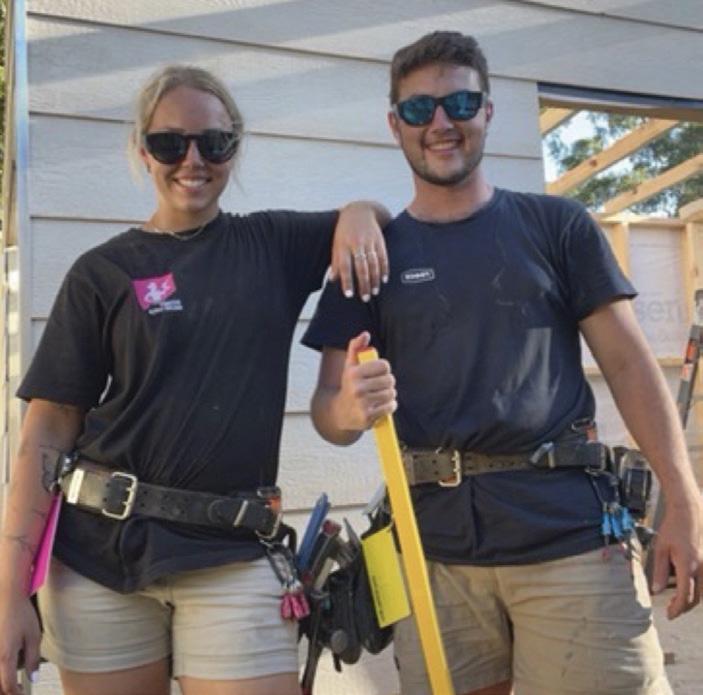
As a third-year carpentry apprentice Felicity started doing her builder’s licence course.
One of her motivating factors of completing both her carpentry apprenticeship and her builders licence at the same time was that it isn’t common for women in the industry to complete their builders licence young and that she had the potential to be the youngest woman to complete the course.
“I was definitely driven to be like ‘okay, let’s do this. If I can do it, every other female can do it, too, setting an example like we’ve got this’,” she said.
“It motivated me as well, because so many different doors open up into pathways doing your builders (licence).
“So it could be, you could want to go down the track of being a supervisor or being a mentor or TAFE teacher in the building industry, so that really did drive me.
“If I want to achieve these things, I have to do my builders (licence) first.”
While it was tricky to juggle finishing her apprenticeship and the builder licence, she was fortunate to be finished all her TAFE modules for her carpentry apprenticeship and was working on site full time.
With a workload of at least five hours a week to complete the licence in 18 months, and working fulltime on-site, Felicity had to keep pushing herself to
achieve her goal, with some great cheerleaders in her parents helping her.
“I was coming home, I was unbothered, I was tired, but I really tried to do an hour an afternoon on it and just quickly get it done,” she said.
“I had a lot of support around me, like my parents.
“If I was stuck on something, we don’t come from a building background, but my dad would try to help.
“We would feed off each other and just go back and forth between answers.
“They would be like, ‘come on Fee, Put your head into it; head down, bum up’.
“If I was unbothered, saying ‘I can’t be bothered. I’m not doing well’. They were like, ‘no Fee, because it’s going to be so worth it in the end’.”
This drive in her career has translated into her desire to promote and encourage more young women into the industry.
Since joining the industry she has grown as a person and in skills and knows what a rewarding career it can be, despite the challenges it can present.
At the beginning of her apprenticeship Felicity soon worked out, that physically she struggled, but through hard work and perseverance she was able to overcome that.
And she sees her role in building and construction
is to help women to embrace the trades, to help combat the industry wide trade shortages.
Through her social media, Sydney Builder Chick, on all platforms, she wants to show all women just what they are capable of.
“I feel like we’re in 2026 now — we’re due for a change, like, if men can be makeup artists and hairdressers, why can’t women be in the trade,” she said.
“It’s still a very taboo topic, and there are still people out there that are like, ‘No, they can’t do this. Can’t do that.’
“We need a wakeup call, because everyone was once a first year, regardless, female or male, everyone’s all been in the situation where they’ve had to start from nothing and make their way up.
“There’s no difference between us both.
“At the end of the day, I look at it like this, it doesn’t matter about strength, you get in, you get the job done to the best of your ability, and you go home, if the job’s done, that’s all that matters.”
She said there definitely needs to be more acceptance and more encouragement for women in the industry.
“When I started, when I was 16/17, there wasn’t a lot of women in the industry for me to get advice off,” she said.
“I feel like I really took my advice solely from my home, from my parents being like, ‘don’t give up. You know, tomorrow’s always a better day if you want something so much, just drive for it’.
“(My advice is) don’t give up, because the only person at the end of the day who’s going to tell you no is yourself.
“So I’ve really taken in my parents advice so much and being able to pass that on to people, women, girls, who message me all the time, saying, how do you do?
“And I’m like, be eager, be enthusiastic. You know, put in the hours. Always look busy. Just all these little things has really helped me get through. And just yeah, not taking no for an answer.
“I got no’s. It sucked at the time, especially when I was trying to get in. I worked with a company for three months, and then I left for just for my own sake, my own safety, my own mental health, everything.
“So just trying to get back into it, a lot of people didn’t want to hire a first-year female, and that’s still the case today, and the application time took so long, you know, apply and apply and apply.
“And I reckon I called and emailed over 50 different companies in New South Wales, and also starting to reach outside to Queensland because I was like, surely not like, is it me’?
“And you really do get in your own head maybe that this isn’t the job for me, or it’s not meant to be.”
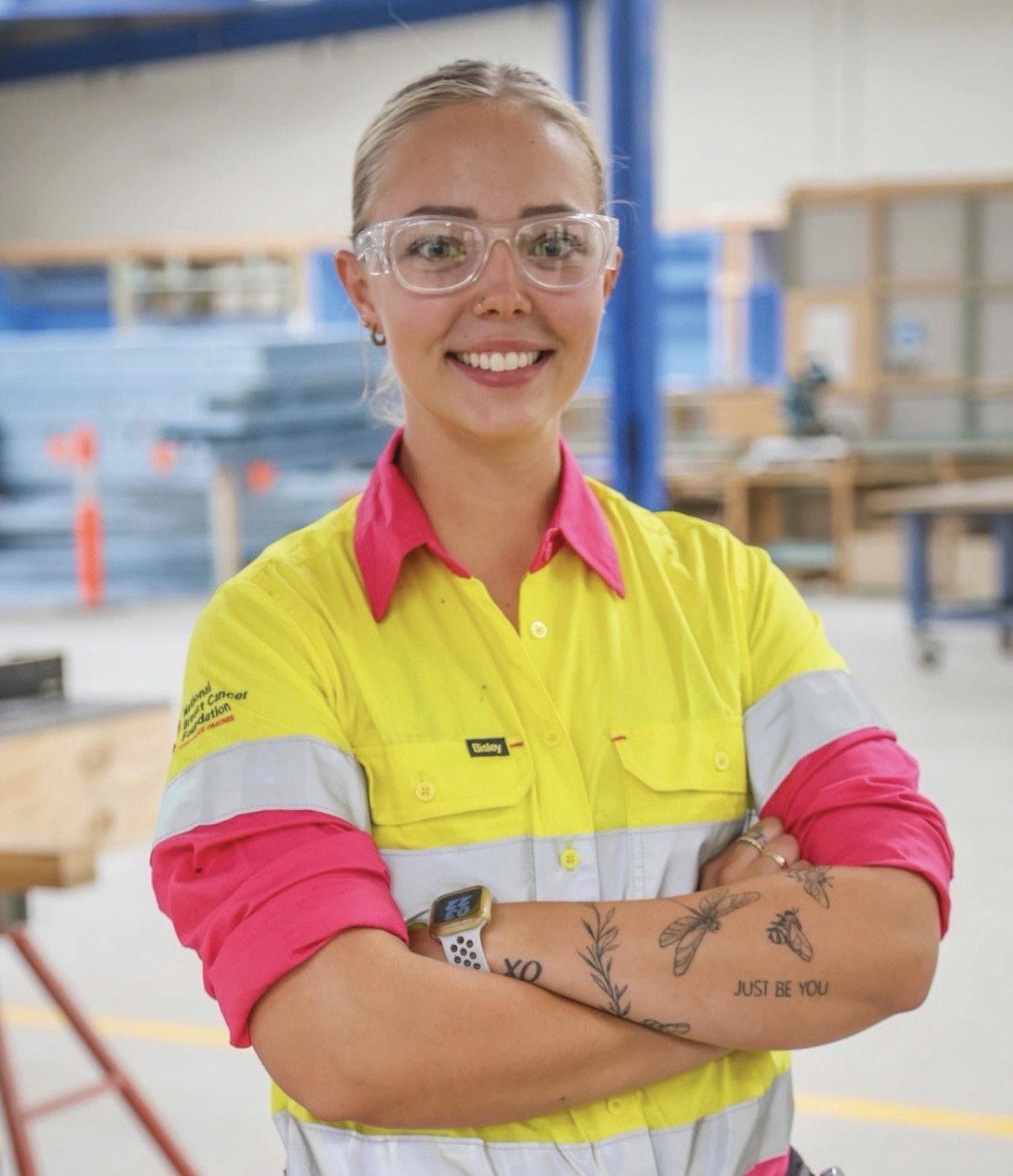
Through her content creation, Felicity has uncovered a future career goal and passion — helping to teach future trades people.
Her social media content features a lot of DIY videos such as “come with me to hang a front door; come with me to install a handle, a lock, or a barn door”.
She said her followers enjoy seeing the in-depth videos of her explaining how to do things, and she loves that because she’s giving people what they want to see, which also helps people who aren’t the most handy, but want to learn how to do basic things around their house.
She also helps to give insight into what being a tradie is like.
“I’m hoping where I’m sitting now, with all this content creating and the social media side of things, it grows into me being a construction teacher one day,” she said.
“So I’m hoping that I can set an example of, you know, doing my apprenticeship, doing this, doing the hours working so many years in the industry, to get the experience.
“(I want to) become more of a voice for women in construction, rather than just, the little bit, pieces here and there… make a positive impact teaching the next generation of men and women to grow in the industry.”
Making a better future for all
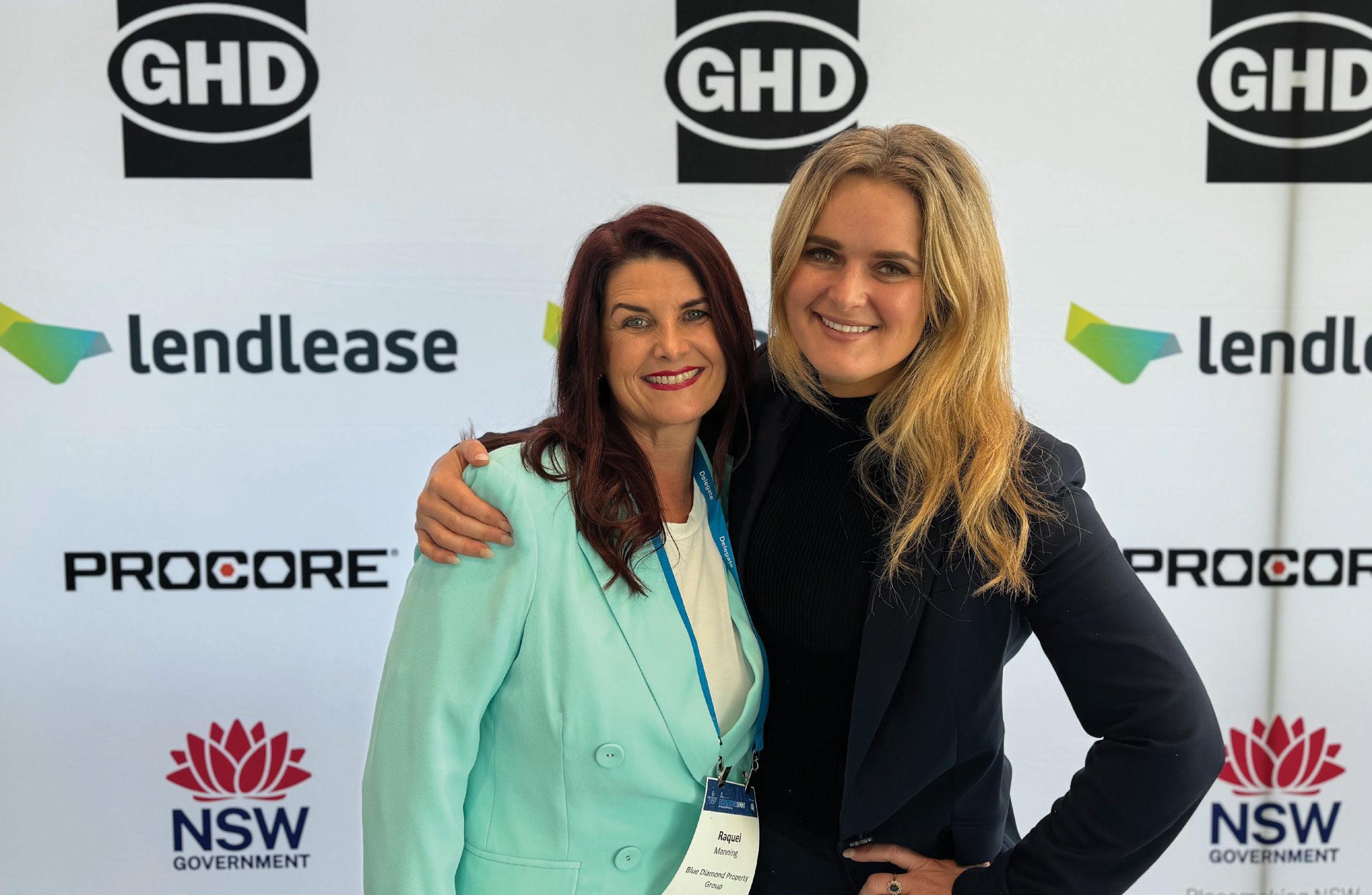
RAQUEL MANNING
In an industry where women, and particularly First Nations women, are still carving out space, some connections feel like they’re meant to happen.
I first met Jade George at a national property conference, both of us standing in a room where we were noticeably the minority.
Two Indigenous women, two different pathways, but an immediate recognition of shared purpose, a quiet understanding that we were both working to shift the landscape for those coming after us.
There was a quiet strength about her, the kind that doesn’t need volume to be felt.
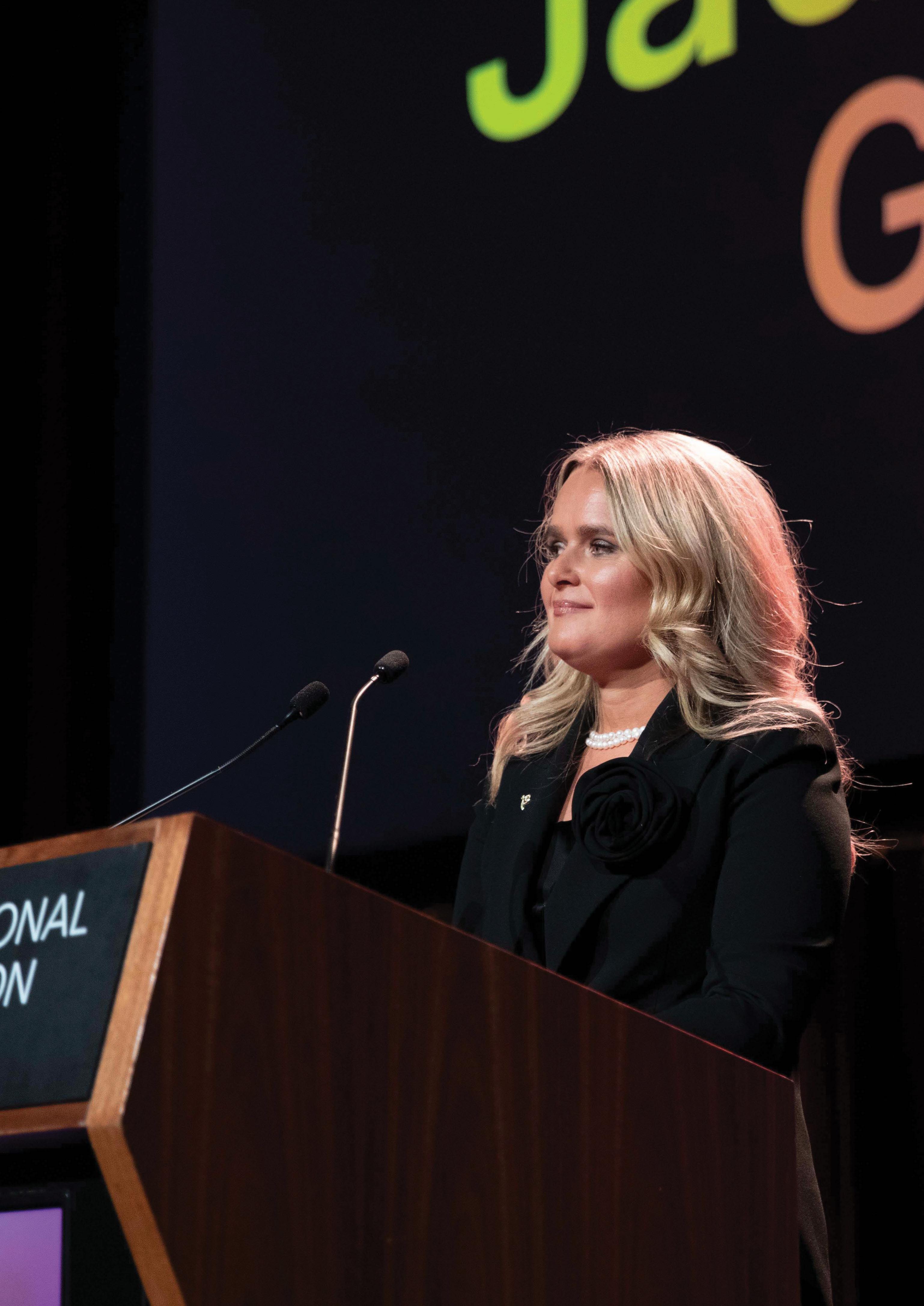
When I later saw her step into the spotlight as the CareerTrackers Alumni Speaker at the ICC National Gala, that strength was on full display. Jade spoke with conviction, cultural depth, and industry intelligence, the kind of leadership our sector needs more of.
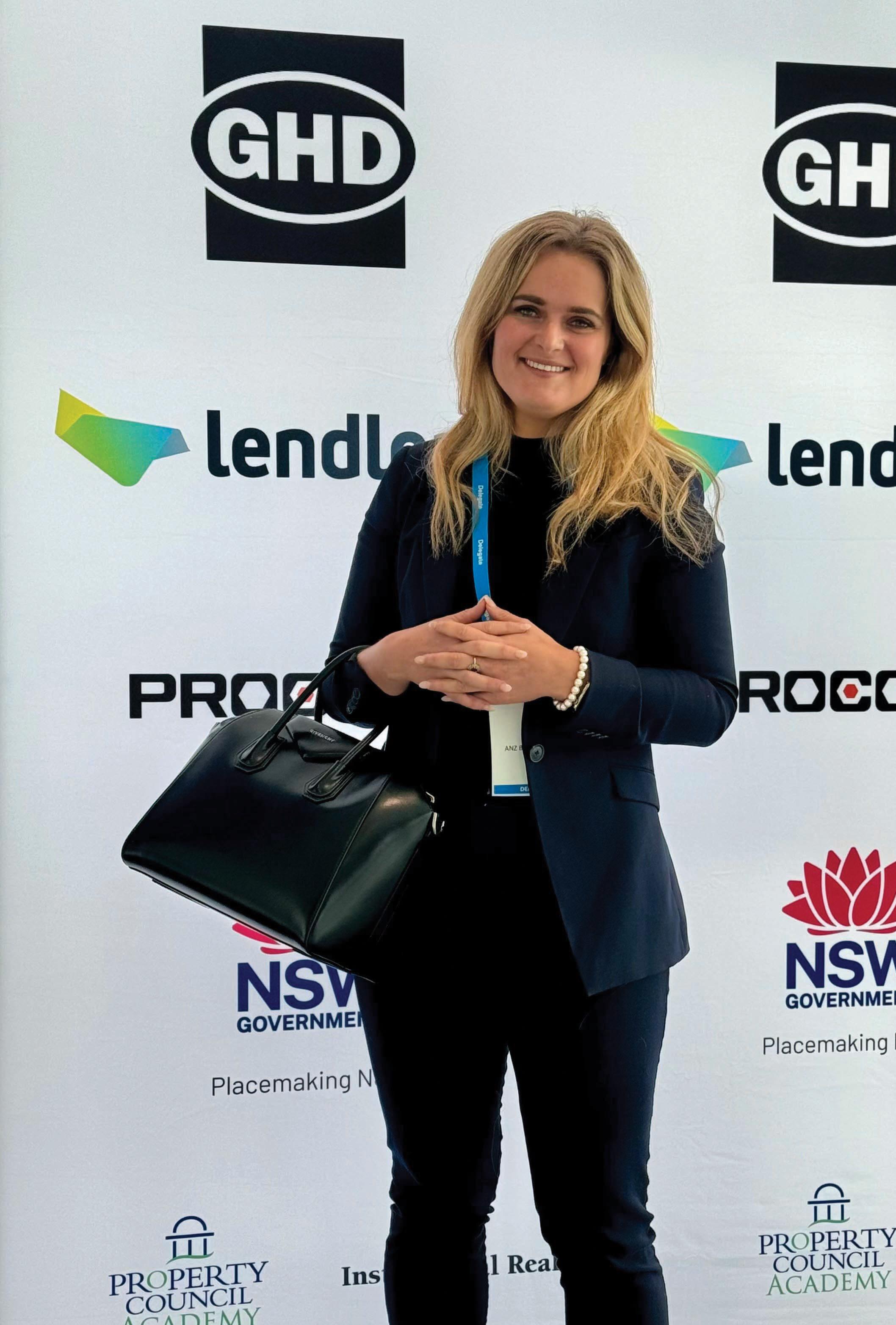
Today, she is a Relationship Manager for ANZ in the Institutional Property Group, balancing highstakes corporate responsibility with academic excellence as she completes her Masters of Property Development and Investment at UTS with a High Distinction average.
Her journey from growing up in a family landscaping business to influencing major institutional property portfolios powerfully exemplifies what happens when opportunity, identity, and determination intersect.
In this conversation for Florence, Jade reflects on representation, leadership, and the future of women in the built environment.
You grew up in a family landscaping business and now manage major institutional property
relationships at ANZ. How has that early, hands-on exposure to the built environment shaped the way you operate in the corporate property sector today?
Growing up in a family landscaping business gave me a very practical understanding of the built environment long before I entered institutional banking.
The first thing it taught me was the importance of trusted relationships.
On a worksite, you rely heavily on the people around you, contractors, suppliers, and the broader team to deliver on time and to a certain standard.
If trust isn’t there, things break down quickly. That mindset has carried through into my role today.
Just like plants, relationships need strong foundations, care, and attention to thrive.
I take the same approach with my clients, the people, assets and capital structures we work with are longterm, so the partnership between the bank, the sponsor, and the wider transaction team must be built on transparency and trust.
The second thing it instilled in me was a strong sense of urgency. In construction and landscaping, there are many moving parts.
If one element falls behind schedule whether it’s materials, labour, or approvals it can have a domino effect on everything else.
That awareness has shaped the way I approach deals in the corporate property sector. Property development and investment can be very complex, and timing, co-ordination, and proactive communication are essential to keeping things moving.
Another thing that early experience gave me was a respect for the people physically delivering projects.
When we look at property transactions at the institutional level, it’s easy to focus on capital structures, returns, and valuations.
But ultimately, every asset exists because people on the ground built it, maintained it, and operated it. Having seen that side firsthand helps me understand the real drivers behind project delivery.
So while my role today sits in a corporate environment, the mindset I developed early on trust, urgency, respect for execution, and longterm thinking still shapes how I work with clients
and approach the property sector.
You’re completing a Masters of Property Development and Investment at UTS with a High Distinction average. How has postgraduate study strengthened your voice and confidence as a woman navigating the property and construction industry?
Studying a Masters in Property Development and Investment at UTS has significantly broadened my understanding of the industry.
In my role at ANZ I focus primarily on the financing side, but the program has helped me see the entire development life-cycle, from critically analysing sites, to understanding planning, legal frameworks, long-term asset management and where value is specifically created.
It’s given me a much more holistic view of what it takes to deliver a project or precinct and reinforced that funding is just one piece of a much larger process.
Another significant benefit has been the professional network developed through the program. Many of my classmates are experienced professionals working across development, construction, funds management, and advisory roles - often individuals who are clients or competitors within the industry.
That environment creates constant opportunities to learn, collaborate and stay close to what’s happening across the sector.
Overall, that broader exposure and deeper knowledge have strengthened my confidence and voice in the property industry.
As a First Nations woman working in institutional property, what does representation mean to you, and how can our industry better integrate cultural intelligence into decision-making, leadership, and project delivery?
For me, representation isn’t about being seen primarily as a First Nations woman in institutional property. I see myself as a woman working in institutional property who also happens to be First Nations.
My focus has always been on contributing professionally to the industry, while naturally bringing my background and perspective with me.
Representation, in that sense, is really about broadening the perspectives in the room. Property and construction shape the environments where people live, work and connect, so having people from different backgrounds involved in decisionmaking helps ensure those spaces are considered more holistically.
Where cultural intelligence becomes important is in recognising that land and place carry meaning beyond the asset itself.
As an industry we are very good at analysing feasibility, capital structures and returns, but projects also sit within communities and cultural contexts.
Taking the time to understand that through education, engagement with local communities and thoughtful leadership can lead to stronger, more sustainable outcomes.
Ultimately, integrating cultural intelligence isn’t about creating divisions; it’s about adding another layer of awareness to how we plan, design and deliver projects so that the places we create work well for the people who live in them for generations to come.
What has been the most significant challenge you’ve faced as a woman in the building and property ecosystem, and what helped you break through it?
To be honest, I’ve always viewed challenges in the industry less through the lens of gender and more
through the lens of professional growth, values and accountability.
The property and construction ecosystem is complex and demanding for everyone.
It requires resilience, discipline and a willingness to keep learning.
One of the biggest challenges was simply developing confidence and credibility in a highly technical and commercially driven environment.
What helped me move through that was focusing on continuous learning and selfawareness whether that’s building deeper technical knowledge, surrounding myself with strong mentors, or being willing to ask questions and learn from people who have been in the industry longer.
I’ve also found that taking personal accountability is important.
Challenges are part of any career, but how you respond to them is what ultimately shapes your trajectory.
For me, it’s about maintaining awareness, staying disciplined, and continuing to move forward even when things are complex or uncertain.
Ultimately, that mindset has helped me navigate the industry and build strong relationships across the sector.
For young women, especially First Nations women, considering a career in construction, property, or corporate pathways connected to the built environment, what is the one piece of guidance you wish someone had given you earlier?
Most people are learning as they go, and the industry benefits when more voices are willing to participate in shaping it.
If I reflect on it honestly, the one thing I wish I had applied to my life earlier is simply backing myself sooner.
Early in your career it’s easy to doubt whether you’re ready, qualified enough, or experienced enough to step into opportunities.
I spent more time than I probably needed questioning whether I was ready for certain rooms or conversations.
What I’ve learned over time is that confidence doesn’t arrive before you take those steps, it develops because you take them.
And if you don’t support yourself and believe in your own potential, it’s unlikely others will consistently do that for you either.
So, for young women, including First Nations women considering careers in construction, property or corporate roles connected to the built environment, my guidance would be to back yourself earlier than you think you should.
Structure is great but you don’t need to have everything figured out you just need to be willing to step forward and grow as you go.
Jade George represents the kind of leadership our industry is hungry for: grounded, intelligent, culturally aware, and unafraid to grow.
Her journey from her family’s landscaping business to the institutional property space, supported by academic excellence and a commitment to continuous learning, shows what is possible when women back themselves and step into rooms where they haven’t always been represented.
Her reflections remind us that the future of the built environment will be shaped not only by technical expertise, but by the courage to bring diverse perspectives into decision-making.
Women like Jade are expanding what leadership looks like in property and construction, creating pathways that are stronger, more inclusive, and more reflective of the communities we serve.
As the sector continues to evolve, voices like hers will play a vital role in ensuring that the next generation of women, particularly First Nations women, see themselves not just entering the industry, but influencing it.
And that is the kind of progress that strengthens our entire industry and the women rising within it.
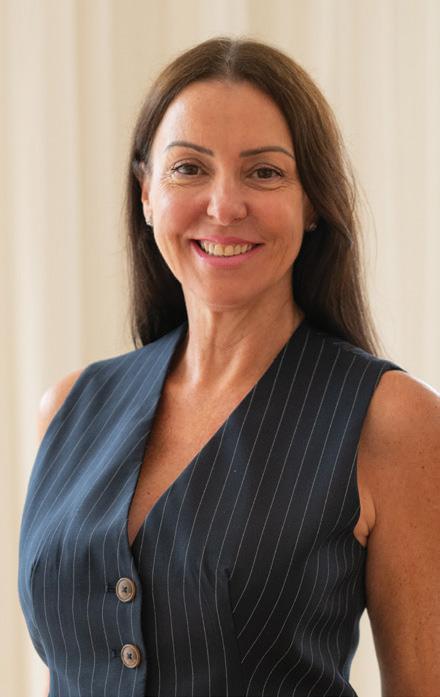
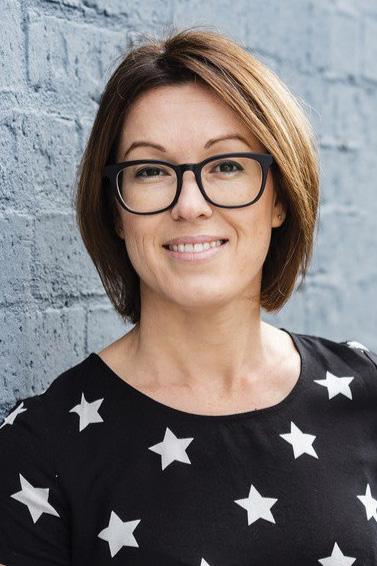
Anna Simmons is the Administration Manager for Sydney-based luxury builders, OneUp Building.
Anna is the powerhouse behind the co-founders Scott Sommerville and her husband, Rick Simmons.
OneUp is a multi-awardwinning builder who work with a select number of high-end residential clients and architects.
The projects are substantial and complex, which
means there are a lot of logistics and administration behind the scenes managing staff, accounts and personnel on-site.
Anna’s role is to ensure all the back end of the business is taken care of, enabling Rick and Scott to lead the team and deliver projects seamlessly.
Over the past 20 years, OneUp has grown from two carpenters ‘having a go’, to one of Sydney’s most respected building companies.
Anna’s behind the scenes work and support has been a strong factor in that growth and success.
She believes strongly the importance of work/family balance and is an advocate for other women in the building industry.
For Jacqueline Lunney, a career in construction has been shaped by curiosity, persistence, and a determination to understand every corner of the industry.
Her journey began 15 years ago as a contract administrator, where she first gained insight into the inner workings of building projects.
Driven to expand her expertise, Jacqueline soon moved into project management, developing the leadership and organisational skills required to guide complex builds from concept to completion.
But mastering project management was only the beginning.
Eager to broaden her capabilities even further, Jacqueline set her sights on estimating, the crucial discipline of forecasting costs and resources for construction projects.
She undertook part-time study through TAFE NSW while simultaneously working in a demanding dual role as both project manager and estimator. For more than a decade, she balanced these responsibilities.
During this period, Jacqueline also sought hands-on experience in the field.
She spent time working onsite as a site supervisor, a move that deepened her understanding of day-to-day construction operations.
This practical exposure ultimately enabled her to obtain her builder’s licence, marking another significant milestone in a career defined by continuous growth.
With experience spanning administration, project management, estimating and site supervision, Jacqueline turned her focus toward the commercial construction sector.
Her goal was to gain deeper insight into the systems and processes that underpin large-scale building operations.
Over time, this commitment allowed her to develop a comprehensive understanding of the industry, equipping her with the rare ability to see projects from every angle, from planning and costing to delivery and completion.
Today, Jacqueline brings that breadth of experience to Horizon Built, an award-winning builder based in Rose Bay, Sydney, where she has joined the team as manager of the special works division.
The division focuses on projects that are often smaller in scale but rich in complexity, ranging from family home additions and Class 2 building apartment refurbishments to heritage home renovations, urgent building repairs and tailored maintenance programs designed to keep properties in pristine condition.
With Jacqueline at the helm, the division is well-placed to deliver thoughtful, high-quality solutions for clients seeking expertise on projects that demand both precision and care.

The construction industry has traditionally been designed around the male body.
Work practices, safety standards, equipment and injury-prevention frameworks have long assumed that the person on the tools is male. Yet across Australia, an increasing number of women are building careers in physically demanding trades. As the workforce continues to diversify, it has become clear that women’s health on site is not a niche concern or a matter of individual resilience.
It is a core workplace health and safety issue that directly impacts injury rates, retention and long-term sustainability across the industry.
Women are not simply smaller versions of men.
Female bodies are structurally different, with variations in muscle distribution, joint mobility, spinal load transfer, pelvic alignment and hormonal cycles. These differences do not reduce capability or competence, but they do change how physical work is experienced by the body.
When women are expected to work exactly as men do, using equipment, lifting methods and work systems designed for male physiology, the risk of injury increases significantly.
On average, women have less upper-body muscle mass, greater joint mobility, a wider pelvis and
different hip-to-knee alignment. Load is carried differently through the spine, shoulders and hips, and grip strength is typically lower even though endurance and fine motor control are often strong. In practice, this means that certain tasks, such as repetitive overhead work, awkward lifting or sustained carrying, can place disproportionate strain on women’s shoulders, lower backs and knees if not managed correctly.
Injury patterns among women on the tools often reflect this mismatch between body and system.
Shoulder impingement, lower back strain, knee pain and wrist or forearm overuse injuries are common, particularly in trades involving repetitive movements or prolonged physical demand. A key contributor is cumulative load.
Many women are highly conscientious workers and, in male-dominated environments, may feel pressure to prove their capability by pushing through discomfort or avoiding asking for help. Over time, minor strains that could have been addressed early accumulate into chronic injuries that impact both wellbeing and career longevity.
Safe lifting and load management are therefore critical components of injury prevention.
Women’s bodies tend to be more vulnerable to twisting under load, sudden jerking movements and asymmetrical carrying, particularly when fatigue is present. Best practice includes using mechanical aids wherever possible, breaking loads into smaller components, avoiding rushed movements and normalising team lifts.
These approaches are not concessions; they are evidence-based safety measures that protect all workers and extend working lives.
Core strength plays a central role in supporting women’s health on site, but it is often misunderstood. For women, core strength is not about aesthetics but about stability, spinal support and efficient load transfer through the body.
It is closely linked to pelvic floor function, an area rarely discussed in construction despite its importance. Repetitive heavy lifting, prolonged standing and high physical demands can weaken pelvic support over time, contributing to back pain, instability and other long-term health issues.
Targeted strength training that supports deep abdominal muscles, glutes and hip stabilisers can significantly reduce injury risk and improve endurance at work.
Women’s hormonal cycles also influence physical performance, recovery and injury risk.
Across the menstrual cycle, fluctuations in energy levels, joint laxity and pain sensitivity can occur. Ignoring these factors does not make them irrelevant; it increases the likelihood of strain and fatigue-related injuries. Supporting women to understand their own bodies, pace workload appropriately and prioritise recovery contributes to safer, more sustainable work practices.
Fatigue management is another critical
consideration. Construction has long normalised chronic tiredness, but fatigue is a known risk factor for workplace incidents and injuries.
Adequate sleep, hydration and recovery are essential for maintaining concentration, coordination and physical resilience. Women, particularly those balancing physically demanding work with caring responsibilities, are at increased risk of cumulative fatigue.
Addressing this through realistic workloads, recovery awareness and supportive workplace culture is a matter of safety, not personal toughness.
The fit and design of personal protective equipment also play a significant role in injury prevention. PPE that is too large, poorly balanced or restrictive compromises movement, grip and stability. Ill-fitting gloves reduce control, oversized clothing increases snag risk, and poorly designed harnesses load weight incorrectly across the shoulders and hips.
Tools themselves matter as well. Grip diameter, weight balance and vibration exposure can disproportionately affect smaller hands and joints.
Ensuring access to appropriately sized PPE and tools is a fundamental duty of care and a practical step towards reducing injury risk.
Nutrition and hydration underpin physical capacity and recovery, yet are often overlooked in safety conversations. Physical labour requires adequate fuel, including sufficient protein for muscle repair, iron to prevent fatigue and nutrients that support bone and joint health.
Under-fueling, skipped meals and reliance on caffeine reduces strength, concentration and recovery, increasing the likelihood of errors and injuries on site.
Perhaps one of the most significant factors affecting women’s health and safety in construction is culture. Women are often less likely to speak up about pain, fatigue or equipment issues for fear of being seen as incapable or difficult. However, silence is a risk.
Open communication about safety concerns, early injury reporting and equipment fit is essential for preventing long-term harm. Workplaces that encourage these conversations are safer, more productive and more resilient.
Supporting women’s health on the tools is not about lowering standards or providing special treatment. It is about recognising real bodies doing real work and designing systems that keep skilled workers safe, healthy and employed for the long term. When women are supported through informed safety practices, appropriate equipment and a culture that values wellbeing, retention improves, injury rates decrease and the industry benefits as a whole.
Construction has always been focused on building structures that last. Applying that same thinking to the people who build them, particularly women on the tools, is not only good practice, it is essential for the future of the industry.


JANE LANGOF
A column about the power of energy, intention and design — and how our built environment shapes the way we live, work and feel.
In a world where many people feel a loss of control, managing our energy has never been more important. Global unrest, rapid technological change and the rise of artificial intelligence are creating a level of uncertainty that many people feel in their daily lives.
Over many years working with clients on Feng Shui and the built environment, I’ve become fascinated by how the spaces around us influence the way we think, feel and act. Our homes, workplaces and neighbourhoods all shape our state of mind.
Yet one observation has stood out time and time again.
Two people can live in the same home, surrounded by the same physical environment, and still experience life very differently. This insight revealed something important.
Feng Shui plays a powerful role in improving the energy of our surroundings, yet it is only part of the picture. The external environment matters, but it does not operate in isolation.
Our inner world also shapes what we experience. Many people attempt to improve their lives by changing their surroundings. They renovate their homes, redecorate a room or reorganise their living spaces.
These changes can create an immediate lift in mood and motivation. Yet the effect often fades with time.
The reason is simple. There is a circular relationship between our internal state and the environments we create.
Our spaces reflect how we are living, while those same environments influence how we think, feel and function.
It becomes a circular flow: the external affects the internal, and the internal affects the external.
When we focus only on physical changes, we are addressing just one side of that relationship. True flourishing requires attention to both.
In my work I often encourage people to look beyond their physical surroundings and consider the energy they bring into their lives each day.
Think about what you consume through media. Is it uplifting and informative, or does it leave you feeling drained?
Consider the food you store in your home. Does it nourish your body, or simply provide a quick hit of comfort followed by a crash?
Reflect on the people you spend time with. Are they supportive and positive influences, or do they bring tension and negativity into your environment?
Small shifts in these areas can have a powerful effect. One simple place to begin is with your morning routine. Writing down three things you feel grateful for each day can shift your mindset and set the tone for the hours that follow.
Flourishing is not something that happens by chance. It is something we participate in through awareness, intention and the environments we choose to create.
When our internal world and our external environment begin to support one another, something powerful happens. Life starts to feel less like something we are reacting to, and more like something we are consciously shaping.
ALYSSA WELKE
The NSW Government’s Women in Construction Program continues to make progress across its four pillars—removing obstacles, building awareness and aspiration, supporting retention, and strengthening accountability—with Transport for NSW contributing to this broader strategy through targeted programs and initiatives for women in Western Sydney.
Home to one in 11 Australians, Western Sydney is the nation’s third largest economy. Although progress is being made, women remain underrepresented in construction, making up just 12% of the NSW construction workforce. With Transport’s extensive pipeline of infrastructure work in the region, creating opportunities for women in the construction industry is essential to the prosperity of households, communities and the broader economy.
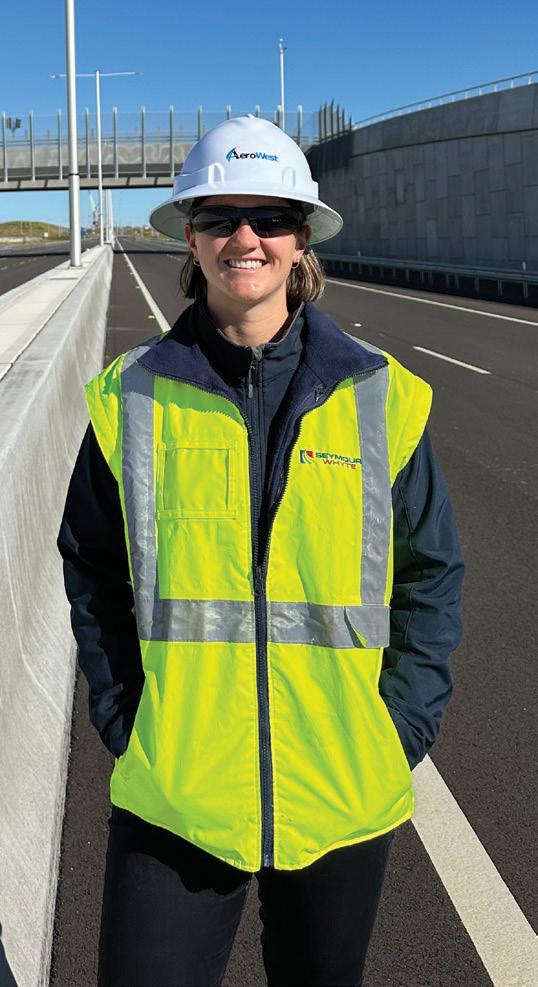
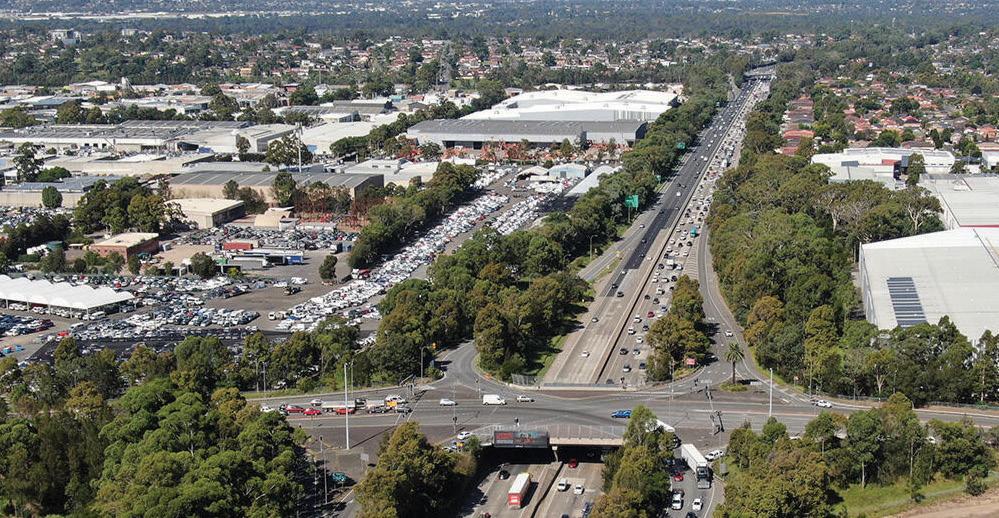
Meet three Western Sydney women contributing to the delivery of the M5 Westbound Traffic Upgrade through Transport’s partner, Seymour Whyte.
Meet three of the many Western Sydney women who are playing a part in building Transport for NSW infrastructure in Western Sydney through the delivery partner, Seymour Whyte.
The project—scheduled for completion in December 2028—will improve traffic flow, road safety and connectivity between Moorebank Avenue and the Hume Highway. Work includes a new threelane bridge over the Georges River, removal of the existing weave on the M5 Motorway, additional lanes to reduce weaving for roughly 2600 vehicles daily, and a new shared path for cyclists and pedestrians.
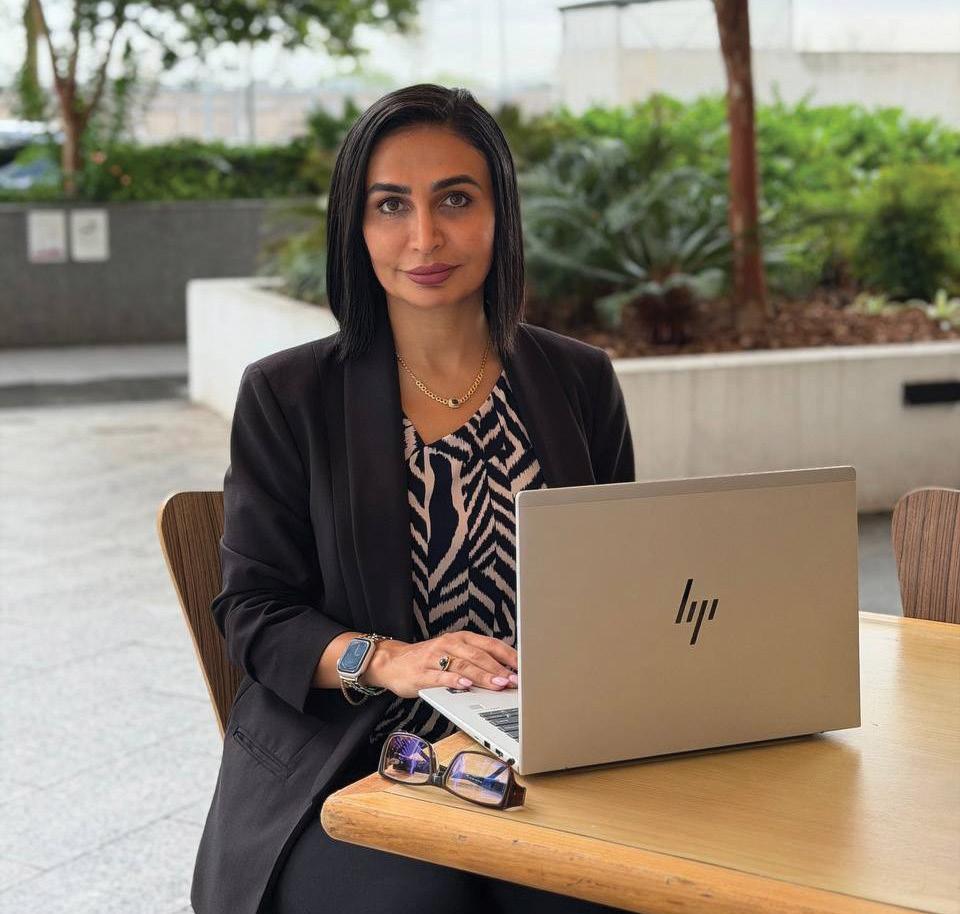
Parveen Khanzaei – Design Manager
For Parveen Khanzaei, becoming a design manager was far from a straightforward journey.
Born and raised in Chabahar, a coastal town in southeast Iran, she grew up in a Balouch community where opportunities for women were limited and expectations traditional. Despite being encouraged toward domestic roles, Parveen’s ambition set her apart.
Inspired by her father’s work in construction, she pursued civil engineering—rare for women in her community. She later became the first woman in her extended family to travel abroad alone, completing her Master’s degree in Malaysia in 2007 before moving to Australia, undertaking a PhD and transitioning into engineering practice.
Her early career took her from metropolitan sites to remote areas including the Snowy Mountains,
where she worked through harsh winter conditions, early morning field inspections and long days with construction crews; experiences she credits with building resilience and respect for the industry.
As a design manager, Parveen leads multidisciplinary engineering teams, manages design risk, oversees documentation quality and facilitates communication across designers, construction teams and external stakeholders.
“I enjoy the complexity of coordinating multidisciplinary design teams and solving technical challenges and learning something new each day” she said.
“Being part of a project that will benefit the community for decades is incredibly rewarding.”
While the pace and competing priorities can be demanding, Parveen says they continue to shape her as a leader.
Sustainability manager Georgia Voura also had an unexpected entry into the industry, having originally studied marine biology before “falling into construction.”
The dynamic and fast paced nature of the work immediately appealed to her.
“Particularly for sustainability, the role offers constant problem solving and collaboration across diverse project teams,” she said.
“Seeing sustainability commitments translate into measurable outcomes is incredibly motivating and rewarding.”
Georgia emphasises that sustainability is never a one-size-fits-all approach. Each project presents unique challenges and opportunities for innovation.
Over time, she hopes to see carbon management and sustainability become more deeply integrated into early project decision making rather than treated as an overlay.
Shifting mindsets can be difficult, she said, but it is also a rewarding part of the job.
“Teams often come to understand the purpose of sustainability and become champions for better outcomes. Watching that process unfold is very rewarding particularly when individuals who were initially skeptical become advocates for improved sustainability outcomes.”
Originally from Ireland, Saskia Boyle is taking full advantage of opportunities not typically available to women in construction back home.
Working as a heavy rigid water cart driver on the M5 Westbound Traffic Upgrade, she appreciates the clarity and purpose of the role.
“Driving HR trucks can be stressful at times, but operating the water cart keeps me engaged in onsite activities without being mentally chaotic,” she said.
With a background in business management, Saskia hopes to transition into project management in the future and sees onsite experience as invaluable.
“I’ve always wanted to be a project manager, I even planned to complete a Master’s degree, which in time is a possibility.”
“Irish women don’t often get these opportunities at home. The hands-on work drew me to the industry, and I hope the experience will support my long term career goals.”
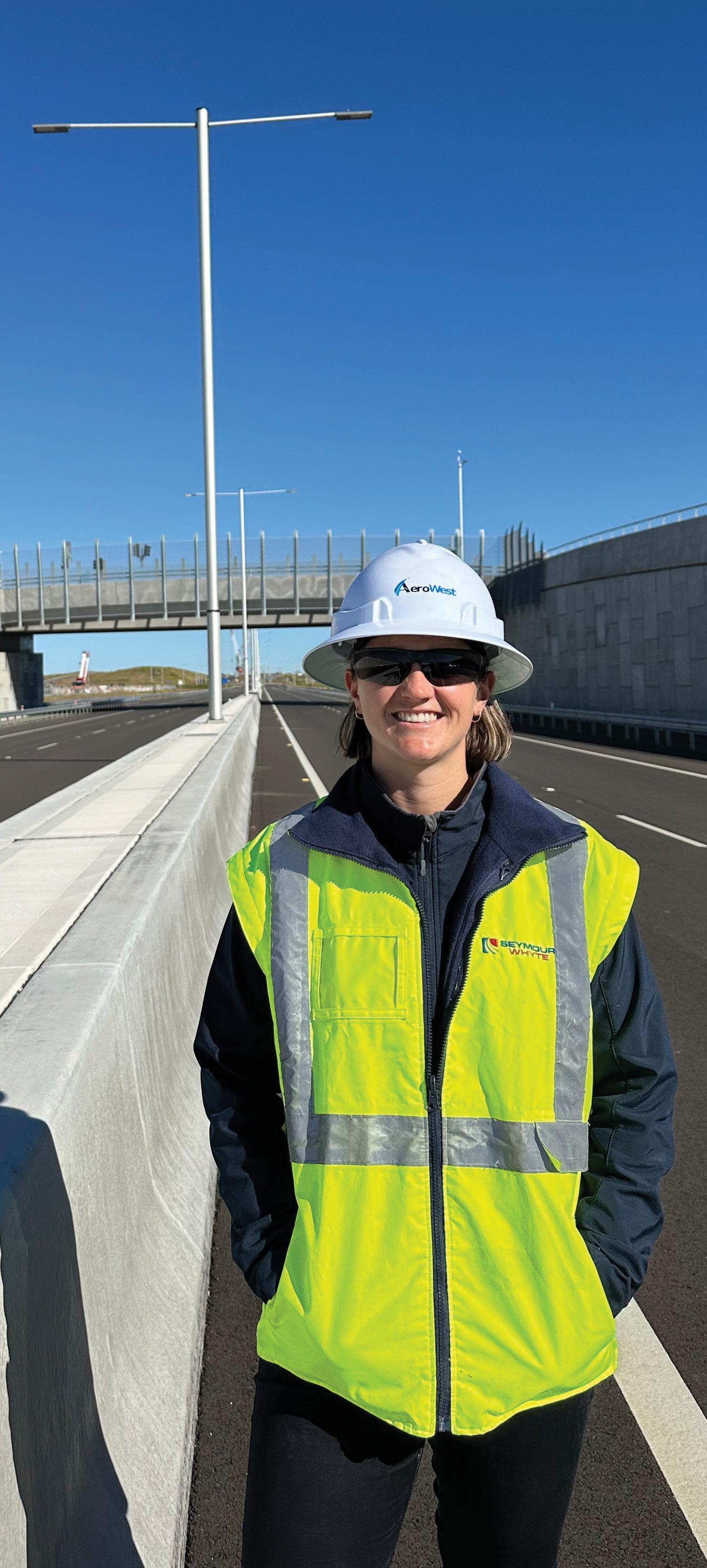
Georgia Voura, Sustainability Manager
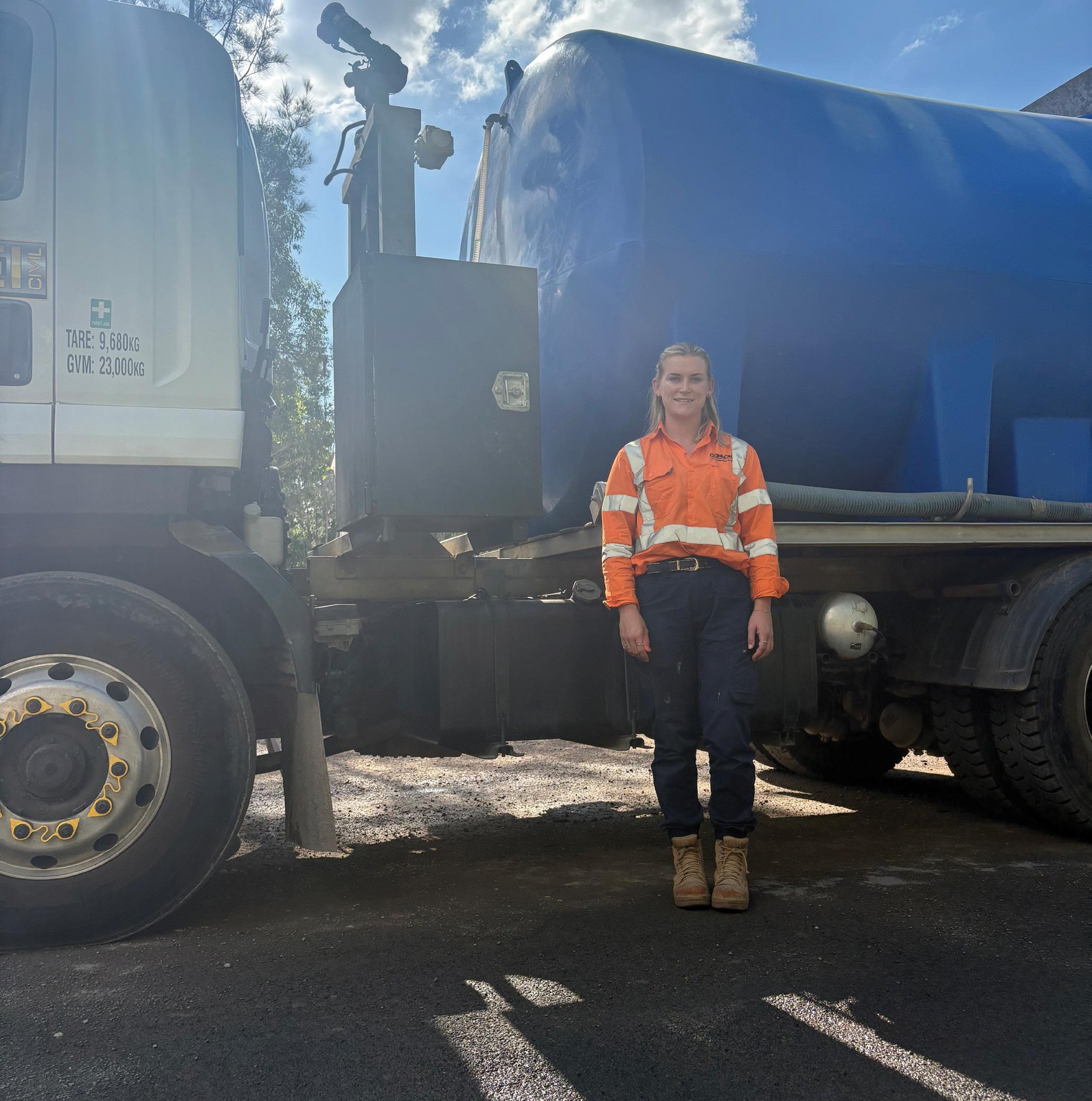
Although Parveen, Georgia and Saskia have very different backgrounds, they share a commitment to encouraging more women to join the construction industry.
Parveen’s guiding principle is simple:
“Focus on what you can control and stay solution oriented. Believe in yourself—your voice and perspective are needed.”
Georgia emphasises mentoring and relationship building. Her advice to women entering the industry focuses on support networks and perspective.
“Find a mentor or ally who will advocate for you. And remember ‘we aren’t brain surgeons’.
Keeping perspective is important. Laugh hard and laugh often.”
Saskia encourages women to try the work for themselves and seek recognition for their capabilities. Her advice centres on taking chances and seeking environments that value capability.
“Follow environments that reward competence. It’s hard work and long days, but it’s rewarding and gives women a chance to experience a field they might not otherwise.”
Together, these women are helping shape the future of infrastructure delivery in Western Sydney—proving that meaningful, fulfilling careers in construction are within reach for women from all walks of life.
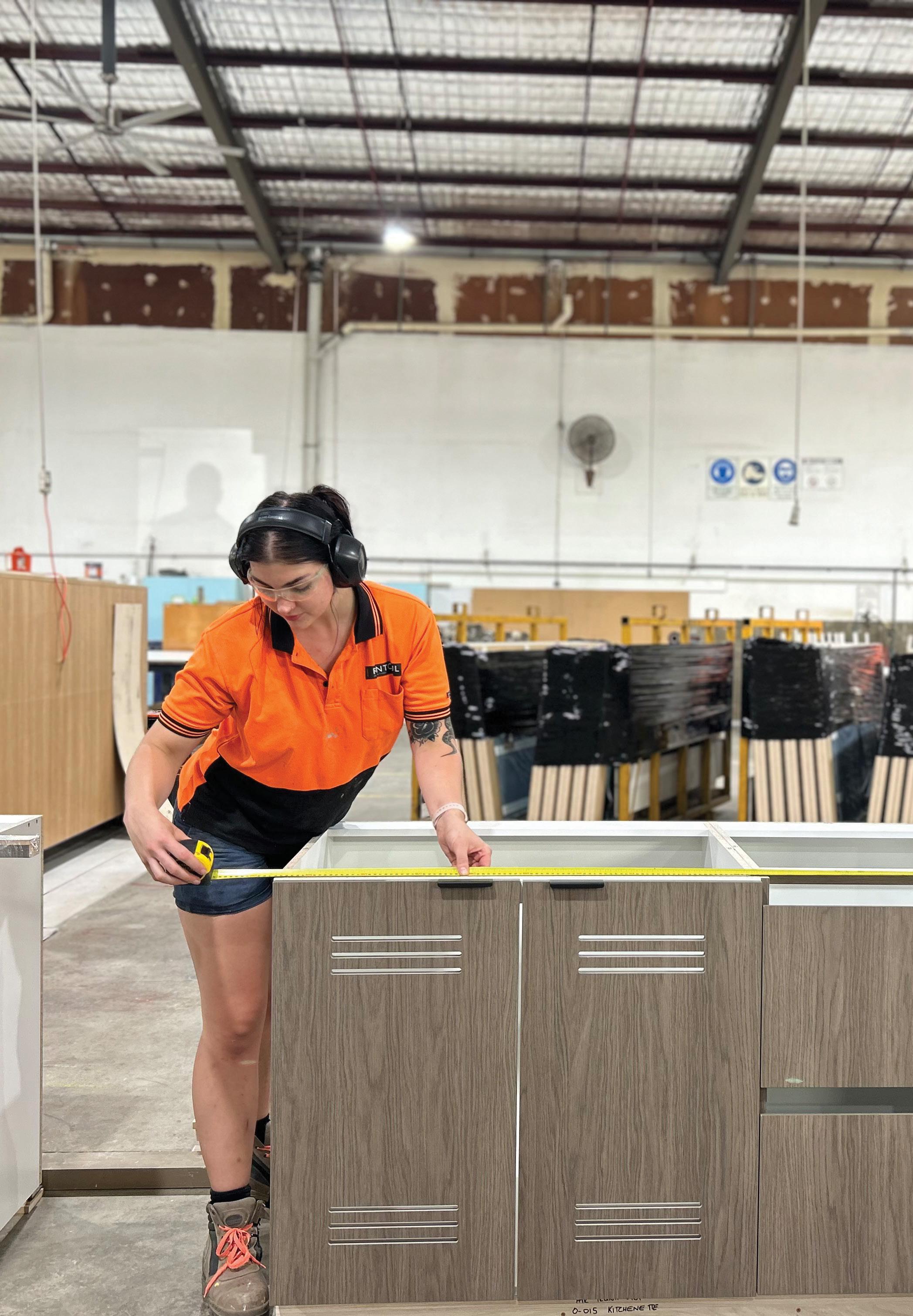
Charlotte Ancell - Apprentice Shopfitter
Tell us a bit about yourself
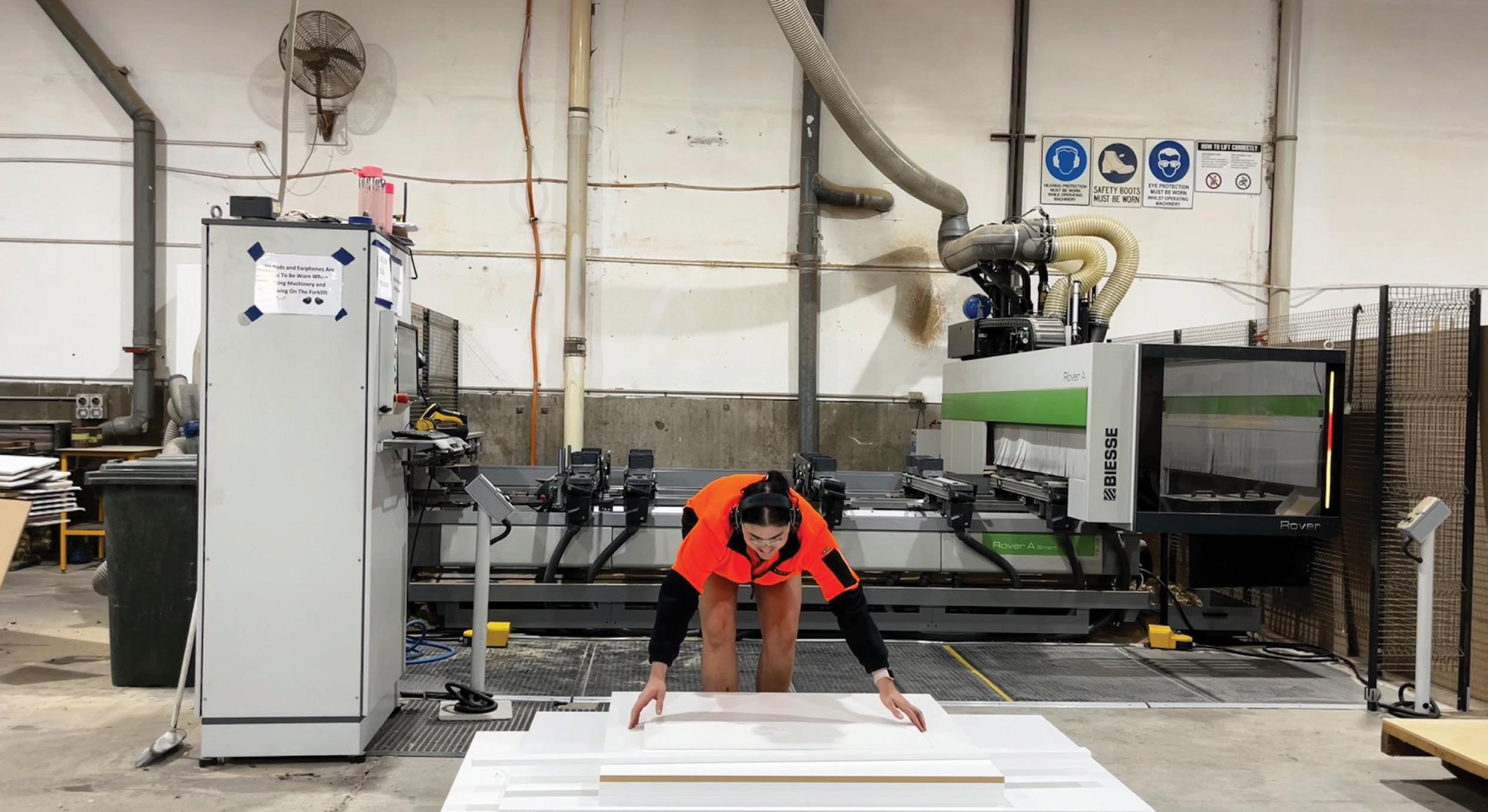
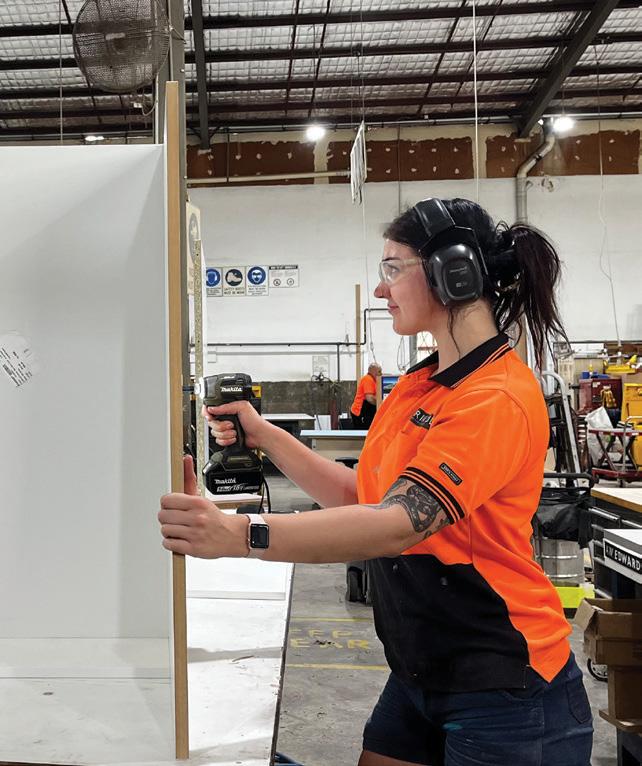
I am a full-time apprentice getting my Shopfitting III Certificate at TAFE NSW.
I work on commercial, residential, and government projects, building anything from kitchens to custom furniture, to decorative flourishings, anything that helps make a space tell a story and resonate a certain way with those who use it. I use a mixture of power tools, industrial machinery, design programming, and hand tools to do so.
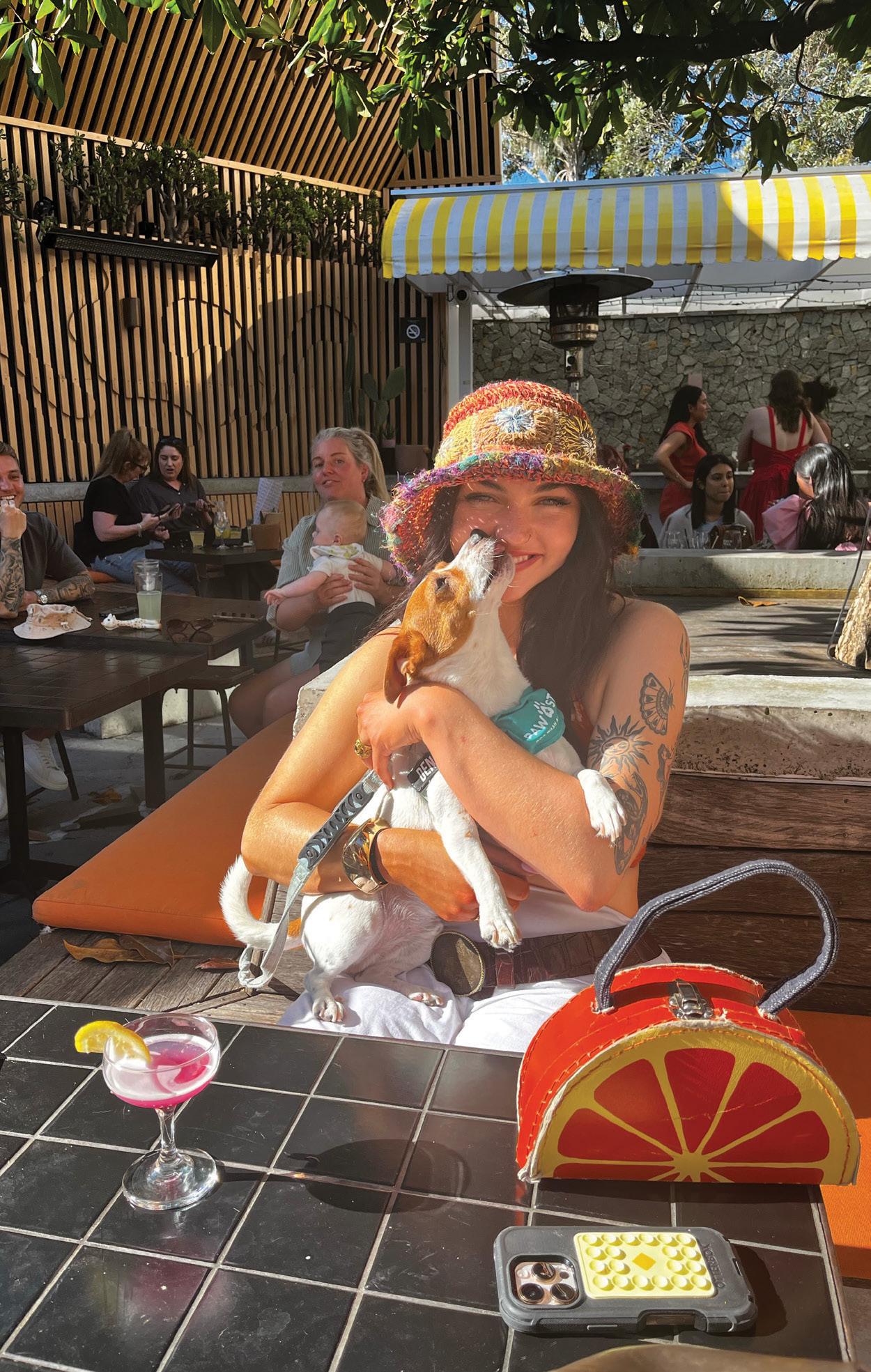
Outside of work, I love to socialise with friends, travel, explore new places in my van, see live gigs, go to markets, and wind down with arts and crafts.
Where did you grow up and your early life history?
I grew up with a very small family, raised solely by my mum who instilled a great sense of empowerment in me and serves as my inspiration everyday.
I attended an all-girls high school, which was very ATAR focussed, and upheld a very narrow view of what success and career progression could look like. The path encouraged was to receive a high ATAR, attend uni, and go into a high-paying role such as law, economics, medicine etc.
I knew from early on I needed a hands-on career, so received a high ATAR and undertook a double
degree in management majoring in events and creative intelligence and innovation, with the idea of going into event management.
Tell us about your work/career before you started your apprenticeship?
I was fortunate enough during my time at uni to land two roles working in event management, where I realised it was not the fulfilling career I’d hoped it would be.
Unfortunately, there was no other university degree that was hands-on enough and appealed to my interests, leaving me in a state of confusion and hopelessness.
It took a year of thinking and reframing my ideals of success to consider what really made me happy and how I could turn that into a career. After a while I remember calling my mum, crying, saying “I don’t know what to do! I just want to be a tradie and spend my life making things!” in all her wisdom, she simply replied “okay do it”.
What started off as an exasperated joke quickly turned into a reality I could consider. The more I gave it thought the more I felt invigorated by the future again.
How did you get started in your shopfitting apprenticeship?
After I decided to take my trade career seriously, I reached out over the course of almost a year to companies seeking an apprentice role.
I received rejection after rejection as my resume was very corporate focussed with no indication that I was serious about undertaking an apprenticeship.
I was also refused on the basis of company culture, and lack of portfolio. I began speaking to recruiters who asked me to fill out an aptitude and skills test online, the results of which were visible to anyone on Seek.
I was fortunate enough to be contacted by Master Builders Association NSW for an interview opportunity based off of this skills test. Tony from Master Builders understood my enthusiasm and seriousness about this and matched me with my current host employer Rintoul.
Within the week I had an apprenticeship.
Tell us about your employer? What drew you to working with there?
Rintoul is a particularly female-friendly company, with five female employees comfortably working alongside me.
They emphasised safety, giving me my own key to locked bathrooms, appreciation of the female perspective in the trade, and allaround advocacy for women in the trade.
Not only this, but the facilities and scale of the company meant I could learn almost anything that would prepare me for the future.
The management team and my colleagues have been exceptionally supportive of my growth, allowing to tackle big projects and learn skills in every field of the trade.
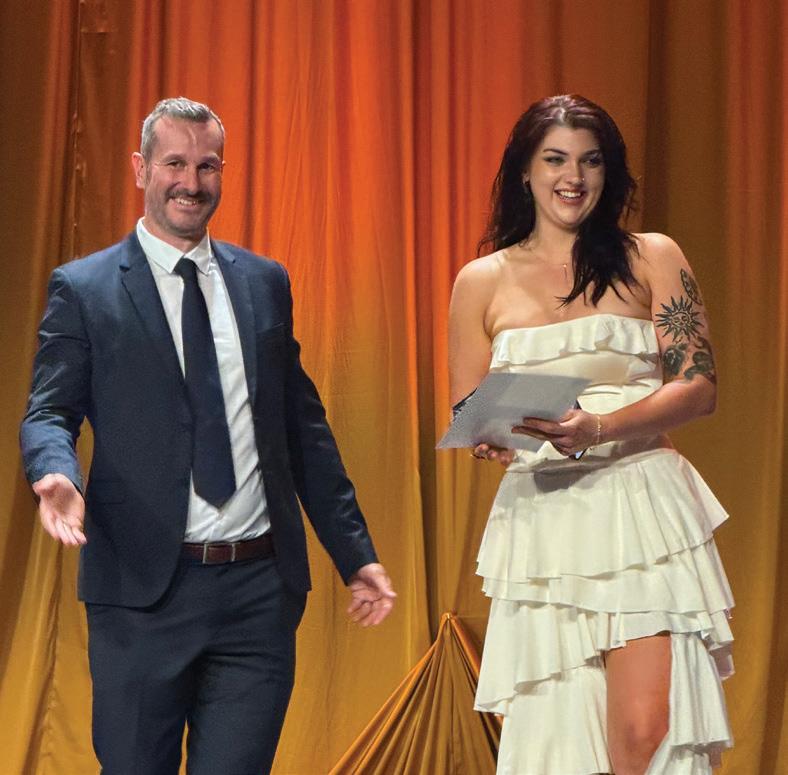
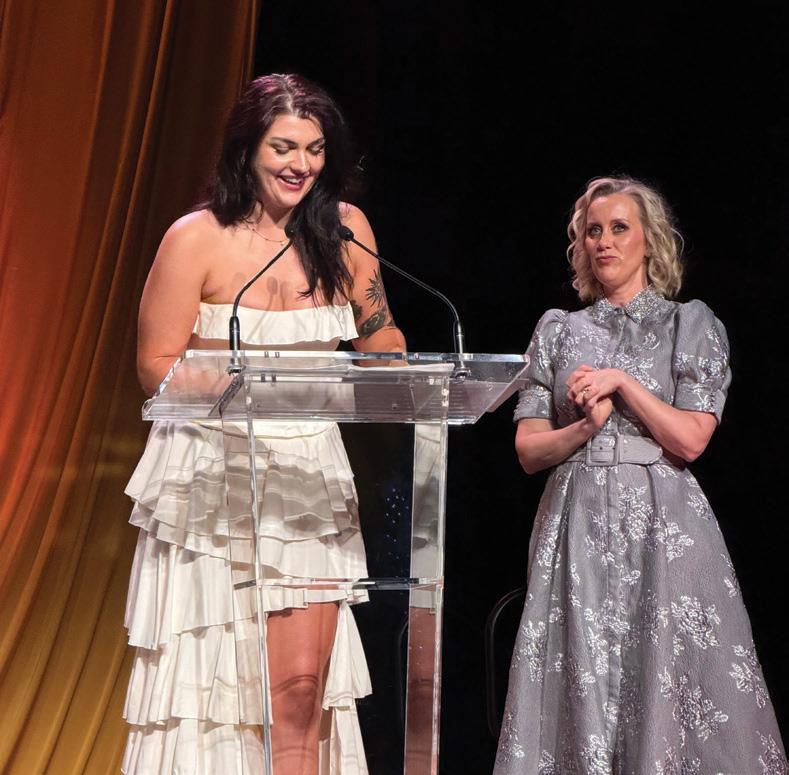
What did it feel like to win the The Croi Tradesperson Scholarship presented by NAWIC Australia NSW last year?
The Croi Tradesperson Scholarship is a $4000 award presented by NAWIC Australia NSW to recognise and support women undertaking trades in construction. It aids recipients with further education, training, or career development.
Winning the NAWIC award was a complete honour and surprise.
Being an apprentice I didn’t even think I could be considered for such a prestigious award.
To be recognised in this way was so reassuring, filled me with confidence, and invigorated me to push forward with my career.
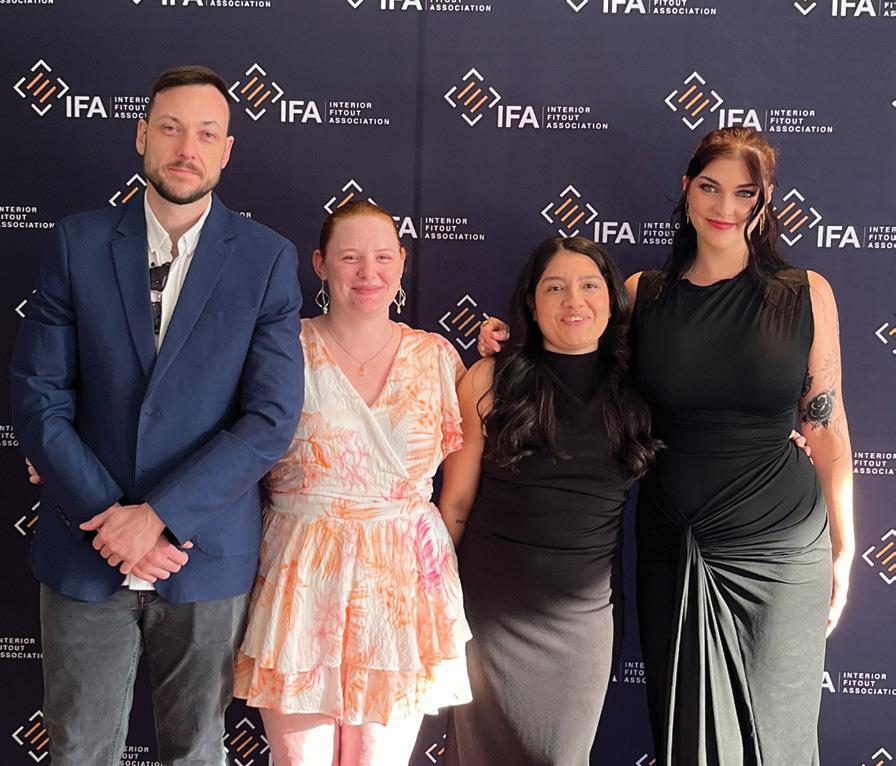
How is that going to benefit you in your career?
This award has connected me with some amazing women in all roles of construction who have given me a voice to the younger generation and to other women in their companies.
Not only this but I have had opportunities like this to speak with magazines and press and hopefully shed light of the amazing progression of women in this field as well as inspire other women to chase a fulfilling career that may have previously been out of their comfort zone.
What do you enjoy about your career?
I love the sense of flow and fulfilment I get from doing something I’m passionate about every day.
I love to lose myself in my projects and the fact I’ve never spent a day at work “watching the clock”.
I love the challenges of bringing design to life and learning and refining my skills.
I love the handiwork and passion that goes into everything, and I love that others get to use and experience the awesome things I’ve been privileged enough to build for them.
What do you find challenging?
The ebbs and flows of the construction industry can be challenging, dealing with slow periods and how quickly they can change to intensely busy periods.
Managing time and not losing the drive when things get super slow or super intense.
How do you balance home and work life? Is it hard to achieve?
I am lucky enough that because I work such a practical job, I have the ability to leave it completely when I leave for the day.
My personal time is completely mine and my work time is when I’m completely zoned in there.
What was the best piece of advice you have received?
The best piece of advice I received was from my mother who told me to “just do whatever makes you happy. You spend a third of your life working,
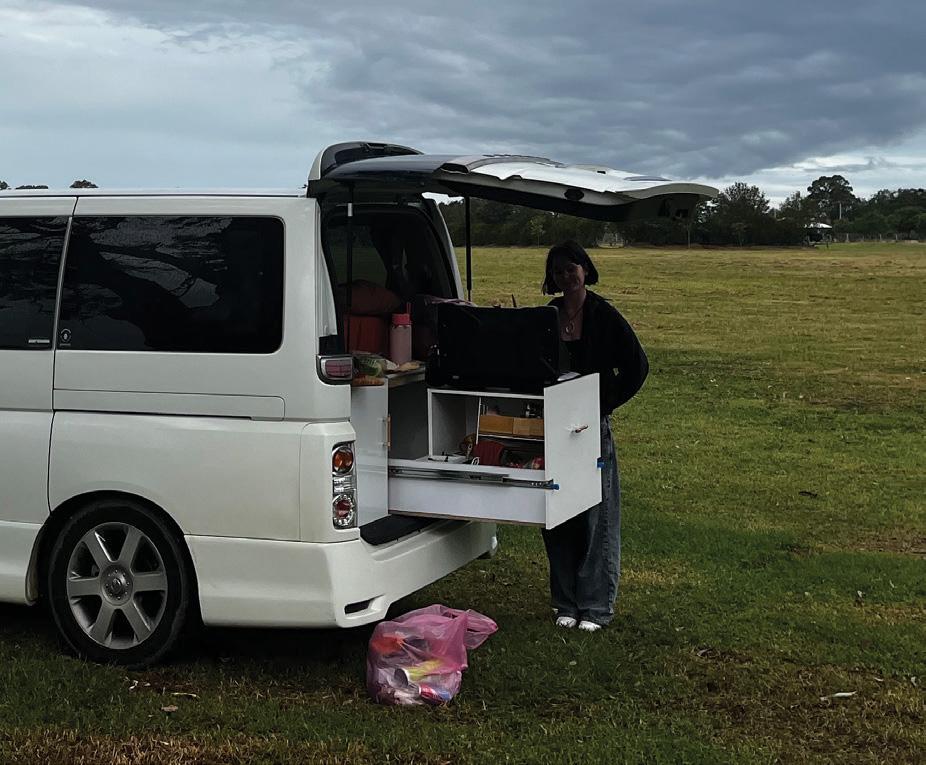
you may as well enjoy it. If you love what you do, everything else will work itself out. Have faith in yourself”.
What advice would you like to give other women in construction?
I would absolutely pass on this advice to other women and add that sometimes the best things life can offer you live on the other side of fear.
There are people, companies, and clients out there who believe in you, want to see you succeed and will give you the tools to do so if it’s something you’re passionate about.
You have every right to be in this career, but it all starts with backing yourself, being your own best teammate, and doing what’s right for you.
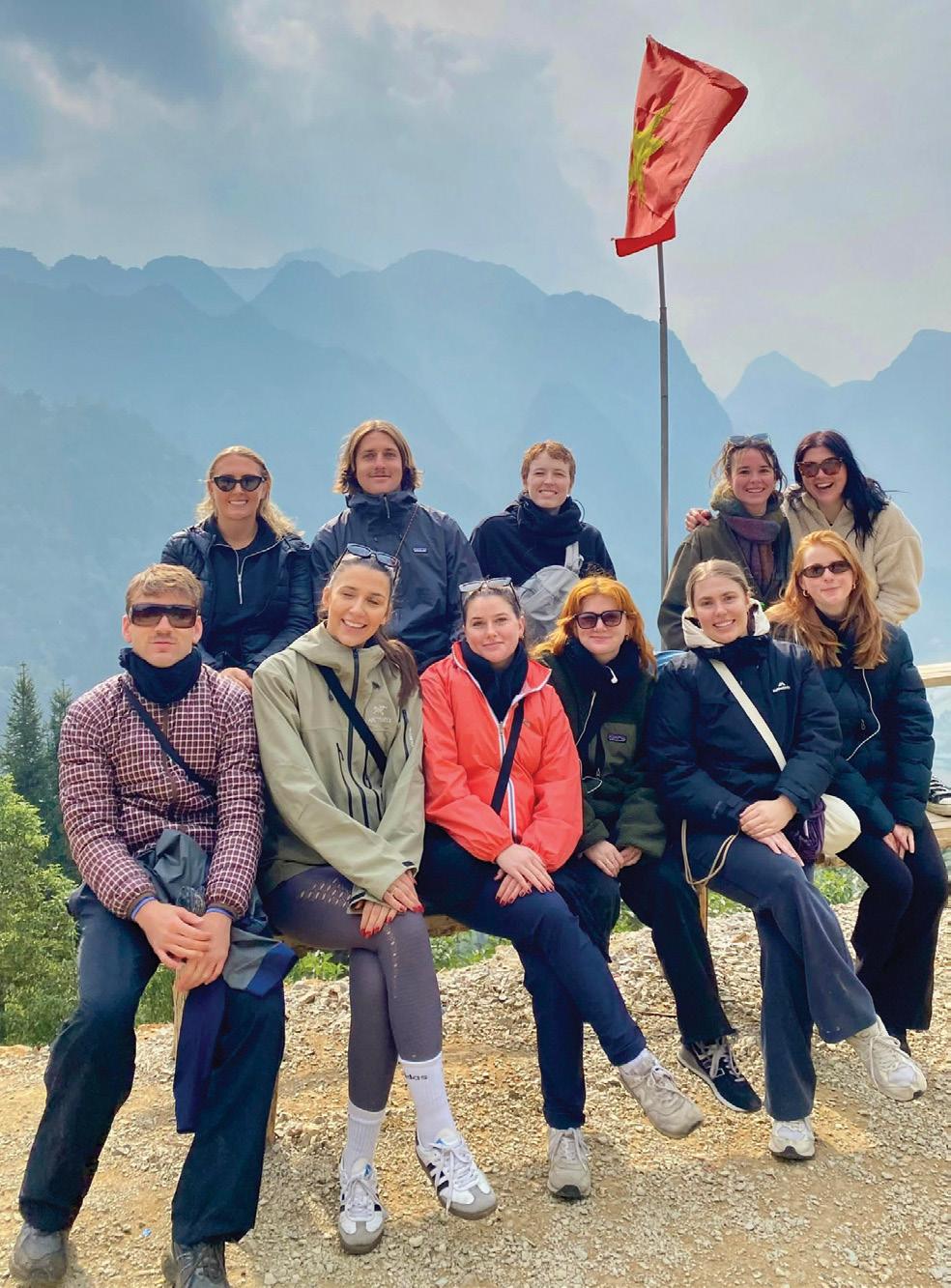
BUILDERS NSW AUGUST 2025
SPECIAL GUEST - JANE LANGOF
Master Builders NSW August 2025
ABBIE LINDSAY
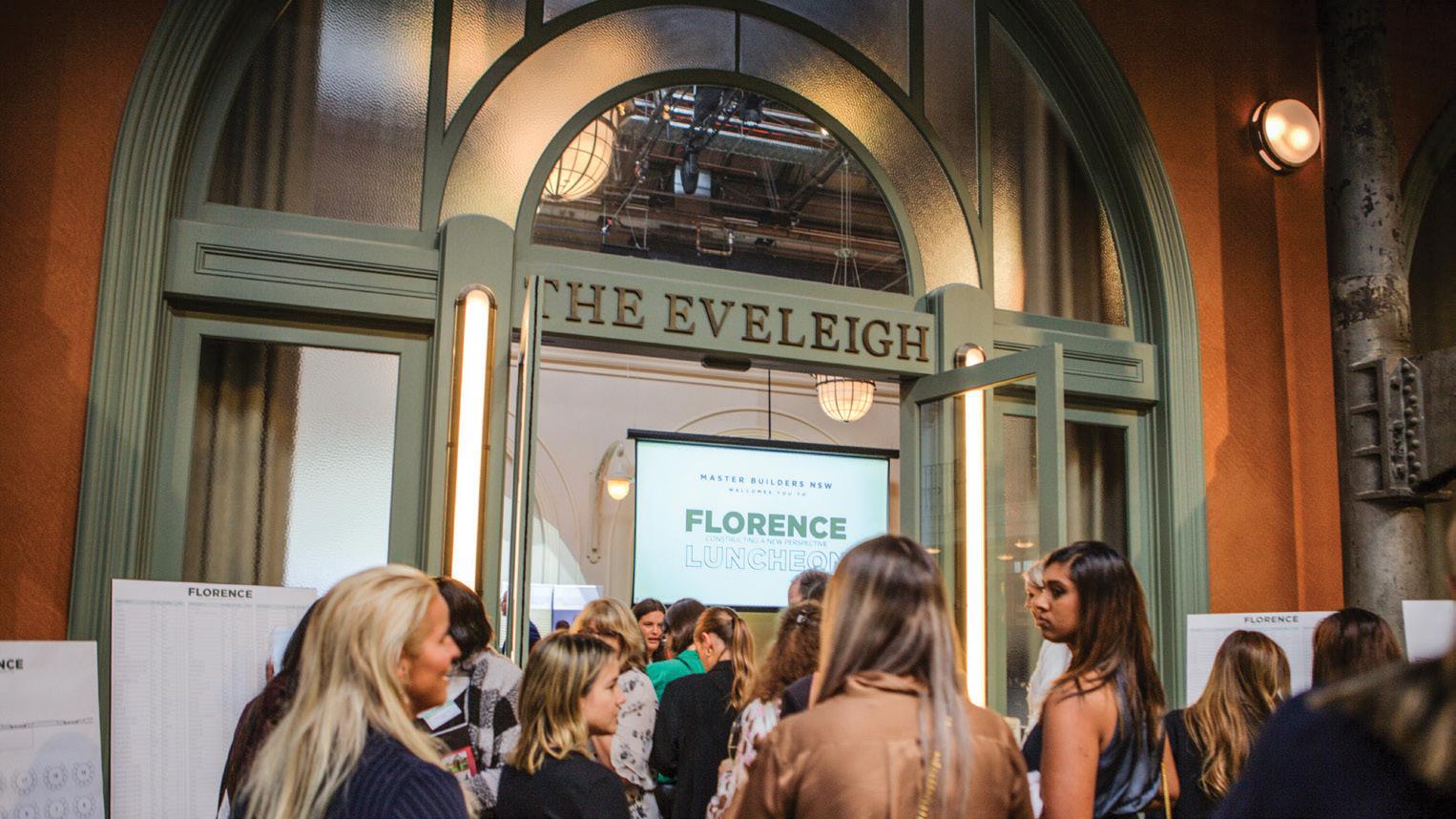
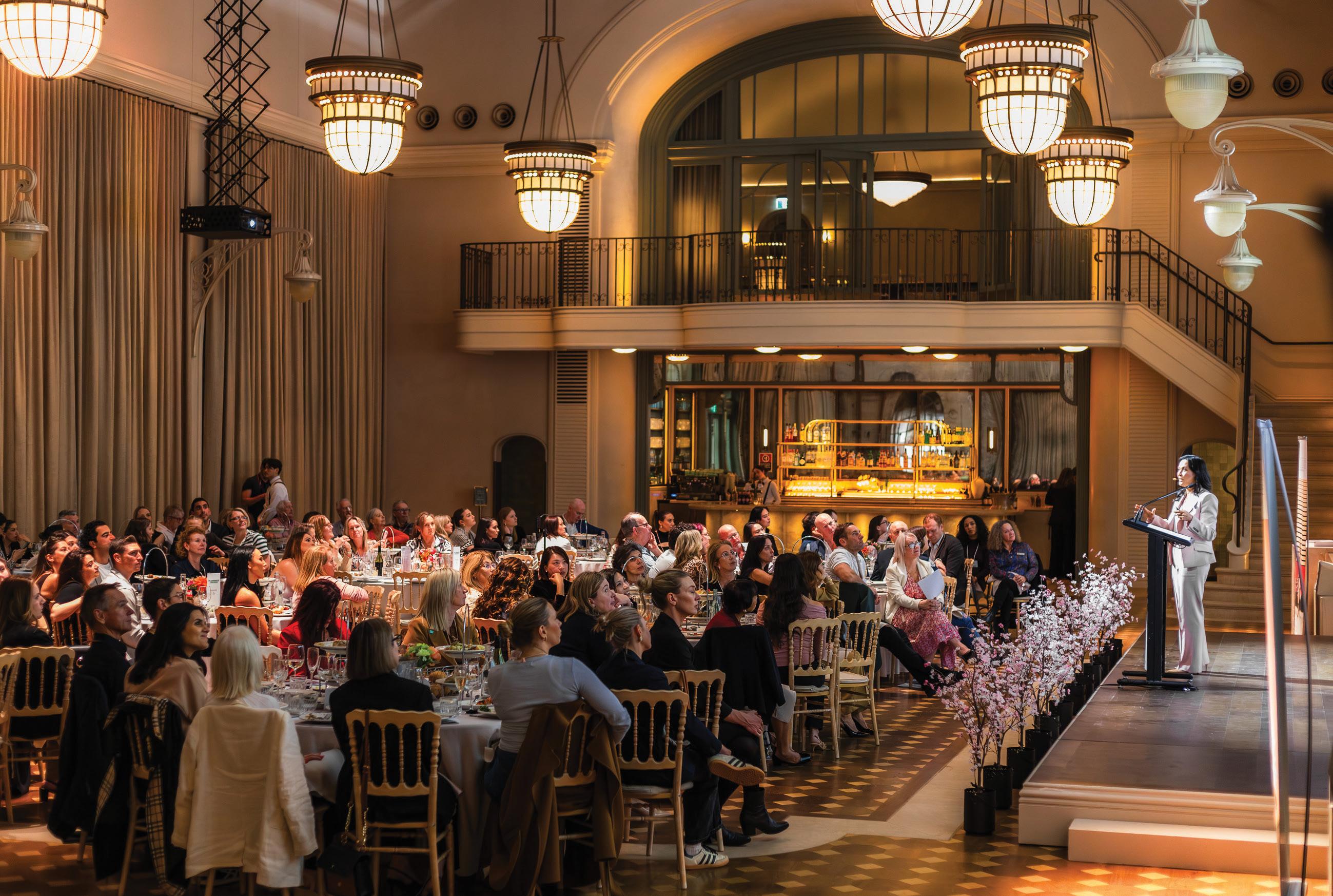
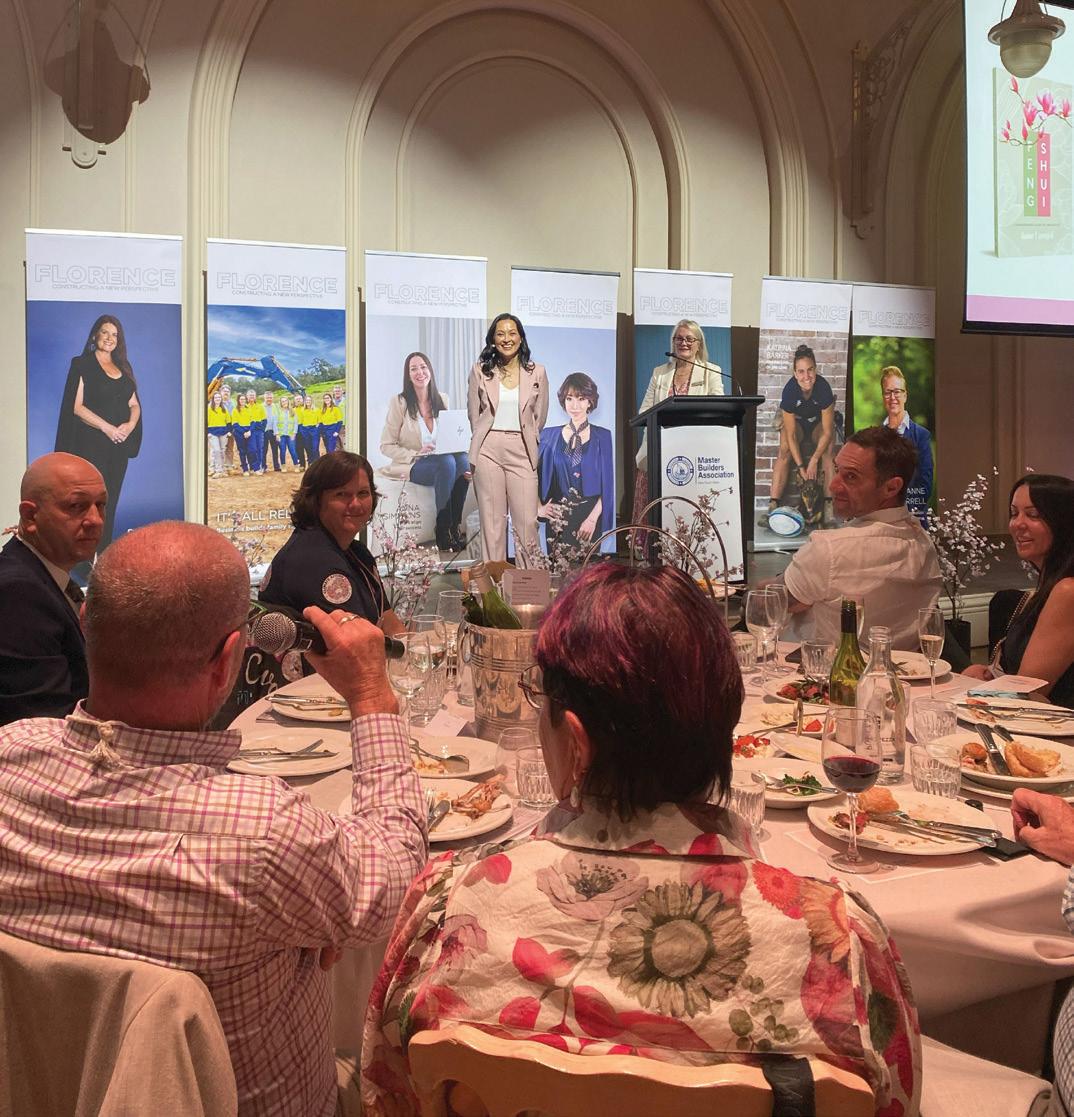
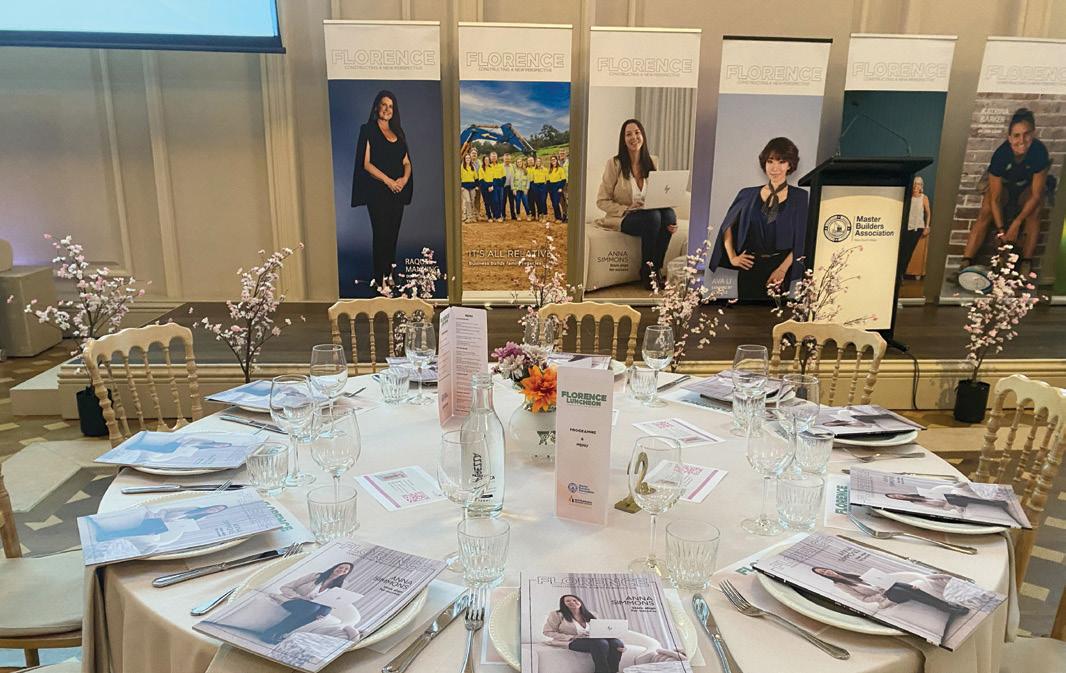
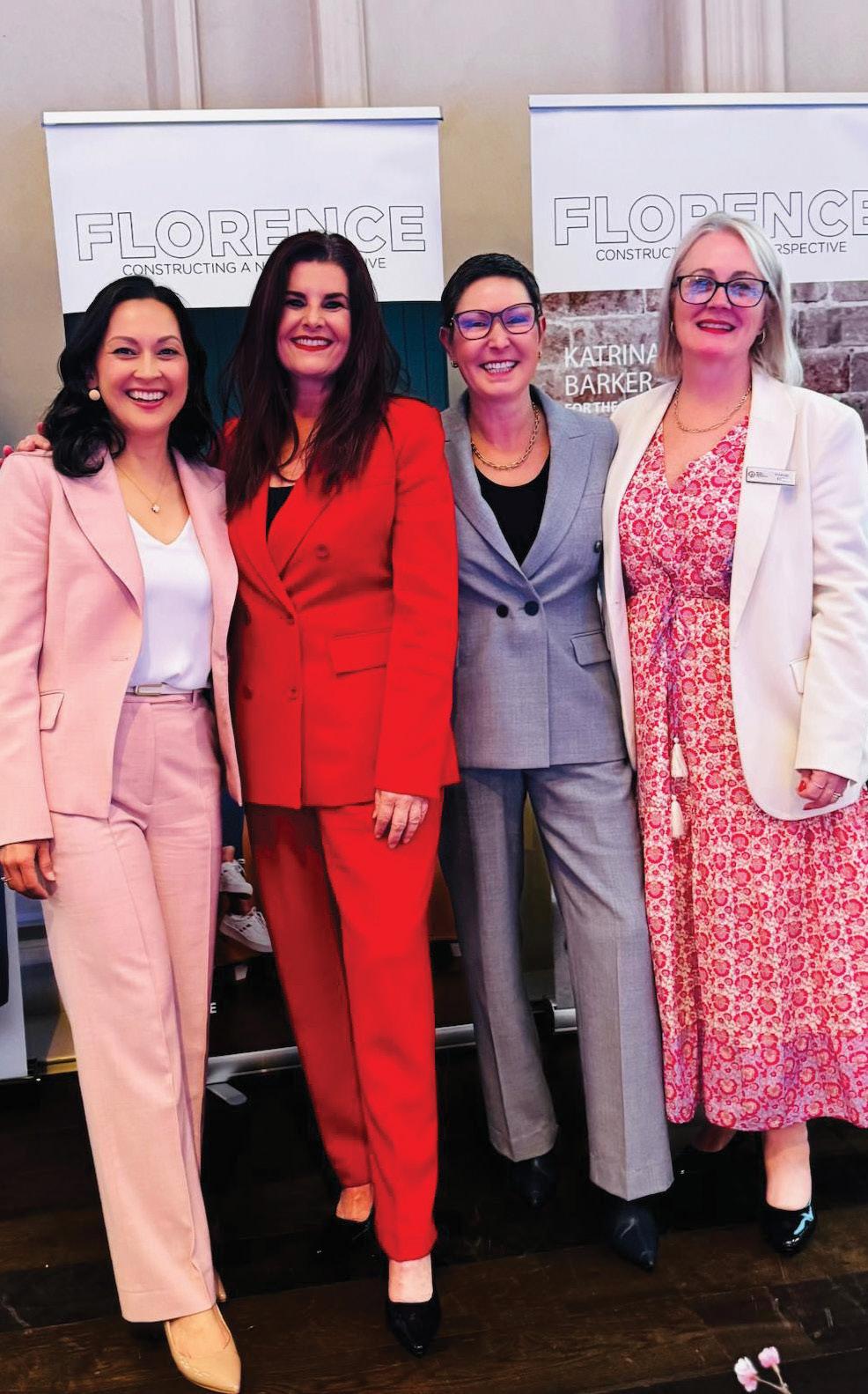
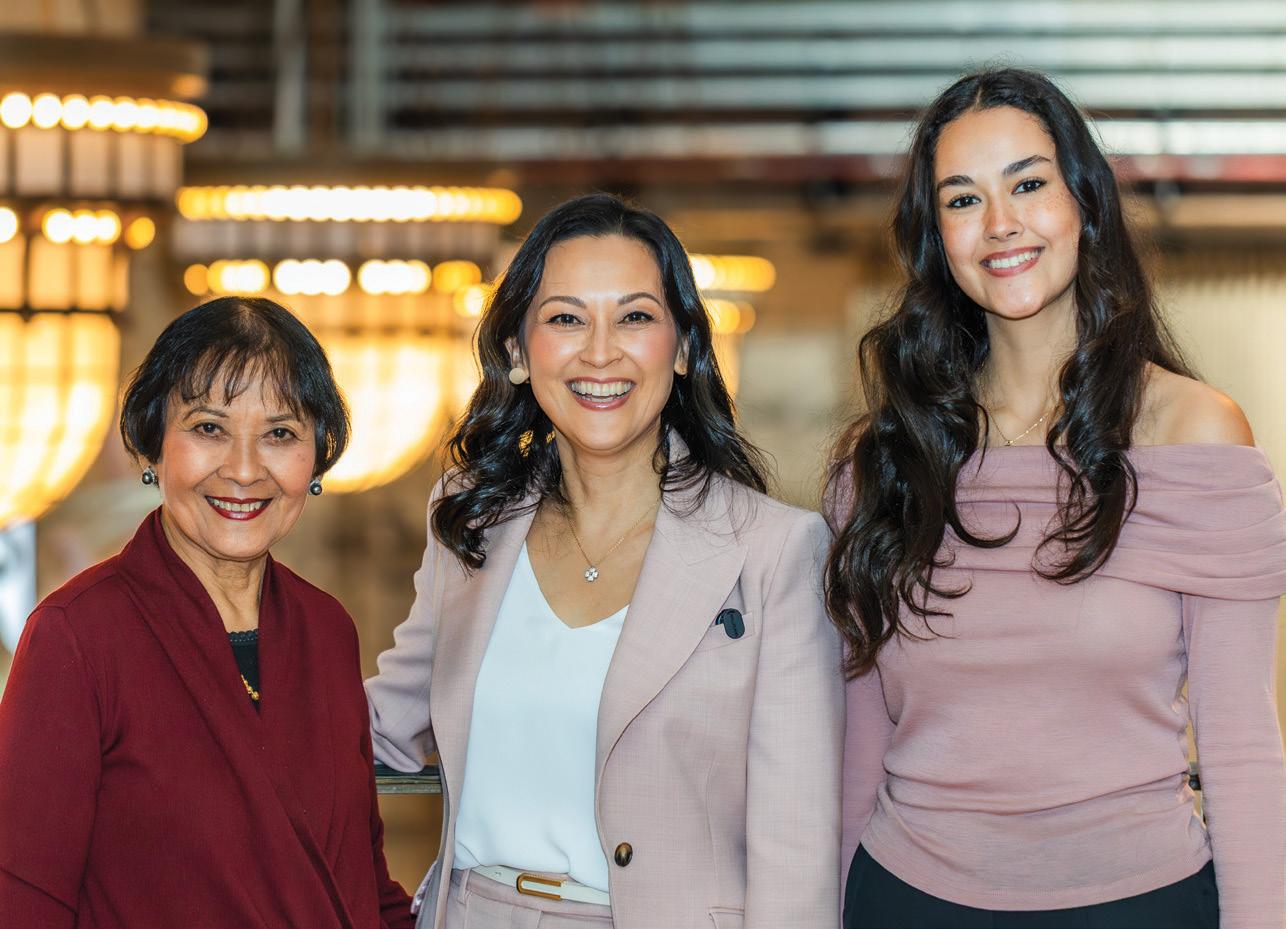
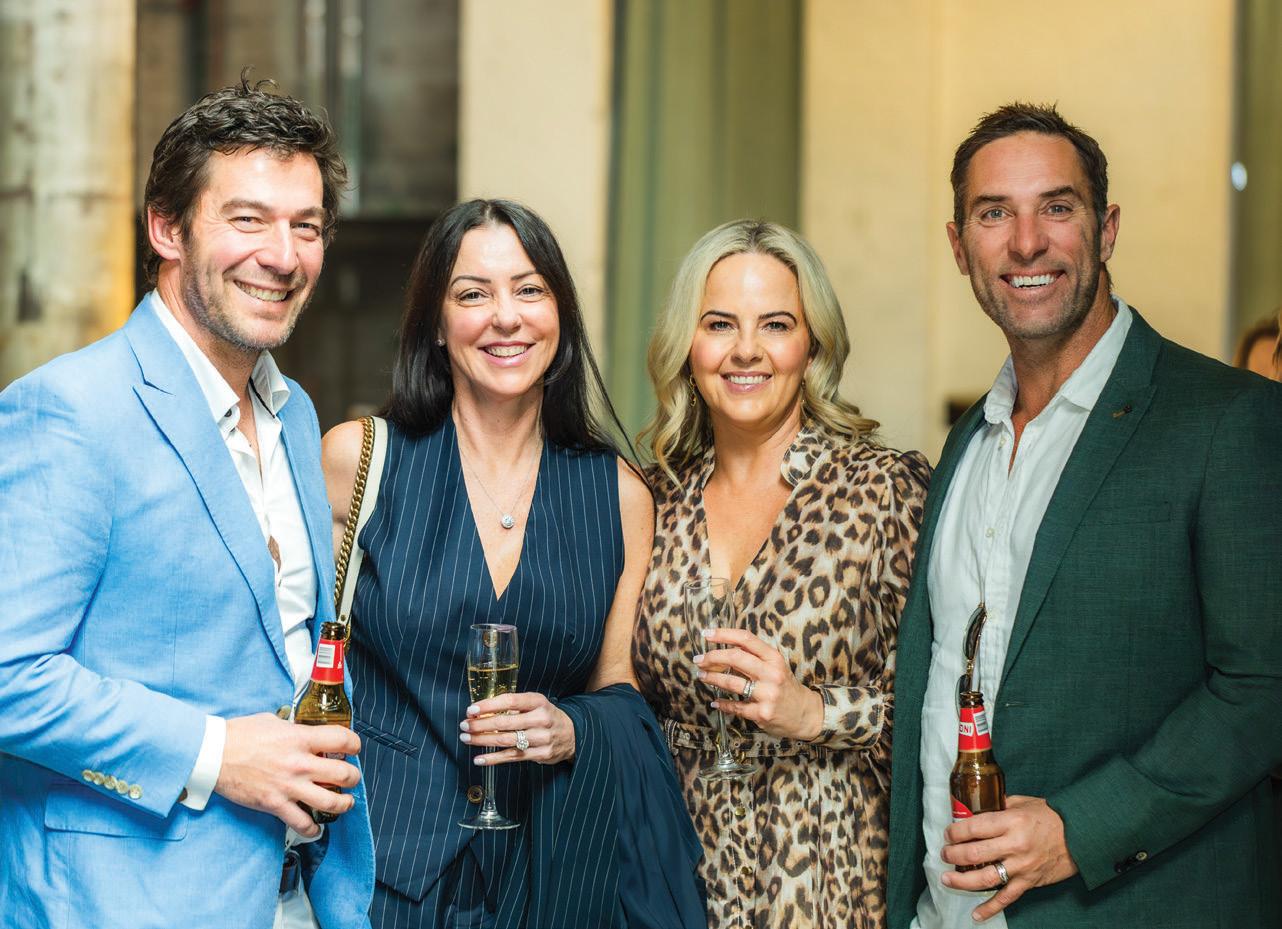
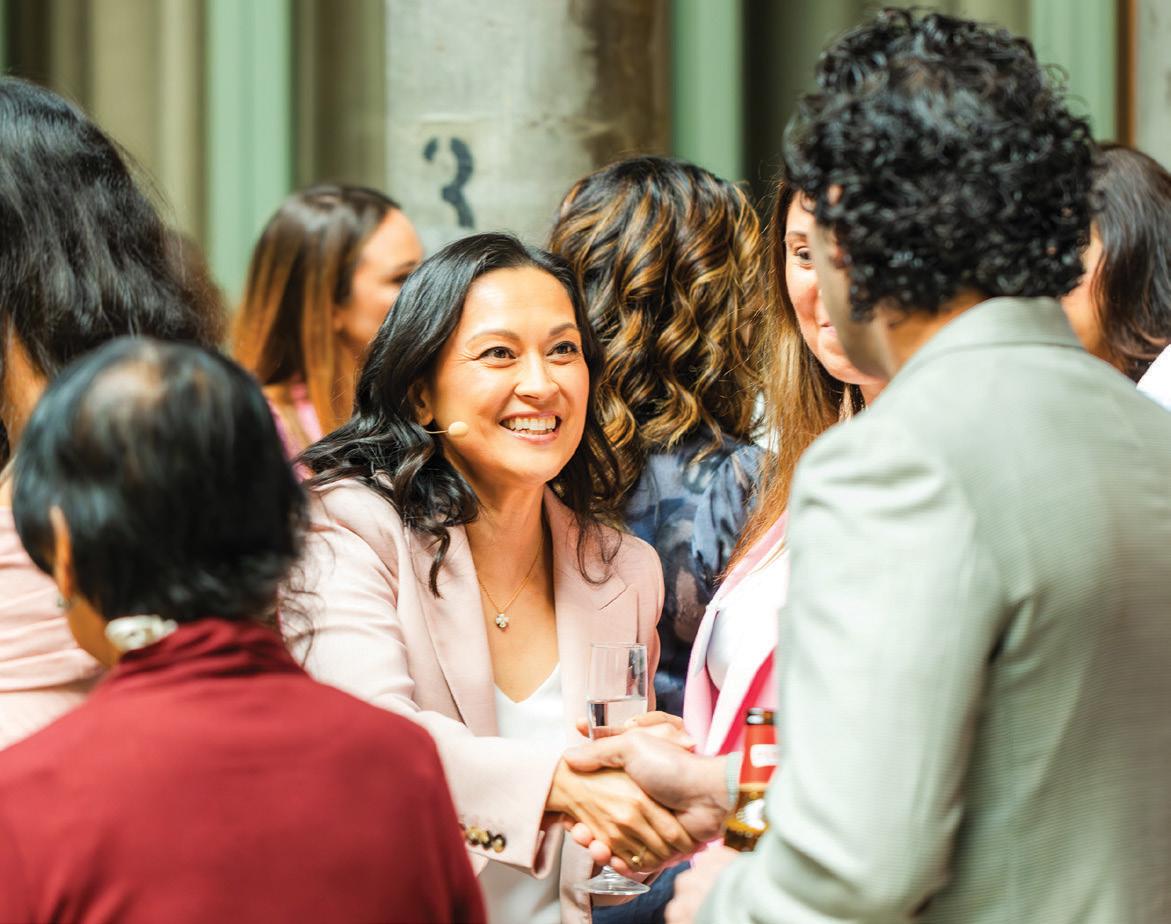
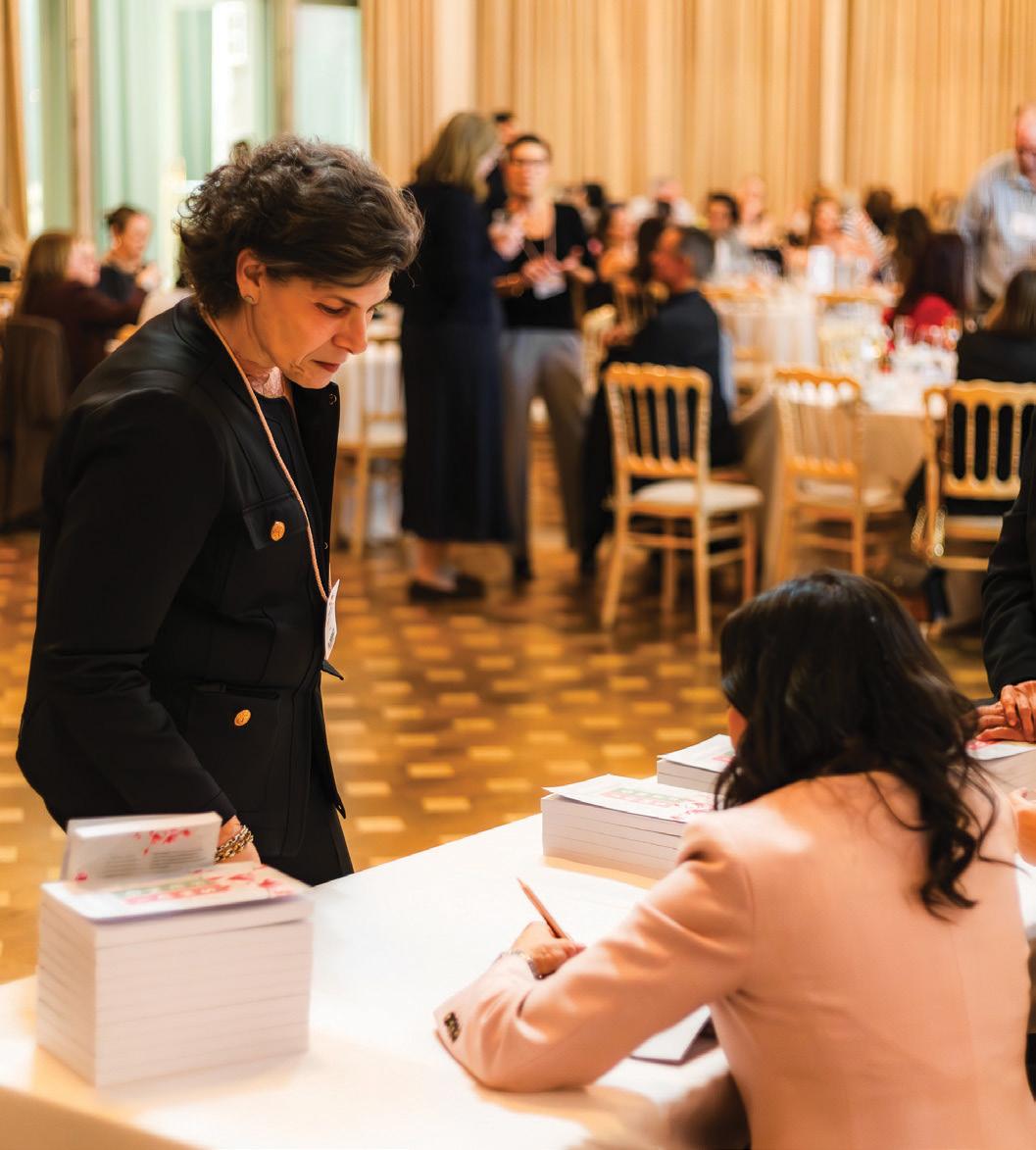
The spirit of Florence was once again celebrated at the latest Florence Luncheon, where guests came together in support of elevating women in construction.
The August 2025 Luncheon was an exciting day at The Eveleigh.
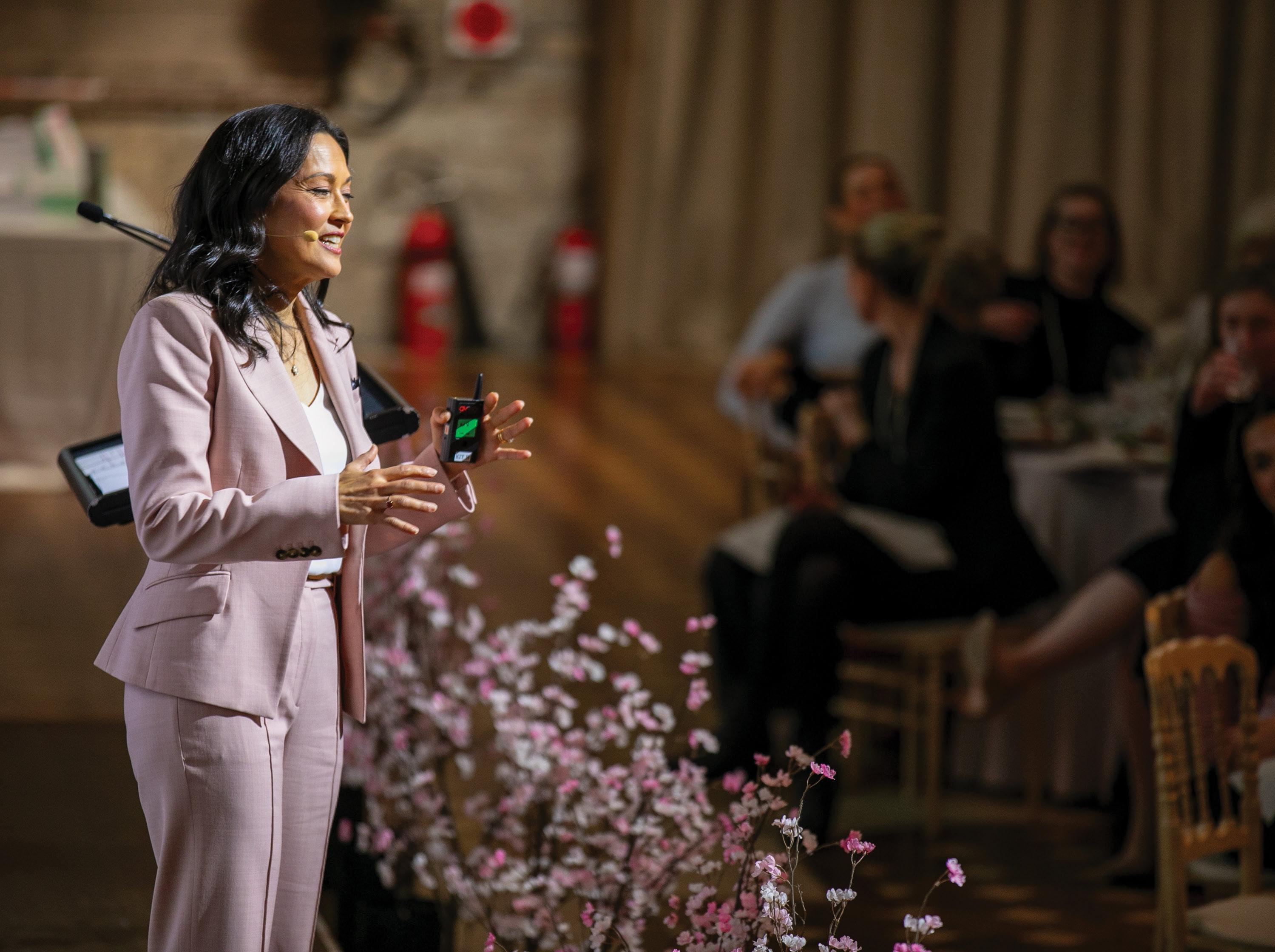
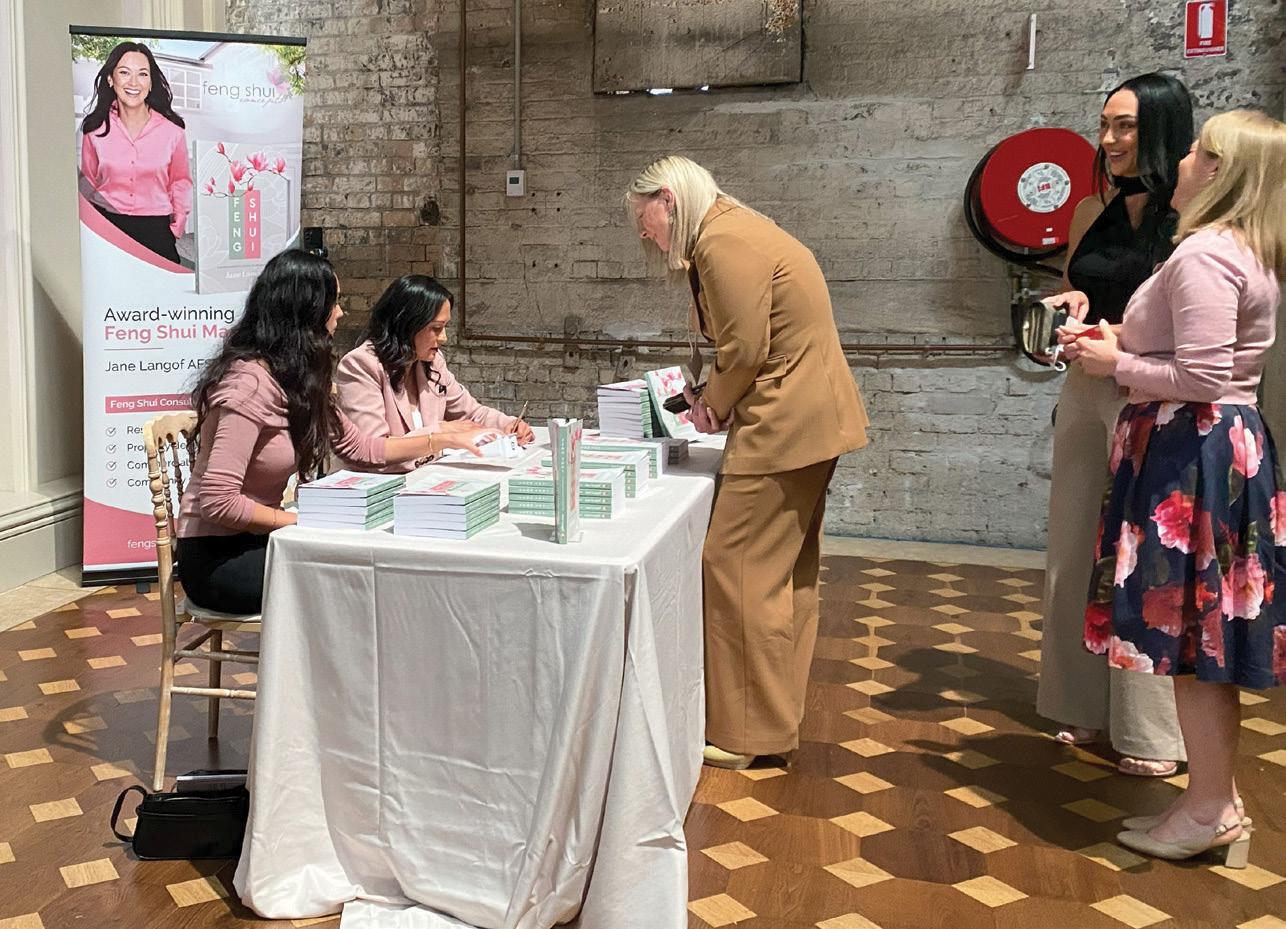
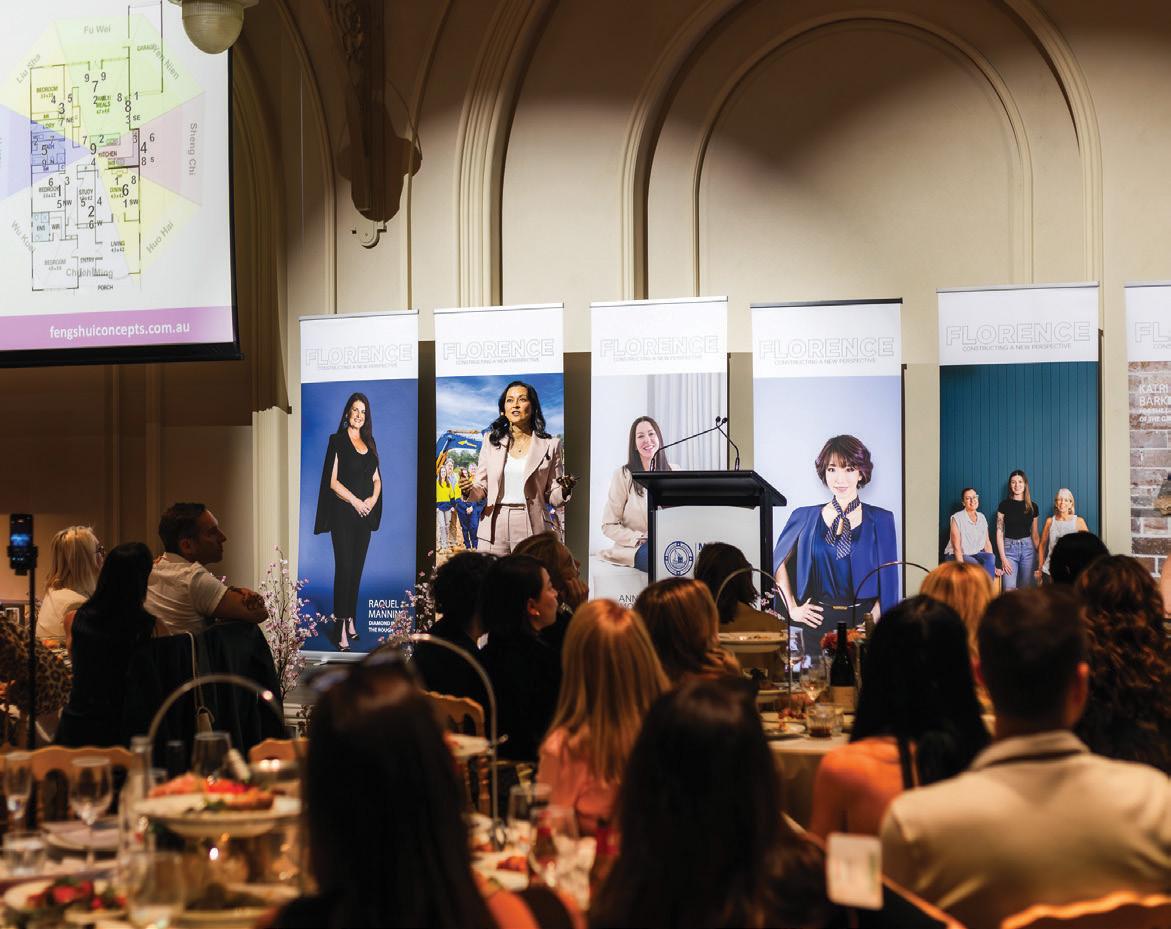
We had the pleasure of hearing from Feng Shui master Jane Langof.
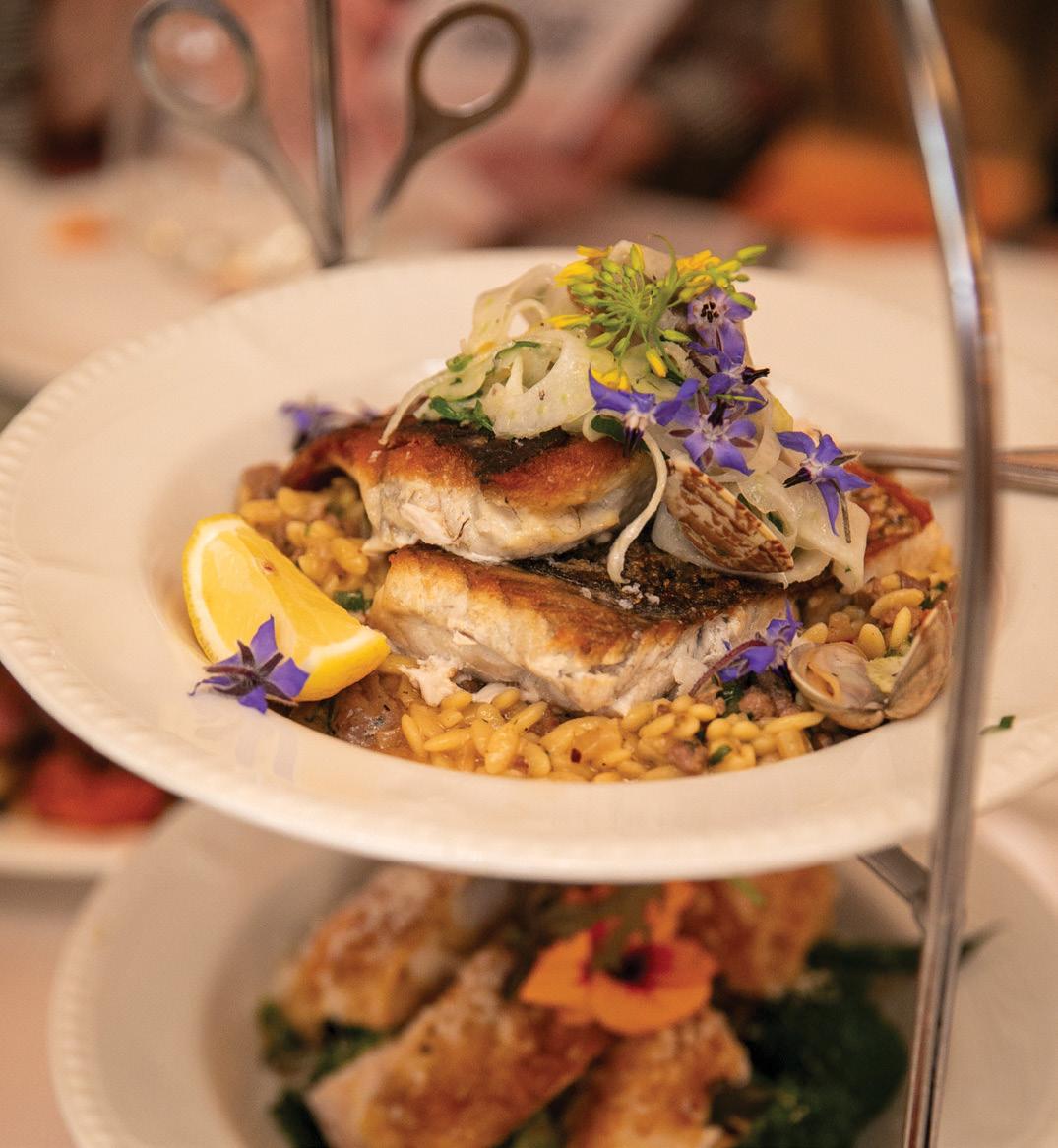
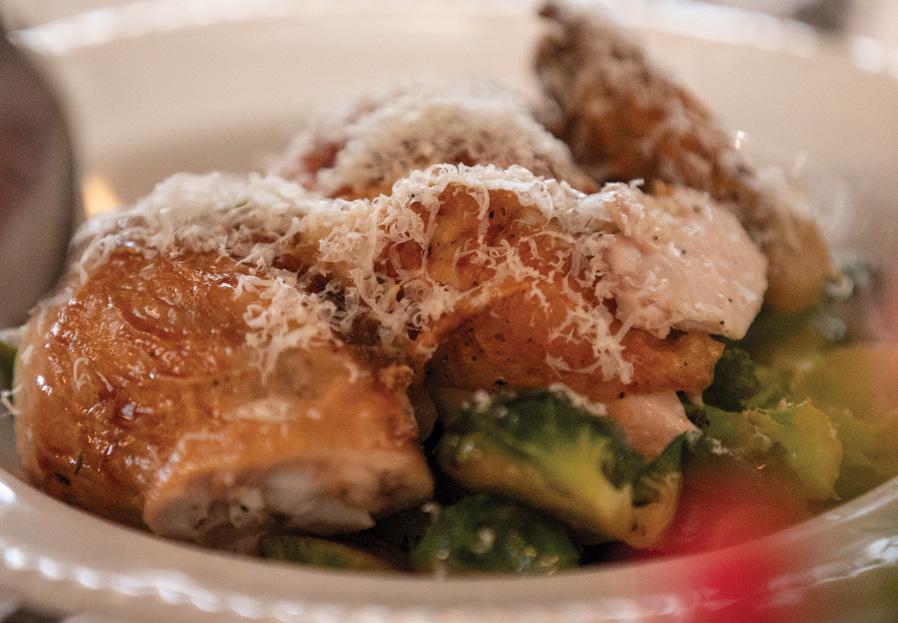
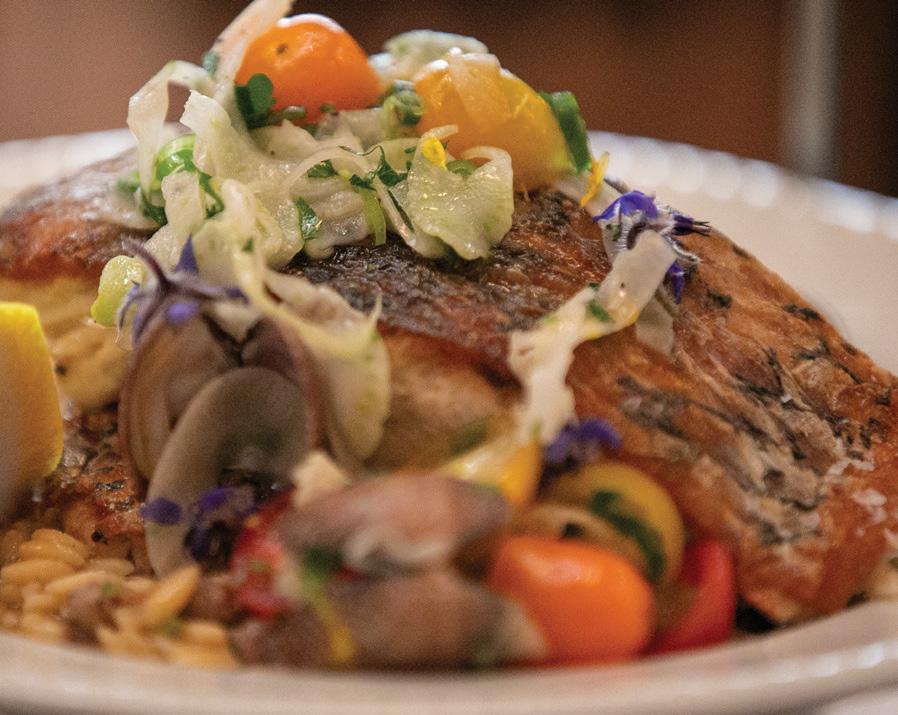
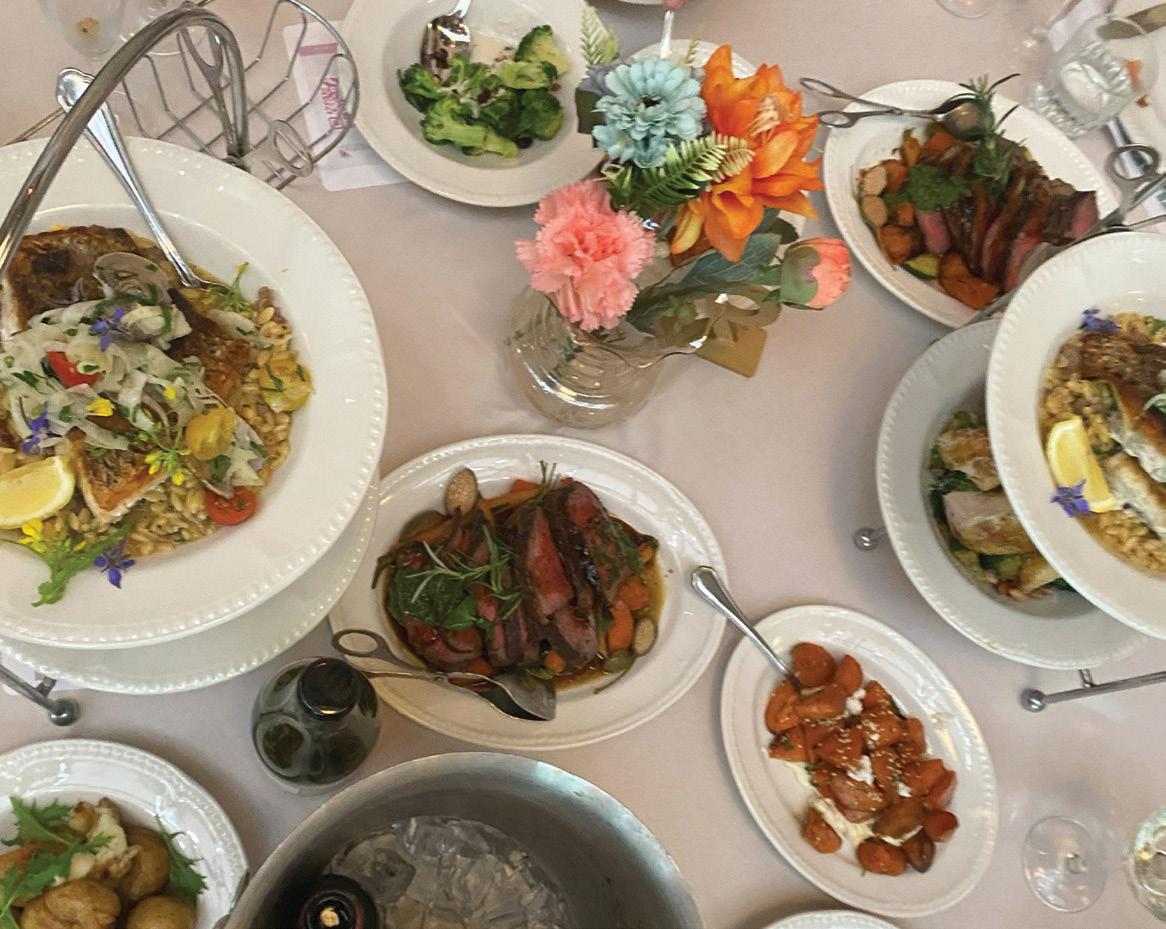
Guests enjoyed beverages and canapés in the foyer before settling in for an impressive feast and some key insights about how the design of your home can impact your wellbeing, success and abundance.
Jane is an internationally accredited, awardwinning Feng Shui master, author and speaker.
As the founder of Feng Shui Concepts, Jane combines traditional Feng Shui principles with modern design to create harmonious and inspiring spaces.
Jane shared actionable strategies to harmonise spaces and elevate lives.
Her work blends a deep understanding of energy flow with a creative eye for design, helping people create environments that radiate harmony.
Thank you to all who attended this luncheon, and to Master Builders Insurance Brokers for their continued support.
Visit our website www.florenceaustralia.com.au for photos from the day.
JOIN US FOR THE NEXT FLORENCE LUNCHEON.
WHEN: Friday August 21, 2026
WHERE: The Eveleigh, Bay 3, 2 Locomotive St, Eveleigh
COST: $253 per person (includes premium lunch, networking, and keynote)
CONTACT: events@mbansw.asn.au P: 02 8586 3504
SARA EARLEY
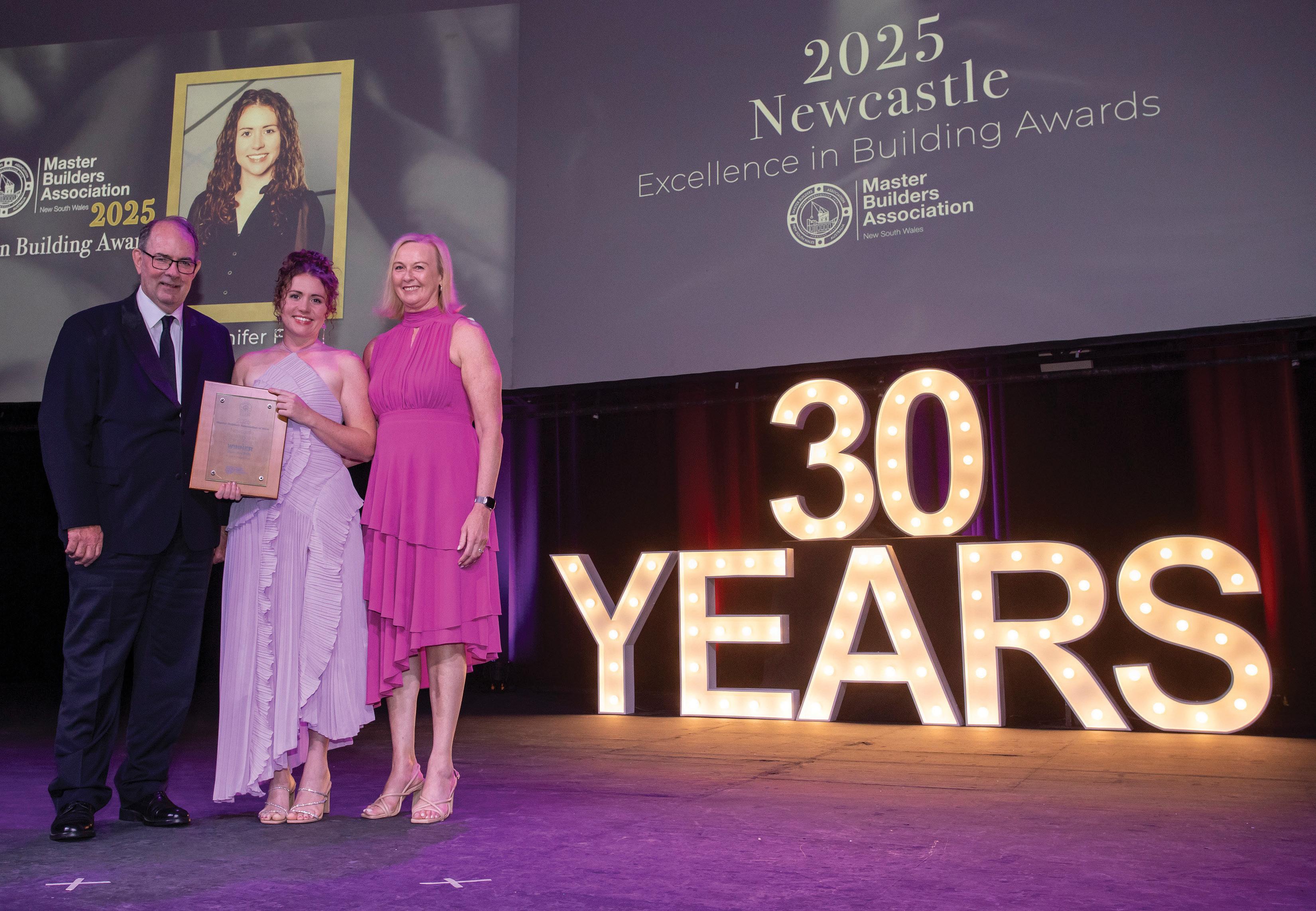
One of the best thing women in construction do is celebrate each other and their contributions to the industry.
Master Builders NSW’s Women in Building Recognition Award celebrates women who make a meaningful impact in the construction sector and Women in Building and Associated Services (WIBAS) has been involved since the Award’s inception in 2007.
What began as a local initiative at the Master Builders Newcastle Excellence in Building Awards has grown to become a program covering the Riverina Murray (Albury), Northern (Ballina), Southern (Wollongong), Western (Orange) and Newcastle regions.
The award recognises women who demonstrate excellence in their field, contribute to their communities, and help shape a more inclusive and progressive industry.
It highlights diverse career pathways and reinforces the building and construction sector as a rewarding and viable career for women.
Importantly, nominations are open to both peers and self-nomination, acknowledging that many women don’t always put themselves forward, despite their significant achievements.
WIBAS was founded in 2006 when 15 women gathered for a morning tea and was created on a shared desire to foster connection and create a community for women working across the building and construction industry in Newcastle and the Hunter region.
Nearly 20 years on, WIBAS has grown and evolved from small conversations around a table into a respected and influential network, with their signature breakfast events now welcoming more than 100 attendees with many Newcastle venues being part of the group’s story.
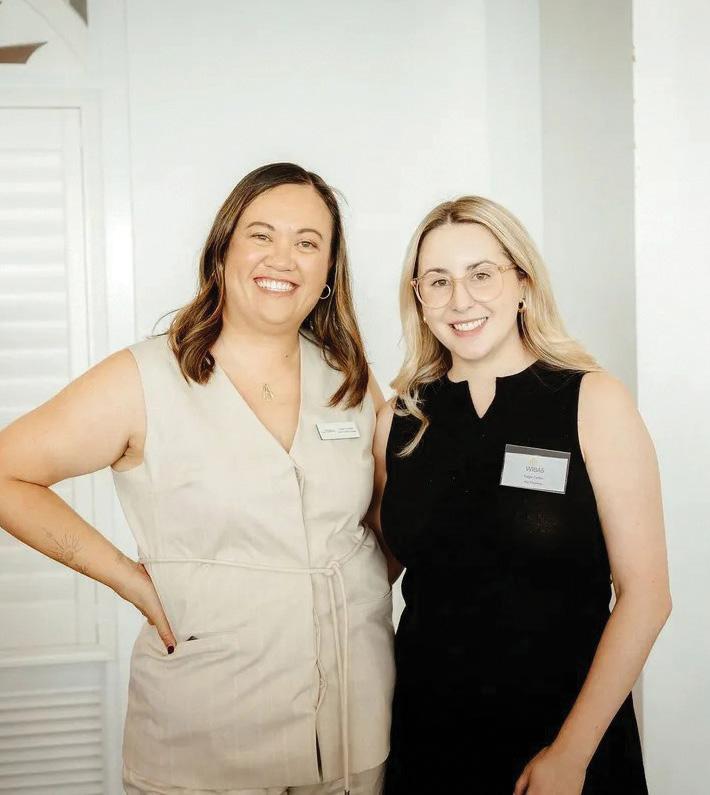
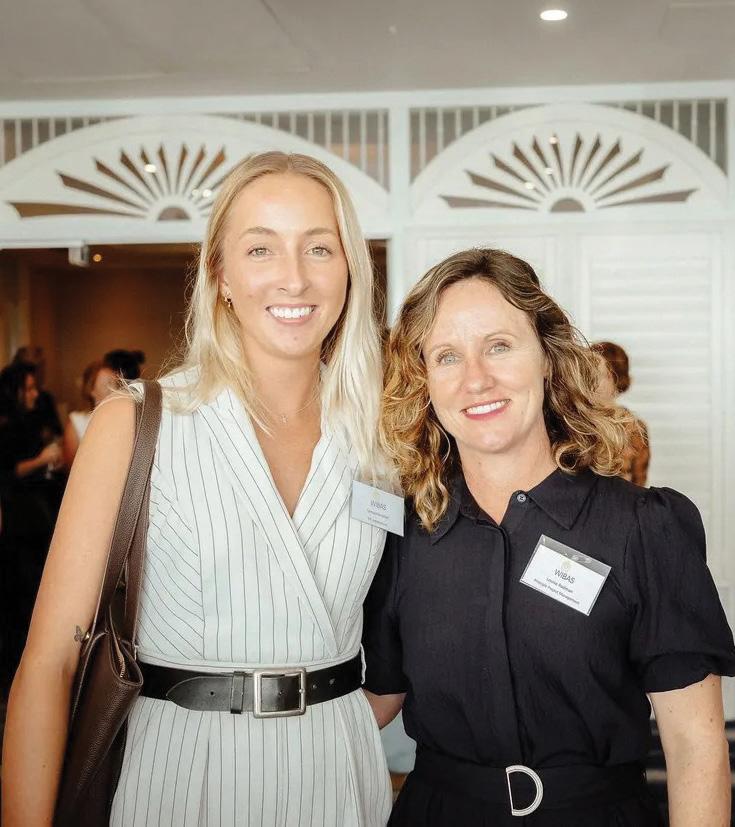
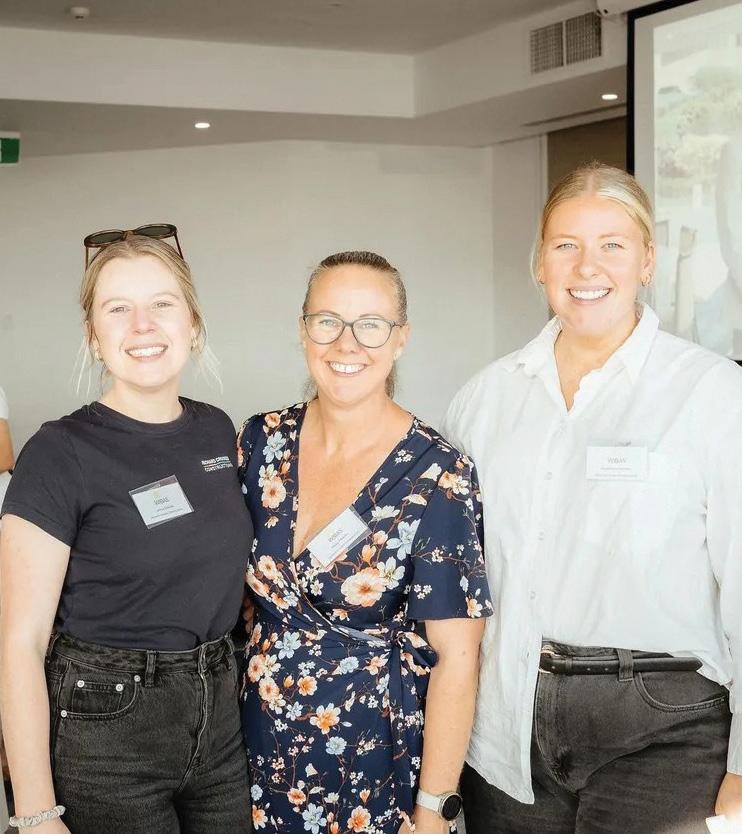
The original spirit of connection remains at the heart of each event which are designed to encourage meaningful conversation among small groups.
At its core, WIBAS provides safe, inclusive spaces where women connect, share experiences and support one another in a traditionally male-dominated environment. From project managers and architects to trades, suppliers and professional services, WIBAS shines a spotlight on the breadth of talent shaping the built environment.
Over the past 12 months, WIBAS has delivered a thoughtfully curated program that intentionally engaged different segments of the industry.
Last year’s breakfast events showcased the breadth of our reach and purpose:
Leadership focus with Princess Ventura, offering insights into resilience, influence and leadership at senior levels.
A panel discussion bringing together diverse voices and perspectives, encouraging open dialogue and shared learning across professions.
Jessica Sadler from Shamrock Joinery whose story resonated strongly with trade-based professionals and younger attendees, highlighting alternative pathways and practical, hands-on careers in construction.
A notable shift over the past year has been the increase in male attendance at WIBAS events.
This reflects a broader cultural change within the industry, where conversations around inclusion, allyship and diversity are being embraced more widely.
Recognising the need to better support emerging
professionals, WIBAS trialled its first Mentor Workshop in 2025.
Designed to help those early in their careers find their voice, build confidence, and access guidance, the workshop fostered connections, understanding, and learning. Proudly supported financially by the WIBAS committee, the initiative was delivered with accessibility in mind, reflecting our commitment to giving back and recognising the valuable contribution emerging professionals make to the industry.
WIBAS also re-introduced site visits for the first time in three years, giving members the opportunity to step onto a high-profile Newcastle project, ask questions and learn directly from industry peers.
The group also took time to celebrate the year that was, with their refined cocktail-style event Christmas celebration. The event focused on connection, enjoyment and an appreciation for its members and their contributions to the industry.
To support our expanding program, WIBAS introduced new sponsorship opportunities in 2025, which were positively received by industry partners. Bureau Veritas, Master Builders Association, HansenYuncken and North have come aboard as annual sponsors and these partnerships have enabled WIBAS to invest back into our program while allowing sponsors to visibly demonstrate their commitment to supporting women in construction.
As WIBAS enters its third decade, they are more than a network. They are a community-led movement that champions visibility, mentorship, collaboration and cultural change. WIBAS are ready to test new forums, build partnerships and support inclusivity across all roles and demographics.
ANNA SIMMONS
You know how you just click with some people?
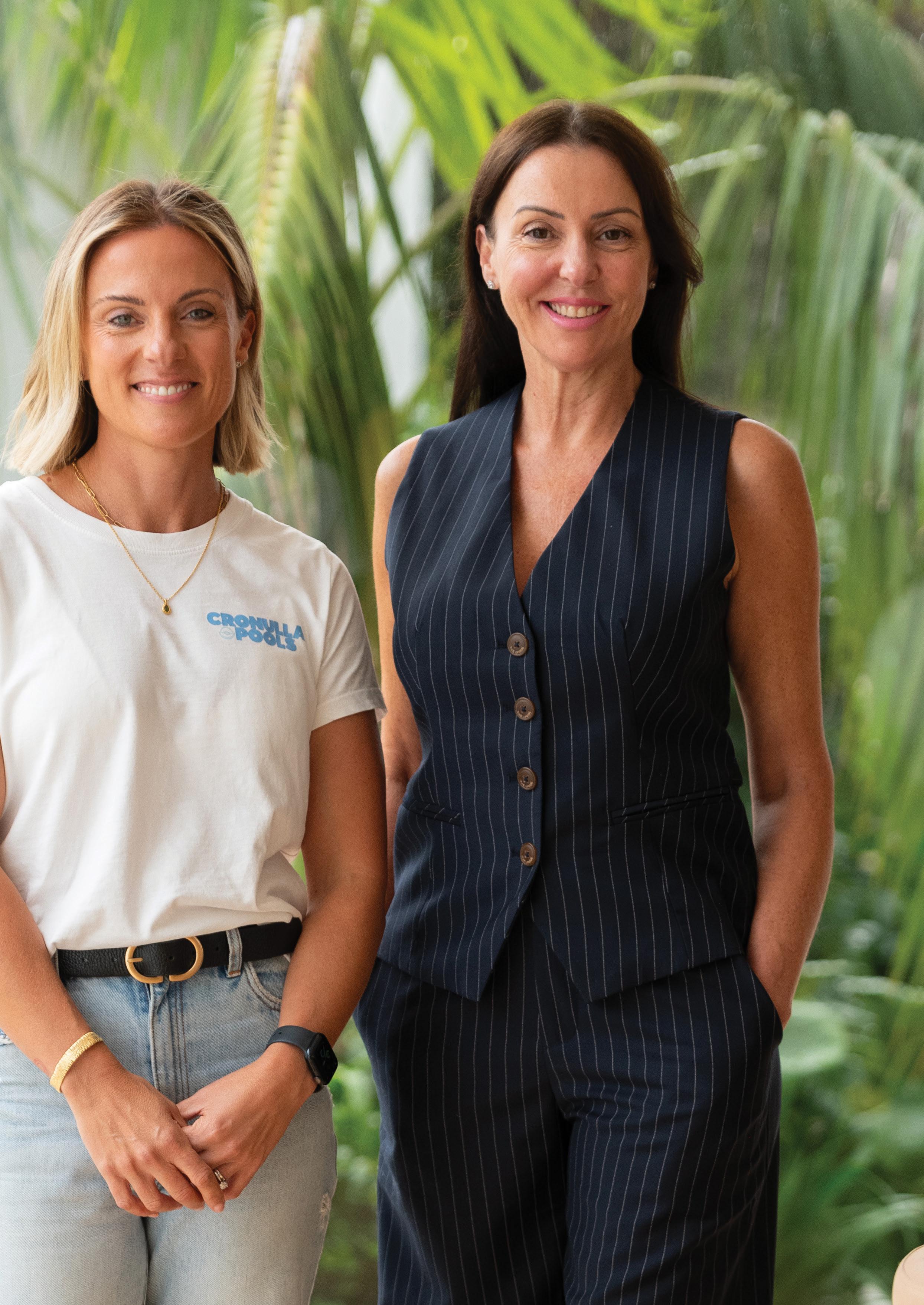
We first started working with Kate Lainson and her husband Matt Lainson years ago when both our businesses were just getting started. We were very similar, both working with our husbands and in hands-on roles to get the business growing.
Since that time, we’ve worked on a range of beautiful pool projects together. As both our businesses have grown and matured, the projects have become more complex and challenging.
Then in 2025, I discovered that we had a new neighbour… Kate and Matt moved into our street! Having deep connections and being able to talk to someone else who understands your challenges is so important when you run your own business.
I respect Kate a great deal, so I asked her to give us a bit of insight into her story. She’s been incredibly open and real, that’s what I love about her. I hope you enjoy!
Anna Simmons, Ambassador
Cronulla Pools didn’t begin with a grand plan. It started as a simple idea between Matt and I, trying to make life work with our then, two little kids. Matt wanted to do more with his concreting business. I wanted to stop commuting to the city but still use my marketing background and contribute financially.
The goal was straightforward: make life easier. At first, it felt transactional — I’d answer the phone, help with quotes, use my experience to bring in local clients, and we’d work side-by-side as a complementary service to Matt’s concreting work. I never imagined it would become what it is today.
But then we won our first pool.
That one “yes” flipped a switch in both of us. It gave us confidence, sure, but more importantly, it ignited something we didn’t even know we were searching for. Suddenly, it felt like we had stumbled into the work we were meant to do.
Matt leaned into the technical, construction side; the stuff he’s genuinely brilliant at. And I found myself connecting deeply with clients, listening to their stories and using those stories to connect with others who dreamed of their own pool.
Everything moved quickly… and then everything changed.
Just as Cronulla Pools started to take off, life handed us the perfect storm: COVID, homeschooling, a newborn baby, a business growing faster than we expected, and Matt being flat out on site because the industry exploded when travel shut down.
We went from “this is exciting” to “This is survival mode.”
I was sleep-deprived, breastfeeding, running a business from a cramped home office, homeschooling two kids, and carrying the emotional weight of every client’s experience.
Matt was out on-site delivering builds, stretched thin in a completely different way. We were like ships in the night, both exhausted but carrying different loads.
The hardest part for me was the guilt.
I worried constantly — about our clients, our team, our experience, our reputation. Letting go of control was confronting.
As we grew and hired people, I worried clients wouldn’t feel “us” anymore.
What if it didn’t feel as personal? What if they thought we’d sold out? What if the experience became diluted?
But the truth was, our team was incredible. They cared as deeply as we did.
They carried parts of the business when I couldn’t. They became an extension of us in a way I never expected.
And somewhere in that messy middle, the newborn weeks, the endless nights, the uncertainty, the homeschooling, the growth, the letting go, something important happened.
The heart of our business revealed itself.
We realised building a pool isn’t just about concrete and tiles.
It’s about lifestyle. Connection. Family. Memories.
It’s about giving families the moments that filled our own childhoods, and the kind we were craving while our world felt chaotic.
That messy middle forced us to grow up as a business.
It made us tighten our systems. Strengthen our processes. Organise our operation so it could support growth rather than crumble under it.
It highlighted how deeply we value our team and how essential they are to delivering the experience we promise.
It also clarified what lights us up: connection, care, craftsmanship, and the feeling of building something meaningful for families all over Sydney.
Today, Cronulla Pools is still the family-run, heart-led business it was when we started, but with a bigger, stronger heartbeat.
We have a team we trust. A culture we’re proud of. And a business that has grown right alongside our family.
We still get that rush when a client fills their pool for the first time. But now, there’s something just as special; watching our team stand back at the end of a project with pride written all over their faces.
That messy middle didn’t break us. It built us. It solidified our values. It sharpened our mission. It taught us what truly matters. And it shaped the Cronulla Pools experience into what it is today.
Because at the end of the day, our mission is simple: We exist to build the pools that create the greatest of forever memories — one game of Marco Polo at a time.

BY MASTER BUILDERS NSW
BOOK NOW! RSVP 7 AUG
Beloved former swimmer and triple Olympian Hayley Lewis captured the nation’s heart as a teenager with five Commonwealth Games gold medals and World Championship success.
Since retiring from the pool, she has built a thriving career as a businesswoman, TV host, and now a psychology degree graduate who is completing her masters in counselling.
As Queensland’s Mental Health Ambassador, Hayley will share her personal journey, the importance of safe workplaces, and the value of seeking professional support.





FRIDAY 21 AUGUST 2026
The Eveleigh Bay 3, 2 Locomotive St, Eveleigh $253 per person (includes premium lunch, networking, and keynote) events@mbansw.asn.au 02 8586 3504
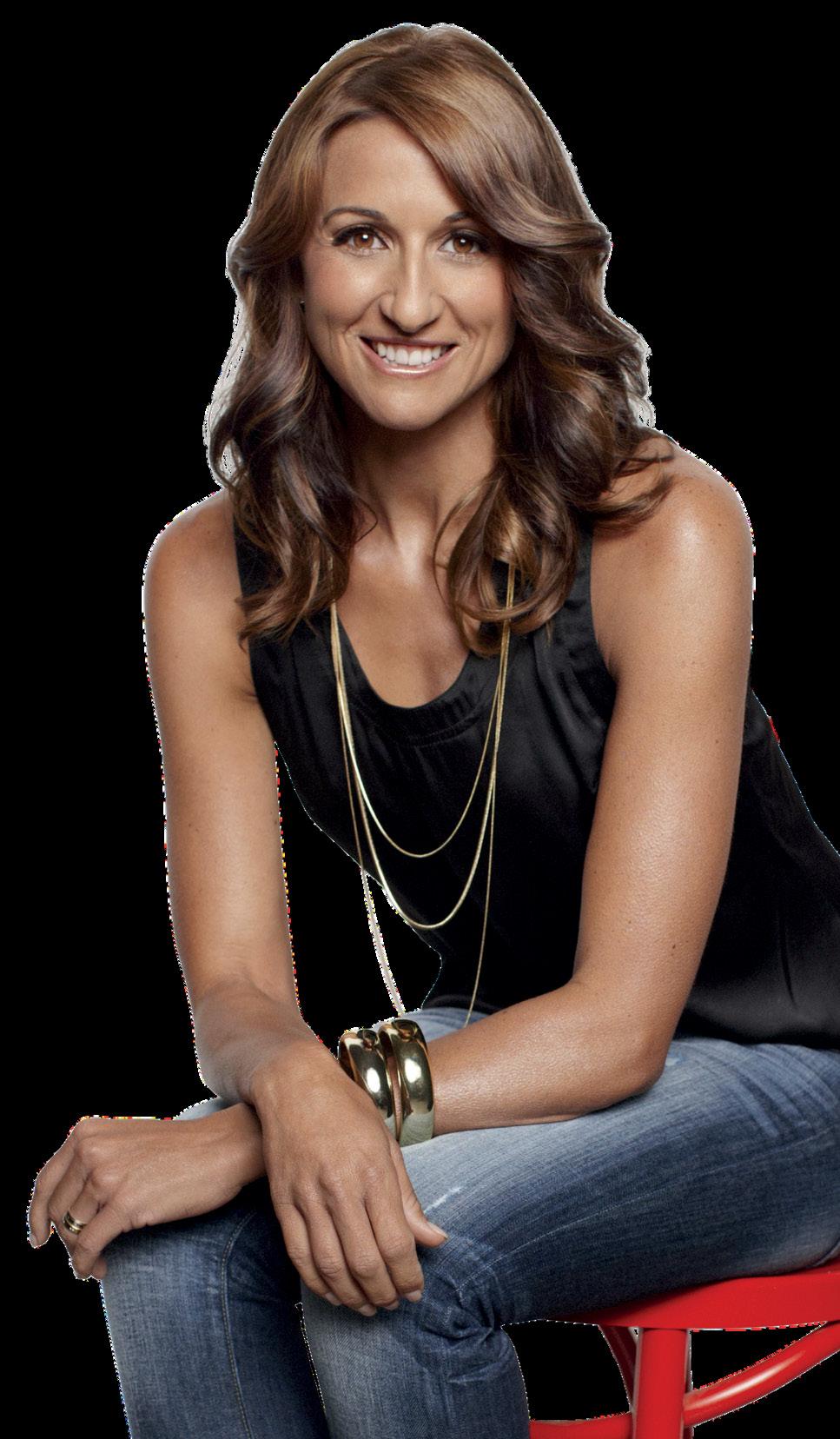
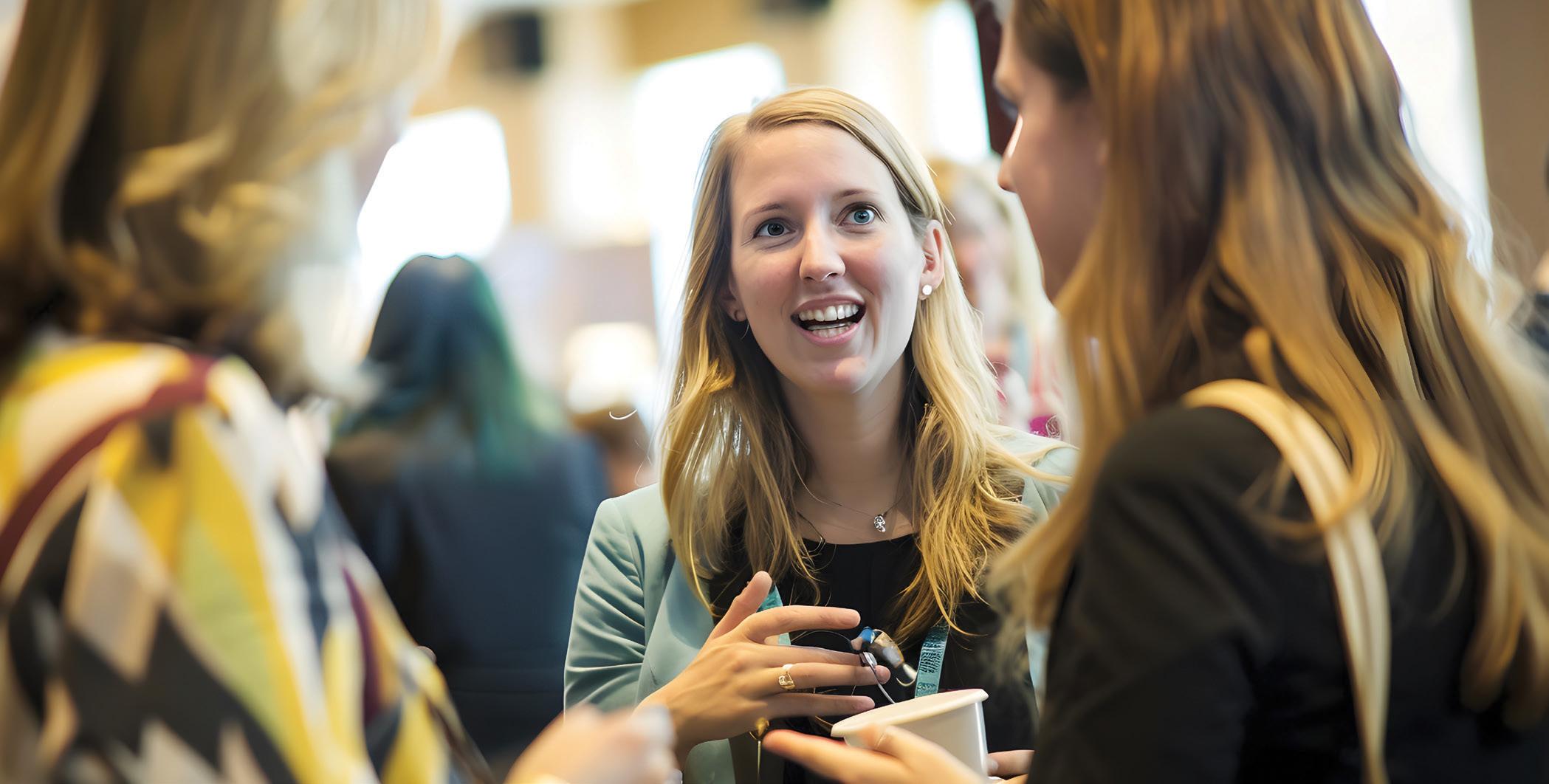
We’ve all felt that knot in our stomach before a networking event - trust me, I’ve been there too. Standing outside a room full of strangers, wondering if I really have anything interesting to say or whether I’ll just end up awkwardly standing by myself.
Networking can feel incredibly intimidating, but after our recent TradieWives conference being surrounded by more than 200 like-minded women, I was reminded once again why pushing through that discomfort can be one of the most rewarding things to do (both personally and professionally).
Over the years I’ve seen first-hand how powerful these connections can be. I’ve watched complete strangers sit down together at an event and leave as friends.
I’ve seen collaborations begin from a casual chat over coffee, partnerships grow from a quick introduction, and businesses transform simply because someone was brave enough to start a conversation.
At our recent conference, the energy in the room was incredible. You could feel it everywhere.
People sharing stories about their businesses, swapping advice, celebrating wins, and supporting each other through challenges. It was a reminder that sometimes all people need is the opportunity to be in the same space together for the magic to happen.
In many ways, networking is just about human
connection. It’s about finding people who understand your journey, who can support you, challenge you, and celebrate alongside you.
Every time you push yourself to attend an event, introduce yourself to someone new, or share your story, you build confidence.
You learn something new. You expand your perspective. You also realise that the people in the room are often just as nervous as you are.
In a post-COVID world, where so much of our communication shifted online, the value of face-toface connection feels stronger than ever.
Emails, Zoom calls, and social media are incredibly useful tools, but there is something powerful about being in the same room as someone.
And to be in the right room with the right people at the right time? That’s where the magic truly happens.
So next time you feel those nerves creeping in before a networking event, remember that everyone in that room likely felt the same way walking through the door.
Take a deep breath. Start the conversation. Introduce yourself. Because on the other side of that discomfort could be a connection that changes everything.
To use one of my favourite quotes by Susan Jeffers “Feel the fear and do it anyway!”
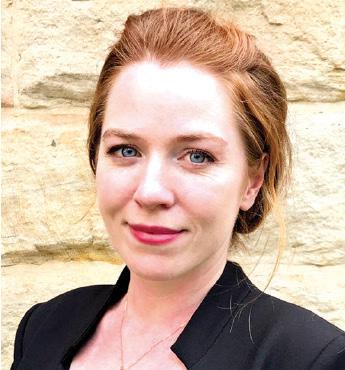
HANNAH SHEPHARD Senior Solicitor, MBA Lawyers
Michele Fraser, barrister at Law Chambers, has been briefed in building and construction matters by builders and contractors (and owners on some occasions) over the past 26 years. She is an exceptionally dedicated and talented barrister with an interest in construction stemming from her early years.
Hannah Shephard: How long have you been involved in the construction industry generally?
Michele Fraser: When I was 16, I got a job at the Port Kembla steelworks doing clerical work in the general store. I got sick of that and went back to school. When I finished in 1973, I came up to Sydney. I knew Janne Reid and her daughters, Terri and Jodie, from Wollongong.
They had recently moved to Sydney and Janne was working as a builder’s labourer. Through Janne, I met other women in the industry, such as Pat Fiske, who later made a film called Rocking the Foundations, and Lynn Syme, an organiser for the BLF, and her sisters Robyn and Wendy. I also met Caroline Graham and Roz Harrison. Roz was a doctor who worked on a building site as a first aid officer.
The leadership of the BLF was supportive of women working in the industry. My first job was on a warehouse conversion in Glebe. The boss initially refused to hire me. They were loading rubbish onto a truck. I got on the truck and was chucking it off as fast as they could load it. A union organiser, Tony O’Beirne, I think, turned up and I got the job.
Another job I worked on was the extension to the Canns Bridal Salon in Market Street, next door to David Jones. I had a hoist ticket by then and was driving the hoist from the basement. Rhonda Ellis and Glenys Powell also worked on the job. To get between floors we had to use the lift in the shop. We’d be in our workwear, and Rhonda, in particular, couldn’t resist a few comments to the customers such as “don’t do it luv”.
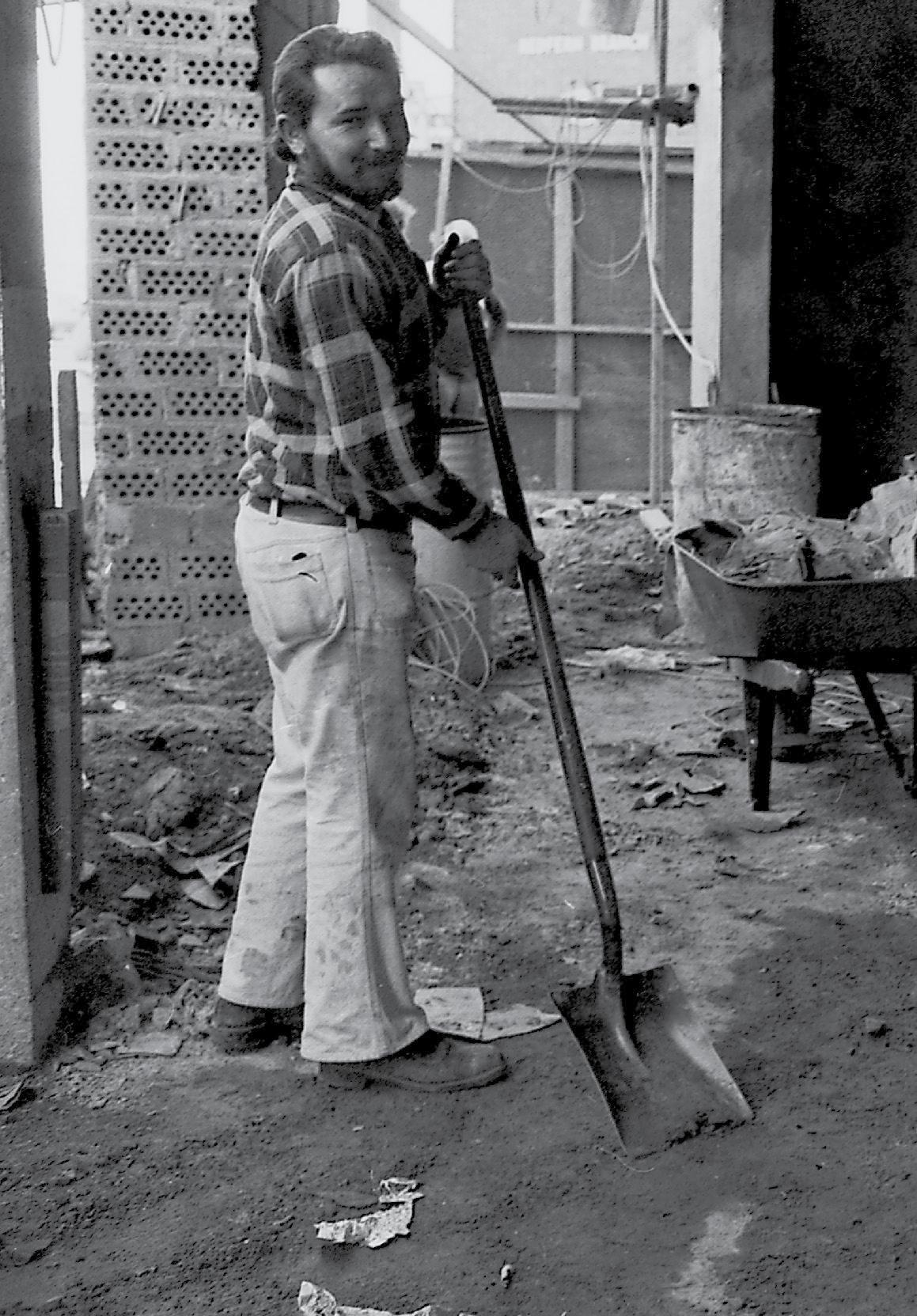
Most building sites in the city at that time were unionised. If contractors employing non-union labour came onto the site, they would find that the hoist did not always stop where they wanted it to.
If it rained, we stopped work, even if the work was under cover. If it kept on raining, we were rained off, that is, allowed to go home on pay.
The three of us got the sack one time. I can’t recall why. We ended up in the Industrial Relations Commission, represented by the union, and were reinstated.
Another time, I was sent to a Dillinghams job in Clarence Street. When I arrived everyone was walking out the gate. They’d gone on strike. A week or so later, I was reminded to pick up my pay. It was common for back to work negotiations to include strike pay, but that was my first experience of it.
My last job as a labourer was on the TNT Towers at Redfern. TNT had sacked their contractor and taken over the site themselves. I worked there for about seven months. On Saturdays, we worked the job and finish. The foreman would tell us what needed to be done, and once the work was completed, we were allowed to go home. Even though we would usually knock off an hour or two early, I think we worked harder and did more work on Saturdays than on any other day of the week.
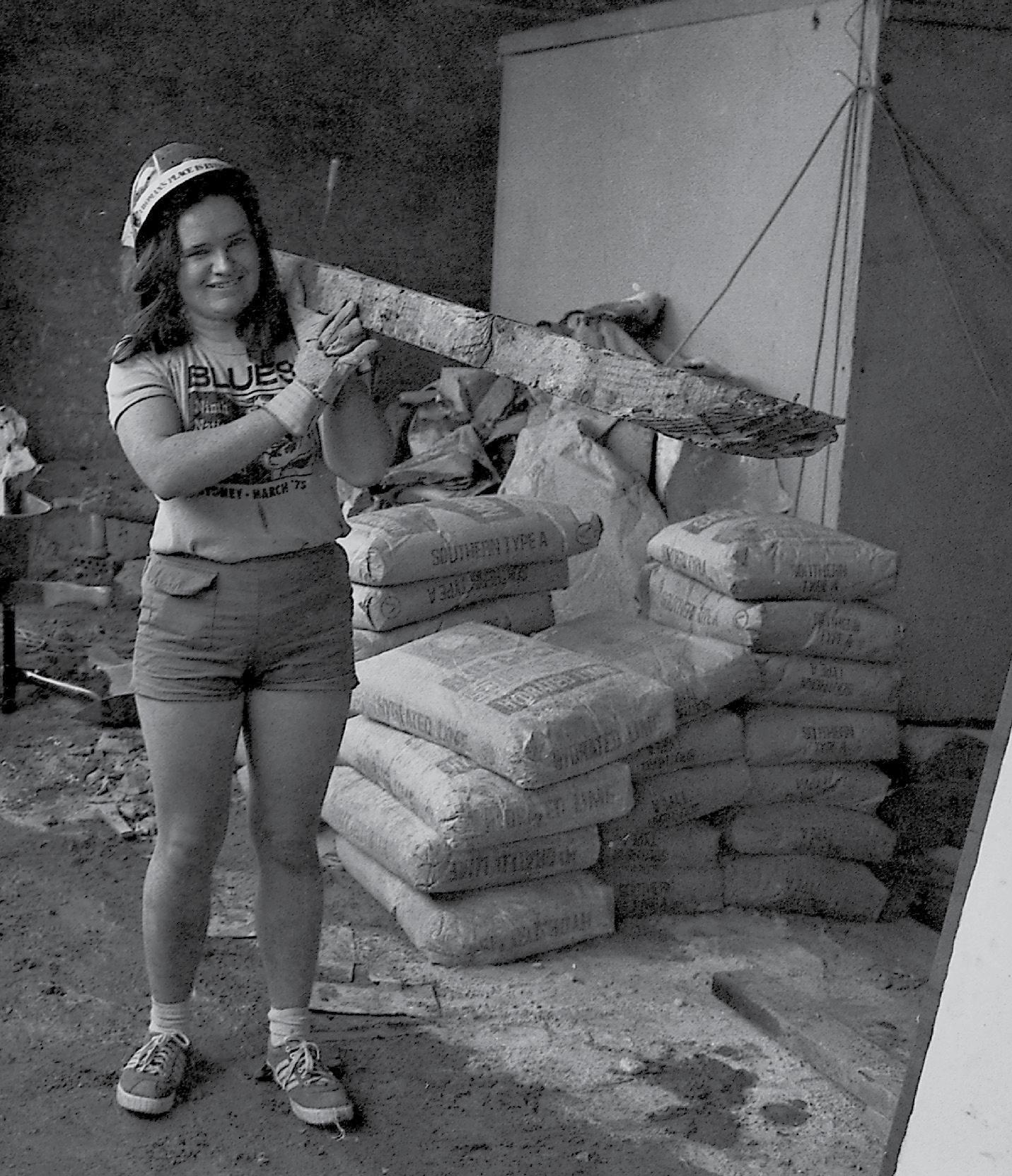
By the time the TNT job finished, Norm Gallagher had taken over the NSW Branch of the BLF. When I went into the union office to get my union membership, I was refused and told “Get a job in the rag trade”.
I had done some part-time study at Sydney University while working in the building industry, and in 1977 commenced a full time arts degree at NSWIT, now known as UTS. After that I did various jobs, including some film work. In 1987 I got a job at ABC TV in Gore Hill as a videotape editor in the newsroom. We would be busy in the late afternoons but otherwise things could get a bit slow, and people would do their knitting or watch football. I couldn’t knit and I don’t like football, so I started a part-time law degree at NSWIT. Angela Pearman, who was a newsreader at the ABC, was also doing law at NSWIT.
Most of the students doing law were working during the day and studying at night. Fortunately, no-one was too fussed about attendance and we shared our notes. I managed to graduate with first class honours and then went to the Bar. I was fortunate to have Judith Gibson and Neil Francey as my tutors. Judith was appointed as a judge of the District Court and has recently retired.
I was not the only builder’s labourer who came to the Bar. When I started, Mick Tubbs and Judy Mundey, both former builder’s labourers, were practising at the bar.
HS: What types of matters do you deal with?
MF: When I was at Frederick Jordan Chambers I did a lot of personal injury work, mainly in the District Court and, as junior to Sharon Norton SC, in the Court of Appeal. On one occasion, we went to the High Court. I frequently appeared in the Mental Health Review Tribunal and the Guardianship Tribunal, which is now part of the NSW Civil & Administrative Tribunal (NCAT), and did industrial and employment work. In building matters, I have appeared in NCAT, the District Court, the Supreme Court, the NSW Court of Appeal, and in the Federal Court.
HS: What are the “pros and cons” of doing construction work?
MF: It’s nice to have a win, of course, and I enjoy working with good experts such as Anthony Capaldi, Peter Finnane, and, before he retired, Rod Broune. The worst thing about building cases is watching the costs mount up and overtake what is at stake in the proceedings. In personal injury matters, we are paid by the insurance company if plaintiff wins. If we lose, we don’t charge the client. I have seen building cases where the costs mount up because the parties can’t or won’t settle at an early stage. In a recent case, Meek J1 discussed proportionality of costs in family provision cases and made a costs capping order. A similar approach might be considered for building cases.
HS: How has being a woman in construction and/ or the law changed since you started out?
MF: I haven’t worked on building sites for 50 years, but I do see more women on sites these days. There were plenty of female barristers when I started at the Bar. In the Bar Course, they taught us a lot of etiquette. For instance, barristers used to be invited into judge’s chambers for morning tea. The tradition was that the most junior barrister (male or female) had to pour the tea. I never saw it done and apparently, it’s not a thing anymore. Another tradition was that the junior had to carry the silk’s red bag, as well as her own. I recall being almost crushed under the weight of two bags. Fortunately, silks no longer insist on that tradition. Another tradition was that barristers appeared in matters in the list in order of seniority. These days, a more sensible approach is taken, and appearances are made in order of the list. I have also noticed that there are more female silks and women judges these days than there used to be.
HS: Thank you for sharing with us such an interesting past. Starting out on construction sites must certainly have laid a solid foundation for involvement in building matters as a barrister later on.
1 Lord v Craig [2026] NSWSC 17
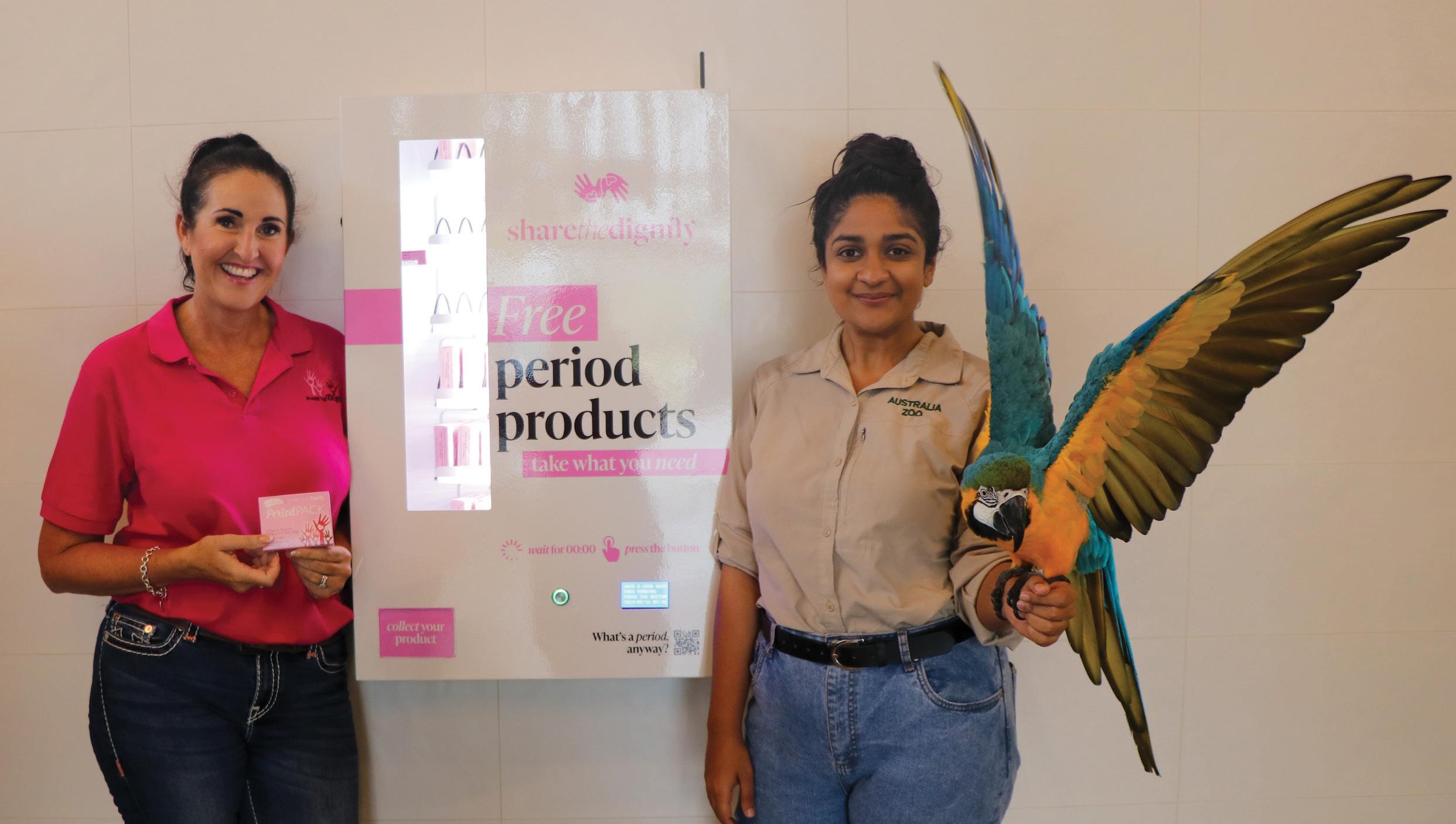
It’s time to build bloody change, that’s the message from Share the Dignity founder and managing director Rochelle Courtenay.
Share the Dignity is a charity that directly benefits those in crisis experiencing period poverty.
They distribute period products to women, girls, and anyone who menstruates who needs support.
When someone is doing it tough, the last thing on their mind should be dealing with their period.
And they want to put an end to period poverty in Australia and want Australian business, especially building and construction companies, to do their part to do just that.
Their Building Bloody Change campaign is aimed at encouraging business to provide period products in their workplace to ensure a safe and supportive environment for all employees.
Their 2024 Bloody Big Survey found $9.6 billion is the total dollar figure that can be attributed to missed workdays due to periods, with 56% of respondents saying they missed work due to their period.
Ms Courtenay said businesses in Australia have a huge part to play in tackling the issue.
She said they are wanting building and construction business to come on board and provide free period products, and suitable bathroom provisions for menstruators in all workplaces, whether it’s on site or in the office.
“We’re looking to work with the construction industry and adding to the great work that’s already been done there (with more women in the industry),” she said.
“So, if you’re looking for more women to join your workforce, is it equitable for them to work there?
“There’s no point bringing them in if you don’t have a sanitary bin and provide period products.”
The Bloody Big Survey, which had 153,000 responses, revealed that 68% of the responders said that they didn’t go to work either, mostly due to a fear of leaking.
“Now that is a shame and stigma piece, but there’s always been that situation where many of us have
been at work and unexpectedly got our period, and had to leave,” Ms Courtenay said.
“And the solution is simple — provide period products in your bathroom, and your staff will be more engaged.
“Ensure that anxiety is not high on their radar while they’re at work when they’ve got their period, it’s just such an easy fix; a simple solution for lots of workplaces on building sites is sanitary bins (and) a toilet just for females.”
Another piece of the puzzle that can make a major difference is education around menstruation.
The survey also revealed that 53% of respondents said that as women they didn’t think that they were adequately educated on menstruation.
“What do you reckon that number is for men?” she said.
“If men were little boys who were never educated, they’re going to end up being somebody’s boss, husband, father, colleague who has no understanding of menstruation, and we’re really looking for workplaces to educate themselves on what does that mean to their workforce?
“Because once you’ve read the stats and you’ve educated yourself, there’s not a man out there that you or I know that wouldn’t want this for their daughters or their wives or their nieces.”
Share the Dignity has resources available on their website and for businesses wanting to be part of the Building Bloody Change campaign can pledge their commitment at https://www.sharethedignity.org. au/end-period-poverty/advocacy/building-bloodychange.
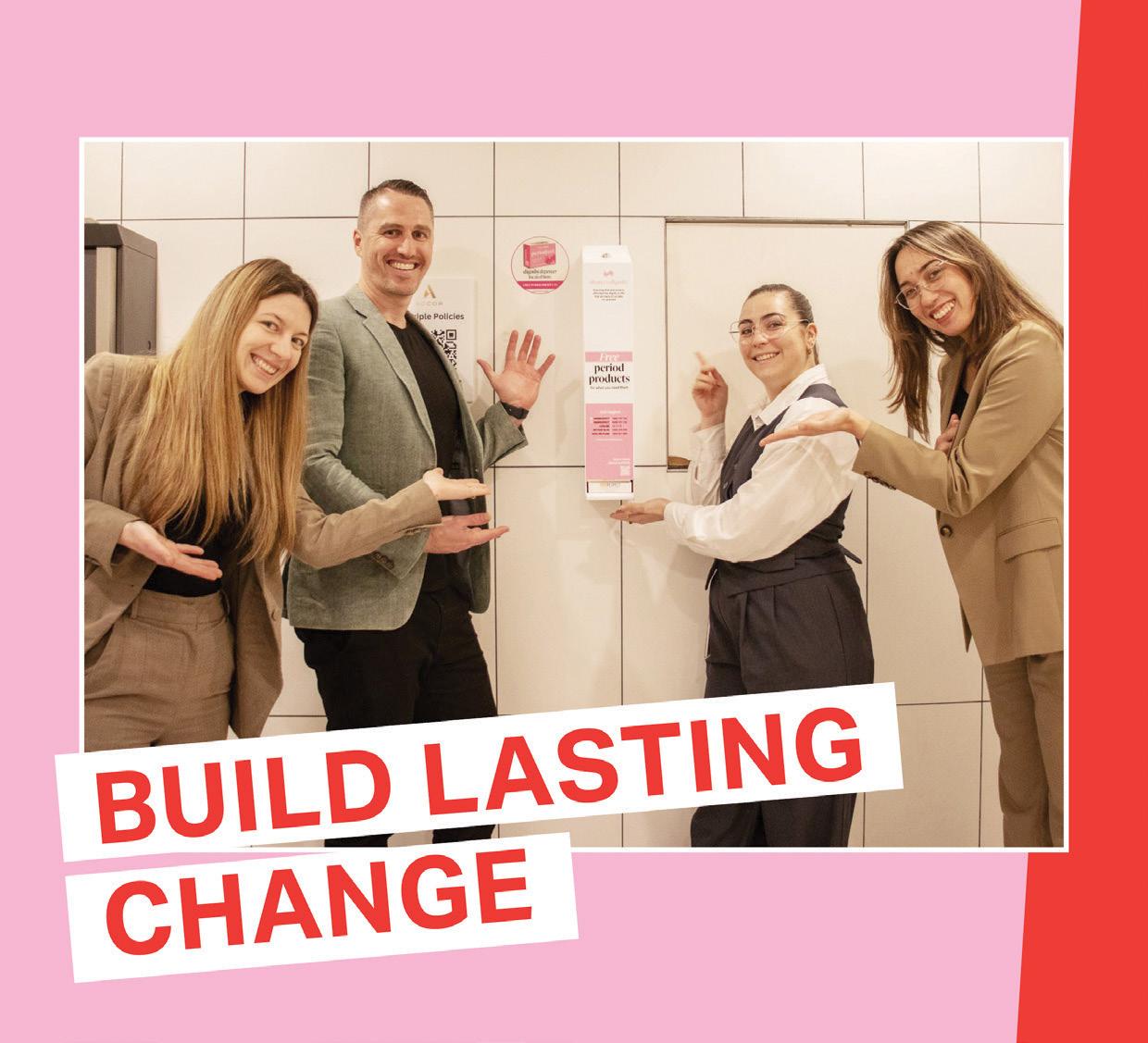
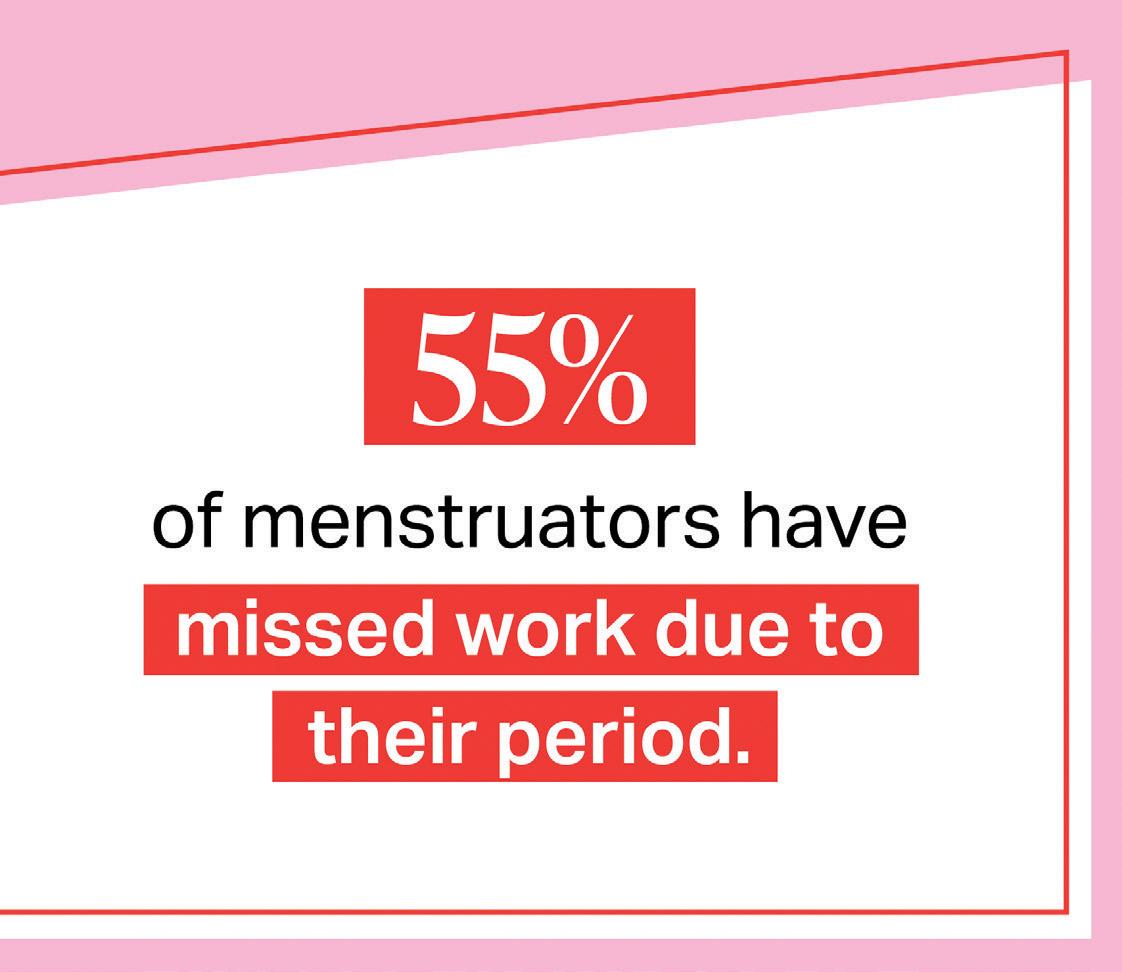
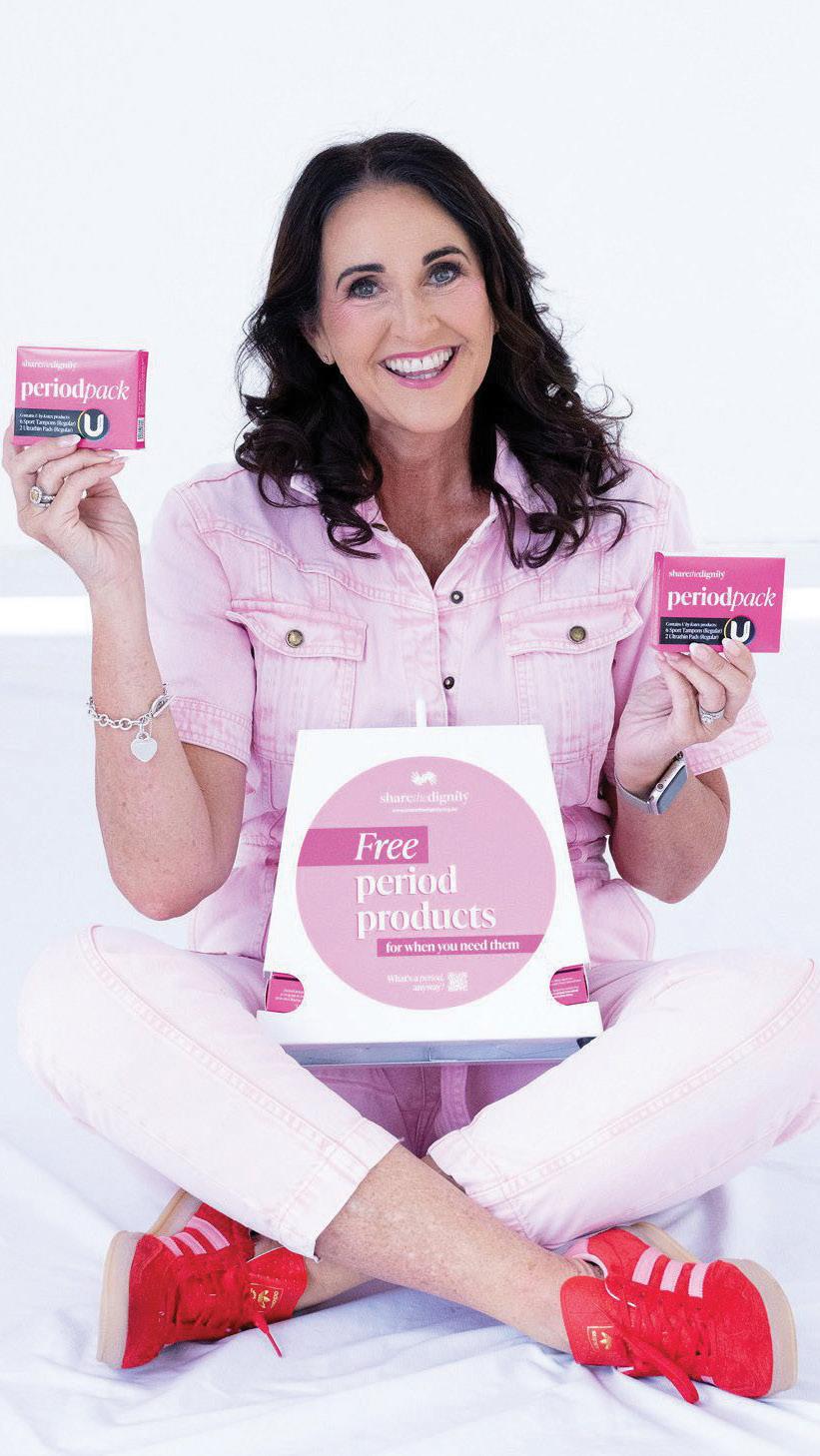

WHEN: Various dates throughout the year
WHERE: Various locations throughout the state
WHAT: Bringing together industry experts to share their knowledge and experience in a concise, quality format. CPD (Continuing Professional Development) is a requirement in NSW for all residential builders and pool builders who must undertake 12 CPD points per year to maintain their building licence. CPD Seminar attendees can earn up to 12 CPD points (full day), covering their full annual requirement. If a partner or business associate accompanies an attendee they can accumulate up to four extra CPD points which can be carried over to your next year’s requirement. Guest arrival 7am for registration, seminar commences at 7.30am and will conclude about 2.30pm.
Date are: Wollongong CPD Seminar – Thursday, June 18; Manly CPD Seminar – Thursday, July 2; Ballina CPD Seminar – Thursday, August 6; Liverpool CPD Seminar – Thursday, September 17; Orange CPD Seminar – Thursday, October 22; Rosehill CPD Seminar – Thursday, November 12. Early bird discount will close 3 weeks prior to the event. For more information go to www.mbansw. asn.au/cpdseries.
WHERE: The Eveleigh, Bay 3, 2 Locomotive St, Eveleigh
WHEN: Friday, August 21 from noon to 3.30pm
WHAT: Discover a new perspective at the FLORENCE Women in Construction Luncheon. Join us at the stunning Eveleigh, nestled in the historic locomotive workshops of South Eveleigh. Connect with industry peers over a delicious lunch, engage in dynamic discussions, and be inspired by our motivational guest speaker Hayley Lewis. Together, let’s celebrate and shape the future of women in construction! Cost: $253. Visit the FLORENCE website, https://www.florenceaustralia.com.au/ luncheons, to secure your place or learn more.
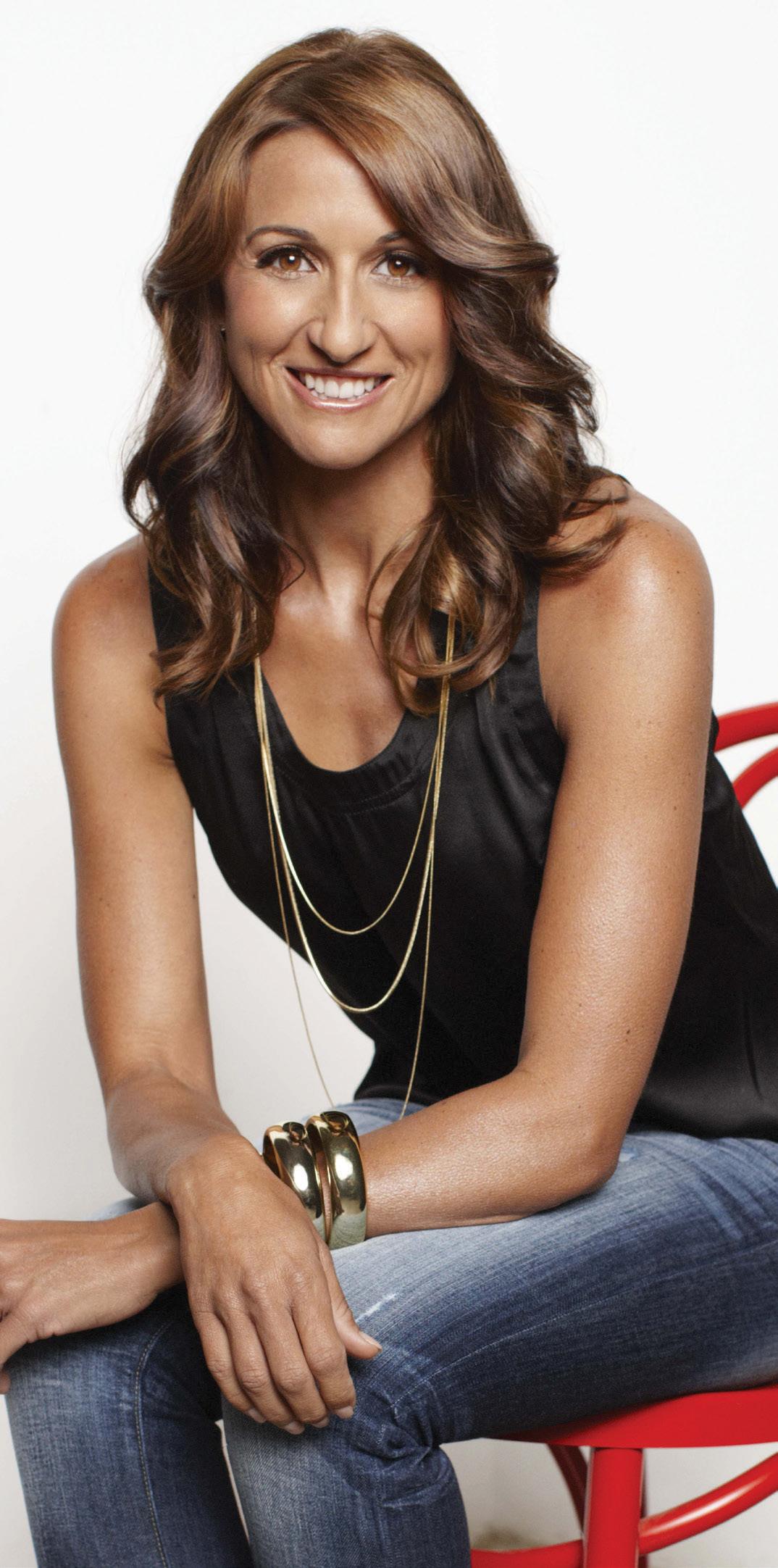
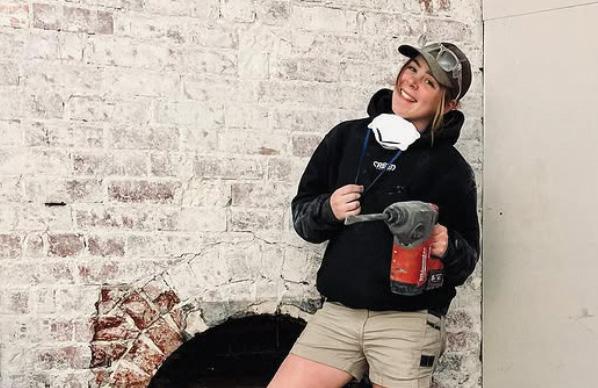
@tryin_to_chip
Brittney
26 Qualified chippy VIC, AUS
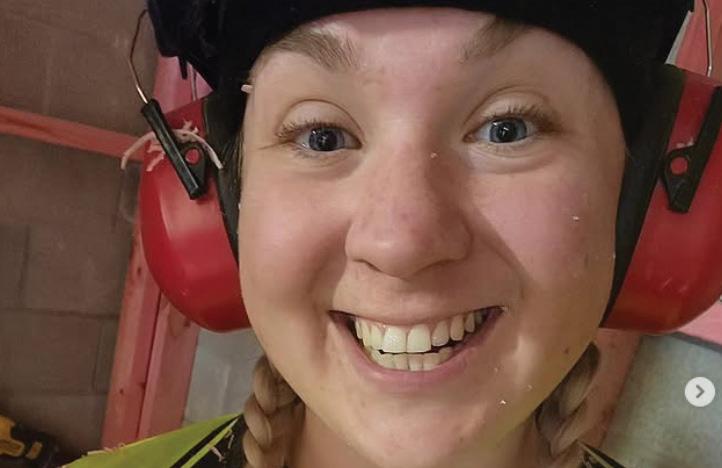
@charlischippyjourney
Charli Frost
29yo second year carpentry apprentice in Queenstown, NZ
Follow me whilst I learn the tools and the trade and bumble through life
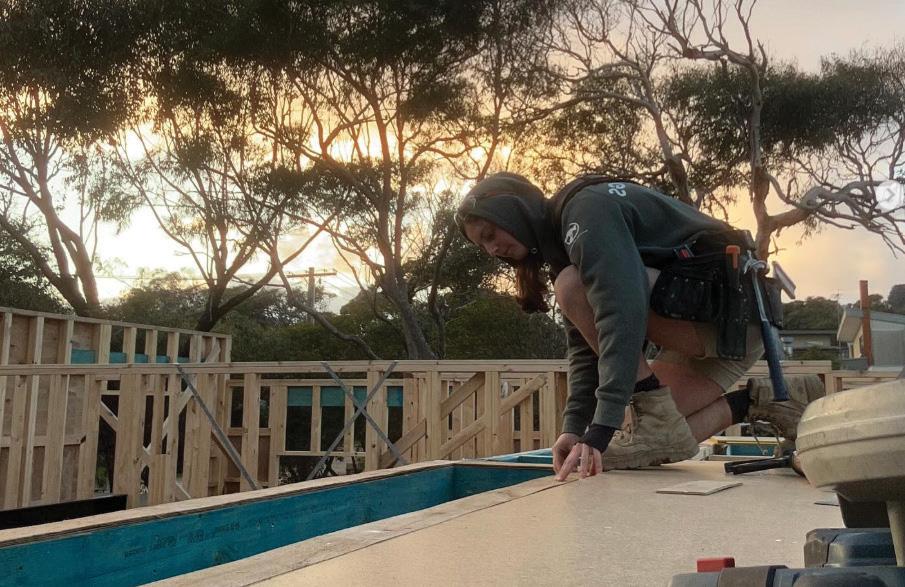
@fli.builds
Fli
My carpentry journal
Surf Coast, VIC
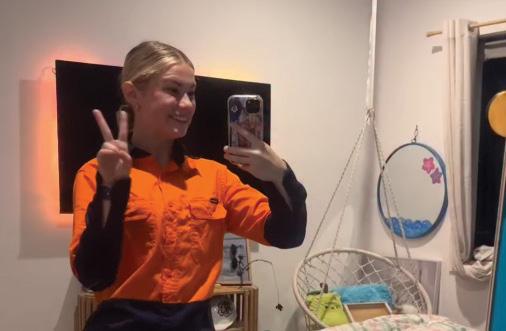
@charleethechippy
Charlee Heron
16 year old!
1st year school based apprentice (always open for partnerships and sponsorship)
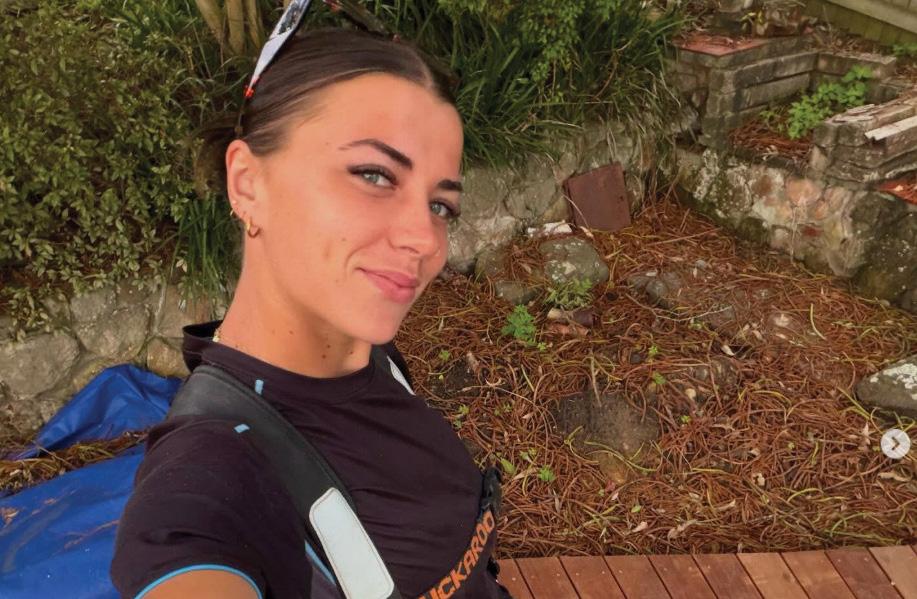
@haylsthechippy
Haylee Pickering
20 Second Year carpentry apprentice
@tacticalcarpentryservices
Sydney Aus
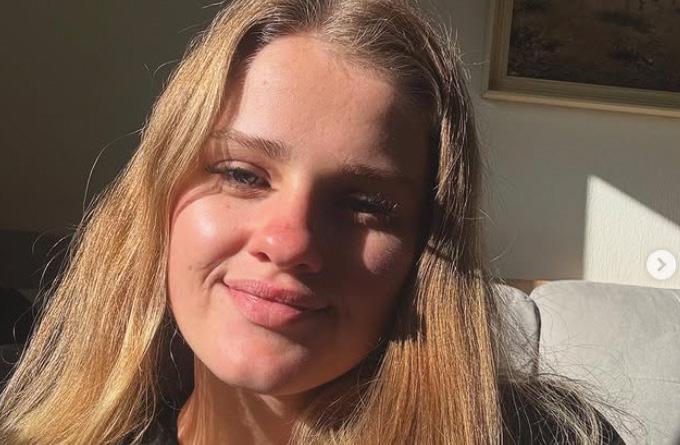
@shak_builds
Shikayla Woodham
Qualified carpenter
23 | NZ