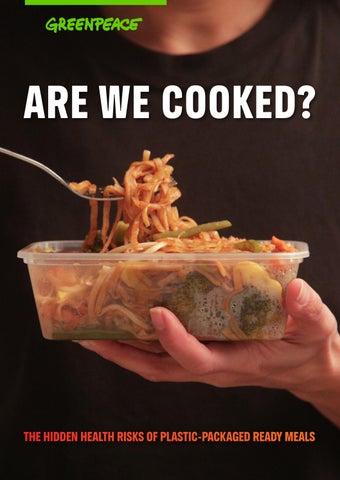

ARE WE COOKED?
THE HIDDEN HEALTH RISKS OF PLASTIC-PACKAGED READY MEALS
SUMMARY
Ready meals and takeaways promise convenience - hot food, fast. The labels on the plastic trays reassure us that they are ‘safe’ to heat in a microwave or oven. But are we exposed to potentially dangerous microplastics and chemical additives along with our food?
We decided to check. Greenpeace International's analysis of 24 research papers in peerreviewed scientific journals found that the plastics we use to package our food are exposing us to health risks – and none more so than heated ready meals and takeaways. Specifically:

• Plastic containers can release microplastics and toxic chemicals into our food.1
• Leaching into food dramatically increases when the food is heated in the plastic packaging.
Regulators and the industry are failing to act on the plastics problem, which is already causing a global waste crisis, yet the production of plastic is set to more than double by 2050 from current levels. The fossil fuel and petrochemical industry is banking on this for its future growth – and relying on the growing trend for plastic packaged ready meals.
Past experience shows that the costs to society multiply when action is delayed by the denial of convincing scientific evidence. This has led to health and environmental disasters, from tobacco, to asbestos, to hazardous chemicals. When it comes to plastics, we already know that their global health impacts are costing trillions, and have more than enough evidence to act.
• At least 1,396 food contact plastic chemicals2 have been found in human bodies, including several which are a known threat to human health, linked to conditions such as to cancers, infertility, neurodevelopmental disorders, and cardiovascular and metabolic diseases like obesity and type 2 diabetes.3
Current regulation is clearly insufficient to protect public health. We need to act now and apply the precautionary principle to the way that we package food and stop this uncontrolled chemistry experiment that nobody signed up for.
As negotiations on the UN Plastics Treaty advance, we cannot ignore the potential impacts on human health. Reducing reliance on plastic packaging is not just an environmental issue – it is a public health imperative. And a global one. That’s why we urgently need governments to agree on a strong and effective Global Plastics Treaty.
INTRODUCTION - THE RISE OF PLASTIC PACKED READY MEALS
We live busy lives. Many people rely on the convenience of reheating plastic-packed ready meals or hot takeaways in plastic trays. But there could be a hidden cost behind this convenience –a potentially dangerous dose of microplastics and chemical additives.
To find out, Greenpeace researchers analysed 24 relevant articles available in peer-reviewed scientific journals,4 and discovered plenty of evidence that gives cause for concern. Plastic containers, including those commonly used for ready meals, takeaways or sold as storage containers, can release microplastics and toxic chemicals into our food.5 The research also suggests that this leaching into food dramatically increases when the food is heated in the plastic packaging.
More than seventy years since it was first made at an industrial scale,6 fossil-fuel based plastic has infiltrated every aspect of our modern lives, and found its way into entire ecosystems and even the human body. But a big part of the plastic waste and pollution problem is not even visible. Since the first use of the term “microplastics” over twenty years ago, these small fragments of plastic have been found everywhere, from the deep sea to the highest, pristine mountains, in 1,300 species throughout the food web, with evidence of harm at multiple levels.7 They are in our soil, food, water and the air that we breathe, and even in the organs and tissues of our bodies, where evidence is emerging of negative effects.8
There are echoes of a familiar pattern, seen in the cases of tobacco, asbestos, and lead, where corporations and governments denied scientific evidence and resisted taking action until it was too late. This failure to learn from past mistakes is now being repeated with fossil fuels and plastics. The precautionary principle has been
adopted in order to prevent devastating damage and costs to ecosystems and people’s lives, yet it still needs to be applied to these unfolding global disasters. We already know enough about plastics to act – and this is reinforced by emerging evidence that microplastics also come in the form of nanoplastics, which are much smaller and harder to identify and quantify.
Though these microplastics are a problem by themselves, plastic packaging also carries some other unwanted passengers in the form of chemicals. Over 16,000 chemicals are used or have been found in plastics, with at least 4,200 known to be highly hazardous to human and environmental health.9 Some of these leak out by themselves, while some are in the microplastics that are released as the plastic breaks down.
This plastic pollution crisis is out of control, driven by the unchecked production of plastic and the huge volumes of plastic packaging thrown away every day, representing 40% of the planet’s plastic waste.10 But even before it's discarded, the plastic packaging of our food is also exposing us to health risks - and none more so than heated ready meals and takeaways. So it’s ironic, and deeply concerning that these containers include cooking instructions to heat in the packaging “for best results” and bear the reassuring labels “microwave safe” or “oven safe”!
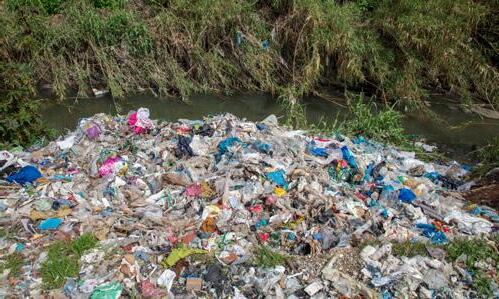
Plastic waste dumped in Yenidam, Adana Province, Turkey © Caner Özkan / Greenpeace
Heading in the wrong direction
The evidence of harm from plastics and plastic chemicals is already a huge warning sign. But despite this, big increases in the production of plastics are projected. The fossil fuel and petrochemical industry is betting on increasing the volume of plastics made for its expansion; plastics are set to drive more than a third of the growth in oil demand by 2030, and nearly half by 2050.11 This growth will depend on producing ever greater quantities of plastic packaging, and in turn, an increasing demand for ready-meals, take-aways and convenience foods packed in plastic.
“If plastics and petrochemical industries need one another, then the food system is their lifebuoy.”
Joe Yates.12
The demand for all plastics - and its production - could more than double by 205013 from current (2024) levels14. Plastic packaging currently makes up about 36% of all plastics.15
The ready meals trend
Since TV dinners were introduced in the 1950’s, ready meals and convenience foods have grown into a global, billion dollar market,17 projected to grow in value from $190 billion in 2025 to $350 billion in 2034.18 In 2024 this amounted to a global volume of 71 million tonnes, averaging 12.6 kg per person, with the cost of a ready meal and revenue per capita also expected to increase.19
Figure 1: Projected demand growth for all plastics by 2050, Mt.16
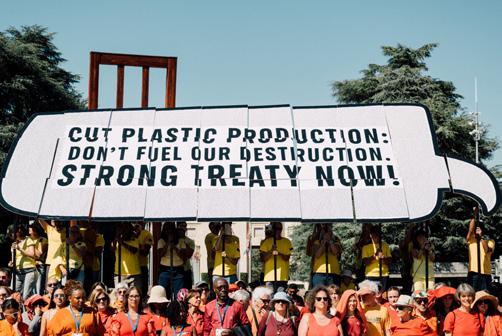
Civil society rallies ahead of the Plastics Treaty in Geneva, warning of the dangers posed by the unchecked production of plastic ©Samuel Schalch/Greenpeace

The ready meals market is almost entirely dependent on plastic. In a study of six European countries, processed foods, such as ready meals, meal kits, and snacks, accounted for the highest levels of plastic packaging, with the UK the largest user of this type of plastic packaging.20
Ready meals around the world
The growing trend towards ready meals, online shopping and restaurant delivery,21 and away from home-prepared meals and individual grocery shopping, is happening in every region of the world.22 This includes Asia-Pacific, where local research increasingly indicates that severe nutritional deficits are associated with ready meals,23,24 and Africa, with South Africa showing particularly strong growth of 33% year on year between 2013 and 2023.25
Nevertheless, it is predicted that the top five global markets for convenience food –China, the USA, Japan, Mexico and Russia – will remain relatively unchanged up to 2030,26 with the most revenue in 2019 generated by the North America region.27
In Europe, this is a trend driven by the habits of Millennials and Gen Z, with 7080% having ready meals on a weekly or monthly basis in 2025, compared with 30% of Baby Boomers.28
There is also increased interest in new trends such as “sous vide” appliances which offer “convenience and perfection”,29 a cooking method where food is vacuumsealed in a plastic pouch and cooked in a water bath at precisely controlled temperatures.
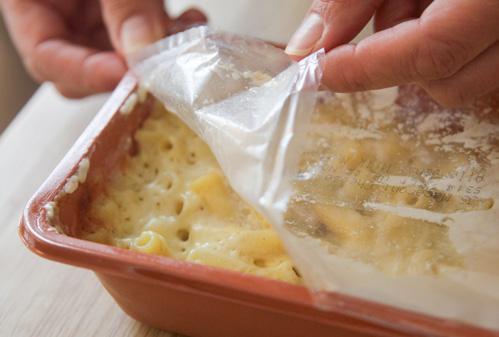
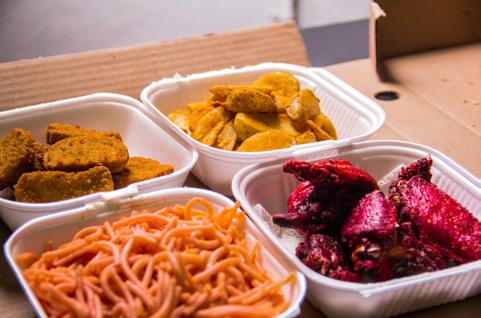
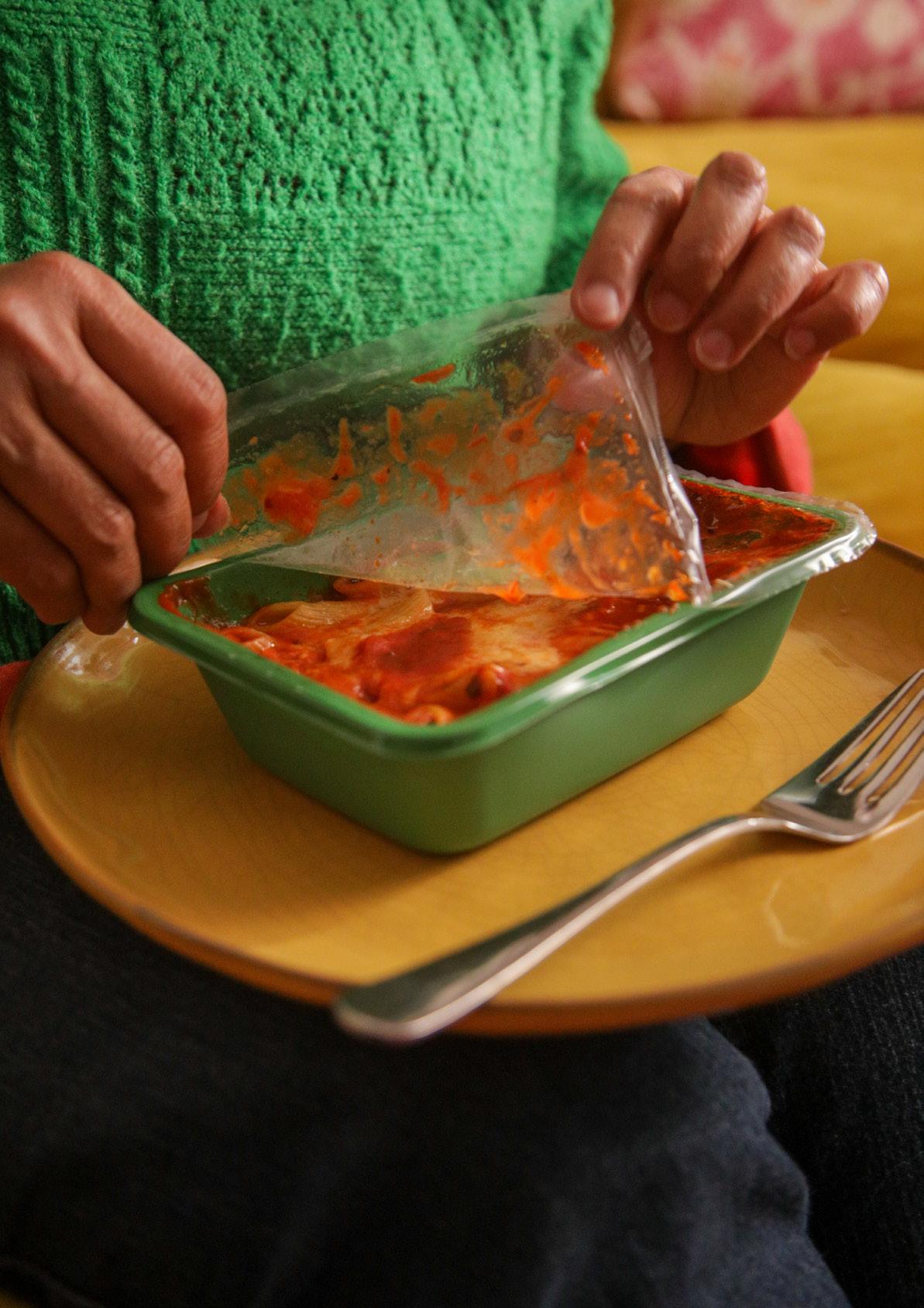
A ready meal designed to be cooked in the microwave. The plastic film begins to melt under the heat. © Jack Taylor Gotch / Greenpeace © Jack Taylor Gotch / Greenpeace
Convenience meals in plastic bowls in South Korea. © Getty Images
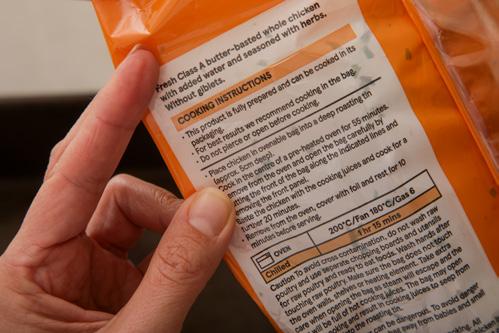
Cooking instructions on a whole chicken labelled as best cooked in the plastic packaging. ©Jack Taylor Gotch/Greenpeace
KEY FINDINGS OF STUDIES
It’s well established that plastic can leach chemicals and break up into microplastics. However, our review of 24 recent articles in peer-reviewed journals highlights a consistent picture that regulators, businesses and customers should be concerned about: that heating plastic containers in a microwave or oven significantly increases the risk that both microplastics and chemicals will be released. Much of these will leach into the food inside the packaging.
Microplastics and nanoplastics
In just minutes of heating, plastic containers can release hundreds of thousands of microplastic and nanoplastic particles.30
• Polypropylene and polystyrene containers filled with water released 100,000–260,000 microplastic particles after freezer or fridge storage followed by microwaving.31 It was noted that acidic, fatty or salty foods, or using well used plastic containers might have different rates of microplastic migration.
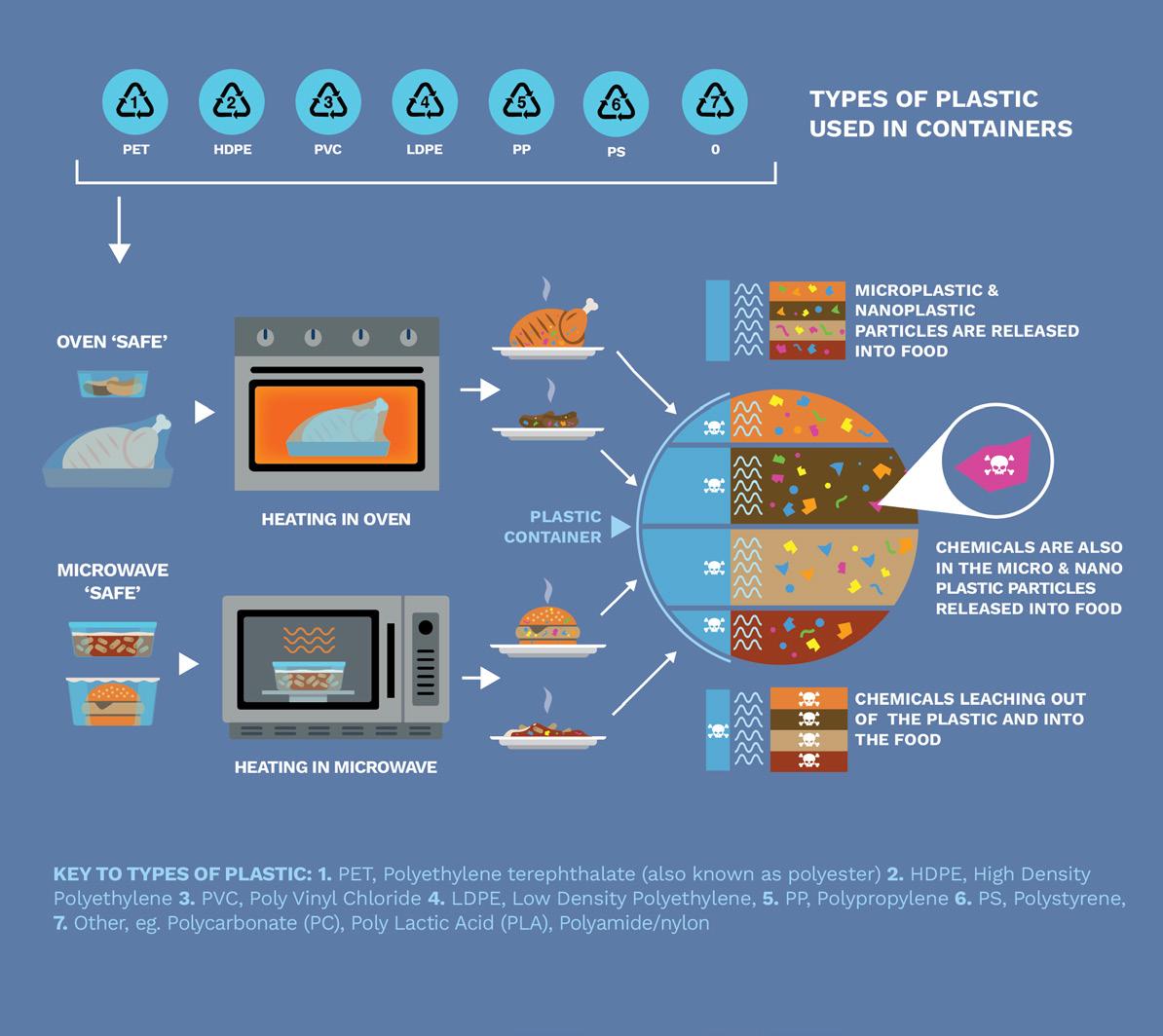
• One study estimated 326,000–534,000 microplastic particles leaching into a food simulant after five minutes of microwave heating two polypropylene containers – four to seven times higher than oven heating.32 The authors suggest that the vibration of water particles in the microwave test could explain the higher quantity of microplastics released compared to the oven test. The difficulty detecting the very smallest nanoparticles points to the possibility that more microplastics could have been released.
• Food wrap made from low-density polyethylene (LDPE), typically used to package fresh produce, meats, sandwiches and on the top of ready meals, released significantly more particles into acidic foods than into water when heated in the microwave or steamed in lab-based experiments that simulated household use.33
• Two studies34 assessed the release of microplastics from microwaving after freezer storage, which suggests that freezing can make the polymer surface brittle, and that the vibration from subsequent microwaving could lead to the release of more microplastics.
• Studies have found that the power and duration of microwave use can increase the number of microplastics released from plastic food contact materials.35,36
There is no regulatory guidance for microplastics released from food contact materials, and although authorities acknowledge the gap,37 cooking instructions to heat in the plastic containers are commonly found, along with misleading labels such as “microwave safe” “oven-safe” “freezer safe” and “BPA-free”, giving false reassurance.
Leaching of plastic chemicals
Each item of plastic food contact packaging also contains multiple chemicals. Some of these, like plasticisers, stabilisers, or antioxidants, are intentionally added to make the plastic functional. Others are unintentionally added, as a result of manufacturing processes, storage, or when the plastic ingredients interact with light, with food, with heat, or as breakdown compounds when the packaging starts to degrade.
More than 4,200 hazardous chemicals have so far been identified as used or unintentionally present in plastics (see Box 1). Shockingly, the majority are not regulated in plastic packaging. For those that are regulated, this is evaluated by a risk assessment (chemical by chemical), which determines “safe levels” (see Groundhog Day below).38 Well-known hazardous chemicals such as phthalates, bisphenols, and the “forever chemicals” PFAS, associated with long term health effects such as hormone disruption, cancer, and reproductive harm,39 leach from the packaging. Many of the chemicals that have been found to migrate into food (or food substitutes) from plastic containers have never been tested for safety.40
None of these chemicals are disclosed on the label, and when plastic containers are heated – especially when they contain fatty, salty, or acidic meals – these chemicals can be released into the food.41 The review of 24 studies found:
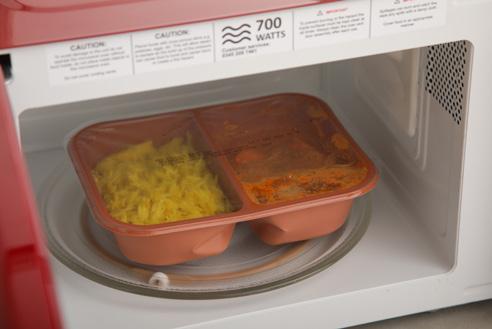
A ready meal A ready meal about to be heated in the microwave © Jack Taylor Gotch / Greenpeace
• Chemical migration is routine, not rare.42
⬥ Broad screening confirms the scale of the issue: microwaveable plastic containers shed at least 42 intentionally added substances (IAS) and more than 100 non-intentionally added substances (NIAS) into simulants.43
⬥ In controlled microwave tests, polystyrene and polypropylene lunch boxes leached chemical additives into food simulants in every sample.44
⬥ After microwave heating, polyethylene also released antioxidant chemicals –with the highest release on first use.45
⬥ One study noted that 20 different additives migrate into the ready meal.46
• NIAS can form when food interacts with packaging during heating. For example, a UV stabiliser plastic additive reacted with potato starch during microwave cooking in a plastic food container to form a previously unknown chemical.47
• New additives, such as silver nanoparticles, increasingly added to plastic packaging to extend shelf life, were found to migrate into food during heating. These can accumulate in the liver, raising concerns over long-term organ damage.48
What is a hazardous chemical?
Hazards to environment and human health include: persistence (they do not readily break down in the environment); bioaccumulation (they can accumulate in organisms, and even increase in concentration as they work their way up a food chain); and toxicity.
Some types of toxicity make it difficult to define ‘safe’ levels for substances, even at low doses. For example, substances may be:
carcinogenic (causing cancer); mutagenic (able to alter genes) and/or reprotoxic (harmful to reproduction); endocrine disruptors (EDCs) (interfering with hormone systems); or (persistent chemicals that spread through the water cycle).
The EU’s REACH Regulation has hazard categories for classifying a ‘Substance of Very High Concern’ (SVHC) to be placed by the Commission on the Candidate List of substances considered for authorisation.49
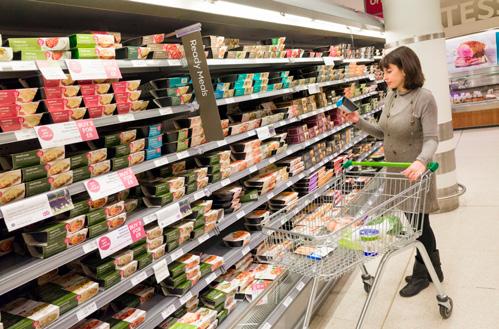
Ready meals in plastic packaging on supermarket shelves in the UK. ©Getty Images
Cooking plastic – heating increases exposure risk:
Multiple studies show that heating food in plastic in the microwave or oven dramatically increases the release of chemical contaminants and microplastics.
• Microwave heating of PP containers led to the highest quantity of micro and nano particles released into food simulants, in comparison to fridge, room temperature and high temperature storage.50
• Microwaved containers leached up to 534,000 microplastic particles per portion.51
• Antioxidants and plasticisers migrated into real food such as meat and vegetables.52
• Higher microwave power levels led to greater releases of microplastic particles and chemical additives.53
• Old or scratched containers released nearly double the microplastics compared with new ones.54
It should also be noted that of the 24 studies we reviewed, only two studies used real foods, with the majority using food simulants like water, acetic acid, or ethanol, which often fail to capture the reactions that occur between plastic additives and real food ingredients, and may not reflect the actual exposure levels and the diversity of harmful compounds.
Hazardous chemicals and plastics
The US Food and Drug Administration (FDA) approves eight types of plastics for food storage: polyethylene terephthalate (PET), high density polyethylene (HDPE), low density polyethylene (LDPE), polyvinyl chloride (PVC), polypropylene (PP), polystyrene (PS), polycarbonate (PC), and bioplastic (polylactide). The EU also approves polyamide (nylon) and acrylonitrile butadiene styrene (ABS) for use as food containers. Melamine-formaldehyde resin (MF), can be used as tableware, in China for example.55
The most common plastics used for packaging food are polyethylene terephthalate (PET), polyethylene (HDPE, LDPE), and polypropylene (PP), also used for takeaways along with polystyrene (PS), due to their low cost. Microwave-ready containers are typically made from PET, PE, PP, PS or complex multilayer laminates.
All plastics consist of chemicals, from the polymer that forms the bulk material,56 to intentionally added substances, including processing aids and chemical additives to make the plastic usable.57 These vary according to the type of plastic, and the function of the additives. Most of the major types of plastics produced in large volumes are used in food packaging.58
• Chemical additives such as UV and heat stabilisers, and antioxidants, are added to most plastics.
• Some plastics also need plasticisers such as phthalates, (for example, used in large quantities in soft PVC) or flame retardants to resist heat.
Plastics that rely on the use of hazardous substances in their manufacturing process, include for example:
• PET, widely used in food packaging such as trays and drinks bottles, is made using antimony as a catalyst.
Takeaways in polystyrene in Mexico. Polystryene is used globally for heating and re-heating food. © Getty Images
• Polycarbonate (PC), used in baby bottles and other food containers commonly contains Bisphenol A or other Bisphenols, used as a monomer in its production.
• PS, used in foam cups and other packaging, is made using hazardous styrene as a building block.
Non-intentionally added substances (NIAS), such as impurities, reaction by-products, and degradation products associated with various plastics, are also considered to be plastic
RESIN IDENTIFICATION CODE


TYPICAL TYPE OF PACKAGING FOR FOOD AND DRINK
TRAYS, BAGS BOTTLES AND CUPS POLYMER BAGS
chemicals.59 Identifying these NIAS is technically complicated, as is understanding their potential risks to health: we therefore need to reduce human exposure to the many chemical contaminants in food contact materials.60
“Plasticisers, flame retardants, UV stabilizer - you name it. None of them are strongly bonded. They leach into us.”
Dr.
Sarah Dunlop, Minderoo Foundation (2024)
EXAMPLES OF FOOD PACKAGING IN READY MEALS OR TAKEAWAYS, RELEVANT TO HEATING OF FOOD IN CONTAINERS, OR HOT FOOD.
REUSABLE FOOD CONTAINERS, SOLD IN STORES, LABELLED ‘MICROWAVE SAFE’ AND ‘FREEZER SAFE’.
• ROASTING BAGS FOR THE OVEN, (MADE FROM HEAT RESISTANT POLYESTER).
PET BAGS WITH “READY TO COOK” FOOD.
• PET DRINKS CUP.
• MICROWAVE TRAYS (MADE FROM PET).
PLASTIC MILK JUGS
JUICE CONTAINERS FOOD CONTAINERS
PVC CLING FILM, OR SARAN WRAP.
• MICROWAVEABLE FOOD CONTAINERS
• CAN BE MARKED ‘MICROWAVE SAFE’.
• PVC CLING FILM MAY BE USED AS A LID ON READY MEALS TO BE HEATED.
• PEOPLE MAY HEAT FOOD IN FILM.
POLYMER BAGS.
PE BASED REUSABLE FOOD POUCH. LDPE FILM OR FOOD WRAP, CLING FILM, SARAN WRAP (MARKETED AS A SAFER ALTERNATIVE TO PVC CLING FILM). LDPE COATING.
RIGID CONTAINERS. LUNCH BOXES. POLYMER BAGS.
• POLYMER BAGS - READY-TO-COOK AND MARKETED AS TIME SAVING AND CONVENIENT.
• MICROWAVE TRAYS (MADE FROM PE), CONVENTIONAL OVEN BAGS. LDPE FILM USED ON TOP OF READY MEAL CONTAINERS (TO PIERCE WHEN HEATED).
• MICROWAVEABLE FOOD CONTAINERS COATED WITH L (LDPE) OR POLYLACTIC ACID (PLA).
• PAPER DRINKS CONTAINERS COATED WITH LDPE.
• SINGLE-USE RIGID PLASTIC TRAYS FOR READY MEALS (“MICROWAVE OR OVEN-SAFE” - USUALLY PP BECAUSE OF HEAT RESISTANT PROPERTIES.
• PP POLYMER BAGS, READY-TO-COOK AND MARKETED AS TIME SAVING AND CONVENIENT
• REUSABLE FOOD CONTAINERS, OR ‘TUPPERWARE’ SOLD IN STORES, CAN BE LABELLED ‘MICROWAVE SAFE’ AND ‘FREEZER SAFE’.
• MICROWAVE BAGS (MADE FROM PP).
HOT BEVERAGES IN CUPS.
• PS FOOD CONTAINERS ARE KNOWN FOR THEIR INSULATION PROPERTIES, KEEPING FOOD
FRESHER FOR LONGER AT A LOWER COST .
• OFTEN USED FOR TAKEAWAYS CONTAINING HOT FOOD (POTENTIALLY REHEATED IN THE CONTAINER).
Table 1: Major plastic polymers and their uses in ready meal packaging
CUPS FOOD TRAYS
HEALTH CONCERNS: A GROWING BODY OF EVIDENCE
“Plastics are a grave, growing, and under-recognised danger to human and planetary health”
The Lancet Countdown on Health and Plastics.
Awareness of the scale of the plastic pollution problem entered the global public psyche as a result of David Attenborough’s Blue Planet 2 TV series in 2017. Scientific research into the health impacts of plastics pollution has also intensified in recent years, with new studies coming thick and fast, deepening our understanding. While the science is still developing, there is already a growing body of evidence on how contaminated we've become.
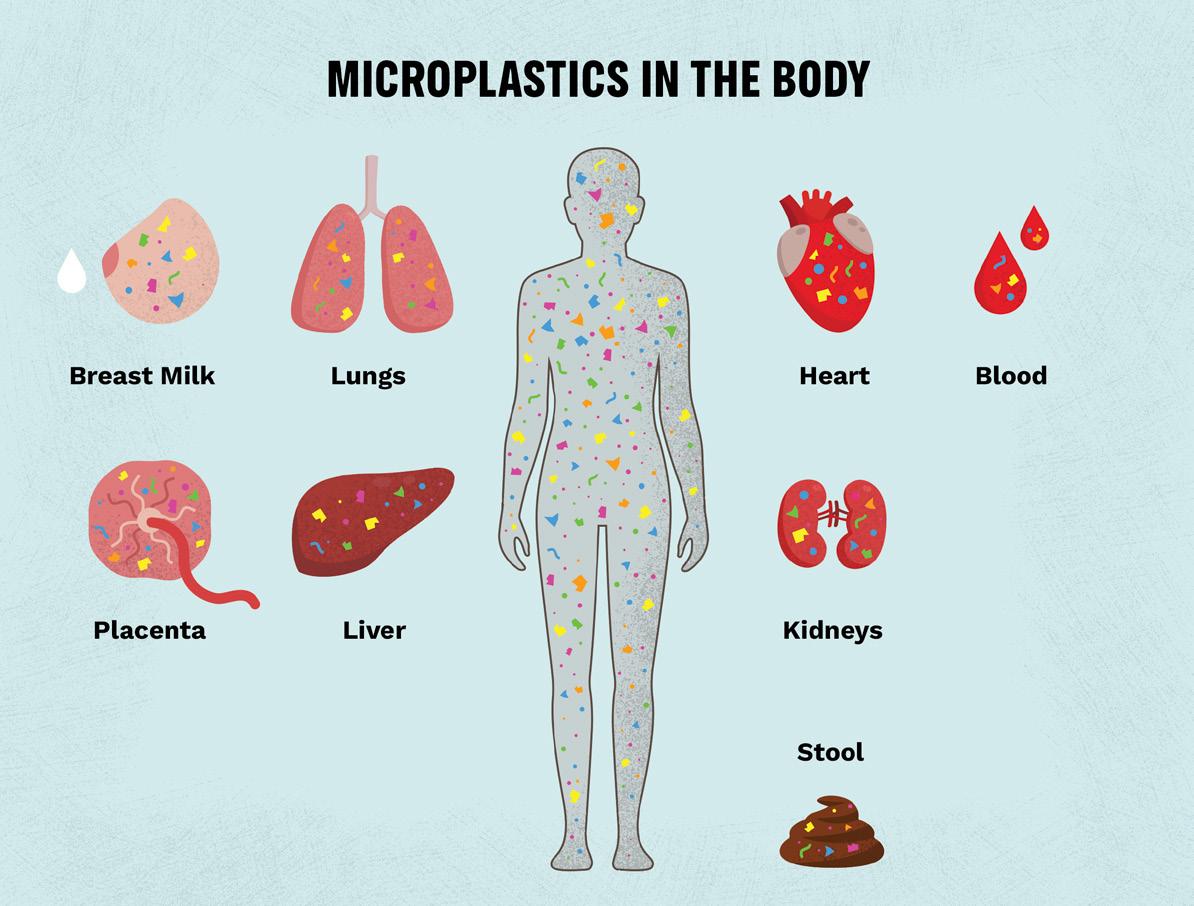
The presence of microplastics or nanoplastics and plastic-associated chemicals has been reported in human blood, placenta, breast milk, amniotic fluid, stool, lungs, liver, and even heart tissue.61 Babies may even be exposed to plastic related pollution before they are born.62
Furthermore, reviews and meta-analyses show that our exposure to plastics and plastics-related chemicals is associated with various worrying health outcomes.63
Nanoplastics impacts: When it comes to microplastics, smaller particle sizes may bring even greater threats.64 Nanoplastics can invade cells and move through the body, including from the gastrointestinal tract and lungs to other body tissues, raising concerns both about their direct
Figure 3: Where microplastics have been reported in the body
impact on cells and the presence of harmful chemicals they contain. The evidence on microand nanoplastics points to worrying impacts on immune responses,65 inflammation,66,67 physical and functional damage to cells and tissues like the stomach lining,68,69 and changes to the gut microbiome.70
There are currently no regulations to limit microplastic exposure - despite this mounting evidence of harm.
Chemical impacts: At least 1,396 food contact plastic chemicals have been found in human bodies, including several which are a known threat to human health.71
Plastic chemicals include known endocrine disruptors, carcinogens, and mutagens,72 with evidence of negative impacts on health even at very low levels.73,74
For instance:
• Infertility and reproductive disorders - eg. reduced sperm quality, miscarriage, polycystic ovary syndrome (PCOS).
• Endocrine disruption - eg. thyroid dysfunction, obesity, diabetes.
• Neurodevelopmental impacts - eg. lower IQ. Non-communicable diseases including diabetes, cardiovascular disease, and many cancers.
• Alarmingly, exposure to endocrine-disrupting chemicals (EDCs) during pregnancy, infancy, and puberty can result in lifelong consequences.75
While more research is urgently needed, this cannot be an excuse for inaction. To prevent more damage to both our health and the planet’s ecosystems we need to change course now.
Bisphenol A and Bisphenolsa story of regrettable substitutions
A case study by the Scientists’ Coalition76 on Bisphenol A found that regulating chemicals of concern in all plastics would deliver substantial health and economic benefits.
In the case of just one chemical –Bisphenol A – 97.5% of human exposure originates from plastic products such as polycarbonate baby bottles, linings in food and drinks cans and water dispensers. Considering a single health outcome (childhood obesity) where there is robust evidence, the Scientists' Coalition estimated that regulating all uses of Bisphenol A in plastics could protect up to 61,800–66,400 children from childhood obesity in the US and EU every year, saving 3.6–3.9 billion USD in associated health costs.
However, Bisphenol A is commonly substituted with other Bisphenols (BPS and BPF), which have a similar structure to BPA. Evidence has shown they also have similar endocrine disrupting properties.77 This regrettable substitution is a common practice which risks similar negative health and environmental outcomes. Human biomonitoring studies show that 92% of adults in 11 European countries have Bisphenol A in their urine, and a follow up study in 2022 showed that median levels of BPS and BPF in urine are also increasing.78
Regulating all chemicals of concern as a group, such as all bisphenols, all phthalates or all PFAS, would deliver more health benefits, It would also be the most efficient and avoid regrettable substitutions.
EXAMPLES OF HAZARDOUS CHEMICALS USED IN PLASTIC
ALKYLPHENOLS/ ALKYLPHENOL ETHOXYLATES (APS/ APES), INCLUDING NONYLPHENOLS/ NONYLPHENOL ETHOXYLATES (NPS/NPES)
BISPHENOL A OTHER BISPHENOLS
ANTIMONY
BROMINATED FLAME RETARDANTS (BFRS), POLYBROMINATED DIPHENYL ETHERS (PBDES)
PER- AND POLYFLUORINATED CHEMICALS (PFASPOLYFLUORINATED ALKYLATED SUBSTANCES)
PHTHALATES
PAHs - POLYAROMATIC HYDROCARBONS
TRICLOSAN, ALSO KNOWN AS MICROBAN
EXAMPLES OF USES /FUNCTIONS79
ANTIOXIDANT, PLASTICISER AND STABILISER IN PLASTICS.
MONOMER IN PRODUCTION OF POLYCARBONATE PLASTICS AND EPOXY RESINS. ALSO USED AS PLASTICISERS.80
ANTIMONY CAN BE USED AS A CATALYST IN THE PRODUCTION OF PET PLASTIC (ALSO POLYESTER).82
EXAMPLES OF HAZARDS TO ENVIRONMENT AND HUMAN HEALTH (SEE BOX 1)
APS AND NPS ARE TOXIC TO AQUATIC LIFE, PERSISTENT, BIOACCUMULATIVE, AND ENDOCRINE DISRUPTORS. APES AND NPES BREAK DOWN TO APS AND NPS
FIRE RETARDANTS USED IN SOME PLASTICS AS ADDITIVES.
POSSIBLE ENDOCRINE DISRUPTOR. CONCERNS FOR TOXICITY TO DEVELOPMENT, ESPECIALLY IN UNBORN CHILDREN AND INFANTS. LINKED TO BREAST CANCER, PROSTATE CANCER, ENDOMETRIOSIS, HEART DISEASE, OBESITY, DIABETES, ALTERED IMMUNE SYSTEM AND EFFECTS ON REPRODUCTION, BRAIN DEVELOPMENT AND BEHAVIOUR. 81
ANTIMONY SHOWS MANY SIMILARITIES IN ITS CHEMISTRY AND TOXICITY TO ARSENIC. TRIVALENT ANTIMONY, SUCH AS IS PRESENT IN ANTIMONY TRIOXIDE, IS A MORE TOXIC FORM OF ANTIMONY COMPOUND. ANTIMONY COMPOUNDS HAVE BEEN ASSOCIATED WITH DERMATITIS, IRRITATION OF THE RESPIRATORY TRACT, AND INTERFERENCE WITH THE IMMUNE SYSTEM.
MANY BFRS ARE PERSISTENT AND BIOACCUMULATIVE. SOME PBDES, A TYPE OF BFR, ARE ENDOCRINE DISRUPTORS AND ARE BANNED UNDER EU LAW. THESE COULD BE REPLACED WITH ALTERNATIVE FLAME RETARDANTS WHICH MAY ALSO BE HAZARDOUS.
WATER-, OIL-, STAIN- RESISTANT COATINGS. ALSO USED IN PAPER OR CARD FOOD PACKAGING.
MANY PFCS ARE PERSISTENT AND BIOACCUMULATIVE - AND ARE KNOWN AS “FOREVER CHEMICALS”. SOME CAN AFFECT THE LIVER OR ACT AS ENDOCRINE DISRUPTORS, ALTERING LEVELS OF GROWTH AND REPRODUCTIVE HORMONES.
SOFTENERS IN PLASTIC COATINGS.
SOME PHTHALATES ARE CLASSED AS REPROTOXIC, OTHERS ARE KNOWN FOR OTHER TYPES OF TOXICITY. UNDER EU REACH LEGISLATION MANY PHTHALATES ARE LISTED AS SUBSTANCES OF VERY HIGH CONCERN.
ADDED TO RUBBER AND PLASTICS AS A SOFTENER OR EXTENDER AND MAY BE FOUND IN RUBBER, PLASTICS, LACQUERS, AND COATINGS.83
ANTIBACTERIAL ADDITIVE.
LEGISLATION IN MAJOR MARKETS AROUND THE WORLD RESTRICTS THE PRESENCE OF PAHS IN FINAL PRODUCTS. SOME PAHS CAN BE VERY TOXIC TO AQUATIC ORGANISMS AND, ABOVE CERTAIN EXPOSURE LEVELS, MAY CAUSE LONG-TERM ADVERSE EFFECTS IN THE AQUATIC ENVIRONMENT. LONG-TERM EXPOSURE TO SOME PAHS MAY RESULT IN THE DEVELOPMENT OF PARTICULAR CANCERS.
TRICLOSAN HAS BEEN REMOVED FROM THE LIST OF AUTHORISED ADDITIVES IN THE EU, BUT IT COULD STILL BE USED IN OTHER REGIONS SUCH AS THE US.84
TRICLOSAN IS AN ENDOCRINE DISRUPTING CHEMICAL. IT MIGHT ALSO AFFECT IMMUNE RESPONSES AND CARDIOVASCULAR FUNCTIONS, AND STUDIES OBSERVED AN ASSOCIATION BETWEEN A RISE IN TRICLOSAN EXPOSURE AND REPRODUCTIVE AND DEVELOPMENTAL DEFECTS IN INFANTS.85
Ultra-processed and packed in plastic: a nightmare combination
Ultra-processed foods (UPFs) and plastic packaging are co-dependent. UPFs fail to nourish. UPFs rely on plastics for cheap, long-shelf-life packaging, while plastics rely on UPFs for mass-market expansion.86
UPF ingredients such as emulsifiers, stabilisers, artificial colours, and sweeteners are typically made using a series of industrial techniques and processes. These ingredients are designed for shelf life and hyperpalatability, and you’re unlikely to find such products in your kitchen cupboard.
The global expansion of UPFs is made possible by cheap lightweight plastic packaging. This toxic relationship fuels chronic disease, environmental destruction, and corporate profit. The health cost is staggering:
• Heating plastic-packed UPFs adds migrating endocrine disruptors, oligomers, and microplastics to an already nutritionally empty meal.87
• As well as their reliance on UPFs, ready meals are typically high in fat, salt or sugar.88 Over 75 cohort studies link UPFs to obesity, diabetes, cancer, cardiovascular disease, and mental health disorders.89, 90
• UPFs and plastics together drive chronic disease, fossil fuel dependence, and planetary harm.91
We are paying a very high price for the sake of convenience, with our own health, and the health of planetary ecosystems, which are exploited, polluted and disrupted.
GROUNDHOG DAY
Why we need to act on the Precautionary Principle
We’ve all been here before, with asbestos, tobacco, lead. Whenever concerns about their safety were raised, again and again the industry delayed action by sowing the seeds of doubt about the science.92 It is estimated that tobacco use caused 60 million deaths in developed countries alone between 1950 and 2000.93
Not only that, lobbying efforts for the tobacco industry set a destructive precedent which is still impacting current action on damaging industries such as fossil fuels, undermining trust in science, confidence in the media, and the social responsibility of the corporate enterprise, which were all substantially harmed.94 This pattern is replicated elsewhere, showing the costs of inaction to society and
the environment: for example, cleaning up the unchecked hazardous chemical pollution of our rivers and waterways imposed a heavy financial burden on society, and a long lasting health burden on communities.95 The deadly consequences were far worse because we did not act in time, and we still suffer them today.
Now plastics and plastic chemicals are following a similar trajectory.96 In the US alone, the social cost of plastic across its lifecycle is estimated to be up to $1.1 trillion per year.97 And the projected costs from the health impacts of just three plastics chemicals - PBDE, BPA and DEHP - were estimated to exceed $920 billion in 2015.98 The science shows how plastics and plastic chemicals have spread through the environment and into our bodies, threatening ecosystems and our own health. While hundreds of lobbyists from the plastic industry have attempted to weaken the ambition of the Plastics Treaty negotiations by shifting attention
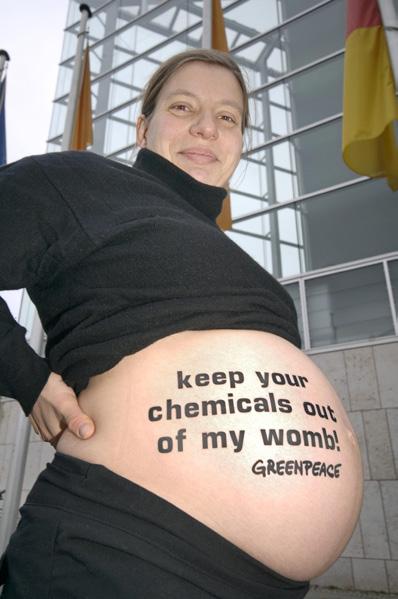
In 2005, pregnant women in Berlin displayed messages on their bellies outside the CDU conservative party's headquarters, calling for strong, preventive action in the EU regulation REACH. 300 industrial chemicals had already been proven to be in human blood and breast milk. © Paul Langrock / Greenpeace
onto false solutions like chemical recycling,99 leading scientists and organisations100 have warned that waiting for perfect evidence will lock in irreversible harm.101
It's time to shift the burden of proof onto those who produce, profit from, and promote products and practices that can irreversibly damage ecological systems and threaten human health. Governments have enough information to take urgent action to prevent the plastic crisis from getting worse, in line with the precautionary principle. Preventative measures across the plastic lifecycle are possible and required. Corporations and governments must prioritize dramatic reductions in plastic production and use, shifting away from plastic products and packaging especially food contact and childcentred products, and transitioning to non-toxic reuse systems.
The precautionary principle is not a new idea and can be found in numerous regional treaties and global conventions, from the Rio Declaration,102 to conventions such as Stockholm, OSPAR and others, to being a fundamental cornerstone of EU environmental policy (Article 191 of the EU treaty103). It is also reaffirmed in the founding mandate of the Global Plastics Treaty.104
The EU’s REACH regulation on chemicals also puts the burden of proof onto producers to provide data showing that a chemical is safe, before authorising it for access to the market. This ‘no data, no market’ approach provides a good example105 of enforcing precautionary action through the ‘principle of producer responsibility’, placing the responsibility to prevent ecological harm in the hands of those who can make the most effective changes.
But the precautionary principle is not generally applied to the problem of plastics. Firstly, there is the problem of the limited hazard data and regulation of chemicals of concern in plastics, with three quarters of the chemicals found or used in plastics not even assessed.106 Secondly, while hazardous chemicals regulated under the EU Regulation REACH are assessed for their suitability for the market based on hazard, which reflects a precautionary approach, this is not applied to plastics, and not required for food contact materials, which are evaluated using risk assessment to determine if the chemicals will leach out above so-called “safe limits”. This inconsistency is even noted by the plastics industry:107
“... the hazard assessment under REACH (CMR, BPT/vPvB, SEC) may conclude that a substance is an SVHC on the basis of a hazard assessment but the same substance may be approved for use in food contact materials on the basis of an extensive risk assessment showing safe use levels.” Plastics Europe.
Relying on a risk-based approach allows chemicals that have already been determined as hazardous “Substances of Very High Concern” (SVHCs) under REACH (see Box 1) to be added to plastics used for food contact materials. This takes no account of the fact that some types of toxicity, such as being carcinogenic, or an endocrine disruptor, make it difficult to even define a “safe” level; very low doses can cause significant effects on the development of young children and babies in the womb. In the real world, we are also exposed to multiple combinations of chemicals in plastics: exposure to low levels of a cocktail of chemical contaminants, even if those levels are regarded as ‘safe’, can have negative effects,108 another aspect not considered by the usual risk-based approach. And when chemicals are persistent and bioaccumulative, considering the risk from one dose alone is irrelevant. Unfortunately, chemicals with all of these properties were found in our review.
The same applies to plastic polymers and their inevitable breakdown into microplastics. The EU’s 2023/2055 regulation109 restricts the deliberate use of synthetic polymer particles in a wide range of consumer products, but does not apply the same precautions to food contact materials. Furthermore, although the US FDA states that "current scientific evidence does not demonstrate that levels of microplastics or nanoplastics detected in foods pose a risk to human health", they go on to note that "there are no standardized methods for how to detect, quantify, or characterize microplastics and nanoplastics".110
These positions reveal a troubling policy gap: in the face of studies that consistently detect plastic particles and chemical migrants in food, regulators either deny the risk or fail to act. This disconnect highlights the importance of the precautionary principle. Waiting for irrefutable proof means that millions of people are potentially exposed to invisible harm.
CONCLUSIONS
We must not continue to sacrifice ecosystems and put our health at risk by packing our food in plastic packaging for the sake of short-term profits – then ask the taxpayer to spend billions trying to clean up the damage and cure the illnesses. Plastic is not a special case - it’s time to apply the precautionary principle.
Emerging evidence suggests that the plastics we use to package our food pose a hidden and potentially serious health risk – none more so than heated ready meals and takeaways.
Greenpeace International's analysis of 24 peer reviewed studies reveals that heating food in plastic containers commonly releases a worrying cocktail of chemical additives and microplastics from the plastic packaging directly into food and drink products.
When we put this emerging evidence of health risks together with the huge problem of the millions of tonnes of single-use plastics flowing into our rivers and seas every day, or breaking up into microplastics and polluting the air and soil, we can only come to one conclusion –we need to take precautionary action on food contact plastics.
Current regulation regimes are clearly insufficient to protect public health. We need to act now and apply the precautionary principle to the way that we deliver food and stop this uncontrolled chemistry experiment that nobody signed up for.
As negotiations on the UN Plastics Treaty advance, we must ensure that human health impacts are not sidelined. Reducing reliance on plastic packaging is not just an environmental issue - it is a public health imperative. And a global one. That’s why we urgently need
governments to agree a strong Global Plastics Treaty that:
• Cuts plastic production by at least 75% by 2040, to protect our health, our communities and planet.
• Eliminates all problematic plastics, prioritising a ban on single-use plastics and packaging, including containers for ready meals and takeaways.
• Includes provisions to phase out toxic and hazardous chemicals used in plastics production and found in plastics, and ensures these provisions can be strengthened over time, as new evidence of harm emerges.111
• Facilitates an at-scale, justice-centred, transition to a zero waste, reusable and non-toxic product delivery system, and packaging alternatives, including funding for upstream measures to catalyze and ensure implementation.112
At the national and regional level, action can and must also urgently be taken to address these health concerns. What must not happen is that policy makers and companies wait for decades - as they did when faced with emerging evidence about the health impacts of tobacco. Human health is just too precious to risk for the short lived convenience of a plastic wrapped meal.
RECOMMENDATIONS
Recommendations for policy makers
• Implement the precautionary principle to prevent the use of hazardous plastics and chemicals in food contact materials as a priority, based on their intrinsic hazard and not on a risk assessment which determines so-called safe levels.
• Close the regulatory gaps to protect people's health from microplastics and hazardous chemicals in food packaging.
• Prioritise action on eliminating the use of known hazardous substances, including endocrine disrupting chemicals (EDCs).
• Stop giving false reassurance to citizens. As a priority, enact regulations to immediately remove ‘safe’ statements from packaging about reheating food, especially on ready meal packaging, including ‘microwave safe’ and ‘oven safe’.
• Ban single-use and plastic packaging and put in place policies and financial incentives to support a switch to zero waste, reusable and non-toxic packaging alternatives.
• Fund independent biomonitoring and health impact research.
• Regulations also need to ensure that the development of “smart packaging” (new technologies to extend product quality and shelf life, for example) does not rely on plastic packaging or include chemical additives designed to migrate into the food from the plastic packaging to protect and preserve it.113
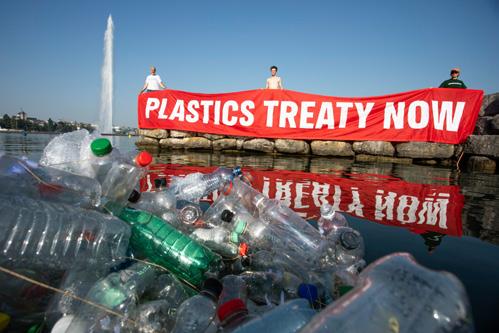
Plastics Treaty Now Banner at INC5.2 in front of the Jet d'Eau of Geneva. © Jack Taylor Gotch / Greenpeace
Recommendations for companies
• Based on the precautionary principle, adopt a commitment to phase out plastic packaging and ensure that there is ‘zero release’ of microplastics and hazardous plastic chemicals from all food packaging materials into food, by developing and implementing an Action Plan with milestones to achieve this by 2035, which would include:
⬥ Prioritising the phase out of plastic packaged ready meals designed for reheating
⬥ A phase out plan for the use of all plastic in food packaging
⬥ Eliminating the use of hazardous chemicals in all food contact materials, through the creation of Restricted Substances Lists114 of priority chemicals selected on the basis of hazard.
⬥ Switching to zero waste, reusable and non-toxic packaging alternatives,
• Stop giving false reassurance to customers. As a priority, immediately remove ‘safe’ statements from packaging about reheating food, especially on ready meal plastic packaging, including ‘microwave safe’ and ‘oven safe’.
Recommendations for future research
Scientists:
• Harmonise global methods for measuring micro and nanoplastics in food, packaging and human tissues. Develop reference standards.
• Test with a diversity of real foods, not just simulants.
• Conduct toxicological profiling of nonintentionally added substances (NIAS), oligomers, and novel additives, with a focus on hazardous characteristics (see Box 1) such as endocrine disruption, developmental toxicity, and organ accumulation.
What can we do?
Avoiding plastic and plastic chemicals in the modern world is a challenge, as they are used in such a variety of everyday products. But alternative options do exist, and there are some steps you can take to make a difference.
• Encourage your supermarket and local restaurants and shops to cut their use of plastic and provide safer alternatives.
• Avoid buying food in plastic packaging of any kind wherever possible, especially if intended for heating in the oven or microwave.
• Where possible clean and refill reusable non-plastic containers.
If you do buy ready meals or get a takeaway that comes in plastic, making small changes to meal preparation, cooking and storage can mitigate exposure to chemical contaminants and microplastics.115
• Before cooking or reheating food in plastic packaging, transfer it to suitable containers such as stainless steel for the oven or microwave-safe glass for the microwave.116
- Avoid heating food that is covered in plastic wrap, and where practical, rinse the surface of food that has been covered in plastic wrap to remove any microplastics.117
- Avoid putting hot food into plastic food containers.118
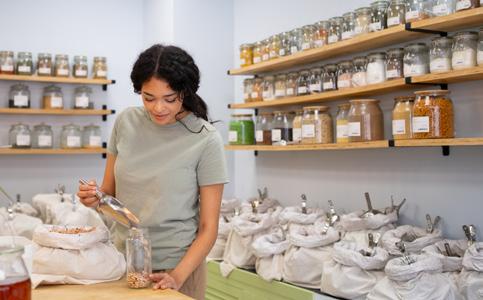
A customer fills a jar with beans at a refill shop in Spain. Consumers can reduce their exposure to plastics by using safe alternatives like glass ©Getty Images
ENDNOTES
1. Hussain K.A., Romanova S., Okur I., Zhang D., Kuebler J., Huang X., Wang B., Fernandez-Ballester L., Lu Y., Schubert M., Li Yl, 2023, Assessing the Release of Microplastics and Nanoplastics from Plastic Containers and Reusable Food Pouches: Implications for Human Health. Environ Sci Technol. 2023 Jul 4;57(26):9782-9792. doi: 10.1021/acs.est.3c01942
Symeonides C., Aromataris E., Mulders Y., Dizon J., Stern C., Barker T.H., Whitehorn A., Pollock D., Marin T., Dunlop S., 2024, Umbrella Review of Meta-Analyses on Plastic-Associated Chemicals. Ann Glob Health. 2024 Aug 19;90(1):52. doi: 10.5334/aogh.4459
2. Plastic chemicals: Chemicals are an essential feature of all plastic materials and include the basic raw materials, intentionally added substances such as stabilisers or plasticisers and unintentionally added substances such as impurities, reaction by-products, and degradation products.
Landrigan, P.J., et al., 2025, The Lancet Countdown on health and plastics, The Lancet, Volume 406, Issue 10507, 2025, Pages 1044-1062, ISSN 0140-6736, https://doi.org/10.1016/S0140-6736(25)01447-3
3. Symeonides C., et al., 2024, op. cit. Also see Table 2.
4. A search for papers, using terms such as ‘plastic food containers, ready meal, microwave oven, conventional oven, migration, packaging, health, contaminant’. identified 24 papers that were published from 2021 onwards, which were read and summarised. See:
5. Hussain K.A. et al., 2023, op. cit. Symeonides C., et al., 2024, op. cit.
6. Ritchie H., Samborska V., and Max Roser M, 2023, “Plastic Pollution” Published online at OurWorldinData.org; https://ourworldindata.org/ plastic-pollution
7. Thompson R. C., Courtene-Jones W., Boucher J., Pahl S., Raubenheimer K., Koelmans, A.A., 2024, Twenty years of microplastic pollution research—what have we learned?. Science Vol 386, Issue 6720. doi:10.1126/science.adl2746
8. Thompson R. C. et al., 2024, op. cit.
9. Monclús, L., Arp, H.P.H., Groh, K.J. et al, 2025, Mapping the chemical complexity of plastics. Nature 643, 349–355 (2025). https://doi. org/10.1038/s41586-025-09184-8
Also see State of the Science on Plastic Chemicals; https://plastchem-project.org/
10. Samborska V., 2024, Packaging is the source of 40% of the planet’s plastic waste, Our World in Data, 14 November 2024. https:// ourworldindata.org/data-insights/packaging-is-the-source-of-40-of-the-planets-plastic-waste
11. International Energy Agency, 2018, The future of petrochemicals; towards more sustainable plastics and fertilisers, © OECD/ IEA 2018; https://iea.blob.core.windows.net/assets/bee4ef3a-8876-4566-98cf-7a130c013805/The_Future_of_Petrochemicals.pdf
12. Yates, J., Kadiyala, S., Deeney, M. et al., 2024, A toxic relationship: ultra-processed foods & plastics. Global Health 20, 74 (2024). https:// doi.org/10.1186/s12992-024-01078-0
13. Karali, N., Khanna, N., & Shah, N., 2024, Climate Impact of Primary Plastic Production, pp.54. Lawrence Berkeley National Laboratory. Report #: LBNL-2001585. Retrieved from https://escholarship.org/uc/item/12s624vf. Also see Table 4, pp 509, based on the reference value of 459.7 Mt in 2019, and plastic use application for packaging in Fig 1 (c) in: Dokl M., Copot A., Krajnc D.,, Van Fan Y., Vujanović A., Aviso K.B., Tan R.R., Kravanja Z., Čuček L., 2024, Global projections of plastic use, endof-life fate and potential changes in consumption, reduction, recycling and replacement with bioplastics to 2050, Sustainable Production and Consumption, Volume 51, 2024, Pages 498-518, ISSN 2352-5509; https://doi.org/10.1016/j.spc.2024.09.025
14. Plastics Europe reports that 430.9 Mt of plastic was produced globally in 2024: Plastics Europe 2025, Plastics the Fast Facts, Plastics Production Statistics 2018-2024; https://plasticseurope.org/knowledge-hub/plasticsthe-fast-facts-2025/
15. International Energy Agency 2018, op. cit, Page 20, estimates 36% for packaging.
16. Karali, N., et al, 2024, op. cit., pp.54 and Plastics Europe 2025, op.cit.
17. Jackson, P. et al., 2018, A Short History of Convenience Food. In: Reframing Convenience Food. Palgrave Macmillan, Cham. https://doi. org/10.1007/978-3-319-78151-8_2;
18. Precedence Research, 2025, Ready Meals Market Size to Hit USD 350.35 Billion by 2034, Driven by Convenience, Urbanization, and Evolving Consumer Preferences. Yahoo! Finance; https://finance.yahoo.com/news/ready-meals-market-size-hit-150000640.html
19. Pham, P. (2024). Convenience Food: market data & analysis. Statista; https://www.statista.com/study/48833/convenience-food-marketdata-and-analysis/ Statista, Convenience Food – Worldwide; https://www.statista.com/outlook/cmo/food/convenience-food/worldwide
20. Packaging World Insights 2025, Reducing Plastic in Food Packaging: Sustainable Paths https://www.packagingworldinsights.com/food/reducing-plastic-in-food-packaging-sustainable-paths/, and Packaging Europe, 2025, Data indicates EU supermarket ‘reliance’ on ‘unnecessary’ plastic packaging, 22nd January 2025; https://packagingeurope.com/news/data-indicates-eu-supermarket-reliance-on-unnecessary-plastic-packaging/12397.article
21. Deloitte, 2019, Future of Food: How technology and global trends are transforming the food industry, 10 July 2019; https://www.deloitte. com/au/en/services/economics/perspectives/future-of-food-uber-eats.html
22. The volumes in megatonnes between 2023 and 2029 are predicted to increase by +4.6% in Asia, +3.2% in Africa, +2.9% in Oceania, +2.1% in Europe and +1.6% in the Americas. Statista, Convenience Food, op. cit.
23. Agte, V., et al., 2002, Vitamin profile of cooked foods: how healthy is the practice of ready-to-eat foods? International Journal of Food Sciences and Nutrition, 53(3), 197–208. https://doi.org/10.1080/09637480220132814
24. Kim S et al., 2020, Recent surge of ready meals in South Korea: can they be healthy alternatives? Public Health Nutrition, 2020;23(4):711-720. doi:10.1017/S1368980019002544, https://www.cambridge.org/core/journals/public-health-nutrition/article/recent-surgeof-ready-meals-in-south-korea-can-they-be-healthy-alternatives/588BA2DD5244CF1C74CD9F68EEA40776
25. McKinsey & Company, 2024, The State of Grocery Retail 2024: South Africa. https://www.mckinsey.com/industries/retail/our-insights/ turning-a-corner-the-state-of-grocery-retail-2024
26. Statista, Convenience Food, op. cit. Grand View Horizon, Global Ready Meals Market Size & Outlook, 2019-2027; https://www. grandviewresearch.com/horizon/outlook/ready-meals-market-size/global
27. Grand View Horizon, op. cit.
28. McKinsey (2025), The State of Grocery Europe, 2025, 8th April 2025; https://www.mckinsey.com/industries/retail/our-insights/state-ofgrocery-europe-report
29. Future Markets Insights Inc, 2025, Slow Cooker and Sous Vide Market Analysis – Trends, Growth & Forecast 2025 to 2035, 25th April 2025; https://www.futuremarketinsights.com/reports/slow-cooker-and-sous-vide-market
30. Xia, Y., Wang, W-X., et al., 2025, Subcellular toxicity assessments of microplastics released from food containers. Journal of Hazardous Materials 489, 137541 (2025). https://doi.org/10.1016/j.jhazmat.2025.137541 Wang L., Gao J., Wu W-M., Luo J., Bank M.S., Koelmans A.A., Boland J.J., and Hou D., 2024, Rapid Generation of Microplastics and Plastic-Derived Dissolved Organic Matter from Food Packaging Films under Simulated Aging Conditions, Environmental Science & Technology 2024 58 (45), 20147-20159 doi: 10.1021/acs.est.4c05504; https:// pubs.acs.org/doi/abs/10.1021/acs.est.4c05504
31. Xia, Y. et al., 2025, op. cit. The lab-based experiment was designed to mimic domestic use of plastic food storage containers, which were filled with water (not real food or food simulant) and either refrigerated for 24 and cooked in the microwave on high power of 1000W for 1 minute 40 seconds or frozen for 24 hours, then thawed in the microwave at the lower power of 300W for 5 minutes. The authors of the study noted that if they had used old or well used plastic food containers that could affect the rate and quantity of the microplastics released. In addition, this study used water as the medium, and it might be that other food types, for example plastic containers with acidic, fatty or salty foods, might have different rates of microplastic migration.
32. Guo X., Dai H., He L., 2024, Migration testing of microplastics from selected water and food containers by Raman microscopy. Journal of Hazardous Materials, 2024 Jan 15;462:132798. doi: 10.1016/j.jhazmat.2023.132798
33. Wang L,. et al., 2024, op. cit.
34. Xia et al., 2024, op. cit., Wang L., et al. 2024, op. cit.
35. Son, J-W., Nam Y., Kim C., 2024, Nanoplastics from disposable paper cups and microwavable food containers. Journal of Hazardous Materials, 464, 133014 (2024), doi: https://doi.org/10.1016/j.jhazmat.2023.133014
36. Wang, L. et al., 2024, op. cit.
37. US Food and Drug Administration (US FDA), 2024, Microplastics and Nanoplastics in Food, 24 July 2024; https://www.fda.gov/food/ environmental-contaminants-food/microplastics-and-nanoplastics-foods states: “Current scientific evidence does not demonstrate that levels of microplastics or nanoplastics detected in foods pose a risk to human health.” European Food Safety Authority (EFSA), 2025, Food contact materials, 21 October 2025; https://www.efsa.europa.eu/en/topics/topic/food-contact-materials produces a guidance document for researchers who are carrying out risk assessments to comply with EU regulation (EU) 10/2011; https://ec.europa.eu/food/safety/ chemical_safety/food_contact_materials_en, which lists substances permitted for use in the manufacture of plastic articles intended to come into contact with food in Annex 1, however the focus is on chemicals and not specifically on micro- and nanoplastics. EU Regulation (EU) 2023/2055 aims to reduce the quantity of micro- and nanoplastics (defined here as 0.1um-5mm) in the environment through targeted restrictions of synthetic polymer particles in a broad range of consumer products, but it does not specifically cover food contact materials. EU 2023/2055: https://eur-lex.europa.eu/eli/reg/2023/2055/oj/eng
38. Monclús M., et al., 2025, op. cit. Wagner M., et al., 2024, State of the Science on Plastic Chemicals - Identifying and Addressing Chemicals and Polymers of Concern, Zenodo, doi: https://doi.org/10.5281/zenodo.10701706. Also see https://plastchem-project.org/
39. Symeonides C., et al., 2024, op. cit.
40. Wagner M., et al., 2024, op. cit.
41. Hussain K.A., et al., 2023, op. cit.
42. He Y-J., Qin Y., Zhang T-L., Zhu Y-Y., Wang Z-J., Zhou Z-S., Xie T-Z., Luo X-D., 2021, Migration of (non-) intentionally added substances and microplastics from microwavable plastic food containers, Journal of Hazardous Materials, Volume 417, 2021, 126074, ISSN 0304-3894, https://doi.org/10.1016/j.jhazmat.2021.126074
43. He Y-J., et al., 2021, op. cit.
44. Jin T., Liu Y., Lyu H., He Y., Sun H., Tang J., Xing B., 2024, Plastic takeaway food containers may cause human intestinal damage in routine life usage: Microplastics formation and cytotoxic effect, Journal of Hazardous Materials, Volume 475, 2024, 134866, ISSN 03043894, https://doi.org/10.1016/j.jhazmat.2024.134866
45. Kim H.S., Lee K.Y., Jung J.S., Sin H.S., Lee H.G., Jang D.Y., Lee S.H., Lim K.Ml, Choi D., 2023, Comparison of migration and cumulative risk assessment of antioxidants, antioxidant degradation products, and other non-intentionally added substances from plastic food contact materials, Food Packaging and Shelf Life, Volume 35, 2023, 101037, ISSN 2214-2894, https://doi.org/10.1016/j.fpsl.2023.101037
46. Fernández-Arribas J., Moreno T., Eljarrat E., 2025, Plastic additives in the diet: Occurrence and dietary exposure in different population groups, Journal of Hazardous Materials, Volume 493, 2025, 138317, ISSN 0304-3894, https://doi.org/10.1016/j.jhazmat.2025.138317
47. Díaz-Galiano F.J., Murcia-Morales M., Gómez-Ramos M.J., Gómez-Ramos M.M., Fernández-Alba A.R., 2024, Economic poisons: A review of food contact materials and their analysis using mass spectrometry, TrAC Trends in Analytical Chemistry, Volume 172, 2024, 117550, ISSN 0165-9936, https://doi.org/10.1016/j.trac.2024.117550, found that a UV stabiliser reacted with potato starch during microwave cooking to form a previously unknown compound (a HMPP–maltose derivative). Such NIAS (non-intentionally added substances) are not listed for use, not disclosed to consumers, and not tested for safety.
48. Moreno-Gordaliza E., Dolores Marazuela M., Milagros Gómez-Gómez M..2023, Risk assessment of silver and microplastics release from antibacterial food containers under conventional use and microwave heating. Food Chem. 2023 Sep 15;420:136097. doi: https://doi. org/10.1016/j.foodchem.2023.136097
49. In general terms, a Substance of Very High Concern (SVHC) is a substance meeting one or more of the following criteria:
- Class 1 or 2 carcinogen, mutagen, or toxic for reproduction (CMR).
- Substance which is PBT (persistent, bio-accumulative and toxic) or vPvB (very persistent and very bio-accumulative) in accordance with Annex III of REACH.
- Other substances for which there is evidence of equivalent degree of concern (e.g. endocrine disruptors). https://www.yordasgroup.com/ svhcs
50. Hussain K.A., et al., 2023, op. cit.
51. Hussain K.A., et al., 2023, op. cit.
52. Hussain K.A., et al. 2023, op. cit.
53. Son, J-W., et al., 2024, op. cit
54. Hussain K.A., et al., 2023, op. cit.
55. Xia et al., 2025, op. cit.
56. Greenpeace International 2025, Every Breath You Take: Air Pollution Risks from Petrochemicals Production for the Plastics Supply Chain 22 July 2025; https://www.greenpeace.org/international/publication/77208/every-breath-you-take/ Karali, N., et al, 2024, op. cit., Bulk chemicals make up the basic raw material for plastics, such as ethylene, propylene, and benzene,
57. Díaz-Galiano, F. J. et al., 2024, op. cit.
58. Karali, N., et al, 2024, op. cit., pp. 2, Figure ES- 1.
59. Scientists’ Coalition for an effective Plastics Treaty, 2025, Article 3, Plastic Products: What are the benefits of regulating chemicals of concern?; https://ikhapp.org/material/policy-brief-article-3-of-the-draft-global-plastics-treaty-text/
60. Muncke, J., Andersson, A.M., Backhaus, T. et al., 2020, Impacts of food contact chemicals on human health: a consensus statement. Environ Health 19, 25 (2020). https://doi.org/10.1186/s12940-020-0572-5
61. Symeonides et al., 2024, op. cit., Mišľanová C., Valachovičová M., Slezáková Z., 2024, An Overview of the Possible Exposure of Infants to Microplastics. Life (Basel). 2024 Mar 12;14(3):371. doi: https://doi.org/10.3390/life14030371
62. Landrigan P.J., et al., 2023, The Minderoo-Monaco Commission on Plastics and Human Health’, Annals of Global Health, 89(1), p. 23.;89(1):71. doi: https://doi.org/10.5334/aogh.4056 and Erratum in: Ann Glob Health. 2023 Oct 11, doi: https://doi.org/10.5334/aogh.4056
63. Symeonides C., et al., 2024, op. cit.
64. Winiarska E., Jutel M., Zemelka-Wiacek M., 2024, The potential impact of nano- and microplastics on human health: Understanding human health risks. Environ Res 2024; 251: 118535. doi: https://doi.org/10.1016/j.envres.2024.118535
65. Yang W., Jannatun N., Zeng Y., Liu T., Zhang G. Chen C., Li Y., 2022, Impacts of microplastics on immunity. Front Toxicol. 2022 Sep 27;4:956885. doi: https://doi.org/10.3389/ftox.2022.956885
66. Cheng, Y., Yang, Y., Bai, L. et al., 2024, Microplastics: an often-overlooked issue in the transition from chronic inflammation to cancer. J Transl Med 22, 959 (2024). https://doi.org/10.1186/s12967-024-05731-5
67. Bishop B., Webber W.S., Atif S.M., Ley A., Pankratz K.A., Kostelecky R., Colgan S.P., Dinarello C.A., Zhang W. and Li S., 2025, Microand nano-plastics induce inflammation and cell death in human cells. Front. Immunol. 16:1528502. doi: https://doi.org/10.3389/ fimmu.2025.1528502
68. Bora S.S., et al., 2024, Microplastics and human health: unveiling the gut microbiome disruption and chronic disease risks. Front. Cell. Infect. Microbiol. 14:1492759. doi: https://doi.org/10.3389/fcimb.2024.1492759
69. Ali N., Katsouli J., Marczylo E.L., Gant T.W., Wright S., Bernadino de la Serna J., 2024, The potential impacts of micro-and-nano plastics on various organ systems in humans, eBioMedicine, Volume 99, 104901; https://www.thelancet.com/journals/ebiom/article/PIIS23523964(23)00467-X/fulltext
70. Fournier E., et al. 2022, Exposure to polyethylene microplastics alters immature gut microbiome in an infant in vitro gut model. J Hazard Mater. 2023 Feb 5;443(Pt B):130383. doi: https://doi.org/10.1016/j.jhazmat.2022.130383
71. Landrigan P.J., et al. 2025, op. cit.
72. Wagner M., et al., 2024, op. cit.
73. Lambré C, et al., Re-evaluation of the risks to public health related to the presence of bisphenol A (BPA) in foodstuffs. EFSA Journal 2023; https://efsa.onlinelibrary.wiley.com/doi/10.2903/j.efsa.2023.6857
74. Maffini M. V., Geueke B., Groh K., Carney Almroth B., Muncke J., 2021, Role of epidemiology in risk assessment: a case study of five ortho-phthalates. Environ Health 2021; 20: 114. Doi: https://doi.org/10.2903/j.efsa.2023.6857
75. Landrigan P.J., et al., 2023, op. cit. Symeonides et al., 2024, op. cit.
76. Scientists’ Coalition for an effective Plastics Treaty, 2025, Policy Brief: Article 3 of the draft global plastics treaty text (Plastic Products); https://ikhapp.org/material/policy-brief-article-3-of-the-draft-global-plastics-treaty-text/
77. ChemTrust, Bisphenols: BPA and its alternatives; https://chemtrust.org/bisphenol-a-bpa/
78. ChemTrust, Bisphenols: BPA and its alternatives; op. cit.
79. UN Environment Programme, 2023, Chemicals in Plastics - A Technical Report, 3 May 2023; https://www.unep.org/resources/report/ chemicals-plastics-technical-report
80. Mastanjević K., Kartalović B., Kovačević D., Krstanović V., Habschied K., 2025, Migration of Phthalates and Bisphenol A from Polyethylene Terephthalate Bottles into Beer During Storage at Controlled Temperatures. Foods. 2025 Jul 30;14(15):2689. doi: https://doi.org/10.3390/ foods14152689
81. European Human Biomonitoring Project, 2022, HBM4EU Newsletter, April 2022; https://www.hbm4eu.eu/wp-content/uploads/2022/05/ HBM4EU-Newspaper.pdf
82. Montserrat F., 2020, Antimony and PET bottles: Checking facts, Chemosphere, Volume 261, 2020, 127732, ISSN 0045-6535 doi: https:// doi.org/10.1016/j.chemosphere.2020.127732
83. AFIRM Group, 2018, Chemical information document, polyaromatic hydrocarbons (PAHs), January 2018; https://www.afirm-group.com/ wp-content/uploads/2018/01/afirm_polycyclic_aromatic_hydrocarbons.pdf
84. Moreno-Gordaliza, E. et al., 2023, op. cit.
85. Weatherly L.M, Gosse J.A., 2017, Triclosan exposure, transformation, and human health effects. J Toxicol Environ Health B Crit Rev. 2017;20(8):447-469. doi: https://doi.org/10.1080/10937404.2017.1399306
86. Yates J., et al., 2024, op. cit.
87. Yates J., et al., 2024, op. cit.
88. Action on Salt and Sugar, 2025, Are Ready Meals Ready for a Change? Ready Meals Report 2025; https://www.actiononsalt.org.uk/ media/action-on-salt/awareness/saw25/Ready-Meals-Report--May-2025.pdf
89. Yates J., et al., 2024, op. cit.
90. UK Food Standards Agency, 2025, Ultra Processed Foods, 20 February 2025; https://www.food.gov.uk/safety-hygiene/ultra-processedfoods
91. Yates J., et al. 2024, op. cit.
92. Oreskes N., and Conway E. M., 2024, Merchants of Doubt: How a Handful of Scientists Obscured the Truth on Issues from Tobacco Smoke to Global Warming, Published: June 3, 2010 Bloomsbury Press, Pages: 355 pp. ISBN: 978-1-59691-610-4
93. Smit H.A., BOOK REVIEWS, American Journal of Epidemiology, Volume 143, Issue 5, 1 March 1996, Pages 529–530, https://doi.org/10.1093/ oxfordjournals.aje.a008779
94. Brandt A.M., 2012, Inventing conflicts of interest: a history of tobacco industry tactics. Am J Public Health. 2012 Jan;102(1):63-71. doi: https://doi.org/10.2105/AJPH.2011.300292
95. Experience of hazardous chemical pollution of waterways such as the Great Lakes, the Rhine and many more drove the shift to replace the failed ‘assimilative capacity approach’ with the precautionary principle. The costs of clean-up far outweigh any short-term economic benefits to the producers, as demonstrated time and again by contamination of waterways with hazardous chemicals. Greenpeace International, 2011, Hidden Consequences; The costs of industrial water pollution on people, planet and profit, 25 May 2011; https://www.greenpeace.org/international/publication/6807/hidden-consequences/
96. Wagner M., et al., 2024, op. cit.
97. Lauer N., Vegh T., Nowlin M., Virdin J., Somarelli J., 2025, The Social Cost of Plastic to the United States, November 2025, Nicholas Institute for Energy, Environment & Sustainability, Duke University https://hdl.handle.net/10161/33529
98. Cropper M., Dunlop S., Hinshaw H., Landrigan P., Park Y., Symeonides C., 2024, The benefits of removing toxic chemicals from plastics. Proc Natl Acad Sci USA, 121, Dec 24;121(52):e2412714121. doi: 10.1073/pnas.2412714121. Epub 2024 Dec 16. PMID: 39680769; PMCID: PMC11670057; https://pubmed.ncbi.nlm.nih.gov/39680769/
99. Greenpeace UK, 2025, Plastics, Profits and Power: how petrochemical companies are derailing the Plastics Treaty, July 2025; https:// www.greenpeace.org.uk/resources/plastics-profits-power-report/
100. Including: Landrigan P.J., et al., 2023 (the Minderoo–Monaco Commission), WHO, and the Scientists’ Coalition (Wagner M., et al., 2024, op. cit.)
101. Symeonides C., et al., 2024, op. cit. Wagner M., et al., 2024, op. cit.
102. United Nations, 1992, Rio Declaration on Environment and Development, United Nations Conference on Environment and Development, Rio de Janeiro, Brazil, 3-14 June 1992; https://www.un.org/en/conferences/environment/rio1992
103. Article 191 of the Consolidated Treaty of the European Union states: “Union policy on the environment shall aim at a high level of protection taking into account the diversity of situations in the various regions of the Union. It shall be based on the precautionary principle and on the principles that preventive action should be taken, that environmental damage should as a priority be rectified at source and that the polluter should pay.” https://eur-lex.europa.eu/LexUriServ/LexUriServ.do?uri=CELEX%3A12008E191%3AEN%3AHTML
104. United Nations, 2022, INC mandate under UNEA 5/14. End plastic pollution: towards an international legally binding instrument : resolution / adopted by the United Nations Environment Assembly, (5th sess. : Nairobi); https://digitallibrary.un.org/ record/3999257?ln=en&v=pdf
105. EC REACH regulation, Article 1. 3 https://reachonline.eu/reach/en/title-i-chapter-1-article-1.html REACH is the European Community Regulation on chemicals and their safe use (EC 1907/2006). It deals with the Registration, Evaluation, Authorisation and Restriction of Chemical substances. The law entered into force on 1 June 2007. The aim of REACH is to improve the protection of human health and the environment through the better and earlier identification of the intrinsic properties of chemical substances, and to make the `burden of proof´ (of a chemical´s safety) the responsibility of the chemical producer and not the authorities. At the same time, REACH aims to enhance innovation and competitiveness of the EU chemicals industry. See https://environment.ec.europa.eu/topics/chemicals/reachregulation_en
106. Scientists’ Coalition for an effective Plastics Treaty, 2025, op. cit.
107. Plastics Europe, 2021, REACH and Food Contact Regulations for Plastics: substances listed in the REACH candidate list can be used to manufacture Plastic Food Contact Materials and Articles, September 2021; https://plasticseurope.org/wp-content/uploads/2022/03/ PlasticsEurope-REACH-food-contact-regulation_September-2021.pdf
108. Muncke, J. et al., 2020, op. cit.
109. European Commission, Commission Regulation (EU) 2023/2055 - Restriction of microplastics intentionally added to products; https://single-market-economy.ec.europa.eu/sectors/chemicals/reach/restrictions/commission-regulation-eu-20232055-restrictionmicroplastics-intentionally-added-products_en
110. US Food and Drug Administration (US FDA), 2024, op. cit.
111. Scientists’ Coalition for an effective Plastics Treaty, 2025, op. cit., and, Brander S., Bonisoli-Alquati A., Cousin X., Farrelly T., Fieber R., Muncke J., Raps H., Wagner M., 2025, Regulating chemicals globally is key to a successful plastics treaty. Cambridge Prisms: Plastics. 2025;3:e29. doi: https://doi.org/10.1017/plc.2025.10023, which recommends:
“(1) globally regulating chemicals of concern based on hazard; (2) mandating transparency of plastic chemical composition and (3) designing plastics using safe-by-design principles and essential-use criteria. Group-based regulation, which would consider categories of related chemicals, should replace individual chemical approaches to prevent regrettable substitutions.”
112. O’Meara NC, de Miranda Grilli N, Moon S, Senathirajah, K., Cook E., Alegado J., Bonisoli Alquiti A., Wang M., 2025, Design principles for the global plastics treaty’s financial mechanism. Cambridge Prisms: Plastics. 2025;3:e30. doi: https://doi.org/10.1017/plc.2025.10025
113. Biji K.B., Ravishankar C.N., Mohan C.O., Srinivasa Gopal T.K., 2015, Smart packaging systems for food applications: a review. J Food Sci Technol. 2015 Oct;52(10):6125-35. doi: https://doi.org/10.1007/s13197-015-1766-7 Grand View Research, Smart Packaging Market (2024 - 2030); https://www.grandviewresearch.com/industry-analysis/smart-packaging-market
114. For both manufacturing - a Manufacturing Restricted Substances List (MRSL) and the product – a Product Restricted Substances List (PRSL).
115. Díaz-Galiano, F. J. et al., 2024, op. cit.
116. Alpert, J. S. & Chen, Q. M. 2023, Microwaving Food in Plastic Containers. Am J Med. 2023 Feb;136(2):123-124, doi: https://doi.org/10.1016/j. amjmed.2022.07.003
117. Wang, L. et al., 2024, op. cit.
118. Wu Y., Li Z., Shi L., Zhu Y., Wang Y., Yan N., Yang Y., He S., Li J., 2024, Effects of leachate from disposable plastic takeout containers on the cardiovascular system after thermal contact, Ecotoxicology and Environmental Safety, Volume 288, 2024, 117383, ISSN 0147-6513, doi: https://doi.org/10.1016/j.ecoenv.2024.117383
Published by: Greenpeace International
Greenpeace International Surinameplein 118 1058 GV Amsterdam Netherlands greenpeace.org/international
© Greenpeace International 2025. All Rights Reserved.
Contributors:
Madeleine Cobbing, Daniel Read, Louise Edge, Graham Forbes, Jacob Kean-Hammerson, Sarah King, Kathryn Miller, Jo Royle, Melissa Wang, Anna Wells, and everyone in the Greenpeace network who contributed to this report.
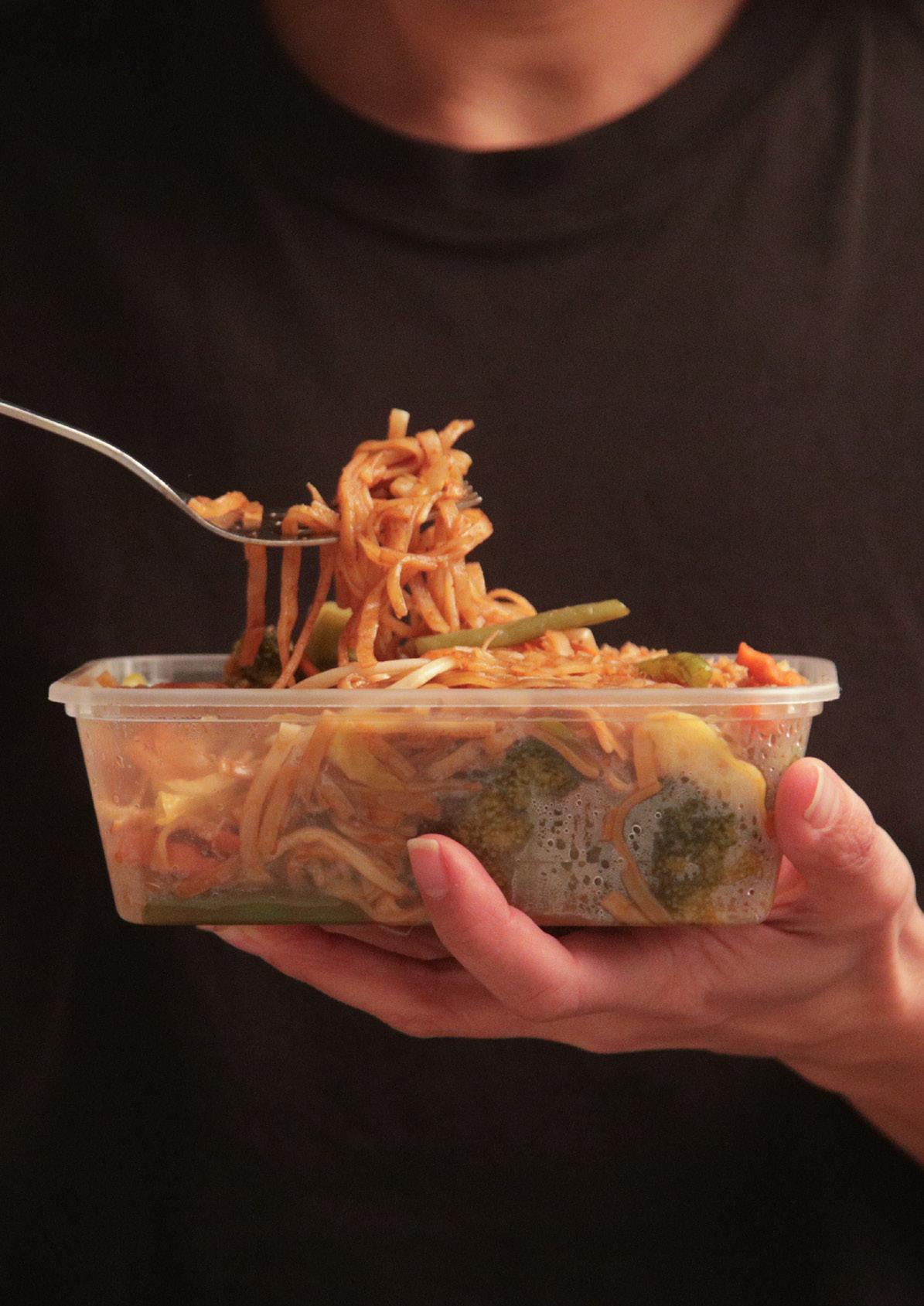
Front and back cover images: Ready Meals, Takeaways and Plastic Food Packaging © Jack Taylor Gotch / Greenpeace