Technical Assessment of Woodside’s Browse Pygmy Blue Whale Management Plan

Acknowledgements
We acknowledge the Traditional Owners of Country throughout Australia and the Indigenous peoples of the Pacific Islands, and recognises their continuing connection to land, waters, and culture. We pay our respects to their Elders past and present.
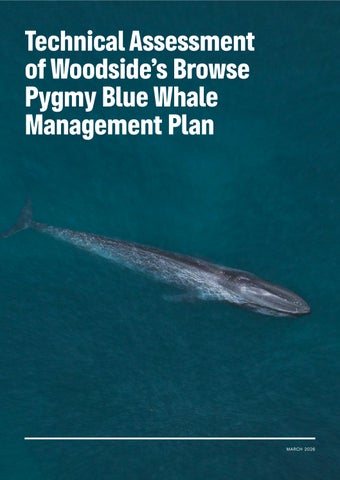
(Cover Image) Migrating Blue Whale near Ningaloo Reef, Western Australia © Lewis Burnett / Greenpeace
Aerial View of Scott Reef in Western Australia © Alex Westover / Greenpeace
1. Terminology
2. Executive Summary
3. Importance of Scott Reef for the Pygmy Blue Whale
4. Assessment of the Pygmy Blue Whale Management Plan
5. Likely impacts on pygmy blue whales if Browse project proceeds
6. Conclusion
This report was prepared by scientific experts for Greenpeace Australia Pacific: Oceanwise Australia Pty Ltd
4 Cherry Road, Perth, Western Australia, 6018, Australia
Phone: +61 (0) 439996018
Email: ben.fitzpatrick@oceanwise.com.au
Author: Dr Ben Fitzpatrick, Dr. Olaf Meynecke
© Copyright 2025 Oceanwise Australia Pty Ltd. All rights reserved.
This document may not be reproduced, copied, or distributed without prior written permission


1.
TERMINOLOGY
ACRONYM MEANING
BIA Biologically Important Area
CMP Conservation Management Plan for the Blue Whale (Commonwealth of Australia 2015a)
EPBC Act Environment Protection & Biodiversity Conservation Act 1999
FPSO Floating Production Storage & Offloading vessel
MODU Mobile Offshore Drilling Unit
PBWMP Pygmy Blue Whale Management Plan (Woodside 2025)
PTS/TTS Permanent/Temporary Threshold Shift
SEL
Sound Exposure Level

2. EXECUTIVE SUMMARY
Woodside’s proposed 2025 Browse to North West Shelf (NWS) Pygmy Blue Whale Management Plan (PBWMP) is intended to address potential impacts of Browse gas field drilling and associated operations on the endangered pygmy blue whale (Balaenoptera musculus brevicauda) of the East Indian Ocean population, a Matter of National Environmental Significance (MNES) under the EPBC Act. The proposed activities occur at Scott Reef located approximately 300km North of Broome, which is recognised as a Biologically Important Area (BIA) for this endangered blue whale subspecies. The PBWMP does not provide a robust or precautionary basis for concluding the action is unlikely to result in a significant impact on the subspecies and is not consistent with the objectives of the Commonwealth Management Plan (CMP) or the requirements of the EPBC Act.
The PBWMP claims that there is “no credible threat of significant impacts” and “no displacement from foraging areas”; however, these conclusions are not supported by the available scientific information. The importance of Scott Reef for foraging and migration is characterised as uncertain in the PBWMP, despite clear evidence of its high importance to pygmy blue whales including repeated acoustic detections, satellite-tracked whale movements through the reef channel, documented krill concentrations, and direct observations of pygmy blue whales within areas proposed to be ensonified. The noise impact assessment within the PBWMP relies heavily on modelling approaches that infer low ecological risk from limited detected utilisation. This approach conflates data deficiency with low habitat value and does not adequately consider the likelihood of indirect impacts, including behavioural disruption, habitat avoidance, and reduced foraging efficiency. These risks are heightened in upwelling systems like Scott Reef where even short-term disturbance may have disproportionate energetic consequences.
Sea Fan in Scott Reef, Western Australia
© Wendy Mitchell / Greenpeace
Key assumptions for exposure and density modelling further undermine the assessment. These include reliance on outdated population information from surveys undertaken more than 20 years ago, assumptions of whale density that are not supported by site-specific data, omission of aversion behaviour, and the application of a 2 km exclusion zone that is unlikely to be effective for a deep-diving, visually cryptic species (97% of their time below water). The Animat modelling and closest point of approach (CPA) modelling to analyse possible impacts on pygmy blue whales in proximity to Scott Reef assumes that the animals are involved in transient passage at 2-3 knots and short exposure durations, without capturing multi-day residency on productive krill patches should this occur or displacement from these productive habitats if the proposal was to go ahead. The PBWMP also does not adequately assess cumulative impacts (40+ year noise ignored), including the additive effects of long-term industrial noise, behavioural thresholds (120 dB) potentially causing avoidance within 2–3 km, overlapping vessel activities, and climate-driven changes to prey availability. Indirect effects on prey species, such as noiseinduced krill displacement or altered aggregation dynamics, are not assessed. The reliance on post-approval monitoring to address known data gaps is inconsistent with EPBC Act expectations that uncertainty be addressed prior to approval where impacts may be serious or irreversible.
Proposed mitigation measures do not demonstrate that impacts have been avoided or minimised to the extent practicable, as required under the EPBC Act mitigation hierarchy (anthropogenic noise - very high, minimising vessel collisions - high, and cumulative impacts with climate change). Visual monitoring is constrained by daylight and sea state, passive acoustic monitoring may fail during non-vocal foraging behaviour or elevated background noise, and real-time detection technologies remain investigatory. The absence of vessel speed restrictions within migratory corridors further increases the likelihood of vessel strike, a recognised threat to pygmy blue whales. Residual impacts from the proposed development could create an acoustic barrier at the eastern entrance to Scott Reef channel, disrupt opportunistic feeding on ephemeral krill patches, mask navigational calls, and increase chronic stress and collision risk. If the project proceeds, the East Indian Ocean pygmy blue whale population faces heightened extinction risk through foraging displacement, reduced fitness, and cumulative climate pressures, further reducing recovery potential of this genetically distinct, slow-recovering subpopulation.

3. IMPORTANCE OF SCOTT REEF FOR PYGMY BLUE WHALE
Reaching up to 24 metres and weighing up to 180 tonnes, the endangered East Indian Ocean (EIO) pygmy blue whale (Balaenoptera musculus brevicauda) is a subspecies of the blue whale (Moller et al., 2015). The most recent population estimate in 2004/2005 suggests ~1,100 individuals (95 % CI 662–1,559) pass Western Australia during their southward migration, the population has low genetic diversity and potential for full recovery from historical whaling impacts is still uncertain (R. McCauley & Jenner, 2010). With a possible population recovery rate of 4.3% per annum it is possible the population has grown to ~3000 individuals in the two decades since this estimate. However, without a more recent population census, and considering the escalating impacts of climate change on pygmy blue whale feeding habitats since 2005, this estimate should be treated with caution. Contemporary population numbers for PBWs remain low relative to pre-whaling catches — likely representing just a small fraction of historical abundance. It is estimated that 12 000 PBWs were decimated by modern whaling though exact pre-exploitation figures are uncertain (Branch et al., 2025). Based on the estimates from Branch (2008) the population should have increased substantially. The numbers are less than 50% pre-whaling and the problem with recovery estimates are the limited survey efforts these are based on for the species. For reference the population of Antarctic blue whales were depleted from a pre-whaling estimate of 239,000 animals to just 360 upon banning, with a slow recovery to 2,280 (95% interval 1,160 – 4,500) (Branch et al., 2004). In addition, population structure and genetics are vital for assessing population-level impact risks with evidence of low genetic diversity, differentiation between Tasman-
Aerial View of Scott Reef in Western Australia © Alex Westover / Greenpeace
Pacific and EIO pygmy blue whales suggesting that current climate change impacts have potential for significantly larger impact on the pygmy subspecies than on antarctic blue whales (Attard et al., 2015). As such, with a population size estimated at just 2.5% of prewhaling levels, and high uncertainty in their current population levels, pygmy blue whale subspecies are considered:
• Federal - Endangered and Migratory under the EPBC Act (Commonwealth of Australia 2015a).
• International - Data Deficient on the IUCN Red List (IUCN 2020a).
Satellite tagging, passive acoustics, and visual surveys confirm the population migrates along the continental shelf edge from the southern ocean to Indonesian breeding/calving areas (northern migration April–August; southern migration October–January) (Thums et al., 2022). Recent analyses confirm extensive use of slope habitat off north-west Australia, with area-restricted search (foraging) behaviour documented for periods of 2–1,080 hours (median 28 h). They rely on krill, consuming up to 2 tonnes daily, and must feed opportunistically along migration routes with Scott Reef occurring within the migratory corridor of a subset of the population (Thums et al., 2022). Recent research on the subspecies diving behaviour further supports this (Thums et al., 2025).
Annual detections suggest variable but consistent use of Scott Reef, making it an important stop over, given the population’s restricted range and inter-annual variability
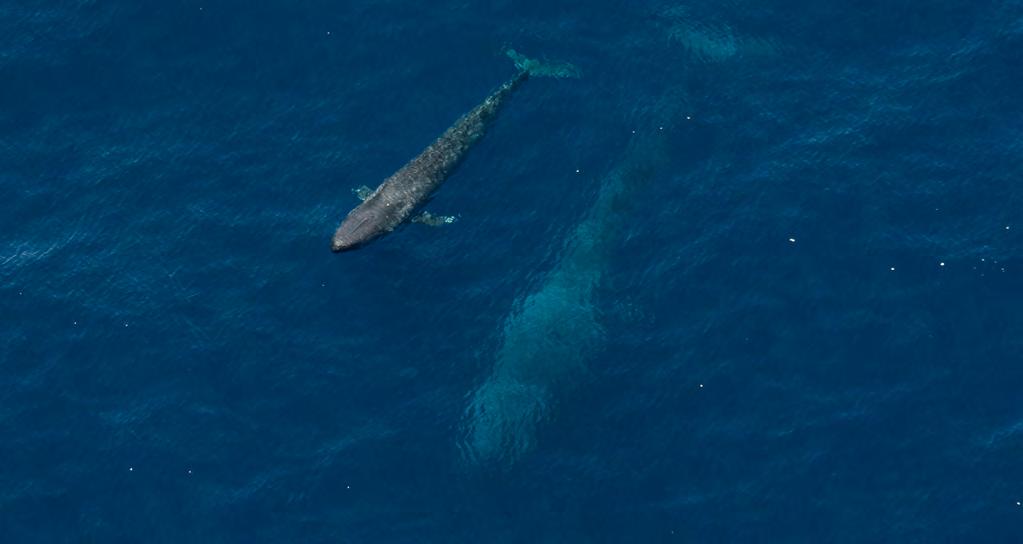
Pygmy blue whale mother and calf in Western Australia © Tiffany Klein / Greenpeace
(Thums et al., 2021). Based on acoustic detections indicating presence of whales from April–June and November–December and peaking during southward migration (Double et al., 2014). Whales have been recorded transiting the central channel between North and South Scott Reef, along both reef flanks, and in deeper adjacent waters (R. D. McCauley, 2011; Sutton et al., 2019). It is thought this population relies on Scott Reef as a key stopover EIO PBW for foraging and resting along their migratory route. Consequently it is recognised as a Biologically Important Area (BIA) (Thums et al., 2022).
Recent research indicates that baleen whales exhibit far greater flexibility in their feeding behaviour than was previously recognised and this includes PBWs (Burton et al., 2023). Identifying and understanding foraging stopover areas is therefore essential when evaluating the effects of human activities on PBWs, as disturbances that disrupt feeding can have lasting consequences for population dynamics (Pirotta et al., 2021). Environmental stressors that cause whales to avoid habitats or suspend foraging may reduce energy intake in ways that compromise calf development and female reproductive success (Braithwaite et al., 2015). Key aspects of reproductive timing and the spatial extent of breeding habitats remain poorly defined for the species. They are highly vulnerable to repeated or chronic disruptions to feeding and resting, even when short-term behavioural avoidance appears minor (Ryan et al., 2025). This makes age structure (long-lived), growth (slow), and physiology (high energy demands) essential components of any comprehensive biological or conservation profile, particularly in the context of underwater noise, vessel traffic, and habitat modification.
The Australian Government Conservation Management Plan for Blue Whales (CMP) outlines priority actions to support recovery of the PBW population including: maintaining / improving legal protections (very high priority); assessing / addressing anthropogenic noise (very high for pygmy blue whales); understanding climate variability impacts (high); minimising vessel collisions (high); measuring population recovery (very high); describing population structure (high); and defining BIAs / migratory pathways (high) (Moller et al., 2015). These cumulative impacts pose a major barrier to delisting the subspecies under the EPBC Act, with climate change identified as a major threat altering krill distribution, and ocean acidification affecting krill embryos. Cumulative stressors include:
• Noise (including seismic surveys causing injury, masking, and displacement both of prey and PBWs)
• Vessel strikes
• Entanglement risk in fishing gear
• Diseases
• Disturbance through tourism (whale watching and swim with whales) in Indonesia and Australia
• Food shortage and variability as a result of shifting currents, rising water temperatures and harvesting
• Cascading impacts of warming, stratification, or ENSO/ La Niña cycles
• Long-term reduced productivity for migratory and foraging success
Many of these impacts compound one another to impede recovery of the population of PBW numbers:
“For the conservation status of both subspecies to improve so that they no longer meet the criteria for threatened species listing under the EPBC Act, the cumulative impacts of the above listed threats should also be considered.” (Moller et al., 2015).
The CMP explicitly requires:
“Management of anthropogenic noise in BIAs such that any blue whale continues to utilise the area without injury, and is not displaced from a foraging area. All decisions informed by the precautionary principle, considering cumulative impacts. Actions in or adjacent to BIAs do not compromise recovery. Identify and protect important habitats, promote research on noise effects (very high priority), and ensure management plans align with CMP objectives” (Moller et al., 2015).
Woodside’s proposed Browse project — drilling, gas extraction, and significant maritime operations near Scott Reef — is suggested within this important pygmy blue whale BIA. The Woodside Pygmy Blue Whale Management Plan states that:
“Woodside considers that the Proposal is consistent with the CMP as all underwater noise sources can be managed such that no threat of unacceptable impacts to blue whales exist, noting existing guidance on implementation of the CMP must be considered in context of the overarching recovery objectives for the species.”
The validity of this claim depends on the accuracy of estimates of the proposed impacts (e.g. noise emissions), as well as on the effectiveness of the avoidance, management, monitoring, and mitigation measures outlined in the Conservation Management Plan. Namely this includes assessing / addressing anthropogenic noise (very high for pygmy blue whales); understanding climate variability impacts (high); minimising vessel collisions (high); measuring population recovery (very high); describing population structure (high); and defining BIAs/migratory pathways (high). Below, we assess the PBWMP for meeting these objectives.

4.
ASSESSMENT OF THE PYGMY BLUE WHALE MANAGEMENT PLAN
The PBWMP claims to safeguard pygmy blue whales through modelling, mitigation, and monitoring (Woodside 2025). Below, we identify problems with that claim, drawing on the PBWMP and appendices.
4.1 Importance as foraging habitat.
The definition of the Scott Reef blue whale foraging area in the CMP, particularly in the proximity of the Eastern entrance to the Scott Reef Channel, has consistent biannual acoustic detections of individuals (R. D. McCauley, 2011), aerial surveys and satellite-tagged whales transiting the channel (Sutton et al., 2019; Thums et al., 2022), documented krill concentrations (Brinkman et al., 2010), and direct observations of pygmy blue whales in the area that will be ensonified (Jenner et al. 2008; Sutton et al. 2019; Thums et al. 2022).
However, the PBWMP states:
“Evidence for predictable foraging habitat for pygmy blue whales within the possible foraging area at Scott Reef is unclear.” (Woodside 2025, p.37),
“Adopting the slope habitat as a predictor of habitat suitability would indicate the outer slope with canyon features on the western side of Scott Reef probably has a higher likelihood of seasonal prey availability and foraging habitat for pygmy blue whales. The surrounding open water environment of the eastern extent of the BIA (east of Scott Reef) represents a deep water, homogeneous sediment seabed habitat with a lack of geomorphological seabed features. If krill swarms
Seasnakes near Scott Reef, Western Australia
© Wendy Mitchell / Greenpeace
are present within the water column of this open water environment, they are likely to be ephemeral and patchy in nature, and any pygmy blue whale foraging occurrence is expected to be of a low likelihood and opportunistic in nature.”
Adopting the slope habitat as foraging habitat fails in this instance and contradicts evidence that PBW were detected with “remarkably similar” occurrences on both the east and west Scott Reef (Delarue J.J.-Y., Kowarski K.A., L.A.E Huijser, C.C. Wilson, T.J. Stephens, A.L. Richardson, and C.R. McPherson., 2025). It has been established that the extent of vertical mixing in the region increases with proximity to Scott Reef and is greatest within the channel (Brinkman et al., 2010). This establishes that primary productivity and abundance of zooplankton assemblages are highest in the vicinity of Scott Reef within the migratory BIA in this region. Yet despite this knowledge, and the uncertainty in the statements highlighted here, the PBWMP claims:
“In the context of the overall size of the Possible Foraging Area (>12,000km2), it is not objectively credible that highly localised residual underwater noise represents a threat of serious damage to blue whale utilisation of Scott Reef, based on the available scientific information demonstrating limited Pygmy Blue Whale utilisation of Scott Reef for foraging. Nor is it objectively credible that the nature and extent of noise represents a threat of irreversible damage to their ongoing opportunity to forage at Scott Reef / loss of foraging opportunities significant enough to result in reduced population fitness.”
This conclusion is made in a recognised data deficient circumstance, concerning a endangered subspecies with a population of just ~2.5% of prewhaling size and known to utilize Scott Reef BIA during twice annual migrations (Moller et al., 2015). This is in the context of an uncertain and dated population estimate of 532-1,754 individuals in 2004 /05, which pre-date the recently escalating threats of climate change, further undermining these no-population-effect assertions (Attard et al., 2010). The limited information on habitat utilisation is a function of this species being an extremely difficult animal to track and study and the extremely low population size, and not due to a lack of importance of Scott Reef as BIA habitat for PBW.
4.2 Issues with superimposing industrial noise in foraging habitat.
It is proposed to superimpose impacts the CMP classifies as “very high significance” for pygmy blue whales into this foraging and Migratory BIA, and in an extremely data poor
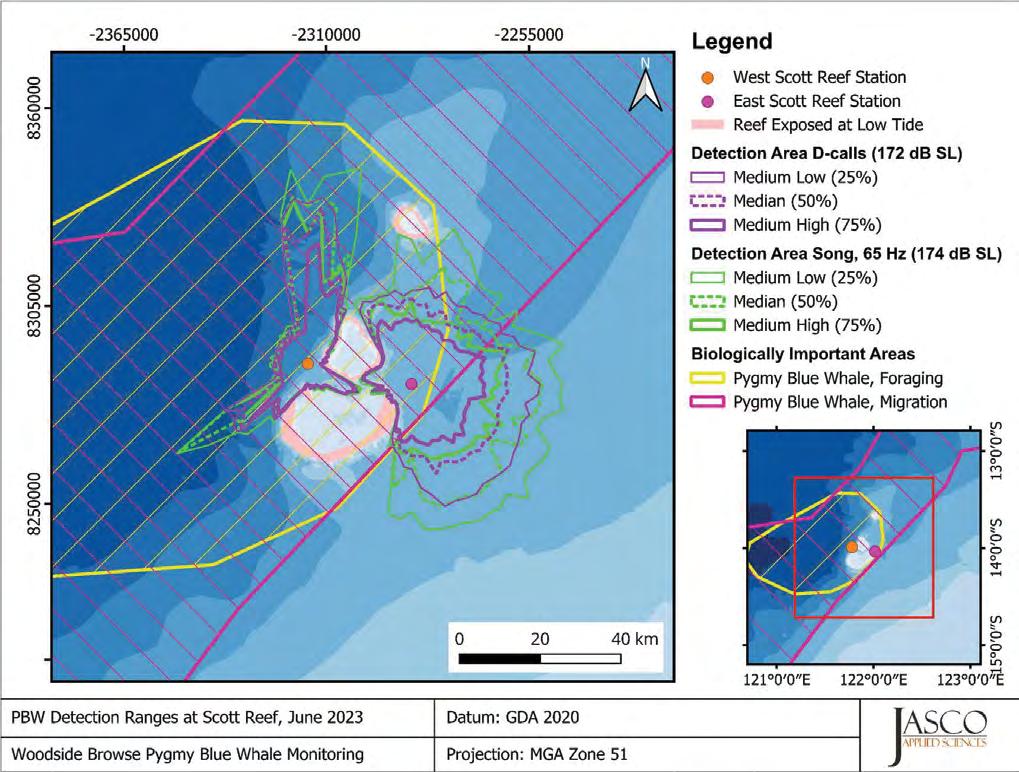
Figure 1. Depicting areas within which various types of pygmy blue whale calls are detected east and west of Scott Reef during September 2023.
(Source: Delarue et al 2025 - Figure 59)
circumstance, and it is concluded there is “no credible threat of significant/population-level impacts” and that “no blue whale will be displaced from a foraging area” (Woodside, 2025). These assertions lack substantiation. Evidence relies on acoustic detections from 2006-2011 (R. D. McCauley, 2011) and limited tagging studies of an extremely low abundance and endangered species (Thums et al., 2021). Data showing variable inter-annual presence but lacking due to an inability to sample and collect comprehensive data on foraging intensity or population trends for this highly elusive and difficult to study pelagic oceanic deep diving baleen whale species (Moller et al., 2015). Direct foraging observations are sparse due to difficulty in conducting observational field studies on their spatial behavioral and feeding ecology, yet the assessment plan dismisses opportunistic feeding as minor without quantifying krill dynamics or behavioral responses to human impacts such as noise (Woodside, 2025). Deep feeding dives are not accompanied by vocalisation which means periods of low acoustic detection do not rule out foraging at these locations either (Delarue J.J.-Y., Kowarski K.A., L.A.E Huijser, C.C. Wilson, T.J. Stephens, A.L. Richardson, and C.R. McPherson., 2025). External studies indicate that
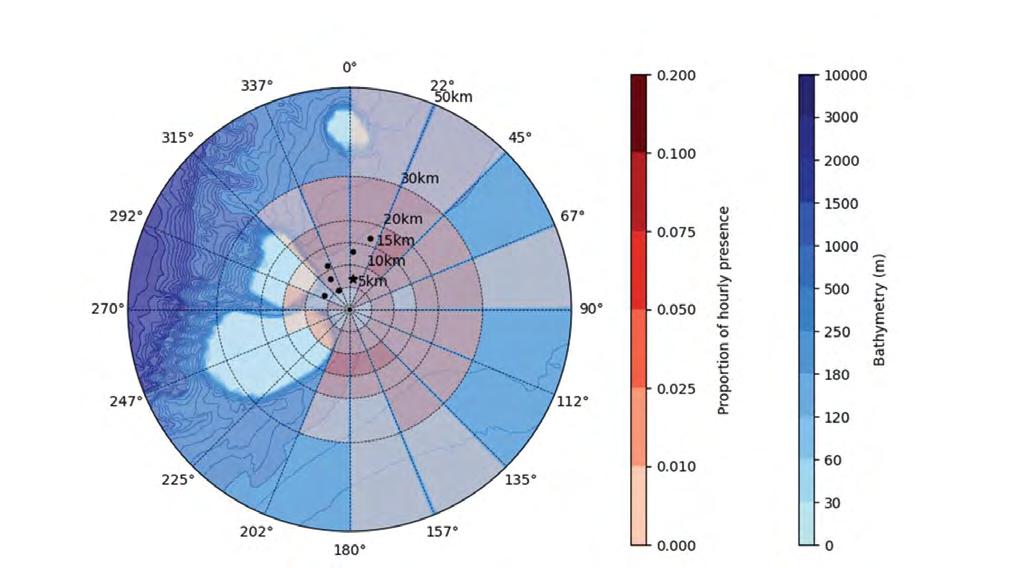
Figure 2. Proportion of hourly presence of pygmy blue whales in proximity to east Scott Reef 0 - 50km from the acoustic recorded, with proposed FPSO and well locations indicated by black star and 6 black dots respectively.
(Source: Delarue et al 2025 - Figure 54).
drilling and vessel noise can cause avoidance, stress, and masking in baleen whales, contradicting these claims (Southall et al., 2019).
The PBWMP incorrectly posits low utilisation as evidence of negligible risk, when instead this reflects the difficulty in obtaining population level data for this endangered, data deficient, elusive species (IUCN, 2016). No information exists for the importance of this area for pre-whaling populations making it impossible to conclude negligible impacts on population recovery potential. Veracity of the conclusion of a lack of habitat utilisation of the area by PBW is further reduced since acoustic recording is only effective to detect D calls (a short call consistently associated with foraging behaviour) and song, yet animals do not vocalize during deep feeding dives, with recordings likely insufficient on their own to estimate foraging importance in proximity of the acoustic receivers (Delarue J.J.-Y., Kowarski K.A., L.A.E Huijser, C.C. Wilson, T.J. Stephens, A.L. Richardson, and C.R. McPherson., 2025). This data deficiency contradicts the CMP’s emphasis on protecting BIAs from any displacement, and the precautionary approach in the case of data gaps and uncertainties (Moller et al., 2015).
Krill dynamics at Scott Reef are driven by internal waves, tidal upwelling and ephemeral aggregations, making the area a high-productivity hotspot within the broader region. In this context noise risks causing behavioural disruption, masking, and displacement, forcing whales to expend extra energy searching
for food — a risk the CMP identifies as a high-threat habitat modification (Moller et al., 2015). Noise from MODU, FPSO, and vessels could ensonify these parts of the BIA within and to the eastern end of the reef channel - an area of conspicuously high productivity within the region, exacerbating threats like vessel strikes and climate-driven changes in prey availability, as highlighted in the CMP’s threat assessment for pygmy blue whale population disruption (Moller et al., 2015). This could include establishing an effective acoustic barrier that exceeds marine mammal behavioural response criterion of 120 dB across the eastern channel entrance impacting transit of pygmy blue whales through the area (Woodside, 2025) (Figure 3).
Finally, the PBWMP repeatedly acknowledges scientific uncertainty through speculative language (“likely”, “expected”, “probably”), but uses this uncertainty to justify risk. Under the EPBC Act and CMP, uncertainty in the context of potential serious or irreversible harm requires increased caution rather than reduced concern (Moller et al., 2015).
4.3 Critique of Noise and Animat Modelling Inputs and Assumptions
The PBWMP uses Marine Operations Noise Model (MONM) / Gaussian beam acoustic ray-trace model (BELLHOP) for noise propagation and JASCO Animal Simulation Model, including Noise Exposure (JASMINE) for animat simulations, assuming worst-case scenarios like June sound speed profiles for maximum range and stationary receivers for 24-hour Sound Exposure Level (SEL) (Woodside 2025, Appendix A). However, a number of key inputs and assumptions substantially limit the reliability of the results. Source levels (e.g., MODU drilling 190 dB re 1 μPa @1m) draw from analogues without sitespecific validation, assuming non-cyclonic conditions requiring just 40% of the thrusters to maintain position, and using an average annual metocean conditions with sheltering effect of swell when this is not representative of metocean conditions varying within a year (Woodside, 2025).
This also potentially underestimates the role of Scott Reef’s complex bathymetry in determining the resulting soundscape (Green et al. 2022a). In the modelling, uncertainty is expressed in the noise transmission factor that depends on bathymetry and oceanographic features. However, the noise transmission factor is essential to understand sound emission levels. The assumption used in the animat modelling of three individual whales per km² is not supported by site-specific or species specific data at Scott Reef; and only 24-hour simulations, minimising exposure estimates (Cusano et al. 2022):
“The parameters used for forecasting realistic behaviours (e.g., diving, foraging, aversion, surface times, etc.) are determined and interpreted from marine species studies (e.g., tagging studies) where available, or reasonably extrapolated from related species.” (Woodside, 2025)
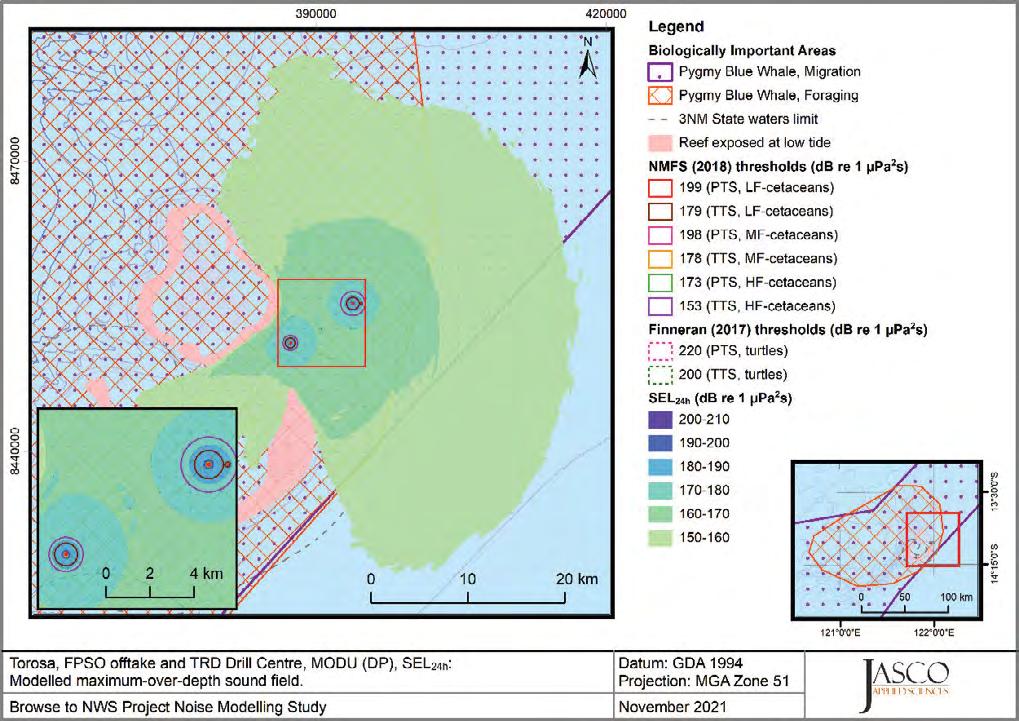
Figure 3. Modelled noise comprising a combined aggregate of offtake from the FPSO and MODU under the control of dynamic positioning indicating the intrusion of the sound at up to 170 decibels into the channel between north and south Scott Reef in excess of the 120 dB re 1 μPa behavioural criteria. (Source: Woodside 2025 - Figure 35).
However, there is very little data available for oceanic pelagic baleen whales in general, and even less for pygmy blue whales in particular, on which to base the assumptions that individuals do not remain in the area for more than 24 hours and that densities do not exceed 3 individuals per km² (Moller et al., 2015). Foraging animats show higher exposure due to deeper dives, but the model ignores inter-annual variability in densities, and also non-migratory behaviors, or group dynamics which keep animals within close proximity to one another. For these reasons, the Animat modelling can be limited by an oversimplification or discounting animal behavior. The modelling does not include group and foraging behaviour and habitat use near sound sources. The Animat modelling is only applicable to a very short period of 24 hours by not considering long-term effects like habitat shifts over years or decades (Frankel et al., 2005). There is heavy reliance on the assumption that whales will move away successfully from noise sources, with limited discussion of energetic or ecological costs. It has also been shown that blue whales do not adjust movement to avoid vessel collision (McKenna et al., 2015).
These assumptions have the effect of reducing impact distances but may not reflect aggregate or prolonged exposures to noises in a dynamic BIA with specific acoustic properties such as the Scott Reef environment. The offshore operations involve temporal overlap of noise sources but the simulated
activities are treated as discrete scenarios. The PBWMP’s risk assessment contradicts evidence that even low-level noise (120 dB) disrupts foraging in baleen whales, especially in patchy krill habitats (Southall et al., 2019), but the PBWMP claims this area at Scott Reef is:
“If krill swarms are present within the water column of this open water environment, they are likely to be ephemeral and patchy in nature, and any pygmy blue whale foraging occurrence is expected to be of a low likelihood and opportunistic in nature.”
Regardless this is inconsistent with the CMP’s call for robust, precautionary assessments (Moller et al., 2015). The CMP classifies noise as a high threat, yet the PBWMP concludes negligible risk (Woodside, 2025). In conclusion, the modelling outcomes should therefore not be presented with high confidence.
4.4 Impact of noise on whale food
While the PBWMP focuses on impact of noise on whale hearing and behaviour, it does not assess risk of noise (or other pollutants including light and emission of production water high in mercury) impacting their food - krill. Noise can induce avoidance, dispersion, or altered vertical migration in krill swarms , reducing encounter rates for whales and forcing extended search times, as the CMP warns in its high-priority research needs for noise-prey interactions (Moller et al., 2015). In addition, noise can reduce overall zooplankton abundance (Aspirault et al., 2023; R. D. McCauley et al., 2017).
Equally light can conversely attract or repel krill affecting diurnal migration and spatial and temporal patterns in abundance, while large baleen whales bioaccumulate toxins like mercury as apex predators (Moller et al., 2015) but the PBWMP does not consider these indirect impacts. It also disregards the addition of noise to cumulative climate impacts of marine heatwaves and ocean acidification on krill populations and the rapidly changing biological oceanographic conditions these planktonic systems are contingent upon contrary to the CMP requiring cumulative impacts be considered:
“For the conservation status of both subspecies to improve so that they no longer meet the criteria for threatened species listing under the EPBC Act, the cumulative impacts of the above listed threats should also be considered.” (Moller et al., 2015)
4.5 Behavioral Thresholds – Underestimated Impacts
The PBWMP sets behavioral thresholds at 120 dB re 1 μPa, claiming minimal disruption (Woodside, 2025). This is not
based on any integrated data collected on the response of pygmy blue whales to industry operations which would align with the CMP (Moller et al., 2015). This is instead ‘based on the current interim US NOAA criterion for marine mammals’ (Woodside, 2025). This is problematic given these criteria are not based on pygmy blue whale acoustic behavioral response studies but baleen whales in shallow waters where noise behaves differently. A recent synthesis of the impact of shipping noise effects on marine mammals by Erbe et al. (2019) has shown impacts and response to industry operations at levels much lower than 120 dB including acoustic masking impairing communication and food finding, reduced foraging efficiency with stronger responses observed in mother calf pairs (Erbe et al., 2019). Pirotta et al. (2021) found that a brief, 30-minute exposure to military sonar could result in blue whales forfeiting the equivalent of their full daily energy intake. Guilpin et al. (2020) demonstrated that repeated encounters with vessels over just 3–10 hours may reduce energy acquisition by as much as 85%. This is highly problematic given the mother calf pairs migrate past Scott Reef BIA after being born, possibly in Indonesia however they may also be born during the northerly migration adjacent reefs such as Scott Reef. Crucially the review found a paucity of information on pelagic offshore baleen whale species (such as PBW) where shallow water studies on baleen whale response to shipping noise differs since in deeper water ship noise propagates down into the water column and has the potential to travel much greater distances than in shallow waters and impact whales differently in these areas (Erbe et al., 2019).
4.6 Whale to whale communication (mother calves in particular)
The PBWMP addresses permanent and temporary hearing impairment, and impact on the foraging behaviour of a whale, but completely ignores the effects on whale-towhale communication (Woodside, 2025). Whale-to-whale communication is critical to maintaining group cohesion during migration and is particularly critical for mother-calf pairs of this deep diving species where calves may remain alone and/or nursing occurs at the surface for extended periods of time. Mother-calf pairs rely on continuous, uninterrupted communication to maintain their social bond. The cumulative masking effects on vocalisations and hearing, group cohesion, mother calf communication and migration is particularly relevant when considering the impact of noise on PBW but is not included in the assessment (Parks et al., 2016). In Scott Reef’s BIA even subtle changes in soundscapes could affect fitness in this endangered population (Nowacek et al., 2007). These local factors put pygmy blue whales at Scott Reef on the extreme end of vulnerability to anthropogenic noise relative to other populations (Thums et al., 2021).
4.7 CPA Assumptions – Minimising Exposure
The PBWMP uses closest point of approach (CPA) to estimate
minimal exposures (e.g., 2-3 km/h speeds reducing ranges), but this model assumes transient passages, and underestimates the residency in whales foraging in this BIA (Woodside 2025, Appendix B). Without aversion modeling, the PBWMP overlooks displacement over larger areas:
“..., although aversion was not considered in this study.” (Woodside, 2025)
In ignoring these real-world variables, the PBWMP impact assessment directly contradicts the CMP assessment that pygmy blue whales are vulnerable and instead concludes:
“…no risk of injury from MODU/FPSO.” (Woodside, 2025)
A number of independent sources of error seem associated with these exposure predictions:
1. The population size and therefore concentration of animals in the vicinity of the proposed development is uncertain and based on 2004/05 data.
2. Fine-scale dive behaviour from a single individual tagged in Perth Canyon was used in this study and not dive behaviour for migration, resting and feeding from a number of PBWs.
3. The PBWMP assumes zero probability of whales occurring outside the narrow BIA boundary despite CMP maps and observations showing broad migratory corridors and use of the waters surrounding the entire Scott Reef complex.
4. While the JASCO MONM model used here could consider aversion behaviour this was not modelled. Without incorporating aversion, it fails to model behavioral avoidance leading to broader displacement (Ellison et al., 2012).
5. The PBWMP relies heavily on animat (JASMINE) simulations that assume transient passage at 2–3 knots. This is inappropriate for a documented foraging area where whales slow, mill, and make deep feeding lunges when krill is encountered.
6. Short 24-hour simulations cannot capture multi-day residency on productive patches — exactly the behaviour expected at this location. Studies show intense sounds can cause long-term habitat shifts in such situations (Frankel et al. 2002).
7. A 2 km “exclusion zone” was assumed effective despite pygmy blue whales surfacing only ~1 minute every 15+ minutes and travelling 1–2 km between breaths — making visual detection before entry difficult.
8. The CMP emphasises the need for models that account for prey dynamics, such as krill scattering under noise, which could amplify foraging disruption but is not undertaken here.
9. The PBWMP claims that ANIMAT modelling indicated injury only where a whale passed within 50 m (Woodside 2025), yet dismisses broader behavioral risks.
This conclusion is based on the flawed premise that shortterm simulations demonstrate negligible effects,when in reality uncertainties in behaviors and propagation control impacts on timescales relevant to migration and foraging is required, the impacts from which make this population Extremely Vulnerable (Moller et al., 2015).
4.8 Insufficient Mitigation Actions
Proposed mitigations include avoidance (no activities in May/ June/November peaks), minimisation through low-noise designs, and detection (Woodside, 2025). However, these are likely to be insufficient in the circumstances considering visual monitoring is daylight-limited, passive acoustics may miss low-frequency calls amid noise and whales during non vocal feeding, and real-time tech that is proposed such as infrared is only investigatory (Woodside, 2025). Shutdown zones rely on visual or passive acoustic detection of a species that spends >93 % of its time below the surface and surfaces unpredictably. Additionally vessel speeds are not restricted in migratory corridors, increasing strike risks (Ferreira et al., 2023). The PBWMP cites no requirement to cease operations if high whale density is confirmed during pre-start surveys. The CMP prioritises mitigation hierarchies that include realtime prey monitoring to avoid krill disruption, which is omitted from the PBWMP.
4.9 Gaps in the Management Plan
The PBWMP has gaps:
• Unmitigated scenarios like cyclone extensions or vessel overlaps.
• Subsea wellheads mitigated but no shutdowns.
• Non-acoustic stressors (e.g., strikes) minimally addressed (Woodside 2025, Section 8).
• Cumulative impacts are not quantified beyond acoustic aggregates (Barlow et al. 2023).
• Whale-to-whale communication ignored but critical for mother whale calf pairs and migrating groups.
• Variation in calling density, rates and frequencies over time not considered (Gavrilov et. al. 2011; Joliffe et al. 2025).
• Overlooking synergies with other projects or climate (Truong and Rogers 2023).
• Foraging importance is dismissed as “unclear” despite detections, with no mitigation plans in place if foraging increased (McCauley et al. 2018).
• The plan proposes post-approval research to fill gaps, contravening precautionary needs (Commonwealth of Australia 2015a).
• Cumulative and chronic noise from 40+ years of operations ignored.
• Vessel strike risk in migratory corridor dismissed.
• Prey (krill) displacement or behavioural change not assessed.
• No contingency if post-approval monitoring shows higherthan-expected use of the channel.
• Failure to address uncertainties in the relative importance of the Scott Reef foraging BIA, which recent data suggest may require review and expansion (Thums et al. 2022).
The CMP requires explicit assessment of cumulative threats to krill-dependent foraging, including noise-induced prey avoidance, which remains unaddressed (Commonwealth of Australia 2015a, p. 22).
4.10 Conformance Gaps between the Blue Whale Conservation Management Plan and the PBWMP
Conformance gaps mean the PBWMP doesn’t align with the CMP:
• Lacks data on population status, foraging importance, communication and behaviors, contradicting the precautionary approach of the CMP and EPBC Act.
• Fails to consider cumulative noise with climate on whales and their krill food in concluding negligible risk.
• Contradicts CMP’s high noise threat by claiming low utilisation for a population when this is for a population that is difficult to study, not well understood and based on an endangered population.
• Doesn’t comprehensively assess migratory corridor and BIA impacts particularly within the unique environmental setting of Scott Reef situated in deep water with complex bathymetry.
• Claims “no displacement” despite potential behavioral effects and no aversion modeling.
• Does not adequately consider risks to foraging subpopulations near development such as communication between mothers and their calves.
The PBWMP does not promote recovery of this endangered population (Commonwealth of Australia 2015a). The PBWMP fails to align with the CMP by lacking data on foraging importance, claiming “no displacement” despite potential behavioural effects, and downplaying cumulative risks (Commonwealth of Australia 2015a, p. 18). The CMP mandates “very high priority” research on noise effects in BIAs, including krill disruption, which the PBWMP ignores (Commonwealth of Australia 2015a, p. 24).
4.11 Precautionary Principle
The PBWMP cites uncertainties (e.g., foraging, detection) yet assumes negligible risk, breaching EPBC caution amid “serious or irreversible damage.” Low-confidence models and the proposed implementation of post-approval data compilation contradict the needs for pre-approval evidence needs. The 24 hour focus on individual whales of the modelling downplays gaps in modeling and behaviors, conflicting with the CMP (Moller et al., 2015). The EPBC Act demands caution amid uncertainty of “serious or irreversible damage.” The CMP reinforces this by requiring precautionary management in BIAs to prevent any foraging displacement, a standard the PBWMP fails to implement.

5. LIKELY IMPACTS ON PYGMY BLUE WHALES IF BROWSE PROJECT PROCEEDS
The CMP considers pygmy blue whales endangered with unknown status in parts. The population is small, with variable use of Scott Reef; genetically distinct in a constrained BIA. Both foraging and migration are vulnerable to noise and worsening climate impacts (Thums et al. 2021). The population may not adapt to displacement. Combined noise avoidance, masking, and strikes represent increased risk, accelerating declines and potentially leading to loss of this NW Australian BIA (Southall et al. 2019). The Torosa development will likely impose a permanent acoustic barrier across the eastern Scott Reef channel. Migrating pygmy blue whales will face communication and behavioural disturbance, reduced feeding efficiency, increased energy expenditure, masking of navigational cues, and heightened stress. In a population considered endangered, as a population characterised by slow-breeding individuals still recovering from whaling, even small reductions in calf production compound over decades.
The Browse project risks functionally eliminating part of Scott Reef as a foraging area and further delaying or preventing recovery of this endangered subspecies.
If drilling proceeds, pygmy blue whales could experience chronic noise exposure leading to behavioral changes (e.g., avoidance, communication and masking of vocalisations), displacement from foraging, and reduced fitness affecting migration and reproduction (Southall et al. 2019; Nowacek et al. 2007). In a BIA within a region likely containing patchy resources, even low-level disturbances could compound with climate threats, hindering recovery of this endangered subpopulation. Population-level declines are possible if inter-annual presence increases. The CMP warns that such disruptions could lead to “population-level effects” such as altered krill access (Moller et al., 2015).
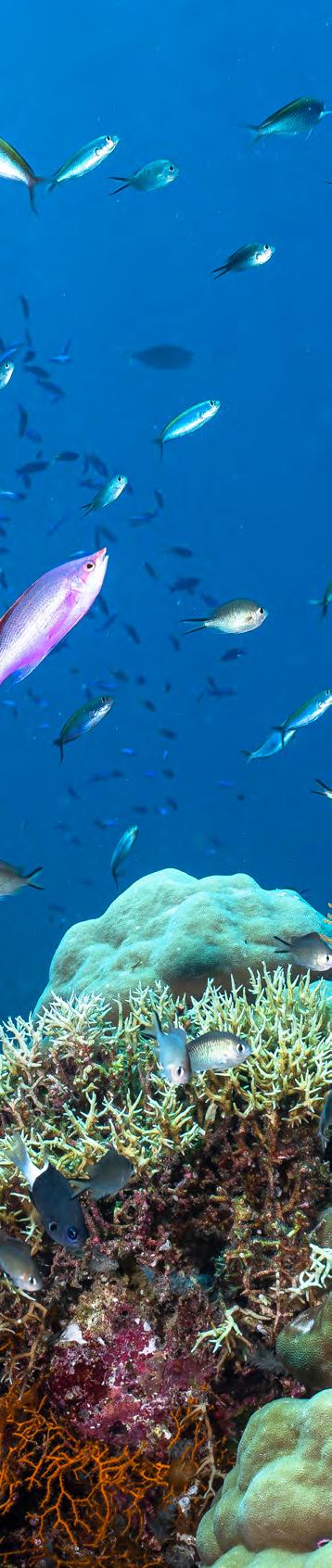
Fish near Scott Reef, Western Australia © Wendy Mitchell / Greenpeace

6. CONCLUSION
Woodside’s Pygmy Blue Whale Management Plan underplays risks, relies on unsubstantiated assumptions, and fails to align with the CMP’s precautionary ethos or EPBC Act requirements.
Our key findings:
• The PBWMP incorrectly assumes low utilisation as resilience, yet data gaps make this conclusion tenuous and indeed the population is Extremely Vulnerable to the noise threats identified (Moller et al., 2015).
• Modeling excludes key behaviors and uncertainties, risking underestimation; not “no credible threat” as claimed (Woodside, 2025).
• Avoiding adverse impacts from mitigations like shutdowns have not been assessed for feasibility (Woodside, 2025).
• Migratory corridors overlap high-threat zones, and have been inadequately assessed (Thums et al. 2021).
• Precautionary principle breached via low-confidence models and the paucity of data (Commonwealth of Australia 2015a).
• Claims “no impact” on foraging despite potential displacement and no site-specific data.
Woodside’s Pygmy Blue Whale Management Plan has been compiled with significant uncertainty. It relies on outdated population estimate data and / or generalised data taken from different contexts, there appears to be multiple compounding modelling uncertainties, and consistent downplaying of the possible foraging behaviour in the same area that will be ensonified. Overall, the plan is inconsistent with the Conservation Management Plan for the Blue Whale and the precautionary principle. The EPBC demands caution amid such “serious or irreversible damage” uncertainty, and this opens the possibility of significant impact on a matter of national environmental significance.
Marine Life in Scott Reef, Western Australia
© Wendy Mitchell / Greenpeace
7. REFERENCES
1. Aspirault, A., Winkler, G., Jolivet, A., Audet, C., Chauvaud, L., Juanes, F., Olivier, F., & Tremblay, R. (2023). Impact of vessel noise on feeding behavior and growth of zooplanktonic species. Frontiers in Marine Science, 10(1111466), 1111466. https://doi.org/10.3389/ fmars.2023.1111466
2. Attard, C. R. M., Beheregaray, L. B., Jenner, C., Gill, P., Jenner, M., Morrice, M., Bannister, J., LeDuc, R., & Möller, L. (2010). Genetic diversity and structure of blue whales (Balaenoptera musculus) in Australian feeding aggregations. Conservation Genetics, 11(6), 2437–2441. https://doi.org/10.1007/s10592-010-0121-9
3. Barlow, D. R., Klinck, H., Ponirakis, D., Branch, T. A., & Torres, L. G. (2023). Environmental conditions and marine heatwaves influence blue whale foraging and reproductive effort. Ecology and Evolution, 13(2), e9770. https://doi. org/10.1002/ece3.9770
4. Braithwaite, J. E., Meeuwig, J. J., & Hipsey, M. R. (2015). Optimal migration energetics of humpback whales and the implications of disturbance. Conservation Physiology, 3(1), cov001. https://doi.org/10.1093/conphys/cov001
5. Branch, T. A., Matsuoka, K., & Miyashita, T. (2004). Evidence for increases in Antarctic blue whales based on Bayesian modelling. Marine Mammal Science, 20(4), 726–754. https://doi.org/10.1111/j.1748-7692.2004.tb01190.x
6. Branch, T. A., Monnahan, C. C., Leroy, E. C., Shabangu, F. W., Širović, A., Cerchio, S., Al Harthi, S., Allison, C., Cabrera, N. B., Barlow, D. R., Calderan, S. V., Double, M. C., Dréo, R., Gavrilov, A. N., Gedamke, J., Hodge, K. B., Jenner, K. C. S., Jenner, M. N.-M., Kiszka, J. J., … Willson, M. S. (2025). Separating historical catches among pygmy blue whale populations using recent song detections. Marine Mammal Science, 41(3), e70003. https://doi.org/10.1111/ mms.70003
7. Brinkman, R., Mc Kinnon, A. D., Furnas, M., & Patten, N. (2010). Understanding water column and pelagic ecosystem processes affecting the lagoon of South Reef, Scott Reef (No. AIMS Document SRRP-RP-RT-046. Project 3.1 2010 Final Project Report - to Woodside Energy Ltd as operator of the Browse LNG Development). Australian Institute of Marine Science, Perth, Western Australia.
8. Burton, C., Bouchet, P. J., Gill, P., & Marley, S. A. (2023). Evidence of likely foraging by pygmy blue whales in the Timor Trough during the late austral winter and early austral spring. Marine Ecology Progress Series, 718, 99–117. https://doi.org/10.3354/meps14390
9. Delarue J.J.-Y., Kowarski K.A., L.A.E Huijser, C.C. Wilson, T.J. Stephens, A.L. Richardson, and C.R. McPherson. (2025). Blue Whale Acoustic Monitoring Report Detailed Analysis of Blue Whale Presence on the North West Shelf, April 2023 – September 2024. JASCO Applied Sciences (Australia) Pty Ltd. https://www.epa.wa.gov.au/ sites/default/files/Proponent_response_to_submissions/ Attachment%20C%20-%20Blue%20Whale%20 Monitoring%20Report%2003879%20V3.0%20FINAL.pdf
10. Double, M. C., Andrews-Goff, V., Jenner, K. C. S., Jenner, M.-N., Laverick, S. M., Branch, T. A., & Gales, N. J. (2014). Migratory movements of pygmy blue whales (Balaenoptera musculus brevicauda) between Australia and Indonesia as revealed by satellite telemetry. PloS One, 9(4), e93578. https://doi.org/10.1371/journal.pone.0093578
11. Ellison, W. T., Southall, B. L., Clark, C. W., & Frankel, A. S. (2012). A new context-based approach to assess marine mammal behavioral responses to anthropogenic sounds: Marine mammal behavioral responses to sound. Conservation Biology: The Journal of the Society for Conservation Biology, 26(1), 21–28. https://doi.org/10.1111/ j.1523-1739.2011.01803.x
12. Erbe, C., Marley, S. A., Schoeman, R. P., Smith, J. N., Trigg, L. E., & Embling, C. B. (2019). The Effects of Ship Noise on Marine Mammals—A Review. Frontiers in Marine Science, 6, 606. https://doi.org/10.3389/fmars.2019.00606
13. Ferreira, L. C., Thums, M., Whiting, S., Meekan, M., Andrews-Goff, V., Attard, C. R. M., Bilgmann, K., Davenport, A., Double, M., Falchi, F., Guinea, M., Hickey, S. M., Jenner, C., Jenner, M., Loewenthal, G., McFarlane, G., Möller, L. M., Norman, B., Peel, L., … Fossette, S. (2023). Exposure of marine megafauna to cumulative anthropogenic threats in north-west Australia. Frontiers in Ecology and Evolution, 11. https://doi.org/10.3389/fevo.2023.1229803
14. Frankel, A. S., Ellison, W. T., & Buchanan, J. (2005). Application of the Acoustic Integration Model (AIM) to predict and minimize environmental impacts. Oceans ’02 MTS/IEEE, 3, 1438–1443 vol.3. https://doi.org/10.1109/ oceans.2002.1191849
15. Guilpin, M., Lesage, V., McQuinn, I., Brosset, P., DoniolValcroze, T., Jeanniard-du-Dot, T., & Winkler, G. (2020). Repeated vessel interactions and climate- or fisherydriven changes in prey density limit energy acquisition by foraging blue whales. Frontiers in Marine Science, 7, 561906. https://doi.org/10.3389/fmars.2020.00626
16. IUCN. (2016). Blue Whales (Balaenoptera musculus). THE IUCN RED LIST OF THREATENED SPECIESTM. https://doi. org/10.1515/9780824865931-021
17. McCauley, R. D. (2011). Woodside Kimberley sea noise logger program, September-2006 to June-2009: whales, fish and man-made Noise. Centre for Marine Science and Technology, Curtin University.
18. McCauley, R. D., Day, R. D., Swadling, K. M., Fitzgibbon, Q. P., Watson, R. A., & Semmens, J. M. (2017). Widely used marine seismic survey air gun operations negatively impact zooplankton. Nature Ecology & Evolution, 1(7), 195. https:// doi.org/10.1038/s41559-017-0195
19. McCauley, R., & Jenner, C. (2010). Migratory patterns and estimated population size of pygmy blue whales (Balaenoptera musculus brevicauda) traversing the Western Australian coast based on passive acoustics. International Whaling Commission. https://espace.curtin. edu.au/bitstream/handle/20.500.11937/80310/80372. pdf?sequence=2&isAllowed=y
20. McKenna, M. F., Calambokidis, J., Oleson, E. M., Laist, D. W., & Goldbogen, J. A. (2015). Simultaneous tracking of blue whales and large ships demonstrates limited behavioral responses for avoiding collision. Endangered Species Research, 27(3), 219–232. https://doi.org/10.3354/esr00666
21. Moller, L., Bilgmann, K., & Attard, C. (2015). Conservation Management Plan for the Blue Whale: A Recovery Plan under the Environment Protection and Biodiversity Conservation Act 1999. Commonwealth of Australia. https://www.dcceew.gov.au/sites/default/files/documents/ blue-whale-conservation-management-plan.pdf
22. Nowacek, D. P., Thorne, L. H., Johnston, D. W., & Tyack, P. L. (2007). Responses of cetaceans to anthropogenic noise. Mammal Review, 37(2), 81–115. https://doi.org/10.1111/j.13652907.2007.00104.x
23. Parks, S. E., Cusano, D. A., Bocconcelli, A., Friedlaender, A. S., & Wiley, D. N. (2016). Noise impacts on social sound production by foraging humpback whales. 27, 010009. https://doi.org/10.1121/2.0000247
24. Pirotta, E., Booth, C. G., Cade, D. E., Calambokidis, J., Costa, D. P., Fahlbusch, J. A., Friedlaender, A. S., Goldbogen, J. A., Harwood, J., Hazen, E. L., New, L., & Southall, B. L. (2021). Context-dependent variability in the predicted daily energetic costs of disturbance for blue whales. Conservation Physiology, 9(1), coaa137. https://doi. org/10.1093/conphys/coaa137
25. Ryan, J. P., Oestreich, W. K., Benoit-Bird, K. J., Waluk, C. M., Rueda, C. A., Cline, D. E., Zhang, Y., Cheeseman, T., Calambokidis, J., Fahlbusch, J. A., Barkowski, J., Fleming, A. H., Turner Tomaszewicz, C. N., Santora, J. A., Margolina, T., Joseph, J. E., Friedlaender, A. S., & Goldbogen, J. A. (2025). Audible changes in marine trophic ecology: Baleen whale song tracks foraging conditions in the eastern North Pacific. PloS One, 20(2), e0318624. https://doi.org/10.1371/ journal.pone.0318624
26. Southall, B. L., Finneran, J. J., Reichmuth, C., Nachtigall, P. E., Ketten, D. R., Bowles, A. E., Ellison, W. T., Nowacek, D. P., & Tyack, P. L. (2019). Marine mammal noise exposure criteria: Updated scientific recommendations for residual hearing effects. Aquatic Mammals, 45(2), 125–232. https:// doi.org/10.1578/am.45.2.2019.125
27. Sutton, A. L., Jenner, K. C. S., & Jenner, M.-N. M. (2019). Habitat associations of cetaceans and seabirds in the tropical eastern Indian Ocean. Deep-Sea Research. Part II, Topical Studies in Oceanography, 166, 171–186. https://doi. org/10.1016/j.dsr2.2018.06.002
28. Thums, M., C. Ferreira, L., Jenner, C., Jenner, M., Harris, D., Davenport, A., Andrews-Goff, V., Double, M., Möller, L., Attard, C. R. M., Bilgmann, K., G. Thomson, P., & McCauley, R. (2022). Pygmy blue whale movement, distribution and important areas in the Eastern Indian Ocean. Global Ecology and Conservation, 35(e02054), e02054. https://doi. org/10.1016/j.gecco.2022.e02054
29. Thums, M., Ferreira, L. C., Davenport, A., Jenner, M., Möller, L., Russell, G., McCauley, R. D., & Jenner, C. (2025). Tracking pygmy blue whale diving behaviour and validation of foraging areas defined from horizontal movement data. Global Ecology and Conservation, 57(e03362), e03362. https://doi.org/10.1016/j.gecco.2024.e03362
30. Thums, M., Ferreira, L. C., Jenner, C., Jenner, M., Harris, D., Davenport, A., Andrews-Goff, V., Double, M., Möller, L., Attard, C. R. M., Bilgmann, K., Thomson, P. G., & McCauley, R. D. (2021). Understanding pygmy blue whale movement and distribution off north Western Australia. The APPEA Journal, 61(2), 505–511. https://doi.org/10.1071/AJ20202
31. Truong, G., & Rogers, T. L. (2023). La Niña conditions influence interannual call detections of pygmy blue whales in the eastern Indian Ocean. Frontiers in Marine Science, 9(850162), 850162. https://doi.org/10.3389/ fmars.2022.850162
32. Woodside. (2025). Proposed browse to north west shelf project pygmy blue whale management plan revision 5. Woodside. https://www.epa.wa.gov.au/sites/default/files/ Proponent_response_to_submissions/Attachment%20 G%20-%20Browse%20to%20NWS%20Pygmy%20Blue%20 Whale%20Management%20Plan%20Rev%205.pdf