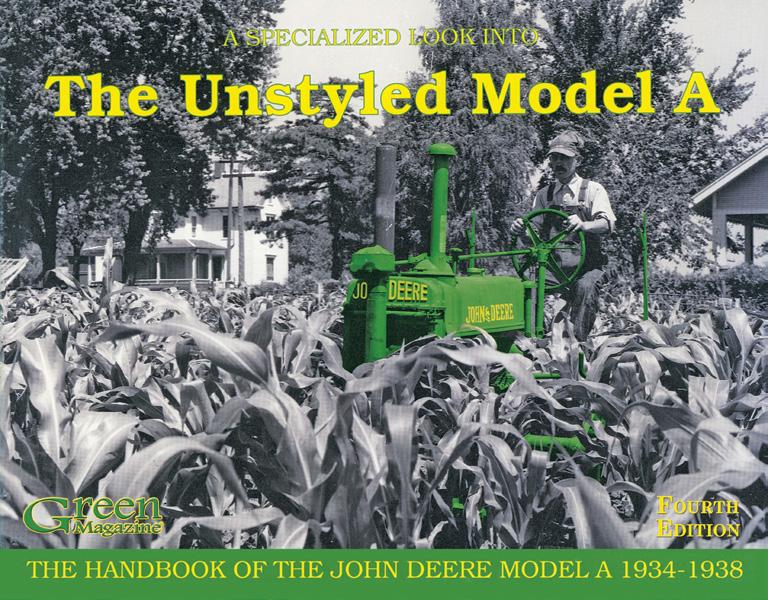
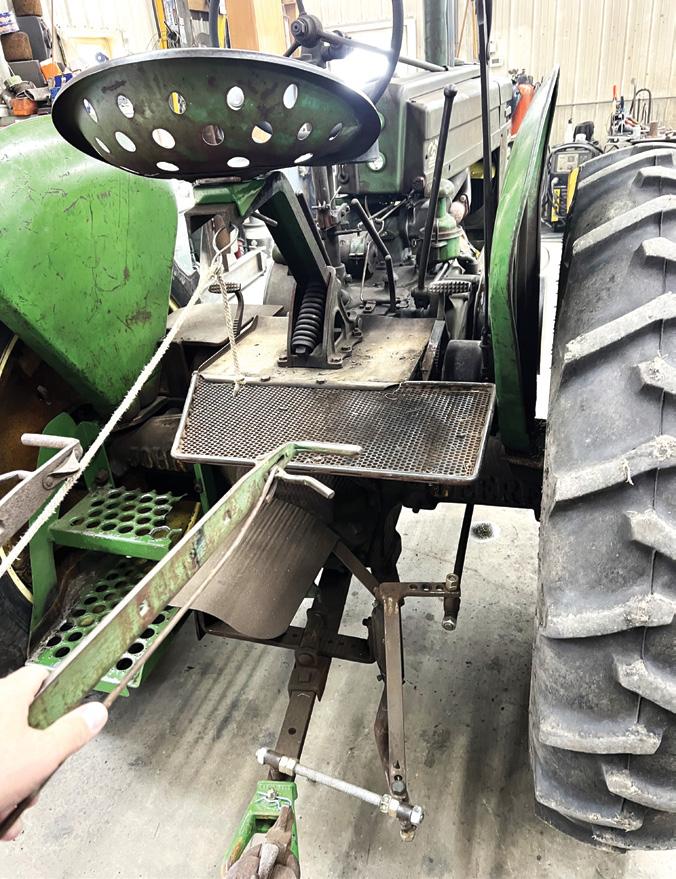
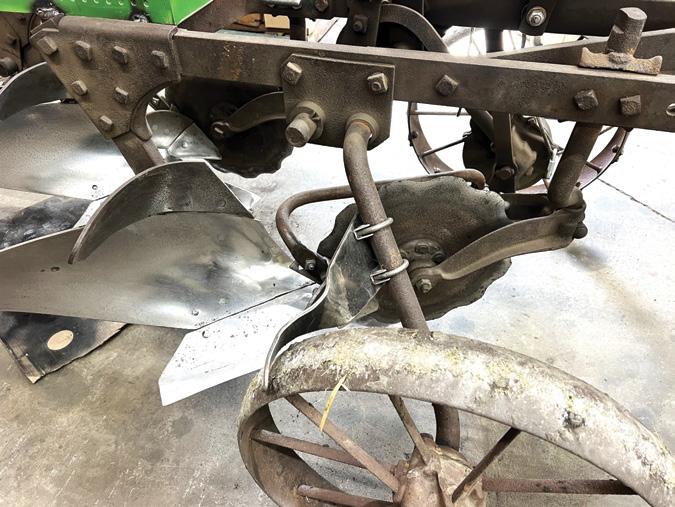
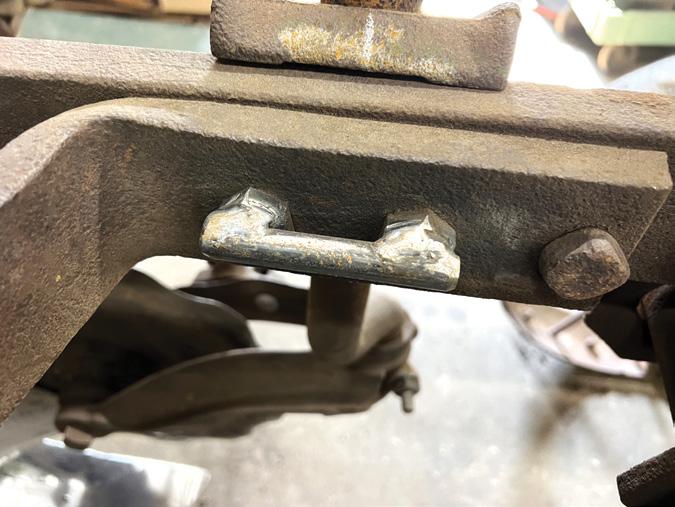
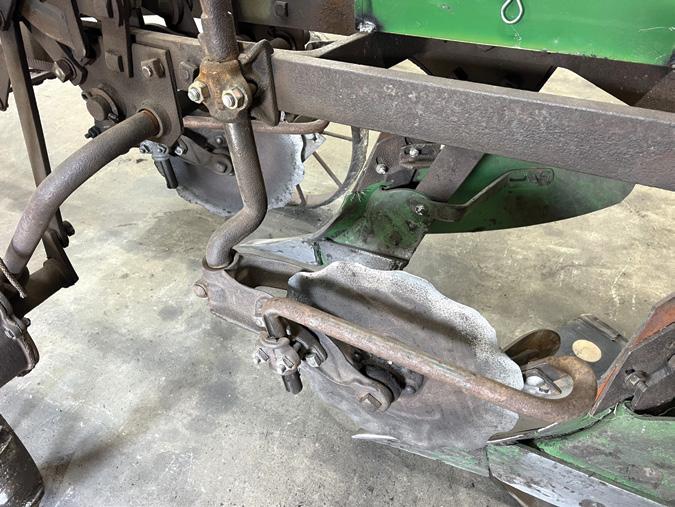
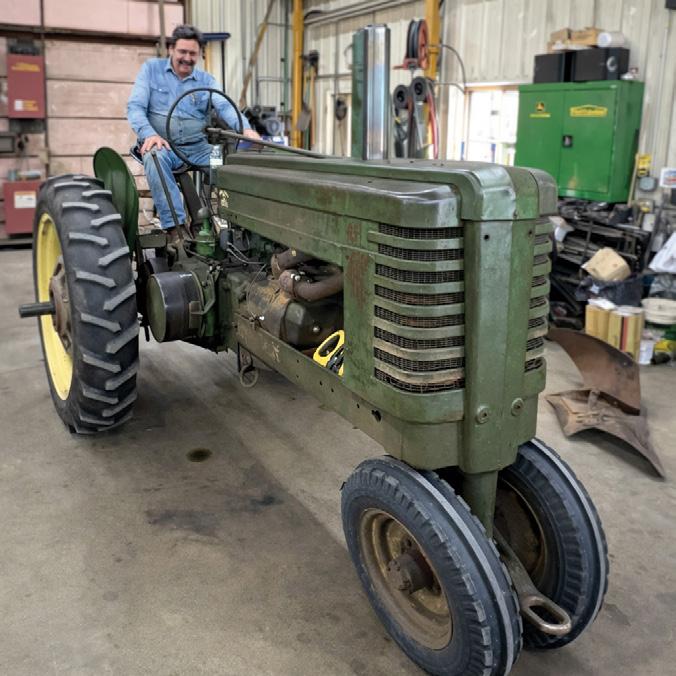
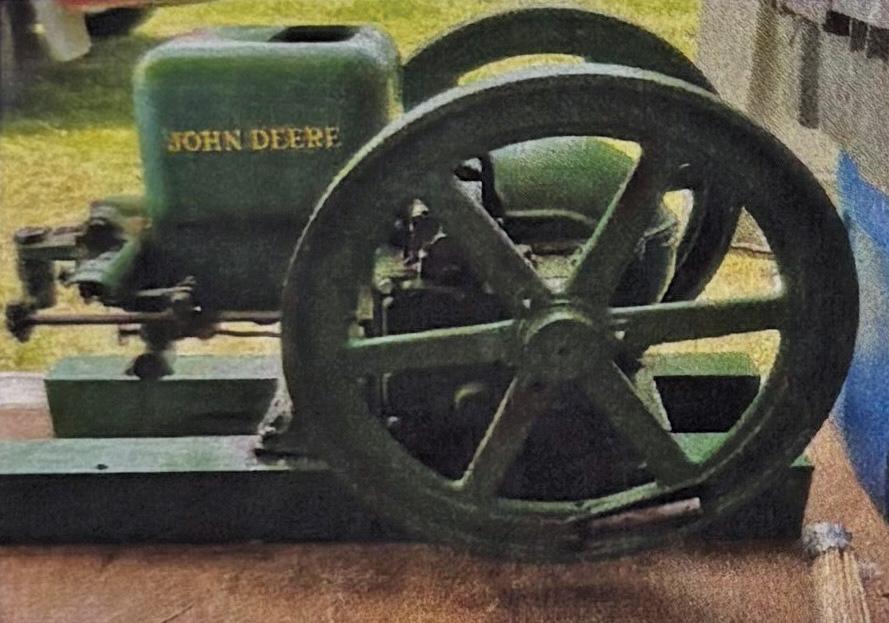
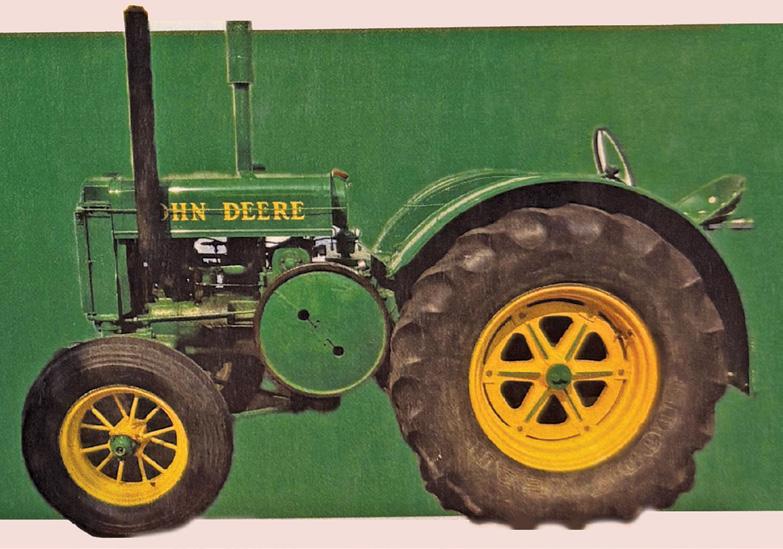
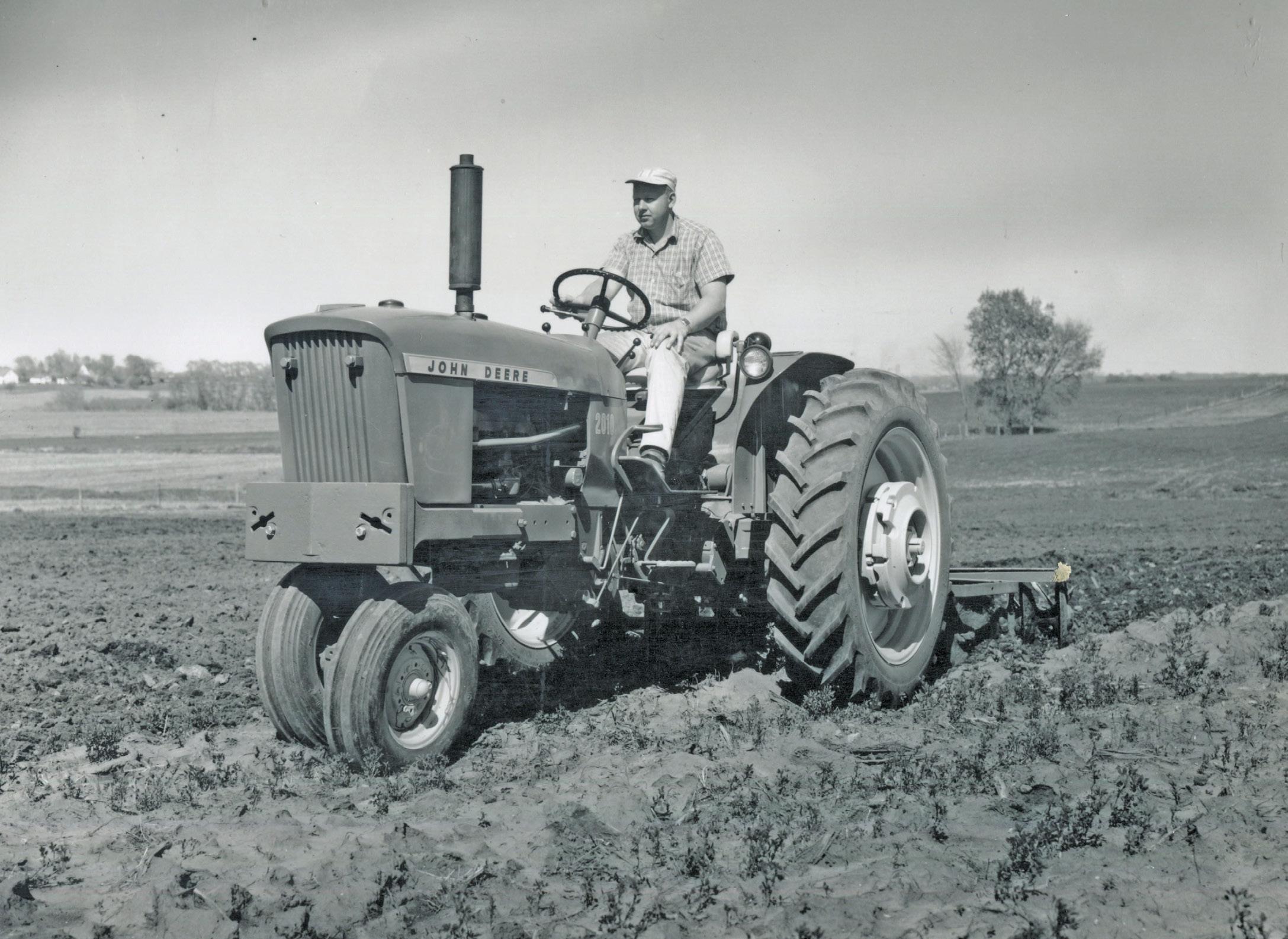
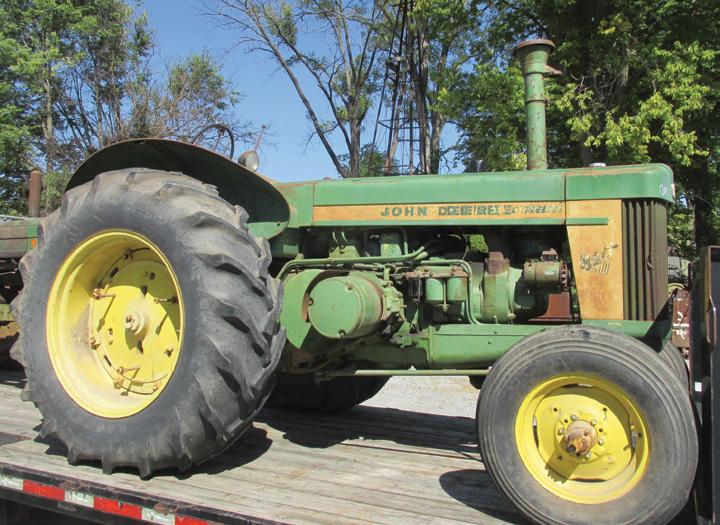
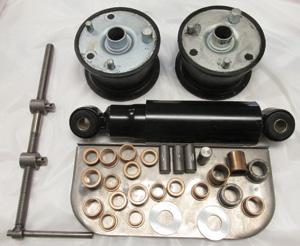
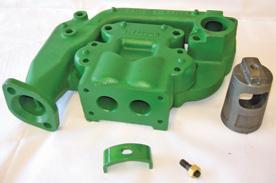
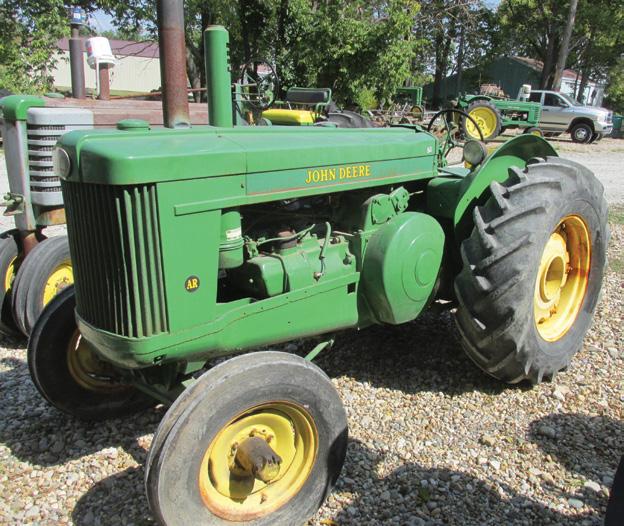
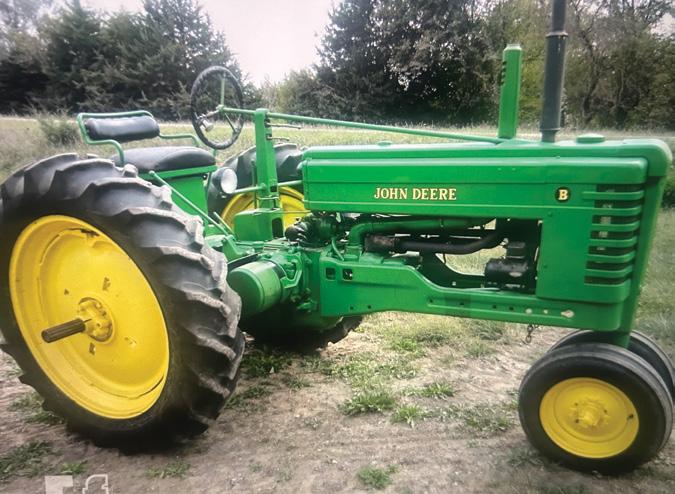
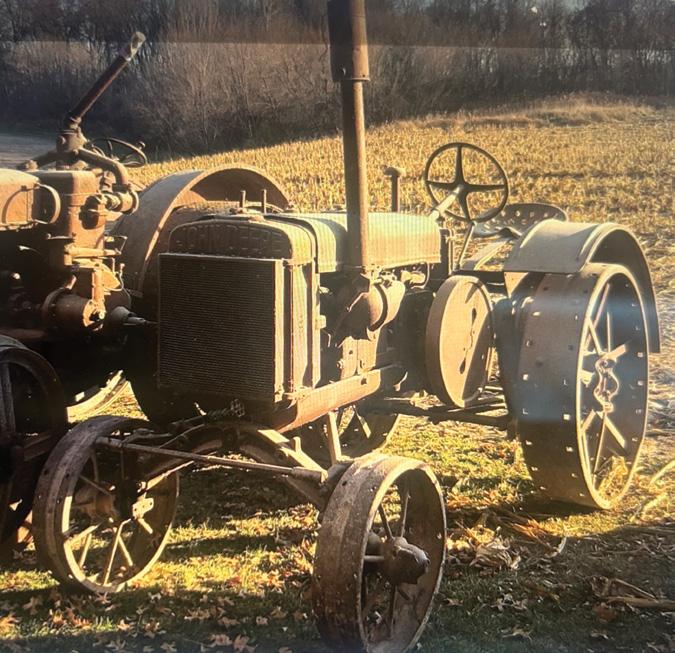
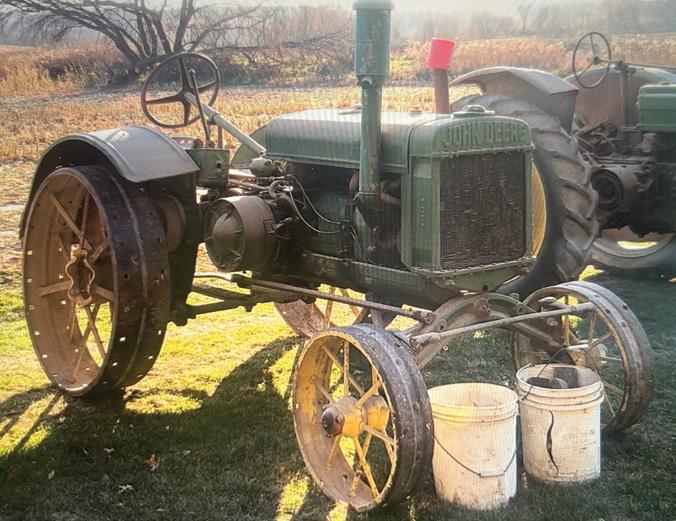
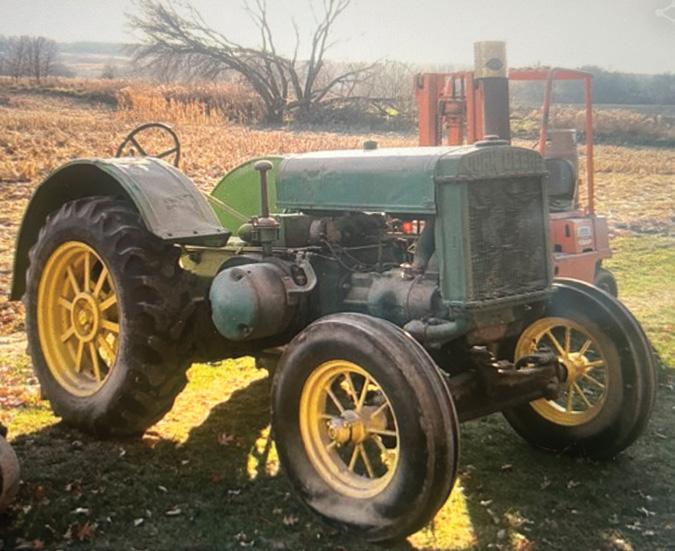
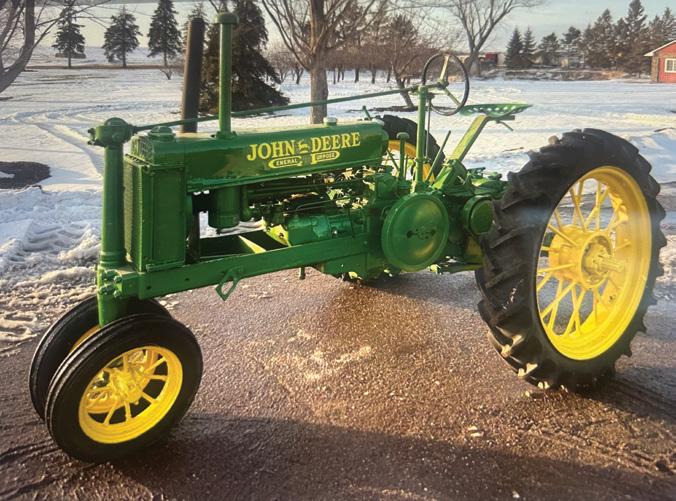
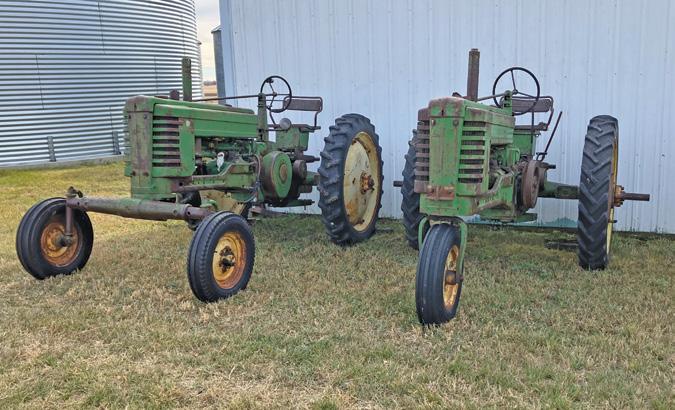
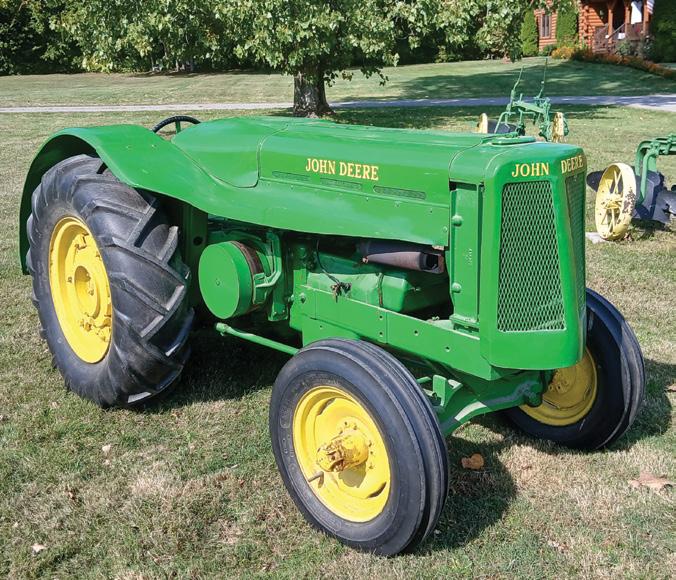
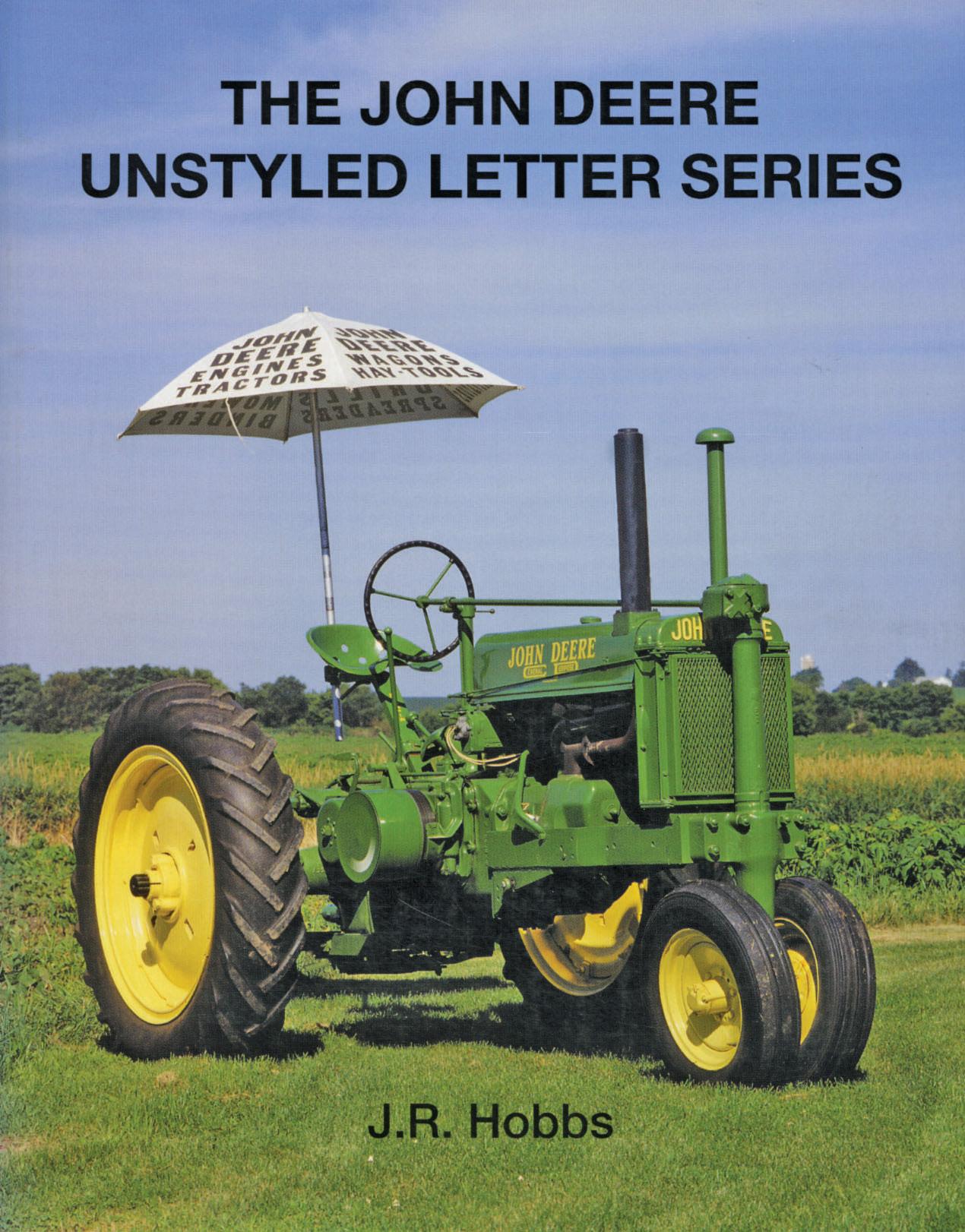
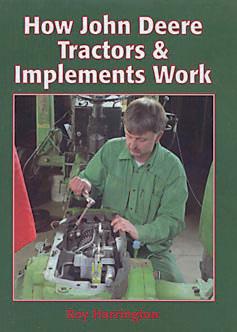
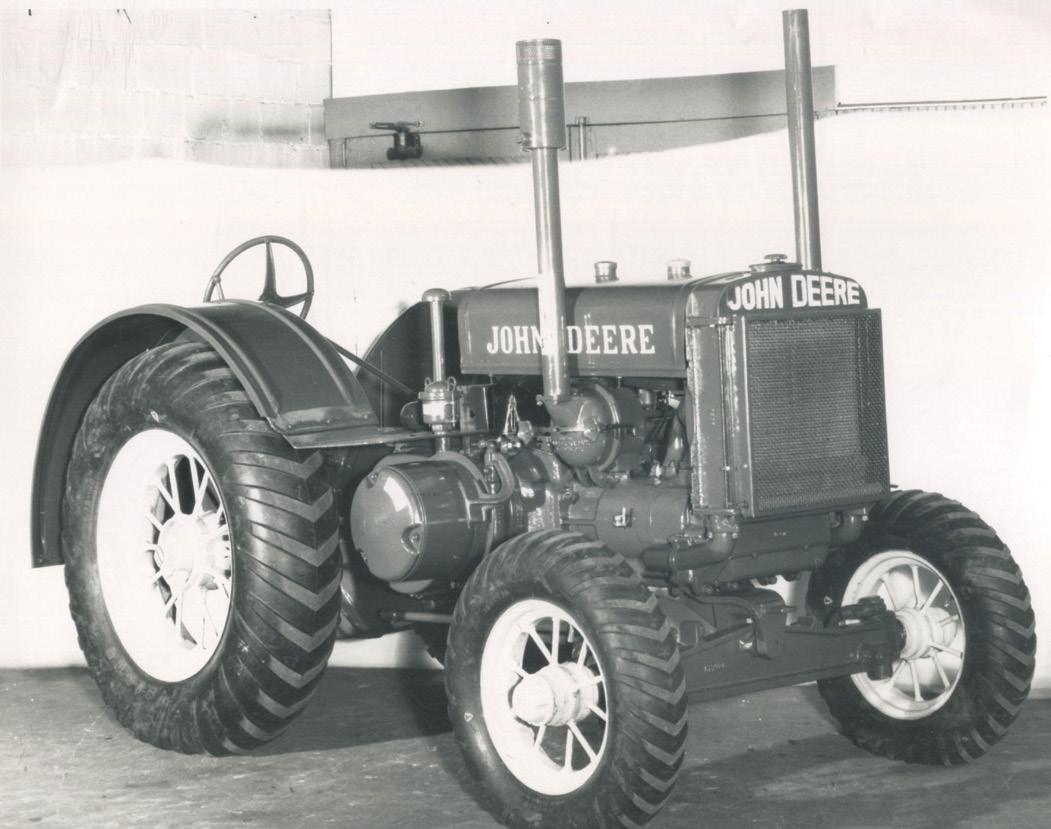
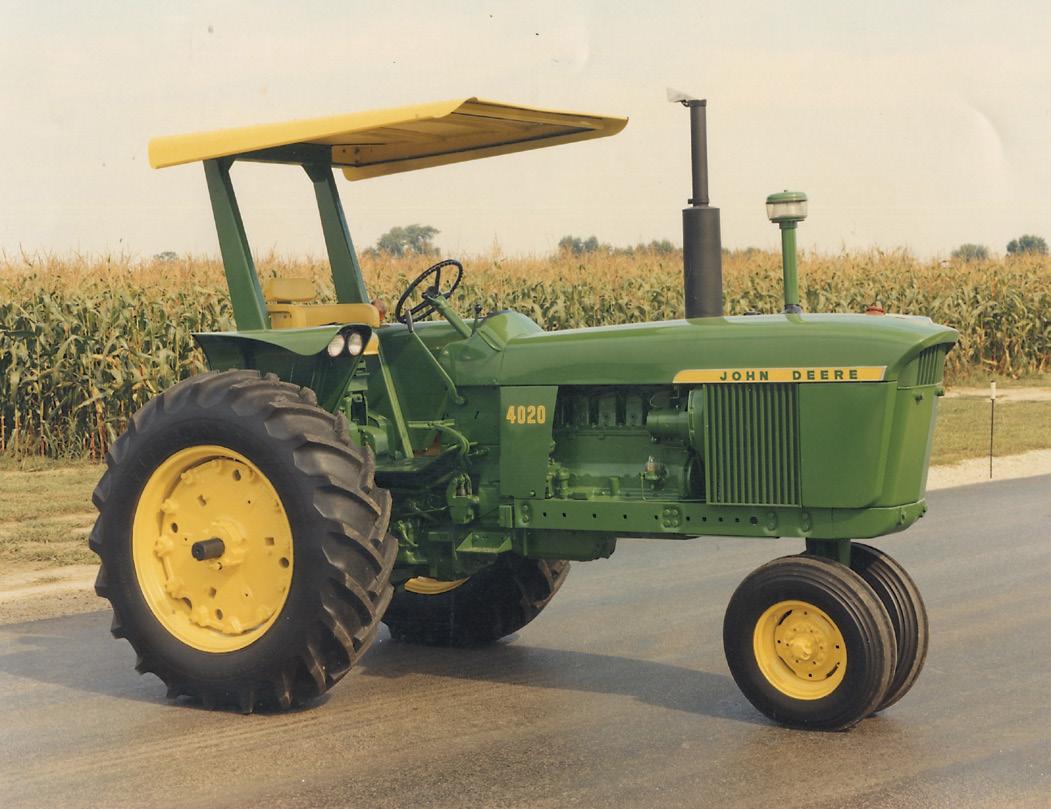
Now in its fourth printing with 15 more pages, this is the handbook of the John Deere model “A,” 1934-1938. A book that should be on the “must read” list of any unstyled “A” owner. There is probably no other book on the market that goes into so much detail on a single model of tractor. Shows illustrations of nearly every change made in the parts that make up the unstyled “A.” 95 pages, 11x8-1/2 inches, soft cover.
Both books include history, specifications, serial numbers, original prices and much more A Specialized Look Into
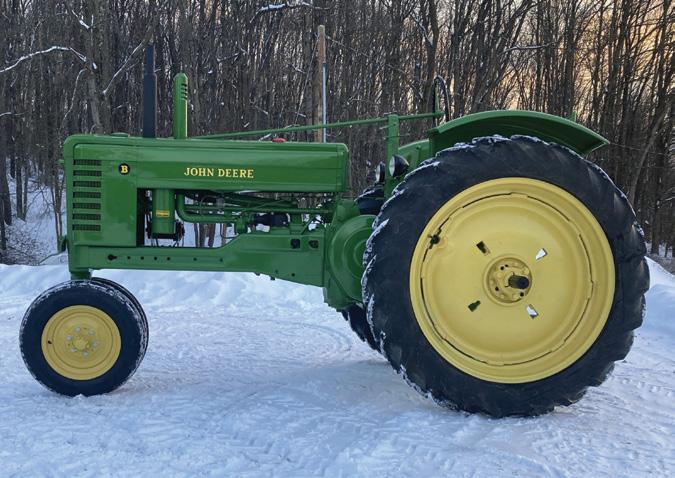
The Handbook of the John Deere Model B 1934-1938
The same types of information as available in the book above, except now about the model “B,” written and compiled by a panel of experts who have spent decades collecting and restoring the unstyled version of Deere’s most popular tractor. This book shows nearly every change made in the parts that make up the unstyled “B.” 84 pages, 11”x8 ½”, soft cover, over 200 photos - most in color.
Managing
Layout/Design
U.S.:
“GREEN MAGAZINE®” (ISSN 0883-5462) is published monthly and released 12 times a year on or about the first of each month for $39.95 per year (Canada: $59.95 per year; Foreign: $69.95 per year) by Hain Publishing, Inc., 2652 Davey Road, Bee, NE 68314-9132. Periodicals postage paid at Bee, NE and additional mailing offices.
POSTMASTER: Send address changes to “GREEN MAGAZINE®, PO Box 95, NE 68314-0095.” GREEN MAGAZINE® reserves all rights regarding reprints of this publication. Our phone number is (402) 643-6269.
It’s March, and we all know what that means: college basketball, warmer weather, the all-important annual Green Magazine index, but also it is time to start finding tractors for the next year’s calendar. The 2027 calendar should please you guys and gals who like unstyled tractors, because it will feature 1937 models. So if you have a 1937 that is restored to like original condition, and you think it might look good on our calendar, please send us a photo. If we like it, we will figure out how to go from there—if we can work with what you send us, or if we will want to take more. At this point, we are just looking for the accuracy of items like wheels, mufflers, seats, and decals. We will be looking for the “A,” ”B” and all variations, a low radiator “G,” the “BR,” and its brothers, the “BO” and “BI,” not to mention the “AR,” “AI” and “AOS.” Let us also not forget the big “D” and little 62.
I failed to mention something in this month’s Unrestoration article, which I didn’t think of until after the article had been laid out, so I didn’t go back and add it there. That is, a “D” of this age has two pipe plugs on the tappet case that can be removed to allow the operator to
Missing an issue? We mail every issue by the first of the month. Please contact your post office if you suspect a problem with delivery. We will not replace missed issues three or more months past original mail date (four or more months for foreign subscribers) free of charge.
U.S. subscribers: If it is on or after the 20th of the month and you haven’t received your issue, call us for a replacement.
Canadian subscribers: Due to postage costs, we are forced to ask for a $2 postage fee (U.S. funds, please) for re-sending issues that do not arrive by the end of the published month OR we can add an issue onto your subscription for the missed issue.
First Class/Airmail delivery: Call for rates for First Class in the U.S. or Airmail to foreign countries.
Foreign subscribers: We will add an issue onto your subscription OR for a $7 airmail postage fee (U.S. funds), we will resend the missed issue two months after publication date.
Notice: If your address label shows an expiration date of “3/26” above your name, this is your last issue. Renew immediately for continuous service. If your address label reads “4/26,” you have one more issue on your subscription.
Renewal notice: We send postcards to let you know your subscription is about to expire (or has expired). We NEVER call to ask if you would like to renew your subscription. If you
manually squirt oil on the exhaust valve stems. I wanted to let readers know I know they are there; unfortunately, in my case, the issue was with the intake valves.
During a lull in the action while waiting for “D” parts to arrive, I decided to do some work on the old No. 55 plow I wrote about in the December issue. While working on it, I realized that my favorite part of a restoration, whether it’s a plow or a tractor, is the teardown—putting a wrench on bolts that haven’t turned or opening chambers that haven’t seen the light of day in decades. You never know what you might find when you remove a valve cover or head. Nice shiny steel and moving parts, or a cylinder with the texture of a cheese grater. The smell of penetrating oil and the little thrill you get when a nut that seems hopelessly rusted comes loose with little resistance all add to the experience.
Don’t forget about Gathering of the Green later this month! After a reorganizational hiatus cancelled the 2024 event, it’s back and better than ever. As usual, we will have a table there in the concession hall, so stop by and say hello and find out what’s new. If I don’t see you there, I will see you next month.
receive such a call, it is most likely from another publication—NOT Green Magazine® for John Deere enthusiasts.
Address Changes: Please send or call with notification of an address change as soon as you know what your new address will be. Periodical mail cannot be forwarded. Green Magazine will not replace issues missed due to late notice of address change. Those missed issues will have to be bought at back issue price. See the back issue listing and prices elsewhere in this issue.
Looking for your photos and stories! Accepted material is subject to such revision as to meet the requirements of this publication. Payment will be made at our current rate within 90 days of publication to current subscribers. Submission of manuscript implies that the material is original and in no way an infringement upon the rights of others. Please send good, clear photographs. If you would like these returned, send us a stamped return envelope to help us get them back to you.
Free Issue Offer: It seems you, our subscribers, are our best form of advertising! More people find out about this publication by “word of mouth” than other forms of advertising. So if you're enjoying Green Magazine®, why not spread the word? Telling others about it can pay benefits. When you tell a friend about Green Magazine® and they subscribe, make sure they tell us who let them know about it. When they do, you will get an issue added to your subscription. These must be new subscribers, not renewals.
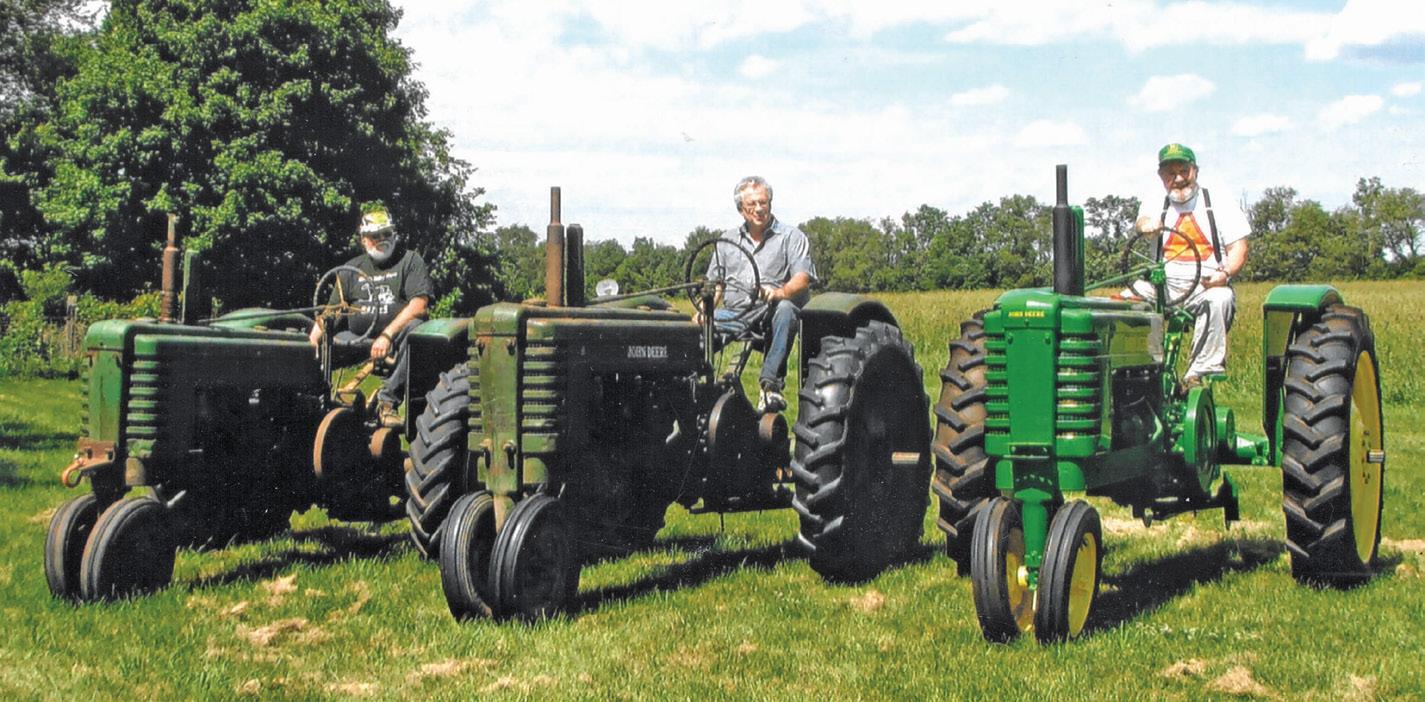
In the photo are three John Deere model “Bs,” from left: Steve Gazdag on his 1941, Jerald Carveth on his 1941 and Steve Goodrich on his 1943. All came from the Farmer’s Trading Post (also known as Carleton Equipment), established in 1938 by Roy and Clair Carleton in Comstock Township, Kalamazoo County, Michigan.
The Gazdag tractor was purchased by his father, Steve Gazdag, the Carveth machine by his grandfather, Paul Kakabaker, and the Goodrich “B” by his father, Ward. The latter cost $1,000 new. To his son’s regret, he did not purchase the electric start option ($50). But every time Steve would complain, often in winter, Ward would say, “But son, think of all the money we saved on batteries.”
The major difference between the ‘41s and the ‘43 is the latter’s cast iron frame, necessitated by the
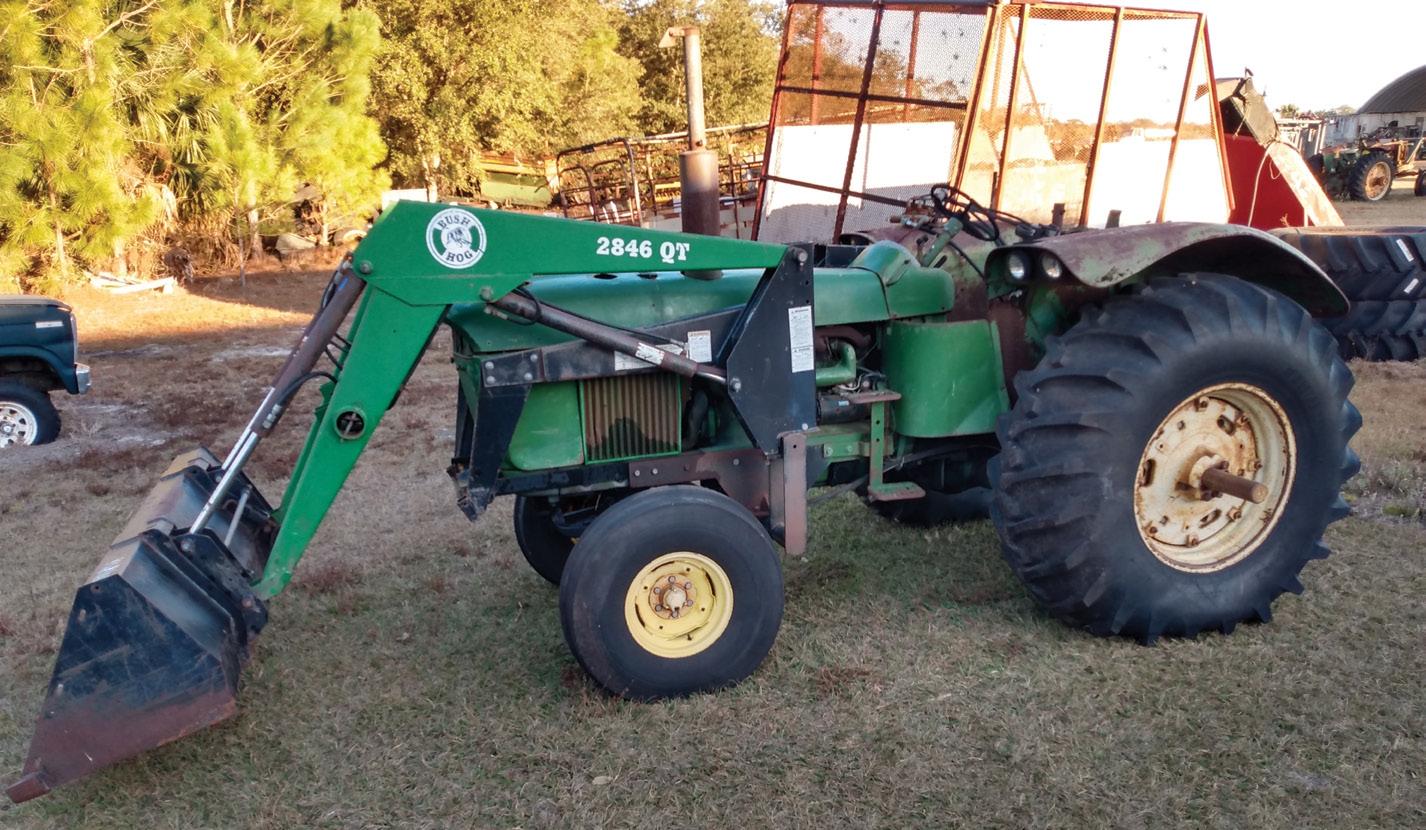
This is my father’s latest purchase: a 1965 John Deere 4020 standard tractor. It was originally owned by a smaller ranch in St. Cloud, Florida. It has a loader, dust shields, no threepoint and super LONG axles. Dad found it in Christmas, Florida. We may remove the loader, and the previous owner told us that it smoked the last time it ran, but the engine will turn over. It has been sitting for a few years. This tractor also has a gun rack mounted to the floor.
Gil Partin, FL
demand for steel in World War II. All three model “Bs” spent their working lives laboring in the heavy clay soil of Kalamazoo County on adjacent farms. All three boys graduated from Green Meadow Elementary and have been friends since 1960. The ’41 and ’42 are still there, whereas
the ’43, which crossed the Mackinac Bridge in 2011, resides in the Oceana County Historical Museum in Mears, Michigan.
Steve Goodwich, Steve Gazdag and Jerald Carveth, MI
Photo by Valerie MurphyGoodrich
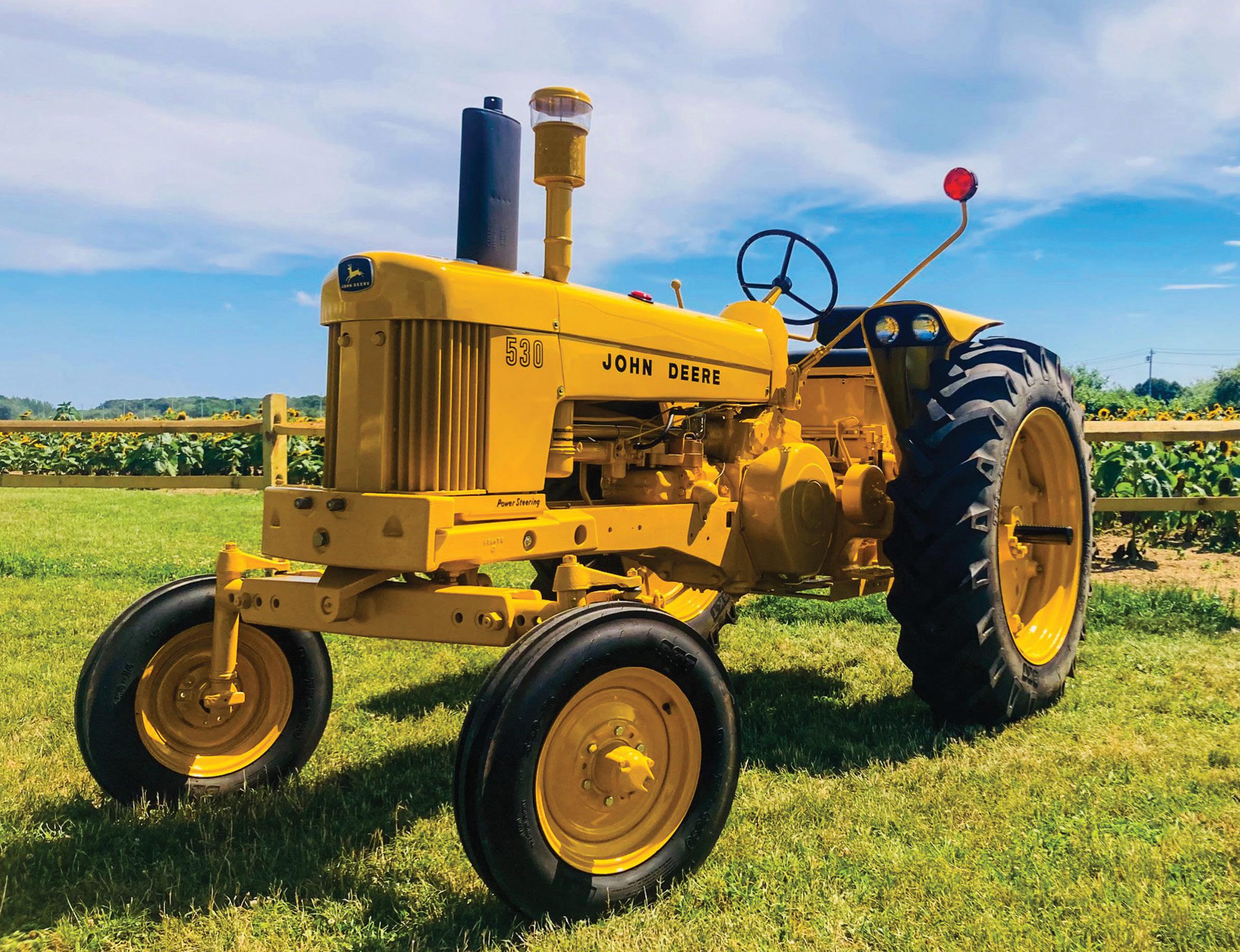
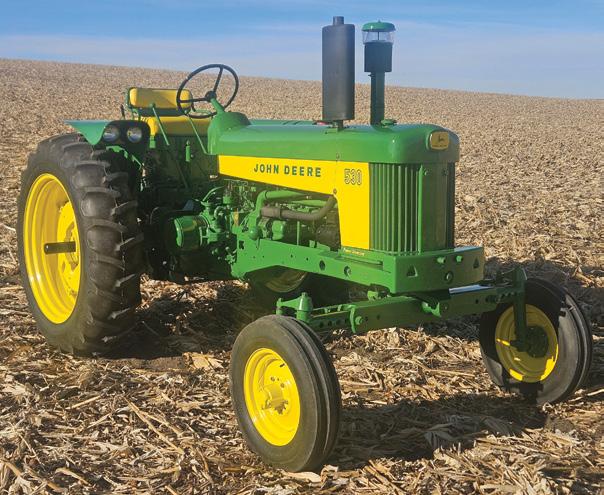
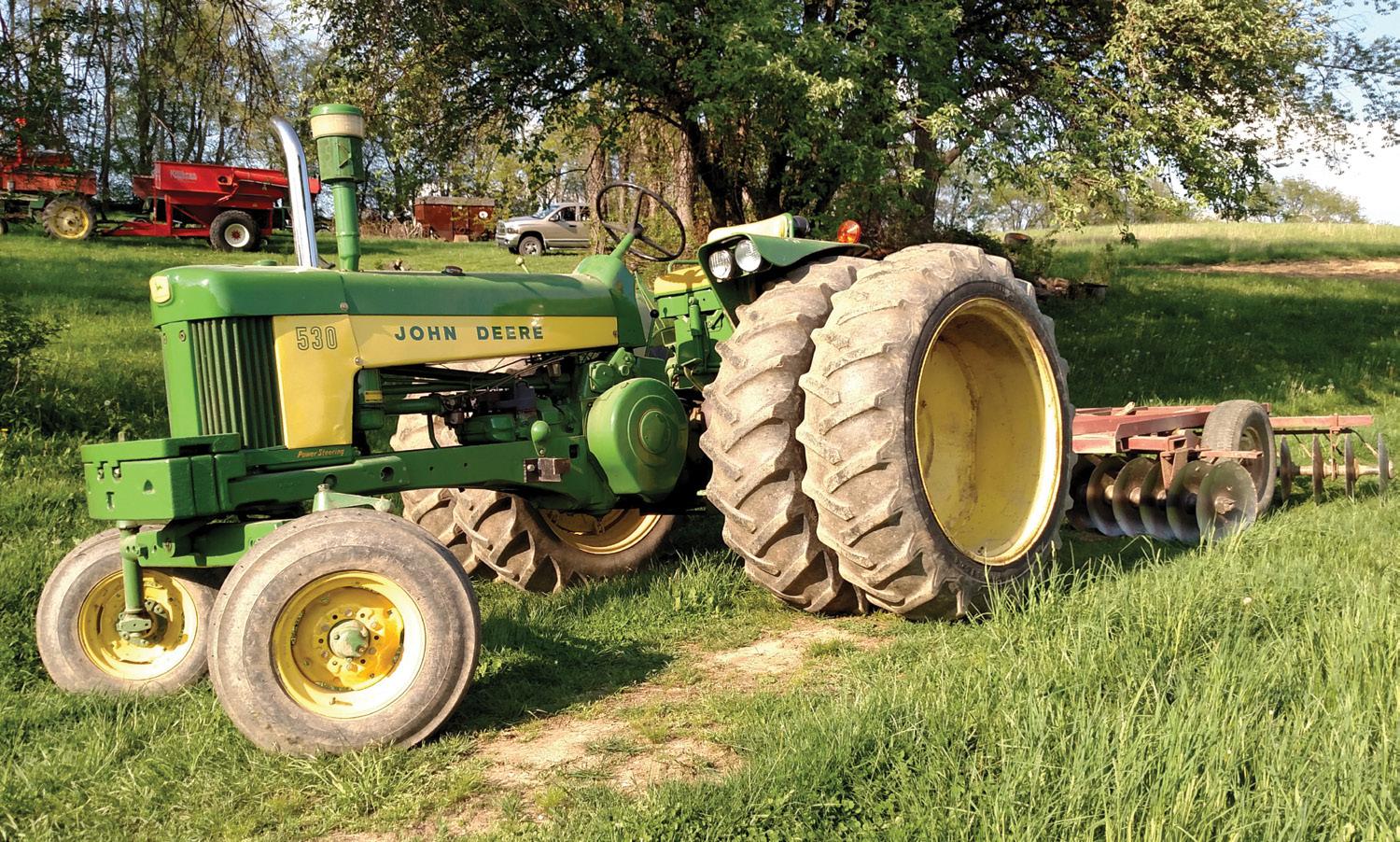
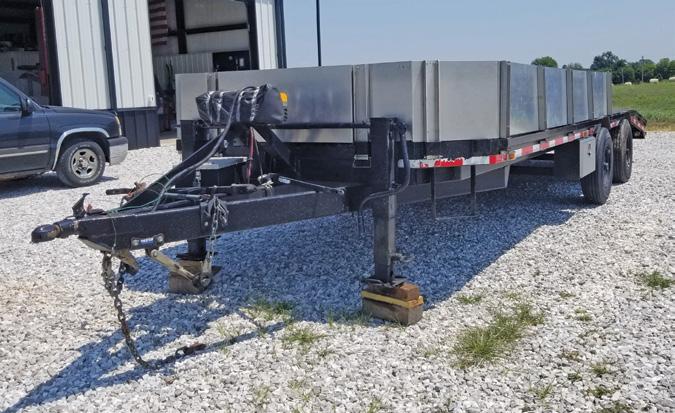
On our way back from picking up a John Deere “B” in Center, Nebraska, we saw a 530 that caught fire while raking hay just a few miles south of town (left). We ended up buying the tractor right then and there, just after the fire department finished putting it out. Using the “B” to load the 530, we were able to squeeze both tractors on the trailer. It is owned and was restored by Bryce Heithold in Wayne, Nebraska (right).
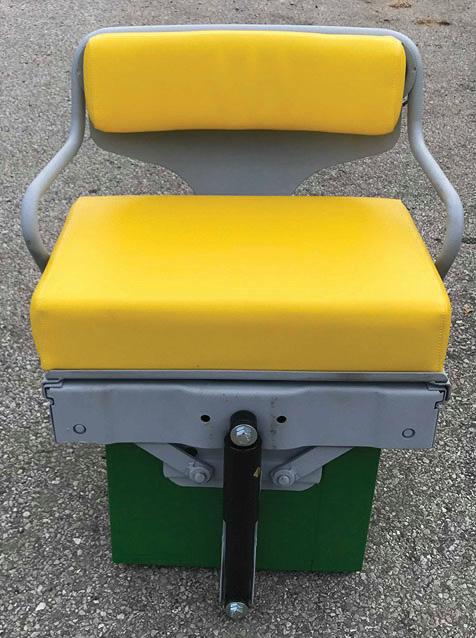
Seat Base Cover for Tractor w/o Rock Shaft - AR26846, $295
4000 & 4020 Std SN 201,000 & Above
AR40773 LH Rear Eng Panel = $80
AR40774 RH Rear Eng Panel = $80
AR40871 Platform (can modify AR48727) = $155
AR41097 Platform Support = $84
AR41098 Platform Support = $84
AR41137 Dust Shield RH = $315
AR41138 Dust Shield LH = $315
AR41174 Support To Dust Shield=$27
R41253 Ext Front Right = $156
AR41451 Ext. (RH) = $74
AR42594 Step Bracket w/2 pads = $215
F3195R Step Pad = $30
AR42989 Cover Battery Box = $80
AR45129 Battery Box Support = $75
AR45130 Battery Box Support = $75
AR45131 Ext L Ft AR48964 = $184
AR45207 Battery Box = $340
AR46289 Weight Bracket = $102
AR48964 Ext L Ft AR45131 = $176
3020 Standard Tractor
R34944 Floor Panel 3020 Std PS
R34943 Floor Panel 3020 Std PS
AR34801L Dust Shield = $325
AR34801R Dust Shield = $325
R42893 Fastener Pin for Battery Box = $36 Dave Haala: dave@haalaproperties.com or 507-920-9181
34th Annual FIELD DAYS and SWAP MEET Friday, Saturday & Sunday: May 1, 2 & 3, 2026 Morrison County Fairgrounds, Little Falls, MN
Show: Greater Minnesota Two-Cylinder Field Days and Swap Meet GREATER MINNESOTA TWO-CYLINDER CLUB
FEATURING: John Deere New Generation Series II and all brands 1972-1984 • All brands of garden tractors • Snowmobiles are not featured but are welcome for display • Farm Stock and Antique Stock Tractor Pull on Friday and Saturday • Tractor/Gas Engine Displays, Working Demonstrations and Children’s Activities ALL EXHIBITORS WELCOME General Show Info, Contact: www.gmntcc.com or 218-851-1675
........................ 435 ................................. Load and Depth ........................ Commutator cleaning .................................... 520 trans ............................... Cotton picker axles 11/20 ................... AR to 620 ............................. Dreyfuss design ................................ 520 trans 2..................................... 830 power steering ............................ Field demos 12/20 ....................... Lanz ................................. 1350/1450 plow ............................... Gen 2 nose .................................... 830 power steering 2 ................................. Big 4
1/21 Lanz 2 4000 Starter solenoid Pony engine starter Deere and Homelite 2/21 Lanz 3 AMT 600 Dubuque steering
1/24 WA-14/17 Before Waterloo Boy 955 finale B brakes Belt buckles 2/24 4010 Power blocks CBC pump Micrometer G Reunion 3/24 Early styled B M utility H restoration Auto fuel shut off John Deere Day 4/24 620 JDX 8 More power Honing cylinder GP crossovers 5/24 840 Plow to Alaska Jumpy clutch Zenith carb repair Lawn and Leisure
6/24 ................. 60 series Gen II ................................. No. 15 picker ......................... Solid state ignition .................................. Zenith carbs 2 .....................Lawn and Leisure 2 7/24 ................... Late styled B ................................. GP test tractor............................. H restoration ................................... Wobbly axle knees .......................... 8850 toy
8/24 ......................... 7020 ................................. Innes Constant power .....................620 head repair ................................ Disassemble or start ............. Early Precision models 9/24 .......................... 430 ...................................... The H runs again ...........................Valve springs ................................... Fix for faded paint ........................ Plastic 730 10/24 ........................ 520 ........................................... D crawlers ................................. 720 brakes ................................... Head and carb repair .................. Albert City show 11/24 ....................... 2010 .................................... Lanz 150 combine ....................... 720 hyd. pump ........................................ NG brakes........................... Front rockshafts 12/24 ....................... 4000 .................................. Thresher to combine ....................... RW disc resto. ........................................ Misc. parts ....................... Snowmobile clothes
1/25 Late G 127 picker 720D restoration Hood repaint Marvin Wilson 2/25 2520 Cyclone SnoMo 445 hydraulics R radiator Plow parts
3/25 M Waterloo engines Plowing aids Broken rings Brochures
4/25 M variants 6602 combine 3020 PTO Flywheel oil leak D repair 5/25 ........................... 80 .......................................... Early wheels .............................. Plow shares ....................................... Syncro clutches ........................... Grain drill
6/25 ......................... 4320 ................................................ MV ............................... Crankshaft end play ............................... 4020 Sound-Gard........................ Liberty ship 7/25 ........................AR/AO ................................... 3010/4010 Special ............................ Dyno run ....................................... Small rest. details ............... Metric/Imperial thread 8/25 ..................... 730 Spark...................................... R industrials ........................... Unrestoration D .......................................... Gaskets .................................. Liquifire 9/25 ......................... 3020 ...................................... The last JD plow ..................Horse hair AC conversion ...............................B restoration ............................ Wrenching 10/25 ....................... 5010 ..................................... BR/BO collection .......................... C and X mags .................................. Steering shaft repair .............. Sheet metal coatings
11/25 ........................AOS ....................................... Half scale 8020 .......................... Robin manifold ........................................ 12 volt PS ........................ Rusting sheet metal 12/25 .................... L and LA ....................................New Guinea trip ...................... Voltage regulators ..................................... Aging bolts ............................. Liquidators
1/26 GM Chain saws Voltage regulator 55 combine 9500 combines 2/26 4620 Original D 720 repairs Battery cable repair National Farm Toy Show
PLEASE REMEMBER while reading this index of Green Magazine articles: • This listing is intended as an index to look up articles • Not all back issues listed here are available to buy • See page 71 of this issue for the current list of back issues for sale
Tractors idle at the edge of the field, exhaust hanging low in the cool morning air, while competitors walk the ground one last time. Onlookers watch boots scuffing soil, hands rubbing dirt between fingers, and the plowmen preparing to lay out stakes to keep the new land straight. Somewhere a wrench clicks against steel as a coulter is nudged a fraction of an inch. There is no stopwatch counting down, no flag waving anyone forward. When the plow match official blows the air horn, it starts the clock and plowmen get to work.
Competition plowing is often misunderstood by those seeing it for the first time. From the outside, it can look slow, even overly deliberate. But within those careful passes lies a discipline every bit as demanding as with using modern equipment, albeit without the satellite guidance. Each furrow tells a story either of soil read correctly or missed, of a plow set true or fighting itself, of a tractor matched just right to the job at hand. In this competition, the field does the talking when the plow is parked.
After their working days on family farms have passed, vintage plows are still found hitched behind antique tractors at plow days and plowing matches across the country. Some are restored to near showroom condition, others wear the honest polish of decades in the dirt, but all are judged by the same standard: the quality of the furrow left behind. There
are many makes of plows worthy of admiration, but for this author, John Deere plows remain the best. It is not because they are flashy or rare, but because they were engineered to do one thing exceptionally well: turn soil cleanly and consistently.
For many plowing match competitors, the draw is not the trophy or ribbon at the end of the day. It is the challenge of getting everything right at once: tractor, plow, soil, and operator working in harmony. There are no shortcuts and few adjustments that can be hidden. A plow that is out of level by half an inch, a coulter set slightly too deep, or a ground speed that is off will show up immediately in the turned soil. And once the mistake is there, the judges can see it. It is said that golf is the ultimate game of self-competition in the sports world; I say match plowing is the same in the vintage tractor/equipment world.
Plow days often reward speed and spectacle. Competition plowing is different. Slower is better and precision matters. Precise control, not speed, wins the plowing match. Constant checking for exactness and uniformity keeps the driver awake and limber as he gets off and on the tractor.
From Demonstration Fields to Competition Grounds
Long before plowing matches were defined by scorecards and boundary stakes, farmers judged good work by sight alone. Straight furrows, even depth, and soil laid over
cleanly were marks of pride as much as productivity. As county fairs and agricultural exhibitions expanded in the late 19th and early 20th centuries, these informal comparisons naturally evolved into organized competitions.
Implement dealers quickly recognized the value of plowing contests as both education and advertising. Field demonstration provided a place where performance could be seen rather than explained in a brochure. John Deere dealers embraced plowing
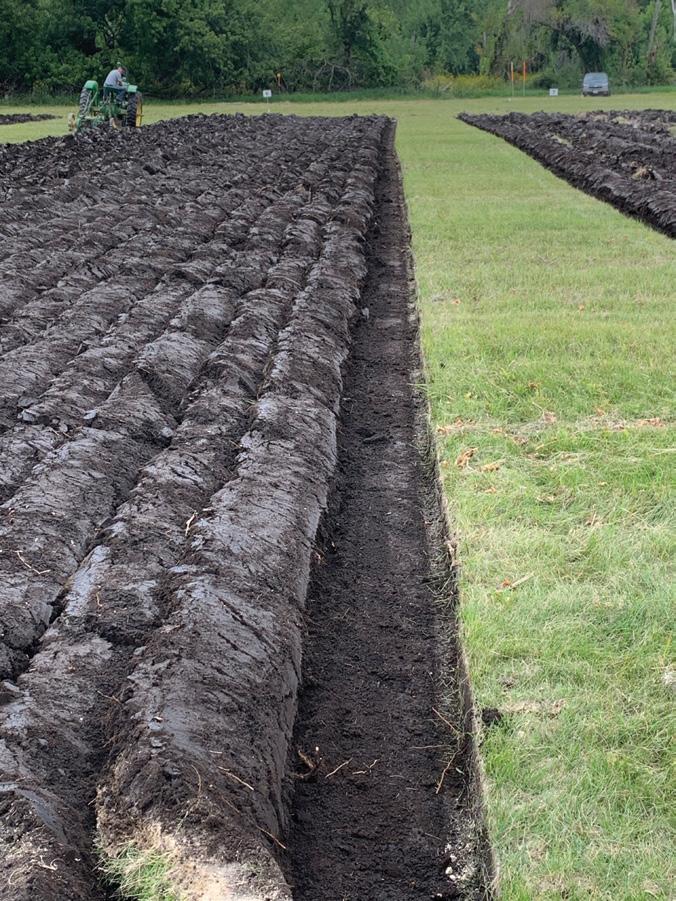
Plowing mistakes and successes are highly visible when competition plowing sod.
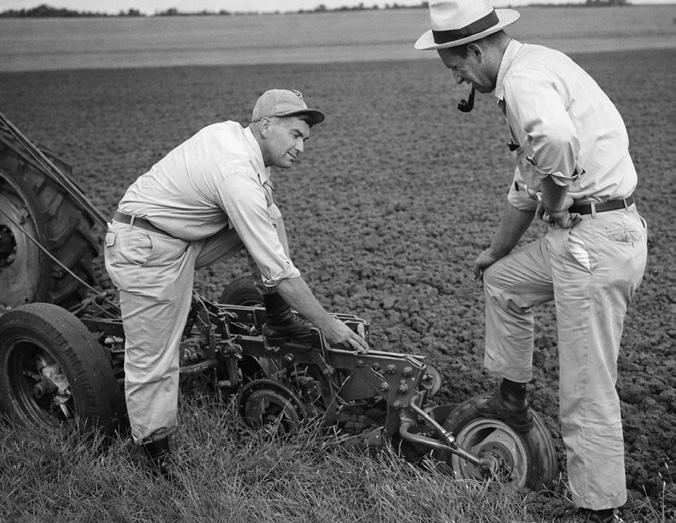
Competitive plowing requires careful adjustment.
matches as opportunities to showcase moldboard design, ease of adjustment, and consistent results across varying soil conditions. A well-set plow with a top-notch operator placing in the top slots at a plowing competition spoke more convincingly than any advertisement.
Plowing contests originated in Europe in the late 18th century in England. They came to prominence in the U.S. in the 1860s especially with the advent of land grant colleges as advancing agriculture was their aim. As tractors came into popularity in
the 19-teens and 1920s, many contests were closely tied to dealership promotions and local/state extension programs. These competitions rewarded operators who understood not just how to drive, but how to adjust and manage equipment. Deere & Co was vying for customers with their plows but the competition was abundant with prominent makes like P&O (owned by IHC), J.I. Case, Ford, Ferguson, Oliver, just to name a few.
Plowing matches flourished throughout the middle of the 20th century across the north America.
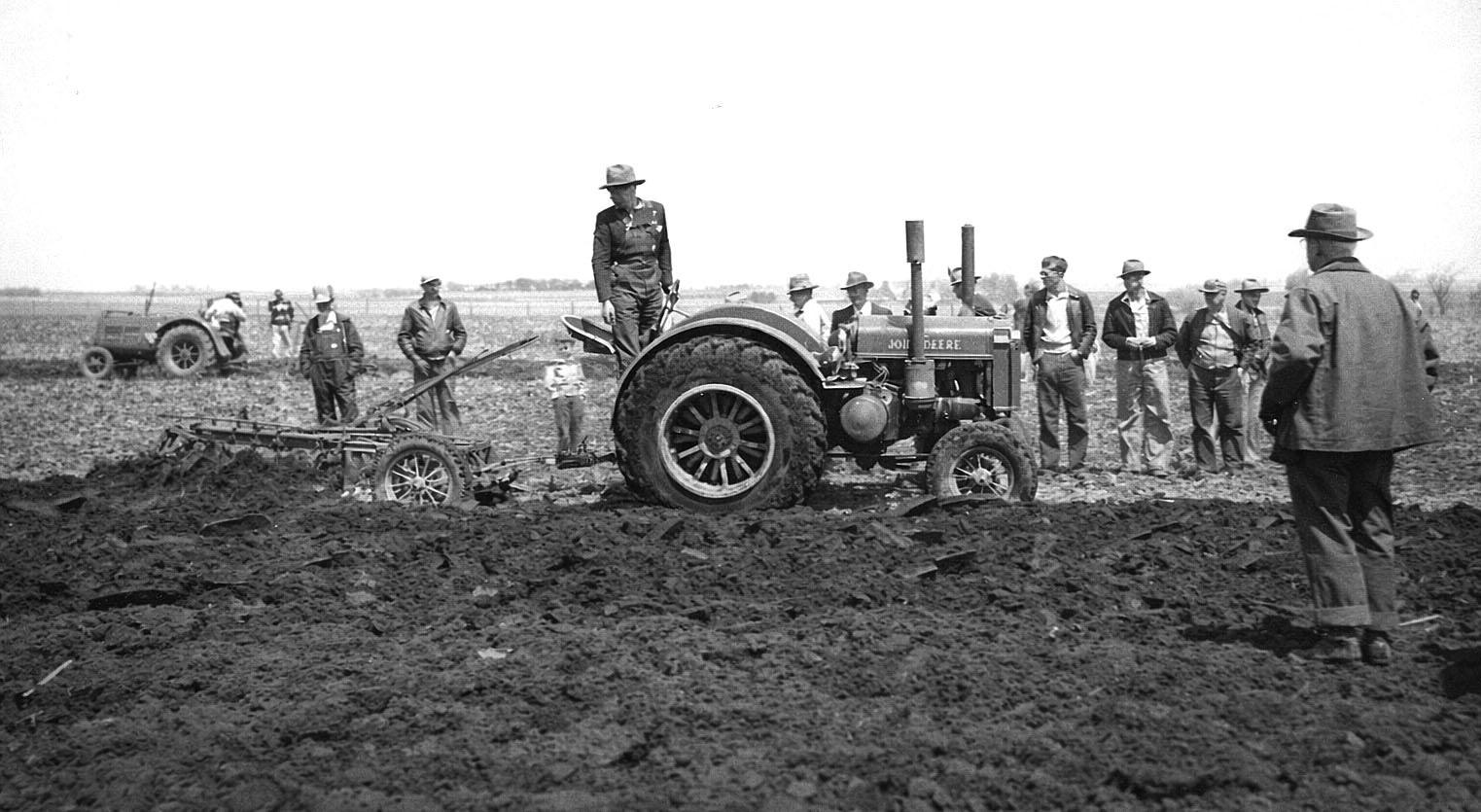
Plowing contests were common place and well attended in the middle 20th century.
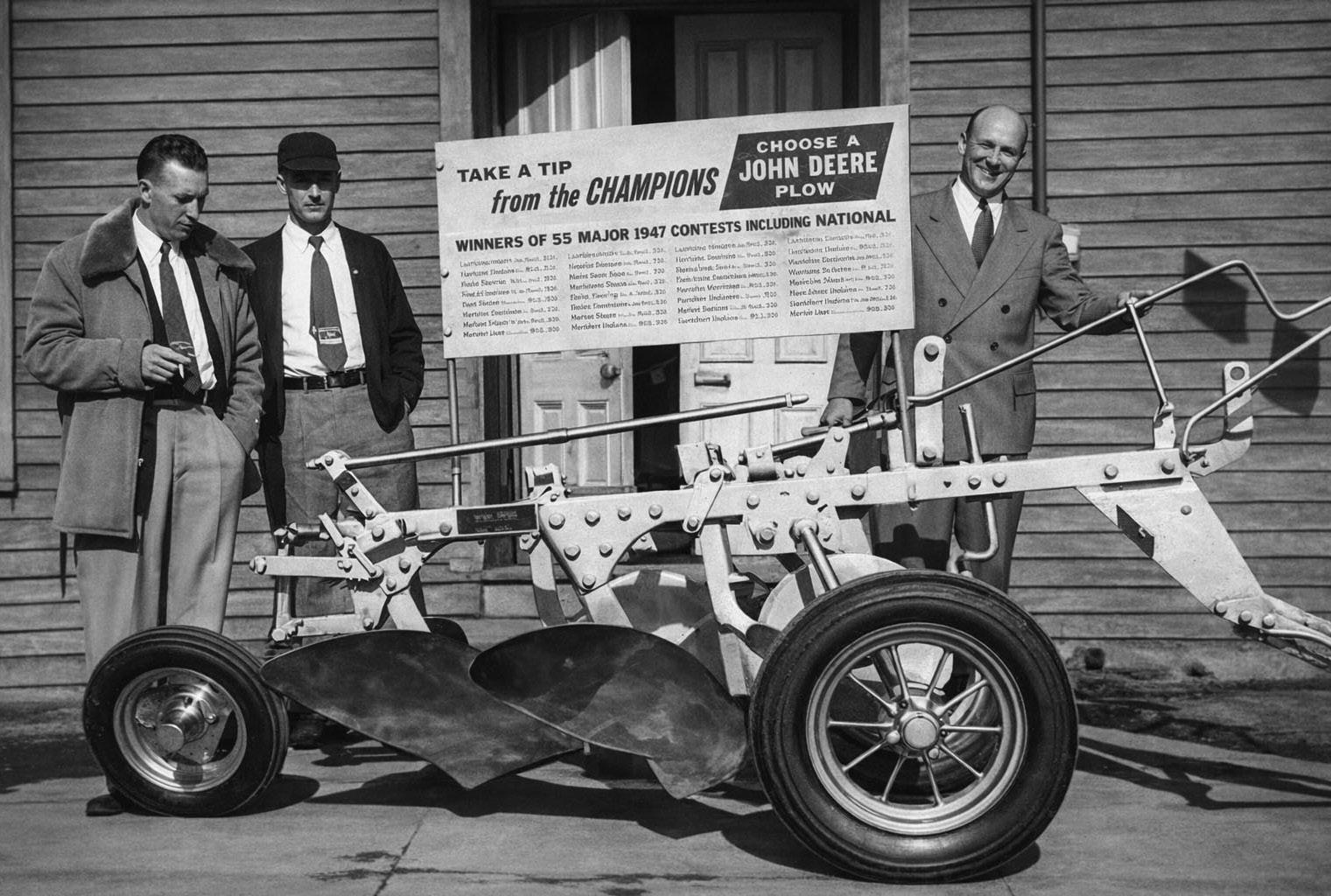
Below: This photo shows a JD 44AH plow, which was painted gold, presumably on tour showing off the plowing contest winners which used Deere plows.
Competitors were numerous as they were men who grew up working with horses and generally had a great understanding of plowmanship. Plowing competitions saw a decline in the 1960s as the animal plowing generation gave way to attrition and to changes in farming practices like minimum till and eventually no-till.
While modern matches no longer serve as sales demonstrations, the influence of those early events remains evident. Today’s scoring categories and favored equipment still reflect standards first shaped in demonstration fields nearly a century ago. Moldboard plowing might be a rarity in production agriculture in North America today; the spectacle of a plowing competition is a bit like watching an artist except the studio is a field with each pass as a brush stroke.
Why John Deere Plows Excel
The success of John Deere plows in competition was no accident. Deere engineers worked from a simple principle: a plow had to perform consistently in average hands, not just under ideal conditions with expert operators. That philosophy translated naturally
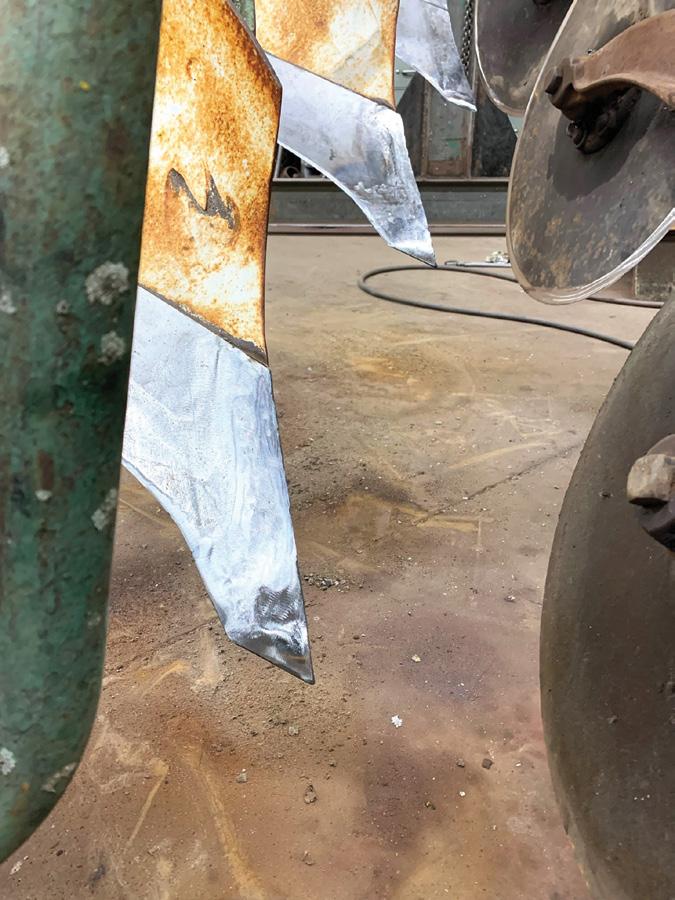
Sharp shares with good points keep the plow bottoms sucked into the soil for even depth. Coulter blades are also sharpened to cut easily to minimize tearing of the soil for a crisp finish.
from field demonstration and competition plots, where repeatability meant that the farmer would keep using Deere plows on the farm and that he would encourage others to follow.
Pull type plows such as the No. 4B, 4C 4D, No. 44 series, the No. 55 and 55ABH earned their reputations through robust frame strength and weight to provide the best plowing performance. These models are quite common at plowing matches today as hundreds of thousands were built and many can be found yet today. Early Corn Belt matches commonly relied on
Landing hitches allow the operator to move the tractor drawbar laterally to “fine-tune” the cutting width of the front bottom while staying in the driver seat.
Below: Wheel scrapers are necessary when plowing in sticky or wet soils. Competition plow guys use many tricks to ensure their plows operate properly.
NGP (general purpose) bottoms, while modern vintage competitions favor EP, or sod, bottoms with long, gently twisted moldboards that perform well at slow speeds.
Most antique and vintage classes today consist of two or three bottom plows although some competitions allow up to five bottom model entries. In competition, defined furrow slices (often referred to as “confirmation”) are rewarded over the smooth seedbed preferred for field work. The EP bottom’s ability to produce crisp, well-defined ridges formed at slow plowing speeds gives competitors a clear advantage in judged events.
Matching the Tractor to the Plow
In competition plowing, the tractor is often treated as a supporting actor, yet it plays a critical role in the finished field. A well-set plow can only perform as intended if the
Dick’s practical approach to coulter adjustment ensuring only one wrench is needed to loosen/tighten coulter clamps.
Below: Combination jointers wrap around the coulter blade and are preferred by competition plowmen to ensure all trash is turned under.
tractor pulling it is properly matched, balanced, and operated with care. Success depends less on horsepower and more on how smoothly tractor power is delivered to the ground.
Two cylinder John Deere tractors remain popular for good reason. Their slow turning engines produce steady torque at low speeds, well suited to moldboard plowing. When a tractor is asked to pull more plow than it can manage comfortably, the results appear quickly with symptoms of uneven depth, wandering furrows, and excessive wheel slip.
Weight and balance matter just as much. Proper ballast maintains traction while preserving steering control, particularly during the opening furrow. Tire selection is also critical; rear tires must be narrow enough to avoid contacting the furrow slice, a detail judges will not overlook. The same principle applies to tractor pulling as well as the plow competition; tire pressure must be set to minimize slip without sacrificing stability.
Ground speed may be the most underestimated factor of all. Slower speeds allow moldboards time to roll soil cleanly and give operators time
Dick Opdahl atop his 1939 “A,” which was purchased new by his grandfather and stayed on the farm since. He has 11.2-38 inch tires on it to fit nicely in the furrow with his No. 44 2-12 inch plow. This tractor runs very strong, having been upgraded internally to up the torque and horsepower.
to react to changing conditions. It is common to see competitors stop periodically to measure depth or make small hitch adjustments. Patience, not pace, defines success. The furrow slice is to be turnover solely by share, moldboard, and moldboard extension while using little to no momentum to “throw” soil over and under.
Setting the Plow: Where Matches Are Won
More plowing contests are won or lost at the hitch than anywhere else on the field. A poorly set plow advertises its faults in every pass. In competition, where imperfections are magnified under close inspection, proper setup is foundational.
Side-to-side leveling is the first step for adjustment. Viewed from behind, all bottoms must share the load equally. This adjustment must be made with the tractor and plow in-furrow, not on level ground. Many newcomers learn the hard way that in-field adjustment is necessary. Fore-and-aft leveling follows, ensuring shares enter and exit the soil evenly and that all bottoms are turning over the same amount of soil.
Coulters influence trash management, straight tracking, and furrow appearance. Properly set, they slice residue cleanly and establish crisp furrow walls. Set too shallow, they tear rather than cut; too deep, they may disrupt soil flow and especially in hard ground conditions can lift the plow out affecting depth. Lateral adjustment of the coulter blade just one-quarter inch too far can affect tracking, which can prevent the plow from pulling straight.
Attention to wear parts separates casual entrants from consistent contenders. Sharp shares, sound landsides, and matched moldboards all contribute to uniform results. Consistency across bottoms matters far more than perfection in any single component. Concerning sharp shares, often top contenders sharpen the cutting edge by grinding the bottom edge to ensure a crisp clean cut of the furrow slice and to minimize the plow from “hunting” up and down for depth.
Equally important is knowing when to stop adjusting. Chasing every minor imperfection often creates more problems than it solves. Competitions are timed, and rushing late in the plot to make up time is almost always visible in the result. Consistency across the whole plowing plot is key to placing among the top competitors.
Reading the Dirt
Even the best-set plow will struggle if the soil is uncooperative.
Luck is your best friend when it comes to getting a good plot in a competition. Typically, competitors draw numbers for equally sized plots of land to plow and getting a good plow without irregular features such as a ditch or varying soil types is key to placing in the top spots. In competition plowing, success depends as much on reading the dirt as on understanding the equipment. Soil moisture is critical. Ground that is too wet smears and shines; too dry, and it fractures unevenly. Experienced competitors evaluate conditions ahead of the event and adjust during test passes.
Residue also plays a role. Sod is preferred because the root structure helps furrow slices hold together, producing a cleaner appearance to satisfy the judges, competitors, and spectators alike. Regardless of conditions, restraint remains essential. Minor irregularities often disappear after a few passes, while over-adjustment wastes valuable time to complete the plot.
Through the Judge’s Eyes
Judging may appear subjective, but most judges look for the same fundamentals that competitors strive to achieve: uniformity, consistency, and control. Plowing competition events usually provide participants with a plow of land that is marked on the sides with stakes and on the headlands with a mark (usually a straight line lightly plowed ahead of the event). Plowmen must plow all the land inside of the plow and are held to account for entering and exiting the furrow evenly at the headlands (neatness). One side of the plot is turned out while the other is turned in; this means that the neighboring plowman must drive evenly as well or it can be difficult to fix his mistake in your own plot.
The opening furrow starts the foundation of the plot; if not done correctly, it may prove impossible to correct in later passes. Straightness and depth uniformity become evident quickly, especially when viewed from the end of the plot. Furrow finish, crown management, and the closing pass often separate closely matched
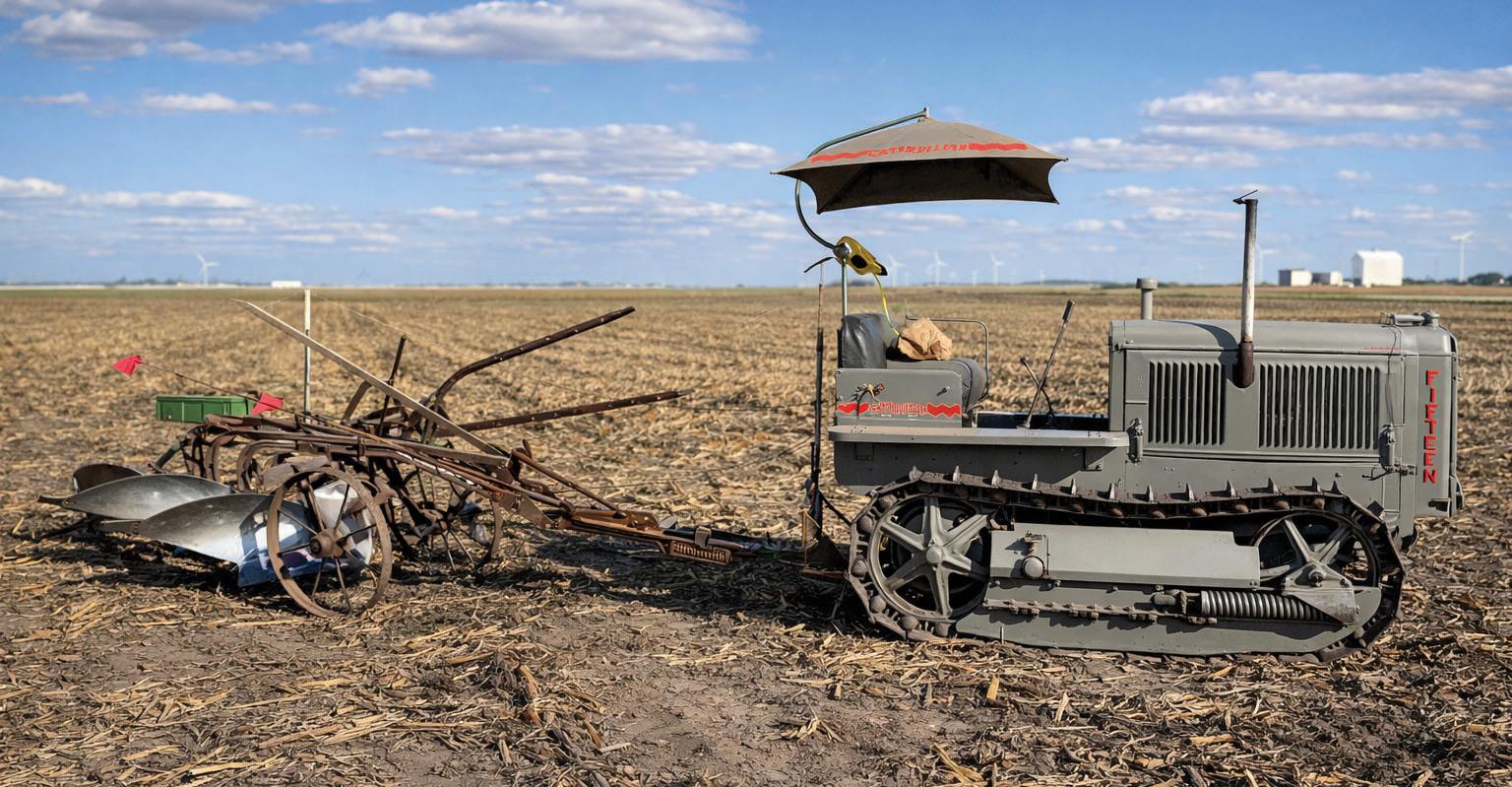
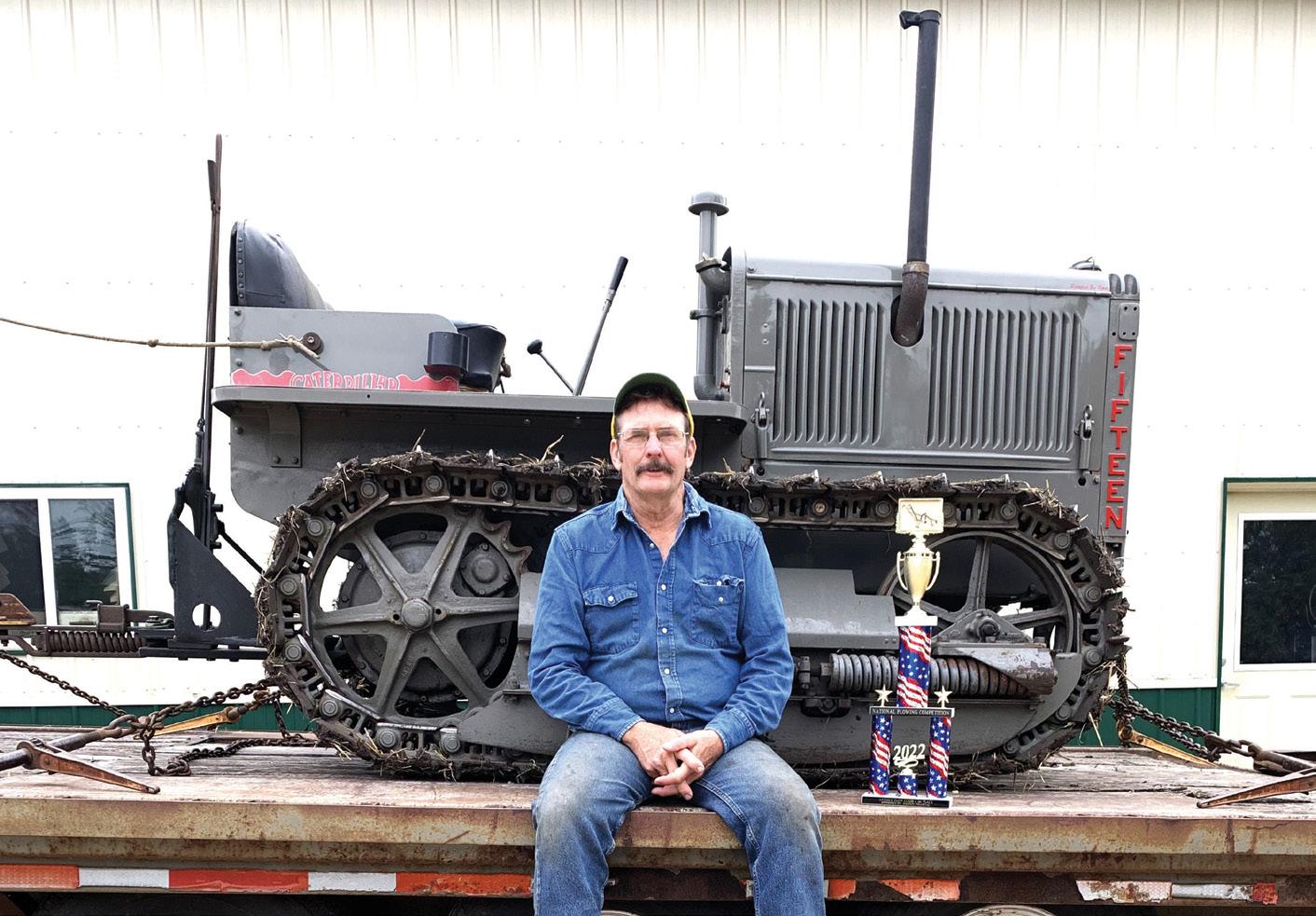
The Caterpillar 15 with the Deere No. 4D plow ready for a plowing match.
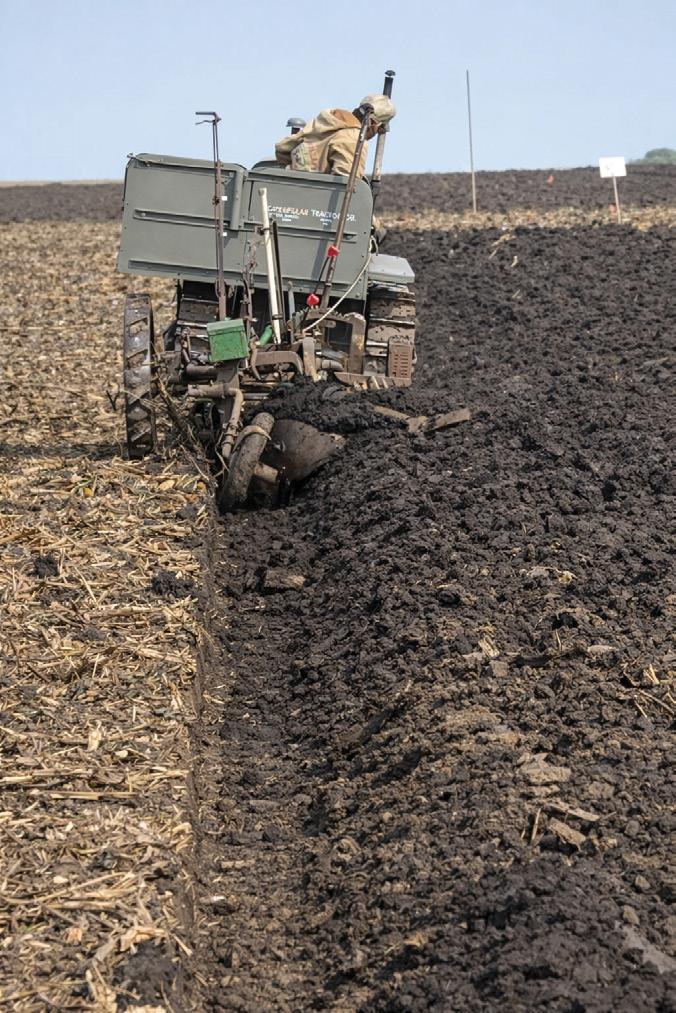
In the furrow with the CAT 15.
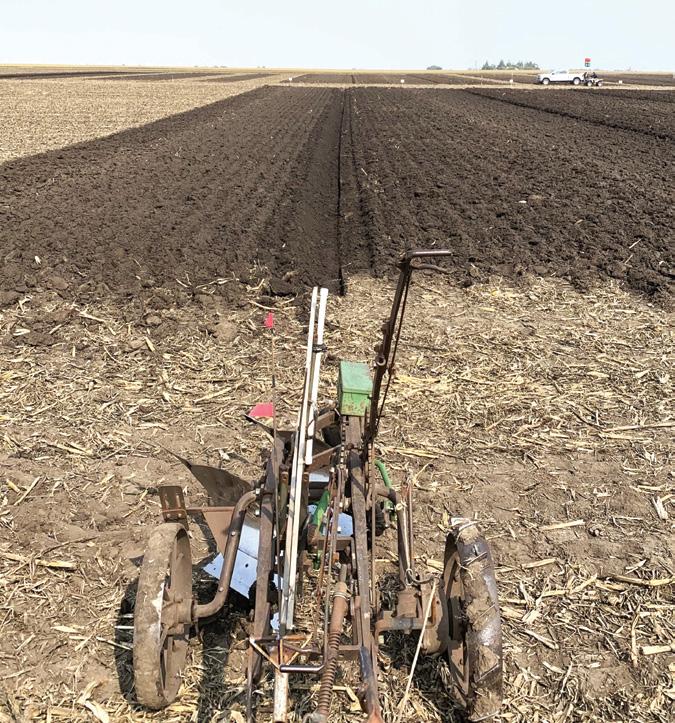
When everything comes together, the work looks simple but beautiful.
competitors. Individual flaws may be forgiven, but patterns are not. Every adjustment leaves a mark that remains visible long after the tractor stops.
The People Behind the Plows
Despite the focus on equipment and technique, competition plowing has always been about people. Walk the line between plots and conversations drift from scores to shared experiences and lessons learned. Many competitors were introduced by family members, carrying skills passed down through generations. Most folks who enjoy plowing today learned at an early age from on-the-job training in the field.
Dick Opdahl (aka Opie) is a friend of mine and hails from Alden, Minnesota. He has been competition plowing in the antique class with vintage John Deere plows since 2009 although he grew up plowing on the family farm. When he began competition plowing, he first used his JD 730 tractor with a two-bottom JD No. 4B plow. It was a slow process for him to get started since the other competitors were reluctant to train a new competitor. With 15.5-38 inch tires on the 730, it became problematic because with a 12 inch plow, the furrow wheel would run over the last furrow and/or the furrow wall that led to deductions in points from the judges.
Nowadays, he competes with his Caterpillar 15 which has 10 inch
wide track pads that fit just right in the furrow with a 12 inch plow. Usually, a tracked tractor would run on unplowed land, but he runs the right-side track down in the furrow, allowing him to see the furrow to maintain straightness. Dick knows that the undercarriage wears faster tilted at an angle in the furrow than when driving on level land, but when only used a few hours per year, it should not be a problem.
When choosing the tractor for competition plowing, power and agility is atop the list of considerations. Dick shared with me that very few plowmen choose crawler tractors, rather approximately 70 percent of the antique class have narrow front ends due to their ability to turn abruptly at the headlands as does his Caterpillar 15. Wide front axles make up around 30 percent of the tractors; they might have an advantage of keeping the tractor directed straight ahead with the right front wheel in the furrow but turning at the ends is usually done with turning brakes. Having narrow tires or steel wheels is important to ensure the plowed furrows are not disturbed due to being over width.
Dick usually competes in Minnesota and Iowa within the antique tractor class. He wants to travel farther
to events in Ohio and perhaps Illinois in the future. There are several U.S. states with plowing associations as well as a nationwide group calling themselves the United States Ploughing Organization (www.usapo.org). They organize national plowing competitions to which the winners are eligible to attend the World Ploughing Organization (www.worldploughing. org) competition which is held annually, moving around to different member countries.
Starting Your Own Journey
For newcomers, plowing organizations are always looking for new participants to help grow these once well attended events back from more recent declines. For those interested in competition plowing, it is best to attend an event as a spectator to see how it works and to meet some folks who might lend a hand when you want to try on your own.
Perfect equipment is not required. A sound tractor, a serviceable plow, and a willingness to learn matter far more than flawless restoration. Improvement comes quickly, measured in straighter furrows and fewer adjustments over time.
Contact Tyler Buchheit by email at tyler@mrbtractors.com. His website is www.mrbtractors.com.
Making it home from the plow competition with a trophy!
Deere and Company sold more model “B” tractors than any other that the company had produced. The reasons for this included a good reputation for dependability and productivity, a size that was just right for the American farmer of the era, a price tag that was easy to stomach, and a long production age. The model 50 that followed did not find as much success, but this was not because of any deficiency in the tractor itself. It was simply that farms were growing in size, and a two-plow tractor was no longer powerful enough for many of the farmers of the era. This had been signaled by the production of the late letter series tractors, when the model “A” wrested the throne from the “B” for the top seller.
The 50 was replaced by the 520 in 1957. Deere was careful to improve the power output of the tractor for the 520’s release. Through improvements in combustion, switching to aluminum pistons, increasing the compression ratio, and raising the working engine speed, Deere was able to improve the engine’s power by
20 percent. Spitting out 38 horsepower, the 520 could easily handle a three-bottom plow in most conditions. The higher power revitalized the little row crop tractor, and its sales numbers grew closer to those of the crowdpleasing 620.
During this pivotal stretch in John Deere’s history, the company’s leadership and engineers were pouring time and money into a bold project: the New Generation
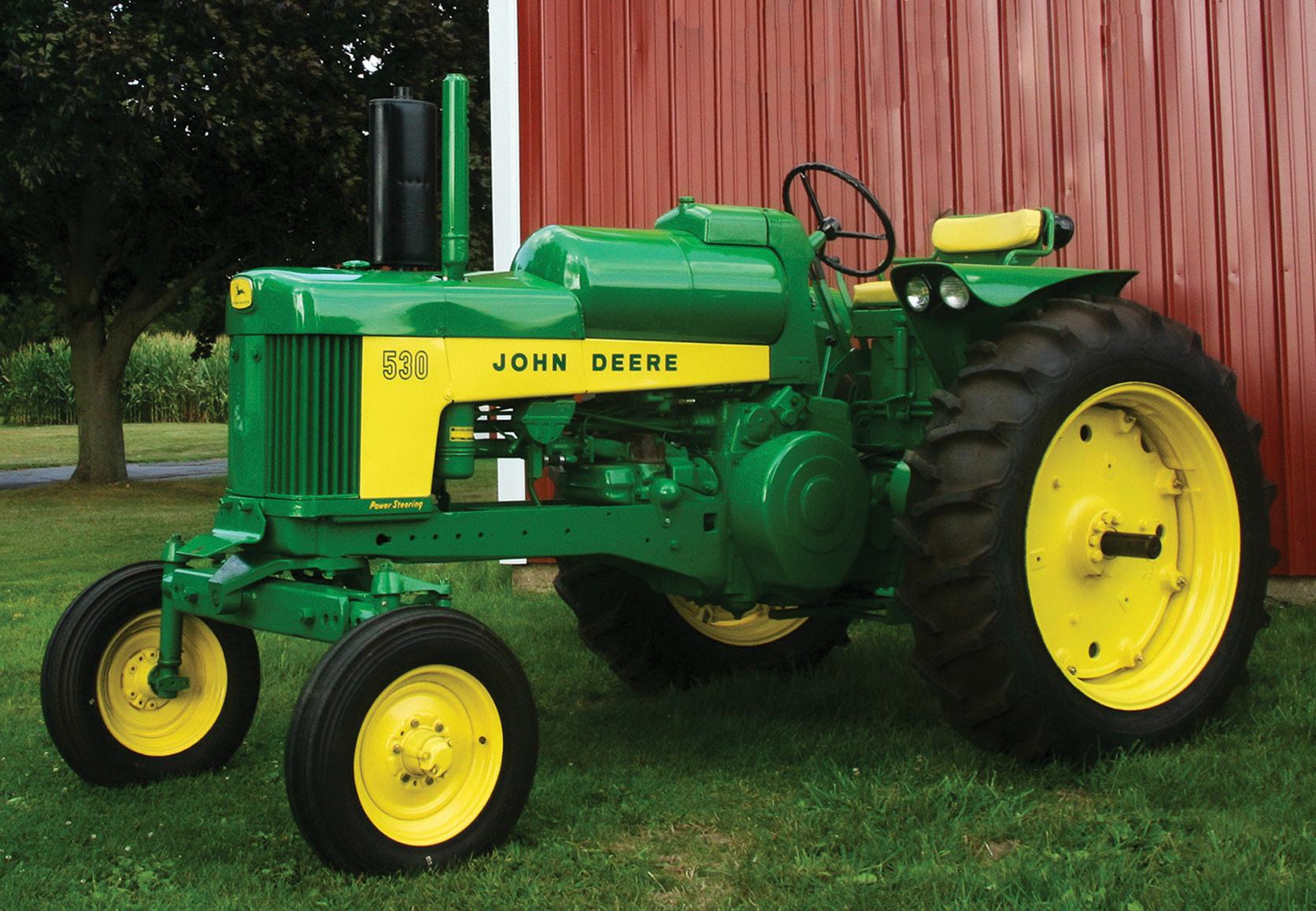
Scott Halverson of Truman, Minnesota owns this narrow front 530 with front weights and flat top fenders.
tractors. This wasn’t a short-term effort. Experimental prototypes were already in the test fields by 1950, but as development went on, it became clear that the new line wouldn’t be ready for buyers until around 1960. That left Deere with a problem familiar to any manufacturer: how do you keep your current lineup fresh while the “next big thing” is still a few years away?
Deere’s answer was to give the proven 20 series a thoughtful update, and out of that decision came the 30 series. It wasn’t intended to be a ground-up redesign; it was a smart refresh. The idea was to keep sales moving, give customers something visibly new to get excited about and, just as importantly, test some of the features and styling cues that were being developed for the New Generation machines.
The 30 series update rested on two main themes: appearance and operator comfort. Deere once again brought in Henry Dreyfuss and Associates, the same industrial design firm that had styled the letter series back in the 1930s. By the late ’50s, Dreyfuss’s influence was firmly woven into Deere’s identity.
Dreyfuss’s team approached tractors the way they approached everything from telephones to locomotives: a machine should not only work well, but it should also look and feel right for the person using it. In an industry that had long believed function came first, and form was an afterthought, Dreyfuss kept asking, “Why not both?” If a tractor could be made more attractive without sacrificing performance, why wouldn’t that be how you build it? And if, at the same time, you could make it easier, safer, and more comfortable to operate over a 12-hour day, that wasn’t just design—that was good engineering.
One of the most visible of these newer ideas was the flat top fender. On the New Generation tractors, it would be standard equipment. On the 530, it showed up as an option—and it’s one of the things collectors and show-goers spot right away today. The benefits were more than cosmetic. These new fenders were larger, so they did a better job of keeping mud, dust, and debris off the operator. They also gave Deere the perfect place to mount headlights. Bolted to the front of the fenders, the lights sat up high and away from the tractor’s sheet metal, protected from damage and able to throw a wider, more useful pattern of light. Anyone who’s driven a 530 with these fenders after dark can tell you it’s a noticeable improvement compared to the single lights on the round-fendered tractors.
Then there’s the unofficial use that never showed up in any sales brochure. While neither Deere nor I can recommend the practice, those flat tops quickly became
Farmers noticed. Anyone who’s spent a day on an uncomfortable machine knows that by evening, you don’t need a sales brochure to tell you which tractor you prefer.
By this point, Deere had been relying on Dreyfuss’s ideas for decades, and the company was working closely with him on the clean-sheet redesign that would become the New Generation. That project spawned a long list of new features. Some were small refinements to familiar systems, others were all-new concepts. A handful that were far enough along found a home on the 30 series. Deere could promote them in the literature, see how customers responded, and fine-tune them before rolling them into the New Generation line.
extra “seats” for friends, kids, grandkids, and anyone else who wanted a ride. By now, tens of thousands of people have watched the world go by from the top of one of these fenders. If you take one to a show, don’t be surprised when someone tells you, “I used to ride right there when Grandpa fed cows.”
To make climbing on and off easier—especially with those larger fenders—the axle-mounted step that had been optional on the 20 series became standard on the 30 series. For a working farmer, that meant less scrambling and fewer awkward climbs. For today’s owners, it’s one of those little details that make a 530 nicer to live with than its predecessors.
Deere also turned its attention to what it actually felt like to spend a day in the seat. On the 530, the instrument panel was reshaped and angled upward toward the operator. From the seat, the gauges are easier
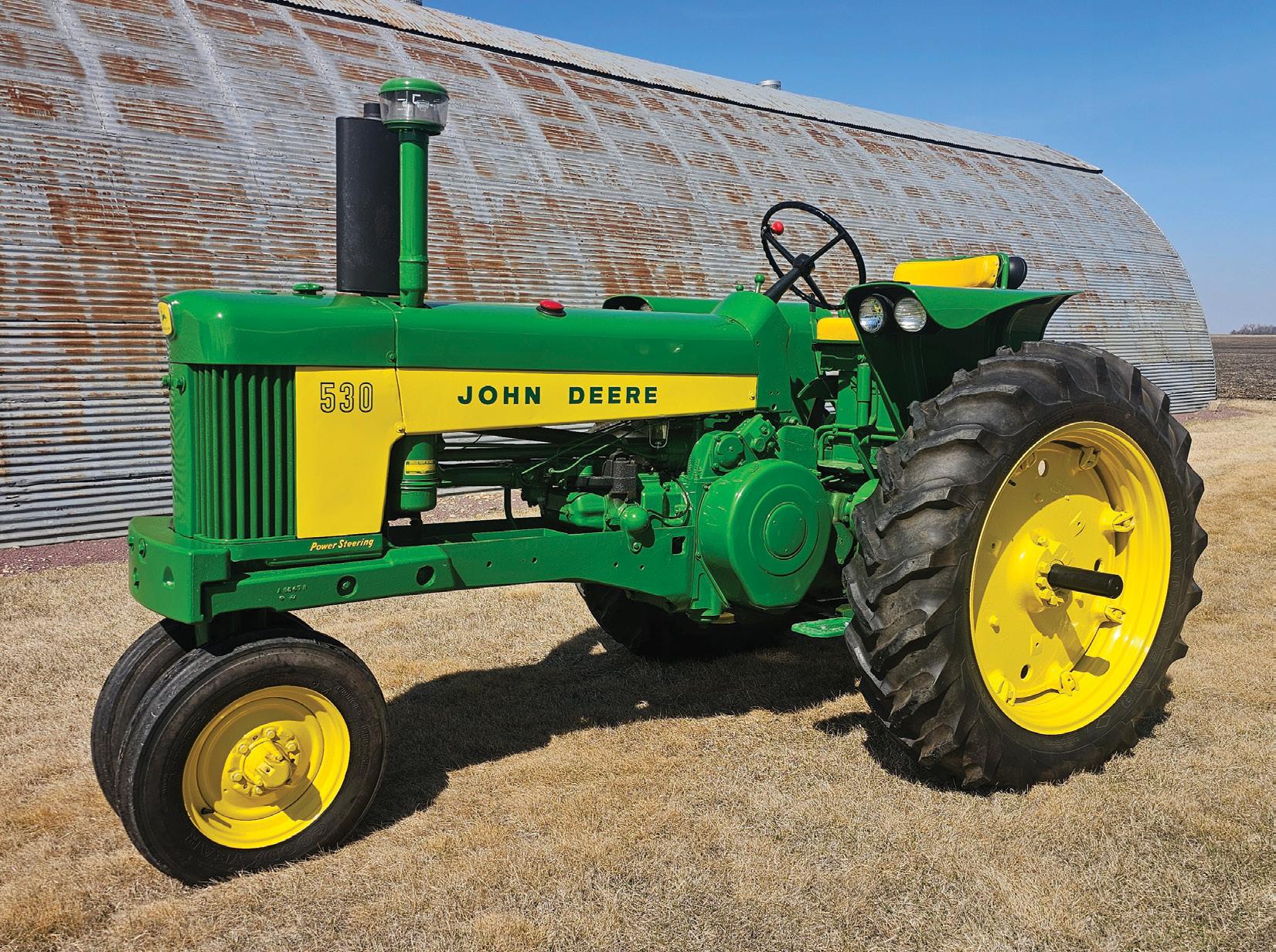
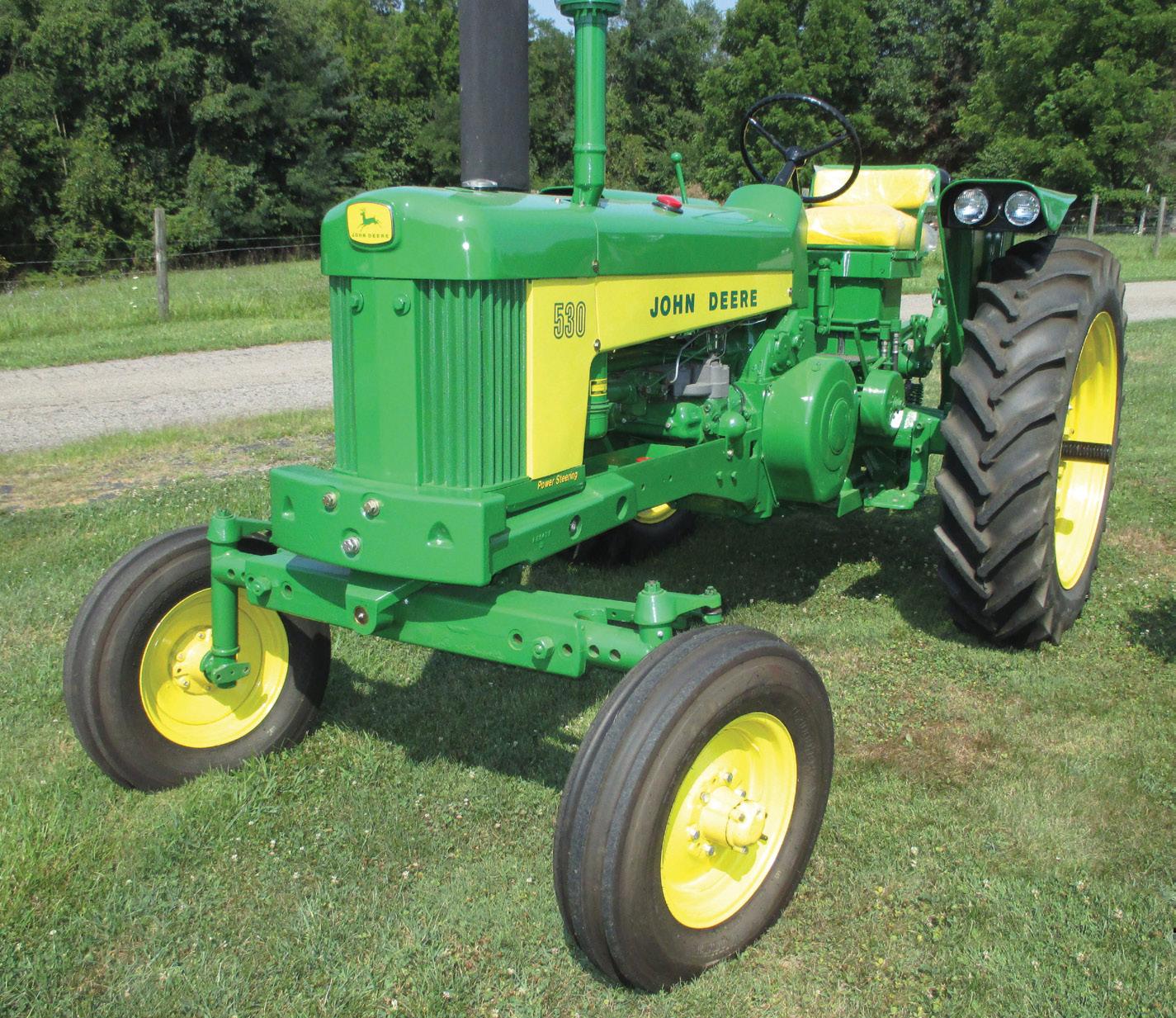
Steven Aggers has owned this 1959 model 530 for more than 20 years.
to read, and taller operators no longer have to lean forward and squint. It’s a small change, but one that you appreciate the first time you actually put hours on the tractor instead of just admiring it in the shed.
The slant dash allowed for slant steering. Earlier Deere models often used a nearly vertical steering wheel, which worked, but wasn’t exactly ergonomic. On the 530, the steering column comes out of the dash and angles back toward the driver, putting the wheel in a more natural position. If you’re used to modern controls, it feels more intuitive and less tiring. For collectors who still put their 530s to work, that new steering angle is more than just an interesting detail—it’s something your shoulders thank you for after a long afternoon.
Deere also updated the starting system. Instead of the old foot-operated starter switch, the 530 used a push-button start. Again, it’s a small thing, but it brought the tractor a little closer to what people were used to in their cars and trucks. For anyone who remembers
going from a hand start or a stomp switch to a simple button, it felt like a touch of luxury.
And of course, we can’t skip the Float-Ride seat. While it wasn’t introduced with the 30 series, it was still one of the best perches in the industry. The Float-Ride soaked up a lot of the jolts that older, rigid seats happily
passed straight to your spine. For today’s collectors who actually work or parade their tractors, a properly set Float-Ride can be the difference between “That was fun” and “I need an ice pack.”
Visually, the 530 marked a clear shift from the 520’s boxier appearance. The 520 leaned heavily on straight lines and sharp corners. The 530 rounded off many of those edges and presented a more streamlined, modern look. Much of this came down to new sheet metal, but the mechanical changes helped as well.
The move to slant steering eliminated the long steering rod that had once sat above the length of the hood. Without that rod, the tractor’s profile looked cleaner and more refined. For collectors, this is one of those things you may not notice at first glance, but once you see it, the 530 just looks “finished” compared to its predecessors.
Underneath that updated tin and ahead of the improved operator’s station sat a very familiar heart: the same 190 cubic inch, two-cylinder engine used in the 520. Deere didn’t change the basic powerplant for the
John Deere 530 owned and restored by John Marshall of McConnelsville, Ohio.
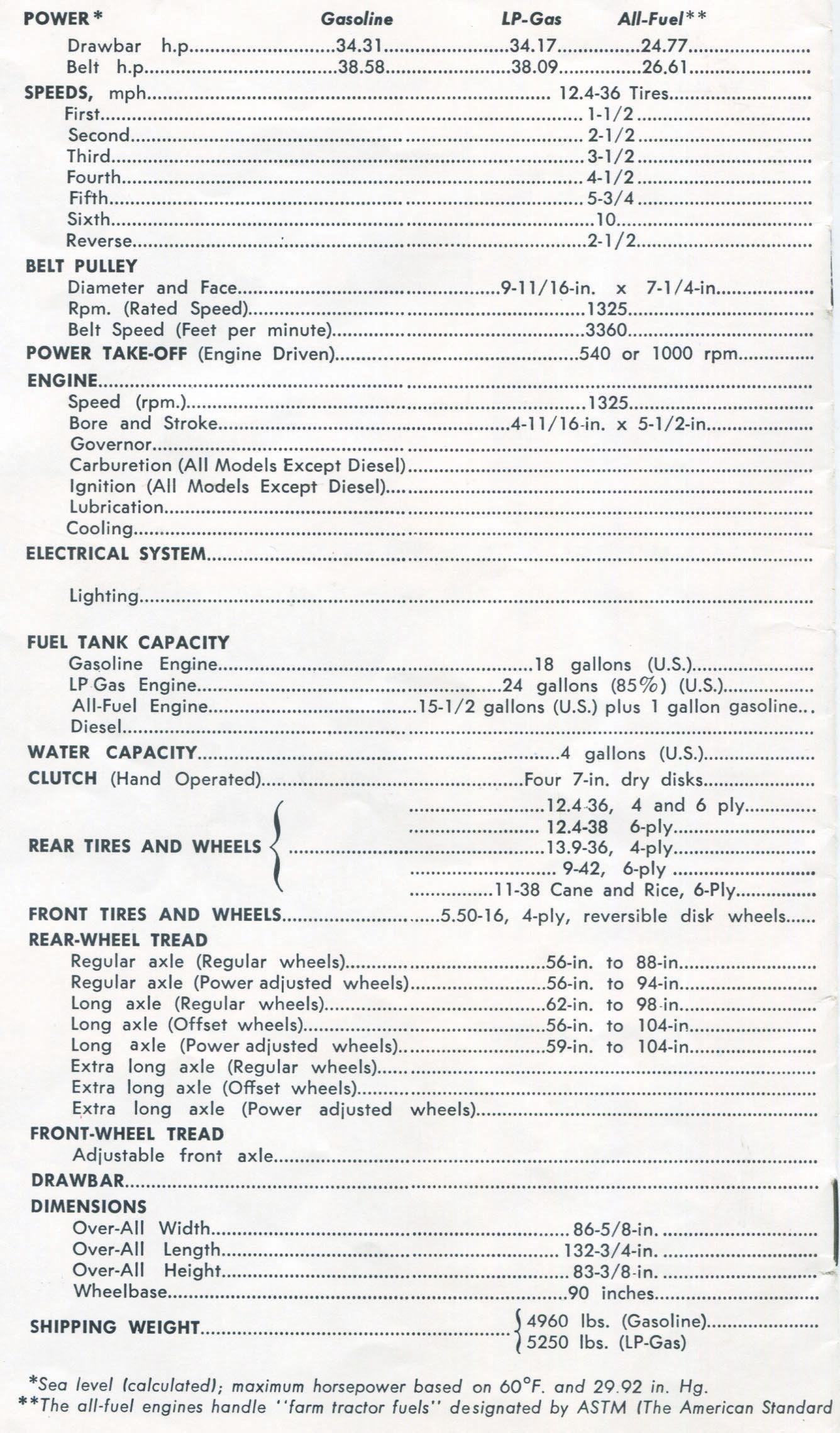
530. It produced essentially the same numbers—around 38 belt horsepower and 34 drawbar horsepower—keeping it firmly in the two- to three-plow class.
By the late 1950s, though, the way many farmers used this size tractor was changing. Instead of being the primary power source on a large operation, the 530 more often found itself on lighter jobs. It was a natural in hayfields—raking, tedding, baling, and pulling wagons. That doesn’t mean it couldn’t still be the main tractor on a smaller row crop farm. For planting and cultivating four rows at a time, a 530 was right at home, and for today’s collector with a few acres to tend, it still fills that role nicely.
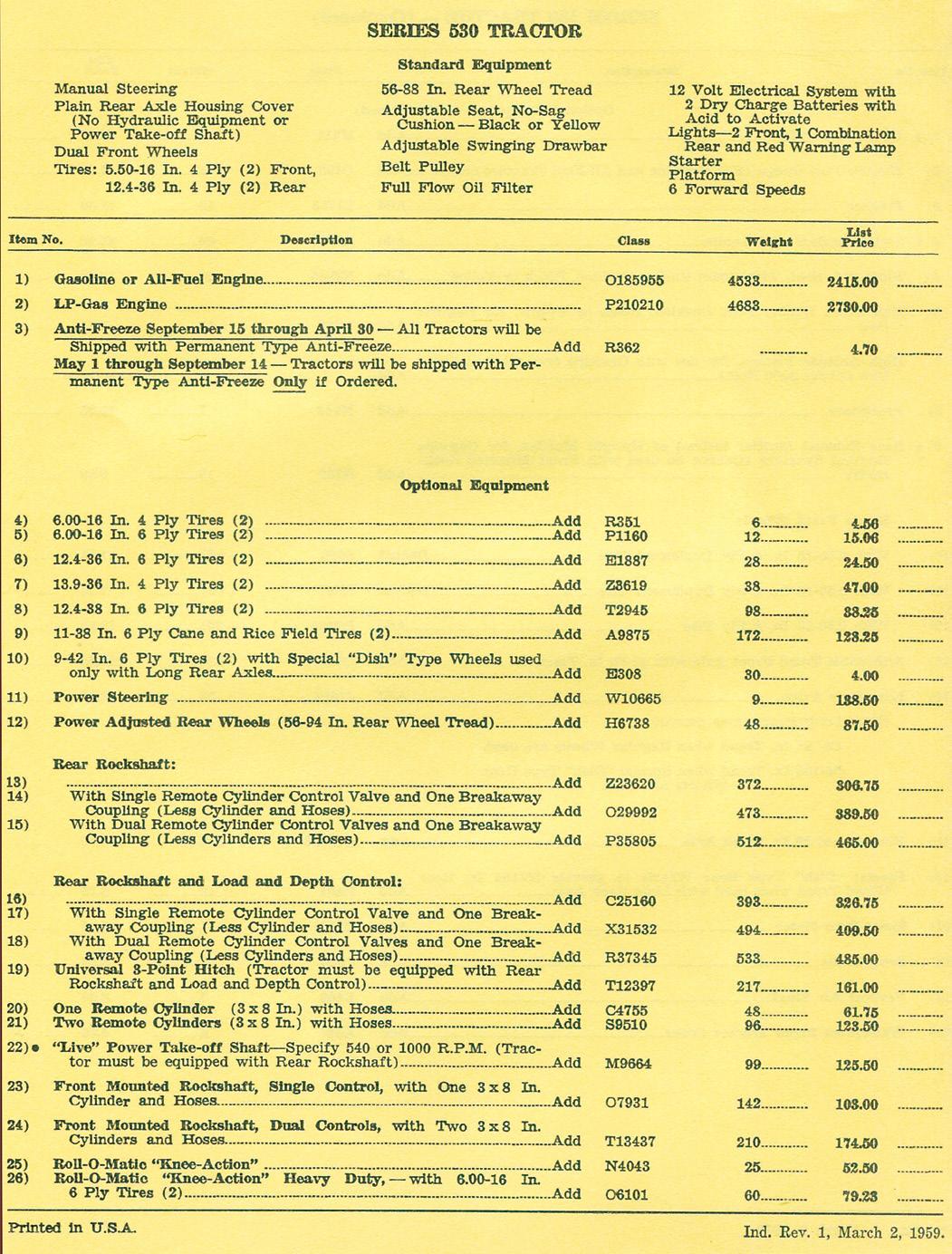
Buyers could choose from three fuel options on the 530: gasoline, LP-gas, or all-fuel. The gasoline and LP engines shared the same displacement and delivered nearly identical output, but the LP version ran a higher 8.75:1 compression ratio to keep up in the horsepower race. For collectors, LP models add an extra layer of interest, with their distinctive tank and fuel system.
Steel wheels technically remained on the option list throughout the 30 series. A 530 could be ordered with AB2708R front wheels and AF1713R rear wheels, using F1500R cast centers. In practice, there’s no solid evidence that any 530 actually left the factory on steel. If one ever surfaces with documentation to back it up, it will certainly turn heads in the collector world.
Beyond the standard adjustable rear axle, Deere
530 Production Numbers and Serial Number Breaks
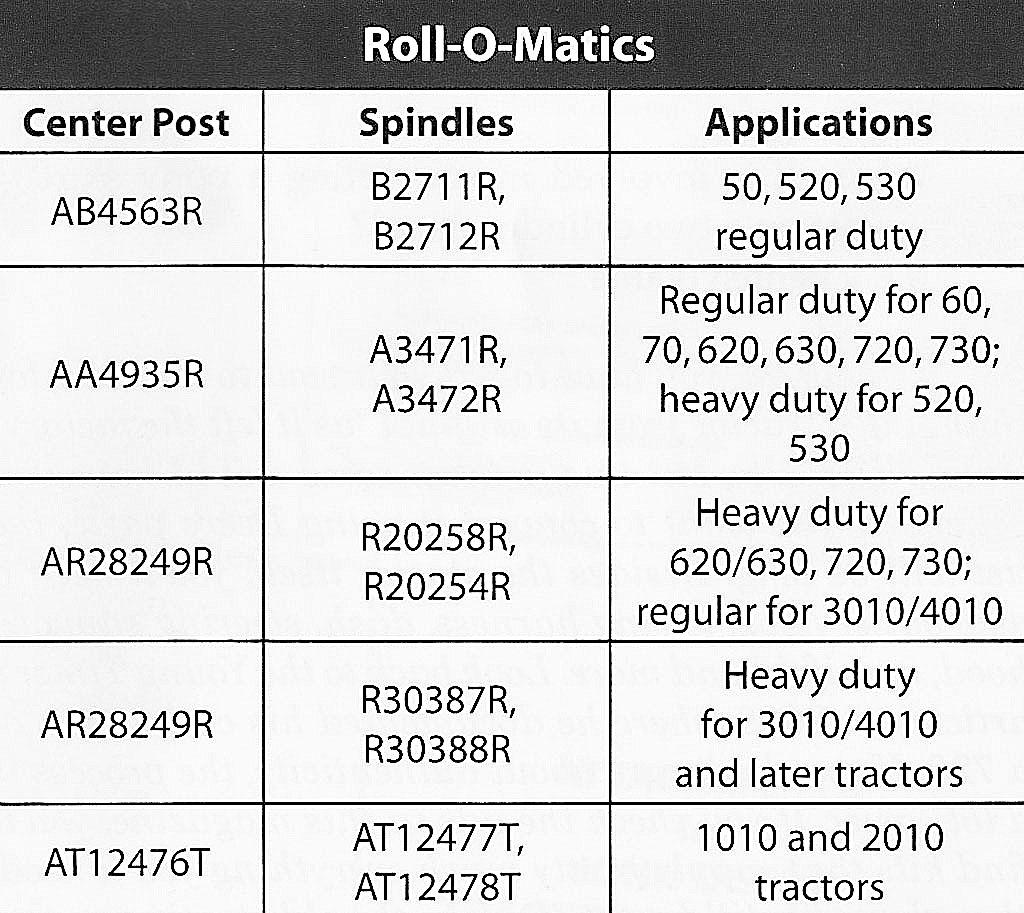
The all-fuel version, however, lagged well behind in power, putting only about 27 horsepower to the PTO. By the late 1950s, that was a handicap many farmers weren’t willing to accept. As a result, very few all-fuel 530s were built—just 85 in total—and many of those were exported. For modern collectors, that low production makes an authentic all-fuel 530 a rare and interesting find, especially if it retains the correct manifolds and fuel system. Up front, the 530 came standard with a narrow front end, but Deere offered a generous menu of alternatives. Buyers could choose a regular or heavy duty Roll-O-Matic, regular or heavy duty single front wheel, an adjustable wide front, or a 28 inch fixed tread wide front. At the rear, standard tires were 12.4x36. Optional sizes included 13.9x36, 12.4x38, 9x42, and 9x42 rice and cane tires. The 36 inch tires could be mounted on optional power-adjustable rear rims. Unlike the silver painted wheels typically seen on Dubuque-built tractors at the time, these power-adjust rims were painted all yellow. It’s the kind of detail that doesn’t matter much in the field, but it matters a great deal when you’re at a tractor show and someone comes by who has the parts book memorized.
Tim Andrews is the owner of this 530 LP.
developed a special long rear axle for the 530, paired with unique dished rear wheels. This combination offered a tread width range from 56 to 104 inches. Because the axle was larger in diameter, it required a special axle housing. These components were aimed squarely at regions where vegetable farming was common and specialized row spacings were the rule instead of the exception.
The 530 was a good fit for that kind of work. It was light enough to be nimble in softer soils, but with enough power and wheel options to handle the job. Tractors so equipped quickly picked up an informal nickname among farmers and dealers: “Vegetable Specials.” Deere never used that name officially, but the label stuck. Today, a 530 with the long axle and the correct dished wheels is a neat piece for any collector with
an interest in specialty farming or regional variations.
The 530 went into production right after the summer shutdown in 1958, and those early units are considered 1959 models. They wore the familiar green and yellow paint scheme, with green generators and semigloss black mufflers and dash panels. Deere’s Industrial Division also saw potential in the model and took a few for its own use. Assuming those tractors were actually sold, some 530s likely left the factory painted industrial yellow. Mechanically, though, they were standard farm tractors. Deere never produced a dedicated 530 industrial model.
For collectors and restorers, one of the more interesting cosmetic changes happened between the 1959 and 1960 model years. Early 530s used a green model designation decal with a clear center, allowing the yellow hood paint to show through. In 1960, Deere changed the decal to include a greenish-gold center instead. It’s a small difference, but if you’ve ever had a member of the “Correct Police” walk around your tractor, you already know how much attention that kind of detail can draw. If you’re restoring a 530, it’s worth tracking down the right decal for your serial number range. Get it right, and you’ll earn a nod of approval from the sharp-eyed folks at the next show. Get it wrong, and you’ll probably hear about it before you’ve even shut the tractor off.
Over its two-year production run, Deere sold 9,763 model 530 tractors. Considering the tractor’s role as a bridge between the 20 series and the New Generation—and its place at the smaller end of the row crop market at a time when farms were getting bigger—that’s a respectable total.
The 530’s ancestor, the model “B,” had once been the undisputed sales champion in Deere’s lineup. By the late 1950s, that crown had passed to the larger, more powerful 730. Still, the 530 carved out a loyal following, especially among smaller operations and farmers who appreciated an economical machine that didn’t drink fuel or demand constant attention from the repair shop.
At the time, competitors often tried to run down Deere’s two-cylinder engines as “obsolete.” On paper, maybe the old twin didn’t look as modern as some of the multi-cylinder designs coming on the market. But in real life, the story was different. The 530 was one of the most economical and reliable tractors you could buy. It started, it pulled, it steered well, and it didn’t complain much while doing it.
Much of the criticism from rival companies was really an attempt to distract from how advanced the 530 actually was in other areas. The Custom Powr-Trol hydraulic system was extremely capable for its day, and the power steering on a 530 could embarrass the steering on many competitive machines. For the operator, the combination of that steering, the improved dash layout, slant steering column, and Float-Ride seat made the 530
530 Specifications
one of the nicest places to sit in any field.
And then there’s the way it looks. Even if you park a 530 in a long row of green tractors, its softer lines, flat top fenders, and balanced proportions give it a presence all its own. For collectors, that makes it an appealing piece: historically important, pleasant to operate, and, simply put, easy on the eyes.
Whether you collect tractors, restore them bolt-by-bolt, or just enjoy seeing them work, the 530 tells a great story. It stands at the hinge point between the old two-cylinder era and the New Generation, carrying forward the best of what came before while quietly testing ideas that would define what came next. And for many of us, it’s also the tractor we remember from the hayfield, from the yard, or from that first noisy, unforgettable ride on top of a flat top fender.
2026 Albany Pioneer Days 52nd Annual Show
Kit Cleans Up Older Deere Hydraulic
Mess
Scott Grove cleaned up leaky hydraulic valves on his older Deere tractors with a simple insert. The long-standing problem is one the company has yet to fix. Grove says it forces him and other owners of Deere tractors to replace O-rings on a regular basis, only to have the mess return. Grove’s fix eliminated the mess and the need to replace parts. With the Grove Conversion kit:
• Convert to ISO with easy push-pull connection
Wapsi Innovations
• Couplers connect under residual pressure with breakaway feature
• Kits available for 10 through 70 series JD tractors manufactured from 1961 through 1996
• Inserts are made in the USA. This product is protected under US Patent 10,760,725 B2 and other patents pending.
Installation consists of stripping the OEM outlets down to the block, removing the barrels and O-rings, and replacing them with the inserts. Grove then adds the aftermarket ISO coupler that threads into the insert. Installation instructions can be found on the Wapsi website.
Kits for 10 series are priced at $315, kits for 20-40 series are priced at $329, and kits for 50-70 series are priced at $355. Also watch the website for more additions coming soon. Grove suggests checking with local Deere dealers & local repair shops or Wapsi Innovations directly.
DON’T
“A” memories Part 2
Part 2
After school one evening, about three days later, the “A” came popping down the road, running like a new one, Dad driving with a smile. The “A’s” ills were all repaired. It was ready for spring fieldwork.
Since we had a big family, we kids often worked for the neighbors. I worked for Mr. Damon, who bought a brand new 2010 John Deere tractor that was a breeze to drive. It came equipped with live power, good visibility, and power steering. Being a teenager, I came home and told Dad that we needed to buy a 2010 John Deere because it was shiny, had live power, and all those good features. I was quickly informed, “We are not paying $3,000 for four extra horsepower!”
As I mentioned earlier, we used the “A” for all our heavy field work. Our farm was hilly, with the buildings located in the Skunk River valley. Not a deep valley, but a valley nevertheless. One spring evening, while I was discing a hillside above the farm, I decided to see if I could lug the “A” engine down enough to count the revolutions on the exposed flywheel.
the sound of a Swiss mountain Alp horn to shame. Yup, my brother also found a steaming Dad when he got home that night.
The “A” received another overhaul when I was 17 years old. It was getting long in the tooth about that time, so we got another vintage “A”—“for parts.” The idea was to take the best parts and make one “A” tractor out of two. We even took the time to straighten the hood and repainted the old girl again.
This time, the whole family got into the act. Dad taught me how to pull the head, set rings, etc. He made me memorize all the tolerances for ring and valve setting, plugs and points gaps, timing, etc., so “in case we lost the book, I would know how to do it again.”
His approach was quickly validated. Just as we were starting to put the tractor back together, Dad had to leave to move my critically ill sister to another hospital. As he left the shed, he told me, “You know what
The “A” really lugged down; it jumped like a bucking bronco each time a cylinder fired, but that was the fun of it. Or at least that’s what I thought.
There were levers on the driver’s platform to open the petcocks. These were left over from the two-row corn picker. So, when the “A” was really under load, I opened the petcocks to also relieve the engine compression. The “A” really lugged down; it jumped like a bucking bronco each time a cylinder fired, but that was the fun of it. Or at least that’s what I thought.
When I got home that night, Dad was not impressed.
to do.” With that, he left. My younger brothers and I got the “A” back together, timed, and got it running. To say that I was elated when the “A” started would be an understatement.
When I got home that night, Dad was not impressed. His demeanor was stern, and his sermon could put any military drill instructor to shame. He was really steaming that I was internally tearing the “A” to pieces. And he let me know it, in a language of passion and four-letter words.
I couldn’t figure out how he knew what I was doing in the field until the next spring when my younger brother did the same thing. Being in a valley, the low sound of the “A” exhaust resonated down the valley. The low resonating sound was so clear that it put
I was proud to show Dad that we had the “A” running, and the engine partially broke in when he came home several days later.
The last time I drove the “A” was two years later, on a clear, moonlit, very cold, northern Minnesota night in February. I was going into the service, and my folks had a going away party for me in town. It was another 20 degrees below zero night. After the party, my cousin, who was not familiar with the neighborhood, decided to take one of Mr. Kasper’s cute young ladies home.
Now, Mr. Kasper had a big family of cute girls and a boy or two thrown in. He was no fool when it came to protecting those gorgeous young things. You
see, he had a half-mile long driveway with a steep, NASCAR-banked curve halfway down the farm. And he didn’t plow the snow from that driveway. He never had problems navigating his driveway—everybody else did. You guessed it. My cousin, Alan, got stuck in Mr. Kasper’s driveway and walked his date the rest of the way home.
When I returned home from the party, my older brother, Chuck, informed me of Alan’s dilemma, and that “We are going to pull him out” with Chuck’s car. Yes, we got Chuck’s car stuck in Mr. Kasper’s driveway, too. Not to be outdone, Chuck said, “I’ll walk home and get the ‘A’ to pull us out.” And the fool walked over a mile home to get the “A.”
It was so cold that I figured that the “A” wouldn’t start. To my amazement, a short time later, we could hear it chuckling down the road. Now realize, it did not have a cab or winter front of any kind on it. Chuck pleaded “being frozen” when he got there, so yours truly decided to pull the two cars out of Mr. Kasper’s driveway. This required pulling the vehicles into the farmyard, turning around, and pulling them back to the main road so they could negotiate the journey home.
I was frozen to the bone after this eventful rescue
mission, but the liquid courage from the party’s merriment kept me going. My famous words were, “I’m frozen, so I’ll drive the ‘A’ home.” I just remember on a cold, full-moon night, the rear tire chains were clanging all around me. I thought about putting the “A” into sixth road gear to get home faster. Lucky for me, by then the liquid courage had worn off to where I was sensible and drove it home at a reasonable pace. I got the “A” home and parked it in the shed for the night. I left the next day to join the Air Force.
When I returned from the Air Force, the “A” was gone from the farm. It had been replaced by a 620 John Deere. Oh yes, the 620 was more comfortable, with more horsepower, live power, power steering, and the ability to pull larger implements; but in my heart, it could never replace “The A.”
I cut my teeth and grew up on the “A.” We had done a lot of “growing up” things together. It was my faithful boyhood friend. I sure missed her.
I did follow Mr. Kasper’s footsteps and had a family of girls of my own. But that’s another story.
Submitted by,
Wayne Beierman Eagan, MN
• Used parts include: weights, 3-pts., toplinks, dual hydraulics, float ride seats, clutch parts, hubs, transmission gears, sheet metal, tires and rims, 720-730 ES parts, all-fuel manifolds, brake parts, square and round tube WFEs, heads, blocks and PTO parts.
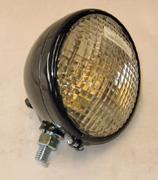
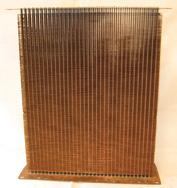
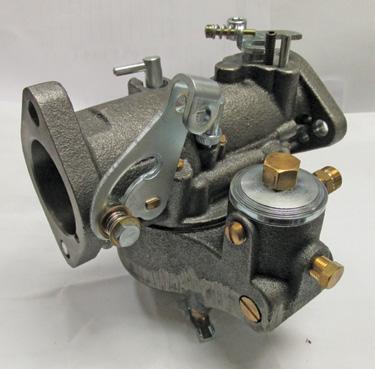
• New parts include: manifolds, battery boxes, carburetor kits, air stacks, mufflers, grill screens, radiator cores, lights and overhaul kits.
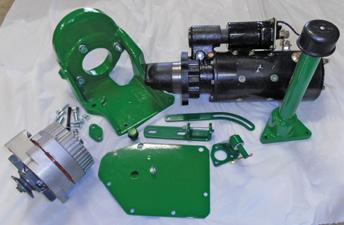
• Rebuilt parts include: Taper-Loc flywheels, electric start conversion kits, float ride seats, starters, carburetors, cleaned and lined gas tanks. Also have crack checked heads and blocks.
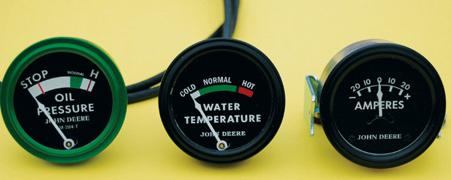
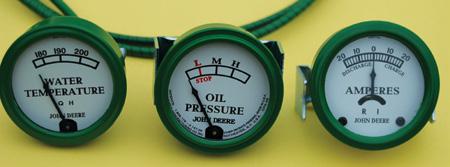
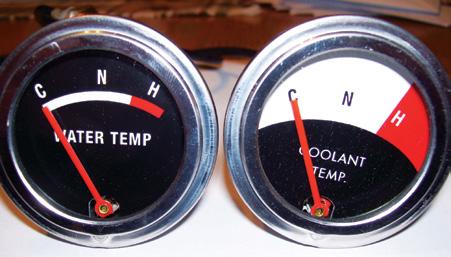
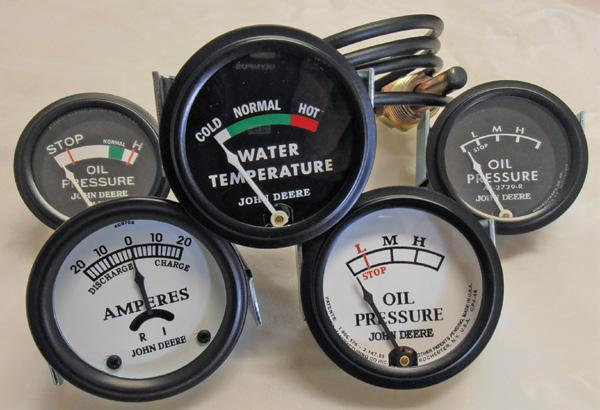
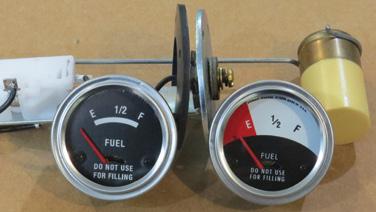
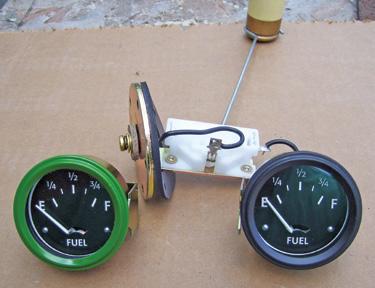
with white or black faces for most 2-cylinder models for the unstyled to the 30 series, Waterloo and Dubuque built models
• All gauges have real glass
• On hand, ready for shipping
• Painted, ready to install
• Gauges come with mounting clamp and hardware
• Faces made by Jorde Decals and have all details of the original gauges
• All gauges are calibrated
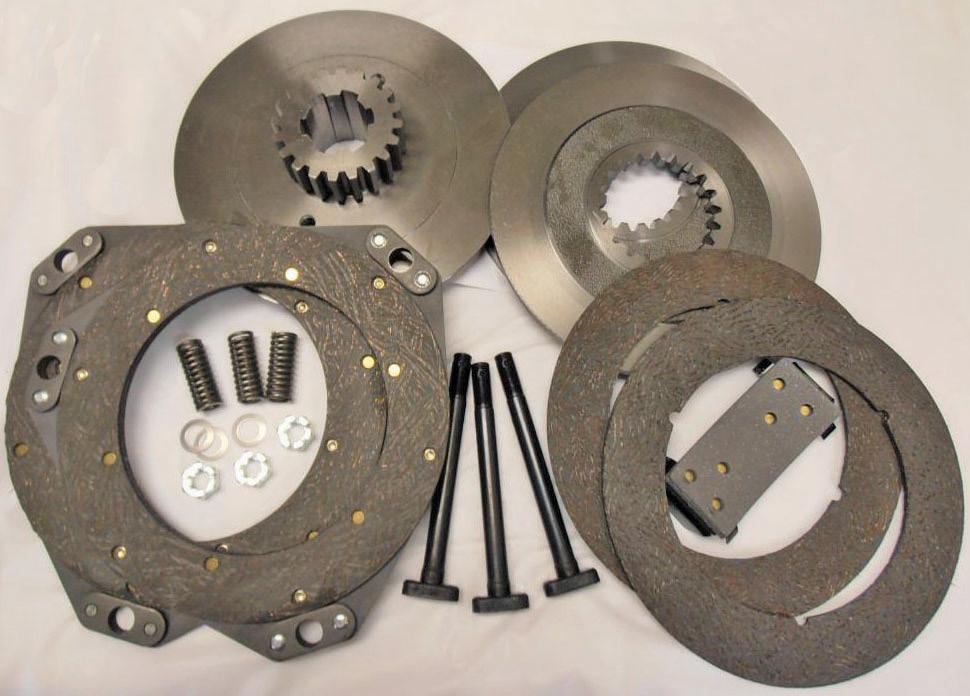
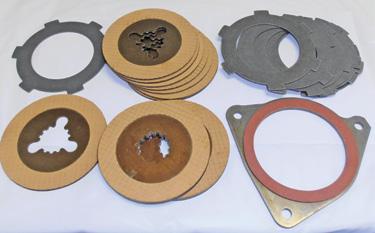
Complete clutch rebuild kits and clutch lining kits
&
cores, water pumps, bolt kits
PARTS TRACTORS
820, styled AR, 720D, 2010G, late A, 530, 720D pony start, 50, 1020G, LA ES, 50 w/801 hitch, G, uns A, 730G, 5020, uns G, 430T, 2510G, 730 LP, 2010D, 530, late 520, ’39 B, BN, 40U, ’53 AO, ’41 H, ‘46 A, late A’s, ‘46 B, late Bs, slant dash B, uns B, sty D, G, uns L, M, MT, R, 40T, 40U, 40W, 70D std., 70G, 420U, 420W, 440 w/reverser and PS, 440 gas, early & late 50s, early 60, 60 w/power block, 620, 620 LP, 630, 70G, 720G, 720 LP, 720D pony, 730D, 730G, 820, 1010, 2010, 2010D, 2010RU, 2020, 3010D, 3020, 4020D. Most of these tractors are parted out & on the shelf—ready for quick shipment!
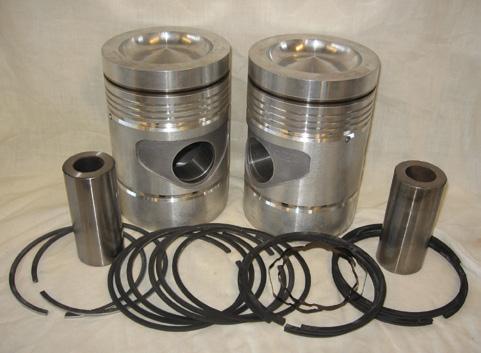
Oversize pistons available again for many two cylinder tractors
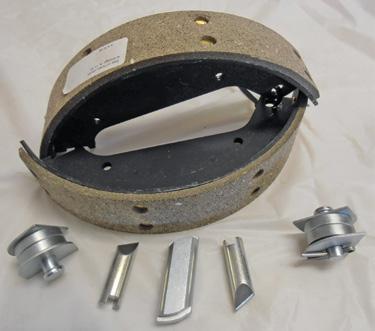
Brake rebuild parts
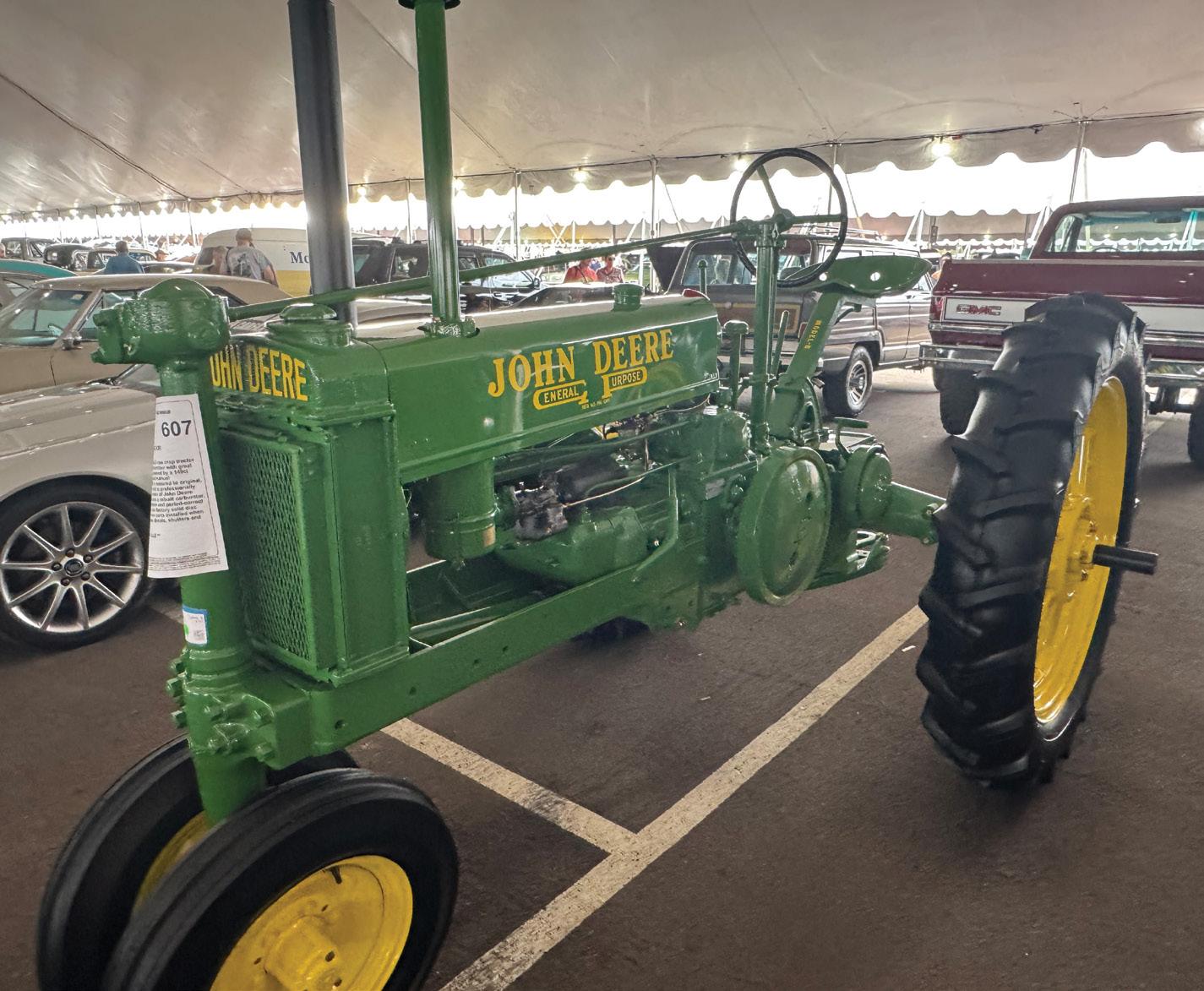
This 1937“B”showed up at the Barrett Jackson car auction in Scottsdale, Arizona recently. Rick Lienemann reports it sold for $7,150 plus buyer’s fee.
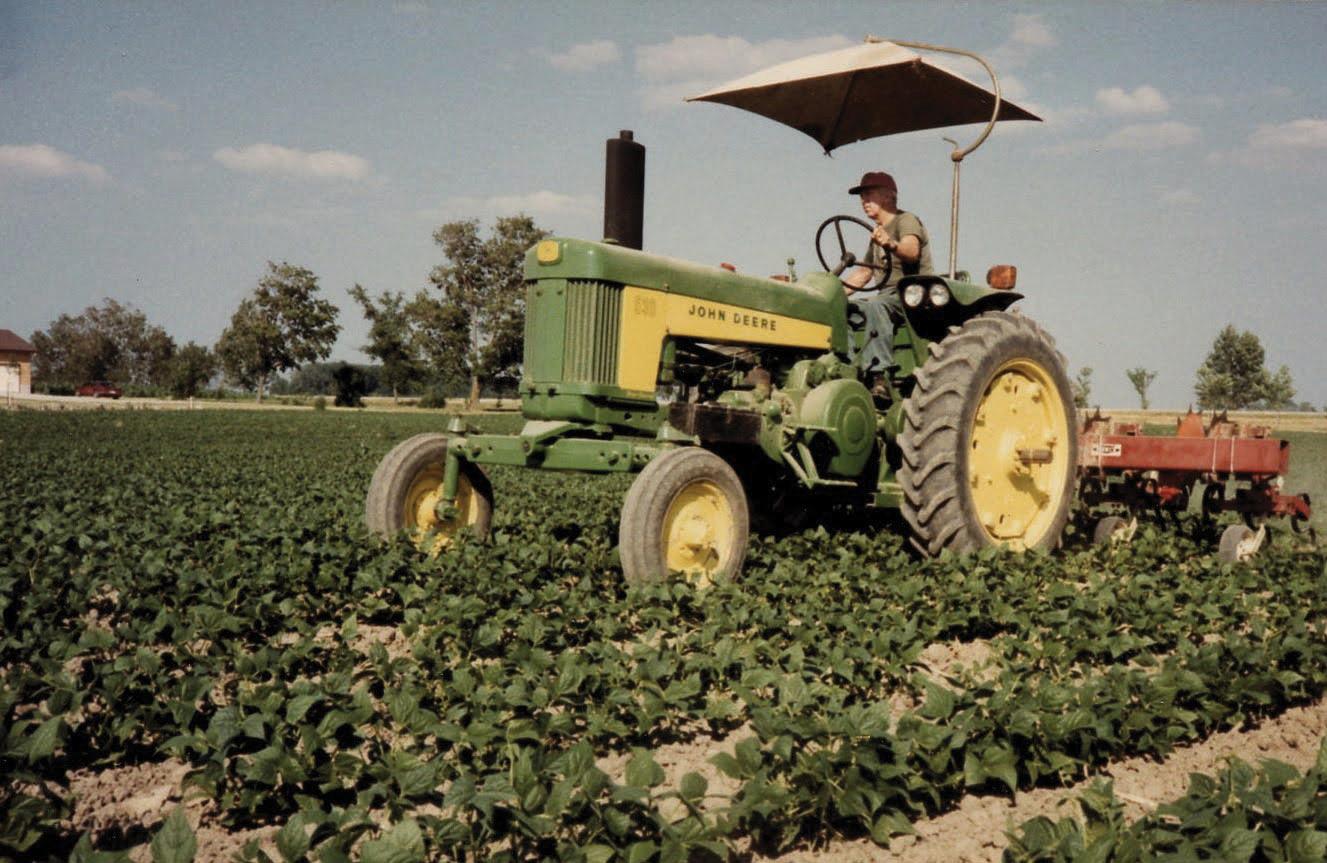
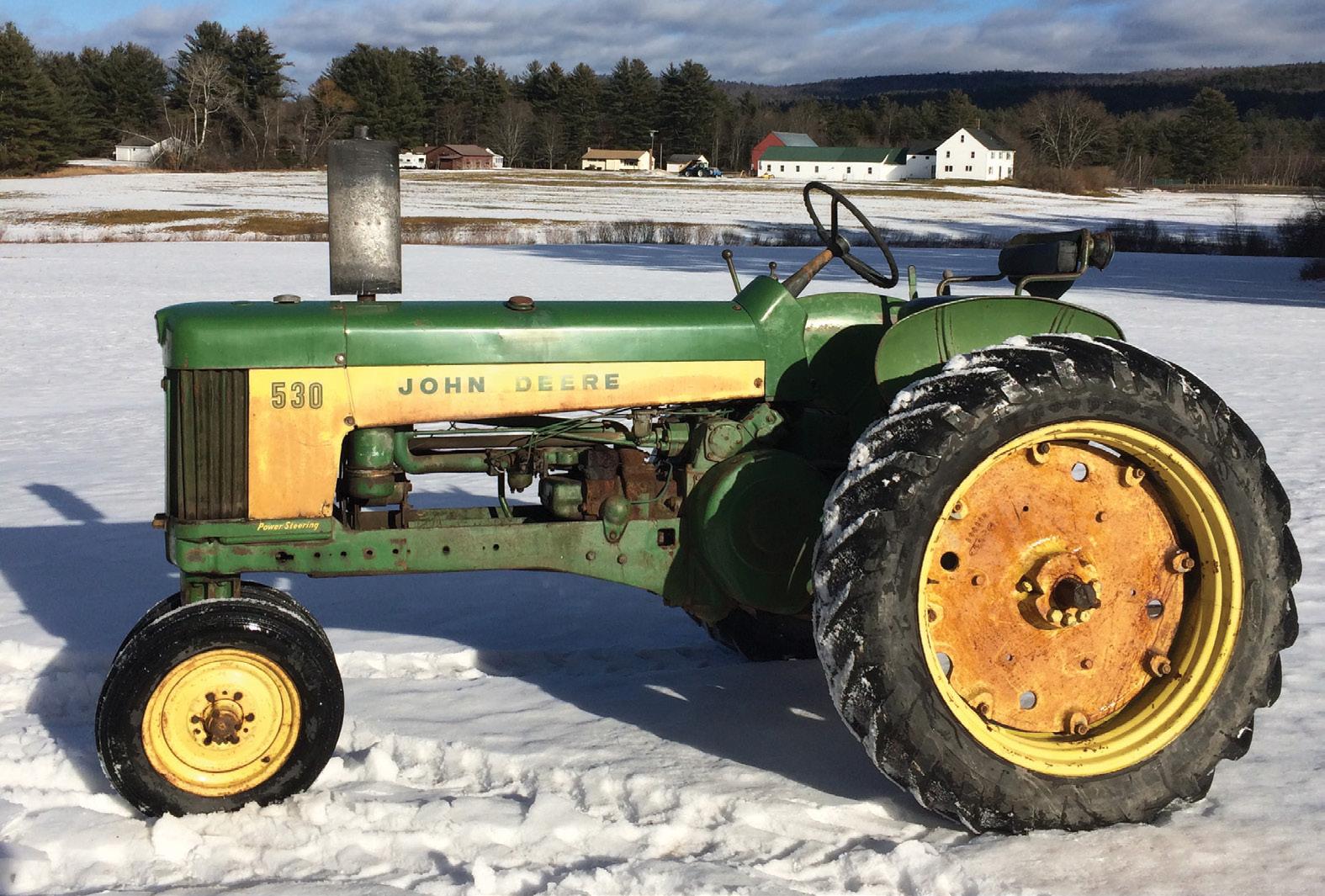
Right: David Dow of Southern, Ontario is still working this 530.
Right: Jordan Driscoll of Swanzey, New Hampshire owns this 530.
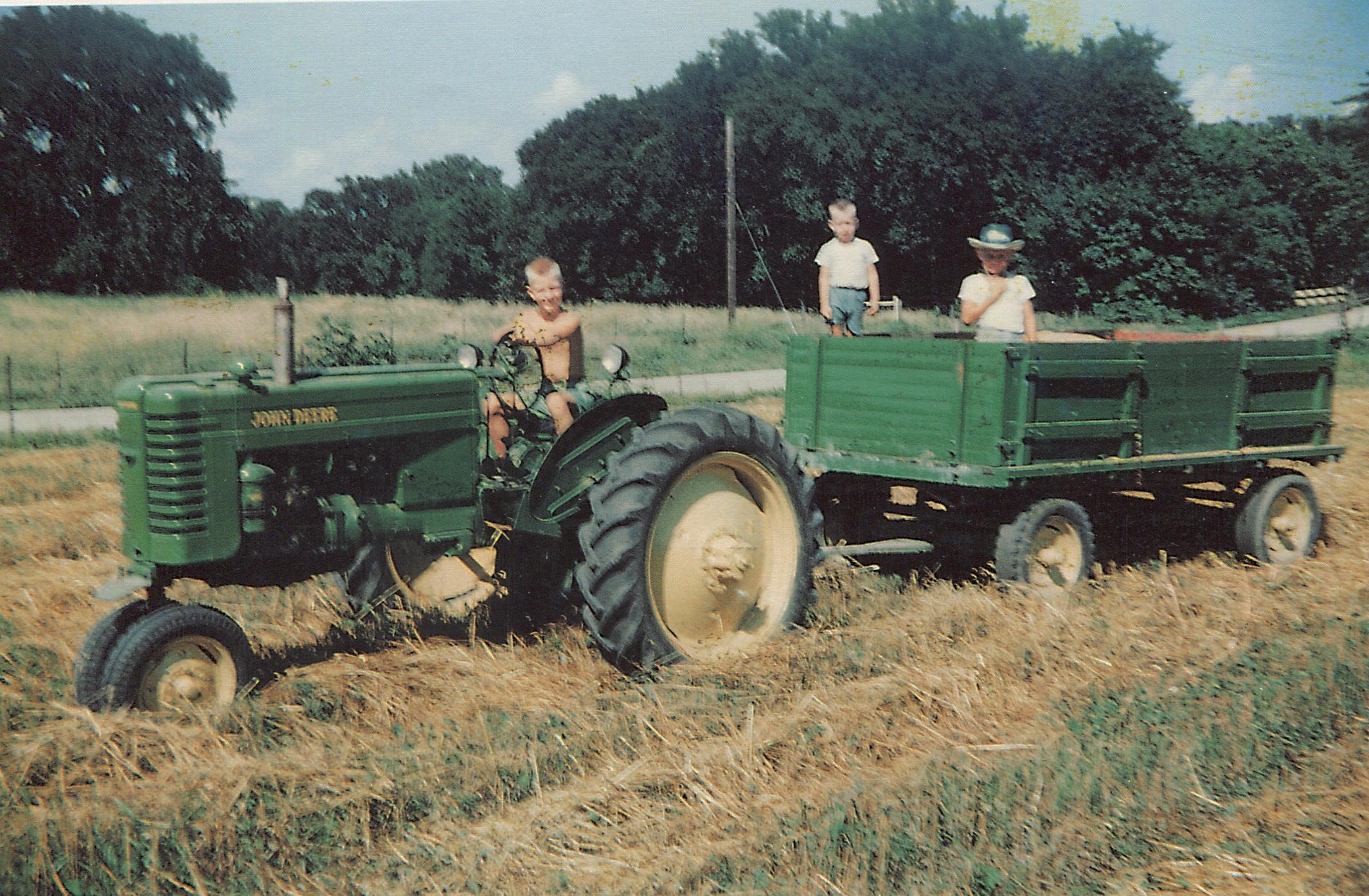
Left: Taken in 1959 or ’60, on the William and Marion Rewerts farm near Ackley, Iowa, this photo shows Ron Rewerts on the “MT” with Darwin and Phil in the trailer.
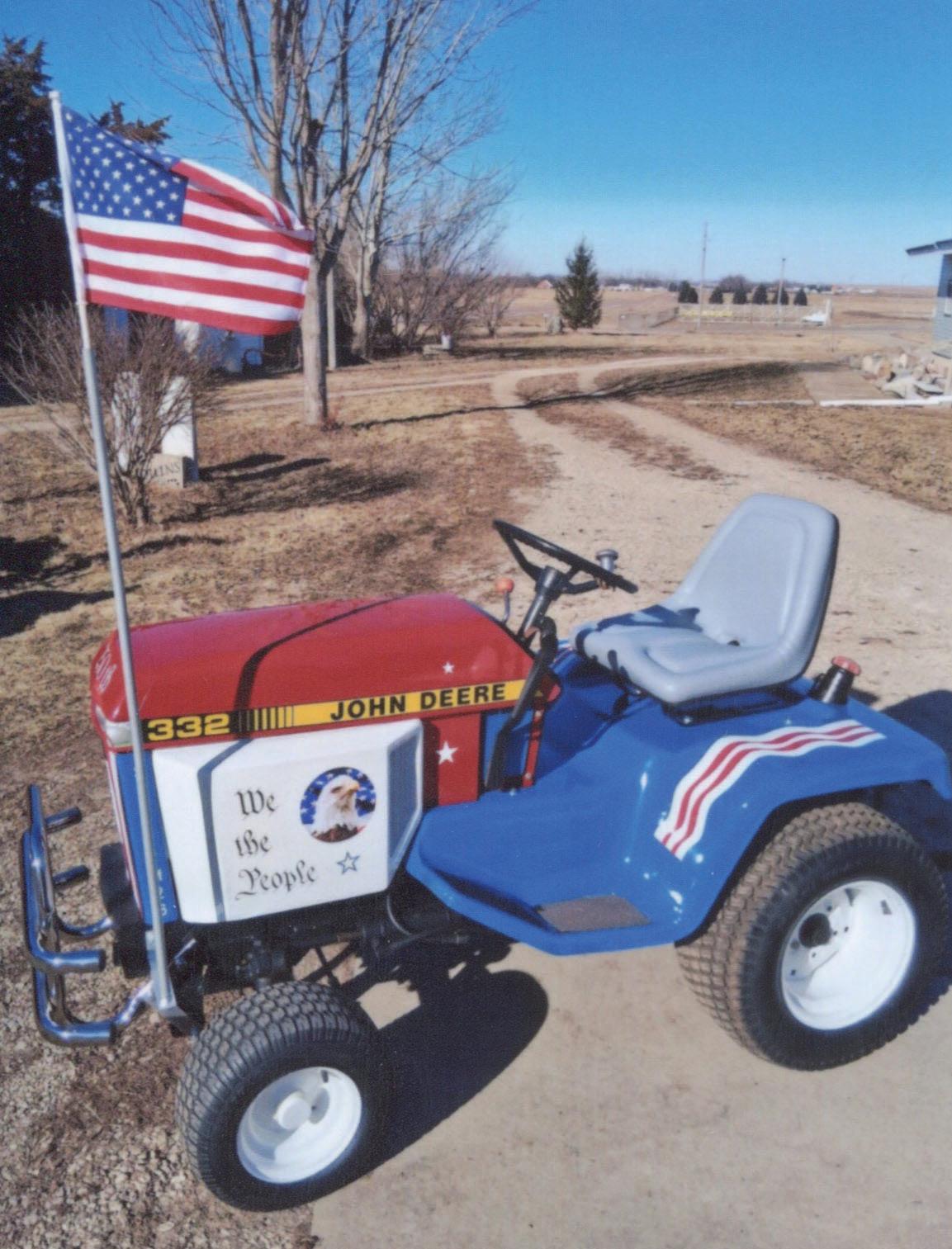
This 1987 model 332 diesel is called the “Spirit of ’26” by its creator, “Digger” of Lemars, Iowa.
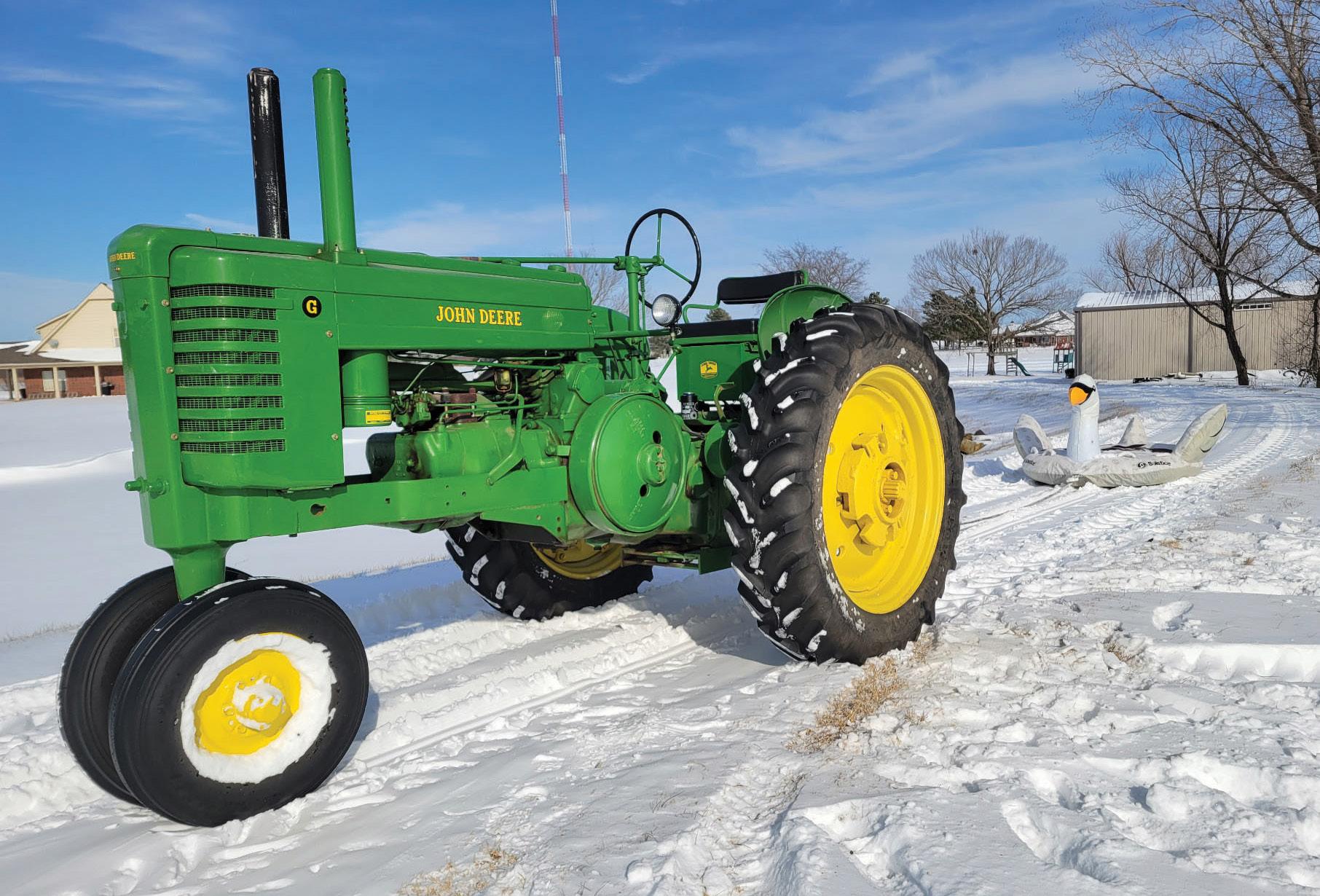
Left: This 1952 model “G,” owned by Jerrod Johnson of Coweta, Oklahoma, is enjoying a cold snowy day pulling a water float swan that the local kids usually enjoy in the summer.
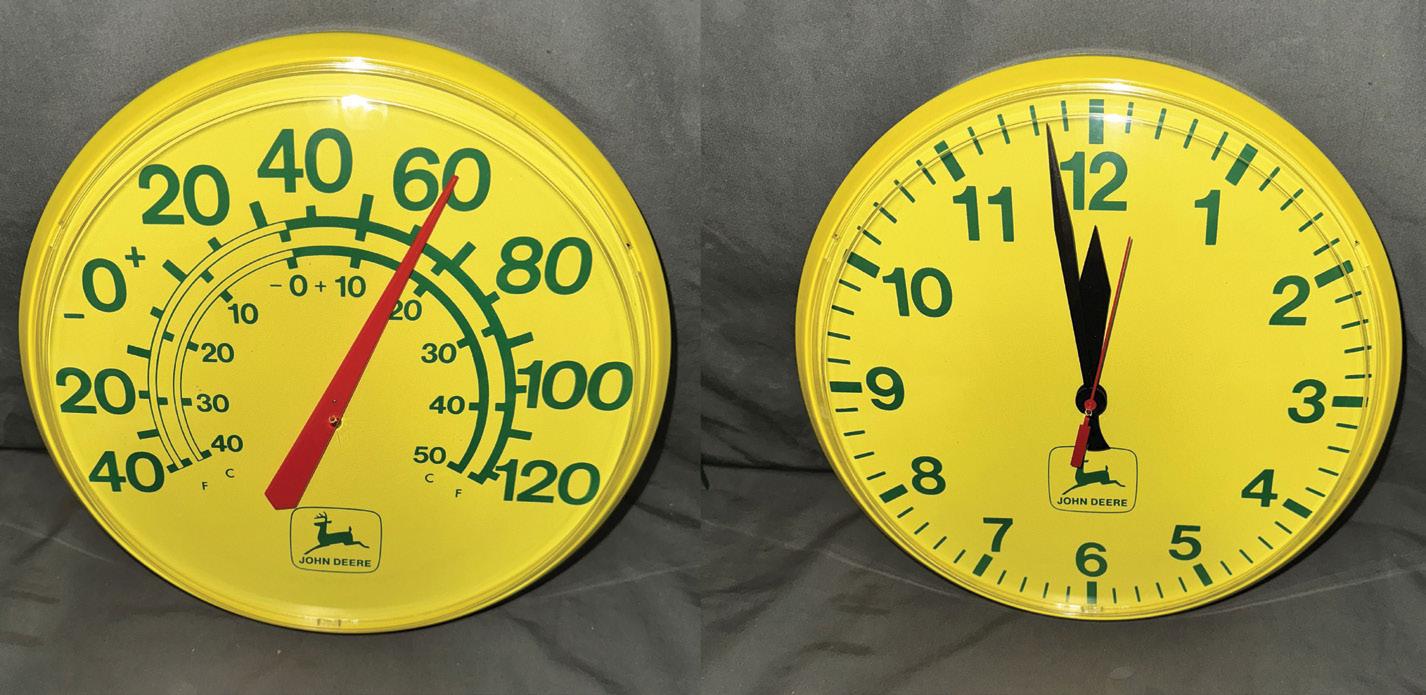
I was recently working with some older John Deere clocks, getting them ready to sell. I thought it would be the perfect time to show them to you and share them.
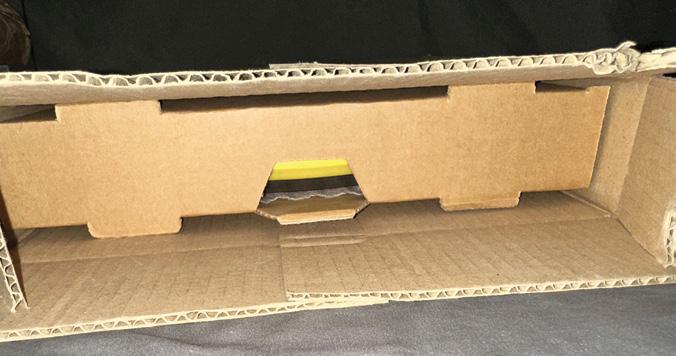
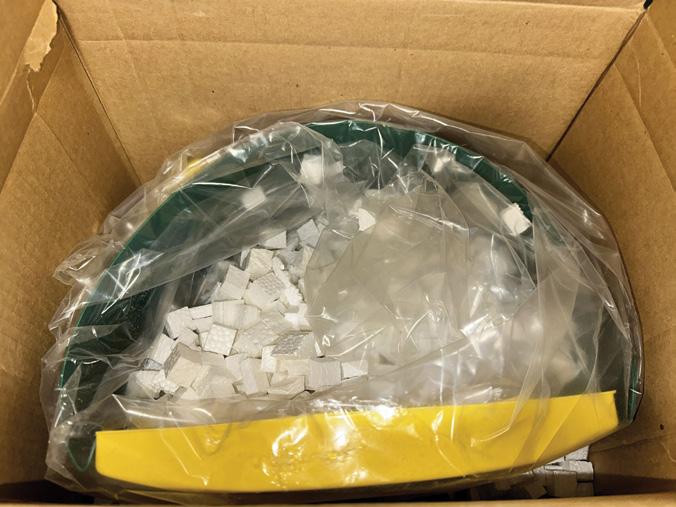
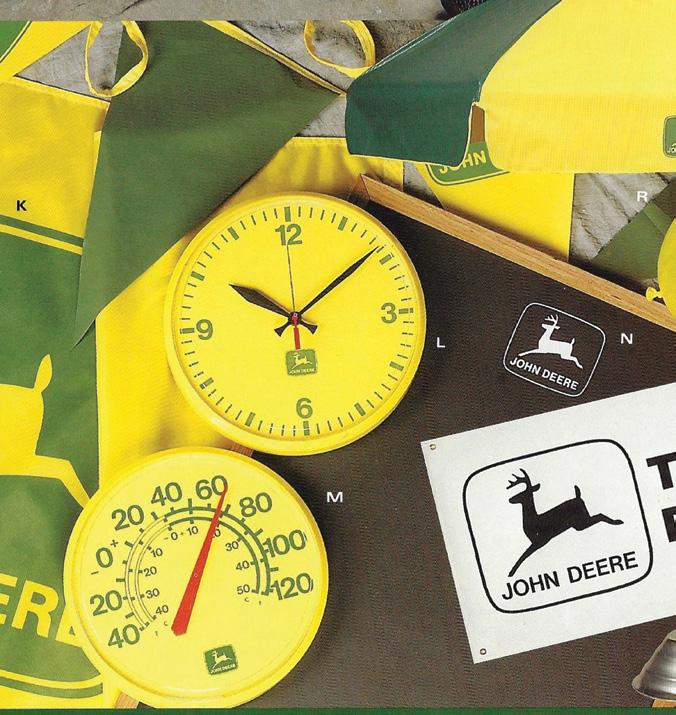
Photo 1 is a small peek at what is inside. It is yellow!
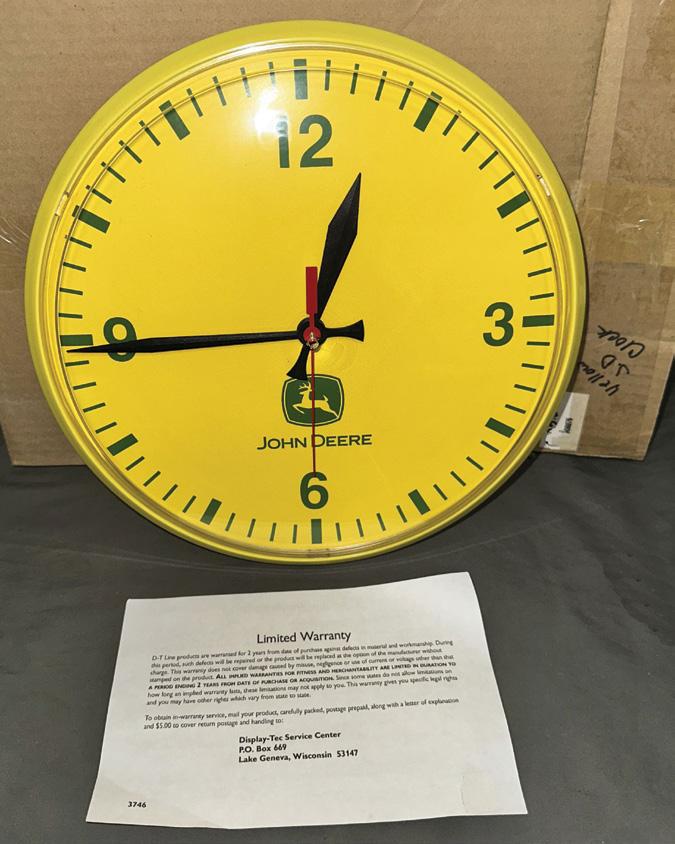
Photo 2 is the clock out of the box. It is a yellow clock with the cur-
rent two legged deer logo! This style of clock has always been my favorite.
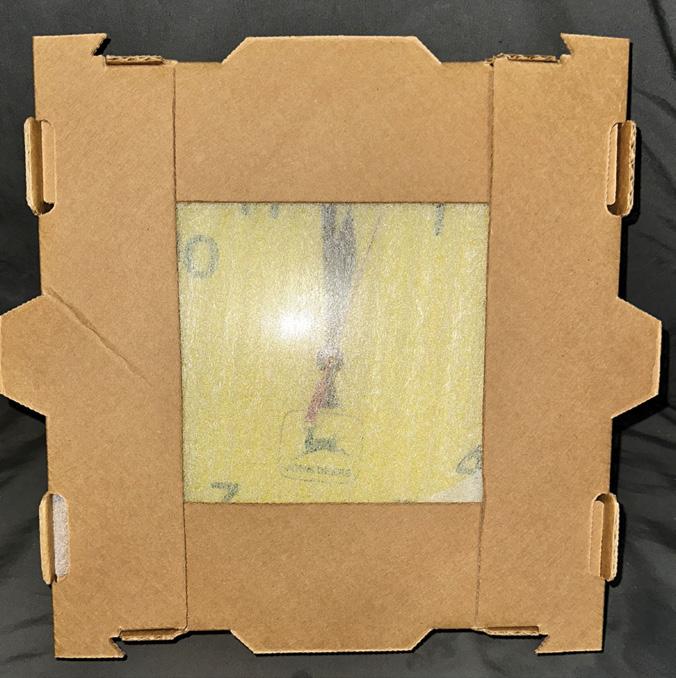
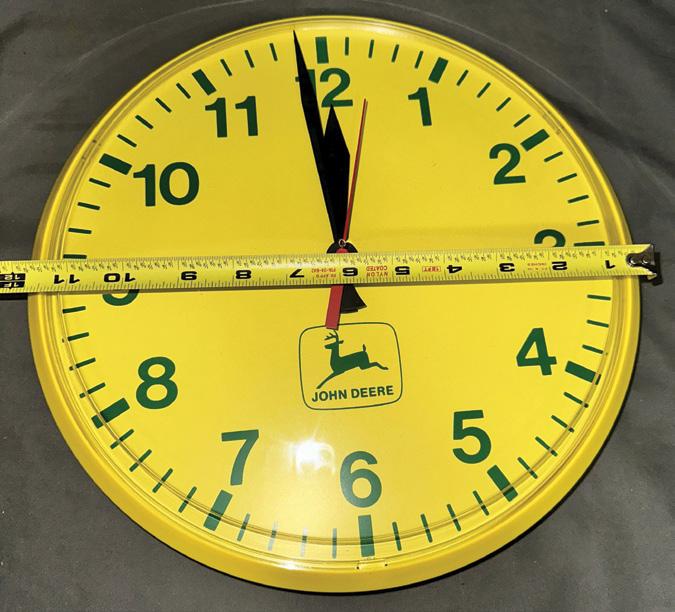
The clock has a 12 inch face (Photo 3). It is a simple design, but you can never go wrong with a bright yellow John Deere clock, right?
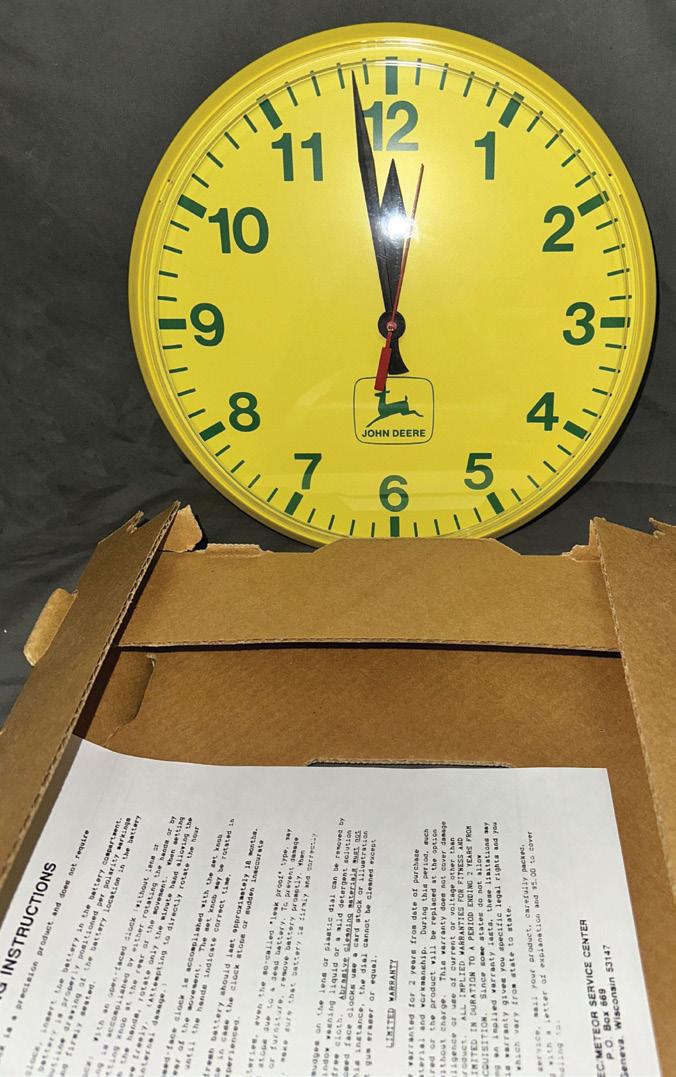
This next clock (Photo 4) is where
Photo 1 • Photo 2, below
Photo 3 • Photo 4, below
Photo 5 • Photo 6, below
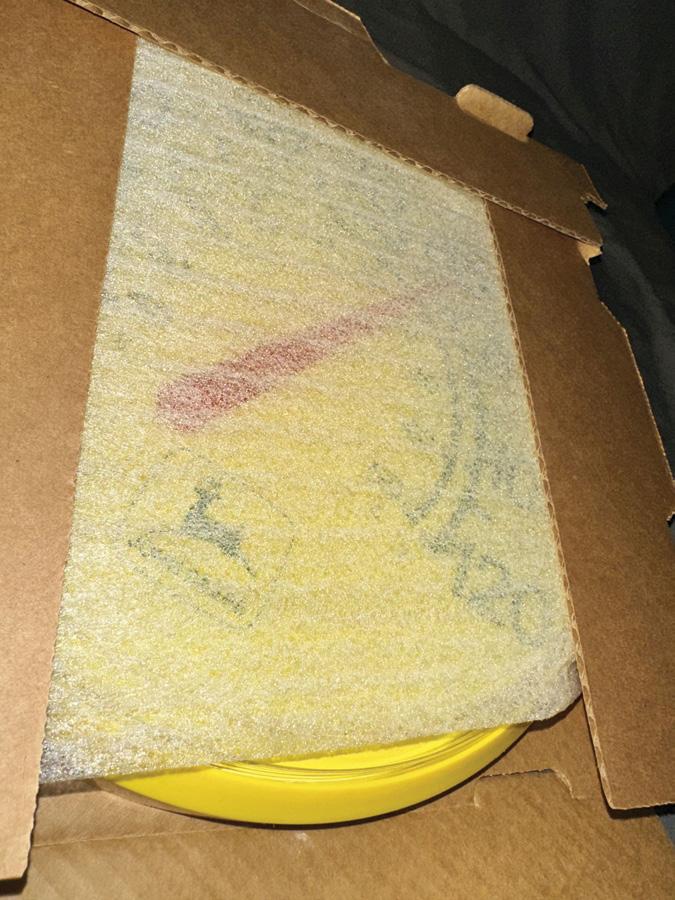
it starts to get fun. Do you see what I see hiding behind the foam sheet?
Here it is. The same clock as the first one but with the old two legged deer logo (Photo 5). I sold so many of these over the years; they were extremely popular with my customers and the price was right. In the ’80s and ’90s, these sold in the mid $20s range.
This is also a 12 inch clock (Photo 6).
Next up, what is it? It is yellow, that can be seen (Photo 7).
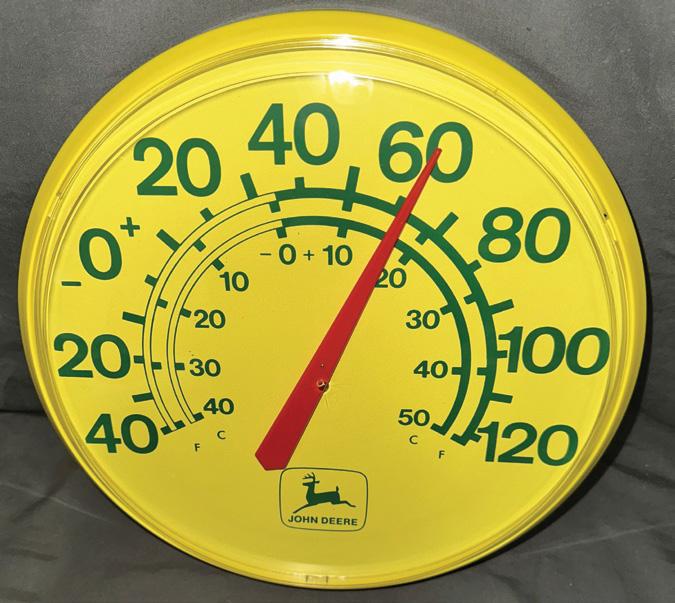
And here it is (Photo 8). A matching thermometer! You can see how similar it is in this picture with the old two legged deer logo clock. I normally sold both when someone was buying a clock since they are kind of a pair, I think.
I like the red pointer on the
thermometer. Also, the two legged deer logo is in the same position as the clock which adds to their similarity (Photo 9). The thermometer is also 12 inch. No doubt they used the same housing for both, just changing faces and works.
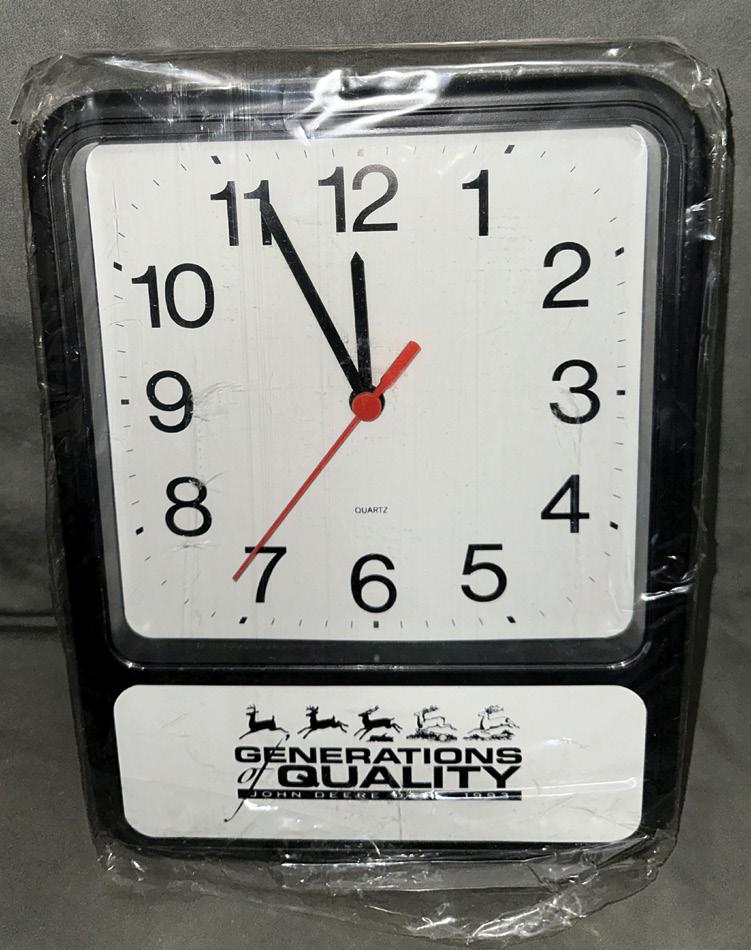
Now we jump to a different clock. This is another of my all-time favorites (Photo 10).
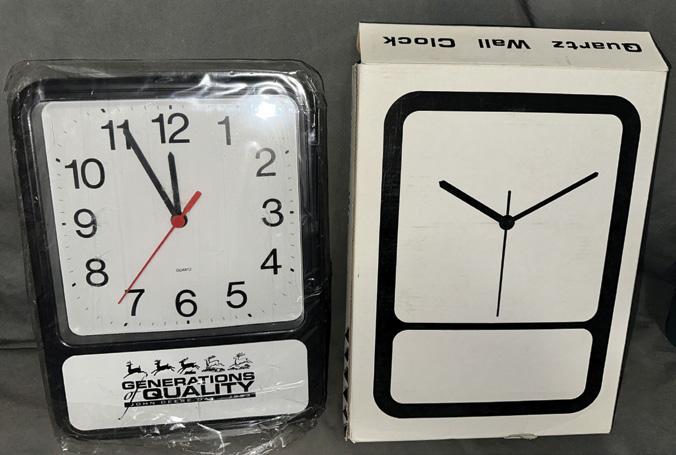
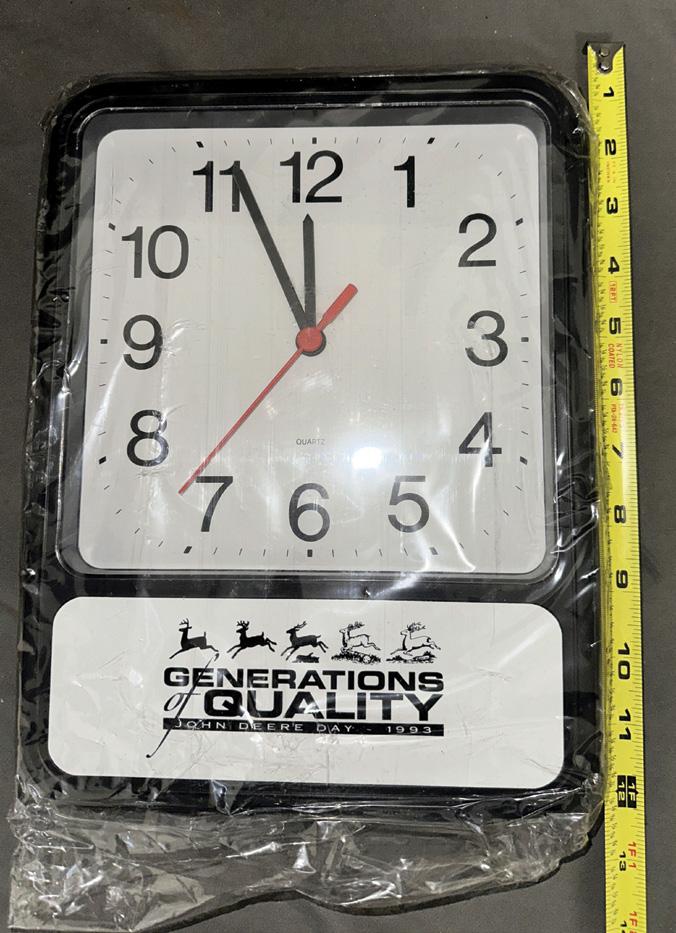
What made this a favorite is the logo at the bottom (Photo 11). This is a 1993 John Deere Day clock with the slogan “Generations of Quality” and, in my opinion, Deere hit a home run with the logo. The old vintage logos gradually give way to the then current
two legged deer logo. When I first saw it, I was immediately struck by the old to new transition. Deere had other items with this on it, like belt buckles and glasses and more. I wore one of the buckles for many years.
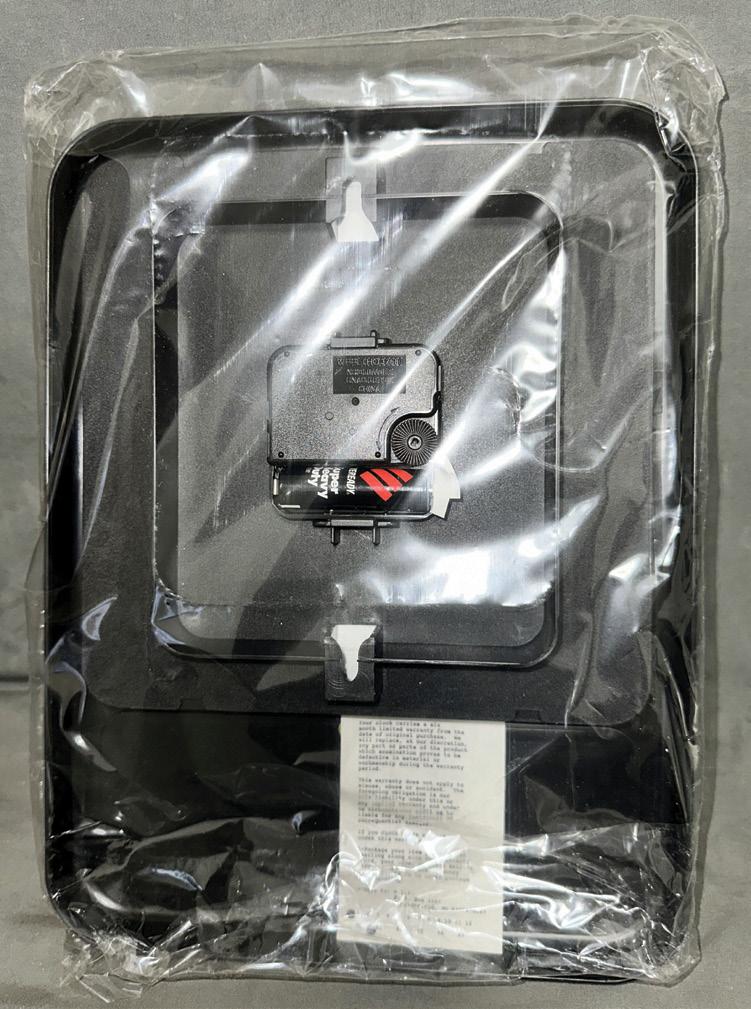
Photo 12 is the back of the clock. Like the others, it has a battery powered movement. I would not lay any bets on the 33 year old battery being any good, however.
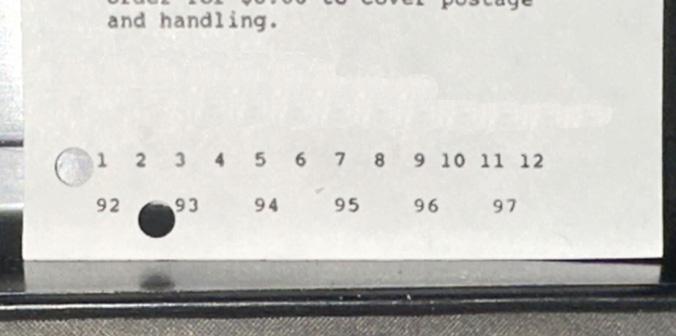
I thought this was interesting. There is a punched card in the back with a build date on it of January 1993.
Photo 7 • Photo 8, below
Photo 9 • Photo 10, below
Photo 11 • Photo 12, below
I have never seen anything like that before on a John Deere clock (Photo 13).
It is also a 12 inch clock, although it is square (Photo 14).
I saved the best for last. What is it? (See Photo 15.)
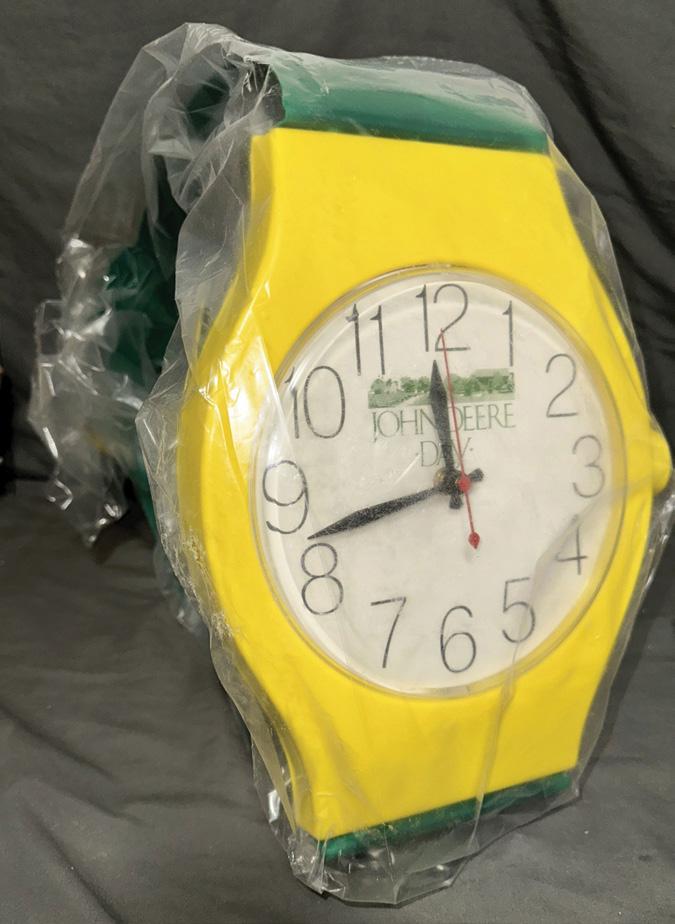
Oh, it is a wristwatch, you say (Photo 16).
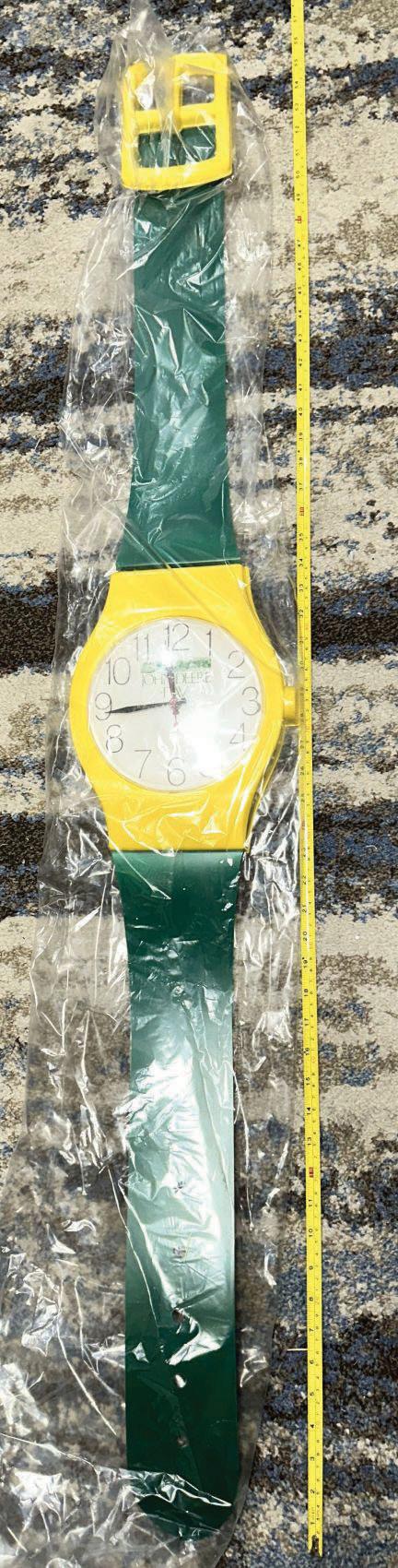
A wristwatch is both right and wrong. It is a BIG wristwatch! It is almost five feet long! (See Photo 17).It measures about fifty-six inches long. That is a big watch!
I always called these wall watches as they are made to hang on the wall. I had several over the years, but this one is special as it says John Deere Day on the face. I have never seen another one like this one, although I am sure there are a few out there, and I was unable to locate any online. Deere currently offers a wall watch but it, and the other versions sold earlier, are only three feet long, so much shorter. The yellow watch and buckle and green strap, complete with holes I might add, do
make a striking presentation when hung up. I never sold that many of them back in the day; I suppose most people really did not have a place for a five-foot watch to hang. You can say one thing, however, they are indeed different (Photo 18).
There is a shipping label on the box the watch came in. It gives us a clue as to the date of this wristwatch as the John Deere Day logo has no date and I cannot remember what year this was. The Lee Wayne Company shipped this. Lee Wayne was Deere’s designated supplier of hats, cups, shirts, buckles and all manner of memorabilia and advertising items. Deere’s supplier changed from time to time, too, as Deere would cancel the company’s contract and appoint a new supplier. It is the same in today’s business world. For me, Lee Wayne was the supplier for a lot of the time I was a dealer. Lee Wayne was appointed as Deere’s
supplier in 1973 and lost the contract in 1993. As I cannot recall what year this John Deere Day graphic is from, going by the dates Lee Wayne was the supplier and the style of the graphic, I feel it safe to say the watch is from 1990 to 1993 as this John Deere Day logo would not have been in the 1970s or the 1980s. I had a personal representative at Lee Wayne; her name was Peggy, and she is who I would call whenever a new catalog came out, and I needed to
Photo 15 • Photo 16, below
Photo 17
Photo 13 • Photo 14, below
order something. As I talked to her so often, I came to know her fairly well. I was told we were one of Lee Wayne’s larger customers but have no idea if this was true or not. I do know I made a lot of calls to Peggy!
Now when an advertising company loses a big contract, like Deere, they often go out of business, and it was no different for Lee Wayne. It would be like an advertising company losing the contract for Nike today— Deere was a big customer. Effective May 1, 1993, Deere appointed a new supplier for their advertising items; it was a company named Promac. I heard rumors that one of the reasons there was a change was that the Promac company was owned by a friend from college of one of the executives at Deere. I have no idea if this is true— chalk it up to John Deere gossip and take it for what it is worth. I often wondered what happened to Peggy when Lee Wayne lost the contract and was sold. I hope she came out okay from all of that.
And, of course, the time came when Promac was replaced by Cyrk and then Tonkin. Advertising is a fast
paced game I have heard, and companies rise and fall on the retention of major contracts, such as Deere. Deere’s current major supplier is Staples. Yes, Staples. They are not the only suppliers, however, and over the years many minor suppliers came and went. It is all fascinating to me, and I study it when I can (Photo 19).
These clocks, and many others over the years, were available for dealers to order to sell to their customers. Some dealers, like our dealership, were heavily into the memorabilia while other dealers simply did not mess with it. I know when a new catalog arrived, I would spend hours going through it and ordering items I thought would be liked by my customers. Photo 20 is a page from one of these catalogs from Promac and it is from 1993. The yellow clock and thermometer are shown and there are a lot more items also. Those were the absolute best catalogs and I enjoyed them immensely.
I chose these to talk about this time as I was working with them as I wrote this article. I thought it unusual to have so many different clocks together in one place. And also, they are all new old stock and in their original boxes. Older clocks turn up once I
awhile on the secondary market, but they rarely have their original packaging. These were fun as I was the first one to open them to take these pictures. For me, it is very enjoyable to be able to see these again as I really liked them when they were available and I remember ordering them even though this was 30 to 40 years ago now. It enables me to relive what, for me, were the best times ever again. I also like that the new old stock clocks have no wear, no fading, no scratches and no one has altered them at all. They are just as they came from Deere through their supplier.
By the time you read this, they will all have new homes. I hope they are enjoyed by their new owners as much as I enjoyed them over the years. Also, the new owners had better keep the boxes or someday there will be a knock at their door! Until next time. Write Greg Stephen at The Old Tractor Company, Box 89, Franktown, CO 80116; phone 231-846-8243 or email deeredr@hotmail.com
Photo 18
Photo 20
Photo 19
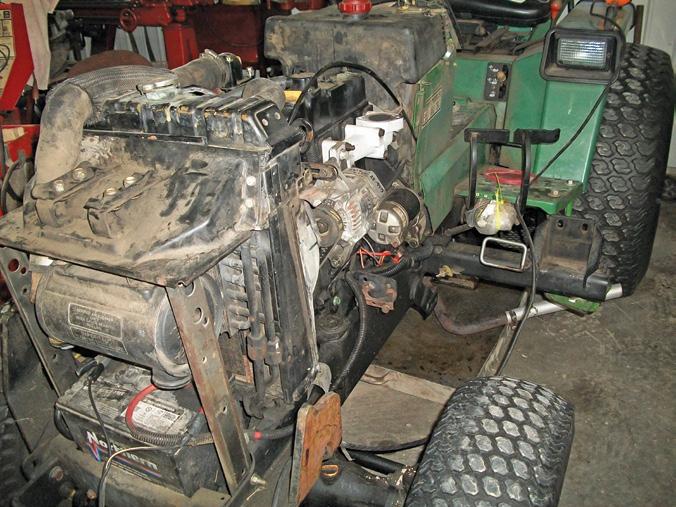
Why is this little John Deere (Photo 1) taking up space in my shop?
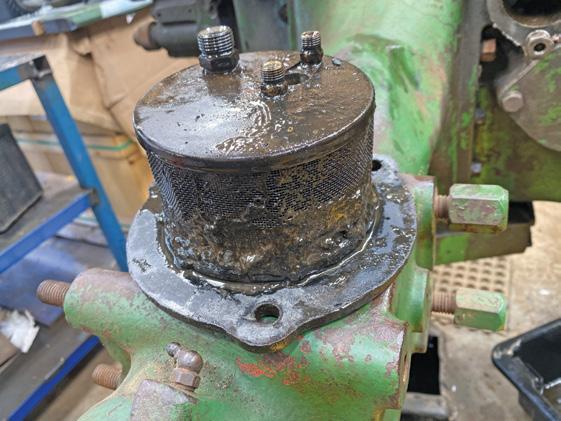
Well, it’s that 955 compact diesel threecylinder Yanmar engine, the same one that I put a crankshaft in a while back. That’s the bad news! If you remember and have been subscribing to Green
Magazine for some time now, you will recall that I have written all about these little mini tractors, what I like and dislike about them. I put this one back in service for our own needs with a front end loader and also had it hitched to a new six-foot finish mower on its threepoint. All was good, and this little guy had its job moving snow out of our driveway during the winter of ‘24-’25, with an even bigger job mowing a good portion of our property, especially our two-acre lot along Sawyer Creek. This area grows grass, weeds, and anything else known to man, and if the temperature and moisture are there, as they were in 2025, that area needed to be mowed more than once a week. The tractor had 130 hours of run time on
it since I had put it back together. Like I said: all was good.
I would briefly pay a little attention to it if only to fill it with fuel, check the engine oil, and give all else a once over before handing it over to the operator, my wife Jo Anne. I received many thumbs-up reports on how well it ran and how much she liked to operate it while cutting grass. Along about the middle of summer, the cottonwood trees that line Sawyer Creek began to shed those fuzzy seeds. For several weeks or more, this cottonwood seed phenomenon is much like a snowstorm and you just have to deal with it. But these seed packets burst and get into everything and are therefore sucked into the little compact tractor’s radiator cores as they “rain” down. The fan’s air blast of course pulls them into the radiator. Plus, now add to the situation that at this time of the year we typically have a spell of temps in the low 90s with high humidity. Together, she and I monitored the radiator area for debris that didn’t belong there on a very regular basis.
Jo Anne kept things clean, but often the tiny radiator with the hydro’s transmission cooler just in front of the radiator cores was still full of …you guessed it—cottonwood fuzz. The cooling system on this 955 diesel holds 4.8 quarts…NOT gallons like the twocylinder Deeres do. Remember your math…there are four quarts in a gallon. This engine runs up on RPMs to make its horsepower, and the cooling system
cools the engine AND its hydrostatic transmission. In my opinion, there are some serious flaws in this area.
But getting back to this summer, all was well until my wife started telling me that the 955 was “burping” out some antifreeze after a mowing session when she shut the tractor off and, in her defense, I have always told her to let a machine such as this idle for a bit after a hard workout in hot weather—“give it a little cool down time before you shut it off,” a procedure to allow the engine’s temp to cool, and I know that she does this with military precision. Along the way, every week now, the 955 needed just a coffee cup or two of antifreeze after mowing as it started to spit it out after shutdown. Additionally, at the 120 hour run mark, I was adding just a bit of engine oil after the four hours of running. Nothing to see here; it’s hot out and the engine is working hard in this weather. But then the distress call came in to me one hot afternoon: “I think the 955 has got some big problems because it just went up in steam and blew out a bunch of antifreeze.” Hmmm, funny that the dash HOT light never came on. And so ended the 955’s run for the late summer of 2025.
It’s time to “back wrench” and improve on a few things with this tractor. Any time that a liquid cooled engine pressures its cooling system and blows out a lot of antifreeze from its overflow tube, you can usually bet on a bad cylinder head or its head
Photo 1
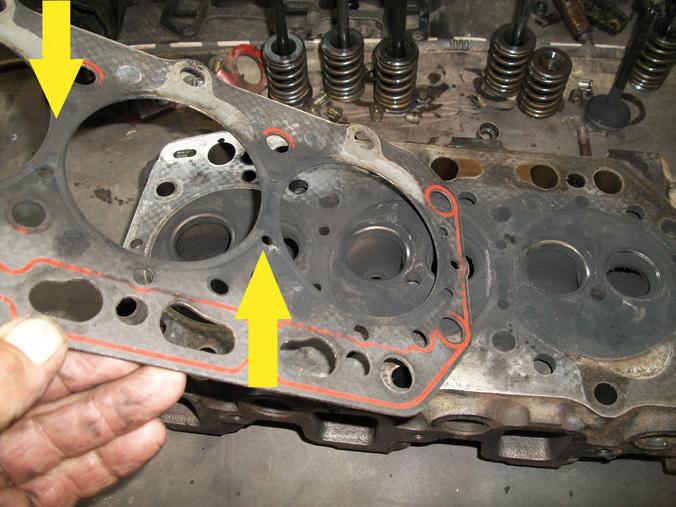
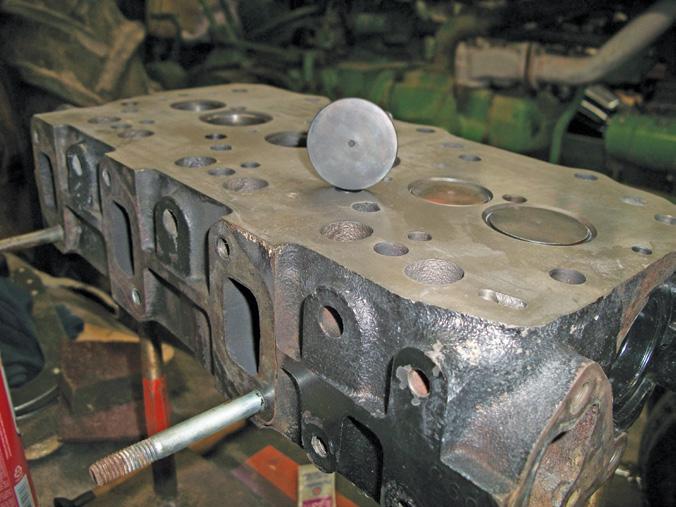
gasket. Finally, the 955 found its turn and some space in my shop and it was no surprise to me to now see the Yanmar’s head gasket blackened (Photo 2) through its middle cylinders. The head was stripped of all its valves and injectors and sent away for resurfacing. Engine machine shops are few in this area and patience is a much needed virtue when you take something in for what is required. “It will be a ‘spell’ until you get it back,” I was told. As you can see (Photo 3), it is now back in my hands and it has a nice new straight finish on it. The cylinder head came back with a clean bill of health and a good looking surface job.
Speaking of bills, the one that came back with the head was $200 (list) and $125 (net). I am so glad that I was
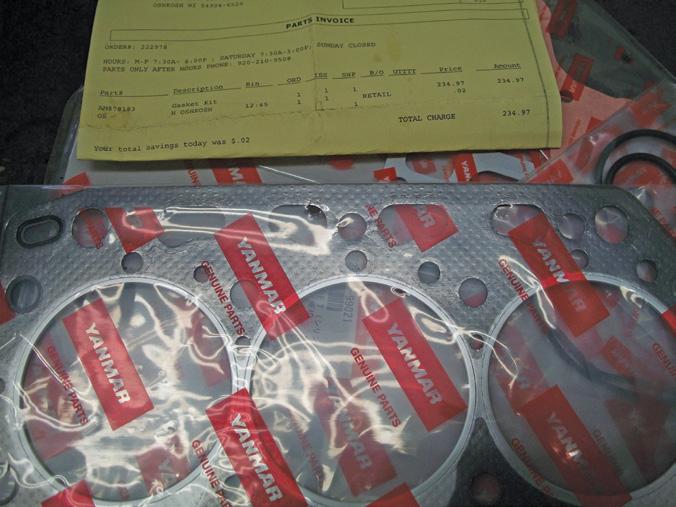
a “net.” Keep in mind that the head was stripped and cleaned and all that needed to be done was to machine its head gasket surface. The head gasket (Photo 4) set came from John Deere with a price of $235. Just because these tractors are small doesn’t mean that their parts are inexpensive. So let’s put this head back together again.
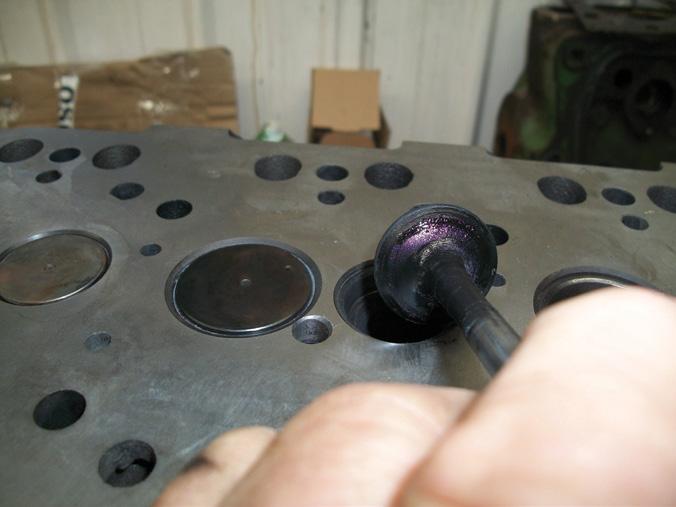
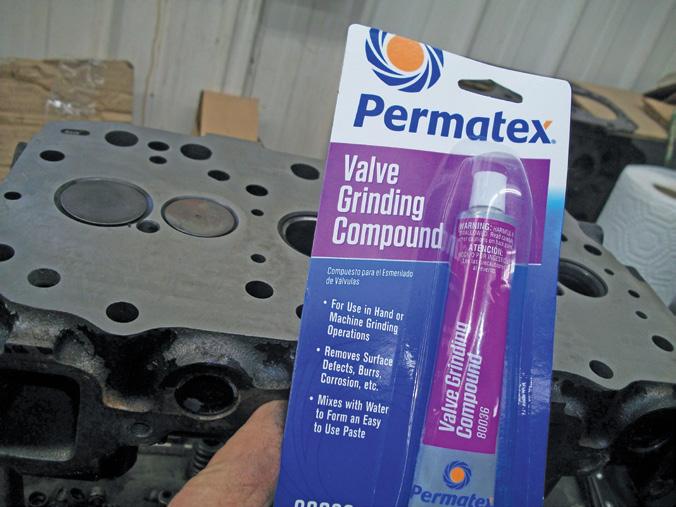
As I have mentioned in the past, it is a good procedure on any diesel head to NOT regrind the valves and seats; doing so in any amount will lower the valve head’s standout in the head and lower its compression. The valves and seats were carboned up a bit (Photo 5), but when they were GENTLY cleaned, they showed no wear and the seats were in good shape. All that will be necessary is to relap all the valves to their seats using my favorite compound: Permatex 80036 (Photo 6).
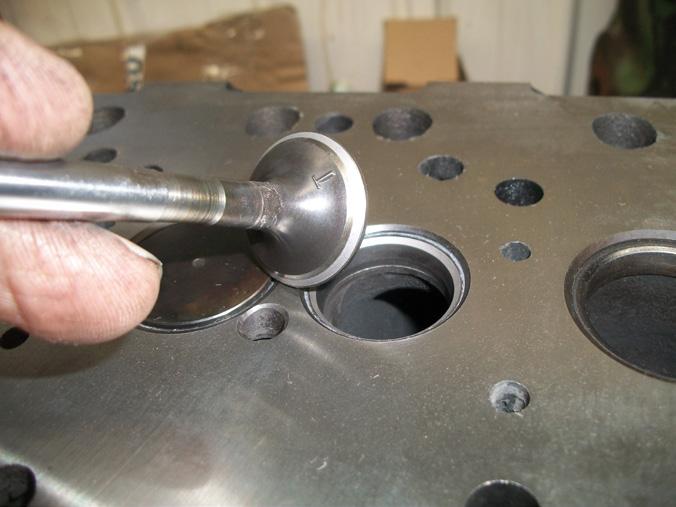
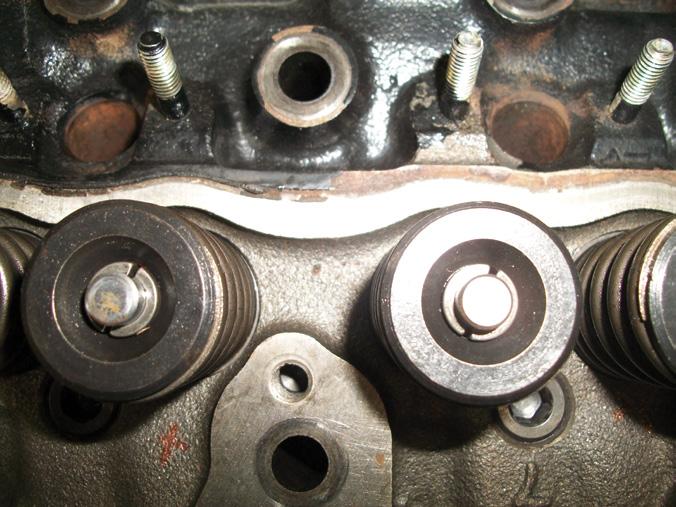
Keep in mind that in order to correctly pull off the procedure, the valves were kept in position to go back in the same place that they came out of. The head assembly will include new valve stem seals that came in the head gasket set. As you can see (Photo 7), the valves and seats turned out in great shape. When installing the valve springs and their locks, I like to space the gap in the locks as equally as I can (Photo 8).
Are we finished here? I don’t think so. Until now, I had given little attention to the cylinder block and the sleeves, but now when I started to clean things up in this area, I noticed another “Houston, we have a problem.” I now see that on cylinders number 3 and 2, there are some linear scratches. I would like to say “ahh, that’s nothing,” but I suspect two scored pistons on the thrust sides likely from overheating. One has to do the pep talk and convince yourself what to do. I COULD put the cylinder head back and try to forget about those scratches in the sleeves, but the little birdy on my shoulder is saying, “Pull the engine out and look those pistons over to see if they are okay.” After thinking it over for a bit, I decided to do just that and besides, the engine motor mounts should be replaced anyway since the engine seems to do a lot of shaking at idle speed. Much yet to come on this!!
I must devote a few words concerning Green Magazine readers issues that are now arriving in my “snail” mailbox. Most/many of the questions and concerns I am getting …yes, two-cylinder John Deere charge systems. Perhaps it is the cold temperatures this winter or maybe just the fact that folks have had enough of faulty
Photo 2 • Photo 3, below
Photo 4
Photo 5 • Photo 6, below
Photo 7 • Photo 8, below
voltage regulators? But it IS a “hot topic.” I make an effort to respond to these folks who have taken the time to get in touch with me. It may be a little bit of a delay to respond to everyone while taking into consideration the slow moving ponies doing the mail delivery these days. James Earnest from Bloomington Springs, Tennessee has wiring problems that are driving him up the wall. George Vastine of Millville, Pennsylvania and his son had a shed full of “A’s,” “Bs” and 50s and has voltage regulator problems with most of them. And Joe Drienka from Chesterland, Ohio has charge and electrical problems with his “showready” “A’s” and “Bs” and on and on.
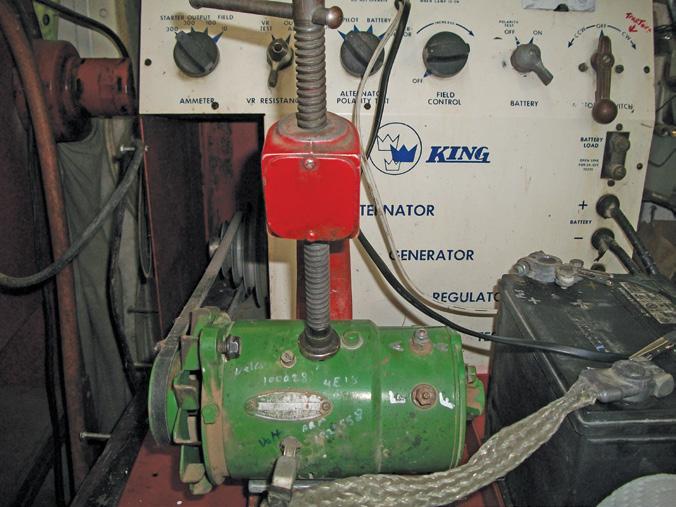
The King generator tester (Photos 9 and 10) in my shop has been busy lately in addition to dealing with other cold weather-related issues. There has been a spike in people’s interest in the solid-state cutouts and the rheostat field ground system. Some folks like to set their own charge rate and this is the way to go. It surely surprises me how many generator charge systems there
are, and how many people want to keep it that way. Not to worry, GREEN tractor lovers: I am getting just as much concern about charging problems from the tractors wearing RED.
One reader of GM who got in touch by mail told me to “stop getting long in the tooth;” there’s not much I can do about that. Another told me to “get my hearing fixed and start answering my phone.” Maybe he’s right because recently at my dental hygiene appointment, while the hygienist had her hand and instruments in my mouth, she did most of the talking of course. She told me that her son is in
high school wrestling and that she needs to be at the next wrestling meet to help with confessions. When I finally had an opportunity to speak, I asked, “Since when are there confessions at a wrestling match”?
She kindly responded, “Sir, you must have misunderstood; I said CONCESSIONS, I need to help with concessions”! Keep smilin’ cause it makes people wonder what you’ve been up to. ’Til we meet again, happy trails, and GOD BLESS.
This column is written by Ron and Jo Anne O’Neill.
Photo 9
Photo 10
As I write, it is a Friday with NO SCHOOL due to the cold temps. Last night’s low was 31 degrees below Fahrenheit with a wind chill of minus 51F! So my wife’s school is canceled and I was suppose to substitute teach and that, too, was canceled. So I thought what better time to get busy writing my auction article.
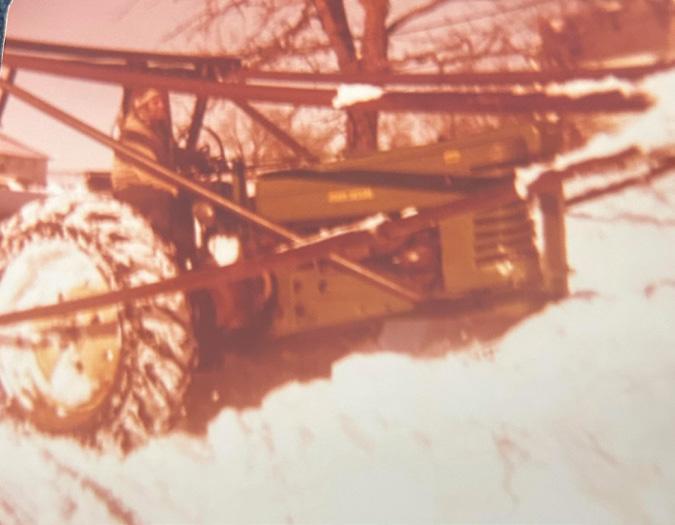
The weather reminded my of days gone by. When I grew up, we had a fairly long driveway on the farm, one that would often be plagued with deep snow drifts. Mom, Dad and I spent many hours shoveling early in the morning as Mom would head off to school. It often seemed we had a tractor to do our chores but sometimes without a loader. I remember the winter, I believe it was 1977-78, we had several storms starting early in November. That year, the tractor of choice was a 1952 model “A” that we owned. It was originally purchased by my grandfather new at Rolandson Implement here in Oklee, Minnesota. The “A” at the
time had an F10 Farmhand loader on it. I remember Dad cleaning a lot of snow that year with the “A.”
I still have Dad’s F10, most recently mounted on a 1951 “G.” When I moved to the farm, that “G” and F10 loader were my snow removal equipment for several years. Both the “A” and the “G” are narrow front tractors and that proved sometimes difficult in deep snow or trying to carry a heavy load. I included a picture of dad pushing snow with the 1952 “A” back during that ‘77-’78 winter. I used that loader quite a bit but I was nowhere near the operator Dad was! He could shift to neutral, hit the clutch and lift and dump and get that bucket at the right angle. Dad passed away a few years ago but I sure respect that man—for being a wonderful dad and a great John Deere man. Along with Mom, they gave me my love of John Deere tractors and machinery.
Thanks to a phone call, I was made aware of a sale by Schram Auction of Gretna, Nebraska. I don’t exactly know why but I am a sucker for a two cylinder with a mounted corn cultivator. Maybe it is because we had a 1942 “B” with a two row, front mount, hand lift cultivator that I cultivated corn with. Or later, we purchased a 1951 “G” with a four row front mount. Whatever the reason, this sale included one of those front mount fun tractors. This one was a 1957 620 tractor with a JD two row front mounted cultivator and a single front wheel. The tractor’s
serial number is 6209560 and shows 8,684 hours. Good selling points were new 13.6-38 rear tires, three-point hitch, power steering. What do you think? It think it was a pretty good deal for someone, selling for $3,000.
This sale also boasted a 1952 wide front model “G,” serial number 60054. It has ‘“big” 15.5-38 rears and new 6.00-16 fronts. People seem to like “Gs,” me included, and this one sold for a nice bid of $5,600.
Author’s father on “A” JD.
The last tractor I will mention from this sale was a 1950 model “B” (serial number 255500) with a narrow front. The tractor was advertised as
nicely restored and having good tires. Another good deal for someone! The final bid was $1,600.
Graves Auctions of Mazeppa, Minnesota had a couple of December Auctions with John Deere tractors on the auction block. We will start with the Bill Brueck Estate Sale on December 10th. There were tractors that I don’t know that much about but have always been very interested in—John Deere “GPs,” both on steel and both with stuck engines. The first one commanded a bid of $2,650, while the second one with lugs in the
five gallon pails in front of it brought $1,450. Go figure! Maybe one day I will be able to get a “GP”?!
Another fun old timer was a hand start “D” with front spoke wheels with nearly new tires and 12.4-28 rears.
Though not running at the time of the sale, the engine is loose. This “D” went to a new home thanks to a $1,750 bid.
The sale also had a couple of other tractors worth mentioning. First, a running and driving model “L” hand start. This little cutie was missing a serial tag and was sporting 7.50-22 rear tires. If I would have known ahead of time, this one just might have come up to northern Minnesota! The selling price you ask? $975! Lastly let’s look
at another good deal. A John Deere model “M” with a Woods L59 belly mower. The “M” has 11.2-24 rear tires and is also in running and driving condition. With the mower and all, it was a bargain for a lucky buyer selling for $1,300.
Graves also held a year end consignment sale on December 30th. One of the tractors here was an unstyled “B” tractor on round spoke rims. The gavel dropped on the running and driving unstyled “B” at $1,601.
Next we move to another tractor that is sort of dear to my heart. Probably the most hours I spent on a tractor was on Dad’s 1961 4010 diesel. So here we have a 4010 diesel wide front tractor. The tractor has a three-point hitch and a single hydraulic remote. Sounds like a good deal to me at $5,300.
I personally love the narrow front on the next tractor. Where I grew up in northern Minnesota, most New Generation tractors I saw had
wide front ends. This tractor is a 3020 narrow front gas. The 3020 also has a three-point but this time features dual hydraulics. The tractor runs and drives and frankly looks pretty good. All you would have had to do is to a bid of $3,700 to own this 3020.
Maybe some of you were watching the Bickel Two Cylinder Collection Auction conducted by Aumann Vintage Auctions. The sale had four 830 electric start tractors. One of them was a 1959 John Deere 830 tractor with hammer strap on the drawbar, 540 PTO and two hydraulic remotes. One of my favorite features of this particular tractor are the 23.1-26 Armstrong tires on the rear that are weather checked. This tractor was the highest seller at the sale, commanding a bid of $7,840.
The next 830 I will mention also had electric start. Other equipment listed were dual hydraulic remotes, two cylinder carrier brackets and three sets of wheel weights. This one was on mismatched 18.4-34 rear rubber. The 7.50-18s on the front were also mismatched. The tach read 1,313.9 hours. To me, it was a nice looking tractor but it did have several cosmetic flaws. This one could have been yours if you would have matched the selling
bid on time. SOLD for $6,600.
Next, another similar and unique tractor and scraper. I have a friend with a couple of these machines but have not been around the model 840 John Deere with Hancock elevating scraper. The
840 was advertised as in running and operating condition. The tractor does have PTO, power steering and electric start. As mentioned, it is equipped with a Hancock elevating scraper. It had 23.1-26 rears and 20 inch fronts, tires in good condition. The seat had good cushions and the unit had been repainted. The “cool” 840 and scraper reached a bid of $7,150.
The Bickel sale had several twocylinder tractors and we will highlight a few more. How about a 1959 730 standard diesel? Some of the listed features include electric start, one hydraulic remote, fenders, and lights. The tractor has 18.4-30 Goodyear tires on the rear and mismatched 7.50-18 fronts. The left fender has small dents
on the bottom rear corner as well as the top. The seat frame also has some welding. Serial number on this tractor is 7314008. If you like standard tread tractors, this is a pretty decent 730 tractor. Price: $8,580.
We will finish with a couple of my favorites. First a 1943 John Deere model “GM” tractor, serial number
13642. It is one of just 330 “GMs” produced in the 1943 model year. It has the large shaft 540 PTO with shield
and adapter. The “GM” has a Wico C mag and 14.9-38 Coop rear tires that are a bit weather checked. The “GM” is equipped with fenders with rust, and a few dents in the sheet metal. There were a few “GM” fans bidding, ending with a $6,930 bid.
Let’s finish up with a 1950 John Deere styled model “G” tractor. It has a an adapter on the PTO, with twisted splines. The “G” has Powr-Trol and hydraulic cylinder carrier, step and
fenders. The tractor has a narrow front with Roll-O-Matic. It has an alternator and a Wico C magneto. The tractor has good tires, 13.6-38 Firestones on the rear as well as 6.00-16 Firestone fronts. A rubber fuel line and filter have been added to the tractor. Not a bad deal at $2,365.
Thanks for the calls and message and I hope you enjoyed another month of some John Deere tractors that came up for auction. If you see something of interest, I would love to get an emailed message: mickelsonauctions@ gmail.com. Thanks again, and happy auctioning!
Email Eric W. Mickelson at mickelsonauctions@gmail.com
G’day, mates!
As I write this month’s article, we are heading into the last month of summer in Australia. The weather has been hot and dry in our area. Our lawn growth at home has slowed down, but the weeds still seem to have lots of energy and they sprout up. Some areas in the southeast part of Australia have experienced terrible bush fires again, which seems to be a common occurrence this time of year.
Our takeaway food shop has been going well. No major breakdowns this month except for the water heater, which sprung a leak in the tank. It was only nine years old, but not repairable. At least this unit is part of the building lease so we did not have to pay for the replacement. We are still struggling with the heat inside the shop. There is an exhaust fan hood to remove the fryer heat, but there is no other ventilation for the room and equipment heat. We have screen doors to allow air movement in the daytime, and four interior fans moving the air. The issue is getting the heat out of the shop, as the temperature inside
runs 10 degrees hotter every day than outside. The property owner’s leasing agent has had a ventilation company in to look at our options, but nothing seems to be progressing.
The model “B” restoration project has progressed since last month’s article. I started the process to remove the crankshaft to send it for spline repairs with the cracked flywheel. The first step was to remove the cylinder head to get the pistons and connecting rods out of the way for the crankshaft removal. I removed the rocker assembly from the cylinder head. Before advancing with the dismantle, I decided to check the blowby or compression level of the closed cylinders. While the crankshaft and pistons were rotated, I listened for air escaping. There was basically no resistance to piston travel at top dead center. Excessive “hissing” sounds were coming from the crankcase area. The sound certainly was not a snake hissing in there! This hissing will be blowby of compression past worn piston rings. I could also hear air leakage at the number one exhaust valve. A hammer was used to lightly
tap on the top of the exhaust valve to move it in and out. This helped to seat the valve completely. A few more turns of the crankshaft and the only hiss was now coming from the crankcase area. I removed the cylinder head and placed it on the workbench. The valves and face of the head all appeared to be in good condition. I checked the cylinder bores, and all looked okay. There was a noticeable wear lip at the front of the piston bores, where the piston rings stop their forward travel. I removed the soot from the top area of the piston bores to allow the pistons to come out with less resistance. The connecting rod caps were removed one at a time and then I pushed the piston and connecting rod out the front of the cylinder block. I inspected the pistons and rings. The top ring on each piston was completely worn out. They were loose in the ring grooves and the end gap was almost one-half inch! Under the top rings, there was a buildup of soot as well. None of the rings were stuck or broken on either piston. The tractor did start well and run okay before it was disassembled. I do re-
Cylinder head removed. All engine parts removed. Dirty oil pump removed. Checking oil pump gears.
member quite a bit of smoke coming from the crankcase breather, which was blowby past the rings. Now I can see why there was so much smoke!
The oil lines to the main bearings were removed, and then I removed the rest of the fittings to take out the oil pump. This pump removal is always a good step on these repairs. A lot of times these old tractors are full of oil sludge at the bottom of the crankcase where the oil pickup for the pump sits. There was minimal sludge in this crankcase, but I thought it best to still remove the pump. First, I removed the cover for the oil pump gears and dropped out the gears and drive shaft. The little square oil pump coupling looked to be in good condition. On earlier models, these drive couplings were quite thin in size. Later model two-cylinder tractors featured a heavier duty oil pump drive coupling. This coupling is designed so that if there is water frozen in the engine under the oil in colder climates, the water will also be in the oil pump gears. The coupler was designed to split or break when the oil pump gears were frozen. This design of the coupling was so no other component was damaged. The oil gauge needed to be functioning of course, and if the coupling broke, there would be no oil pressure. The operator needed to be aware of this possible failure as major component damage would result from no lubricating oil flowing to internal engine parts.
I disassembled the oil pump by removing the screen assembly. There was minimal sludge in this pump but I am happy I removed it to check. The screen assembly was reinstalled, and then thin mechanic’s wire was used to secure it back in place. There is a groove built into the pump casting for this wire stay secured. As the wire tightens while installing, the wire pulls the screen into this same groove to secure it.
I had my son Kyle help remove the crankshaft. The main bearing caps were removed and
then the two of us worked the crankshaft out the side of the tractor. While the oil pump was removed, I cleaned the bottom of the crankcase. The oil pump was then reinstalled with new gaskets and the pump coupling was put in place before the bottom gear cover was reinstalled.
The cylinder block came off next. It is always best to remove the block and refresh the gasket and sealing area between the main case and block. I have heard of this happening over the years—that a restorer skipped this step. Then, when the tractor was reassembled and painted, on first startup, that area leaked oil. Three of the cylinder block studs came out with the nut still attached. I installed two nuts on the other end of the stud and tightened them together. This allowed me to hold the stud without damage, and the other nut unscrewed from the stud.
The flywheel and crankshaft are now at the repair shop. I have cleaned the soot from the piston ring lands. A check of the pistons and bores size showed that the cylinder bores were still at standard size. I ordered a new set of rings from Steiner Tractor Parts and they arrived last week. The new rings fit correctly in the ring grooves. When I installed a loose ring in the cylinder bore, I had a slight gap so this should be good. I put a worn top ring in beside the new one to compare and see the wear, which was substantial. I purchased a ridge reamer for the cylinder bores but have not used it yet. I will take the ridge off the top of the cylinder bores as the new top ring might contact the slight lip at top dead center and damage the ring. I will post progress as I go.
My 1953 model “R” is a project. I have written about it previously. It was purchased mostly complete from Peter Sands’ cousin. The tractor had a hard end to its working life. I was told it was used on a sugar cane farm. The rear drawbar frame had been strengthened, and then a subsoiler was mounted to the drawbar frame. A hydraulic cylinder raised and lowered the subsoiler. The tractor suffered transmission gear failure and then it was parked. It was sold along with a running model “R” to Peter’s cousin. I have lifted the shifter assembly to look in and see what the issue is. Several gears were visible that were missing teeth and the shifting forks were broken. These transmission parts have been on order from the USA since 2021. I have previously disassembled the engine and freed up the stuck pistons. The bores are in great condition, thank goodness. I greased up the bores at the time to keep the rust away.
The tires were poor when I bought the model “R.” The day I picked the tractor up, I took along wheels I had here that were owned by a friend in New Zealand. Those wheels were purchased at an auction sale and I had been storing them until a shipment was assembled. In 2024, that shipment was occurring to New Zealand, so I removed those rear wheels from the “R.” I had the tires removed from the rims as they only wanted to ship the rear rims. The tractor has been sitting on blocks in my yard ever since. In January 2025, I contacted the local blasting guy to get the rims cleaned up to paint. Somehow 2025 disappeared and it was December. January 2nd of this year, I dropped the rims off at the blaster along with other wheels
Cleaned crankcase. Reinstalled oil pump and lines. Crankshaft and flywheel crated for shipping.
including the model “B” rims and cast centers.
After two weeks, I got the call that the wheels were done. I picked them all up and got them primed the next day. The next weekend, I was able to paint all the wheels yellow. I used John Deere yellow enamel from the dealership and mixed enamel hardener with the paint. I decided that since the model “R” was getting new rear tires and painted rims, I might as well paint the rear wheel centers as well. The centers were wire brushed, power washed, primed when dry and painted. I ran a threaded die nut on all the wheel center studs. A thread tap was used to clean up the threads on all the original nuts.
Last week, I was able to get the new tires mounted on the front and rear rims. With a bit of work, all four wheels were mounted. Then, I was able to finally move the tractor from its stationary spot after 16 months. The following day, I removed the front wheels and painted the front wheel hubs yellow as well. This way all the wheels matched and looked good.
Readers will question why I replaced the tires first before the repairs. Well, the tractor was stuck in that position due to the old tires being rotten. I had purchased new tires a few years ago from my dealership and they were here waiting. Now I can progress when the transmission parts finally arrive from the USA. The transmission will be fixed first. This is my plan due to the unknowns in the transmission. If there is a catastrophic failure to any parts of the main case, then I will not proceed and the tractor will be used for parts. There is no sense fixing up the engine and then realizing the main case has failed. I will post progress as I go!
The two cylinder starting engine on the model “R” was missing the starter when it was purchased. I did receive the drive that was still bolted to the engine, but the motor part of the starter was missing. A few years ago, I purchased parts of another model “R” from a collector here. With those parts came another complete starting engine. I had plans to fix up that starting engine to have a spare. It would also be a stationary mounted conversation piece. I pulled that engine out of the shipping crate and checked it over. I was disappointed when I saw that the one connecting rod had come loose and failed. The rod was bent and twisted, and the piston was destroyed. I was able to remove those parts from the engine. An
engine hone was used in the bore, which cleaned up very well. I contacted Tyler Shumaker, a parts supplier in the USA. He had the pistons, connecting rods, main bearings, crankshaft and other parts removed from a parts tractor starting engine, and they are on their way here.
Below: Winding restored with new
This spare starting engine did have a starter mounted. These starters are only common to the model “R” tractors, so they are very hard to find from any parts supplier. I disassembled the starter to hopefully refurbish it. The one brush mount and spring were badly rusted. I was able to get that all apart and I had a new brush spring in stock. The mounted windings in the starter were the next issue. It appeared that the starter had been lying in water on the side that the brush mount was on. The one winding was losing the insulating tape. This cannot be left as the insulating tape keeps the winding from being grounded on the starter tube. I was able to get the slotted screws out of the starter tube. The winding was cleaned and then wrapped with insulating tape. The windings were reinstalled and I soldered the windings strip onto the power stud. I assembled the starter and tested it. The starter spun for a short time and then stopped. I disassembled the starter and found that the solder joint had separated at the power stud, causing the current flow to stop. I will need to do a better solder job on that joint, but it did run for a short time. So that means with the solder joint secured, it should be back in service. I will update the result of this repair next month.
That is all this month. Stay tuned next month for more Australian activities and tractor adventures. Hoping the readers in the Northern Hemisphere are getting some relief from the very cold winter months! Until next time, cheers, mates!
Contact Ken Nicklas by email at kenanicklas@gmail.com
Right view of tires installed. Below: Rusty brush components.
Above right: Winding tape in poor condition.
tape.
1916 Velie hearse
We’ll start this article with What Brought More? and we’ll start What Brought More? with something that will be very familiar to those who farmed in the latter half of the 20th century: a fender-mounted AM radio. These probably contributed to tinnitus and hearing loss in a significant portion of the rural population, since they had to be loud enough to be heard over the working engine of an open station tractor. This radio has the John Deere logo on it, but was made by Motorola.
It is adaptable to either negative or positive ground systems. The seller said that they don’t know if it works, and someone had once cut the antenna off just above the spring. At least that will make shipping easier!
The second item is a simple giveaway piece. It is labeled as a multi-tool, but its multiple functions are a combination that I have never seen before. It is a combination ice scraper and barbe-
cue grill scraper. Clean the greasy soot off of your grill in the summer and toss it in your car to clean your windows in the winter…just remember to wash it off in between. There is also a simple hanger incorporated into it. It is a simple plastic tool, probably made in the 1980s, and it appears to have been distributed by the Industrial Division, specifically to loggers. It features the images of a feller buncher and a skidder. Do you think this brought more than the broken radio? Find out at the end of the article.
What could be better than a porcelain sign depicting the early 1950s’ logo? It is one of Deere enthusiasts’ favorites. If you also had something from Deere’s chemical division, memorabilia from which has sold very well over the years, you would have a very valuable piece, right? Well, hold on a minute. The 1950s’ “QFE” logo was only used until about 1956. Deere didn’t really have a fertilizer
or chemical division until the 1960s. I guess that sign can’t exist…unless someone makes one. Someone sold one that mixes these things on eBay this month. It seems that the population is smart enough to figure out the math behind it, because it sold for just $28.99 after one bid. It’ll still look good on a wall somewhere.
Next up is a group of items gleaned from various Deere conventions in the 1960s. The first, and likely most valuable, is a small lapel pin from John Deere Day in Dallas, 1960. This was the much-talked-about convention when the New Generation tractors were announced. Also included are two name tags, a table name card with a John Deere “B” tractor on top, and some green and yellow paper
decoration that may have been used to trim the edge of a table or similar. The condition of everything is good, with the lapel pin maybe getting the worst of its age, with some discoloration. The lot sold for $73.65.
Not quite as old is this 1990svintage hooded jacket. It is green with the old “landing deer” logo on the left chest. It looks to have hardly been worn. It was size extra large and sold for $138.50.
In the last couple of months, there have been a couple of John Deere plows for sale on eBay but nobody has been biting on the asking price. Turns out they have something in common… the first was listed as a “Model 4C Turn Plow.” A 4C was a two-bottom plow manufactured in the 1930s and
1940s. One quick look at the photos in the listing shows that this was not a 4C, but an F125, which was built in the mid-1960s. The asking price in this listing is $1,200. An F125 like this one typically sells in the much more modest range of $200 to $300. The seller also has a price of about $80 for USPS ground shipping. Yeah, good luck with that.
The second plow is a John Deere M2 plow. These were built specifically to work with a model “M” or “MT” tractor. This plow includes a yoke at the front that provided depth control through the tractor’s Quik-Tatch system. This plow might have been just what someone who owns an “M” tractor was looking for, but I doubt many would be interested in the seller’s $5,000 price. What is the real value of one of these plows? Also, maybe a few hundred dollars. Thanks to Tyler Buchheit for sending in these listings and letting me know the details that I certainly didn’t.
The Velie Motors Corporation may be only tangentially related to Deere and Company (the founder, Willard Velie, was John Deere’s maternal grandson), but there has long been some overlap in those interested in Deere’s tractors and Velie’s cars. Plus, this next item is so interesting that I wouldn’t dare to pass over it. For sale on Facebook Marketplace this month was a 1916 Velie hearse. The seller says that it runs and drives but what really draws you in are the carv-
ings on the back. The bed of the hearse is decorated in hand-carved wood, designed to look like curtains, flowers, and urns, with pillars between and brass lanterns on the sides. The vehicle was in need of a good restoration, but it appeared that everything was in good shape. The wood just needed a dusting and maybe some tung oil. The cab probably needed a paint job. But if it runs and drives as the seller states, is the $35,000 price tag about right?
Okay, back to the answer in What Brought More?. I don’t know many people my age who listen to AM radio. Sometimes I think that I do because I spent so many hours on a tractor as a kid with a radio like this one. Listening to news, talk radio, and market reports while making those laps through the field certainly beat the other option—listening to nothing but the tractor. Hopefully, this old radio still works and just needs a new antenna. The radio brought four bids and a final price of $60. The ice/grill scraper is simple, but it would certainly pique the interest of people in or who live around the logging industry. Alas, I suppose its simplicity held it back, as it sold for the starting price of $3.99. The radio beat it easily.
See something interesting on eBay? Forward it to sawitonebay@ yahoo.com
In the January issue, we began our search for a No. 3 swath fluffer, and it seems that there are quite a few out there. Jay Winkler from Lancaster, Wisconsin was the first to send us a photo, so he gets one year added to his subscription. He appears to keep it in nice shape by hanging it on the shed wall.
Here is Roy Hofer’s swath fluffer hooked to his favorite Dubuque tractor. He tells us that it worked well, but was a little finicky and could plug up.
Tim Engler of Pen Argyl, Pennsylvania went out into the cold to get us a photo of his No. 3.
We also received photos from Gail Woodsworth, Doug Drooger, Leland Kropf, Tom Fick and David Burkland.
It seems like I see a few No. 5, 7, and 17 combines, but I’m not sure I have ever seen a No. 9, so let’s search for one of them. The No. 9 was one of the later models of the big old pull type combines, but it had a few “newer” features, like an auger platform, rather than a draper, and a rasp bar cylinder instead of spike tooth. It was also available on pneumatic rubber tires. Other features were a 12-foot platform, a 30-inch cylinder, and a quick-dump 45-bushel grain tank. Power came from a 34 horsepower Hercules QXC-5 engine.
Do you have a No. 9 combine? If so, be the first to send a photo of it and yourself to us, and we will add one year to your subscription.
Key extension. rear wheel puller - Dave Haala
Wiring Harnesses - Cables - Switches
We build restoration quality wiring harnesses to fit these John Deere models and their variations:
We also carry: Starters, Regulators, Generators, Alternators, Relays, Coils, Lights, Alternator Brackets, Pulleys We make alternator conversion harnesses
ROD & BEARING
New, used & reproduction
Crawler parts: Lavoy Wilcox
JD CRAWLER PARTS
Let us repour your rod & mains for models A, B, D, G, H, L & LA Ph. 816-587-4747
Paul's Rod & Bearing Since 1952
6212 N.W. Bell Road Parkville, MO 64152
For Sale
Two #R36990 wheel weights, 1600 lbs, $1500. Two #R35780 wheel weights, 285 lbs, $500. Ph. 712-249-0164. IA
Rebuilt WICO C mag off of a GP, base mount long lug; also rebuilt carburetor from a GP. Pictures available, make offer, call 616-836-5837. MI
Rates: 50¢ per word, minimum charge
$5 classifieds limited to 200 words ($100)
Photos: $40 per photo 2-1/4 inches wide or $20 per photo 1-1/4 inches wide
Discounts: 10% off for any ad running in three issues. No material changes allowed; payment must accompany ad
Classified & display ad info
•Green Magazine is mailed about the first of each month.
•Only John Deere items will be advertised.
•Positioning of ads is at publisher’s discretion.
•Green Magazine will not print any ads which it considers to be:
•offensive or proven to be dishonest;
•from competing publications or organizations
Phone 402-643-6269
Email: info@greenmagazine.com
Website: www.greenmagazine.com
Mailing address: Green Magazine, PO Box 95, Bee, NE 68314-0095
Steering clutch parts, brake bands, bearings, final drive gears, engine kits, carb kits, radiators, fans, water pumps, battery sheet metal, seat cushions, gauges, light switches and more www.jdcrawlers.com
1951 JD R, with JD 555 plow, been restored, complete overhaul on pony motor, new front tires, new rear rims, new seat and back rest, fresh paint, field ready, last in the field 11/8/2025. Best offer. Call Richard, phone 765-427-2768. Wolcott, IN.
1936 D, project tractor. 1945 B, wartime, project tractor. JD #27 forklift attachment for a #48 or #58 loader. Ph. 785-364-7458. Northeast KS.
www.dillnerstractors.com
JD hydraulic front wheel drive for 45-4620 Power Shift or Syncro includes drives, wheels, knees, valve and wire harness, all original equipment. Ph. 402-640-6919. NE
B2016R front wheel weights, $2000. Fourpiece front weight set for 20 and 30 series tractors 4345 and 5348 on Detweiler repros, $1700. Set of rear wheel weights 3404 w/ bolt kits, $300. Set of front wheel spacers, $75. Low radiator G shutter, repro, $1000. Ph. 319-351-1650. IA
display ad Rates
Full page: 7-1/4” x 9-1/2”
$800
Includes full color • Limit 800 words
Half page: 7-1/4” x 4-1/2”
$450
Includes full color • Limit 400 words
Quarter page: 3-1/2” x 4-1/2” ... $250
Includes full color • Limit 200 words
Business card: 2” x 3-1/2” $125
Includes full color • Limit 100 words
2 column inch: 1/12th pg. ............. $85
Includes full color • Limit 40 words
Bordered ads: per column inch $30
Full color, add $25 per photo
Limit 20 words per column inch
Payment
• All ads are to be paid in advance. Ads sent without payment and needing to be billed will be assessed a $4.00 service charge.
• Classified ads will be taken over the phone, if accompanied by a credit card payment. We are not responsible for errors in ads taken over the phone or for illegible ads received in mail. Display ads will not be taken over the phone.
• We do not send checking copies or tearsheets. Send $6.00 extra for a copy of the issue in which your ad appears.
Discounts
1) 10% discount - for any ad running in three consecutive issues. No material changes allowed. Payment for entire ad run should accompany ad.
2) 5% discount for camera ready - ad must be typeset, clear and at the proper size.
3) 5% cash discount - payment in full by check, without being billed.
Word limits
When preparing display ads, please take note of the word limits. We can place only so many words into a given area and still make a readable ad. If ads exceed word limits, advertiser will be billed for extra space.
4 bottom, 1600 mounted plow, 14" or 16" width, metric bottoms, toggle trip, mid 1980s, four new shins, two new cower boards and land pads, other wear parts 50% or more. $1975. Ph. 574-238-0196. Goshen, IN. C2X
New Generation fuel gauges for 10 and early 20 series tractors, negative or positive ground, comes with new fuel tank sending unit, $160 for set. All our New Generation gauges fit in dash without modifications to the clamp bracket. Also have temperature and pressure gauges for same tractors. EverGreen Restoration, 715-520-7876; website: www. evergreengauges.com. WI C3X
14475 FM 1262 • Gruver, TX 79040 johnreedtractorparts@yahoo.com www.johnreedtractorparts.com
“H” GOV BEARINGS
Fits H, R, 80, 820/830: $45.00 plus S/H SHEET METAL BOLT SETS
Early styled tractors (pan seated models)
John Reed Antique Tractor Parts
Unstyled tractors: $45.00
Styled A, B, G and H + 50, 60 & 70: $40.00 520-up: $30.00 • plus S/H
We specialize in JD model H tractor parts— new, used and reproduction THOUSANDS of model H parts!
Two project tractors needing restoration: BWH, SN 227247, and BNH, SN 232315, both with decent 42 inch tires and sheet metal. Call for additional photos and info. $4000 OBO for the two. Ph. 701-4008603. ND
1938 JD AOS, only about 800 made from 1936-1940. $14,000. Phone calls only, 716772-2165. NY
1959 JD 730 standard diesel, electric start, restored, showroom quality, adjustable front axle, 3-pt. PTO, PS, new tires, $14,900, less weights. Ph. 816-863-9966. MO
1971 JD 4020D, 7273 hours, one owner, $15,000. 1960 JD 730D, electric start, $8500. 1958 JD 520 w/ 3-pt., $4500. JD AR, restored and runs, $3000. 1968 JD 3020 gas utility w/ loader, $5500. 1962 JD 4010D, one owner, $8500. 1960 JD 630 w/new tires, $5500. 1974 JD 4230 w/cab, one owner, $14,000. JD 1-1/2 HP stationary engine w/cart, $600. Larry's Tractor, cell 563-886-2469 or landline 563-452-2469. IA
4010 WF diesel, canopy, good shape. 620 NF, good shape. JD 4-row front mount cultivator for wide front tractor. 4400 combine, 4 row wide corn head. 55 combine, windrow pick up. Ph. 218-640-1312. MN
• Two Cylinder diesels—our speCialTy
• CompleTe Two Cylinder diesel
• Fuel injeCTion repair and CalibraTion
• Cylinder bloCk boring up To 8”
We also have good sources for aftermarket products for two cylinder John Deeres including Taper-Lock flywheels, engine parts, grilles, battery boxes, manifolds, mufflers, pony motor ignition parts, etc.
• 2 cyl. & later JD air cleaner conversions, Lindeman through 430C trunion bushings • 70-830 diesel piston kits in stock, STD, .045, .090, .125 os
Renaissance Tractor
1949 JD B, SN 242020. Factory round top fenders, engine rebuilt - .045 overbore. New pistons, rings and valve job, rebuilt mag and carburetor. New automotive paint. Starts and runs well. Ready for work or parade, $5500. For more info, call or text 330-697-2625. OH
New Generation seat extended brackets, 4 inches longer than stock, not painted, 4 piece set, $125. ALSO: Axle wedge removal tool, 530-4620, three sizes, $270 each. Brett, 402429-5311. NE C3X
Complete engine compartment from Deere model Y tractor, Hercules engine, serial number 6. Ph. 309-234-5302. IL
Two unstyled G tractors, restored. '38 A, restored. '29 GP, restored. '36 B, mechanically restored, needs paint. '37 A, project tractor. Ph. 785-364-7458. KS
Restoration project, JD 520 SN 5206220, mechanically good, $1500 OBO. Ph. 712730-2075. IA
25 ft trailer, 7200 axles, near new tires and three spares, Warren winch, equalizer hitch, sides snap off if not needed, $6500. Ph. 417-425-3202. MO B2X
Recovering original tractor steering wheels for 14, 15 and 17” three spoke flat or round wheels, $95; 19” four spoke wheels, $110. Please send your core or call for information. EverGreen Restoration, W7619 Walnut Dr., Spooner, WI 54801. Ph. 715-520-7876. Made in USA. WI C3X
1941 H, SN 27278, hand start, PTO and fenders, full mechanical rebuild and cosmetic restoration, starts and runs perfect, very nice, $4900. Ph. 717-355-2818. PA
We have parts for your 45 combine! www.45combineparts.com. Ph. 417-2592520. MO A6X
Buddy seat! For 20 and 30 series two cylinders. Will fit float ride seat or bat box. Looks like the original buddy seat! $495 plus S/H, includes cushions. Ph. 260-901-3076. Callaway Restorations, IN. H3X
3020 diesel utility, SN 113554, front weight, one slab, two hydraulic outlets. 3010 standard diesel, SN 23630, two rear weights each side plus front slab. 730 standard, SN 7301263, with pony motor, both motors gone through. 1941 H, electric start, good tires. All of these have straight tin, New Generation tractors have excellent paint, two cylinders have good paint. Ph. 712-330-4896. IA
Used John Deere two-cylinder tractor parts. Wide variety. Also, some New Generation parts. 30 years’ experience. Call or text Darwin Gingerich, 620-386-0071. KS
Double control front rockshaft for a 620730, $250. Four radiator side screens for a corn picker, 4010-4020, $100/pair. Ph. 712-249-0164. IA
Helping Mom with Dad’s John Deeres: B tricycle, $500. AR, $600. AO, $600. BO Lindeman crawler with blade, SN 190807, $2000. 20 minutes east of Vancouver, Washington. Ph. 509-951-4778. WA
THREE PIECE FRONT WEIGHTS for JD 520-730. Good reproduction. U.S. made. $1000. Also numbers 4, 5 and 6 are available, $350 each. Detwiler Tractor Parts, Spencer, WI. Call 715-659-4174, 715-6594252 or 715-659-4525 (office) 9-5 M-F. B6X
1953 JD 70 gas, new tires, 3-pt hitch, $3800. Ph. 920-836-1822. WI C3X
1981 JD 4040, late 40 series open-station, 6590 hours, engine was rebuilt around 300 hours ago, 8-speed Power Shift transmission, transmission was rebuilt less than 20 hours ago, engine has turbo installed, dual hydraulics, LED lights, starts and runs excellent, drives and shifts good, front tires like new, rear tires 50%. $22,500 OBO. Ph. 419-606-2369. OH
Just in! Many new old stock model B and model A JD parts, including tin work, blocks, heads, etc. Also model D and R parts. Call Dale for details. Ph. 785-8212600. KS C3X
SERVICE INSTRUCTION CARDS. Reproduced sets of 3 for 3010 RC and RC utility; 4010 RC and standard. $45 postpaid. Green Iron Farms, 1320 Hwy. 92, Keota, IA 52248. Ph. 319-560-9508, tesieren@gmail.com. B6X-ALT
JD Van Brunt 10-hole grain drill, has a tractor hitch. Ph. 740-819-4471. OH C3X
1955 John Deere 60, wide front, JD hitch, power steering, live PTO, fenders, like new tires, $4650. JD 50, wide front, front weights, 3-pt, PS, $4750. 1939 JD H, older restoration, $3100. 1936 unstyled A, round spoker, $3500. Two 630 LPS, $3500 and $4500. Ph. 586-530-4657. MI
Taper-Loc F3570R flywheel for 720-730 new. Also, F1913R Taper-Loc flywheel for 70-720 new. We can also rebuild your original. Shipping available. Ph. 717-4459465. PA A3X
Parts for 520 John Deere tractor. Good hood, good tires and rims. The engine is stuck. Ph. 605-352-9788. SD B2X
Parting out A, B, G, H, 50, 60, 70, 520-820, 530-730, 2510, 3010, 4010, 3020 and 4020. John Brawner, ph. 270-799-1883. KY. L6X
JD Lindeman crawler, with a Killifer orchard disk included, runs but needs paint, $6500 for both. Also, a lot of miscellaneous JD items, call for info. Ph. 608-525-7078. WI C2X
John Deere No. 40 square back combine, usable machine with No. 205 two-row cornhead, in Nebraska. $2000. Call 402340-8151 or 402-340-2608. NE
New and used parts for JD two cylinder tractors and crawlers and some NOS parts. Models A, B, D, G, H, LA, M, 40, 50, 60, 70, 70D, 440, 520, 620, 720D, 530, 630, 730, etc. A&L Parts, 315-536-0543. NY C12X
Berry Cam Service: For your 2, 4 and 6 cylinder camshafts, stock or antique pullers. Ph. 320-395-2377. Location: 2466 Gabler Ave SE, Buffalo, MN 55313. G12X
Piston ring sets: A, B, D, G, GP, H. D 6-1/2” std., .045, .090. D 6-3/4” std., .045, .090, .125. G 6-1/8” std., .045, .090, .125. Piston kits for most two cylinder JD. ALSO AVAILABLE: Two cylinder tractor parts; valves, guides and valve springs; 2 and 4 cylinder pony motor parts; injector tubes OEM, AF3190R; brass push rod tubes, $28; oversized wrist pins. H&J Machining, 701-652-3289 (NDE3X alt), www.handjmachining.com or racinghenry@hotmail.com
Cylinder head for 3010-20 diesel, $800; rebuilt balancer for 3010-20, $1200; hydraulic pump off 3010D, $400,crankshaft for late 4020 gas, $400; Schwarz front axle off 3010, $600. Ph. 641-228-4282. Ionia, IA 50645. A4X
Fuel gauges for John Deere 2 cylinders with original face. Six or 12 volt positive and negative ground comes with new fuel tank sending unit. $135 for the set. See our ¼ page display ad for other gauges. EverGreen Restoration, 715-520-7876; www.evergreengauges.com WI A3X
Reproduced aluminum WARNING PLATES for 3-pt. Quick Hitches. Motorola alternator and amp regulator plates, 35-55-72 amp. Hydraulic cylinder stop pins with chains, spring steel clip, like original, three sizes – 3/8,” 7/16” and ½.” Ph. 712-660-8447 cell. IA B3X
Unstyled G cylinder head, crack checked, includes new guides, valves, springs and a manifold. Ph. 712-229-8035. IA C3X
Fender grommets – part #R44619 and #R44621, left and right side for JD 4520, 4620, 5020, 6030 with roll bar and fenders. $149.95 per set plus freight. Ph. 712252-0423. IA C3X
1958 JD 720 gas, SN 7220357, Roll-O-Matic front, rebuilt carb, electronic ignition, resealed steering pump, older restoration, located close to Orchard, Iowa. Ph. 641982-4203. IA B3X
New and used John Deere small square baler parts. Knotter rebuilding service. Our free catalog makes it easy to figure out what your baler needs. Call Finger Lakes Equipment, 585-526-6705. NY C12X
Complete 531 engine, SN 6531TT-02 307309R6, factory turbo, turns over, not started but complete, $2500 OBO. Ph. 605934-2737 evenings. SD C3X
Electric starter kit for 70/720/730. Includes 12 volt starter, bracket, alternator and brackets, engine cover, breather standpipe, plug and caps for water ports, $1325. Kit for 80/820/830, $1395. Battery box now available. Free shipping. Also battery cable kit now available. Ph. 717-445-9465. PAA3X
PARTS AND DECKS for older Deeres. 110, 140, 200s, 300s, 400s and over 150 lawn tractors for sale. Ph. 219-942-2242, website: tractorsalesandparts.com. IN B6X
1964 105 combine, hydro, quik attach feeder house, 341 gas engine. 1969 105 corn special for parts. Lots of parts for 105s. Ph. 937-533-3644. OH C3X
Scott’s Tractor Restoration, 14025 Haumesser Road, Shabbona, IL 60550. We offer complete restoration and mechanical repair on all makes and models of tractors. Showroom quality. Ph. 815-762-0851, website: www.scottstractorrestoration.com or email: twocylindersh@aol.com. A12X
JD 80, new rubber, restored, $16,500. JD 2010, gas, narrow front, 3-pt, restored, $5000. JD 730, gas, narrow front, new rubber, $7500. Ph. 262-210-1052. WI B3X
WIRING HARNESSES, battery cables and spark plug wires made to order for restoration or repair. Covering models from the 1930s to the 1980s. Electrical parts including: switches, regulators, lights, relays, alternators. Wiring harness repair/ rebuild service. Worldwide shipping. See our display ad in this issue. Call or email for a free catalog. Agri-Services, 13899 North Road, Alden, NY 14004. Ph. Website: www. wiringharnesses.com. Email: agriserv@ rochester.rr.com. A3X
1950 styled AR, many unstyled G parts. 70 diesel just fresh in! Parting out: 70 gas burner, 630, good tin; styled G, also H. Parts for unstyled A, B, GP, D. Styled A, B, D, G, 50, 60, 520 and 620. Some R parts. Call Larry Frederick, 308-520-7416. NE L6X
1952 John Deere B. Good paint good tires. Used to rake hay. Northern Illinois. $2000 OBO. Ph. 331-223-5174. IL C3X
Carr’s Repair: JD R and 730/830D overbore piston kits. Ph. 807-487-2548. International Falls, MN. No Sunday calls. Website: www. carrsrepairvintageparts.com (C3X)
ELECTRIC STARTER KIT for R, includes 12 volt starter, bracket with battery box, breather, water manifold, water pipe. Alternator with top and bottom brackets, mounting hardware and battery cables. $1625. Free shipping. Ph. 717-445-9465. PA A3X
1965 JD 110 lawn tractor, 38” mower, 42” front blade, 80 dump cart, slab weight, original wheel weights, complete restoration, make offer. Ph. 419-825-3333. OH B3X
Automatic release brake locks for two cylinders. Kit to put tachometer on 60 or A. Parts: 420W, 50 and 630 RC; 520-630 LP and A-730: air stacks, 3-points. Hose and breakaway kits for dual hydraulics 520-730; also Behlen overdrives, round spokes and lugs. 800/801 hitches and parts. Aftermarket parts. Heavy duty RollO-Matic for 4010. 820, 825 rollover plows and plow parts. Marlin Smith, Pine Valley Farm Equipment. Ph. 712-579-9922. IAA3X
Many magnetos and carburetors ready to go! Many makes and models. We will also fix yours! Just call EZ Tractor Shop, ask for Eldon, phone 785-332-5482. KS C3X
1970 3020 Power Shift diesel, utility, pictures available $24,500. Ph. 605-660-4755. SD C2X
Currently parting out styled and unstyled A, AR, styled and unstyled B, styled and unstyled D, G,H, R, 40, 50, 60, 70 gas, 80, 420, 620, 720, 820, 840, 1010, 2010, 3010, 4010, 3020, 4020 and 2030. Countryside Tractor, 618-731-6625. IL B3X
New parts for L, LA and LI. Bases, propeller shaft guards and shield assemblies. Leave message and phone number, will call you back. Ron Brungart, cell 570-6604573. PA A3X
New and used JD two cylinder parts. Specializing in H, M, MT, 40, 420, 430, GP, 800 and 801 3-points and parts. Also: See my eBay store for specials and NOS parts. Some NOS parts, many reproduction parts. Dave Cook Tractor Parts, 715-373-2092. Morning calls are BEST. WI B6X
1938 model D, new block with .045 oversized pistons and new rings, excellent running shape, new old stock correct 1938 radiator screen with shutters. Call for details. Ph. 785-821-2600. KS C3X
DUBUQUE TRACTOR PARTS - top links, hood bolts, wheel bolts, front and rear, PTO shields, tie rods. Ph. 217-502-4504, email shinola@royell.org IL L6X
Large inventory of good used two cylinder parts. Call for parts needed - casting numbers and/or parts numbers appreciated when you call. Detwiler Tractor Parts, Spencer, WI. Ph. 715-659-4174 or 715-6594252 weekdays 9-5. I3X
Rare! JD/Kinze/Cummins 4850 2WD repower, loaded with options, low hours. JD 3010 LP utility, one of 32, easy restore, low hours. Ph. 515-351-0562. Call, text or leave message. IA. A3X
It’s easy to place an ad in Green Magazine! For more information, see page 60 of this issue, call 402-643-6269 or go online to www. GreenMagazine.com. Ads can be placed in the print magazine, online or both.
Toys, Books, Manuals & Videos
Green Magazine collection June 2002 through 2021 with binders, $440. 2022 through 2024 magazines only, $60. 20-plus hardcover books on John Deere history, restoring and edition series, $10 to $15 each. Can deliver to Gathering of the Green. Contact Dean. Ph. 920-204-9611. WI
TRACTOR MANUALS AND LITERATURE, large selection, ag, industrial, L&G. Jim Robinett, 5141 Kimball Road, Ontario, OR 97914. Ph. 206-713-3441, email: tractrmnul@ aol.com. OR C12X
The Corn Picker book: 804 pages/over 1500 pictures, all brands. Corn Cribs book: 330 pages/over 1200 illustrations. NOW ALSO in hardcover! COMING SOON: Corn Choppers: Field Corn Forage Harvesters. Website: www.CornPickerBook.com or email: mrcornpicker@aol.com or call Corn Picker Bob at 815-761-3709. IL L4X
Wanted: 10-foot grain platform for a JD 40 combine. Must be in working condition. Ph. 815-482-8125. IL C4X
Wanted: Two model C tractors w/planters and cultivators, were field tested in the Gibbon, MN area in 1927. Would like to know more about these tractors, call Ralph, evenings, phone 320-522-1627. MN
Wanted: February 2012 issue of Green Magazine. Ph. 660-948-3791. MO
Wanted: I need the 14” wide outside steel rim for a JD 2520; tires are 15.5x38.” Ph. 712-330-4896. IA
Wanted: Heat houser wanted for open station JD 4030 or others in that series. Call or text 618-322-2306. IL
Wanted: John Deere 5020 diesel, manufactured 1970/1971/1972, for general farm use regularly. Ph. 943-260-7767 (no voicemail). GA C3X
Wanted: 1949 - 1953 JD styled AR wanted, complete and not with a stuck engine. Ph. 316-204-7059. KS B3X
Wanted: GP front steel wheels wanted, flat or round spoke, any condition. Ph. 715-824-2188. WI C3X
Wanted: 1969 to 1972 4020, propane or diesel, Power Shift. Ph. 620-923-3364. KS A3X
Wanted: Looking for 1977 4430, SN 75095. Is it still out there, still running? My first JD, would buy back if possible. Ph. 605934-2737 evenings, leave message, will return calls. SD C3X
Wanted: Model MT wanted, with wide adjustable front end, in usable condition. Ph. 920-672-7230. WI C3X
Wanted: JD 2020 or 2030 tractor, w/rear hydraulics. Email: specificneed@gmail. com or phone 678-699-3164 calls or text. GA C3X
Announcing: Eastern National Expo XIII. Fairfield County Fairgrounds, Lancaster, Ohio. June 18-20, 2026. See website: OhioTwoCylinderclub.org for details.
Even a small ad draws attention For more information about placing an ad, call 402-643-6269 or see page 60
John Deere Hi-Crop Book
INDEX
2-Cylinder Plus Tractor Salvage, 35
Agri-Services, 59
A&L Parts, 9
Auction: Albert Warner, 3
Auction: Polk 2026 Annual Spring Collector Auction, 21
Auction: Spring Antique Online Only, 7
Book: A Specialized Look Into The Unstyled Model A, 74
Book: A Specialized Look Into The Unstyled Model B, 74
Book bundle: Green Magazine, 2
Book: Mr. Thinker’s John Deere Almanac, Fourth Edition, 64
Book: The Green Experience, 65
Book: The John Deere Hi-Crop Book, 67
Book: The John Deere Unstyled Letter Series, 66
Brillman Company, 69
Central Fuel Injection Service, 8
Countryside Tractor, 35
Crawler parts: Lavoy Wilcox, 60
Dave Haala, 9 & 59
Decals: QuipCal.com, 63
Dennis Polk, 34
Dillner's Tractors, 60
EverGreen Restoration, 34
Fabricated tractor partsDave Haala, 9
Fisk Carburetor and Ignition, 14
Garry Power, 61
GreenLight Products, 59 Green Magazine back issues, 71
Show: Eastern National Expo, 9 Show: Gathering of the Green, 37 Show: Greater Minnesota Two-Cylinder Field Days, 9 Show: National Threshers Association Reunion, 14
A Specialized Look Into The Unstyled Model B: The Handbook of the John Deere Model B 1934-1938 This book should be on the “must read” list of any unstyled “B” owner. Offers the same type of info as the unstyled “A” book (at right). Written by experts who have collected and restored the unstyled version of Deere’s most popular tractor, 84 pages, 11x8-1/2,” soft cover. GM8B - $39.95 US, $47.95 C, $52.95 F
Bookstore
The place to go for accurate and informative books
A Specialized Look Into The Unstyled Model A: The Handbook of the John Deere A 1934-1938 Now in its fourth printing, no other book goes into so much detail on a single model of tractor. Shows illustrations of nearly every change made in the parts that make up the unstyled “A.”
Written by Wes Malcolm, 95 pages, 11x81/2,” soft cover. GM7A - $39.95 US, $47.95 C, $52.95 F
THE GREEN EXPERIENCE
The John Deere Unstyled Letter Series Covers the JD unstyled GP, D, B, A, L, G, AR, AO, AI, BO, BR, BI, BO Lindeman, DI, 62, Y, W, AOS, Waterloo Boys and predecessors. Production numbers, year/SN breaks, original prices, matched working equipment, magnetos, carbs, wheels, history. 8-1/2 x 11,” soft cover, 160 pages. GM10: $24.00 US/C, $31.00 F NOW ON SALE! $18.00 US, $30.00 C/F
Articles first seen in Green Magazine 1984-2000
Mr. Thinker’s John Deere Almanac, Fourth Edition All the same info found in earlier editions plus now Dan Brotzman’s New Gen and Gen II SN guide. For all models built from 1918 to 1972: history, SN/year breaks, accurate production numbers (no 820 three cylinder, 1020, 1520, 2020), notes on some significant changes, charts on tractor fluid capacities, cubic inches, compression ratios, torque specs, list of plow beam numbers. Info on proper colors of mufflers, axles, horse drawn equipment, fuels/lubricants, E/W stationary engines, L&G tractors. Chart on heights, weights and top speeds; SN/year charts for models 45 through 105 combines; tractor/loader application chart; SN/year charts for all tractors built from 1973 to 1990; and production numbers for models 4030 and 4230. 8-1/2”x5-1/2,” soft cover, black/white. MRT4 - $19.95 US, $28.00 C, $36.00 F
Approximately 96 pages of the best articles taken from Green Magazine’s first 15 years. Every member of the family will enjoy this book of restorations gone awry, trips that didn’t go as planned, cherished memories and sometimes profound situations. Not a technical or historical book, but a book about the lives and experiences of those who enjoy John Deere tractors. 11”x8-1/2,” about 96 pages, soft cover. GREX - $20.00 US, $30.00 Canada, $40.00 Foreign
The John Deere Hi-Crop Book This book provides serial number lists for JD models A, G, 60, 70, 620, 720, 430, 630, 730, 2010, 2510, 4010, 2520, 3020 and 4020. Verify Hi-Crop serial numbers, build dates and shipping locations in a pocket-sized book that’s easy to carry anywhere. Production summaries of two cylinder Hi-Crop tractors provided, as well as Hi-Crop totals by state and more. 72 pages, 5.5 x 8.5,” paperback, limited quantity. Order GMHC - $19.95 US, $26.95 C/F
A Tractor Goes Farming Author Roy Harrington (co-author of John Deere Tractors & Equipment, Vol. 2) has put together a book that places the child in the driver's seat of a variety of tractor makes and models. Short sentences that kids will be able to read alone or with help and full color photos to please everyone. 32 pages, 7 x 8-1/2, hardbound. AS6T - $10.95 US, $16.95 C/F
Grandpa’s John Deere Tractors This book for kids tells the history of Deere and Company starting with John Deere and his steel plow. Then in 48 pages with 50 color photos, it talks about how farming and JD tractors have changed. Best for kids 5 to 10 years. 7 x 8-1/2, hardbound, written by Roy Harrington. AS8K - $13.95 US, $19.95 C/F
How John Deere Tractors and Implements
Work Kids are always asking questions, especially about big machines. This book will give kids the answers they crave as they step into the field with impressive John Deere tractors and implements. Ages 8 to adult. 8-1/2 x 11, hardbound, 48 pages.
AS9H - $14.95 US, $21.95 C/F
Mr. Thinker,
The 40 John Deere is equipped with a three-point hitch, whereas the 50, 60, and 70, which were built in the same era, had to use the 801 hitch until the 20 series tractors were built because of patent rights. I don’t understand how a 40 could have had a threepoint hitch.
D.D., North Dakota
By 1950, Deere engineers felt that the new load and depth control system, as well as other features of their version of the three-point hitch, were sufficiently dif ferent than the Ferguson system of 1939 to be free of patent infringement problems. Apparently, Case and Oliver felt the same about their designs because they also introduced three-point hitches on their tractors in the early 1950s. Not coincidentally, Deere, Case, and Oliver all initially offered threepoints for their small tractors; after all, the initial idea was to compete with the little Fords and Fergusons. It wasn’t in anyone’s headspace yet to install them on larger tractors that operated on larger fields and didn’t need the nimble mobility of the small tractors. If you are wondering about the other brands, Allis had the SnapCoupler and IHC had their Fast-Hitch. MT
Dear Mr. Thinker,
In 99 percent of the cases, if two parts have the same part number, they will interchange. Were that not the case, confusion, pandemonium, and chaos would have ensued. Before the vent tube, gas would leak out of the vented filler cap and down the hood. With the tube, it ran along the side of the engine to the ground. MT
Dear Mr. Thinker,
In an early episode of the Unrestoration articles, Richard mentioned “Depression Ds.” What model years do you consider “Depression Ds” and what are their features?
S.S., West Virginia
“Depression D” was never an official term. Its definition is somewhat fluid. Mr. Thinker would suppose that for
I have a wartime “B” with the pressurized cooling system. A fellow told me that they only built about 300 of these. Is this true?
A.N., Nebraska
The first model “B” with a pressurized cooling system was serial number 148500, and the last was 166999. That’s give or take 18,499 tractors, so this fellow was only off by a factor of 60. You might want to be wary of anything this “fellow” tells you in the future. MT
Mr. Thinker,
I need to replace the gas tank on my 40S. A 420 tank has the same part number but has a vent tube coming out the top. Will the 420 tank fit and must I use the vent at the top? Do you know why Deere went to the top vented tank?
C.W., Kansas
most people, the 1932 models, of which 155 were built, and the 1933 models, of which 607 were built, would fit their definition. That would be a serial number range of 115509 to 116272. These two model year tractors are virtually identical to a 1931, with the bail or “ horsehair” type air cleaner, spark arrestor (hood burner) muffler, and both the fuel and gas tank fillers round and through the top of the hood. You could probably add the 1931 models to the definition since they were built after the stock market crash. That is if rarity isn’t part of your definition, because they built 5,565 of them. Mr. Thinker wouldn’t look down on you for adding the 1934 models,
since the U.S. was definitely still in the Great Depression. They also have the horsehair air cleaner, and spark arrestor muffler, but have the gas starting tank hanging off the back like the later models. The photo here shows a 1931-1933 model. Wouldn’t you love to find a set of those tires? MT
Mr. Thinker,
I have a 4020 with gas engine and Roll-O-Matic front axle, and from what I have seen, this is a fairly narrow arrangement. Can you tell me how many were made this way?
D.P., Indiana
Deere produced 7,959 row crop 4020s with gas engines. How many had Roll-O-Matics? Who knows? Some may have left the factory with a wide front, been changed to a narrow front at the branch house because that is what the dealer wanted, and then changed to a single front at the dealership because that is what the farmer wanted. A couple of trained monkeys with a jack and a few tools could change a front axle in an hour or so. Probably should stick to chimps though, because they are a lot stronger and some of the parts are heavy. MT
Mr. Thinker,
I recently purchased a styled “D” with hydraulics. It has a governor driven pump and controls under the seat. Can you tell me how many were built this way?
D.Z., Illinois
According to the records, exactly zero model “D” tractors left the factory with hydraulics, live or otherwise. However, the AD2880R hydraulic kit became available, and some were undoubtedly installed at the dealerships before the tractors were sold, so you could say that some “Ds” were “sold new” with hydraulics. Unfortunately
there are no records to indicate how many were sold or produced. MT
Mr. Thinker,
Sorry to be a pest, and I know how you hate repeating yourself, but a while back you ran a chart of what Roll-OMatic fits which tractor. I have paged through back issues until my fingers bled, but I can’t seem to find it. Can you please, please run it again?
S.K., Kansas
Here’s the chart, and in the future, Mr. Thinker would recommend either nitrile or latex gloves. MT
Answers to Mr. Thinker are provided by a variety of “experts.” Mail a question to Mr. Thinker/Green Magazine • PO Box 95 • Bee, NE 68314 • Email: info@greenmagazine.com
Unstyled Model A
The Handbook of the John Deere Model A 1934-1938 Fourth Edition • By Wes Malcolm
Published by Green Magazine® • Printed in the USA
Now in its fourth printing with 15 more pages, this is the handbook of the John Deere model “A,” 1934-1938. A book that should be on the “must read” list of any unstyled “A” owner. There is probably no other book on the market that goes into so much detail on a single model of tractor. Shows illustrations of nearly every change made in the parts that make up the unstyled “A.” 95 pages, 11x8-1/2 inches, soft cover.
GM7A: $39.95
The Handbook of the John Deere Model B 1934-1938 For years now, thousands of you have relied on the Specialized Look into the Model A book written by Wes Malcolm and published by Green Magazine. Now we offer the same types of information, except about the model “B,” written and compiled by a panel of experts who have spent decades collecting and restoring the unstyled version of Deere’s most popular tractor. This book shows nearly every change made in the parts that make up the unstyled “B.” It also has history, specifications, serial numbers, original prices and much, much more.
and
in the VIC Parade in Anahuac, Texas in 1964. That's James
This new John Deere 5010 diesel tractor is being driven by