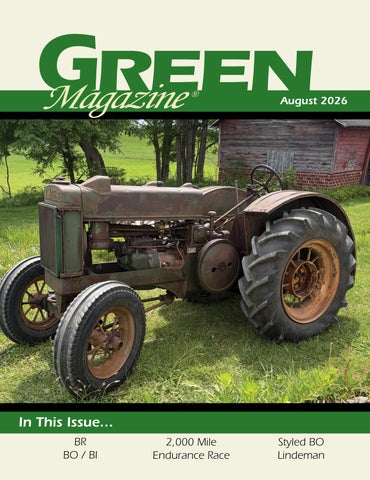
The Handbook of the John Deere Model A 1934-1938
Wes Malcolm
Now in its fourth printing with 15 more pages, this is the handbook of the John Deere model “A,” 1934-1938. A book that should be on the “must read” list of any unstyled “A” owner. There is probably no other book on the market that goes into so much detail on a single model of tractor. Shows illustrations of nearly every change made in the parts that make up the unstyled “A.” 95 pages, 11x8-1/2 inches, soft cover.
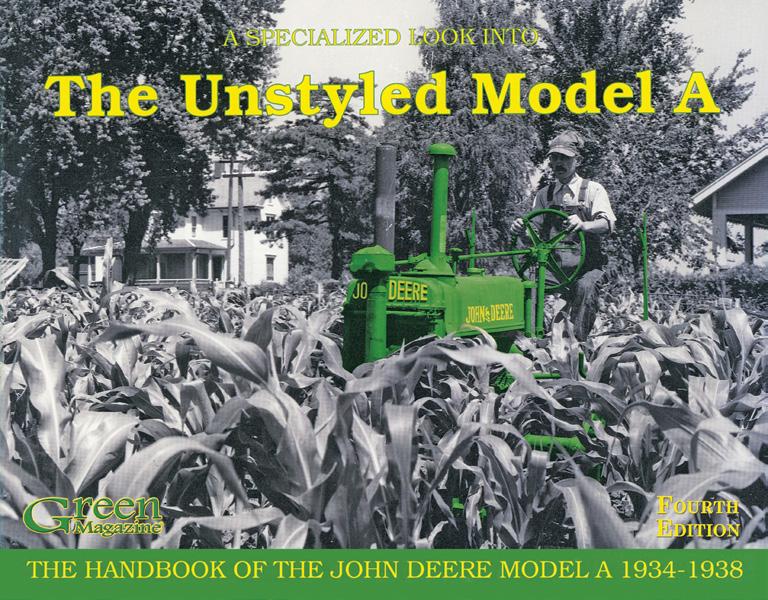
Both books include history, specifications, serial numbers, original prices and much more
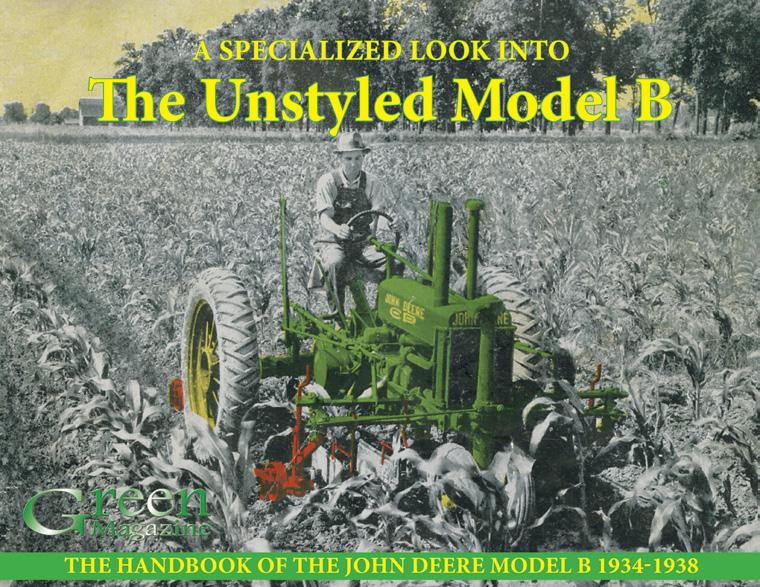
The Handbook of the John Deere Model B 1934-1938
The same types of information as available in the book above, except now about the model “B,” written and compiled by a panel of experts who have spent decades collecting and restoring the unstyled version of Deere’s most popular tractor. This book shows nearly every change made in the parts that make up the unstyled “B.” 84 pages, 11”x8 ½”, soft cover, over 200 photos - most in color.




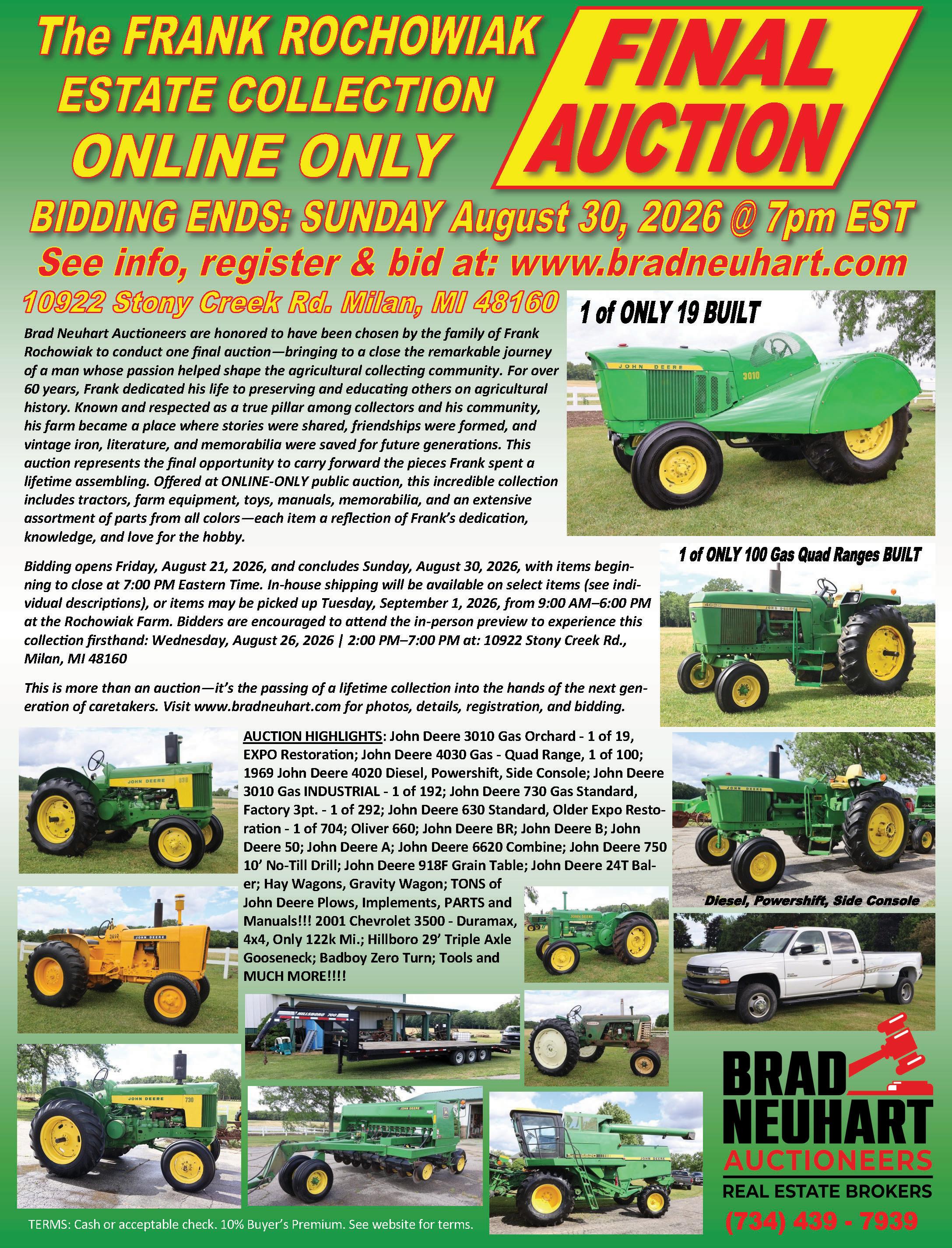

Order
U.S.:


“GREEN MAGAZINE®” (ISSN 0883-5462) is published monthly and released 12 times a year on or about the first of each month for $39.95 per year (Canada: $59.95 per year; Foreign: $69.95 per year) by Green Iron LLC, 7687 South Hwy 61, Perryville, MO 63775-6207. Periodicals postage paid at Perryville, MO and additional mailing offices.
POSTMASTER: Send address changes to “GREEN MAGAZINE®, PO Box 165, Perryville, MO 63775-0165.”
GREEN MAGAZINE® reserves all rights regarding reprints of this publication. Our phone number is (402) 643-6269.
Copyright © 2026 Green Iron LLC All rights

The time has finally come, and I have moved into the editor seat of this esteemed publication. By the time you are reading this, the office for GM will have moved nearly 500 miles from Bee, Nebraska, to near Perryville, Missouri. The trip was literally downhill by roughly 900 feet in elevation. The downhill part might be a bit misleading as the enclosed trailer pulled by Richard’s diesel pickup would cause enough drag that the elevation change was not a positive factor for fuel economy. The trip took about eight hours to drive by truck, but with a model “B”it would have taken about a week without any extra stops along the way.
When it comes to the office hours, we ask for your patience as they have changed to accommodate our schedules when it comes to raising our four children. Teresa, in addition to homeschooling our children and running this household, will now be running day-to-day business at GM. When you call the office, you will likely get Teresa on the phone, but our oldest daughters, Adeline and Annie, may also be answering the calls. Eleanor, undoubtedly, will find herself a role in the office, too. Teresa and I are excited to turn this page with you
for GM and strive to continue the proud tradition of the magazine that you have come to appreciate while some new perspectives from several contributors that will be joining us moving forward. Keep your eyes peeled for them in the coming months.
I have some projects that will be on the to-do list yet this summer including putting a 530 back together with Zachary along with trouble shooting my 630 which has been running poorly as of late. With some luck we will find time for both projects, but as anyone in the tractor collecting hobby knows...you never know what surprises may lay in store to fix a tractor that was built around the time that Elvis Presley was a household name.

Bee and Perryville may be separated by nearly 500 miles, but among tractor enthusiasts that's only about three stories, two coffee refills, and one debate over whether a hand clutch is better than a foot clutch. As far as I can tell, the biggest difference between the towns is that around Bee you can watch your dog run away for three days. Around Perryville, you will lose sight of Ol’ Trigger when he runs just over the hill.
Missing an issue? We mail every issue by the first of the month. Please contact your post office if you suspect a problem with delivery. We will not replace missed issues three or more months past original mail date (four or more months for foreign subscribers) free of charge.
U.S. subscribers: If it is on or after the 20th of the month and you haven’t received your issue, call us for a replacement.
Canadian subscribers: Due to postage costs, we are forced to ask for a $2 postage fee (U.S. funds, please) for re-sending issues that do not arrive by the end of the published month OR we can add an issue onto your subscription for the missed issue. First Class/Airmail delivery: Call for rates for First Class in the U.S. or Airmail to foreign countries.
Foreign subscribers: We will add an issue onto your subscription OR for a $7 airmail postage fee (U.S. funds), we will resend the missed issue two months after publication date.
Notice: If your address label shows an expiration date of “9/26” above your name, this is your last issue. Renew immediately for continuous service. If your address label reads “8926,” you have one more issue on your subscription.
Renewal notice: We send postcards to let you know your subscription is about to expire (or has expired). We NEVER call to ask if you would like to renew your subscription. If you
receive such a call, it is most likely from another publication—NOT Green Magazine® for John Deere enthusiasts.
Address Changes: Please send or call with notification of an address change as soon as you know what your new address will be. Periodical mail cannot be forwarded. Green Magazine will not replace issues missed due to late notice of address change. Those missed issues will have to be bought at back issue price. See the back issue listing and prices elsewhere in this issue.
Looking for your photos and stories! Accepted material is subject to such revision as to meet the requirements of this publication. Payment will be made at our current rate within 90 days of publication to current subscribers. Submission of manuscript implies that the material is original and in no way an infringement upon the rights of others. Please send good, clear photographs. If you would like these returned, send us a stamped return envelope to help us get them back to you.
Free Issue Offer: It seems you, our subscribers, are our best form of advertising! More people find out about this publication by “word of mouth” than other forms of advertising. So if you're enjoying Green Magazine®, why not spread the word? Telling others about it can pay benefits. When you tell a friend about Green Magazine® and they subscribe, make sure they tell us who let them know about it. When they do, you will get an issue added to your subscription. These must be new subscribers, not renewals.

That sounds simple to say, but it took months and conversations with several radiator shops to make it happen. Obviously, the radiator’s core size was increased, and a different fan was installed on the engine.
I have the documentation for the new engine supplied to the U.S. Navy, which rates it at over 90 horsepower at 2900 RPM.
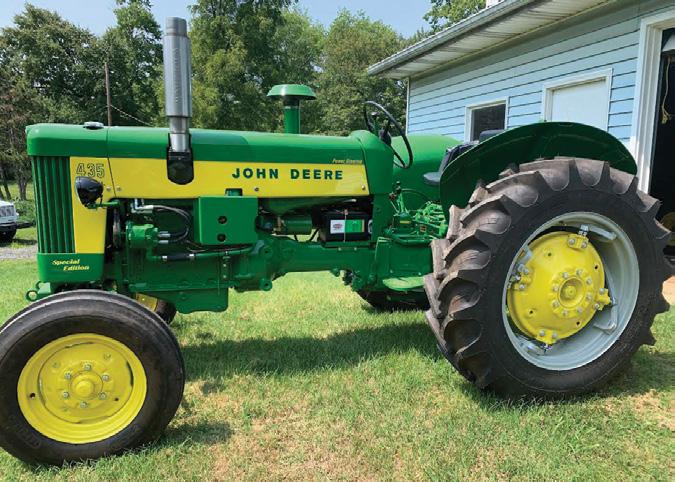
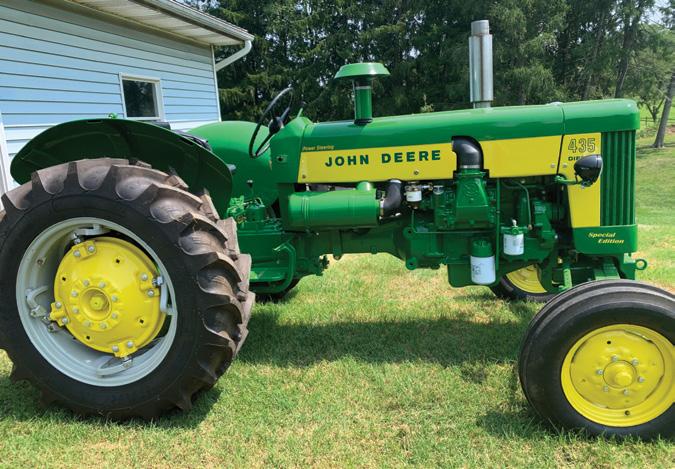
I have worked on numerous Detroit 2-cycle engines over the years, and I knew many parts were interchangeable on the in-line 53 series engines. Bell housings, flywheels, and timing covers were, with few exceptions, interchangeable. Some of the modifications needed were obvious; the hood, steering shaft, and hydraulic lines needed to be stretched, exactly 6”. But the devil is always in the details. The blower is wider on a 3-53 engine, and the exhaust manifold is designed differently, so the hood needed some custom work on each side. I needed to use the Pierce governor from the 2-53, which meant changing all the timing gears on the rear of the engine and retiming the rotors on the blower.
But the item that took me the most time to work out was the lower radiator connection. The 3-53 has an oil cooler and a full-flow oil filter with a 2” radiator connection. The 2-53 engine has a 1 3/4” radiator connection. And the radiator outlet had to be relocated and angled to match the new engine.
On the dyno, I can get to about 55 horsepower before the engine temperature starts to climb.
I understand there are purists out there who wonder why anyone would do this, and all I can say is ‘I wanted to’. If some future owner wants to convert it back to stock, it wouldn’t be hard to do.
Mark McNally, PA
Hello! My dad’s name was Glenn Roggenbuck from Harbor Beach, Michigan. I wanted to share a little piece of family history.
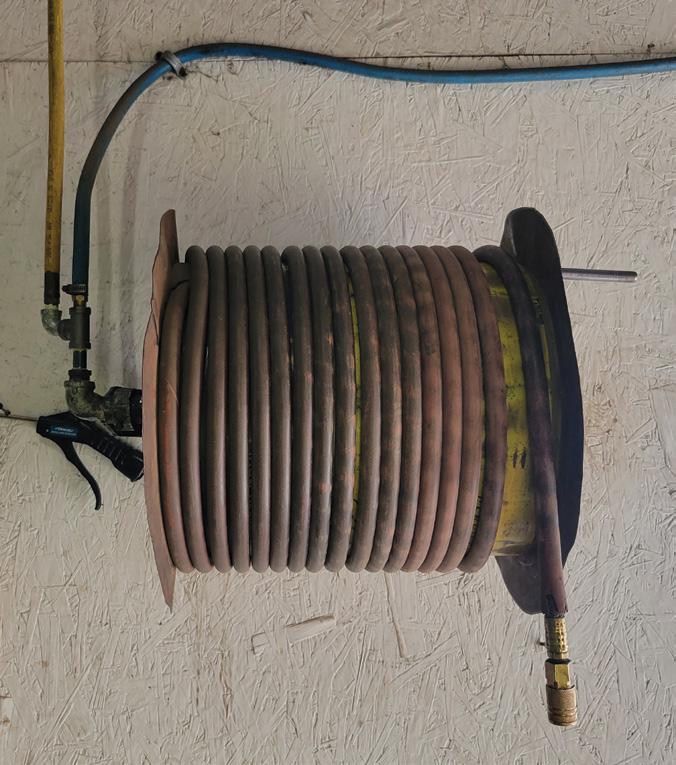
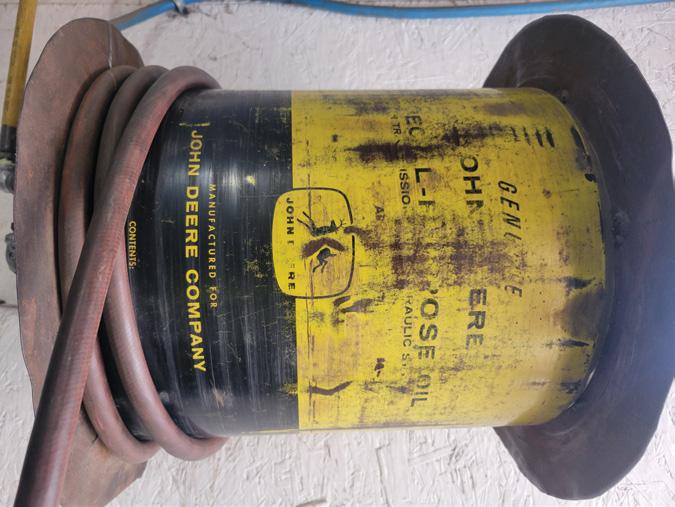
My dad graduated from high school in 1957, bought his own farm that same year, and erected a barn behind the house there. In 1959, he built a workshop. In 1960, he bought a Sears air compressor (I still have it and it has a date on it). He made this hose reel because he, like many of the farmers in the neighborhood, was ingenious. His motto was why buy something when you can build it. It has a pipe union with a leather washer and grease to seal.
I was born in 1971. I have no idea how many times he, I, my two sons, and countless neighbors pulled this hose out, and I still am. He passed away in 1999, but this thing lives on. The hub the hose is rolled up on is a 4-legged, John Deere-logo metal 5-gallon oil can. Turn the handle to roll up the hose, and it makes a ping pong sound that no one can forget. In fact,
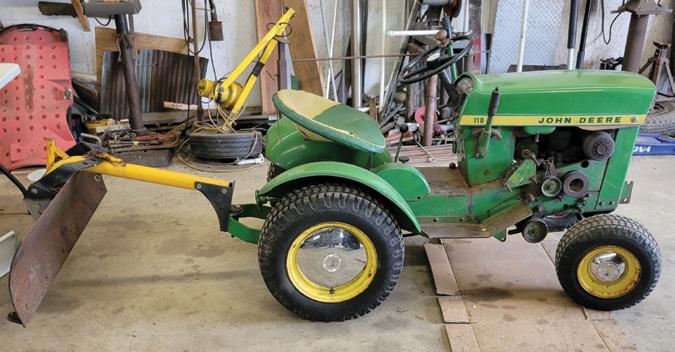
I used it tonight to work on my latest acquisition, yet another John Deere 120 garden tractor.
One last note about getting your magazine… when it still came in that white paper envelope, my sons and I had a game we played. All three would guess the front cover and back cover, then open it to see who was closest. It was a very important monthly ritual in our house.
Greg Roggenbuck, MI
Good evening, Green Magazine. My name is Neil Brubacher from Ontario, Canada. I just subscribed to your magazine online this afternoon. On Saturday, I met Ken Glanville at a local John Deere event. For several years, I have been wondering what I should do with a picture I took in Aug 2022. I showed it to Ken, and he thought of sending it to Green Magazine. Which I had never heard of before, but here we go.
I was born in the 80s and grew up with my dad, who had a 1120, 3020, and 4020 as the main tractors on his 200 acres until around the turn of the century. I spent lots of hours doing tillage, baling, etc., on our 20-series tractors.
After my dad passed suddenly in 2018 and his equipment was dispersed, my dream of having my own 4020 rather intensified. Through a chain of events and a helpful friend of my brother’s, they found this power shift 4020 very similar to the one I grew up with. A dream come true to be able to buy and bring home! Some people take ATV rides as stress relievers, but I take my 4020! Nothing like a ride to the back 40 with the 4020 for some quiet meditation. That evening, I parked at the back of my farm and
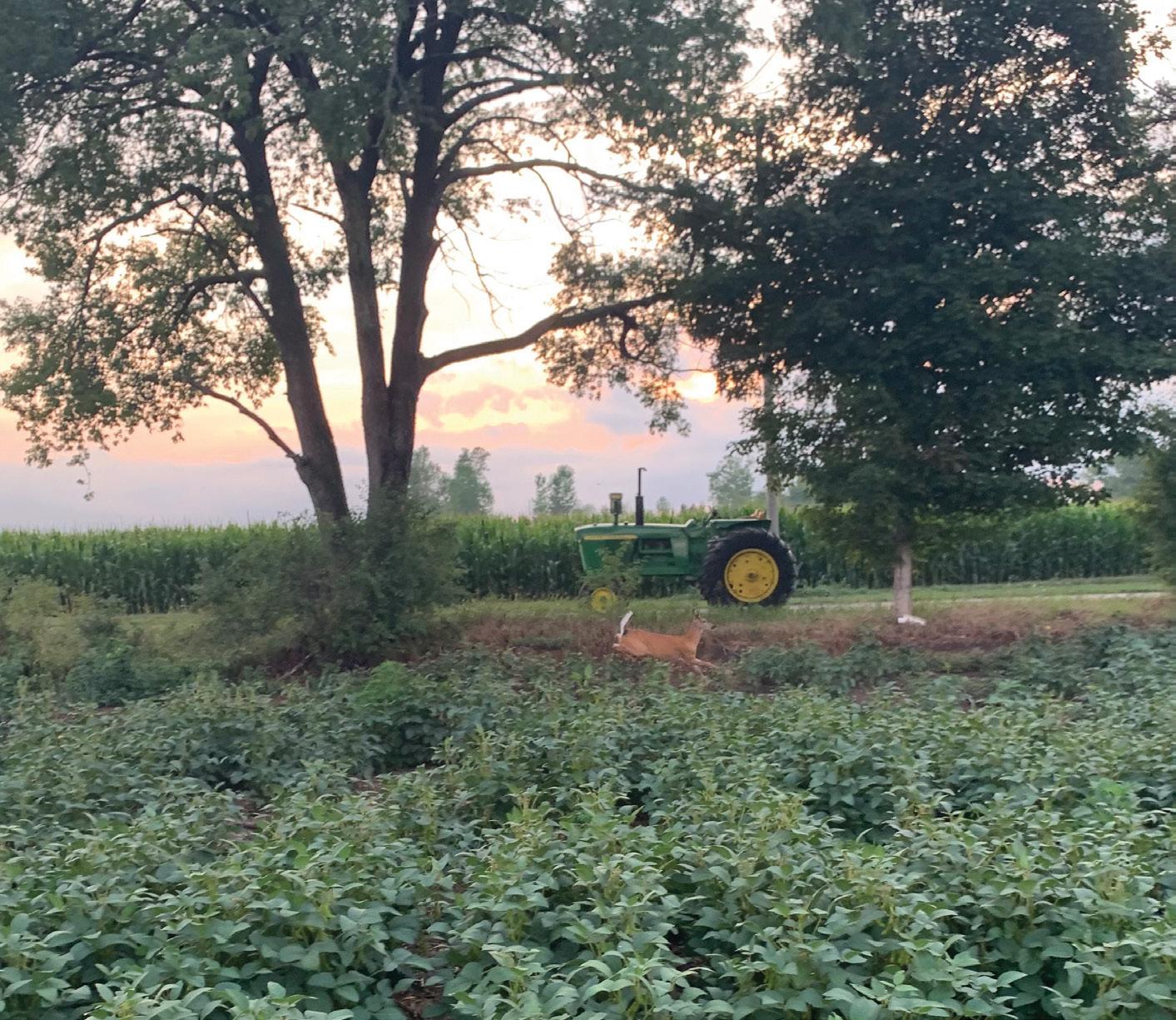
started walking into my soybeans, just checking the crop, when I heard a rustling in the corn field beside. I grabbed my phone, thinking whatever this is, I might get a picture of it. Well, I got a lot more than I expected. A deer running in front of my 4020! It’s an extremely precious picture to me. It
definitely felt like a once-in-a-lifetime experience which I wanted to share with others.
Neil Brubacher, ON
Neil, Thanks for sharing and also for joining the Green Magazine family with your online subscription.
Please send high resolution photos if submitted electronically Include your phone number/address on all submissions

When Dennis Natal of Paonia, Colorado, saw my ad in Green Magazine asking for assistance in finding a model John Deere Overshot hay stacker, he referred his brother, Ron Natal of Pueblo, to me. When I went to get better acquainted with Ron and to fetch the two models he made for me, I found him to be an extremely interesting man with a lot of history to share. I thanked him and sent Dennis a letter as well, thanking him for assisting in my quest. Find more about the Overshot Hay Stacker in the June issue of GM in
case you missed it.
He responded with more information about their home farm, growing up, and some of the tractors he has collected over the years. After a few phone calls and letters, I resolved to meet him. As fortune would have it, a family wedding provided me a good reason to drive by his place at Paonia. I was not in any way disappointed by my visit. Both Ron and Dennis are easy to visit with and willing to share their knowledge and experience. Dennis is taking a different approach
to preserving tractors and other machinery than many collectors do. His goal is to get them repaired, and sheet metal replaced, fixed or replaced, decent tires, carburetors cleaned up, fuel system perfected, etc. But his aim is to leave them in their "work clothes". At shows and parades, etc., folks can see how age and a lot of fieldwork have affected them. They look their age but run perfect! Every piece has a story to tell, and Dennis knows those stories well.
As he showed me around, on a beautiful day, I disproved the adage "a fool can ask more questions than a wise man can answer". Dennis knew his stuff.
I looked over an unstyled “B” tractor fitted with Cletrac (Oliver) tracks, with differential and brake steering. Dennis said an outfitter in California fitted these tracks to several tractor brands before they were commercially available by the brand builders. He also has several of the original manufacturer's early orchard versions. Some still need sheet metal. There was a small JD tractor with a mounted plow, two bottoms, one left-handed and the other right-
handed. A backyard was full of interesting and unique tractors. He even has his family's Case thresh machine tucked back in a shed. Dennis said, "I grew up close to the threshing machine era- we did a little for the straw. We did have a belted feed grinder, and a MM belt-driven corn sheller." Dennis casually mentioned that when threshing with a "twisted"
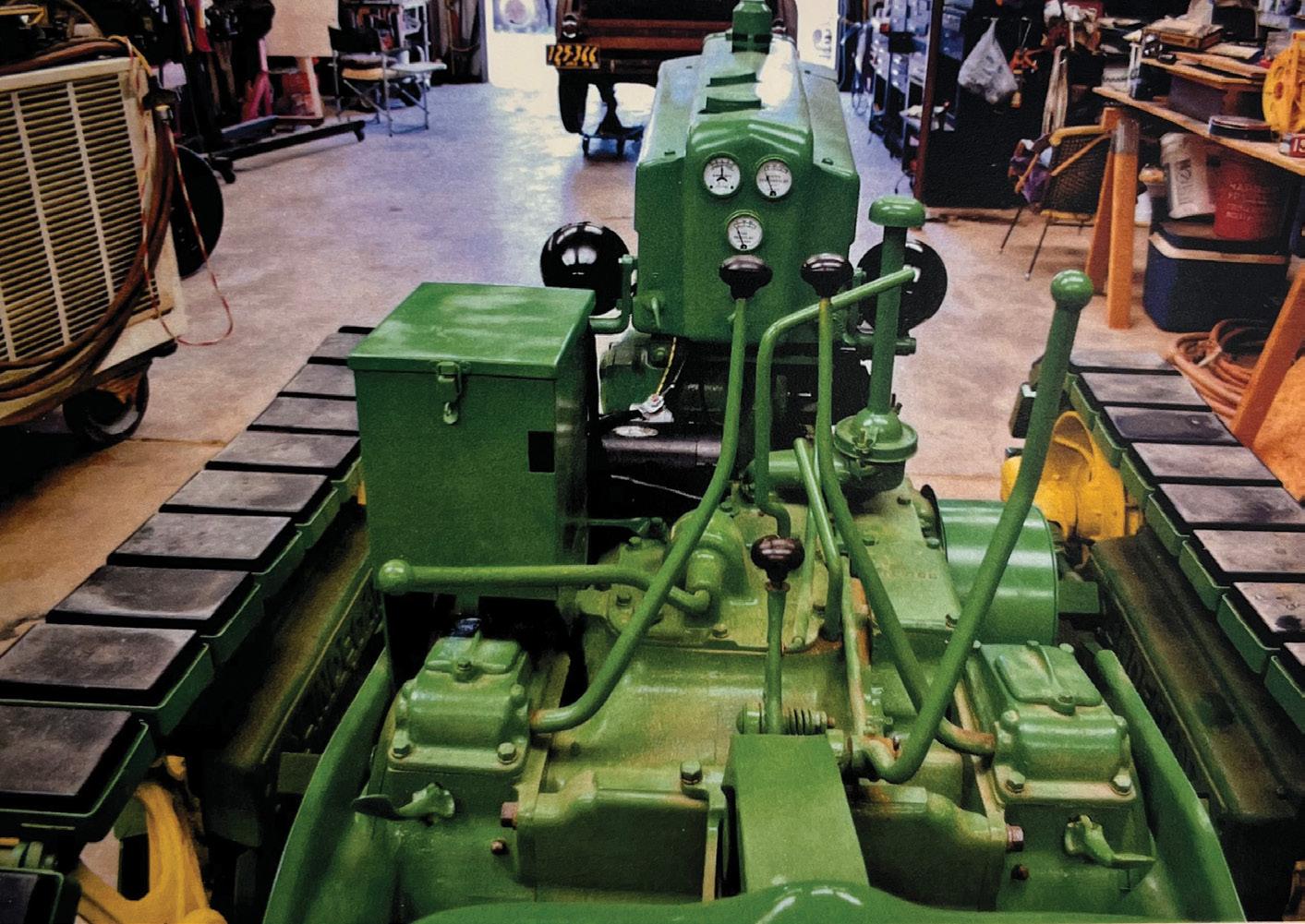
Deere to broaden their market. It was long thought that Lindeman’s sold out to Deere when tractors became "styled" and Deere began production of the MC in Iowa. As late Paul Harvey would say," Now, the rest of the story".
Deere did, in fact, ship three earlystyled Model “B” tractors to Yakima for conversion to crawlers. Dennis has documentation to support this.
Parker, WA, the whereabouts of which are unknown. 3368003 was sold to D&M Peterson of Cimarron Company in Cave Creek, AZ, and was eventually purchased by Dennis Natal. The enclosed photos show what one would consider ‘One of a Kind’.
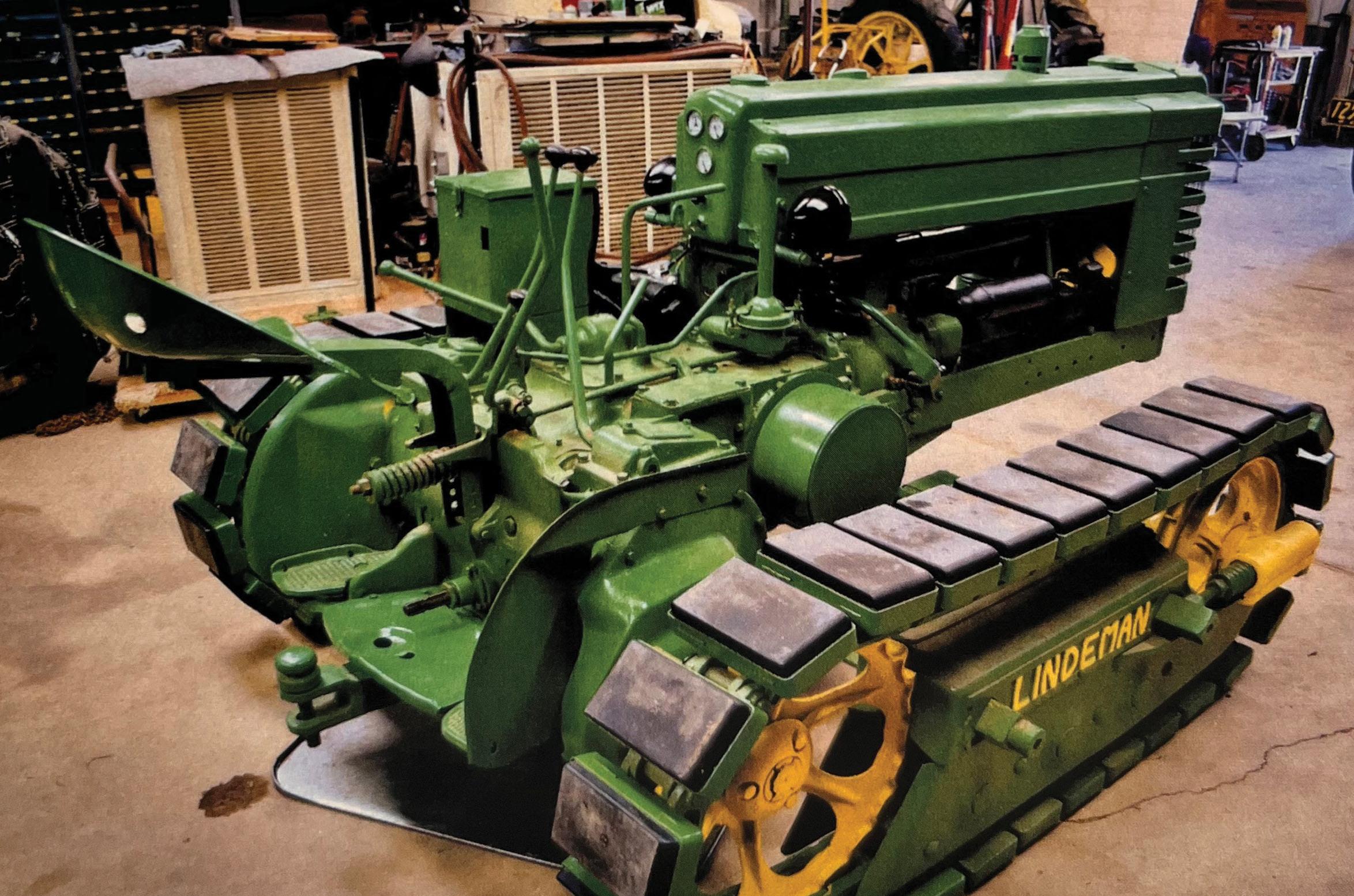
belt, they were extremely careful about fire, as the belt may generate static electricity. Hmm-perhaps the only fire we had shelling corn was with a twisted belt. News to me, old news to others. The Lindeman Brothers of Yakima, WA, have long been recognized for converting John Deere unstyled “BO” and “BR” tractors to tracks for use in their area. Eventually, they worked a deal with John
The Lindeman Brothers converted 2 of them and returned the third to Deere, declining to convert any more. An agreement was reached with Deere. They acquired what they needed to build the MCs, and the Lindeman era came to a close.
The three tractors, all “BO” models, were serial numbers 336802, 336803, and 336804. 336802 was returned to Deere. 336804 was sold to RD Brady,
I will have more pictures and details on display at the James Valley Threshing reunion in Andover, SD. It is always on the first weekend after Labor Day in September. Come see it and share your story. I am sincerely grateful to Ron and Dennis Natal, Don Moyes, and others who contributed to making the display in Andover even better and more interesting.
Submitted by, Cal Hayenga Spearfish, SD


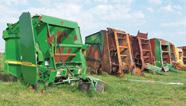

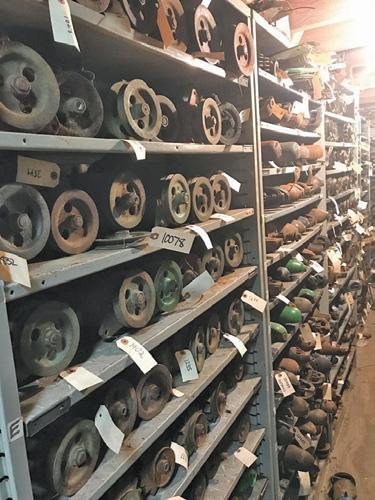
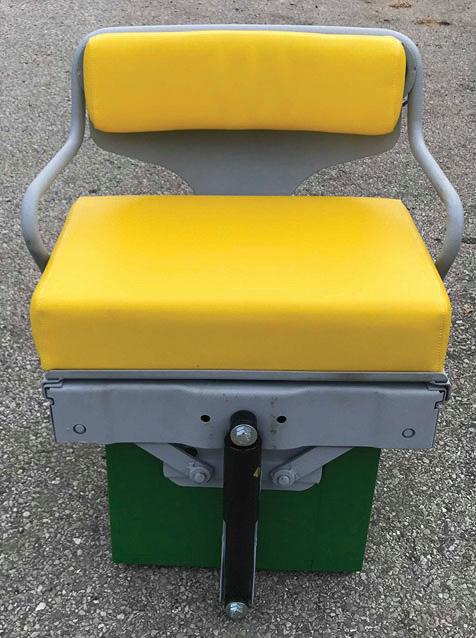
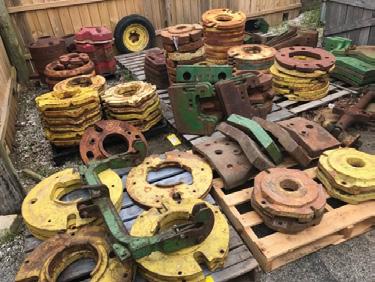
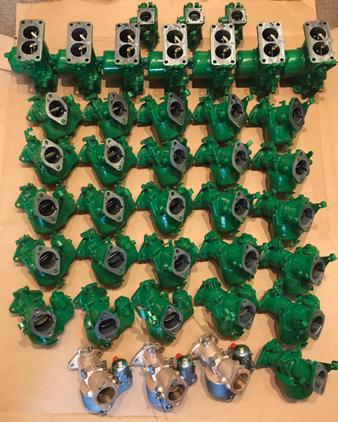
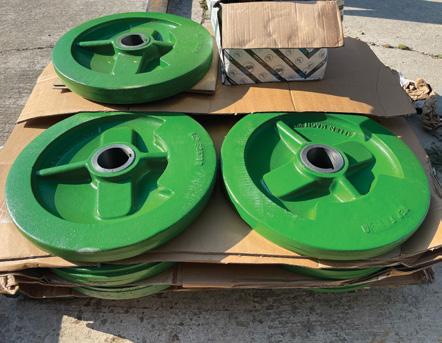
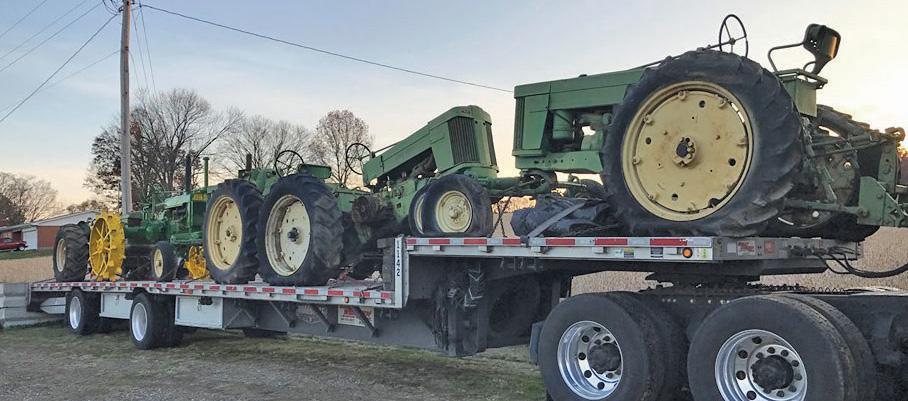
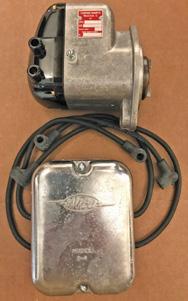
• Used parts include: weights, 3-pts., toplinks, dual hydraulics, float ride seats, clutch parts, hubs, transmission gears, sheet metal, tires and rims, 720-730 ES parts, all-fuel manifolds, brake parts, square and round tube WFEs, heads, blocks and PTO parts.
Lind Bros Tractors and Parts
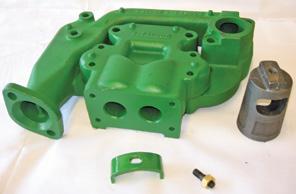
• New parts include: manifolds, battery boxes, carburetor kits, air stacks, mufflers, grill screens, radiator cores, lights and overhaul kits.
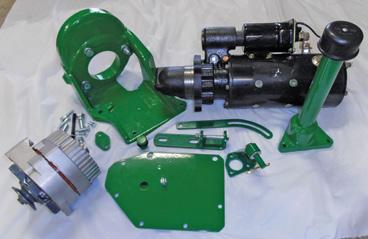
• Rebuilt parts include: Taper-Loc flywheels, electric start conversion kits, float ride seats, starters, carburetors, cleaned and lined gas tanks. Also have crack checked heads and blocks.
Story by Donna Parker
Photos by Colin Johnson
In 1964, the Naeve farm was still getting work done with a Farmall M. Their dad was wise and careful with money and would only make purchases if there was sufficient money in the bank, so the old Farmall M continued to get a workout. According to records, the Farmall M was produced from 1939 to 1954, so their Farmall was aging.
Gary Naeve’s dad had his eye on a tractor at the Humboldt, Iowa, John Deere dealership, though. There was a 4010 model on the lot that he had been sizing up. After talking with the dealership, the John Deere 4010 was delivered to their farm for a demo, and the Naeves were hooked, but their savvy salesman would not sell them the 4010. Instead, he said there was a new model, the 4020, coming out in a few months, and it had a powershift transmission. It would be better suited for their farm. Gary’s dad agreed to wait for the 4020, and the first 4020 with power shift in Humboldt County was delivered to them in 1965.
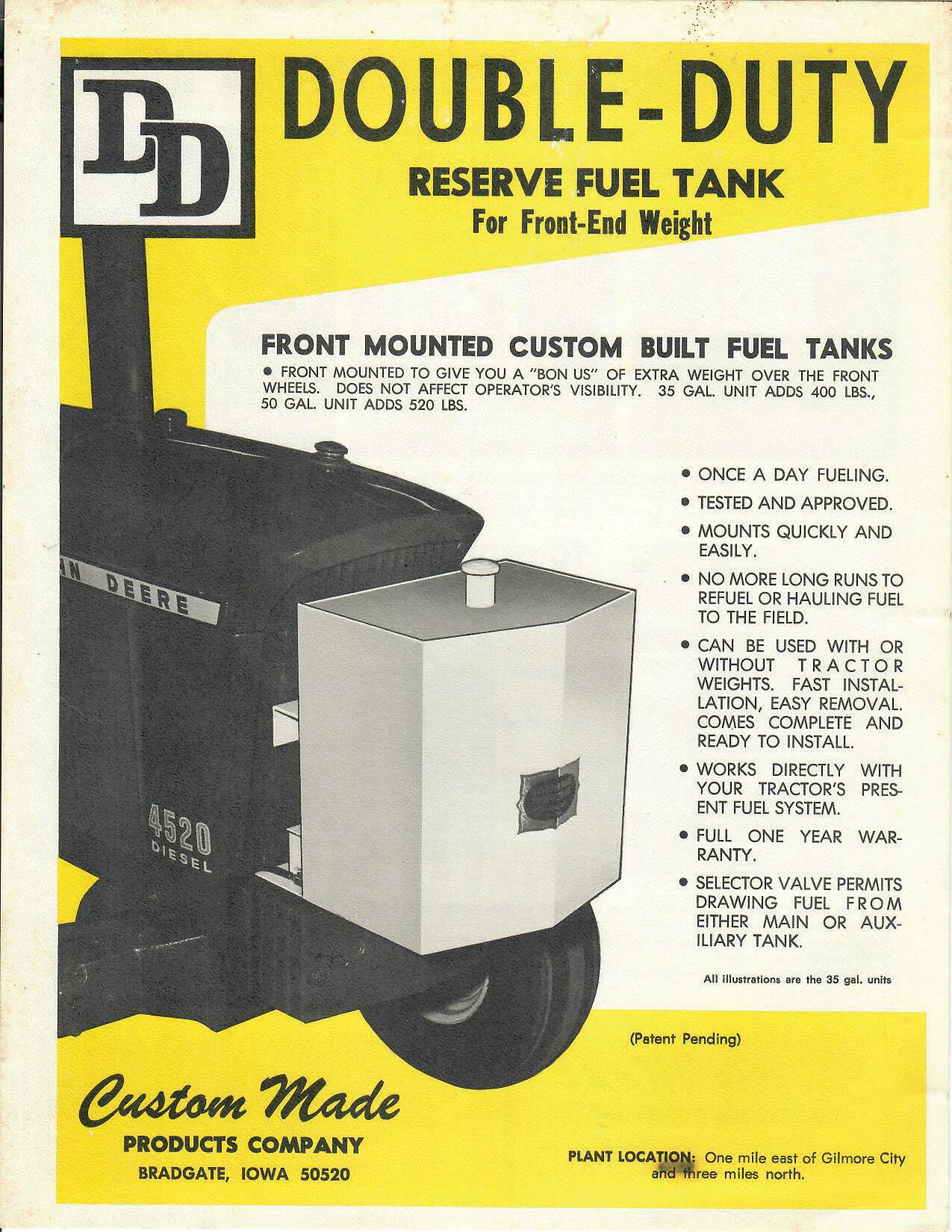
The 4020 was used heavily on the Naeve farm, but they discovered that after approximately six hours of hard use, the fuel tank was empty. As Gary farmed with the tractor, he thought about adding a tank to carry more fuel. It could be a 34-gallon tank like the tank already on the tractor. If it was mounted on the front, it would give the tractor more front-end weight. He needed a prototype to test his idea, and he found one in the form of a saddle tank at a nearby junkyard. Soon he had the 4020 modified, and he had more ideas about exactly where
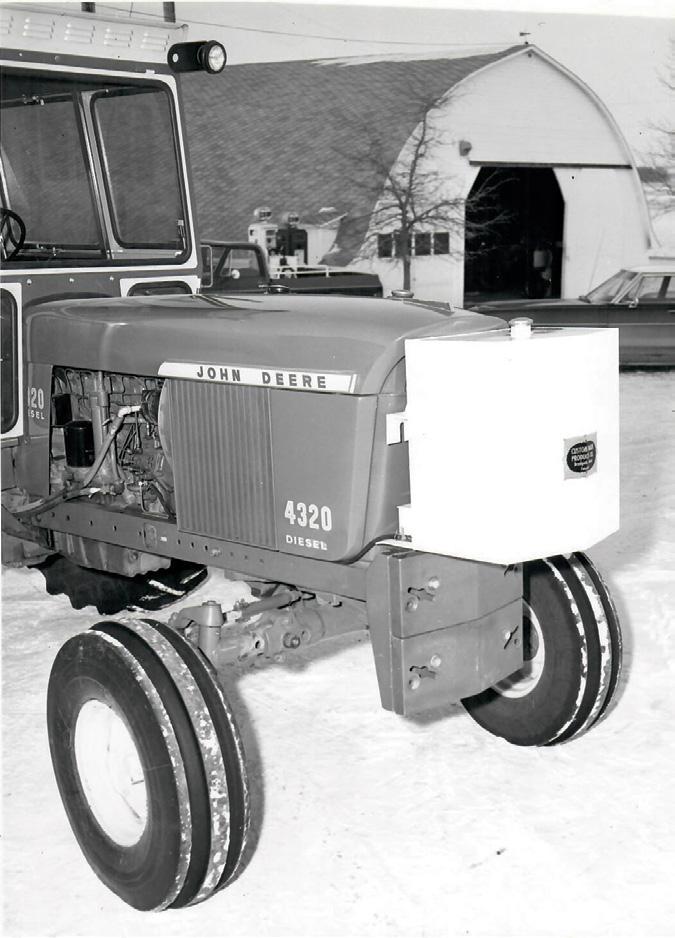
to mount a tank and what the tank’s measurements should be. He drew up his ideas and built the tank he had visualized. The tank was an extension of the tractor’s nose, with mounting brackets and a capacity of 34 gallons. When he replaced the saddle tank with the final design, it was exactly what he had imagined.
It was a great solution for farming more hours without having to refill, and the fuel’s weight offset the weights that tractors were often fitted with to add front-end weight. Neighboring farmers saw Gary’s solution and asked if he could make one for them too. He used his design and had a local fab company in Pocahontas, Iowa, cut the steel, enough for 10 tanks, and he welded and painted them himself in the shop on their farm. He fulfilled a couple of requests but then thought he should gauge the interest in his tank
to decide what to do next.
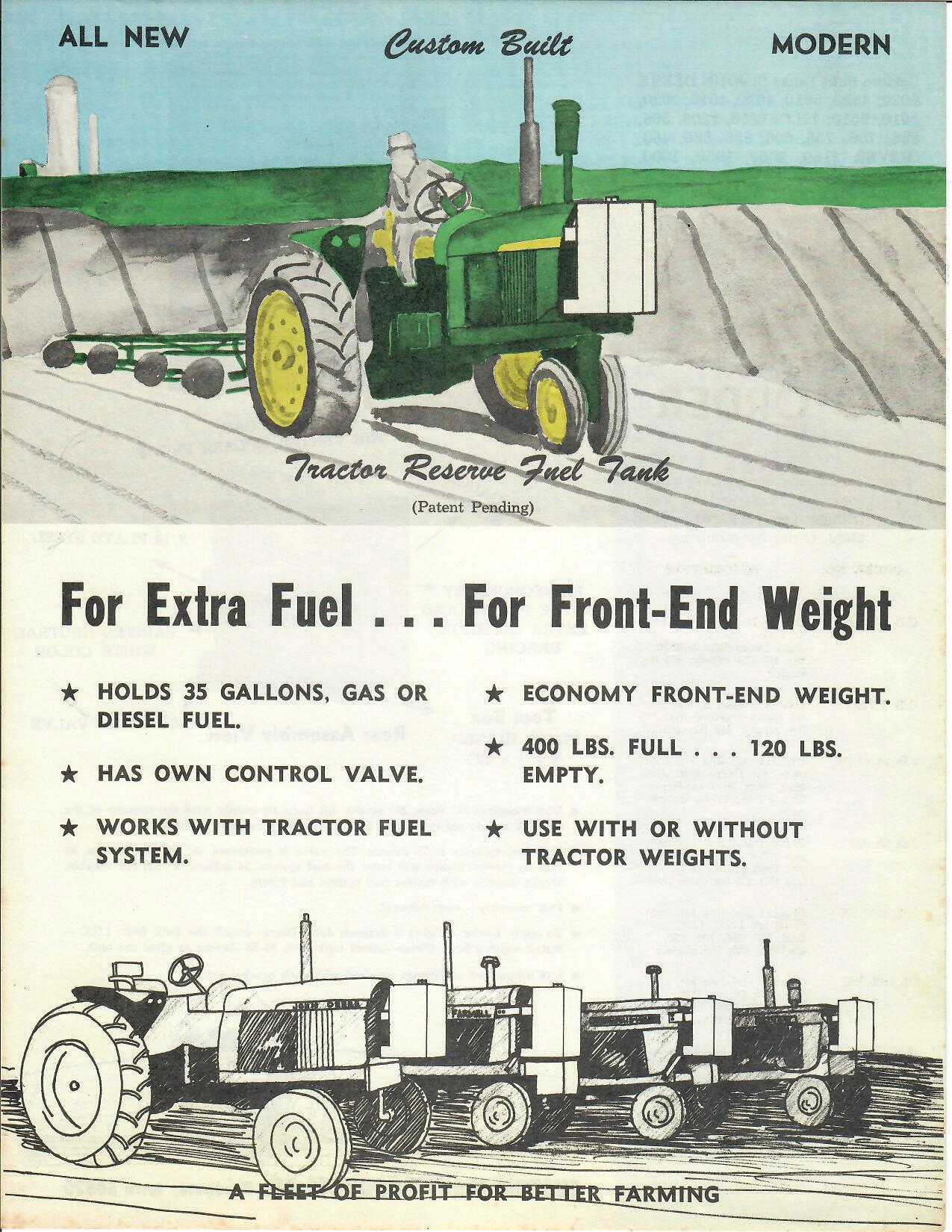
Gary had a friend, Kenny Neilson, put a tank on his tractor and display it for John Deere Days. Gary sold two at that function. Feeling excited, he thought the tanks would be a big hit, so in 1968 he founded Custom Made Products Company and applied for a patent. He was only 29 years old at the time, and following advice, he got a lawyer to assist with the patent process. In 1970, patent 3512795 was approved for the Auxiliary Fuel Tank for a Tractor. The tank has had other names such as “Tractor Reserve Fuel Tank” and “Double Duty”, the name Gary favors. The tank adds 400 pounds when full and 120 pounds when empty. Gary also produced a 50-gallon tank option that added 520 pounds when full, and he created adaptive brackets to mount the fuel tanks on other tractor models, such as Oliver, Minneapolis Moline, International, and Massey Ferguson. He retrofitted his design to add tanks to earlier John Deere models, such as the 5010, 5020, 4010, and 4000.
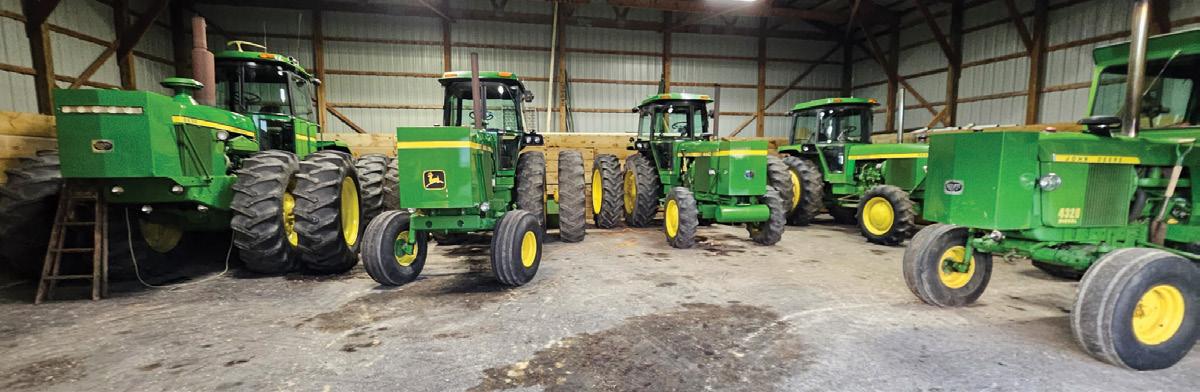
Farming continued for the Naeves. They added several tractors: a model 4320 produced from 1971-1972, model 4430 with front wheel assist produced from 1973-1977, model 4440 produced from 1978-1982, model 4640 also produced from 1978-1982, model 4450 produced 1983-1988, and a model 8630 4WD produced from 1975-1978. Each of these had the Auxiliary Fuel Tank added, so with the 4020, they had 7 tractors with the additional fuel tank on their farm. As the farm grew, so did Gary’s family. He married Jeanni in 1969, and they had two sons
and a daughter.
Custom Made Products Company worked with Hotsy Equipment Company, which produced pressure washers, to get their Auxiliary Fuel Tanks made. Because the economy was lagging, Hotsy was able to take on the construction of the fuel tanks for Custom Made Products Company. Hotsy would build 50 tanks at a time.
destinations. Due to Hotsy’s increased production costs, Gary contacted a company in Sioux Rapids, Iowa; they, in turn, took over production and eventually purchased the design and patent for the Auxiliary Fuel Tanks. Meanwhile, Gary watched for other farm-related products to promote under his company name Custom Made Products. He remembers his early start working
Jeanni, Gary’s wife, would run ads in the Wallace’s Farmer newspaper and handle the mail and orders. Gary recalls selling tanks in the Midwest and using a pickup truck to deliver. Gary would later deliver the tanks by pickup and trailer. He found ways to save time by driving his load to a meet-up location and exchanging his full trailer with an empty.
As the business grew, Gary secured distributors and delivered the tanks to them. He delivered to Illinois, California, and Canada, and shipped some to Brazil, among other
Now colleges do the CDL training. Other business ventures included selling quick hitches made by a man in Minnesota, developing a head mover that could move a combine head on the 3-point hitch on the back of a tractor, and then landing on dirt scrapers. He found them very useful when helping a neighbor who built a hog confinement building in 1995. Eventually, Gary’s company
on his dad’s farm. He says he barely graduated, whether true or not, but he always loved to farm. His dad had a bad back, so Gary would go home early from school to help farm. On rainy days when they couldn’t farm, he repaired hydraulic jacks at service stations in Humboldt and surrounding towns. Later, alongside the Auxiliary Fuel Tank business, Gary conducted CDL training and was instrumental in training over 7,000 people during the two decades he offered the course. The charge was $100 for the two-day program that finally ended in 2020.
discovered land rollers. He read about them in a Farm Bureau publication and how they were a solution when combining soybeans and getting a lot of dirt in the grain tank. Gary worked on a way to purchase the land rollers and then rent them out, though a person could purchase one from him if they wanted. Gary built his Custom Made Products Company on innovation and continues to keep his eye on trending agriculture solutions. Custom Made Products is the largest company in the land roller business in the United States. Not only are Gary’s
rollers seen throughout the state of Iowa, but they are also spread across the entire United States. From farming with family, to building his first Auxiliary Fuel Tank, to renting land rollers, Gary has a keen sense of what’s next.
Gary Naeve and John Deere collector Colin Johnson met and became friends when Gary was promoting his business, and Colin was displaying his Waterloo Boy at the Iowa State Fair. Gary would wander the fairgrounds during slow times at his booth. During one of these wanderings, he came across the Waterloo Boy and Colin. He enjoyed hearing the Waterloo Boy run and had Colin teach him how to start it. At Iowa Fair time over the next few years, Gary continued to look Colin up and spend time with him and the Waterloo Boy.
Pretty soon, Colin had Gary start the Waterloo Boy whenever he couldn’t get over to the fair, and pretty much any time Gary wanted to start it, whether Colin was there with it or not. One year, the John Deere dealership area where Colin normally set up said they didn’t need the Waterloo Boy because there wouldn’t be room for it. Colin thought this was very peculiar because it would be the anniversary year of John Deere’s purchase of the Waterloo Boy and the start of manufacturing. Sometime before the fair, Gary checked in on Colin and discovered he didn’t have a home at the fair for his Waterloo Boy, a staple at the fair for many years. Gary told Colin to set up at the Custom-Made Products Company display, so Colin did, and has done so ever since.
Gary and Colin live approximately 40 miles apart. Anytime Colin feels a tiny bit bored, he knows Gary can provide the entertainment needed to break the boredom. Together, Gary and Colin have played with a Chrysler-built air-raid siren and a GE carbon-arc searchlight like those the car dealerships used to draw
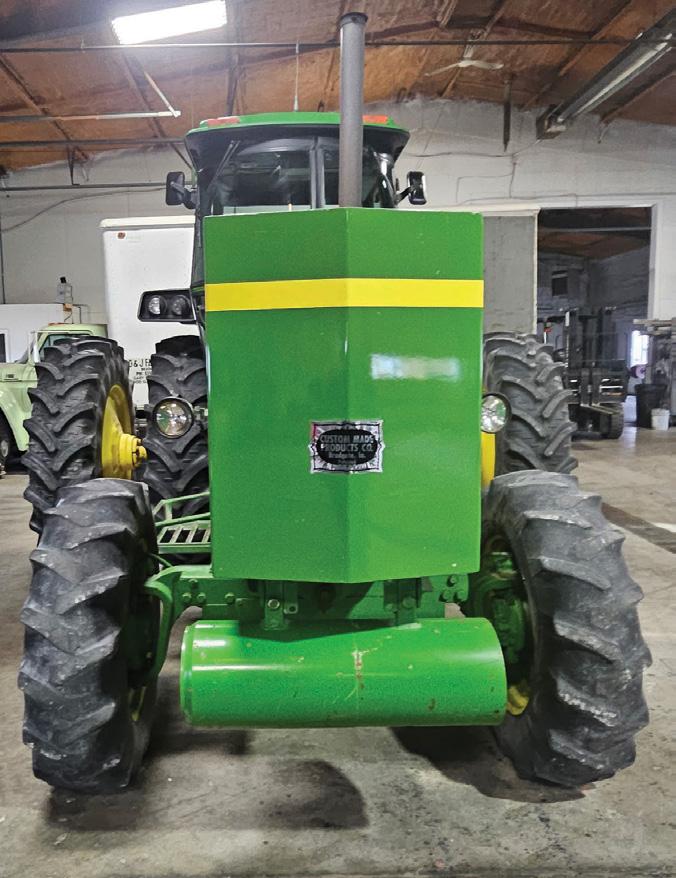
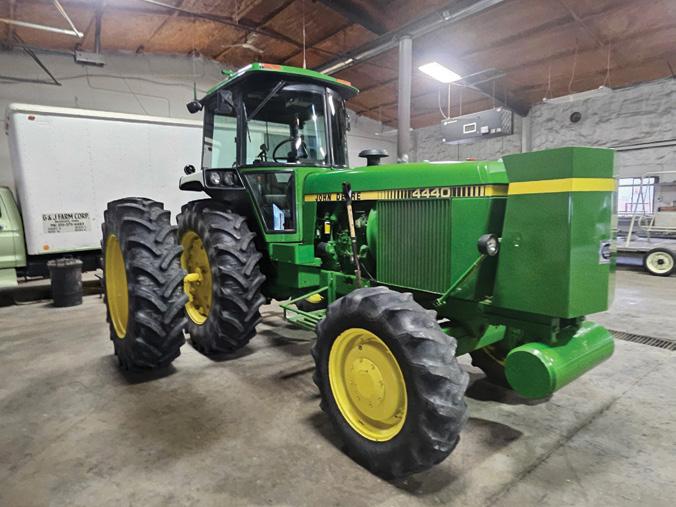
in customers in the 1950s and 1960s. Colin will load up his treasures and visit Gary, who gets a kick out of these interesting items. Gary brings some of his own entertainment to the table, with over 25 garage door remotes across the visor of his truck that open many a garage door, his treasures hidden behind them. Gary knows which remote opens each door and has threatened to punish Colin if he ever moves these remotes around. Gary is known for his yearly birthday burnout each June in a windowless, beat-up SUV. You put Gary and Colin together, and you can’t be bored. Colin photographed Gary’s tractors and provided them for this story.
In 2021, the Naeve tractors (the ones fitted with the Auxiliary Fuel Tank: 4020, 4320, 4430, 4440, 4640, 4450, and 8630), along with Gary, retired from farming. You won’t find these John Deeres at a tractor show, though; they’re tucked away in the barn where they’re started at least once a month and used from time to time. Gary doesn’t plan to sell any of them. They are a tribute to his farming days, and they are appreciating in value as we speak. Even though Gary has retired from farming, he and Jeanni stay very busy with Custom Made Products Company and the rental program. They have 14 distributor locations, 13 in Iowa and one in Nebraska.
Looking back over the years as his children grew, he was able to involve them in Custom Made Products and instill them with good business skills and financial savvy. Older son, Russ, now farms with his own two sons, and Gary rents his ground to them. Younger son, Rod, farmed full-time with Gary (until Gary’s retirement) and has been involved in trucking and hauling for Custom Made Products. Rod is the frontman for the landroller business, but Gary is still very involved. Daughter Janell married a veterinarian and is busy with their own farming business. Gary says all three kids live within 30 minutes of him, and he feels extremely grateful for this. Gary and Jeanni have passed their 50-year wedding anniversary and are fast approaching the 60-year mark. Gary is now 88 years old and has accomplished more in his lifetime than most. However, Gary knows that much of his success would not have been possible without the support, commitment, and encouragement of his wife, Jeanni; their son Russ and daughter Janell; and their youngest son, Rod, who has been a key asset to his success. Gary and Jeanni are the proud grandparents of nine and great-grandparents of ten, with three more on the way.

By the mid-1930s Deere & Company had firmly secured its place in the tractor market. The model “D” had already been working fields for more than a decade, steadily refined year after year as farmers pushed it through plowing, tilling, and other heavy work. In 1934 and 1935, the rowcrop models “A” and “B” joined the lineup. These tractors brought John Deere reliability to machines that could not only plow, but also plant and cultivate row crops with precision. With these core models anchoring the company’s presence in the major farming regions of the United States, Deere was ready to look beyond its established territory and consider more specialized needs.
One of the most promising markets Deere had not yet fully reached was the smaller smallgrain farm. The model “D” was well-liked in grain country, but its size and cost put it out of reach for some operations that did not need—or could not justify—such a large tractor. Now that Deere had several proven engines in production, the company saw an opportunity: use those engines in smaller, standard-tread tractors that would be lighter, more affordable to purchase, and cheaper to maintain than the “D,” while still delivering dependable performance.
the model “A” engine with a standard-tread chassis, resulting in stout, stable machines that quickly found an audience. Sales soon exceeded 1,500 units per year.
Buoyed by that success, Deere moved ahead with the idea of an even smaller standard-tread tractor to reach additional farmers. Rival McCormick-Deering’s 15-horsepower W-12 likely nudged that decision along; although the W-12 sold only about 800 units in its first year, Deere considered that volume too significant to leave entirely in a competitor’s hands.
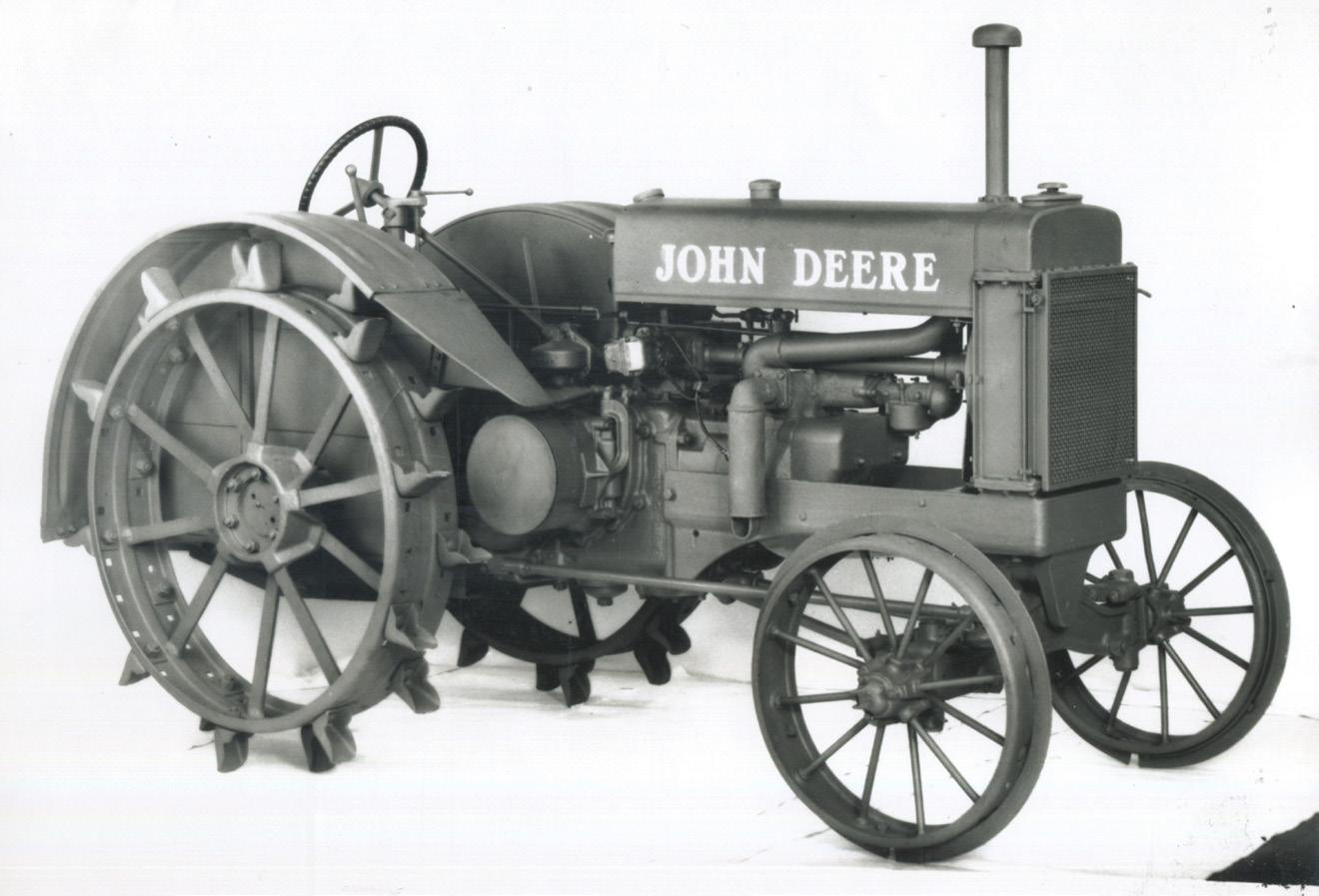
This photo was taken in August of 1935. It is HX-83 experimental. Note that there’s no lettering on the radiator tank.
Deere introduced the model “AR” and “AO” standard-tread tractors in 1935. These machines combined

Deere also recognized that a small standardtread tractor could be ideal for orchard and vineyard work, where low height and compact dimensions mattered as much as raw power. The company’s official Decision No. 5600, dated June 24, 1935, noted that the “reduced overall dimensions of 115inch length, 49-1/4inch width and 501/2-inch radiator
height render this tractor particularly suitable for orchard and vineyard operations when a low air stack is used and all other classes of service where small size is of importance.”
Interestingly, the first “BR” tractor was photographed just eight days later, suggesting that the formal decision may have been recorded after the tractor’s design was already largely in place.

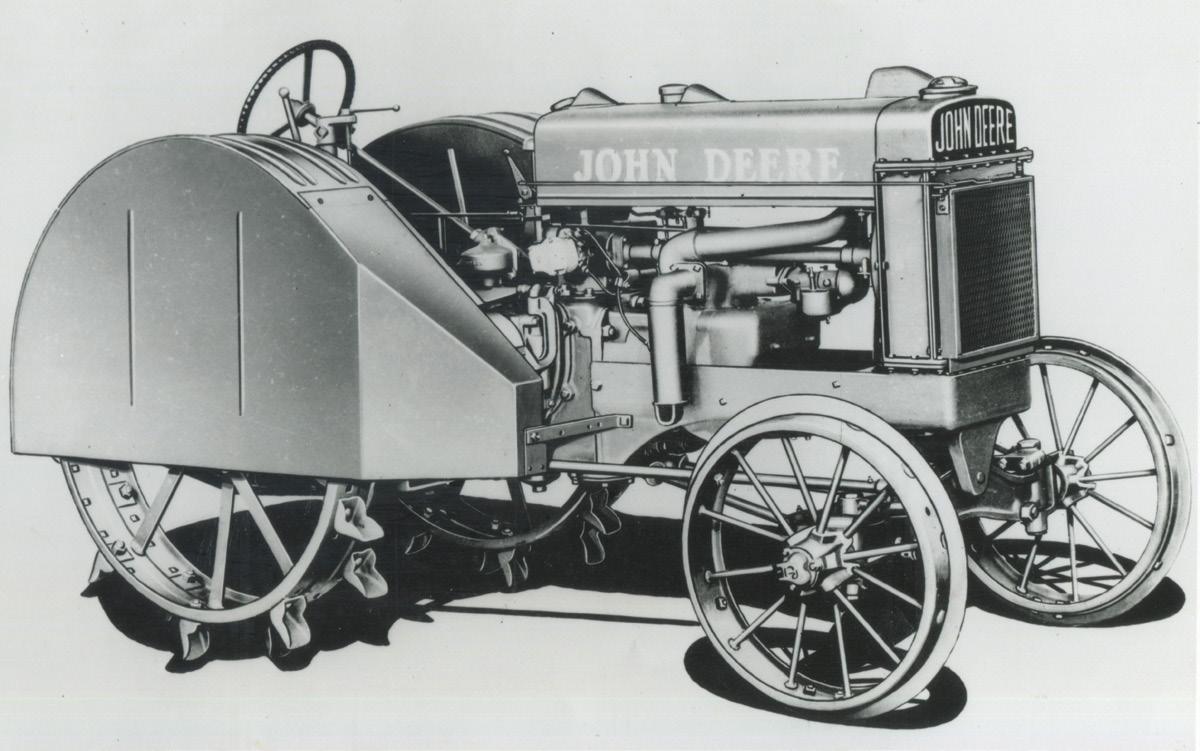
The “BR” grew out of the “B” by incorporating a series of practical changes rather than going through a clean-sheet redesign. Deere narrowed the rear axle housing, giving the tractor a 41-1/4-inch rear tread that could be widened by three inches simply by reversing the rear wheels. The main case casting was modified to mount a steering sector on top, allowing a steering shaft to pass down through the case. Holes were drilled and tapped in the case to carry the front axle brace pivot. A parking brake was added by extending the differential shaft out of the main case so a brake assembly could be mounted there.
Smaller rear wheels replaced those on the “B,” lowering the tractor’s center of gravity. To preserve similar ground speeds, Deere installed different transmission gear ratios tailored to the “BR.” The operator’s station was lowered as well, since a close view of the rows was less critical than on a row-crop tractor and a lower seat was safer for orchard work, and made it so that not every low branch was a threat. To keep the seating position comfortable, the seat was moved rearward as it was lowered. This change subtly altered the tractor’s feel, providing a slightly more relaxed driving position while keeping the operator close to the familiar controls.
The clutch was narrowed and reshaped so it would fit inside the rear wheels when they were adjusted to their narrowest spacing. Deere developed a new front axle for the “BR” and created a compatible steering linkage and front support, a design that closely paralleled the arrangement used on the “AR.” The “B” engine carried over largely unchanged, aside from a new exhaust manifold. That manifold allowed a special orchard-style muffler to be fitted in several orientations: up, down, or forward, depending on how much clearance was needed under trees or branches.
Because the “BR” had a shorter wheelbase, a few components in front of the engine had to be shortened as well. These components included the fuel tank, but since the hood did not taper toward the rear as it did on the row crop tractors, the shorter tank still held the same twelve
gallons as the model “B,” preserving the tractor’s useful operating range.
Development of the “BR” progressed quickly through the summer of 1935. With the mechanical foundation already well established by the model “B,” and with experience gained from turning the “A” into the “AR,” Deere’s engineers could move at a brisk pace. By September, they were ready to put the new tractor into production.
Waterloo Works engineers worked on the orchard version of the tractor, the “BO,” right alongside the “BR.” The tractor was slated for a September release. On paper, the differences between the “BR” and “BO” were relatively minor. The “BO” used differential (turning) brakes to ease maneuvering in tight orchard rows and carried protective shields over the filler caps on the hood to keep tree limbs from damaging them.
Deere also offered citrus fenders for the “BO,” but this added to the overall cost. Many growers chose to do without them, especially in orchards where heavy shielding from branches was not essential, so a large number of “BO” tractors never wore these fenders.
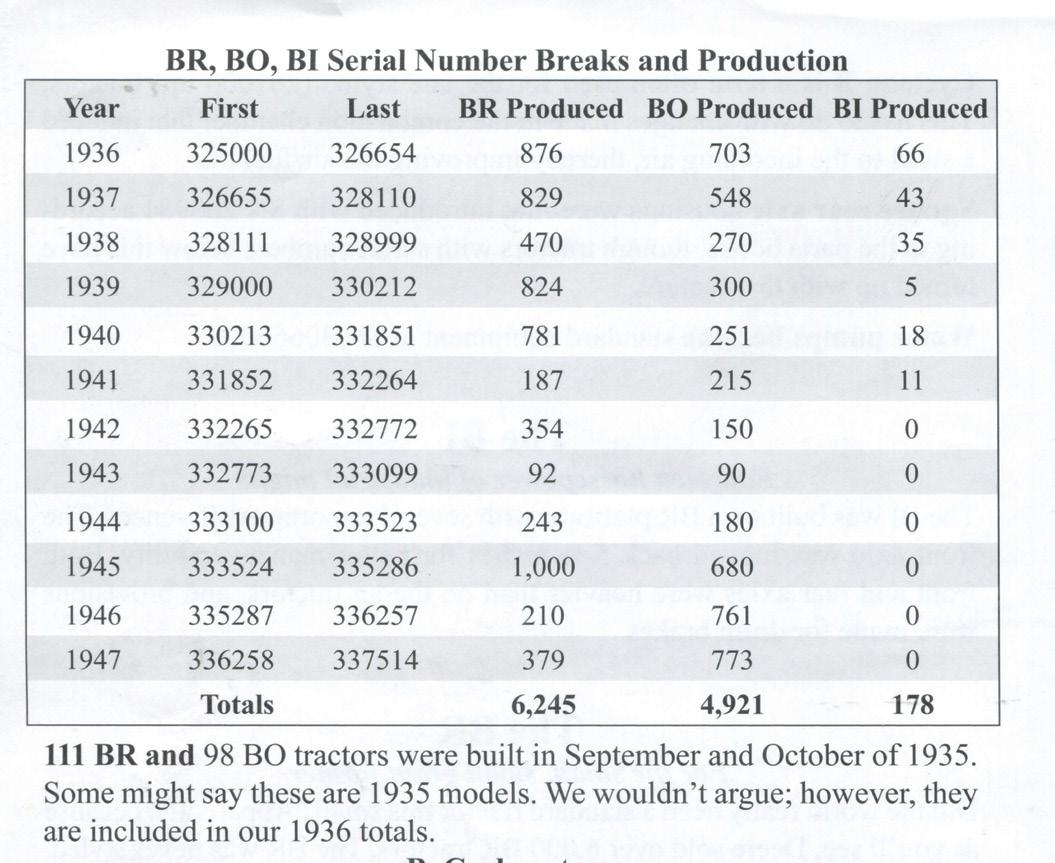
Production of both “BR” and “BO” began on September 24, 1935, with “BR” serial number 325000. The first “BO,” number 325084, followed shortly afterward. Initially, the small standards took a back seat on the assembly line to Deere’s higher-volume tractors, and they were built whenever room could be found in the schedule. Demand soon changed that. Orders for the “BR” and “BO” climbed rapidly, and the tractors claimed more and more space in the factory’s workflow.
This customer response surprised Deere. The company had forecast sales of around 300 “BR” tractors per year, a figure it reached in about four months. Clearly, they had identified a genuine need on the farm.
Looking back from today’s perspective, it can be hard to see the appeal of a 14-horsepower standard-tread tractor.

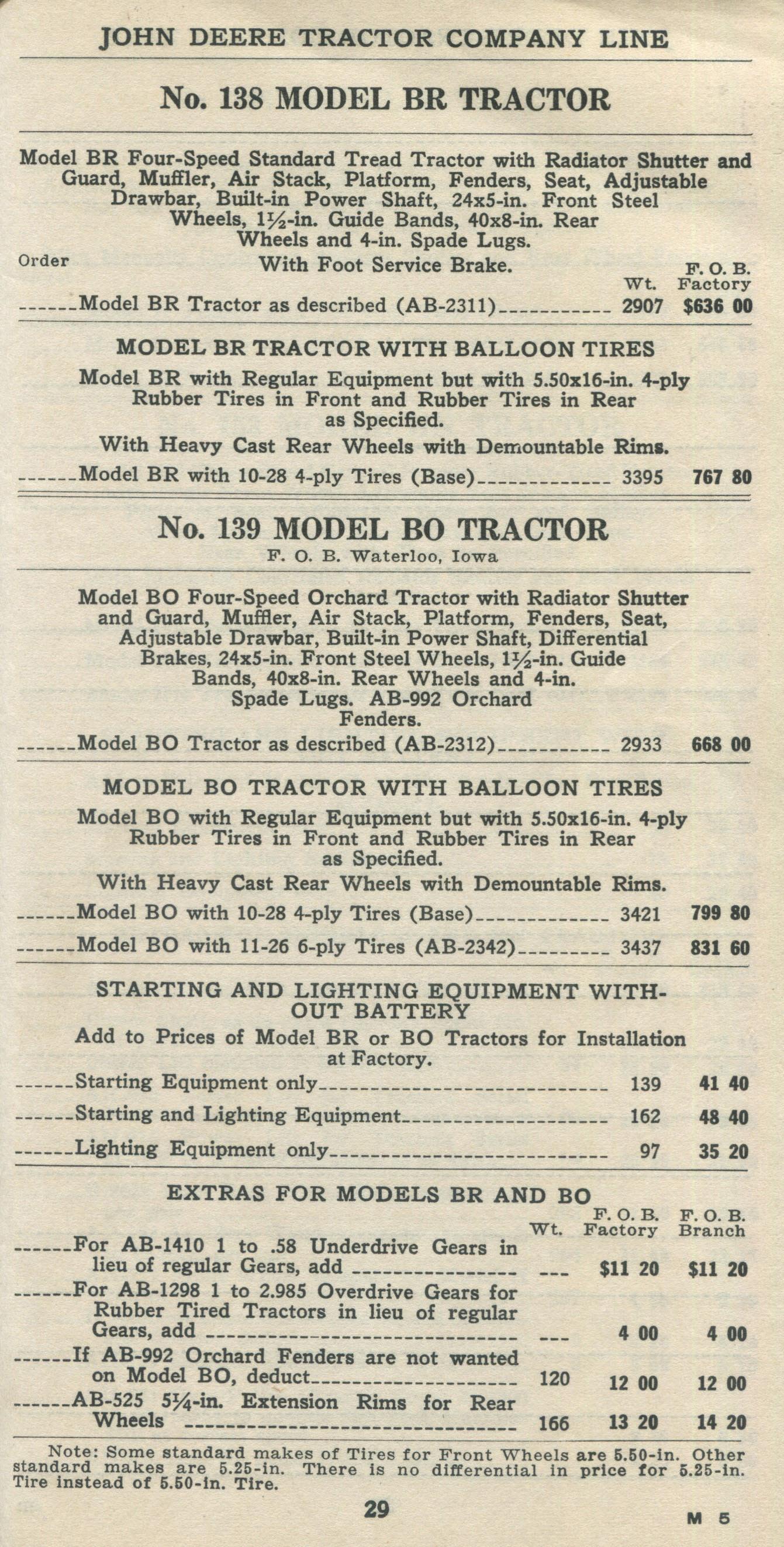
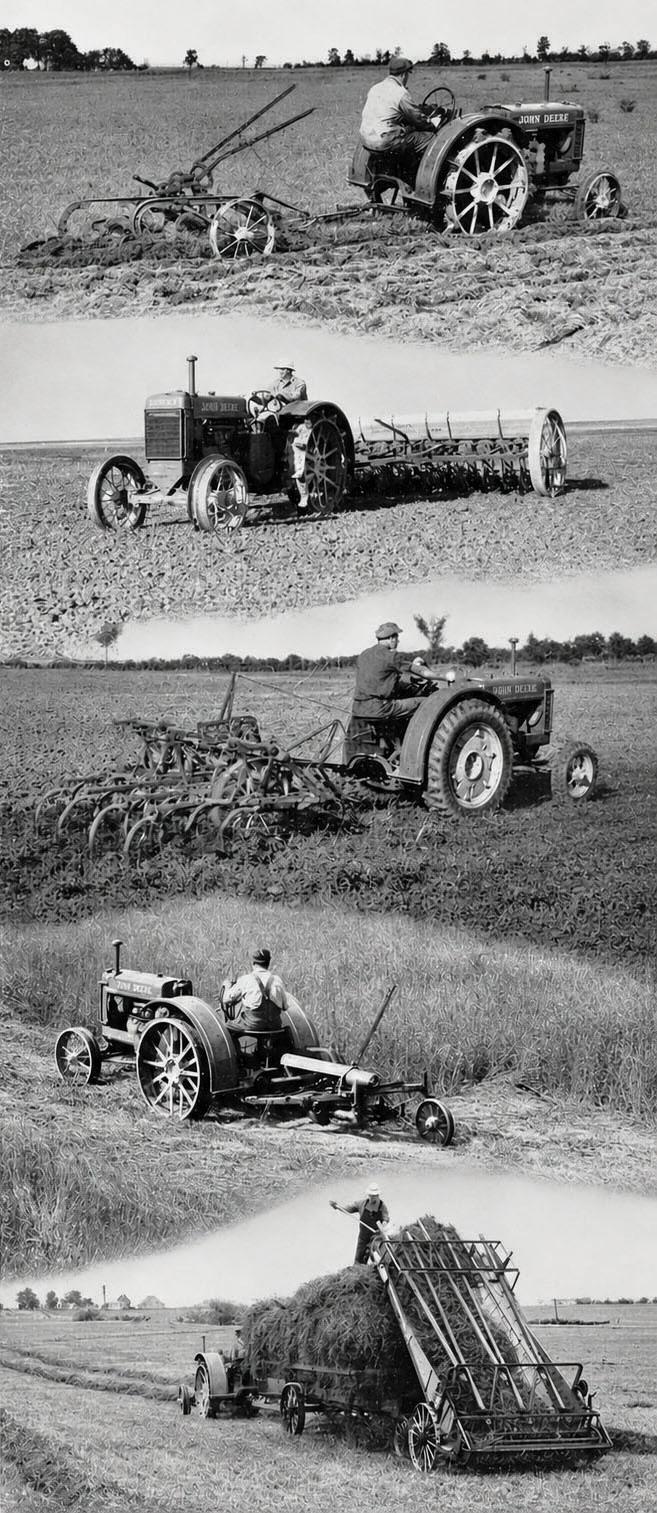
Yet on many farms of the 1930s, a “BR” or “BO” represented the replacement of four to six horses or mules. In a day’s work, one of these tractors could plow roughly nine acres, disk 40 to 50 acres, drill 20 to 25 acres, pull a single-row potato digger, or run various PTO-driven implements. Those figures may seem modest now, but they suited the smaller, more numerous farms of that era.
For a standard-tread tractor, the “BR” and “BO” were surprisingly versatile, and their relatively light weight and compact dimensions also made them popular for tasks like mowing grass on golf courses and in parks. Groundskeepers valued their nimbleness and the ability to be transported and stored without requiring a large facility. Steel wheels came standard on both the “BR” and
“BO” because they offered the best traction and durability at the time. Rubber tires were nonetheless available as an option, reflecting the industry’s clear shift toward pneumatic rubber and higher transport speeds.
For the rear, buyers could choose 11.25-24 tires on either cast iron or round-spoke wheels, or 9.00-28 tires on cast wheels only. Very early in production, Deere also
supplied a one-piece A1106R wheel for the 11.25-24 size, a configuration that is quite rare today and of great interest to collectors. All front rubber installations used 5.50-16 tires on round-spoke wheels.
It did not make much sense that the orchard-oriented “BO” included turning the brakes while the “BR” did not. There was probably a modicum of cost savings in that
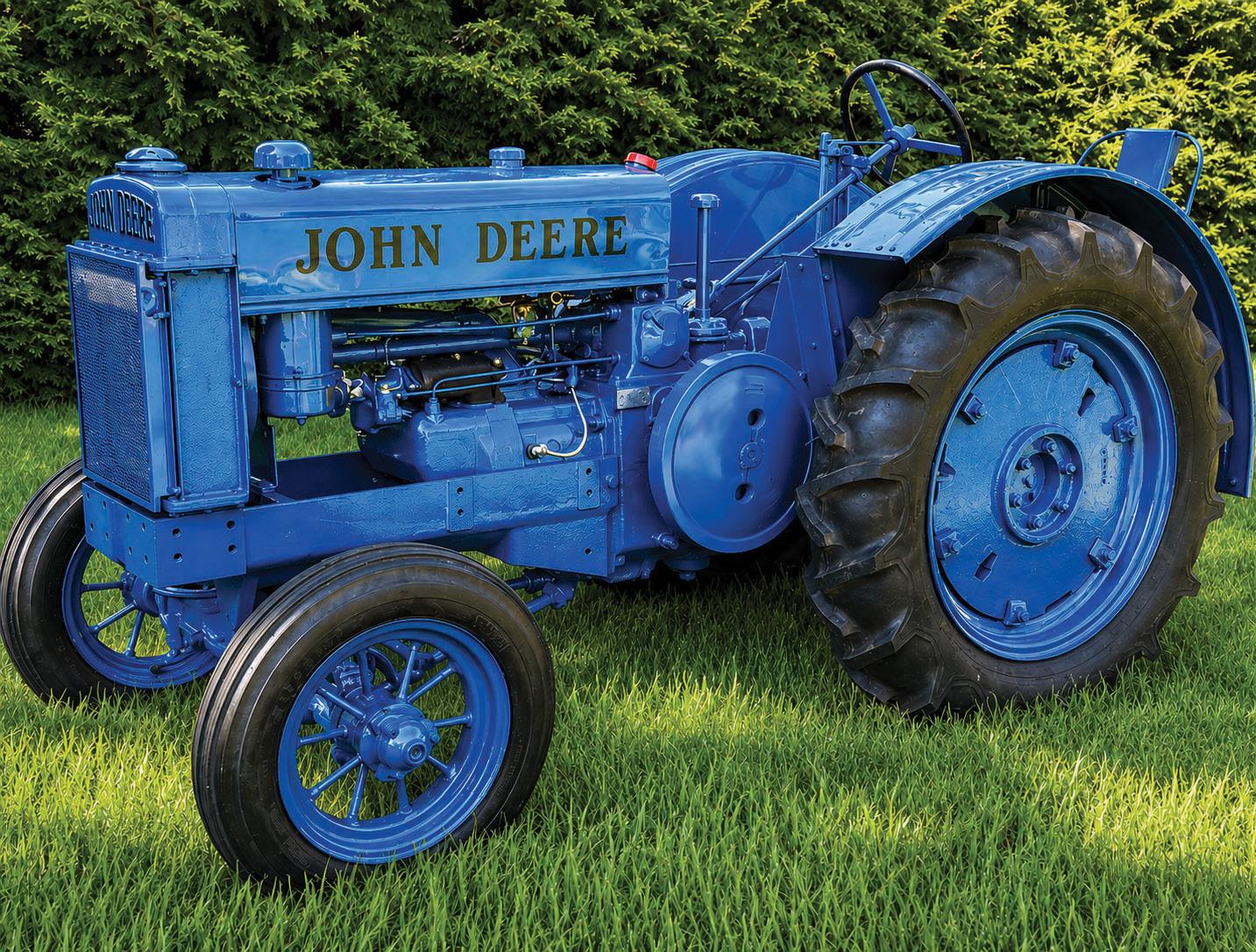
This ‘36 “BI”, serial number 326033, was restored and is owned by J.R. Brunner from Athens, Michigan. This “BI” was ordered through the Syracuse, NY branch house and destined for Albany, New York. It’s not yet known whether it was purchased by the City of Albany or the State of New York. Remnants of blue paint were found in numerous places - under the hood, in front-end support, on the main case, and elsewhere. The original paint color was matched as closely as possible to a DuPont™ shade called Aerospace Bristol Blue.
decision, but some farmers did not see those couple of dollars as worth the hassle of a hard-turning tractor. Fortunately, the two tractors were mechanically so similar that a buyer could order a “BO” outfitted with a tall air intake and, in effect, take delivery of a “BR” equipped with differential brakes. This quirk of the order sheet explains why some “BO” tractors were originally shipped to areas such as Wyoming, where there were few, if any, orchards or groves. In practice, farmers sometimes treated the model designation as more of a configuration code than a strict description of intended use.
introduced across Deere’s broader lineup.
At serial number 325367, a water temperature gauge was added. A high-speed gear set became an optional extra at 325582. An eyebolt was fitted to the front support at 326225, and radiator shutters replaced the old curtain-style closure at 327158. At serial number 327910, pressed-steel wheels superseded the round-spoke rubber-tired rears, and at 328629, a slow-speed gear set joined the options list, giving farmers more flexibility in matching speed to specific jobs.
If the tractors had a true weakness, it was probably the original engine. The 4-1/4 inch bore by 5-1/4-inch stroke two-cylinder powerplant was rugged and dependable but a bit short on power. Although Deere advertised the “BR” and “BO” as capable of pulling a two-bottom, 14inch plow, they struggled with that load in soils that were heavier than average.
In 1939, Deere enlarged the bore and stroke by a quarter inch each, increasing displacement by 26 cubic inches and boosting output by about five horsepower. With this upgrade, a 2-14 plow became a comfortable match in nearly any soil, and a 3-12 plow was practical for lighter, sandy ground typical of some orchard regions.
The main case and drivetrain were revised simultaneously to preserve the tractors’ established reliability. Deere was careful to strengthen areas that would see additional stress without adding unnecessary complexity.
Both the “BR” and “BO” benefited greatly from their lineage. They were based on the proven model “B,” which itself had evolved from the model “A.” Each step borrowed the best features from the previous design and left behind many of the missteps. As a result, these small standard-tread tractors experienced very few chronic issues and required only modest changes during their production life. Most updates were incremental improvements

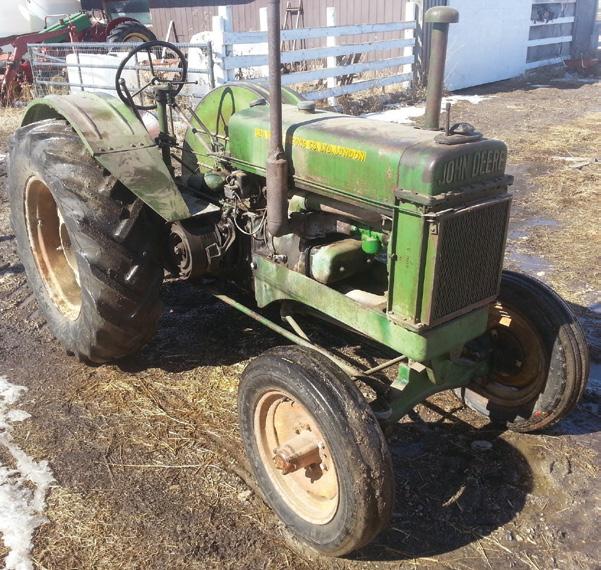
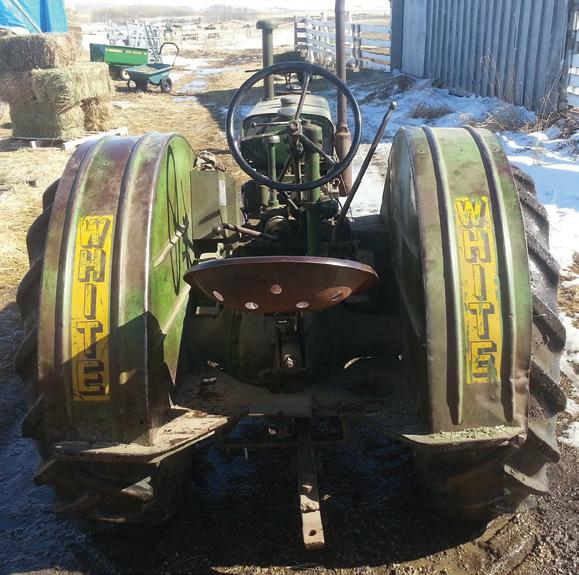
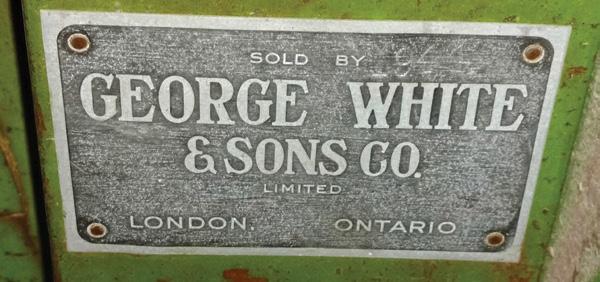
Upper left: This 1944 “BR” was sold by George White & Son’s Company LTD out of London, Ontario, Canada, as the original owner, who was from Saskatchewan, was unable to purchase the “BR” at his local Deere dealer; this was likely due to shortages in wartime.
Upper right: George White was a John Deere distributor among many other business ventures.

Even with the added displacement, the engine remained relatively easy to crank by hand. Nonetheless, many owners welcomed the introduction of optional electric starting in 1939, as well as electric lights. These conveniences effectively lengthened the workday on both ends—an advantage for productivity, if not always for the farmer’s free time. Early-morning and late-evening work became much less daunting when you could see where you were going by more than just the light of the moon.
Beyond the standard “BR” and “BO” models,
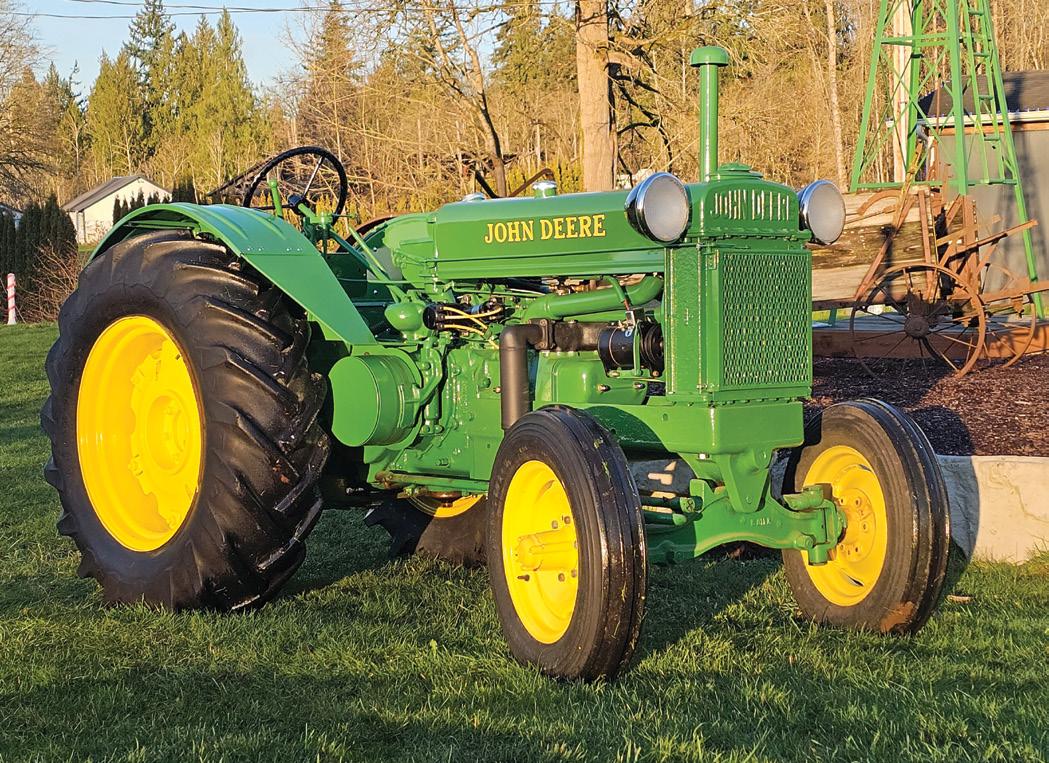
Below: This 1946 “BR” is owned by Caleb Johnson of Monroe, Washington, and was recently restored. The ignition system was upgraded to allow for electronic ignition. He has three children and plans on restoring one “BR” or “BO” tractor for each of them.
Deere also produced two notable variants. One was the industrial tractor designated “BI.” Built from the “BR” platform, the “BI” incorporated heavier front and rear axles to withstand rougher service and more demanding operators. The front axle was moved back five and a half inches, sharpening the tractor’s turning ability and improving its usefulness on construction sites, road work, and municipal jobs. Drum brakes were fitted, and other small changes were made to accommodate them.
Most “BI” tractors left the factory painted industrial yellow, though a few were finished in highway orange, standard agricultural green, or, in at least one special case for the Waterloo, Iowa Parks Department, red. These color variations add interest for modern restorers and historians. Production of the “BI” ceased during World War II and did not resume afterward, as priorities shifted and newer designs emerged.
The “BO,” on the other hand, attracted considerable attention and an enthusiastic following. In 1935, the Lindeman brothers of Yakima, Washington, began experimenting
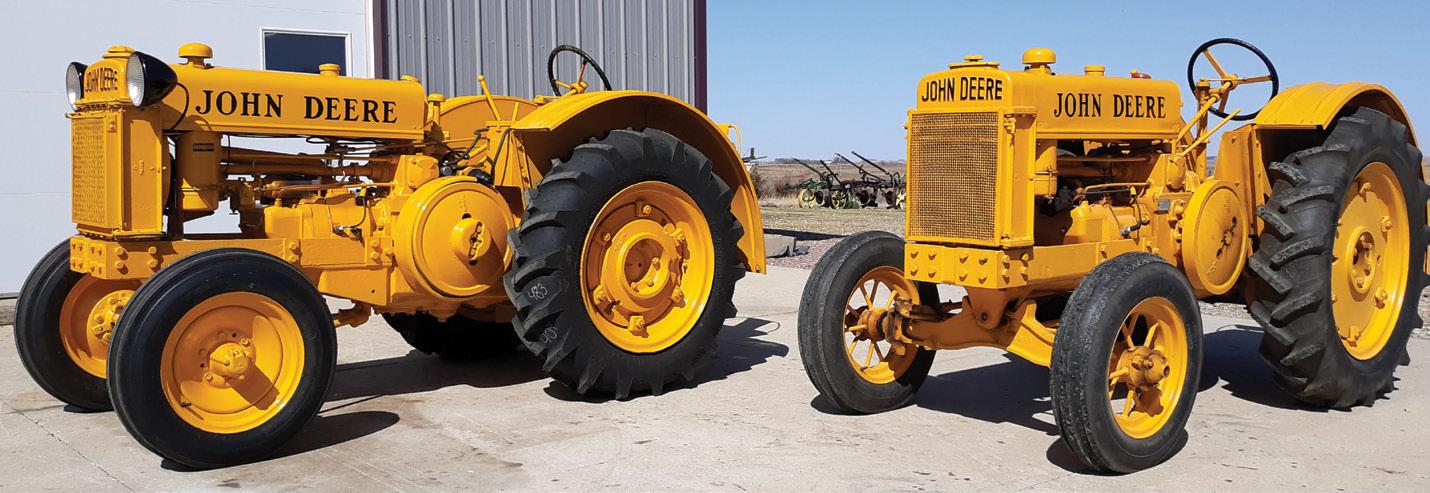
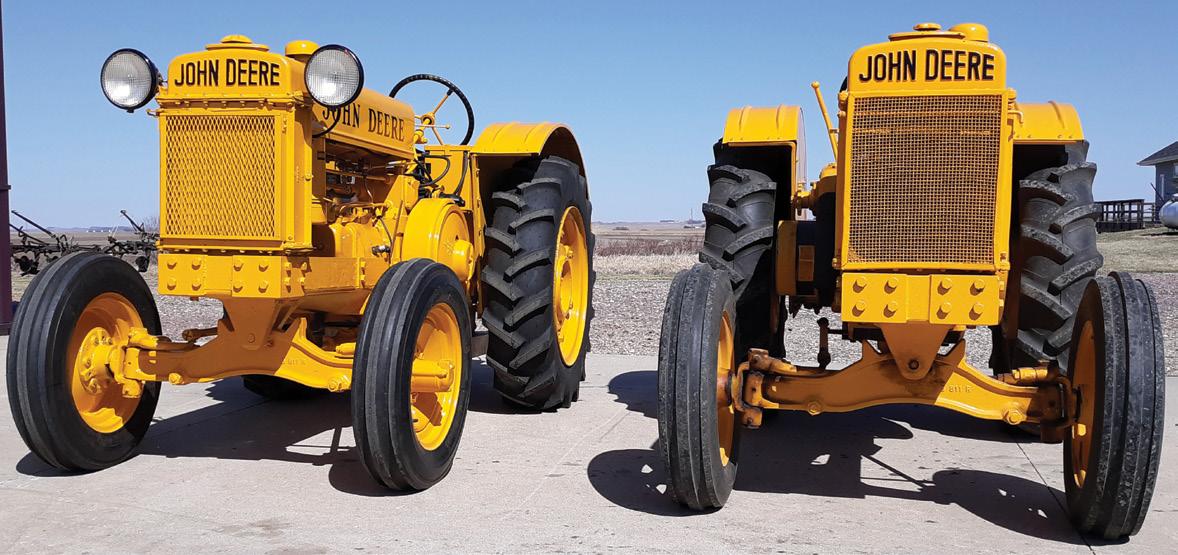
Jake Rens of Orange City, Iowa owns this pair of “BIs” which are model year 1936 and 1939.
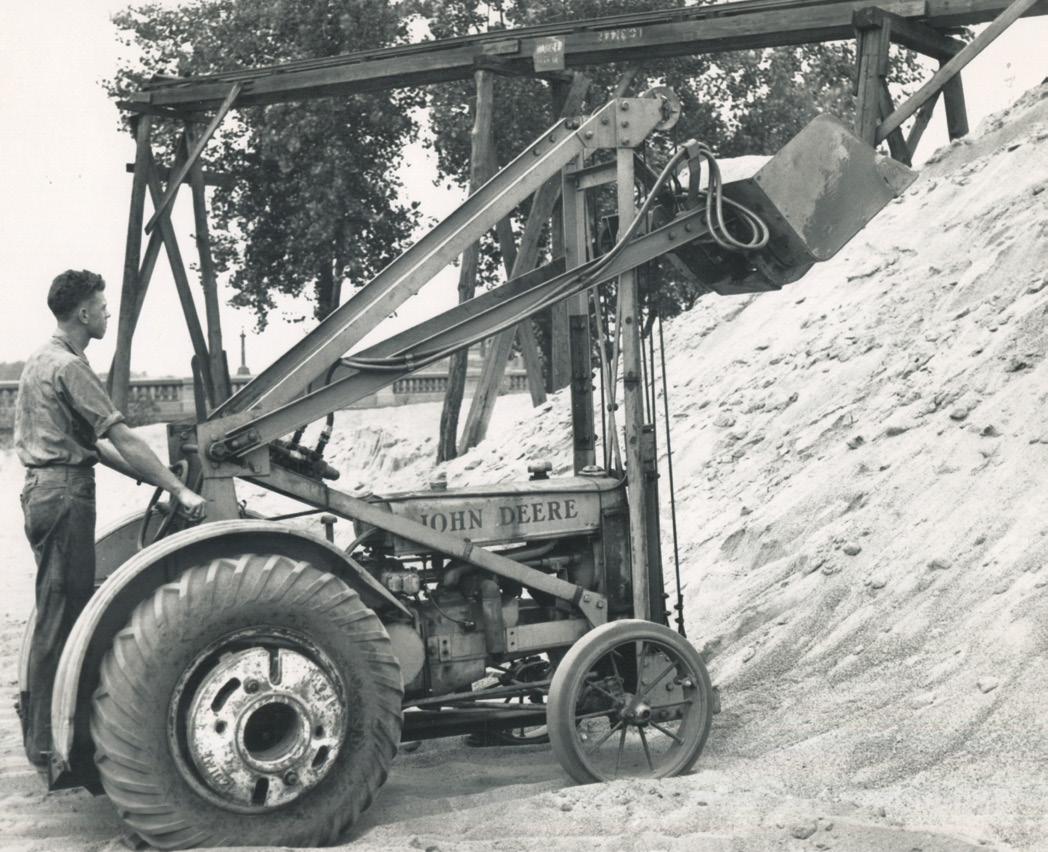
Above: This industrial loader is no modern skidsteer setup, but it would beat scooping by hand. Solid rubber front tires provided little cushion but provided better sideways slip protection than would steel. At least they would never go flat.
with a “BO,” eventually transforming it into an effective crawler tractor. Working in cooperation with Deere, they refined the design to such a degree that, over the model’s lifetime, roughly 1,700 “BO” tractors were shipped to Yakima for conversion into crawlers. These machines proved ideal on steep hillsides and in orchards where maximum traction or flotation was required.
World War II interrupted both production and demand for the “BR” and “BO.” Manufacturing was halted more than once as Deere and the rest of American industry

pivoted toward the war effort, and materials were closely rationed.
After the war, demand surged, and 1945 became the best production year for the small standards, with 1,680 tractors built. Even once the postwar spike subsided, the “BR” and especially the “BO” remained steady sellers, despite the fact that by then they were the last unstyled tractors in Deere’s catalog.
The arrival of the model “M,” built in Dubuque and
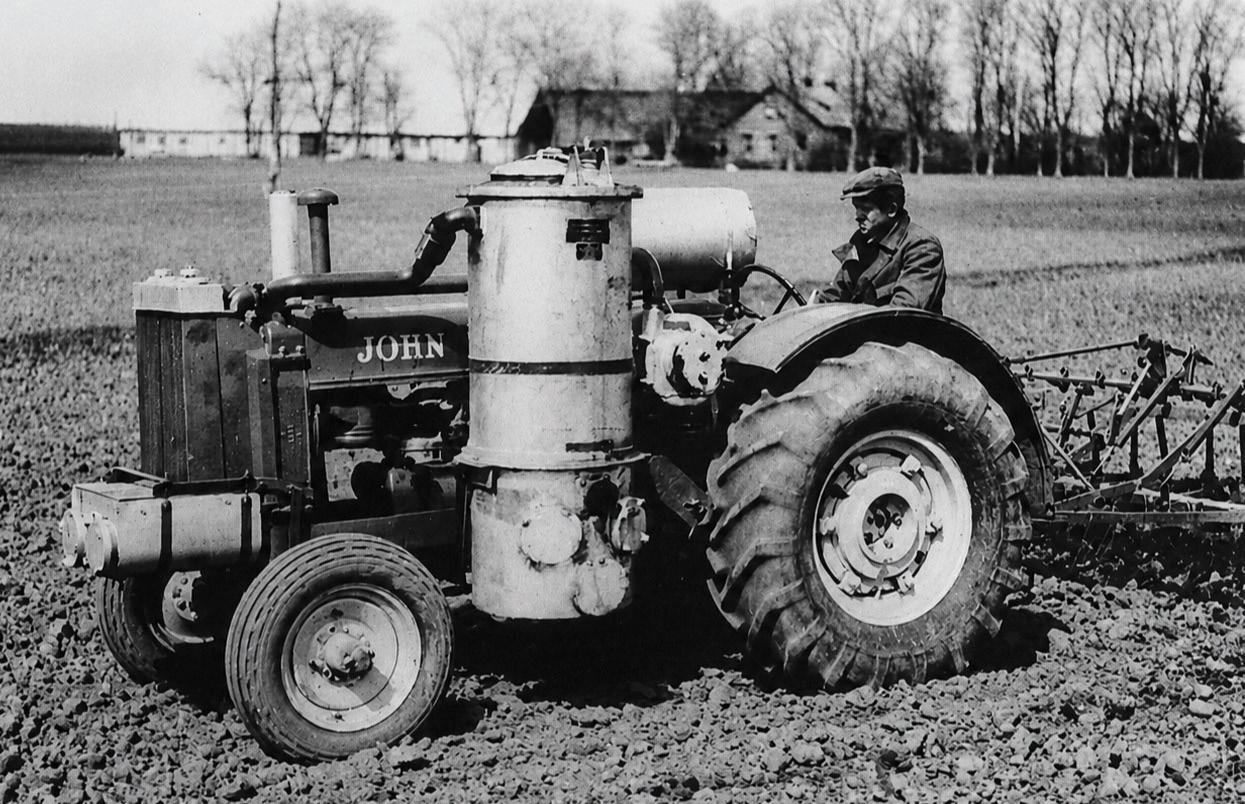
It might look like an “Internet” rendering of an early spaceship, but this is a real “BR” running on a wood gas digester. Wood gasification was a way to keep tractors moving in wartime European countries when refined oil fuels were severely restricted.
designed to replace the small standards, brought the story of the “BR” and “BO” to a close in 1947. By that time, just over 6,000 “BR” tractors and more than 5,000 “BO” tractors had been produced. The “BO” total effectively splits between those sent to Washington for crawler conversion and those that served in more typical roles—often functioning as “BR”-style tractors equipped with turning brakes. About 178 “BI” tractors were built as well.
Those production figures might suggest that a “BR” or “BO” would be easy to locate and relatively inexpensive today, but that is rarely the case. Even with more than 10,000 machines originally built, they tend to command strong prices. They remain just scarce enough to be intriguing, and many enthusiasts consider them among the most charming of Deere’s two-cylinder tractors. Collectors often remark on their compact stance and distinctive personality compared with larger models.
Fortunately, restoring one of these tractors is not usually prohibitively difficult or costly. Mechanically, they are about as straightforward as other early two-cylinder machines; they share many components with the widely produced model “B,” and their compact size makes them easier to store and transport. They can fit comfortably in smaller sheds or garages where a larger tractor simply would not. For hobbyists with limited space, that can be
a deciding factor.
A
“BR” or “BO” will not appeal to every collector or operator. When many people picture an unstyled John Deere, they imagine a tall, lean machine with a particular profile, and these compact, squarish tractors do not quite match that image. On the other hand, those people who are in love with the big standard-tread bruisers but don’t have space for one might appreciate that there is a tractor related to an “R” or an 830 that can fit in their suburban garage.
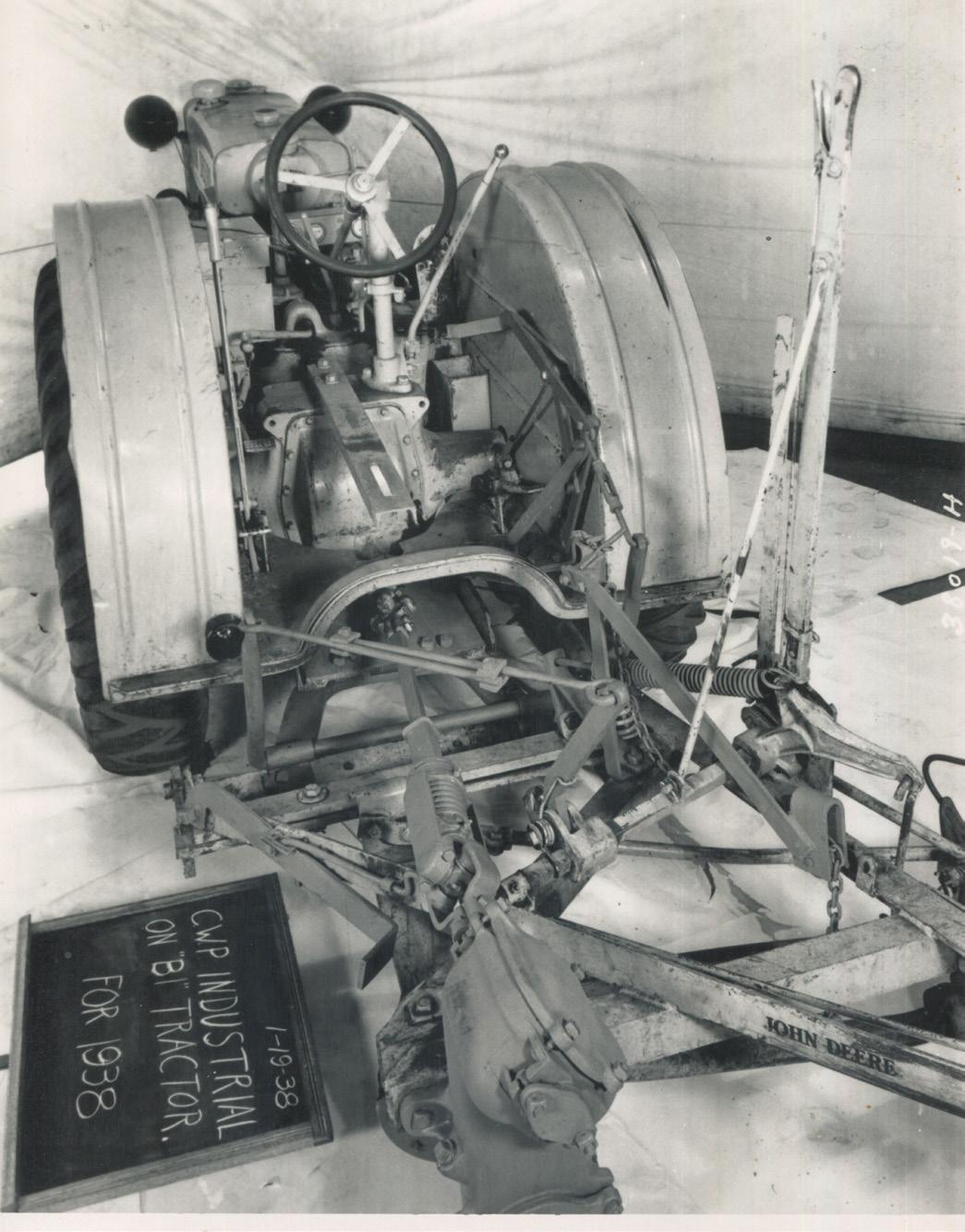
Above: “CWP” sickle mower on “BI”
Below: “BR” and No. 52 again, which appear to have been taken with the same equipment and driver as in the other photo with the view from the back.
Call
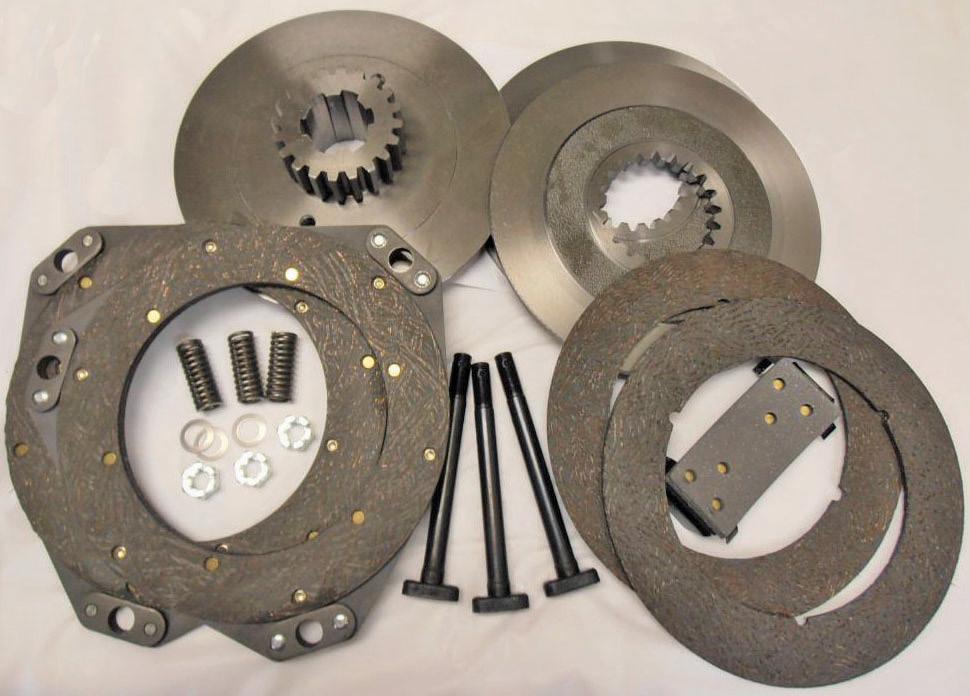
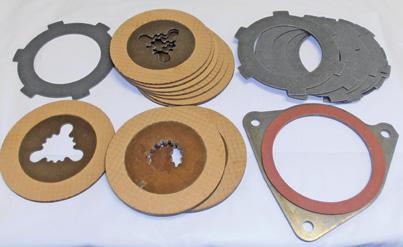
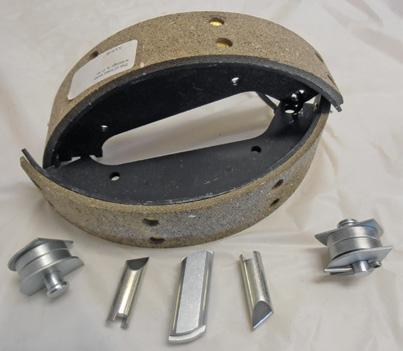
Complete clutch rebuild kits and clutch lining kits
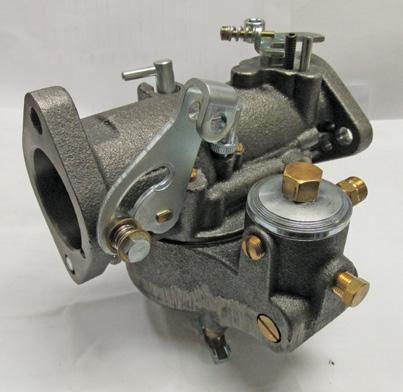
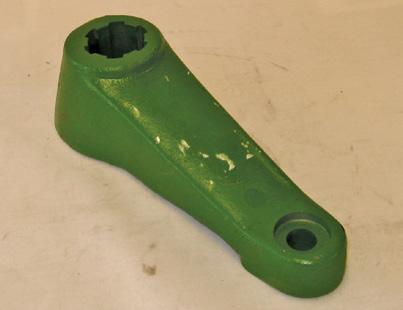
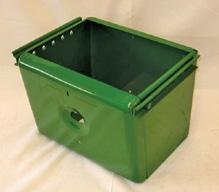
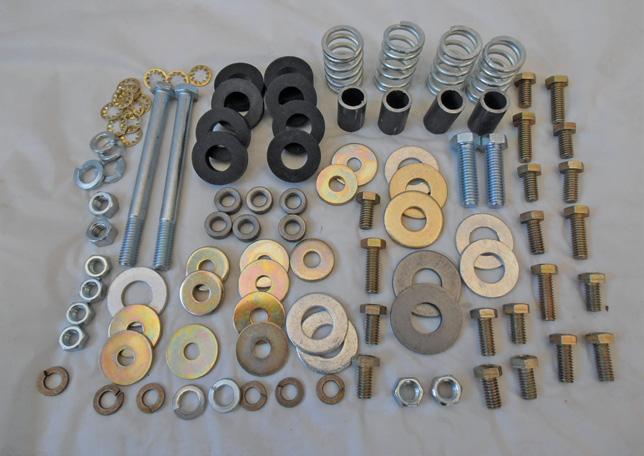
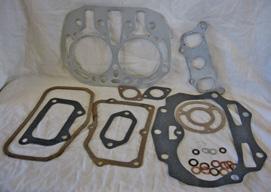
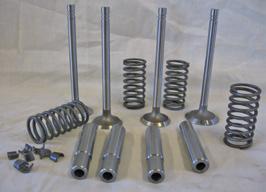
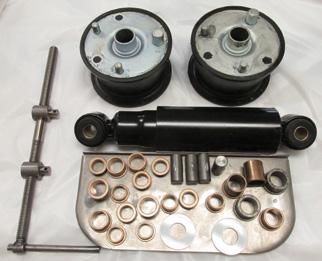
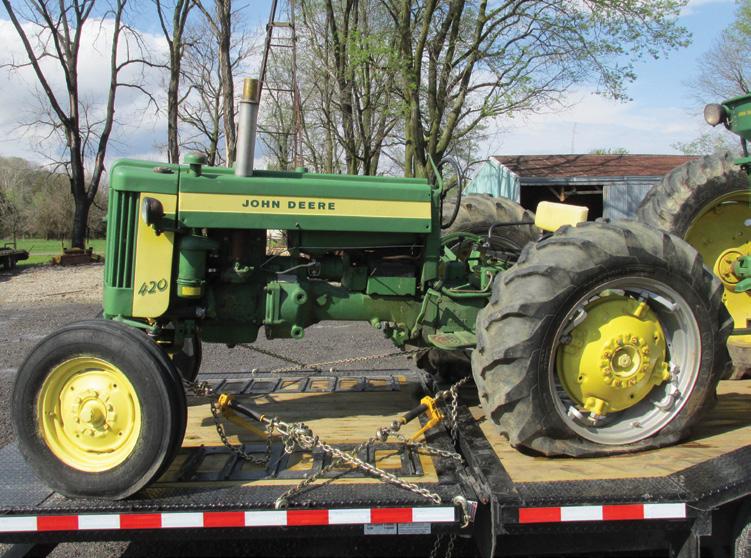
720 w/730 sheet metal, 420W w/good front axle, 70 gas, late B w/ water pump, 820, styled AR, 720D, 2010G, late A, 530, 720D pony start, 50, 1020G, LA ES, 50 w/801 hitch, G, uns A, 730G, 5020, uns G, 430T, 2510G, 730 LP, 2010D, 530, late 520, ’39 B, BN, 40U, ’53 AO, ’41 H, ‘46 A, late A’s, ‘46 B, late Bs, slant dash B, uns B, sty D, G, uns L, M, MT, R, 40T, 40U, 40W, 70D std., 70G, 420U, 420W, 440 w/reverser and PS, 440 gas, early & late 50s, early 60, 60 w/power block, 620, 620 LP, 630, 70G, 720G, 720 LP, 720D pony, 730D, 730G, 820, 1010, 2010, 2010D, 2010RU, 2020, 3010D, 3020, 4020D. Most of these tractors are parted out & on the shelf—ready for quick shipment!
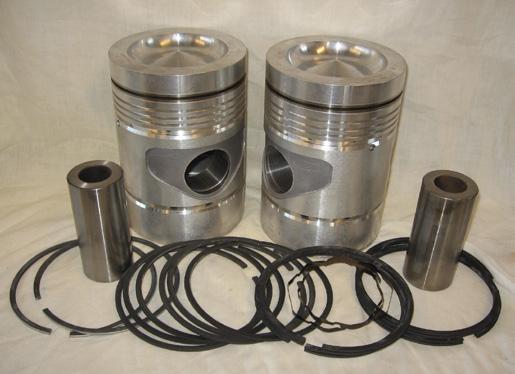
Oversize pistons available again for many two cylinder tractors



It took a while to decide what to name this new column. I was always kind of partial to “From the Assistant Regional Manager”, though fans of a certain TV show would have sent me the inevitable response, “You mean Assistant to the Regional Manager.” I also liked, “It Seemed Like a Good Idea at the Time.” But that seems like an excuse for stupid behavior, which it often is. But since Tyler started as the Young Timer and is now the editor, my transition to The Old Timer seemed logical. By the time you read this, crops will be ripening, and I will be itching to get out with a couple of my tractors and plow, especially the “D” that I unrestored. I had hoped that I could run a photo of the “D”, now on steel with right side wheels in a freshly plowed furrow in my last Unrestoration article. However, life comes at you fast, as do farmers wanting to plant their crops, and plowable acres become scarce after the middle of April. So I guess plowing will have to wait a few months.
So, what am I going to write about in this new column? I guess a little bit of everything, shows I’ve been to, people I’ve met, and collections I’ve seen, memories of the hobby, and my next project, whether that be restoring a tractor, building another speedster, or fixing up one I already own, unique tractors I’ve found, and whatever else I think that Green Magazine readers might be interested in. My email address is listed below, so contact me if you want to suggest something I should write about.
So, here goes: I was driving my “D” around the
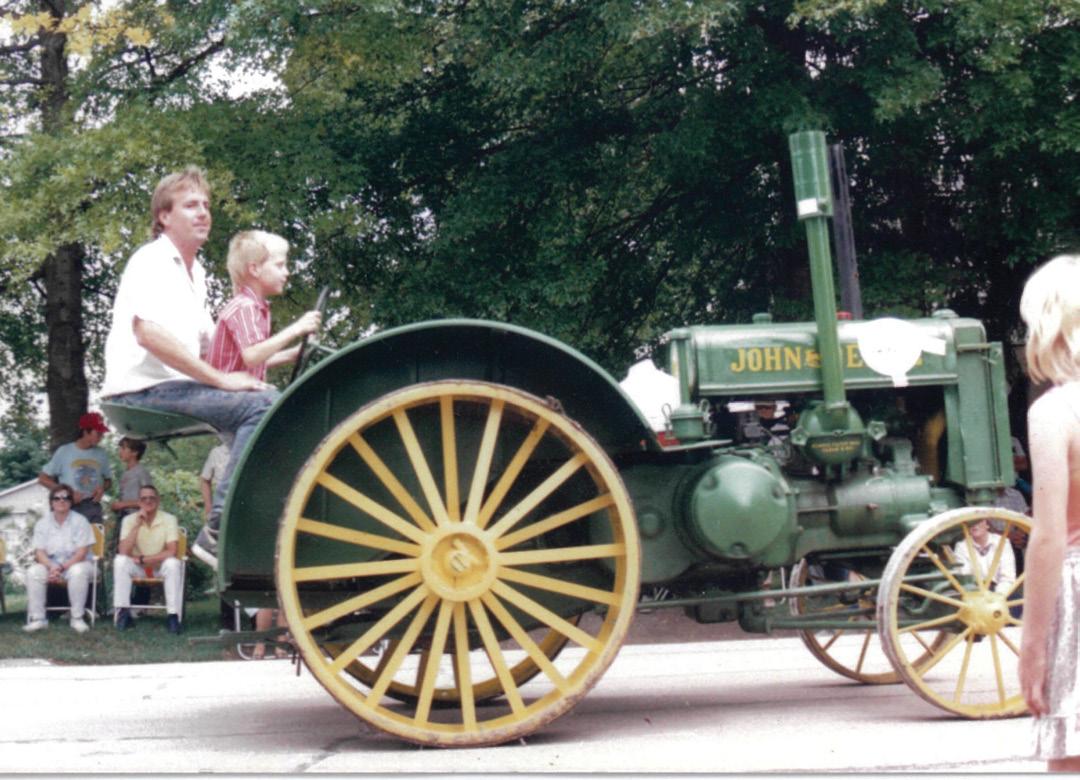
yard one day recently when the unmistakable sound a steel-wheeled tractor makes when driving on crushed rock or gravel reminded me of a time back in 1988. Besides Sonny Bono being elected president of Palm Springs, the other big news of the year was that it was the Centennial Celebration of Bee, Nebraska. I, along with a few others, planned a small gathering of old tractors, and my contribution would be the 1931 “D” I had been restoring. Okay, so how to get it there? I had a trailer at the time, but it was only a trailer in the sense that it had wheels and it could be pulled behind a pickup. Well, Bee is only about 2.5 miles from my place via a gravel road, so why not just drive it there? Despite the fact that a “D” has two speeds, slow and a little slower, my 29-year-old brain decided to go for it. The actual top speed of a two-speed “D” is 3.3 MPH, so just an easy 45-minute drive would have me there. Heck, it would take me that long just to get it loaded and chained down, right? 45 or so minutes later, I arrived in town with the vow to never try that again. The day’s festivities more or less concluded with a parade, a photo of which is shown here.
That’s me on the seat with Ben on my lap, driving. Not sure who the little girl is, but she’s probably disappointed that we weren’t throwing candy. I don’t really remember much about the parade except that before it started, my normally easy-starting tractor refused to come to life. Fortunately, a short tug from my brother-
in-law and his “GP” got me going. After the parade, I went home and hooked my “trailer”, such as it was, to my pickup, found a nice dirt bank to back it up to for easy loading, and hauled the “D” home. I sold that “D” a few years later and would love to have it back or at least know its whereabouts. Distinguishing features would be a later style Bakelite steering wheel, Wico “C” mag, one original and one repro rear fender, and a serial number in the 109000 to 115000 range. If you see it, let me know. I should have known better, since only a year or two earlier, I had a similar adventure with a model “H”. In the mid 1980s, my Dad saw this tractor in an ad in a local paper, and I went to look at it, and one of us, I don’t remember who, ended up buying it. At any rate, I delivered it to my Dad’s garage in Seward, Nebraska, where he spent some time playing around with it. Before winter set in, he asked me to take it back to my place so that he could get both of his cars in his garage. This was before the “D” episode, so I had even less of a trailer at the time, and once again I decided to drive it home. The “H” is speedy compared to the “D” with a top speed of 5.7 MPH; however, this time the distance
was more like six miles. So, a little over an hour drive on the seat of an “H” on a nice fall day, what could be better? Lots of things, apparently, because by the time I got to the outskirts of town, I was thinking that this was a bad idea. Minutes dragged like hours as the scenery changed very, very slowly. While I know some people drive hundreds or even thousands of miles a year during tractor drives, I don’t see many of them doing it on an “H” that takes more time to cover a mile than a decent middle school athlete. I tried pushing on the governor arm with my foot, but that really didn’t help much. I even momentarily had the harebrained idea of hooking a chain to the front of the tractor and having Carol pull me a little faster with the pickup, but soon decided that was probably a good way to get killed. I eventually made it home, and I still own the “H”, but it hasn’t left my yard since. Strange to think about, but since the preceding incident took place in about 1985, the little tractor has been living at my place almost as long as it had existed before we bought it. Perhaps another good reason that this column should be called The Old Timer.
Contact Richard Hain by email at green4010@yahoo.com

Please don’t call about delivery of your Green Magazine until AFTER the 20th of the month.
Although Green Magazine is always mailed by the 1st of the month, delivery date can vary from month to month.
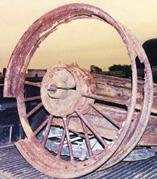
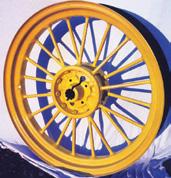
ReRimming
High
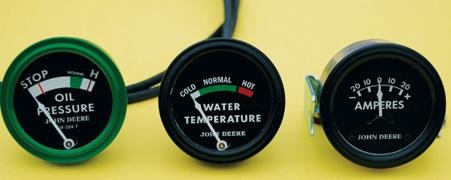
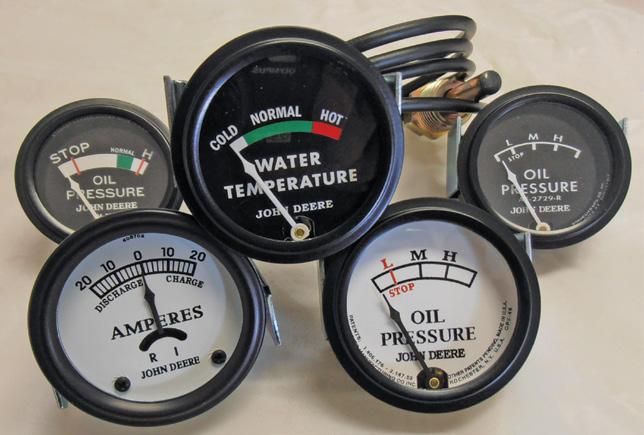
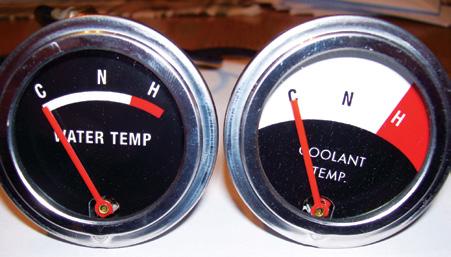
with white or black faces for most 2-cylinder models for the unstyled to the 30 series, Waterloo and Dubuque built models Made in the USA
EverGreen Restoration
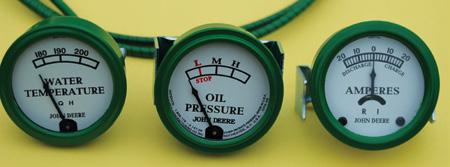
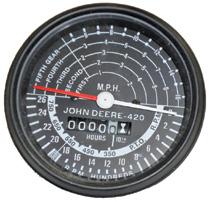
• All gauges have real glass
• On hand, ready for shipping
• Painted, ready to install
• Gauges come with mounting clamp and hardware
• Faces made by Jorde Decals and have all details of the original gauges
• All gauges are calibrated EverGreen Restoration
Jerry Trcka W7619 Walnut Dr Spooner, WI 54801
Cell 715-520-7876
tractorgauges@yahoo.com www.evergreengauges.com


We kicked off ‘50 years of the Dator’ with an in-depth review of the beastly race sled in the December 2025 issue of GM. We followed that up in February 2026 with a story about the formation and operation of “Enduro Team Deere”, the team Deere put together to bring attention to the durability and performance of the new front engine sled line for 1976. The April 2026 “Tracks and Tails” article featured the Snowmobile Hall of Fame’s “50 Years of the Liquidator” celebration over February 20th and 21st. It was a fun-filled weekend of riding and displaying Liquidators, plus sharing stories with fellow collectors and hearing Enduro Team Deere members talk about racing and wrenching on them. But just being a unique and fast sled wasn’t enough to give the machine its mystique. Winning it is what really put it on top. Brian Nelson’s Winnipeg to St. Paul I-500 victory is the most famous ‘come from behind victory’ to upset the snowmobile industry, but ETD accomplished many other wins and podium finishes in the winter of 1976. Fortunately for us, Deere released a video called “2000 Miles to the Checkered Flag” highlighting the accomplishments of Enduro Team Deere drivers and mechanics board their Liquidators. A DVD of the video is available from Snow Sleds Productions, but it’s posted on YouTube these days.
The new International Cross

Race and Rally published this promotional picture of Brian Nelson ducked down behind his windshield to celebrate his stunning I-500 win.
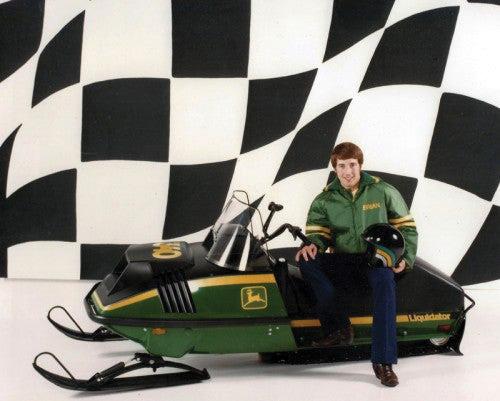
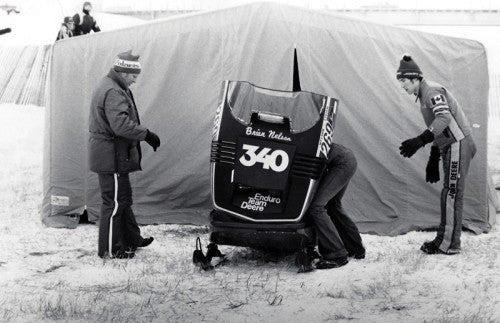
(Top) Deere took pictures of individual racers with a Liquidator for promotional purposes. They also produced a very hard-to-find "press kit" for Enduro Team Deere." (Bottom) Polaris immediately issued a protest letter of Brian's I-500 win. The sled was legal down to every nut, bolt, and "coolant baffle" that was in the letter. Brian's legendary win stood.
Country Snowmobile Racing Federation (ICCSF) had organized 7 cross-country “ditch” races across the Midwest into a full-on race circuit, plus the I-500 run by the St. Paul Winter Carnival for the factories to battle it out for bragging rights. The season opened in December of 1975 with the North Dakota Governor’s Trophy Run racing in the ditches from Bismarck to Grand Forks, ND, over 2 days. Tom Otte won it the prior year as an independent on 1975 JD340/s, so Deere had a good history with the race. For this winter, 180 factory and independent racers lined up in Bismarck looking for a piece of the $10,000 in prize money. To put that into perspective, that’s about $62,000 in today’s dollars. But racing back then was nothing short of brutal as rocks, obstacles, and breakdowns took out 95 sleds in the first day alone. But Brian Nelson/Hubert Fixsen crew brought home the first win, trophy, points, and prize money by crossing
the finish line in 5 hours, 24 minutes, and 54 seconds, according to “2000 Miles to the Checked Flag”.
For the second race of the season, 150 drivers entered the Balsom Lake Classic, a lake where RJ Carlson had a camp. That race offered $5,000 to win or $31,000 today. Nelson and Tom Otte from the MN Branch Team and a young Jay Sperry on a Rupp battled in out for the top 3 positions on the smooth lake. The Deere video claims that “speeds in excess of 90 MPH were recorded on radar…” That was moving on sleds of that era with only a few inches of suspension. Sperry won it on his wellprepared Rupp, but Nelson took 2nd place, and Otte grabbed 3rd.
The South Dakota Governor’s Cup didn’t go well for ETD. Apparently, the team switched to a deep-ratio set of gears to handle the fresh snow that had recently fallen. Unfortunately, this small top gear caused gear and chain failures across the team, so no Liquidators finished in the money.
The 4-day Winnipeg-to-St. Paul I-500 was next up. This race was the longest, hardest and most physically demanding cross country race in the lower 48 with $10,000 waiting for the winner ($62k today)! To even cross the finish line of the original I-500 was an accomplishment to be proud of. 385 racers lined up to start racing in St. Paul, hoping to complete leg one to Alexandria. Aside from the main ETD, the MN Branch of ETD, with Tom Otte and Roger Ebert, entered the race, along with some members of Enduro Team Canada. Glen Wasmuth of Deere’s Canadian team
(Left) Bob Enns also ran a few races outside of the ICCSF circuit, including a short crosscountry race in Ironwood, where he won the 400cc class on his Liquidator. (Right) Bob Enns and Brian Nelson are shown with their first and secondplace trophies after the Eagles Hardland Grand Prix. Bob had a good year in 76, setting up for an even better year in 77.
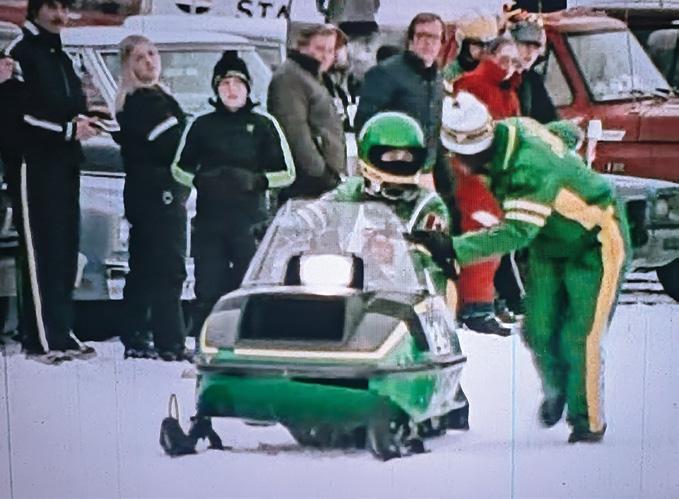
Brian Nelson is pulling out of the pits at Balsom Lake after a quick refueling stop. He and Tom Otte finished 2-3 on the lake race.
was even caught on film with his #51 Liquidator. Conditions were brutal enough to take out 2/3’s of the field on day one alone, according to Deere’s video. Brian Nelson was in 3rd place behind two Polaris machines with a 12-minute gap to the leader.
Day 2 was a 125-mile run from Alexandria to Walker. Nelson moved back to 5th place on day two, now 25 minutes behind Polaris race leader Loren Zutz. For Day 3, the racers head into Thief River Falls. Bob Przekwas is now in the lead and is 14 minutes ahead of Nelson, who is now in 4th place. For the last leg from Thief River Falls to Winnipeg, Manitoba, 76 of the original 385 sleds lined up for the final 134 miles. Brian put the hammer down and ran the last leg in 2:51:22, winning with just a 32-second margin. To quote Brian: “This is the biggest one of them all, nothing compares to it…" Approximately
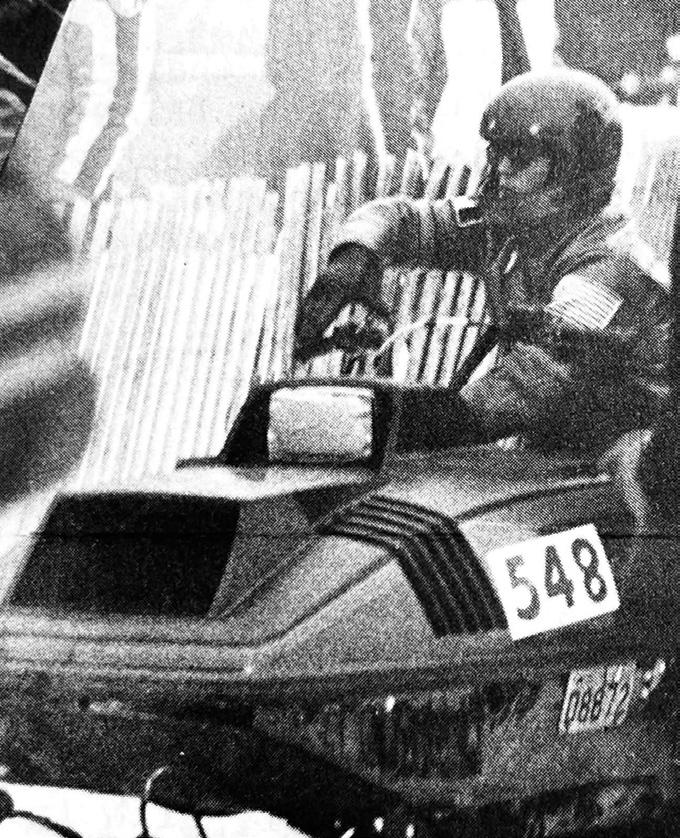
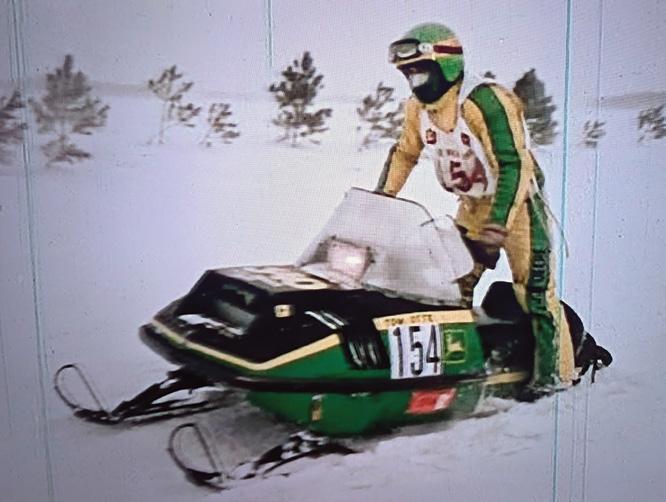
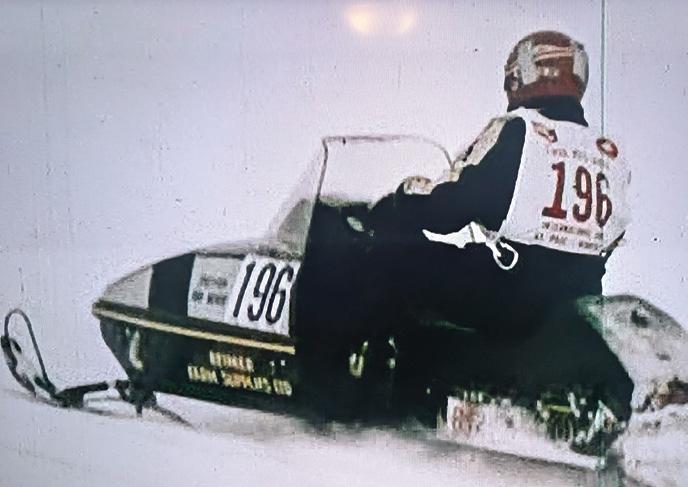
(Top) Otte was well known for his unique "stand-up riding style" as shown in this screenshot from the I-500. Unfortunately, he wasn't able to finish the race. (Bottom) Independent racers didn't just run Liquidators in 1976. Abe Koop of Manitoba ran a 340 Liquifire in the I-500, and several 340’s could be seen competing in several races throughout the season.
17 Liquidators crossed the line after Brian, including several independent racers like Gordy Hamm and my friend Kieth Bylin. But the nine sleds immediately following Brian were
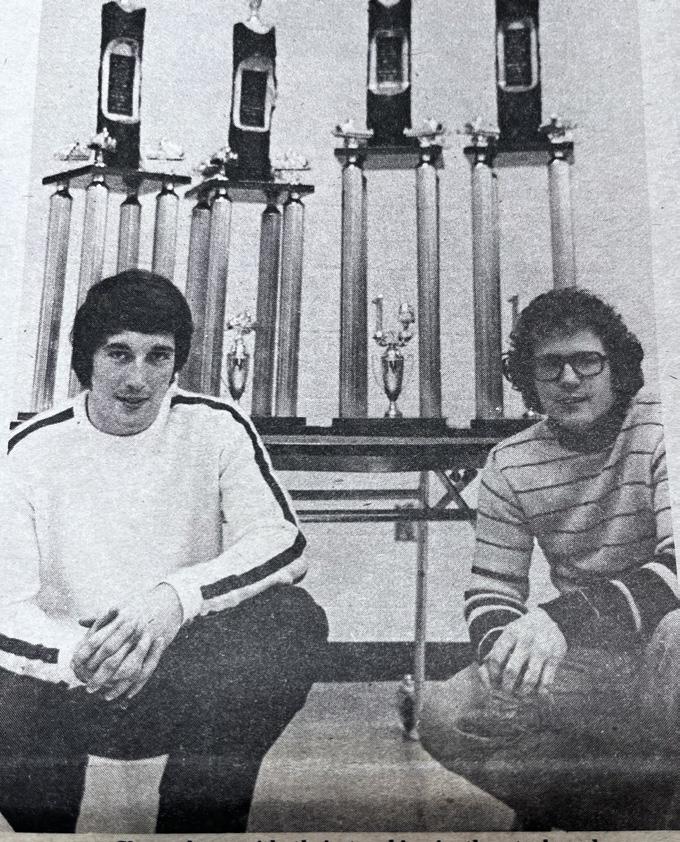
Polaris’, which caused years of wild accusations and crazy stories like the infamous “a helicopter picked up the sled and carried it to the finish line,” which was told in Larry Preston’s “Starfire Kids” book. Polaris protested the Nelson win, but the sled was totally legal, survived all the teardown challenges, and Brian was eventually declared the winner later that evening in time to celebrate the banquet.
The Dairyland 100 was next up in the roster with 158 racers on the starting line. The 180-mile race was run in the ditches with good snow conditions. Tom Otte was known for ditch racing, and he finished in 3:05 to win the race and a $4,680 purse to boot (about $27,000 today). Nelson grabbed 5th, finishing 4 minutes after Tom. In a post-race interview, Tom said, “I like the ditches better, the little more jumping, the rougher the ride, the better I like it…”
February 6th & 7th, 1976, brought the International 250, often called the Regina-to-Minot 250, to the ICCSF circuit. 241 sleds started the race in Regina, Saskatchewan, but only 93 pulled into Minot, ND. But Deere had a great race, taking 8 of the top 10 spots with Nelson winning another one and $5,000 in prize money. Ron Riemer of Steinbach, MB grabbed 3rd on his Liquidator, Otte taking 4th, and Bob Enns in 7th place.
The Eagles Hartland Grand Prix was a 200-mile, one-day event that ran across lakes, ditches, and woods. Bob Enns missed a turn early in the race and made up time in the woods to grab the lead. Bob won in 3:43:05 and took home $6,300 for his troubles. That comes to about $39,000 today, a pretty nice birthday gift as he won the Eagles Heartland on his 25th birthday. Couldn’t happen to a nicer guy! Nelson followed Enns across the line 3 minutes later, taking 2nd place.
The last race of the 1976 season was the Mille Lacs Lake 2-day, 300mile enduro around the lake. Despite Nelson getting the fastest 100-lap time of the race in 1 hour and 12 minutes,
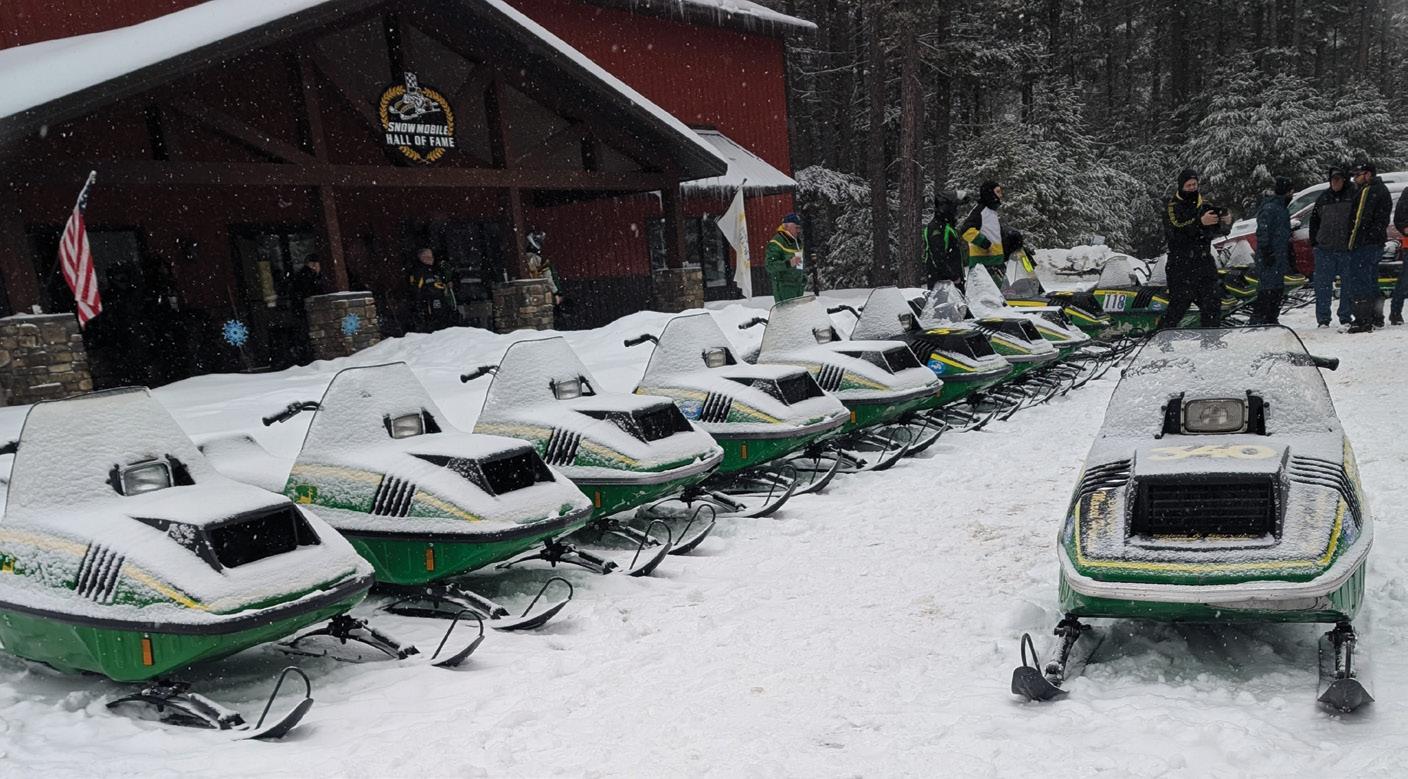
The result of the 76 Cross-Country race season is that even 50 years later, the Deere snowmobile collectors love our Liquidators and hold the ETD mechanics and racers as our heroes. One's sure worth meeting.
Guy Usseldinger held on to the win on his Cross Country Cat by about 2 minutes. Bob Enns cranked across the finish line on one ski for 4th place.
Tom Otte ended the year with 85 ICCSF points, taking 1st in the Dairyland 100, 3rd at Balsam Lake Classic, and 4th at the Regina to Minot International 250. That gave him 4th place overall.
Bob Enns won 100 ICCSF championship points, enough for 3rd place overall. Bob took 1st at the Eagle’s Hartland Grand Prix, 4th in the Mille Lacs 300, and 7th in the Regina to Minot International 250.
Brian Nelson won an impressive 173 champion season points, winning more races and prize money than any cross-country racer had before him. This easily gave him first place for the year. Brian took 1st in the North Dakota Governor’s Trophy Run, 1st in the St. Paul to Winnipeg International I-500, 1st in the Regina to Minot International 250, 2nd at the Balsom Lake Classic, 2nd at the Eagles Hartland Grand Prix, 2nd at the Mille Lacs 300, and 5th in the Dairyland 100.
For the year, Deere racers took 5 wins and 3 seconds, plus several other top-10 finishes in 8 races. Brian Nelson, his mechanic Hubert Fixsen, and Bob Enns have all been inducted into the Snowmobile Hall of Fame in
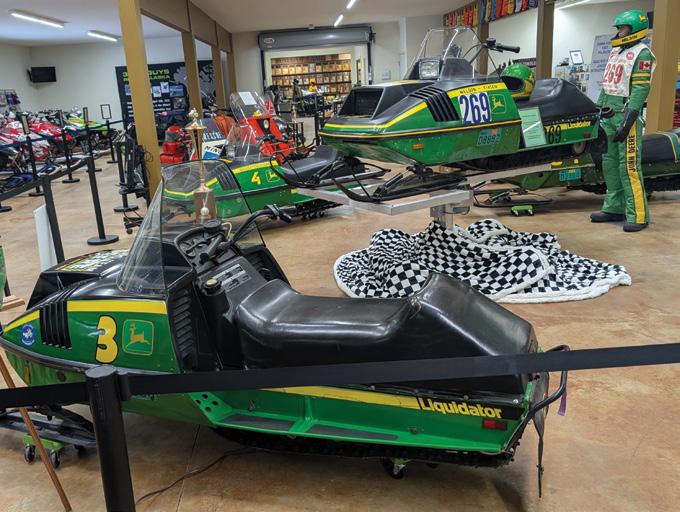
Although most of the factory race sleds were reported to have been destroyed, some were preserved like Nelson's I-500 winning Liquidator, while others may have snuck out. The Hall of Fame has a Bob Enns #3 and an Otte #4 Liquidator on display, along with the Nelson #269 and factory race gear, until later this summer.
part due to the amazing 1976 Cross Country Race Season. And, the Liquidator gained cult status among Deere snowmobile collectors that continues to this day.
Deere had more up their sleeve for the next season, so the Liquidator was more than a one-trick pony. But that’s another story…
Joe Rainville is from Fort Worth, Texas. To contact him, send an email: joerainville@hotmail.com

Our vinyl computer cut decals are a Licensed Product of Deere & Company.
• For John Deere tractors & equipment!
• Looks like silk screening.
• Pressure sensitive die cut vinyl.
• No film between the letters...they are on pre-spaced application tape.
K&K Antique Tractors
• Nameplate for 1010 thru 7520, stamped, raised letters, like original.
• Medallions for styled AR through 830, including industrial tractors. Also medallions for steering wheels, power steering and non power steering.
• Correct size medallion: 320, 420, 520 USA made.
• D306R D manifold gasket.
• F55R early G head gasket.
• Air stacks for A, AR, AOs & B, BR & G unstyled tractors; also styled A, B, G, R, 80, 820.
• Air stack adaptors for 620-630 & 720-730.
• Tool boxes.
• New valves and guides: GP, D, G, A, B.
• Replacement upper and lower water pipe for 2 cyls.
• BO Lindeman side plates and fenders.
• PTO shields & castings 520-730.
• PTO shields H-70
• GP dust shields for brakes and muffler parts.
• Grill screens, back and seat cushions, arm rest.
• New radiator cores for John Deere and other tractors that use bolt up type radiators.
• Wire hose clamps for unstyled A, B, G, 50-630 & 80-830.
• Reproduction steering wheels A-830 and New Gen.
• Early D & GP fuel tanks, while supplies last.
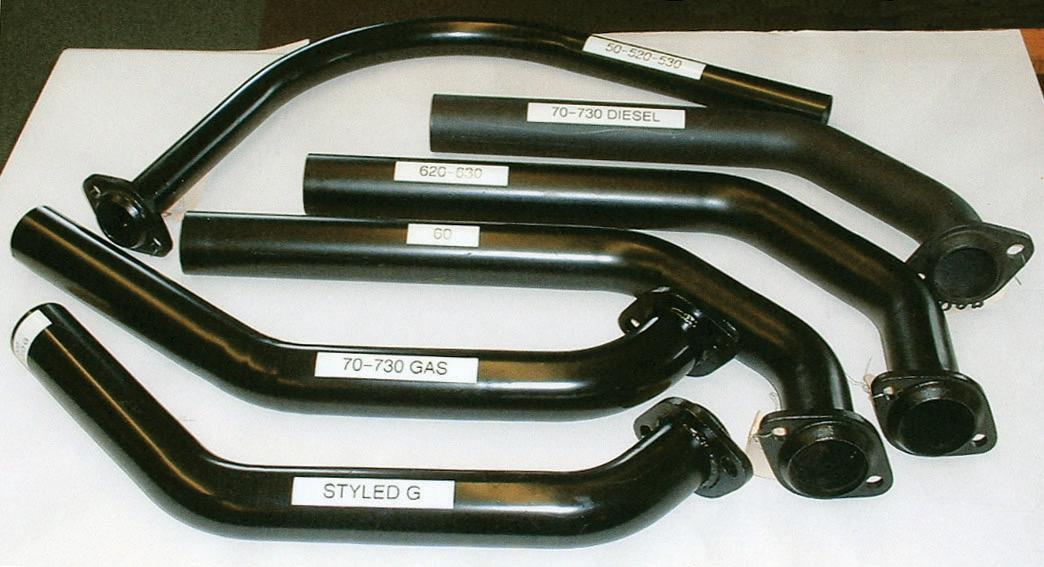
These exhaust pipes are made with smooth mandrel bends like the originals
We make styled and unstyled A, B, G, GP Top Steer and 50 through 730D.
4 MUFFLERS
D, AO, AOS, BR, BO A, AR, B, G Styled and Unstyled 50 through 730D
50 through 530 horizontal, 60, 620 Orchard Made in USA
Restoration Quality

4 AR28048, AR28049 NAMEPLATE
Stamped, polished aluminum like originals Fits 1010 through early 7020

4 T10551 NAMEPLATE
• We bore and sleeve JD 2 cylinder blocks.
• We carry new parts for Wico mags, also for pony motors.
• Rebuilt mags and carbs for sale.
Like original, stamped polished aluminum with raised lettters, flat black background Each 3-3/8” x 27-3/4” • $140.00 per set plus S/H
4 HYDRAULIC OUTLET PLUG
AF3001R, steel w/chain - 2 cylinder AR52623, plastic w/chain - New Gen
4 AR45915 RAIN CAP Fits 3020-4020 side console models
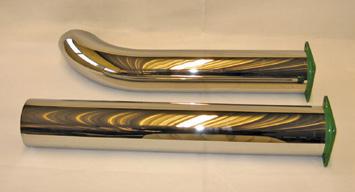
4 CHROME STACKS
Double walled, straight or curved 4 “ NEW” BATTERY TRAY For 4000 model with brackets




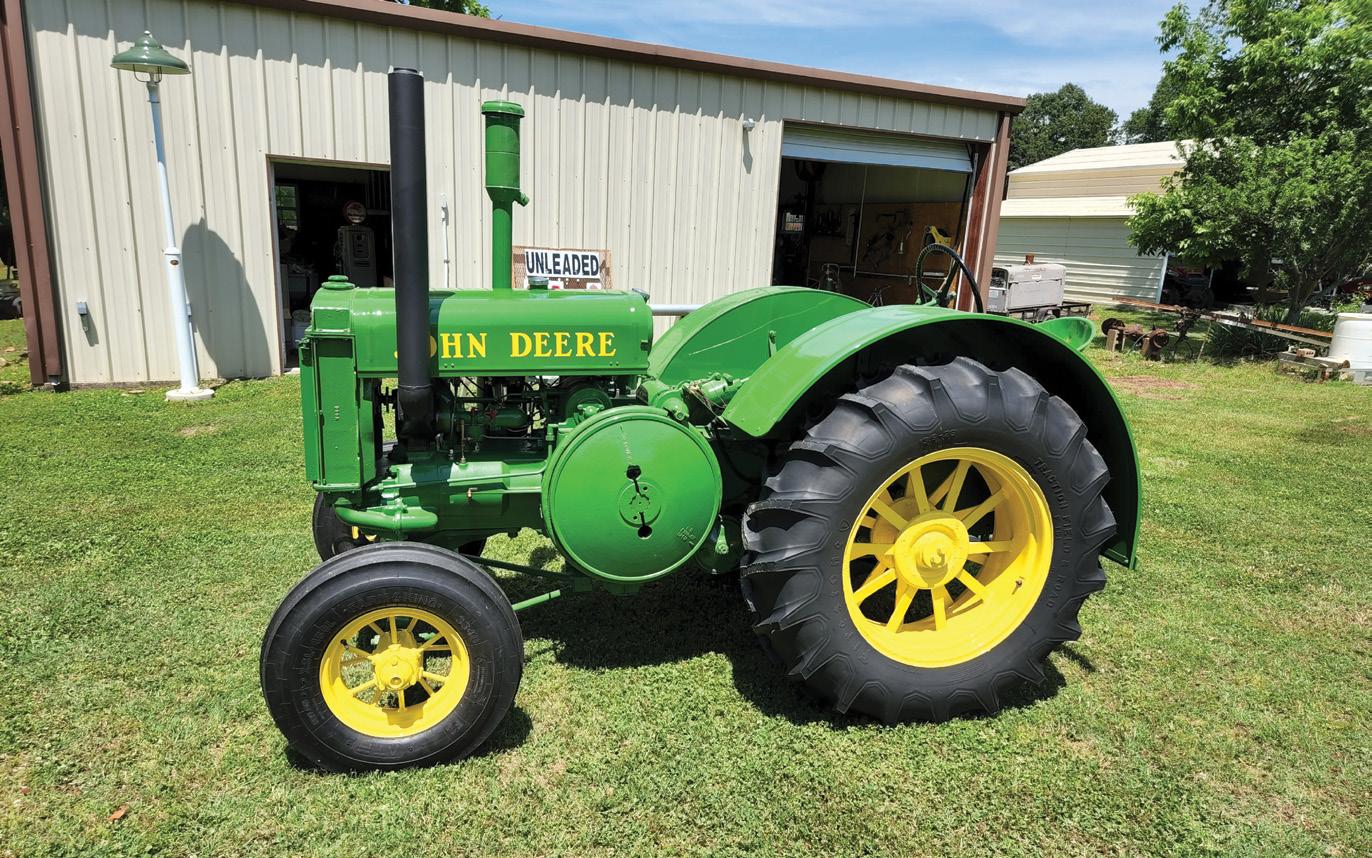
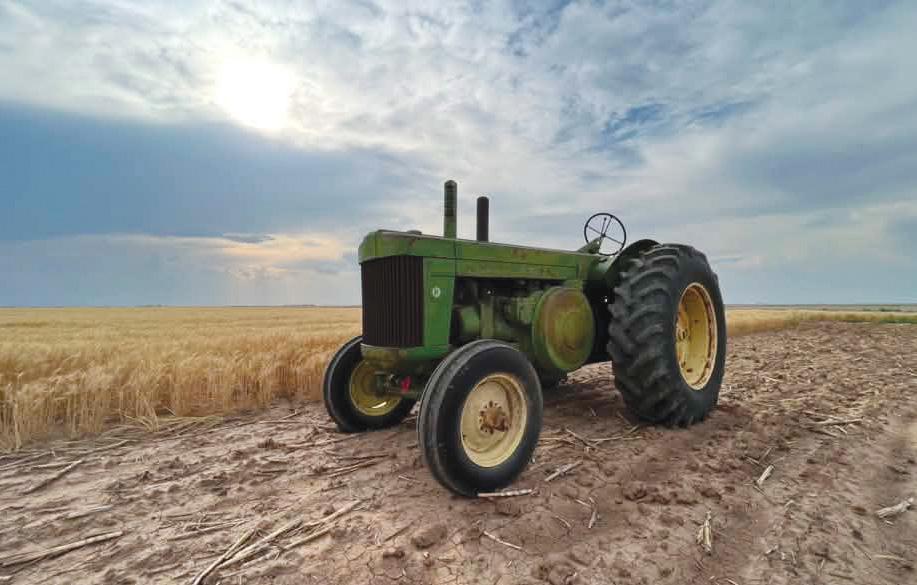
This 1937 “D” is owned by David Bender from Charleston, Arkansas. He referred to it as a ‘Rust Bucket,’ which he restored completely.

Sam Benzer of Amarillo, Texas owns this 1950 model R.
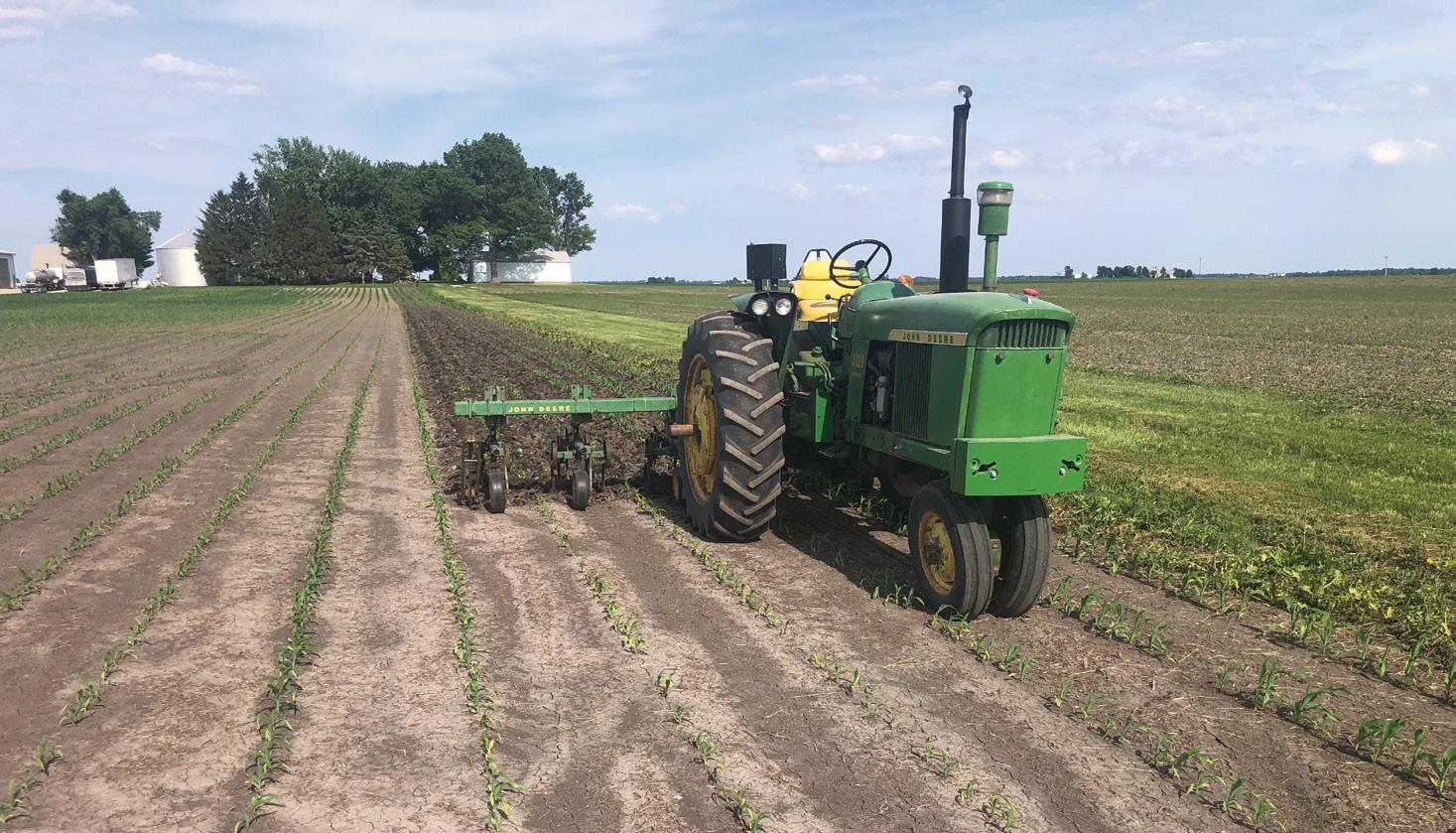
Darrin Bass hooked up the RM630T six-row cultivator behind his 1965 3020 diesel power-shift to plow his quarter-acre sweet corn patch near Taylorville, Illinois.

The 55 is being operated by the owner, Bill Wessel, of Mineral, Illinois, with Ken Bolin on the 620 catching the corn on the go
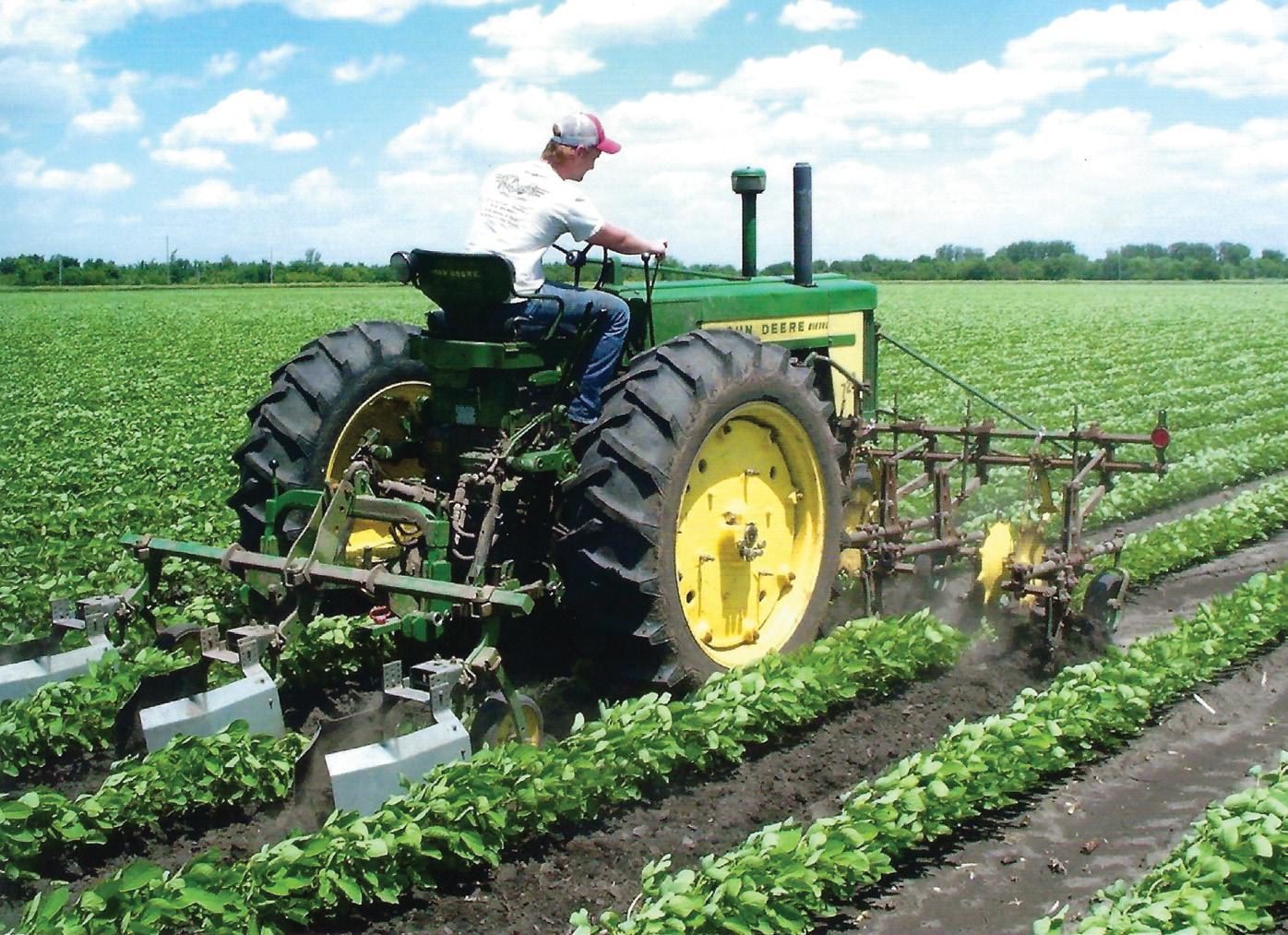
Bill Wessel’s Grandson, Payton Shipp, is cultivating beans with his 1958 720 Diesel.
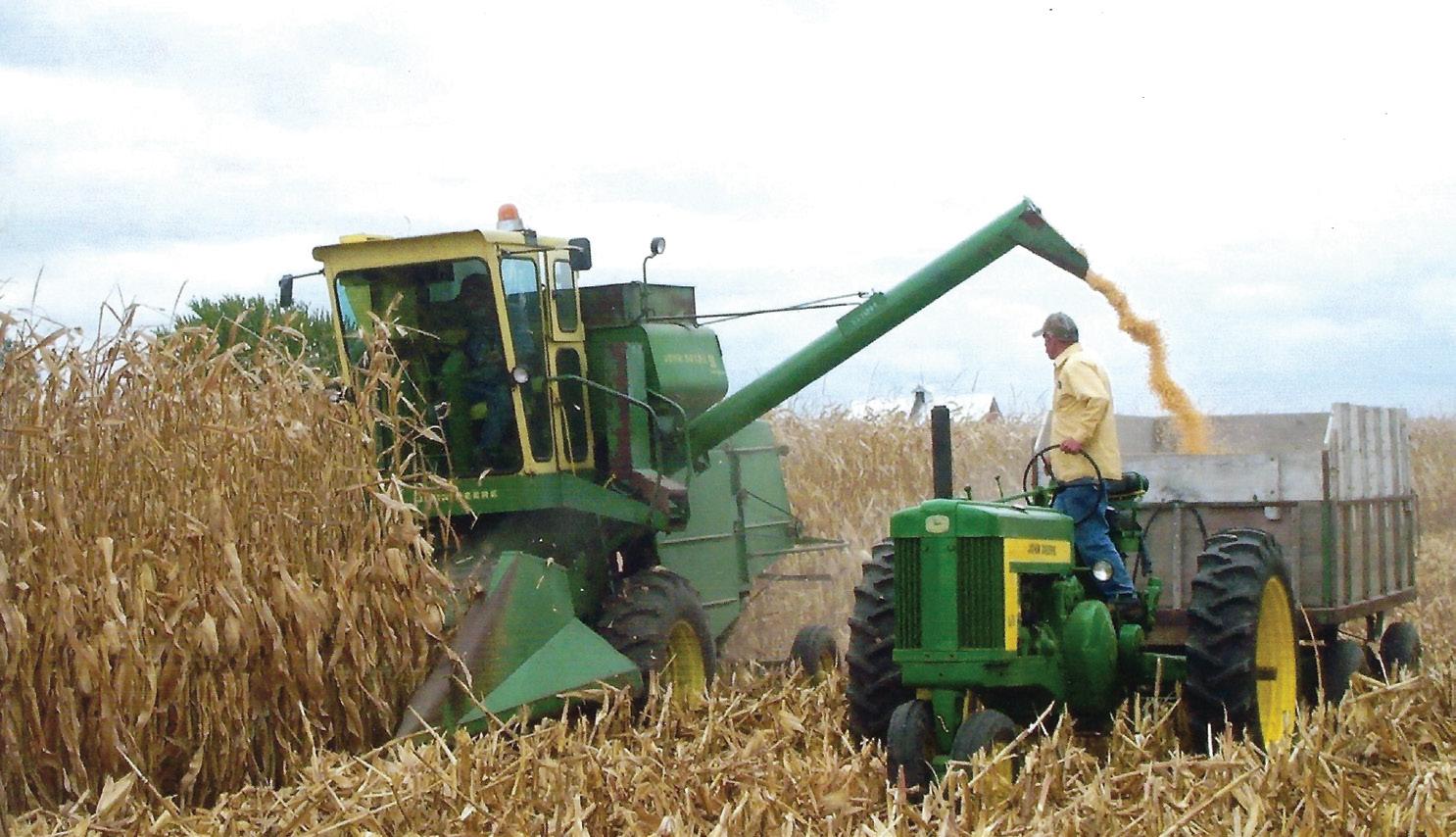

Our Saw It Online features a wide array of interesting items this month, coming in from eBay, Facebook Marketplace, and other auction websites, to name a few. During the transition of the Green Magazine office to Missouri in early June, our writers were asked to move up their deadlines by a full month. Ben Hain, the normal writer for this feature, was busy working on the next feature tractor article, so I will be pinch-hitting in the meantime.
The era of cigarette lighters in most pants pockets is long gone. Growing up in the 90’s and early 2000’s, I can only recall a few people my age who smoked and only one who carried a Zippo brand. He was a popular guy when it came to lighting off fireworks in the summertime or anytime you needed to catch
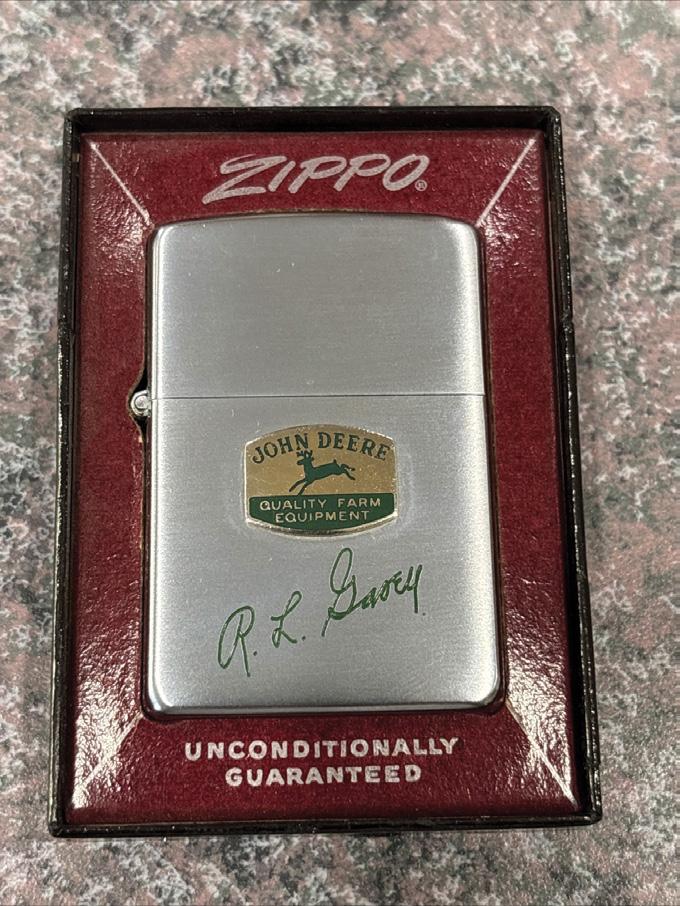
something on fire. For this month's installment of Which One Brought More, here is an offering of four vintage John Deere-branded lighters.
First, we begin with the Zippo brand; arguably the most iconic brand of fire starters that was ever made in the USA. The first Zippo lighter was new and unused in the original box. Aside from the Deere logo from 1943-1955, it also had an engraved, green-inlaid nameplate that appears to read "R.L. Gasey." It was likely an employee gift at Deere & Co. or perhaps at a dealership for years of service. Certainly, this was not an item that would often come up for sale.
The second vintage Zippo lighter, unlike the first, showed signs of having been carried in someone's pants pocket for several years. It was apparently a gift from Gould
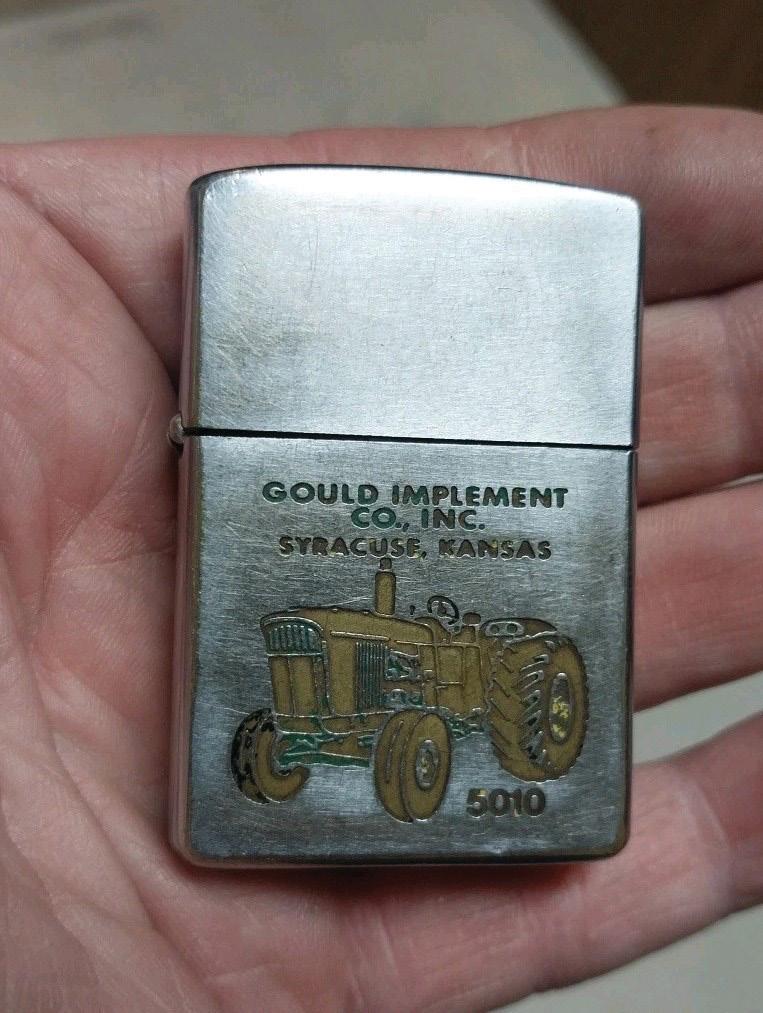
Implement Co., in Syracuse, Kansas, and featured an outline of the 5010. Southwest Kansas was a big sales area for the massive 5010 standard tractor in the early 60’s. I attended an auction near Syracuse some 20-plus years ago from the Larry Dikeman estate sale. I believe he owned the John Deere store in Syracuse and was likely the one who bought out Gould. If anyone reading this knows the story, please drop me a line.
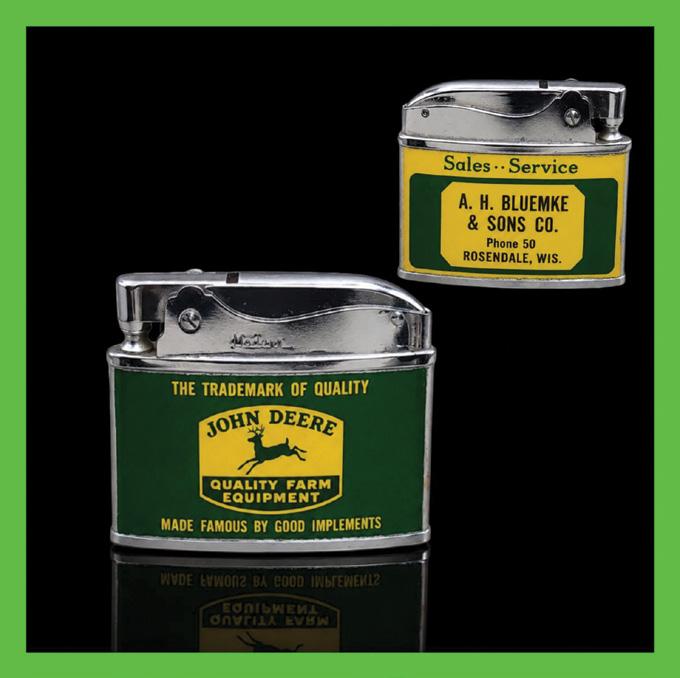
Third up for your consideration this month is a lighter with a distinct button-push design, and the little wick cover flips up when you strike to make a spark for a more sophisticated tobacco-lighting experience. To me, it was a little peculiar that a Japanesemade lighter would have been given out as a dealership gift to many customers who may still have had strong feelings after fighting in the Pacific Theater of WWII. I recall my Grandpa was very much against anything made in Japan. He was in the European Theater of Operations in WWII, but had many friends who fought in the Pacific, and he was never able to put those feelings behind him. It is easy to imagine that some customers may have passed on this very giveaway due to its origin. This lighter was branded A.H. Bluemke & Son’s in Rosendale, Wisconsin, along with the 1943-1955 period Deere logo on the flip side.
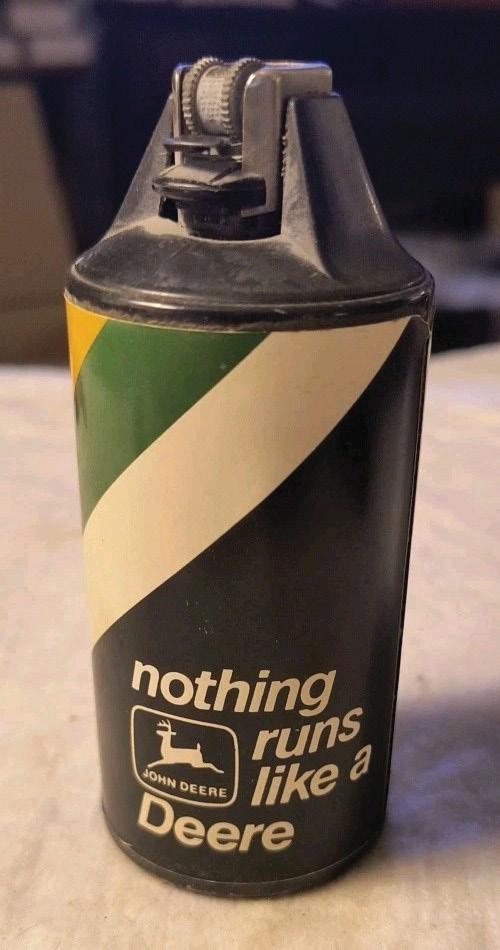
Rounding out the lighters is one of the newer designs, comparatively. The mechanism appears to be similar
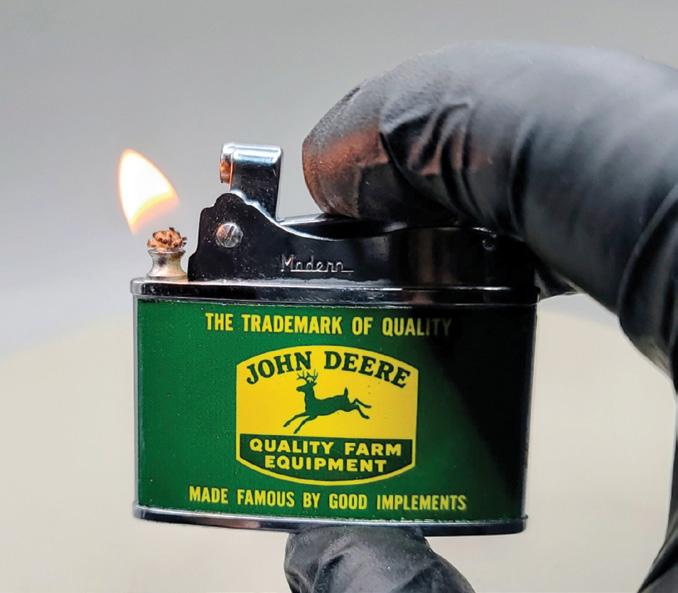
to those still sold at the counter at any local gas station, but enclosed in a miniature can, comparable to a shaving cream can. The seller described the item as a rare 1970s John Deere Cricket lighter, made by Gillette. The piece stands 4 1/4" tall by 1 3/4" wide and has no damage or repairs. The advertising reads, "Nothing Runs Like A Deere". It is marked on the bottom, "Cricket by Gillette". The seller noted that they acquired this piece along with many other items from the estate sale of an engineer at John Deere in Waterloo, Iowa.
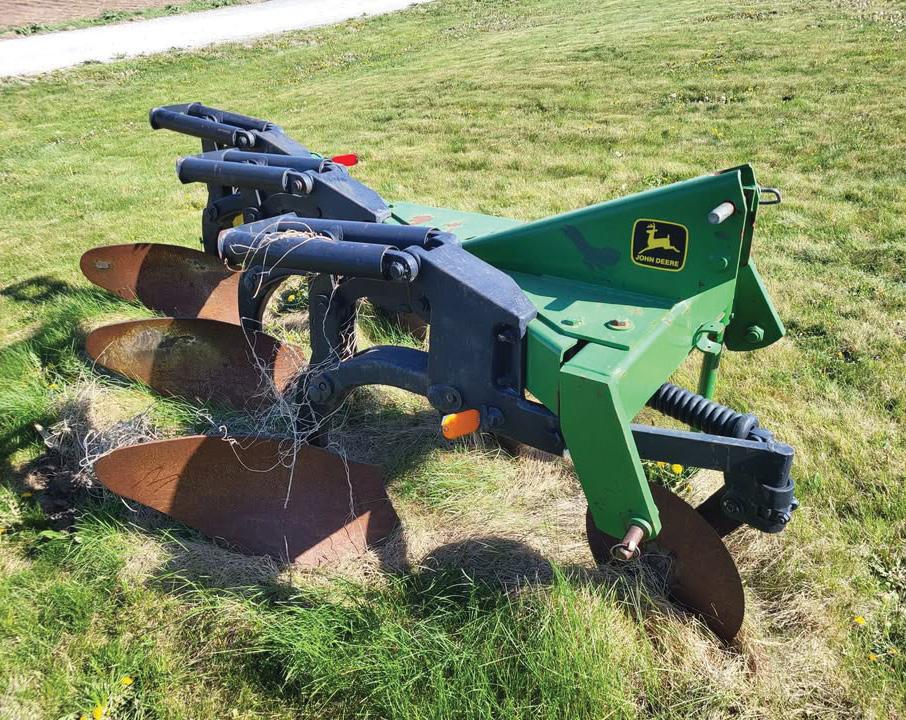
Looking at a few implements seen online, we begin with the one and only spring auto-reset integral plow model sold in North America by John Deere. This model 1600 would have been built in the 1980s at a time when moldboard plowing for most of the country was only a memory. The seller on Facebook Marketplace had an asking price of $4,000, which seems high, but considering how few of these were actually built and sold, it may not be too crazy. For production agriculture, such as organic farming
in rocky soils, this price would be a bargain for anyone looking to purchase something comparable new today. There are still many plow manufacturers active in Europe and elsewhere around the world, although Deere has officially stopped selling moldboard plows in the USA a few years ago.
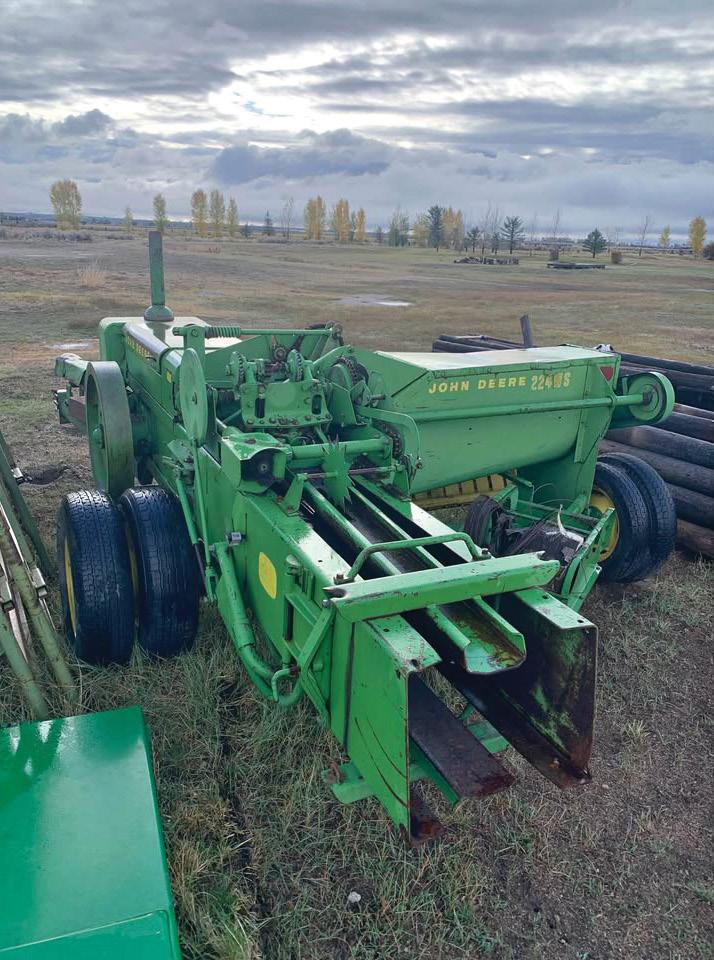
There are numerous vintage John Deere square balers on FB Marketplace, but this one really caught my eye. It was advertised for $1,000 and was marked as sold. The dual-tire option stood out, but upon inspection, the pickup side (right-hand) also has dual wheels. The seller mentioned that the baler worked the last time it was
used. Being a wire baler, perhaps it would be easier to revive than a long out-of-use twine version, as the wire twisters seem to be more resilient to rust. Located in Pinedale, Wyoming, this 224WS had spent some years outside under the ‘big blue shed’. Faded original paint patina sure makes anyone from more humid regions of the USA envious, as equipment there did not fare nearly as well.
According to the 1965 John Deere Sales Manual, dual rear wheels were optional for one or both wheels. This option was suggested for use in irrigated fields or in loose soils to reduce the likelihood of leaving a track. The flywheel side wheel had a 7.50-15 inner wheel with a callout in the parts catalog for a 6.70-15, which was just slightly smaller. The pickupside wheels were both for 5.50-15 size implement tires, which are particularly narrow.
I can picture the vintage corn picker as a big rusty hulk of a machine parked next to a fence in one of our cow pastures. My brother and I got permission from our father to work at dismantling the implement. Before the days of battery-powered wrenches and grinders, it was a futile attempt to get the rusted fasteners loose, so we proceeded to use hammers to try and beat them apart…eventually just giving up, and as I recall, it was hauled off for scrap some years later. It was a
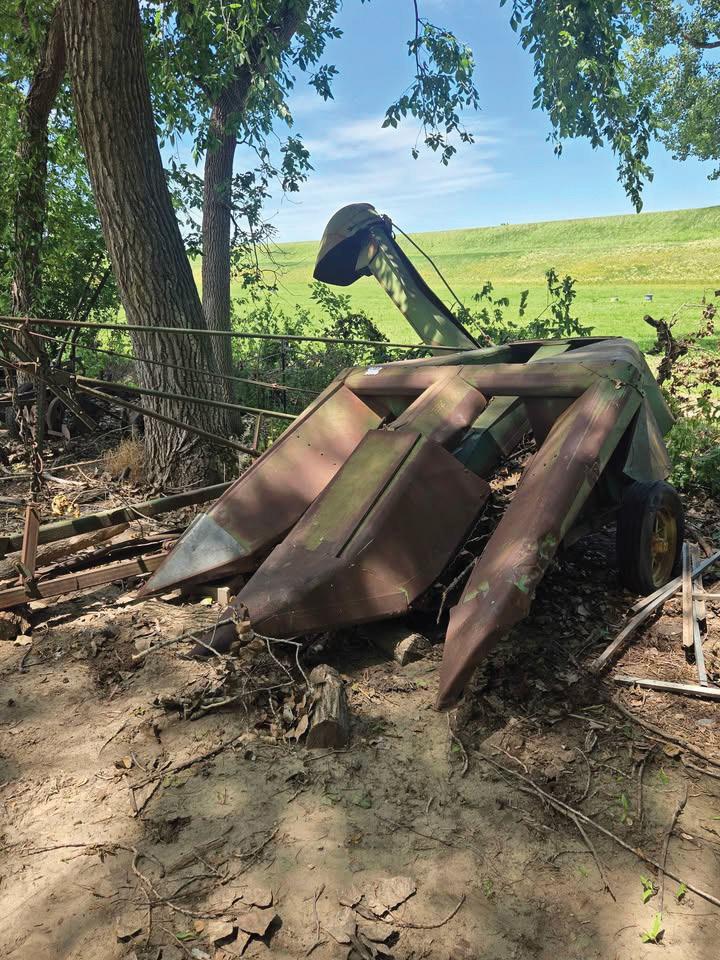
Number 200 two-row picker, and I’ve always kept an eye out for a reminder of this experience from my youth.
When I spotted this beauty on Facebook Marketplace for only $150 it was too tempting not to share it with you. Blue Rapids, Kansas, was the location of this treasure. The seller stated that the picker comes with a couple of nests of rodents and insects, but it is all there and should be functional, though no warranty was offered.
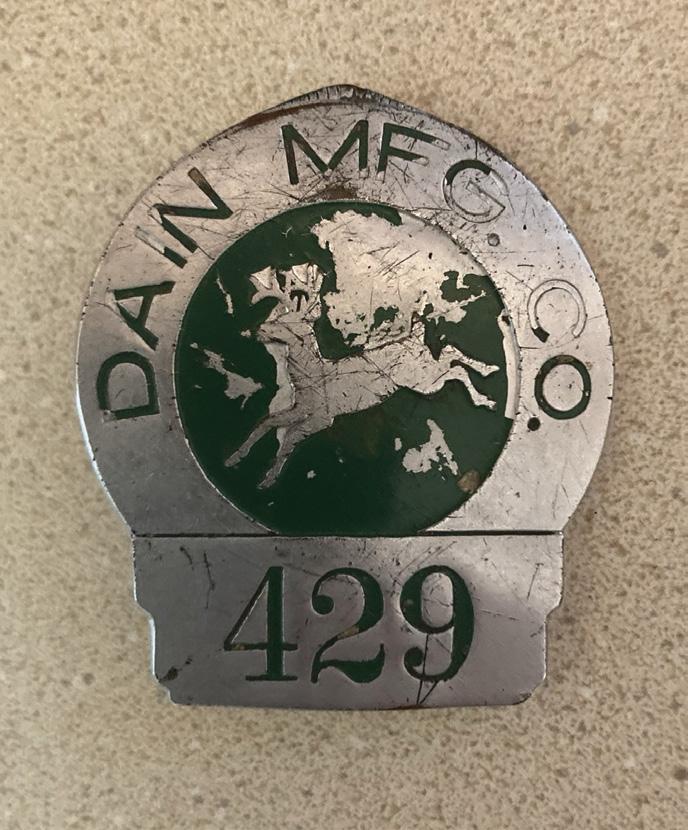
A retired employee of Dain Works (modern-day Ottumwa Works) in Iowa never would have dreamed his keepsake employee badge would be worth more than the price of a few packs of cigarettes.
However, thanks to eBay and 5 bidders who placed 27 bids, the badge sold for a final price of $2,749.00. As your author is not informed about such things as the rarity of employee badges, there was either something very special about this item or a couple of collectors got into a bidding war; either way, the seller won in this case. Anyone reading who knows about employee badges, please reach out and explain the rarity (or not) of this item.
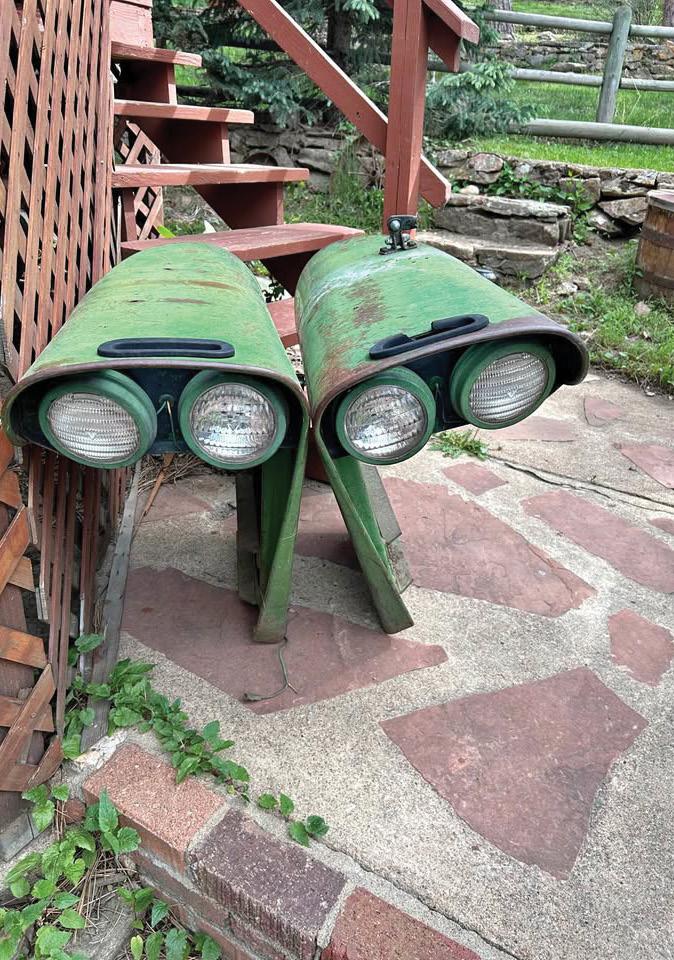
It seems like folks are always looking for a good pair of flat top fenders. This set of New Generation fenders looks to be 20-series based on the rubber bezel headlights. They showed the typical drill holes from a radio mount or sprayer control valve. Located in Evergreen, Colorado, this set of fenders sold for $175.
As for which one brought more, the New Old Stock Zippo with the engraved name in the original box ended up at $588.58 with 15 bids. The used, worn Zippo with the 5010 brought $175.50, with 14 bids. The like-new 1940s- or early 50s-era Modern brand lighter is sold with a Buy It Now price of $134.99. Rounding out the list of lighters was the Gillette round can-type in used condition, selling for $360.00 after 15 bids from six different bidders. So now you know that the NOS Zippo came out on top for Which One Brought More this month.



Toy catalogs can be a good source of information concerning what was produced when especially for items made many years ago. Let’s face it, as we age, we tend to forget details and printed material can help to keep everything in perspective.
While at the Gathering of the Green earlier this year, I spent quite a bit of time with my friends Dan and Julie Guden. They had a few tables in the vendor area and were selling John Deere farm toys and other collectibles. One item they had was a 1981 John Deere toy catalog. I didn’t have one of these and asked Dan about the price. Without hesitation, he said “Take it”. That’s one thing about friends in this hobby; they are willing to help one another out. I certainly appreciated the offer from Dan and this month I will share the contents of this catalog.
The quantity of farm toys that were available in the past was very different from today. As an example, the 1981 catalog had twelve pages in total including the front and rear covers. The current 2026 catalog has eighty pages! There is certainly no shortage of items to choose from today. The front cover of the 1981 catalog is shown in Photo 1. Note that it states, “JOHN DEERE Action Toys” and has
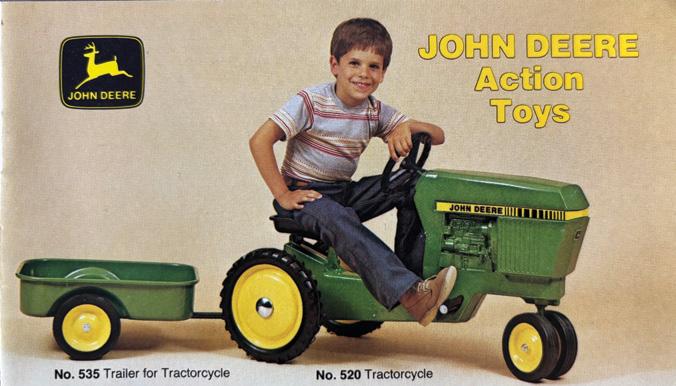
the two-legged leaping deer trademark from the time. A boy is shown sitting on a John Deere pedal tractor with a two-wheeled trailer attached. In this case, the stock number for both items is printed right on the cover. That is not typical for a John Deere toy catalog. In most cases toys and/or kids playing with them are pictured but not the stock number and description. The pedal tractor is referred to as a “Tractorcycle” with stock number 520 and the “Trailer for Tractorcycle” has stock number 535.
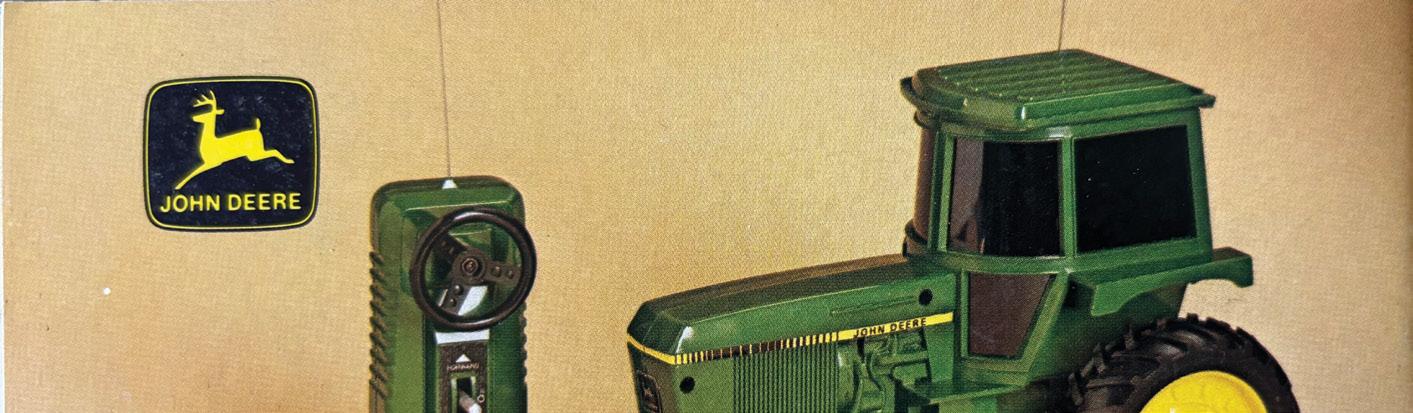
Photo 2 shows the rear cover. Here we see a forty-series “Radio Controlled Tractor” with the controller It has stock number 031. Immediately below the picture is the following statement: “Visit the nearest JOHN DEERE Dealership for their extensive line of Action Toys”. In the lower left corner is the printing information which includes C562-81-7 indicating that this catalog was printed in July of
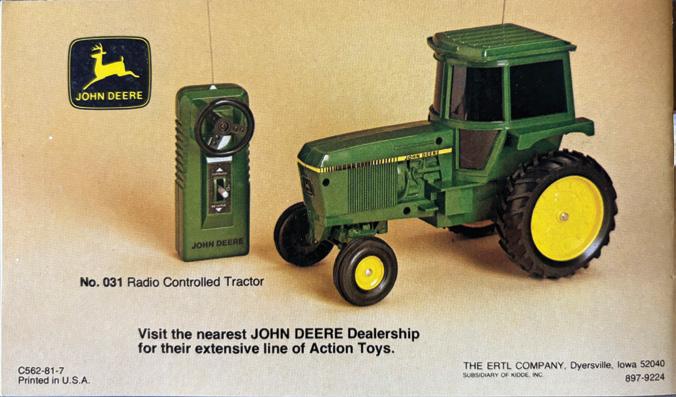
1981. It also says, “Printed in U.S.A.”. The lower left corner states: “THE ERTL COMPANY, Dyersville, Iowa 52040 SUBSIDIARY OF KIDDE, INC.”.
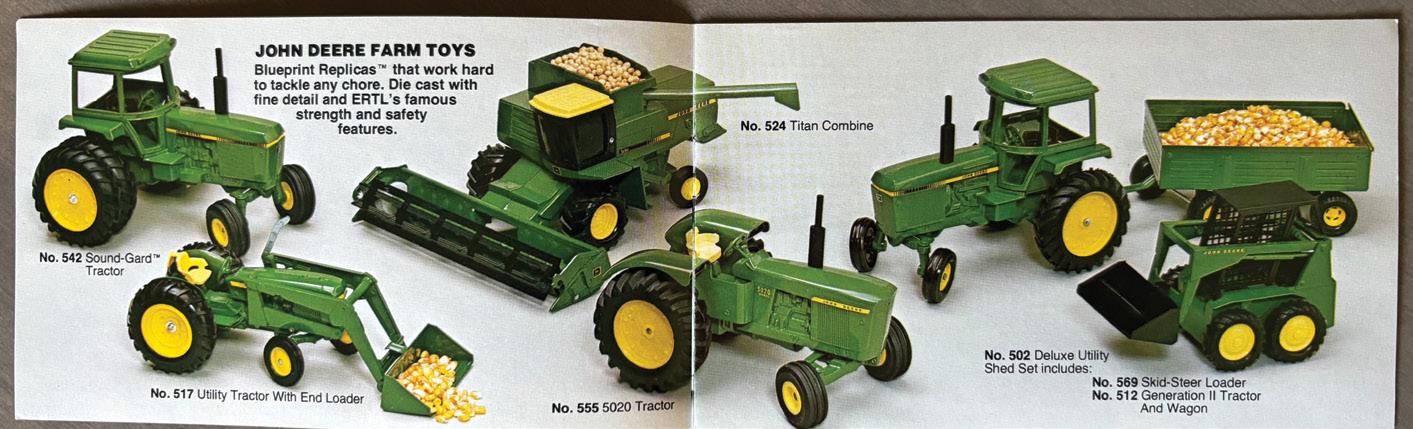
Pages two and three (Photo 3) show most of the 1/16th scale toy tractors available at the time. Ertl used the following overall description at the top of page 2: “JOHN DEERE FARM TOYS Blueprint Replicas™ that work hard to tackle any chore. Die Cast with fine detail and ERTL’s famous strength and safety features”. Included are two Sound-Gard™ tractors, one with dual rear wheels and wide front tires and the other with single rear wheels and narrower front tires. There is also a utility tractor with loader and the 5020 tractor. A skid-steer loader and wagon are shown on the far right of page three and there is a listing for the Deluxe Utility Shed Set with stock number 502. That set included the tractor, wagon, and skid-steer loader. A Titan combine with yellow roof is also pictured, but it was produced in approximately 1/24th scale rather than 1/16th scale.
Photo 4 shows pages four and five which are heavily focused on farm implements. The description here states: “JOHN DEERE FARM IMPLEMENTS Blueprint Replicas™ by ERTL, to help get the job done faster, with lots of real working parts. Hitch
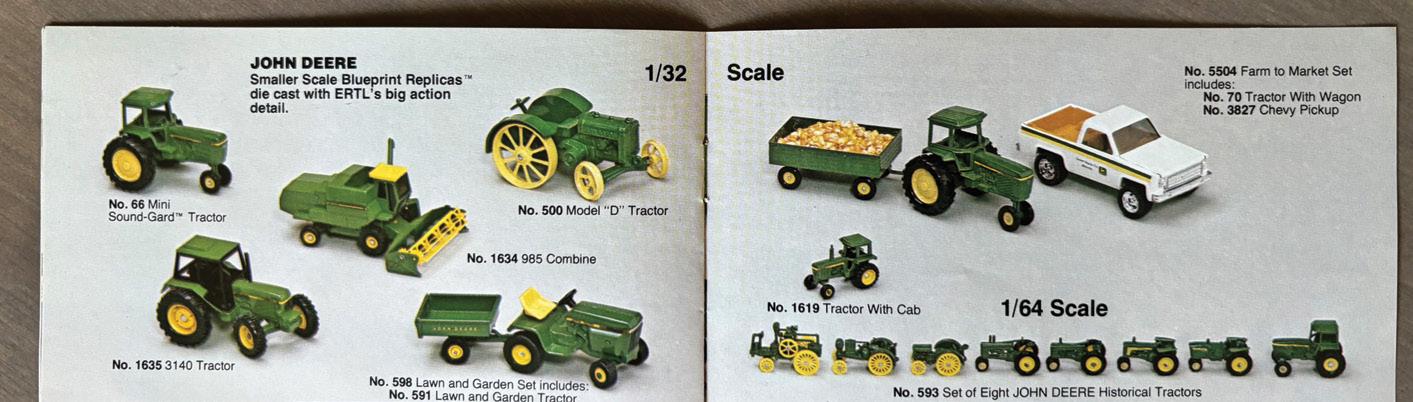
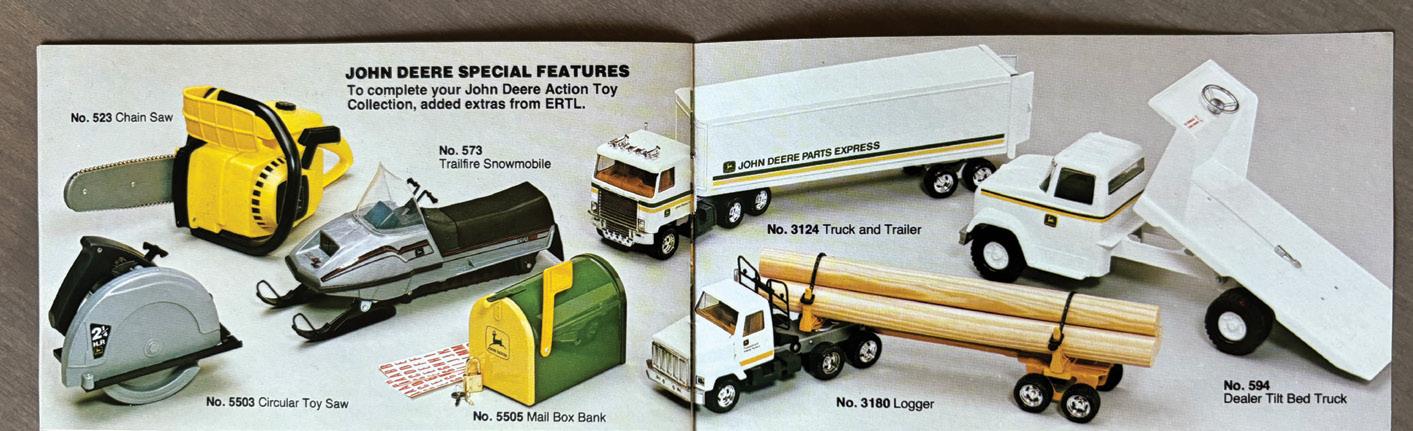
them on your tractor and get going”. Moving from left to right there is a big forty-series four-wheel-drive tractor (stock number 597) and 220 PowerFlex™ disk (stock number 583). These two items were available separately or in a set with stock number 599. A utility tractor (stock number 518) is shown below with a wagon that could be purchased as set 518. Then we have the wagon (529), chuck wagon (533), baler (585), mower conditioner (596), spreader (534) and corn planter (595). I have written about most of these items in the past and all of them are really nice pieces to have on a toy farm. They certainly complement toy tractors in any farm toy collection.
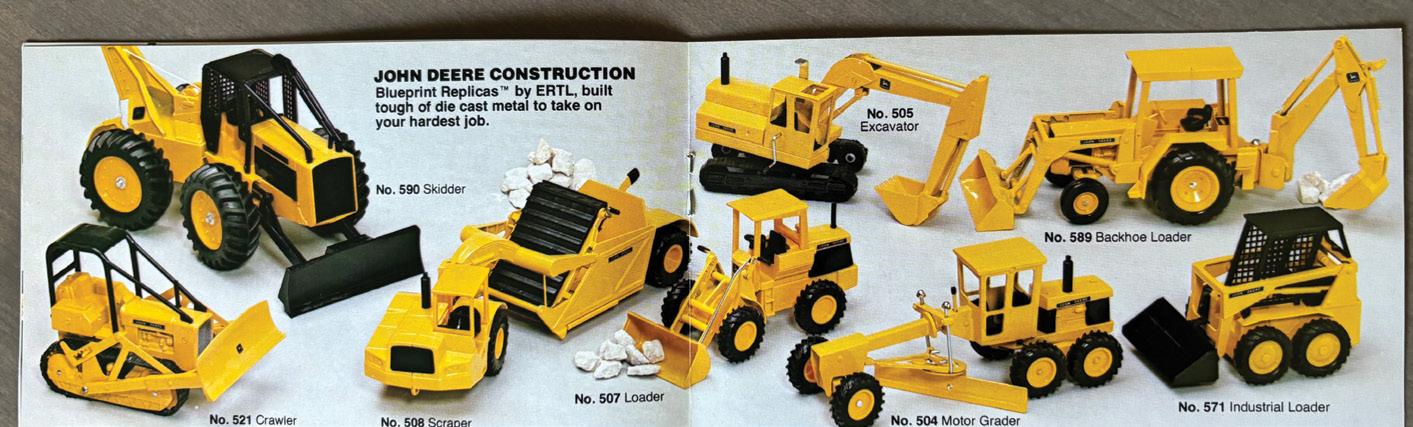
Construction equipment was the focus of pages six and seven (Photo 5). I have not had much of an interest in
collecting toy construction equipment, but ERTL certainly had some nice John Deere models. Included were the crawler with front blade and canopy (521), skidder (590), elevating scraper (508), loader (507), excavator (505), motor grader (504), backhoe loader (589), and industrial loader (571). The description for these toys was as follows: “JOHN DEERE CONSTRUCTION EQUIPMENT
Blueprint Replicas™ by ERTL, built tough of die cast metal to take on your hardest job”. Not all of these items were manufactured in 1/16th scale.
In today’s world 1/64th scale farm toy miniatures are hugely popular to say the least. There are eight pages devoted to the Replica series of 1/64th scale toys in the 2026 John Deere toy catalog alone. 1/32nd
scale tractors and implements are not far behind in popularity. In 1981, the same level of interest did not exist, primarily due to the limited number of toys available. On pages eight and nine (Photo 6), Ertl listed their 1/32nd and 1/64th scale items. However, some of the toys are actually 1/16th scale. I suppose the Model D tractor (stock number 500), the lawn and garden tractor (591), and the lawn and garden tractor and cart set (598) really didn’t have a good spot in the earlier pages of the catalog. The actual 1/32nd scale miniatures included the “mini” SoundGard™ tractor (66), 3140 tractor (1635), 985 combine (1634), and the “farm to market” set (5504). This included the narrow-front Sound-Gard™ tractor and wagon set (70) and a Chevrolet pickup truck (3827). For 1/64th scale collectors Ertl offered the eight-piece historical set (593) that now had a Generation II tractor. In addition, they also had a forty-series tractor with cab listed with stock number 1619. This part of the catalog had a very simple description that stated, “JOHN DEERE Smaller Scale Blueprint Replicas™ die cast with ERTL’s big action detail”. Pages ten and eleven of this catalog feature some very interesting items (Photo 7). The description here is as follows: “JOHN DEERE SPECIAL FEATURES To complete your John Deere Action Toy Collection, added extras from ERTL”. A toy chain saw was pictured with stock number 523. I believe that you could pull the “starter” rope and then squeezing the trigger would make the beaded metal chain rotate while the saw made noise to replicate a real chain saw. There is also a toy circular saw (5503) which I know I have never seen an actual example of The Trailfire snowmobile (573) is shown, which is one of those highly sought after toys in today’s collecting world. The mailbox bank (5505) had a moveable flag, and the front door was hinged to gain access to the contents. A tiny padlock with keys ensured that a youngster’s money was safe. A sheet of alphabet “stickers” was also included so that the owner could place their name on the mailbox.
John Deere trucks round out the catalog. Shown are a cab-over semi-tractor and trailer (3124), a conventional tractor and log trailer with logs (3180), and a dealership tiltbed truck (594). I have been searching for one of the tilt-bed trucks and have seen a few at various toy shows, but the price tags have been higher than what I wanted to pay.
So that completes the 1981 John Deere toy catalog. It’s hard to believe that forty-five years have passed since that was printed, and I find it interesting to compare what was offered then versus today. In 1981, everything was a “replica” toy, meaning that there were no special edition, collector’s edition, Precision, or Prestige miniatures. Everything was simply a toy designed for kids to play with.
Let’s shift gears for just a moment before I leave you this month. In the June issue of Green Magazine, I mentioned the tractors and equipment made of paper that I saw at the Gathering of the Green. These were made by Matthew Jefson of Warrenton,
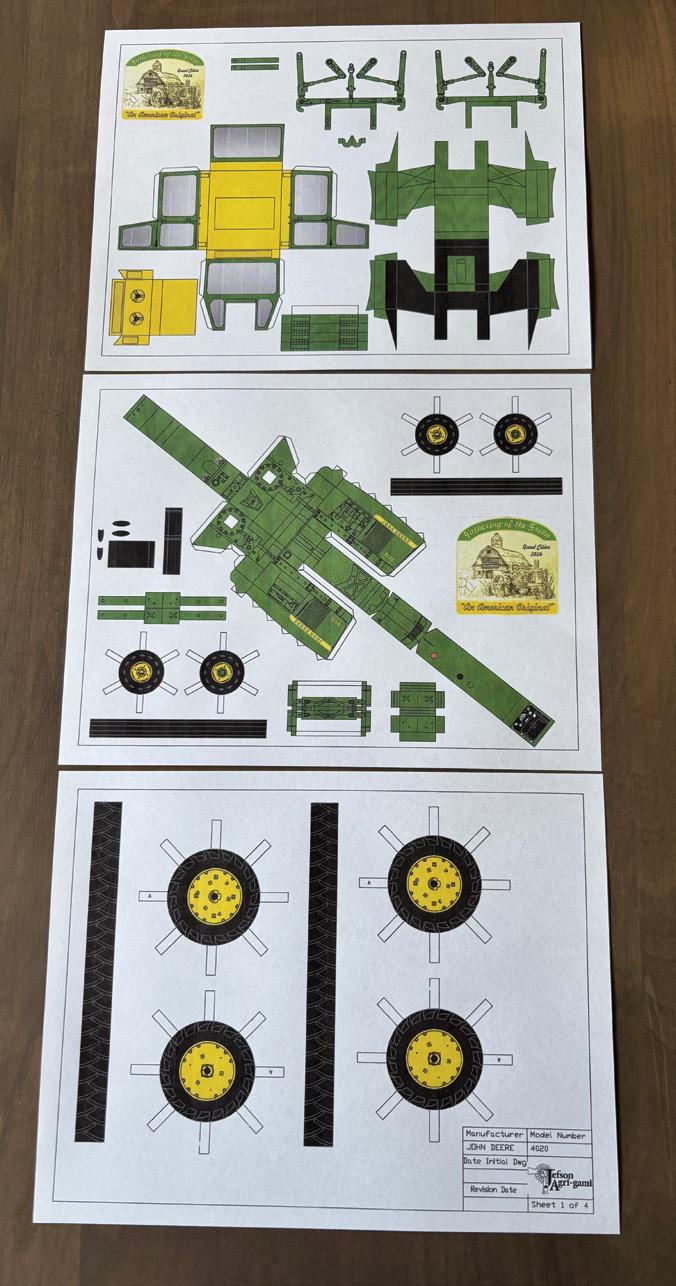
Virginia. During the event, Matthew offered a free 4020 tractor “kit” to anyone that wanted to give the project a try. This kit consisted of three 8.5 by 11-inch sheets of paper with the tractor “parts” printed in full color (Photo 8). I decided to grab a kit, figuring that I could print out a few sets at home and make some tractors for my grandsons.
To show you some of the process required to assemble this tractor, I started with one of the rear wheel and tire assemblies. The tools that I used are shown in Photo 9. First, I found a piece of heavy, flat card stock which was the back of a paper tablet. This became my cutting surface. I chose to use hobby knives, rather than scissors, to cut out the pieces. Scissors will work but I just find it easier to be more precise with the cutting when using hobby knives. Two of my knives are shown in the upper right corner of the picture. A six-inch metal ruler is next to the knives. I use this as a guide when cutting straight lines since it creates a nice, crisp edge. Also note the bottle of Elmer’s® GlueAll®. Matthew suggested this as the best product for gluing the paper parts together.
Also in Photo 9 are the three parts I cut out which are needed to make one rear wheel and tire assembly. Each side of the wheel has eight tabs that need to be folded over at ninety degrees to join those on the other side piece. There is an “A” printed on one tab of each piece to align them. I added a little bit
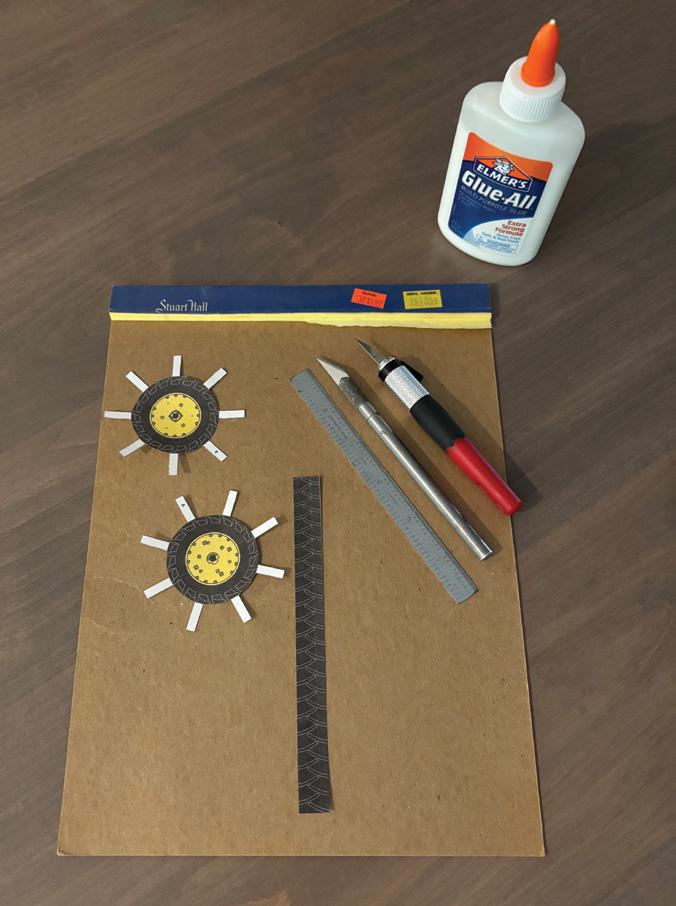
of glue to one set of tabs and bonded the wheel halves together (Photo 10). This is not as easy as it might seem and really takes some patience. As a first attempt I felt that I didn’t do too bad of a job.
The tread surface of the tire is a rectangular piece that must be glued to each set of tabs. The result is a decent-looking wheel and tire assembly as shown in Photos 11 and 12. I plan to continue working on this paper tractor and will show you the result in a future article.
I hope you enjoyed taking a look at a John Deere toy catalog from the past along with a preview of the paper 4020 tractor from Matthew Jefson. There are just so many facets to this hobby and that’s part of what makes it special. Enjoy.
Contact Bill Proft at N1366 Woodland Dr., Greenville, WI 54942 or email billproft@sbcglobal.net
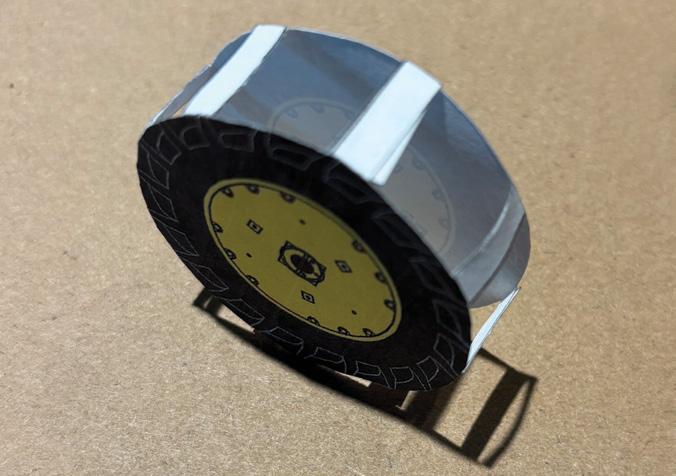
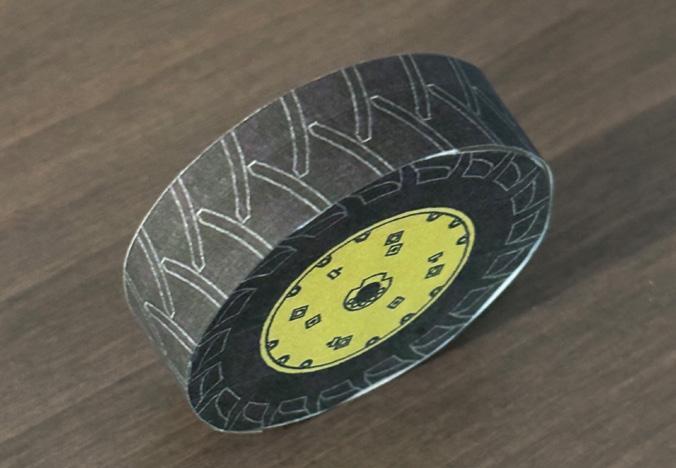
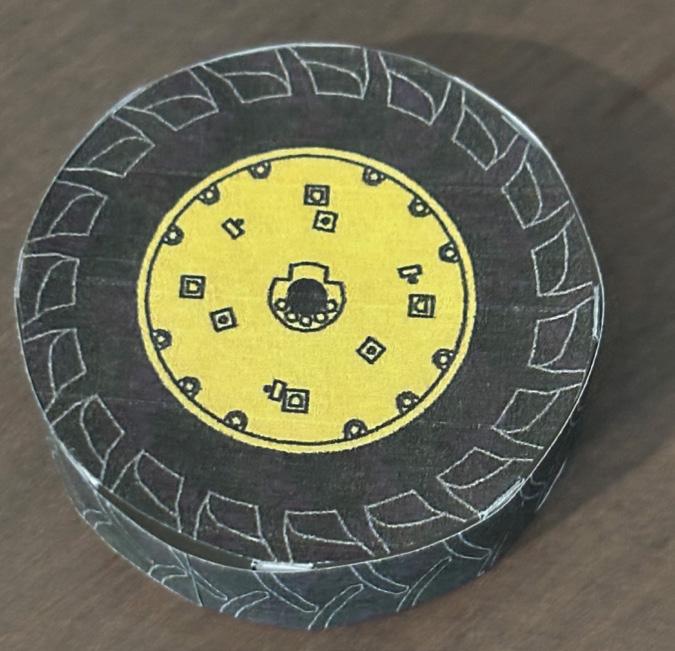

We recently had a John Deere 955 compact tractor in the shop with a case of the ‘shakes’. When the engine is at idle speed or slightly above, the tractor engine causes anything that is not bolted down to vibrate; the hood shakes, the tin rattles, the fuel filter starts leaking from its fitting, and the person in the driver’s seat is concerned about the fillings in their teeth falling out. Something has to be done to smooth this little green giant as it runs. But what will fix this issue?
As engine RPM increases, the vibration diminishes, and at the engine’s high idle of 3400, it is smooth as can be. Now, this is just the opposite of how one would think it should be. The 955 Yanmar 3-cylinder diesel engine is mounted to the tractor frame with side plates that have four solid rubber mounts, which are then bolted directly to the engine’s forward frame. After doing some up-close and precision observation, I decided that the hard rubber mounts must be the problem, or were they the victim; could there be something wrong with the internal balance of the engine? At any

rate, I decided to change the mounts, and that is where the easy part ended, and the difficulty began.
There is no way that I could see that the mounts could be changed without dismantling the tractor and pulling out the engine. I looked into the matter for a time to see if a repair
was possible without going through all that work, but I came up empty. I asked a friend of mine, whose employer had a 955 as their yard tractor that he maintained, if he had ever run into a situation like this. To my surprise… he did! I asked what his solution was. He stated that the job looked like more than he wanted to tackle. The tractor ended up at the dealer, and when the estimate came back at $200 per hour in labor to install new mounts, the tractor was traded off for a new one! That may be an easy solution for a company-owned tractor, but as for us ‘bottom-feeders’, we have to tighten up our suspenders and fix the thing. These little tractors are sure nice, and the ladies like them because they are so ‘handy’ and easy to operate. However, for an old, worn-out, longin-the-tooth mechanic such as myself (photo 1), the word COMPACT should be changed to COMPLICATED, and most repairs should be described as a ‘pain in my backside’. While I am complaining, why do we need all metric bolts and hardware to hold things together? With all of that off
my chest, I reluctantly dismantled the tractor, pulled out the engine, and mounted it to a rotating engine stand. The right-rear mount bolt is nearly impossible to access when removing the engine. Down the road, there will be an easier way to put that bolt in place with the aid of a ‘smoke wrench’ and a small access hole in the frame’s side rail. With the engine on the stand, we can begin to see what we are up against (photo 2). The mounts are located on a plate, and the plate is bolted to the engine block. There are two mounts: the front is riveted to the plate (photo 3), and the rear is bolted to the plate (photo 4).
Once I had a chance to view the mounts, it was time to call our friendly John Deere dealer and get a reading on availability. I wondered if they would be NLA and that would be where this project would end. But the friendly parts man said, “Sure; they’re available, and I can have four of them for you in a few days”. Notice here that I never asked how much parts like this would cost over the phone, because at age 79, there atre only so many shocks left in one’s ticker. So, I will wait until the parts and the bill are in my left hand, and a can of Miller is in my right. Here are those parts in all their splendor (photo 5): two AM101951 front mounts attached to the plate with four rivets, but NO new rivets came with them in the bag. Also pictured: two rear AM101952 mounts that BOLT in place.
Now, am I old-fashioned in thinking that if a part such as the front
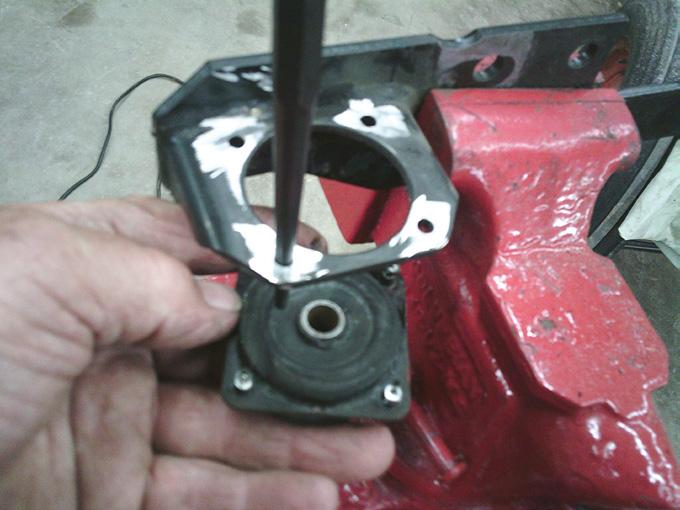
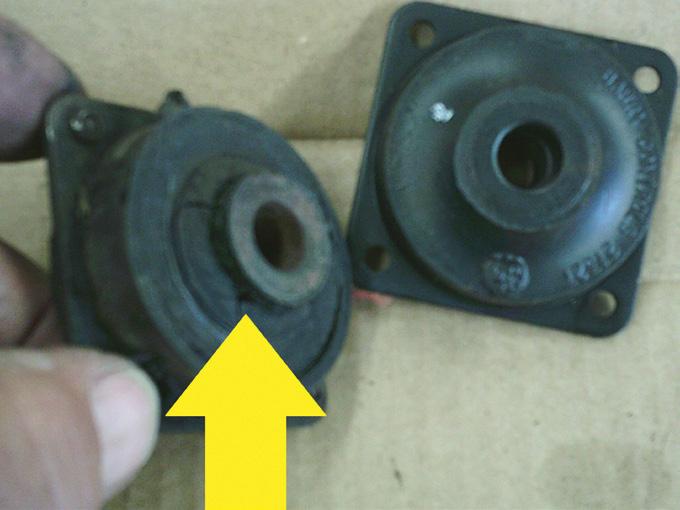
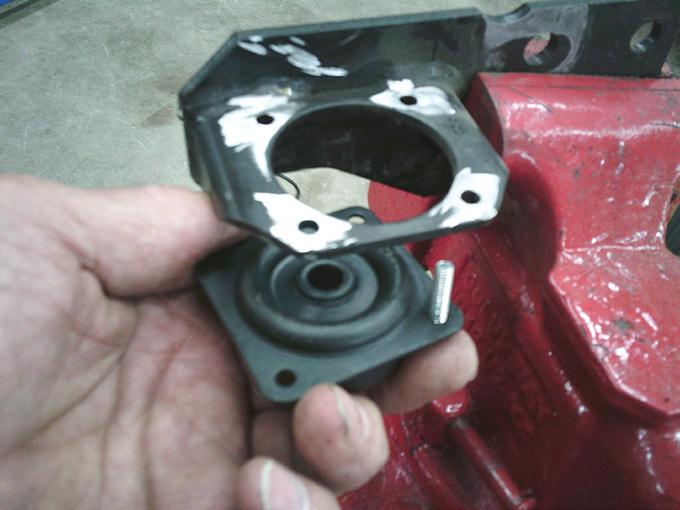
(photos 7 and 8). After further review, the front mount is coming apart at the seams also (photo 9). I thought about doing away with that rivet thing and using small bolts instead, but it looks like there will be a clearance problem with small bolts (photo 10) compared to rivets.
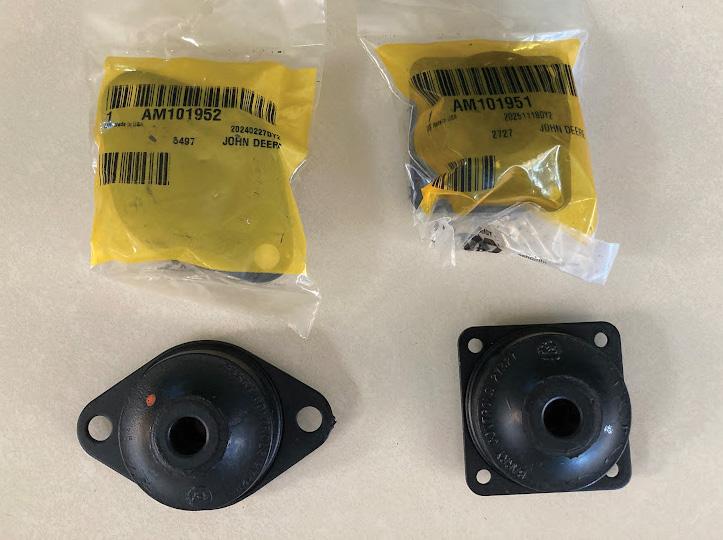
mount is attached with four rivets, the package should include the rivets with the mounts. But since the little rubber mounts were ONLY $55 a piece (X four), or $210, how silly of me to expect rivets to be included with the mounts that need them. It is like I tell my wife every time we buy gas, diesel, or seeds for the pumpkin business: “If farming was easy, everybody would be doing it.” Let’s remove the mount plates and unbolt the rear mount. One can plainly see now that it is falling apart (photo 6). Now the front mount will need to come off by grinding down the rivets and punching them out of the plate
I find that it is always a good idea to take your time with matters like this and think things through. It looks like I would be better off using rivets, as there is a size difference between the holes in the mount pad and those in the rubber mount itself. I have a gut feeling these rivets are special in some way, or perhaps they are metric? It is time to do a bit more investigating because I would surely hate to have the new front mount come loose someday down the road.
So, for now, I am going to call it a ‘wrap’ on this project; this article needs to be on its way to the magazine, as the ‘change-of-command’ new editor has asked us to speed things up to ensure a seamless transition without delays. Keep your Green Magazine subscription up-to-date so you’ll be able to hear ‘the rest of the story.’ Until we meet again, may God bless.
This column is written by Ron and Jo Anne O'Neill.


I uncovered a few things to share with you this month. Take a look. This neat little luggage tag has an interesting graphic that caught my eye. Who would not know it is the Alamo? It says, “People With A Mission” and “John Deere” “San Antonio 1997”. That really caught my eye. I was at the 1997 John Deere Dealer Expo held in San Antonio. I remember those graphics and slogan being used for the Expo, but I do not recall ever seeing this luggage tag. This tag was a handout given to dealers when they visited various vendor booths set up at the Expo for dealers to learn about different products and features of Deere items. The red strip was to be

used to attach the tag to your luggage (Photo 1).
The back side of the tag had a thank you from the vendor who was passing these out. In this case it was TCC who, at least in 1997, was supplying Deere with starting fluid and R134A refrigerant. TCC is the Technical Chemical Company who manufactures these and many other
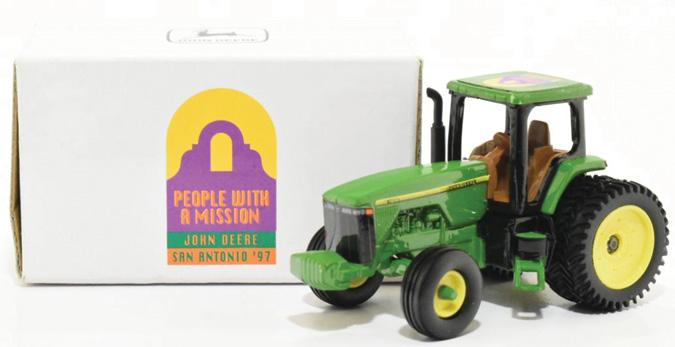
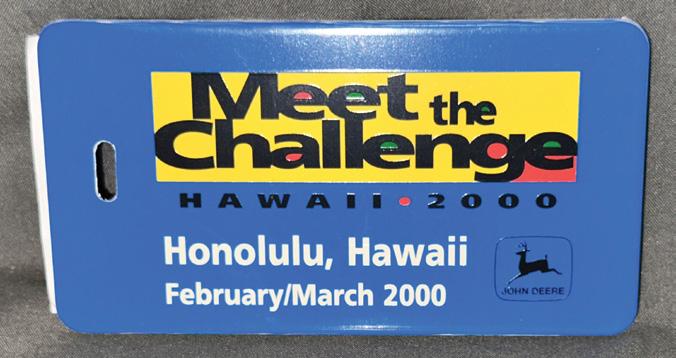
products for Deere and other suppliers. This turns out to not be a luggage tag as there is nowhere for the owner’s name or address to be entered. It is simply a souvenir tag (Photo 2).
Deere offered a variety of items with the 1997 San Antonio stamp. This was a 1/64th scale limited toy tractor that had a special box and sticker on the roof. I had a few of these at one time (Photo 3).
Photo 4 is another luggage tag.
This one I had zero knowledge of. I know I never attended a meeting in Hawaii, that I would have remembered! It looks like this was probably a sales program due to the slogan “Meet the Challenge” and “Hawaii 2000”. It also says this trip was in the months of February and March 2000. I really liked the blue and yellow layout and the old two-legged deer logo in the
lower right corner. Photo 5 is a closeup of the old logo.
The back is your typical luggage tag with space for your name and address, or you could insert your business card (Photo 6).
Some months ago, I wrote about a few different John Deere coloring books I have. This one is the same as one we had already covered and then I noticed it had a pack of crayons attached to it. I thought, another variation! I guess I am now a coloring book collector on top of everything else. Talk about rabbit holes (Photo 7).
Photo 8 is a neat little lawn and garden brochure from 1988 celebrating Deere’s Silver Jubilee of lawn equipment. In 1988 Deere offered the STX series of lawn tractors as well as an extensive line of walk behind equipment. The silver cover is what caught my eye.
Inside the brochure is a chart listing the STX30 and STX38 lawn tractors and how they stack up against
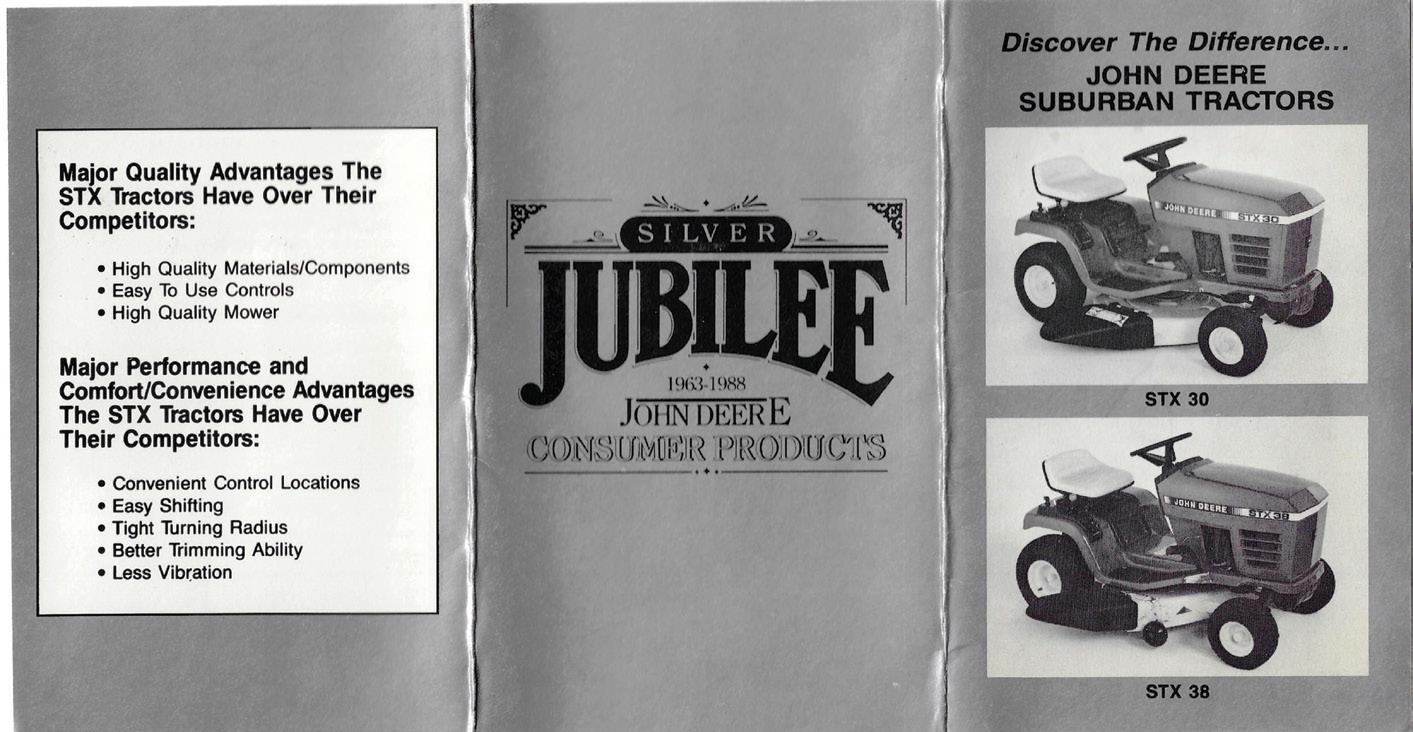
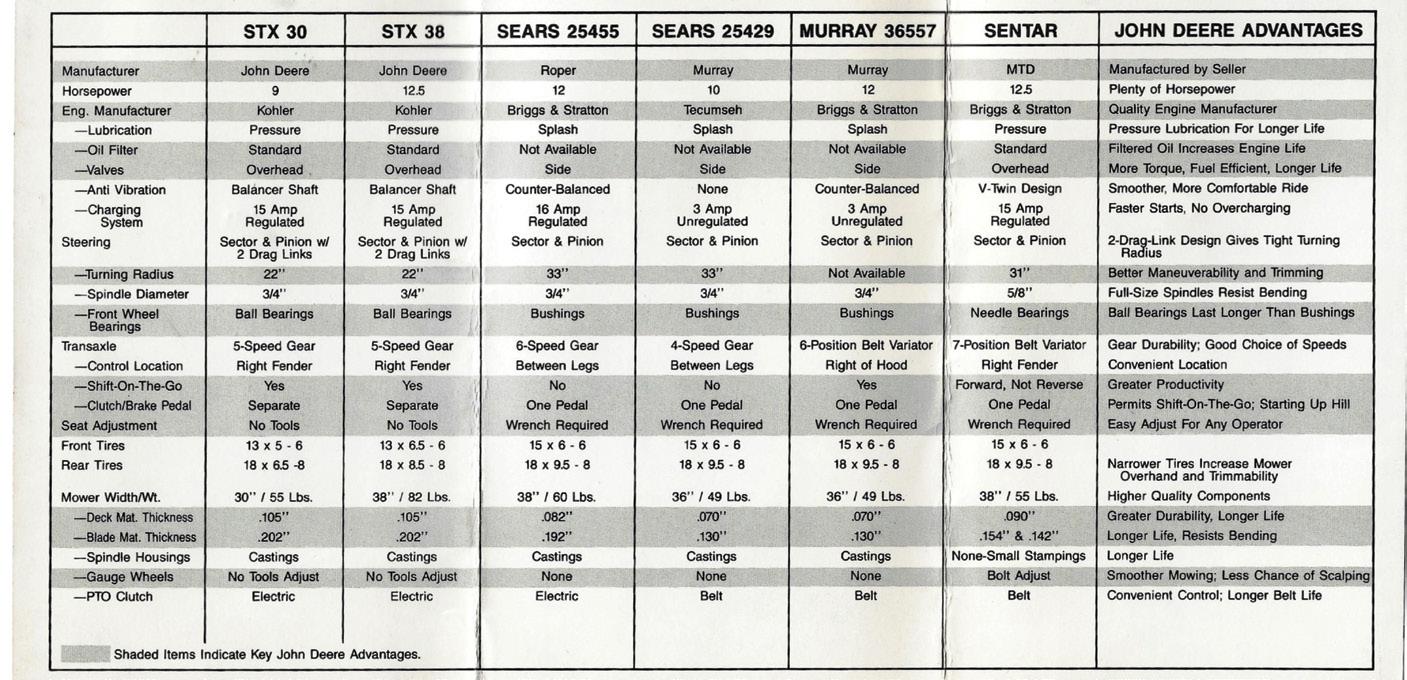
competitive brands like Sears and Murray (Photo 9).
Next up is a small, laminated pocket size card with quick facts on the advantages of Deere’s RX75 rider mower versus a similar Toro model. The old two-legged deer logo is prominent at the bottom (Photo 10).
The reverse side compares the RX75 to Snapper’s model. It is dated May of 1987, thirty-nine years ago. I am constantly amazed at how old this stuff is getting to be. It is a good thing I am not. I wish (Photo 11).
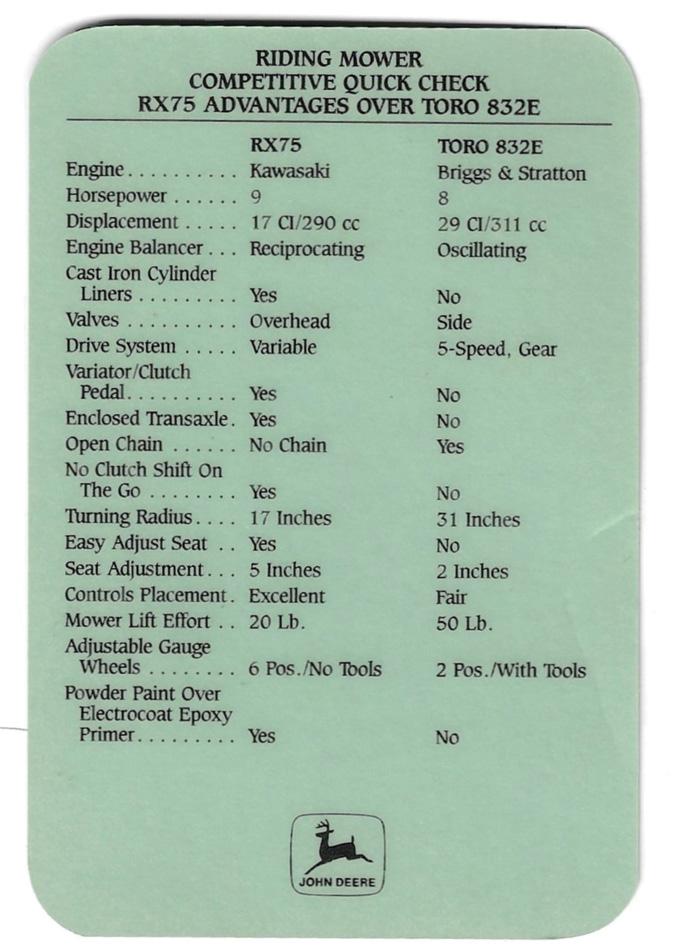
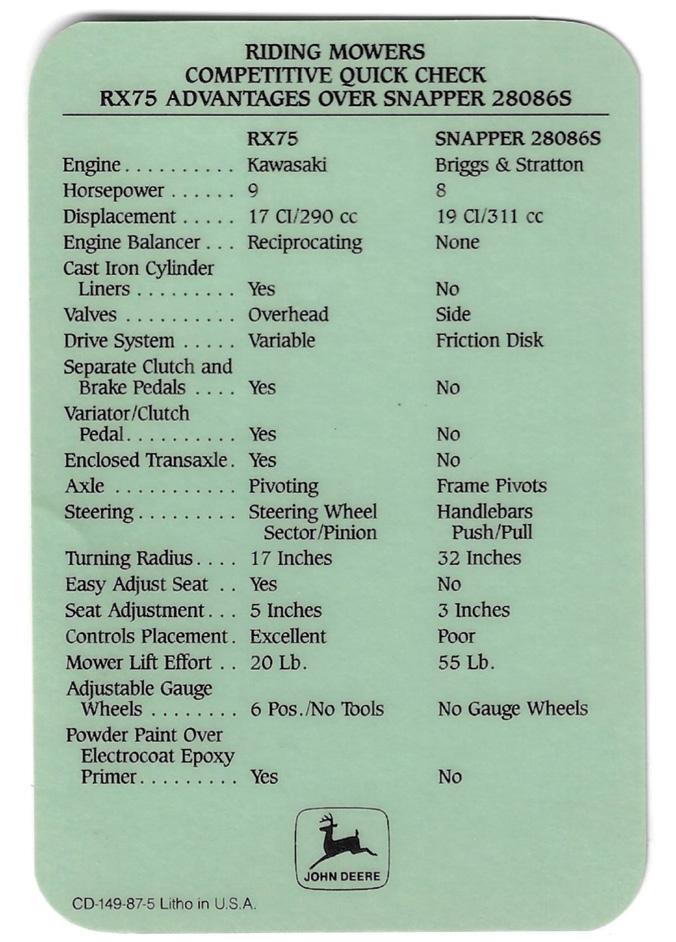
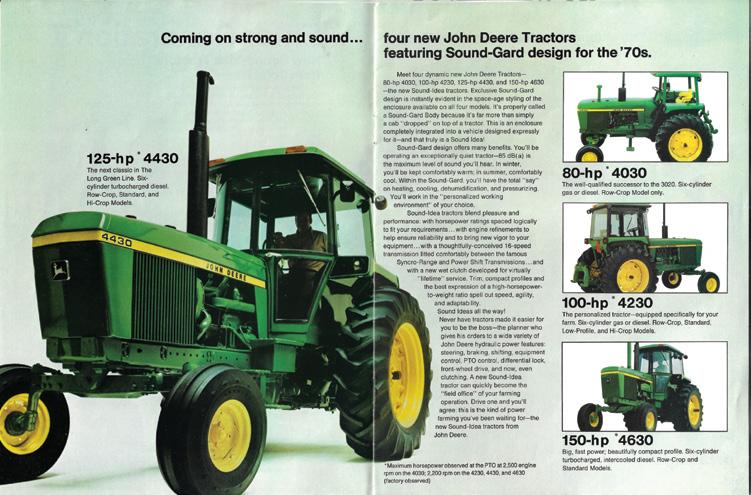
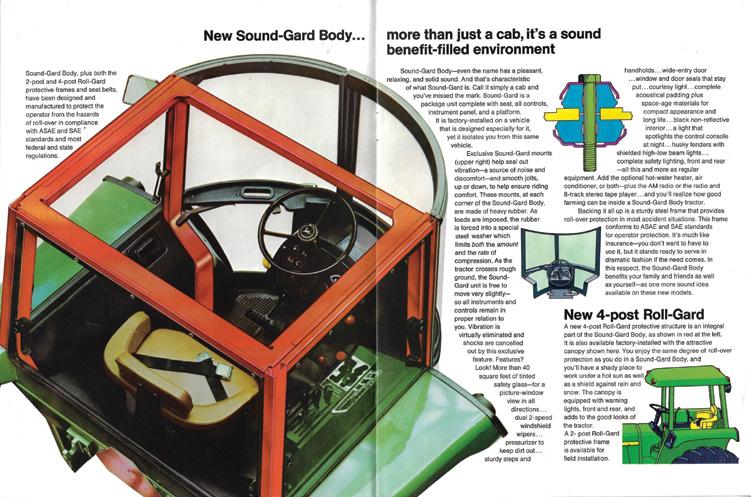
Picture 12 is a brochure I had not seen before. It announces Generation ll and the Sound-Gard cabs. The New Generation tractors announced in 1960 upended the tractor industry and changed the market forever. In many ways Generation ll and Sound-Gard cabs did much the same. The new cabs featured new levels of quiet, all new climate control systems and ergonomically designed operator controls. For many years it was the standard by which other companies were judged.
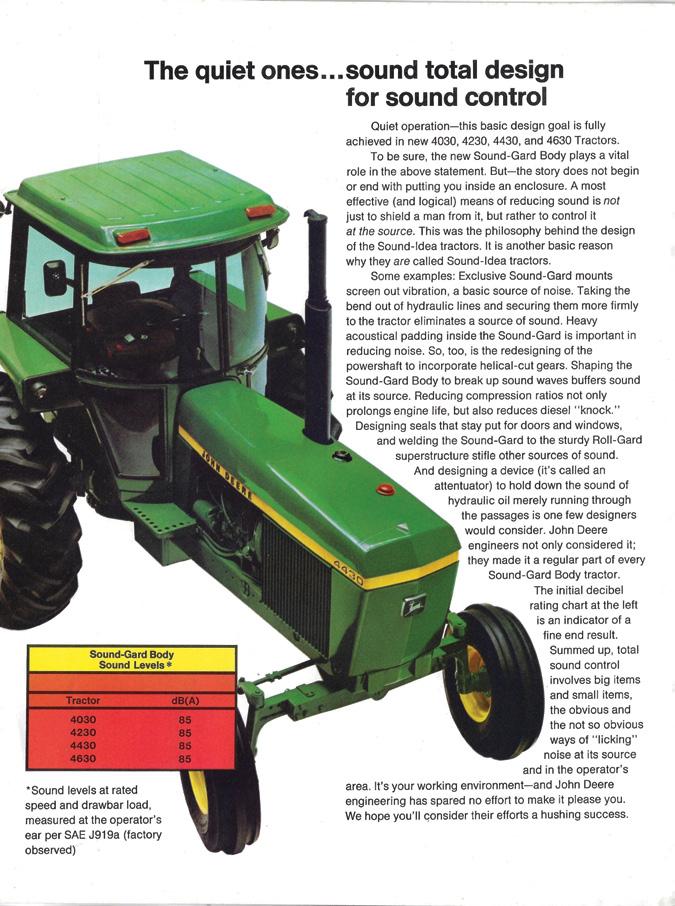
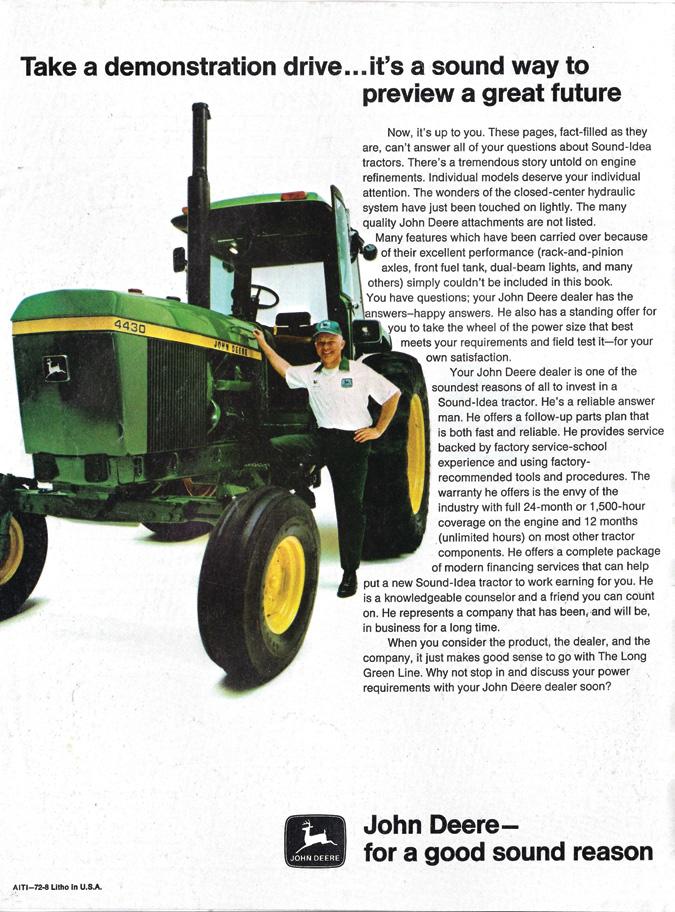
The new 30 series were also introduced and quickly set sales standards.
The new 4030, 4230, 4430 and 4630 soon became favorites and many are still in use on farms today. Besides all this, I have always liked the styling of these tractors (Photo 13).
The features of the new cabs were detailed on this page. New integrated Roll-Gard, special cab mounts and wide entry doors and more are all covered (Photo 14).
Deere’s attention of the reduction of sound with this new cab were spelled out on this page (Photo 15).
What a great picture this is. A classic new John Deere tractor with your friendly local dealer! More than likely the dealer was someone who lived in your area for years, whose kids went to school with yours, knew your family and were integrated into your town. Today many dealers have managers who were hired into the area from outside and have no past history in the area. It was simply different back then I think. Better? I am not sure, but it was different, that is for sure. This brochure dates from August of 1972 (Photo 16).
Picture 17 is of a new John Deere PowerGard window decal, part #DSEW004. PowerGard is an extended warranty program Deere offers that can be purchased for equipment. This was the largest decal I believe, measuring 13” x 7.5”. It has been obsolete for some time. The decal shown is still new and has not had the protective covering removed.
Picture 18 is what the decal looks like when it is applied. It is just another of the many unusual items one finds when collecting John Deere memorabilia.
This is an update to the glassware I wrote about some months ago. I found this set which I believe is called a carafe with wine glasses. All feature the

old two-legged deer logo (Photo 19).
This is a picture from the 1990’s catalog where they were offered. I thought it was neat to replicate the catalog picture. I had to use AI to make this picture presentable, and it messed with the antlers a bit so do not look too closely (Photo 20).
Picture 21 is a well-used operator’s manual for the 720 diesel tractor.
I found it interesting that even with the obvious signs of poor treatment and hard use over the years, the pages inside were all legible and all the information was still there. I wondered how many years ago the cover disappeared.
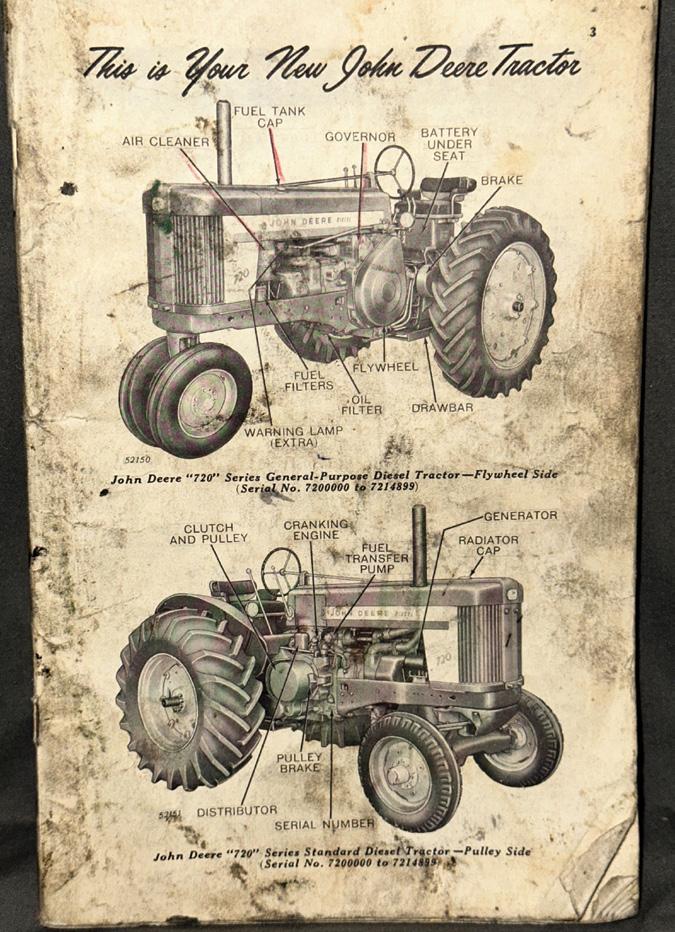
I think this manual has gone above and beyond what it was intended to do. For some reason I have always liked John Deere warranty items. I have no idea why, but I have always found them interesting. This warranty statement is printed on small card stock and dates from September of 1975 and covers the warranty on new John Deere Consumer Products items (Photo 22).
Picture 23 is the reverse side of the warranty card.
If I had to guess where my warranty interest started, it would more than likely be with this plaque. This John Deere warranty statement was a framed 24” x 12” plaque that was hanging on the wall behind our parts counter when we bought the dealership. Over the years I would see the same plaque hanging at other dealers when I had reason to visit them. I guess it became synonymous with John Deere dealers at this point in time in my mind, that time being the late 1970’s. Ours of course wandered over the years so I had to locate and buy this one, so I had one again. I am sure ours was thrown away by a wellintentioned employee who knew no
better. In later years, most employees knew to never ever ever throw anything away without checking with me (Photo 24).
This time we covered a lot of different items. Ranging from luggage tags to coloring books to brochures to glassware to decals. Such a wide variety of items Deere has produced; I constantly find new ones all the time. I like looking at these items, it brings back a lot of memories for me. Until next time!
Write Greg Stephen at The Old Tractor Company, Box 89, Franktown, CO 80116; phone 231-846-8243 or email deeredr@hotmail.com

G’day Mates,
We hit the first day of our Australia winter while I was writing this month’s article on June 1. I asked Google for clarity as to why the seasons change on the first of the month instead of the 21st like North America. Google said “In Australia, the seasons change on the first of the month because the country follows a meteorological season system, which is based on the Gregorian calendar rather than the astronomical seasons defined by the position of the Earth in relation to the Sun. The meteorological seasons are determined by annual temperature cycles and do not align with the astronomical seasons, which occur around the solstices and equinoxes.” I thought it was a better description than I could produce! So, right on cue, June 1 was the coldest day we had seen in 2026. The wood fire is going well to keep the chill off in the house!
The wheel work on my tractors is reaching towards the completion. The 14.9 X 24 rear wheels have been reassembled and reinstalled on the 1020. The 3020 row-crop has 34-inch rear wheel centres. The pinion gear and shaft were removed years ago as I wrote about previously. I determined, after research, that the 34- and 38-inch cast centres use a B3014R gear with 14 teeth. The 26- and 30-inch cast centres
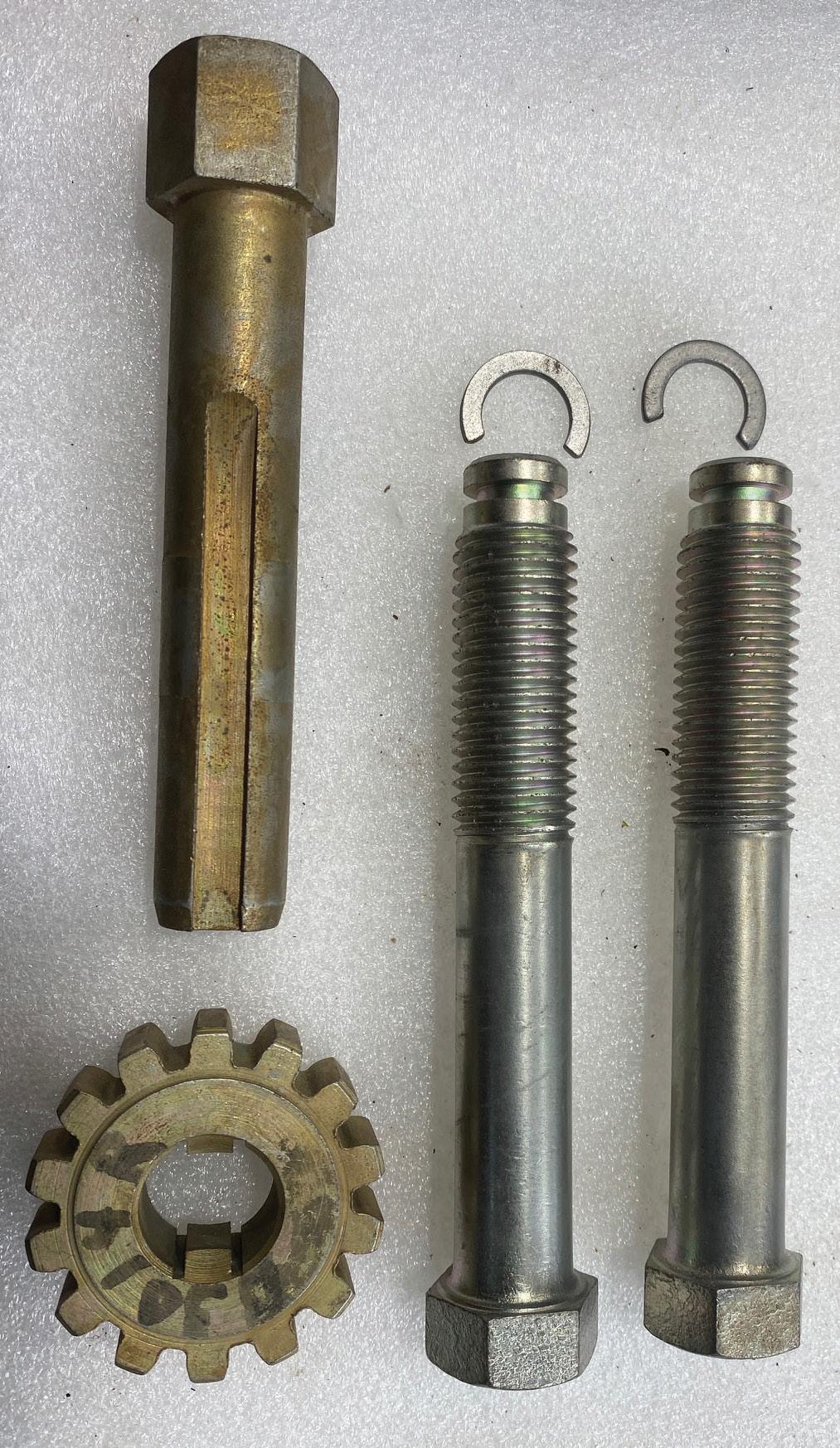
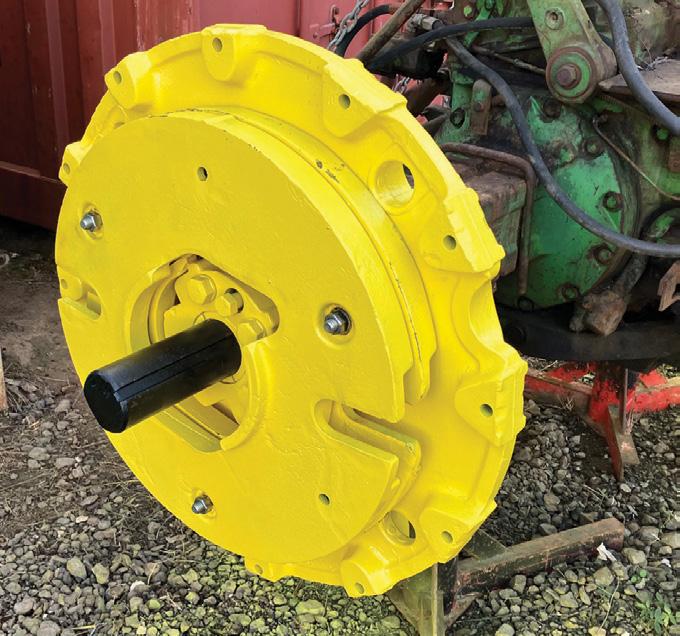
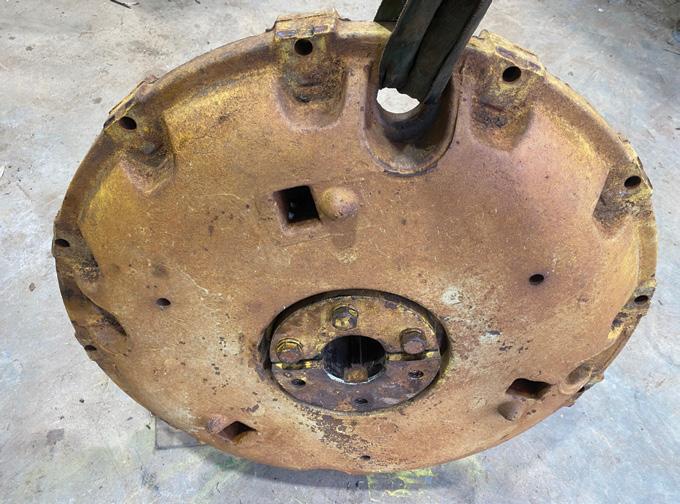
(Left) New wheel hardware - pinion shaft - pinion gear -pusher bolts - retaining rings. (Top Right) Right rear 3020 centre assembled with weights. (Bottom Right) Left rear wheel wedges assembled ready for installation
use an A4379R gear with 12 teeth. Last year I purchased some random parts from an auction sale and as luck would have it, in the one box there was a good used 14 tooth gear and one new and one used pinion shaft that the gear turns on in the cast centre. Ph Asecond pinion gear to complete the left wheeI assembly still needed
to be purchased. I checked and John Deere still sells the new pinion gear. Good thing I was sitting down as the price for this little gear was $500.00 Australian dollars / $480 CAD / $350 US. That Australian price would also have USA shipping added on as the John Deere parts warehouse in Australia did not stock any. I looked
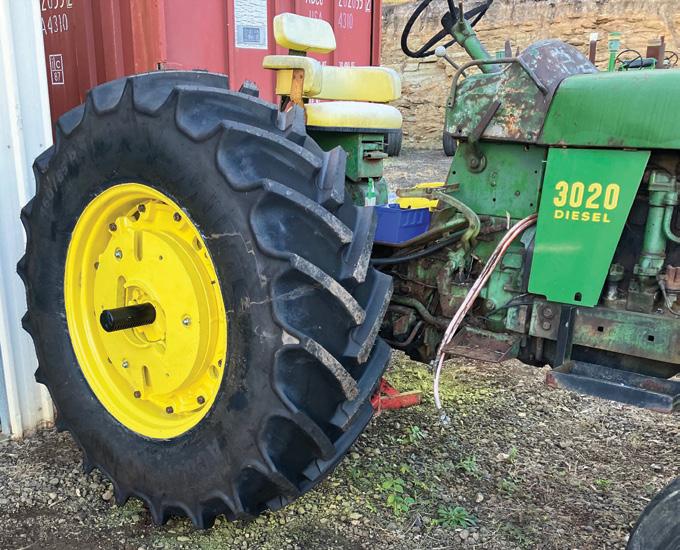
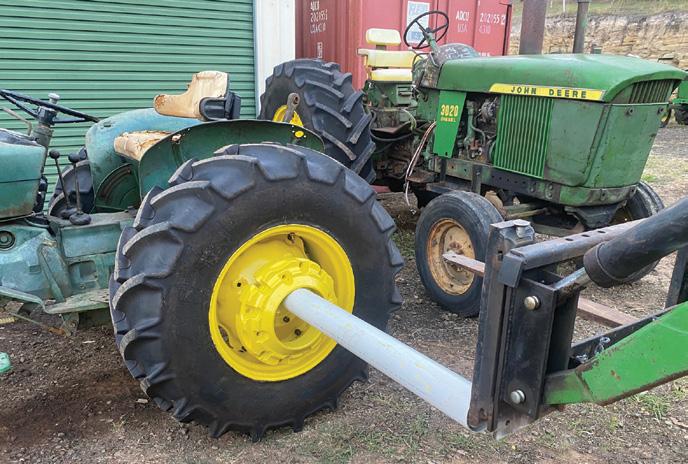
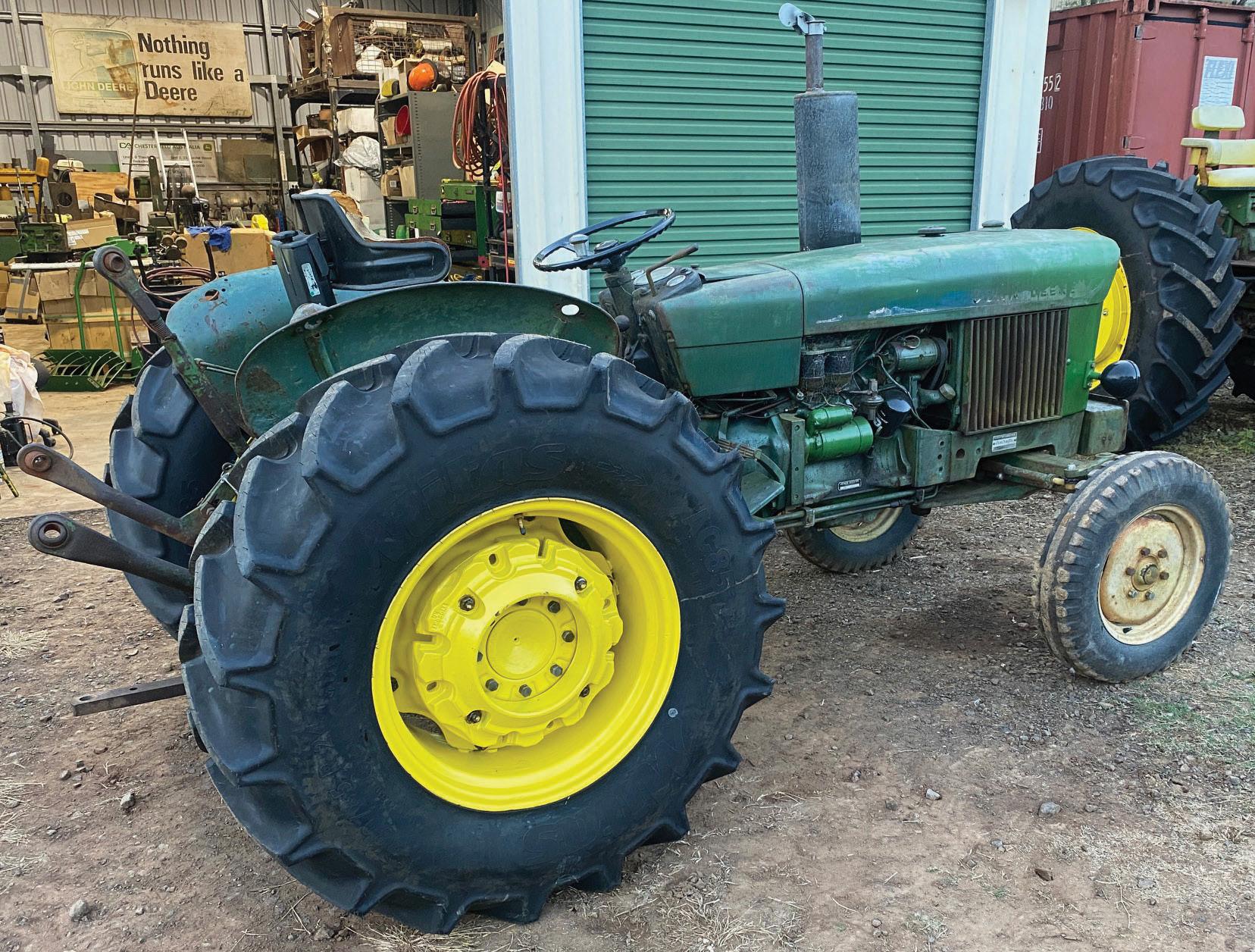
on eBay and found a new old stock pinion gear from a seller in Michigan. That pinion gear was $150 US funds. It arrived last week so I was able to proceed with the second 3020 cast centre reassemble work.
After disassembling the wheel wedges, I cleaned up the whole inside of the area with a sanding wheel on a die grinder. The outer and inner surfaces of both wedges were cleaned to a shine with the angle grinder and a flap sanding disc. I installed the pinion gear in the slot and slid in the lubricated pinion shaft to hold it. There is a step down on the pinion shaft that allows you to install it on the gear. I used a hammer to push the shaft onto the pinion gear at the tight fit section. The bottom wedge that tightens the wheel to the axle received a light coat of poly urea grease on the outer side. The matching surface on the cast centre received the grease as well.
I installed new pusher bolts and threaded them through to the rear. New retaining rings were crimped down in the groove on the bolts.
The tightening wedge was installed and left loose on the bolts to allow installation on the axle. I threaded the pusher bolts in until the bolt heads were flush with the cast centre face to hold the wedge in the open position. The wheel centre was lifted with my loader and then installed on the axle. I moved the centre inwards to the end of the rack teeth and then tightened the bottom wedge to hold the cast centre in place.
The cast centres on the 3020 were painted yellow the same day I painted all the rims. The day before, I painted the axles on each side of the wheel centre with John Deere “Blitz Black” paint. It is a great shade of black for any parts needing a black finish. This paint dries extremely fast which is good for fingerprints from impatient people like me! I taped off the black axles before priming and painting the wheel centres yellow.
There were wheel weight bolts in the 3020 cast centres left in place from an original set of wheel weights. I have four sets of the correct wheel weights that fit the row crop tractor
rear wheels. I like the looks of a couple wheel weights on tractors. There are a percentage of collectors that remove all weights when they purchase a tractor, to reduce the total weight for transport. My Australian tractors had water ballast in the wheels, which has all been drained. I have accumulated a selection of wheel weights for the 620, 2010, 2020 and 3020 tractors. I power washed them all to get them as clean as possible. Then they were primed and painted yellow. I installed two of these row crop wheel weights on each of the 3020 rear centres before the rims and tires were installed. They Left wheel installed.
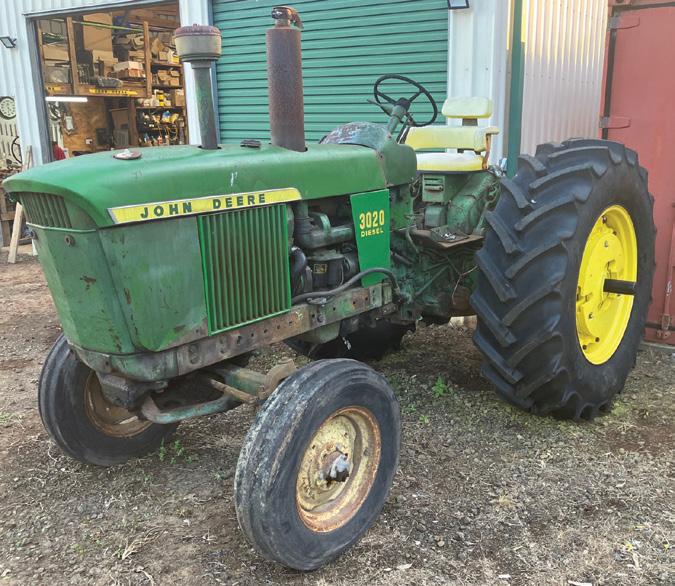
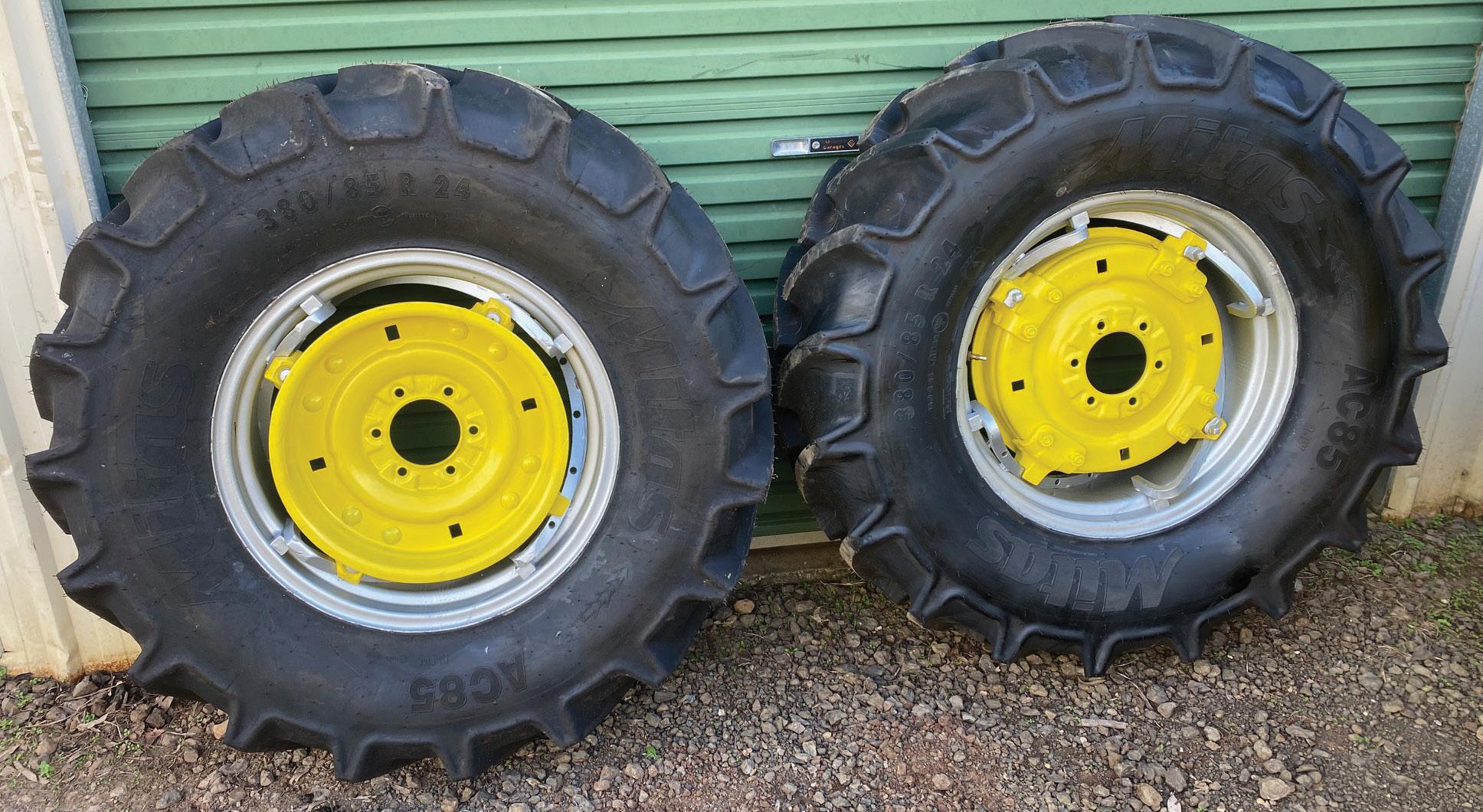
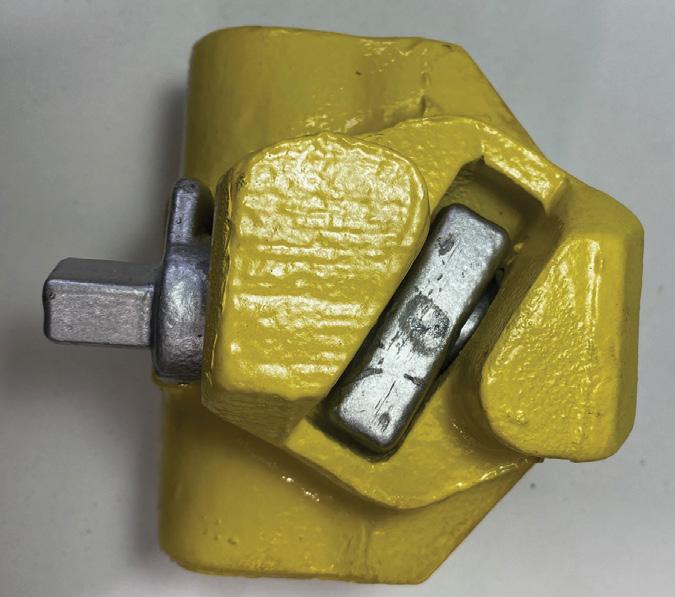
really looked great on there!
The new rear tires and painted rims were installed on the cast centres in the set in position. There are four raised spots pressed into the rims on the mounting rings when they are manufactured. I looked at my 4020-project tractor’s rear 34-inch rims to get clarity on reassembly. The 4020’s wheels had been reassembled incorrectly years ago. These pressed out spots were sitting between the mounting lugs. I worked out that four of the 12 mounting lugs on each wheel needed to be installed on top of these pressed out spots. The right rim and tire were installed first. I installed four lugs and then tried to install the lugs on these mounting spots. It was a challenge to get them all in place, but I completed the installation. The left rear wheel I tried a different procedure that took minutes, instead of 45 minutes it took for the right wheel.
(Top) Power Adjust wheels prepped and ready to install. (Left) 420 power adjust parts assembled.
I started with the four mounting lugs positioned on the four raised spots on the rim sitting in the top or up position. The other eight lugs only took a minute to install. This was so much easier to do than the right wheel!
With the new rear tires installed on the painted rims and centres on the 3020, it looked like a new tractor! I have the flat-top fenders removed to do repairs. I have a second set of these row crop fenders. They are in better shape but I will fix up the originals and reinstall them. The second set will be sold off to another collector. I have the correct adjustable front axle for the 3020 that I purchased a couple of years ago. Luckily, the previous owner had this axle set at a very wide setting. The pieces should come apart easily to match the width that the rear tires are sitting. The outer knee/ spindle slides into the centre section. I have seen Facebook posts from people trying hard to free these parts up. Will keep everyone posted on the progress of this installation.
The 420 rear wheels are completed. This was a bit of work as this standard model came new with power adjusted rear wheel rims. The slang term for these
rims is “spin out wheels” and that is how they adjust the rear tread width. I did research on which John Deere models were available with these style rear wheels. John Deere first introduced these wheels on the model 40 standard and utility tractors. The model 50, 60 and 70 tractors did not have these wheels as an option in the parts manual. They were the first John Deere models with the rack and pinion style rear wheels like my 3020.
The 320 and 330 shared the same style rear wheels as the model M. The 420 and 430 Standard, Utility, Special Utility, Tricycle and Row-Crop Utility all had this option. The 520/ 530, 620/630 general purpose and 720/730 general purpose all had this option. With these general-purpose rowcrop tractors, the power adjust was optioned with the rack and pinion wheel centres to have double the options for width adjustment.
The new generation tractors also featured these wheels. The 1010 row-crop utility, orchard, utility, row-crop, and single row crop could have this option. The 2010 row-crop, row crop utility, the 3010 utility, row-crop, but only the 4010 row-crop was optioned this way. The 1020 high crop utility, row crop utility and the 2020 row crop were the last John Deere models to offer these wheels. The 3020 and 4020 were only optioned with the rack and pinion like my 3020. Other brands also used these style wheels for a longer period. The 1975 model Ford 5000 my late father bought new had these power adjust wheels. We never once moved them over all the years we owned the tractor.
I covered in the May article how these wheels are put together with the eccentric bodies and pins. For reassembly, I bolted the nonadjustable body on first and set the centre “wheel disc” in place with the body sitting on the rail. I took the opposite side body with the eccentric turned inwards, set it on the rail. The body was in place on
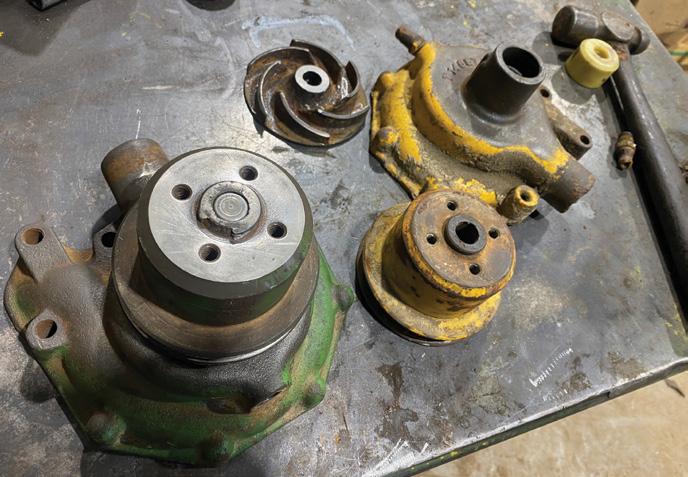
Used water pumps ready for rebuild.
the wheel disc and I bolted it on. The process was the same for the other two eccentric bodies. I left the eccentrics inward and tightened the bodies to the wheel disc. It was paint that was holding, but I was having trouble spinning the whole unit on the rails inside the rim. There is a little play in the bolt holes on the body part, so I turned all the eccentrics outward which held all the body parts inward and tightened the bolts. Now with a little effort the wheel discs do turn and adjust on the rails. I painted the nuts and bolts yellow with a brush, a painful process as we all know how runny the yellow is. After three coats on the nuts, I was happy with the results. I have not put the locks on yet. The wheels will get mounted on the tractor and then evaluated before setting them into position.
I have a customer here that needs a new water pump for his 1010 diesel tractor as his is leaking coolant. The 1010 diesel and gasoline tractors have different water pumps. Aftermarket suppliers sell a reproduction water pump that replaces part number AT12862 for the gasoline engine 1010. The issue is that we have zero 1010 gas tractors in Australia. The local parts supplier keeps this gasoline engine water pump in stock and has incorrectly sold it to 1010 diesel owners. The mounting plate where the water pump mounts onto the tractor has a different set of mounting holes. The only parts that the two water pumps share are the bearing and
the seal. You would think that John Deere would have just built one water pump for both fuel types, but that is not the case.
I was able to buy two complete 1010 diesel water pumps from a wrecking yard here in Australia. One was on an agricultural 1010, the other on an industrial model. The only difference here was one is green, the other is yellow. I disassemble them differently than John Deere describes in their service manuals. The manual shows the water pump sitting on a hydraulic press plate and they show the bearing shaft pressed out of the pulley. All the stress there is on the little cast neck and casting of the pump. Over the years, pump castings have broken due to the shaft being very tight in the pulley, and the weakest link is the casting. I use a puller and remove the pulley from the shaft. Then I support the body upside down in the press and push the bearing shaft first from the impeller and then out the casting neck. Sometimes after the first tension of the press, the bearing does not move. With everything under tension, I heat up the neck of the casting that holds the bearing. There is usually a “bang” when the casting warms up and the bearing starts to move.
When I disassemble these pumps, the impeller always has a wear groove from the seal worn in the surface. The yellow pump’s impeller was not too bad, so I cleaned up the seal face in the steel lathe by reinstalling the impeller backwards on the bearing shaft and installing the shaft in the lathe chuck. I also cleaned up the green pump’s impeller which had a deeper groove. The water pumps were assembled and everything looked good except for the green pump’s impeller. I could feel that the seal was not compressed enough. The seal can be seen through the water outlet and does not look compressed correctly for a new rebuild. The impeller could
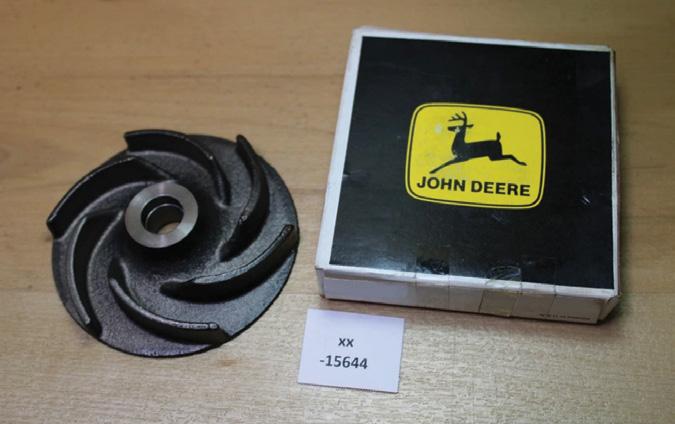
New 1010 diesel impeller that I purchased from eBay in Germany.
not be installed and further inwards as the fins on the impeller would hit the casting. Also, when I was checking it over, a ½ inch round rusty chip broke out of the edge of the impeller as well. This impeller has lived its life.
A new impeller is still available from John Deere, but expensive. I put the impeller part number T574T into google and received several results. There was a USA vintage crawler website that had a new diesel impeller. With USA funds plus shipping converted to Australian dollars, it was the same price as the new one I can buy from the dealer in Australia. I looked a little further through the Google results and found another listing on eBay from Germany. The impeller was pictured off beside the T574T part number and two were available. The price was listed at less than half the other impellers I priced. I made the decision to buy both impellers and they are their way to Australia! I will sell the yellow water pump to my customer after giving it a new coat of green paint as a swap for his water pump. Then when his arrives back, I will rebuild it for the next customer. That is all for this month. Stay tuned for more work and tractor adventures including a selection of different seat repairs, the model “B” restoration, and much more! I hope everyone in the Northern Hemisphere is enjoying a great summer season!
Until next time, Cheers Mates! Contact Ken Nicklas by email at kenanicklas@gmail.com


Summer is such a fun time for me. I am so looking forward to attending some tractor shows and pulls. I was able to go to the Stonefield Visitor Center in Cassville, Wisconsin. Stonefield has a great pioneer village and some great antique farm machinery on display. The next fun day for me was a tractor ride with the Lake Agassiz Two Cylinder Club. Every June they have their annual tractor trek. Let’s not talk about last year when we got caught in a downpour! This year we had a beautiful day and drove from East Grand Forks, Minnesota, to the little town of Euclid, Minnesota, where we had supper at the local bar and grill, then headed back to East Grand Forks. What a good time we had! Looking forward to another upcoming show and ride! Ahhh, the good old summertime!
The model “R” John Deere was produced from 1949-1954, and I love them. I ran across a few this month that were sold by Howco Auctions in Stuarts Draft, Virginia. I’ll start with an “R” John Deere Industrial, serial number 14818; the tractor has good paint and sheet metal. The rear tires are mismatched; the left is 23.1-26, the right rear is 18-26, and the fronts are 7.50-18. This tractor has not been running in several years, but it ran well when it
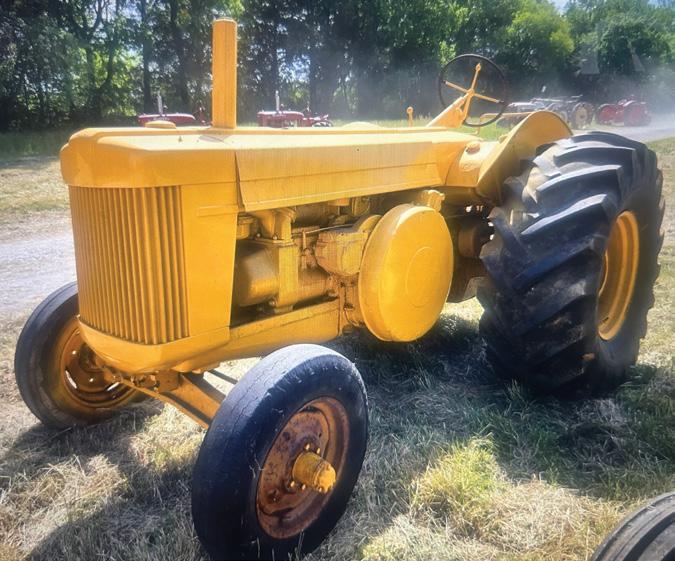
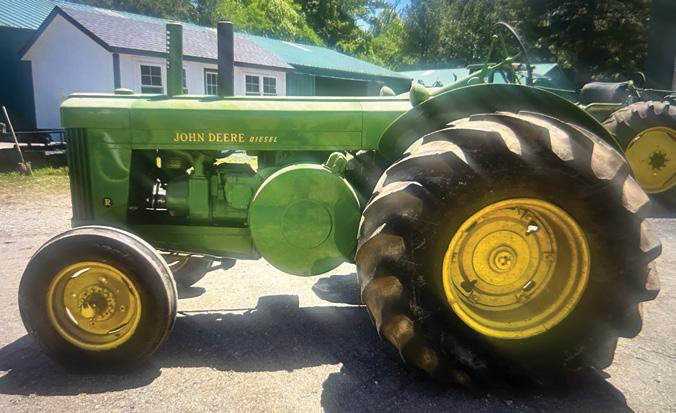
was parked in the barn. This tractor is currently not running. It sold for a bid of $1980. Next, a 1952 “R”, serial number 10890. This tractor has good sheet metal and paint. The pony motor needs adjustment. The hood is included and is not currently running-has not run in several years. This ‘52 model brought in $5500.
I’d love to tell you about another “R”! It was used as a pulling tractor with an injection pump that has been turned up. It is a 1951 model with a serial number of 9319. The tractor has no pony motor or
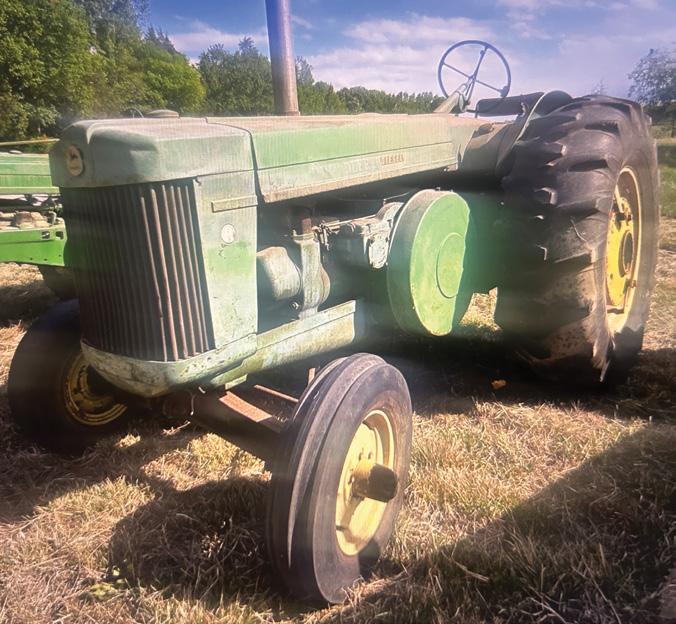
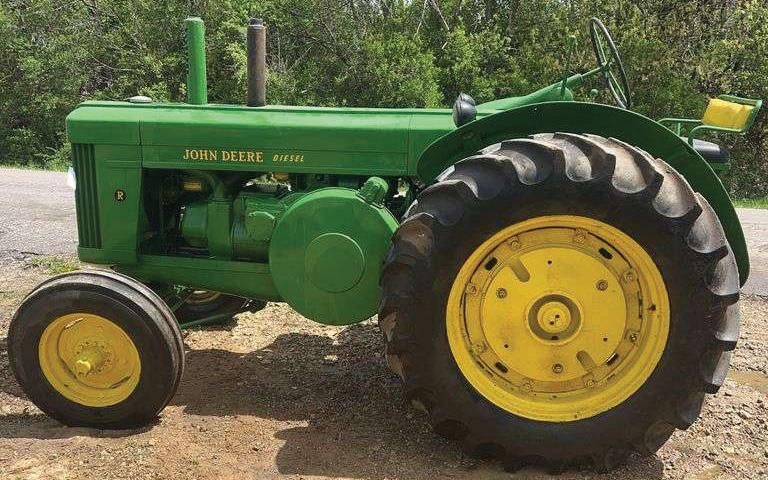
starter to lighten it up for pulling, but it was pulled to get it started. The pony motor was included, along with all parts needed to restore it to its original condition. The tractor has 20.8-34 rear tires. The auction reached a final price of $4730.
The last “R” that I ran across was a 1949 model, so that holds a special place in my heart because a 1949 “R” John Deere was the first tractor I ever drove. My dad was plowing in a field north of the
railroad tracks that split our farm in two. In the morning, he would load the milk cans in the 1961 Apache 10 Chevrolet Pickup and take them to the creamery in town. During the school year, he would also give me a ride to school. I believe that I was about ten years old and in the third grade. Dad would start the “R” and let me drive it to the field, and we then would continue on to town in the pickup. I thought I was such a helpful son driving the “R” to the field for Dad. As I got older, I realized that when I got home from school, the “R” and the pickup were both in the yard, so over the course of the day Dad had to bring one or the other home, then walk back and get the other. So much for being helpful! But I think Dad knew how much I wanted to drive that tractor! Anyhow, this ‘49 “R”, serial number 1768, brought back some memories. It was sold by the Hamilton-Maring Auction group of Kenyon, Minnesota. The tractor was equipped with 16.9-34 rear tires,
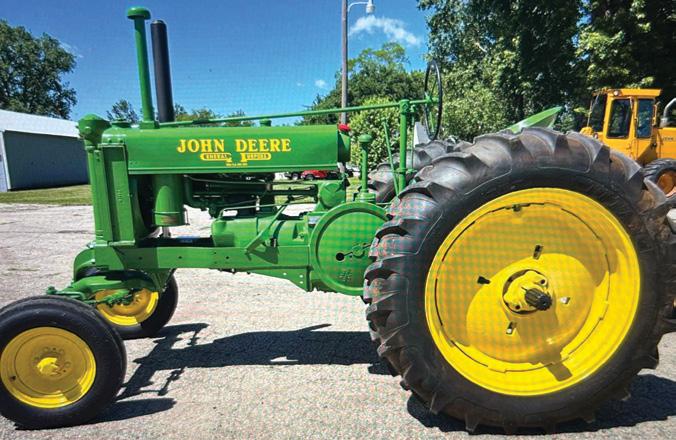
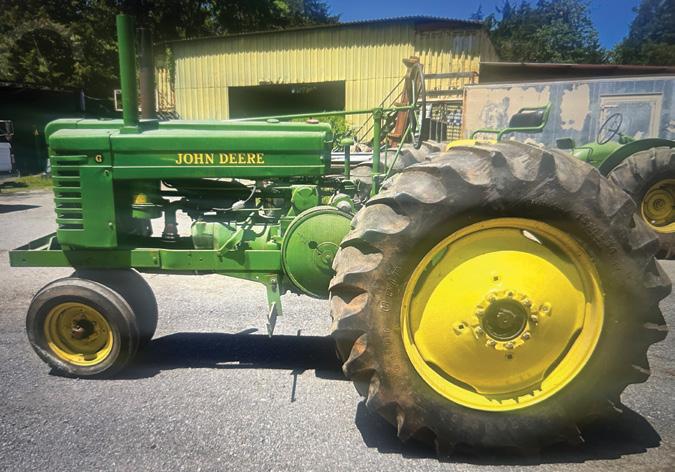
three sets of rear wheel weights, PTO, and a factory pull-start option to start the Pony Motor. It has an older restoration and is in good running and driving condition. I could have bought a lot of memories if I had topped the winning bid of $5000.
A couple of “G” models now follow. The first one is an unstyled model from the same HamiltonMaring Sale as the previous 1949 “R”. This tractor is an early 1939 model, serial number 7666, equipped with a wide front axle. A complete restoration was finished earlier this spring. The engine was sleeved, a new radiator core installed, and new 13.6-38 tires were added. All this adds up to a great selling price of $16,500. The Howco Sale in Virginia
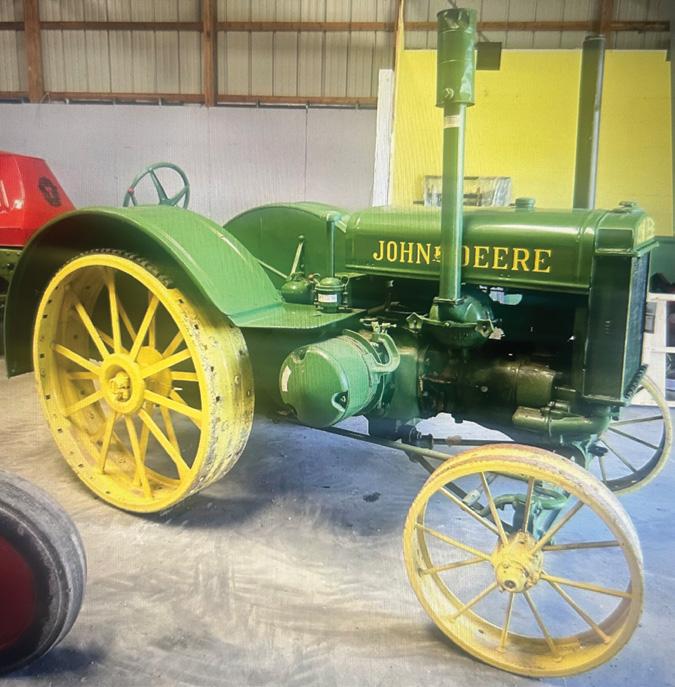
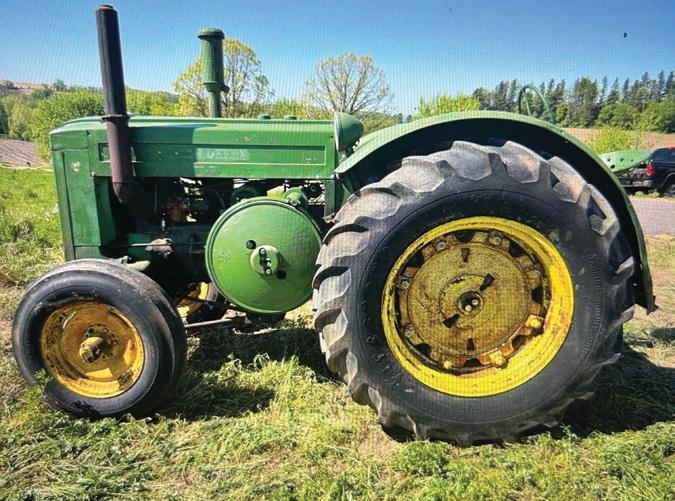
contributed a 1949 “G” with serial number 35403, which is set up for pulling. The rear tires are 18.4-34s. It also has a weight-mounting bracket and good sheet metal, but it is currently not running. Still, it took a bid of $5610 to win this pulling “G”. We mentioned a couple of “G”s, and it seems a few other models came in pairs. Like a couple of “D”s! The first one, on steel, comes with the original 3-bottom plow and disc plow that were sold with it new. The plow and disc plow look a little rusty, but thankfully
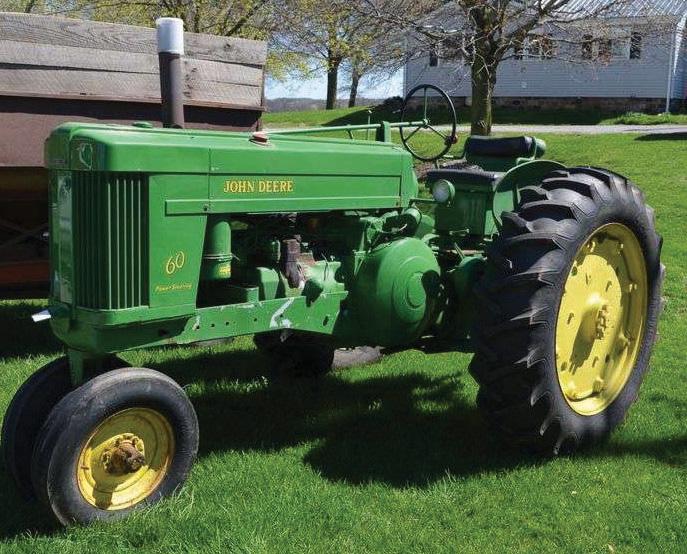
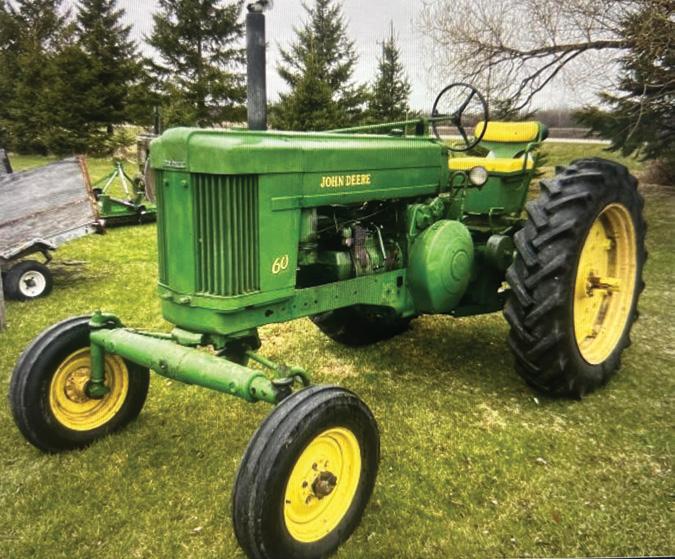
have been kept undercover. The “D” is not currently running, but this fun group sold for $5280. The other “D” is a 1948 model, serial number 180287, with 16.9-30 rear tires and only the standard hand parking brake. Here is a running and driving “D” from the HamiltonMaring Auction selling for $2600. How about another pair of
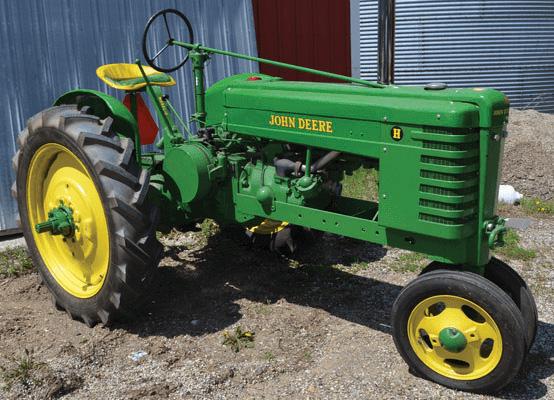
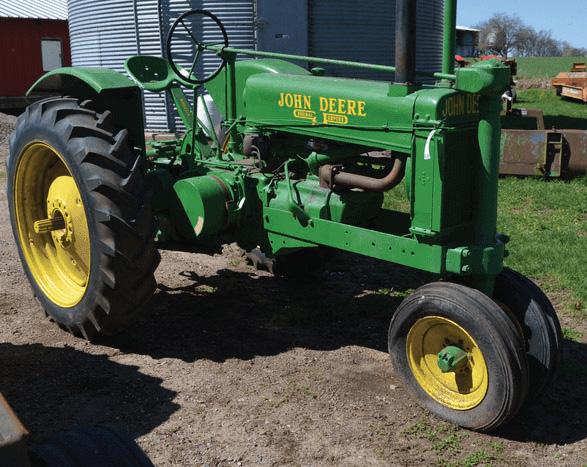
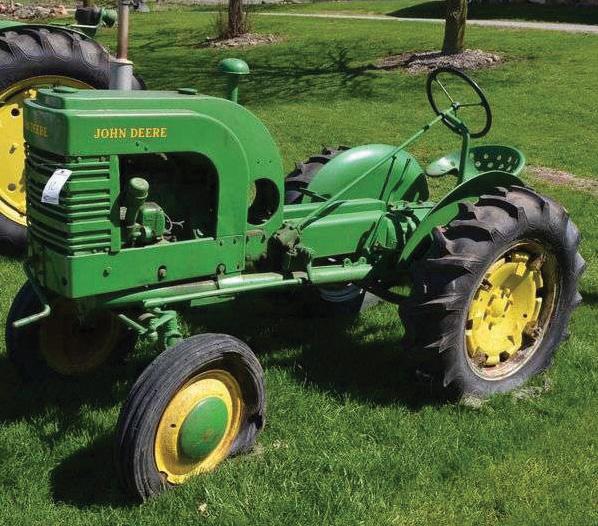
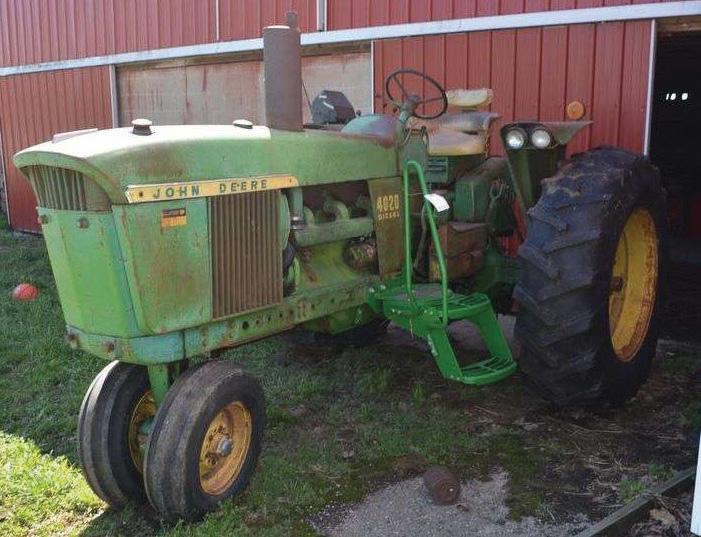
tractors? A local Auctioneer and friend of mine, Jason Rominski, sold a nice 60 John Deere. It has a wide front, serial number 603444, making it a 1954 model. It was part of the Ronald Daily Sale in Baudette, Minnesota. Someone took home a nice 60 for $2500. The Dave Powers Retirement Auction in Michigan, conducted by Sheridan Auctions, gave us another 60. This one, serial number 6062566, featured power steering, a narrow front, and nice tires. $3080 was the price for this one.
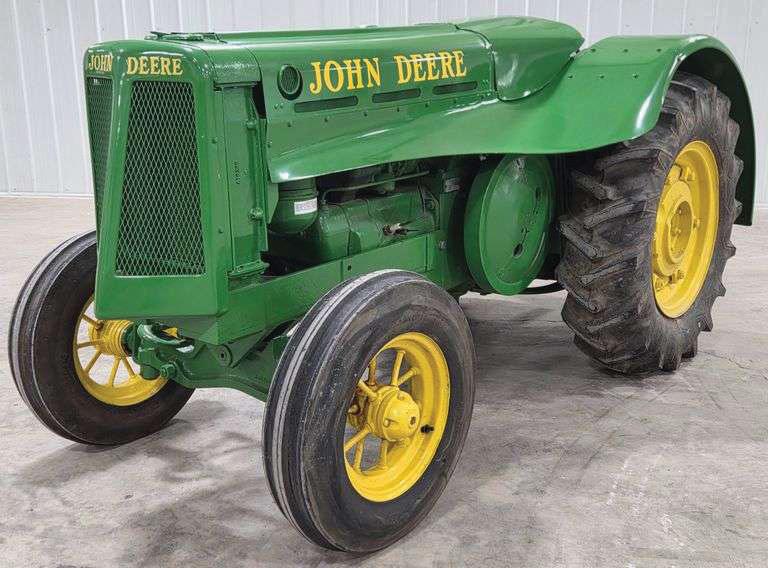
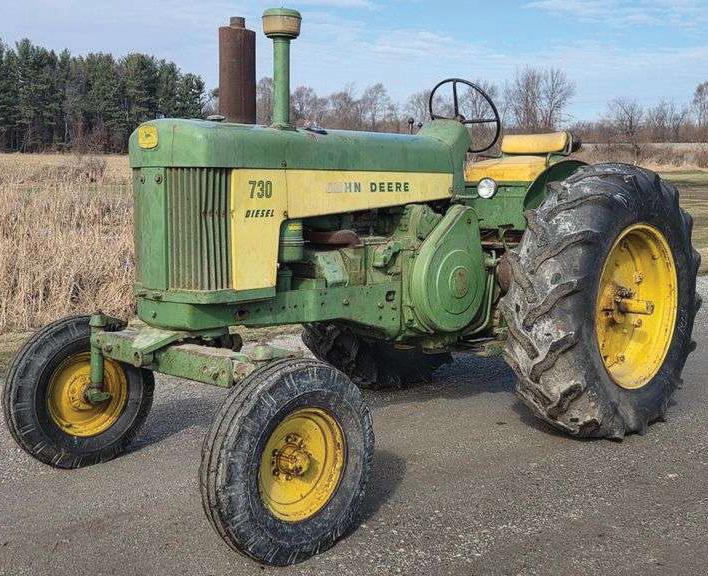
A few other highlights from the Powers sale include; an “H” John Deere fetched $3520, a John Deere “L”, serial number 1497, brought $1760, an unstyled “A”, serial number 470751, with fenders $1980, and finally a 4020 with a newer battery, 3-pt with center link, newer steps, with serial number T213R212280R. This narrow front model sold for a high bid of $12,100. Ah, all the fun, not to mention some great auction sales and fun tractors. If I only had unlimited
storage and money! Looking back to a great auction from April of this year held by Kraft Auctions, here are a couple of gems from the Steve Just Collection. How about a 1937 “AOS” tractor, serial number 1336? The tractor was shipped on May 3, 1937, to Orlando, Florida. It has a rare overdrive gear ratio. It is thought that fewer than 10 tractors came with this option. It has full orchard sheet metal, PTO, and runs and drives. This neat orchard tractor brought in $15,000. Another tractor for your reading pleasure comes from the Steve Just Collection. It is a 730 diesel, serial number 7330295. According to the sale listing, this tractor is the 63rd-to-last tractor built in Waterloo. It was shipped for export on February 23, 1961, to South Africa, which is where Steve found it. The 730 is equipped with a wide front, three-point hitch with top link, PTO with shield, one set of hydraulic remotes, and clamshell fenders. The fuel system was rebuilt and comes with electric start. The tractor runs and drives well. The gavel fell at $15,000.
Another fun month of John Deeres at auction! Thanks for the calls. I already have a few more for next time! Keep in touch and let me know if you see some interesting John Deeres coming up for auction. Let the fun continue and happy auctioning!
Email Eric W. Mickelson at mickelsonauctions@gmail.com

Sorry to say that we had no entrants in the June search for a “Stalker” head attachment for a forage harvester. I suppose it is because most farmers preferred to spend a few dollars to string up an electric fence and let the cows go out and graze in the corn stalks, rather than spend thousands on a Stalker head and more in fuel to haul the corn stalks to the cows. Then the next spring, you got to haul the manure back out to the field, rather than have the cows put it there for you. If that’s not enough reason not to buy a Stalker head, it probably would not have picked up most dropped ears that the cows would have been more than happy to find in the field. Let’s stick with the “feeding the cows” theme for another month and look for an implement that former editor Richard Hain said he once owned: a 350-A hay rake. Unlike most rakes of the day, this one was PTO driven. In standard form, it came three-point hitch attached, but you could also get an optional hitch to make it “semi-integral”. The thing that Richard says he remembered most about this rake was that it made
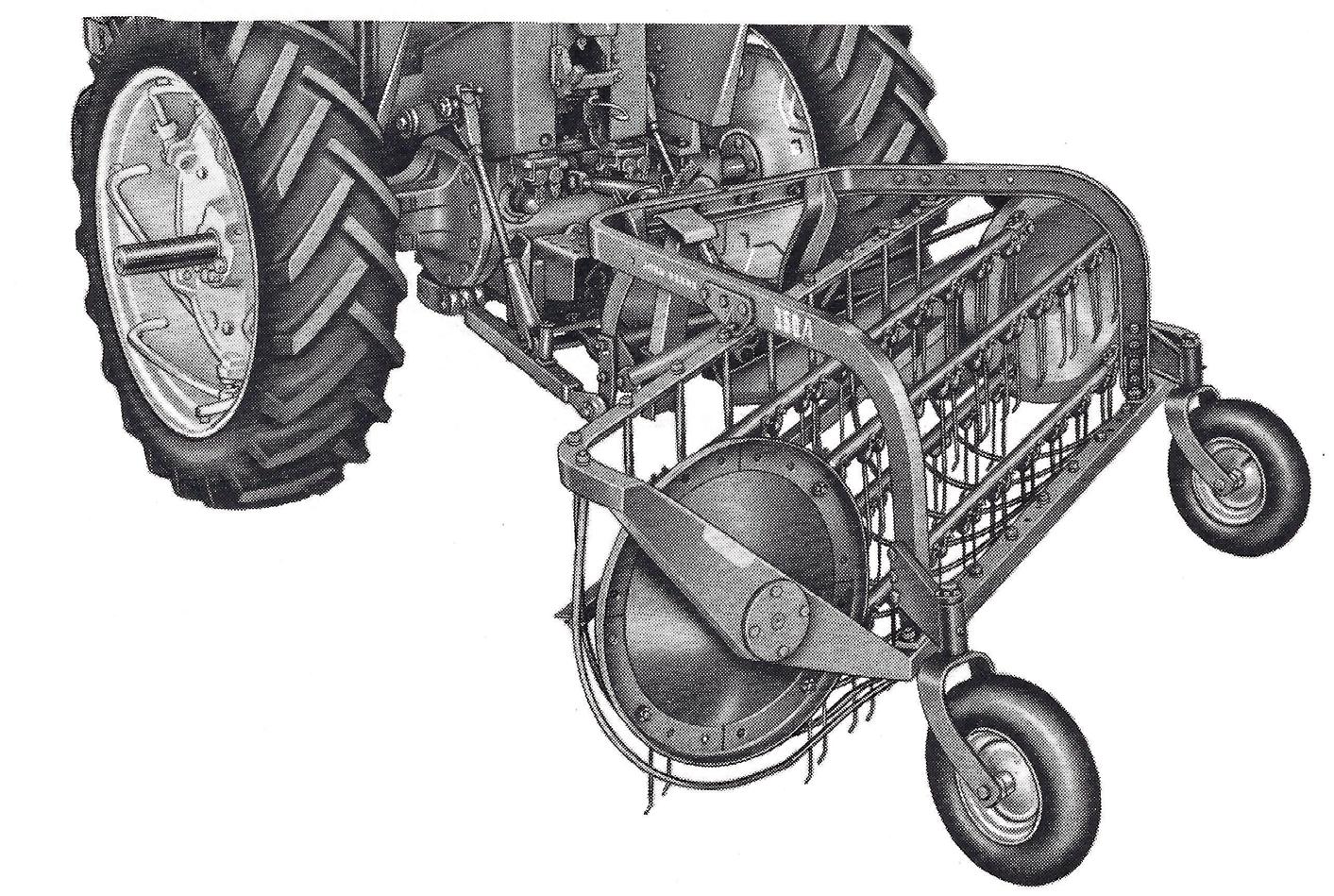
such a tightly wound windrow, he sometimes wondered if you could have hooked to the end of it and just pulled the whole thing to the yard like a rope. Shouldn’t a windrow be light and fluffy to dry better? In the 1960s, your John Deere dealer could have put one of these rakes in your hay field for just over $500. And yes, you could get one
with either 540 or 1000 RPM PTO. Do you have a 350-A rake? If you are the first to send a photo of yourself and it, to Green Magazine, we will add one year to your subscription. Mail your photos here: Green Magazine, PO Box 165, Perryville, MO 63775 or email it to editor@greenmagazine.com
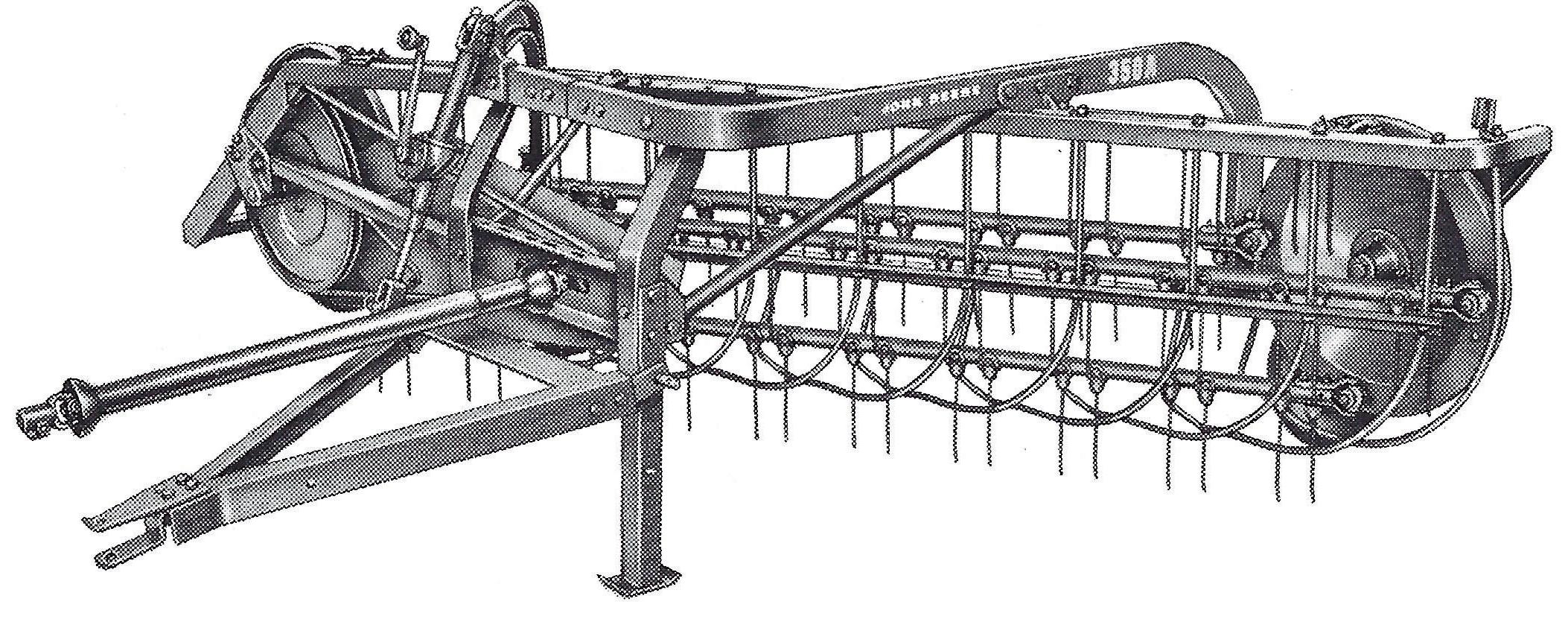
• Two Cylinder diesels—our speCialTy
• CompleTe Two Cylinder diesel
• Fuel injeCTion repair and CalibraTion
• Cylinder bloCk boring up To 8”


We also have good sources for aftermarket products for two cylinder John Deeres including Taper-Lock flywheels, engine parts, grilles, battery boxes, manifolds, mufflers, pony motor ignition parts, etc.
• 2 cyl. & later JD air cleaner conversions, Lindeman through 430C trunion bushings • 70-830 diesel piston kits in stock, STD, .045, .090, .125 os
1946 Lindeman Crawler with Lindeman blade, new track chains 30 years ago with very little use, $14,000. Tractor older with restoration, but still very nice condition. Ph. 330-222-2227. OH
JD AT 40 cultivator $400. Ph. 563-5439499. IA
JD 237 Corn picker $1200. Rabbit ears for corn picker $100. Ph. 563-543-9499. IA
530 restored, loaded with options, $12,000. Ph. 989-467-0211. MI G3X

Rates: 50¢ per word, minimum charge $5 classifieds limited to 200 words ($100)
Photos: $40 per photo 2-1/4 inches wide or $20 per photo 1-1/4 inches wide
Discounts: 10% off for any ad running in three issues. No material changes allowed; payment must accompany ad
claSSiFied & diSplay ad inFo
•Green Magazine is mailed about the first of each month.
•Only John Deere items will be advertised.
•Positioning of ads is at publisher’s discretion.
•Green Magazine will not print any ads which it considers to be:
•offensive or proven to be dishonest;
•from competing publications or organizations
Phone 402-643-6269
Email: ads@greenmagazine.com
Website: www.GreenMagazine.com
Mailing address: Green Magazine, PO Box 165 • Perryville, MO 63775
1970 John Deere 4020 diesel power shift, side console front and rear weights, nice local farm tractor waiting to be restored, SN T213P238321R, $15,000. OBO Ph. 814634-0427. Western PA
JD 36A, motor like new, bucket $700. Ph. 563-543-9499. IA
1945 BO Tractor, electric start, large lights, $4500. Tractor older with restoration, but still very nice condition. Ph. 330-2222227. OH
Set of 3 JD E-series hit and miss gas engines – 6, 3, 1.5 HP on JD trucks from ’35, ’38, ’39, hard to find. $15000. Ph. 503-454-8047. OR

Full page: 7-1/4” x 9-1/2”
$800
Includes full color • Limit 800 words
Half page: 7-1/4” x 4-1/2” .......... $450
Includes full color • Limit 400 words
Quarter page: 3-1/2” x 4-1/2” $250 Includes full color • Limit 200 words
Business card: 2” x 3-1/2” $125 Includes full color • Limit 100 words
2 column inch: 1/12th pg. ............. $85
Includes full color • Limit 40 words
Bordered ads: per column inch $30
Full color, add $25 per photo
Limit 20 words per column inch

John Deere High Crops 4440, 4050, 4230, 3020, 2520, 4010 ALL from California, all excellent condition. John Deere 620 gasoline high crop. 620 gasoline std. both full restored. Ph. 763-434-6547 or 651-2386830. H2X
2005 John Deere GT 235 Lawn and Garden tractor, with 48 inch mower deck, with @150 original hours. Owned and serviced by former John Deere agricultural technician. Sold house and no longer needed $2500 PICTURES AVAILABLE. Phone/Text 325214-5867 cementerAD5@Reagan.com H2X
• All ads are to be paid in advance. Ads sent without payment and needing to be billed will be assessed a $4.00 service charge.
• Classified ads will be taken over the phone, if accompanied by a credit card payment. We are not responsible for errors in ads taken over the phone or for illegible ads received in mail. Display ads will not be taken over the phone.
• We do not send checking copies or tearsheets. Send $6.00 extra for a copy of the issue in which your ad appears.
1) 10% discount - for any ad running in three consecutive issues. No material changes allowed. Payment for entire ad run should accompany ad.
2) 5% discount for camera ready - ad must be typeset, clear and at the proper size.
3) 5% cash discount - payment in full by check, without being billed.
When preparing display ads, please take note of the word limits. We can place only so many words into a given area and still make a readable ad. If ads exceed word limits, advertiser will be billed for extra space.
USPS shipping
59187 Nottawa Rd. • Centreville, MI 49032 Ph. 269-625-5400
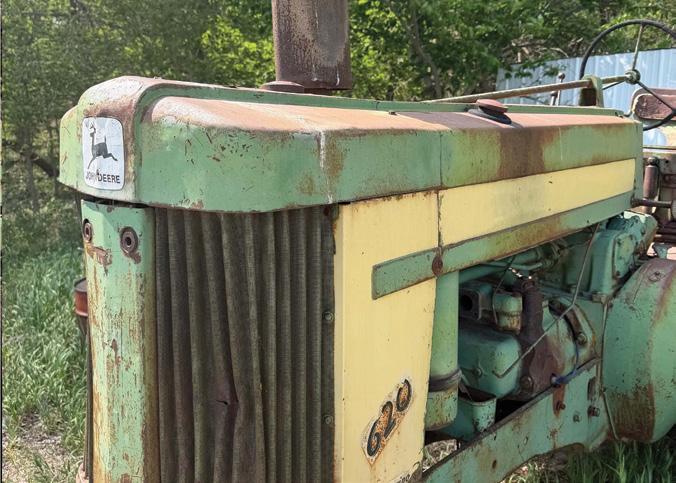
1957 JD 620, does not run, probably locked up, good tin work, new battery box, good parts. $1500. Call Al. Ph. 402-340-0939. NE
2 JD 4320s, DH, clean, straight tractors, $18,000. 1974 JD 4230 Sound guard cab, quad range, one owner, $14,000. 1969 JD 3020 D, SR, DH, WF, 3 pt, $16,000. JD 3020 G, DH, NF, $5800. 1958 JD 720, pony start, one owner, both engines run great, $5500. JD AR, excellent paint and sheet metal, runs, $3000. 1960 JD 630, original paint, new rear tires, $5500. 1962 JD 4010, G, wide front, SH, $7200. 1968 JD 3020, G utility w / loader, $5500. JD 520, barn find, runs great, one owner, $2850. JD R Ground Spreader, excellent condition, $1200. Late JD 4400 D combine, excellent condition, $3850. Assorted sickle mowers. Larry’s Tractor. Ph. 563-866-2469 or 563-452-2469. IA
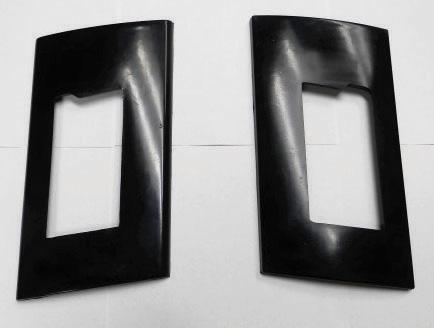
Fender grommets – part #R44619 and #R44621, left and right side for JD 4520, 4620, 5020, 6030 with roll bar and fenders. $149.95 per set plus freight. Ph. 712-252-0423. IA F3X
We have parts for your 45 combine! www.45combineparts.com. Ph. 417-2592520. MO G6X
Let us repour your rod & mains for models A, B, D, G, H, L & LA Ph. 816-587-4747
6212 N.W. Bell Road Parkville, MO 64152
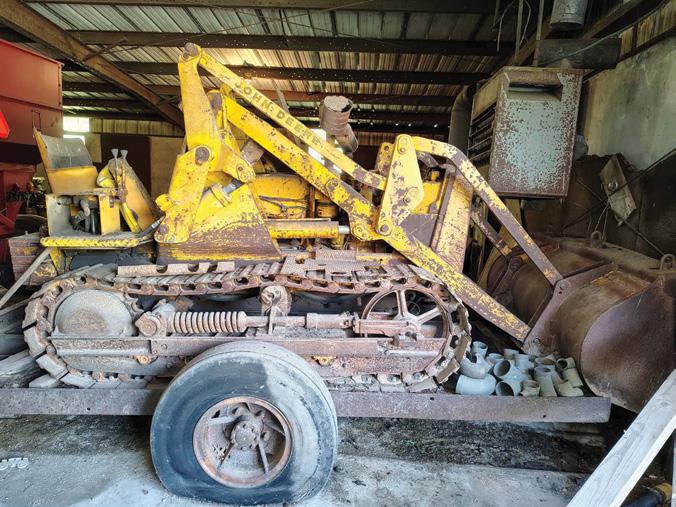
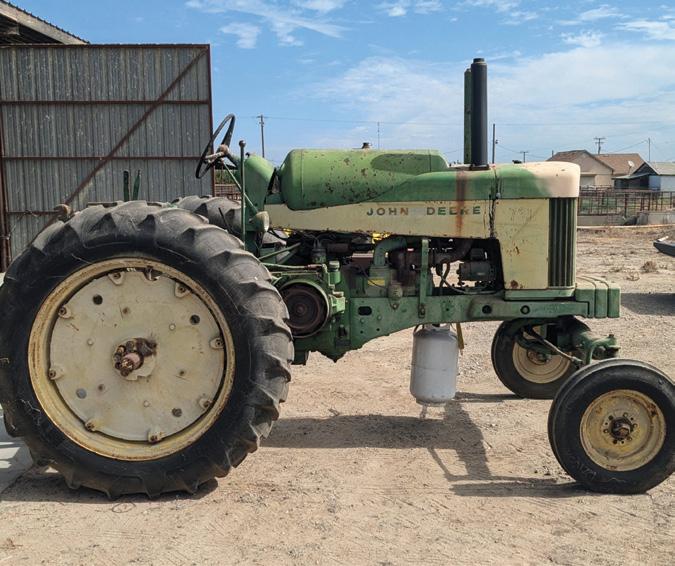
John Deere 1959 730 propane conversion, runs good. $4500. Ph. 209-678-5484. CA

QUALITY
• BRake lining FoR a-730 B
• clutch BRake padS a-730 c
• gp, d, la BRake BandS
• neW geneRation BRake padS n 2510-4320

• caRBuRetoR ReBuilding & teSted • tool BoxeS BOB DILLNER 973 Corley Rd. • Manns Choice, PA 15550 814-733-4397
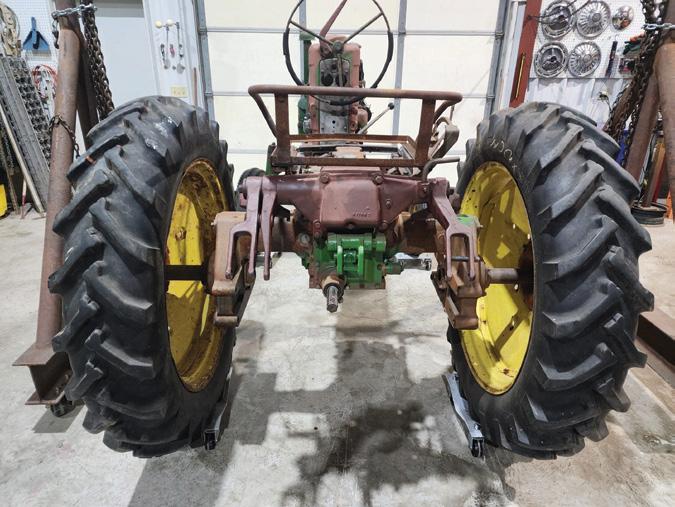
JD 40V, SN60072. $4000. Ph. 970-768-3399. AR
Taper-Loc F3570R flywheel for 720-730 new. Also, F1913R Taper-Loc flywheel for 70-720 new. We can also rebuild your original. Shipping available. Ph. 717-4459465. PA G3X
1950 styled AR, many unstyled G parts. 70 diesel just fresh in! Parting out: 70 gas burner, 630, good tin; styled G, also H. Parts for unstyled A, B, GP, D. Styled A, B, D, G, 50, 60, 520 and 620. Some R parts. Call Larry Frederick, 308-520-7416. NE F6X
Reproduced aluminum WARNING PLATES for 3-pt. Quick Hitches. Motorola alternator and amp regulator plates, 35-55-72 amp. Hydraulic cylinder stop pins with chains, spring steel clip, like original, three sizes – 3/8,” 7/16” and ½.” Ph. 712-660-8447 cell. IA H3X
Berry Cam Service: For your 2, 4 and 6 cylinder camshafts, stock or antique pullers. Ph. 320-395-2377. Location: 2466 GablerAve SE, Buffalo, MN 55313. G12X
Large inventory of good used two cylinder parts. Call for parts needed - casting numbers and/or parts numbers appreciated when you call. Detwiler Tractor Parts, Spencer, WI. Ph. 715-659-4174 or 715-6594252 weekdays 9-5. C12X
JD 840, SN 840005. JD 830, SN 83000715. JD 330, SN 330069. 1947 JD LA with factory sickle bar. Two-cylinder JDs for restoration. All start and run as they should, field clothes. Email robwallacesr@yahoo.com or phone 704-309-5085. G2X
Parting out A, B, G, H, 50, 60, 70, 520-820, 530-730, 2510, 3010, 4010, 3020 and 4020. John Brawner, ph. 270-799-1883. KY. F6X
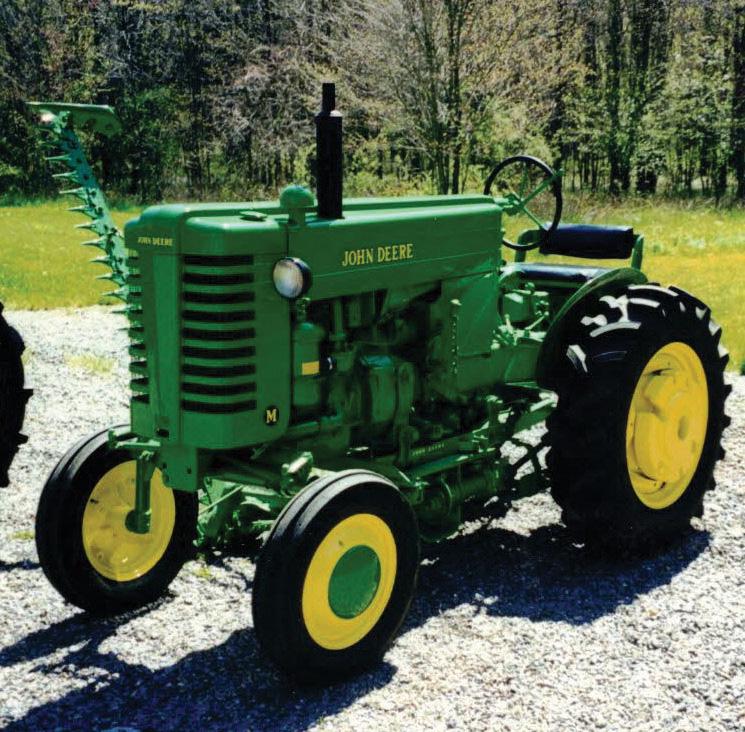
1949 JD M with 2 pt lift, lights, toucho-matic, PTO and belt pulley, like new tires, excellent paint. Includes, 2 bottom plow, sickle mower, cultivators, Woods mower, snowplow (never used), wheel weights front and rear, tire chains, rear hitch, original title, original brochure and operator’s manual. Not a farm tractor used on private estate, always in secure dry barn. Asking $9,200 or best offer. Ph. 201-417-7557. NH. G1X
1968 JD 5020 pulling tractor. 1934 JD D. More information, call 810-705-0259. MI F3X

Many new old stock model B and model A JD parts, including tin work, blocks, heads, etc. Also model D and R parts. Call Dale for details. Ph. 785-821-2600. KS F3X
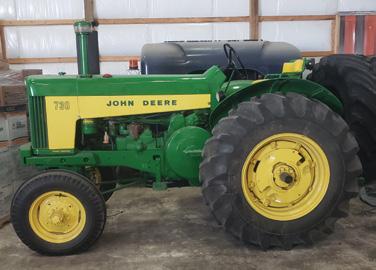
As nice a 730 gas standard as you’ll find anywhere. SN 7316424. Most extras. $15,900 OBO. Ph. 419230-9640. Ohio. G3X
DUBUQUE TRACTOR PARTS - top links, hood bolts, wheel bolts, front and rear, PTO shields, tie rods. Ph. 217-502-4504, email shinola@royell.org IL F6X
440C undercarriage parts, chains, sprockets and rollers, all about 80%, 2.53 Detroit for 440, parting out 440ICD. Ph. 641-228-4282. Ionia, IA 50645. E4X
New and used parts for JD two cylinder tractors and crawlers and some NOS parts. Models A, B, D, G, H, LA, M, 40, 50, 60, 70, 70D, 440, 520, 620, 720D, 530, 630, 730, etc. A&L Parts, 315-536-0543. NY C12X
New and used John Deere small square baler parts. Knotter rebuilding service. Our free catalog makes it easy to figure out what your baler needs. Call Finger Lakes Equipment, 585-526-6705. NY C12X
ELECTRIC STARTER KIT for R, includes 12 volt starter, bracket with battery box, breather, water manifold, water pipe. Alternator with top and bottom brackets, mounting hardware and battery cables. $1625. Free shipping. Ph. 717-445-9465. PA G3X
Many magnetos and carburetors ready to go! Many makes and models. We will fix yours! Just call EZ Tractor Shop, ask for Eldon, phone 785-332-5482. KS F3X
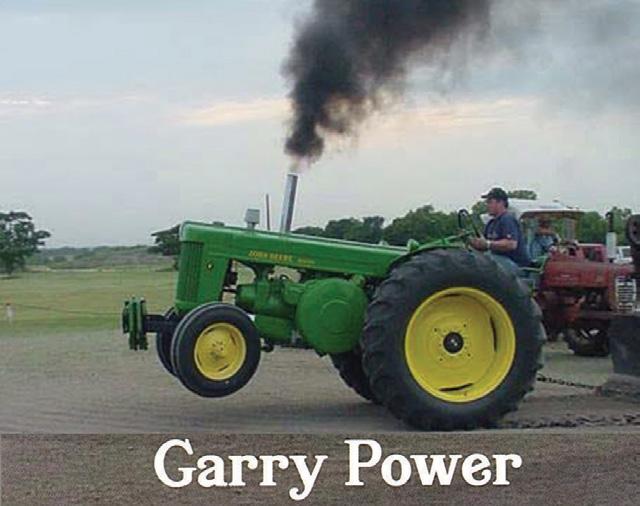
•• Transfer Pump Gears •• Also: Bosch 14mm Barrels & Plungers • Bendix 13.5mm Barrels & Plungers • Bosch & Bendix Injector Tips • New with Increased Flow
• Injector Springs • Needle & Guides
• Many Obsolete Parts 970-554-2108 hendrichfarmtractors.com
SERVICE INSTRUCTION CARDS. Reproduced sets of 3 for 3010 RC and RC utility; 4010 RC and standard. $45 postpaid. Green Iron Farms, 1320 Hwy. 92, Keota, IA 52248. Ph. 319-560-9508, tesieren@gmail.com.
B6X-ALT
New and used JD two cylinder parts. Specializing in H, M, MT, 40, 420, 430, GP, 800 and 801 3-points and parts. Also: See my eBay store for specials and NOS parts. Some NOS parts, many reproduction parts. Dave Cook Tractor Parts, 715-373-2092. Morning calls are BEST. WI H6X
THREE PIECE FRONT WEIGHTS for JD 520-730. Good reproduction. U.S. made. $1000. Also numbers 4, 5 and 6 are available, $350 each. Detwiler Tractor Parts, Spencer, WI. Call 715-659-4174, 715-6594252 or 715-659-4525 (office) 9-5 M-F. H6X
t
John Reed Antique Tractor Parts
Phone 580-651-5646 • 806-733-5646 14475 FM 1262 • Gruver, TX 79040
johnreedtractorparts@yahoo.com www.johnreedtractorparts.com
“H” GOV BEARINGS
Fits H, R, 80, 820/830: $45.00 plus S/H
SHEET METAL BOLT SETS
Early styled tractors (pan seated models) A, B hand start • A, B long hood • G, GM & H $35.00 plus S/H
RADIATOR BOLT SETS
Unstyled tractors: $45.00
Styled A, B, G and H + 50, 60 & 70: $40.00 520-up: $30.00 • plus S/H
We specialize in JD model H tractor parts— new, used and reproduction THOUSANDS of model H parts!
Automatic release brake locks for two cylinders. Parts: 420W, 50 and 630 RC, 520-630 LP, and A-730, air stacks, 3-points. Hose and breakaway kits for dual hydraulics 520-730, also Behlen overdrives, round spokes and lugs. Upper pedestal only for a JD mid-‘40s B, B1492R. 800/801 hitches and parts. Aftermarket parts. Heavy duty Roll-O-Matic for 4010. 825 rollover plow parts. Marlin Smith, Pine Valley Farm Equipment. Ph. 712-579-9922. IA G4X
New parts for L, LA and LI. Bases, propeller shaft guards and shield assemblies. Leave message and phone number, will call you back. Ron Brungart, cell 570-6604573. PA G3X
Parting out JD M-MT-40-420-430 and A-B50-60-70 tractors. Call us for new, used and reproduction/replacement 2 cylinder parts. John Shepard, 715-265-4988. WI
Electric starter kit for 70/720/730. Includes 12 volt starter, bracket, alternator and brackets, engine cover, breather standpipe, plug and caps for water ports, $1325. Kit for 80/820/830, $1395. Battery box now available. Free shipping. Also battery cable kit now available. Ph. 717-445-9465. PA G3X
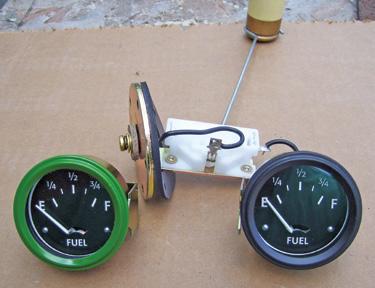
Fuel gauges for John Deere 2 cylinders with original face. Six or 12 volt positive and negative ground comes with new fuel tank sending unit. $135 for the set. See our ¼ page display ad for other gauges. EverGreen Restoration, 715-520-7876; www. evergreengauges.com WI G3X
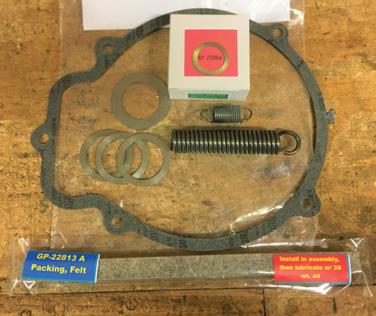
Enclosed Clutch Repair Kit for John Deere
Plows- fits 22 44 55 52 51 4B 4C 4D 15-subsoiler, 402 403 disk plows $80 inc. shipping in USA. Ph. 573-768-4092 H3X
Scott’s Tractor Restoration, 14025 Haumesser Road, Shabbona, IL 60550. We offer complete restoration and mechanical repair on all makes and models of tractors. Showroom quality. Ph. 815-762-0851, website: www.scottstractorrestoration.com or email: twocylindersh@aol.com. A12X
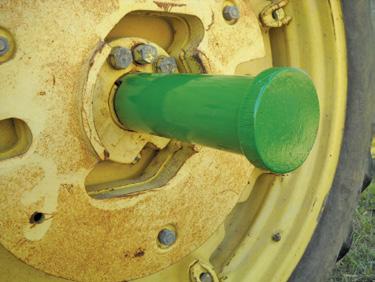
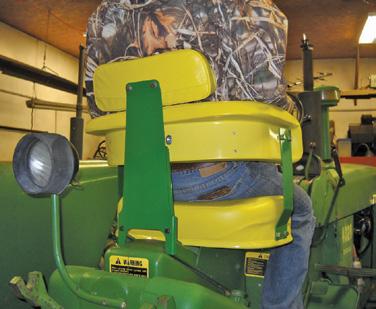
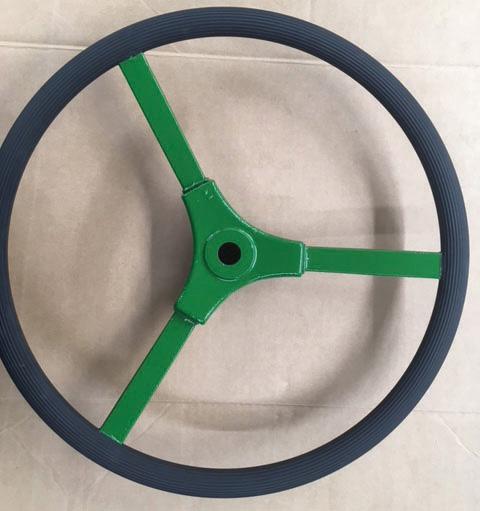
New Generation seat extended brackets, 4 inches longer than stock, not painted, 4 piece set, $148. ALSO: The original wedge removal tool since 2004, 530-4620, four sizes, $298 each. Free S&H in USA. Brett, call or text 402-429-5311. NE F3X
Recovering original tractor steering wheels for 14, 15 and 17” three spoke flat or round wheels, $95; 19” four spoke wheels, $110. Please send your core or call for information. EverGreen Restoration, W7619 Walnut Dr., Spooner, WI 54801. Ph. 715-520-7876. Made in USA. WI C3X
Currently parting out styled and unstyled A, AR, styled and unstyled B, styled and unstyled D, G,H, R, 40, 50, 60, 70 gas, 80, 420, 435, 620, 630, 720, 730, 820, 840, 1010, 2010, 3010, 4010, 3020, 4020 and 2030. Countryside Tractor, 618-731-6625. IL H3X
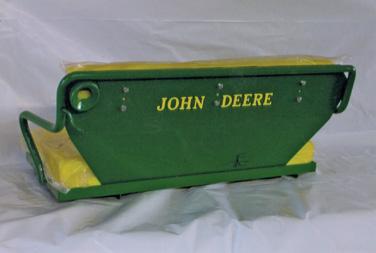
Buddy seat! For 20 and 30 series two cylinders. Will fit float ride seat or bat box. Looks like the original buddy seat! $525 plus S/H, includes cushions. Ph. 260-901-3076. Callaway Restorations, IN. E3X
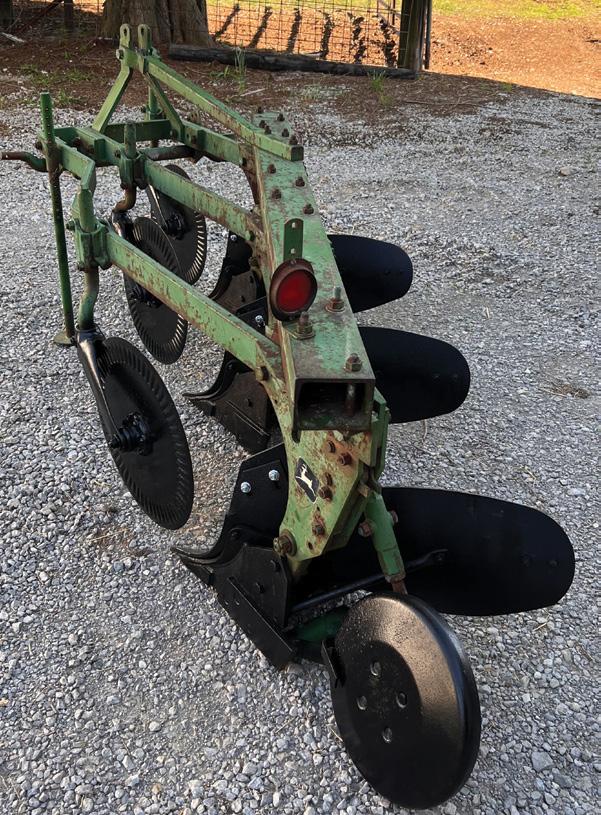
1250 3-16” Category 2, 3pt Moldboard Plow, excellent cond., field-ready; just used to plow 10 acres. $1,350. Ph. 573-768-4092. Missouri H3X
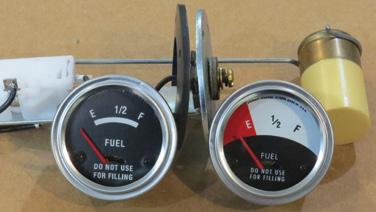
New Generation fuel gauges for 10 and early 20 series tractors, negative or positive ground, comes with new fuel tank sending unit, $160 for set. All our New Generation gauges fit in dash without modifications to the clamp bracket. Also have temperature and pressure gauges for same tractors. EverGreen Restoration, 715-520-7876; www.evergreengauges. com. WI C3X
Used John Deere two-cylinder tractor parts. Wide variety. Also, some New Generation parts. 30 years' experience. Call or text Darwin Gingerich, 620-386-0071. KS
WIRING HARNESSES, battery cables and spark plug wires made to order for restoration or repair. Covering models from the 1930s to the 1980s. Electrical parts including: switches, regulators, lights, relays, alternators. Wiring harness repair/ rebuild service. Worldwide shipping. See our display ad in this issue. Call or email for a free catalog. Agri-Services, 13899 North Road, Alden, NY 14004. Ph. Website: www.wiringharnesses.com. Email: jim@ wiringharnesses.com. H1X
We have clutch covers, grill screens, manifolds, battery boxes, water pumps, steering wheels and more, plus a yard full of used 2 cylinder parts tractors. Over 25 years of experience. We also have battery boxes, grills, steering wheels and other parts for New Generation tractors. Call Shepard's Tractor Parts, 715-928-1039 (cell) or 715265-4988. WI
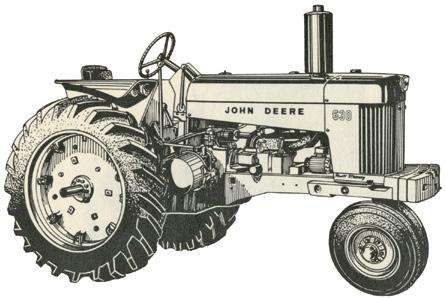
New and used JD two cylinder parts. Specializing in H, M, MT, 40, 420, 430, GP, 800 and 801 3-points and parts. Also: See my eBay store for specials and NOS parts. Some NOS parts, many reproduction parts. Dave Cook Tractor Parts, 715-373-2092. Morning calls are BEST. WI H6X A&L Parts
Hundreds of tractors parted: Wide fronts, 3-point, carbs, starters, etc. • NOS parts MODELS A THROUGH 730
• We ship DAILY
• Major credit cards accepted
432 N. Flat Street • Penn Yan, NY 14527 Phone 315-536-0543 NEW
TRACTOR MANUALS AND LITERATURE, large selection, ag, industrial, L&G. Jim Robinett, 5141 Kimball Road, Ontario, OR 97914. Ph. 206-713-3441, email: tractrmnul@aol.com. OR C12X

$500 reward for info on (64) JD 4020 PS, D, SN#87008. Ph. 815-266-4630. H3X
WANTED: 1951 and 1952 D. Ph. 780-9145246. AB G2X
Wanted: John Deere 150th anniversary 3 pc brass/wood walking cane. Ph. 260-5731512. IN F3X
Wanted: Small and large tractor collections. John Deere tractor parts. Vintage farm primitives. Guaranteed funds. No hassle. We do all the work from start to finish. Ph. 605-464-4683. F3X
Wanted: 1969 to 1972 4020, propane or diesel, Power Shift. Ph. 620-923-3364. KS D6X
Wanted: JD 24T or JD 224T square baler. Must be in nice working condition. Ph. 701-437-3176. ND G3X
Wanted: John Deere 300 corn picker. Corn head size not important. New Idea three row narrow corn picker. Must be good. Ph. 605-352-9788. SD D4X (A,M,A,S)
Wanted: Masthead for JD pallet mover to be used with 800 series hitch part ADS8FC. Ph. 816-262-8929.

We build restoration quality wiring harnesses to fit these John Deere models and their variations:
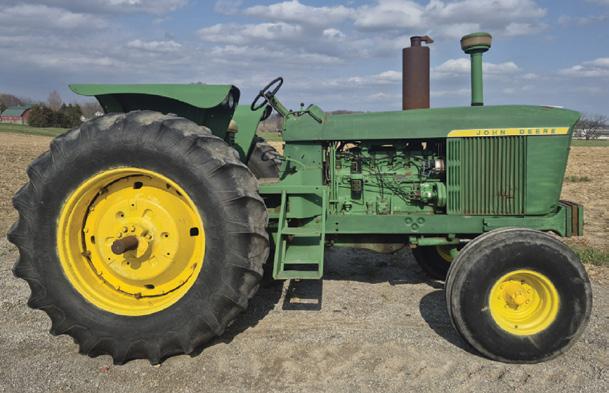
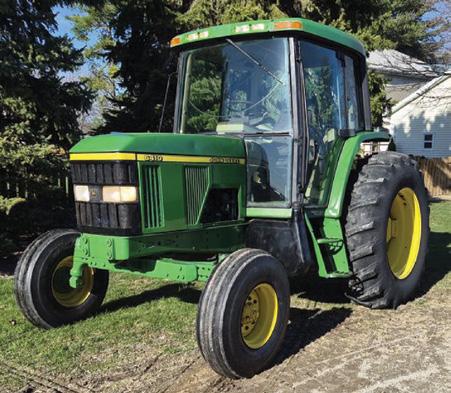
AG Models: A, B, D, G, GM, L, LA, M, R, 40, 50, 60, 70,80, 320, 420, 430, 435, 440, 520, 530, 620, 630, 720, 730, 820 2 cyl, 820 3 cyl, 830 2 cyl, 830 3 cyl, 920, 1010, 1020, 1520, 1830, 2010, 2020, 2030, 2040, 2040, 2130, 2240, 2350, 2355, 2440, 2520, 2550, 2555, 2630, 2640, 2840, 2855, 2950, 2955, 3010, 3020, 3150, 3255, 4000, 4010, 4020, 4030, 4040, 4050, 4250, 4230, 4240, 4430, 4440, 4455 Mexico, 4630, 4640, 4840, 5010, 5020, 6030, 7020, 7520, 8010, 8020, 8430, 8630, 8440, 8640, 8560, 8760, 8960, 8770
Harnesses available for other models & brands
See website for complete listing Due to numerous variations, call to order Shipping/handling not included Visa, MC & Discover accepted Prices subject to change without notice Circuit protection kits for Diesel tractors From $35 (2 cylinder) From $60 (New Gen)
Industrial Models: Al, Bl, DI, 300, 301, 302, 302A, 310A, 350, 350B, 350C, 380, 400, 400 Scraper, 400B, 400C, 401, 410, 410C, 410D, 440I, 450, 4508, 450C, 450E, 455E, 480B, 500, 500A, 500C, 510D, 540E, 544A, 548E, 600, 7E Scraper, 700, 700A, 710D, 750, 755, 840, 1010C, 1010W, 2010C, 2010W, 3010I, 4010I AG Machinery: 45, 55, 4710, 5730, 5830 Lawn and Garden: Commercial mowers: 38”, 48”, 54”, GX1320, 727
Z-Trak, 60, 70, 110, 112, 120, 140, 200, 208, 210, 212, 216, 245, 300, 312, 314, 316, 318, 285, 320, 322, 330, 332, 420
Compact Tractor: 790, 850 Snowmobiles: 340 Cyclone We also carry: Starters, Regulators, Generators, Alternators, Relays, Coils,
Alternator Brackets, Pulleys


Scott Grove cleaned up leaky hydraulic valves on his older Deere tractors with a simple insert. The long-standing problem is one the company has yet to fix. Grove says it forces him and other owners of Deere tractors to replace Orings on a regular basis, only to have the mess return. Grove’s fix eliminated the mess and the need to replace parts. With the Grove Conversion kit:
• Convert to ISO with easy push-pull connection
• Couplers connect under residual pressure with breakaway feature
• Kits available for 10 through 70 series JD tractors manufactured from 1961 through 1996
Wapsi Innovations
• Inserts are made in the USA. This product is protected under US Patent 10,760,725 B2 and other patents pending.
Installation consists of stripping the OEM outlets down to the block, removing the barrels and O-rings, and replacing them with the inserts. Grove then adds the aftermarket ISO coupler that threads into the insert. Installation instructions can be found on the Wapsi website.
Kits for 10 series are priced at $315, kits for 20-40 series are priced at $329, and kits for 50-70 series are priced at $355. Also watch the website for more additions coming soon. Grove suggests checking with local Deere dealers & local repair shops or Wapsi Innovations directly. DON’T
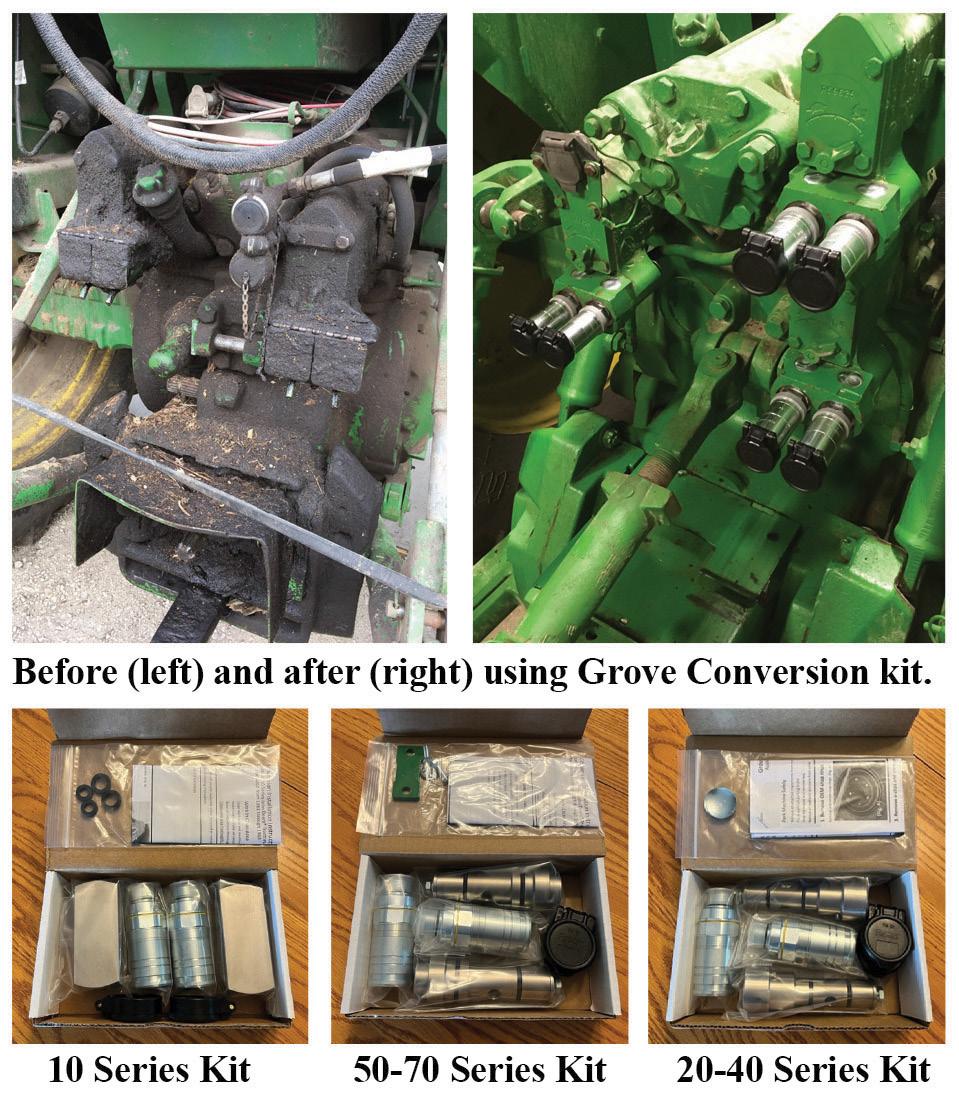


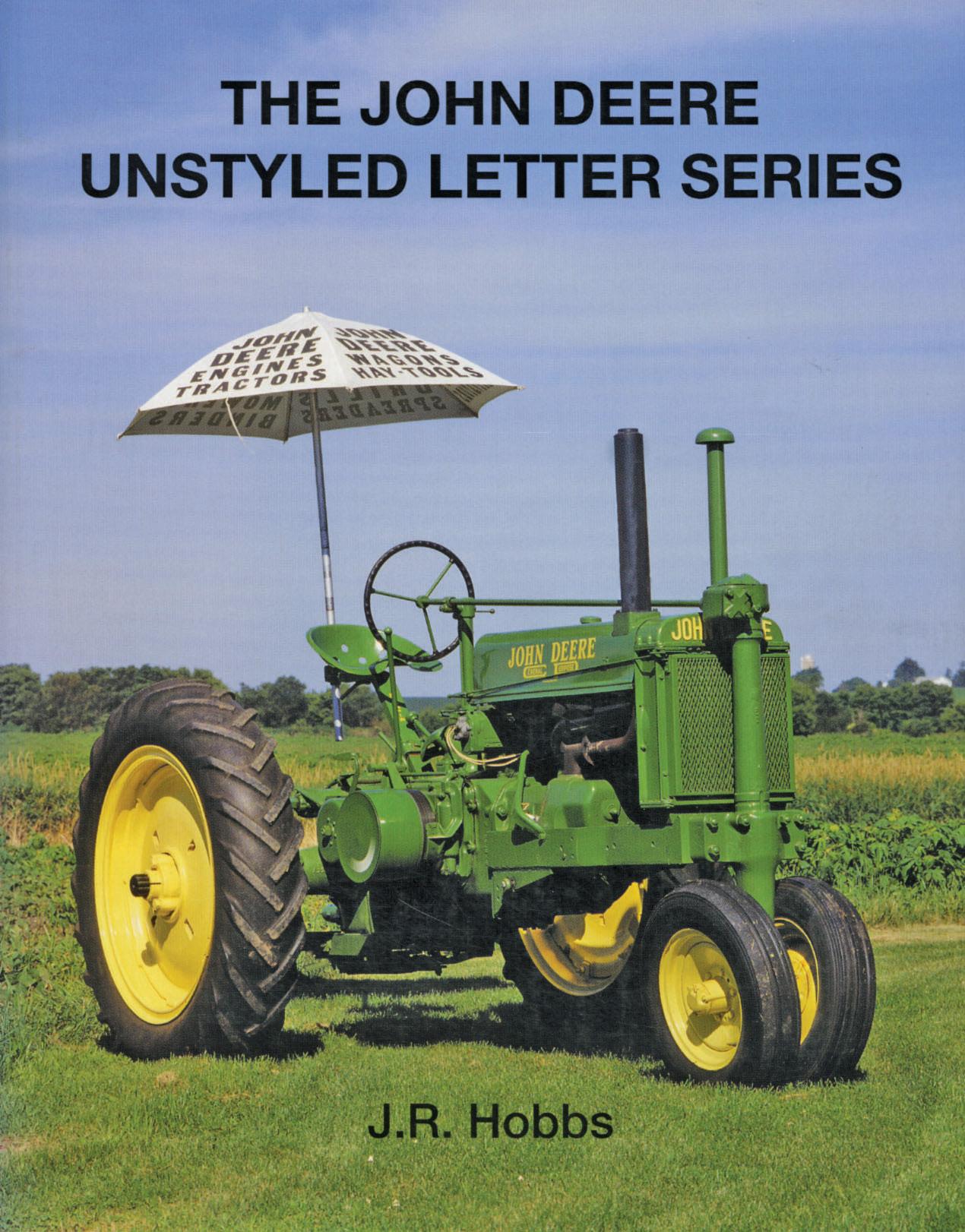


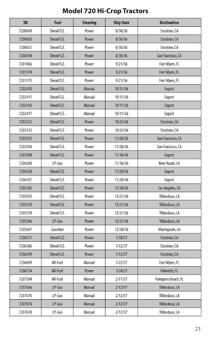
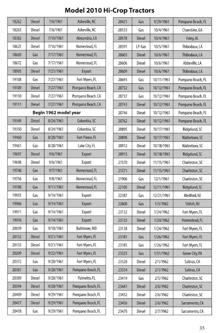
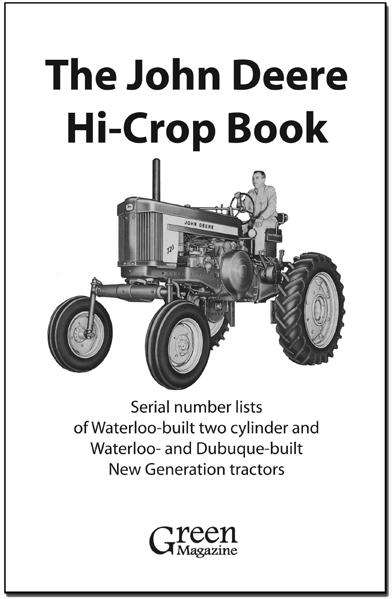



2-Cylinder Plus Tractor Salvage, 14
Agri-Services , 65
A&L Parts, 64
Auction: 43rd Annual Labor Day Polk Tractor Auction, 9
Auction: Dave Goosen, 10
Auction: Kraft Labor Day Consignment, 11
Auction: Slaughbaugh Tractor Collection, 14
Auction: The Filsinger Family, 19
Auction: The Frank Rochowiak Estate Collection, 3
Auction: The Harold Scherer JD Collection, 26
Auction: Willis and Violet Vander Linden Estates, 10
Book: A Specialized Look Into The Unstyled Model A, 74
Book: A Specialized Look Into The Unstyled Model B, 74
Book bundle: Green Magazine, 2
Book: The Green Experience, 68
Book: The John Deere Hi-Crop Book, 68
Book: The John Deere Unstyled Letter Series, 67
Brillman Company, 69
Central Fuel Injection Service, 30
Classic Iron Head - customized cap, 36
Countryside Tractor, 36
Decals: QuipCal.com,62
Dennis Polk, 37
Detwiler Tractor Parts, 30
Dillner Tractors, 61
EverGreen Restoration, 30
Fisk Carburetor and Ignition, 34
Garry Power, 63
GreenLight Products, 36
Green Magazine back issues, 71
Green Magazine Bookstore, 70
Iron Bull Mfg., 66
John Reed Antique Tractor Parts, 63
Jorde’s Decals, 64
K&K Antique Tractors, 35
L and LA parts - Ron Brungart, 63
Lind Bros Tractors and Parts, 14
Martin Parts & Repair, 27
Martin Repair, 65
M&D Reproduction Parts, 63
Miller Tire, 37
Obsolete parts - The Old Tractor Company, 65
Paul's Rod & Bearing, 61
Renaissance Tractor, 60
Robert’s Carburetor, 62
Scenic View Engine, 30
Show:Albany Pioneer Days, 34
Show: Badger Steam & Gas Engine 63rd annual show, 36
Show: Classic Green Reunion 2027, 37
Steiner Tractor Parts, 75
TP Tools & Equipment, 15
Tractor ride: Preston Historical Society, 14
Voltage regulators, 61
Wapsi Innovations, 66


A Specialized Look Into The Unstyled Model B: The Handbook of the John Deere Model B 1934-1938 This book should be on the “must read” list of any unstyled “B” owner. Offers the same type of info as the unstyled “A” book (at right). Written by experts who have collected and restored the unstyled version of Deere’s most popular tractor, 84 pages, 11x8-1/2,” soft cover. GM8B - $39.95 US, $47.95 C, $52.95 F
The John Deere Unstyled Letter Series Covers the JD unstyled GP, D, B, A, L, G, AR, AO, AI, BO, BR, BI, BO Lindeman, DI, 62, Y, W, AOS, Waterloo Boys and predecessors. Production numbers, year/SN breaks, original prices, matched working equipment, magnetos, carbs, wheels, history. 8-1/2 x 11,” soft cover, 160 pages. GM10: $24.00 US/C, $31.00 F NOW ON SALE! $18.00 US, $30.00 C/F
The place to go for accurate and informative books
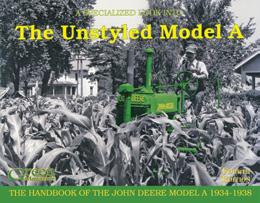
A Specialized Look Into The Unstyled Model A: The Handbook of the John Deere A 1934-1938 Now in its fourth printing, no other book goes into so much detail on a single model of tractor. Shows illustrations of nearly every change made in the parts that make up the unstyled “A.” Written by Wes Malcolm, 95 pages, 11x81/2,” soft cover. GM7A - $39.95 US, $47.95 C, $52.95 F
THE GREEN EXPERIENCE
Articles first seen in Green Magazine 1984-2000

Mr. Thinker’s John Deere Almanac, Fourth Edition All the same info found in earlier editions plus now Dan Brotzman’s New Gen and Gen II SN guide. For all models built from 1918 to 1972: history, SN/year breaks, accurate production numbers (no 820 three cylinder, 1020, 1520, 2020), notes on some significant changes, charts on tractor fluid capacities, cubic inches, compression ratios, torque specs, list of plow beam numbers. Info on proper colors of mufflers, axles, horse drawn equipment, fuels/lubricants, E/W stationary engines, L&G tractors. Chart on heights, weights and top speeds; SN/year charts for models 45 through 105 combines; tractor/loader application chart; SN/year charts for all tractors built from 1973 to 1990; and production numbers for models 4030 and 4230. 8-1/2”x5-1/2,” soft cover, black/white. MRT4 - $19.95 US, $28.00 C, $36.00 F
Approximately 96 pages of the best articles taken from Green Magazine’s first 15 years. Every member of the family will enjoy this book of restorations gone awry, trips that didn’t go as planned, cherished memories and sometimes profound situations. Not a technical or historical book, but a book about the lives and experiences of those who enjoy John Deere tractors. 11”x8-1/2,” about 96 pages, soft cover. GREX - $20.00 US, $30.00 Canada, $40.00 Foreign



The John Deere Hi-Crop Book This book provides serial number lists for JD models A, G, 60, 70, 620, 720, 430, 630, 730, 2010, 2510, 4010, 2520, 3020 and 4020. Verify Hi-Crop serial numbers, build dates and shipping locations in a pocket-sized book that’s easy to carry anywhere. Production summaries of two cylinder Hi-Crop tractors provided, as well as Hi-Crop totals by state and more. 72 pages, 5.5 x 8.5,” paperback, limited quantity. Order GMHC - $19.95 US, $26.95 C/F
A Tractor Goes Farming Author Roy Harrington (co-author of John Deere Tractors & Equipment, Vol. 2) has put together a book that places the child in the driver's seat of a variety of tractor makes and models. Short sentences that kids will be able to read alone or with help and full color photos to please everyone. 32 pages, 7 x 8-1/2, hardbound. AS6T - $10.95 US, $16.95 C/F
Grandpa’s John Deere Tractors This book for kids tells the history of Deere and Company starting with John Deere and his steel plow. Then in 48 pages with 50 color photos, it talks about how farming and JD tractors have changed. Best for kids 5 to 10 years. 7 x 8-1/2, hardbound, written by Roy Harrington. AS8K - $13.95 US, $19.95 C/F
How John Deere Tractors and Implements
Work Kids are always asking questions, especially about big machines. This book will give kids the answers they crave as they step into the field with impressive John Deere tractors and implements. Ages 8 to adult. 8-1/2 x 11, hardbound, 48 pages.
AS9H - $14.95 US, $21.95 C/F


Mr. T., How many unstyled model AO tractors were built?
J.B. WI
Way to throw Mr. Thinker a big ole’ slow pitch softball of a question. It would depend on whether you want to include the “AOS” in the basket of unstyled “AO” models. There were approximately 2885 unstyled “AO” and 820 “AOS” tractors built. You can do your own arithmetic for the grand total. Next time, aim higher and ask me something that requires more than 13 brain cells and, for crying out loud, get yourself a copy of Mr. Thinker’s Almanac! MT
Mr. Thinker,
I’m looking for the instructions to time a 1937 B. D.S. MI

Timing instructions are something that would be regularly found in the operator manual for an unstyled “B” operator manual. To time the magneto on an unstyled John Deere (B), first remove the spark plugs and rotate the flywheel in its normal direction until the L.H. IMPULSE mark aligns with the timing mark on the transmission case. Be sure the left-hand
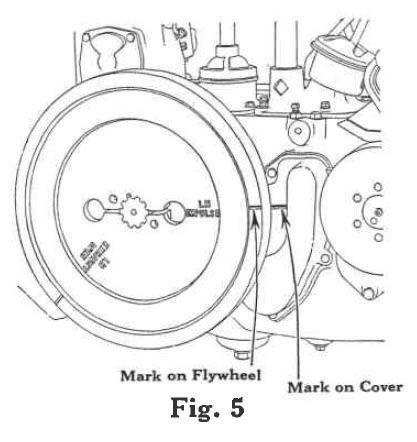
(flywheel-side) cylinder is on the compression stroke. Also, check that the drive coupling slot at the right end of the governor shaft is horizontal. If the slot is not horizontal, the governor shaft is out of time and requires removal and re-timing. Bend a short piece of wire and insert in the top or front terminal of the magneto so that the end of the wire is within 1/8" of some metal part on the magneto frame. Hold the magneto solidly in the same position as when mounted on the tractor. Grip the driving lugs on the impulse coupling firmly with pliers. Turn the impulse slowly in a left-hand direction. When the spark occurs between the end of the wire and the magneto frame, hold the impulse coupling in that position. With the flywheel still on the L.H. IMPULSE mark, rotate the magneto body opposite its direction of rotation and then slowly back until the impulse snaps. The snap should occur exactly as the L.H. IMPULSE mark aligns with the timing mark. Tighten the mounting bolts and recheck the timing. Install plugs and wires, and test the start engine. A common mistake is timing the magneto to the left-hand piston on the exhaust stroke rather than the compression stroke. Verifying compression at the left spark plug hole by holding your thumb over the plug hole as you approach the L.H. IMPULSE mark will prevent this error. MT
Mr.Thinker,
Can you tell me what this hole is for that's on the shield between the right fender and pulley on a 1930s "D"? I cannot imagine what its purpose might be.
P.C. ON
As far as Mr. Thinker knows, this hole was put there explicitly for those operators without X-Ray Vision to be able to see if the clutch pulley was spinning, so as to avoid grinding the sliding gears when shifting. For the guy who is a “speed shifter”, it will also help to synchronize the pulley and the ground speed who wants to move from 2nd into 3rd without stopping the tractor. MT
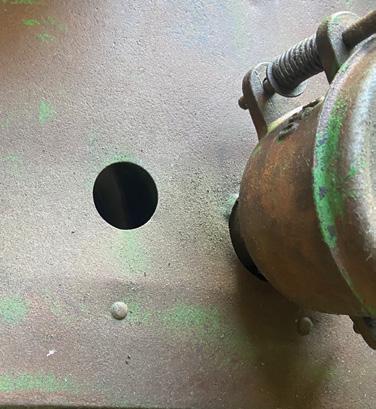
Dear Mr. Thinker,
I have never restored a tractor before, but it is my hope that the Lord will will it so to restore the John Deeres and "off-brand" tractors my family has owned for several years. My question is this: based on your experience, would it be wiser financially to start working on an older, non-running, smaller tractor, or a bigger, running tractor? I have a 1946 B (serial 181698) that has not run in several years and needs a good amount of work, and also a 1959 730D (serial 7305803) that runs but also needs work. The size of the tractors does not bother me. I am not worried about a mechanical project, but worried about cost. The tractors have value to me so I want to restore them, but I do not know what would be cheaper: an older, simpler, yet non-running machine, or a newer, more complex tractor. The availability of parts and size of parts is another factor of this I was thinking would be an influence. Thank you for any help you can provide. I sent this because I do not think I am the only one who has asked this.
N.S. AR
Your question is one that many in the hobby have wrestled with. A styled “B” is always going to be less expensive to work on than a diesel, especially if the diesel has a cranking engine rather than an electric starter. Parts for the styled “B” will be less expensive than the 730 diesel, and it is also worth considering that the 730 has many more expensive systems, such as power steering, live PTO, water pump, float-ride seat, and so on. Add up all of those complexities, and the “B” starts to look much better on the checkbook. MT
Dear Mr. Thinker,
Hello, I have a four-bottom John Deere moldboard plow and am trying to figure out what model it is. A neighbor told me it was a 55ABH, but I am not so sure. Also, I see the trip mechanism at the roller doesn't have a grease zerk. I tried a push-in zerk from John Deere, and it pushed right back out. I do not see any threads on any of the 4 bottoms trip rollers. What am I missing about the grease fittings?
R.S. MI
The plow is a 555H, so your neighbor was in the ballpark on the model number, but not exactly correct. It
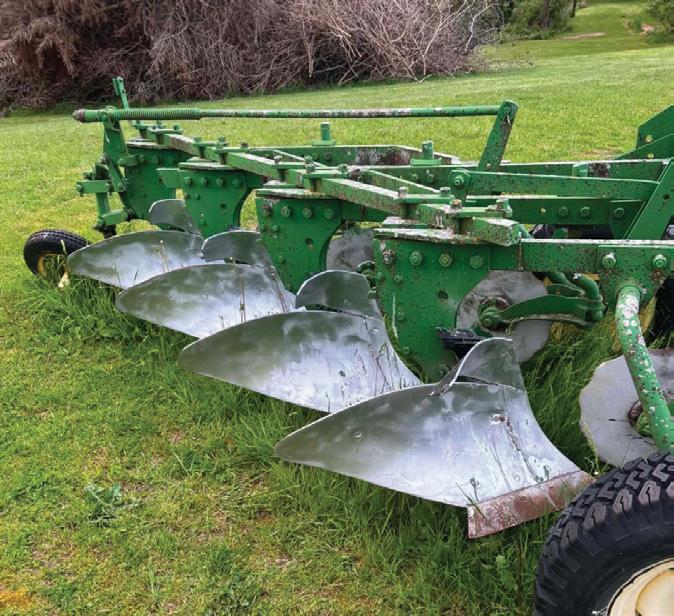
was built from 1955 to 1960. The safetytrip standards have baffled barnyard jockeys for over half a century about how to test and lubricate. Lubrication was a bit scant in the first iteration of the infamous SafetyTrip Standards, as the operator manual suggested lightly lubricating all moving parts with oil twice daily. As one can imagine, this suggestion was virtually never implemented, and they seized with rust within a few years; this is why many plows today feature bent frames from when the trip did not do the job as advertised. Later on, the rollers were at least made accessible through small holes on the side plates.
The operator manual suggested greasing them every eight hours with a special lubrication fitting. This suggestion was also usually disregarded over the years, leading to the same. Eventually, Plow Works Engineers took note and designed the roller to feature grease fittings, as they had learned that with permanent fittings, there was at least a chance that Mr. Farmer would use his grease gun. The trick for this was to make them visible without having to stand upside down. Mr. Thinker would suggest taking the time to work through the trip standards to make sure they operate per your operator manual (which you need to purchase). MT
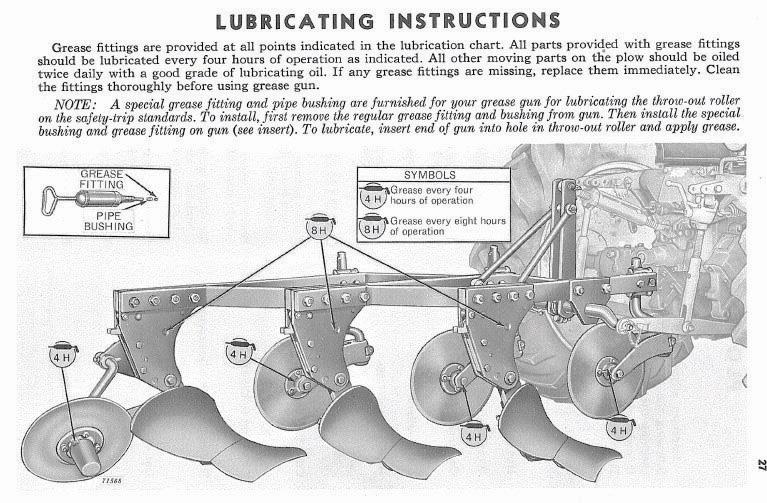

The Handbook of the John Deere Model A 1934-1938
Fourth Edition • By Wes Malcolm
Published by Green Magazine® • Printed in the USA
Now in its fourth printing with 15 more pages, this is the handbook of the John Deere model “A,” 1934-1938. A book that should be on the “must read” list of any unstyled “A” owner. There is probably no other book on the market that goes into so much detail on a single model of tractor. Shows illustrations of nearly every change made in the parts that make up the unstyled “A.” 95 pages, 11x8-1/2 inches, soft cover. Order GM7A: $39.95 US • $47.95 Canada (US funds) • $52.95 All others (US funds)


The Handbook of the John Deere Model B 1934-1938 For years now, thousands of you have relied on the Specialized Look into the Model A book written by Wes Malcolm and published by Green Magazine. Now we offer the same types of information, except about the model “B,” written and compiled by a panel of experts who have spent decades collecting and restoring the unstyled version of Deere’s most popular tractor. This book shows nearly every change made in the parts that make up the unstyled “B.” It also has history, specifications, serial numbers, original prices and much, much more.