
I still remember loading my pregnant belly, my two kids, and my grandmother into a minivan and driving to the courthouse in Flint, Michigan to register MamaSuds. No grand plan. No investors. Just a very real need and a stubborn refusal to settle.
Since then, a lot has changed. Our product line has grown.
Our branding has evolved.
We moved from my kitchen… to the garage… to a real Soap Shop that now employs ten amazing people.
What hasn’t changed is why MamaSuds exists.
I started this company because I couldn’t find a laundry soap that could do all three things at once:
• Clean cloth diapers properly
• Be gentle enough for a baby’s skin
• Contain zero harmful or hidden ingredients
So I made it myself. From scratch. Real soap. No shortcuts. And then something incredible happened…
You told your friends.
You told your family.
You trusted us with your homes, your laundry, and your kids.
That trust is the reason MamaSuds is here today.
And I don’t take that lightly.














Our Ultrafine Bubble (UFB) nozzle integrates seamlessly with standard shower heads, producing millions of nanoscopic bubbles that penetrate the water stream. These bubbles improve hydration efficiency and enhance cleaning performance at the microscopic level- with just a slight change in water pressure or flow.
By simply adding Mizue to your shower, you’ll awaken your skin’s natural vitality and radiance. Feel the gentle, silky touch of water transformed — delivering deep, lasting hydration while infusing every drop with softness and life-giving energy that refreshes the body, mind and spirit.


Corrections:
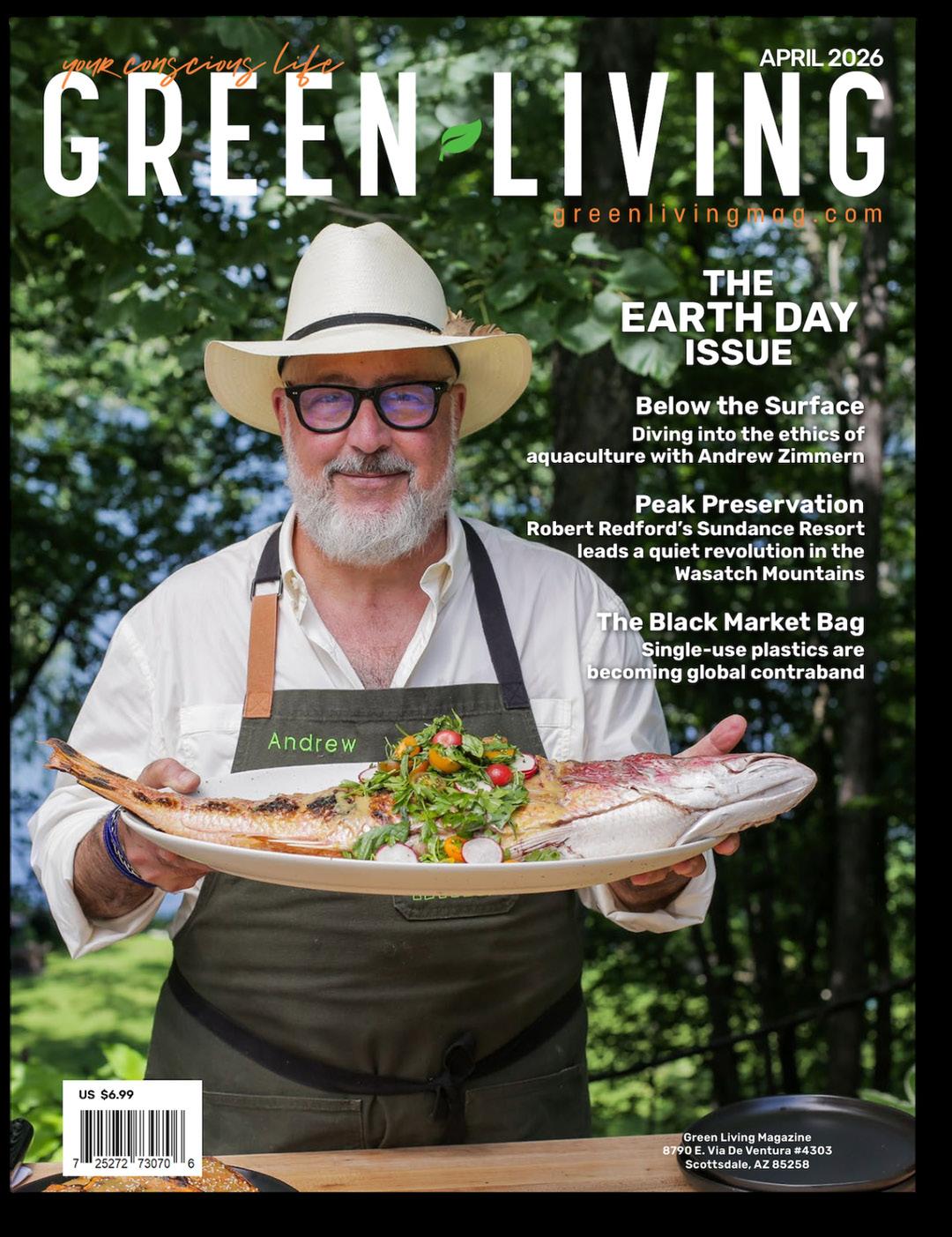
In the Vietnamese-Style Caramelized Shrimp (Tom Rim) recipe (April 2026), we misspelled Andrew Zimmern’s last name. It should read Zimmern, not “Ziimmern.”
In the Contributors section of the April 2026 issue, we misspelled Seth Leitman’s first name. It should read Seth, not “Seith.”
We regret the errors.



Arizona Center for Cancer Care is a cancer center without walls, bringing together the best doctors, treatments, technologies, and research to deliver the highest level of care for patients. With more than 55 locations and 135 multi-specialty physicians serving communities across Maricopa County, AZCCC is an award-winning, physician-owned practice dedicated to providing exceptional, patient-centered care.


Radiation Oncology
Medical Oncology - Hematology
Gynecologic Oncology
Breast Surgery
Surgical Oncology Urology
Dermatology PET/CT
learn more, visit www.arizonaccc.com
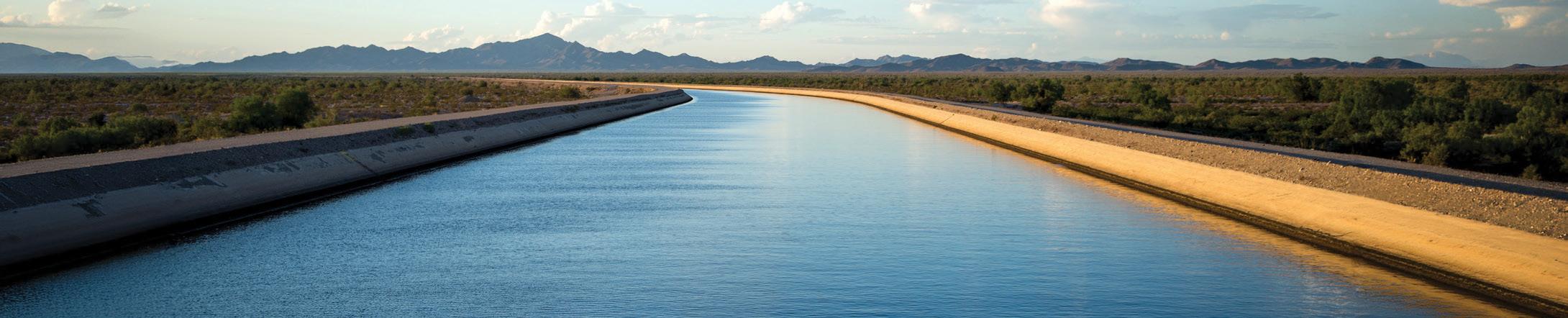
depend on the Colorado River, which is threatened due to drought and a desire by Upper Basin states to use more water from a shrinking river. Join mayors, along with business and tribal leaders, to protect and defend Arizona’s lifeline.

of Casa Grande – Mayor Lisa Navarro Fitzgibbons | Town of Cave Creek – Mayor Robert Morris | City of Chandler – Mayor Kevin Hartke City of Coolidge – Mayor Jon Thompson | East Valley Partnership | City of El Mirage – Mayor Alexis Hermosillo | City of Eloy – Mayor Andrew Sutton EPCOR Town of Florence – Mayor Keith Eaton | Town of Fountain Hills - Mayor Gerry Friedel | Town of Gilbert – Mayor Scott Anderson City of Glendale – Mayor Jerry Weiers | City of Goodyear – Mayor Joe Pizzillo | Greater Phoenix Leadership | City of Peoria – Mayor Jason Beck | Greater Phoenix Chamber of Commerce | Town of Litchfield Park - Mayor Thomas Schoaf | Town of Marana – Mayor Jon Post | City of Mesa – Mayor Mark Freeman Town of Oro Valley – Mayor Joe Winfield | Pascua Yaqui Tribe – Chairman Julian Hernandez | City of Phoenix – Mayor Kate Gallego | Pinal Partnership Town of Queen Creek – Mayor Julia Wheatley | Town of Sahuarita – Mayor Tom Murphy | Salt River Pima-Maricopa Indian Community – President Martin Harvier City of Scottsdale – Mayor Lisa Borowsky | Southern Arizona Chamber of Commerce Southern Arizona Leadership Council | City of Surprise – Mayor Kevin Sartor | City of Tempe – Mayor Corey Woods | Tohono O’odham Nation – Chairman Verlon M. Jose City of Tucson – Mayor Regina Romero Valley Partnership | Town of Youngtown – Mayor Michael LeVault | West Valley Regional Chamber | WESTMARC COALITION MEMBERS
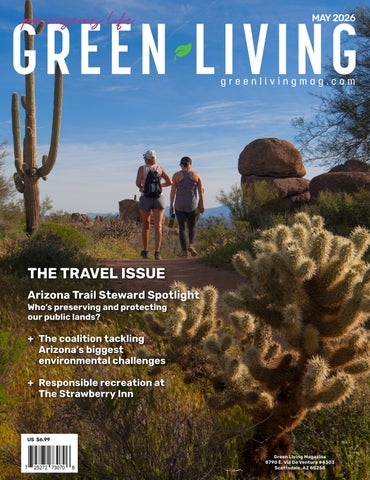
Travel often evokes forward motion – a plane lifting off, a train leaving the station, a car tracing a winding road. But travel isn’t always about movement. Often, it’s an opportunity to slow down and examine a place up close – or from a different angle.
Arizona’s natural landscapes ask for patience and attention – from the dense ponderosa stands of the Apache-Sitgreaves National Forest to the vast gradients of the Sonoran Desert. Responsibly traveling around the state requires accepting that scale matters – both the ground covered and the depth of our engagement with it.
Our annual travel issue looks at tourism through a sustainability lens: How can we move through the world in ways that are reciprocal rather than extractive? What would it mean to arrive somewhere and leave it intact – or even better than we found it? In these pages, you’ll find stories that reframe travel as less of an escape and more as a connection – to ourselves, to the land, and to each other.
In this month’s issue, publisher Dorie Morales spotlights how Pine-Strawberry is reshaping hospitality around water conservation and forest health. Writer Misty Milioto examines how leaders across the state are addressing extreme heat and environmental resilience for a better tomorrow. And in the cover story, you’ll meet the guides and caretakers working behind the scenes to maintain Arizona’s parks, forests, and hiking trails, shedding light on how we can all become responsible stewards of our natural world.
After all, travel isn’t all outward-bound. If we’re doing it right, it also invites us to look inward – at our memories, identities, and experiences, and how they shape the world and our place within it. In Arizona, where growth, fragility, and resiliency coexist, that reflection feels especially urgent, calling for action over observation: refilling a water bottle instead of buying a new one on the road, learning about a place instead of simply photographing it, and engaging with a destination instead of quickly consuming and discarding it.
I hope this issue points you toward places to go and how to treat them a little better once you get there, how to recreate responsibly so that our future generations can continue to “touch grass.”
Wherever you find yourself next, may you go lightly, look closely, and remember that some of the most meaningful journeys often give us permission to slow down rather than speed forward.
Happy trails,
Madison Rutherford Managing Editor
Got a burning question or comment? Reach out at editor@greenlivingmag.com.

With more than two decades of experience in the luxury travel and lifestyle space, Beth Weitzman also embraces clean, organic living. She oversaw more than 60 publications nationwide as the former National Travel Editor and Vice President of Editorial at Modern Luxury Media. Now running her own consultancy, she offers expertise in communications, storytelling, creative ideation, and marketing.

Misty Milioto is a lifestyle writer and editor with more than 25 years in national and regional publishing. Her bylines have appeared in Newsweek, The Hollywood Reporter, U.S. News & World Report, Sunset Magazine, Interior Design and many more. Based in Portland, Oregon, she’s immersing herself in the city’s neighborhoods, food cart pods, farmers markets and kitchens, capturing stories that inspire positive environmental choices and healthier, more connected ways of living.
PUBLISHER
MANAGING
ONLINE
ART
GRAPHIC DESIGNER
COPY EDITOR
STAFF PHOTOGRAPHER
Dorie Morales
Madison Rutherford
Alice Hafer
Sly Panda Design
Melat Alebachew
Erin Wilson
Brett Prince
CONTRIBUTORS
Jennifer Burkhart
John Burkhart
Pam Delany
Anna Dorl
Misty Milioto
Michelle Talsma Everson
Beth Weitzman
BUSINESS DEVELOPMENT & PARTNERSHIPS
Don Fergus - don.f@greenlivingmag.com
George Heussner - george.h@greenlivingmag.com sales@greenlivingmag.com
Subscriptions: hello@greenlivingmag.com
Advertising: sales@greenlivingmag.com
Editorial: editor@greenlivingmag.com
480.840.1589 • www.greenlivingmag.com 13845 N Scottsdale Rd, Ste. 201, Scottsdale, AZ 85254




Dr. Lois Frankel’s self-help career guide reveals ingrained habits that often hold women back. She highlights internal patterns through which women sabotage themselves and offers strategies to navigate workplace dynamics. By addressing both internal barriers and systemic challenges, Frankel reframes career growth as a skill that can be learned.
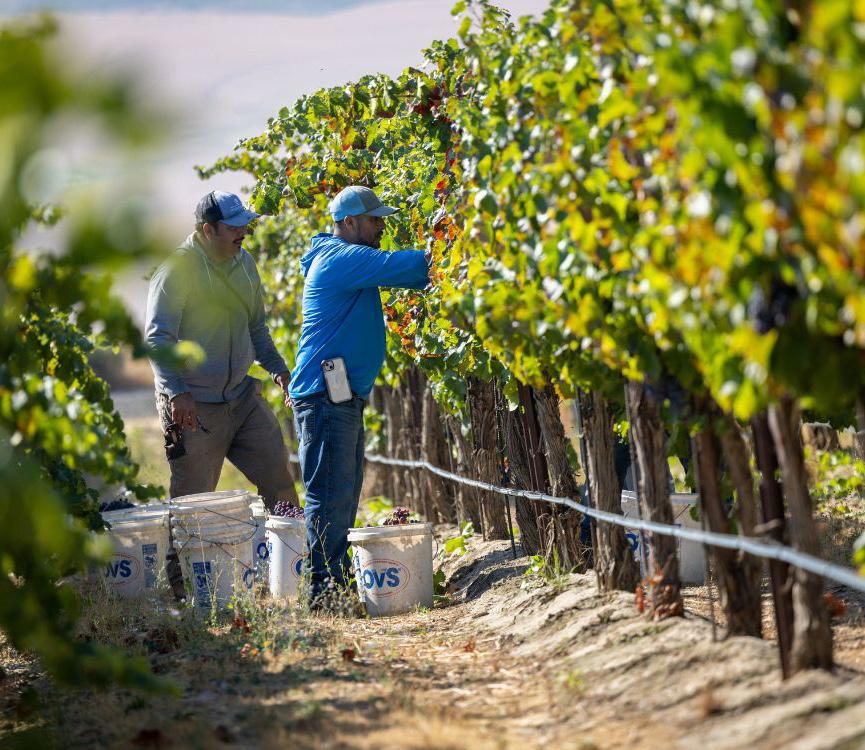
Washington’s wine industry is entering a new era, led by Sustainable WA, which established the state’s first third-partyaudited sustainability certification. Backed by the Washington State Wine Commission, vintners are adopting practices like regenerative farming, water conservation, and renewable energy as an emerging model for thoughtful, future-focused drinking.
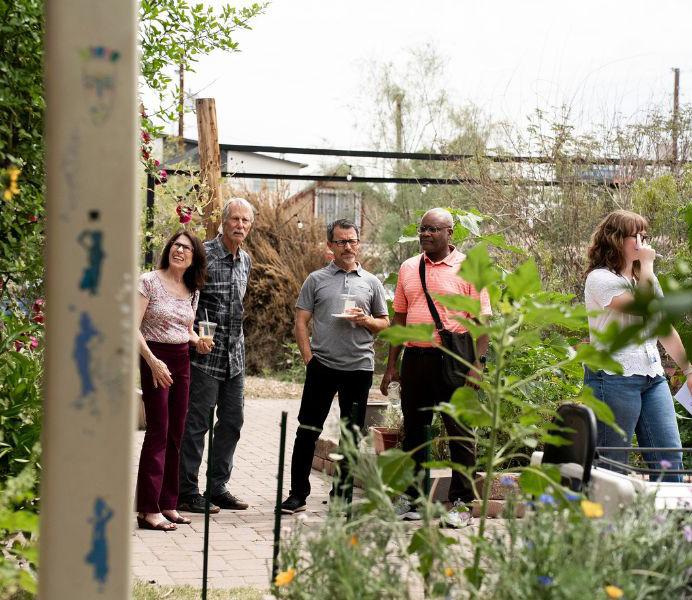
In March, Local First Arizona welcomed community members to Heart & Soil People’s Garden in South Phoenix to celebrate the opening of the Garden Education Center. The space transforms a once-vacant lot into a hub for agricultural education and community empowerment, with a focus on groups who are historically underserved.




The Netherlands-based nonprofit The Ocean Cleanup has declared a 100,000-square-kilometer section of the Great Pacific Garbage Patch plastic-free after deploying its System 004 fleet of floating barriers. The system uses ocean currents to concentrate and remove marine debris while allowing wildlife to pass safely underneath. Scientists report early ecosystem recovery, including stabilized plankton levels and reduced microplastics in marine animals.

Scientists at Cornell University have created a more accurate system to track how coral reefs are affected by ocean warming. The new model combines satellite readings with underwater measurements to estimate temperature changes throughout different reef depths. This data could improve how and when coral bleaching risks are predicted, helping conservation teams act earlier and protect vulnerable reef zones.

The United Kingdom reached a major sustainability milestone in 2025, with renewables generating nearly 53 percent of the country’s electricity. Wind power led the surge, supplying about 30 percent of the mix. While the shift away from fossil fuels is far from complete, it underscores both the progress and challenges that remain in decarbonizing the grid.

Canon Central and North Africa and the Oceans Alive Foundation have launched a major coral reef restoration initiative along Kenya’s northern coastline. The program will scale up coral nursery propagation and reef rehabilitation efforts. Underwater imaging systems will also be implemented to monitor coral growth, fish populations, and bleaching events over time.

University of Cambridge researchers developed a solarpowered reactor that converts hard-to-recycle plastics such as bottles, nylon textiles, and polyurethane foams into clean hydrogen fuel and useful industrial chemicals. The system uses acid recovered from old car batteries to break down plastics that are not usually recyclable into smaller compounds.





BY ANNA DORL
As summer rolls back around, so does the travel bug. If it’s biting you, why not scratch the itch and take a trip? Regardless of whether you decide on a local staycation or an epic exploit across the world, sustainability in travel is an important factor. With so many single-use products on the market intended for whirlwind journeys, it does everyone good to make more conscious choices. Treat yourself to our picks for intentional travel products that benefit the earth as you prepare to embark on your next adventure.
In a pinch, a sliver of soap can go a long way. If you’ve ever been stuck somewhere without any, you know how true that statement is. Luckily, Fomin has a sustainable solution: travel soap sheets. Nestled in tiny tin containers, each set comes with 100 biodegradable, zero-waste, vegan, and compostable sheets. Certified by Leaping Bunny, these cruelty-free, TSA-friendly, earth-loving helpers come in multiple scent variations, including a fragrance-free option. Just add water, and your soap sheet dissolves into a smooth lather to clean your hands. You’ll never be caught lacking again in a public bathroom, porta-potty, or even in the great outdoors. www.fominsoap.com
Aged & Ore’s glass flight bottles are wrapped in soft silicone, making them both protective and perfectly suited for travel. Available in 3- or 6-ounce sizes and a variety of bold colors, you can choose between a TSA-friendly carry-on companion or a larger option (or both). Subtle measurement markings are etched directly into the glass for easy portioning, while the dishwasher-safe surface can be labeled or personalized with glass markers. And with glass construction, you can skip the concern over microplastics making their way into your daily routine. www.agedandore.com





Solar energy is naturally renewable, harnessing the sun’s targeted UV rays and converting them into power for everyday life. For your next camping trip or festival weekend, consider a lowimpact upgrade that delivers more than just convenience. Enter Renogy E.Flex 100/200W N-Type Portable Solar Panel: a compact, purpose-built power source designed to travel light without compromising performance. Available in 100- or 200-watt options, this IP65-rated panel stands up to splashes and dust, while integrated kickstands and multiple output ports maximize usability wherever you set up. Foldable and less than 15 pounds, it’s a reliable solution that turns off-grid trips into fully powered experiences. www.renogy.com
Skip the cycle of repurchasing single-use plastic and give your snack stash a smarter sendoff. BioBag’s compostable, resealable snack bags are an earth-friendly alternative to their conventional counterparts. Made from Mater-Bi, a plant-based bioplastic derived from starches, vegetable oils, and compostable polymers, these BPA-free bags are crafted in the U.S. with non-GMO ingredients designed to break down, not stick around. They’re a small switch with a lighter footprint that keeps your food fresh and your conscience clear. www.earthhero.com
Catch some conscious Zs with Ettitude’s Organic Bamboo 3-Piece Sleep Travel Kit. Complete with an eye mask, eye pillow, and pillowcase, it delivers a polished, plastic-free approach to rest. Crafted from 100% organic bamboo lyocell, the brand’s signature fabric offers a silky-soft feel in understated white or grey. Thoughtful details like a gently cushioned eye mask, an eye pillow filled with a soothing blend of organic lavender and wheat (with a removable insert), and a breathable bamboo pillowcase encourage elevated, earth-minded sleep. www.sustainabletravelandliving.com
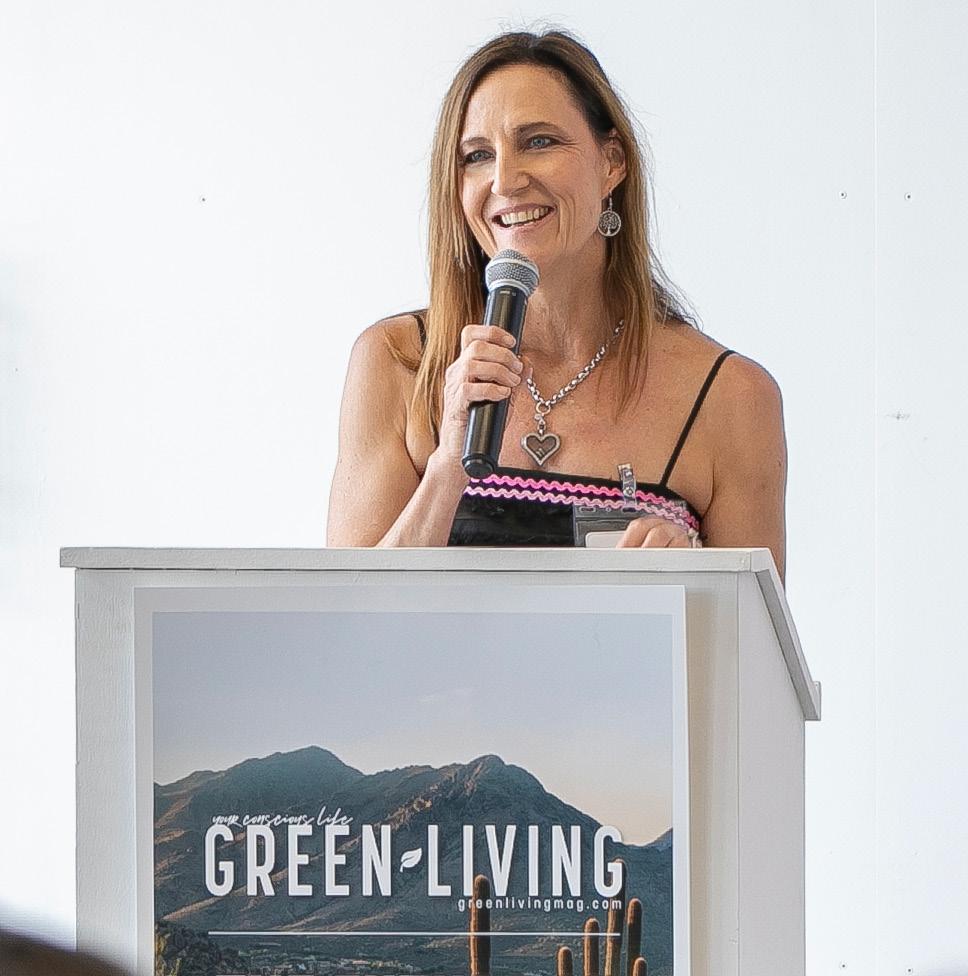
Sustainability leaders, innovators, business owners, and community members converged at the Nina Mason Pulliam Rio Salado Audubon Center on Thursday, April 23 for Green Living ’s fifth annual Future of Sustainability in Arizona conference. The event featured expert panels and presentations on climate resilience, clean energy, water security, and advancing healthy communities statewide.

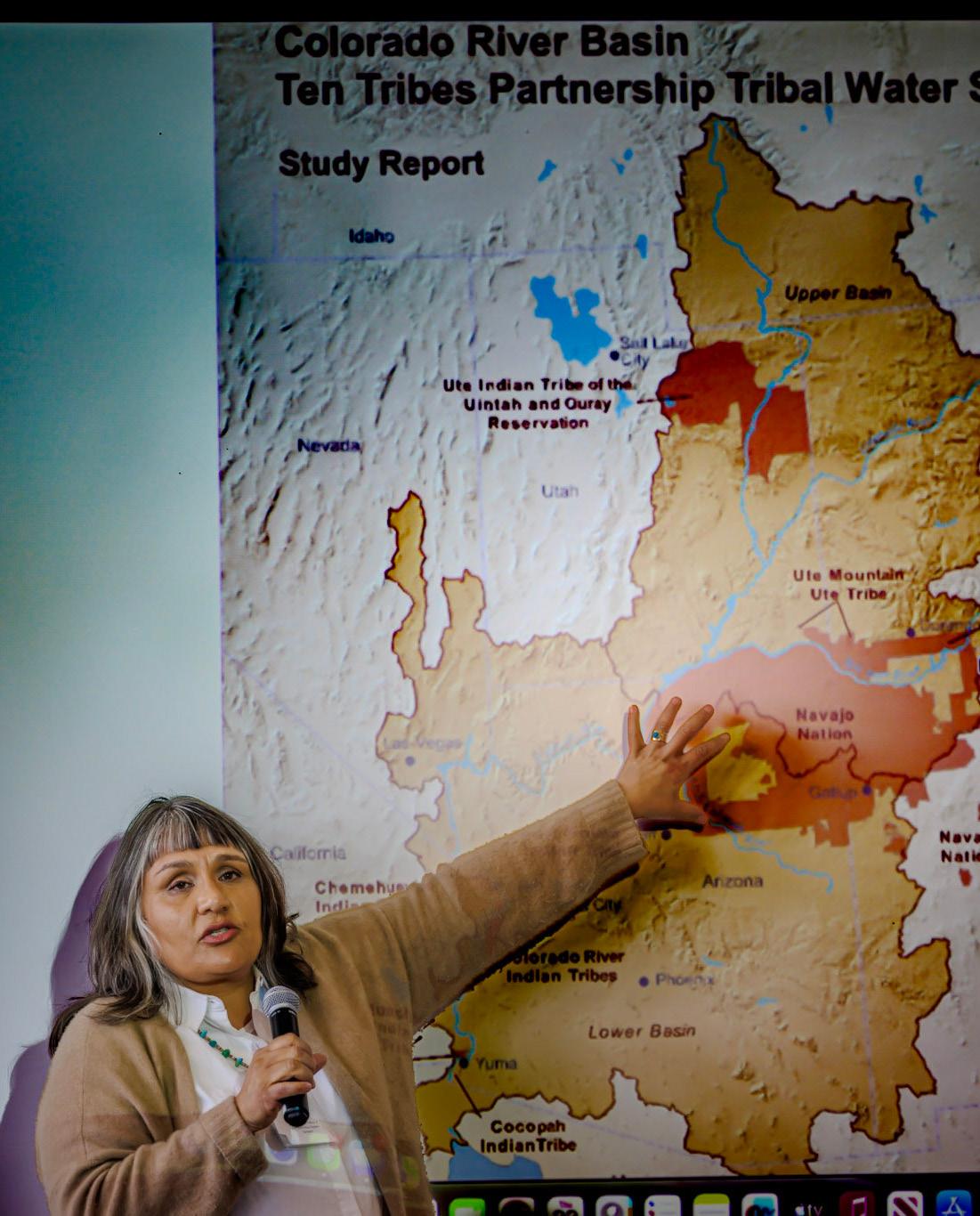
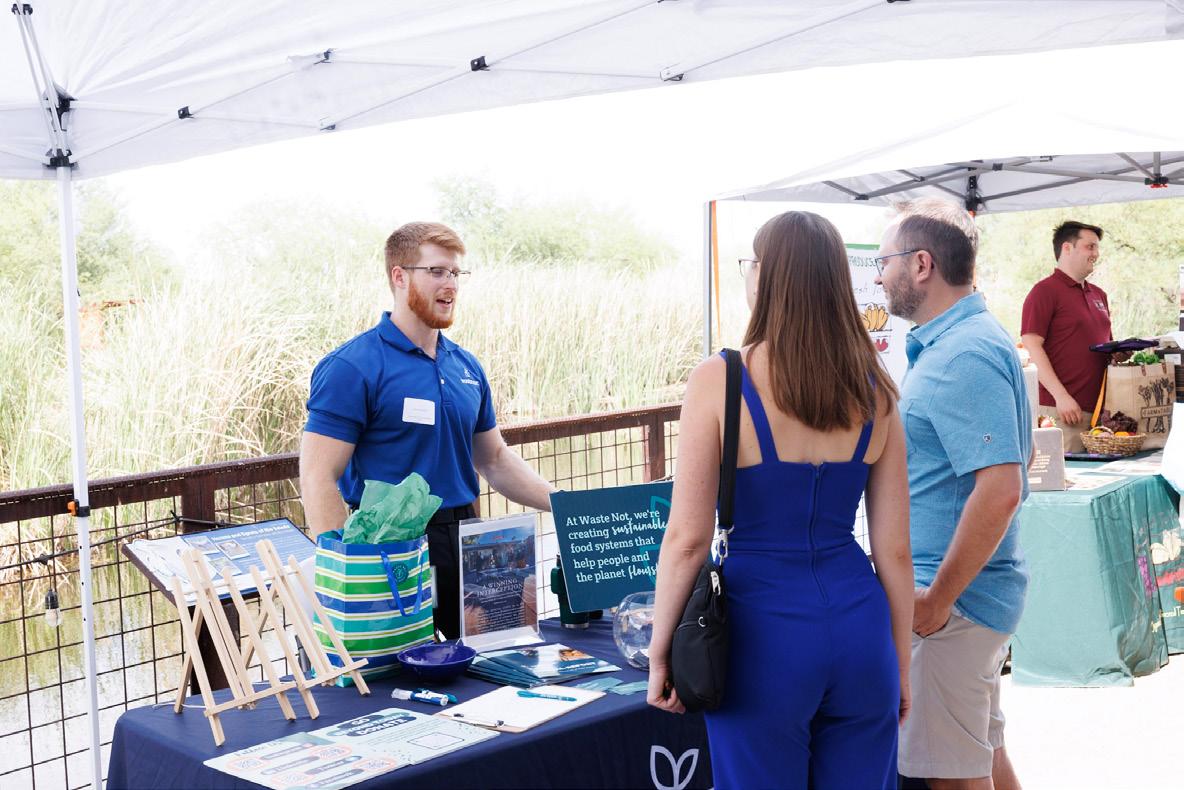
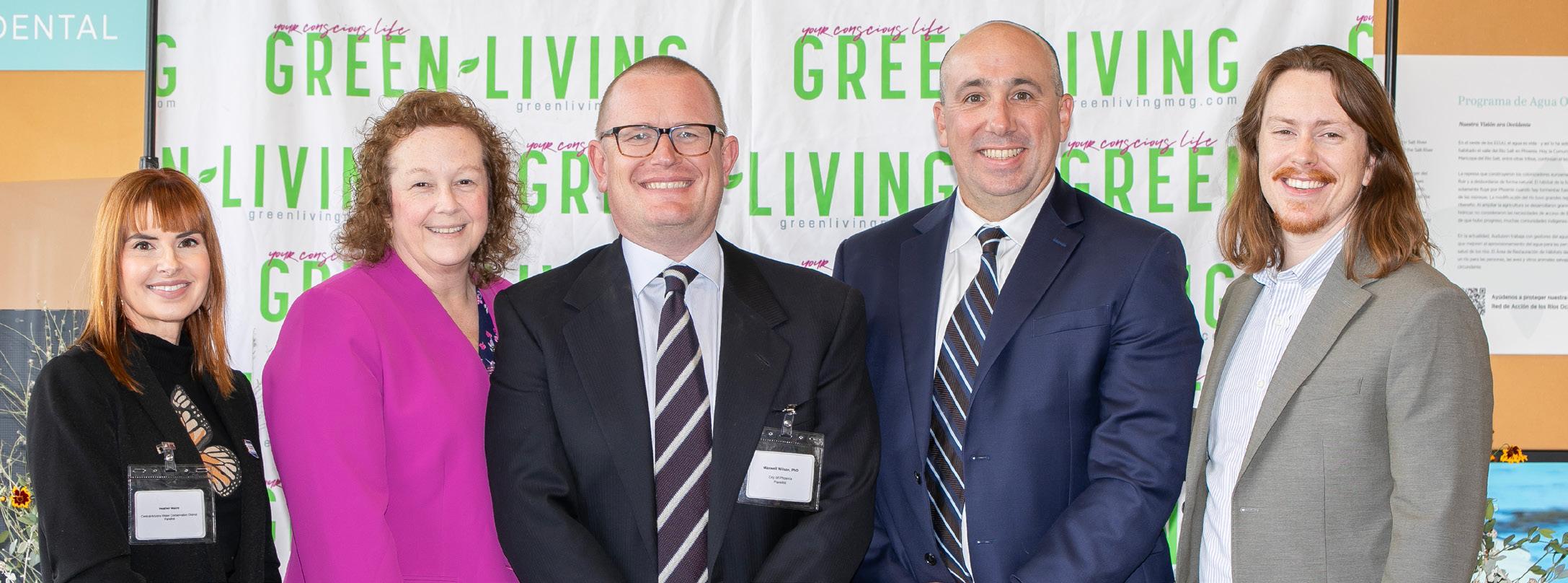
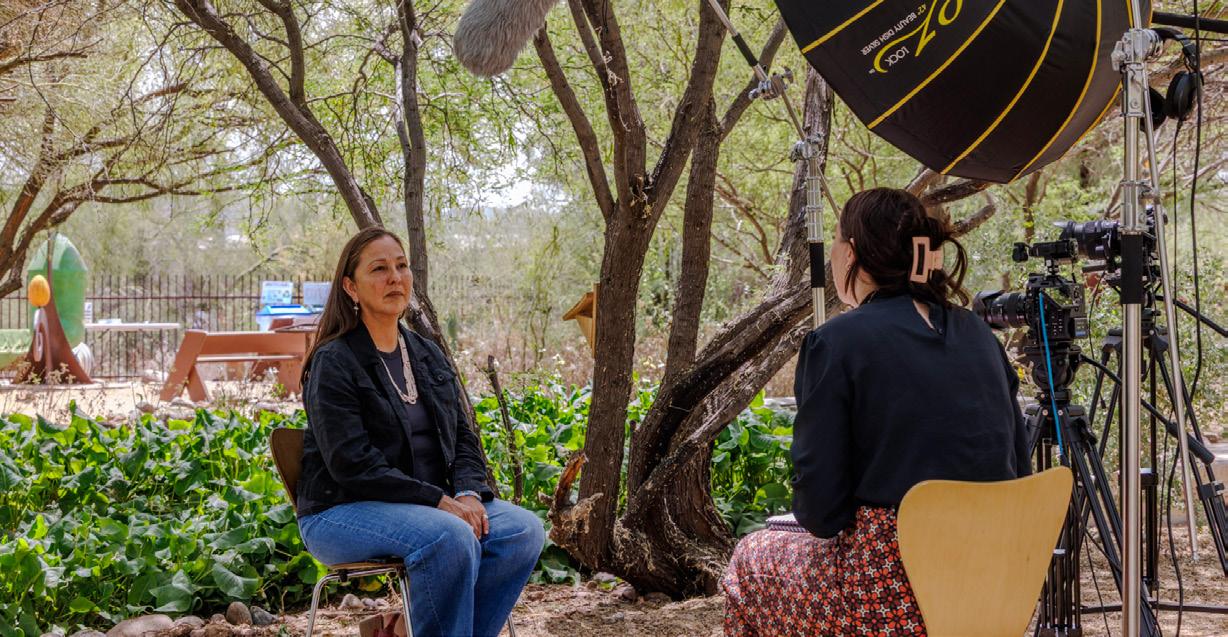





















How a partnership led by SRP and the James M. Cox Foundation is modernizing aging irrigation systems, conserving water and strengthening South Phoenix communities for the future.
IIn parts of South Phoenix, water has always been more than a utility – it has been a lifeline.
Neighborhoods such as Estrella-Rancho and Monte Vista Gardens grew up around private flood irrigation systems-built generations ago – some as early as the 1920s and others added in the 1970s. These systems nourished lawns, sustained shade trees, cooled streets, and preserved the character of these tight-knit desert communities. But decades later, the infrastructure that once supported daily life has become fragile, inefficient, and difficult to maintain.
That reality sparked the creation of Salt River Project’s Community Irrigation Revitalization Initiative (CIRI) – a community-focused effort to repair, modernize, and stabilize aging flood irrigation systems while keeping water affordable and accessible for residents.
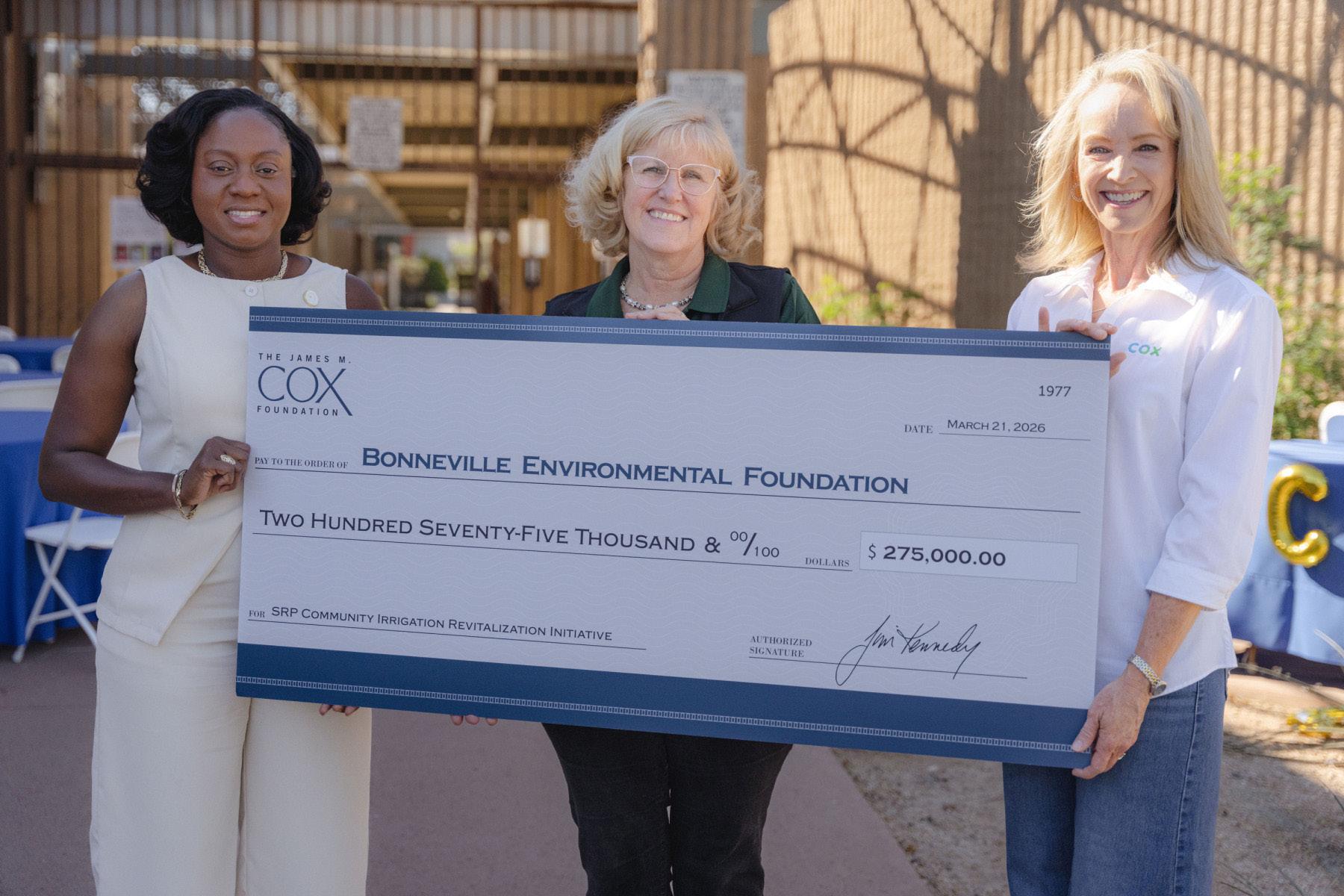
Now, a $275,000 grant from the James M. Cox Foundation, awarded to the Bonneville Environmental Foundation (BEF), is helping ensure that this work reaches deeper and lasts longer. By supporting Phases 2, 3, and 4 of the project, and covering an estimated 40 percent of the repair and modernization costs, the grant plays a pivotal role in stabilizing aging private flood
irrigation systems that many residents could not otherwise afford to fix.
“We are grateful for the generous grant from the James M. Cox Foundation that significantly increases the scope and scale of this vital work, demonstrating the power of partnerships to solve complex community challenges.”
— Elvy Barton, SRP Senior Manager of Water and Forest Sustainability.

Private flood irrigation systems in South Phoenix were never designed to last a century. Cracked channels and outdated designs have led to water loss, localized flooding, and safety concerns that are especially challenging for neighborhoods already facing economic barriers.
CIRI tackles these issues head-on by providing upfront infrastructure upgrades and long-term irrigation support rather than abandoning flood irrigation altogether. Once current upgrades are complete, up to 238 homes will benefit,
with improvements expected to save an estimated 76 million gallons of water over five years.
Cox Communications and SRP share a long history of working together to support the communities they serve, guided by a shared commitment to sustainability, innovation, and long-term resilience. That established relationship helped lay the groundwork for Cox’s support of the Community Irrigation Revitalization Initiative (CIRI), aligning closely with both organizations’ focus on conservation and neighborhood stability.
“The James M. Cox Foundation’s investment strengthens an effort that reflects our shared dedication to sustainability and conservation –helping reduce water waste, protect neighborhoods from flooding, and preserve the green spaces that matter so much to this community. This collaboration underscores how powerful public-private partnerships can be in delivering meaningful, local impact.”
— Susan Anable, Phoenix Market Vice President, Cox Communications
Named for the founder of Cox Enterprises, the James M. Cox Foundation carries forward a legacy grounded in service to community. The Foundation supports nonprofits that are addressing some of the most pressing challenges in the
places where Cox employees live and work. Its focus on conservation, education, health, and empowering families closely mirrors the priorities at the heart of CIRI.
By funding multiple phases of the revitalization effort, the James M. Cox Foundation is helping safeguard wellestablished landscapes, reduce water loss, and ease the financial burden of maintaining aging infrastructure. The work preserves the character of historic irrigation neighborhoods while supporting practical solutions that allow these communities to remain vibrant, resilient, and rooted in place for generations to come.
CIRI also advances SRP’s goal of conserving 5 billion gallons of water by 2035, showing how localized infrastructure improvements can support regional sustainability targets. Importantly, once revitalization work is complete, longterm maintenance remains in the hands of the neighborhood – preserving local ownership and community resilience.
In South Phoenix, this approach is restoring more than irrigation channels – it is reinforcing the foundation for greener, cooler, and more connected neighborhoods for generations to come. Through the James M. Cox Foundation’s investment in this work and the long-standing partnership between Cox Communications and SRP, CIRI shows how publicprivate partnerships can come together to preserve community character, advance water conservation, and invest in a more resilient future for Arizona.


BY BETH WEITZMAN
IIt is hard to look at Firefly Organic Coffee & Market with its warm interior, carefully curated product selection, and mold-free coffee and imagine it beginning in a doctor's office. But in many ways, it did. Most notably, in 2014 when Patrick Sullivan Jr. was diagnosed with thyroid cancer, he and his wife, Ashley Leroux, found themselves navigating traditional medicine that, as they put it, “didn't really have good answers. Mostly vague advice to ‘reduce stress,’ which is funny advice to give someone building a business.” Before any of this existed, they say, “our lives looked like a lot of entrepreneurs' lives: long hours, constant stress, and the assumption that if you just pushed harder, you'd eventually feel better.”
It did not. So, they started asking different questions. “That frustration eventually turned into curiosity,” they recall. “Instead of accepting that feeling terrible was normal, we started asking better questions: What if the body isn't broken? What if it's just missing something?” As they dug deeper, a bigger pattern came into focus. “There was a moment where we realized the healthcare system wasn't
designed to help people actually get well. It was designed to manage symptoms.”
By then, Jigsaw Health, the supplement company Patrick had co-founded with his father in 2005, was already part of their world. What followed pushed them to take that mission further. “That curiosity ultimately led to magnesium, which became the foundation of Jigsaw Health,” they explain. “What
started as a personal experiment eventually grew into a company focused on helping people solve health problems at the root instead of just masking symptoms.” As magnesium started helping in ways nothing else had, “it forced us to rethink everything: nutrition, stress, sleep, environment, even the food supply itself.”
“When you start digging into health problems, you quickly discover that the rabbit hole goes much deeper than supplements,” they say. “It leads to soil health, farming practices, food processing, labeling laws, environmental toxins, and how industrial systems quietly shape what ends up on our plates.”
That widening view eventually gave their work a clear structure and purpose. “So the through line is very direct,” they explain. “Jigsaw focuses on giving people tools to support their health, things like magnesium and electrolytes. Firefly is about the food side of the equation: creating a place where people can actually experience what clean food looks like in real life.”
The idea for Firefly was born out of a very ordinary frustration. “Candidly, we couldn't find a coffee shop in Scottsdale where we felt good about everything being served,” they say. “You'd walk into a beautiful café, but the milk wasn't organic, the food contained seed oils, or the sourcing was unclear. And
once you know how much those details matter, it's hard to ignore them.” That led to a single, defining question: “What if someone built a coffee shop where every ingredient met the standards we wished existed everywhere?” they say. “That became Firefly Organic Coffee & Market.”
From there, the duo became just as intentional about how Firefly should feel as they were about what it should serve. “We didn't want it to feel like a ‘health food store.’ We wanted it to feel warm, welcoming, and beautiful... a place where people could experience clean food without feeling lectured.” “It's really about demonstrating that healthier choices can still be joyful and delicious.”
Their hope is that first-time guests can feel that care in the space itself, without needing the backstory.


“We hope they notice that we've really thought long and hard about all the tiny details,” they say. “The mold-free coffee. The organic milk. The seed-oil free foods. The products in the fridge. And the conversations happening across the counter.”
That intention has already taken root. What they didn’t anticipate was just how naturally Firefly would turn into a community space. “People don't just come for coffee. They stay, talk, bring friends, and ask questions about the products on the shelves. That community energy is something you can't plan, it just happens when people feel aligned with what you're doing,” they share.
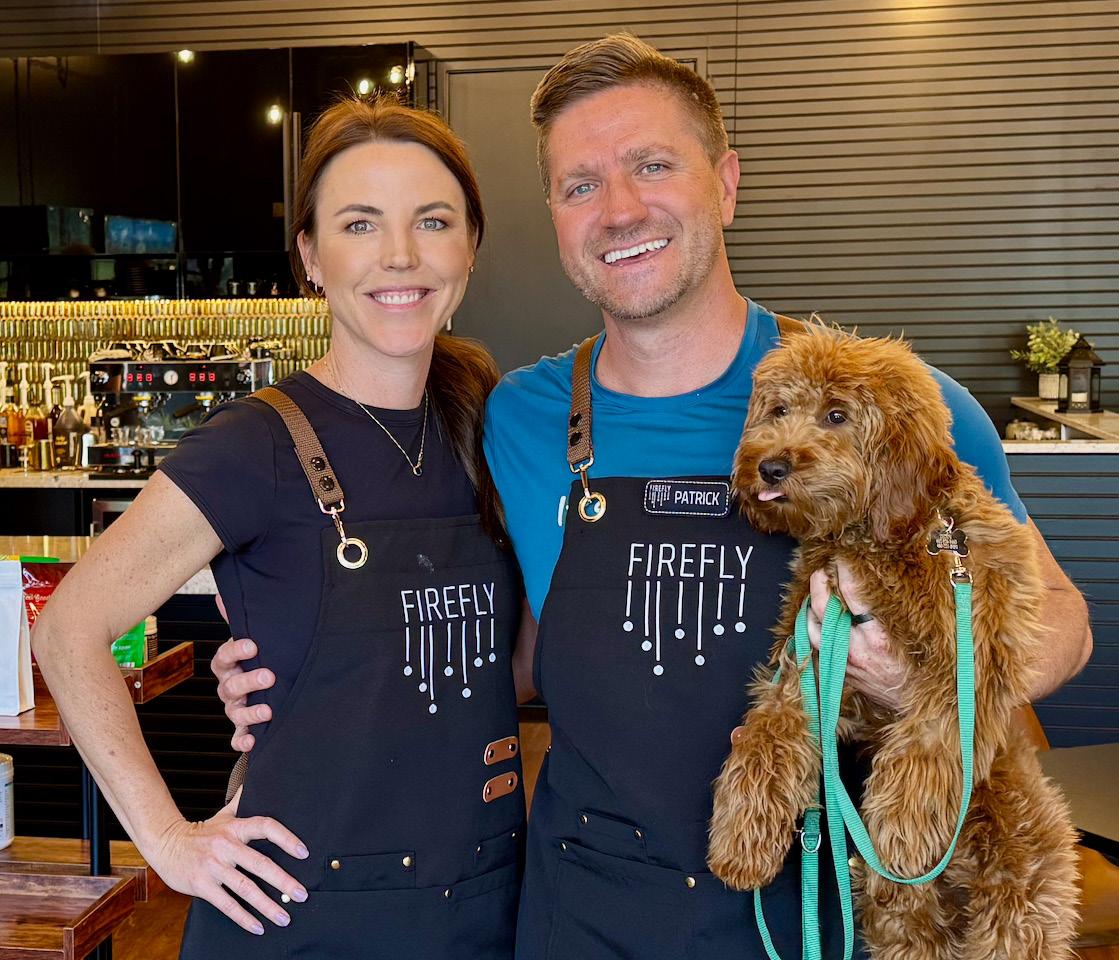
The times they treasure most are when that energy becomes self-sustaining. “Our favorite moment is when customers start explaining the products to each other,” they say. “When someone who discovered the shop last month is now telling a friend why a certain ingredient matters, you realize the community is carrying the message forward. That's when it becomes bigger than the founders.”
Inside Firefly, that awareness informs every purchasing decision. The criteria are simple: organic whenever possible, minimal processing, seed oilfree, a preference for local, and ingredients you can actually pronounce. “If something doesn't meet those standards, it doesn't make it into the shop,” they say. When they talk about hard calls that don’t make sense on paper, organic milk is the example
that always comes up. “It costs more and complicates sourcing, but once you understand the differences in farming practices, it felt like something we couldn't compromise on,” they explain. “Sometimes the right decision doesn't look great on a spreadsheet, but it's the right decision for the mission.”
The Breaking Big Food documentary, released in 2025, grew from the same impulse: helping more people see what Sullivan Jr. and Leroux had spent years piecing together. “We first heard Calley Means speak at Joe Polish's Genius Network event in April 2024,” they recall. He and his sister, Casey Means, wrote what they describe as a “wonderful book, Good Energy, that was connecting dots that many people have heard about and intuitively feel, but rarely see explained clearly. Our original thought for the documentary was to help amplify their message,” they say.
As they dug into the history behind today’s grocery aisles, Sullivan Jr. and Leroux point to the 1980s, when tobacco companies moved aggressively into the packaged food business through blockbuster deals like R.J. Reynolds’ purchase of Nabisco and Philip Morris’ acquisition of Kraft, as a turning point that changed how much influence those firms had over what ended up in American pantries.
The reality of daily life at Firefly is quieter than the documentary title might suggest. “Honestly, it looks a lot less like a battle and a lot more like a quiet alternative,” they say. Their strategy is not confrontation but demonstration: proving that convenience and quality can coexist, one carefully sourced ingredient at a time. “Every organic latte, every ingredient label someone reads, every conversation across the counter about where something came from, is a tiny shift in awareness,” they add. “Goliath depends on people not asking questions. David just hands them a better cup of coffee and lets curiosity do the rest.”
If Sullivan Jr. and Leroux could leave each guest with one lasting thought, they would keep it simple. As they put it, “Your health is more connected to what you eat than you've been led to believe – and small choices matter.”
Firefly Organic Coffee & Market
9035 E. Pima Center Pkwy., Suite 13, Scottsdale 602-920-3092; @firefly.coffee

You are not stuck.
You are disconnected from your truth. Intuitive Insights is Lynn's free monthly live call — 90 minutes of direct guidance, pattern-breaking tools, and real answers to what is keeping you from moving forward.
No fluff. No pitch. Just the work.
Free · Every 3rd Wednesday · 4 PM Arizona Time

“You don’t need to be perfect. Just willing.”
— Lynn M. Bunch
Lynn blends over 30 years of intuitive development into direct, and transformational guidance.
This is structured, strategic, and delivered with zero apology. Expect to be seen. Expect to shift. Expect results.
Scan to reserve your spot
WWW.LYNNMBUNCH. COM



BY MADISON RUTHERFORD
TThe Gardener, which premiered in theaters on April 17, explores powerful and complex facets of the human experience – grief, healing, and self-discovery – using the extended metaphor of a living garden.
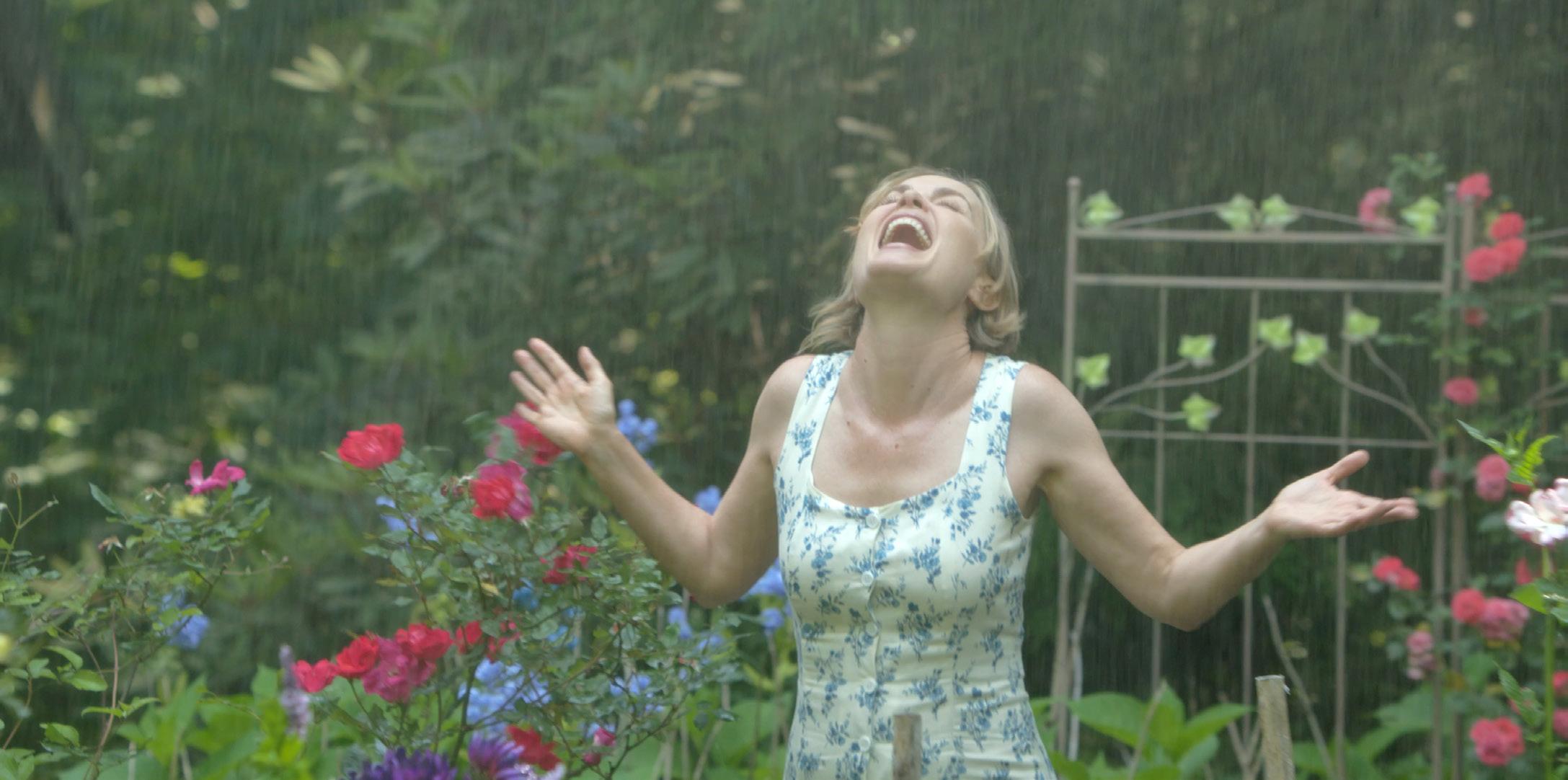
Starring Radha Mitchell, William Miller, and David Andrews, The Gardener marks filmmaker Dabney Day’s feature directorial debut. “The Gardener has lived with me for many years – not simply as a project but as a presence asking for patience and trust in timing,” she says. “It wasn’t something I could rush or force… It needed to be tended, much like the act of gardening itself.”
The film follows Sabena Weathers (Mitchell) as she fights to preserve her family’s cosmetics empire after the loss of her husband and father. Seeking refuge, she retreats to a remote cottage in the mountains, where a chance encounter with the property’s gardener sparks an unexpected journey of transformation and truth.
This overarching theme of fate and serendipity is woven into the fabric of the project – and started long before filming began.
“I was in Australia and would spend a lot of time walking in the botanical gardens in Melbourne… I was chatting with a friend one day and I said, ‘Wouldn't it be great if somebody made a film about women who gather around a garden space and, in that project, heal their lives?” Mitchell says. “About a week later, in my inbox came this invitation to be part of a project called The Gardener.”
Day had been developing the story and script for nearly three decades. For Andrews, it was a full-circle moment. In 2024, he reached out to the White Lotus
Foundation, a wellness center in Santa Barbara where he had received yoga teacher training more than 30 years prior. “I lost my certificate and had not talked to these people in 30-something years… I reached out, and on April 8, I received my certificate. On April 5, I got an email from my manager that I was being offered a script for a movie called The Gardener,” he explains. When he read the script, Day’s name triggered a sense of distant recognition. “I go, ‘I don’t know why this name is familiar to me,’ I couldn’t place it, but I decided to do the film,” he says. “A couple of days later, I get an email from Tracy, who was one of the people who ran the White Lotus Foundation, saying, ‘I'm so glad to hear that you're considering doing Dabney’s film… Dabney’s one of my oldest friends.’” Andrews then remembered he worked with her at Universal Studios in the early 1990s, when she was doing product placement for film marketing campaigns. “We became friends,” he says, “But eventually we lost touch, so I hadn’t talked to her in at least 30 years, and then I get this film, and it’s the same Dabney Day.”
While the garden symbolizes growth and renewal, the film also speaks to eco-conscious viewers and those drawn to sustainability, offering a message that goes beyond communing with nature to emphasize human connection as well. Mitchell notes it will be especially healing for people “who aren’t in a garden right now, maybe they’re in an apartment in a city, and they want to immerse themselves in a natural experience.” She adds that the languid, “lullaby-like” pace of the film allows audiences time and space to reflect. “It’s a story that allows you to contemplate your own life,” she says. “It kind of opens portals into the self… and I hope that the audience feels comfortable enough from seeing the film to engage with each other, that there's an opportunity to talk to the person next to you.”
The Gardener was filmed in the forests of North Carolina, an area known for its lush, high-rainfall temperate broadleaf forests and rich biodiversity, surrounded by abundant greenery, cascading waterfalls, and wildlife, which Mitchell says added to the magic and authenticity of the film. “We were in this beautiful location… the house we were in was built by an artist couple, and it looked like a gingerbread house from a fairytale,” Mitchell says. “It really feels kind of made by hand, in the sense that friends put their houses in it, friends showed up, and people from 30 years ago reconnected. This was something that [Day] needed to put into the world, and it's very much a collaboration of people that really care about the story.”
every donation makes a difference
By donating gently used items to your Habitat ReStore, you’re not just clearing out your home; you’re helping to build homes, strengthen communities, and instill hope throughout Arizona.
When you recycle your old home goods, you help Habitat for Humanity Central Arizona build more homes in your local community.
Learn more at habitatcaz.org/restore
BY MISTY MILIOTO
TThe Arizona Community Foundation is building a coalition – with the City of Phoenix, Arizona State University, and partners across the state – to fund environmental resilience, restore the Salt River, and convene a landmark summit named for the hottest day Phoenix has ever recorded.
The name says everything. The 122° Conference, set for Dec. 2-3, 2026, in downtown Phoenix, takes its title from 122°F – the highest temperature ever recorded in the city.
The inaugural conference is being organized by the Arizona Community Foundation (ACF) in partnership with the City of Phoenix and Arizona State University. It will bring together leaders across sectors to address what ACF calls Arizona’s most pressing environmental challenges: extreme heat and
environmental resilience; water security; food systems impacted by heat; and water and conservation.
“The motivation came directly from listening,” says Michelle Gayles, chief impact officer at ACF.
“Environmental challenges consistently rose to the surface – not as abstract climate concerns, but as everyday realities that affect people where they live: extreme heat impacting health; water insecurity shaping futures; and environmental conditions influencing whether neighborhoods remain livable.
What became clear is that the environment isn’t a separate issue – it’s deeply intertwined with community well-being, economic stability, and access to opportunity, especially for communities that need it most.”
The 122° Conference is designed to address what Gayles describes as a persistent shortcoming in environmental conferences: the gap between ideas and follow-through. “Too often, conferences generate ideas and inspiration, but the funding and followthrough rarely happen,” she says. “We wanted to flip that model.”
Wellington “Duke” Reiter, senior advisor to the president of Arizona State University and executive director of ASU’s University City Exchange, says he hopes the conference will build the momentum – and the funding – needed to translate environmental priorities into measurable action. “Hopefully by the time the conference happens, the momentum toward building such a fund is obvious,” he says.
Lori Singleton, president and CEO of Arizona Forward – a statewide coalition of more than 150 organizations working to balance economic growth with environmental quality – says the conference reflects the kind of cross-sector collaboration
that drives real progress. “By combining Arizona Forward’s convening power with ACF’s philanthropic leadership and community connections, we can help accelerate the kinds of collaborative solutions that will shape a more sustainable and resilient future for Arizona,” she says.
Reiter describes the relationship driving ACF’s environmental work as a three-legged stool: the foundation provides philanthropic leadership and donor connections; ASU provides research, expertise, and institutional scale; and the City of Phoenix provides policy authority and on-the-ground infrastructure.
“If a donor comes to ACF and says, ‘Why don’t we do blank,’ we could advise them as to the viability of an approach,” Reiter says. “The university as a whole is available as a resource to ACF depending on the topic they want to take on.”
Reiter points to ASU’s Global Futures Laboratory –which focuses on energy, water, policy, cities, and transportation – as the institutional home for much of this work and notes that ASU leads the United States in impact relative to the United Nations’ Sustainable Development Goals. “This university will take responsibility for the region in which it serves,”
he says, citing the ASU charter. “What we’re doing with ACF and the environment is a perfect example.”
Phoenix recorded 55 days above 110°F in 2023, including 31 consecutive days – a record at the time. Heat-related deaths in Maricopa County have climbed sharply over the past two decades, with lowincome communities bearing a disproportionate share.
The City of Phoenix and ACF have already partnered on a visible response: chilled drinking water stations in high-foot-traffic areas across the city. ACF funded the expansion of the program into the Maryvale neighborhood of west Phoenix. “Access to chilled drinking water is critical to resilience to extreme heat,” Phoenix Mayor Kate Gallego says. “Thanks to the Office of Innovation and funding from the Arizona Community Foundation, this important amenity is now serving Maryvale residents at Desert West Park.”
Gallego says Phoenix’s water commitment extends well beyond cooling stations. “When it comes to water –our most important natural resource – Phoenix has a culture of conservation, and we’re continuously preparing for the future,” she says. “With largescale investments in advanced water purification, encouraging sustainable desert development, and providing incentives to help residents make efficiency improvements at home, Phoenix is driving down water use even as our community grows.”
initiative drawing together nonprofit, community, municipal, and academic leaders to develop heat response strategies that can scale across communities and regions. “Scalable solutions are those that can grow because they’re practical, trusted locally, and adaptable,” Gayles says. “When paired with strong partnerships, they can make a real difference beyond a single neighborhood or pilot.”
Water is Arizona’s most existential environmental challenge. The Colorado River has faced years of stress driven by overallocation, drought, and
rising temperatures, and Arizona has already faced mandatory cutbacks under shortage declarations.
According to Todd Zubatkin, communications director for Mayor Gallego, ACF’s funding supported two units in Maryvale that have already provided the equivalent of more than 3,100 bottles of water since December 2025, without plastic waste. The 12 units in the city’s broader initiative have collectively delivered more than 300,000 bottles.
ACF’s broader heat work runs through its Environmental Accelerator Project, a yearlong
“Philanthropy can help create space for collaboration where it doesn’t always exist,” Gayles says. “We can support research, fund community engagement, and convene stakeholders who don’t typically share decision-making power. Our role isn’t to replace government or industry, but to help reduce barriers, build trust, and support better, more informed decision-making.”
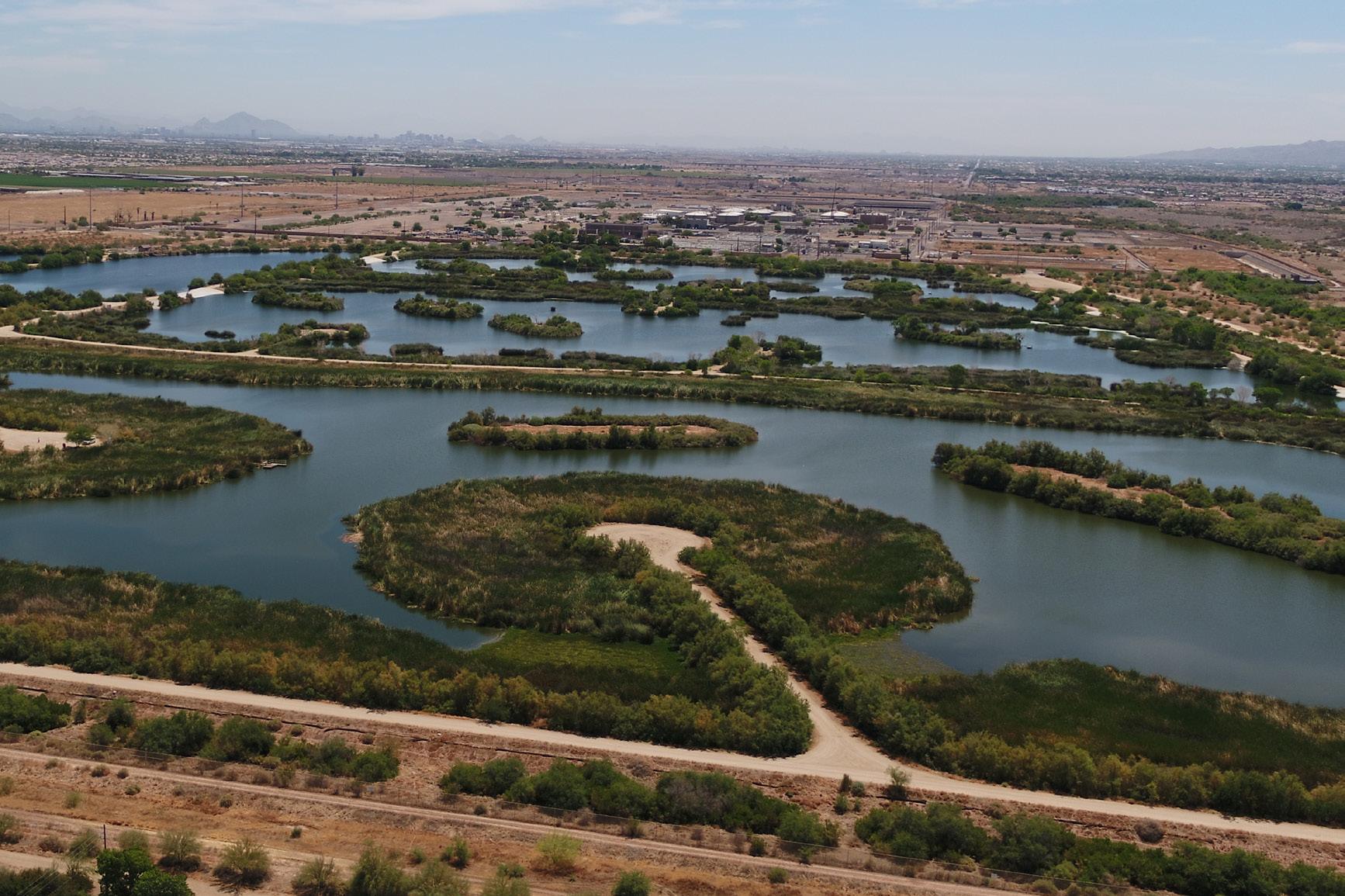
South of downtown Phoenix, one of the city’s
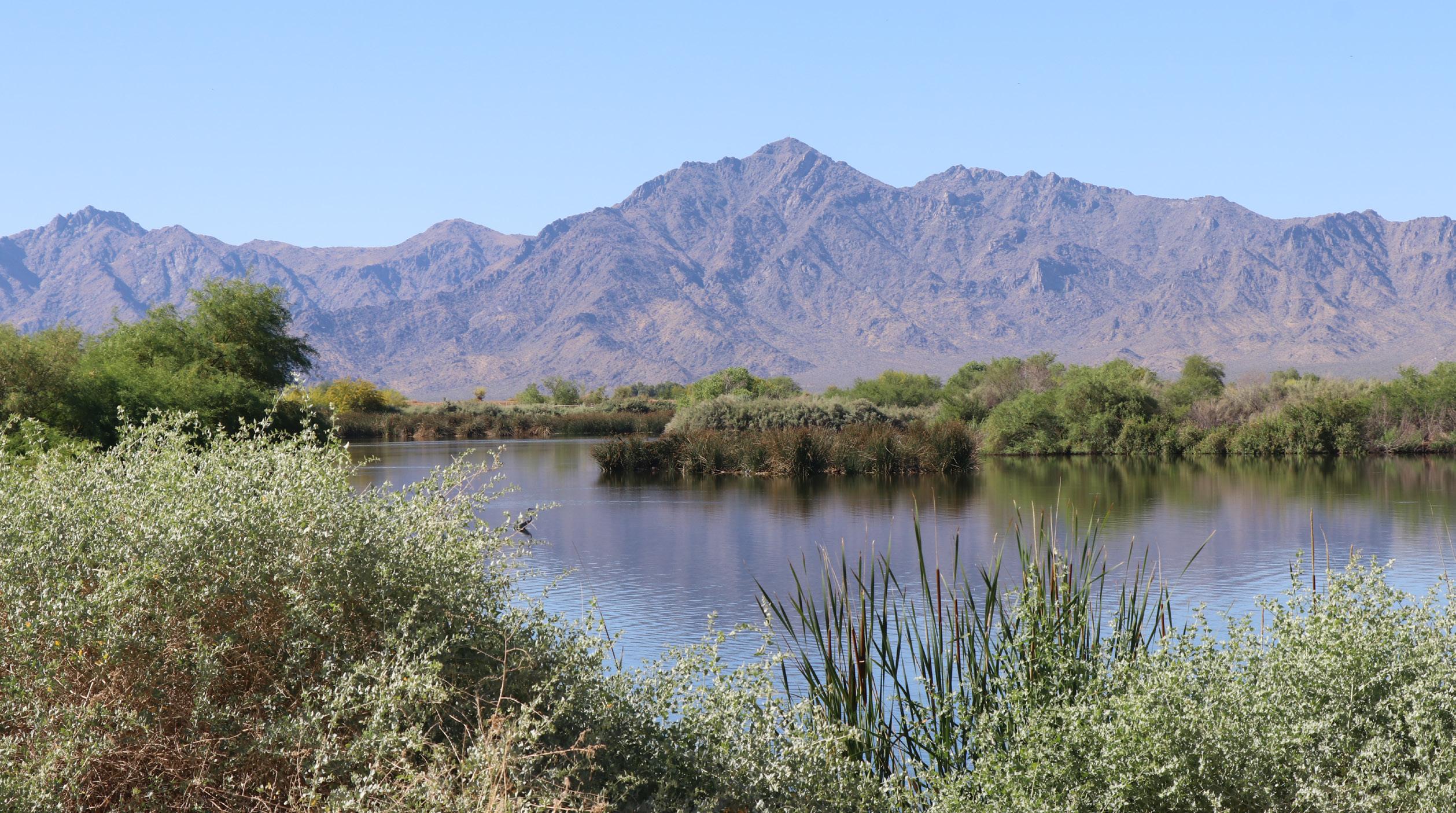
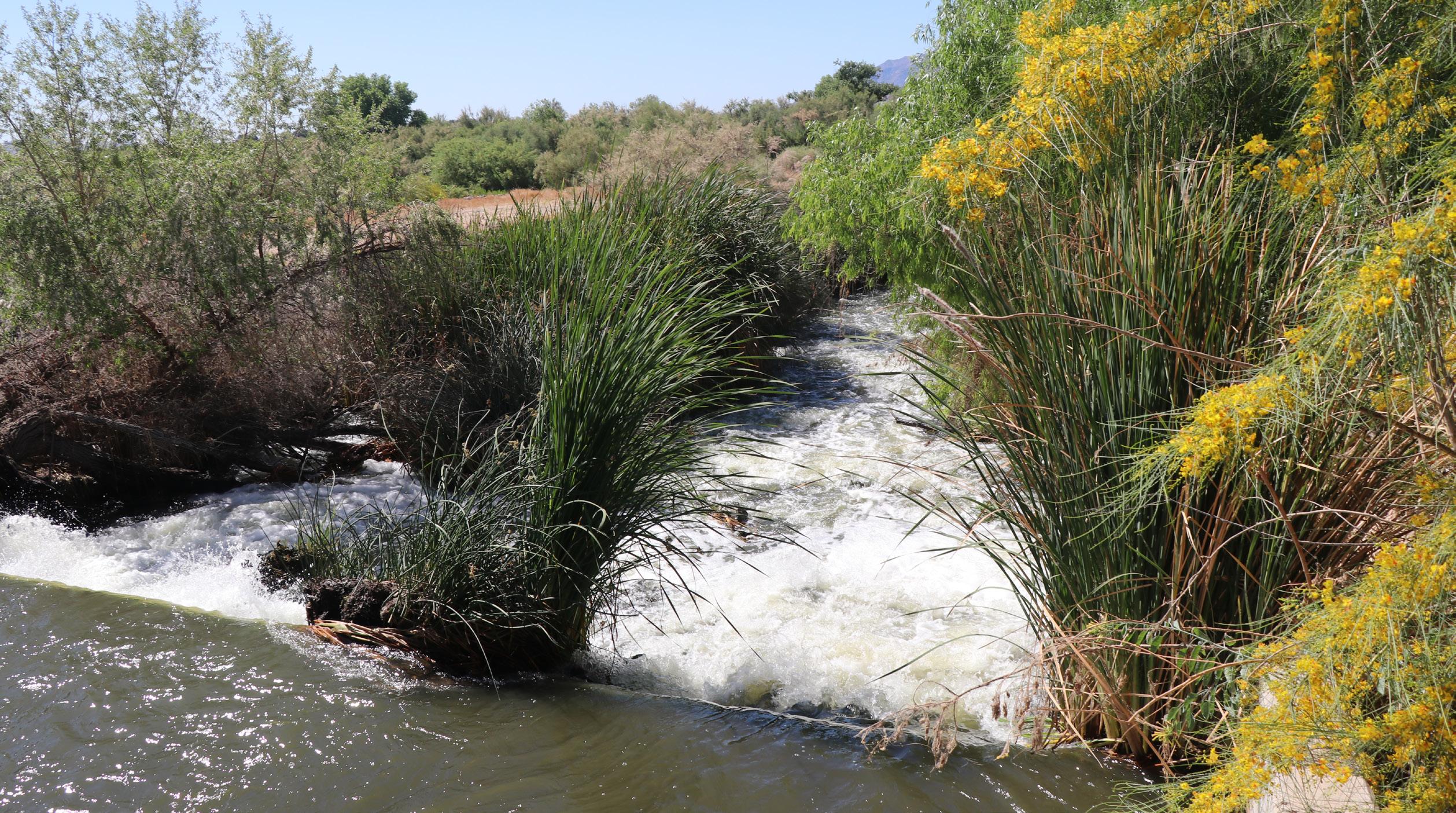
most significant environmental transformations is underway. The Rio Salado – a stretch of the Salt River once used as an industrial dumping ground – is being reimagined as a 55-mile ecological and cultural corridor linking Phoenix, Tempe, Mesa, Avondale, and Buckeye, as well as Maricopa County and tribal partners including the Salt River PimaMaricopa Indian Community and the Gila River Indian Community.
The initiative, called Rio Reimagined, launched in 2018 with ASU serving as its pro bono facilitator and convener. Reiter says it grew from conversations with the late Senator John McCain, who saw the transformation possible along the Salt River. “He wanted to see how that could be expanded,” Reiter says.
“Rio Reimagined celebrates the river that made Phoenix, and our neighboring communities, possible,” Mayor Gallego says. “This initiative is made up of people from all walks of life who are committed to preserving the riparian habitat and creating opportunities for residents to enjoy this special amenity.”
community priorities.
Reiter, an architect and urban designer, says Phoenix faces a challenge unlike any other American city: designing livable spaces where outdoor temperatures are dangerous for months at a time – and will never improve. “It’s never going to get cooler here,” he says. “It’s the built environment, but also how we operate in it.”
Policy – governing how buildings are positioned, how much asphalt is poured, how workers are protected –is equally essential, Reiter says. “The environment’s a little more abstract,” he says of ACF’s move into the space. “That’s not usually where community foundations are. But what ACF is doing is listening: This is an equivalently important issue, and our donors want to see us getting into this space.”
“Arizona is often described as vulnerable to climate change, but it’s also a place of innovation, resilience, and leadership,” Gayles says. “Our goal at ACF is to help coordinate the people, ideas, and resources already moving forward so Arizona can help show what’s possible for communities everywhere.”
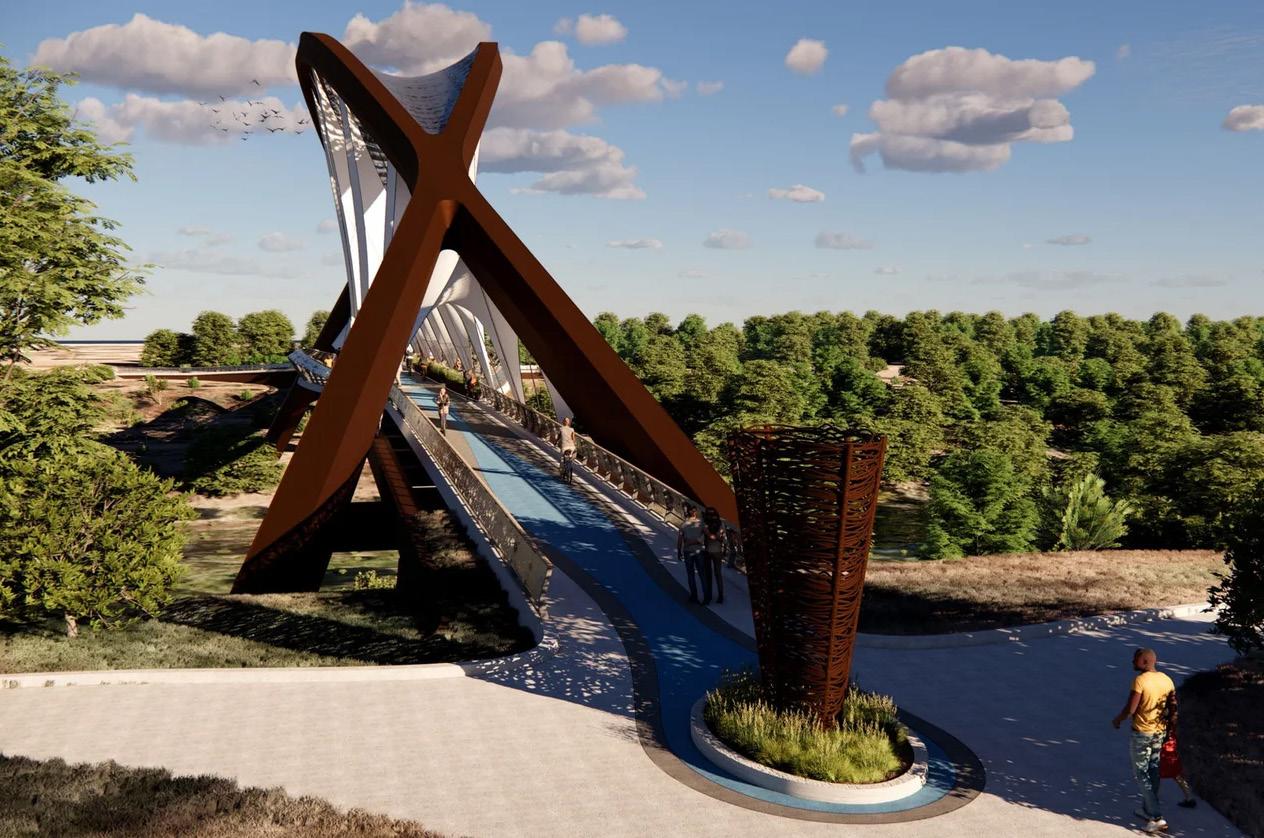
Phoenix has backed the initiative with $23.5 million in land acquisition funding through its 2023 bond program, and the U.S. EPA designated Rio Reimagined as the 20th Urban Waters Federal Partnership Project. ACF’s role, Gayles says, is to work alongside partners and collaborators statewide for river restoration and to align resources toward
The measure of the 122° Conference’s success, Reiter says, will be what follows: a growing fund, early investments, and a cycle of accountability. “I think the following year you would see where that funding is going to be distributed; where can it be most helpful to advance good ideas in Arizona,” he says. For readers who want to support the work, Gayles offers simple advice: “Collective action, sustained over time, is what drives real change.”
For more information, visit www.azfoundation.org, www.phoenix.gov, and www.asu.edu.
BY MADISON RUTHERFORD
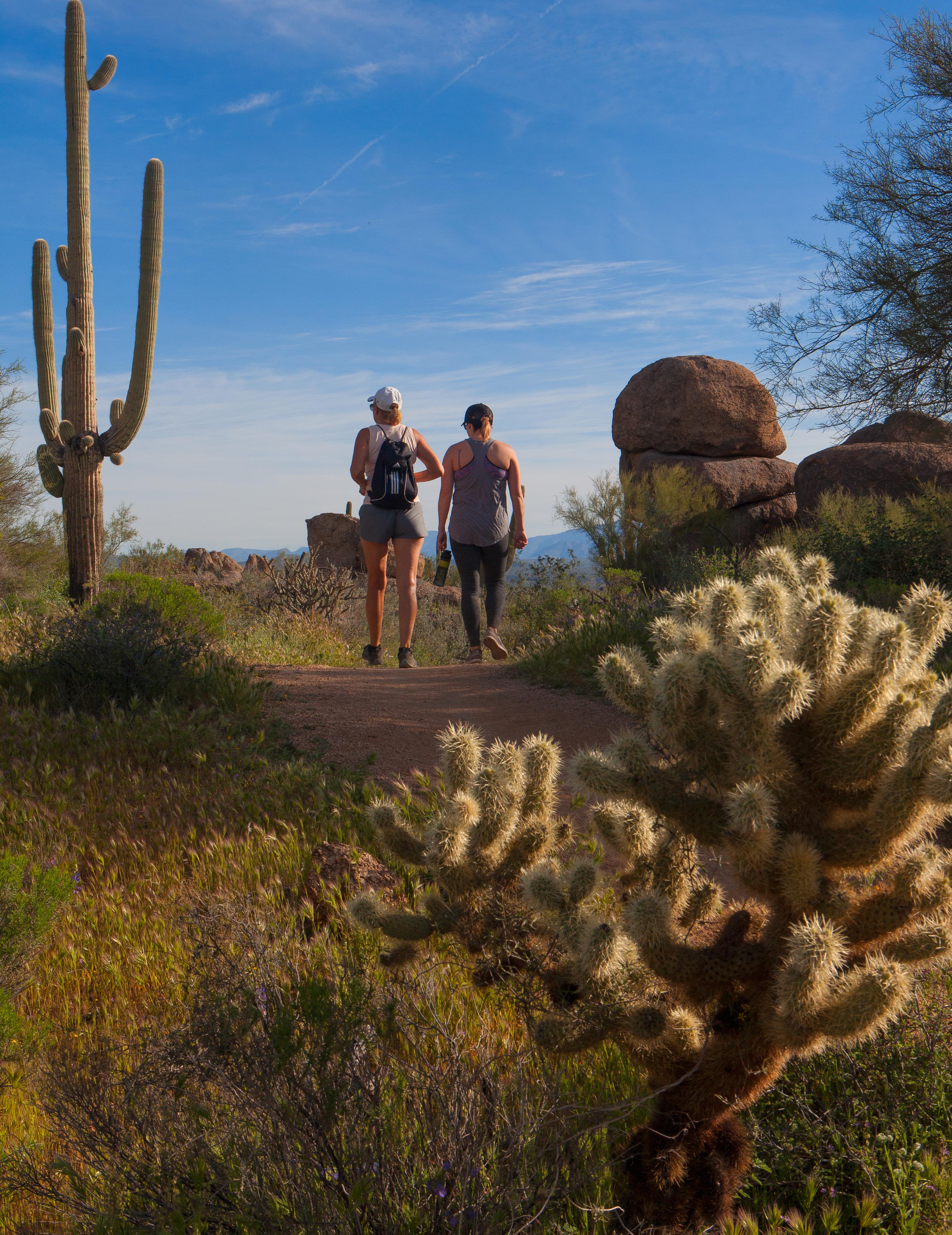
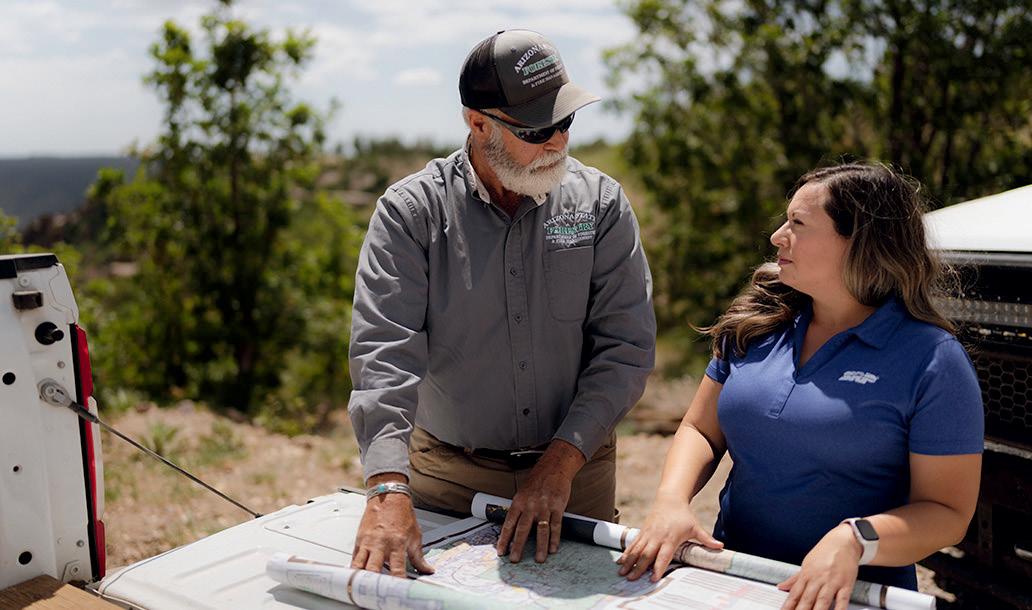
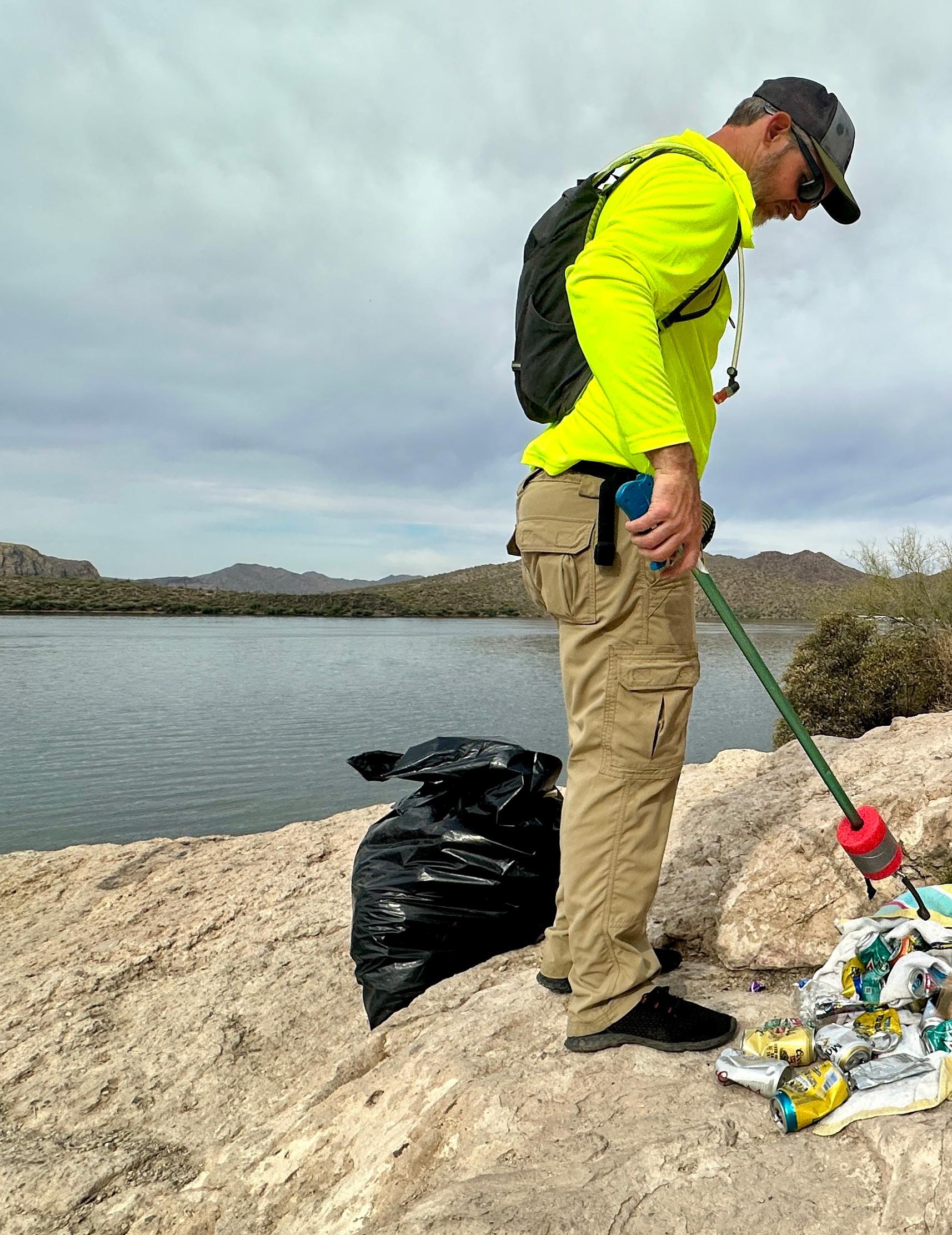
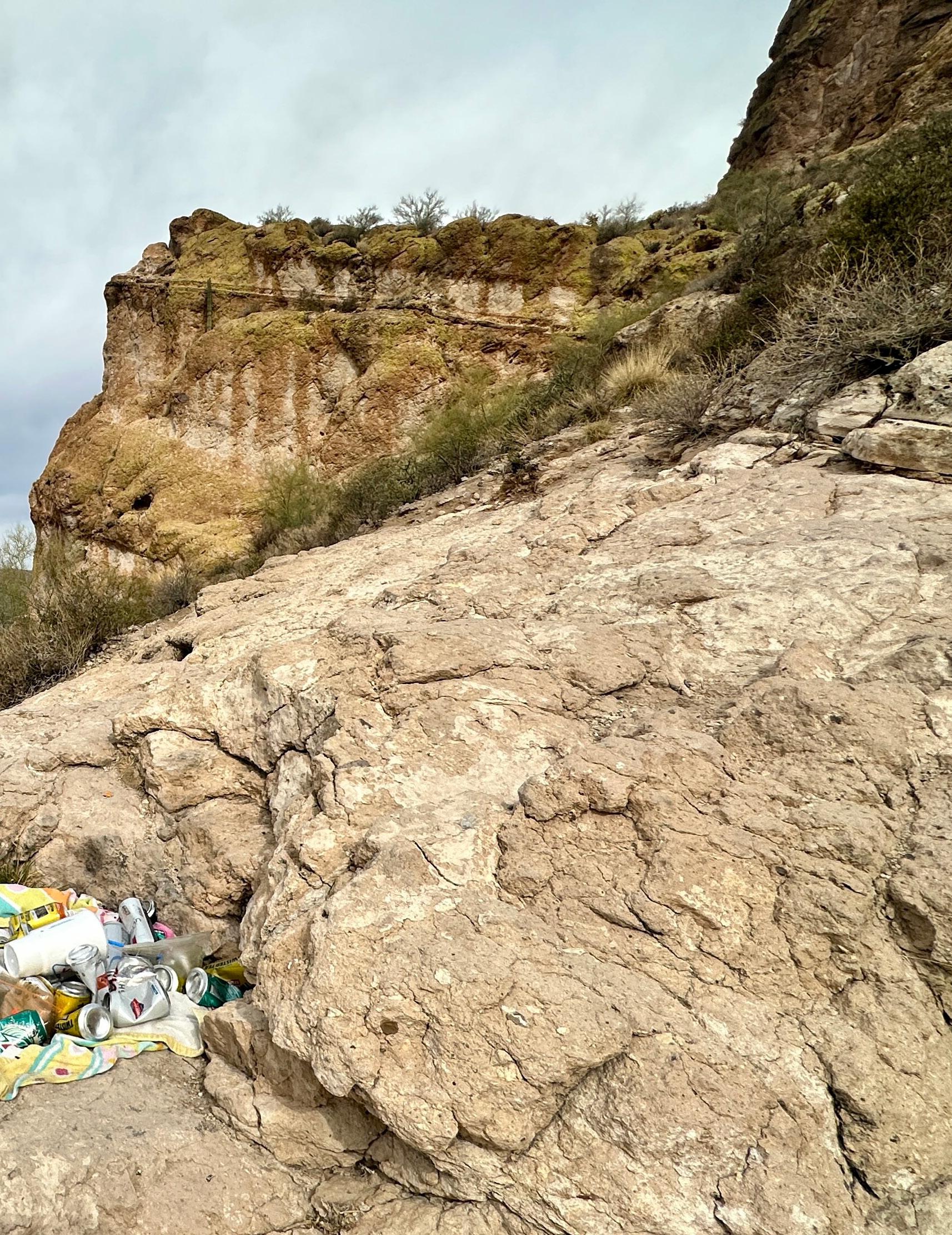
TThat clean, well-marked hike you love? It stays that way thanks to community members working behind the scenes to maintain and repair it – and pay it forward for the next generation.
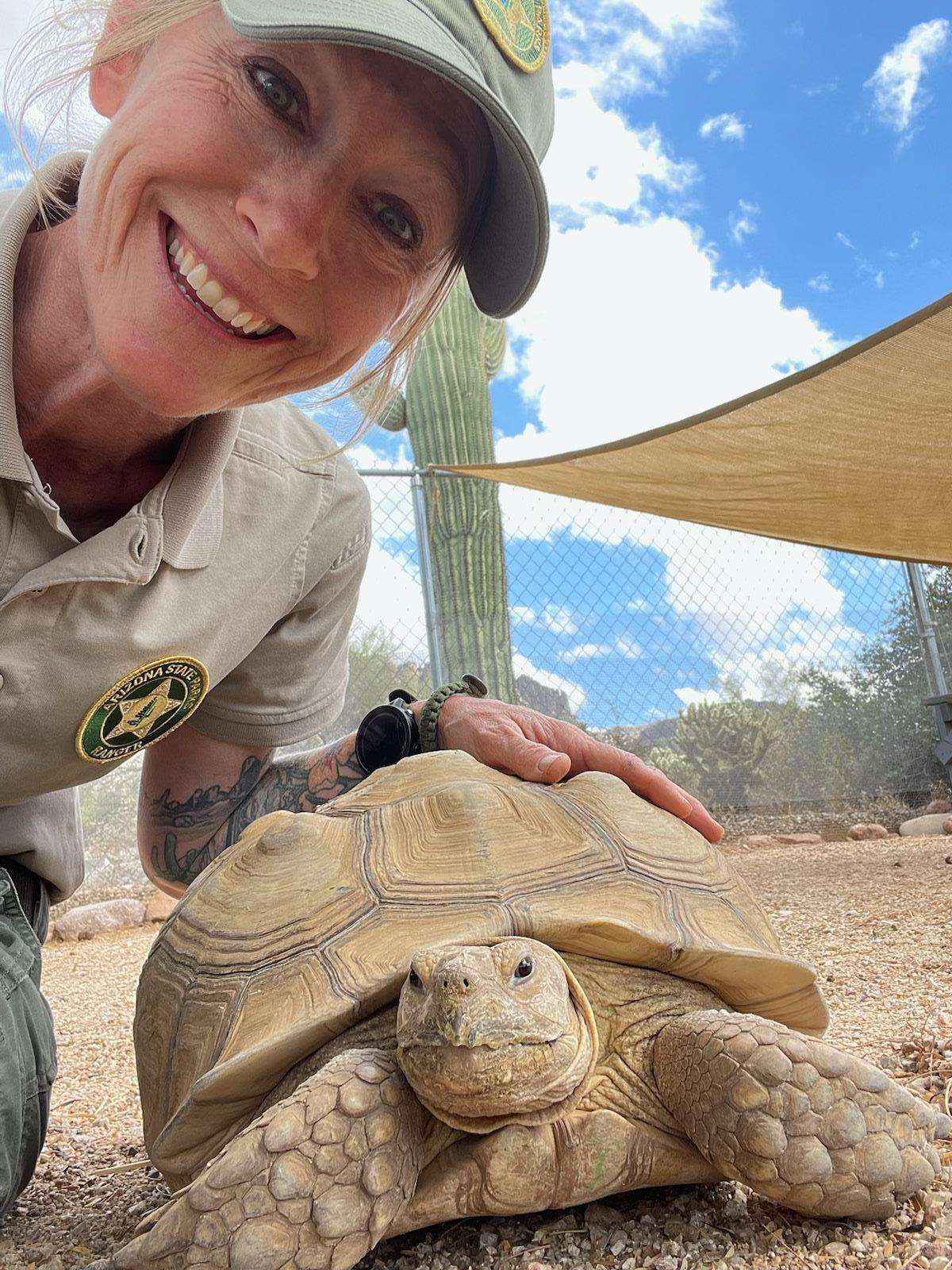
Sara Toms grew up exploring the Superstition Wilderness, joining her dad on “Dutch hunting” trips in search of the Lost Dutchman’s Gold Mine and asking her mom endless questions about the mountains. Those early experiences sparked a lifelong curiosity about the natural world, leading her to study geology and eventually build a career in environmental education, park management, and wilderness EMT work. “I wanted to be able to speak for the mountains and tell Earth’s story,” she says.
After serving as a ranger at Red Rock State Park and Picacho Peak, Toms transferred to Lost Dutchman State Park, a fullcircle moment she describes as “coming home.” As assistant park manager, Toms is responsible for ensuring that the 320-acre protected area is safe for both visitors and its hundreds of native plant and animal species. “I protect the park from the people and the people from the park,” she laughs.
“It’s one thing when you walk and pick up litter, but to us, it’s like… maybe you can also educate someone on why we shouldn’t litter, and it’s a bigger picture because we’re helping preserve it for generations to come.”
This deep-seated sense of environmental accountability is shared across a network of behind-the-scenes trail stewards who quietly keep Arizona’s natural landscapes clean, intact, and thriving.
“It’s hard for people to see what a trail looked like before because you see the finished trail. If the trail’s fine, you’re not complaining about it –you’re just enjoying nature,” explains Debbie Fogle, who founded Alpine Trail Stewards with her husband, Aaron, in 2023. “But what you didn’t see is what it looked like before – walls of downfall, completely overgrown New Mexico locust trying to rip your clothes off, and areas where the tread was barely visible.”
Toms also works with a team of rangers and volunteers to clean up litter, remove invasive flora, and maintain trails by hand – often using creative approaches that minimize environmental impact and benefit the community. “We have a volunteer who has a sticker business, and they use the cardboard we find [on the trails] to mail their stickers in,” she says.
For Toms and many of her peers, who live on park property, it’s more than just a job. “We live where we work, it becomes who we are, and it becomes part of us. It becomes more of a responsibility to the future and to the earth,” she says.
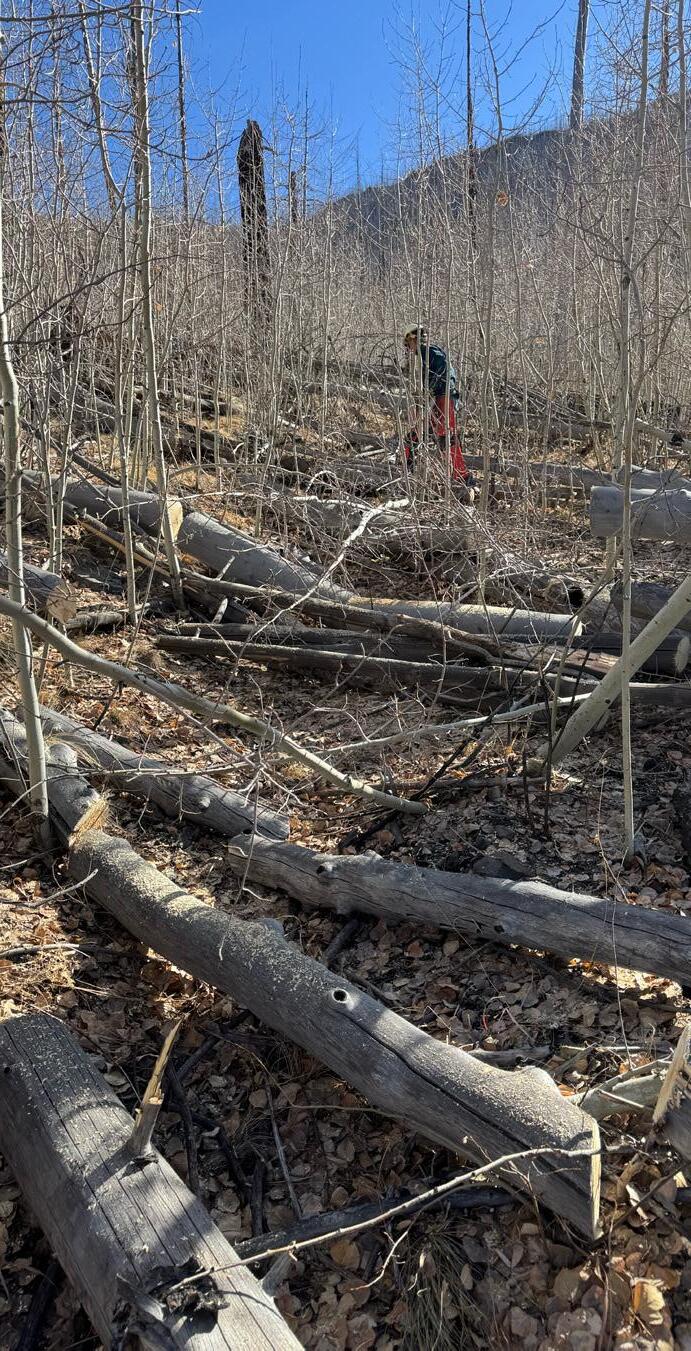
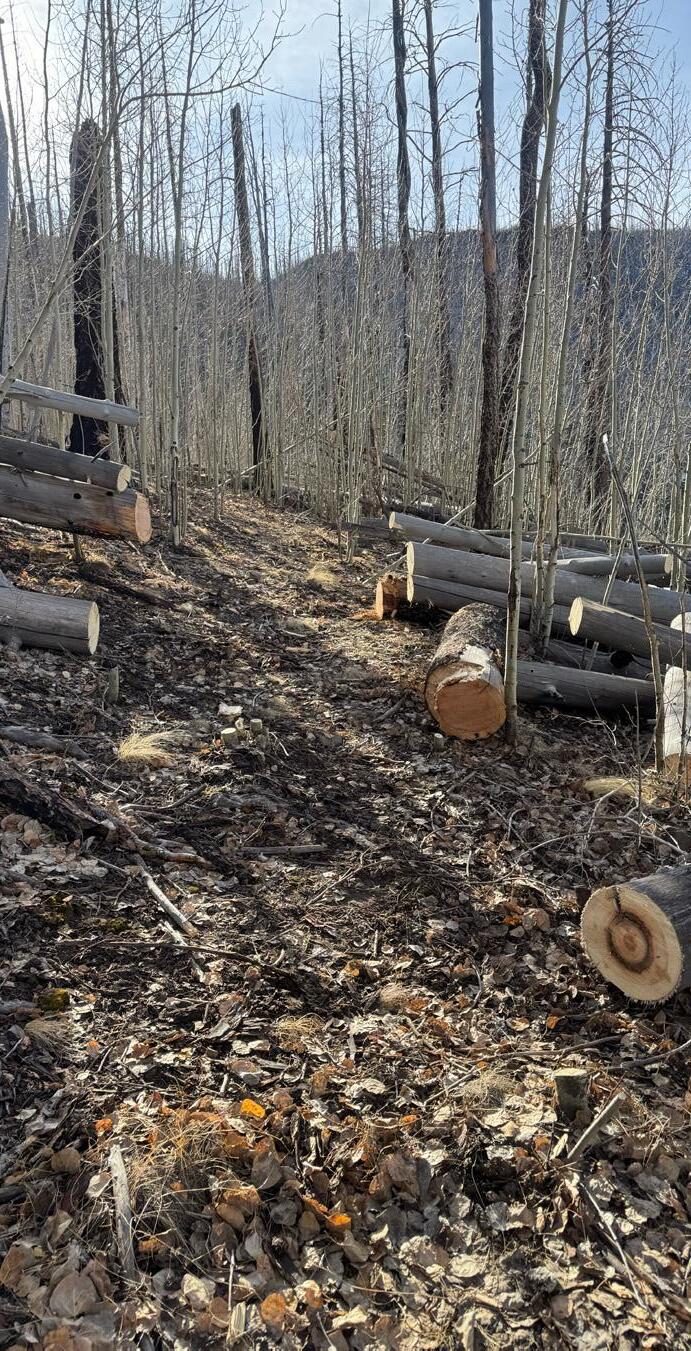
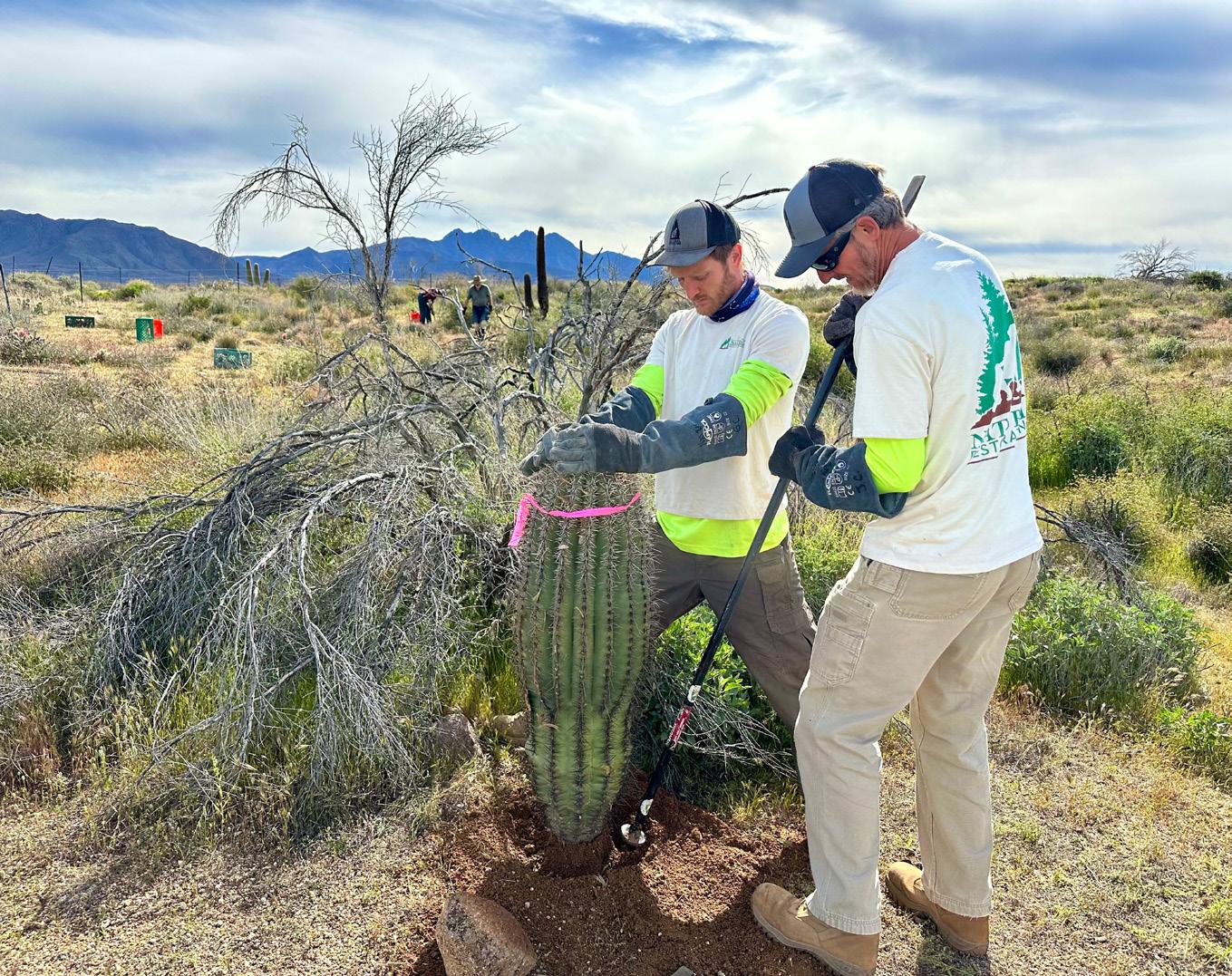
The nonprofit is dedicated to restoring and maintaining non-motorized trails in Eastern Arizona’s Apache-Sitgreaves National Forest. The all-volunteer team tackles everything from brush overgrowth to damaged trail signs, but Fogle is particularly proud of their restoration of Government Trail #119 along Escudilla Mountain’s western slope, which sustained significant damage after the 2011 Wallow Fire. “We spent 858 hours doing the impossible – 16 volunteers made 42 trips up that mountain, and each trip was up to 1,700 vertical feet,” Fogle says. “We cleared a wall of trees into a trail again.” Over six months, Alpine Trail Stewards removed
the remnants of 1,020 decaying, fire-ravaged trees that covered the trail, using primarily crosscut saws in designated wilderness areas where motorized equipment is prohibited.
Alpine Trail Stewards has already cleared 18 miles of trails in 2026. “We’ve been working really hard on building a volunteer system that’s sustainable,” Fogle says. “We want something that outlasts all of us.”
For Nicole Corey and her husband, Justin, that connection to the outdoors and commitment to the community was the inspiration for their nonprofit, Natural Restorations. Founded in 2015, the organization focuses on revitalizing Arizona’s natural spaces through trash and graffiti removal, invasive species management, and replanting projects.
Natural Restorations’ work also centers on supporting military veterans through its Dedicated Restoration Team, inspired by Justin’s best friend, Derek, who struggled to adjust to civilian life after returning from service in the U.S. Army. “Derek told him that he enjoyed the distraction of picking up trash and making the areas he enjoyed look better,” Corey says. “We wanted to provide a low-to-no-stress environment where veterans could spend time in nature around other veterans while
doing something positive where they can see an immediate, visible impact because of their actions.”
Since its inception, nearly 16,500 Natural Restorations volunteers have removed more than 2 million pounds of trash, eliminated over 50,000 square feet of graffiti, and planted more than 100,000 trees and cacti in burn scars in the Tonto National Forest. “Almost 3,000 of those volunteers have been under 18,” Corey notes. “It’s amazing to see kids give up their Saturday morning to pick up trash left behind by careless adults.”
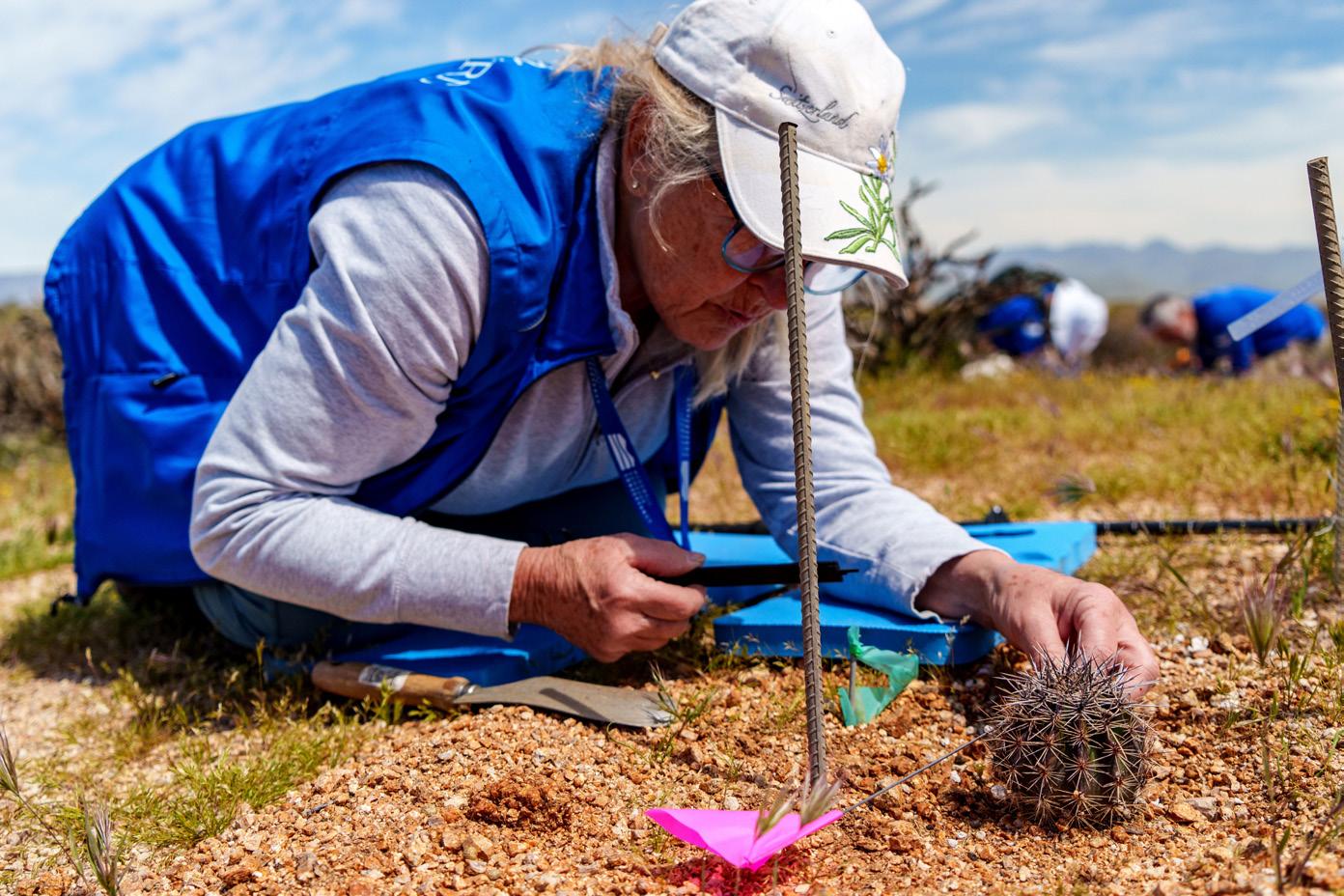
Land stewardship is as much about education as it is restoration and conservation. Environmental education is a cornerstone of the McDowell Sonoran Conservancy’s stewardship program, which oversees more than 30,000 acres of protected land in Scottsdale’s McDowell Sonoran Preserve. “What gives me hope is when we do field trips and the third and fourth graders come out, the stewards teach them, and you
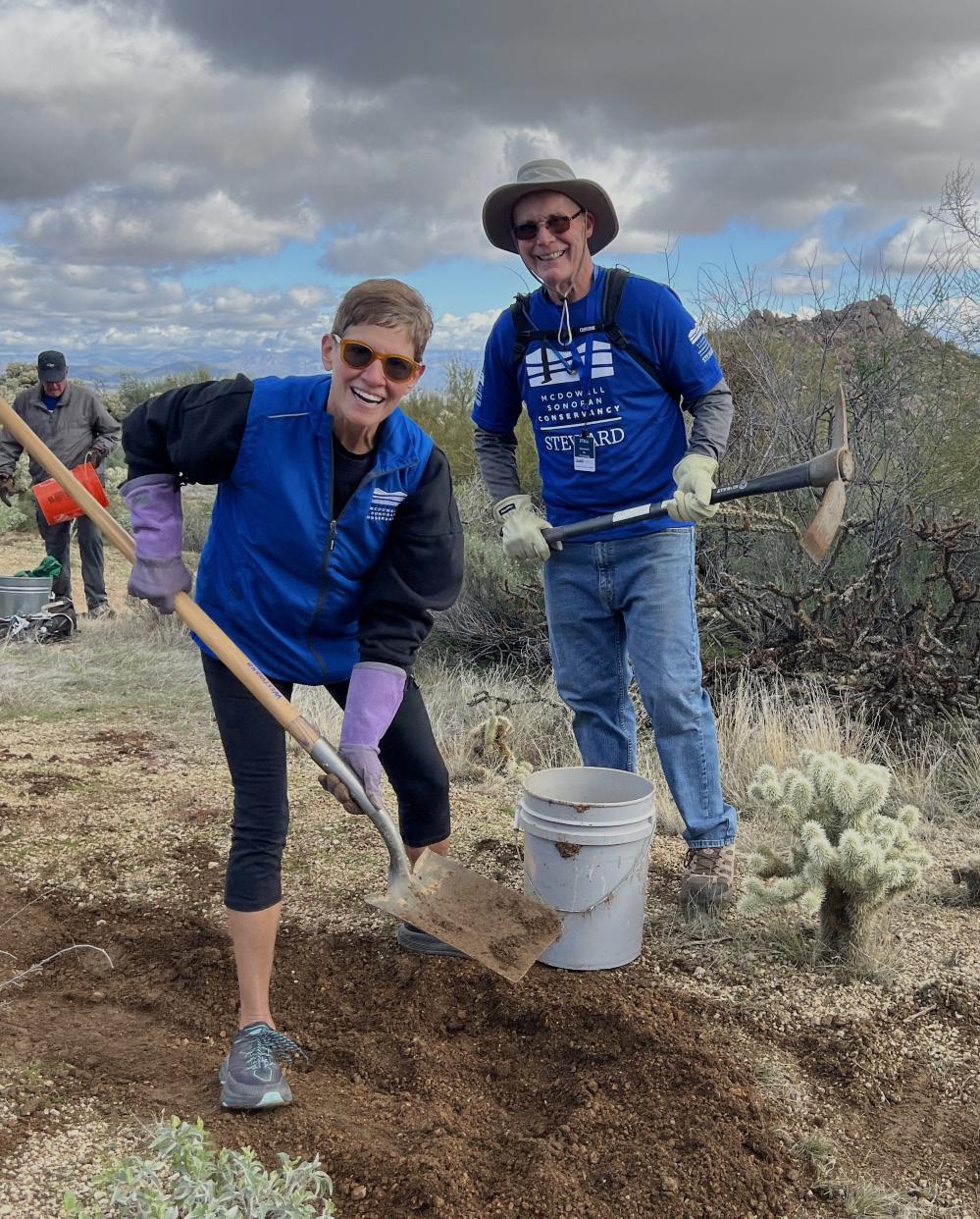
just watch them come alive, ask questions, and get so excited about the plants, the animals, and being outdoors,” says McDowell Sonoran Conservancy CEO Angy Shearer.
It’s also about prevention, she says. McDowell Sonoran Conservancy volunteers regularly patrol the preserve’s 225 hiking and biking trails to ensure visitor safety and help with navigation. “We notice if somebody is struggling, we’ll sit and wait for them to come our way, and then give them direction on the shortest way back,” Shearer explains. “If they are really struggling and need medical attention, we’ll call and get them help, and we’ll tell emergency services where they are so they can locate them easily.”
Extreme heat, drought, and monsoons all take a toll on Arizona’s vulnerable ecosystems, but human behavior poses an equally serious threat. “Trail users can make a huge impact in very simple ways,” Fogle says. “Stay on the trail, respect closures, respect other people, respect the space, pack out your trash, and report issues that you see.”
Shearer emphasizes the importance of understanding and practicing responsible recreation, especially when it comes to respecting trail boundaries. “When you go off trail, you’re crunching on plants, biocrust, and living ecosystems that help the preserve thrive,” she says.
McDowell Sonoran Conservancy stewards also assist scientists with ecological research, including monitoring butterfly migration, tracking tortoise movement through telemetry, and supporting restoration efforts. “When you go out and see the beauty of the preserve and know that you had a big part in that, the reason that the animals are thriving and the plants are doing well… all of that is because of all the hard work of the stewards,” Shearer says. “People don’t realize that, but we know it, and it is just so rewarding.”
A resounding throughline runs through each trail steward’s mission: an obligation to care for the earth, leave it better than they found it, and ensure these practices endure so future generations don’t have to start from scratch. “When I teach geology out here, it doesn’t matter what age it is. I get everybody in a circle, and I have them scoop up a handful of rocks,” Toms says. “And I say, ‘Look at these rocks… Every single one of these has a different story, and every step you’re going to take today is going to be part of that story. This place has a lot to tell, and we need to protect it for future generations to be able to love and continue to read this story.’… Every step we take, let’s make it a better one.”













Grimaldi’s brings its century-old sauce tradition from coal-fired kitchens to home cooking
BY MICHELLE TALSMA EVERSON
IIn kitchens across the country, the shift toward cleaner, more intentional cooking continues to gain momentum. Shoppers are reading labels more closely, seeking out simple ingredients, and looking for ways to recreate restaurant-quality meals at home. For Grimaldi’s Pizzeria, a brand long associated with coal-fired, Brooklyn-style pizza, that shift presented an opportunity not to reinvent, but to return to its roots.
Now, for the first time, Grimaldi’s is bringing its signature flavors beyond the restaurant table with a line of take-home pasta sauces inspired by more than a century of tradition.
The move began not in a test kitchen, but in Italy. In 2023, CEO Joseph Ciolli traveled with his son and the company’s food purveyors to visit the farms where Grimaldi’s sources its tomatoes and olive oil. The experience sparked something deeper than product development.
“While visiting where our tomatoes and olive oil come from, I was inspired to share some of our century-old recipe secrets with the world,” Ciolli says. “We realized we could bring the flavors from our restaurants to home kitchens across the U.S.”
What followed was a careful process rooted in both heritage and modern expectations. Rather than simply bottle an existing recipe, Grimaldi’s chefs focused on refining sauces that reflect the brand’s commitment to quality, while also aligning with today’s demand for transparency and health-conscious ingredients.

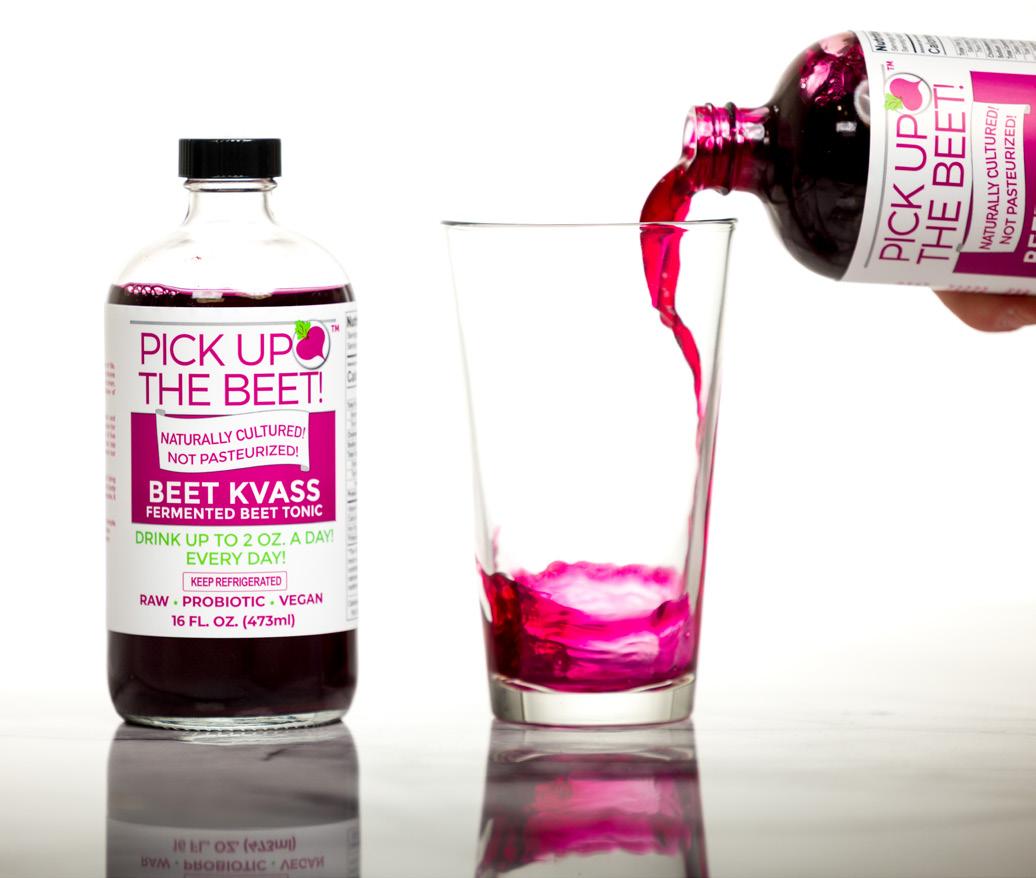







The result is a trio of sauces – marinara, tomato basil, and arrabbiata – crafted with Italian tomatoes, extra virgin olive oil, fresh onion, garlic, and a short list of recognizable spices. Each is gluten-free, dairy-free, certified kosher, non-GMO, and made without soy or canola oils, with no added preservatives.
“Our goal was to create the cleanest and best pasta sauce, matching the unparalleled flavor of our pizza sauce,” Ciolli says. “These clean, fresh ingredients elevate the flavors and enhance any recipe made with them.”
That balance between simplicity and depth is where the brand’s legacy shows up most clearly. Grimaldi’s pizza sauce is crafted from a recipe handed down through generations of Italian-Americans who helped define authentic Brooklyn-style pizza more than
100 years ago. That same philosophy carries through in the sauces, which are designed to meet the same standard found in the brand’s coal-fired kitchens.
Each variety offers a distinct experience in the kitchen. The marinara is rich and straightforward, ideal for classic dishes like eggplant parmesan or baked pasta. The tomato basil brings a brighter, herb-forward profile, with fresh basil echoing the signature finish found on Grimaldi’s pizzas and complementing dishes from fettuccine to chicken parmesan.
The arrabbiata rounds out the lineup with heat, reflecting a growing appetite for bold, spicy flavors. Built on garlic, crushed red chili peppers, and olive oil, it adds depth to dishes like sausage and peppers or serves as a lively alternative to traditional red sauce.
While the sauces are designed to elevate everyday cooking, they also reflect a broader shift in how people think about convenience. Increasingly, home cooks are looking for products that save time without compromising on quality or nutrition.
“These sauces are crafted with the same level of care and attention to detail as the menu items in our pizzerias,” Ciolli says. “We’re excited to bring our traditions to our customers’ home-cooked meals.”
Beyond pasta and pizza, the sauces lend themselves to a range of uses. They can serve as a dipping sauce for everything from mozzarella sticks to fresh vegetables, a base for grain bowls, or a finishing touch for chicken and meat dishes.

At its core, the launch is about accessibility, bringing a long-standing culinary tradition into everyday routines.
In a food landscape often driven by trends, Grimaldi’s approach feels grounded. By focusing on ingredient integrity, heritage, and adaptability, the brand offers something increasingly valued by today’s home cook: food that is thoughtfully made and easy to bring to the table.
And in that way, a century-old recipe finds new life, one jar at a time.
Visit www.grimaldisgourmetfoods.com to learn more about Grimaldi's sauces.














Ingredients
1½ cups penne pasta
4 ounces chicken, diced (about ½ cup)
1 cup mixed veggies (spinach, oil-packed sundried tomatoes, and sliced mushrooms)
4 ½ cups chicken broth
½ cup Chablis or your favorite dry white wine
Pinch of salt
Pinch of pepper
2 tablespoons (5-6 cloves) of fresh garlic
2 tablespoons butter
Directions
Start by cooking the penne pasta according to the package instructions until al dente.
Drain the pasta and set it aside.
Dice the chicken breast, wash the spinach and mushrooms, and slice the mushrooms. In a large pan over medium heat, sauté the chicken, spinach, oil-packed sun-dried tomatoes, and sliced mushrooms with salt, pepper and garlic until the chicken is fully cooked. Add the wine, chicken broth, and butter, then let the mixture simmer for a few minutes so the sauce can slightly reduce.
Add the cooked pasta to the pan and stir until everything is well coated. Serve warm and top with Parmesan cheese if preferred. Serves one. Enjoy!

RECIPE CREATED BY CHEF SANDRA
SERVES 4-6
Ingredients
1 can white beans, drained and tossed with salmoriglio
1 cucumber, sliced
1 orange, peeled
1 bunch of grapes
1 sliced pear Nuts
Olives
Yogurt as a dip
Bruschetta
Sourdough bread
Directions
Arrange everything on a large platter and serve family style.
Copyright 2024 Blue Zones, LLC All rights reserved

BY DORIE MORALES
TThe twin Northern Arizona communities of Strawberry and Pine – often referred to together as Pine-Strawberry – take their respective names from the surrounding ponderosa pines and wild strawberries that once thrived in the area.
Less than a two-hour drive from Phoenix, Pine-Strawberry offers a refreshing mountain respite from the Valley, with a 4,000-foot elevation gain and cooler weather.
Pine-Strawberry is also working to address water shortages, reduce wildfire risk, and promote responsible land stewardship through infrastructure improvements, forest thinning, and brush removal to improve forest health and protect water resources.
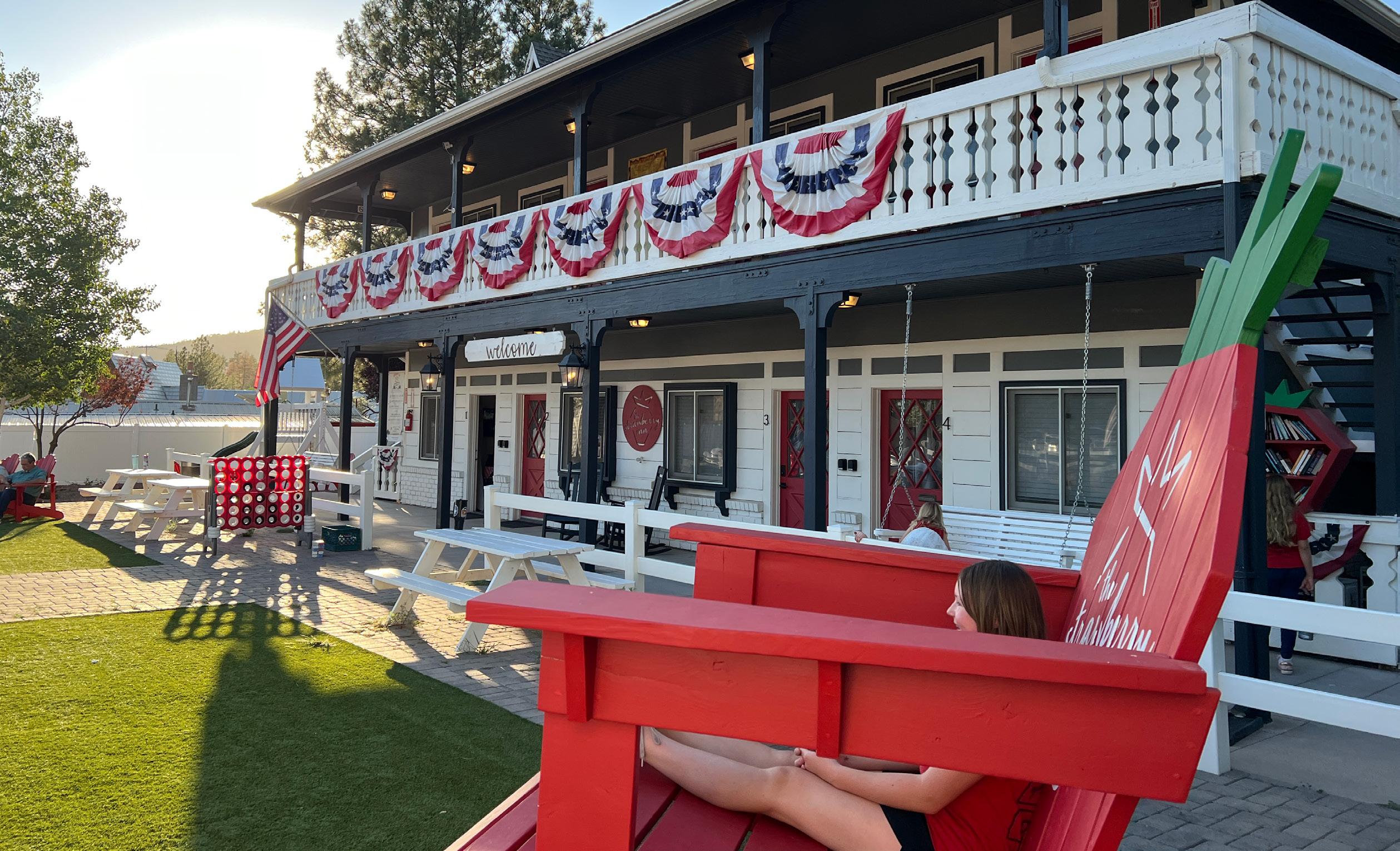
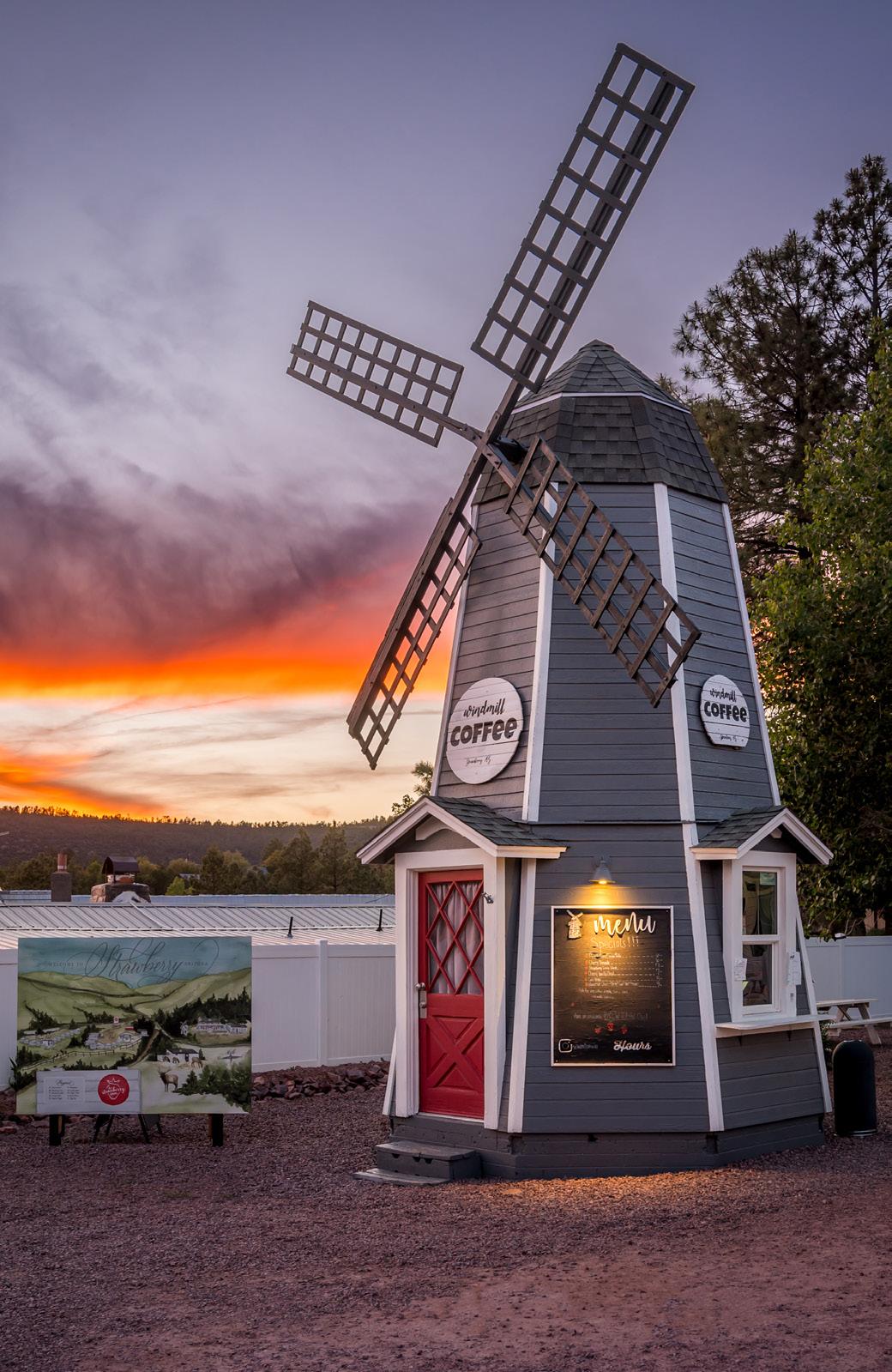
In Strawberry, the boutique Strawberry Inn sits just off Arizona Highway 87, marked by a charming windmill at its entrance. The property offers a range of accommodations, including hotel rooms, cozy cabins, and restored Airstreams, with options that can
host anywhere from two to ten guests.
The Strawberry Inn is also mindful of its environmental impact. The property uses only native, non-invasive plants for landscaping updates and participates in annual Firewise efforts to help mitigate the risk of wildfires. Sustainability extends to daily operations as well. When guest towels get damaged, they’re repurposed as mud towels during rainy and snowy seasons and later used as cleaning rags instead of being thrown away. For pest control, the inn partners with a local company that uses products designed to avoid harming nearby wildlife. The Strawberry Inn also partners with nature influencers
to help educate guests on caring for local trails by embracing Leave No Trace principles.
There is no shortage of things to do in PineStrawberry. Just a few minutes south of Pine, Tonto Natural Bridge State Park is home to the world’s largest natural travertine bridge, along with three hiking trails, picnic areas, and a group-use area. Fossil Creek is also a popular nearby destination. Along the scenic drive from the Strawberry Inn cabins, you can stop to pick seasonal berries before arriving at the creek’s striking blue-green waters, waterfalls, and travertine rock formations. Once there, visitors can swim, hike, explore the creek, or take on the eightmile Bob Bear Trail hike.
While in Strawberry, start your day with a great cup of coffee or a signature strawberry mocha latte from Strawberry Inn’s Windmill Coffee. Savor a sweet or savory empanada or a slice of pie at PIEbar AZ, enjoy a delicious dinner at Mamajoe’s Italian Grill, and then cap off the evening with a locally crafted beer at THAT Brewery & Pub.
At The Strawberry Inn, Pine-Strawberry’s cooler air, natural beauty, and thoughtful stewardship offer the perfect place to reconnect with the natural world.
The Strawberry Inn 5073 AZ-87, Strawberry, Arizona 928-202-7790; www.strawberryinn.com
BY JENNIFER & JOHN BURKHART
She Said: Don't let the heated table and candles fool you; this isn't exactly a relaxing day at the spa. I had no idea what to expect. If someone had said, “Imagine getting a nice big hug from an octopus,” I would have been prepared. Luckily, we had a very sweet therapist, who talked us through everything and checked our comfort level. Those plastic cups with the suction tool can get VERY sucky. The intensity can go up to a level 3, and I was comfy between level 1.5-2. It's not supposed to hurt, but there are some uncomfortable sensations. She also had the “old-school” glass cups, where a flame is used to remove oxygen, thus providing the suction. She preferred this traditional method of working with the elements, and so did I. There's something primal and natural about using fire and glass. The glass cups were very gentle and had a cool, smooth edge that would glide on my lotioned skin when she moved them to a new place on my back or neck. The cups can be placed anywhere on the body that's squishy or flexible, even on the face for cosmetic reasons. Can you imagine walking around with those large, angry circles on your cheeks? Eek. Anyway, it was a short session of about 15 minutes, and then the cups were released. That was such a relief! My skin could finally relax, and I rested there for a minute because I felt sleepy. Walking to the car, I felt a little loosey goosey, and a slight headache was coming on — nothing that a lot of water and a snack couldn't fix. After four days, the circles are still there – some with bruising — but my back pain is reduced, so I’d say it was worth it!

Is your immune system due for a boost, or are you struggling to shake off that post-workout soreness? It might be time to get "sucked in" to the world of cupping. While the tell-tale circular marks look like a run-in with a sea creature or an alien abduction, we promise this ancient modality is worth the temporary bruising. Here is our unfiltered take on the benefits, the pain, and the weirdness.

HeHe Said: This magazine never gets tired of torturing me. This month's modality was cupping therapy, a 3,000-year-old Chinese art that's one step away from blood letting, in my opinion. For the uninitiated, cupping therapy involves placing small cups on your skin and creating suction, either with heat or a pump, to “increase blood flow.” Which is a nice way of saying your back is about to look like it lost a fight with an octopus. I walked into the therapist's office with a smile on my face, obtuse and naive as usual. I was greeted with smiling faces that ushered me back to a room with a massage table. I took my shirt off and laid down on the table, and started asking all my normal chit chat questions, "Where are you from?" "How long have you been doing this?" Yee-haw! All that small talk stopped real quick when the therapist put the first suction cup on me. That thing grabbed my back like a vacuum cleaner attacking a lost sock. I was noticeably quiet, which of course made her ask the standard question, "How's that feeling?" "Oh, great," I said, trying to sound tough while inside my mind I questioned how much I needed this job. It wasn't painful, but it was as close as you can get while still staying in the uncomfortable range and definitely way more intense than I thought it would be. After what felt like an eternity (just a few short minutes), she released the cups and allowed my soul to return to my body. This was by far the shortest therapy we've ever tried — just 25 minutes, start to finish. I left feeling great and far less stressed, but I looked like a human domino. The annoying part of all of this is that it worked pretty darn well. My back felt great the following week and my muscles cooperated more. I would do this again now that I know what to expect. Next time, I’ll plan it a little better — the pool at the gym is going to be a little awkward this week.






May 7
Roars & Pours
Step back into the carefree spirit of camp with an adults-only evening under the stars. Sip craft brews, play outdoor games, and enjoy live entertainment in a lively, open-air setting. From fireside moments to music filled energy, it’s a playful night out that invites you to unwind, connect, and enjoy a little nostalgia with a spirited twist. $13 (must be 21+), 5:30 to 8:30 p.m. Phoenix Zoo, 455 N. Galvin Parkway, Phoenix.
May 9
Dig into a creative morning where desert beauty and hands-on learning come together. Craft your own succulent arrangement in a unique, artist-made vessel while learning how to care for cacti and succulents with confidence. Enjoy light bites, a relaxed atmosphere, and time to connect with others as you create something meaningful to take home. Proceeds benefit the Transplant Community Alliance, supporting programs that uplift and care for the community. $50 includes all materials. 9:00 to 11:00 a.m. Dig It Gardens, 3015 N. 16th Street, Phoenix.
May 12
Sustainability Expo at Desert Botanical Garden
Enjoy a day that blends connection, community, and care for the planet. A welcoming community day pairs with a lively sustainability expo, where inspiration and green living take
May 15 - May 24
2026 Spring Arizona Restaurant Week
Treat yourself to a week filled with inspired flavors and memorable dining experiences. This dining celebration invites you to discover fresh flavors, revisit beloved neighborhood gems, and enjoy creative, multi-course menus crafted by talented local chefs. Bring your appetite and revel in a culinary tour that makes it easy to support local restaurants while treating yourself to something wonderfully memorable. Locations vary.
center stage. With a pay-what-you-can option, it’s easy to join in. Wander blooming gardens, explore artful spaces, and savor time together in a setting that feels both festive and thoughtfully grounded. 8:00 a.m. to 9:00 p.m.; Sustainability Expo activities from 10:00 a.m. to 2:00 p.m. Free. 1201 N. Galvin Parkway, Phoenix.
May 22
Birds and Brew Coffee Break
Start your morning with fresh air, birdsong, and meaningful connection. Stroll scenic ponds with a knowledgeable guide while spotting a wide variety of local and migratory birds, then gather for coffee, conversation, and a short, engaging talk. It’s a relaxed way to meet new people, deepen your appreciation for nature, and enjoy a welcoming community of fellow bird lovers. Free. 6:00 to 9:30 a.m. Gilbert Riparian Preserve, 2757 E. Guadalupe Road, Gilbert.
May 23-24
Celebrate Reggae at MIM
Feel the rhythm and explore the global journey of reggae in a vibrant, all-ages celebration of sound and culture. Discover the roots and evolution of this influential genre through interactive drumming workshops, engaging live performances, and high energy DJ sets that invite you to move, learn, and connect. Included with museum admission, prices vary. 9:00 a.m. to 5:00 p.m. Musical Instrument Museum, 4725 E. Mayo Boulevard, Phoenix.
May 9
Verde Valley Wine Festival
Raise a glass to a lively day along the river, where Arizona’s wine country comes to life in a welcoming outdoor setting. Stroll between tastings, meet passionate winemakers and sample local flavors from nearby kitchens. Browse artisan goods, relax with live music, and soak in the easygoing charm as families gather to celebrate, connect, and enjoy a beautifully curated day outdoors. $25 tickets include six tastes and a commemorative wine glass, $10 tickets for nondrinkers. 11:00 to 6:00 p.m. Riverfront Park, 1284 E. River Front Road, Cottonwood.
May 12
Route 66 Centennial Speaker Series: Foodways on Route 66
Travel back in time through the flavors of America’s most iconic highway with historian and author T. Lindsay Baker. This engaging online talk brings the roadside past to life, tracing the evolution of diners, cafés, and supper clubs that nourished generations on the move. Discover how changing tastes and traditions shaped the journey in a rich, story-filled exploration of culture and connection. Free webinar. 11:00 a.m. Advance registration required.
May 16
International Museum Day
Enjoy a day of discovery where creativity, history, and culture come alive through hands-on experiences for all ages. Build, design, and create while drawing inspiration from science, travel, and innovation. Get up close with fascinating artifacts, enjoy interactive learning moments, and join guided explorations that spark curiosity. Bring the family and revel in a playful celebration of connection, storytelling, and shared discovery. Free. 10:00 a.m. to 5:00 p.m. Museum of Northern Arizona, 3101 N. Fort Valley Road, Flagstaff.
May 23-24
Prescott Off-Street Arts & Craft Festival
Discover a lively showcase of creativity where local makers share their handcrafted goods and artistic talents. Wander through a vibrant mix of booths filled with unique finds, meet the creators behind the work, and explore one-of-a-kind pieces that reflect the spirit of the community. Bring a friend and enjoy a relaxed, inspiring day celebrating local artistry. Free. 9:00 a.m. to 5:00 p.m., Prescott Chamber of Commerce, 117 W. Goodwin Street, Prescott.
Mother’s Day at Tohono Chul
Enjoy free admission for moms, grandmothers, and stepmoms! Celebrate the special women in your life with a day surrounded by beauty and connection. Wander through blooming gardens, explore inspiring art, and enjoy peaceful moments along nature trails. Browse charming shops or savor a delicious brunch, all in a setting designed for relaxation and togetherness. It’s a thoughtful way to honor moms, grandmothers, and all who nurture and inspire. Admission prices vary (free for moms and for children under 4), 8:00 a.m. to 5:00 p.m. 7366 North Paseo del Norte, Tucson.
16
31st Annual Mariachi Festival
Celebrate a joyful day where culture, music, and community come together at Patagonia Lake State Park. Enjoy the lively rhythms of mariachi, the graceful movement of folklórico dancers, and a delicious mix of local flavors from fry bread to street tacos. Sip regional wines, browse, and relax while kids delight in festive activities like a piñata, all set against a spirited, family-friendly atmosphere. Included with park entrance fee: $25 per vehicle. 10:00 a.m. to 4:00 p.m. 400 Patagonia Lake Road, Nogales.
Discover imaginative collections that blend artistry with modern apparel technology, alongside inspiring looks from accomplished alumni. A standout moment celebrates sustainability through inventive upcycled designs, while the flow of fire, water, wood, metal, and earth shapes a dynamic, elemental showcase. $16 general admission, $60 VIP admission (includes two drink tickets). 5:00 p.m. VIP Reception; 6:15 p.m. general admission doors open; 7:00 p.m. fashion show begins. PCC West Campus, CFA Proscenium Theater, 2202 W. Anklam Road, Tucson.
23
Orchids in Tucson 101
Bring new life to your orchids and discover how to help them flourish in the desert. This hands-on session guides you through repotting, watering, light, and care essentials to encourage beautiful reblooms. Connect with experienced local growers, ask questions, and even bring along your own plant for personalized advice in a welcoming, plant-loving setting. $30; members $24. 10:00 to 11:30 a.m.
Tucson Botanical Gardens, Education Building, 2150 N. Alvernon Way, Tucson.

The markets are inherently volatile. It’s in their nature, whether in response to world events, rising inflation, or a change in interest rates. But sometimes that volatility can work to your advantage.
Reviewing your investment strategy and altering it, if necessary, can help you weather economic uncertainty and keep you on track to achieving your objectives.
Contact us today. We can help keep your goals in focus, no matter what mood the markets are in.
18700 N. Hayden Road Suite 525
Scottsdale , AZ 85255
Direct: (480) 419-2016
mark.morales@wellsfargoadvisors.com https://home.wellsfargoadvisors.com/mark. morales
CA Insurance # 0D34255