F or 30 years, we believe in honoring the land that is not ours. We are dedicated to our guests to provide the highest level sourcing, environmental stewardship, and sustainability.
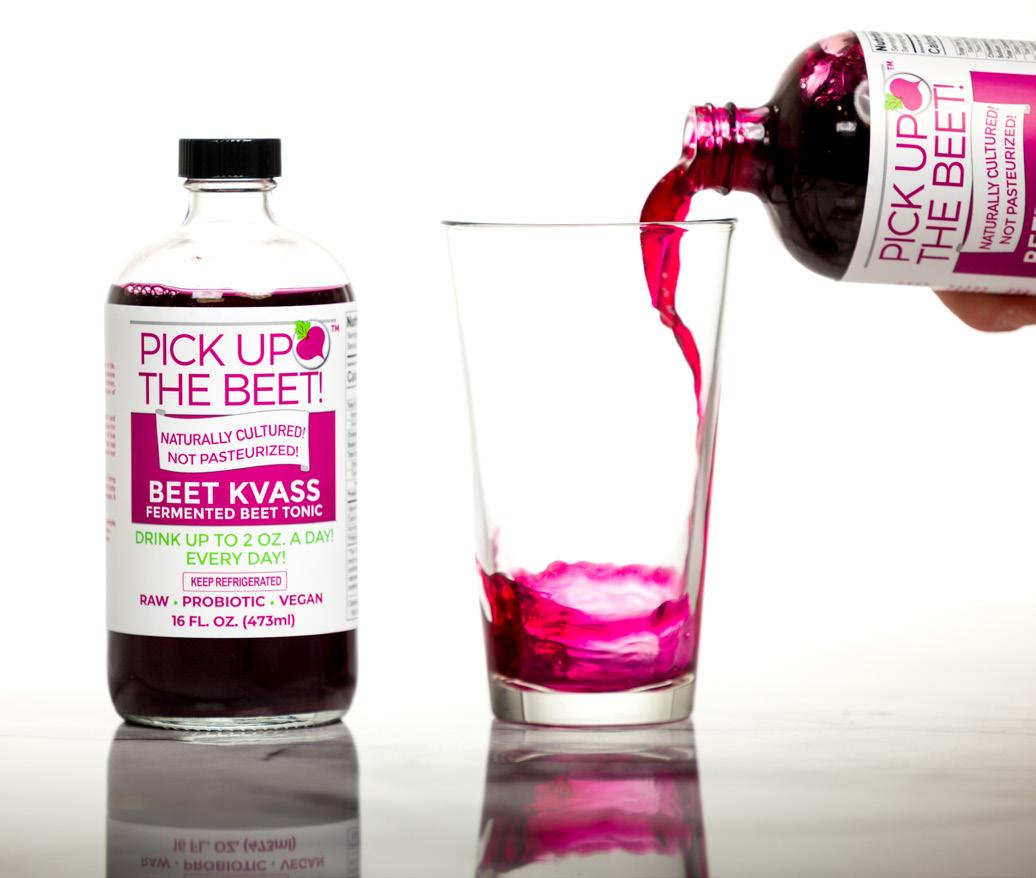
W e want our guests to enjoy our restaurants as more than just places to eat, because they are about making lasting memories. “In food we trust.”
about our mission to fight food insecurity.
An
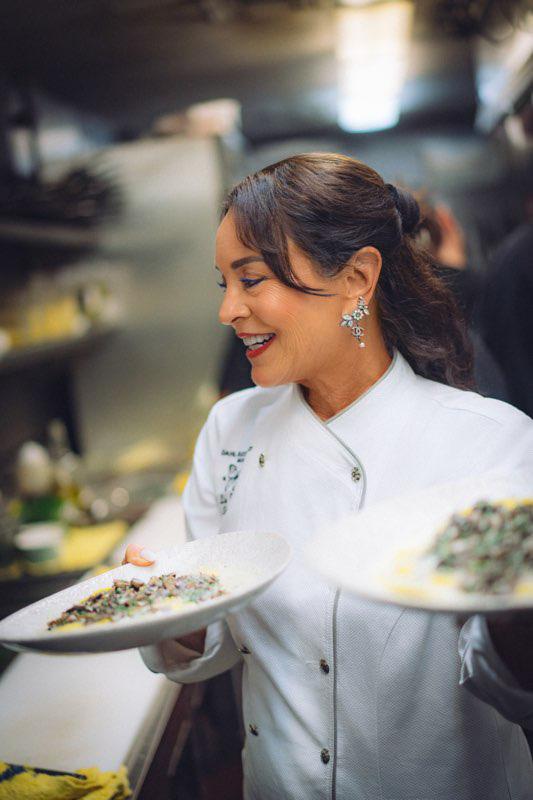
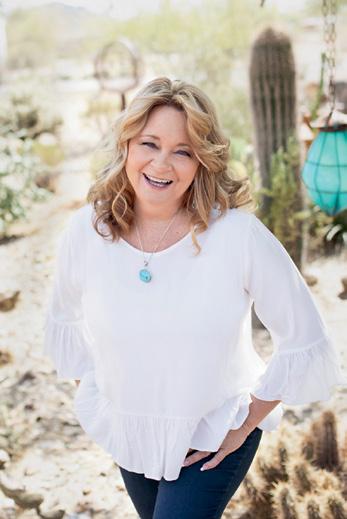
Chef-restaurateur Lisa Dahl transforms grief into purpose to grow a culinary empire rooted in healing and connection
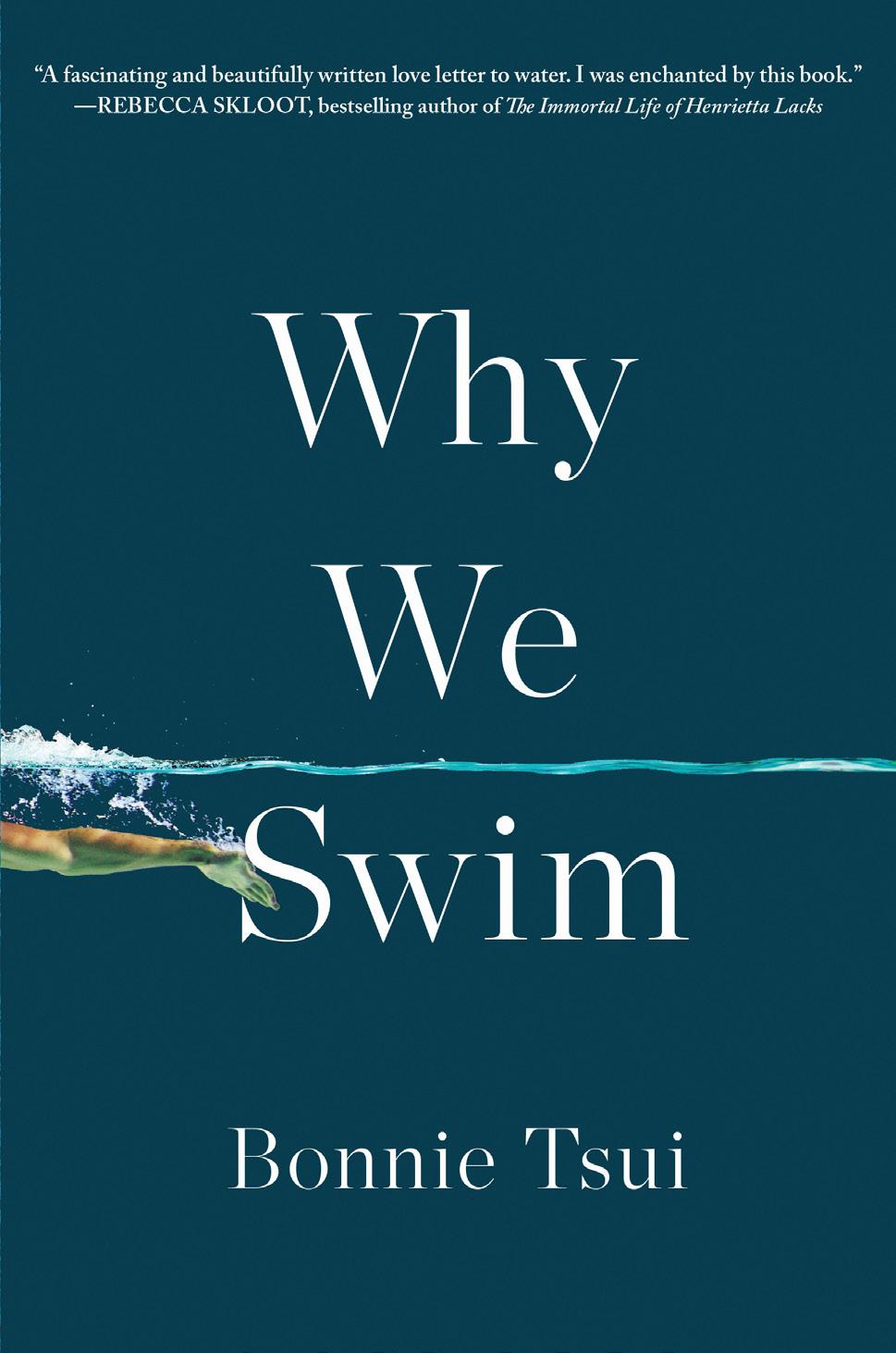
Author Bonnie Tsui explores the cultural, spiritual, and physical impacts of water in her book, Why We
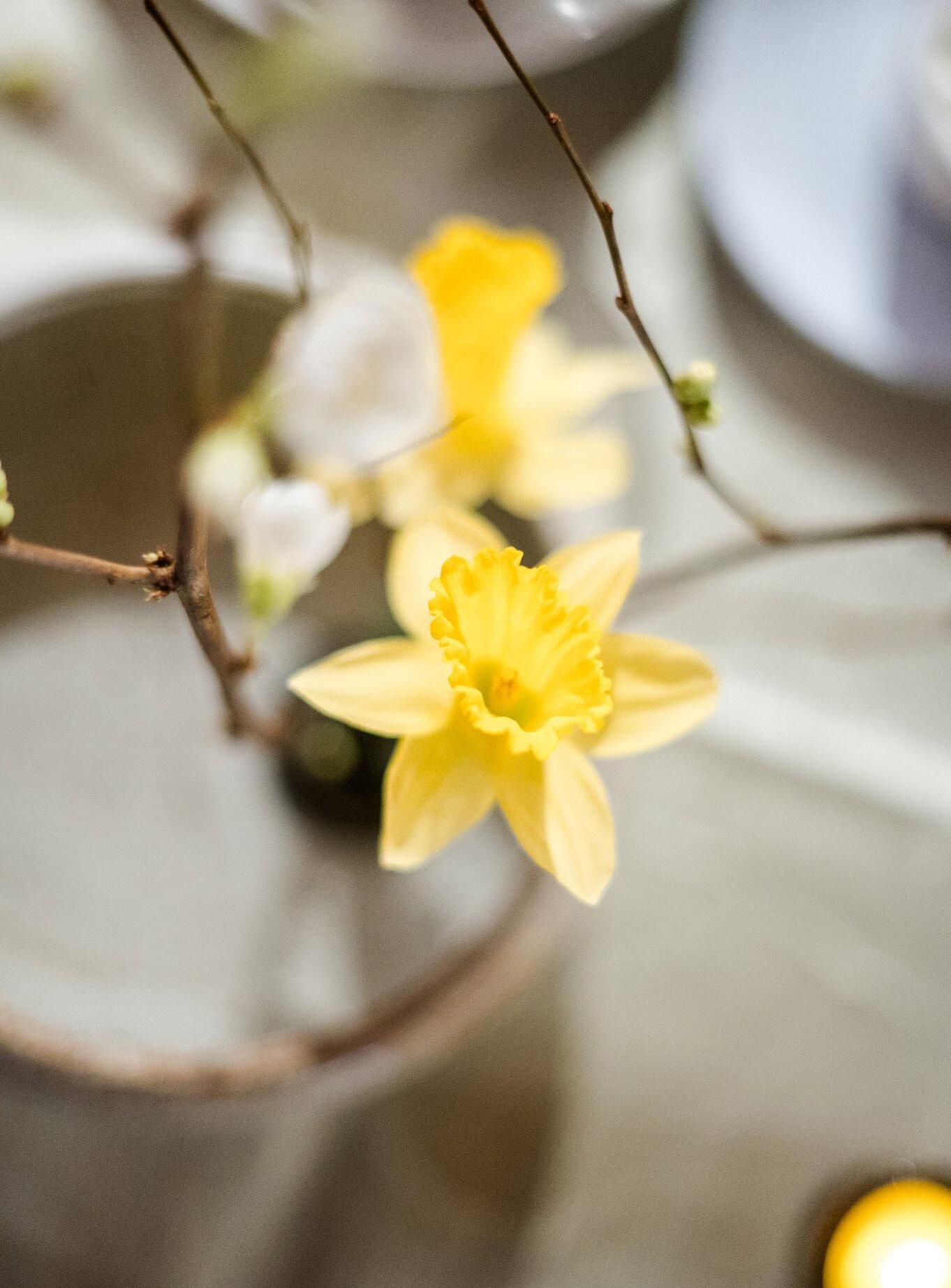
mocktail and a robust summer salad at home
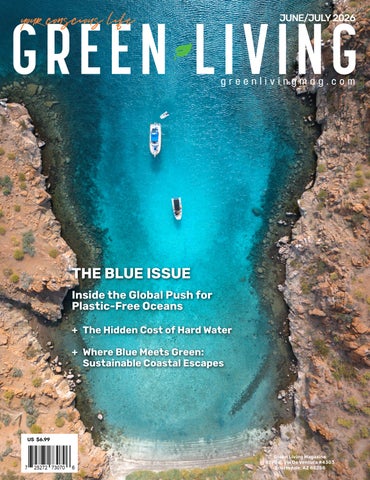
Just over 70% of the Earth’s surface is covered in water. It’s both a vital life source and a formidable natural force. This was the inspiration behind The Blue Issue.
Planning and producing this inaugural edition was a welcome opportunity to expand our perspective as we considered the nearly three quarters of the planet enveloped in blue. Instead of thinking of H₂O as a backdrop to our world, we brought it to the forefront – to examine it as an ever-present catalyst that sculpts our landscape, informs our climate, nourishes our cities, hydrates our homes, and fuels our bodies.
In this issue, we explore the scientific, recreational, historical, and cultural weight of water, revealing how a hidden complexity flows through one of our most familiar resources.
Writer Pam Delany takes a 30,000-foot-view in the cover story about The Ocean Cleanup, the ambitious environmental nonprofit spearheading a global movement to pull plastic from the world’s waterways – one floating barrier, support vessel, and cleanup crew at a time. It’s a story about the engineering and tech involved in this monumental undertaking, but it also touches on the topics of consumption, responsibility, and the human impact on rivers, lakes, and oceans around the world.
Writer Misty Milioto turns closer to home in her edifying feature on hard water. Her savvy reporting is an illuminating reminder that water’s effect on us isn’t always drastic or distant – often, it’s quietly calcifying in our pipes and appliances – and reveals how nature and human-made infrastructure intersect. This issue is dedicated to the life-sustaining liquid that shapes our deserts, curves our coastlines, cascades through our forests, cleanses our bodies, and powers our lives. May it deepen your own connection to water in all its forms – from a small drop in your kitchen sink to the world’s vast marine ecosystems.
Got a burning question or comment? Reach out at editor@greenlivingmag.com.
Story detective Alison Bailin Batz, known as @abseesitall online, has been writing professionally on food and travel since 2007. Her aim in life is best summed up by her social handle as “AB” truly does want to “see it all.” Then she wants to share it all with you.
An adventurer and storyteller with a background in business and sustainability, Pam Delany loves meeting changemakers and sharing their stories. Her research and writing explore the deep interconnection between humans and all living beings, recognizing the land, plants, animals, and elements as relatives rather than resources.
Happy trails,
Madison Rutherford Managing Editor
Pam Delany, writer
Alison Bailin Batz, writer
PUBLISHER
MANAGING EDITOR
ONLINE EDITOR
ART DIRECTION & DESIGN
GRAPHIC DESIGNER
COPY EDITOR
STAFF PHOTOGRAPHER
Dorie Morales
Madison Rutherford
Alice Hafer
Sly Panda Design
Melat Alebachew
Erin Wilson
Brett Prince
CONTRIBUTORS
Alison Bailin Batz
Jennifer Burkhart
John Burkhart
Pam Delany
Anna Dorl
Misty Milioto
Mary O’Driscoll
Terri Schlichenmeyer
Shelby Tuttle
BUSINESS DEVELOPMENT & PARTNERSHIPS
Don Fergus - don.f@greenlivingmag.com
George Heussner - george.h@greenlivingmag.com sales@greenlivingmag.com
hello@greenlivingmag.com
Advertising: sales@greenlivingmag.com
Editorial: editor@greenlivingmag.com
480.840.1589 • www.greenlivingmag.com 8790 E. Via de Ventura #4303 Scottsdale, AZ 85258
ON THEWeb
Harrison Ford Tells ASU Grads: ‘Go Change the World’
In May, actor Harrison Ford delivered the commencement speech at Arizona State University, emphasizing the need to protect carbon-rich forests, wetlands, and oceans to slow planetary warming. “If nature isn’t kept healthy, humans won’t survive. Simple as that,” he said.
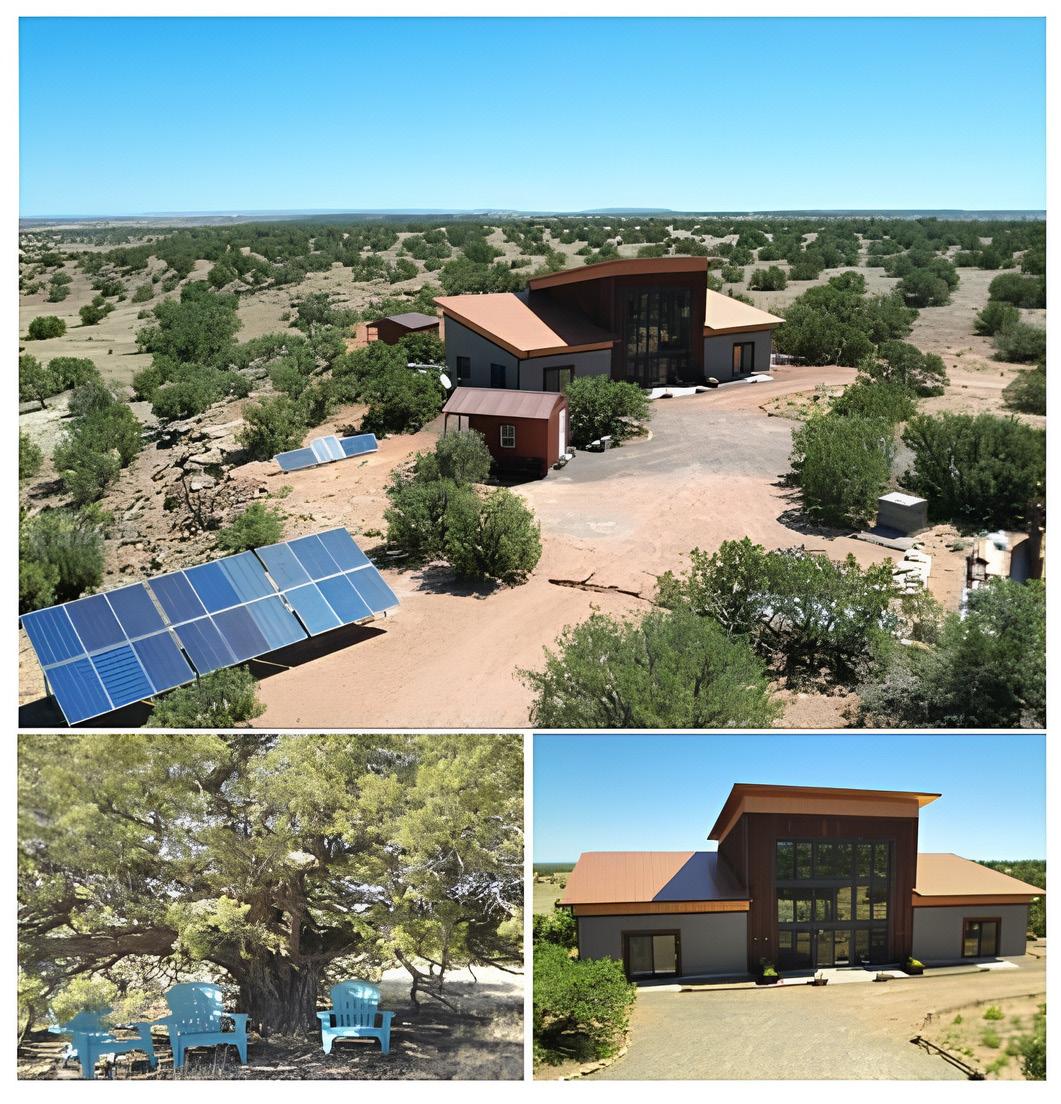
How to Build a Non-Toxic and Healthy Home
We spend 65% of our lives indoors; our home is our health. Most building materials contain untested chemicals that can off-gas for decades. Homes built with non-toxic and healthy materials are rare but possible. Being aware of things like avoiding wireless signals, EMF exposure, water filtration, and low-VOC finishes can help.
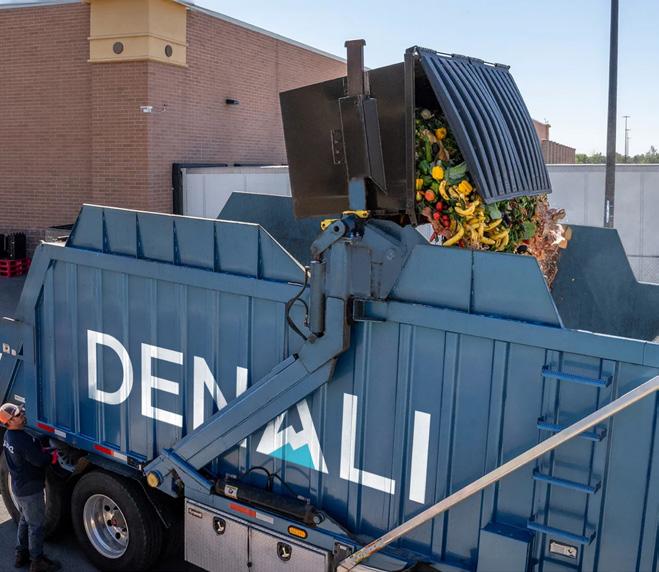
How Phoenix Is Building a Circular Food System
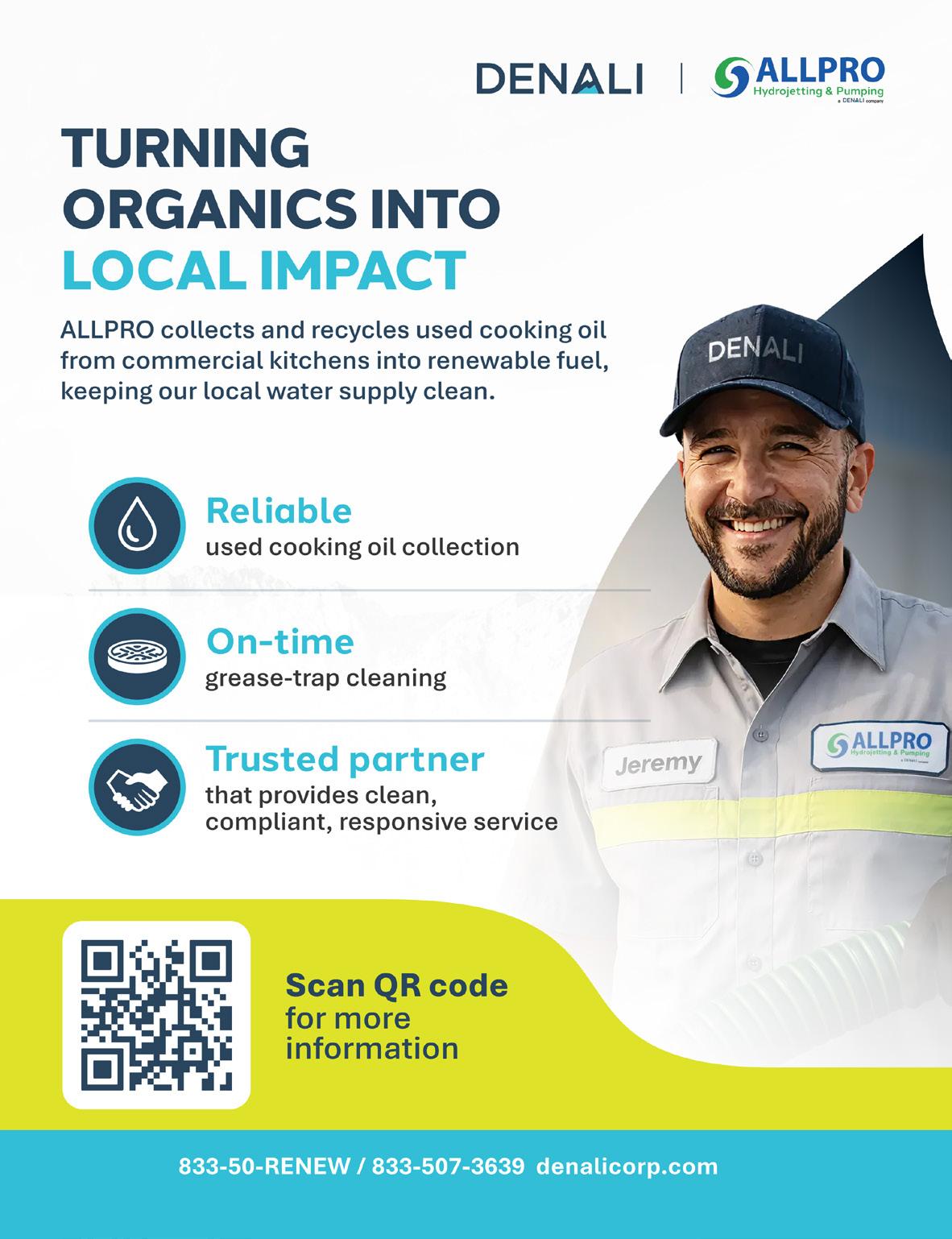
If you’ve ever wondered where food goes when it’s not sold, Denali has the answer. This local Phoenix business transforms food waste into renewable products. Through partnerships with businesses, institutions, and municipalities, they collect billions of pounds of non-edible food materials yearly, keeping them in circulation and out of landfills.
SAVOR
TRENDINGGreen
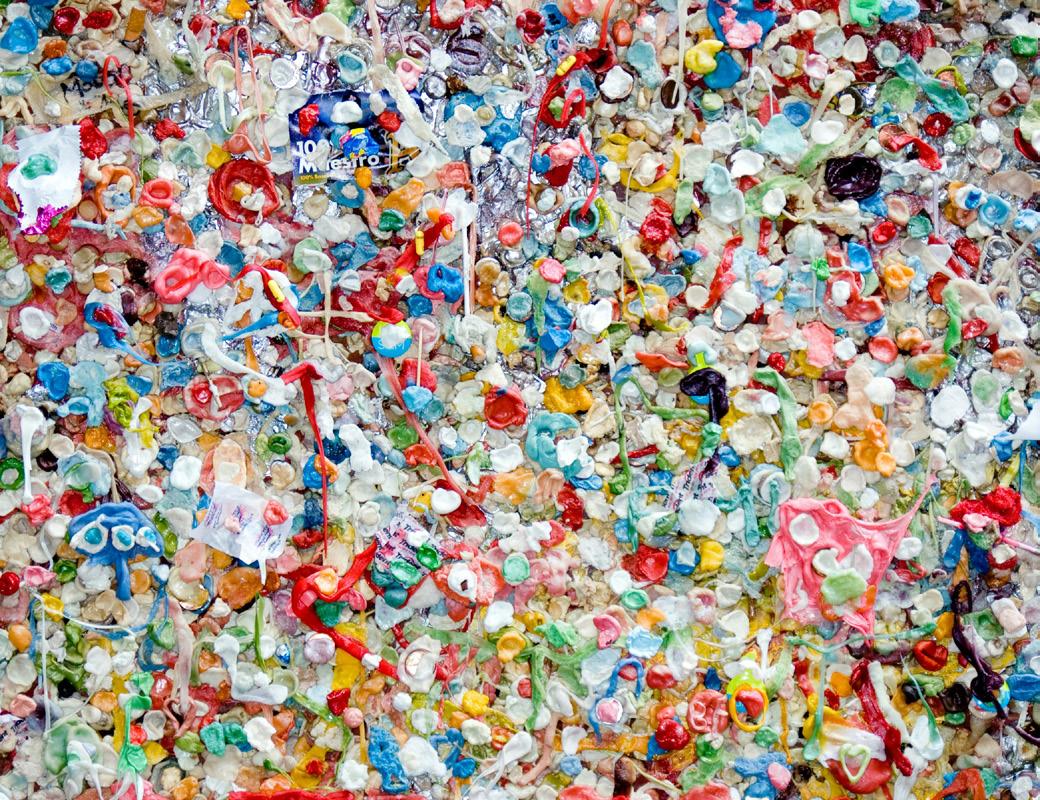
Scientists Use Sunlight to Turn Plastic Waste Into Fuel
Researchers at Adelaide University have outlined processes for converting discarded plastic into clean hydrogen fuel using solar-powered technologies. The study in Chem Catalysis highlights how plastics rich in carbon and hydrogen can be repurposed as an energy source rather than waste – a potential pathway toward a more sustainable circular economy.
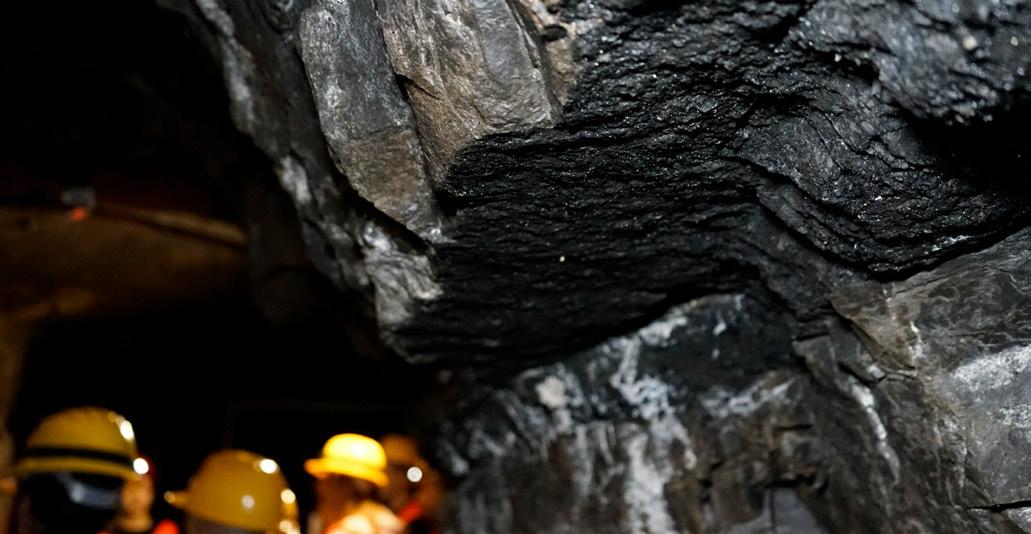
This Coal Town Is Heating Its Buildings With Water From Abandoned Mines
Cumberland, British Columbia, is reimagining its coal mining past as a clean energy opportunity. Water trapped in abandoned mine tunnels could be used in a geothermal system to heat and cool buildings efficiently and with minimal emissions. This eco project could anchor a community-wide shift to low-carbon heating and cooling.
Earth's Oldest Rocks May Hold the Key to Clean Hydrogen Energy
Scientists have discovered that ancient rocks deep beneath Canada are naturally releasing hydrogen gas, offering new evidence that Earth, itself, may contain significant untapped sources of clean energy. Using data collected in Ontario for over a decade, researchers found enough hydrogen to power more than 400 households annually.
New Study Warns We May Have Surpassed What Earth Can Support
According to a sweeping new study by Flinders University analyzing more than 200 years of population and environmental data, humanity may already be living far beyond what Earth can sustainably support. Researchers found that current consumption is outpacing planetary boundaries. The findings are intended to accelerate action on sustainable resources.
New Device Turns Seawater Into Drinking Water With Zero Waste
Scientists have developed a solar desalination system that turns seawater into drinking water without creating environmentally damaging brine. Laser-textured metal panels use sunlight to evaporate water while automatically directing salt deposits away. The system captures nearly all dissolved salts as solid materials and can also recover lithium from leftover materials.
Photo by Ricardo Gomez Angel on Unsplash
Photo by Vedrana Filipovic on Unsplash
Photo by Janusz Walczak on Unsplash
Photo by Matt Hardy on Unsplash
Photo by Marc Newberry on Unsplash
OUTRAGEOUSCool Stuff
BY ANNA DORL
Water, water, everywhere – it’s a fundamental part of life. Most of the human body, and most of the Earth we know and love, is comprised of this life-giving source. As the substance that our bodies require to live, water is often overlooked until its absence (or the power of its presence) is felt. It sustains us, and we must in turn conserve and sustain this renewable resource. Continue the symbiotic relationship we have with H₂O with these water-conscious products.
sproos! Shower Kit + Filter
Showering is one of life’s small luxuries, and the way we shower is just as important as what we shower with. The sproos! brand brings a colorful solution to unfiltered water with a powerful build and a popular look. This kit includes a hand shower kit with a filter, a free filter cartridge, and a 24inch slide bar with a hand shower slider and soap dish. With mindful composition and materials, the kit doesn’t contain any toxic coating or chrome plating. A safe and sustainable choice like this one can remove chlorine from household water, softening your hair and skin to elevate your shower experience. www.sproos.co
GOpure Pet Bowl
Why should people be the only living beings in the home to drink fresh water? Many pet owners already go the extra mile to ensure their furry friend receives a crisp drink from a filtered fountain, like the fridge or a sink attachment. But what if your pet’s bowl itself did the hard work for you? GOpure offers a filtered solution for animals that keeps on giving. Each bowl holds 64 ounces inside stainless steel, with an interior GOpure pod for planet-friendly purification. The pods act as filters, preventing your pets from drinking the biofilm that can often accumulate in their bowls. www.gopurepod.com
Nurture Valley Waterless Foaming Cleanser
With myriad waterless cleansers on the market, there’s no perfect answer for the best product. But one company offers a naturally clean and simple choice that appeals to various consumer needs. Nurture Valley’s Waterless Foaming Cleanser gives users a hospital-grade and water-free cleanse. Containing a natural soap suitable for hands, face, and body that requires no rinse, all users need to do is put it on and wipe for cleanliness. Hypoallergenic, sulfate- and paraben-free, and dermatologist approved – this is a clean choice that works for everyone. www.nurturevalley.com
La Pochette Aqua Bag
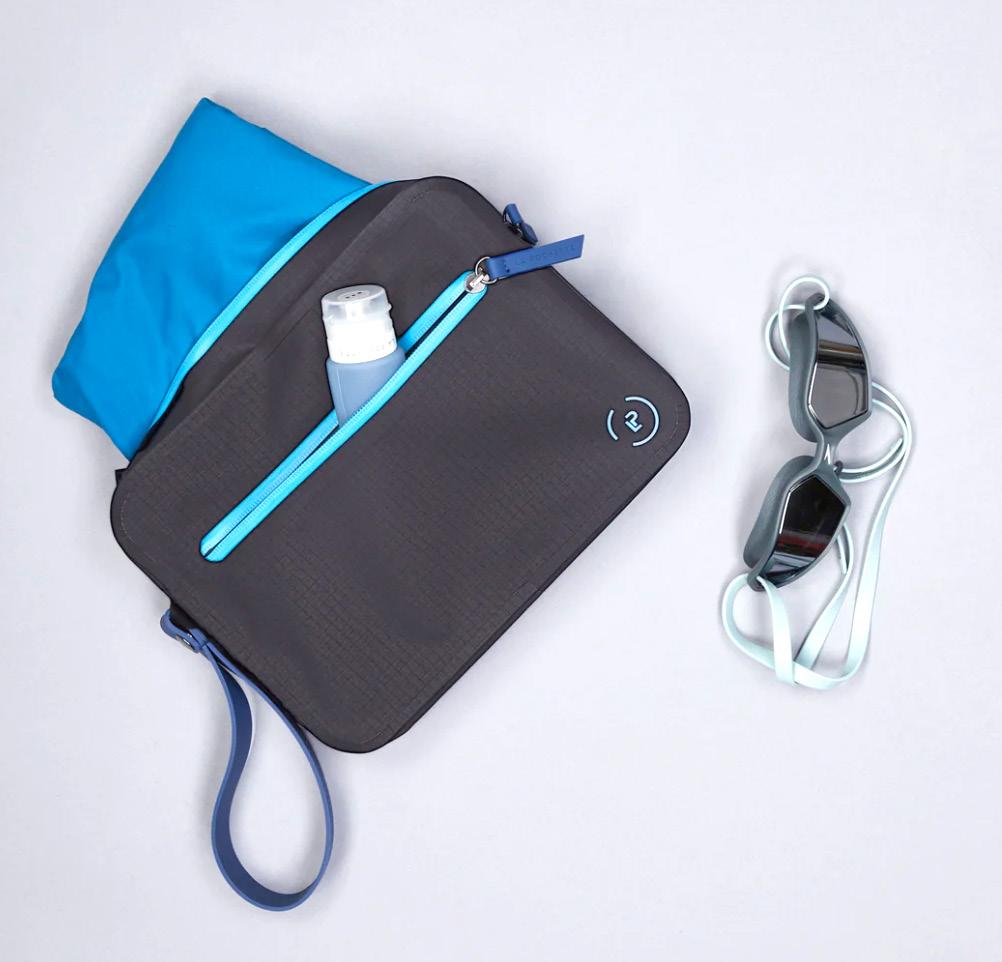
Have you ever gone swimming somewhere and desperately needed a place to put your swimsuit after you changed into clean, dry clothes? Waterlogged swim gear is bound to soak into and stink up a canvas bag, infiltrating your clean belongings. The Aqua Bag line from La Pochette presents a better way to bring your swim stuff home after a dip. Its 100% recycled polyester ripstop construction makes it washable, and its silicone strap allows for easy hanging anywhere in a gym, beach, or hotel. Two pockets include an option for wet gear and a dry section for electronics, keys, and other belongings. www.lapochette.co
Quut Inflatable Boat
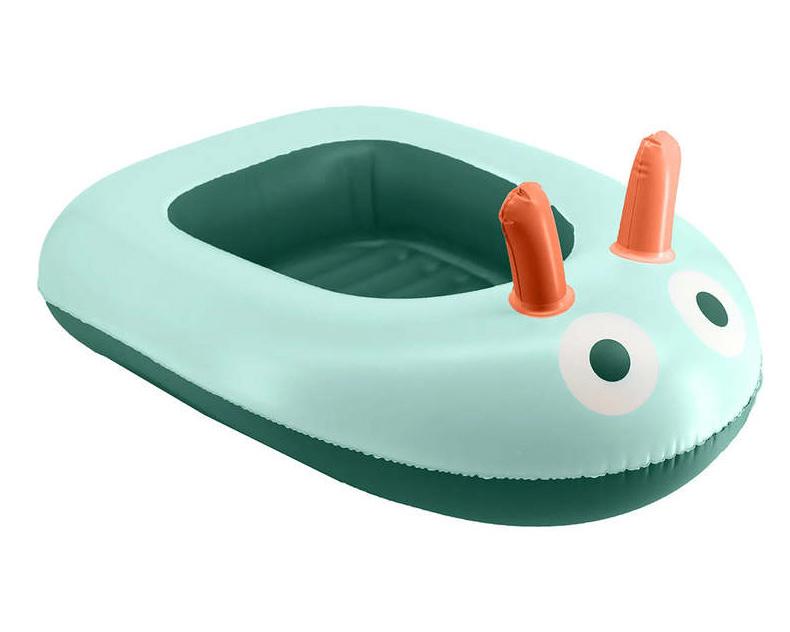
As summer rages on, families often look to replace well-loved pool supplies. Instead of running to a big box retailer to get another vat of harmful plastic, consider Quut Toys. The Earthconscious Belgian toy company creates mindful pieces of fun for families around the world to enjoy. This Inflatable Boat, in the color Garden Green, is made with 100% recyclable durable vinyl and contains no BPA, latex, or phthalates. It even includes a repair patch in case your little captain’s new vessel springs a leak in the pool. www.garmentory.com
Hot Topics
After a record-breaking spring of extreme heat in Phoenix, residents, nonprofits, and civic leaders will gather at The Longest Climate Community Table to turn urgent climate concern into shared action.
BY MARY O’DRISCOLL
IIn March, multiple historical heat records were shattered in Phoenix. The city reached the hottest and earliest high of 105 degrees and experienced 15 days of broken daily-high records with a whopping nine days of triple-digit temps. Hiking trails were closed. Spring training games were pushed to the evening. The typically ideal time for restaurants to host guests on the patio required air conditioning indoors.
Deadly extreme heat is impacting Arizona now – not later – and residents are bringing their energy, talents, and resources to connect, collaborate, and share solutions on the state’s key environmental issues. You can join the conversation on Tuesday, June 23 at “The
Longest Climate Community Table – Phoenix” at the Desert Botanical Garden. This project is planned by a collaborative of environmental nonprofit leaders and community members for TogetherTuesday, a new national initiative from GivingTuesday with a focus
Courtesy National Weather Service
on small acts of generosity that highlight care in their communities. The free event starts at 4 p.m. and is open to the public.
Lead organizer Earth Gives is using the format of The Longest Table, a collaborative community concept developed by a nonprofit organization in New York. The Climate Table will set a foundation for a collaborative, year-round network focused on advancing practical solutions related to the environment, climate, and community resilience.
The event is also made possible by organizations like Sprouts Healthy Communities Foundation, Earth Gives, Urban Farming Education, Arizona Local News Foundation, Third Act AZ, ABC15, and Green Living magazine.
“This isn't about listening to speeches,” Earth Gives founder Rhonda Bannard says. “It's about bringing people together around tables to share ideas, learn from one another, build trust, and discover how we can move further and faster together.”
Urban Farming Education CEO Joe Roselle is also all in. “Arizona's greatest environmental challenge is not a lack of solutions – it’s the gap between information and action,” he says.
Because an important piece of this program is to inform and educate the public, The Longest Climate Community Table – Phoenix is spotlighting Sustaining Arizona, a new Arizona Local News Foundation initiative to secure funding to place more environmental-solutions journalists into newsrooms statewide. The Arizona Local News Foundation is the nonprofit arm of the Arizona Media Association that works to strengthen local communities through public-focused journalism.
“Journalism shouldn’t just tell us about what’s broken; it should help understand what’s working and discover ideas worth replicating,” says the media group’s CEO Tregg White. “A focus on our natural resources, water, growth, and environmental sustainability is key to our future.”
The June 23 event is open to all. Residents, nonprofit leaders, businesses, educators, policymakers, journalists, students, and community advocates are all invited to meet, connect, discuss, and share solutions on how to protect the future of Arizona.
Interested parties are requested to register at earthgives.org and should plan to be engaged in facilitated discussion throughout the event.
Habitat for Humanity Central Arizona
By donating gently used items to your Habitat ReStore, you’re not just clearing out your home; you’re helping to build homes, strengthen communities, and instill hope throughout Arizona.
When you recycle your old home goods, you help Habitat for Humanity Central Arizona build more homes in your local community.
Learn more at habitatcaz.org/restore
The Dahl House
After the tragic loss of her son led her to Sedona, chefrestaurateur Lisa Dahl transformed grief into purpose: growing a culinary empire rooted in healing and connection
BY MADISON RUTHERFORD
LLisa Dahl did not arrive in Sedona in 1995 with the intent of starting a slow food fine-dining movement or building a restaurant dynasty.
She was originally drawn to the famed Northern Arizona spiritual enclave in the wake of tragedy, seeking healing after the death of her only son. In March 1994, while living in the San Francisco Bay Area, 23-year-old Justin was fatally stabbed after attempting to render aid to a robbery victim. “He tried to help someone and, in that act, lost his life,” Dahl says. “It called for me to try to be receptive to a higher calling, which is just what I’m here to do… somehow touch lives.”
Dahl turned to cooking as a tool to heal, a calling that quickly led to the opening of her flagship restaurant, Dahl & Di Luca Ristorante Italiano, in November 1995. She now oversees six restaurants – including Mariposa Latin Inspired Grill, Cucina Rustica, Butterfly Burger,
and Pisa Lisa – in Sedona and surrounding areas. Though she’s been honored with Top Chef and Food Pioneer Foodist Awards from the Arizona Restaurant Association and dubbed the “Culinary Queen of Sedona,” Dahl doesn’t see herself as royalty, calling the moniker a misnomer that implies more glamour than her reality. “I don’t call it an empire… I didn’t call myself the pioneer,” she says. “Every day, there is something that has to get fixed, improved, handled.”
Dahl is more focused on growth – spiritually, personally, and creatively – than financial gain. “I still think about raising the bar in every way,” she says. “We’re always looking for new ways to be all that we can be and stay known for who we are, which is restaurants that leave
you with more than just a place to eat and fill your belly… We’re places that you store memories.”
The self-taught chef-restaurateur carries a quiet confidence and humility. She views food as a vehicle for restoration, connection, and care and believes the industry is shaped as much by the people in her kitchens and dining rooms as the ingredients and preparation on the plate. “If people love it and feel it, then that’s so much of your joy. It’s so much of a twoway reciprocation,” she says. “I live for it… I am addicted to interactions with people… It’s the people that will keep you always wanting more.”
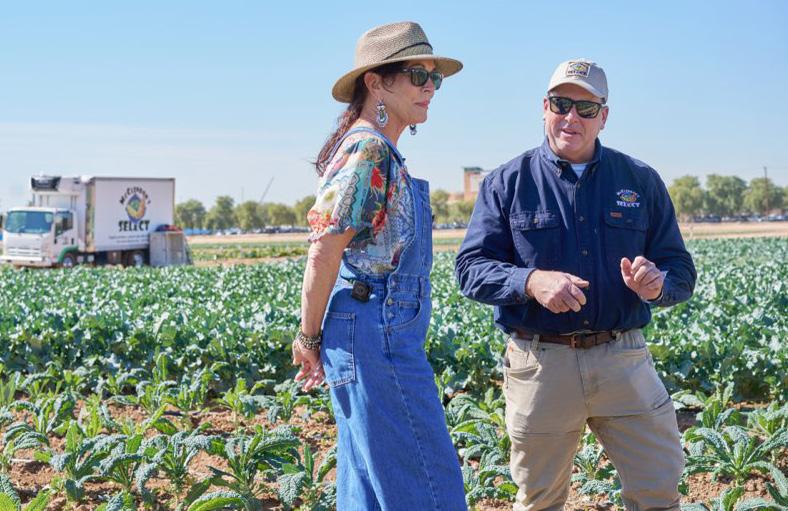
When she first arrived in Sedona, she struggled to establish relationships with reliable produce vendors. “In those early days, basil was an exotic ingredient,” she says. Early on, she partnered with Phoenix-based produce distributor McClendon’s Select, which still delivers twice weekly to her restaurants.
Her son’s spirit remains ever-present. “I miss him every day. He surrounds me,” Dahl says. “I have pictures of every kind you can imagine of Justin everywhere.” Her journey of transmuting profound loss into hope and healing is chronicled in Lisa Dahl: Blessed by Grace, a 26-minute documentary directed by James Beard Award-winning culinary photographer and creative director Eric Wolfinger, which debuted at the Sedona International Film Festival in 2025.
she says. “How you heal yourself is giving to others.”
The next phase of her charitable arm is Project Soup Hope, which centers on her proprietary vegan and gluten-free soup – made with organic quinoa, legumes, lentils, and other nutrient-dense vegetables. Despite its plant-based composition, the soup is designed to be deeply hearty and layered with flavor, developed through a slow cooking process that gives it a richness often associated with meat-based soups. Dahl describes it as more than just a dish, positioning it as a restorative, purposedriven offering that will eventually be packaged for retail and broader distribution. Proceeds from any soup served across her six restaurants also go directly to The Lisa Dahl Foundation.
In 2024, she established The Lisa Dahl Foundation as a 501(c)(3) nonprofit focused on addressing food insecurity, supporting Indigenous populations, and expanding community gardening programs. “One of the most wonderful things that comes along with being a restaurateur is the ability to give in so many diverse ways,”
Future plans also include developing a community garden and kitchen named after Justin, designed to “restore hope” in food deserts. The program will offer hands-on opportunities to learn how to cook and, ultimately, pathways into professional kitchens, using ingredients grown directly from the garden.
“I found solace in knowing that if I dug my purpose into my local community at large, that I could somehow take a bite out of food insecurity on a global level right in our backyard,” she says. “There’s so much hunger. I could start falling into despair over Gaza, Iran… but when I realized that an hour in any direction, there are people who don’t even have electricity or running water… I knew that’s what my foundation was going to do… It starts at home. It starts in the kitchen.”
Visit www.lisadahlfoundation.org for more information or to get involved.
Why We Swim: A Deep Dive into the Human Connection to Water
Author Bonnie Tsui combines memoir, history, and science to explore water’s cultural, spiritual, and physical impact on humanity
BY TERRI SCHLICHENMEYER
OOne step, another, and a hop outward. Somersault once, kick back, arms up, and knife cleanly through the surface of the water like a sword through cake. Not a drop out of place in that dive, hardly a splash. So why did you do it? According to author Bonnie Tsui’s 2020 book Why We Swim ($26.95, Algonquin Books of Chapel Hill), there could be many reasons, including survival, healing, pleasure, competition, community, and exercise.
If there's one thing we know about summer, it's that it can get hot. Like, melt-your-shoes, crispy-grass, sweat-’til-you're-wet hot. And that's when any body of water starts to look mighty tempting. But, Tsui writes, “We… are not natural born swimmers.” Throw us in the water and, without lessons, we flail.
Lessons aside, cave art discovered in 1933 shows that humans have been swimming for at least 10,000 years – and they probably learned how by watching those who figured it out before them. That likely happened in the “Green Sahara,” where there were once verdant meadows and cool pools.
Bottom line: we are land animals that are attracted to water, and not just to drink. Scientists call us “secondary” swimmers, although, in some cultures, it seems as though our fellow humans are half-fish. The Moken people of Southeast Asia can see underwater in ways that most of us can't; many Bajau from the same area are born with spleens that allow them to stay underwater for minutes, rather than the seconds most of us can manage. Japanese ama (“sea women”) can freedive hundreds of times a day to forage and collect pearls, abalone, and seafood. Yes, even some Americans can swim with an endurance that may sound superhuman.
But it's not, not really. For some people, it's a matter of genetics and being blessed with a physical quirk that allows impressive feats in the water. For others, it's a challenge, a lifesaver, an obsession, a hobby, or a pain to overcome. And for some, Tsui writes, it's a matter of ensuring that humans “teach ourselves how to live with water, not how to keep it at bay.”
So, you say you’re landlocked. Not much more than a puddle in sight. And that's okay: instead, dive into Why We Swim this summer for some cool refreshment.
Author Bonnie Tsui
Indeed, Tsui's writing brings such strong images to mind – of water, of cold or heat, of the kicks and reaches that swimming requires – that you’ll almost hear the seagulls and want to reach for a towel. It will remind you of swim meets in high school, of skinny-dipping in the lake, and building sandcastles on the shore.
But it isn’t just that sense of beachiness that's inside this book: Tsui weaves history, science, psychology, and interesting mini-bios of people who’ve astounded researchers, both accidentally and on purpose, with their prowess in the water. Tsui also includes personal stories to tie the book together.
Whether you’re spending this summer by the pool or simply dreaming of a beach day, Why We Swim will make a nice splash.
BIG IDEAS
START IN SMALL COMMUNITIES
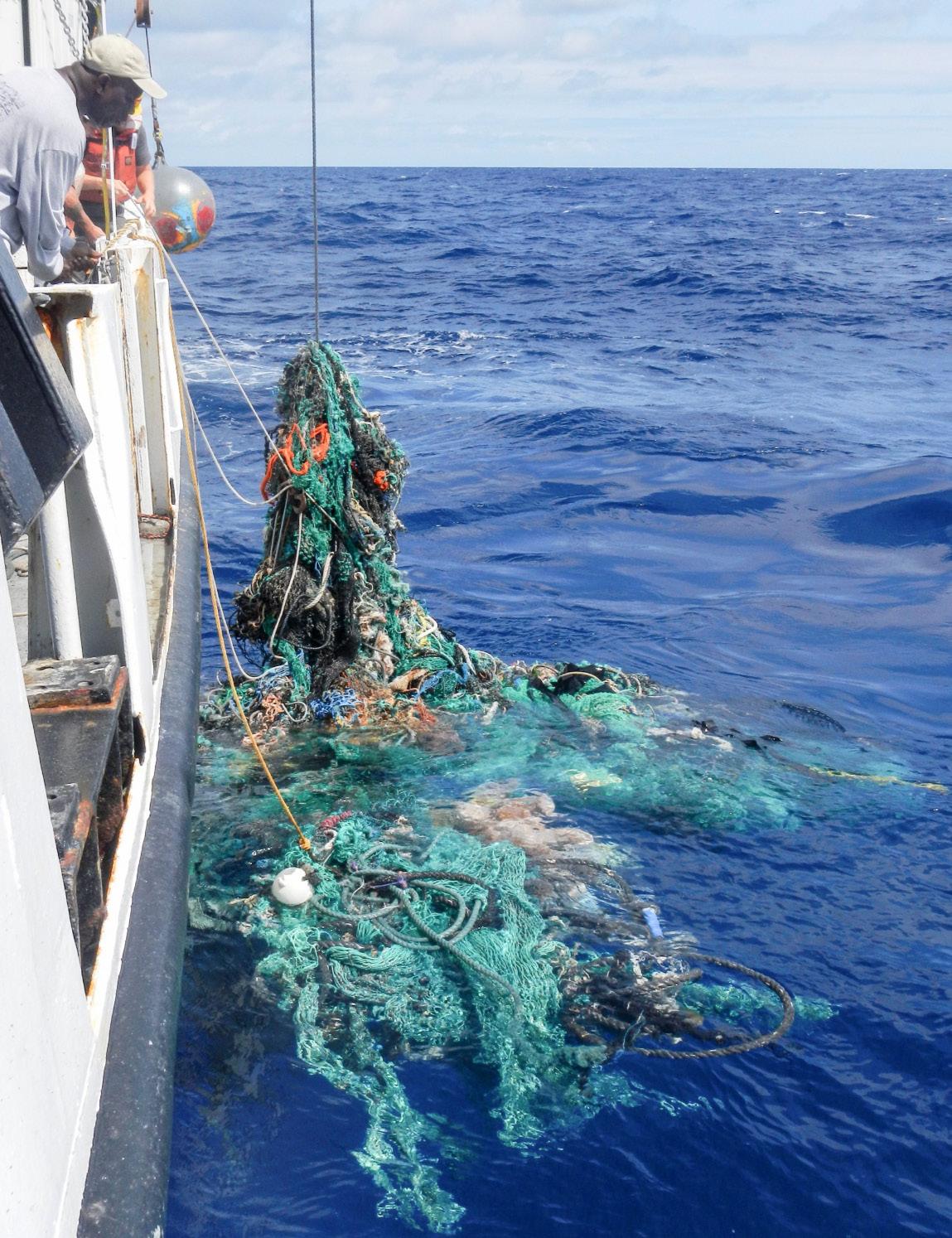
Ghostnet hauled aboard during Mega Expedition in 2015. Courtesy The Ocean Cleenup
Reclaiming the Ocean
Meet the Netherlands-based nonprofit tackling the global plastic pollution crisis
BY PAM DELANEY
AA plastic water bottle tumbles from the bed of a pickup truck somewhere in Phoenix. Or it slips from a cooler at a boat launch on Lake Havasu or is left behind at a roadside rest stop along Interstate 10. At first, it seems insignificant. Just one bottle among millions used every day.
Wind pushes the bottle across pavement, and monsoon rains carry it into a storm drain or desert wash. From there, it could enter larger waterways connected to the Colorado River Basin, eventually flowing toward the Gulf of California and into the Pacific Ocean.
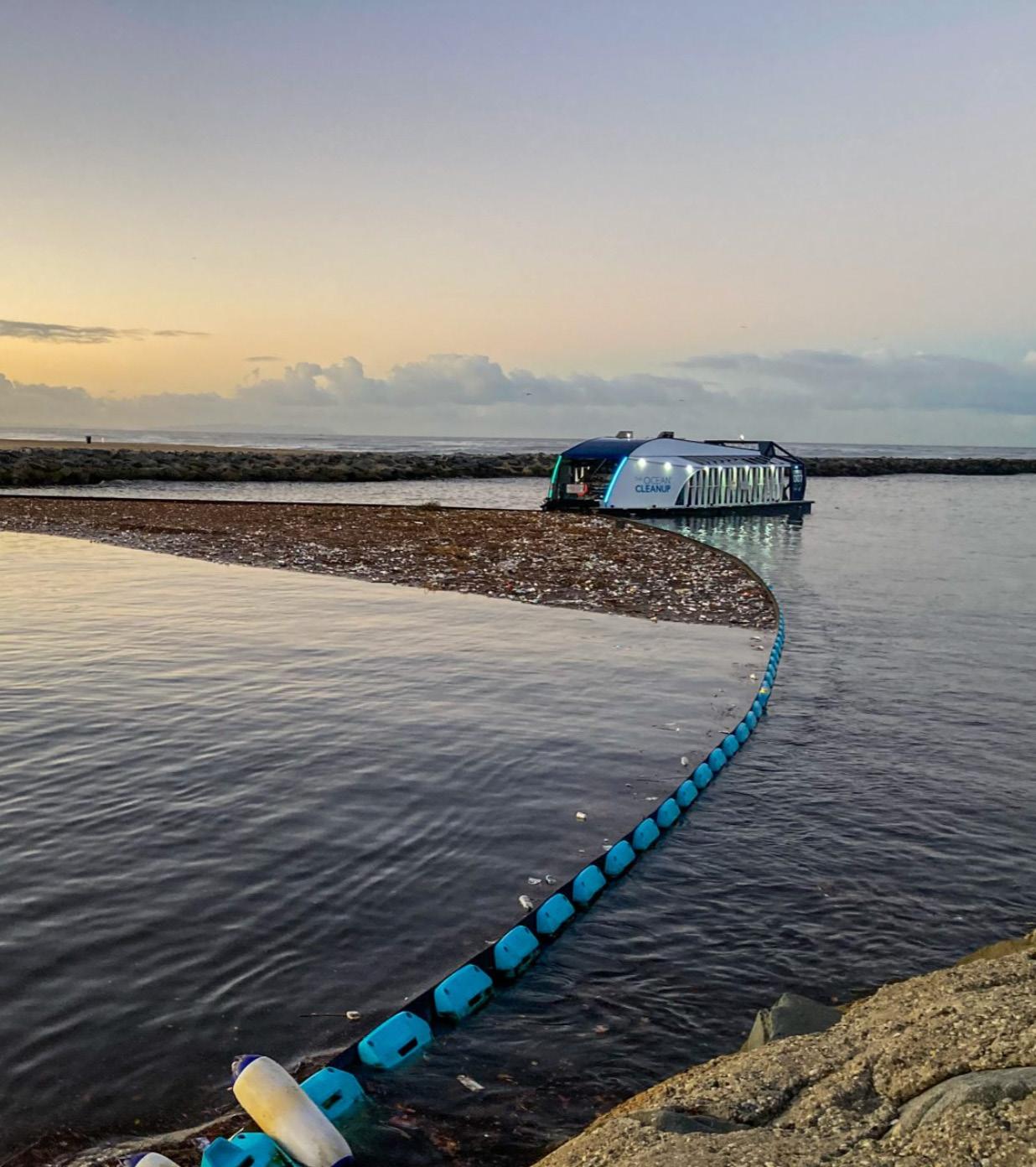
At the forefront of addressing plastic waste, The Ocean Cleanup is a Dutch nonprofit organization that combines science, engineering, and environmental innovation to prevent plastic pollution before it reaches the ocean and to remove waste already at sea.
THE GROWING PLASTIC PROBLEM
According to the National Oceanic and Atmospheric Administration (NOAA), billions of pounds of trash and pollutants enter the ocean every year. In addition to coastlines, it originates far inland and is carried to the sea via rivers.
Plastic pollution is particularly problematic because it persists for decades and continually breaks into smaller pieces. Scientists estimate that more than five trillion pieces of plastic currently float in the world's oceans, according to The Ocean Cleanup.
Once plastic enters marine environments, the impacts ripple throughout ecosystems.
Not all ocean plastic is created equally, but nearly every type poses a threat to marine life. Plastic bags from grocery stores and packaging are frequently mistaken for food by sea turtles and other animals, often causing fatal digestive blockages. Bottles and caps discarded as household waste can injure animals when swallowed, while straws, stirrers, and plastic cutlery commonly found in takeout meals may be ingested or become entangled around marine organisms. Among the most dangerous forms of debris are abandoned fishing nets and lines, called “ghost gear.” These drifting traps continue catching marine life long after they have been lost or discarded, entangling turtles, dolphins, sharks, and countless other species.
A recent report by the Oceans Research Institute described how a sperm whale that washed ashore in Hawaii in 2023 had discarded fishing gear, plastic bags, and nets in its stomach. Scientists concluded the debris likely contributed to its death through digestive blockage and internal injury.
As plastics degrade, they produce microplastics. These small particles can absorb contaminants and enter marine food webs. According to NOAA, metals and microplastics accumulate in seafood, potentially affecting both marine species and human consumers.
THE GREAT PACIFIC GARBAGE PATCH
Perhaps no example illustrates the scale of ocean plastic pollution better than the Great Pacific Garbage Patch.
Floating offshore, west of California, the Great Pacific Garbage Patch is one of the largest concentrations of marine debris on Earth. Created by the rotation of ocean currents known as gyres, it contains an estimated 174 million pounds of garbage. The Ocean Cleanup estimates that approximately 75% of the patch consists of ghost nets and other fishing gear.
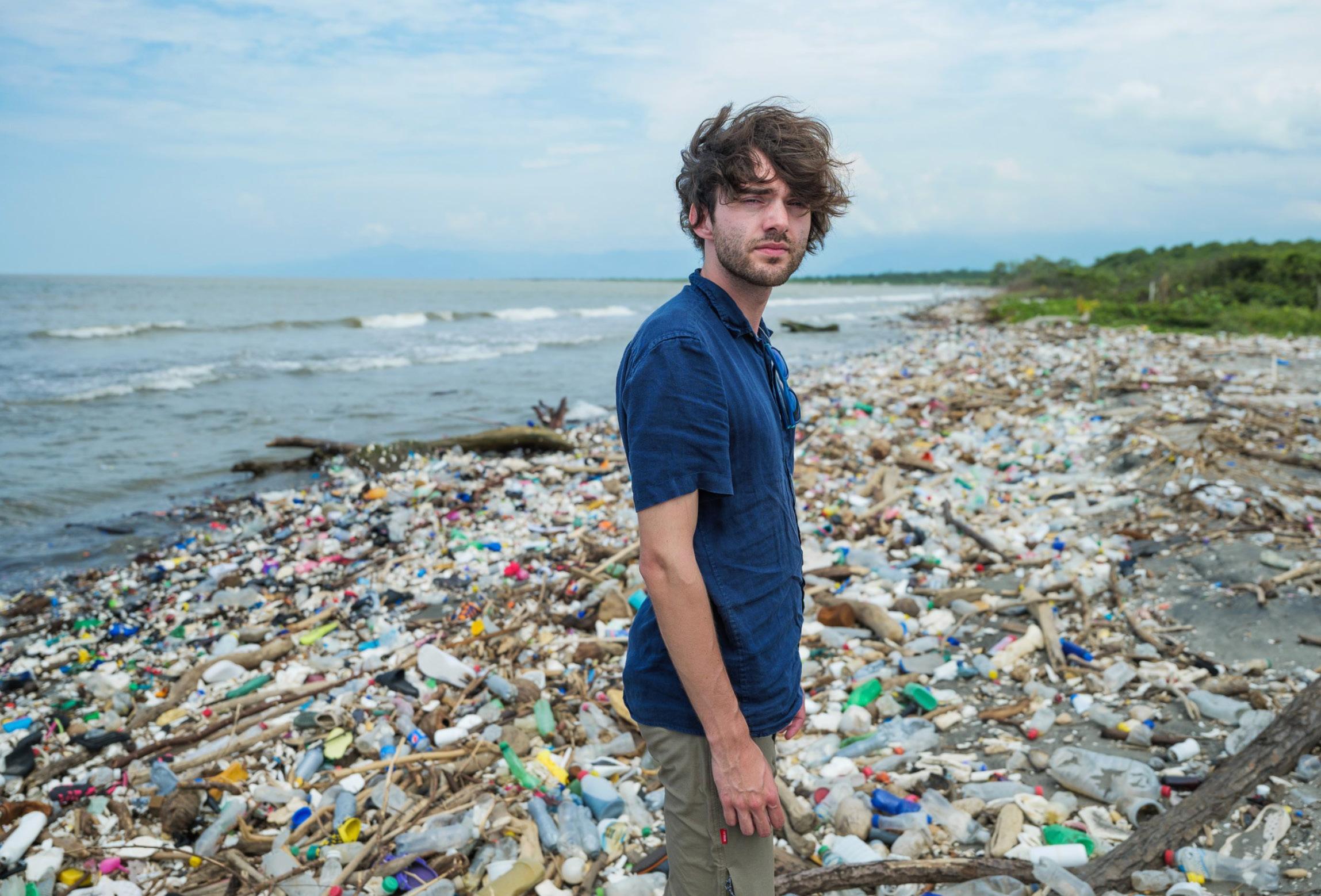
For Dutch inventor Boyan Slat, ocean plastic became the catalyst for a global movement. Speaking at the Global Business Summit 2026, Slat recalled a family vacation to Greece when he was 16.
“I was going underwater expecting to see beautiful
nature, but instead I came across more plastic bags than fish,” he said. That experience inspired him to found The Ocean Cleanup in 2013 at 18 years old.
BUILDING A SOLUTION
The Ocean Cleanup began as an ambitious idea that many considered impossible.
Instead of chasing plastic with fleets of vessels, Slat envisioned a passive system that would use ocean currents to concentrate debris for collection. After years of research, engineering, and testing, the organization gradually transformed that vision into reality.
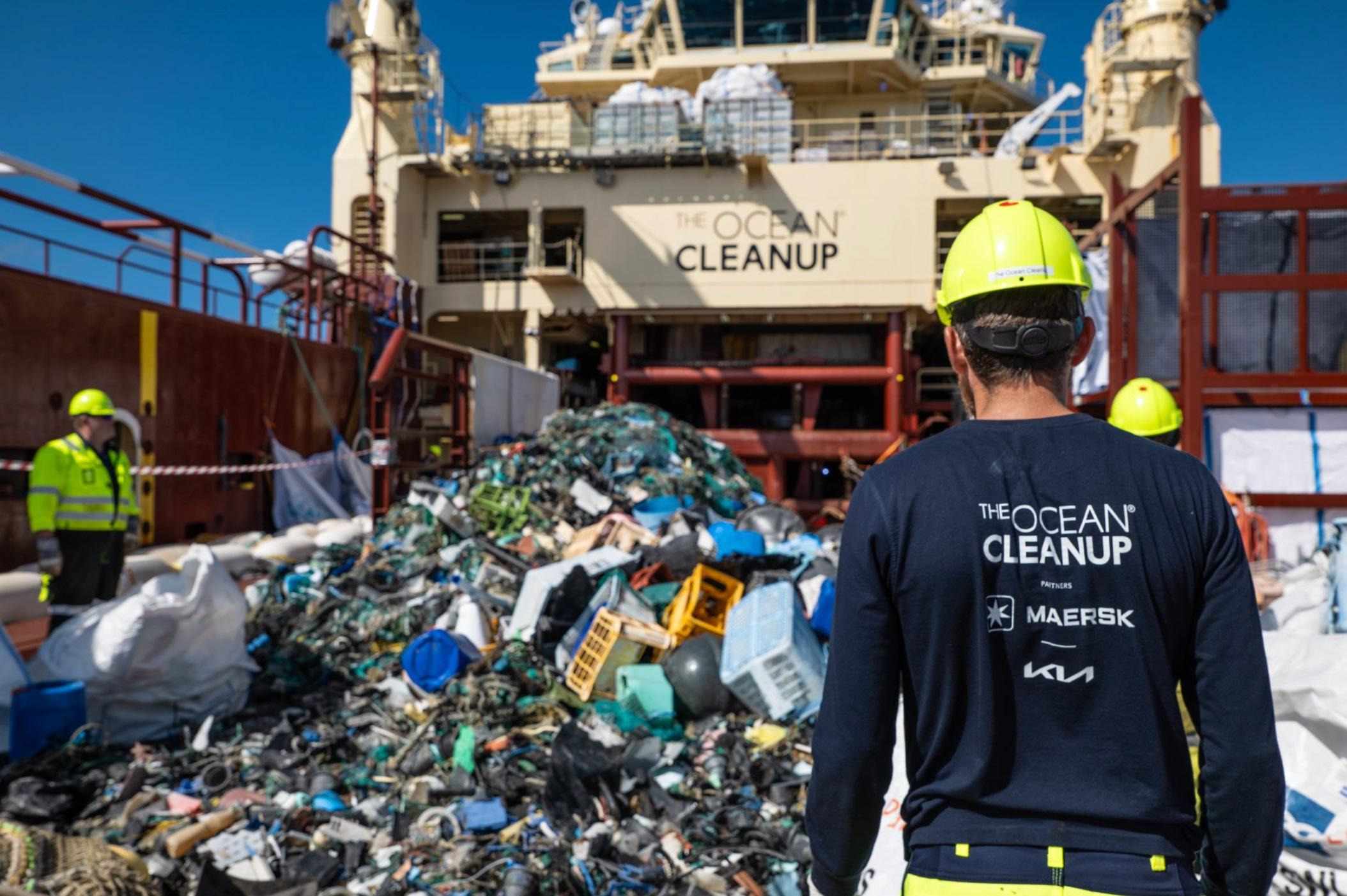
Today, The Ocean Cleanup has removed more than 110 million pounds of trash from rivers and oceans worldwide. The organization now operates two complementary technologies. One addresses plastic already floating in the ocean. The other prevents plastic from reaching the ocean in the first place.
CLEANING THE OCEAN
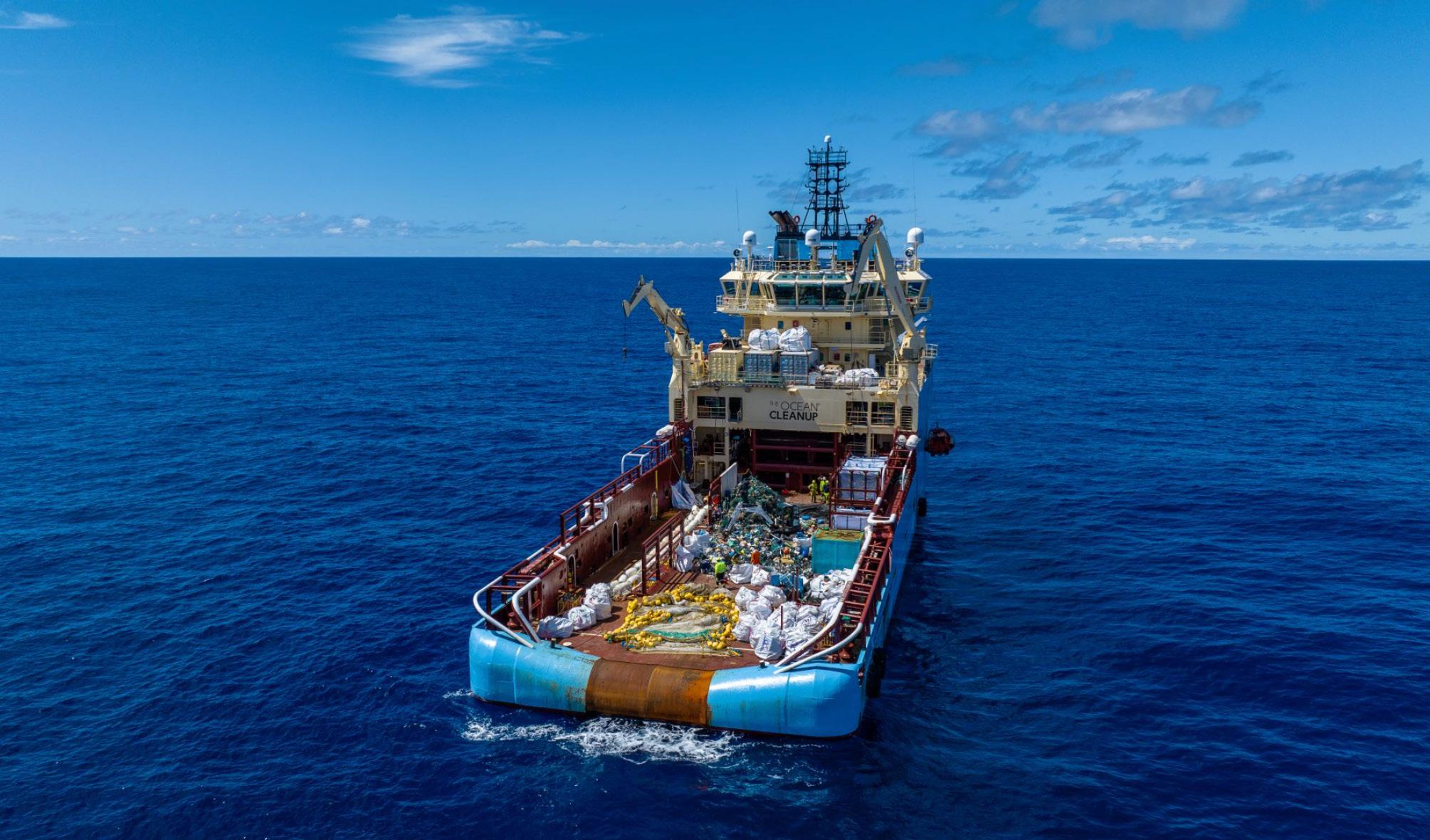
The Ocean Cleanup System, now System 003, consists of a massive U-shaped floating barrier stretching more than 2.2 kilometers across the water. Two vessels slowly tow the structure through areas of
The Ocean Cleanup founder Boyan Slat. Courtesy of The Ocean Cleanup
high plastic concentration at approximately 1.5 knots.
Using satellite observations, marine sensors, drones, artificial intelligence, and predictive models, the organization identifies plastic hotspots within the Great Pacific Garbage Patch. As the system moves through the water, floating debris becomes concentrated in a central retention zone. Every few days, support vessels retrieve the accumulated plastic and transport it to shore for sorting and recycling.
According to Slat, the technology is producing measurable results. “Since then, we have been cleaning up an area of ocean the size of a football field every five seconds,” he told attendees at the summit.
The organization is also enhancing cleanup efficiency through new technologies. The Ocean Cleanup researchers are using drones, AI-powered imaging systems, and advanced plastic dispersal models to identify debris concentrations in real time. The goal is to direct cleanup systems toward the densest accumulations of plastic. The effort reflects an increasingly data-driven approach to environmental restoration.
STOPPING PLASTIC BEFORE IT REACHES THE OCEAN
The Ocean Cleanup recognized that removing existing pollution alone cannot solve the problem. The flow of new plastic must also be reduced.
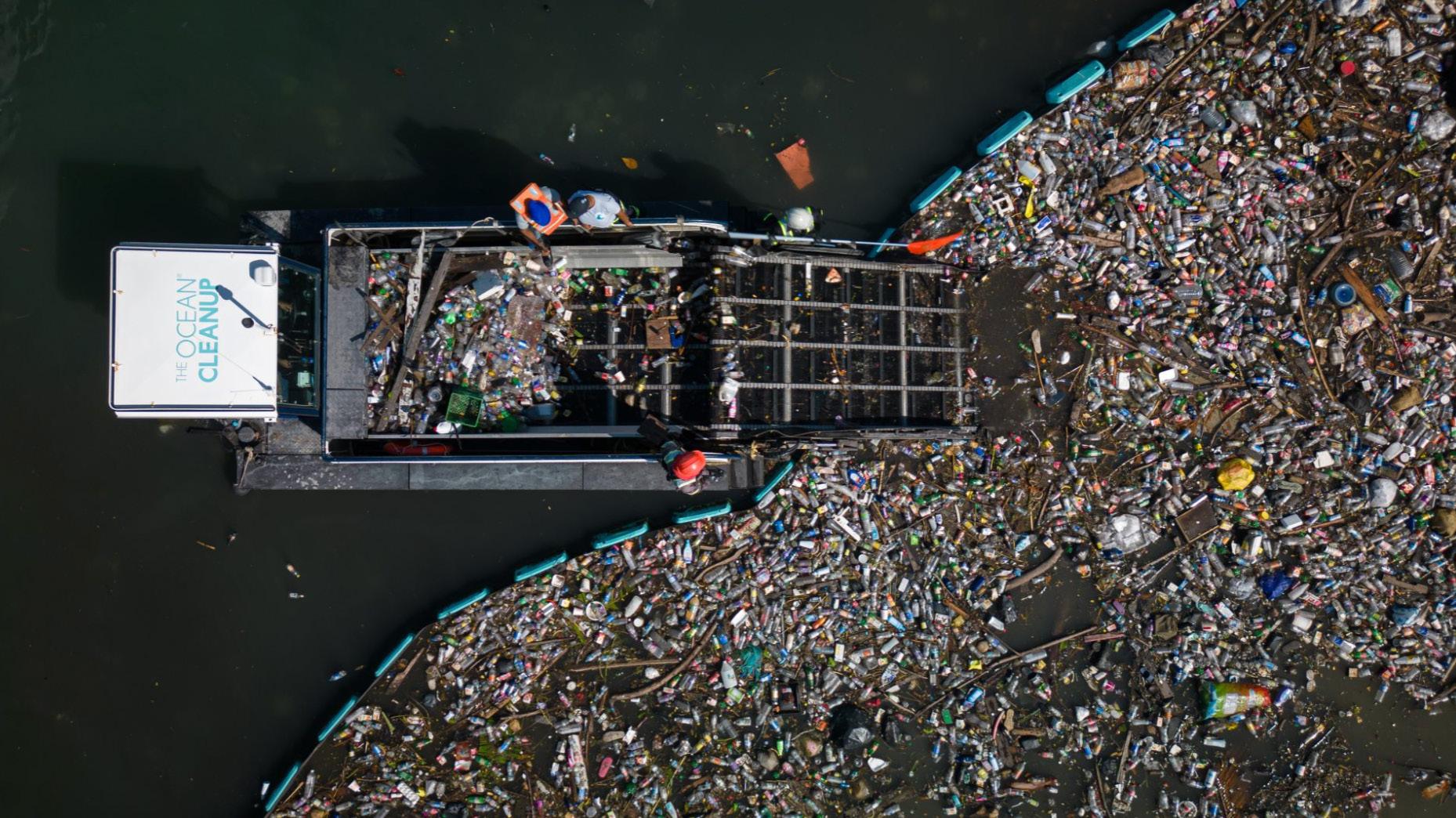
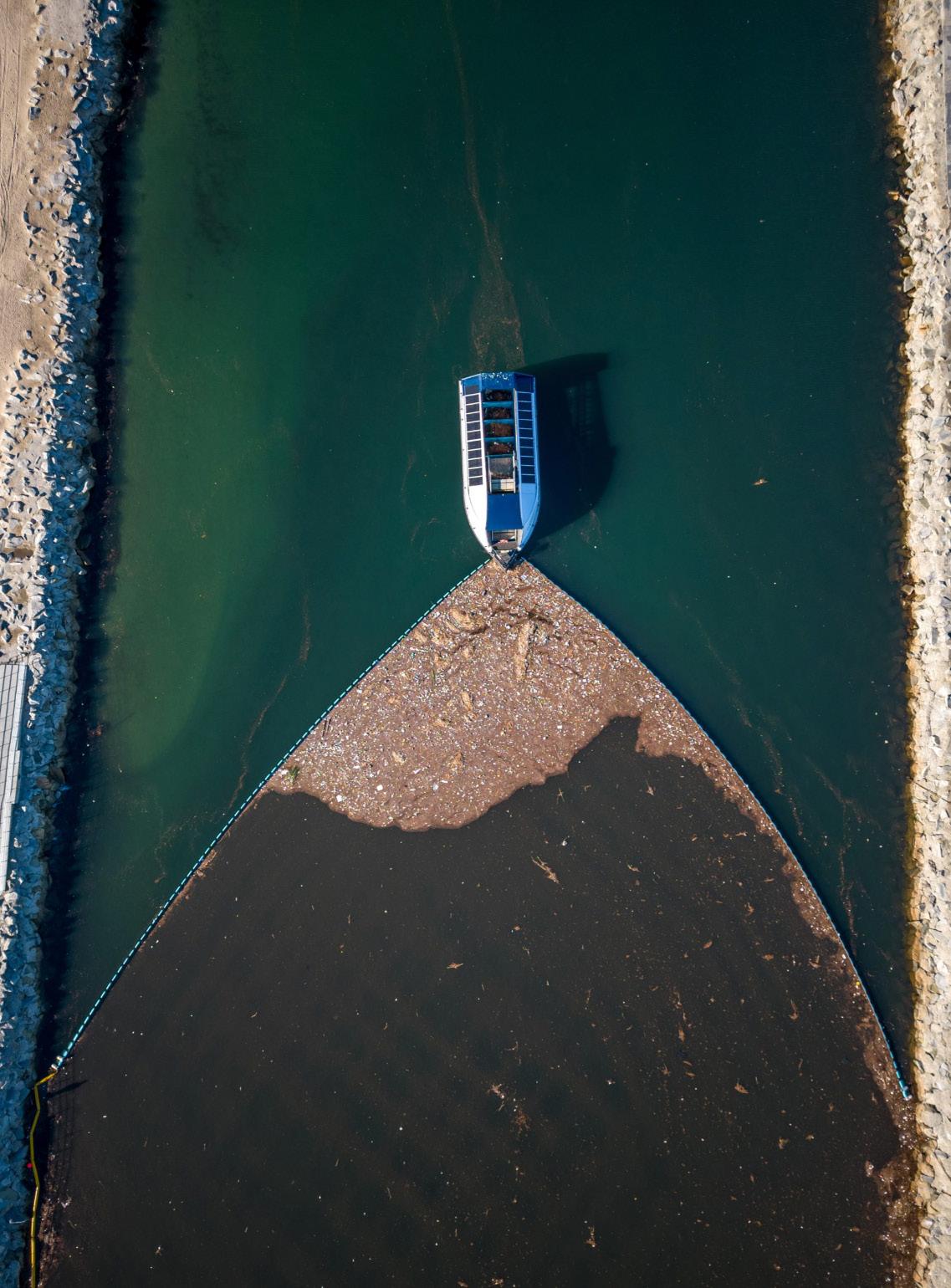
The organization's research revealed a striking finding. According to Slat, just 1% of the world's rivers are responsible for roughly 80% of the plastic entering the ocean. That discovery led to the development of Interceptors. The solar-powered systems are installed in rivers and designed to capture floating debris before it reaches coastal waters.
Interceptors use a floating barrier to guide trash toward a conveyor belt. The conveyor lifts debris into automated shuttle systems that distribute material among six collection containers on a separate barge. Once the containers are full, they are transported to local waste management facilities.
The first Interceptor prototype was deployed in Jakarta, Indonesia, in 2019. By 2025, The Ocean Cleanup deployed a fleet of 20 Interceptors across multiple countries.
SCIENCE, DATA, AND INNOVATION
Behind every cleanup system is a growing network of scientific research.
A September 16, 2025, article by David Schmidt in the publication Sail World described how The Ocean Cleanup partnered with sailors returning from the Transpacific Yacht Race to gather data across the Great Pacific Garbage Patch through its Pacific Data Expedition. Participants deployed GPS-tracking buoys and Automatic Debris Imaging Systems that use machine learning to identify floating plastic.
Dr. Peter Puskic, senior field scientist for The Ocean Cleanup, explained the value of the initiative. “This data helps us fill some big knowledge gaps on the GPGP, a gyre system that is rarely visited for science,” he told Schmidt.
The information collected helps researchers identify debris hotspots and improve cleanup efficiency. Puskic believes emerging technologies will play a major role in future progress. “The strategic integration of AI, drones, machine learning, and remote sensing can revolutionize the detection, tracking, and removal of plastic debris,” he said.
SCALING UP FOR GLOBAL IMPACT
The Ocean Cleanup recently received one of its largest financial boosts to date. The Audacious Project, a collaborative funding initiative associated with TED, recently awarded The Ocean Cleanup $121 million.
The funding will support efforts to stop up to onethird of ocean-bound plastic pollution from entering the ocean through 30 major cities across Southeast Asia and the Americas. Target locations include Los Angeles, Panama City, Manila, and Mumbai.
The organization's work is also gaining visibility through major international partnerships.
In Los Angeles, Interceptor systems are helping address river-borne pollution ahead of the 2028 Olympic Games, supporting efforts to improve coastal water quality and protect beaches that will welcome visitors from around the world.
For Slat, the ultimate goal is not simply removing plastic. It is proving that large-scale environmental challenges can be solved. “I believe that for humanity to thrive, humanity needs to be optimistic about the future,” he said at the Global Business Summit.
WHAT ARIZONANS CAN DO
Plastic pollution may feel like a
distant ocean problem, but every resident of Arizona plays a role in the story. A July 2025 report from the Ocean Conservancy identified Arizona as a state that needs to improve its plastics policies, giving it a score of just 1.5 out of 5. The state has a law that limits local governments’ ability to regulate plastics and restricts regulations on plastic producers. Additionally, it currently has no policy addressing microplastic pollution.
Because of Arizona’s heat, plastic water bottles are seen as a convenient staple for outdoor recreation. Parks and lakes are littered with plastic bottles and bags left behind.
The Ocean Cleanup encourages individuals to reduce their use of disposable plastics, recycle and reuse materials whenever possible, dispose of waste properly, organize local cleanup events, support environmental organizations, and advocate for policies that address plastic pollution. Replacing plastic water bottles with reusable containers and eliminating plastic grocery bags reduces waste.
Simple actions matter. The plastic bottle that blows across a desert parking lot today does not have to become tomorrow's ocean debris.
OF ARIZONA
Hard Water, Hard Truths
Here’s what’s really flowing through your pipes – and what to do about it without making things worse.
BY MISTY MILIOTO
LLook closely at the faucet handles in your kitchen. At the shower head. At the inside of your tea kettle. If you see a white, chalky crust ringing the metal, you already know something is off with your water – even if you’ve never given it much thought. That residue is called scale, and the water leaving it behind is hard water.
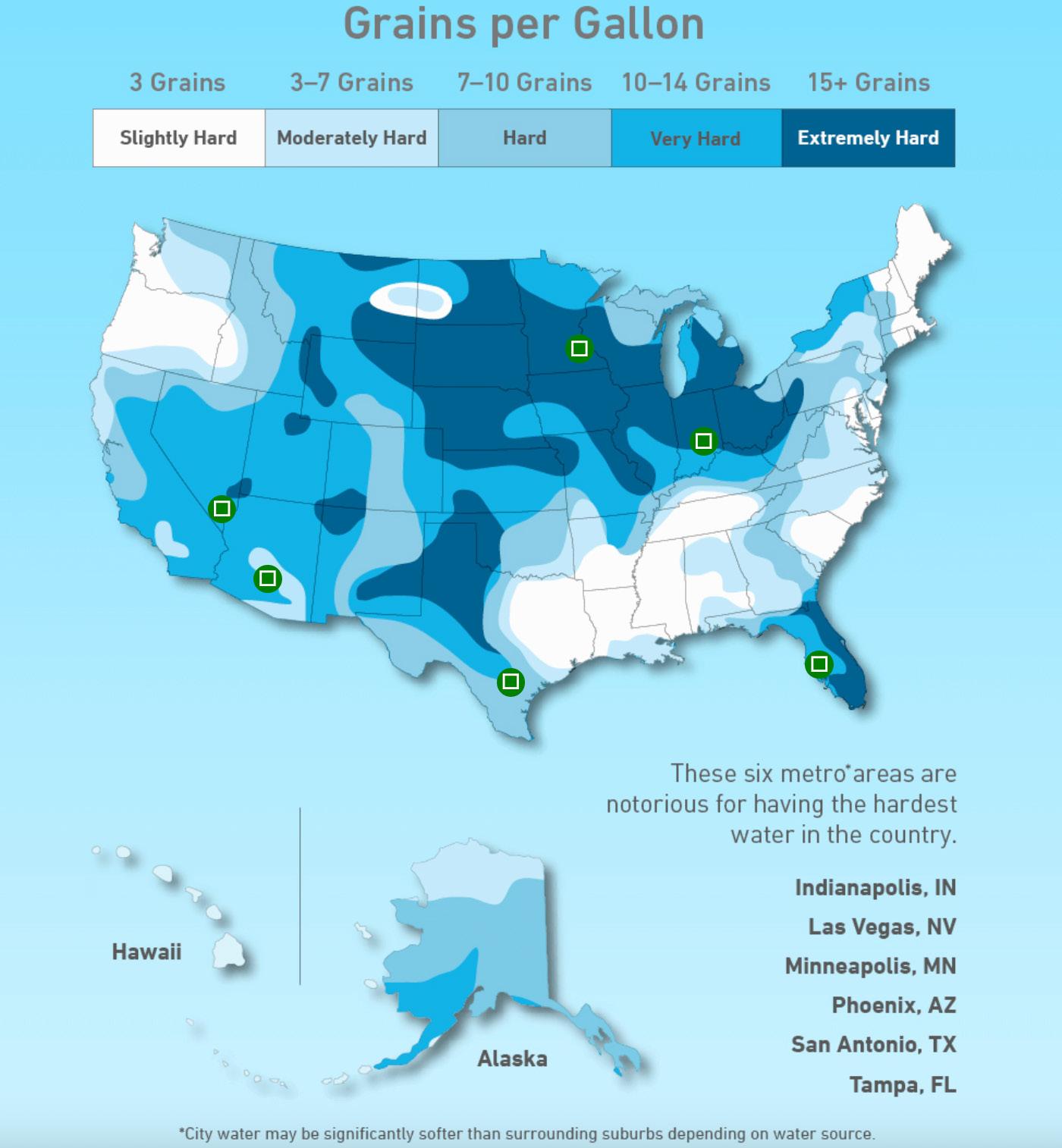
Hard water is not a regional quirk or a plumbing oddity. According to the U.S. Geological Survey (USGS), water hardness varies significantly across the United States, with the hardest water concentrated in the east-central and western regions – areas where carbonate aquifers and dissolved solids are prevalent in groundwater. So, if you live in the Southwest, the Great Plains, or much of the Midwest, hard water is almost certainly coming out of your tap.
The effects are quietly pervasive. They show up on your skin, in your hair, on your dishes, inside your appliances, and on your utility bills. And when homeowners reach for the traditional fix – a salt-based water softener – they may be solving one problem while creating another. The good news is that better options exist.
sometimes expressed as parts per million (PPM). The USGS classifies water on a four-tier scale: soft (0-60 mg/L); moderately hard (61-120 mg/L); hard (121180 mg/L); and very hard (above 180 mg/L). The Environmental Protection Agency (EPA) does not regulate water hardness – calcium and magnesium pose no direct health risk – but as residents of hard-water cities know well, “not a health concern” and “not a problem” are two very different things.
WHAT MAKES WATER HARD
In scientific terms, water hardness is the amount of dissolved calcium and magnesium in water, according to the USGS. As water moves through soil and rock, it dissolves small amounts of those naturally occurring minerals and carries them onward. The more it picks up, the harder it becomes.
Hardness is measured in milligrams per liter (mg/L),
The Southwest –Arizona, Nevada, Utah, New Mexico – and the Great Plains and upper Midwest are among the hardest regions. Six metro areas in particular have become widely recognized for the severity of their water: Indianapolis, Las Vegas, Minneapolis, Phoenix, San Antonio, and Tampa. Each sits where geology, water sourcing, or both deliver a high mineral load to millions of taps every day.
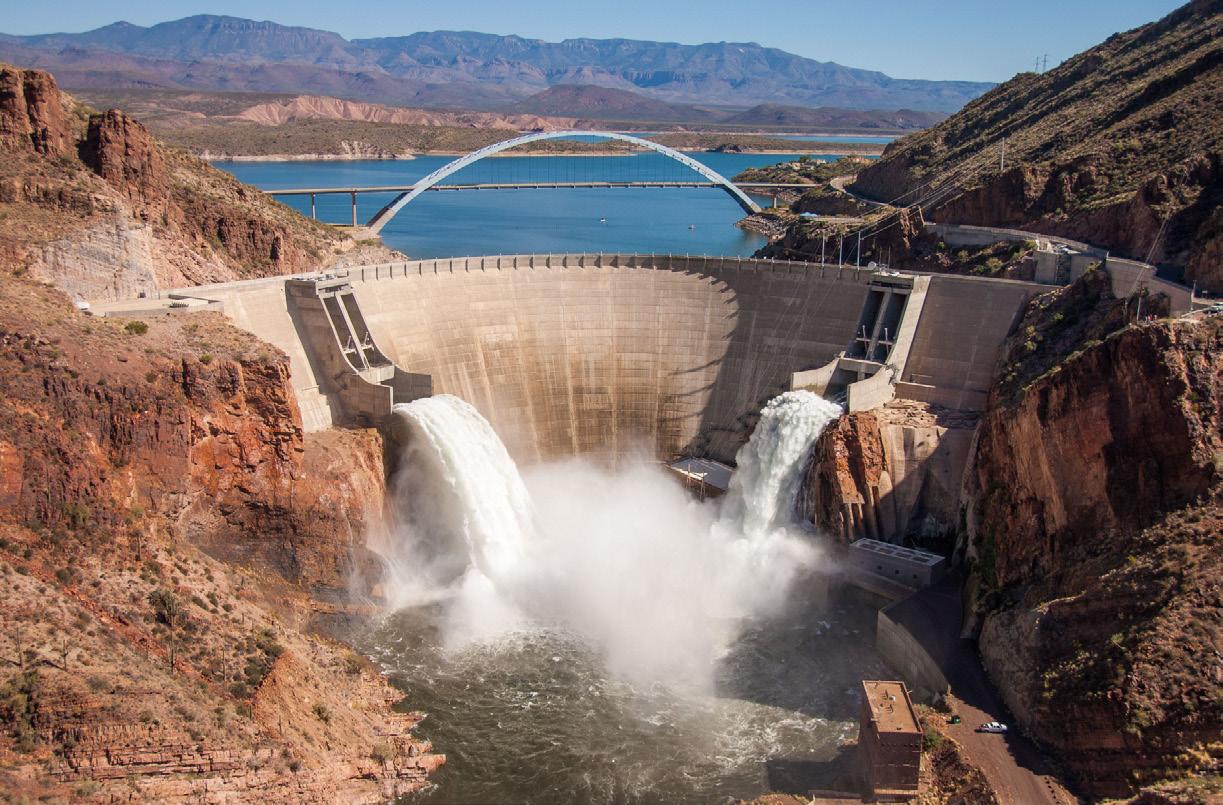
Phoenix is a textbook case. The city draws its drinking water primarily from three surface sources: the Colorado River, delivered via the Central Arizona Project; and the Salt and Verde rivers, delivered through the Salt River Project canal system. According to Phoenix Water Services, approximately 97% to 99% of the city’s supply comes from surface
Bartlett Dam and Lake. Courtesy SPR
water, with groundwater serving as a backup reserve.
As those waters move across desert geology and through mineral-rich watersheds, they dissolve calcium, magnesium and other salts, according to Phoenix Water Services. The result, per the city’s 2025 Water Quality Report, is tap water ranging from 172 to 302 parts per million in hardness – placing Phoenix squarely in the “hard” to “very hard” categories and among the most mineral-dense municipal supplies in the country. Hardness levels have remained relatively consistent over the past decade because the mineral content is largely tied to the geology and source waters of the Southwest, the utility company noted, with yearto-year variability driven primarily by seasonal blending of water sources rather than any change in treatment operations.
Phoenix does not soften its water at the municipal scale. “Hardness itself is not considered a health concern by EPA standards, so softening is generally handled at the household or business level based on customer preference,” says Michael Gertzman, community education and outreach program manager at Phoenix Water Services.
THE REAL COST OF HARD WATER
heaters. The carbon footprint of a gas storage water heater increases 18% when operated on 26 grains per gallon of hard water over 15 years, compared to operation on softened water, according to Kayla Callejas, associate director of the Water Quality Research Foundation.
The laundry room tells a similar story. “Detergent savings up to 70% was observed for dishwashing when softened water was used compared to hard water,” Callejas says, adding that stain removal performance can increase up to 100 times when hardness is removed, even when detergent dose and washing temperature are also lowered.
The USGS describes hard water as a “nuisance” rather than a hazard – but nuisances have real costs, and researchers have spent years measuring them.
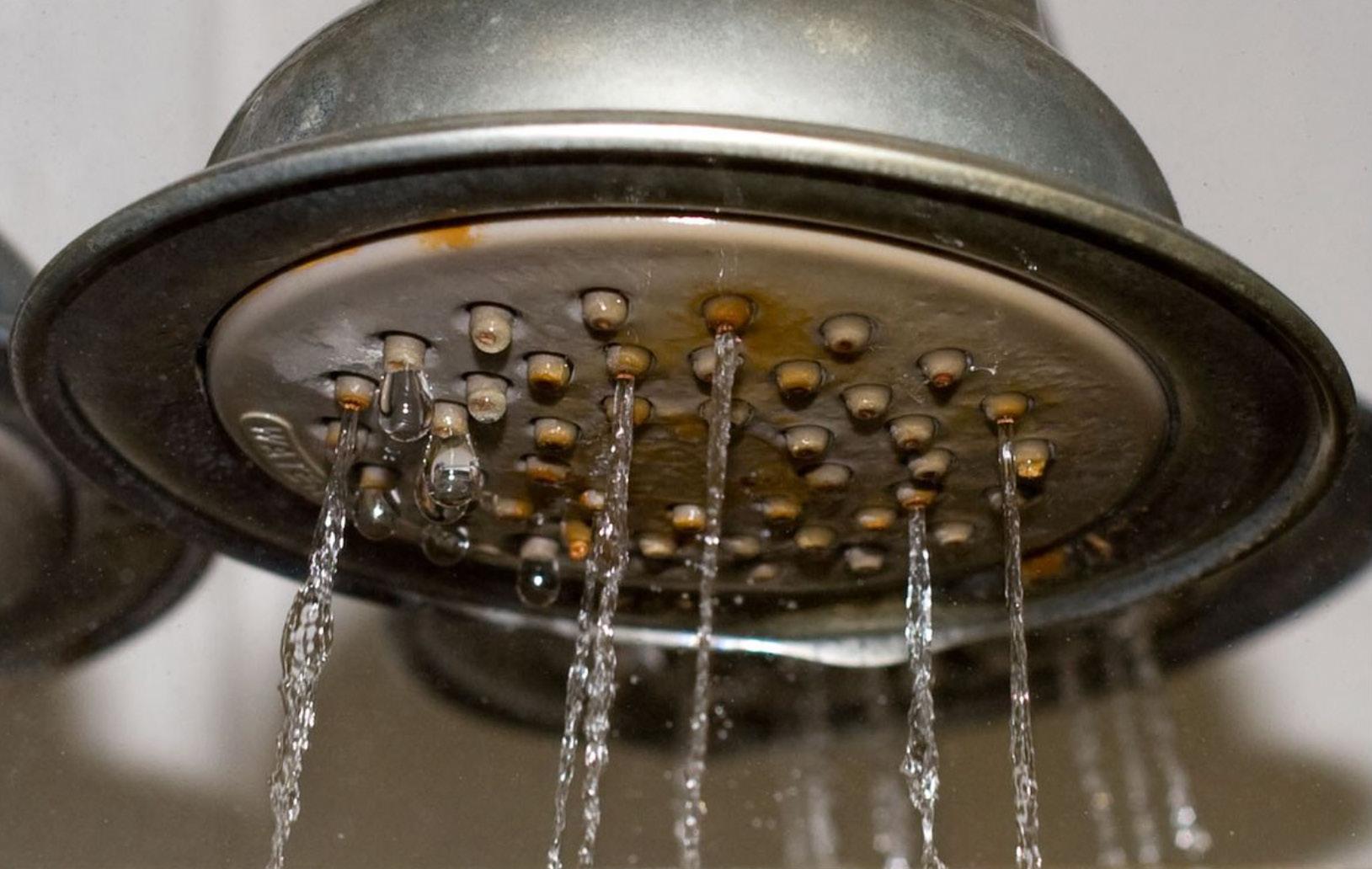
The Water Quality Research Foundation (WQRF), the research arm of the Water Quality Association (WQA), has funded multiple studies quantifying what hard water does to households. The findings are stark. Shower heads on hard water lost 75% of their flow rate in less than 18 months. Each five grains per gallon of hardness causes a 4% loss in efficiency and a 4% increase in energy costs for gas storage tank water
The consequences for skin and hair are more personal. “There is growing evidence suggesting a connection between hard water and certain skin conditions,” says Eric Yeggy, master water specialist and technical affairs director for the Water Quality Association. “People should consult with their physician before drawing any conclusions because skin irritation issues can be complex.” For those whose doctors recommend reducing water hardness, Yeggy suggests looking for systems certified to NSF/ANSI 44, the national standard for water softeners, which ensures a product can reduce hardness to less than one grain per gallon.
On the question of whether hard water’s minerals offer any compensating health benefit, Yeggy is direct. “You need water for hydration, and you get your minerals and nutrients through a healthy, wellbalanced diet,” he says. He cautions consumers against relying on marketing claims found online, noting that the WQA has a technical report on the topic available through its website.
THE STANDARD FIX – AND ITS ENVIRONMENTAL PRICE
For decades, the default solution for hard water has been the salt-based ion exchange water softener. The technology works because resin beads swap calcium and magnesium ions for sodium ions, delivering genuinely soft water throughout the home. Scale disappears. Soap lathers freely. Appliances run more efficiently. And the economic benefits can be significant: WQRF research found that softened water with instantaneous tankless water heaters can allow recovery of the cost of a softener and its operating supplies in as little as one year.
But the regeneration cycle that recharges those resin beads produces a brine byproduct. Salt-saturated wastewater, heavy with extracted minerals, flushes into the sewer system. Municipal wastewater
that approach over outright prohibition. “Policy that aims to reduce salt usage of water softeners should be structured to avoid unintended consequences on energy usage, the durability of water appliances, and private well owners who rely on water softeners for removal of health-related contaminants,” he says, noting that some well owners depend on salt-based systems to remove harmful substances including radionuclides.
The WQA’s long-standing recommendation, Yeggy says, is the use of high-efficiency softeners that minimize salt used for regeneration. Its resource guide, Getting Smart with Softeners, is available at wqa.org.
SALT-FREE ALTERNATIVES
For consumers who want to address hard water without brine discharge, two categories of salt-free technology have emerged – Template Assisted Crystallization (TAC) and Nucleation Assisted Crystallization (NAC). Rather than removing calcium and magnesium from the water, both approaches convert the minerals into microscopic, stable crystals that pass through pipes and appliances without adhering and forming scale.
treatment plants are not designed to remove chloride, so it passes through into rivers, streams, and groundwater. Chloride doesn’t break down. Once it enters a water body, it persists.
Phoenix Water Services acknowledged the issue directly, noting that salt-based softeners “can contribute additional salinity to wastewater systems because the regeneration process discharges brine into the sewer system,” creating “challenges for wastewater treatment, water reuse, and long-term sustainability.”
The regulatory response has been uneven. California has taken a middle path. Rather than outright bans, the state now requires minimum efficiency levels for softeners sold there. Yeggy says the WQA supports
Independent testing and certification of these systems has advanced in recent years. Yeggy points to two resources: the International Association of Plumbing & Mechanical Officials, which has published a national standard – IAPMO/ANSI Z601 – that can be used to test and certify all types of scale-prevention technologies, with certified products listed on the IAPMO website; and a standardized test protocol developed by Virginia Tech that can be used to evaluate any scale-prevention device.
“Water softeners prevent virtually all scale formation by reducing the hardness in the water to less than one grain per gallon,” Yeggy says, while noting that saltfree systems can be independently tested and certified. “We recommend that people look for certified systems, or at least independent test data, when considering the purchase of any scale-prevention device.”
Phoenix Water Services offers a similar assessment. “Salt-free conditioning systems generally do not remove minerals but may help reduce scale buildup while avoiding brine discharge,” Gertzman says, adding that, from a sustainability standpoint, “many
A showerhead on the seventh day of testing with hard well water (28 grains per gallon) showing spray pattern.
consumers are increasingly interested in systems that minimize water waste and salt discharge.” The city stops short of endorsing specific products, encouraging residents to evaluate certified systems and consult qualified professionals.
WHAT YOU CAN DO
The first step is knowing what you’re dealing with. Every public water utility in the United States is required to produce an annual Consumer Confidence Report that includes hardness data. Phoenix posts its report at phoenix.gov/waterservices. Residents can also contact Phoenix Water Services directly for area-specific information. Home test kits – inexpensive strips available at hardware stores – offer a quick baseline for households on private wells.
Callejas recommends that homeowners consult the WQRF’s softening-benefits calculator at wqrf.org/softening-benefitscalculator.html, which can help model the economic and energy case for treatment based on local hardness levels. She notes that from 2009 to 2018, water hardness levels stayed fairly consistent nationally – neither improving nor worsening – though regional variation remains significant. “The only way to be sure of your specific home’s water hardness is to have it tested in your home,” she says.
there through limestone and sediment, through ancient aquifers, and down the Colorado River’s long path across the American West. They are, in a sense, the landscape made liquid.
Phoenix Water Services notes that the city is advancing projects related to Advanced Water Purification – using highly advanced treatment technologies to create a drought-resilient future water supply while also improving water quality characteristics, including reducing salinity and other
On choosing a system, the WQA’s guidance is to test first. “Understanding the water chemistry, and whether there are health-related contaminants in the water, will help determine the most sustainable and cost-effective way to treat your water,” Yeggy says.
Once hardness is confirmed, the technology choice can be matched to severity. Very hard water above 180 mg/L benefits from active treatment. Highefficiency, salt-based ion exchange softeners remain the most effective option for extreme hardness but carry the brine-discharge tradeoff. TAC and NAC systems – evaluated against IAPMO/ANSI Z601 or the Virginia Tech protocol – offer a brine-free alternative for those who prioritize environmental impact. Demand-initiated regeneration systems, which regenerate only when water usage warrants it, reduce salt and brine output for households staying with traditional softeners.
THE BIGGER PICTURE
Hard water is, at its core, a geological story. The minerals in a Phoenix resident’s tap water traveled
dissolved minerals. Despite significant population growth, Phoenix residents today use substantially less water per person than they did decades ago, Gertzman says.
On drought and mineral concentration, Yeggy offers a nuanced answer. “It depends on the local geography and the water source, but in some cases drought can increase the mineral content of the water,” he says. For municipal customers, the annual Consumer Confidence Report or direct contact with the utility is the most reliable source of current data. For private well owners, he notes that discounted testing is sometimes available through state or county health departments.
For households across the hard-water belt of the country, the message is practical. The problem is real, measurable, and addressable. The most ecoconscious path forward doesn’t require trading one environmental burden for another. Technology that is certified, tested, and independently verified exists to reduce hard water’s toll on homes, appliances, and skin without depositing brine into the watersheds that communities downstream depend on.
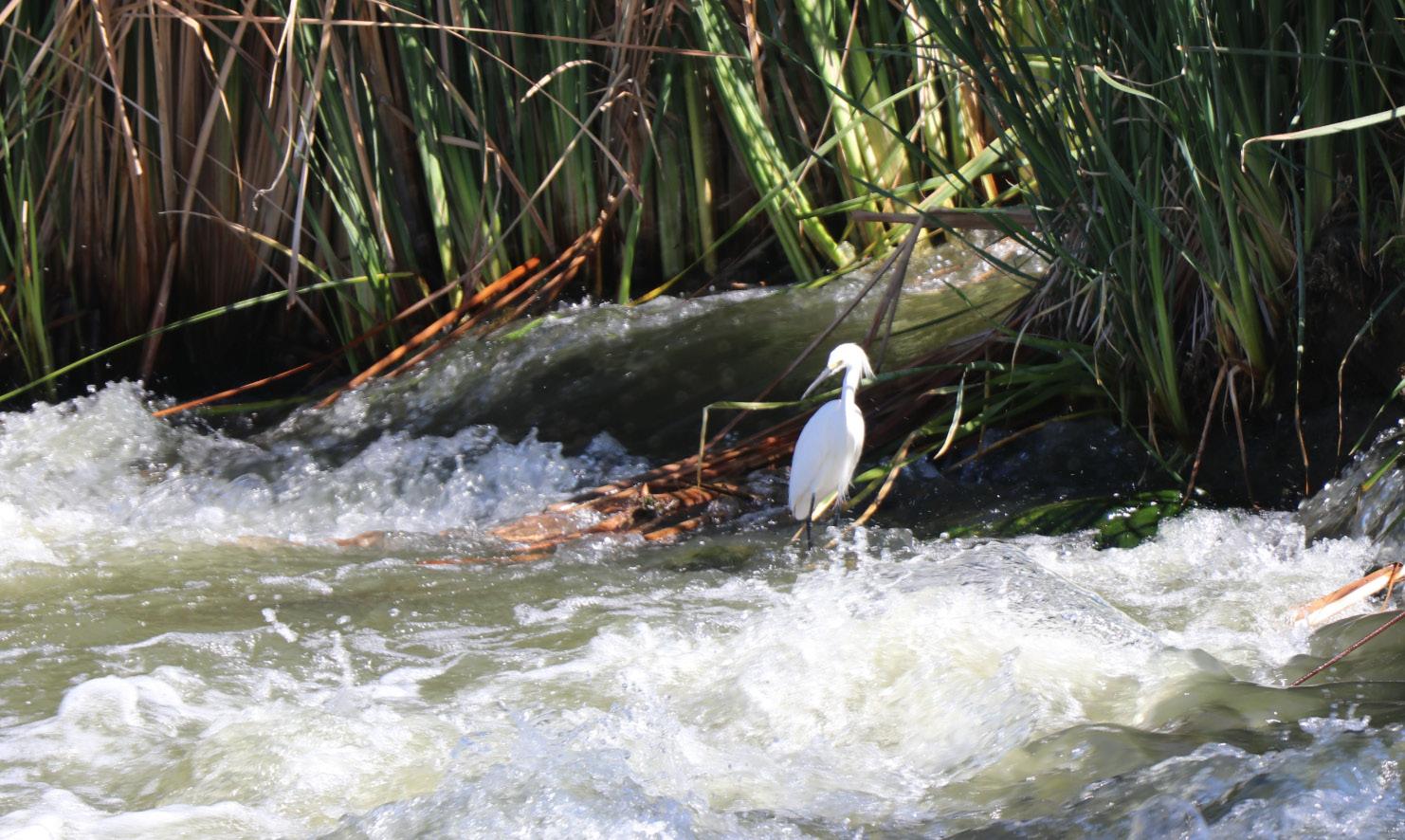
A bird at Tres Rios Wetlands
Recipes
Picazzo’s Healthy Italian Kitchen Caprese Moderna
This refreshing salad from local, health-centric chain Picazzo’s is the perfect way to soak in the flavors of an Italian summer at home. Enjoy at one of the restaurant’s seven Arizona locations or DIY with this delicious recipe below.
Ingredients
1 cup fresh arugula
1/2 pound cherry tomatoes
1/4 cup roasted tomatoes
1/4 cup stracciatella cheese
1 tbsp. chopped pistachios
2 tbsp. balsamic glaze
2 tbsp. extra virgin olive oil (EVOO)
1/4 tsp. dried Italian spices (oregano, basil, and parsley)
2 tbsp. pesto sauce
Bread of choice: flatbread, Italian sourdough, or focaccia
Directions
Preheat oven to 400°F. Meanwhile, toss cherry tomatoes with 1 tbsp. EVOO and Italian spices and spread evenly on a small sheet pan and roast for 15 to 18 minutes, depending on your desired texture and level of roasting. Allow tomatoes to cool to room temperature, then refrigerate in a covered container for 1 to 2 hours.
Spread arugula evenly over a small platter. Top with the chilled roasted tomatoes and dollops of stracciatella cheese and pesto. Garnish with pistachios and drizzle with balsamic glaze and EVOO. Serve with bread of choice.
Mountain Shadows Cortisol Cocktail
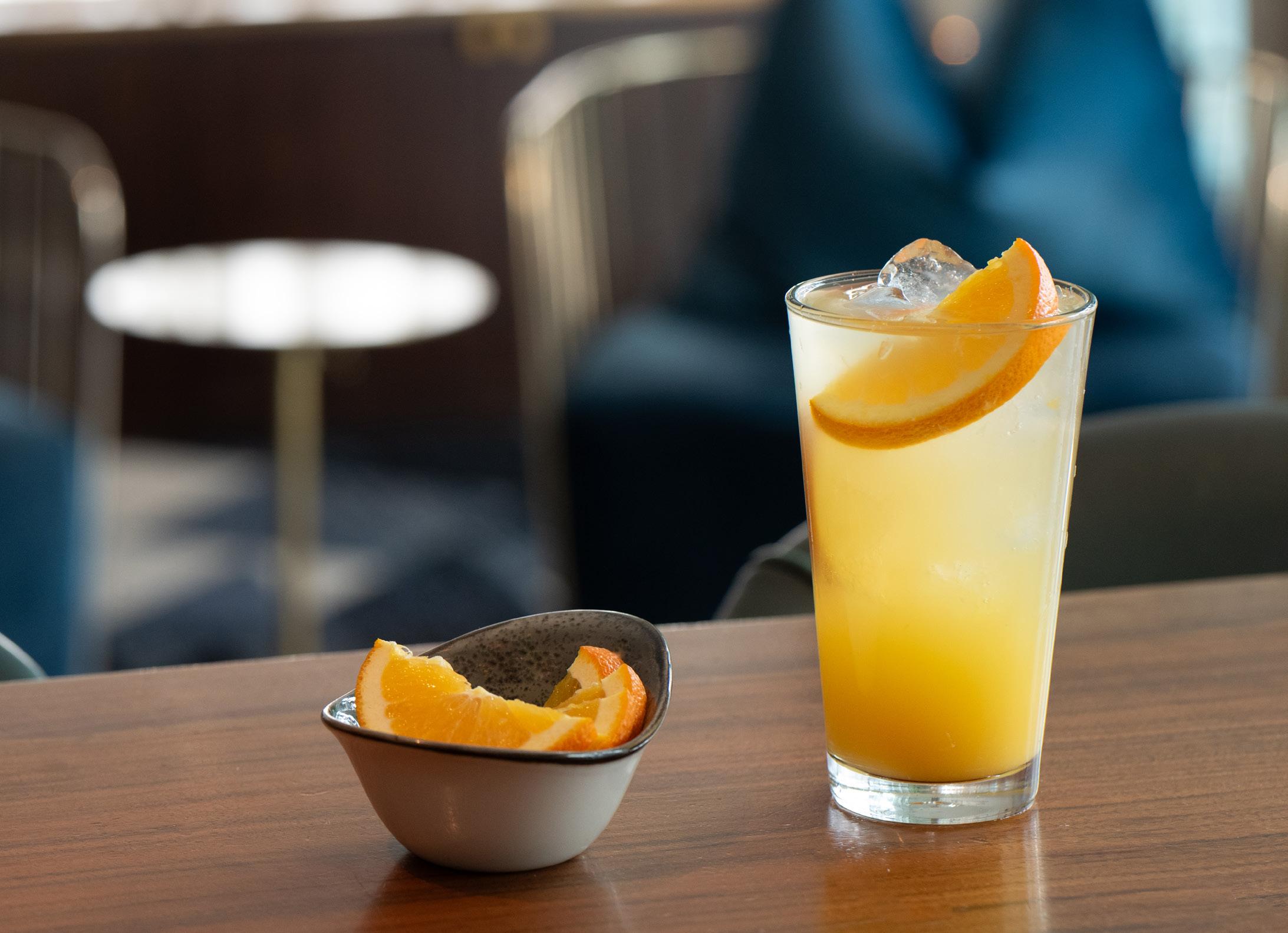
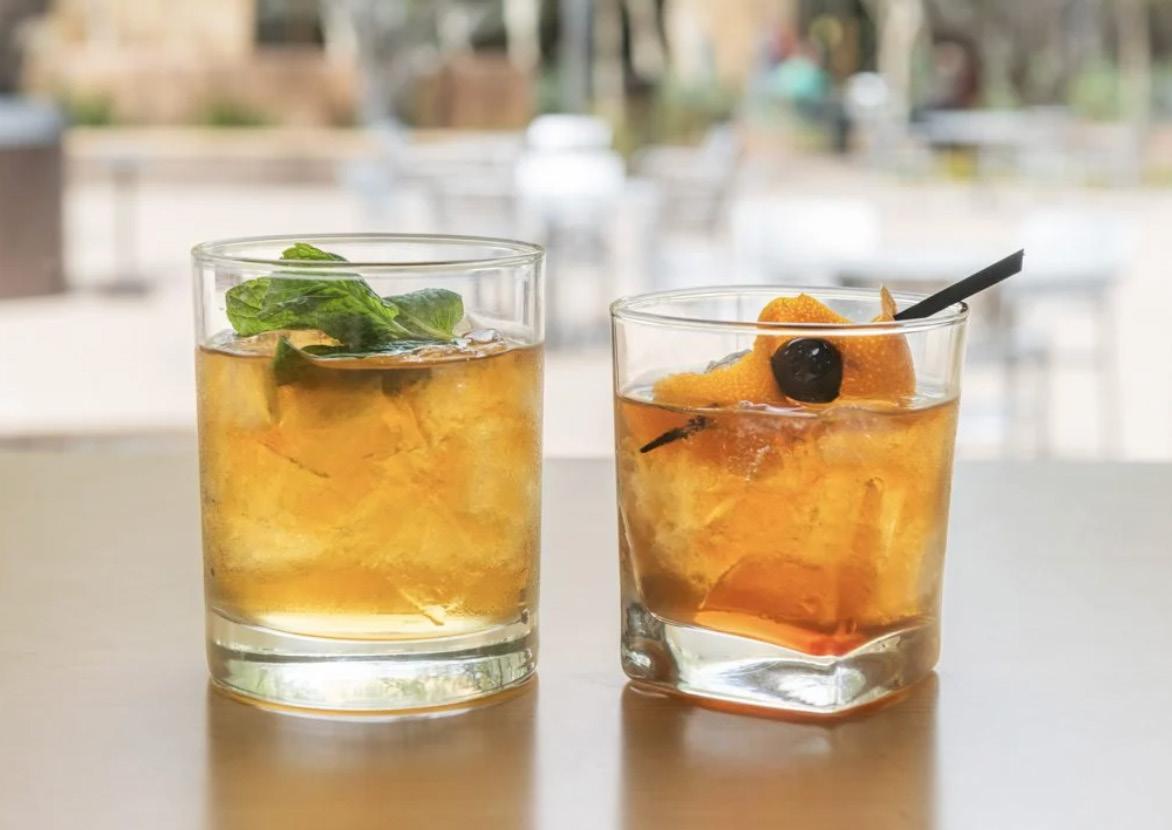
Hearth ’61 at Mountain Shadows Resort Scottsdale recently debuted the Cortisol Cocktail as a healthy alternative to boozy brunch cocktails. This health-packed mocktail features magnesium to help regulate and lower cortisol levels, acting as a natural brake on the body’s stress response.
The Cortisol Cocktail costs $12 and is available at Hearth ’61 from 7 a.m. to 2 p.m. daily, but here’s how to make your own at home anytime.
Ingredients
2 oz. orange juice
1 oz. lemon juice
4 oz. coconut water
½ tsp magnesium
Pinch of salt
2 oz. club soda
Directions
Combine orange juice, lemon juice, coconut water, magnesium, and a pinch of salt in a glass. Top with club soda and enjoy!
The Soul of the Shore
Fairmont Kea Lani honors ancestral lineage and environmental legacy on Maui.
BY SHELBY TUTTLE
TThere is a specific kind of presence that exists in Wailea. It isn’t found in silence, but rather in a harmony of sounds: The rhythmic inhalation of the Pacific against the golden sands of Polo Beach, the rustle of palms that have stood sentry for decades, and the hollow, sacred call of a conch signaling the day’s end. While many luxury resorts offer a window into paradise, the Fairmont Kea Lani offers something deeper – a connection to the mana (power) of the land itself.
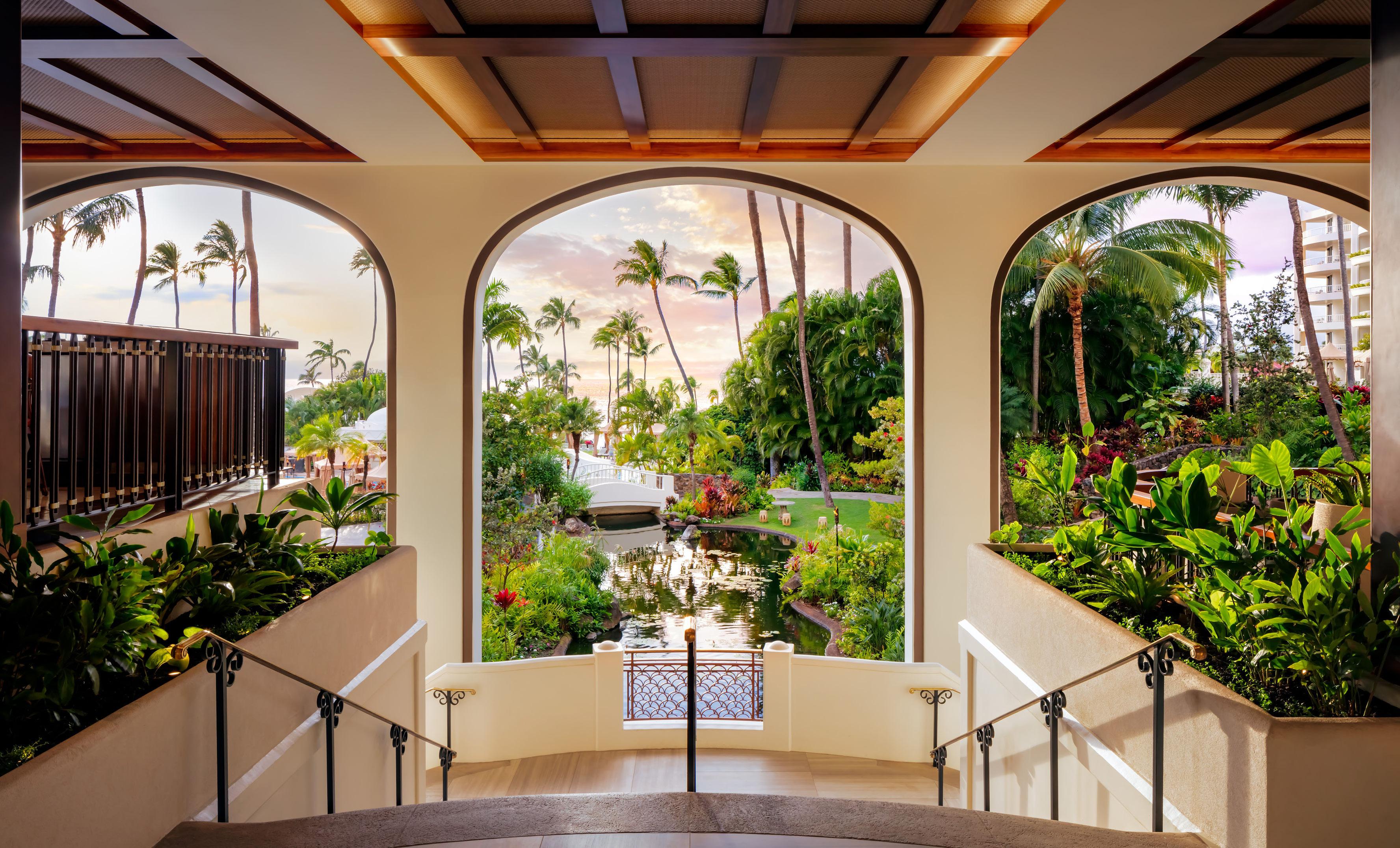
As you stroll through the open-air lobby of this iconic sanctuary, it’s easy to be struck by the architecture’s soaring arches, soft curves, and lightfilled domes perched before a vast blue horizon. While the environment undoubtedly sets the stage for indulgence and tranquility, those who crave a deeper, more intentional connection with their destination will find that the resort offers something far more profound than a typical coastal escape. If you spend any time speaking with the people who bring the resort to life, you’ll quickly discover a profound sense of pride – both in their workplace and in the land they call home.
THE HEART AND SOUL OF FAIRMONT KEA LANI
While the architecture is stunning, the heart and soul of the Fairmont Kea Lani is undoubtedly its people. The resort celebrates its 35th anniversary this year (and its 25th as a Fairmont), and the tenure of the staff is staggering. Out of 650 employees, 109 have been there since day one.
There is a documentary in the works just to capture their stories, which include fathers and sons working in the same kitchen, mothers and daughters serving side-by-side – multiple generations of families who make Fairmont Kea Lani their home-away-from-home.
Lobby staircase leading to koi pond.
Courtesy Fairmont Kea Lani
This sense of family and pride of place is palpable. We met Shauna Ah Yen, a pool attendant whose contagious energy and enthusiasm for her work were matched only by her eagerness to share her favorite local haunts and recommendations. She pointed us toward Paia – a small town about 35 minutes northeast of the resort – for an easy day of shopping in small boutiques and indulging in the island’s best shave ice – and gave us her recommendations for where to eat like a local in Wailuku and Kahului. Our personal favorite was Sparky’s in Kahului, which served the best loco moco I’ve eaten in years.
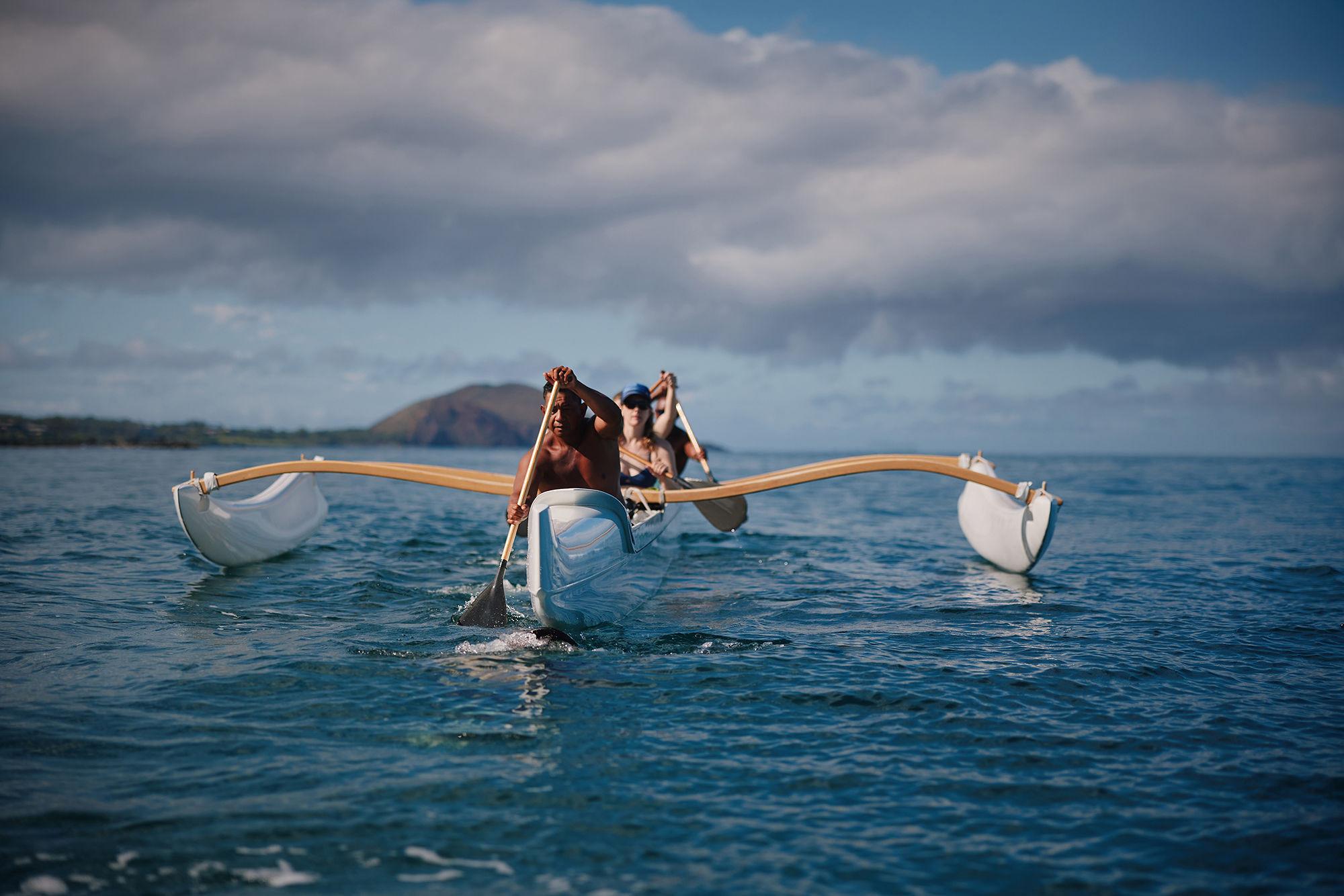
Then there was Ralph Valite, a Maui native and Fairmont Kea Lani outrigger canoe guide who dove into the water and helped us navigate the reef to find sea turtles swimming in the wild. Back on the boat, he shared stories of his grueling seven-hour race from Maui to Molokai – a vivid testament to the enduring strength and athletic traditions of the island people.
ROOTED IN CULTURE
We also spent time with Kapono Kamaunu, the resort’s cultural expert at Hale Kukuna, the largest dedicated cultural center within any resort in Hawai’i. He shared the fascinating history of how this region served as one of the first landing sites for Tahitian voyagers during their migration to the islands. Looking out toward the horizon, he pointed out the Kealaikahiki Channel – the “pathway to Tahiti” – a maritime highway for ancient navigators who used rock formations and constellations to traverse thousands of nautical miles.
At Fairmont Kea Lani, culture isn’t a splashy marketing tool. Instead, it is a steady undercurrent of tradition carried in intentionality, flowing quietly throughout the resort and shaping the guest experience.
A recent renovation to the property brought the redesign of 411 suites, 37 villas, an open-air lobby, Hale Kukuna, and Pilina – a new bar and lounge complete with unobstructed views of the Pacific. Completed in 2024, the redesign brought thoughtful touches to the property in ways that may not be obvious to visitors. Every element, from the traditional Hawaiian patterns in the upholstery to the curated local artwork, was developed in collaboration with kupuna (elders) and lineal descendants of the specific land region, called the Ahupua‘a of Palauea. This ensures that the spirit of the land is integrated into every fiber of the property in a way that feels humble yet deeply resonant.
“All these little touches, they are all very intentional and thoughtful to integrate culture in a really meaningful way,” says Chelsea Livit, director of marketing and public relations at Fairmont Kea Lani. “A lot of it is done with so much humility, and it’s not necessarily meant to be noticeable. We did it because we thought it was the right thing to do.”
LEADERS IN SUSTAINABILITY
Learning that an ancient fishing village once stood just minutes south of the resort – a place where the community thrived on self-sustenance through traditional fishing and the cultivation of uwala (sweet potato) and kalo (taro) – adds a profound layer of meaning to the landscape.
This level of intentionality is also carried throughout the property’s commitment to sustainability. The Fairmont Kea Lani was recently named the "Leader in Sustainability" by the Hawai'i Lodging & Tourism Association – an honor that reflects a holistic approach to conservation. This commendation includes achieving LEED Silver Certification and maintaining industry-leading waste reduction, responsible sourcing, and sophisticated water and
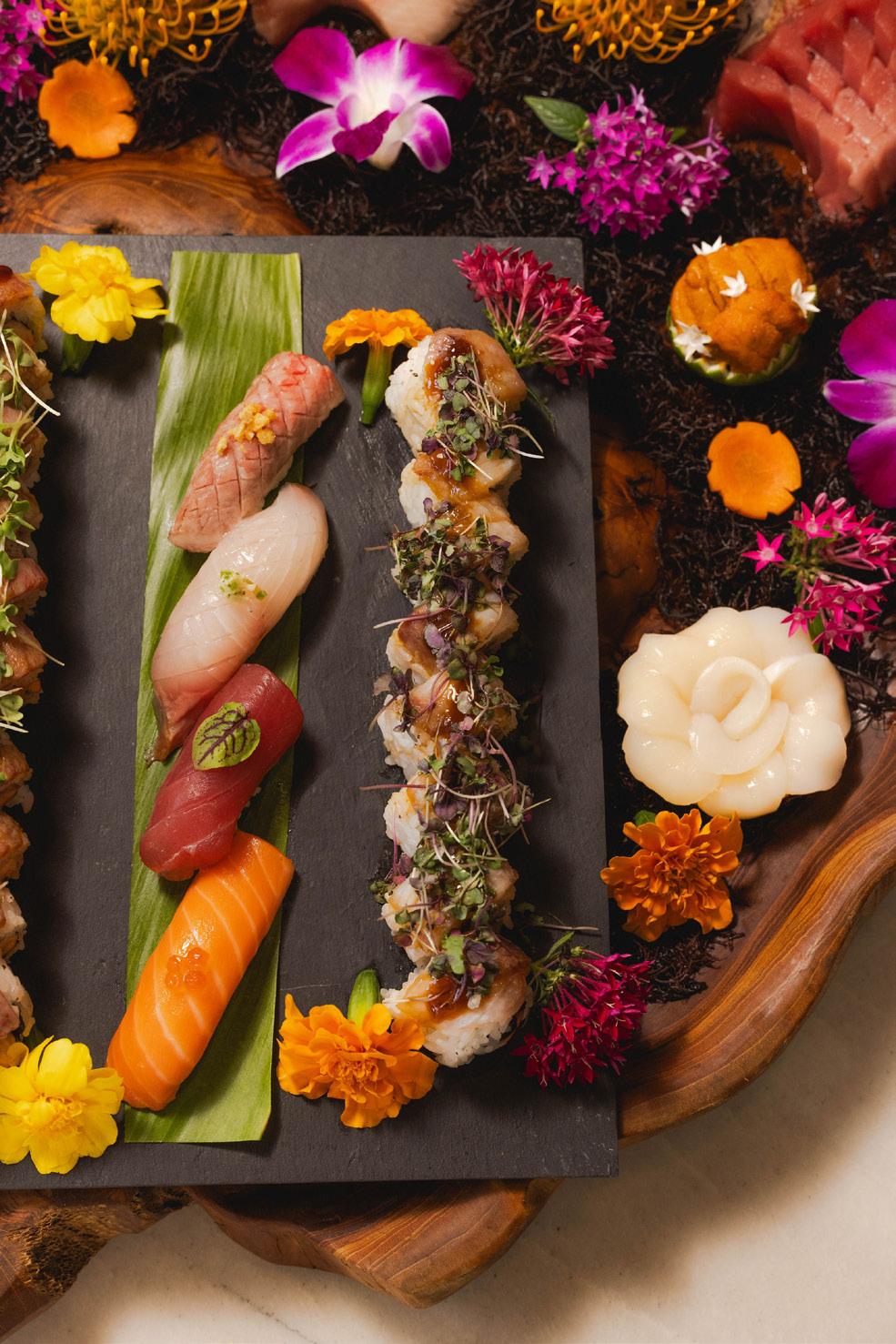
Platter of fresh fish at Pilina. Courtesy Fairmont Kea Lani
energy conservation systems that operate quietly behind the scenes to protect the island's finite resources.
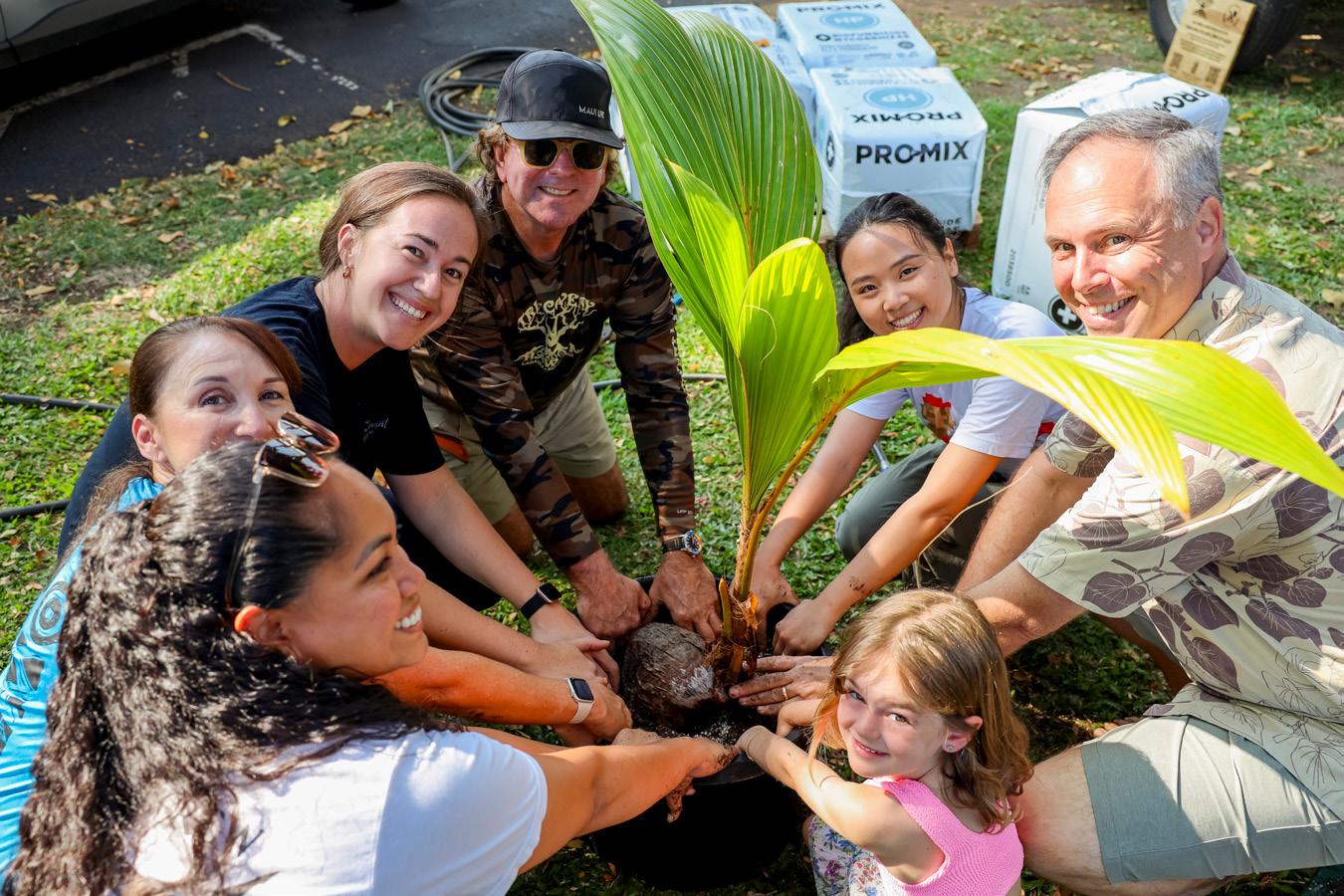
But their efforts reach far beyond the hotel's footprint, rooted in the philosophy of malama ‘aina (care for the land). The resort’s impact is felt across the island through long-term restoration partnerships, such as the work at the Waihe‘e Coastal Dunes & Wetlands Refuge. Here, the resort supports the critical revitalization of an ancient Hawaiian fishpond, preserving both an ecological sanctuary and a cultural treasure. Additionally, through a partnership with Treecovery Hawai’i, Fairmont Kea Lani plays an active role in wildfire recovery, funding and participating in large-scale native reforestation efforts in Lahaina and Kula to help heal the landscape for generations to come.
THE REBIRTH OF LAHAINA
Of course, one cannot talk about Maui today without acknowledging the resilience of its community following the 2023 fires that decimated the island’s historic resort town of Lahaina. A 35-minute drive from Wailea, Front Street – the former bustling hub of the area – remains a focal point of future planning through the Lahaina Royal Complex Master Plan. A proposed six-year project with master planning already underway, the project vision “weaves together cultural and historical sites, surrounding parts of town,
educational and recreational activities, parking, access, and movement around the area.”
According to Leanne Pletcher, manager of communications and content delivery at the Maui Visitors & Convention Bureau, the plan will “address Front Street’s future, including mixed use development, public lands, transit-oriented design, and cultural restoration.”
As 85% of Maui jobs depend on tourism, visitors to Lahaina are encouraged to support reopened beloved spots like Mala Ocean Tavern, Star Noodle, the Old Lahaina Lu‘au, or the Lahaina Harbor for select boat excursions.
A CATALYST FOR RESTORATION
While the physical landscape of Lahaina is being rebuilt, the emotional heartbeat of Maui as a whole remains stronger than ever. The Fairmont Kea Lani – though a world away from the fires’ reach –proves that tourism can, and should, be a catalyst for restoration and connection. By choosing to stay at a property that honors lineage and prioritizes ecological stewardship, you aren’t just a visitor, you are a participant in shared responsibility, ensuring that every visit respects the past and sustains the path forward. For more, visit www.fairmont-kea-lani.com.
Ralph Valite leads an outrigger canoe tour. Courtesy Fairmont Kea Lani
Fairmont Kea Lani employees partner with Treecovery Hawai’i.
Photo by Pacific Dream Photography
With Love, Loreto
Mexico’s coastal gem comes into its own
BY ALISON BAILIN BATZ
FFor decades, travelers looking south of the border for sand, surf, and sea have flocked to beloved Mexican hotspots like Cabo San Lucas, Cancun, Tulum, and Puerta Vallarta, each offering its own distinct blend of beauty, culture, cuisine, and escape. But for those seeking something new, there is another Mexican destination quietly stepping into the spotlight, one that has remained blissfully under the radar for years.
Welcome to Loreto.
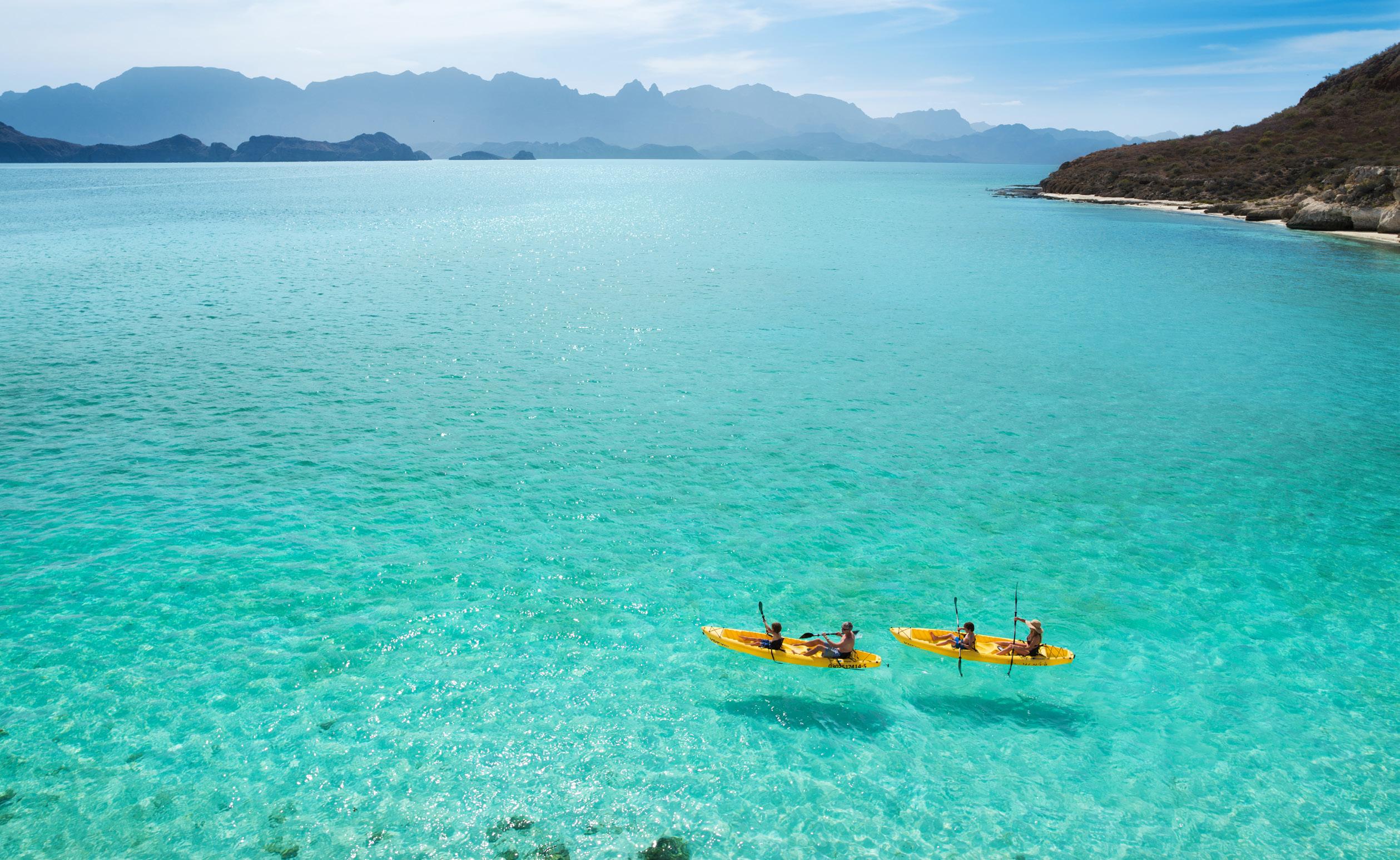
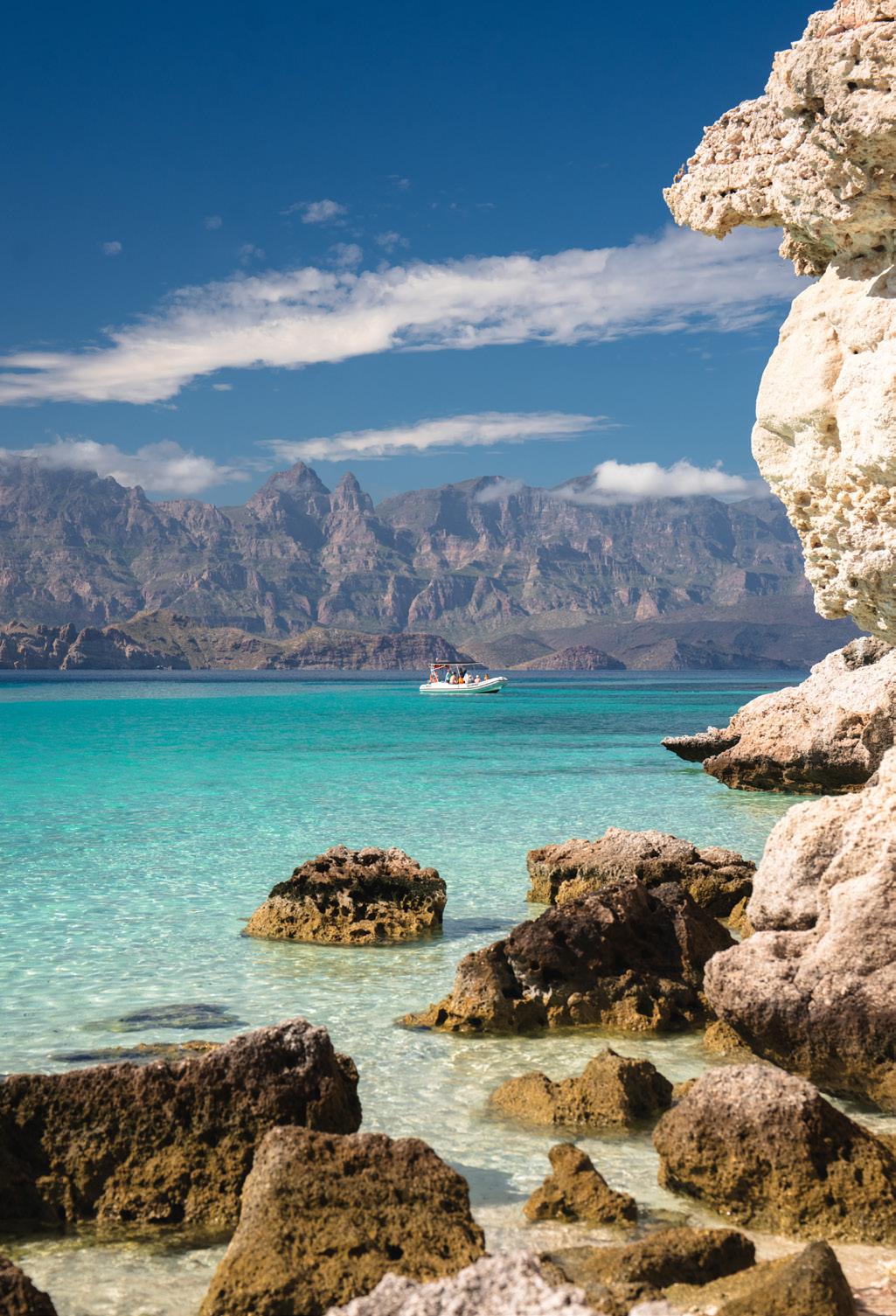
Located in Baja California Sur – roughly 300 miles north of Cabo San Lucas – the Pueblo Mágico, or “Magic Town,” has long captivated those lucky enough to stumble upon its dramatic mountainmeets-sea scenery, remarkably swimmable waters, extraordinary wildlife, and slower pace. Now, thanks in great part to a 90-minute direct flight from Phoenix to Loreto on American Airlines, the waterfront wonder is making waves, quite literally, along the Sea of Cortez.
Unlike many destinations that expanded quickly to keep pace with demand, Loreto has charted a different course, balancing tourism growth with marine
preservation, thoughtful design, and community stewardship. At the center of that effort is Loreto Bay National Marine Park, an 800-square-mile protected marine sanctuary and UNESCO World Heritage Site that safeguards one of the richest ecosystems on the planet, including nearly 40 percent of the world’s marine mammal species.
Translation?
Travelers visiting Loreto are not merely gazing at beautiful water from afar. Depending on the season, adventures can include spotting migrating blue whales, swimming alongside whale sharks, snorkeling through vibrant reefs, or hopping aboard a kayak to explore quiet coves and uninhabited islands.
Community-led conservation groups, including EcoAlianza de Loreto and Keep Loreto Magical, have also helped preserve native habitats while supporting responsible tourism, environmental education, and water-conscious agricultural practices that benefit both residents and visitors alike.
That same philosophy extends into the region’s hospitality scene, especially within Danzante Bay, Loreto’s luxury resort enclave where dramatic landscapes are not disrupted by development but rather embraced by it.
Home to the award-winning Villa del Palmar at the Islands of Loreto, Danzante Bay offers travelers the sort of sprawling luxury often associated with larger Mexican resort markets but with a distinctly more intimate and outdoors-driven energy. Spread across an extraordinary stretch of coastline, Villa del Palmar blends elevated accommodations with immersive experiences designed to encourage guests to experience Loreto rather than simply observe it.
The resort itself offers no shortage of showstopping wow-factor. Spacious suites and penthouses provide ample room to spread out, while five sparkling pools – that from above combine to form a sea turtle art piece – invite equal parts relaxation and play. There is also the expansive 39,000-square-foot Sabila Spa, where hydrotherapy circuits, restorative treatments, fitness programming, yoga, and Pilates blend seamlessly with Baja-inspired wellness rituals. Beyond this, the property can arrange hotel-led scuba diving excursions, whale watching, sport fishing, LED twilight paddleboarding, island boat tours, desert ATV adventures, hiking expeditions, and surfing escapes to nearby Scorpion Bay.
Then there is golf.
TPC Danzante Bay, located within the resort community and the only TPC-designated course in Mexico, has become one of the region’s most celebrated experiences. Its most photographed hole, the par-three 17th, appears almost impossibly perched above the Sea of Cortez, offering panoramic views that have earned it recognition among the sport’s most memorable backdrops. Yet beyond the Instagramworthy scenery, the course reflects the region’s broader commitment to thoughtful development, preserving the surrounding environment while creating something undeniably luxurious.
Still, Loreto’s next chapter may be its most exciting yet.
Mailena, the region’s first adults-only wellness resort
and first property fully dedicated to immersive wellbeing and longevity, is set to open this year. Perched along a secluded stretch of beach within Danzante Bay, the 96-room boutique resort blends design, restoration, and a true sense of place.
Mailena takes its cues directly from the surrounding desert and sea landscape, complete with a lobby centered around a living olive tree symbolizing resilience and a cenote-inspired Wellness and Longevity Center designed for introspection and science-backed therapies.
Here, wellness is not solely about spa treatments and cucumber water (though both are offered), but also sunrise paddleboard sessions, yoga, dolphin and whale watching, and meals built around locally sourced ingredients.
For Arizona travelers craving substance and adventure with purpose, Loreto is no longer merely waiting in the wings. It has officially arrived.
For more information, visit www.villadelpalmarloreto.com and www.mailenawellnessresort.com.
BY JENNIFER & JOHN BURKHART
She GREENShe’s GREENHe’s
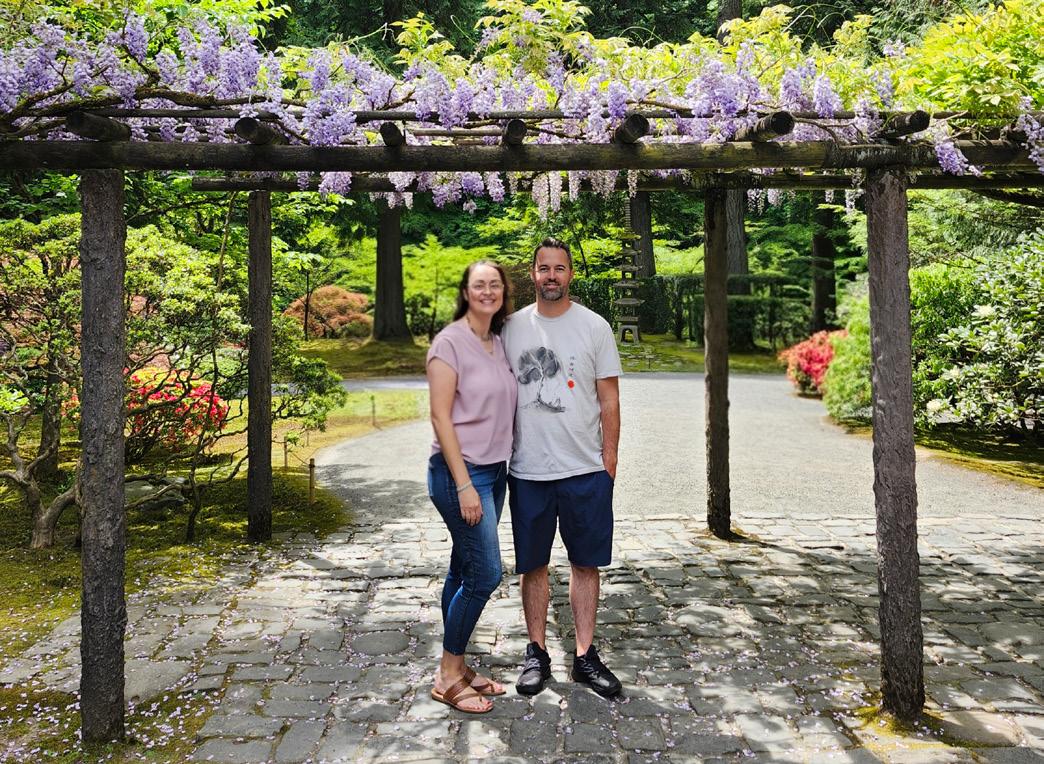
She Said: This was one of those places where pictures truly didn't do it justice. Sure, the pics look nice, but actually being there, strolling under the dappled sunlight, surrounded by more shades of green than you knew existed… it doesn't compare.
I'm so used to seeing the local, wild, “shaggy” greenery in my backyard and neighborhood, that walking into such a tidy, organized garden was a shock in the most pleasant way possible. It was a feast for the eyes and a balm for my brain, especially when I was near any water feature. And who knew that carp could be so fascinating?! Those chunky fish could probably swallow my hand whole, but they were cute, in their own way, and beautifully patterned. Our tour guide mentioned that the keeper would tap a pole on the bridge, and all the fish would dash right over for food. Guess they're kinda smart, too! Our guide was incredibly knowledgeable and sweet, explaining the design elements for the gardens (there were five different kinds), the history of how the garden came to be, and fun things like which large stones actually came from Japan. Each garden has three elements represented – water, plants, and stone. It was a surprise to see that water wasn't always in a garden, but instead represented by tiny pebbles raked into a pattern that looked like ripples surrounding an island or animal. I highly recommend signing up for the public tour – we learned so much. Besides tours (which pause in summer in Arizona, and resume in September for the Japanese Friendship Garden of Phoenix) there are many fun events, classes, and demonstrations that you'll want to check out throughout the year – with music and tea tastings being my favorites.
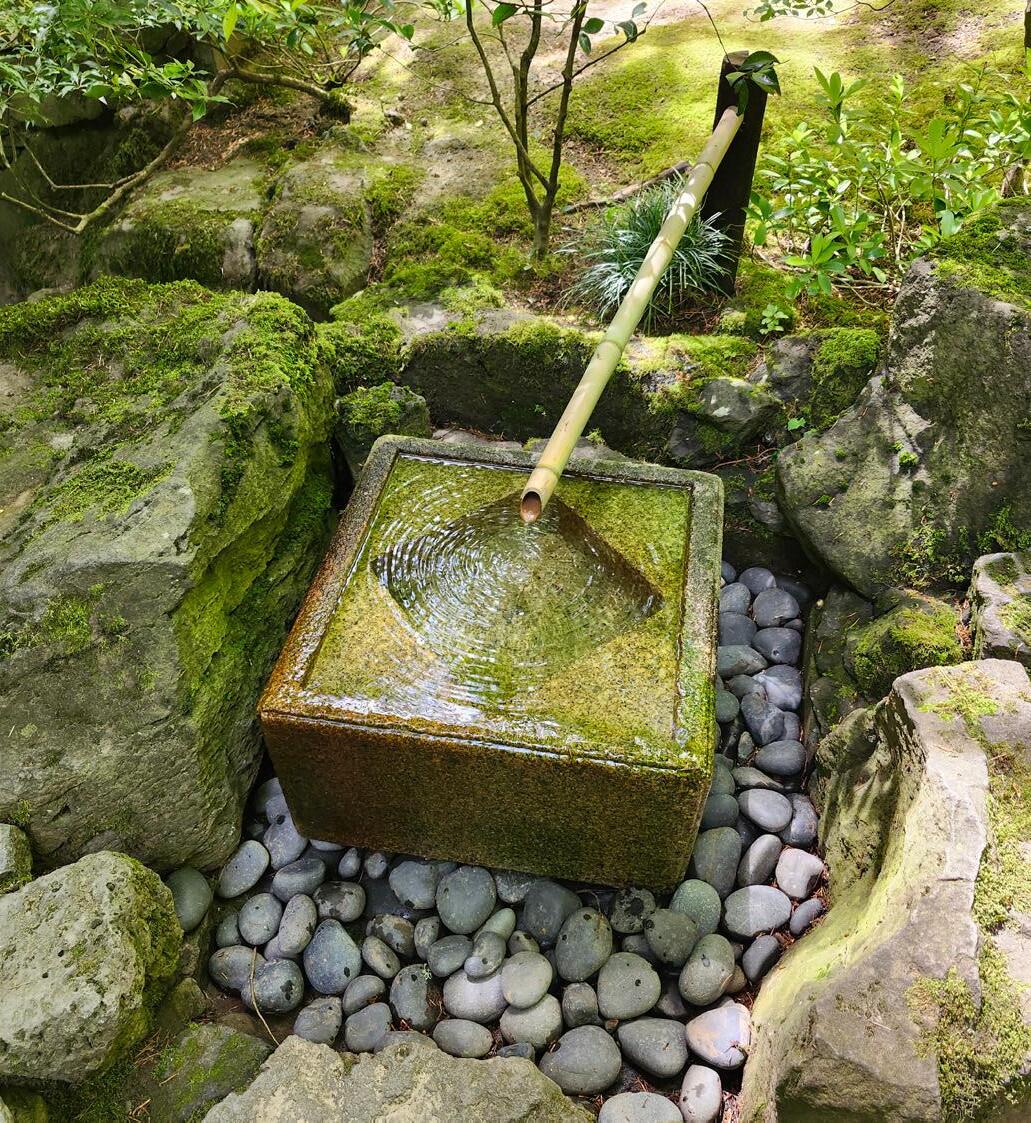
Hidden Harmony A visit to the Portland Japanese Garden sparks surprising stillness
If you haven't been to a local cultural center or garden, let this be your cue. These fun and interesting places are absolute gems, right in your backyard! We visited the Portland Japanese Garden and took the public tour with a wonderful volunteer that explained all about the architecture, history, and design of the garden. It was the perfect chill afternoon full of lush greenery and tranquil waters.
HeHe Said: I thought a guided tour of a Japanese Garden was basically going to be a very polite walk. Some trees, a pond, maybe a bench where somebody quietly reflects on life while I secretly think about lunch. I was not prepared for how aggressively peaceful this place was. The second we walked through the Nezu gate, the outside world disappeared. Traffic noise? Gone. Stress? Temporarily suspended. Even the air felt calmer somehow. Our guide greeted us with the soothing energy of someone who has never sent an angry email, while I arrived carrying the emotional stability of a raccoon. As we wandered down winding stone paths, our guide explained how the garden was carefully designed to exist in harmony with the environment. Rainwater feeds the ponds, repurposed materials are incorporated throughout the pathways and structures, and every plant and tree is maintained with long-term sustainability in mind. It was all very serene and enlightening right up until I got distracted watching a koi the size of a submarine surface beside me and almost stepped directly into the pond myself. At one point our guide had us stop talking for a moment and simply take in the sounds of the garden around us. Normally, silence and I are not close friends, but somehow it worked. The waterfalls trickled softly, birds chirped overhead, and for a few rare moments my brain stopped operating like an internet browser with 46 open tabs. By the end of the tour, I noticed nobody was rushing around anymore. I felt calmed and slowed down. Would I do it again? Absolutely. For a couple peaceful hours, the only thing on my schedule was slowing down, breathing deeply, and trying not to become part of the koi exhibit accidentally.
GREENScenes
Upcoming Events Throughout Arizona
June 4, June 18, July 2
Cooling Herbal Drinks and Hydrating Snacks Workshop
Discover how desert plants can nourish and cool the body during the hottest months of the year in this three-part, hands-on herbal workshop series. Explore the cultural significance and growing practices of traditional plants while creating refreshing herbal drinks and hydrating seasonal snacks. Bring curiosity, an appetite, and a love for Sonoran Desert wisdom as each gathering blends wellness, flavor, and community connection into a vibrant summer experience. Free, 5:30 to 7:00 p.m. Native Health Central, 4041 N. Central Avenue, Phoenix.
June 5
H20 Fest
Cool off with a splash-filled celebration of water, wellness, and summer fun at Gilbert’s lively H2O Fest. Families can dive into interactive activities, water slides, games, music, and hands-on learning that highlights the importance of protecting Arizona’s precious water resources. Bring the kids, embrace the sunshine, and enjoy an energizing day of community connection. 3 to 7 p.m., tickets $7. Mesquite Aquatic Center, 100 W. Mesquite Street, Gilbert.
CENTRAL ARIZONA
June 1 - 29
Parched: The Art of Water in the Southwest
Explore a thought-provoking exhibition where art, culture, and science converge to examine the Southwest’s complex relationship with water. Through powerful visual storytelling and diverse artistic mediums, the exhibit invites visitors to reflect on sovereignty, spirituality, and environmental justice while deepening understanding of water’s cultural significance across Indigenous and desert communities. Expect moving perspectives, meaningful dialogue, and an experience that lingers long after you leave. Times vary by day. $13 adults; $13 seniors; $10 children (6-17); free (museum members and children under 6). Price includes museum entry. S'edav Va'aki Museum (Formerly Pueblo Grande Museum), 4619 E. Washington Street, Phoenix.
June 13
Valley of the Sun JUNETEENTH Celebration 2026
Bring the family to enjoy a vibrant community celebration filled with live entertainment, arts and crafts, games, prizes, children’s activities and inspiring educational presentations. Discover gardening tips, explore local vendors and fine art displays, and take advantage of free health screenings. Community youth and student scholarship recipients are also honored during this longtime Phoenix tradition celebrating freedom, culture, and connection. Free. 5 to 9 p.m., Eastlake Park, 1549 E Jefferson Street, Phoenix.
June 13
Family Beach Bash
Cool off with an energetic summer celebration packed with water fun, beach-themed games, and family-friendly activities for all ages. Kids can splash, play, and explore while parents relax and soak up the lively atmosphere. Expect music, interactive entertainment, and plenty of sunny community spirit that transforms the desert into a playful beach party for the day. $5 for Surprise residents; $8 for non-residents. 9 to 11 a.m. Surprise Aquatic Center, 15831 N. Bullard Avenue, Surprise.
June 18
E-Mobility and Clean Energy Summit
Discover how Arizona is helping shape the future of transportation and clean power at this forward-looking Arizona Technology Council summit bringing together innovators, industry leaders, and sustainability advocates. Explore breakthroughs in electric mobility, battery technology, infrastructure, and renewable energy while connecting with changemakers driving smarter, cleaner solutions across the desert Southwest. $60 AZTC members; $75 non-members. Noon to 4:15 p.m. SkySong, the ASU Scottsdale Innovation Center, 1365 N. Scottsdale Road, Building 3, Scottsdale.
June 21
The Desert Grill: A Father’s Day Brunch
Treat Dad to a flavorful brunch experience inspired by the bold tastes of the Southwest. Savor chef-crafted dishes, smoky grilled favorites, and seasonal ingredients in a relaxed desert setting perfect for celebrating together. Whether gathering with family or raising a toast to father figures, this festive culinary outing blends delicious bites, warm hospitality, and the spirit of an Arizona summer weekend. Tickets $100. 10 a.m. to 1 p.m. Musical Instrument Museum, 4725 E. Mayo Boulevard, Phoenix.
June 21
Make Music Phoenix
Celebrate the joy of music at the Heard Museum with an uplifting evening of live performances, community creativity, and cultural connection. Wander through interactive musical experiences, discover talented local artists, and enjoy the vibrant energy that fills the museum grounds. From rhythm and dance to spontaneous moments of collaboration, this lively gathering invites guests of all ages to explore the universal language of music. Free. 10 a.m. to 4 p.m. Heard Museum, 2301 N. Central Avenue, Phoenix.
June 27
After Dark in the Park
Experience the desert after sunset with an evening of outdoor adventure, stargazing, and nature discovery under the night sky. Explore local parks in a whole new way through guided activities, wildlife encounters, and family-friendly fun designed to connect visitors with the Sonoran Desert after dark. Enjoy a drone show at 8:45 p.m. Bring curiosity, comfortable shoes, and a sense of wonder for this unique nighttime escape. Free. 6 to 9 p.m. Deer Valley Park, 19602 N. 19th Avenue, Phoenix.
July through August
Shemer Art Center: Adult Art Classes
Escape the summer heat and step into a cool, creative center where art lovers can explore new techniques and spark fresh inspiration throughout the summer. From painting and mixed media to hands-on workshops led by local artists, these classes invite beginners and experienced creatives alike to experiment, learn, and create. Discover a welcoming space to slow down, connect with community, and let imagination flourish during the height of the desert summer. Adults 18 and over. Prices, dates, and times vary by course. 5005 E. Camelback Road, Phoenix.
July 4
Fabulous Phoenix 4th
Celebrate America’s 250th anniversary with an evening of community spirit, live entertainment, and a dazzling fireworks display lighting up the desert sky. Families can spread out on the grass, enjoy festive food and activities, and soak in the energy of one of the Valley’s signature summer celebrations. Bring lawn chairs, gather friends and neighbors, and revel in this milestone patriotic gathering filled with music, color, and summertime fun. Free. 6 to 10 p.m., fireworks start at 9:15 p.m. Steele Indian School Park, 300 E. Indian School Road, Phoenix.
July 9
2026 SRP Water Conservation Expo
Discover practical ways to make every drop count at this interactive virtual event focused on smart water stewardship in the desert. Learn how Arizona’s canal systems and surface water management shape daily life while exploring easy conservation upgrades for your yard. Participants can access discounts on smart irrigation tools, sprinklers, and nozzles designed to help landscapes thrive while using less water during the summer heat. Free. Noon to 1 p.m. Virtual event.
May - December 2026
Heritage Festival
Step into a rolling celebration of Arizona’s legendary stretch of the Mother Road as communities across the state honor 100 years of roadside Americana, neon nostalgia, classic cars, local art, music, and desert adventure. Discover quirky small towns, historic diners, lively festivals, and stories that capture the enduring spirit of Route 66. Events and locations vary throughout 2026. Discover Arizona (and other State’s events) at route66centennial.org.
June 6-7
Flagstaff Hullabaloo
Bring the family and revel in one of Northern Arizona’s most delightfully quirky community celebrations, where giant puppets roam the park, bikes become rolling art, and costumes are enthusiastically encouraged. Expect live music, circus-style performances, local food and craft vendors, playful parades, and an atmosphere that feels equal parts creative carnival and hometown gathering. Kids can bounce, dance, and explore while adults enjoy craft brews, colorful performances, and the joyful energy that fills Flagstaff’s cool mountain air. Tickets range from $9.56 for kids to $24.03 for adults (service fee included). VIP tickets are available. **Admission is free for the first 250 people each day with three non-perishable food items to benefit Flagstaff Family Food Center. 10 a.m. to 9 p.m., Saturday; 11 a.m. to 6 p.m., Sunday. Wheeler Park, 212 W. Aspen Avenue, Flagstaff.
June 13
Watershed Cleanup Series
Roll up your sleeves and discover the power of community stewardship during this hands-on outdoor cleanup dedicated to restoring watershed health. Volunteers will help remove litter, clear invasive plants, and improve natural water flow while
NORTHERN ARIZONA
July 18
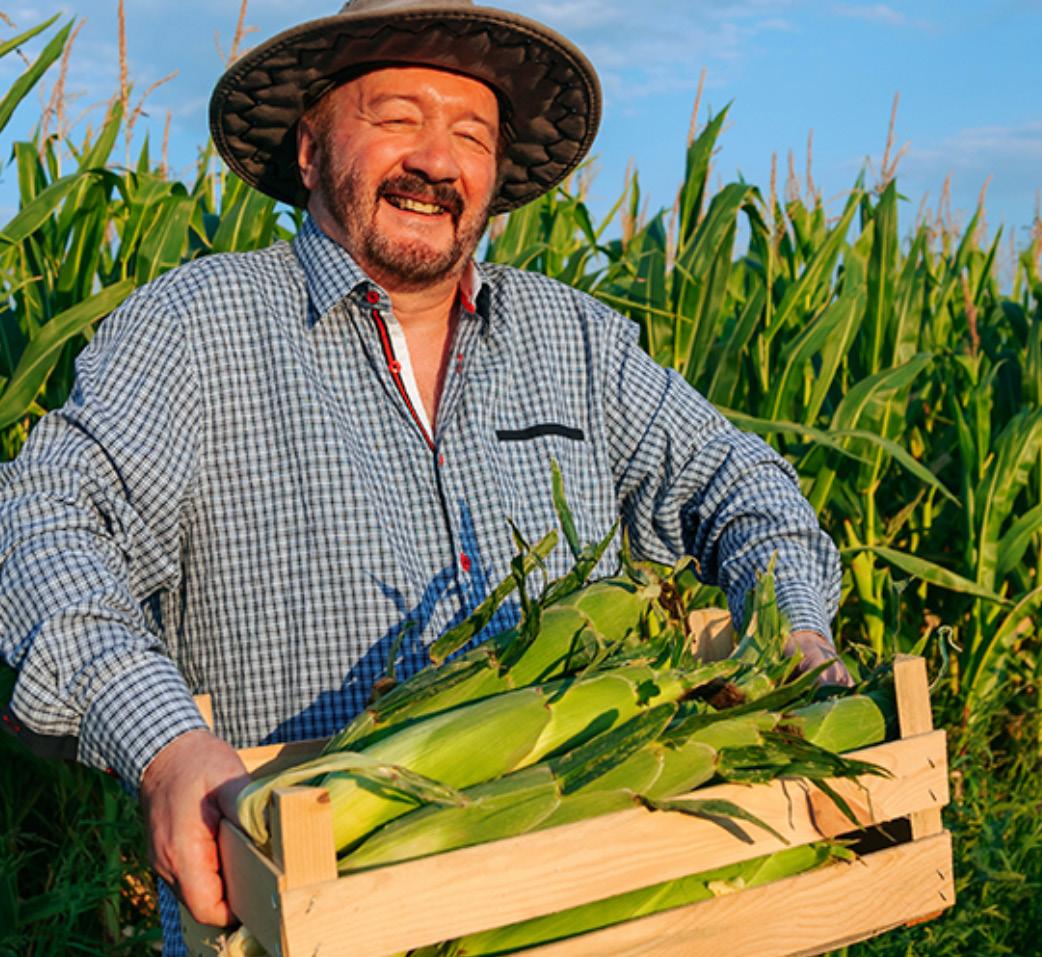
Corn Fest
Savor the flavors and fun of summer at this lively small-town festival packed with roasted corn, local food, music, games, and community spirit. Families can stroll vendor booths, enjoy entertainment, and soak up the festive atmosphere while savoring one of the season’s most beloved harvest traditions. Bring friends, bring your appetite, and revel in a joyful day that captures the playful charm of summer in the Verde Valley. Free. 9 a.m. to 4 p.m. Camp Verde Community Center Gym, 51 E. Hollamon Street, Camp Verde.
enjoying fresh air and meaningful connection to the landscape. Bring the family, spend time outdoors, and leave knowing you helped protect local ecosystems and waterways for future generations. 9 to 11 a.m., exact location to be determined. Flagstaff.
June 13
Flagstaff Native Herb Fest 2026
Celebrate the healing power of plants at this vibrant gathering devoted to herbs, wellness, and natural living. Explore artisan vendors, discover herbal remedies, enjoy hands-on demonstrations, and connect with a community passionate about holistic health and sustainable practices. Bring your curiosity, sip herbal teas, and explore fresh ways to nourish body, mind, and spirit. Cost includes all workshops. $65 for Willow Bend members, $80 for the public. 9 a.m. to 3 p.m. Willow Bend Environmental Education Center, 703 E. Sawmill Road, Flagstaff.
July 24 to 26
Sedona Hummingbird Festival
Get lost in the dazzling world of hummingbirds during this beloved summer multi-day gathering celebrating the tiny pollinators that bring color and energy to the Southwest. Bird lovers, photographers, gardeners, and families can enjoy guided experiences, educational talks, and close-up encounters with these remarkable aerial acrobats. Surrounded by Sedona’s red rock beauty, the festival offers a joyful opportunity to connect with nature, wildlife conservation, and the magic of migration season. Free to visit the Hummingbird Central and the Hummingbird Hangout. Prices for seminars and offsite activities vary. Times vary. Sedona Performing Arts Center, 995 Upper Red Rock Loop Road, Sedona.
June 10
WRRC Water Webinar: Global Water Bankruptcy: Living Beyond our Hydrological Means in the Post-Crisis Era
Explore the future of water in the Southwest and beyond during this thought-provoking webinar featuring Kaveh Madani. Discover bold ideas, emerging solutions, and global perspectives on water resilience while gaining fresh insight into how communities can adapt, conserve, and reimagine a more sustainable relationship with water. Noon to 1:15 p.m. Webinar. Visit website for more details.
June 16
Sacred Water Speaks Webinar
Dive into an inspiring virtual conversation exploring the spiritual, cultural, and ecological importance of water through Indigenous perspectives and storytelling. Participants will discover deeper connections between communities and waterways while reflecting on stewardship, resilience, and reciprocity in the desert Southwest. This engaging webinar invites thoughtful dialogue and fresh insight into the living relationships that sustain both people and landscapes. Free. Advanced registration required. Noon to 1 p.m. Online.
June 21
Signs of the Season Phenology Walk
Stroll along the Santa Cruz River on a guided nature walk exploring the seasonal rhythms of the Sonoran Desert. Discover how plants, wildlife, and weather patterns reveal subtle shifts throughout the year while enjoying the beauty and biodiversity of this treasured riparian landscape. Bring curiosity, comfortable shoes, and a love of the outdoors for an experience connecting science, observation, and desert wonder. Free. 8 a.m. Wheeler Taft Abbett Sr. Library, 7800 N. Schisler Drive, Tucson.
SOUTHERN ARIZONA
June 10
Art & Appetizers: Artfully Crafted Gifts That Tell a Story for Dads and Grads
Discover creative gifts with heart during an art-filled gathering celebrating handmade craftsmanship, local flavor, and meaningful storytelling. Browse unique works from talented artists and makers while enjoying light bites and a relaxed atmosphere perfect for finding something memorable for dads, grads, and loved ones. This festive experience blends creativity, community, and thoughtful shopping into an inspiring cultural outing. Free. 3 to 5 p.m. Southern Arizona Arts Guild 1745 E. River Road, Ste 135 Tucson
July 11
Watershed Management Group: Living Lab & Learning Center Tour
Explore how innovation and sustainability come together during this behind-the-scenes tour of a unique desert learning space designed to inspire water-wise living. Wander through demonstration gardens, discover creative conservation strategies, and learn how thoughtful design can support healthier ecosystems in the Southwest. Perfect for curious gardeners, sustainability enthusiasts, and lifelong learners eager to gather fresh ideas for thriving in the Sonoran Desert. Pay what you can, up to $20. Registration required. 8 to 10 a.m. 1137 N. Dodge Boulevard, Tucson.
July 31
Momentos
Step into an evening of reflection, creativity, and conversation centered on the theme of “Poetry and the Everyday” within the Another Frame exhibition featuring works by Lola Álvarez Bravo, Mariana Yampolsky, Graciela Iturbide, and Flor Garduño. Guests are invited to join a semi-guided discussion exploring how ordinary moments become extraordinary through photography and storytelling while connecting with fellow art lovers in an intimate museum setting. Pay-WhatYou-Wish admission. 5 to 8 p.m. Tucson Museum of Art, 140 N. Main Avenue, Tucson.
Share what inspires you
R E A D E R S U R V E Y
T A K E O U R S U R V E Y & W I N !
Help us create better content
Together for a greener tomorrow
Share your thoughts. Make an impact. Thank you for being part of our community.