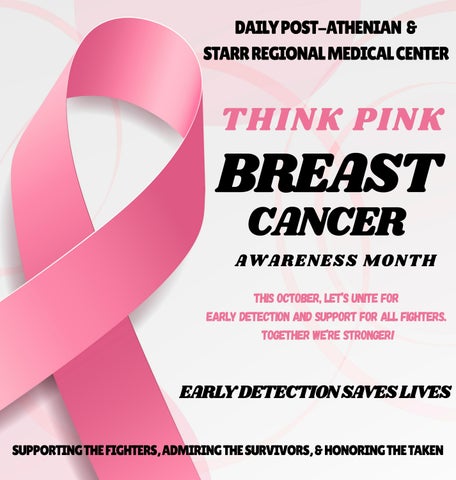
DAILY POST-ATHENIAN & STARR REGIONAL MEDICAL CENTER
THINK PINK
BREAST CANCER
AWARENESS MONTH THIS OCTOBER, LET’S UNITE FOR EARLY DETECTION AND SUPPORT FOR ALL FIGHTERS. TOGETHER WE’RE STRONGER!
EARLY DETECTION SAVES LIVES SUPPORTING THE FIGHTERS, ADMIRING THE SURVIVORS, & HONORING THE TAKEN
http://www.dailypostathenian.com
The Daily Post-Athenian, “Think Pink 2026” – Page A2
Breast cancer treatments can affect immune system SPECIAL TO THE DPA
Treatment for breast cancer is highly effective. Five-year survival rates for breast cancer have increased dramatically in recent decades and much of that success can be credited to cancer researchers and campaigns designed to inform women about the importance of screenings. Breast cancer is highly treatable, but treatment typically leads to some unwanted side effects. According to Johns Hopkins Medicine, women undergoing treatment for breast cancer may experience a host of side effects, including fatigue, pain, headaches and dental issues. Cancer treatments, most notably chemotherapy, also can take a toll on women’s immune systems. Why does chemotherapy affect the immune system? Cancer is caused by an uncontrolled division of abnormal cells in the body. According to Breastcancer.org, chemotherapy targets these abnormal cells, but also can affect fast-growing cells that are healthy and normal. So chemotherapy can damage cells throughout the body, including those in bone marrow. When bone marrow is damaged, it’s less capable of producing sufficient red blood cells, white blood cells and platelets. Breastcancer.org notes that the body is more vulnerable to infection when it does not have enough white blood cells. Does chemotherapy always weaken the immune system? The effects of chemotherapy on the immune system depend on various factors. According to Breastcancer.org, a patient’s age and overall health may influence the effects of chemotherapy on their immune systems. Young, healthy patients may be less vulnerable to infections from weakened immune
systems than aging, less healthy patients. However, Susan G. Komen notes that the median age for breast cancer diagnosis in the United States is 63, so many patients are likely to be affected by the impact that treatment can have on their immune systems. The length of treatment and amount of medicines patients receive also can affect the impact of chemotherapy on patients’ immune systems. Breastcancer.org notes that being administered two or more chemotherapy medicines at once is more likely to affect the immune system than just one medication. Other treatments Chemotherapy is not the only treatment that can affect breast cancer patients’ immune systems. The Cancer Treatment Centers of America® notes that surgery,
radiation, CAR T-cell therapy, stem cell transplants and even immunotherapy can affect the immune system. Surgery can overtax the immune system and compromise its ability to prevent infections and heal wounds caused by the procedure. Like chemotherapy, radiation therapy can damage healthy cells and lead to an increased risk of infection. And while immunotherapy is designed to boost the immune system by helping it recognize and attack cells more effectively, it also can lead to an overactive immune system that attacks healthy cells. Cancer treatment is often highly effective. However, patients may need to work with their physicians to combat treatment side effects that can adversely affect their immune systems.
Women’s care that changes with you. Learn more at StarrRegional.com
http://www.dailypostathenian.com
The Daily Post-Athenian, “Think Pink 2026” – Page A3
Things to know about breast cancer SPECIAL TO THE DPA
The World Health Organization reports that roughly 2.3 million women were diagnosed with breast cancer in 2020. By the end of that year, there were nearly eight million women alive who had been diagnosed with the disease in the previous half decade. A breast cancer diagnosis inevitably leads to questions about the disease. The bulk of those questions undoubtedly are asked by the millions of women who are diagnosed with breast cancer. But millions more individuals, including friends and family members of recently diagnosed women, may have their own questions. Women can discuss the specifics of their diagnosis with their physicians. In the meantime, the following are some frequently asked questions and answers that can help anyone better understand this potentially deadly disease. What is breast cancer? Cancer is a disease marked by the abnormal growth of cells that invade healthy cells in the body. Breast cancer is a form of the disease that begins in the cells of the breast. The National Breast Cancer Foundation notes that the cancer can then invade surrounding tissues or spread to other areas of the body. Can exercise help to reduce my breast cancer risk? The NBCF notes that exercise strengthens the immune system and women who commit to as little as three hours of physical activity per week can begin to reduce their risk for breast cancer. However, even routine exercise does not completely eliminate a woman’s risk of developing breast cancer.
Learn more at StarrRegional.com
Is there a link between diet and breast cancer? The organization Susan G. Komen®, a nonprofit source of funding for the fight against breast cancer, reports that studies have shown eating fruits and vegetables may be linked to a lower risk for breast cancer, while consuming alcohol is linked to an increased risk for the disease. In addition, the NBCF reports that a high-fat diet increases breast cancer risk because fat triggers estrogen production that can fuel tumor growth. Is there a link between oral contraceptives and breast cancer? The NBCF reports that women who have been using birth control pills for more than five years are at an increased risk of developing breast cancer. However, the organization notes that risk is very small because modern birth control pills contain low amounts of hormones.
Can breastfeeding reduce breast cancer risk? Breastfeeding and breast cancer are linked, though the NBCF notes that the role breastfeeding plays in lowering cancer risk depends on how long a woman breastfeeds. The World Cancer Research Fund International notes that evidence indicates that the greater number of months women continue breastfeeding, the greater the protection they have against breast cancer. Is there a connection between stress and breast cancer? The NBCF notes that researchers have found that traumatic events and losses can alter how the immune system functions, which can provide an opportunity for cancer cells to establish themselves within a person’s body. The NBCF urges women to identify ways to keep their stress levels in check. Breast cancer education can be a valuable asset as women seek to reduce their risk for the disease.
Your emergency care, close and convenient.
http://www.dailypostathenian.com
The Daily Post-Athenian, “Think Pink 2026” – Page A4
Identifying breast cancer early SPECIAL TO THE DPA
There are various ways to detect breast cancer in the earliest stages of the disease. Self-exams are one way to be mindful of potential changes in the breasts and bring them to the attention of medical professionals. While self-exams can help individuals learn how their bodies normally look and feel, major medical organizations like the American Cancer Society no longer recommend doing formal, regimented monthly self-exams. Instead, there is a greater push toward breast self-awareness. According to BreastCancer.org, regular step-by-step self-exams do not decrease breast cancer mortality rates. In some instances, they can cause unnecessary anxiety and lead to biopsies after the discovery of benign lumps. But it can still be helpful to learn how to conduct a self-exam and incorporate it into a preventive health care routine. Here’s how to conduct an exam, courtesy of BreastCancer.org. 1. Examine your breasts in the mirror with hands on hips. Look for breasts that are evenly shaped without visible distortion or swelling. Also look to ensure that the breasts are their usual size, shape and color. 2. Now raise your arms and look for the same things. 3. Look for signs of fluid coming out of one or both nipples. 4. Lie down and use your right hand to feel your left breast. Then switch to use your left hand to feel your right breast. Use a
firm, smooth touch with the first few finger pads of your hand. Press down with your fingers and move them in a circular motion that’s about the size of an inch around. Go around each breast from top to bottom, side to side. Be sure to follow a pattern to be sure to cover the entire breast from collarbone to the top of the abdomen, and from your armpit to your cleavage. 5. Feel your breasts while you are standing or sitting. Many people find that the
easiest way to self-examine their breasts is in the shower when the skin is slippery. Conduct the same hand movements as in step 4. While many lumps are benign, women should not hesitate to call the doctor to check out a new lump or breast change that concerns them. Getting to know one’s breasts through self-exam can lead to early detection of breast cancer at a point in time when the disease is most treatable.
Robotic-assisted general surgery with a personal touch. Using the da Vinci Surgical System
See what makes our surgical care special at StarrRegional.com
http://www.dailypostathenian.com
The Daily Post-Athenian, “Think Pink 2026” – Page A5
Breast cancer screening recommendations SPECIAL TO THE DPA
Health care screenings save untold numbers of lives each year. Screenings can uncover potentially life-threatening issues in their infancy. Such is often the case with cancer screenings, which are recommended to adults from all walks of life in an effort to detect the presence of the disease in its earliest, most treatable stages. Screening can detect various forms of cancer, including breast cancer. Breast cancer screening guidelines are fluid as researchers and other health care professionals learn more about the disease. The following guidelines reflect recommendations from the United States Preventive Services Task Force (USPSTF) in 2024. • Women are now advised to start regular mammograms at age 40. Prior to these updated USPSTF recommendations, women had been advised to start regular mammograms at age 50. But the Breast Cancer Research Foundation notes these new USPSTF guidelines now align with recommendations from other organizations. • Screening mammograms should be scheduled every other year between the ages of 40 and 74. This timeline does not align with other organizations, many of which urge women to get annual mammograms. Women can discuss mammogram frequency with their physicians. • The USPSTF cited a need for more research into the benefits of breast ultrasound and MRI for women with dense breasts. Women identified as having dense breasts can open a dialogue with their physicians about breast cancer screenings and
request updates on the latest opinions surrounding breast ultrasounds and MRIs. • The USPSTF acknowledged it was unable to make specific recommendations regarding breast cancer screenings for women 75 and older, citing a lack of sufficient studies on which to base recommendations to women in this age group. It’s important to note that USPSTF rec-
ommendations are fluid and can change. Women are urged to take USPSTF recommendations and advice from other organizations into consideration and work in concert with their health care team to identify the best screening strategy for them. More information about breast cancer screening is available at bcrf.org and uspreventiveservicestaskforce.org
FRIENDLY FELLOW FLU SHOT FUNDRAISER Friday, October 23, 11:30 a.m. - 2:30 p.m. Starr Regional Medical Center - Athens, Main Lobby Flu season is just around the corner. Help protect yourself and the people around you by getting your flu shot while supporting the Friendly Fellow Club’s food basket program. The vaccine is free, but donations are encouraged. Learn more at StarrRegional.com. This event is for ages 18+. Children are encouraged to get their vaccine from a pediatric clinic.
http://www.dailypostathenian.com
The Daily Post-Athenian, “Think Pink 2026” – Page A6
Can adolescents reduce lifetime breast cancer risk?
SPECIAL TO THE DPA
With much of their lives ahead of them, young adults likely are not spending too much time thinking about their vulnerability to disease. However, adopting an “it can’t happen to me” mentality may cause individuals to engage in habits that can increase their risk for certain illnesses, including breast cancer. Breast cancer is the most common cancer in women, affecting around one in eight women, reports the American Cancer Society. The National Breast Cancer Foundation advises that only 5% to 10% of breast cancer cases are linked to inherited mutations in genes like BRCA1 and BRCA2. That means the majority of breast cancer cases are a byproduct of something other than genetics. Some may be the result of lifestyle choices. Dense breasts, high hormone exposure and obesity are each risk factors for breast cancer. Adolescents may not be thinking about preventive health care, but that should not stop them from educating themselves about how they can lower their overall lifetime risk of developing breast cancer. • Exercise regularly. Routine exercise and aiming for at least two hours of recreational physical activity or sports each week can help lower stress and reduce future breast density. Moderate to vigorous movement each day is good for overall health. • Eat a balanced diet. Susan G. Komen® advises that focusing on whole foods and
Your recovery is our specialty.
a diet rich in vegetables, fruits, fiber and whole grains is important. Also, one should reduce intake of inflammatory foods, such as sugary drinks, processed snack foods and red meat. • Avoid alcohol. Skipping alcoholic beverages during adolescence and into early adult years can protect developing breast tissue. The National Cancer Institute says some studies found that women who drank alcohol in their teen years may have an
increased risk of breast cancer in adulthood. • Skip cigarettes. Avoiding tobacco use or quitting early can help lower breast cancer risk. Smoking at a young age significantly increases long-term cancer risk, reports the Breast Cancer Research Foundation. While not every case of breast cancer can be avoided, adolescents can employ strategies to protect themselves against breast cancer.
See how we focus on you at StarrRegional.com
http://www.dailypostathenian.com
The Daily Post-Athenian, “Think Pink 2026” – Page A7
What breast cancer can do to the body
No woman wants to be diagnosed with breast cancer. A potentially fatal disease, breast cancer affects millions of women across the globe each year. Thankfully, survival rates for the disease have improved considerably in recent decades and women now have a much greater chance of living for many years after successful treatment. A 2017 study from the American Cancer Society found that the number of women who died from breast cancer dropped by about 40% in the quarter century preceding the study. A host of variables, including advancements in detecting and treating the disease and a heightened awareness of the need for screening, have contributed to that positive turn. Though breast cancer treatment is highly effective, particularly when the disease is in its early stages at the time of an initial diagnosis, women may still experience some side effects of both the disease and the treatment their cancer care teams design. The following are some ways that breast cancer and treatment can affect a woman’s body in both the short- and long-term. • Joint and muscle pain: According to Susan G. Komen®, a nonprofit organization that helps to fund breast cancer research, aromatase inhibitors are hormone therapy drugs used to treat hormone receptor-positive breast cancer. Researchers have found that joint pain and muscle pain are common side effects of aromatase inhibitors. This pain might be most noticeable after sleeping or a period of inactivity. Fortunately, the damage to joints and muscles is not permanent. • Fatigue: Breastcancer.org reports that breast cancer causes changes in the body
that can lead to fatigue. That fatigue could be linked to cytokines, which are proteins released by certain breast cancers that researchers suspect cause fatigue. Breast cancer also can alter hormone levels in the body and cause inflammation, and each of those effects can contribute to fatigue. • Skin changes: The MD AndersonCancer Center reports that certain changes to the skin are hallmarks of inflammatory breast cancer, a relatively rare yet aggressive form of the disease. Redness or another change in the skin color of the breast, swelling on one side and/or a rash that appears suddenly are changes in the skin that can appear due to breast cancer. Dimpling of the skin over the breast is another change in the skin that can result from breast cancer. • Libido and fertility: Breastcancer.org reports that some breast cancer treatments can lower a woman’s libido, which is her desire for sex and intimacy. This side effect
Learn more about heart care built around you at StarrRegional.com/heart.
is possibly a byproduct of other effects of treatment that can affect a woman’s mental state, including anxiety, depression, weight changes, fatigue and difficulty sleeping. In addition, the National Cancer Institute notes that certain types of chemotherapy can cause infertility. Though the Centers for Disease Control and Prevention reports that most cases of breast cancer are diagnosed in women over 50, women can still get the disease at any age. Women who hope to have children after a breast cancer diagnosis are urged to discuss that goal with their cancer care teams so their course of treatment does not adversely affect their ability to give birth. Breast cancer affects a woman’s body in various ways. Though many effects are temporary, women can still discuss strategies to overcome them as they navigate their way through treatment.
From diagnosis to treatment, this is heart care close to home.
http://www.dailypostathenian.com
Breast cancer can appear in men as well COURTESY OF SRMC
Did you know that approximately one out of every 100 diagnosed U.S. breast cancer cases is in a man? While rare, it does happen. According to the CDC, the most common symptoms are a lump or swelling in the breast, redness or flaky skin in the breast, irritation or dimpling of breast skin, nipple discharge and pulling in of the nipple or pain in the
nipple area. While treatment for breast cancer is the same for men as for women, risk factors can be a little different. They include older age, genetic mutations, family history of the disease, history of radiation or hormone therapy, Klinefelter syndrome, conditions that affect the testicles, liver disease and obesity. Men with a family history of breast or ovarian cancer, or who have a family
member with the BRCA1 or BRCA2 gene mutation, should share that information with their provider so that he or she can help guide you on any potential steps for genetic testing and early detection. And living a healthy lifestyle, including maintaining a healthy weight and getting in regular physical activity, can help all men lower their risk for the disease.
The Daily Post-Athenian, “Think Pink 2026” – Page A8
Symptoms of male breast cancer SPECIAL TO THE DPA
Breast cancer is one of the most common forms of cancer diagnosed among the female population. Though breast cancer may seem like a disease that’s exclusive to women, breast cancer can affect men as well. While they have a smaller concentration than women, men have breast tissue, which means it’s possible for them to develop breast cancer. Male breast cancer is most common in older men, but it is important that men recognize that the disease can strike them at any age. Signs and symptoms Men with breast cancer experience symptoms that are similar to those experienced by women. Possible signs to be aware of include: • skin dimpling or puckering • a lump or swelling, which is typically (but not always) painless • nipple retraction
• redness or scaling of the nipple or breast skin • discharge from the nipple, which may be clear or blood-tinged The American Cancer Society advises that sometimes breast cancer can spread to the lymph nodes under the arm or around the collar bone and cause a lump or swelling in these locations. The protrusion may be noticeable even before the original tumor in the breast is large enough to be felt. Men should realize that enlargements or issues affecting both breasts (not on just one side) typically is not cancer. Enlargement or changes to both breasts in men can be caused by weight gain, medications or heavy alcohol consumption. Types of male breast cancer Various types of breast cancer can affect men, according to the Mayo Clinic: • Ductal carcinoma: Cancer that begins in the milk ducts. Nearly all male breast cancer is ductal carcinoma.
• Lobular carcinoma: Cancer that begins in the milk-producing glands. This type is rare in men because they have few lobules in their breast tissue. Especially rare types of breast cancer that can occur in men include Paget’s disease of the nipple and inflammatory breast cancer. Diagnosis BreastCancer.org says that a small study of breast cancer in men found that the average time between first symptoms and diagnosis was about 19 months. This can be startling because early diagnosis can be vital to survival. Through the realization that breast cancer can happen to men and more education and awareness, men can feel more comfortable about discussing changes to breast tissue with their doctors. Male breast cancer is a very real occurrence, albeit a rare one. It is important that men take any abnormalities in their chests seriously.
Personalized cancer care for healing near home. Learn more at StarrRegional.com
http://www.dailypostathenian.com
The Daily Post-Athenian, “Think Pink 2026” – Page A9
What to know about breast cancer recurrence SPECIAL TO THE DPA
Millions of women across the globe are survivors of breast cancer. Those women serve as inspiration to millions more individuals, even as they bravely live with the threat of recurrence. The Cleveland Clinic notes that most local recurrences of breast cancer occur within five years of a lumpectomy, which is a common breast cancer treatment during which cancer cells and a small margin of healthy breast tissue are removed. Even if recurrence is unlikely and/or beyond a woman’s control, the lingering notion that breast cancer return at any moment can be difficult to confront. Learning about recurrence could calm the nerves of breast cancer survivors and their families. Defining recurrence A second diagnosis of breast cancer does not necessarily mean women are experiencing a recurrence. The Cleveland Clinic notes that breast cancer that develops in the opposite breast that was not treated and does not appear anywhere else in the body is not the same thing as recurrence. Recurrence occurs when the cancer is detected in the same breast in which the disease was initially detected. Breastcancer.org notes that cancer found in the opposite breast is likely not a recurrence. How recurrence happens Treatment for breast cancer is often very successful, particularly in patients whose cancer was discovered early. Recurrence can happen when single cancer cells or groups of cancer cells are left behind after surgery. Breastcancer.
org notes that tests for cancer cannot detect if single cancer cells or small groups of cells are still present after surgery, and a single cell that survives post-surgery rounds of radiation therapy and chemotherapy can multiply and ultimately become a tumor. Types of breast cancer recurrence There are different types of breast cancer recurrence, including: • Local recurrence: The Cleveland Clinic notes that a local recurrence diagnosis indicates the cancer has returned to the same breast or chest area as the original tumor. • Regional recurrence: A regional recurrence means the cancer has come back near the original tumor, in lymph nodes
in the armpit or collarbone area. • Distant recurrence: A distant recurrence indicates the breast cancer has spread away from the original tumor. The Cleveland Clinic notes this is often referred to as stage 4 breast cancer. This diagnosis indicates the tumor has spread to the lungs, bones, brain, or other parts of the body. The risk of recurrence Johns Hopkins Medicine notes that certain variables unique to each individual affect the risk of breast cancer recurrence. This is an important distinction, as women who have survived breast cancer but are concerned about recurrence should know that they will not necessarily experience one, even if a first-degree relative or
friend did. The type of cancer and its stage at diagnosis can elevate risk, which also is highest during the first few years after treatment. The Cleveland Clinic notes that women who develop breast cancer before age 35, which is uncommon, are more likely to experience a recurrence. In addition, women diagnosed with later stage breast cancers or rare forms of the disease, including inflammatory breast cancer, are more likely, though not guaranteed, to experience a recurrence. The fear of breast cancer recurrence can be tough for survivors of the disease to confront. Sharing concerns with family members and a cancer care team could help survivors overcome their fears.
http://www.dailypostathenian.com
The Daily Post-Athenian, “Think Pink 2026” – Page A10
http://www.dailypostathenian.com
The Daily Post-Athenian, “Think Pink 2026” – Page A11
What to know about inflammatory breast cancer SPECIAL TO THE DPA
The World Health Organization reports that roughly 2.4 million new cases of breast cancer are diagnosed each year. That makes breast cancer the most common cancer in women across the globe. There are various types of breast cancer, and some are more common than others. Inflammatory breast cancer diagnoses are rare, but the condition still merits the attention of those seeking to learn as much as possible about the disease. What is inflammatory breast cancer? The National Breast Cancer Foundation, Inc.® notes that inflammatory breast cancer (IBC) occurs when cancer cells infiltrate the skin and lymph vessels of the breast. According to Breastcancer. org, IBC often begins in the milk ducts, which are the tubes that carry milk from the lobules to the nipple. While that means IBC is an invasive ductal carcinoma (IDC), Breastcancer.org reports inflammatory breast cancer signs and symptoms are very different from other types of IDC. What is different about IBC? Many forms of breast cancer are characterized by the development of a lump in or near the breast that’s often the first sign of the disease. However, the NBCF notes that this is not typical of IBC. IBC cells block lymph channels in the skin, which can make the breast appear red, swollen and inflamed. What are additional signs of IBC? A feeling of thickness or
heaviness in the breast or visible swelling are common early signs of IBC, according to Breastcancer.org The NBCF notes symptoms begin to appear when the lymph vessels of the breast become blocked by cancer cells. Symptoms may include: • Areas of skin discoloration that are pink, red, or purple. A discolored area typically covers more than one-third of the breast. • A persistent rash that looks like an insect bite or a bruise. • Swelling or firmness that typically affects one breast. • Itching, pain and/or burning in the breast. These symptoms are persistent, and one breast may feel warmer than the other. • Skin may appear pitted like an orange peel. • Changes in the nipple,
including inversion, which occurs when a nipple turns inward. A nipple also may flatten or dimple. • Lymph nodes near the collarbone or under arm become swollen. The suddenness of IBC The NBCF notes that the rash associated with IBC may appear suddenly. Women may go to sleep at night without a rash but then awake in the morning with a breast that looks red, pink, purple or discolored. Some rashes will not go away, while some women experience a rash that comes and goes over time. But the rapid onset of symptoms is a hallmark of IBC, according to Breastcancer.org What causes IBC? The cause of IBC remains a mystery and doctors are
unsure if there are any unique risk factors for it. How common is IBC and who gets it? The National Cancer Institute estimates that between 1% and 5% of all breast cancers are IBC. While age is often cited as a risk factor for breast cancer, IBC differs somewhat from other forms of the disease in that it is most common among women younger than 40. IBC also is more common among Black women and women who are overweight. But researchers remain uncertain why IBC tends to affect these groups more than others. IBC is rare, but knowledge of the disease can help women recognize symptoms earlier, which can improve prognosis. More information about IBC is available at breastcancer.org
http://www.dailypostathenian.com
The Daily Post-Athenian, “Think Pink 2026” – Page A12
Total breast health. Totally for you.
Breast health is more than just a mammogram, and you deserve care that sees the full picture. That’s why our breast health services are designed to meet your unique needs at every step. From advanced imaging, like breast MRI and ultrasound to genetic risk assessments and biopsies, we’re here with the tools, technology and support to offer answers and greater peace of mind.
To schedule a mammogram or discuss your breast health, visit StarrRegional.com/mammo.
Advanced technology. Compassionate care. More options. Total breast health is more than just screenings and tests. It’s the confidence of knowing you have access to the right care, right here in your community. It’s how we specialize in you. © 2026 WF 2396300, EOE