











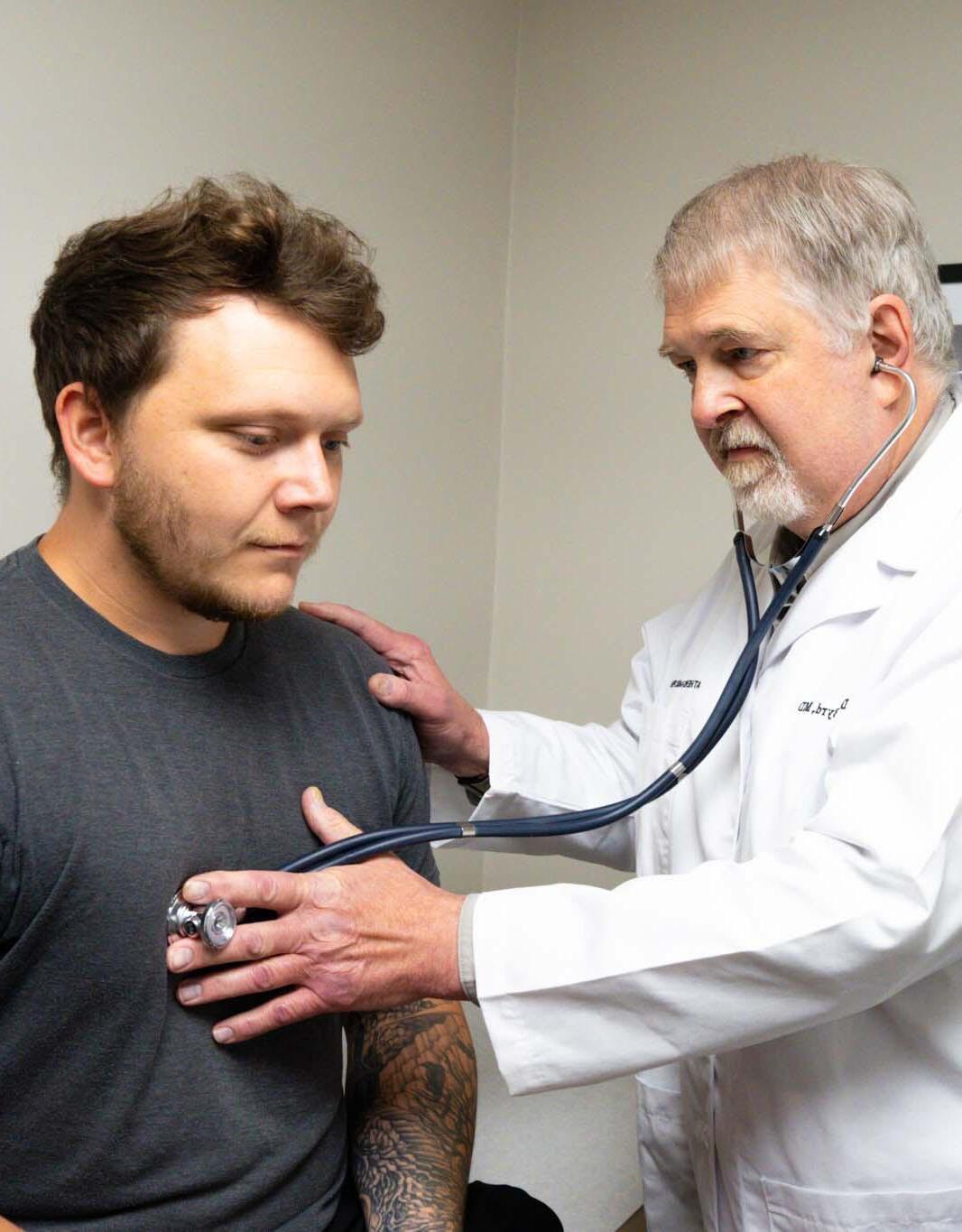












Annual health checkups are so vital that many insurance providers offer onceyearly wellness visits free of charge to policy holders.
It’s important for people to get annual physicals even if they feel fit and healthy, as these yearly visits can help uncover issues that may not be producing symptoms.
Annual wellness visits also afford adults an opportunity to discuss their lifestyle with their physicians, which can identify areas where changes might be necessary with a goal toward improving long-term health.
Yearly health checkups also provide an opportunity to learn about key screenings, especially those that may detect for cancer. But industry surveys indicate far too many adults aren’t taking this vital step.
A 2024 survey from the Prevent Cancer Foundation found that 39% of surveyed adults had not had a routine medical appointment in the previous 12 months. That’s a troubling finding and one that could be more costly than adults realize, as the PCF reports that as many as 50% of cancer cases and half of all cancer deaths are preventable.
Screening for cancer, a process that often begins with discussions during annual wellness checkups, is a life-saving and typically nonintrusive way to detect the disease at its earliest, most treatable stage, a point in most cancer instances when symptoms are not necessarily present or noticeable.
Annual checkups also offer patients an opportunity to discuss lifestyle changes that can decrease their can -

cer risk.
Some adults may not recognize that their existing lifestyle is increasing their cancer risk. For example, the American Cancer Society notes that a sedentary lifestyle, a diet lacking in sufficient nutrition and excessive alcohol consumption all can
increase a person’s cancer risk.
Annual wellness visits provide an excellent opportunity for adults to discuss their lifestyle with their physicians, who may recommend some potentially life-saving tweaks that can greatly reduce a person’s risk for cancer.


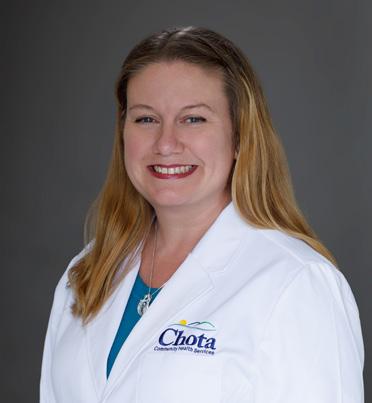
Undergraduate: University of Tennessee, Knoxville
Graduate: University of Tennessee, Martin
Specialty: Family Nurse Practitioner
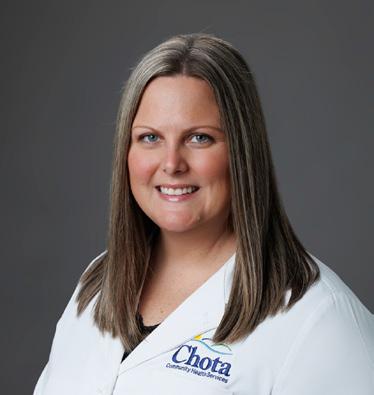
Undergraduate: University of Tennessee
Graduate School: Carson-Newman University
Specialty: Family Nurse Practitioner
Graduate: University of Tennessee, Knoxville Specialty: Family Nurse Practitioner, School-Based Clinics
*Walk-In Only
Undergraduate: Chamberlin University
Graduate: Lincoln Memorial University
Specialty: Family Nurse Practitioner
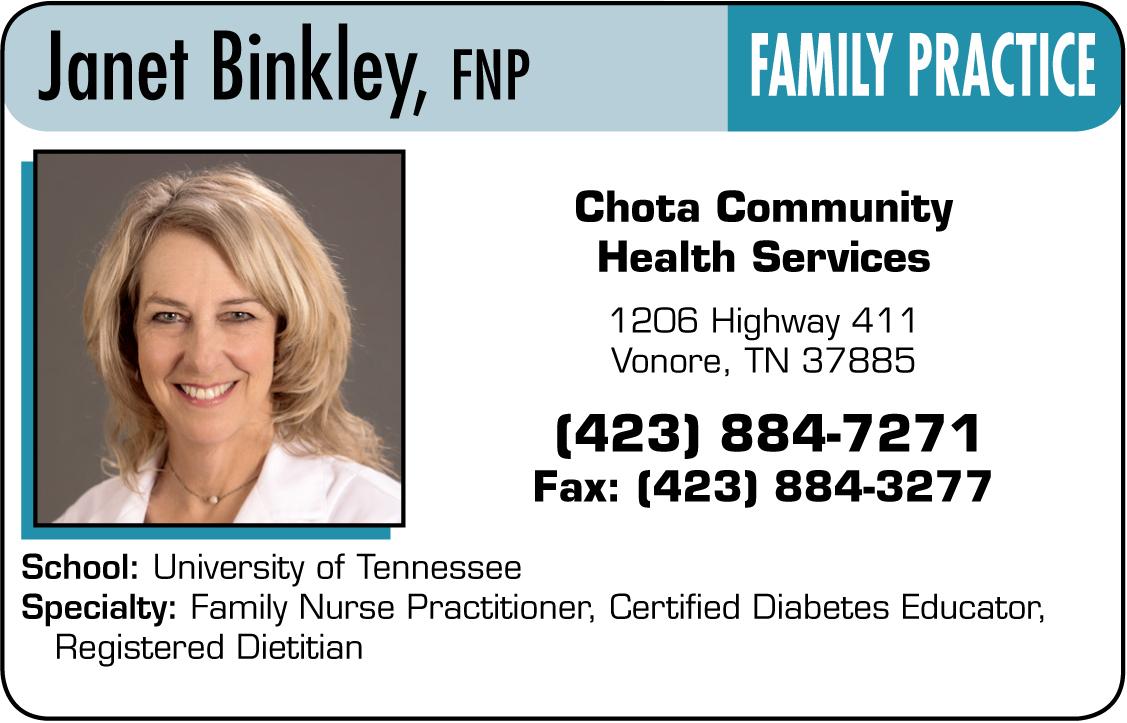
Graduate: University of Tennessee, Knoxville
Specialty: Family Nurse Practitioner, Certified Diabetes Educator, Registered Dietician
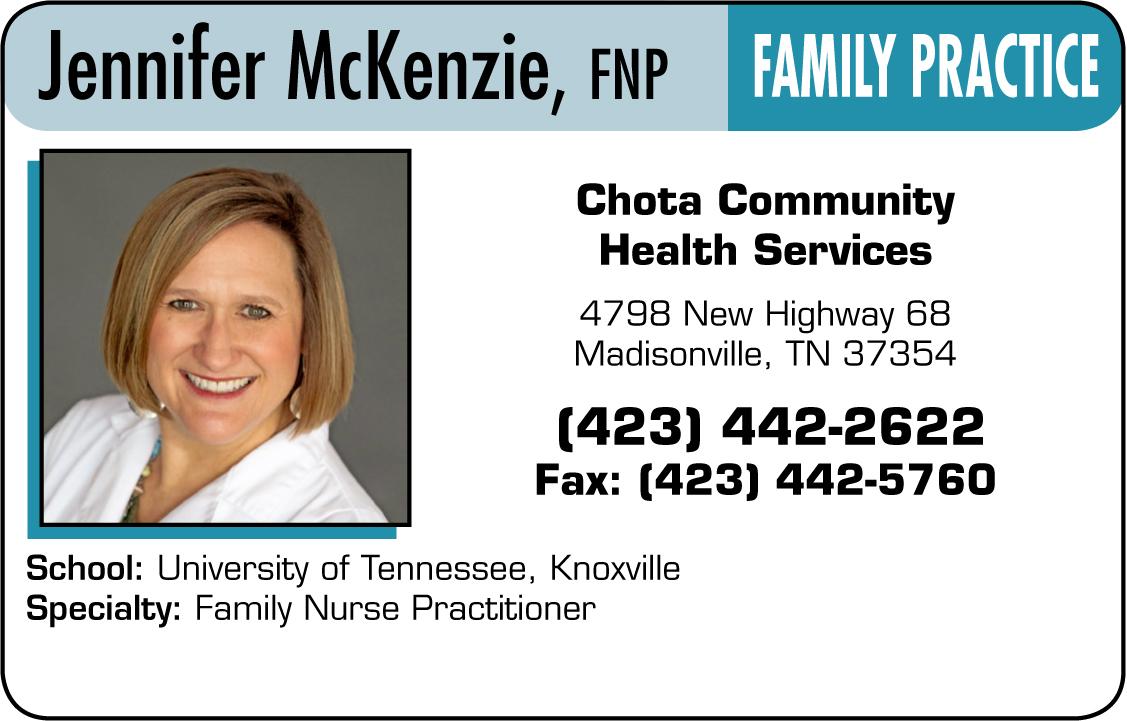

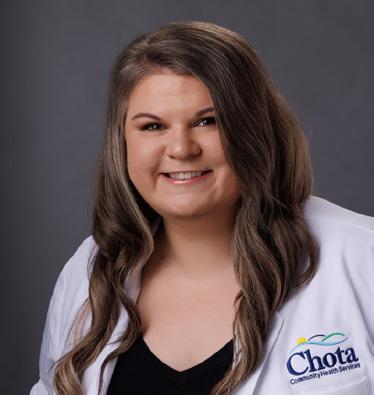
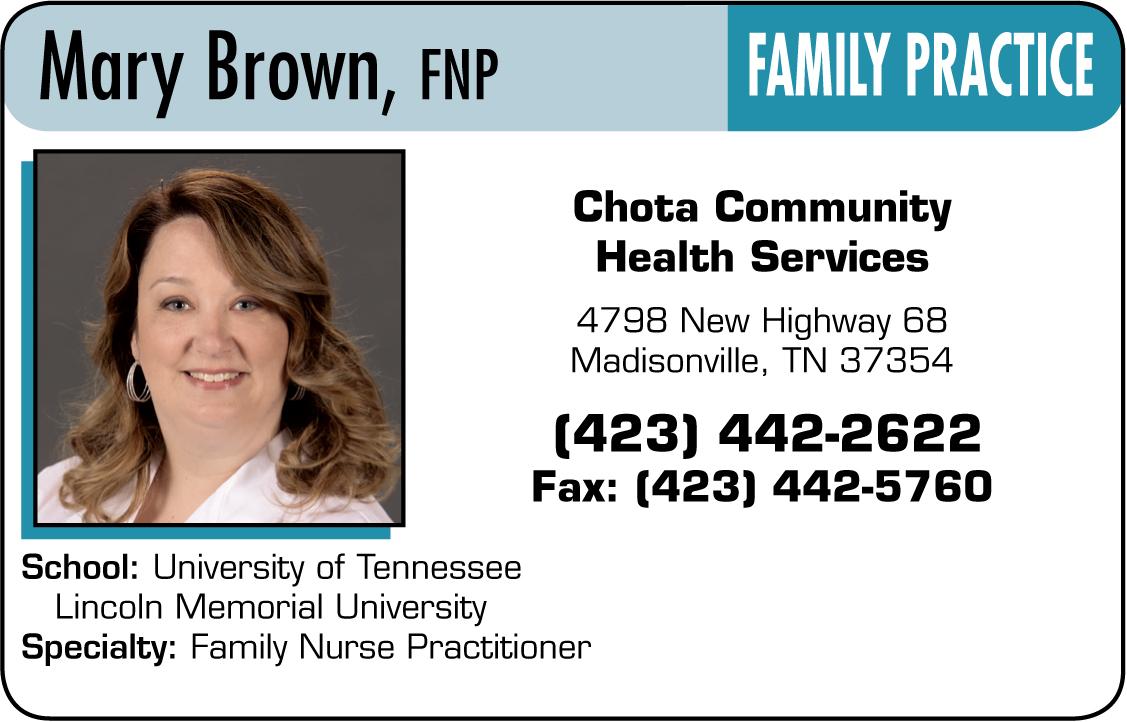
Community Health Services 4798 Highway 68 Madisonville, TN 37354 (423) 442-2622
Fax: (423) 442-5760
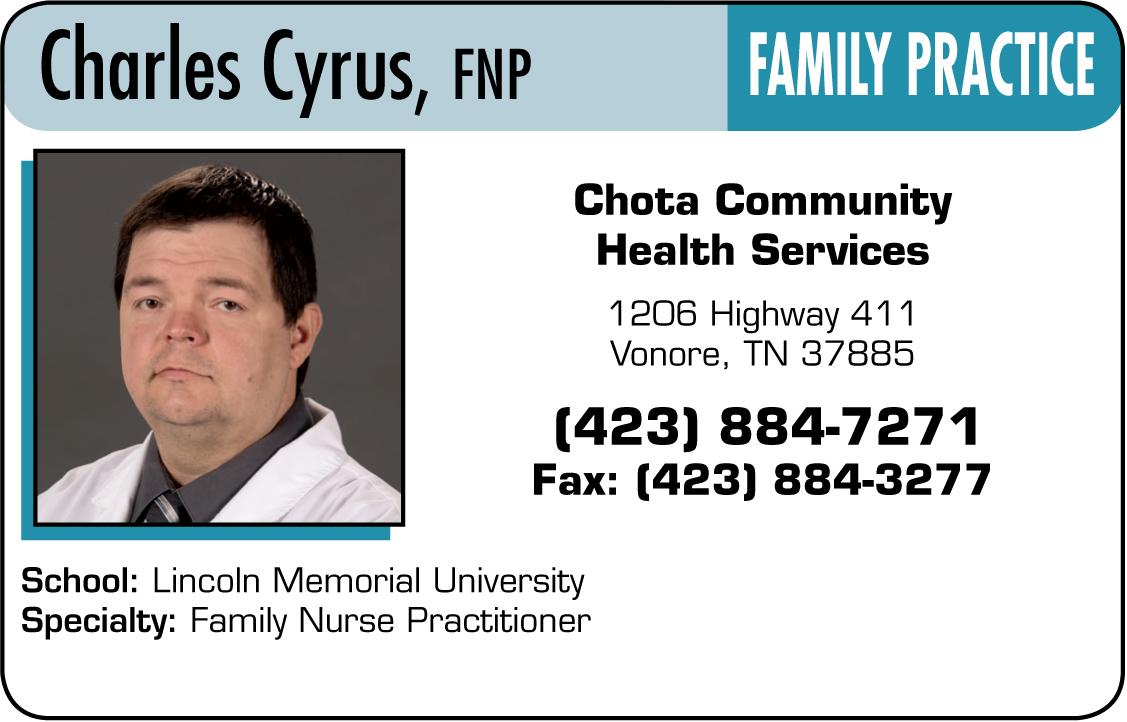
Undergraduate: Walter State University
Graduate: University of Tennessee, Knoxville Specialty: Family Nurse Practitioner
Community Health Services 1206 Highway 411 Vonore, TN 37885 (423) 884-7271
Fax: (423) 884-3277
Undergraduate: University of Tennessee, Knoxville
Graduate: Lincoln Memorial University
Specialty: Family Nurse Practitioner

Undergraduate: Tennessee Wesleyan University
Graduate School: Lincoln Memorial University
Specialty: Family Nurse Practitioner
Robin Harding, MD Chota Community Health Services
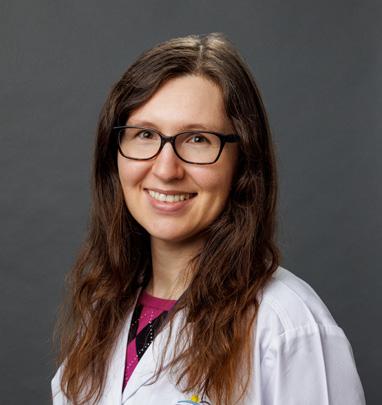
4798 Highway 68
Madisonville, TN 37354
(423) 442-2622
Fax: (423) 442-5760

Chief Medical Officer
School: East Tennessee State University
Medical School: James H. Quillen College of Medicine
Residency: Johnson City Family Medicine Program at ETSU
Specialty: Family Medicine
Residency: Johnson City Family Medicine Program at ETSU Specialty: Family Medicine
Tabitha Walker, FNP
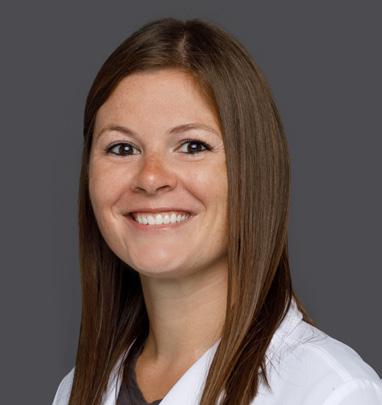
Chota Community Health Services
4798 Highway 68
Madisonville, TN 37354
(423) 442-2622
Fax: (423) 442-5760
School: Lincoln Memorial University, Carson Newman University
Undergraduate: Lincoln Memorial University
Specialty: Family Nurse Practitioner
Graduate School: Carson Newman University
Specialty: Family Nurse Practitioner
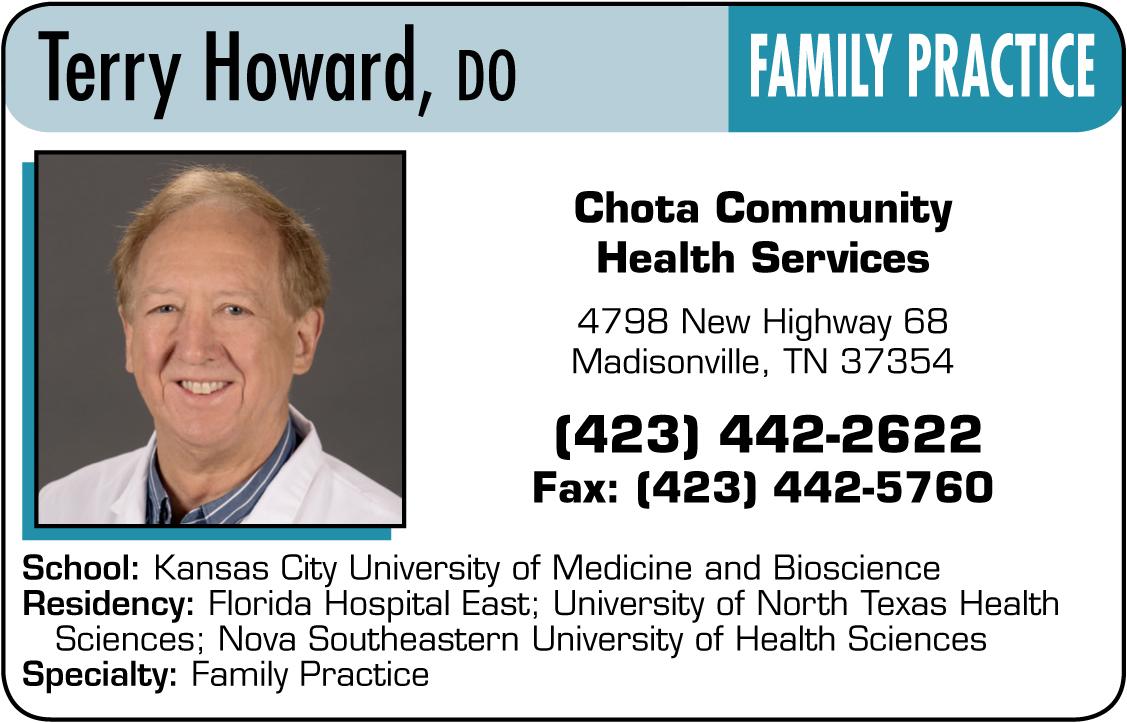
Medical School: Kansas City University of Medicine and Bioscience
Residency: Nova Southeastern University of Health Sciences and University of North Texas Health Sciences
Specialty: Family Medicine

Walk-In Only

*Walk-In Only
Medical School: University of Tennessee, Memphis Residency: City of Memphis Hospital Specialty: Family Medicine

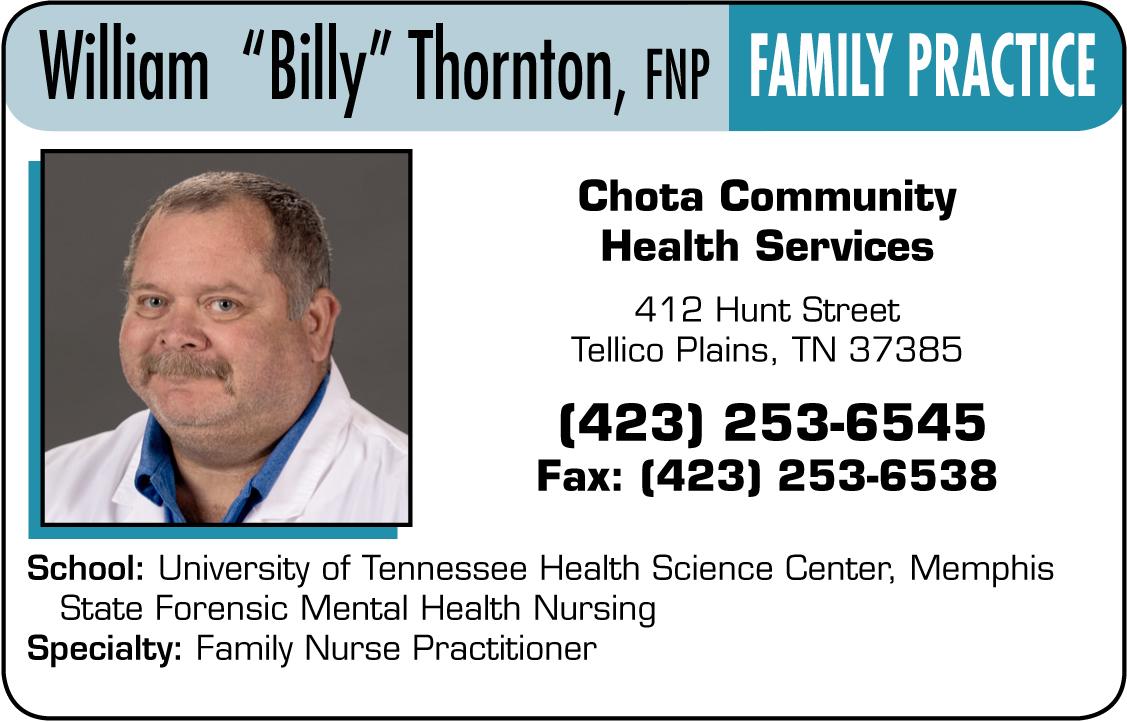
Chota Community Health Services
145 Fifth Street
Tellico Plains, TN 37385 (423) 253-6545
Fax: (423) 253-6538
Graduate: University of Tennessee Health Science Center, Memphis Specialty: Family Nurse Practitioner


Undergraduate: Tennessee Wesleyan University
Graduate: Lee University
Specialty: Mental Health Counseling
Athens Pediatrics, PLLC 111Epperson Street Athens, TN 37303 (423) 745-5955
Hospital Affiliation: Starr Regional Medical Center
Medical School: East Tennessee State University,Johnson City
Residency: UniversityofSouth Carolina School of Medicine
Specialty: Pediatrics


Athens Pediatrics, PLLC 111 Epperson Street Athens, TN 37303 (423) 745-5955
Hospital Affiliation: Starr RegionalMedical Center
Undergraduate: BachelorofScience in Nursing, Auburn University Montgomer y, Montgomer y, AL
Graduate: Masters in Nursing,Southern AdventistUniversity, Collegedale, TN
Specialty: Family Nurse Practitioner
Long, FNP,


Athens Pediatrics, PLLC 111 Epperson Street Athens, TN 37303 (423) 745-5955
Hospital Affiliation: Starr Regional Medical Center
Medical School: Undergraduate - Bachelor of Science in Nursing East Tennessee State University, Johnson City, TN
Graduate - Master of Science in Nursing East Tennessee State University, Johnson City, TN
Specialty: Nurse Practitioner



















Polypharmacy, or the practice of managing multiple medications, is a part of life for a significant percentage of seniors.
Many prescription and over-the-counter drugs are essential for maintaining health and managing chronic conditions. However, the chemical complexity of mixing so many drugs can lead to dangerous outcomes if one isn’t careful.
Older adults take more medications than any other age group. A report conducted by Age Wave and The John A. Hartford Foundation found that the average senior takes four medications, but more than 15% take eight or more.
Some medications can create further conditions or worsen existing conditions. Data from the Agency for Healthcare Research Quality show that 15.9% of older adults use inappropriate medication.
Structured medication management is essential for seniors’ safety.
Here’s how to safely navigate taking multiple medications at once:
• Conduct a medication audit. Take
all of the medications and supplements you use to a primary care physician or pharmacist to discuss potential interactions and if any prescriptions can be canceled. Research from Clarest Health indicates that patients taking five to nine medications have a 50% chance of experiencing a significant adverse drug event.
• Talk about deprescribing. Speak with a doctor about the process of tapering off medications that may no longer be necessary or are resulting in more harm than benefit.
• Use one pharmacy. Always fill prescriptions from the same pharmacy. Modern systems are equipped with safeguards to flag certain drug-to-drug interactions automatically. Also, the pharmacist is often an underutilized resource. Ask questions and figure out if he or she can conduct a medication review to ensure a regimen for taking medications is as complication-free as possible.
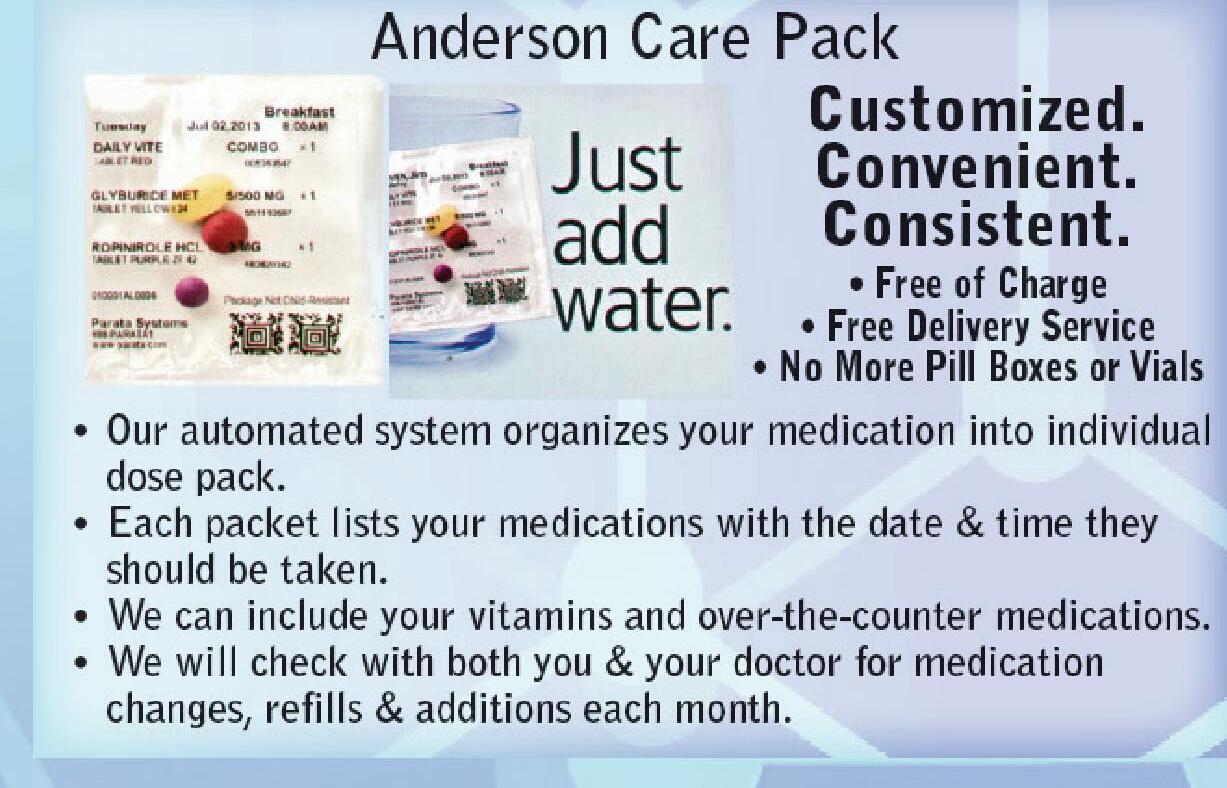
• Utilize smart systems. Rely on smart pill dispensers that unlock only at the correct time to manage high-risk
medications. Other pill organizers and digital apps can set reminders to take medications at the appropriate times. An app like Medisafe will notify family members if a dose is missed.
• Link doses to actions. Make medications an automatic part of your day by linking them to activities, like morning pills taken with a cup of coffee or evening pills when you eat dinner.
• Use visual cues. Keep pill organizers in a visible spot so you remember to take the medication.
• Ask for help. If managing medications has become a tall order, ask a friend, family member or a visiting nurse or aide to assist with medication management.
• Update your list. Always maintain a current list of the medications and supplements you are taking, and bring it along to every new medical appointment for further review.
Managing medications becomes more complex as seniors typically take multiple drugs and supplements to maintain health.


Seasonal allergies affect a significant percentage of the global population. According to the National Oceanic and Atmospheric Administration, as much as 30% of the global population is affected by seasonal allergies, which can be marked by uncomfortable and disruptive symptoms such as sneezing, itchy and/or watery eyes, a runny or stuffy nose, and irritation of the throat.
As uncomfortable and disruptive as seasonal allergies can be, they are often manageable with over-the-counter (OTC) medications like Zyrtec. According to the Cleveland Clinic, medications like Zyrtec work by blocking histamine, a substance the body releases during an allergic reaction.
Seasonal allergy sufferers are urged to speak with their physicians and visit an allergist prior to taking any new medications, including over-the-counter options. It also can help to identify seasonal allergy triggers. While people tend to associate seasonal allergies with spring and early summer, the makers of Zyrtec note that seasonal allergies can affect people throughout the year.
Triggers vary by season, and some overlap the seasons. Recognition of common seasonal allergy triggers can be an important step in combatting the unpleasant and often disruptive side effects of flare-ups.
The makers of Zyrtec note that tree pollen, grass pollen and weed pollen are common seasonal allergy triggers in spring. Tree pollen is the first seasonal allergy trigger to emerge in spring, but grass pollen and weed pollen are additional springtime triggers.
Seasonal allergy sufferers are urged to monitor daily pollen counts, including tree pollen counts, and avoid going outside on particularly windy spring days.
Grass pollen is a significant seasonal allergy trigger in summer. Fungus spores and mold also can trigger seasonal allergies in spring, as the makers of Zyrtec note that hot and humid weather creates an ideal environment for mold to grow. The Asthma and Allergy Foundation of America (AAFA) notes that fungus spores tend to grow on grasses, grains, logs, and compost piles from July through early fall.
To reduce the risk of a seasonal allergy attack in summer, avoid mowing the lawn on days when you plan to entertain outside or relax outdoors, as mowing spreads grass pollen around, increasing the risk of a reaction.
Weed pollen, mold and dust are seasonal allergy triggers that emerge in fall. Ragweed can grow anywhere and the AAFA notes it can travel for miles in the windy conditions of fall. Mold also can develop on wet soil and fallen leaves, while turning on heating systems on chilly fall days can send dust mites into the air. Keeping windows and doors shut in fall can ensure seasonal allergy triggers do not get inside.
Weed pollen, mold and dust also are the most common triggers of seasonal allergies in winter. Increased exposure to indoor air allergens, including pets and Christmas trees, also can be risky in winter, as people and pets spend more time indoors when the weather cools than they do at other times of year.
Frequent vacuuming and indoor air cleansers that employ high-efficiency particulate air (HEPA) filters can help people combat wintertime seasonal allergy triggers.
Seasonal allergies can strike throughout the year. Identifying triggers can help people avoid them with a goal of reducing the discomfort of seasonal allergic reactions.





AT HE NS
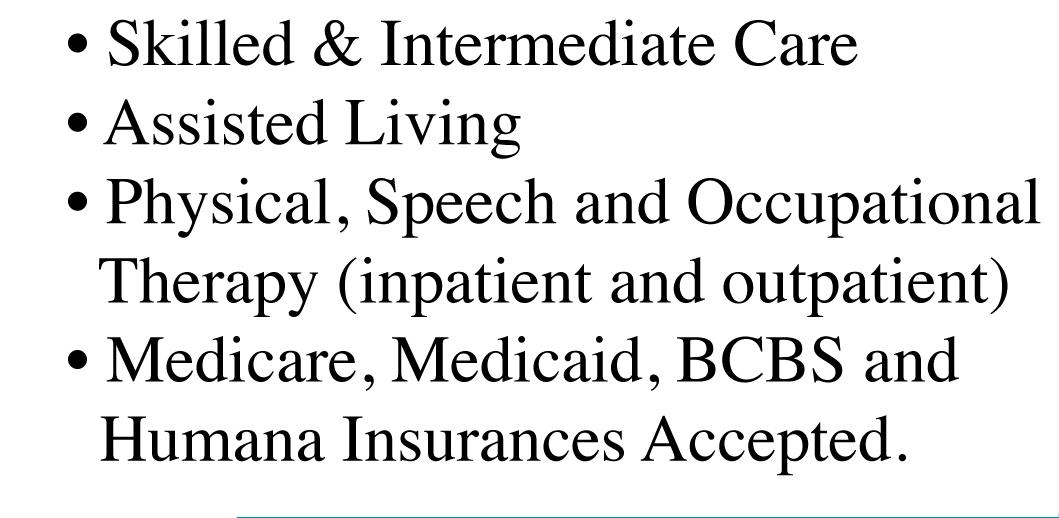
• Medicare, Medicaid, BCBS, Humana, and Choices Insurances Accepted.


Preventative Care, Well Childs, Well Woman, Immunizations, Chronic Condition Management, Pediatrics, Geriatrics, Physicals Health Education, Specialty Referrals
Counseling, Referral

On-site Lab, On-site X-Ray, On-site DEXA Scan
Chota Community Health Services (CCHS) is a non-prof it Community Health Center whose purpose is to offer comprehensive primary healthcare to the residents of the Monroe County area in East Tennessee. It was founded under the belief that our community should not have to travel to the “bigger ” cities in other counties in order to receive top notch medical care.
Sliding Fee Discount Program, Eligibility Assistance Coordinators, Prescription Assistance Program, Translation/Bilingual Staff, Community Outreach Services, Patient Portal
Acute Illness Treatment, Chronic Condition Management, Well Childs, Immunizations, Sports Physicals, New Employee Physicals, School Entrance Physicals
Comp, Preemployment Physicals, DOT Physicals