


Words with a Ranger
My desire to become a park ranger came as an epiphany several years ago while I was on a guided walk in Yellowstone National Park. The walk was through what is known as the Grand Canyon of the Yellowstone, and the ranger who led it made it an incredible experience. Before the group dispersed, the ranger recommended considering a career with the park service and gave each of us a puzzle piece with a small part of the canyon to take home.
After that, I was determined to become a ranger so I could make the same difference for others that the Yellowstone ranger had made for me. After I concluded my military career, I joined the park service, and that puzzle piece is still with me today. It has traveled to more than 30 other national parks so far.
A
many
For Birds and Blooms, Timing Is Everything
Species tune into key seasonal signals to thrive
Humans seem to be the only forms of life in the Smokies that rely on a calendar. For the other 21,000+ species discovered in these mountains so far, knowing when to sing, bloom, or set out in search of food depends on paying close attention to environmental cues.
In spring, as days lengthen, temperatures climb, and rains soak the ground, a whole host of plants known as “spring ephemerals” receive their signal to flower. Over millennia, these early risers have adapted to attract pollinators within the brief window of springtime when most deciduous trees have yet to put out their leaves and direct sunlight is still plentiful on the forest floor. Spring ephemerals generally peak in early to mid-April in the Smokies with some persisting into May at the cooler higher elevations.
Songbirds also take note of these seasonal signals and the growing avail-
ability of food. Resident birds establish their territories, sing more frequently, and develop colorful plumage in hopes of attracting a mate. Meanwhile, migrant songbirds start to move and arrive daily throughout spring from their wintering grounds elsewhere to join in the chorus of song and set to building their nests.
When we humans decide to study these changes, we call it phenology
Every year, park biologists and community volunteers organized by the Great Smoky Mountains Institute at Tremont visit designated phenology plots to measure the progress of the seaons. By carefully collecting data about natural events over time, we can reveal fascinating interconnections and better understand how everything from blooming wildflowers to migrating songbirds will respond to change as they set their busy schedules.

86A-B68
Parking in the Smokies for more than 15 minutes requires a valid parking tag (annual tag pictured).

TAG REQUIRED!
PARKING
The Official Newspaper of the Smokies • Spring 2024
singing northern parula, one of
warblers whose migration back to the Smokies heralds the coming of spring. Image courtesy of N. Lewis.
GreatSmoky MountainsNPS GreatSmokyNPS GreatSmokyNPS
Smoky Mountains National Park National Park Service U.S. Department of the Interior SMOKIES
OUR PARK ON SOCIAL MEDIA Continued on page 8
more info, scan code with camera app
echesser, RovingPark
Great
GUIDE
For
SMOKIES TRIP PLANNER
Visitor centers
Sugarlands, Oconaluftee, and Cades Cove: open 9 a.m.–5 p.m. March through May (7 a.m.–3:30 p.m. Wednesdays in May at Cades Cove). Clingmans Dome: reopens April 1; open 9:30 a.m.–6 p.m. April and May. GSM Institute at Tremont: open 10 a.m.–4 p.m. Tuesday–Saturday.
Cable Mill: reopens April 1.
Mingus Mill: closed until further notice for repairs.
Road closures
Many secondary and higherelevation roads are closed seasonally in winter and reopen in spring. Refer to the map on pages 6-7 for opening dates.
• Cades Cove Loop Road is closed to vehicles on Wednesdays from May 1 through September 25 to allow for non-motorized recreation.
• All park roads are subject to temporary closure during dangerous driving conditions. Visit nps.gov/grsm and click “Alerts.”
Shuttle services
Local shuttle services offer convenient transportation to and from the park’s most iconic destinations. Routes, schedules, pricing, and pick-up/drop-off locations vary. Visit go.nps.gov/grsmshuttles for a list of authorized concessioners.
Weather
March is an unpredictable time in the Smokies. Snow can fall any day, especially at the higher elevations. Backpackers are often caught off guard when a sunny, warm day is followed by a wet, bitterly cold one.
By mid-to-late April, the weather is typically more mild with an average high of 71ºF in Gatlinburg and 52ºF at Mount Le Conte.
SMOKIES GUIDE
Campgrounds in the national park
The National Park Service maintains developed campgrounds at ten locations in the park. There are no showers, and hookups are only available at Look Rock Campground (ten campsites include electric and water hookups). There are circuits for special medical uses at Cades Cove, Elkmont, and Smokemont.
Campsite reservations are required at all park campgrounds. Sites may be reserved up to six months in advance.
Make your reservation online at recreation.gov or call 877.444.6777.
Site occupancy is limited to six people and two vehicles (a trailer is considered one vehicle). The maximum stay is 14 days.
Campsites for larger groups are available at Big Creek, Cades Cove, Cataloochee, Cosby, Deep Creek, Elkmont, and Smokemont. Reservations are required and may be secured up to a year in advance. For more information, visit nps.gov/grsm.
Firewood
To prevent the spread of destructive pests, only USDA- or state-certified heat-treated firewood may be brought into the park. Campers may gather dead and down wood in the park for campfires.
Picnic areas
Picnic areas at Cades Cove, Deep Creek, Greenbrier, and Metcalf Bottoms are open year-round. Big Creek, Chimneys, Collins Creek, and Cosby open March 29; Look Rock opens April 26; and Heintooga opens May 10. Picnic pavilions may be reserved for a fee at recreation.gov. Some restroom facilities at picnic areas may be closed.
Accommodations
LeConte Lodge (accessible by trail only, reopens March 25) provides the only lodging in the park. Advance reservations only. 865.429.5704, lecontelodge.com
Services
There are no gas stations, charging stations, showers, or restaurants in the national park. Limited food options are available in visitor centers and camp stores.
Event reservations
Reserve the Appalachian Clubhouse or Spence Cabin at Elkmont for daytime events at recreation.gov. Cabin and clubhouse open April 1.
Pets
Pets are allowed in frontcountry campgrounds and along roads as long as they are restrained at all times. Pets are not allowed on park trails, except for Gatlinburg and Oconaluftee River trails. Pets must be kept on a leash no longer than six feet.

Smokies Guide Spring 2024 • 2
dates
March
June
September
December Senior Editor Frances Figart Managing Editor Aaron Searcy Supporting Editor Valerie Polk Lead Designer Emma Oxford Design assistants Karen Key Miranda Bemis NPS Coordinators Stephanie Kyriazis Stephanie Sutton © 2024 Smokies Life P.O. Box 130 Gatlinburg, TN 37738 Available in digital format at issuu.com/ greatsmokymountains association
Publication
Spring:
Summer:
Autumn:
Winter:
Smokies Guide is produced four times per year by Smokies Life and Great Smoky Mountains National Park. nps.gov/grsm SmokiesLife.org Printed on recycled paper Abrams Creek Balsam Mountain Big Creek Cades Cove Cataloochee Cosby Deep Creek Elkmont Smokemont Look Rock 16 No. of Sites Site Elevation Expec ted Open Dates 20 24 Nightly Fees Max RV Length 43 12 159 27 157 92 220 68 142 $3 0 $3 0 $3 0 $30 $3 0 $3 0 $3 0 $3 0–36 $3 0 $30 1,125' 5,310' 1,70 0' 1, 807' 2,610' 2,459' 1, 80 0' 2,150' 2,60 0' 2,19 8' 12' 30' tent s only 35'– 40' 31' 25' 26' 32'–35' no limit 35'– 40' 4/ 26 – 10 /27 5/10 – 10 /14 3/ 29 – 10 /27 open year-round 3/ 29 – 10 /27 3/ 29 – 10 /27 3/ 29 – 10 /27 3/ 8 – 11/24 4/ 26 – 10 /27 open year-round
Bicycling
Most park roads are too narrow and heavily traveled for safe or enjoyable bicycling. Bicycles are permitted on park roads but prohibited on trails except Gatlinburg, Oconaluftee River, and lower Deep Creek and Indian Creek trails. Helmets are required by law for persons age 16 or under and strongly recommended for all.
Cades Cove Loop Road is open exclusively to cyclists and pedestrians on Wednesdays from May 1 through September 25. Bikes may be rented at the Cades Cove Campground Store 9 a.m.–2:30 p.m. Bike rental opens early at 7 a.m. on vehicle-free Wednesdays. 865.448.9034.
Horseback riding
Some 550 miles of park trails are open to horses. See park trail map for trails and rules. Horse camps are available at Anthony Creek, Big Creek, Cataloochee, Round Bottom, and Tow String. Make reservations at recreation.gov.
Three concession horseback riding stables offer rides from March through November. Call for exact opening dates.
• Cades Cove 865.448.9009 cadescovestables.com
• Smokemont 828.497.2373 smokemontridingstable.com
• Sugarlands 865.436.5470 sugarlandsstables.com
Fishing
Fishing is permitted year-round in the park, but a Tennessee or North Carolina fishing license is required. Either state license is valid throughout the park, and no trout stamp is required. Fishing with bait is prohibited. Special permits are required for the Qualla Boundary and Gatlinburg, and licenses are available in nearby towns. A free fishing map with a complete list of all park fishing regulations is available at visitor centers.
Backcountry camping
Camping can be an exciting adventure for those who are properly equipped and informed. To facilitate this activity, the NPS maintains more than 800 miles of trails and more than 100 backcountry campsites and shelters throughout the park. One of the greatest challenges is deciding where to go. Here are some tools to help.
1. Get the map. Go online to view the park’s official trail map (go.nps.gov/grsmmaps), which shows all park trails, campsites, and shelters. Park rules and regulations are also listed here. You can purchase the printed version of the trail map for $1 at any park visitor center or online at SmokiesLife.org.
2. Plan your trip. Call the park’s Backcountry Office from
8 a.m. to 5 p.m. or drop into the office located within Sugarlands Visitor Center for trip-planning help. The office is open to visitors during visitor center hours. 865.436.1297.
3. Get a permit. Make your reservation and get your permit through the Backcountry Office at Sugarlands Visitor Center (by phone or in person) or online at smokiespermits.nps.gov.
Reservations and permits are required for all overnight stays in the backcountry. The cost is $8 per person per night. Reservations may be made up to 30 days in advance. Backcountry camping permit holders are not exempt from parking tag requirements.
Spring hikers should be especially aware of quickly changing conditions and the danger of hypothermia—the lowering of body temperature. Always carry an ample supply of food, water, and reliable rain gear. Layer clothing that provides warmth when wet (not cotton). Be prepared for sudden weather changes, especially at the higher elevations, including rain, cold, and wind. Stay dry and know your limitations.
See page 4 for more hiking tips and trip essentials.
Special events and ranger activities
See page 5 for more things to do and visit go.nps.gov/grsmcalendar for a full calendar of events.
• April 13, Signs of Spring: Cades Cove, celebration of American Sign Language Day
• May 1–4, Spring Wildflower Pilgrimage: parkwide, see wildflowerpilgrimage.org
• June , Firefly viewing: Elkmont Campground, lottery for vehicle passes opens April 28 at recreation.gov
Smokies Guide Spring 2024 • 3
bark ranger great smoky moun tains national park Learn the BARK principles so you and your pet can have a safe and fun visit in the Smokies. Take the BARK pledge: B ag and bin your pet’s waste A lways leash your pet R espect wildlife K now where you can go The only two pet-friendly trails in the Smokies are the Gatlinburg Trail in Tennessee and the Oconaluftee River Trail in North Carolina. 31 species of salamander s 69 species of mammals 9, 90 0 species of insect s GSMNP BY THE NUMBERS + 16 mtns. higher than 6,000' new to science found in the park 12 million visi tors per year + 1, 000 +species Download the free NPS App for interactive maps, tours, and more!

• Navigation —map, compass,
• Water and food
• Extra layers
• First aid kit
• Headlamp or flashlight
• Traction support like microspikes and hiking poles
• Rain gear and pack cover or waterproof bags
• Emergency whistle
• Sun protection with sunscreen, sunglasses, and hat
• Repair kit with multi-tool or knife
• Fire starter
• Shelter —emergency tent or tarp
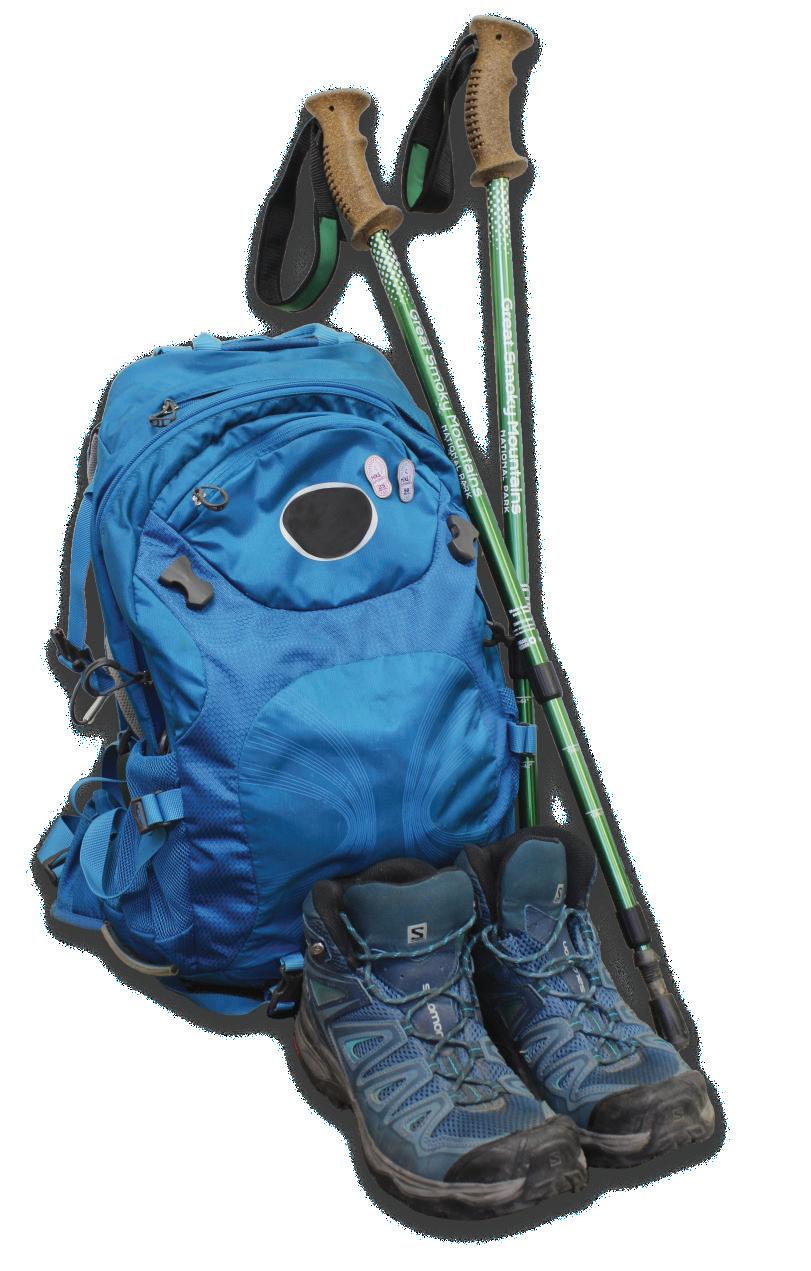
Tell someone where you’re going, stay on established trails, pack the essentials, and know what to do in case of an emergency.
Let the NPS Backcountry Office help you plan and prepare for your hike. Call 865.436.1297, 8 a.m. – 5 p.m.
• Call 911 if you can acquire a signal.
• Remain with any injured parties until help arrives. Use what basic first-aid techniques you know, but do not attempt invasive intervention unless you are medically trained.
• Use an emergency whistle to issue a series of three spaced blasts every few minutes to alert rescue crews. If you are in an open area, display brightly colored clothing or gear.
Smokies Guide Spring 2024 • 4
YOUR CELL PHONE IS NOT • a light • a map
survival
Keep it SMOKIES SMART:
• a
kit • always going to have service IN AN EMERGENCY
knowledge
to use them
and
of how
PACK ESSENTIALS FOR A LONGER HIKE S M A R T Stay hydrated Map your hike Always wear proper clothing/footwear Remember your flashlight Turn back when conditions change
THINGS TO DO
Hike through history
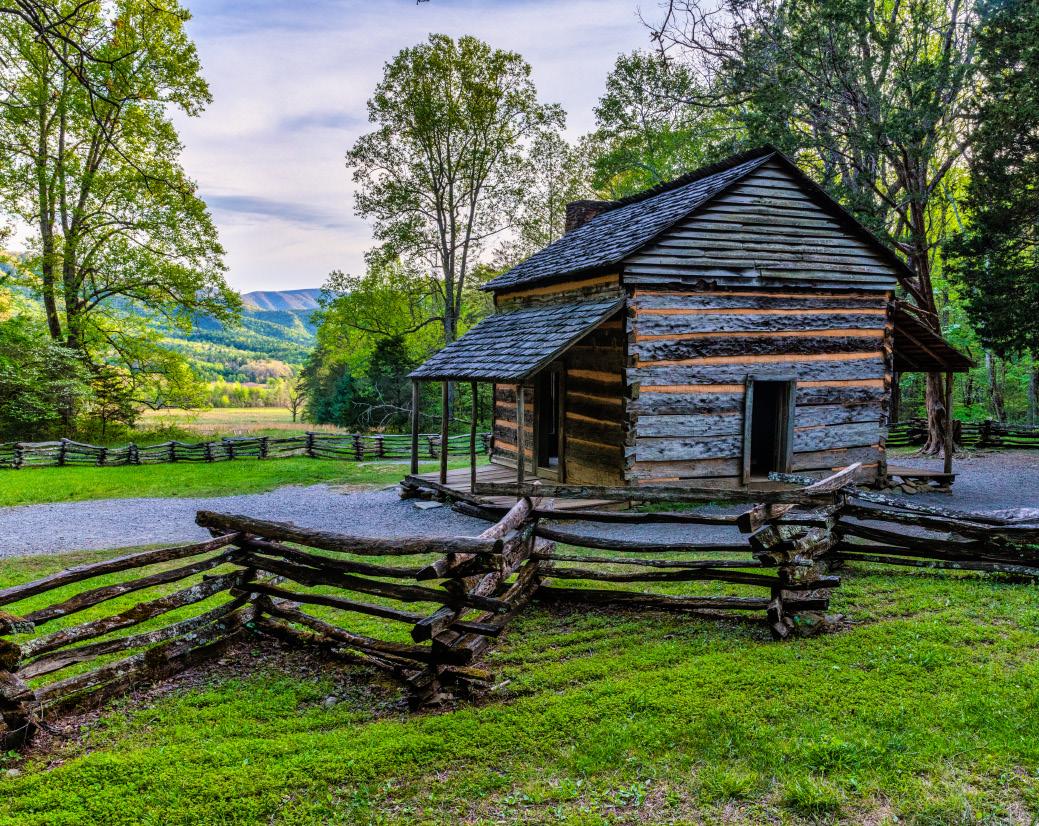
Many roads and trails in the Smokies follow routes first created long before the park was established—whether as Native American trails, European settler wagon roads, or timber company railroad beds. Today, reminders of past Smokies residents can still be seen throughout the park in the form of preserved homesites, churches, mills, and cemeteries.
Drop by Daisy Town in Elkmont to talk to a park volunteer or check out new interpretive signage in the Mingus Mill area. Park trail maps can be downloaded for free at nps.gov or purchased for $1 at a visitor center or kiosk. Image by Reggie Tidwell.

Become a community scientist
If you have access to a smartphone, you already have all you need to become a community scientist. By using the iNaturalist app to document the lifeforms you come across in the park, you’ll be collecting real scientific data and helping the National Park Service better understand and protect biodiversity in the Smokies.
Crowd-sourced iNaturalist observations are a critical part of the park’s All Taxa Biodiversity Inventory (ATBI)—an ongoing project to document every living species in the Smokies. Managed by park partner Discover Life in America, the ATBI is one of the most comprehensive catalogs of regional biodiversity in the world. Image by Valerie Polk.
Go on a wildflower pilgrimage
Few places in the world can rival the abundance and diversity of wildflowers in the Smokies from late March through early May. Some of the best trails for viewing these ephemeral blooms include Bradley Fork, Kanati Fork, Mingus Creek, Chestnut Top, Cucumber Gap, Cove Hardwood Nature Trail, and the park’s quiet walkways.
The annual Spring Wildflower Pilgrimage returns in 2024 with guided walks and workshops May 1–4. Register and learn more at wildflowerpilgrimage.org. Wildflower brochures and the Wildflowers of the Smokies field guide are available at visitor center bookstores. Image by N. Lewis


Find the Smokies Most Wanted
Help scientists gather important information about plants and animals by using the free iNaturalist app while visiting the park.
1 Get the iNaturalist app
Download the app. Log in. Try it out.



2 Record life you find in the Smokies
Find a cool organism. Take photos or sound recordings. Post it to iNaturalist. Repeat.
Up for a challenge? Look for the target species (like this yellow-rumped warbler) in the Smokies Most Wanted guide. Find the guide and more at dlia.org/smokiesmostwanted.

Smokies Guide Spring 2024 • 5
IN THE SPRINGTIME
Image by Kris Cu
Parking tag purchase locations within the park
Parking tags may be purchased at locations designated by these symbols on the map:
Automated Fee Machine (AFM)
• Available 24 hours per day
• Accepts credit/debit only
• Daily and weekly tags only
Located at Sugarlands Visitor Center, Cades Cove Loop Entrance, Metcalf Bottoms Picnic Area, Newfound Gap, Oconaluftee Visitor Center, Deep Creek Picnic Area, Clingmans Dome, Greenbrier, Cosby, Big Creek, Townsend Wye, Look Rock, and Cataloochee.
Visitor Center
• Open business hours (see page 2)
• Accepts cash or credit/debit
• Daily, weekly, and annual tags available
Located at Sugarlands, Great Smoky Mountains Institute at Tremont, Cades Cove, Oconaluftee, and Clingmans Dome (closed in winter).
Parking tags are available outside the park at Great Smokies Welcome Center in Townsend, Gatlinburg Welcome Center, Swain County Visitor Center, and select area businesses.
For all purchase locations, see go.nps.gov/grsmfees.
143 28 73 129 321 321 129 129 411 321 321 129 411 G R E AT S M O K Y App a lachia n T r a i l TENNESSEE NORTH CAROLINA CHEROKEE NATIONAL FOREST Townsend Walland Wears Valley MARY VILLE PIGEON FONTANA VILLAGE Little Greenbrier School Heritage Center Daisy Town Elk mon Thunderhead Mountain Cades Cove Visitor Center Abrams Creek Great Smokies Welcome Center GSM Institute at Tremont To JOYCE KILMER - SLICKROCK WILDERNESS AREA To Knox ville To Chattanooga Foothills Parkway Chilhowee Little Look Rock Tower Bone Valley Trail Hazel Creek Trail Little Brier Gap Trail Fontana Lake Santeetlah Lake Calderwood Lake TwentymileTrail Abrams Falls Twentymile Cascade Laurel Falls Schoolhouse Gap Trail Chestnut TopTrail Twentymile Twentymile Loop Trail Wolf Ridge Trail Appalachian T r ail Lake Cheoah TremontRd Middle Prong Trail Meigs Falls (closedin win t e r ) AbramsFallsTrail ©Smokies Life 2024 Gatlinburg JakesCreek Deals Gap Metc alf Bottoms Foothills Parkway Lynn Camp Prong Cascades SEASONAL ROAD CLOSURES Forge Creek Road opens March 1 Little Greenbrier Road, Roaring Fork Motor Nature Trail, and Straight Fork Road open March 29 Clingmans Dome Road opens April 1 Rich Mtn. Road and Parson Branch Road open April 12 Heintooga Ridge and Heintooga/Round Bottom Road open May 10 All roads are subjec t to temporar y closures due to dangerous driving conditions Parson Branch Road Little Greenbrier Road (closedinwinter) Cades Cove Parson Branch Rd opens April 12 Forge Creek Rd opens March 1 Rich Mountain Rd opens April 12
416 28 73 32 32 23 74 19 74 23 441 321 441 441 441 321 40 19 276 M O U N TA I N S NATIONAL PARK Appalachian Trail TENN ESSEE N O RTH CAROLINA GATLINBURG TLINBURG PIGEON FORGE mont Red light #8 Clingmans Dome Visitor Center QU ALL A BOUND AR Y (Eastern Band of Cherokee Indians land) NANTAHALA NATIONAL FOREST Exit 443 Exit 447 Pittman Center Cosby SEVIERVILLE BRYSON CITY CHEROKEE SYLVA Balsam Mountain Smokemont To Newport Mount Cammerer Mount Le Conte Mount Guyot Soco Gap Oconaluftee Visitor Center Blue Ridge Parkway Big Cove Road Lakeview Dr Foothills Parkway CHEROKEE NATIONAL FOREST PISGAH NATIONAL FOREST Exit 451 Exit 20 Dellwood Maggie Valley WAYNESVILLE To Asheville Blue R i gd e Parkway To I-40 River Road Swain County Visitor Center Grotto Falls Rainbow Falls Laurel Laurel Falls Trail Fighting Creek Trail Mingus Mill Charlies Bunion Museum of the Cherokee People Juney Whank Falls Trail Loop Trail Indian Creek Falls Tom Branch Falls Juney Whank Falls D ee p Creek T r a l Oconaluftee River Trail Big Creek Trail Hen Wallow Falls Mouse Creek Falls Gabes Mountain Trail Alum Cave Blu s KanatiFork Tr Porters Flat Ramsey Cascades Fern Branch Falls Ramsey Cascades Trail Cataract Falls Newfound Gap Cosby Cataloochee Mountain Farm Museum Deep Creek Alum Cave Trail Chimney Tops Trail Kephar t Prong Trail Smokemont Loop Trail Goldmine Loop Trail Boogerman Loop Trail Big Creek Andrews Bald oP r t e r s CreekTrail LittleRiverTrail Clingmans Dome Mingo Falls Chasteen Creek Falls Chimney Tops Cucumber Gap Trail Har tford Gatlinburg Welcome Center National Park Information Center Sugarlands Visitor Center CoveCreek Road kTrail Mount Cammerer Trail LowGap Trail TrilliumGap Trail RainbowFalls Trail Great Smok y Mountains National Park occupies the traditional lands of the Cherokee (ᏣᎳ Ꭹ, Tsalagi), now the Eastern Band of Cherokee Indians, the Cherokee Nation, and the United Ke etoowah Band of the Cherokee. Picn ic Area s Ca mpin g Major Hw ys Major Road s Pave d Road s Gr avel Road s Sele ct Tr ai ls Close d Road s Hors ebac k Riding (renta l) Cu rrent/upcomi ng cons tr uc tion (s ee np s. gov/g rs m) Pa rk in g ta g pu rc hase location s (s ee left column) Re st room s
Old NC 284/Old Cataloochee Rd Soco Falls Road Roaring Fork Motor Nature Trail opens March 29 Clingmans Dome Rd opens April 1 Straight Fork Rd opens March 29 Heintooga Ridge Rd and Heintooga/Round Bottom Rd open May 10
Greenbrier
Words with a Ranger
Continued from page 1
Now, as a roving park ranger in the Smokies, I get to talk to visitors every day—whether it’s providing directions, general information, or guidance about how to comply with park rules. I’m also prepared to render first aid and assist with searchand-rescue operations, wildlife management, or traffic management. I encourage anyone to approach a roving park ranger if you see us in the field. We are here to enhance your experience in the Smokies and to share this special place with everyone.
Another daily part of my job is checking for parking tag compliance and maintaining the park’s automated fee machines (AFMs), or parking tag machines. This spring, our team is working to develop educational materials to better inform all park employees and partners about the progress of the parking tag program and its impact.
Last year, Smokies parking tags helped to triple the park’s recreation fee revenue. One hundred percent of this revenue stays in the Smokies, and these funds are already improving visitor safety, addressing maintenance backlogs, enhancing public facilities, and increasing ranger presence across the park. Last year, eight new roving park rangers funded through the program spoke with 133,443 visitors, assisted in 36 search-and-rescue operations, and picked up 511 pounds of trash.
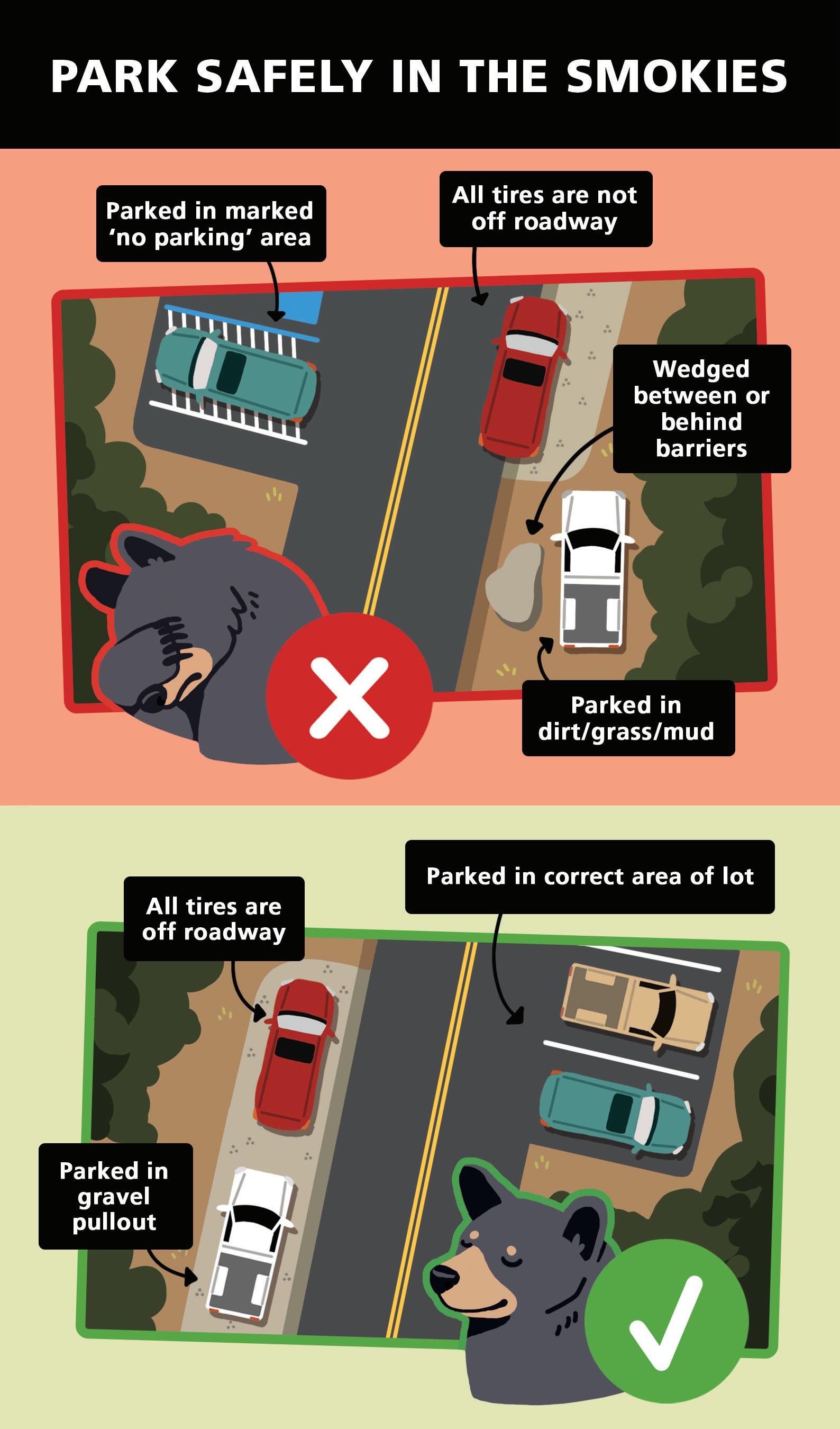
As you enjoy the Smokies and the wildflowers this spring, please remember to park your vehicle legally and safely (see page 9). Remember to take your trash with you and leave no trace to help protect the Smokies for everyone and the animals that live here too.
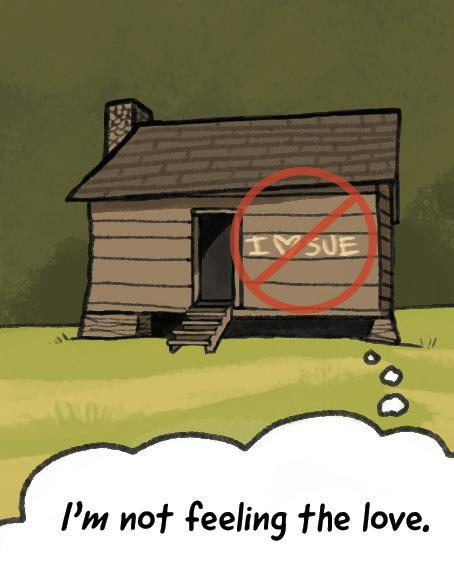
LEAVE ONLY FOOTPRINTS
Writing on or carving into trees, stones, or structures can cause permanent damage—it’s also a crime! Taking a photo is always a better way to remember your time in the Smokies and helps preserve the park for others too.
BIN IT FOR THE BEARS
Help protect bears by packing out all trash and food waste and using bear-proof dumpsters in the park.




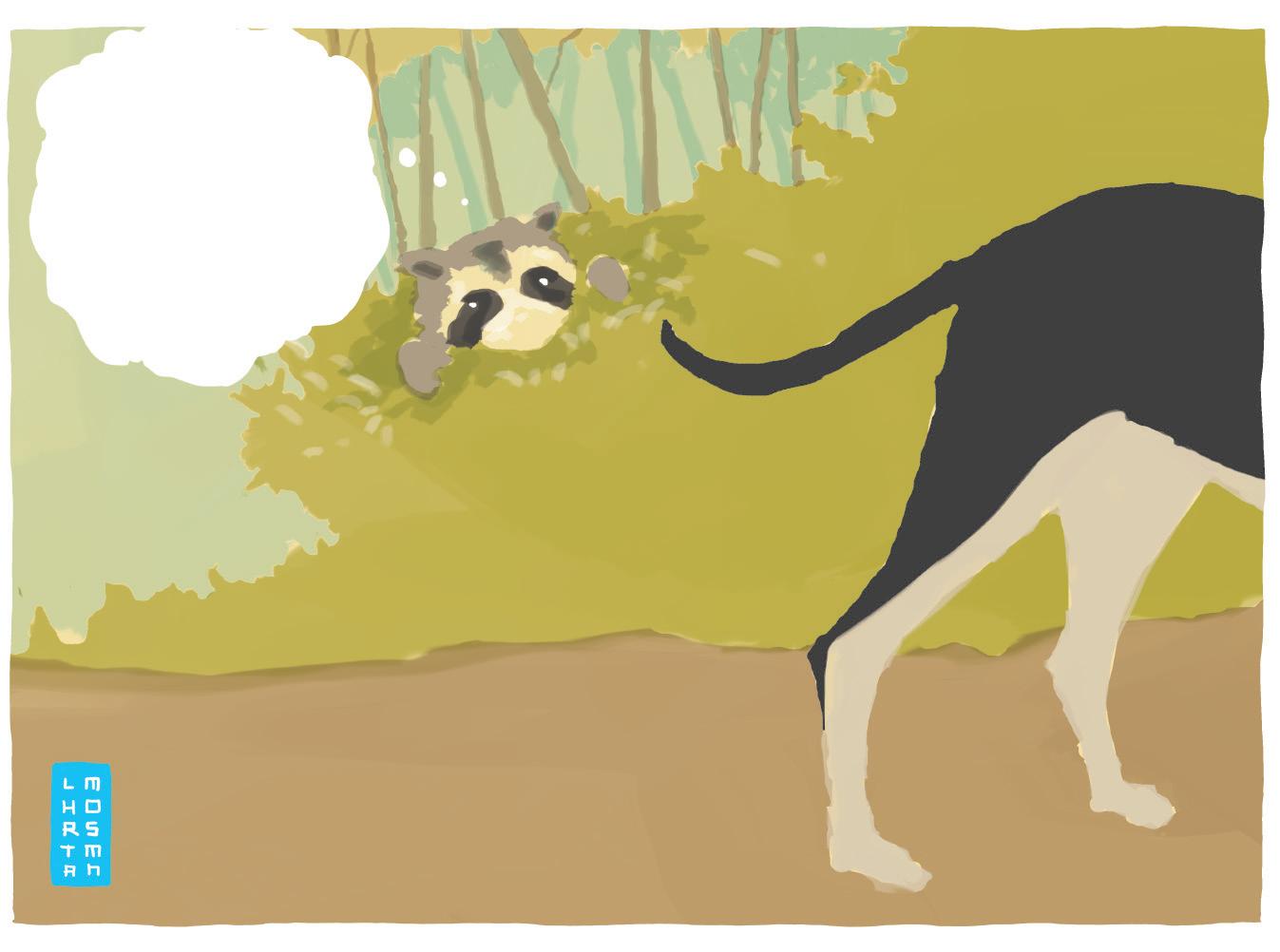
KEEP PETS ON DESIGNATED TRAILS
Remember that the Gatlinburg Trail and Oconaluftee River Trail are the only pet-friendly trails in the park. All pets must be kept on a leash no longer than six feet at all times.
Smokies Guide Spring 2024 • 8
Raccoon and dog illustration by Lisa Horstman. All others by Emma Oxford.
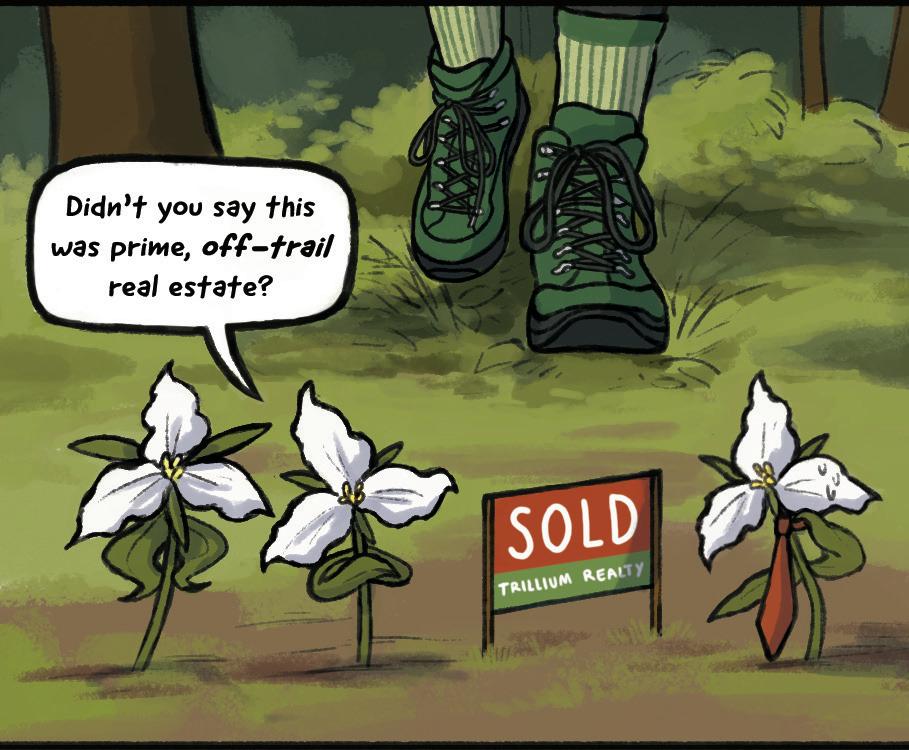
STICK TO THE TRAIL
Help control erosion into Smokies waterways and protect important habitats for rare wildflowers, salamanders, and firefly larvae by staying on established trails.
ALWAYS USE THE RULE OF THUMB


When viewing wildlife, hold your arm out straight. If you can’t cover the animal in your line of sight with your thumb, you’re too close!
Smokies Guide Spring 2024 • 9
Smokies Life
Smokies Life (formerly Great Smoky Mountains Association) brings people of all backgrounds together as advocates and stewards to honor, sustain, and protect Great Smoky Mountains National Park.
Since 1953, Smokies Life has provided more than $50 million to the park. Today, the organization operates the park’s official bookstores, publishes books and other media about the Smokies, and supports the park’s educational, scientific, and historical preservation efforts.
Become a Smokies Life Park Keeper today by visiting SmokiesLife.org or calling 888.898.9102, ext. 257.
Interested in working in the park? Smokies Life is currently hiring for retail and information desk positions with rates beginning at $15.75/hr. Apply online at SmokiesLife.org/employment.

Friends of the Smokies
Discover Life in America








Tremont
Discover Life in America (DLiA) is devoted to cataloging every living species in the Smokies through the All Taxa Biodiversity Inventory. This ongoing project helps the National Park Service better understand and protect the 21,000 kinds of organisms documented in the Smokies, with more discovered every day.




Since 1993, Friends of the Smokies has raised over $85 million to assist GSMNP in providing visitors a safe, memorable experience while protecting the park’s historic and natural resources.
Every year, the park requests funding for projects and programs that would be unfulfilled without support from Friends.
Examples include:
• Trail rehabilitation
• Preservation of historic structures
• Facility repairs, upgrades, and renovations
• Accessibility improvements
• First responder equipment and training
• Educational programs for 10,000+ students
• Conservation and wildlife management
Learn more and become a ‘Friend’ at FriendsOfTheSmokies.org

DLiA also offers internship, volunteer, community science, and education opportunities that provide firsthand experiences in the Smokies, promote the importance of biodiversity, and foster stewardship of the natural world. Learn how you can support DLiA at dlia.org or call 865.430.4757.
Join the discovery!

Great Smoky Mountains Institute at Tremont offers kids and adults an opportunity to connect with nature through immersive, multi-day experiences in the national park. Through residential workshops, summer camps, and school programs, Tremont promotes curiosity and inspires learning for thousands of individuals each year.

Adult workshops include the Southern Appalachian Naturalist Certification program, photography courses, backpacking adventures, community science, and professional development for teachers.
Visit gsmit.org for program information or to learn how you can support life-changing learning experiences in the Smokies. Header photo by Rich Bryant.
Smokies Guide Spring 2024 • 10
GSMNP BY THE NUMBERS miles of streams 90 hist or ic struct ur es 25 0 13 5 species of bir ds + 2, 90 0 + species of tr ees 500,000 acres of land 84 8 miles of tr ails + 3, 50 0 species of f ungi + Record life in the park with the iNaturalist app! dlia.org Park Keepers enjoy... • Bi-annual Smokies Life Journal • Smokies LIVE e-newsletter • Discounts at park bookstores and local businesses • Exclusive group hikes and expert-led events
YOU LOVE THE SMOKIES Join the park’s nonprofit partners in helping to protect this special place for future generations
IF

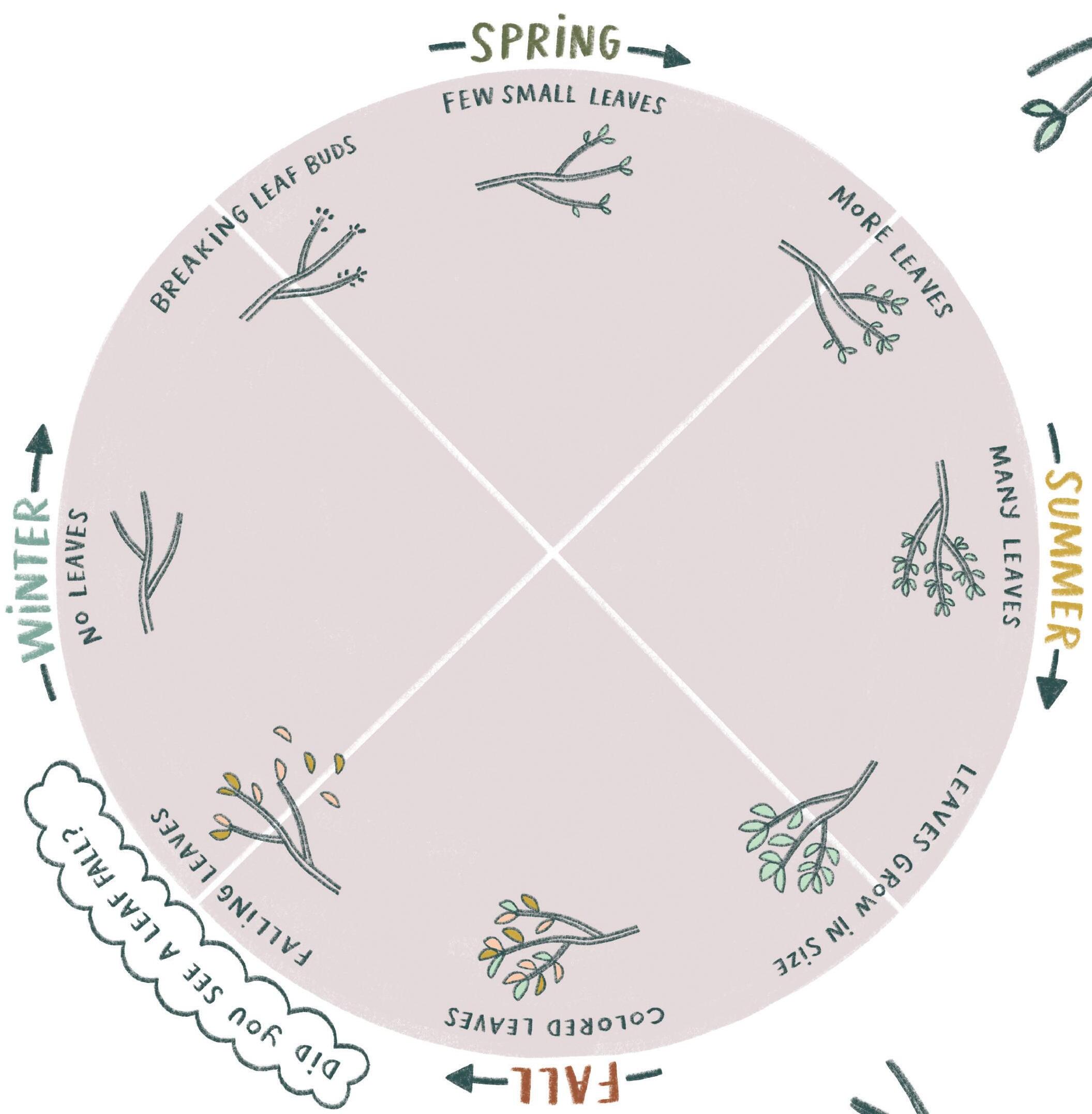
When you get home, pick a tree that you see regularly and try to track it all the way through a year.

The study of seasonal changes is called phenology. Phenology plots in the park are monitored from early spring through late fall by volunteers. By observing tree leaves and recording what stage they are in year after year, we learn about the timing of seasonal events and how it is changing.
Pick one tree to observe. Circle the picture that best shows what stage its leaves are in. Be careful--a tree can have leaves in several different phases.
This activity is adapted from great smoky mountains national park’s new jr. ranger activity guide! work as a team to fill out the guide and earn a jr. ranger badge. available at any park visitor center!

Smokies Guide Spring 2024 • 11
Illustration by Jesse White
SMOKIES INFORMATION
For more information, go to nps.gov/grsm
(closedinwinter)
Round Bottom Road
Primar y Alt. Rt
Secondar y Alt. Rt

Information
General park info: 865.436.1200 nps.gov/grsm
Backcountry info: 865.436.1297 smokiespermits.nps.gov
Emergencies
911
Cherokee Police 828.497.4131
Gatlinburg Police 865.436.5181
Avoid the fine
A valid parking tag must be displayed when parked for more than 15 minutes anywhere in the park. Pets are only permitted on the Gatlinburg and Oconaluftee River trails, which allow dogs on a leash. Persons feeding wildlife are subject to a $5,000 fine. Picking or digging plants is prohibited in the park.
Accessibility
Restrooms at Cades Cove, Oconaluftee, and Sugarlands visitor centers are fully accessible. For more information about accessibility, go to nps.gov/grsm/planyourvisit/accessibility.htm.
©
Heintooga/
SWAIN COUNTY VISITOR CENTER
