The Official Newspaper of the Smokies • Spring 2026
emaley, SupervisoryE
Words with a Ranger
Welcome to Great Smoky Mountains National Park! As the park’s supervisory ecologist, it’s my job to help with the variety of research, data management, resource inventories, and long-term monitoring programs going on in the Smokies at any given time. Right now, some of these include long-term monitoring of vegetation and aquatic invertebrates as well as inventories of special interest species such as ramps and hellbenders. Occasionally, I help our park entomologist Becky Nichols with aquatic invertebrate sampling. I had a wonderful time last year looking for dragonflies in Hazel Creek!
My career with the Smokies began about 30 years ago, shortly after completing my master’s degree in forestry at the University of
Continued on page 8
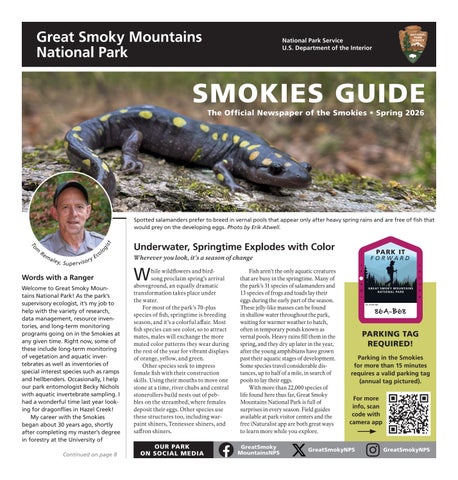
salamanders prefer to breed in vernal pools that appear only after heavy spring rains and are free of fish that would prey on the developing
Underwater, Springtime Explodes with Color
Wherever you look, it’s a season of change
While wildflowers and birdsong proclaim spring’s arrival aboveground, an equally dramatic transformation takes place under the water.
For most of the park’s 70-plus species of fish, springtime is breeding season, and it’s a colorful affair. Most fish species can see color, so to attract mates, males will exchange the more muted color patterns they wear during the rest of the year for vibrant displays of orange, yellow, and green.
Other species seek to impress female fish with their construction skills. Using their mouths to move one stone at a time, river chubs and central stonerollers build nests out of pebbles on the streambed, where females deposit their eggs. Other species use these structures too, including warpaint shiners, Tennessee shiners, and saffron shiners.
Fish aren’t the only aquatic creatures that are busy in the springtime. Many of the park’s 31 species of salamanders and 13 species of frogs and toads lay their eggs during the early part of the season. These jelly-like masses can be found in shallow water throughout the park, waiting for warmer weather to hatch, often in temporary ponds known as vernal pools. Heavy rains fill them in the spring, and they dry up later in the year, after the young amphibians have grown past their aquatic stages of development. Some species travel considerable distances, up to half of a mile, in search of pools to lay their eggs.
With more than 22,000 species of life found here thus far, Great Smoky Mountains National Park is full of surprises in every season. Field guides available at park visitor centers and the free iNaturalist app are both great ways to learn more while you explore.
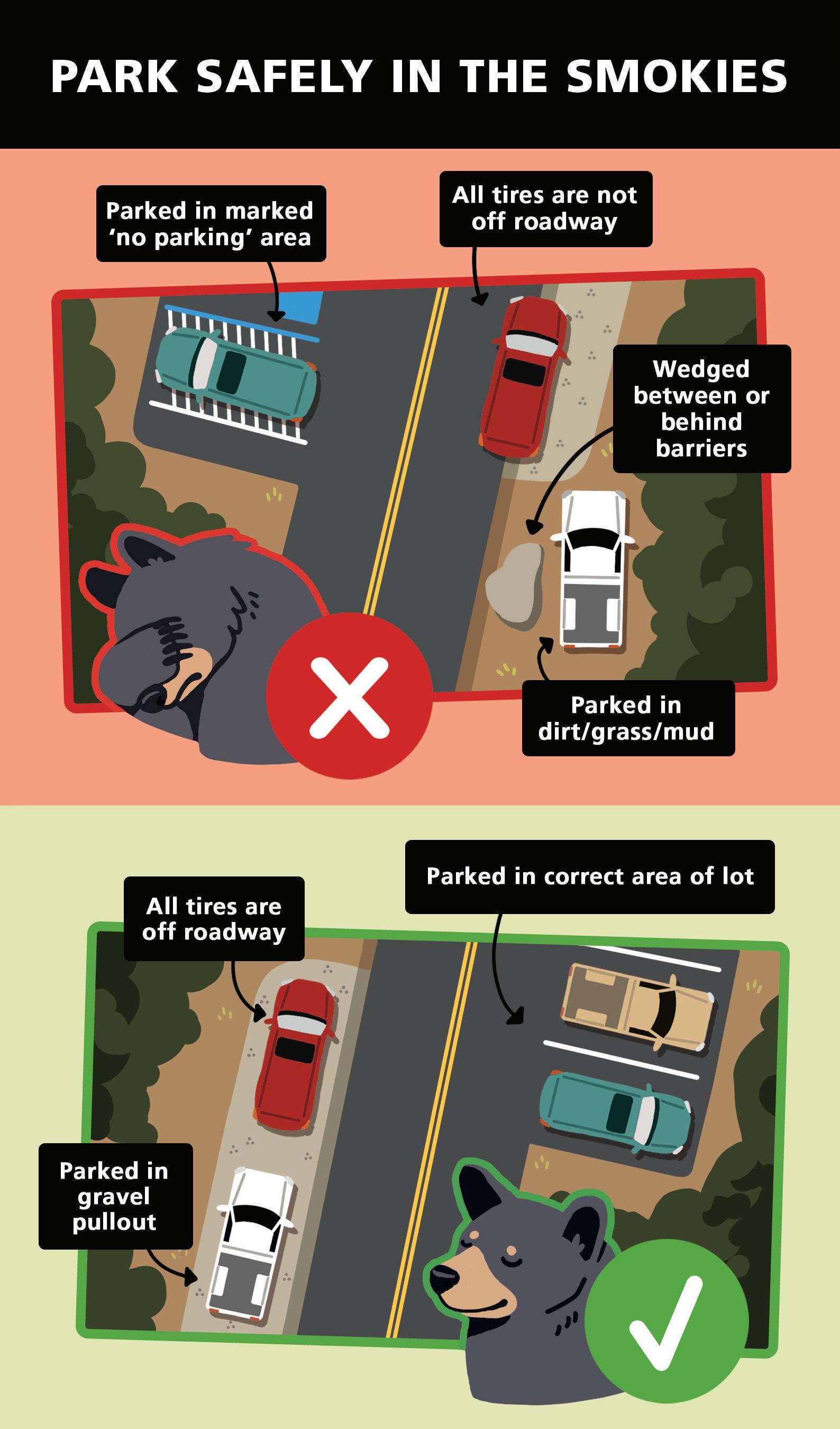
PARKING TAG REQUIRED!
Parking in the Smokies for more than 15 minutes requires a valid parking tag (annual tag pictured).
Spotted
eggs. Photo by Erik Atwell.
SMOKIES TRIP PLANNER
Visitor centers
Sugarlands, Oconaluftee, and Cades Cove: open 9 a.m.–5 p.m. March through June (Cades Cove 7 a.m.–3:30 p.m. on vehicle-free Wednesdays; begins May 6).
Kuwohi: reopens April 1; open 9:30 a.m.–6 p.m. March through June
GSM Institute at Tremont: open 10 a.m.–4 p.m. Monday–Saturday.
Road closures
Many park roads are closed in winter and reopen in spring. Find opening dates on pages 6–7.
• Cades Cove Loop Road is closed to vehicles on Wednesdays from May 6 through September 30 to allow for non-motorized recreation.
• Gatlinburg Spur will see singlelane closures for road work 7 a.m. to 7 p.m. daily, except weekends, federal holidays, and March 30–April 10.
• Click “Alerts” at nps.gov/grsm for all current closures.
Shuttle services
Local shuttle services offer convenient transportation to and from the park’s most iconic destinations. Routes, schedules, pricing, and pick-up/drop-off locations vary. Visit go.nps.gov/grsmshuttles for a list of authorized concessioners.
Weather
March is an unpredictable time in the Smokies. Snow can fall any day, especially at the higher elevations. Backpackers are often caught off guard when a sunny, warm day is followed by a wet, bitterly cold one. By mid-to-late April, the weather is typically more mild with an average high of 71ºF in Gatlinburg and 52ºF at Mount Le Conte.
Campgrounds in the national park
The National Park Service maintains developed campgrounds at ten locations in the park, two of which are open yearround. There are no showers, and hookups are available only at Look Rock Campground (closed in winter). Circuits for special medical uses are offered at Cades Cove, Elkmont, and Smokemont.
Campsite reservations are required at all park campgrounds. Sites may be reserved up to six months in advance. Camping is permitted only in designated sites.
Make your reservation online at recreation.gov or call 877.444.6777.
Site occupancy is limited to six people and two vehicles (a trailer is considered one vehicle). The maximum stay is 14 days.
Campsites for larger groups are located at Big Creek, Cades Cove, Cataloochee, Cosby, Deep Creek, Elkmont, and Smokemont. Reservations are required and may be secured up to a year in advance. For more information, visit nps.gov/grsm.
Firewood
To prevent the spread of destructive pests, only USDA- or state-certified heat-treated firewood may be brought into the park. Campers may gather dead and down wood in the park for campfires. Find purchase locations at FirewoodScout.org.
Picnic areas
Picnic areas at Cades Cove, Deep Creek, Greenbrier, and Metcalf Bottoms are open year-round. Chimneys opens April 3; Twin Creeks (reservation only) opens April 4; Look Rock opens May 8; and Big Creek, Cosby, and Heintooga open May 15. Picnic pavilions may be reserved for a fee at recreation.gov.
Accommodations
LeConte Lodge (accessible by trail only, reopens March 23) provides the only lodging in the park. Reservations required. 865.429.5704, lecontelodge.com
Services
There are no gas stations, charging stations, showers, or restaurants in the national park. Limited food options are available in visitor centers and camp stores.
Event reservations
Reserve the Appalachian Clubhouse or Spence Cabin at Elkmont for daytime events at recreation.gov. Cabin and clubhouse reopen April 1.
Pets
Pets are allowed in campgrounds and along roads as long as they are restrained on a leash no longer than six feet. Pets are not allowed on park trails, except for Gatlinburg and Oconaluftee River trails.
Bicycling
Most park roads are too narrow and heavily traveled for safe or enjoyable bicycling. Bicycles are permitted on park roads but prohibited on trails except Gatlinburg, Oconaluftee River, and lower Deep Creek and Indian Creek trails. Helmets are required by law for persons age 16 or under and strongly recommended for all.
Cades Cove Loop Road is open exclusively to cyclists and pedestrians on Wednesdays from May 6 to September 30. Bikes may be rented at the Cades Cove Campground Store 9 a.m.–3:00 p.m. Bike rental opens early at 7 a.m. on vehicle-free Wednesdays. 865.448.9034.
Horseback riding
Some 550 miles of park trails are open to horses. See park trail map for trails and rules. Horse camps are located at Anthony Creek, Big Creek, Tow String, Cataloochee, and Round Bottom. Visit recreation. gov to check opening status and availability.
Three concession horseback riding stables offer rides from March through November. Call for exact opening dates.
Fishing is permitted year-round in the park, but a Tennessee or North Carolina fishing license is required. Either state license is valid throughout the park, and no trout stamp is required. Fishing with bait is prohibited. Special permits are required for the Qualla Boundary and Gatlinburg, and licenses are available in nearby towns. A free fishing map with a complete list of all park fishing regulations is available at visitor centers.
Backcountry camping
The park service maintains more than 100 campsites and shelters dispersed throughout the Smokies’ backcountry trail network. Although all overnight stays require a permit and reservation at a designated campsite, the greatest challenge might be deciding where to go. See below for help as you prepare for your next adventure:
1. Get the map. Go online to view the park’s official trail map (go.nps.gov/grsmmaps), which shows all park trails, campsites, and shelters. Park rules and regulations are also listed here. You can purchase the printed version of the trail map for $1 at any park visitor center or online at SmokiesLife.org.
2. Plan your trip. Call the park’s Backcountry Office from 8 a.m. to 5 p.m. or drop into the
office located within Sugarlands Visitor Center for trip-planning help. The office is open to visitors during visitor center hours. 865.436.1297.
3. Get a permit. Make your reservation and get your permit through the Backcountry Office at Sugarlands Visitor Center (by phone or in person) or online at smokiespermits.nps.gov.
Reservations and permits are required for all overnight stays in the backcountry. The cost is $8 per person per night. Reservations may be made up to 30 days in advance. Backcountry camping permit holders are not exempt from parking tag requirements.
Spring hikers should be especially aware of quickly changing conditions and the danger of hypothermia—the lowering of body temperature. Always carry an ample supply of food, water, and reliable rain gear. Layer clothing that provides warmth when wet (not cotton). Be prepared for sudden weather changes, especially at the higher elevations, including rain, cold, and wind. Stay dry and know your limitations.
See page 4 for more hiking tips and trip essentials.
Special events and ranger activities
See page 5 for more things to do and visit go.nps.gov/grsmcalendar for a full calendar of events.
• April 18, Signs of Spring: Cades Cove. For American Sign Language Day, park educators and local ASL interpreters will work together to present spoken and signed programs throughout Cades Cove. Stop by the Orientation Shelter at the start of Loop Road for more info. 9 a.m.– 4:30 p.m.
• April 22–25, Spring Wildflower Pilgrimage: parkwide. Explore the Smokies through hikes, workshops, and speakers. See wildflowerpilgrimage.org.
The only two pet-friendly trails in the Smokies are the Gatlinburg Trail in Tennessee and the Oconaluftee River Trail in North Carolina.
Learn the BARK principles so you and your pet can have a safe and fun visit in the Smokies. Take the BARK pledge:
B ag and bin your pet’s waste
A lways leash your pet R espect wildlife
K now where you can go
Keep it SMOKIES SMART:
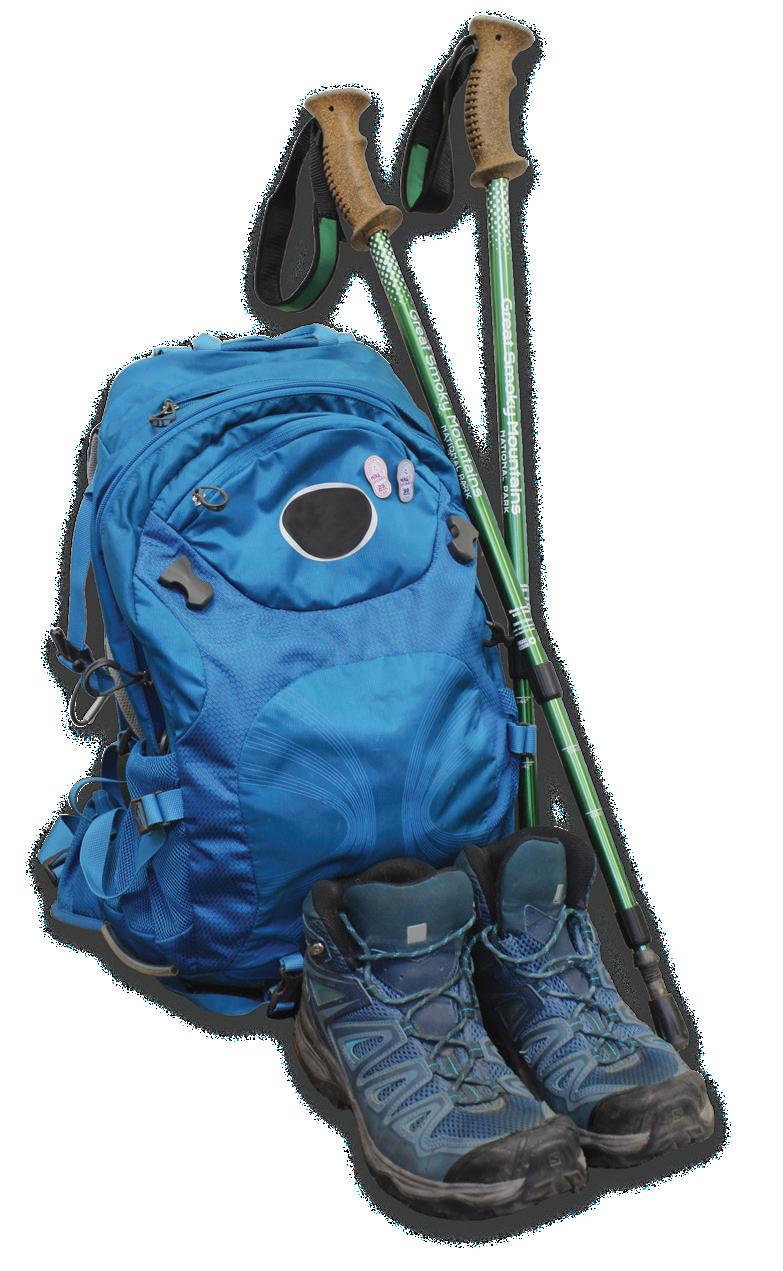
• Traction support like microspikes and hiking poles
• Navigation —map, compass, and knowledge of how to use them
• Water and food
• Warm extra layers
• First aid kit
• Headlamp or flashlight
• Rain gear and pack cover or waterproof bags
• Emergency whistle
• Sun protection with sunscreen, sunglasses, and hat
• Repair kit with multi-tool or knife
• Fire starter
• Shelter —emergency tent or tarp
Tell someone where you’re going, stay on established trails, pack the essentials, and know what to do in case of an emergency. Let the NPS Backcountry Office help you plan and prepare for your hike. Call 865.436.1297, 8 a.m.–5 p.m. daily
Trail maps and many more of these items can be purchased at any park visitor center. Visit nps.gov/grsm/planyourvisit/hikingsafety for more hike planning tips.
IN AN EMERGENCY
• Call 911 if you can acquire a signal.
• Remain with any injured parties until help arrives. Use what basic first-aid techniques you know, but do not attempt invasive intervention unless you are medically trained.
• Use an emergency whistle to issue a series of three spaced blasts every few minutes to alert rescue crews. If you are in an open area, display brightly colored clothing or gear.
YOUR CELL PHONE IS NOT
• a strong light source
• always going to have service
• always going to be charged
RANGER ACTIVITIES
NORTH DISTRICT (near Gatlinburg, TN)
Bear with Us!: Come learn all about an iconic symbol of Great Smoky Mountains National Park— black bears!
Blooms Beneath the Canopy—Exploring the Smokies’ Wildflower Diversity: Spring into learning about the wildflowers of the Smokies by joining a park ranger on the trail, where colorful blooms await on the forest floor.
SOUTH DISTRICT (near Cherokee, NC)
Wild about the Smokies: Get the inside scoop on where to spot wildlife like bears and elk—and how to do it safely. Discover why scientists study mammals, birds, amphibians, and other species living in the park.
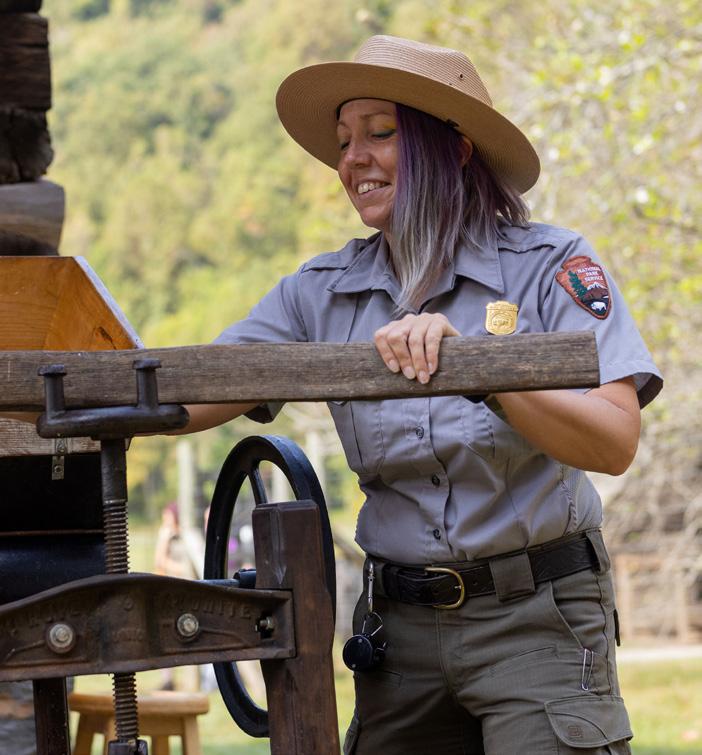
Down on the Farm: Immerse yourself in Smokies history! Demonstrations of blacksmithing, fencemaking, and hearth cooking will show how families once made their living in the Smokies. Program topic varies. Check at Oconaluftee Visitor Center for more information.
Blooming Trails—Wildflower Wonderland in the Smokies: Experience the enchanting beauty of the Smokies on a wildflower hike, where diverse blooms create a vibrant tapestry. Enjoy a serene journey through nature, perfect for all skill levels.
CADES COVE (near Townsend, TN)
Exploring Life in the Cove: Meet a ranger in the Cable Mill Historic Area to learn about life in Cades Cove for some of its inhabitants, past and present.
Event schedules are weather-dependent and subject to change. For a full list of programs, inquire at a visitor center or visit:
Signs of Spring: Learn about Cades Cove and celebrate National American Sign Language Day! Programs at stations throughout Cades Cove will be presented by park staff, deaf community members, certified ASL interpreters, and students. This year’s theme is “Communities Together and Apart.” For program times, locations, and accessibility information, check the park’s website or stop by the orientation shelter. Saturday, April 18 9
Chimneys Picnic Area
Photos by Michele Sons (top), NPS (bottom)
Parking tag purchase locations within the park
Parking tags may be purchased at locations designated by these symbols on the map:
Automated Fee Machine (AFM)
• Available 24 hours per day
• Accepts credit/debit only
• Daily and weekly tags only
Located at Sugarlands Visitor Center, Cades Cove Loop Entrance, Metcalf Bottoms Picnic Area, Newfound Gap, Oconaluftee Visitor Center, Deep Creek Picnic Area, Kuwohi, Greenbrier, Cosby, Big Creek, Townsend Wye, Look Rock, and Cataloochee.
Visitor Center
• Open business hours (see page 2)
• Accepts cash or credit/debit
• Daily, weekly, and annual tags available
Located at Sugarlands, Great Smoky Mountains Institute at Tremont, Cades Cove, Oconaluftee, and Kuwohi.
Parking tags are available outside the park at Great Smokies Welcome Center in Townsend, Gatlinburg Welcome Center, Swain County Visitor Center in Bryson City, and select area businesses.
For all purchase locations, see go.nps.gov/grsmfees.
Words with a Ranger
Continued from page 1
Tennessee. The park had just received money to expand its exotic plant management program, which aims to protect the natural ecosystems here from harm caused by invasive species. I was lucky enough to get a position as project coordinator. I spent five years in that role followed by five years in the private sector in southeastern Ohio, working on transmission line planning for a utility company and running a project to help private landowners grow non-timber forest products like mushrooms, craft supplies, and medicinal plants.
In 2002, an invasive insect called the hemlock woolly adelgid was discovered in Great Smoky Mountains National Park, killing its iconic hemlock trees. I returned to the Smokies in 2004 to create and run a program to reduce the adelgid’s impact. From there, I moved to a position as the park’s vegetation ecologist and then to my current role in 2013.
For my team, spring is a busy time of year. It’s when we welcome seasonal workers and interns, training them on monitoring protocols and safety procedures. It’s also when we start most of our field work. This spring, we’ll continue conducting long-term resource monitoring, checking on a variety of rare plants, and supporting a sochan gathering agreement between the park and the Eastern Band of Cherokee Indians. Through the agreement, tribal members harvest this culturally important spring green on park lands. Going out into the field to help inventory and monitor park resources is my second favorite part of the job. But the best part is working with the dedicated biologists we have on staff. Their enthusiasm and passion are infectious!
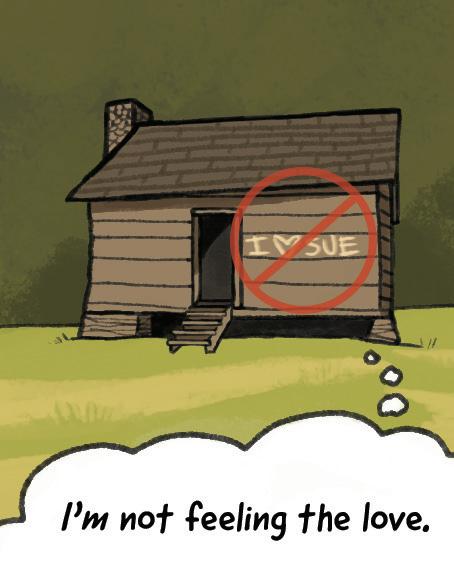
LEAVE ONLY FOOTPRINTS
Writing on or carving into trees, stones, or structures can cause permanent damage—it’s also a crime! Taking a photo is always a better way to remember your time in the Smokies and helps preserve the park for others too.
BIN IT FOR THE BEARS
Help protect bears by packing out all trash and food waste and using bear-proof dumpsters in the park.
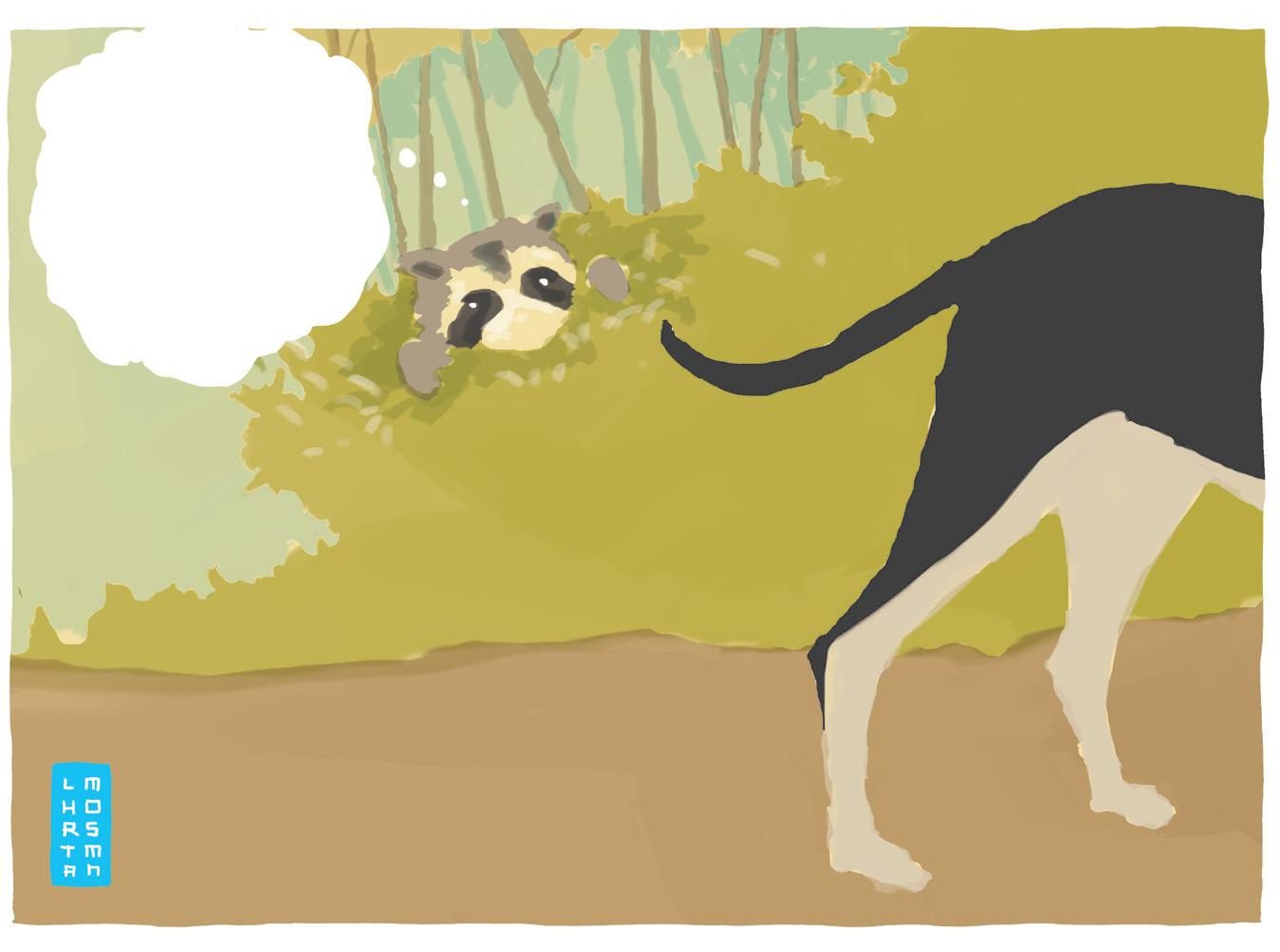
KEEP PETS ON DESIGNATED TRAILS
Remember that the Gatlinburg Trail and Oconaluftee River Trail are the only pet-friendly trails in the park. All pets must be kept on a leash no longer than six feet at all times.
Raccoon and dog illustration by Lisa Horstman. All others by Emma Oxford.
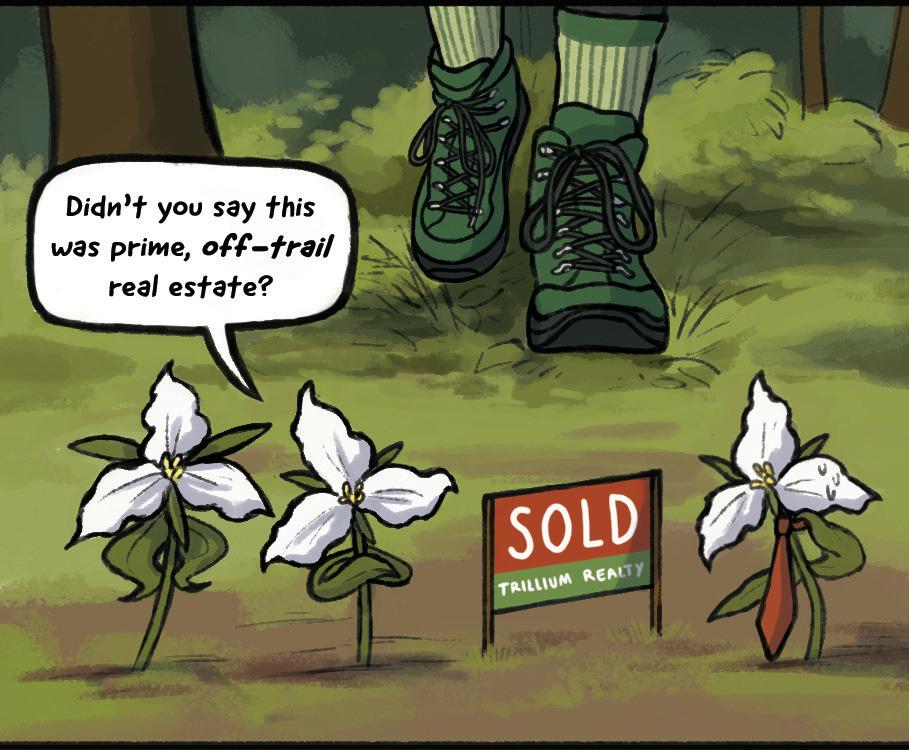
STICK TO THE TRAIL
Help control erosion into Smokies waterways and protect important habitats for rare wildflowers, salamanders, and firefly larvae by staying on established trails.
ALWAYS USE THE RULE OF THUMB
When viewing wildlife, hold your arm out straight. If you can’t cover the animal in your line of sight with your thumb, you’re too close!
IF YOU LOVE THE SMOKIES
Help protect this special place for future generations! Consider joining our nonprofit park partners described on this page. They, along with over 1,600 National Park Service volunteers, help serve park staff and address many needs across the park’s 522,000 acres, maintaining this natural resource for millions like you who visit each year.
Smokies Life
Friends of the Smokies
As the park’s philanthropic partner, Friends has raised more than $90 million to give to the park since 1993, helping:
Tremont
Great Smoky Mountains Institute at Tremont is an environmental education center inside the park that connects people to nature through immersive, multi-day experiences. The institute promotes curiosity and inspires learning for thousands of students and adults each year.
Discover Life in America
Smokies Life operates the park’s bookstores and publishes books and other media about natural and cultural resources. Since 1953, Smokies Life has given more than $54 million toward scientific and historic preservation efforts. Members, known as Park Keepers, stay informed through:
• a subscription to the award-winning semi-annual, full-color Smokies Life Journal
• digital access to this quarterly newspaper and the Smokies LIVE blog, which includes “Word from the Smokies”
• 15 percent off books and other products at visitor centers and on the web store
• access to expert-led group hikes, backpacking excursions, and educational sessions
Join by visiting SmokiesLife.org , or call 888.898.9102, ext. 257.
Adult programming includes the Southern Appalachian Naturalist Certification program, photography courses, a writer’s conference, backpacking adventures, professional development for teachers, wilderness first responder training, and a naturalist-led adult summer camp.
• protect bears, elk, and other animals
• supply search and rescue crews with training and equipment
• improve park access for people with mobility needs
• fund educational programs and transportation for school children
• monitor air and water quality while restoring native species’ habitat
• protect trees from invasive insects Friends raises money through events, business sponsorships, memorials and honorariums, private gifts, and specialty license plate sales in North Carolina and Tennessee. Visit FriendsOfTheSmokies.org to donate.
Youth summer camps and school field trips allow kids ages 4 to 17 (and sometimes their families) to explore the national park for days at a time and connect with nature through new, empowering, discoveryoriented experiences.
Visit GSMIT.org for program information. Photo by Rich Bryant.
Since 1998, DLiA has collaborated with the National Park Service, scientists, and community members on the All Taxa Biodiversity Inventory. This ambitious effort aims to identify every species living in the park and understand their roles in relation to one another and within the ecosystem.
The ATBI has documented more than 12,000 species previously unrecorded in the Smokies, including over 1,000 new to science. This research informs critical conservation decisions.
DLiA engages people of all ages through outreach and education programs, inspiring stewardship of the natural world and fostering the next generation of nature advocates. Learn more and join the effort at DLiA.org
Record life in the park with the iNaturalist app! DLiA.org
13 5 species of
25 0
ds + 2, 90 0 + species
3, 50 0 species of f ungi +
500,000 acres of
miles of streams
84 8 miles of tr ails +
How many were natural sounds?
Find a place to sit quietly and listen.
Map the soundscape by drawing symbols to represent each sound on the circle. For example, drawing a cricket on the edge of the circle could represent the sound of insects chirping in the distance.
How many were human sounds?
How do you think human sounds affect wildlife?
This activity is adapted from great smoky mountains national park’s jr. ranger activity guide! work as a team to fill out the guide and earn a jr. ranger certification. available at any park visitor center!
Illustrations by Jesse White
SMOKIES INFORMATION
CAUTION: Some regional roads have closures or delays due to storm damage. Check smartway.tn.gov/traffic and drivenc.gov for information. See center map for park road closures.
A valid parking tag must be displayed when parked for more than 15 minutes anywhere in the park. Pets are permitted only on the Gatlinburg and Oconaluftee River trails, which allow dogs on a leash. Persons feeding wildlife are subject to a $5,000 fine. Picking or digging plants is prohibited in the park.
Accessibility
Restrooms at Cades Cove, Oconaluftee, and Sugarlands visitor centers are fully accessible. For more information about accessibility, go to nps.gov/grsm/planyourvisit/accessibility.htm.