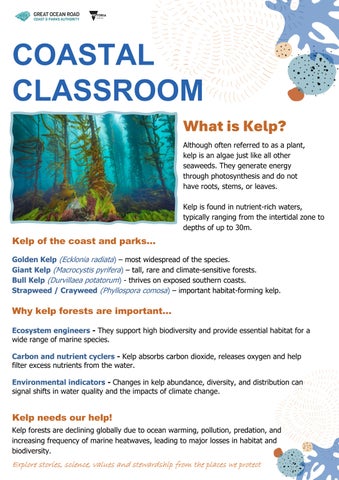
COASTAL CLASSROOM What is Kelp? Although often referred to as a plant, kelp is an algae just like all other seaweeds. They generate energy through photosynthesis and do not have roots, stems, or leaves. Kelp is found in nutrient-rich waters, typically ranging from the intertidal zone to depths of up to 30m.
Kelp of the coast and parks… Golden Kelp (Ecklonia radiata) – most widespread of the species. Giant Kelp (Macrocystis pyrifera) – tall, rare and climate-sensitive forests. Bull Kelp (Durvillaea potatorum) - thrives on exposed southern coasts. Strapweed / Crayweed (Phyllospora comosa) – important habitat-forming kelp.
Why kelp forests are important… Ecosystem engineers - They support high biodiversity and provide essential habitat for a wide range of marine species. Carbon and nutrient cyclers - Kelp absorbs carbon dioxide, releases oxygen and help filter excess nutrients from the water. Environmental indicators - Changes in kelp abundance, diversity, and distribution can signal shifts in water quality and the impacts of climate change.
Kelp needs our help! Kelp forests are declining globally due to ocean warming, pollution, predation, and increasing frequency of marine heatwaves, leading to major losses in habitat and biodiversity.
Explore stories, science, values and stewardship from the places we protect