COASTAL CLASSROOM
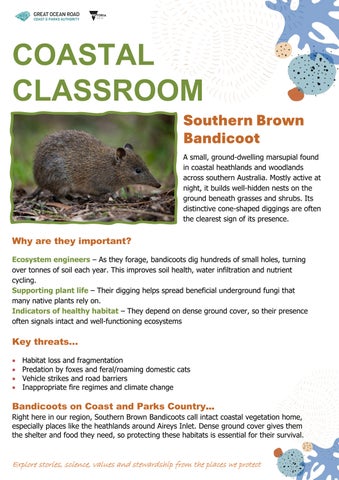
Southern Brown Bandicoot A small, ground-dwelling marsupial found in coastal heathlands and woodlands across southern Australia. Mostly active at night, it builds well-hidden nests on the ground beneath grasses and shrubs. Its distinctive cone-shaped diggings are often the clearest sign of its presence.
Why are they important? Ecosystem engineers – As they forage, bandicoots dig hundreds of small holes, turning over tonnes of soil each year. This improves soil health, water infiltration and nutrient cycling. Supporting plant life – Their digging helps spread beneficial underground fungi that many native plants rely on. Indicators of healthy habitat – They depend on dense ground cover, so their presence often signals intact and well-functioning ecosystems
Key threats… • • • •
Habitat loss and fragmentation Predation by foxes and feral/roaming domestic cats Vehicle strikes and road barriers Inappropriate fire regimes and climate change
Bandicoots on Coast and Parks Country...
Right here in our region, Southern Brown Bandicoots call intact coastal vegetation home, especially places like the heathlands around Aireys Inlet. Dense ground cover gives them the shelter and food they need, so protecting these habitats is essential for their survival.
Explore stories, science, values and stewardship from the places we protect