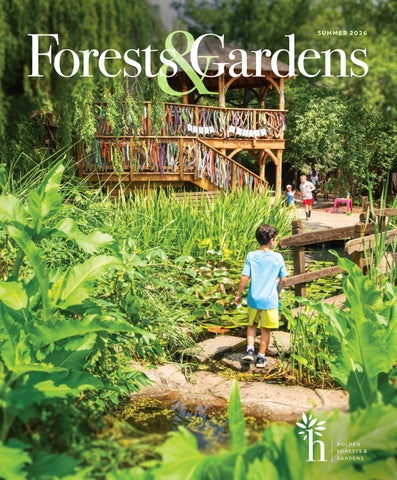
Forests & Gardens is the member magazine for Holden Forests & Gardens, which includes the Holden Arboretum in Kirtland and the Cleveland Botanical Garden in Cleveland.
MISSION: Holden Forests & Gardens connects people with the wonder, beauty, and value of trees and plants, to inspire action for healthy communities
VISION: All communities transformed into vibrant places where trees, plants, and people thrive
Editor & Director of Marketing: Jessica Schneider
Editor & Content Manager: David Lardakis
Photography: Gia Beggiani, Chris Langer, David Lardakis, Ferole Parmalee, Bob Perkoski
Forests & Gardens (ISSN 2474-6371) is a class and events magazine published quarterly by Holden Forests & Gardens, 9500 Sperry Road, Kirtland, Ohio 44094-5172.
Periodicals postage paid at Mentor, Ohio and additional offices.
Postmaster:
Please send address changes to Forests & Gardens Magazine
Holden Forests & Gardens
9500 Sperry Road Kirtland, Ohio 44094-5172
LETTER FROM THE PRESIDENT
Dear Friends,
As the season shifts and we welcome summer, I am pleased to share this issue of Forests & Gardens, featuring highlights of our organization's successes, made possible through your generous gifts and valued membership support. If you’ve spent time with us this season, you already know: things are growing — fast. Garden beds are bursting, pollinators are hard at work, and there’s that unmistakable feeling of momentum you get when nature and people are truly in sync.
This issue delves into oak conservation, upgrades to our library systems, the rich land use history of Holden Arboretum, the impact of our Affiliate Garden Clubs and other stories shaping our living landscape.
As a supporter, you’re at the heart of all of this. Our campuses require significant, ongoing resources. We recognize that philanthropy is not just a supplement to our work; it is the absolute foundation of our ability to connect people to the beauty, wonder and value of trees and plants, and inspire healthy communities. We are profoundly grateful for your partnership in bolstering our ability to:
• Enhance community access
• Create innovative programs and partnerships
• Develop and maintain beautiful and sustainable landscapes
• Conduct and publish nationallyrecognized research
• Provide vital educational programs and train the next generation of green leaders
• Support multi-year transformations and investments at both campuses
Your visits, your curiosity, your support — they make it possible for us to experiment, to improve and to say “yes” to new ideas (and occasionally to debate the finer points of a plant label). The stories in this issue of Forests & Gardens are really the story of what we’re growing together.
Thank you for being part of our community — for loving plants, asking good questions and showing up season after season. I hope you’ll spend some time with us this summer, wandering a little, learning something new and enjoying everything that’s in bloom.
Sincerely,
Ed Moydell President & CEO
Rooted in History: 250 Years of Changing Land
Many of the Holden Arboretum’s forests were farmland just a century ago. HF&G’s researchers are studying what that means for the forests’ ecology today.
By Anna Funk, Science Communication Specialist
Long before the Holden Arboretum had a name, before the trails were cut and the collections planted, the land was a forest. The ancient canopy of beech and sugar maple stretched across Northeast Ohio’s rolling hills, with oaks, chestnuts and tulip poplars filling in the gaps and hemlocks tucked into the shady ravines. Many of these trees were centuries old when the United States declared independence 250 years ago.
But a lot can change in 250 years.
The land that would become the Holden Arboretum sits within the ancestral territories of the Erie, Kaskaskia, and Mississauga nations. Moses Cleaveland would stop by during his survey of the Connecticut Western Reserve in 1796. Settlers would arrive in 1811, nearly a decade later than nearby Mentor, because the land itself wasn’t as appealing. Kirtland’s dense forest, clay soil
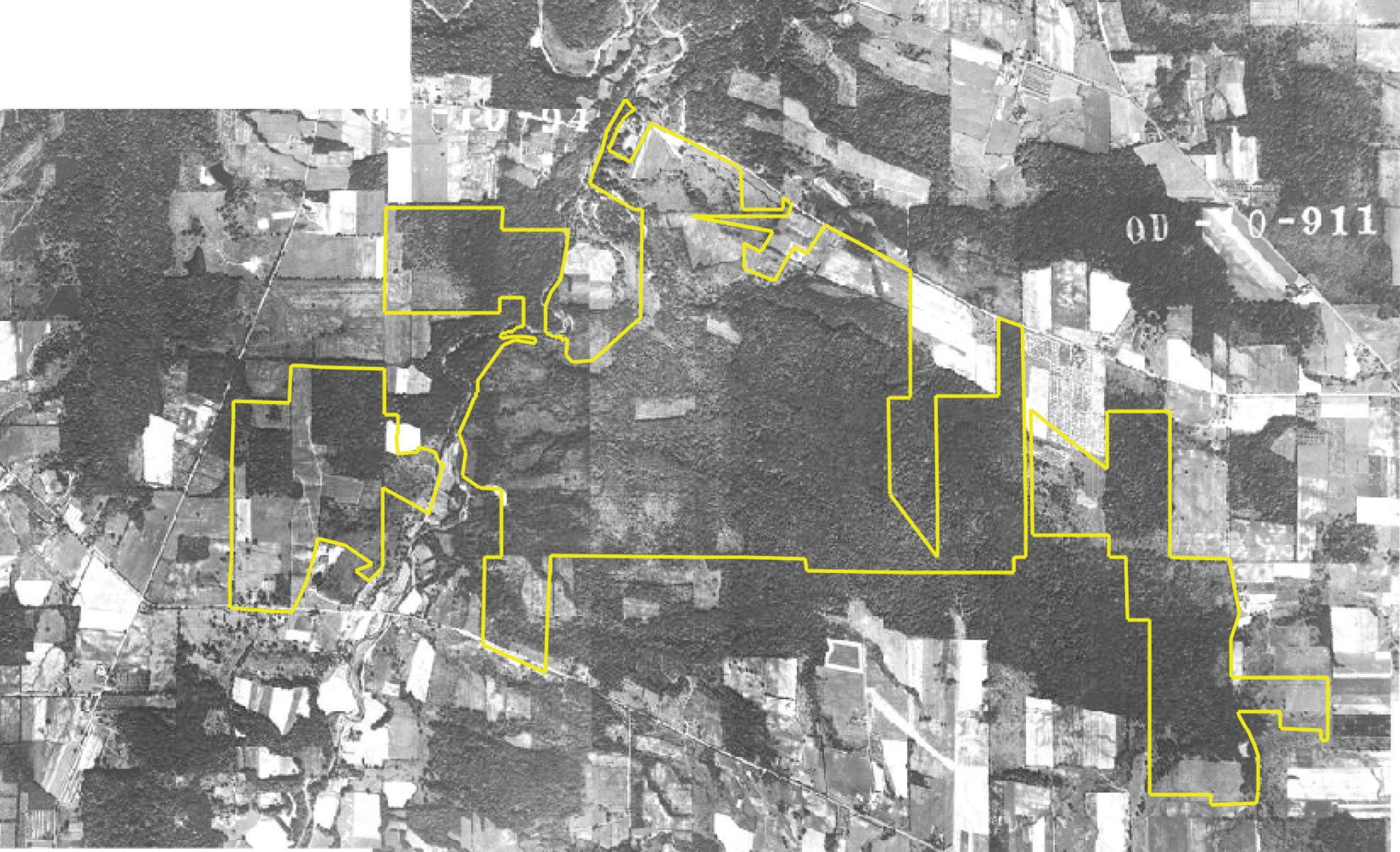
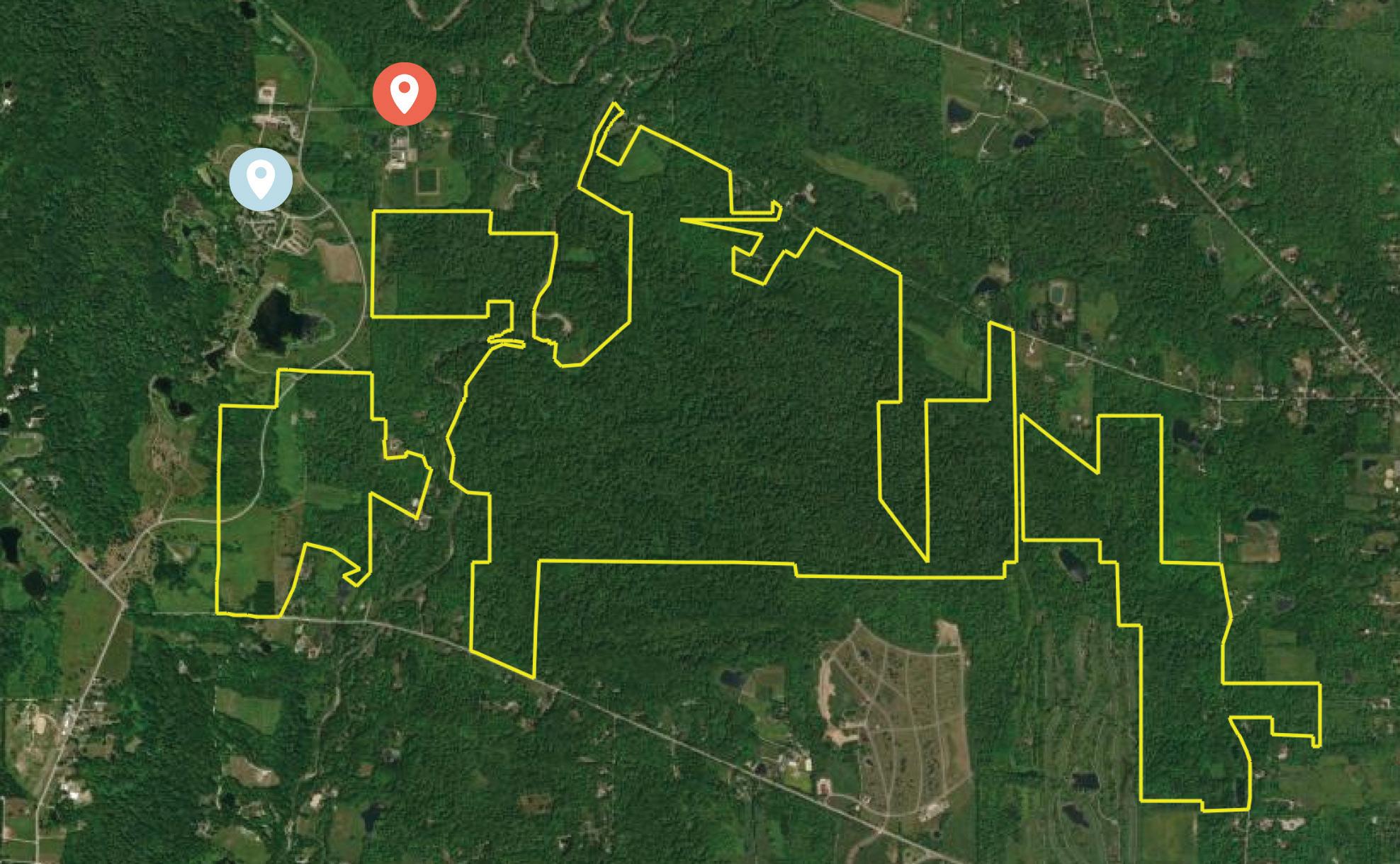
1937
KEY Yellow: Stebbins Gulch
and hilly terrain made it less suitable for farming. But the farmers eventually persevered; township records describe early Kirtland as a community of dairies, orchards, poultry farms and potato fields.
Within the course of one generation, the ancient forests were largely cleared. Aerial photos from 1937, which HF&G researchers have analyzed in detail, show us where the pastures and hayfields, apple orchards and other cleared lands once were on the Arboretum property. But the farming boom wouldn’t last: As the Great Depression and Dust Bowlera droughts arrived to the area, many cultivated areas were abandoned, and the forest was allowed to grow again.
It was around this same time that the Arboretum’s story formally began. Albert Fairchild Holden, a successful mining industrialist, had established a trust to create an arboretum in memory of his daughter Elizabeth, who died young. His sister Roberta Holden Bole donated the first 100 acres in 1931, and the Arboretum opened to the public in 1950s. Over the following decades, the property would grow to the 3,600 acres it is today.
The Forest Remembers
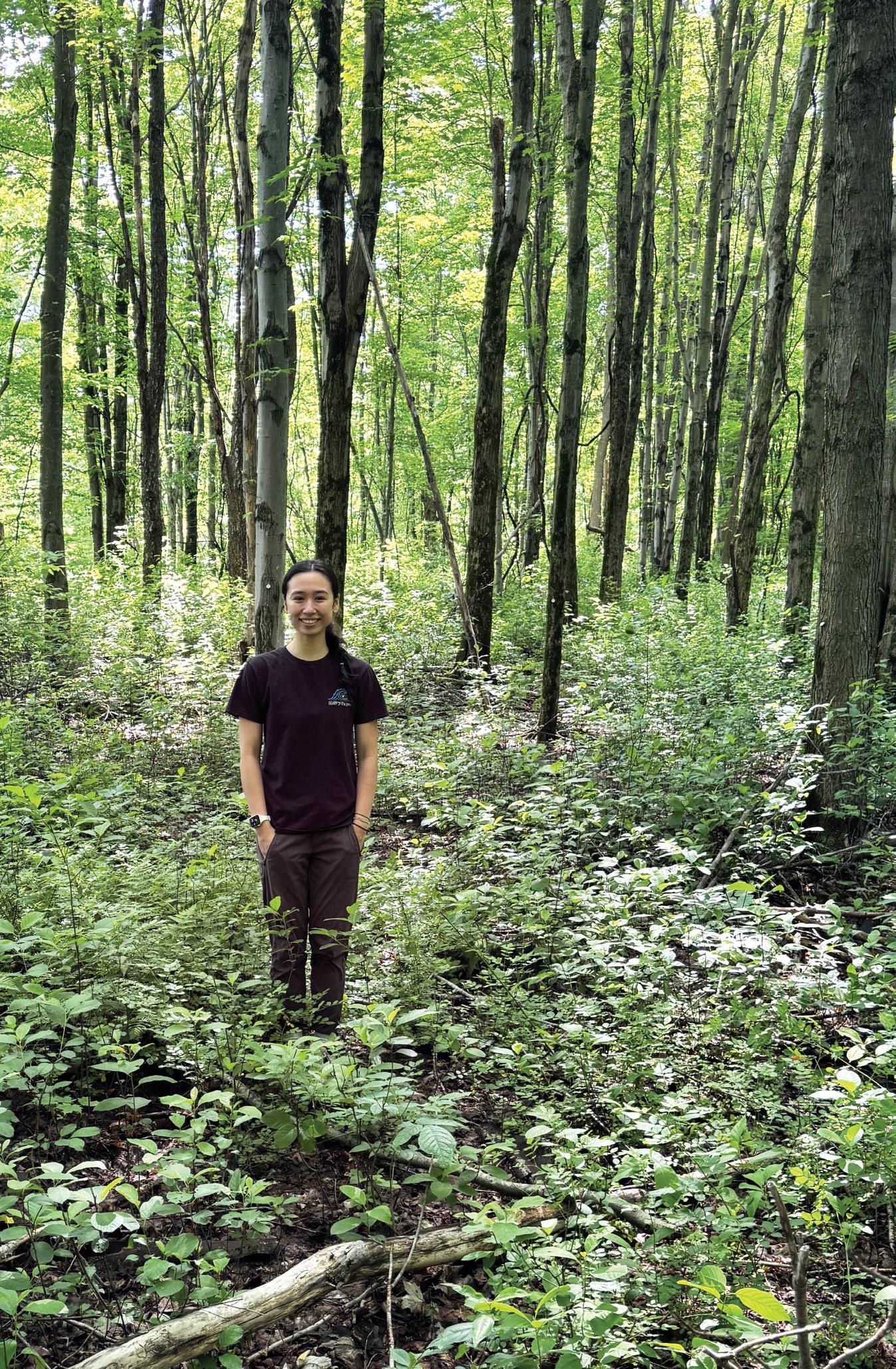
Although the Arboretum may look like one big forest today, not all of it shares the same history. If you know what to look for, the areas that were once farmland look very different than the oldgrowth areas, like Stebbins Gulch, that were never plowed. HF&G’s researchers study these sites to learn how deep these differences run and what we might expect for the future of these forests.
“I think everything will ultimately resemble the old growth forest, if given the right help and enough time to do it.”
Sarah Carrino-Kyker, Senior Research Manager in HF&G’s soil ecology lab
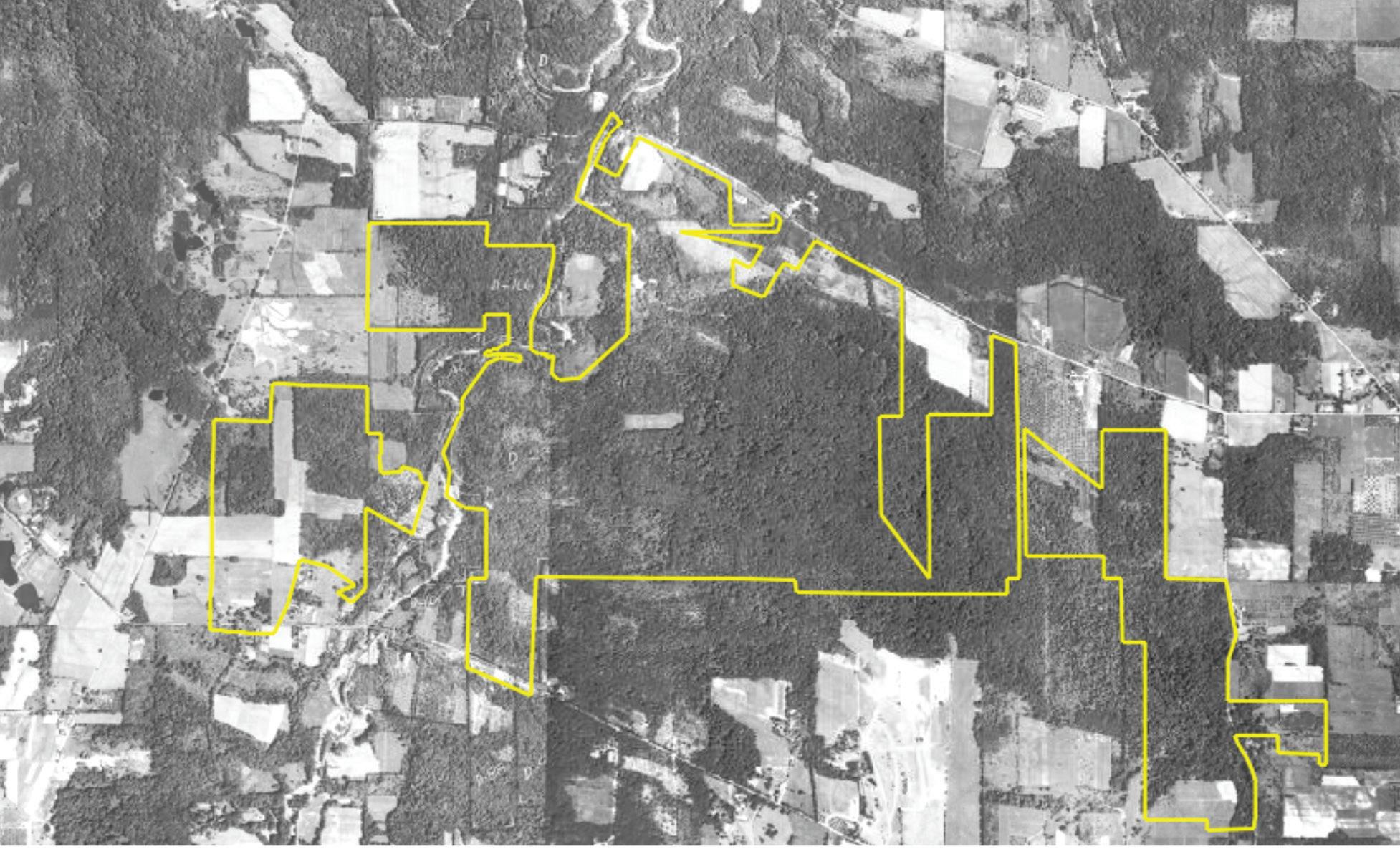
KEY Yellow: Stebbins Gulch
KEY
Yellow: Stebbins Gulch
Orange: Long Center for Plant & Environmental Science
Blue: Corning Visitor Center
We know how long it took the canopy to regenerate by looking at historical aerial photos. They confirm that no additional land was cleared after 1937. In 1959, the land looks about the same as in the 30s, but by 1979, the canopy is clearly starting to fill in. In 1992 photos, we’re once again looking at a forest. It looks like a straightforward recovery, but our researchers know it’s anything but that.
In a 2016 study led by David Burke, Vice President for Science and Conservation, researchers surveyed Stebbins Gulch and found that the single biggest predictor of a forest patch’s ecological health today was its land use history — specifically, whether that patch of forest was farmland in 1937 or not.
“These forests have been regrowing for decades and decades,” says Sarah Carrino-Kyker, a Senior Research Manager in HF&G’s soil ecology lab. “That feels like a long time to us, but maybe it’s not a long time to a forest.”
There were differences both above and below-ground. Former farmlands at Holden have higher soil pH and lower
carbon and nitrogen — important nutrients that support life. The trees are different, too: Forests growing on these lands today are dominated by red maple and tulip poplar, which are early successional species — species you see popping up in canopy gaps and old fields, not dominant members of old forests. The formerly farmed forests are full of invasive shrubs like multiflora rose and native spring wildflowers are noticeably absent.
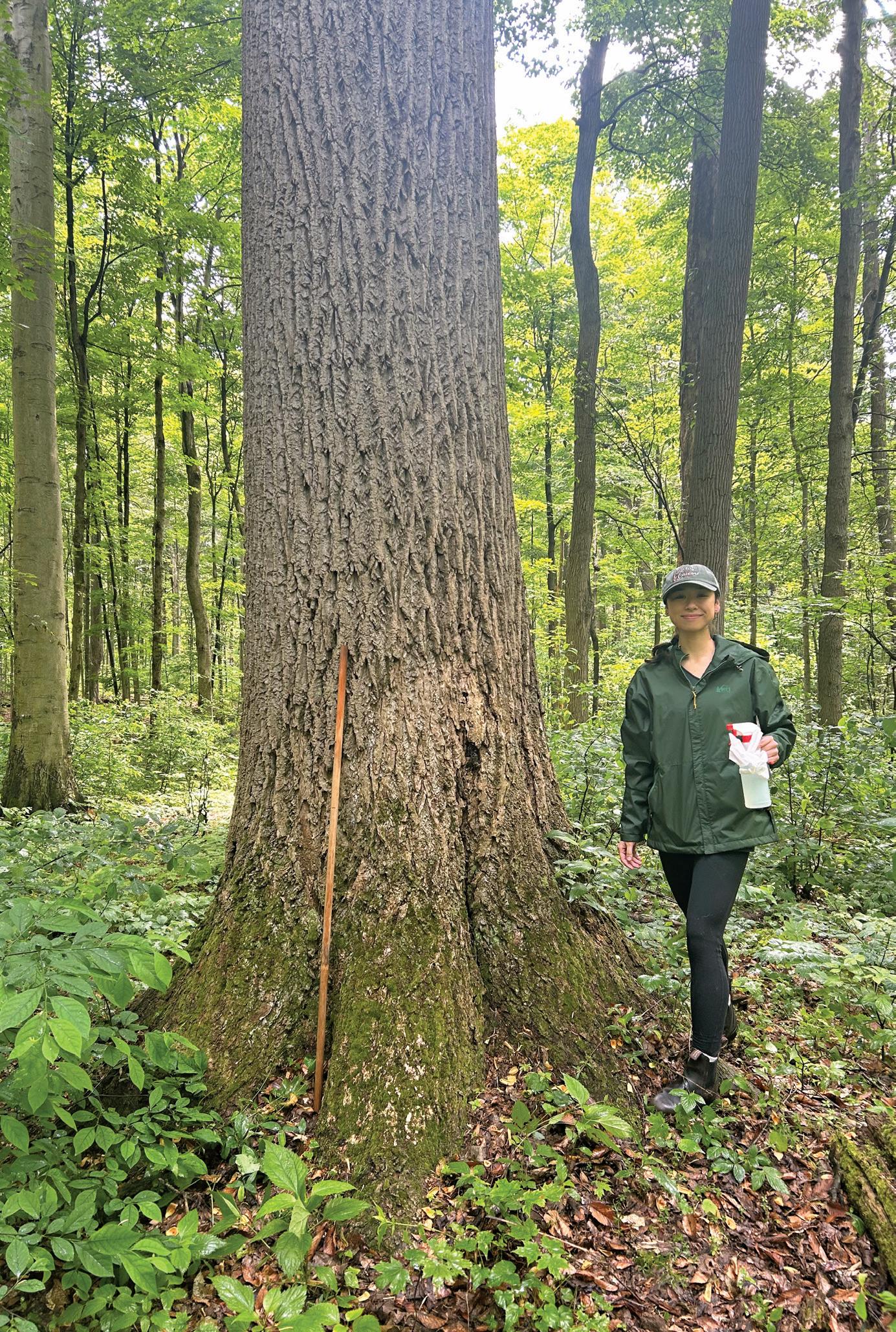
Walk into the old-growth remnants and the contrast is immediate: larger trees, a richer native understory, and soil much richer in organic matter. “You can tell,” says Carrino-Kyker. “You can absolutely tell.”
HF&G researchers have continued to study the imprint of past agriculture on today’s forests, and they’ve found that the legacy reaches further than the plants and soils. The fungal communities living in the soil differ between old and young forests. Ant communities differ. Even the microbes that live on tree bark have been found to differ depending on whether that ground was farmed a century ago.
For the Long Haul
Although some scientists worry the impacts of an agricultural past on forests are irreversible, Carrino-Kyker is optimistic. Just because recovery is slow doesn’t mean it isn’t happening, she reminds us. These forests are just very young, by forest standards — and they’re coming of age under the care of the best stewards a forest could ask for.
“I think everything will ultimately resemble the old growth forest, if given the right help and enough time to do it,” she says.
While we wait to see what the next 250 years will bring, the HF&G teams will stay hard at work. The researchers will monitor how the forests progress over time, the conservation team will continue working to mitigate human impacts through careful management, and the community forestry team will continue to share what Holden has learned along the way with the people who steward other forests in our region.
We hope that after the next 250 years of American history, we’ll have even more “old growth” to report.
MEET THE STAFF
Anna Funk is the Science Communication Specialist for Holden Forests & Gardens. She earned her Ph.D. studying prairie restoration before leaving the research world to help tell scientists’ stories. Today, she wears many hats, working as a writer, editor, consultant and more — anything that helps spread an appreciation of science and its impacts with others.
Keana Royce in a young forest (left) and an oldgrowth forest (right).
Conserving the Oaks
HF&G experts are working on strategies to propagate rare species like bluff oak.
By Connor Ryan and Alex Faidiga
This winter Holden Forests & Gardens staff participated in oak conservation in the southeastern United States. Oaks are an important part of our living collections. Our oak collection is accredited through the Plant Collections Network, a collaboration between the American Public Gardens Association and United States Department of Agriculture, focused on sharing and preserving plants at botanical gardens.
In January, Assistant Curator Alex Faidiga embarked on a plant collecting trip through coastal Georgia, Florida and South Carolina. She was in search of bluff oak (Quercus austrina), an uncommon oak with a scattered distribution throughout the southeastern coastal plains that is categorized as Vulnerable on the International Union for Conservation of Nature (IUCN) Red List. HF&G’s work with bluff oak began about two years ago when Rhododendron Collection Manager Connor Ryan, Propagator M Onion and Alex joined partners from the Global Conservation Consortium for Oak to collect acorns across the species’ range for safeguarding in ex situ collections nationwide.
MEET THE STAFF
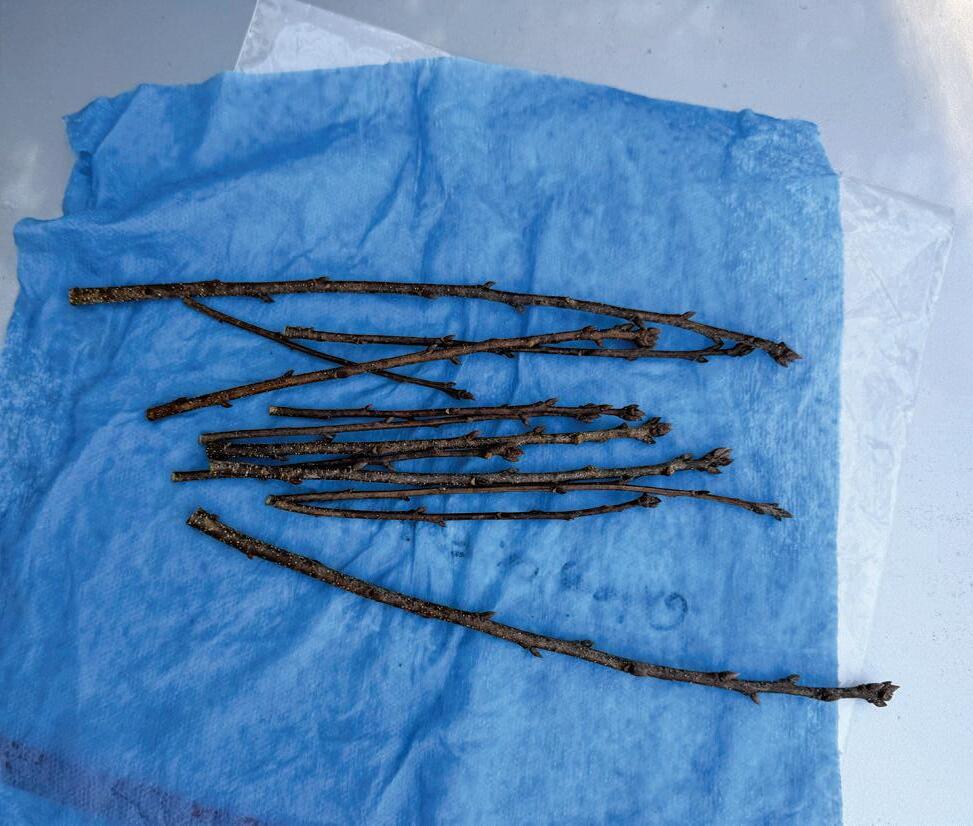
Funded by the International Oak Society, this year’s collecting trip focused on the collection of scion wood — cuttings of young, dormant twigs used to propagate woody plants clonally through grafting — from lone specimens and trees most likely to be impacted by development or natural disaster.
Strategic Propogration
Botanical Gardens employ many strategies to propagate rare species like bluff oak with the goal of capturing and maintaining genetic diversity in their collections. Seeds are often our first choice because they are numerous and capture much genetic diversity of a species. If you planted 100 acorns (the seeds of an oak tree) from a single oak, you would get 100 genetically unique
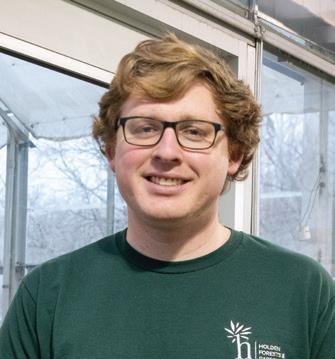
Connor Ryan is the Rhododendron Collections Manager. Connor oversees the Leach Research Station, curates the rhododendron collection, and breeds ornamental plants. Driven by a lifelong curiosity about plants, his work blends horticulture, science, and creativity to develop new, resilient, and visually striking rhododendrons.
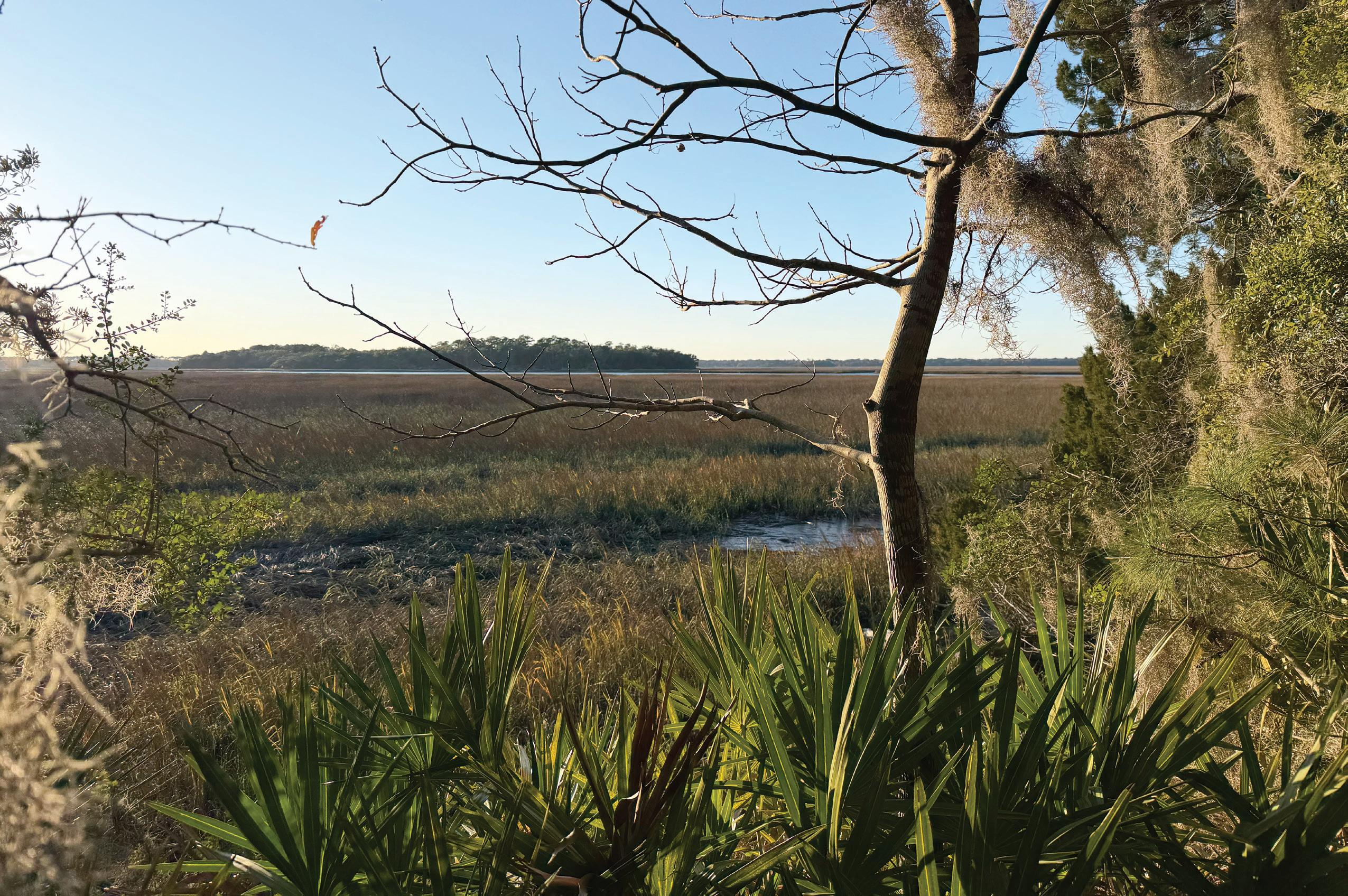
The first bluff oaks we encountered on our trip were located on hammocks like the one pictured above: stands of trees on elevated areas surrounded by wetlands. Bluff oaks most commonly occur in welldrained soil on bluffs above water, hence the common name “bluff” oak.
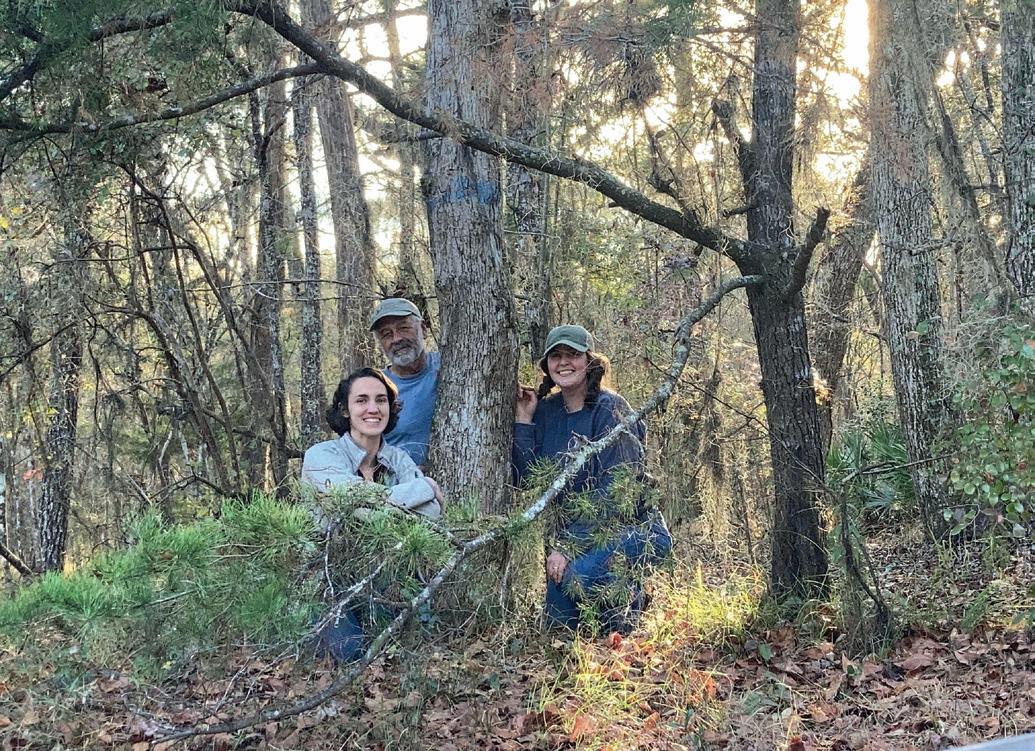
Polly Hill Arboretum Curator/Assistant Director Emily Ellingson, North American Land Trust Land Manager and botanist Ron Lance, and HF&G Assistant Curator Alex Faidiga with a lone bluff oak, the final tree of the January 2026 scion wood collection trip.
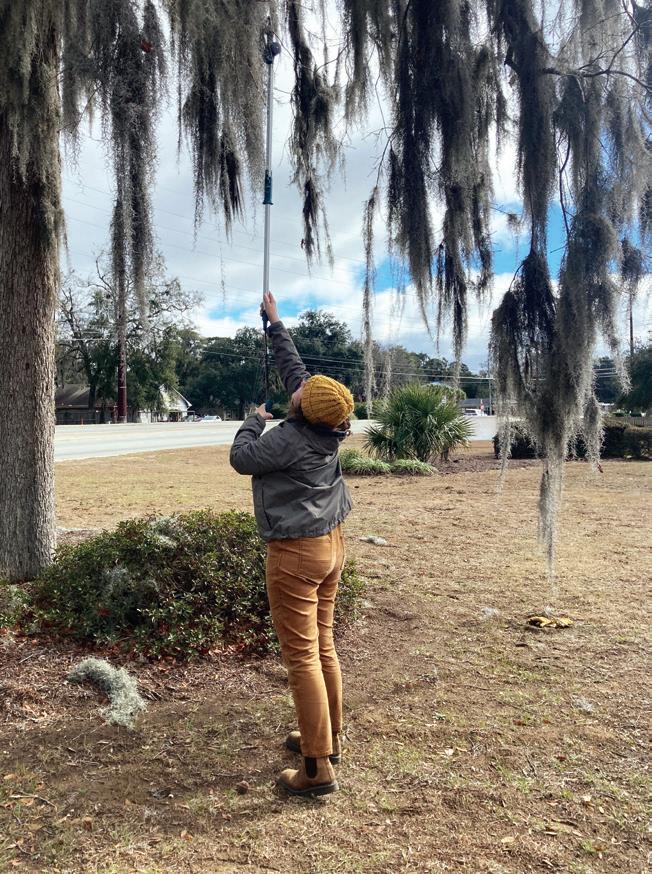
Pole pruners are used to reach the tips of high branches for scion wood collection.
individuals. Just like human siblings, no two trees would be exactly alike. However, collecting seeds poses challenges. Not every tree produces seeds every year or, if they do, it can be a competition to collect before the animals do. And promiscuous plant groups like oaks, which readily cross between species, can be pollinated by a wide range of parent trees, often producing hybrid seeds.
To more precisely capture a tree’s genetics, plants can be propagated asexually through cuttings, grafts, or divisions. In these types of propagation, we make clones of the mother plant. Oaks are commonly propagated by grafting, in which a scion (the shoots of a tree) are joined with a rootstock (the roots of a different tree) to form a Franken-tree whose shoots come from a specific tree of interest. If you collected 100 pieces of scion wood from the same tree, grafted them to rootstock and planted them, you would get 100 identical clones of the mother tree. This is why grafted trees are common in ornamental horticulture and orchards — clonal propagation ensures that the trees being sold all have the exact same desirable traits being marketed like flower size, bloom time, fall color, growth form, fruit type or flavor and a host of other characteristics.
Following scion collection on Alex’s trip down south, Plant Records Curator Ethan Johnson joined Connor on a trip to Bartlett Tree Research Laboratories and Arboretum in Charlotte, NC, to learn how to graft oaks for conservation collections. Led by Ryan Russell, horticulturist for the city of Columbia Missouri, the workshop focused on grafting using a special piece of equipment called a hot callus pipe. As taught in the workshop, a hot callus pipe is essentially a pool noodle with a heating cable running through it, though a hot callus pipe can also use hot
Once twigs fall from the tree, they are trimmed down to 4-6 inches of the newest growth at the branch tips.
water instead of a heating cable. The apparatus allows grafters to provide heat at the union between the scion and rootstock while keeping the rest of the plant dormant. This makes it easy to graft in the dormant season. Armed with new knowledge and collaborators, we hope to experiment with hot callus pipe grafting in the nursery at Holden Arboretum this winter.
It Takes a Village
It takes a village to conserve rare plants. From the experts that willingly share where to find rare plants in the wild, to experienced propagators who make seeds or scions into whole plants, to our skilled and dedicated nursery and horticulture staff at Holden, rare plant conservation depends on a network of dedicated individuals. For trees like bluff oak, whose acorns cannot be dried to store long term in seed banks, botanic gardens are the best places to conserve these plants outside the wild. As the remaining populations of these plants dwindle in response to development, a changing climate and natural disasters, trees collected as part of these projects may one day be used to restore or reinforce wild populations.
Work like this is an essential part of the modern botanic garden. In a few years we hope to have bluff oaks in our collections to maintain a portion of their wild diversity here in northern Ohio.
The long-term future of the species depends on collaboration among collection managers, conservation planners, and land managers. Through these collaborative efforts, we can live in a world where not only are rare species like bluff oak maintained in cultivation, but where no species need to go extinct in the wild.
MEET THE STAFF
Alex Faidiga is the Assistant Curator. Alex collaborates with the Plant Records Curator and horticulture staff to ensure the Living Collections are not only captivating but also meaningful for research, ecology and conservation. Alex also helps coordinate collecting trips to acquire new plants for the Living Collections and documents them using GIS and our plant records database. She is motivated by the role public gardens can play in preserving biodiversity and loves helping people discover their new favorite plant.
Natural Connections
HF&G members can access libraries and resources at both campuses to enrich their experience.
By Marisha Sullivan, Librarian
Our libraries are blooming! Both the Eleanor Squire Library at Cleveland Botanical Garden and Holden Arboretum’s Warren H Corning Library are active, vibrant spaces filled with resources to help our guests and staff deepen their knowledge and appreciation of plants and trees. Let’s look at what’s new!
Koha: A Modern Library System
HF&G members can now check their library accounts from home thanks to our new software, Koha. Koha is an opensource, community-built library system that allows our patrons to search the collection, place holds and recommend titles from anywhere that there is internet access.
To log in, go to library.holdenfg.org and look for the login boxes. You will need the member ID from your card. Just type that number in, then your password will be the last 4 digits of that number. You’ll be prompted to change your password the first time you log in. If you forget your password or the last 4 digits don’t work, just use the “forgot password” link or email us at library@holdenfg.org.
What’s Arbor Day Anyways: Tree Tale Tellers visit public libraries
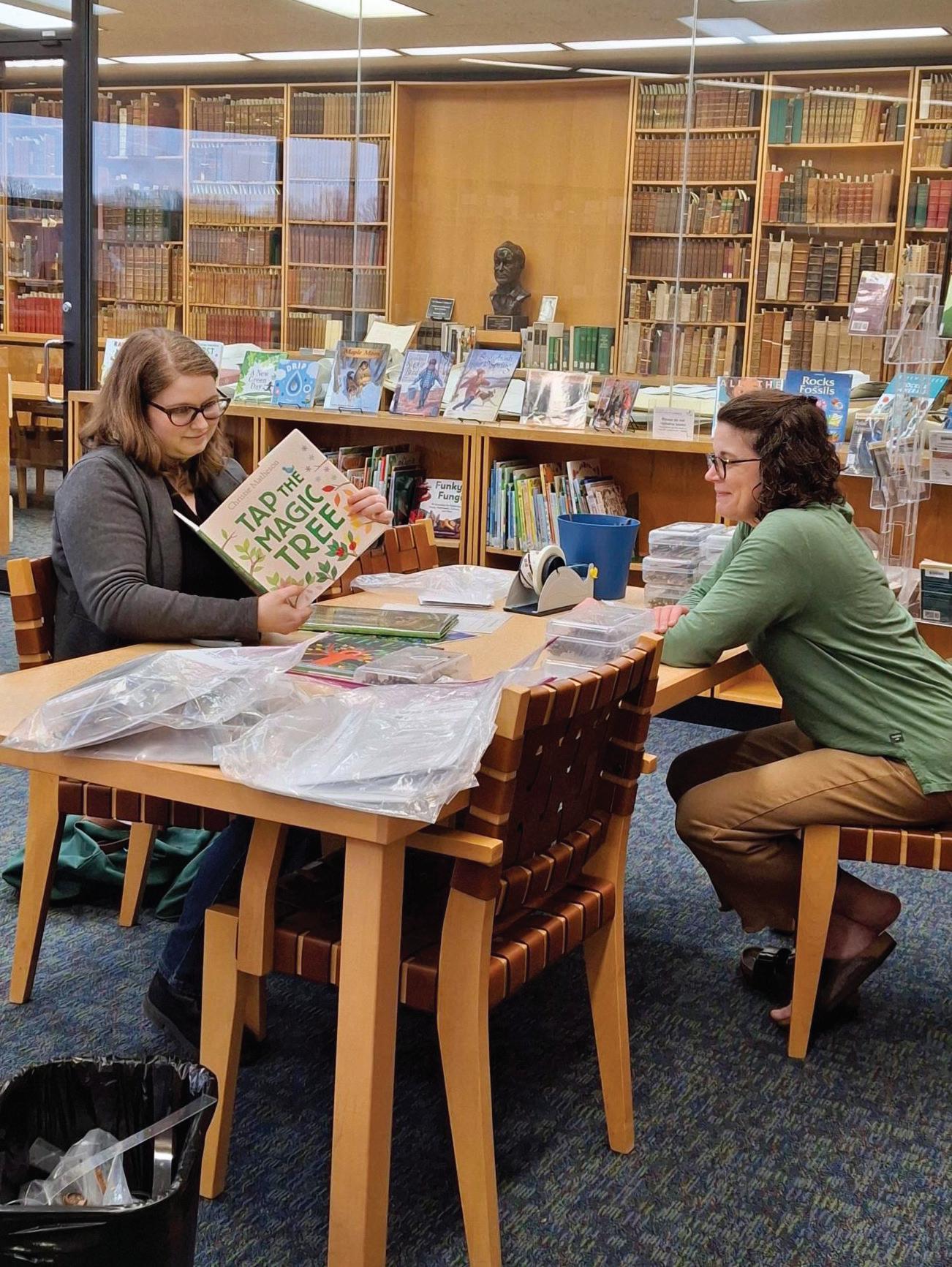
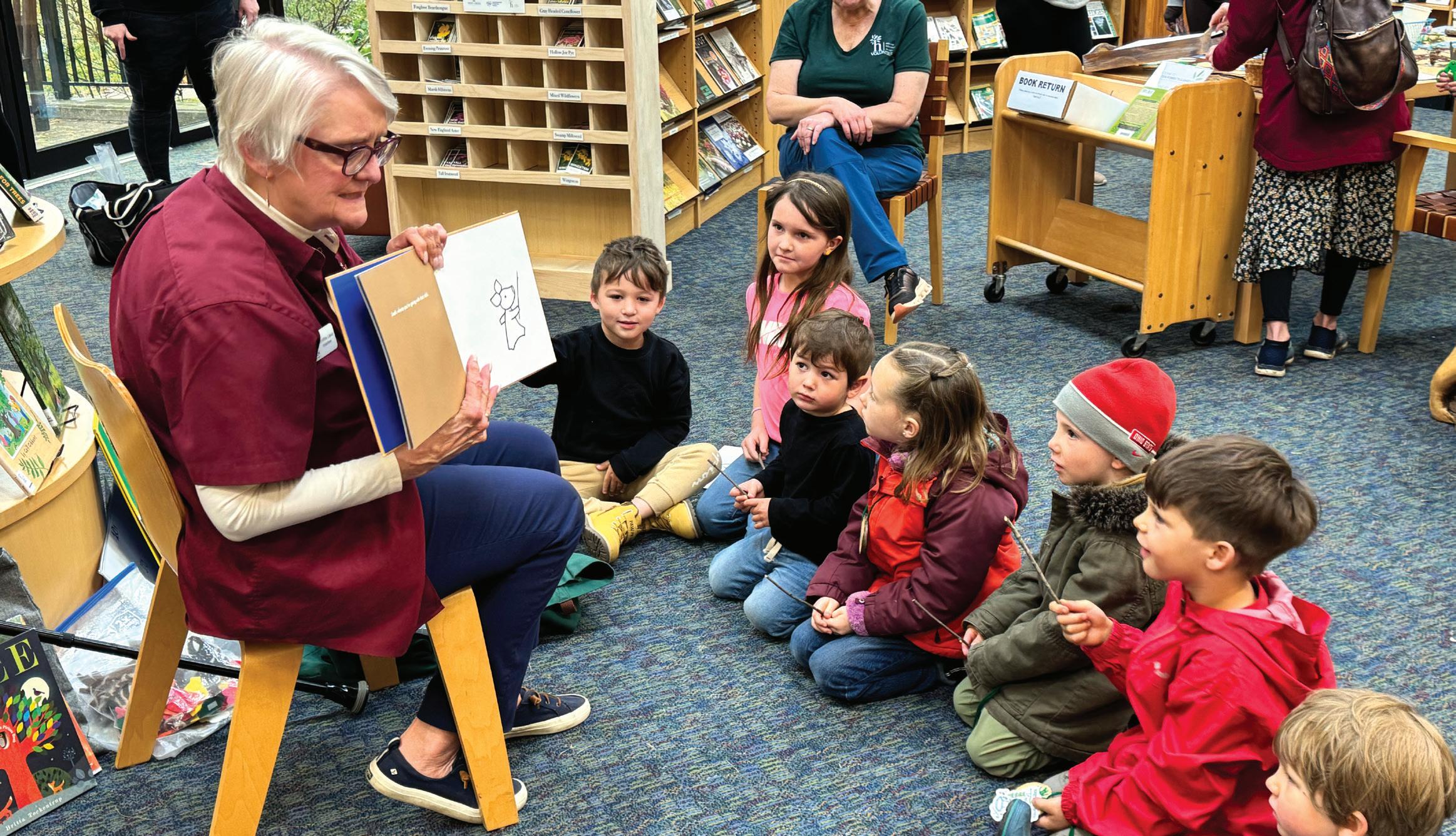
During the month of April each year, a tiny army of library volunteers and staff — our Tree Tale Tellers — mobilize to bring the joy of trees to children and their caregivers at public libraries across Northeast Ohio. From felt boards to the “Oakey-Dokey” (our version of the Hokey-Pokey) to a tree seed petting zoo, this program engages our attendees with the world of plants and trees through story, song and play. During these visits, we also highlight our free admissions days at both our campuses, our Access Membership and the Museums For All program to help all people access their local cultural institutions.
This year, we visited 22 public libraries from North Olmsted down to Hudson, across Cleveland, and all the way out east to Geneva! By growing our partnerships with public libraries, we hope to engage our diverse communities of people with their neighborhood plant communities.
Library Basics
Members and Partner-level volunteers can check out books for three weeks at a time and have up to three renewals.
The Botanical Garden library is typically staffed Tuesday-Saturday from 1 to 4 p.m. and Saturdays from 10 a.m. to 4 p.m. At the Arboretum, the library is open Tuesday-Sunday 9 a.m. to 5 p.m.
We love questions! Stop in and ask us your plant questions or email them to us at library@holdenfg.org.
Librarian Marisha Sullivan (left) works with volunteer Tree Tale Teller Lisa Weight (right) to prep for Arbor Day outreach
Plants are for Everyone: Circulating Memberships at Your Local Public Library
Finally, a service we’re currently offering is expanding!
Our Membership team and the HF&G Libraries are dedicated to finding new ways to reduce barriers to accessing our campuses. By working together, we’ve been able to pilot a program where public libraries purchase HF&G memberships to circulate at their branches to bring new guests to try out a visit to either Cleveland Botanical Garden or Holden Arboretum!
Public library patrons can check out a membership at their local library, use it to visit HF&G, then decide if a full membership is right for them.
Marianne Chrzanowski, Membership Manager, had this to say about the project: “We believe everyone should have the opportunity to experience the benefits of trees, plants and nature. Our partnerships with public libraries, together with our Access Membership and Museums for All, help us welcome more people into spaces where they can explore, learn and feel connected to the natural world.”
Stop by and visit the HF&G libraries on your next visit to our campuses — we love it when you say hello!
MEET THE STAFF
Partner Libraries
If your local public library has memberships, why not recommend it to friends so they can enjoy HF&G! Here is the list of current public library partners:
• Fairport Harbor Public Library
• Hudson Public Library
• Kingsville Public Library
• Loudonville Public Library
• Madison Public Library
• Medina County District Library (6 branches)
• Mentor Public Library (4 branches)
• Morley Library
• Portage County District Library (3 branches)
• Reed Memorial Library
• Willoughby-Eastlake Public Library
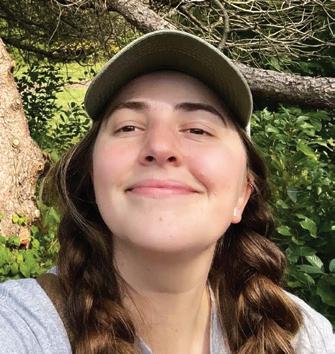
Marisha Sullivan , the Librarian at HF&G, oversees the archives, special collections, and circulates collections at both Cleveland Botanical Garden and Holden Arboretum. Previously a public librarian, Marisha brings a passion for lifelong learning, accessibility and equity to her work with plants, trees and people. When not in the library or wandering the woods, Marisha enjoys fiber arts, video games and exploring the Greater Cleveland area.
Volunteer Chris Lakus reads to a group of children on Arbor Day at the Arboretum's Corning Library
SummerShowsopper
Don’t miss your chance to check out a stunning seasonal perennial.
By Ethan Johnson
PLANT FACTS
NAME: Woodland Pinkroot – Spigelia marilandica
LIGHT: partial shade
SOIL TYPE: moist to seasonally dry, acid to neutral
MATURE SIZE: 2 feet tall, spread increases slowly
BEST LOCATION: USDA Zones 5-9
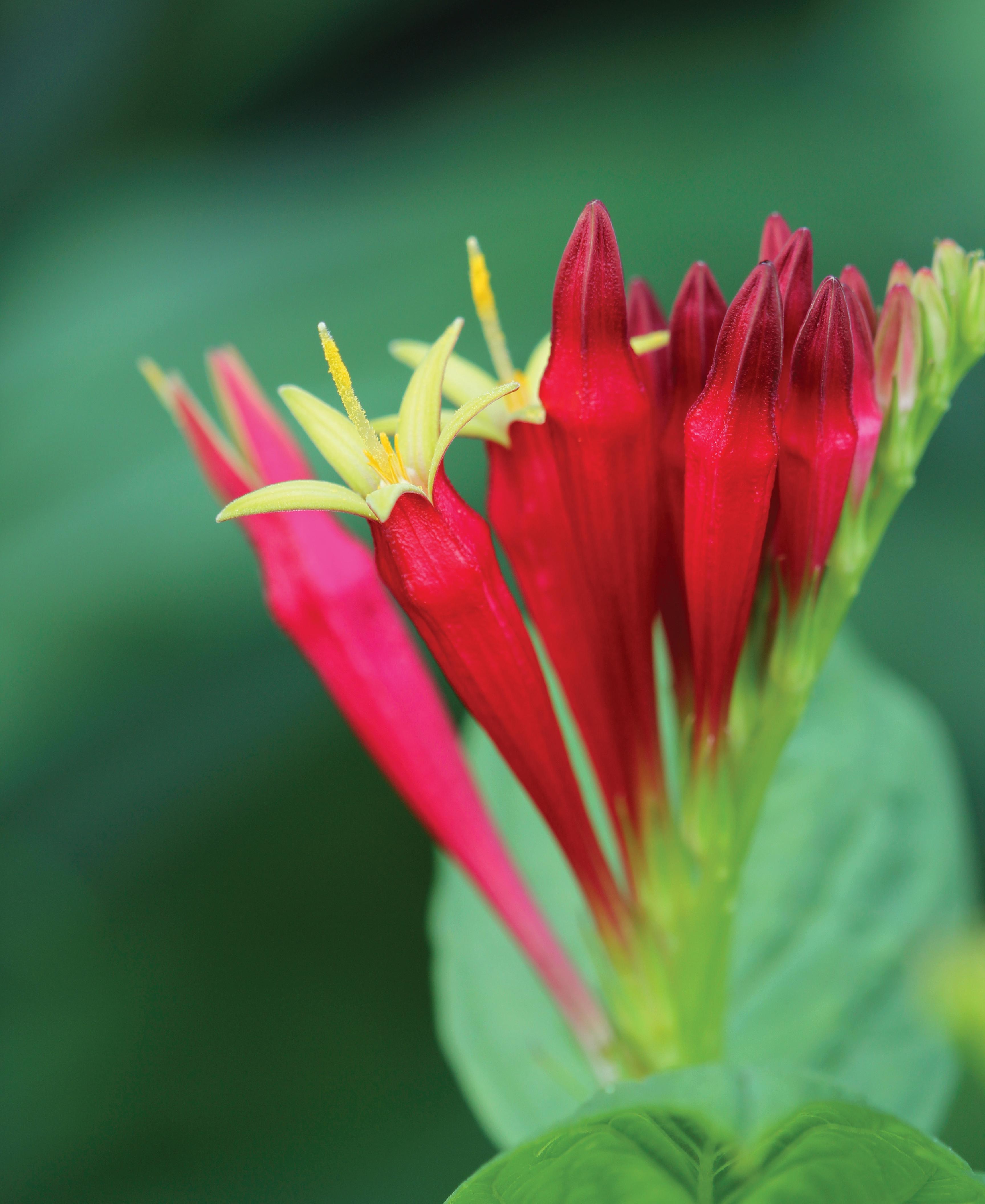
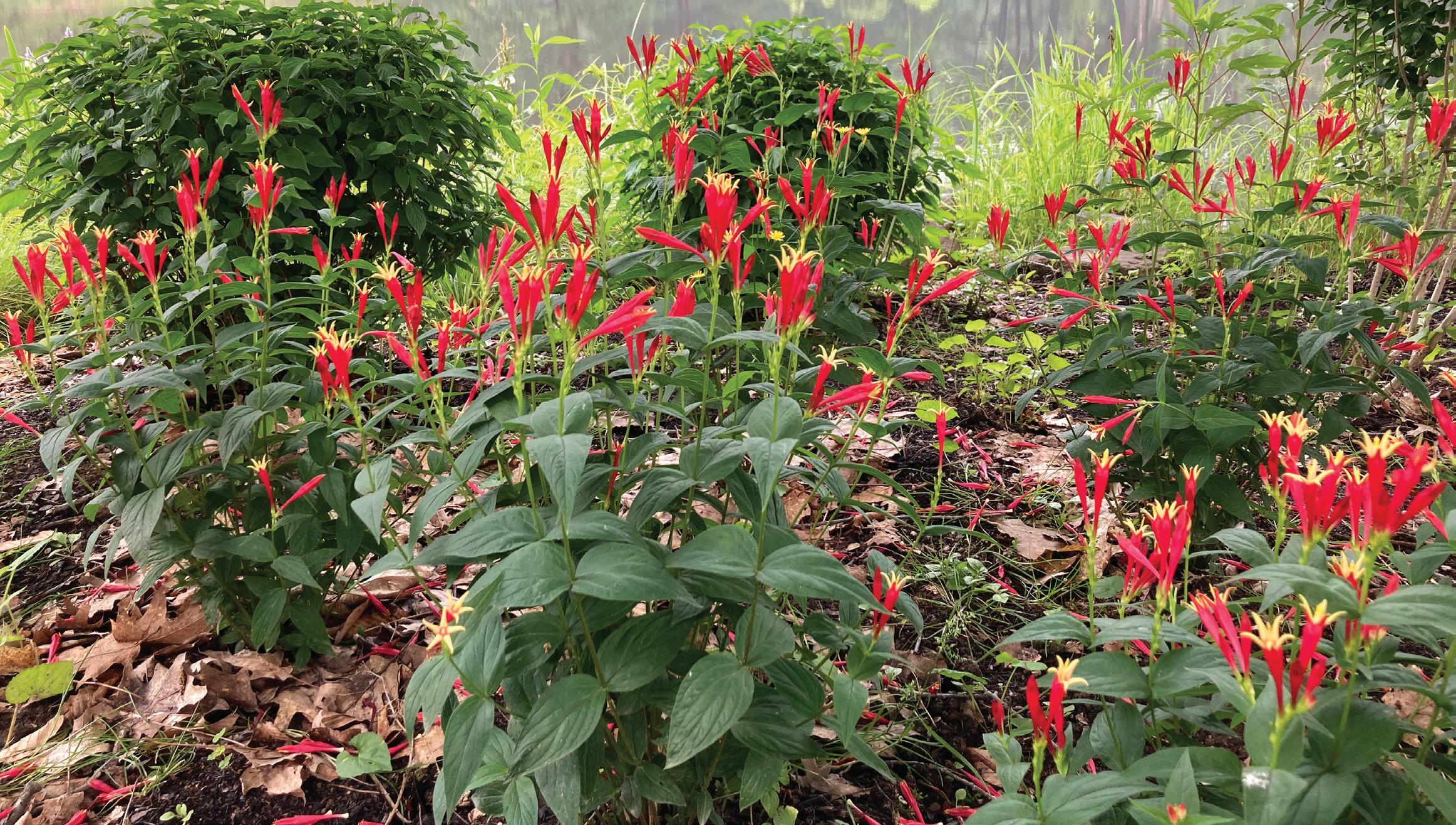
Native from Maryland south to Florida and west to Oklahoma and Texas, woodland pinkroot (Spigelia marilandica) is a standout among summer blooming perennials. Reaching about two feet tall, it offers striking red and yellow tubular flowers that are irresistible to ruby throated hummingbirds and bumblebees — making it a true wildlife favorite as well as a garden showpiece.
Visitors to Cleveland Botanical Garden (CBG) can encounter this captivating plant in the Inspiration Hummingbird Garden, where its vivid blooms perfectly suit the setting. The story of these plants begins in 1992, when Tom Yates received a single specimen dug from the backyard of Rick Darke of Longwood Gardens. Planted at Lantern Court beneath a crabapple tree, on land once occupied by a tennis court, the pinkroot thrived and multiplied. In 2022, three seedlings from that original plant were moved to CBG, and the following year another plant was added to the grouping from Avonlea Gardens and Inn in Chardon, Ohio.
Woodland pinkroot also has a quiet but reliable presence at Holden Arboretum, where it was planted in the Helen S. Layer Rhododendron Garden on the east side of Logsdon Pond, as well
MEET THE STAFF
as on the southeast side of the Main Display Garden. Bloom times there have varied with the seasons, opening as early as June 10 in 2021 and as late as July 12 in 2011. The heaviest flowering occurs in early summer, yet a few blossoms often continue to appear well into October, rewarding repeat visitors with unexpected color.
For home gardeners, woodland pinkroot proves to be just as appealing as it is beautiful. In 2015, I planted three plants on the east side of our house in Willoughby. Since then, they have spread to about six inches wide at the base and have readily seeded in. The seedlings are easy to dig and have become welcome gifts for fellow gardeners. Maintenance has been minimal — limited to cutting back the plants in fall. Our plants receive morning sun and afternoon shade, though Tony Avent, proprietor of Plant Delights Nursery and Juniper Level Botanic Garden in Raleigh, North Carolina, reports that the species also tolerates full sun. Woodland pinkroot is adaptable as well, growing happily in quite a bit of shade.
Whether admired on our campuses or grown at home, woodland pinkroot rewards gardeners and visitors alike with lasting beauty and vibrant seasonal color.
Ethan Johnson is the Plant Records Curator, bringing decades of experience in documenting and caring for living collections. He developed his record keeping expertise at Holden Arboretum and the Arnold Arboretum, and with organizations including the International Dendrological Research Institute, the Ohio Nursery and Landscape Association Plant Selection Committee, and the American Conifer Society. Ethan played a central role in Holden Arboretum’s accreditation as the sixth public garden in the United States to be recognized as a museum, led the labeling and inventory of its plant collections, and has overseen plant records at Cleveland Botanical Garden since 2015.
Where History and Habitat Meet
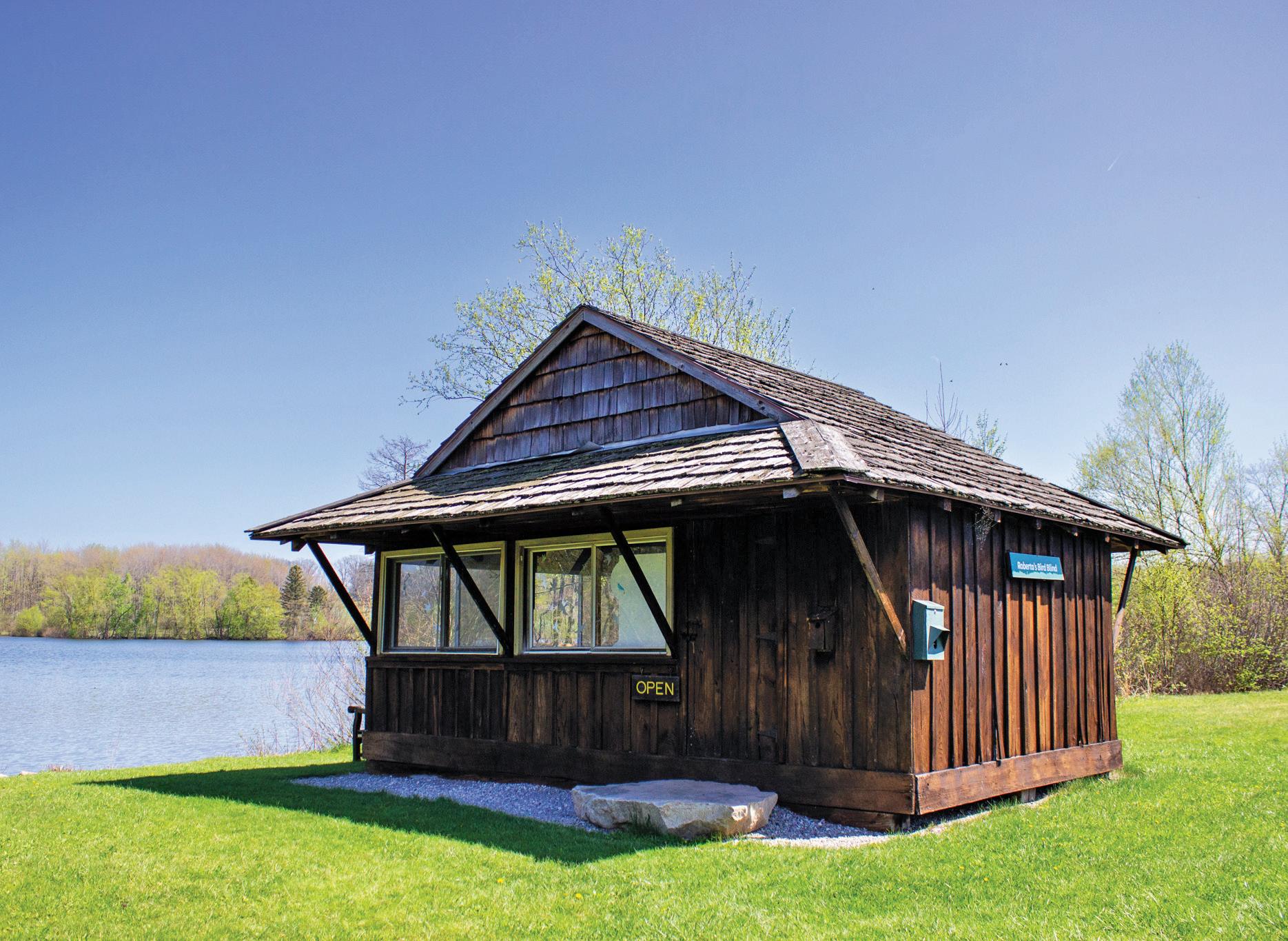
Early morning light stretches across the water’s reflection at Corning Lake. Small droplets of dew are collecting on my boots as I move quietly through the tall grass. I don’t usually consider myself an early riser, but I know the birds are. Red-winged blackbirds fill the air with their familiar “Conk-la-ree!” calls, and somewhere above, Canada Geese fly by in formation. Perched on the edge of the water is a small structure with big windows where I settle in. Here is where I’ll wait for my next sign of life: a new bird’s song, a ripple in the water marking a bird’s landing or a flash of feathers through the reeds.
This is Roberta’s Bird Blind, a space where history and habitat come together.
with the seasons and ensures no two visits are ever the same.
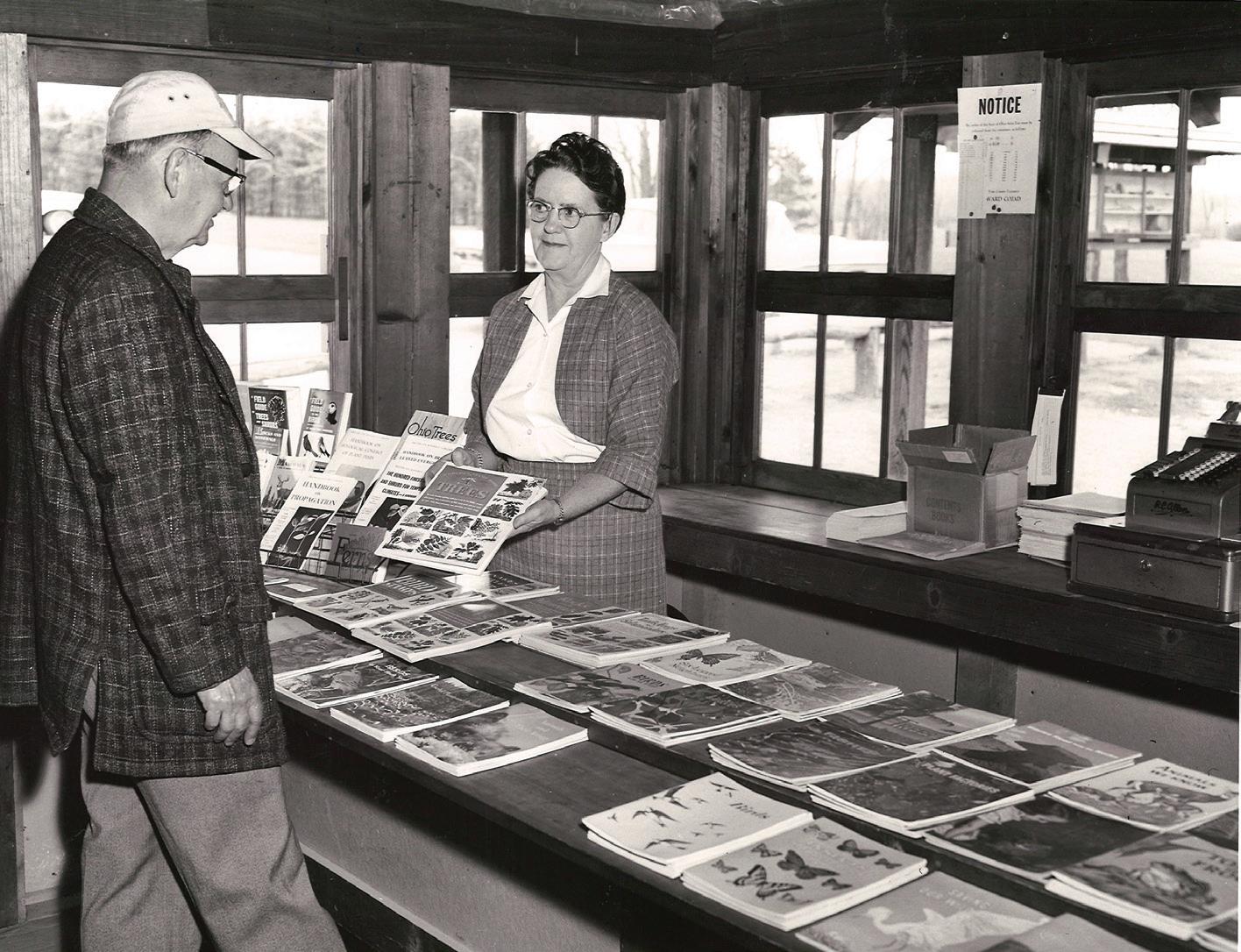
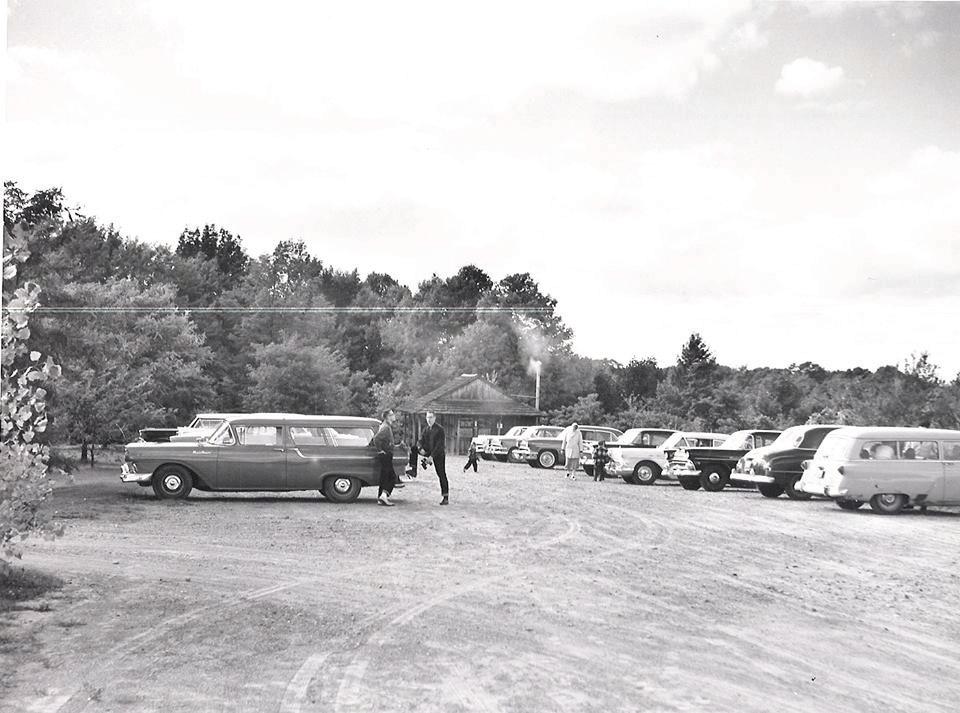
This building began its life as Holden Arboretum’s original visitor center long before birdwatchers made it their retreat! Originally serving as a place where guests arrived, gathered information and began their exploration of the grounds, the spirit of this building still lives on in a similar way. Not only does this space serve as a place to gather and learn; it also helps visitors build tangible connections to our spaces.
Who is Roberta?
Nestled along Corning Lake, a historic structure at Holden Arboretum has taken on a new life for visitors to slow down, observe and connect with birds.
By Dana Lettl
Positioned along one of the largest bodies of water at the Arboretum, the blind offers a front-row seat to a dynamic ecosystem. Lakes and wetlands serve as essential gathering places for birds — providing food, shelter and rest for both year-round residents and migratory species passing through. Waterfowl can be seen gliding across the water’s surface, while songbirds flitter through nearby vegetation. The diversity of life changes
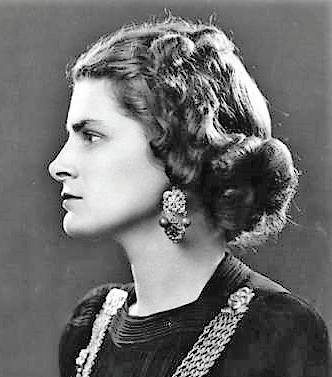
We thought you’d never ask! The structure honors Roberta H. Bole (1876-1950), whose vision, dedication and generosity played a defining role in the creation of Holden Arboretum. We often credit the founding of the Arboretum to her brother, industrialist Albert Fairchild Holden, whose trust created our organization as a memorial for his daughter Elizabeth. But it was Roberta who championed to her brother the
idea that the Greater Cleveland area deserved a living museum devoted to trees, conservation and public education.
After Albert Holden’s death in 1913, Roberta advanced his vision by refusing to let the Arboretum wait for the Holden Trust money to be available. Instead, she set about finding the perfect site to honor her late brother and niece. In 1931, she and her husband, Benjamin P. Bole Sr, donated the original 100 acres of land in Lake County that became the foundation of today’s Arboretum grounds, an extraordinary act of foresight that ensured the institution would serve as a lasting public resource. The nearby Bole family estate, Hanging Rock Farm, was a bird habitat hotspot and the family’s love of birding blended with their passion for conservation to ensure that, even today, Holden Arboretum remains a valuable habitat for birds and a destination for birders.
Naming the bird blind in her honor recognizes not only her foundational contributions, but also her enduring legacy of connecting people to the natural world. It is a tribute that feels especially fitting in a space designed to inspire curiosity, appreciation and a deeper understanding of the environment.
A Bird Blind for All
Today, the building has been thoughtfully adapted to serve its new purpose. Large viewing windows invite visitors old and new to look out for wildlife, while the interior offers a
MEET THE STAFF
family-friendly environment for learning and exploration. Stocked with bird guides and books for readers of any age, curious minds are introduced to the basics of birding in an approachable and engaging way. Whether it’s a child flipping through a field guide to find a bird of their favorite color or a family working together to identify a duck out on the water, the space encourages shared discovery that crosses generations.
At the same time, the blind offers something new for those who have been visiting the Arboretum for years. Returning members looking for new corners to explore can visit a new place with a renewed sense of purpose. No prior knowledge is required for birding here — just a willingness to pause, observe and be curious.
The next time you find yourself near Corning Lake, step inside the small, wooden building perched along the edge. Look out across the water and into the trees along the bank. Whether you are visiting for the first time, returning with years of memories or simply searching for something new to explore with loved ones, you may find that this small space holds more than expected.
Dana Lettl serves as the Family & Youth Engagement Coordinator at Holden Arboretum and has spent the past four years developing meaningful, nature-based experiences for children and families. Dana holds a degree in Ecosystem Science and Policy from the University of Miami in Coral Gables, Florida, and is passionate about connecting people to the natural world through education, exploration and play.
Left: Inside the old Bird Blind Below: Holden Visitor Center in the 1950s
July 18 - Sept 7, 2026
Praxis Fiber Workshop offers a new experience to visitors.
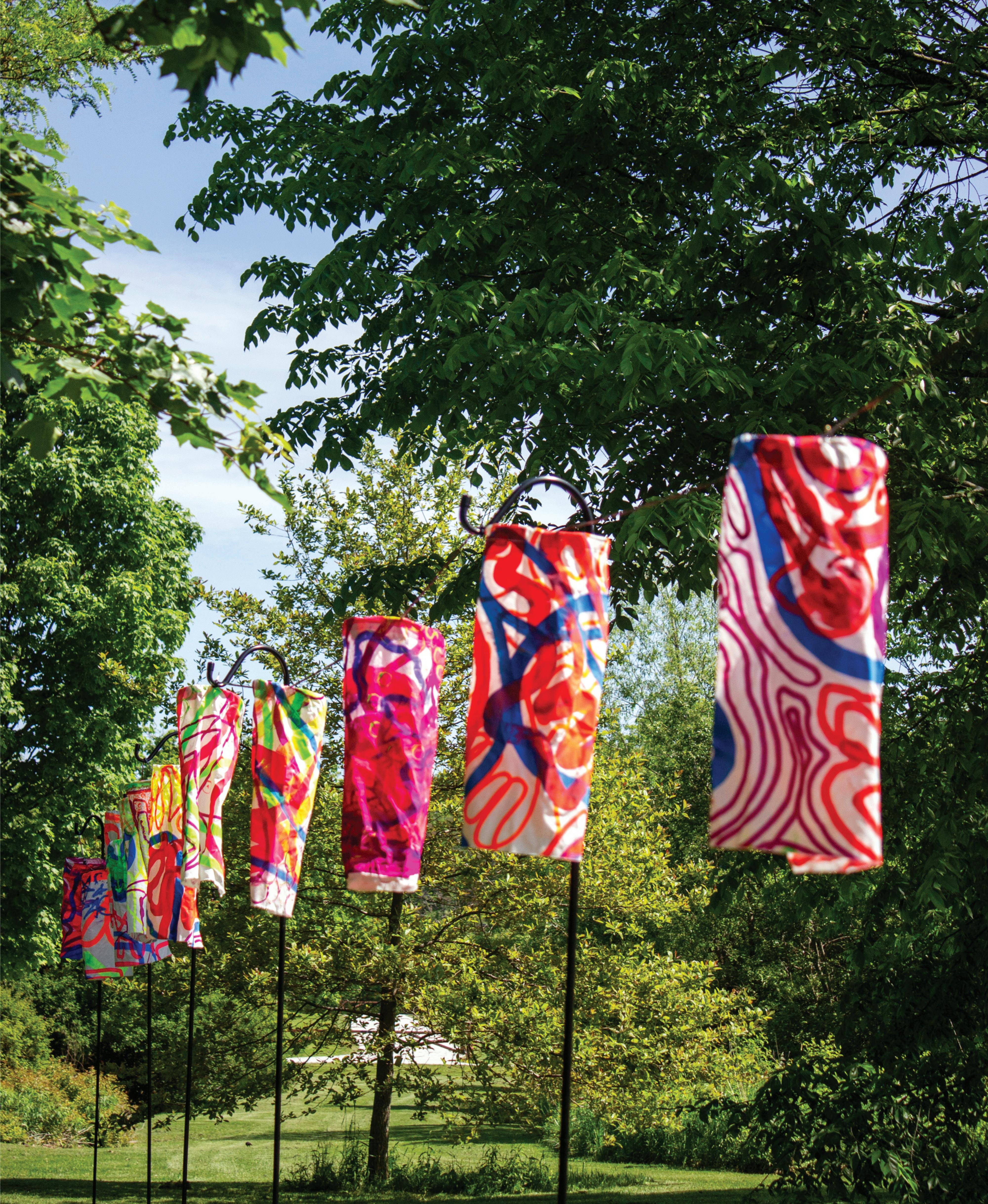
Praxis Fiber Workshop, located in the Waterloo Arts District, brings its community-centered approach to the Holden Arboretum by transforming fiber art into a dynamic, open-air experience. Composed of hundreds of wind-activated textile forms created by community members, the installation blurs the line between individual expression and collective creation — inviting visitors to witness art that moves, breathes and belongs to everyone.
What drew Praxis Fiber Workshop to the Holden Arboretum as a site?
Holden offers a unique environment where material, movement and landscape can interact. It allows the work to expand beyond the studio and exist in direct relationship with nature.
How would you describe the concept of the exhibit?
The installation is a collection of over 400 wind-activated textile forms, created through community workshops and brought together as a shifting, collective landscape. Praxis is known for its community engaged textile painting, and this exhibition provides an opportunity.
Why is community participation so important to Praxis?
Community participation is central to our mission — making is a powerful way to connect people, and shared creative experiences build ownership, confidence and belonging.
Who was invited to contribute?
The workshops were free and open to the public, welcoming participants of all ages and experience levels to contribute through accessible screen printing techniques.
How do you balance individual expression with a cohesive installation?
Each piece reflects an individual voice, but through scale, repetition and movement, they come together to form a unified visual experience.
What do you hope visitors feel?
We hope visitors feel a sense of wonder and connection — to the landscape, to the materials and to the many hands that contributed to the work.
How does this project shift perceptions of fiber art?
It expands fiber art into the public realm, showing it as dynamic, participatory and deeply connected to space, community and environment.
MEET THE AUTHOR
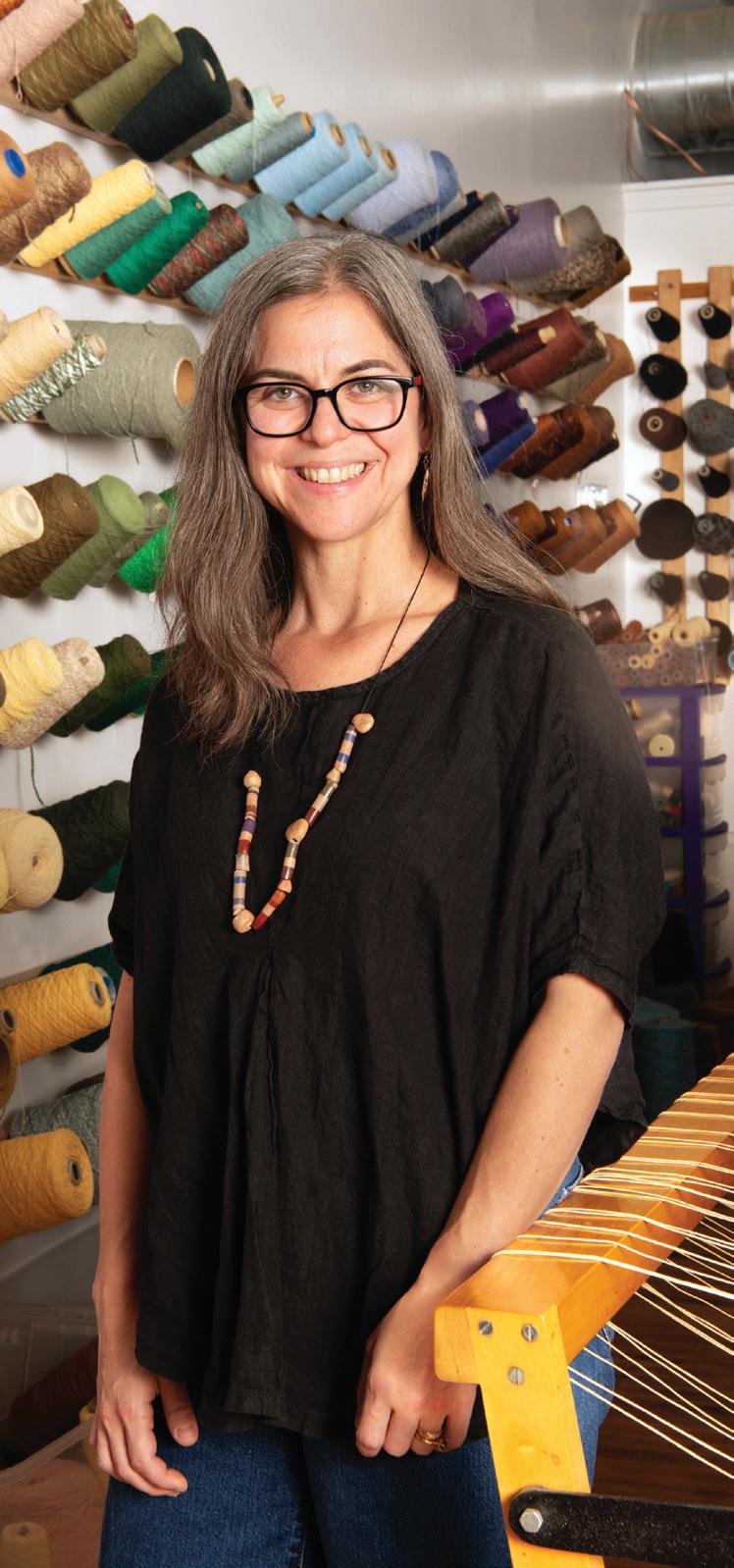
Jessica Pinsky grew up in Akron, Ohio and moved to Cleveland in 2011 after receiving a BFA from New York University in 2006 and an MFA from Boston University in 2009. Her artwork bridges painting, weaving and sculpture and she is represented by Hedge Gallery in Cleveland, OH. In 2012, she worked closely with Cleveland Institute of Art to found Praxis Fiber Workshop, a community textile organization. She is currently the Executive Director at Praxis and teaches adjunct classes at Cleveland Institute of Art.
A Natural Connector
The Affiliate Garden Club Council helps enhance quality of life through nature.
Garden clubs stand for more than gardening. Their members are entrepreneurs. Community connectors. Teachers. Philanthropists. Relationship builders. And yes, they do love a good garden walk and sharing their passion for horticulture. But their impact reaches far beyond the flower beds, shaping civic beauty, environmental health and community well being.
For more than 25 years, the Affiliate Garden Club Council has harnessed the collective energy of garden clubs around a shared purpose. Today the Council has grown to support nearly 50 garden clubs from six counties in Northeast Ohio to connect, collaborate and advance the mission of the Cleveland Botanical Garden. As a governing body, the Council operates independently but in close partnership with the Garden.
This year marks a leadership transition: Karen Kelly of the Hudson Garden Club recently completed her term as President. Stepping into the role is Vice‑President Linda Grandstaff of the Lakewood Garden Club, a long‑time supporter of HF&G. Together, they have helped ensure the Council‑organized activities are focused on mutual support, volunteering, philanthropy — and the joy of gardening.
“Through our annual meetings, members come together for programs, speakers and socializing,” Karen notes. “We have clubs that are more than 100 years old and clubs that formed just a few years ago. There is always something new to learn — and you don’t need to be an expert. Just be curious.”
For Linda, the Council’s work is deeply tied to quality of life. “Restoring the tree canopy, caring for neighborhood gardens, supporting schools — it enhances how healthy our communities feel,” she says. “It connects people to where they live.”
Their impact is visible across our campuses. One very festive example is the annual winter show at the Garden. Last year, 42 clubs decorated trees, wreaths and floral displays, filling the Garden with creativity — and a bit of friendly competition! At this year’s Affiliate Day, members chose to support the Holden Seed Bank through their raffle proceeds, a gift that reflects their commitment to sustainability and our shared purpose.
“The Affiliate Garden Club Council helps carry our mission into neighborhoods, schools and public spaces across the region,” says Jessica Hudson, Vice President of Development at HF&G. “They keep us more connected to the communities we serve. We’re grateful for their partnership.”
To learn more about joining an affiliate garden club, visit hfandgaffiliatecouncil.org.
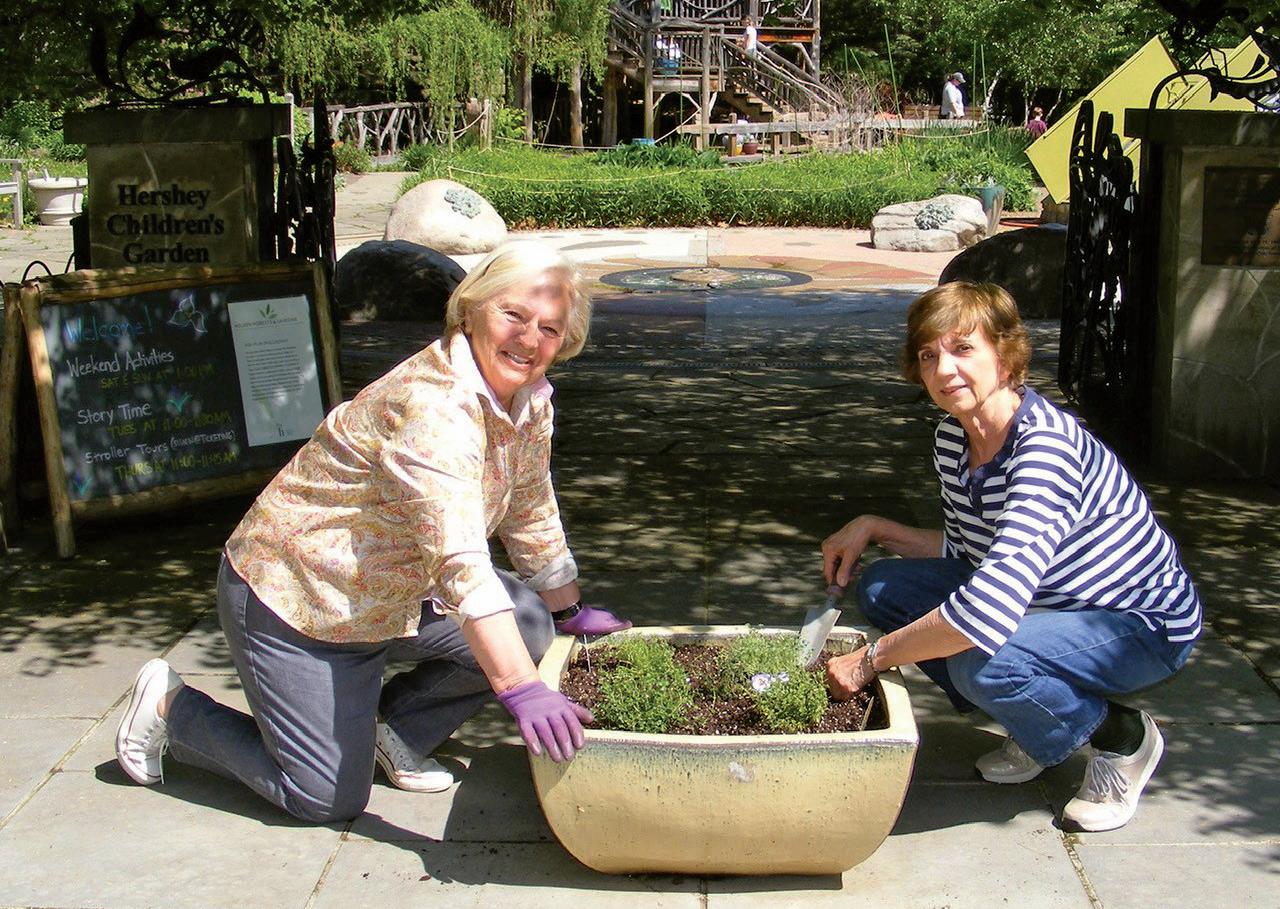
Jane Petrie and Donna Hessel of the Emerald Necklace Garden Club
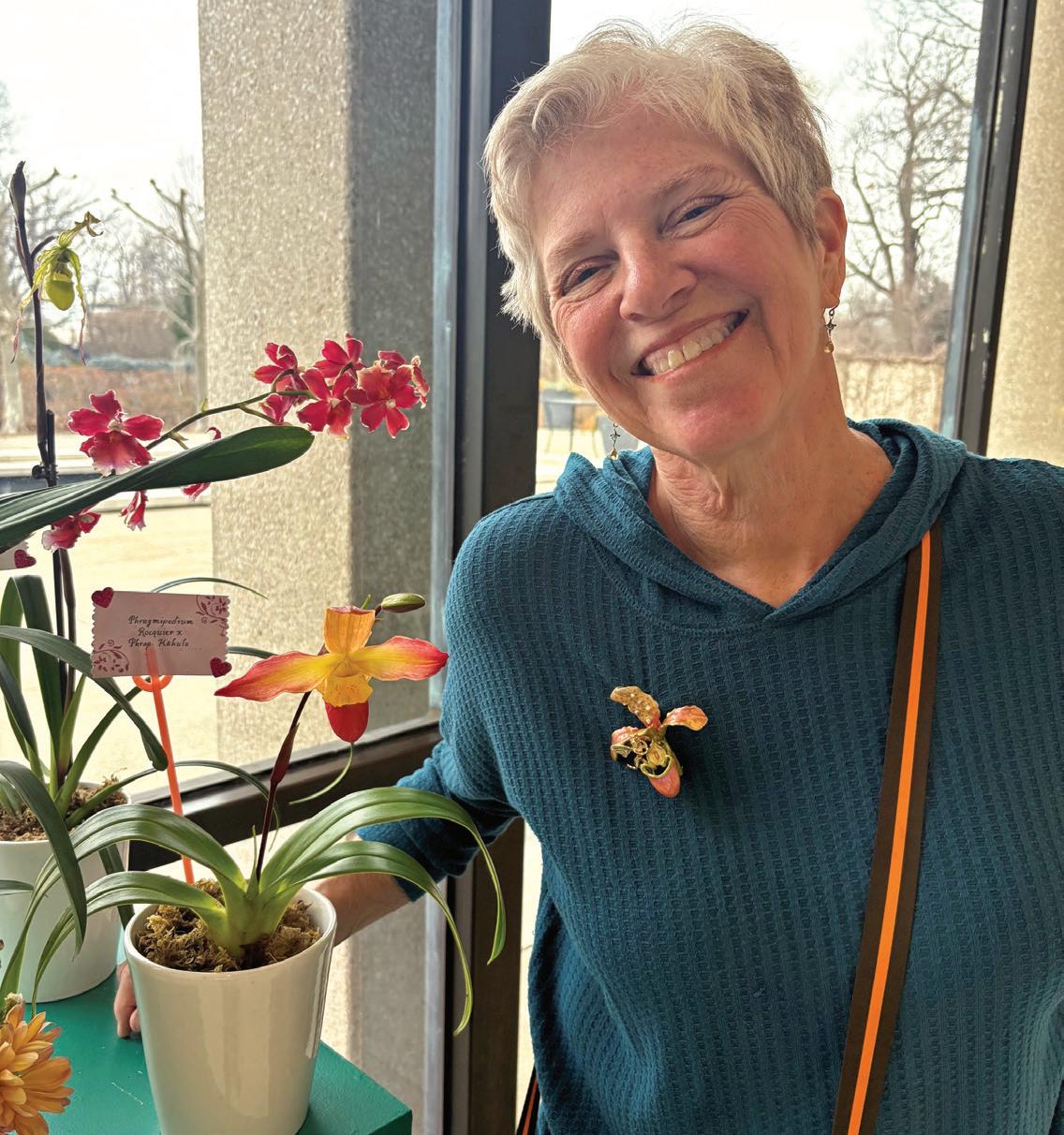
Linda Grandstaff at Cleveland Botanical Garden’s Orchid Show.
Upcoming Events
at the Holden Arboretum
Working Woods Walks
10 a.m.-noon
Select Dates:
Wed. July 8
Wed. Aug. 12
Wed. Sept. 23
$10 per member, $20 per nonmember
Wine & Cheese Night Hike
July 10, Aug. 28
$32 per member, $47 per nonmember
Gardens Alive! Conifer Celebration
July 11 & 12, 10 a.m.-3 p.m.
Included with admission
Little Mountain Hike
Select Dates:
July 12
Aug. 22
Sept. 26
$12 per member, $22 per nonmember
Seeing the Forest for the Trees: The Overstory at Leach Research Station
July 17, 10 a.m.-noon
$10 per member, $20 per nonmember
Beauty Boost Wellness Event
July 18
Check holdenfg.org for more info
Stebbins Gulch Hike
Select Dates:
July 18
Aug. 8
Sept. 6 & 19
$12 per member, $22 per nonmember
Hand Painting on Silk
July 25, 9:30 a.m.-4:30 p.m.
$62 per member, $102 per nonmember
Adult Campout (21+)
July 31 - Aug. 1
$40 per member, $45 per nonmember
Sept. 19 – Nov. 1
Included with admission
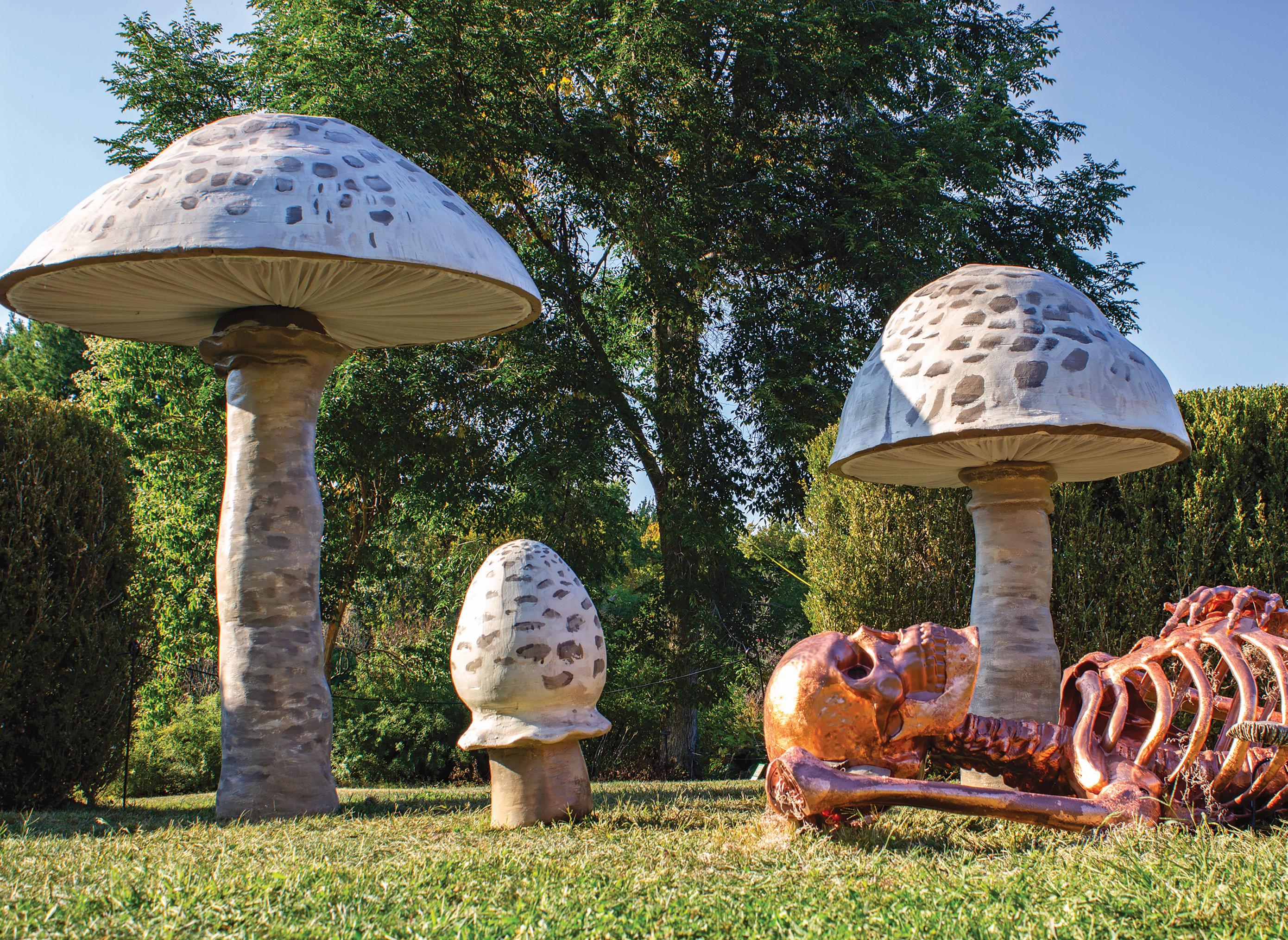
This fall, something stirs in the hills of Kirtand. Skeleton Grove returns to the Holden Arboretum, bringing towering skeletons with big personalities — and just a hint of mischief.
Family Campout
Aug. 1-2
See holdenfg.org for more info
First Fridays: Butterfly Garden Tour
Aug. 7, 9:30-11:30 a.m.
$7 per member, $22 per nonmember
DIY Dye Drop-In with Praxis Fiber Workshop
Aug. 9, noon-2 p.m.
AGE: Adult, children 7 years & over with adult
Included with admission, registration encouraged
Member Appreciation Concert
Aug. 13
Free for members, more info to come
Not Yo’ Mama’s Hydrangeas
Leach Research Station
Aug. 21, 10 a.m.-noon
$10 per member, $20 per nonmember
Wine Tasting
Aug. 29
Check holdenfg.org for more info
First Fridays: Rhododendron
Discovery & Tree Allee Garden Tour
Sept. 4, 9:30-11:30 a.m.
$7 per member, $22 per nonmember
Nature’s Midas Touch: Dyeing with Goldenrod
Sept. 10, 5:30 - 7:30 p.m.
$28 per member, $43 per nonmember
Tree Farm of the Year Tour
Sept. 12, 9 a.m.-4 p.m.
Free, registration required
All Bark & No Bite: Trees with Ornamental Bark
Leach Research Station
Sept. 18, 10 a.m.-noon
$10 per member, $20 per nonmember
Upcoming Events
at Cleveland Botanical Garden
Tunes on the Terrace with RockAbility
July 2, 6-8 p.m.
Included with admission
Essential Herb Garden Talks
July 7, Aug. 11, Aug. 25, Sept. 8, 11-11:30 a.m.
Included with admission
Gourmets at the Garden
July 9, July 23, Aug. 20, 6:30 p.m.
$15 per member, $25 per nonmember
Garden Highlights Tours
July 9, July 16, Aug. 6, Aug. 20, 6:30 - 7:30 p.m.
$7 per member, $22 per nonmember
Artful Abstractions: Special Techniques for Photographing the Garden
July 12, 8 a.m.-noon
$60 per member, $100 per nonmember
Fit & Florals Ladies Night
July 14, 6-9 p.m.
$35 per person, $5 off for members (discount code will be in member newsletter)
Pressed Flower Crafts with Western Reserve Herb Society
July 16, 6:30-7:30 p.m.
$12 per member, $27 per nonmember
Sears think[box] x Cleveland Botanical Garden: DIY Flower Press
July 18, 11:30 a.m.-1:30 p.m.
Free for members, $22 nonmember adult, $15 nonmember child
Poetry Unplugged
July 23, 6-9 p.m.
$20 per person
DIY Dye Drop-In with Praxis Fiber Workshop
July 30, 6-8 p.m.
Included with admission, registration encouraged
Fairy Tea
Aug. 16, 9:30 am-11:30 a.m.
$75 per child, 2 adults included
Line Dancing
Aug. 14, 6-9 p.m.
$20 per member, $25 per nonmember
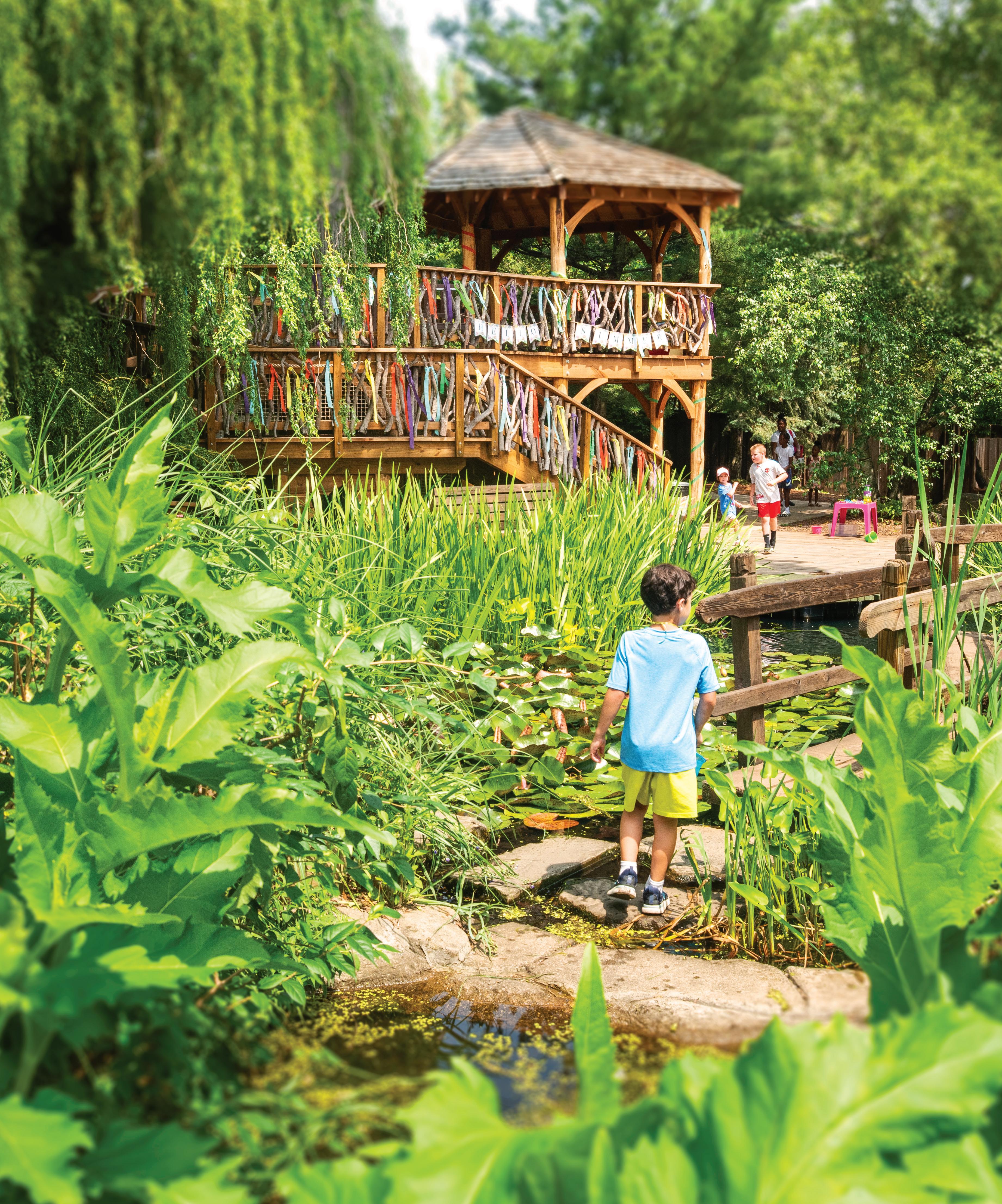
Discover a summer full of hands-on fun in the Hershey Children’s Garden — from storytime adventures and bug hunts to creative art projects and turtle encounters. See full schedule at holdenfg.org/HCG/
Herb-Inspired Junk Journals with Western Reserve Herb Society
Aug. 29, 10:30 a.m.-noon
$18 per member, $33 per nonmember
Books & Blooms
Sept. 4, 5:30 p.m.-9:30 p.m.
$15 per member, $25 per nonmember
Virtual Lunch & Learn: Saving Seeds
Sept. 11, noon-1 p.m.
Free for members, $10 per nonmember
Meet the Artists Gallery Opening Sept. 25, 6-8:30 p.m.
Free for members, $21 per nonmember
Renaissance at the Garden
Oct. 4, noon-8 p.m.
$15 per member, $25 per nonmember
Return of the Butterflies
Now through October
Daily releases at 11 a.m. and 2 p.m.
Included with admission
Summer Nights at Cleveland Botanical Garden Are Back! Join us for extended hours until 8 p.m. on Thursdays through Aug. 20. Check holdenfg.org for details.
9500 Sperry Road
Kirtland, Ohio 44094
holdenfg.org
Forests & Gardens is the member magazine for Holden Forests & Gardens, which includes the Holden Arboretum in Kirtland and the Cleveland Botanical Garden in Cleveland.
MISSION: Holden Forests & Gardens connects people with the wonder, beauty, and value of trees and plants, to inspire action for healthy communities
VISION: All communities transformed into vibrant places where trees, plants, and people thrive